T-Minus 5 Days

Thanks to Juliology for this image.

Packing to leave, what a chore!  It’s an activity my friend Mason calls “the p-word,” and one that’s an ongoing part of my life.  The task is necessary to satisfy the travel bug inherited from my grandmothers.  It requires projecting oneself into an unknown future, and I typically postpone it until just days before a major trip.

Taking ten months away requires thoughtful preparation.  So, over the past weeks, I’ve labored to anticipate what I’ll need in Dublin.  I’ve worked calmly and methodically, and at times I’ve even enjoyed the process.  But who can predict a year’s worth of needs?  And, isn’t uncertainty part of the fun?

A product of 1970 (born just months after Americans landed on the moon), I came into the world at an optimal time for making trans-Atlantic jaunts.  I feel blessed every time I board a plane, and so very fortunate to have such opportunities in life.  It’s the packing part, however, that stands between each new adventure and me.

At least this time, I have a fair idea of what to expect in that I’ve been to Dublin several times before. It’s been easier than the last time I headed overseas for an extended period.  Departing for Switzerland in 1996, I had $1500 and a round trip airline ticket but no place to live, no job lined up, and only the foggiest notion of how to find accommodation and employment.  Projecting myself into that unknown future was the scariest thing I have ever done.  The world economy was in despair, and my architecture professors clearly feared the worst for me.  I continually reminded myself that I had a ticket home.  I’d use it when the money ran out (which it did just days before my first paycheck arrived).

But I had an unstoppable urge to travel.  I saw an open window of opportunity that I simply had to take.  With a new Master’s diploma, I was free to fly.  I jumped through that window of opportunity into a bright new world, landing on my feet.

During my second week in Switzerland, I snagged an architecture position in the Italian-speaking region called Ticino.  And somehow, at my deepest moment of doubt and worry, a teensy-tiny studio apartment materialized.  It was one that I could afford.

When I returned home 12 months later, I was a wiser, more fulfilled person.

Today’s Internet tools have made visualizing the future much easier.  And this time I have an extensive support system in place.  Many thanks to the Dublin Institute of Technology, Fulbright Ireland, the US State Department, Hampton University, and Dave Chance for helping make all this possible — and to Colleen, Gavin, Sima, Brian, and Mike for extending the invitation to collaborate.  This time, I know where I’ll work and what I’ll do.  I have people to see and projects to do.  I know how I’ll make ends meet.  This time I had the Internet tools to make apartment hunting fun.

All I need now is to clamp my suitcases shut and head out the door with my Dave….
Don’t Miss a Post!

You should be able to subscribe to this blog by clicking the “+ Follow” button at the bottom right-hand corner, entering your email address, and then confirming your subscription.

If that doesn’t work, please email me and I’ll send you an invite with the link for joining.

Is Fulbright for you?

Each year, the US government sends thousands of people abroad. These “Fulbrighters” do advanced research, teach (at the elementary, secondary, or college level), or study at the graduate level. Fulbrighers include:

  • teachers, professors, scholars
  • students and recent graduates
  • professionals (e.g., journalists, attorneys, artists)
  • administrators

Fulbright programs vary in length (2 weeks to 12 months) and location (there are 155 countries participating today). They also vary on the level of  funding they provide and the subject areas hosted by each country.  The core Fulbright Scholar Program, in which I am participating, “sends 800 U.S. faculty and professionals abroad each year. Grantees lecture and conduct research in a wide variety of academic and professional fields.” My position is for a full academic year.

The overall point of the Fulbright program is to increase mutual understanding among nations and help build knowledge as well. It dates back to 1946 when Senator J. William Fulbright asserted that nations could avoid future wars by simply getting to know other.  Today’s Fulbright programs are sponsored by the US State Department’s Bureau of Educational and Cultural Affairs. These programs bring foreign students and scholars to the USA in addition to sending US citizens abroad.

You can identify which programs fit you by visiting the Institute of International Education’s (IIE’s) Fulbright page.  As you dig down, you’ll be able to find out what countries host scholars in your areas of expertise and interest, how much funding they provide, and what skills they require.  Some positions are much more competitive than others — some require specific credentials while others are open to scholars in any discipline.  Some positions require that you can speak your host’s native language.

It’s worth your while to spend a little time today looking over the possibilities… it’s never too early to start planning your own Fulbright adventure!

What’s in a Name?

My husband Dave loves to point out that “the mouth of the Shannon is wide and deep.”  Indeed, when we visited the mouth of the River Shannon it was so.

I’d grown up with the impression that my name was Irish–as Irish as my sister Heather’s name.  So it surprised me when I arrived at the Shannon Airport in 2003, ready to rent a car, and the man behind the counter asked me to spell my first name. “Shannon?” I replied. “You know, like the airport!?!”

On that trip, I found driving on the left side of the road wasn’t nearly as difficult as communicating my very Irish-seeming name to the Irish folks I met.

I visited Ireland again in 2010, and discovered the same problem.  Why did so few people click with the name, I wondered?  I realized that even at home, many people heard “Janet” when I introduced myself.  I tried to slow down and enunciate more clearly:  “Heeellllooooo, my name is Shhhaaaannnn-non.”

By my 2012 visit, I’d had a relevation.

“The Irish don’t name their girls Shannon, do they?” I asked Gavin, my colleague at the Dublin Institute of Technology (DIT).

“No, I don’t think so,” he replied. This, despite that fact that Shannon is a well-known last name.

When Gavin asked other lecturers at the DIT, they reported knowing of a couple of (very) young women by the name.  They believed it gained popularity in Ireland due to American television shows… that it was actually imported from the States for use as a first name for women.

So, here’s to Beverly Hills 90210, a show I’ve never actually seen.  You can bet I’ll be hard at work this year, trying to set the bar a little higher for what a girl-Shannon can be.

And I’ll make sure to visit that lovely River Shannon.

Standing on Shoulders

In the States, we tend to overemphasize individual merit.  While there’s something to be said for pulling yourself up by your bootstraps, you never actually do that all alone.  There are always others there providing ideas, support, and know-how.

Surrounding yourself with good role models is key to achieving big things.  You need to hang around people who are curious, passionate, and driven to make a difference.  They help you see what’s possible and how to achieve it.

One my best role models is my mom, Dr. Cynthia Mara, who recently completed her own Fulbright to Canada.  A Fulbright representative actually recruited her for that position because the US needed to send someone with mom’s expertise.  While in Canada, she researched health care and interviewed people about how well their single-payer system works. There’s a photo of mom below.

Another of my role models is Dr. Pamela Eddy, a professor of higher education at The College of William and Mary. She joined W&M in 2009, at the same time she was a Fulbright to Ireland.  Her success reminded me of the goals I’d set for working in Ireland.

They both gave ideas and encouragement, helping me hone my Fulbright proposal and connect to important people.  I am grateful to have their shoulders to stand on.

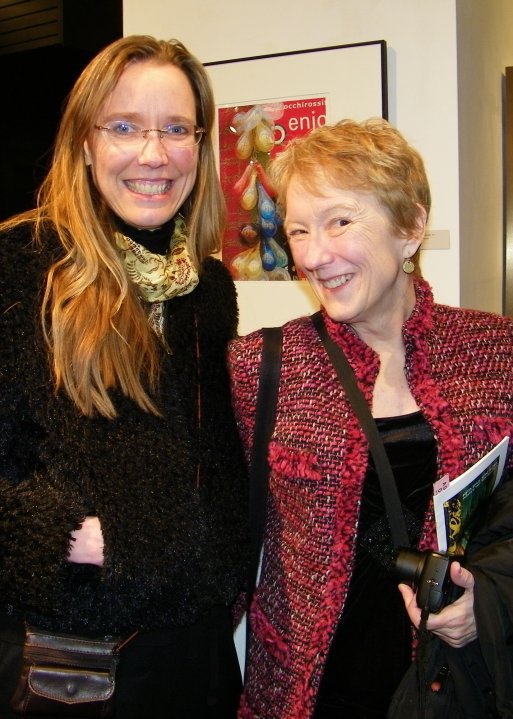
Mom and me at the photo exhibition “Exposed” at the Meyer Gallery in Norfolk, Virginia.

Roadmap to Ireland

Enchanted by Ireland in 2003, I vowed to return to live and work there for a year.  My husband and I had fallen in love with the people, pubs, landscape, food, architecture, music, and even the climate.  (Admittedly, we had false impressions of the climate, since our two-week trip coincided with a “heat wave” where temperatures hit a whopping 75F each day and rain was nowhere in sight.)

I returned home and researched the requirements for becoming a Fulbright Core Scholar.  Securing a Fulbright grant was going to be more difficult than I’d thought, but I did see a possible route to achieving that goal.  I’d significantly improve my chances if I earned architectural licensure and a doctorate.  Over the years, I chipped away at my iceberg — earning a license to practice architecture in 2005 and a PhD in Higher Education in 2010.

I submitted an application to Fulbright right after graduation, but to no avail.  That inital application got kicked out in the first round of competition. I kept chipping away, though.  My second try met with success.  Starting August 23, I’ll be living my dream — and working my finger to the bone — at the Dublin Institute of Technology.

Stay tuned to this blog for:

  • Tips on applying for a Fulbright
  • Stories of my adventures Ireland
  • Photographs of “Urban Reflections”
  • Findings from my research at the Dublin Institute of Technology

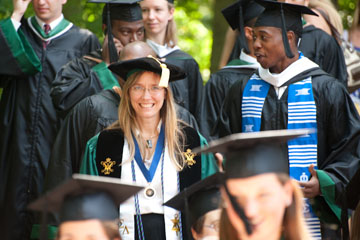
A picture from graduation day 2010 at The College of William and Mary in Virginia.