An evening reflection from Arrondissement 9 in Paris….

Paris reflection
An evening reflection from Arrondissement 9 in Paris….
Paris reflection
The Roman aqueduct, Pont du Gard, lights up once a year for just four nights. And thanks to Hampton University’s Prof. Mason Andrews, I’ve had the chance to see the animated light show twice… once in 2010 (the first year such an event occurred) and now again in 2013.
The 2010 show depicted the history of France. The 2013 show was titled Ulysses the Pirate. The event planners (F Group) expanded the effects significantly over the years–they have added many new pyrotechnics.
This year’s production included some of my favorite animate footage from 2010 (illustrating structural characteristics of the Roman water bridge) as well as animated projections onto a nearby building and cliff face.


I’d never been to Uzes, France even though some of my Hampton University architecture students had. Uzes is home of the famous urbanist, Leon Krier, though we didn’t get to meet him there this year. We often use his book, The Architecture of Community, in my Urban Theory class.
Visiting Uzes made for a wonderful day of learning and exploring. I even wrapped with two decent sketches of my own.


Nimes is a beautiful town in southern France that is chock full of Roman artifacts. It’s where I met the Hampton University architecture students, mid-way through their study abroad program in France. I typically organize one of these trips each summer. This year, Prof. Mason Andrews had the whole cohort of third-year architecture students on the trip to France–some years we offer two different trips.


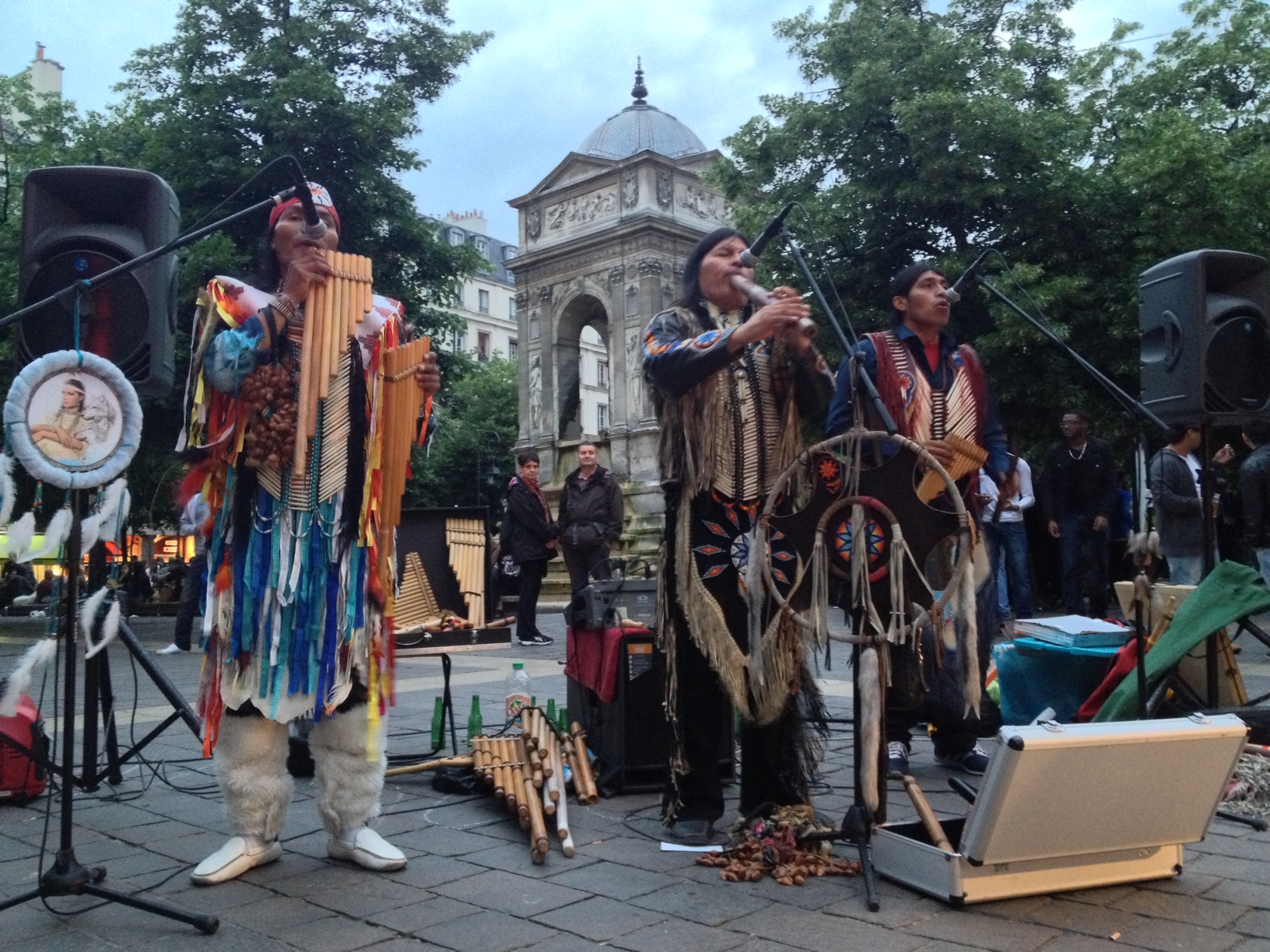 The summer solstice brings throngs of Parisians to the streets. They sing, play, and dance the night away on the longest day of the year. The annual event is called the “fête de la musique” or festival of music. I’ve shown pictures of some street performers, but there are also large-scale events. There were rock bands in St. Eustache all day long, for instance.
This year marked my second fête de la musique in Paris. I was there as part of Hampton University’s architectural study abroad program… my colleague, Prof. Mason Andrews, always makes sure we get to be part of this fun cultural event.


The interior of St. Eustache, in central Paris.
Stephanie Bossert Gupton, a friend from my days at Blacksburg High School who is now a professional photographer, responded to an image I posted on Facebook recently. She asked me to post more, so here’s a start (thanks to a decent internet connection and a day to relax in Paris).
This is a panorama taken inside Paris’ church of St. Eustache.
As you can see, I have a lot of fun with my iPhone!


We’ve had 2-3 weeks of glorious weather here in Dublin. People seemed stunned. A few people even started complaining that it had been 75 degrees for too long. Too hot, some said. And truly, we did have a day of high humidity — almost unknown in this fair city.
The past few days ushered in a return of regular irish weather. In Ireland, experiencing “all four seasons in one day” isn’t unusual.
Above, I’ve uploaded some photos from my stint across town and back today.
The photo below was taken from my seat atop a double-decker bus. It offers a glimpse of Dublin city traffic… and shows you why I don’t bike here more often!
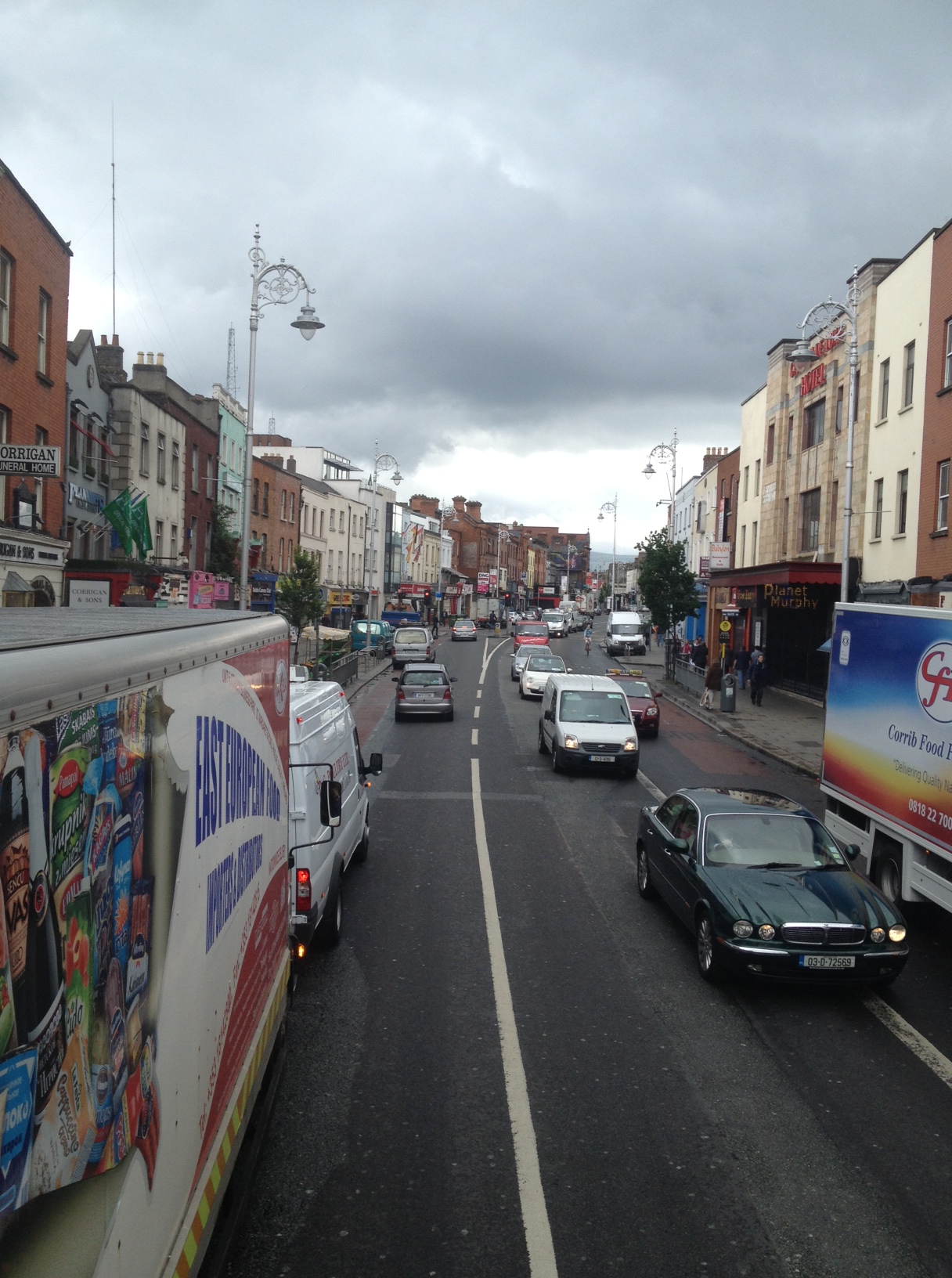
Yes, we ARE passing that truck!
I went on the hunt for lions in Dublin last week, and found plenty to stir my soul! Disney’s theatrical production of the Lion King is energetic and mesmerizing. The costumes and choreography amazed and astounded me.


Opinion is mixed regarding the Dublin City Council building. It’s a hulk of a building, but a fine example of modernism — in the brutalist style. It’s got some nice features, but they obliterated the old Viking settlements to build it. Such a shame.


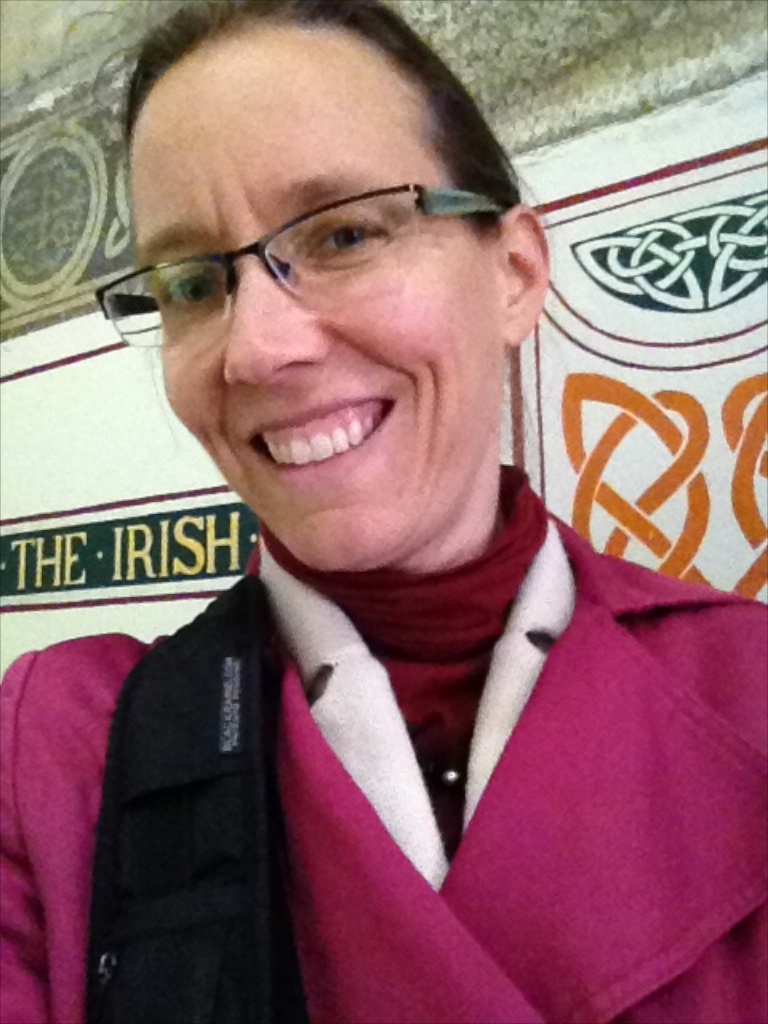
Hanging out with Daniel O’Connell. My photography exhibition was held in the house where he used to live, on Merrion Square.
Our Fulbright shin dig included a visit to Glasnevin Cemetery. I’d spent about an hour here, just outside the gate, one evening near Halloween when Esther was visiting. That was part of the (very worthwhile and historically accurate) Ghost bus tour and we followed it up with a visit to John Kavanagh’s “Gravediggers” pub.
The cemetery itself was started outside the city, at the same time the same thing was happening all over the USA. The American cemetery movement actually sparked the American park movement, believe it or not. The historian J. B. Jackson explains that people found they loved going to the suburban cemeteries — which were new and had wide open (corpse-free) spaces. These early cemeteries were well-designed and had beautiful architectural features, as you can see on the home page for Thornrose Cemetery where my grandparents lay today. In any case, in the ten year period of the Civil War, nearly every American city built a “central” park, and Frederick Law Olmstead’s office designed many of them… and many college campuses too.
Wikipedia has some of the most interesting info online regarding this particular cemetery:
Glasnevin Cemetery (Irish: Reilig Ghlas Naíon), officially known as Prospect Cemetery, is the largest non-denominational cemetery in Ireland with an estimated 1.5 million burials.[1] It first opened in 1832, and is located in Glasnevin, Dublin.
The stories I heard on our tour of the cemetery brought to life for me the history of Michael Collins and Daniel O’Connell, two of Ireland’s most important political figures. Éamon de Valera and Countess Markievicz are also buried here.


 Ireland by Chance