Cecilia Hartsell on WWI Soldiers’ Experiences Returning Home

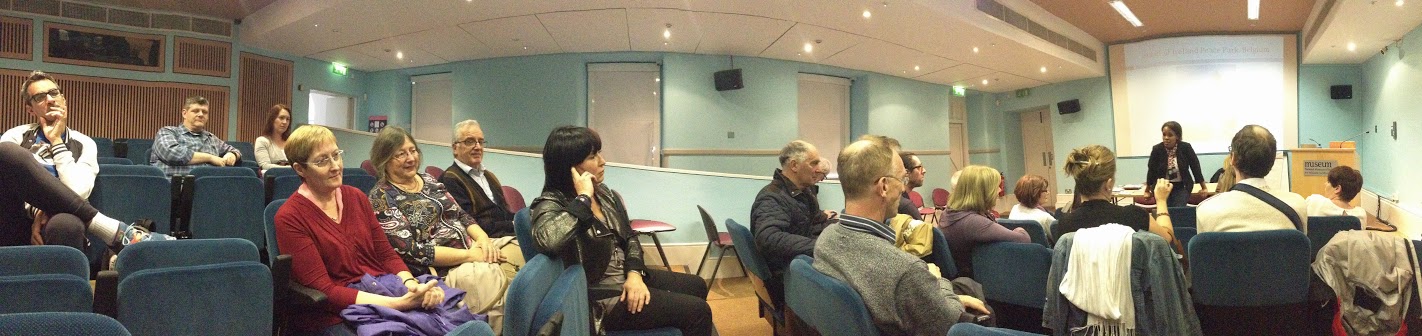
Cecilia Hartsell History presentation at Collins Barracks 1

Cecilia Hartsell researches WWI history. She is discovering parallels in the challenges Irish soldiers and African-Anericans soldiers faced when returning to their homes following the war. 

She presented research at an event at Collins Barracks in Dublin. The event was hosted by a history MeetUp group and 24 people attended on a recent Sunday afternoon. This is part of the dissertation research Cecilia is undertaking to earn a PhD from Fordam University. She will present the talk again, as part of History Week in Dublin:

Thursday, the 8th of October, 7-8 pm at Rathmines Library. 

Cecilia has also just published her first academic article, in History Now (an online journal at the Gilder Lehrman Institute of American History). Check it out at the link below:

https://www.gilderlehrman.org/history-by-era/world-war-ii/essays/race-and-good-war-oral-history-interview-with-calvin-d-cosby-WWII

DiscoverResearchDublin Night 2015 at Trinity College Dublin

Discover Research Dublin - Marie Curie exhibits - Shannon Chance 1

Projects by Marie Sklodowska-Curie Research Fellows on display at Discover Research Dublin Night 2015 at Trinity College Dublin.

Trinity’s campus glowed orange Friday night to celebrate the diverse and amazing research being conducted today in Dublin. I had been invited by the Irish Universities Association to show off some of the work I’m doing as a Marie Sklodowska-Curie Research Fellow. My base of operations is Dublin Institute of Technology, but this event featured research being conducted all across Ireland. 

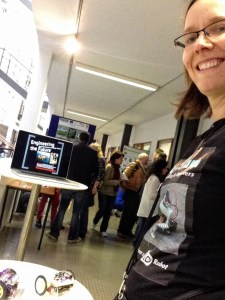
Everywhere on Trinity’s campus researchers displayed their work, emphasizing aspects that would engage and appeal tot he general public. I prepared a digital presentation on Engineering the Future: Equipping Engineers with Design Thinking that briefly described the three areas where I’m focusing my time as a Marie Curie International Incoming Fellow under the European Commission’s FP7 program:

  1. RESEARCH on Women’s Experiences of Collaborative Learning in Engineering
  2. TRANSFER OF KNOWLEDGE by developing a Masters degree program to teach engineering teachers about teaching
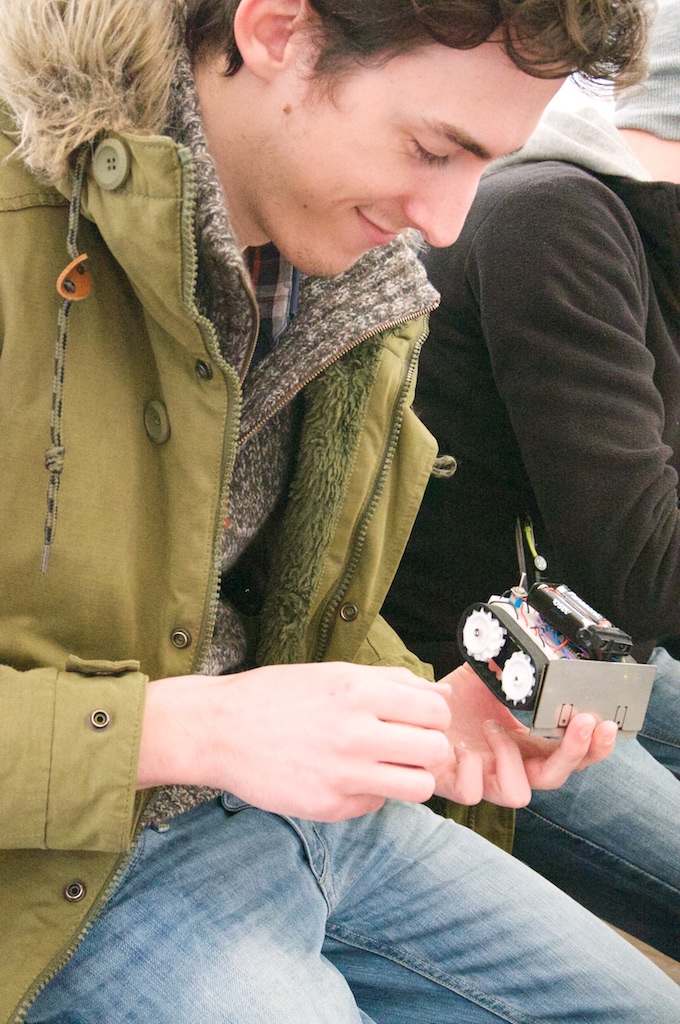
  3. OUTREACH through RoboSlam Robot-Building Workshop

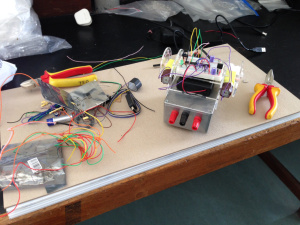
I decided to featured my DIT colleagues’ research on robotics and our work on how to best teach robotics to kids and to college students. I brought along two of our autonomous robots and let visitors to my booth run their own Sumo matches. About 25 people visited my table. There were all interested in learning about how the robots differed in design and code. One had better “eye sight” (as in, a better quality distance sensor) but the other had better coding. As a result, they were fairly well match for the Sumo competition, but the one with better coding consistently won.

Most visitors to the booth had specific questions about my work, and I was able to discuss details of various research studies and publications because I had my laptop there, and was able to access and display three different Prezi files.

I also got to discover the fascinating research being done by other Marie Sklodowska-Curie Research Fellows in Ireland. I’ve pictured just a few in the photo gallery below. Leaving Trinity’s campus, I discovered many cultural events on as well, such as the concert being hosted in Trinity’s chapel.

I found that I had been in just one tiny little corridor–among dozens of research labs and hundreds of research projects on display–at DiscoverResearchDublin Night 2015. Imagine the power house of research going on here, on this tiny little island in the North Atlantic!

RoboSlam @ Dublin Maker – only two days away!

If you’re in Dublin Saturday, drop by our RoboSlam Robot Cafe and build your own bot.

shannonchance's avatarRoboSlam

Ted's robot design for Dublin Maker event on Saturday at Trinity College Dublin. Come build one for free! And, it's just 12 Euro (less than the cost to us) if you want to take it home with you. Ted’s robot design for Dublin Maker event on Saturday at Trinity College Dublin. Come build one for free! And, it’s just 12 Euro (less than the cost to us) if you want to take it home with you.

Hello RoboSlammers,

This is just a quick reminder – it is only two days now to Saturday’s big event – Dublin Maker! The weather forecast is looking good so far – “cool and dry with scattered showers” according to met.ie. The event will open at 10am and run until 6pm. It tends to get busy at around midday. A description of some of the main participants at Dublin Maker 2015 is available here. Personally, we can’t wait to see what mechanical wonders Michal Mizsta the “dragon dude”, will have on show this year. And there is an interesting range of exhibits.

Shannon, Damon, Frank, and Ted getting ready today for the RoboSlam Cafe. Shannon, Damon, Frank, and Ted getting ready today…

View original post 239 more words

ChanceReflections.com

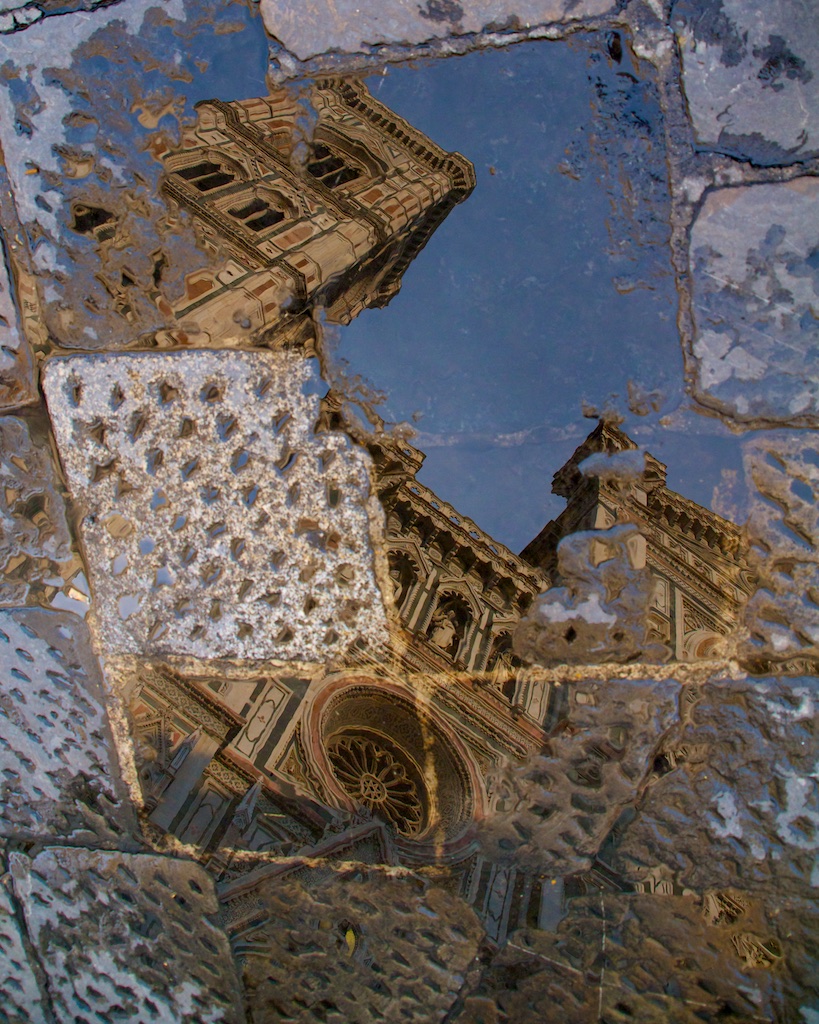
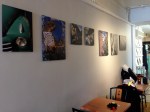
**D30_5228 - 2011-05-20 at 18-55-07I’ve launched a new website as part of an exhibition of my newest releases from Italy. Seven fine art prints are on display through mid-July at Wolf+Spoon cafe in the center of Dublin.

Please stop by for a meal and view a selection of images from the “Water Gallery” page of ChanceReflections.com

FullSizeRender

Wolf+Spoon

10a Aungier Street, Dublin 2

Phone: 01 544 7420

Open: Monday-Friday 7-5, Saturday 9-4, and Sunday 10-2

Studying Architecture in Montpellier

I flew down to the South of France to spend the bank holiday weekend with my former students and colleagues from Hampton University’s Department of Architecture, part of the School of Engineering and Technology. After a morning of sketching in Montpellier’s main plaza, we took trams out to the suburbs to see buildings designed by Jean Nouvelle, Rob Krier, and Zaha Hadid.

The trip was organized by HU professors Mason Andrews and Ray Gindroz.

Engineer Your Future with Electronics

The big project we had on last week….

shannonchance's avatarRoboSlam

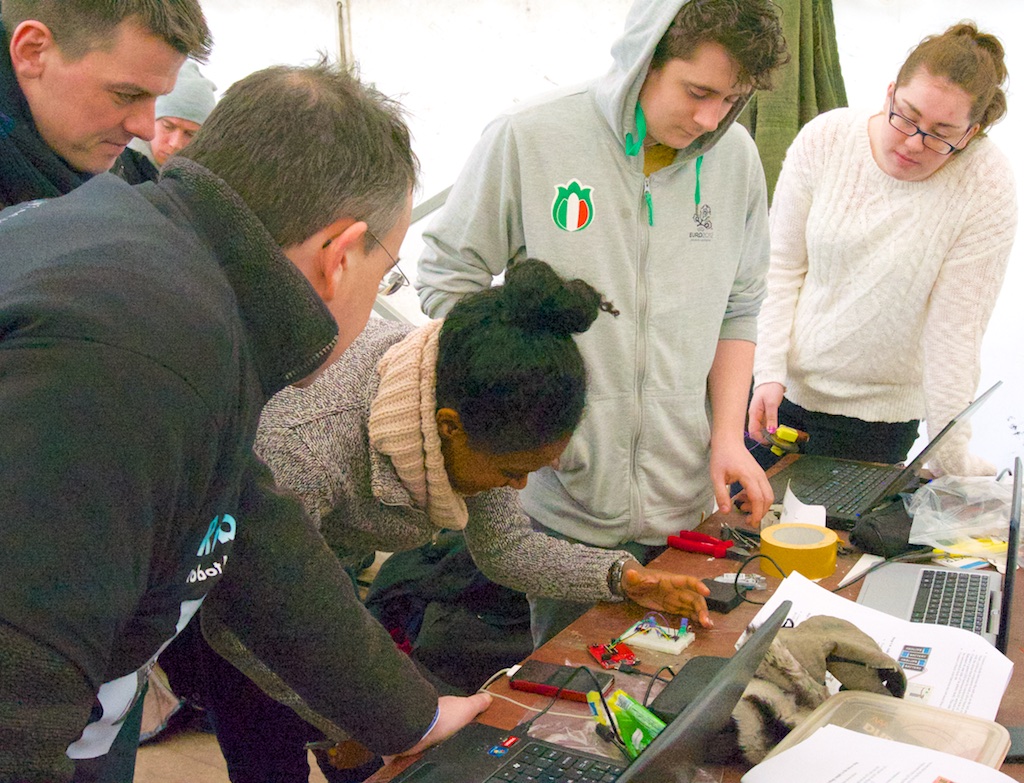
05-2015 RoboSlam Transition Week bodies and competition 111Forty-two secondary students–half girls and half boys–from the Dublin area built RoboSlam robots as part of the “Engineer Your Future” program provided by DIT. These ‘Transition Year’ students were eager to learn about electrical, electronic, and product design engineering and to explore engineering careers. 

The RoboSlam volunteer team was on-site four days to help the “Engineer Your Future” students and organizers and to lead robotics and electronics portions of the week-long project. The students also participated in tours and smaller projects–writing essays, building spaghetti towers, and touring a power plant, for instance.

The week culminated with a RoboSumo championship, a rumble among all robots built during the week, and an awards ceremony.

The engineering lecturers were highly impressed with the talent and enthusiasm of this group. We’re hoping to see these budding engineers at DIT or another of Ireland’s fabulous engineering programmes in a couple of years! 

View original post

DIT Team Delivers RoboSlam for Tech Week

A glimpse of what our RoboSlam crew has been upto lately….

shannonchance's avatarRoboSlam

RoboSLam participants with Ireland's Junior Minister for Social Protection, Kevin Humphreys. RoboSlam participants with Ireland’s Junior Minister for Social Protection, Kevin Humphreys.

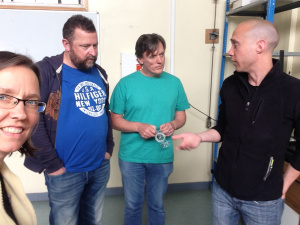
Dr Ted Burke and a team of staff and students composed of Frank Duignan, Shannon Chance, Shane Ormonde and Damon Berry, delivered a RoboSlam workshop for primary school kids at the two day Tech Week event in Dublin Castle on Thursday 30th of April. In all, 24 children from a primary school in Foxrock were given an opportunity to build Sumo Robots as part of the Tech Week activities. There was lots of interest from other visitors to the event.

The two day Dublin Castle event, which is organised by the Irish Computer Society, also included a competition for junior social entrepreneurs, the Irish finals of the Formula Schools Challenge and the finals of inter school Scratch competition.

RoboSlam participants with the RoboSlam volunteer team. RoboSlam participants with the RoboSlam volunteer team.

During the course of the day the RoboSlam workshop was also visited by Junior…

View original post 51 more words

Making Online Education Work

Internet technologies promise to deliver education to the masses, but how well do they perform?

Eleven Ireland-based educators and I registered to find out. We enrolled in an online “Supporting Virtual Communities” module (what we in the USA call a “course”) offered by DIT’s Learning, Teaching and Technology Centre (LTTC). We were united by the belief that teachers need to study teaching, in addition to studying the disciplinary subjects they teach.

Over a period of five weeks we have learned to use various web platforms and tools for collaborative learning. We gathered, virtually, to complete assignments with peers near and far. In the final week, for instance, while I was in Lisbon we finalized and submitted a group project.

In the class, we also made group presentations online, used Google docs and Blackboard wikis to construct new ideas, Tweeted our discoveries, and designed blog sites to prompt learning. We heard guests speak from as close as Dublin and as far as Australia. The teachers worked very, very hard to plan and conduct this course well.

I took this module because I believe in the power of collaboration and online learning. I love emerging technologies and collaborative environments that spark creativity and innovation. To complement what I was learning, I read the books Zero to One (Thiel & Masters, 2014), How Google Works (Schmidt & Rosenberg, 2014), and The Click Moment (Johansson, 2012) in tandem with this module.

In the course, I learned how to create and sequence online assignments (what Gilly Salmon calls “e-tivities”). I learned that the most important role of the online tutor involves providing clear structure and timelines, and monitoring student engagement to keep them from getting lost or disengaged. I found that for a student—overwhelmed by the proliferation of tools and portals offered in academic software packages like Blackboard—it can be all too easy to fall through the cracks.

I firmly believe that every person who teaches online should take an online module as a student, to understand the student experience. Online learning is much different than anything I’ve encountered in my 24 years as a degree-seeking student or 15 years as a full-time educator. In this case, I had to construct new ways to become interested and engaged as a learner.

For me, simply being in contact with teachers and peers in a traditional classroom or studio setting energizes me. It peaks my interest and gets my creative juices flowing. In such settings, I easily and consistently generate my own personal set of goals for learning—goals that work in concert with the learning objectives embedded in each assignment. I am able to layer additional learning objectives on each assignment, supporting and furthering those goals.

Accomplishing this hasn’t always been easy for me in the virtual classroom, especially when I can’t get a clear sense of the expectations and performance goals (much less tailor the assignments to my own learning needs). In recent weeks, I’ve discovered that I’m a highly visual learner—I retain very little of what I hear when there is no corresponding person (speaker), image, or text to see. I believe I’m not alone.

Moreover, I find Blackboard (which I’ve used for over a decade now) to be a cumbersome and counter-intuitive platform that frequently undermines my learning as a student and my effectiveness as a teacher. Over the years, this product has become increasingly cumbersome to use. In the online debate held in our LTTC module, the closing statement of the opposing team resonated with me. Thier argument was that “At present, online learning requires too much clicking and too little learning.”

I feel I have not yet experienced transformative learning through a MOOC or Blackboard environment. I long for better tools, and I hope to contribute to momentum to this effort by teaching a blended learning course in July for the College of William and Mary. I also plan to start an MSc in Computing Sciences (Data Analytics) to help me do the type of work described in Daphne Koller’s 2012 TED Talk.

I sincerely believe in the principles behind online learning, and opportunities it offers. I want to increase social equity by making quality education available to more people as described in Salman Khan’s 2011 TED talk. I want technologies to improve so we can use them as effectively and efficiently as envisioned by Christensen, Horn, and Johnson’s (2008) book Disrupting Class where computer technologies adapt to the learner’s needs and pace of learning.

2546421

I know firsthand that online learning can be fun, engaging, effective, and collaborative. I learned more using Rosetta Stone than I would have in a physical classroom. Using it, I achieved much better pronunciation than I’d ever reached in traditional classroom environments. I began to realize that, in the typical language classroom, students get precious few opportunities for verbal practice and correction. As a result, the years I spent studying Latin, Spanish, and Italian had never enabled me to speak effectively.

However,The “TOTALe” platform provided highly effective speech recognition tools, interactive games, and on-line tutorials. It adapted to address my own personal weaknesses. It identified where I was making mistakes, showed me my pronunciation errors graphically, and prompted me to repeat trouble areas until I reached the level of accuracy I had specified in the settings. Moreover, Rosetta Stone’s collaborative online “studio” sessions, taught by native speakers, involved learners from all around the world.

I was thrilled to help make this transformative learning Rosetta Stone coverenvironment better: the Virginia-based software developers phoned a number of times to inquire about how their product, which had just been launched to for public use, worked for me. They’d tracked their own data and could see my level of engagement. They solicited my ideas for improving the product.

This is the kind of interactive learning software and data analysis I’d like to help create in the future.

Inspired by Rosetta Stone’s agility, Corsera data tracking, Khan Academy’s use of videos, and the ideas proffered in Zero to One, How Google Works, The Click Moment, and Disrupting Class, I will join the teams of people working to create new vehicles and methods for learning online. I’m glad to have had an opportunity to start with this module. While many of these tools don’t work as well as promised today, through creativity and further development, they can help us change the world.

References

Christensen, C. M., Horn, M. B., & Johnson, C. W. (2008). Disrupting class: How disruptive innovation will change the way the world learns. New York: McGraw Hill.

Johansson, F. (2012). The click moment: Seizing opportunity in an unpredictable world. London: Penguin Group.

Khan, S. (2011). Let’s use video to reinvent education. TED talk downloaded 8 March 2015 from http://www.ted.com/talks/salman_khan_let_s_use_video_to_reinvent_education?language=en

Koller, D. (2012). What we’re learning from online education. TED talk downloaded 8 March 2015 from http://www.ted.com/talks/daphne_koller_what_we_re_learning_from_online_education?language=en

Thiel, P. & Masters, B. (2014). Zero to one: Notes on startup, or how to build the future. New York: Crown Business.

Salmon, G. (2002). Online networking and individual development, in M. Pearn (ed.), Individual Differences and Development in Organizations, Wiley Handbooks in the Psychology of Management in Organizations. Chichester, UK: Wiley.

Schmidt, E. & Rosenberg, J. (2014). How Google works. London: John Murray.
On the Road to Victory

Thomas Snella and his national champion.

Thomas Snella and his national champion.

The RoboSlam volunteer team was in full force last Friday, guiding robot builders to victory in the 3rd National Robo Sumo Intervarsity competition. Friday’s RoboSlam and Saturday’s national competition took place during the 2015 BT Young Scientist and Technology Exhibition.

At the competition, DIT first year student Thomas Snella (DT066) took the top prize. He will continue on the to European finals.

Second place team, also from DIT.

Second place team, also from DIT.

A cross-disciplinary team of DIT engineers of Seamus McLu (DT008), Aoife Redmond (DT009), Samantha Williams (DT021), and David White (DT006) won 2nd place.

DIT’s Michael O Meara and Alex Herizon (DT021) made the semi-finals of the competition.

DIT students came to the prep day well prepared. Thomas had designed and built his robot in the autumn as part of the common first year program that all 4-year engineering students at DIT now take. Members of second place team built their robot start-to-finish at our prep event, but they, too, had completed the RoboSumo module at DIT (a year prior).

One of the highlights of our prep day was that the secondary school students did such a marvelous job constructing their robots. We hope to see them at RoboSlam events again soon!

Read more on DIT’s website. Additional photos available on the RoboSlam blog.

Energizing Our Cubes

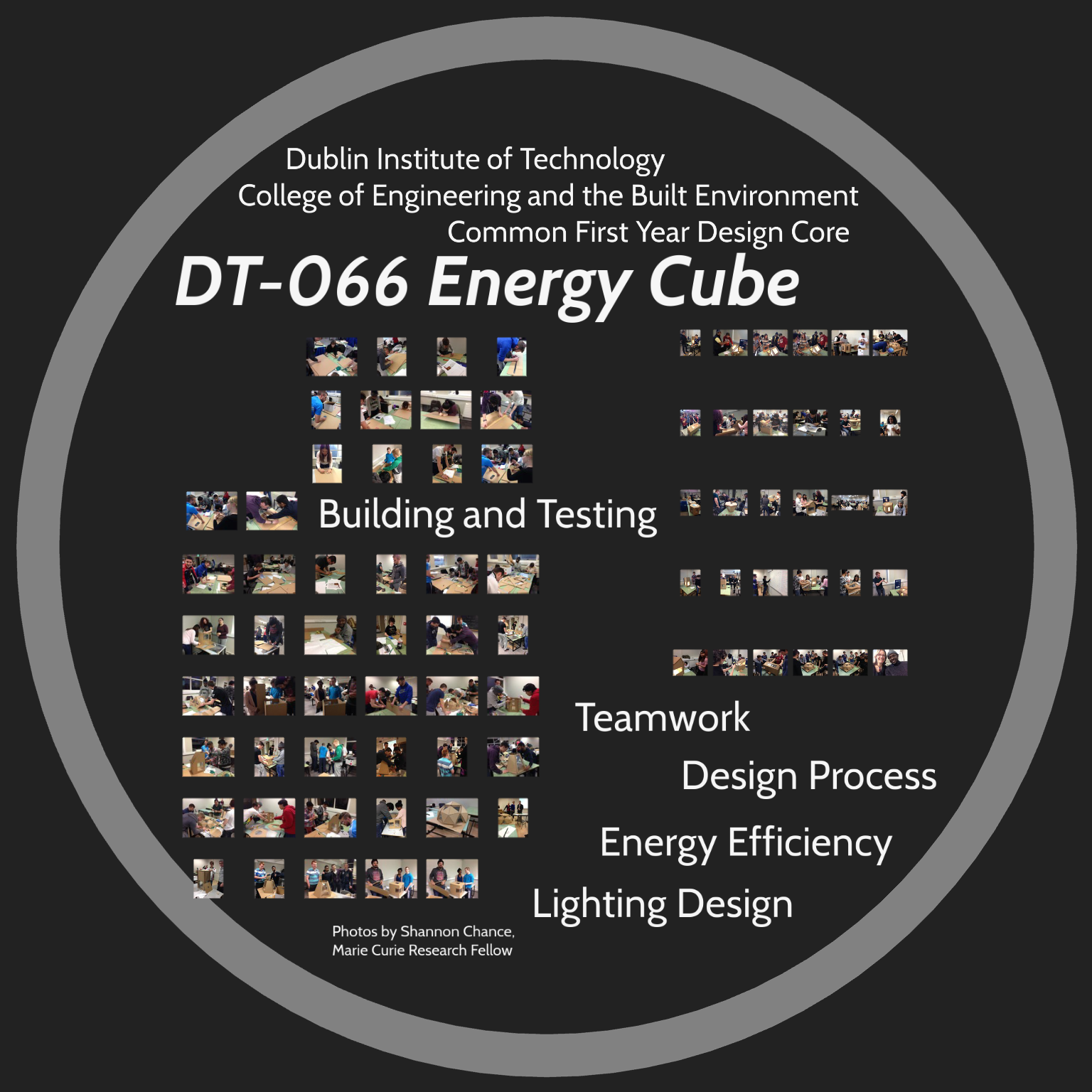
Click here to see the Prezi I made for the Energy Cube presentation day.

Click here to see the Prezi I made for the Energy Cube presentation day.

Last week we subjected our Energy Cubes to heat and light — and we measured how well they performed at keeping heat in while simultaneously admitting light. Today the students presented findings from last week’s Energy Cube performance testing.

The discussed their design process, results, analysis, and interpretations. They explained what they think they did well, and what they would improve upon for the next time.

I made a Prezi slide show of pictures for today’s presentations. You can click on the title slide (to the right) to view the Prezi, of view the images below to get a sense of the performance testing and the process of building the Energy Cube models.

I conducted the lighting test, although there aren’t any photos of that because I had my hands full. Michael O’Flaherty conducted the thermal test, as you can see near the end of the Prezi slide set, or in the small gallery below.