Promoting Sustainability at HU

HU Faculty Institute 2014-1-Shannon ChanceToday was a busy first day back at Hampton University.  The dean re-introduced me to the faculty with a big “welcome home!”  I have to admit,  my colleagues’ enthusiastic greetings made me feel like a superstar all day.

After the morning keynote sessions, the whole faculty headed over to the HU waterfront for our annual picnic. This year’s weather was amazing and the jazz ensemble sounded lovely.

The faculty wrapped up the afternoon with information sessions, one of which I helped facilitate.  My colleagues and I encouraged our peers to integrate environmental topics into the courses they teach.

You can view my Prezi online:  I showed a few images of how we integrate sustainability into architecture courses at HU.  I also discussed the “Educational Planning for Environmental Sustainability” course I teach in the summer at William and Mary.  I took the opportunity to promote student-centered pedagogies (which I studied at Dublin Institute of Technology) and the importance of getting students to generate new knowledge (a core idea in W&M’s School of Education).

Electric Storage Heat

The bricks in my electric storage heater.

Electricity costs a lot in Europe.  Years ago I’d heard the cost was generally six times as high as in the USA.  As a result, the Europeans are more careful about the way they use energy.  They try not to waste it.

Many Irish homes use electric storage heat.  The system mimics adobe construction of the southwestern United States.  It uses “thermal mass” (in the form of bricks) to soak up heat when it’s free (from the desert sun) or cheaper (at night when purchased from the utility company in Ireland).

The bricks hold the heat until the air on the outside gets colder than they are, and then they release the heat they are holding into the air to warm it.

I’ve posted photos of Keith, the maintenance guy for my apartment building, checking one of my electric storage heaters. They’re a bit difficult to get started at the beginning of the winter season.  Mine needed extra attention because a toddler who used to live in this apartment stuffed small plastic items into the heating units. Keith had to clean them out.

In any case, I hope this technology keeps getting used and improved, as it’s a system that makes a lot of sense environmentally.

Get heated at night (when electricity costs less) and absorb the heat energy to release it during the day.

From Theory to Practice

The class I taught this past summer at The College of William and Mary is being featured by the university’s public relations department for helping students move ideas into action and spurring environmental change.  Check it out at:

http://www.wm.edu/news/stories/2012/students-sustainable-dining-proposals-put-into-action-at-boehly-123.php

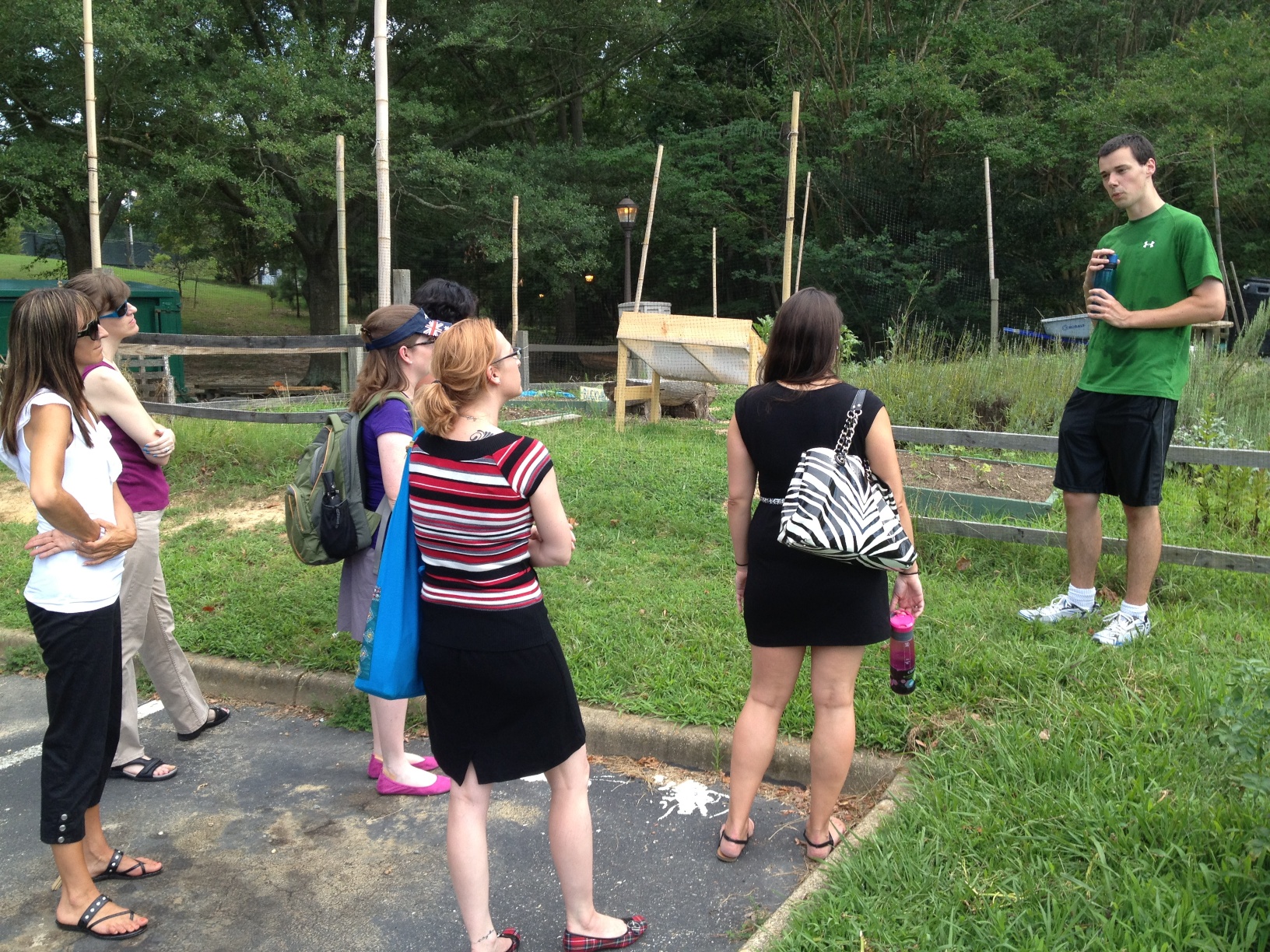
One of our many field trips in the summer “Educational Planning for Environmental Sustainability” class at William and Mary.  This one, to the campus herb gardens, was coordinated by student Justine Okerson and led by W&M’s current Sustainability Fellow, Patrick Foley.  The cafeterias at W&M get all the herbs they use from these gardens.