The Irish government has allowed domestic travel since June 29, and has been encouraging residents of the Republic to holiday inside the country to help revive the Irish tourist sector. Aongus and I were happy to oblige and we headed out for a four day weekend to the west of Ireland.
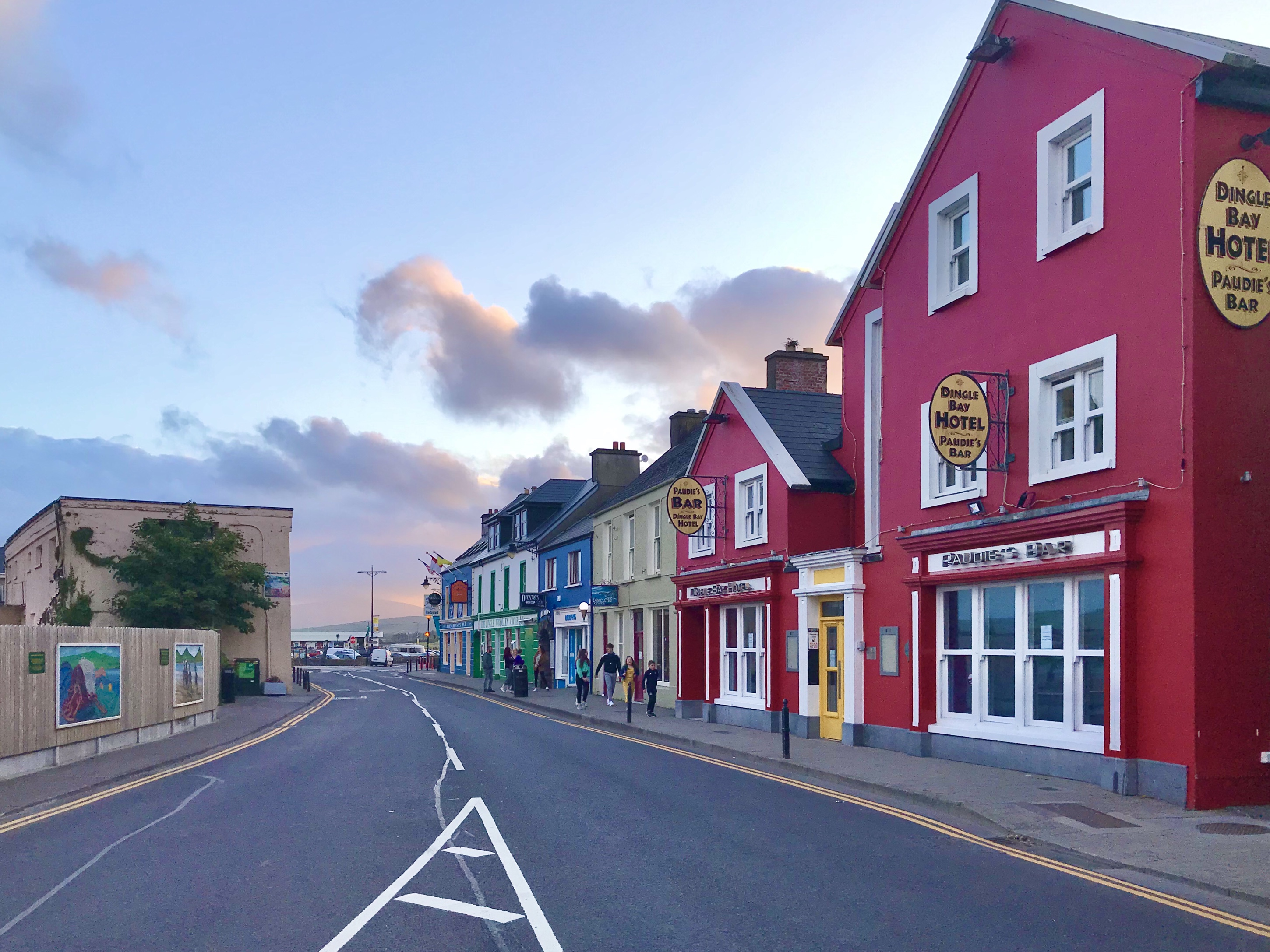
Unbelievably, my Irish man—born in Dublin and raised speaking Irish—had never been to Dingle! This rainy little fishing village is a favorite of Americans, and I’ve visited several times since my inaugural trip there in 2003.
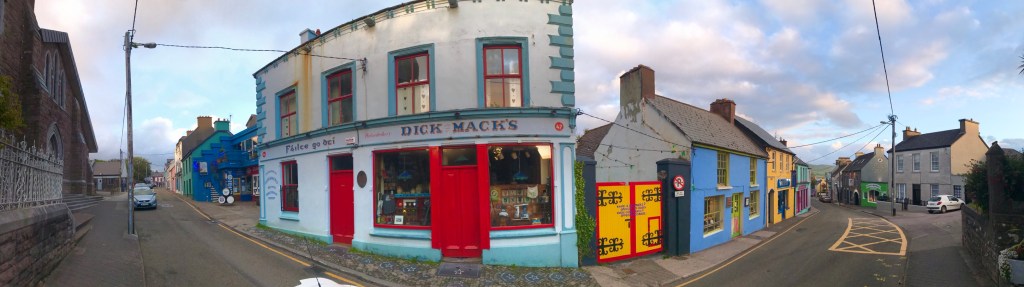
The Fish Box is just to the left of Dick Mack’s Pub, across the street from St. Mary’s Church.
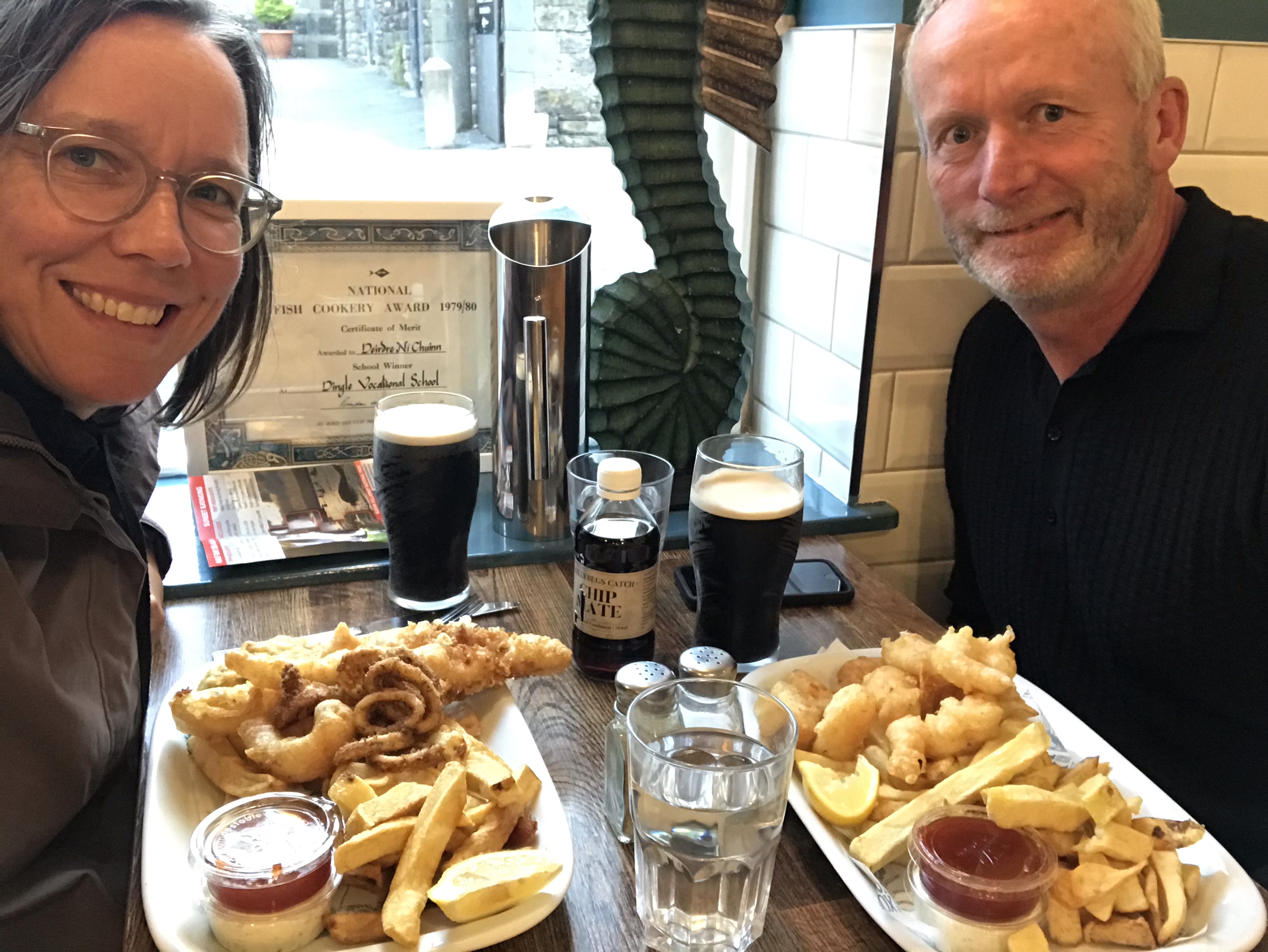
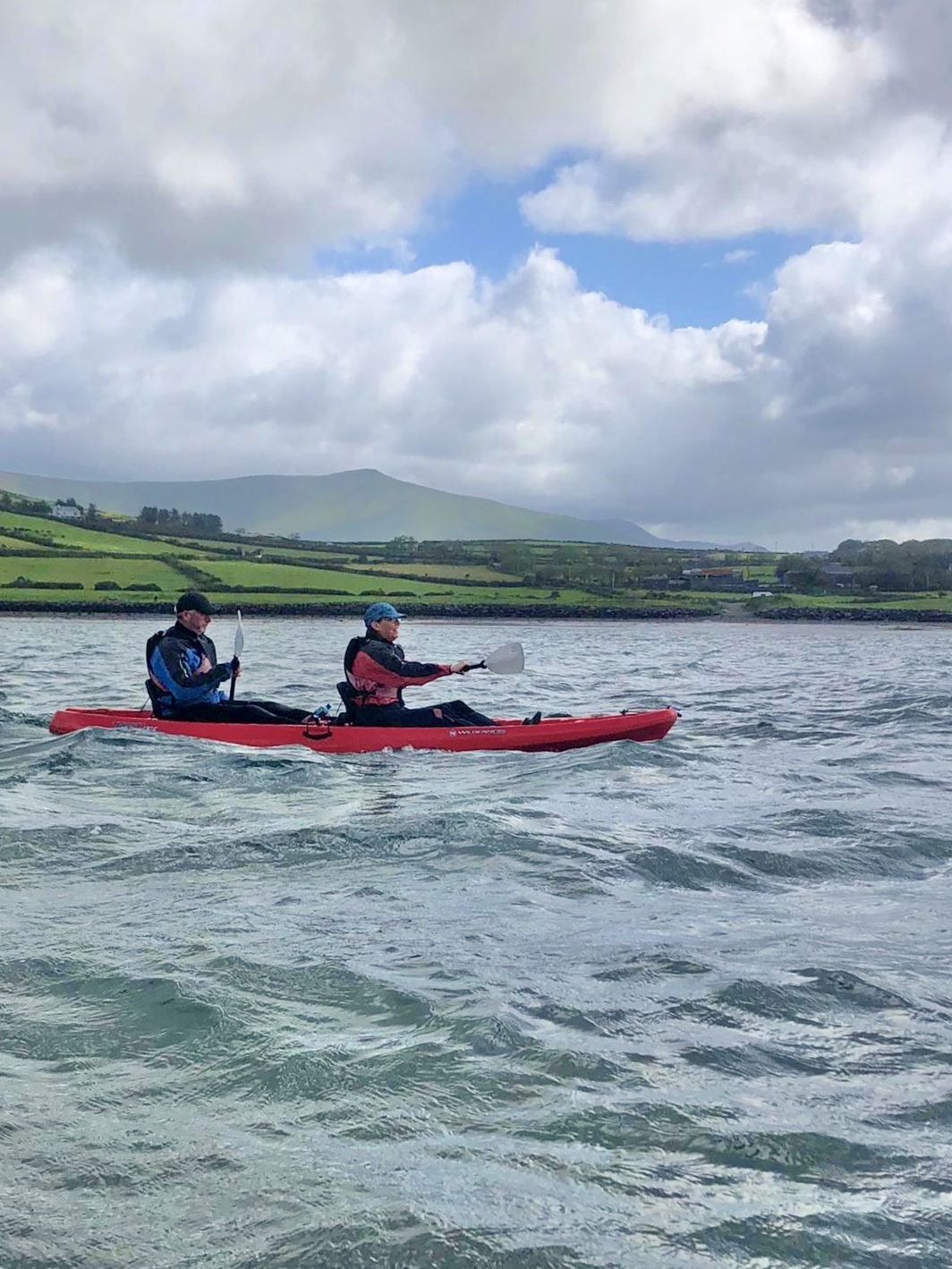
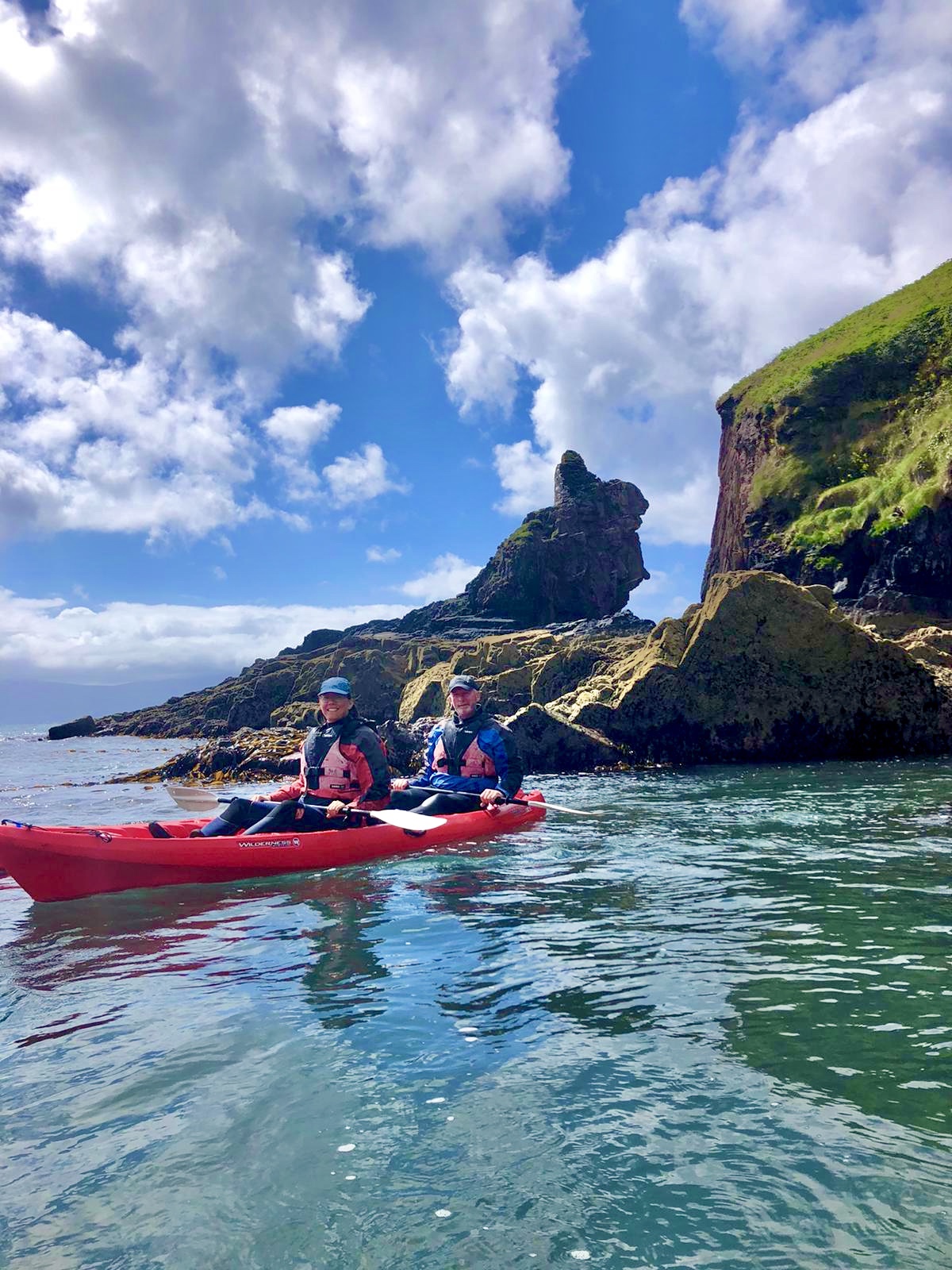
This particular overnight stay in this lovely little town included dinner at The Fish Box (amazing!), bed and breakfast at Bambury’s Guest House, and a kayaking trip guided by Irish Adventures.
And yes, we saw Fungie first hand, just 30’ or so away. Such a friendly and adventurous dolphin who has graced Dingle Bay since 1983. The tourism industry loves Fungie, with hundreds and sometimes even thousands of people boating out to visit the people-living dolphin daily.
On our kayaking trip were four learners—a couple from Cork and a mum and son from Dingle—and two instructors. A family of five got their own guide and travelled apart from us.
It was such a treat to pal around with Irish people enjoying their own home place. Truly an ideal time to visit. Especially since the seas were too rough for boating two days before and two days after our own outing. We really lucked out!
The pubs of Dingle were still closed during our visit, so there were no trad music sessions to enjoy, but we were able to do a little shopping. I picked up some exercise gear in hopes of our gym opening next week, and I also purchased a Cornwall Seasalt brand scarf to replace the one I dropped at Bonobo’s of Smithfield in February that so unkindly was never handed over to the lost and found.
Social distancing was easy in Dingle and we look forward to exploring more of Ireland as time, weather, and government guidelines permit. We were so very thankful for this one precious day of fun and glorious weather.
New-ish cap!
Special thanks to Noel of Irish Adventures for excellent instruction and leadership of the tour as well as his gift to me of an Irish Adventures baseball cap. They had actually run out of new caps, but gifted me one off their very own head! And it’s already perfectly broken in. Pop it in the wash and it’s good to go!
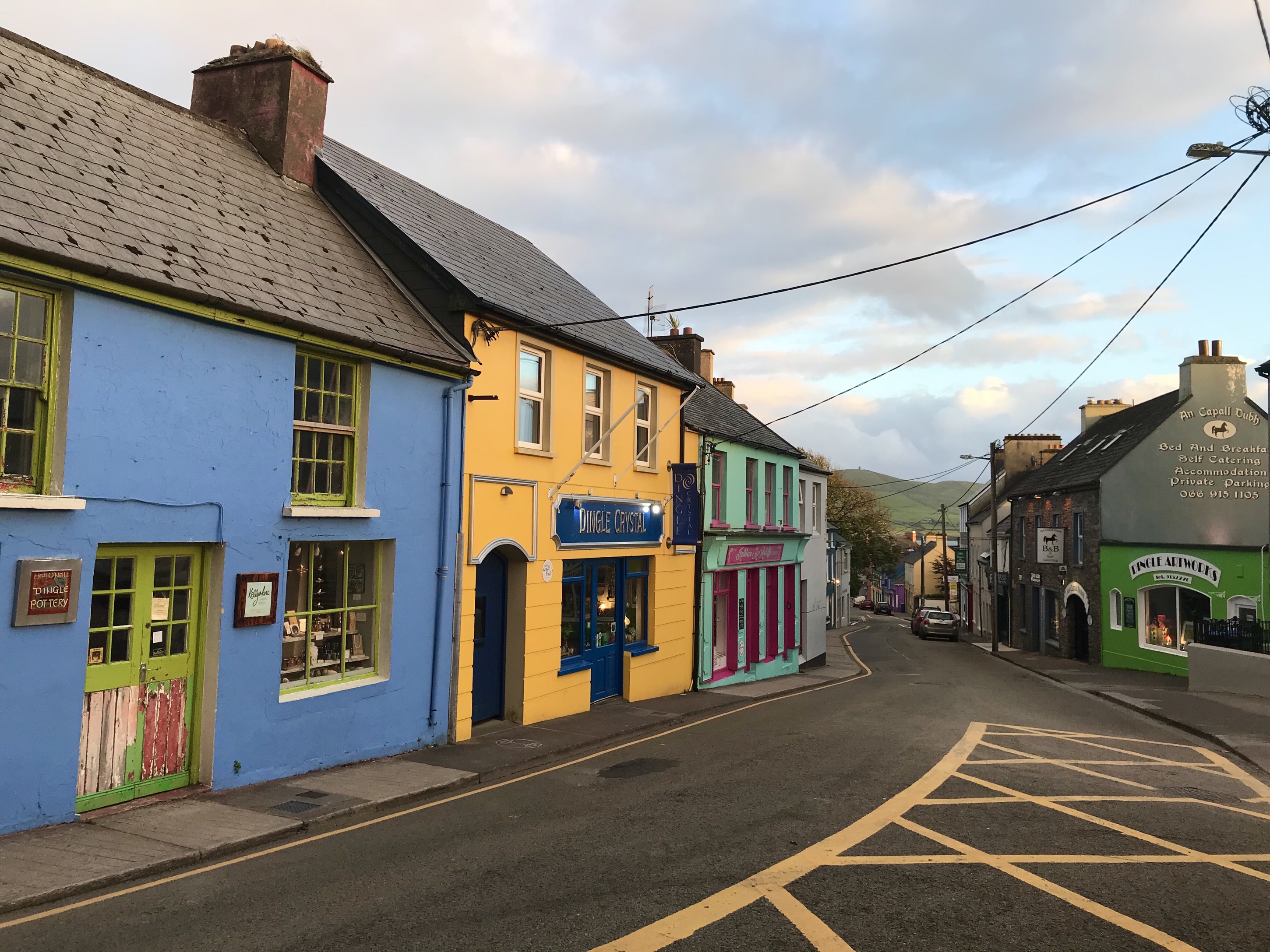
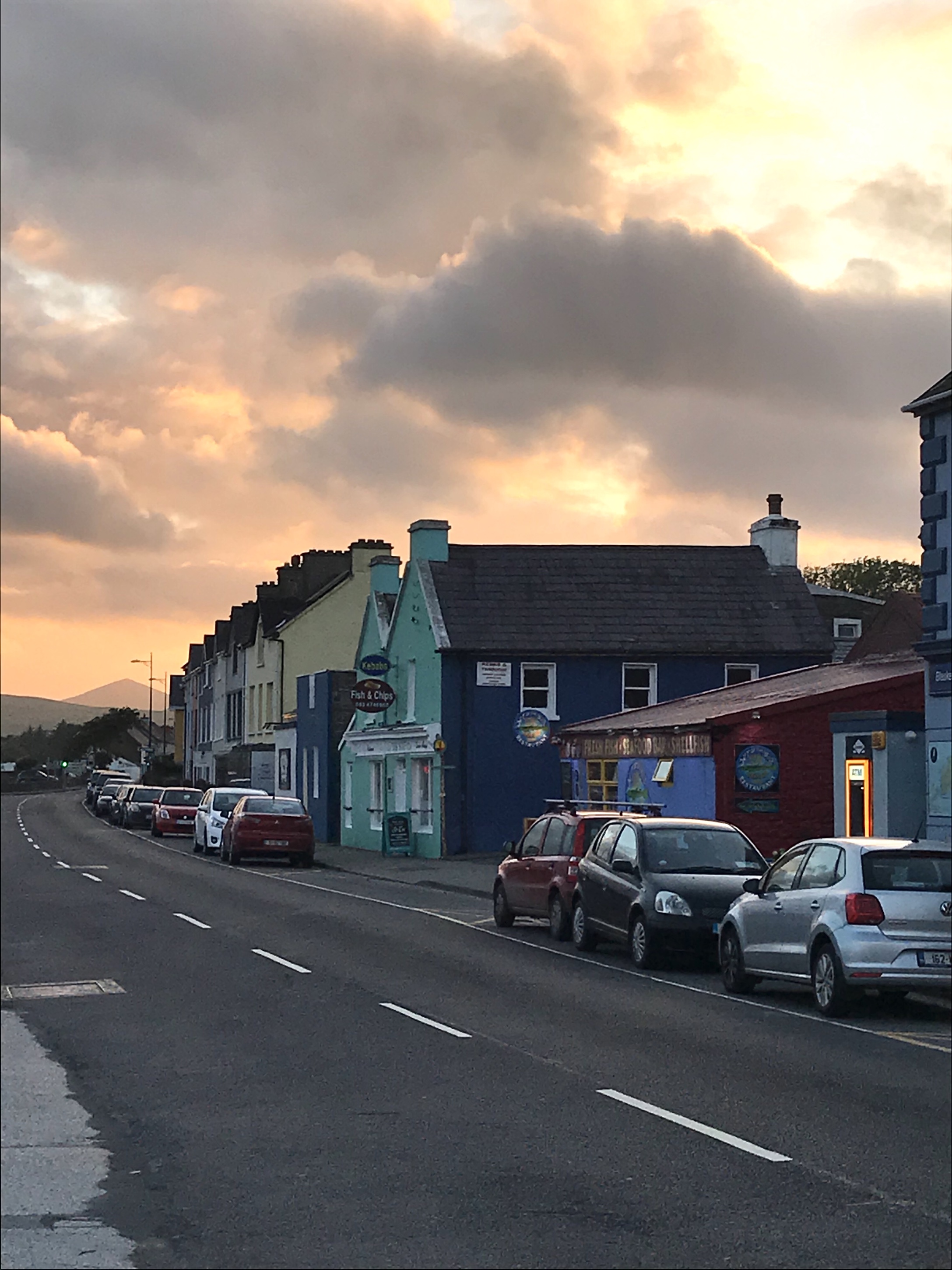
The photo gallery below shows an approach to Dingle via the Connor Pass (with new Wild Atlantic Way signage), the town of Dingle at sunset, and our morning out on the weather. Stay tuned for more pics of Kerry to come!
Bernadette Balentine is the host of Engineering Matters, and in podcast 59, she featured guests from Mott MacDonald, Canada’s Corporation of the Seven Wardens, Engineers Without Borders UK, the University of Leeds, the UK’s Institution of Engineering and Technology, and me, a Visiting Professor at UCL. You can find it at this link.
The podcast tells a fascinating story about a catastrophic bridge failure that happened in Canada, explaining how the overall engineering profession there responded by developing and adopting a strict code of ethics.
The overall podcast is 37 minutes, and I’m featured only briefly (around minute 28.5). In this post, I’ll provide a little more detail on the work I’ve been doing that led me to be included.
As you probably know, I was a Marie Curie Research Fellow at UCL for two years, and I still serve as a Visiting Professor there at UCL. I have a keen interest in the built environment and I’m also a registered architect in the States with LEED-AP credentials. My research specialty involves how people learn engineering and architecture.
During the Fellowship, Engineers without Borders UK came to me asking for help with research idea. As a result, my team and I conducted a small-scale qualitative study where we interviewed nine civil/structural engineers practicing in London about their perceptions of ethics and, specifically, of global responsibility—what it means and how they enact global responsibility in their day-to-day work. I reported this research while speaking with Bernadette for the podcast.
Bernadette asked what factors we had identified that prevent engineers from acting on ethical beliefs. Here’s some of what I said:
Even when early career engineers see opportunities to do something in a better, more ethical or responsible way, they often have trouble getting the idea accepted. Cost and time constraints limit their choices. Small and private projects nearly always prioritize cost and over environmental or social sustainability.
Early-career engineers can influence material selection and thus carbon footprint to some degree, but many other decision are out of their scope of work. Crucial decisions were made long before they got involved. They select materials, run calculations, and make more detailed decisions, but they are often involved in a small portion of any given building or infrastructure project. Even when they see an opportunity to do better on a private project, their client usually only accepts it is the idea if it also saves money or time.
That said, larger public projects provide more opportunity to protect the public good—and they hear about public discussions. But it’s other professionals, such as architects and planners, who often drive those discussions. On the other hand, the senior managing engineer we interviewed was quite able to affect things on a large scale; he had quite a lot of sway in decision-making and frequent opportunities to protect public Health and Safety. He took pride in doing so, and he also reached out to help mentor others to develop such skills.
Early-career engineers told us they lack reliable tools for calculating environmental and social impacts of various options. Quite surprisingly, most don’t recall having discussions in university about sustainability. While they say ethics was probably covered in their professional practice classes, none of this was covered in a way that was “sticky” enough for them to recall it. Most learned about this after university, through CPD courses, their own research, and company induction programs on Health & Safety and anti-corruption with an implied focus on anti-bribery.
Overall, the early career engineers in our study expressed:
A lack of tools for demonstrating benefits of environmental or social action
Some degree of shortfall in training/preparation
Feelings of disempowerment due to decisions being made further up the business or by clients who didn’t value sustainability
One of the most important findings of our study was that the engineers felt empowered to act on job-site Health and Safety more than other areas. Job-site Health and Safety was the one thing, they said, that consistently trumps cost. They were also clear on company rules for reporting gifts.
This led me to wonder: Might we use the levers that facilitated sweeping change across job-site H&S and anti-bribery to facilitate quick change in other areas related to ethics—specifically environmental and social aspects of sustainability and justice?
A helpful example was relayed by Malcolm Gladwell. In it, Korean Airlines went from having one of the world’s worst flight safety records to one of the best, and they did this by changing their own culture (with help of consultants) to allow individuals to raise concerns and challenge authority without personal retribution, without fear of reprimand.
I believe engineers need more of this type of empowerment and protection. The narrative Bernadette Ballantyne has woven on “Empowering Ethical Engineering” illustrates how Civil Engineering in Canada did precisely this.
It’s well worth a listen, regardless of whether or not you “engineer” things!
Meanwhile, stay tuned for more details of our study, as we prepare various findings for publication in research journals. Many thanks to my research collaborators Inês Direito, Rob Lawlor, and John Mitchell, and the Advisory Board appointed by EWB-UK to help guide our work. Financial support came from the European Commission via my Marie Curie Individual Fellowship and a grant to EWB-UK from the Royal Academy of Engineers UK.










 Ireland by Chance