ArchExchange

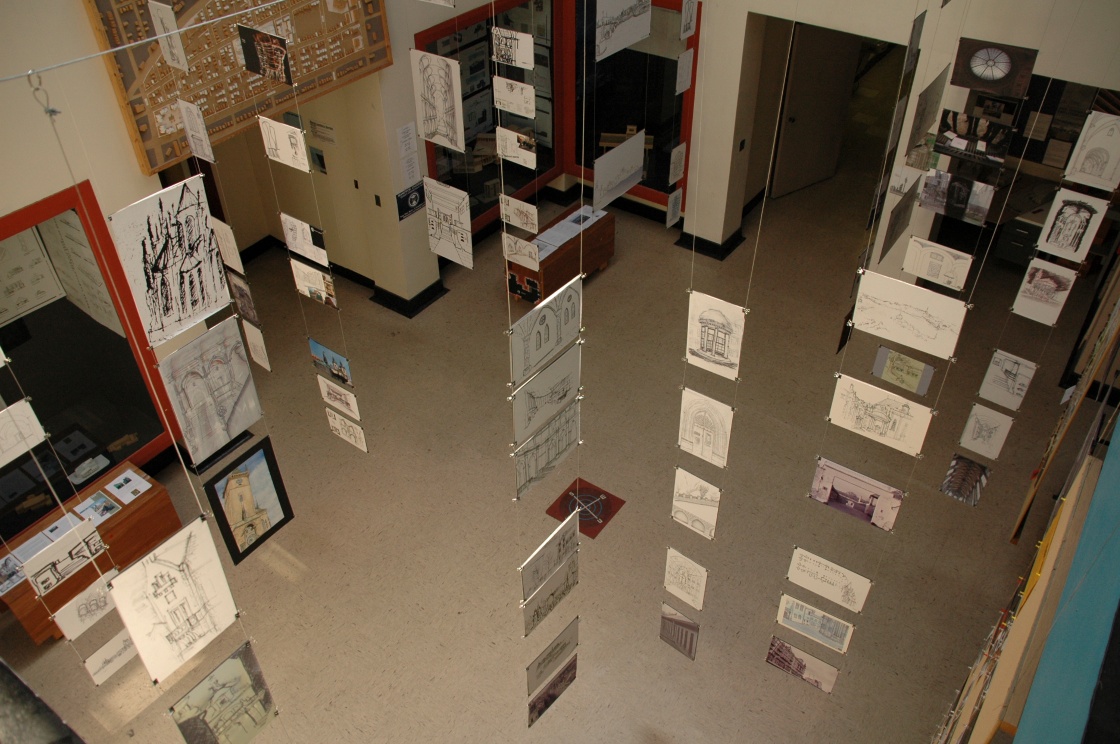
The Virginia chapter of the America Institute of Architects hosts a conference every November that is called “ArchExchange East.”  It’s a fabulous learning experience for me and my students.  Most of our department attends the event.  I’ve included photos of some highlights.

wiehr

Drawing (on) Gravity

Sometimes gravity is an architect’s friend.

In fact, architects can use gravity to human advantage in all sorts of ways.  In Ecology class today, I showed some diagrams of systems that use “thermosiphoning.”  That’s a fancy word referring to gravitation pull that moves fluids (like air or water).

The idea is that warm air (or water) rises and cold air (or water) sinks… because a  liquid is heavier and more dense when it is cold.

So, we can let gravity do the work if we think a system through.  Sometimes we need to move liquids in directions they don’t naturally want to go, and then we need to add electric pumps or fans to our systems.

Today, I showed my second year architecture students a tromp wall system as well as a diagram of an open loop solar hot water system.  In that type of system, you let the sun heat the same water that you will use to shower, wash dishes, or drink.

I also showed a few diagrams of basic heat exchangers… like the one in a car.  That one takes the heat from the combustion process and uses it to warm the air in the car without bringing in the “smog.”

The students were seeming to “get” the ideas, but they didn’t seem particularly jazzed up about them.  (I knew that because they were fidgeting and clearly wanted to text.)

To get them involved, I turned posed a problem for them to solve.

I asked them to pull out a sketchbook and combine the solar collector and the heat exchange into a single diagram.  They needed to figure out how you could use water with water with glycol (i.e., antifreeze) in it to collect the sun’s heat and then use that same liquid to warm the water for someone’s shower.

The challenge was to transfer the warmth into potable water without tainting it.  A couple of students caught on fast. After everyone had given it a try, I let them help each other.  More and more people got it.

At about the same time, I asked a four of the students who caught on quickly to draw their diagrams on the board and then explain how they worked to the class.  We all put our heads together to analyze the designs.

Gravitational Pull

cabins 2

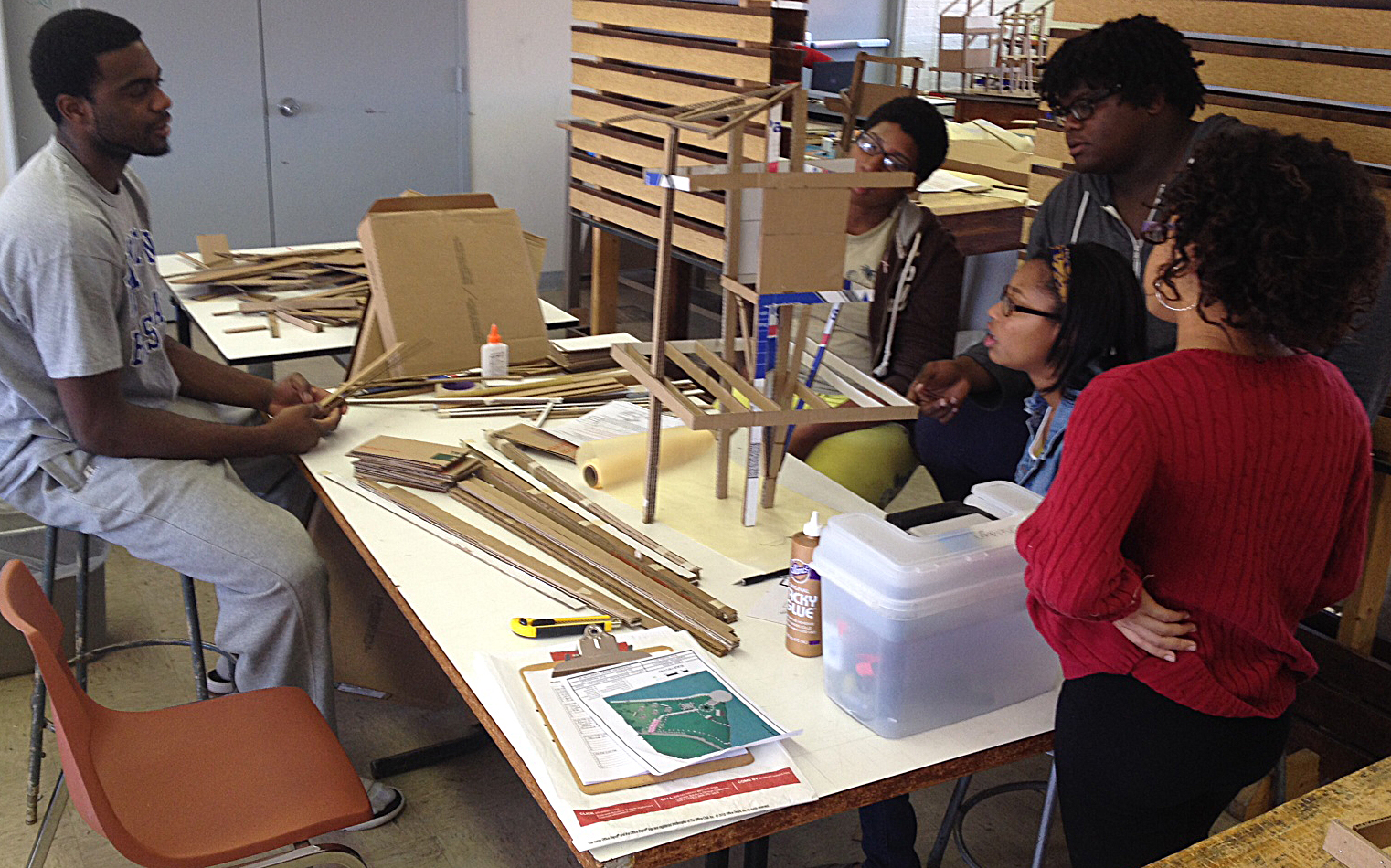
Hampton University’s second year architecture students are learning about gravitational forces and lateral loads by designing post and beam structures using a simple kit of parts (and adhering to a lot of fairly complicated rules).

The intention of the assignment is for students to learn about cantilevering, stacking, and hinging.  They also have to respond to environmental factors and work together in groups to enhance the site design concept developed by another student in the studio.  You can see one of the site design models in the photos below.  The cardboard frames you see represent the structural systems of small cabins that nestle into the site design.

I’ve asked them to build the structures at such a large scale (1″=1′) so they can really get the feel of what the various structural components are capable of doing.  Once they achieve suitable concepts, they will model their frames in wood.

Fingers cross that that will happen by Wednesday!  Thanksgiving is just around the corner… only three weeks of classes left to go this semester… so much to learn, so little time.  They still have to have the interior space, design building skins, and illustrate their designs with diagrams and measured drawings.  All that, in addition to completing their Physics, Architectural Representation, Architecture History, and Architectural Ecology course work.  Whew!

Strolling Freemason

Hampton Roads is lovely this time of year!  Here are some snippets from my quick post-yoga walk through Norfolk’s historic Freemason district.

Full STEAM Ahead, Virginia!

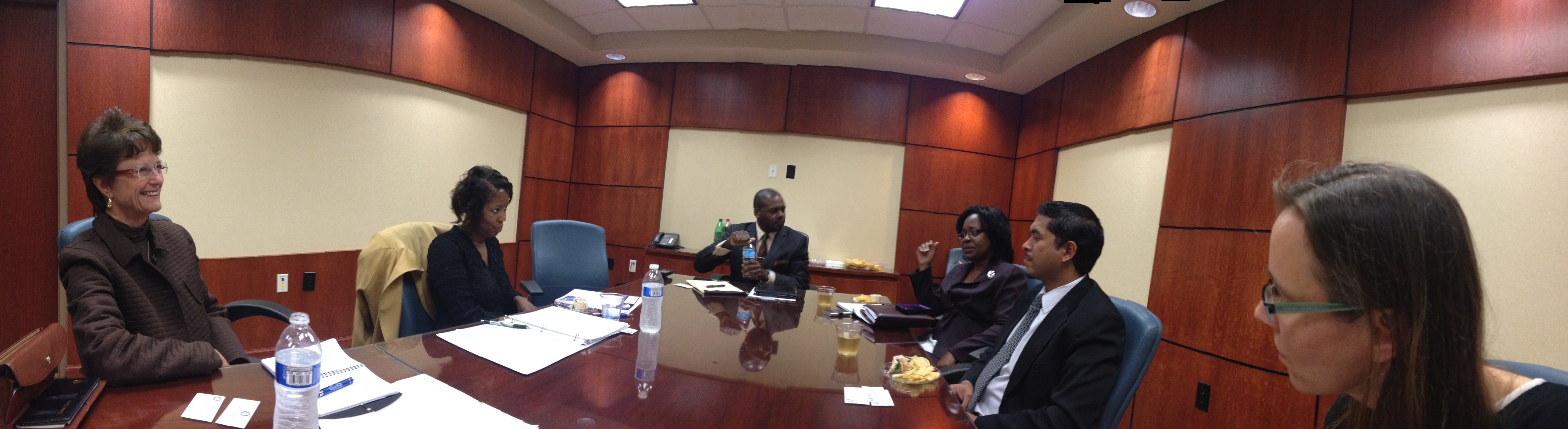
Discussing STEAM subjects: Caroline Martin, Dr. Judy Stewart, Orlando Robinson, Dr. Michelle Claville, Romdon Roopchan, and Dr. Shannon Chance.

Discussing STEAM subjects: Caroline Martin, Dr. Judy Stewart, Orlando Robinson, Dr. Michelle Claville, Romdon Roopchan, and Dr. Shannon Chance.

Big things are happening in the world of STEM education in Virginia.  Two enterprising educators, Caroline Martin and Dr. Judy Stewart, have founded the Virginia STEAM Academy.  Their public, 4-year residential program in Science, Technology, Engineering and Applied Mathematics is set to open for its inaugural cohort of students in the fall of 2015.  Last summer, Judy and Caroline conducted a summer program to get the ball rolling.

They have been working on the Virginia STEAM project since November 2010, and I’m happy to say that I’ve had some level of involvement since February 2011.  Although I took a year away during my Fulbright fellowship, a Wednesday meeting  on Hampton University’s campus helped me catch back up.

I’m fascinated by two specific aspects of the planning Caroline and Judy are doing: (1) securing and preparing facilities on the former Ft. Monroe that will house 1000 high school students and 75 teachers (who will live on-site with the students) and (2) designing the curriculum to support quality learning and innovative teaching.  They are such innovative thinkers and they know how to get things done!

Their vision for the school is remarkably aligned with the research I’ve been doing on integrating design thinking into engineering curricula and on tracking learning outcomes that accrue as a result of hands-on, problem- and project-based learning.

This Academy is going to open a while new world of possibilities for Virginia and her citizens.  My sister, Heather , was lucky enough to attend the Governor’s School for Science and Technology in Roanoke when she was in high school.  However, the daily commute — an hour each way — was a real strain on her and the other three students from our county who attended with her.  This new residential school will take the burden of daily commuting away, allowing the students and teachers focus on learning and generating new knowledge.

I am thrilled  the school will be here in Hampton Roads, and just a stone’s throw from Hampton University’s campus.

This Academy offers an ideal setting for the study of history as well as STEAM subjects.

Constructing our Reality

Last week I got to talk with a group of 60+ architecture students and faculty about design thinking, student development theory, and my Fulbright research… as well as how they connect to what we do in our department at Hampton University.  Moments like these help us reflect on what we are.  I hope they will also encourage my compatriots to explore ideas about what we want to become.

My current research is situated in the constructivist paradigm.  What does that mean?

Well, my research ideas and techniques are founded on the principle that we humans construct the world around us — including the things we see and touch, how we know, and what we know — and that we are able to generate new knowledge.

By discussing such topics, and considering collectively what it means to “design” and to “know” and to “learn,” we can become more international, purposeful, and effective in the things we do each day.

One of our students, Rhama Mohammed, snapped some photos during the talk and loaded them into our Facebook page (I’m posting copies here).  This provides a little glimpse of our department’s reality… surrounded by teachers (unfortunately, we don’t have images of any students in the crowd)… and a highly animated presenter.

Trend Shifters and Hip Young Urbanites

Donald Roman NYT feature

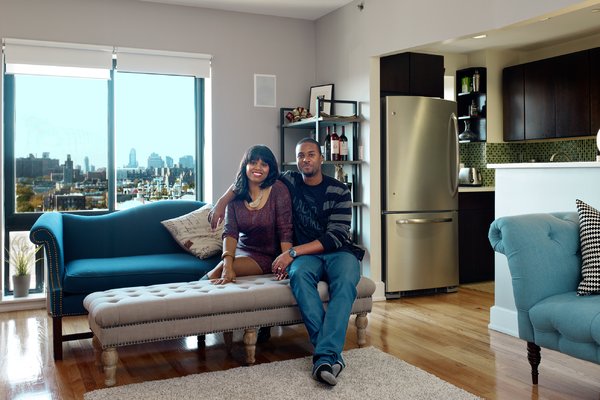
Fabiola and Donald Roman, as featured in the New York Time real estate section.

Times are changing.  Demographers tell us that younger set is shirking automobile ownership and moving closer into American cities.

I’m proud to say that one of my former Hampton University architecture students, Donald Roman, is among them.  He and his  wife, Fabiloa, recently chose a condo in Brooklyn over the now-faded suburban dream.  And, the New York Times just celebrated their accomplishment with a feature story.

If I recall correctly, Donald was never a fan of the car.

I’m happy to say that the heavy urban design emphasis of our architecture degree program served to strengthen his understanding of the benefits of population density and walkable city design.

I’m immensely proud that Donald and Fabiloa, who met in an Upward Bound program when they were in high school, planned well and chose carefully.  They overcame tremendous odds to become homeowners under the age of 30.  And, they had the good sense to recognize that living in a densely settled area means shorter commutes and quick access to a huge range of services.

During his time at Hampton University, Donald travelled with me to Tanzania on the 2005 Fulbright-Hays Group Project Abroad program I conducted.  It was a true joy to have Donald among the 23 American students and 65 Tanzanian students on the program.  He was immensely popular with the entire group and his soft-spoken but optimistic spirit uplifted our group every day.

Our 2005 Fulbright-Hays group in Tanzania.

Our 2005 Fulbright-Hays group in Tanzania.

Donald also made a big difference in my life when he introduced me to Malcolm Gladwell.  He even handed me a copy of The Tipping Point as we were leaving Sunset Beach on our last day in East Africa.

The Tipping Point is about “how little things can make a big difference.”  Interestingly, the NYT feature ends with a quote from Fabi about little things that make a big difference in one’s quality of life (like a dishwasher — and I totally agree!!!).

Thanks, Donald, for sharing with me your reflections on Gladwell’s ideas when we were beginning our trek home.   Your insights got me interested enough to invest  time in cracking the cover, and I had almost finished reading the book by the time my plane landed in Norfolk.

Since then, I’ve read each of Gladwell’s new releases cover to cover.  A new one, about David and Goliath, just hit the shelves and beacons me to read.

There are interesting TED talks by Gladwell on David and Goliath and “choice, happiness and spaghetti sauce” to help get you started if you haven’t yet cracked the mystic of Gladwell’s storytelling ability… or if you just want to have some fun learning about the break through discovery of vegetable chunks.

Closing a Chapter

In preparation for our chapter, Tim Cole updated me on VBCPS's sustainability strategies.

Last month, while working on our chapter, Tim Cole and I discussed VBCPS’s sustainability strategies.

I’m celebrating a moment of success here before I hit the sack for the night.

I just submitted a full draft of a chapter called “Designing School Buildings to Enhance Performance and Learning” for a book called Marketing the Green School: Form, Function, and the Future that will be part of the Advances in Educational Marketing, Administration, and Leadership (AEMAL) Book Series.  To make that project more fun, I enlisted Virginia Beach City Public School’s Director of Sustainability, J. Timothy Cole, as my supporting author.

This chapter provides a way for me to share some of the research I did for my dissertation and to extend my knowledge — I got to learn from Tim’s successes in Virginia Beach.  Tim has helped create 8 LEED-quality school facilities (5 are certified and 3 are in process to become certified). He even helped pilot LEED v1 in the 1990s.

This is the second chapter I have completed in the two months since I’ve been home.  The other chapter is called “Bringing it all Together Through Group Learning.” It is for a Wiley publication called New Directions for HIgher Education. That project was fun because I got to work with the book’s editor, the illustrious Dr. Pamela Eddy.

Since returning home on August 23, I’ve also managed to compile and submit a dossier to my University, submit a grant proposal asking for funding to help  conduct future research, spend a good amount of time with my students, implement some new teaching techniques, and — this week — get my midterm grades in on time and prep to advise students.

Oh, yes, and tonight I also had a lovely dinner with my dad and step-mom, Joyce, who are in town on business!  It was a real treat to spend a few hours with them.  Joyce is the Director of Admissions for the Vet School at Virginia Tech and she is recruiting at Hampton University in the morning.

All this is  pretty typical in the day of a professor… but I will sleep well tonight, knowing that I’m doing the best job I can possibly be doing right now, despite all the odds I’ve stacked against myself.

It is really nice to step back, take a deep breath, and be thankful for work and health and a ray of happiness every now and then.

And now, to sleep.   There’s much more to do in the morning….

Making the Mark as an Enterprise Rose Fellow

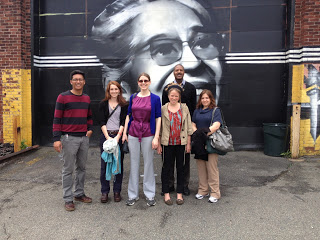
Mark (to the far left) with community members from Boston.

Mark Matel (to the far left) with community activists in Boston.

Thanks to a Facebook post by my (awesome) former student, Elbert Whitfield, I just discovered an article titled Enterprise Rose Fellowship Redefines Community Design at NeighborWorks Organizations, which features former student Mark Matel.

I’ve worked with many extraordinary students at Hampton University, like Elbert and Mark.

Today, I’m boasting of Mark Paulo Ramos Matel’ success.  I had the honor of teaching Mark in architectural design studios, study abroad, and environmental sustainability courses while he was working toward his Master of Architecture degree at HU.

Mark Matel (right) with fellow student Leon Peters presenting a second year design project at Hamtpon University.

Mark Matel (right) with fellow student Leon Peters presenting a second year design project at Hamtpon University.

Mark was an ideal candidate for the Enterprise Rose Fellowship, which the article explains is “a highly competitive and innovative program that places some of the nation’s finest early career architects in underserved communities across the country to team up with community development host organizations.”

Mark is intrinsically motivated to succeed, to help people, and to spearhead new initiatives.  His energy level, work ethic, creativity, self-direction, and ability to collaborate effectively were unparalleled among the students I have encountered in my 15 years of university-level teaching.

Mark was a major player in the formation of our department’s Studio Culture Policy and he represented our department impressively at the local and state level.
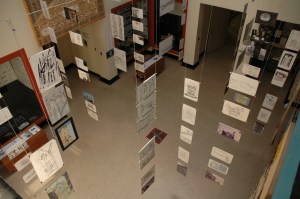
An exhibition that Mark and his colleagues Brandon Clarke, Smitty Lynch, coordinated along with other members of our spring break trip to Prague.

An exhibition that Mark and his colleagues Brandon Clarke, Smitty Lynch, coordinated along with other members of our spring break trip to Prague.

He is also a highly skilled designer, as is evidenced in design awards from Auburn and Hampton Universities.

Mark earned a NAAB-accredited degree from Hampton University – a program emphasizes urban planning as well as architectural design – and he then earned a design-build degree from Auburn University to boot.

To interview for the Enterprise Rose Fellowship, he went to Boston along with the two other candidates (both from top Ivy league schools).  After a rigorous multi-day interview, representatives from the community and the fellowship program voted, and then wholeheartedly extended the three-year fellowship to Mark.

During his time at HU, Mark’s research regarding water systems in the Philippines, and his work with the Virginia AIA’s Emerging Leaders in Architecture (ELA) program, were particularly relevant in preparing him for his work as an Enterprise Rose Fellow.
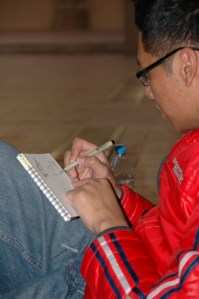
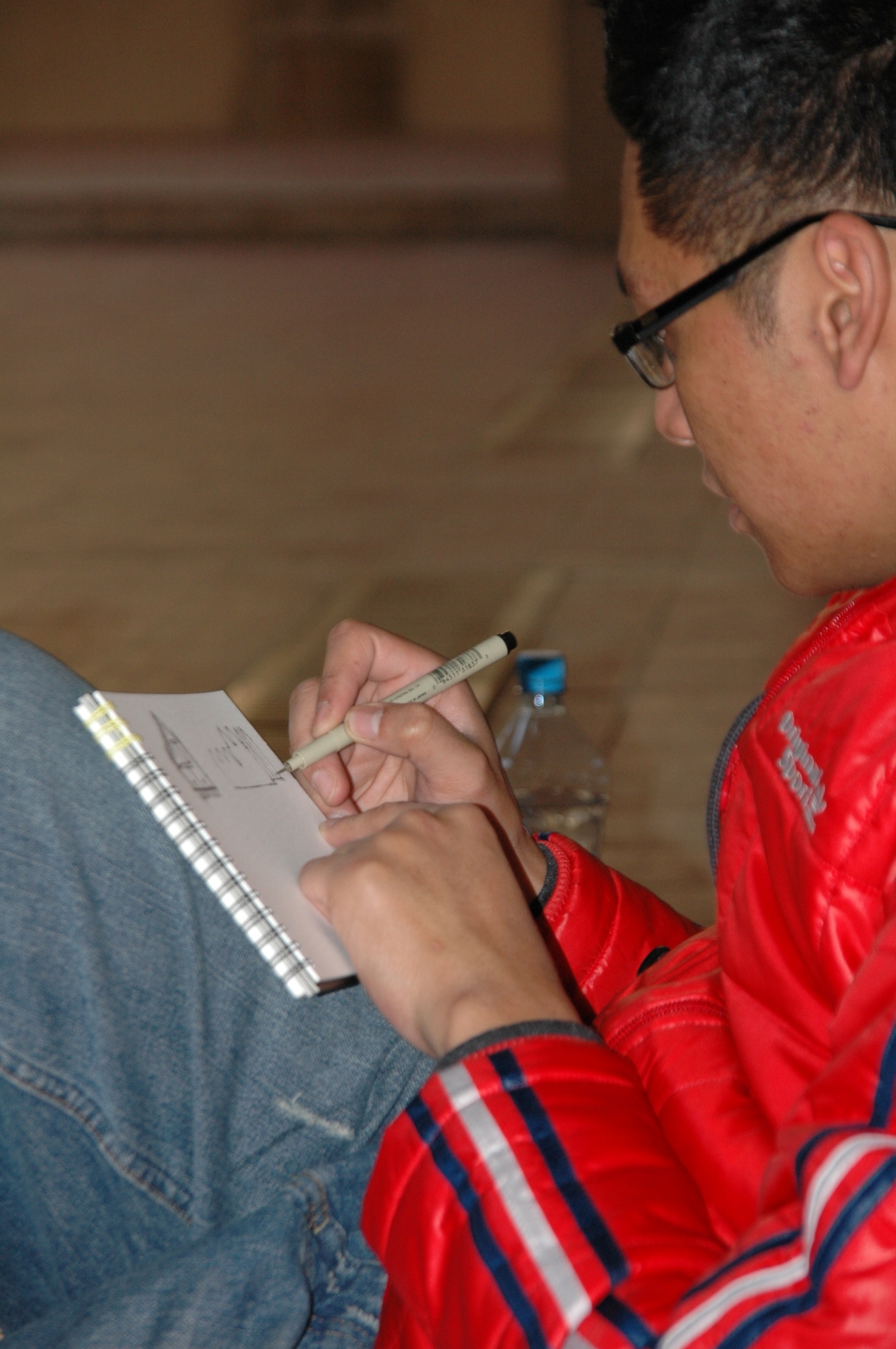
Mark sketching in Prague.

Mark sketching in Prague.

Marks’ activities all had an underlying theme of social activism related to the built environment.  He has always been able to think and work at multiple scales and with complex, inter-related issues.  His architectural studies enhanced these abilities.

Our department nominated Mark to represent Hampton University as part of Virginia AIA’s ELA program and his work with the organization exceeded our expectations.  The focus of the ELA program that year was on community revitalization and leadership.  Mark was highly engaged in his cohort’s project and he even defined the program for the subsequent year’s cohort.  (He identified specific conditions that needed to be addressed in Norfolk, Virginia and he helped get the new ELA group involved in fostering change where he knew it was needed.)

In his classes and teaching assistance-ships at Hampton University, Mark reflected a high level of engagement as well as what Daniel Goleman calls “emotional intelligence.”  Mark has the ability to share knowledge and to teach others techniques and strategies for improving themselves and their environments.

While he was at Hampton University, Mark was a very important part of defining a positive, learning culture within the academic context, as well as in the professional context (at the local and state levels) and in the larger community.

I couldn’t be prouder of Mark and all his many varied accomplishments.

You can see more of our trip to Prague in my archives.  My own presentation boards from Prague are also available for viewing.

Reflections on Water, Light, Time & Teams

Discovering time in ordinary and extraordinary objects.

Discovering time in ordinary and extraordinary objects.

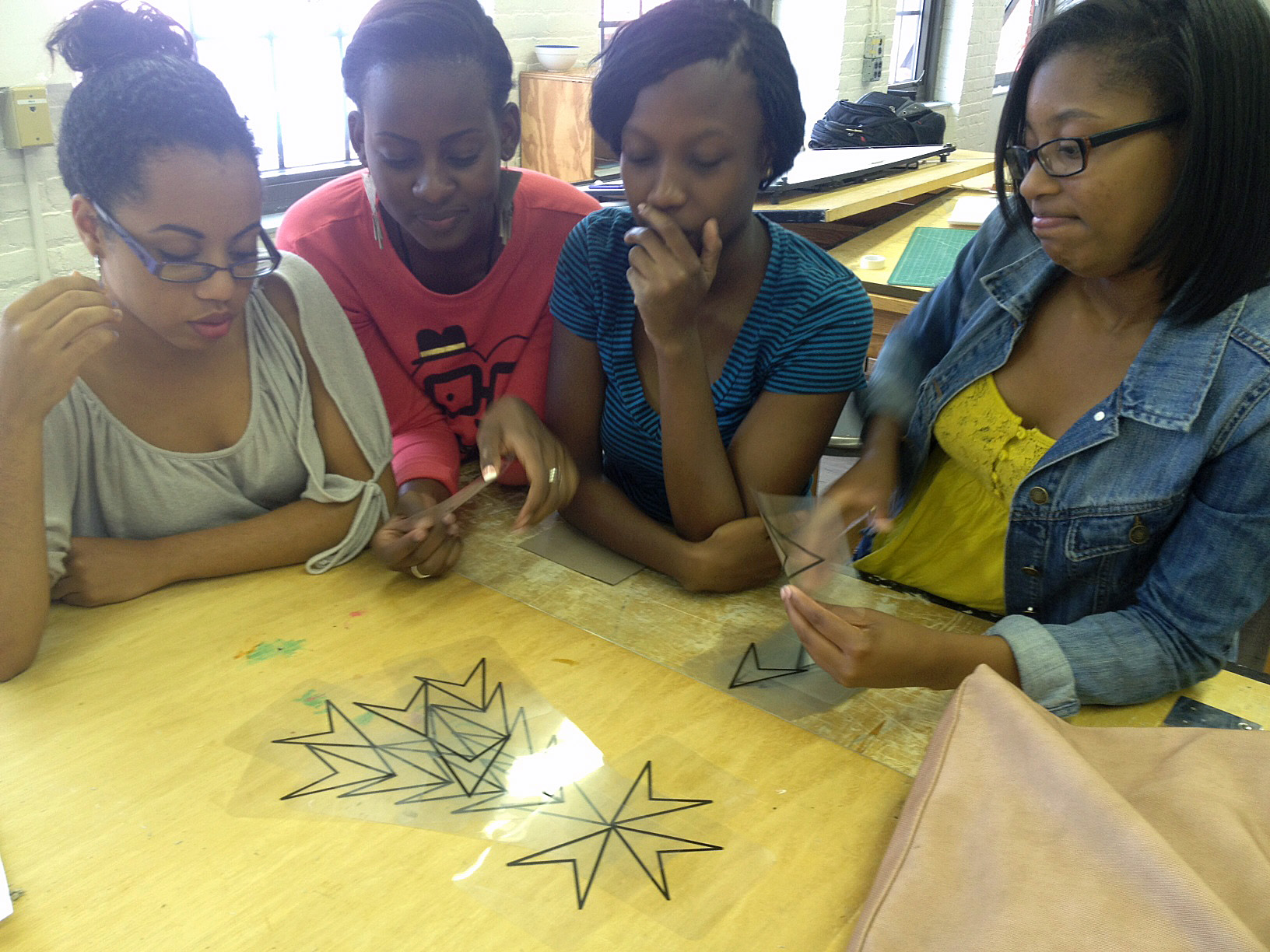
Janine, Khadjia, Shanice, and Sheldyn in a team-building activity lead by MIT grad student Derek Ham.

Janine, Khadjia, Shanice, and Sheldyn in a team-building activity lead by MIT grad student Derek Ham.

My students’ teamwork skills are improving by leaps and bounds.   The group of students pictured to the left makes teamwork and design look like so much fun.   In this photo they were doing a team-building exercise under the direction of Derek Ham.  Derek earned a Bachelor of Architecture degree at Hampton University in 2001. He went on to each a Master’s of Architecture at Harvard and teach at HU and FAMU. Today, he’s a PhD student at MIT. He came to talk with our students about overlaps between design and computation.

SELF-DIRECTED LEARNING

The overall goal of all this team work is to master skills in design, collaboration, and self-directed learning. In self-directed learning a (person or) group can identify what it needs to learn and how to learn it. It’s even better when the (person or) group simultaneously identifies what it wants to learn as well. That’s when learning gets to be really fun!

Members of this particular group did a nice job answering the question posted on this blog 1.5 weeks ago by prof. Steven Temple from the University of Texas at San Antonio. He asked if we’d posted findings of our water study yet.  Finally, here some are….

We’d done five studies in studio to date.  We’ve explored properties of water, light and time.  And, we’ve drawn our project site and studied/documented various monuments that use/express time/sun.  The images posted represent a few of the items this team has made in studio this semester.

So: What has the studio found that’s unique to water, light, and time?  Last weekend I asked my students to summarize their findings in words.  Here’s the response provided by Janine, Khadjia, and Sheldyn.

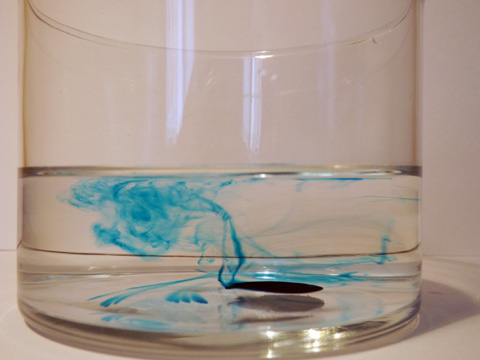
Capturing the essence of water.

Capturing the essence of water.

ONE TEAM’S FINDINGS FROM VIGNETTES

Water Vignette:

For this project, we decided to explore the way water moves. We wanted to highlight the seemingly random and beautiful motion of water and that other liquids also exhibit when placed in water. We used different colored dyes to show this. We observed that water and other liquids interact with each other in different ways, and that the density of the liquids mainly governed their behavior with each other. We observed a beautiful, smoke-like motion of the ink until it diffused and all the water became a diluted color of the dye. We also noted the way that water takes the shape of whatever vessel it is contained in, and that at any angle the water level will always stay perpendicular to the pull of gravity.

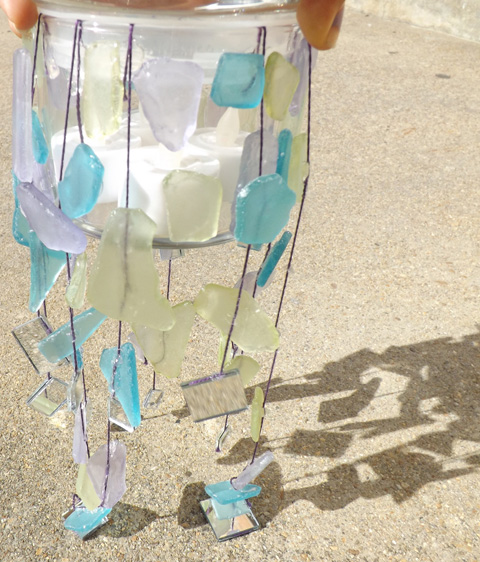
Capturing the essence of light.

Capturing the essence of light.

Light Vignette:

We wanted to highlight the behavior of light in terms of shadow and through different media. We mainly focused on shadows or the fact that light travels in straight lines and does not bend around objects. We also explored the reflection and absorption of light and how it filters through translucent media. We discovered that the effects of all these things differ with natural and artificial light. We also wanted to exhibit movement through light and observed this through the way light bounced off the mirrors and made shadows when our hanging objects moved.

Time Vignette:

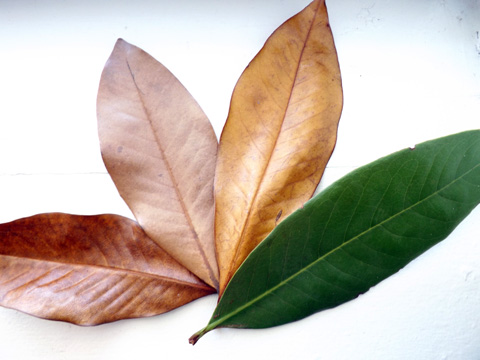
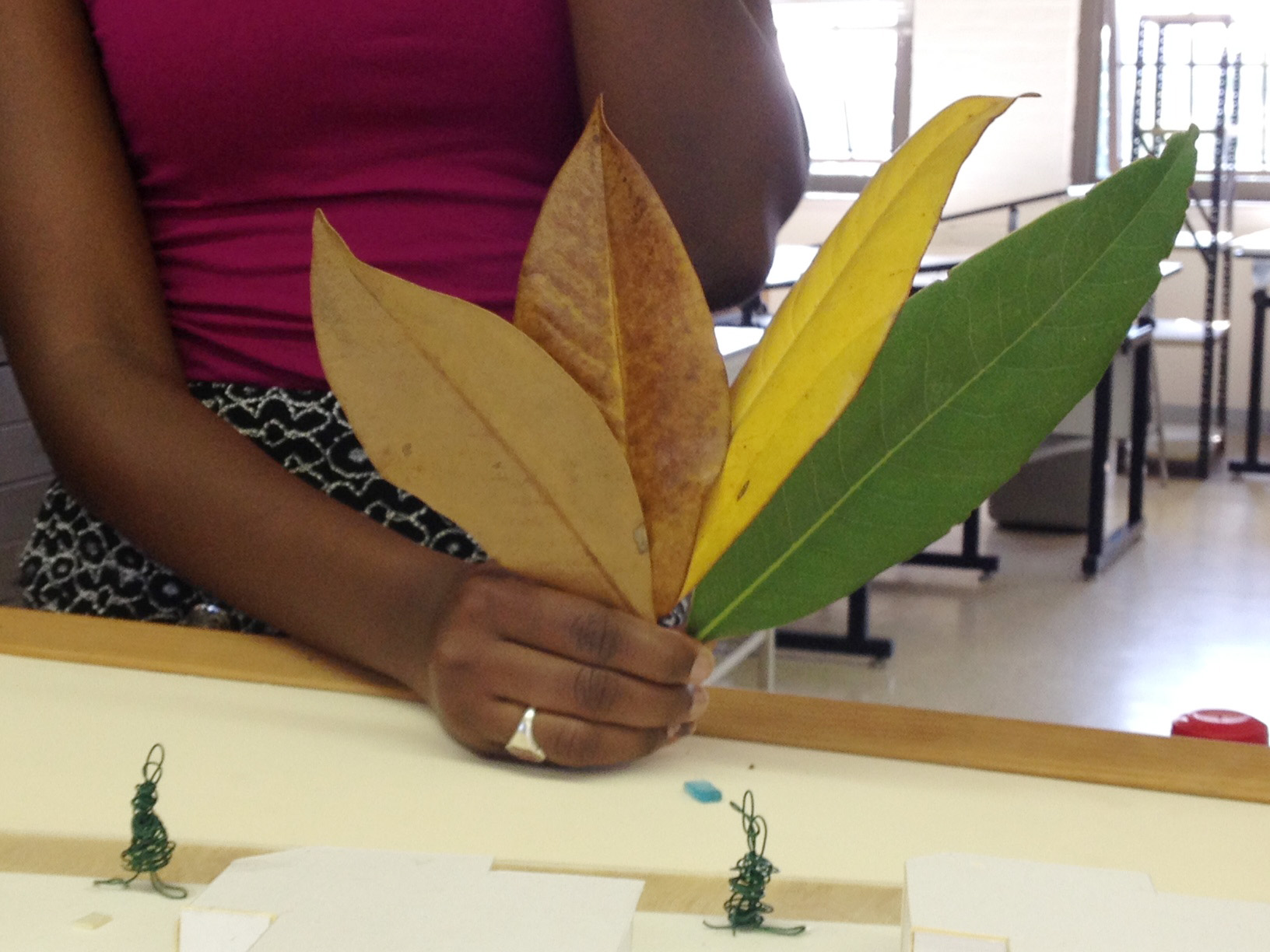
We wanted to focus on decay as a major indicator of time. We chose leaves that clearly indicated a full life cycle. They showed the progression from a rich green, whole sturdy leaf all the way to a brown, crinkled leaf. Age was indicated in the color, texture, size and shape of the leaf. We discovered that they also showed a sense of hierarchy in the appearance of the leaf. The youngest, freshest leaf was also the largest and had a strong, durable presence whereas all the other leaves got progressively smaller, duller and more brittle. They seemed to fade and disintegrate before our eyes.

Capturing the essence of time.

Capturing the essence of time.

How They Relate:

The water project exhibited all three concepts or elements. It showed water and its behavior with other liquids, it showed the behavior of light in water and also time, through the motion and eventual diffusion of the dye over time. The light project mainly exhibited light and time. It showed the behavior of the objects at different times, as they looked different during the day and at night. It also subtly exhibited time and wind as the positions of the objects and their shadows and reflections were constantly moving and changing. The time project also incorporates all three elements because with the passage of time, light is reflected differently off the leaves, shown by their color and texture, as the younger leaves shine because of their smooth texture and the older leaves don’t because they are dry and crinkled. Water was also shown in this project because the absence and presence of water within the leaf indicated its age. Younger leaves had more water and smoother, more elastic textures and older leaves were dryer and contorted with the absence of water to hold their shape.