From Sustainability to Singapore

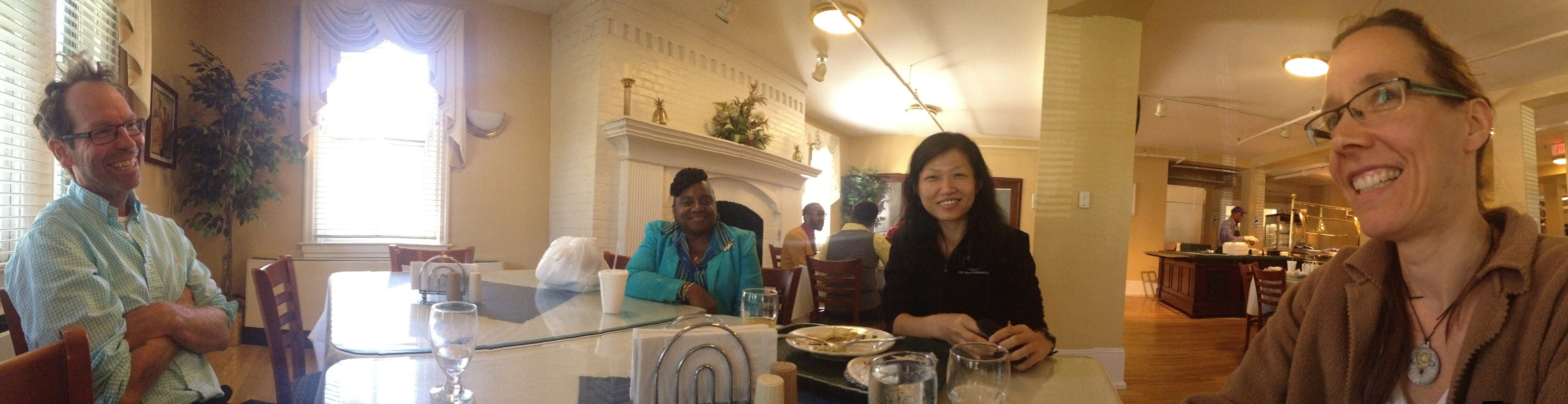
Learning together at the Holley Tree Inn.

Learning together at the Holly Tree Inn.

Every Tuesday, I hike across campus to the  Holly Tree Inn, Hampton University’s faculty restaurant, to share lunch with any professor who wants to share ideas over lunch.  At the start of the school year, I issued a very informal invitation to all faculty during the sustainability sessions my colleagues and I delivered to our colleagues at HU.  As a result, most of the Tuesday conversations focus on environmental sustainability.

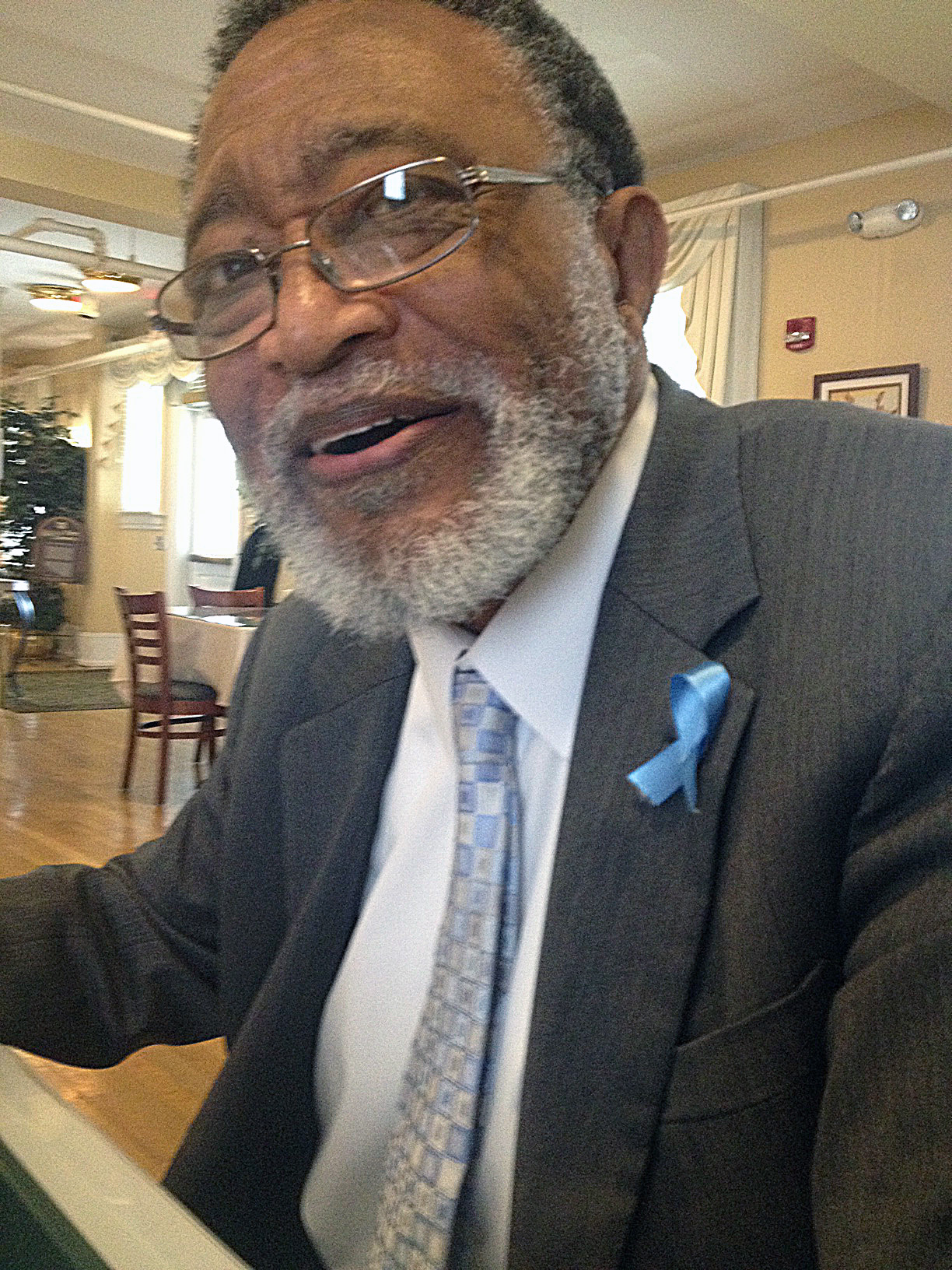
Dr. Ralph Charlton and I graduated together from William and Mary's School of Education with PhD's in Educational Policy, PLanning and Leadership.

Dr. Ralph Charlton and I graduated together from William and Mary’s School of Education with PhD’s in Educational Policy, Planning and Leadership.

I’ve always enjoyed sharing ideas at the Holley Tree.  My first experiences were as a part-time professor and I enjoyed them so much that I decided to join the HU faculty full-time.  After the studio class I co-taught in 1999-2000, I’d walk over to the Holly Tree with the rest of the department faculty and we’d reflect on events and goals of the department.  Unfortunately, we haven’t been doing much of this lately (it has to be really enjoyable to get people to take time out of their busy schedules… and the cost of buying lunch has increased over the years).

Nevertheless, I was inspired by the vast amount of learning that I observed (and was part of) in the staff canteens at DIT last year.  So I made the effort to replicate DIT’s model–which I saw as a way to create new knowledge and integrate learning across the campus.

So far this year, I’ve enjoyed sharing ideas with 2-4  people at each Tuesday’s lunch.   I’ve learned a tremendous amount in these conversations.

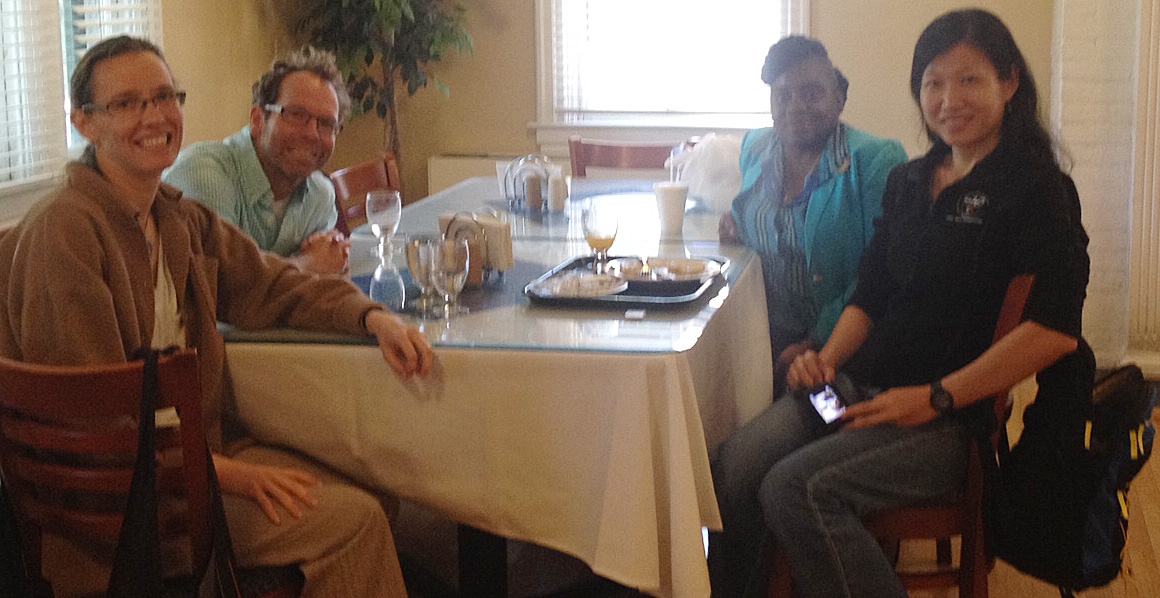
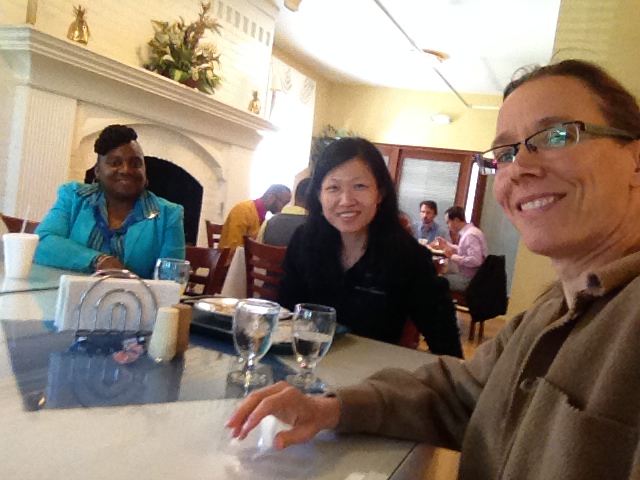
At the Holley Tree, I got to meet some people I'd normally not bump into.

At the Holley Tree last week, I got to meet some people I’d normally not bump into.

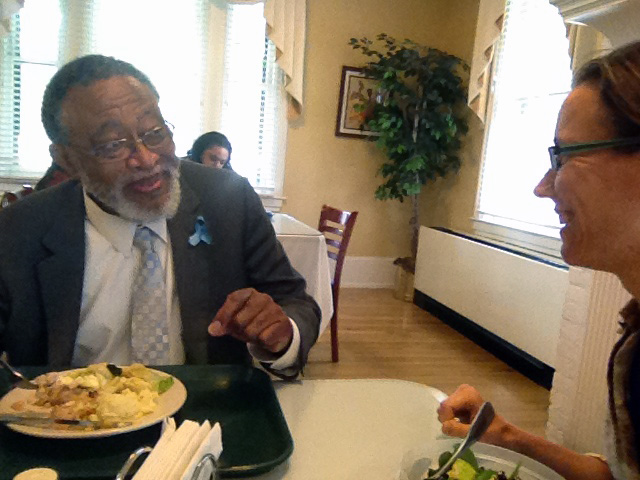
Last week, I dined with one HU professor, one HU administrative assistant, and a visiting professor from Singapore.  Our conversation focused on cultural similarities and differences and the opportunities that international exchange offers.

We didn’t stick exclusively to sustainability in our discussion this week, although we usually do.  Much of our conversation focused on cultural expectation and higher education policy.  In this realm, I learned that Singapore makes a big investment in reaching out the rest of the world.  It provides funding for its faculty members to travel internationally to learn new things and connect to scholars elsewhere.  (A few years back, I met a pre-K school leader from Singapore who had received funding to travel through the US for several weeks, on a similar program also funded by the national government in Singapore).

The folks I ate with last Tuesday were experts in sports management and in teaching college students about that topic.

Incidentally, the Holly Tree is a bit of an icon.  Rosa Parks worked here for a brief time–not so very long ago.

Reflections on Water, Light, Time & Teams

Discovering time in ordinary and extraordinary objects.

Discovering time in ordinary and extraordinary objects.

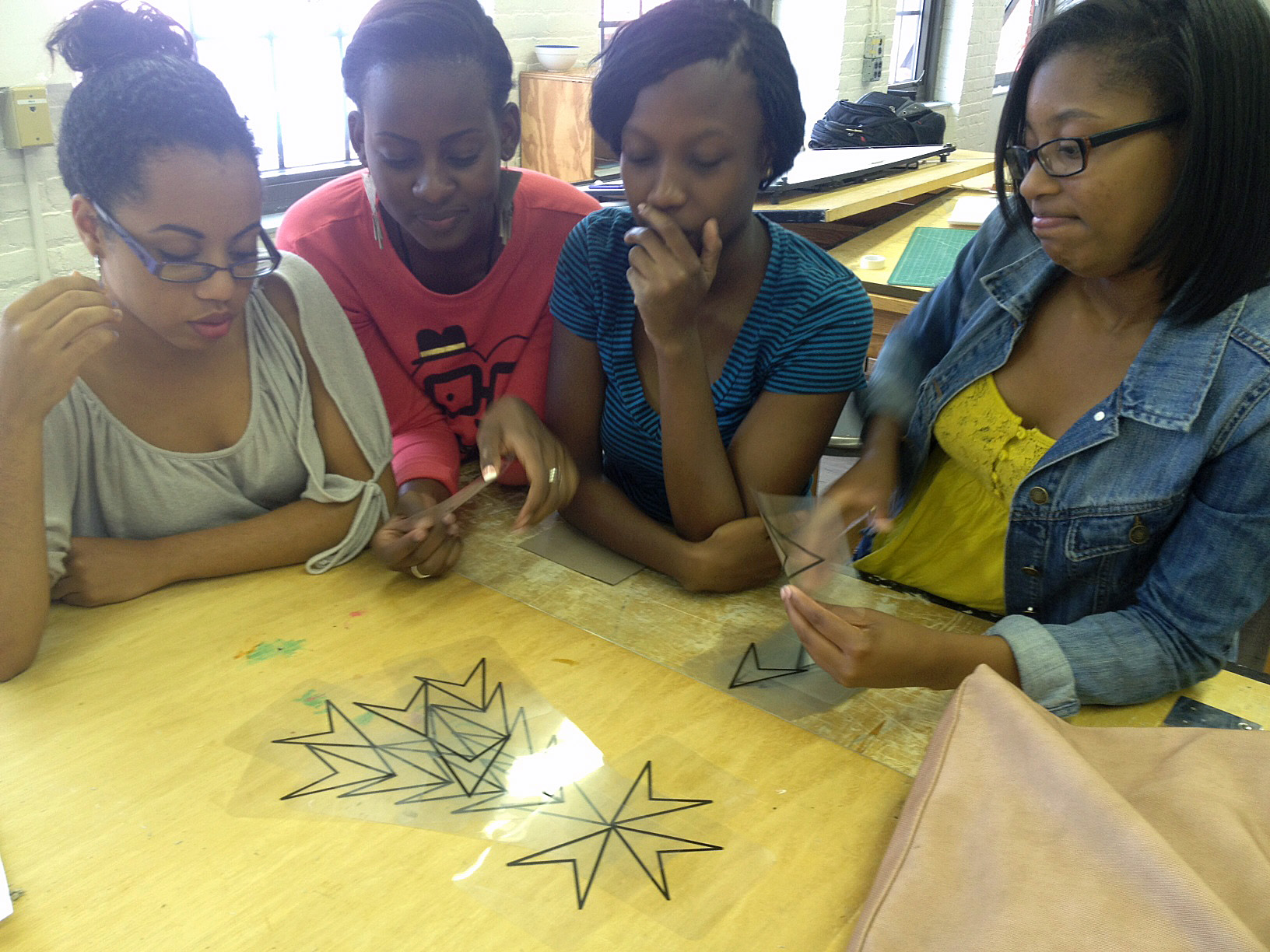
Janine, Khadjia, Shanice, and Sheldyn in a team-building activity lead by MIT grad student Derek Ham.

Janine, Khadjia, Shanice, and Sheldyn in a team-building activity lead by MIT grad student Derek Ham.

My students’ teamwork skills are improving by leaps and bounds.   The group of students pictured to the left makes teamwork and design look like so much fun.   In this photo they were doing a team-building exercise under the direction of Derek Ham.  Derek earned a Bachelor of Architecture degree at Hampton University in 2001. He went on to each a Master’s of Architecture at Harvard and teach at HU and FAMU. Today, he’s a PhD student at MIT. He came to talk with our students about overlaps between design and computation.

SELF-DIRECTED LEARNING

The overall goal of all this team work is to master skills in design, collaboration, and self-directed learning. In self-directed learning a (person or) group can identify what it needs to learn and how to learn it. It’s even better when the (person or) group simultaneously identifies what it wants to learn as well. That’s when learning gets to be really fun!

Members of this particular group did a nice job answering the question posted on this blog 1.5 weeks ago by prof. Steven Temple from the University of Texas at San Antonio. He asked if we’d posted findings of our water study yet.  Finally, here some are….

We’d done five studies in studio to date.  We’ve explored properties of water, light and time.  And, we’ve drawn our project site and studied/documented various monuments that use/express time/sun.  The images posted represent a few of the items this team has made in studio this semester.

So: What has the studio found that’s unique to water, light, and time?  Last weekend I asked my students to summarize their findings in words.  Here’s the response provided by Janine, Khadjia, and Sheldyn.

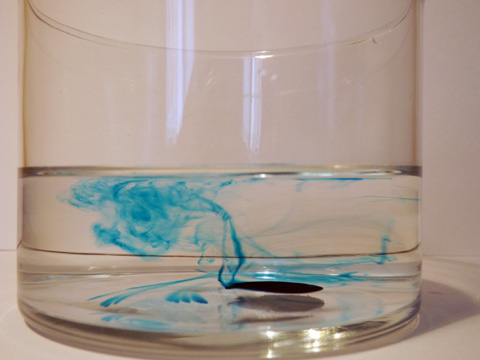
Capturing the essence of water.

Capturing the essence of water.

ONE TEAM’S FINDINGS FROM VIGNETTES

Water Vignette:

For this project, we decided to explore the way water moves. We wanted to highlight the seemingly random and beautiful motion of water and that other liquids also exhibit when placed in water. We used different colored dyes to show this. We observed that water and other liquids interact with each other in different ways, and that the density of the liquids mainly governed their behavior with each other. We observed a beautiful, smoke-like motion of the ink until it diffused and all the water became a diluted color of the dye. We also noted the way that water takes the shape of whatever vessel it is contained in, and that at any angle the water level will always stay perpendicular to the pull of gravity.

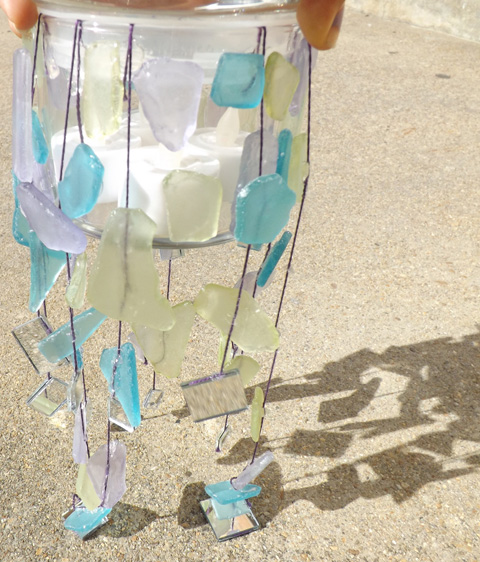
Capturing the essence of light.

Capturing the essence of light.

Light Vignette:

We wanted to highlight the behavior of light in terms of shadow and through different media. We mainly focused on shadows or the fact that light travels in straight lines and does not bend around objects. We also explored the reflection and absorption of light and how it filters through translucent media. We discovered that the effects of all these things differ with natural and artificial light. We also wanted to exhibit movement through light and observed this through the way light bounced off the mirrors and made shadows when our hanging objects moved.

Time Vignette:

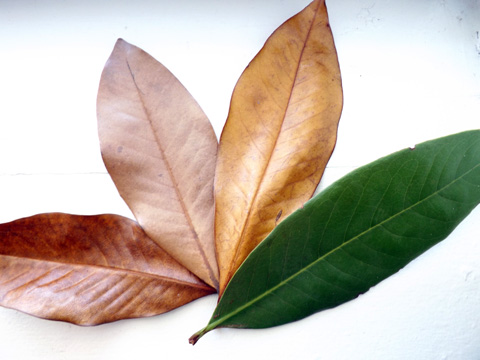
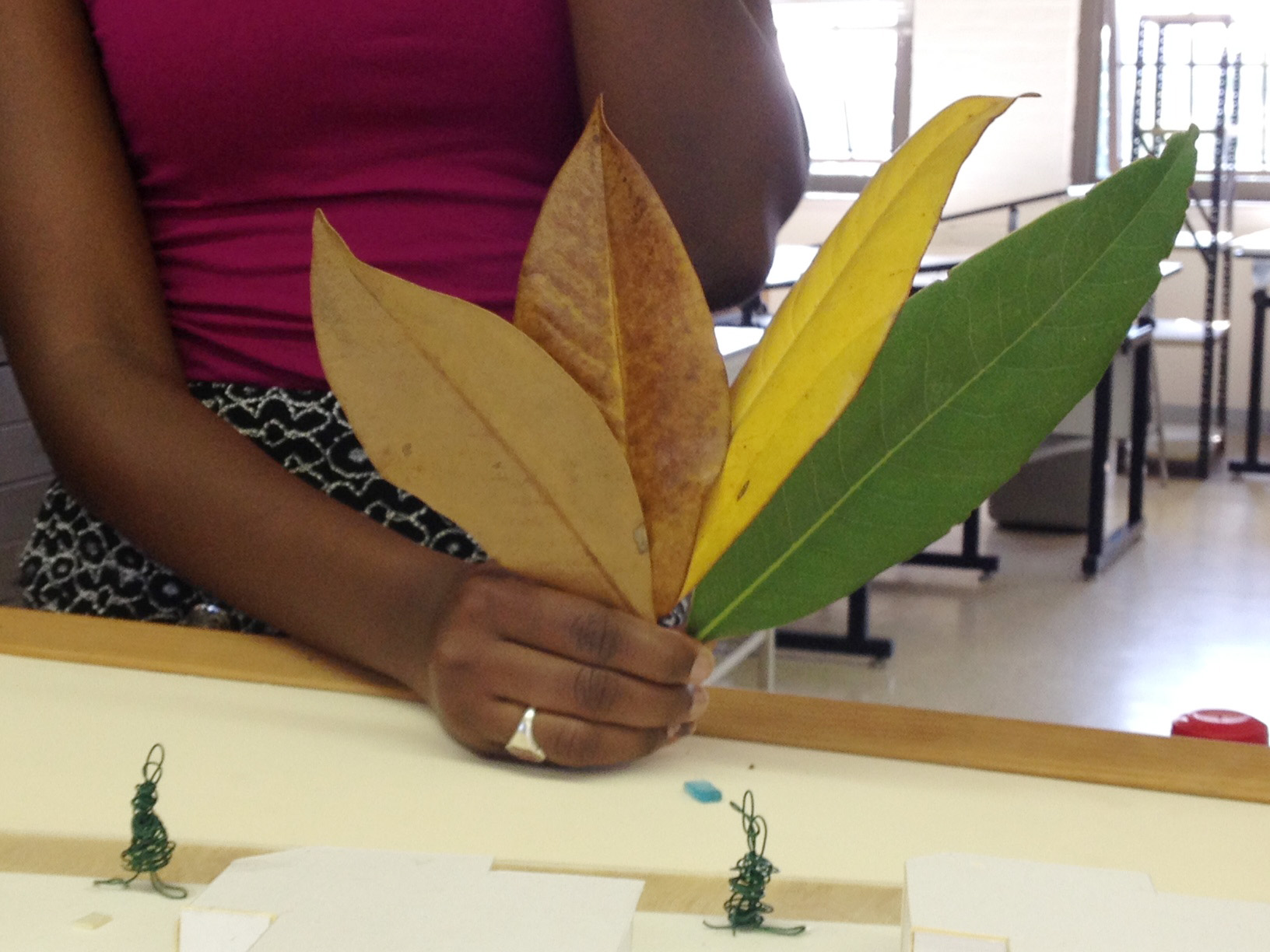
We wanted to focus on decay as a major indicator of time. We chose leaves that clearly indicated a full life cycle. They showed the progression from a rich green, whole sturdy leaf all the way to a brown, crinkled leaf. Age was indicated in the color, texture, size and shape of the leaf. We discovered that they also showed a sense of hierarchy in the appearance of the leaf. The youngest, freshest leaf was also the largest and had a strong, durable presence whereas all the other leaves got progressively smaller, duller and more brittle. They seemed to fade and disintegrate before our eyes.

Capturing the essence of time.

Capturing the essence of time.

How They Relate:

The water project exhibited all three concepts or elements. It showed water and its behavior with other liquids, it showed the behavior of light in water and also time, through the motion and eventual diffusion of the dye over time. The light project mainly exhibited light and time. It showed the behavior of the objects at different times, as they looked different during the day and at night. It also subtly exhibited time and wind as the positions of the objects and their shadows and reflections were constantly moving and changing. The time project also incorporates all three elements because with the passage of time, light is reflected differently off the leaves, shown by their color and texture, as the younger leaves shine because of their smooth texture and the older leaves don’t because they are dry and crinkled. Water was also shown in this project because the absence and presence of water within the leaf indicated its age. Younger leaves had more water and smoother, more elastic textures and older leaves were dryer and contorted with the absence of water to hold their shape.

Ecology Rocks! (Especially in a Flipped Classroom)

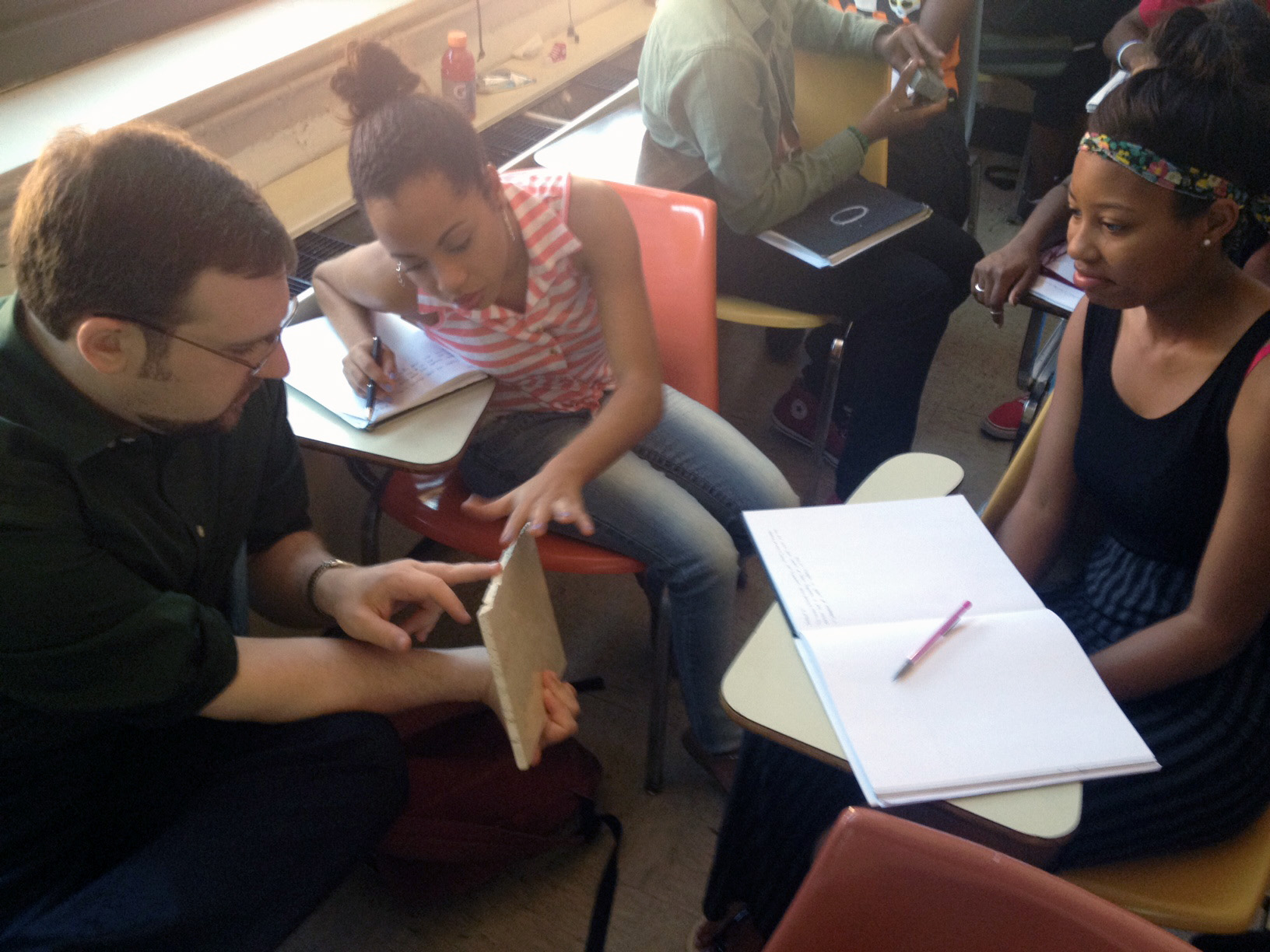
This group realized there was a fill material in the crevices of their "Roman Travertine" tile sample.

This group realized there was a fill material in the crevices of their “Roman Travertine” tile sample.

Today we discussed “natural factors” that affect architectural design, such as rock and soil composition. This tied directly to yesterday’s studio class on the HU Point. Today, I was using a technique known as the “flipped classroom” to teach Architectural Ecology. I learned about this technique during my Fulbright fellowship at DIT.

I had assigned my students to read a chapter before class. When they arrived, we started class with ten minutes of journaling.  I asked them to write about the aspect of the chapter they thought was most important to them regarding our site at the Hampton University Point, and to explain why.  I also asked them to identify a topic in the chapter that they didn’t fully understand and explain why/what they didn’t understand about it.

Journaling is my own way of assessing students’ level of understanding of the content.  After ten minutes, I collected journal papers then “flipped the classroom”.  Each student joined the other members of his/her learning group, discussed the issues of confusion they’d each identified, explained to each other what they understood (this is known as “peer teaching”), and researched information on line using their laptops and smart phones.

I circulated around the room, listening, observing,  pointing them in the right direction where necessary,  and making sure they were achieving accurate interpretations.

It became clear that soil and rock composition was the major topic of confusion, so I went ahead and distributed the rock samples I have on hand.  Each group got their own unique rock type to analyze, research, and introduce to the rest of the class. The students did a great job of staying on topic in their discussions, learning, and teaching leach other.

They made sense of sedimentary, igneous, and metamorphic rock. They began to understand issues of texture, particle size, expandability, drainage, and bearing capacity while they were talking among themselves with my guidance.

A member of each group presented findings to the class and we discussed overarching issues.

Then I projected the Prezi file on the screen, which I’d formatted using a table of contents so we could zoom directly into whichever specific issues were causing confusion. In this case, we needed to go over the soil classification pyramid a bit, but they had already developed pretty strong understanding through the group discussions and rock presentations.

Amazingly, everyone stayed engaged for 1.25 hours!

I didn’t have to nag students to pay attention.

By the end, they seemed to have very good understanding of all the content of the chapter.  I found I had ten minutes to spare at the end to bush on topics of my choice (ones I thought a student or two might still have misconceptions about).

I am loving this new, more interactive, way of teaching.

It’s called “flipping the classroom” because the content is delivered before class (in this case, through a reading), and class time is used to gauge accuracy and depth of understanding and to build upon that base.  It seems to be a much better us of time than presenting everything with equal emphasis, before assessing if the students already understand it!

Not everyone came into the class having read, unfortunately. This problem should correct itself in the future because each student gets a grade for each journal entry. They have to show basic understanding of the reading in order to earn points. They generally start seeing the importance of this after a day or two.

How Professors Have Fun

My former dissertation advisor, Dr. Pamela Eddy, is here visiting me in Dublin this week.  She was a Fulbright to Ireland in 2009 and she helped me make valuable connections when I started applying for my own Fulbright experience here.

So far, we’ve spent a lot of time at our computers!  Although it’s her Spring Break, she’s answering emails, reviewing dissertations, and grading papers. Oh, and advising me!

She helped me prepare for the meeting I had today with DIT’s president, Prof. Brian Norton.  I’ve attached a photo of us working from my home yesterday.  She was still sitting the same seat when I Skyped her from my office on Kevin Street just now to “debrief” on the meeting.

We do stop for exercise, food, and meeting… but little else!

A Flexible Learning Lab at DIT

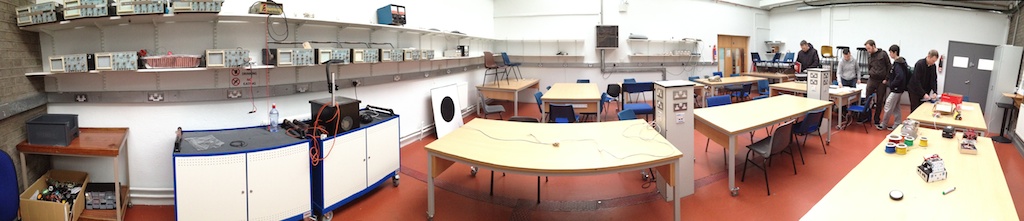
This is a picture of a flexible lab for learning engineering.  It is a space for group-driven problem-based learning, or a “PBL classroom.” A colleague of mine back in Virginia who is an expert in engineering education said she wasn’t familiar with this type of space, so I though I’d post it for others to see.

The flexible learnign lab in the DIT electrical engineering program.

The flexible learning lab in the DIT electrical engineering program.

It was designed to promote team learning and provide access to materials and tools for building engineering projects.  Above, Gavin’s Instrumentation class had just wrapped up for the morning.