Fleeting Glimpses

I’ve been so bogged down in grant- and conference-writing that I haven’t gotten to update you on the architecture studio’s progress.  I’m hoping to share some of the students’ findings soon. In the meantime, here are a few photos I snapped early last week.

It’s typically difficult to get our students interested in discussions of meaning and philosophy.  These are generally seen as esoteric.  But so far the group-based format seems to be eliciting a  higher level of engagement in fuzzy issues than I’ve witnessed here in recent years.

Interestingly, when I was in school, a professor might to give us just a word or two to explore.  S/he would expect us to invest a week or two of time to contemplate, make things, and refine our knowledge and skills.  Most of us were quite happy to oblige.  We’d make things without much prompting at all and find a lot of joy in it.  Today, students have to drive for hours to gather decent materials. And, in today’s digital milieu, making beautiful, physical things seems to be an alien concept.

UO Studio Review

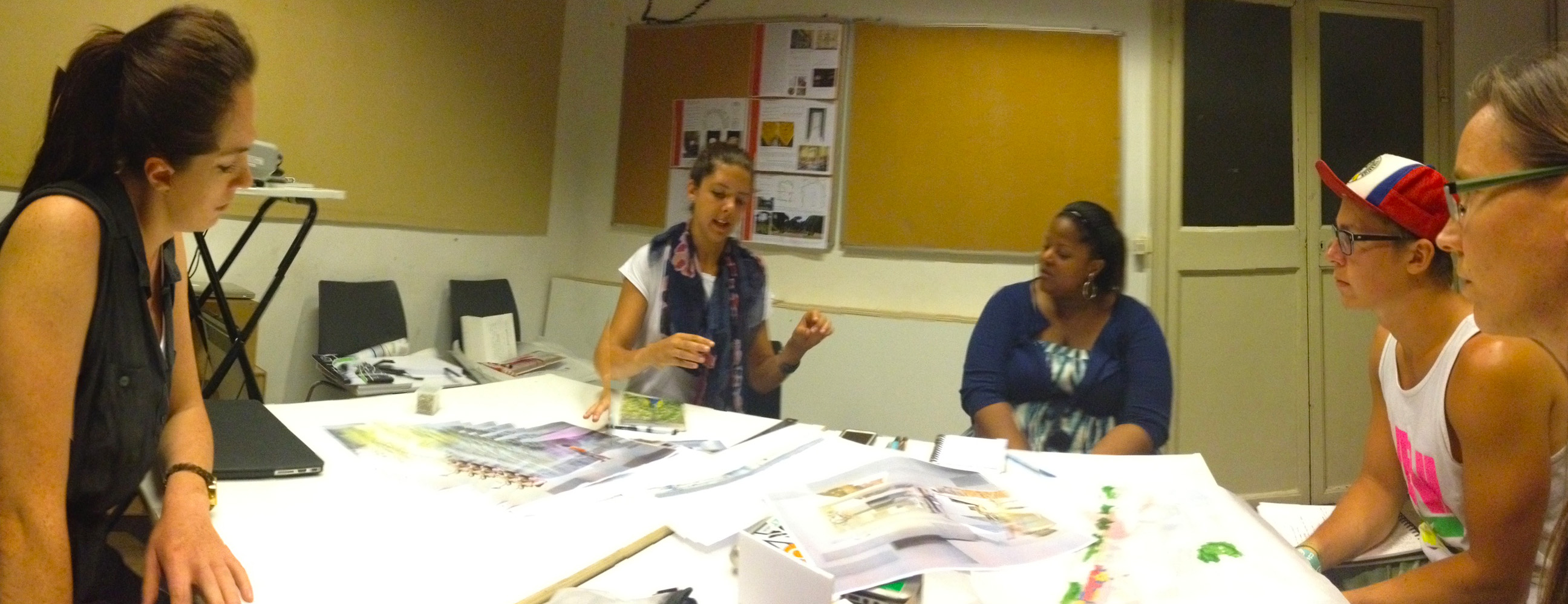
Taylor, Katie, Daisy, Cody, and me deep in conversation over a design proposal.

Taylor, Katie, Daisy, Cody, and me deep in conversation over a design proposal.


On Tuesday, I delivered a lecture to the University of Oregon architecture students here in Rome.  Daisy made me feel like a million bucks with her introduction!  We worked together at Hampton University from 2005-2010 and got to know each other well.  I miss her, but I’m thrilled that she’s doing so well for herself!

In the talk, I shared examples of the research I’ve been doing and  discussed the need for architects to expand their research abilities.

After the lecture, three of the students presented their design progress. Daisy, the other students, and I gave feedback and ideas for further development.

Activating an Embankment

Viewing the site from across the Tiber, with Daisy.

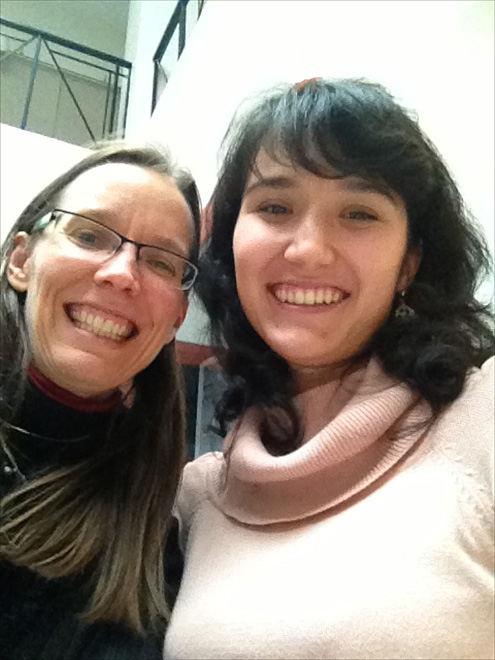
Viewing the site from across the Tiber, with Prof. Daisy Williams.

On my first night in Rome, University of Oregon Prof. Daisy Williams took me to see the site in Rome that her students are using for their architectural design project. It’s across the Tiber River from where we’re standing in the above photo.

The site comes to life in the summer–in a way I’d not gotten to see before.  (I usually visit Rome in May, before the walkway becomes active.)  I’ve included photos of our visit to the waterfront, so you can join us on our tour.

Prof. Williams has asked her students to re-design the embankment wall in this area, so that it can be used for screening films, and so that it connects street and water-front walkways more comfortably.

You can see from the image above that the walkway often floods. This is an issue the students need to take into account in their designs.

Student-Centered and Urban: Architectural Education at IST

The second stop of my Fulbright Inter-Country Lecturing visit was to the Instituto Superior Técnico (IST). One of the organizers of the day, José Figueiredo, explained to me that IST “is the biggest and oldest engineering school in Portugal.”

Professor Teresa Heitor lined up all kinds of fascinating events for me.  The 60 first year architecture students presented their work to me (in English!).  Then, they came along as their professors gave me a tour of all the architecture studios.  We got a glimpse of what these particular students will encounter in the coming years, as they progress through the five-year architecture program at IST.

Their architectural education will be structured very, very much like ours in the USA.

Their design assignments will be quite similar as well, although the projects students encounter here do tend to have more of an urban focus than most programs I’ve visited in the US.  (I serve on architectural accrediting teams and have visited many different schools in the US through conferences as well as accreditation visits.  I have to say, however, that my home institution–Hampton University–has done a noteworthy job over the past decade of integrating urbanism into the curriculum.  Of that, I have been proud.)

At IST, I was particularly impressed with what I learned from the first year professors.  They’re doing a great job overcoming what I see as a big weakness in architectural education today.  So many teachers around the globe focus on teaching students to make “signature buildings” and “modernist masterpieces” that other architects will love.

These teachers, instead, endeavor to draw out their students’ unique interests and abilities.  Unlike the many teachers who seemingly want to “wipe the slate clean”, these professors seek to help students draw from the wealth of experience and knowledge they bring to the first year design studio.

Expanding your Learning Styles

Iroda Karimova said in earnest that she misses my crits! (!?!!??)

As per my prior post, Iroda Karimova said in earnest (while I was visiting the Hampton University Department of Architecture two weeks ago) that she misses my crits! (!?!!??)

Because I’m an active blogger I’m forever getting the question, “Do you ever work?”

The answer is yes; here’s a quick example.

My former student int he Department of Architecture at Hampton University, Iroda Karimova, emailed this to me from her smart phone today:

It was also nice to talk to you too. We haven’t see you for a while. I hope you are enjoying your oversea experience. I sometimes read your blogs, to see how you we doing.

Yes sometimes I wish I could hear your critiques, especially when I did good :). Your critiques were short, to the point, emphasizing important accomplishments, and sometimes not too enjoyable but helpful.
 
 Thank you for sending me this post.
 See you soon.
____
Whew! It sounds like I was doing my job correctly. Part of that  job is to help students learn to evaluate their strengths and weaknesses. I’ve got to challenge them to address weaknesses I see. Effective teaching requires a careful balance of challenge and support (Sanford, 1962). I aim to provide that and to help students reach just a bit farther than they are comfortable doing (this is called a “plus-one” approach to teaching).
Good students, like Iroda, recognize that challenges are presented to help them grow and that the professor’s main role is to help guide them in their own learning. Receiving critique is never pain free, but it is necessary for growth and development.
Here’s the very quick reply I dashed off:
Thanks for your note, Iroda!  

 
You always do excellent work.  I wanted to make sure to help you reach for the stars, though.  You’re really terrific at technical ways of thinking.  As a second-year instructor, my job is to try to help students develop fluency in multiple ways of thinking… particularly the ways they find foreign or uncomfortable.

 
I’ve attached a chart to explain (it’s from a paper I was working on Tuesday). Most students come to college very good at one corner/quadrant of the chart. You were exceptionally good at Convergent thinking. I’d say you left second year with new skills in that realm, but more importantly, with new skills in the other three quadrants as well.
 
Cheers,
Shannon
_____
Below is a chart I made to describe Kolb’s (1984) theory. It is based on a similar chart published by Evens, Forney, and Guido-DiBrito (1998). You can read more in the paper I created for the National Conference on the Beginning Design Student (MADE Proceedings Chance Writing Architecture). If you reference it, please cite the source. The citation for the paper is:

CHANCE, S.M. (2010).Writing architecture: The role of process journals in architectural education. MADE: Design education and the art of making (160‐170). Charlotte, NC: College of Arts + Architecture. Presented at the 26th National Conference on the Beginning Design Student in Charlotte, NC.
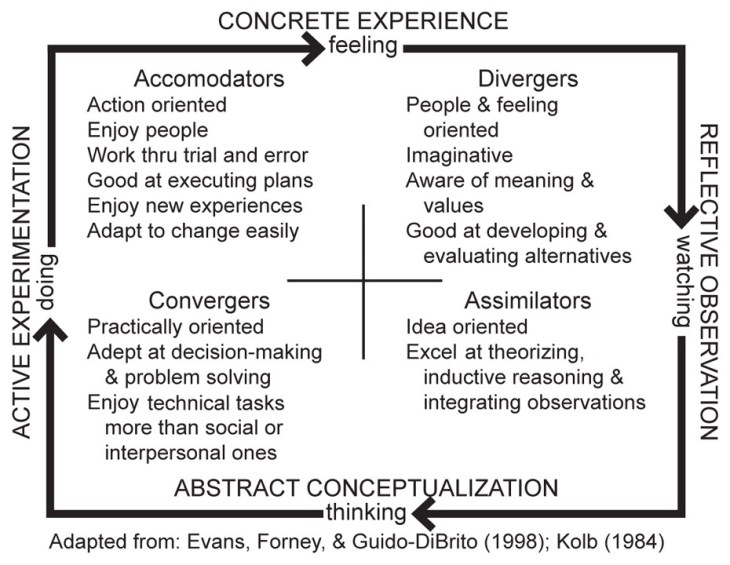
Kolb chart by Shannon Chance

A Visit to Bemis

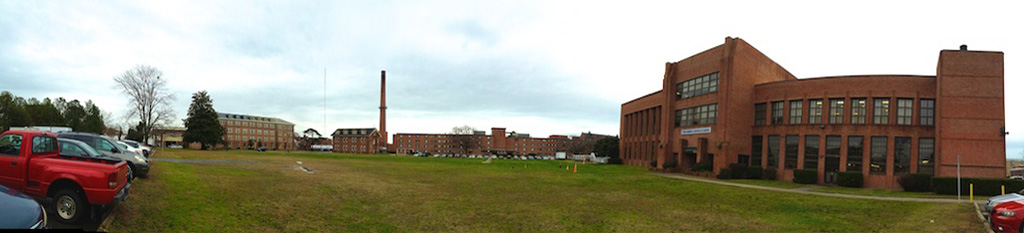
Bemis lawn with Bemis Laboratories to the right, home of the Hampton University Department of Architecture.

Bemis lawn with Bemis Laboratories to the right, home of the Hampton University Department of Architecture.

I almost forgot to show you my January 2013 visit to Hampton University. The semester starts earlier there than at most universities, so I had the chance to visit before returning to Dublin, and while HU classes were in session. That way I could see my students as well as other professors.  I snapped some photos along the way of things that caught my eye….

Ode to NYC

A reflection captured by Anthony Henderson that captures some of the essence of NYC. (Downloaded from Anthony Henderson's Facebook page.)

A reflection photographed by Anthony Henderson. It captures the essence of NYC on a rainy day. (Downloaded from Anthony Henderson’s Facebook page.)

I had really, really wanted to make a trip to New York City during my trip to the USA. I won’t get to; my work on the research paper has been slow. That’s due, in part, to a cold that has haunted Dave and me for the past week.

To overcome my sense of loss at not having visited New York in two long years, I occasionally transport myself to The City using images such as the one I’ve posted here. Anthony Henderson, a colleague of Dave’s and mine from architecture school, took it.

I hope you’ll enjoy Mr. Henderson’s dramatic photographic reflection of the Big Apple.

Exploring Material Ethics

A progress review in Patrick’s 4th year studio at the DIT. Patrick, Shannon, and Connor are clearly captivated by this student’s presentation.

I asked the architecture students to tell me what interested them most from the lecture on Materials that I gave today in the studio coordinated by Patrick Flynn.  They said Dave Chance’s images!

I’d been asked to talk about materials in a way that would help students with designing schools.  So I started by downloading pages from Dave’s website.  He travels the world photographing materials in relation to light.

To prepare for this lecture I also attended a review of the class’s proposed designs last Friday.  Patrick invited me as a guest critic, but my primary goal was to find out how I could tailor today’s presentation to their needs and interests.

A slide using Dave Chance’s photograph from the American Cemetery at Omaha Beach in Normandy. (Copyright Dave Chance Photography.)

I decided to present my thoughts using: (1) Dave’s images to provide inspiration and (2) images of schools as a tool for conveying more pragmatic content.

I structured the talk around themes of Material Ethics, Teaching Capacity of materials, the need to Generate Knowledge regarding materials, Authenticity, and Sustainability.  I titled it “How an Architect’s Material Palette Can Enhance Student Learning” with the subheading “Cultivating an Ethics of Materiality.”