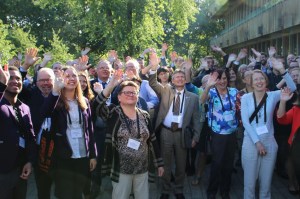
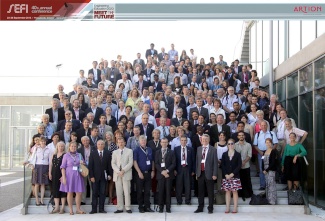
 I’ve just attended the world’s friendliest conference, the European Society for Engineering Education (SEFI). I’ve never felt more welcome and invigorated by the exchange of ideas at a conference. This was my third SEFI, and while I’ve always felt incredibly welcome here, I now know people from all corners of the world by first name and they greet me likewise.
Last Sunday, I flew to Copenhagen from Nice, landing in the evening and traveling out to the campus of Denmark Technical University early Monday morning to help deliver an all-day workshop on research methods for PhD students. The workshop was coordinated by Prof. Jonte Bernhard, Dr. Kristina Edström, and Dr. Tinne de Laet. I also attended the conference’s opening ceremony and reception at Microsoft’s Danish HQ that evening.
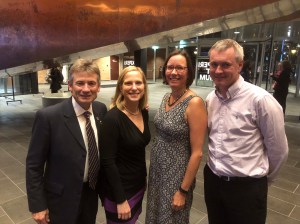 Tuesday started bright and early with a keynote speech–delivered by Dr. Stephanie Farrell who was a Fulbright Fellow to Dublin Institute of Technology (DIT) while I was a Marie Curie Fellow there. Although each morning started with a keynote lecture, for me, Stephanie’s was the most insightful of all. Attendees asked dozens of questions at the end, with another dozen people standing in line to ask questions afterward.
In all, there were three past DIT Fulbright Scholars at the conference–Stephanie, Dr. Sheryl Sorby, and me. The fact that three past DIT Fulbright scholars are still contributing to European EER on a regular basis and attending SEFI shows how a modest investment to support a Fulbrighter can pay dividends. We all still proudly represent DIT in various activities!
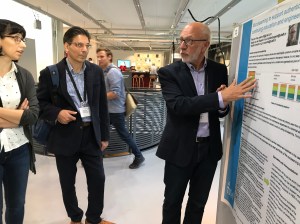 Following the Thursday morning keynotes, we enjoyed a fun new poster-presentation format. Poster authors got 30 seconds each to pitch their topic to the entire delegation, and then we went to visit their posters. This format raised the profile of posters as well as attendees’ interest in discussing them.
On this day, I also attended a session on writing for the European Journal for Engineering Education, got invited to serve on the journal’s Editorial Board by editors (Drd. Edström, Bernhard, and Maartje van den Bogaard), and networked with colleagues from Europe, North America, and Australia. Afterward, back in the city center, I enjoyed a lively dinner with editors from four different journals.
Working Groups were the focus on Wednesday, and I helped deliver a series of sessions of the Engineering Education Research (EER) Working Group, spearheaded by our leader Dr. Tinne de Laet. I’m a member of this group’s Governing Board, and since we meet monthly online, we didn’t need to conduct a business meeting here. In our morning session, each Board member briefly described her/his current projects. Participants each chose one Board member to join for small-group discussion. My small group discussed (1) tips for winning fellowship grants and (2) epistemology and identity topics related to EER. Later in the day, the Working Group ran a workshop where participants reviewed high-quality research papers and discussed their characteristics. During lunch and breaks–which were full of fascinating discussion with colleagues–I conferred with colleagues from Dublin Institute of Technology (Prof. Brian Bowe, Prof. Mike Murphy, Mr. Kevin Gaughan, Ms. Una Beagon, Ms. Diana Adele Martin, and Mr. Darren McCarthy) on plans to host an Inaugural Lecture at DIT this autumn. The lecture will be delivered by Dr. Bill Williams, who has just been appointed Adjunct Senior Researcher at DIT (upon my nomination–yay!). Since we intend to invite colleagues from other institutions, and particularly my colleagues from University College London, I worked to find an appropriate date and to identify the topics of Bill’s upcoming lecture and also the EER workshop he will conduct for our research group. Stay tuned for details!
 After lunch, I attended a session on “Increasing the Impact of your Journal Publications” conducted by editors of the Journal for Engineering Education, Dr. Lisa Benson and Dr. Cindy Finelli. For dinner, the EER Working Group Board met in town.
Thursday morning, delegates attended presentations by individual scholars regarding their research projects. We used a range of formats including lecture, discussion, and flipped-classroom.
Over lunch, I worked with UCL colleagues, Ms. Emanuela Tilley, and Prof. John Mitchell, on strategic planning for a new Architectural Engineering curriculum we are developing. Throughout the conference, I enjoyed comparing notes with members of UCL’s Centre for Engineering Education who attended, including Emanuela, John, Dr. Inês Direito, Dr. Able Nayamapfene, and Ms. Paula Broome.
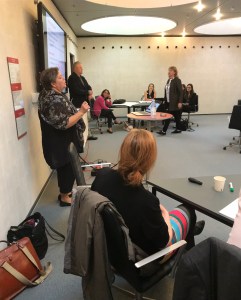 After lunch, I presented as part of the session “Reviewers! Reviewers! Reviewers!” In this session, editors of four journals explained what they are aiming to publish and how to write good reviews. I was representing IEEE Transactions on Education, the journal for which I am Associate Editor. We broke into small groups to identify characteristics of a good peer review and this was followed by a very insightful whole-group discussion.
After the workshop, I attended the Editorial Board meeting for EJEE, learning about our reach and impact from the publisher’s representative.
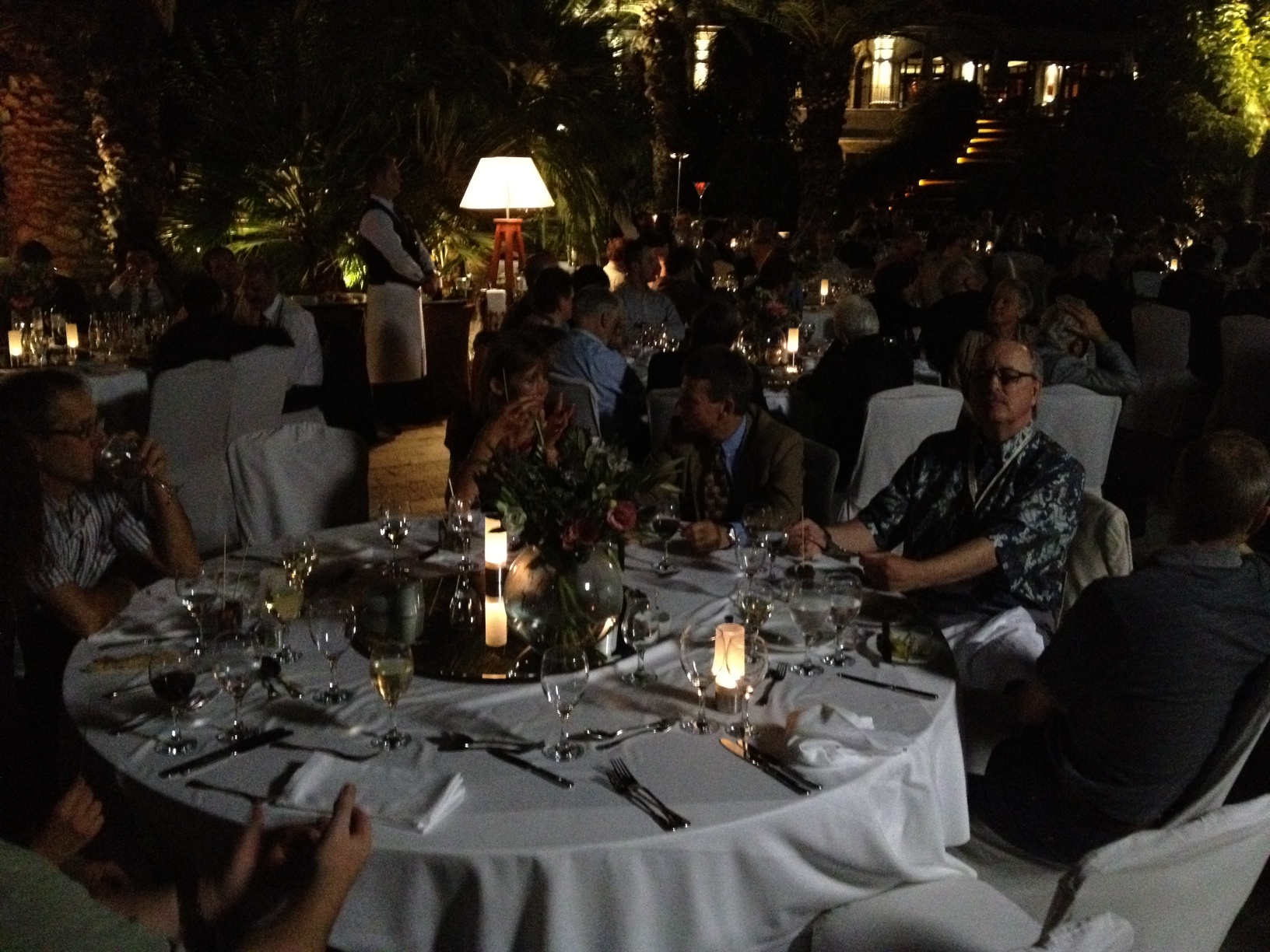
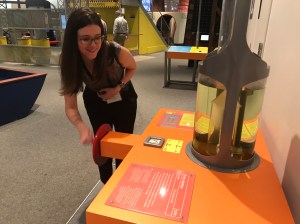 Late in the afternoon, everyone at the conference boarded buses for Copenhagen’s Experimentarium, a really fun science-learning center. I played with the educational exhibits alongside Stephanie’s family and other colleagues from DIT, UCL, and Fulbright. There was an awards ceremony, where our UCL colleague, Dr. Eva Soerensson was honored, and I thoroughly enjoyed the conference “gala” dinner. I sat with Belgian, Dutch, and British colleagues at dinner. We got a bit rowdy and ended up building towers from paper cups and discussing the feature of ubiquitous household appliances.
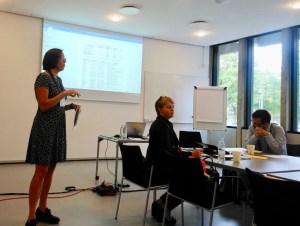 The final day of the conference had many individual poster and paper presentations, including a discussion session/presentation I delivered on patterns I’ve found among doctoral dissertations that have used phenomenology to study aspects of engineering education.
The closing ceremony for the conference was chaired by the incoming SEFI president, DIT’s Prof. Mike Murphy. We learned about the venue for next year’s conference, Budapest! Can’t wait!
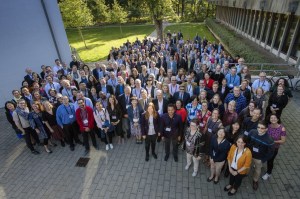 I enjoyed dinner with close friends after the conference attendees dispersed. I got to explore Copenhagen a little on Saturday morning before flying off to a new conference in Greece.
Thanks to the whole SEFI crowd for a stellar week! See you in Hungry if not before!






 Ireland by Chance