Dissertation 101: Picking Top-Notch Advisors

Dr. Pamela Eddy -- a fabulous advisor and role model.

Dr. Pamela Eddy — a fabulous advisor and role model.

You know those horror stories you hear about PhD students, endlessly stalled in their work?  Although many are true, they don’t have to be!  With careful consideration a little luck, it is possible to find excellent advisors who have the goal of helping you succeed.

When I was completing my dissertation, I was blessed to have two exceptional advisors, Dr. Pam Eddy and Dr. David Leslie, who were there to help me from start to finish. I also benefited from some sage advice from Drs. Michael DiPaola and Tom Ward.

All these people were instrumental in the timely completion of my dissertation. These folks wanted me to succeed. And, all these people knew how to let a self-starter like me start, and finish!

I often heard them say, “the best dissertation is a done dissertation” and “Keep It Simple (Stupid).” I think the KISS principle should apply to far more dissertation studies than it typically does.

My advisors knew that the main points of a dissertation at the PhD level are (1) for the candidate to demonstrate s/he is capable of producing quality, doctoral level research and (2) to contribute something new to the pool of human knowledge.  It is not, necessarily, to write the most eloquent piece of prose known to mankind or to solve world hunger in one fell swoop.

Thankfully, my advisors didn’t micromanage my work or act as though the fate of the world hung on each word I composed.
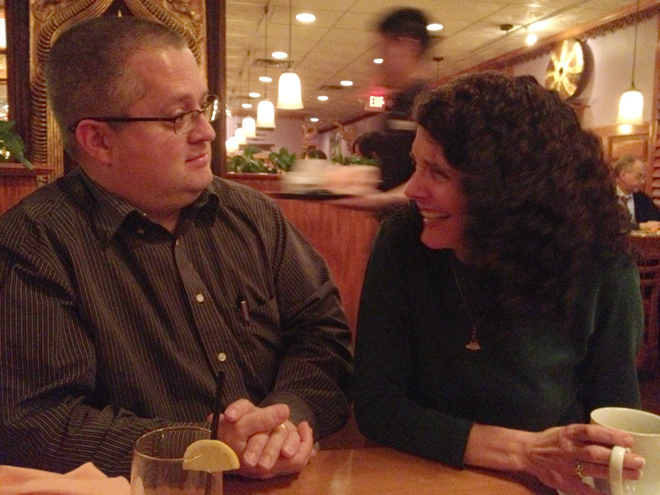
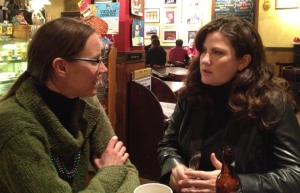
Dave Chance and Pam Eddy shooting the breeze at Bangkok Garden in Williamsburg, Va.

Dave Chance and Pam Eddy shooting the breeze at Bangkok Garden in Williamsburg, Va.

But make no bones about it: quality counts.

I finished my dissertation swiftly, but I also produced a piece of work that won an Outstanding Dissertation Award from the International Society for Educational Planning (ISEP), got published in a top-tier journal, and was downloaded more than 800 times over the course of a few weeks from the Society of College and University Planners (SCUP) website.

Moreover, my advisors nominated me for my school’s Award of Excellence — which I was truly thrilled to receive.  (Donors to W&M even provided a cash prize, and I used the award money to buy my graduation regalia.  I’ll enjoy wearing that each year, with pride, at Hampton University’s commencement and gradation ceremonies.)

So my advice is: when you’re selecting your thesis/dissertation advisors, take care.  Make sure to select accomplished people who are interested in and reasonably knowledgeable about your topic and who can keep things in good perspective.

Many candidates fall into traps I learned early on (I’ve completed two theses — one for my Bachelor of Architecture degree and one for my Masters of Architecture — as well as the doctoral dissertation).  In the first of these experiences, I wasn’t careful enough about editing my advising team. There were too many “cooks in the kitchen,” so to speak. After five frustrating weeks trying to please four different advisors who had somewhat competing agendas, I took matters into my own hands. I learned to trust my own judgement and ask for targeted advice when and where I needed it. I finished that B.Arch. thesis on time, something rare in my architecture school back then. I took exactly the same amount of time, 8 months, to write my PhD dissertation. In both cases, I’d laid much of the groundwork (such as review of the literature) ahead of time, so as to start the race on solid footing.

For the past 14 years, I’ve advised students who are completing architectural theses themselves.  I know I’ve inadvertently sent some of them scurrying in circles, but I’ve also tried hard not to be that type of advisor.  I’ve learned a great deal over time, and I’ve developed skill in thesis advising. Today, I feel quite confident in my ability to support students in their thesis work.  Many of my students have won awards and presented their thesis work in professional forums. And with Facebook, I get to watch them grown into skilled architects over time… what a joy!

I have this to say that students approaching their capstone projects: be on the alert for signs that the person you’re about to invite to your committee might fail to see what’s in your best interest. It seems to me that some dissertation/thesis advisors view each candidate’s work as an immediate reflection of themselves (in that realm, I’m sometimes at fault myself). Some advisors want every aspect of the work done the way they would do it themselves (and that’s not the case for me). I have seen instances where advisors haven’t been able to stretch their minds far enough to understand what the candidate is trying to achieve or how s/he is going about it, even though the approach appears valid to me. In some cases supervisors act as if the student’s dissertation/thesis is the single most important piece of research ever conducted. They go overboard belaboring every aspect. Although I know there are times when such tinkering is warranted, I have also seen some professors reject work and/or demand countless revisions regardless of the quality of work they have been presented for review.  Yes, they want the work to be the best it can possibly be… but the work this student does later in life is likely to be far more important (as long as they can meet the required quality thresholds for their degree level).

So keep in mind: it’s crucial to find people who respect your abilities and want to share the joys as well as the pains of critical investigation with you. People who want to help you achieve and succeed. And people who won’t let their own egos drive your project.

Thank God I found those people!  To this day, I maintain personal ties with Drs. Leslie and Eddy.

Dr. Eddy, for instance, helped me build connections in Ireland that helped me land my Fulbright.  She’ll be visiting me in Dublin for a couple of weeks this spring and I can’t wait!

In the meantime, we recently enjoyed a little time together with our “Daves” over dinner in Williamsburg.

Dave Pape, Shannon and Dave Chance, and Pam Eddy.  (Yes, there are a lot of doctors in the house!)

Dave Pape, Shannon and Dave Chance, and Pam Eddy. (Yes, there are a lot of doctors in the house!)

Hello to Africa!

Welcoming new visitors from Africa.

I’m excited to welcome new visitors from Africa.

I’m happy to report that people from three different countries in Africa have found their way to this blog in the past few days.

It appears that some places in the world are more difficult to reach via blog than others: the region around China, the Sahara, and Greenland are still missing from my map.  Perhaps that says something about the distribution of population (Greenland and parts of Africa), resources and Internet access (parts of Africa and China), and restricted freedom of information (China)?

In any case, I’ve enjoyed sharing ideas with my African friends ever since my first visit to Tanzania (in 2003).  Since then I’ve returned to Tanzania and visited South Africa and Tunisia (all with students) as well.

A highlight of my life experience has been the Fulbright program I conducted in Tanzania in 2005, though I am still working to make sense of many things I saw and experienced.

Fulbright-Hays flier. Program conducted by Shannon Chance (PI) on behalf of Hampton University and the US Department of Education.

This is a flier for the Fulbright-Hays program I conducted on behalf of Hampton University and the US Department of Education.  (I wrote a grant proposal that was accepted, and I served as Principle Investigator of the grant and also as director of the program.)  In the group photo, I’m standing second from the right.  Many people in this photo are my friends on Facebook still today.

Appreciating Classicism with Christine Franck

Shannon Chance and Christine Franck.

Shannon Chance and Christine Franck.

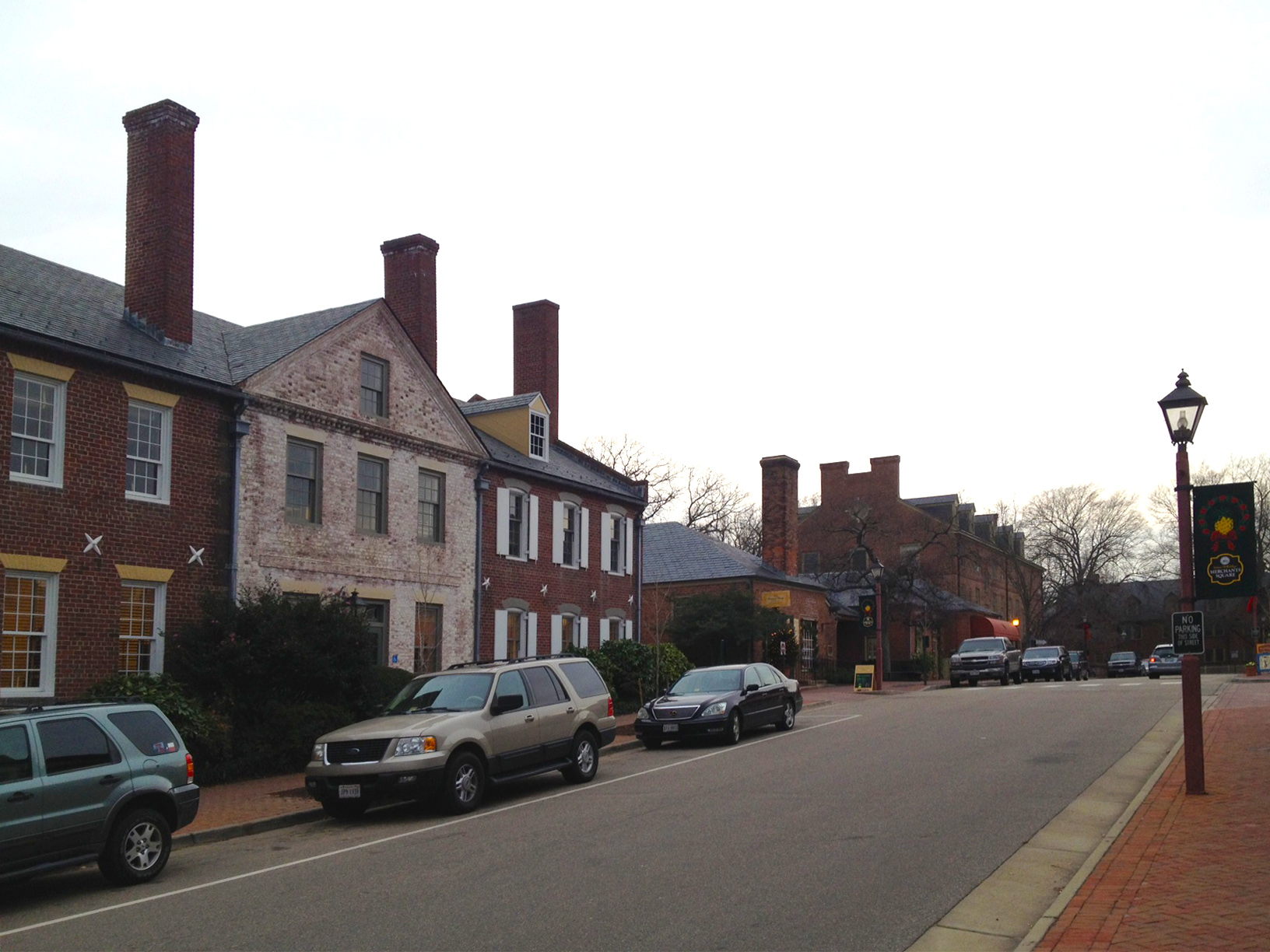
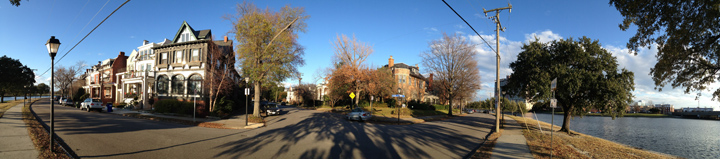
Prince George's Street in Williamsburg, Virginia.

Prince George’s Street in Williamsburg, Virginia.

Meet my colleague Christine Franck.

I was introduced to Christine when I was delivering a guest lecture at the University of Notre Dame while she was an adjunct professor there.  She usually practices architecture in New York and blogs about classical architecture. She has also written several books and has served as president of the board of the Institute for Classical Architecture and Classical America.

During 2012, Christine and I got together a couple of times in Williamsburg to discuss each others’ research.  Christine has a fascinating idea for an architectural research project.  I’ve been helping her figure out how to pitch the idea to Fulbright.  There are Fulbright grants available to teachers, researchers, and professionals… in my book, she’s all of these.

Without giving too much away, I can say:  Christine is interested in documenting a certain type of housing that is relatively unknown but that she thinks holds keys for the development of sustainable cities and towns.  We hope to connect Christine with professors in Europe who are doing research the same area, in hopes she can do funded research alongside them on the topic she has defined.

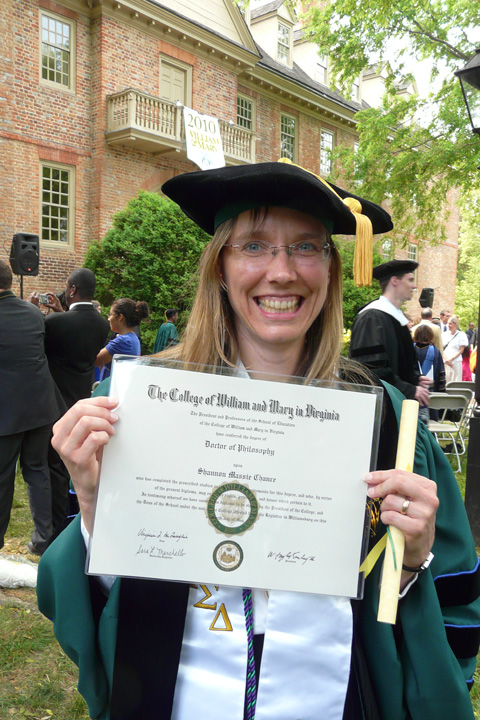
A photo my dad, Don Massie, took outside the Wren Building on graduation day, May 2012.  Can't help but love the cap, eh?

A photo my dad, Don Massie, took outside the Wren Building on graduation day, May 2012.

It seems fitting that I meet this classical architect in Williamsburg — the heart of colonial Virginia.  It’s also the place I earned my PhD.

I always enjoy being on William and Mary’s campus and seeing the Wren Building.  It’s the place where I received my diploma in May 2010 — right there on the lawn in front of the famous building.  I felt immensely honored to have received a scholarship from the Christopher Wren Association to study at this amazing university… Christopher Wren was an English architect and I appreciated studying at an institution that held an architect in such high esteem.  About this building, the Colonial Williamsburg website explains:

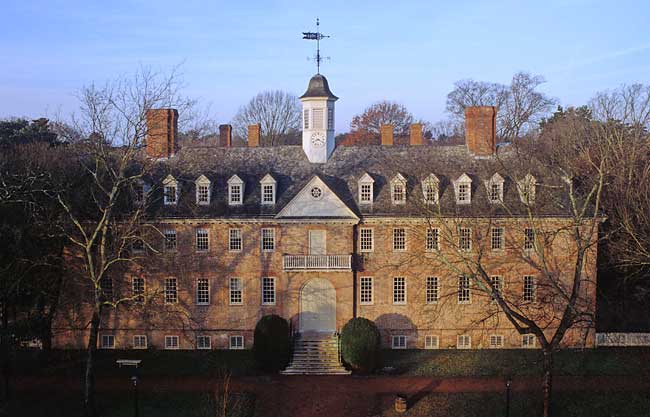
The Wren Building at The College of William and Mary in Williamsburg. Photo downloaded from Colonial Williamsburg website.

The Wren Building at The College of William and Mary in Williamsburg. Photo downloaded from Colonial Williamsburg website.

The College of William and Mary’s Christopher Wren Building is the oldest academic structure still in use in America. Construction on the building began August 8, 1695, two years after the school was chartered; it is the signature building of the second oldest college in the nation (next to Harvard). Thomas Jefferson, James Monroe, John Tyler, and John Marshall studied in its rooms. George Washington was once chancellor of the college, which is now a distinguished university.

Three times destroyed by fire, the appearance of the brick-walled Wren Building has often changed, but it stands today much as it appeared by 1732. It was the first major building restored by John D. Rockefeller Jr., after he began Williamsburg’s restoration in the late 1920s.

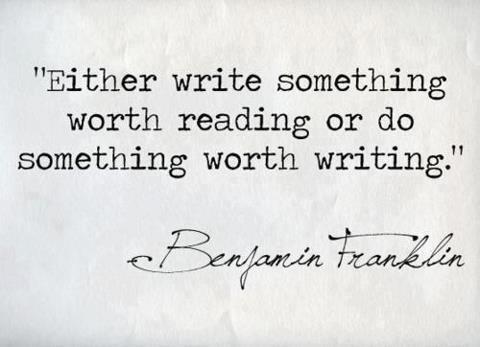
My Fulbright Mission (a la Ben Franklin)

Truth Becons posted Ben Franklin's words to live by.

Truth Becons posted Ben Franklin’s words to live by.  All sorts of doing and writing for me….

Our 2003 Christmas Homes Tour

Many years ago, Dave and I opened our partially renovated home for public viewing.  Ours was among the home featured on our neighborhood’s annual Christmas Homes Tour.  We were included as a “work in progress.”

And we’re still in progress!  Although we did a major overhaul, we still have details to complete.

In any case, I thought you might like to see our home the last time it was decorated for Christmas, way back in 2003.

The Art of Traveling (with a Cat in Every Lap)

In anticipation of retirement, our friend John Baird has decided to learn the art of traveling.  He’s starting small.

On Wednesday he called to say he’d be making the trip to our home in Portsmouth.  It’s a 5.5-hour drive from Blacksburg (my hometown and the place he lives) to our home in the Tidewater region of Virginia.  Dave, the cats, and I were all thrilled we’d get to see him!

John is Dave’s former boss and a groomsman in our 2001 wedding.  We were very happy to hear he was on the way, because we haven’t yet found time to make a trip to Blacksburg.

In anticipation of his arrival, I pulled out our wedding album.  While John was here we took a stroll down memory lane.

Our 2001 wedding ceremony at Hampton University Memorial Church with (left to right) Annie Nichols, Esther Sterchi, Katie Sullivan Booth, Heather Massie, Shannon Chance, Fr. Slovik, my mom Rev. Dr. Cynthia Massie,  Mara, Dave Chance, Jay Gallagher, Michael, Chance, John Baird, and Rob Nichols.

Our 2001 wedding ceremony at Hampton University Memorial Church with (left to right) Annie Nichols, Esther Sterchi, Katie Sullivan Booth, Heather Massie, Shannon Massie Chance, Fr. Slovik, my mom Dr. Rev. Cynthia Massie Mara, Dave Chance, Jay Gallagher, Michael, Chance, John Baird, and Rob Nichols.

Memorial Church at Hampton University (Photo copyright Shannon Chance, 2001).

Memorial Church at Hampton University (Photo copyright Shannon Chance, 2001).

Dave and I haven’t viewed it for a decade.  When I received the proof prints the week after the weeding, I was disappointed with the quality of composition.

My mom, dad, and husband have all been professional photographers at some point in life.  I myself served as photography editor for my high school yearbook.  And so I resented the missing feet in our photos — and the fact that the photographer had chosen distracting backgrounds.

But what can you do at that point?  So I doled out photos from one set of proofs (to Mom, Annie, etc.) and placed the second set on a shelf.

From this experience, I garnered some helpful advice for people who are booking wedding photographers:  avoid bait-and-switch disappointment.  Be sure to specify in your contract which person you expect to show up at with a camera on the wedding day.  (Lucy/Matt and Dave/I each had the experience where we met with the owner of the photo business prior to our big day and liked her and her work.  BUT on the day of our weddings, an untrained photographer’s-husband showed up on each scene with not much clue about how to use a camera.  In both cases, the owner of our selected companies had booked multiple gigs. In reviewing our photos last night, Dave and I agreed we’d made out far better than Matt and Lucy.  Our husband-photographer wasn’t great, but also wasn’t anywhere near as bad as theirs.  Perhaps a little editing can alleviate my wedding-album angst.)

In any case, perusing the wedding photos was fun.  I enjoyed seeing much we/things have changed and how much we/they have stayed the same.  I’ve included a photo I took myself of the church where we married, on the campus of Hampton University.

As for our bridal party:  since November, I’ve gotten to see all but one of them!

It’s always a joy to see John.  We wish his wife Wendy would have made the trip, too, but she’s tied up right now, doing the agriculture research she so dearly loves.

John was Dave’s supervisor when they both worked as photographers for Virginia Tech.  For a few months before Dave moved here to Hampton Roads to be with me, Dave lived with John, Wendy, and their kids in Blacksburg.  The group of 5 Bairds took him in and treated him as a member of the family.

I’ve always admired the kids — Caitlin, Gillian, and Logan — for treating Dave like a brother.

Whenever we’ve visited Blacksburg since, we’ve stayed with John and Wendy in the beautiful home John designed and built on the side of a mountain near Ellet Valley.  Today the kids are spread out across the USA.  They live in NYC, Seattle, and DC.  Nevertheless, we’re sometimes lucky enough to be on the mountain when they are there, too.

And that, my friends, is a unique pleasure.  It has a certain feeling that I’ve found no where else and can’t really describe. Except perhaps to say:  it’s like getting to see inside a family that just loves being together.  Being there is something like watching the Waltons. Except in this case, we’re not watching on a TV screen.  We’re members of the clan, accepted almost as if we were Mary Ellen and Jim Bob.

During John’s overnight to the flatlands of Virginia, we went out for sushi and visited Dave’s studio and a company where Dave used to work (Superior Marble and Stone).  Then John hopped into his Honda for the trek home.

Dedication and Perseverance Galore

Prof. Mason Andrews finally taking a minute away from her work.

Prof. Mason Andrews finally taking a minute away from her work.

Carmina Sanchez and Mason Andrews -- two amazing teachers!

Carmina Sanchez and Mason Andrews — two amazing architecture teachers!

I’m blessed to work with some incredibly talented and dedicated people at Hampton University.  Carmina Sanchez and Mason Andrews, with whom I teach architecture, are two of the hardest-working people I have ever known (and that, my friends, is really saying something!).

Carmina, Mason, and I are sincerely dedicated to the mission of our Historically Black College/University (HBCU).  We  work long hours to help our students master the craft of architecture.

And students in our program have achieved many amazing feats.  Much of their success is a result of professors like Mason and Carmina believing in them, working overtime again and again, introducing new ideas and new challenges, and opening doors for them along the way.

My colleagues’ work usually goes under-recognized, although Carmina has won a national-level teaching award from ACSA as well as one (that I nominated her for) from Hampton University.  She has also been a national officer of the Association of Collegiate Schools of Architecture (ACSA) and an international officer of the Association for Computer Aided Design (ACADIA). Carmina runs our thesis program and oversees our digital resources.  She’s at school all hours of the night and day.

Mason tends to work non-stop, too.  Prior to joining HU, she authored several books (one on Aldo Rossi). She also headed an architecture firm in NYC for many years before returning to her hometown in Norfolk. She felt the tug of family:  Her dad, after whom she is named, was once the mayor of Norfolk.  He led the effort to found the Eastern Virginia Medical School (EVMS).  I believe he also delivered the first in-vitro baby in the USA and helped fund the lawsuit that ended racial segregation in Norfolk Public Schools.  He was a truly remarkable man and passed many exceptional qualities on to his daughter.

Carmina also had exceptional parents who were dedicated to helping others.  Mason and Carmina both learned from their parents how to serve others.  Not a day goes by that they don’t.

I first met Mason through the Marilyn and Ray Gindroz Foundation.  I had asked the Gindrozes to support our department’s travel program and they enthusiastically agreed — providing time and money and even re-writing their foundation’s bylaws to include HU.  Mason was the president of their board.  (To this day, the three of them travel with our students in the summer as part of the study abroad program that each HU student must complete in order to earn a degree in architecture.)

The year I met Mason, I asked her to consider teaching with us… although I never dreamed she’d accept.

But she did!

And she’s brought so many opportunities to our students.  She’s connected us to a number of prestigious scholarships and internship opportunities.  She sees possibilities others don’t and makes possibilities where none seem to exist. She typically teaches 1-2 more courses each semester than required, just because she wants students to have opportunities to learn a comprehensive range of subjects.

This usually includes writing for architects and a travel-prep class.  One year, it also included courses on construction and solar technologies.

In 2009, she took the lead in getting HU teamed up with Old Dominion University so we could enter the 2011 Solar Decathlon.  She co-led the team that constructed a net-zero house.  The group hauled their house to Washington DC and reassembled in a handful of days so it could compete (in 10 areas, while being toured by thousands of people every day, for 10 days).

Hundreds of universities all around the world apply for the opportunity, but only 20 are accepted each go around.  Our team garnered 14th place overall in its first attempt — which is truly remarkable given the level of resources other universities have.

The Decathlon happens every two years, and HU is competing again in 2013 under the direction of professor David Peronnet who was also instrumental in our 2011 success.

I am honored to work with Carmina, Mason, and David.

And, Dave and I are fortunate to count Mason among our dearest friends.  Dave and I can drop by the home of Mason, Bill (her husband), and Alston (their son) any time and find open arms, stimulating conversation, and often a creative meal to boot!

I’ve included photos from the pre-Christmas, drop-by dinner that Dave and I enjoyed with Mason.

Mason's home on Norfolk's gorgeous Mobray Arch.  (In 1998, I lived in an apartment in the yellow house to the left of the tutor house.)

Mason’s home on Norfolk’s gorgeous Mobray Arch. (In 1998, I lived in an apartment in the yellow house to the left of the tutor house. Mason, Bill, and Alston moved in just as we were moving out, and I didn’t get to know them until years later.)

Weddings Past

Speaking of weddings past, I thought you might like to see a few of the wedding photos that I have here at my fingertips….

Starting a New Year with Annie and Rob

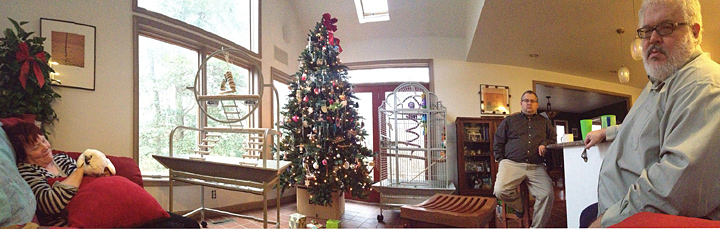
A quite day with Annie and Rob Nichols.

A quiet day with Annie and Rob Nichols.

Phoebe in her cage next to the Nichols Christmas tree.

Phoebe in her cage next to the Nichols Christmas tree.

Annie and Rob Nichols are our adopted family.  They issued Dave informal “adoption papers” for Christmas in about 1993, granting him “full rights” as a member of the Nichols clan.  Since that time forward, they’ve treated him as if he were their own flesh and blood.

When I turned up at their home in 1996, Ann and Rob extended full benefits to me as well.  When Dave and I married in 2001, Annie, Rob, and Annie’s son Jay, were among the eight members of our bridal party.

For years, Dave and I spent Christmas Day at their home in Allen, Maryland — a place we all lovingly refer to as “the clubhouse.”  The place has stayed the same, though the actual house changed.  (Home, we say here in the States, is where the heart is.  “Americans” are a traveling bunch, and home means something different to us than it does to most Europeans.)

Annie petting her bird.  Who knew birds like to be petted?

Annie petting her bird. Who knew birds like to be petted?

Rob and I designed a new clubhouse together in 2000 (it’s the one pictured here).  Our design was based on the original cottage clubhouse, but the new house is much larger and more spacious.  That was necessary because the house is nearly always full of friends and relatives.  We all spent one Christmas in a rental house, in the period when the old clubhouse had been sold and the new clubhouse was under construction.

Yesterday, Dave and I spent a quite day with Annie and Ron, ushering in the New Year with a feast of delicious, Shannon-friendly foods.

We had also visited Annie and Rob earlier during the break on a day when the house was full of people….

The Christmas tree at Ann and Rob’s is always decorated with items of significance from the past year.  This year’s included a camera ornament for Annie’s granddaughter (to commemorate her success in the realm of photography) and photos of new family/friends.

2012 Blogs In Review

WordPress does have some fun offerings, like the statistics page which they programmed to prepare an annual report for activity on the Ireland by Chance blog.

Here’s an excerpt:

600 people reached the top of Mt. Everest in 2012. This blog got about 12,000 views in 2012. If every person who reached the top of Mt. Everest viewed this blog, it would have taken 20 years to get that many views.

Click here to see the complete report.