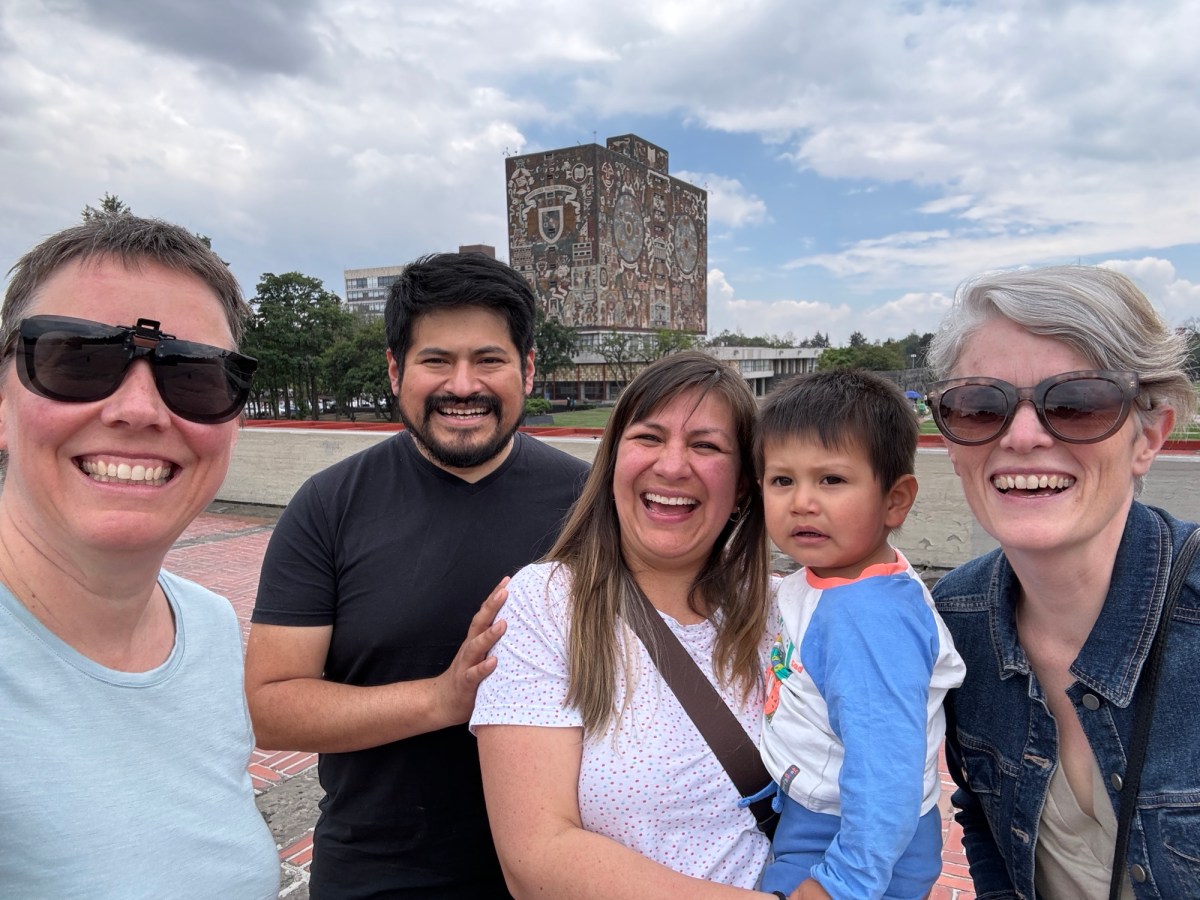
My colleague Emma Geoghegan and I spent the most magical three days in Mexico City with the family of my PhD student, Sandra Ireri Cruz Moreno.
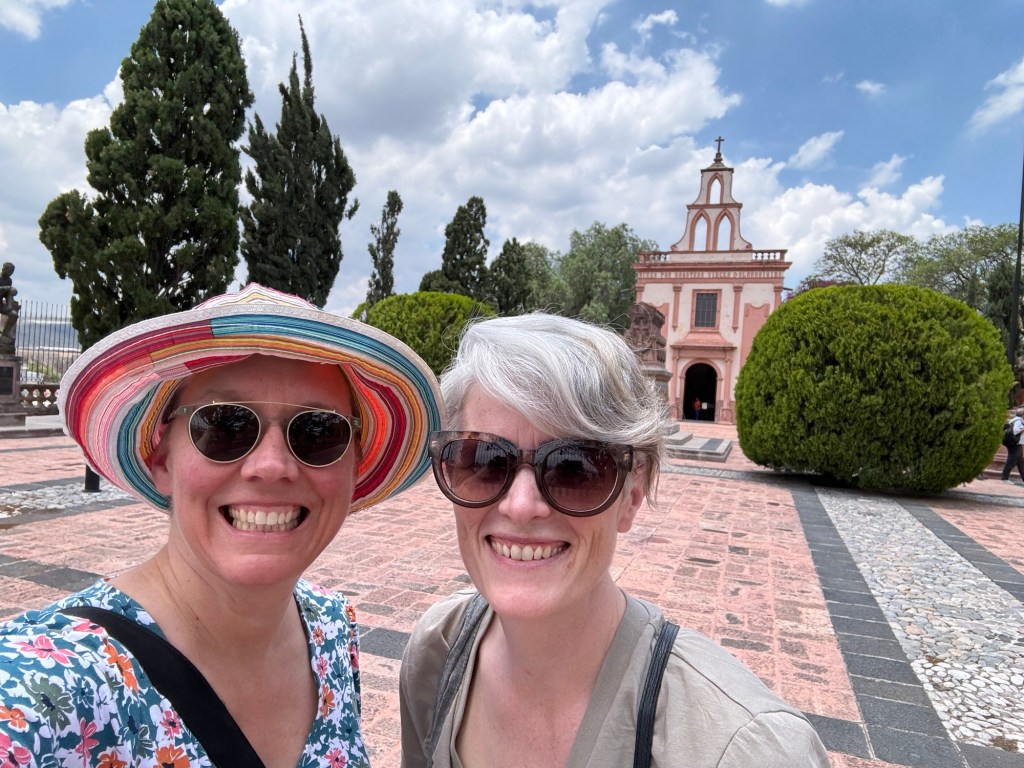
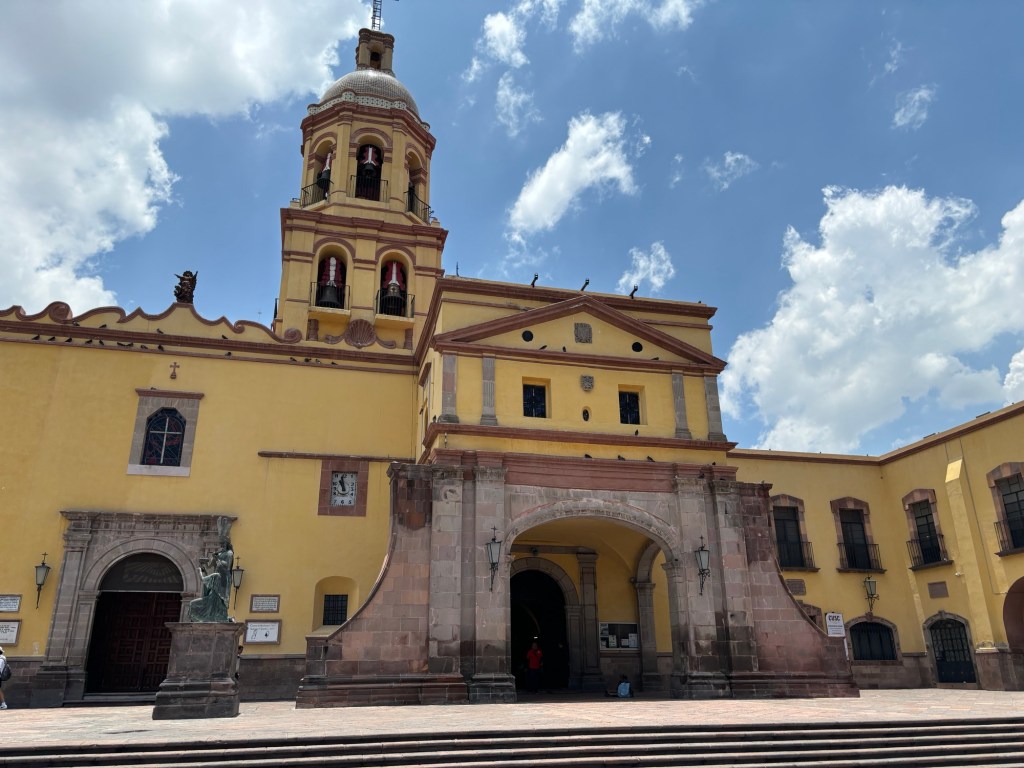
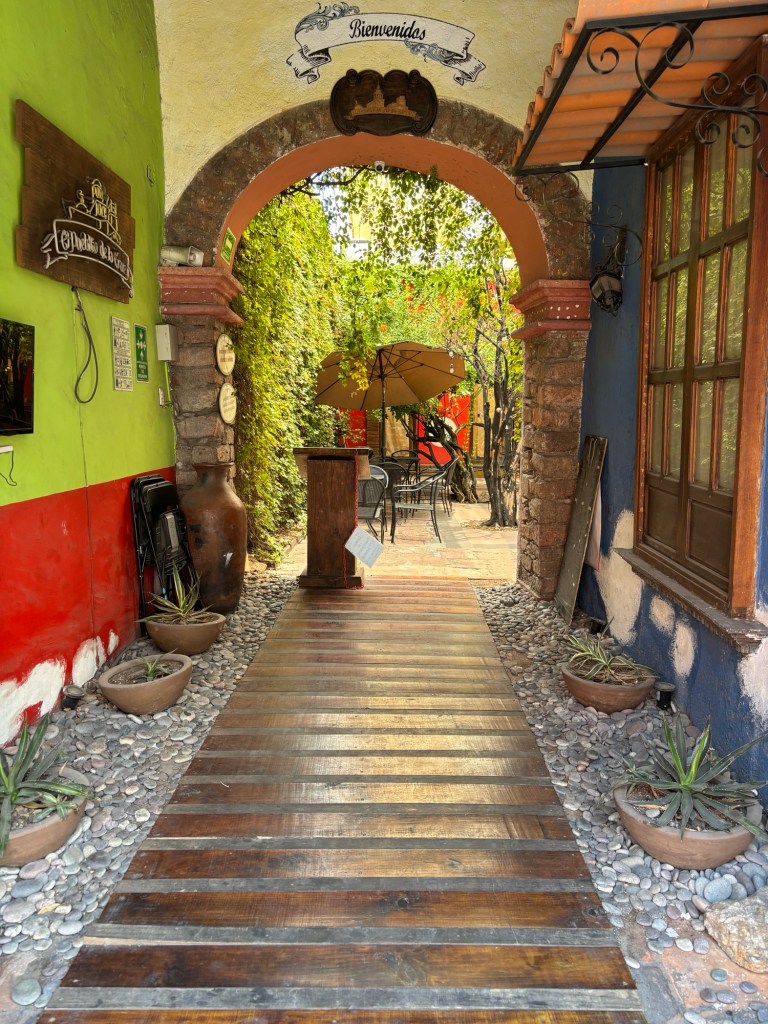
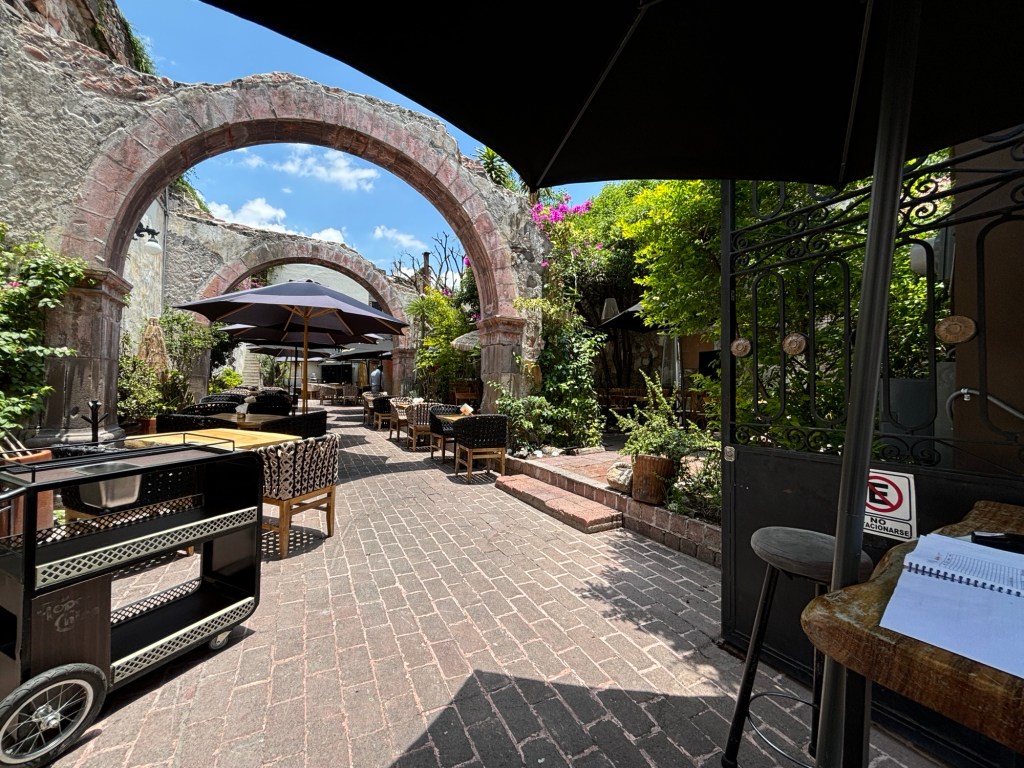
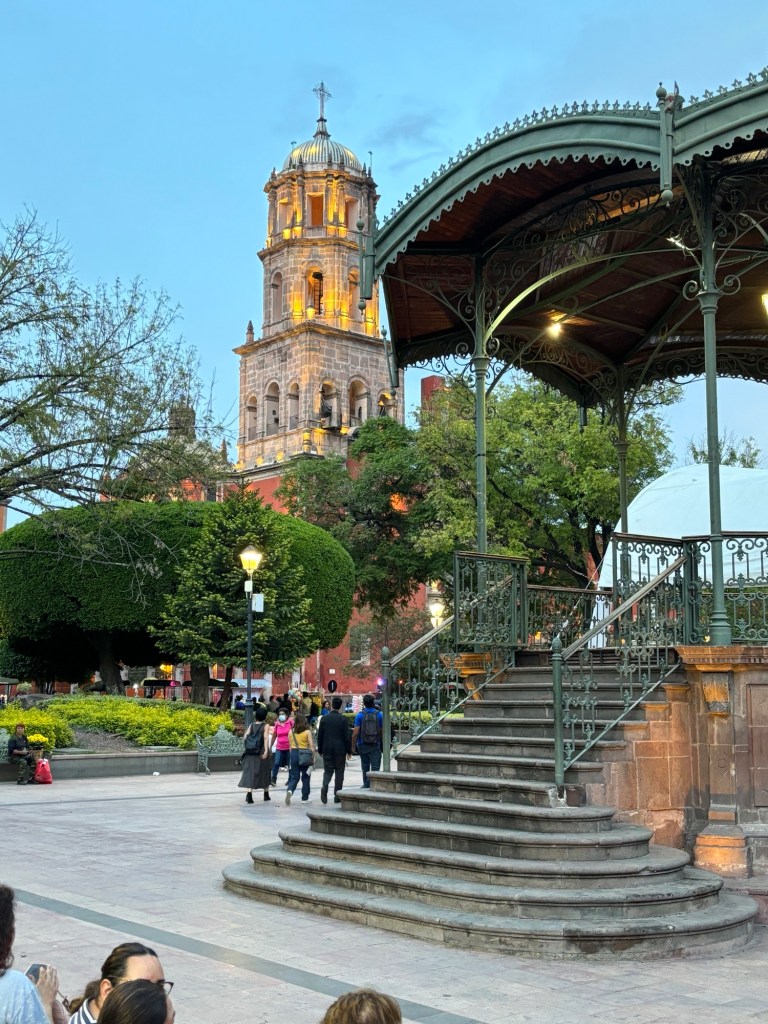
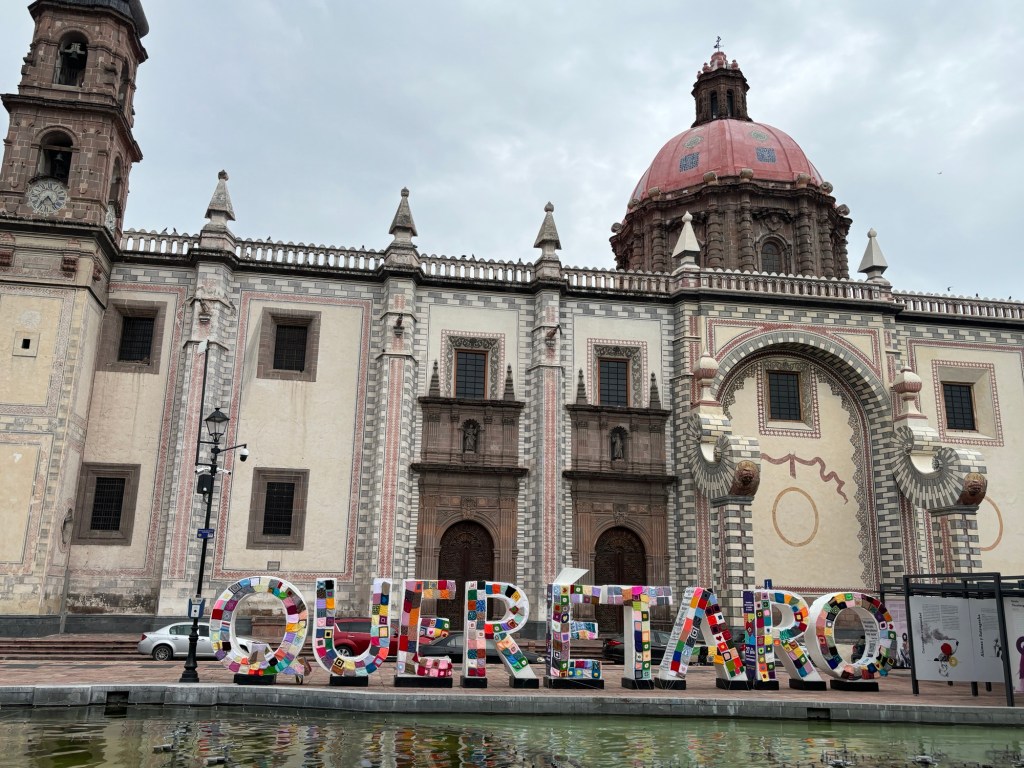
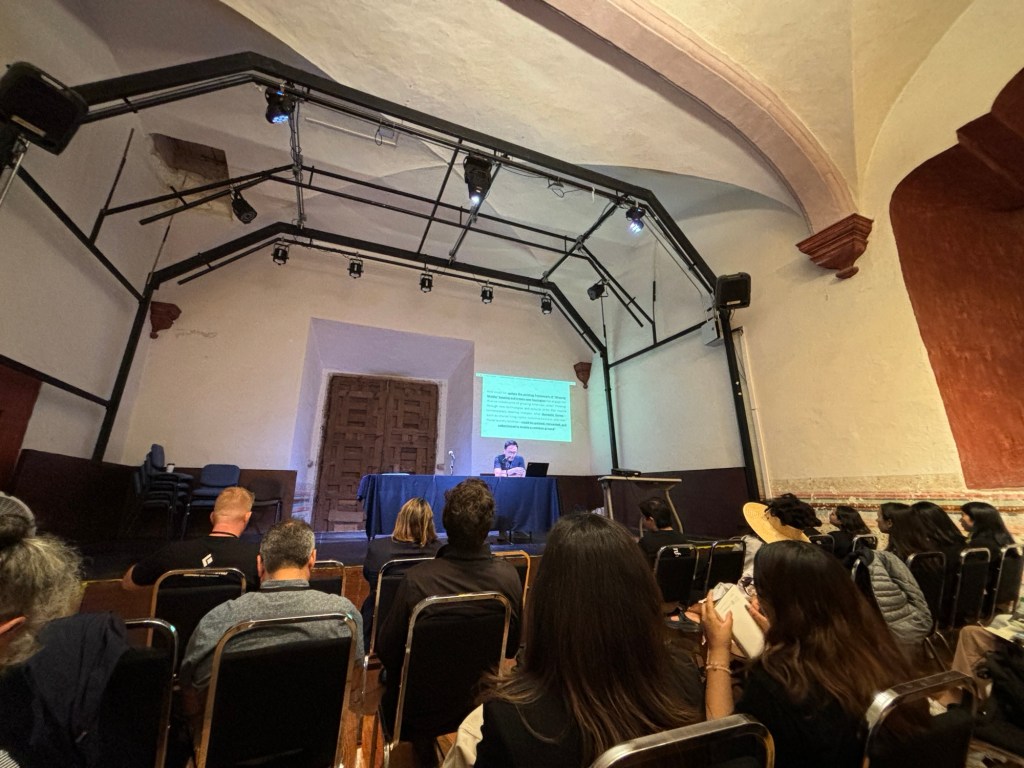
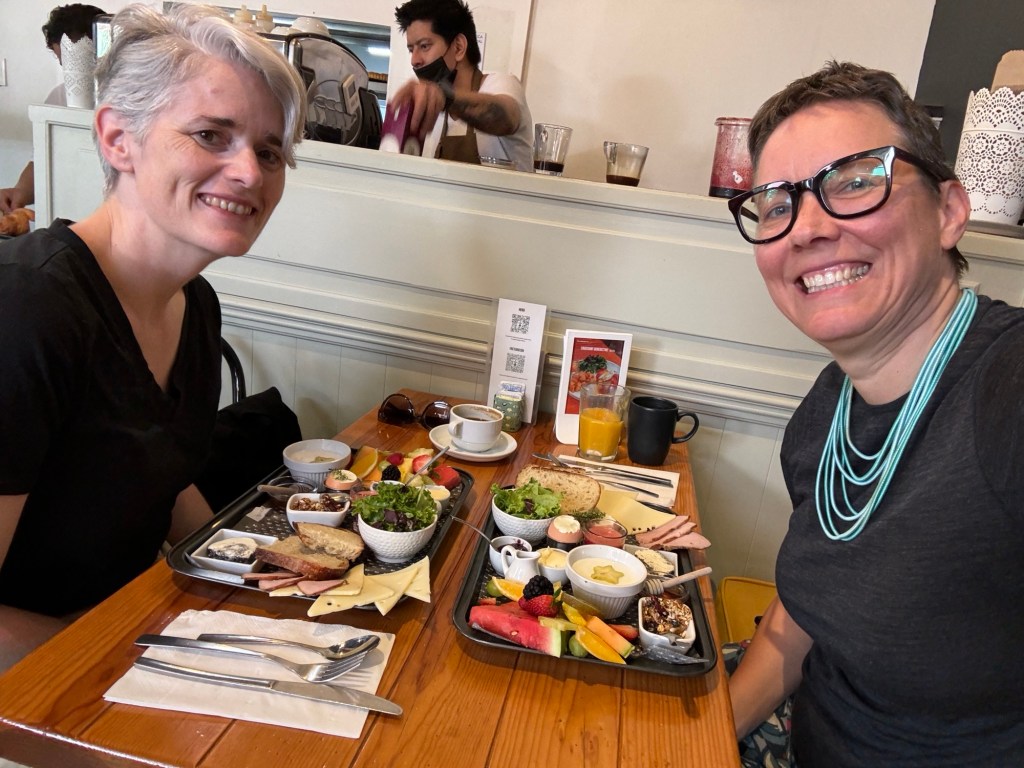
On Sunday morning, following the ASCA conference, a short night’s sleep, and a tasty “petite dejune” at a French cafe in Querétaro — and with organizational assistance from Sandra — Emma and I boarded a bus headed to north Mexico City.


Sandra and her family met us at the bus station. Sandra’s lovely dad, Jose, brought a second car to the station so our luggage could go directly to their home while we went sightseeing in the other family automobile.
That was both very thoughtful and exceptionally fortunate, because I had bumped into a colleague from the ACSA conference, Ayad from Washington State, at the bus station. I asked Sandra by text if we could invite him along with us for the day. Ayad wanted to see the pyramids and was having trouble arranging transportation. We managed to squeeze six people into the family car!
We arrived at Teotihuacán with two hours explore. The State of Mexico explains, “Teotihuacan is a vast Mexican archaeological complex northeast of Mexico City. Running down the middle of the site, which was once a flourishing pre-Columbian city, is the Avenue of the Dead. It links the Temple of Quetzalcoatl, the Pyramid of the Moon and the Pyramid of the Sun, the latter two with panoramic views from their summits.” (Although we didn’t make it to the Museum of Teotihuacan Culture in time to see the artifacts that “include pottery and bones,” I was able to see these type of artifacts later in my trip.)


As the pyramids closed for the day, our merry little band headed for a nearby cave restaurant, applauding Sandra’s magnificent planning skills. Our meals arrived in clay pots. These and the guacamole were tasty and delicious! The restaurant staff explained the spiritual beliefs surrounding the place and we lit candles in honor of our ancestors.


Dropping Ayad at his hotel, we proceeded to Sandra’s parents’ home in a neighborhood of Coyoacán, where Emma and I spent three nights. It was lots of fun getting to know Sandra’s family and learning about Mexican culture!
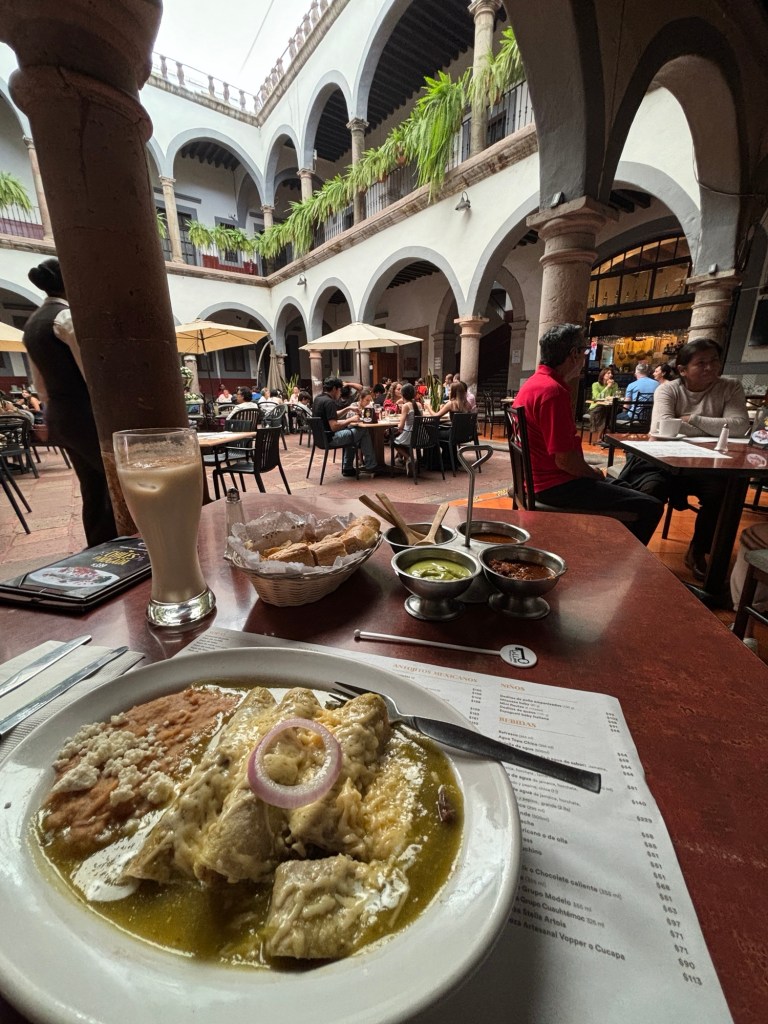
Everyone in the family is vivacious and full of joy. They enjoy sharing food and conversation and learning about other people. We had many meals at home with (papa) Jose and (mama) Vice (ve-say). Staying in their home and getting to know them was a rare treat!
On the second day, Sandra and Jose brought us to tour Luis Barragan’s home and studio. We thank our TU Dublin colleagues for insisting that we visit some Barragan projects! His home and studio are stunning and so well connected to the landscape. Immensely peaceful and beautifully furnished. The spaces and threshold conditions are truly breathtaking. This ranks at the top of all houses I’ve visited, an assessment shared by Emma.


The garden across from the Barragan house was also stunning. We visited it before the house tour, after a brief walk around the neighborhood.


Following the house visit, we toured the central city by car, enjoyed lunch at a vegetarian restaurant with Jose and Sandra, drove past the Palacio de Bellas Artes, and visited the Plaza of Three Cultures with ruins of Aztec pyramids and a colonial church built from stones taken (stolen) from it.


After resting and catching up on work a bit at the family home, we went for a meal out in the center of Coyoacán, the “Coyote place,” where Frida Kahlo lived her early and late life. The town has lovely, spacious, bench-filled, and festively illuminated public plazas and we enjoyed tacos and mariachi. Sandra even danced for us! Being surrounded and serenaded by seven musicians and a dancing sociologist was a truly remarkable experience!


At every step, Sandra navigated the way and cheerfully achieved her ambitious plans to make our visit seamless and deeply meaningful. She has a charming way of convincing people to help find a way where needed, and that proved immensely valuable.
For each morning of our stay, breakfast was an elaborate family affair, with all members of the family cooking and chipping in to (1) care for baby Nicholas (who turned 20 months old on our final day here) and (2) feed two curious foreigners with a wide array of Mexican food types.
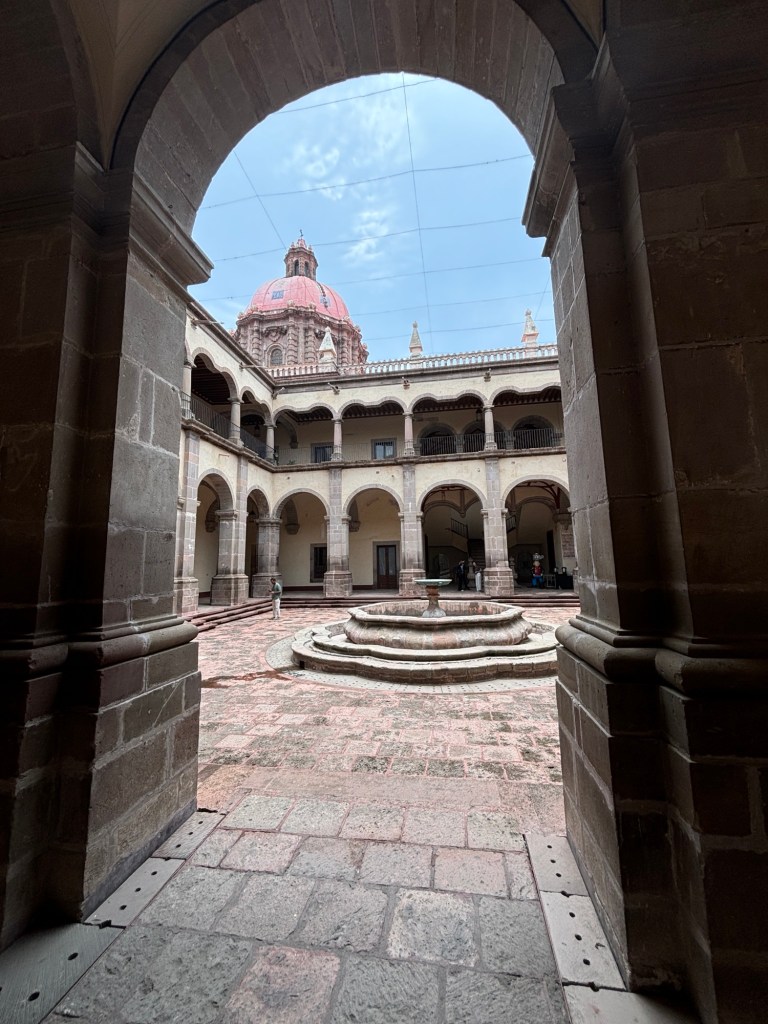
The meals and the camaraderie were remarkable. Sandra, her husband Carlos, and her parents all have such passion for learning and sharing. Emma and I absorbed many valuable lessons about the diverse language and cultural groups in Mexico, and about pre-Colonial Mexico, Spanish colonialism, and the blending overtime with Mexico’s indigenous peoples. (Querétaro where we’d been for our conference, has many spectacular colonial buildings, for instance, but also benefits from local culture pre-dating the area’s invasion by Spain.)


In the cracks and crevices of our stay, Emma and I managed to keep our work on track, too. I had a meeting with colleagues at University College London and Newgiza University online Tuesday morning. I also managed to submit a couple peer reviews that I’d completed while flying to Mexico.
On our final day in Mexico City, we headed with Carlos, Nicholas, and Sandra to the UNAM university campus (where our colleague Dino from the ACSA conference is Dean of Architecture). Both Sandra and Carlos studied on this campus.
UNAM has 300,000 students—just imagine that! They have a famous library building by an Irish-Mexican architect, Juan O’Gorman. There were many tourists and tour groups visiting the exterior of Gorman’s library building while we were. And although the campus buildings were closed for break, there was plenty to enjoy with the lively facades, architectural forms, mosaics, and well-kept grounds. These were lovely to behold.
The largest faculty at UNAM is philosophy and all the students seem socially motivated. The art on campus reinforces this theme of social activism. And it resonates with Sandra’s dad, a retired sociologist, as well. Incidentally, Sandra’s mum is a retired doctor and their house is above her former clinic. Their home and neighborhood were very interesting to see!


After touring campus, we visited the San Angel neighborhood to see three houses designed by Juan O’Gorman. One was for himself, and the other two (joined by a bridge) for Diego Rivera and Frida Kahlo. The two artists lived in separate houses, joined only by the roof-level bridge, three stories in the air. This pair sits on a lot beside O’Gorman’s own home. The three make a nice assembly. They’re in an upscale neighborhood and fenced off with an aesthetically pleasing row of cacti.


Next, our hosts brought us to a former-courtyard house designed by Luis Baragan that has been turned into a restaurant. The most dramatic feature was the glass floor, providing views into the volcanic terrain below the house. There’s also a large yoga room in the complex that I’d love to give a try!


We wrapped up the day with a visit to Xochimilco Ecological Park next to Coyoacán, near the home of Vice and Jose. In the park, we took a ride in a colorful flat-bottomed boat.


Then we walked around and visited a demonstration garden that uses pre-Spanish technology for growing produce and flowers. Mexico City is on land reclaimed (infilled) from lakes. Xochimilco still has its lake, whereas the other lakes are entirely gone—which has created havoc for the water table and aquifers of the area.
In order to farm on water, ancient inhabitants developed floating gardens atop mat-raft foundations covered with soil. Early examples of this construction type were rectangle-shaped floating gardens separated by canals for transporting goods to market, although this demonstration garden is fixed in place and circular in form. Nearby are thousands of booths of flower sellers who still cultivate the land and water.


Because the park closed, we headed home and had light dinner with the family.
The next morning we enjoyed one final, magnificent breakfast with our hosts. Then Carlos, Sandra, and Nicholas drove us onto our next adventures.


They saw me off from the Mexico South bus terminal and Emma from the international airport where she flew home to join friends and family for a trip to one of Ireland’s Aran islands.
What spectacular and heartfelt memories Emma and I now bring with us — these experiences will enrich our work as architectural educators, researchers, program leads, and curriculum developers. We are grateful to Sandra, Carlos, Vice, Jose, and Nicholas for sharing their lives with us!















 Ireland by Chance