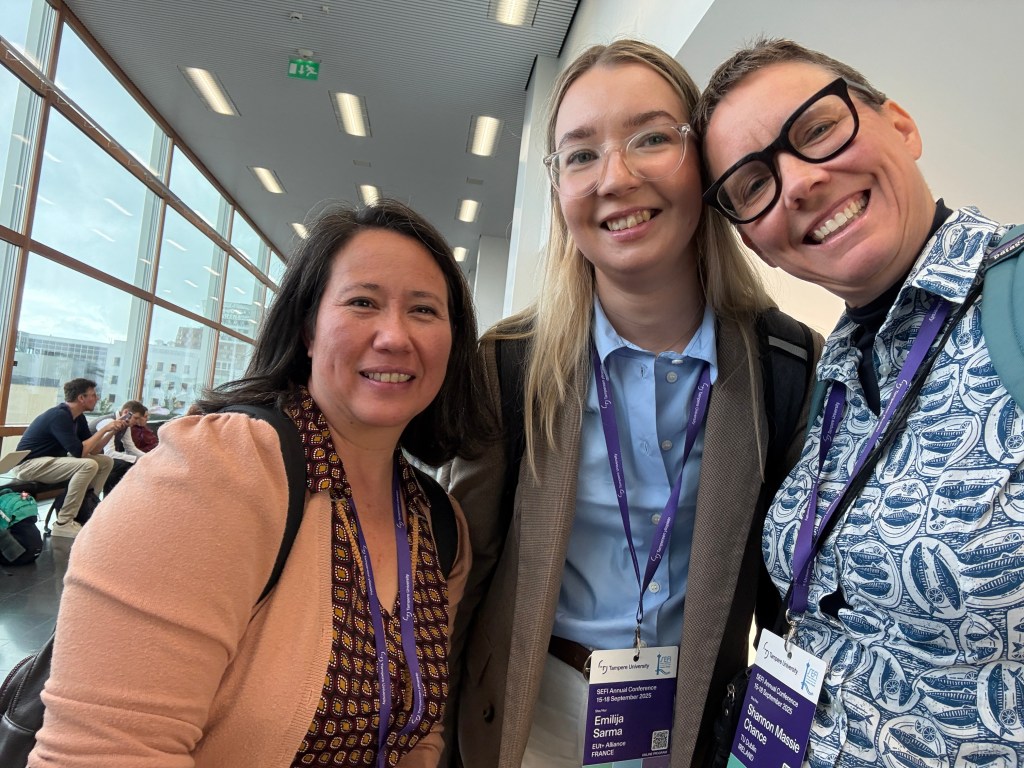
What an inspiring whirlwind week at the European Society for Engineering Education SEFI 2025 Annual Conference! The event was packed with meaningful presentations, deep and reflective conversations, intellectual rigor, and memorable community moments. Attending SEFI always feels like a homecoming to me, and this year’s conference certainly delivered, especially with the monumental achievements of my colleagues and students.
From Handbook to Keynote Stage
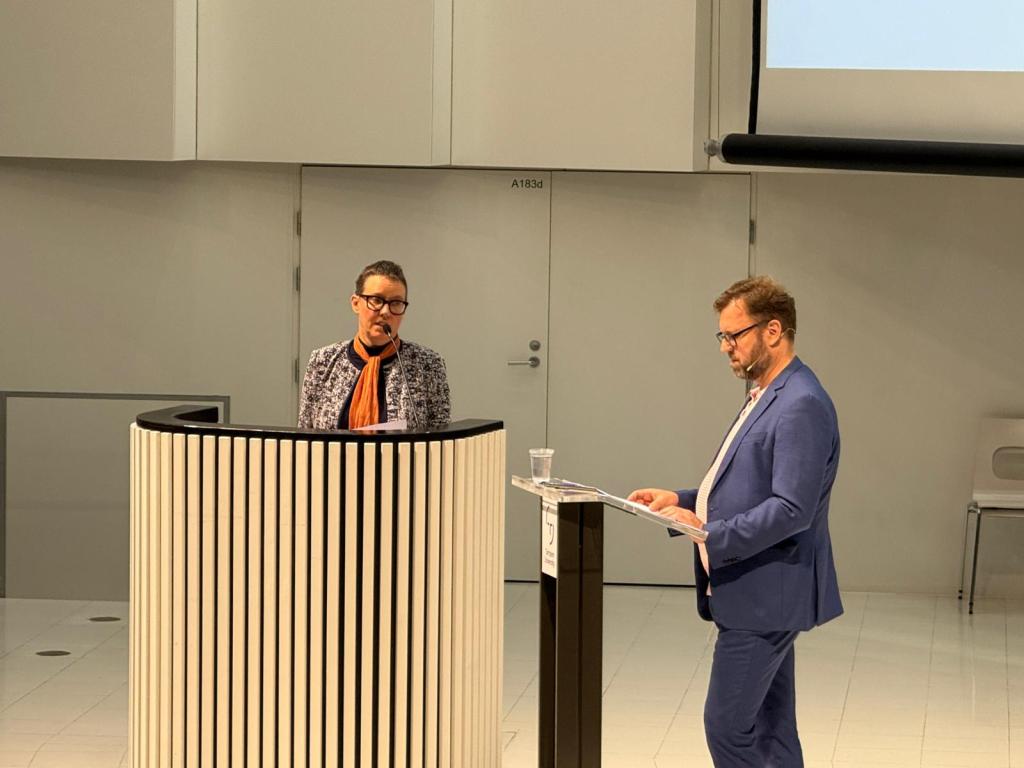
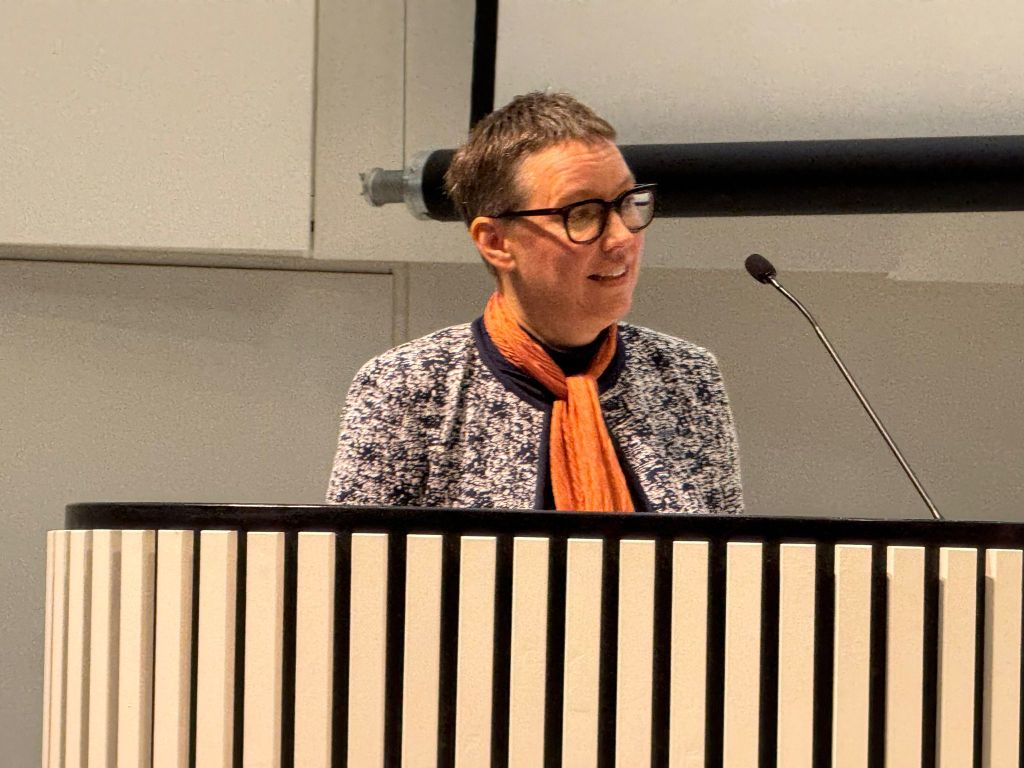
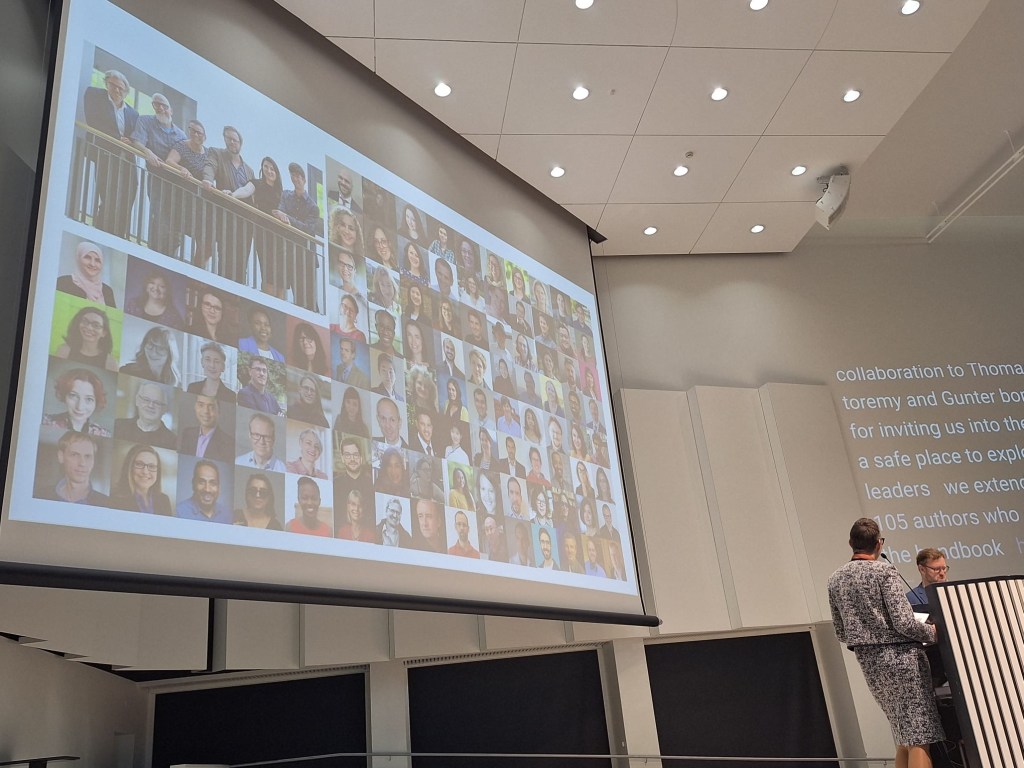
A significant highlight for me was being invited to deliver a keynote address at SEFI alongside Associate Professor Tom Børsen from Aalborg University. The address drew extensively from the Routledge International Handbook of Engineering Ethics Education, which Tom and I co-edited alongside our phenomenal team of co-editors, Diana Adela Martin, Roland Tormey, Thomas Taro Lennerfors, and Gunter Bombaerts.
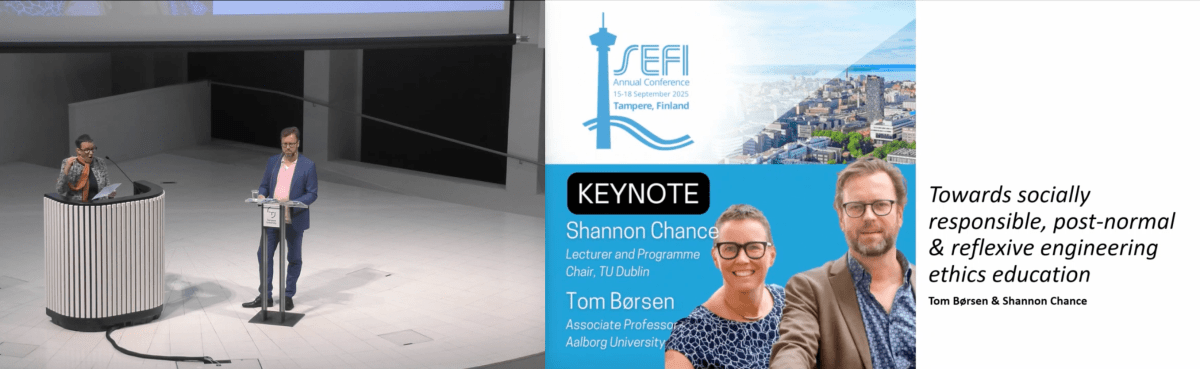
Our keynote, titled “Towards socially responsible, post-normal and reflexive engineering ethics education,” (video link here) called for a bold transformation in how engineering ethics is taught. We addressed the urgent need for engineering ethics education (EEE) to move beyond traditional, individual-focused approaches to embrace collective responsibility, reflexivity, and social justice. This is particularly critical in “post-normal times,” characterized by uncertainty, high stakes, and contested values.
Among other things, Tom and I urged the community to integrate non-Western and AI ethics, foster transdisciplinary collaboration, and empower engineers to challenge power structures and cultivate an ethics of care for people and the planet.
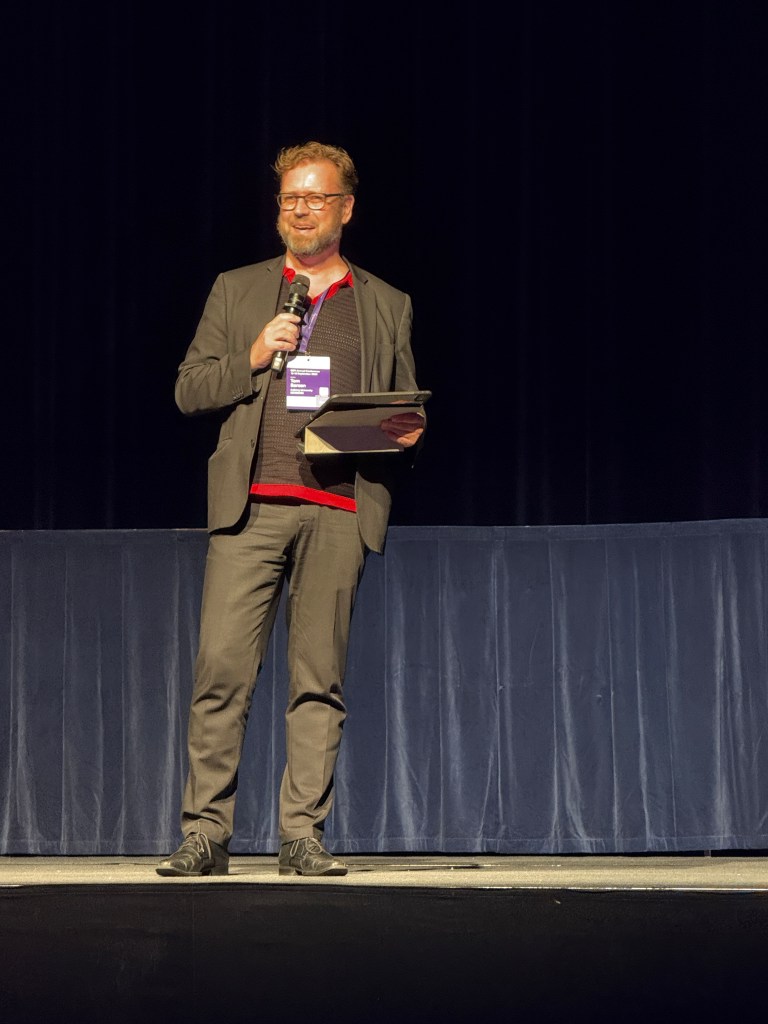
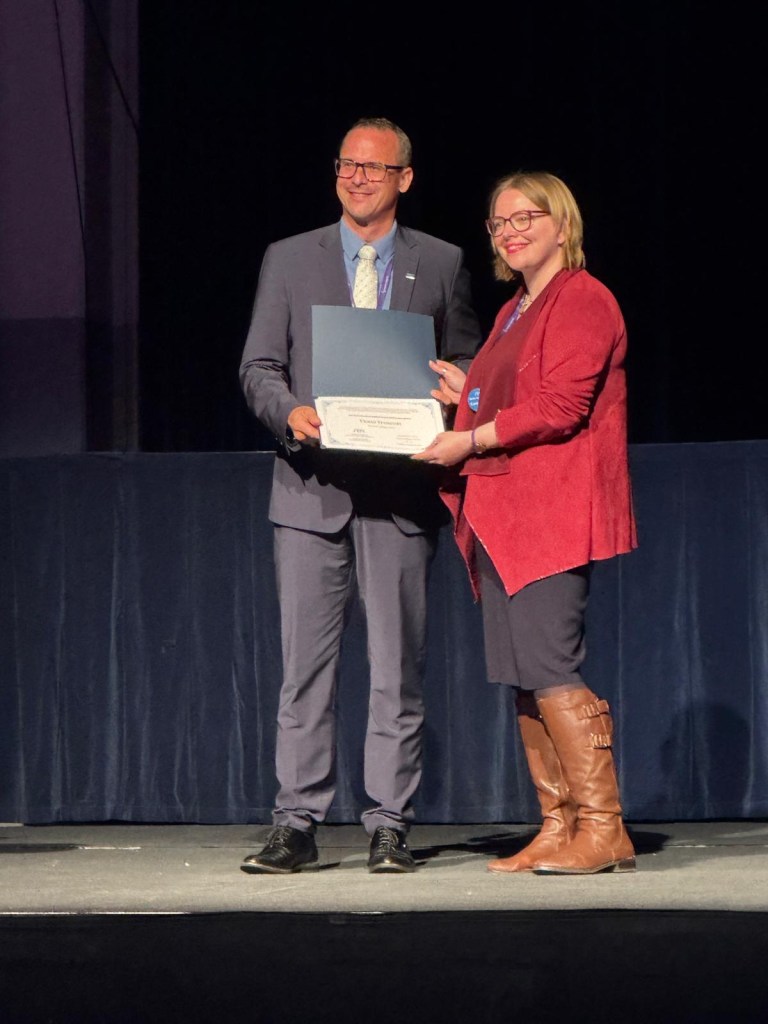
And regarding Tom, I was thrilled to watch him receive a major honor at SEFI: the 2025 Maffiolli Award. Tom has been instrumental in advancing the field of Technological Anthropology, and this award is so very well deserved! Tom won in the individual category, and my colleagues from UCL, led by Fiona Truscott, won in the group category. A very excitig night, all around!
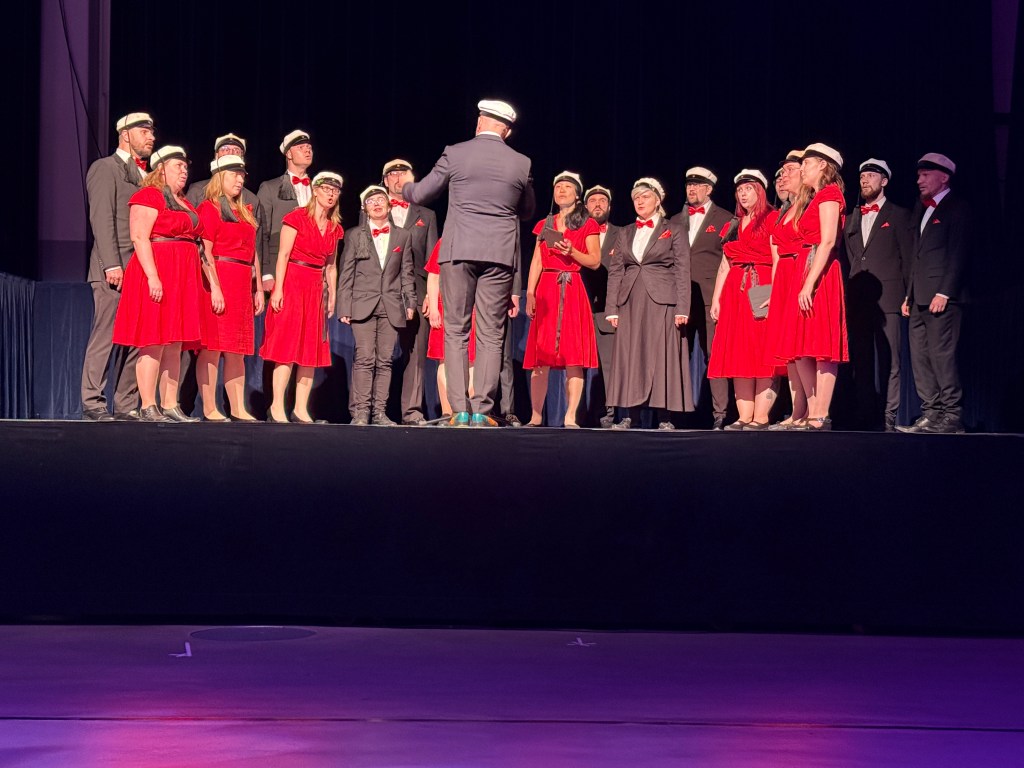
The awards were presented at the conference banquet – the entertainment was superb! Singing Finnish engineers – a whole choir of them – who knew?
I knew about Tom’s award, as I’d been pulling for this outcome for over a year. Yet, other outcomes of the conference were a complete surprise…
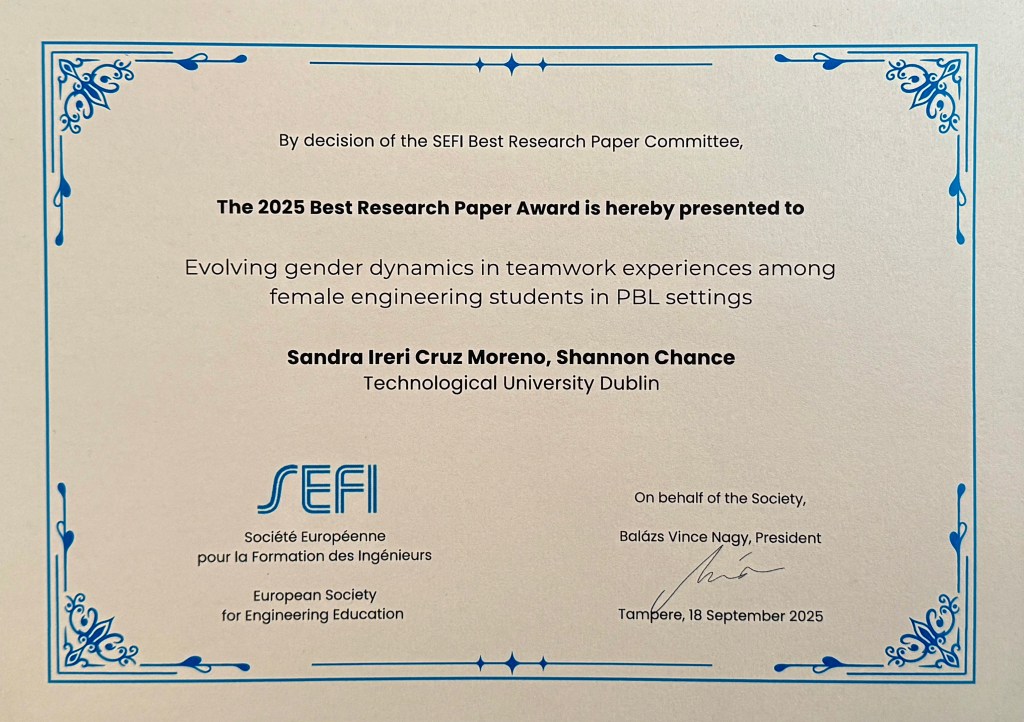
The Power of Collaborative Research: Winner of the Best Research Paper Award!
My PhD student, the incredibly talented and astute sociologist Sandra Cruz Moreno, won the BEST RESEARCH PAPER award for SEFI 2025. I serve as her supervisor and was the co-author of this paper.
The recognition for excellent research was deeply validating, especially since the paper, “EVOLVING GENDER DYNAMICS IN TEAMWORK EXPERIENCES AMONG FEMALE ENGINEERING STUDENTS IN PBL SETTINGS”, was nominated in three separate categories, each with its own panel of judges: Best Student Paper, Best Diversity and Inclusion Paper, and overall Best Research Paper.

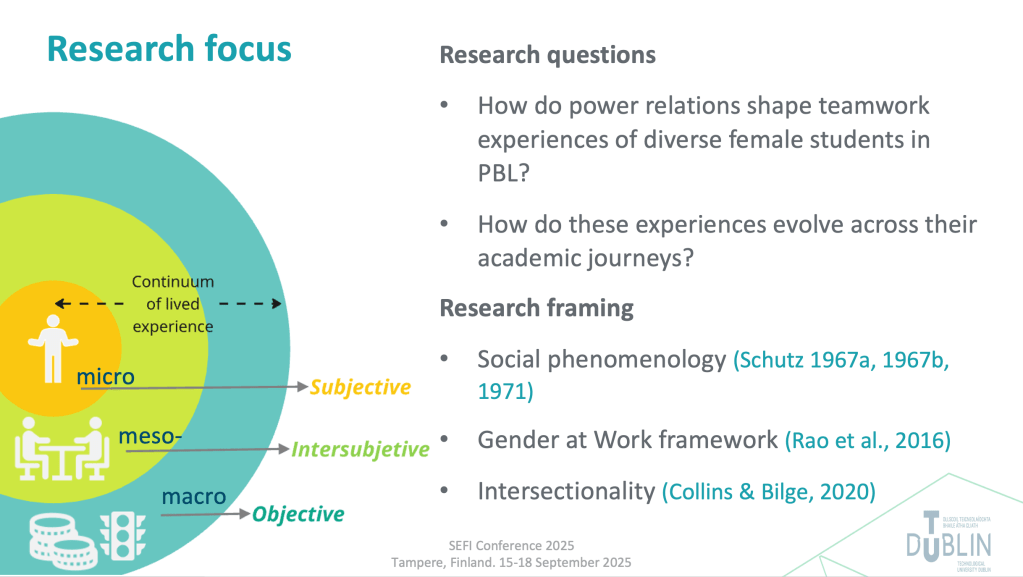
The paper reports one aspect of Sandra’s doctoral research, which has been funded by a First-Time Supervisor grant to me from TU Dublin. The funding allowed us to analyze the extensive interview data I collected since 2015.
Sandra’s study is crucial for understanding inclusivity in engineering education. It employed a longitudinal, qualitative social phenomenological approach combined with an intersectionality framework. Using data from 41 interviews with 22 female engineering students from seven countries at TU Dublin, Sandra explored how diverse students navigate challenges and evolve strategies during project- and problem-based learning (PBL) teamwork across their academic journeys.
A key finding was that while students’ confidence and participation increased over time, the women persistently faced gendered biases and cultural norms that influenced their perceived roles and credibility in teams. For instance, they reported often being relegated to non-technical tasks like presenting or report writing, while feeling required to constantly prove their competence regarding hands-on skills. This analysis led Sandra to conclude that focusing solely on individual resilience is insufficient; systemic structural interventions are also needed to promote inclusive educational practices and challenge embedded norms.
I was honored to accept the award in Sandra’s absence, celebrating the resounding endorsement of her work. This recognition is truly a cherry on top of our successful 3.5 years of teamwork.
You can download the paper here: https://researchprofiles.tudublin.ie/en/publications/evolving-gender-dynamics-in-teamwork-experiences-among-female-eng and cite it as:
Cruz, S., & Chance, S. (Accepted/In press). EVOLVING GENDER DYNAMICS IN TEAMWORK EXPERIENCES AMONG FEMALE ENGINEERING STUDENTS IN PBL SETTINGS. Paper presented at European Society for Engineering Education (SEFI) Annual Conference 2025, Tampere, Finland.
Nurturing Community and Capacity
SEFI is always about nurturing the community, and I was pleased to contribute in several ways:
• Doctoral Symposium: I co-facilitated the full-day pre-conference Doctoral Symposium to support early-career researchers.
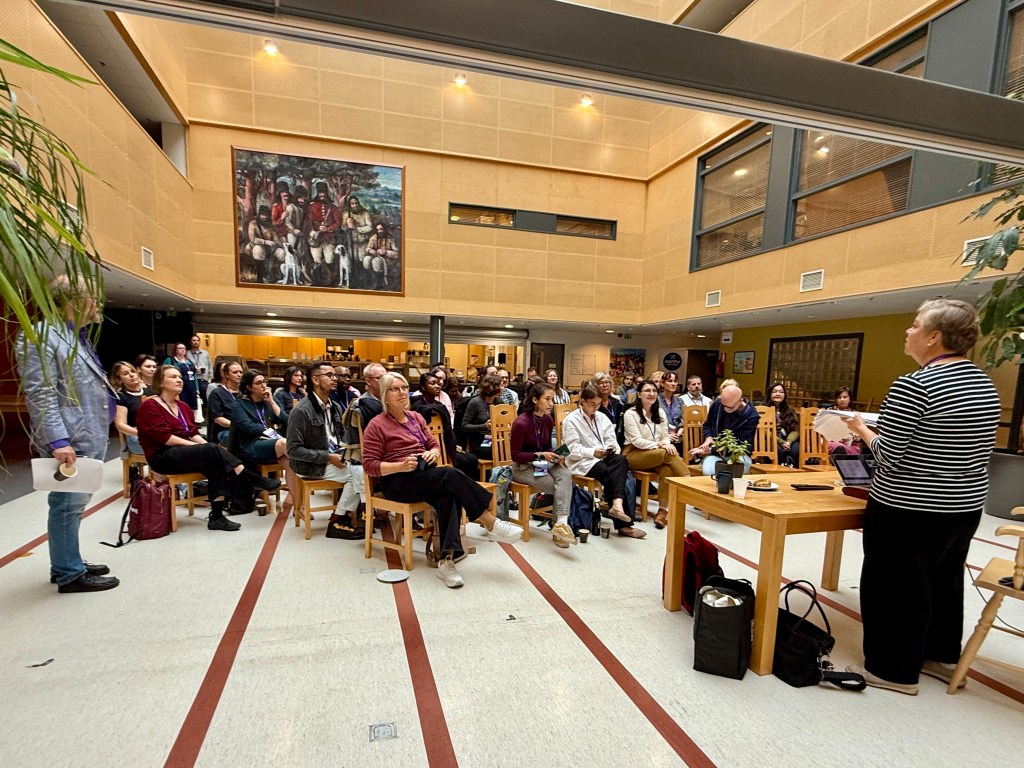
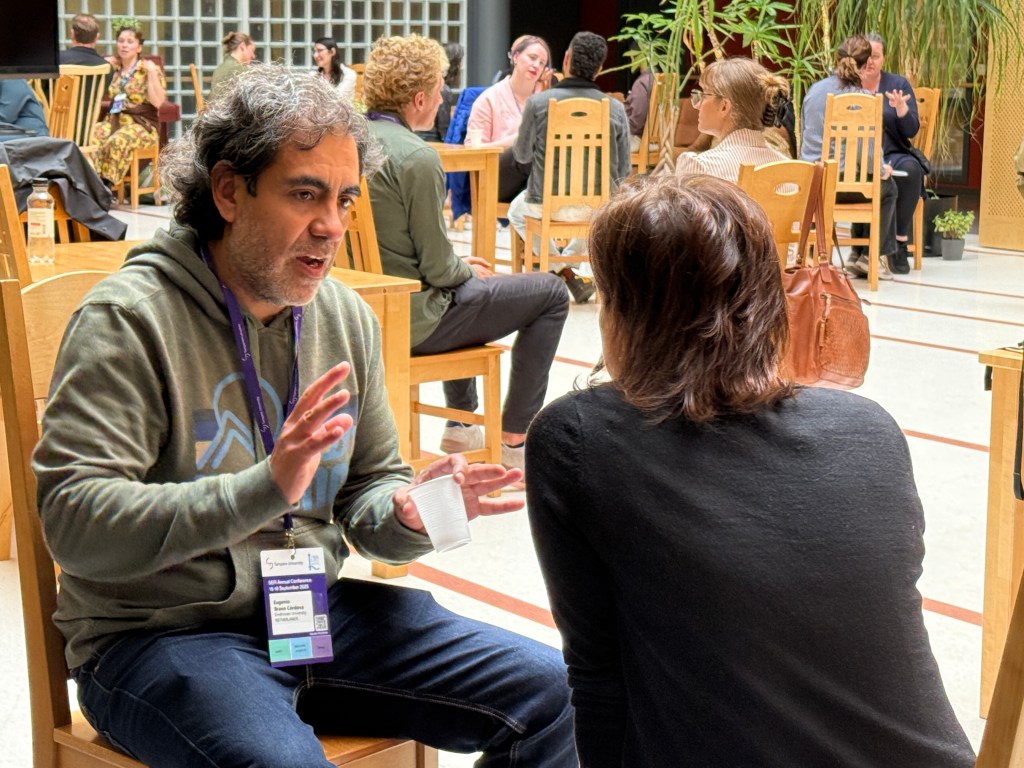
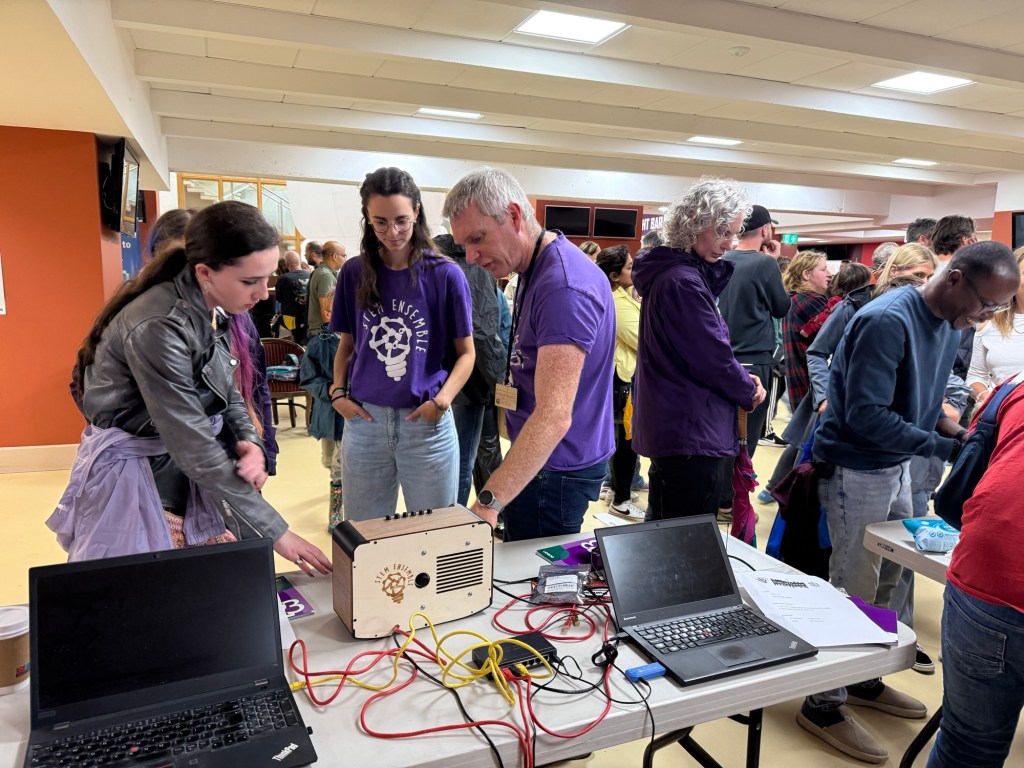
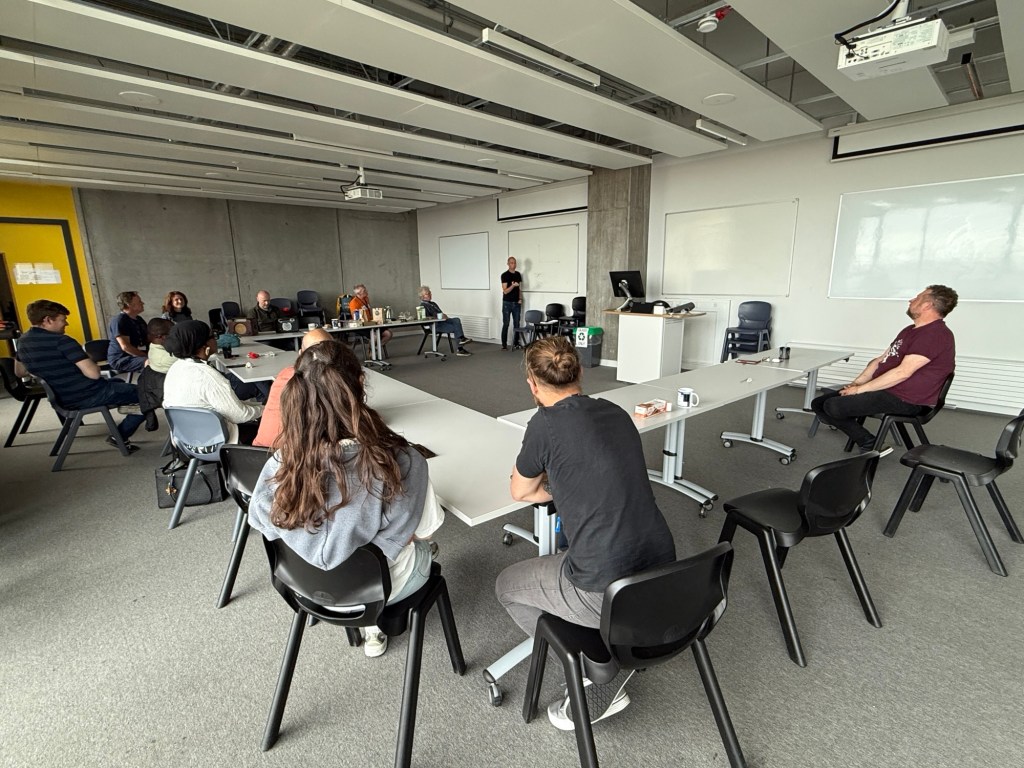
• Workshops: I delivered and co-facilitated multiple workshops, including one on integrating ethics into course delivery, a session on methodological approaches in Engineering Education Research, a workshop on the ethics of care, and a peer-review workshop for journal editors and aspiring reviewers.
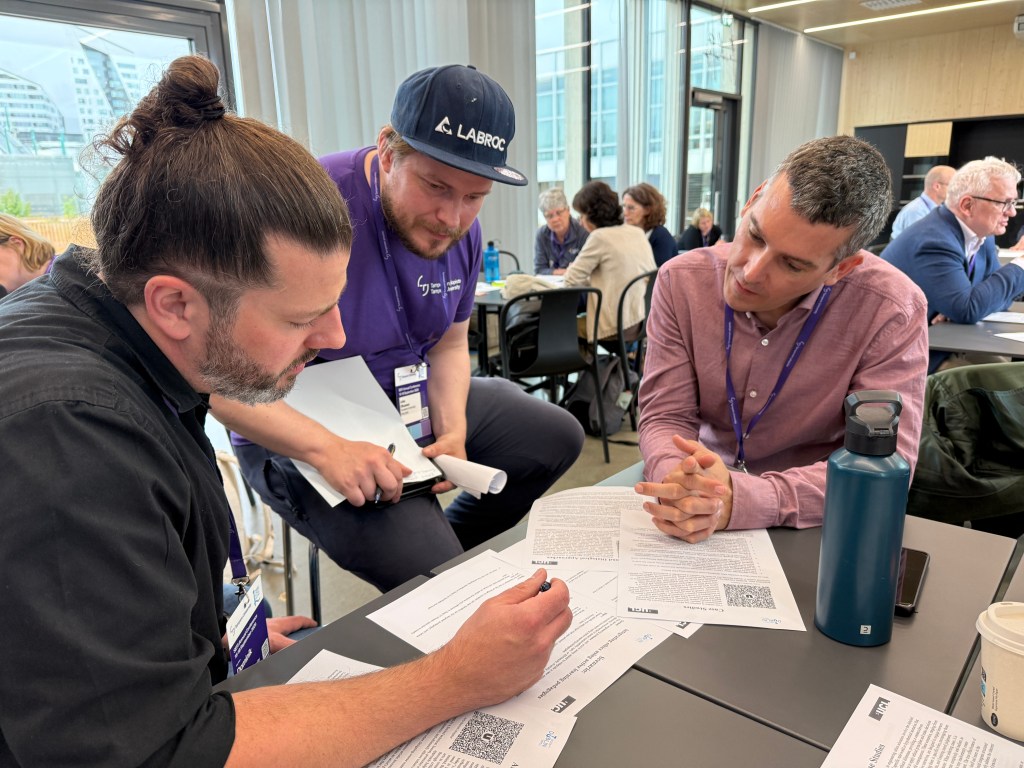
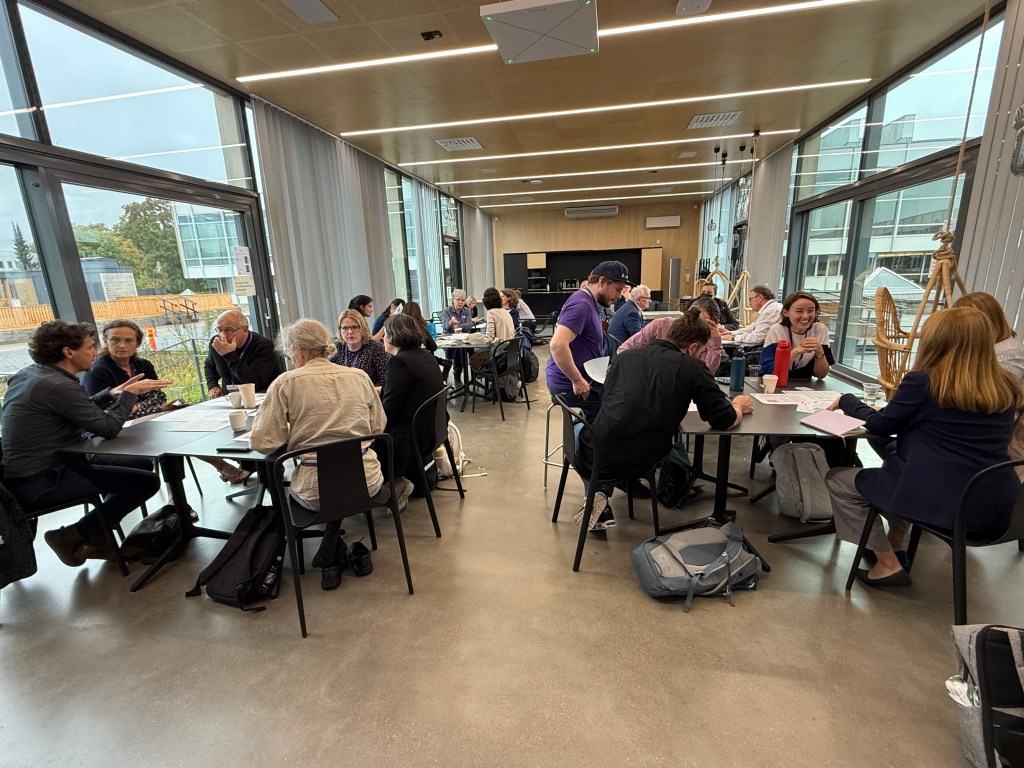
• Papers: I delivered Sandra’s paper while she joined online to address questions following the presentation. I also co-delivered a paper, titled “ACCREDITATION CONSIDERATIONS IN ENGINEERING ETHICS EDUCATION: BRIDGING GLOBAL STANDARDS AND LOCAL PRACTICES” (that you can download here https://researchprofiles.tudublin.ie/en/publications/accreditation-considerations-in-engineering-ethics-education-brid). You’d cite it as:
O’Gorman, L., Gwynne-Evan, A., Ridgeway, L., Rebow, M., & Chance, S. (Accepted/In press). ACCREDITATION CONSIDERATIONS IN ENGINEERING ETHICS EDUCATION: BRIDGING GLOBAL STANDARDS AND LOCAL PRACTICES. Paper presented at European Society for Engineering Education (SEFI) Annual Conference 2025, Tampere, Finland.
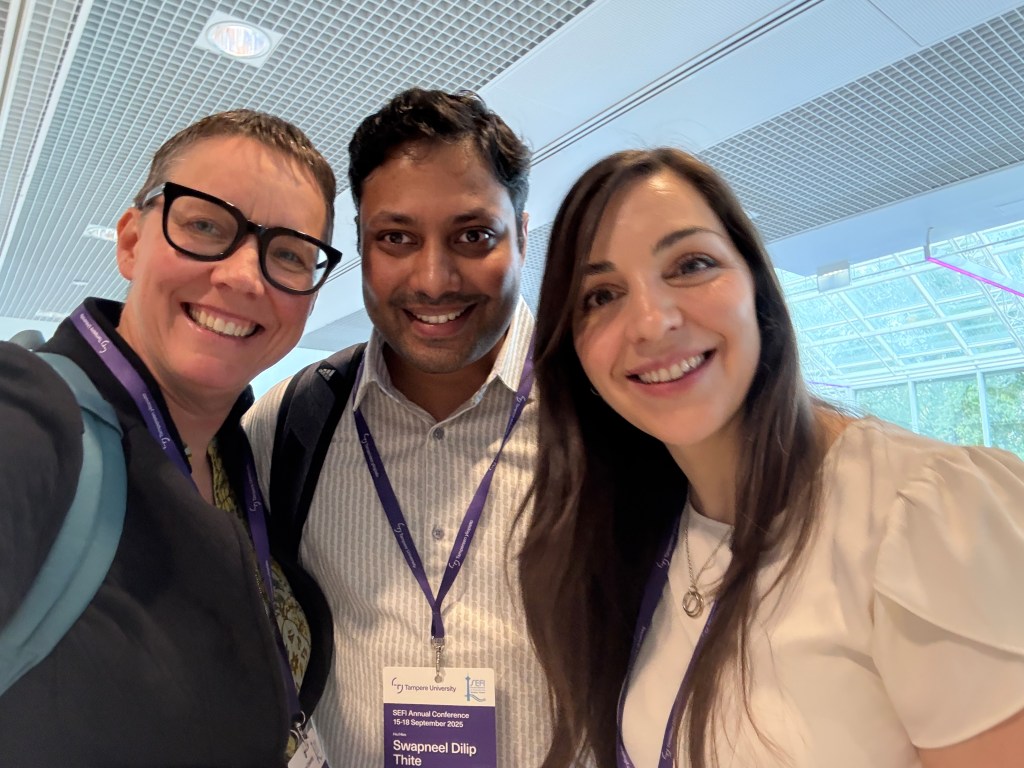
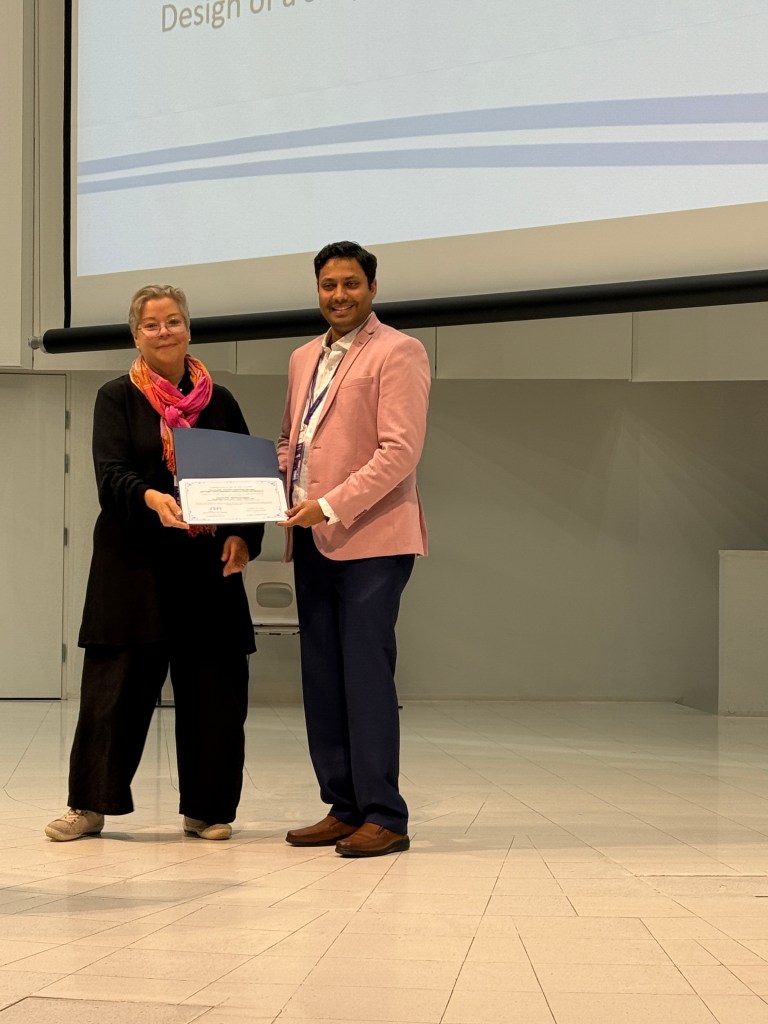
• Supporting Swapneel Thite: I had the immense pleasure of facilitating the attendance of Dr Swapneel Thite, a recent PhD earner. Swapneel won the prestigious Best Paper Award for Volume 49 (2024) of SEFI’s journal, the European Journal of Engineering Education (EJEE), for which I serve as Deputy Editor. He and his PhD supervisors published the “Design of a simple rubric to peer-evaluate the teamwork skills of engineering students” with us. Since I had already paid my registration fee, I was able to offer Swapneel the free registration given to me as a keynote speaker, helping him travel to SEFI to receive his award and meet the community. His paper, recognized for its rigor and practical utility (an easy-to-use instrument for peer assessment of teamwork), is well worth reading!
Post-Conference Finnish Discoveries
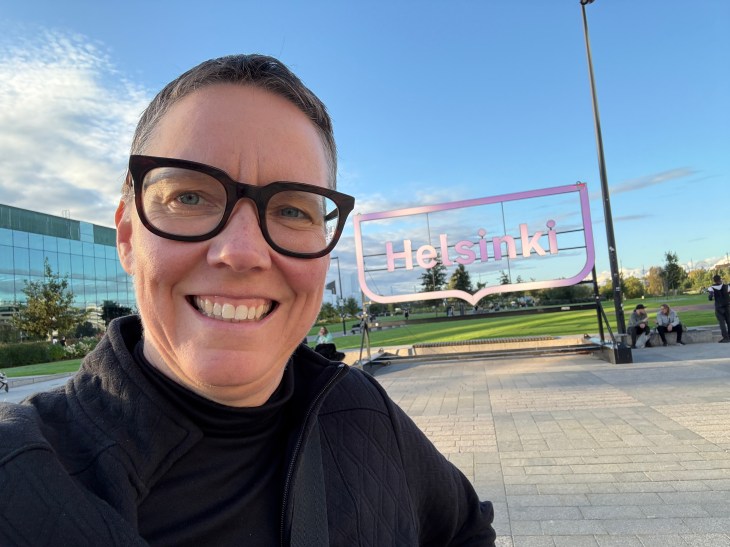
The conference officially wrapped up on Thursday, but the adventures continued. I attended the SEFI Board of Directors meeting, worked with colleagues on planning future SEFI events, and then headed to Helsinki.
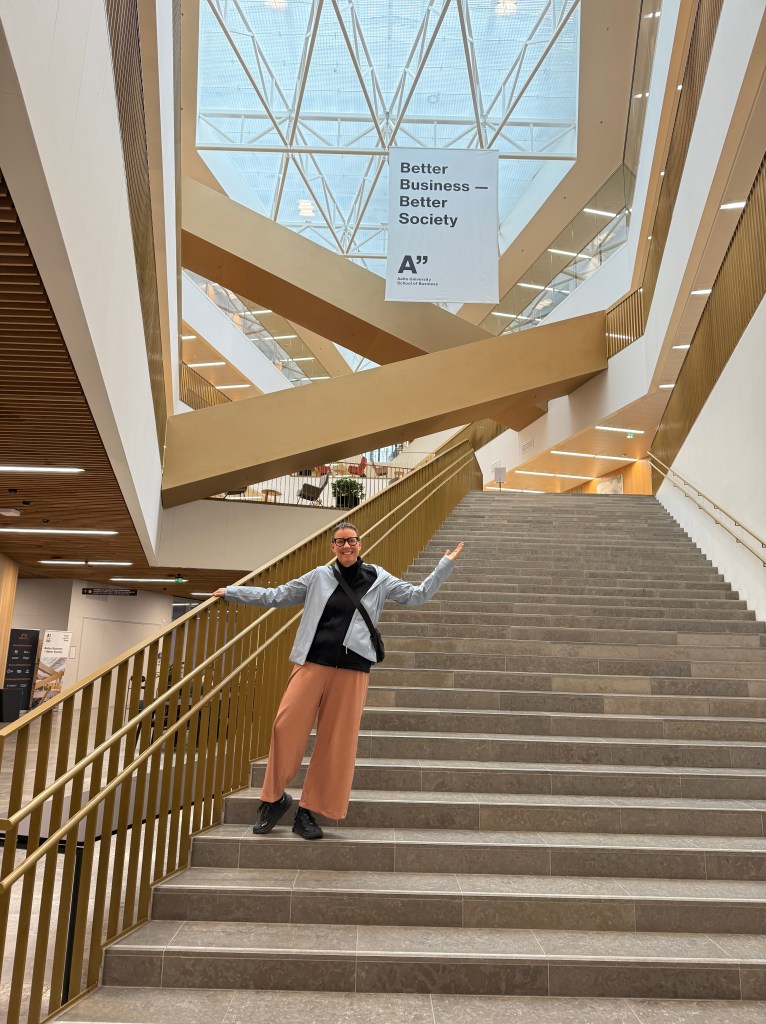
I spent Friday exploring Aalto University and meeting colleagues there. Dr Xiaoqi Feng provided a personal tour and connected me with her colleagues—a bittersweet moment as she prepares for her new job at TU Delft.
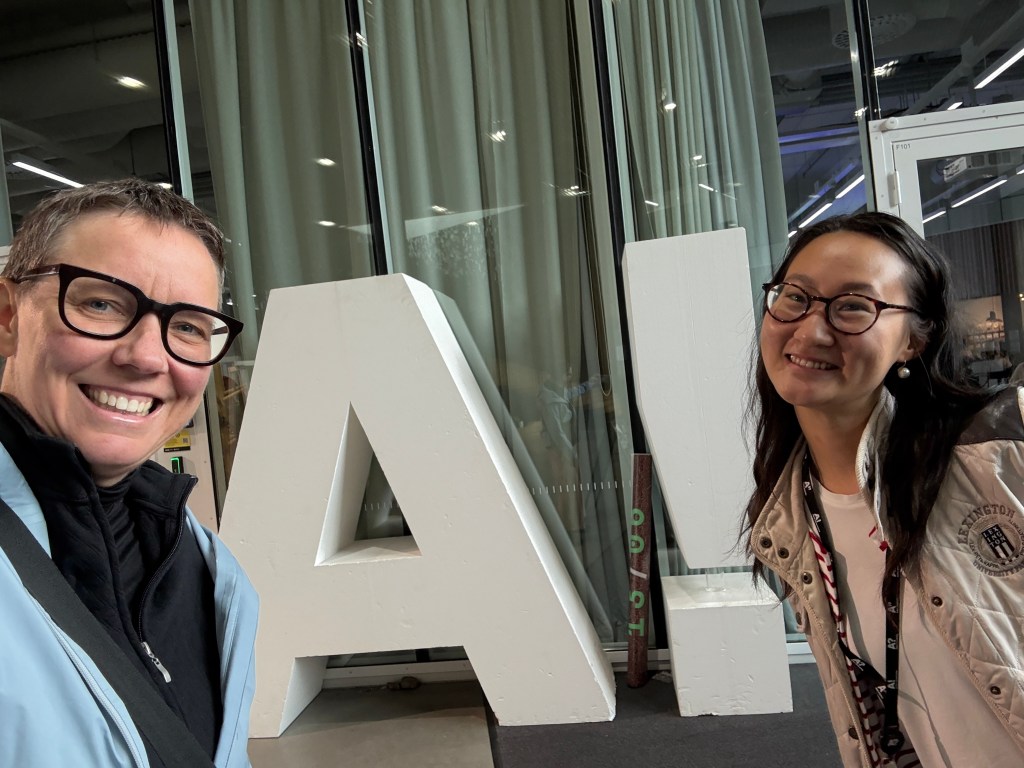
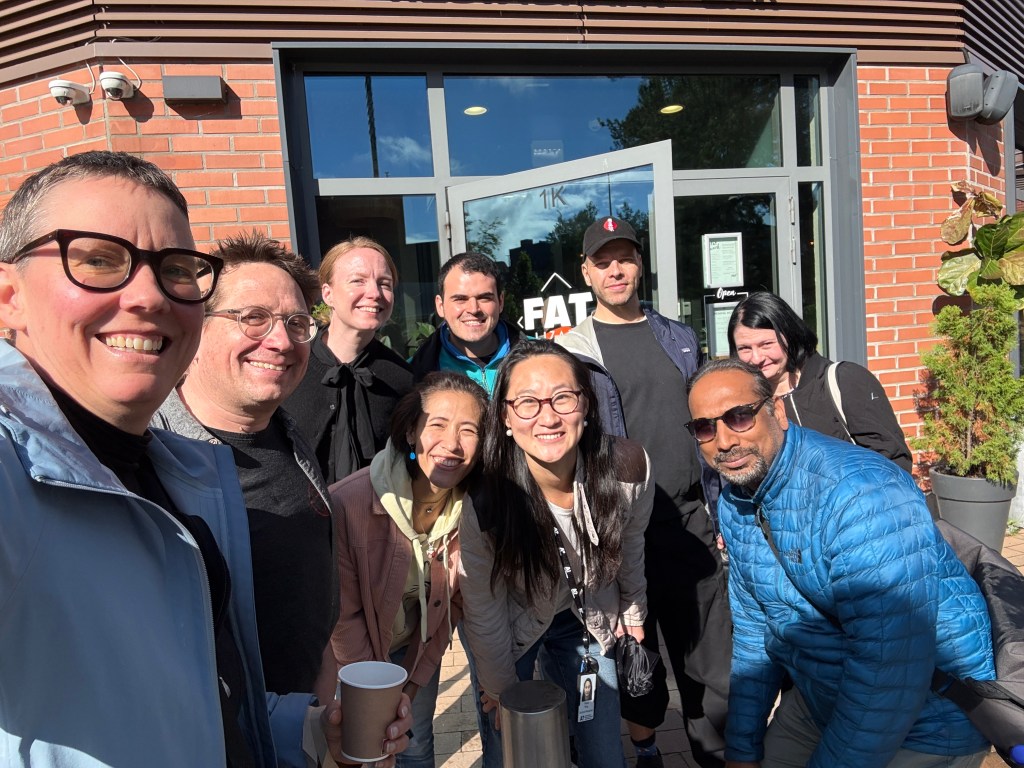
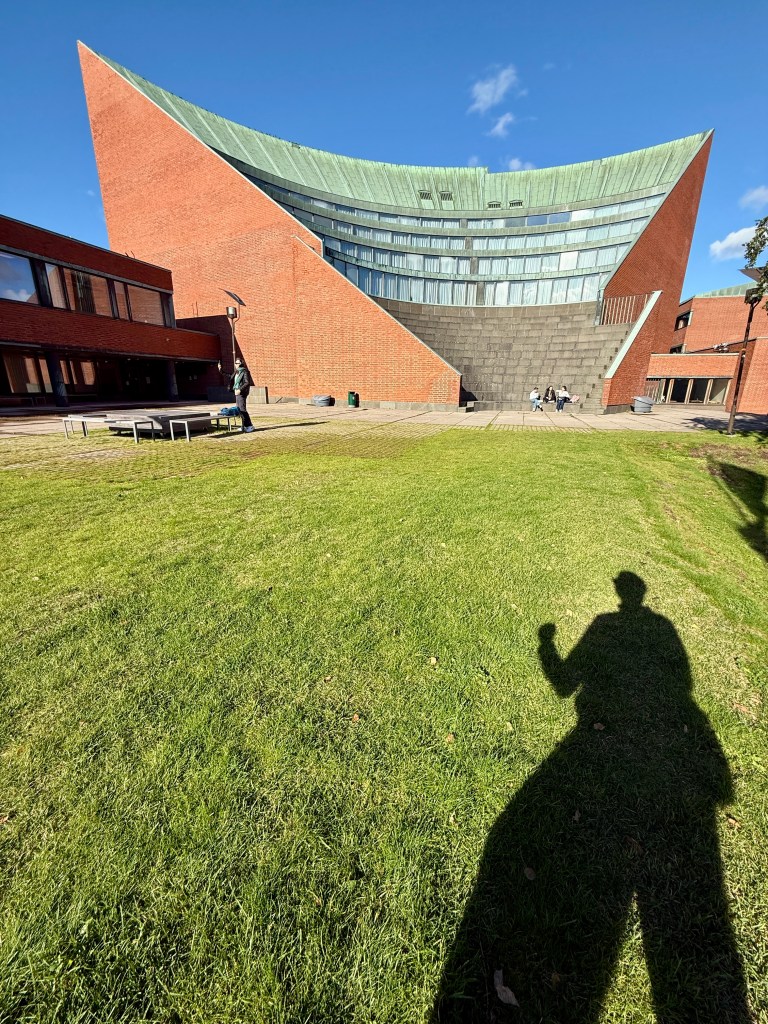
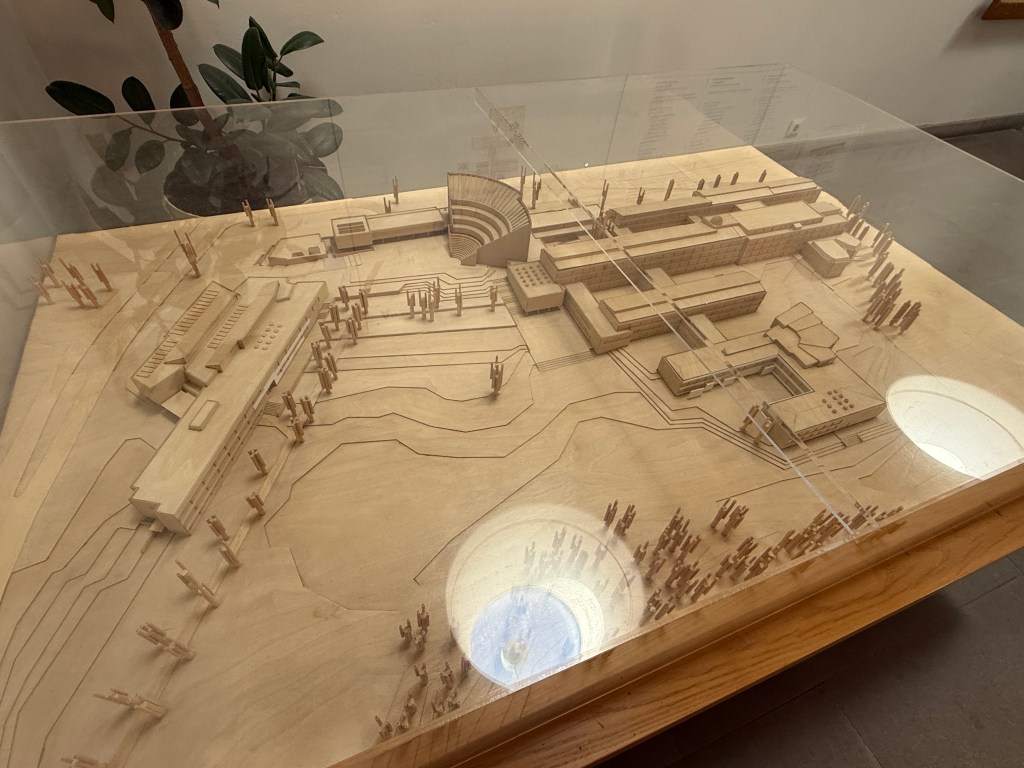
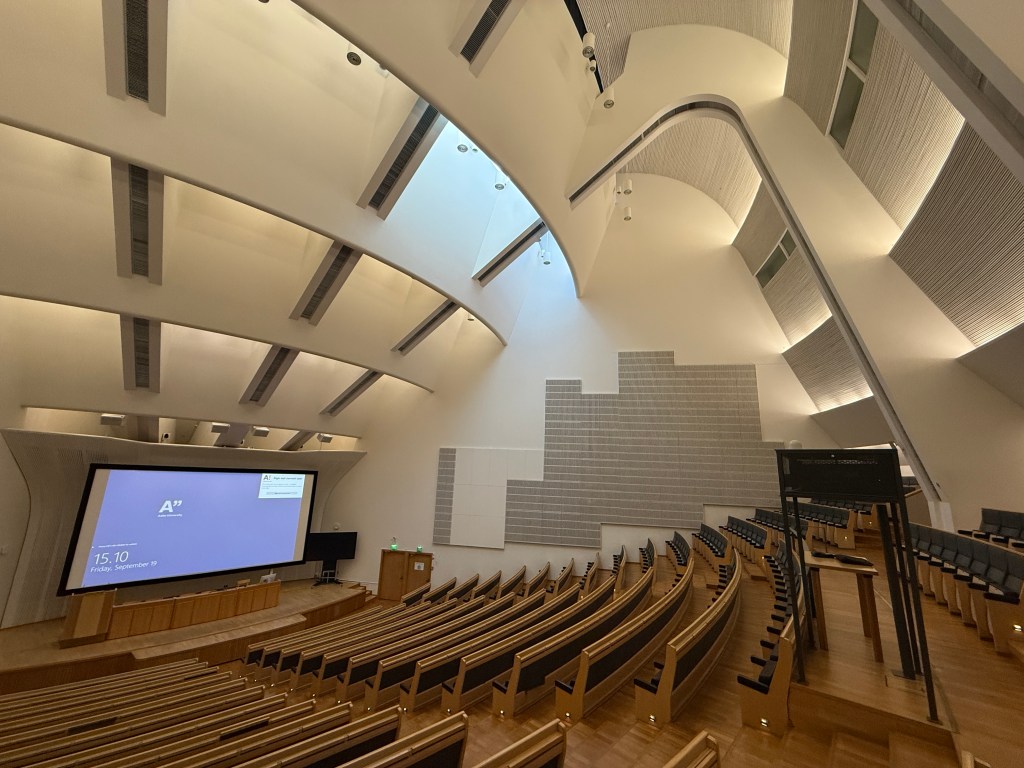
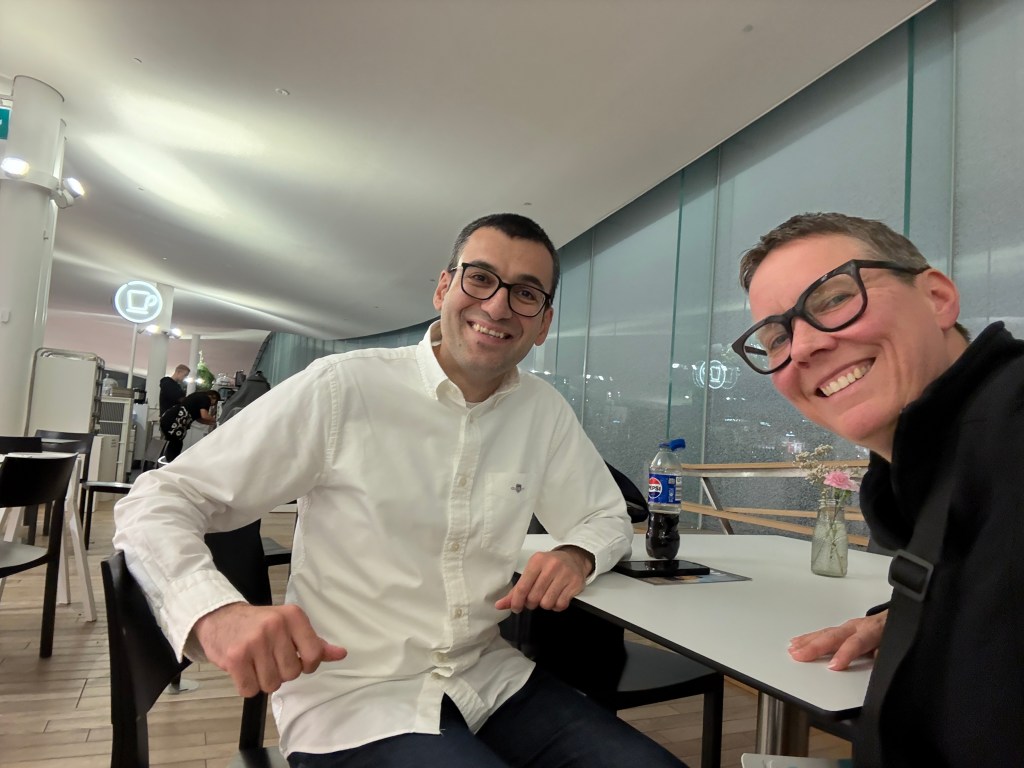
My Finnish travels culminated on a serendipitous high note when I ran into early-career researcher Yousef Jalali at the remarkable Oodi, Helsinki’s new Central Library. Moments like this—a chance encounter in a vibrant cultural space far from home—gave Yousef and me a chance to reflect on the conference and help support each other as “researchers on the move” who have relocated ourselves far from home in the pursuit of academic excellence.
What an amazing community of inspiring educators SEFI is!
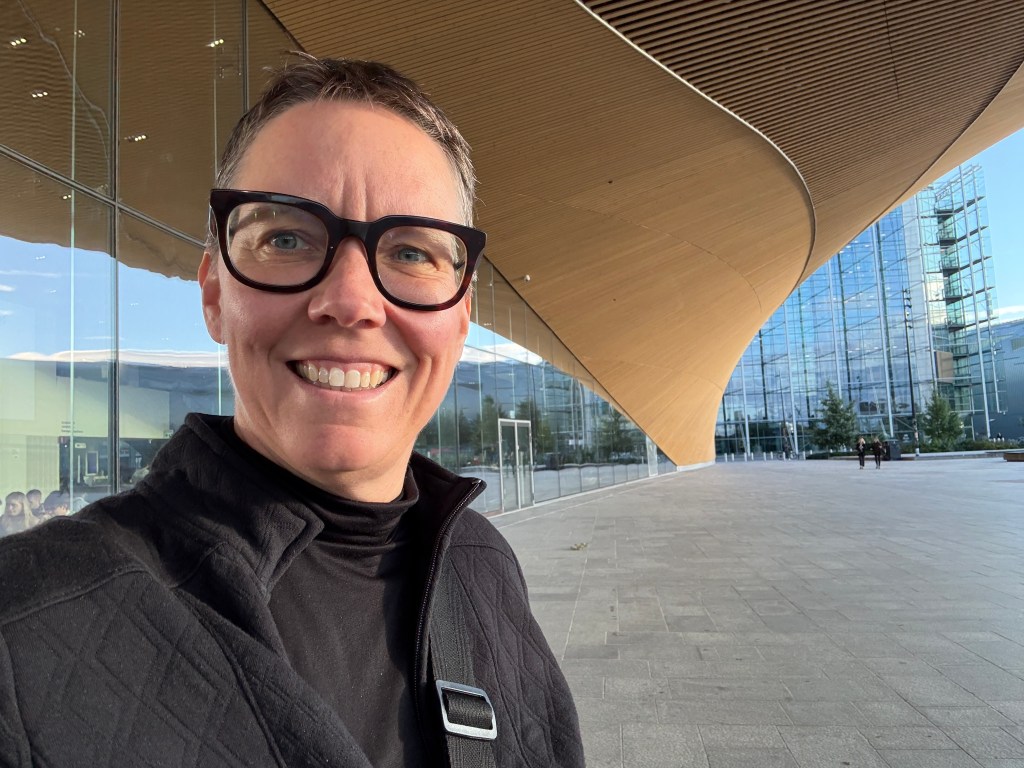
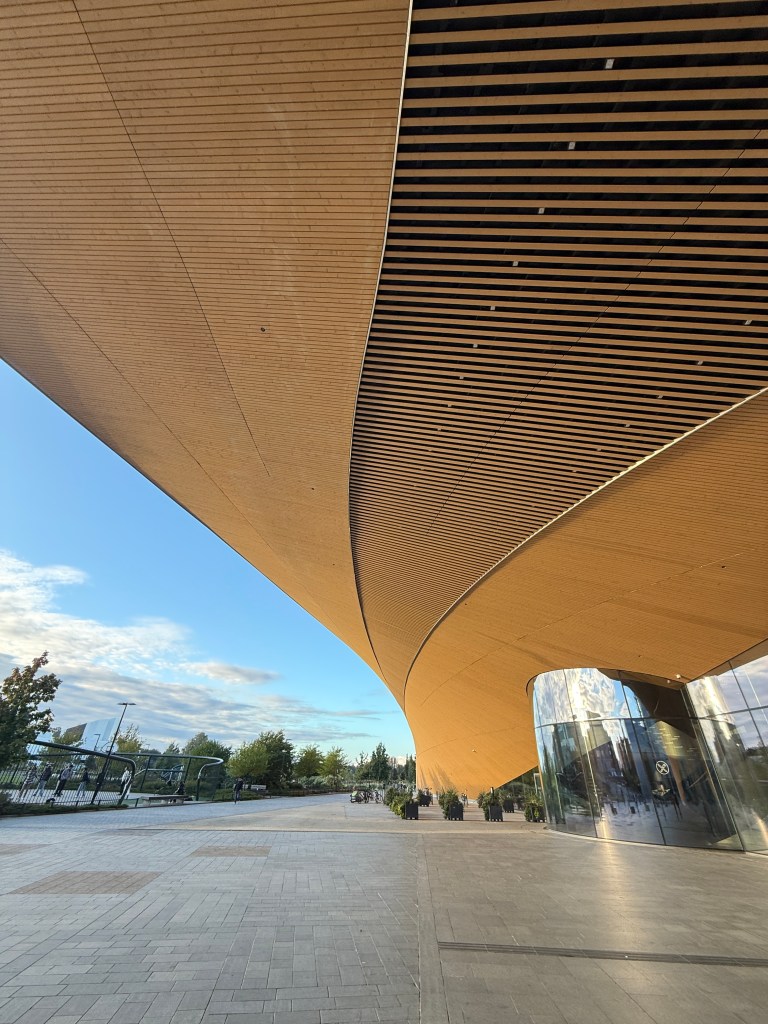
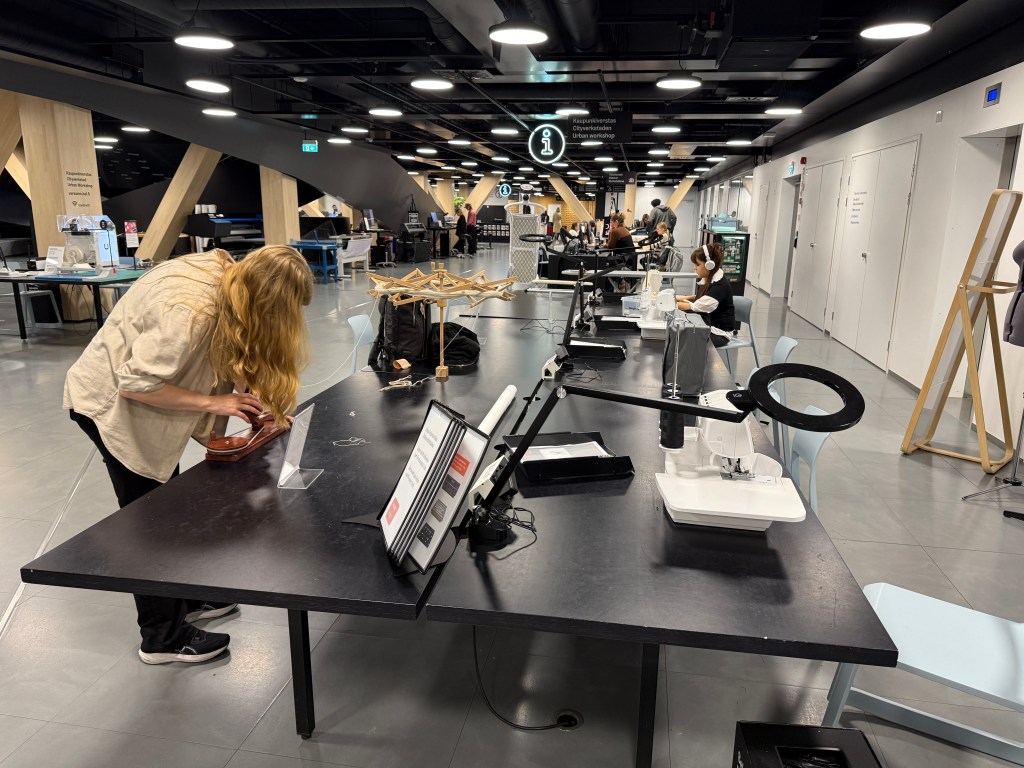
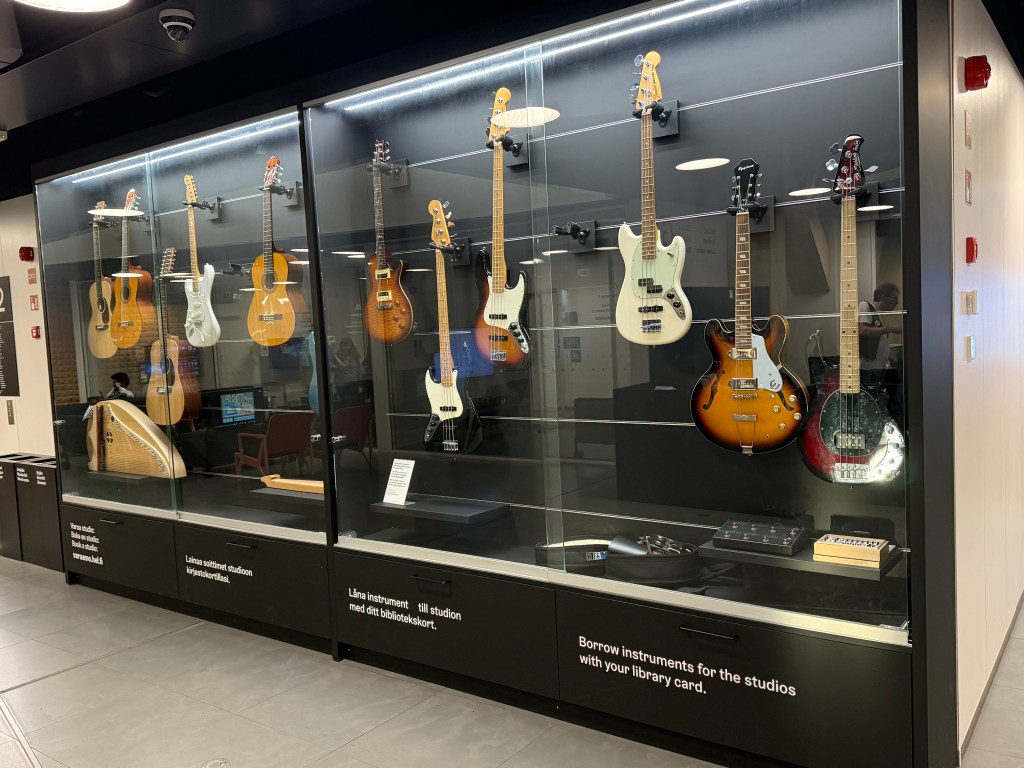
From celebrating major awards and delivering keynotes to fostering the next generation of researchers and exploring expressive Finnish architecture, this SEFI was truly a testament to the powerful, collaborative community we have built in engineering education.
For me, SEFI 2025 was such a celebration of community and collaboration.





 Ireland by Chance