Strolling Freemason

Hampton Roads is lovely this time of year!  Here are some snippets from my quick post-yoga walk through Norfolk’s historic Freemason district.

Trend Shifters and Hip Young Urbanites

Donald Roman NYT feature

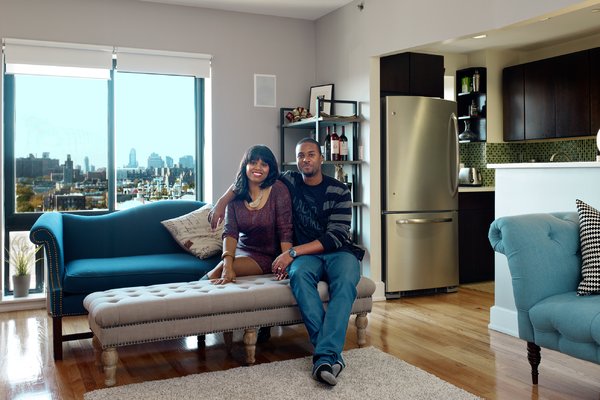
Fabiola and Donald Roman, as featured in the New York Time real estate section.

Times are changing.  Demographers tell us that younger set is shirking automobile ownership and moving closer into American cities.

I’m proud to say that one of my former Hampton University architecture students, Donald Roman, is among them.  He and his  wife, Fabiloa, recently chose a condo in Brooklyn over the now-faded suburban dream.  And, the New York Times just celebrated their accomplishment with a feature story.

If I recall correctly, Donald was never a fan of the car.

I’m happy to say that the heavy urban design emphasis of our architecture degree program served to strengthen his understanding of the benefits of population density and walkable city design.

I’m immensely proud that Donald and Fabiloa, who met in an Upward Bound program when they were in high school, planned well and chose carefully.  They overcame tremendous odds to become homeowners under the age of 30.  And, they had the good sense to recognize that living in a densely settled area means shorter commutes and quick access to a huge range of services.

During his time at Hampton University, Donald travelled with me to Tanzania on the 2005 Fulbright-Hays Group Project Abroad program I conducted.  It was a true joy to have Donald among the 23 American students and 65 Tanzanian students on the program.  He was immensely popular with the entire group and his soft-spoken but optimistic spirit uplifted our group every day.

Our 2005 Fulbright-Hays group in Tanzania.

Our 2005 Fulbright-Hays group in Tanzania.

Donald also made a big difference in my life when he introduced me to Malcolm Gladwell.  He even handed me a copy of The Tipping Point as we were leaving Sunset Beach on our last day in East Africa.

The Tipping Point is about “how little things can make a big difference.”  Interestingly, the NYT feature ends with a quote from Fabi about little things that make a big difference in one’s quality of life (like a dishwasher — and I totally agree!!!).

Thanks, Donald, for sharing with me your reflections on Gladwell’s ideas when we were beginning our trek home.   Your insights got me interested enough to invest  time in cracking the cover, and I had almost finished reading the book by the time my plane landed in Norfolk.

Since then, I’ve read each of Gladwell’s new releases cover to cover.  A new one, about David and Goliath, just hit the shelves and beacons me to read.

There are interesting TED talks by Gladwell on David and Goliath and “choice, happiness and spaghetti sauce” to help get you started if you haven’t yet cracked the mystic of Gladwell’s storytelling ability… or if you just want to have some fun learning about the break through discovery of vegetable chunks.

Closing a Chapter

In preparation for our chapter, Tim Cole updated me on VBCPS's sustainability strategies.

Last month, while working on our chapter, Tim Cole and I discussed VBCPS’s sustainability strategies.

I’m celebrating a moment of success here before I hit the sack for the night.

I just submitted a full draft of a chapter called “Designing School Buildings to Enhance Performance and Learning” for a book called Marketing the Green School: Form, Function, and the Future that will be part of the Advances in Educational Marketing, Administration, and Leadership (AEMAL) Book Series.  To make that project more fun, I enlisted Virginia Beach City Public School’s Director of Sustainability, J. Timothy Cole, as my supporting author.

This chapter provides a way for me to share some of the research I did for my dissertation and to extend my knowledge — I got to learn from Tim’s successes in Virginia Beach.  Tim has helped create 8 LEED-quality school facilities (5 are certified and 3 are in process to become certified). He even helped pilot LEED v1 in the 1990s.

This is the second chapter I have completed in the two months since I’ve been home.  The other chapter is called “Bringing it all Together Through Group Learning.” It is for a Wiley publication called New Directions for HIgher Education. That project was fun because I got to work with the book’s editor, the illustrious Dr. Pamela Eddy.

Since returning home on August 23, I’ve also managed to compile and submit a dossier to my University, submit a grant proposal asking for funding to help  conduct future research, spend a good amount of time with my students, implement some new teaching techniques, and — this week — get my midterm grades in on time and prep to advise students.

Oh, yes, and tonight I also had a lovely dinner with my dad and step-mom, Joyce, who are in town on business!  It was a real treat to spend a few hours with them.  Joyce is the Director of Admissions for the Vet School at Virginia Tech and she is recruiting at Hampton University in the morning.

All this is  pretty typical in the day of a professor… but I will sleep well tonight, knowing that I’m doing the best job I can possibly be doing right now, despite all the odds I’ve stacked against myself.

It is really nice to step back, take a deep breath, and be thankful for work and health and a ray of happiness every now and then.

And now, to sleep.   There’s much more to do in the morning….

Testing Theory in Practice

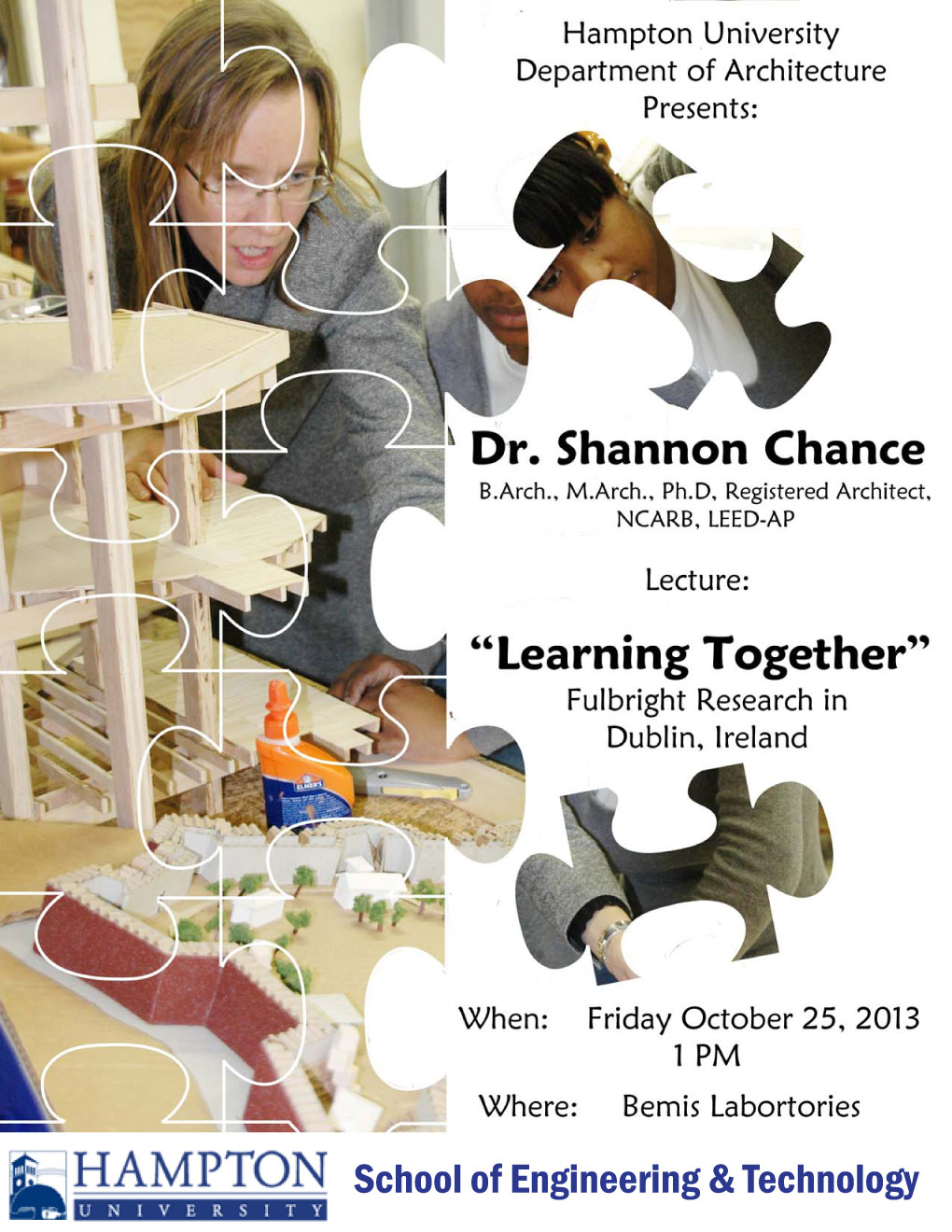
Yesterday I got to share some of my Fulbright research as part of the weekly lecture series hosted by the Hampton University Department of Architecture.  It was a great way to catch up with the advanced students and introduce myself to the first year group.

The students were highly attentive, very receptive to learning about epistemology and cognitive development theories, and interested in hearing about how I am using  data from student blogs  to test existing theories.

The faculty seemed genuinely interested, too.  At the end, though, there was no time for the faculty to ask questions… the students had so many questions that I finally had to cut things short and send them off to their studio classes.

At the start of the lecture, I had asked the students to pull out their smart phones and look up this blog site.  As a result, they had many questions about what I’ve found in applying the new methods in the second year studio and sustainability classes I teach.

I also passed around the catalog from my photography exhibition, so they could see some of the artwork I created in Ireland.  I also encouraged them to look up pages about my adventures in Greece, Portugal, Belgium (which I still need to post more about), France, and of course, Ireland.

Lecture poster (produced by HU student Samuel Morgan).

Lecture poster (produced by HU student Samuel Morgan).

Lunch with the Fowlks

Reconnecting with Hampton University’s Dr. Edison Fowlks is always great fun.  I’m perpetually intrigued by his radiance and his zest for learning and teaching.  For several years, our image anchored HU’s faculty page:

Hampton University _ Faculty

The three of us (pictured above) are all still going strong.  In fact, the third professor in the picture, Dr. Francisco Cornell, was just recognized with Hampton University’s highest teaching award.

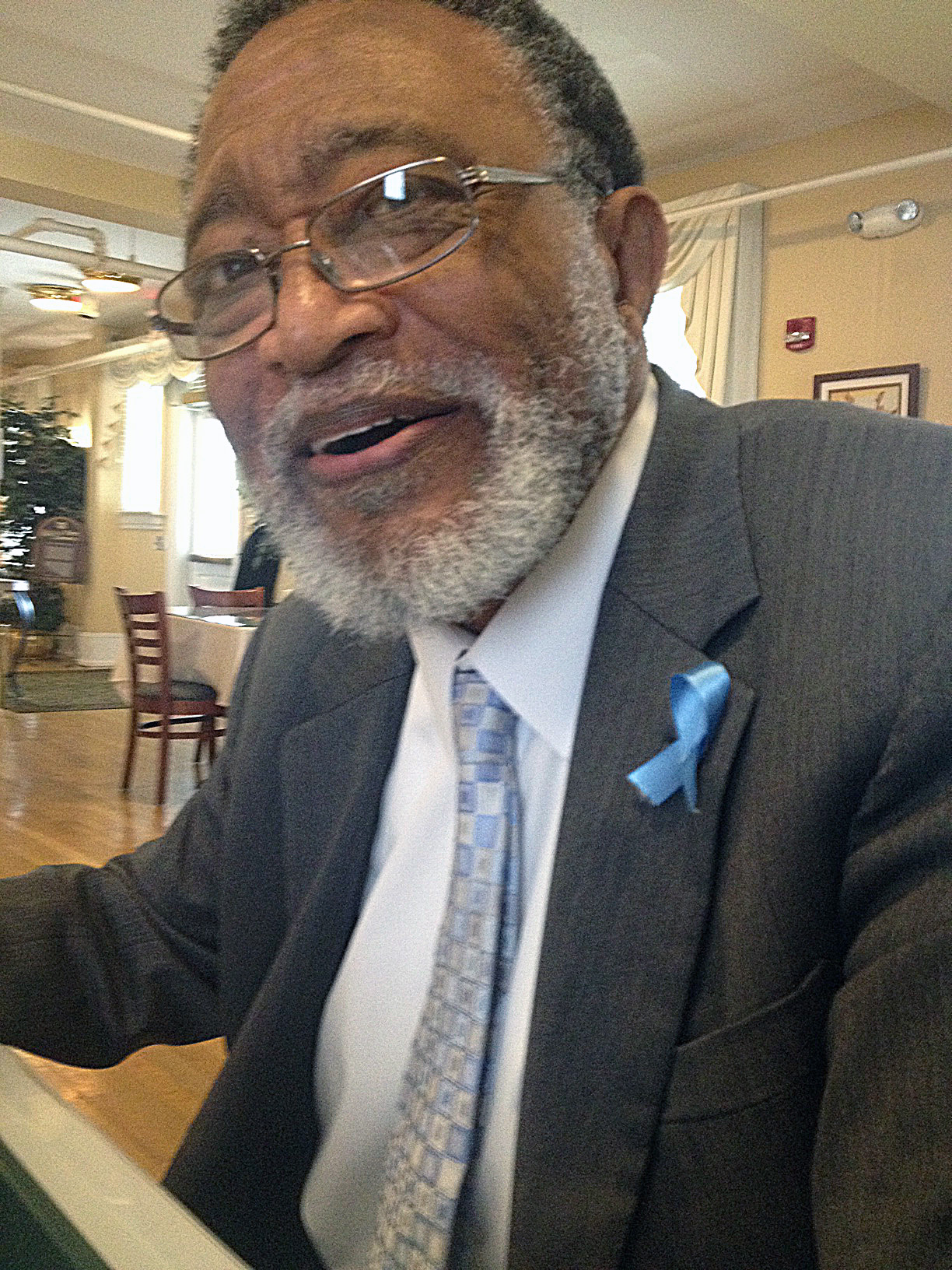
Dr. Edison Folks

Dr. Edison Folks

Recently, I had opportuity to share lunch time with Dr. Fowlks and to hear about his many new studies.  He’s teaching botany this semester, which he’s never done before.  His eyes sparkle and he radiates joy as he explains the new concepts he’s teaching and how he’s getting the students to learn.

“Problem-Based Learning” techniques are second nature to Dr. Fowlks.  Seems he’s always been a hands-on teacher.

Today, he’s teaching his students to isolate genes in soybeans and splice together new combinations.  He building new knowledge in genome sequencing and “synthetic biology.”

I recall he was once working to get cotton to grow blue so it wouldn’t need to be dyed.  I’ll have to remember to ask how that went.

Dr. Fowlks recently led a summer camp on synthetic biology. He took students to Yale for ten days last summer to work in a lab.  He’s also a member of the Genome Consortium.

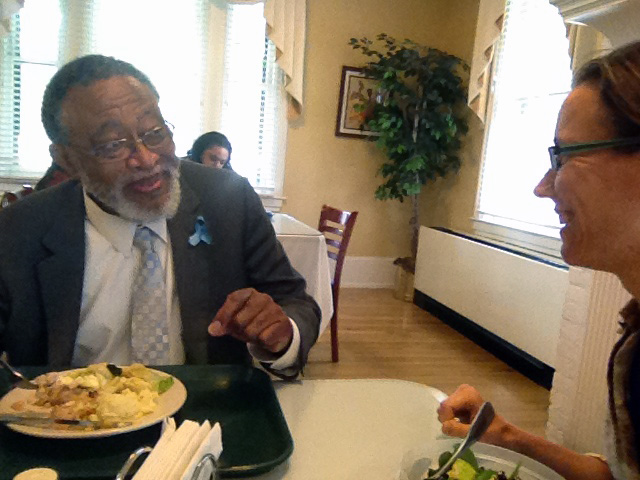
Fun over lunch.

Fun over lunch.

At lunch last week, we discussed bio-remediation and using living gardens to purify water.  I’ve been wondering if we could use the techniques to help an art professor who came to a sustainability lunch I held a few weeks back.

Over lunch on this particular day, Dr. Fowlks also introduced me to the concepts of “the new bio economy” and “metagenomics” which means “around genomics.”  One of his friends actually coined the term metagenomics.

I often remind myself how fortunate we are to have this genius and teacher extraordinare here at HU. He does his namesake (Edison) proud, and I’m certain he could be working anywhere he’d like.  A glance over his bio on the Hampton University’s website makes that much clear:

Dr. Fowlks received the Ph.D. degree in Plant Pathology from the Ohio State University. For four years he was a Postdoctoral Fellow in Plant Molecular Biology at Michigan State University and in Molecular Virology at the University of California at Berkeley. At Michigan State and UC Berkeley, he studied the primary structure of ribosomal and viral RNAs respectively. Later at Bishop College, research in his laboratory led to the development of a two-dimensional RNA fingerprinting technique for studying mammalian RNA viruses. At Hampton University, he and his students use the tools of genomics, metagenomics, bioinformatics, and synthetic biology to focus on some unanswered questions in biology and medicine. Moreover, he is establishing DNA Microarray and Bioinformatics labs to serve as models for teaching biology as an information science and organisms as networks or circuits, and blending computer science, mathematics, and genetics into the curriculum. Dr. Fowlks instructs Principles of Heredity, Bioinformatics and Genomics and Advanced Genetics and is the director of The Howard Hughes Medical Institute (HHMI) Undergraduate Education Program housed in the Department of Biological Sciences at Hampton University.

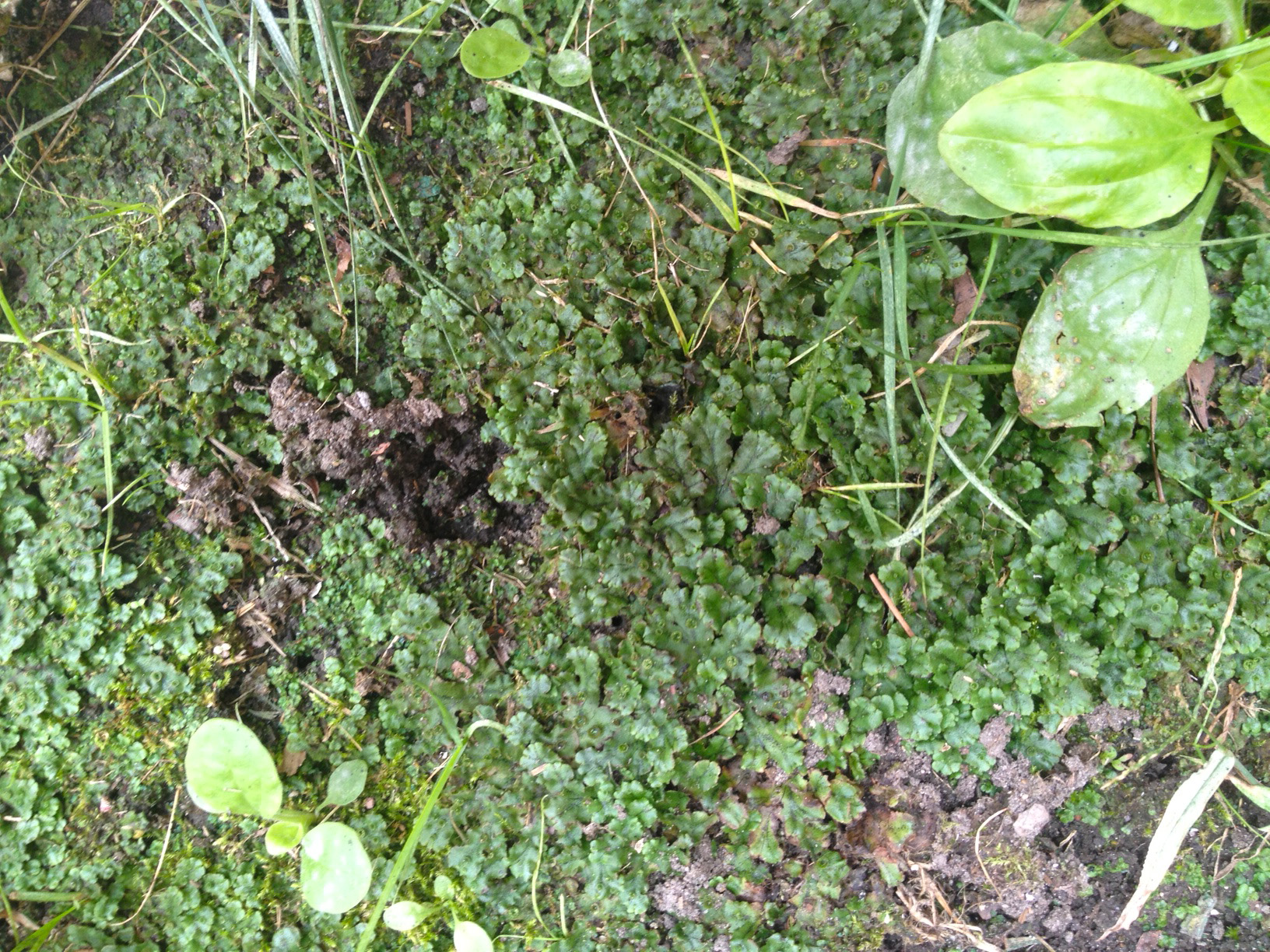
We made a special journey over to see the liverwort outside Armstrong-Slater Hall.  It's one of the oldest strains of plant anywhere.

We made a special journey over to see the liverwort outside Armstrong-Slater Hall. It’s one of the oldest strains of plant anywhere.

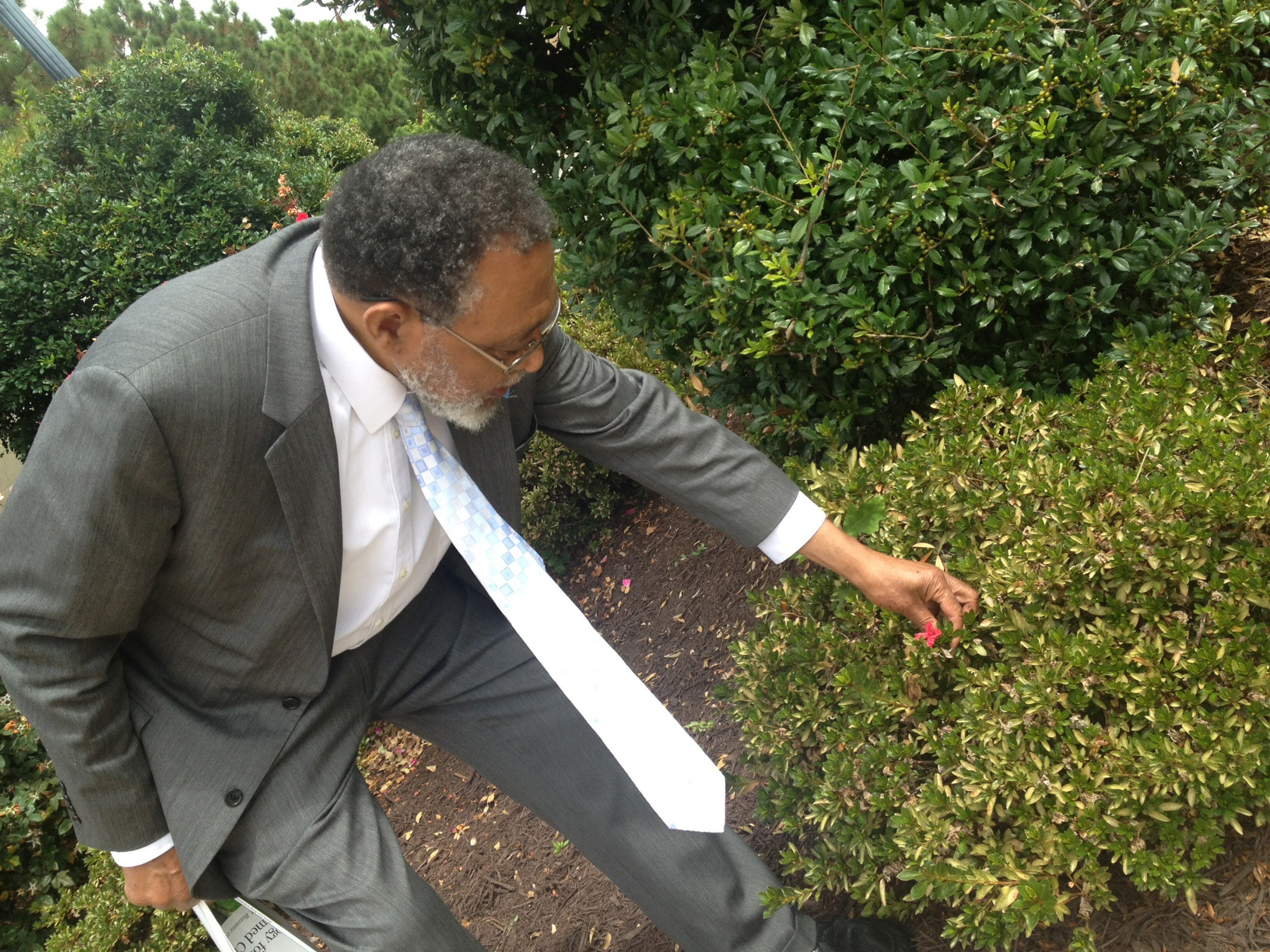
Walking back to our academic buildings, Dr. Fowlks and I stopped to investigate botanical wonders--like this bloom that sprouted out of season.

Walking back to our academic buildings, Dr. Fowlks and I stopped to investigate botanical wonders–like this bloom that sprouted out of season.

From Sustainability to Singapore

Learning together at the Holley Tree Inn.

Learning together at the Holly Tree Inn.

Every Tuesday, I hike across campus to the  Holly Tree Inn, Hampton University’s faculty restaurant, to share lunch with any professor who wants to share ideas over lunch.  At the start of the school year, I issued a very informal invitation to all faculty during the sustainability sessions my colleagues and I delivered to our colleagues at HU.  As a result, most of the Tuesday conversations focus on environmental sustainability.

Dr. Ralph Charlton and I graduated together from William and Mary's School of Education with PhD's in Educational Policy, PLanning and Leadership.

Dr. Ralph Charlton and I graduated together from William and Mary’s School of Education with PhD’s in Educational Policy, Planning and Leadership.

I’ve always enjoyed sharing ideas at the Holley Tree.  My first experiences were as a part-time professor and I enjoyed them so much that I decided to join the HU faculty full-time.  After the studio class I co-taught in 1999-2000, I’d walk over to the Holly Tree with the rest of the department faculty and we’d reflect on events and goals of the department.  Unfortunately, we haven’t been doing much of this lately (it has to be really enjoyable to get people to take time out of their busy schedules… and the cost of buying lunch has increased over the years).

Nevertheless, I was inspired by the vast amount of learning that I observed (and was part of) in the staff canteens at DIT last year.  So I made the effort to replicate DIT’s model–which I saw as a way to create new knowledge and integrate learning across the campus.

So far this year, I’ve enjoyed sharing ideas with 2-4  people at each Tuesday’s lunch.   I’ve learned a tremendous amount in these conversations.

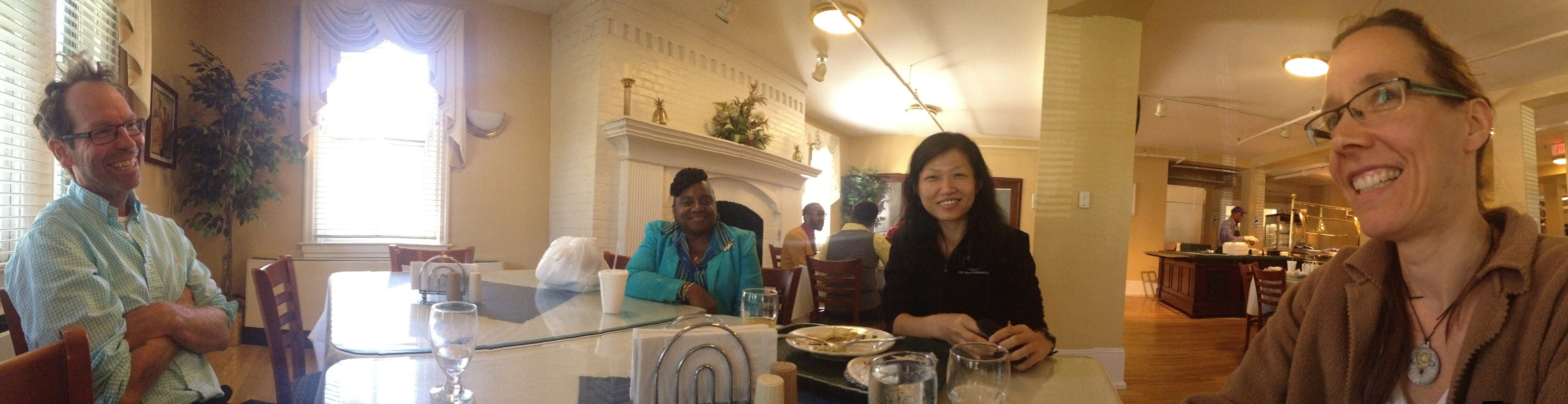
At the Holley Tree, I got to meet some people I'd normally not bump into.

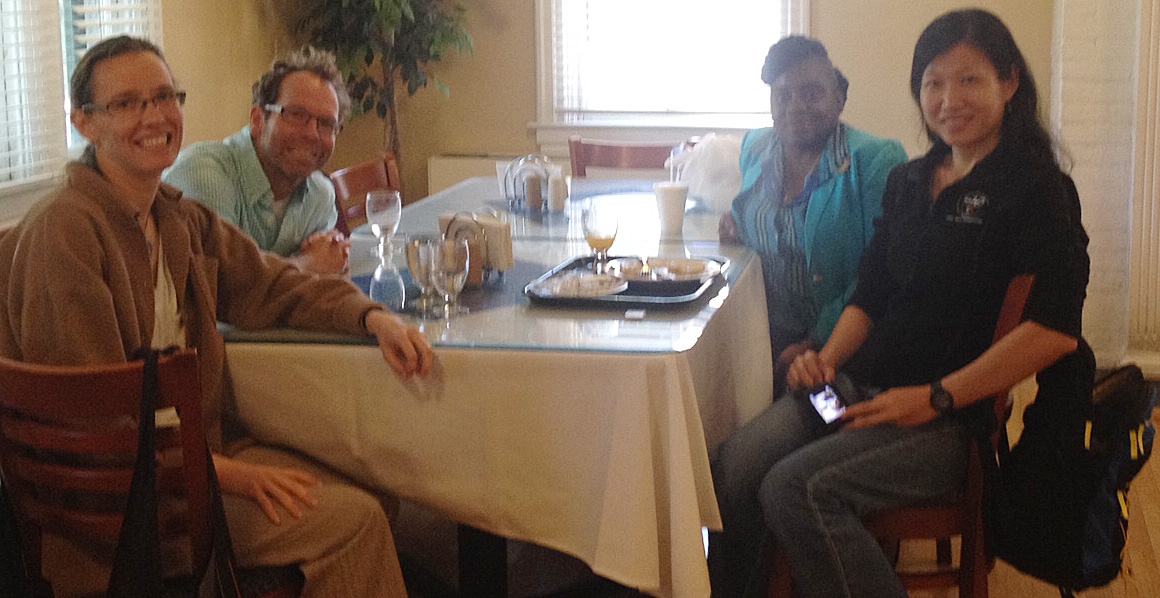
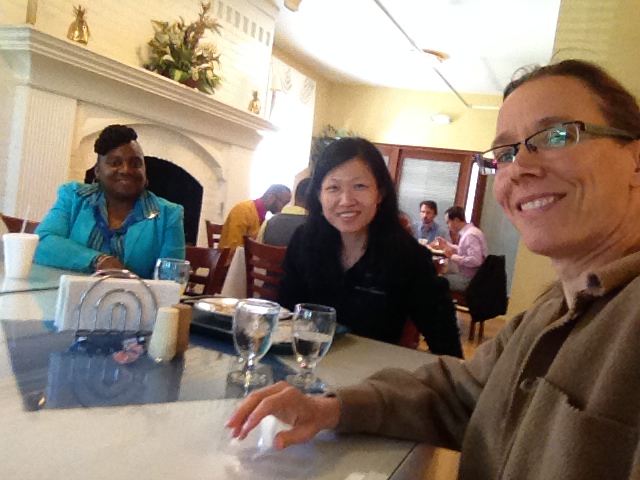
At the Holley Tree last week, I got to meet some people I’d normally not bump into.

Last week, I dined with one HU professor, one HU administrative assistant, and a visiting professor from Singapore.  Our conversation focused on cultural similarities and differences and the opportunities that international exchange offers.

We didn’t stick exclusively to sustainability in our discussion this week, although we usually do.  Much of our conversation focused on cultural expectation and higher education policy.  In this realm, I learned that Singapore makes a big investment in reaching out the rest of the world.  It provides funding for its faculty members to travel internationally to learn new things and connect to scholars elsewhere.  (A few years back, I met a pre-K school leader from Singapore who had received funding to travel through the US for several weeks, on a similar program also funded by the national government in Singapore).

The folks I ate with last Tuesday were experts in sports management and in teaching college students about that topic.

Incidentally, the Holly Tree is a bit of an icon.  Rosa Parks worked here for a brief time–not so very long ago.

Liquid Essence

The best design responses for the water assignment due today, I think, revealed “the essence of liquid” a bit more than “the essence of water”.   I’ve included photos of the students’ favorite responses.  We also looked around our surroundings for examples of beautiful things.

Ecology Rocks! (Especially in a Flipped Classroom)

This group realized there was a fill material in the crevices of their "Roman Travertine" tile sample.

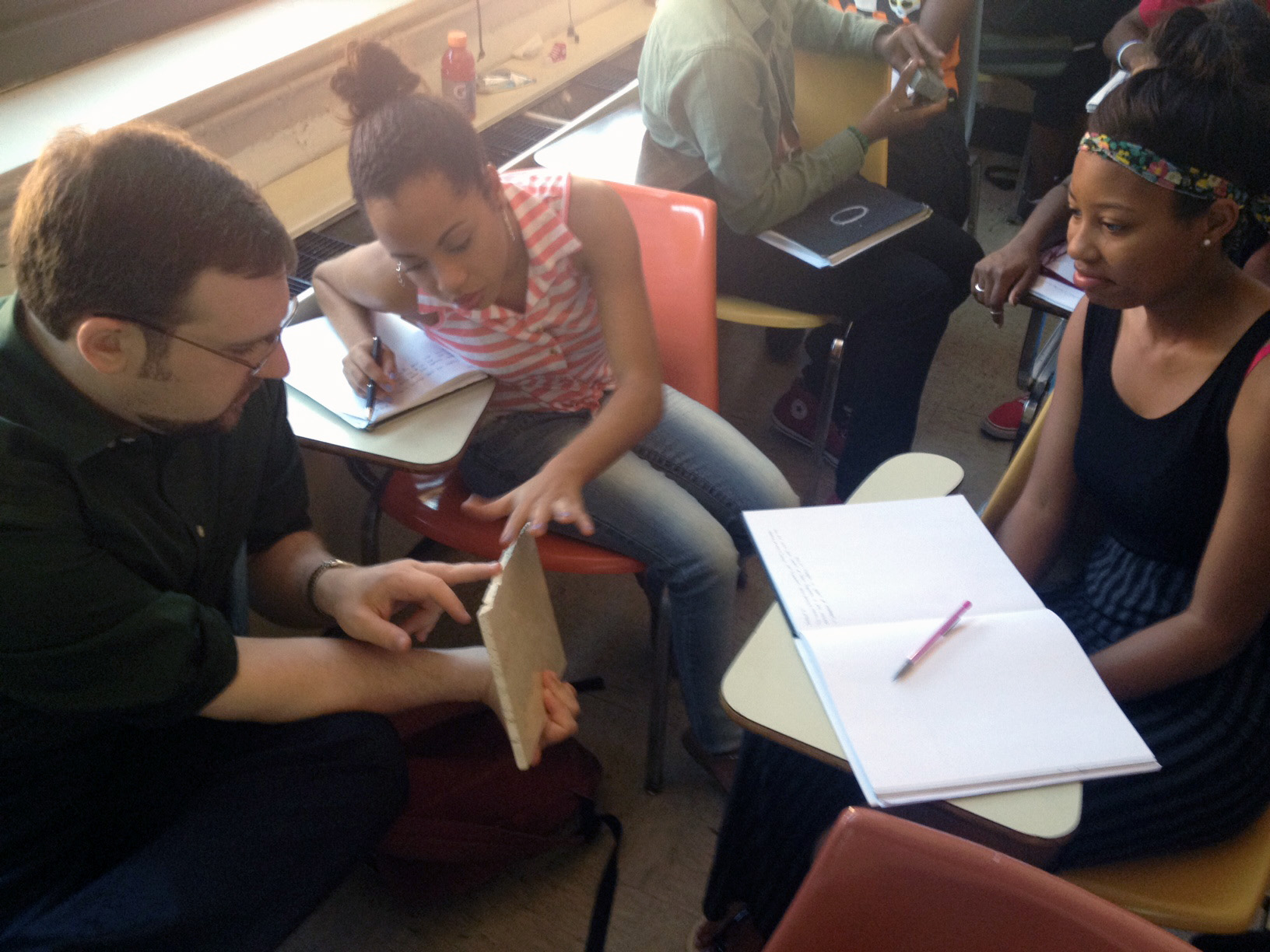
This group realized there was a fill material in the crevices of their “Roman Travertine” tile sample.

Today we discussed “natural factors” that affect architectural design, such as rock and soil composition. This tied directly to yesterday’s studio class on the HU Point. Today, I was using a technique known as the “flipped classroom” to teach Architectural Ecology. I learned about this technique during my Fulbright fellowship at DIT.

I had assigned my students to read a chapter before class. When they arrived, we started class with ten minutes of journaling.  I asked them to write about the aspect of the chapter they thought was most important to them regarding our site at the Hampton University Point, and to explain why.  I also asked them to identify a topic in the chapter that they didn’t fully understand and explain why/what they didn’t understand about it.

Journaling is my own way of assessing students’ level of understanding of the content.  After ten minutes, I collected journal papers then “flipped the classroom”.  Each student joined the other members of his/her learning group, discussed the issues of confusion they’d each identified, explained to each other what they understood (this is known as “peer teaching”), and researched information on line using their laptops and smart phones.

I circulated around the room, listening, observing,  pointing them in the right direction where necessary,  and making sure they were achieving accurate interpretations.

It became clear that soil and rock composition was the major topic of confusion, so I went ahead and distributed the rock samples I have on hand.  Each group got their own unique rock type to analyze, research, and introduce to the rest of the class. The students did a great job of staying on topic in their discussions, learning, and teaching leach other.

They made sense of sedimentary, igneous, and metamorphic rock. They began to understand issues of texture, particle size, expandability, drainage, and bearing capacity while they were talking among themselves with my guidance.

A member of each group presented findings to the class and we discussed overarching issues.

Then I projected the Prezi file on the screen, which I’d formatted using a table of contents so we could zoom directly into whichever specific issues were causing confusion. In this case, we needed to go over the soil classification pyramid a bit, but they had already developed pretty strong understanding through the group discussions and rock presentations.

Amazingly, everyone stayed engaged for 1.25 hours!

I didn’t have to nag students to pay attention.

By the end, they seemed to have very good understanding of all the content of the chapter.  I found I had ten minutes to spare at the end to bush on topics of my choice (ones I thought a student or two might still have misconceptions about).

I am loving this new, more interactive, way of teaching.

It’s called “flipping the classroom” because the content is delivered before class (in this case, through a reading), and class time is used to gauge accuracy and depth of understanding and to build upon that base.  It seems to be a much better us of time than presenting everything with equal emphasis, before assessing if the students already understand it!

Not everyone came into the class having read, unfortunately. This problem should correct itself in the future because each student gets a grade for each journal entry. They have to show basic understanding of the reading in order to earn points. They generally start seeing the importance of this after a day or two.

Constructing a Student-Centered Studio

The incoming second year architecture studio cohort at Hampton University.

The incoming second year architecture studio cohort at Hampton University.

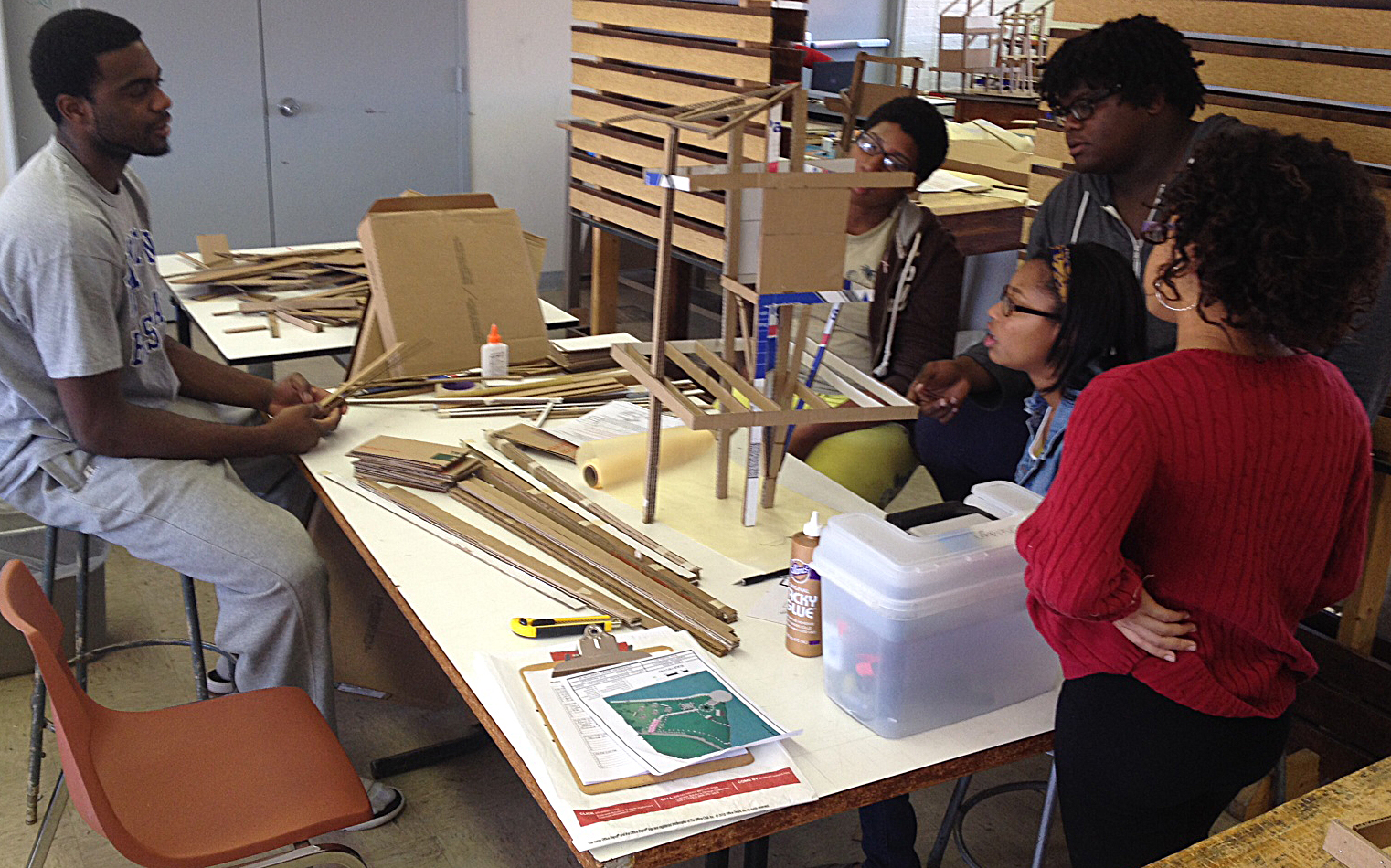
Today I applyed what I learned about problem-based learning (PBL), group learning, and student-centered pedagogies while I was on my Fulbright fellowship at Dublin Institute of Technology. I met the students in my second year architecture studio for the first time. Studio looked unlike Day One of this class (ARC201) ever looked before!

We started outside, with team building activities and a name game. Then we formed the teams (i.e., learning groups) that we’ll use for the first five weeks of this semester.

Next, we conducted initial site analysis in a way that was much more engaging than normal. We held a “scavenger hunt” to identify qualities of our project site (the Hampton University Point) that have to do with water.  The students managed to generate a much more interesting list of factors than I’ve ever been able to get them to achieve before; 63 about water alone!

For Friday, each team (of three students) has two assignments due.

Assignment 1 is to draw a plan of our project site to an architectural scale to fill an 18″x24″ sheet of paper.

This problem prompt is pretty specific (close-ended), but it still leaves a number of variables for students to consider and make choices about.  I hope they’ll get a bit competitive and prove they have pride in their work!  I asked the groups to follow a standard PBL format in starting work on this assignment. I asked them to figure out:

  1. What is this assignment asking?
  2. What will we need to know to do this?
  3. What do we already know about this?
  4. What will we need to learn/find out?
  5. What resources will we need?
  6. Who will do what and when?
  7. How will we check for accuracy before it’s due?

Assignment 1 is more straightforward than you might expect for an architecture studio. However, it will lay groundwork for upcoming activities, and it will help me assess where the students are skills-wise and with regard to collaboration. The second assignment is much more open-ended.

Assignment 2 is to make a beautiful object that reveals the essence of water.

I asked the groups to start by watching one of the YouTube videos listed below, and assume that the astronaut/scientist had made the video in response to this assignment. I asked the students to consider the questions above (which are intended to foster “self-direcetd learning”) and to bring to our next studio meeting a final, beautiful object as well as at least three study models that investigating the “essence of water”.  I’ve got my fingers crossed!

The students were more  active, engaged, and enthusiastic about learning than is typical on Day One of this course and I have high hopes for this new method of teaching.

NASA: Amazing Experiments with Water in Zero Gravity – YouTube

NASA: Amazing Experiments with Water Balloons in  – YouTube

Promoting Sustainability at HU

HU Faculty Institute 2014-1-Shannon ChanceToday was a busy first day back at Hampton University.  The dean re-introduced me to the faculty with a big “welcome home!”  I have to admit,  my colleagues’ enthusiastic greetings made me feel like a superstar all day.

After the morning keynote sessions, the whole faculty headed over to the HU waterfront for our annual picnic. This year’s weather was amazing and the jazz ensemble sounded lovely.

The faculty wrapped up the afternoon with information sessions, one of which I helped facilitate.  My colleagues and I encouraged our peers to integrate environmental topics into the courses they teach.

You can view my Prezi online:  I showed a few images of how we integrate sustainability into architecture courses at HU.  I also discussed the “Educational Planning for Environmental Sustainability” course I teach in the summer at William and Mary.  I took the opportunity to promote student-centered pedagogies (which I studied at Dublin Institute of Technology) and the importance of getting students to generate new knowledge (a core idea in W&M’s School of Education).