From Lockdown to Lisbon

Lisbon 1Over Thanksgiving week, I was part of a panel to evlauate EU grant applications. These events are normally held in Brussels, and since the flight and accommodations were both cheaper starting on Saturday, I flew in early. Suffice it to say, I arrived just in time for the lockdown. Our evaluation activities were not held in person as a result, but nevertheless, our  panels conducted all the necessary meetings using online tools. We successfully completed all our evaluations on schedule, using software that I believe was to be implemented in January in any case.

The highlights of my time in Brussels are captured in the attached photo gallery, which includes a gratuitous cat photo to mark Brussel’s cat postings on Twitter. The authorities asked citizens not to post info on their activities, so the folks in Brussels posted fun pictures of their cats’ activities during the lockdown, including quite a few PhotoShopped images just for fun. I didn’t have any time free to PhotoShop, but I Tweeted this cat photo in solidarity.

After spending a full week indoors–evaluating work, attending online meetings, submitting reports, reviewing and approving reports, finalizing and submitting my own grant proposal to Science Foundation Ireland, and finishing my read of a PhD thesis (what we in the USA call a dissertation)–I was more than ready to hail a cab to the airport and fly off to Lisbon.

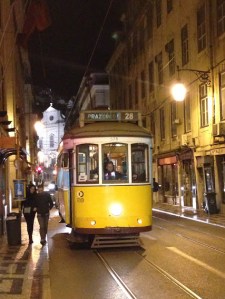
The sunshine, good cheer, and fabulous food of Lisbon were so very welcome after a cold and lonely week alone in Brussels. I’ve attached a gallery of snapshots from Lisbon and, in a post to follow, I’ll tell you about the thesis evaluation panel I attended there.

A Portrait of Engineering (and Architecture) in Warsaw

That's when dad and I were building an experimental aircraft. (that's still half done, I'm sorry to say).

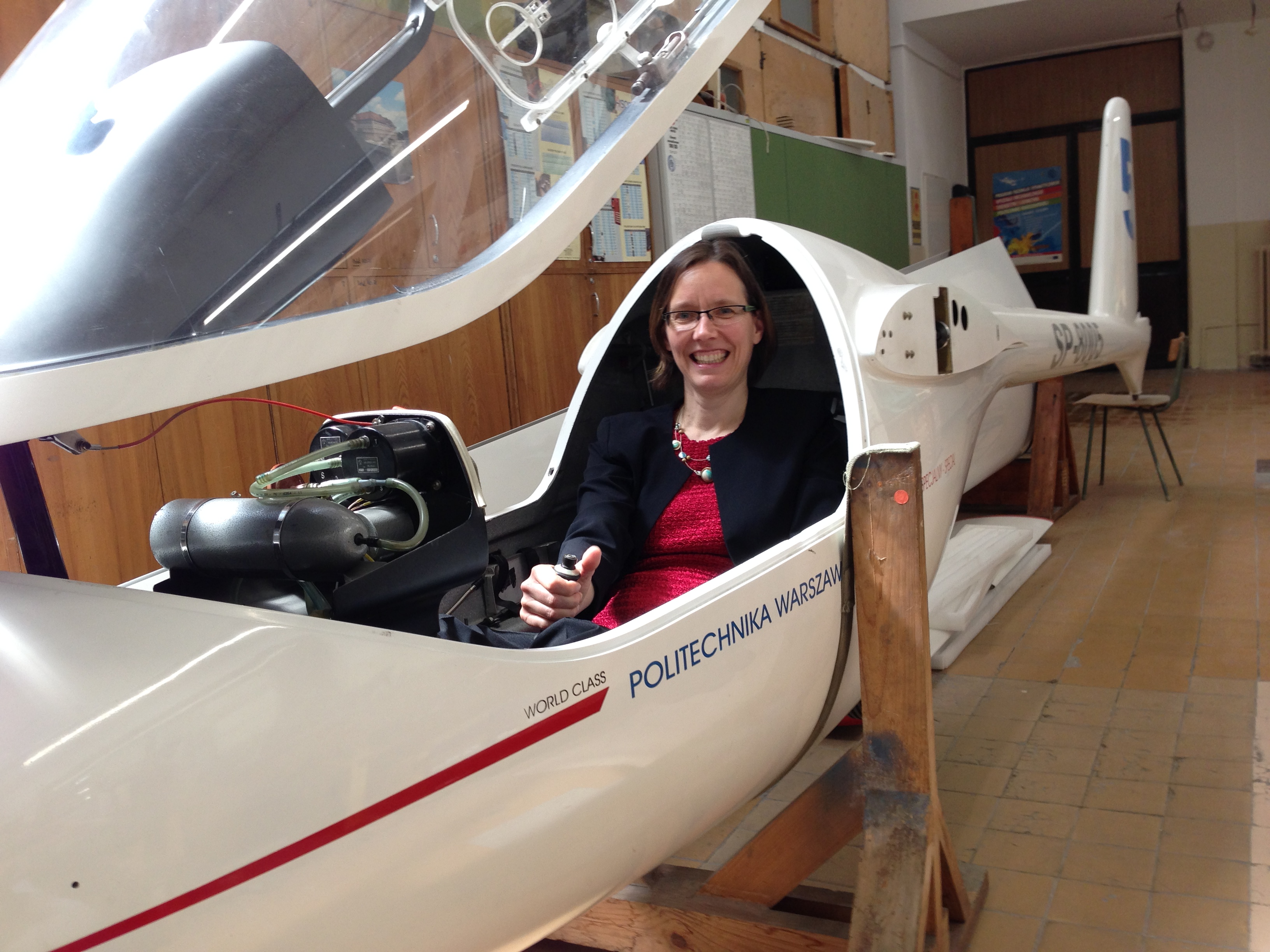
Me and WUT’s PW-5.

I just spent a most unexpectedly sublime week in Warsaw. What a beautiful, walkable, and livable city! Just the right density — useful public transport, affordable bike rentals, green space at regular intervals, and architectural monuments galore.

My primary task was to conduct interviews with budding engineers. Over the course of the week, eleven Polish women (who are studying various sorts of physics and engineering) each volunteered an hour and a half to share their experiences with me. It was amazingly insightful to discover similarities and difference with the experiences of the 10 Irish and 11 foreign-born women I’ve interviewed at Dublin Institute of Technology. (I also have 11 interviews recorded with Portuguese women, but these must still be translated.)

Fortunately for me, the students in Poland can opt to take their classes in Polish, or English, or a mixture of both. These Polish women spoke English very well and were bold enough to grant me interviews in my own native tongue.

In the evening hours I had time to explore some sites, depicted in the photos below.

Crafting Lisbon

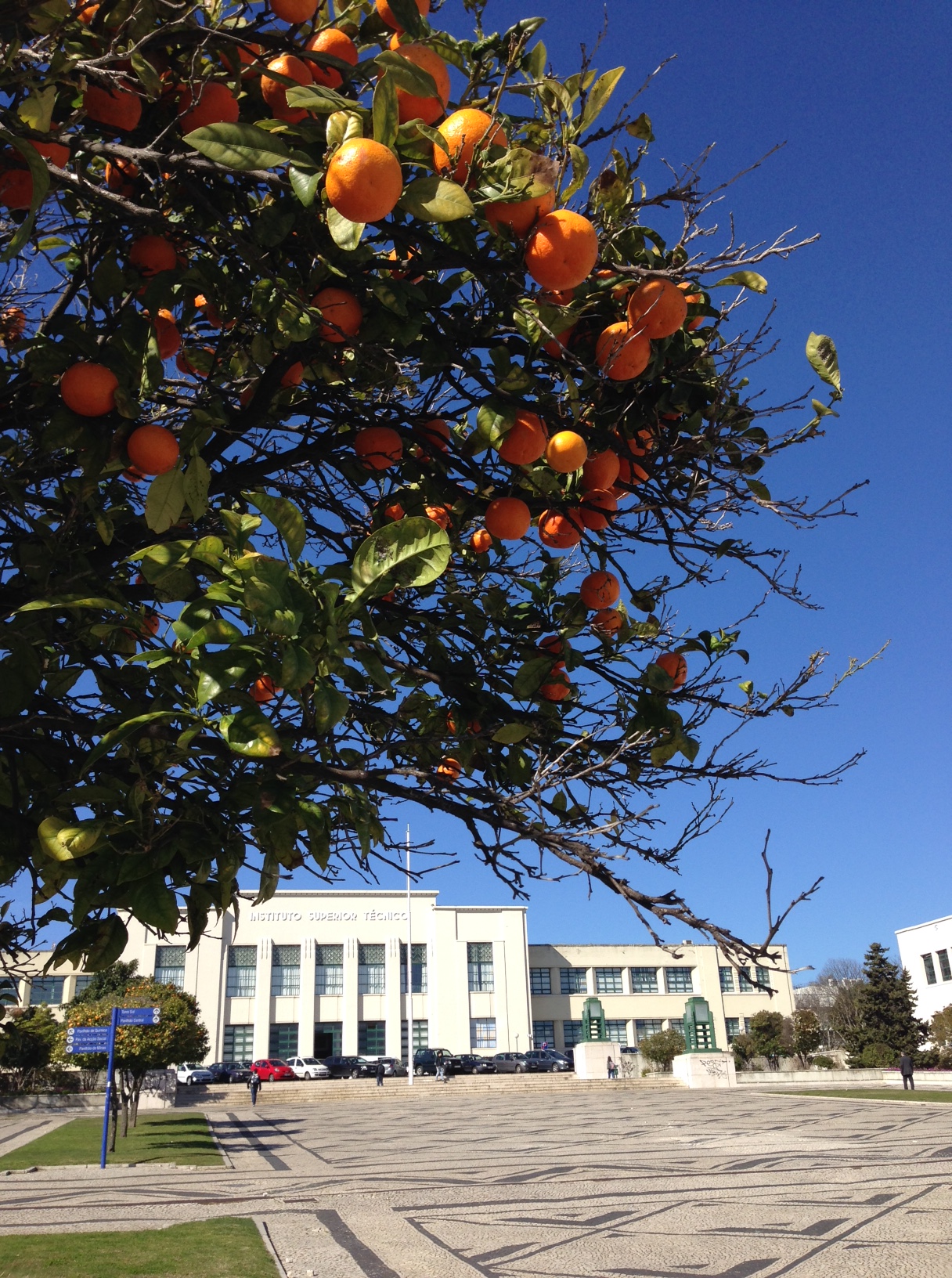
Orange trees along the entry IPS.

Orange trees along the entry IPS.

My Friday visit to the architecture school of the Instituto Superior Técnico (IST) was icing on the cake after a week of engineering interviews, conducted across the bay from Lisbon at Escola Superior de Tecnologia do Barreiro (a branch of the Instituto Politécnico de Setúbal, where I had interviewed students their experiences as engineering students as part of my Marie Curie research project).

You might recall that I delivered workshops at IPS and IST as a Fulbright scholar, back in 2013 (click here for more).

For a little more fun on my last day in Lisbon on this trip, I took the Metro over to IST. There, I visited the first year studio to hear student teams present their urban analyses of Lisbon districts. I toured the 2nd-5th year studios with my gracious faculty hosts and I wrapped up the afternoon discussing recent work with PhD students from the Architecture Research Group who I’d met on my previous trip to Portugal. The doctoral students — Maria Bacharel Carreira, Luisa Cannas da Silva, Mafalda Panheco, and Sajjad Nazidizaji — and thier professor Teresa Valsassina Heitor took me for a beer at the end of the day.

IPS's Escola Superior de Tecnologia do Barreiro

IPS’s Escola Superior de Tecnologia do Barreiro (image from http://www.estbarreiro.ips.pt/)

Many thanks to my colleagues at IPS, Bill Williams and Raquel Barreira, who helped arrange and conduct interviews. Thanks also to the ISP students who provided interviews and the IST teachers and students who shared their work with me. I can’t wait to visit again!

Loving Lively Lisbon 

Guy ambling home from work on a unicycle, paraplegic dog sporting his own wheelchair, man dancing to headphones on the boardwalk at sunset. Chamber pots on sale at the church bazaar, saxophonist sharing zydeco by the ferry terminal. So much to see, so much life to live.

I’m in the port city of Lisbon, Portugal’s capital, this week to interview women here who are studying first year engineering at the polytechnic institute. I flew in Sunday morning which gave me a chance to see some sights. 

I find a new adventure around every corner, even though I’ve been here before. 

Making the Mark as an Enterprise Rose Fellow

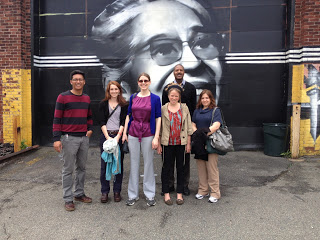
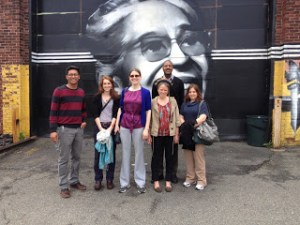
Mark (to the far left) with community members from Boston.

Mark Matel (to the far left) with community activists in Boston.

Thanks to a Facebook post by my (awesome) former student, Elbert Whitfield, I just discovered an article titled Enterprise Rose Fellowship Redefines Community Design at NeighborWorks Organizations, which features former student Mark Matel.

I’ve worked with many extraordinary students at Hampton University, like Elbert and Mark.

Today, I’m boasting of Mark Paulo Ramos Matel’ success.  I had the honor of teaching Mark in architectural design studios, study abroad, and environmental sustainability courses while he was working toward his Master of Architecture degree at HU.

Mark Matel (right) with fellow student Leon Peters presenting a second year design project at Hamtpon University.

Mark Matel (right) with fellow student Leon Peters presenting a second year design project at Hamtpon University.

Mark was an ideal candidate for the Enterprise Rose Fellowship, which the article explains is “a highly competitive and innovative program that places some of the nation’s finest early career architects in underserved communities across the country to team up with community development host organizations.”

Mark is intrinsically motivated to succeed, to help people, and to spearhead new initiatives.  His energy level, work ethic, creativity, self-direction, and ability to collaborate effectively were unparalleled among the students I have encountered in my 15 years of university-level teaching.

Mark was a major player in the formation of our department’s Studio Culture Policy and he represented our department impressively at the local and state level.
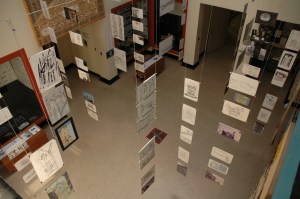
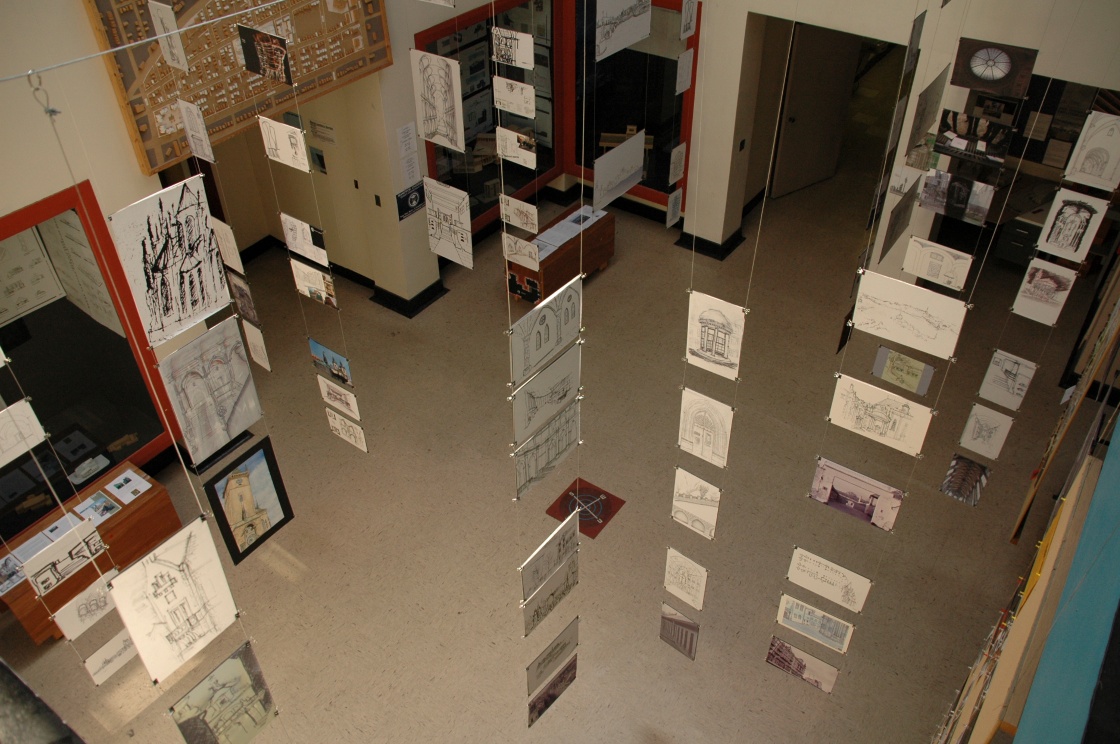
An exhibition that Mark and his colleagues Brandon Clarke, Smitty Lynch, coordinated along with other members of our spring break trip to Prague.

An exhibition that Mark and his colleagues Brandon Clarke, Smitty Lynch, coordinated along with other members of our spring break trip to Prague.

He is also a highly skilled designer, as is evidenced in design awards from Auburn and Hampton Universities.

Mark earned a NAAB-accredited degree from Hampton University – a program emphasizes urban planning as well as architectural design – and he then earned a design-build degree from Auburn University to boot.

To interview for the Enterprise Rose Fellowship, he went to Boston along with the two other candidates (both from top Ivy league schools).  After a rigorous multi-day interview, representatives from the community and the fellowship program voted, and then wholeheartedly extended the three-year fellowship to Mark.

During his time at HU, Mark’s research regarding water systems in the Philippines, and his work with the Virginia AIA’s Emerging Leaders in Architecture (ELA) program, were particularly relevant in preparing him for his work as an Enterprise Rose Fellow.
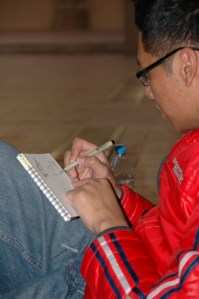
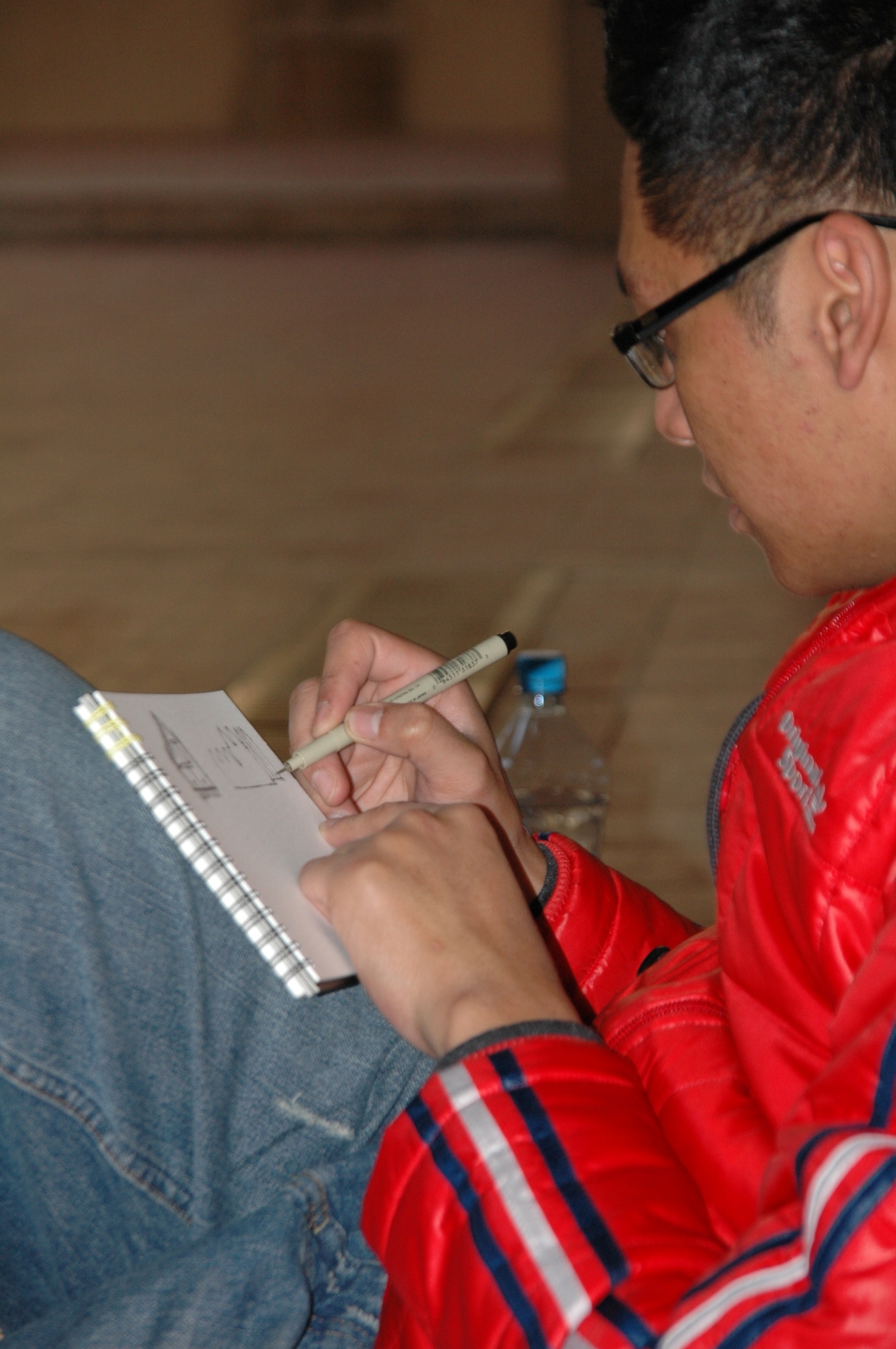
Mark sketching in Prague.

Mark sketching in Prague.

Marks’ activities all had an underlying theme of social activism related to the built environment.  He has always been able to think and work at multiple scales and with complex, inter-related issues.  His architectural studies enhanced these abilities.

Our department nominated Mark to represent Hampton University as part of Virginia AIA’s ELA program and his work with the organization exceeded our expectations.  The focus of the ELA program that year was on community revitalization and leadership.  Mark was highly engaged in his cohort’s project and he even defined the program for the subsequent year’s cohort.  (He identified specific conditions that needed to be addressed in Norfolk, Virginia and he helped get the new ELA group involved in fostering change where he knew it was needed.)

In his classes and teaching assistance-ships at Hampton University, Mark reflected a high level of engagement as well as what Daniel Goleman calls “emotional intelligence.”  Mark has the ability to share knowledge and to teach others techniques and strategies for improving themselves and their environments.

While he was at Hampton University, Mark was a very important part of defining a positive, learning culture within the academic context, as well as in the professional context (at the local and state levels) and in the larger community.

I couldn’t be prouder of Mark and all his many varied accomplishments.

You can see more of our trip to Prague in my archives.  My own presentation boards from Prague are also available for viewing.

Dreaming of Birmingham

Birmingham UK 4

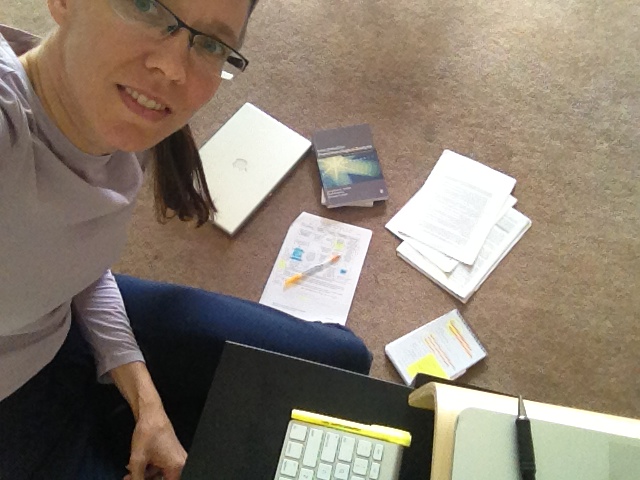
Shannon burried in books and papers.

Shannon swimming in books and papers.

I’ve been buried in books and papers for days.

I’m working overtime on a research proposal… trying to find funds to return to Dublin so that I can follow up on findings I’ve made and keep learning new research skills by working with experts and doc students here.

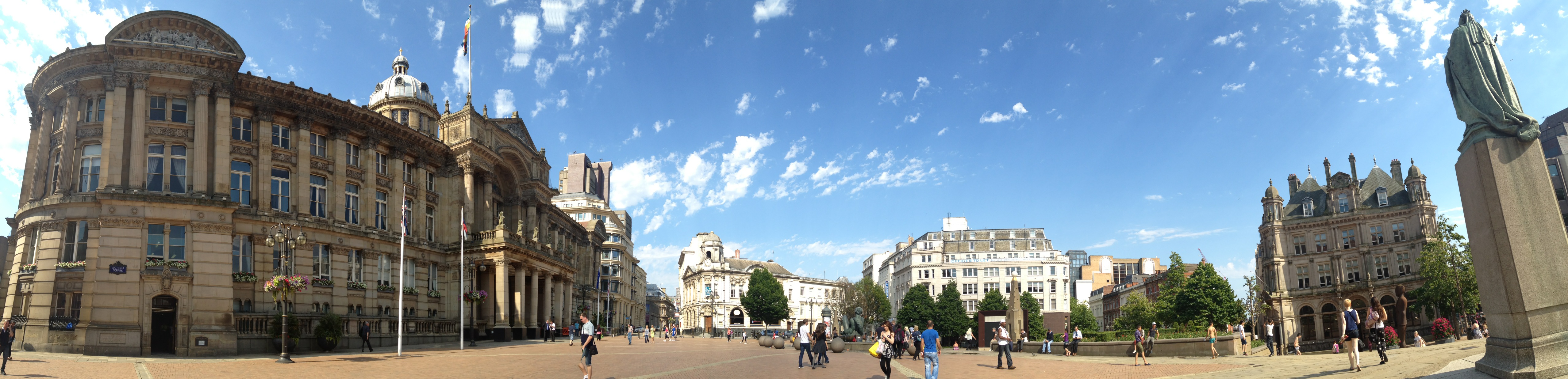
The last time I got to go outside and explore was last week in Birmingham.  Wikipedia explains that Birmingham is:

city and metropolitan borough in the West Midlandsof England. It is the most populous British city outside the capital London with 1,074,300 residents (2011 census), an increase of 96,000 over the previous decade.[2] … A medium-sized market town during the medieval period, Birmingham grew to international prominence in the 18th century at the heart of the Midlands Enlightenment and subsequent Industrial Revolution, which saw the town at the forefront of worldwide developments in science, technology and economic organisation, producing a series of innovations that laid many of the foundations of modern industrial society.[5] By 1791 it was being hailed as “the first manufacturing town in the world”.[6]

I’ll share pictures of that city today, in all its splendor….

Quintessential Carcassonne

There’s so much I still haven’t shown you–like photos from our June trip to Carcassonne, France.  This town was restored to it’s medieval glory by the very famous architect, Viollet-le-Duc in the mid 1800s.  His work was going on just before the American Civil War.

The place is in tip-top condition.  It reflects Viollet-le-Duc’s best guess as to the walled city’s use and detailing many moons before.  He did quite a bit of forensic analysis in this project!  According to Wikipedia:

Carcassone was founded by the Visigoths in the fifth century, though the Romans had fortified the settlement earlier. The fortress, which was thoroughly restored in 1853 by the theorist and architect Eugène Viollet-le-Duc, was added to the UNESCO list of World Heritage Sites in 1997.

Leading SEFI at the University of Birmingham, UK

Prof. Kamel Hawwash

Prof. Kamel Hawwash

Last week I travelled over to the UK to visit professor Kamel Hawwash, the incoming president of the European Society for Engineering Education (SEFI).

Prof. Hawwash has done a great deal of  work in attracting and retaining diverse students in engineering, a topic known as “attractiveness” in the UK, and one in which I’m aiming to do more research.

Prof. Hawwash’s SEFI presidency will focus on two main topics:

1) employability and skills

2) attractiveness

We had much to discuss and we met for nearly two hours!  After our meeting, I had a chance to look around the University of Birmingham campus and then explore the city before flying back to Dublin via Ryanair.

Undercover in Rome

Many thanks to Daisy for inspiring me to draw so much on my trip to Rome… we have always been very productive at sketching when we travel together. In this post, I’ve included photos of one of our many dinner outings.

On my last  night in Rome, Daisy and I headed over to Trastevere–stopping for a glimpse of the basilica (dedicated to Santa Maria, where mass was in session) before heading on to our favorite dinner spot.  As is generally the case when Daisy and I are traveling with architecture students, we  brought our sketchbooks along to discuss.

I’ve included photos of Daisy’s beautiful work, that caught the attention of our waitress.  She studied every page!

Daisy’s area of expertise is architectural representation, as is evident in her drawings!  Mine, on the other hand, is educational research… that’s what I presented to Daisy’s students in the lecture I delivered.

As a result of our exchange, I woke up inspired to draw on my last day in Rome.

It was hot, hot, hot, though.  I had to sketch quickly to keep ahead of the heat!  By the afternoon, the sky opened up and the rain poured down.  Thankfully our fore bearers built plenty of sheltered spots in Rome that have lovely views!  I made three sketches on my parting day–two are shown below.

Reshaping a Roman Site

I’m wrapping up my week as “Scholar in Residence” for the University of Oregon’s study abroad program in Rome. It’s been a fun and informative learning experience.

I’m posting images from the studio review we had on Thursday, to give you an idea of what it’s like to be an architecture student or professor.

These students have completed second year of a five-year professional degree program (leading to the Bachelor’s of Architecture degree). They will start third year in the fall.

They’ve done some very nice design work so far in their three-credit architecture studio class in Rome. Their site is an embankment wall, built in the late 1800s to keep the Tiber River from flooding the city as it has done for centuries.

According to Wikipedia:

The Tiber was once known for its floods — the Campus Martius is a flood plain and would regularly flood to a depth of 2 metres (6 ft 7 in). The river is now confined between high stone embankments which were begun in 1876. Within the city, the riverbanks are lined by boulevards known as lungoteveri, streets “along the Tiber.”