Engineering at Minho

Seminar with engineering teachers from the University of Minho who use PBL.

Seminar with engineering teachers from the University of Minho who use PBL. (It was very cold in the room; everybody is huddled for warmth!)

These photos are from my trip to the Guimarães campus of the University of Minho — to visit engineering professors and tour the Department of Production Systems, at the university’s Engineering School.

My primary host there, Natascha van Hattum-Janssen, has been working as a Senior Researcher, Research Centre in Education. She has amassed quite an impressive record of publications. Her husband, Ferrie van Hattum, is a Polymer Engineer and has been serving as the Course Director of the Product Design degree program of the University of Minho, although both of them are now relocating to an institute in the Netherlands.

Natascha and her colleagues organize the annual PAEE symposium. The PAEE website explains:

The Department of Production and Systems of the University of Minho, the Research Centre for Education of the University of Minho, the Iberoamerican Association of Engineering Education Institutions (ASIBEI) and the Curriculum Development Working Group of SEFI – the European Society for Engineering Education – aim to join teachers, researchers on Engineering Education, deans of Engineering Schools and professionals concerned with Engineering Education, to enhance active learning approaches in Engineering Education through workshops and discussion of current practice and research.

The Fifth International Symposium on Project Approaches in Engineering Education PAEE 2013 will take place in the Netherlands and is hosted by the Eindhoven University of Technology. 

I served as a paper reviewer for this year’s conference and I hope to attend an PAEE event in coming years.

Exotic Porto

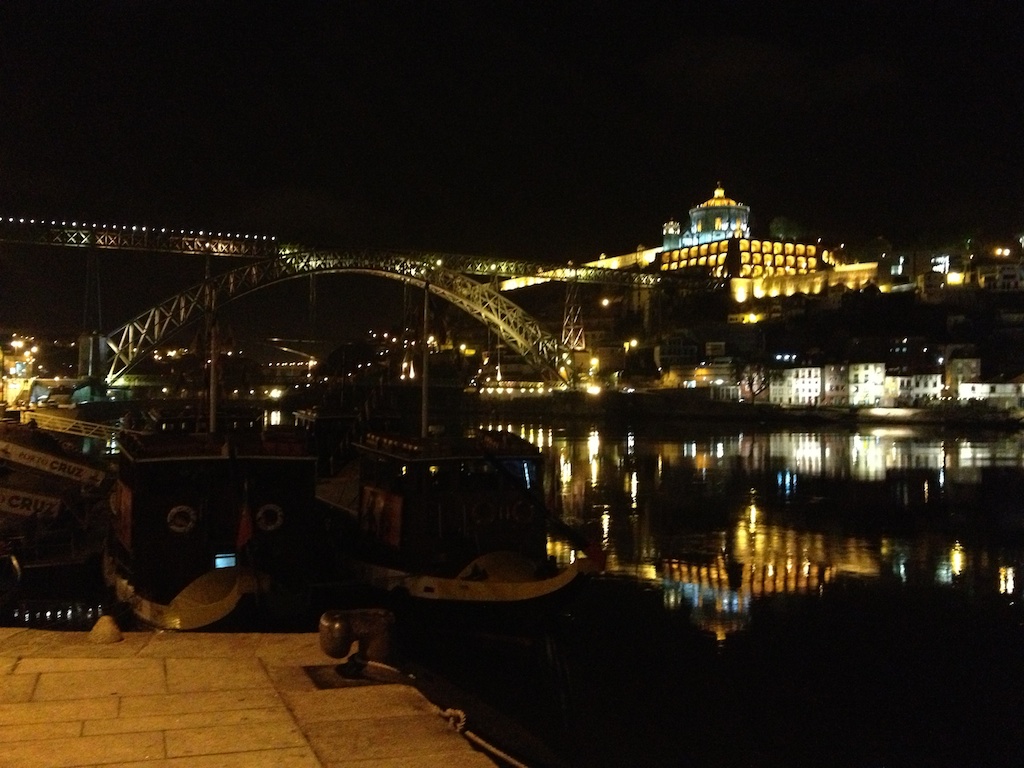
Porto's water front -- the perfect place for dinner and an evening stroll!

Porto’s water front — the perfect place for dinner and an evening stroll!

After speaking in Setabul, Lisbon, and Aviero, I packed up bag and hopped on the train to Porto.  It’s a lovely port city with steep topography and — surprise — more of Portugal’s stunning architecture!

I’ve been uploading the photos I took using my iPhone, so, unfortunately, I’m only providing a fleeting glimpse of these gorgeous places.  I hope someday you’ll have the chance to visit them for yourself.

Picking Back Up in Portugal

I dropped the ball telling you about my trip to Portugal and Belgium… I still have lots to show you!  When I last wrote about my Fulbright Inter-Country Lecturing adventures, we were in Aviero and Agueda with  José Manuel Nunes de Oliveira.

Here are a couple more of the modernist buildings at the University of Aviero.

RoboSlam–Extended Version

Yesterday the students who built robots with the crew coordinated by Drs. Ted Burke and Damon Berry headed over to DIT’s Bolton Street location to learn about mechanical, industrial, and product design. Thanks to Kevin Delaney, Ger Reilly, Susan O’Shaughnessy and crew for a fascinating day! I’ll be posting lots more photos of RoboSlam in the days to come.  It’s been such fun!

Amazing Sights of Lisbon

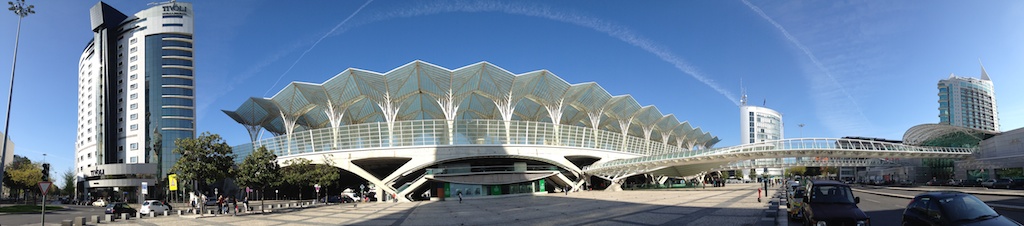
...is an architectural and structural marvel.

The Spanish architect Santiago Calatrava has designed some of the world’s finest train stations and bridges. The station in Lisbon reflects the care and precision of Calatrava’s design work.

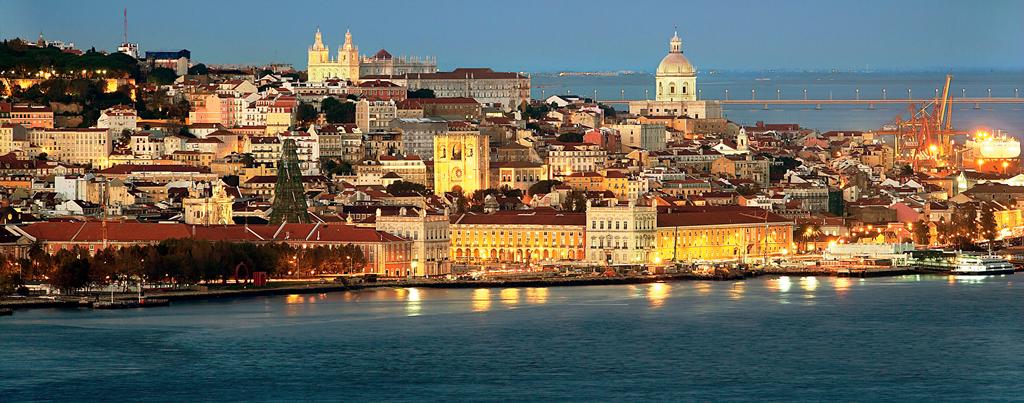
Lisbon is a glorious city.

I was truly blessed to spend five glorious days in this place–the capital of Portugal–as part of the Fulbright Inter-Country Lecturing Program.  I will never forget my time there, the places I visited, or the people I got to know.

I’ve attached a few of the iPhone photos snapped during my stay. (Copyright Shannon Chance, 2013.)

Around Aveiro

Modernist architecture abounds in Portugal.  This is particularly true on college campuses, since most were built after the mid 1970s.

Although the population is just 10.6 million, there are 24 schools of architecture!

I’ve included a few photos of buildings at the University of Aviero campus below.

Student-Centered and Urban: Architectural Education at IST

The second stop of my Fulbright Inter-Country Lecturing visit was to the Instituto Superior Técnico (IST). One of the organizers of the day, José Figueiredo, explained to me that IST “is the biggest and oldest engineering school in Portugal.”

Professor Teresa Heitor lined up all kinds of fascinating events for me.  The 60 first year architecture students presented their work to me (in English!).  Then, they came along as their professors gave me a tour of all the architecture studios.  We got a glimpse of what these particular students will encounter in the coming years, as they progress through the five-year architecture program at IST.

Their architectural education will be structured very, very much like ours in the USA.

Their design assignments will be quite similar as well, although the projects students encounter here do tend to have more of an urban focus than most programs I’ve visited in the US.  (I serve on architectural accrediting teams and have visited many different schools in the US through conferences as well as accreditation visits.  I have to say, however, that my home institution–Hampton University–has done a noteworthy job over the past decade of integrating urbanism into the curriculum.  Of that, I have been proud.)

At IST, I was particularly impressed with what I learned from the first year professors.  They’re doing a great job overcoming what I see as a big weakness in architectural education today.  So many teachers around the globe focus on teaching students to make “signature buildings” and “modernist masterpieces” that other architects will love.

These teachers, instead, endeavor to draw out their students’ unique interests and abilities.  Unlike the many teachers who seemingly want to “wipe the slate clean”, these professors seek to help students draw from the wealth of experience and knowledge they bring to the first year design studio.

A Warm Welcome to Lisbon at the Casa do Alentejo

One of the very best things about the Fulbright program is meeting knowledgable, energetic, and talented people like Bill Williams. He is a teacher at the Escola Superior de Tecnologia do Barreiro – Instituto Politécnico de Setúbal who is clearly dedicated to his students and to the craft of teaching.  He’s the kind of guy who works at the university all day then goes home and works on his research.

He’s even completing a PhD — for fun.  Can you believe anyone would do a thing like that?   😉

Nearly as soon as I hit the ground in Portugal, Bill provided me a short orientation complete with dinner at Casa do Alentejo — a place that epitomizes Lisbon. This restaurant is where Bill and his wife invited all their friends to celebrate their marriage.

The night Bill and I went there, a group of men was wandering through the halls singing traditional Portuguese songs.

So to give you a taste of my time in Lisbon, I’ve uploaded photos from that night… including the area around the Casa do Alentejo, some rooms of  the Casa itself, and others of the singing group that made it shine for our visit.

International Lecture Tour

In less than two days, I fly out of Dublin for a two-week “lecture tour”.  I’m being sponsored though Fulbright Portugal next week and Fulbright Belgium the week after.  This is part of the larger Fulbright Inter-Country Lecturing program.

We have an exciting, action-packed schedule outlined.

In addition to speaking and learning about how other people teach architecture, engineering, and education, I’ve also got a heavy load of homework to carry along.

While I’m away, I’ll hopefully find time to write three conference abstracts, finalize and submit a funding proposal, and prepare for the class I’m co-teaching in May.

Wish me luck!

Lisbon

Lisbon (photo downloaded from Cunard Cruise line)

PORTUGAL 

Wednesday, April 10

Visit to Escola Superior de Tecnologia do Barreiro of the Instituto Politécnico de Setúbal.

Thursday, April 11

Round-table talk at Setubal Polytechnic Institute (IPS).

Friday, April 12

Presentation on Tools for Assessing Design Students’ Cognitive Development to Architecture PhD students at Instituto Superior Técnico (IST). 

Monday, April 15

Presentation on The Use of Staff Learning Groups to Transform Engineering Education at the Dublin Institute of Technology to the Department of Education at the University of Aveiro and engineers from the Polytechnic School of Águeda.  I’ll also meet some of the students and teachers using Problem-Based Learning at the Polytechnic School in Aveiro and/or Águeda (25km away).

Tuesday, April 16

Meet with engineering teachers at the Universidade do Minho engineering campus in Guimarães.

Leuven

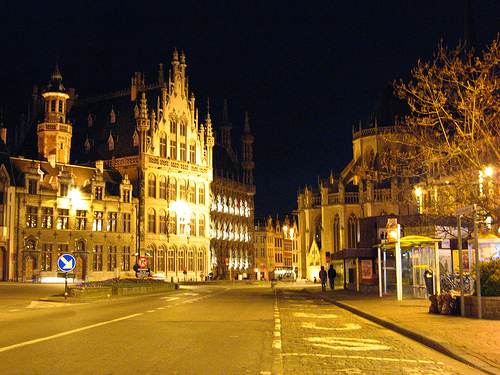
Leuven (photo downloaded from KU-Leuven website)

BELGIUM

Wednesday, April 17

Meet with the president of the European Society of Engineering Educators (SEFI), an engineering professor at Katholic University of Leuven who also directs KU-Leuven’s Teaching and Learning Department.

Thursday, April 18

Deliver a presentation 7-9 PM on Research Paradigms: Filtering What We See and Know to the architecture school (I will discuss major research paradigms and then provide examples of studies I’ve done that used methods aligned with positivism, interpretivism, constructivism, and critical realism.  Presentation includes examples of work I’ve done in Africa).

Monday, April 22

Presentation on Tools for Assessing Design Students’ Cognitive Development to members of the LESEC (the Teaching and Learning Department) at KU-Leuven.

Tuesday, April 23

Interview with Fulbright Belgium for use on their websites.

Fulbright Positions in Architecture

I received email notification about exciting Fulbright opportunities in Architecture.

I am writing to inform you of exciting U.S. Fulbright Scholar grant opportunities in Europe and Eurasia in the field of architecture. Applications for the 2014-15 academic year are currently being accepted from all levels of faculty and professionals, including early career.

We are soliciting applications for a broad range of awards in your field, including but not limited to:

Finland #4197 Fulbright-Aalto University Distinguished Chair (Finland)
United Kingdom #4368 Fulbright-Scotland Visiting Professorship at the Glasgow Urban Lab
Kosovo #4266 Theory and Practice of Restoration of Cultural Heritage Monuments
Turkey #4388 Social Sciences and Humanities
Bulgaria #4169 Pure and Applied Sciences

Applicants must be U.S. citizens and hold a Ph.D. or appropriate professional/terminal degree at the time of application. The application deadline is August 1, 2013.

In addition, All Disciplines awards are available in all countries in Europe and Eurasia and can be a good option if no discipline-focused award matches your expertise. Please visit the 2014-15 Catalog of Awards at http://catalog.cies.org/index.aspx to learn more about the opportunities available in this year’s competition. For most awards, English is sufficient for teaching and foreign language proficiency is only needed to the extent required by the proposed research project, if applicable.
For eligibility factors, detailed application guidelines and review criteria, please follow the link http://www.cies.org/us_scholars/us_awards. You may also wish to register for one of our webinars at http://www.cies.org/Webinar/ or join our online community, My Fulbright, a resource center for applicants interested in the program.

Please feel free to share this message with members of your listservs, newsletters or social media. For further information about specific awards, please contact the program staff listed in the award description.

Best wishes,

Europe/Eurasia Staff
EuropeEurasia@iie.org
202-686-4000
Fulbright Scholar Program
1400 K Street NW, Suite 700
Washington, DC 20005
If you wish to be removed from this group’s mailing list, click here