Through the Oculus (Rome Church 1)

The Pantheon by night.

I have a favorite set of churches in Rome that I like to visit in succession. They are close to each other and seeing them together in on day provides a nice little chronology of changes that happened in architecture over the past 200 years.

In the coming days, I’ll tell you a little about each of these four churches:

1) The Pantheon

2) Santa Maria Sopra Minerva

3) Il Gesu

4) San Ignazio

Today, I’m showing you the first. It’s my all-time favorite building, the Pantheon. It was built 1900 years ago and the technology it includes is simply amazing.  The walls are 6 meters thick at the base and the dome spans 142 feet.

Looking up into the coffers (hollowed out squares) and oculus (opening) in the dome.

Can you see the blind arches in the wall behind the columns? This is a hollowed out space, where the wall isn’t as think and they need to carry a lot of weight with a thinner wall.

The Romans used blind arches (arches without windows below) to help carry the weight down to the ground in places where they wanted to make the walls thinner than 6 feet.  They coffered (or hollowed out) areas in the ceiling help reduce the weight of the roof.

The oculus (opening) at the tip was never closed over… it’s open to the sky even today.  There are holes in the floor to drain rain water that falls thorough it.

The Pantheon has been operated as a religious facility continuously for nearly 2000 years.  The Romans used it as a one-stop shop to worship many different (pan) gods (theon) but it’s been operating as a Catholic church since, I guess, about the time Constantine legalized Christianity.

Blind arches seen from the outside of the building — these would have been covered by marble in Roman times.

At that time, Istanbul was renamed Constantinople, in honor of him.  (The Hagia Sofia is located I that city.  I posted pictures of a baptism being held in its smaller sibling, the Agia Sophia, that I took during my visit to Thessaloniki.)

People’s aesthetic tastes changed over time, and you can see a clear example in the band at the base of the dome.  Most of what’s there today is from a renovation done during the Renaissance, but along the way the owners of the Pantheon (i.e., the Roman Catholic church) replaced part of the band to show what woudl have been there in Roman times.

Can you see a difference?  Which part is Renaissance?  Which is Roman?

Band showing Renaissance and Roman detailing.

Drawing that shows the thickness of the wall.
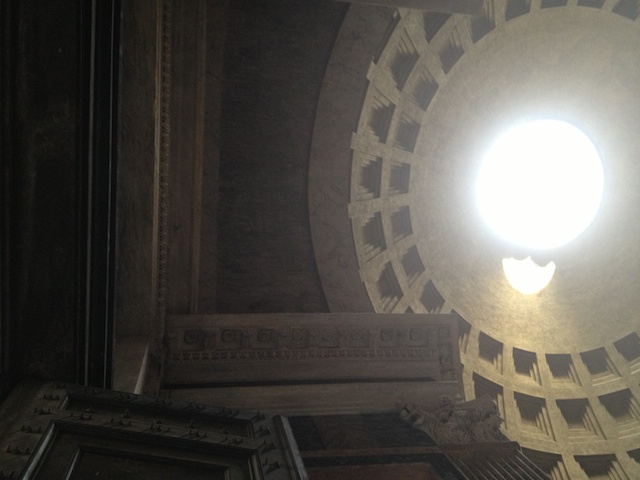
Looking up from the entry vestibule, you can see and “feel” the thickness of the wall

A Parting Glimpse of Greece

Timber cross-bracing supports a central dome.

Here’s one last, spectacular Byzantine church.  I was lucky to find it in my last moments in Thessaloniki.

It is a UNESCO World Heritage Site, and is located just beside the old city wall, in the northwestern quadrant of the city.

Exterior brick work.

Here’s the name of the church.

A unique system for venting candle smoke to the outside.

Beautiful frescos.

Lighting system.

Making the Cut with Ryanair

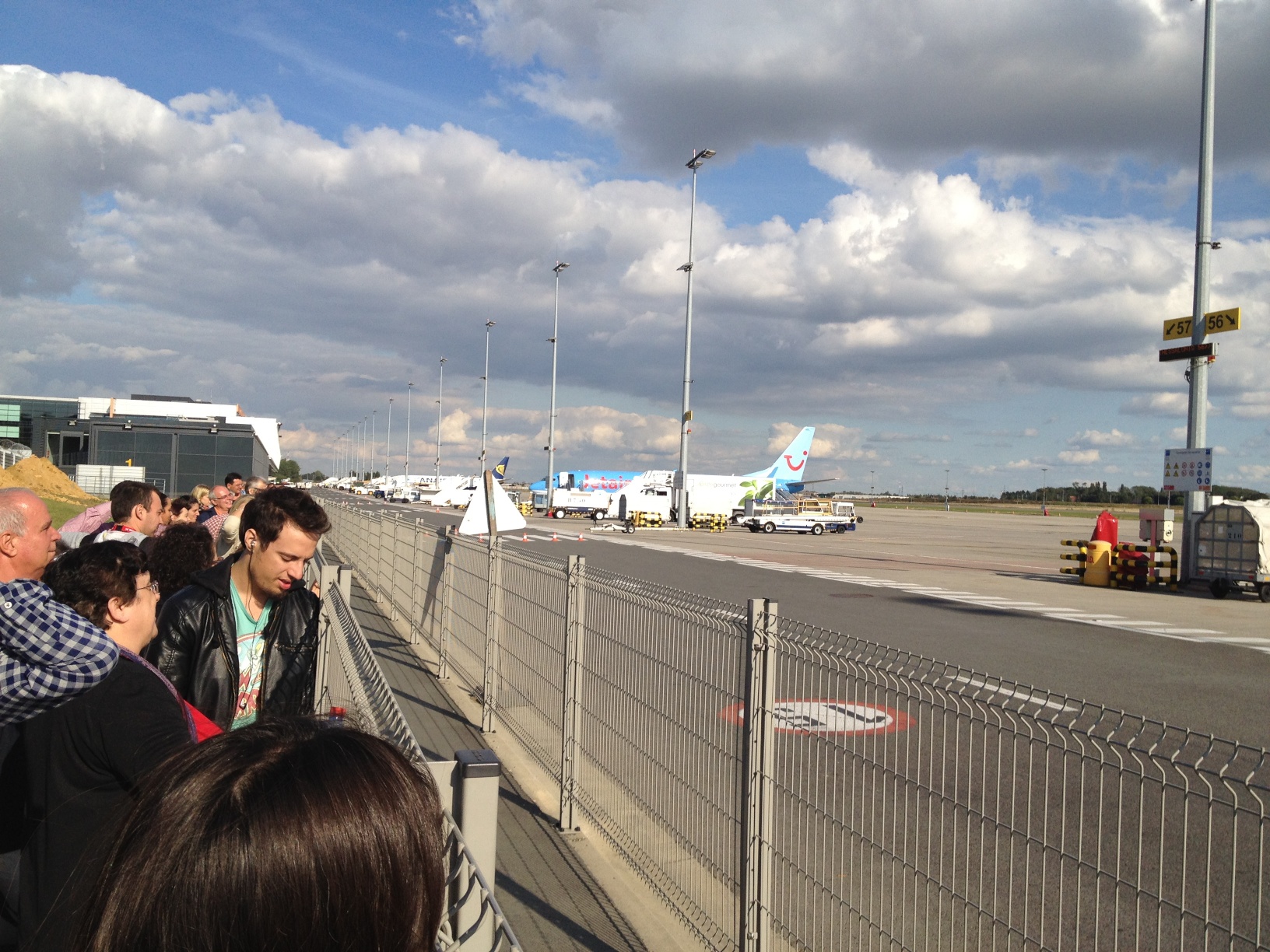
Ryanair luggage size check. This lucky lady made the cut. She can take her bag on… with no additional charge. (The friar in line behind her didn’t.)

Ryanair has very strict carry-on policies….

…and after I paid, using my iPad at the airport to check my “oversized” bag, I made the cut, too! This is all I brought onboard for the second leg of my flight.

This is the size bag you’re allowed to carry on.

It’s all sort of like waiting for the bus… no reserved seats. You just get on and pick a place you like.

There were some raised voices regarding the friar’s bag. He and the gate agents were still arguing, even as he and his rolled toward the plane… but they did eventually let him slide by with an extra inch of baggage dimension.
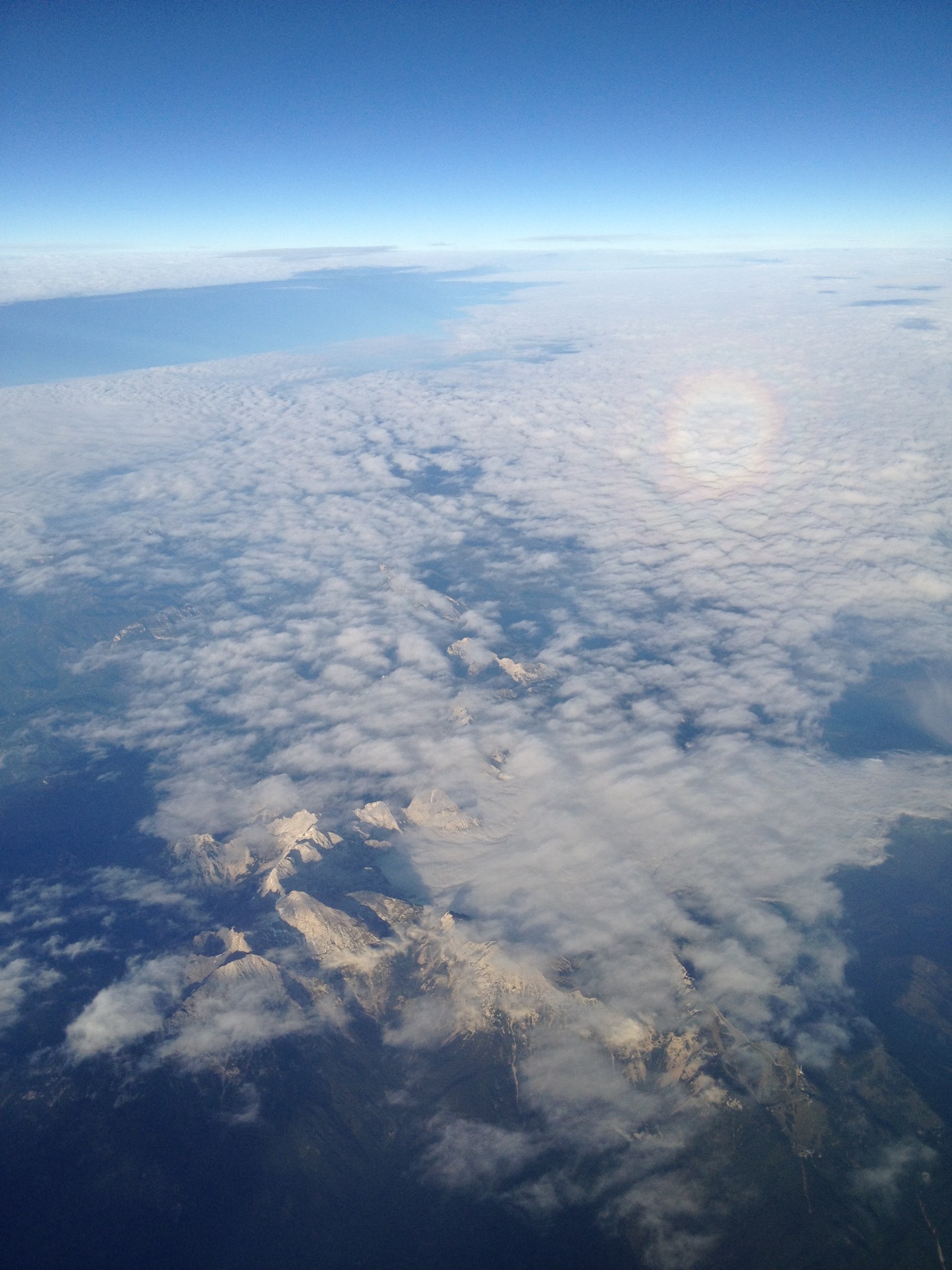
Finally, we could all travel in peace.  Happily, a rainbow followed us most of the way to Greece.

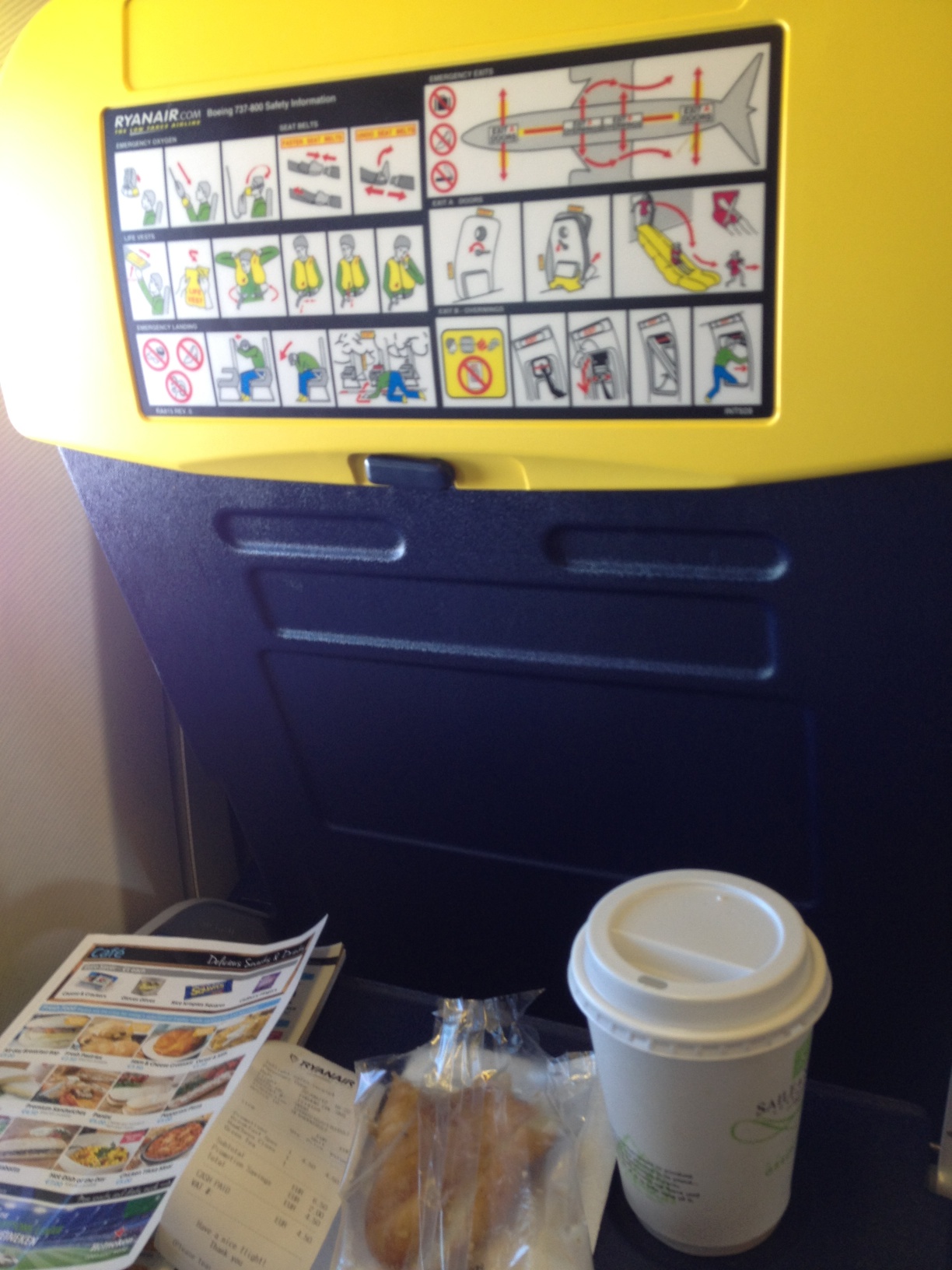
Yow pay for all extras… but that’s no so bad, because you get to pick exactly what you want to pay for… and to eat. You order out of a magazine. The ham and cheese croissant and green tea cost me 4.50 Euro.

It wasn’t exactly “flying the friendly skies,” but I’m glad to have had the chance to fly with Ryanair.

It’s Greek to Me

It takes some adjusting to Greek signage, with it’s mix of Greek and non-Greek words. What can you understand from the beverage list above?

I got something close to what I imagined I was ordering, but wayyyyy full of sugar.  I was hoping for a crepe with fruit, but got gooey strawberry-flavored creme instead.  Later that night, I was still finding bits of pink icing in interesting places.  Including a dot of it on the tip of my nose.

…there’s no telling what you might order.

One thing you can count on in Europe is being able to find the IKEA.  They’re located in the country’s biggest cities (including Dublin which is Ireland’s largest city, and Thessaloniki, which is Greece’s second largest city).

I’ve noticed that IKEA is often located near the airport.  And in Europe, the public bus always goes to IKEA.  The busses in Dublin and Thessaloniki say “IKEA” right across the front of the bus, in day-glow letters.  It’s apparently hypnotizing, and no human seems able to resist.

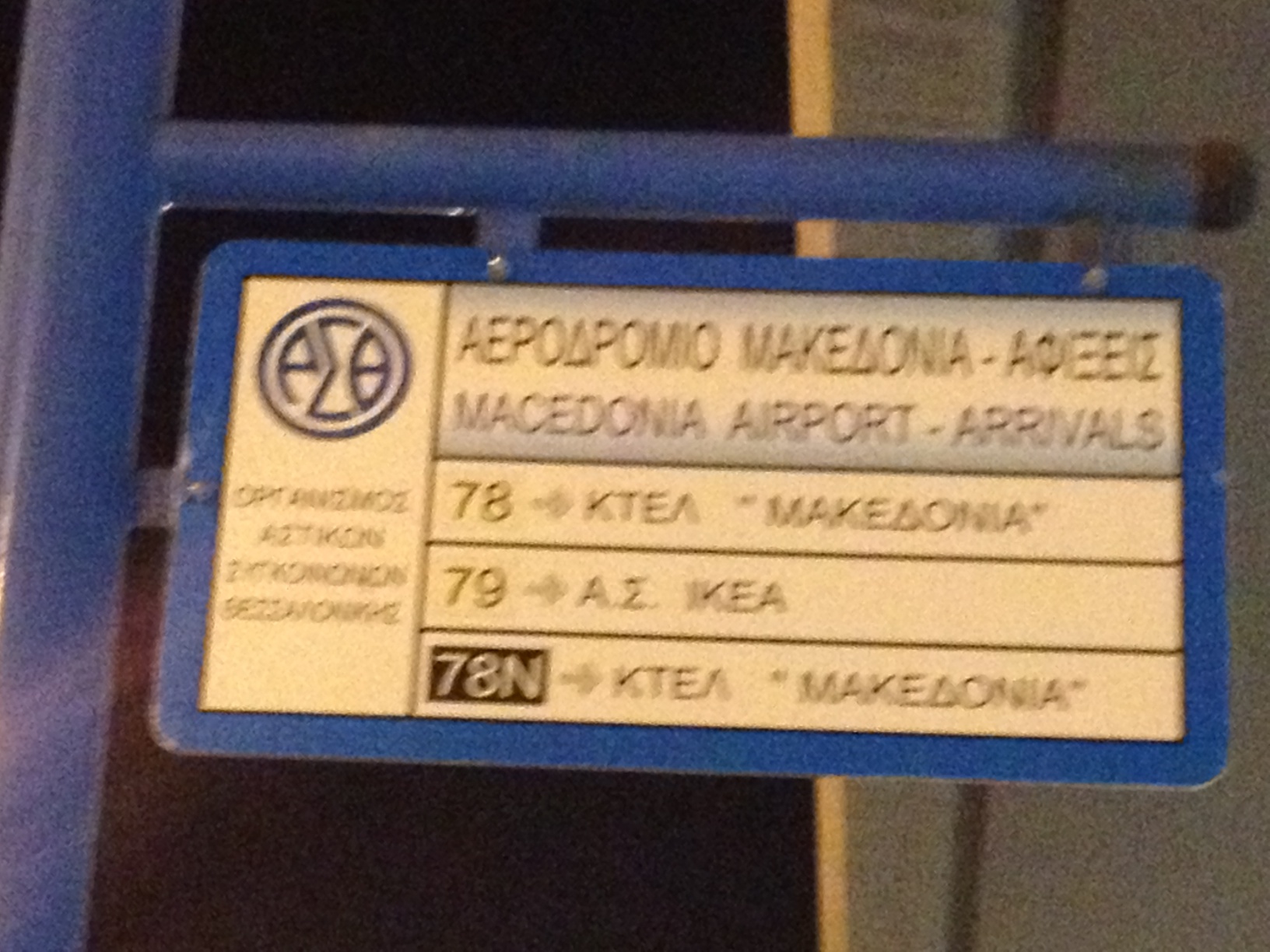
Sign at the airport for the IKEA bus.

Engineering with the Greeks (and Irish, and Finns)

The Prezi presentation I delivered at SEFI.

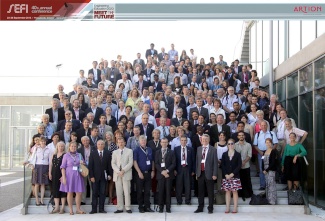
SEFI attendees 2012 — I’m at the lower left.

The SEFI conference was one of the most fun conferences I’ve ever attended.  They claim to be a family and it certainly felt that way.  This was my first conference with engineers.  I suspect this special feeling of belonging may be specific to the European Society of Engineering Educators (SEFI).  It also helped in making me feel welcome that the whole Irish delegation claimed me as their own!

The Irish group included the Dean of our college at the DIT (Mike Murphy), a recent PhD who teaches at the institute of technology at Tallah (Eileen Goold), a lecturer from Trinity College (Kevin Kelley), and a scholar (Bill Williams) who has been working in Portugal for 18 years but hails from Cork (in Southern Ireland, near where my great grandmother set sail for Ellis Island). Also at the conference were Gavin Duffy and myself.

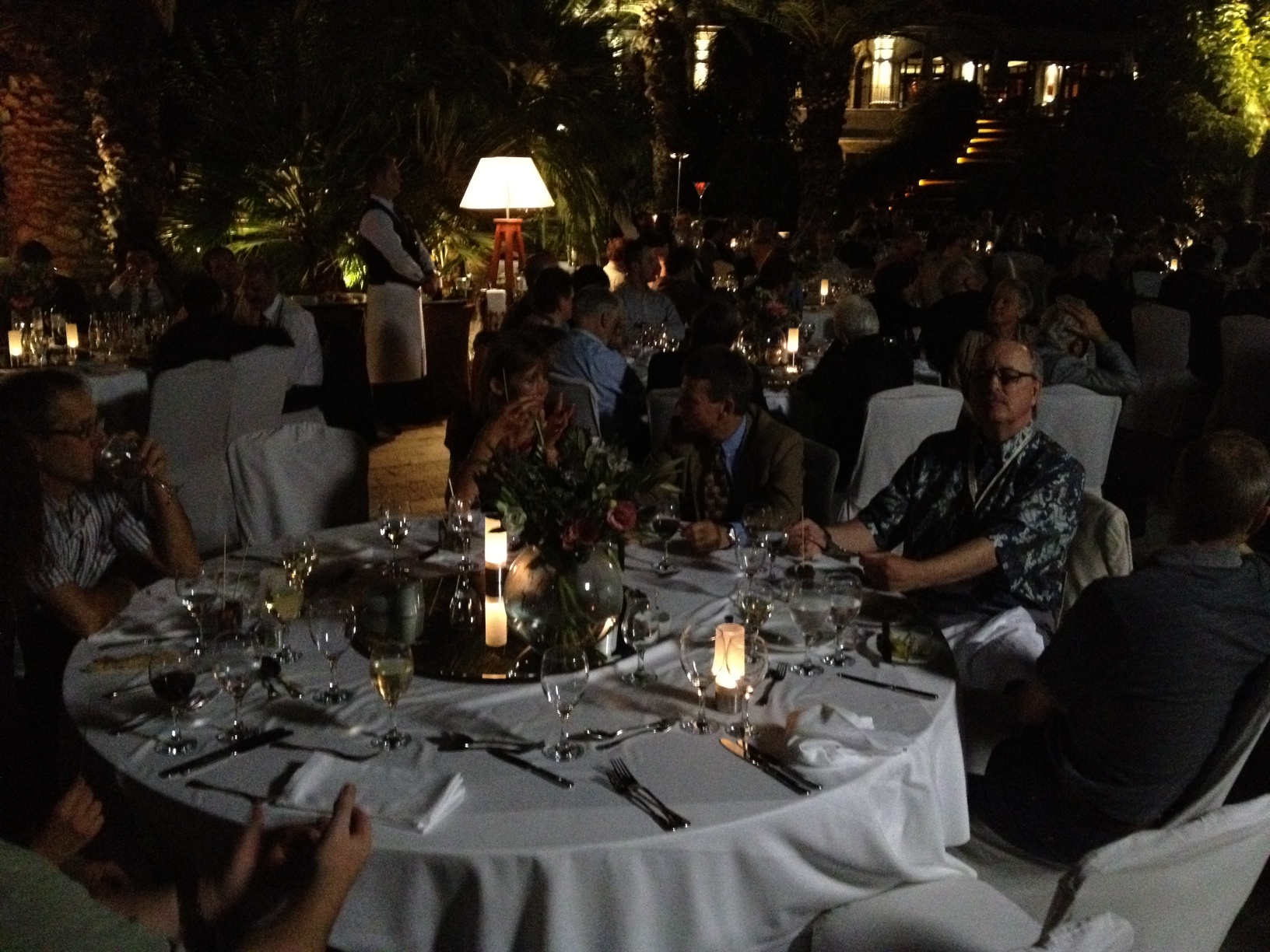
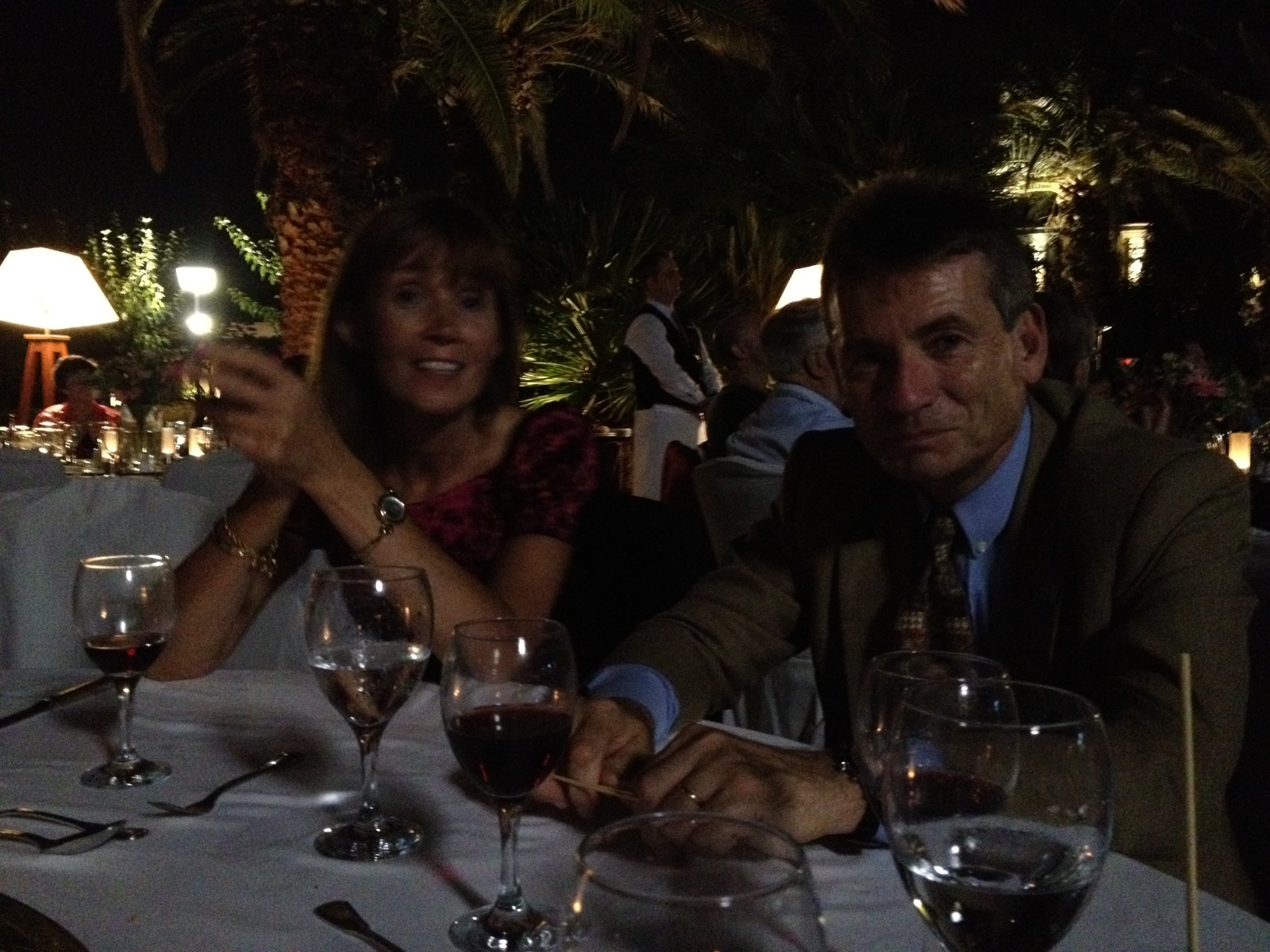
SEFI 2012 banquet — the Irish table, with friends from Spain.

Part of the reason I had so much fun at SEFI was that I knew a lot of people — or got to know them quickly. That’s because the Irish friendliness is contagious.  I couldn’t be the wall-flower I am at most conferences. Moreover, our Dean is really a great leader.  He knows everyone and he also know show to make people feel welcome.  The last night, after the conference dinner at the Hyatt, we all went for a beer in a quaint part of town.  A contingent of Finnish students came along with us.We sat outside in a gorgeous little plaza. When I say that Mike is a great leader, this evening provides an illustration.  Mike wanted to sing Irish pub songs and he managed to convince us all to sing despite our initial reluctance.

The Finns shared their songs and we found a few tunes everyone knew (What Can You Do With a Drunken Sailor and the ever-popular Bring Me Home Country Roadwhich is of course, about West Virginia, the state one half hour’s drive from my hometown).

Drs. Eileen Goold and Mike Murphy

We sang until the pub closed at 2 PM.  I’m quite sure the neighboring residents were glad to hear The singing stop.  On this particular evening, few of us could carry a tune. This level of zest is something I would never have endorsed in an American group… but when with the Irish, do as the Irish do!

During the conference, Gavin and I both made successful presentations.  I was the sixth presenter in my set, so I had to super-charge my presentation.  The audience was visibly drowsy when I stood up to present so I worked to energize the room. And I achieved a high level of engagement from most everyone.

At SEFI, I met a load (as the Irish would say) of interesting folks.  I even spent an entire lunch hour talking one-on-one with the current president of SEFI, Prof. Dr. Wim Van Petegem.  What an honor!

Perhaps I’ll be able to coordinate visits to universities in Belgium, Portugal, and Spain where I’ve made new connections.  All of them have Fulbright offices that may be able to help.

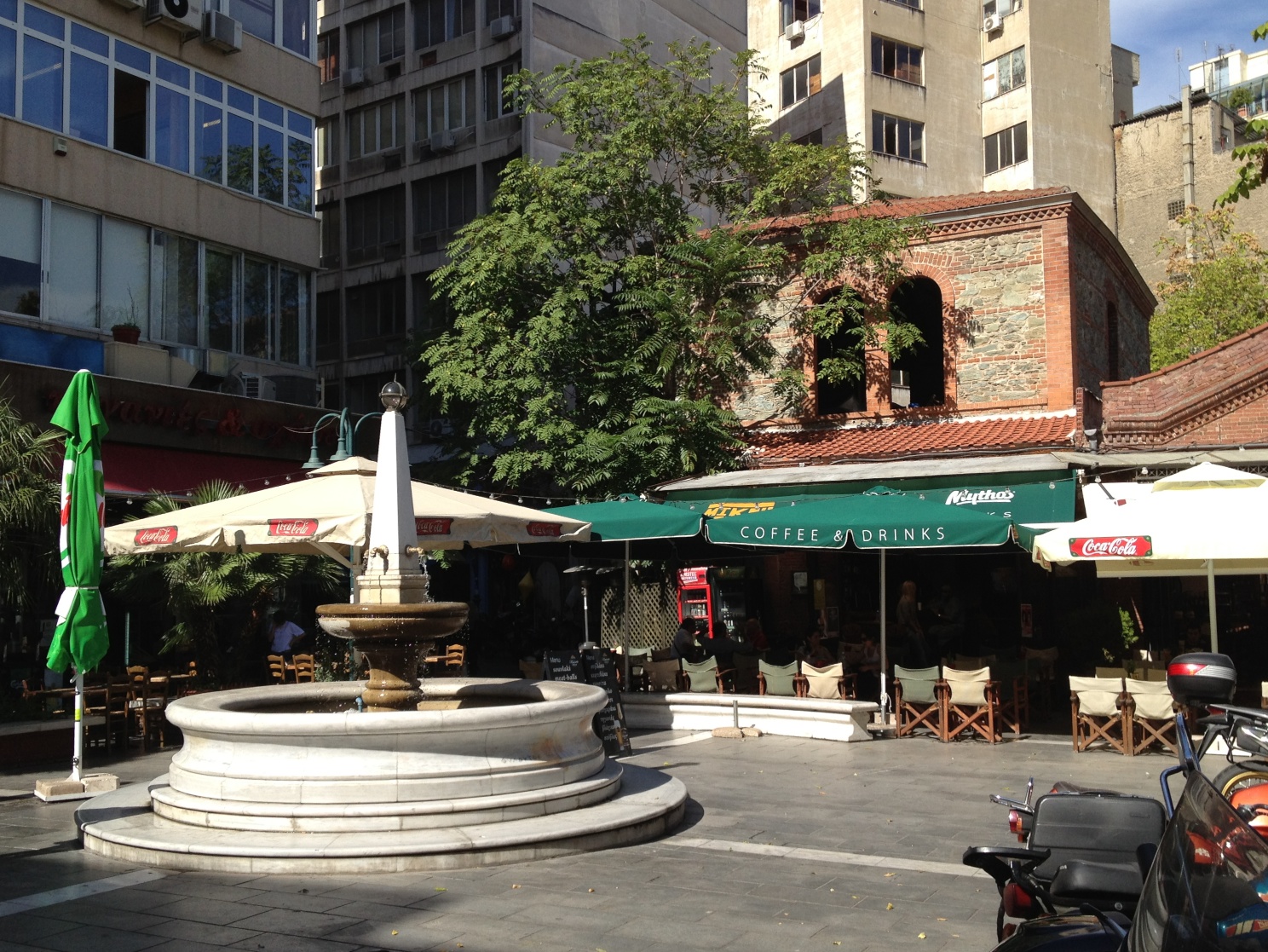
The plaza with our favorite watering hole… in the short brick building to the right. Much quieter the morning after our raucousness!

Sights and Sounds of Thessaloniki

Reflection in Thessaloniki

Thessaloniki was amazing!  I had most of a day to explore the city before the conference started.  I had no trouble getting around and the Greek people were amazingly helpful.

Inside the down of the Agia Sophia church.

I was lucky to be exploring the city on a Sunday because all the churches were open for celebrating mass.  I observed christenings in two different churches–one that has a basilica (Christian cross) plan and another with a Byzantine cross plan (where all the arms have equal length). The basilica plan is typical of Roman planning (of Roman Catholic heritage) and the other (like San Marco in Venice) is typical of Greek Orthodox planning.

This area was under control of the Ottoman Empire for a period of time, after it belonged to the Roman Empire, and the Ottomans worked to convert the Christians to Islam.  There are Roman and Byzantine scattered artifacts throughout Thessaloniki.

I missed the actual baptism and anointing, but after that a team of women dressed the baby head to toe. Here the parents presented the fully-dressed child.

I particularly enjoyed visiting the Greek Agora (which became a Roman Amphitheater during Roman occupation of the area) and the Museum of Byzantine Culture.  I had visited the Museum of Byzantine Culture for just an hour on my own, so I was thrilled when the conference included a dinner plus tour there as well.  I felt like a kid in a candy store!
I’m not one to dwell on negatives, but I will mention a couple of oddities of my stay in Greece. There were two bus loads of riot police parked in front of my hotel the entire time I was there.  One week prior to my arrival, the police had reclaimed the building a few doors down.  It had been held by a group of anarchists for the past five years.  I could see burn marks on the underside of the balconies of the building as I walked by.

All set up outside for the after-baptisim festivities.

In the past, I had heard that the riots I’d witnessed in Rome were organized by anarchists from the Balkins, and not by Italian people.  I’ve been in or near Rome for two, both of which were in response to visits by President Bush the second.

I can’t vouch for the accuracy of that claim, but it certainly seems possible to me now that I’ve seen the anarchists in action in Greece.

Despite the potential for chaos, I felt quite safe everywhere I went in Thessaloniki, even when I was out by myself.  However, I didn’t get a chance to visit the oldest part of the city where it’s acropolis is located, so I can’t speak to the atmosphere of the whole place. But my hotel was allowing the police to use the facilities from time to time, and things felt stable enough to me.

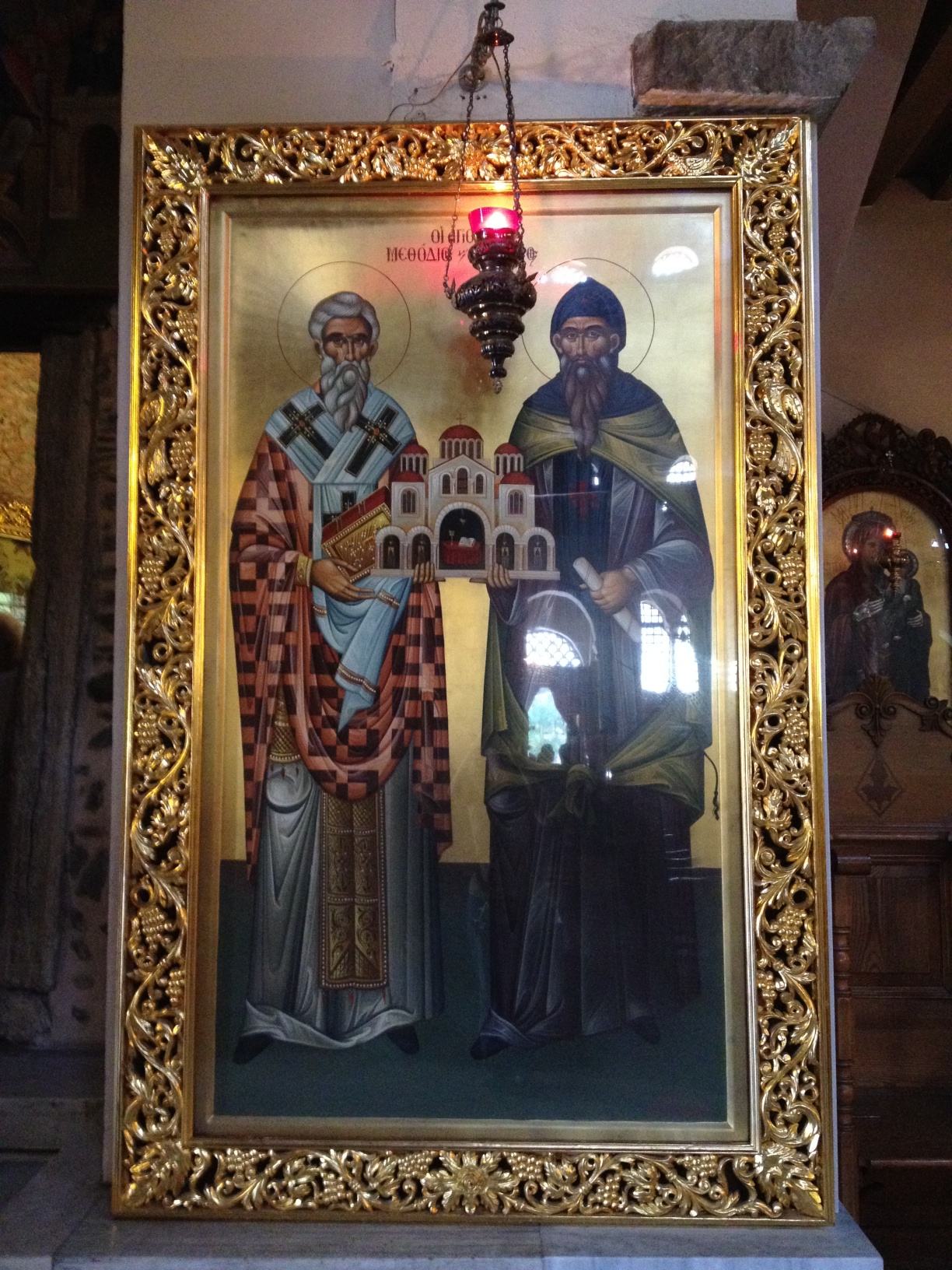
I love to see depictions of saints holding models of churches. This one appears to have a Byzantine cross plan.

There was also some sort of transit strike on the morning I left. I had to take a cab to the airport instead of city bus, and my flight to Rome was delayed for an hour.  After we finally landed in Rome, the folks at the airport forgot to deliver one buggy of luggage to the baggage claim.  That delayed about 40 of the passengers, including myself, for about another hour.  I helped get that sorted out by alerting the airport personnel to the problem.

Each time they enter the church, they visit each important relic. And kiss each and every one!

Overall, I was amazed at how orderly the others on the flight were in loading the plane and, later, waiting for luggage.  Several of them even waited for my luggage–the very last of the set–to emerge before they set off for the city.  They went out of their way to make sure I was okay!

In the interim, I had helped people make their connections by providing advice on how to have baggage delivered directly to their homes.  It was great to be of assistance!  (It wasn’t the first time I awaited lost luggage in Rome.)

I lit a candle in honor of Dave’s dad.

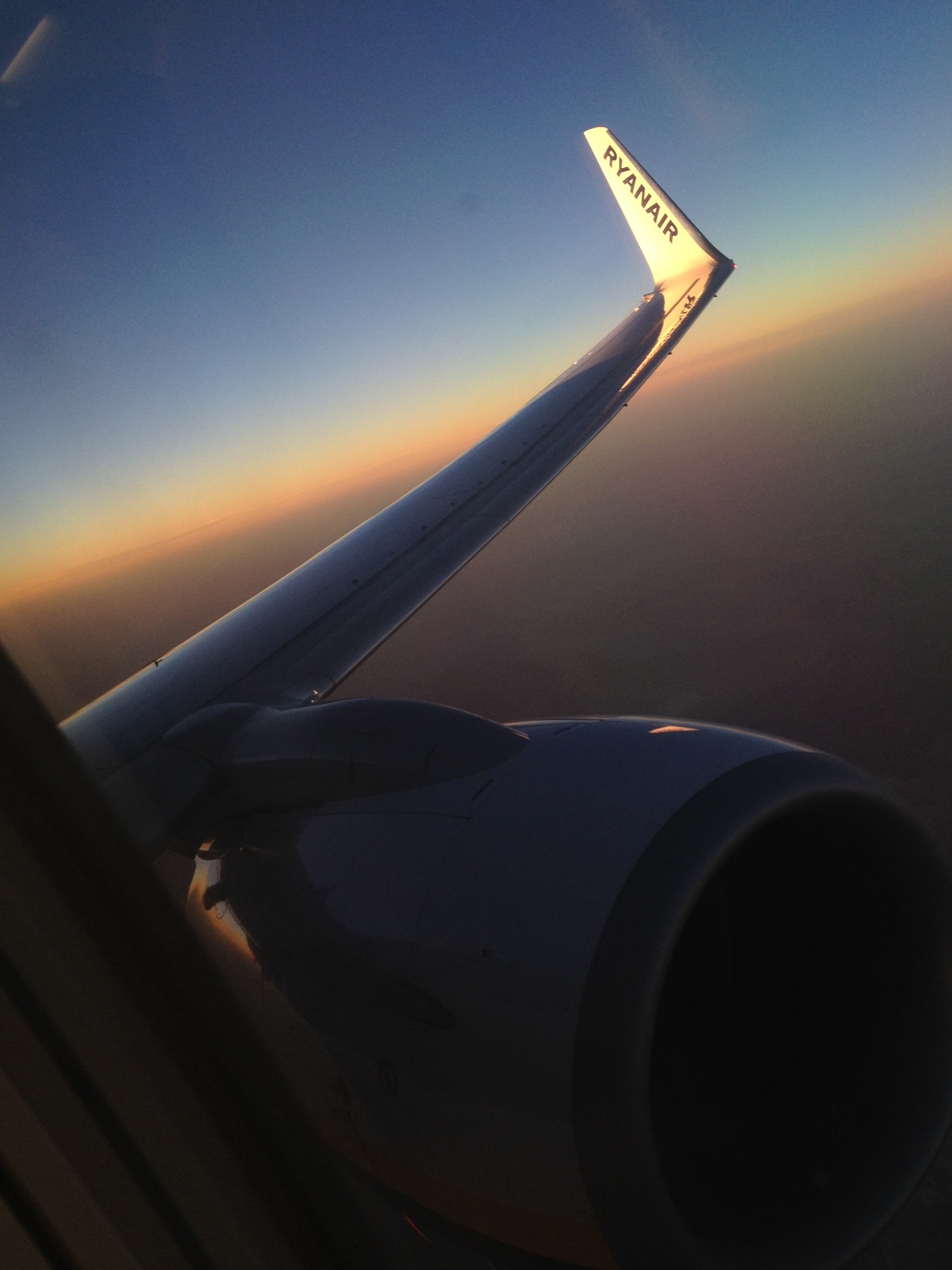
The flights themselves were great.  I managed to get window seats on three of my four flights. As I write this, we’ve just flown over the Ligurian coast of Italy (where Dave and I spent a week this past summer).  I must admit that the mountains that looked so scary from the passenger seat still look scary!  We blew a tire when we accidentally went off-roading.

On another note:  it feels terrific to know the landmarks of Italy and of Rome well enough to get around without a map.  Yesterday, when the busses of Rome were detoured around the city center, I was able to help many tourists find their way.  I don’t even need a map for getting around Dublin, because I spent so much time apartment shopping on line before I arrived!