The Brains Building Technology: Meeting the Greats at Inspirefest 2015

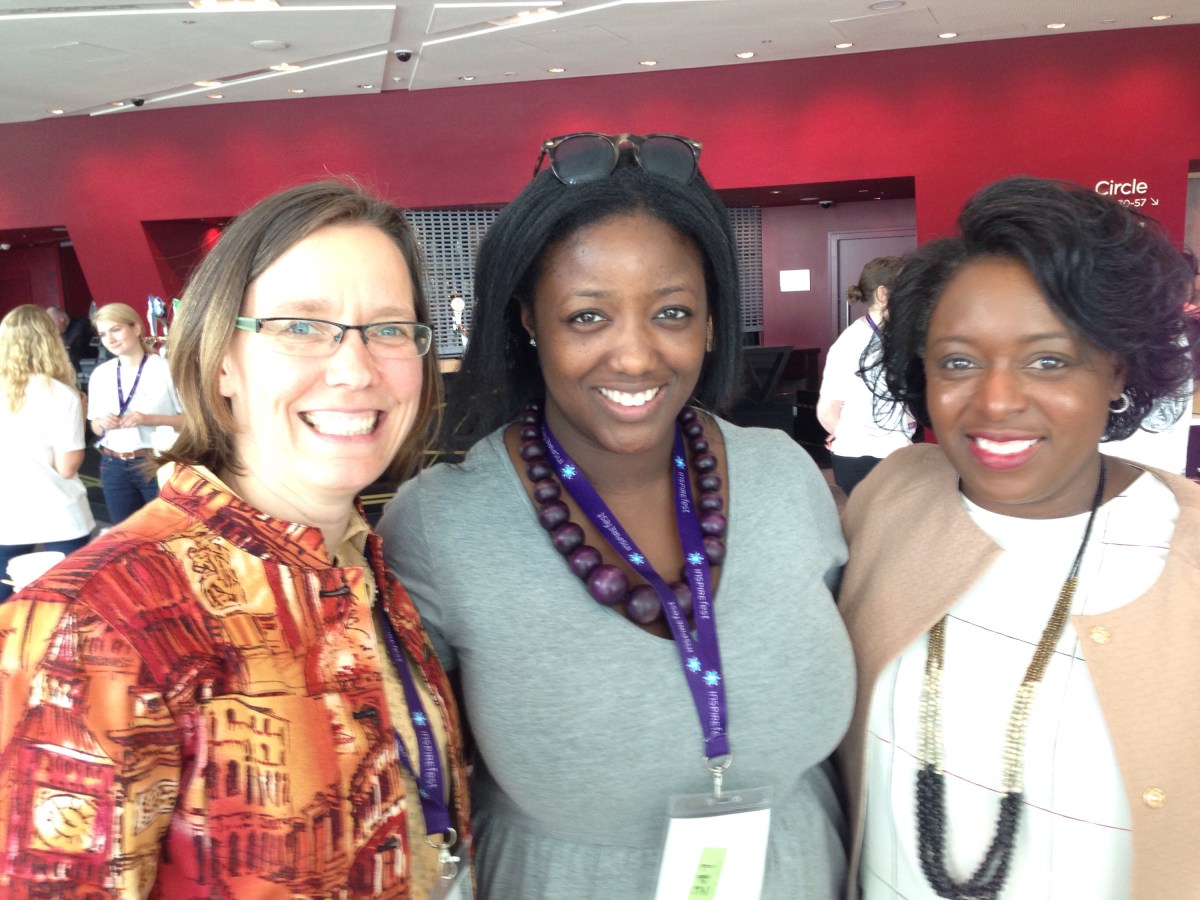
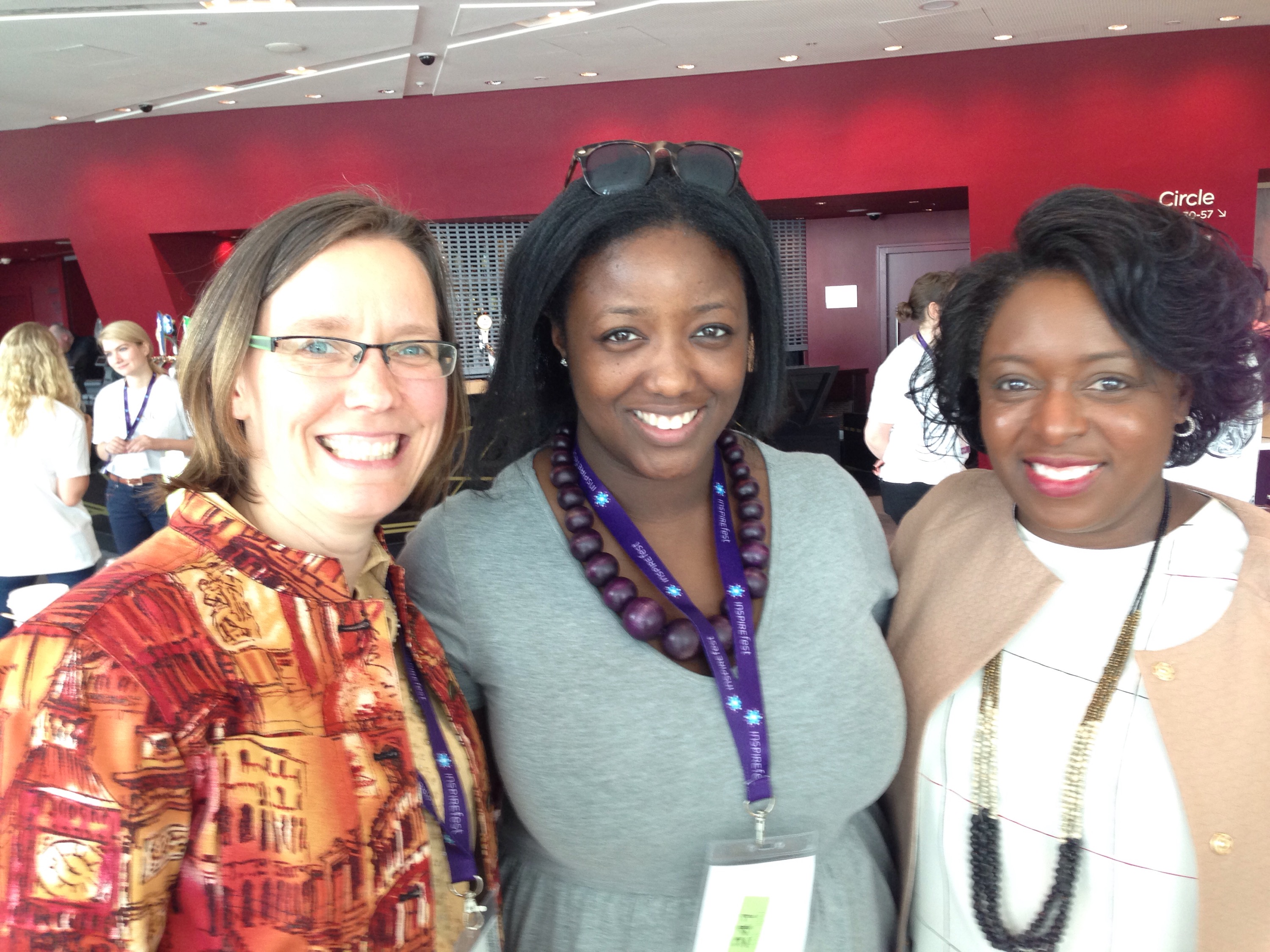
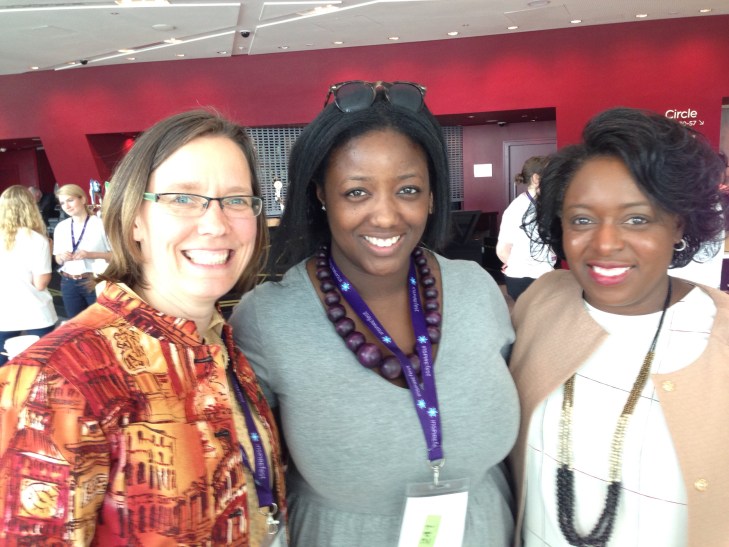
Shannon Chance with the founders of STEMettes (Anne-Marie Imafidon, center) and Black Girls Code (Kimberly Bryant, right).

Shannon Chance with the founders of STEMettes (Anne-Marie Imafidon, center) and Black Girls Code (Kimberly Bryant, right).

Silicon Republic hosted the first ever Inspirefest last week in Dublin, celebrating women’s achievements in STEM. A world-class line up of speakers of all ages from across Europe and the Americas graced Dublin’s Bord Gais Theater stage for two information-packed days proving many inspirational and eye-opening discoveries for an architect and educational researcher like me. Many thanks to Ann O’Dea for creating Inspirefest for us to enjoy!
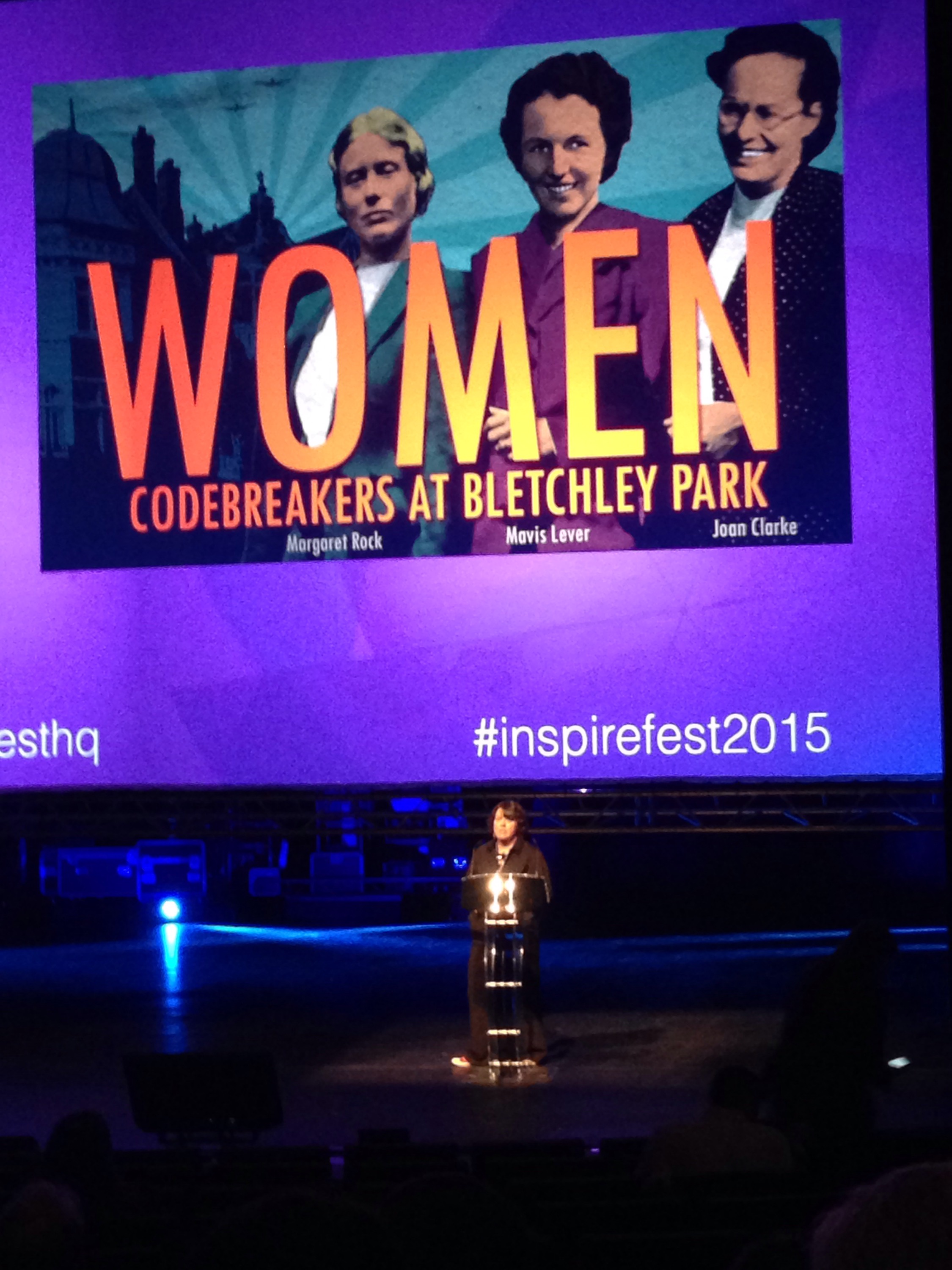
Kerry Howard described women codebreakers at Bletchley Park.

Kerry Howard described women codebreakers at Bletchley Park.

Offering lessons from history, Kerry Howard talked about women codebreakers at Bletchley Park, and in the evening we viewed the documentary “Code-Breakers” and had Q&A with its director.

Kathy Kleiman described the women “computers” who helped break the German codes in WWII and developed *the* first programmable computers.

Dr. Nina Ansary presented the new book, The Jewels of Allah: The Untold Story of Women in Iran.
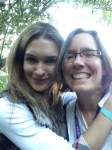
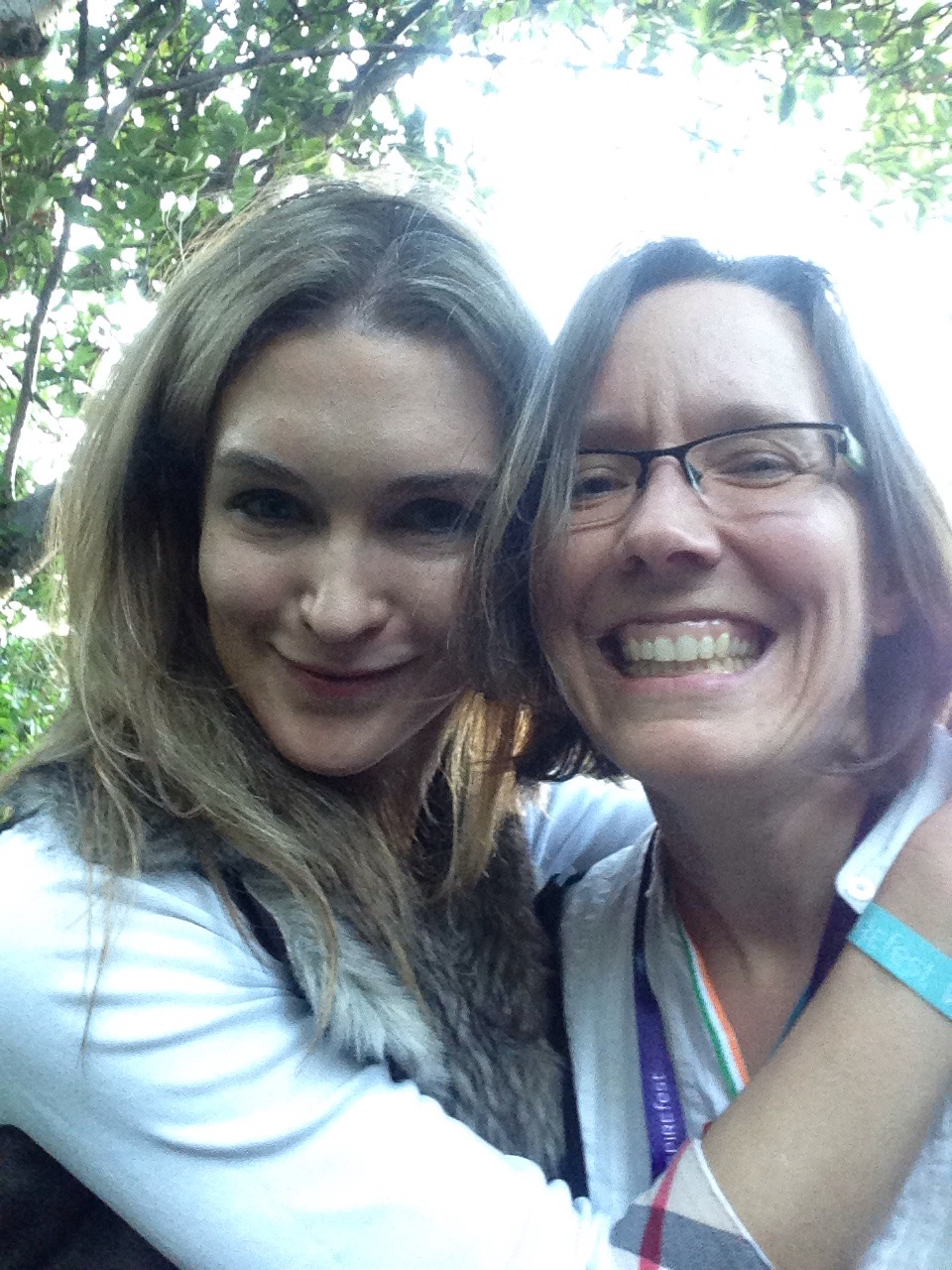
Hamming it up on an evening tour of Merrion Square with Intel VP Margaret Burgdorff.

Hamming it up on an evening tour of Merrion Square with Intel VP Margaret Burgdorff.

Margaret Burgraff, a VP for Intel discussed leadership, Bethany Mayer (CEO of Ixia) gave pointers on navigating the “glass maze,” Shelly Porges talked about working with and for Hillary Clinton, and Carolan Lennon shared experience from her work as Managing Director of eircom Wholesale.

At this conference, 30% of the audience — and the speakers — were men. They included panelists like Prof. Brian MacCraith, the president of DCU of whom I’m a fan due to his knowledge about pedagogy.

The keynote by Steve Neff of Fidelity Investments pinpointed the ways diversity pays. His points were extended by panelists John Basile (Fidelity), Ryan Shanks (Accenture), Marie Moynihan (Dell’s Diversity Chief & VP of Talent), Prof Mark Ferguson (SFI), and Fionnuala Meehan (who leads a team of 450 at Google).
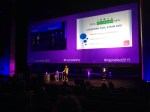
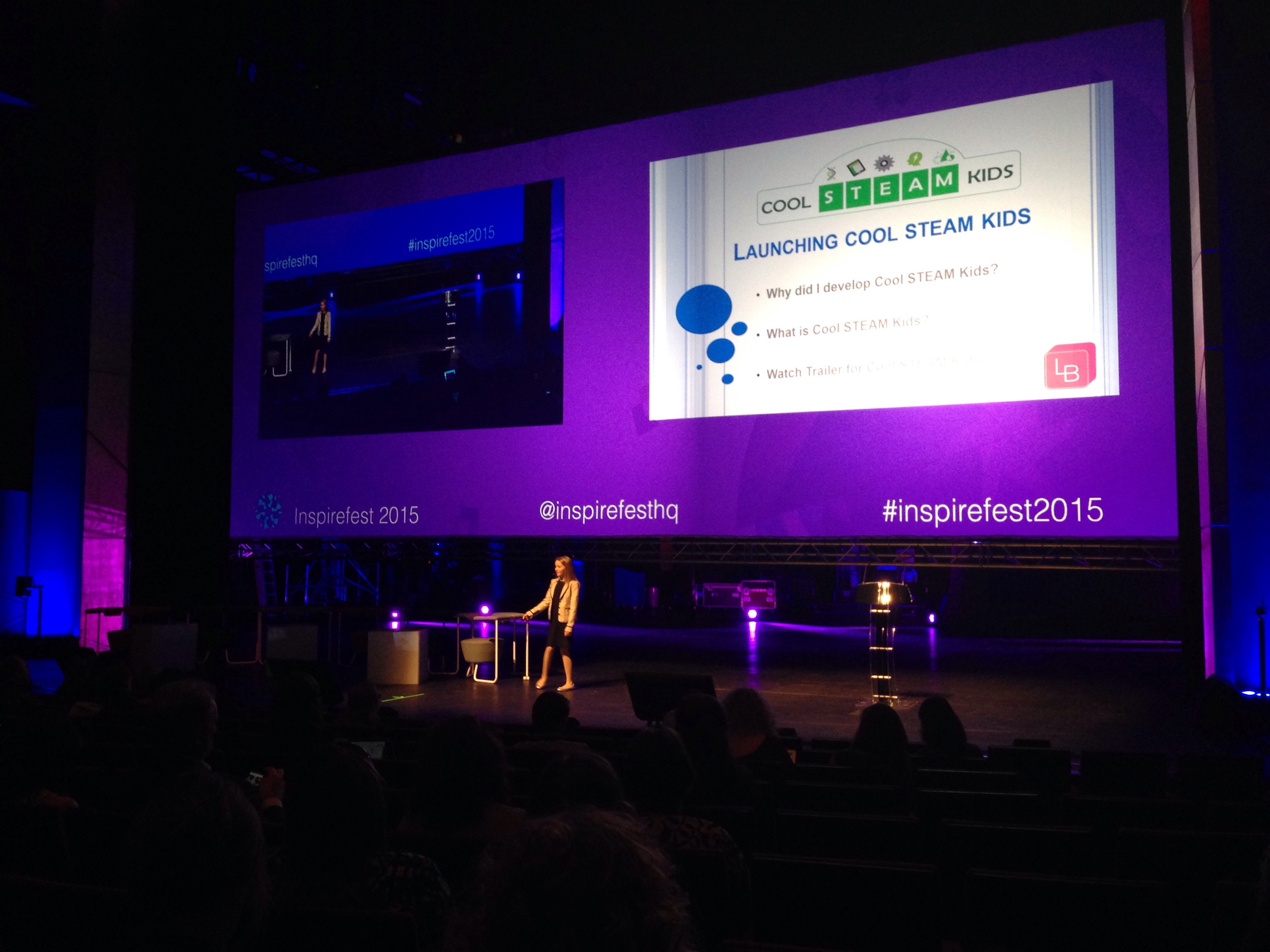
Lauren Boyle, EU's Digital Girl of the Year

Lauren Boyle, EU’s Digital Girl of the Year

Then some truly amazing young people joined the stage.

Ten-year old Lauren Boyle, EU’s Digital Girl of the Year, demonstrated her new website, Cool Kids Studio, for developing new life skills.
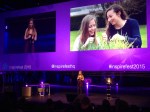
Emer Hickey and Ciara Judge, who founded Germinaid Innovations

Emer Hickey and Ciara Judge, who founded Germinaid Innovations

High school student Emer Hickey, along with her classmate Ciara Judge, recently launched Germinaid Innovations. This company provides “agricultural solutions for a brighter future.” Emer and Ciara developed technology that is drastically increasing crop yield using natural bacteria and won a global science competition.

They were on a panel with Anne-Marie Imafidon, founder of STEMettes, who is running a summer program for which I recently recruited participants. I’m thrilled that at least five girls who I connected to the program (from Ireland and Poland) have been accepted for the upcoming Outbox Incubator business development program in London. In all, 118 girls ages 11-22 will participate in this 5 week program.
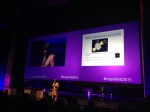
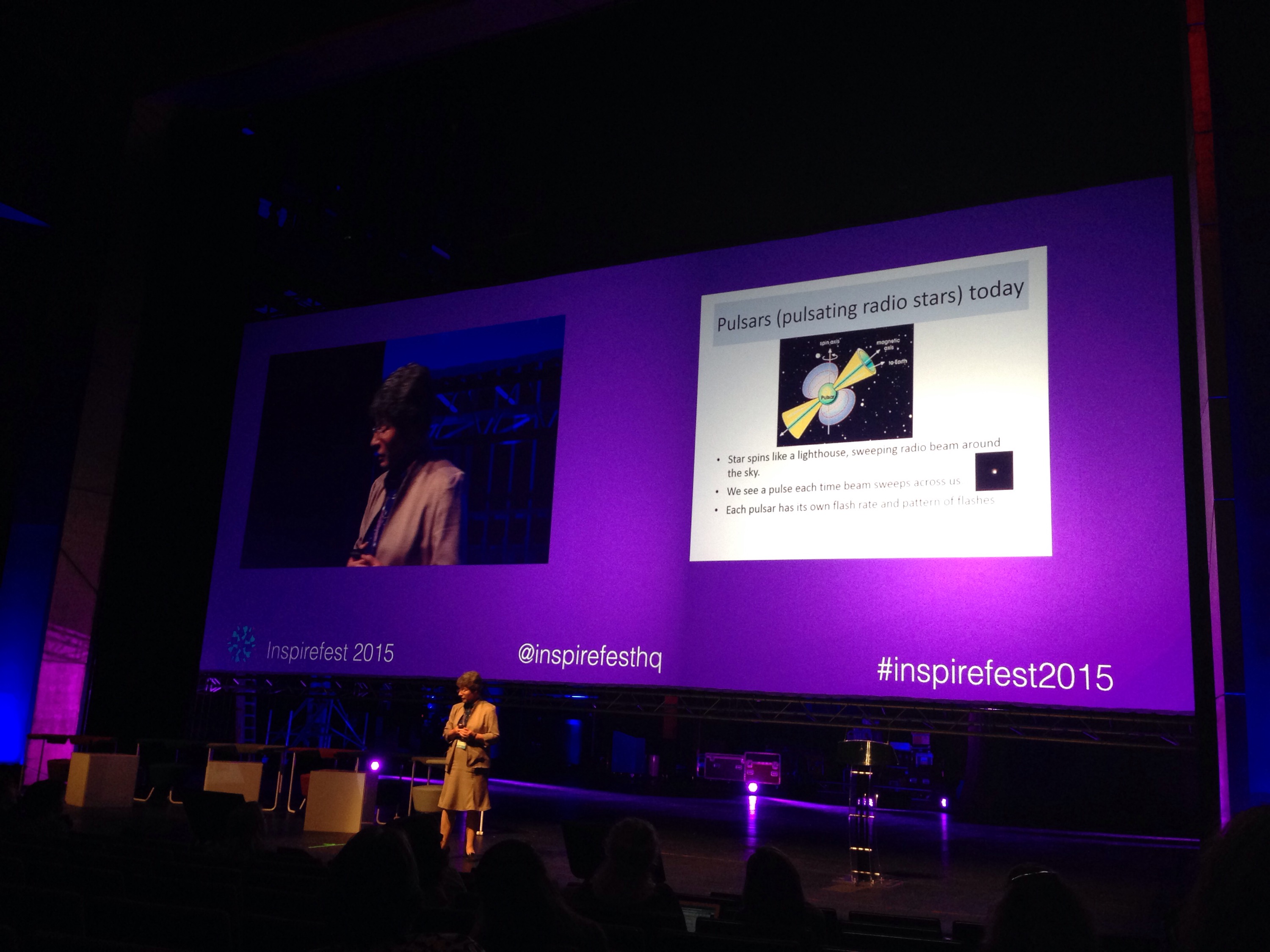
Dame Jocelyn Bell Burnell discovered pulsars

Dame Jocelyn Bell Burnell discovered pulsars

Can you believe that we heard about all this in just the first 5 hours of the conference?!

During a break I had the chance to meet Anne-Marie, Mary Carty (a major contributor to the Outbox Incubator), and Kimberly Bryant (the founder of the Oakland-based Black Girls Code).

Later in the conference we heard from Dame Jocelyn Bell Burnell, the astrophysicist who discovered pulsars and Susan McKenna Lawlor (of Space Tech Ireland) who developed equipment that is collecting data on a comet that is hurling through space at this very moment. MC Leo Enright and panelists Dr. Lucy Rogers and Ariel Waldman (who once worked for NASA and later founded spacehack.org) rounded out the session on space exploration and science.

Highlights from the second day included:

Ireland’s Taoiseach (i.e., prime minister) Enda Kenny, who described Ireland’s position in the tech world.

Robin Hauser Reynolds who described the life of Ada Lovelace, the world’s first computer programmer.

Dr. Sue Black who wrote the book Saving Bletchley Park, actually saved this historic campus, and founded TechMums.
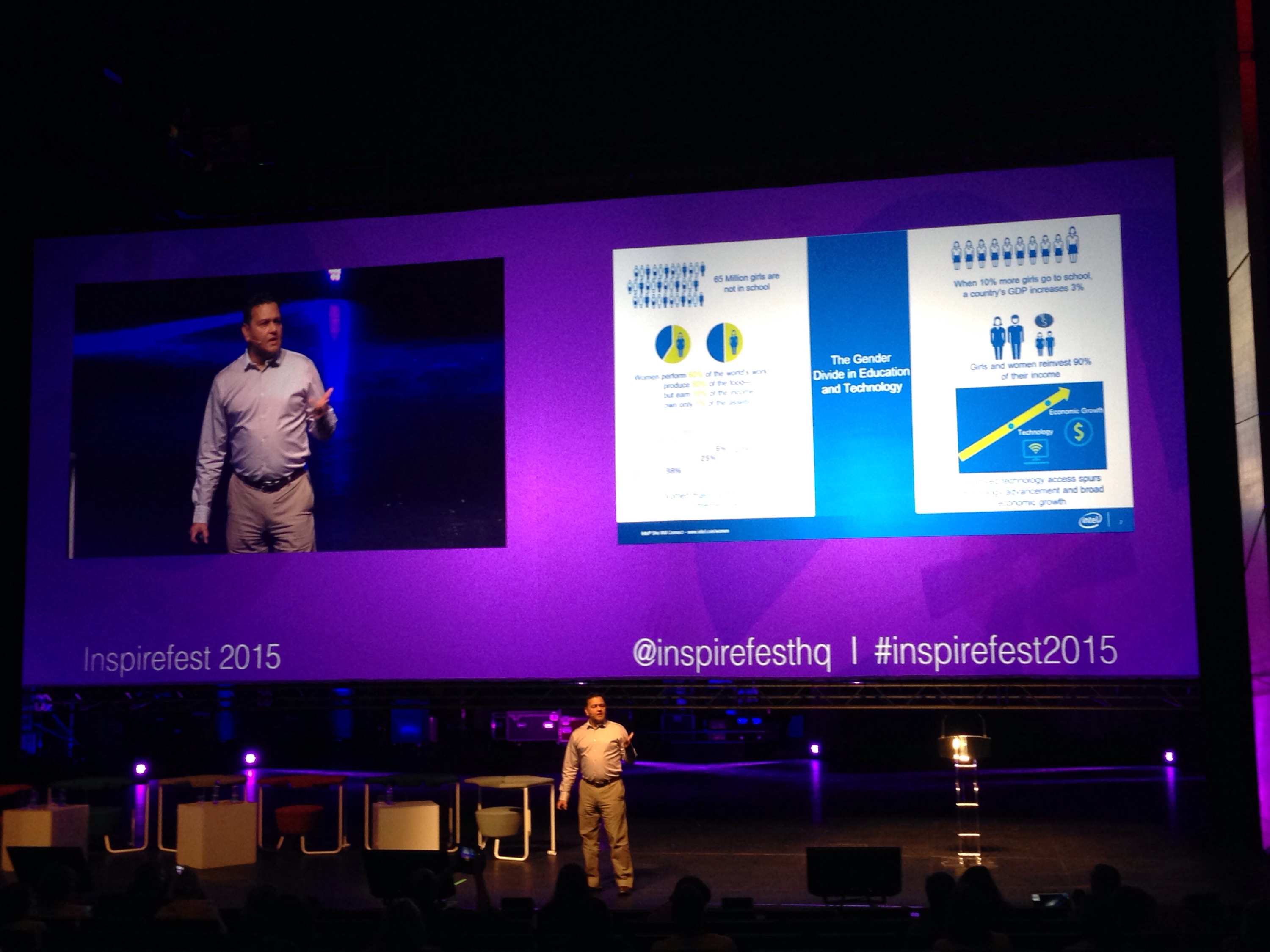
Suraj Shah with Intel's

Suraj Shah with Intel’s “She Will Connect” project

Intel’s Suraj Shah who works in Africa on the “She Will Connect” project.

Louise Kenny founder of the Irish Centre for Fetal and Neonatal Translational Research in Cork.

Panelists Mary Moloney head of Coderdojo, Sheree Atcheson founder of Women Who Code, and Kimberly Bryant of Black Girls Code, who all shared their passion for coding.

Prof Linda Doyle and panelists Kathryn Parkes (SWRVE), Dr Annie Doona (President of the art college IADT), Susan Schreibman (Irish Research Council) coined a new term that I’ve adopted to describe the union of Design and STEM. D-STEM! Ain’t it grand?!

We learned about objects and wearables that collect data to help planners, policy makers, and designers from Gaia Dempsey (CEO and co-founder of DAQRI), Philip Moynagh (VP of Intel’s Internet of Things group), Jessica McCarthy, and students Laura Browne, Alex Casey, and Oisin O Sullivan.

Brianna Wu (co-founder of Spacekat Games) discussed intense challenges (and opportunities) for women in the digital game industry.
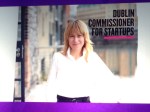
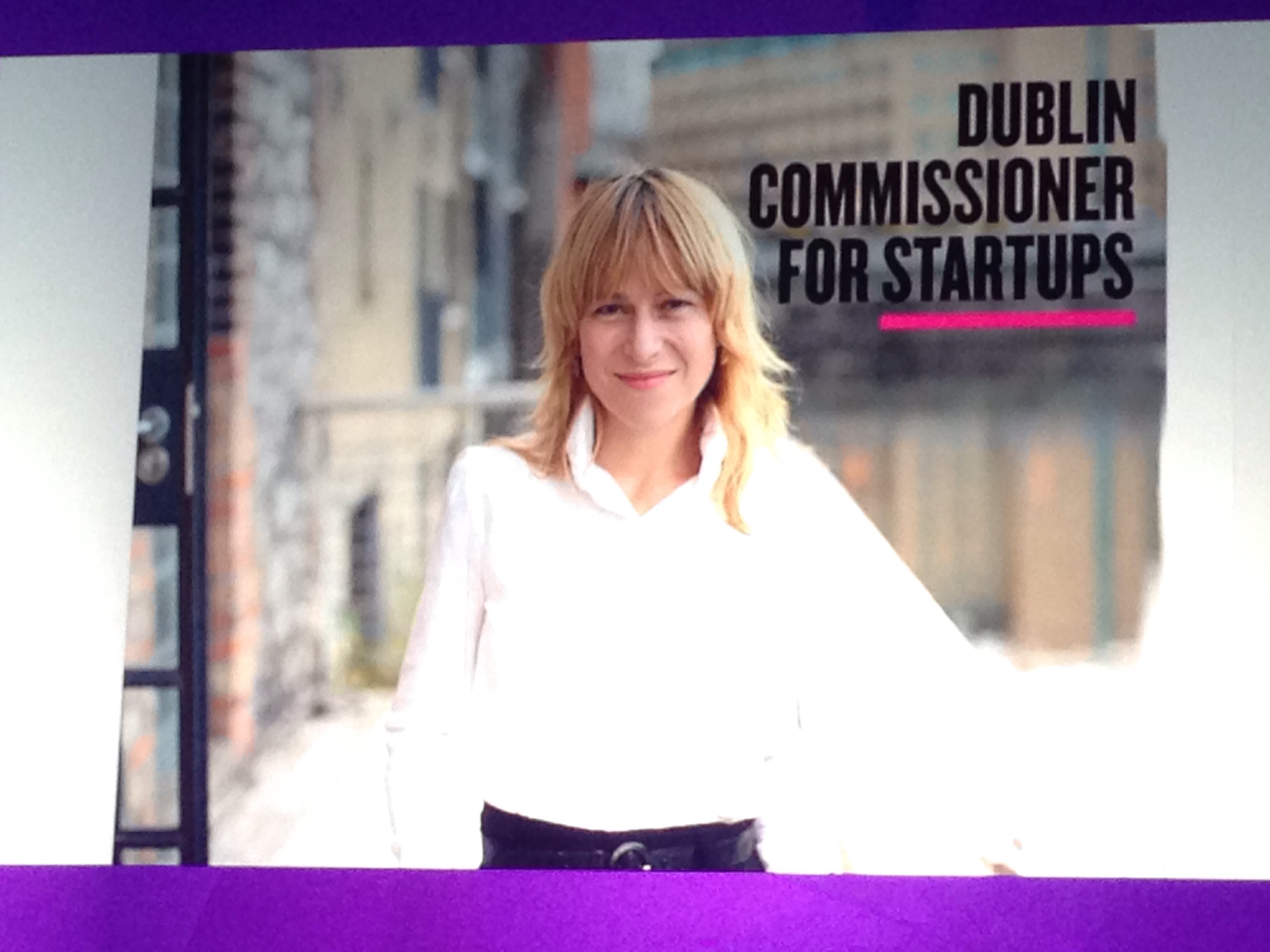
Niamh Bushnell, Dublin Start-up Commissioner

Niamh Bushnell, Dublin Start-up Commissioner

We also heard from business founders Elena Rossini and Elian Carsenet (of GapGrader), Laetitia Grail (of MyBlee Math), Ciara Clancy (of Beats Medical), and Niamh Bushnell (who is now the Start-up Commissioner for Dublin).

Investors and venture capitalists provided advice: Sharon Vosmek (ASTIA), Adam Quinton (Lucas Point Ventures), Nnamdi Okike (645 Ventures), and Julie Sinnamon (Enterprise Ireland).

Cindy Gallop, founder of Make Love Not Porn, provided a riveting final keynote on Making Money while Doing Social Good. She also has a TED talk.

Inspirefest 2015 lived up to its promise. It sent us back into the world full of new ideas and networks and knowledge!
ChanceReflections.com

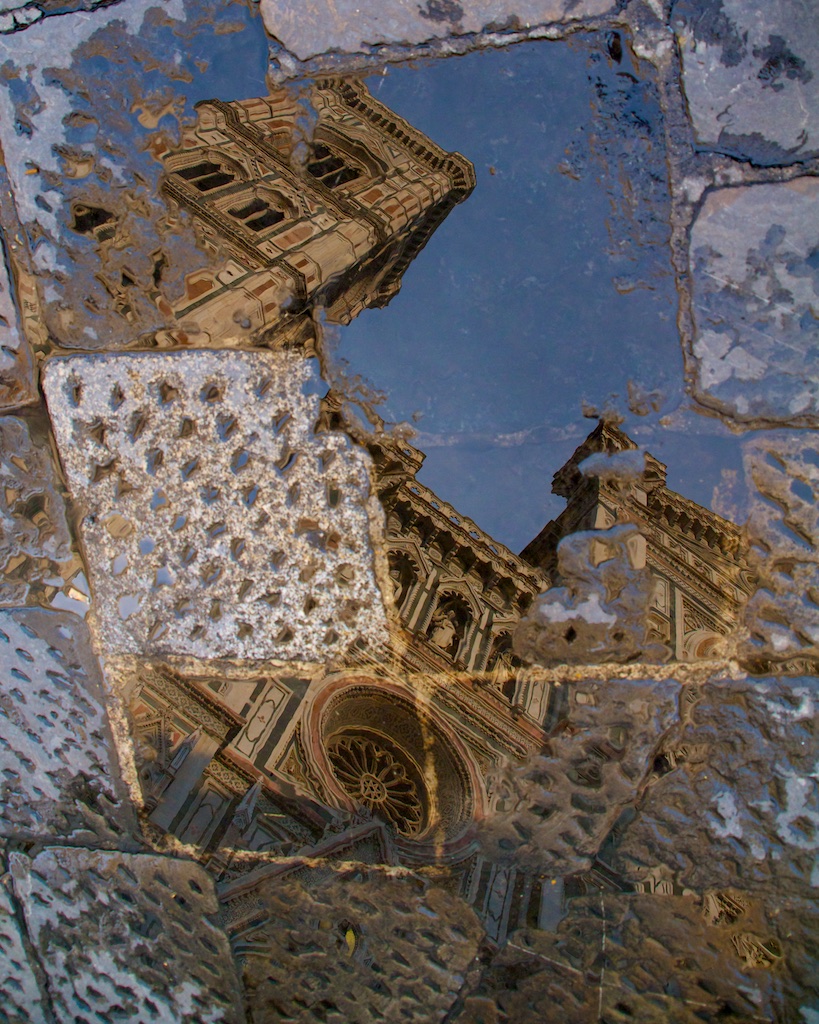
**D30_5228 - 2011-05-20 at 18-55-07I’ve launched a new website as part of an exhibition of my newest releases from Italy. Seven fine art prints are on display through mid-July at Wolf+Spoon cafe in the center of Dublin.

Please stop by for a meal and view a selection of images from the “Water Gallery” page of ChanceReflections.com

FullSizeRender

Wolf+Spoon

10a Aungier Street, Dublin 2

Phone: 01 544 7420

Open: Monday-Friday 7-5, Saturday 9-4, and Sunday 10-2

Studying Architecture in Montpellier

I flew down to the South of France to spend the bank holiday weekend with my former students and colleagues from Hampton University’s Department of Architecture, part of the School of Engineering and Technology. After a morning of sketching in Montpellier’s main plaza, we took trams out to the suburbs to see buildings designed by Jean Nouvelle, Rob Krier, and Zaha Hadid.

The trip was organized by HU professors Mason Andrews and Ray Gindroz.

A Portrait of Engineering (and Architecture) in Warsaw

That's when dad and I were building an experimental aircraft. (that's still half done, I'm sorry to say).

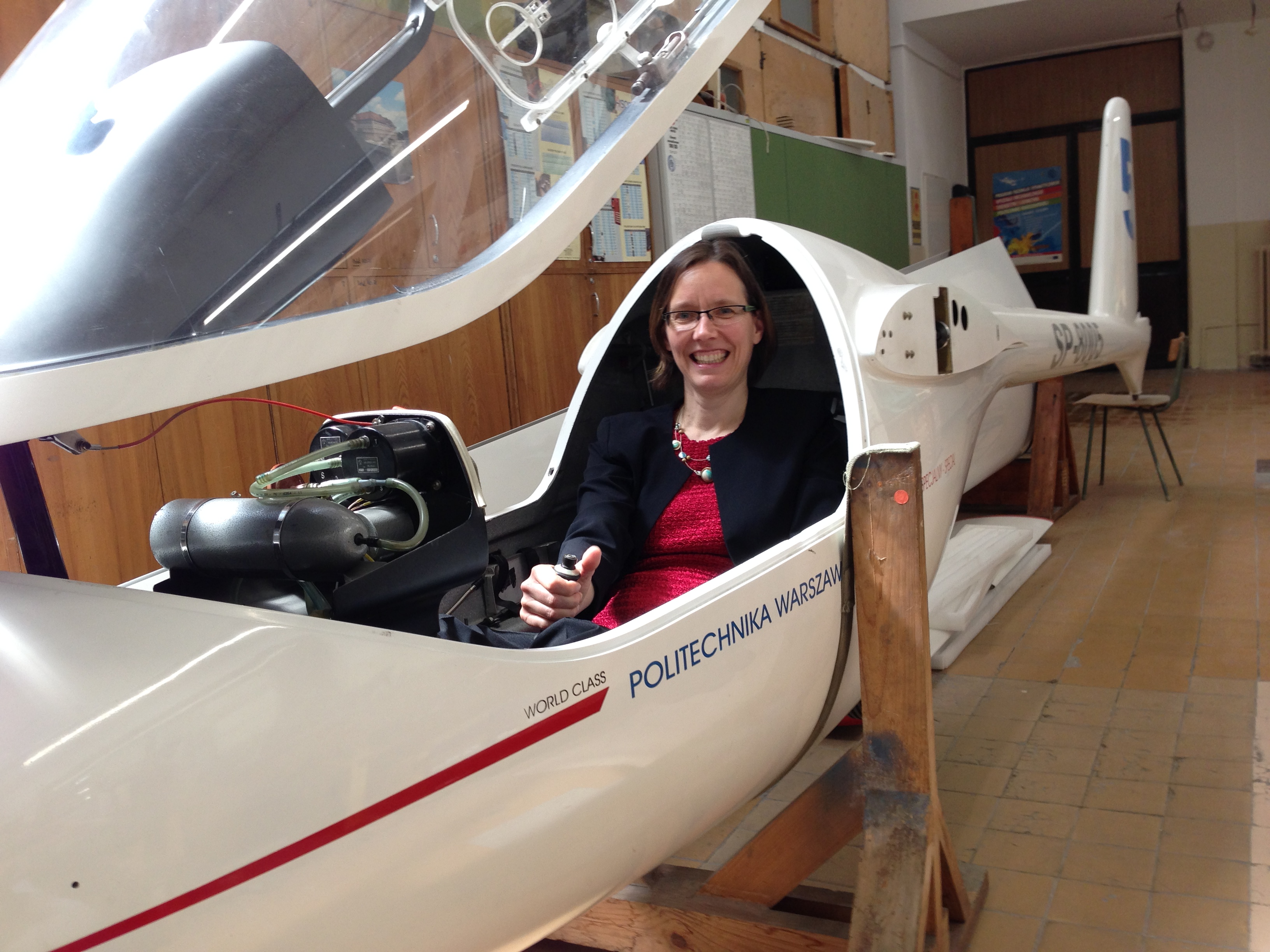
Me and WUT’s PW-5.

I just spent a most unexpectedly sublime week in Warsaw. What a beautiful, walkable, and livable city! Just the right density — useful public transport, affordable bike rentals, green space at regular intervals, and architectural monuments galore.

My primary task was to conduct interviews with budding engineers. Over the course of the week, eleven Polish women (who are studying various sorts of physics and engineering) each volunteered an hour and a half to share their experiences with me. It was amazingly insightful to discover similarities and difference with the experiences of the 10 Irish and 11 foreign-born women I’ve interviewed at Dublin Institute of Technology. (I also have 11 interviews recorded with Portuguese women, but these must still be translated.)

Fortunately for me, the students in Poland can opt to take their classes in Polish, or English, or a mixture of both. These Polish women spoke English very well and were bold enough to grant me interviews in my own native tongue.

In the evening hours I had time to explore some sites, depicted in the photos below.

Engineer Your Future with Electronics

The big project we had on last week….

shannonchance's avatarRoboSlam

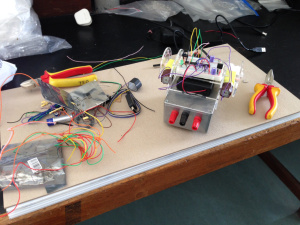
05-2015 RoboSlam Transition Week bodies and competition 111Forty-two secondary students–half girls and half boys–from the Dublin area built RoboSlam robots as part of the “Engineer Your Future” program provided by DIT. These ‘Transition Year’ students were eager to learn about electrical, electronic, and product design engineering and to explore engineering careers. 

The RoboSlam volunteer team was on-site four days to help the “Engineer Your Future” students and organizers and to lead robotics and electronics portions of the week-long project. The students also participated in tours and smaller projects–writing essays, building spaghetti towers, and touring a power plant, for instance.

The week culminated with a RoboSumo championship, a rumble among all robots built during the week, and an awards ceremony.

The engineering lecturers were highly impressed with the talent and enthusiasm of this group. We’re hoping to see these budding engineers at DIT or another of Ireland’s fabulous engineering programmes in a couple of years! 

View original post

DIT Team Delivers RoboSlam for Tech Week

A glimpse of what our RoboSlam crew has been upto lately….

shannonchance's avatarRoboSlam

RoboSLam participants with Ireland's Junior Minister for Social Protection, Kevin Humphreys. RoboSlam participants with Ireland’s Junior Minister for Social Protection, Kevin Humphreys.

Dr Ted Burke and a team of staff and students composed of Frank Duignan, Shannon Chance, Shane Ormonde and Damon Berry, delivered a RoboSlam workshop for primary school kids at the two day Tech Week event in Dublin Castle on Thursday 30th of April. In all, 24 children from a primary school in Foxrock were given an opportunity to build Sumo Robots as part of the Tech Week activities. There was lots of interest from other visitors to the event.

The two day Dublin Castle event, which is organised by the Irish Computer Society, also included a competition for junior social entrepreneurs, the Irish finals of the Formula Schools Challenge and the finals of inter school Scratch competition.

RoboSlam participants with the RoboSlam volunteer team. RoboSlam participants with the RoboSlam volunteer team.

During the course of the day the RoboSlam workshop was also visited by Junior…

View original post 51 more words

Making Online Education Work

Internet technologies promise to deliver education to the masses, but how well do they perform?

Eleven Ireland-based educators and I registered to find out. We enrolled in an online “Supporting Virtual Communities” module (what we in the USA call a “course”) offered by DIT’s Learning, Teaching and Technology Centre (LTTC). We were united by the belief that teachers need to study teaching, in addition to studying the disciplinary subjects they teach.

Over a period of five weeks we have learned to use various web platforms and tools for collaborative learning. We gathered, virtually, to complete assignments with peers near and far. In the final week, for instance, while I was in Lisbon we finalized and submitted a group project.

In the class, we also made group presentations online, used Google docs and Blackboard wikis to construct new ideas, Tweeted our discoveries, and designed blog sites to prompt learning. We heard guests speak from as close as Dublin and as far as Australia. The teachers worked very, very hard to plan and conduct this course well.
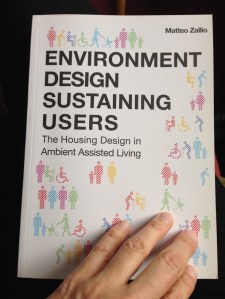
I took this module because I believe in the power of collaboration and online learning. I love emerging technologies and collaborative environments that spark creativity and innovation. To complement what I was learning, I read the books Zero to One (Thiel & Masters, 2014), How Google Works (Schmidt & Rosenberg, 2014), and The Click Moment (Johansson, 2012) in tandem with this module.

In the course, I learned how to create and sequence online assignments (what Gilly Salmon calls “e-tivities”). I learned that the most important role of the online tutor involves providing clear structure and timelines, and monitoring student engagement to keep them from getting lost or disengaged. I found that for a student—overwhelmed by the proliferation of tools and portals offered in academic software packages like Blackboard—it can be all too easy to fall through the cracks.

I firmly believe that every person who teaches online should take an online module as a student, to understand the student experience. Online learning is much different than anything I’ve encountered in my 24 years as a degree-seeking student or 15 years as a full-time educator. In this case, I had to construct new ways to become interested and engaged as a learner.

For me, simply being in contact with teachers and peers in a traditional classroom or studio setting energizes me. It peaks my interest and gets my creative juices flowing. In such settings, I easily and consistently generate my own personal set of goals for learning—goals that work in concert with the learning objectives embedded in each assignment. I am able to layer additional learning objectives on each assignment, supporting and furthering those goals.

Accomplishing this hasn’t always been easy for me in the virtual classroom, especially when I can’t get a clear sense of the expectations and performance goals (much less tailor the assignments to my own learning needs). In recent weeks, I’ve discovered that I’m a highly visual learner—I retain very little of what I hear when there is no corresponding person (speaker), image, or text to see. I believe I’m not alone.

Moreover, I find Blackboard (which I’ve used for over a decade now) to be a cumbersome and counter-intuitive platform that frequently undermines my learning as a student and my effectiveness as a teacher. Over the years, this product has become increasingly cumbersome to use. In the online debate held in our LTTC module, the closing statement of the opposing team resonated with me. Thier argument was that “At present, online learning requires too much clicking and too little learning.”

I feel I have not yet experienced transformative learning through a MOOC or Blackboard environment. I long for better tools, and I hope to contribute to momentum to this effort by teaching a blended learning course in July for the College of William and Mary. I also plan to start an MSc in Computing Sciences (Data Analytics) to help me do the type of work described in Daphne Koller’s 2012 TED Talk.

I sincerely believe in the principles behind online learning, and opportunities it offers. I want to increase social equity by making quality education available to more people as described in Salman Khan’s 2011 TED talk. I want technologies to improve so we can use them as effectively and efficiently as envisioned by Christensen, Horn, and Johnson’s (2008) book Disrupting Class where computer technologies adapt to the learner’s needs and pace of learning.

2546421

I know firsthand that online learning can be fun, engaging, effective, and collaborative. I learned more using Rosetta Stone than I would have in a physical classroom. Using it, I achieved much better pronunciation than I’d ever reached in traditional classroom environments. I began to realize that, in the typical language classroom, students get precious few opportunities for verbal practice and correction. As a result, the years I spent studying Latin, Spanish, and Italian had never enabled me to speak effectively.

However,The “TOTALe” platform provided highly effective speech recognition tools, interactive games, and on-line tutorials. It adapted to address my own personal weaknesses. It identified where I was making mistakes, showed me my pronunciation errors graphically, and prompted me to repeat trouble areas until I reached the level of accuracy I had specified in the settings. Moreover, Rosetta Stone’s collaborative online “studio” sessions, taught by native speakers, involved learners from all around the world.

I was thrilled to help make this transformative learning Rosetta Stone coverenvironment better: the Virginia-based software developers phoned a number of times to inquire about how their product, which had just been launched to for public use, worked for me. They’d tracked their own data and could see my level of engagement. They solicited my ideas for improving the product.

This is the kind of interactive learning software and data analysis I’d like to help create in the future.

Inspired by Rosetta Stone’s agility, Corsera data tracking, Khan Academy’s use of videos, and the ideas proffered in Zero to One, How Google Works, The Click Moment, and Disrupting Class, I will join the teams of people working to create new vehicles and methods for learning online. I’m glad to have had an opportunity to start with this module. While many of these tools don’t work as well as promised today, through creativity and further development, they can help us change the world.

References

Christensen, C. M., Horn, M. B., & Johnson, C. W. (2008). Disrupting class: How disruptive innovation will change the way the world learns. New York: McGraw Hill.

Johansson, F. (2012). The click moment: Seizing opportunity in an unpredictable world. London: Penguin Group.

Khan, S. (2011). Let’s use video to reinvent education. TED talk downloaded 8 March 2015 from http://www.ted.com/talks/salman_khan_let_s_use_video_to_reinvent_education?language=en

Koller, D. (2012). What we’re learning from online education. TED talk downloaded 8 March 2015 from http://www.ted.com/talks/daphne_koller_what_we_re_learning_from_online_education?language=en

Thiel, P. & Masters, B. (2014). Zero to one: Notes on startup, or how to build the future. New York: Crown Business.

Salmon, G. (2002). Online networking and individual development, in M. Pearn (ed.), Individual Differences and Development in Organizations, Wiley Handbooks in the Psychology of Management in Organizations. Chichester, UK: Wiley.

Schmidt, E. & Rosenberg, J. (2014). How Google works. London: John Murray.

Crafting Lisbon

Orange trees along the entry IPS.

Orange trees along the entry IPS.

My Friday visit to the architecture school of the Instituto Superior Técnico (IST) was icing on the cake after a week of engineering interviews, conducted across the bay from Lisbon at Escola Superior de Tecnologia do Barreiro (a branch of the Instituto Politécnico de Setúbal, where I had interviewed students their experiences as engineering students as part of my Marie Curie research project).

You might recall that I delivered workshops at IPS and IST as a Fulbright scholar, back in 2013 (click here for more).

For a little more fun on my last day in Lisbon on this trip, I took the Metro over to IST. There, I visited the first year studio to hear student teams present their urban analyses of Lisbon districts. I toured the 2nd-5th year studios with my gracious faculty hosts and I wrapped up the afternoon discussing recent work with PhD students from the Architecture Research Group who I’d met on my previous trip to Portugal. The doctoral students — Maria Bacharel Carreira, Luisa Cannas da Silva, Mafalda Panheco, and Sajjad Nazidizaji — and thier professor Teresa Valsassina Heitor took me for a beer at the end of the day.

IPS's Escola Superior de Tecnologia do Barreiro

IPS’s Escola Superior de Tecnologia do Barreiro (image from http://www.estbarreiro.ips.pt/)

Many thanks to my colleagues at IPS, Bill Williams and Raquel Barreira, who helped arrange and conduct interviews. Thanks also to the ISP students who provided interviews and the IST teachers and students who shared their work with me. I can’t wait to visit again!

Loving Lively Lisbon 

Guy ambling home from work on a unicycle, paraplegic dog sporting his own wheelchair, man dancing to headphones on the boardwalk at sunset. Chamber pots on sale at the church bazaar, saxophonist sharing zydeco by the ferry terminal. So much to see, so much life to live.

I’m in the port city of Lisbon, Portugal’s capital, this week to interview women here who are studying first year engineering at the polytechnic institute. I flew in Sunday morning which gave me a chance to see some sights. 

I find a new adventure around every corner, even though I’ve been here before. 

Curiosity Cabinet 

Fascinated by philosophies on museum curating, I jumped at the chance to attend a Saturday presentation at the Irish Museum of Modern Art (IMMA) by the artist/curator Dorothy Cross. It was a general conversation with Lisa Le Fauvre.

Dorothy Cross is the person who assembled IMMA’s exhibition, TROVE, from the storerooms of Ireland’s National Gallery (in Dublin and Cork).

Walking through the exhibit hall felt to me like being in a curiosity cabinet of yesteryear. Somewhere between Rembrandt’s studio in Amaterdam, the Galelio Museum of Florence, and Alice’s wonderland.

Here, Dorothy Cross juxtaposed objects in novel and informative ways. A (sculpted) saint bursts forth from his shipping crate. A (real life) naked man stands amid column-like worship stones… he is not pictured here on my G-rated website! 😉

Back in college, I read a number of postmodern philosophy books about  museum curating. They noted that house museums, like the Rembrandt one I mentioned above, provide very authentic contexts for displaying artifacts. Dorothy Cross navigated this postmodern mileau with panache.

I was equally thrilled that the lecture was held in the lovely baroque chapel at IMMA. I’ve been trying to access it for weeks but it’s generally closed to the public.

Dorothy Cross (left) and Lisa Le Favre discussed curating the show “TROVE.”

IMMA’s Chapel, Ireland’s best baroque interior.

The ceiling feels so “Alice in Wonderland.”

Bountiful veggies dangle from above.


“Reading Position for Second Degree Burn” circa 1970, beside a skin cut into a mask. How odd.

Nest of the Oven Bird