Student-Centered and Urban: Architectural Education at IST

The second stop of my Fulbright Inter-Country Lecturing visit was to the Instituto Superior Técnico (IST). One of the organizers of the day, José Figueiredo, explained to me that IST “is the biggest and oldest engineering school in Portugal.”

Professor Teresa Heitor lined up all kinds of fascinating events for me.  The 60 first year architecture students presented their work to me (in English!).  Then, they came along as their professors gave me a tour of all the architecture studios.  We got a glimpse of what these particular students will encounter in the coming years, as they progress through the five-year architecture program at IST.

Their architectural education will be structured very, very much like ours in the USA.

Their design assignments will be quite similar as well, although the projects students encounter here do tend to have more of an urban focus than most programs I’ve visited in the US.  (I serve on architectural accrediting teams and have visited many different schools in the US through conferences as well as accreditation visits.  I have to say, however, that my home institution–Hampton University–has done a noteworthy job over the past decade of integrating urbanism into the curriculum.  Of that, I have been proud.)

At IST, I was particularly impressed with what I learned from the first year professors.  They’re doing a great job overcoming what I see as a big weakness in architectural education today.  So many teachers around the globe focus on teaching students to make “signature buildings” and “modernist masterpieces” that other architects will love.

These teachers, instead, endeavor to draw out their students’ unique interests and abilities.  Unlike the many teachers who seemingly want to “wipe the slate clean”, these professors seek to help students draw from the wealth of experience and knowledge they bring to the first year design studio.

A Warm Welcome to Lisbon at the Casa do Alentejo

One of the very best things about the Fulbright program is meeting knowledgable, energetic, and talented people like Bill Williams. He is a teacher at the Escola Superior de Tecnologia do Barreiro – Instituto Politécnico de Setúbal who is clearly dedicated to his students and to the craft of teaching.  He’s the kind of guy who works at the university all day then goes home and works on his research.

He’s even completing a PhD — for fun.  Can you believe anyone would do a thing like that?   😉

Nearly as soon as I hit the ground in Portugal, Bill provided me a short orientation complete with dinner at Casa do Alentejo — a place that epitomizes Lisbon. This restaurant is where Bill and his wife invited all their friends to celebrate their marriage.

The night Bill and I went there, a group of men was wandering through the halls singing traditional Portuguese songs.

So to give you a taste of my time in Lisbon, I’ve uploaded photos from that night… including the area around the Casa do Alentejo, some rooms of  the Casa itself, and others of the singing group that made it shine for our visit.

Four Courts by Night

Ireland’s Four Courts building is so photogenic. The River Liffey sparkles with its reflections at night.  How I love this place!

The Elegant Archeology Museum of Ireland

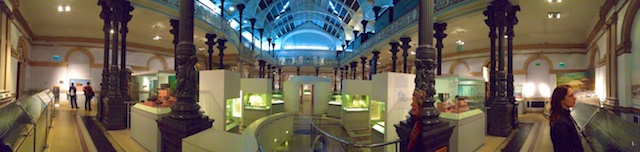
The Archeology gallery of the National Museum of Ireland is a chock full of fascinating treasures.  The building itself is also remarkable.  I’ve enjoyed visiting this place with both Esther Sterchi and Amanda Bernhard (the famous Fulbright student).  Of particular interest at this museum: numerous bog bodies, “prehistoric” relics, the Viking exhibition, and the unimaginably long wooden boat that was carved from a single tree trunk (see the panorama below).

I love the design of the Museum.  I wish I could see it without the skylight blocked out, though.

I love the design of the Museum. I wish I could see it without the skylight blocked out, though.

Upcoming Photo Exhibition in Dublin

I’ve got an exhibition of reflection photographs in the works for spring. It’s to occur during May at Notre Dame’s O’Connell House on St. Stephen’s Green.  Tuesday, I met to plan with Notre Dame’s Lisa Caulfield and Joseph Stranix as well as Fulbright’s Joanne Davidson.  I showed them some examples of my work and, thankfully,  got enthusiastic response. 🙂

It’s a big, beautiful space and I look forward to filling it with images.  It’s so much space, in fact, that I am hoping to include my two favorite photographers in the show. (I’m seeking final approval for that.)  I’ll keep you posted as plans progress.

It’s a gorgeous space, and I though you might enjoy seeing it pre-show:

Expanding your Learning Styles

Iroda Karimova said in earnest that she misses my crits! (!?!!??)

As per my prior post, Iroda Karimova said in earnest (while I was visiting the Hampton University Department of Architecture two weeks ago) that she misses my crits! (!?!!??)

Because I’m an active blogger I’m forever getting the question, “Do you ever work?”

The answer is yes; here’s a quick example.

My former student int he Department of Architecture at Hampton University, Iroda Karimova, emailed this to me from her smart phone today:

It was also nice to talk to you too. We haven’t see you for a while. I hope you are enjoying your oversea experience. I sometimes read your blogs, to see how you we doing.
Yes sometimes I wish I could hear your critiques, especially when I did good :). Your critiques were short, to the point, emphasizing important accomplishments, and sometimes not too enjoyable but helpful.
 
 Thank you for sending me this post.
 See you soon.
____
Whew! It sounds like I was doing my job correctly. Part of that  job is to help students learn to evaluate their strengths and weaknesses. I’ve got to challenge them to address weaknesses I see. Effective teaching requires a careful balance of challenge and support (Sanford, 1962). I aim to provide that and to help students reach just a bit farther than they are comfortable doing (this is called a “plus-one” approach to teaching).
Good students, like Iroda, recognize that challenges are presented to help them grow and that the professor’s main role is to help guide them in their own learning. Receiving critique is never pain free, but it is necessary for growth and development.
Here’s the very quick reply I dashed off:
Thanks for your note, Iroda!  

 
You always do excellent work.  I wanted to make sure to help you reach for the stars, though.  You’re really terrific at technical ways of thinking.  As a second-year instructor, my job is to try to help students develop fluency in multiple ways of thinking… particularly the ways they find foreign or uncomfortable.

 
I’ve attached a chart to explain (it’s from a paper I was working on Tuesday). Most students come to college very good at one corner/quadrant of the chart. You were exceptionally good at Convergent thinking. I’d say you left second year with new skills in that realm, but more importantly, with new skills in the other three quadrants as well.
 
Cheers,
Shannon
_____
Below is a chart I made to describe Kolb’s (1984) theory. It is based on a similar chart published by Evens, Forney, and Guido-DiBrito (1998). You can read more in the paper I created for the National Conference on the Beginning Design Student (MADE Proceedings Chance Writing Architecture). If you reference it, please cite the source. The citation for the paper is:

CHANCE, S.M. (2010).Writing architecture: The role of process journals in architectural education. MADE: Design education and the art of making (160‐170). Charlotte, NC: College of Arts + Architecture. Presented at the 26th National Conference on the Beginning Design Student in Charlotte, NC.

Kolb chart by Shannon Chance

A Visit to Bemis

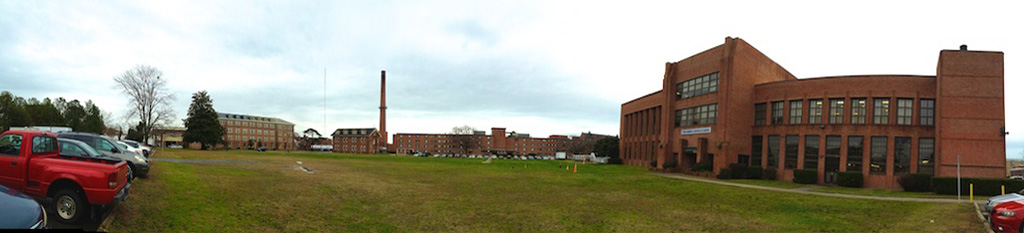
Bemis lawn with Bemis Laboratories to the right, home of the Hampton University Department of Architecture.

Bemis lawn with Bemis Laboratories to the right, home of the Hampton University Department of Architecture.

I almost forgot to show you my January 2013 visit to Hampton University. The semester starts earlier there than at most universities, so I had the chance to visit before returning to Dublin, and while HU classes were in session. That way I could see my students as well as other professors.  I snapped some photos along the way of things that caught my eye….

Defining the Street in Dublin and Ballsbridge

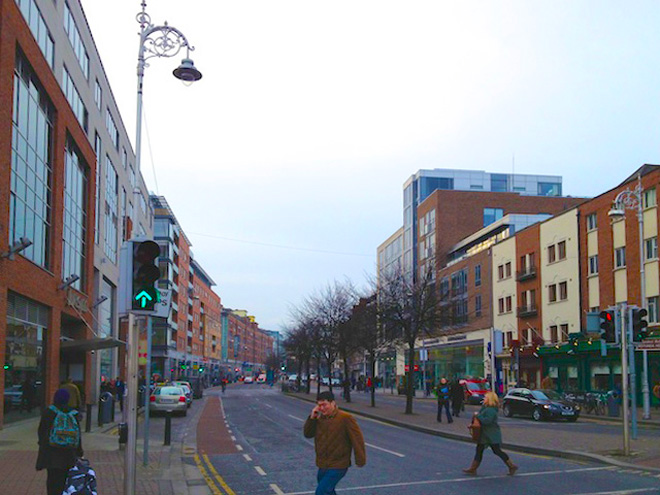
Parnell Street

Parnell Street

In my opinion, good city buildings touch each other and define the street. They don’t have to be glamorous to make good urban fabric. When building work together, they create good spaces for people to enjoy.

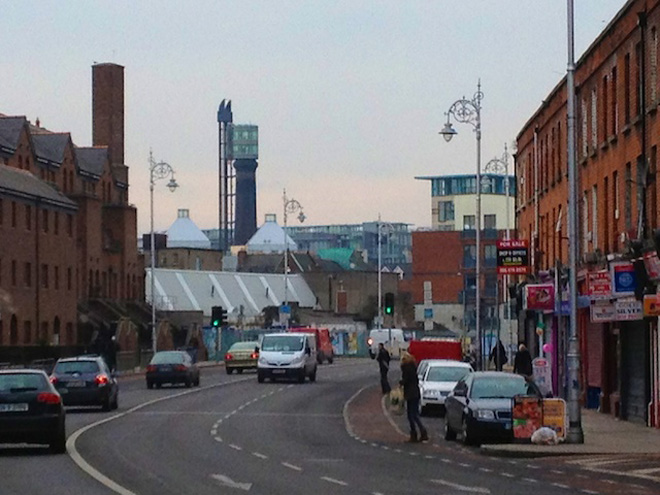
I’ll give two quick examples of clearly defined streets. These two streets are near my apartment in Dublin. Unfortunately, they are both designed for cars–not people.  Nevertheless, the buildings work together to define space. On Parnell Street, the buildings support a good mix of uses and are close enough together to provide the density of population needed to support ground-floor retail. Residential density is lower a few blocks away, on North King, and ground-floor business are fledgling.

North King Street -- view toward the Jameson Distillery smokestack -- where density breaks down.

North King Street — view toward the Jameson Distillery smokestack — at the point where density breaks down.

Simply put, a proper mix of residential and office space is necessary to support ground floor restaurants and retail. By providing residential as well as working space, mixed-use districts are active throughout the day. Businesses can draw customers morning, noon, and night.

Having the right mix in your district ensures you’ll be able to get the services you need without getting in a car. (Oh, that we’d build this way in the States! Walkability is so rare in cities back home.)

I was reminded of all this last Thursday, when I travelled to the Fulbright office in Ballsbridge to help interview Fulbright applicants. It’s in the outskirts of Dublin. Although this is a suburban neighborhood, it is still dense by US standards. Notice that there’s more space between buildings in Ballsbridge than in Dublin city center, but that there’s still a good mix of uses/services. Nevertheless, some buildings contribute much more to the life of the street than others!

Silver Linings of Dublin

I'd never noticed this beautiful weathering panel on the Quay just east of the Four Courts. Lovely, isn't it?

I’d never noticed this beautiful weathering panel on the Quay just east of the Four Courts. Lovely, isn’t it?

I’d snuck in one last trip to see the nephews this past weekend while I was back in the States.  It was such fun, but I caught a bug that kept me in bed all day Monday.  That prevented me from wrapping up my writing in a timely fashion and packing for my return to Dublin.  I had to lean on my colleagues for help and then throw my bags together in the wee hours before my flight.

The resulting overweight bag set me back $200.  And, I arrived in Dublin sans Irish credit card, bus pass, et cetera.  I suppose those documents are at home in some very safe location.  Dave has been in bed with the bug today and hasn’t yet located them.  I spent the day pulling myself back together.

The sliver lining in this cloud is that a new bankcard is on the way.  And on my walk to withdrawal cash I discovered wonderful new delights of Dublin.

Expedition into a Chance-y Dining Room

Glen, (Jamie), Mark, Marshall, Dave (and Shannon) gathered around the table for dessert.

Glen, (Jamie), Mark, Marshall, Dave (and Shannon) gathered around the table for dessert.

With the New Year, Dave and I rediscovered our dining room!

As architects, we’re constantly renovating our home. That means it’s usually in no shape to show. And as collector/artists, we tend to fill our space with papers, objects, frames, art and construction supplies, and other materials waiting to be incorporated into some design or other. To be more specific, the dining room in our house has served as Dave’s photographic archive for years. It’s been chock full of framed prints, storage shelves, packing materials, and the like.

Uncovering the room was a challenge and a thrill.

When Dave transferred his photographic archives from our dining room to his downtown studio we knew we had to celebrate.

Two 2012 accomplishments aided our celebration: (1) last fall, Dave installed enough new porch flooring for guests to access the front door, and (2) in July, I had our dining room table re-built (to overcome structural damage that resulted from the tripod-leg design combined with old age).

So although we hadn’t hosted a dinner party in around five years, we decided to give it a go.

The cats were thrilled — they love to meet people and entertain!

We planned a fairly simple meal and invited over some friends who’ve hosted us for dinner more times that I can count: Marshall & Glen McClure and Jamie & Mark Lewis. Together (we six people and four cats), made an expedition into the unknown space.  I’m happy to report that we had a blast.  Everything turned out well and we look forward to more expeditions into the room next fall….