Photo Launch Fun

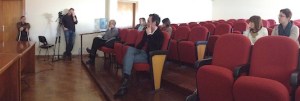
Dave Chance did a delightful job documenting events at the opening of my first photography exhibition, InterChanges: Reflections from Dublin and Beyond.  Thanks to all my fabulous friends and colleagues for coming out to support my work!

By the way, I’ve sold six photos to date.  If there’s one you see on the wall that you’d like to purchase, please let me know.  They are selling for 80 Euro each and sales are helping me recoup the cost of producing the show.

Group- and Project-Based Learning

We've got 19 shining faces in the Problem-Based Learning module we are conducting on Tuesdays in May.

We’ve got 19 shining faces in the Problem-Based Learning module we are conducting on Tuesdays in May. (Not to mention three shiny teachers!)

In the Fulbright application I submitted two Augusts ago, I promised to co-teach a class at DIT that used Problem-Based Learning.  At the time I applied, I anticipated that I would co-teach an architecture course.  But in the course of the interviews I conducted, I discovered it had been quite a while since DIT’s Learning, Teaching and Technology Centre (LTTC) had offered a module for faculty/staff on how to implement Problem-Based Learning.

I’ve witnessed such remarkable results that seem to have accrued as a result of the topic having been offered in the past–by Terry Barrett and Brian Bowe.

So, I recruited some folks (Orla Hanratty, Brian Bowe, and Gavin Duffy) to help and 19 students enrolled in the course.  Here are some photos from Day One….

A Week in the Life of a Fulbright

This past week has been fairly typical of what I do as a Fulbright Scholar here in Ireland.  I thought you might be interested to see what a typical week is like, work-wise:

Amazing Sights of Lisbon

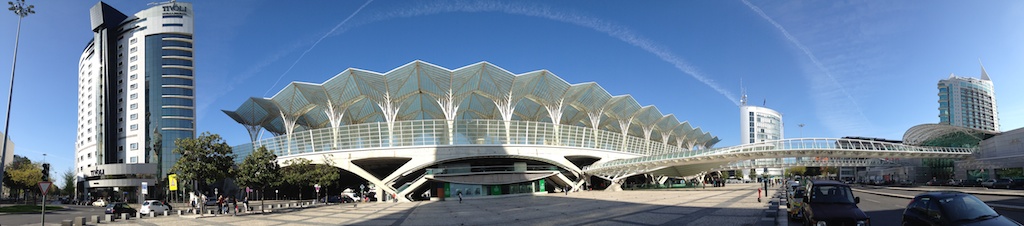
...is an architectural and structural marvel.

The Spanish architect Santiago Calatrava has designed some of the world’s finest train stations and bridges. The station in Lisbon reflects the care and precision of Calatrava’s design work.

Lisbon is a glorious city.

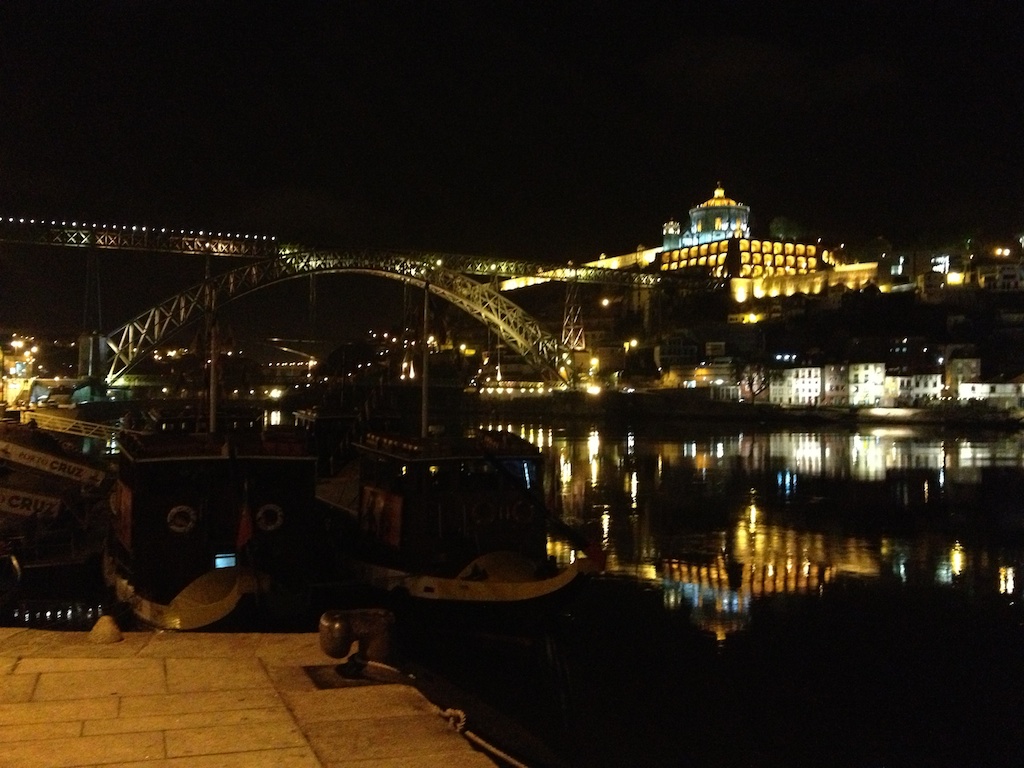
I was truly blessed to spend five glorious days in this place–the capital of Portugal–as part of the Fulbright Inter-Country Lecturing Program.  I will never forget my time there, the places I visited, or the people I got to know.

I’ve attached a few of the iPhone photos snapped during my stay. (Copyright Shannon Chance, 2013.)

Luanna’s New Master’s

It’s such a joy to keep in touch with people back in the States on Facebook.

Yesterday, Luanna Jendrey, who took the “Planning for Sustainability” course I offered in the summer of 2011, posted a picture from her recent graduation.  The photo was taken with former Fulbright Dr. Pam Eddy, who you’ll recall visited me here in March.

Luanna’s kind caption made my day even more special!  Kristina Neuhart took the 2011 class, too, and also offered kind words.

Congratulations to Luanna on her new Master’s degree in Higher Education!

Luanna's very sweet Facebook post.

Luanna’s very sweet Facebook post.

PBL at the Polytechnic School of Águeda

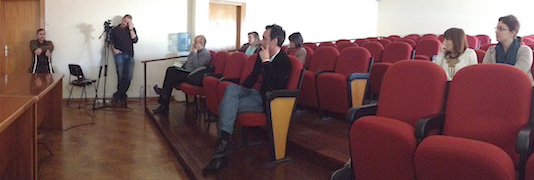
The audience was composed of experts and students in engineering and education.

The audience was composed of experts and students in engineering and education.

Visiting Portugal’s University of Aveiro some weeks ago provided me opportunities to speak with doctoral students and professors of engineering and education.

After I delivered a formal presentation to a small but enthusiastic group at the University of Aveiro’s Department of Education, my host, José Manuel Nunes de Oliveira drove me to the University’s satellite campus, known as the Polytechnic School of Águeda (or Escola Superior de Tecnologia e Gestão de Águeda, Universidade de Aveiro) where he teaches engineering.

Jose and his colleagues use Problem-Based Learning to teach engineering students.  They have formatted their classrooms to support group-based learning.  (My DIT colleague, Gavin Duffy, visited Jose and his campus earlier in the year to see how they use space. He wanted their advice to help in the programming phase of DIT’s new engineering facilities.)

What impressed me most in touring the buildings and grounds of the Águeda campus, though, was that the students were all working in groups–and that they seemed to be doing so on every type of project.

Jose says that after the teachers introduce the group-learning approach in the first year, students embrace it and want to do everything this way.

I thought that Jose said that students receive credit for their topic courses (i.e.,those with specific engineering content), but not for their project work (I was wrong, as I explain in my subsequent blog). In architecture we refer to these technical/topic classes as “support courses.”

All the courses a students take in a semester at the Escola Superior de Tecnologia e Gestão de Águeda help support the project they have been asked to do in groups. They are able to apply what they learn in the projects they design… but they don’t get formal credit for the design activities. In architecture in the USA, the design activities are assigned the most credit (typically 5-6 credit hours per semester) while each support course is generally worth just 3 credits. The architecture community tends to value the project or “design studio” work above all else.

My Interview about the Fulbright Inter-Country Lecturing Program

The Fulbright staff in Belgium interviewed me during my visit.  They asked me to describe some of my experiences with the program and explain how I got involved in it.

I hope the interview is helpful to other Fulbright scholars and to academics who would like to invite Fulbright scholars to speak at their institutions.

And, I hope my friends will enjoy hearing about what I was up to during my recent travels in Portugal and Belgium as well.

American Students: Want to Become a Fulbright?

The Fulbright Student program is now taking applications!

Click here to get started on your application.

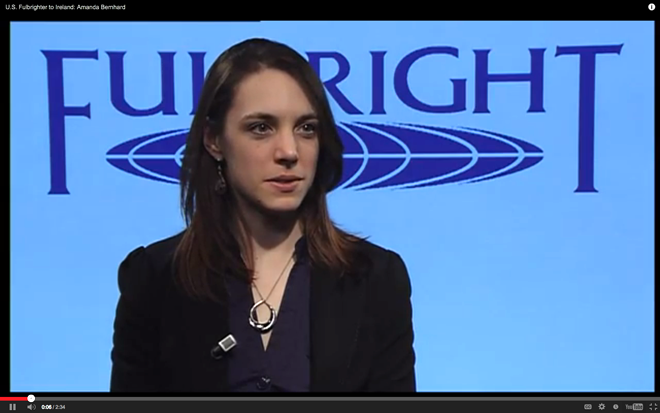
Amanda Bernhard explains why and how she became a Fulbright student.

My colleague Amanda Bernhard is in Ireland this year on the Fulbright Student program. She is studying Irish Language.

Fulbright Positions in Architecture

I received email notification about exciting Fulbright opportunities in Architecture.

I am writing to inform you of exciting U.S. Fulbright Scholar grant opportunities in Europe and Eurasia in the field of architecture. Applications for the 2014-15 academic year are currently being accepted from all levels of faculty and professionals, including early career.

We are soliciting applications for a broad range of awards in your field, including but not limited to:

Finland #4197 Fulbright-Aalto University Distinguished Chair (Finland)
United Kingdom #4368 Fulbright-Scotland Visiting Professorship at the Glasgow Urban Lab
Kosovo #4266 Theory and Practice of Restoration of Cultural Heritage Monuments
Turkey #4388 Social Sciences and Humanities
Bulgaria #4169 Pure and Applied Sciences

Applicants must be U.S. citizens and hold a Ph.D. or appropriate professional/terminal degree at the time of application. The application deadline is August 1, 2013.

In addition, All Disciplines awards are available in all countries in Europe and Eurasia and can be a good option if no discipline-focused award matches your expertise. Please visit the 2014-15 Catalog of Awards at http://catalog.cies.org/index.aspx to learn more about the opportunities available in this year’s competition. For most awards, English is sufficient for teaching and foreign language proficiency is only needed to the extent required by the proposed research project, if applicable.
For eligibility factors, detailed application guidelines and review criteria, please follow the link http://www.cies.org/us_scholars/us_awards. You may also wish to register for one of our webinars at http://www.cies.org/Webinar/ or join our online community, My Fulbright, a resource center for applicants interested in the program.

Please feel free to share this message with members of your listservs, newsletters or social media. For further information about specific awards, please contact the program staff listed in the award description.

Best wishes,

Europe/Eurasia Staff
EuropeEurasia@iie.org
202-686-4000
Fulbright Scholar Program
1400 K Street NW, Suite 700
Washington, DC 20005
If you wish to be removed from this group’s mailing list, click here

Amanda Bernhard: On Being a Fulbright Student

In the linked YouTube video, US Fulbright student Amanda Bernhard explains how she discovered the Fulbright program, why she decided to pursue a grant to let her study the Irish language in Ireland, and what the Fulbright program has offered in addition to financial support.