Techno Geek

I’ve been brushing up on e-Learning tools as of late.  I took a workshop on Wikis last Friday and another on Blackboard yesterday.  At DIT, these workshops are provided through the Learning, Teaching and Technology Centre (LTTC), where I will be teaching a course in May.  Yesterday I met with Orla Hanratty, who has graciously agreed to co-teach the module with me.

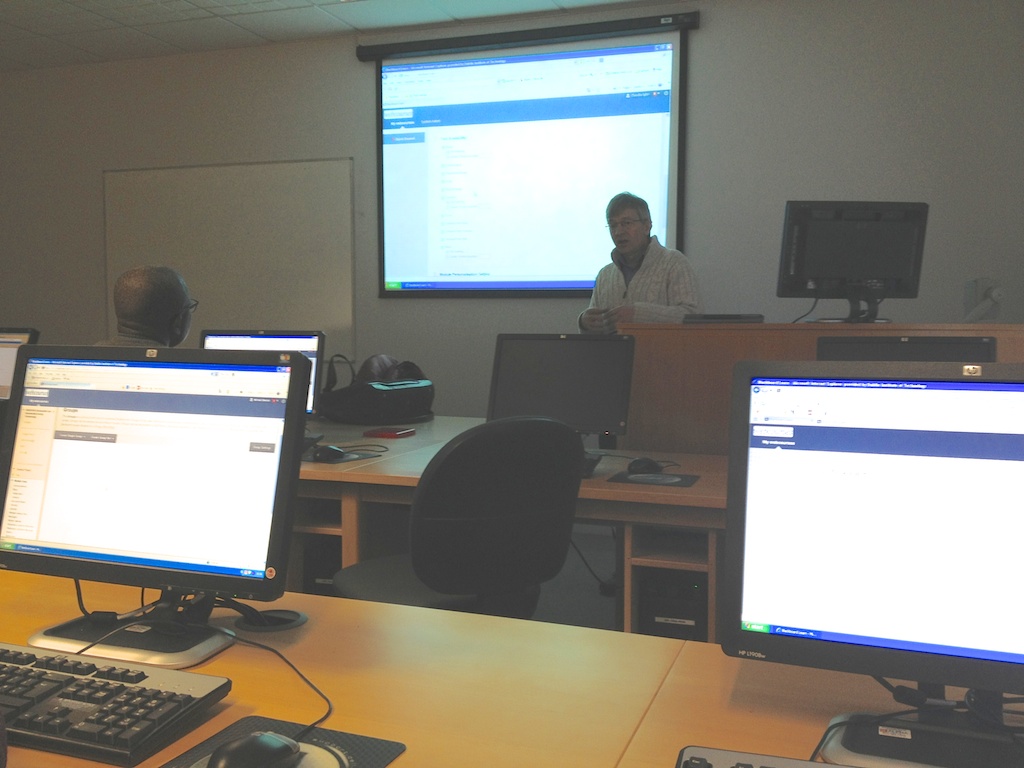
Workshop on how to use Wikis.

Workshop on how to use Wikis.

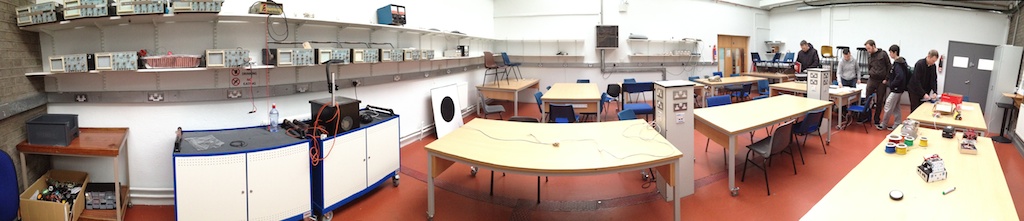
A Flexible Learning Lab at DIT

This is a picture of a flexible lab for learning engineering.  It is a space for group-driven problem-based learning, or a “PBL classroom.” A colleague of mine back in Virginia who is an expert in engineering education said she wasn’t familiar with this type of space, so I though I’d post it for others to see.

The flexible learnign lab in the DIT electrical engineering program.

The flexible learning lab in the DIT electrical engineering program.

It was designed to promote team learning and provide access to materials and tools for building engineering projects.  Above, Gavin’s Instrumentation class had just wrapped up for the morning.

Envisioning the Future of Education with Brian MacCraith

The president of Dublin City University (DCU), Prof. Brian MacCraith, delivered  a lively and informative lecture Monday night at St. Patrick’s College. His topic was Envisioning the Future of Education. And what a visionary President MacCriath is — I learned so much from his talk! I’ve not got time enough to explain all I learned; I’ll include snapshots of some interesting slides at the end of this post. I’ll explain a little in each caption.

I did look up one of the sources he used, as it ties to my map-tracking.

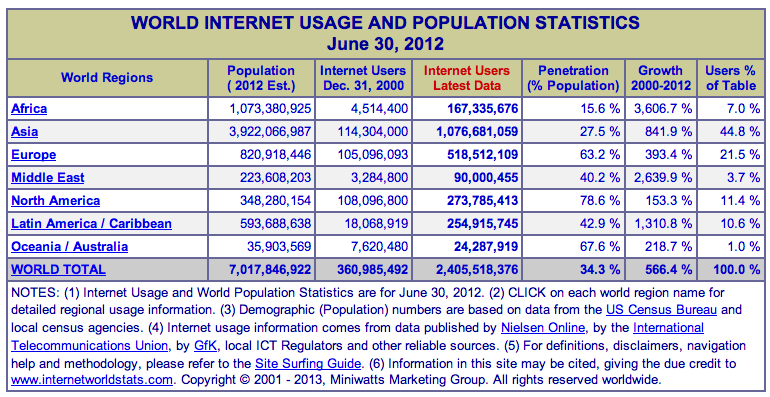
Internet usage by continent.

Internet usage by continent (downloaded from Internet World Statistics).

One chart he showed (above) helped explain why my blog gets fewer visitors from Africa than Europe and North America. In Africa, just 15.6% of people have Internet access. In Asia, though, there are more people with Internet than on any other continent, so why is my Asia map so blank? Still no one from China…. and of the world population of Internet users, most are in Asia.

Internet distribution

Internet distribution

The population of North America  (shown in blue on the pie chart) is tiny. As you can see above, not that many people live in North America, even though 78.6% of them use the Internet.

Meet Dave Jetson!

Callista Brien’s talk on Social Media for Engineers Ireland.

Meet George Jetson! (Image from the blog Dark Horizons).

Meet Dave Jetson!

His nephew David!

Luc, his sis!

Whoever though that we’d live the Jetson dream so soon in history?  Certainly not I!

A few weeks ago, at an event hosted by Engineers Ireland, Callista Brien discussed how social media is changing the way we think and act.  This was part of a seminar about project management.

And Callista was right.

FaceBook and FaceTime are amazing and they’re making my life richer.

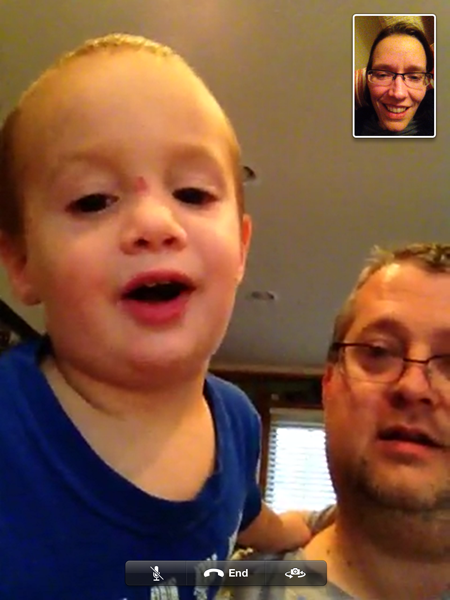
Look how excited Lucy’s kids got when I rang in using FaceTime a couple days ago.

The Chance family keeps in touch with me via Facebook, iMessage, and the occasional FaceTime call.

And so, some days, life seems like a futuristic movie.

These tools keep Dave, Christina, Matthew and Lucy, David, Christopher, Tommy, Michael, Julia, Conner, and Evan Chance as central characters in my life, even when we’re far, far apart.

Dave with Lucy’s gang.

Awesome brothers!

“Aunt Shannon, I fell down!”

Through the Oculus (Rome Church 1)

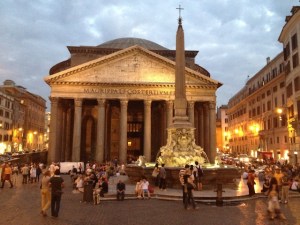
The Pantheon by night.

I have a favorite set of churches in Rome that I like to visit in succession. They are close to each other and seeing them together in on day provides a nice little chronology of changes that happened in architecture over the past 200 years.

In the coming days, I’ll tell you a little about each of these four churches:

1) The Pantheon

2) Santa Maria Sopra Minerva

3) Il Gesu

4) San Ignazio

Today, I’m showing you the first. It’s my all-time favorite building, the Pantheon. It was built 1900 years ago and the technology it includes is simply amazing.  The walls are 6 meters thick at the base and the dome spans 142 feet.

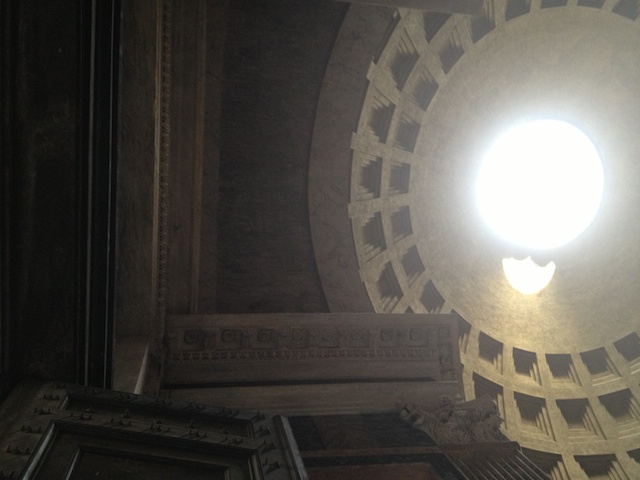
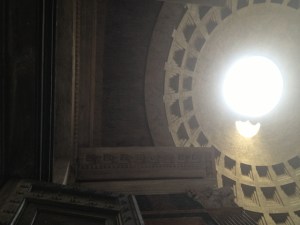
Looking up into the coffers (hollowed out squares) and oculus (opening) in the dome.
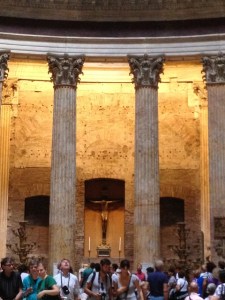
Can you see the blind arches in the wall behind the columns? This is a hollowed out space, where the wall isn’t as think and they need to carry a lot of weight with a thinner wall.

The Romans used blind arches (arches without windows below) to help carry the weight down to the ground in places where they wanted to make the walls thinner than 6 feet.  They coffered (or hollowed out) areas in the ceiling help reduce the weight of the roof.

The oculus (opening) at the tip was never closed over… it’s open to the sky even today.  There are holes in the floor to drain rain water that falls thorough it.

The Pantheon has been operated as a religious facility continuously for nearly 2000 years.  The Romans used it as a one-stop shop to worship many different (pan) gods (theon) but it’s been operating as a Catholic church since, I guess, about the time Constantine legalized Christianity.
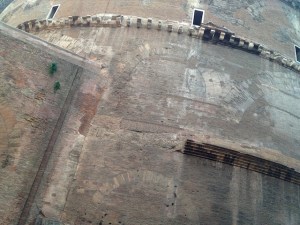
Blind arches seen from the outside of the building — these would have been covered by marble in Roman times.

At that time, Istanbul was renamed Constantinople, in honor of him.  (The Hagia Sofia is located I that city.  I posted pictures of a baptism being held in its smaller sibling, the Agia Sophia, that I took during my visit to Thessaloniki.)

People’s aesthetic tastes changed over time, and you can see a clear example in the band at the base of the dome.  Most of what’s there today is from a renovation done during the Renaissance, but along the way the owners of the Pantheon (i.e., the Roman Catholic church) replaced part of the band to show what woudl have been there in Roman times.

Can you see a difference?  Which part is Renaissance?  Which is Roman?

Band showing Renaissance and Roman detailing.

Drawing that shows the thickness of the wall.
Looking up from the entry vestibule, you can see and “feel” the thickness of the wall