We are running a RoboSlam robot hacking workshop with high school (transition year) students here in Ireland. Having great fun and learning circuitry, programming, and lots more!

We are running a RoboSlam robot hacking workshop with high school (transition year) students here in Ireland. Having great fun and learning circuitry, programming, and lots more!
Modernist architecture abounds in Portugal. This is particularly true on college campuses, since most were built after the mid 1970s.
Although the population is just 10.6 million, there are 24 schools of architecture!
I’ve included a few photos of buildings at the University of Aviero campus below.


Projects that students made in past years at the engineering school in Agueda.
I misunderstood the credit allotment for projects at Escola Superior de Tecnologia e Gestão de Águeda. As it turns out, the project design courses carry credits in keeping with architecture design courses in the States. Jose sent me this explanation:
Hi Shannon,
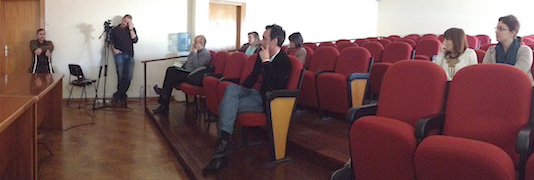
The audience was composed of experts and students in engineering and education.
Visiting Portugal’s University of Aveiro some weeks ago provided me opportunities to speak with doctoral students and professors of engineering and education.
After I delivered a formal presentation to a small but enthusiastic group at the University of Aveiro’s Department of Education, my host, José Manuel Nunes de Oliveira drove me to the University’s satellite campus, known as the Polytechnic School of Águeda (or Escola Superior de Tecnologia e Gestão de Águeda, Universidade de Aveiro) where he teaches engineering.
Jose and his colleagues use Problem-Based Learning to teach engineering students. They have formatted their classrooms to support group-based learning. (My DIT colleague, Gavin Duffy, visited Jose and his campus earlier in the year to see how they use space. He wanted their advice to help in the programming phase of DIT’s new engineering facilities.)
What impressed me most in touring the buildings and grounds of the Águeda campus, though, was that the students were all working in groups–and that they seemed to be doing so on every type of project.
Jose says that after the teachers introduce the group-learning approach in the first year, students embrace it and want to do everything this way.
I thought that Jose said that students receive credit for their topic courses (i.e.,those with specific engineering content), but not for their project work (I was wrong, as I explain in my subsequent blog). In architecture we refer to these technical/topic classes as “support courses.”
All the courses a students take in a semester at the Escola Superior de Tecnologia e Gestão de Águeda help support the project they have been asked to do in groups. They are able to apply what they learn in the projects they design… but they don’t get formal credit for the design activities. In architecture in the USA, the design activities are assigned the most credit (typically 5-6 credit hours per semester) while each support course is generally worth just 3 credits. The architecture community tends to value the project or “design studio” work above all else.


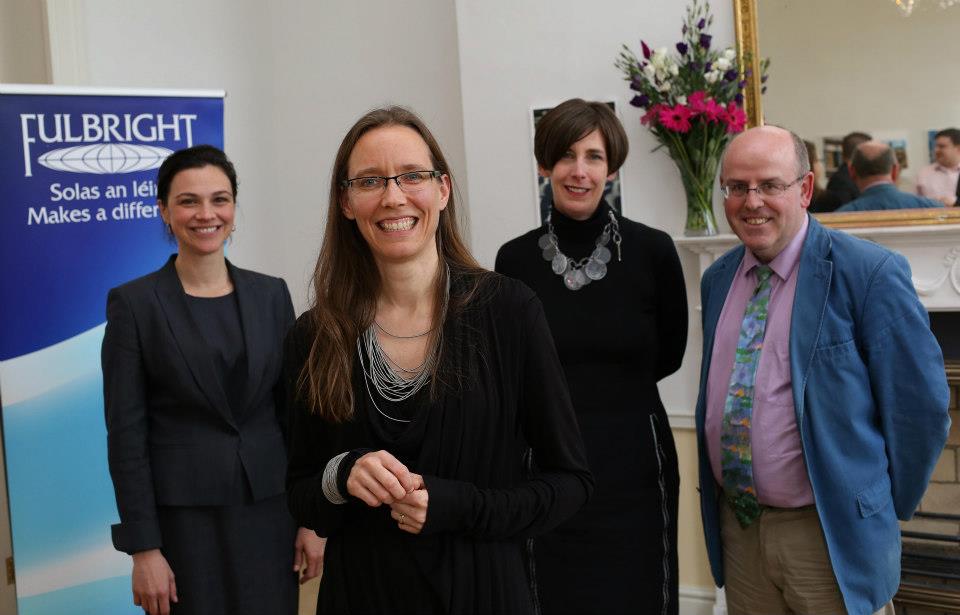
Lisa Caulfield, Shannon Chance, Colleen Dube, and Kevin Whelan
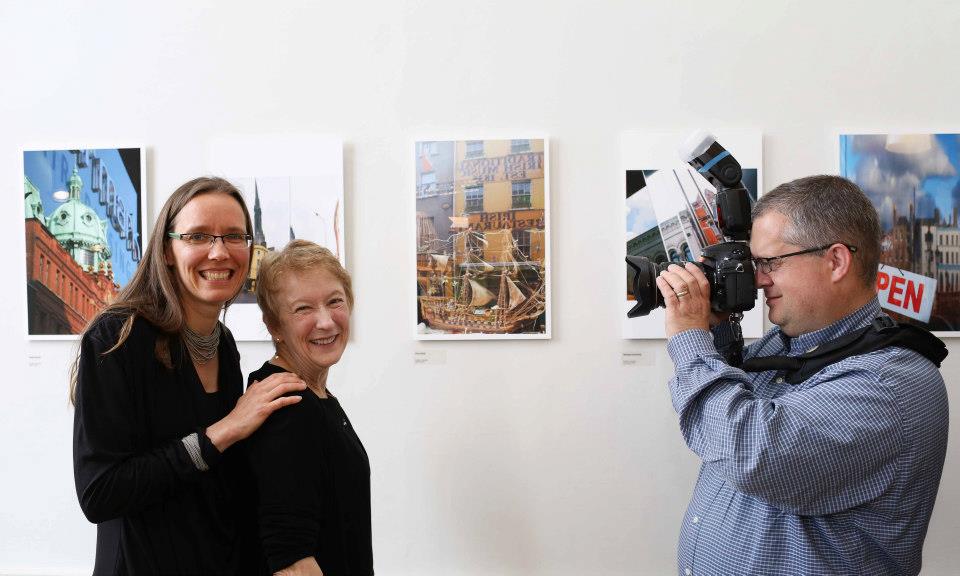
Shannon Chance, Cynthia Mara, and Dave Chance
The staff of Fulbright Ireland and Notre Dame’s O’Connell House organized a spectacular event for last night. The opening of the photography exhibition was a highlight of my year here in Dublin. So many people were there who have been instrumental in making this year a success.
Fulbright hired Conor McCabe Photography to document the event, and purchased the photos posted on this page. I hope you’ll enjoy the photos as much as I do!


The Fulbright staff in Belgium interviewed me during my visit. They asked me to describe some of my experiences with the program and explain how I got involved in it.
I hope the interview is helpful to other Fulbright scholars and to academics who would like to invite Fulbright scholars to speak at their institutions.
And, I hope my friends will enjoy hearing about what I was up to during my recent travels in Portugal and Belgium as well.
William and Mary’s School of Education published a press release about last night’s photo launch. The event was such fun.
What an honor it was to have so many friends and colleagues attend!
Here are a few photos of the start of events… I got too swept away to take more photos myself. I hope others will send me some to share.


The second stop of my Fulbright Inter-Country Lecturing visit was to the Instituto Superior Técnico (IST). One of the organizers of the day, José Figueiredo, explained to me that IST “is the biggest and oldest engineering school in Portugal.”
Professor Teresa Heitor lined up all kinds of fascinating events for me. The 60 first year architecture students presented their work to me (in English!). Then, they came along as their professors gave me a tour of all the architecture studios. We got a glimpse of what these particular students will encounter in the coming years, as they progress through the five-year architecture program at IST.
Their architectural education will be structured very, very much like ours in the USA.
Their design assignments will be quite similar as well, although the projects students encounter here do tend to have more of an urban focus than most programs I’ve visited in the US. (I serve on architectural accrediting teams and have visited many different schools in the US through conferences as well as accreditation visits. I have to say, however, that my home institution–Hampton University–has done a noteworthy job over the past decade of integrating urbanism into the curriculum. Of that, I have been proud.)
At IST, I was particularly impressed with what I learned from the first year professors. They’re doing a great job overcoming what I see as a big weakness in architectural education today. So many teachers around the globe focus on teaching students to make “signature buildings” and “modernist masterpieces” that other architects will love.
These teachers, instead, endeavor to draw out their students’ unique interests and abilities. Unlike the many teachers who seemingly want to “wipe the slate clean”, these professors seek to help students draw from the wealth of experience and knowledge they bring to the first year design studio.


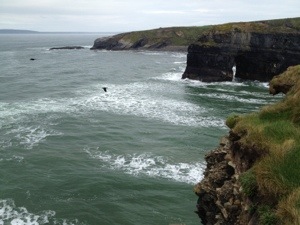
Mom and I are just leaving County Kerry. We enjoyed a lovely weekend at the home of Con and Eilish O’Hanlon. Eilish is mom’s second cousin.

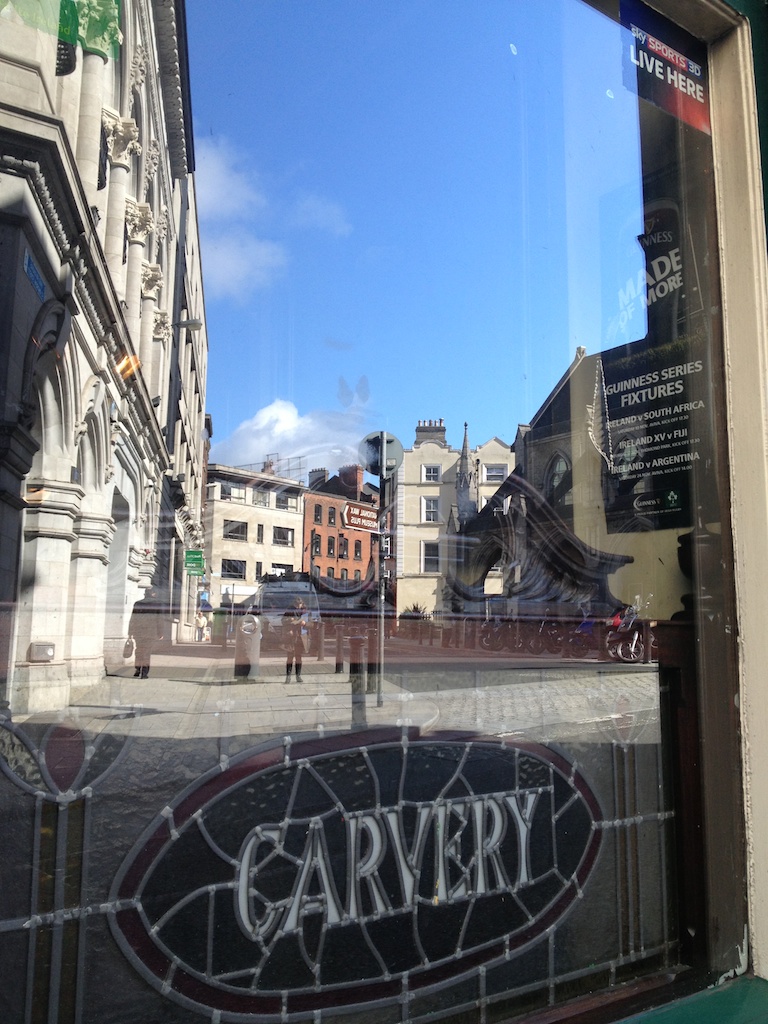
It’s been absolutely beautiful in Dublin this past week. Long, sunny days… and I love them!

 Ireland by Chance