Fleeting Glimpses

I’ve been so bogged down in grant- and conference-writing that I haven’t gotten to update you on the architecture studio’s progress.  I’m hoping to share some of the students’ findings soon. In the meantime, here are a few photos I snapped early last week.

It’s typically difficult to get our students interested in discussions of meaning and philosophy.  These are generally seen as esoteric.  But so far the group-based format seems to be eliciting a  higher level of engagement in fuzzy issues than I’ve witnessed here in recent years.

Interestingly, when I was in school, a professor might to give us just a word or two to explore.  S/he would expect us to invest a week or two of time to contemplate, make things, and refine our knowledge and skills.  Most of us were quite happy to oblige.  We’d make things without much prompting at all and find a lot of joy in it.  Today, students have to drive for hours to gather decent materials. And, in today’s digital milieu, making beautiful, physical things seems to be an alien concept.

Liquid Essence

The best design responses for the water assignment due today, I think, revealed “the essence of liquid” a bit more than “the essence of water”.   I’ve included photos of the students’ favorite responses.  We also looked around our surroundings for examples of beautiful things.

Ecology Rocks! (Especially in a Flipped Classroom)

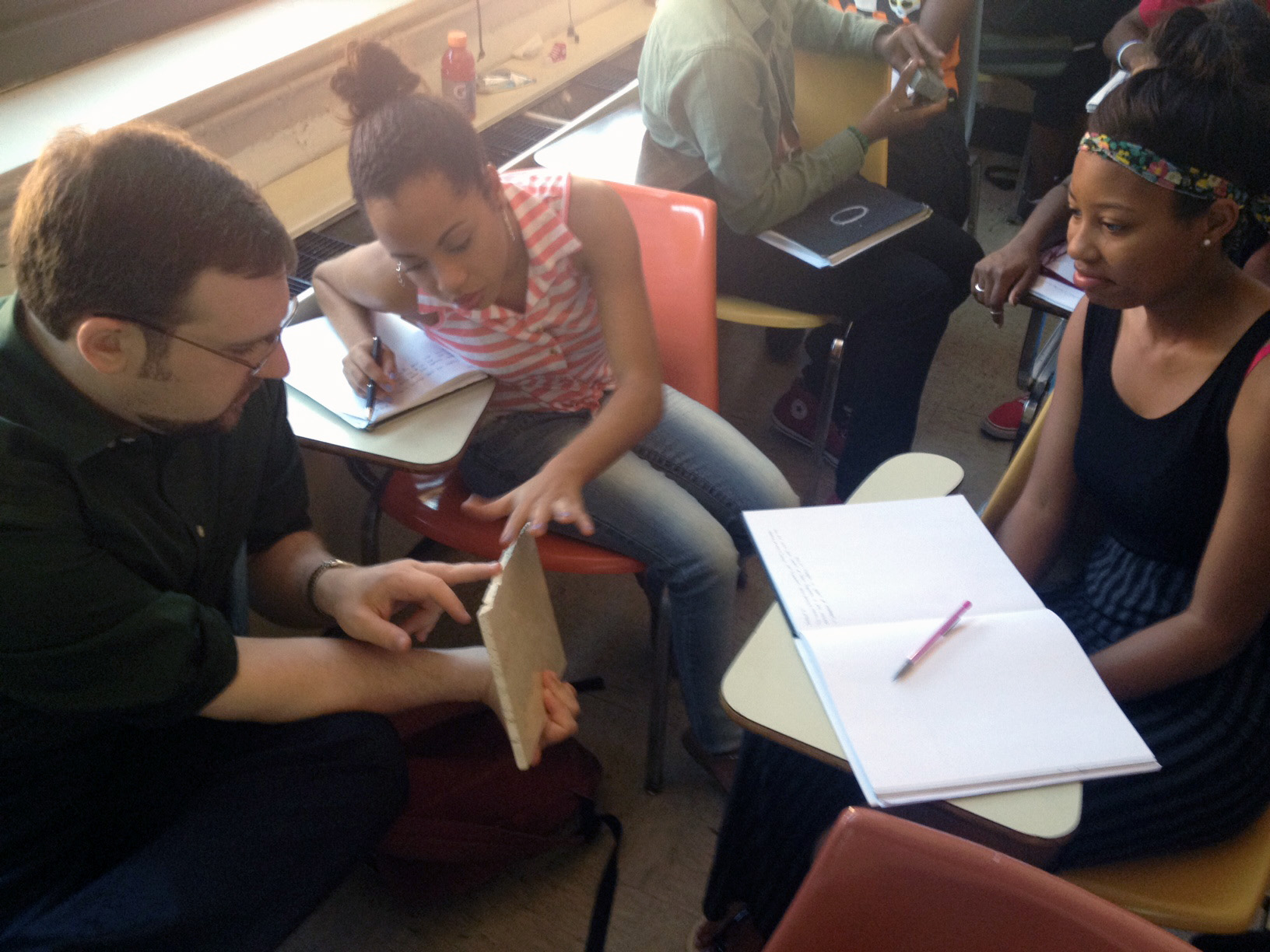
This group realized there was a fill material in the crevices of their "Roman Travertine" tile sample.

This group realized there was a fill material in the crevices of their “Roman Travertine” tile sample.

Today we discussed “natural factors” that affect architectural design, such as rock and soil composition. This tied directly to yesterday’s studio class on the HU Point. Today, I was using a technique known as the “flipped classroom” to teach Architectural Ecology. I learned about this technique during my Fulbright fellowship at DIT.

I had assigned my students to read a chapter before class. When they arrived, we started class with ten minutes of journaling.  I asked them to write about the aspect of the chapter they thought was most important to them regarding our site at the Hampton University Point, and to explain why.  I also asked them to identify a topic in the chapter that they didn’t fully understand and explain why/what they didn’t understand about it.

Journaling is my own way of assessing students’ level of understanding of the content.  After ten minutes, I collected journal papers then “flipped the classroom”.  Each student joined the other members of his/her learning group, discussed the issues of confusion they’d each identified, explained to each other what they understood (this is known as “peer teaching”), and researched information on line using their laptops and smart phones.

I circulated around the room, listening, observing,  pointing them in the right direction where necessary,  and making sure they were achieving accurate interpretations.

It became clear that soil and rock composition was the major topic of confusion, so I went ahead and distributed the rock samples I have on hand.  Each group got their own unique rock type to analyze, research, and introduce to the rest of the class. The students did a great job of staying on topic in their discussions, learning, and teaching leach other.

They made sense of sedimentary, igneous, and metamorphic rock. They began to understand issues of texture, particle size, expandability, drainage, and bearing capacity while they were talking among themselves with my guidance.

A member of each group presented findings to the class and we discussed overarching issues.

Then I projected the Prezi file on the screen, which I’d formatted using a table of contents so we could zoom directly into whichever specific issues were causing confusion. In this case, we needed to go over the soil classification pyramid a bit, but they had already developed pretty strong understanding through the group discussions and rock presentations.

Amazingly, everyone stayed engaged for 1.25 hours!

I didn’t have to nag students to pay attention.

By the end, they seemed to have very good understanding of all the content of the chapter.  I found I had ten minutes to spare at the end to bush on topics of my choice (ones I thought a student or two might still have misconceptions about).

I am loving this new, more interactive, way of teaching.

It’s called “flipping the classroom” because the content is delivered before class (in this case, through a reading), and class time is used to gauge accuracy and depth of understanding and to build upon that base.  It seems to be a much better us of time than presenting everything with equal emphasis, before assessing if the students already understand it!

Not everyone came into the class having read, unfortunately. This problem should correct itself in the future because each student gets a grade for each journal entry. They have to show basic understanding of the reading in order to earn points. They generally start seeing the importance of this after a day or two.

Constructing a Student-Centered Studio

The incoming second year architecture studio cohort at Hampton University.

The incoming second year architecture studio cohort at Hampton University.

Today I applyed what I learned about problem-based learning (PBL), group learning, and student-centered pedagogies while I was on my Fulbright fellowship at Dublin Institute of Technology. I met the students in my second year architecture studio for the first time. Studio looked unlike Day One of this class (ARC201) ever looked before!

We started outside, with team building activities and a name game. Then we formed the teams (i.e., learning groups) that we’ll use for the first five weeks of this semester.

Next, we conducted initial site analysis in a way that was much more engaging than normal. We held a “scavenger hunt” to identify qualities of our project site (the Hampton University Point) that have to do with water.  The students managed to generate a much more interesting list of factors than I’ve ever been able to get them to achieve before; 63 about water alone!

For Friday, each team (of three students) has two assignments due.

Assignment 1 is to draw a plan of our project site to an architectural scale to fill an 18″x24″ sheet of paper.

This problem prompt is pretty specific (close-ended), but it still leaves a number of variables for students to consider and make choices about.  I hope they’ll get a bit competitive and prove they have pride in their work!  I asked the groups to follow a standard PBL format in starting work on this assignment. I asked them to figure out:

  1. What is this assignment asking?
  2. What will we need to know to do this?
  3. What do we already know about this?
  4. What will we need to learn/find out?
  5. What resources will we need?
  6. Who will do what and when?
  7. How will we check for accuracy before it’s due?

Assignment 1 is more straightforward than you might expect for an architecture studio. However, it will lay groundwork for upcoming activities, and it will help me assess where the students are skills-wise and with regard to collaboration. The second assignment is much more open-ended.

Assignment 2 is to make a beautiful object that reveals the essence of water.

I asked the groups to start by watching one of the YouTube videos listed below, and assume that the astronaut/scientist had made the video in response to this assignment. I asked the students to consider the questions above (which are intended to foster “self-direcetd learning”) and to bring to our next studio meeting a final, beautiful object as well as at least three study models that investigating the “essence of water”.  I’ve got my fingers crossed!

The students were more  active, engaged, and enthusiastic about learning than is typical on Day One of this course and I have high hopes for this new method of teaching.

NASA: Amazing Experiments with Water in Zero Gravity – YouTube

NASA: Amazing Experiments with Water Balloons in  – YouTube

Promoting Sustainability at HU

HU Faculty Institute 2014-1-Shannon ChanceToday was a busy first day back at Hampton University.  The dean re-introduced me to the faculty with a big “welcome home!”  I have to admit,  my colleagues’ enthusiastic greetings made me feel like a superstar all day.

After the morning keynote sessions, the whole faculty headed over to the HU waterfront for our annual picnic. This year’s weather was amazing and the jazz ensemble sounded lovely.

The faculty wrapped up the afternoon with information sessions, one of which I helped facilitate.  My colleagues and I encouraged our peers to integrate environmental topics into the courses they teach.

You can view my Prezi online:  I showed a few images of how we integrate sustainability into architecture courses at HU.  I also discussed the “Educational Planning for Environmental Sustainability” course I teach in the summer at William and Mary.  I took the opportunity to promote student-centered pedagogies (which I studied at Dublin Institute of Technology) and the importance of getting students to generate new knowledge (a core idea in W&M’s School of Education).

Powerscourt Gardens


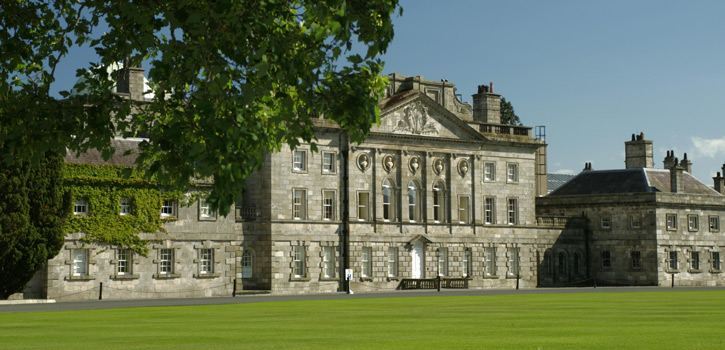
Powerscourt country house  (downloaded from www.powerscourt.ie).

Powerscourt country house (downloaded from http://www.powerscourt.ie).

Visiting the Powerscourt house, garden, and waterfall–located south of Dublin–makes a nice outing from the city.  Some coach companies offer a day trip here, but you can save a lot of money if you just take Dublin bus!  The interior of the house is a bit disappointing, as it was gutted by fire. But the exterior, garden, and nearby waterfall are glorious.

Dreaming of Birmingham

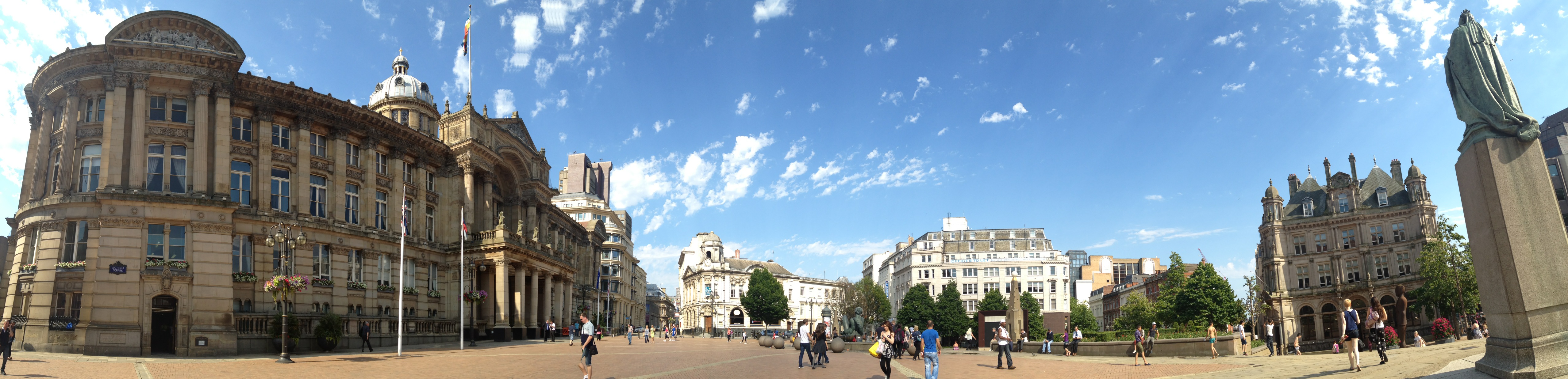
Birmingham UK 4

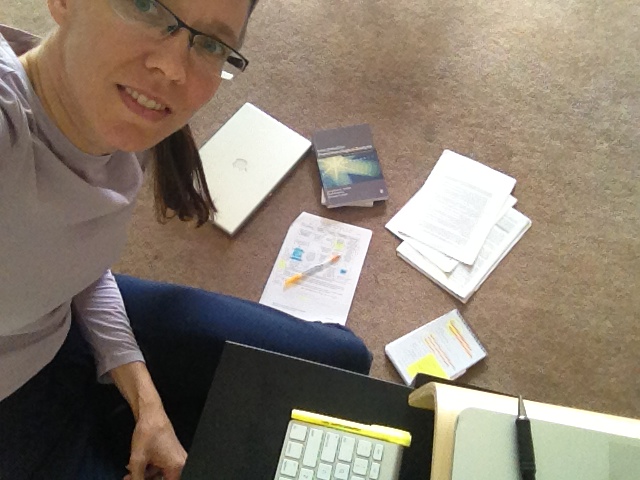
Shannon burried in books and papers.

Shannon swimming in books and papers.

I’ve been buried in books and papers for days.

I’m working overtime on a research proposal… trying to find funds to return to Dublin so that I can follow up on findings I’ve made and keep learning new research skills by working with experts and doc students here.

The last time I got to go outside and explore was last week in Birmingham.  Wikipedia explains that Birmingham is:

city and metropolitan borough in the West Midlandsof England. It is the most populous British city outside the capital London with 1,074,300 residents (2011 census), an increase of 96,000 over the previous decade.[2] … A medium-sized market town during the medieval period, Birmingham grew to international prominence in the 18th century at the heart of the Midlands Enlightenment and subsequent Industrial Revolution, which saw the town at the forefront of worldwide developments in science, technology and economic organisation, producing a series of innovations that laid many of the foundations of modern industrial society.[5] By 1791 it was being hailed as “the first manufacturing town in the world”.[6]

I’ll share pictures of that city today, in all its splendor….

Quintessential Carcassonne

There’s so much I still haven’t shown you–like photos from our June trip to Carcassonne, France.  This town was restored to it’s medieval glory by the very famous architect, Viollet-le-Duc in the mid 1800s.  His work was going on just before the American Civil War.

The place is in tip-top condition.  It reflects Viollet-le-Duc’s best guess as to the walled city’s use and detailing many moons before.  He did quite a bit of forensic analysis in this project!  According to Wikipedia:

Carcassone was founded by the Visigoths in the fifth century, though the Romans had fortified the settlement earlier. The fortress, which was thoroughly restored in 1853 by the theorist and architect Eugène Viollet-le-Duc, was added to the UNESCO list of World Heritage Sites in 1997.

Leading SEFI at the University of Birmingham, UK

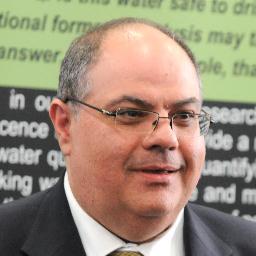
Prof. Kamel Hawwash

Prof. Kamel Hawwash

Last week I travelled over to the UK to visit professor Kamel Hawwash, the incoming president of the European Society for Engineering Education (SEFI).

Prof. Hawwash has done a great deal of  work in attracting and retaining diverse students in engineering, a topic known as “attractiveness” in the UK, and one in which I’m aiming to do more research.

Prof. Hawwash’s SEFI presidency will focus on two main topics:

1) employability and skills

2) attractiveness

We had much to discuss and we met for nearly two hours!  After our meeting, I had a chance to look around the University of Birmingham campus and then explore the city before flying back to Dublin via Ryanair.

Seals of Dalkey Harbor

The picturesque little town of Dalkey is a short DART or bus ride from Dublin city center.  It’ s one of my favorite little towns in Ireland… the architecture is beautiful and the harbor is full of life.  Watching the seals play is always a treat.

Dalkey makes a nice day trip from Dublin… especially when paired with a visit to Dun Laoghaire.  (On Sunday afternoons People’s  Park there is teeming with vendors and activity, and the waterfront is a pleasant place to walk.)