The Twinkle on Grafton Street

Christmas lights as seen in panorama from the corner of Grafton and Wicklow.

Frank McNally listed “23. Christmas lights in early November” as something he hates about Dublin (Irish Times, 15 November 2012).

Now, normally I bemoan Christmas selling creeping into every moment of fall, too.  But I have to admit that I’m taken by the holiday lights on Grafton Street.

Henry Street (the bustling pedestrian shopping avenue in Dublin that I’ve posted pictures of so many times before) isn’t yet illuminated. And it seems quite dreary by ten 0’clock in the evening. Not so on Grafton!

In these dark days of fall–when the Dublin sun sets around 4:30 pm–it’s fun to bask in the glimmer of lights on Grafton and Wicklow.

Third Spaces of Smithfield

Browse the bookshelf.

A good “third space” helps fill the gap left between your home (your first space) and your workplace (your second space).  It should be a place where everyone feels welcome and equal–regardless of income or social status.

I learned about third spaces from one of my thesis advisees at Hampton University, Ryan Kendall, who asserted that we lack adequate third spaces in the USA.  He proposed to transform our beautiful (but increasingly vacant) Post Office buildings into vibrant spaces. He wanted them to be used for socializing, learning, developing physically, and yes, mailing things (in old- and new-fashioned ways). Prior to his thesis year, Ryan worked at NASA Langley. That happened the summer after he completed the Comprehensive Design Studio that I taught alongside Robert Easter. Ryan was a smashing success with NASA.  And the NASA folks have kept coming back, asking for more and more HU interns and for our department’s help on various design projects.

Ryan Kendall in his job at NASA Langley.

Ryan’s main point?

In the States we often neglect our third spaces… or fail to create them all together.

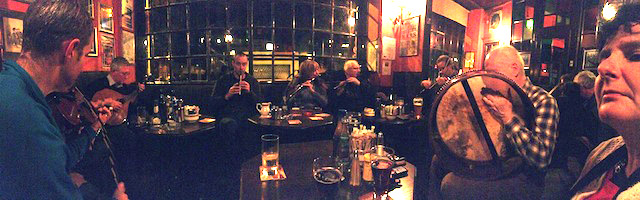
I’ve found that fostering “third space” is a core tradition in Ireland.  The pub has long served this purpose.

When Dave and I visited Ireland in 2003, we saw entire families spend their evenings engrossed in meaningful conversations with neighbors and friends at the various pubs we visited.  Kids ran in and out and people of all ages mingled happily and comfortably.  Although pub culture is not as strong today (the smoking ban took a tool on the pubs), it’s something you can still find in many places.

I’m fortunate to have several great third spaces very close to my apartment here in Dublin’s Smithfield neighborhood, a district also known by its postal code, “Dublin 7.”

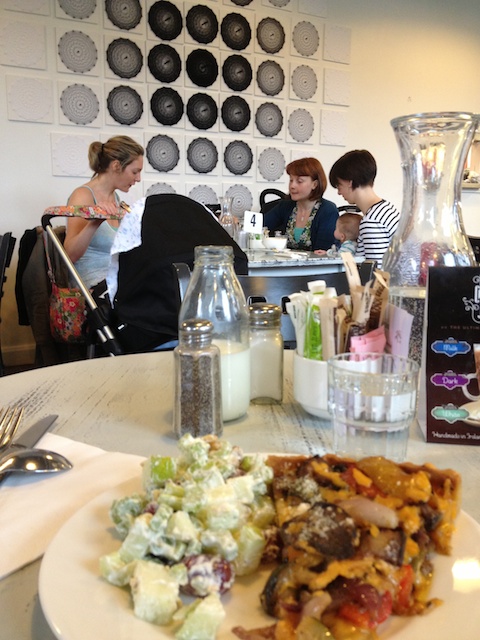
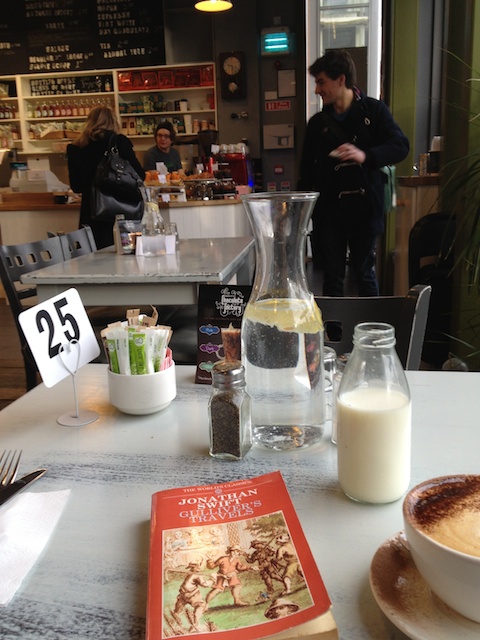
My favorite third space is the Cobblestone pub.  Another–where I’m starting to spend more and more time–is aptly called Third Space.

Third Space: changing the city around the table.

Bring some friends. Enjoy the art.

A webpage for the Third Space restaurant explains:

Our story starts in the changes Dublin saw in the “noughties”. Lots of new apartment blocks, lots of new offices and retail units – no gathering places. Living space and working space but no “third space”.

Third spaces are neighbourhood places where people can gather regularly, easily, informally and inexpensively.

Re-introducing such places into areas that lacked them became a passion for a small group of people. And so was born Third Space. It is a social business venture to open and run eating and meeting places in the areas of Dublin that lack community hubs. With a simple and great menu and an informal friendly environment, they will have a creative buzz that connects into the varied life of a modern Dublin neighborhood.

Third Space 1 opened in Smithfield on February 14th 2012.

I had an interesting encounter at both of my “third spaces” this week.  I’ll post them,  so you can see what I mean. Stay tuned! (Click here to read the sequel.)
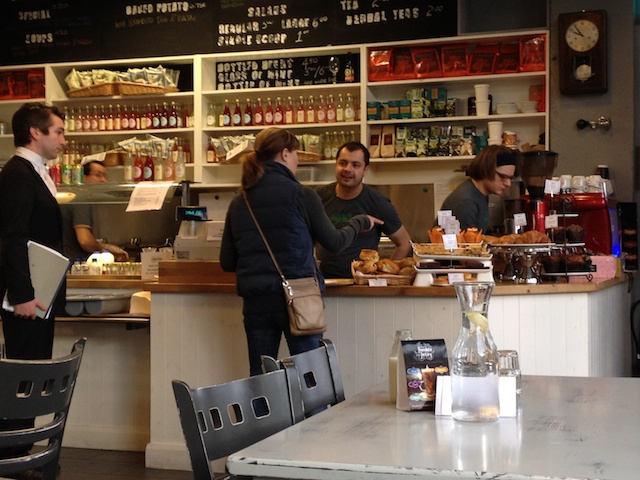
Grab a lunch. Everyone’s welcome and they’ll make you feel at home… even a barrister (i.e., lawyer, shown to the left) can find a quite place to reflect on the day, away form the busy halls of the Four Courts.

A Welcome Home with Designer Toast

Georgie, Peter, Jox, and Joan enjoying a crisp fall day in their Dublin home.

It’s not often you get the chance to visit other people’s home when you’re traveling the world.

In Ireland, I can recall being in the home of Elish and Con O’Hanlon in 2003 and, more recently, in the home of Glen’s friends Carol and Connor O’Malley (who run a B&B but treated us like family on our September 2012 visit).  I can’t remember visiting anyone else’s home here yet.

Joan’s beautiful entryway.

So today was a rare treat!  I had the pleasure of brunching with architect Joan Cahalin at her favorite cafe in the outskirts of Dublin and then visiting her family’s beautiful home.  I didn’t expect I’d be able to share photos of this visit, but the family didn’t seem to mind at all when I asked if I could take some photos for the blog.

Joan is currently studying business management at University College Dublin and she also has degrees in architecture, philosophy and linguistics (if I remember correctly). Her husband, Peter Twamley, is also an architect.

Their daughter, Georgie, is studying fashion design at the National College of Art and Design (NCAD). Georgie is a remarkably bright young woman who is full of insight into sociology and culture.  As I did every summer when I was in college, Georgie spent the warm months working on the staff of a summer camp in the USA. We’ve had many experiences in common, yet she seems so much wiser about the world than I was at 20. And she’s got a good sense of her many options for the future.

You can view the photo gallery to see Georgie’s method for making grilled cheese sandwiches using a regular toaster.

I really enjoyed discussing Dublin planning with Georgie, her two architect parents, and her younger brother, Jox who is in high school. He’s at the point in his studies where students spend a year learning subjects, in six-week blocks, that they haven’t covered before. In between these blocks, they have three periods where they are required to work in internship positions. With a bit of help from his mom, Jox found an internship at LinkedIn. It sounds like he has a truly outstanding mentor at LinkedIn.

The internship requirement seems like an great idea.  Many of my friends waited until after they earned college degrees to have the type of experience Jox is getting in high school. And unfortunately, so many of my friends discovered, after graduating, that they didn’t actually like the line of work they’d trained for in college!

After discussing Saturday’s edition of the Irish Times, Joan and Georgie and I jumped into the car. They dropped me at the apartment on their way to visit Joan’s mom in what was left of our daylight hours.

Mapping Dublin’s Transport Routes (Thanks a Mil, Colin Broderick!)

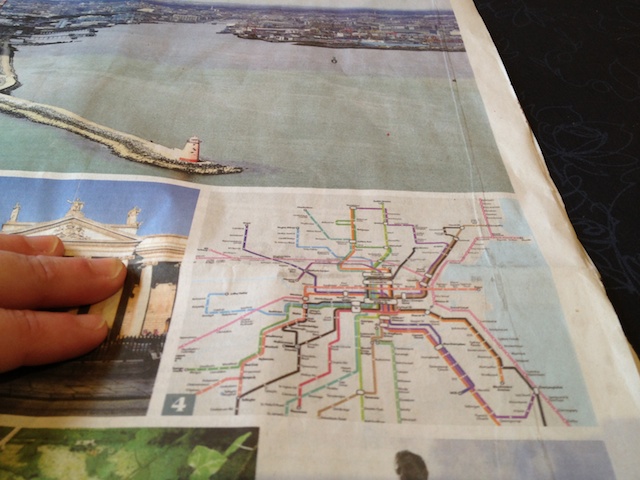
The proposed transportation map, which helps people visualize the links between various systems of public transportation.

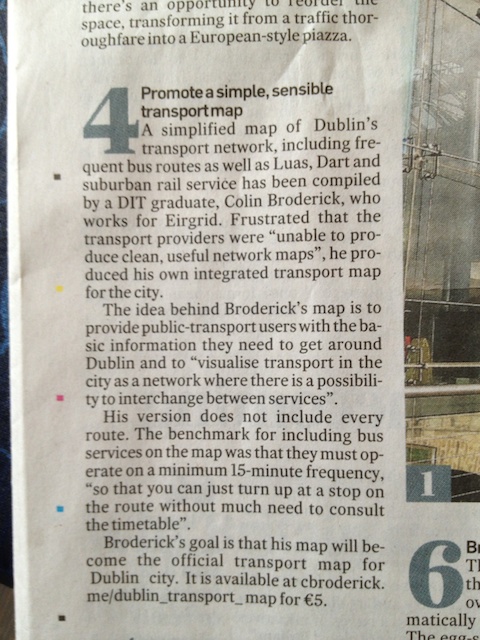
An enterprising recent Dublin Institute of Technology graduate, Colin Broderick, has developed a very helpful map of all of Dublin’s public transport routes.  Colin created a map to help people visualize various transit routes and see how they connect.  And the Irish Times featured his idea yesterday!

This is truly exciting for me (a recent arrival to the city who struggles to navigate a frequently baffling bus system).

For the past three months I’ve longed for a resource like the one Colin has produced.

When my sister, Heather, visited from New York City in September, we collectively bemoaned the lack of such a visualization tool.

Yesterday’s Irish Times listed issue #4 as improving Dublin’s transportation map. YAY!!!!!

There has been, it seems, no comprehensive map of Dublin’s many bus routes published in recent memory.  Heather and I each, individually, trekked to the Dublin Bus headquarters to request one, only to leave empty handed.

The lack of a map was truly a “gap in the existing knowledge base” here in Dublin. And someone fresh out of DIT (my host institution here in Ireland) took it upon himself to fix the situation!

In the past two months, I’ve been toying with the idea of trying to make a map like Colin’s for my own personal use. I even dreamed of sharing it with others, but I also knew I didn’t have adequate time. And I worried that I would misunderstand some of the systems and make mistakes, which would mean I couldn’t share it.

Now, my dream of having such a map will become reality.

I applaud Colin for developing and such a map–and for making it available to the rest of us.

Many thanks to Joan Cahalin, her husband (Peter Twamley), and their awesome kids (Georgie and Jox) for tuning me into this bit of news!

The Irish Times will feature a new issue each day this week.

I snapped a few images of the map while I was with them earlier today, although I haven’t had the opportunity to study Colin’s graphic closely yet. Each day this week, the Irish Times will focus on a separate issue.  Colin’s map will be “front and center” in Tuesday’s paper.  I can’t wait to, as we say in the States, “read all about it.”

Rathfarnham Castle and Other Delights

Dublin is full of architectural gems and Máirtín D’Alton of Gerry Cahill Architects seems to know something about every one of them!  He and his delightful six-year-old son, Thomas, gave Esther and me a tour of several places last Sunday.  I’ve included photos of our attempted walk along Dublin’s historic South Wall and our subsequent visits to Rathfarnham Castle and the Irish National War Memorial Gardens.

Máirtín provided extensive, astute commentary.  I wish you could have been here to hear all the details!

Incidentally, Thomas’ mom was at school this day, studying leadership and administration.  Go mom!!!!!

Esther and I have each earned degrees in this area over the past six years.  We’ve actually become more and more alike in the past decade.  Until this past week, however, Esther and I had no idea the other was studying leadership and educational administration!

South Wall and lighthouse from the air, one of the world’s longest sea walls.  (Image downloaded from groundspeak.com)

We were headed out to see the lighthouse when some nasty weather rolled in.

Máirtín and Thomas astutely determined it was best to turn back rather than hike out the the lighthouse in the rain.

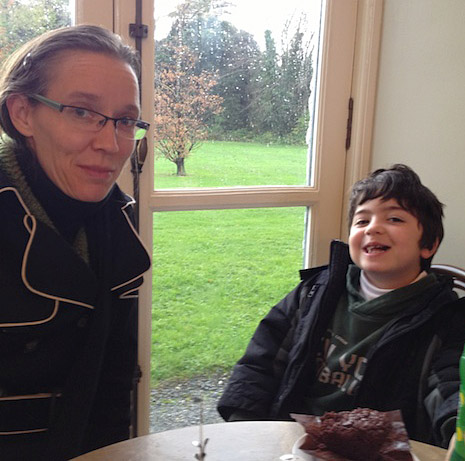
We found a cosy place at Rathfarnham Castle where we could wait out the rain. This picture shows typical Irish weather: sunny with rain.

I really had fun with Thomas. He’s a delightfully precious six-year old!

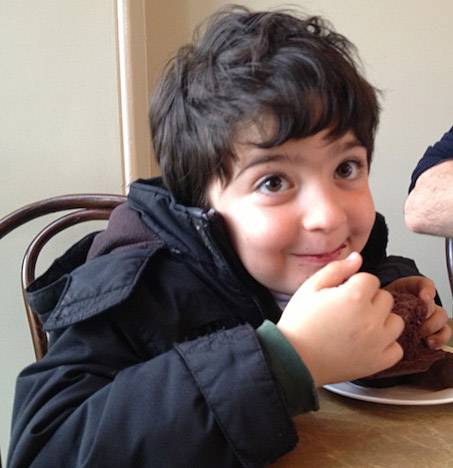
What a cutie!

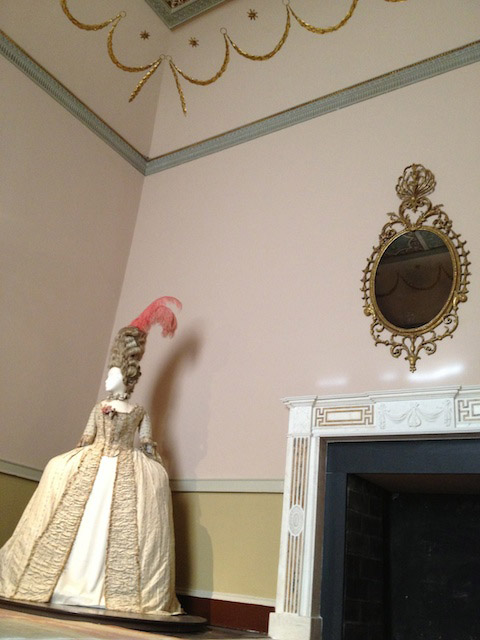
The toy and costume exhibition at Rathfarnham Castle was fascinating.

What women will do for “glamor!”

Hat? Or, umbrella?

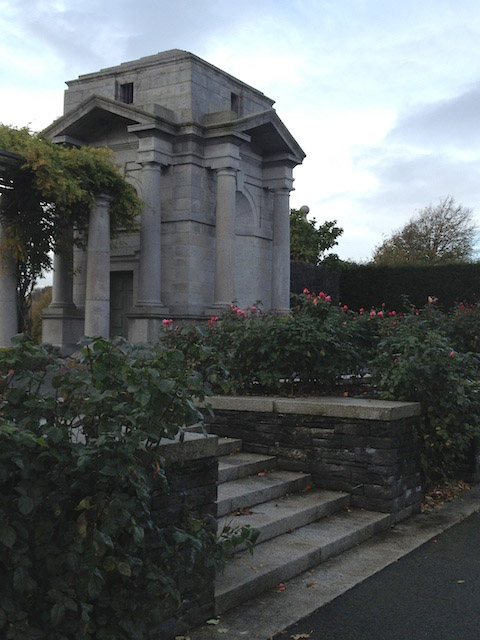
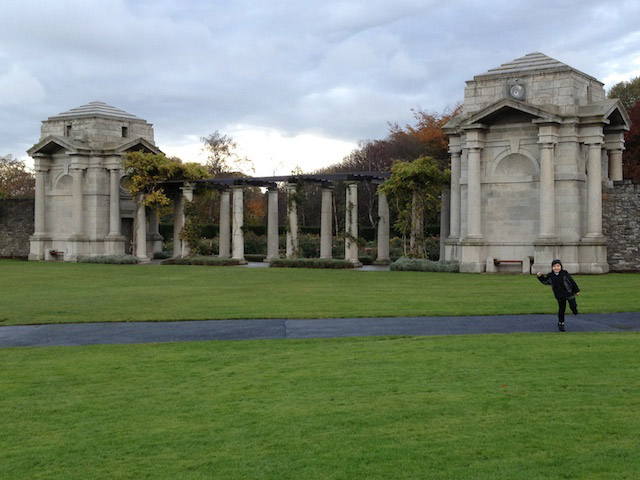
We ended the day at the Irish National War Memorial Gardens.

Irish National War Memorial Gardens is dedicated, one inscription says, “to the memory of the 49,400 Irish soldiers who gave their lives in the Great War, 1914–1918.”  With a farewell wave from Thomas!

Painting the Town Red

Esther loves musical productions.  Surprisingly, she wasn’t much interested in seeing plays while she was here.  That’s because English is her fifth language and she was worried she’d have trouble understanding.

You heard right.  She speaks five languages: (1) Swiss German (in Berne dialect), as well as (2) High German, (3) French, (4) as much Italian as I speak, and also (5) English.

Esther used to take in exchange students like me as a way of building her skills in English.  I was the  first in a long line of American exchange students to frequent her Ferenberg home.

And while she was here we painted the town red!  We soaked in all these musical performances during her one-week stay in Dublin:

  • The musical An American Idiot which, like so many musicals these days, has a plot contrived as a way to package a band’s album into a Broadway show. Wikapedia explains “American Idiot is the seventh studio album by the American punk rock band Green Day.”  Although the plot is understandably disappointing, Green Day’s “punk” music is actually quite festive.  The performance concluded with the whole company singing “It’s something unpredictable but in the end it’s right. I hope you have the time of your life!”  I’d been looking for an opportunity to visit the theater building itself, because it was designed by Studio Daniel Libeskind (the firm that designed the building to replace the World Trade Towers), and so I was perfectly happy that Esther actually asked to spend an evening immersed in American idiot-ry.  The theater is quite beautiful. However the knee-room was lacking where I sat and I determined once and for all that nose-bleed seats and traveling Broadway shows don’t mix.  The sound balance is often poor in the far upper corner when the show hits a new space.
  • Arlington Hotels Traditional Live Irish Music and Irish Dancing dinner show. The musicians sang “take me home country roads” (which is a favorite drinking song in Switzerland and pub song in Ireland). They also dedicated a song to Esther and me that was quite fitting.  Something about friends and traveling, if I recall correctly after this whirl-wind week. I was the only one in the place getting the host’s jokes. (He used to be a city planner, so perhaps we share some mental wiring?)
  • Gavin and his brother playing with other musicians at Hughes Pub. One of the guys in the band recognized the faces in Glen McClure’s photos from Achill Island (see my posts Leader of the Band and Drummer Girl).
  • The opera Hansel and Gretel, performed in the beautiful Gaiety Theater. I enjoyed this production more than any other opera I’ve ever seen. So I wasn’t too opposed when Esther asked to go see Disney on Ice for her last night in town. (It wasn’t my own top choice for the evening, but I gave in!)
  • Esther had never attended an ice-skating show in person and throughly enjoyed seeing Disney on Ice’s Passport to Adventure held at the Royal Dublin Society last night.
  • Two back-to-back visits to The Cobblestone pub. Thursday night we visited with Fulbright scholar Bob Trumble, his lovely wife Ann, and Ann’s her sister and brother-in-law.  When we’re in Virginia, Bob and Ann live in Williamsburg–just up the road from Dave and  me. On Thursday Tom gave Esther a copy of his CD.  She glowed with happiness.  Her eyes sparkled with excitement.  She’s so lovable!  We visited the pub again last night and got to hear Tom’s brother Neil (and Neil’s son) play.

Esther has just left for the airport, and things are now quiet and still. I’ve got mounds of work to do and yet hundreds of memories of this past week that I still want to share with you.  I hope to find time to post more for you in the coming days.

Gavin (far left) and his brother, Aidan, are among the musicians who play at Hughes Pub on Monday nights. Esther (far right) was soaking in the melodies.

Learning from LEED

The Society of College and University Planners (SCUP) just published an article about my dissertation research.  It describes how campuses have contributed to and gained from the Leadership in Energy and Environmental Design (LEED) program. You can download the paper or a brief synopsis using the links below.

Perhaps one of the USGBC’s greatest contributions to higher education lies in the model it providesas a large-scale learning organization.  This week SCUPers can enjoy reading Shannon Chance‘s 39-page article for Planning for Higher Education titled “Planning for Environmental Sustainability: Learning from LEED and USGBC.”  Because this is a long article, we’ve created a “Mojo Summary Guide” to the article. The guide doesn’t replace the article, but … well, you tell us what you think the Mojo Summary Guide does for you. Is it worth assembling?

What can SCUPers learn from LEED and from USGBC? Chance reports on her analysis of how institutions have used LEED, how the use of campus LEED has changed over time, and exhorts colleges and universities to both support USGBC and also learn from its structure as a learning organization.

Now, it is time for colleges and universities to step up their game. They should become leaders in green construction—not just followers that use a system designed, for the most part, by others. They must generate and apply new knowledge to help society achieve lasting sustainability. They must create buildings that do more to model good behavior, impart environmental values, and teach students about the environment. And, finally, they must re-design their funding mechanisms to facilitate comprehensive approaches to sustainability.

They should take cues from the USGBC about how to learn from experience and integrate feedback. Perhaps one of the USGBC’s greatest contributions to higher education lies in the model it provides as a large-scale learning organization. As an organization that monitors its own progress and continually revamps its systems, the USGBC has been able to achieve a visible and much-needed shift in American culture. American colleges and universities need to follow suit and become more proactive in the areas of environmental research and green construction.(emphasis added)

Visit SCUP’s Planning for Higher Ed Mojo at: http://mojo.scup.org/?xg_source=msg_mes_network

Focus on the Student

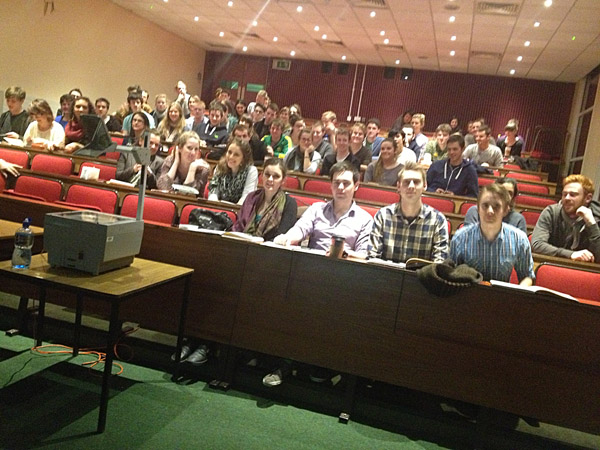
All these students voluntarily attended two back-to-back lectures last night–isn’t that amazing?

The Architecture Student Association got a great turn out for its symposium on the architecture student last night!  I’ve posted a photo of the crowd that made it all the way to the end of the two lectures… pretty amazing.  They came straight out of a day of classes into the lecture hall!

Maxim Laroussi of Architecture Republic talked about growing up in Morocco as well as what he learned about architecture by living in France, England, Scotland, Brazil, and Ireland.  Very interesting indeed!

Then I talked about “Learning Together” and how we can/should improve the way we teach architecture.  The main idea is that we need to focus more on understanding how students learn rather than on what content teachers deliver (i.e., what they say in class).

The speakers and organizers for last night’s ASA symposium: Andrew Ó Murchú, Shannon Chance, Colin Mac Suibhne, and Maxim Laroussi.

Supporting African Cultures talk

I’m going to be giving a lecture today–November 6 at 5:30pm, Room 281 Bolton Street, Dublin 1–on “Supporting African Cultures through Architecture.” This is part of the lecture series for 4th and 5th year architecture students but the topic should be of interest to others as well and all are welcome to attend.  A description of the talk is below the photos.

Images from Tanzania (copyright Shannon Chance).

Supporting African Cultures through Architecture

Knowledge of Africa’s heritage and accomplishments is woefully lacking in the media today. The tendency to leave Africa out of the literature on architecture and planning hinders designers everywhere. It denies them access to specialized information that could help construct better environments. Their failure to understand the subtleties of various African cultures often results in modern construction – particularly that funded by foreign donors – that does not effectively meet the needs and interests of the people. Even architects, spatial planners, and policy makers who live in Africa lack access to research that could help them make better choices.

This trend presents a quandary: How can one contribute to improving quality of life around the world, without imposing values that harm others? A poor response is to avoid getting involved. Doing nothing only perpetuates inequities of health, wealth, and personal freedom.

This presentation discusses the work of Livin Mosha and Shannon Chance, two scholars working to generate this type of information. As architects and educators, Chance and Mosha share an interest in: understanding the heritage of African places, constructing a cross-cultural dialogue, developing a vision for the future, and translating the voices of Africa to others. Their goal is to promote cultural-specific architecture, planning, and policy in East Africa and beyond. This talk describes their findings and their recommendations for the future.

Schools of Thought–Lecture Announcement

The Architecture Student Association (ASA) at DIT has announced the first of its Schools of Thought events. The ASA has two lectures focusing on the Architecture Student planned for this week.

  • Maxim Laroussi of Architecture Republic will be speaking about his culturally diverse education as well as the importance of a year out at some point in your education.
  • Shannon Massie Chance, DIT’s 2012 Fulbright Scholar in Engineering and Design Education, will be giving a talk about her research work–broad investigation into the workings, flaws, and triumphs of architecture schools.

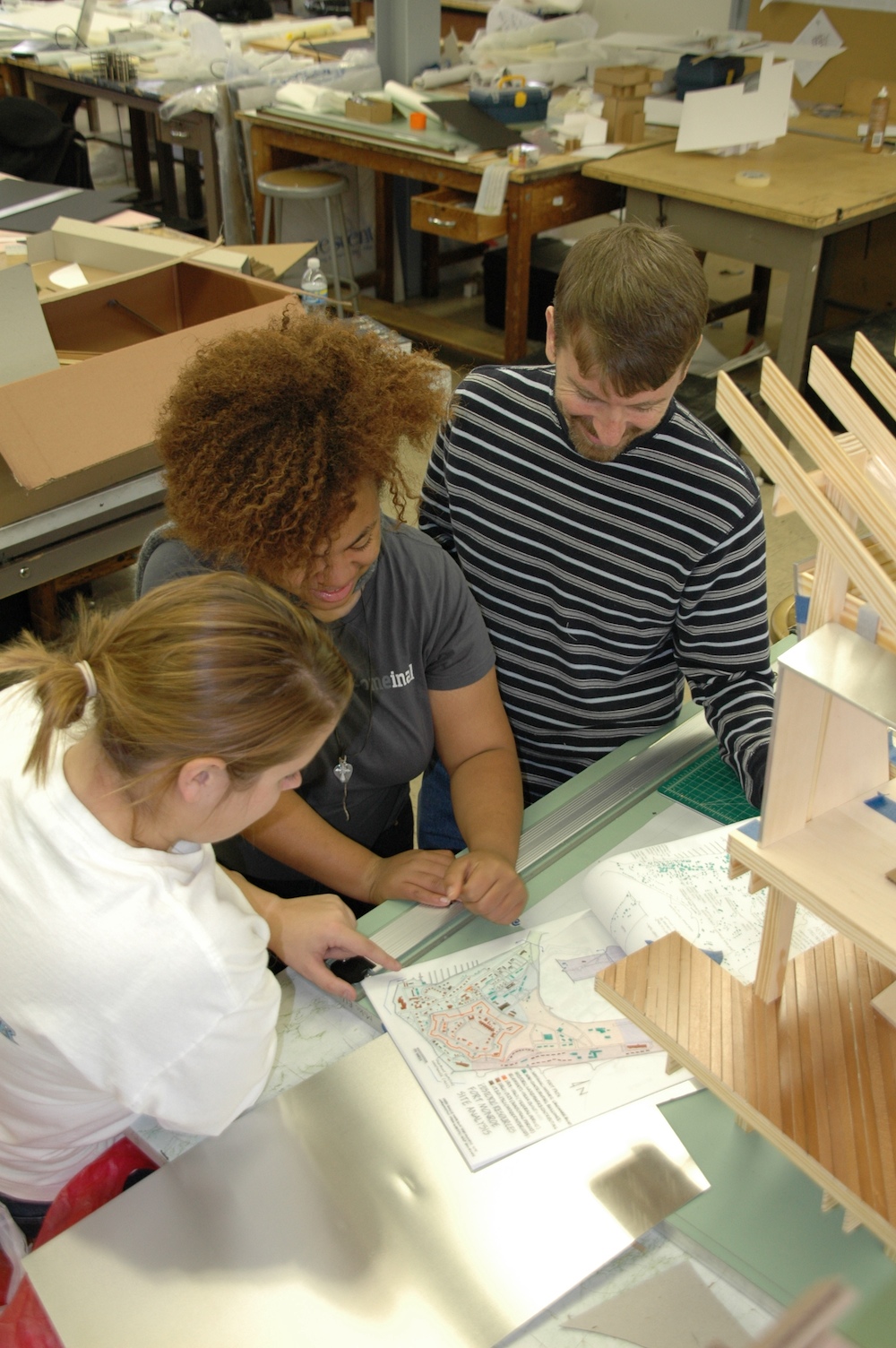
An image from Shannon Chance’s upcoming lecture on student-centered teaching. The students pictured are Hampton University’s Dana Cook, Danielle Dunn, and Mike Ellingson.

5pm
Wed 7th November
Room 281 Bolton Street (Dublin, Ireland)

The event is free and open to the public.