Curiosity Cabinet 

Fascinated by philosophies on museum curating, I jumped at the chance to attend a Saturday presentation at the Irish Museum of Modern Art (IMMA) by the artist/curator Dorothy Cross. It was a general conversation with Lisa Le Fauvre.

Dorothy Cross is the person who assembled IMMA’s exhibition, TROVE, from the storerooms of Ireland’s National Gallery (in Dublin and Cork).

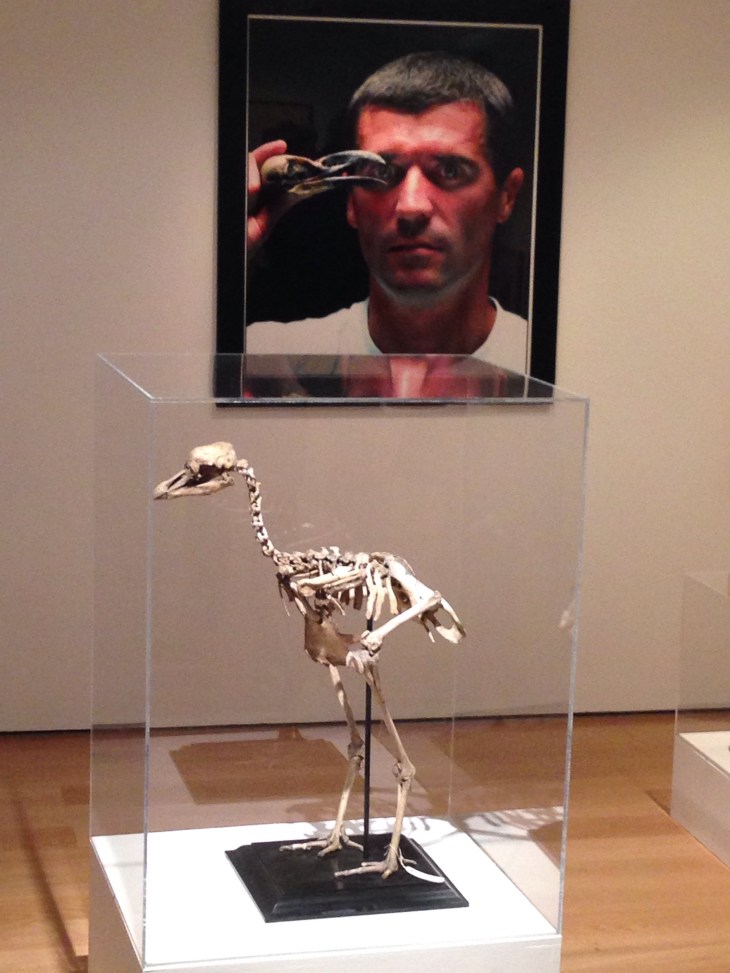
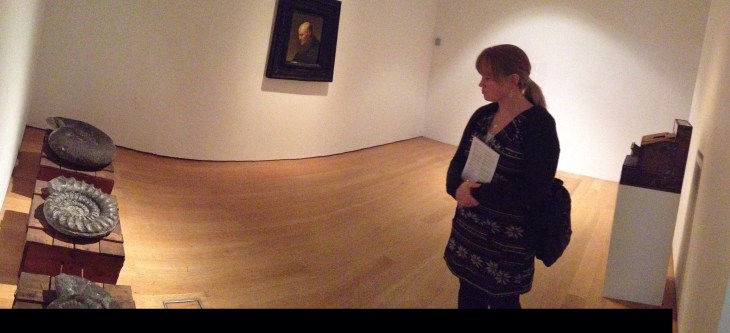
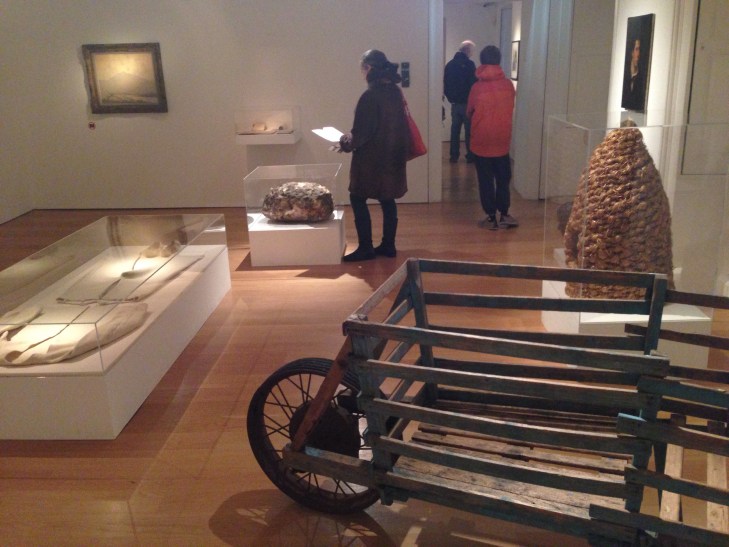
Walking through the exhibit hall felt to me like being in a curiosity cabinet of yesteryear. Somewhere between Rembrandt’s studio in Amaterdam, the Galelio Museum of Florence, and Alice’s wonderland.

Here, Dorothy Cross juxtaposed objects in novel and informative ways. A (sculpted) saint bursts forth from his shipping crate. A (real life) naked man stands amid column-like worship stones… he is not pictured here on my G-rated website! 😉

Back in college, I read a number of postmodern philosophy books about  museum curating. They noted that house museums, like the Rembrandt one I mentioned above, provide very authentic contexts for displaying artifacts. Dorothy Cross navigated this postmodern mileau with panache.

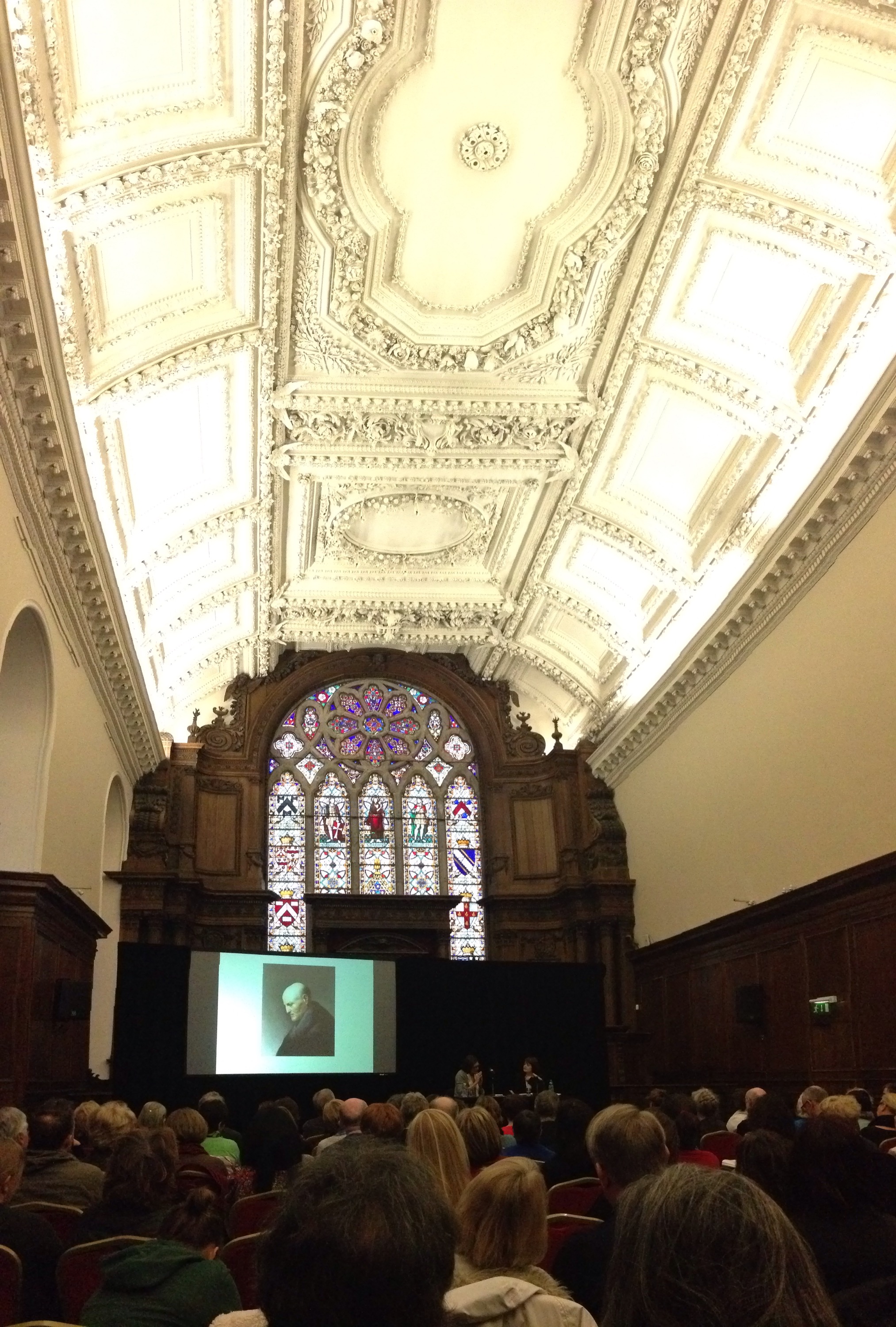
I was equally thrilled that the lecture was held in the lovely baroque chapel at IMMA. I’ve been trying to access it for weeks but it’s generally closed to the public.

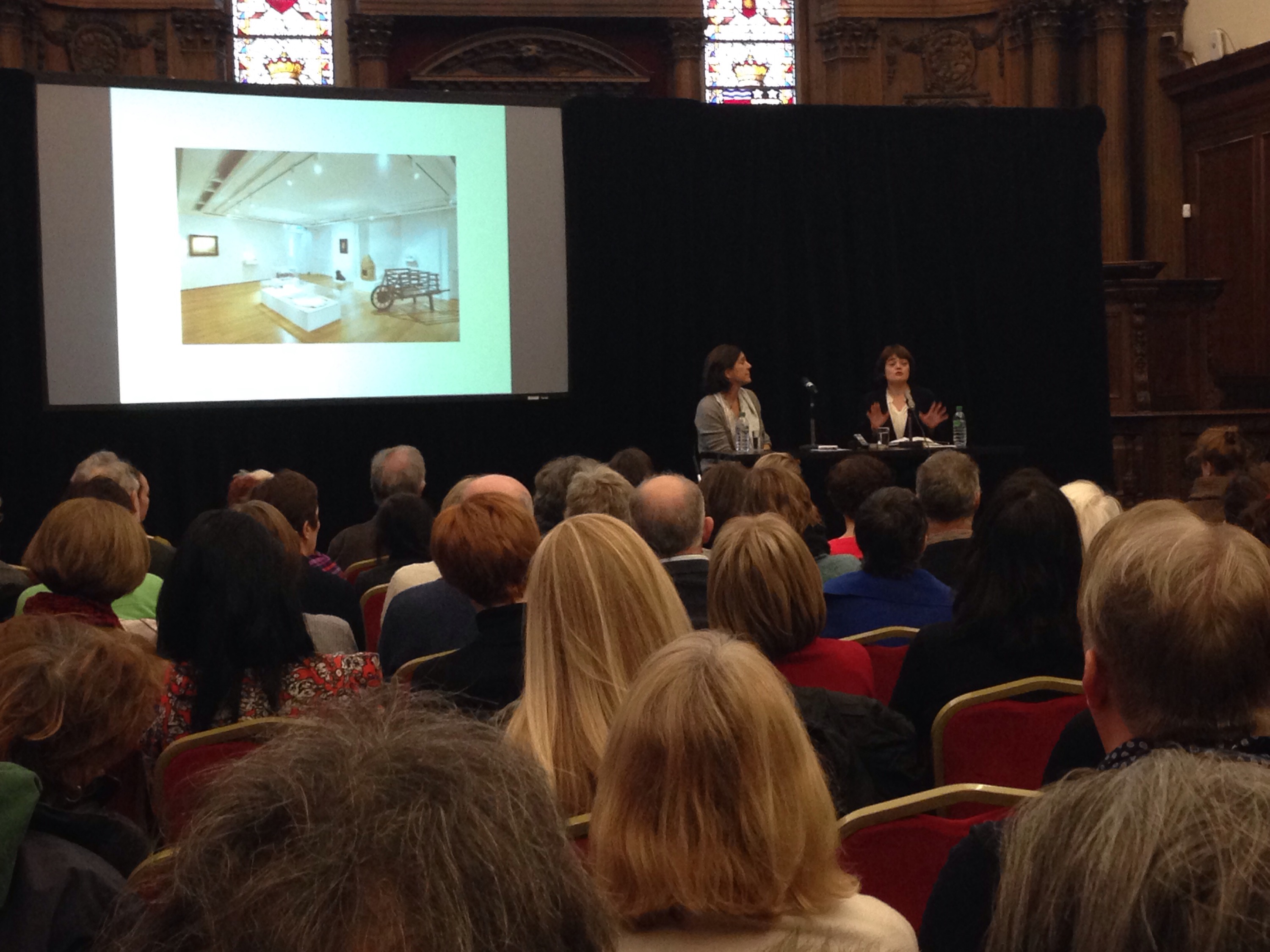
Dorothy Cross (left) and Lisa Le Favre discussed curating the show “TROVE.”

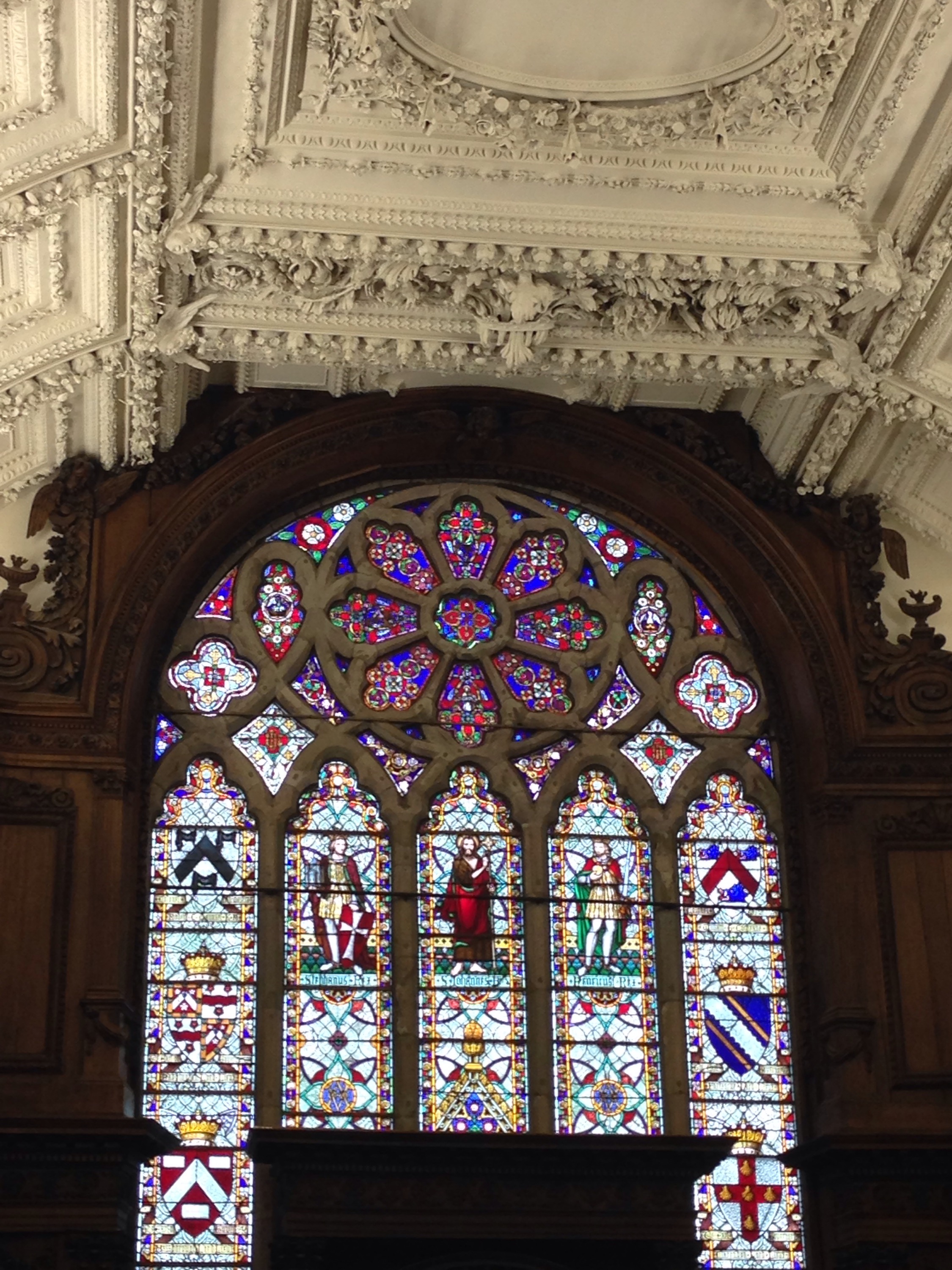
IMMA’s Chapel, Ireland’s best baroque interior.

The ceiling feels so “Alice in Wonderland.”

Bountiful veggies dangle from above.


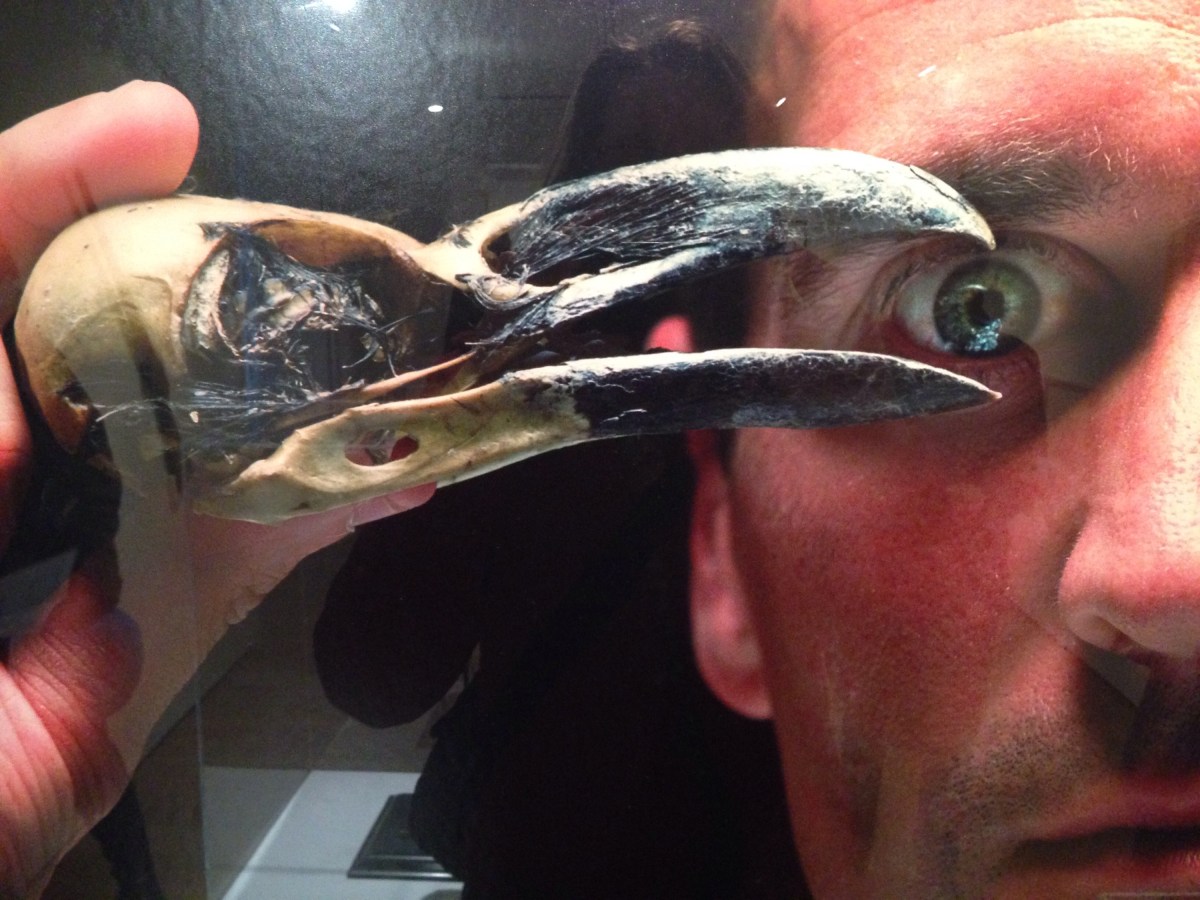
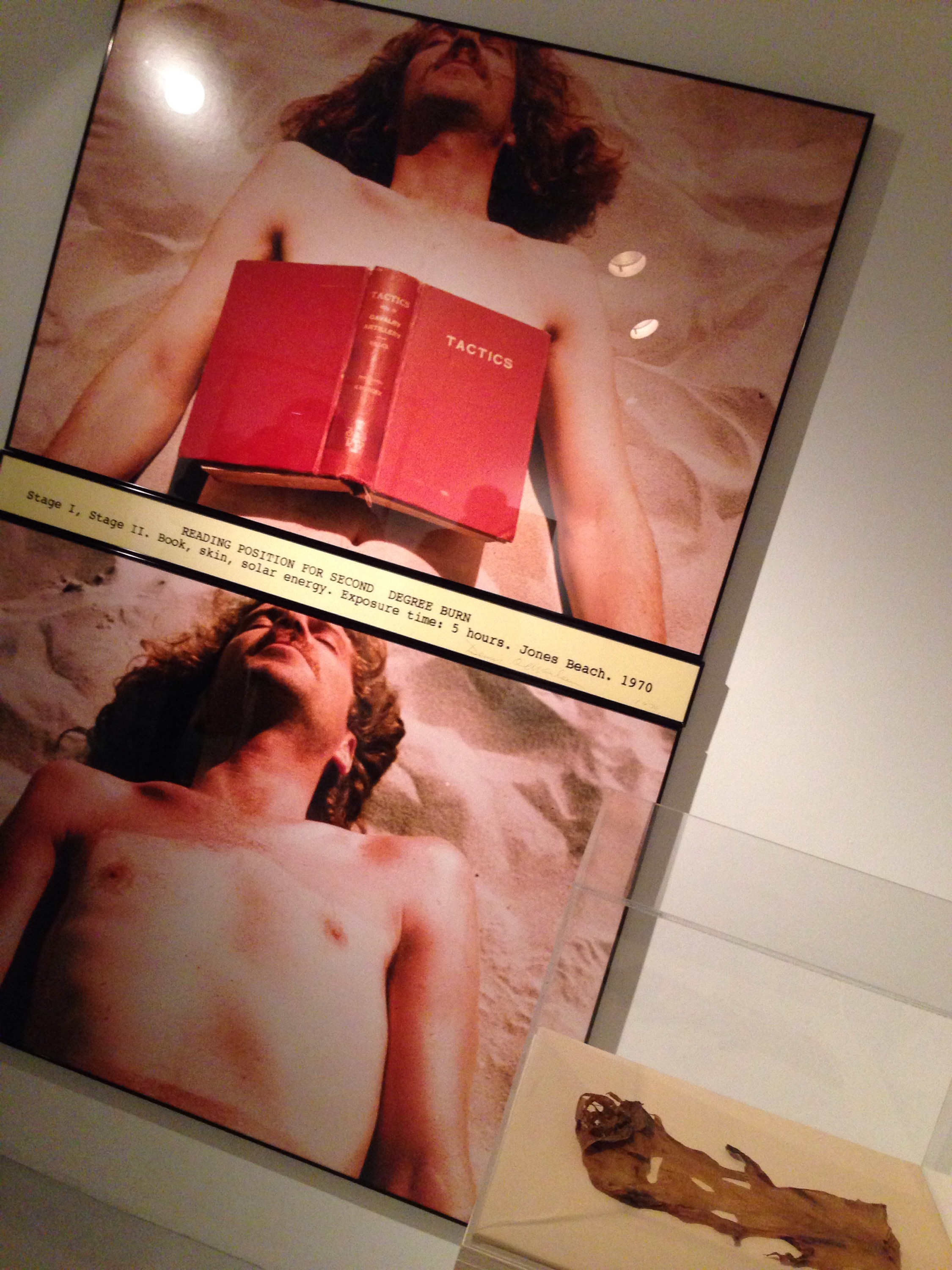
“Reading Position for Second Degree Burn” circa 1970, beside a skin cut into a mask. How odd.

Nest of the Oven Bird

Framing My View

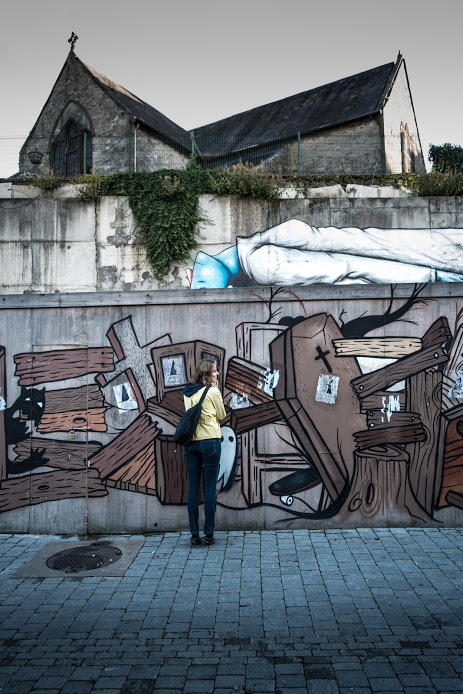
Over time, various artists have provided layers of meanings along this street in Kilkenny, Ireland. Small windows in the graveyard painting let viewers select their own vantage points and help them view what's happening on the other side of the wall. The photographer (Frank Daly) selected his own frame of reference, capturing an entertaining yet  chilling portrayal of the phenomenon of Western burial.

Over time, various artists have provided layers of meanings along this street in Kilkenny, Ireland. Small windows in the graveyard painting let viewers select their own vantage points and help them view what’s happening on the other side of the wall. The photographer (Frank Daly) selected his own frame of reference, capturing an entertaining yet chilling portrayal of the phenomenon of Western burial.

Phenomenology and constructionism are two outlooks for understanding and describing human experience in ways that can help humans (especially educators, designers, and makers) shape a better/more purposeful future. They are well aligned with engineering and architecture because both paradigms both have to do with human creation. Without human creation, architecture and engineering are not possible. In this blog, I’m attempting to summarize my understanding of the two in a way that might be of use to other researchers.

Phenomenology is a philosophy as well as a method of doing research. It focuses on experiences people have, and on how individuals understand and describe their experiences. Education researchers have been working hard to refine this method of research, although it is still in its infancy as a research methodology. On the other hand, phenomenology has been central to architectural thought since at least the mid 1900s.

Today, I am striving to understand distinctions and techniques involved with three specific variants of phenomenology: transcendental phenomenology, hermeneutic/interpretive phenomenology, and phenomenography. These differ in how they view objectivity and subjectivity, and this aspect intrigues me.

Construction is a fundamental aspect of architecture, architectural design, and architectural education. Two distinct paradigms deal explicitly with “construction,” although I see quite a bit of overlap between the two, so I’m placing them under a common heading.

These two construction-related outlooks are called constructivism and social constructionism.

The book Qualitative Research: The Essential Guide to Theory and Practice, written by Maggi Savin-Baden and Claire Howell Major (2013), is helping me better understand the distinctions between these two ways of thinking about and conceptualizing being, knowing, and researching.

I’ll attempt to explain what I’ve found using their book and integrating it into what I learned in school: 

Constructivism is the more subjective of the two construction-oriented paradigms. This paradigm asserts that knowledge exists in the human mind and that researchers can understand it by “unpacking individual experiences” (Savin-Baden & Major, p. 56). “Reality,” in this view, is what individuals think it is. To understand the world, we (as educators, architects, and/or researchers) need to assess how individuals know, understand, and indeed construct the world in their minds.

Constructionism is a more collective. This paradigm is often referred to as “social constructionism” and it posits, “Reality and knowledge are socially constructed” (p. 56). In this view, groups of people decide collectively – and quite often unconsciously – what things (phenomena, people, places, ideas, etc.) they will recognize and how they will understand and name them. In inverse fashion, groups also decide what things they will not see/understand/name. Researchers who adopt this way of seeing the world study how groups of people collectively see/interpret/create/construct the world around them. Today, constructionism appears in only in a few publications on engineering education (specifically, on teaching robotics or materials engineering).

I’ve been planning to use phenomenology in my upcoming work, yet I believe constructionism also hold great value for engineering education research. Perhaps I’ll help introduce this way of seeing to the EER community.

Exotic Familiarity

I feared that somehow things wouldn’t seem as new and fresh on my return to Dublin as they were before.  During my Fulbright fellowship, I spent 365 days in this vibrant city — but even a vibrant city can become overtly familiar, I would have thought.

And yet, as I happily rediscovered many familiar comforts this past week (like Beef and Guinness Pie at Pieman in Temple Bar), I also uncovered a plethora of new adventures here.

On Saturday, during Fergus Whelan’s history tour, I met a researcher from Fordham University.  She said how much she’d enjoyed finding this blog while she was preparing for her trip here.  Her words encouraged me to get back to posting.  I hope you find something interesting and informative in my little picture gallery of highlights of the past week.

Well, it’s 10:20 PM and the sun has just set.  It will be up again by 5 AM or so, and I’d best get ready to hit the sack. I’ve another big week ahead!

Architects’ Pot Luck

These days, wild, crazy fun among architects involves Pecha Kucha style presentations.  This is a high-speed format for sharing images and ideas.  With Pecha Kucha, each presenter selects/provides 20 images.  At the Pecha Kucha event, the slides are projected on a large screen in sequence for 20 seconds each.  The presenter talks, and the slides move on wether or not the speaker is ready.  It’s entertaining — in part because it’s actually quite difficult for the speaker to stick to the 20 second window.

This format keeps the speaker from droning on too long and it leaves time for more people to present.  It’s pot luck: everyone brings something to share and you can almost always find something you hadn’t expected but quite enjoy.

An architect from Williamsburg, Dale Weiss, organized a Pecha Kucha event at ArchExchange East last November and he has uploaded the representations to his (very elegant) website.

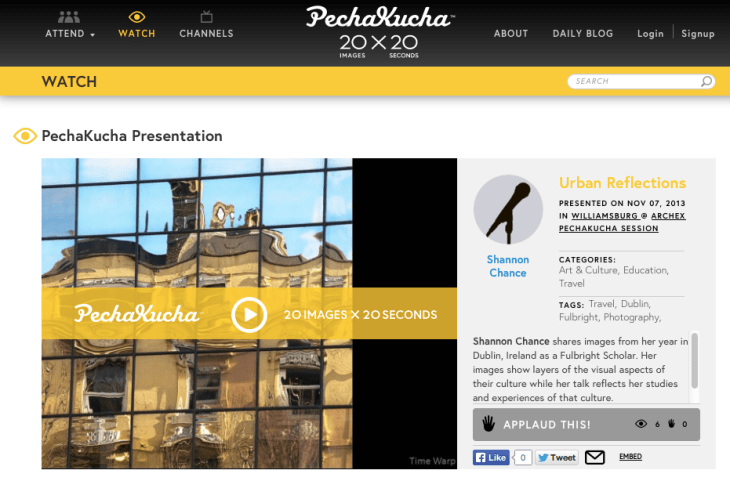
You can view my Pecha Kucha presentation, of urban reflections from Ireland, by clicking here.

Kilkenny Suds

Kilkenny, Ireland is the home of Smithwick’s brewery.  Nevertheless, Guinness is also a popular brew (despite the fact that it is brewed in Dublin).  Here are a few reflections I found while pursuing the streets of Kilkenny last fall, with my mom.

Making the Mark as an Enterprise Rose Fellow

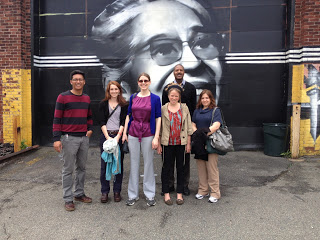
Mark (to the far left) with community members from Boston.

Mark Matel (to the far left) with community activists in Boston.

Thanks to a Facebook post by my (awesome) former student, Elbert Whitfield, I just discovered an article titled Enterprise Rose Fellowship Redefines Community Design at NeighborWorks Organizations, which features former student Mark Matel.

I’ve worked with many extraordinary students at Hampton University, like Elbert and Mark.

Today, I’m boasting of Mark Paulo Ramos Matel’ success.  I had the honor of teaching Mark in architectural design studios, study abroad, and environmental sustainability courses while he was working toward his Master of Architecture degree at HU.

Mark Matel (right) with fellow student Leon Peters presenting a second year design project at Hamtpon University.

Mark Matel (right) with fellow student Leon Peters presenting a second year design project at Hamtpon University.

Mark was an ideal candidate for the Enterprise Rose Fellowship, which the article explains is “a highly competitive and innovative program that places some of the nation’s finest early career architects in underserved communities across the country to team up with community development host organizations.”

Mark is intrinsically motivated to succeed, to help people, and to spearhead new initiatives.  His energy level, work ethic, creativity, self-direction, and ability to collaborate effectively were unparalleled among the students I have encountered in my 15 years of university-level teaching.

Mark was a major player in the formation of our department’s Studio Culture Policy and he represented our department impressively at the local and state level.
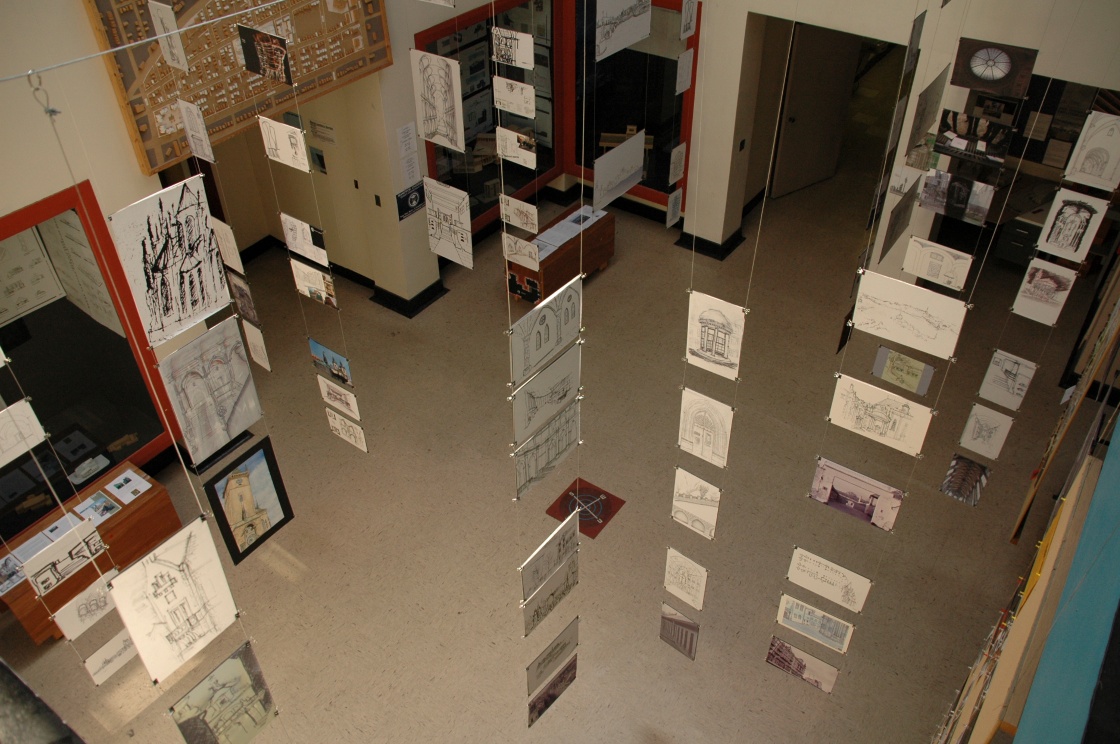
An exhibition that Mark and his colleagues Brandon Clarke, Smitty Lynch, coordinated along with other members of our spring break trip to Prague.

An exhibition that Mark and his colleagues Brandon Clarke, Smitty Lynch, coordinated along with other members of our spring break trip to Prague.

He is also a highly skilled designer, as is evidenced in design awards from Auburn and Hampton Universities.

Mark earned a NAAB-accredited degree from Hampton University – a program emphasizes urban planning as well as architectural design – and he then earned a design-build degree from Auburn University to boot.

To interview for the Enterprise Rose Fellowship, he went to Boston along with the two other candidates (both from top Ivy league schools).  After a rigorous multi-day interview, representatives from the community and the fellowship program voted, and then wholeheartedly extended the three-year fellowship to Mark.

During his time at HU, Mark’s research regarding water systems in the Philippines, and his work with the Virginia AIA’s Emerging Leaders in Architecture (ELA) program, were particularly relevant in preparing him for his work as an Enterprise Rose Fellow.
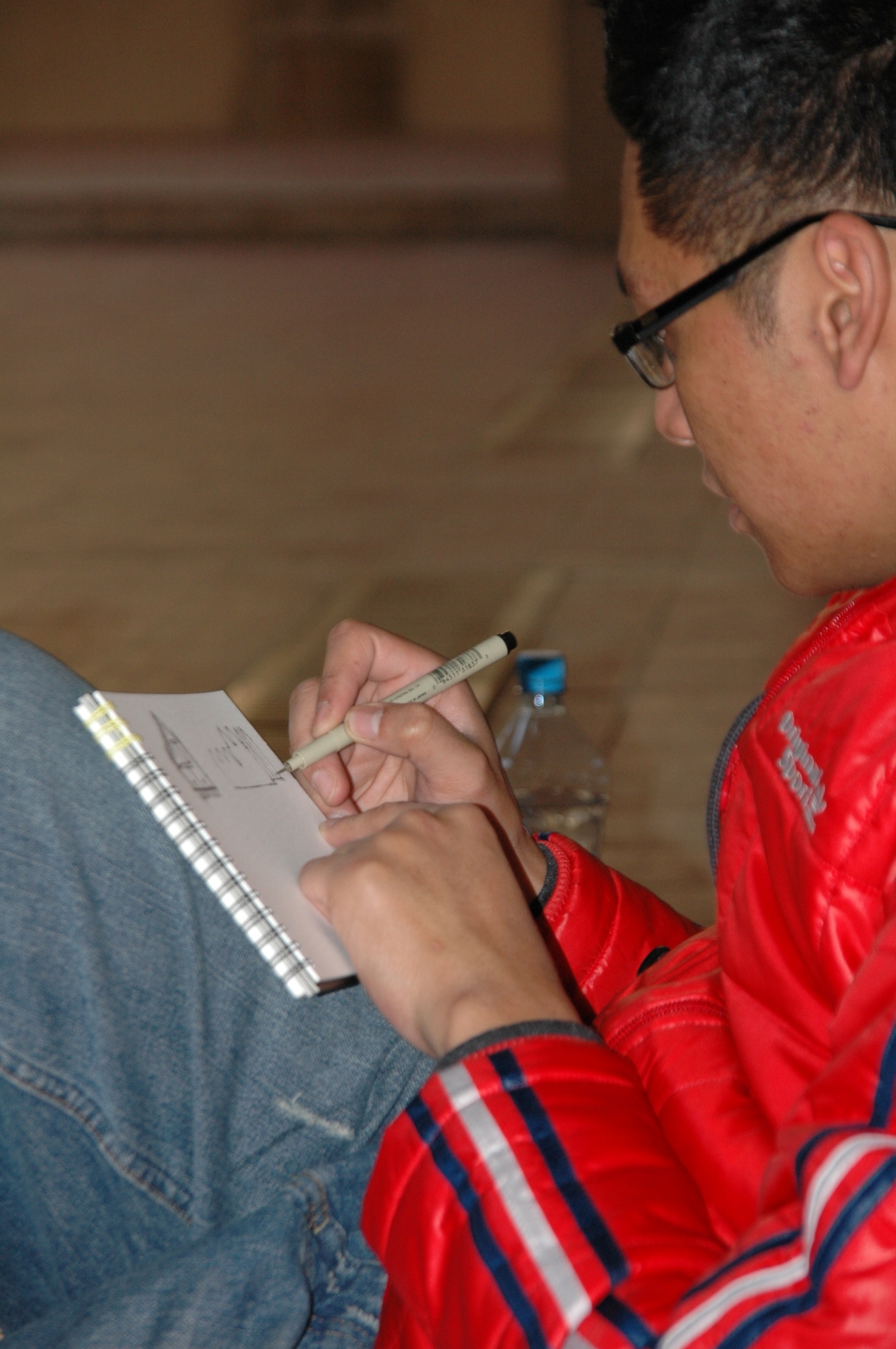
Mark sketching in Prague.

Mark sketching in Prague.

Marks’ activities all had an underlying theme of social activism related to the built environment.  He has always been able to think and work at multiple scales and with complex, inter-related issues.  His architectural studies enhanced these abilities.

Our department nominated Mark to represent Hampton University as part of Virginia AIA’s ELA program and his work with the organization exceeded our expectations.  The focus of the ELA program that year was on community revitalization and leadership.  Mark was highly engaged in his cohort’s project and he even defined the program for the subsequent year’s cohort.  (He identified specific conditions that needed to be addressed in Norfolk, Virginia and he helped get the new ELA group involved in fostering change where he knew it was needed.)

In his classes and teaching assistance-ships at Hampton University, Mark reflected a high level of engagement as well as what Daniel Goleman calls “emotional intelligence.”  Mark has the ability to share knowledge and to teach others techniques and strategies for improving themselves and their environments.

While he was at Hampton University, Mark was a very important part of defining a positive, learning culture within the academic context, as well as in the professional context (at the local and state levels) and in the larger community.

I couldn’t be prouder of Mark and all his many varied accomplishments.

You can see more of our trip to Prague in my archives.  My own presentation boards from Prague are also available for viewing.

Fleeting Glimpses

I’ve been so bogged down in grant- and conference-writing that I haven’t gotten to update you on the architecture studio’s progress.  I’m hoping to share some of the students’ findings soon. In the meantime, here are a few photos I snapped early last week.

It’s typically difficult to get our students interested in discussions of meaning and philosophy.  These are generally seen as esoteric.  But so far the group-based format seems to be eliciting a  higher level of engagement in fuzzy issues than I’ve witnessed here in recent years.

Interestingly, when I was in school, a professor might to give us just a word or two to explore.  S/he would expect us to invest a week or two of time to contemplate, make things, and refine our knowledge and skills.  Most of us were quite happy to oblige.  We’d make things without much prompting at all and find a lot of joy in it.  Today, students have to drive for hours to gather decent materials. And, in today’s digital milieu, making beautiful, physical things seems to be an alien concept.

Liquid Essence

The best design responses for the water assignment due today, I think, revealed “the essence of liquid” a bit more than “the essence of water”.   I’ve included photos of the students’ favorite responses.  We also looked around our surroundings for examples of beautiful things.

Undercover in Rome

Many thanks to Daisy for inspiring me to draw so much on my trip to Rome… we have always been very productive at sketching when we travel together. In this post, I’ve included photos of one of our many dinner outings.

On my last  night in Rome, Daisy and I headed over to Trastevere–stopping for a glimpse of the basilica (dedicated to Santa Maria, where mass was in session) before heading on to our favorite dinner spot.  As is generally the case when Daisy and I are traveling with architecture students, we  brought our sketchbooks along to discuss.

I’ve included photos of Daisy’s beautiful work, that caught the attention of our waitress.  She studied every page!

Daisy’s area of expertise is architectural representation, as is evident in her drawings!  Mine, on the other hand, is educational research… that’s what I presented to Daisy’s students in the lecture I delivered.

As a result of our exchange, I woke up inspired to draw on my last day in Rome.

It was hot, hot, hot, though.  I had to sketch quickly to keep ahead of the heat!  By the afternoon, the sky opened up and the rain poured down.  Thankfully our fore bearers built plenty of sheltered spots in Rome that have lovely views!  I made three sketches on my parting day–two are shown below.

Reshaping a Roman Site

I’m wrapping up my week as “Scholar in Residence” for the University of Oregon’s study abroad program in Rome. It’s been a fun and informative learning experience.

I’m posting images from the studio review we had on Thursday, to give you an idea of what it’s like to be an architecture student or professor.

These students have completed second year of a five-year professional degree program (leading to the Bachelor’s of Architecture degree). They will start third year in the fall.

They’ve done some very nice design work so far in their three-credit architecture studio class in Rome. Their site is an embankment wall, built in the late 1800s to keep the Tiber River from flooding the city as it has done for centuries.

According to Wikipedia:

The Tiber was once known for its floods — the Campus Martius is a flood plain and would regularly flood to a depth of 2 metres (6 ft 7 in). The river is now confined between high stone embankments which were begun in 1876. Within the city, the riverbanks are lined by boulevards known as lungoteveri, streets “along the Tiber.”