Sites and Sounds of Galway

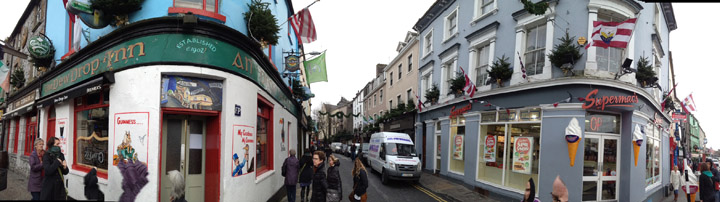
The Dew Drop Inn… ah, the memories!  It’s the namesake of this pub in Galway (the brightly colored building to the left).  My grandfather (Layton McCarthy Massie) worked with the real Pa Walton once once a time, in Virginia. If you watched the show, you’ll recall Pa had to travel to find work a few times.  It was one of those times.  The family (upon which the TV series was based) lived in Skylar, Virginia, whereas my grandpa lived closer to the West Virginia line.

I had a ball in Galway this weekend, visiting Amanda Bernhard and her husband Jonathan Kennedy.  Here’s a glimpse of some of the things we did.

We attended the Fulbright Association’s Thanksgiving Banquet on Friday and the Irish Music Club’s singing event on Saturday.

.

Electric Storage Heat

The bricks in my electric storage heater.

Electricity costs a lot in Europe.  Years ago I’d heard the cost was generally six times as high as in the USA.  As a result, the Europeans are more careful about the way they use energy.  They try not to waste it.

Many Irish homes use electric storage heat.  The system mimics adobe construction of the southwestern United States.  It uses “thermal mass” (in the form of bricks) to soak up heat when it’s free (from the desert sun) or cheaper (at night when purchased from the utility company in Ireland).

The bricks hold the heat until the air on the outside gets colder than they are, and then they release the heat they are holding into the air to warm it.

I’ve posted photos of Keith, the maintenance guy for my apartment building, checking one of my electric storage heaters. They’re a bit difficult to get started at the beginning of the winter season.  Mine needed extra attention because a toddler who used to live in this apartment stuffed small plastic items into the heating units. Keith had to clean them out.

In any case, I hope this technology keeps getting used and improved, as it’s a system that makes a lot of sense environmentally.

Get heated at night (when electricity costs less) and absorb the heat energy to release it during the day.

Thanksgivings Long, Long Ago

Here’s to memories of giving Thanks long, long ago.

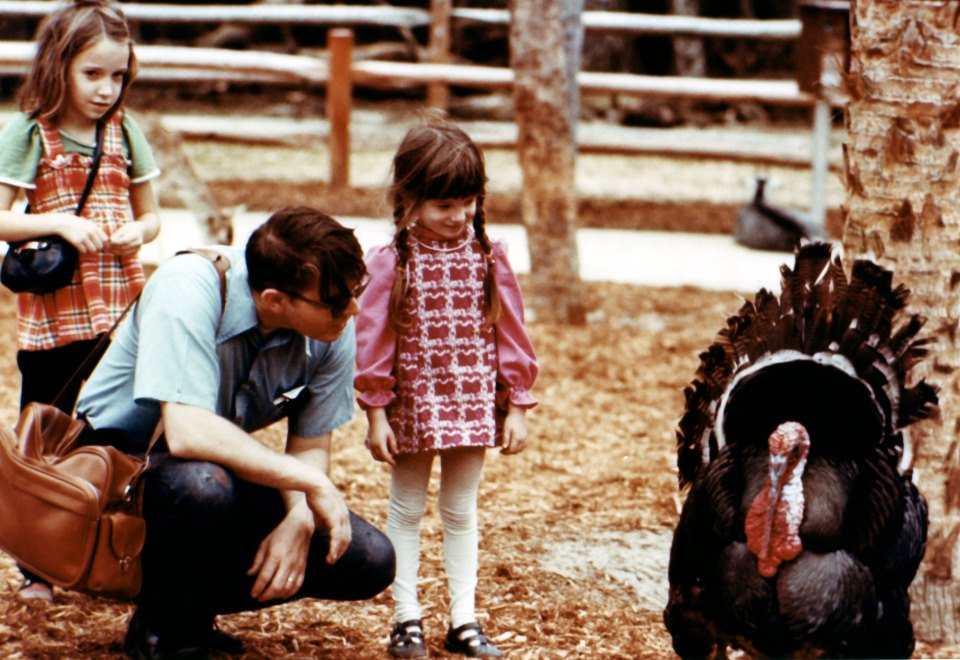
In the photo below my dad, my younger/only sister Heather, and I were admiring the glory of a wise, old, wild turkey.  Heather couldn’t bear to eat fellows like him, and became vegetarian by the age of 15.  See the genuine respect she has for him?  Remarkable, really!

She posted this photo on Facebook last night — to celebrate Thanksgiving — and I thought I’d pass it along so you can see a fall day in Virginia in the late 70s with two young kids in awe of the natural world.

Shannon and Don and Heather Massie admiring a fine wild turkey.

Upcoming Lectures

I’ve been asked to deliver two lectures at the DIT School of Architecture next week.

At 11 AM on Monday I will talk about How an Architect’s Material Palette Can Enhance Student Learning.

At 1:30 PM on Friday I’ll present What Can the LEED Green Building Rating System Do For You?

Both lectures will be held in DIT’s Linenhall. Please contact me via engineeringfulbright (at) dit.ie for information about how to attend.

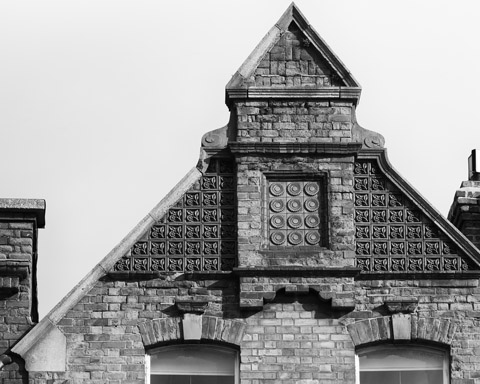
Photo from Ireland, copyright Dave Chance Photography.

We’re Talking Mojo!

The Society of College and University Planners just sent out this email:

In four days there have been more than 500 downloads of this week’s featured Planning for Higher Education article. If you haven’t gotten yours yet, it’s available here for a limited time.We are already seeing some great Mojo discussion and blogging in response to Shannon Chance’s feature article “Learning from LEED & USGBC.” Chance is a registered architect and associate professor of architecture at Hampton University. Chance offers her insights on LEED & USGBC a model systems approach to sustainability for higher education planning. Like many other environmental and design professionals, she also recognizes its limitations.

Arlen Solochek agrees that “LEED and the resultant sustainability movement has been an absolute game changer for everyone.”  But while LEED has definitely “raised environmental consciousness,” it is not necessarily as “nimble and responsive” as it should be.  He also notes that LEED standards are becoming compulsory according to institutional and governmental regulation. Other limits include inflexible point system and the expense of soft costs and certification. Both Solochek and Chance agree that “the bigger issue is not just stopping at more sustainable buildings.  How many of our institutions are trying to infuse sustainable concepts into their academic courses, into their students’ and staff’s lives and habits outside LEED?” (Solochek).

According to Michael Haggans, Chance’s article “…balances criticism of the LEED ‘gaming-for-points’ process that many have seen in practice, with a well documented account of the evolutionary improvements that are now underway.” Alexandria Stankovich offers a student perspective on LEED & USGBC in relation to higher education planning on the Mojo blog.

If you’re going to 2012 GreenBuild, please pass this article around. And, please share in the Mojo what you learn.

Thanks.

Visit SCUP’s Planning for Higher Ed Mojo at: http://mojo.scup.org/?xg_source=msg_mes_network

What’s a MOOC? (And can it help us save humanity?)

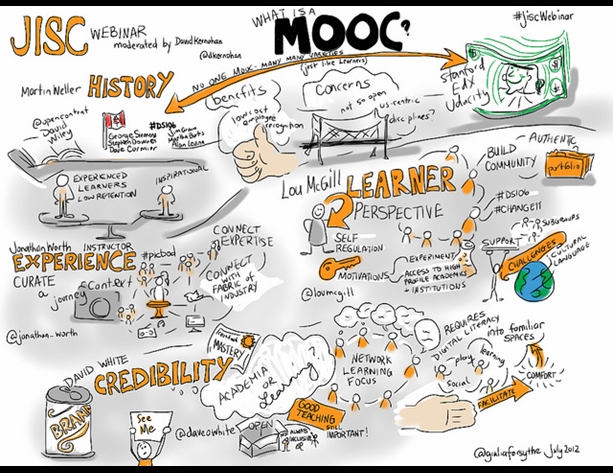
A diagram from Dave Cormier’s video.

I’ve been scratching my head, wondering “what’s a MOOC?”

Someone at SCUP sent me a helpful link to a succinct four-minute video by Dave Cormier that describes MOOCs and explains that the acronym stands for “Massive Open On-line Course.”  I also found a helpful blog posted by Lou Mcgill titled  What is a mooc? Massive Online Open Course and the learner perspective.

SCUP is using a MOOC to facilitate communication among its members.  I’ve been visiting SCUP’s MOOC for weeks now but I haven’t been able to “see the forest for the trees.”  I haven’t understood what’s going on all around me.  I find my way to some places that seem like classrooms and other places where discussion is going on, but I don’t yet understand how to navigate effectively.

Thanks to Dave and Lou I can finally stop scratching my head!  And, once I understand how the platform works, I can start using it to generate knowledge about planning and sustainability — rather that just about how to use MOOCs and the internet more effectively.

In any case, I believe that this on-line communication platform (i.e., SCUP’s MOOC) is the reason that my article got so many downloads so quickly after it went “live” on the internet.  The splash page for the article was viewed 644 times between November 9 and November 12.

To be honest, up until now I didn’t actually think people read the academic articles I’d published.  But now that I think about it, several people did contact me regarding an article I published with SCUP in 2010 titled Strategic by Design: Iterative Approaches to Educational Planning.  So perhaps SCUP’s audience reads and communicates more about its publications than is the case with many other organizations!

MOOCs provide a platform for learning that can help communities develop new knowledge quickly.  SCUP’s is aimed toward generating knowledge about how universities run and how they can improve their approaches over time.

Perhaps humanity will develop viable paths to achieving sustainability by using tools like MOOCs to share and build knowledge.  That’s part of the focus of my article just published by SCUP and something I think society MUST focus on if we are to persist on this planet.

But I’m quite interested in knowing more about how people work together to generate new knowledge.  The research project I’m conducting right now with Gavin Duffy and Brian Bowe (as part of my Fulbright) investigates how a group of teachers here at the DIT (i.e., a learning community) has been able to implement changes in the way DIT teaches Electrical Engineering.  These are topics I learned a lot about in the Ph.D. program I completed at The College of William and Mary on educational policy, planning, and leadership.

And interestingly, so many of the women I’ve bumped into recently–Esther, Joan, Máirtín’s wife, and myself–have been studying topics of leadership and change management.  Now that I’ve joined SCUP’s MOOC, I have found a whole new community discussing change, strategy, and the university’s role in addressing social and environmental issues. I hope we can elicit the types of sweeping change that this world needs, and do it fast enough to save ourselves.

Fulbrighters Sharing Ideas

I just received great news about my article from one of the editors of Planning for Higher Education.  Terry Calhoun left me this comment:  “Shannon, as of this morning, we have 345 article/summary downloads. So, people are reading, even if not yet commenting.”

I have to say: that’s a truly amazing number of downloads.  It’s a testament to the quality of the organization (the Society of College and University Planners) and its new platform for sharing ideas.
——–

Erin Eife and I discussed the ins and outs of applying to grad schools in between programmed sessions at the Fulbright Orientation.

On another note, Fulbright Ireland just posted a piece on taking the GRE in Dublin that was written by Erin Eife who is a recent college graduate who is conducting research on recidivism among females who have been jailed.

Erin and I sat next to each other at the Fulbright Orientation in September.  We got to talking about grad school and I answered some of her questions about degree paths and about selecting and applying to grad schools.
Erin has since written to thank me for the advice and let me know that she’s following through!  I love getting this type of feedback!  It’s not often that you hear you’ve made an important difference simply by sharing your experiences.
 Erin has got big dreams and I have every confidence that she’ll succeed with the applications she’s submitting this fall.

Learning from LEED

The Society of College and University Planners (SCUP) just published an article about my dissertation research.  It describes how campuses have contributed to and gained from the Leadership in Energy and Environmental Design (LEED) program. You can download the paper or a brief synopsis using the links below.

Perhaps one of the USGBC’s greatest contributions to higher education lies in the model it providesas a large-scale learning organization.  This week SCUPers can enjoy reading Shannon Chance‘s 39-page article for Planning for Higher Education titled “Planning for Environmental Sustainability: Learning from LEED and USGBC.”  Because this is a long article, we’ve created a “Mojo Summary Guide” to the article. The guide doesn’t replace the article, but … well, you tell us what you think the Mojo Summary Guide does for you. Is it worth assembling?

What can SCUPers learn from LEED and from USGBC? Chance reports on her analysis of how institutions have used LEED, how the use of campus LEED has changed over time, and exhorts colleges and universities to both support USGBC and also learn from its structure as a learning organization.

Now, it is time for colleges and universities to step up their game. They should become leaders in green construction—not just followers that use a system designed, for the most part, by others. They must generate and apply new knowledge to help society achieve lasting sustainability. They must create buildings that do more to model good behavior, impart environmental values, and teach students about the environment. And, finally, they must re-design their funding mechanisms to facilitate comprehensive approaches to sustainability.

They should take cues from the USGBC about how to learn from experience and integrate feedback. Perhaps one of the USGBC’s greatest contributions to higher education lies in the model it provides as a large-scale learning organization. As an organization that monitors its own progress and continually revamps its systems, the USGBC has been able to achieve a visible and much-needed shift in American culture. American colleges and universities need to follow suit and become more proactive in the areas of environmental research and green construction.(emphasis added)

Visit SCUP’s Planning for Higher Ed Mojo at: http://mojo.scup.org/?xg_source=msg_mes_network

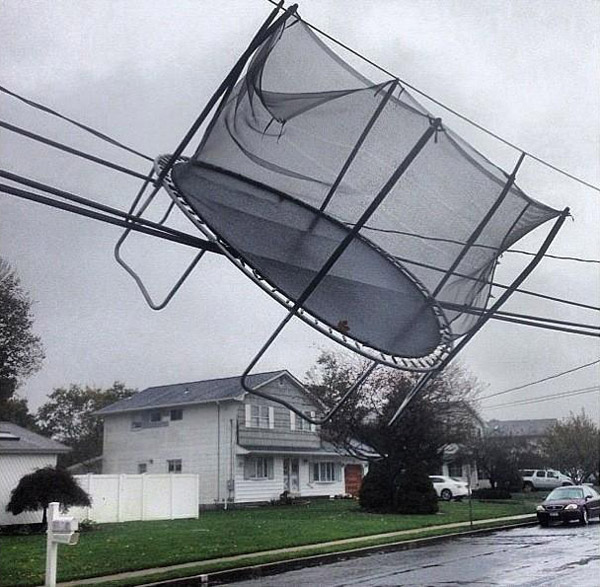
It’s ten o’clock (somewhere). Do you know where your trampoline is?

Flying trampoline. (Photo credited to Twitter user @courtmcmanus)

Can’t say I’m sorry to be missing this storm back home.

All is still fine at our home, Dave says.  (We just chatted on Facetime.) He’s still working away. As am I.

In the meantime, I checked Facebook and thought I’d share this outlandish image from Milford, Connecticut, with my friends here in Ireland.

It’s a little window into what life is truly like in the US of A. I live in a neighborhood a lot like the one pictured.

Stillness

The James River bridge nearly underwater. Image posted on Facebook yesterday by Operation Homefront of the Virginias.

There’s a huge hurricane barreling toward the east coast of Virginia today. Everything there is closed and Dave is hunkered down at home with the kitties.  So that means he’s fixated on the computer screen for the day. Fortunately for my little workaholic, his power supply hasn’t gone out.

We live in the coastal area of Virginia, but our home is six blocks from the water. Since we’re on the mouth of the Elizabeth River rather than the ocean front, we’re not susceptible surges (historically speaking, that is). Our home isn’t in the “100 year flood plain,” although the ones on the next block are.

When Dave did leave home last night to grab sushi for dinner before the big part of the storm hit (that’s how people without kids prepare for a storm, by the way), he came home to find our cat Sienna asleep on his keyboard. He’d been keeping it nice and warm for her!

It’s very, very quite here in Dublin, too, and it feels a lot like hurricane days at home.

Here, it’s a “bank holiday.” Many places are closed. I haven’t left the house. In fact, I only stepped out twice in three days, and just for short jaunts (yoga and brunch).

The weather in Dublin is glum and drizzly. Which is actually okay, as I’ve spent the weekend working up lecture outlines, a Prezi file, a recommendation letter, and transcribing and making some progress on proposals for possible talks and exhibits.

If some of those come through, I’ll get to travel to “the Continent” to speak.  That will be fun!  I’m posting a memory from Rome to rekindle memories of a sunny day in Rome. I’ve been keeping up with the people who commented on the sketch via Facebook throughout the storm. Thankfully even the one who lives on the ocean front (Chris Bonney) is okay at this point. He’s still posting view of the storm….

A photo posted to Facebook by David Waterfield. Taken near Buxton, North Carolina yesterday.

Emergency Catnap!!!
Siena asleep on Dave’s computer yesterday.

A sketch I made in the courtyard of Rome’s Spada Gallery, home to the famous Borromini perspective.