Quintessential Carcassonne

There’s so much I still haven’t shown you–like photos from our June trip to Carcassonne, France.  This town was restored to it’s medieval glory by the very famous architect, Viollet-le-Duc in the mid 1800s.  His work was going on just before the American Civil War.

The place is in tip-top condition.  It reflects Viollet-le-Duc’s best guess as to the walled city’s use and detailing many moons before.  He did quite a bit of forensic analysis in this project!  According to Wikipedia:

Carcassone was founded by the Visigoths in the fifth century, though the Romans had fortified the settlement earlier. The fortress, which was thoroughly restored in 1853 by the theorist and architect Eugène Viollet-le-Duc, was added to the UNESCO list of World Heritage Sites in 1997.

Leading SEFI at the University of Birmingham, UK

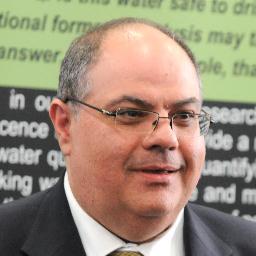
Prof. Kamel Hawwash

Prof. Kamel Hawwash

Last week I travelled over to the UK to visit professor Kamel Hawwash, the incoming president of the European Society for Engineering Education (SEFI).

Prof. Hawwash has done a great deal of  work in attracting and retaining diverse students in engineering, a topic known as “attractiveness” in the UK, and one in which I’m aiming to do more research.

Prof. Hawwash’s SEFI presidency will focus on two main topics:

1) employability and skills

2) attractiveness

We had much to discuss and we met for nearly two hours!  After our meeting, I had a chance to look around the University of Birmingham campus and then explore the city before flying back to Dublin via Ryanair.

Seals of Dalkey Harbor

The picturesque little town of Dalkey is a short DART or bus ride from Dublin city center.  It’ s one of my favorite little towns in Ireland… the architecture is beautiful and the harbor is full of life.  Watching the seals play is always a treat.

Dalkey makes a nice day trip from Dublin… especially when paired with a visit to Dun Laoghaire.  (On Sunday afternoons People’s  Park there is teeming with vendors and activity, and the waterfront is a pleasant place to walk.)

Kids in Merrion Square

There’s always something new and imaginative going on in Dublin.

Just before I left for Rome, I had a meeting at the Irish University Association building on Merrion Square.  Walking through the park after my meeting, I got to see workers setting up for weekend events for kids.

The the menagerie wire animals and the tree covered in a giant sheet fascinated me.

Dublin Castle

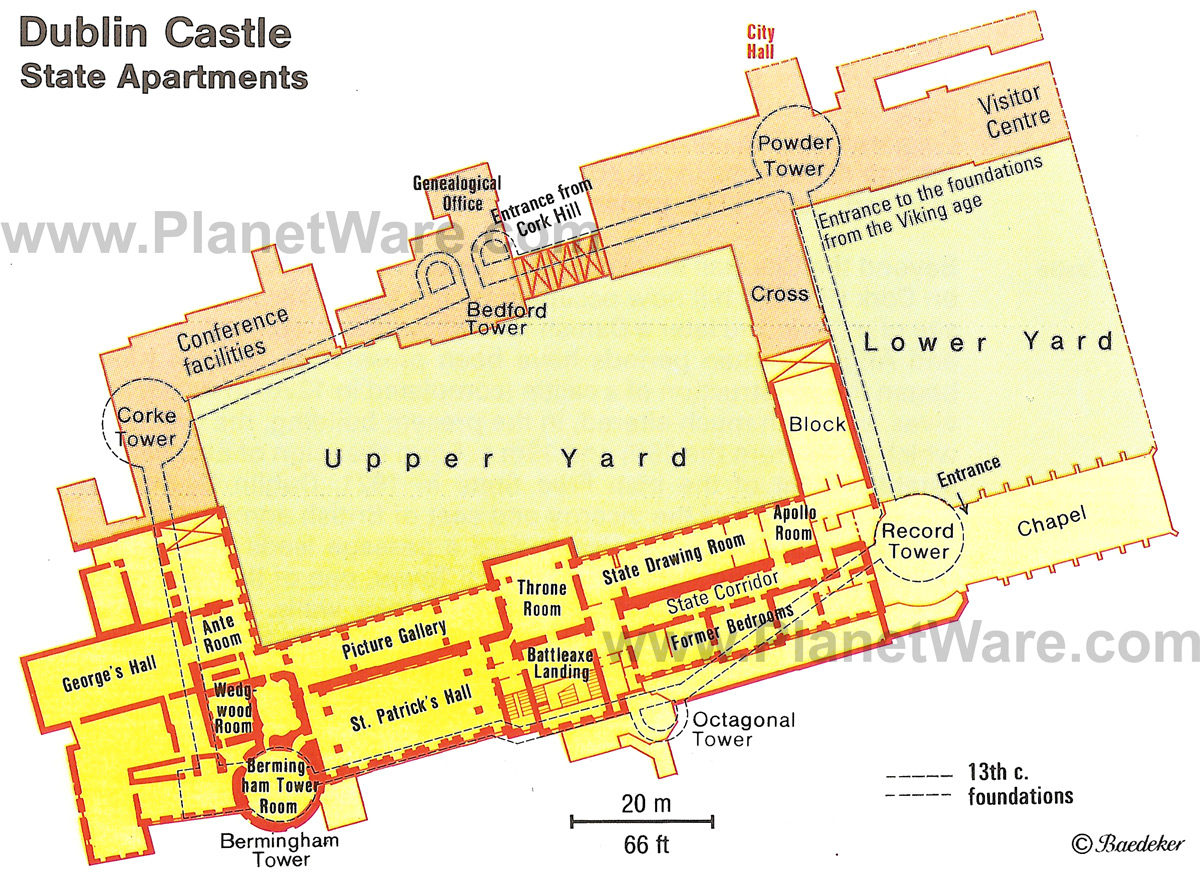
Here’s what Dublin Castle looks like….

Fulbright events were held in the Throne Room, Picture Gallery, an St. Patrick’s Hall.

Black Tie at the Castle

The 2013 Fulbright scholars banquet was a rare treat.  We dressed in gowns and tuxes and dined at Dublin Castle.  I didn’t get the greatest photos, but my snapshots provide a glimpse into the festivities….

Undercover in Rome

Many thanks to Daisy for inspiring me to draw so much on my trip to Rome… we have always been very productive at sketching when we travel together. In this post, I’ve included photos of one of our many dinner outings.

On my last  night in Rome, Daisy and I headed over to Trastevere–stopping for a glimpse of the basilica (dedicated to Santa Maria, where mass was in session) before heading on to our favorite dinner spot.  As is generally the case when Daisy and I are traveling with architecture students, we  brought our sketchbooks along to discuss.

I’ve included photos of Daisy’s beautiful work, that caught the attention of our waitress.  She studied every page!

Daisy’s area of expertise is architectural representation, as is evident in her drawings!  Mine, on the other hand, is educational research… that’s what I presented to Daisy’s students in the lecture I delivered.

As a result of our exchange, I woke up inspired to draw on my last day in Rome.

It was hot, hot, hot, though.  I had to sketch quickly to keep ahead of the heat!  By the afternoon, the sky opened up and the rain poured down.  Thankfully our fore bearers built plenty of sheltered spots in Rome that have lovely views!  I made three sketches on my parting day–two are shown below.

Reshaping a Roman Site

I’m wrapping up my week as “Scholar in Residence” for the University of Oregon’s study abroad program in Rome. It’s been a fun and informative learning experience.

I’m posting images from the studio review we had on Thursday, to give you an idea of what it’s like to be an architecture student or professor.

These students have completed second year of a five-year professional degree program (leading to the Bachelor’s of Architecture degree). They will start third year in the fall.

They’ve done some very nice design work so far in their three-credit architecture studio class in Rome. Their site is an embankment wall, built in the late 1800s to keep the Tiber River from flooding the city as it has done for centuries.

According to Wikipedia:

The Tiber was once known for its floods — the Campus Martius is a flood plain and would regularly flood to a depth of 2 metres (6 ft 7 in). The river is now confined between high stone embankments which were begun in 1876. Within the city, the riverbanks are lined by boulevards known as lungoteveri, streets “along the Tiber.”

Penciling in Rome

Headed out for breakfast and a day of exploring in the breeze and sunshine of Rome.  Yesterday’s rain cooled the city down, and it’s amazingly comfortable today.  Hoping to get some more sketching in today.

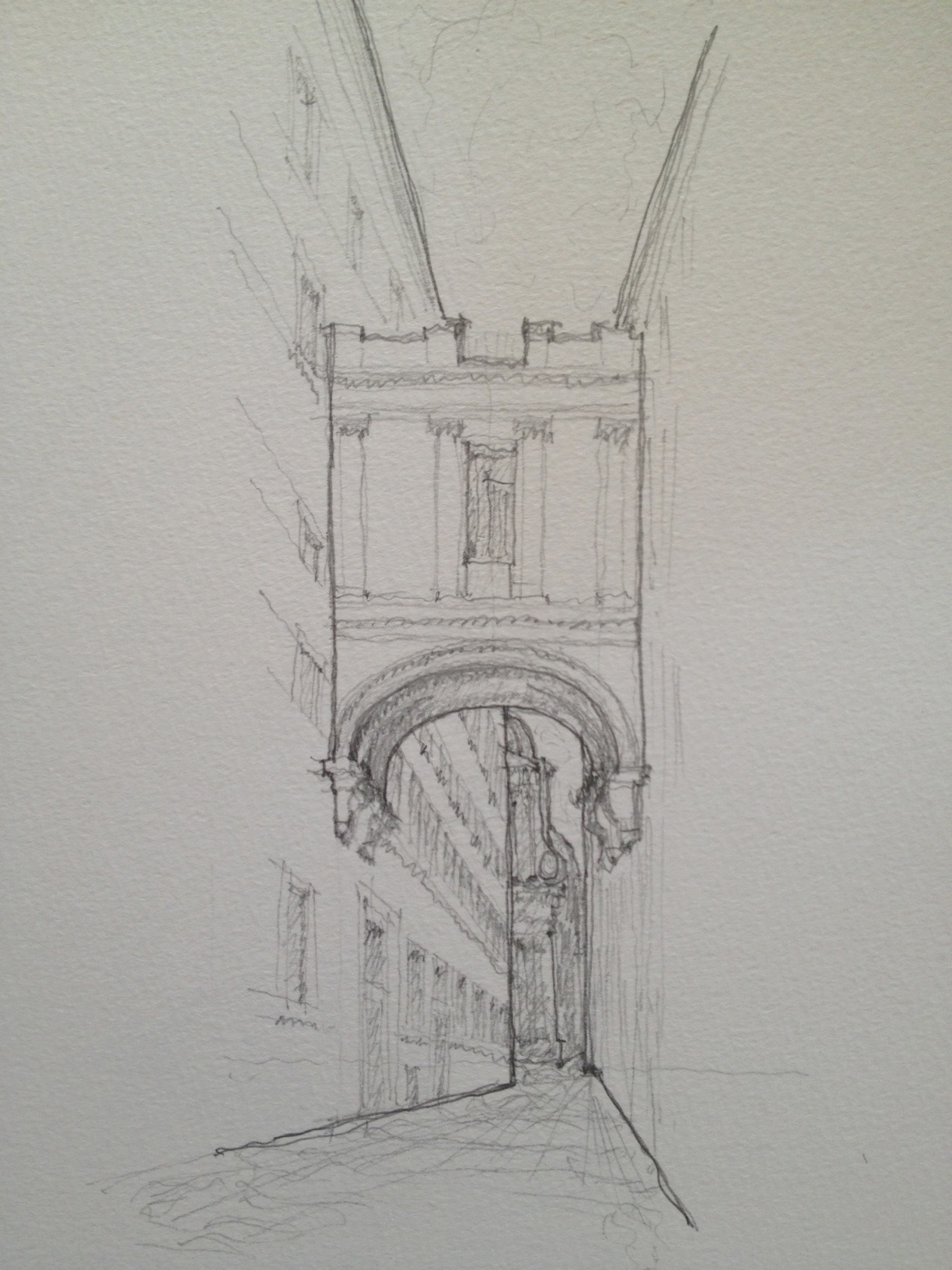
Via dell'Arco del Monte

Via dell’Arco del Monte


Roman Dreams-Come-True

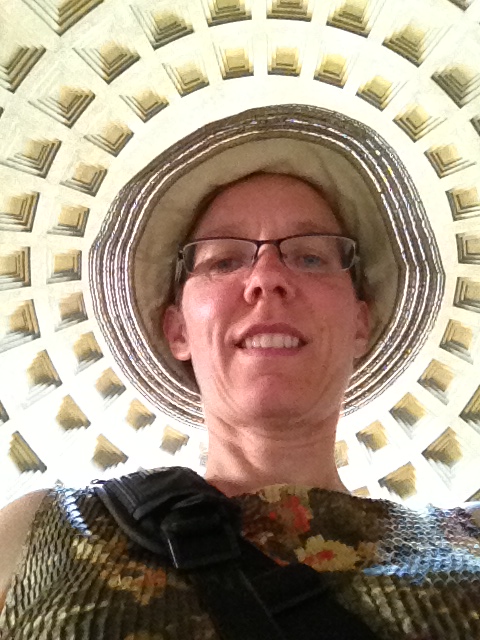
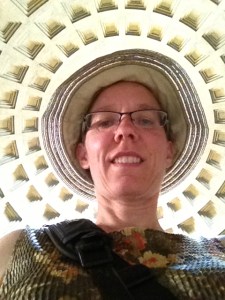
...on my way to the Pantheon (my favorite building in the world!)

At the Pantheon

After sketching yesterday morning, I spent almost all of the day editing the article we hope to have published in the Journal of Engineering Education.

I was inspired by emails that Mike Murphy, Eddie Conlon, and I received from the editor of the book we’ve written a chapter for.  He emailed us:

The chapter is a very timely, central and relevant chapter for Springer vol II. It would also have fitted nicely into vol I section I. The chapter has a clear, logical, and coherent structure, is well written and very interesting to read. In particular in clarifying the confusion surrounding the engineer and engineering technologist distinction the chapter provides new and useful insights. Moreover there is a good integration between theoretical positions mentioned in the introductory framing of the identity issue and the remaining part. Research problems and methods are clearly stated.
...where I nearly got clubbed by a Roman!

I nearly got clubbed by a Roman!

The chapter is accepted for publication in its present form. Congratulations.

and then the next day:

Your chapter is very good and there is absolutely no reason to change anything. My congratulations to you and your co-authors. Well done.

These messages were a dream come true!  They helped keep me focused through many hours of editing yesterday.

At 4:30 PM, I headed out for a tour of the Villa Farnese, a sandwich and ice cream (I hadn’t eaten since breakfast), and a little stroll through the city.

I haven’t shown it here, but I strolled past the site I often use for projects with my Hampton University students. There’s been construction activity on the site for the past two years, because a parking garage was planned. For years, they’ve been excavating here (because there are Roman ruins under the ground everywhere here and they have to study and document them). The signage surrounding the site is now different from it was last summer and last September (when I last visited). I’m hoping this change means someone important decided against installing a parking garage; it would be a travesty to put such a structure on Via Gulia!