Supporting African Cultures talk

I’m going to be giving a lecture today–November 6 at 5:30pm, Room 281 Bolton Street, Dublin 1–on “Supporting African Cultures through Architecture.” This is part of the lecture series for 4th and 5th year architecture students but the topic should be of interest to others as well and all are welcome to attend.  A description of the talk is below the photos.

Images from Tanzania (copyright Shannon Chance).

Supporting African Cultures through Architecture

Knowledge of Africa’s heritage and accomplishments is woefully lacking in the media today. The tendency to leave Africa out of the literature on architecture and planning hinders designers everywhere. It denies them access to specialized information that could help construct better environments. Their failure to understand the subtleties of various African cultures often results in modern construction – particularly that funded by foreign donors – that does not effectively meet the needs and interests of the people. Even architects, spatial planners, and policy makers who live in Africa lack access to research that could help them make better choices.

This trend presents a quandary: How can one contribute to improving quality of life around the world, without imposing values that harm others? A poor response is to avoid getting involved. Doing nothing only perpetuates inequities of health, wealth, and personal freedom.

This presentation discusses the work of Livin Mosha and Shannon Chance, two scholars working to generate this type of information. As architects and educators, Chance and Mosha share an interest in: understanding the heritage of African places, constructing a cross-cultural dialogue, developing a vision for the future, and translating the voices of Africa to others. Their goal is to promote cultural-specific architecture, planning, and policy in East Africa and beyond. This talk describes their findings and their recommendations for the future.
Rites of Passage

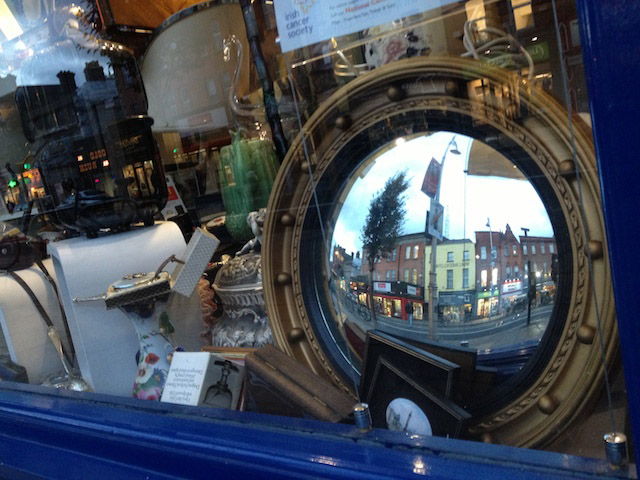
A reflection I passed on the way to the retirement event.

Rituals help an organization determine and reinforce its collective values.  The stories that are told convey what’s most important. They help pass core ideas from one generation to the next.

The things that are said and the places where these rituals are held are embedded with symbols that suggest what is central and important to the community.

The DIT has few rituals as an institution– the Institute is a collection of long-standing colleges that came together not so very long ago (1992, to be exact). It hasn’t had much time for such rituals to develop institute-wide.

The schools and departments within the DIT, however, maintain a number of very important rituals that help reinforce what these units stand for and communicate what the people in them cherish.

Speeches in Kevin Street’s penthouse “canteen.”

I got to attend one such ritual Friday evening. It was the retirement celebration for three Lecturers from the Electrical Engineering program. For each retiree, a colleague reminisced, sharing thoughts and telling stories. Each retiree spoke as well.

As an outsider, this was a very interesting event to behold. I learned much more about the community here.

After the formal reception and the speeches, most of us headed to a nearby pub.  The photos show faculty deep in discussion and others hamming it up.

It’s important for an organization to take time to reflect in this way–to celebrate what it considers to be accomplishments and to recognize contributions of its members.

Dave’s retirement speech thanked the family who donated a heart to him. His transplant was so successful that he could ham it up with “Father” Ted after the formal events.

Kevin Street colleagues deep in discussion.

Nephews!

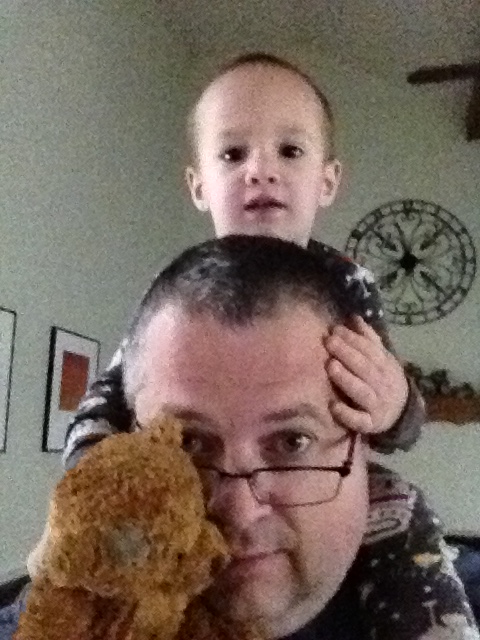
Uncle Dave has been holding down the fort back in Virginia and spending plenty of time with the nephews we so dearly love. Here’s Dave with his Godson, David.

Dave and David

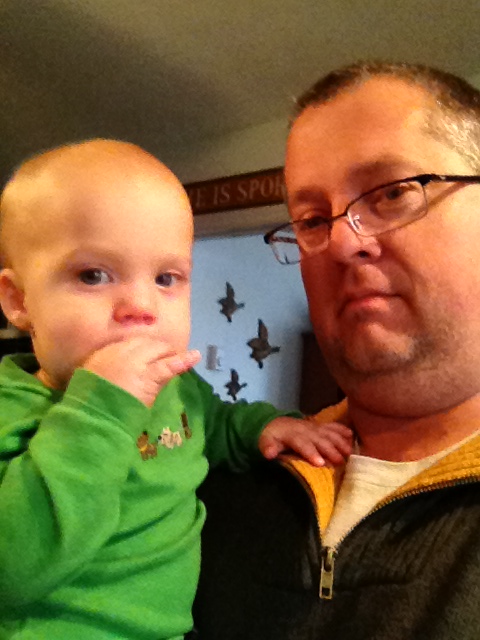
Today Dave also texted me photos of him with David’s brothers, Christopher and Tommy.

Dave and Christopher

Dave and Tommy

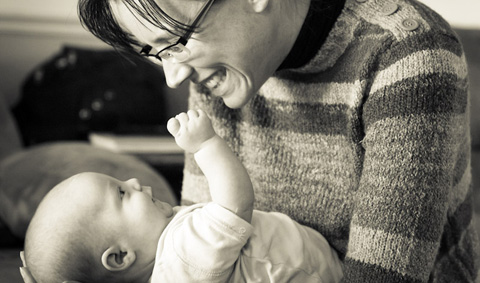
Tommy is growing up so fast.  Here’s a picture of me snuggling with him last winter. I really look forward to seeing all these boys at Christmas!

Shannon and Tommy, last winter.

Schools of Thought–Lecture Announcement

The Architecture Student Association (ASA) at DIT has announced the first of its Schools of Thought events. The ASA has two lectures focusing on the Architecture Student planned for this week.

  • Maxim Laroussi of Architecture Republic will be speaking about his culturally diverse education as well as the importance of a year out at some point in your education.
  • Shannon Massie Chance, DIT’s 2012 Fulbright Scholar in Engineering and Design Education, will be giving a talk about her research work–broad investigation into the workings, flaws, and triumphs of architecture schools.

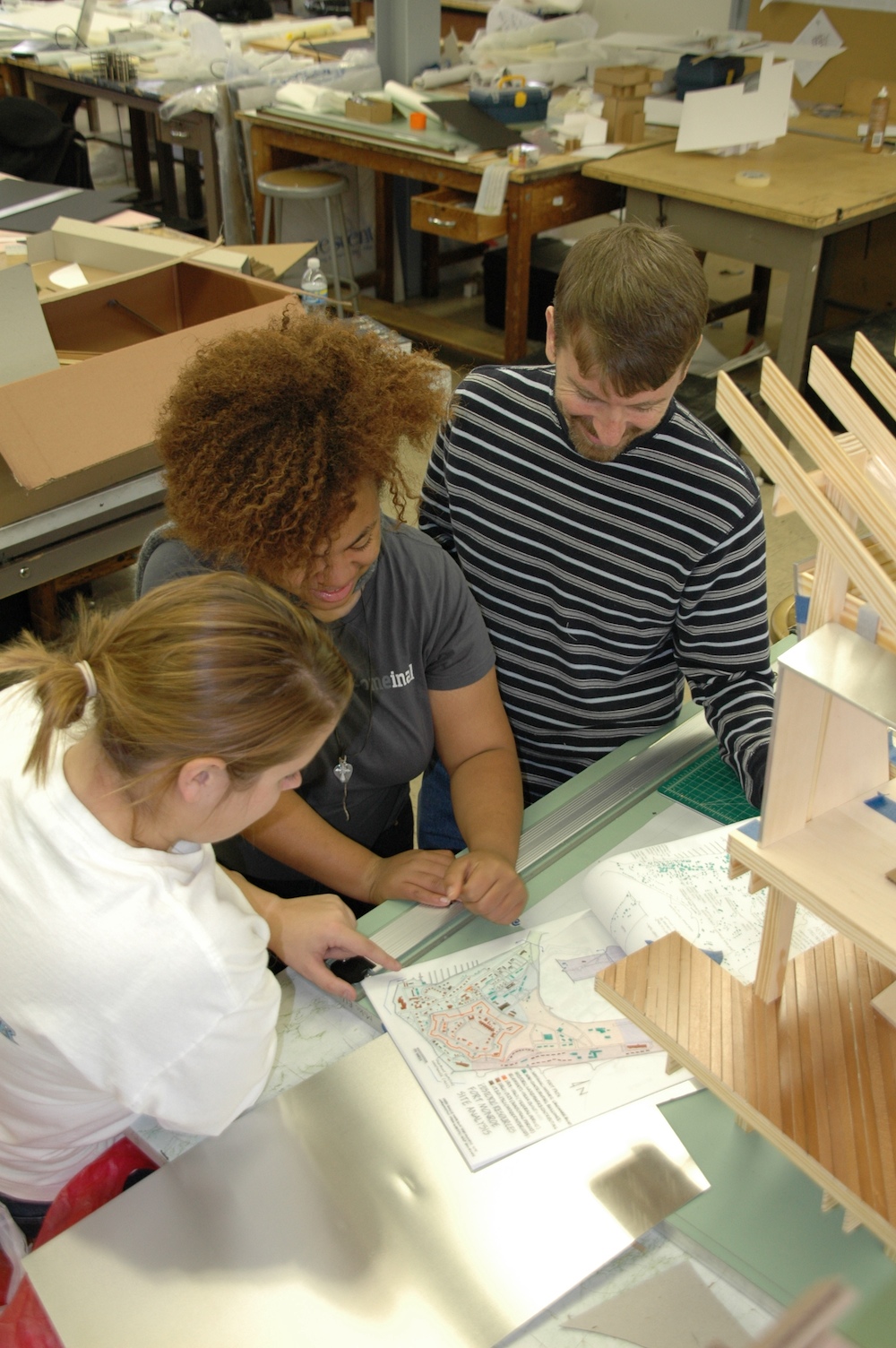
An image from Shannon Chance’s upcoming lecture on student-centered teaching. The students pictured are Hampton University’s Dana Cook, Danielle Dunn, and Mike Ellingson.

5pm
Wed 7th November
Room 281 Bolton Street (Dublin, Ireland)

The event is free and open to the public.

Putting this Wonk to Work

Discussing organizational change theory and its applicability to the College of Engineering and the Built Environment with Drs. Brian Bowe and Mike Murphy.

I’m such a wonk!

I’m elated that I got to put my training in “educational policy, planning and leadership” to work today!

I met over lunch with the Head of Learning Development and the Dean and we discussed possible strategies for helping adopt Student-Centered, Inquiry-Driven teaching practices college-wide. Our intent is to shift the focus in the classroom from the teacher to the learner.

It’s almost everyday that I get to use the research and the educational theory parts of my PhD studies.  But it’s rare that I get to contribute an educational planning and change-theory perspective to actually helping develop strategy.

I’m thrilled to be able to contribute to this important effort. And proud I’m that I can bring what I learned at William and Mary to the discussion table.

I’ll also get to discuss these ideas next Wednesday, when I speak at a student-organized seminar in the School of Architecture.

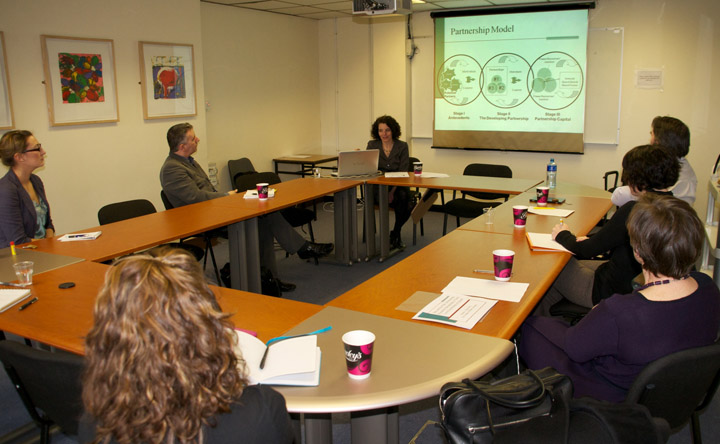
Dr. Pam Eddy’s lecture on Partnerships in Third-Level Education in Ireland. Delivered March 2011.

Today, I’m posting a photo of lunch and another of the biggest “policy wonk” I know:  W&M professor Pamela Eddy.

This blog goes out in her honor.

Thanks, Pam, for cluing me in to levers for change (Fowler, 2009). I was able to put that on the table for discussion today–all due to you.

Pam’s work includes the books Partnerships and Collaboration in Higher Education and International Collaborations: Opportunities, Strategies, Challenges and Community College Leadership: A Multidimensional Model for Leading Change. There’s an interview with her posted on Vimeo.

I should also acknowledge Drs. Leslie and Finnegan.  I used  a great deal of what I learned from David Leslie, emeritus professor at W&M, today.  And, in my discussions with Gavin over the past few days, I’ve drawn heavily from the paper I wrote in Dot Finnegan’s Cross-Disciplinary Perspective class.

W&M professor Dot Finnegan.

W&M emeritus professor David Leslie.

Why Hello Fellows!

Delivering the keynote.

DIT’s Learning, Teaching and Technology Centre (LTTC) kicked off its annual Teaching Fellowships yesterday, and I got to help celebrate the event by distributing awards and delivering the keynote address.

The very first keynote of my life!  Imagine that!

And the audience seemed to genuinely appreciate what I had to say about “Transformational Education at the DIT.”

(Okay, so there were just 22 or so people in the room, but I think the 22 of us got something valuable from sharing ideas. But there were also 17 in the room when I spoke at Tuesday’s College Education Seminar so, considering transcribing and speaking, I can honestly say I’ve earned my keep this week.)

Each of the Fellowship winners described his or her project during the event. They all had strong proposals and showed promise to produce the same kind of wonderful effects that Gavin did with his 2009 Teaching Fellowship.

I’m very proud to have been part of the program.

I’ve included photos of some of the incoming Fellows, and a few other shots of my day.

This was the first time I got to meet the Gavin’s dissertation supervisor, Rob Howard, and to discuss preliminary research questions with him.

I also got in a bit of walking–before rain set in and sent me biking across town (in my business suit) as fast as my little legs could take me.

Not safe. Biking in Dublin is very much not safe. Particularly in the rain.

So I ditched my Dublin Bike part way back (at a docking station, of course). Then I headed for groceries and trudged the rest of the way home by foot.

Thanks to Hot Yoga for thawing my bones and picking my spirits back up!

Night Owl

Tea with Richard Hayes, Gavin Duffy, and Brian Bowe after the College Education Seminar wrapped up.

Happy Halloween!  I just got a call from Trish Long, who leads Disney’s branch here in Ireland.  We met at Zumba class at the elbowroom a couple of weeks ago.  She called to invite me to RTÉ Concert Orchestra: Psycho – Live! Hallowe’en Night at The National Concert Hall in Dublin.

What an awesome way to follow up yesterday’s seminar and last night’s musical evening at the Cobblestone.

At the Cobblestone, I got to hear Tom’s brother, Alfie, play alongside three of his kids.  Alfie’s daughter (seated to the left in the video) is studying Medieval Irish History and Architecture. She’s a student at Trinity College, and an excellent candidate for a Fulbright, I’d say.

Enjoying music and good conversation, with Nancy Stenson, Susan Early, and Joan Cahalin. Tom Mulligan is there, too, in the background.

Just as a crowd of instrument-carrying appeared to join Alfie’s family in the musicians corner, a bunch of my friends showed up, too. I spent a lovely evening talking with Fulbright Nancy Stenson and architects Joan Cahalin and Susan Early.

Nancy and Joan both have degrees in linguistics, so we got to discuss Nancy’s research (she’s diagnosing where students have the biggest problems with Irish pronunciation in order to help teachers teach Irish more effectively). Nancy has authored several textbooks on Irish language already, though she never mentions it herself.  I always do–because it’s fascinating!

When they left, I visited with three generations of a family from Brooklyn who are celebrating birthdays this week (one turning 21, one 50, and one 92)! They were there along with a relative from Dublin. I can’t believe how good life has been to the lot of us!

Error
This video doesn’t exist

Stillness

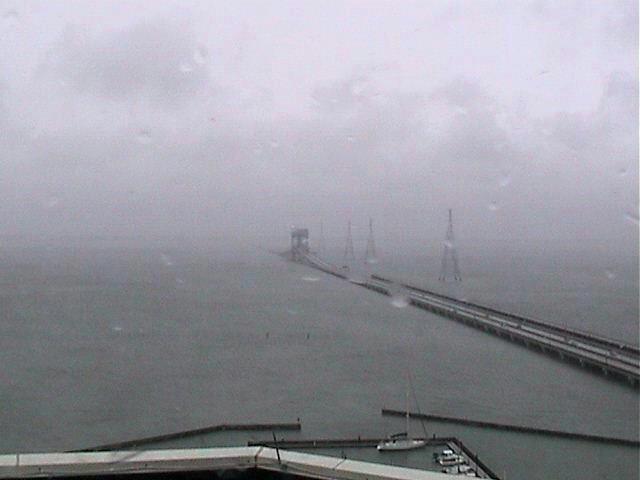
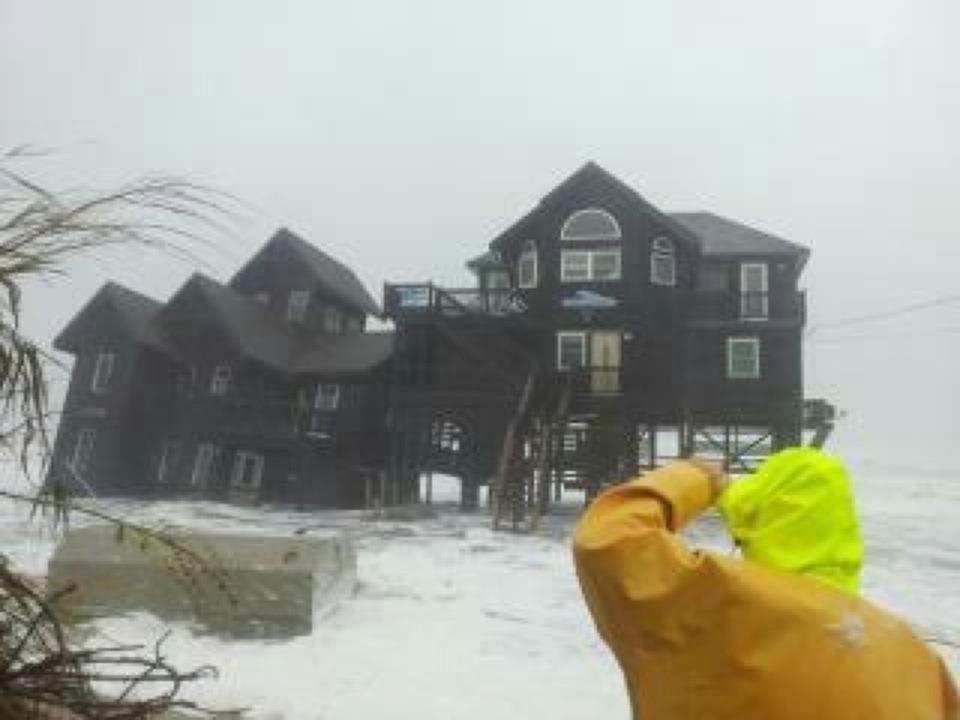
The James River bridge nearly underwater. Image posted on Facebook yesterday by Operation Homefront of the Virginias.

There’s a huge hurricane barreling toward the east coast of Virginia today. Everything there is closed and Dave is hunkered down at home with the kitties.  So that means he’s fixated on the computer screen for the day. Fortunately for my little workaholic, his power supply hasn’t gone out.

We live in the coastal area of Virginia, but our home is six blocks from the water. Since we’re on the mouth of the Elizabeth River rather than the ocean front, we’re not susceptible surges (historically speaking, that is). Our home isn’t in the “100 year flood plain,” although the ones on the next block are.

When Dave did leave home last night to grab sushi for dinner before the big part of the storm hit (that’s how people without kids prepare for a storm, by the way), he came home to find our cat Sienna asleep on his keyboard. He’d been keeping it nice and warm for her!

It’s very, very quite here in Dublin, too, and it feels a lot like hurricane days at home.

Here, it’s a “bank holiday.” Many places are closed. I haven’t left the house. In fact, I only stepped out twice in three days, and just for short jaunts (yoga and brunch).

The weather in Dublin is glum and drizzly. Which is actually okay, as I’ve spent the weekend working up lecture outlines, a Prezi file, a recommendation letter, and transcribing and making some progress on proposals for possible talks and exhibits.

If some of those come through, I’ll get to travel to “the Continent” to speak.  That will be fun!  I’m posting a memory from Rome to rekindle memories of a sunny day in Rome. I’ve been keeping up with the people who commented on the sketch via Facebook throughout the storm. Thankfully even the one who lives on the ocean front (Chris Bonney) is okay at this point. He’s still posting view of the storm….

A photo posted to Facebook by David Waterfield. Taken near Buxton, North Carolina yesterday.

Emergency Catnap!!!
Siena asleep on Dave’s computer yesterday.

A sketch I made in the courtyard of Rome’s Spada Gallery, home to the famous Borromini perspective.

Irish–the Language of Intrigue?

Jonathan Kennedy–a friend studying Irish language and music in Galway–posted a link to a fun Carlsberg commercial. (Just click the link to view the video.)

Semper Ardens Abbey Ale by Carlsberg.

Added Value–What Happens When You Blog Instead of Tape Record

Máirtín sent me some updates to our conversation today, after reading the blog.  This is the kind of conversation and cultural exchange that I think the Fulbright program is all about.  These are Máirtín’s words:

Order here: Bungalow Bliss. Mairtin downloaded this image from Flicker.

Diane Hamilton (Guggenheim) was the wealthy American that brought Liam Clancy to America, who later appeared on a 20 minute slot on the Ed Sullivan Show in 1961. They achieved fame as ‘The Clancy Brother’s & Tommy Makem’.

It wasn’t just womens’ names, the tradition was that the first child would be called after the mother’s people, giving us names like Bradley, Harrison, Stewart, Rawson, Carroll, and so on and so forth as first names.

This tradition comes from the Ulster Presbyterians, or now Ulster Scots, from the North. There is an Ulster Scots Heritage Park between Strabane and Omagh in Co. Tyrone. In an intersting link to the Blue Ridge Mountains many of the Ulster Scots had the first name ‘William’ after William of Orange, William the Third of Great Britain, victor of the Balltle of the Boyne. So many of them lived in the mountains this is believed to be the origin of the term ‘Hill Billies’.

This is the Book, believed to have brought more shame to Ireland than @Ulysses’.

Bungalow is a Hindi word. In my opinion is that the Irish bungalow is a vernacular version of the traditional cottage. When John Ford made ‘The Quiet Man’ in the west in 1951 he was looking for a perfect Traditional thatched cottage to act as John Wayne’s character’s house ‘White O’Morn’. They found one near Maam Cross. When they were finished, they paid the owner a wedge of money, who used it to build a new house, and demolished the original. What is left has been pilfered by souvenir hunters.

Mairtin sent this image of Dan O Herlihy. IMBD says “Dan OHerlihy, Actor: RoboCop. Irish-born Dan OHerlihy decided not to follow in his father’s footsteps, forsaking the life of an architect in favour of the acting.”

I also meant to say that another famous (kind of) architect who became an actor was Dan O Herlihy, from Wexford, who qualified as an architect from UCD and went to Hollywood to become an actor. His most famous role is probably ‘The Old Man’ the head of the evil OCP Coproration in ‘RoboCop’ (1987). I hope you’ve seen it, if not I can lend it to you; a biting satire of Reagan era economics.

He is the father of Lorcan O Herlihy, a well known Los Angeles based architect.

The Director of ‘What Richard Did’ is Lenny Abrahamson, who also directed ‘Adam & Paul’ and ‘Garage’. Very good, but not ‘Feel Good’. Don’t watch on a Sunday night when you have the fears……