Scholarly, useful research is the name of the game in Europe!
These are the standards for research published in the European Journal of Engineering Education (EJEE), and they serve as a good guide for researchers in general.
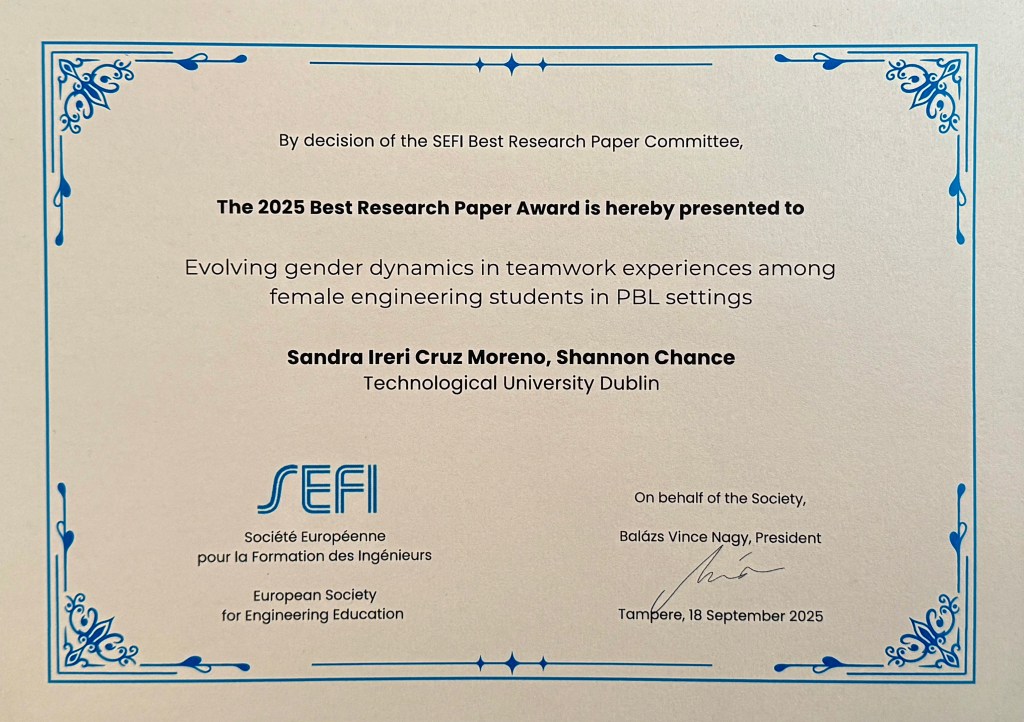
This post sheds light on what makes a conference paper stand out. It shares the story of soon-to-be-Dr Sandra Ieri Cruz Moreno, who won the top research award from the European Society for Engineering Education (SEFI) in 2025.
SEFI’s special interest group on Engineering Education Research featured the work Sandra and I have done last week, in an online workshop, and the information is worth sharing more broadly — so here it is!
Workshop overview
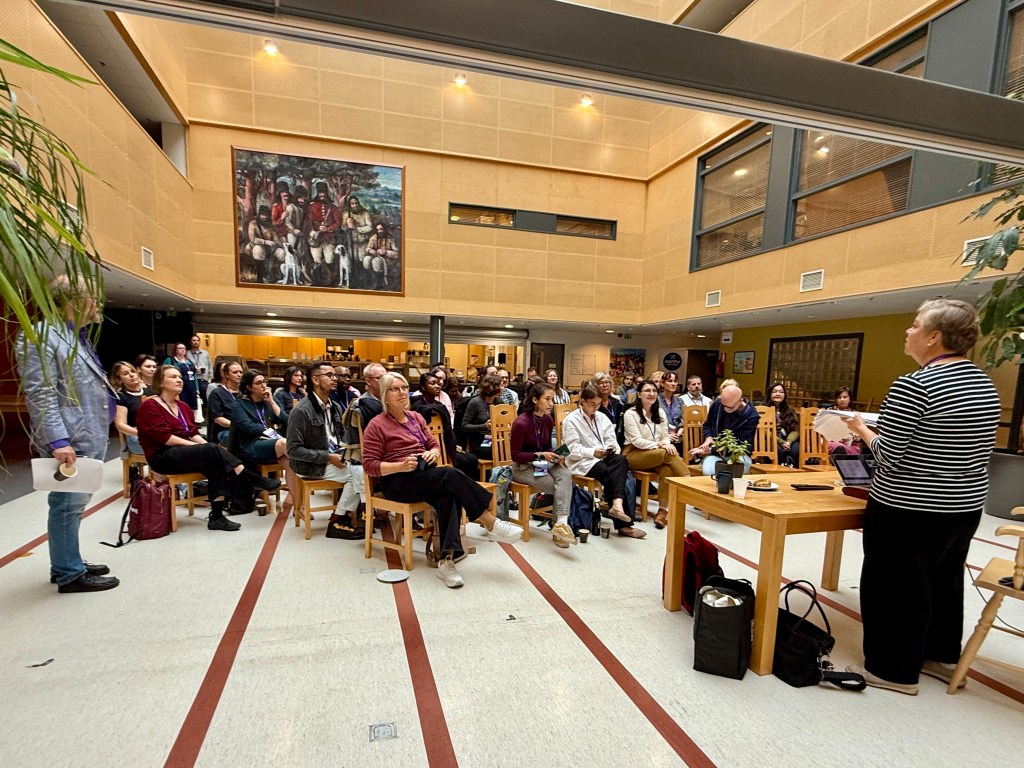
Last week, Sandra (my PhD supervisee) and I presented this workshop as part of the SEFI@work learning series. We reported on one strand of Sandra’s PhD thesis research.
During the workshop, Sandra engaged the audience with questions about their own research to help transfer the successful part of our experience to the researchers who attended.
The workshop was great practice for Sandra’s viva voce (called a ‘dissertation defense’ in the USA), scheduled for March 10.
Unfortunately, vivas are closed-door events in Ireland. That means our colleagues can’t attend, so this online workshop was the main way to let our SEFI community know about the amazing work Sandra has done.
I reported on the overall SEFI conference and my surprise and elation at winning this award in a September blogpost.
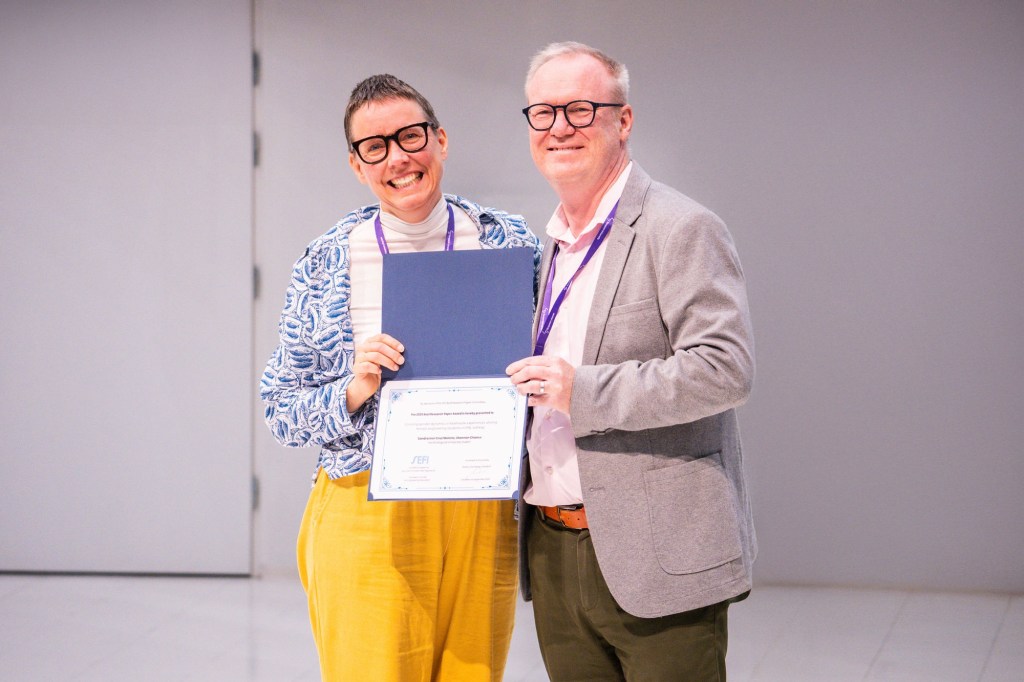
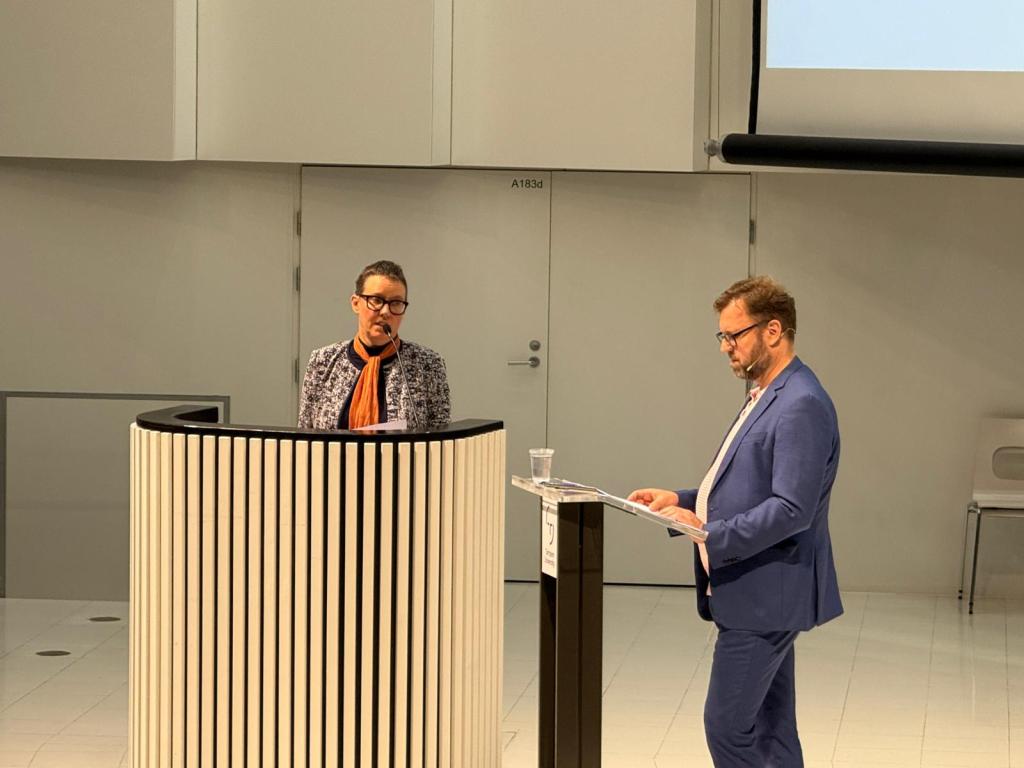
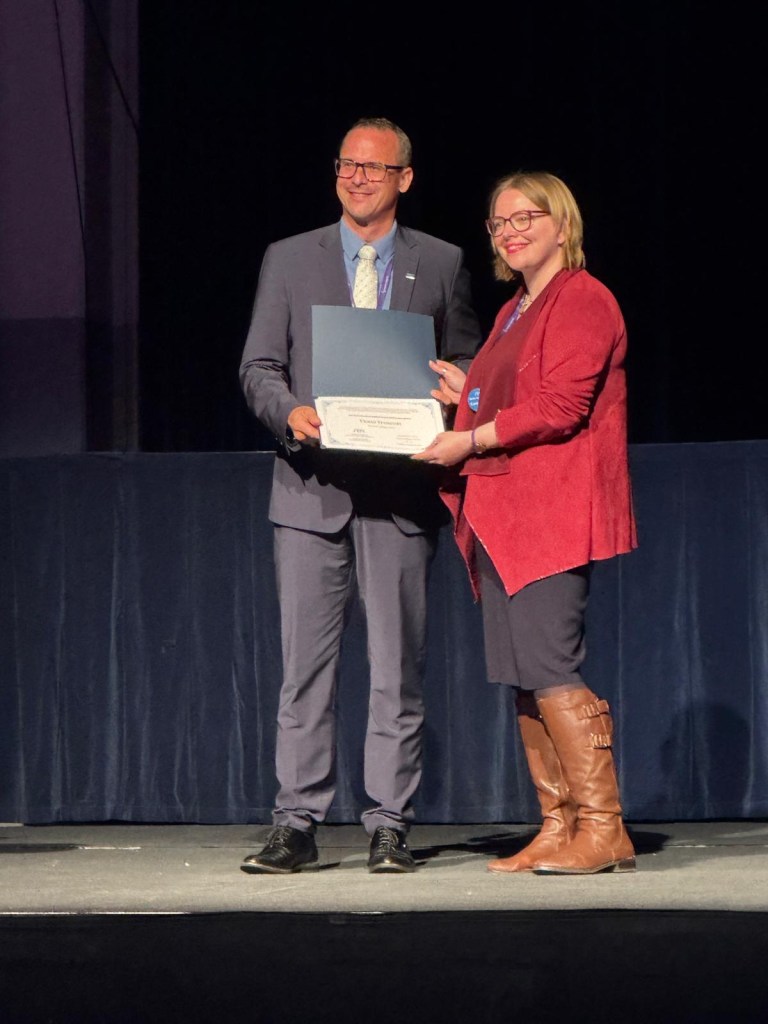
I accepted the award on Sandra’s behalf at SEFI 2025.
Now, the organizers of the online workshop asked us to share some secrets to our success. That was tricky!
SEFI advertised widely, and over 80 people registered to attend.
We hadn’t set out to win an award, just to make a scholarly summary of part of Sandra’s thesis study!
Although it felt intimidating to explain how to win, we went in with the confidence that the paper had been nominated in all three categories it was eligible for last year, and each category has a separate panel of judges.
We were beyond delighted — and completely surprised — to win.
It helped reassure us that the thesis research was ready to wrap up and report.
Workshop content
You can watch a video of the workshop, to hear in Sandra’s own words what is most interesting and valuable about her work and her research process:
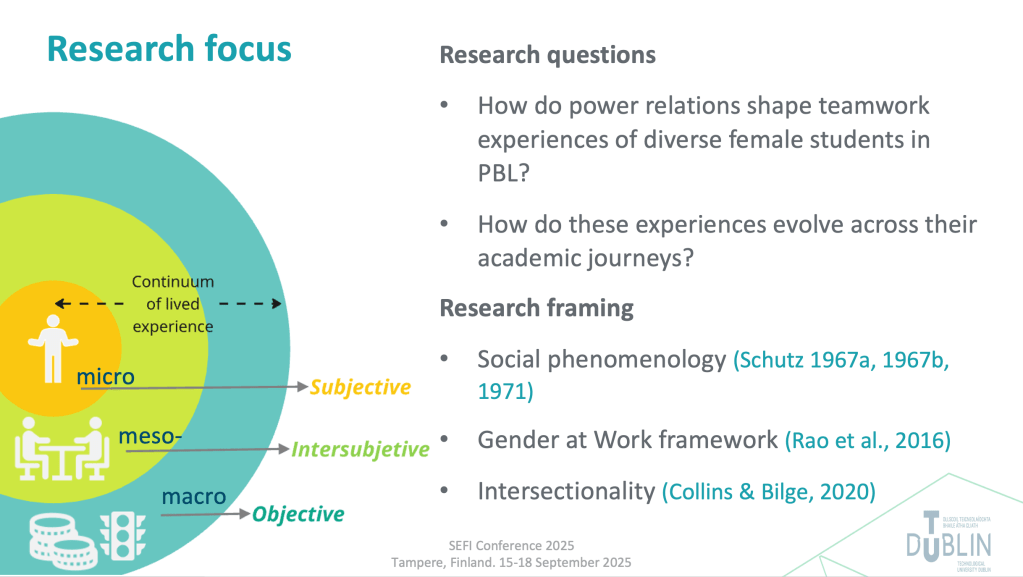
And you’re able to download Sandra’s slides, to jump straight into the content, by clicking here:
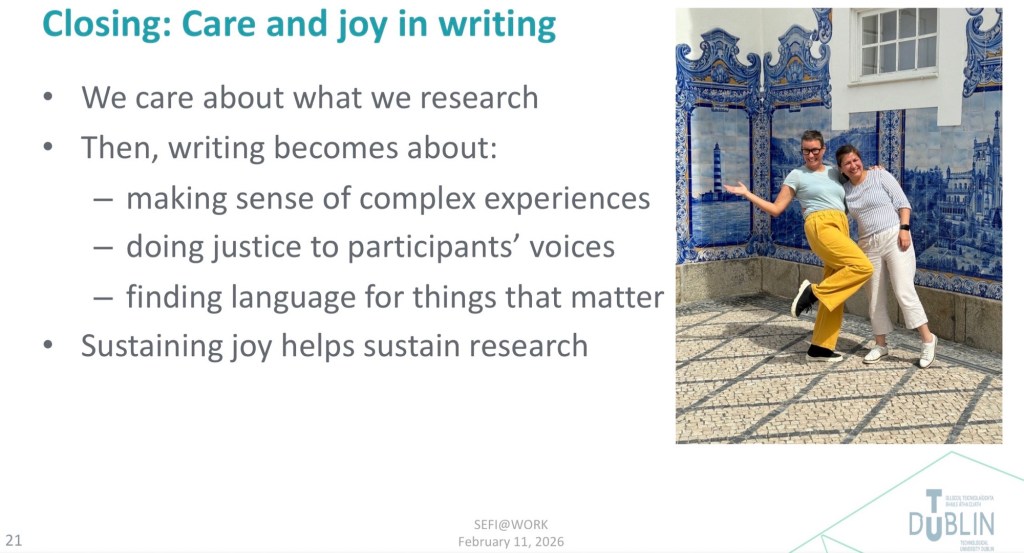
One slide from Sandra’s presentation.
Sandra’s achievements
I couldn’t be prouder of Sandra and all she has accomplished in four short years. Since starting her doctoral studies in January 2022, she has delivered two babies into the world and developed an award-winning research study and a fully written thesis.
Sandra’s special contributions include introducing sociological techniques and perspectives into engineering education research. She has broadened the focus of our discourse on the usefulness and applicability of phenomenology as a research method, and she has shed valuable new light regarding the experiences of female students in our engineering courses at Technological University Dublin.
The findings of her PhD research hold applicability well beyond TU Dublin, however. They show us how the social dynamics of teamwork evolve over time — how students develop meaningful friendships that help them personally and professionally.
Sandra used the “Gender at Work” framework to better understand students’ experiences with Problem-Based Learning and other collaborative learning approaches. Using this framework, she found that the 22 women I’d interviewed (longitudinally over a period of four years):
had experienced uneven access to engineering content before entering university,
lacked female engineers in their families who could serve as role models,
experienced some biased team dynamics that influenced what jobs got assigned to whom by the team, and that the need to prove themselves on teams grew less but nonetheless persisted across their four-year matriculation, and
received increased recognition for their credibility over time, which helped them challenge stereotypes and shift team dynamics in a favorable direction.
Sandra’s SEFI 2025 paper complemented papers we’ve published and presented at earlier conferences, including:
Soon, you’ll be able to read Sandra’s final thesis and learn about the impressive contributions she has made to the literature and to the engineering education research community.
I am honored to call Sardar Cruz Moreno a friend and colleague. I look forward to calling her “Dr” and to watching her flourish in the coming years!
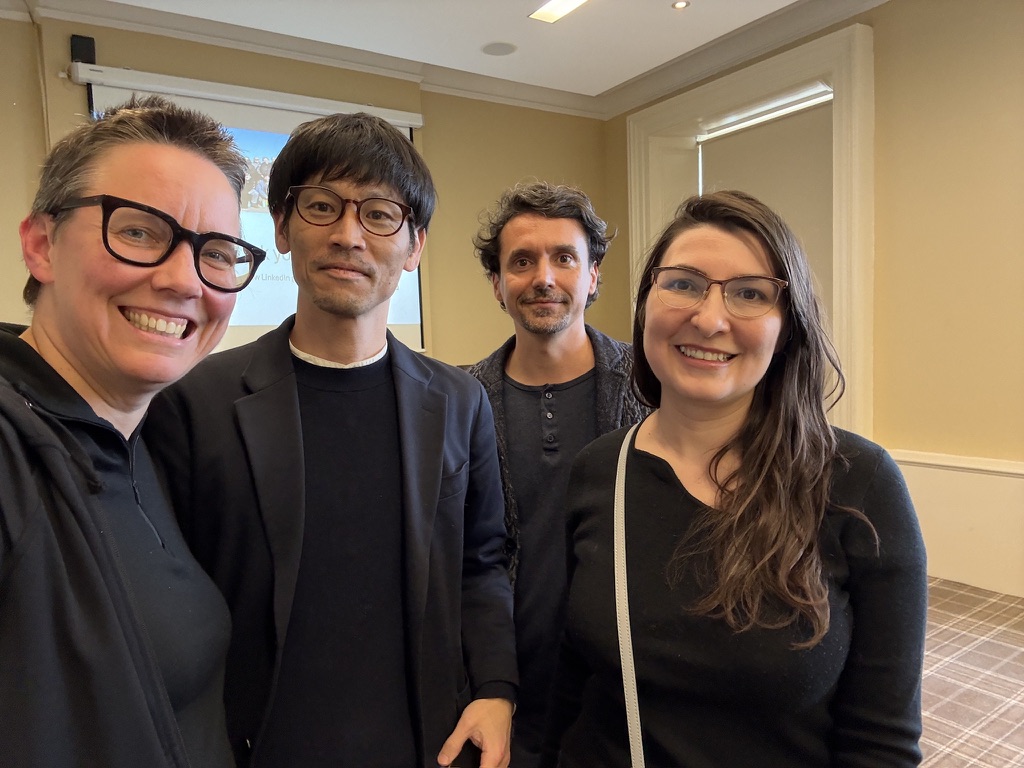
I’d like to share recent social media posts by my colleagues/past students/friends — their perspectives on transcontinental collaboration are unique and valuable! Thanks to Mia Dukuly, Violet Maufuwe, Tarrah Beebee, and Shinya Takehara for taking the time to reflect, document, and publicly share your experiences.
Tanzania
The first three of these — Mia, Violet, and Tarrah — participated as students in a Fulbright-Hays Group Project Abroad that I led to Tanzania in 2005.
We spent five weeks in Dar es Salaam, studying alongside Tanzanian architecture students and teachers. Several of the students forged lifelong friendships (and some even marriages) with other members of our 63-person study group (25 students and teachers from the USA, 38 students and teachers from Tanzania).
I didn’t establish this blog (IrelandByChance.com) until 2012 (seven years after that trip, when I went on my own Fulbright fellowship to Ireland). Nevertheless, several of my past posts have mentioned aspects of that 2005 study abroad program:
Also of interest is the post Trend Shifters and Hip Young Urbanites, featuring Donald Roman, a student of mine from Hampton University who participated in the 2005 Fulbright-Hays trip as well.
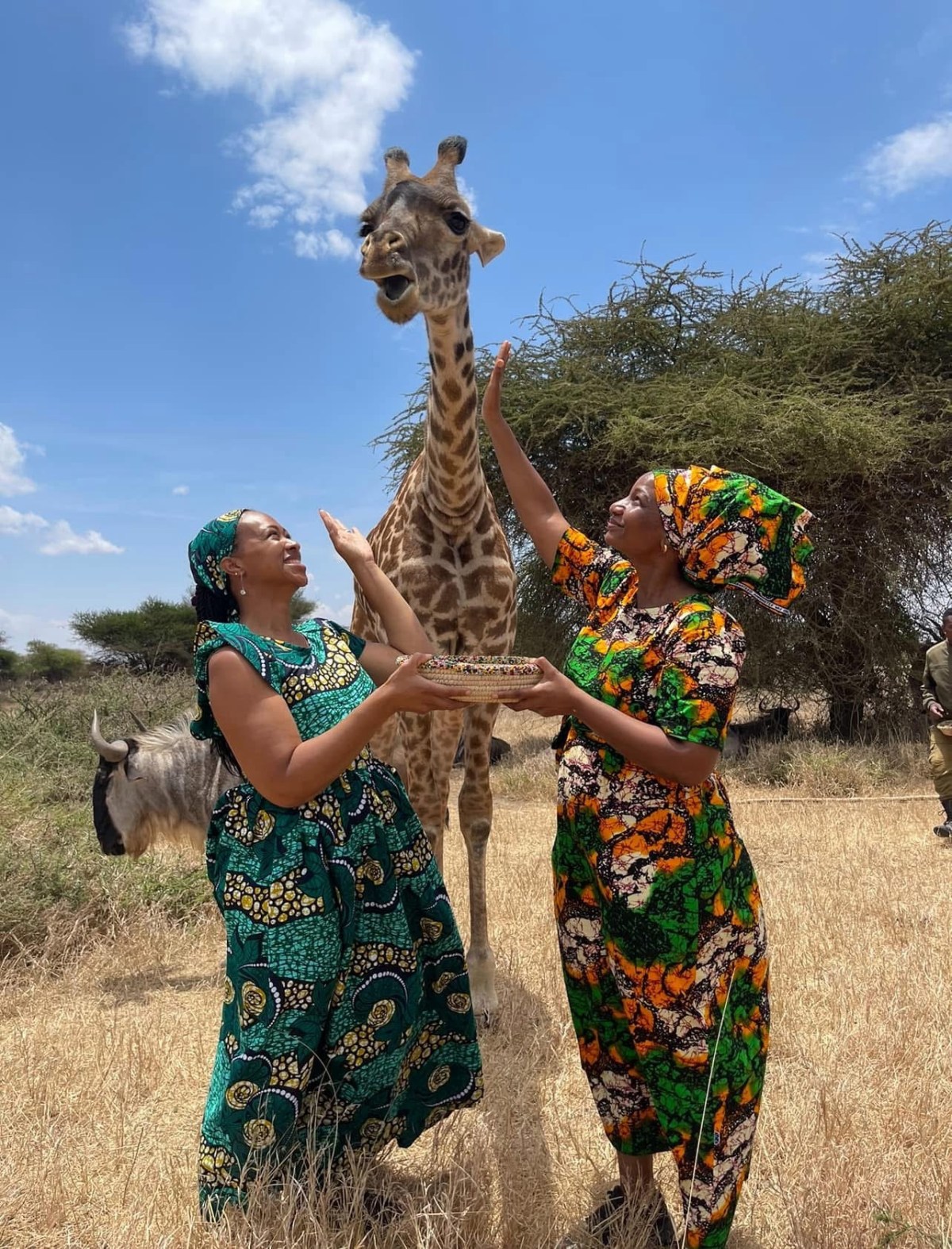
Mia and Tara are two USA-based Fulbright alumnae who keep returning to East Africa — and sharing their adventures with others.
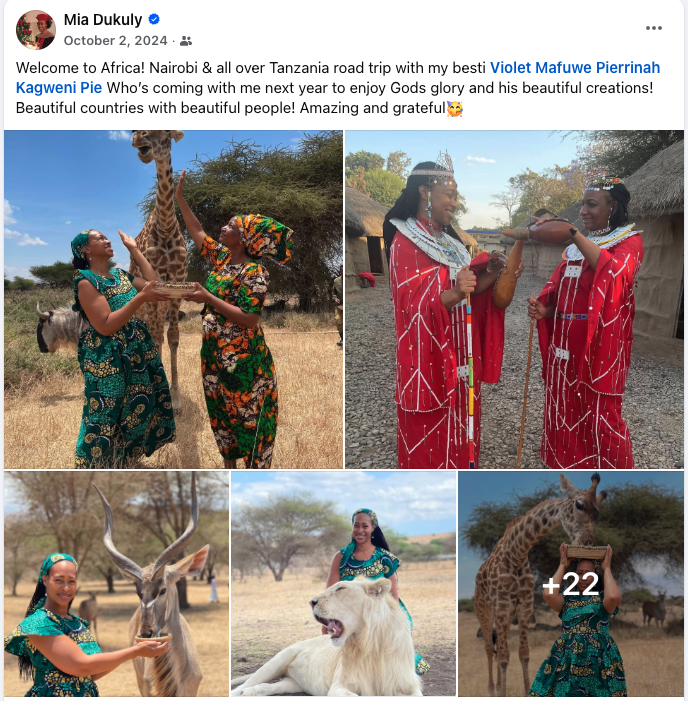
Here’s a taste of what Mia and her architect friend Violet Mafuwe have gotten up to recently:
A post shared by Mia Dukuly this past autumn.
Violet was one of the Tanzanian students participating in the 2005 study abroad program, and the only female among dozens of males.
The sisterly bond between these architects, Mia and Violet, is truly heartwarming.
Tarrah, Mia, and Violet are all actively engaged in social missions, continually reaching out and helping others, particularly vulnerable people in East Africa.
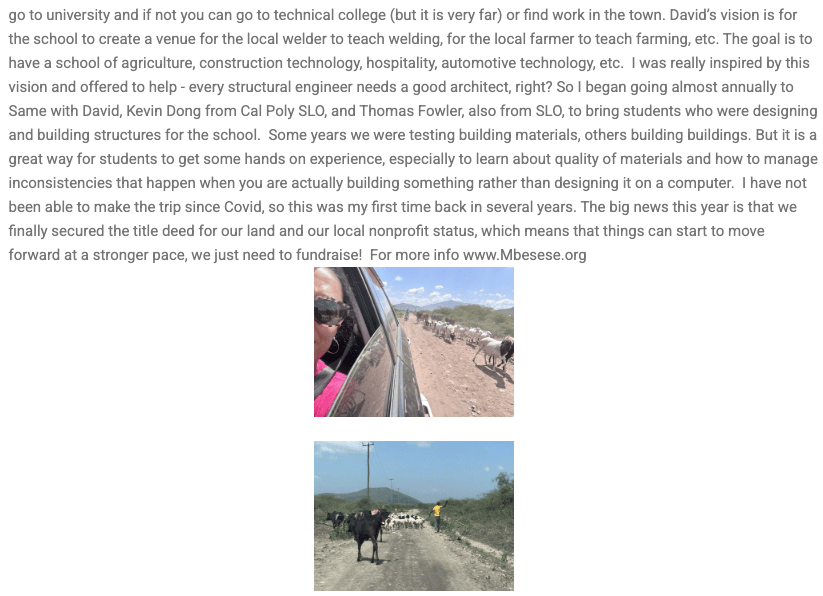
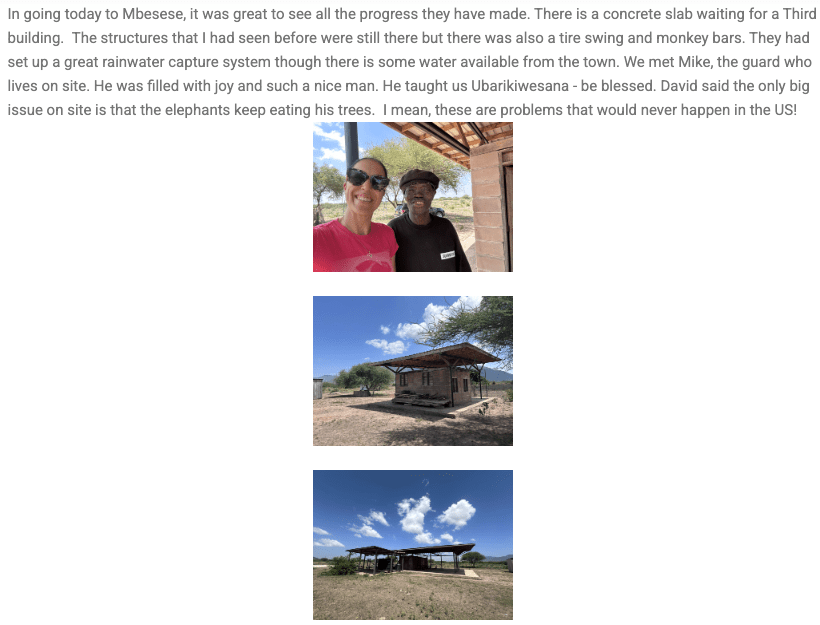
In this screenshot, Tara describes how she connects her teaching, architectural design, and outreach activities.
In fact, it was Tarrah’s February 3rd blog post that inspired me to share the treasure trove below. Tara is an architect living in Los Angeles.
Tarrah mentioned me at the top of the blog, and it means a lot to me that I helped enable and inspire her to stay involved in Tanzania. She’s been helping build an educational complex for many years.
In this screenshot, Tara provides information on the educational facility.
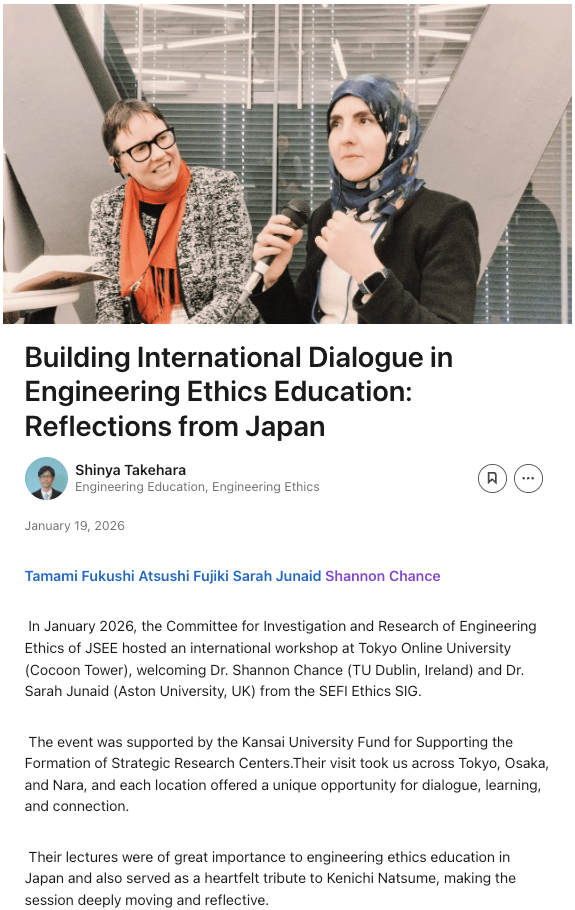
Which brings me to the other recent post I’d like to share. Shinya Takehara isn’t a Fulbright fellow (yet!), but I feel I wouldn’t have met him without the entry I got into engineering education research as a Fulbright Fellow in Ireland.
I am deeply indebted to each of these wonderful people — Shinya, Tarrah, Mia, and Violet — for making my life brighter and more meaningful, and for always reaching out to help others and spread the ethics of care.
I also thank Shinya, Tarrah, and Mia for giving me permission to share their posts here. Sending that request brought more good news, as Mia has recently secured a new job and will be relocating with her family to Germany soon. She reports good progress with her Architecture Registration Examination — a grueling multi-part test that takes most of us years to complete. I am so excited to learn of her progress!
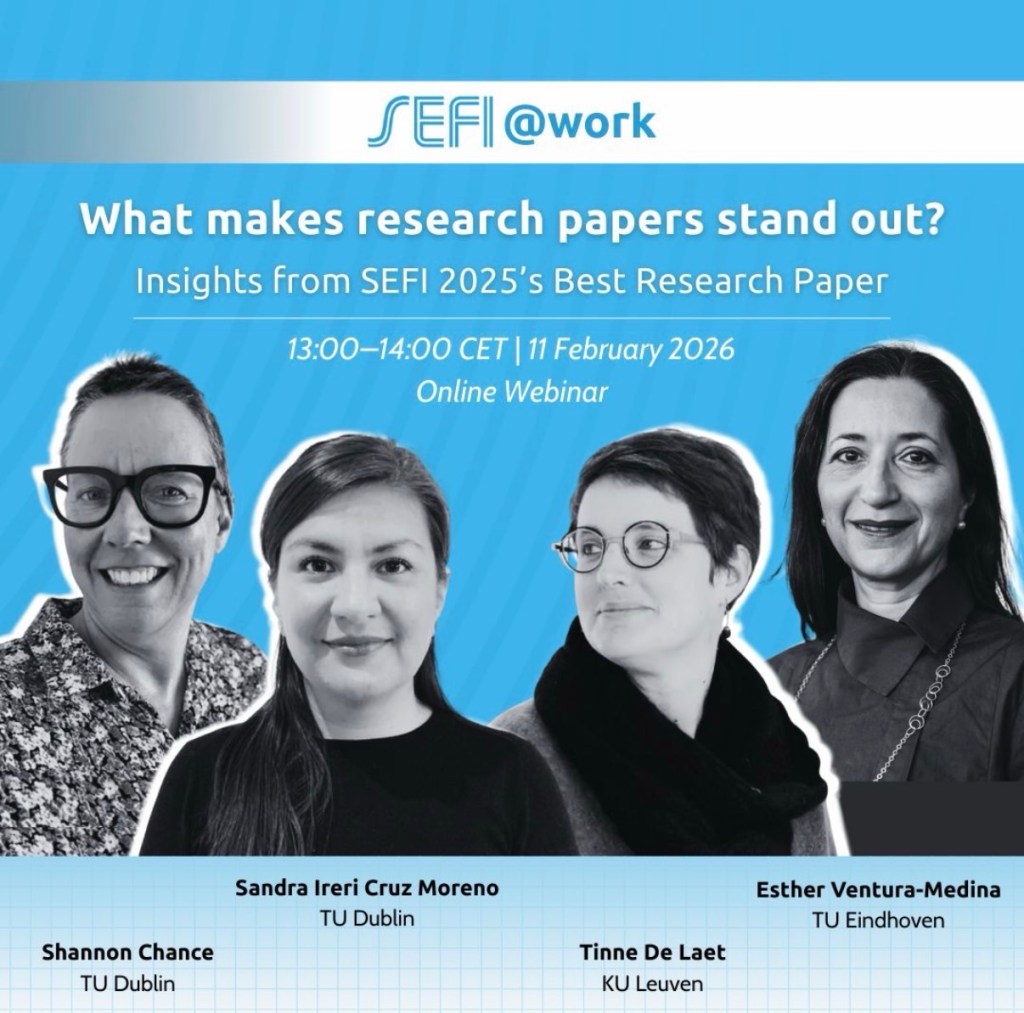
Sandra Cruz Moreno and I will be featured in a SEFI@work online workshop on Wednesday, 11 February 2026 13:00 PM – 14:00 PM CET.
The title is: What makes research papers stand out? Insights from SEFI 2025’s Best Research Paper
Sandra and I are hard at work preparing meaningful content about Sandra’s award-winning SEFI paper, which reports one part of her overall PhD thesis/dissertation work.
I am delighted to discover that about 80 people have registered so far, representing a wide diversity of organizations:
Many thanks to the SEFI Education Research Methods special interest group co-chairs, Dr. Tinne De Laet and Dr. Esther Ventura-Medina, for the invitation to deliver this session, which they will moderate. Thanks also to the SEFI Office, especially Alex Gliga and Klara Ferdova, for their support in organizing and hosting this event.
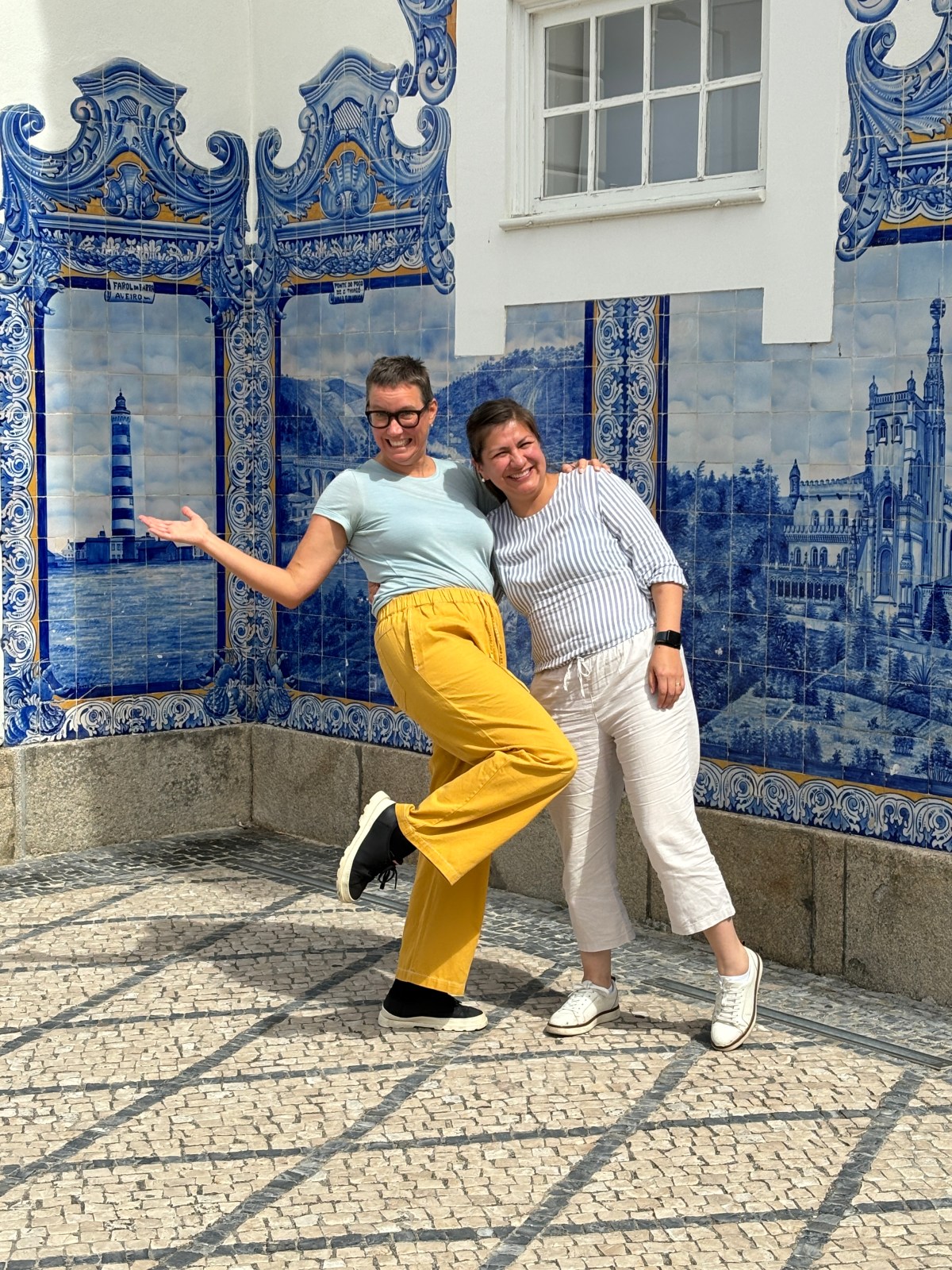
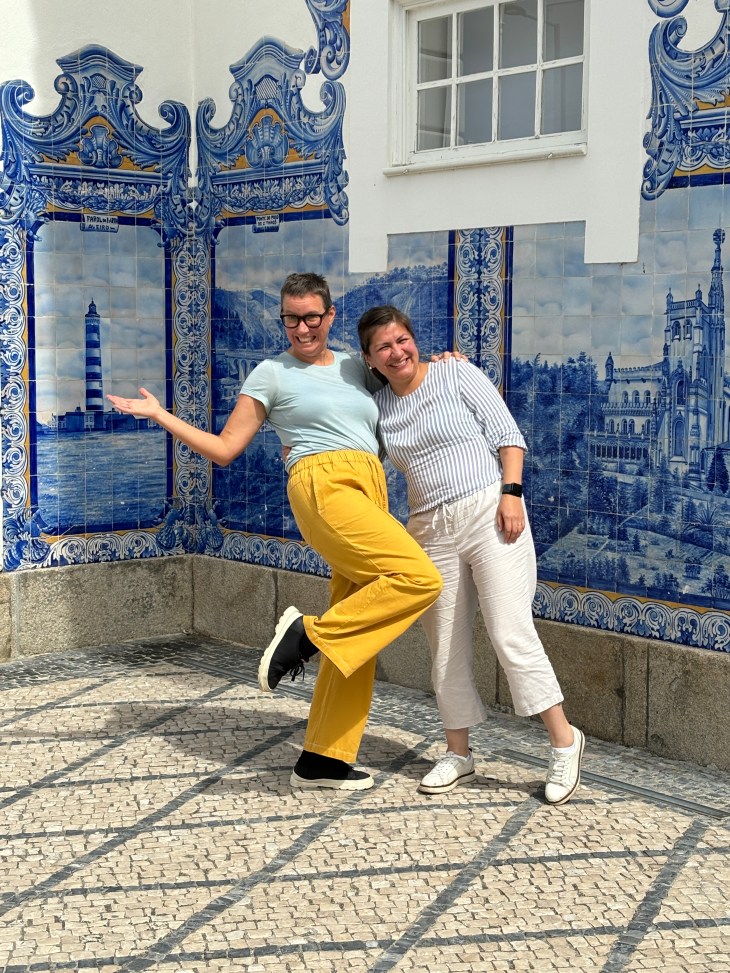
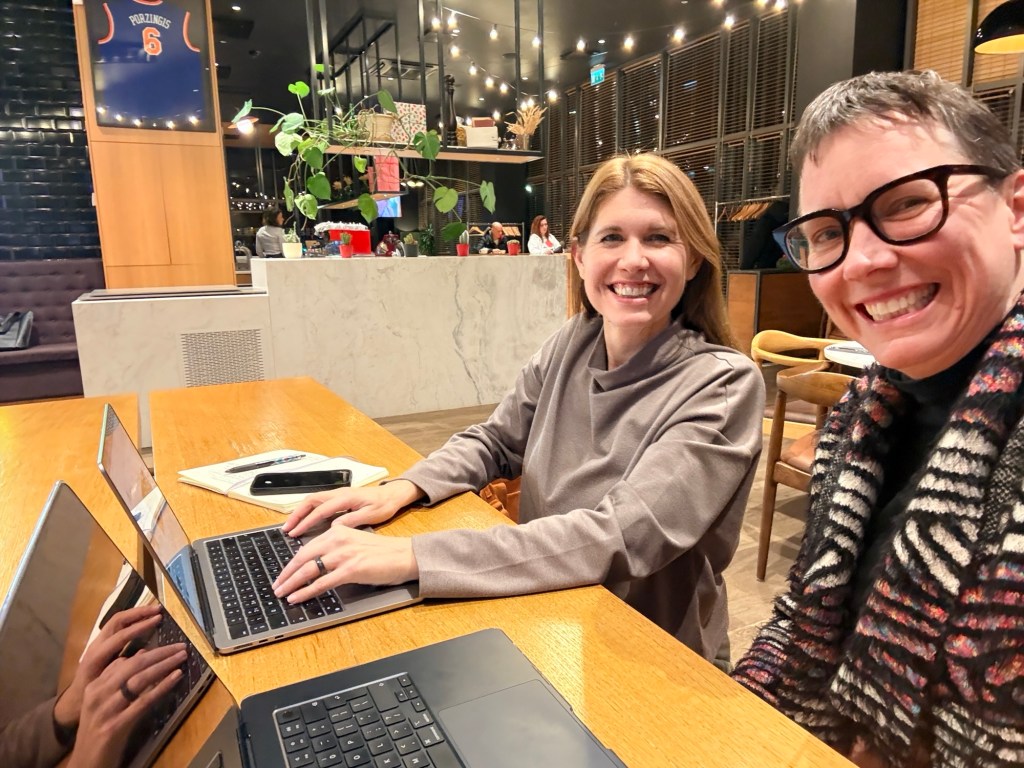
This photo of Sandra and Shannon in Portugal captures the tone of our upcoming presentation.
I had the immense honor of visiting Japan as a guest of the Japanese Society of Engineering Education, 6-16 January 2026.
This trip focused on engineering ethics, how it is conceptualized and taught, and how this differs between Eastern and Western cultures.
The purpose of the trip was to advance collaboration between Japan and Europe, expand professional networks, and better understand and ultimately improve how engineering ethics is described and taught to students.
The trip was significant because language differences, travel distances, and past cultural isolation mean there is still much to learn from each other.
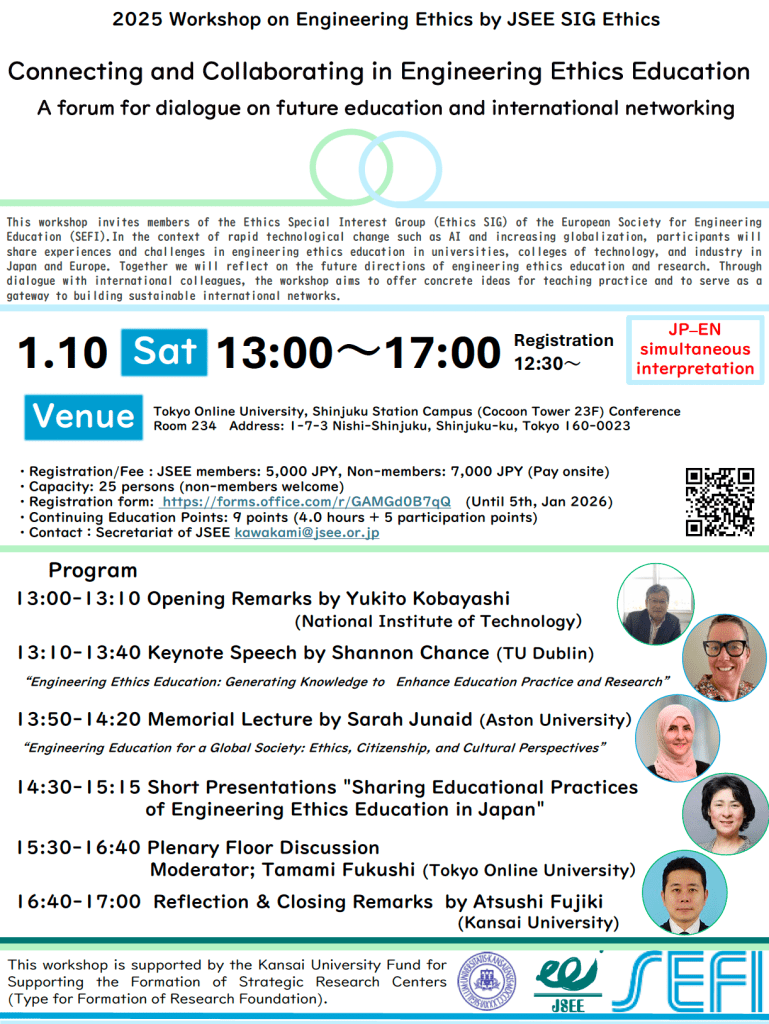
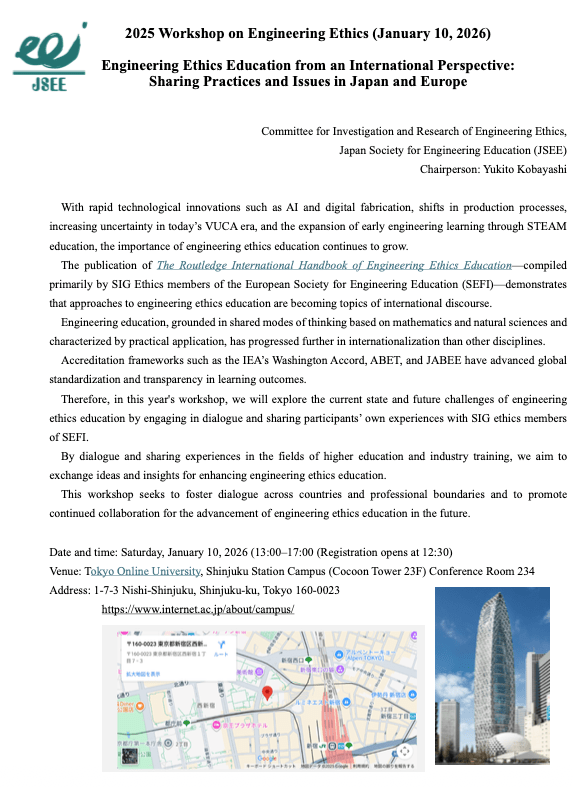
This was a collaboration between JSEE and SEFI, our European Society for Engineering Education. Practical info sent to JSEE members calling for participation at the conference.
For this ten-day trip around Japan, I represented the European Society for Engineering Education (SEFI) — to help build bridges connecting Japan, Europe, and the global engineering ethics education and engineering education research communities.
This blog post contains loads of detail and possibly a hundred photos. I felt it was important to document the activities for posterity and to help build greater cultural understanding.
This was only my second ever trip to Asia (the first being a 1999 conference in Seoul, South Korea).
On this trip, I met so many amazing people.
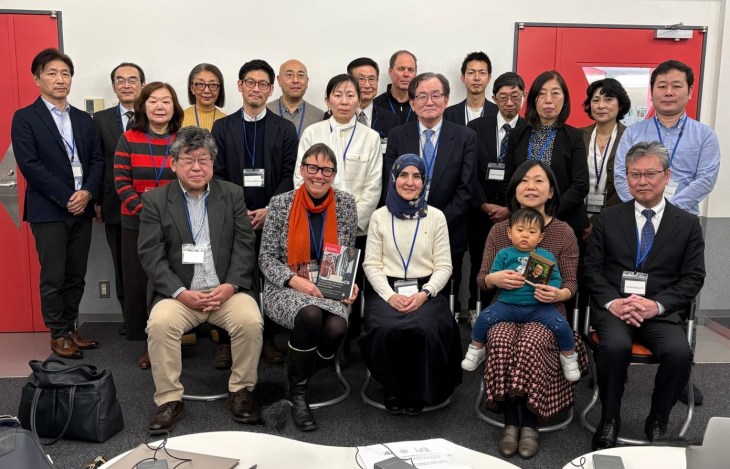
I want a chance to thank each of them and let them know how much the time together meant to me. Many of them are pictured below (from the main conference, which I’ll tell you more about below).
I have summarized the profound set of cultural and professional experiences as best I can.
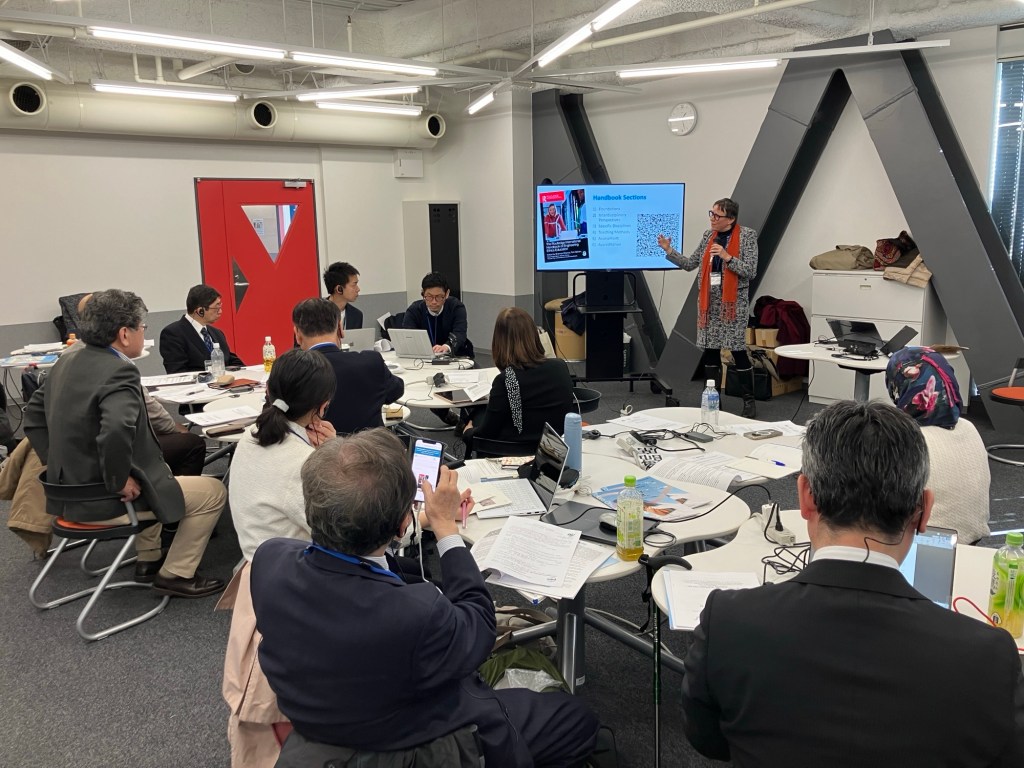
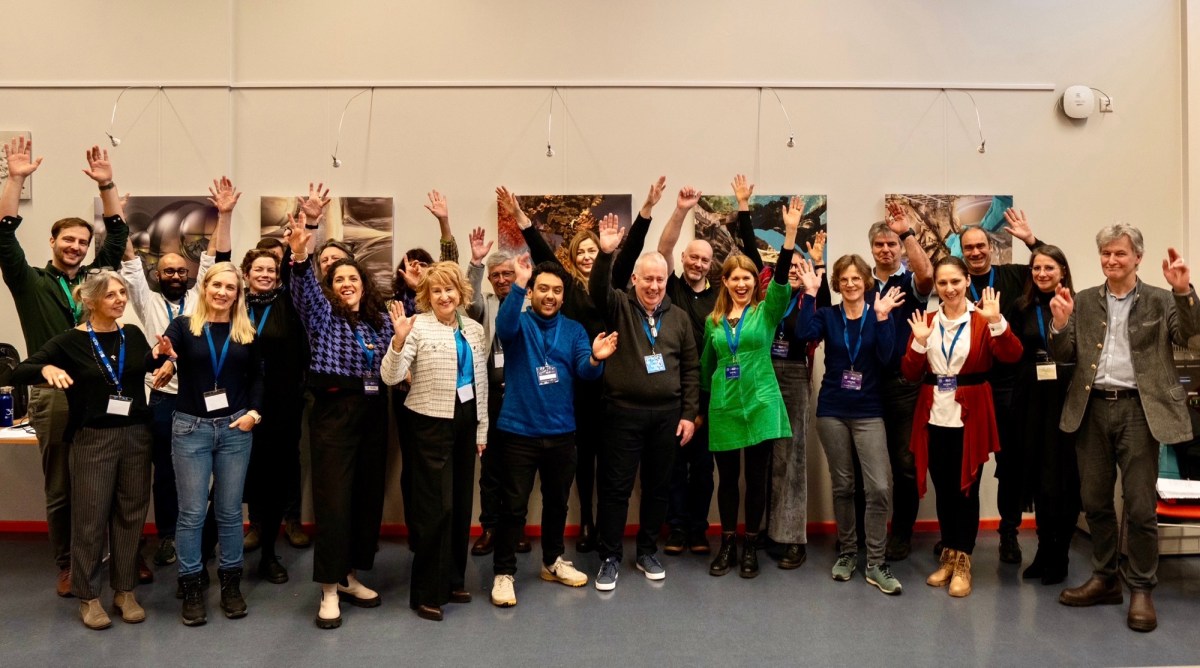
The participants of the main conference on engineering ethics education in Japan, from JSEE, with Sarah Junaid and Shannon Chance from SEFI.
I traveled alongside Dr. Sarah Junaid, a Reader in Biomedical Engineering at Aston University (Birmingham, UK). Sarah has travelled to Japan several times before, most recently as a Churchill Fellow, collecting data on engineering ethics education.
Sarah has cultivated a transcontinental team of academics who are researching the words used to describe ethics in engineering accreditation documents worldwide. This project has captivated me since I attended a paper presentation Sarah gave at the SEFI conference in Barcelona in September 2022.
Sarah’s efforts mirrored the focus on collaborative transcontinental capacity-building that I also cultivated as Chair of the global Research in Engineering Education Network (REEN).
Sarah served as a positive role model for me as I worked with the ethics handbook’s editorial team. When I explained this at the JSEE conference, I choked up; I don’t think I’d ever told Sarah how central she is to my worldview today.
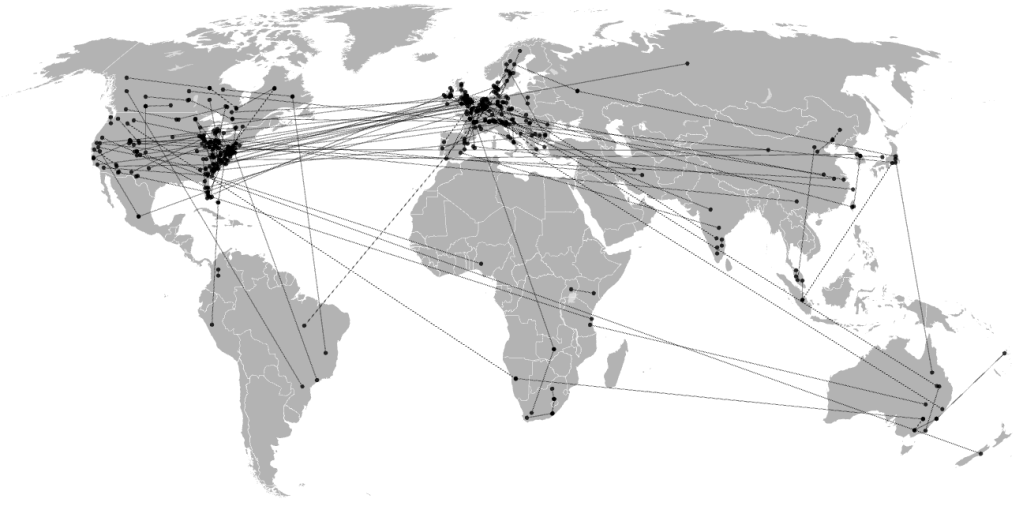
I made this map to show where the authors of our handbook have lived and/or worked. You can see we had some representation from Japan (Kenichi Natsumi and Fumihiko Tochinai), but could benefit from more collaboration in Asia and also across the global south.
In all. the presentations I delivered in Japan all emphasized the power of collaboration in enhancing the delivery of engineering education and our collective approaches to understanding, defining, learning, assessing, regulating, and expanding ethics.
I define engineering ethics as professional codes, laws, theories, and frameworks, as well as social and environmental sustainability, including equity, diversity, and inclusion, that underpin engineering practice and guide what we are and want to become.
It’s about making the best better, a motto I bring with me from my formative years in 4-H, empowered by life-long, hands-on, self-directed learning. I first dreamed of travelling to Japan through 4-H, but that never came to pass. Today, my work as an academic in engineering education research finally brought me to this exotic land.
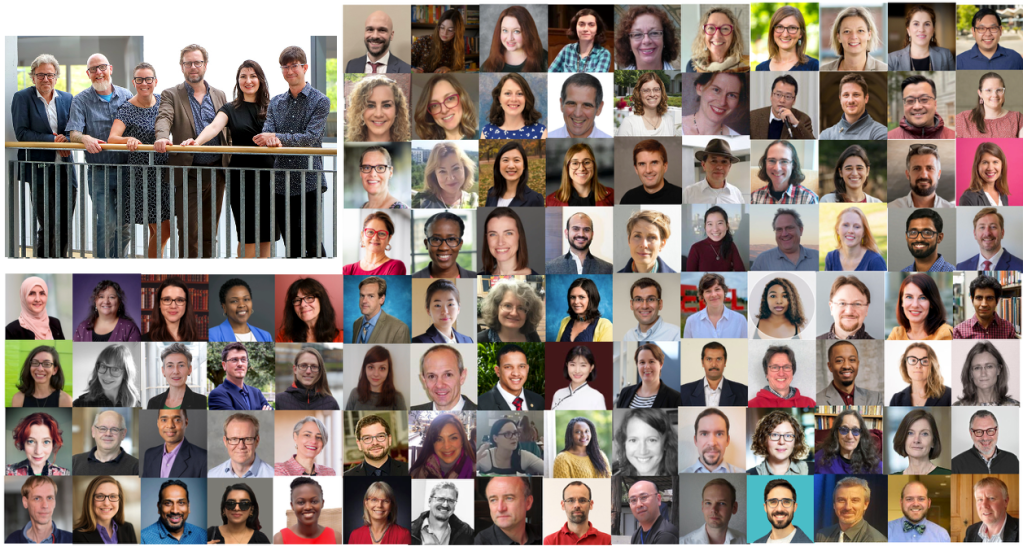
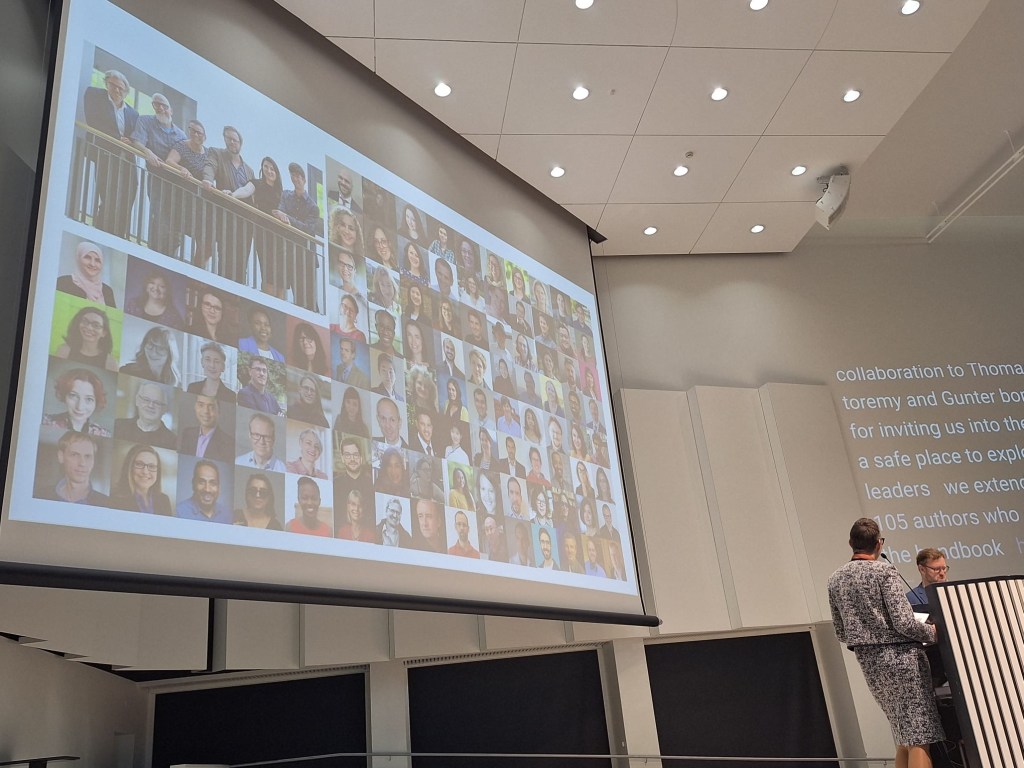
With 105 authors including 6 editors, our ethics handbook had impressive transcontinental representation.My keynote highlighted trancontinental aspects of the handbook and the need for collective action among engineers to reflexively define ethics and how to improve the way we deliver ethics education.
This team hosted us on behalf of the Committee for Investigation and Research of Engineering Ethics of JSEE; they were exceptional hosts during our visit.
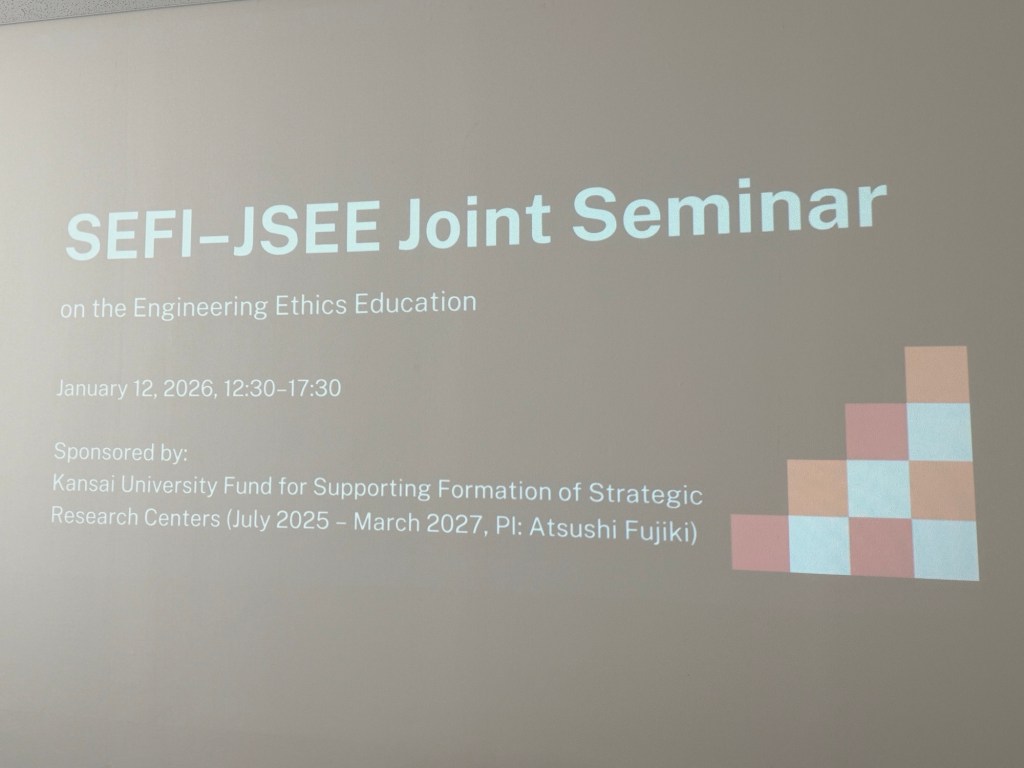
A grant from the Kansai University Fund for Supporting the Formation of Strategic Research Centers, which Atsushi holds, funded our travel.
We hope to work together in the future, also collaborating with Mary Nolan from ATU Sligo, on educational games and the ethics of care.
Shinya Takehara at the SEFI Ethics Symposium, March 2025, alongside SEFI Ethics co-chairs Mircea Tobosaru and Diana Adela Martin.Shinya Takehara setting up, surrounded by close colleagues from Japan.
Atsushi works in the College of Engineering Department of Engineering Science and Mechanics at Shibaura Institute of Technology and runs a laboratory where “students can deepen their consideration of ethical, legal, and social issues (ELSI) associated with the development of science and technology, mainly from the humanities and social sciences, such as applied ethics, philosophy of technology, and social theories of science and technology.”
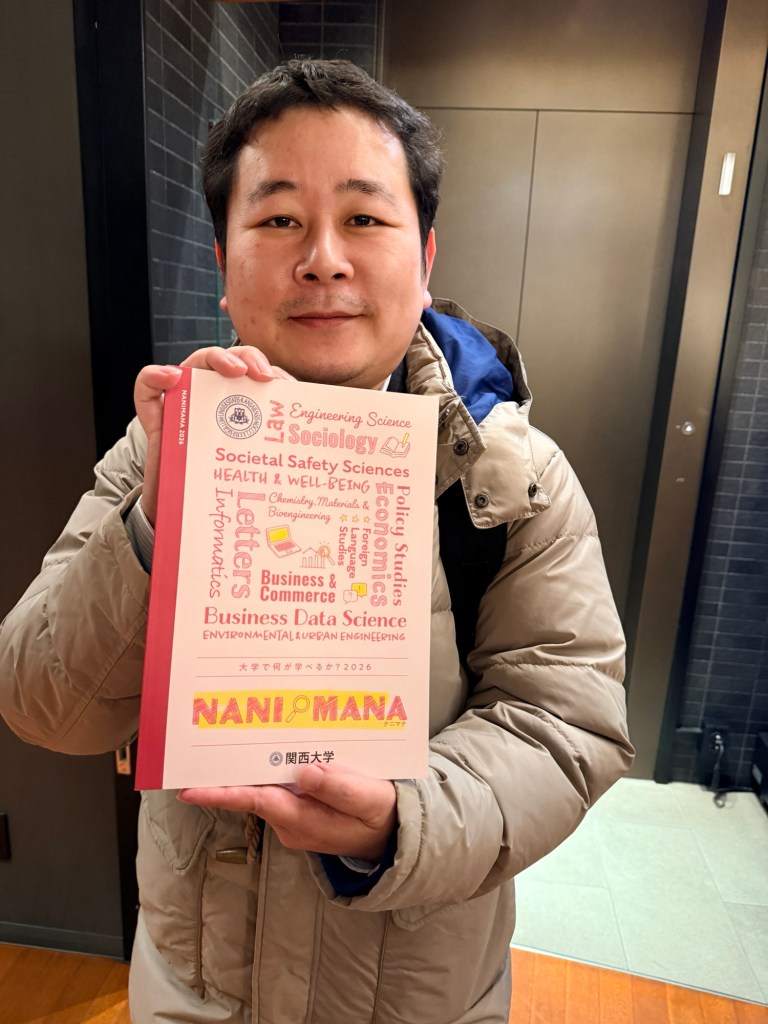
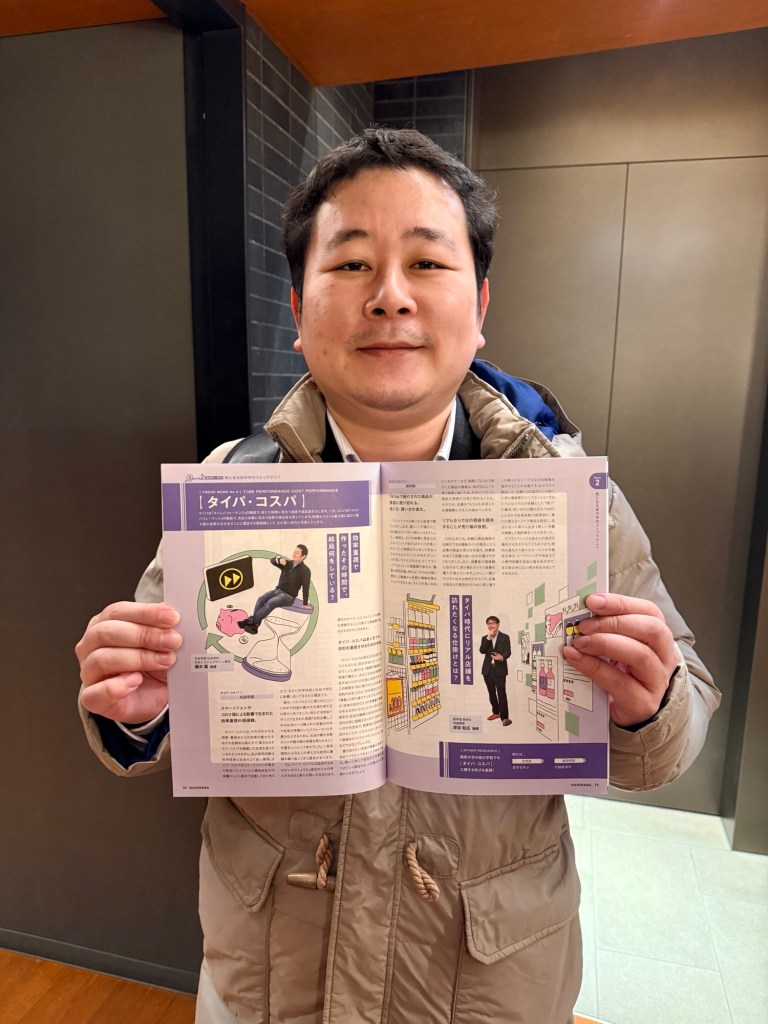
A publication we found in the University bookstore that featured Atsushi’s project.Atsushi is a social scientist.Atsushi was an amazing host. Here we see me, Shinya Takehara, Shinya Oie, Atsushi Fujiki, Stefané and Sarah.
Arriving in Japan
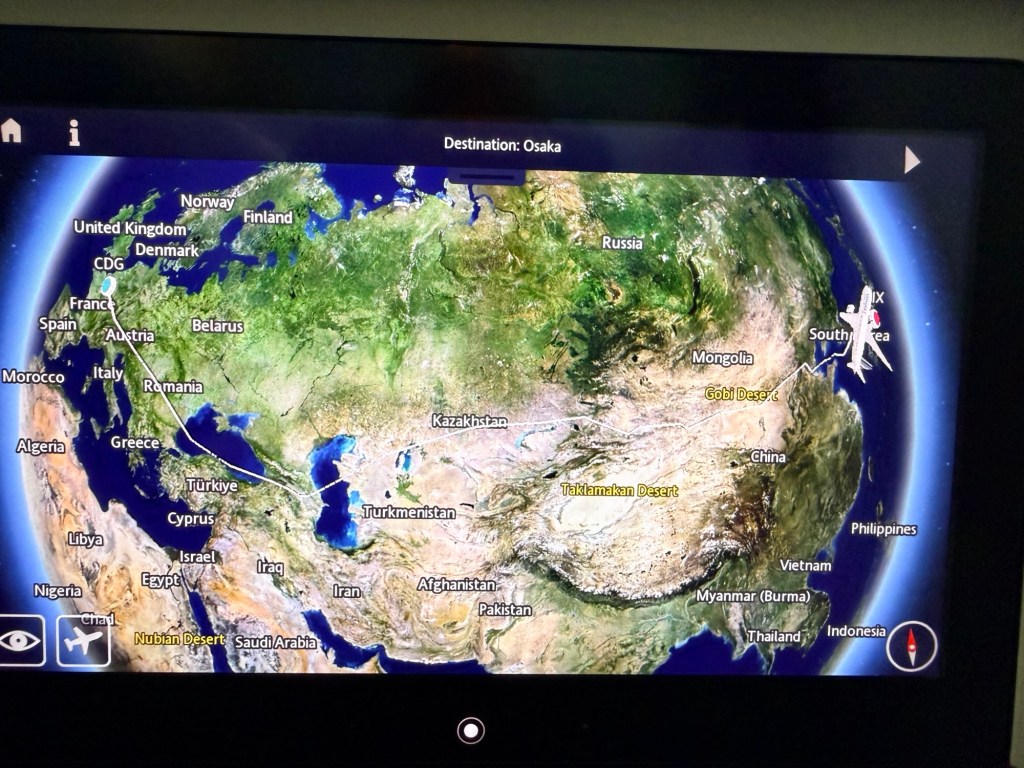
Flying into Japan from Europe, Sarah and I landed in Osaka.
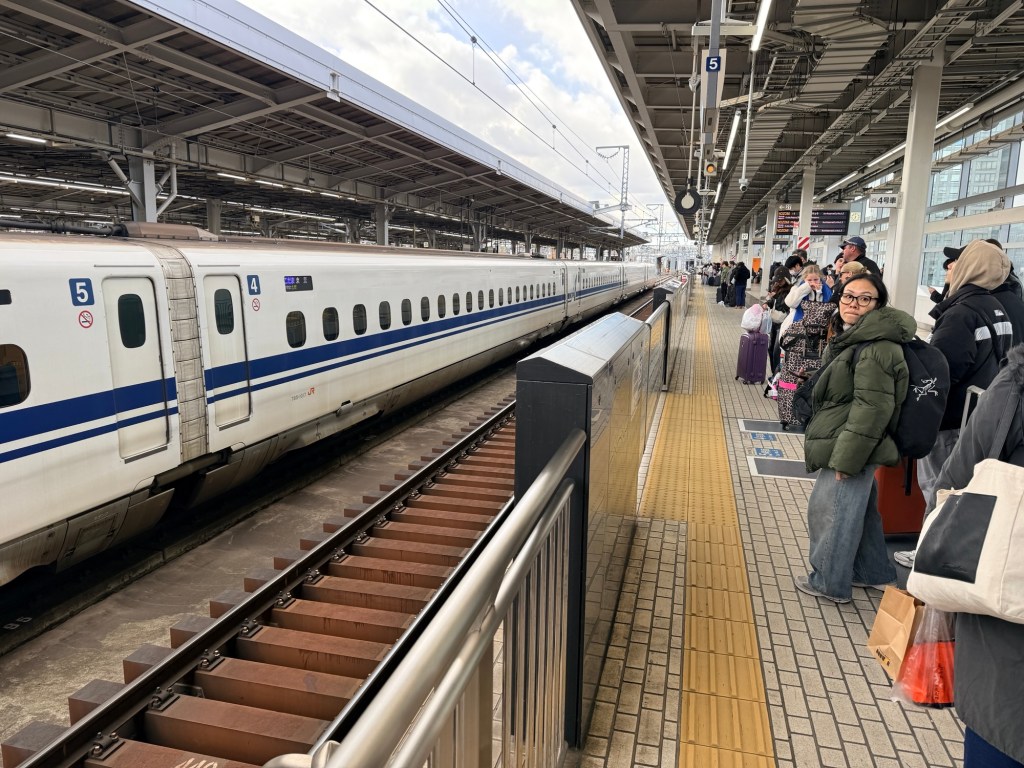
We met Shinya and Atsushi at the airport for a brief orientation, then took the train into Osaka for two nights, and onward via bullet train to Tokyo. Atsushi made sure we understood our way around and how to get food.
We used the first day to adjust to the dramatic time zone change and to explore Osaka a bit.
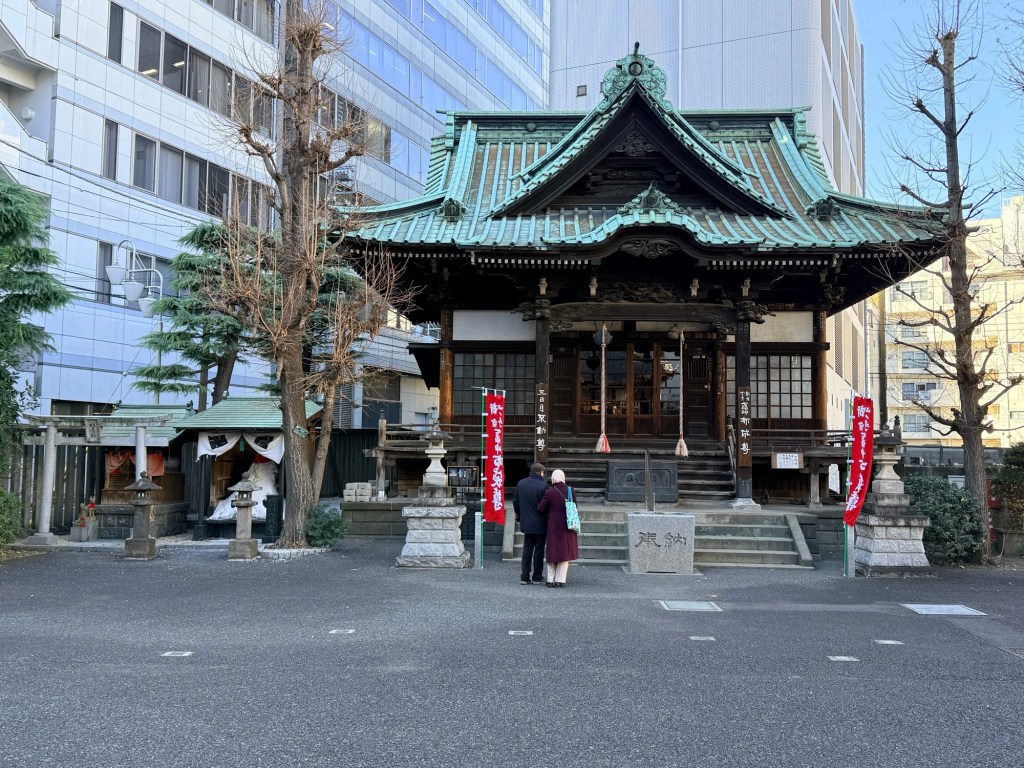
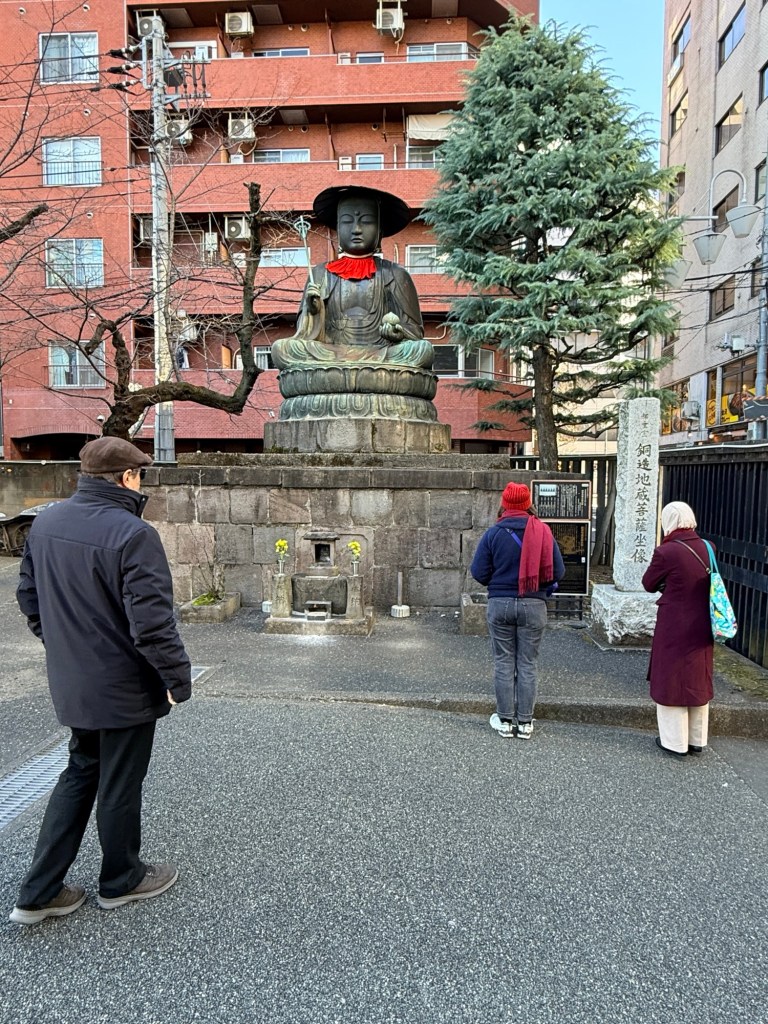
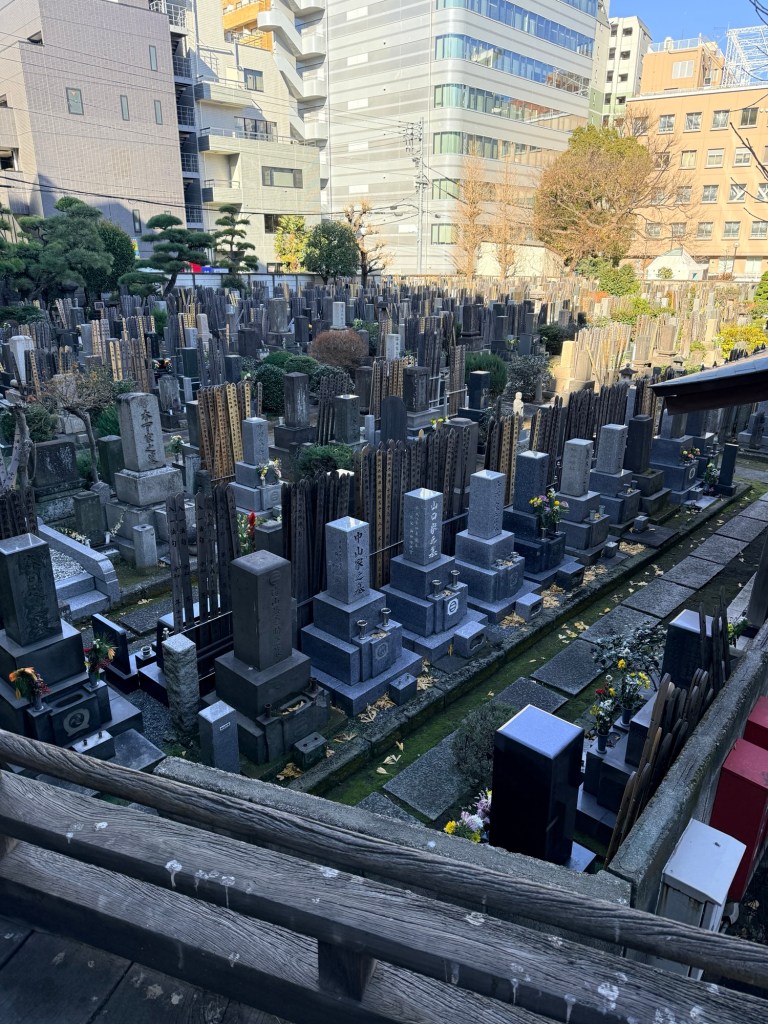
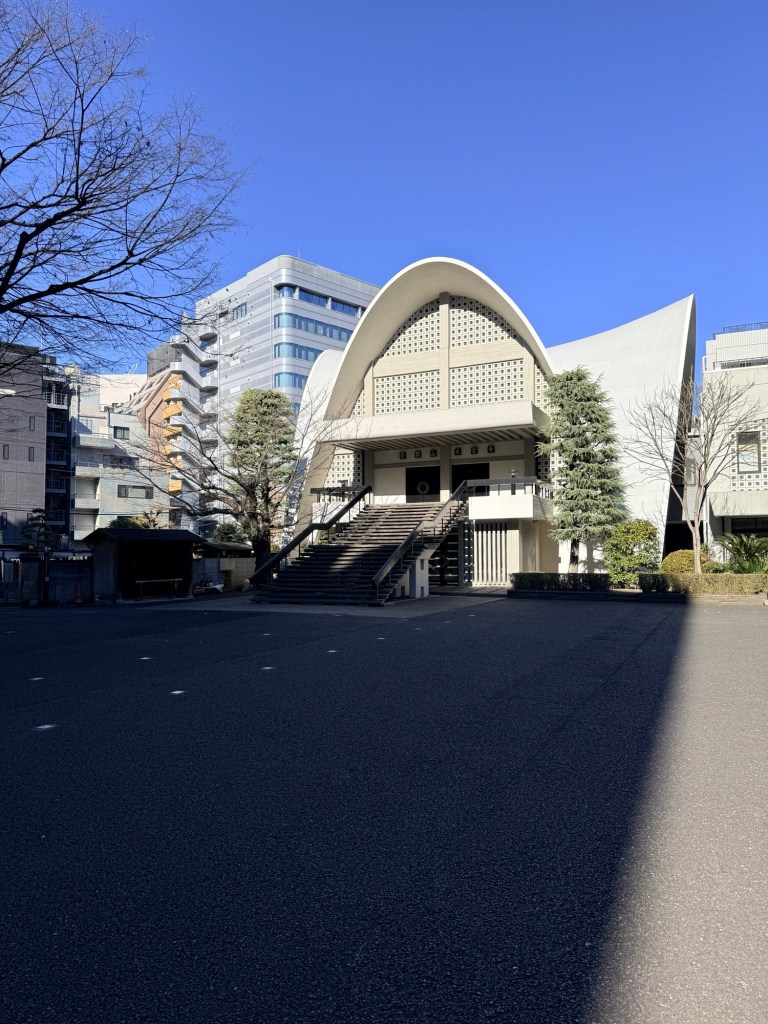
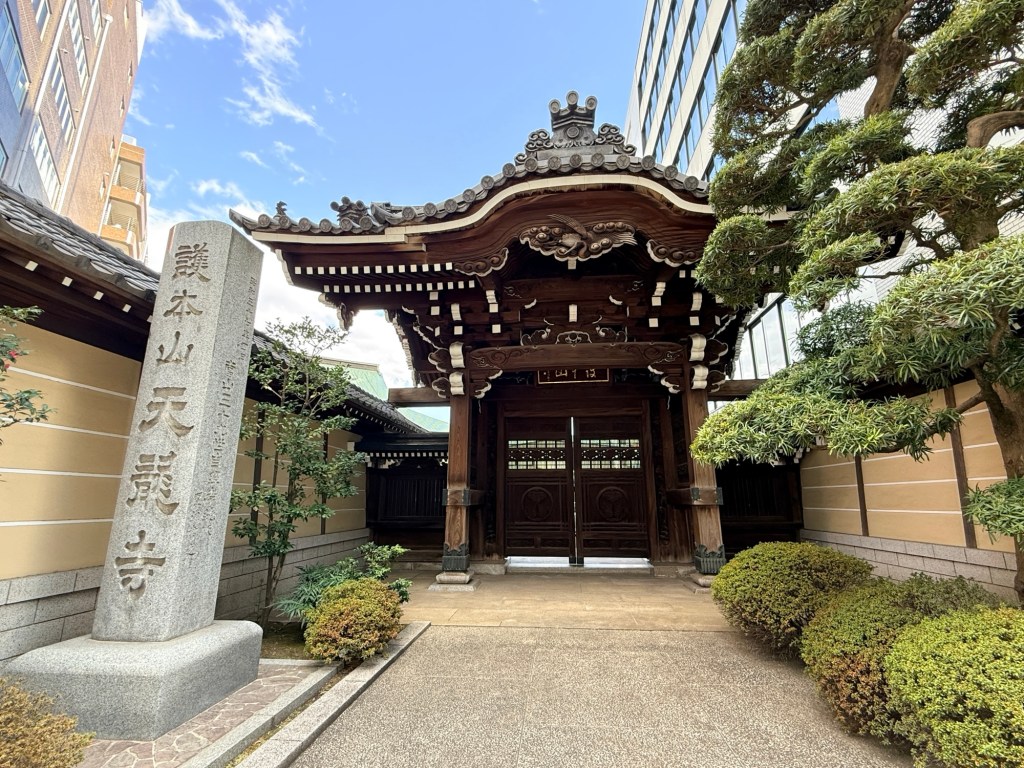
It was a long flight, and we changed nine time zones!In Osaka, we find sites like this shrine beside our hotel, which had traditoinal building forms,and statues,a cemetery, … and an unexpected architectural form. We took a bullet train to Tokyo. This shows only the back half of a bullet train!
Headline Event at the Cocoon Tower
We got oriented for our first major activity of the week, an international workshop at Cocoon Tower, where Tokyo Online University operates. Our host, Tamami, teaches there.
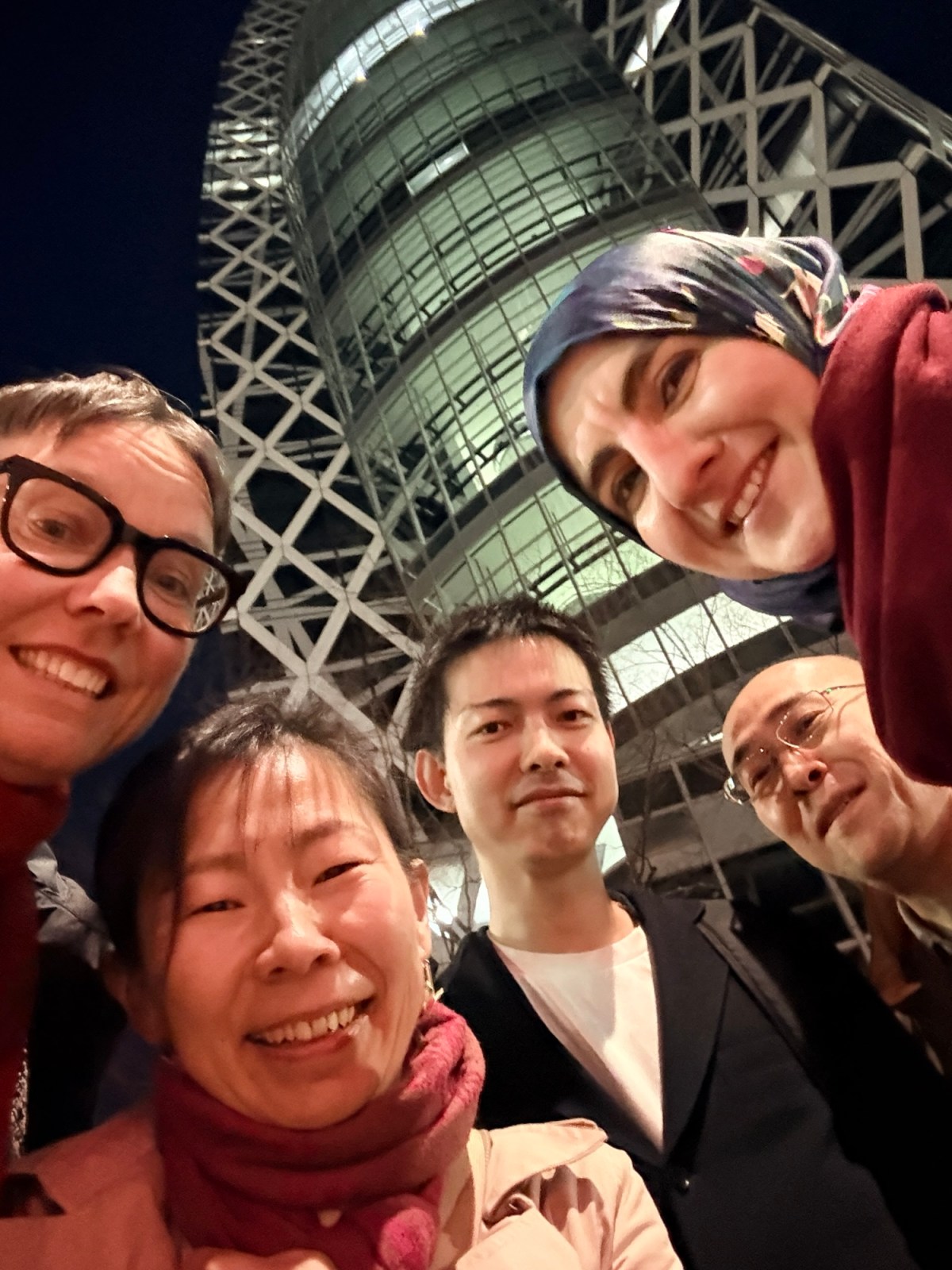
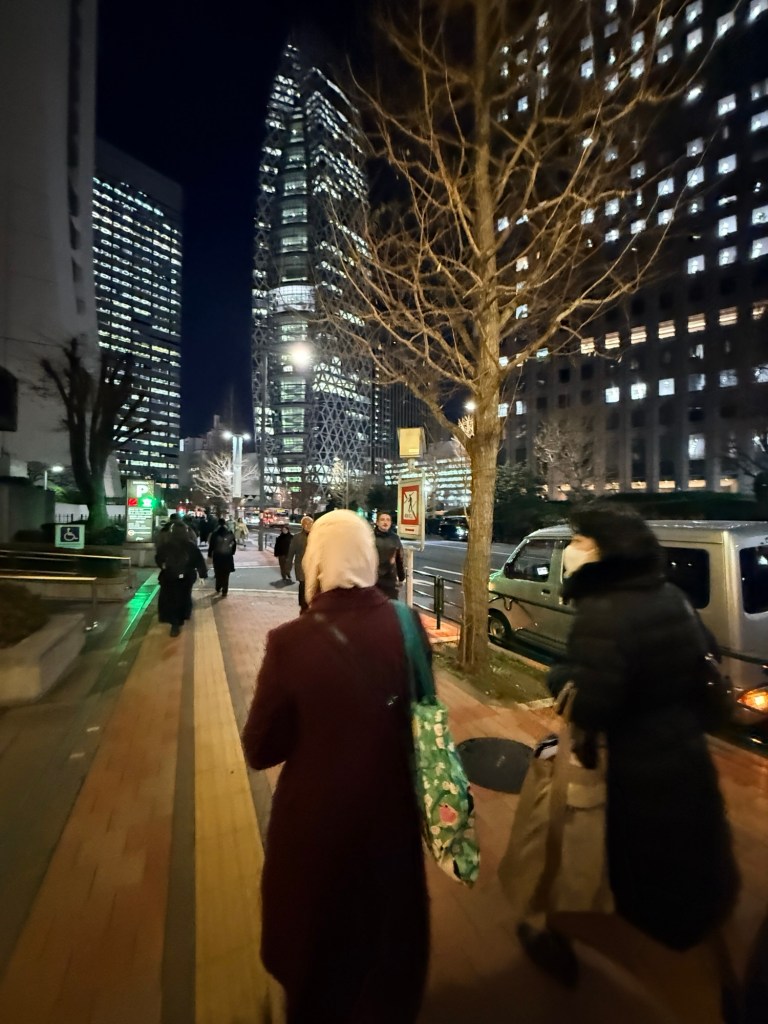
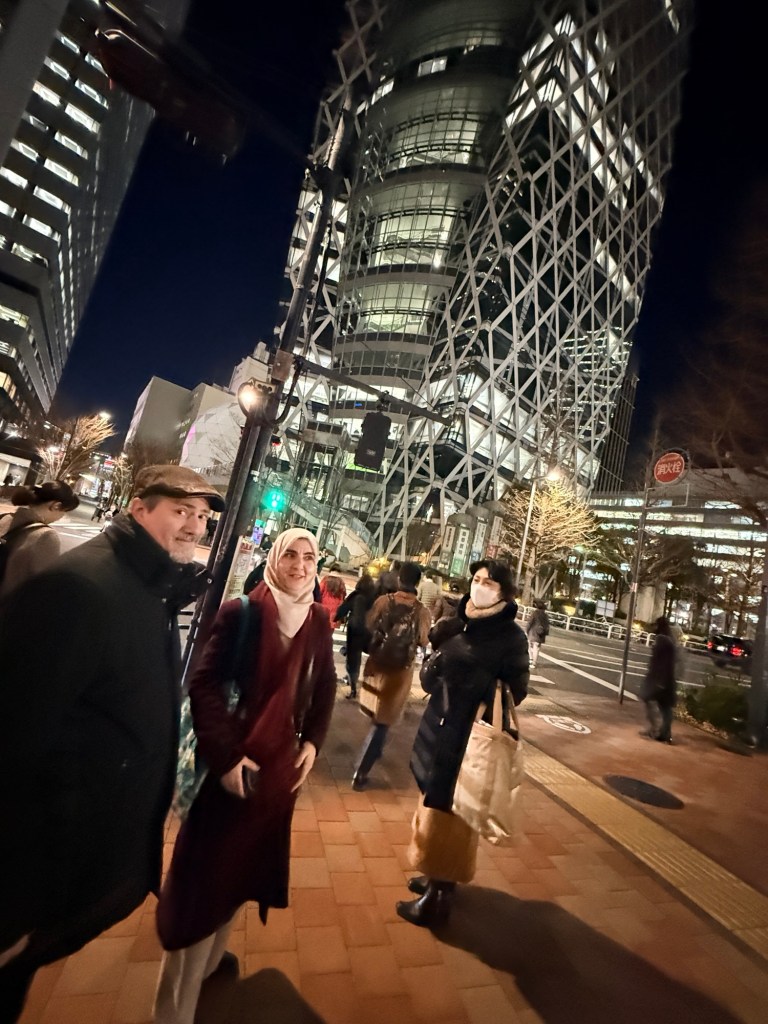
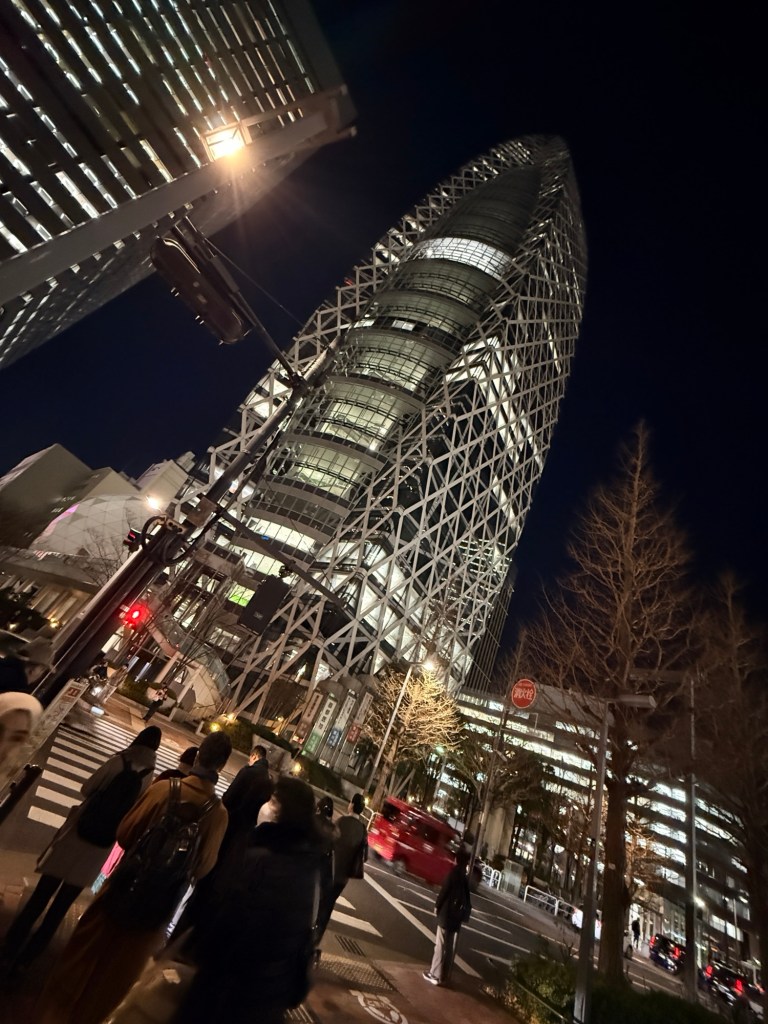
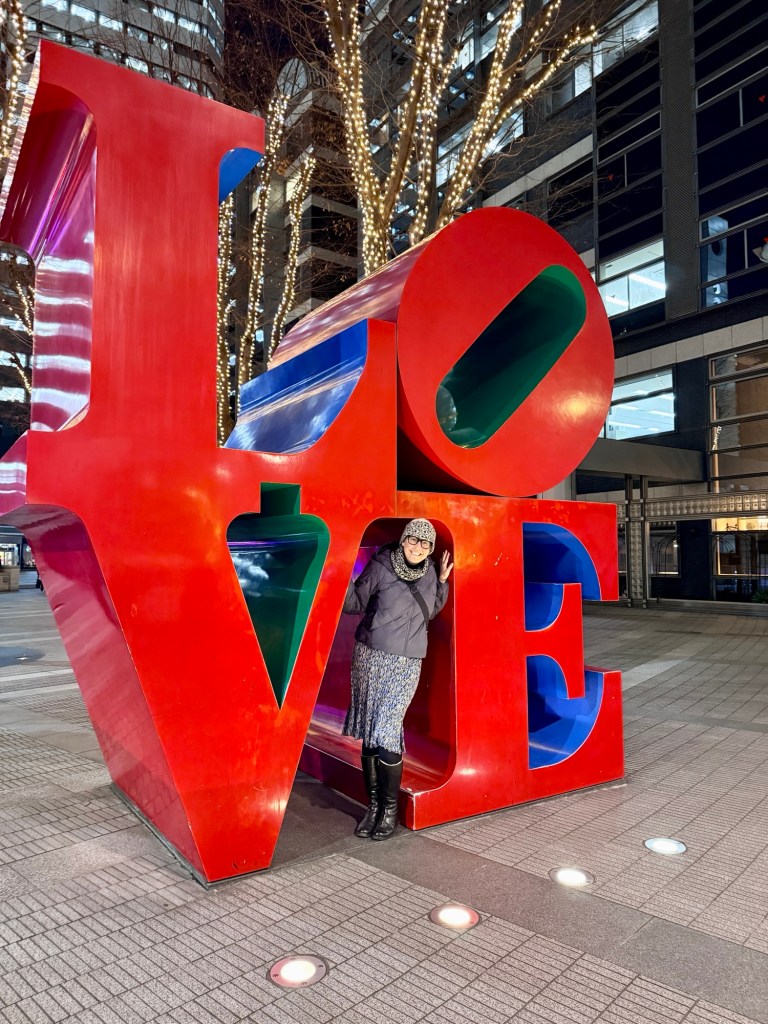
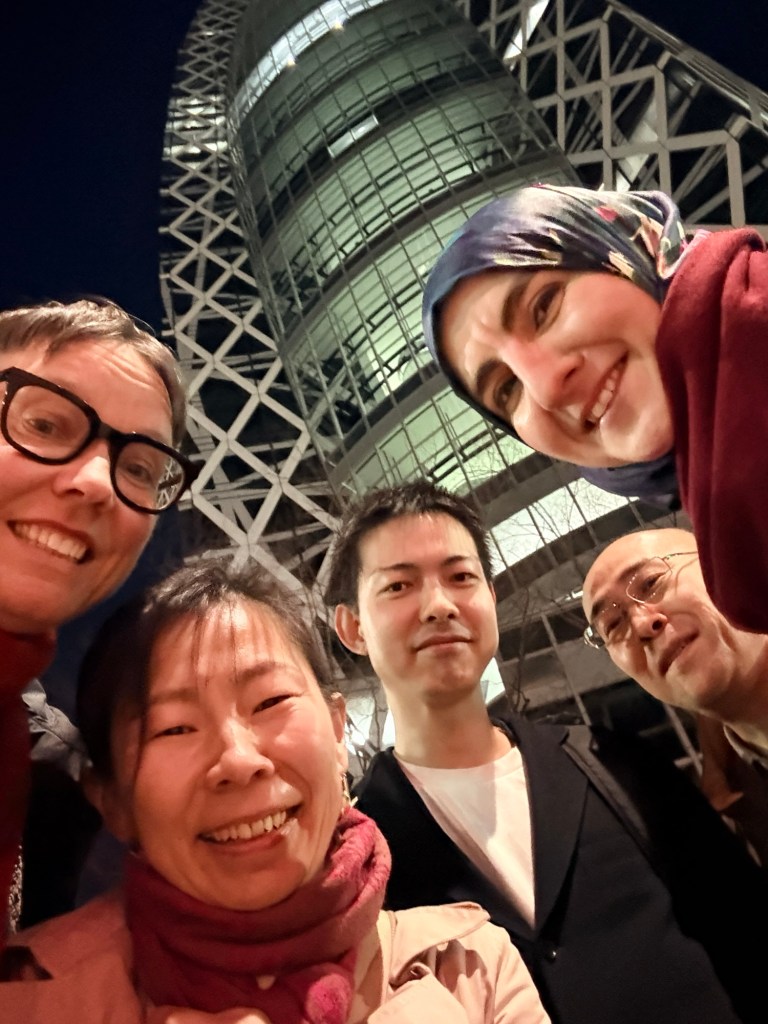
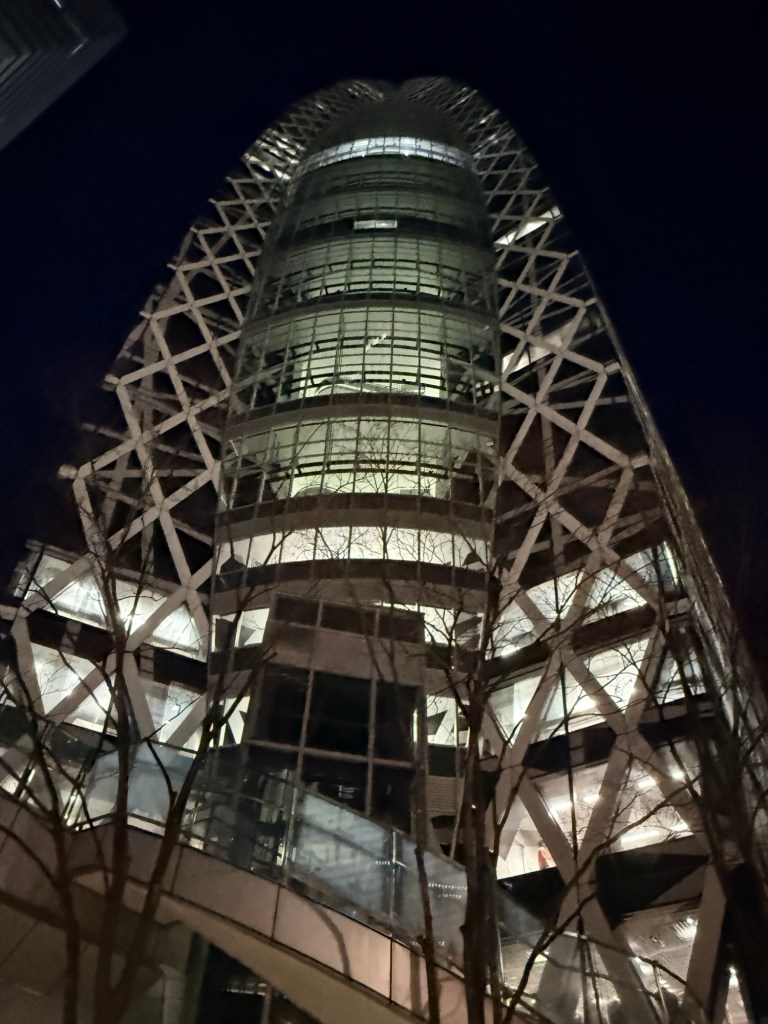
Headed to Cocoon Tower with Tamami.Stefané, Sarah and Tamami on the way.Lovely to view at night.With a quick stop at Tokoyo’s LOVE sign.
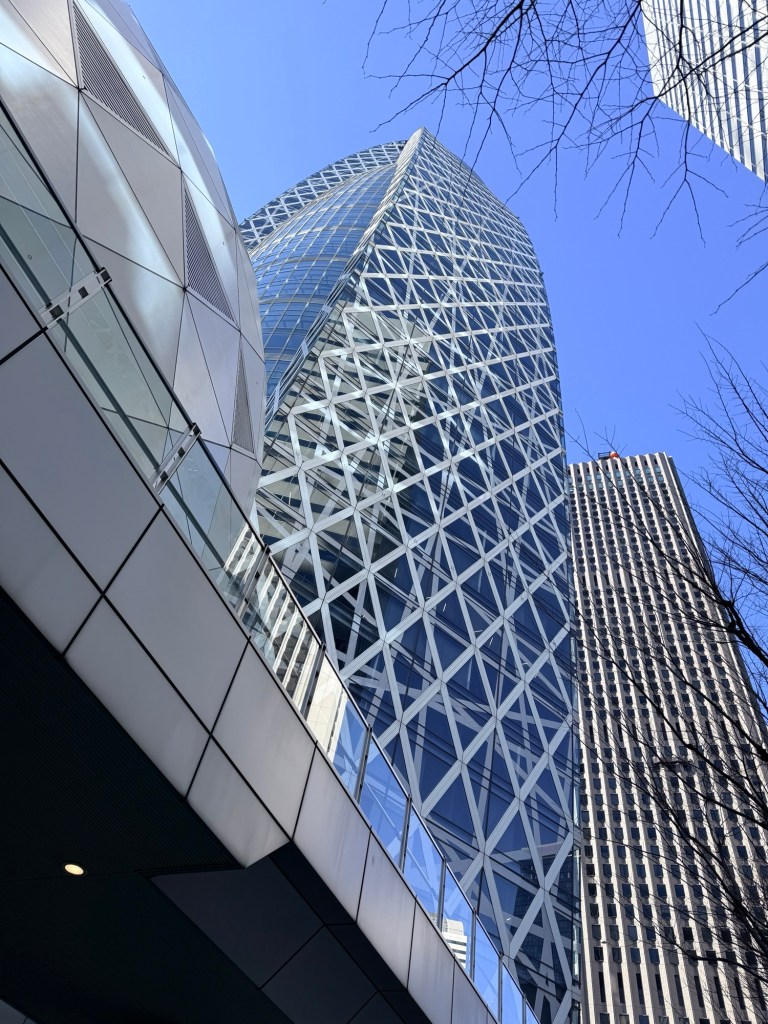
As an architect, I immediately recognized this building. It is quite famous and boy is it architecturally striking.
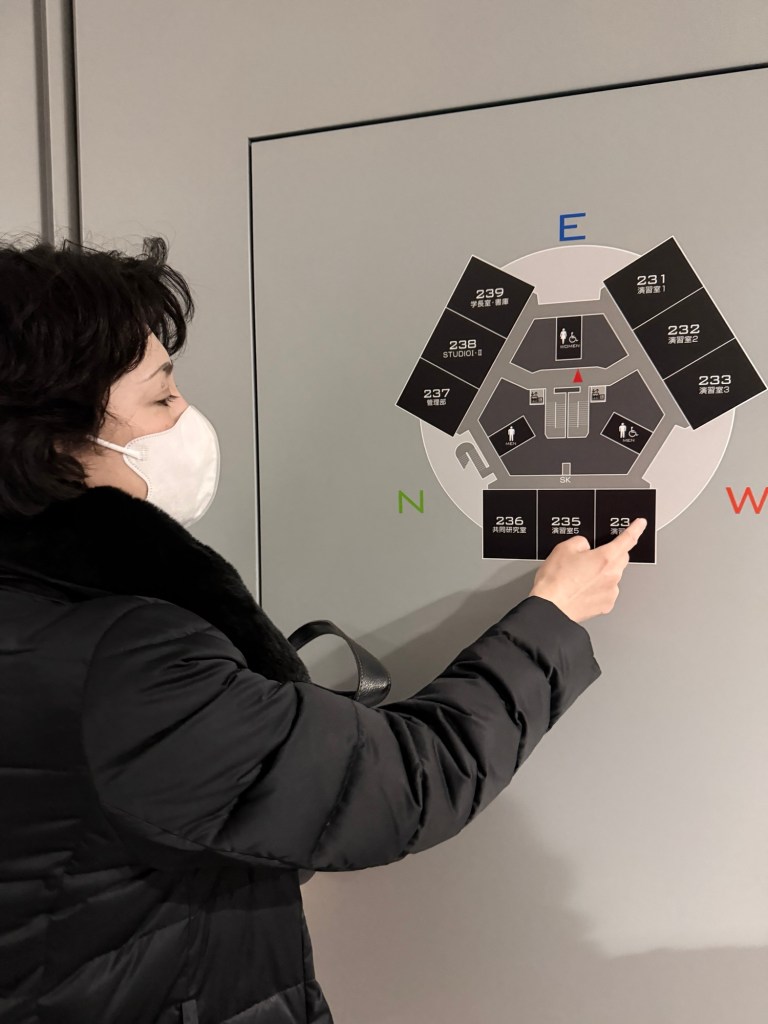
Tamami met us and gave us a tour of the building the night before the workshop.
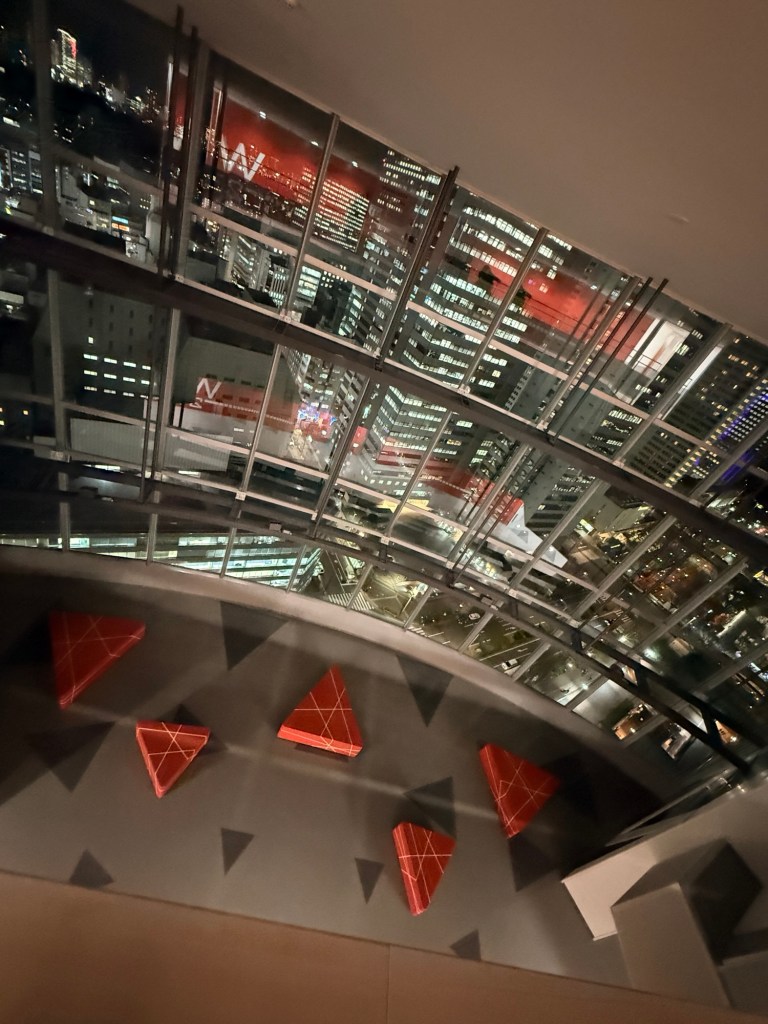
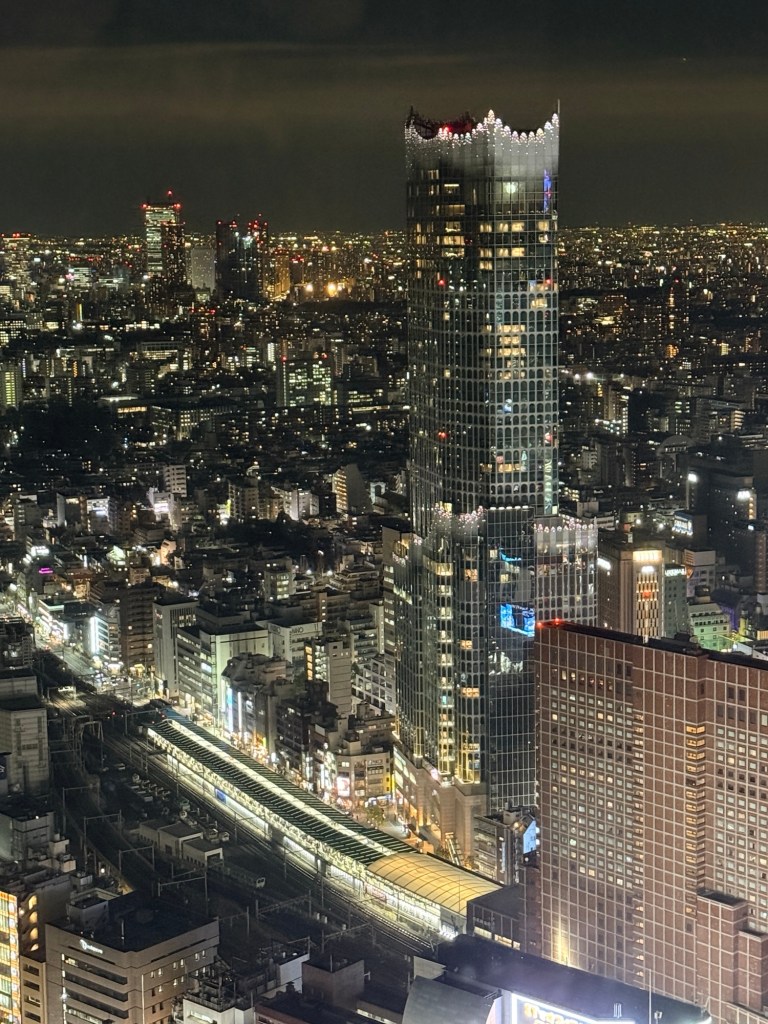
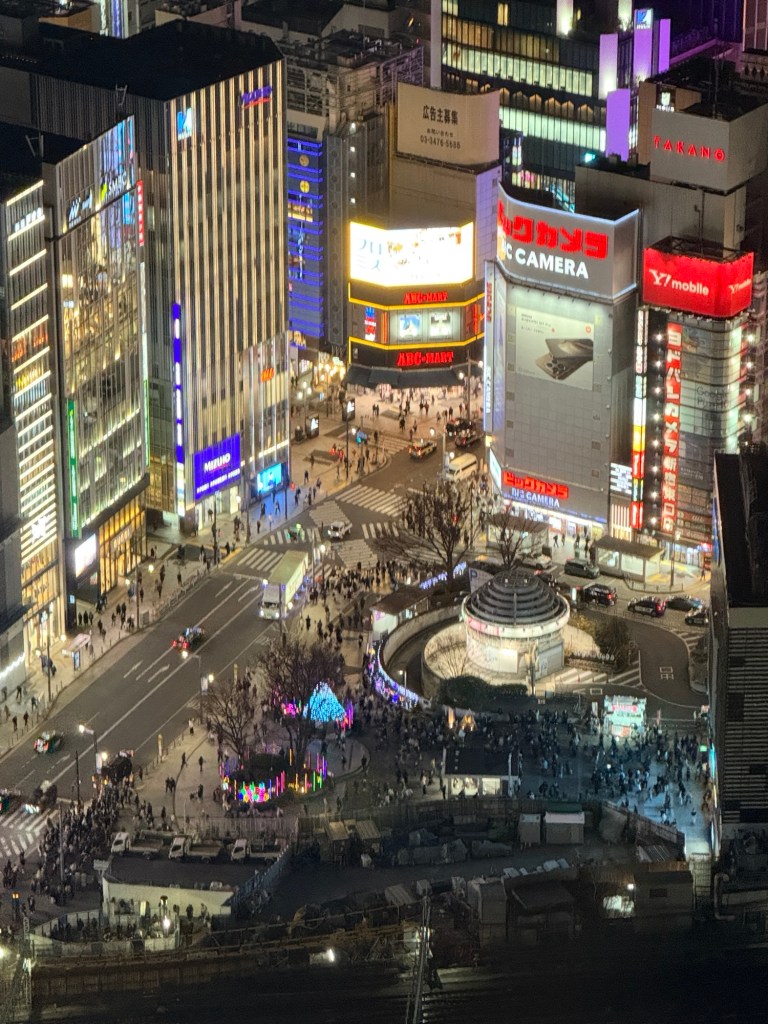
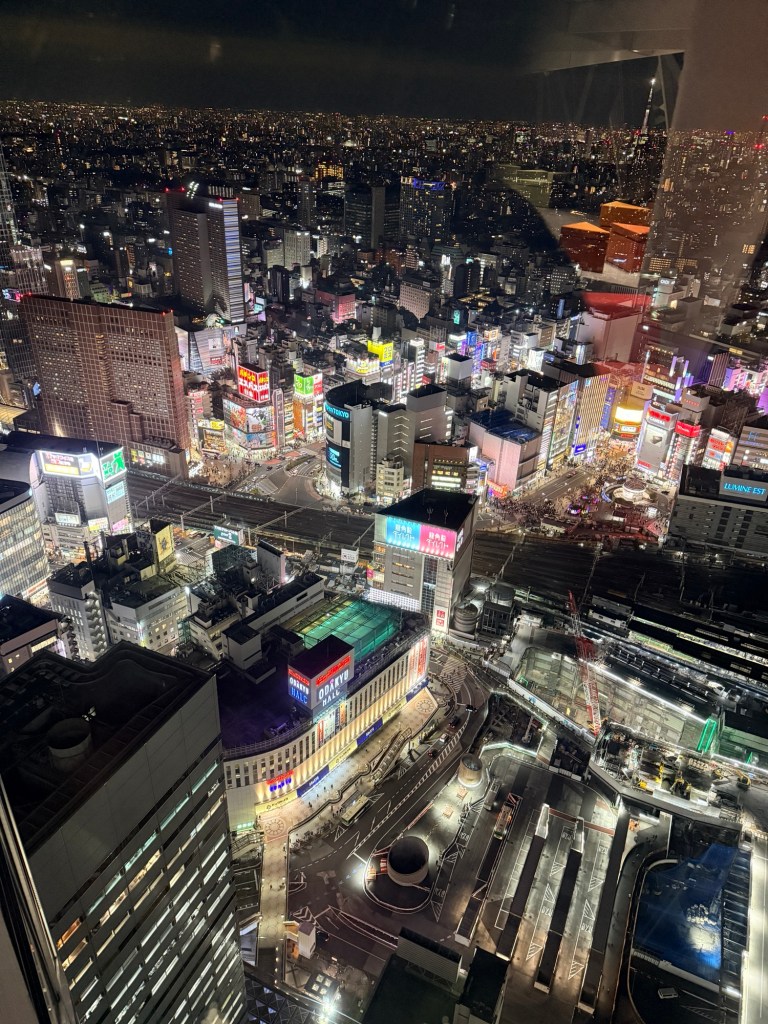
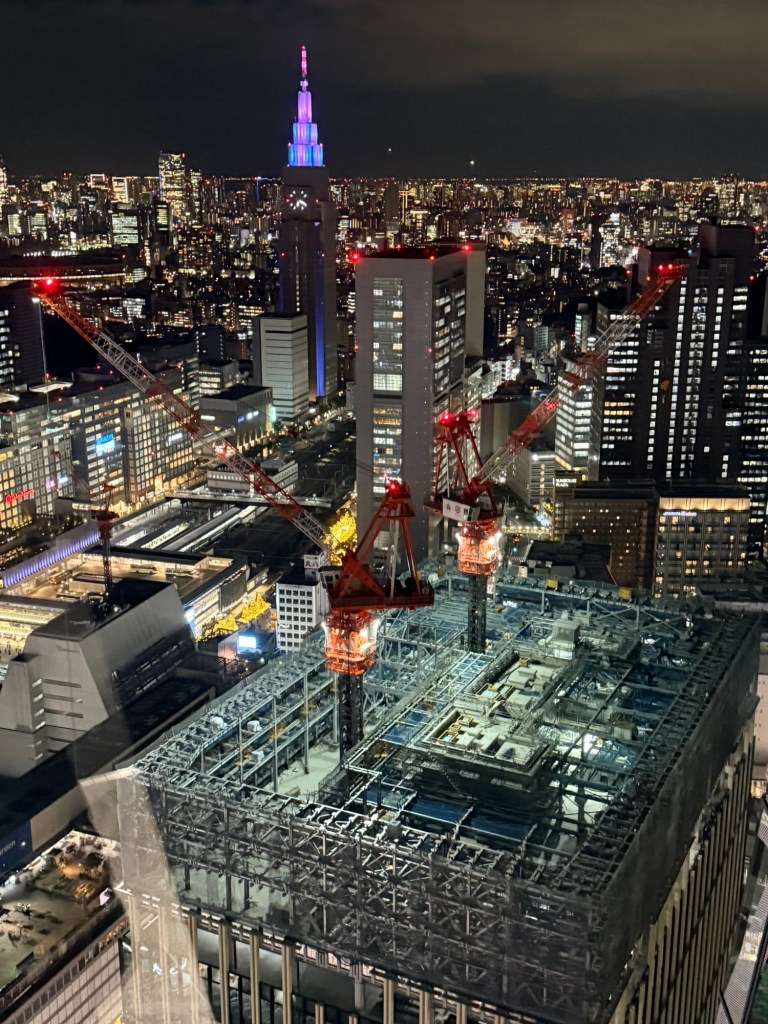
Tamami explaining the building’s organization. our event was to be held. These three-story high atriums offer sweeping views.But the best views are from teh top of the Cocoon Tower.A busy Tokoyo intersection. Buildings as far as the eye can see — the world’s biggest megalopolis!More buildings prinnign up that will block the views of and from the Cocoon Tower.
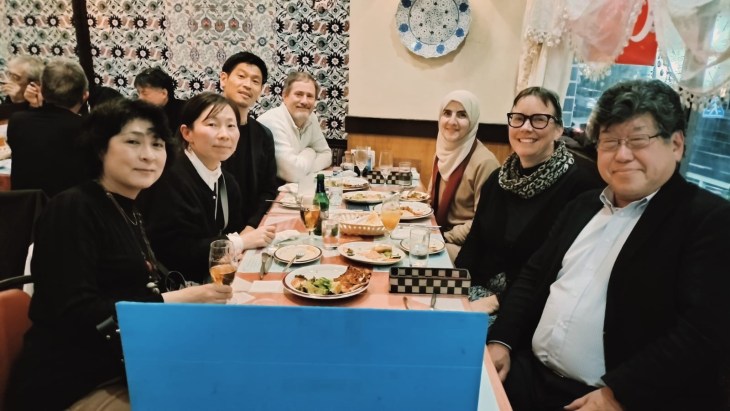
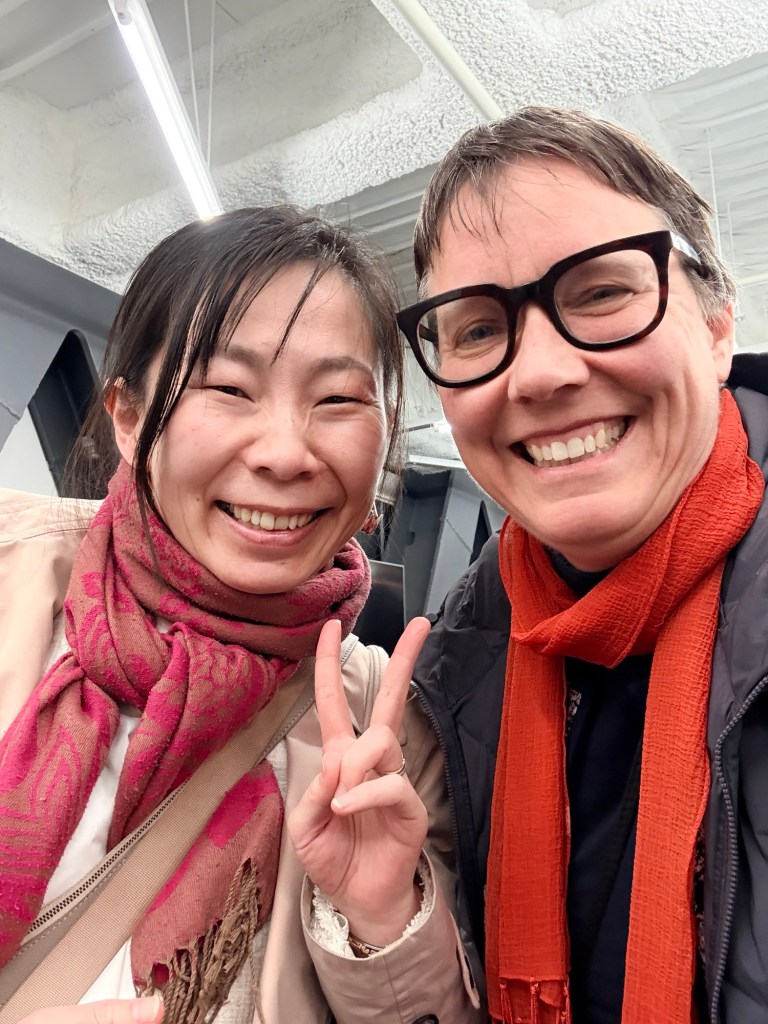
Following the tour, I enjoyed a lovely pre-conference dinner at a Turkish restaurant alongside Tamami, Dr. Asami Ogura (of the National Institute of Technology, KOSEN, branch in Hiroshima), Shinya, STefané, Sarah, Dr. Jun Fudano (whom I met last February in Virginia at the Association for Practical and Applied Ethics conference, as he helps lead APPE), and Misaki (a graduate of University College London’s Institute of Education, who helped translate several of our sessions) who took the photo below.
Preconference dinner with Tamami, Asami, Shinya, Stefané, Sarah, me, and Jun.
Sarah and I arrived at Cocoon Tower plenty early the next day and had breakfast near the venue. Eating so much for breakfast was a mistake with a big lunch on the horizon, but I didn’t want to risk being underprepared.
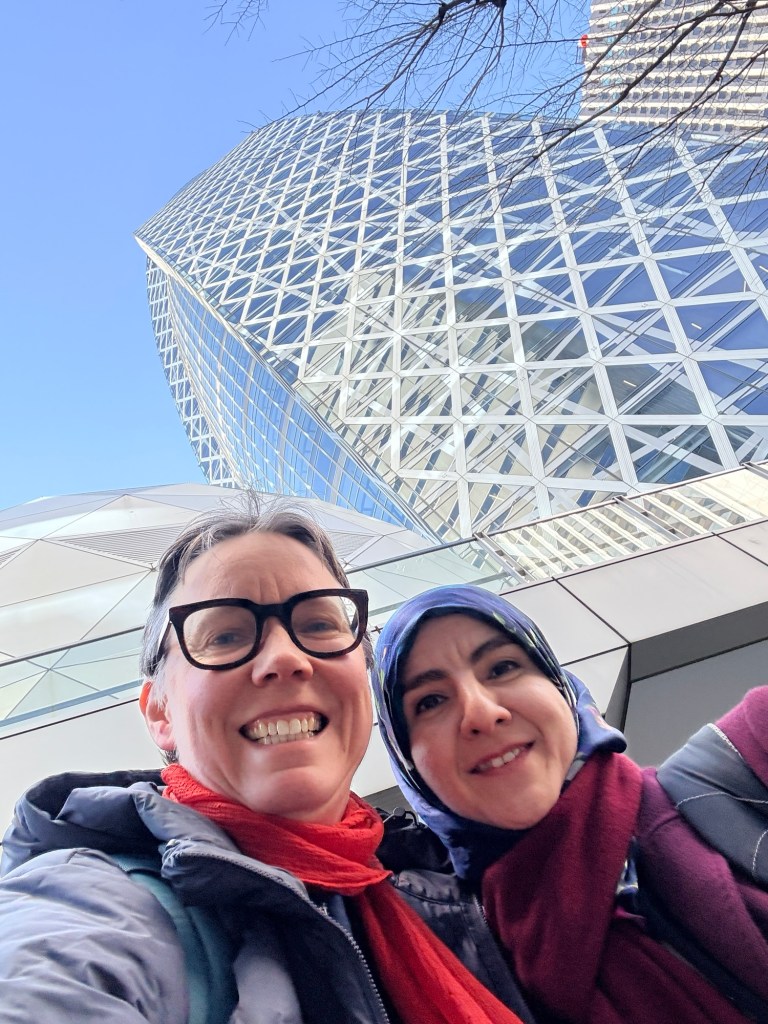
Sarah and me, headed to the venue the next day.The building is also lovely to view in the sunshine.
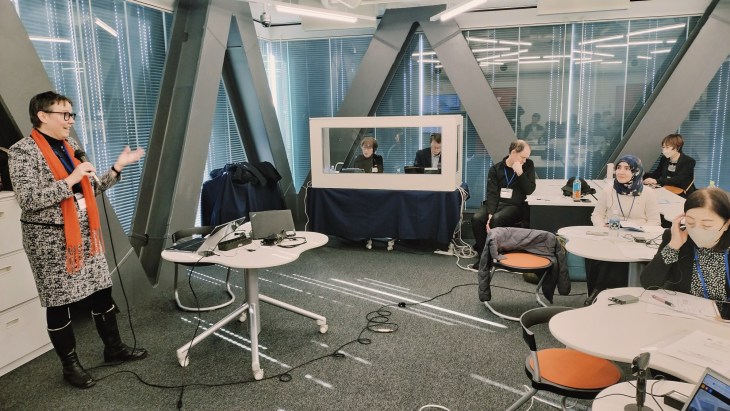
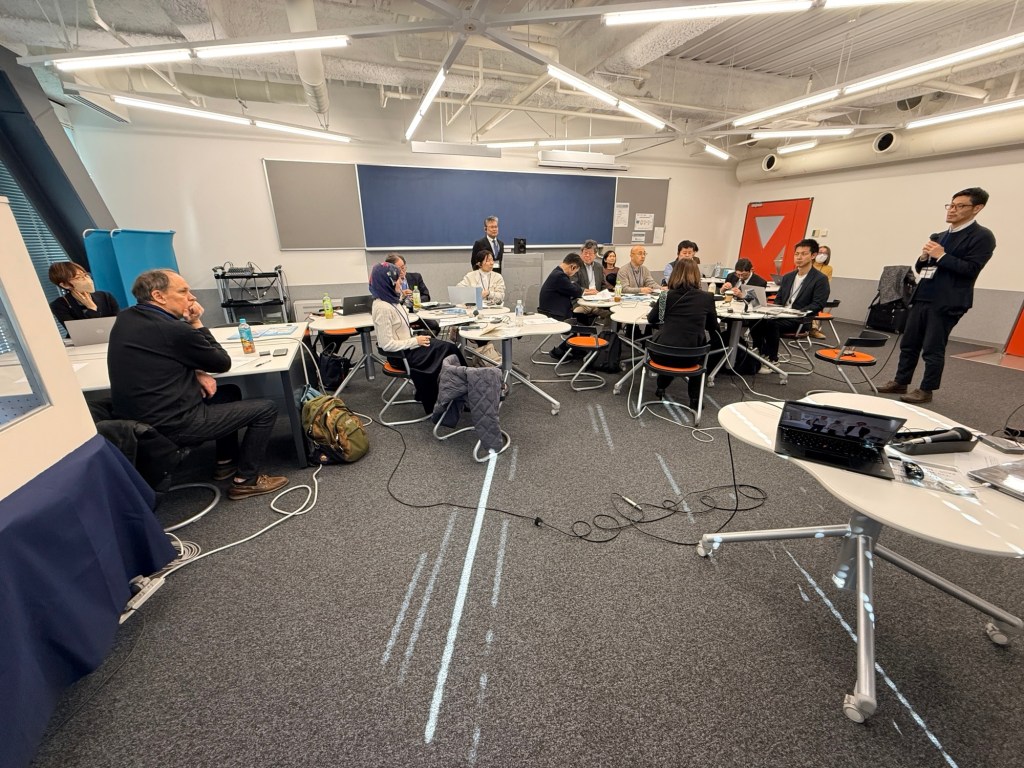
This was a spectacular event! So engaging. So well organized and translated.
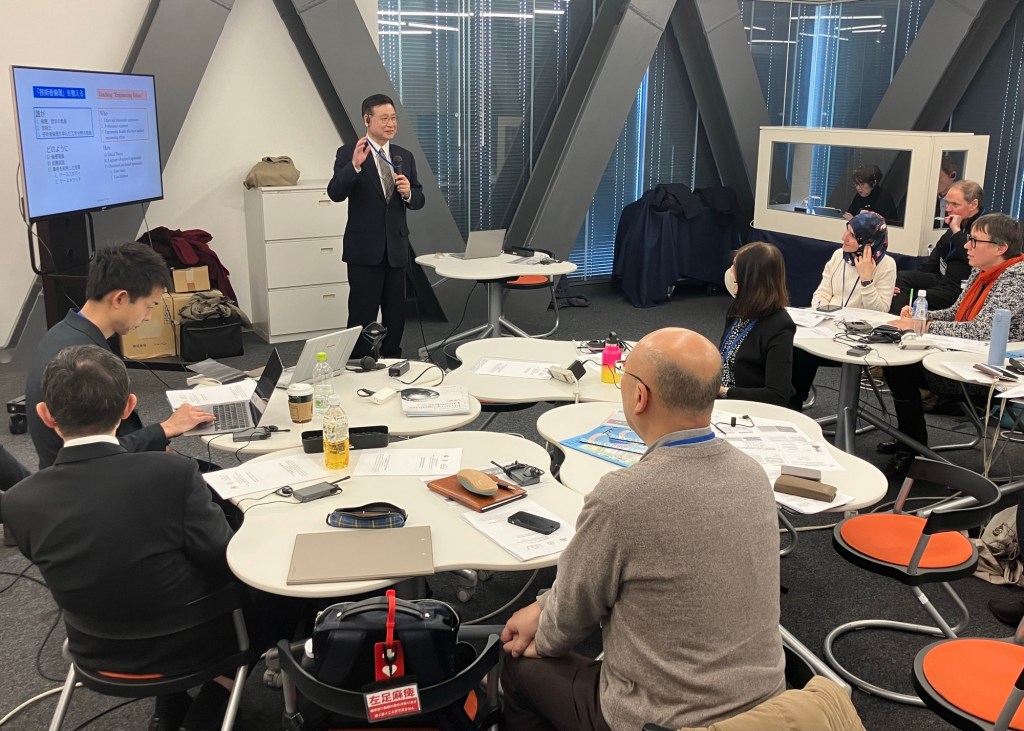
The event included many interesting speakers and was well attended, with roughly two dozen colleagues travelling from all corners of Japan to participate.
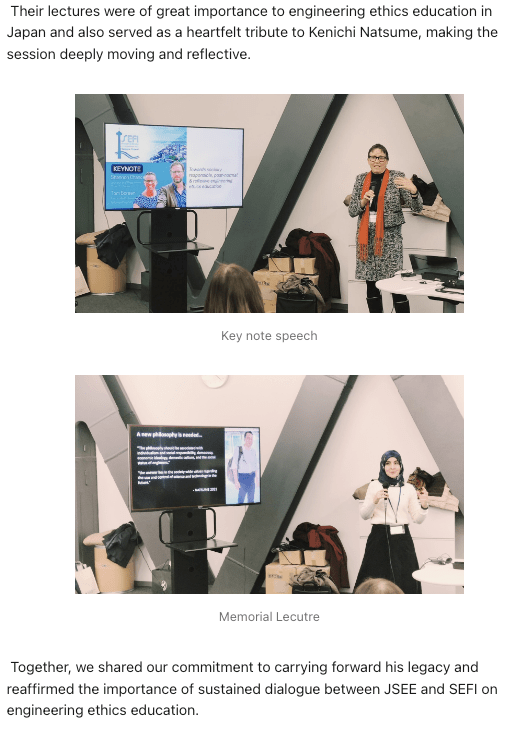
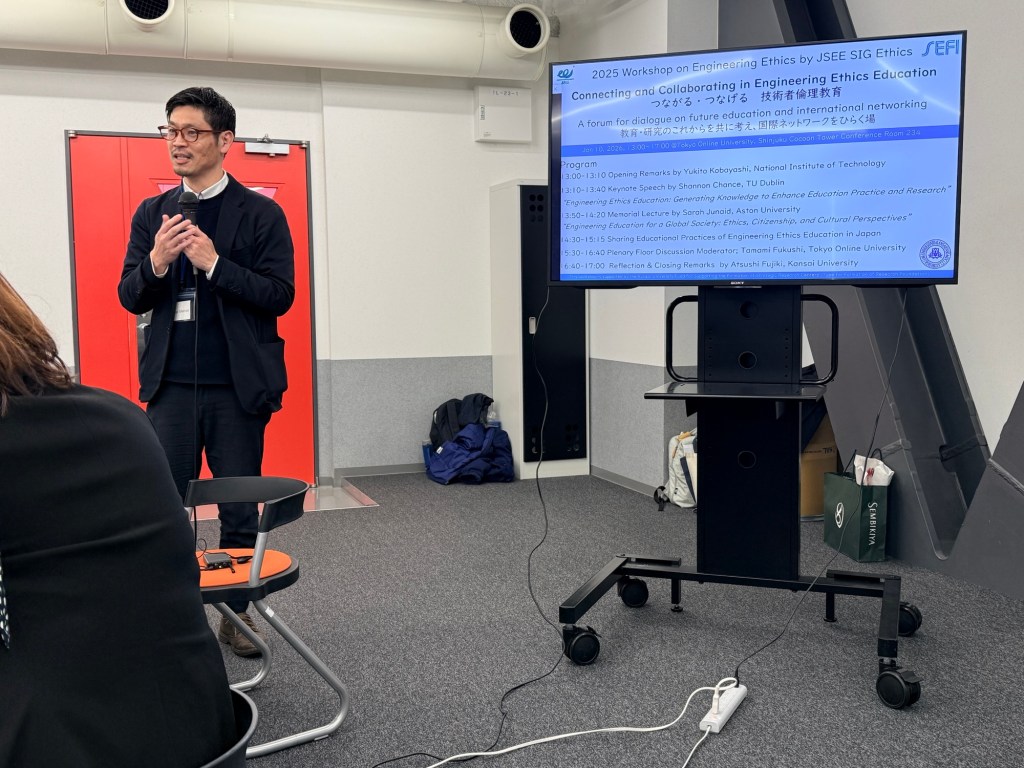
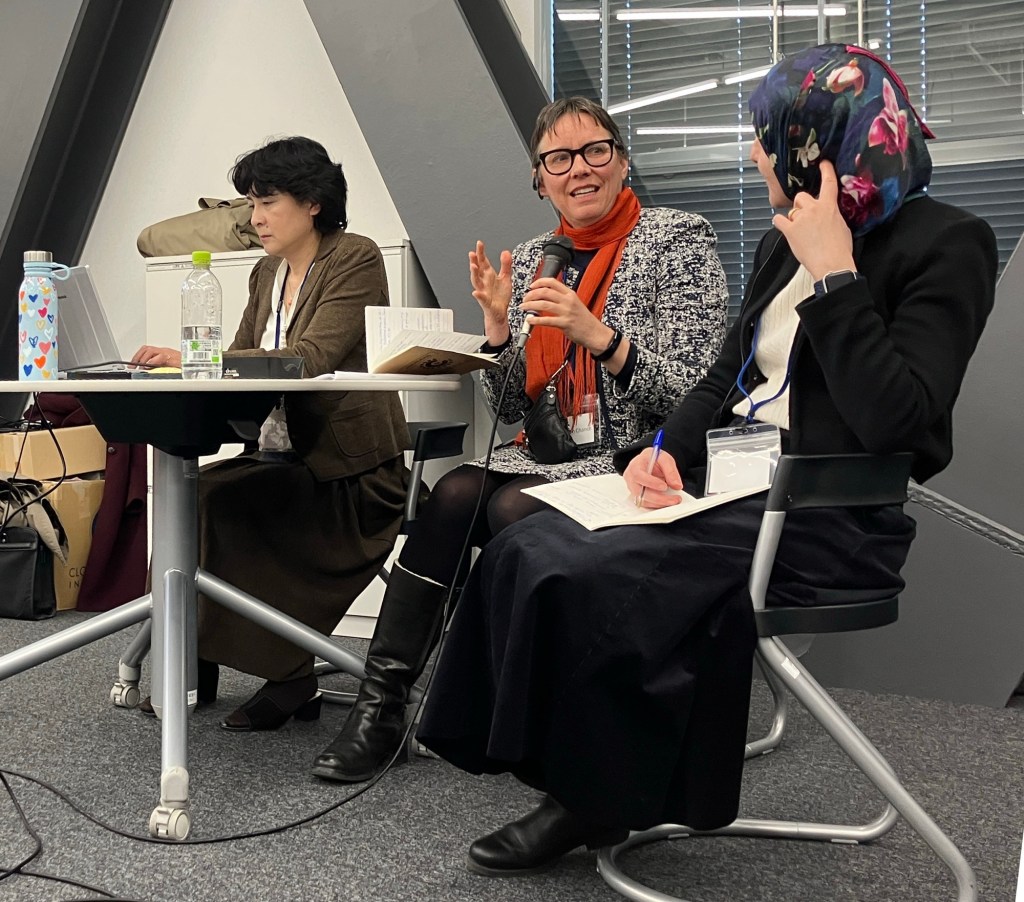
The event opened with a welcome from Shinya, followed by a keynote I delivered and a Memorial Lecture delivered by Sarah.
Atsushi’s grant paid for two professional translators, which made a world of difference in the quality and comfort of our day. We each had a headset so we could hear in real time what anyone in the other language was saying.
Translators hard at work!
This was an enormous support for effective communication — it represented a substantial investment but was essential to helping us understand and engage with each other in deeply meaningful ways.
Particpants ready to start the day!Shinya Takehara opening the event.
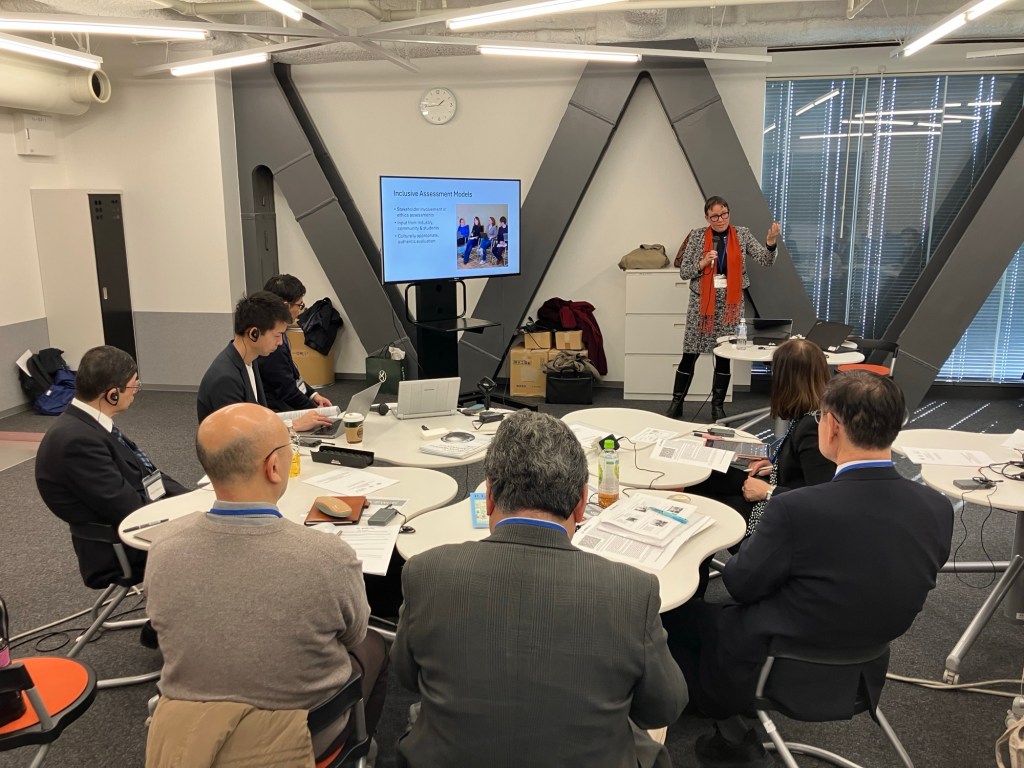
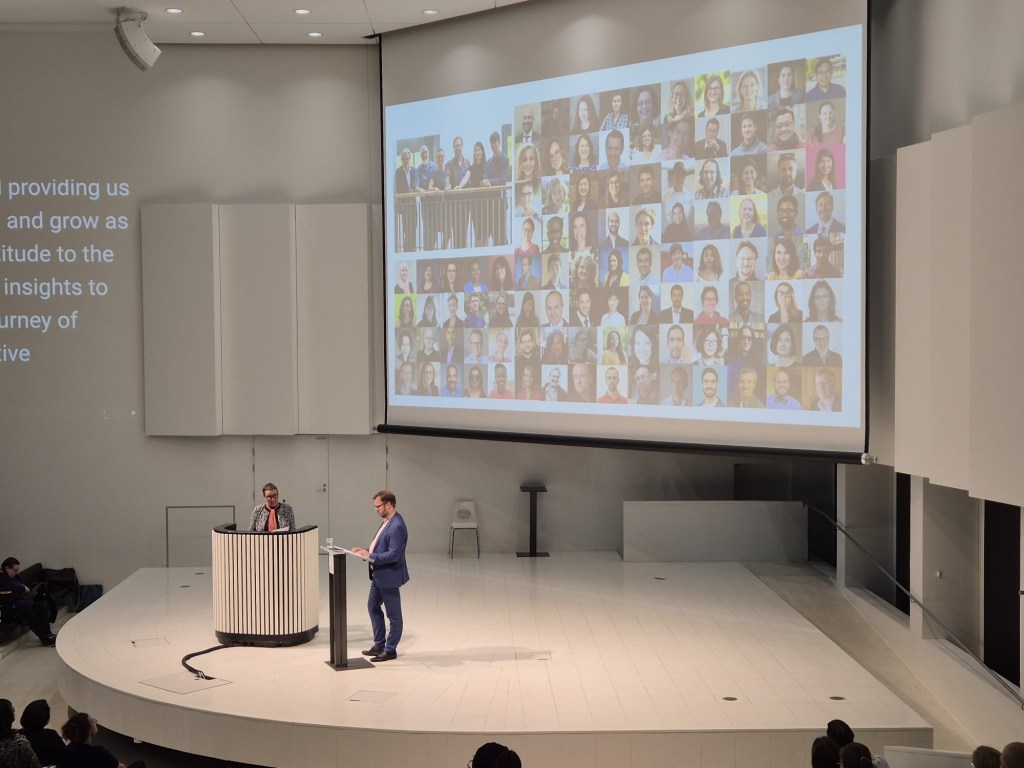
First up was my own keynote, a half-hour presentation summarizing topics that Tom Børsen and I presented at the SEFI conference last September. I helped the audience understand what SEFI is doing in engineering ethics education and invited our Japanese colleagues to join our SEFI Ethics projects and activities.
In the talk, I advocated for a shift from individual rule-following toward collective global responsibility and an “Ethics of Care” for the planet and future generations. I introduced some useful frameworks for navigating complex, high-stakes socio-technical challenges, including humble, reflexive dialogue and inclusive, culturally appropriate assessment models.
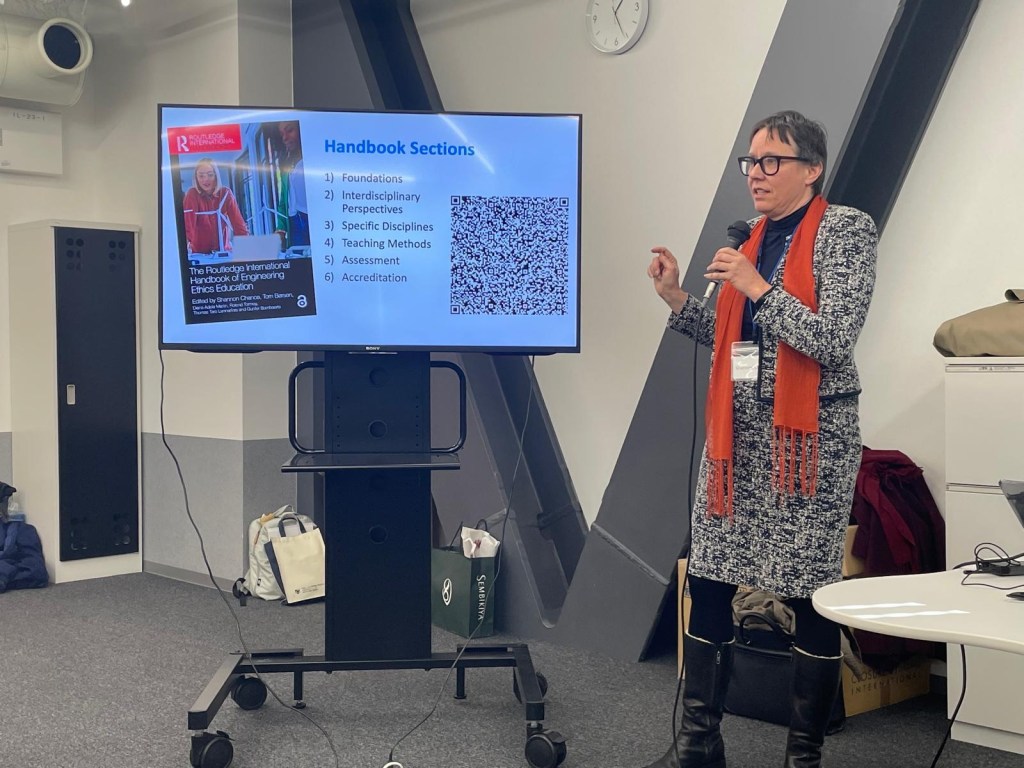
Discussing ways forward.Introducing the handbook.
I also honored the legacy of Japanese scholar Prof. Kenichi Natsume, calling on the international community to collaboratively integrate ethics into teaching to shape a more socially responsible future.
The next talk, the Memorial Lecture, presented by Sarah Junaid, paid tribute to Kenichi. He was a co-author on Sarah’s chapter of the engineering ethics handbook. The editors of the handbook dedicated it to Kenichi, in honor of the groundbreaking work he did bridging eastern and western perspectives on engineering ethics.
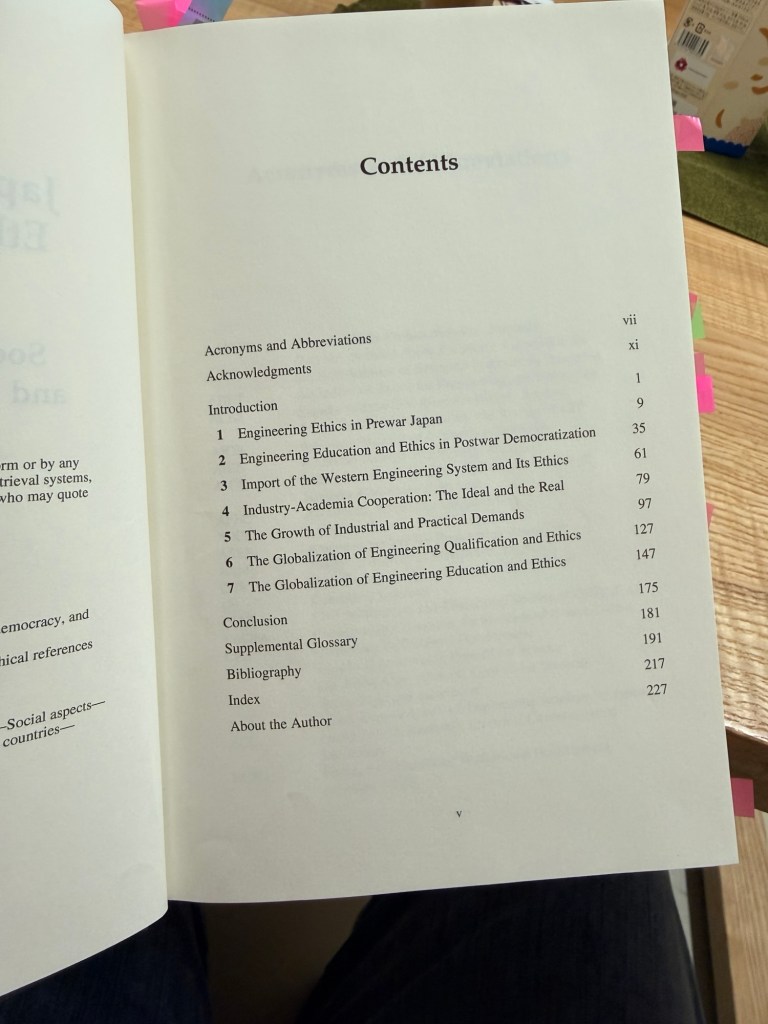
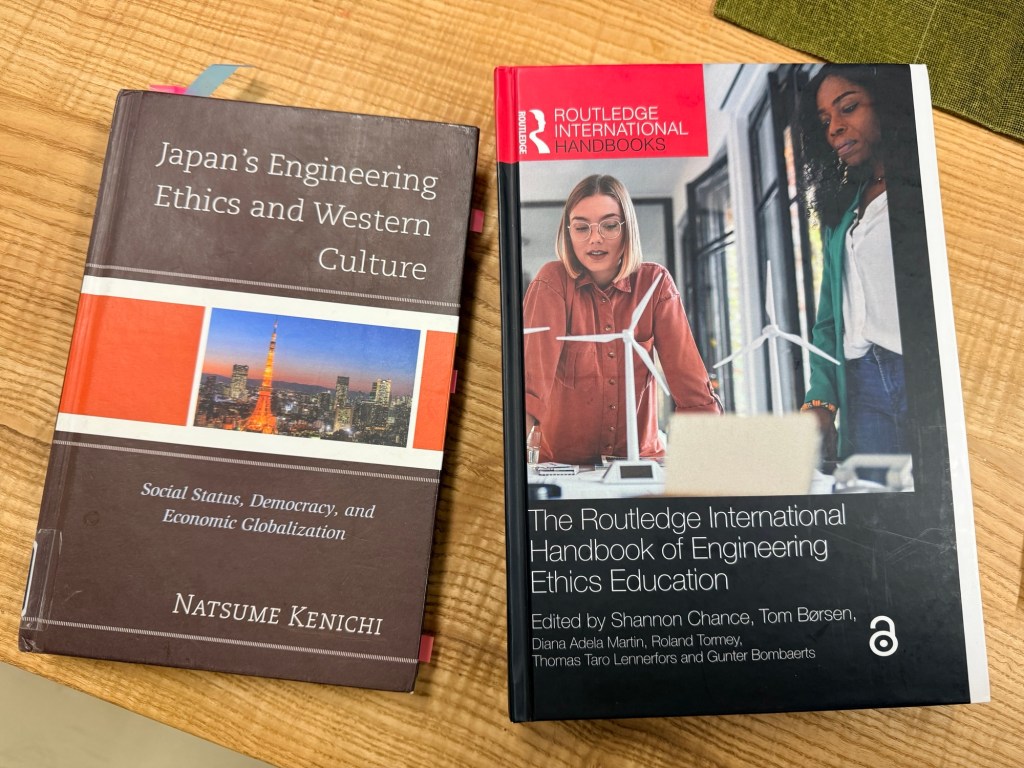
The table of contents of Kenichi’s book.The cover of Kenichi’s book and our co-authored handbook.
Sarah summarized Japan’s context as steeped in collective consciousness, a duty to others, and an embedded morality. The education system there has historically focused on ethics and morality in an intrinsic, embedded way, with a strong awareness and regard for others and loyalty to the group. There have been recent shifts to increase the focus on individual responsibility.
In contrast, Sarah described Western cultures as emphasizing individuality, liberalization, and challenges of social responsibility. Education has typically focused on capitalism and free markets, economies built on growth, individuality, and liberalization. Recently, there has been increased focus on social and collective responsibility, which was a major theme of my keynote as well.
“Global collaboration is needed,” Sarah asserted, “for shaping ethical engineers and global citizens.” During Sarah’s presentation, we learned that Kenichi was central in helping Sarah collect data at KOSEN institutes across Japan during her Churchill Fellowship, and the slides in her talk showed the two of them actively collaborating. Sarah and Kenichi exemplified the type of collaboration that is desperately needed.
Shinya noted that “together, we shared our commitment to carrying forward [Kenichi’s] legacy and reaffirmed the importance of sustained dialogue between JSEE and SEFI on engineering ethics education.”
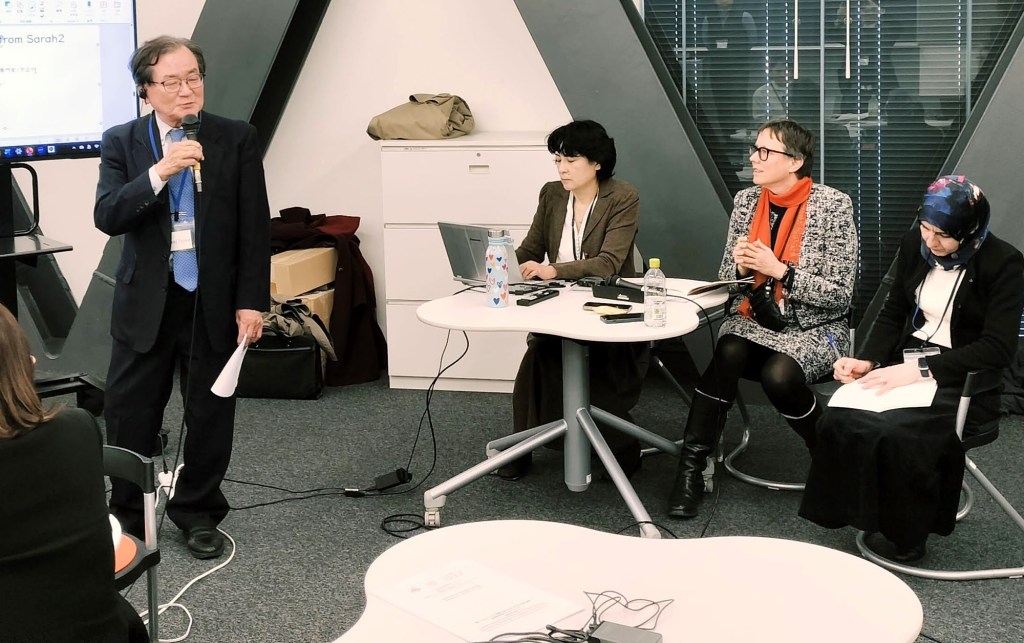
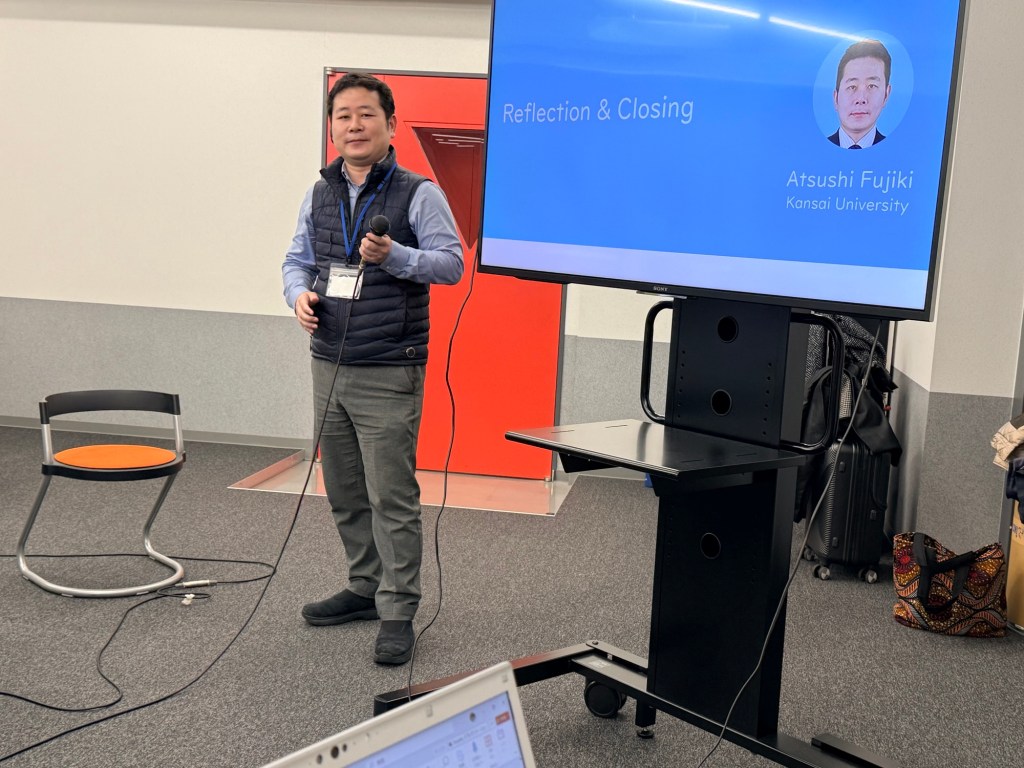
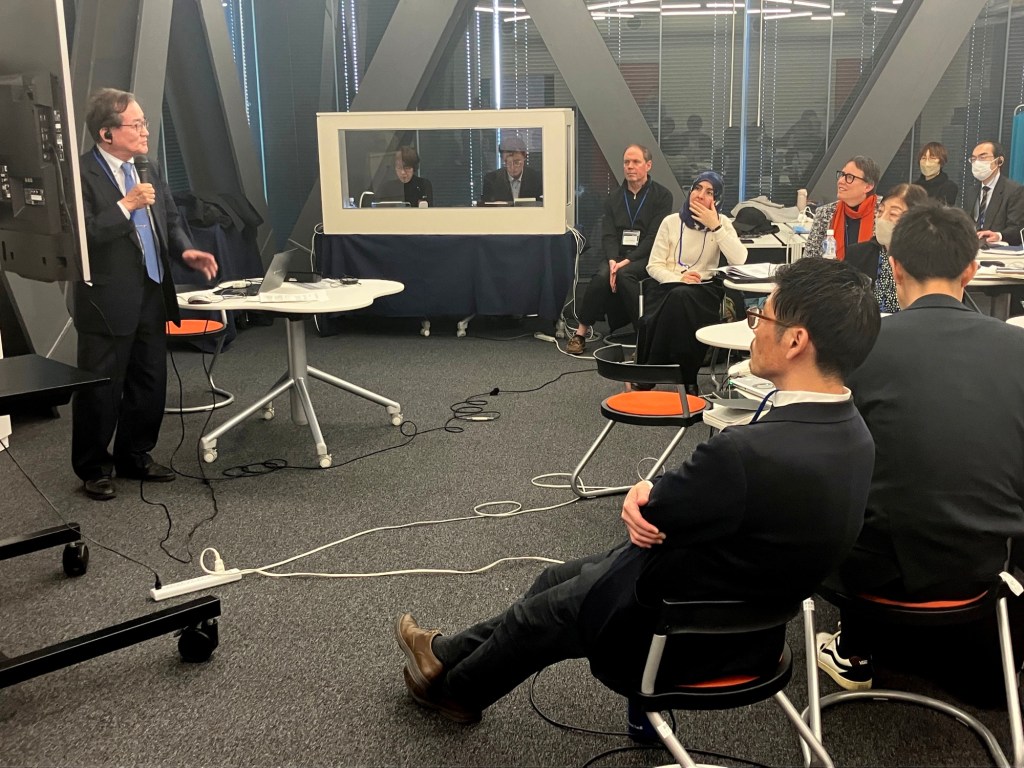
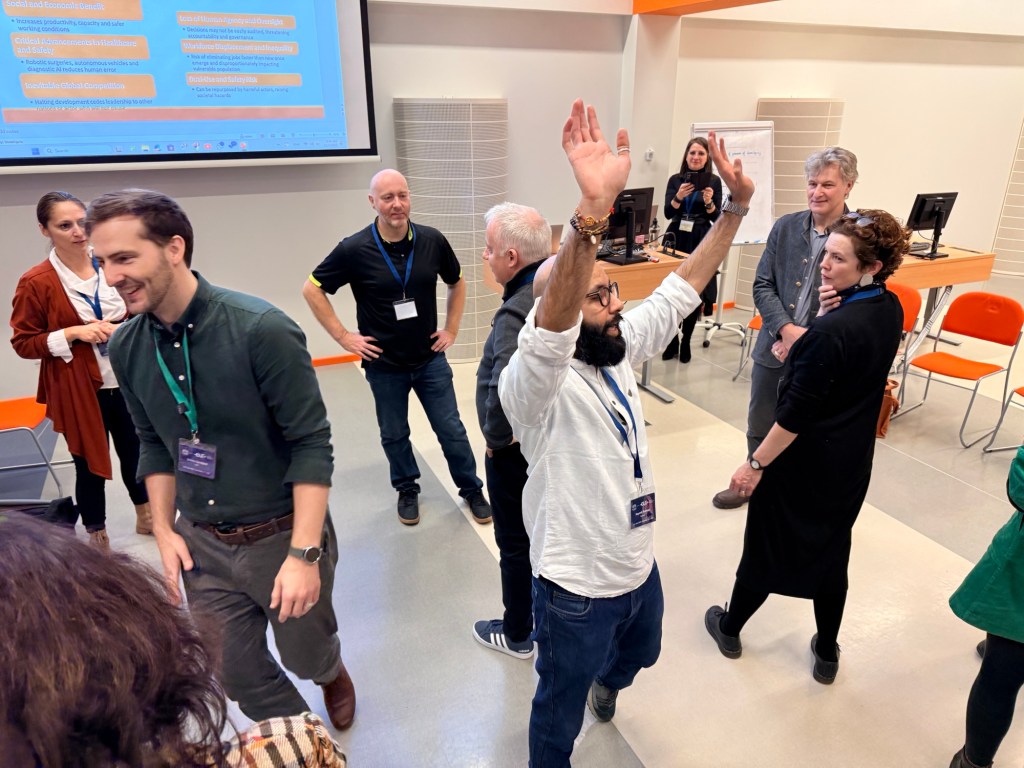
Participants posing questions to Sarah and me.Discussing questions posed.Atsushi summarizing the day’s discussions.
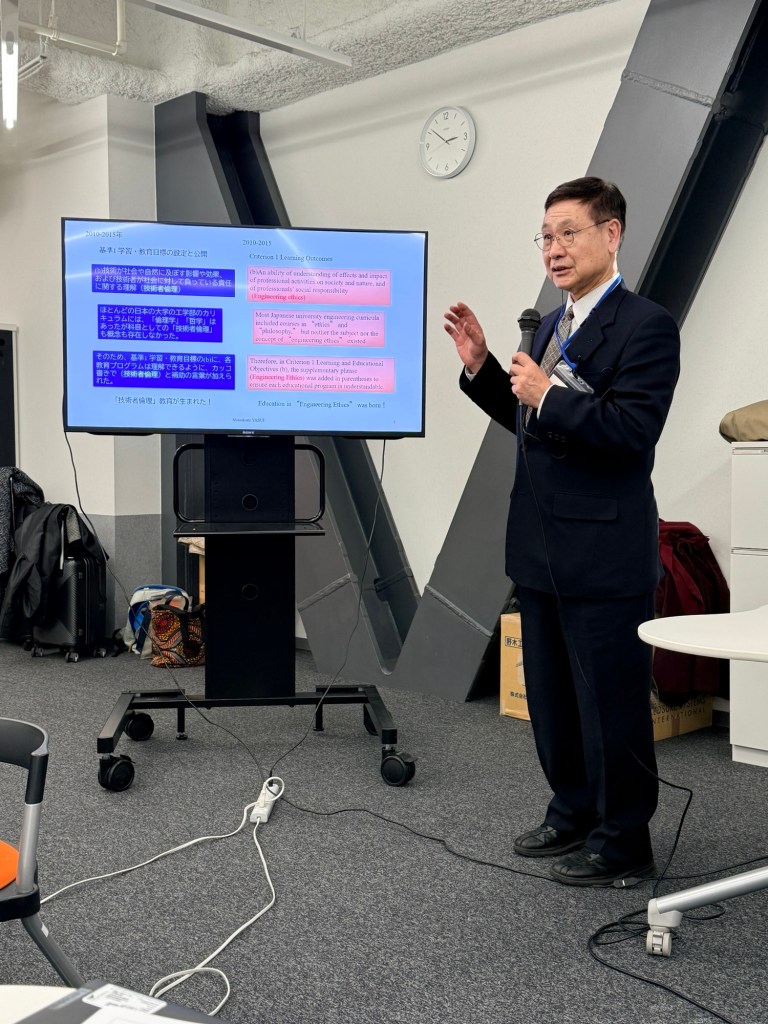
Following our talks, the first featured speaker from JSEE, Dr. Muraran Yasui (Department of Biology, Faculty of Science, Osaka University), discussed how engineering ethics is taught in Japan and how it aligns with global accreditation standards.
His group studies how this is done at many postsecondary institutions in Japan. He described Japanese efforts to foster “aspirational ethics” rather than just preventive ethics among future engineers. This concerns what engineers ought to do, not just what they are legally and professionally obligated to do.
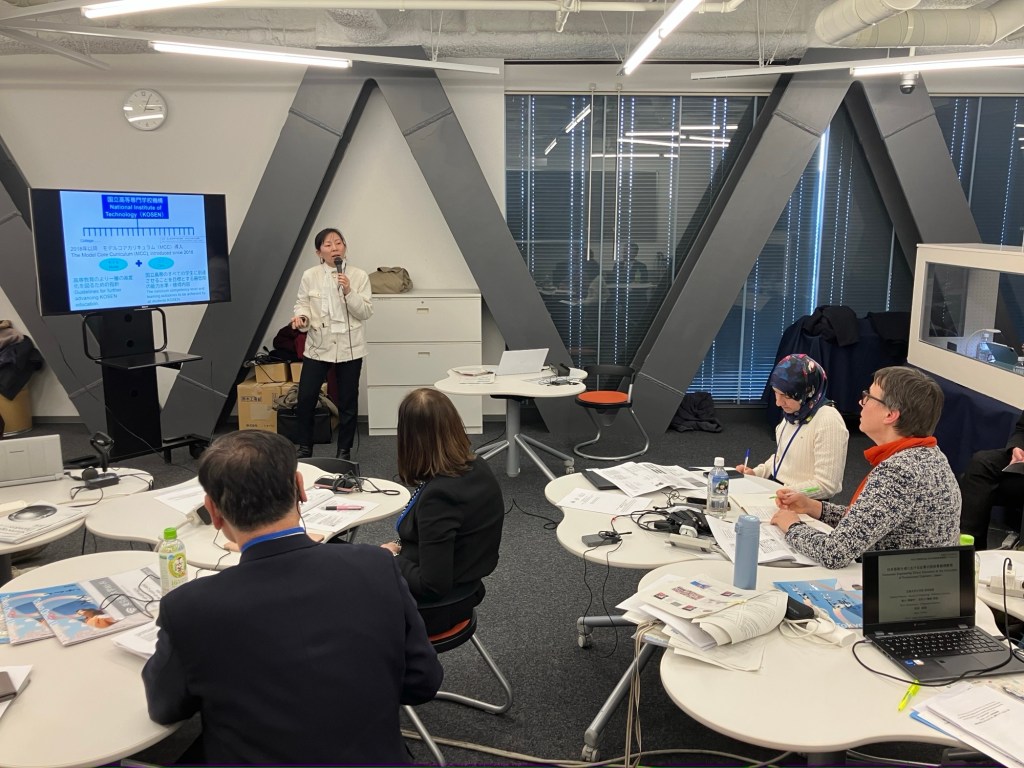
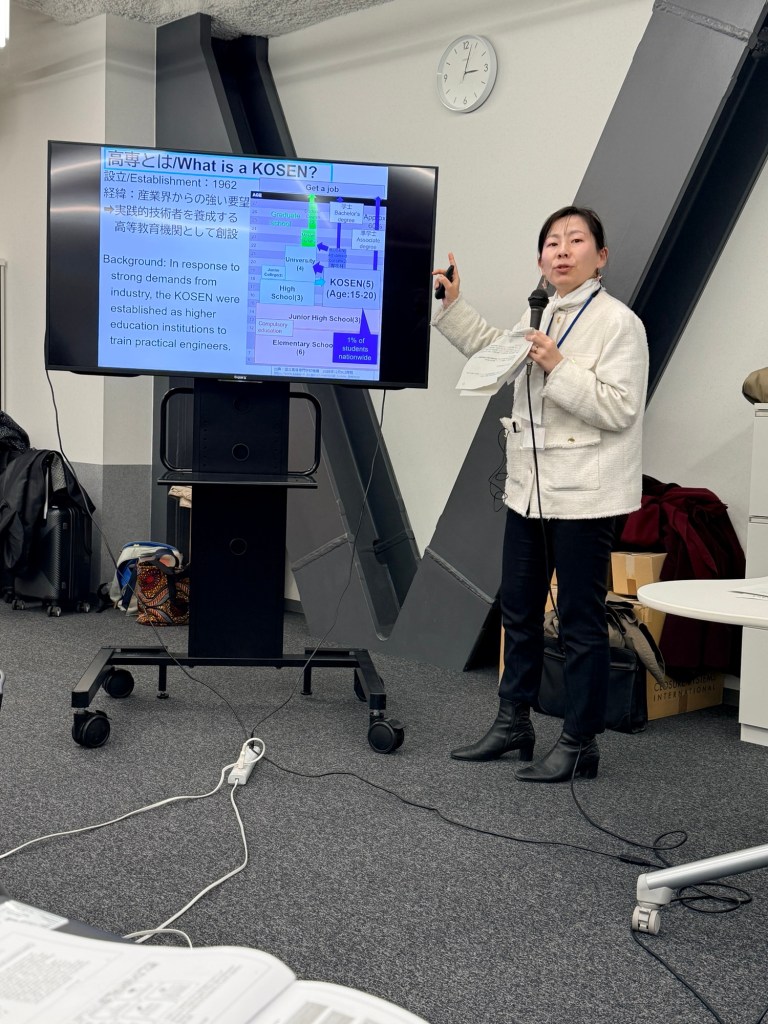
Next, Dr. Asami Ogura told us about KOSEN (the National Institute of Technology, with 51 colleges across Japan that teach students aged 15-20). Asami discussed how ethics is taught currently at KOSEN and how she believes that technology transfer can foster peace.
Dr. Asami Ogura
She also explained that KOSEN established a model core curriculum for ethics in 2018, identifying minimum competencies and learning outcomes, and providing guidance to teachers.
Asami’s work focuses on the overlap between environmental conservation, international understanding, and peacebuilding.
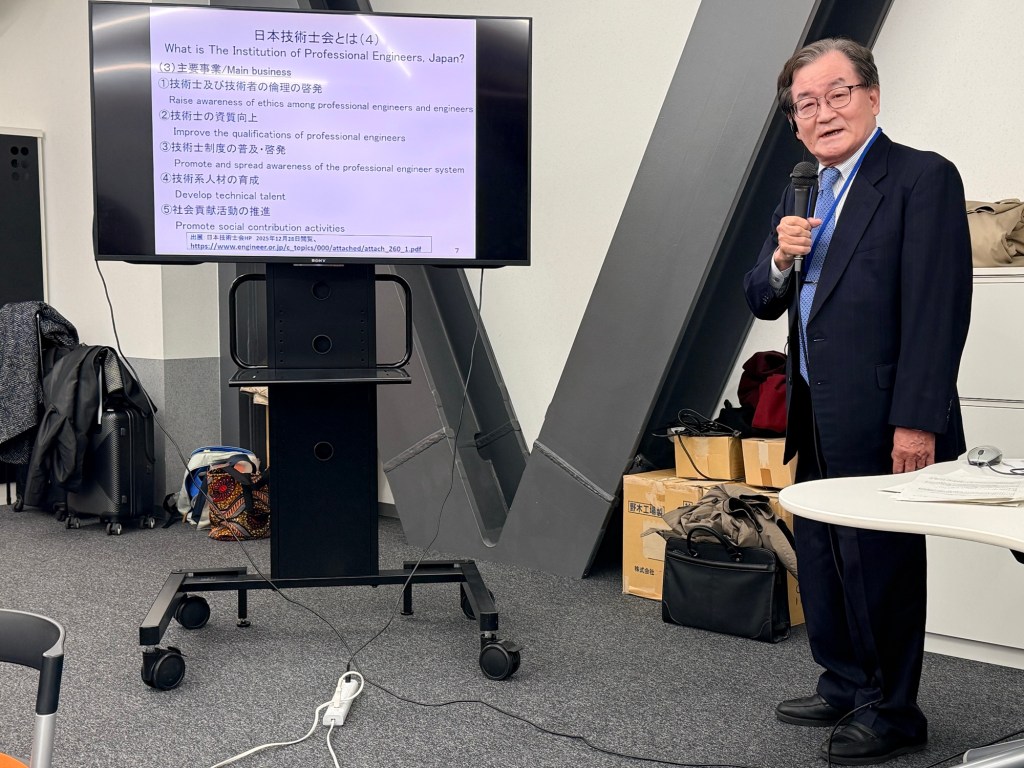
Third among the JSEE experts, Dr. Naoki Taoka discussed corporate engineering ethics. He is a leader in the Institution of Professional Engineers in Japan and a visiting professor at Hiroshima University.
Dr. Naoki Taoka
Naoki explained that the Institute’s main business is “to raise awareness of ethics among professional engineers and engineers,” as well as to improve their qualifications, promote and spread awareness of the professionalization system, develop technical talent, and contribute socially through activities.
Following the three JSEE presentations, Dr. Yukito (Happyman) Kobayasi and Atsushi also provided overview comments and insights.
Sarah and I were listening attentively to it all and making detailed notes, as we’d been asked to respond to Tamami’s questions from our European perspective.
We also provided feedback on the other speakers’ presentations, and then addressed questions from the very engaged audience.
Social Side of Events at Cocoon Tower
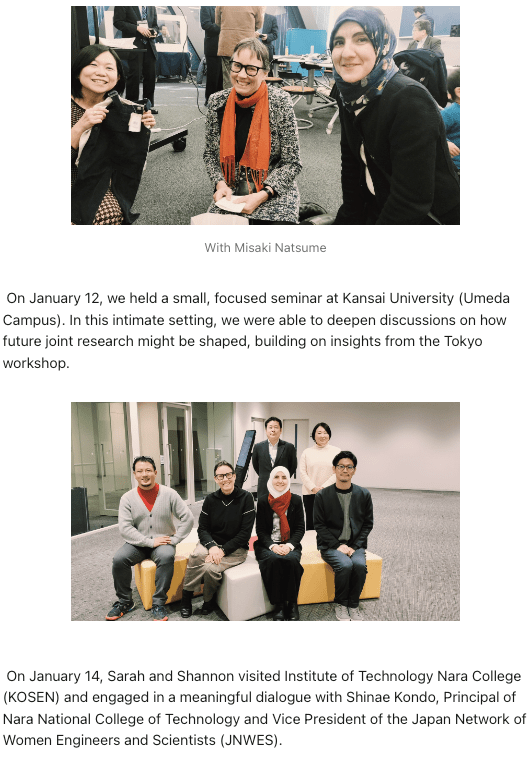
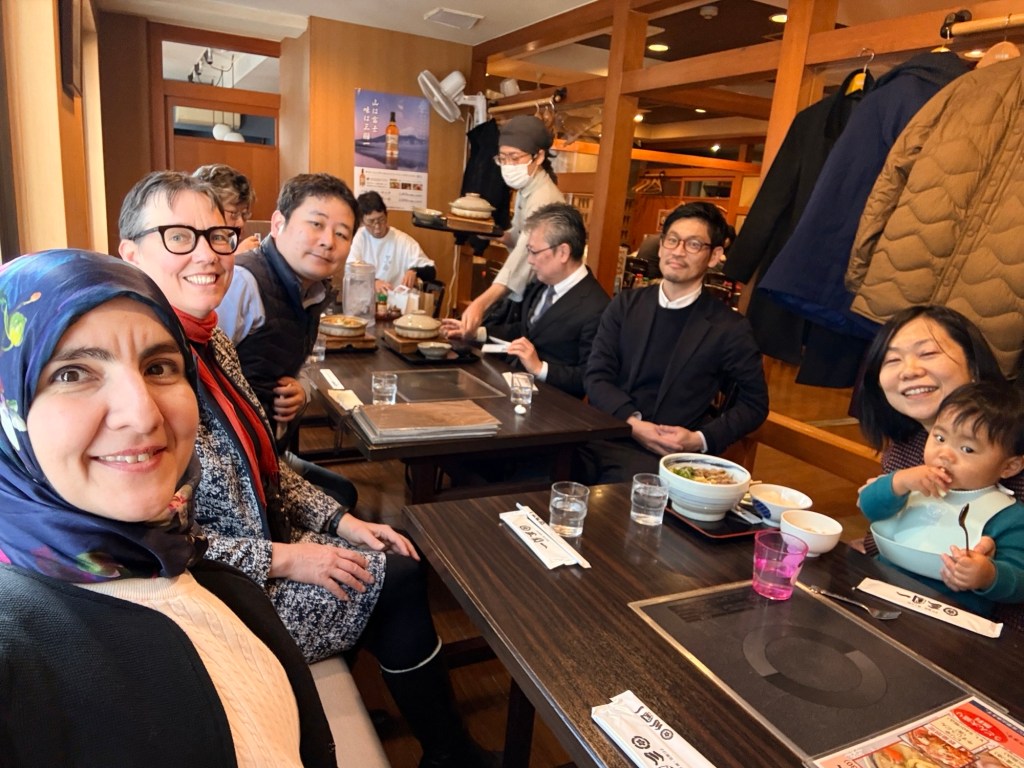
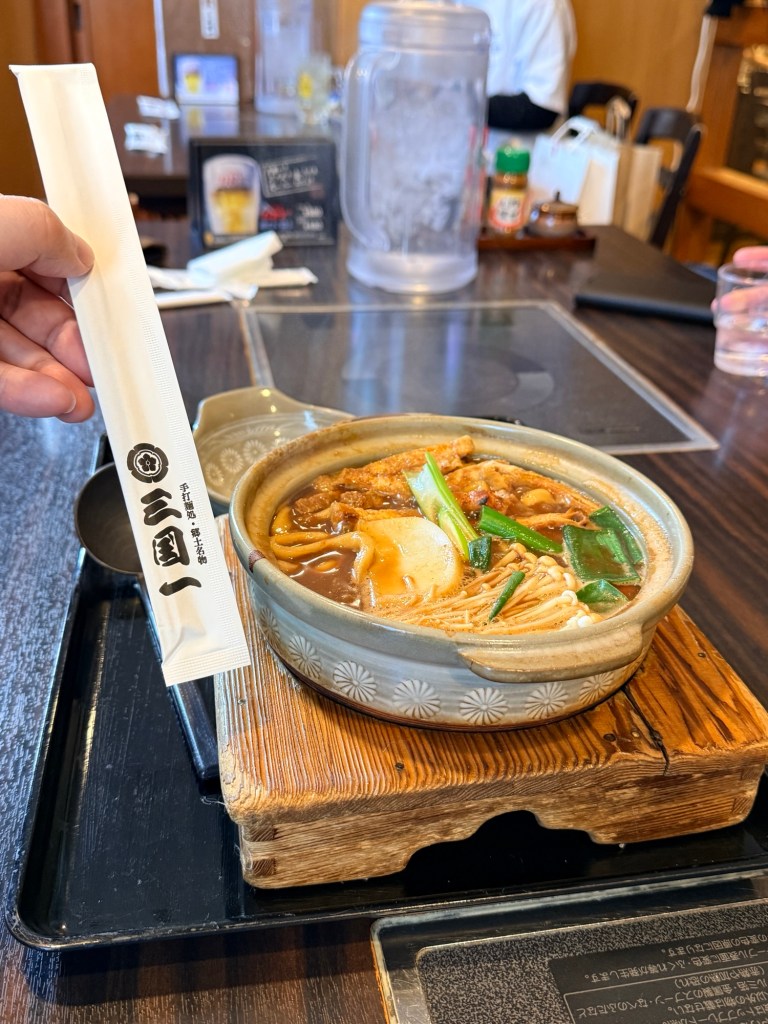
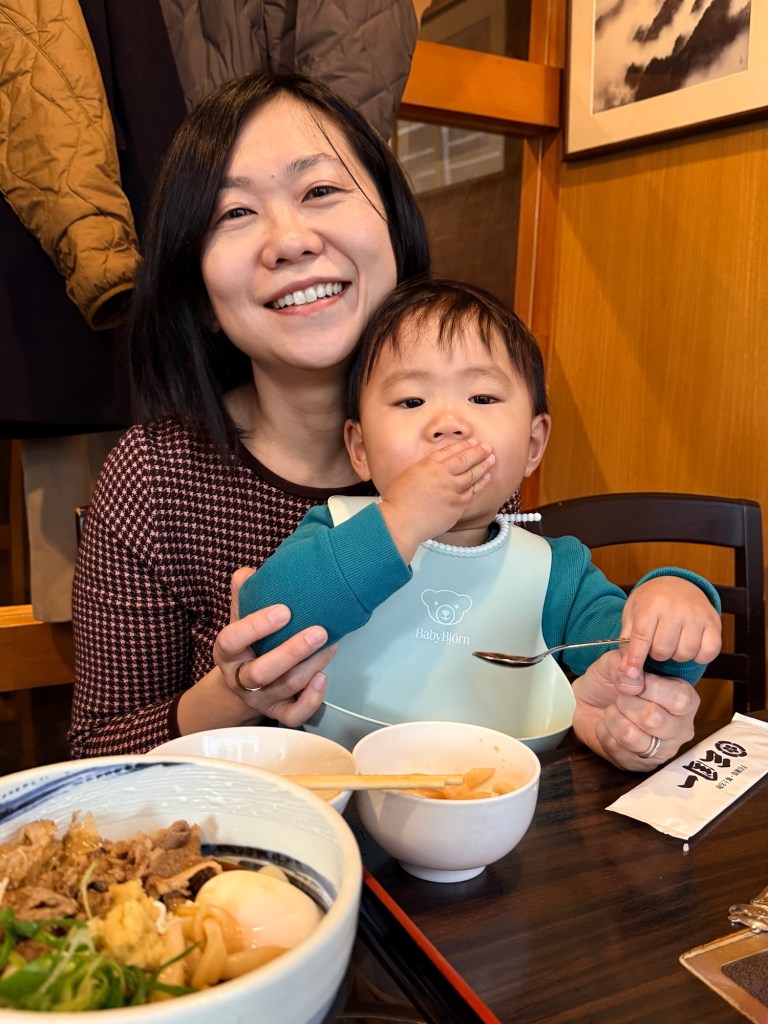
Overall, this was a very exciting day. Participants came from all over Japan, the event was held at the architecturally famous “Cocoon Tower”, and before the event, Sarah and I got to meet and enjoy lunch with the late Professor Kenichi Natsumi’s wife, Misaki Natsume, and son. We enjoyed a delicious ramen-type lunch with Misaki, Shinya, Atsushi, and some of the experts named above.
Invited speakers at lunch before the main event.A really yummy chicken soup.The Natsumis agree!
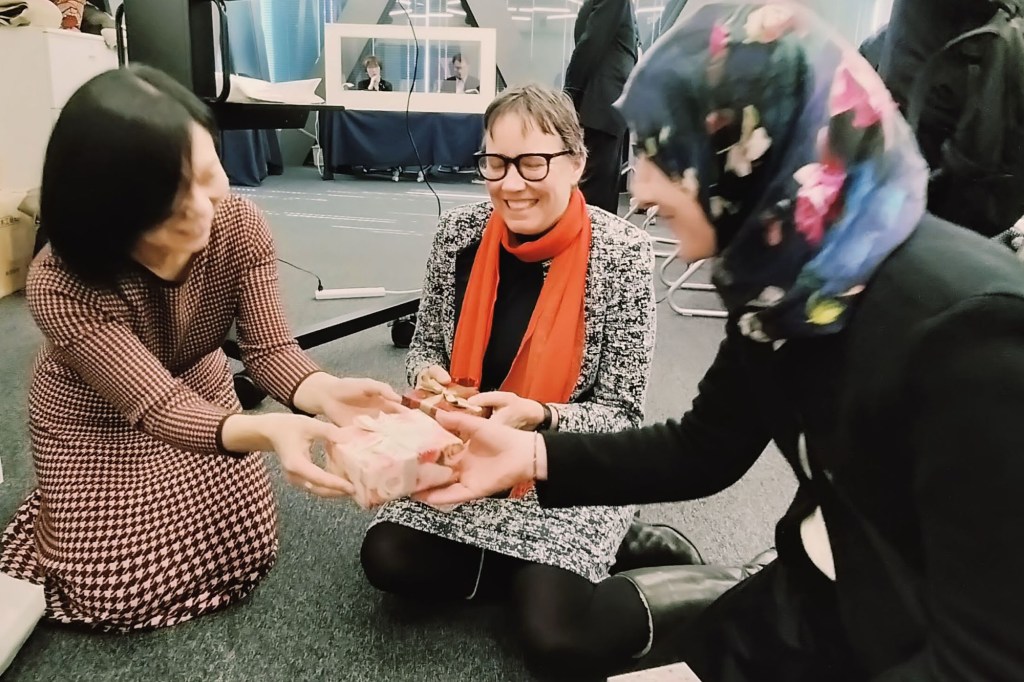
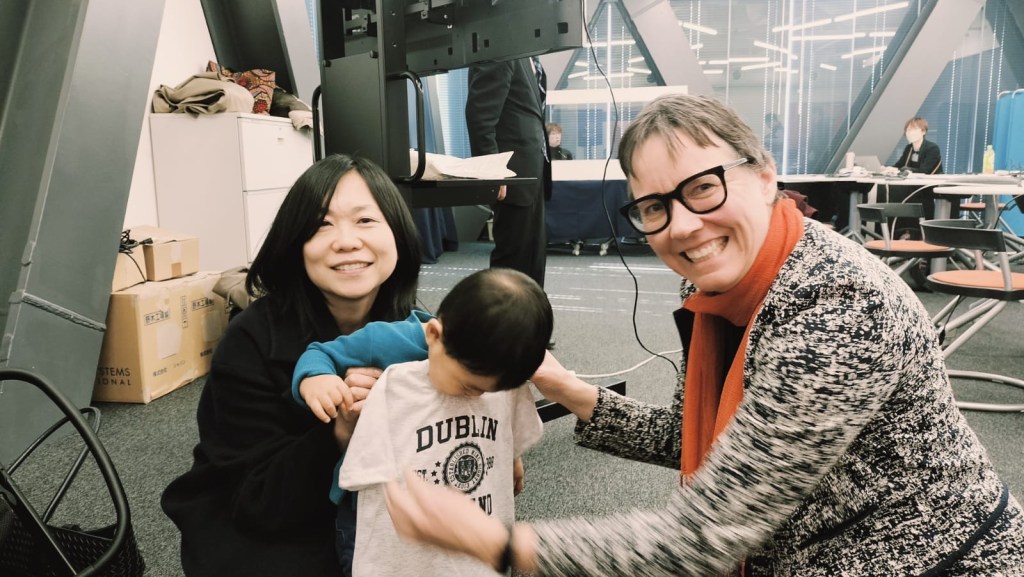
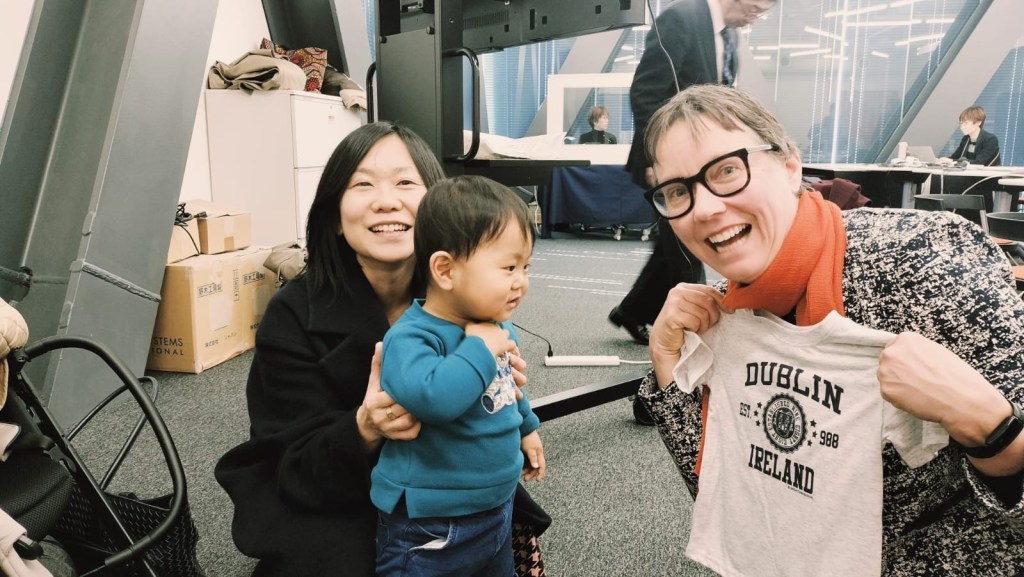
We also got to exchange gifts with Misaki and her son. She gave us the most sincere, heartwarming, handwritten notes describing, among other things, how much being part of the handbook project had meant to her husband.
We exchanged gifts with Misaki just before the main event.It’s not easy to find toddler-friendly gifts.But it looks like this t-short from Dublin will fit fine.
Dr. Fumihiko Tochinai also attended the event. He co-authored Chapter 30 of the ethics handbook, titled “Two criticisms of engineering ethics assessment,” with Rockwell Clancy, Xin Luo, and Chunping Fan.
Dr. Fumihiko Tochinai, co-author of handbook chapter 30, “Two criticisms of engineering ethics assessment,” attended the conference.
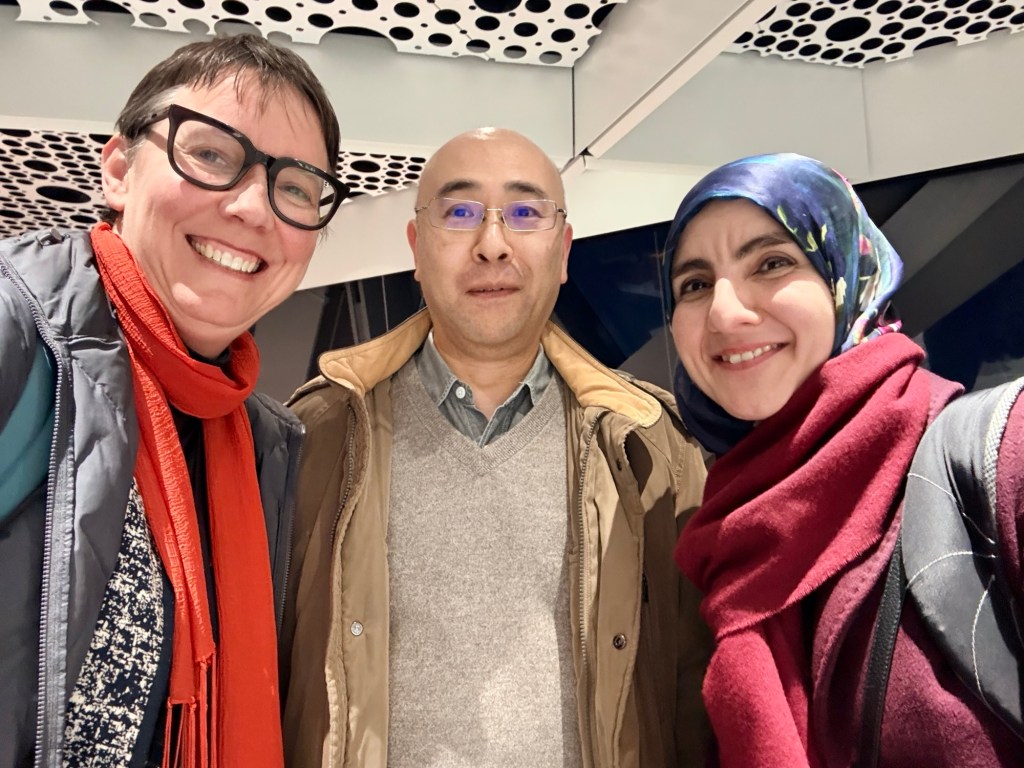
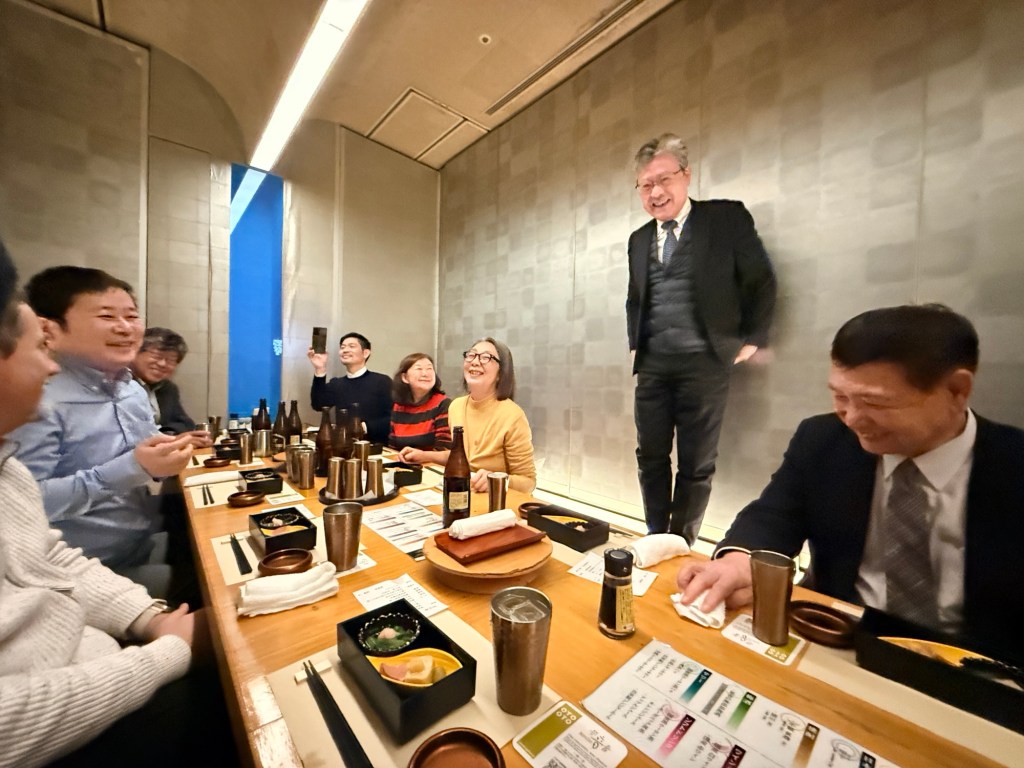
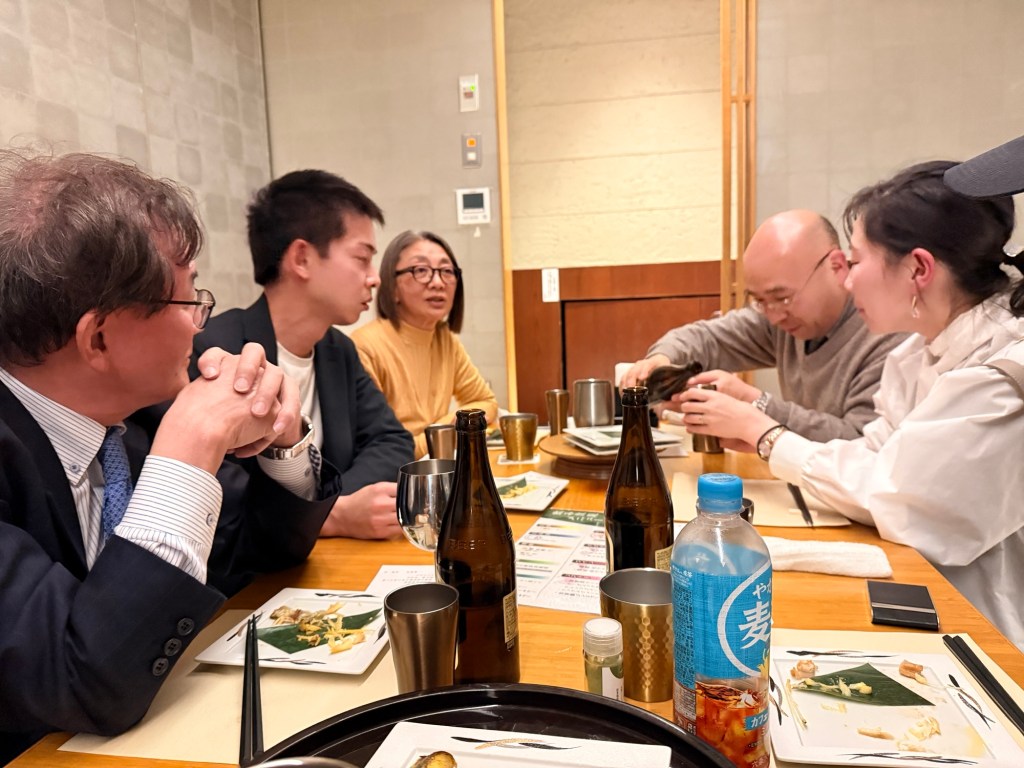
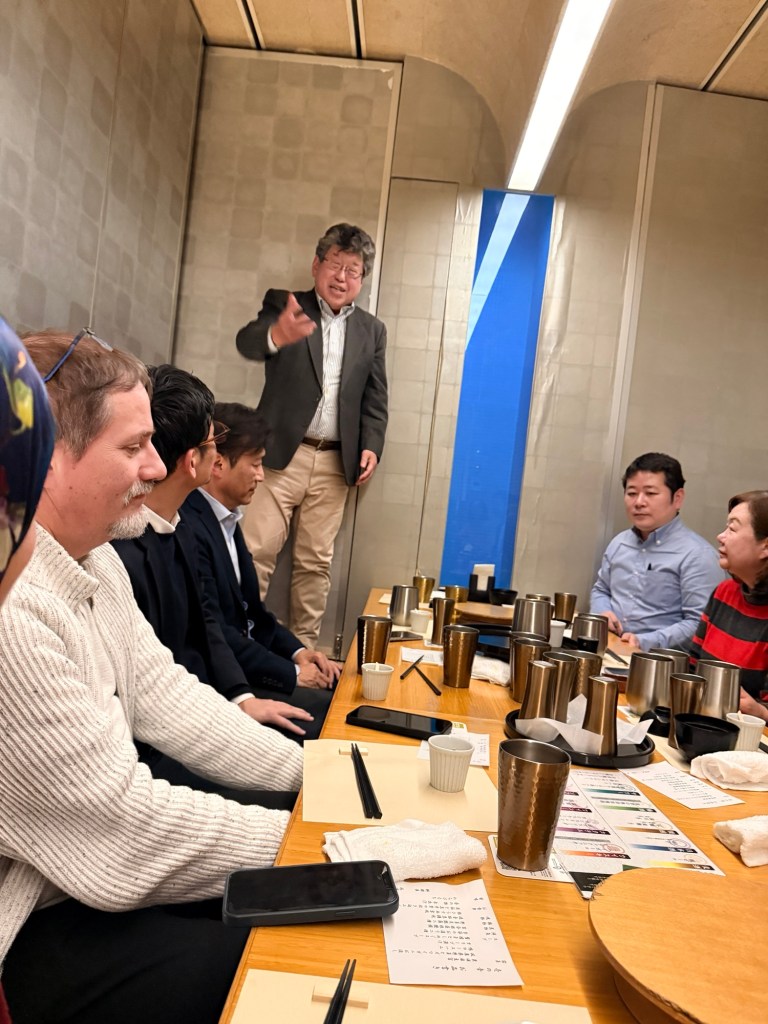
At the end of the event, we got a “family picture” and then headed off for a traditional Japanese meal together. It was a very special experience, and I learned some important cultural aspects (when and where to wear slippers versus socks only inside, how to pour beer for each other, and the like). One of the day’s attendees, Jeffrey S. Cross, an expat from the USA like me, helped me translate and explain nuances.
Headed out for a traditional Japanese dinner after the conference!Goodbye Cocoon!Dr. Yukito (Happyman) Kobayasi leading a toast at dinner after the event.Learning Japanese traditions.And about Japanese foods.A culminating toast by Jun.
Cultural Explorations
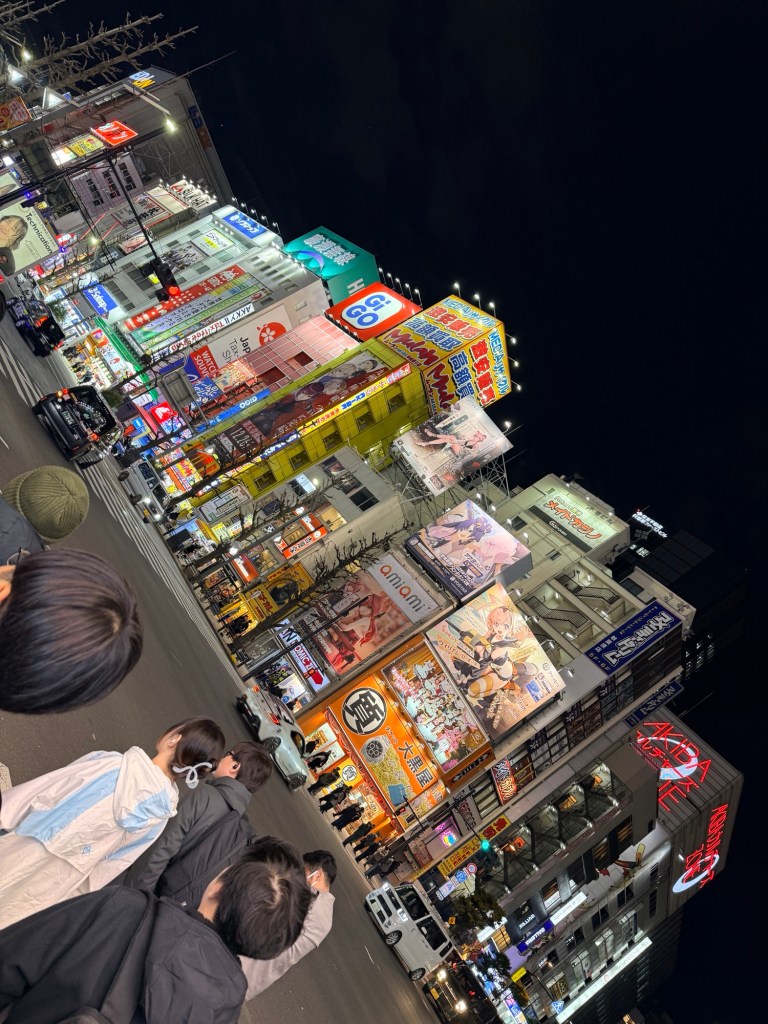
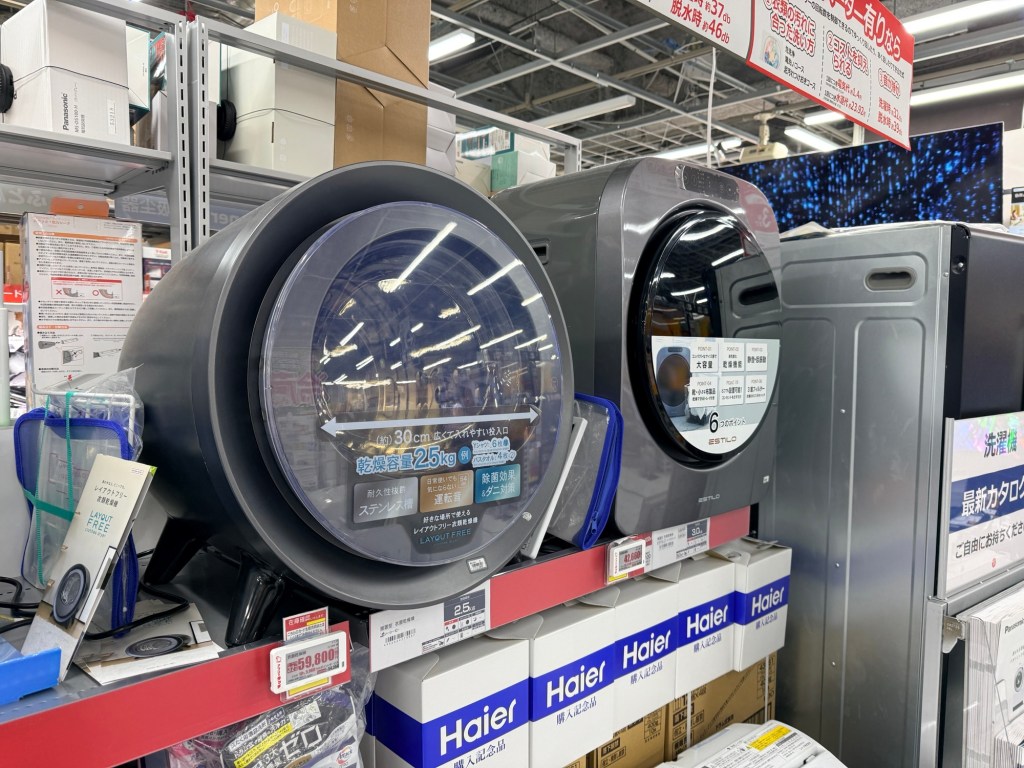
Following this big day of activity, Sarah and I, along with Sarah’s lovely newlywed husband, Stefané, who joined her for the trip, had a bit of time to explore Tokyo. We enjoyed exploring a huge electronics store together.
Getting to Tokyo…We explored an electronics store filled with all kinds of interesting gadgets, like these clothes washers. We had a special dinner, Sarah, her husband Stefané, and me.Sarah knew the ins and outs of getting around.In this arcade, we found delicious crepes and mochi balls.
On our last morning in Tokyo, I visited the Shinjuku Goyen National Garden, where at the tea house, I bumped into Asami and a friend of hers.
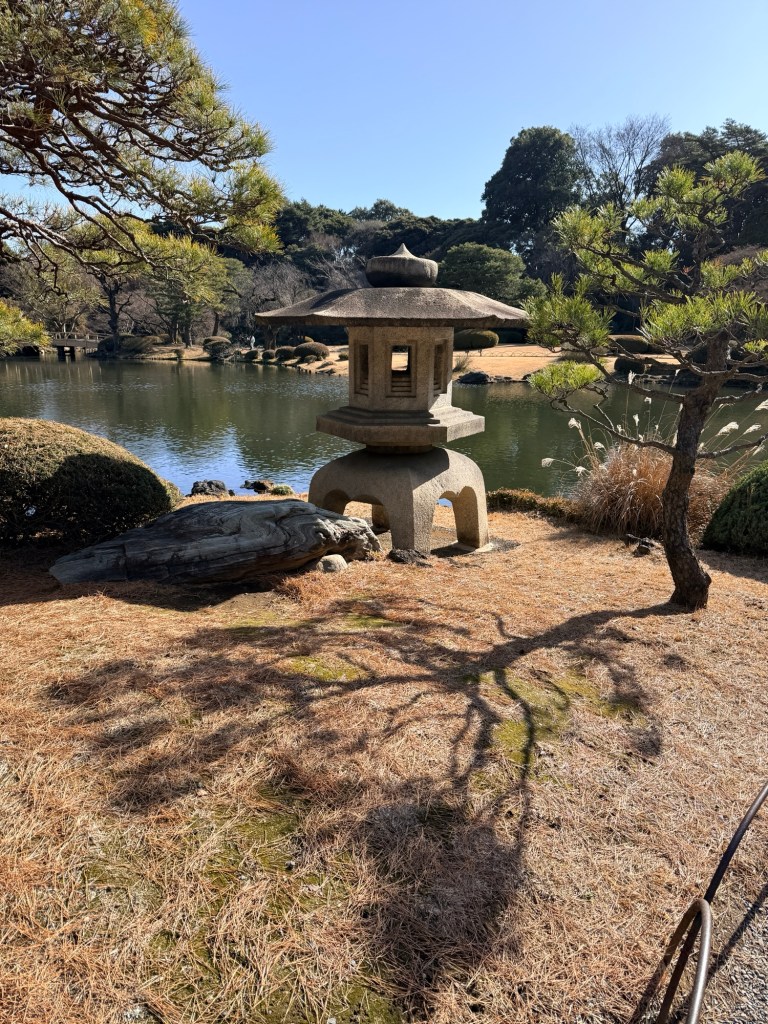
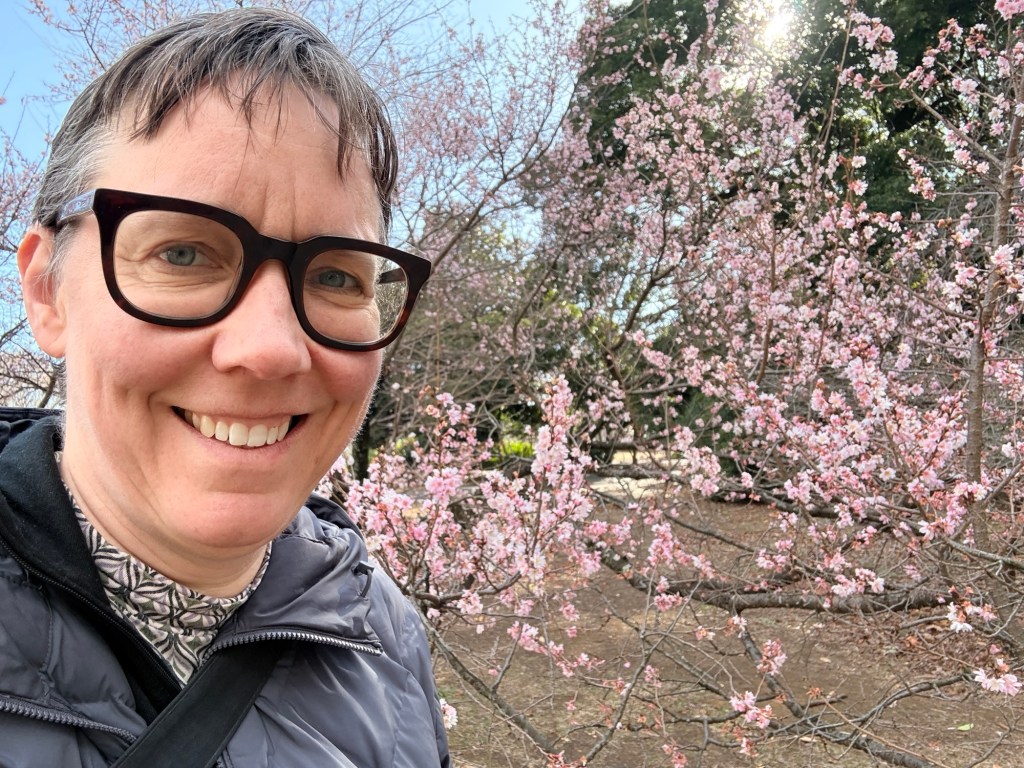
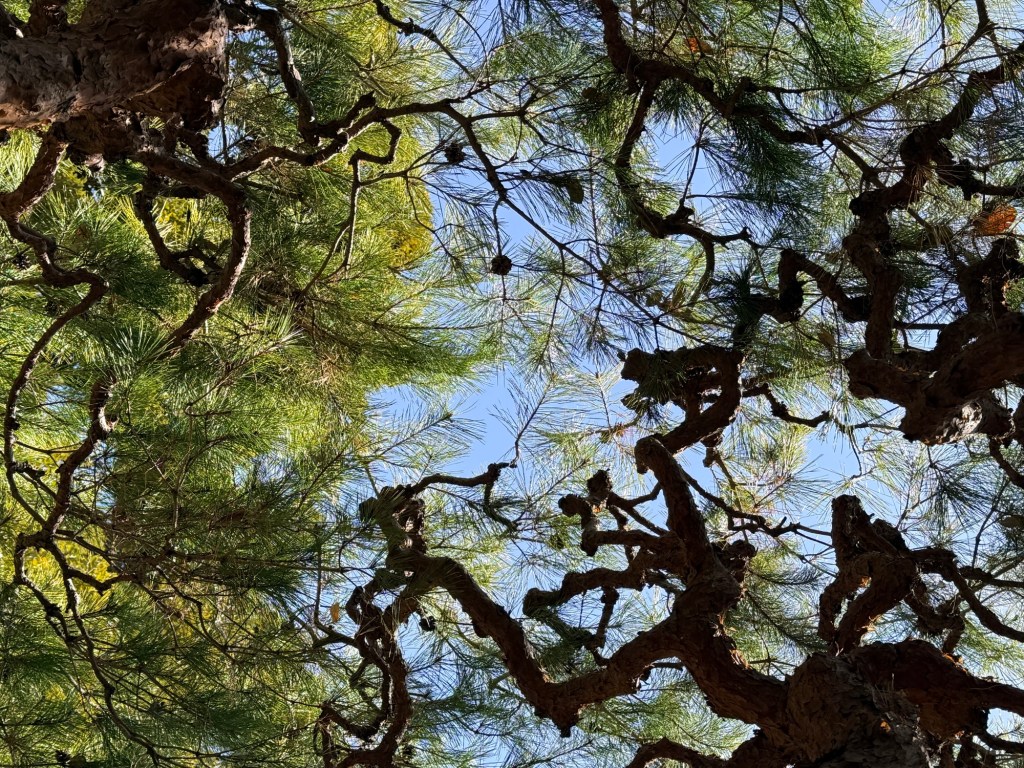
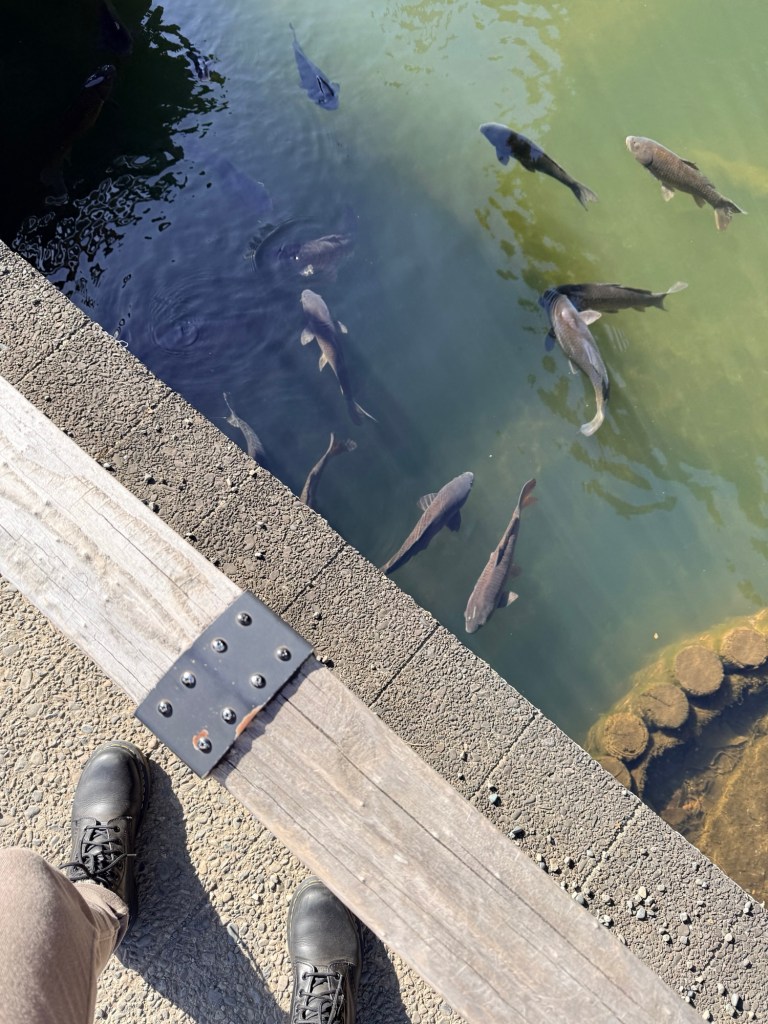
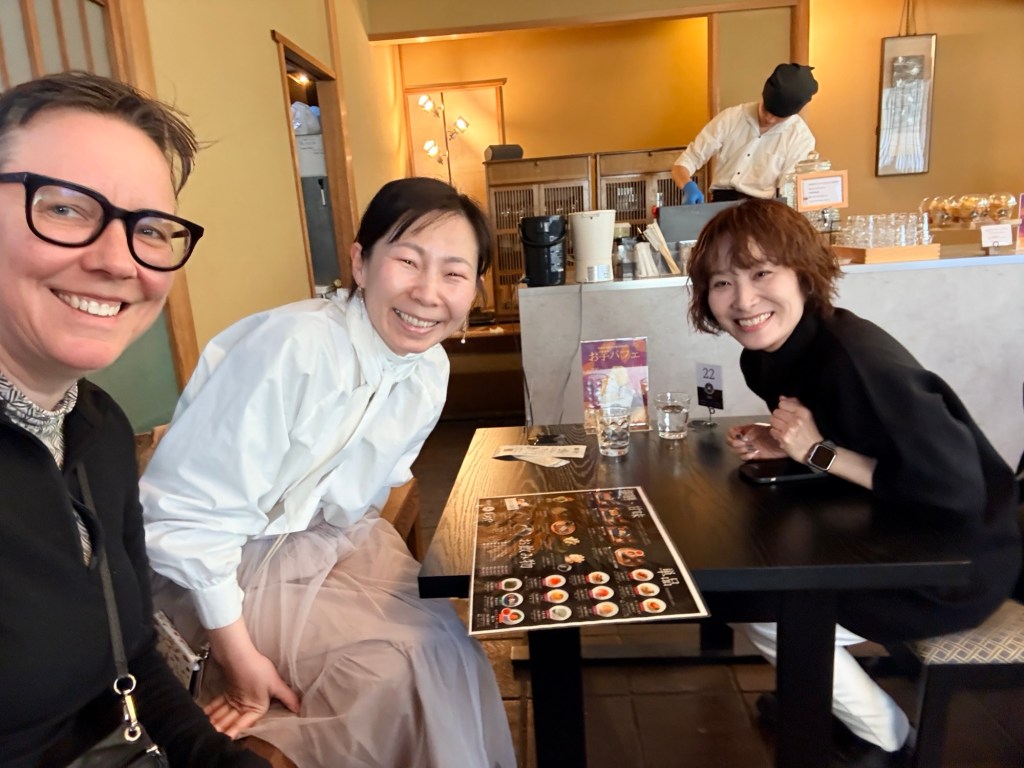
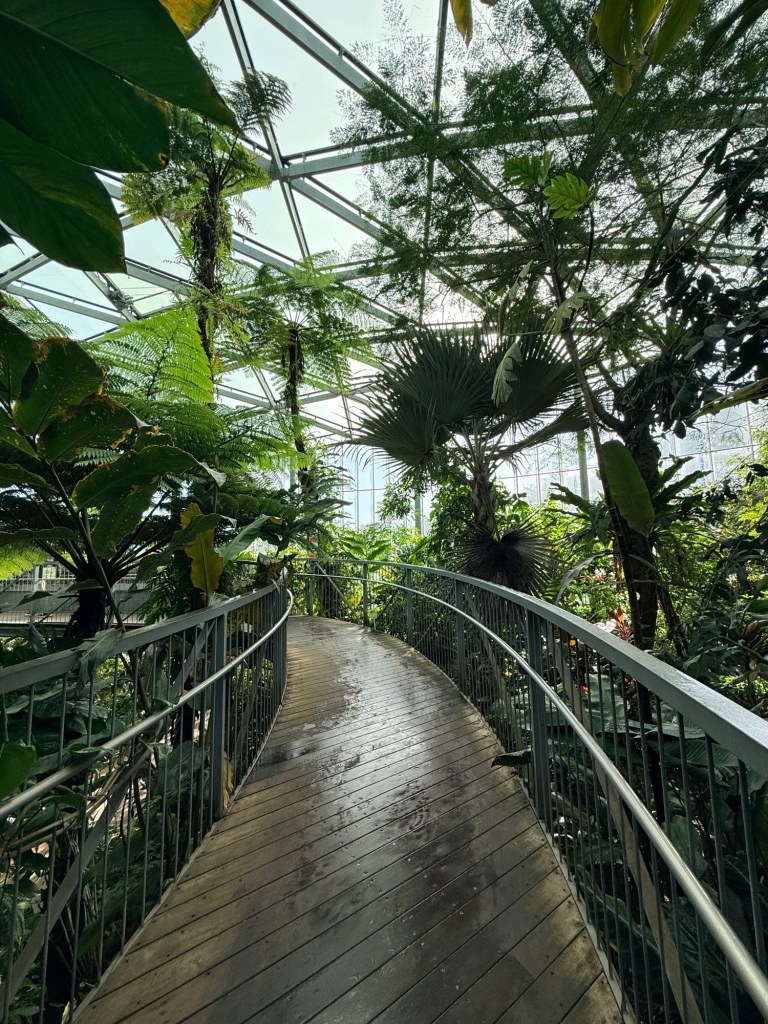
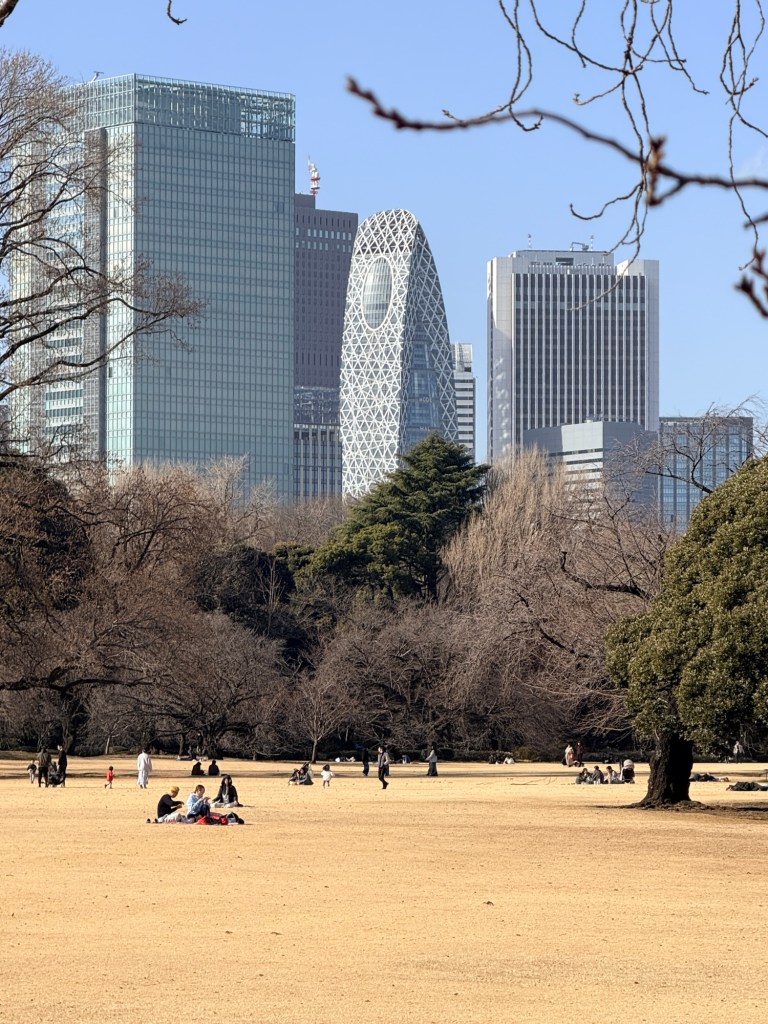
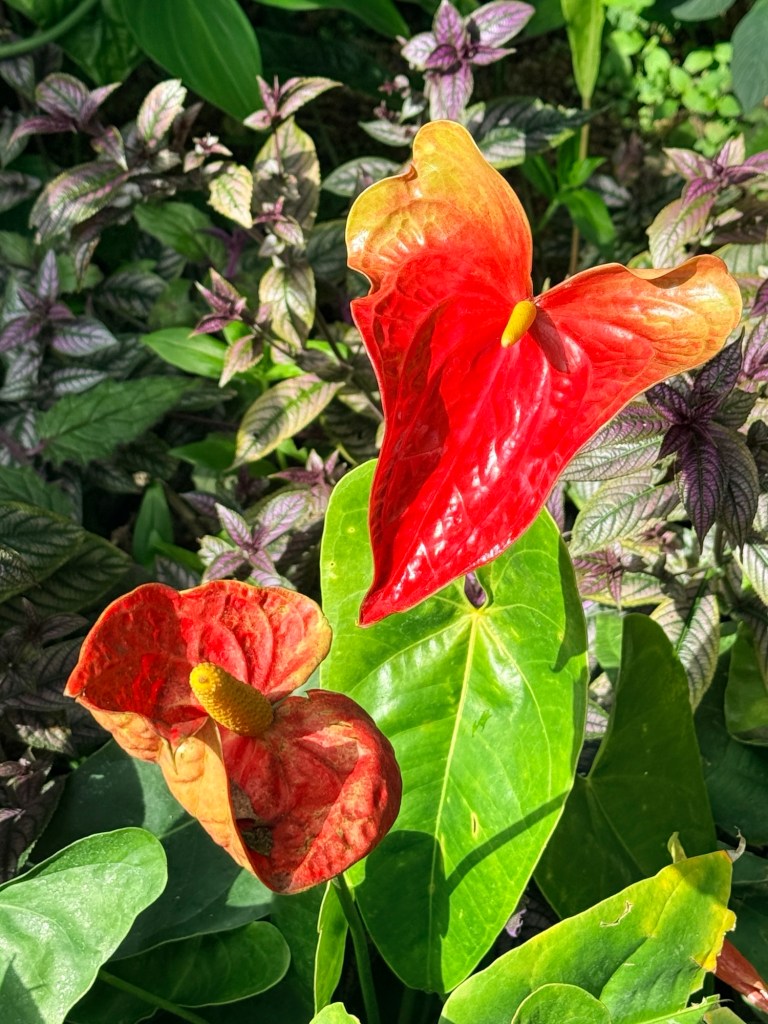
The Japanese garden.A few cherry blossoms left in the cold of winter.My favorite views are into the boughs.Enormous fish!A chance meet up with Asami at the tea house.The greenhouse.Views from the garden of Cocoon Tower.Colorful plants in the greenhouse.
Small-Scale Working Session
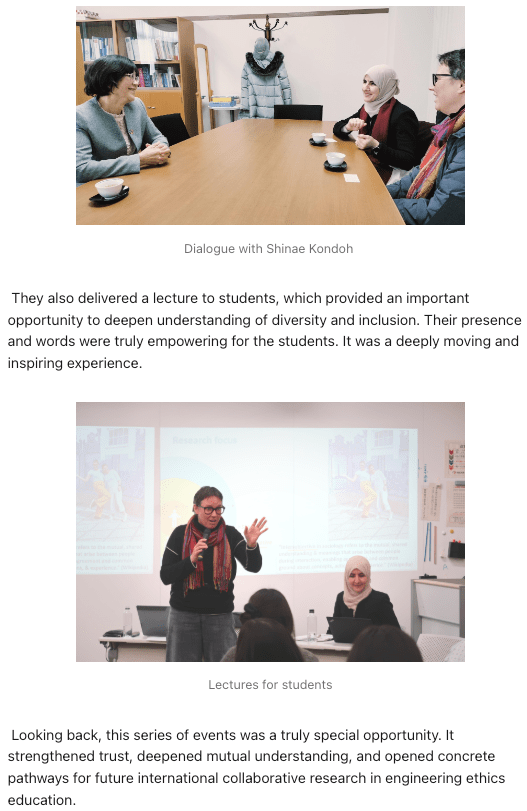
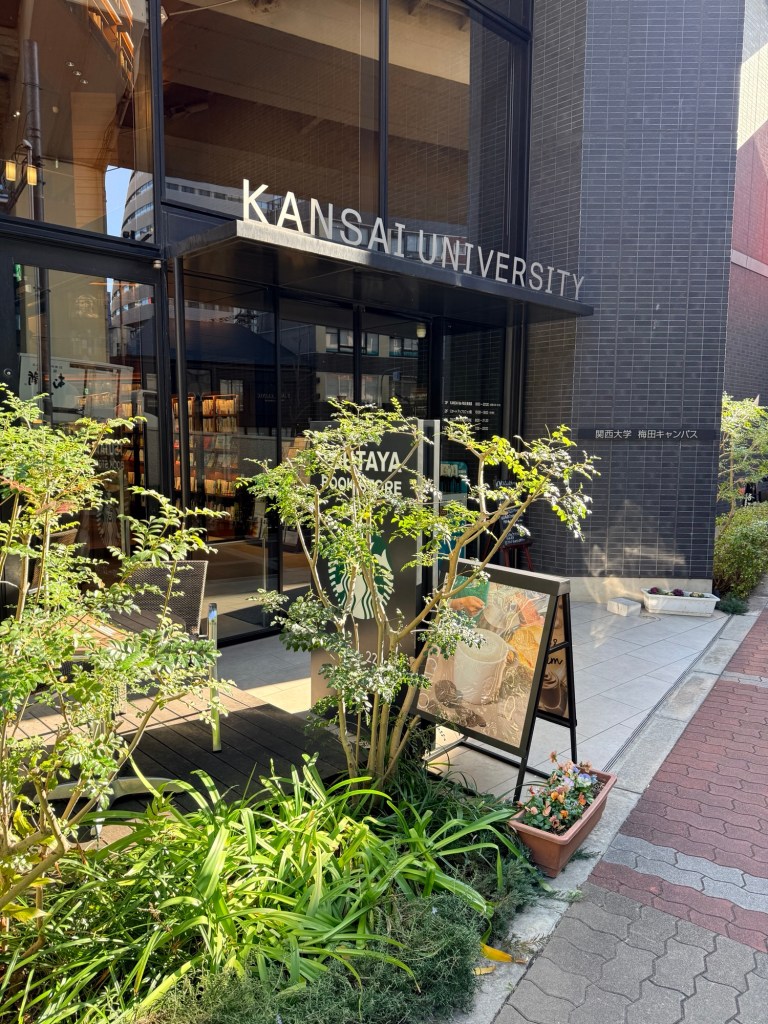
After I explored the greenhouses at the Garden, Sarah, Stefané, and I headed back to Osaka, where the following day we participated in a small-scale workshop to plan engineering ethics education activities for the future. The workshop was held at Kansai University’s Umeda Campus.
Mari Ito joined us as a language expert to help translate ideas between English and Japanese. She had also translated many of the written materials and slides for the full sequence of events during our trip.
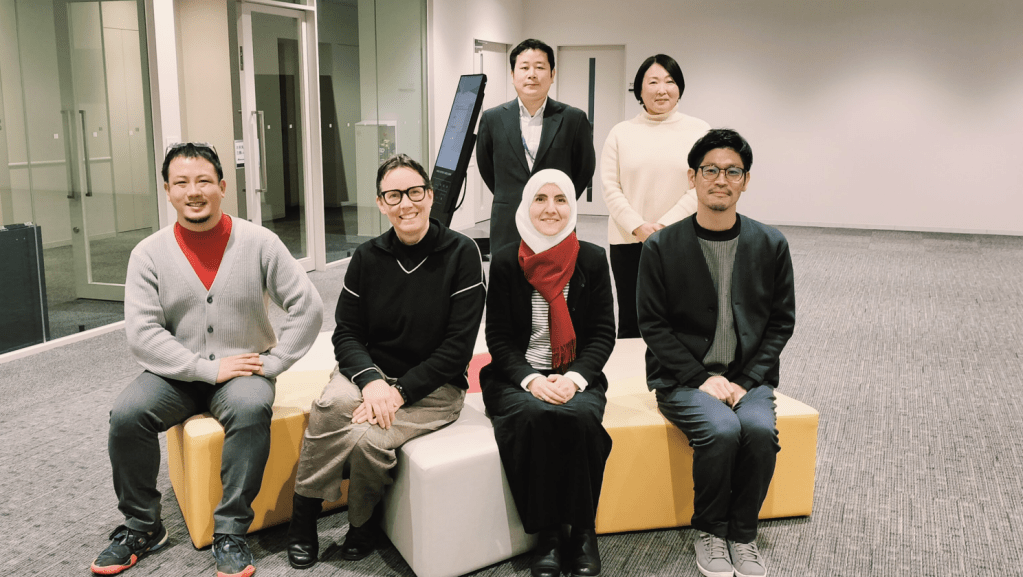
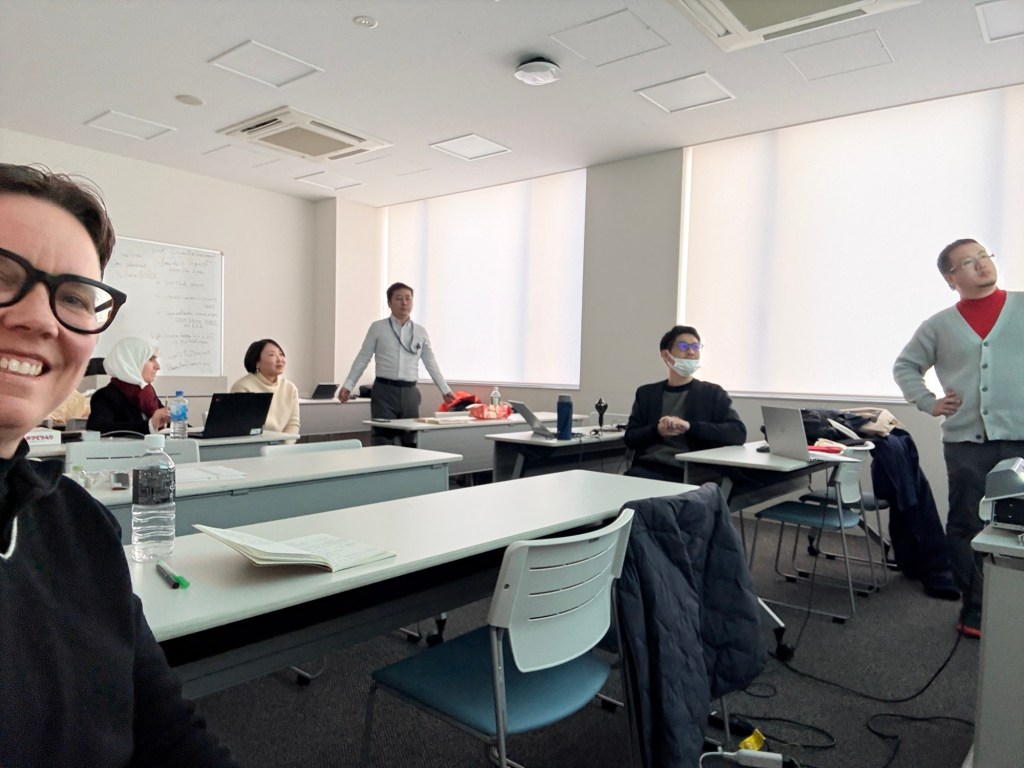
The whole group at the end of our working session.
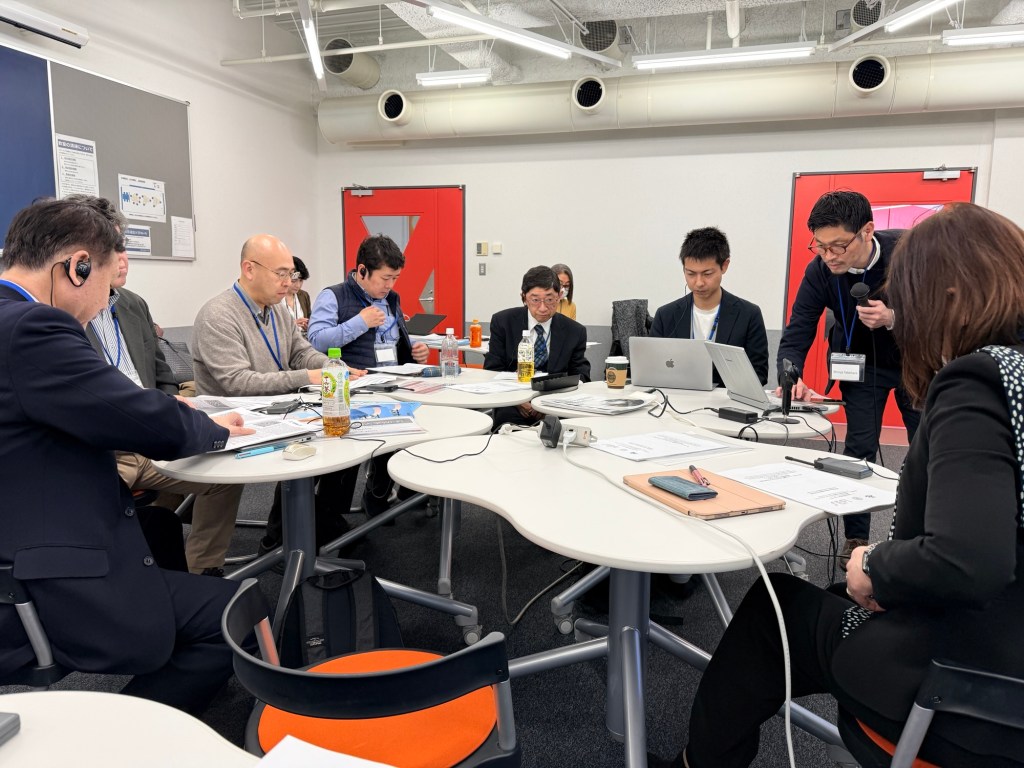
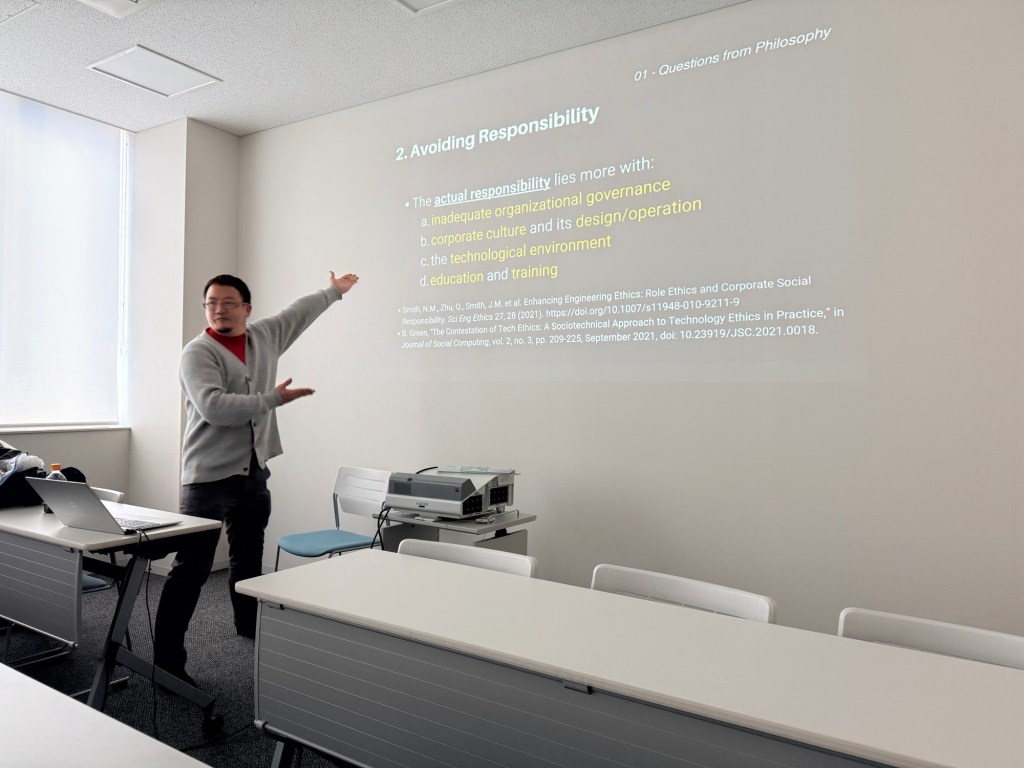
I really enjoyed the presentation that Dr. Shinya Oya delivered and the discussion of projects underway or envisioned in Japan where Sarah and I might be able to connect, ourselves and/or alongside our colleagues from Europe. “In this intimate setting,” Shinya explained, “we were able to deepen discussions on how future joint research might be shaped, building on insights from the Tokyo workshop.”
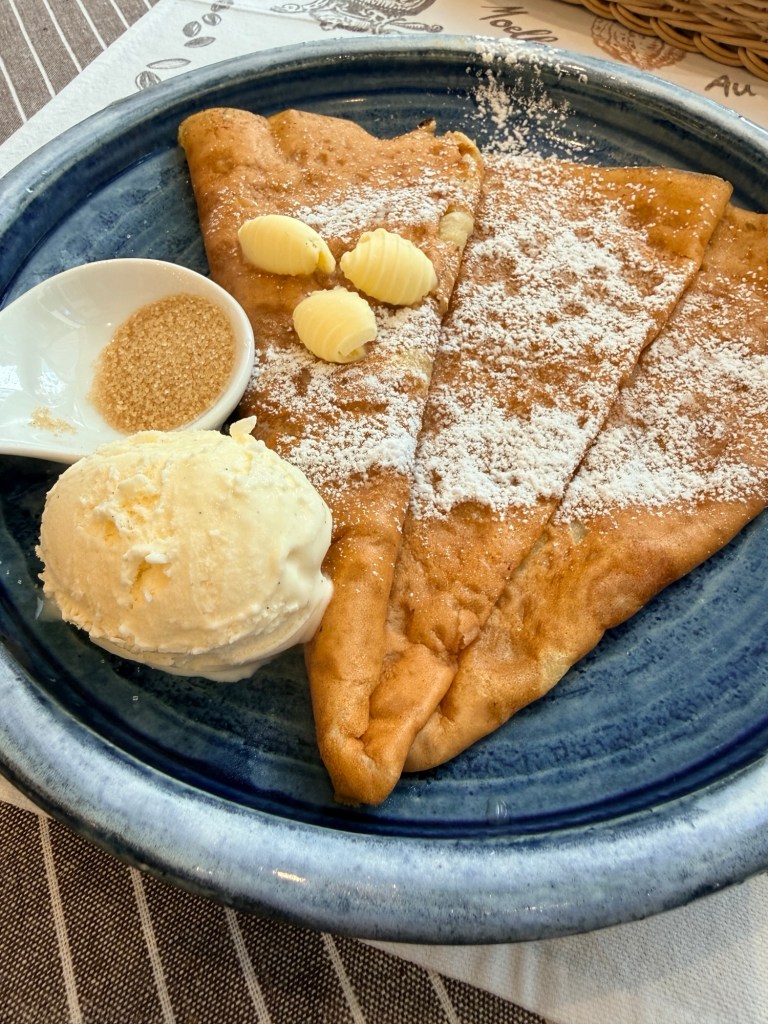
I enjoyed a (very popular) French crepe o the way to the workshop. KansaiThe opening of our Joint Seminar workshop. It was a small but hardworking group.Connecting Shinya Oie’s research to ours. He’s quite an energetic and demonstrative scholar! We had great discussion about his reserach.We discussed upcoming events and ideas for future projects together.
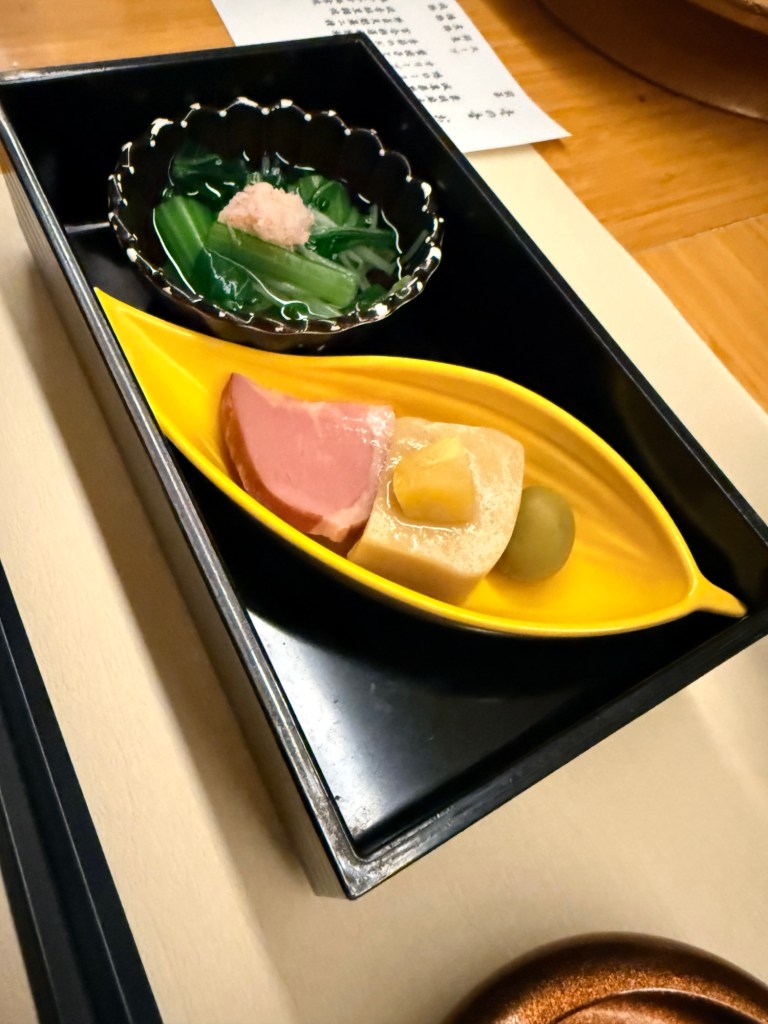
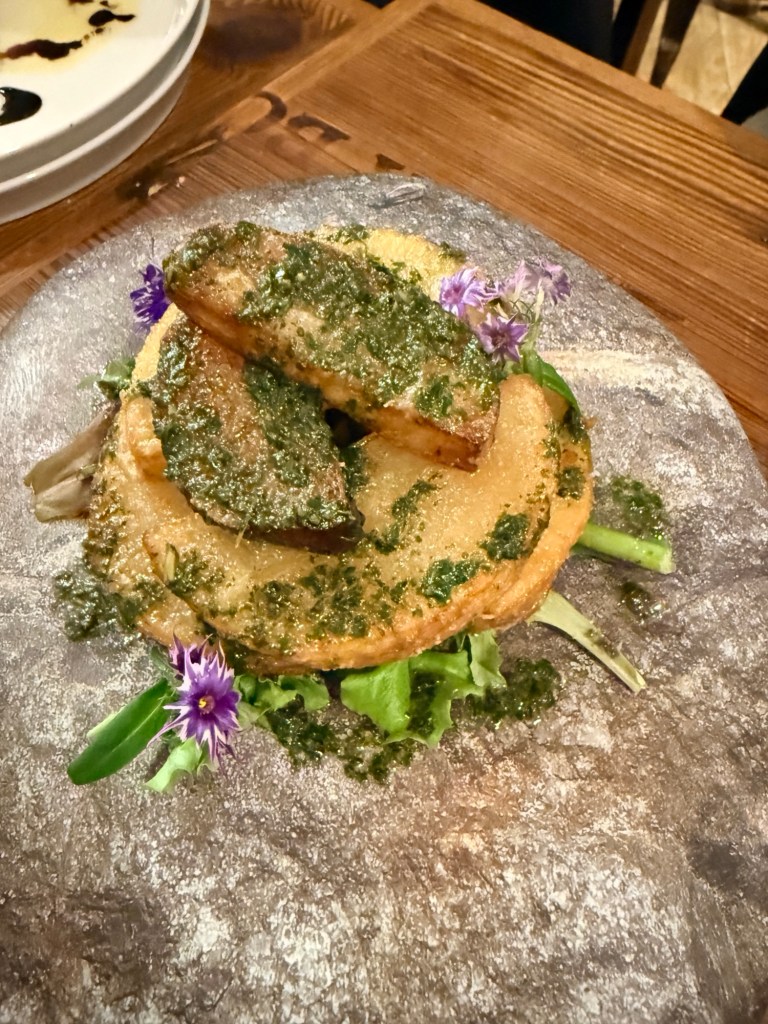
We all went out for Italian tapas together after the workshop. We each selected a couple of items from the menu and got a chance to taste a wide variety of foods. The presentation was beautiful!
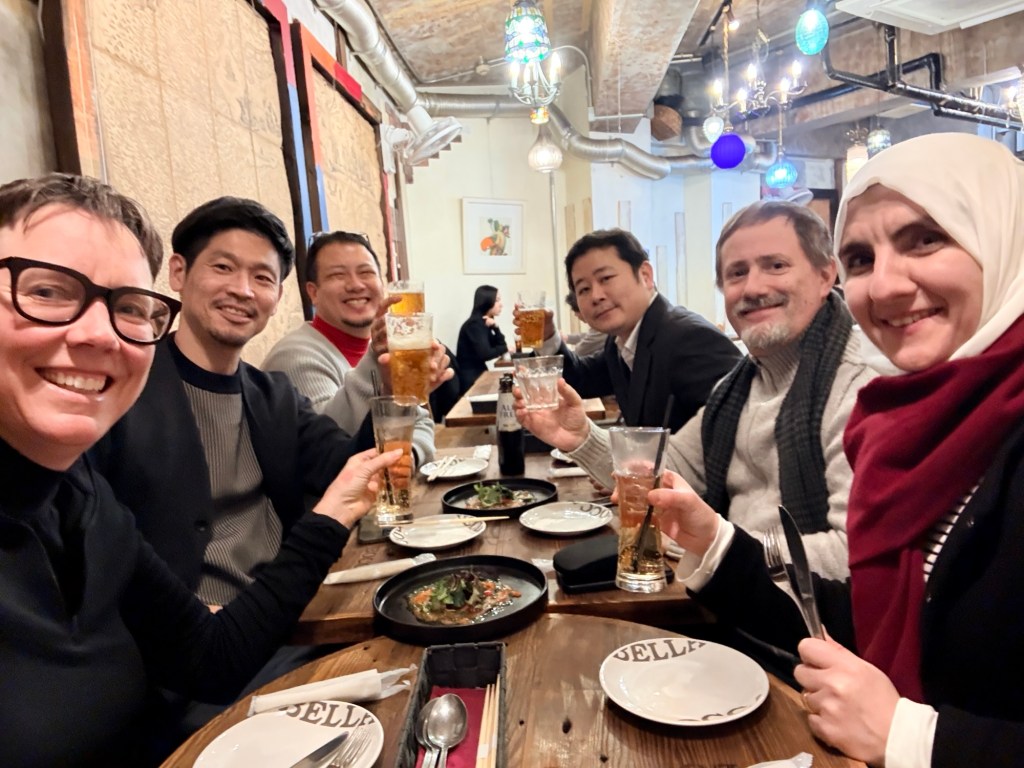
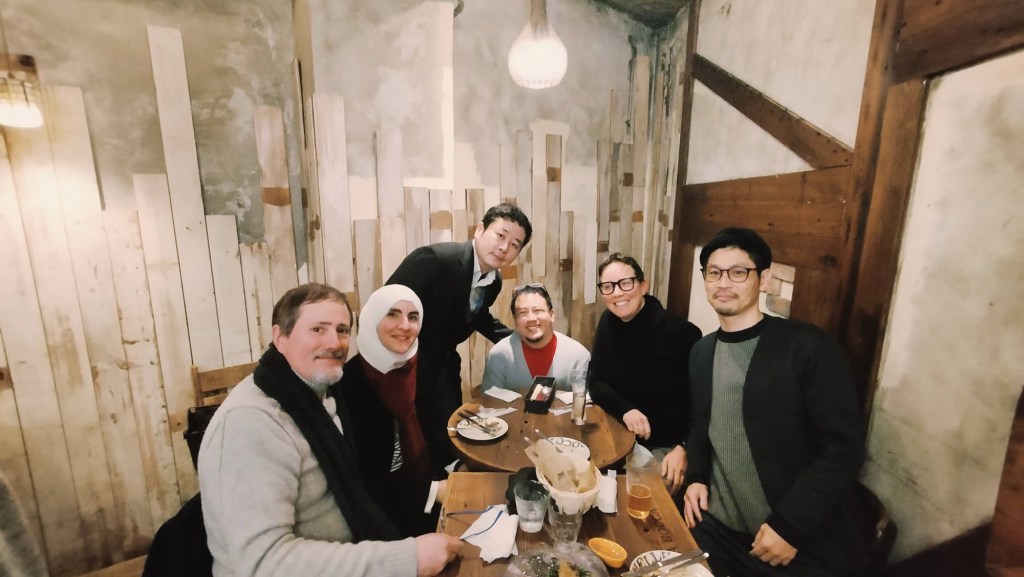
Tapas dinner with Shinya Takehara, Shinya Oie, Atsushi Fujiki, Stefané and Sarah.Such beautiful presentation!We each selected a couple of items from the menu.Still full of life after an intense day!
Visiting KOSAN Nara Campus
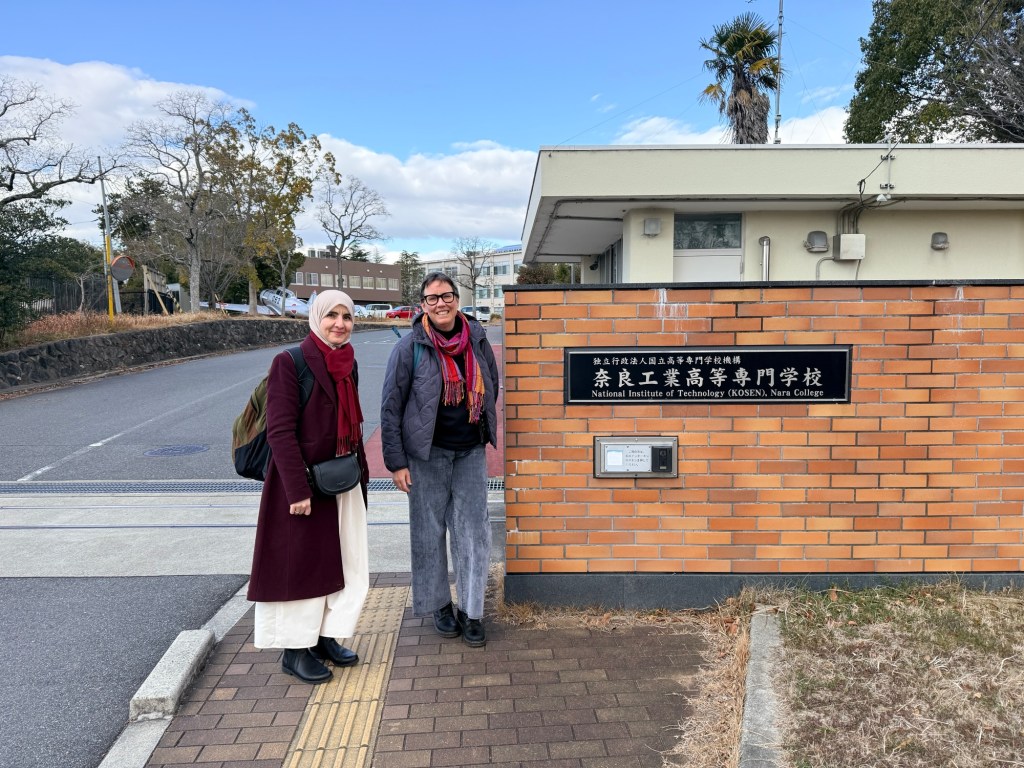
Leaving Osaka the next day, we headed to Nara to visit a branch of the Institute of Technology (KOSEN), where Shinya teaches. Sarah and I travelled with Shinya to his campus.
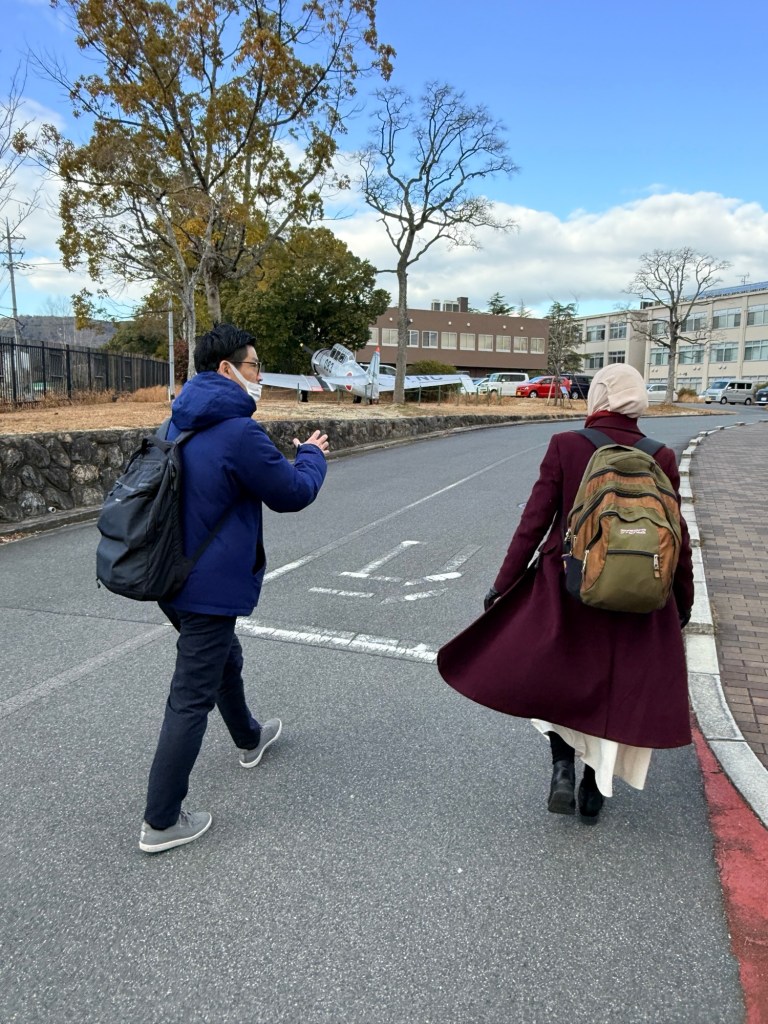
The walk from the train station to the campus was really beautiful. The town where the campus sits is a ‘castle town,’ still organized around the canal that looped the site and still with a castle on the hill.
Arriving on campus.A WWII airplane, which Shinya said was from the Allies.Entering the KOSAN Nara campus with Shinya.
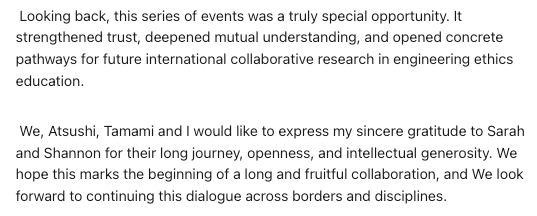
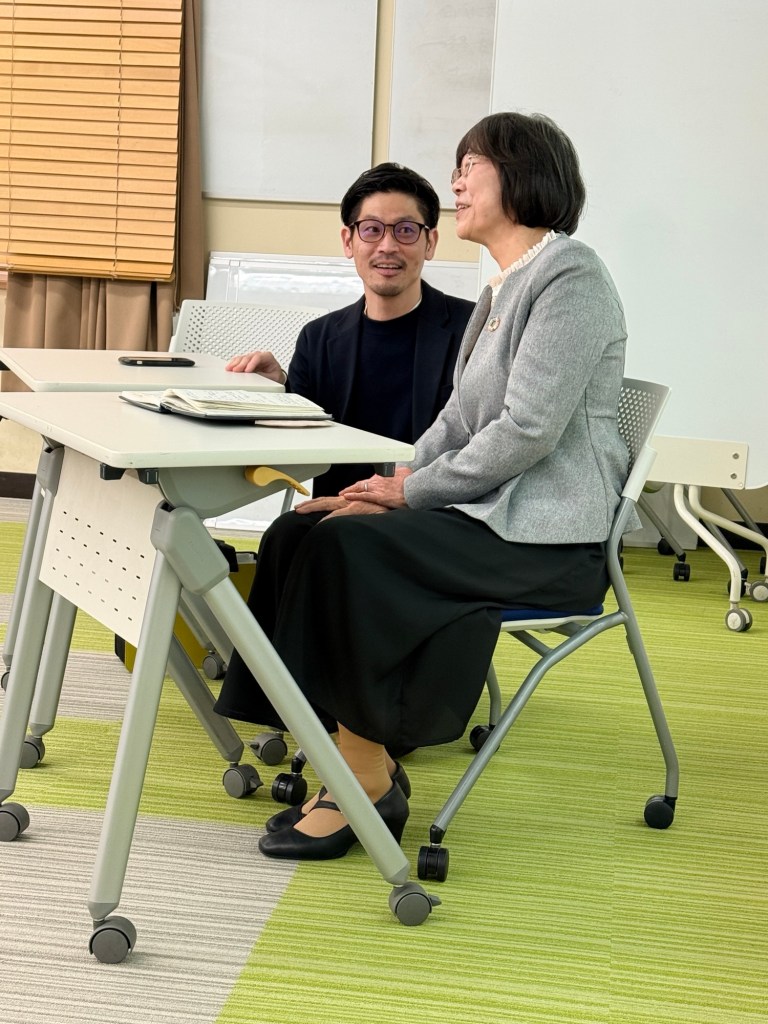
We had the immense honor of meeting Dr. Shinae Kizaka-Kondoh, a medical doctor and currently the Principal (president) of Nara National College of Technology.
She is also the Vice President of the Japan Network of Women Engineers and Scientists (JNWES).
Shinya Takehara with his university leader.
Shinae is a Japanese researcher, professor, and administrator known for her work in molecular imaging and tumor hypoxia, as well as her advocacy for women in STEM. She has published research on the challenges and solutions regarding the gender gap in science, technology, engineering, and mathematics (STEM) in Japan.
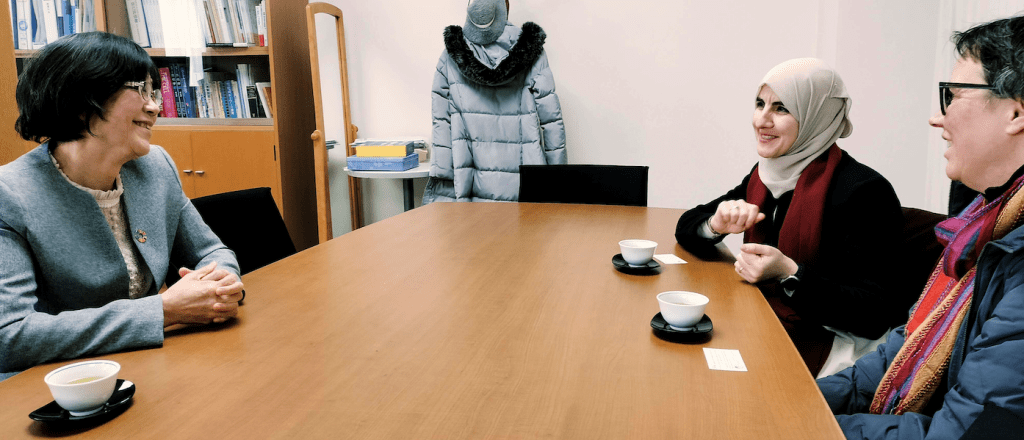
Tea with Dr. Shinae Kizaka-Kondoh
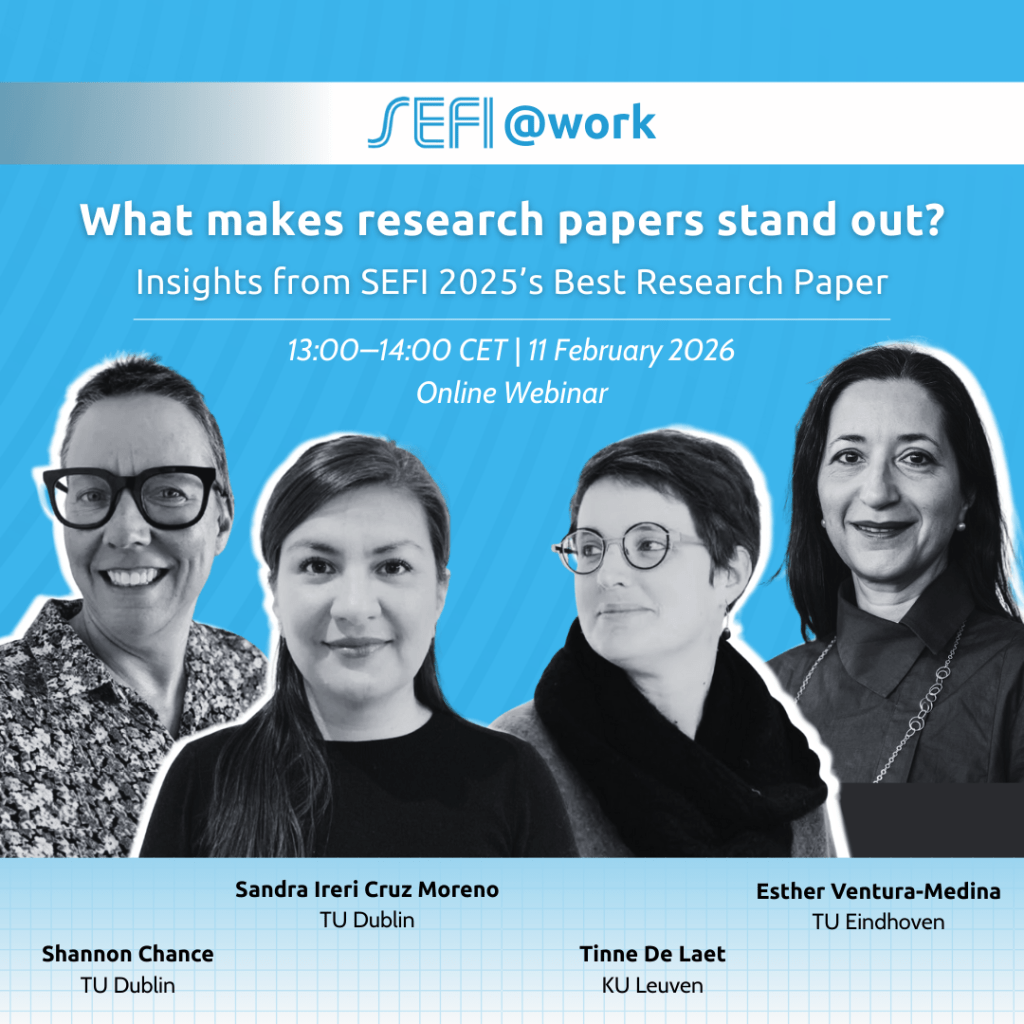
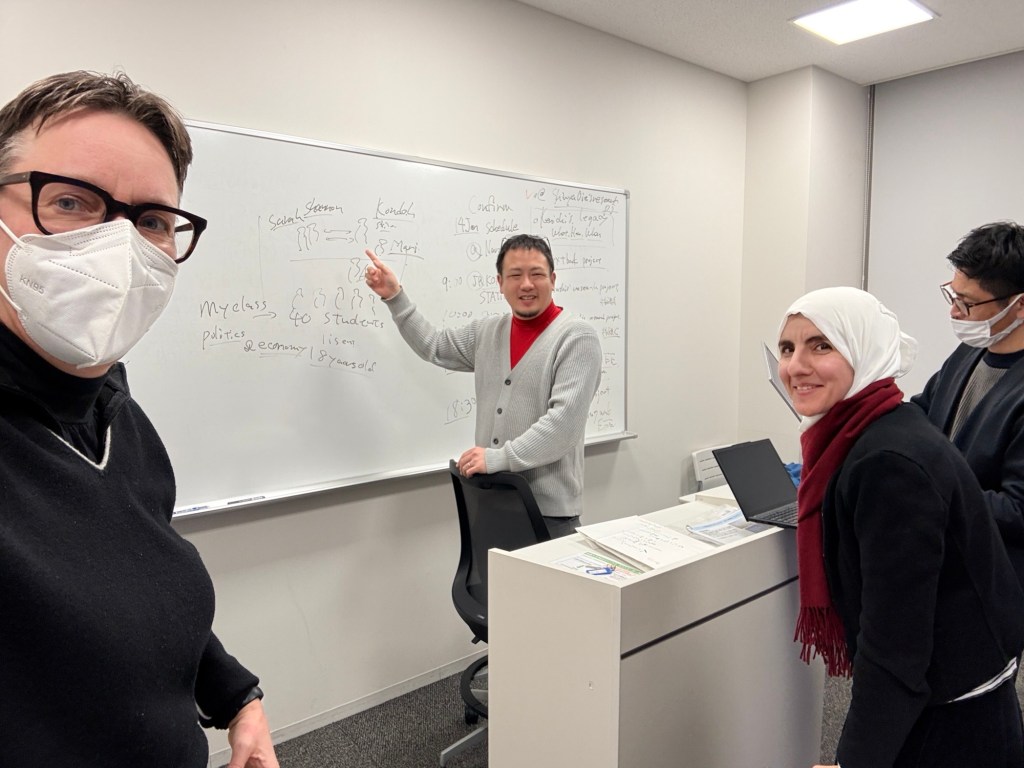
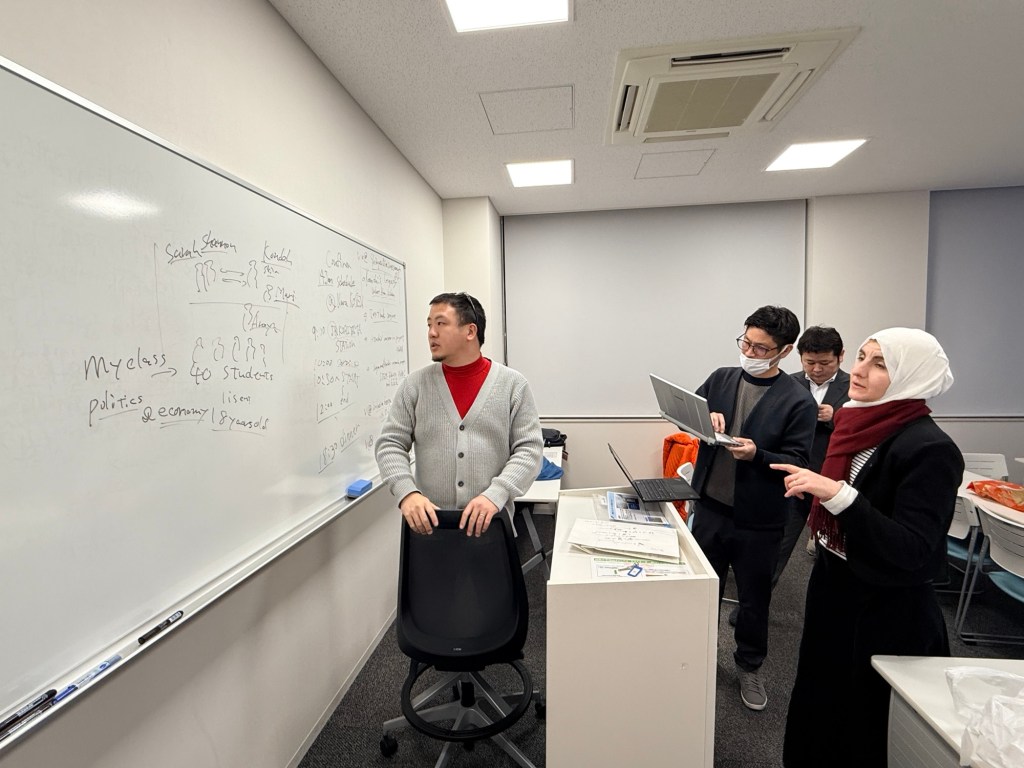
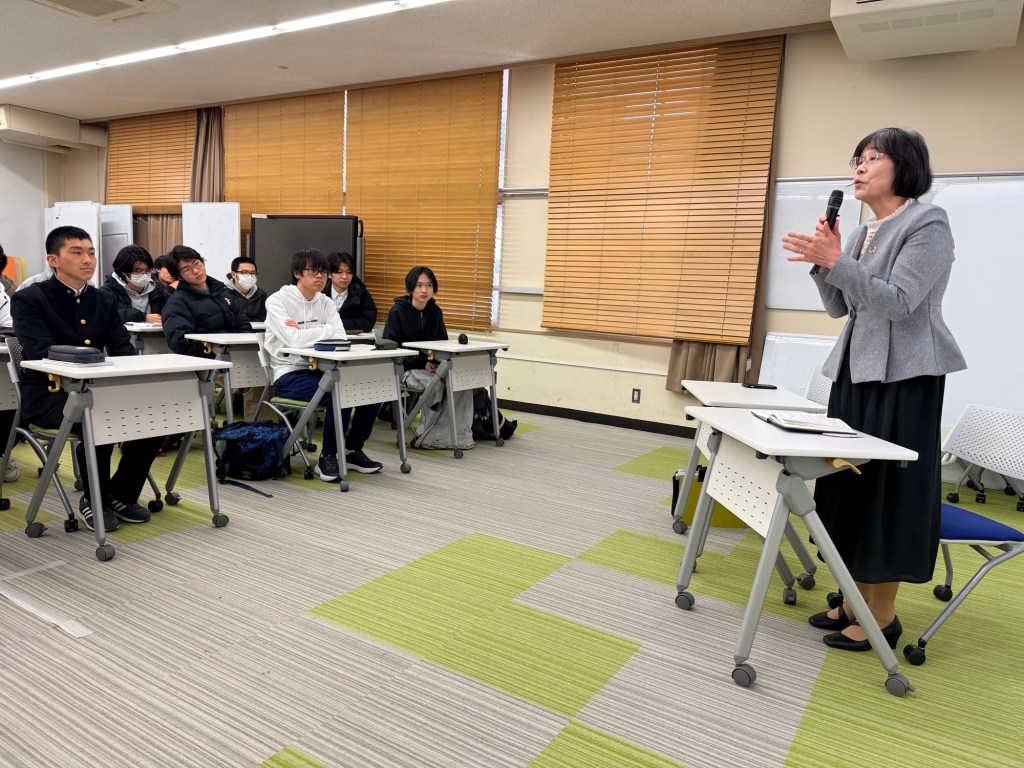
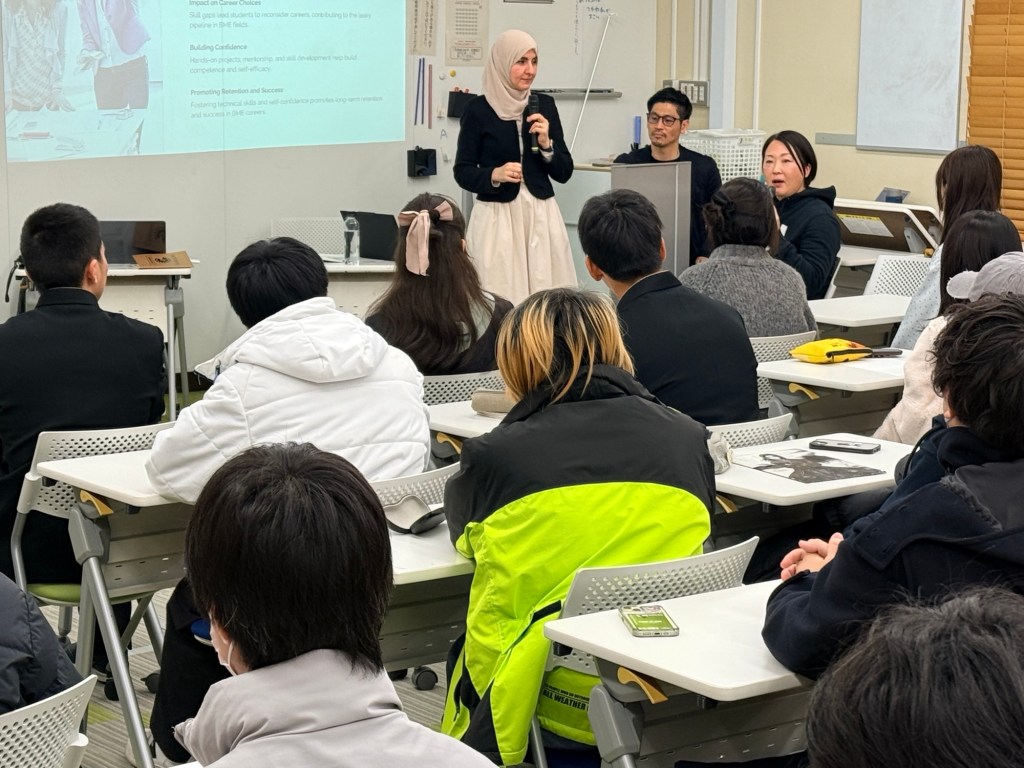
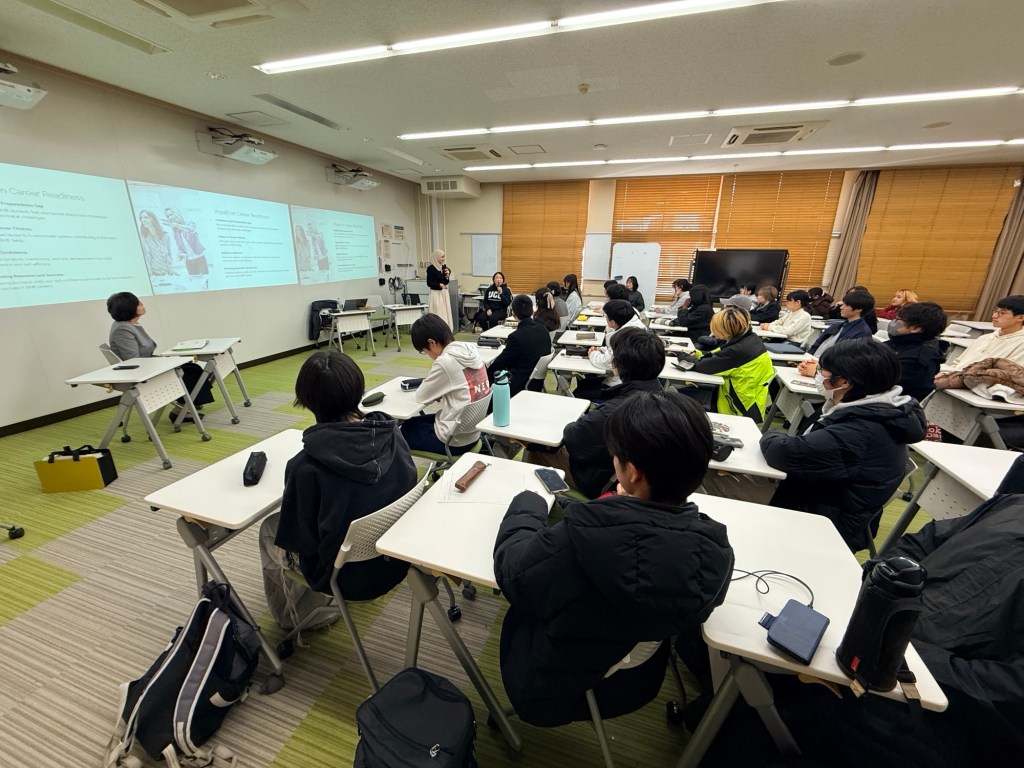
Shinae, Sarah, and I delivered talks to a class of about 40 Chemical Engineering students at KOSEN. The class is taught by Ryoko Uda. Chiyako Araya also spoke; she has done interesting research to quantitatively evaluate generic skills in active learning. She was also an important contributor to the event at the Cocoon Tower.
Dr. Shinae Kizaka-Kondoh and Chiyako Araya each presented their research.
During the class, we discussed gender and diversity related to engineering ethics and engineering education research.
Sarah presented research on gender aspects developed by a student she supervised.
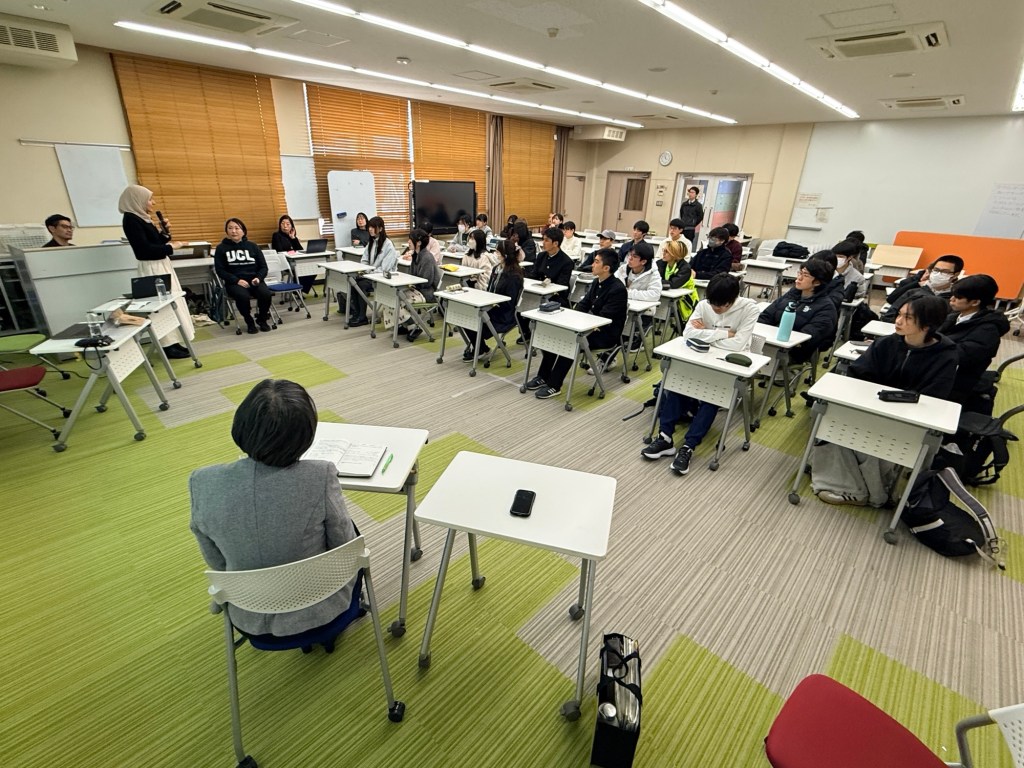
Students, spellbound by Sarah.It was a big audience of Chemical Engineering students. They loved the discussion questions that Sarah gave them.The students sat gender segregated, initially at the back fo the room. They willingly moved to the front when asked.
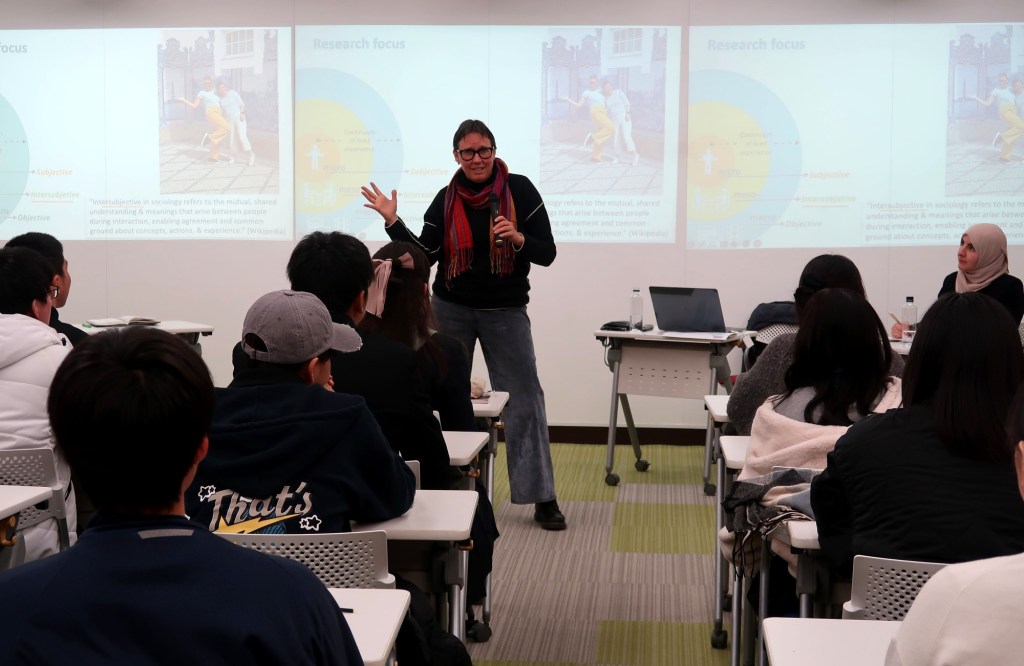
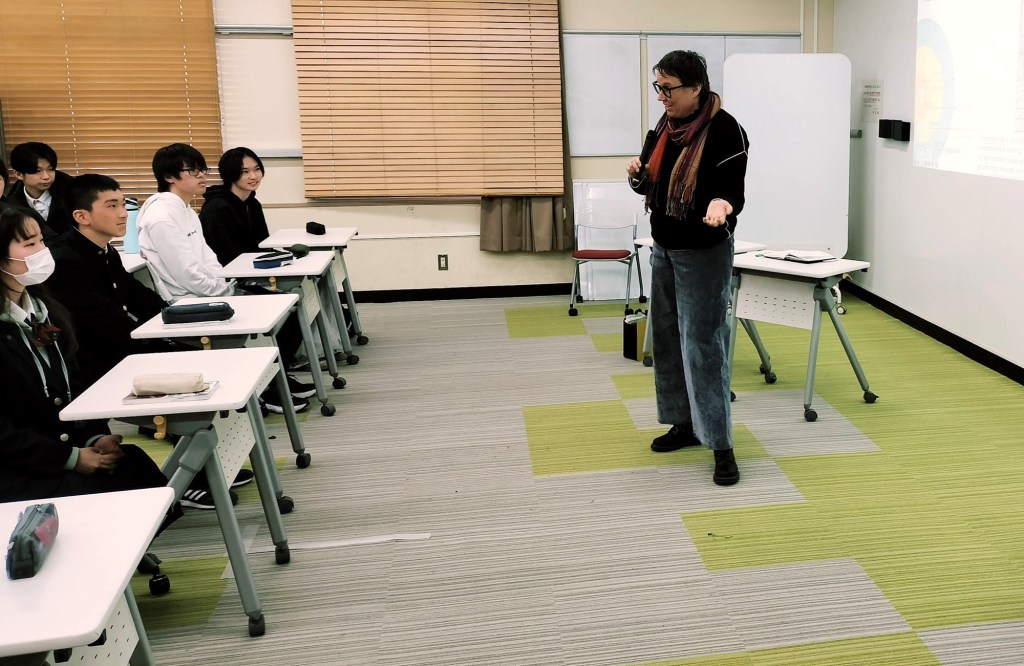
At the end of the class session, I had the opportunity to speak about the broader role of engineering education research. I also shared some of the research that Sandra Cruz Moreno and I have done together.
I presented our work in engineering education research to understand students’ experiences and assess how effectively students learn various engineering topics depending on how the content is delivered.
I spoke about the role of engineering education research more broadly. And I shared some of the research that Sandra Cruz Moreno and I have done together.
Touring Tanpopo, A Community of Disabled Artists
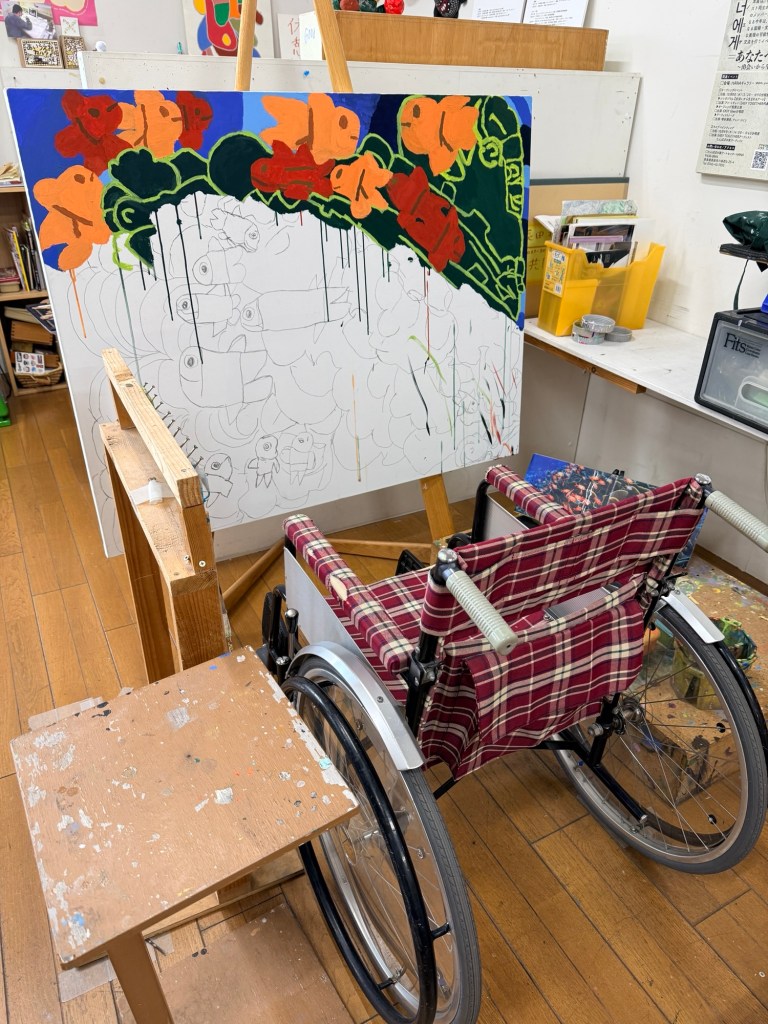
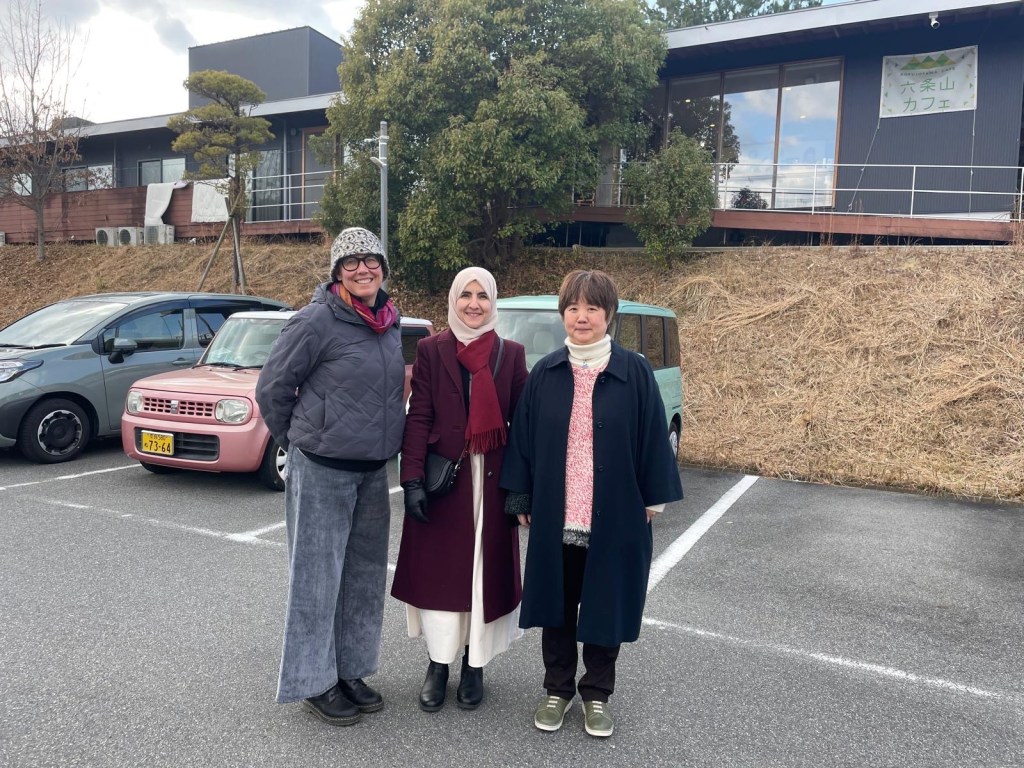
Leaving KOSAN, we (Shinya, Sarah, and I) stopped in at Tanpopo, a community center where disabled artists work and live.
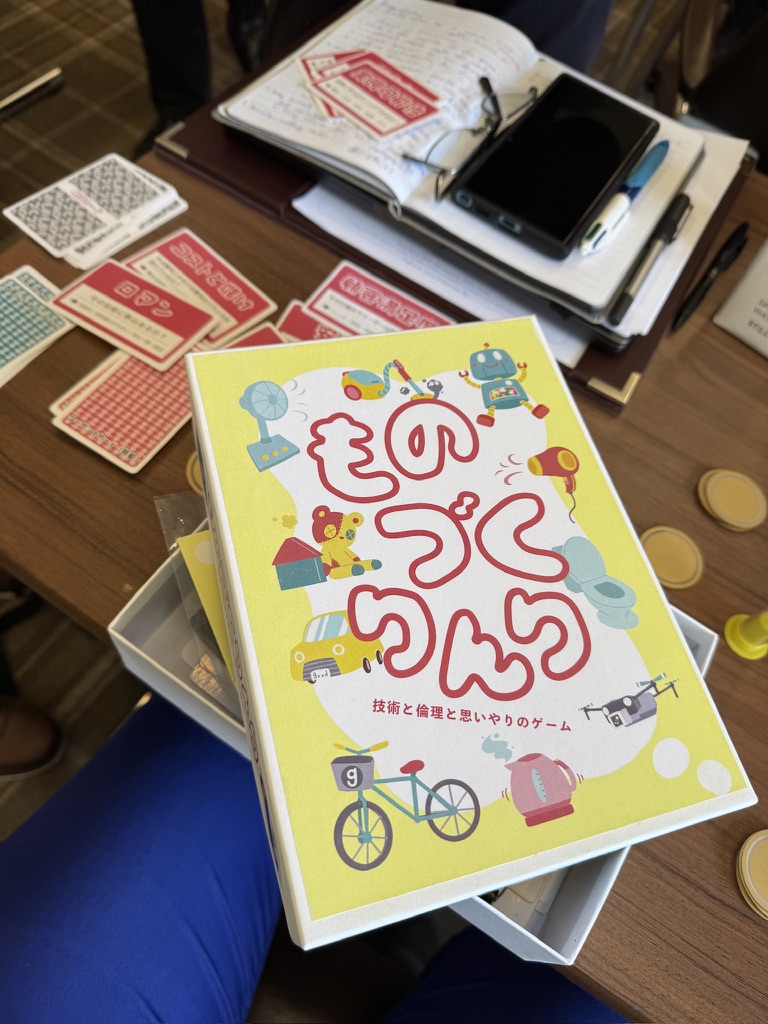
Artists there produced Shinya’s engineering ethics card game, which we hope to translate into English soon.
Shinya at the SEFI Ethics Symposium,showing us his ethics card game.
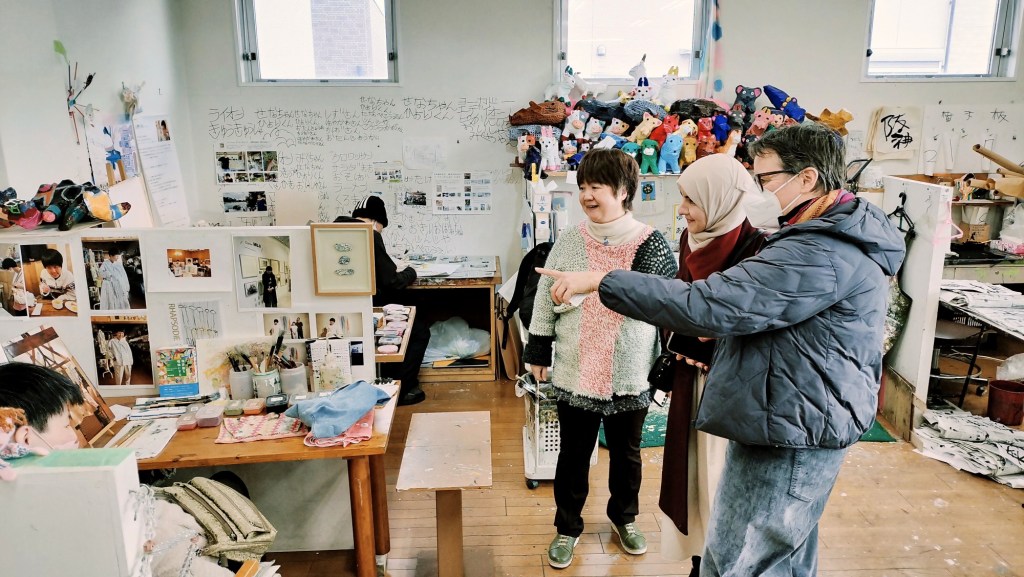
At Tanpopo, staff members Gian Miki and Masashi Yamano showed us around and explained how things work.
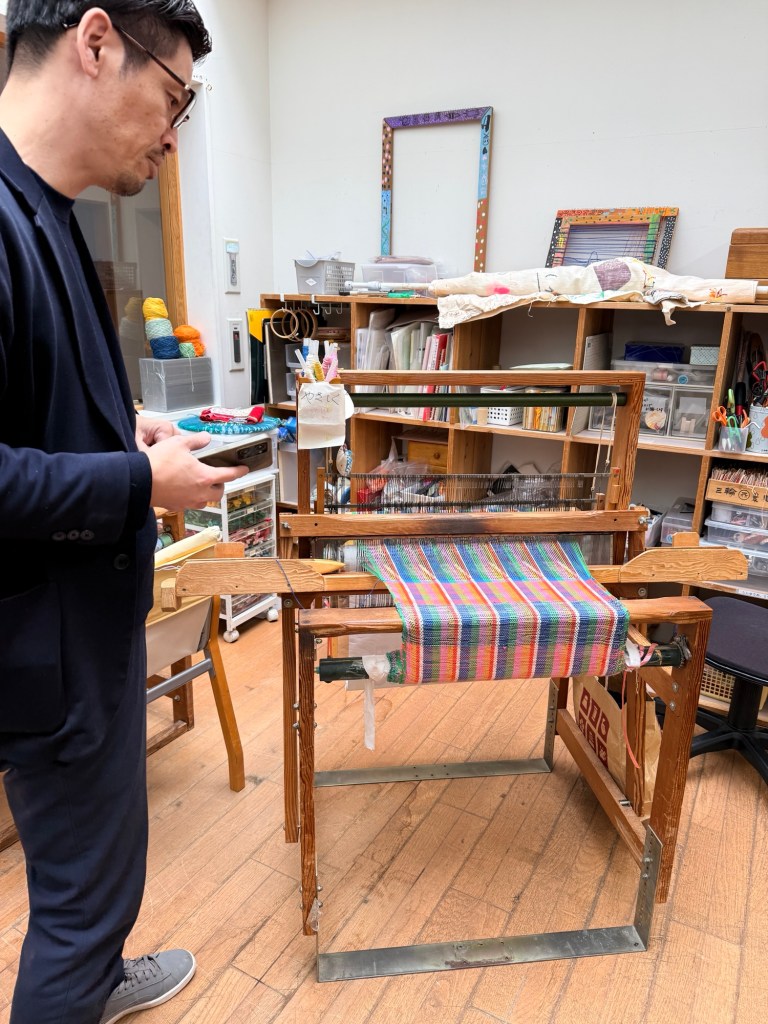
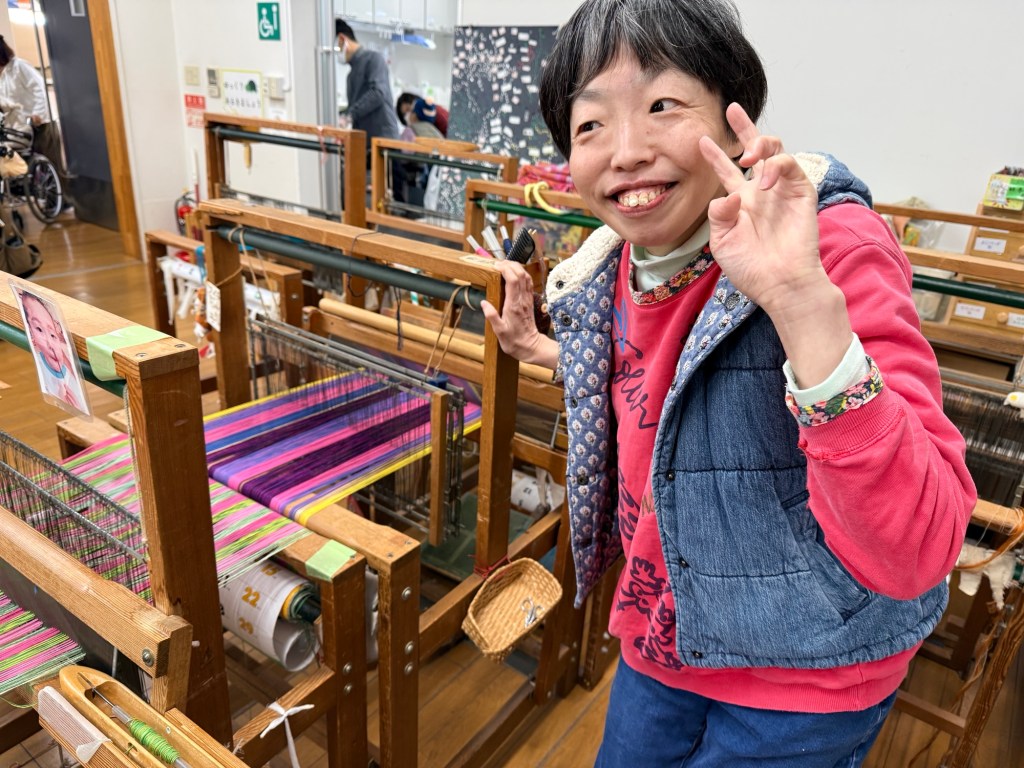
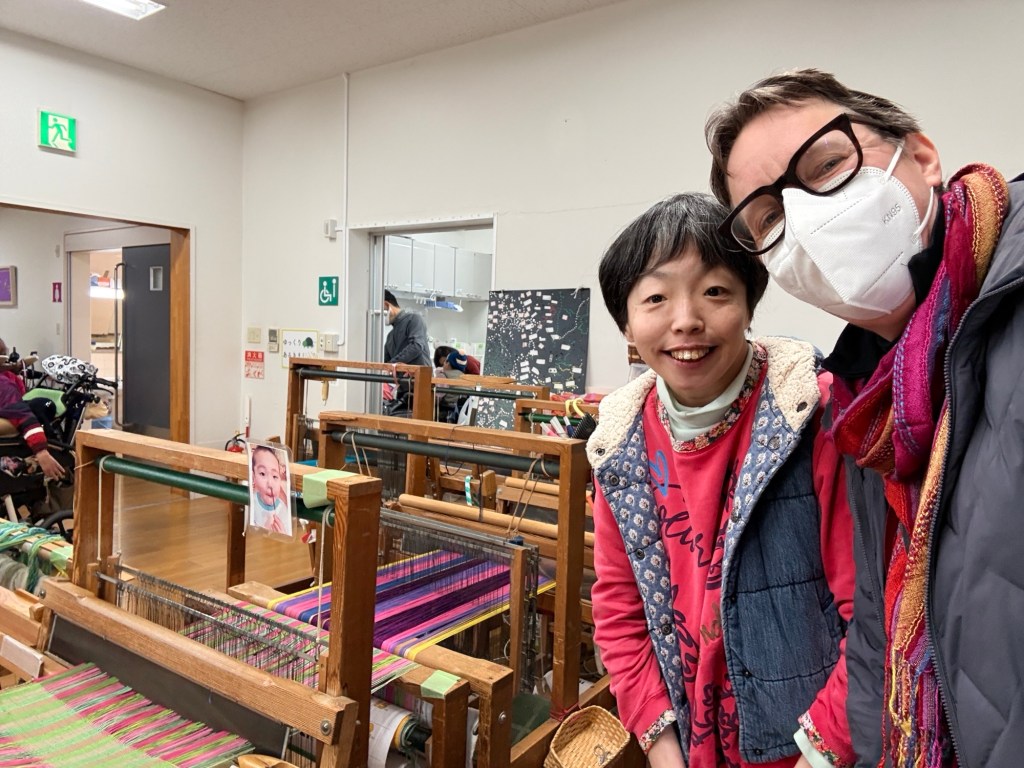
I bought two lovely scarves woven by members of the community. Proceeds go to the artists themselves, and the artist of one of the scarves I bought was there at the time. She expressed such pride and joy!
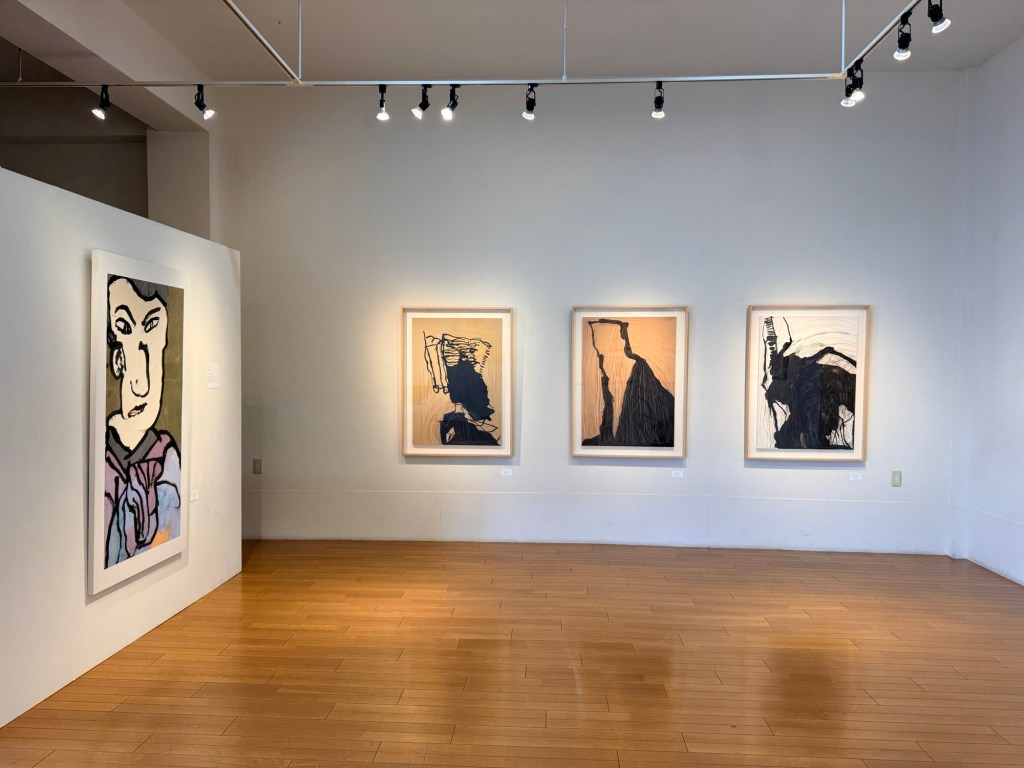
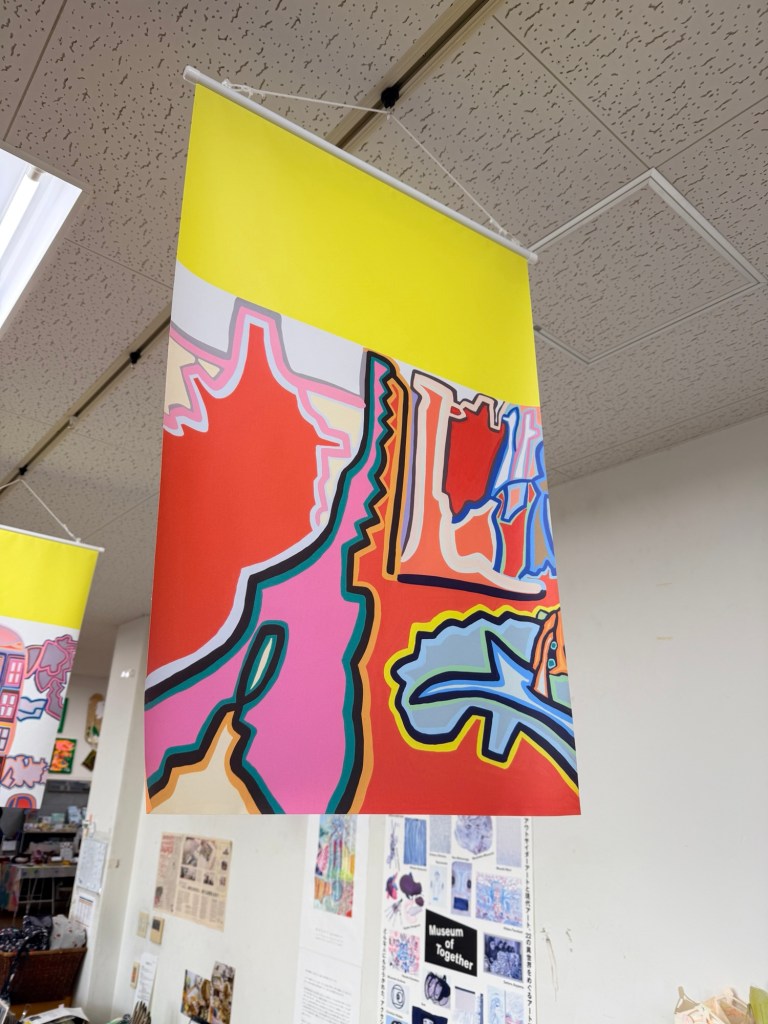
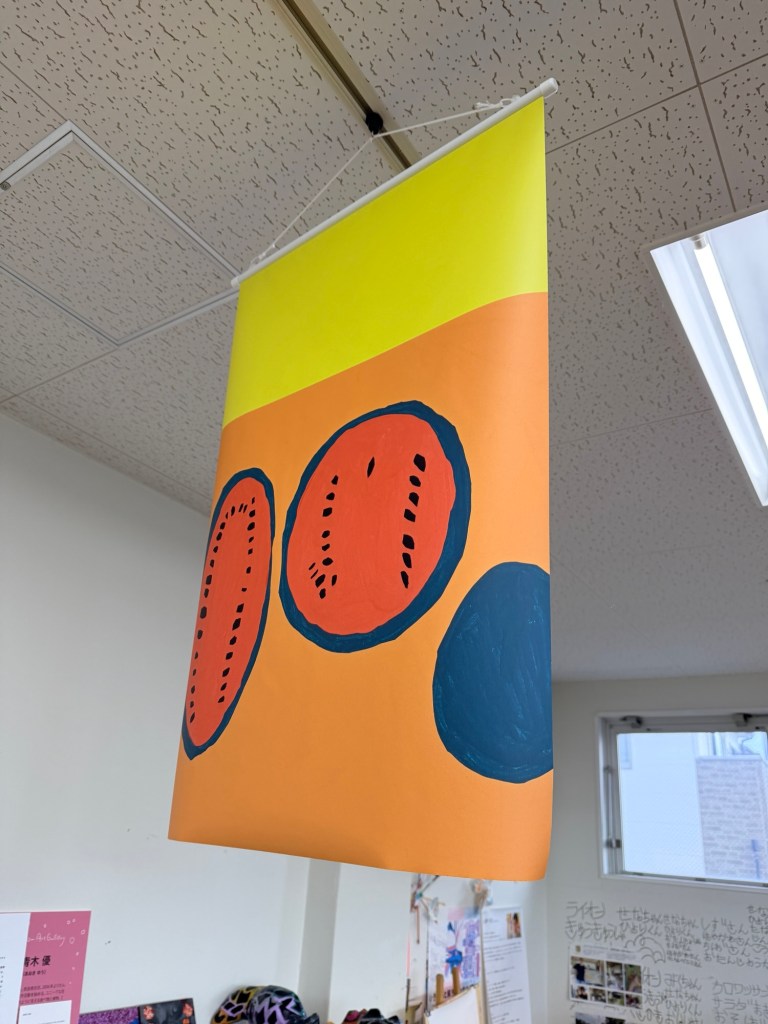
An artist’s workspace. The formal exhibition gallery.A tour from the director.Each person’s tools are customized to meet their own unique needs.Here’s the artist I bought a scarf from.She’s so vivacious and was happy to have her picture taken with me.There’s so much lovely artwork here. This artist’s work was some of my favorite. We also visited the community cafe and some residential spaces (some artists live here, others come for the day).
Visiting Yakushiji Temple
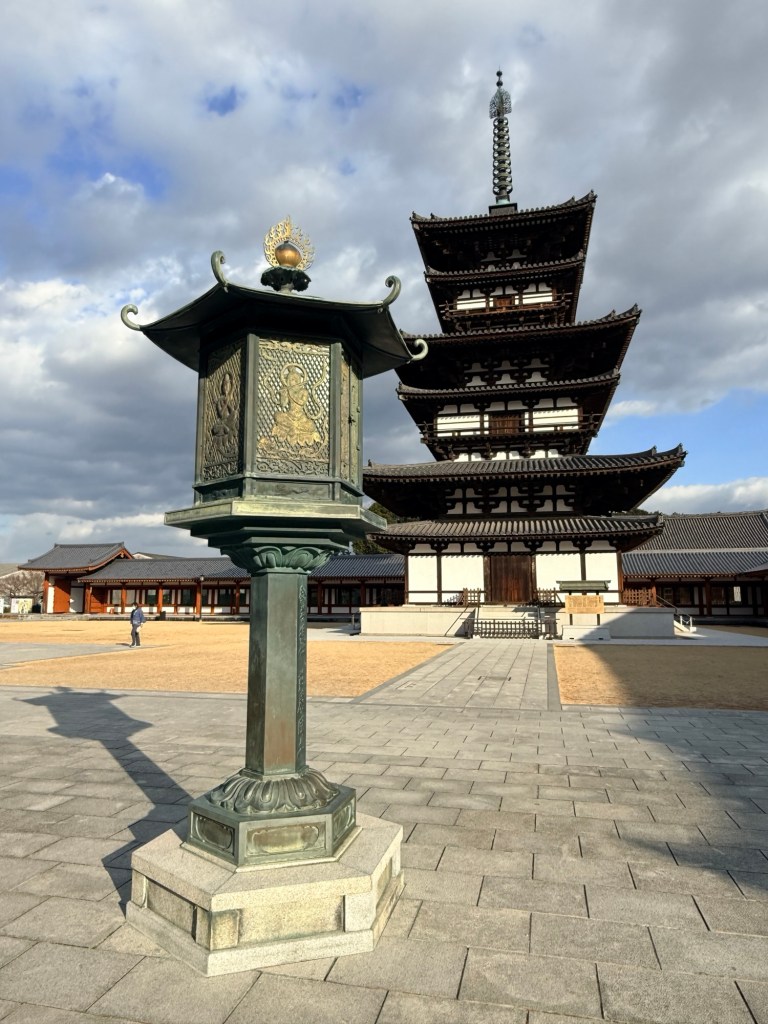
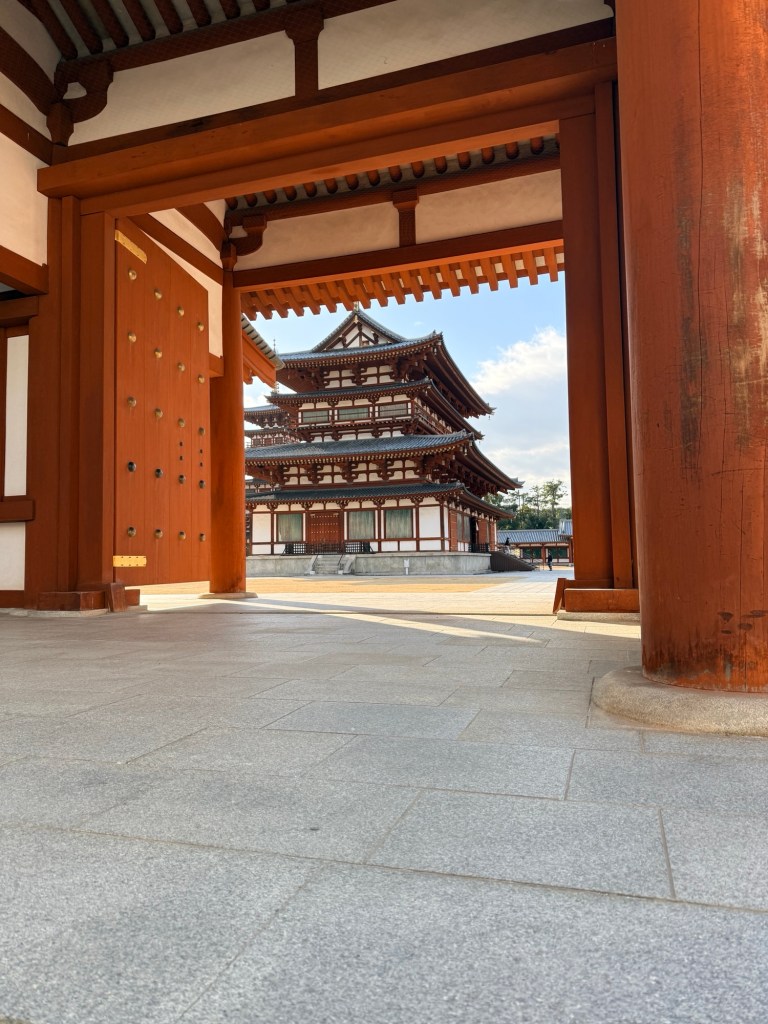
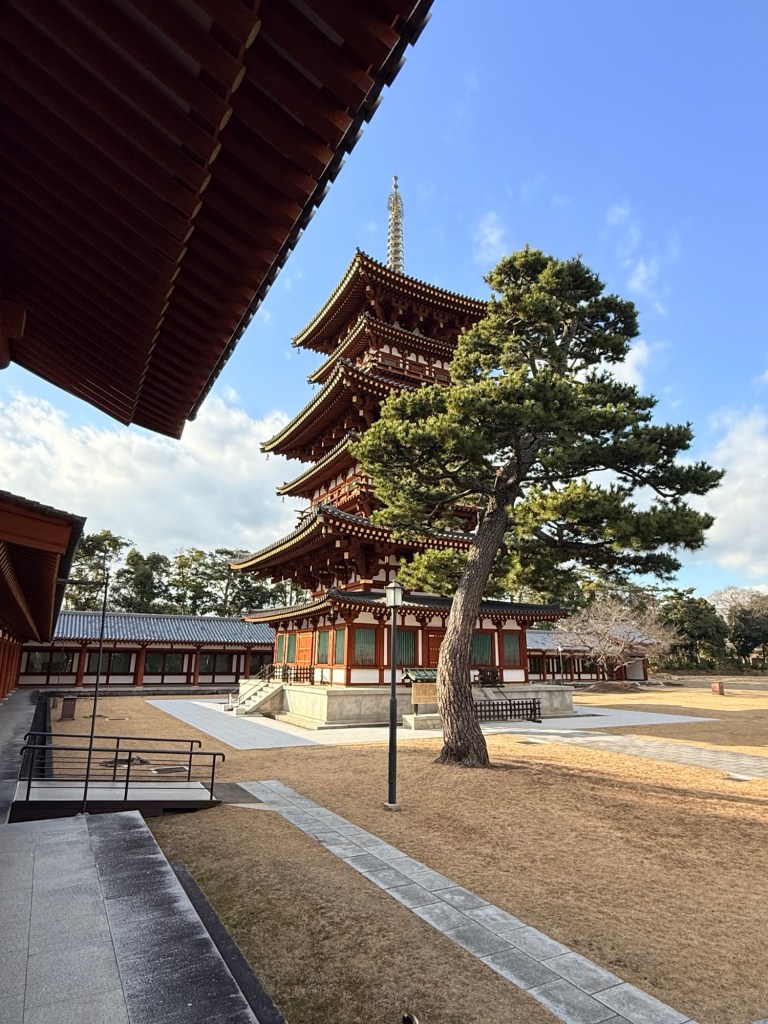
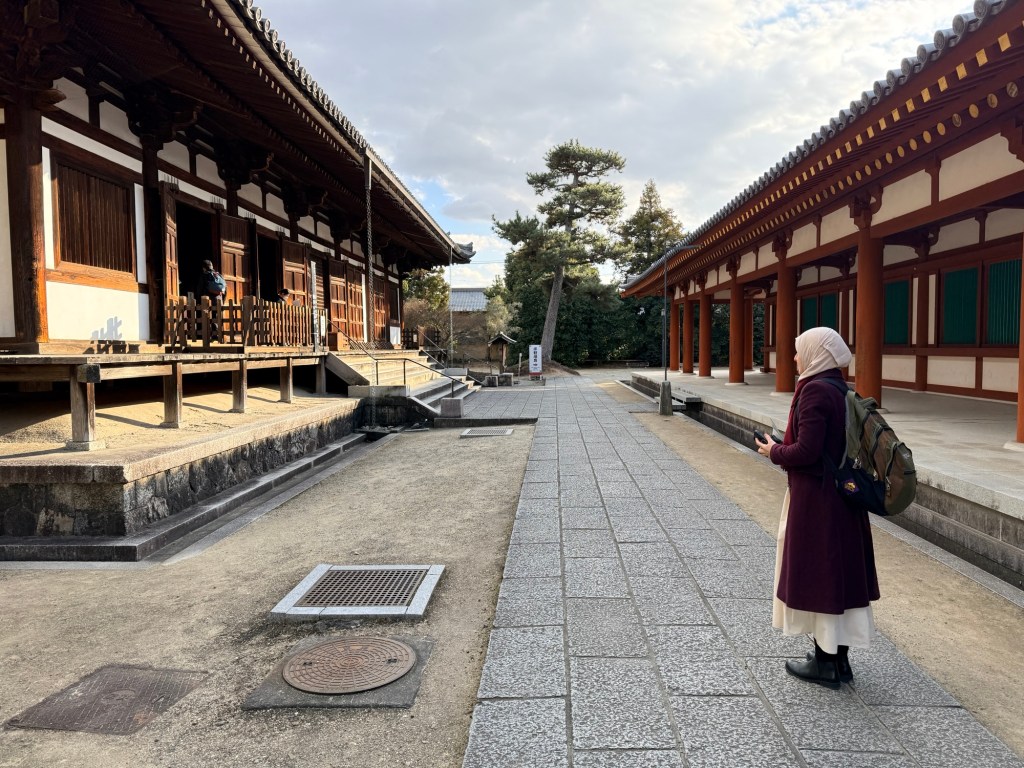
Then, Sarah and I had the chance to visit Yakushiji Temple, a UNESCO World Heritage Site.
This temple is of Chinese design, and artisans from China helped construct it. It was eye-opening to me how much exchange my colleagues described having with other Asian countries. Their politicians may not seem to collaborate, but their academics certainly do!
Earlier on this day, at KOSAN, I met a student who won an international competition in Chemical Engineering. The competition was held in the Middle East, but he said Vietnam and (I think) India were major competitors.
Yakushiji Temple
Dinner and Accomodations Celebraitng Japanese Traditions
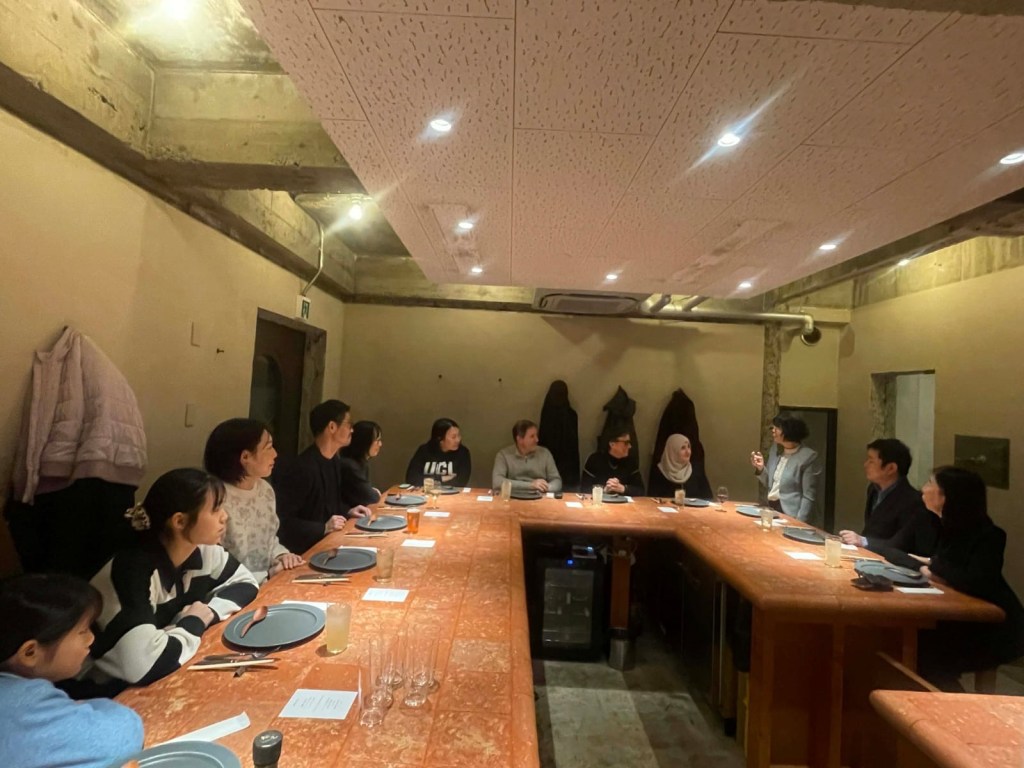
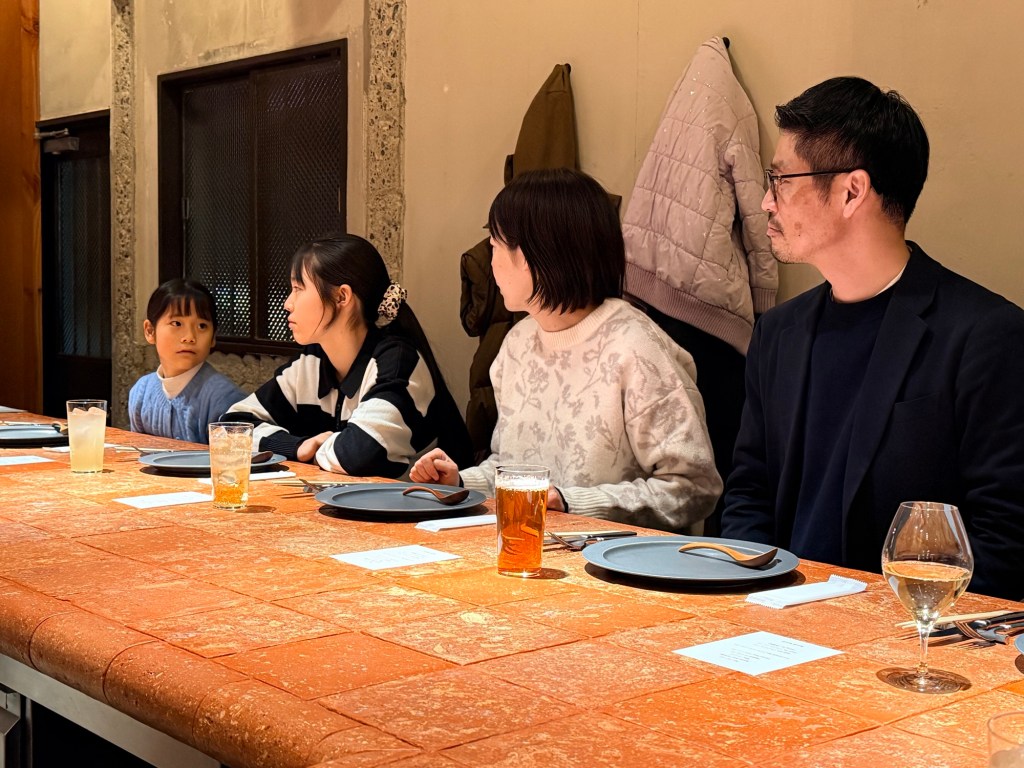
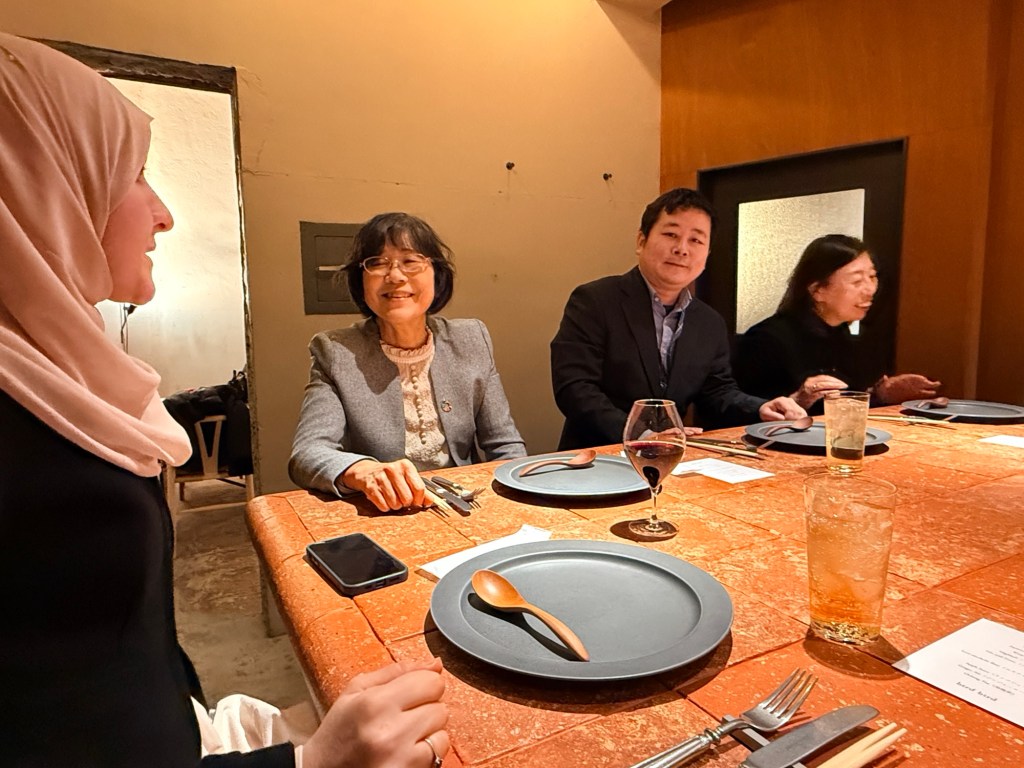
The evening after this event, we joined with Shinae, Chiyako, Mari Ito, Ryoko Una, Atsushi, Shinya, and his wife and daughters for a very special meal at ‘bird bird.’ The owner/head chef is an architect, and he runs this restaurant in addition to having restored the accommodation where we stayed.
Overall, bird bird (@birdbird_nara), operates as a community space offering coworking, a shared office, dining, and a rooftop sauna. It was created by architect Shunpei Fujioka and is located on the same block as the housing complex or ‘hotel’ where we stayed. We booked the place on Booking.com at Tamami and Shinya’s recommendation.
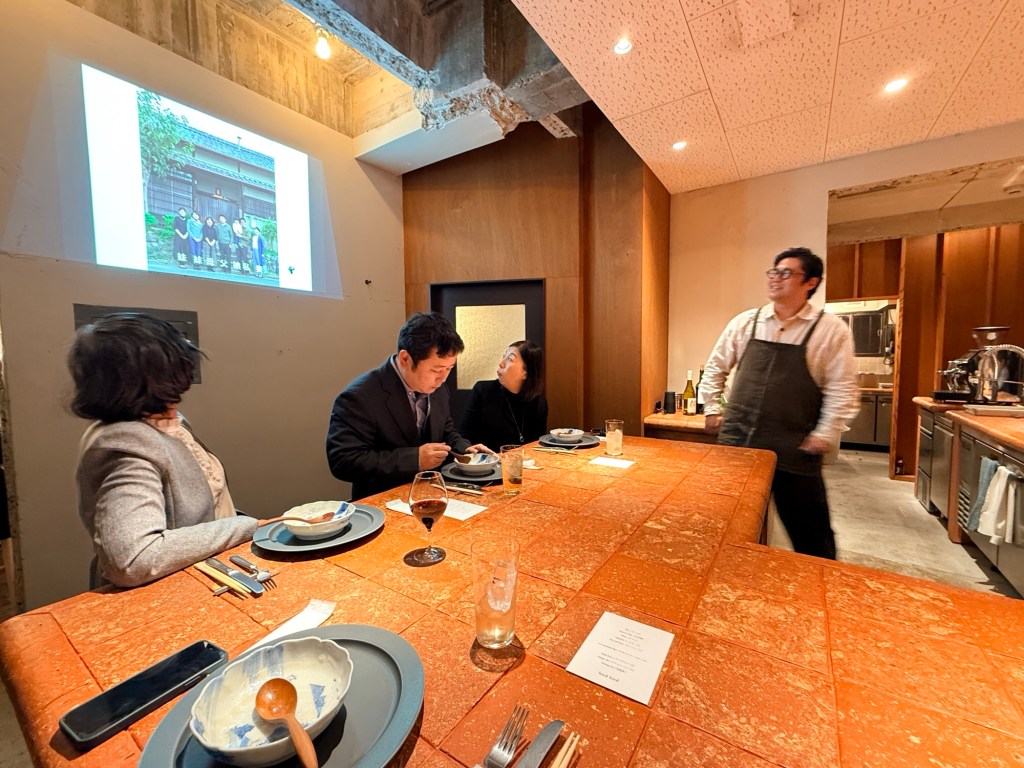
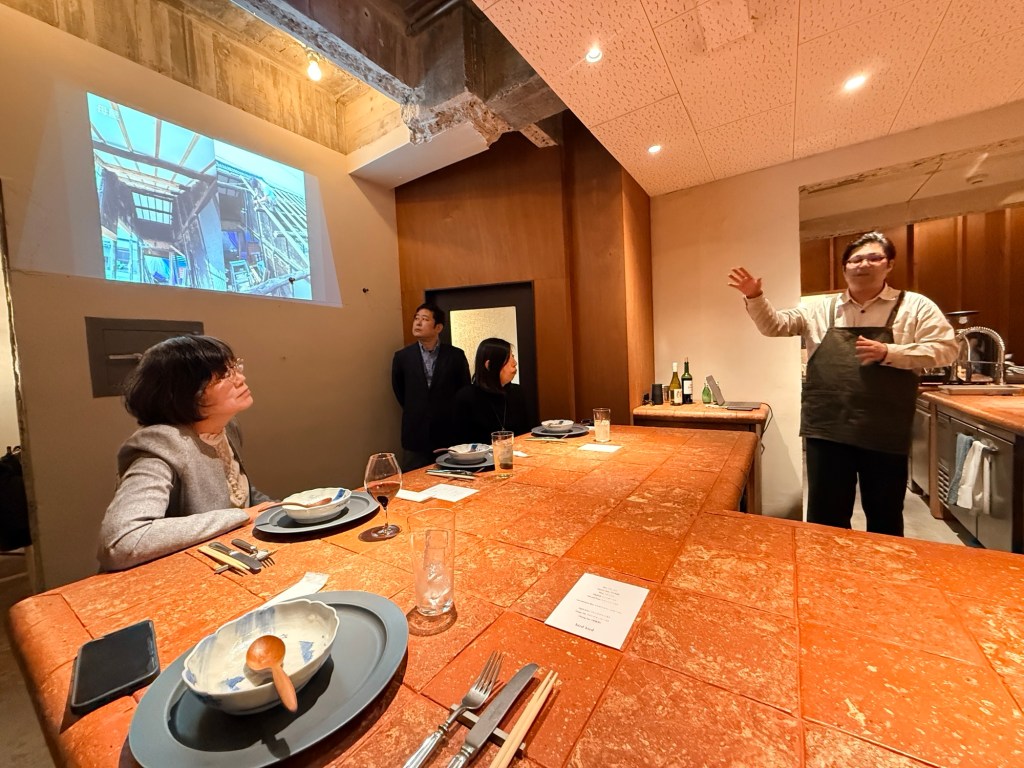
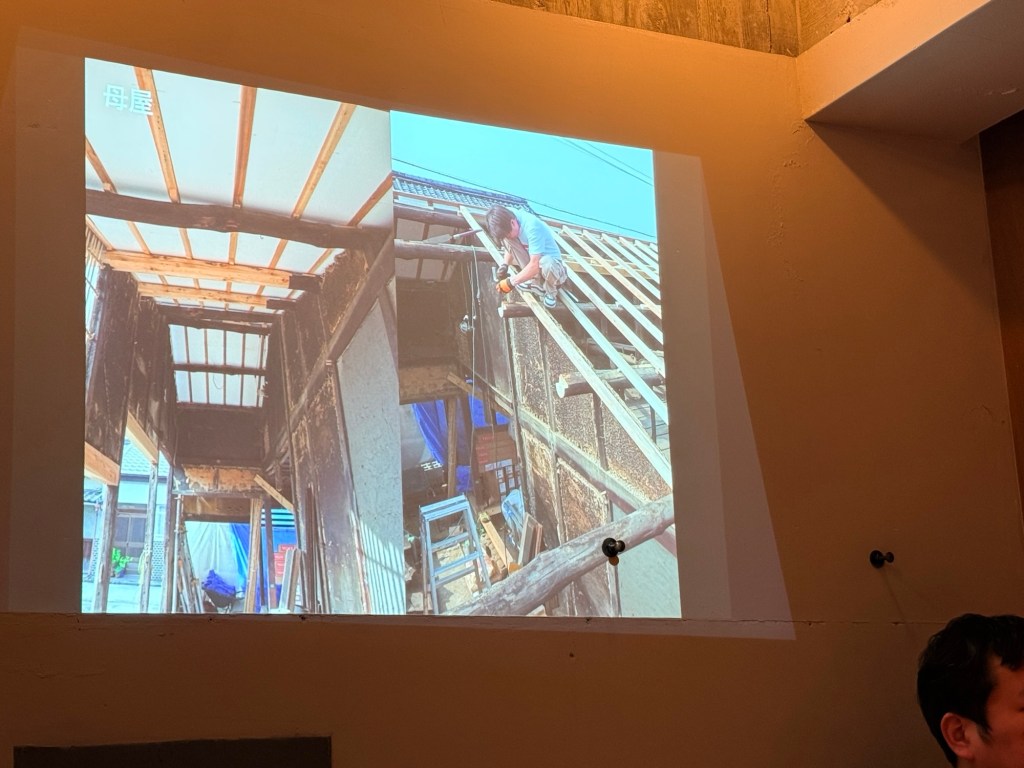
The chefs use the middle part, and serve each person directly from the kitchen.This is Shinya’s family. All the speakers from the day attended the meal, plus our hosts and translator.This. is one of the five courses we enjoyed.Here’s a photo of the whole dinner group.The chef/architect, Shunpei Fujioka, presented the reovation project. It was intriguing to hear the story of the reonvation and see before and after photos.The set of homes had been vacant for years before this architect renovated them.
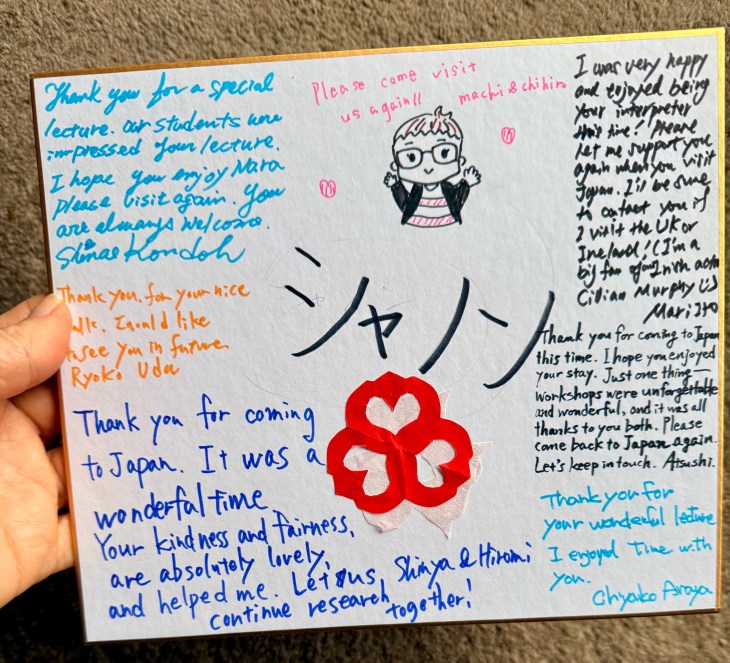
The dinner group made lovely cards for Sarah and me without us even suspecting. It was a project led by Shinya’s daughters, who also made many origami gifts for us. I saw the architect/chef, Shunpei Fujioka, helping with that!
A lovely card to memorialize our time together.
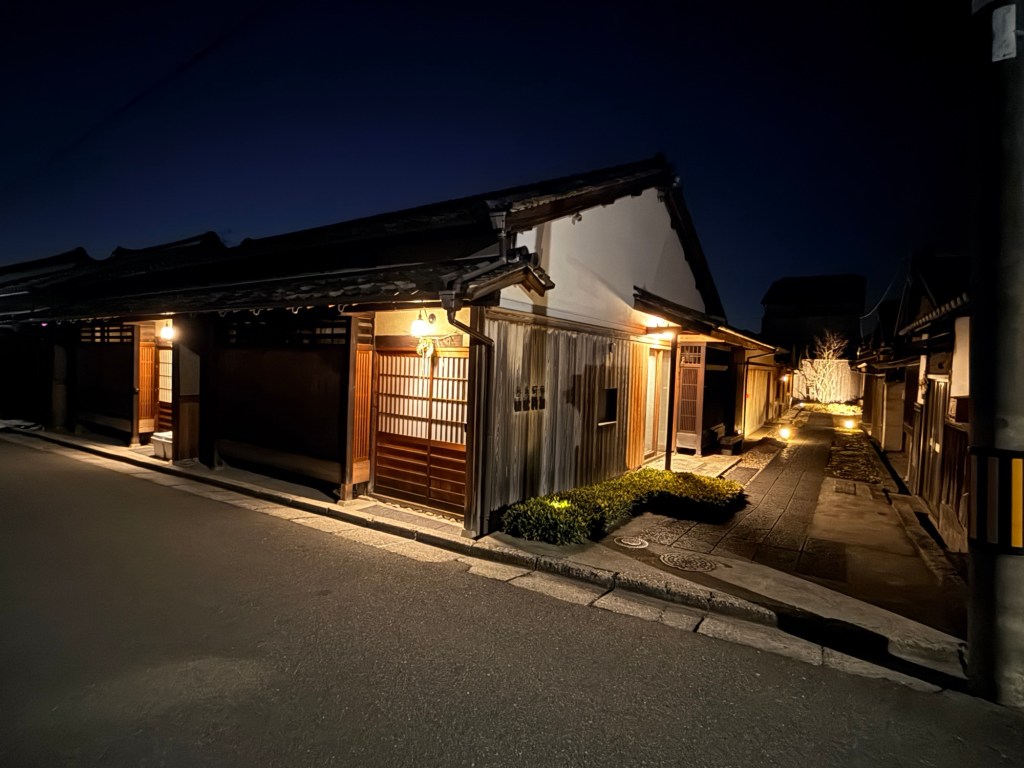
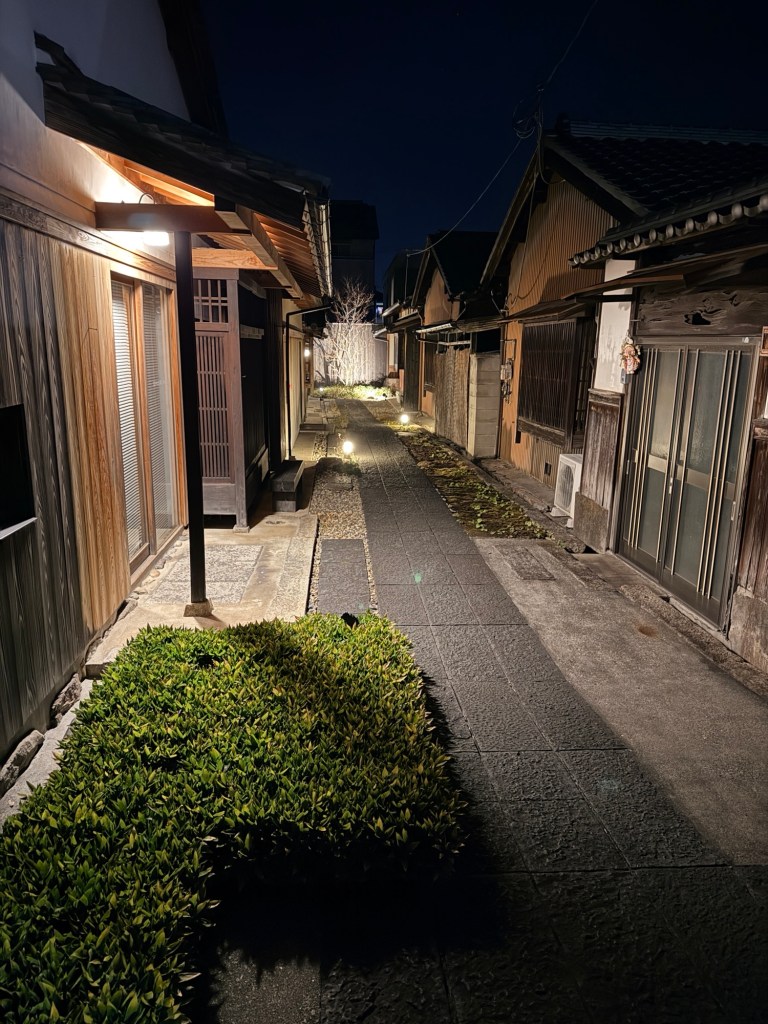
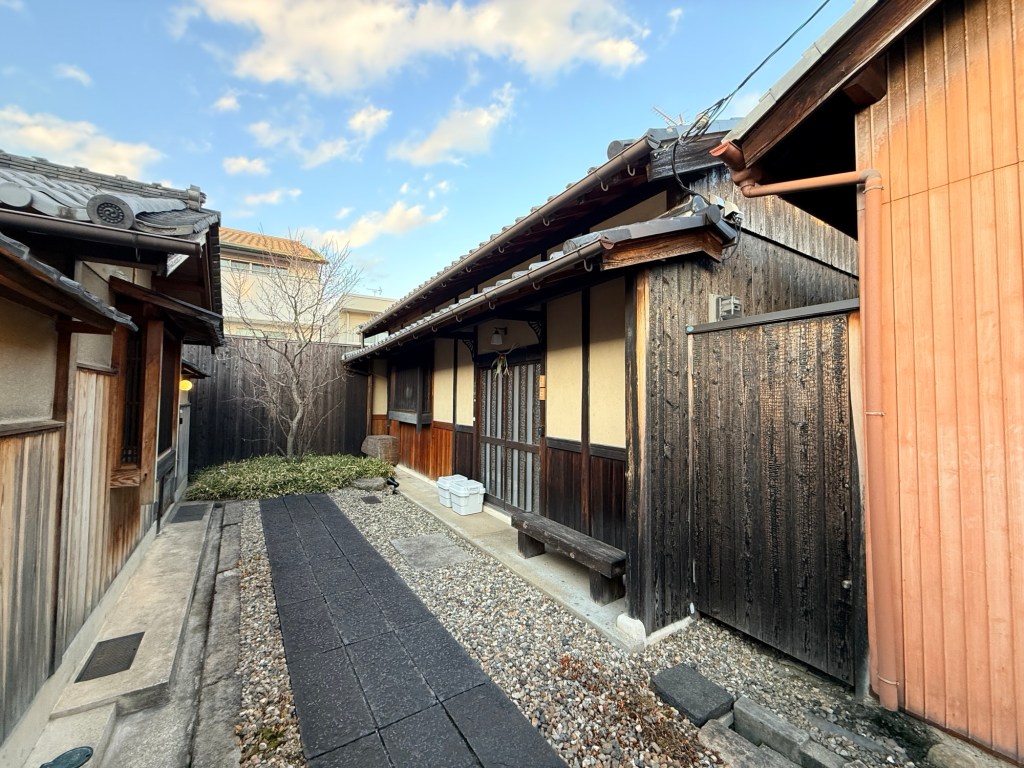
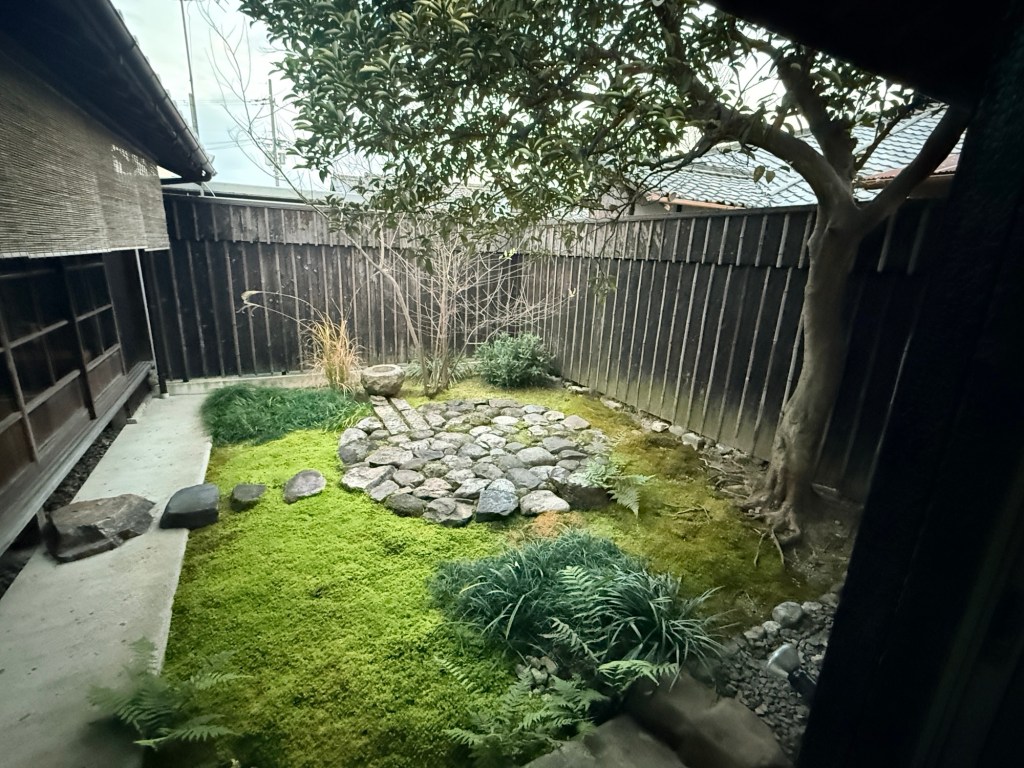
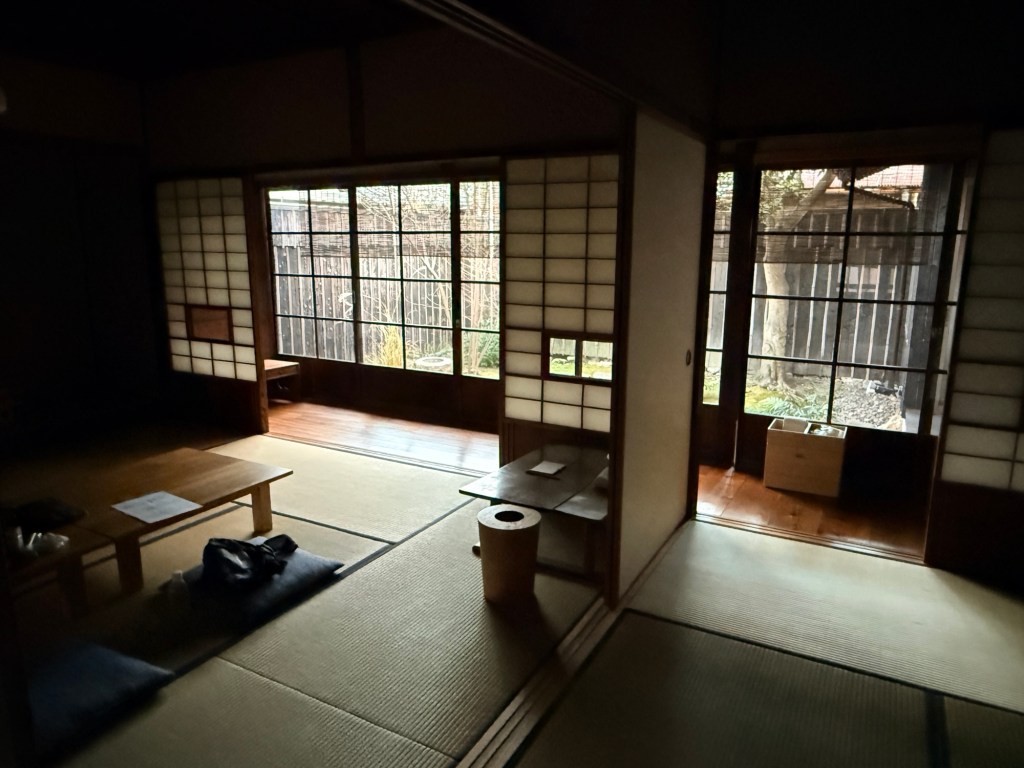
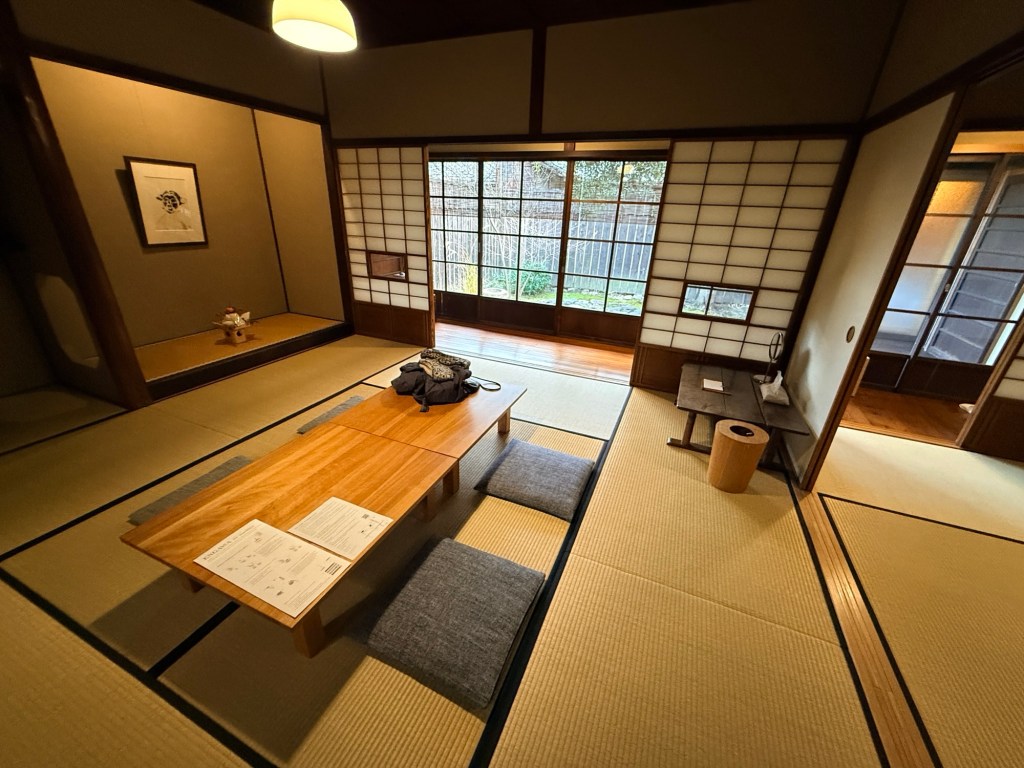
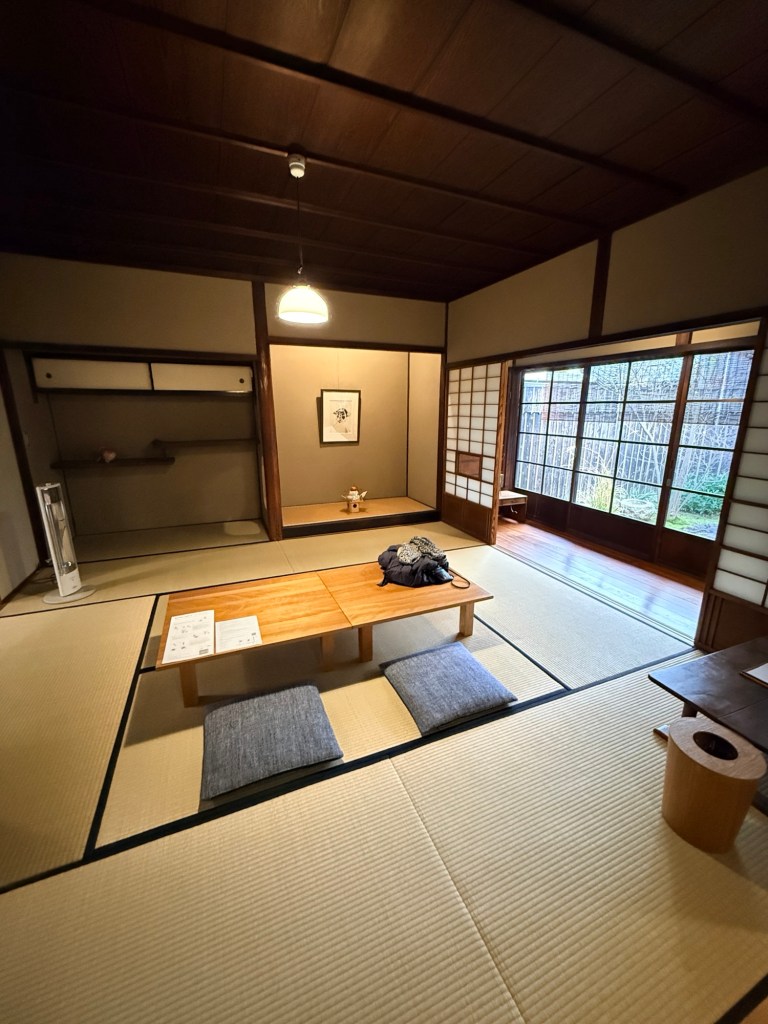
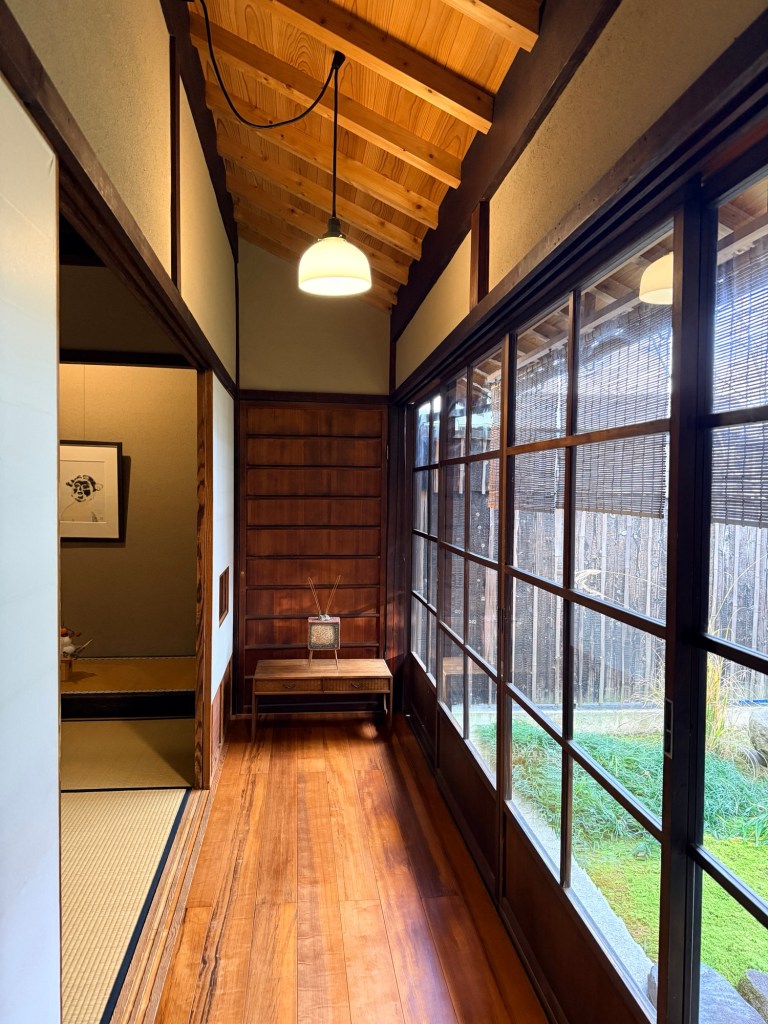
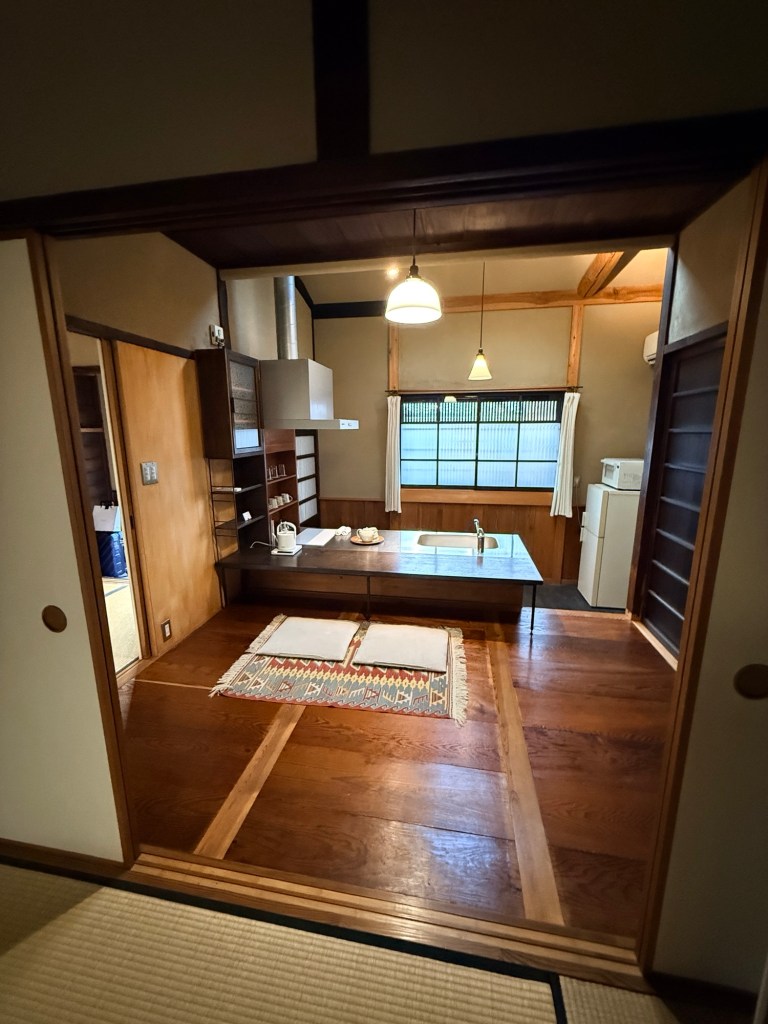
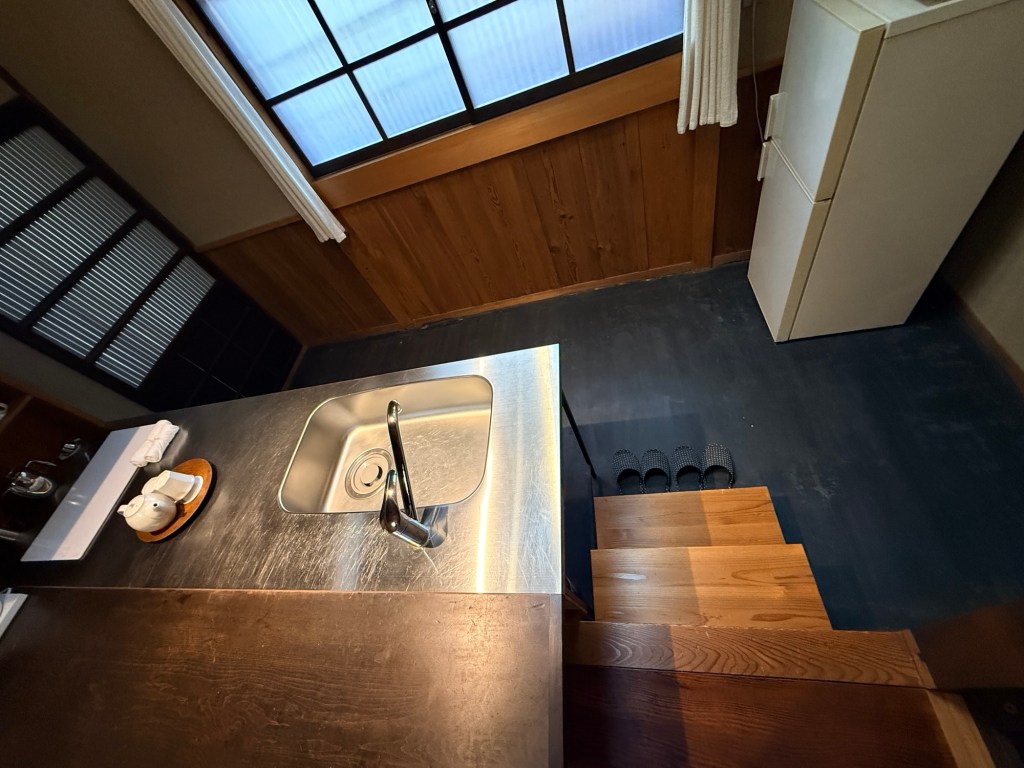
A major highlight of our visit to Japan was staying for three nights in a traditional Japanese house, part of a set of five adjacent homes that this architect has lovingly restored.
I have read about traditional Japanese houses and visited similar (Korean) ones in folk museums, but living in one for three days was an immense honor.
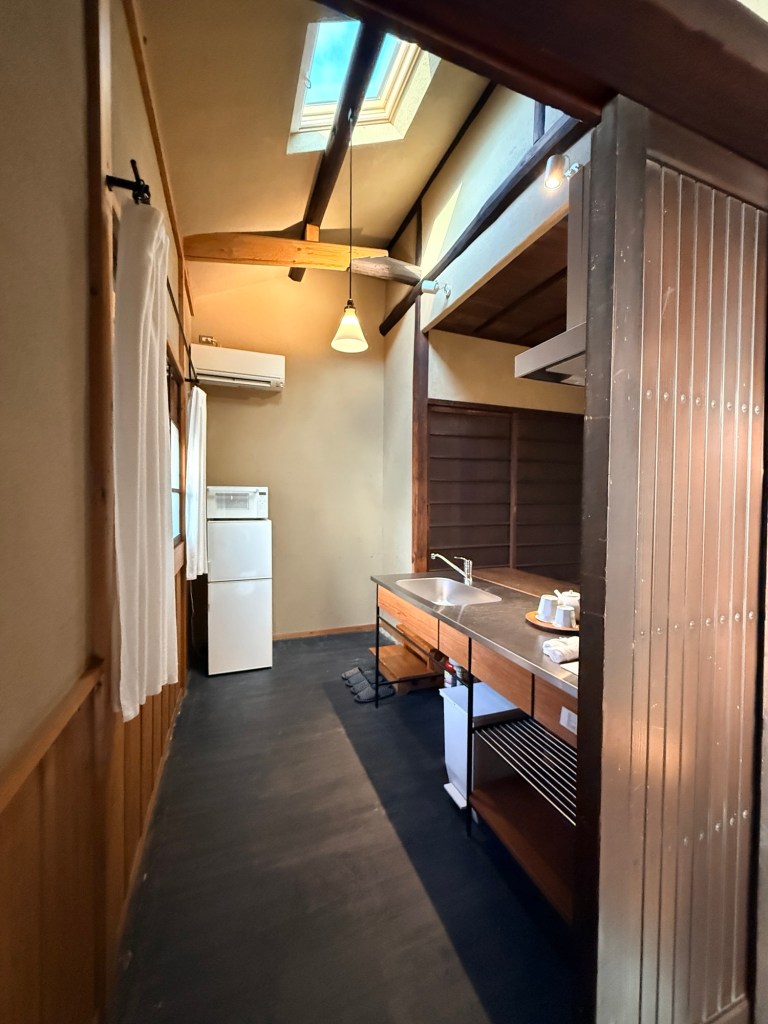
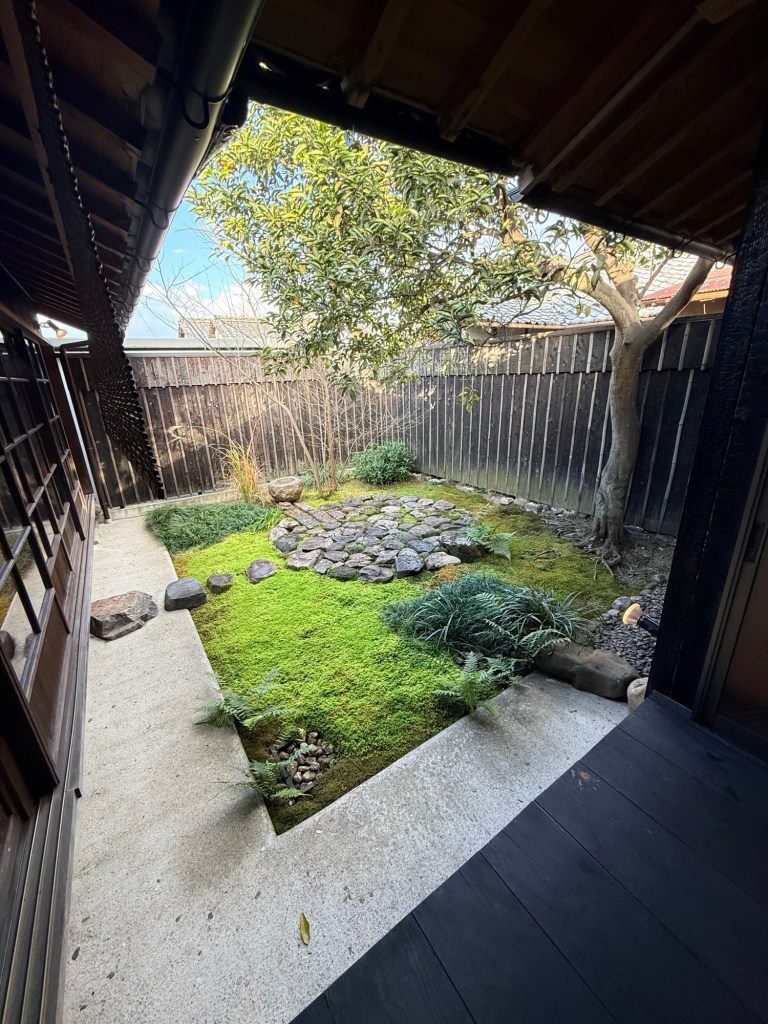
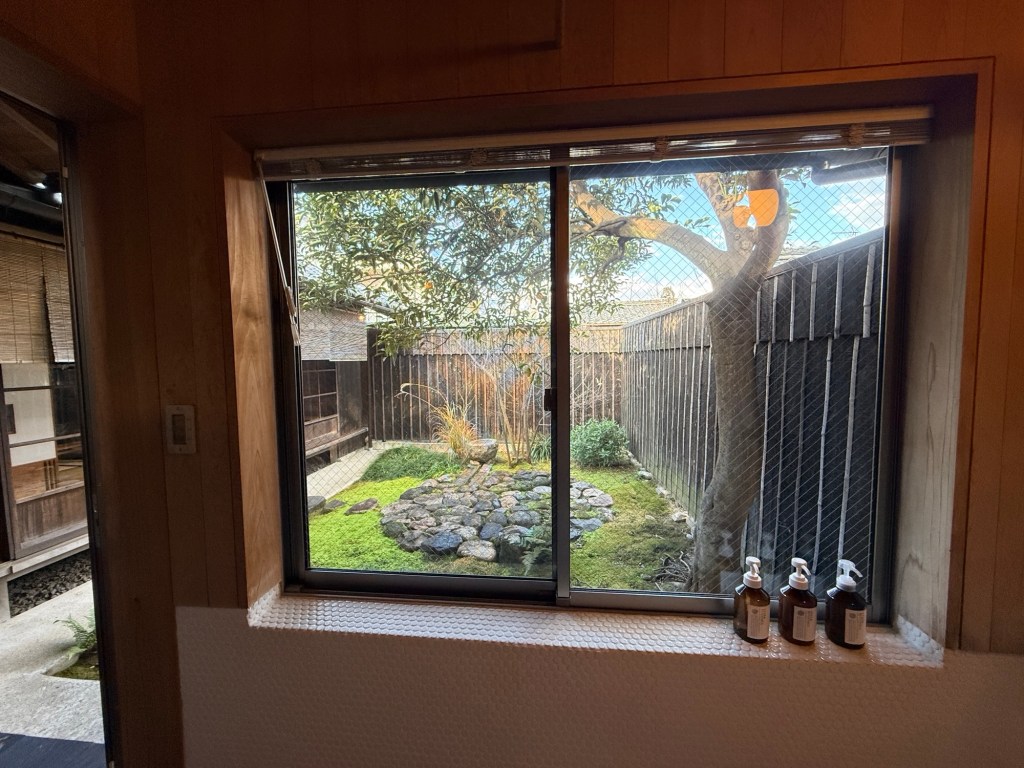
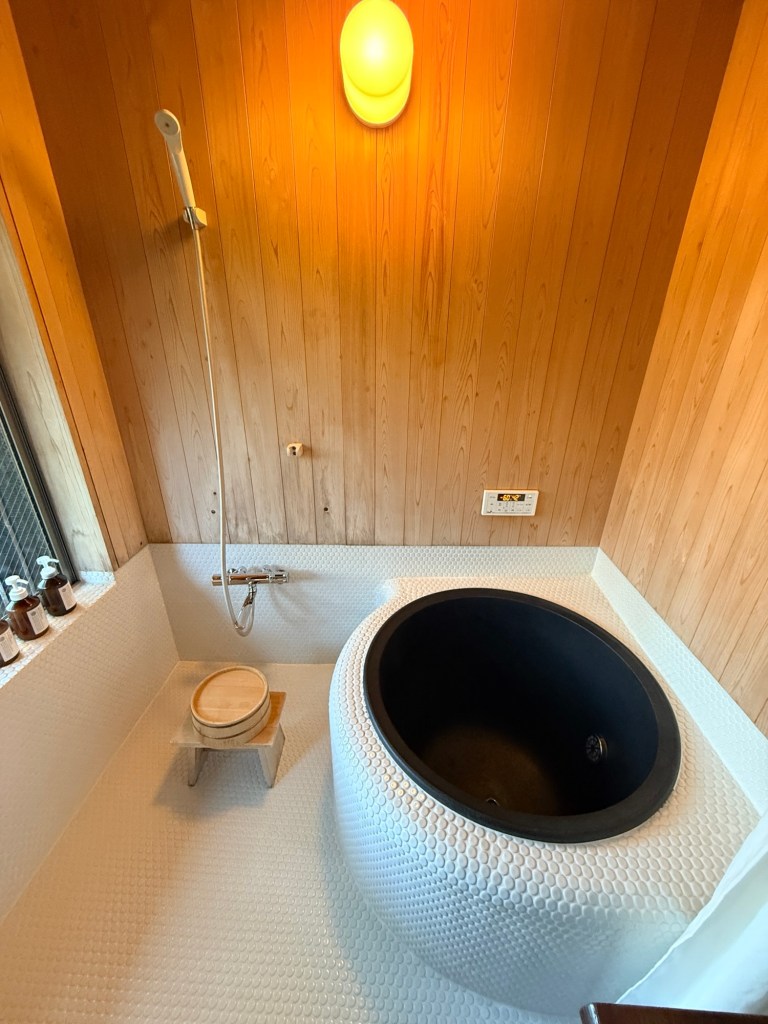
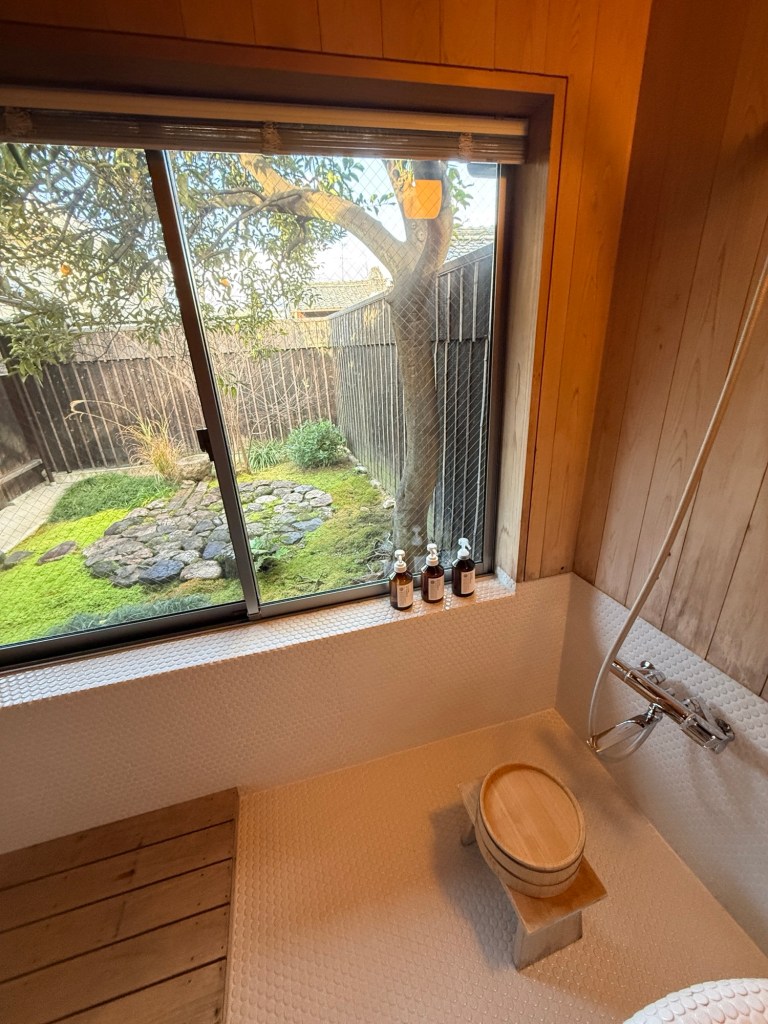
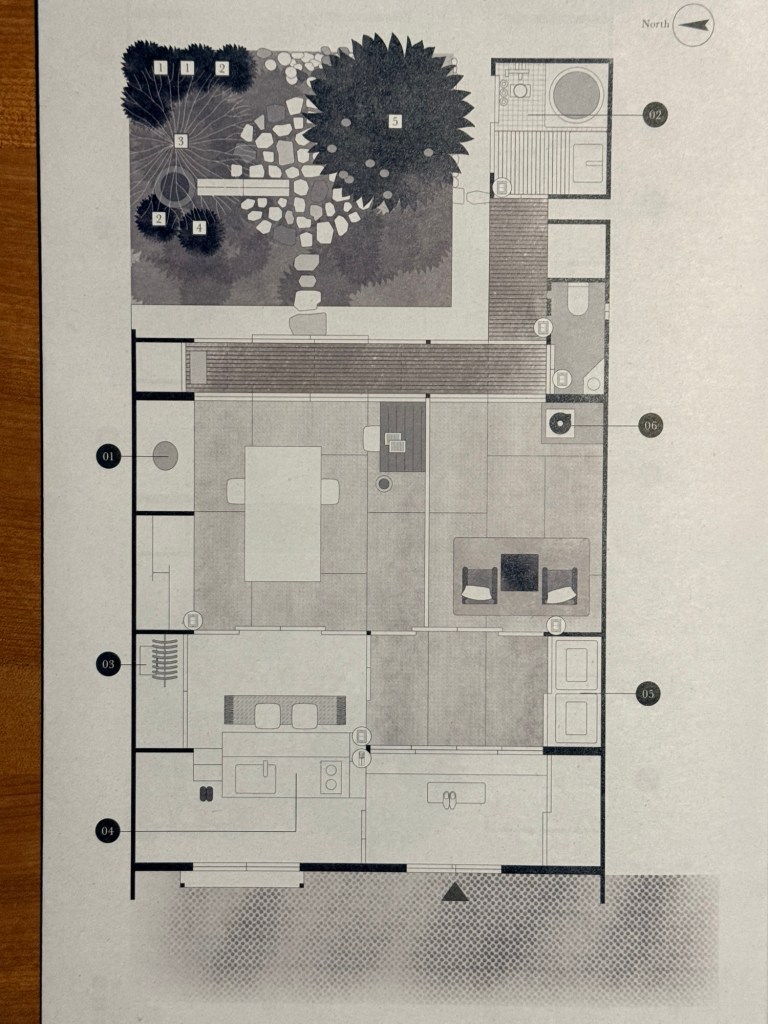
The set of restored houses at night.The alleyway where my house was.My house (the “Presidential Suite”).The house’s gorgeous private courtyard.Japanese “half-light” in the interiors.The dining area.They sit on the floor, and roll out futons when it’s time to sleep.The corridor between the living spaces and courtyard.The kitchen,with steps down from the seating area to the work space.The kitchen workspace. YOu can see renovation work (light wood) distinguished from the original (dark) wood. The covered (outside) walkway from the house to the bathroom. There’s a separate room with toilet and washbasin.View from the bathing space to the courtyard.The tub and shower.Hygiene is very important in Japanese culture.The plan of my house.
Overall, the bathing rituals were a highlight of my private time in Japan. The hotel in Tokyo had a public bath in the basement, which was an experience like no other. I love Turkish hammams (and even visited one in Malta over the Christmas holiday).
The traditional Japanese house also offered a unique and exquisite bathing experience.
But the most unexpected pleasure was that all but one of the toilet seats I used in Japan were heated and had a bidet function. The joy of a warm bum cannot be overstated.
Cultural Immersion with Collegial Friends
It was a privilege to get deeply acquainted with Shinya, Atsushi, Tamami, and all their colleagues.
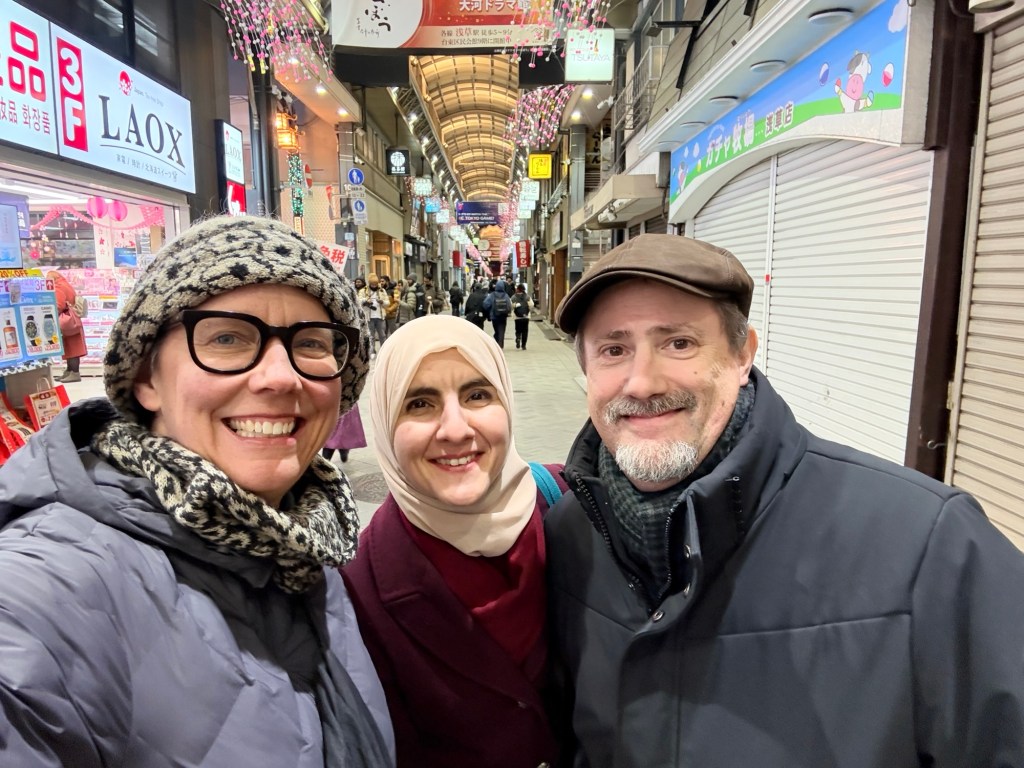
For me, it was also a unique honor to travel with Sarah and Stefané; they treated me as family and never let me feel like a third wheel. Sarah skillfully guided Stefané and me through complex networks of trains, streets, alleyways, shops, and restaurants.
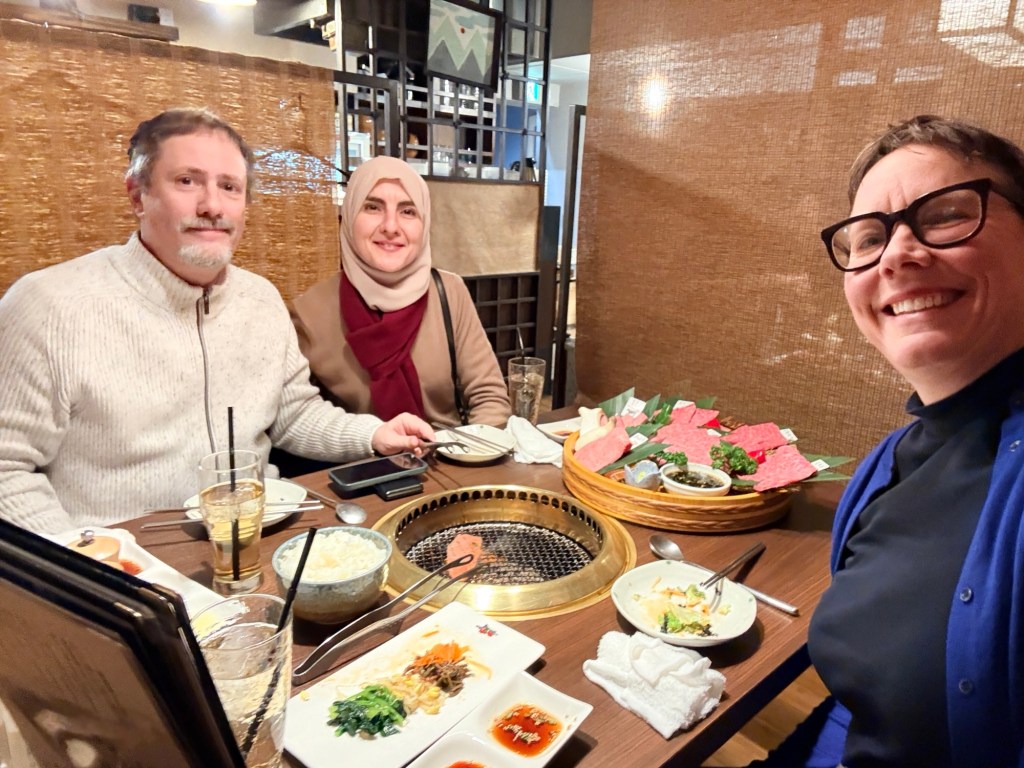
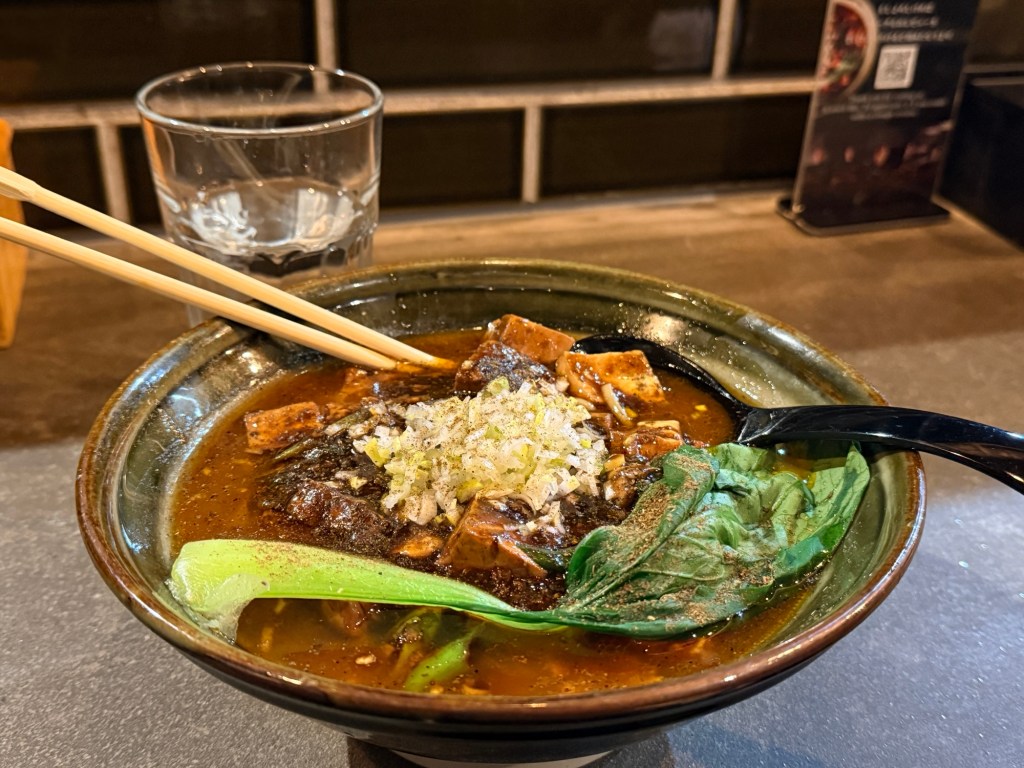
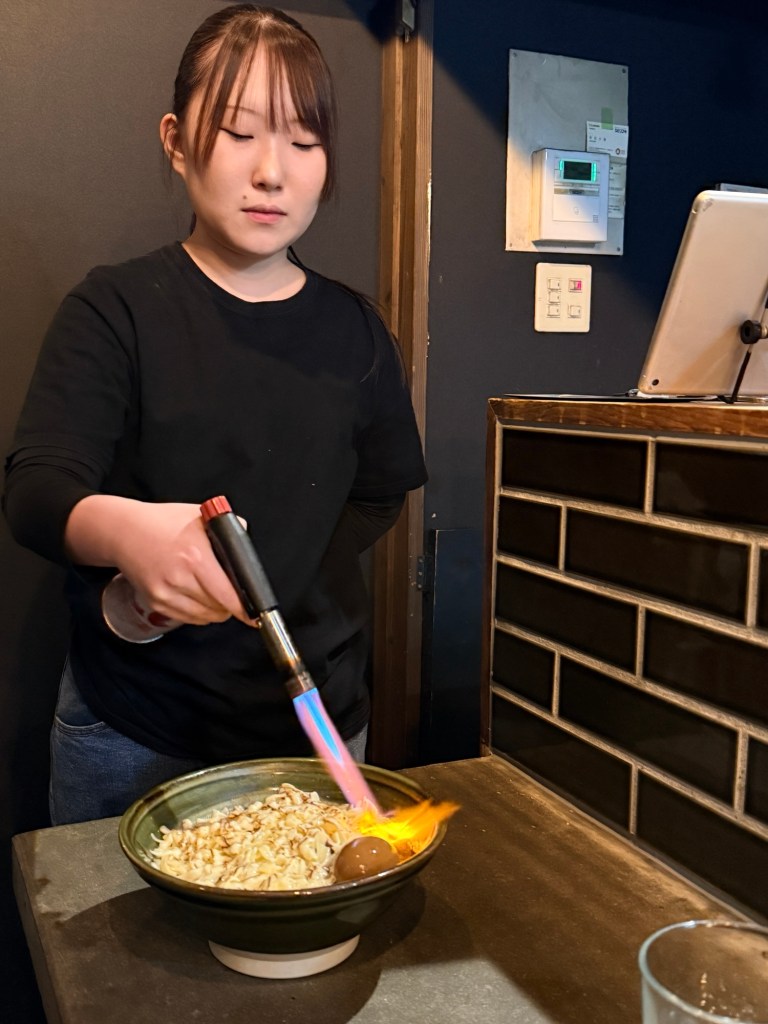
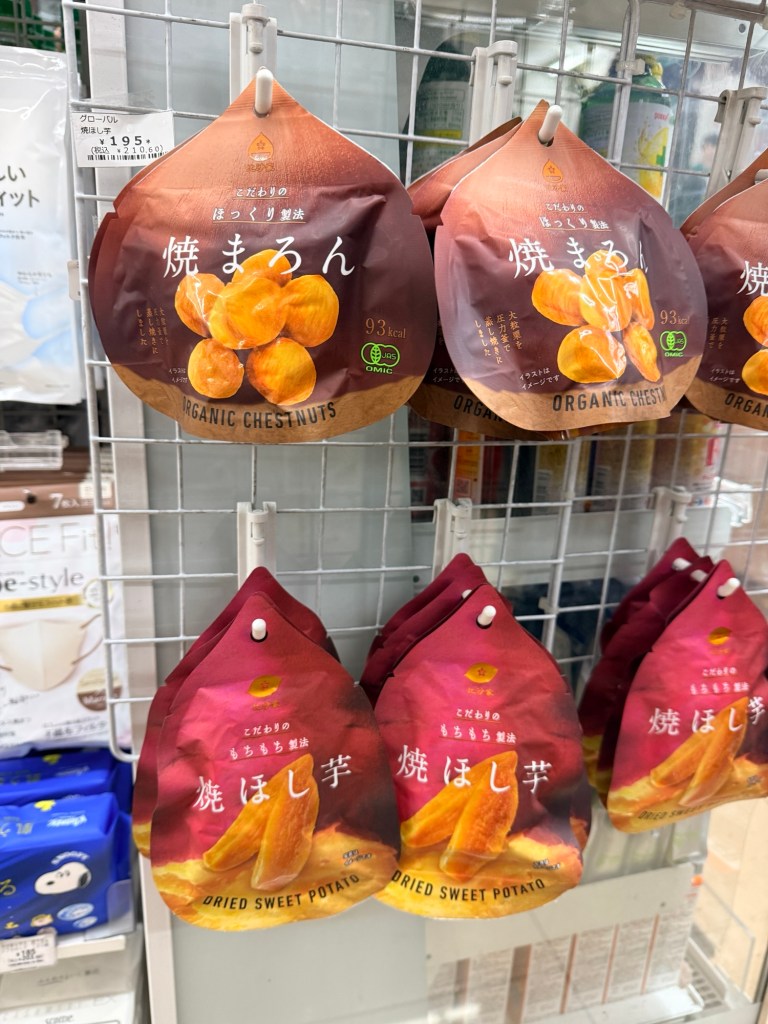
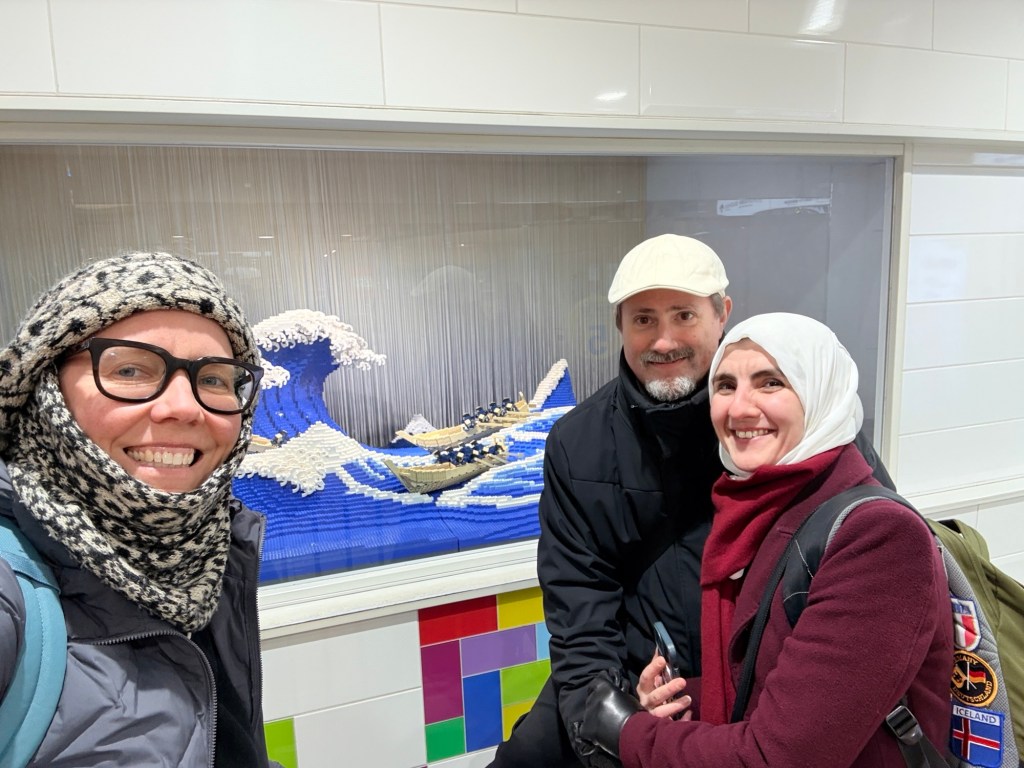
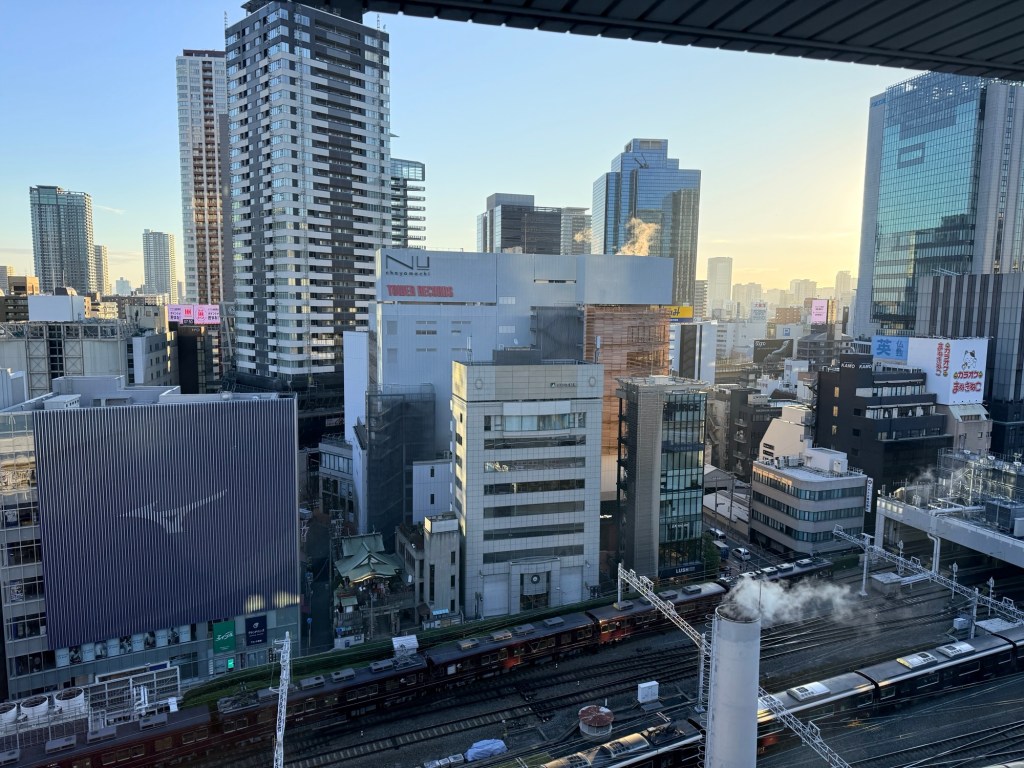
A halal ramen place.With dramatic effect.An official photoshoot — must be famous sicne security shooed me away.Aongus’ favorite, sweet potatoes!Lego of a famous paintitng (our colleague Inês’ favorite, so I had to take pictures!)View from my second hotel window in Osaka. Most hotels dont’ offere such a sweeping view — or any view at all!Refelctions seen from my hotel window.One of many shires I passed walking along the streets.I learned more about Islam from my travel companions and enjoyed several halal meals. I also got to explore Japanese culture and daily life alongside these lovely colleagues.
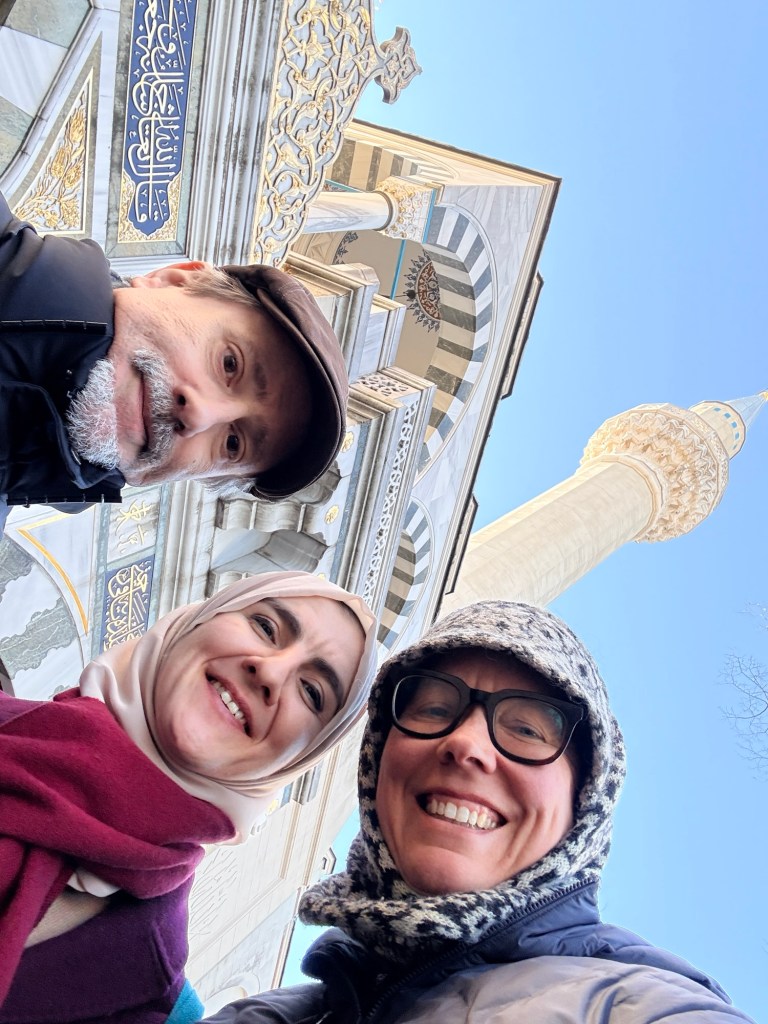
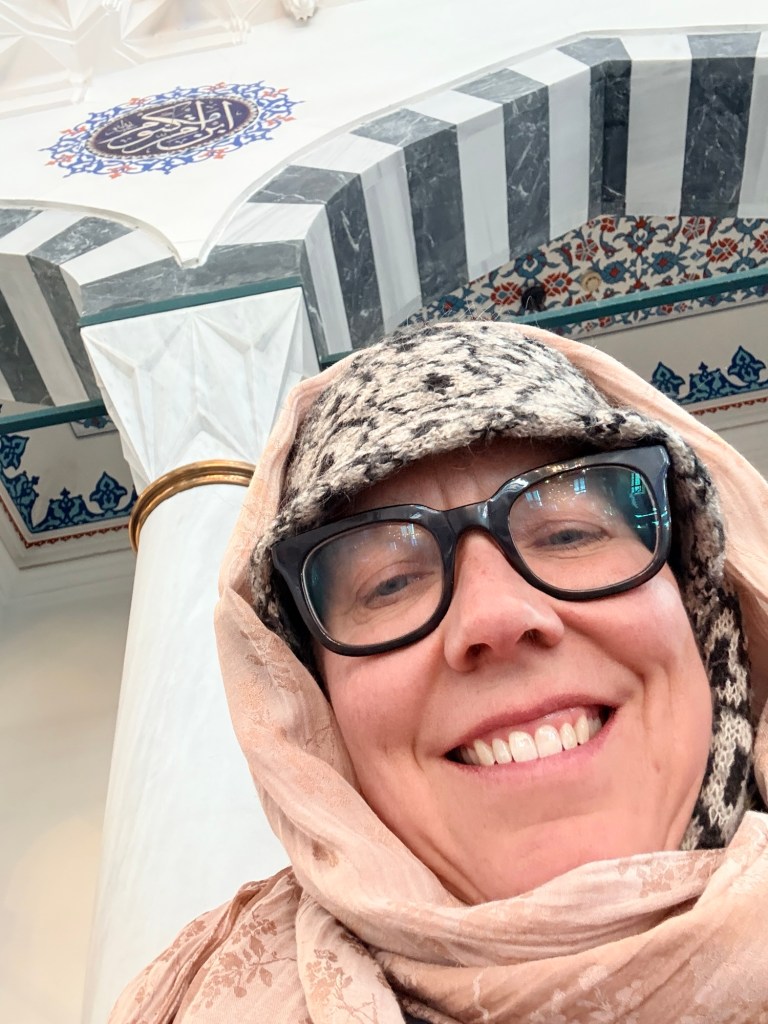
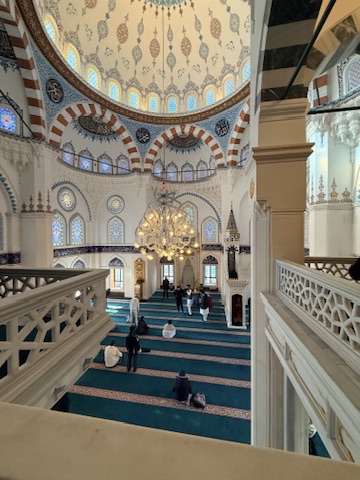
We visited a mosque at the Turkish Cultural Center in Tokyo, an experience I thoroughly enjoyed. We even had a meal at the mosque, prepared by the community for the worshippers.
Visiting the mosque.Inside the mosque. Views from the balcony.I learned more about Islam from my travel companions and enjoyed several halal meals. I also got to explore Japanese culture and daily life alongside these lovely colleagues.
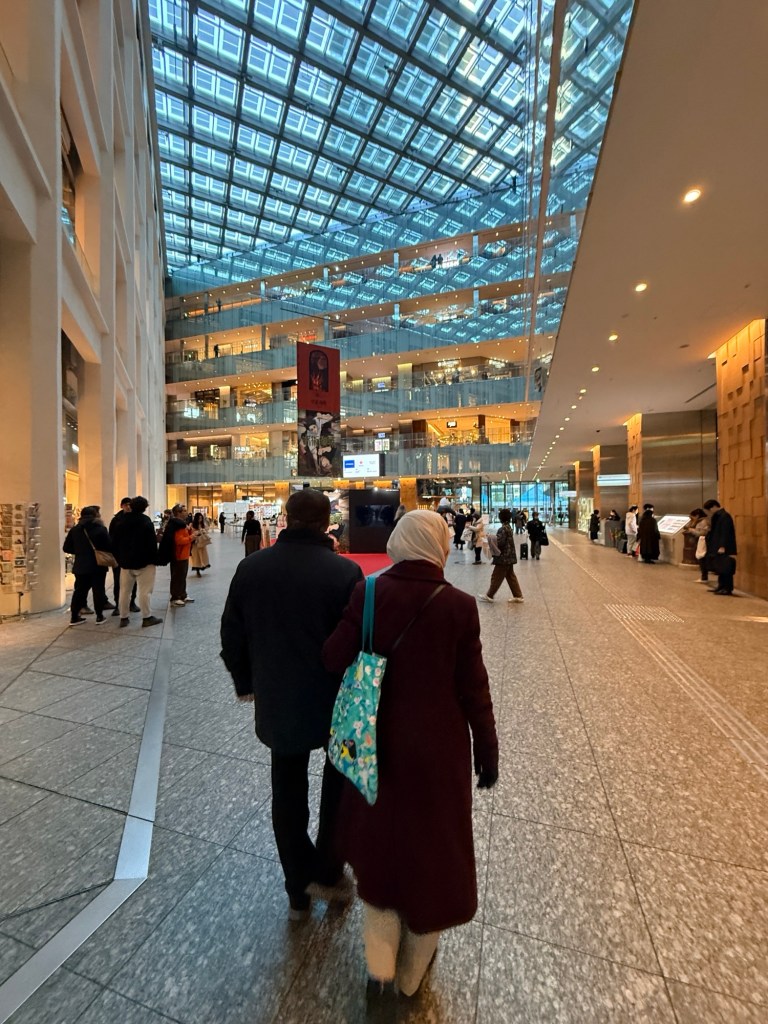
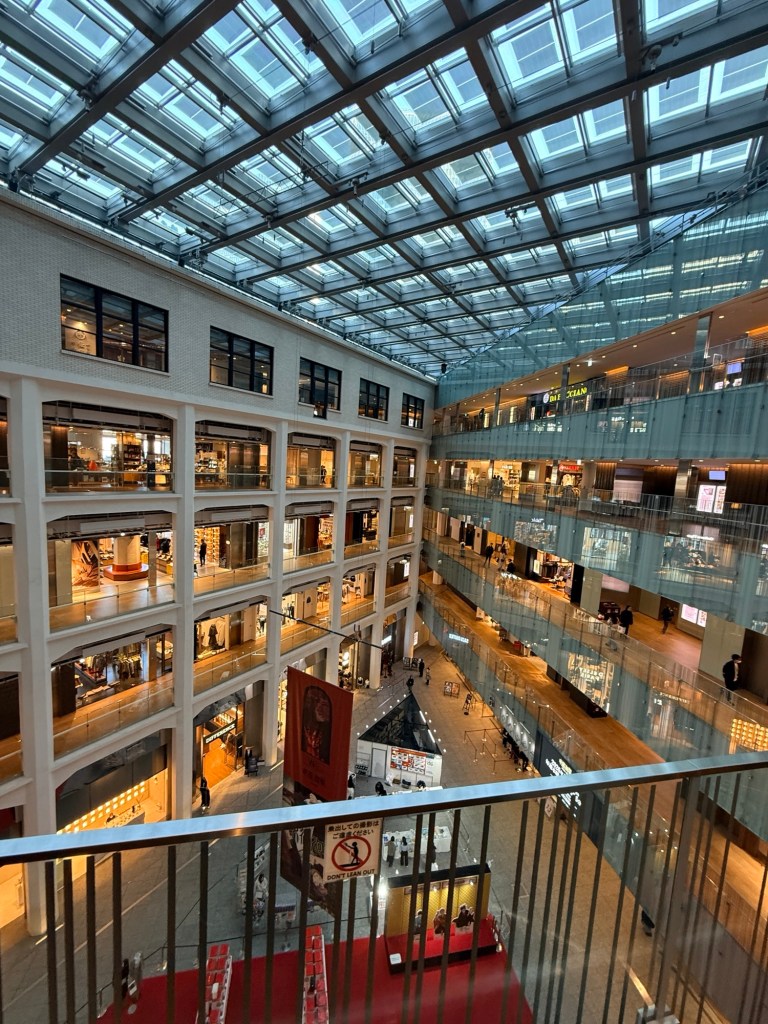
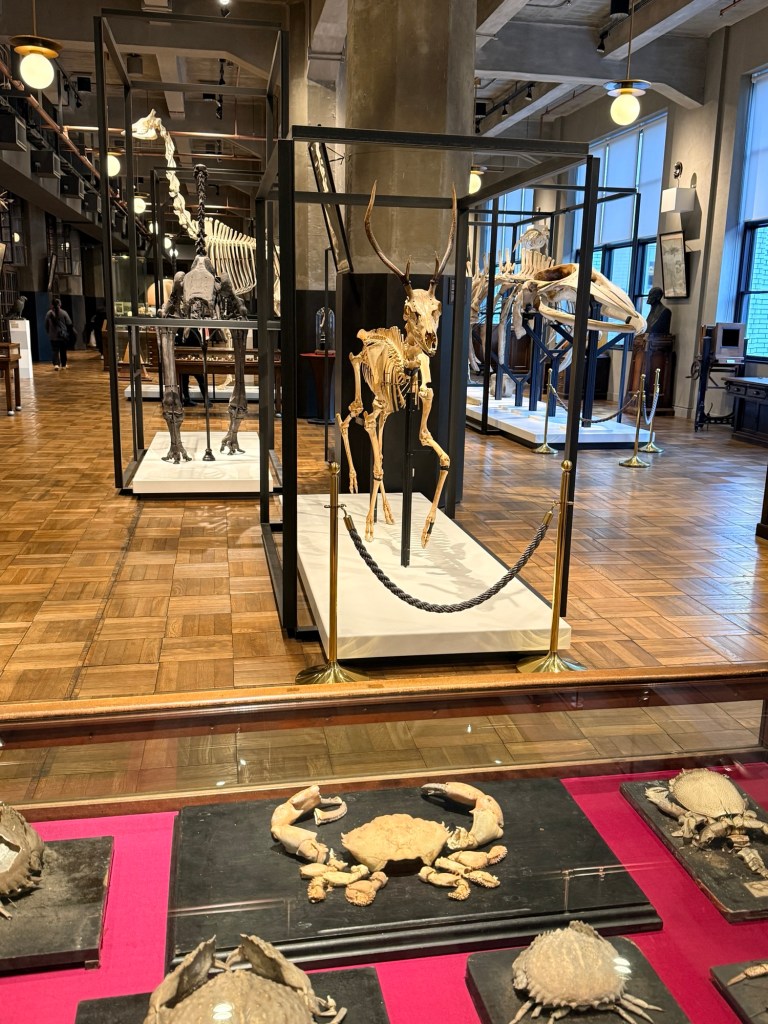
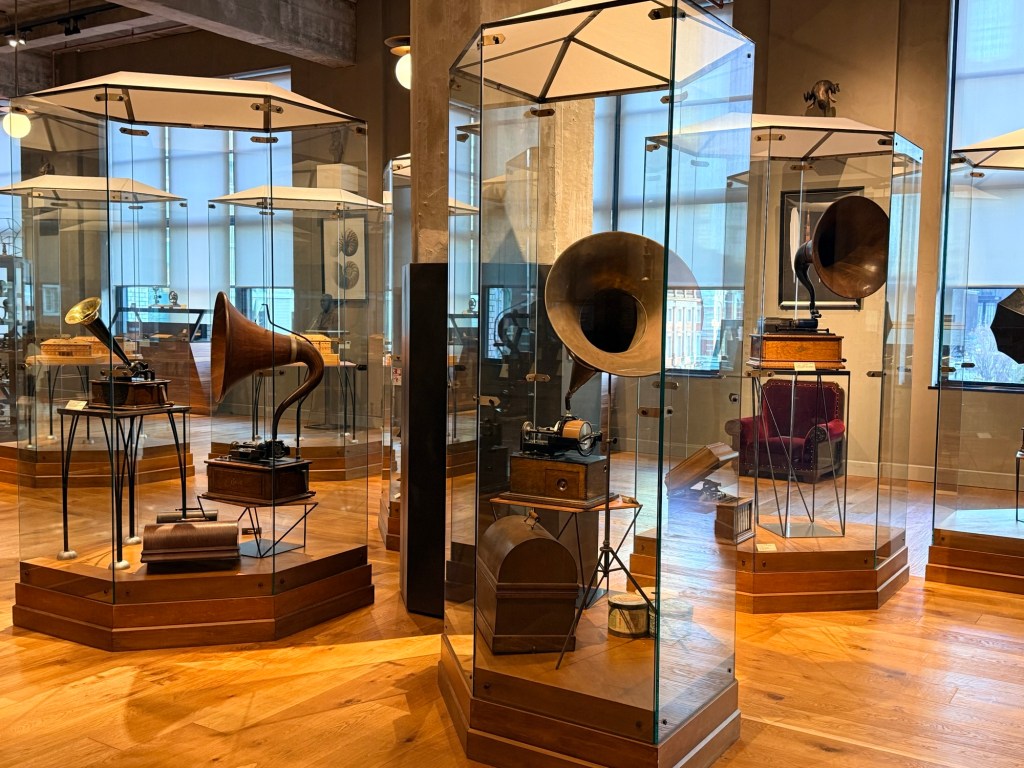
We also visited a museum with Japanese artifacts, located in a shopping center, presented in collaboration with a university, and located right beside the main train station in Tokyo.
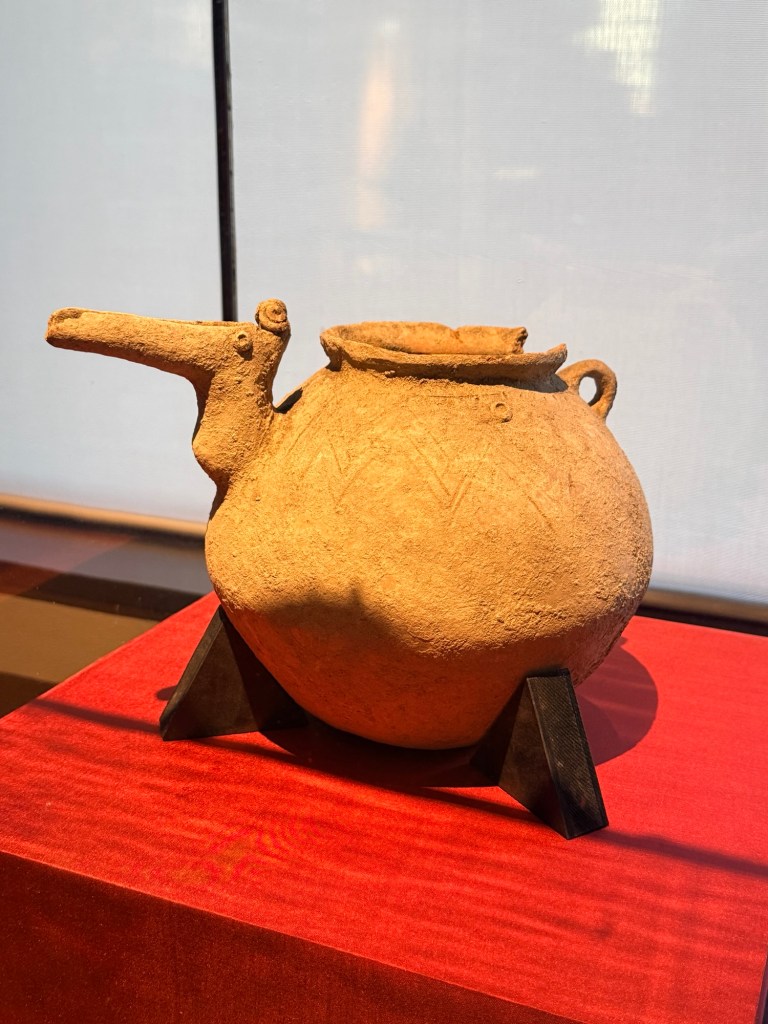
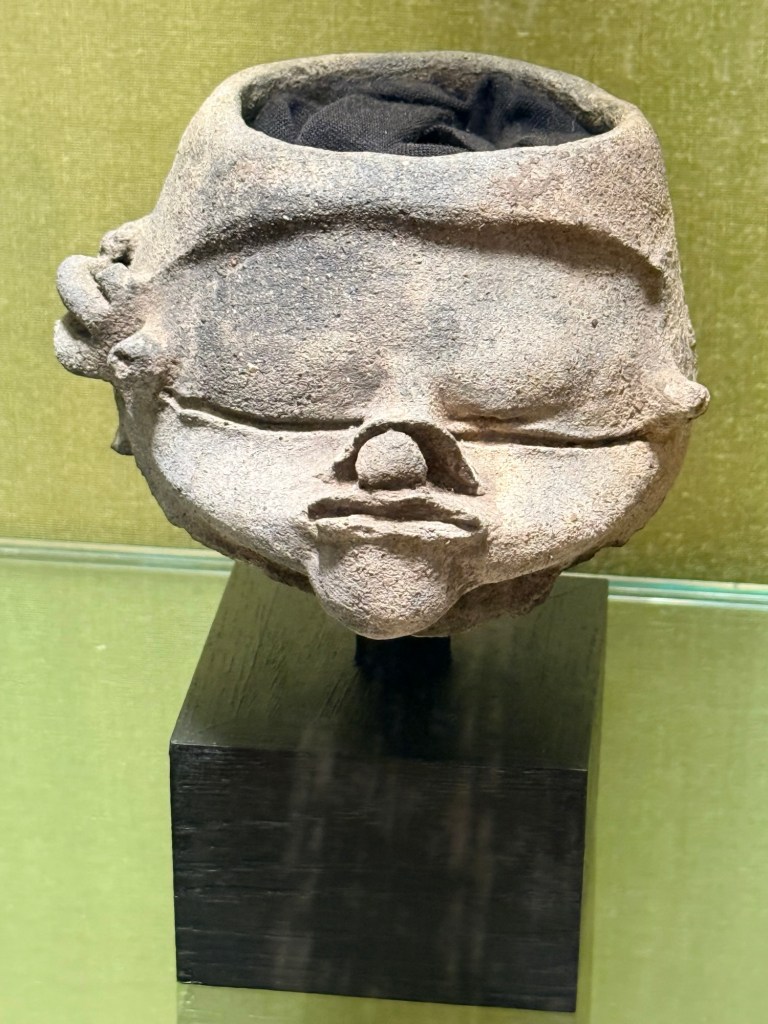
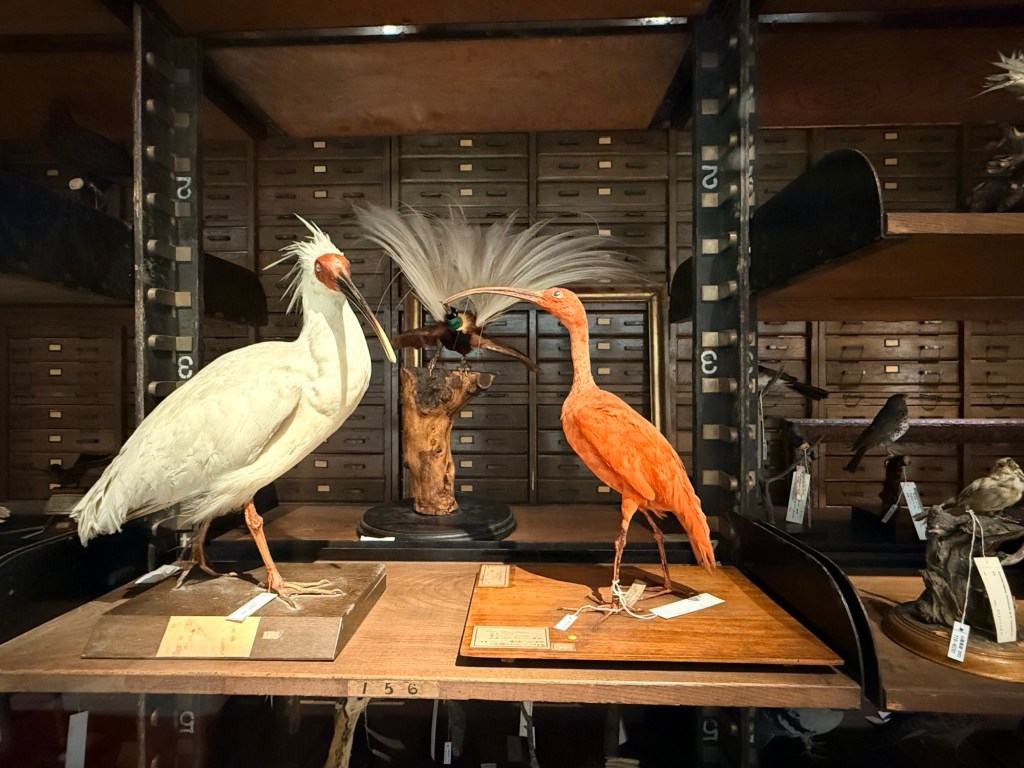
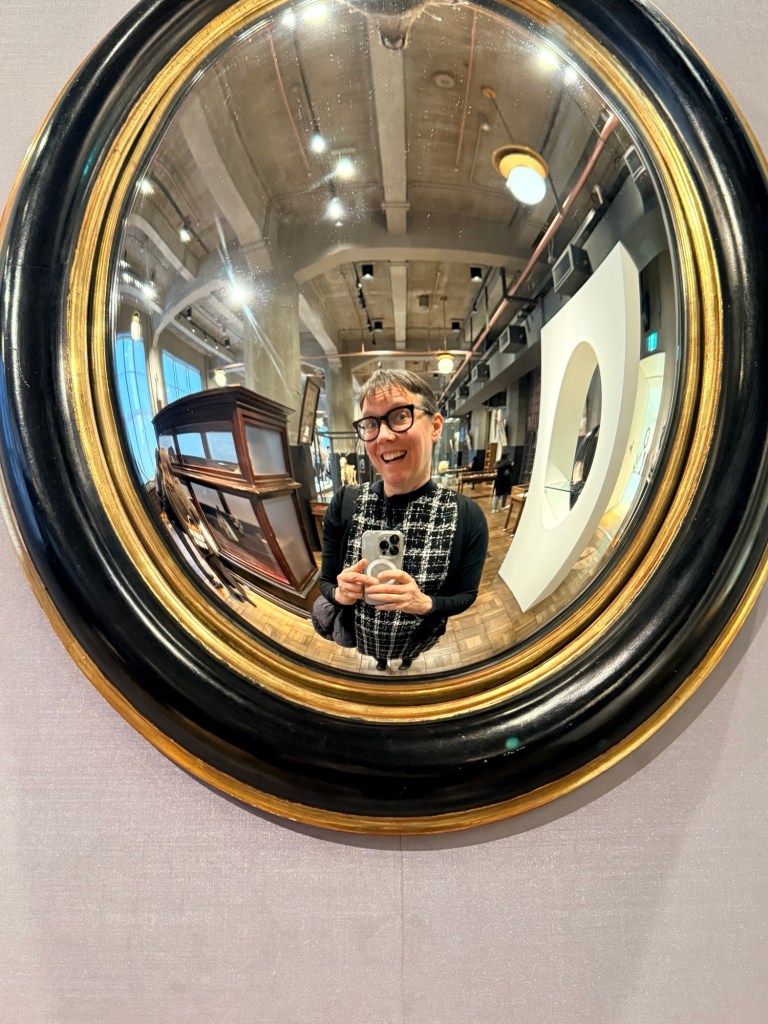
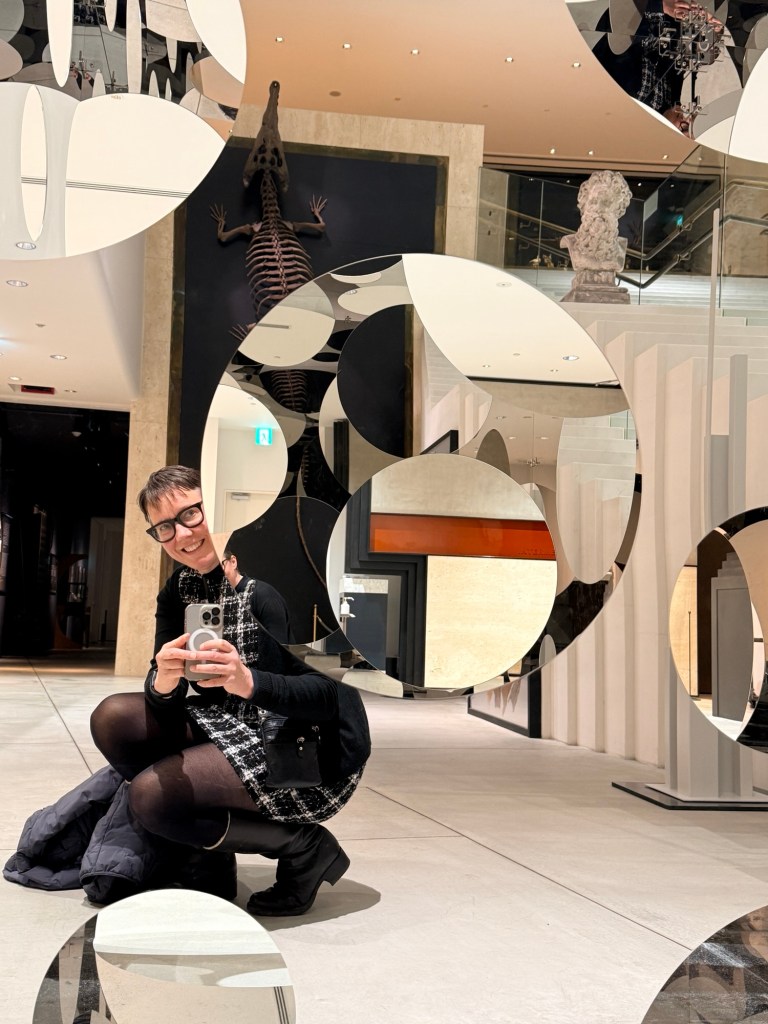
Entering the shopping mall with my friends.The grand artium.Artifacts from the museum.A collection of Thomas Edison’s phonographs. Japanese pottery.Japanese pottery.Japanese birds.Fun selfies.Reflections on the statues.Shopping mall with a cultural museum.
Heading Home
Our visit to Japan was full of unique and deeply meaningful experiences. I was sad to leave and, unfortunately, brought home a chest infection (travel sometimes has its challenges, but I’m now 95% recovered). Nevertheless, I also left Japan a treasure trove of new connections, memories that I will never forget, and opportunities to follow up on. My sincere gratitude goes to Atsushi, Shinya, Tamami, and all the wonderful colleagues who shared their time, talents, resources, and insights while we were in Japan.
I look forward to seeing you again soon and to working together to deliver workshops, translate games, test them with Western audiences, and collaborate on projects and research articles.
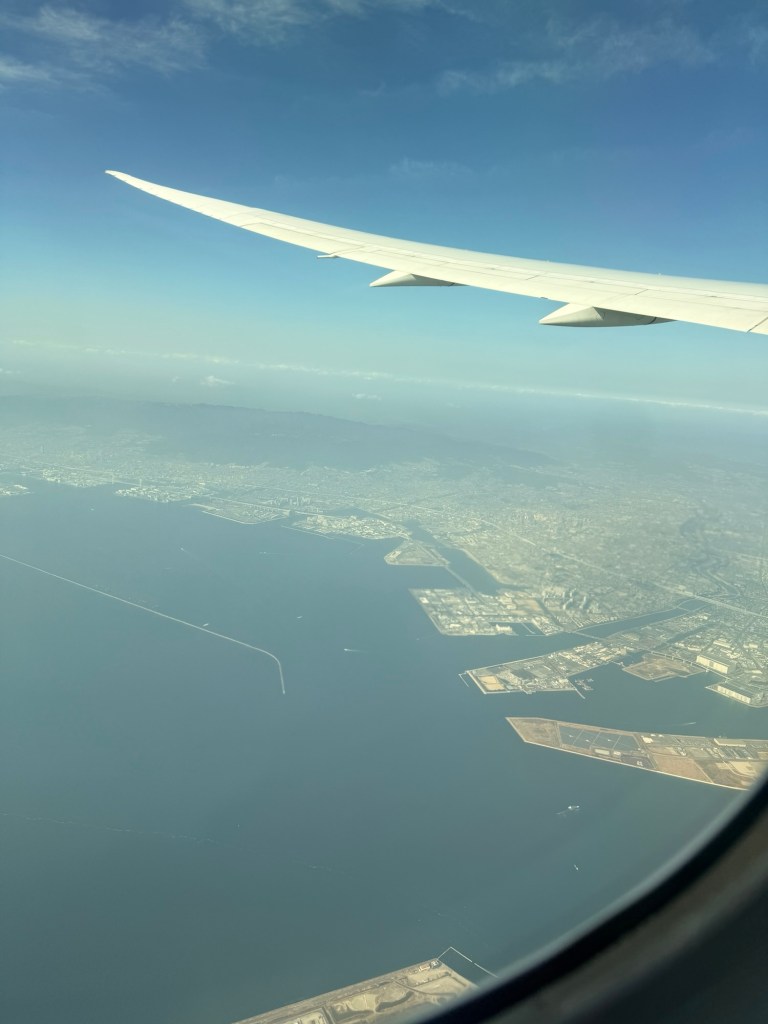
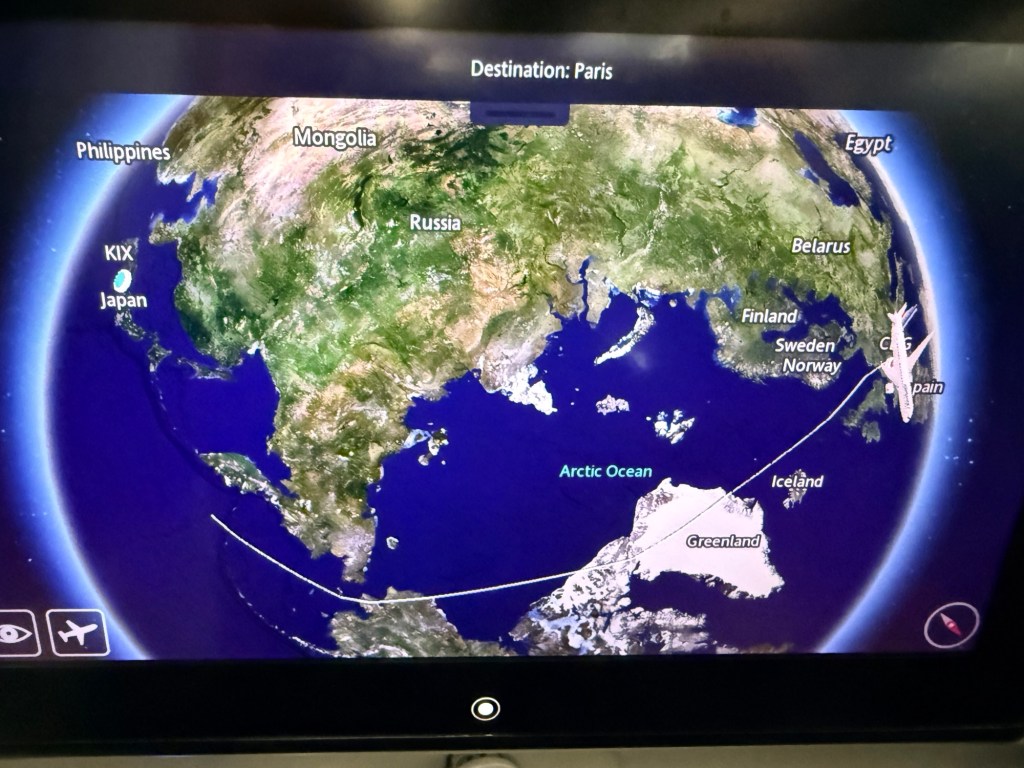
Last views of Japan.Flying over the Arctic Circle. We flew around the world on this trip!Leaving Japan, our plane flew east. We flew between Alaska and Russia, over Greenland, over Iceland, and to Charles de Gaulle airport. From there, I connected back to Dublin.
There’s no better feeling than connecting with students in a meaningful way. I’m fortunate to teach — these days, at TU Dublin. And to have students who really want to learn!
Teaching architecture students has always been my passion, as they love to learn.
Lately, I’ve been teaching Building Information Modelling to mature students, and they are also lots of fun.
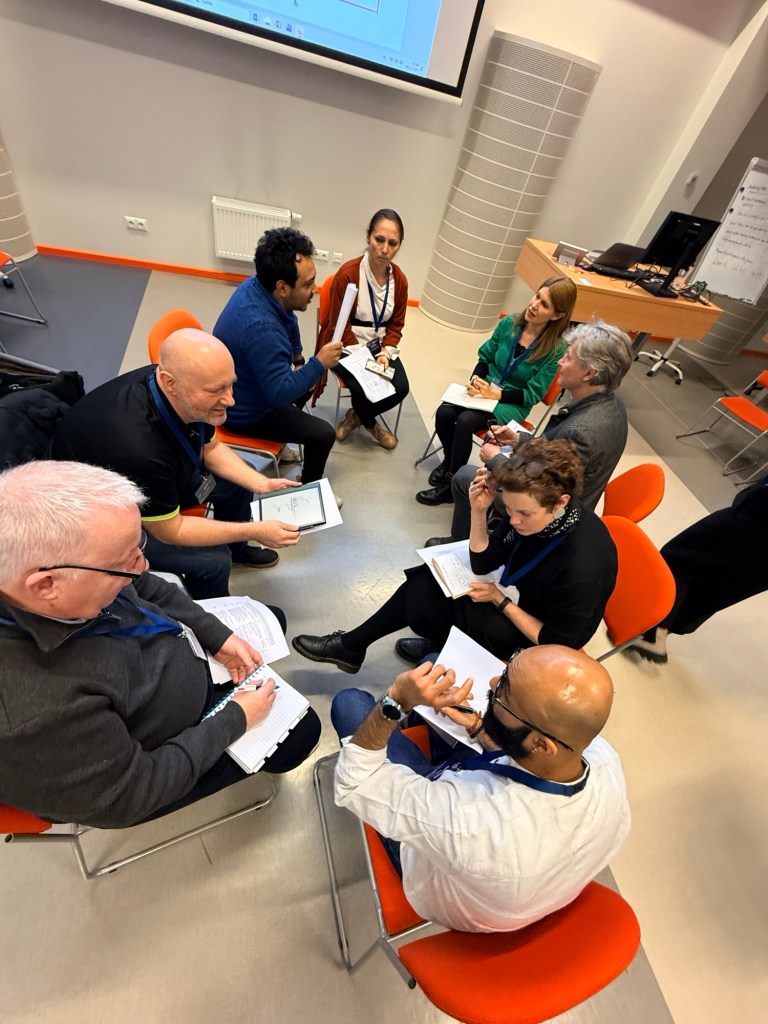
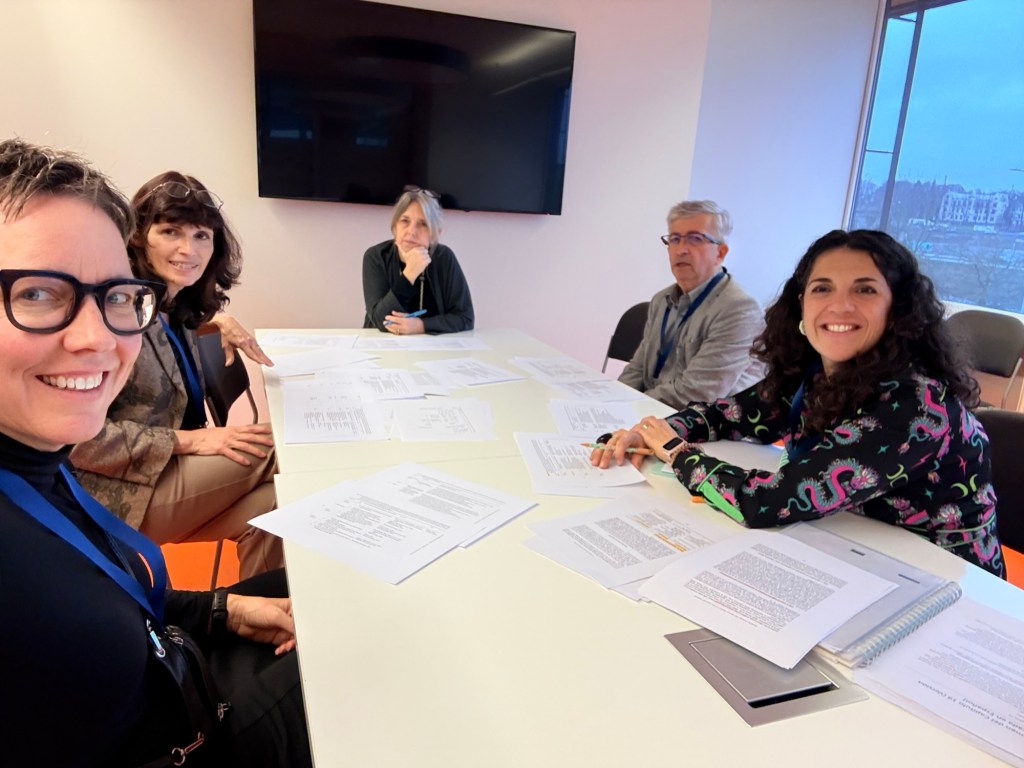
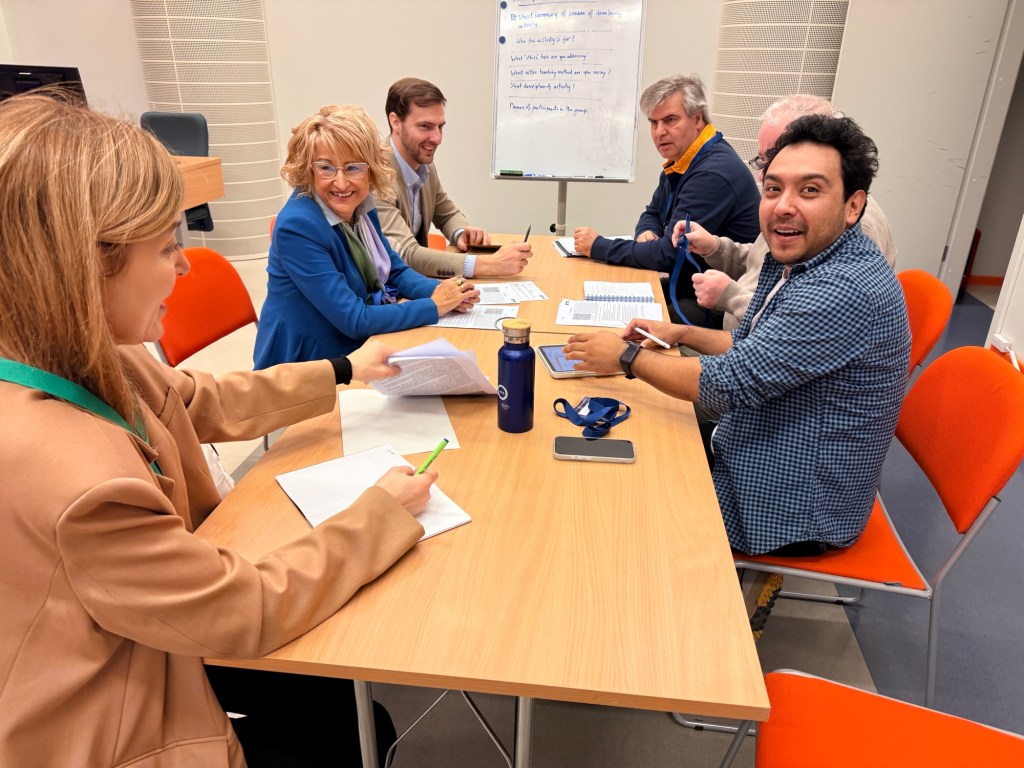
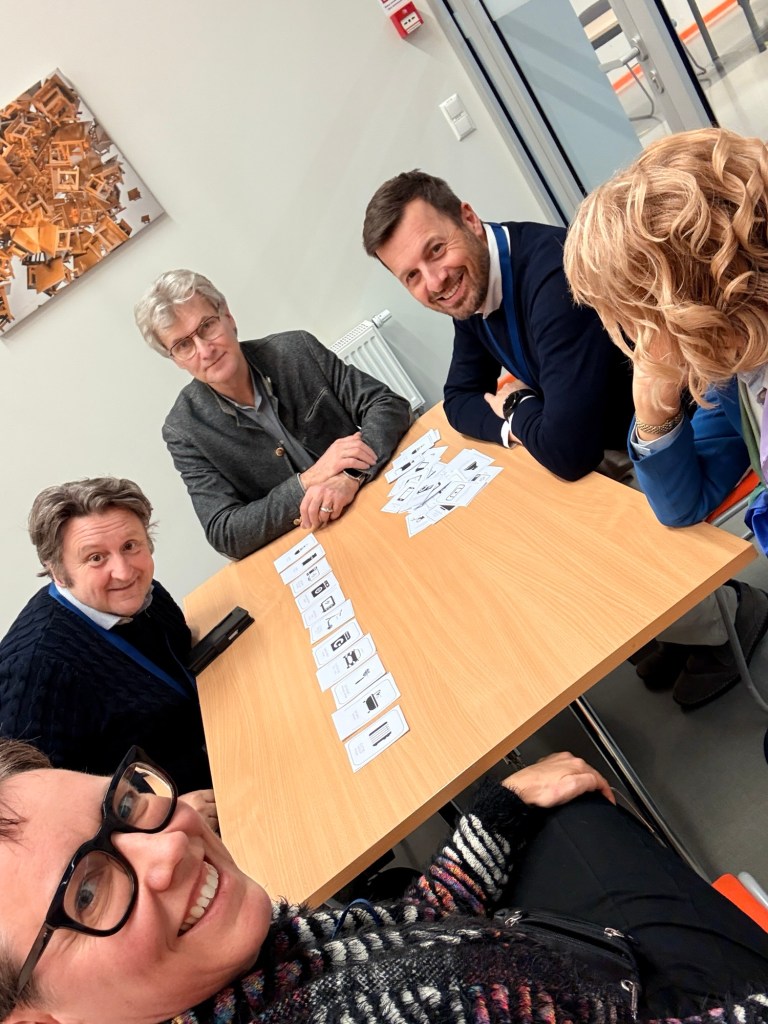
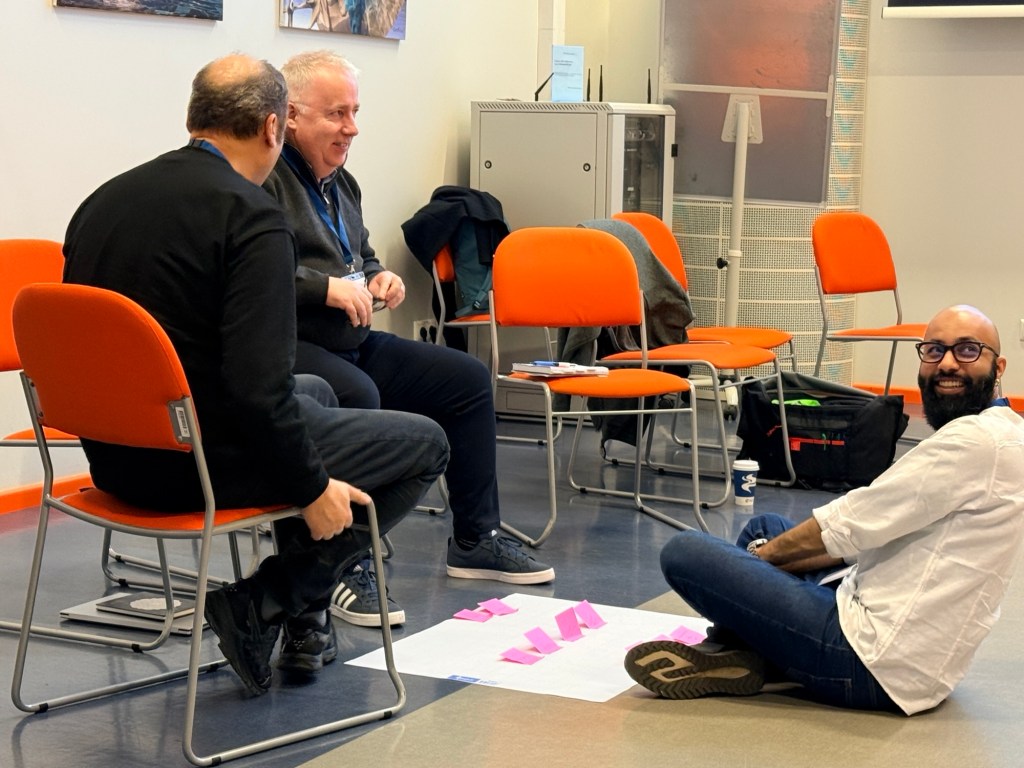
Here is a photo from our most recent class meeting, during a breakout session to apply the lessons we’d covered in a lecture. They all jumped right in! (Even despite it being 4PM on a Friday!)
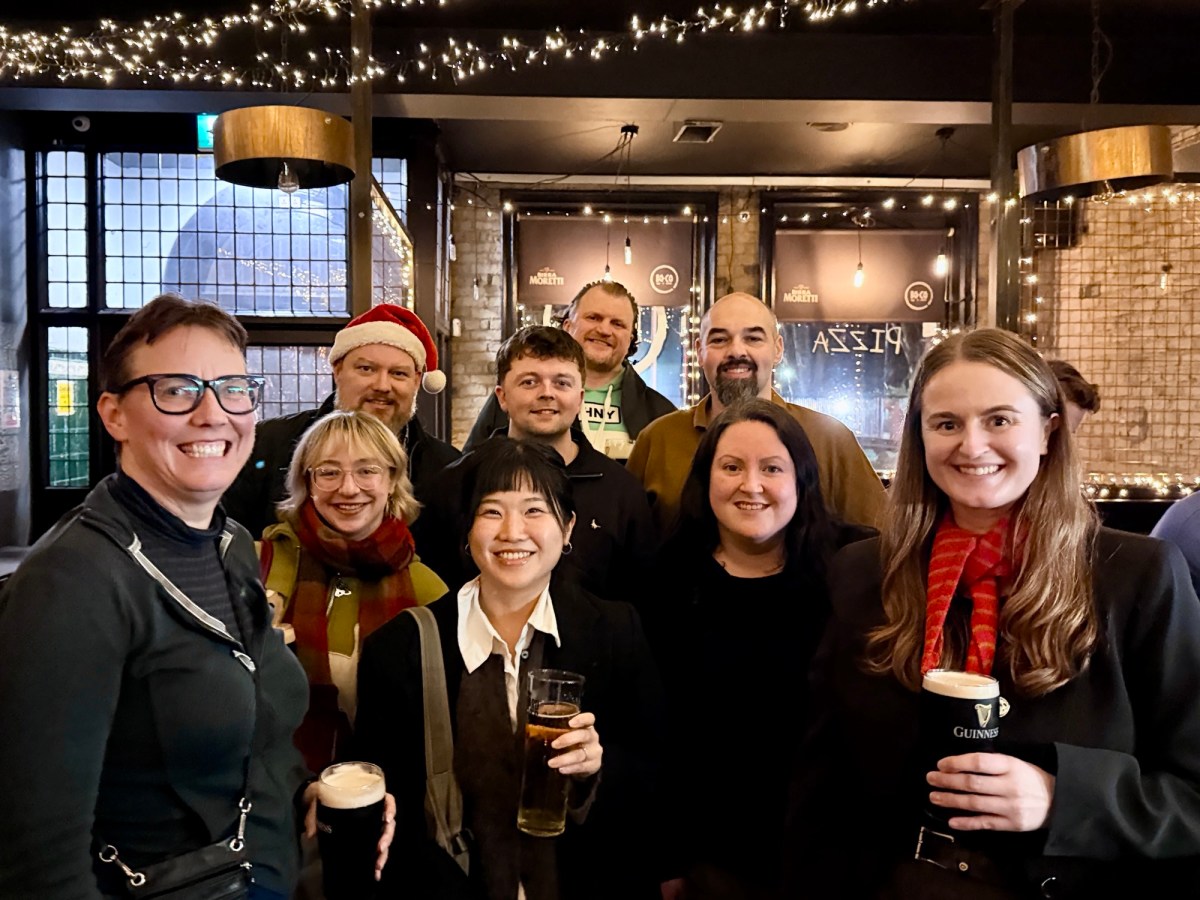
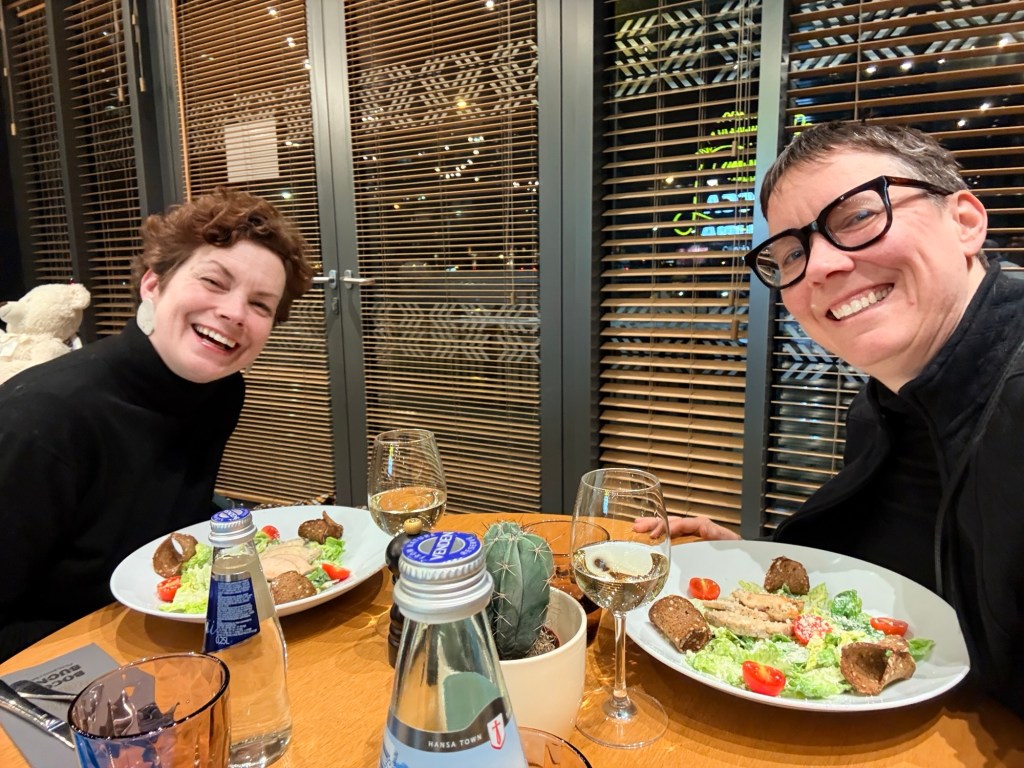
With the holiday coming up, a bunch of us went to a nearby restaurant, BoCo, to celebrate and socialize after class.
Here’s to life-long active learning!
And, many thanks to these energetic students and my fabulous co-teacher, Claire Simpson, for making class worthwhile and fun this semester!
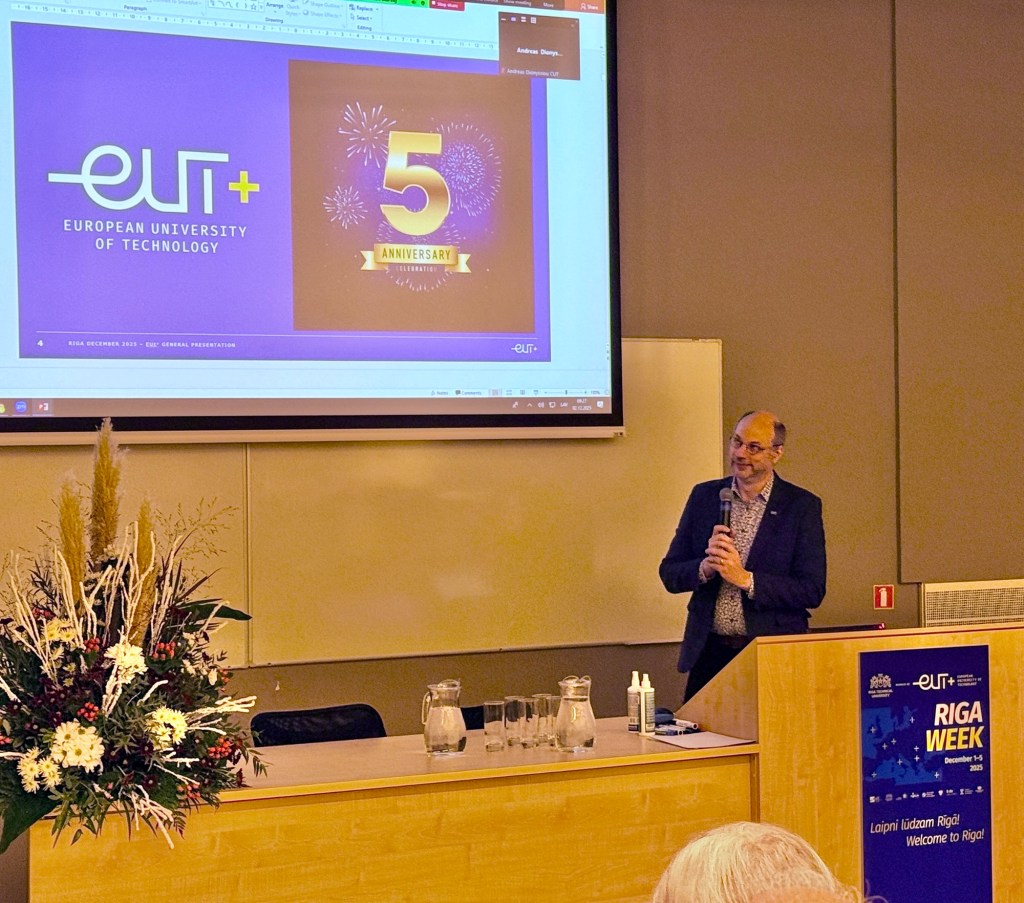
What an amazing week at Riga Technical University (RTU) in the charming capital city of Latvia!
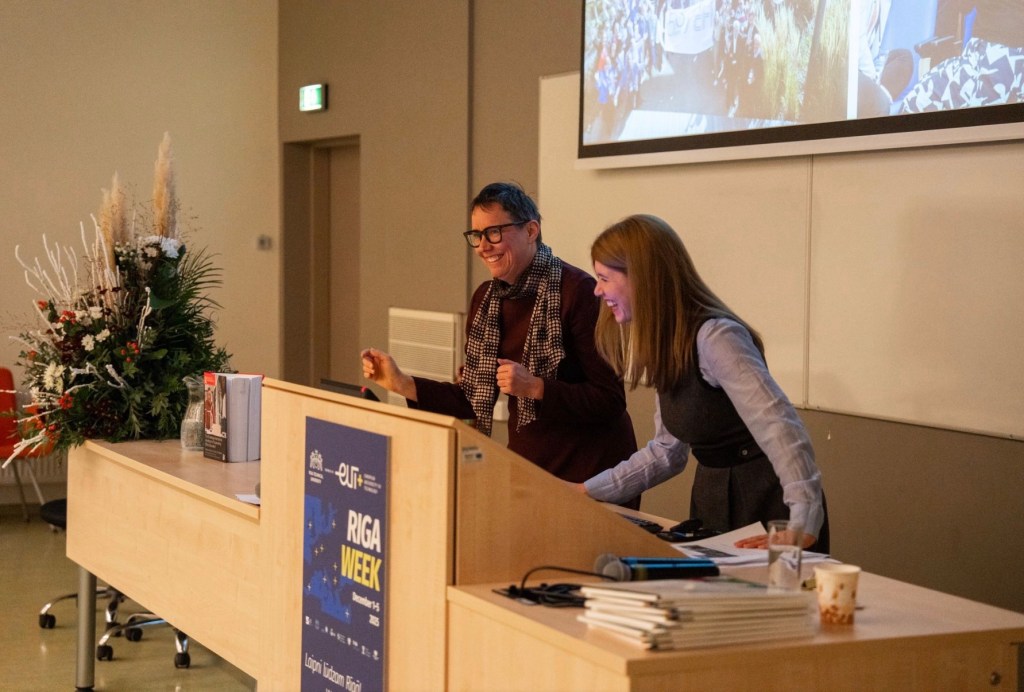
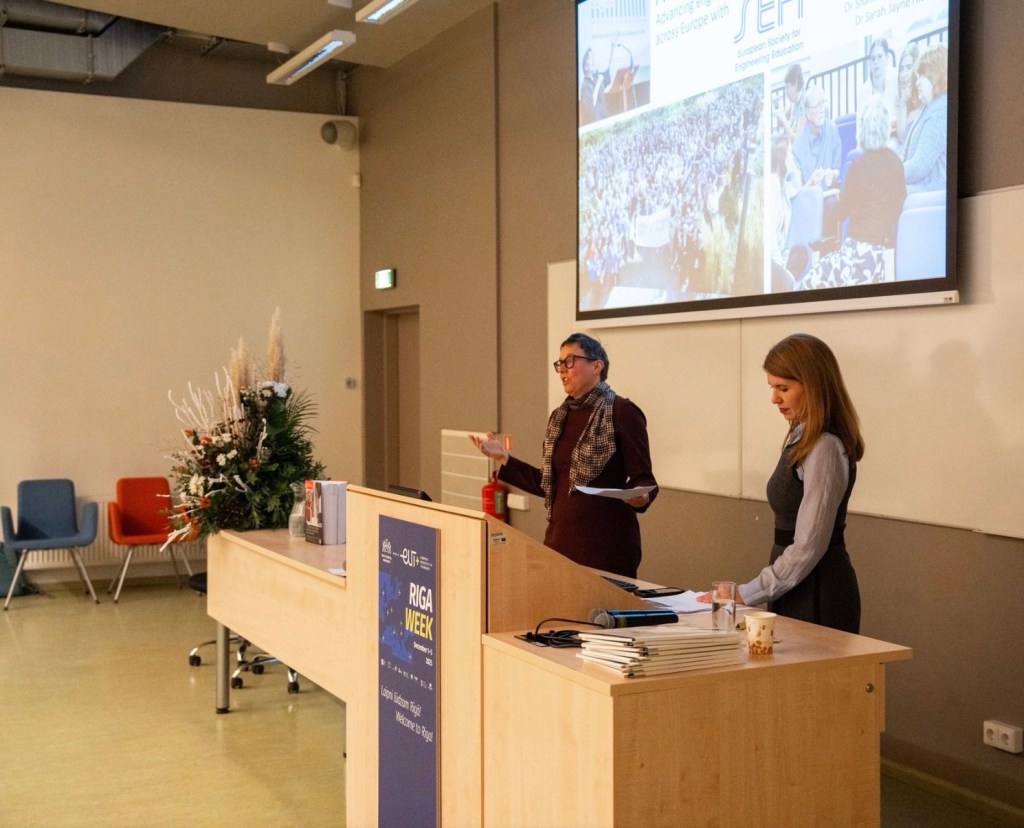
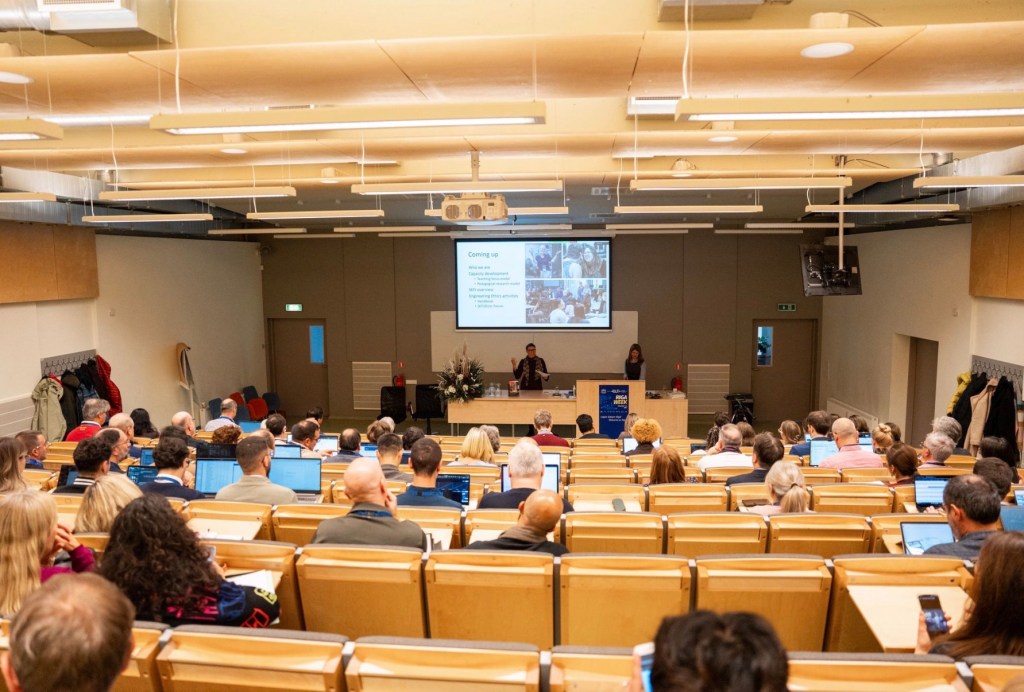
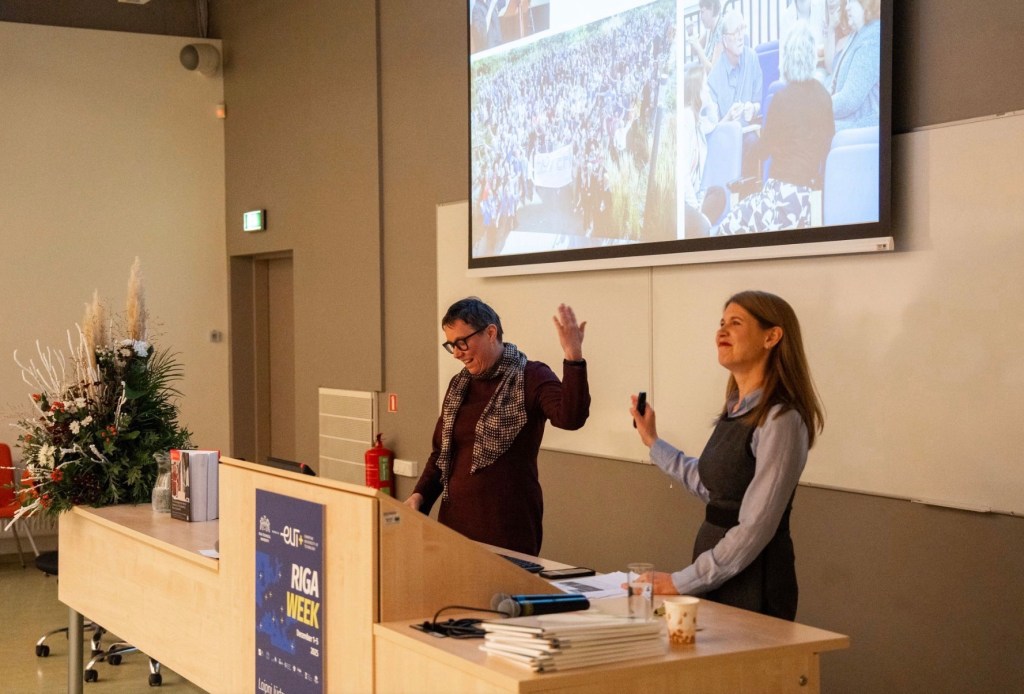
I designed and co-delivered an intensive “Education Forum”, as part of the European University of Technology (EUt+) “Riga Week,” held December 1-5, 2025.
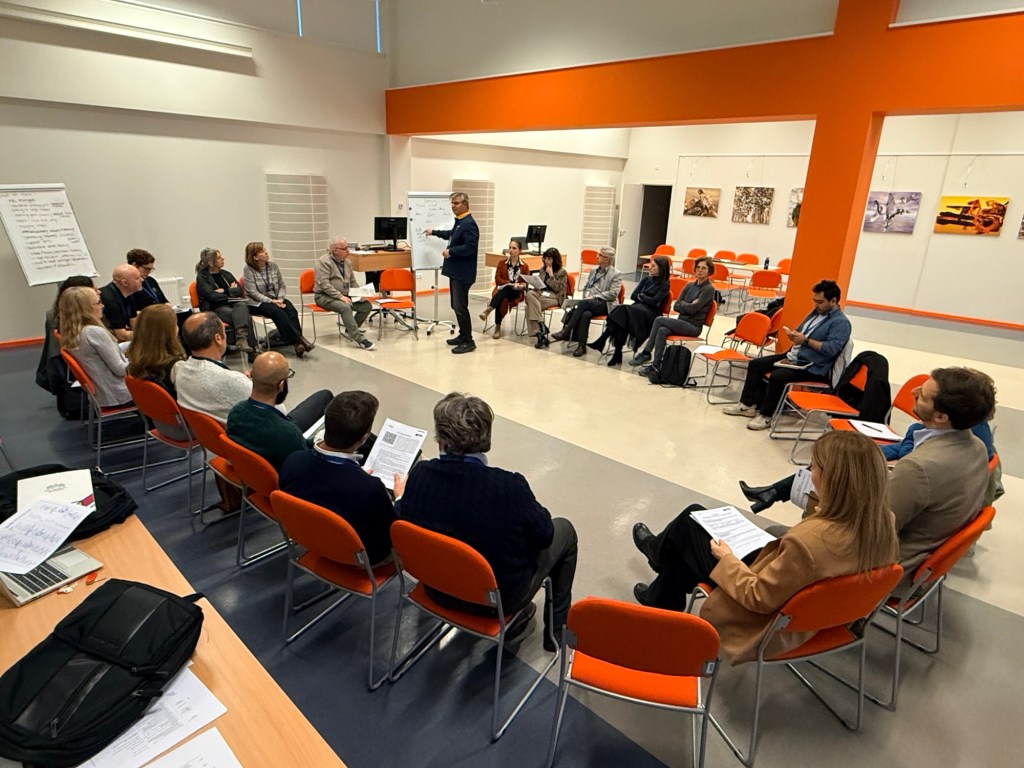
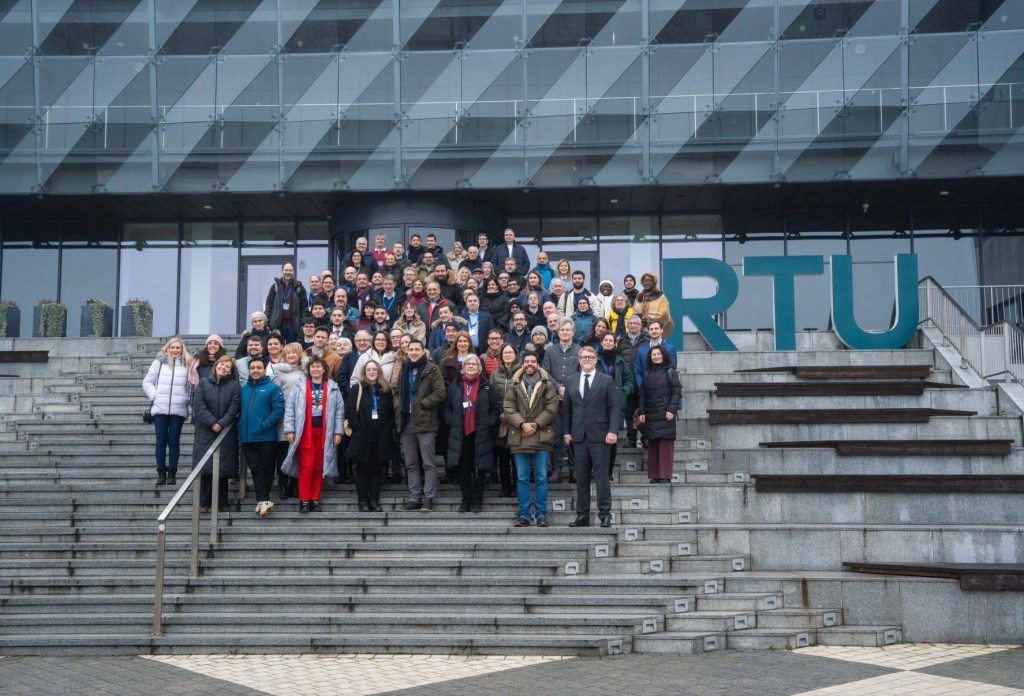
Here’s our Forum group on the final day!
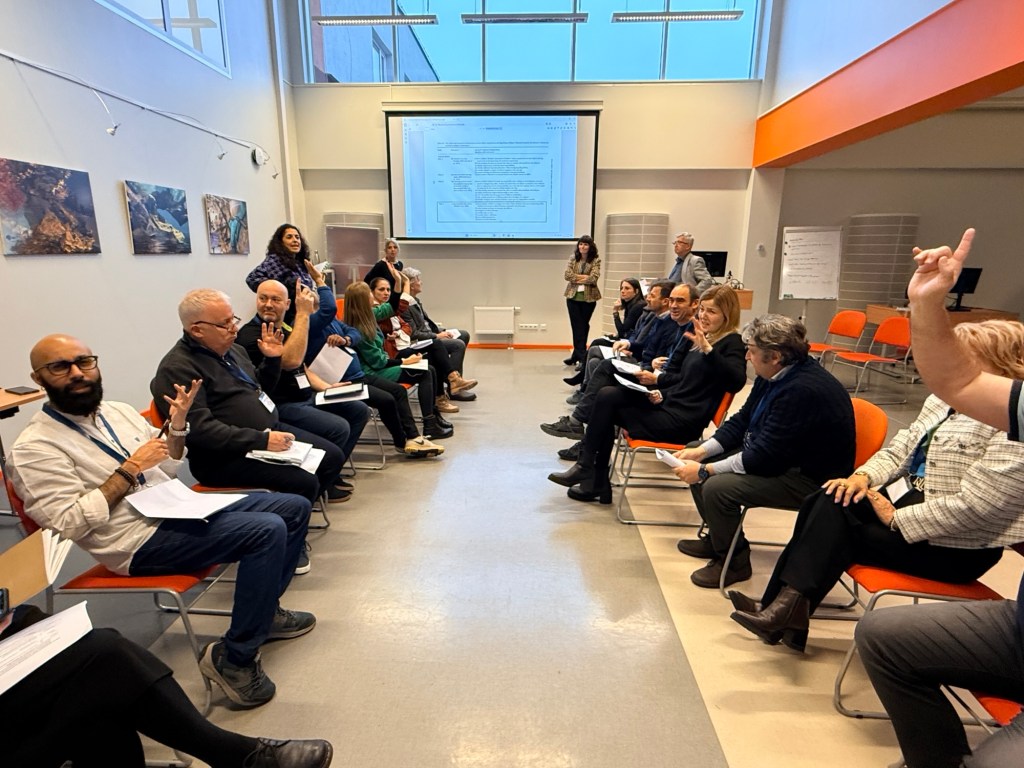
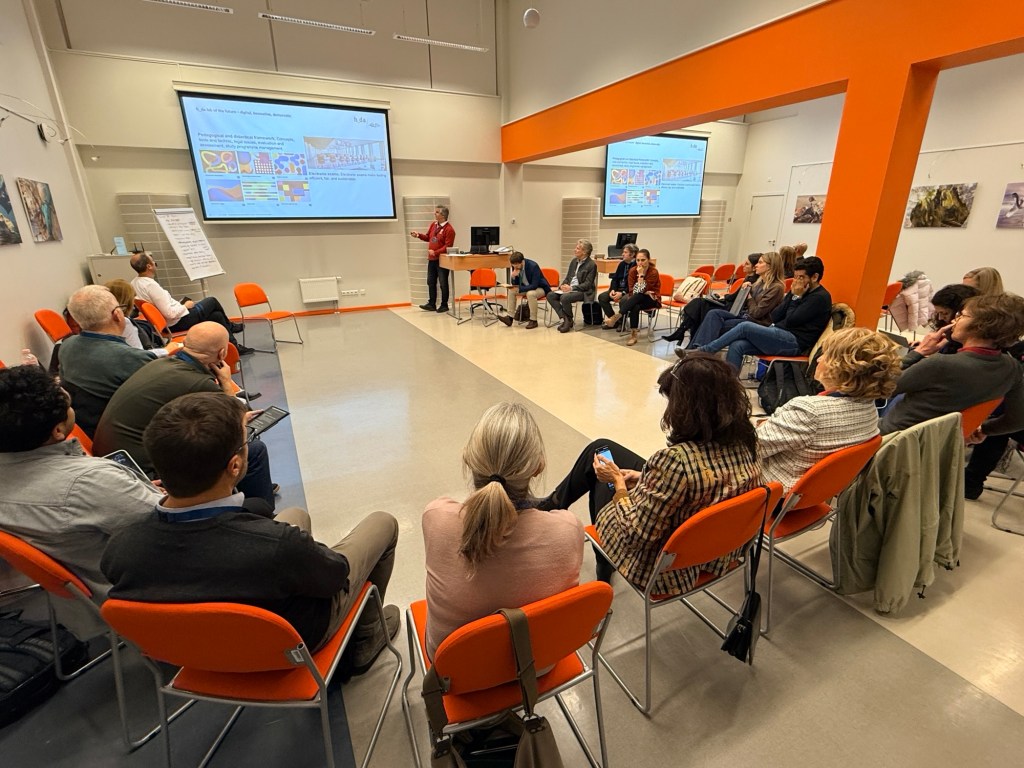
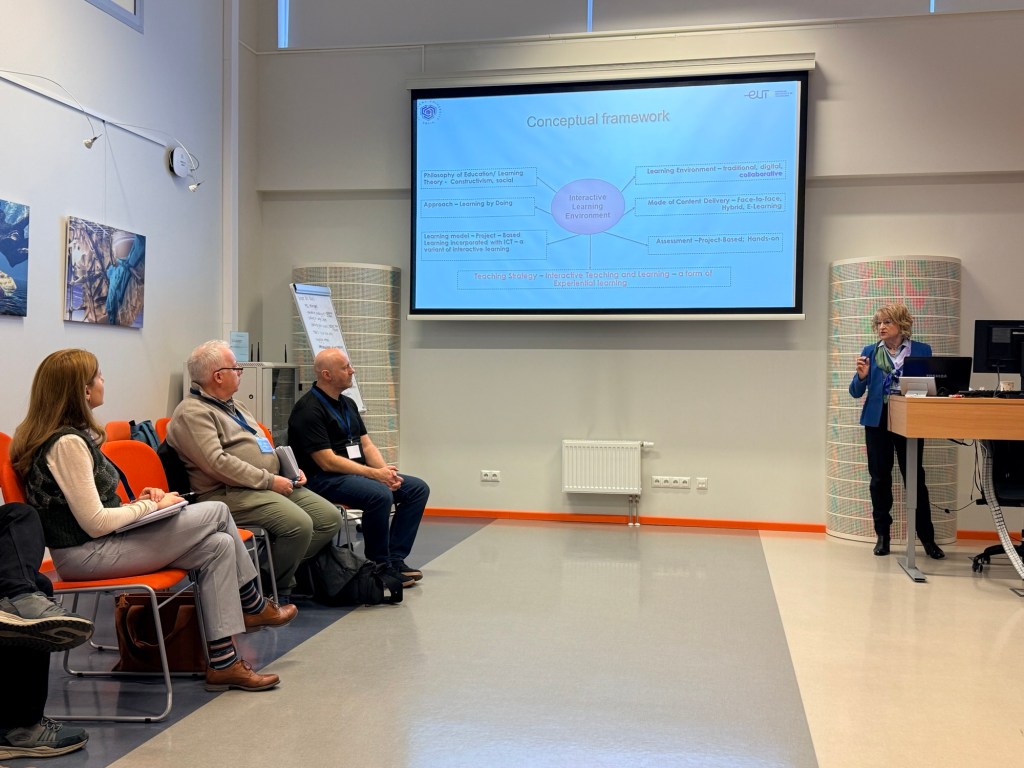
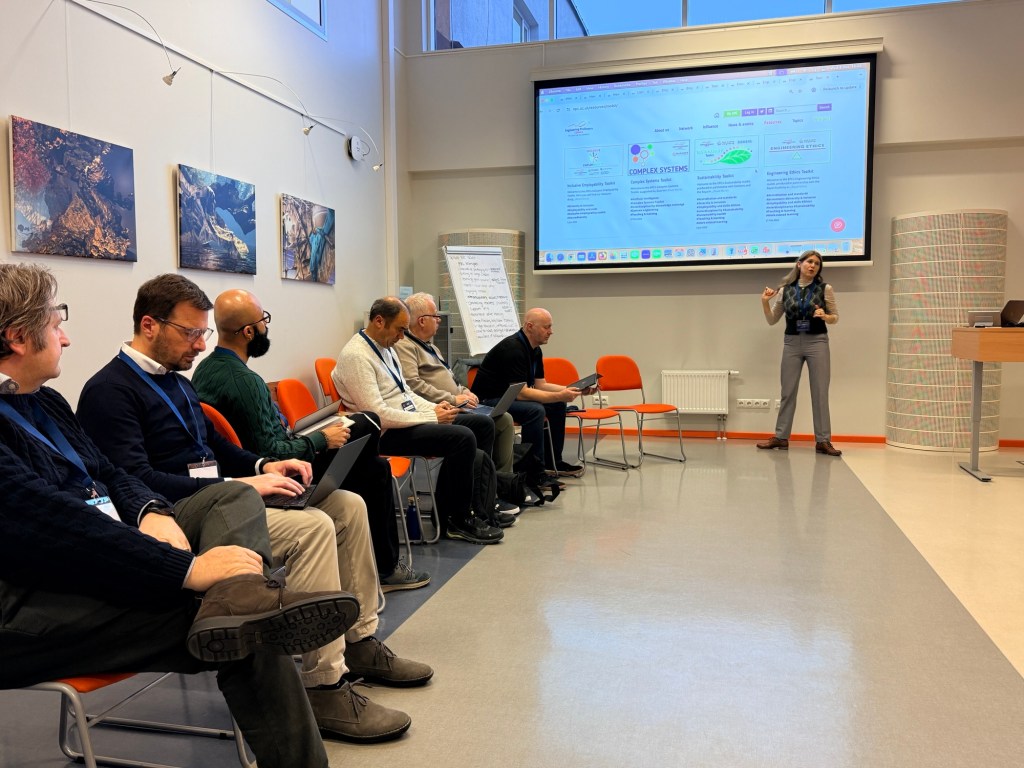
This teacher training Forum brought experts from the European Society for Engineering Education (SEFI) and TU Dublin to help educators from EUt+ member universities experience and apply new pedagogical approaches.
We utilized innovative teaching methodologies—case studies, problems and challenges, service-learning, and arts-based, dialogical and reflexive approaches as well as games-based and flipped classroom formats—to integrate ethics topics into the courses we teach. And of course, we also practiced interdisciplinarity.
Designing it, I drew from knowledge and experience gained at the Symposium. For Riga, I used a similar format—a fun and immersive three-day series of hands-on workshops and mini-keynote presentations. I am grateful to the SEFI experts who helped me design the SEFI symposium format, Drs. Diana Martin and Mircea Tobosaru. (Diana was also scheduled to help facilitate the Forum in Riga, but a winter flu kept her from joining us.)
Learning together — actively and fully engaged
Ultimately, 21 educators travelled to Riga from Cluj-Napoca, Sofia, Cassino, Darmstadt, Cartagena, Dublin, Troyes, along with Sarah from the UK. We assembled for the first ever SEFI/EUt+ Engineering and Technology Education Forum. Dr. Sarah Hitt (of SEFI), Miriam Delaney (of TU Dublin), and Edmund Nevin (of both) helped me facilitate the Forum.
Before the Forum got underway, Sarah Hitt and I delivered the opening address for the larger event. We used the same delivery format that Dr. Tom Børsen and I developed for our keynote at the recent SEFI conference, which you can watch here. Sarah is such a great collaborator. We worked really well together preparing and delivering the General Seminar address, debriefing between Forum sessions and passing the baton back and forth across the three workshop days.
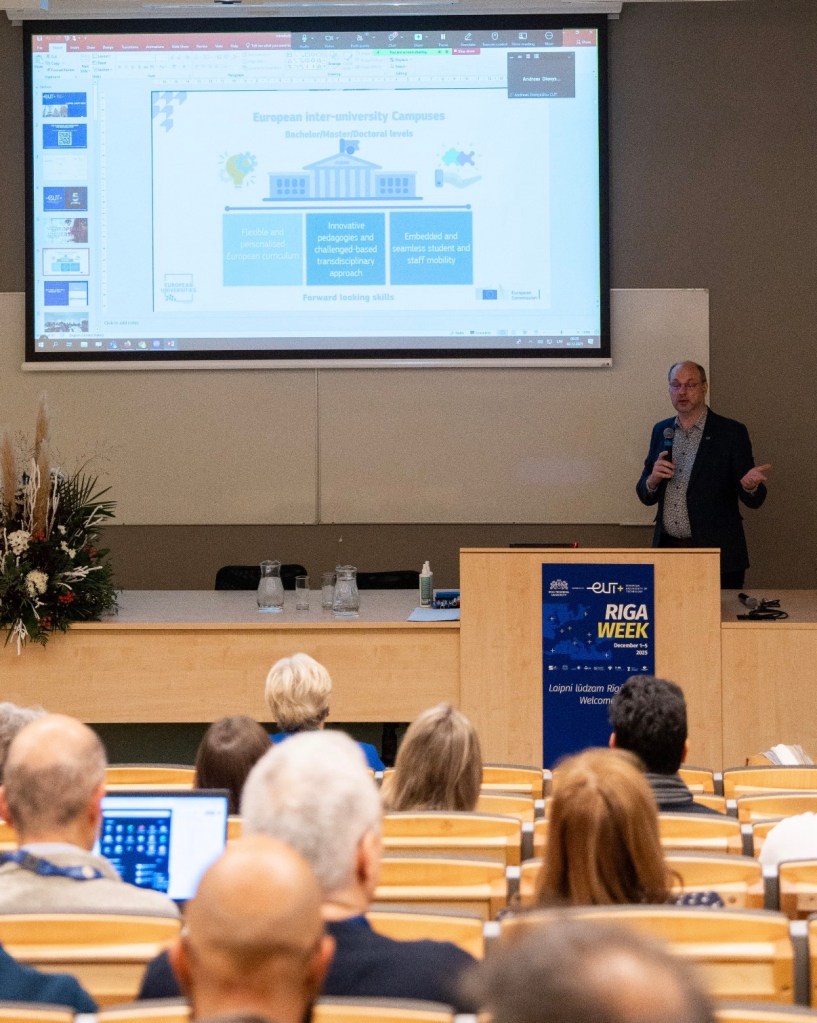
Preparations Riga Week audience Catching up beforehand Presenting……a topic we love…to an engaged audience!And loving every minute!
In total, about 80 people came to the “Riga Week.” They arrived from all around EUt+, an alliance of nine technological universities across Europe. They came to work on projects, refine approaches, and align systems. Many who attended this particular EUt+ Week are involved in disciplinary clusters (like biomedical or electrical and electronics engineering).
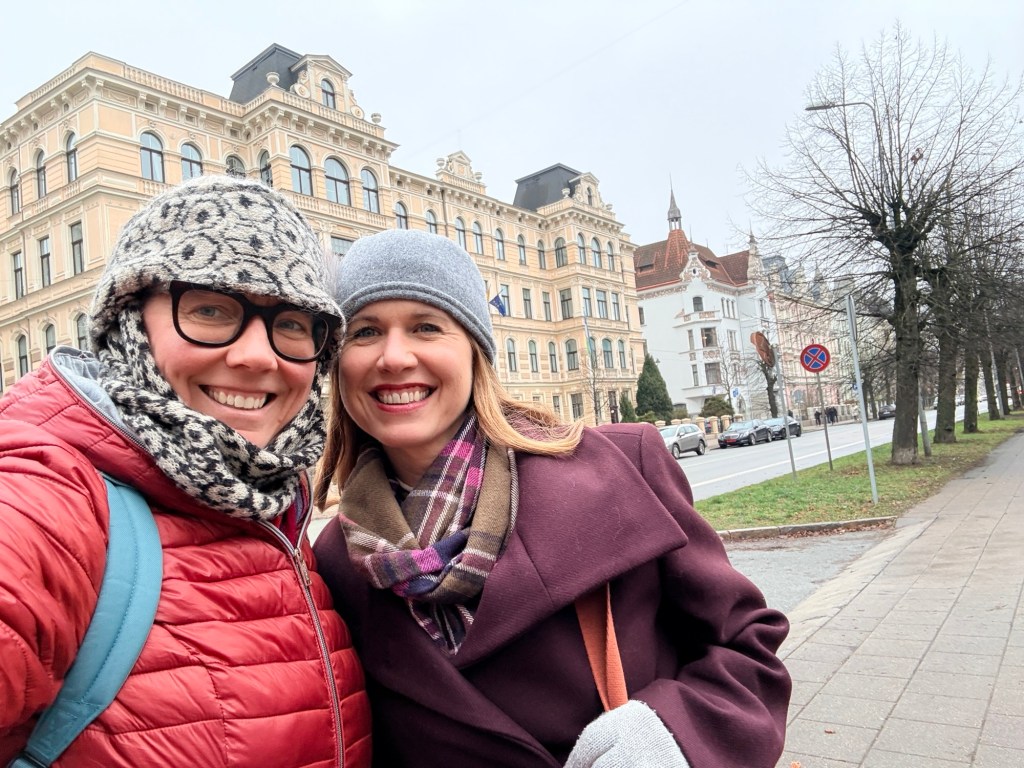
EUt Riga Week familyTimothèe Toury in actionChristmas market Exploring with SarahSharing stories with Mariam
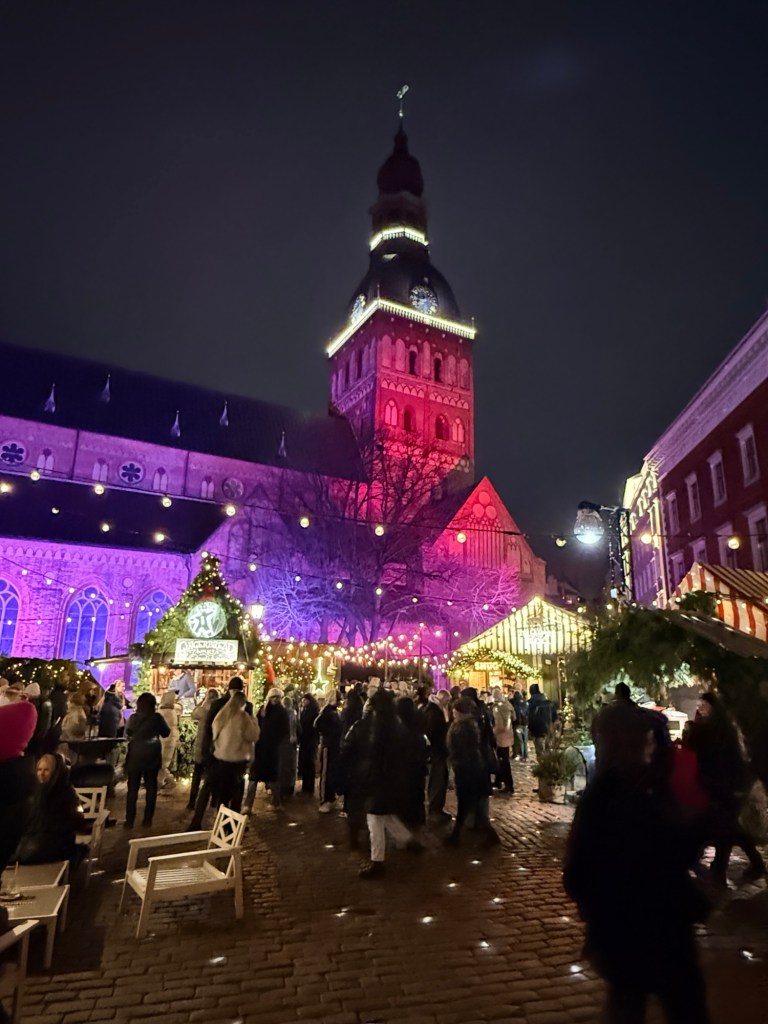
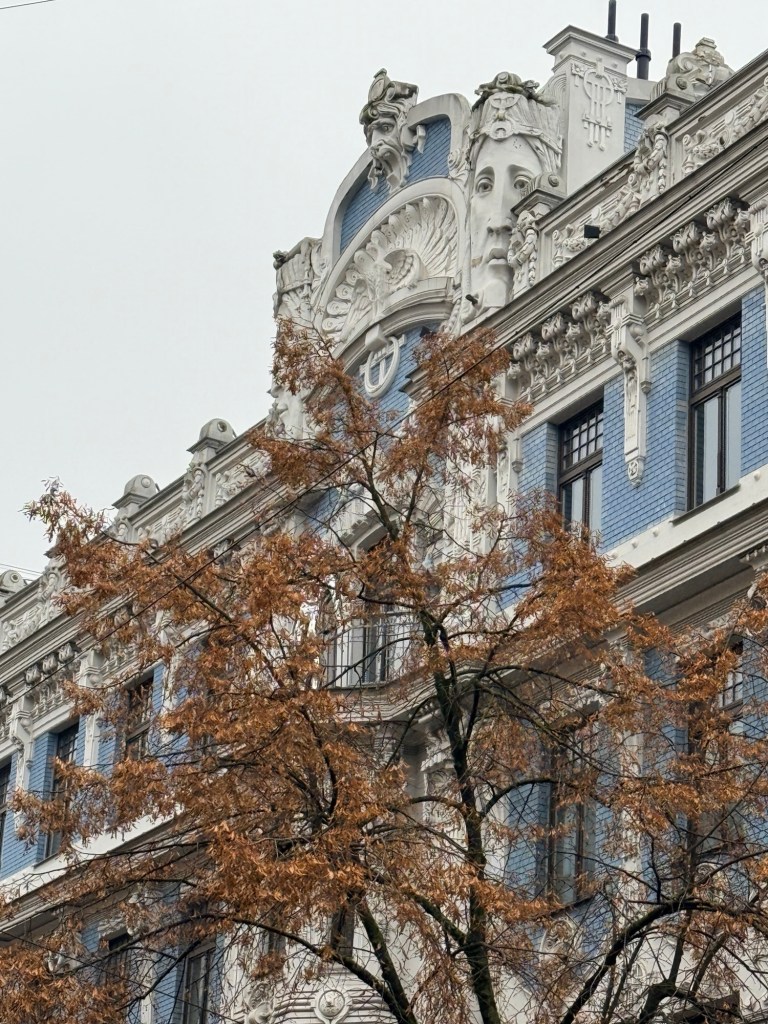
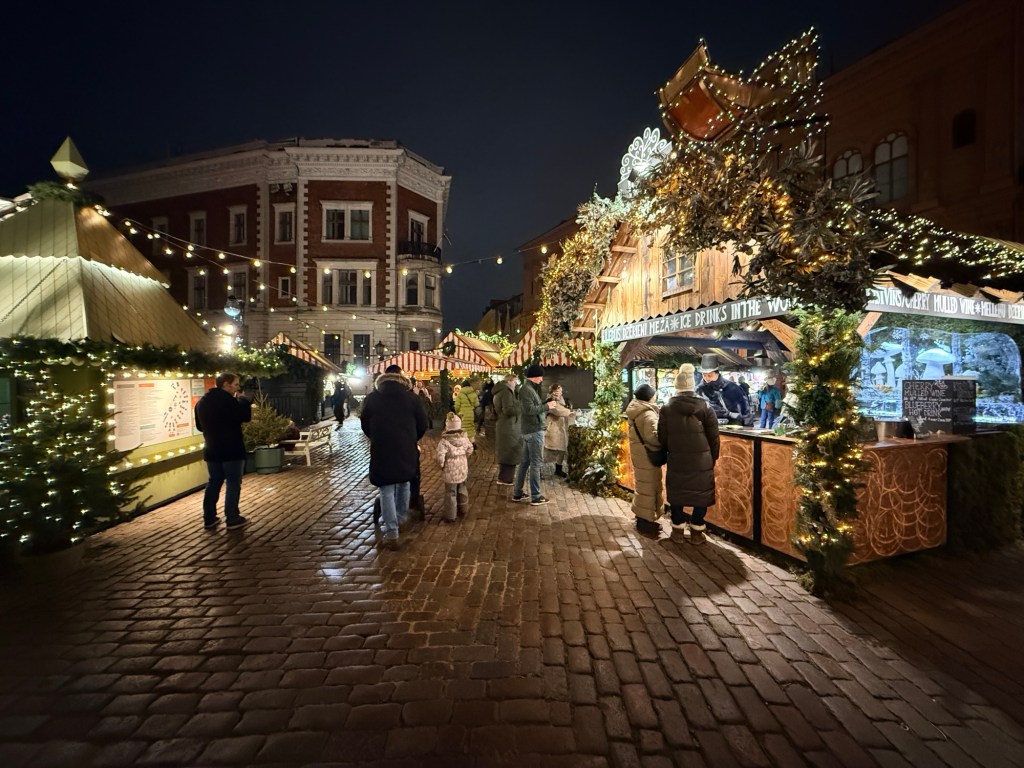
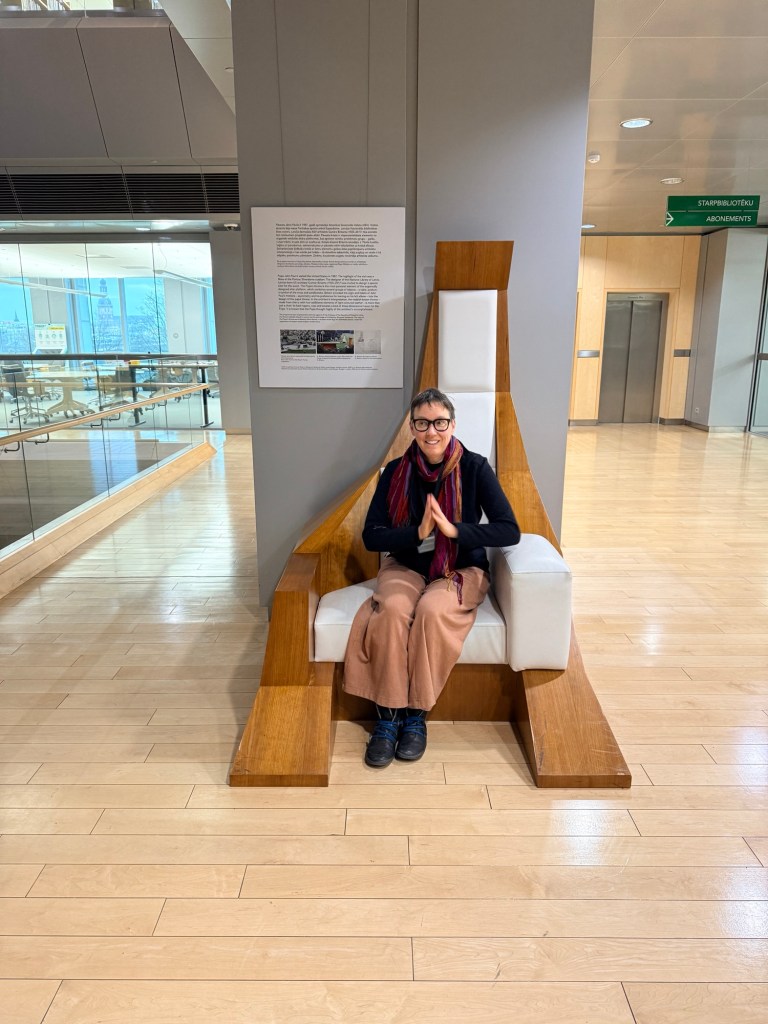
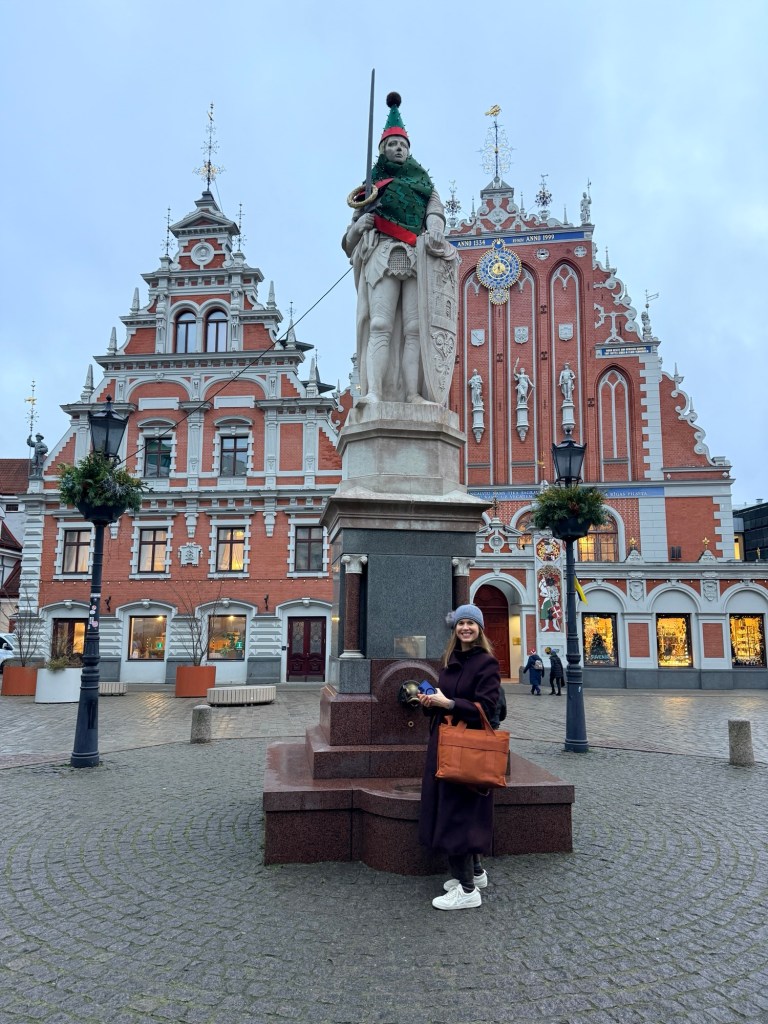
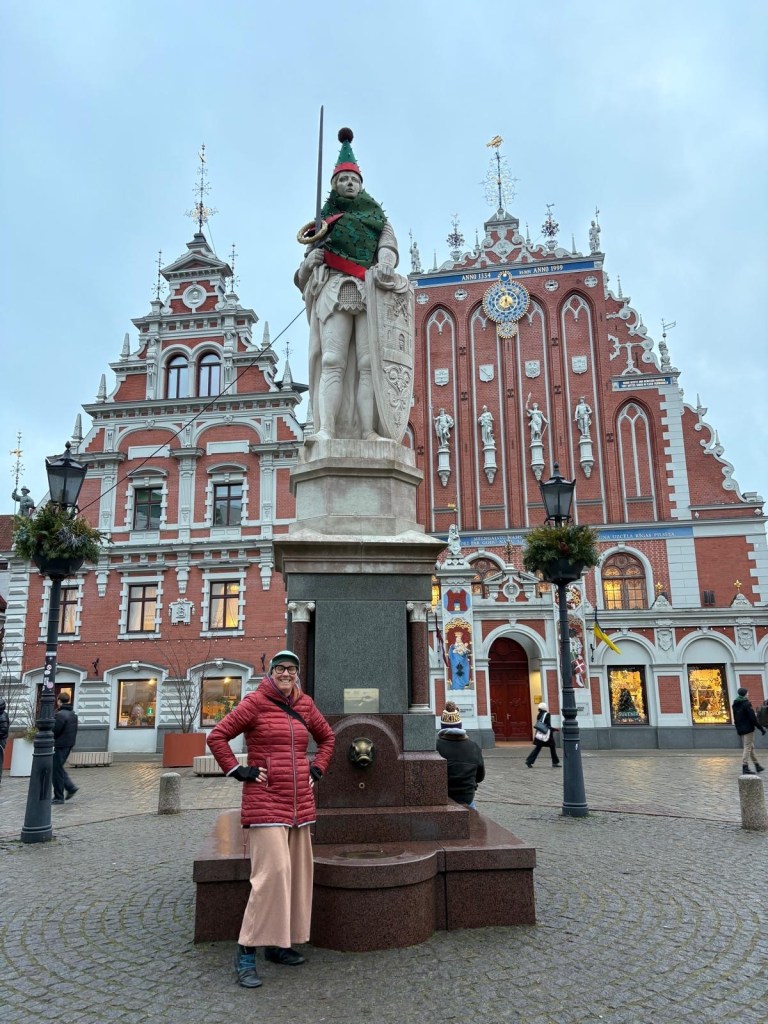
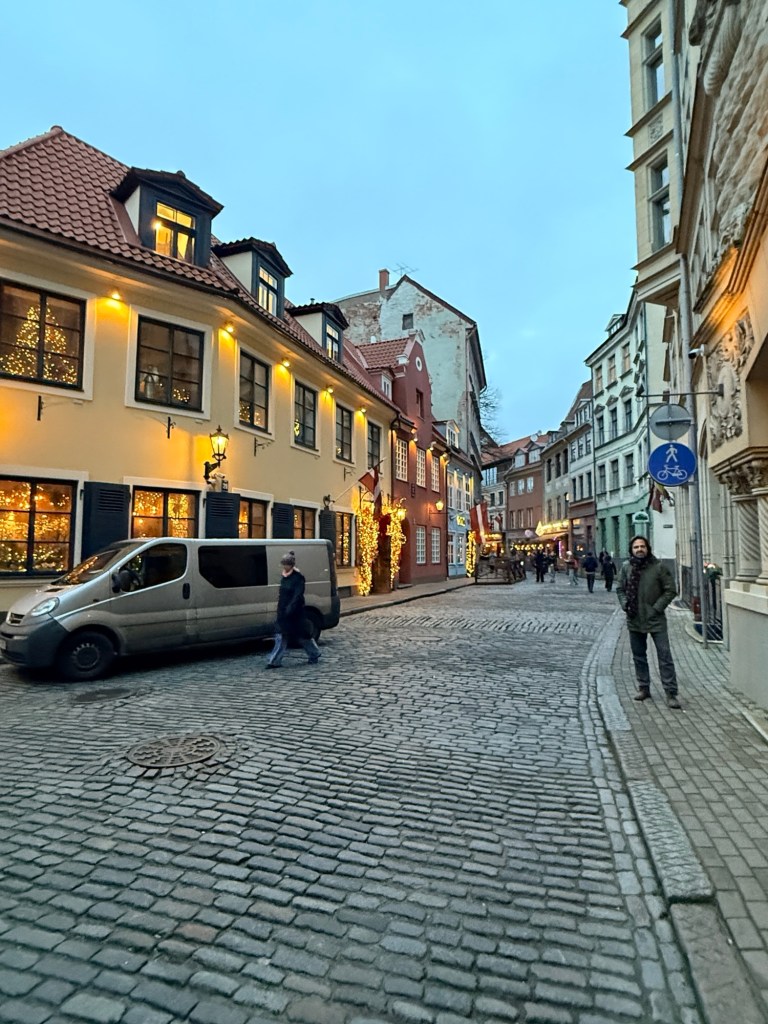
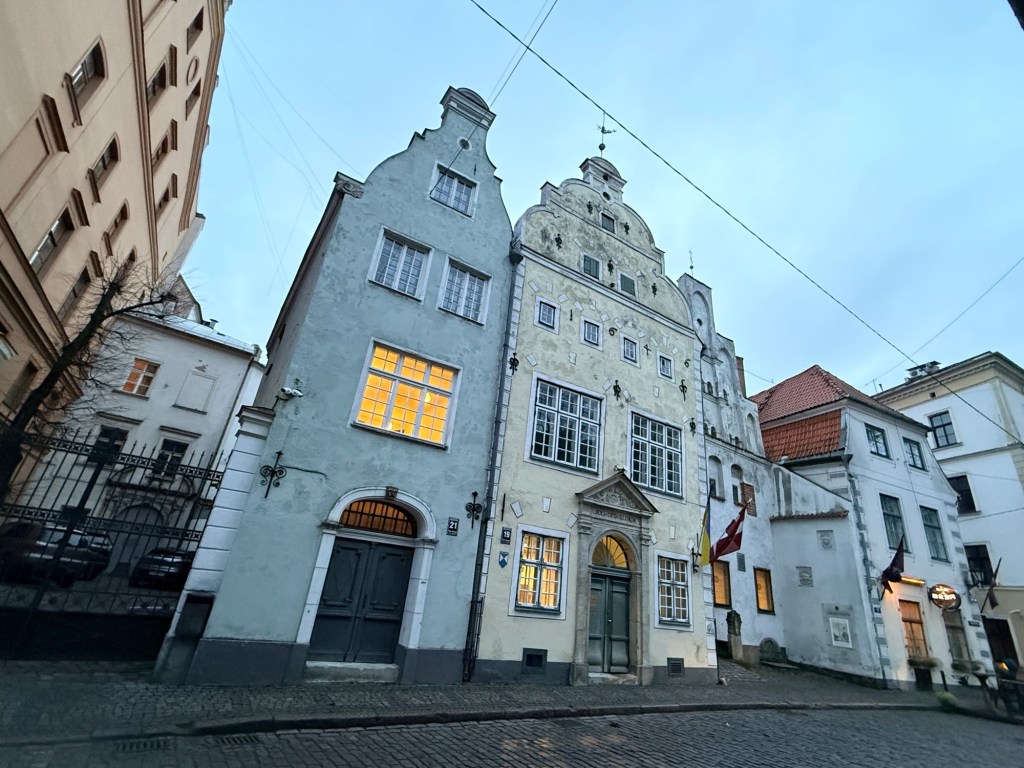
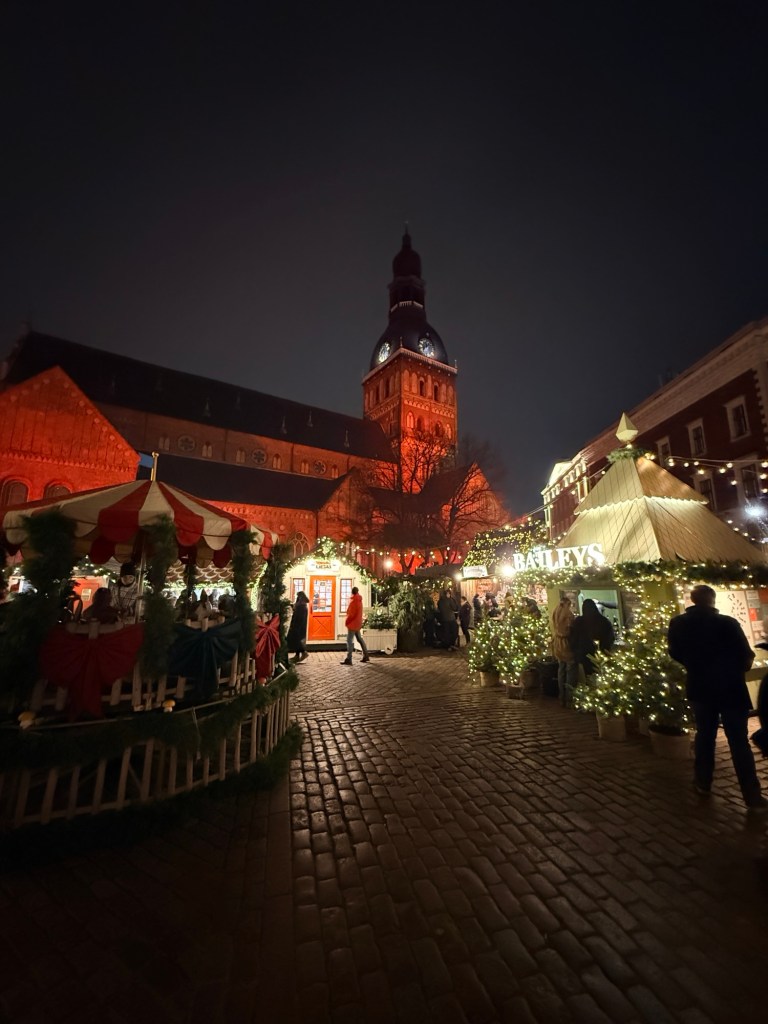
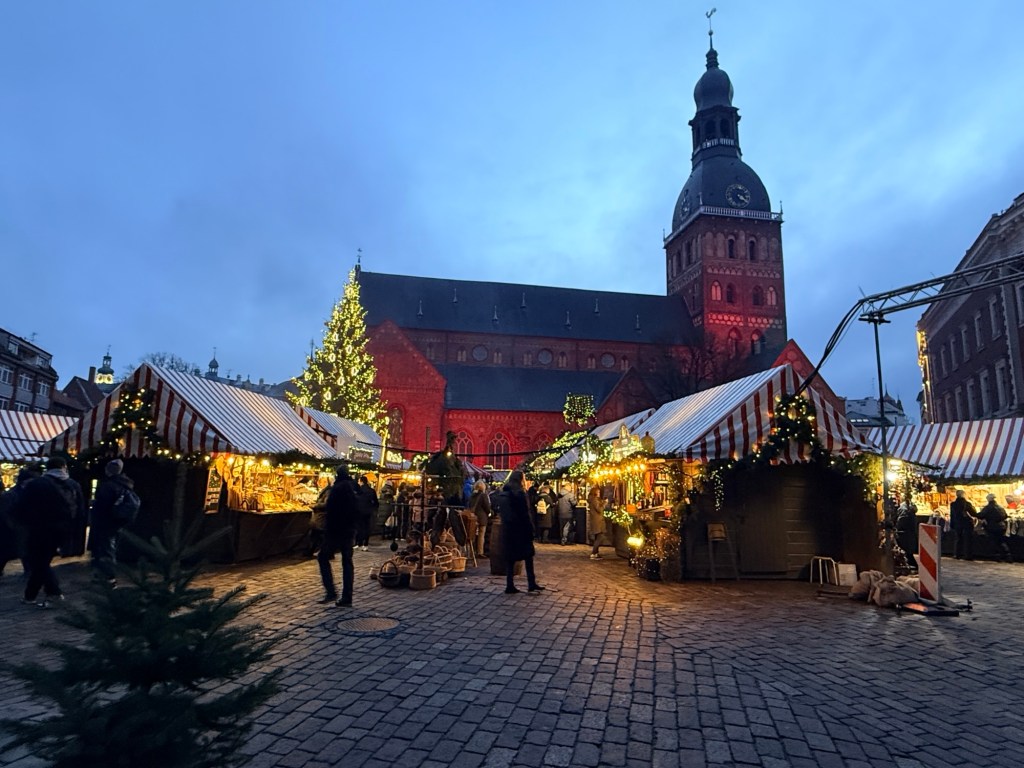
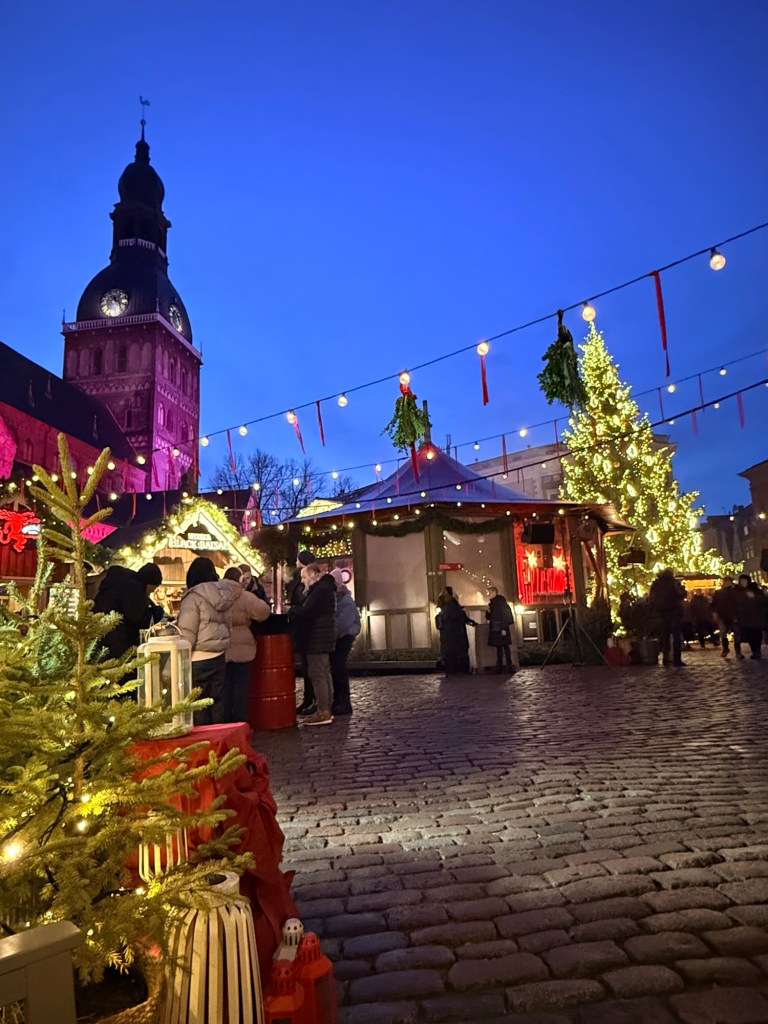
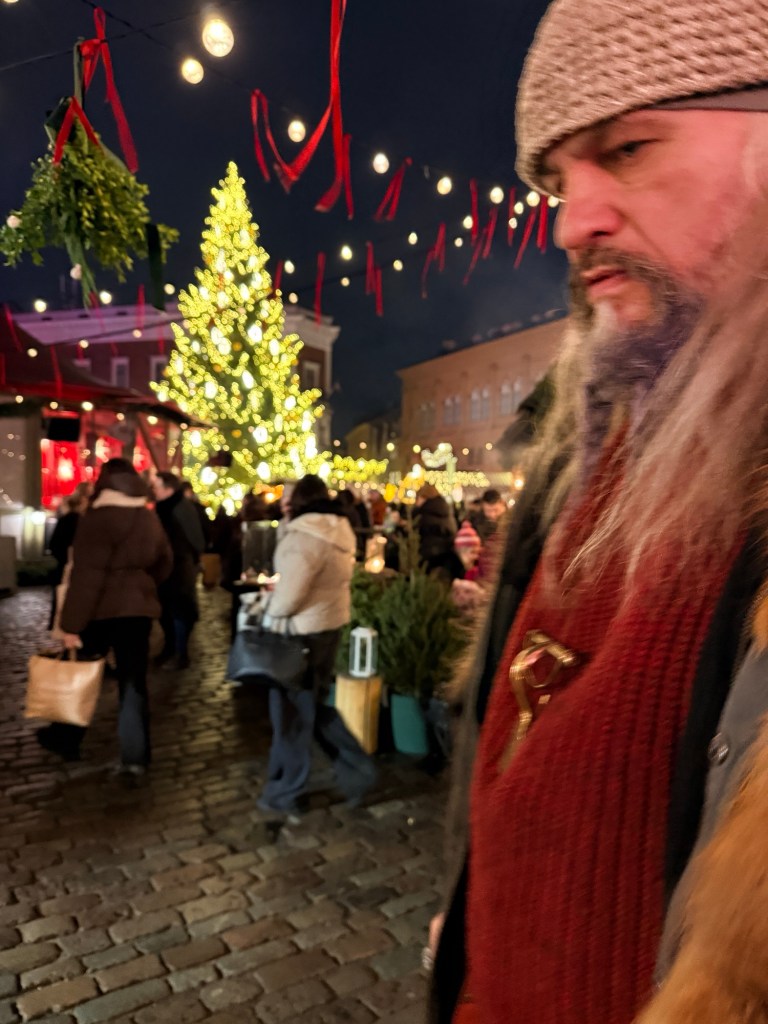
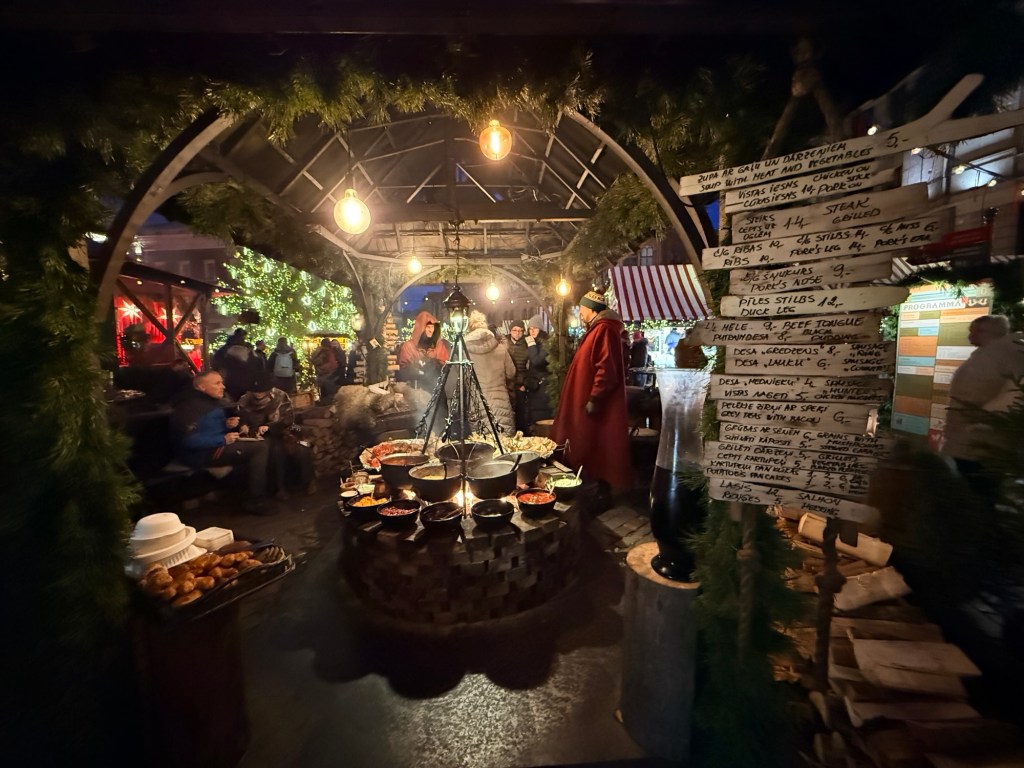
And what a lovely place to hold a conference. Riga has stunning architecture and a lively Christmas market.
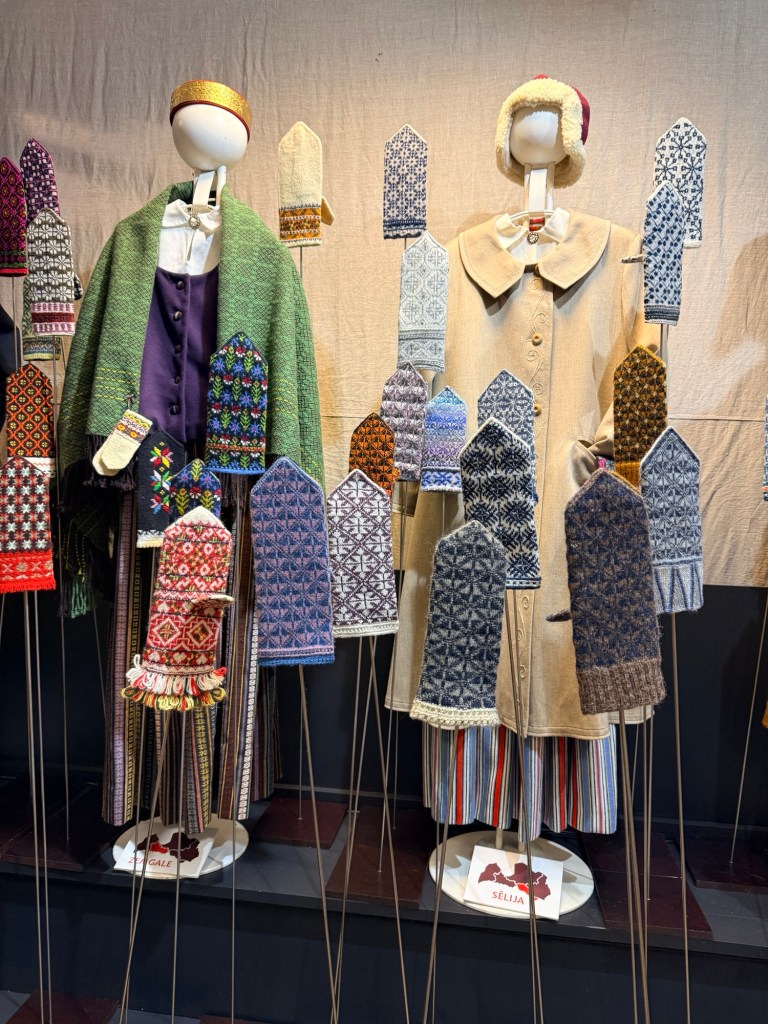
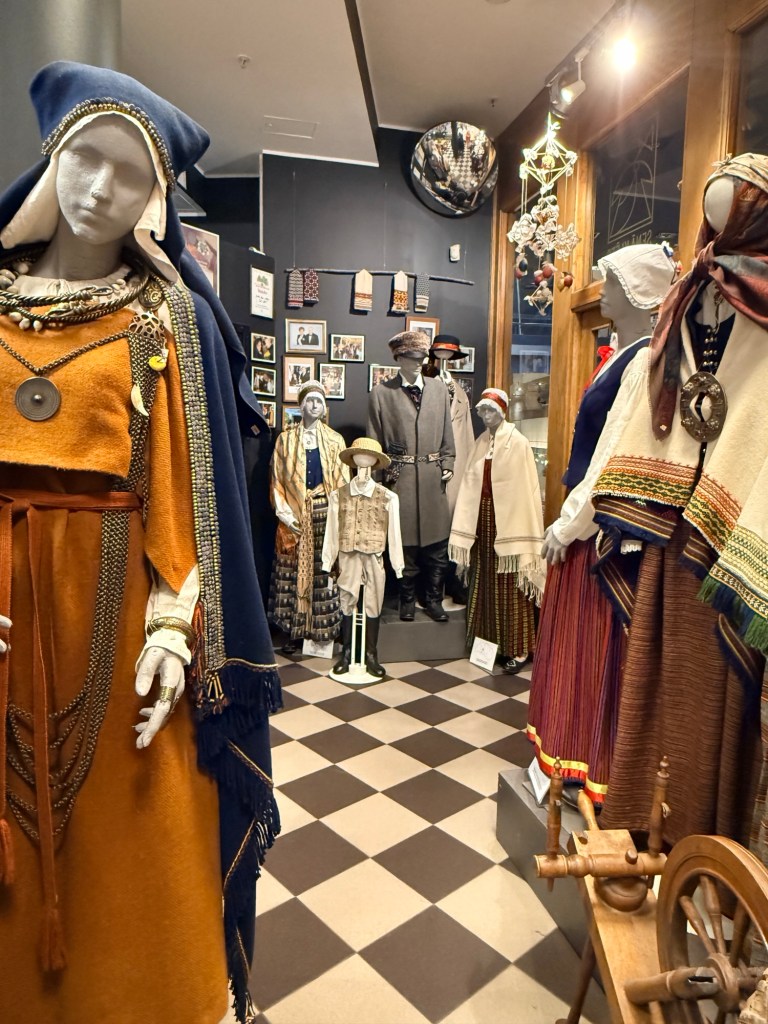
Riga design and culture — you might even glimpse Santa!
This alliance is one of the many funded via the European Commission to enable partnerships, collaboration, and some degree of standardization across European institutions. It is part of Erasmus, the teaching arm of the European Union’s development of higher education. (Up until now, I’ve been involved in programs funded under the parallel research arm.)
EUt+ is the brainchild of Dr. Timothèe Toury, the “Secrétaire général de l’Alliance Université de technologie européenne” (Secretary General of EUt+). He has played a central role in shaping the vision, leading it at global level, and advocating externally for what we do and how transformative we aim to be.
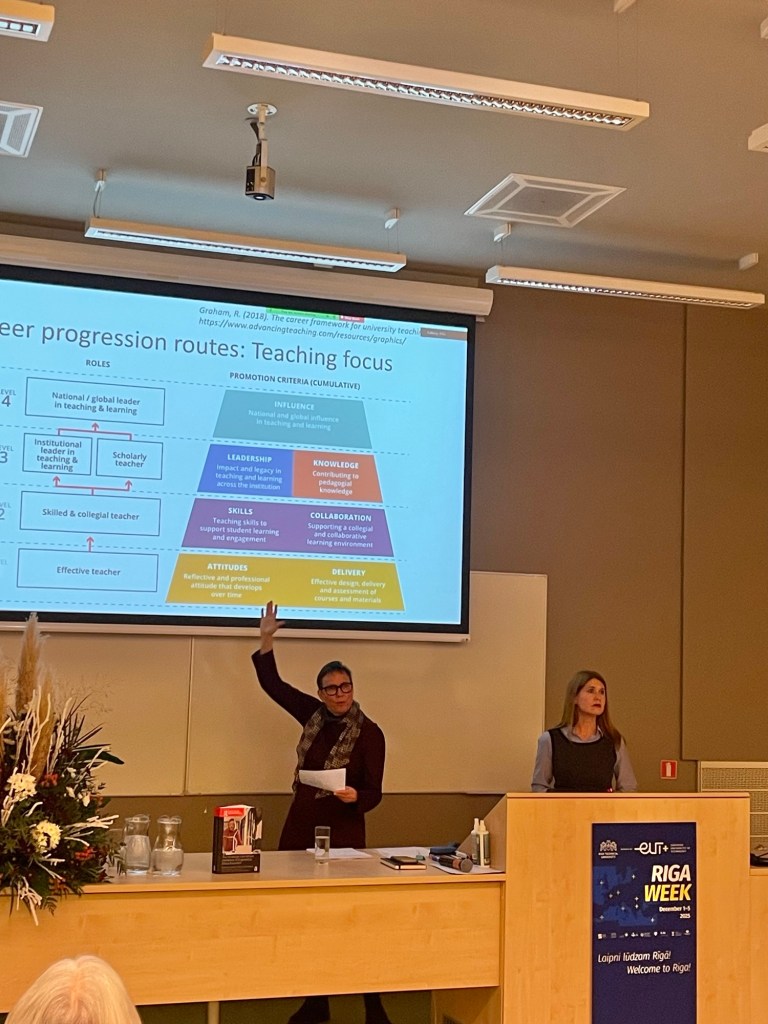
Timothèe providing historical context Shannon sharing a teacher development model
I think it was Timothèe who conceived the idea of combining our campuses into one streamlined university where students can (someday?) flow uninterrupted, taking modules on any campus that contribute toward their degree. That said, EUt+ can be seen as a genuinely collective effort. This includes the wider Secretariat General team (Drs. Rafael Toledo, Karine Lan, and others), as well as representatives from the member institutions, including rectors and colleagues, who have actively designed and contributed to substantial parts of the proposal and its development.
Although there are many university alliances funded by Europe, ours is unique in its vision for the members to unite into one single university. One organization—in multiple, extremely diverse, locations—with aligned curricula and a powerful and unique teaching approach that sets EUt+ apart. We want to foster an exemplary student experience and to advance engineering and technology knowledge-how across Europe, empowering our graduates with transferable skills like teamwork/collaboration, critical thinking, and project management. And, I hope, well-integrated arts, social sciences, and humanities approaches to boot!
This can’t happen without updating and enhancing the way engineering and technology are taught in our member campuses. Lecture-based approaches simply won’t suffice to equip the engineers of tomorrow.
Deeply meaningful learning experiences are required.
And that’s what our facilitation team aimed to deliver at the SEFI/EUt+ Forum.
Helping us organize behind the scenes was the EUt+ staff, particularly Timothèe, Rafael, and Karine but also Dr. Santiago Perez, Ms. Eleanor Asprey, and Dr. Emilija Sarma and a host of others helping on the ground, once we arrived in Riga. (Karine couldn’t attend but sent helpful hints throughout Riga Week by WhatsApp… an angel in my shoulder!)
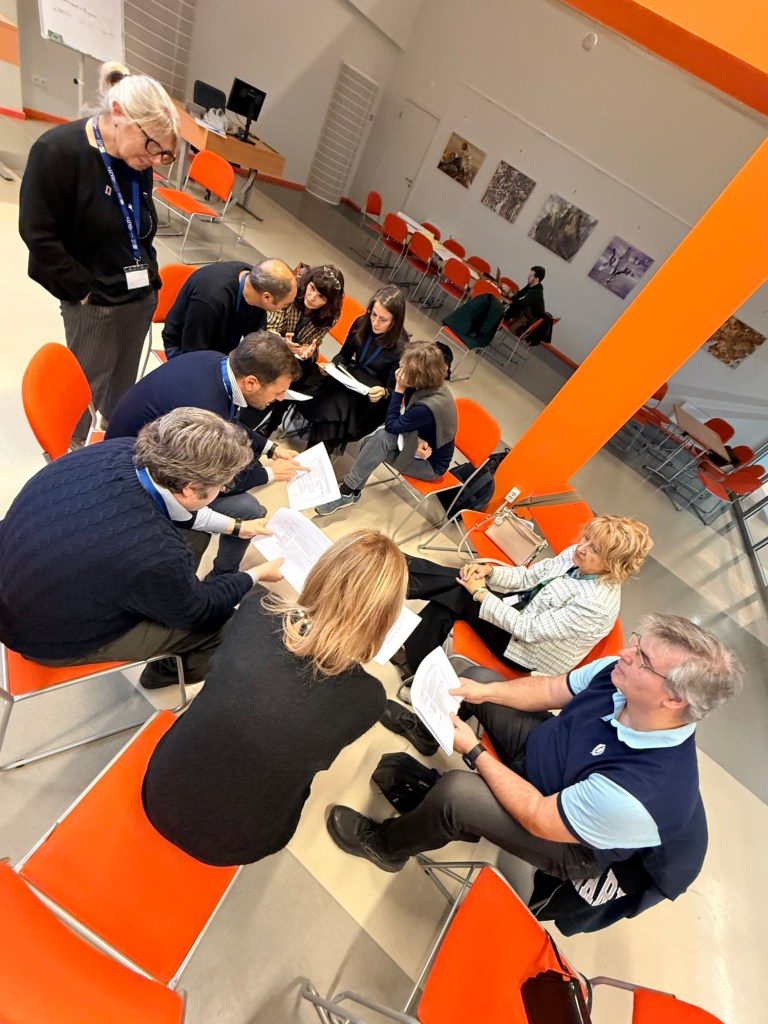
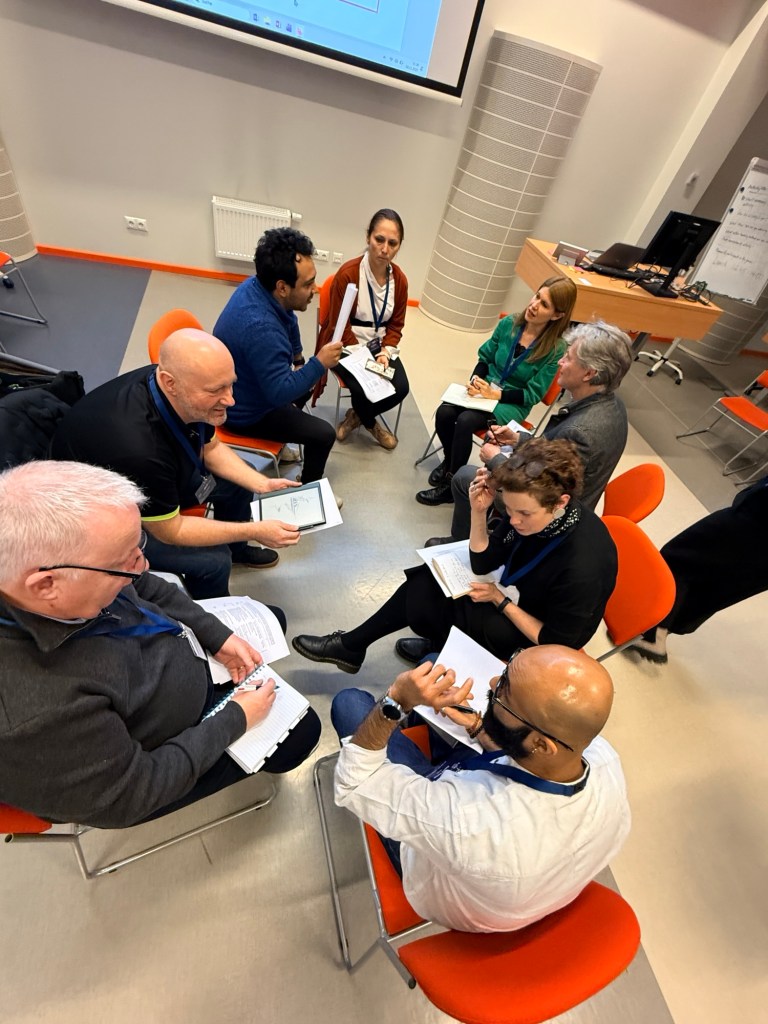
At the SEFI Education Forum, teachers got the chance to experience the student side of the equation.
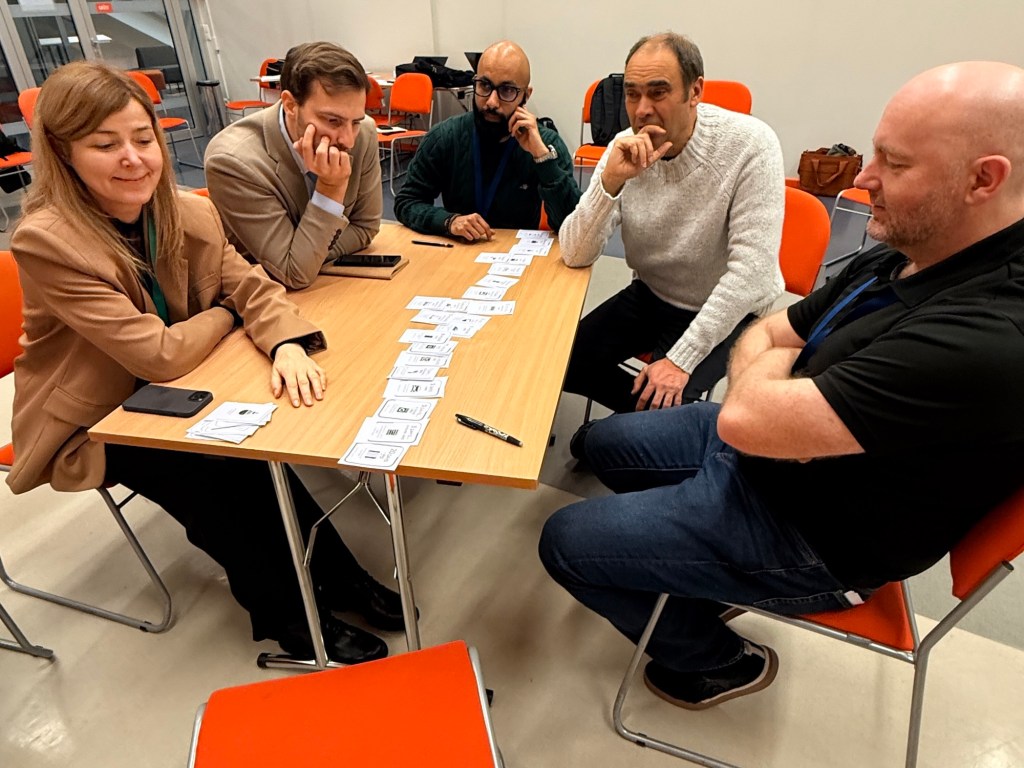
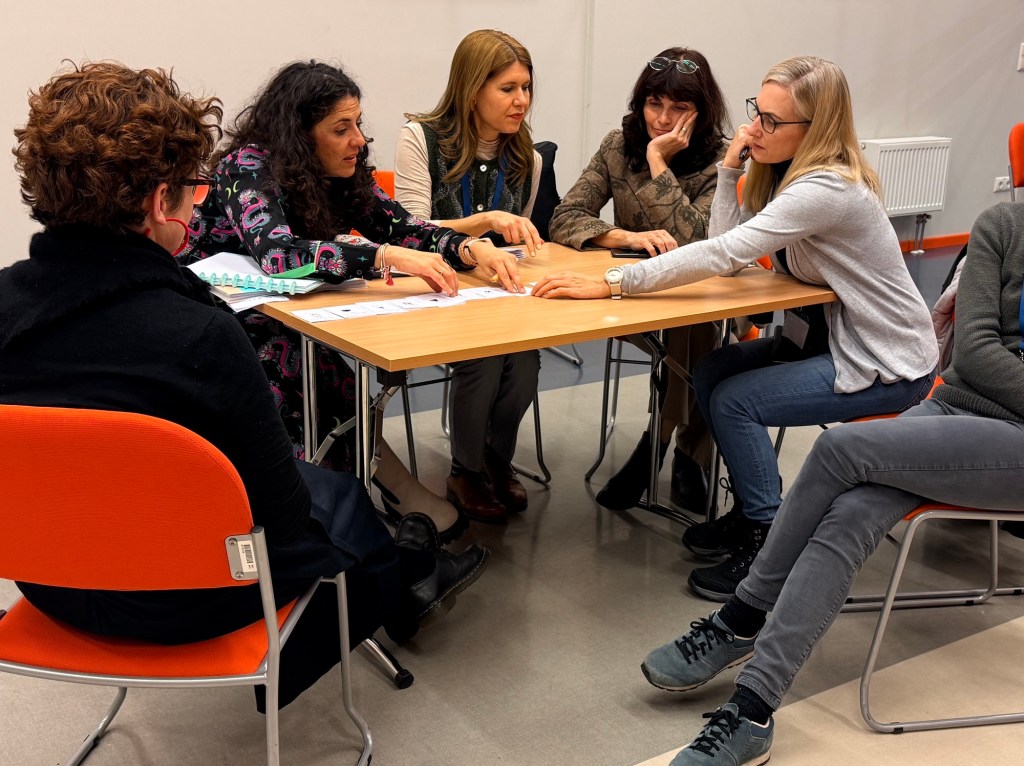
Forum participants each brought their own unique skills and ideas to the event, and shared them with each other. It was like a pot-luck dinner where everyone contributed!
For example, every participant (and facilitator) read several chapter of the Handbook prior to the Forum, so we could discuss these in groups. I designed these discussions like “book clubs.” The various book-club groups each designed an activity for all the other participants on some aspect of their assigned chapters. On the third day, each group facilitated their activity for the rest of us.
At the start of each of the nine working sessions that comprised the Forum, one participant delivered a 15-minute “mini-keynote” on a topic of particular relevance to the group.
Catching them in full action below:
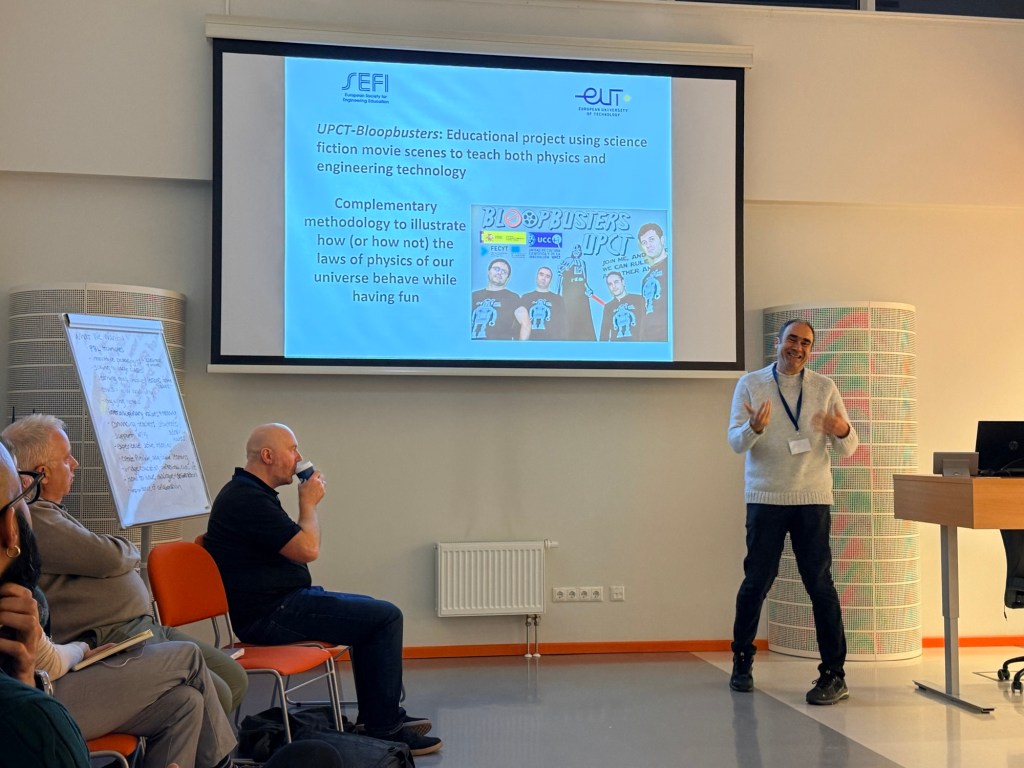
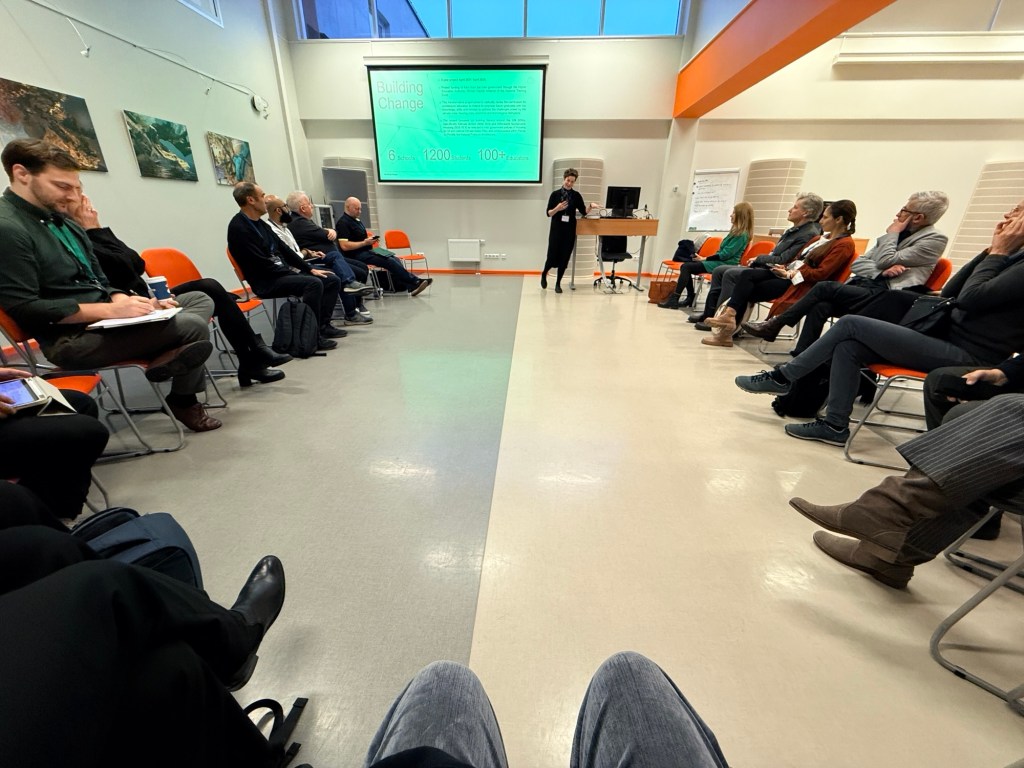
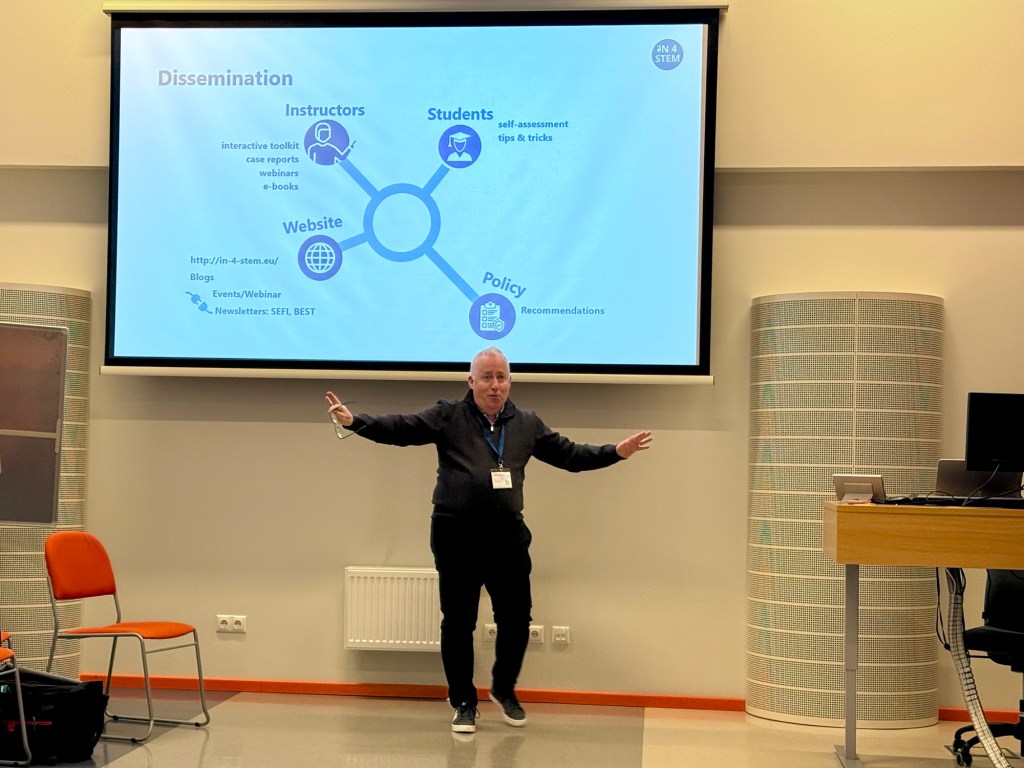
Dr./Prof. Matthias Veit shared frameworks he and his colleagues in Darmstadt are using to facilitate curricular change.Dr. Kalina Belcheva described learners as digital content creators in educational settings.Dr. Sarah Hitt showed us how to use the Sustainability and Ethics Toolkits she developed for the Engineering Professors Council.Dr. José Luis Serrano presented on using film excerpts to teach (test and challenge) physics concepts as presented in popular movies. He calls this activity “Bloopbusters”!Ms. “soon-to-be-Dr.” Miriam Delaney showcased Building Change, a curriculum change initiate across all the schools of architecture in Ireland to support sustainability, housing, and climate resilience.Mr. Edmund Nevin described an Erasmus project he’s part of, focused on supporting students in their transition from second to third-level education.
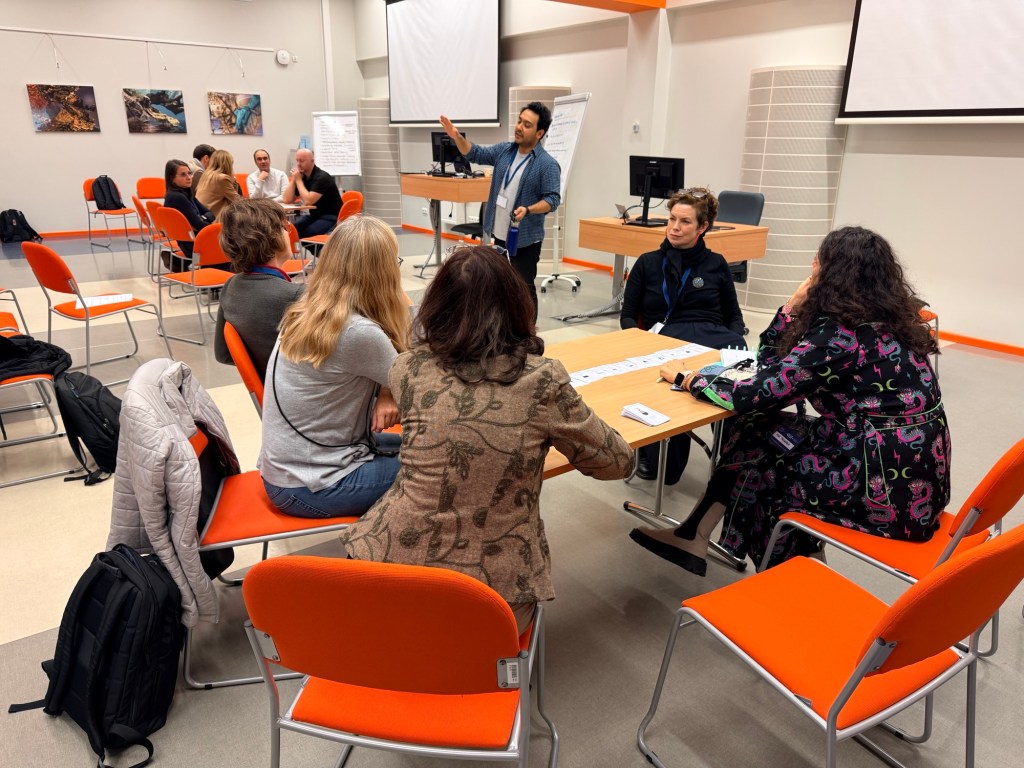
The Forum also included interactive workshops.
I started the Forum off with a mini-keynote on the Handbook followed by a workshop on applying targeted teaching methods to integrate ethics content into the subjects our participants teach.
Santi’s Revolt game
Dr. Santiago Perez delivered an ethics game he developed, called Revolt.
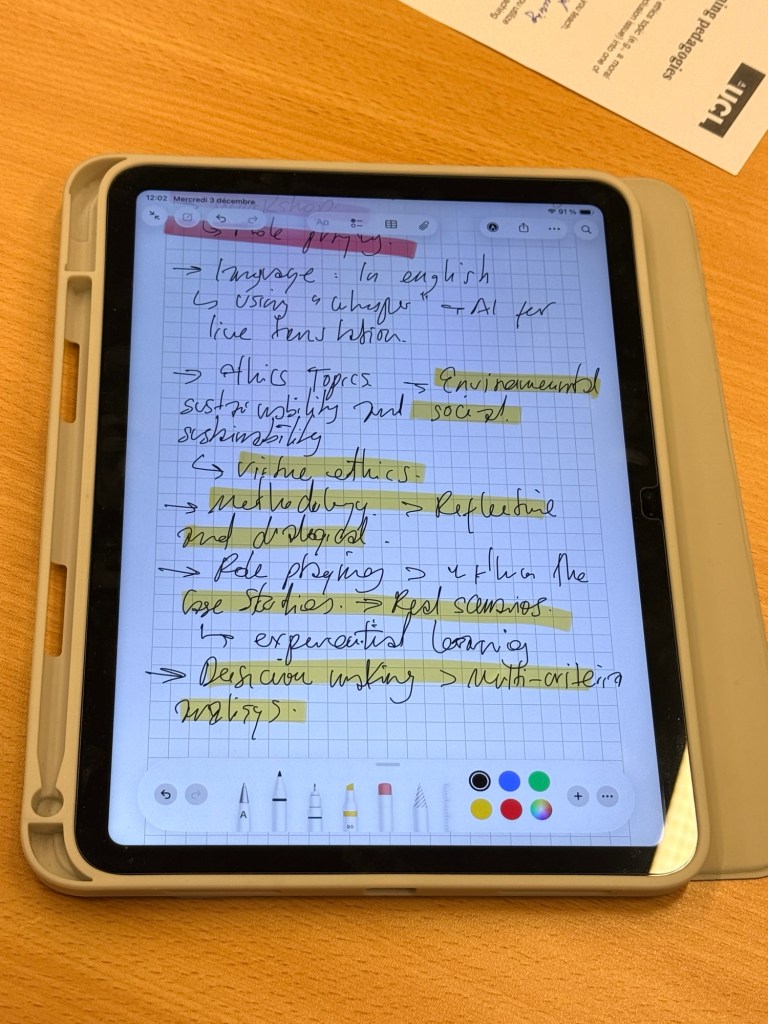
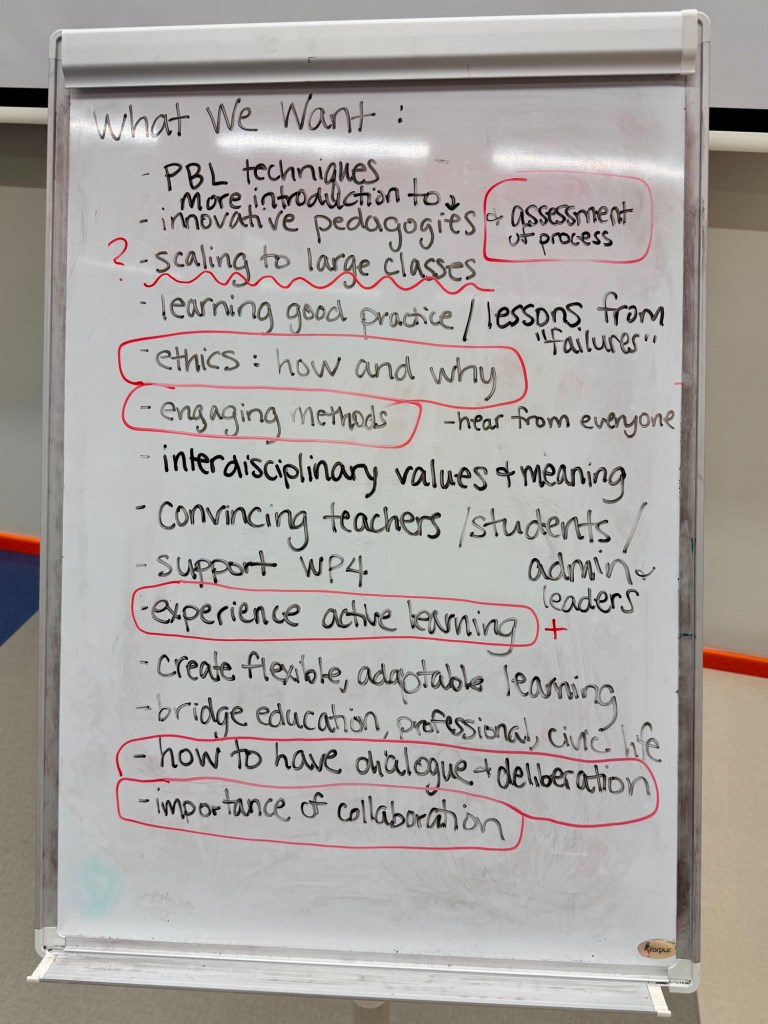
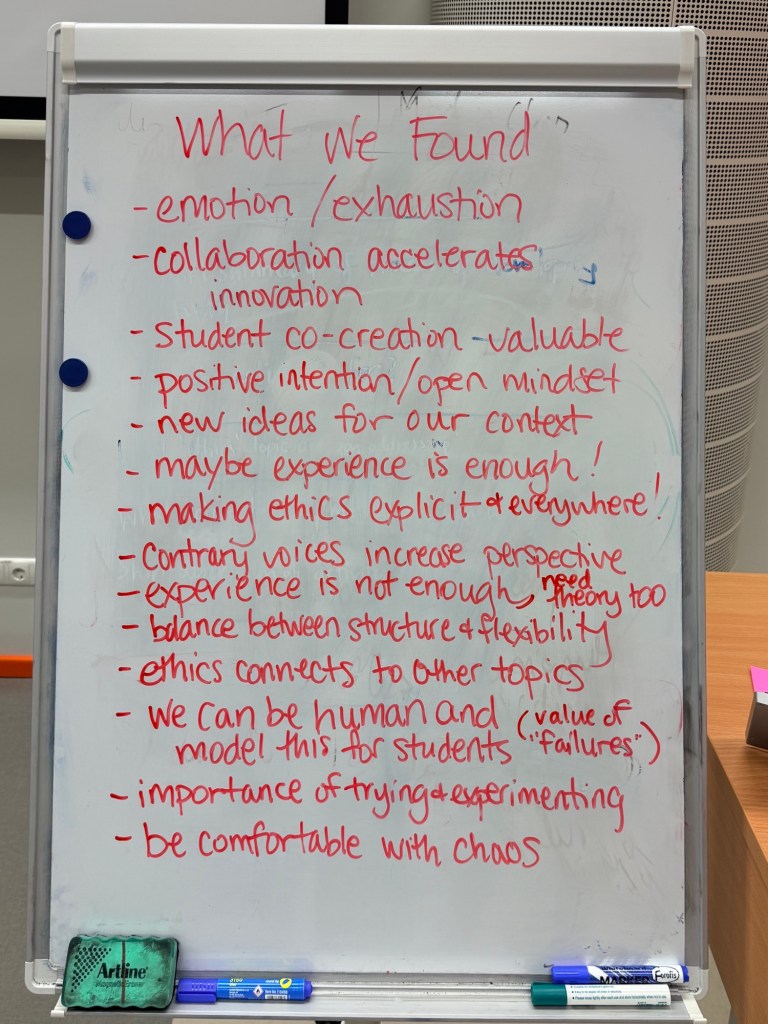
We all learned so much, as described on the whiteboards.
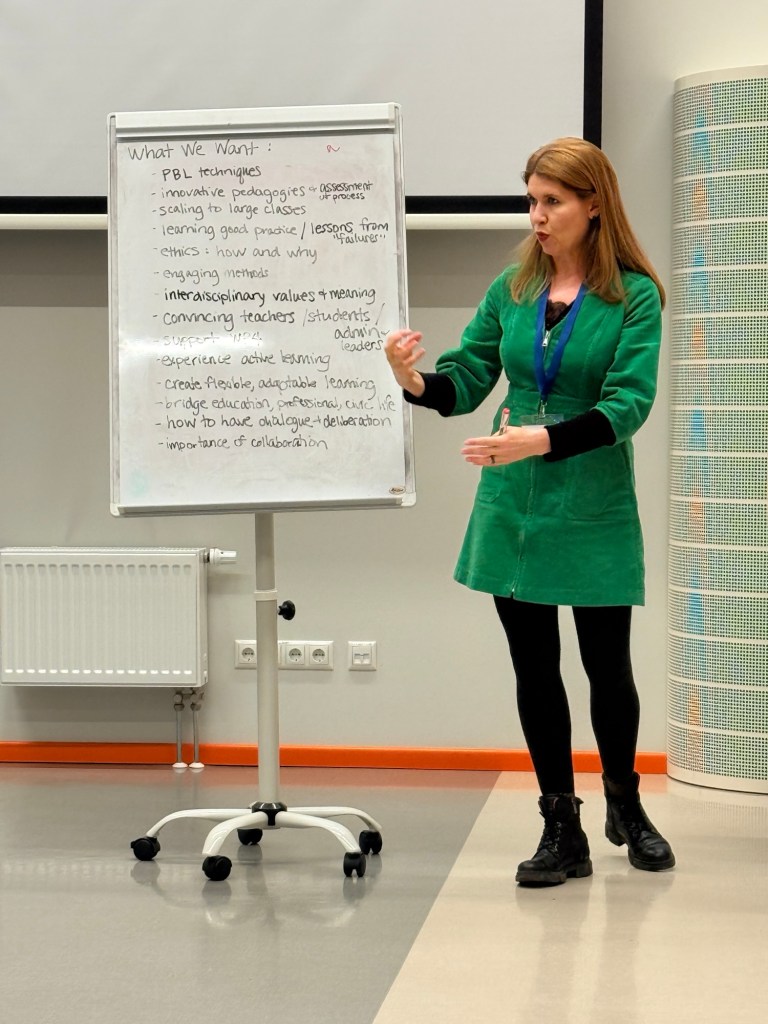
At the very beginning of the Forum, following introductions, Sarah Hitt and I helped the group identify learning goals for the week. Together, we co-designed a strategy that used the pot-luck “dishes” we’d each brought with us (readings, keynotes, workshop outlines, prior experience and innovative spirit). At the end of the week, Sarah helped us assess how well we’d succeeded in covering the topics we’d defined.
I have to say, Sarah was an absolute superstar! She’s a natural leader and event facilitator. I invited her because she was an author on our handbook and she teaches at NMITE, the New Model Institute for Technology & Engineering, based in the UK. They teach using all the featured pedagogies, so I figured she’d have the necessary skills—but wow! Was I impressed beyond expectations!
Sarah Jayne was a Hitt!
Miriam and Edmund also did a fabulous job facilitating. Their (book club / workshop design) group discussions were lively and engaging.
I was also extremely pleased with the contributions my other TU Dublin colleagues, Mr. Keith Colton and Dr. Mayank Parmar, made to the Forum.
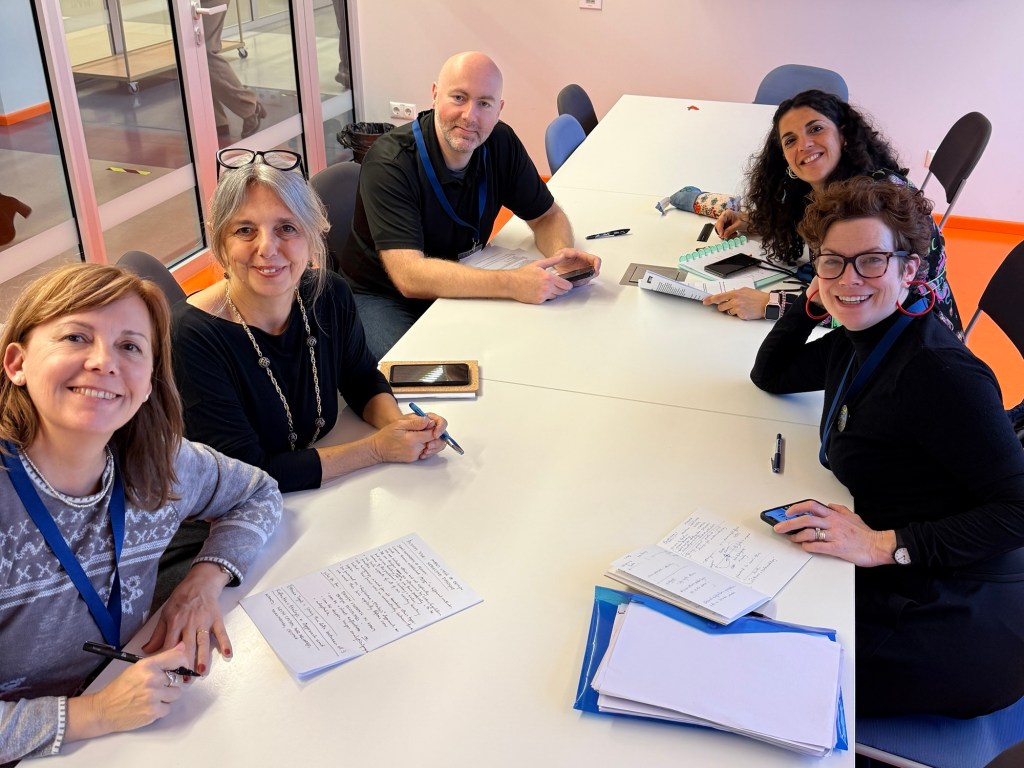
The Forum succeeded overall, though, due to the wholehearted engagement of the EUt+ educators who travelled from near and far! The 21 of us attending put in our all, and as a result we all left with new ideas and experiences and inspiration to evolve our teaching.
Some of us are already working on follow-up conference session and grant proposals together, and hopefully we’ll have more successes to report to you in the coming semester!
Thanks, EUt+, Timothèe, Rafa, and Karine, for working so hard to include use and showcase what SEFI engagement can give the EUt+ community!
It opens with the launch of our handbook on teaching ethics in engineering. Next, we discuss a strategy for making the necessary changes in engineering education to address turbulent times.
Below, I share fun pics of SEFI, as posting this is a chance to relive the excitement! From the launch:
A significant — unexpected — highlight of the SEFI conference was receiving the award for the BEST RESEARCH PAPER of the entire conference! I accepted the ward on behalf of my PhD student, soon-to-be Dr Sandra Cruz!
Here I’m being awarded by Professor John Mitchell and congratulated by my co-editors of the European Journal of Engineering Education.
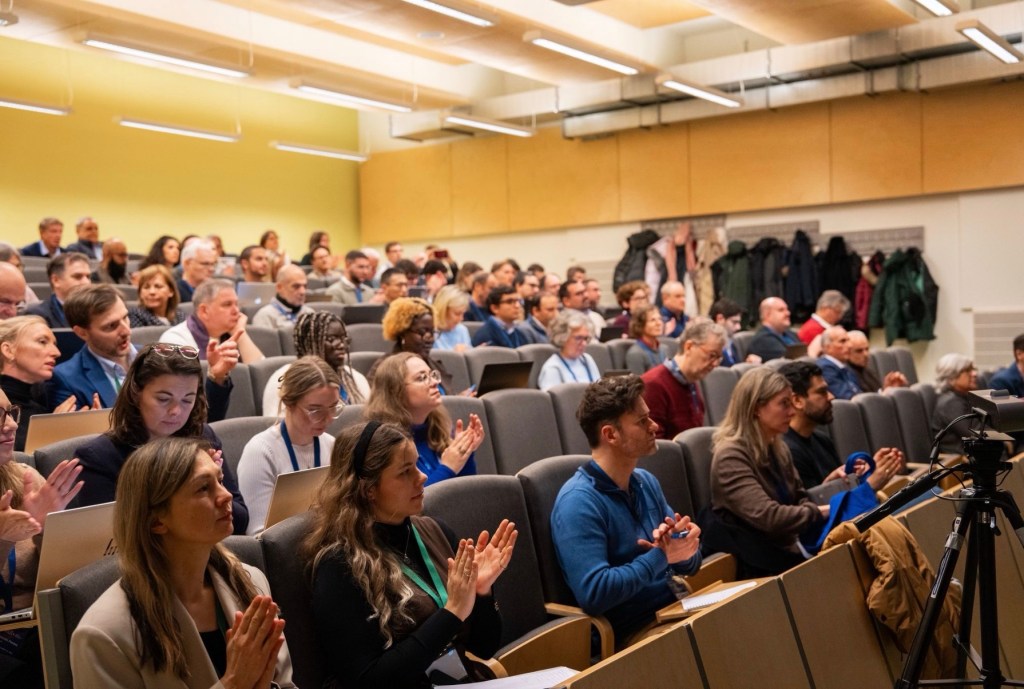
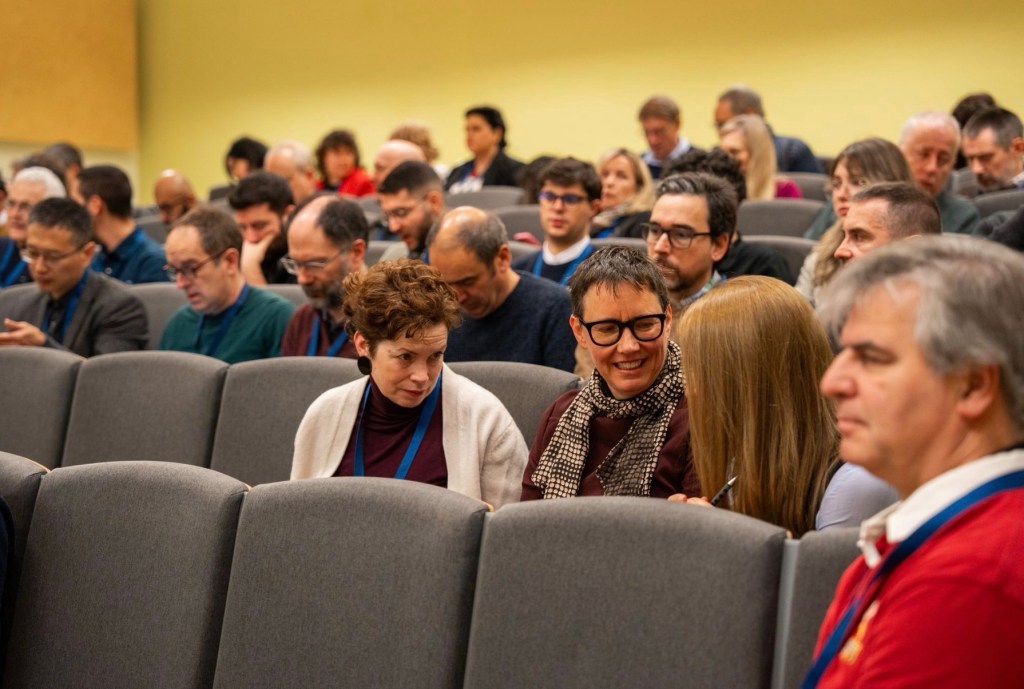
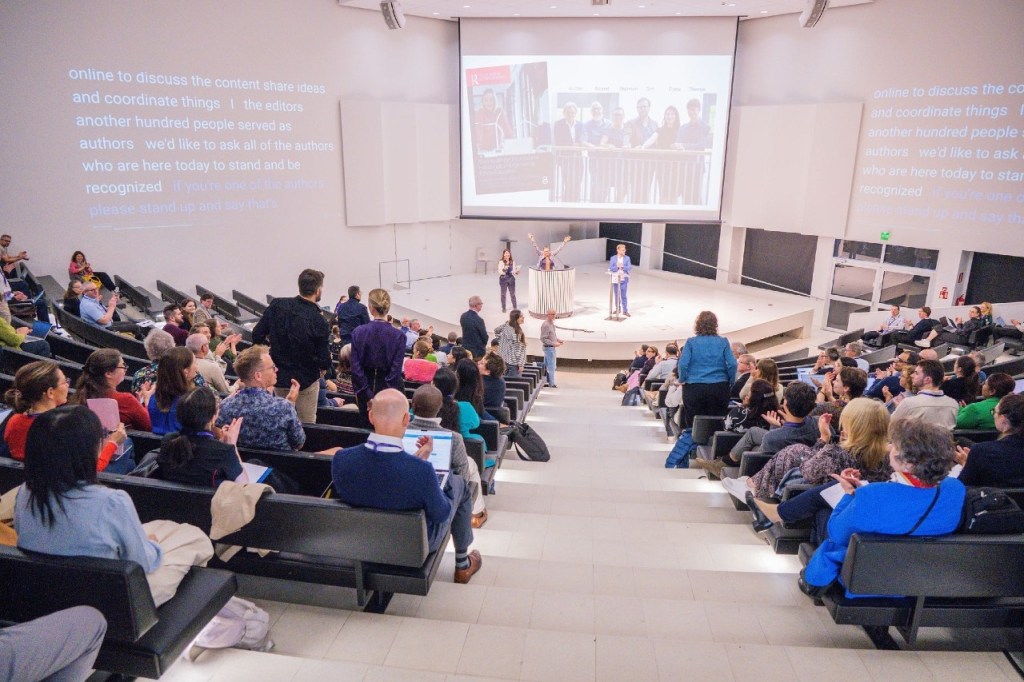
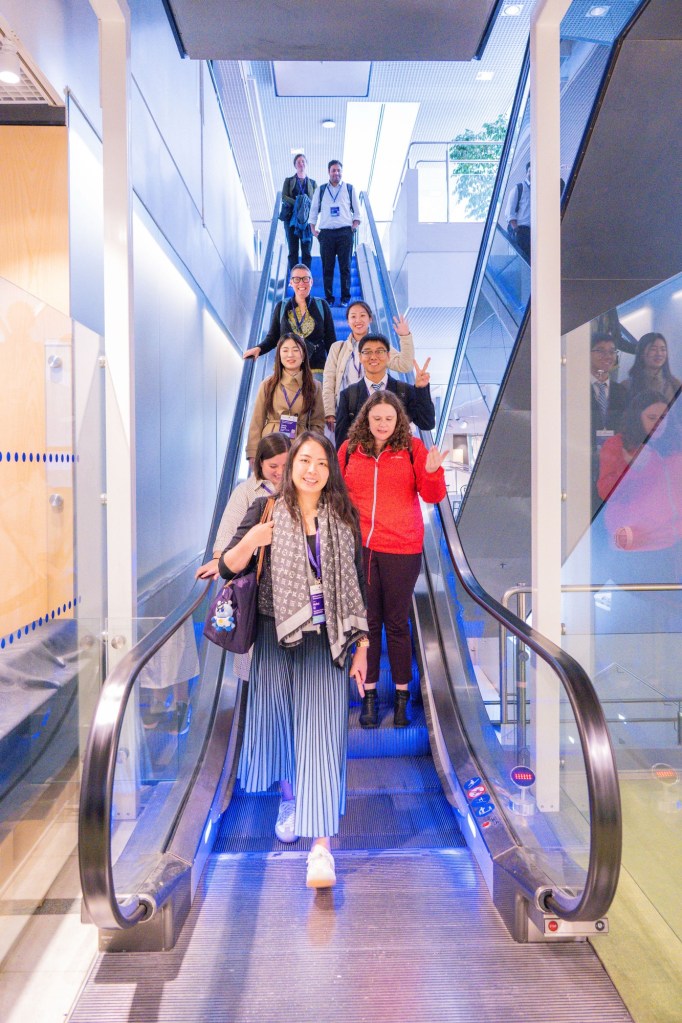
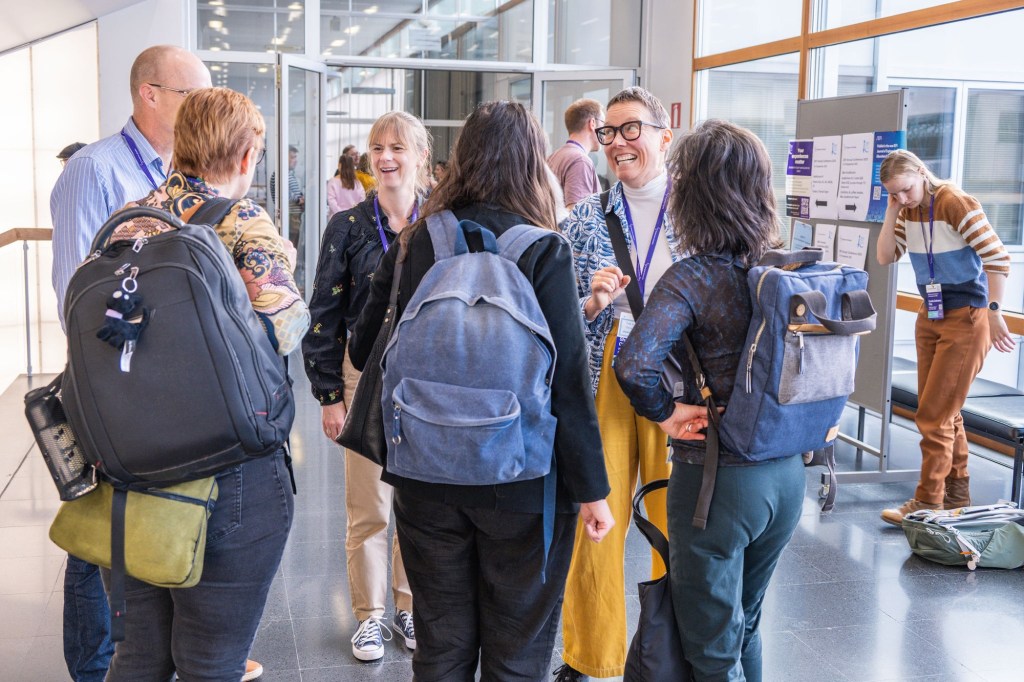
The official photographer captured the conference vibe:
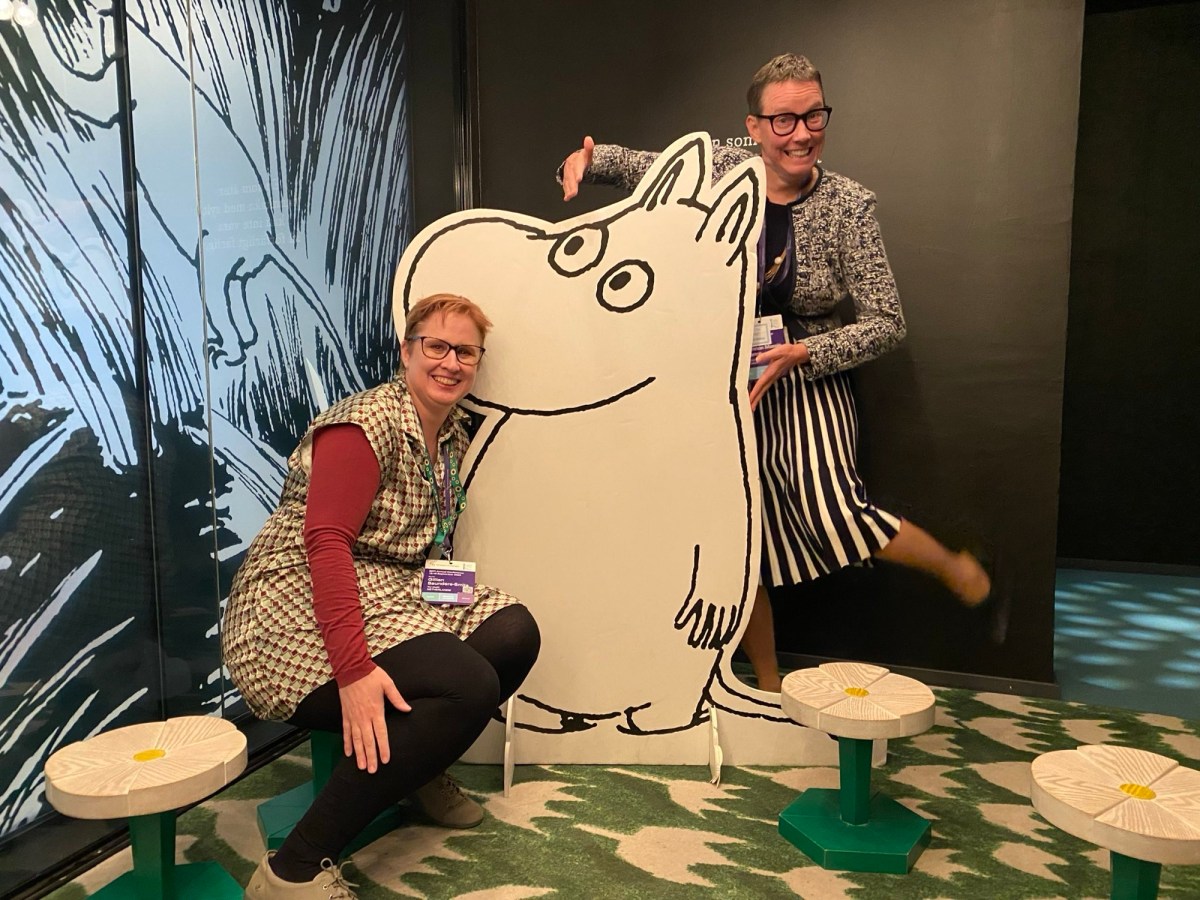
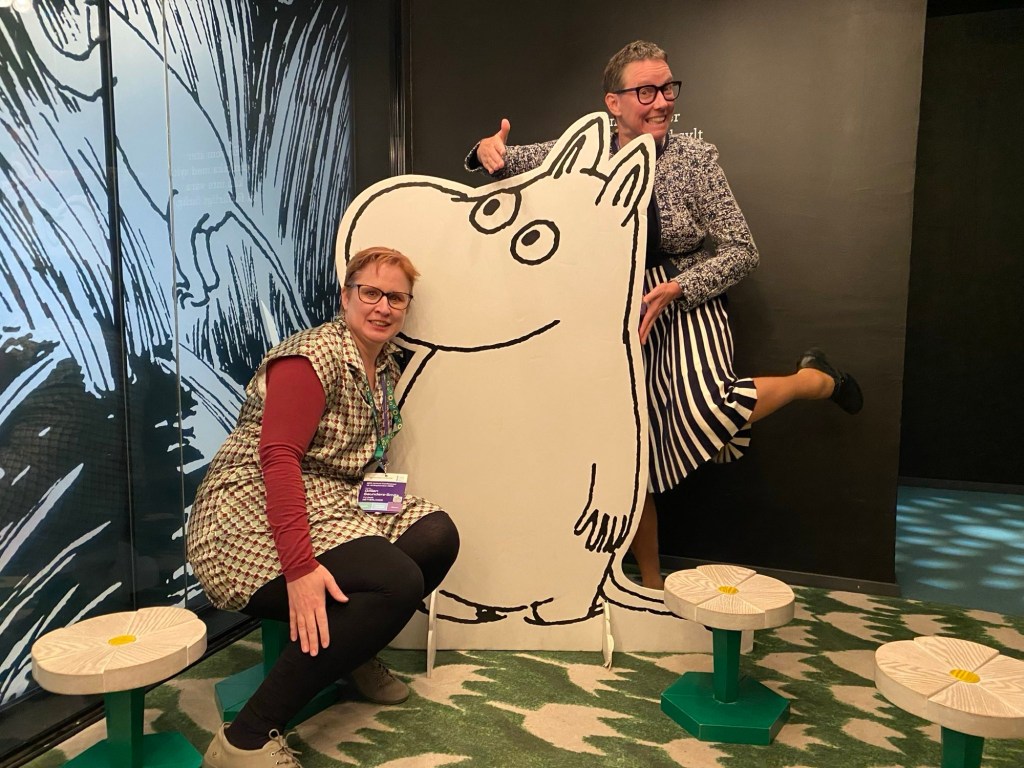
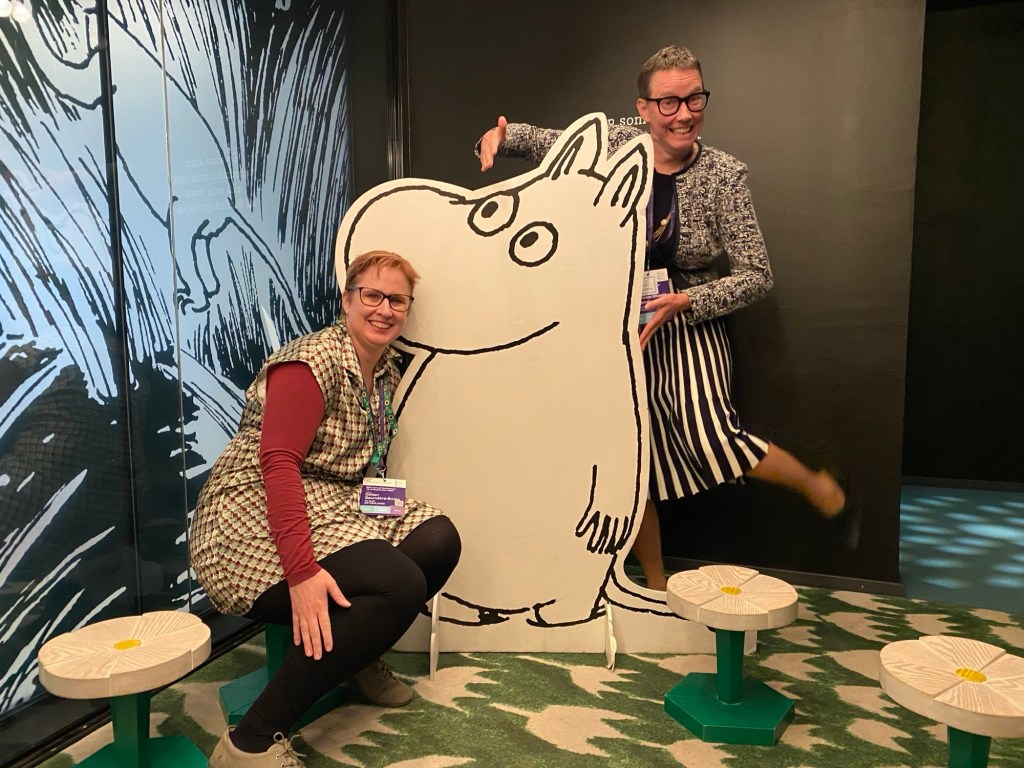
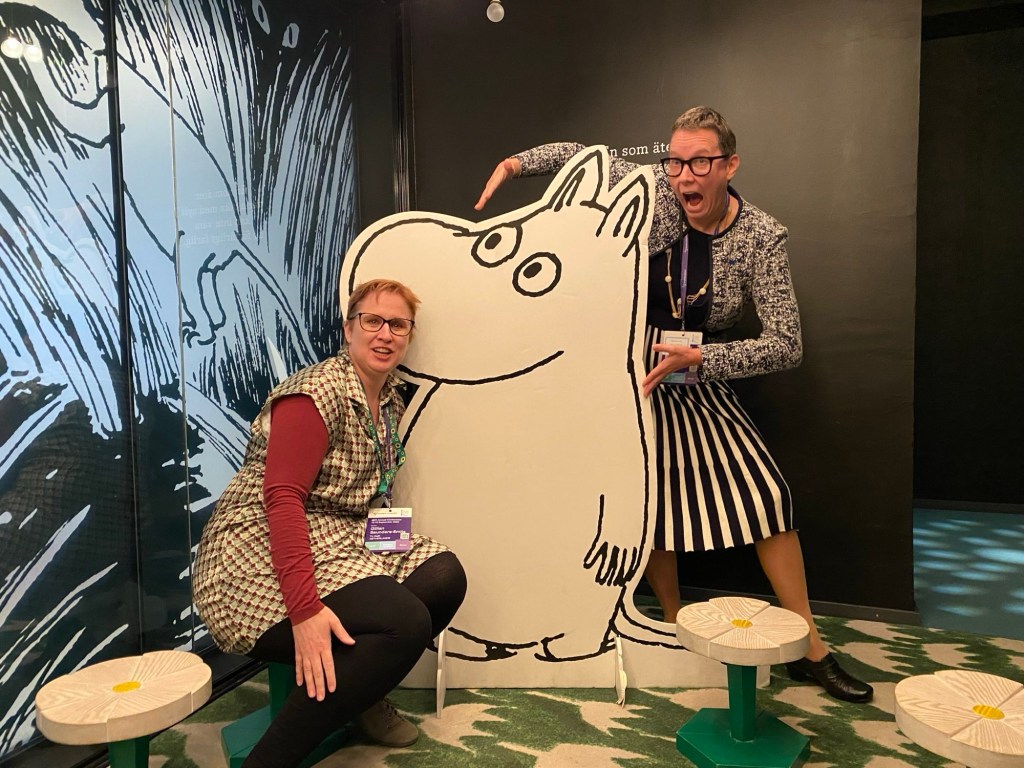
And the SEFI Director General, architect Klara Ferdova, captured and shared other behind-the-scenes moments, like Gillian Saunders-Smit and me at the Moonmin Museum:
And here are Klara’s photos of the keynote! An architect’s eye for structure and composition, Klara has!
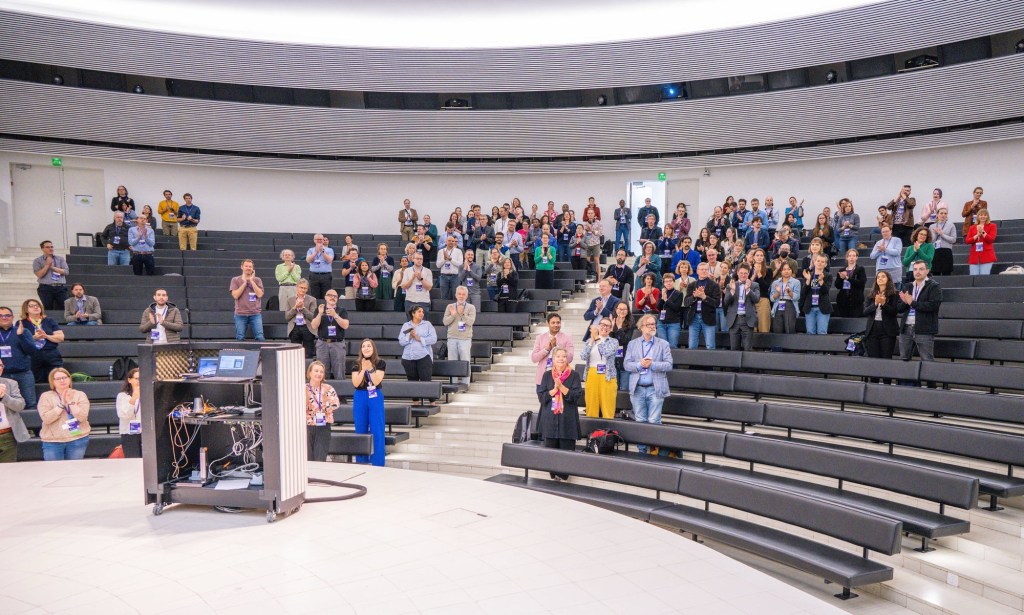
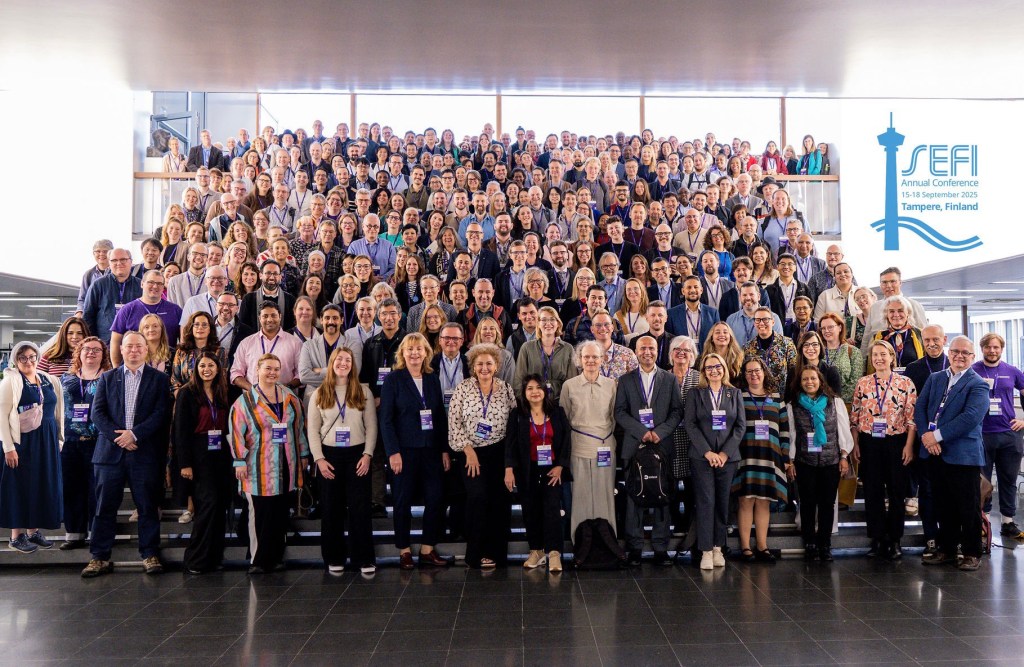
And finally, here’s the official SEFI photo, showing the whole happy family!
If you’re interested in teaching engineering well, please join us for next year’s SEFI conference in Prague!
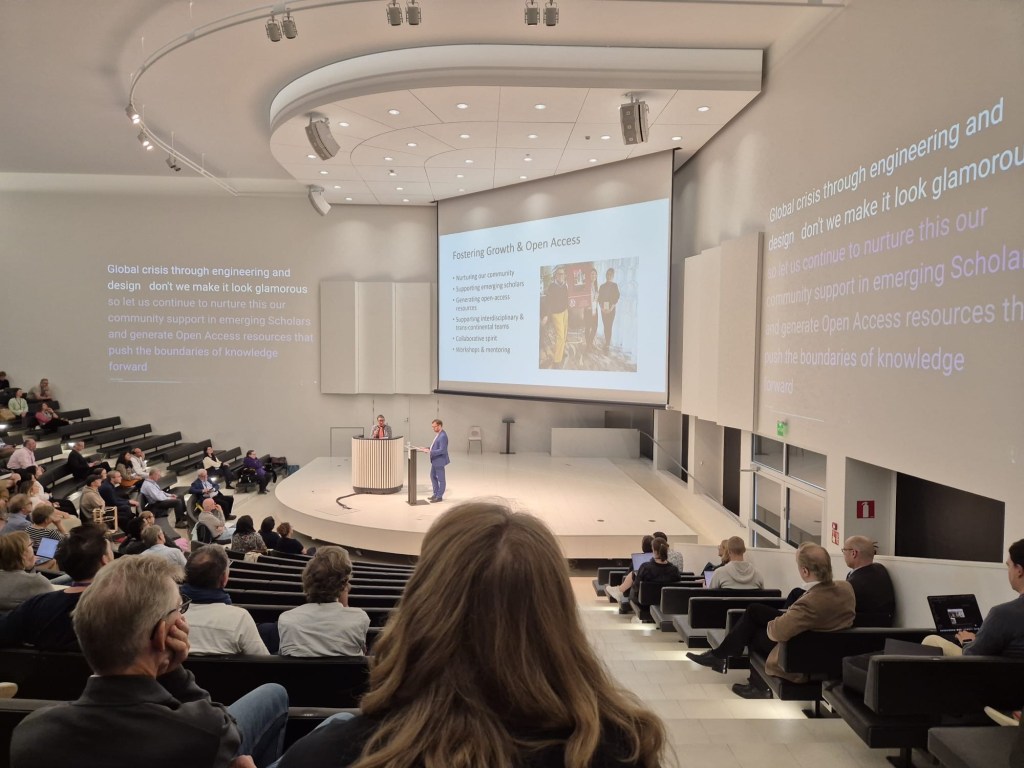
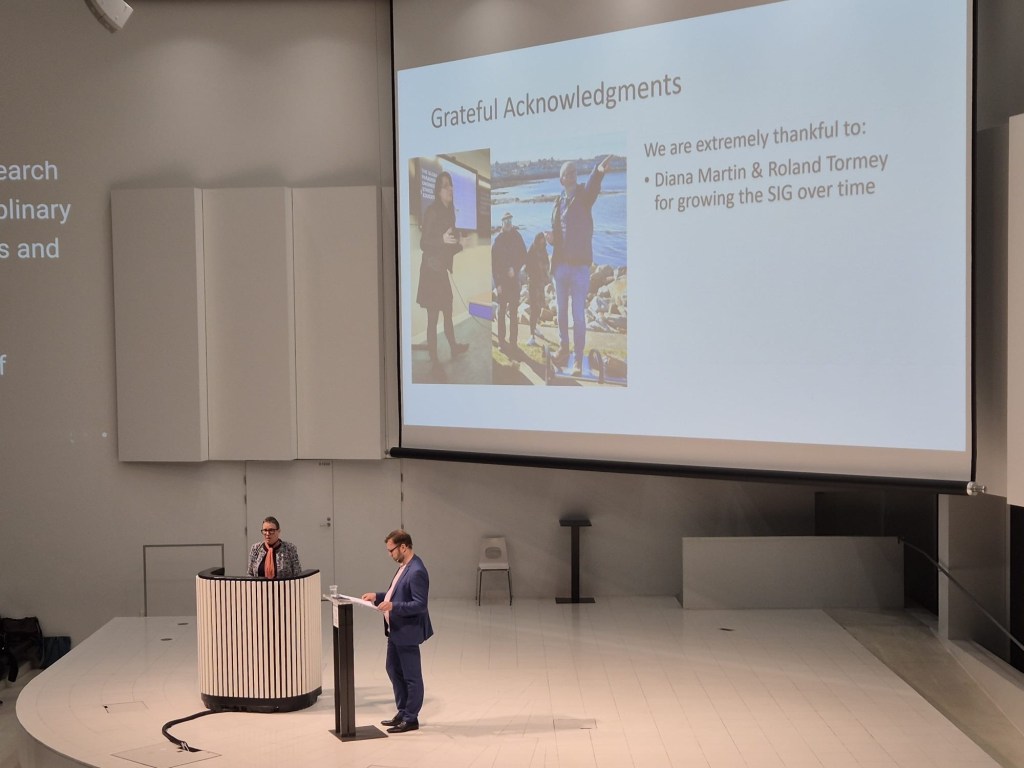
What an inspiring whirlwind week at the European Society for Engineering Education SEFI 2025 Annual Conference! The event was packed with meaningful presentations, deep and reflective conversations, intellectual rigor, and memorable community moments. Attending SEFI always feels like a homecoming to me, and this year’s conference certainly delivered, especially with the monumental achievements of my colleagues and students.
From Handbook to Keynote Stage
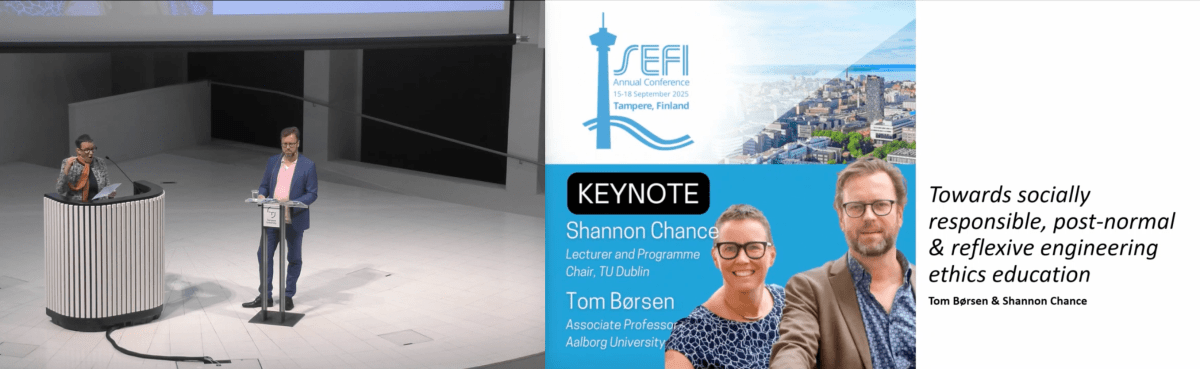
A significant highlight for me was being invited to deliver a keynote address at SEFI alongside Associate Professor Tom Børsen from Aalborg University. The address drew extensively from the Routledge International Handbook of Engineering Ethics Education, which Tom and I co-edited alongside our phenomenal team of co-editors, Diana Adela Martin, Roland Tormey, Thomas Taro Lennerfors, and Gunter Bombaerts.
Our keynote, titled “Towards socially responsible, post-normal and reflexive engineering ethics education,” (video link here) called for a bold transformation in how engineering ethics is taught. We addressed the urgent need for engineering ethics education (EEE) to move beyond traditional, individual-focused approaches to embrace collective responsibility, reflexivity, and social justice. This is particularly critical in “post-normal times,” characterized by uncertainty, high stakes, and contested values.
Among other things, Tom and I urged the community to integrate non-Western and AI ethics, foster transdisciplinary collaboration, and empower engineers to challenge power structures and cultivate an ethics of care for people and the planet.
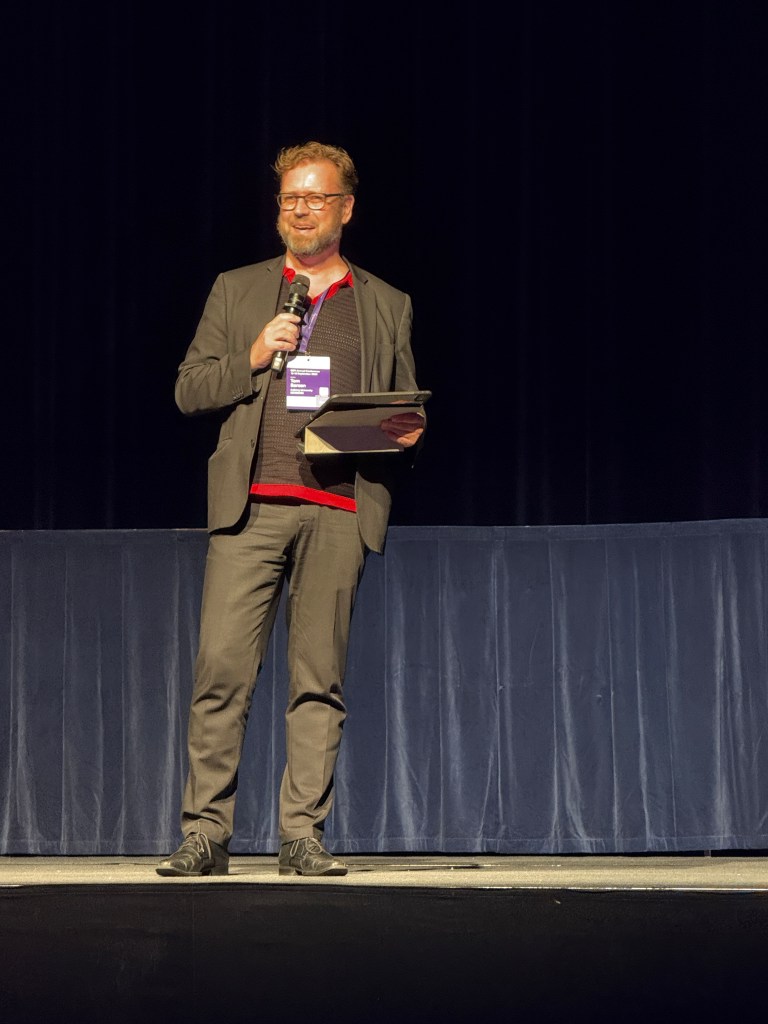
And regarding Tom, I was thrilled to watch him receive a major honor at SEFI: the 2025 Maffiolli Award. Tom has been instrumental in advancing the field of Technological Anthropology, and this award is so very well deserved! Tom won in the individual category, and my colleagues from UCL, led by Fiona Truscott, won in the group category. A very excitig night, all around!
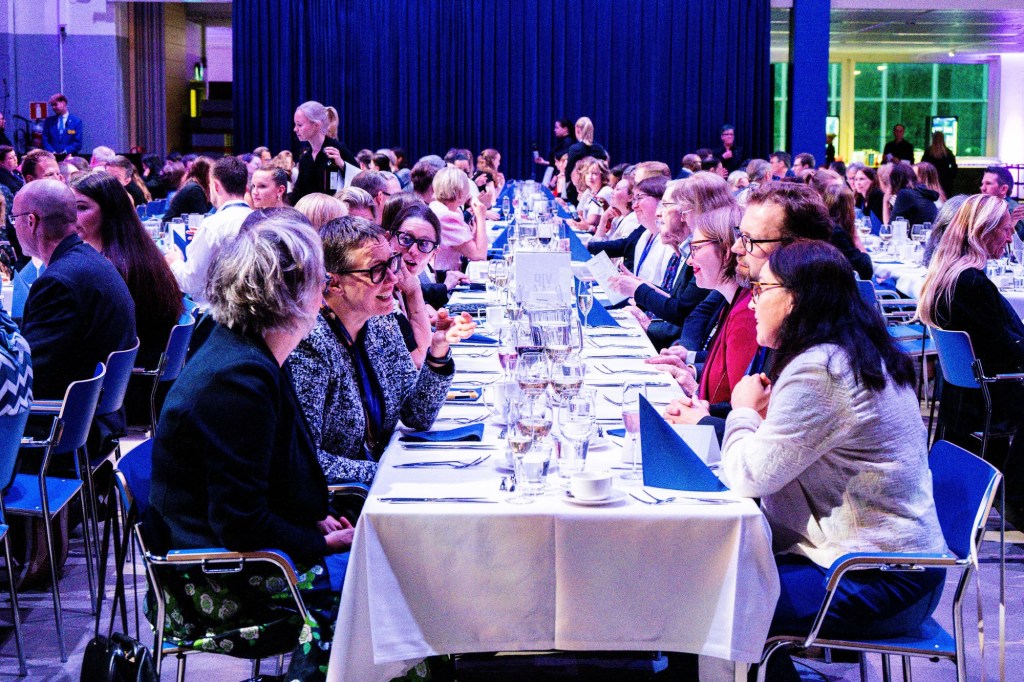
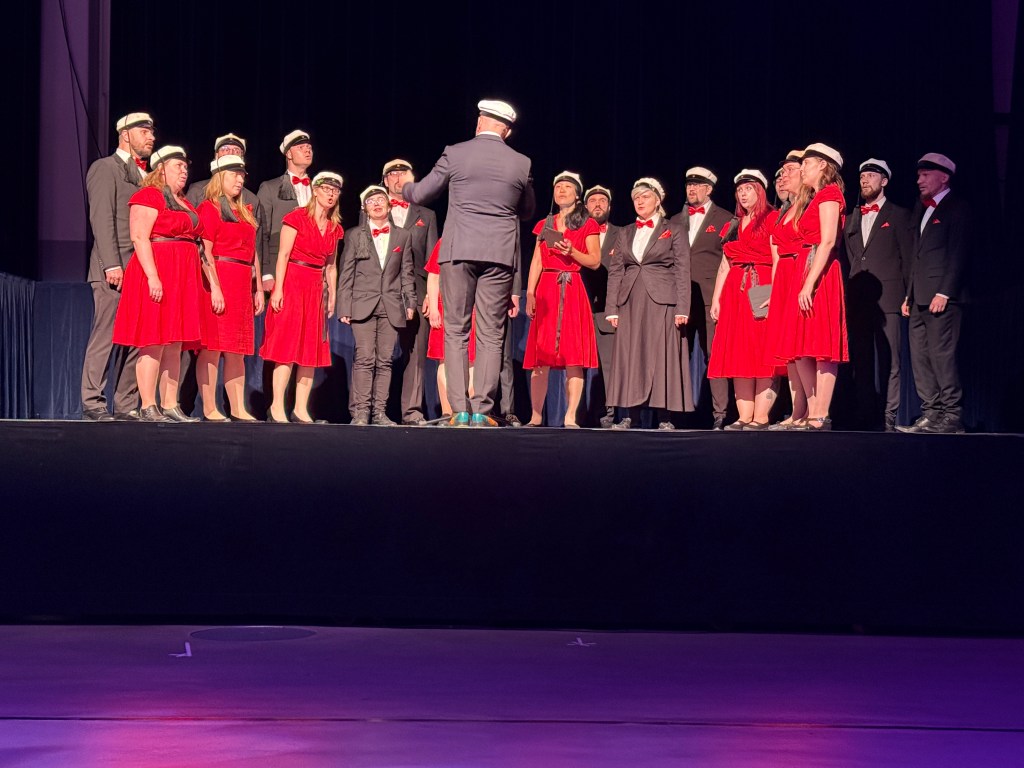
The awards were presented at the conference banquet – the entertainment was superb! Singing Finnish engineers – a whole choir of them – who knew?
I knew about Tom’s award, as I’d been pulling for this outcome for over a year. Yet, other outcomes of the conference were a complete surprise…
The Power of Collaborative Research: Winner of the Best Research Paper Award!
My PhD student, the incredibly talented and astute sociologist Sandra Cruz Moreno, won the BEST RESEARCH PAPER award for SEFI 2025. I serve as her supervisor and was the co-author of this paper.
The recognition for excellent research was deeply validating, especially since the paper, “EVOLVING GENDER DYNAMICS IN TEAMWORK EXPERIENCES AMONG FEMALE ENGINEERING STUDENTS IN PBL SETTINGS”, was nominated in three separate categories, each with its own panel of judges: Best Student Paper, Best Diversity and Inclusion Paper, and overall Best Research Paper.
The certificateShannon and Sandra at an emotions symposium in Portugal
The paper reports one aspect of Sandra’s doctoral research, which has been funded by a First-Time Supervisor grant to me from TU Dublin. The funding allowed us to analyze the extensive interview data I collected since 2015.
Sandra’s study is crucial for understanding inclusivity in engineering education. It employed a longitudinal, qualitative social phenomenological approach combined with an intersectionality framework. Using data from 41 interviews with 22 female engineering students from seven countries at TU Dublin, Sandra explored how diverse students navigate challenges and evolve strategies during project- and problem-based learning (PBL) teamwork across their academic journeys.
A key finding was that while students’ confidence and participation increased over time, the women persistently faced gendered biases and cultural norms that influenced their perceived roles and credibility in teams. For instance, they reported often being relegated to non-technical tasks like presenting or report writing, while feeling required to constantly prove their competence regarding hands-on skills. This analysis led Sandra to conclude that focusing solely on individual resilience is insufficient; systemic structural interventions are also needed to promote inclusive educational practices and challenge embedded norms.
I was honored to accept the award in Sandra’s absence, celebrating the resounding endorsement of her work. This recognition is truly a cherry on top of our successful 3.5 years of teamwork.
Cruz, S., & Chance, S. (Accepted/In press). EVOLVING GENDER DYNAMICS IN TEAMWORK EXPERIENCES AMONG FEMALE ENGINEERING STUDENTS IN PBL SETTINGS. Paper presented at European Society for Engineering Education (SEFI) Annual Conference 2025, Tampere, Finland.
Nurturing Community and Capacity
SEFI is always about nurturing the community, and I was pleased to contribute in several ways:
• Doctoral Symposium: I co-facilitated the full-day pre-conference Doctoral Symposium to support early-career researchers.
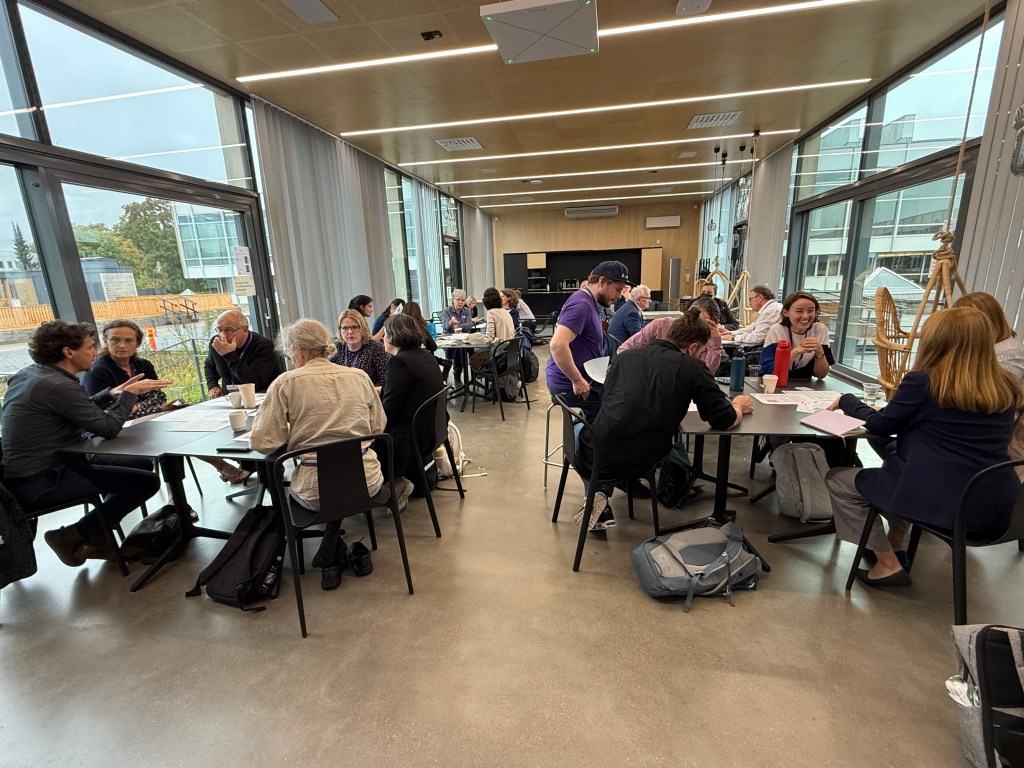
The 2025 Doc Symposium
• Workshops: I delivered and co-facilitated multiple workshops, including one on integrating ethics into course delivery, a session on methodological approaches in Engineering Education Research, a workshop on the ethics of care, and a peer-review workshop for journal editors and aspiring reviewers.
The workshop I facilitated on intergrating ethics into your teaching
O’Gorman, L., Gwynne-Evan, A., Ridgeway, L., Rebow, M., & Chance, S. (Accepted/In press). ACCREDITATION CONSIDERATIONS IN ENGINEERING ETHICS EDUCATION: BRIDGING GLOBAL STANDARDS AND LOCAL PRACTICES. Paper presented at European Society for Engineering Education (SEFI) Annual Conference 2025, Tampere, Finland.
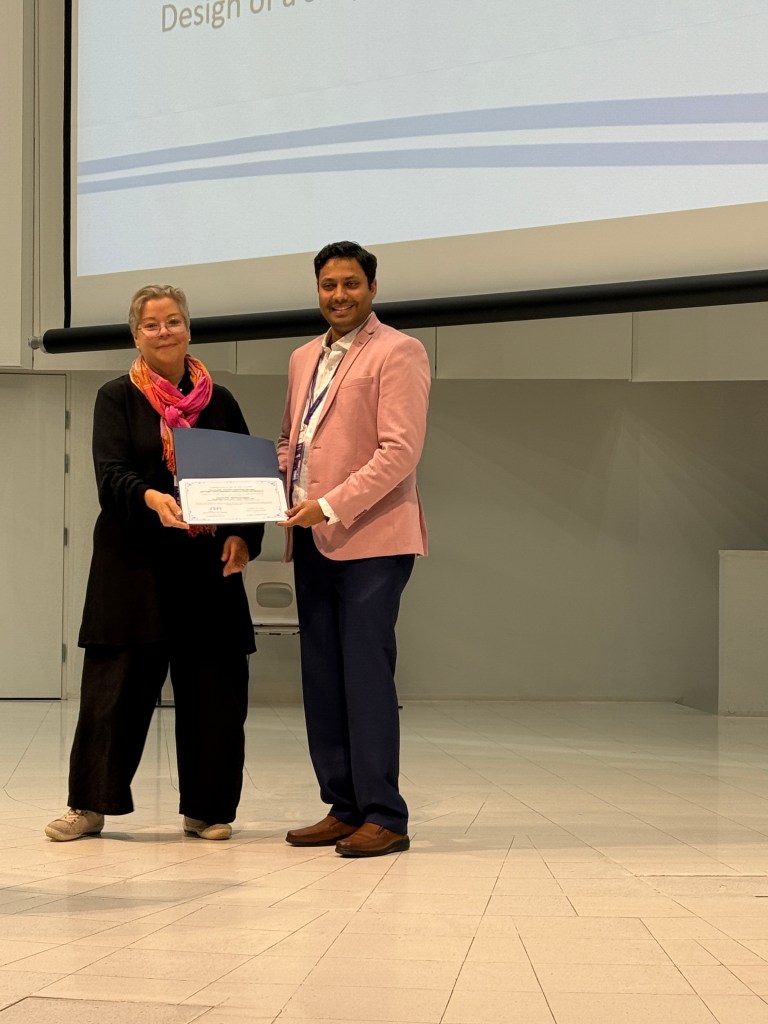
• Supporting Swapneel Thite: I had the immense pleasure of facilitating the attendance of Dr Swapneel Thite, a recent PhD earner. Swapneel won the prestigious Best Paper Award for Volume 49 (2024) of SEFI’s journal, the European Journal of Engineering Education (EJEE), for which I serve as Deputy Editor. He and his PhD supervisors published the “Design of a simple rubric to peer-evaluate the teamwork skills of engineering students” with us. Since I had already paid my registration fee, I was able to offer Swapneel the free registration given to me as a keynote speaker, helping him travel to SEFI to receive his award and meet the community. His paper, recognized for its rigor and practical utility (an easy-to-use instrument for peer assessment of teamwork), is well worth reading!
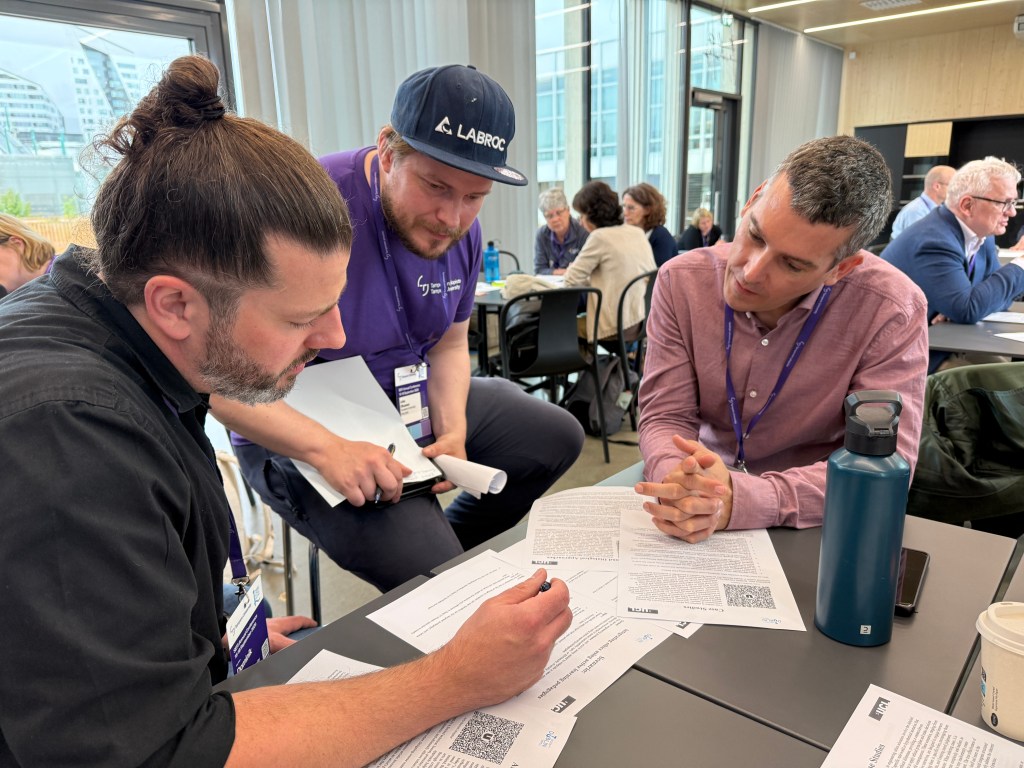
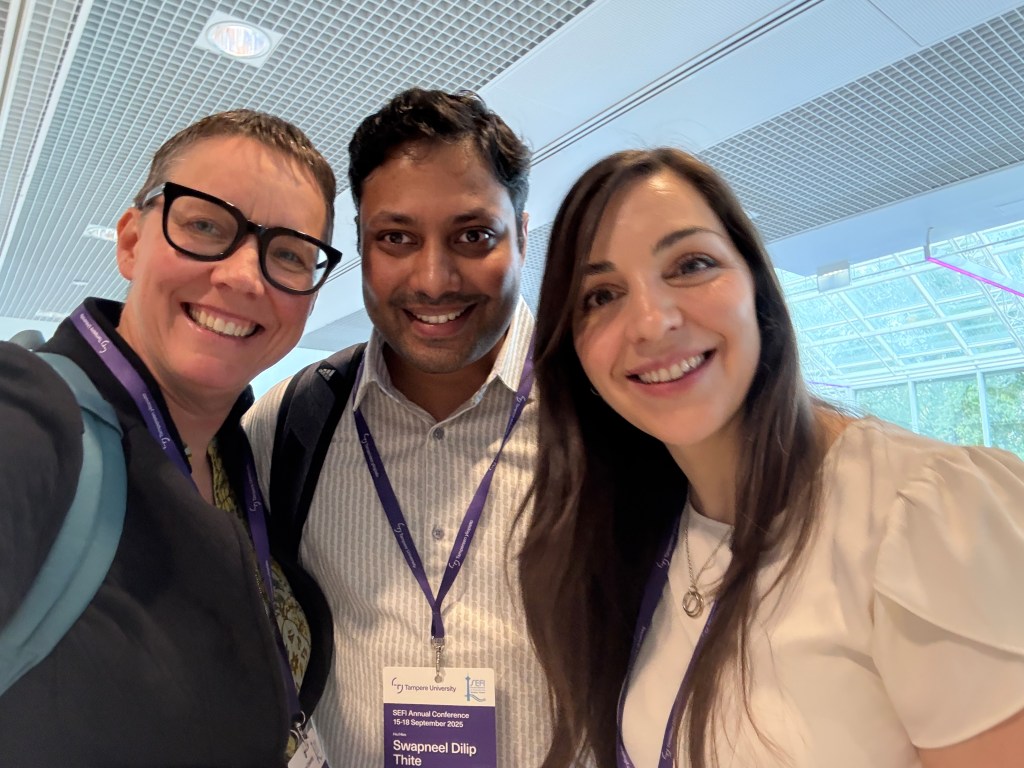
Meeting Swapneel Thite with SEFI incoming president, Emanuela TilleyKristina Edstrõm presenting Swapneel’s team’s award
Post-Conference Finnish Discoveries
The conference officially wrapped up on Thursday, but the adventures continued. I attended the SEFI Board of Directors meeting, worked with colleagues on planning future SEFI events, and then headed to Helsinki.
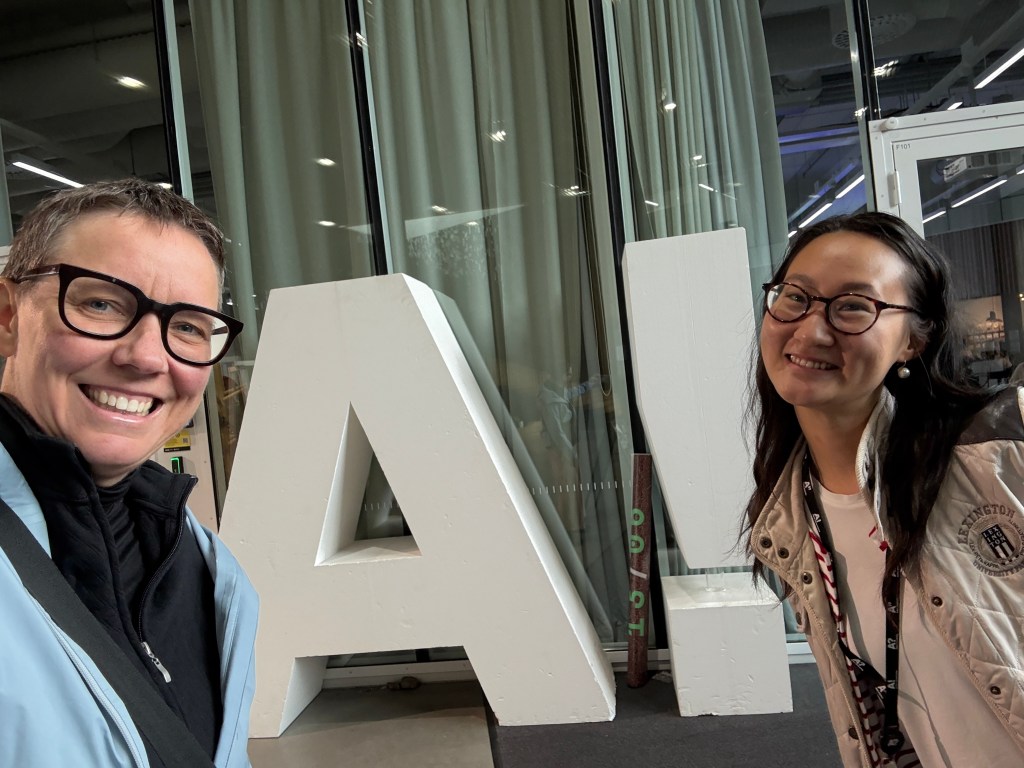
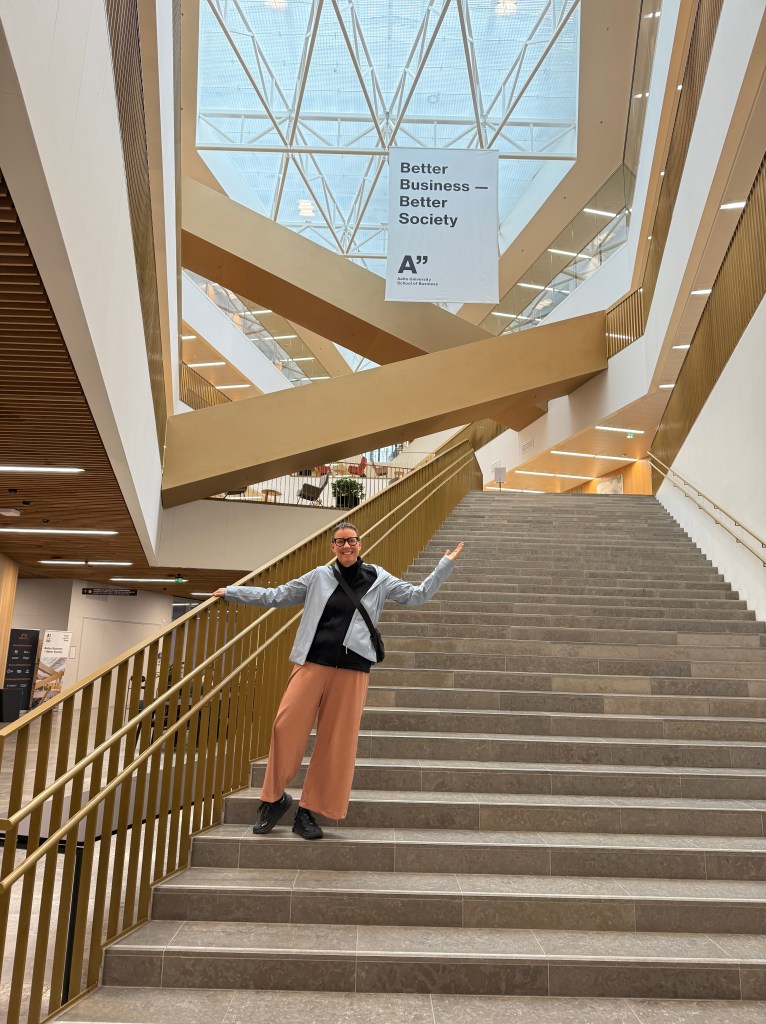
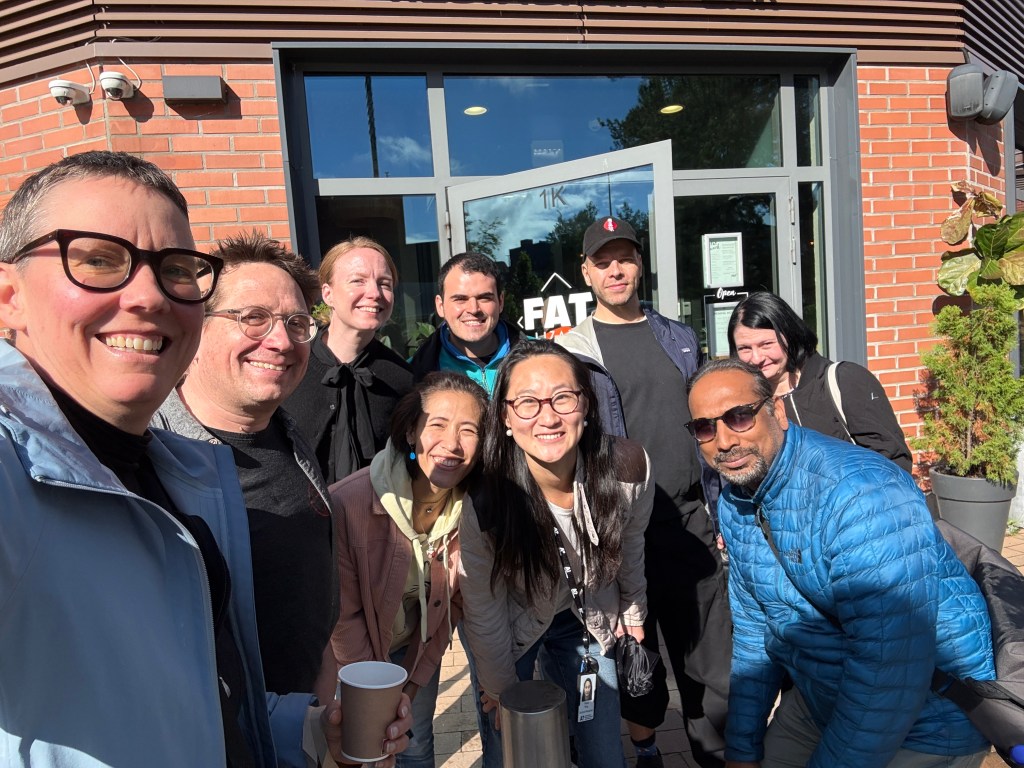
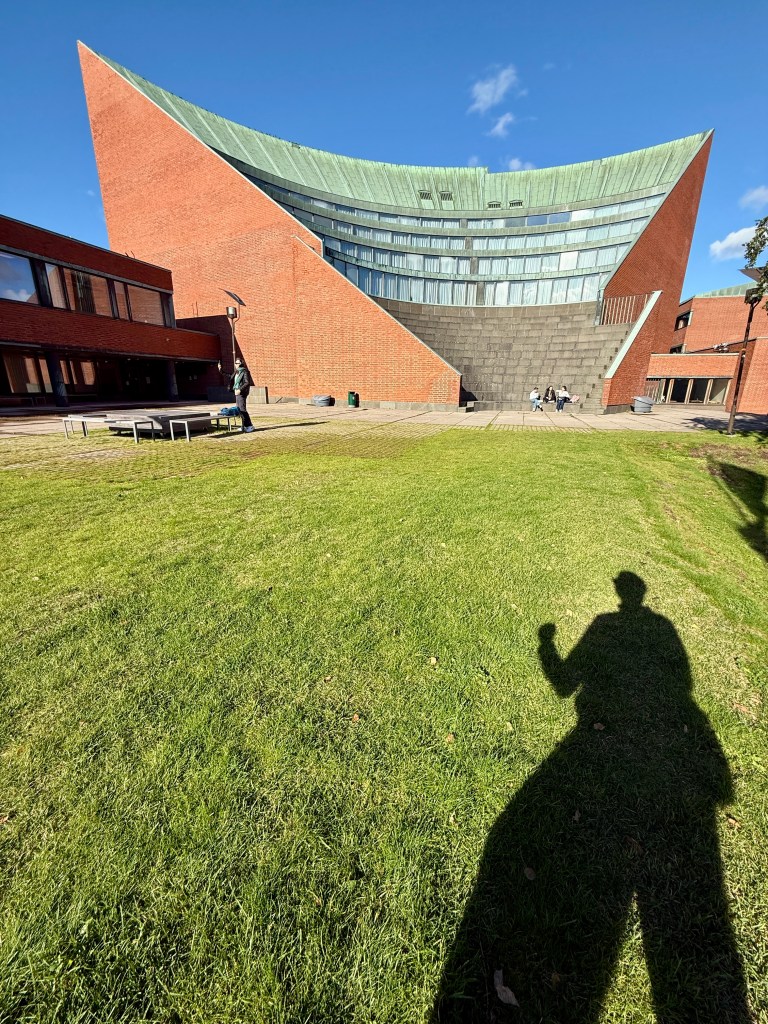
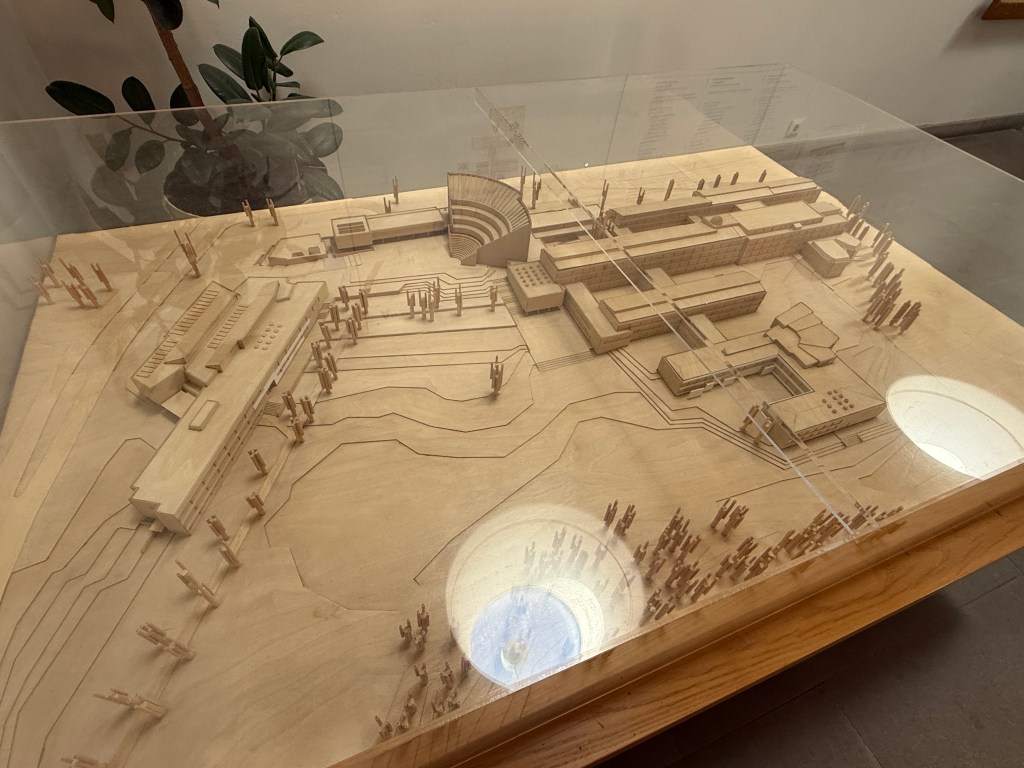
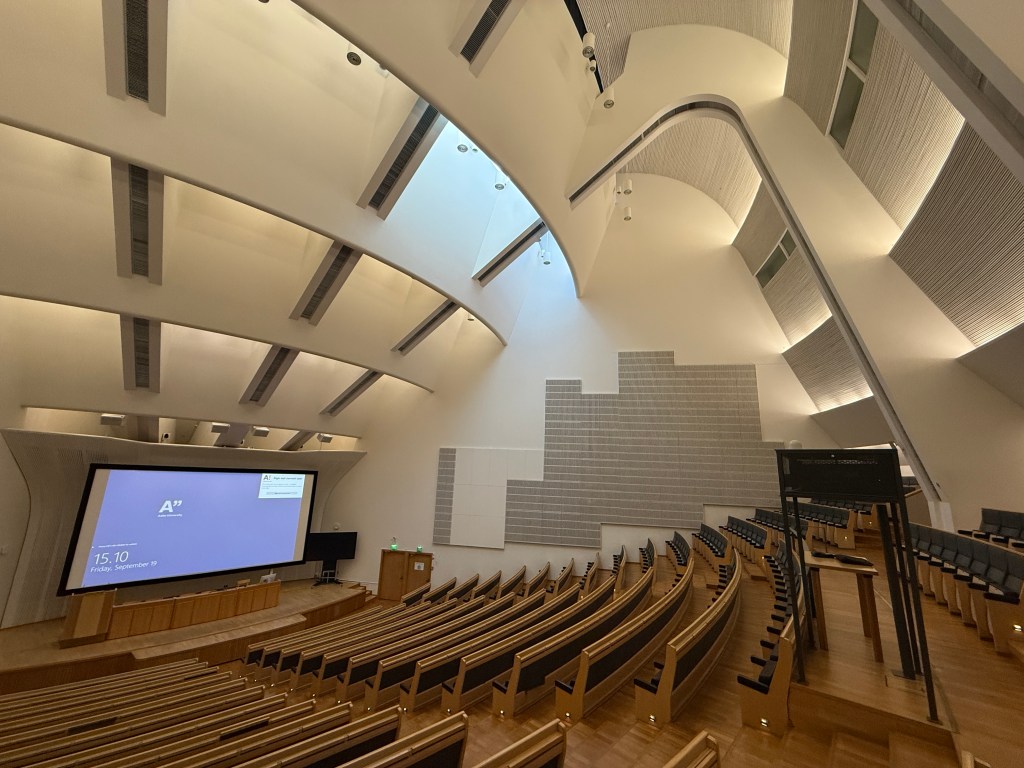
I spent Friday exploring Aalto University and meeting colleagues there. Dr Xiaoqi Feng provided a personal tour and connected me with her colleagues—a bittersweet moment as she prepares for her new job at TU Delft.
Snapshots from my day at Aalto University — thanks Dr Xiaoqi Feng for the personalized tour!
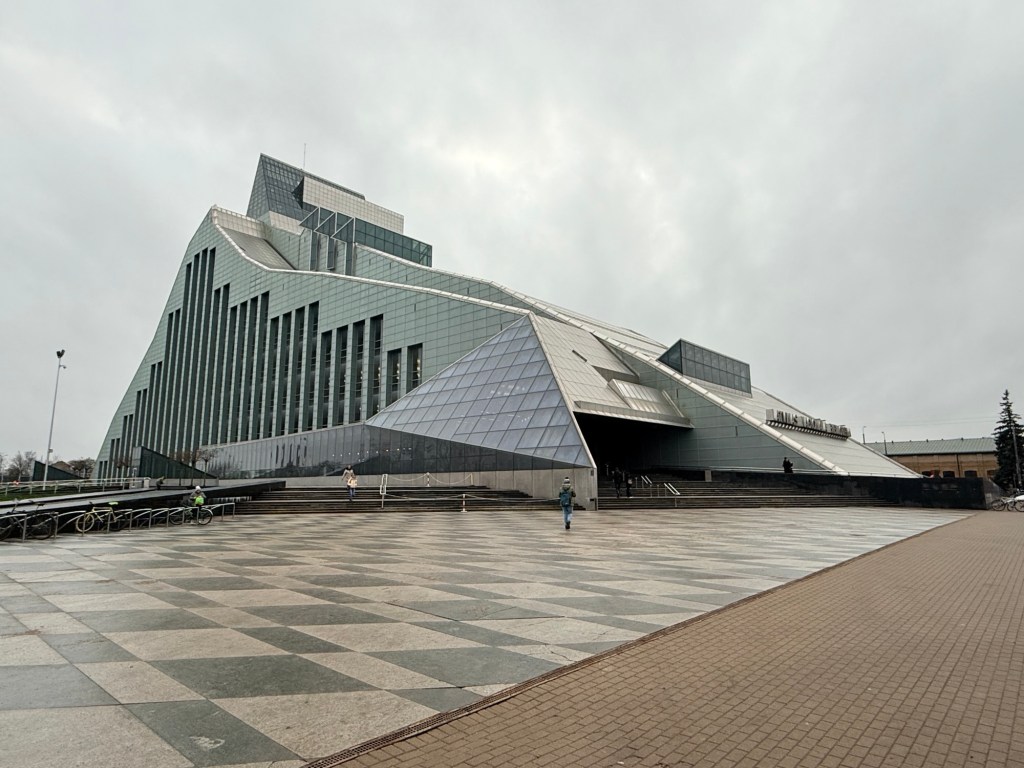
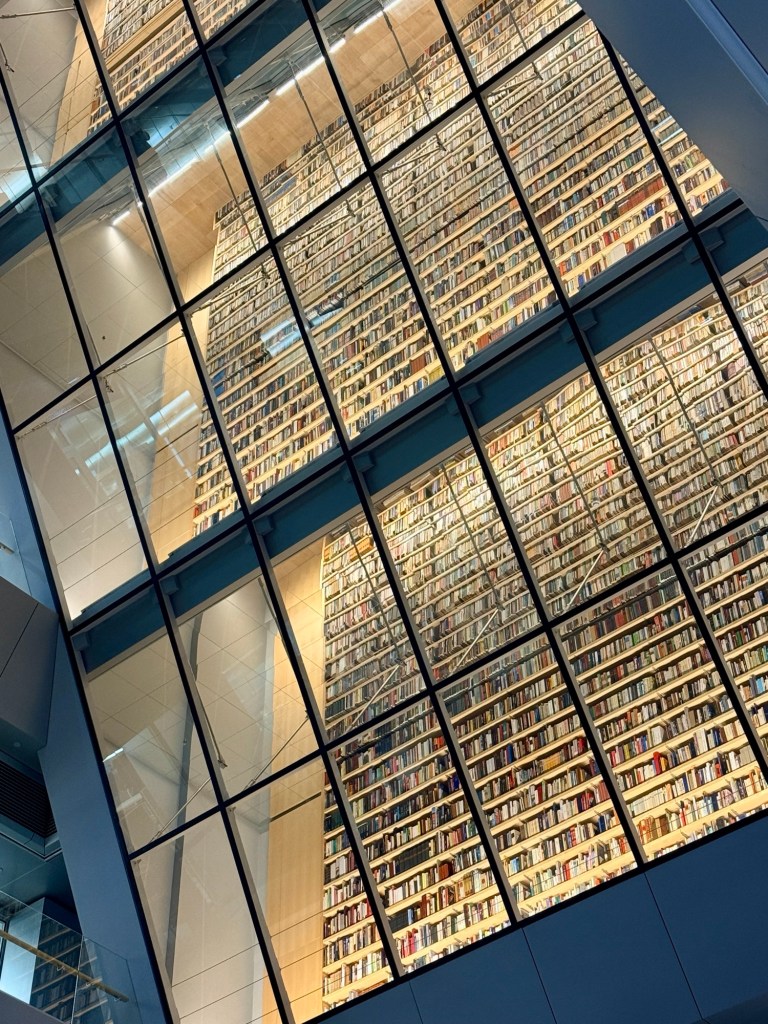
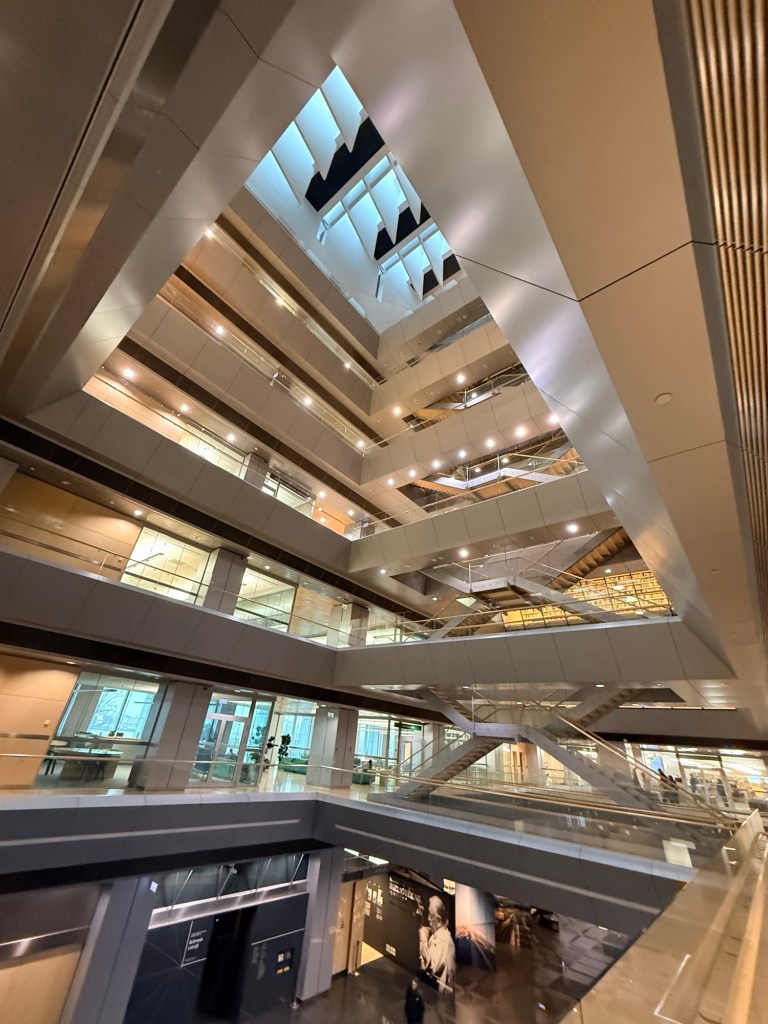
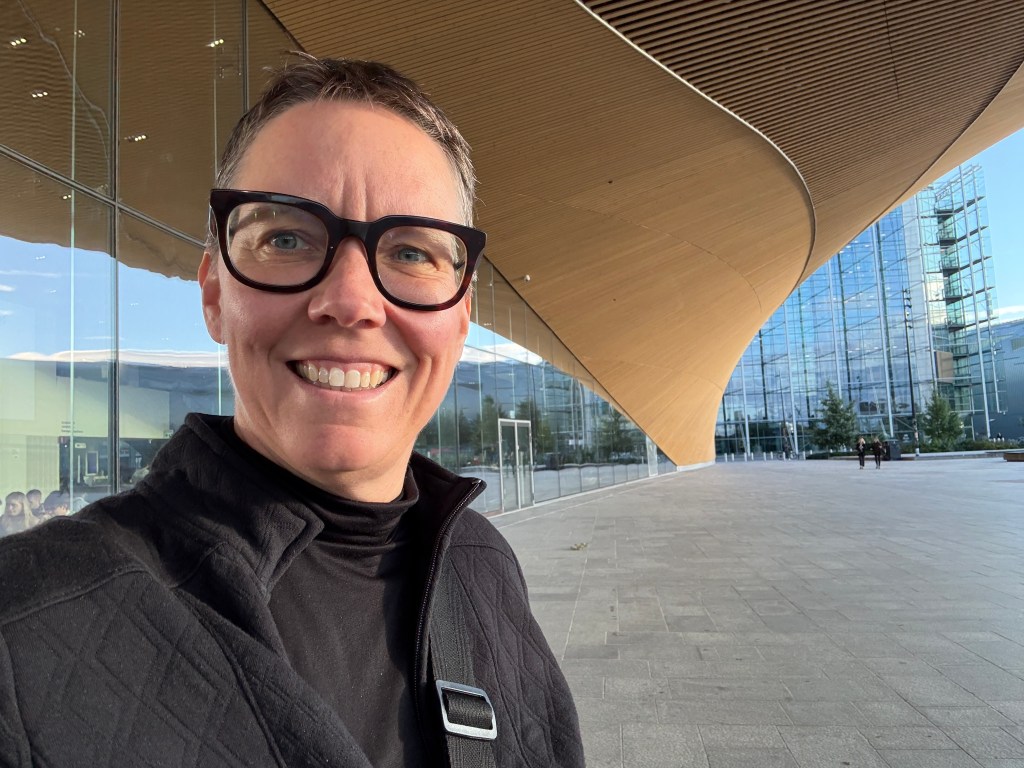
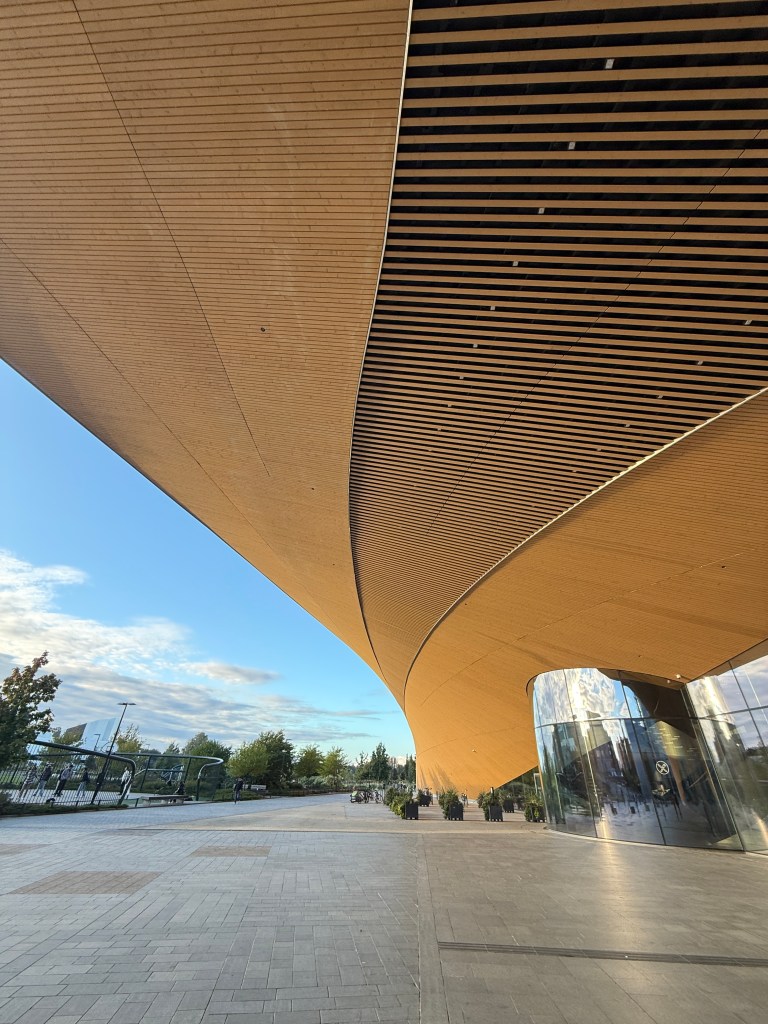
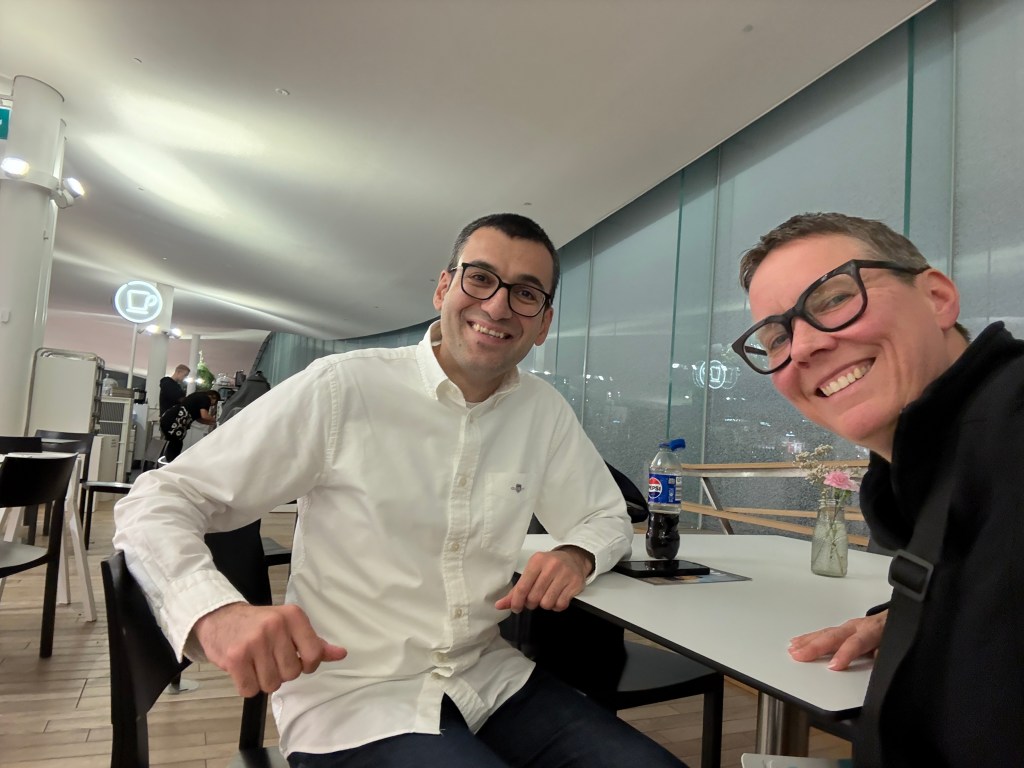
My Finnish travels culminated on a serendipitous high note when I ran into early-career researcher Yousef Jalali at the remarkable Oodi, Helsinki’s new Central Library. Moments like this—a chance encounter in a vibrant cultural space far from home—gave Yousef and me a chance to reflect on the conference and help support each other as “researchers on the move” who have relocated ourselves far from home in the pursuit of academic excellence.
What an amazing community of inspiring educators SEFI is!
Wrapping up the day at the people-magnet library, Oodi, in central Helsinki and rurring into Dr Yousef Jalali.
From celebrating major awards and delivering keynotes to fostering the next generation of researchers and exploring expressive Finnish architecture, this SEFI was truly a testament to the powerful, collaborative community we have built in engineering education.
For me, SEFI 2025 was such a celebration of community and collaboration.
Practicing the keynoteDelivering the keynoteCelebrating our handbook authorsConferring with colleagues near and far — these two from the European University of Technology — I’ll be working with them on an event for December — stand by for news on that!
Looking forward to visiting Helsinki and Aalto University again soon!
Most years, right before the beginning of the new academic year, I have the chance to be part of Dublin Maker. It’s a festival that celebrates the creative flair of people from all around Ireland. I’ve been attending Dublin Maker since 2015 and it never fails to delight.
The 2025 edition of Dublin Maker happened last weekend at Leopardstown Racecourse, on the south side of Dublin.
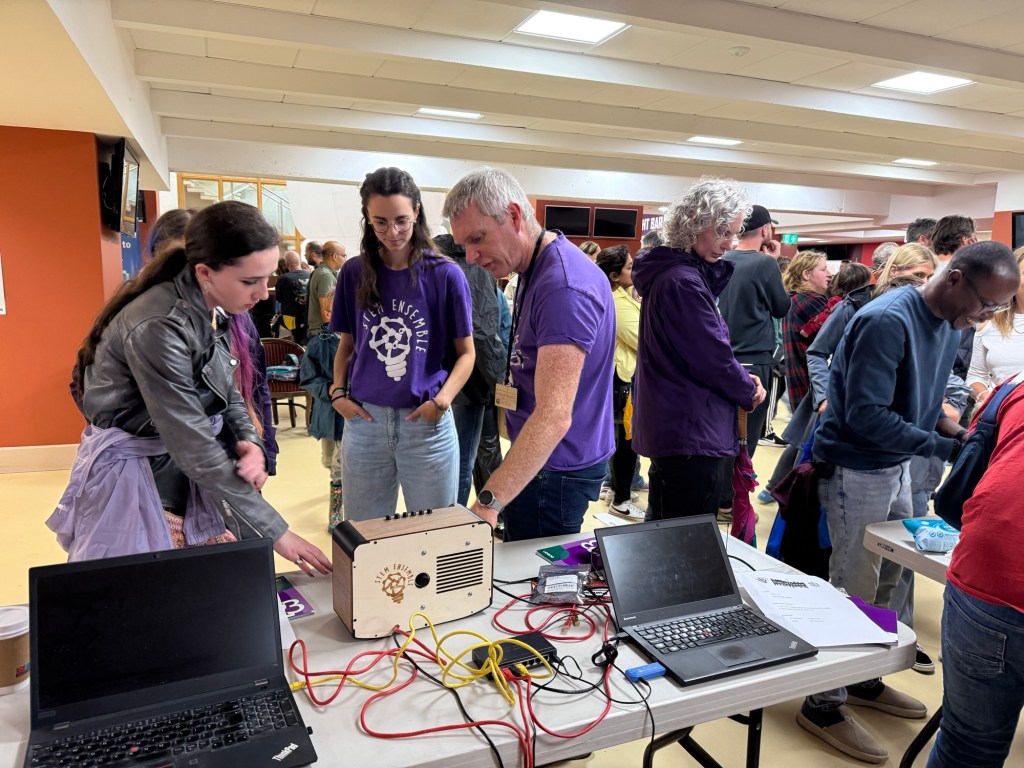
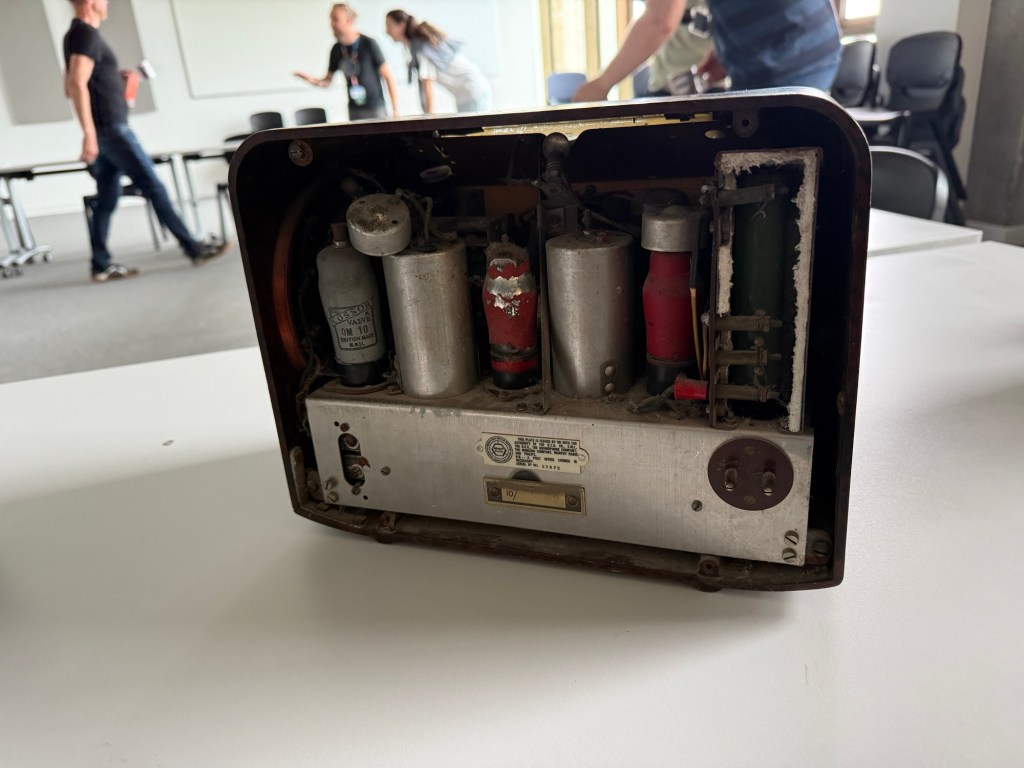
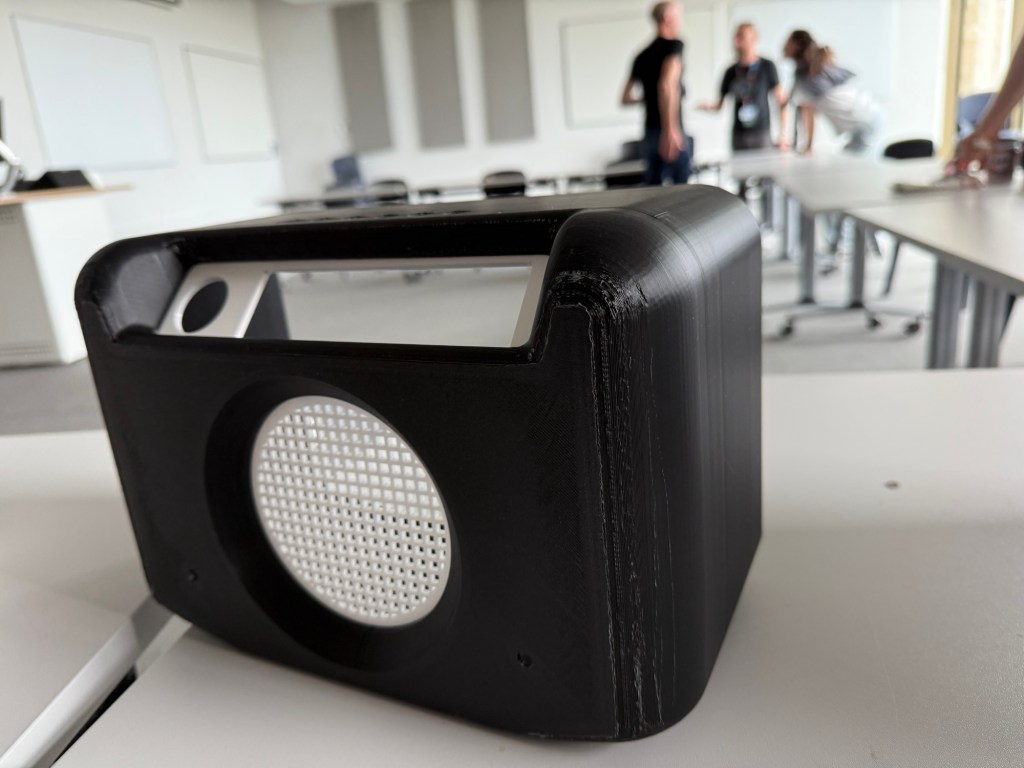
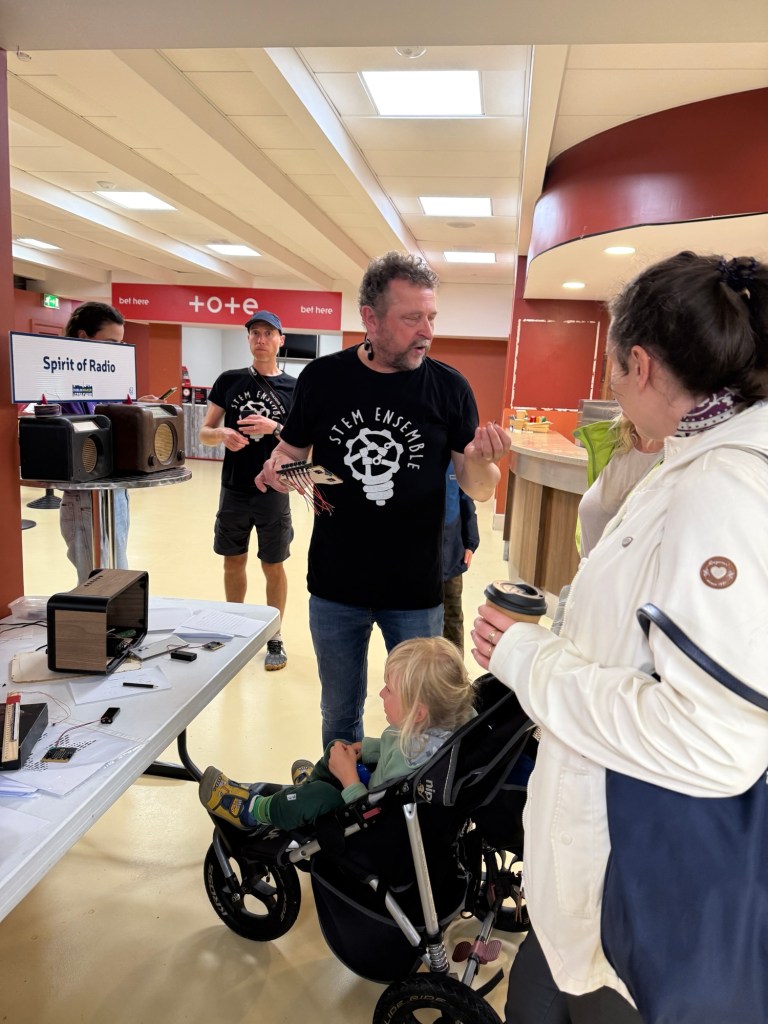
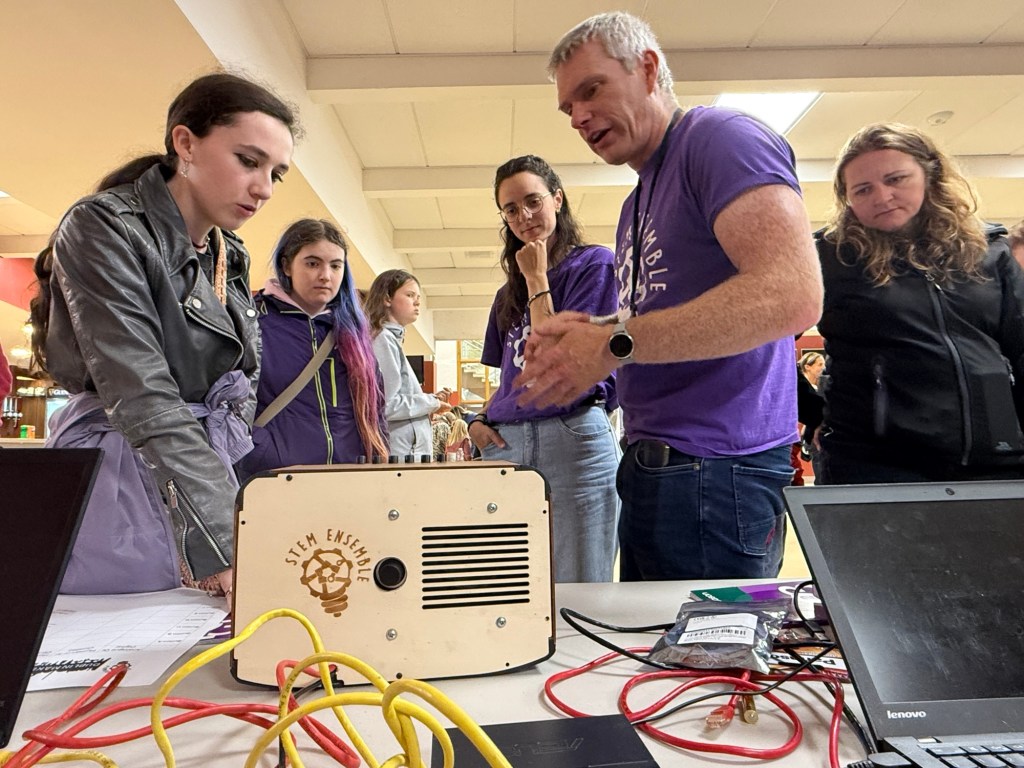
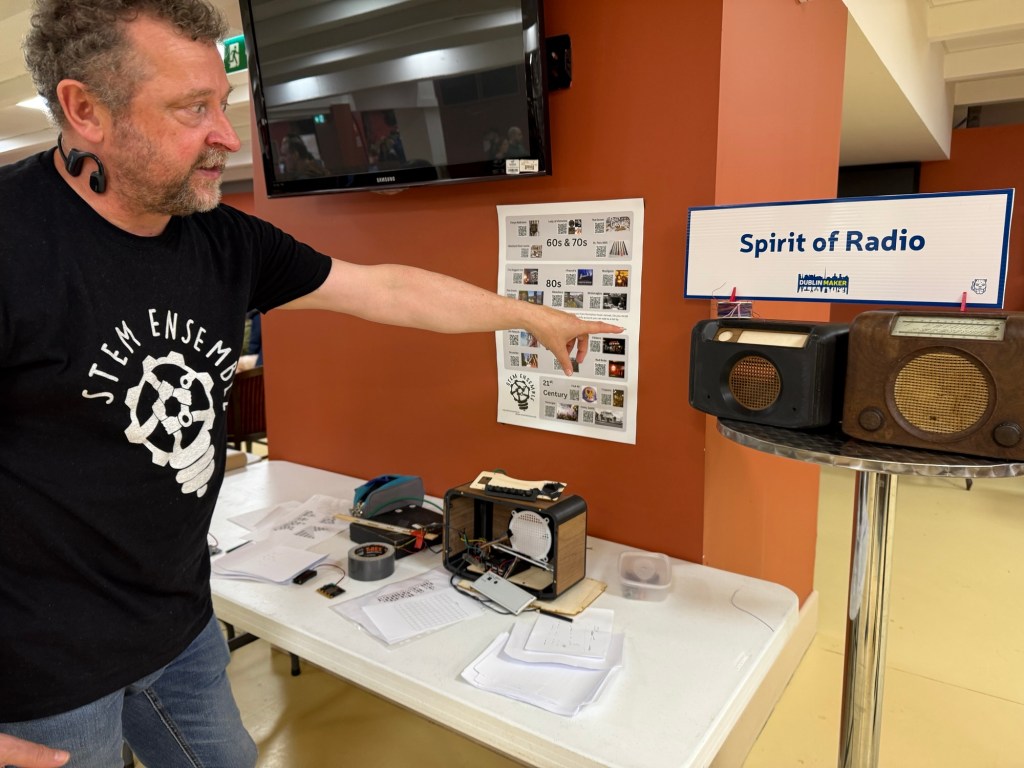
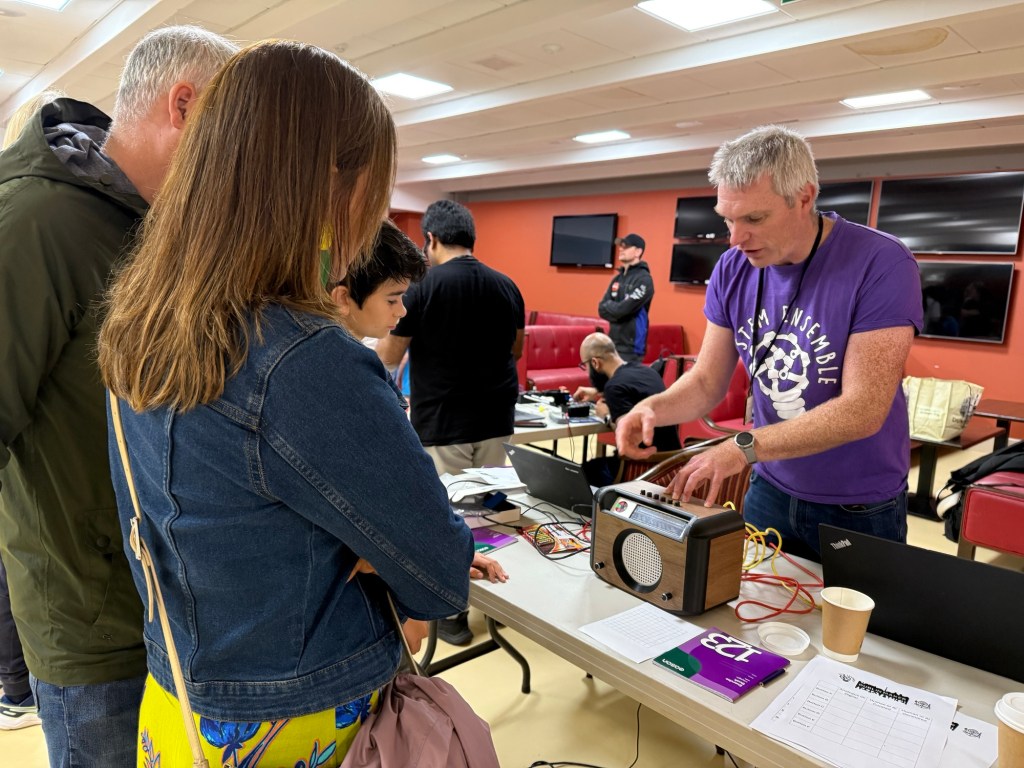
David Powell explaining how the radio features work. It’s designed to facilitate continual upgrade and ongoing R&D.
The open, participatory nature of Dublin Maker really appeals to me. As an education researcher, I’m all about the social construction of new knowledge and Dublin Maker epitomizes this phenomenon!
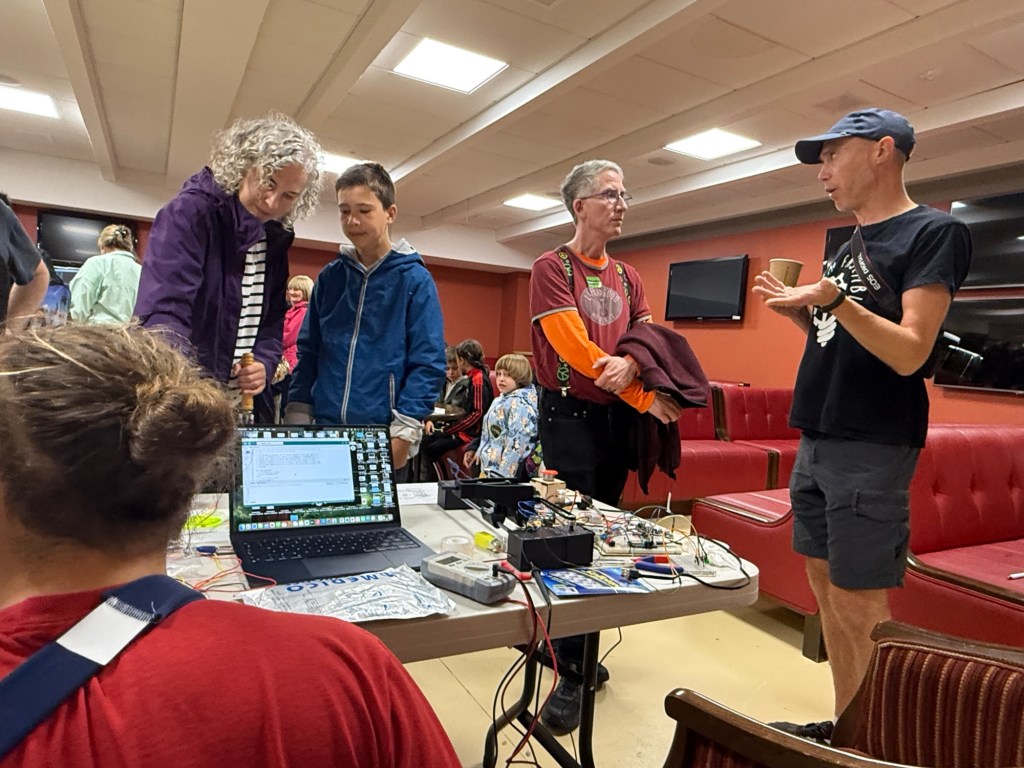
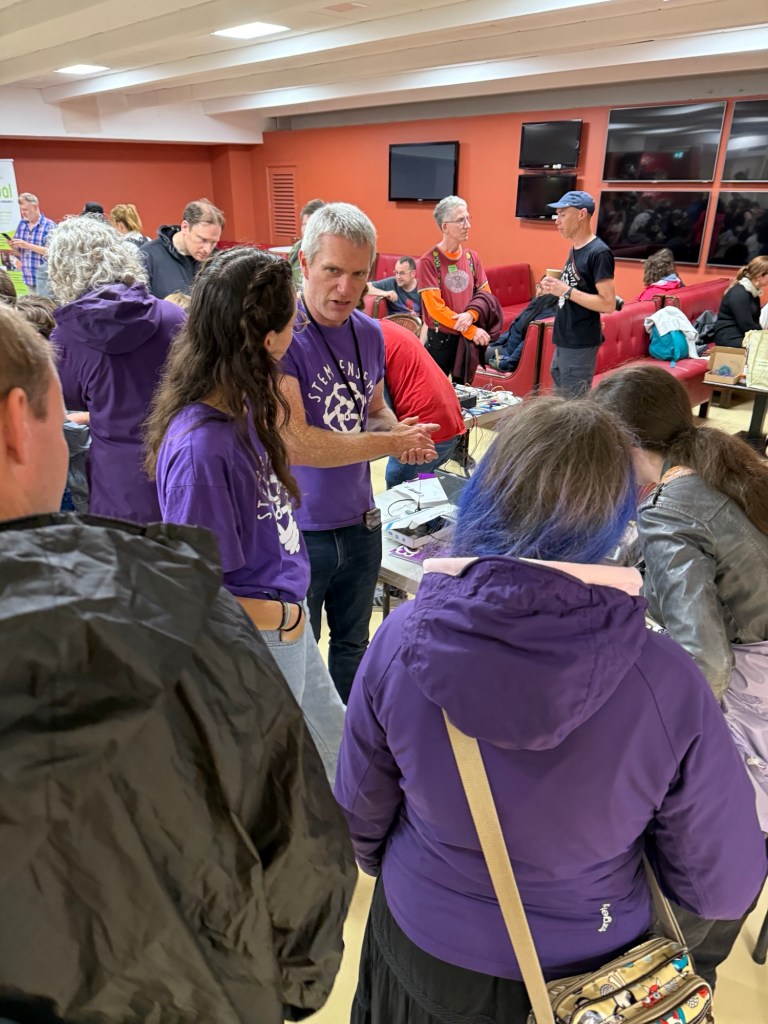
The venue was packed this year, as usual, and I think we’ve benefited from the rain outside. I attended Saturday (of the two-day event) and observed thousands of visitors engaged in hands-on technology, arts, craft, engineering, and science learning.
The exhibition halls buzzed as makers of all ages shared their projects, demonstrated new ideas, and connected with other creative enthusiasts. Exhibitors showcased everything from polished inventions to prototypes and works in progress.
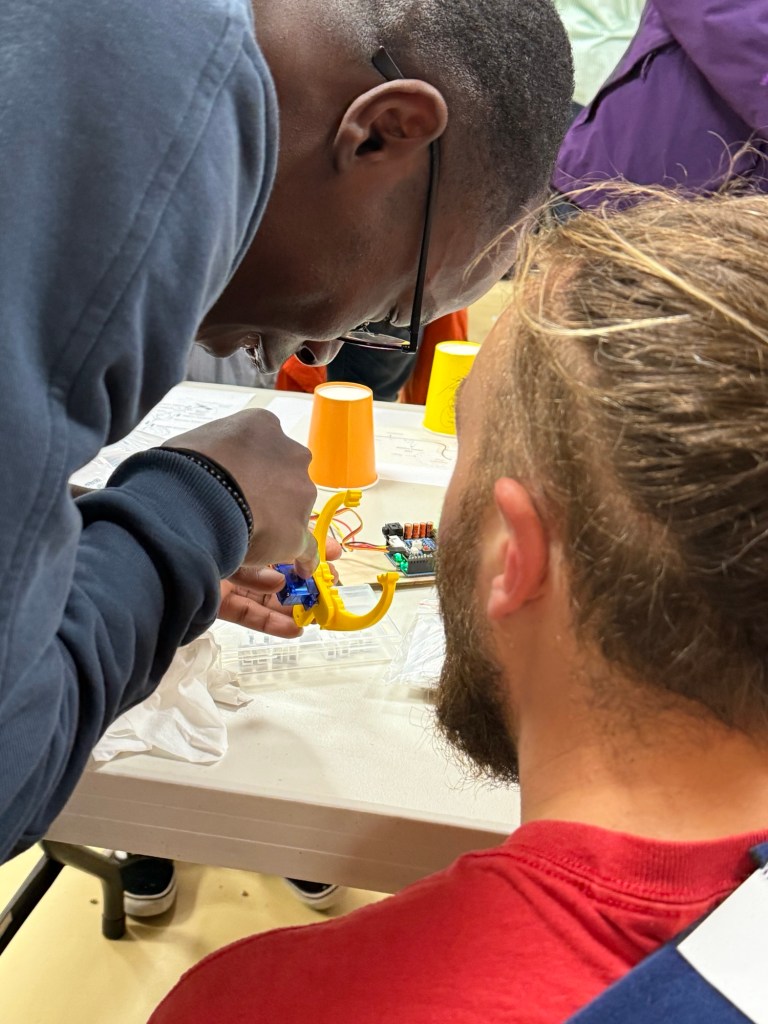
Postdoc Patricia (Patri) Lucha Farina, Assistant Lecturer Mayank Parmar, and Senior Researcher Harish Kambampati working together.
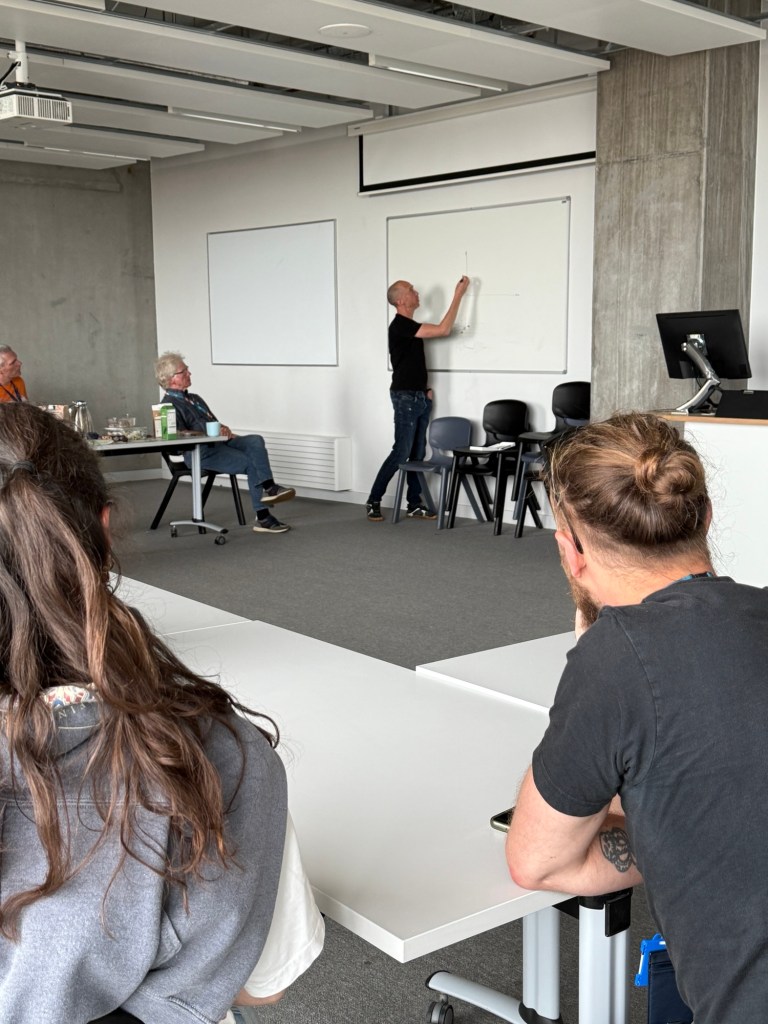
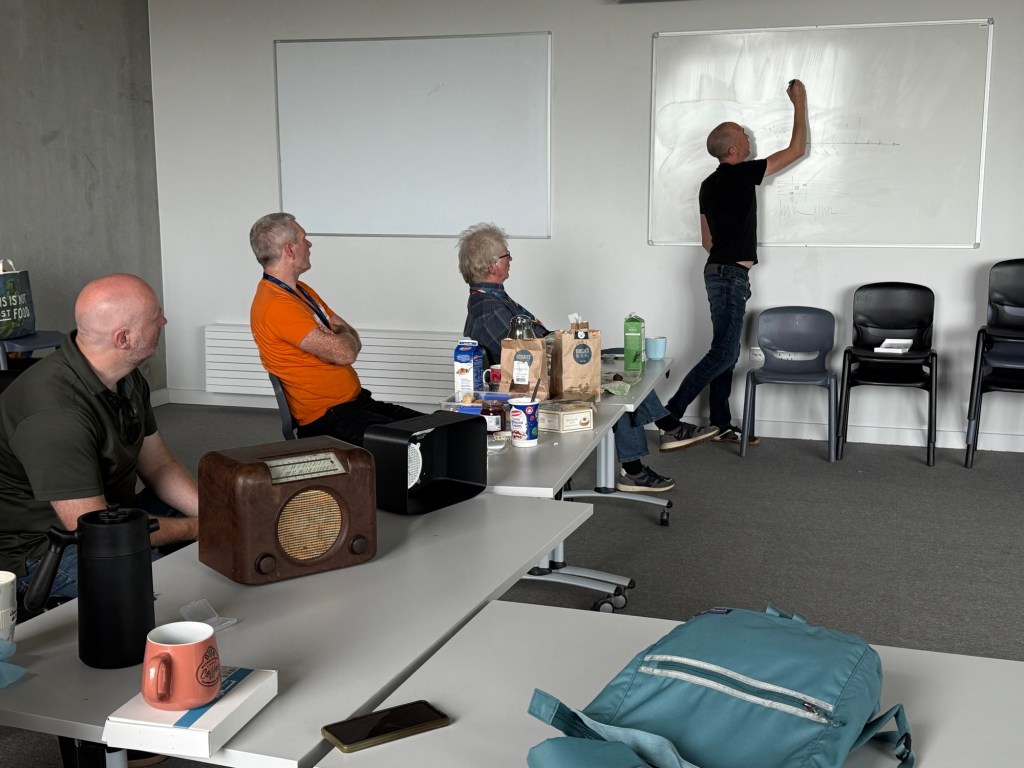
Heaven knows my colleagues always work to the very last minute, creating new aspects of their projects (even though they’ve all been enthusiastically working for months to prepare)! I’ve provided photographic evidence of our July meeting below. ⬇️
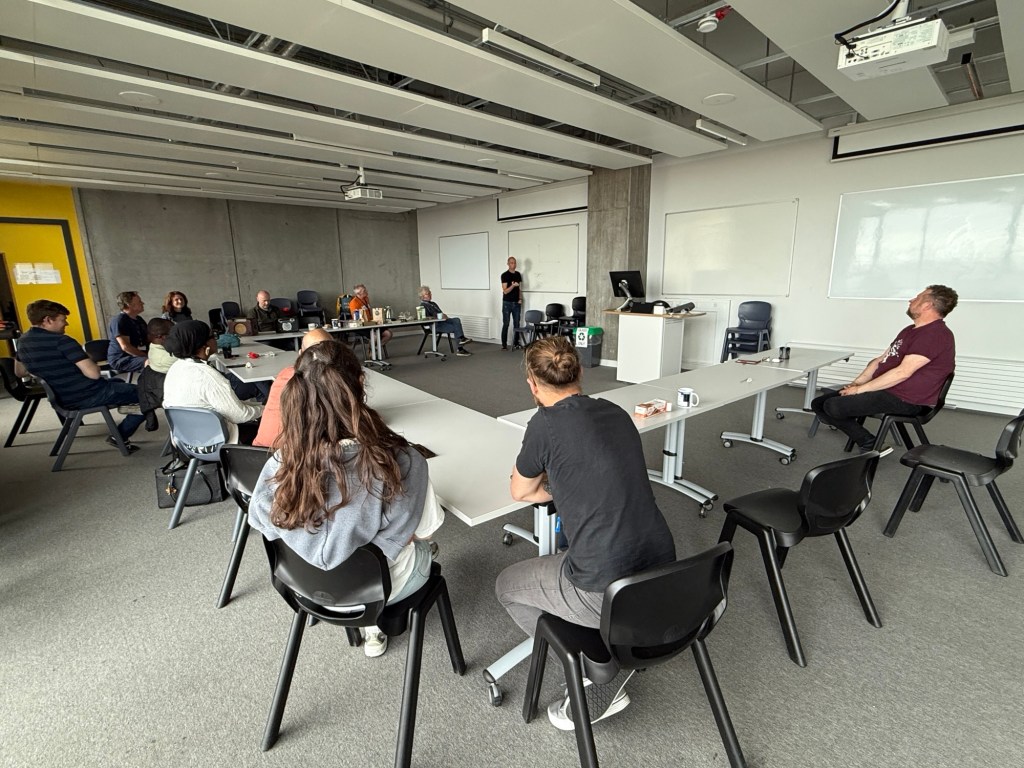
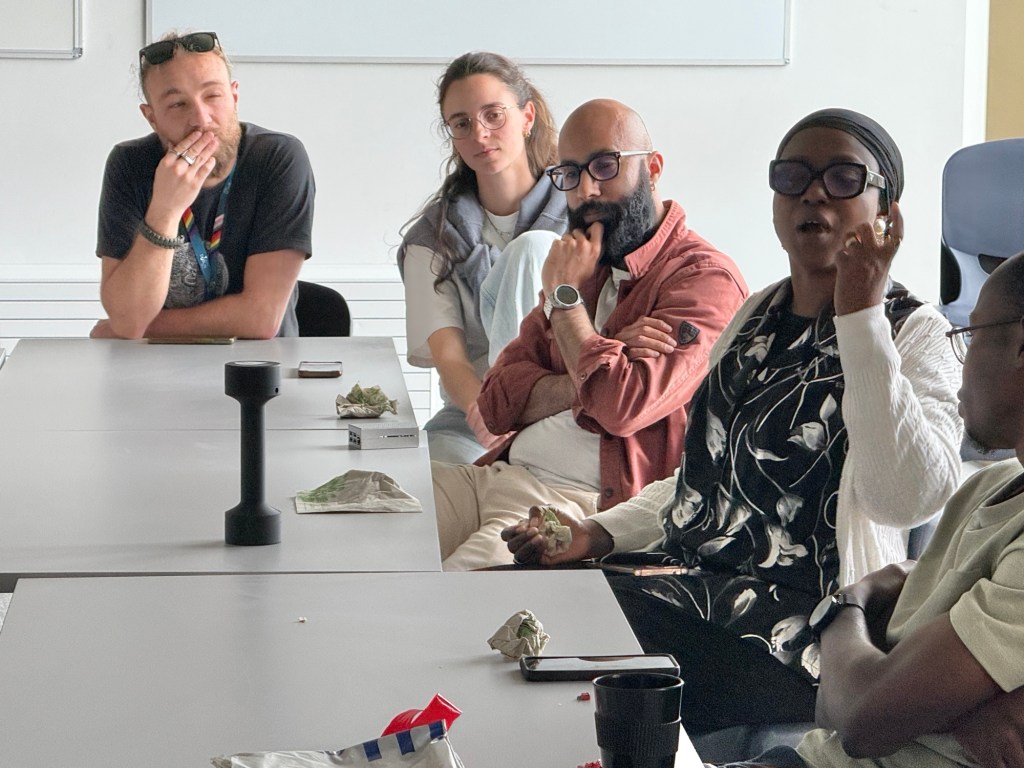
STEM Ensemble’s July meeting to prepare for Dublin Maker.
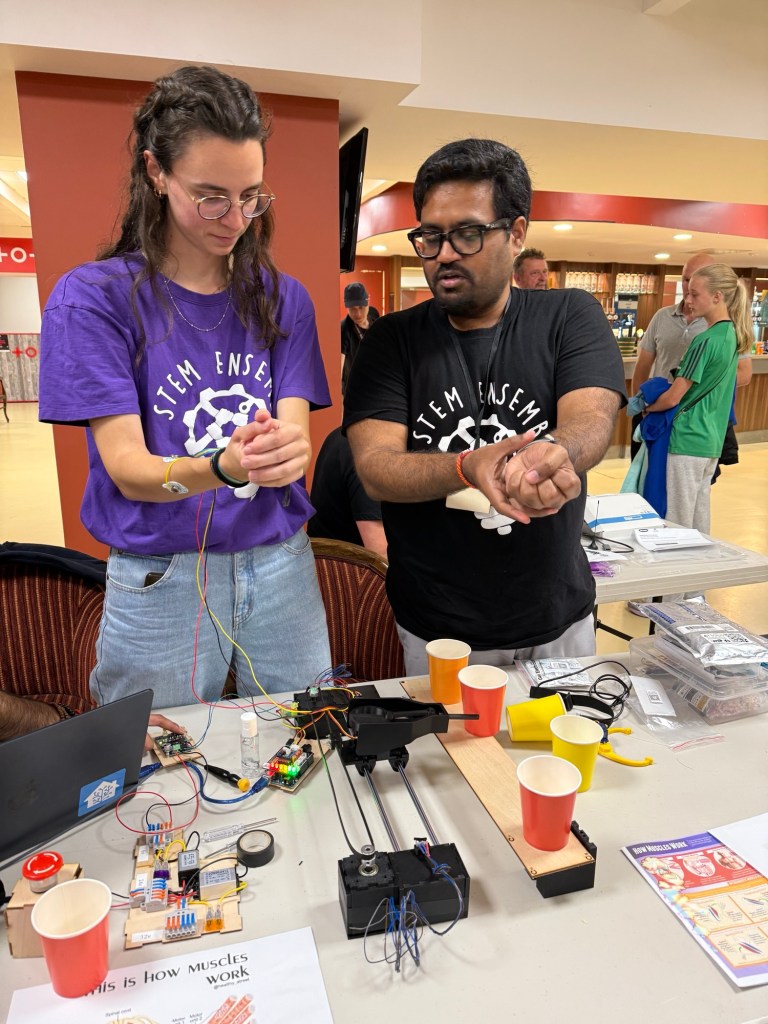
This year was no exception as our makers worked to perfect the biomedical engineering projects they’d brought to share. Several of our group’s new lecturers and researchers worked together on this table.
Our researchers, Mayank Parmar and Dr. Harish Kambampati, demonstrating biomedical technologies.
I typically help with communicating the ideas to a younger audience or contributing something that’s more on the artistic or spatial side (since I’m an architect, who loves to hang out with these creative engineering types).
In the early years of Dublin Maker, 2015-2018, you would’ve seen us under the banner of RoboSlam. Our booth usually has several tables of displays with hands-on activities, grouped together under some sort of theme.
One year, we hosted the “RoboSlam Cafe” where attendees could build their own robots from low-cost kits—we wanted to provide firsthand experience in robotics. We like to demystify how everyday “smart” devices are made by showing people what’s “under the hood” and making it understandable.
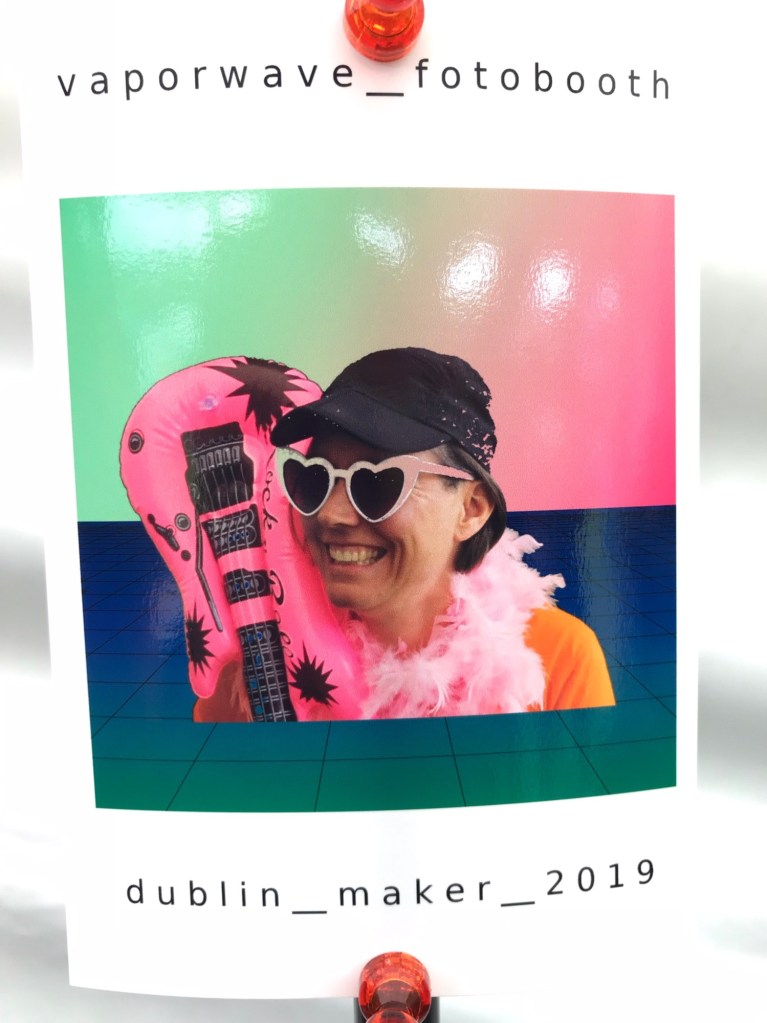
Two of my personal favorites among our past exhibits have been “fractleismus” (generating images from attendees’ sketches using a fractal algorithm) and the “vaporwave fotobooth”, both presenting creations by Ted Burke. ⬇️
From the FotoBooth in 2019.
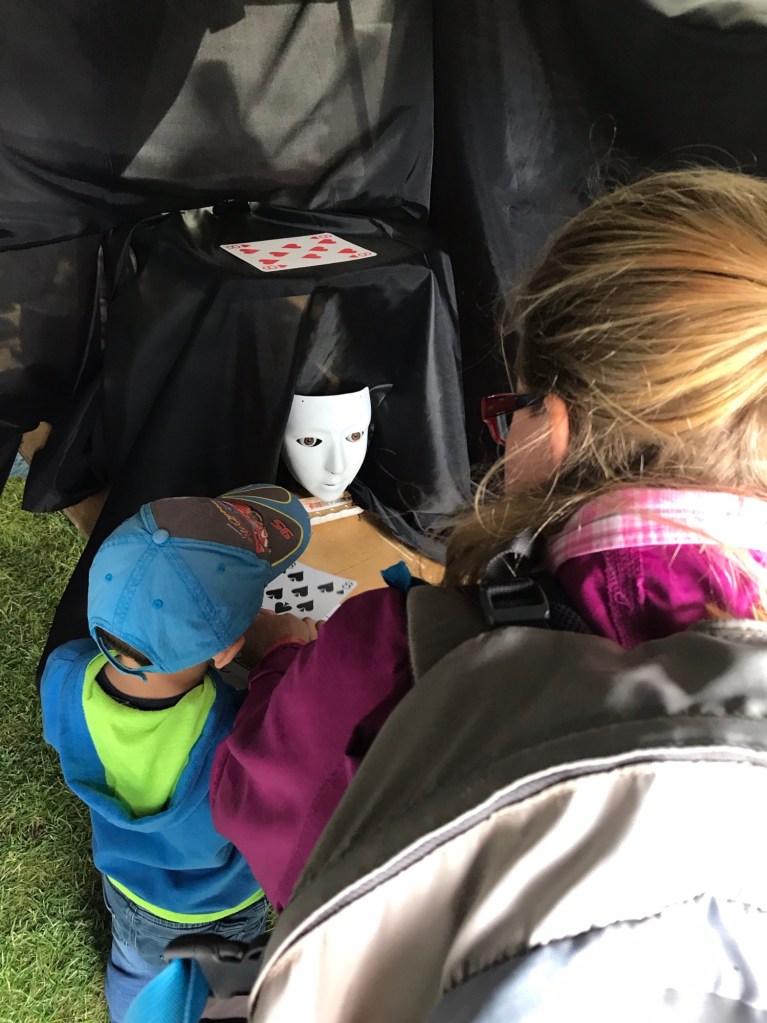
The fortune teller and subsequent Talking Head booth developed by Shane Ormonde, which integrated AI, were also quite intriguing. The second of these demonstrated generative AI work in real time, back in chat, GPT was just emerging. ⬇️
Shane Ormonde’s fortune teller from 2019.
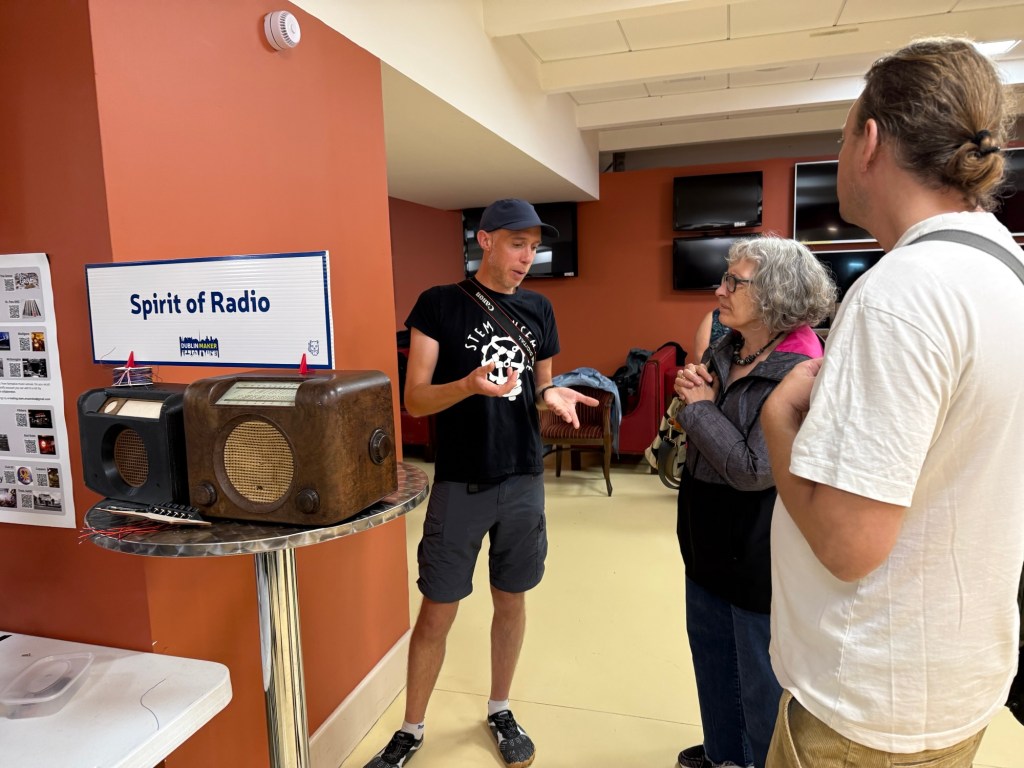
This year, our major theme was the “Spirit of Radio”.
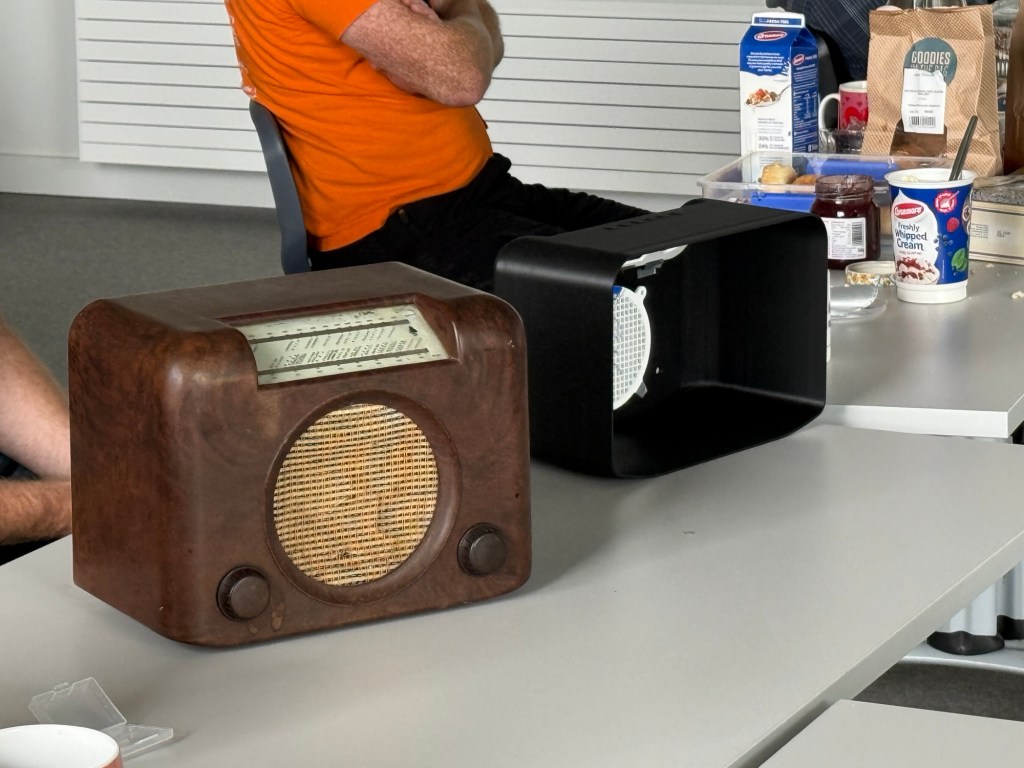
My STEM Ensemble colleagues have been working hard to develop a radio that has analog feature features as well as AI enabled digital features. This is related to a project that Paula Kelly is leading to introduce senior citizens to AI and help them understand the technology.
David Powell with our new (left) and antique (right) radios.
The radios that we displayed this year were predominantly developed by David Powell, Keith Colton, Frank Duignan, Shane Ormonde, Ted Burke, Richard Hayes. Of course, many other people provided ideas and advice during our STEM Ensemble meetings.
I’ve been attending the meetings, although I can’t contribute much on this topic. Nevertheless, I go to learn and soak in the maker spirit!
Some of the STEM Ensemble at Dublin Maker, giving me a good laugh!
Since we’re no longer just about robotics, we shifted our name from RoboSlam to “Dublin STEM Ensemble”. Our group is associated within the School of Electrical and Electronic Engineering at Technological University Dublin. It’s also associated with the university’s tPOT research group (“tPOT” stands for “toward people oriented technology”), to which I belong.
STEM Ensemble is group of staff, students, and alumni who reflect TU Dublin’s long-standing commitment to inspiring public interest in science, technology, engineering, and mathematics. Damon Berry holds tPOT and the STEM Ensemble together—he’s a great leader!
By engaging directly with attendees, our group encouraged new perspectives and fostered a spirit of creative inquiry.
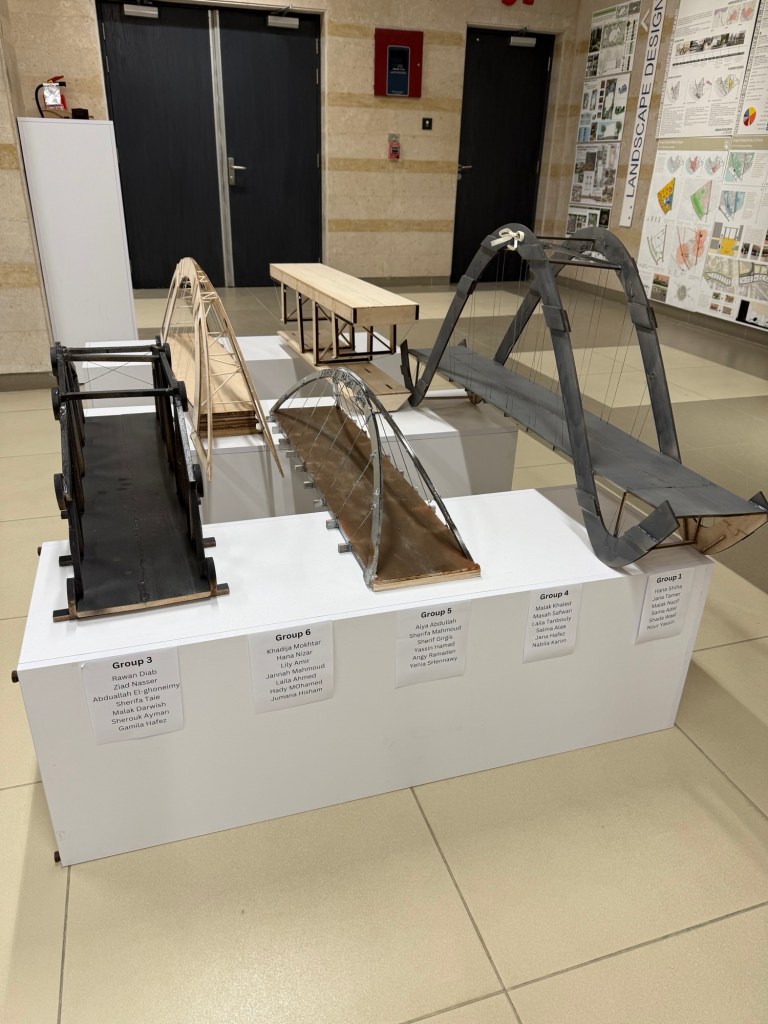
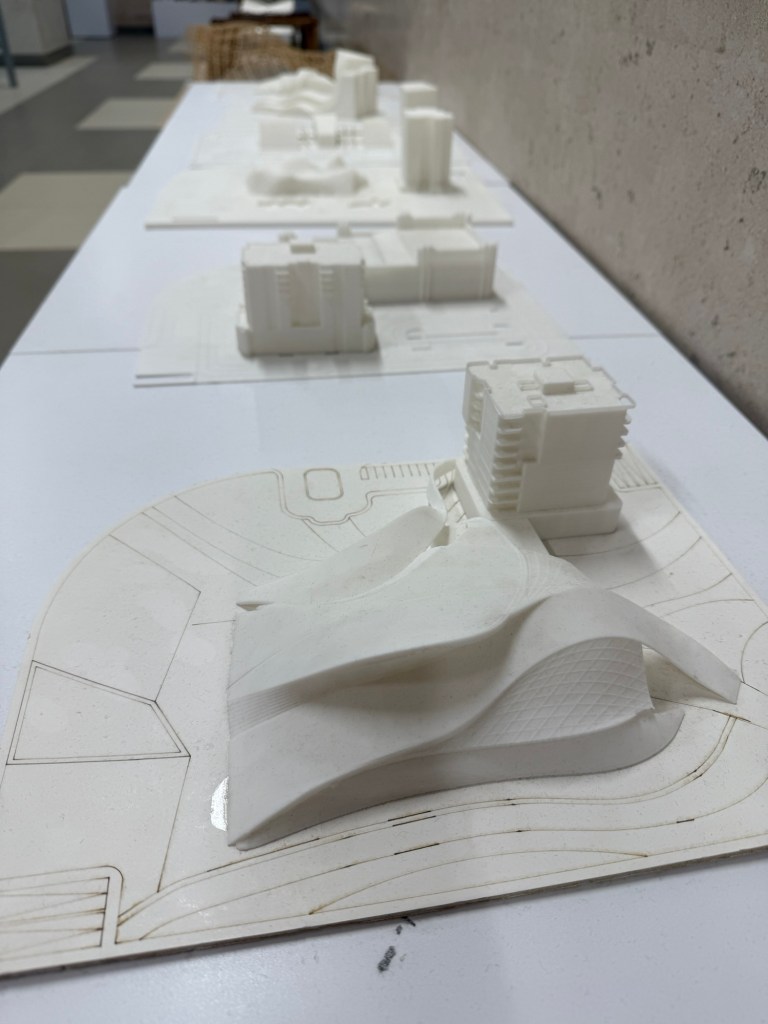
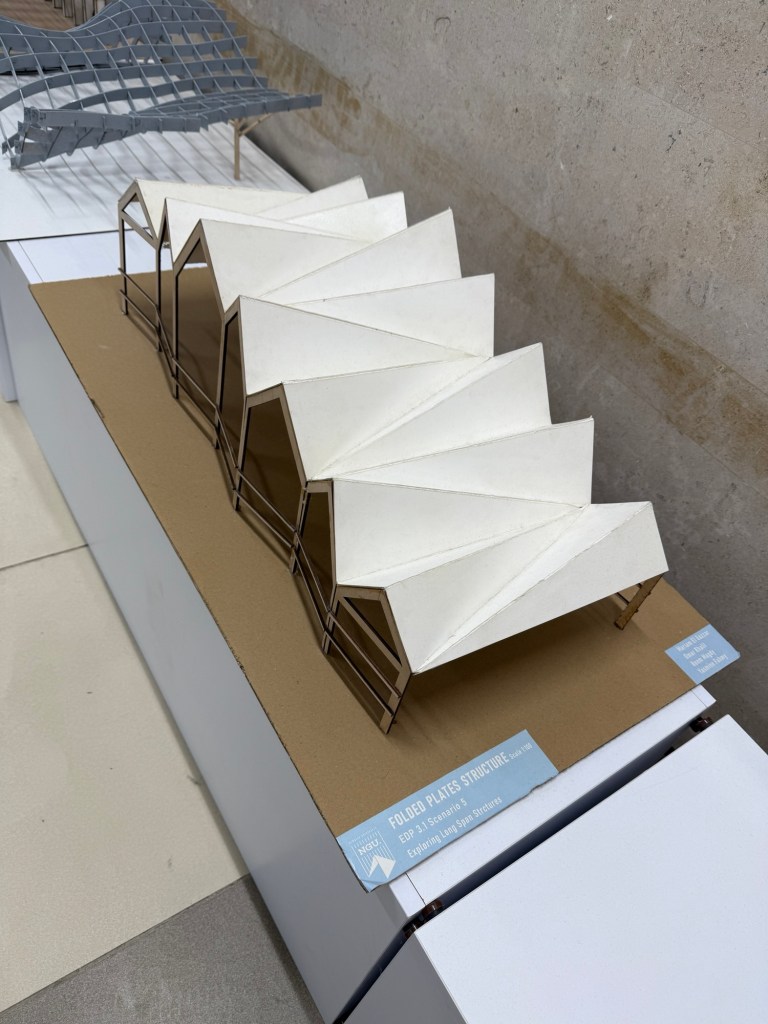
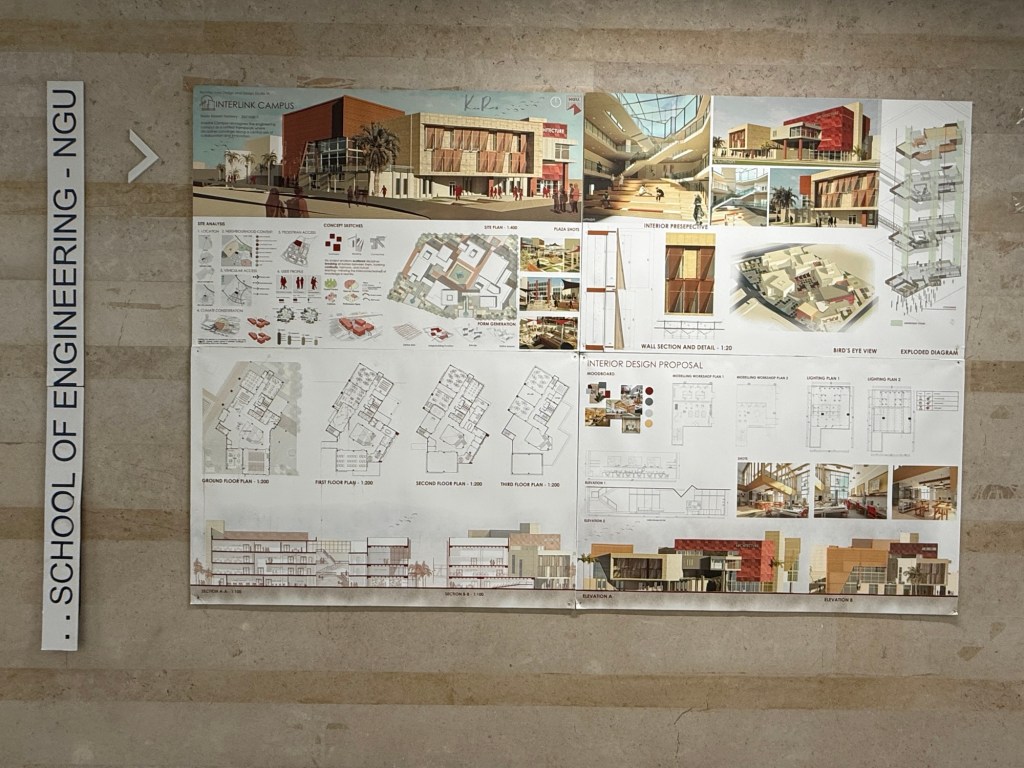
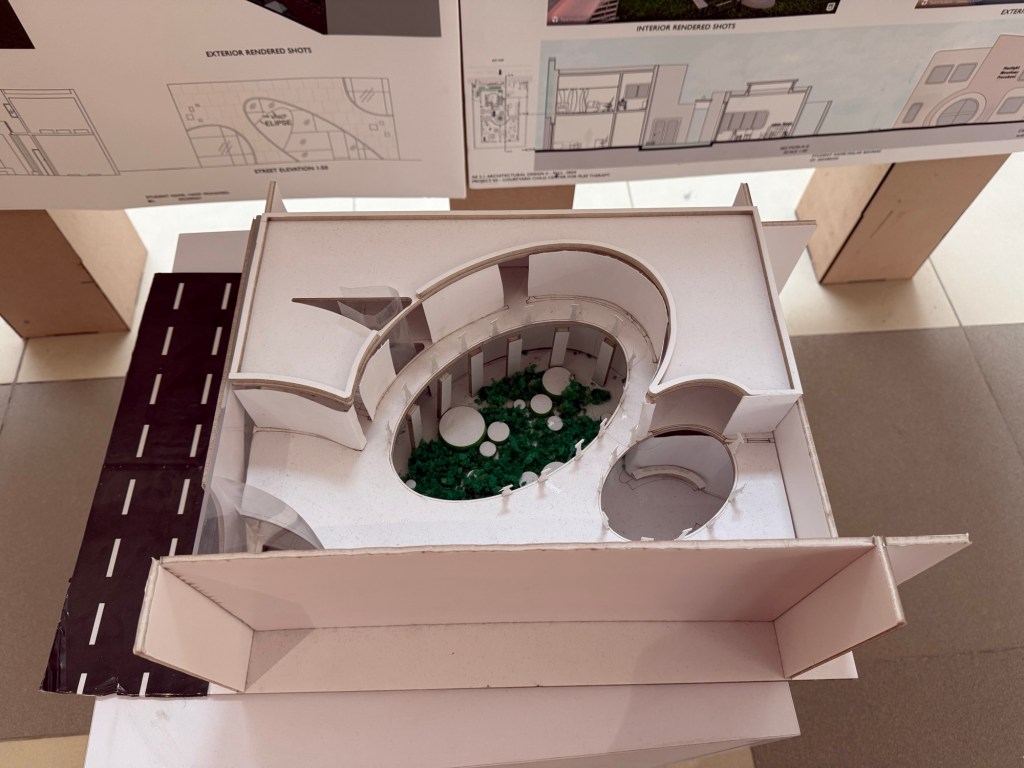
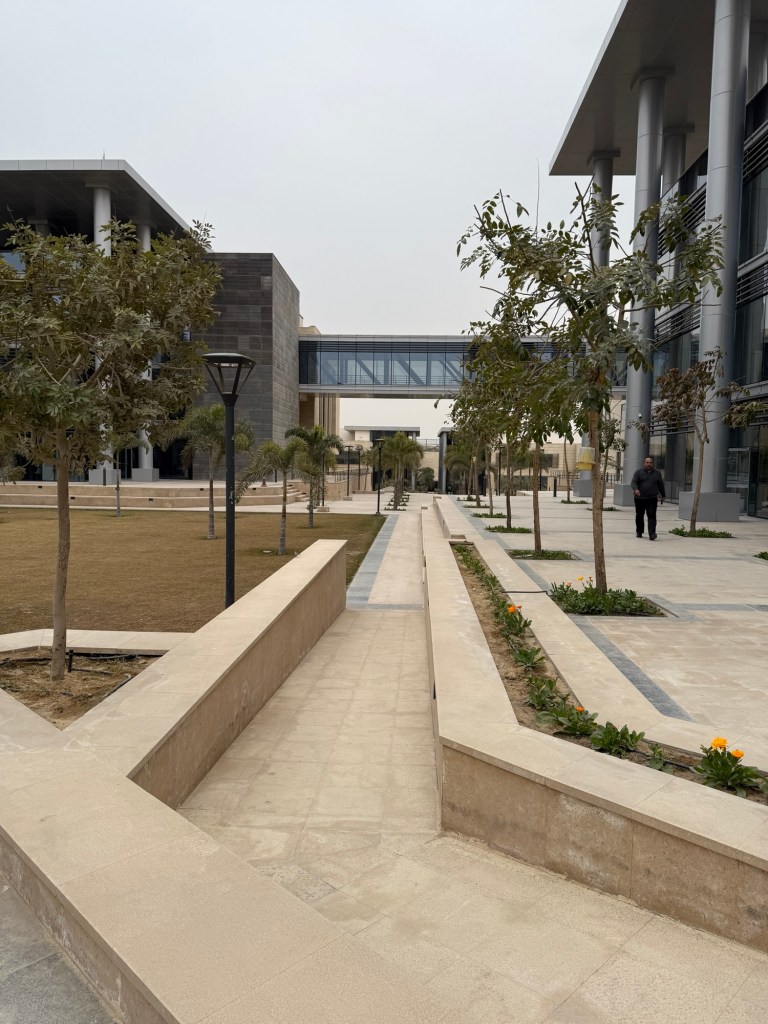
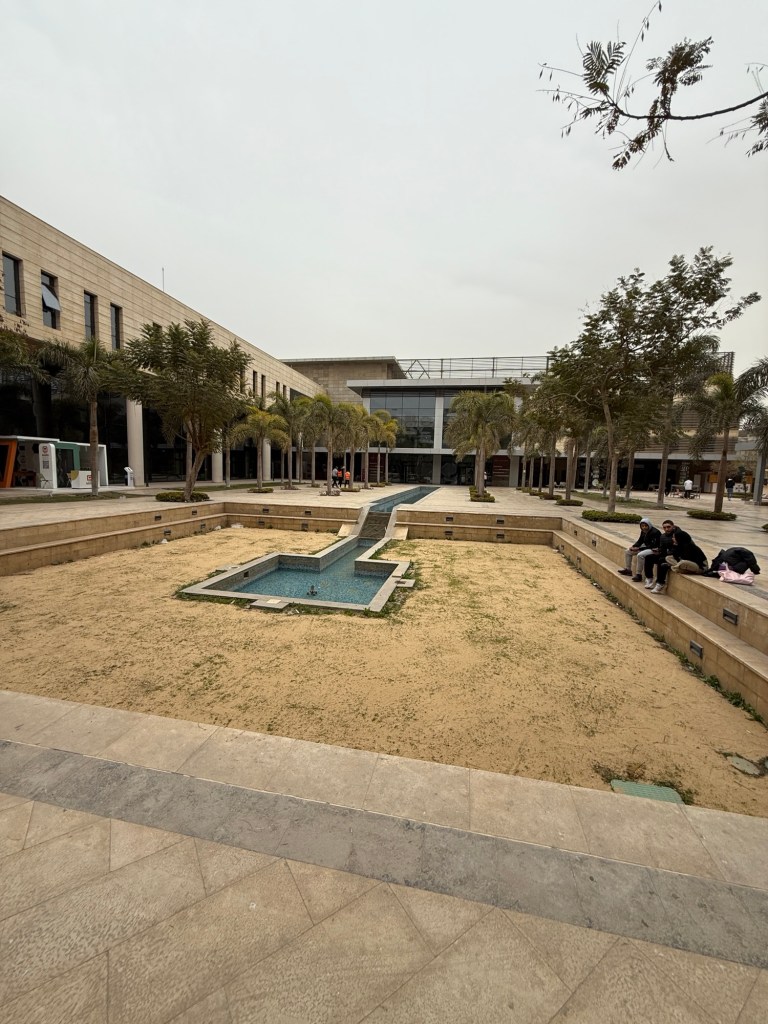
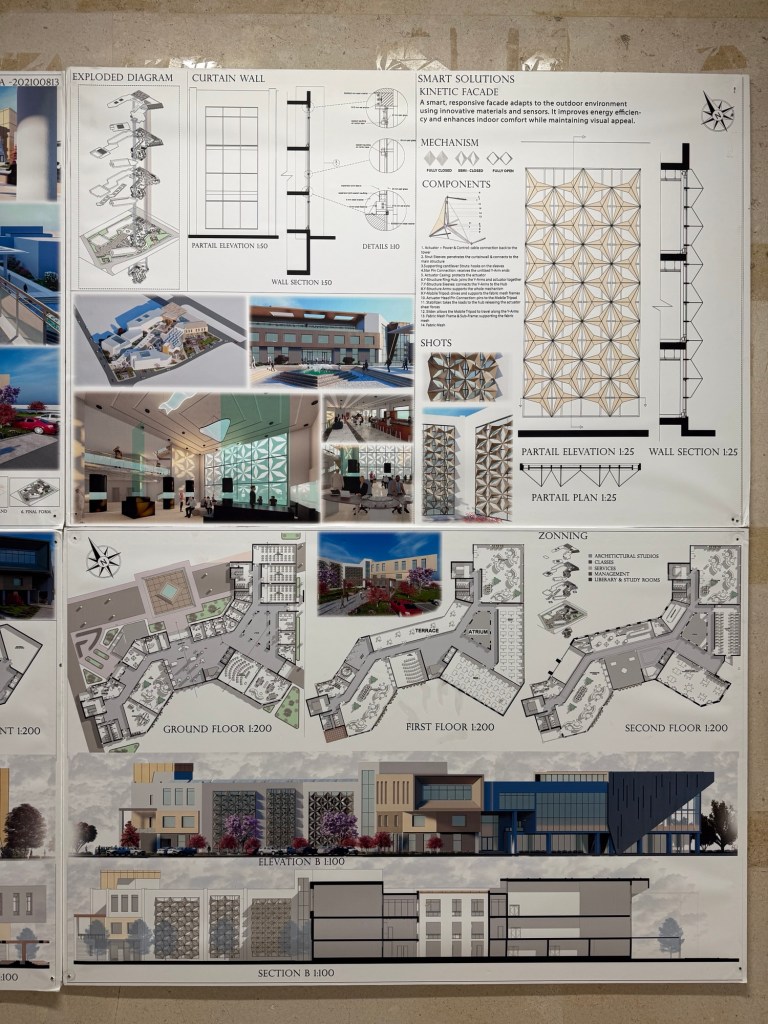
NewGiza University (NGU), located on the outskirts of Cairo, just released a video of me discussing the Architectural Engineering curriculum that I co-designed with Professor Emanuela Tilley, starting back in 2020: https://www.instagram.com/reel/DMVKR4HvVQ0/?igsh=MWo1dDE3cTB4Y2cxeQ== (opens in Instagram):
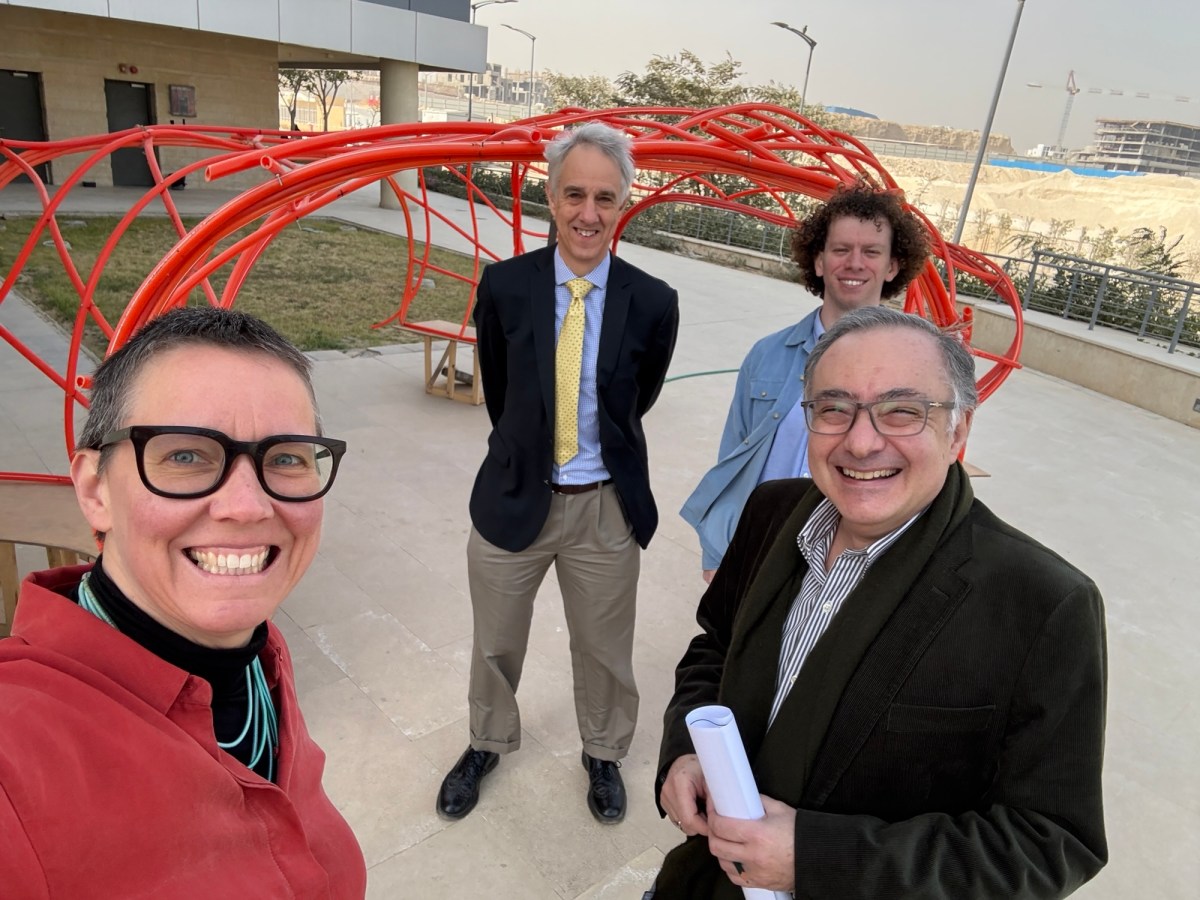
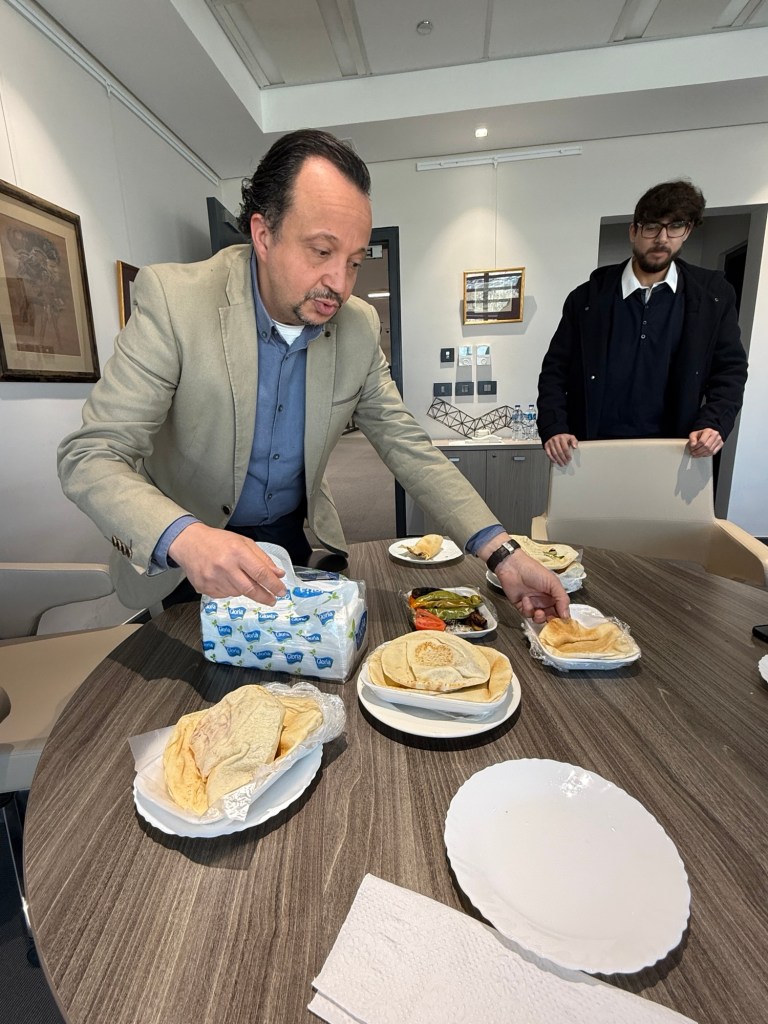
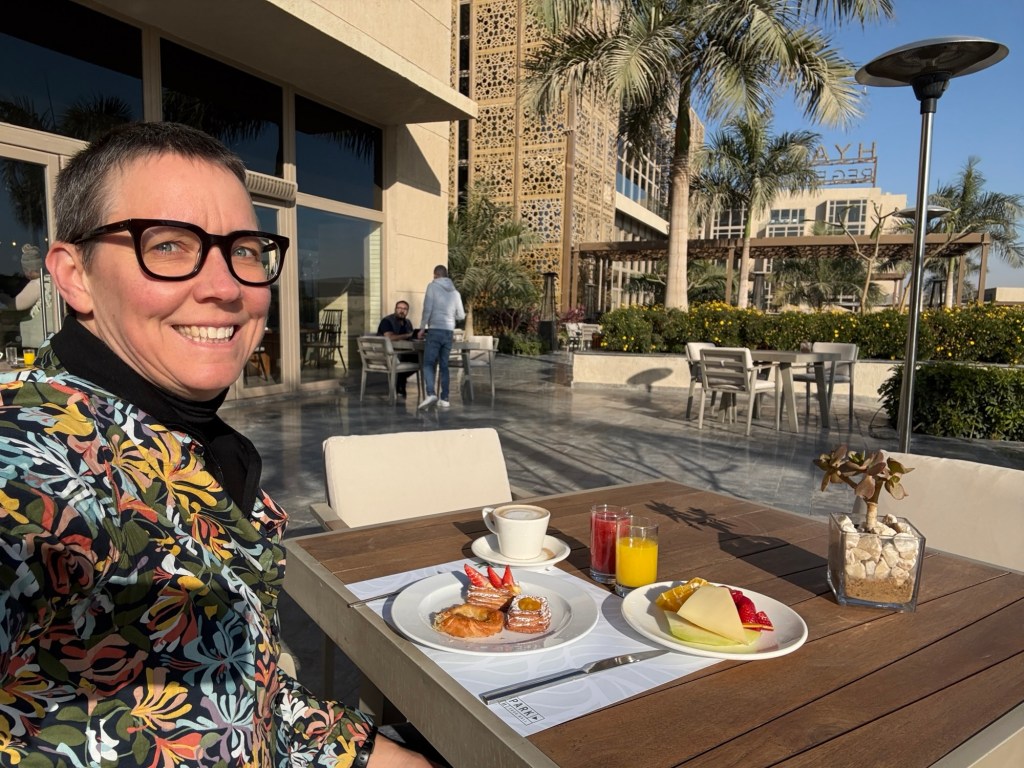
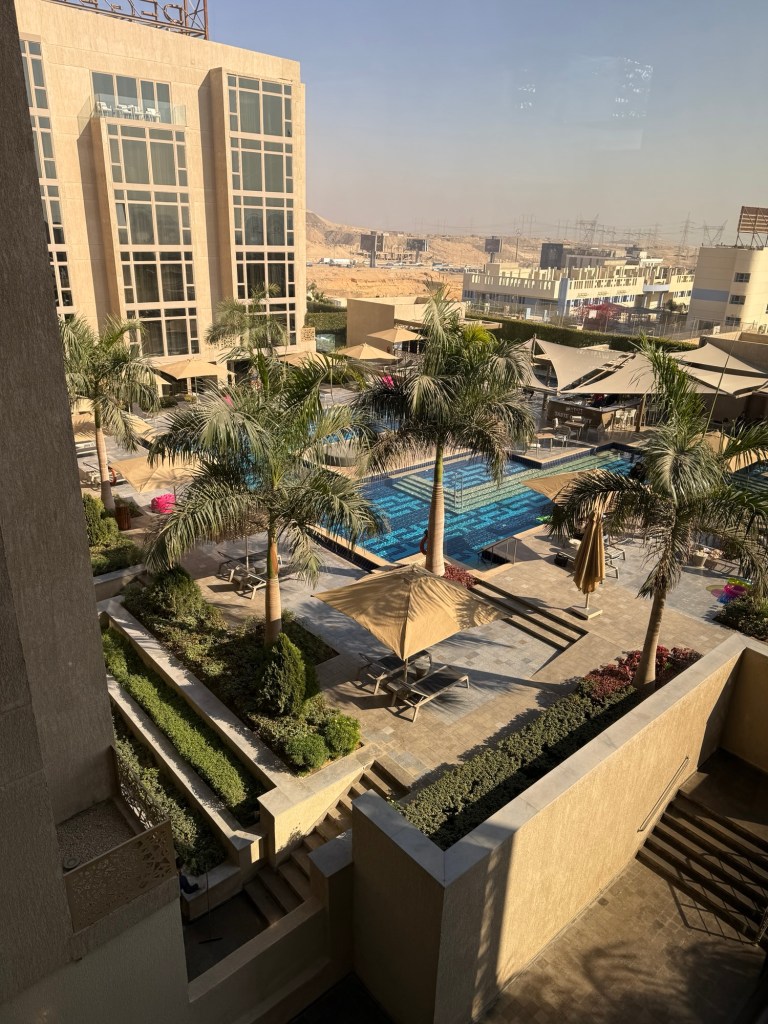
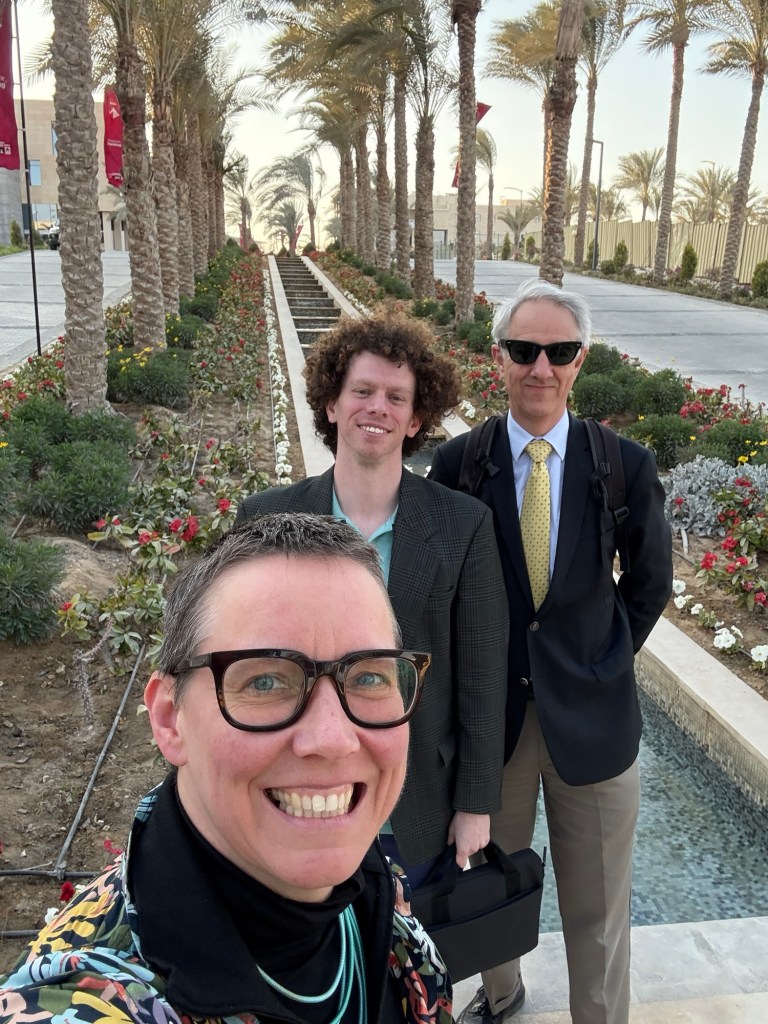
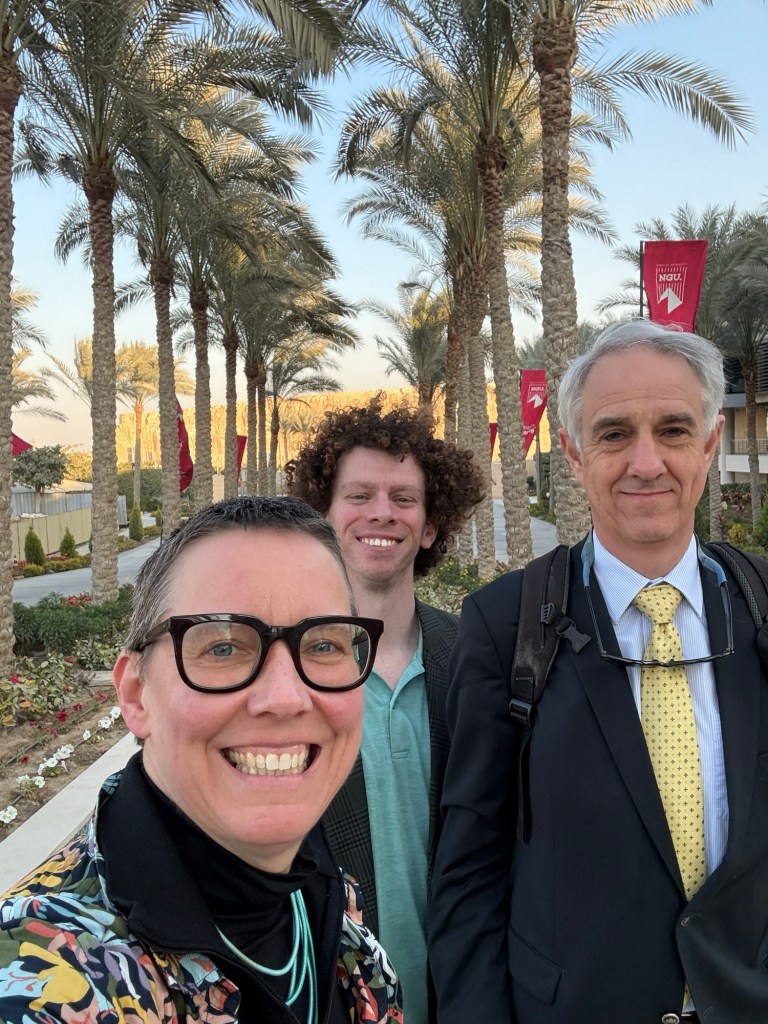
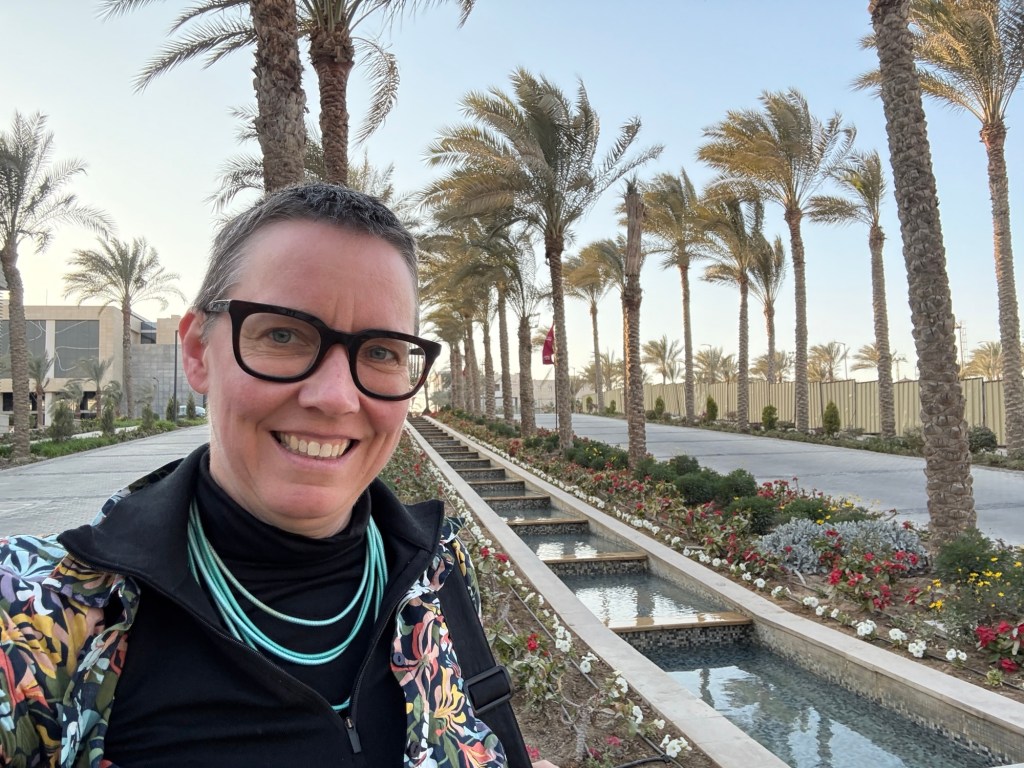
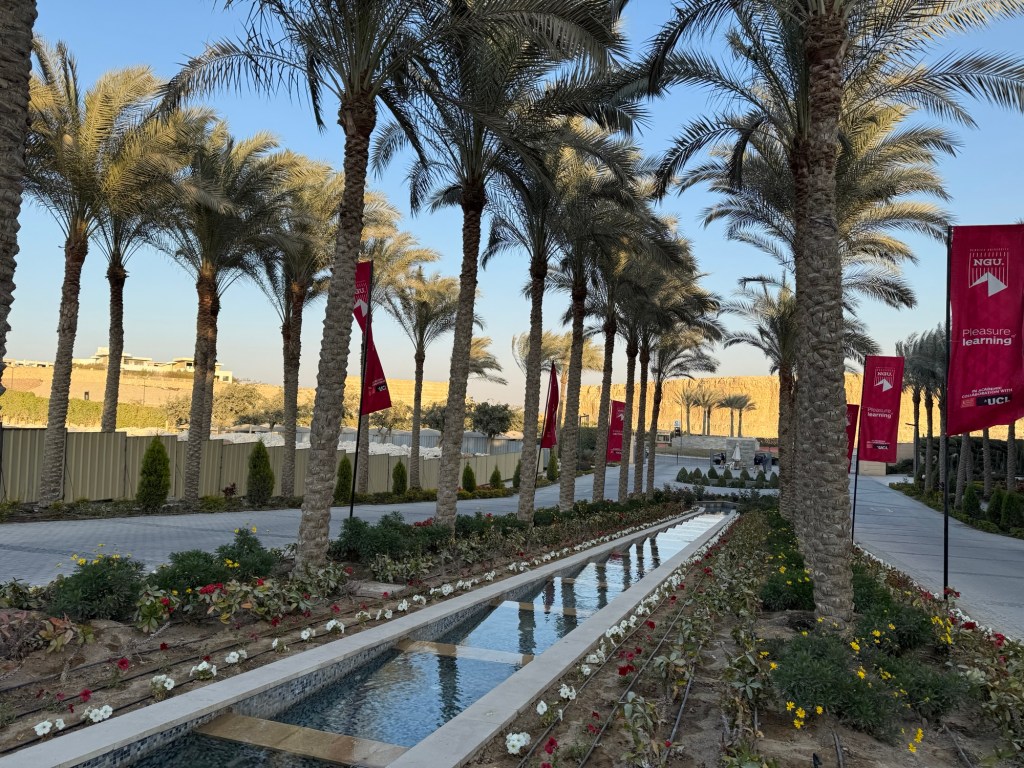
Because of the pandemic, I did not have a chance to visit NGU before we started designing the curriculum. In fact, I didn’t get to visit until this past February, 2025, when I travelled over with two staff from UCL to provide feedback on the quality of the program’s delivery.
It was a whirlwind tour, considering that I arrived a day later than expected due to a British Airline delay.
In my two working days there, I got to observe the program the public relations folks at NGU captured the footage on this video.
Designing this curriculum, via a contract between Technological University Dublin (TU Dublin) and University College London Consultants (UCLC) which pays for hours out of my timetable each semester, has been a real joy. It has required me to stretch, been , and develop new communication skills to explain complex concepts to people from a culture and language much different from my own.
Visiting the program and meeting the people who are delivering the content and the amazingly dedicated studentswho are forging the way by implementing a brand new curriculum has definitely been a highlight of 2025.
Many tanks to Dean Aly and the programme staff for welcoming us and helping us feel at home!
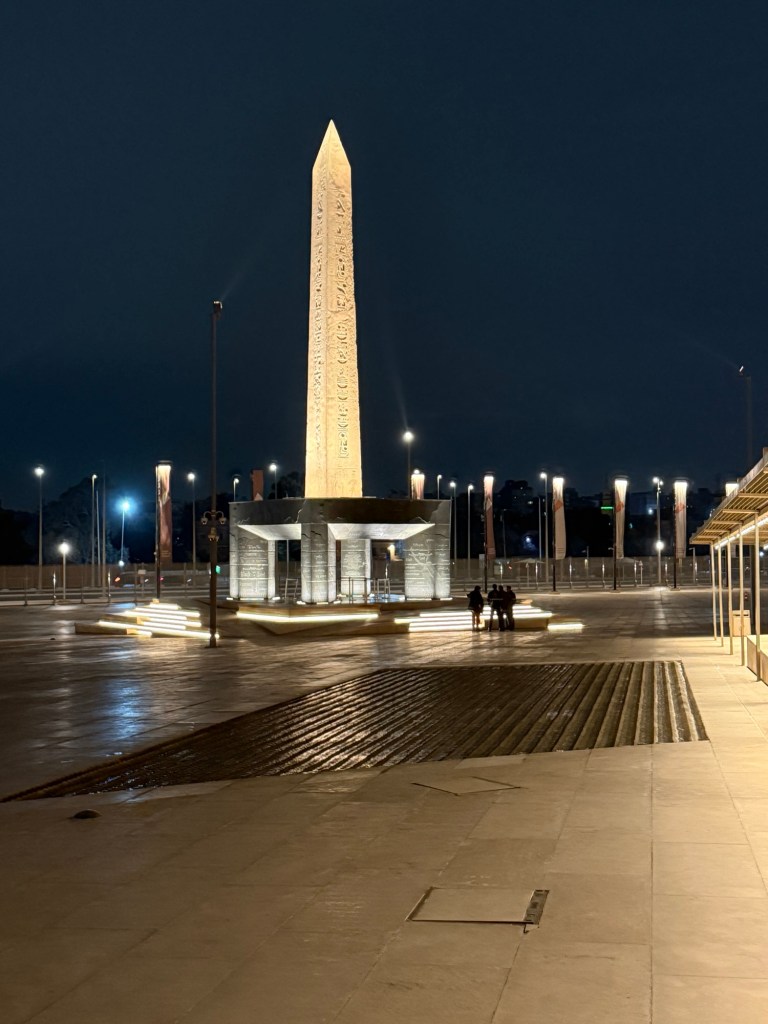
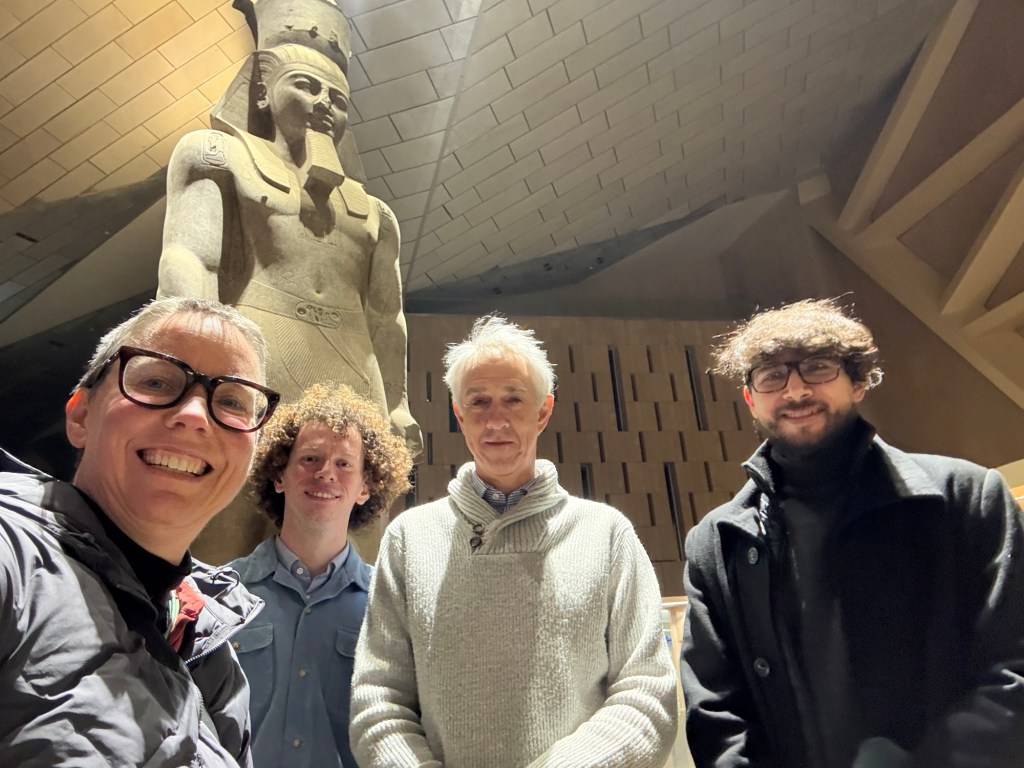
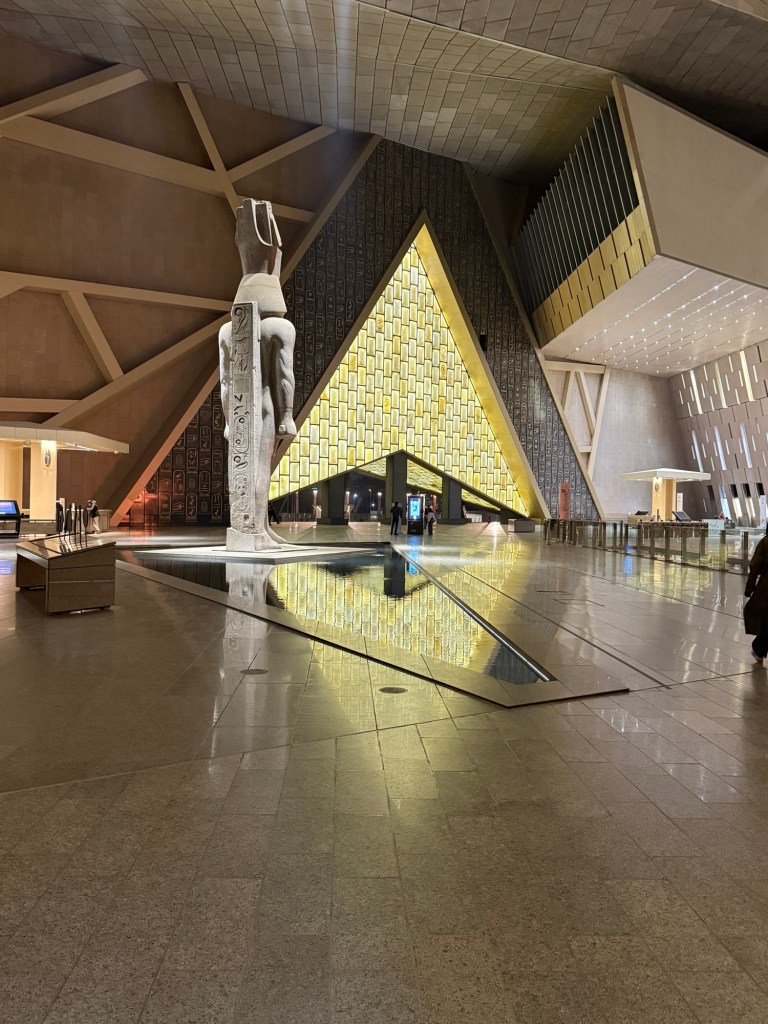
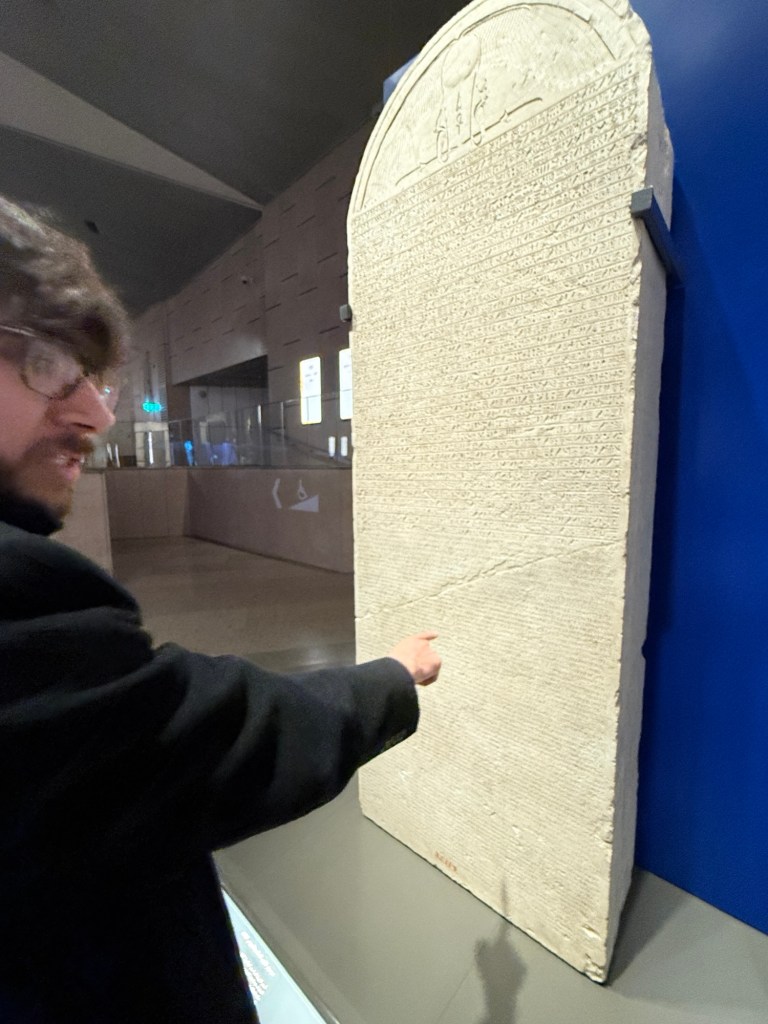
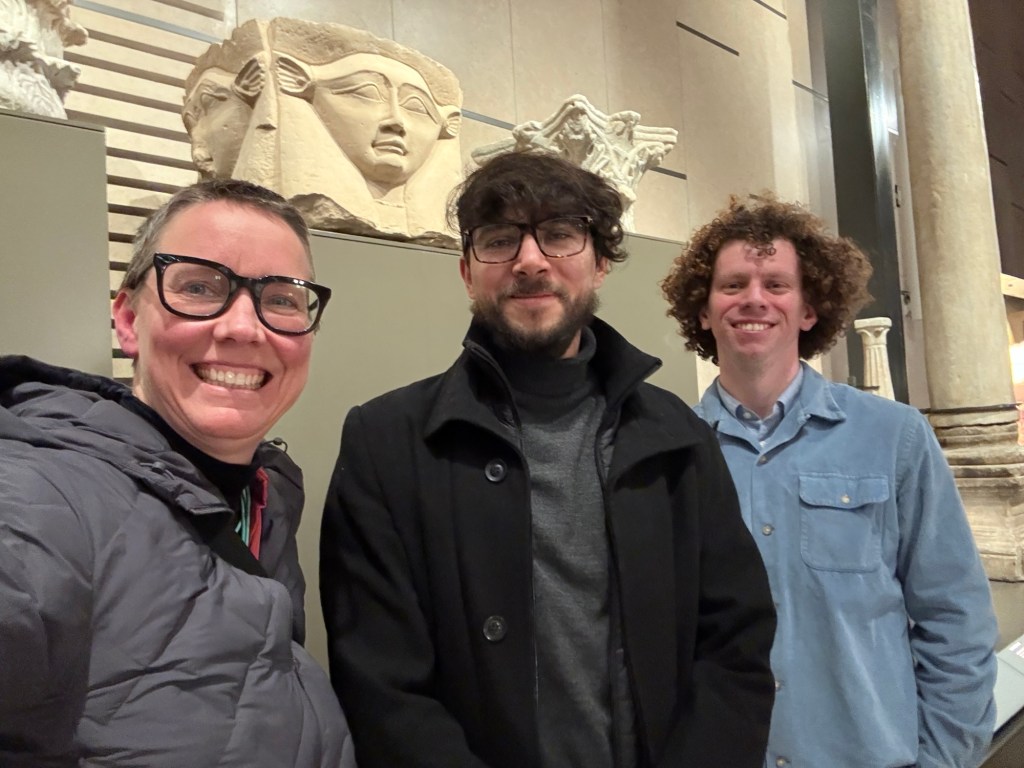
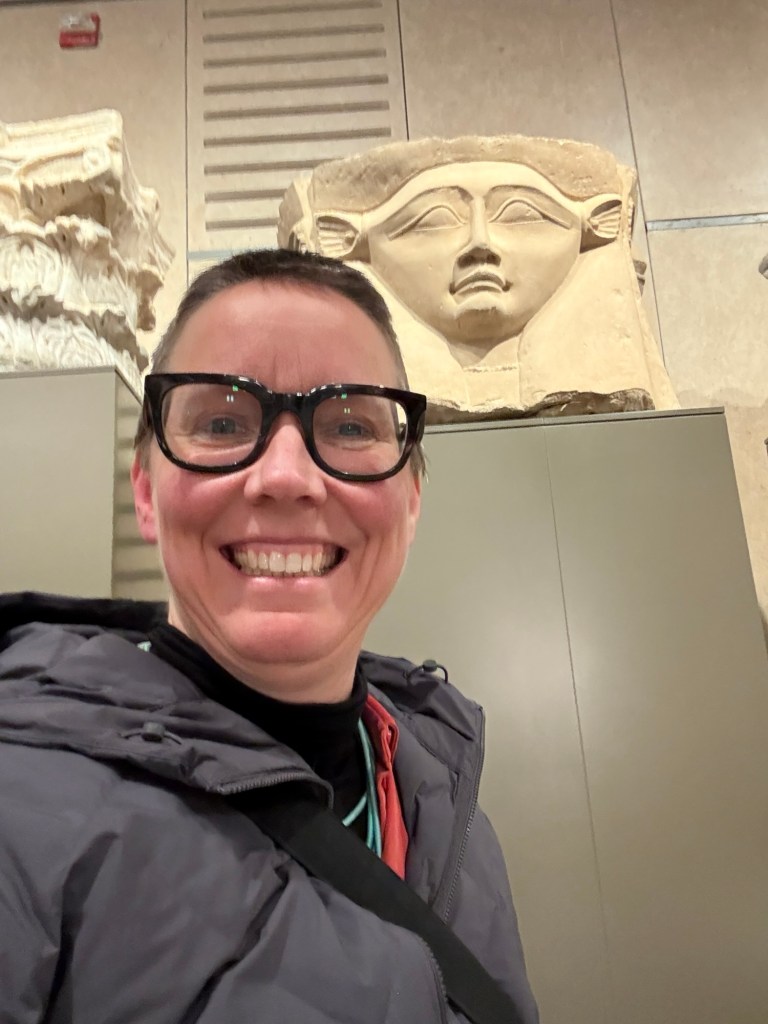
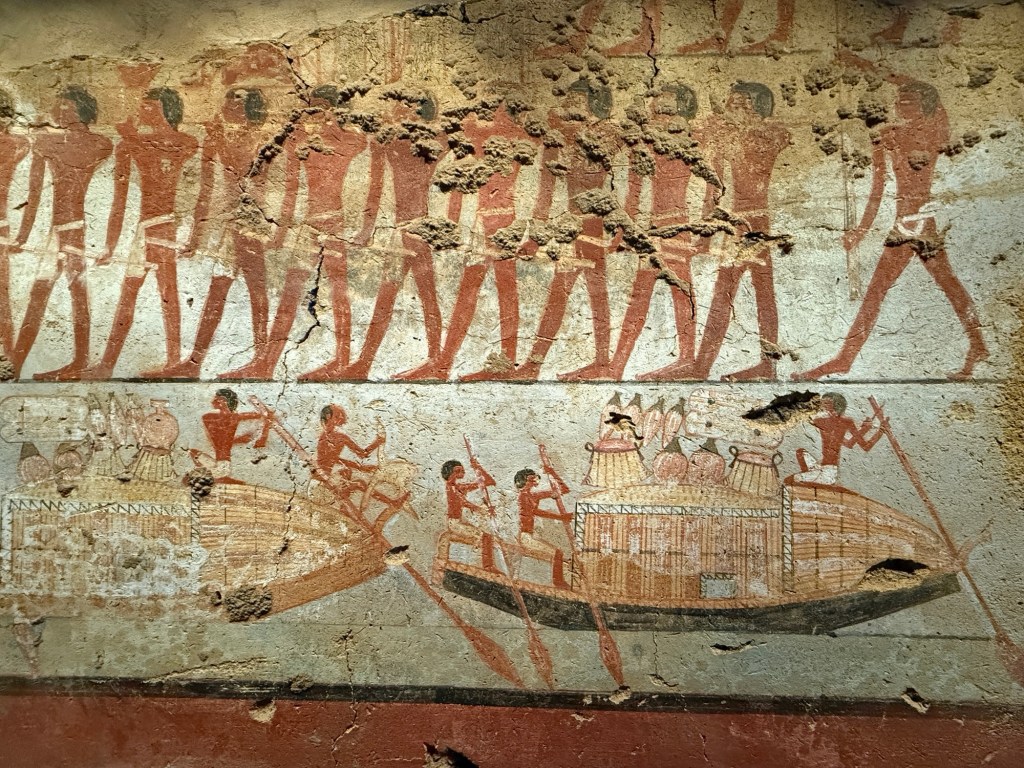
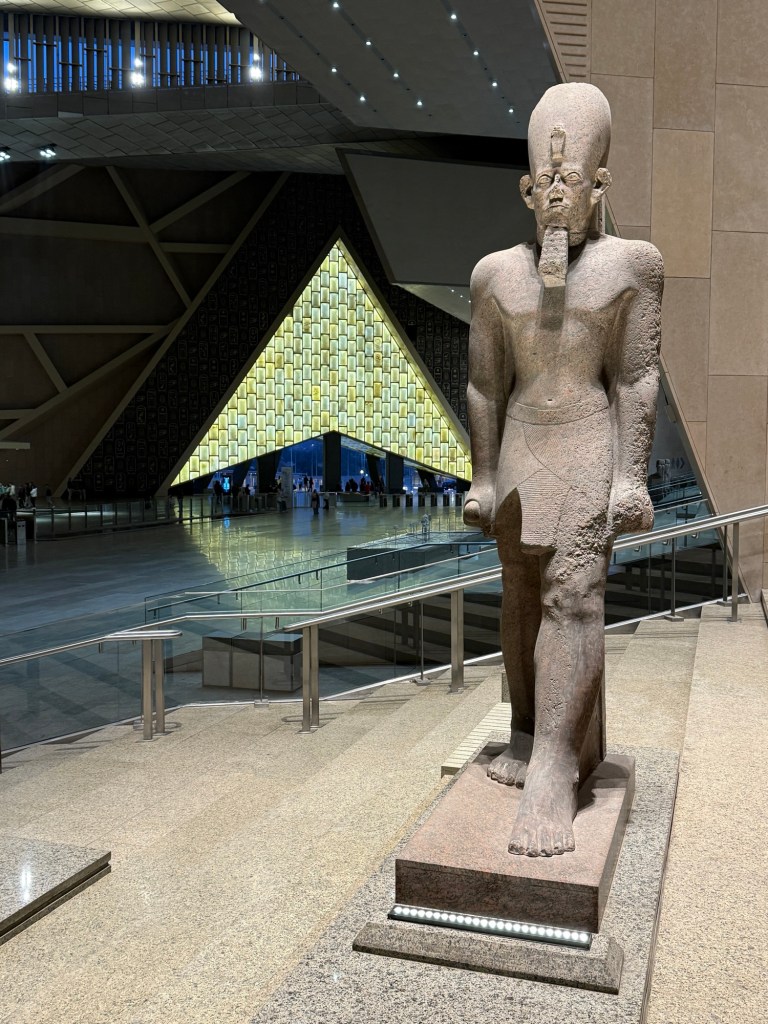
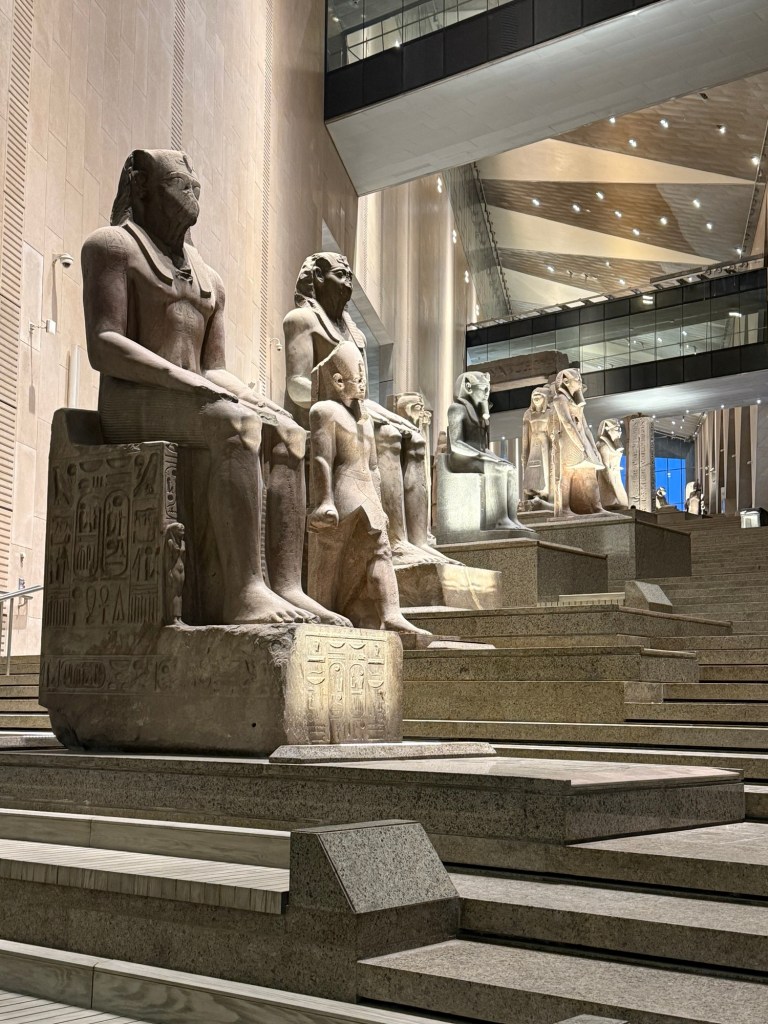
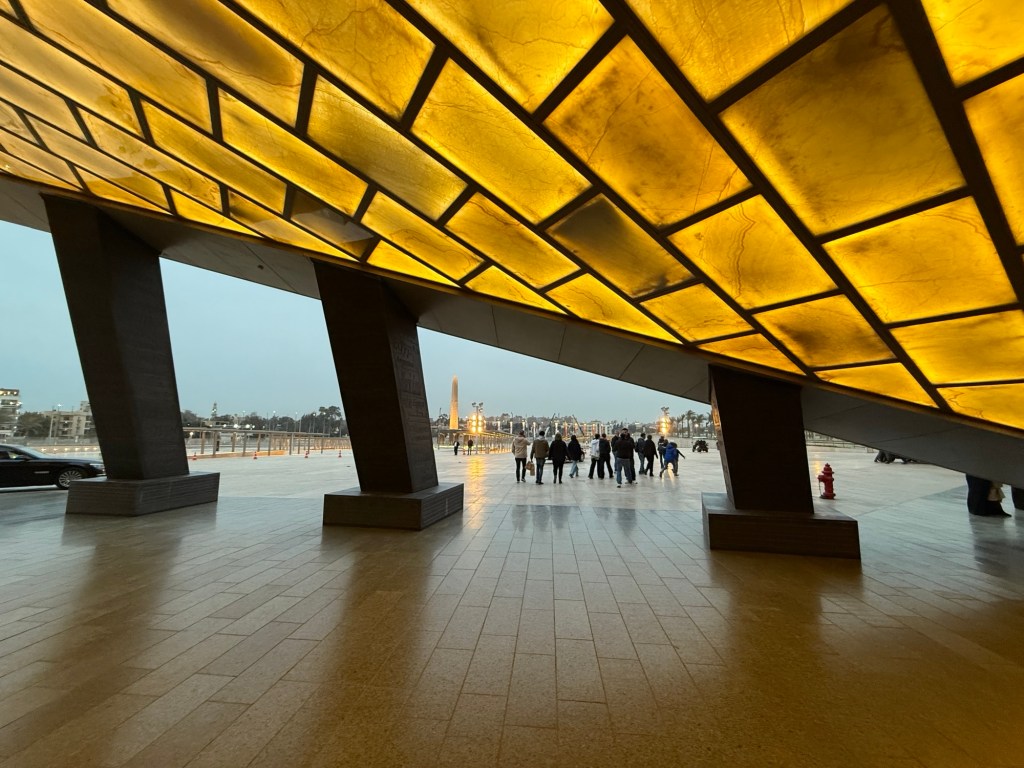
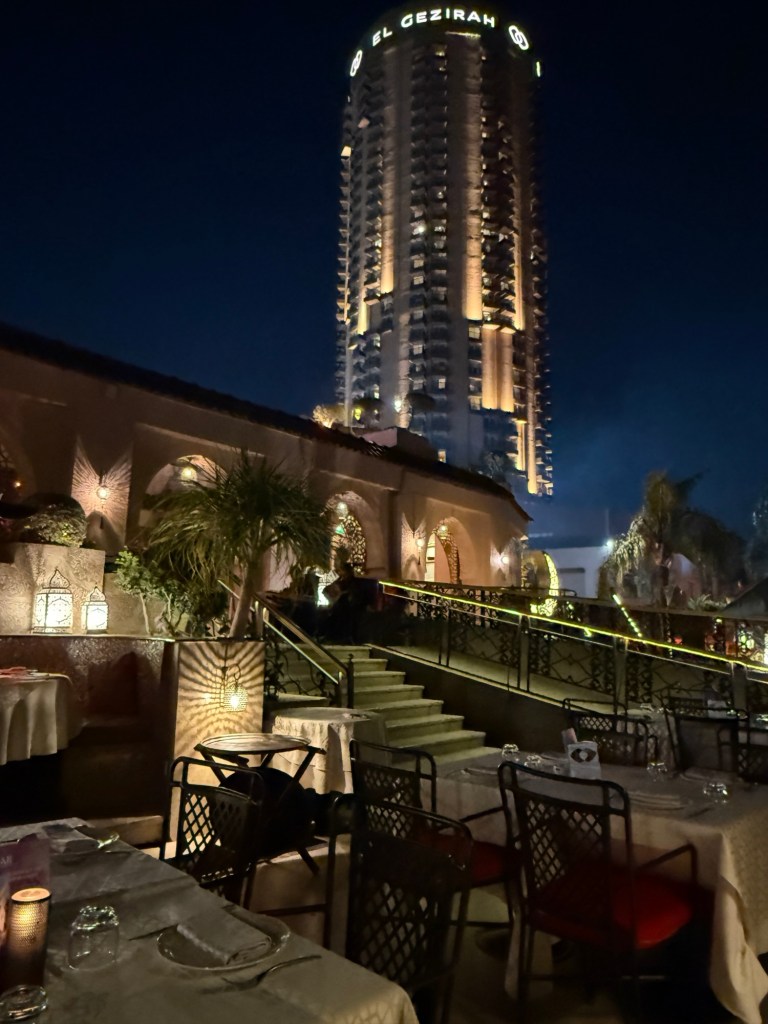
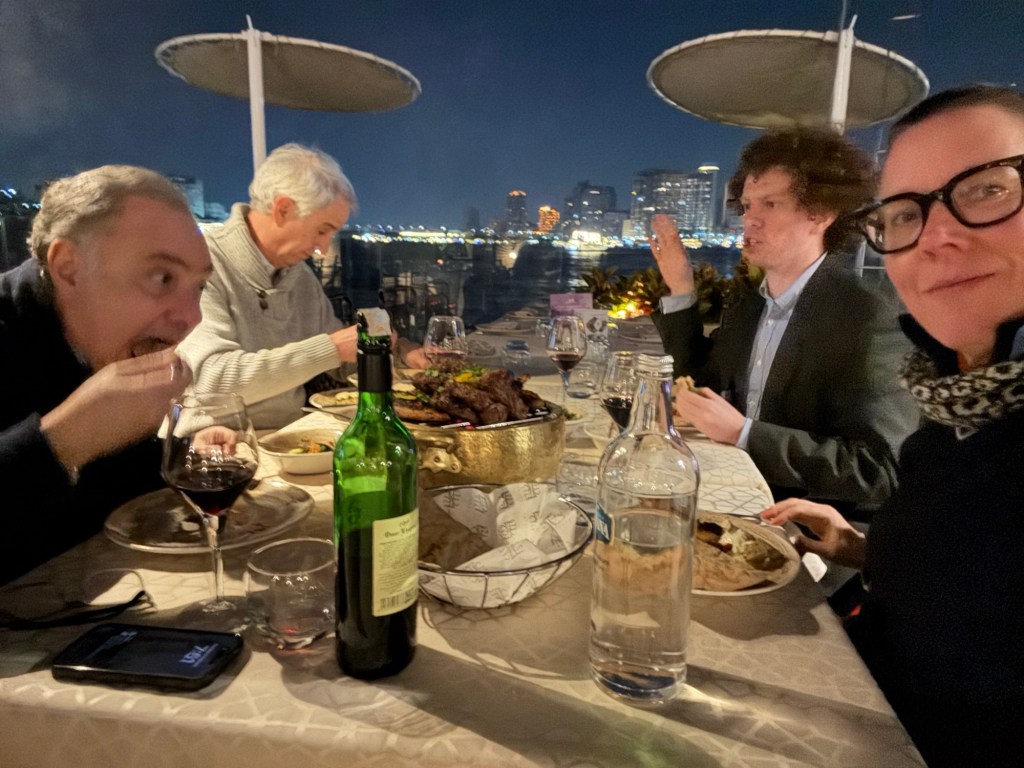
We three visitors also got a chance to tour the brand new Egyptian museum, lead by NGU’s architectural history, teacher. The experience was truly eye-opening and full of intrigue.
I look forward to a chance to visit NGU and Egypt again soon!
I have to say, none of this would’ve been possible without the Marie Curie fellowship I got to spend 2018 and 2019 working at UCL. The bonds I made with the folks at UCL in the Centre for Engineering Education have made such a difference in my and personal and professional life.
Being part of UCL has been so incredibly good for me, and good also for my employer, TU Dublin.
I am so honored to have had the chance to build an architecture program in Egypt and work with the people there who seek to build a stronger community of architects in Egypt. Thank you so much John Mitchell and Emanuela Tilley, for including me in this incredible project!


























 Ireland by Chance