Collecting Data

img_5637

Wednesday’s RoboSumo class was going a-ok!

I’m gearing up for the new research fellowship by collecting data here in Ireland–data that I can analyze once I’m situated in London.

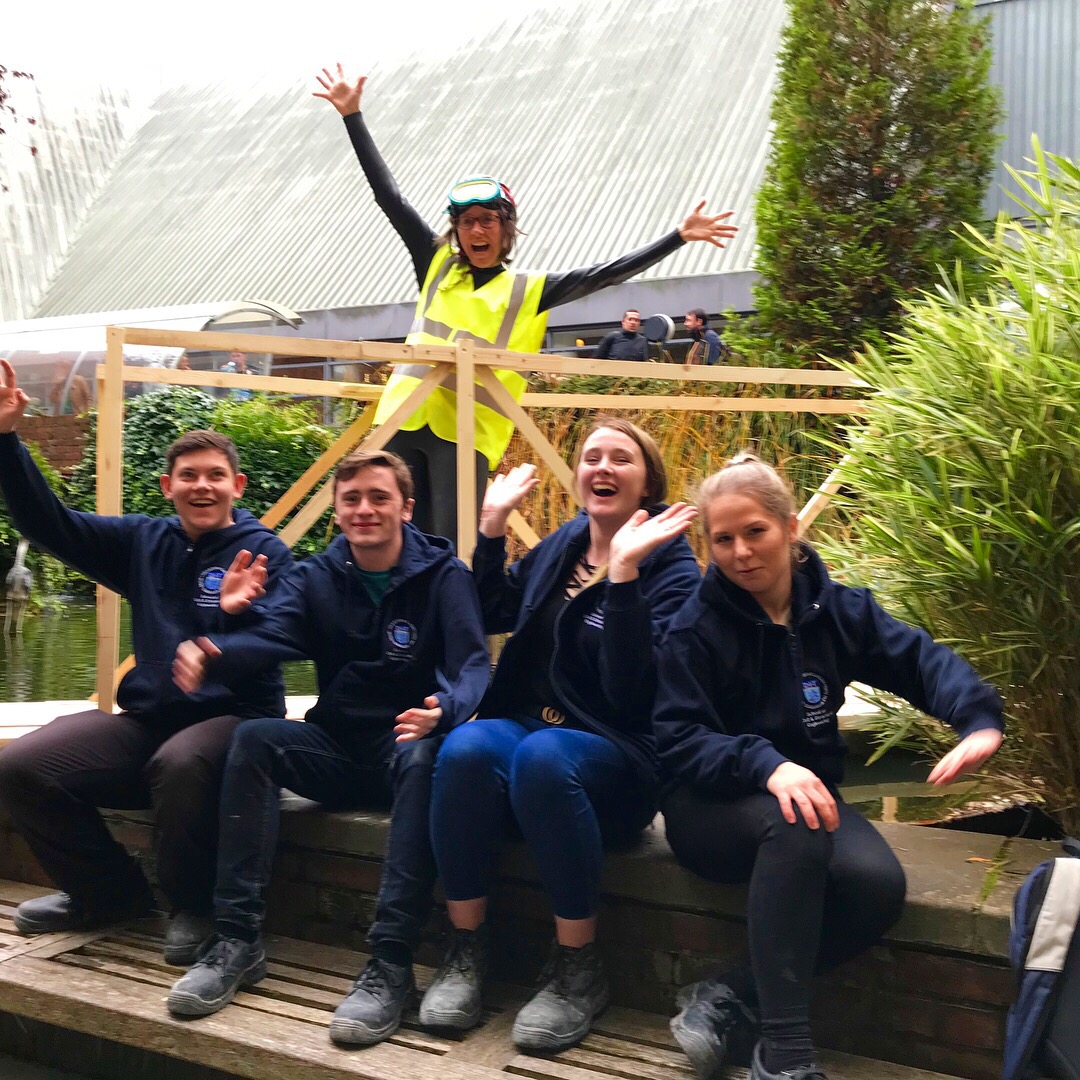
In the past few weeks, I’ve been interviewing women who are studying engineering in Dublin. Most of the women I’ve interviewed in this country have completed the design projects that you’ve seen in my prior blogs (RoboSumo, bridge design, and Energy Cube). Although I can’t show you the actual participants in my study for reasons of confidentiality, I’ve included a photo from this past Wednesday’s RoboSumo lab. Our big tournament is in two weeks, and excitement is mounting.  I’m asking students who took these courses three years ago about their experiences with engineering and with working in teams.

I truly believe that interviewing women from DIT over a period of years has helped me become a better teacher, particularly since I started teaching on these projects last autumn. In prior years, I was lending a hand occasionally in Energy Cube, RoboSumo, and bridge design, but most of my time was spent observing classroom and team dynamics.
img_5644

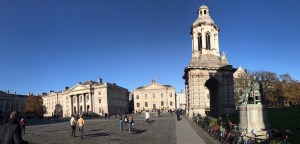
Trinity College’s main courtyard in all its mid-day splendor.

Today, I got to sit down and talk with a lovely young woman who started in DIT’s program four years ago, and who transferred to Trinity’s engineering program half-way through. To do this, I hiked across town to Trinity’s campus and the two of us chatted for 80 minutes, over coffee at Trinity’s Science Gallery. I hope the audio recording is clear enough, as I normally work in a much more controlled environment. There were far more distractions today than usual, yet the content of the interview was fascinating.

I interviewed all these women in the past as well, when they were first year engineering students, and now I’m catching back up with them after they completed several years of study. This is what’s referred to as a “longitudinal” study, and I am looking at changes and development over time. I have three more interviews lined up for next week, and I can not wait to hear about these students’ adventures in education and engineering.
 

Down the Rabbit Hole, from Bath to London

20171028_155655

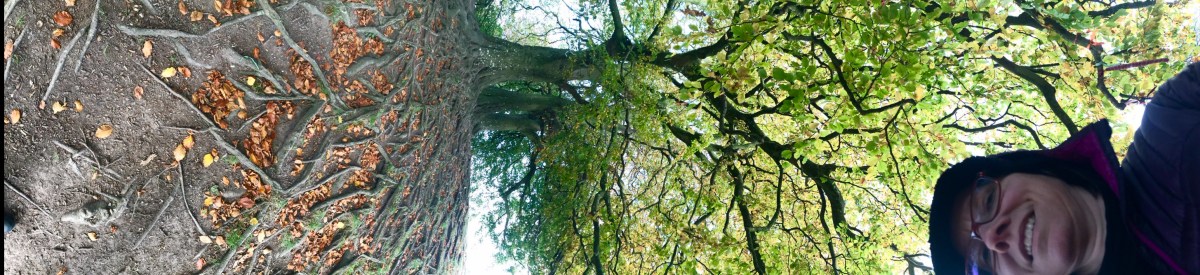
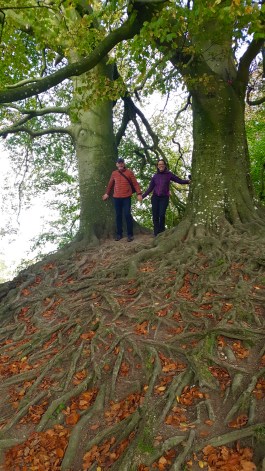
Beautiful “ferry” trees at Avebury in the UK’s Wiltshire region.

Last week I crossed the threshold into a brave new world. I traveled over to the UK, my soon-to-be home, twice to learn more about the place.

First, to celebrate Ireland’s bank holiday weekend, my partner Aongus and I flew to Bath. We rented a car so we could visit Stonehenge, the flight of locks at Devizes (the Caen Hill flight of the Kennet and Avon canal), Avebury which is similar to Stonehenge but larger, and the picturesque village of Castle Combe. In the city of Bath, we toured the ruins of the old Roman baths, the bell tower of Bath Abbey, Royal Crescent and the townhouse museum at One Royal Crescent, and weir and the Putney Bridge, as well as getting Watsu treatments and a night time soak with spectacular views from the rooftop pool at the Thermal Spa.

Stonehenge was spectacular, but Avebury had an even more mystical feel. The majestic old fairy trees with their thick boughs and knotted roots make it feel as if you’re stepping foot into C.S. Lewis’ Narnia or the Wonderland Lewis Carroll created for Alice. (Both of these were English writers, who could well have stood beneath the same magical trees we found here.) Wikipedia provides a quick reference to the meaning of ferry trees: “Many types of trees found in the Celtic nations are considered to be sacred, whether as symbols, or due to medicinal properties, or because they are seen as the abode of particular nature spirits. Historically and in folklore, the respect given to trees varies in different parts of the Celtic world.”

img_5227

Meeting with UCL’s Professor Nick Tyler.

After flying home, I flew back to London on short notice for four meetings on Wednesday–because my new colleagues at University College London had time to meet me and it was “review week” at DIT.

These meetings were in preparation for the start of my new Marie Curie research fellowship in January. The EU is providing funding for me to work at UCL for two years, to further upgrade my skills in educational research. During my short visit, I met with my primary supervisor Professor Nick Tyler who has an amazing record of research in transportation engineering and educational innovation. I also met with my secondary supervisor, Professor John Mitchell, who directs UCL’s Centre for Engineering Education (CEE). I also got to meet with the newest member of CEE’s research team, Dr. Inês Direito, who I’ll get to collaborate with in projects. All this in addition to visiting UCL’s European Office and quick chats with two other colleagues, Emanuela Tilley and Dr. Arnie McKinley, both originally from my own side of the Atlantic.

Overall it was a very productive day, and I even got two grant proposals read in route.

Across the span of the week, I had great experiences at work and at play. I can’t wait to get back to London, Bath, and the Wiltshire region of England for more learning, and more novel adventures.


Ready to Jump off a Bridge?

My Friday afternoons at Dublin Institute of Technology are filled with civil and structural engineering projects. Today, we performance-tested several types of bridges, all designed and built by first year students. Here’s my testing gear, provided by one of my lovely colleagues, Una Beagon:

I believe that hands-on design projects are chock-full of learning opportunities for students, and I’m thrilled to be part of delivering project modules at DIT.

It was the first time for me to personally conduct the testing of the full-size bridge, spanning six meters across the pond in the courtyard of our building. I’ve attached a video of the test of the full-sized bridges and another of testing the model bridges:

Researcher in Motion, in Portugal

Europe’s research framework encourages researchers to move around. The principle  “Researchers in Motion” underlies most of research funded by the European Union through its individual fellowship and its international training networks. For instance, all Marie Curie fellows must move to a country where they have not been living (for at least 24 months of the 36 months proceeding their application date). The EU offers support to researchers in motion through EURAXESS. This includes a database of fellowship and job openings.

Although I am not currently funded by a Marie Skłodowska-Curie actions (MSCA) research fellowship, I am still benefiting from support received through my prior MSCA Individual Fellowship (2014-2016) and networks I first established as Fulbright Fellow (2012-2013). These professional relationships help me conduct research and share (or “disseminate”) my results and findings. For both of these fellowships, I moved from my home in the USA to Ireland to conduct research full-time.

My first trip to Portugal occurred during my Fulbright in 2013, when Bill Williams, a colleague I had met at a conference in Greece, helped me secure support from Portugal for Inter-Country Lecturing. Bill organized an itinerary for me where I visited five universities and delivered four lectures and workshops. During that trip, I fell in love with the country.

Now, whenever I have reason to visit Portugal, I find a way to tack on a weekend before or after my business meetings. I’ve also booked an upcoming summer holiday there. Please see my prior post about the research meetings and ASIBEI conference I attended in Portugal during my recent visit.

I research engineering and design education, and I now teach introductory engineering and architecture technology in Ireland. It’s important for me to keep current and build new knowledge related to engineering, architecture, art, and urban design — as well as educational theory and practice. Here are some images of relevant sites in and around Lisbon, taken during my recent trip to the Iberian peninsula:

The following photos were taken at the newly-opened MAAT (Museum of Arts, Architecture and Technology) in Lisbon:

Next to MAAT is the Tejo Power Station museum (a former thermoelectric power plant that once supplied power to Lisbon and its surrounding region):

The Calouste Gulbenkian Museum is another highlight of Lisbon:


Research Follies in Portugal

Screen Shot 2017-06-08 at 1.59.29 PM

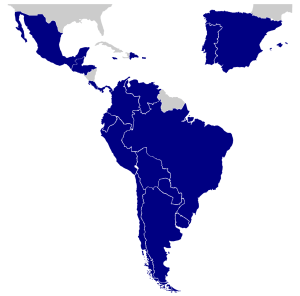
ASIBEI member countries.

Last week I plunged into the warm, sunny weather of Portugal. I’d been invited to present about interactions between higher education and the business sector, at an ASIBEI conference. The president’s office of Instituto Politécnico de Setúbal invited me and sponsored my attendance at the conference.

ASIBEI is the Ibero-American Association of Engineering Teaching Institutions. It involves the Portuguese and Spanish-speaking world. The organization’s “official languages ​​are Spanish and Portuguese, which can be used interchangeably” in all meetings. I was the linguistic outsider, requiring  my own translator. I was also the only person to present in English; I spoke slowly and the audience followed along enthusiastically.

With the support of my Head of School, I arrived a couple days early to meet with colleagues about research projects and grant proposals. On Monday before the conference, I met with lecturers and researchers from Instituto Superior Técnico, as picuted below:


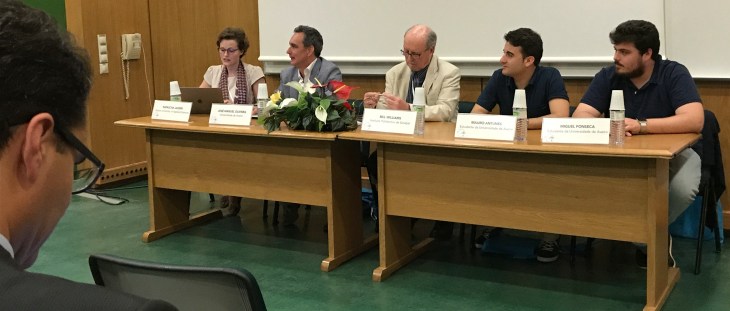
Later that day, I met with Dr. Bill Williams. Bill has been working with me on gender in engineering research studies. He has published conference papers with me and has also been working with me as co-editors of a special focus IEEE issue. Here’s a photo of Bill during the ASIBEI conference, where he moderated a panel session:

IMG_7710

Dr. Bill Williams is seated in the middle, moderating a panel discussion at the ASIBEI conference.

On Tuesday morning, I traveled from Lisbon to Cascais to meet with the Chair of the Ireland Portugal Business Network, who provided a great deal of support for a grant proposal I submitted this past January. After meeting with him, I got to spend a couple hours on the beach in this resort town where he and his family live. They escaped the cold weather of Ireland for sunnier skies. I loved these sunny skies and I rented a lounge chair and umbrella for the afternoon on the small but beautiful “Queen’s Beach” of Cascais.

On Wednesday and Thursday, I joined the ASIBEI conference for work sessions, panel discussions, a visit to Setúbal’s city hall, and a tour of the Lauak factory that produces parts for Airbus, Honeywell, and many other well known companies. I was fascinated to learn about the production of the airplane parts, since my dad and I have done our fair share of airplane construction in the past.

I made a presentation on “The Business of Higher Ed: Research Skills for a Prosperous Future” that you can view on Prezi. Aiming to provide the audience with useful knowledge that would interest them and help them in the future, I discussed the intention of Marie Skłodowska-Curie actions. I described two different MSCA programs that support researchers and help equip them to work with and within industry.

I had to hurry back to Dublin immediately following my panel presentation, to participate in our School’s program review Friday. The discussions with our evaluation panel were valuable and interesting, making the mid-night trip back to Ireland worthwhile.

Here are photos of the panel sessions:

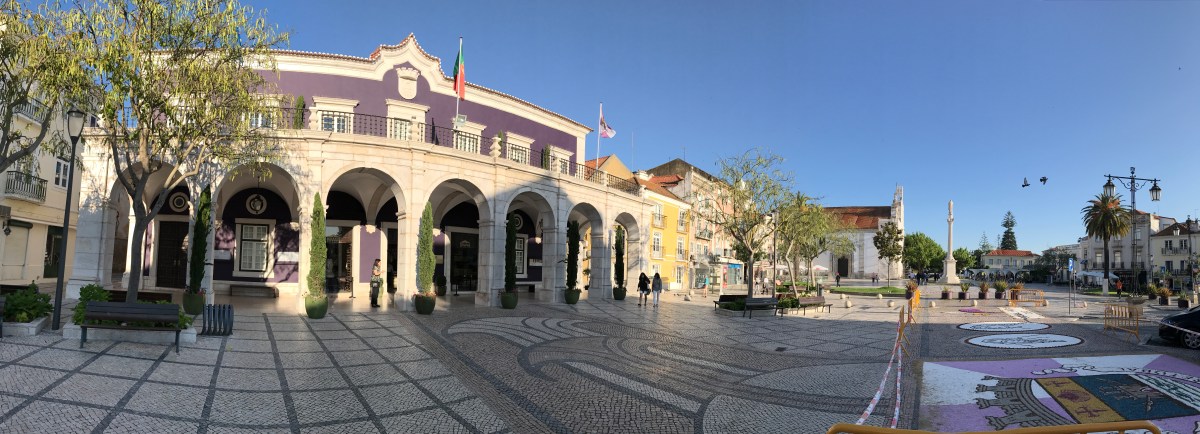
And photos of the reception at City Hall:

Photos from the factory tour:

While in portugal, I also had a chance to visit the Calouste Gulbenkian Museum, the new MAAT (Museu de Arte, Arquitetura e Tecnologia), and the Tejo Power Station museum (a former thermoelectric power plant that once supplied power to Lisbon and its surrounding region). See my next post for more images of the beautiful sites in and around Lisbon.

What we can learn from architecture studio pedagogy, a guest lecture at KTH in Stockholm

img_5492

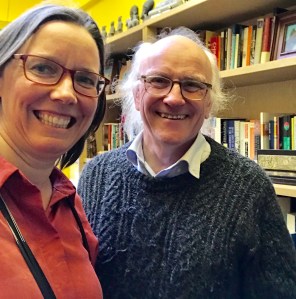
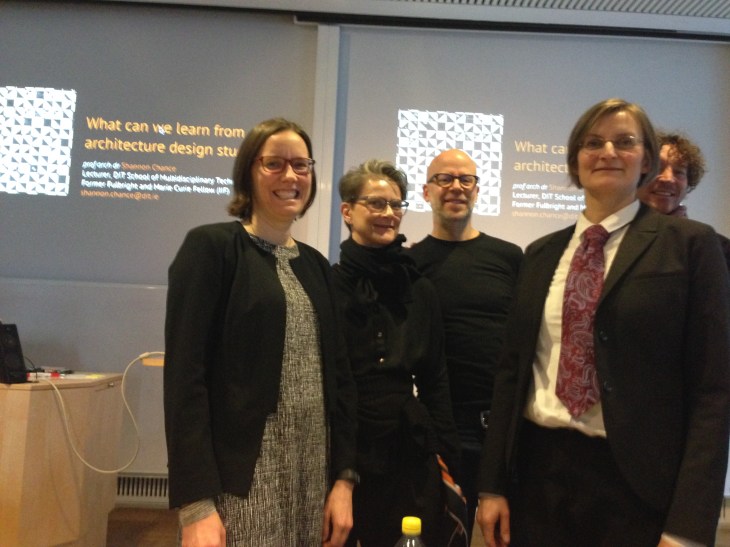
After the lecture at KTH, with two librarians and two architecture profs, including my former classmate from Virginia Tech, Eric Stenberg.

Professor Jonte Burnhard invited me to KTH in Stockholm to deliver a guest lecture on what we–as education specialists, architecture educators, and researchers of engineering education–can learn from each other and from the pedagogical models used to teach architecture. Jonte had read a recent article, “Using Architecture Design Studio Pedagogies to Enhance Engineering Education,” that I’d published along with John Marshall and Gavin Duffy in IJEE. You can access the article at: http://arrow.dit.ie/engscheleart2/102)

The learning and teaching center at KTH hosts this type of lecture/workshop every couple weeks, to get the institution’s staff thinking about and discussing good ways to teach. In addition to classroom educators, quite a few of KTH’s librarians also attended the event, as well.

While at KTH, I enjoyed a dozen small-group discussions on pedagogical topics, toured the brand new architecture building, and caught up with a former classmate, Eric Stenberg,  from Virginia Tech’s architecture program. I’m hoping to visit KTH again soon, since we have so many overlapping interests.

I stayed though the weekend, before heading to Brussels on Sunday evening, and I’ve attached photos of the Christmas sights.

Research Methods of Forensic Engineers

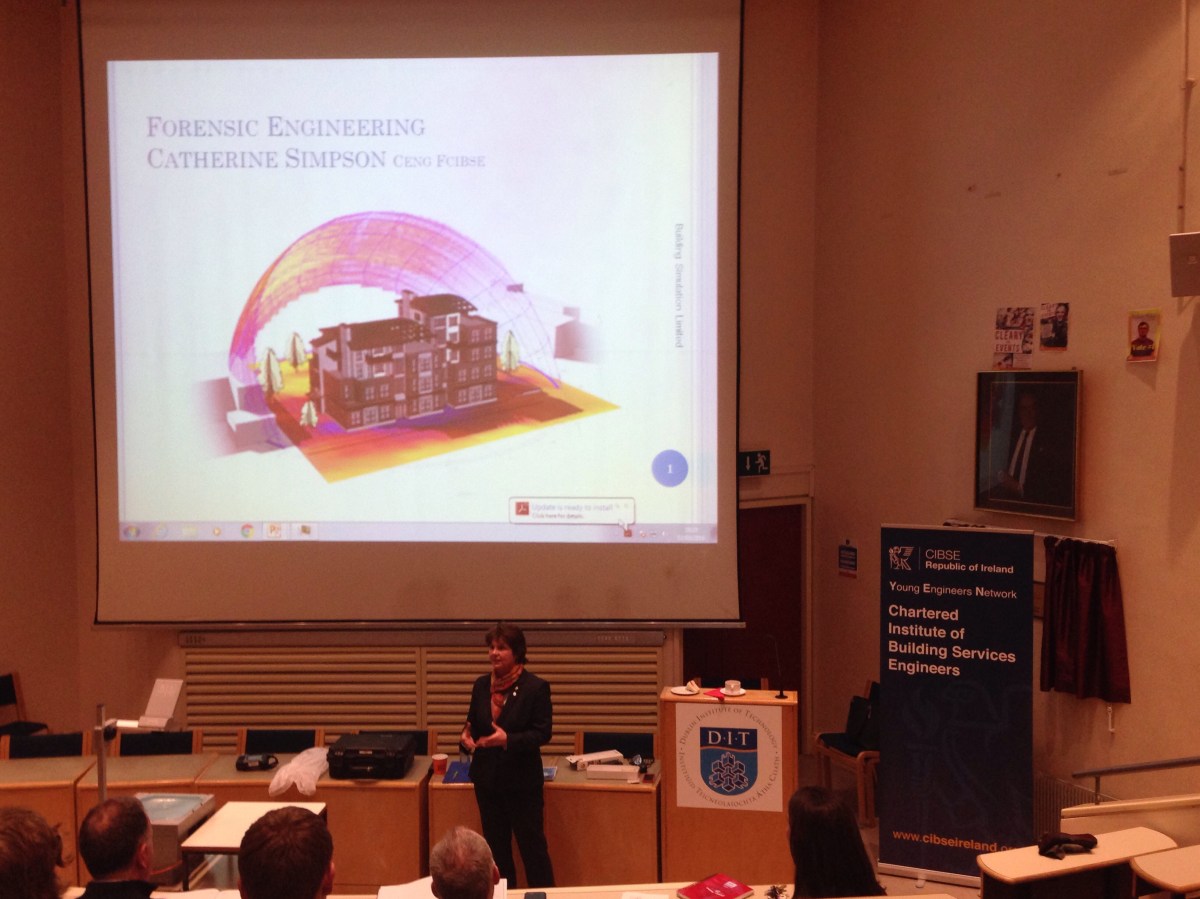
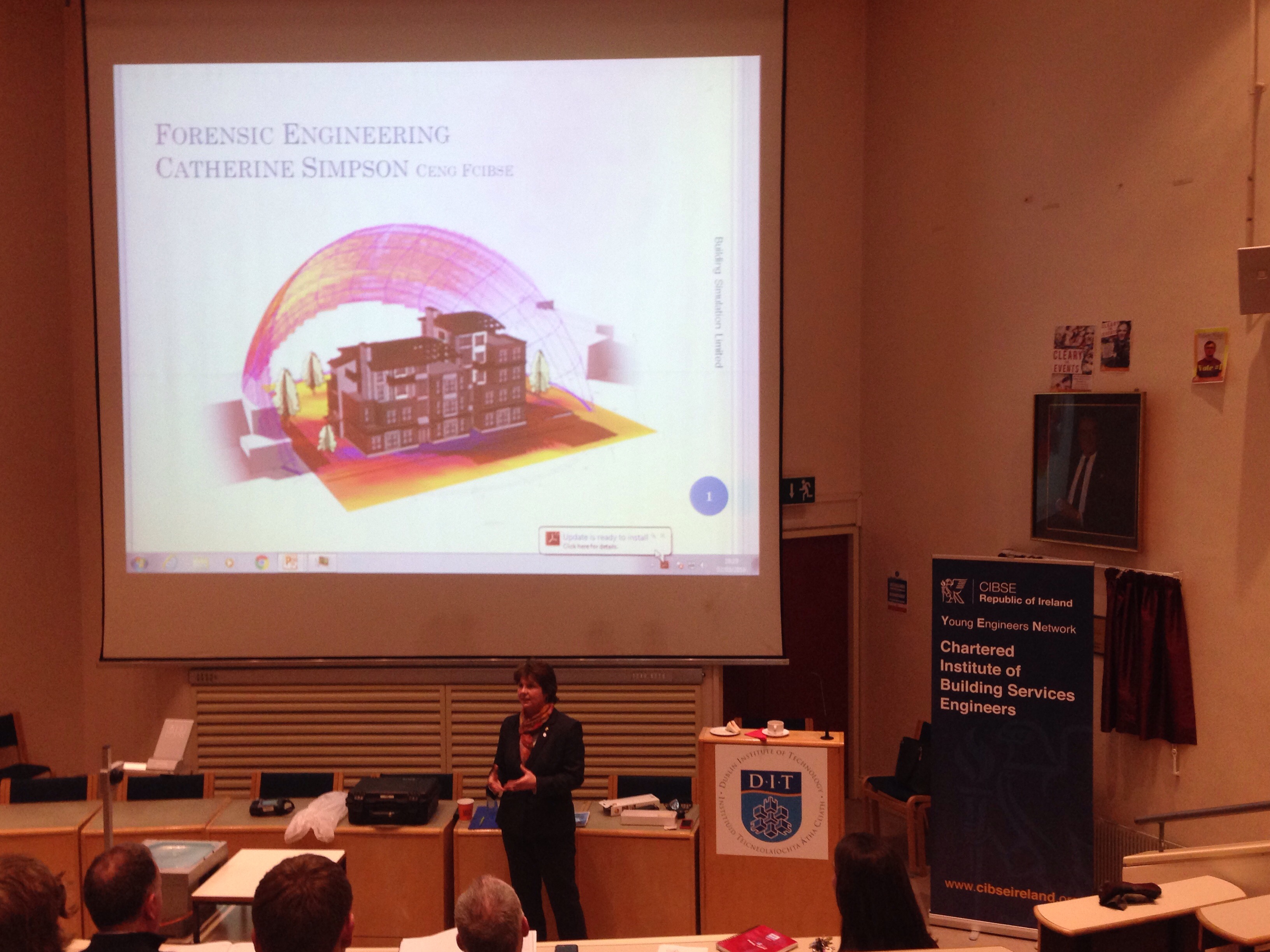
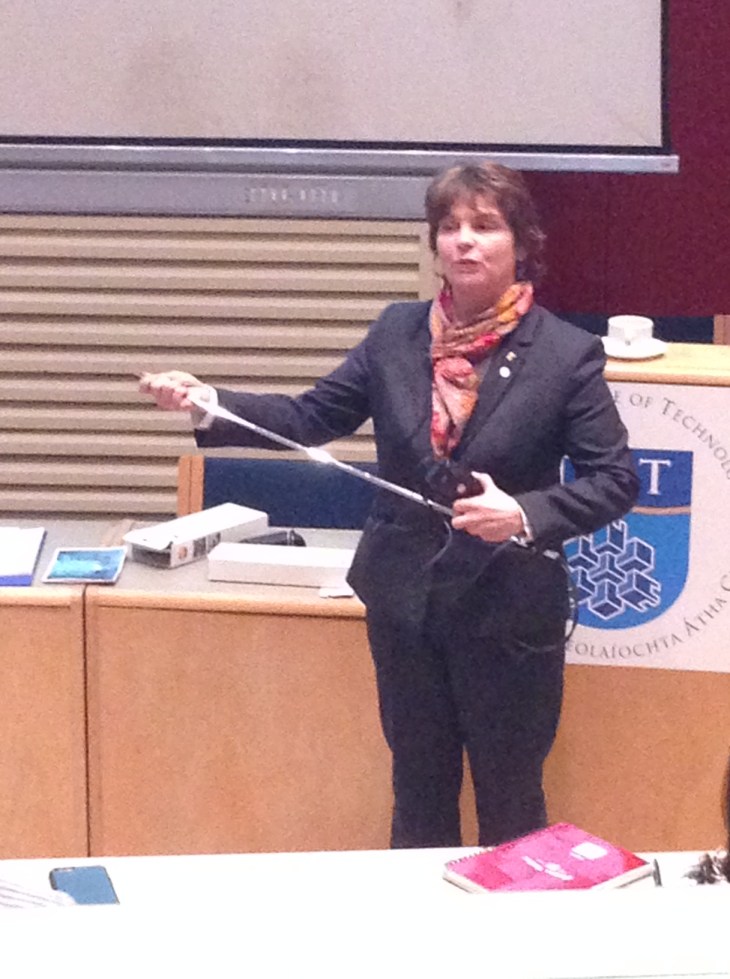
 Catherine Simpson is here at DIT tonight describing the research she does as a Forensic Engineer. You can also call her an expert in thermal modeling and a Building Services Engineer.

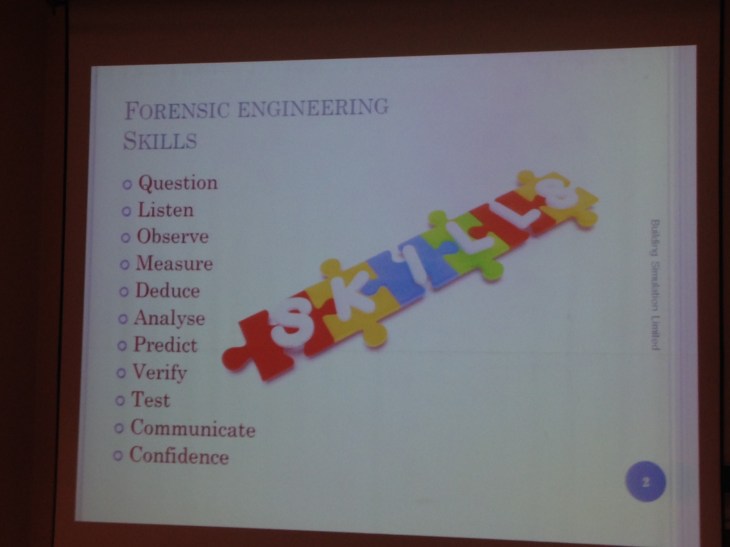
She can make digital models of buildings and predict their future energy performance. She can also go into a functioning building to identify, analyze, and rectify errors in thermal performance. She says that very often, buildings do not end up performing the way experts predicted. These are skills she uses:

IMG_0684


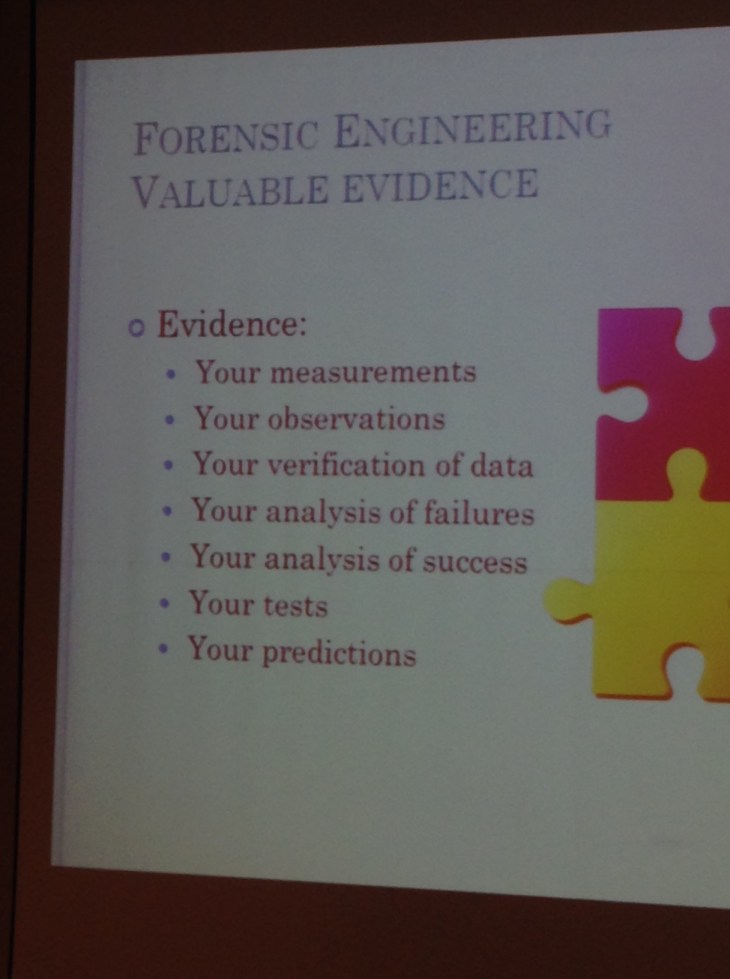
Catherine says Forensic Engineers must avoid using clues as if they were actual evidence (of the problem and its causes). These are clues: complaints, anecdotes, consultant reports, BMS data, ad hoc solutions, staff theories, and staff observations. On the other hand, these are useful forms of evidence:

IMG_0686

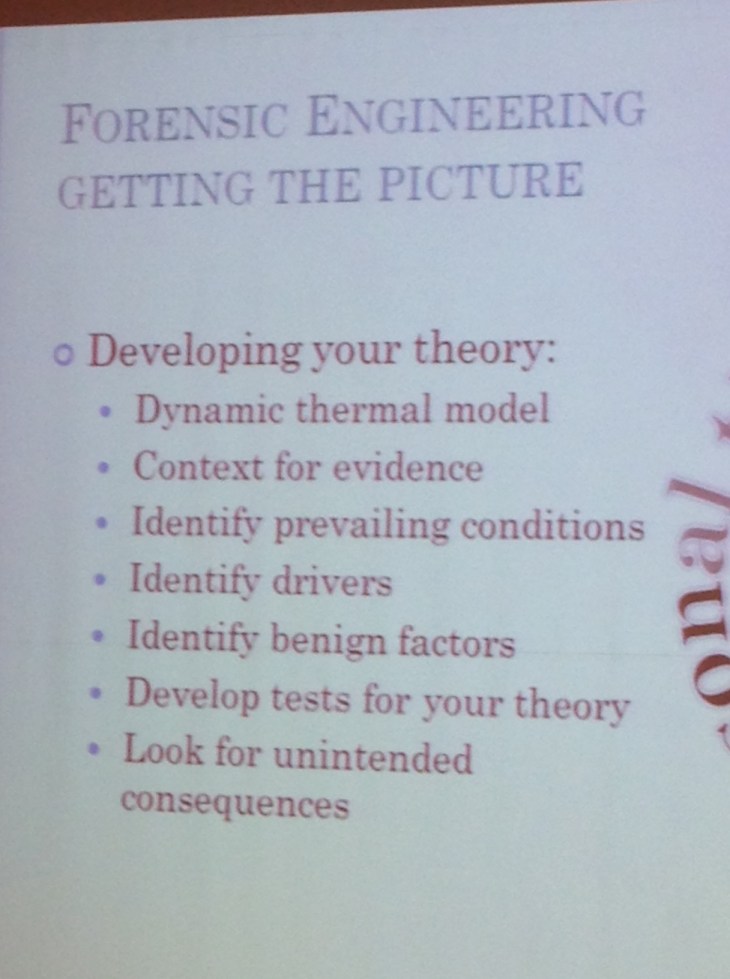
Catherine models problems digitally and physically. She also develops theories that she can combine to test her theories:

IMG_0687

Catherine gave an example of a shopping mall that had a very windy atrium and a very steep heating bill. No one could identify the causes of these problems. But after six years experiencing these problems, the owners called her in.

With careful analysis of data she collected (using dozens of different routes, including studying air flow by blowing bubbles in crowded spaces where smoke tests couldn’t be used) she identified a number of problems. One was a poorly placed rotisserie oven that was triggering vents to open. Another problem was that the building controls “thought” the building’s vents were completely closed when many were only partially closed.

Catherine devised a £50k solution to closing the vents in winter that is saving the owner £60k every month, in heat alone. There were reduced wind drafts and reduced tenant complaints. She says it saved about £500k in capital and restored people’s confidence in the facility.

Here’s one tool she uses to measure air speed:

IMG_0688
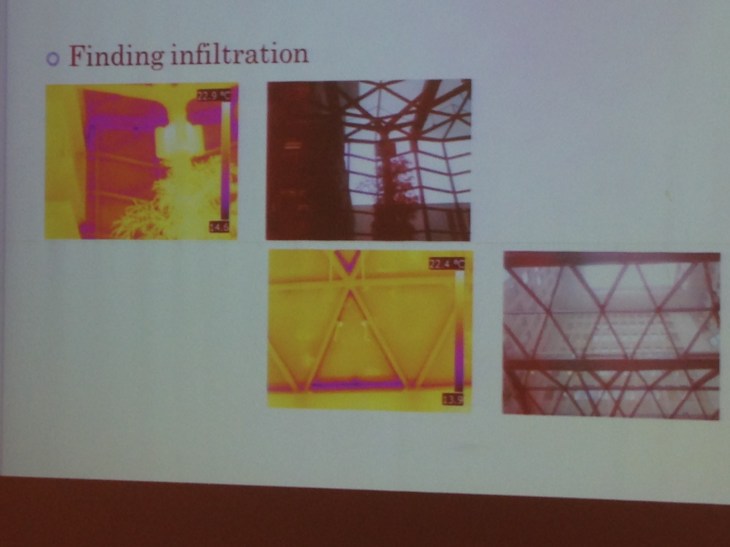
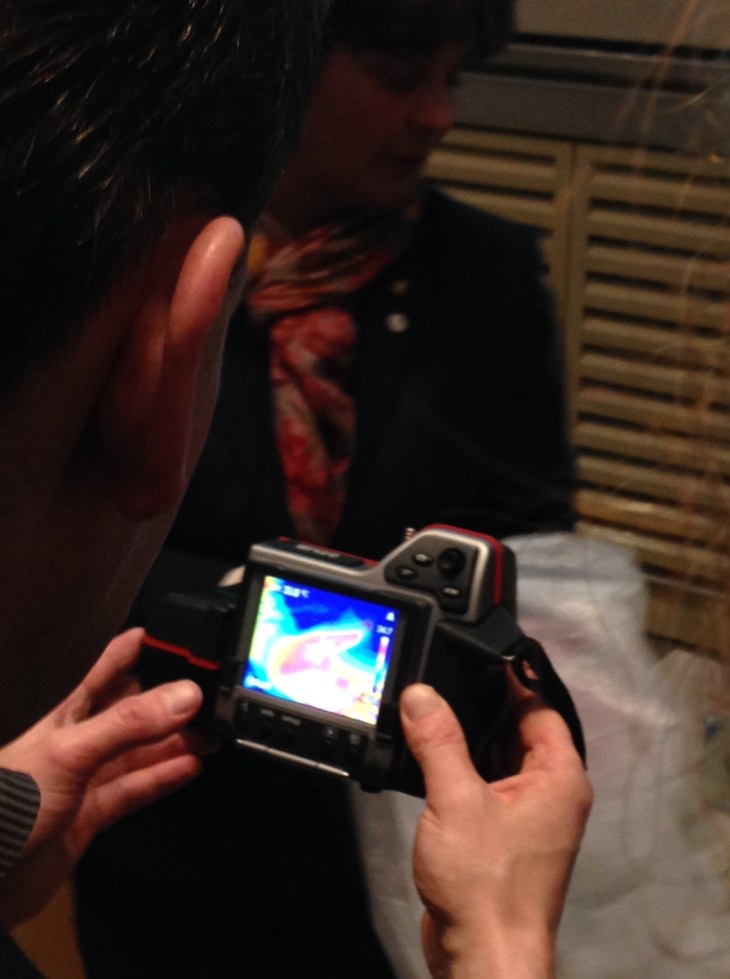
She also uses thermal imaging to study air infiltration, like so:

IMG_0690

IMG_0701

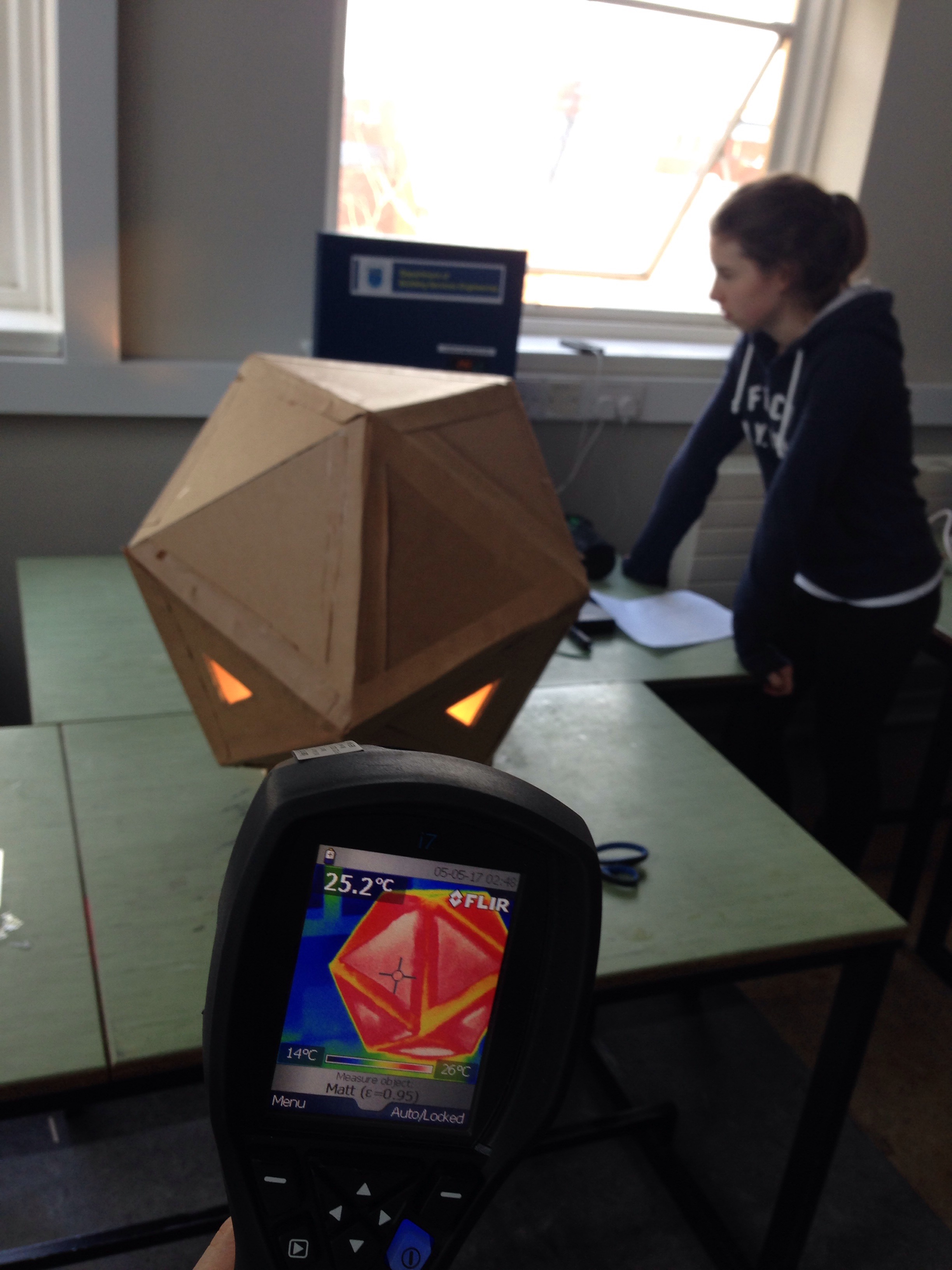
We use this kind of technology in our Energy Cube project. This is a picture from that class last week:


Catherine’s work involves fixing problems and also providing expert witness testimony. Forensic engineering seems fascinating! Catherine is a veritable Nancy Drew.

Forensic engineering, she says, is like a jigsaw. You’re given clues, you find evidence, simulation gives context, you test theories, and ultimately prove a solution. She obviously loves her job!

Using Architecture Design Studio Pedagogies to Enhance Engineering Education

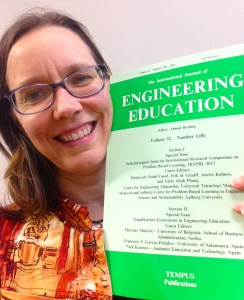
Shannon Chance IJEEI’m celebrating the publication of a new journal article today, with the help of Sally O’Neill. She’s one of the librarians here at DIT, and she secured permission and posted the article on DIT’s website, making it free for you and anyone else to download.

The publishing process is glacially slow. I submitted the paper in March 2014, based on a conference paper delivered in 2013. And here I am, in February 2016, with the final publication finally in hand.

Many time, in research, it takes time to see the results of your work. Seeing this in print helps make all these days, sitting at a computer analyzing text, feel more worthwhile. Once I can see that people are downloading it, and once I start getting feedback and citations in other people’s research papers, I’ll celebrate some more.

I know what I’ve learned through this research is useful, because I get to apply it in the classroom and in the design studio. The rewards of printed research are more slow to crystallize but also extremely important, especially for people who want to gain credibility in research and build a career around research.

This new article, written with the help of John Marshall in Michigan and Gavin Duffy here in Dublin, is about Using Architecture Design Studio Pedagogies to Enhance Engineering Education. Simply put, we believe that design education and hands-on forms of learning can help improve the quality and experience of learning in engineering and other STEM disciplines. The results reported in this paper provide support for that claim.

To give you a feel for what I’m describing, this is how we learn in architecture:

Above are pictures from design studios in Lisbon at IST and one for a study abroad program  offered by Hampton University. Very, very hands-on!

These days I’m helping promote similar ways of teaching engineering, which looks similar in many respects:

These are photos from electrical and mechanical engineering projects I’ve helped conduct at Dublin Institute of Technology.

This brand new article is about a specific design studio, conducted at the University of Michigan, that blurred the boundaries distinguishing art and science. It involved students and teachers from architecture, materials science engineering, and art+design working together to design and build “SmartSurfaces.” The paper reports learning outcomes — things the students learned in the  class — as illustrated by the blogs they posted during the semester. Here’s a glimpse of what that experience was like for those students:

For this new paper, I created a matrix to describe design behaviors in relationship to epistemological development (which has to do with how we view knowledge). I compared what the students wrote in their blogs to the definitions in my chart. Doing this, I was able to identify development of design skills as a result of students working in groups, and I even pinpointed some instances of epistemological development. John and Gavin helped check the work so that it would be more credible and reliable. They offered perspectives of insiders in the studio (John) and outsiders interested in group-based learning, Problem Based Leaning (PBL), engineering education, and epistemological development (Gavin).

This article should be of interest to any teacher who wants to help students develop new design, design thinking, or epistemological skills. Please feel free to read it and email me any questions you have, at irelandbychance [at] gmail [dot] com.

Chance, S., Marshall, J. and Duffy, G. (2016) Using Architecture Design Studio Pedagogies to Enhance Engineering EducationInternational Journal of Engineering Education Vol. 32, No. 1(B), pp. 364–383, 2016.

Luke’s Robot Show-and-Tell

Our RoboSlam facilitators team has been growing this semester as we have been recruiting and training people to conduct their own RoboSlam robot-building workshops.

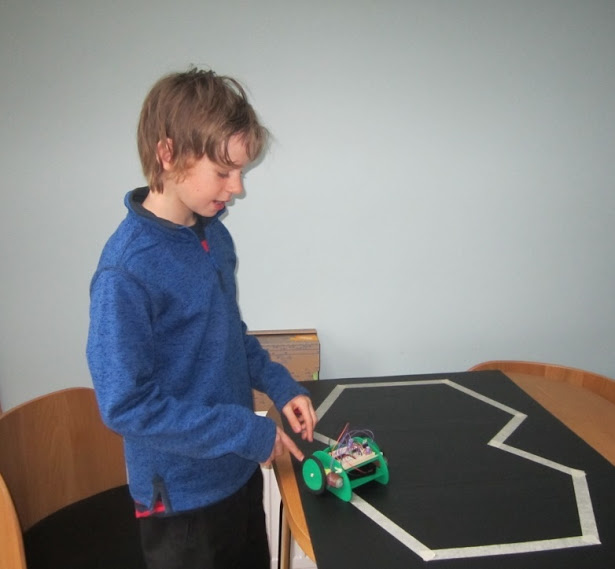
As it turns out, we also have also recruited a RoboSlam ambassador! Ten-year-old Luke Buckley, who I first met at ResearchNightDublin, attended a workshop on how to assemble robot circuitry that we held during Science Week. He rebuilt his robot on his very own, at home, and then brought his robot to school to show his classmates. He demonstrated how it worked and how to put it together.

The RoboSlam should get Luke into a programming workshop very soon (and then, who knows, maybe a facilitator training session, too). With enthusiasm like his, the sky’s the limit!

Here’s a note his mom sent to let us know about his experience. We love to receive followup stories from our participants–if you have any more, please email them on! We’re just a click away.

Dear Shannon,

I just wanted to say a big thank you for the RoboSlam workshop that my son, Luke attended. He asked me to say thank you from him too.

Just to give you some feedback on the outcome of your RoboSlam outreach activity, I thought that you might be interested to hear that Luke was able to disassemble and rebuild the robot on his own afterwards without any difficulty.  He also brought it into school (Glasnevin Educate Together National School) where he gave a demonstration to his class (31 pupils aged 10-11). Apparently the robot behaved perfectly during the demo and generated plenty of interest!

Many thanks again,

Niamh

Luke's robot

Luke O’Dowd at home, perfecting his robot design and testing it with an arena he built for himself. This robot is programmed to detect the change in color from black to white and to follow the line.

Teaching Design with Spaceships at DIT at the UK National Space Centre

I’ve been helping out in DIT’s engineering design projects module again this year, which Micheál O’Flaherty, Fionnuala Farrell, and John Nolan have transformed from the ‘Energy Cube’ project we led last year to a project that involves the design of a model spaceship. Photos from yesterday’s performance testing class are included in the gallery directly below. I’m happy to report that all the egg-stronauts survived the crash test fully intact!

This past summer, Micheál and I presented a paper about the Energy Cube project in San Sebastian, Spain. (O’Flaherty M.P., Chance, S., Farrell, C.F. and Montague, C. Introducing New Engineering Students to Mechanical Concepts through an “Energy Cube” ProjectInternational Joint Conference on the Learner in Engineering Education (IJCLEE 2015), San Sebastian, Spain, July 6-9, 2015.)

Fionnuala and I travelled to the UK to present a paper on a different aspect of the project at a conference in Loughborough. (Farrell, C.F., Chance, S., O’Flaherty M.P., An energy cube project for teaching engineering design processInternational conference on engineering and product design education, Loughborough University, England, September 3-4, 2015.)

Earlier in the summer, I presented yet another aspect of our work in Orleans, France. (Beagon, U. et al. (2015) Using Theory to Improve Design Instruction in a New Common First-Year Programme For Engineers. Paper presented at 43rd. annual SEFI Conference June 29th.-July 2nd. 2015, Orléans, France.)

The Loughborough conference included a dinner at the UK National Space Centre, where I got to see historic satellites, space ships and rockets (see photo gallery) alongside engineers who had actually worked on their designs.