Architecture educators in India

The architecture teachers at KLE Tech are really enthusiastic about teaching and about learning to do educational research. A number of them attended the engineering education conferences held at their institution in January — the IUCEE conference on engineering teaching and REES, the Research in Engineering Education Symposium, which focuses on research about engineering teaching.

KLE Tech’s lovely Dipanwita Chakravarty was the most enthusiastic among them, delighted as she was to find an architect speaking on a panel at REES.

That architect was me! 🙂

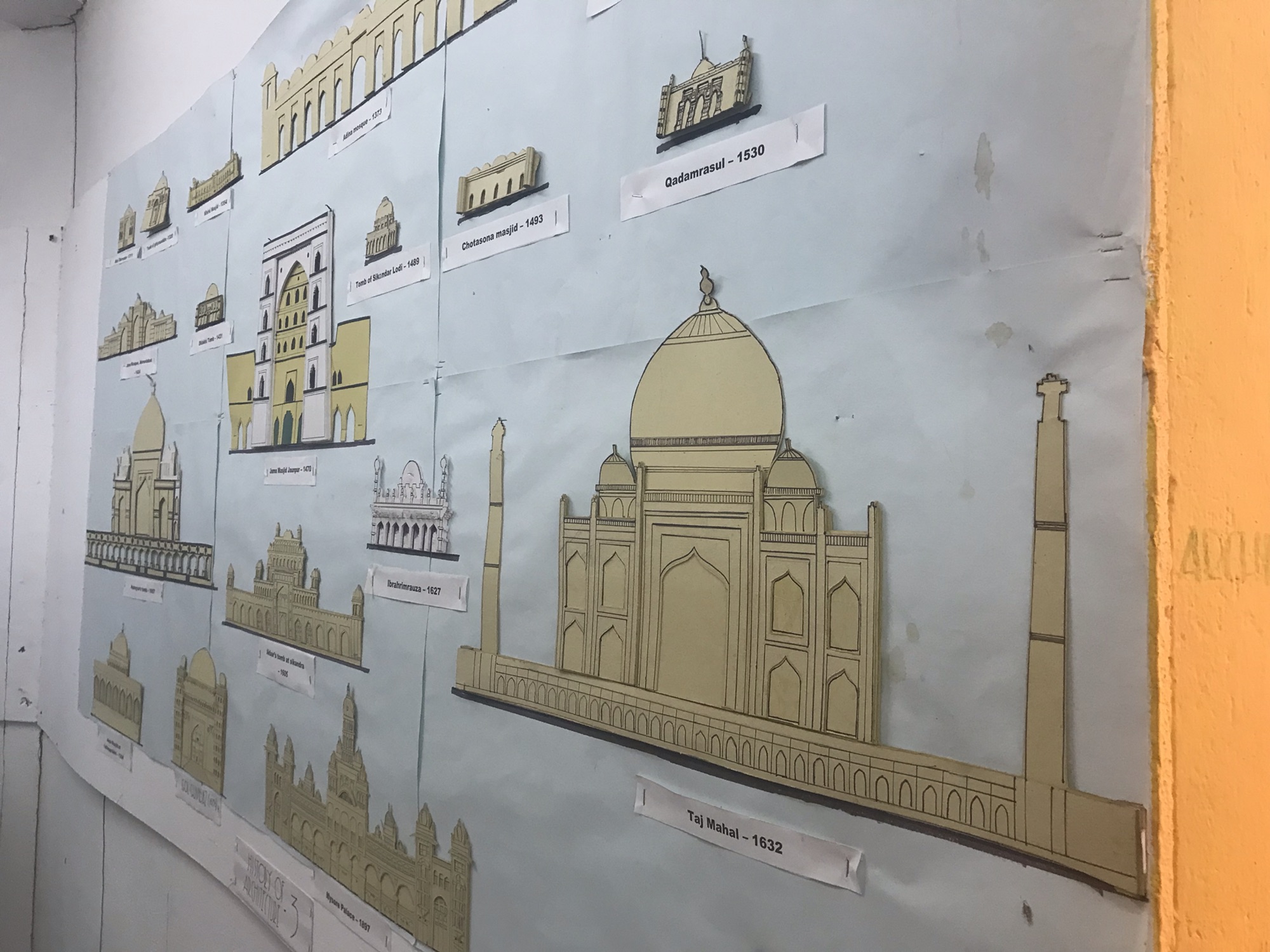
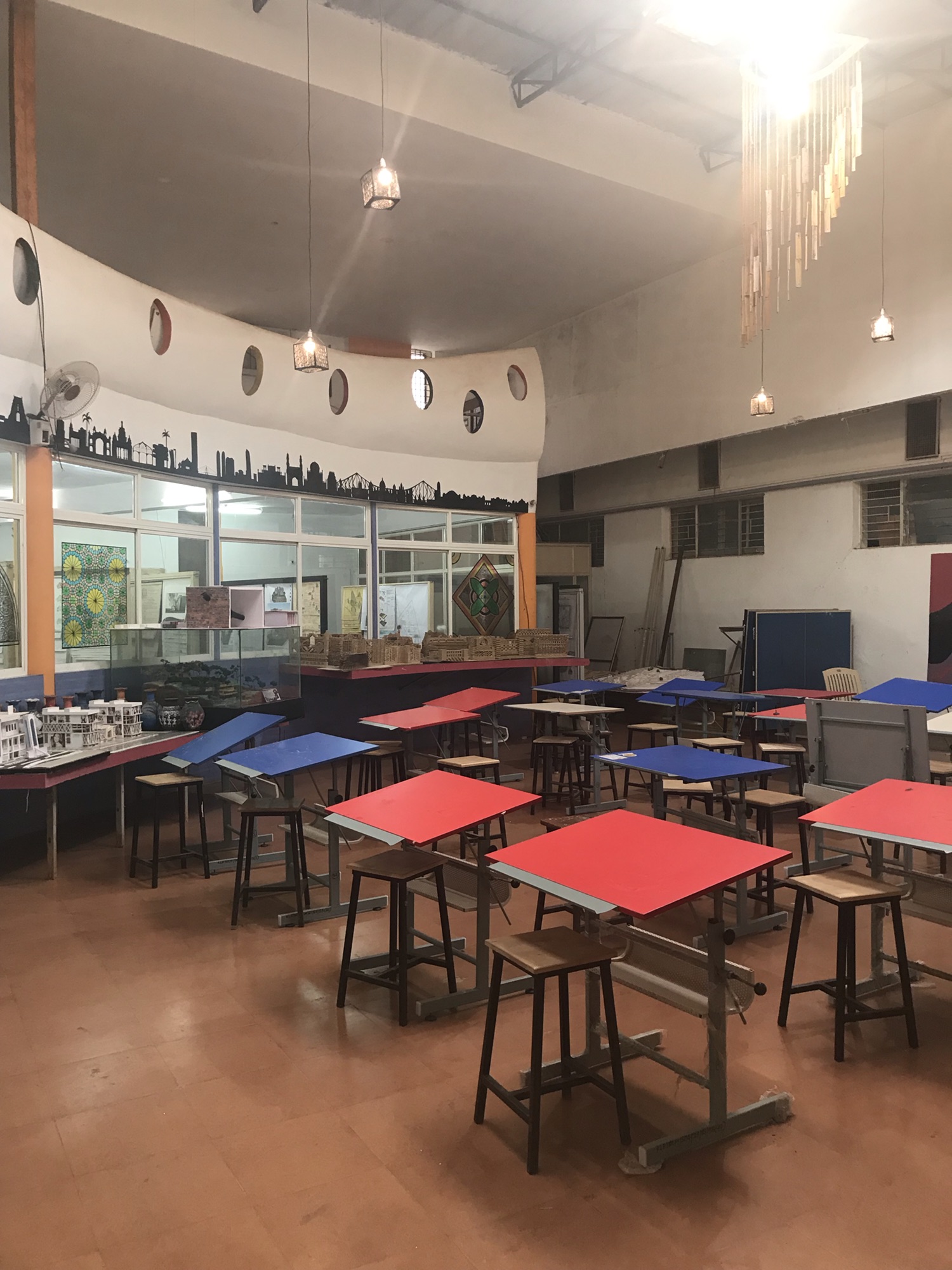
Dipanwita found me soon after I presented, asking me to meet her architecture colleagues. She spirited me away from the events at REES, to meet Deepa Mane and Rohini Mligi, tour a room archiving their architecture students’ work, and then meet even more colleagues for an animated chat about research and curriculum design. And tea! Such excellent tea!

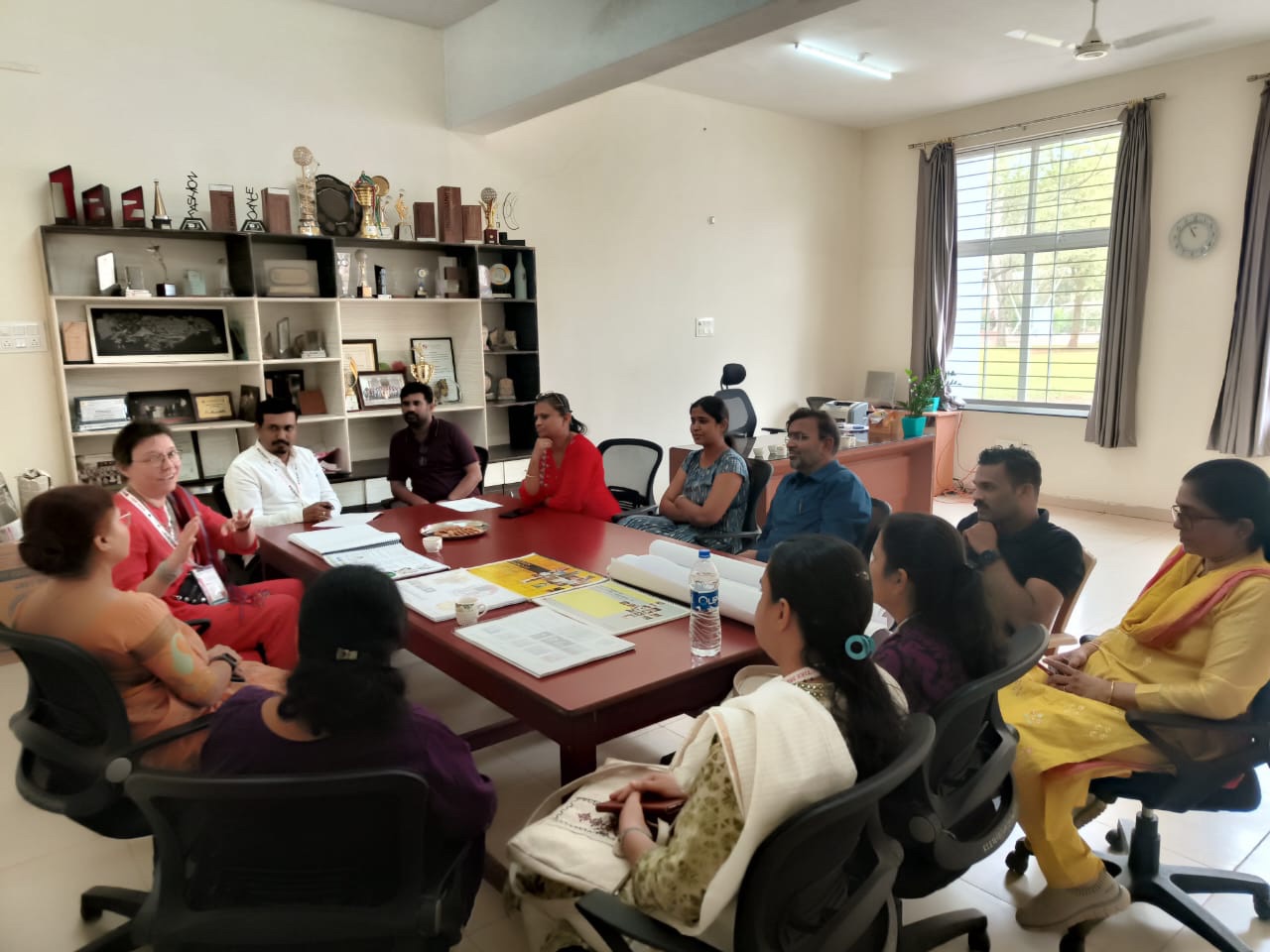
Here’s a glimpse of that afternoon’s tour and interactions:
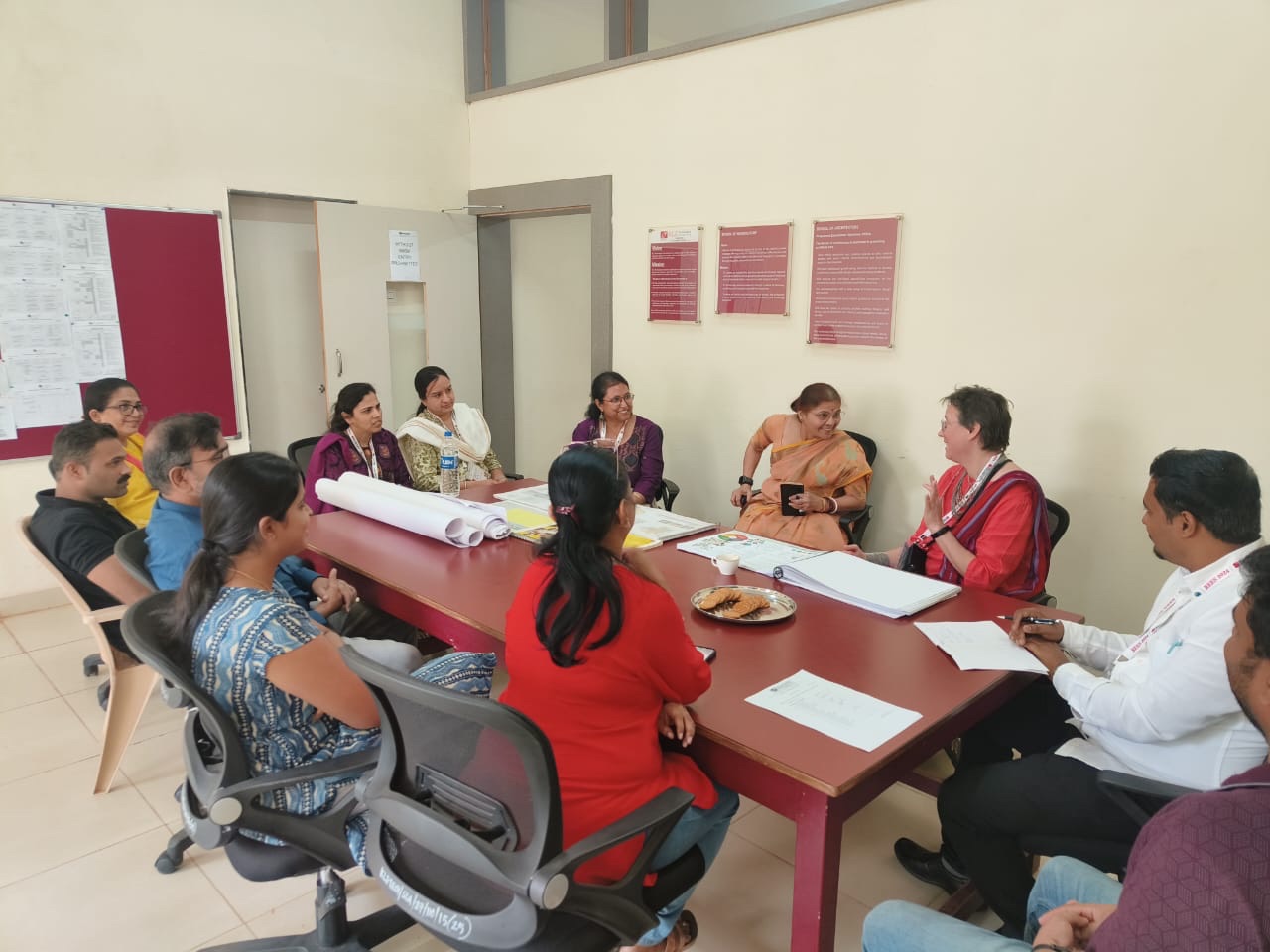
In that initial discussion in their faculty boardroom, we talked about different types of research they are doing and their interests surrounding architectural accreditation.

They asked me to help them build momentum and capacity to do education research, as they were enjoying seeing work presented at REES but were not quite sure how this type of research would look in the context of architecture rather than engineering.

We decided we needed a group identity. We envisioned collaborating with the engineering education research center on their campus (which has its own building, as it’s the leader in this realm in India). We also envisioned becoming active members of India’s IUCEE (the corollary of ASEE or SEFI for India).

As a step forward, we asked Dr/Prof Vijayalakshmi M., one of the main organizers of IUCEE and this event, if we could start a special interest group for architecture (and design?) within IUCEE. She was supportive. She gave us the Indian head shake and said: sure, just get started, and let’s see how it grows!
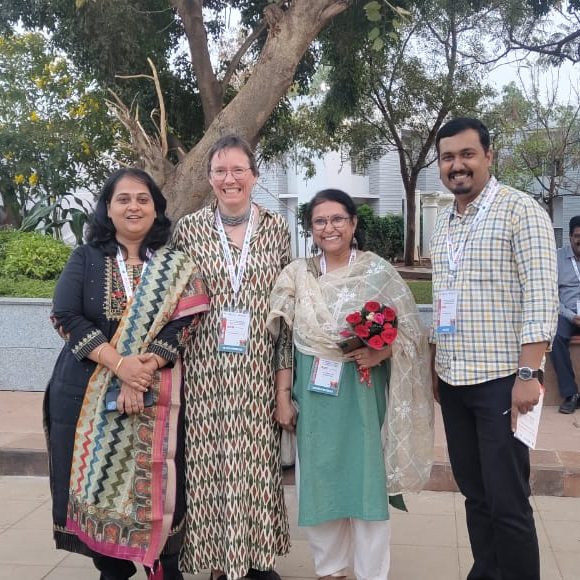
Meeting with Dr/Prof Vijayalakshmi M. about setting up a special interest group in IUCEE.

It was a very satisfying exchange, and I returned to REES for the day, happy and energized. I toured KLE Tech’s building for technical engineering later that day alongside the always-smiling, always-energetic Dipanwita Chakravarty and my colleagues from near and far.
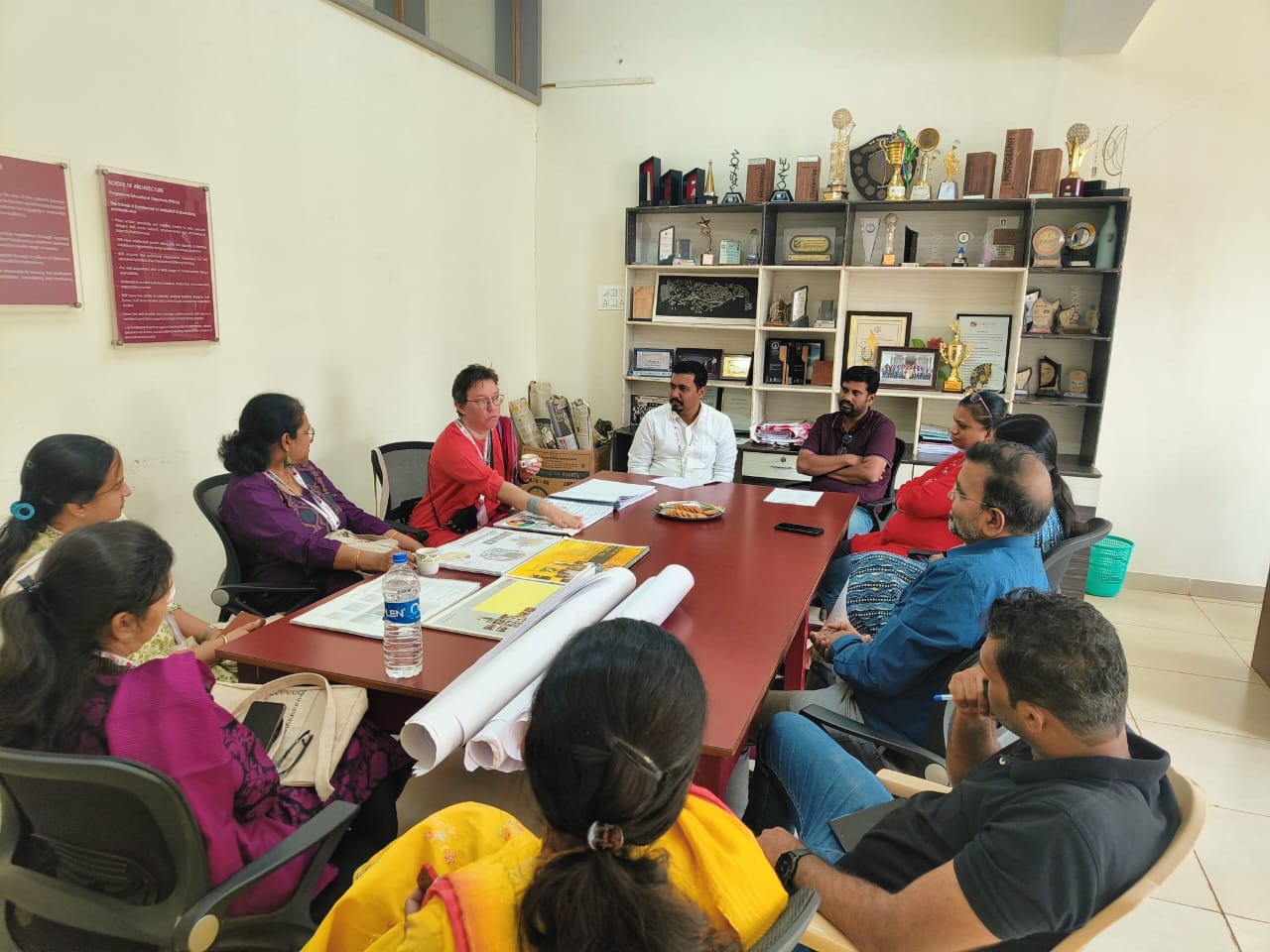
The next morning, the architecture staff spirited me away again!

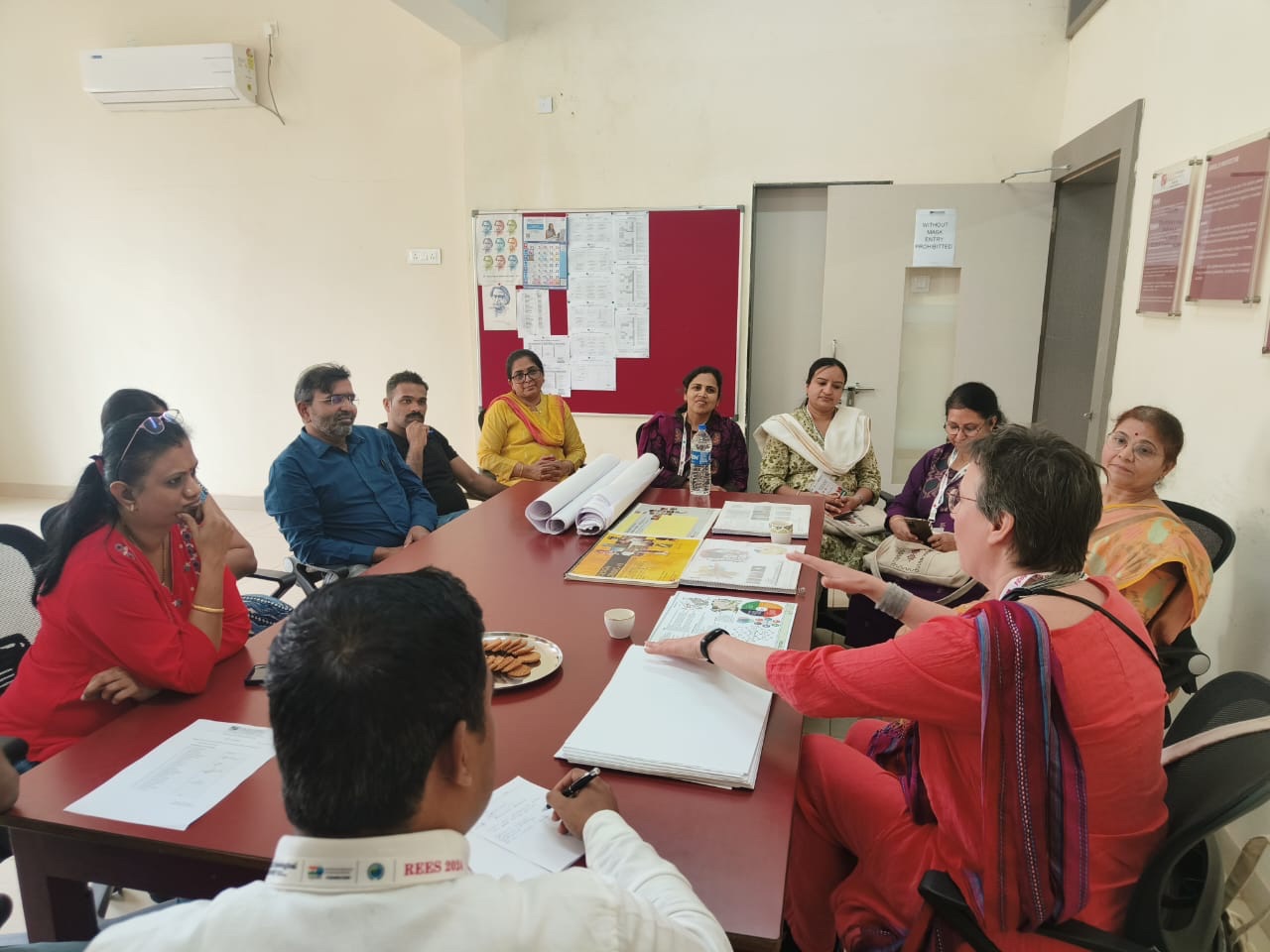
They’d assembled an even larger group to discuss what education research is, how education research differs from technical research on architecture and engineering (like the work they are already doing on thermal comfort and architectural heritage conservation), and how they can get started doing this new type of research.

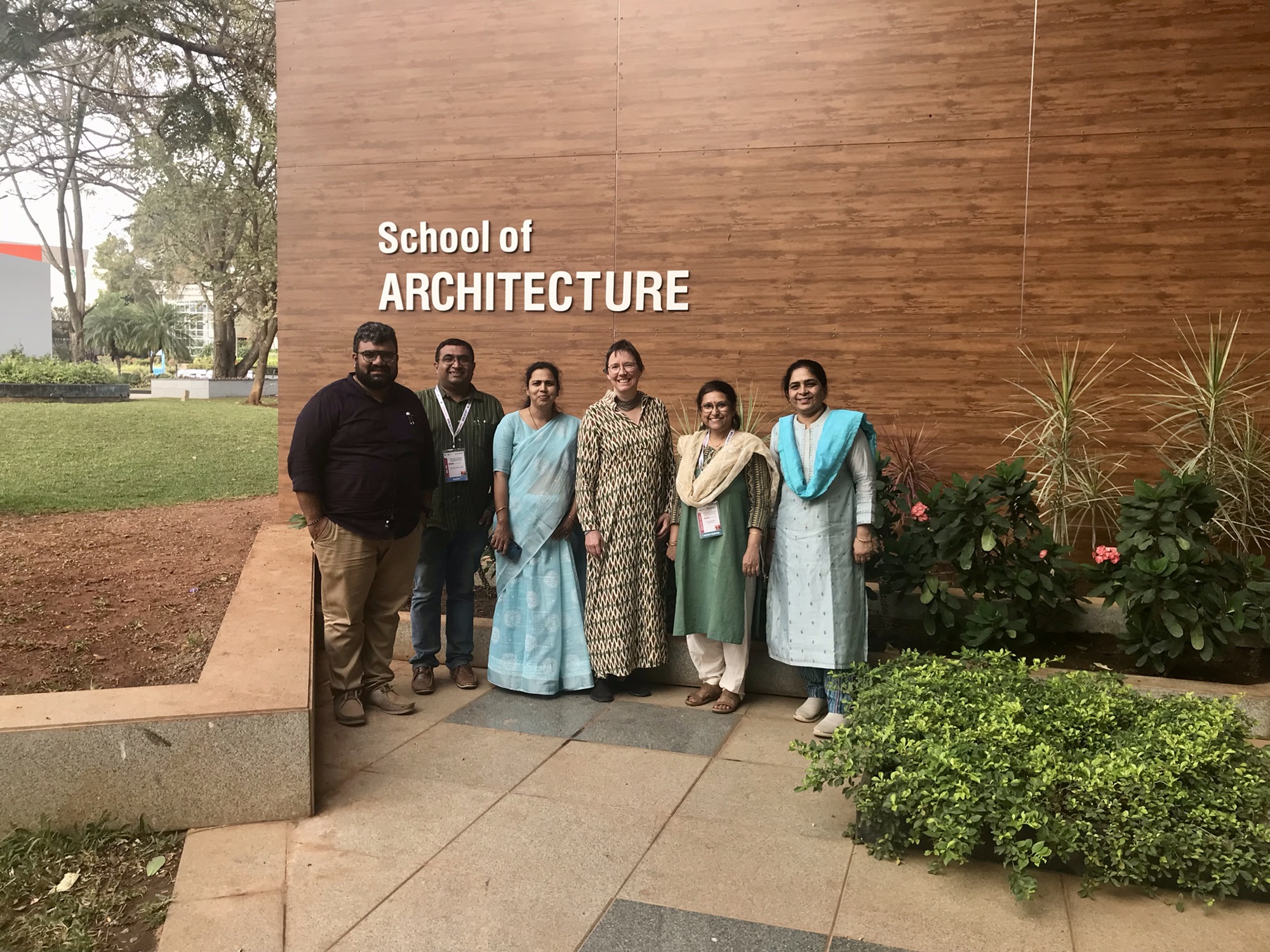
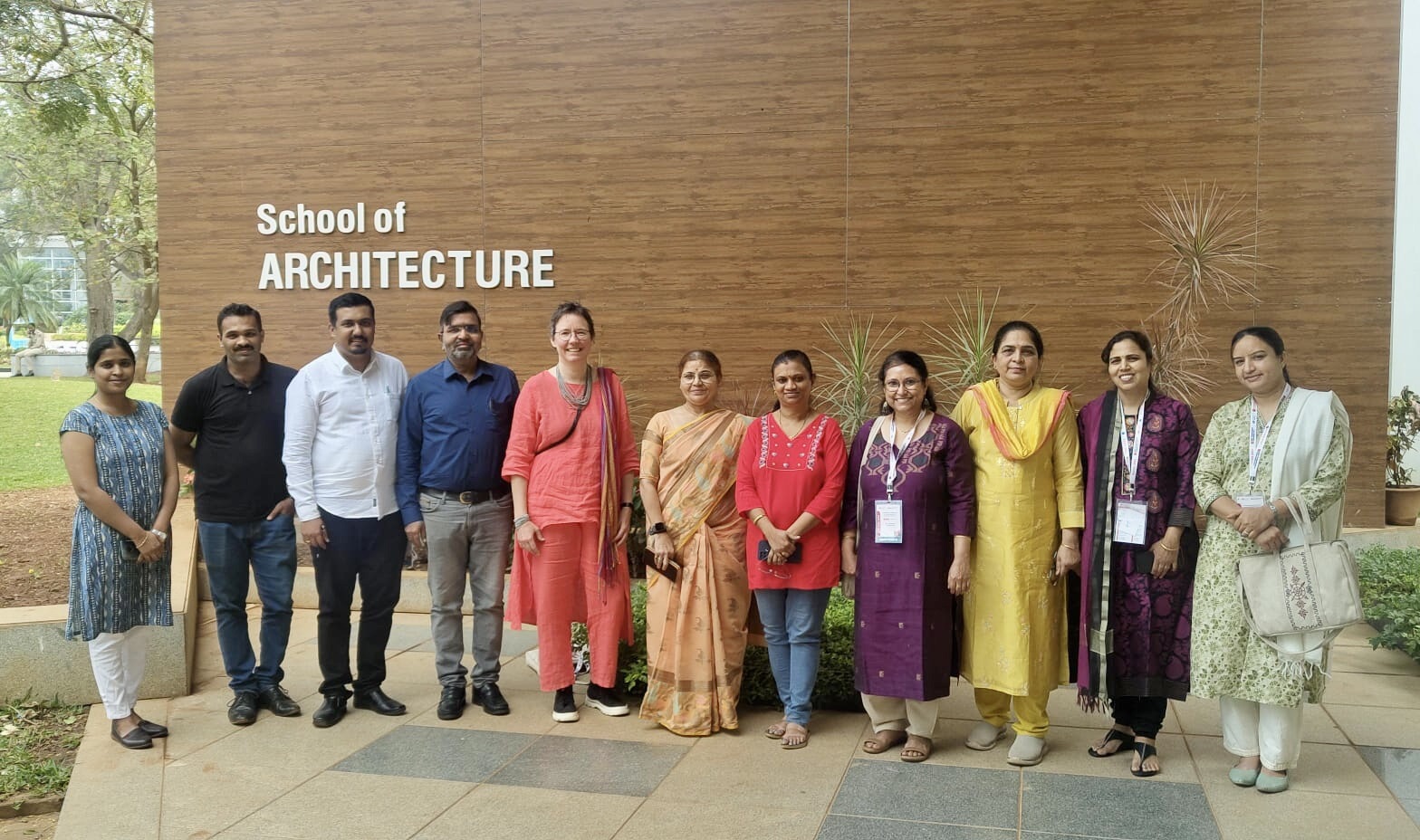
Here are the lovely photos they took of that impromptu seminar along with a photo of our whole group after that meeting.

You can see they made me feel like a rock star! The meeting was so much fun.
We’ve had a gap in communication since the conference ended, because I was on the lecture circuit (lol!) and then getting caught up back home and inducting a new cohort of BIM BSc students.

But my KLE architecture colleagues and I plan to hold online meetings in the near future to discuss examples of educational research in architectural education. I’ve agreed to help them envision, plan, and get started conducting education research.

One of the architects in the group emailed me later, asking me to share my own examples.

Reflecting on this request, I fear my own examples in this realm pale in comparison to my engineering education research. Architecture teachers tend to publish conference papers showing how they taught their class, and of these, my favorite among my papers reporting what might (optimistically) be called research-informed teaching or the Scholarship of Teaching and Learning (SoTL) would probably be Writing Architecture: The Role of Process Journals in Architectural Education and Beginning with Site in Architectural Education.

However, engineering education research is more rigorous than SOTL.

Although ‘engineering education’ conferences will allow the publication of reports on ‘how I taught my class’, the ‘engineering education research’ journals want empirical research studies. You have to collect and analyze data in a rigorous way. An example of this type of work is the book chapter Designing the Identities of Engineers, for which I collected surveys and compared results statistically between ‘engineering’ and ‘engineering technology’ students. The biggest difference I found, and my team reported, was that the ‘engineering’ students envisioned themselves as designers, whereas the ‘engineering technology’ students did not.

Another worthwhile example is my conference paper, where I first reported the design of the study as the Background and Design of a Qualitative Study on Globally Responsible Decision-Making in Civil Engineering and then published the results in a few different ways. The journal article Above And Beyond: Ethics And Responsibility In Civil Engineering reports what the civil engineers I spoke with discussed about ethics, whereas Opportunities and barriers faced by early-career civil engineers enacting global responsibility provides a more holistic report of what we found overall. The official ‘industry’ report of the study is called the Global Responsibility of Engineering Report and it was published by Engineers without Borders UK.

My primary research group, the European Society for Engineering Education (SEFI), embraces architects as if they are engineers, which is a reason I identify so strongly with SEFI. Yet, SEFI doesn’t have a special interest group in architecture or architectural engineering, even though the American Society for Engineering Education (ASEE) does have an Architectural Engineering division. ASEE’s Journal of Engineering Education rarely publishes research on architecture education.

In contrast, SEFI’s European Journal of Engineering Education, for which I am Deputy Editor, has been reviewing an increasing number of articles on architecture and construction-related topics in education. I suspect that’s partially because I have the interest, capacity, and collegial networks to help support such articles’ review, refinement, and publication. But I also have amazing mentors in my Editor-in-Chief, Dr. Kristina Edström, and co-Deputy Editor, Dr. Jonte Bernhard. They are encouraging me to build capacity in this realm. And they understand that building the cadre of reviewers with expertise in this area takes time, patience, and much enthusiasm!

Our merry band of editors has ample patience and enthusiasm!
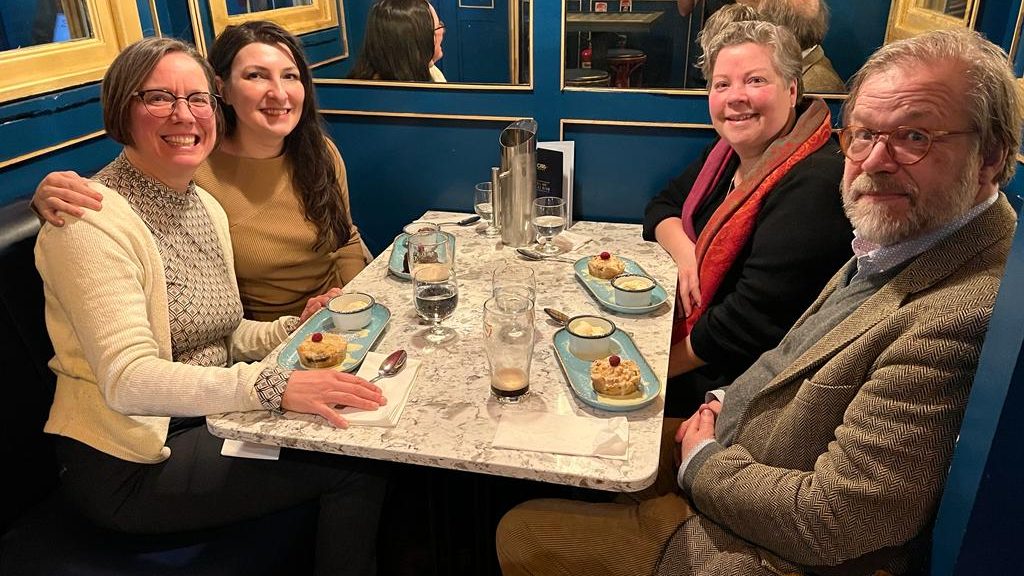
A past EJEE editors’ dinner in Dublin, with Dr. Kristina Edström and Dr. Jonte Bernhard (right), me and Diana Martin (soon to be appointed Associate Editor after impressing Kristina and Jonte!).

[Edit after posting: SEFI just launched a new journal that does publish SOTL papers, see: https://sefi-jeea.org/index.php/sefijeea/announcement/view/1! It says, “The SEFI Journal of Engineering Education Advancement offers a route to share ideas, emerging research, practice experience and innovations in the engineering education field.”]

In reflecting on what publications I have of my own that truly relate to architecture, I have identified Using Architecture Design Studio Pedagogies to Enhance Engineering Education as a favorite of mine. Unfortunately, it isn’t easy to find on search engines and the platform to download it is far from user-friendly. It doesn’t get the attention it deserves, but you can download it by clicking the title and see how you like it!

Another relevant work of which I am very proud is Comparing the meaning of ‘thesis’ and ‘final year project’ in architecture and engineering education. Yet this paper is more conceptual than empirically based and, thus, isn’t the best place to start the discussion with my colleagues at KLE Tech. I am delighted to report that it’s garnered nearly 1300 views since it was published, just 5.5 months ago.

A good place to start our discussion might actually be Comparing Grounded Theory and Phenomenology, an article I think is one of my best but has a very long and obscure title that I haven’t bored you with here!

My KLE Tech colleagues have a keen interest in architecture accreditation. These days, I am more engaged with engineering accreditation than with architecture accreditation (having uploaded a conference paper earlier today on engineering ethics accreditation, in fact). But in the past, I’ve been quite involved with the USA’s National Architectural Accrediting Board (NAAB), and my colleagues at KLE Tech are using NAAB’s guidelines to help them structure their programs. One day, they may seek affiliate designation from NAAB.

Near the end of REES, I found myself again spirited away to the now-familiar meeting room of KLE Tech’s architecture building to discuss accreditation options with Sharan Goudar and another colleague.
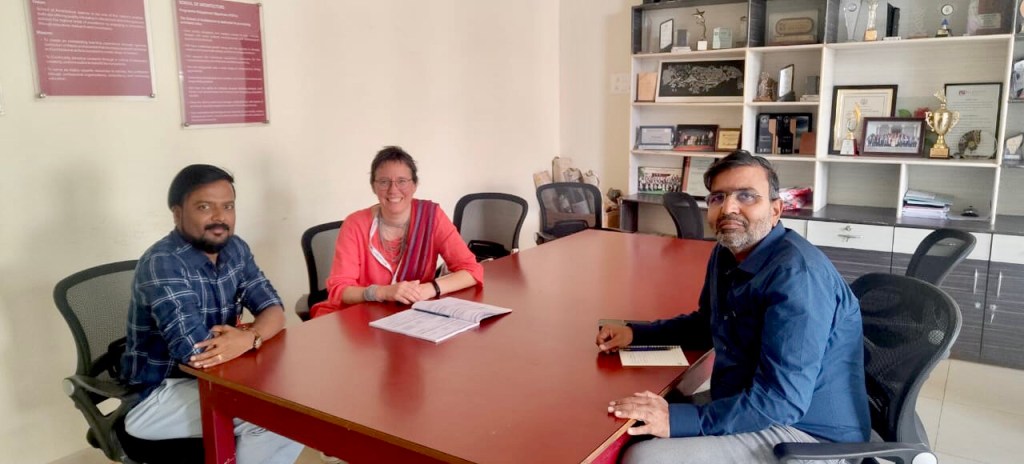
Discussing accreditation with Sharan Goudar (right) and colleague.

A text from Sharan encouraged me to finally craft this blog post, in fact. He responded to my recent blog Why India? Inspired by IUCEE and KLE Tech with a request for me to remember the architects:

Like Sharan, I, too, cherished the moments were shared in Hubli and I look forward to opportunities for more such moments, and a bit of hard (but fun and rewarding) research work, to boot!

My work with VIT Chennai and Dr. Nithya Venkatesan of the Internationalization Office may enable another trip to India, and I will make every effort to include a flight across to KLE Tech’s architecture department while I’m there.

These KLE architecture teachers are lovely, lovely people, and I look forward to getting to know them better and collaborating with them in both research and teaching.

Learning London: Barbican and the Design Museum

We took things pretty slow last weekend — but in addition to reading a couple of journals manuscripts in my queue to peer review, I hit the town with Aongus en route to two design exhibitions.

Saturday, we visited the Barbican’s Art Gallery for the exhibition called “Modern Couples.” It was packed with visitors since the show is scheduled to close soon. And possibly also because it was so cold outside!

I’ve uploaded photos of the Barbican complex as well as a few related to the exhibition, to give you a feel for it all. There was on display an iconic table by Eileen Gray, one of Ireland’s most-recognized designers. (I just found that a house she designed was evidently “vandalized” by Le Corbusier.)

Aongus always delights in seeing a price tag on an Eileen Gray table, since we found one in the trash one night and carried it home. It was raining that evening in Dublin, and Aongus truly didn’t comprehend the table’s value at the time I hoisted it over my shoulder to carry home. Now he does! Ours is chrome, but there’s one in black matte finish in the book store there as well as on formal display.

The things you can find abandoned in dark alleyways…. It’s always best to have a tall, fit companion when you’re transversing such places at night, I have found. Especially if you wind up carrying furniture home! He soon was doing just that — but I made a good start in an effort to convince him of my undying love for this table. Now he loves it too.

After the Barbican pics below, you’ll find videos and snapshots from our Sunday adventure as well. We went westward, to visit the newly-renovated Design Museum in Holland Park, just off Kensington High Street. It’s about time I got to the new building, especially since my Ph.D. student, Thomas Empson, has become so involved there.

We didn’t view the paid “Future Homes” exhibition as our attention was held by a free exhibition of the permanent collection and another free show on Peter Barber and company, who seek to provide affordable housing in our city and beyond. The exhibition is called “100 Mile City and Other Stories.” We also attended a tour of the building to learn about its history.

Barbican Complex


Modern Couples


Design Museum

A bit of fun

You might have to click the little arrow at the bottom left hand of the video. First, we learned to rock. Then we could spin….


The Building Itself


Parts of the Permanent Collection on Display


Architecture Exhibition


Urban context of the Design Museum


Open House Dublin: An architect’s delight

Screen Shot 2018-11-30 at 6.38.27 PMI have several blogs in my files that I’ve not yet shared. The info below is no longer “news” but it should be interesting and helpful to some, so I’m posting it for you today. Happy holidays!

The Irish Architecture Foundation (IAF) does an outstanding job organizing its annual Open House event. In 2018, they held it October 12–14. Open House spans three days and allows thousands of citizens to visit architectural wonders that are usually not accessible to the public. Over 170 tours and events were open to the public–all for free and most with architects, trained historians, or other experts as guides.

Although this happened six weeks ago, I’m posting it now since I like to have a record of what I’ve seen. I’ve attended five of these Open Houses, I believe, and you can find photos from other years by running a search for “Open House” on this site.

Despite the dreary rain on Saturday the IAF army of volunteers opened sites all across Dublin. Aongus and I benefitted, as lines were shorter. We took advantage of having Aongus’ car to stay dryer and see more sites than we could by foot. This means we visited more outlying areas than I’d originally planned. We normally walk or take Dublin Bikes.

On Sunday the sun came out, but not until after a cold wait for the opening of 14 Henrietta Street. The crowds were fierce on Sunday, and I even encountered a few grouchy folks with a sense of entitlement. I tried to cheerfully point out that the long wait times were due to the popularity and success of the event and that all the people organizing the events and running the sites were volunteering their time. That sense of entitlement is an ugly thing. Putting that aside, I really enjoyed myself and have provided photos of the seven sites I managed to visit.

Screen Shot 2018-11-30 at 5.43.27 PMBelvedere House

The first site we went to was Belvedere House, which used ot house the boys’ school that was the rival of the one Aongus attended for secondary school. The tour was full, so we actually just saw the lobby in our initial visit, but we returned later and got the tour and more photos.

The House was constructed in 1786 at 6 Denmark St Great, Dublin 1. According to the Open House website, “The construction of what is now Belvedere College began under the 1st Earl of Belvedere, and was later finished and occupied by the 2nd Earl of Belvedere. Built to the designs of architect Robert West, it features the work of renowned stuccodore Michael Stapleton. After the 2nd Earl’s death in 1814, the townhouse was left unoccupied and fell into disrepair. The house was eventually procured by the Society of Jesus Religious Order in 1841 and has since been occupied as part of their educational facility. James Joyce, Austin Clarke, Harry Clarke, Joseph Plunkett, Donagh MacDonagh and Kevin Barry are amongst some of the great past alumni who roamed the corridors and were educated here. RKD Architects were appointed in 2014 by Belvedere College to restore the 18th Century house and one of the most powerful features of the house today is the stucco work in the hall and first floor reception rooms.”

Screen Shot 2018-11-30 at 5.43.43 PMCroke Park Villas

This is a social housing community with an iconic design that was replicated in many other parts of Dublin. As it is so stylized, it seems to many people to be outdated. This particular set of Villas is being torn down and new housing built. There was a photographic exhibition in one of the flats, documenting families who used to live here. A few of the flats still have residents, who await new homes in the construction underway nearby.

The complex was designed by Daithi P. Hanley and constructed in the 1960s at Sackville Avenue, Ballybough Road, Dublin 3. Open House’s website noted that “In 1956 Dublin Corporation approved a Compulsorily Purchase Order on a series of derelict and condemned cottages in Ballybough in order to construct modern single and duplex flats between Love Lane and Sackville Avenue. Named Croke Villas due to its proximity to the GAA HQ, Croke Park, it was the first stage of an extensive plan to regenerate the Ballybough/North Strand area much of which still bore the scars of the 1941 North Strand Bombings. At present the complex is undergoing renovation and three blocks have been demolished along with a number of derelict cottages on Sackville Avenue. This new development with provide a mix of houses and duplex apartments. The flats were designed by Daithi P. Hanley when he re-joined Dublin Corporation in 1956 as housing Architect. He designed a series of 4 and 5 storey blocks of Flats which used standardised components resulting in significant savings in construction costs and building maintenance of which Croke Villas was part. There were many others of these flats built across the city. Hanley also designed the Garden of Remembrance, Simmonscourt Pavilion, the memorial monument at the Customs House, the Basilica of Our Lady, Knock, among quite a number of interesting projects.As part of Open House 2018 number 45 Croke Villas will be open to the public and will have an exhibition of photographs taken prior to and during the demolition by photographic artist Jeanette Lowe. Number 45 Croke Villas is in the last remaining block of flats, due to be demolished early in 2019. The finished development with form a processional boulevard into the Croke Park Stadium.”

Screen Shot 2018-11-30 at 5.44.38 PMAsh Street

This project was designed by de Siún Architects and constructed in 2018 at 25 Ash St., Merchants Quay, Dublin 8. Michael de Siún has shown his own home before, very near to this one, and it is an architectural gem. Such clever detailing to make small spaces feel spacious and appealing. I felt that a product Aongus and I had seen at the London Building Centre might be usefully applied to the project, and I forwarded information on it to the architectural design team by email.

The Open House website explains, “The refurbishment of no. 25 Ash St. introduces a double-height light well into a small 100 year old house. The previously tight rooms have been opened up to create a spacious continuous flow from entrance to rear garden. A feature staircase with strong vertical elements emphasizes the connection between the floors. A simple palette of oak, concrete, and brick unite the whole, culminating in an intricate brick façade to the rear of the building.”

Screen Shot 2018-11-30 at 5.44.52 PMWeaver Park

This city park was designed by Áit Urbanism + Landscape / DCC Parks & Landscape Services and constructed in 2017 on Cork St, in Dublin 8. Despite the rain, we found the park design to be fun and festive. There were even some kids besides Aongus out playing. We rounded off our day with dinner on Camden Street, at Damascus Gate.

According to the Open House website, “Weaver Park represents one of the primary objectives arising from Dublin City Council’s “The Liberties Greening Strategy”. This strategy identified a derelict site, formerly occupied by the Chamber Court Flats, which offered a significant opportunity for the provision of a landmark public amenity. In making the site available for redevelopment, Dublin City Council was responding to the campaigns of local community groups who had long seen the potential in this space. The brief given to Áit Urbanism + Landscape underlined the importance of a participative process that engaged with these local groups, so that the community’s requirements could be understood and delivered through an informed design. Weaver Park is therefore a distillation of the community’s aspirations with inclusivity at its core. The design delivers a hive of activity within a context that will be sylvanic and ecologically functional in time. The fulcrum of the park is a 40-year-old Quercus palustris; this beautiful Oak tree now provides an instant maturity and a new focal point on the Cork Street landscape. It is an icon for the greening of The Liberties.

Screen Shot 2018-11-30 at 5.46.18 PM14 Henrietta Street

This building was a stately-home-turned-tenement. From housing one wealthy family at its prime, this home eventually held a hundred people at once. I shutter to imagine.

Watching “Call the Midwife” during my subsequent writing retreat gave me a glimpse into what such urban density would have looked like. It’s an excellent series that illustrates history as well as truest loving people. So seldom can I bear to watch television, and particularly Netflix, due to its grim and gritty culture. This show, however, is a true delight despite drawing tears.

Back to the house in Dublin, though, where you can see for yourself most any day by paying an admission fee. For Open House Sunday, entry was free but the tour abbreviated. And there was a line around the block when it opened Sunday morning!

It was originally built in the 1740s at 14 Henrietta Street, Dublin 1. The renovation that has just been opened was designed by Shaffrey Architects. This work converted the house into a museum that now showcases how the spaces would have looked both at the building’s prime and high and when it was packed to the gills. The house is in eyeshot of Linenhall, where my DIT staff office is located and I had a bird’s eye view of the renovations as they progressed. I kept a keen eye as the roof was repaired, a fire stair added, and the brick on rear of the house repointed.

The Open House website provides a detailed description: “Dating from the 1720s, Henrietta Street in Dublin’s North inner city is the most intact collection of early to mid-18th Century houses in Ireland. Built as a townhouse for the elite of Dublin, 14 Henrietta Street was split into tenements in the 1880s as the need for working class housing in Dublin grew, with some 100 people living there by 1911. It remained a tenement house until the last families left in the last 1970s. It’s been a 10-year project for Dublin City Council to rescue, stabilise, conserve and adapt 14 Henrietta Street. The house is the primary artefact of a new museum – the walls, floors, banisters, old gas pipes, fireplaces, and fragments of linoleum and wallpaper have many stories to tell. Shaffrey Architects planned and created new spaces to discretely integrate essential services and fire protection, using wireless technology to minimise loss of finishes and fabric. The tours will showcase the reception, selected rooms, basement and garden area to see the connections between the old and new. This year’s winner for the RIAI Award for Conservation / Restoration and Awarded The Special Jury Award.”

Screen Shot 2018-11-30 at 5.44.10 PMNew Garda (Police) Headquarters

Designed by the Irish Office of Public Works (OPW) and built in 2017, this build graces the Corner of Kevin St and Bride St, Dublin 8. This building is in the line-of-sight from Kevin Street DIT, where I frequently teach RoboSlam workshops and the RoboSumo design project, with Ted Burke and often Damon Berry and Frank Duignan. I was delighted that one of the architects who worked on this project delivered our tour. He was quite a young lad–leading me to feel a bit aged! (Like a fine wine? Perhaps….)

The Open House website explains, “The new Kevin Street Garda Divisional Headquarters was designed by the OPW. It is designed as a civic quality building responding to the specific site context of its historic surroundings. The building is energy efficient and sustainable with universal access for all. The building is arranged in linear blocks of accommodation either side of an atrium space. It reinstates the street line along Bride Street with a five-storey building opposite the seven-storey National Archive building. The five-storey curved block steps down in a series of steps to become two storey adjacent to the former medieval Archbishops Palace, thereby responding in scale to these important historic buildings. The important Kevin Street junction is acknowledged by expressing the central atrium space on that façade. The public entrance is located at this point. The atrium serves as the main vertical and horizontal circulation space within the building and provides for natural ventilation to all offices along with natural air extraction and allows daylight to penetrate into the building.”

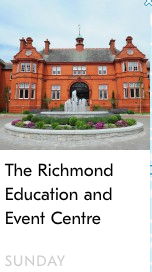
Screen Shot 2018-11-30 at 5.42.54 PMThe Old Richmond Surgical Hospital

Just one block from my apartment in Dublin, this stately brick building gleams with love and civic pride. Originally designed by Carroll and Batchelor 1901 and built in 1901, The Richmond was refurbished in 2016 by Kavanagh Tuite. It is located near my own flat, at No. 1 North Brunswick St, Dublin 7. This was not my first tour of the building, but I learn new things each time.

The Open House website explains, “The Richmond Education & Event Centre was opened on the 20th April 2018, following an extensive refurbishment, following its purchase by the Irish Nurses and Midwives Organisation in 2013. The building was originally opened on the 20th April 1901 as The Richmond Surgical Hospital and remained open as a hospital until 1987, when patients from The Richmond and Jervis Street were moved to Beaumont Hospital. It after became a business centre and then a Court House for a number of years, there are still 3 cells in the basement. This red brick english renaissance style building has three floors and is U-shaped overlooking a central courtyard and fountain. It is built on the site of benedictine convent dating back to 1688. The building has meeting rooms, offices, four large former wards (auditorium, lecture room, banqueting room, victorian tea room). The tour will include the ground floor, first floor (except offices) and part of the basement.”

smc

Purchasing a Reflection

Circa 1835, Dublin, Ireland, March 2011

Circa 1835, Dublin, Ireland, March 2011

I’m posting the images from my photography show, for all of you who didn’t get to attend the opening and take a catalogue home. The title of the show is “Inter-Changes: Reflections from Dublin and Beyond” and it is on display at the O’Connell House at from 9-5 weekdays at 58 Merrion Square, in Dublin 2, from May 8-31, 2013.  I’ll be there next Monday, May 27 from 12-2 for one last “Meet the Artist” session.

If you’d like to purchase one of the works, please contact me via email at shannonchance (at) verizon (dot) net.  The images are currently selling for 80 Euros or 100 dollars each, plus shipping and handling.

The copyright for these images belongs to Shannon Chance.  If you want to use them for commercial purposes, please contact me. You may use them for personal or educational purposes as long as you cite me as the author.

My most sincere thanks to all who attended the launch of this exhibition.  You have helped make my time in Ireland memorable and worthwhile!  Thanks for reflecting on Ireland with me….

Defining the Street in Dublin and Ballsbridge

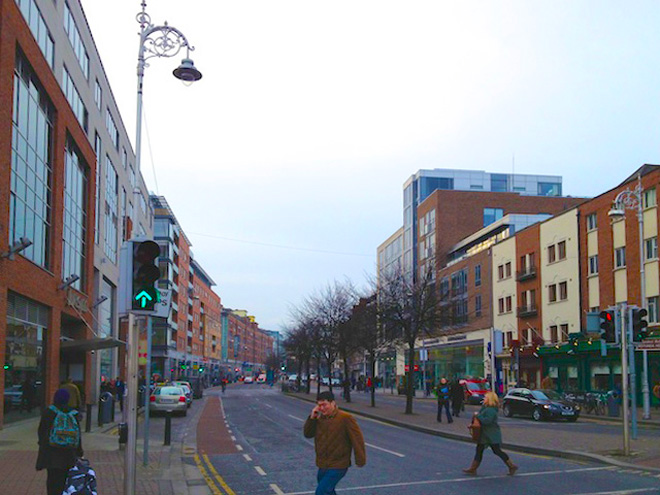
Parnell Street

Parnell Street

In my opinion, good city buildings touch each other and define the street. They don’t have to be glamorous to make good urban fabric. When building work together, they create good spaces for people to enjoy.

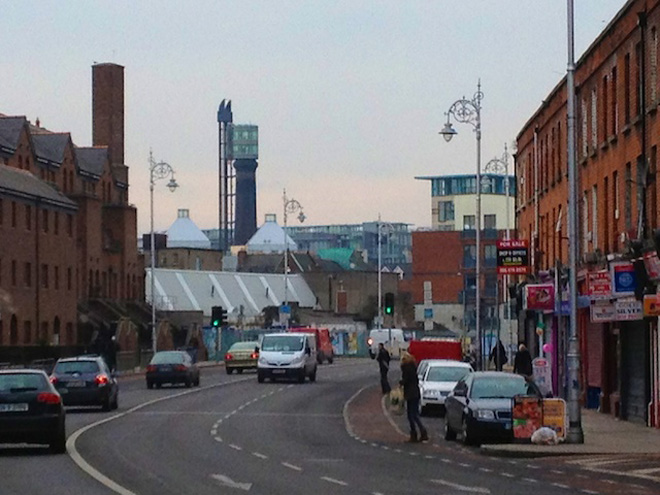
I’ll give two quick examples of clearly defined streets. These two streets are near my apartment in Dublin. Unfortunately, they are both designed for cars–not people.  Nevertheless, the buildings work together to define space. On Parnell Street, the buildings support a good mix of uses and are close enough together to provide the density of population needed to support ground-floor retail. Residential density is lower a few blocks away, on North King, and ground-floor business are fledgling.

North King Street -- view toward the Jameson Distillery smokestack -- where density breaks down.

North King Street — view toward the Jameson Distillery smokestack — at the point where density breaks down.

Simply put, a proper mix of residential and office space is necessary to support ground floor restaurants and retail. By providing residential as well as working space, mixed-use districts are active throughout the day. Businesses can draw customers morning, noon, and night.

Having the right mix in your district ensures you’ll be able to get the services you need without getting in a car. (Oh, that we’d build this way in the States! Walkability is so rare in cities back home.)

I was reminded of all this last Thursday, when I travelled to the Fulbright office in Ballsbridge to help interview Fulbright applicants. It’s in the outskirts of Dublin. Although this is a suburban neighborhood, it is still dense by US standards. Notice that there’s more space between buildings in Ballsbridge than in Dublin city center, but that there’s still a good mix of uses/services. Nevertheless, some buildings contribute much more to the life of the street than others!