Last week, I presented the Routledge Handbook of Engineering Ethics Education at a World Engineering Day for Sustainable Development conference in Krakow.
Presenting at WED in Krakow
Today, I get to share it via a presentation to the All-Ireland Architectural Research Group (AIARG).
Leaving Dublin on the train this morning from Heuston Station headed to the AIARG conference
Below is a synopsis of what I’ll say in my 15-minute presentation to the architecture educators today.
Presenting the handbook at the Association for Practical and Applied Ethics (APPE) in February
This handbook is a product of the global engineering education research community and the ethics special interest group within the European Society for Engineering Education, known as SEFI.
The engineering education research community considers architecture to be a field of engineering and welcomes participation of architects. They are highly engaged in pedagogical research and in implementing innovation active learning methods. That said, engineering education has historically been more compartmentalized and positivist than architecture education.
I identify first and foremost as an architect and teacher of architecture students and I have been welcomed warmly by this community since I moved to Ireland in 2012. I welcome you to join us!
Today, I’m here to tell you about a new handbook our ethics group has developed that can serve as a resource for you. I hope it will inspire you to draw some new ideas into the education you deliver.
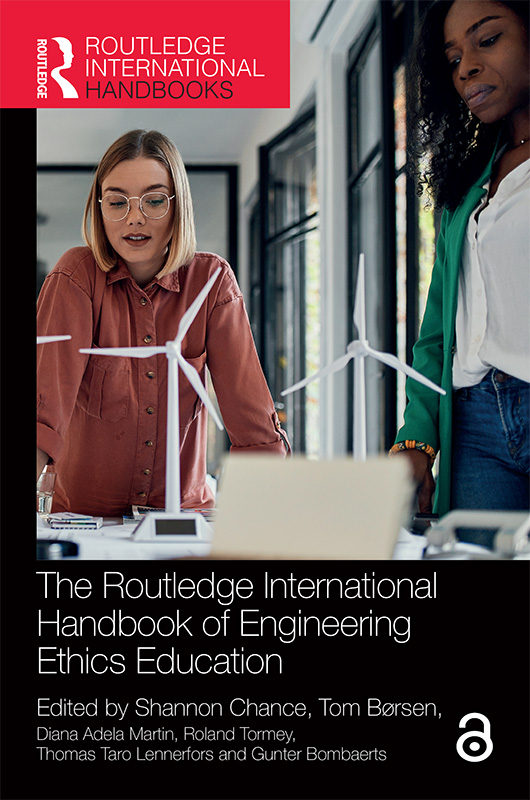
The handbook cover
The book was a community effort, with six editors and 99 other authors from all around the world. This map shows where our authors have lived and worked.
We’re working hard to hear and learn from voices outside the areas most active in engineering education research—here you can see the concentrations of activity in engineering ethics education.
So what’s in the book of relevance to an architecture educator? What can you learn? What opportunities do you see for applying or adding to the content? Would you want to create a parallel text for architects? Would you want to join this community of education researchers?
This comprehensive compendium of the state-of-the-art of literature on engineering ethics education is divided into six sections. Most of these have something of interest to architects.
At the Krakow sustainable development conference
The first section discusses foundations such as ethical theories and the role of professional organization and their codes in helping define and uphold ethics. How we do this as individuals and communities is discussed. Environment and AI are also covered here in the first section.
Section two delves into interdisciplinary perspective that inform ethics and how we think about ethics in engineering and built environment. We discuss philosophy, sociology, decolonization, and critical theory, psychology and moral development, engineering design, law, and the like.
Section three touches on five overarching fields of engineering, with the first chapter on civil engineering holding the most relevance for architects. The areas of focus vary quite widely across the disciplines. Even as an architect, I found reading the entire set fascinating.
Section four on teaching methods can be extremely helpful for any educator wanting to integrate ethics into the modules they teach. We look at case studies, problem- and challenge-based learning, value-sensitive design, humanitarian engineering, arts-based, reflective and dialogical approaches. These aren’t mutually exclusive and as an architecture teacher, I combine these methods daily.
Still from video of me discussing the handbook at the end of February at NewGiza University
Assessment is perhaps the most challenging topic in the book. What are we seeking to assess in students with regard to ethics? How can we gauge students’ ethical competencies? What is the role of values, of culture?
The final section, on accreditation, is not as confined to engineering as you might expect. It critiques the increasingly globalized approach to education promoted by engineering accreditation bodies and global accords seeking to align engineering practices globally. The section questions whose voices get heard, whose have been ignored, and what we might be overlooking. We look at the history of ethics accreditation, how various cultures define what students should be able to demonstrate (social justice appeared in only Columbia’s documents of 12 countries studied). We end the book with a fascinating critical feminist standpoint analysis and a critique of how to personalize entities education to fit the local context.
Just arrived at AIARG!
Our engineering ethics education community welcomes you to get involved with us in applying and extending the contents of this book.
On behalf of TU Dublin, on March 24-26, I’m hosting an Ethics Spring Symposium about the book in Dun Loaghaire. You’re welcome to join us for a day or more. Just ask me for more info.
Colleagues including TU Dublin’s Emma Geoghegan and Noel Brady kicking off AIARG by presenting the Building Change project.
Over the past two years, I have edited this book in collaboration with five outstanding ethics scholars. Seeing it through to completion is one of the proudest achievements of my professional life.
The project involved 105 authors from around the globe. I led it alongside Tom Børsen, who immediately embraced the idea of a handbook.
We paid the publication fee so that you can read it for free! We wanted to give everyone with a digital device an equal chance, regardless of where they live.
Of course, you are also welcome to order a hard-back print copy of the book from the link above. A discount is currently available. Moreover, a paperback version will be available in 18 months.
The book has six sections:
SECTION 1: Foundations of engineering ethics education (7 chapters)
SECTION 2: Interdisciplinary contributions to engineering ethics education (6 chapters)
SECTION 3: Ethical issues in different engineering disciplines (5 chapters)
SECTION 4: Teaching methods in engineering ethics education (7 chapters)
SECTION 5: Assessment in engineering ethics education (6 chapters)
SECTION 6: Accreditation and engineering ethics education (5 chapters)
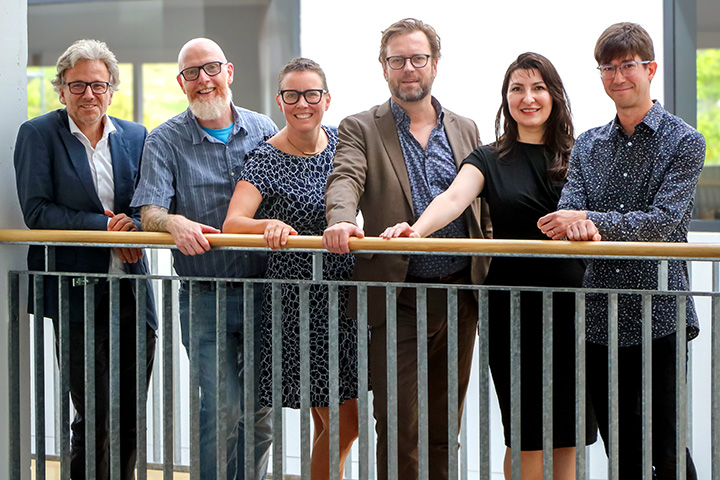
The editorial team is pictured below (left to right): Gunter Bombaert, Roland Tormey, Shannon Chance, Tom Børsen, Diana Adela Martin, and Thomas Taro Lennerfors. It’s been a dream team!
This handbook was a project of the Ethics Special Interest Group (SIG) of the European Society for Engineering Education (SEFI). SEFI members made it possible by contributing to their transcontinental networks of colleagues.
We editors started by sending out a survey, as far and wide as possible, to find out who was working in the field and might be interested in authoring a chapter. We held online workshops to identify what topics should be included and structured them into chapters. We invited a lead author for each chapter and asked the lead to invite three others to co-write the chapter. We asked that the chapter team have people from different places on it, and we aimed for transcontinental teams where feasible. We also asked the lead to consider specific people who had expressed interest in the topic. Our team ultimately included people of diverse levels and fields of experience and good geographical distribution. The people on many of the teams had not worked together before. Many lead authors served as mentors for early career researchers. We held numerous meetings online with the led authors of each section to cross-check, coordinate, and challenge our own thinking. The editorial team met weekly throughout most of the process, and the final result reflects the strong and knowledgeable engagement of many leaders in the field. Our team conducted a rigorous internal peer review, and the publisher conducted its own peer review twice during the process. Here’s what the reviewers said about our proposal:
“I believe this is a state-of-the-art milestone.”
“The lead authors are the key people in this vibrant community, and they have recruited a veritable ‘Who’s Who’ of international authors for the handbook. This is the right time and the right people. It’s the dream team.”
“This would become the resource in this field.”
The final result is a true masterpiece, and I hope you’ll read at least some of it because the content is quite fascinating!
The Ethics SIG also hosts a Spring School around Easter every year, and this year, the theme of the Spring Symposium is “Growing the Field of Engineering Ethics Education and Research as a Community.” I am the local host for this March 2025 event, and we will spend the three days celebrating, applying, and extending the handbook’s content. Learn more about the Symposium and submit your interest in attending at this link: https://forms.gle/WngZ3DMi97FLtQaZ8
Date: 24-26 March 2025 (9:00-17:30 each day)
Location: Royal Marine Hotel, Dún Laoghaire, Ireland
Whether or not you can join us in Dún Laoghaire, I hope you’ll peruse the content of this outstanding new resource and reach out to the editors and authors if you’d like more information or to get involved in what we do!
I am confident that this handbook will make a significant global contribution to engineering education. I therefore urge all engineering and architecture educators to become more explicitly involved in learning and teaching about ethics.
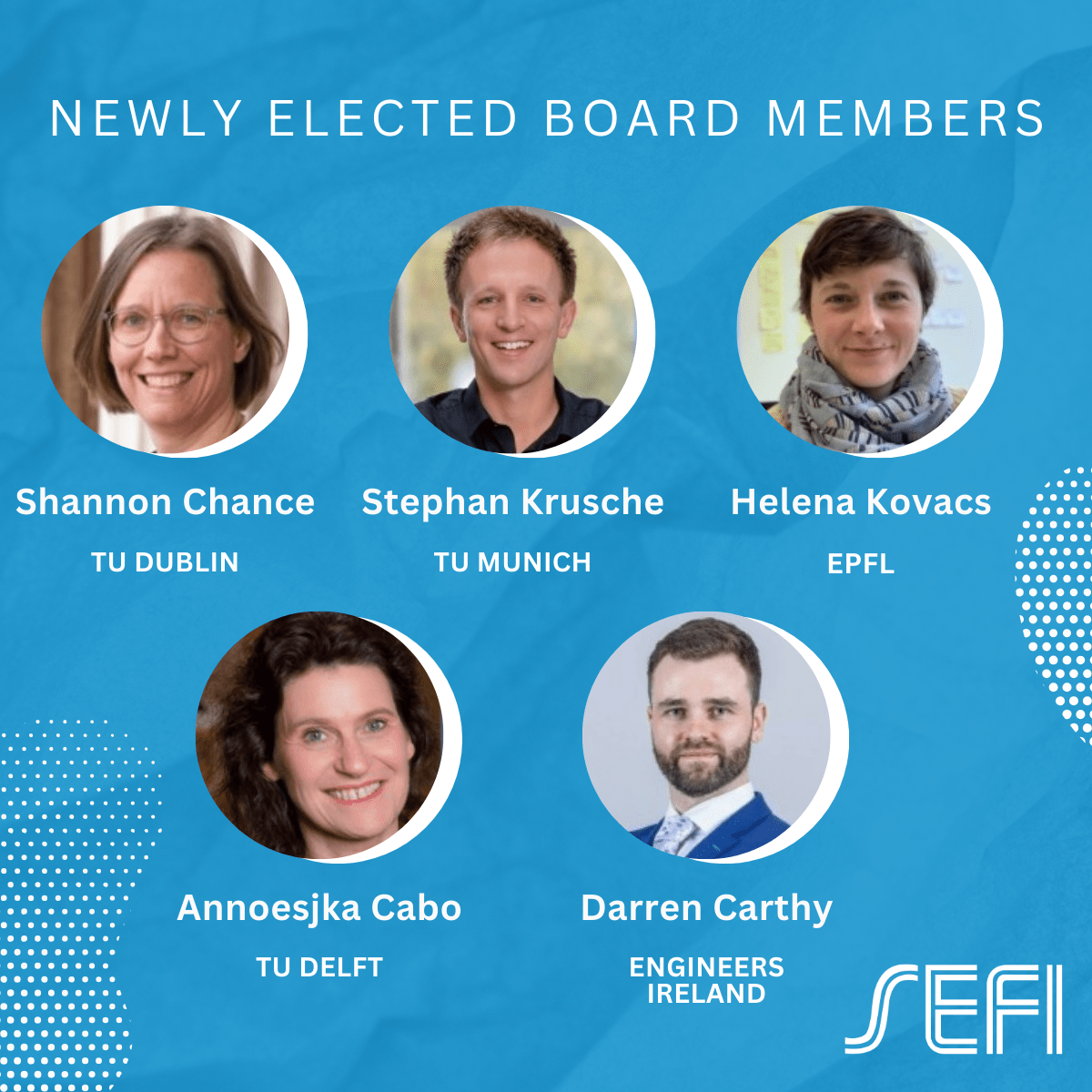
The European Society for Engineering Education (SEFI) announced the results of recent voting. I’ve been elected to serve on this prestigious organization’s Board of Directors for three years! Many thanks to Mike Murphy, former SEFI President and TU Dublin Dean, for prompting me to run, and to Una Beagon (TU Dublin), Inês Direito (UCL), and Tom Børsen (Aalborg University) for formally endorsing my candidacy. This post gives you a peek into my:
I met several other candidates at an August orientation meeting organized by the SEFI Director General, Klara Ferdova, including incoming Board members Stefan Krusche (who created a really inspiring candidate video!) and Annoesjka Cabo.
Darren Carthy, from Engineers Ireland, who earned his PhD at TU Dublin and has been part of TU Dublin’s CREATE research group with me, was also elected.
Helena Kovacs, an author of a chapter in the handbook I recently edited, was too.
I’ll serve under the leadership of the effervescent Nagy Balázs (President) and the energetic and accomplished Emanuela Tilley and Greet Langie (Vice Presidents). Sitting SEFI Board members who I look forward to collaborating with include Inês Direito and Roland Tormey.
Shannon Chance facilitating a workshop at SEFI 2024
Motivation to Serve
I first joined this community in 2012 at the SEFI conference in Thessaloniki, where I enjoyed a welcome so warm and enthusiastic that I decided to stay in Europe and embrace engineering education research (EER). I left behind a tenured professorship in the United States to join this vibrant community dedicated to enhancing learning and teaching engineering across Europe, and indeed influencing how engineering is taught far beyond Europe’s borders.
Group photo of participants (mentors and mentees) at the 2024 SEFi Doctoral Symposium, organized by Jonte Bernhard, Kristina Edström, Tinne de Laet, and Shannon Chance.
In my letter of motivation for this role, I highlighted three recent experiences that helped me prepare for the Board:
Chairing REEN – as part of the Research in Engineering Education Network’s Governing Board and its Chair for multiple years, I grew new skills and made positive contributions by significantly expanding REEN’s geographic representation, leading capacity-development initiatives (spawning EERN-Africa and organizing a series of capacity-building workshops for the nascent organization), supporting the delivery of REES (our bi-annual Symposium), and co-organizing events like the Big-EER Meet Up at the outset of the pandemic.
Cultivating our community’s publication skills by serving SEFI’s European Journal of Engineering Education as Deputy Editor, organizing and delivering workshops and doctoral symposia to the SEFI community to support newcomers to EER, guest editing special issues of IEEE Transactions on Education and the Australasian Journal of Engineeirng Educaiton (AJEE), and mentoring emerging scholars (as an individual and via SEFI and JEE).
Engaging with SEFI as a participant and leader – serving on the steering boards of the special interest groups for Ethics, Diversity and Inclusion, and Research Methods, helping organize the SEFI 2024 conference at TU Dublin, attending and presenting at Spring Schools, and – most recently – serving as co-editor of the forthcoming RoutledgeInternational Handbook of Engineering Ethics Education.
I sought to join the Board to:
Nurture collaboration and facilitate more mentoring and capacity-building programmes for teachers and researchers in engineering education.
Help educators infuse ethics and sustainability across engineering curricula.
Enhance diversity and inclusion in SEFI – for instance by developing additional channels for bringing people from Eastern European countries into SEFI and supporting SEFI members from low-income countries in participating fully in SEFI activities.
With my collaborative, can-do spirit — and my keen passion for supporting students’ design, epistemological, and identity development — I will use the EER projects I have underway on these topics to inform and enhance my work with the SEFI Board.
Candidacy Video
You can view my candidacy video, which I recorded between conferences in Mexico during summer 2024:
I spent last week exploring architectural topics and sites in Mexico, alongside my TU Dublin colleague and Head of Architecture, Emma Geoghegan.
Early morning walk to the conference venue. My first ACSA International conference!
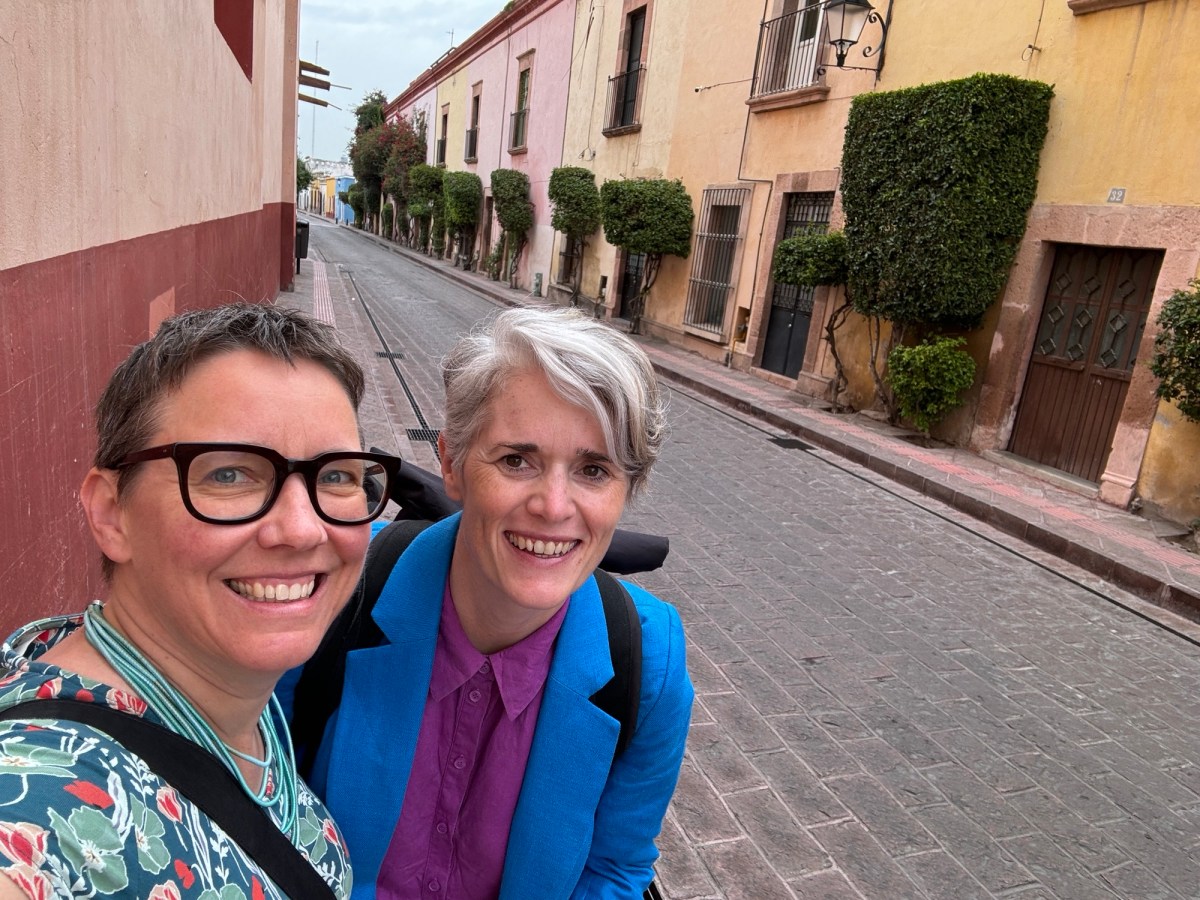
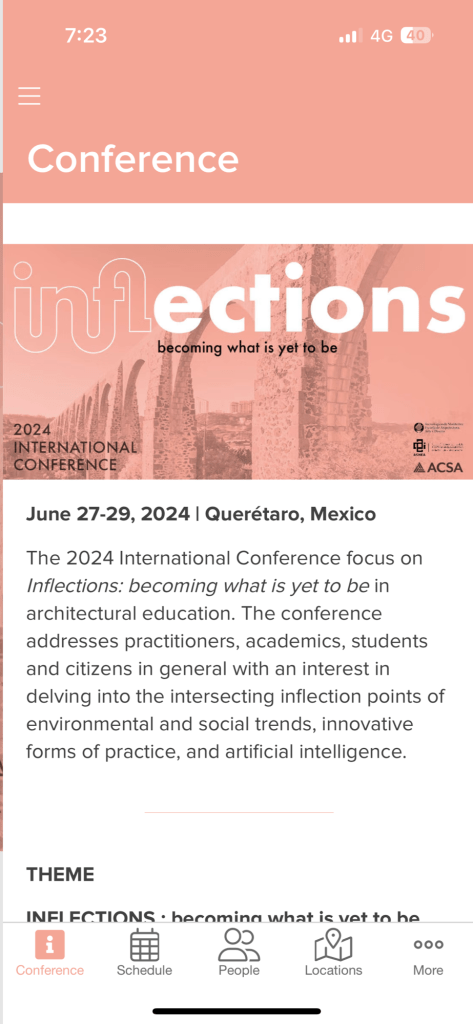
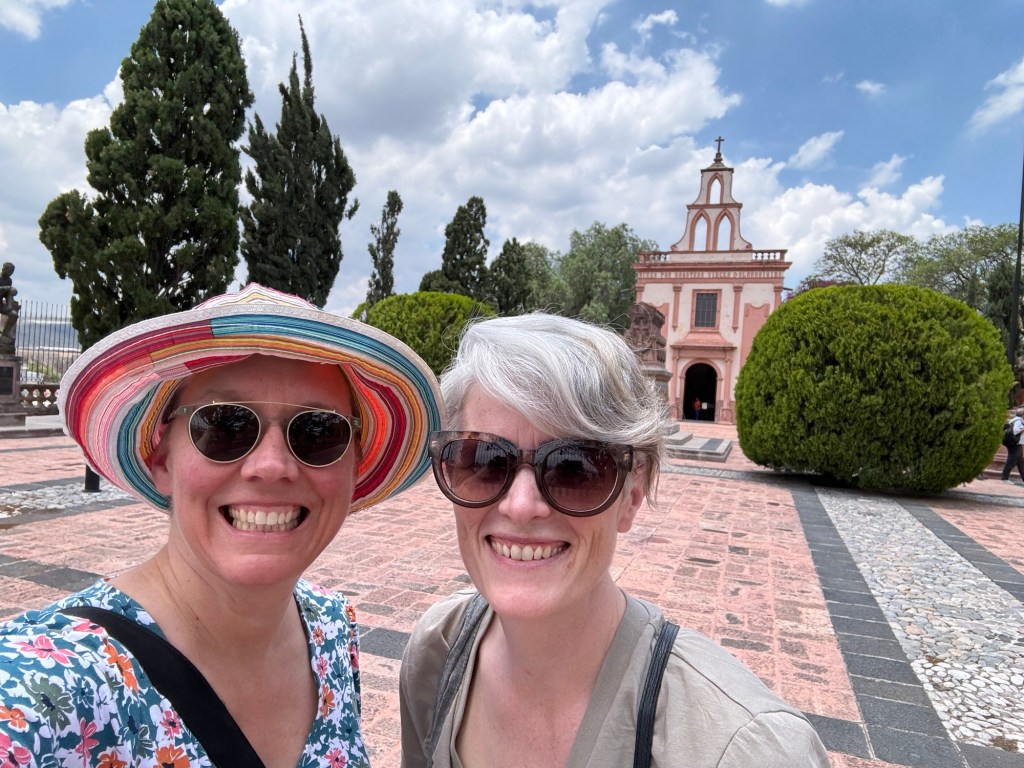
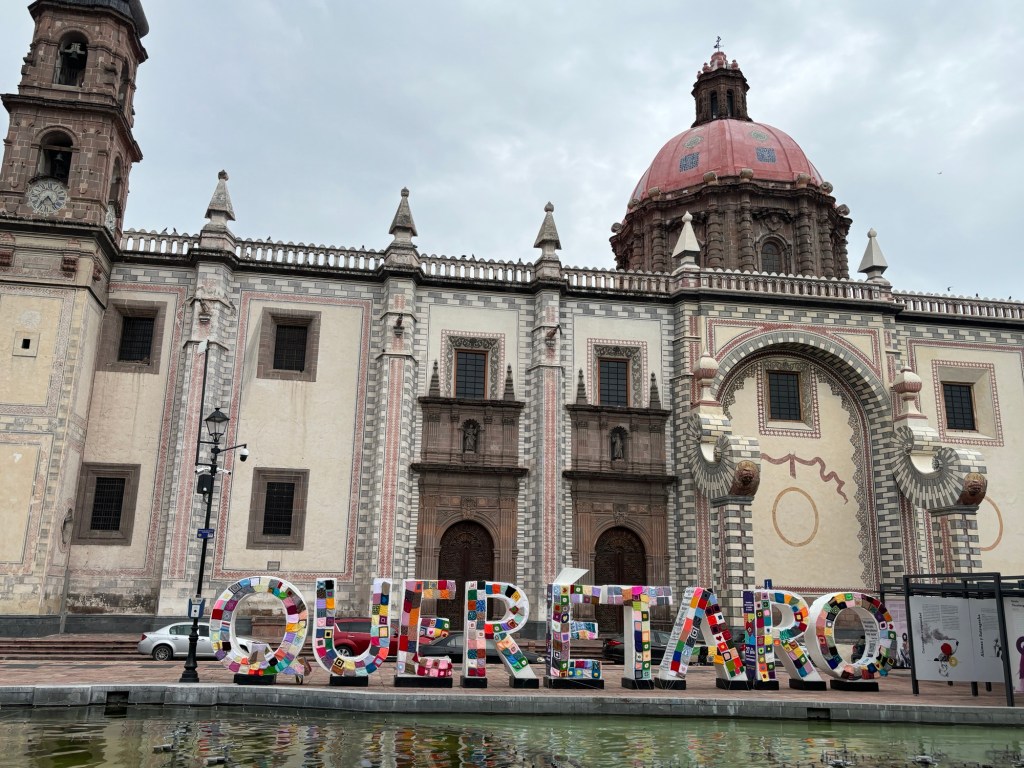
Emma and I met up in Mexico, to attend a three-day conference in Querétaro, a UNECSO world heritage city and one with a population similar in size to our home base of Dublin, Ireland.
The conference was hosted by the Technológico de Monterrey and the US-based Association of Collegiate Schools of Architecture (ACSA). I was a member of ACSA from 1999-2014, when I taught architecture in the States. I have represented ACSA with the National Architectural Accrediting Board (NAAB) and am still invited to serve annually, though the trip to the USA is prohibitively long.
Yet, this summer, I wanted to attend the organization’s conference to reconnect with ACSA, brush up on my architectural vocabulary and earn continuing education credits to support my Virginia-based architecture license, extend my professional network into Latin America, and learn more about the homeland of my PhD student, Sandra Cruz.
I asked Emma to join me for the trip, and she submit a paper to ACSA that was successful and, subsequently, very well received! Based on her submission, she was also invited to serve on an international panel of architectural education leaders (administrators and deans). She presented her ideas to the entire assembly of this ACSA International conference!
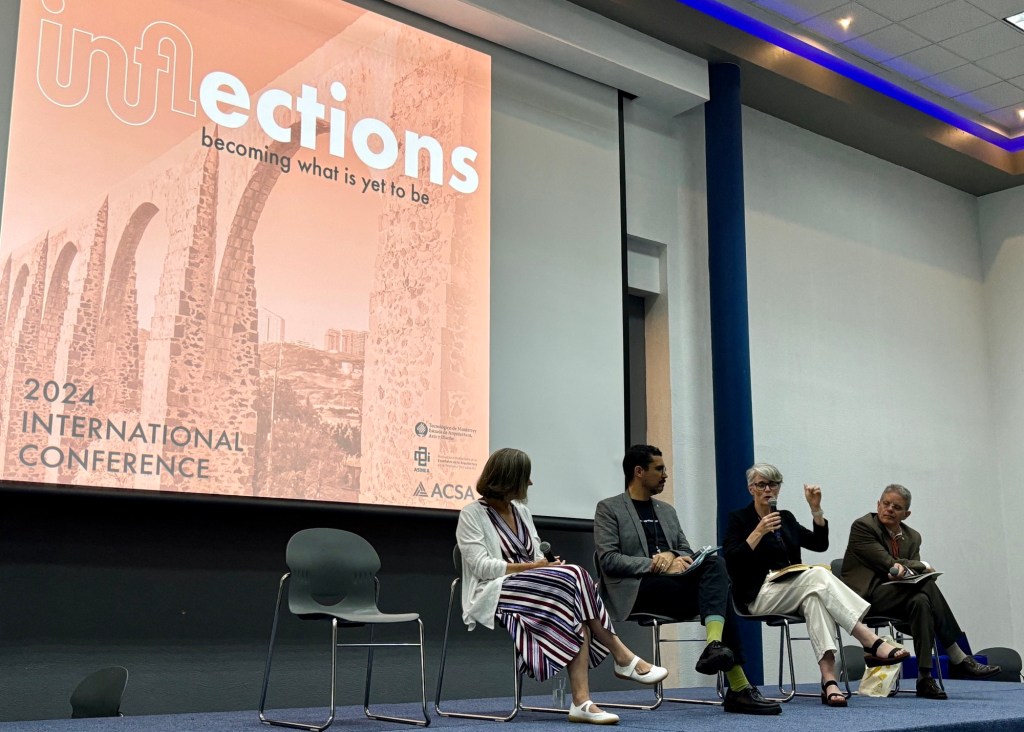
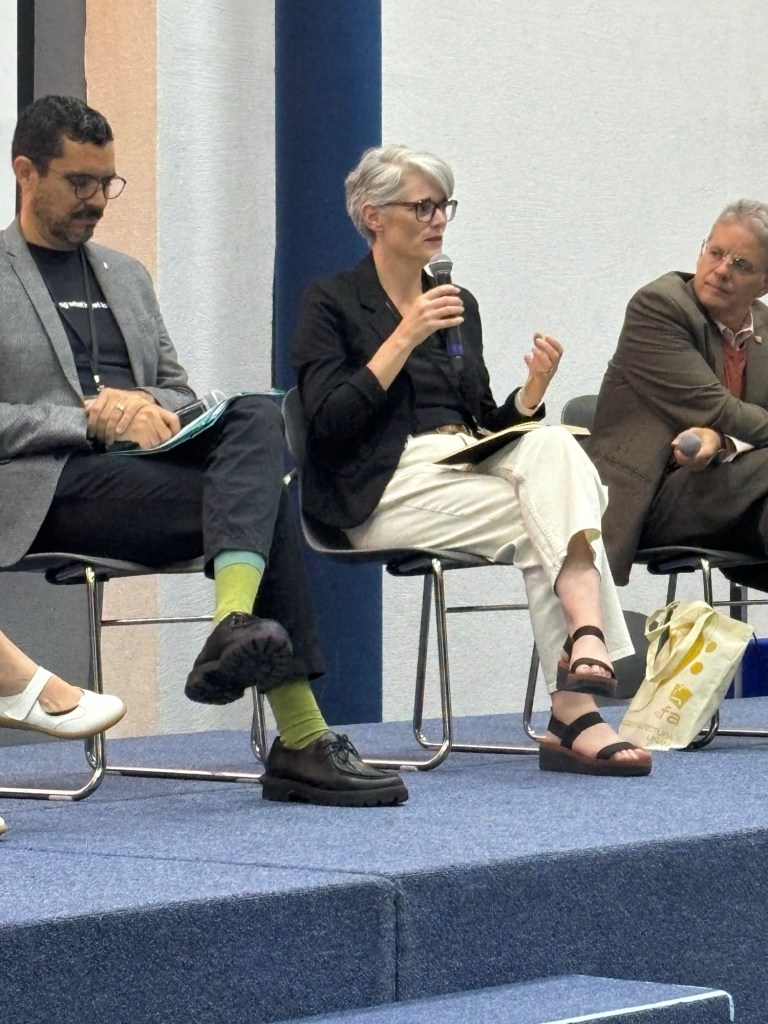
Dean’s panelfeaturing my colleague, Emma Geoghegan.
Emma’s work and her engaging delivery were a hit in both sessions. Her paper presentation garnered a packed, standing-room only, no-more-space-to-enter-the-room crowd. This was likely due to the popularity of both her engaging panel discussion and her paper topic (educational transformation for resilience and long-term sustainability, with a focus on housing and environment).
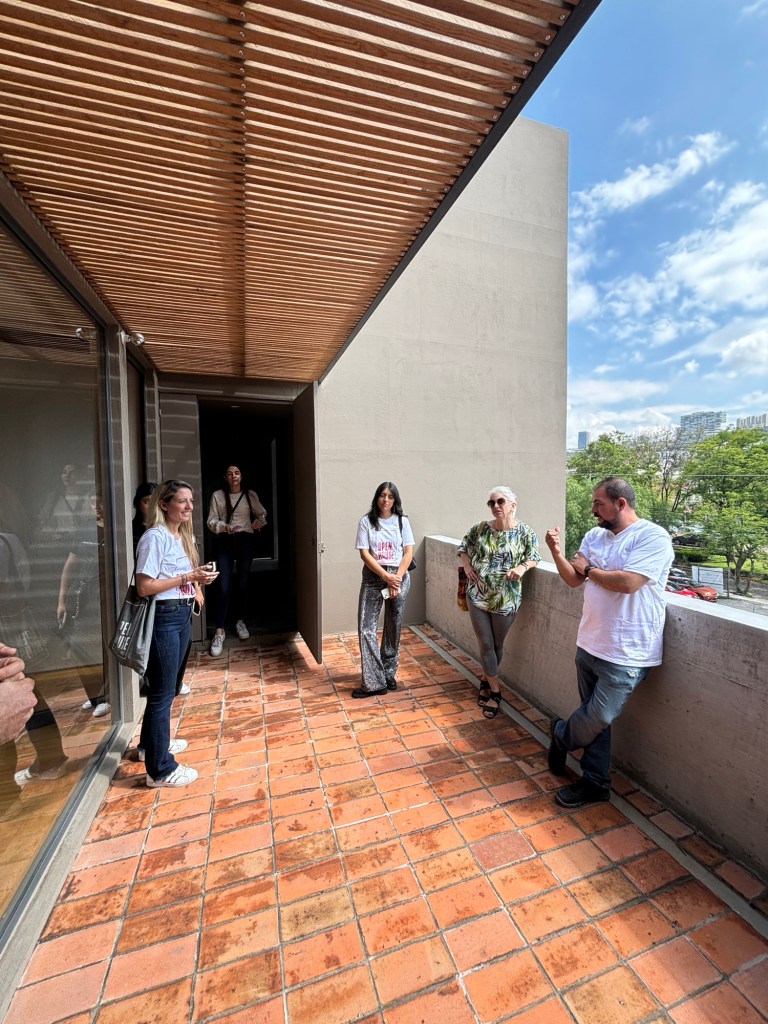
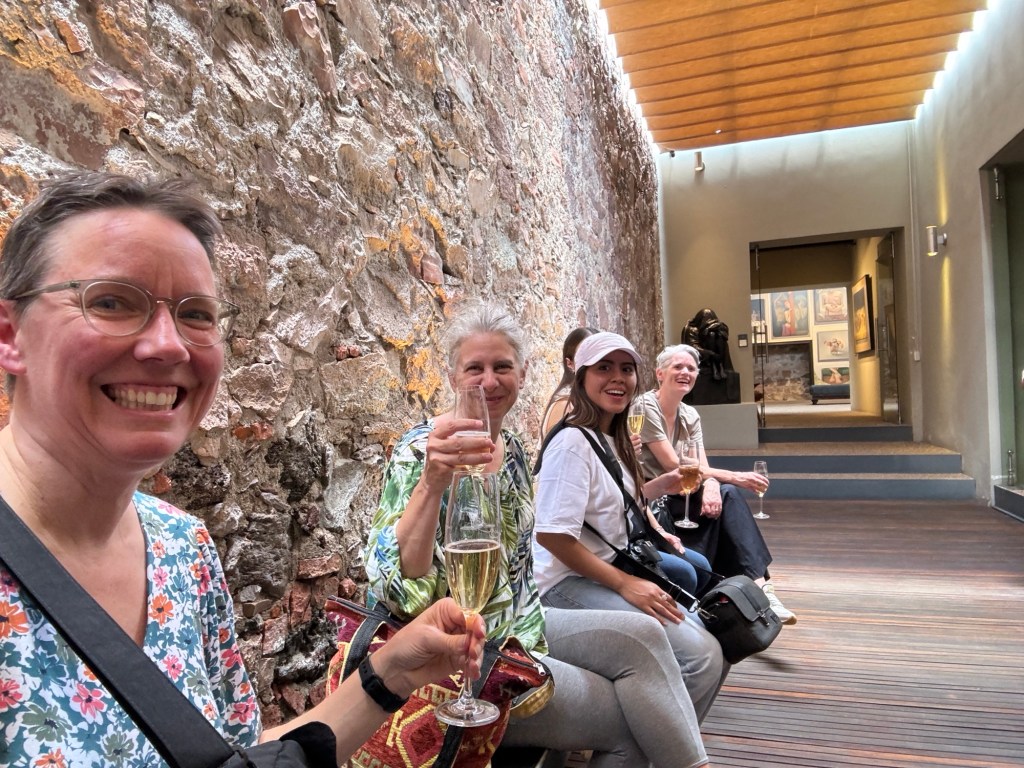
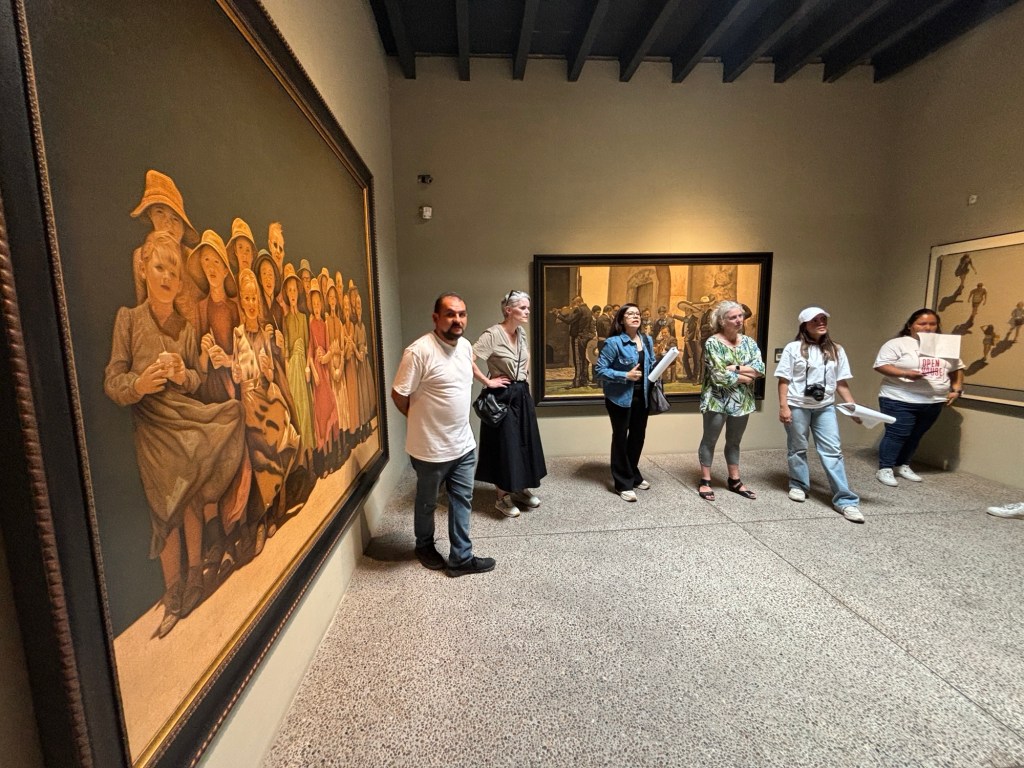
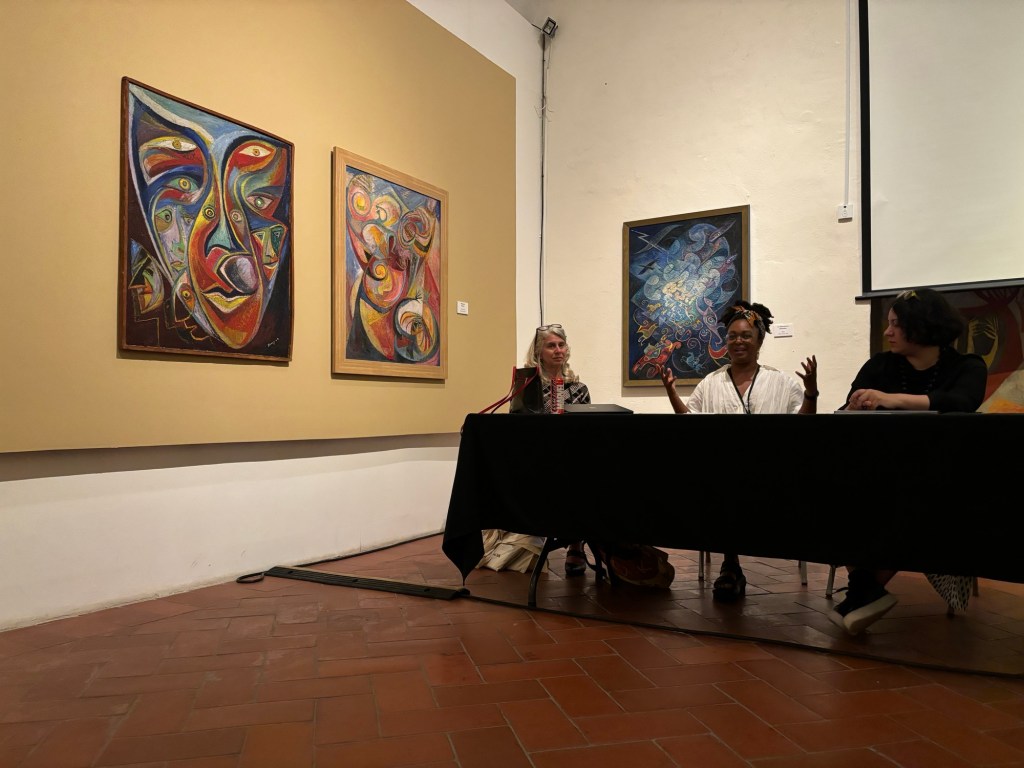
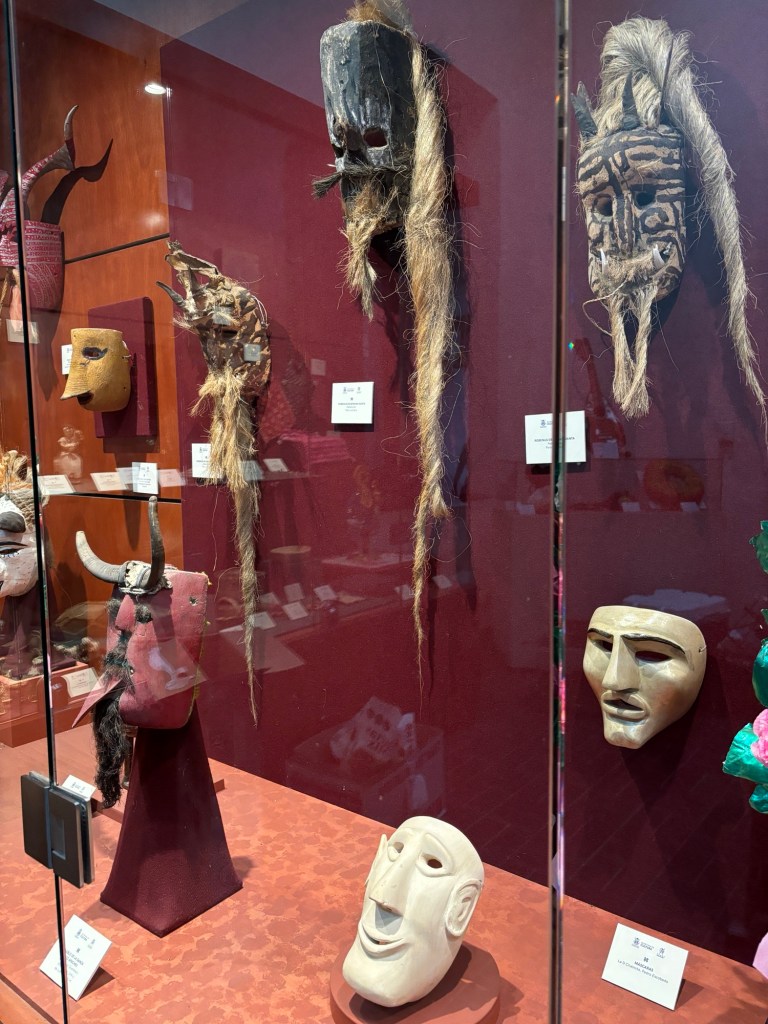
But before all the sessions got rolling, on Thursday morning, Emma and I started our conference experience with an Open House tour. Architects and developers from Querétaro taught us about the architectural and urban design history of the city and brought us to visit several contemporary architectural projects. We got to tour a mixed-use housing project, an environmentally sensitive adaptive reuse project, and a courtyard house turned into an art museum that was chock full of artistic treasures that combine painterly style with contemporary themes!
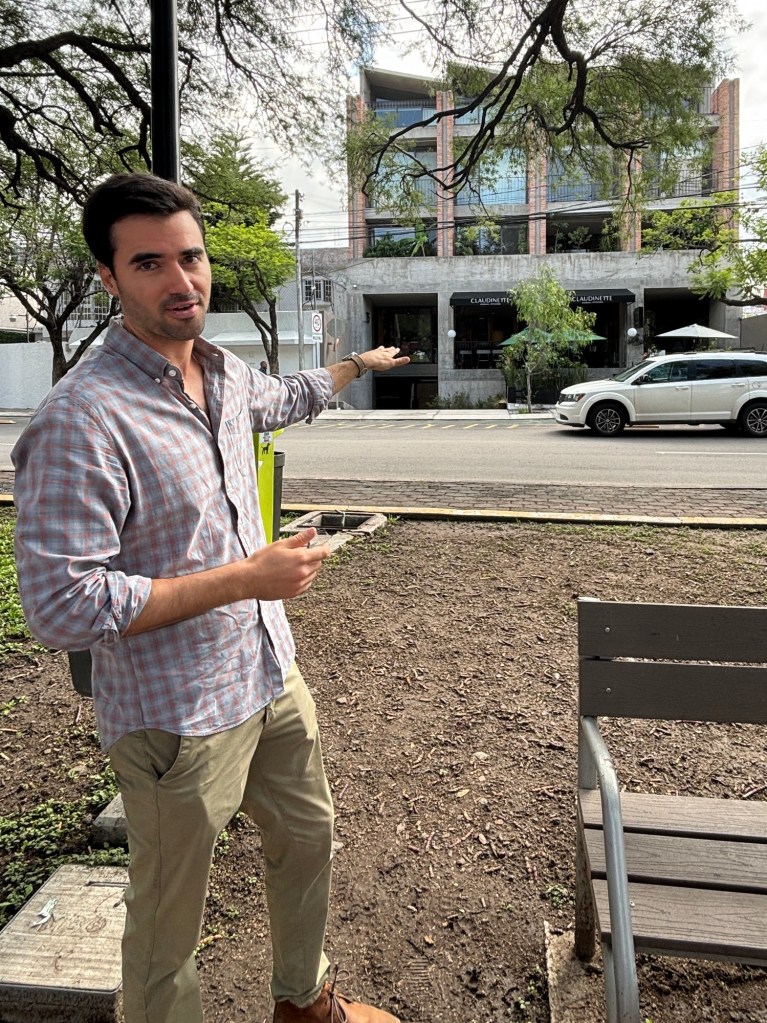
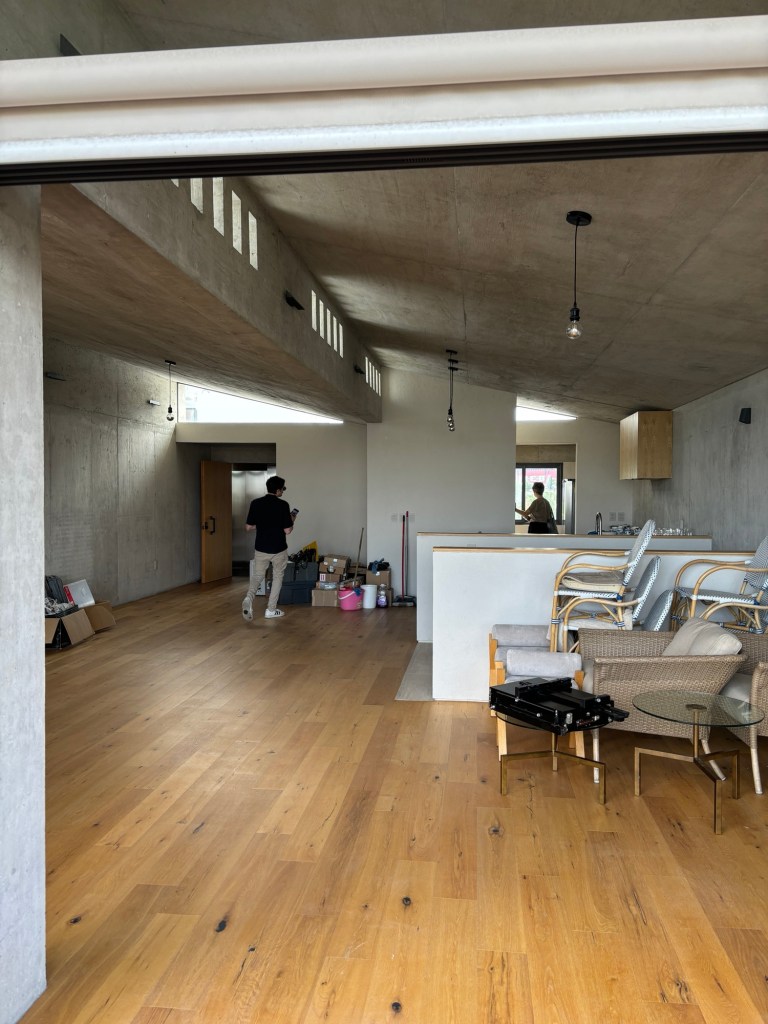
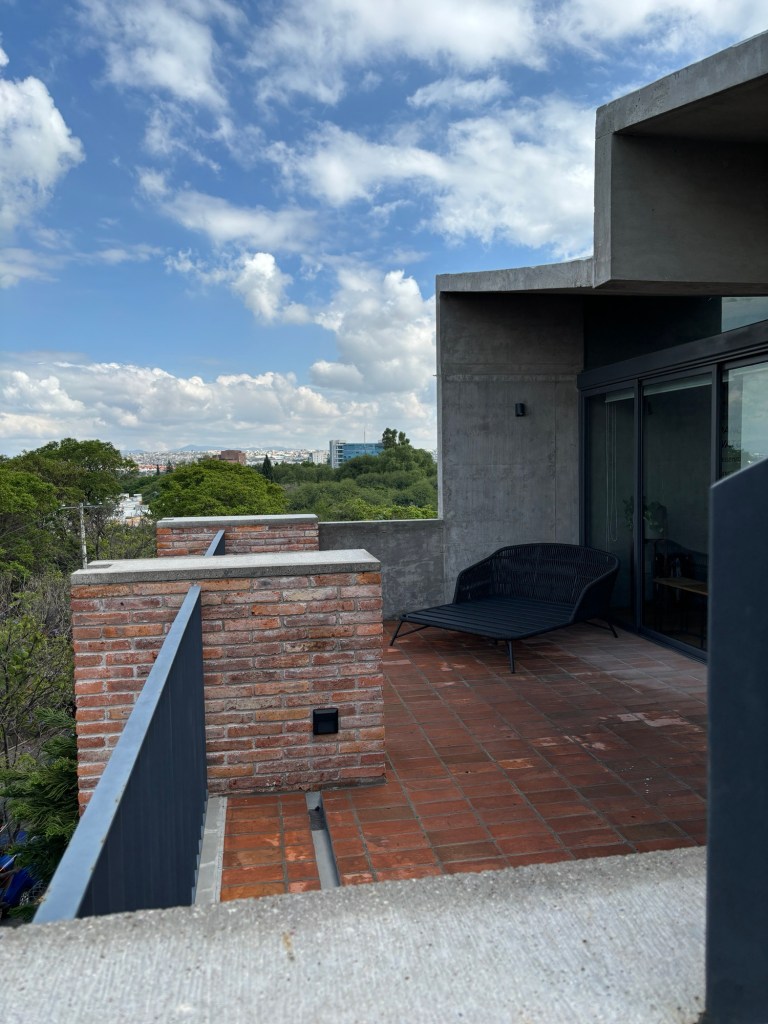
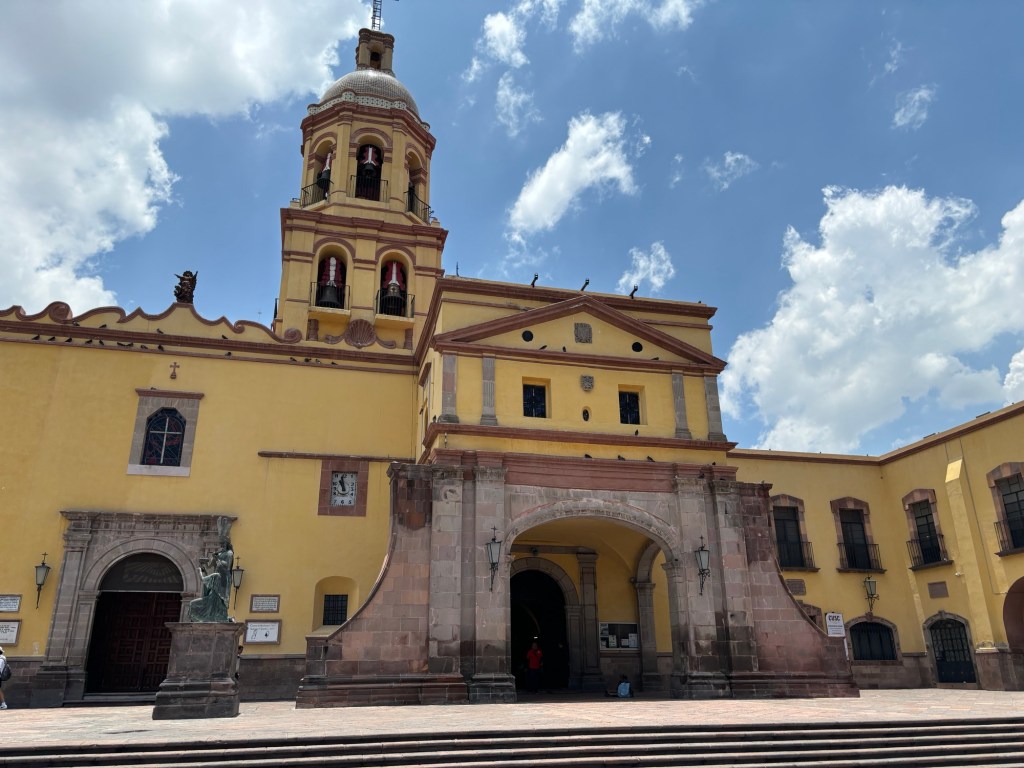
Mixed-use residential building tour delivered by the developer. Commercial re-use projectfrom old shopping mall. Visit to a convent and then walking through town together. Enticing courtyards leftand right!I could do a pub crawl here! The art museumin a former courtyard house. Learning about the artand the architecture.
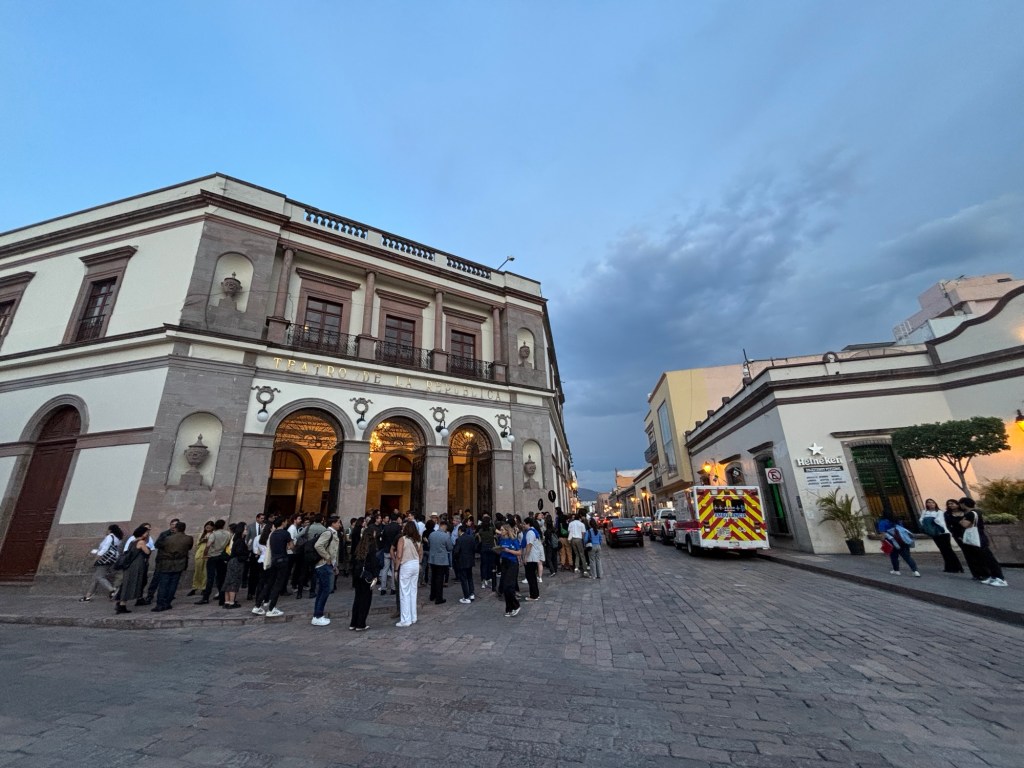
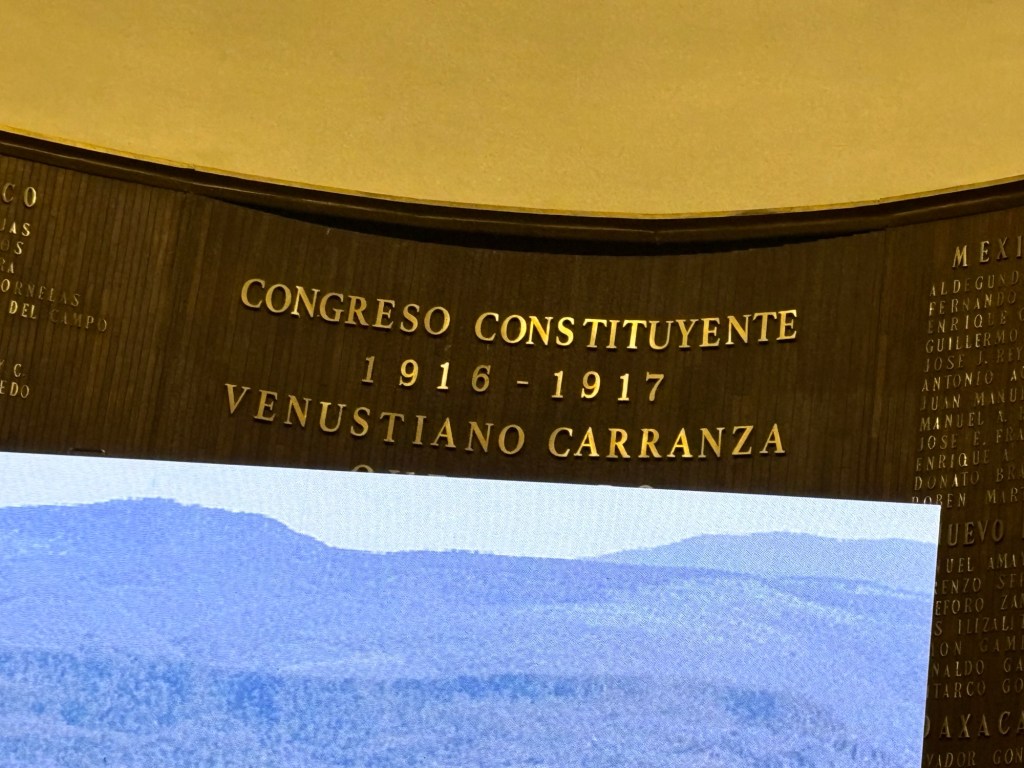
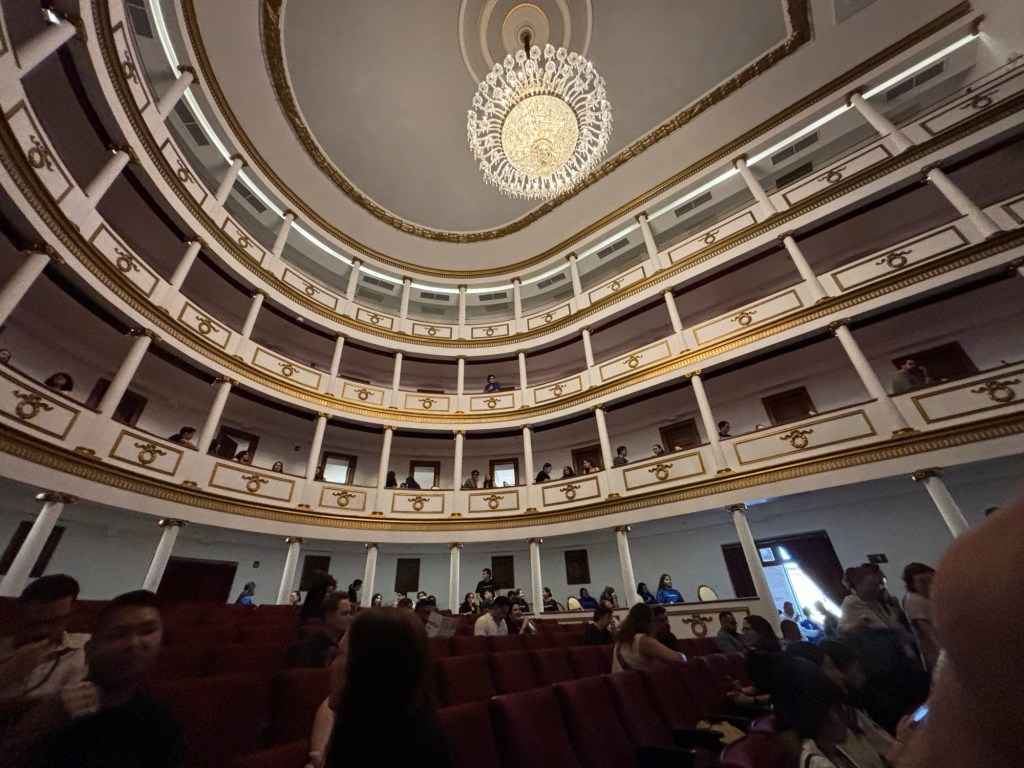
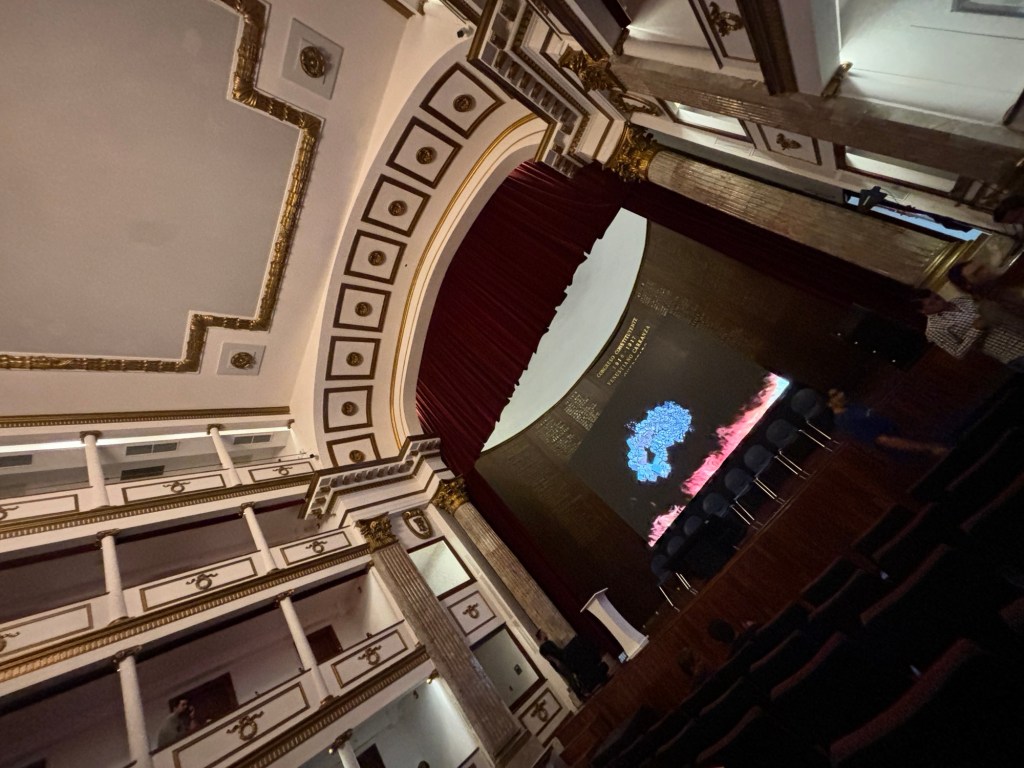
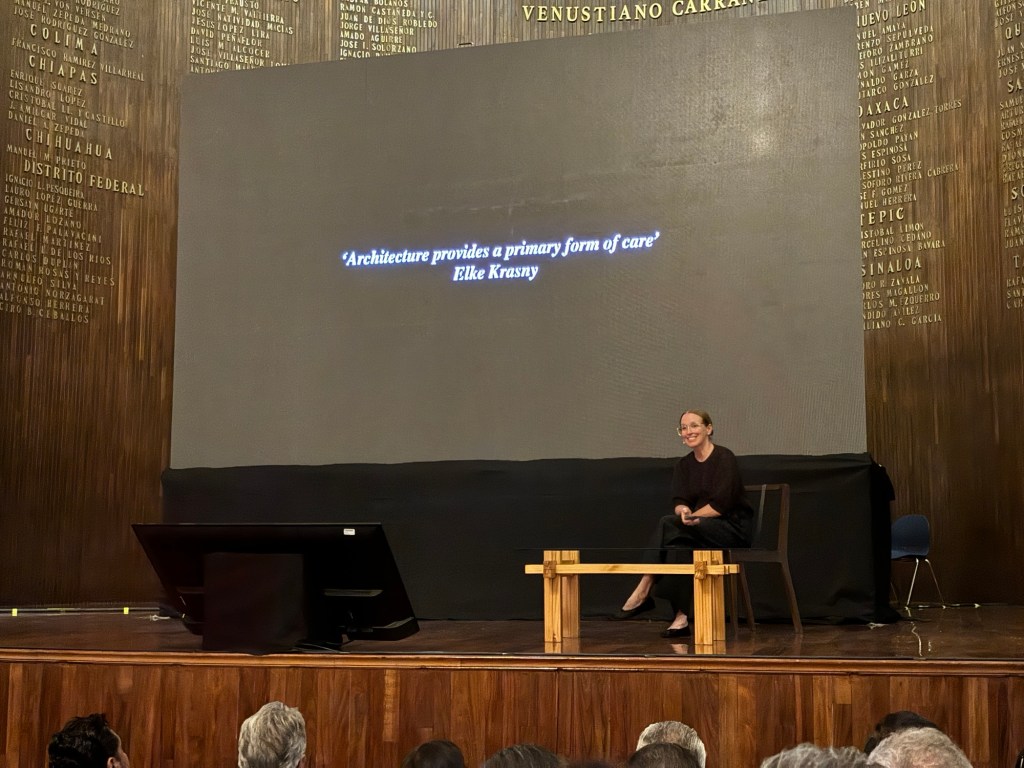
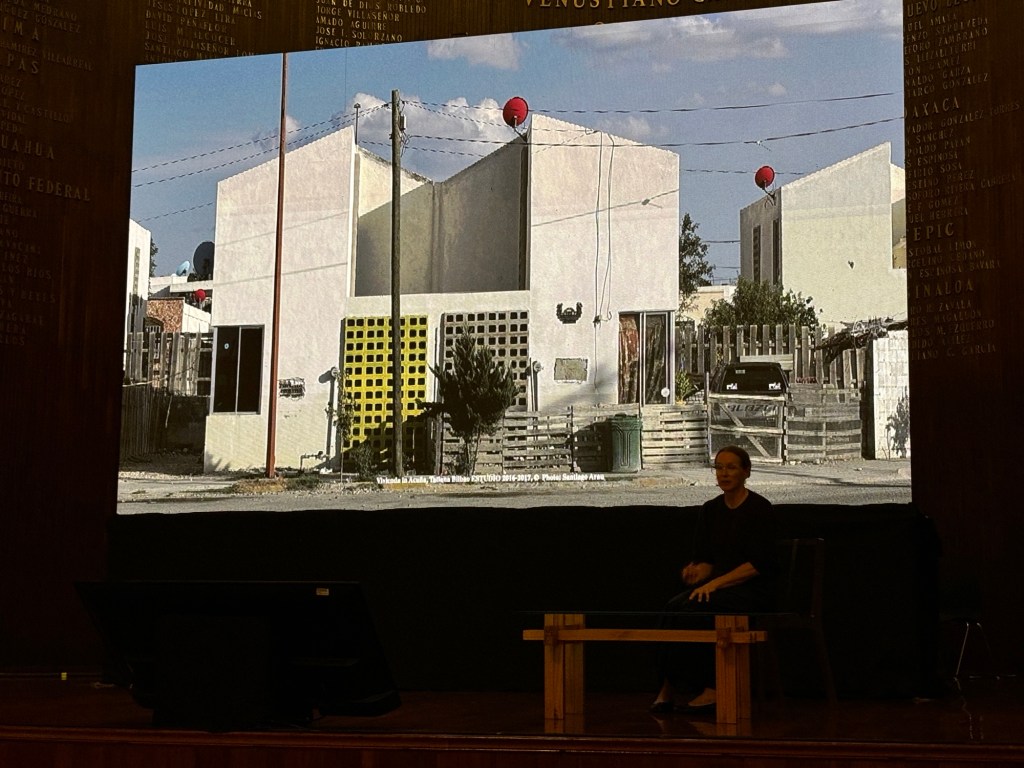
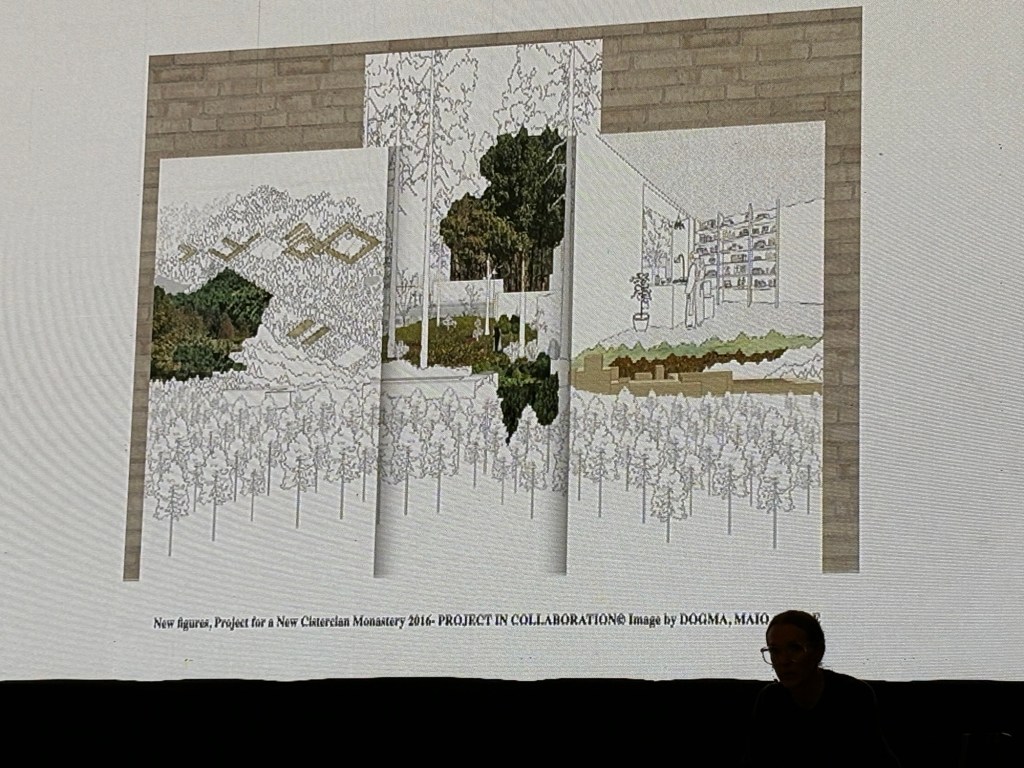
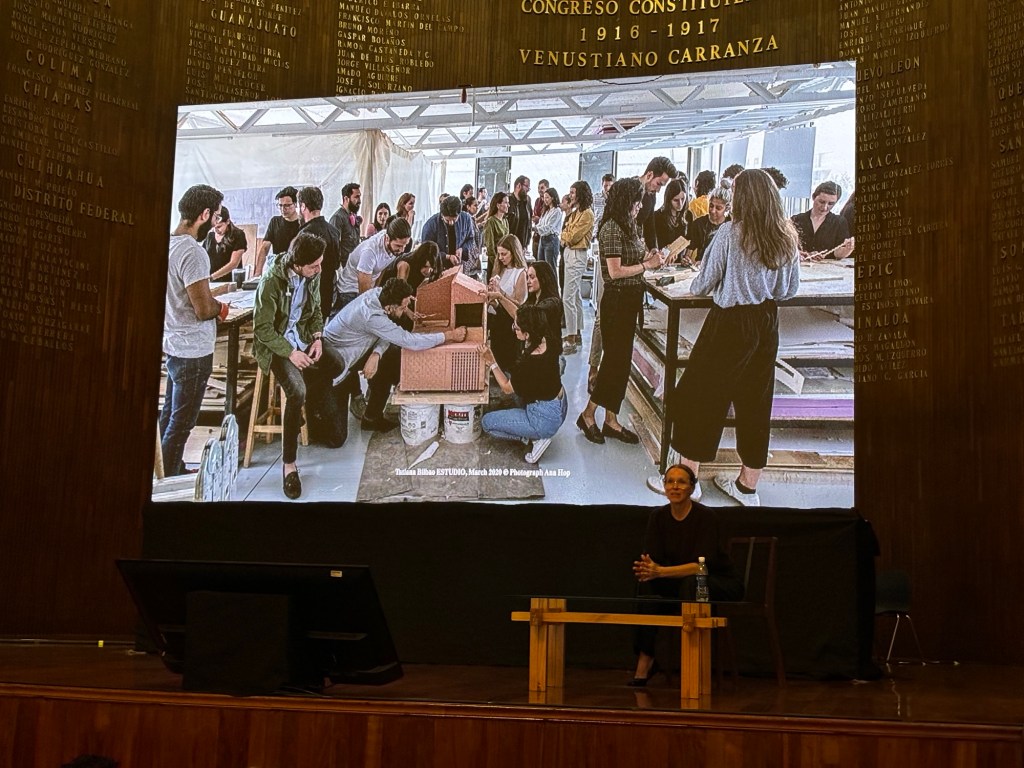
The Open House tour was followed by an opening reception and keynote address in Querétaro’s very famous and protected Teatro de la Republica where (at least part of) the country’s constitution was signed. The keynote by Tatiana Bilbao was thought-provoking, with the architect advocating liberation from named or pre-determined programmatic elements, to produce evocative enclosures for inhabitants to mold and adapt. The open reception was at another architectural heritage site, the Museo Regional de Querétaro.
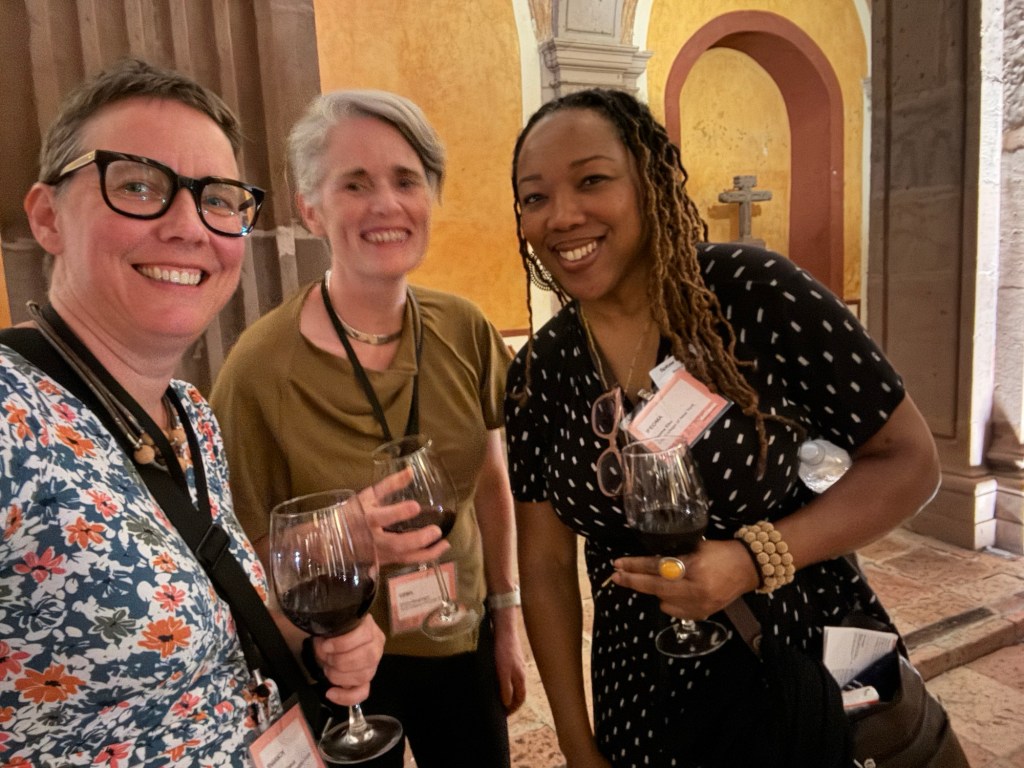
The historic theater where the Constitution of Mexico was signed.packed with architecture teachers and students. Tatiana Bilbao’s presentation…Walking between venues. The opening reception. Making new friends!
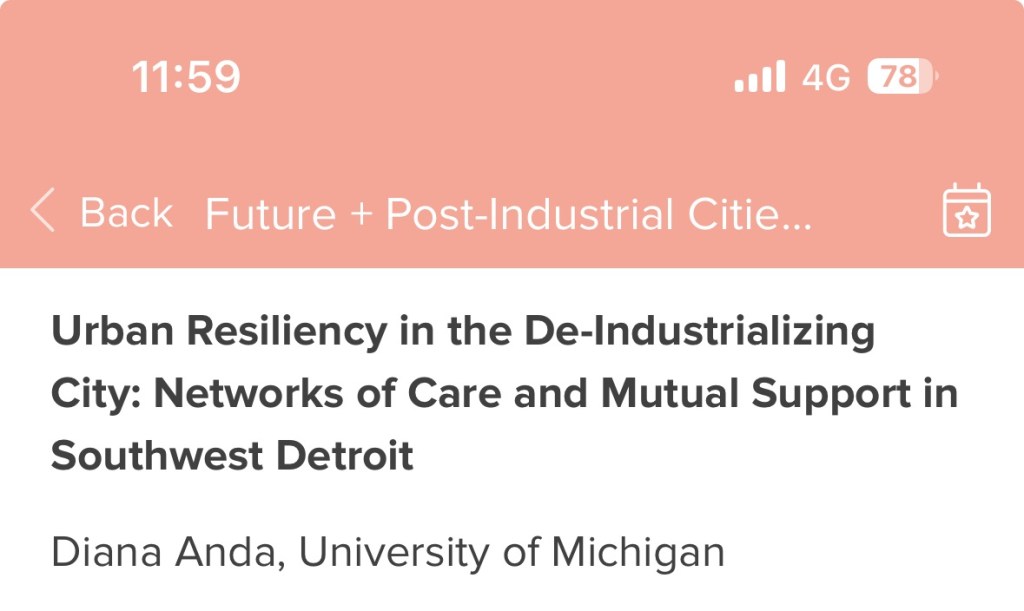
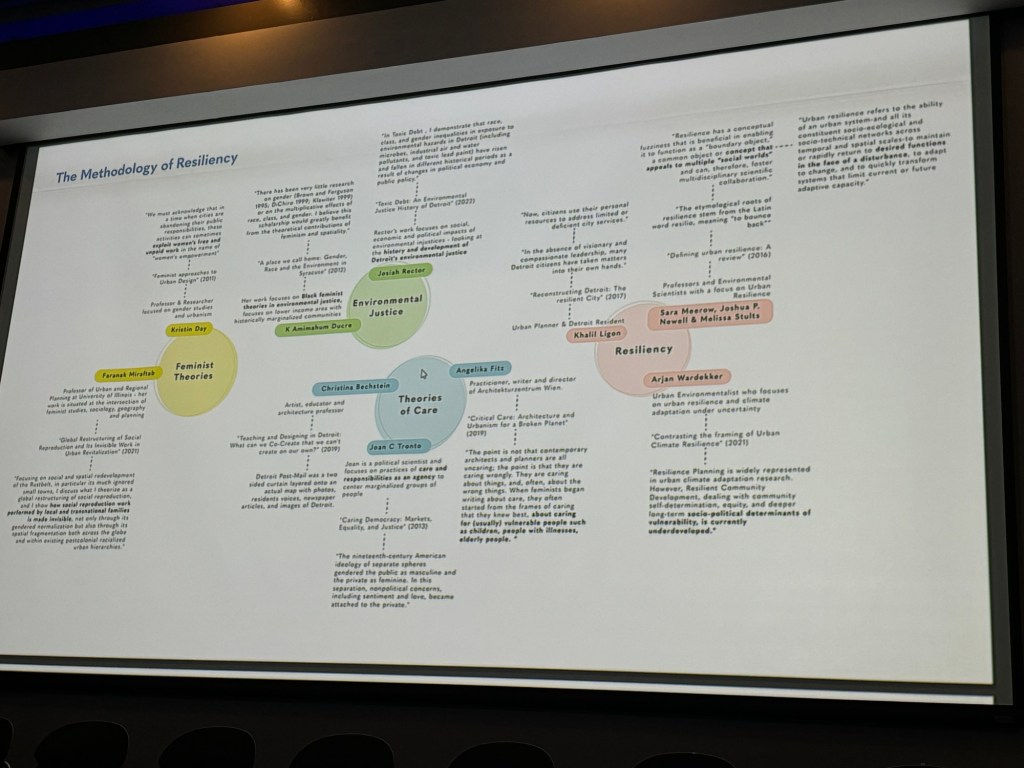
The second day started with the Deans’ panel on “tradition and radical innovation” that included Emma, followed by paper sessions. I attended the sessions on “Future + Post-Industrial Cities.” These two sessions were held at the university’s modern campus on the outskirts Querétaro. We travelled there and back by bus.
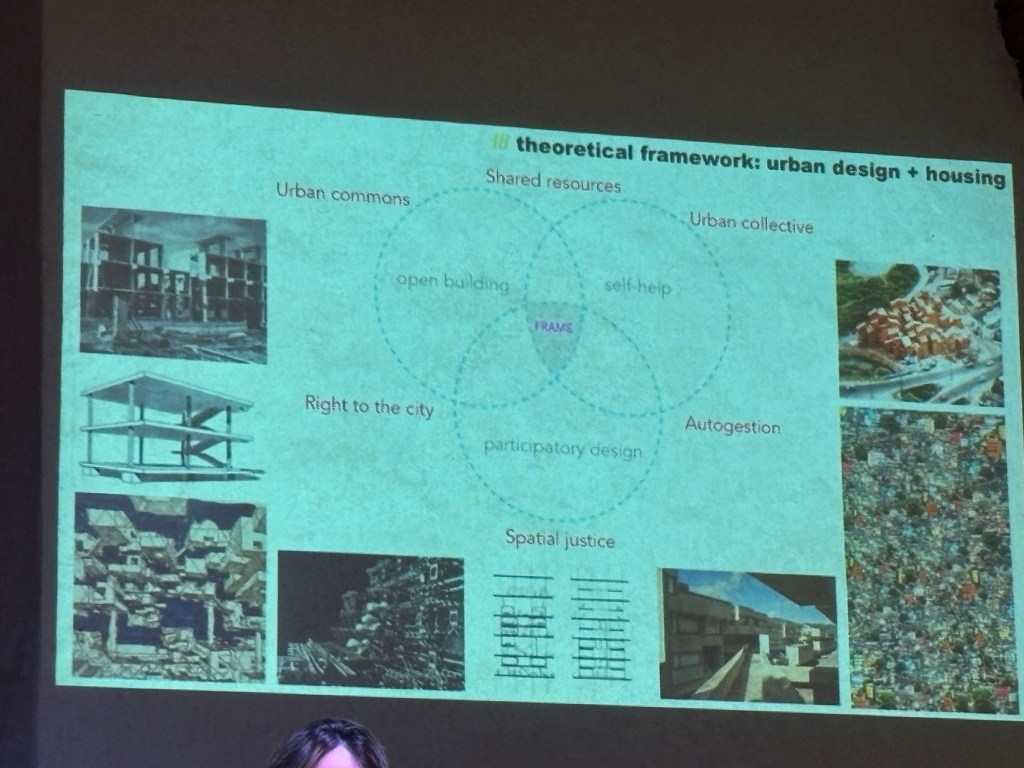
Campus outside of town. Dean’s panel. An intriguing presentation……I WhatsApped Diana Anda’s slide to Sandra Cruz and Emma, who hurried over to join the session.
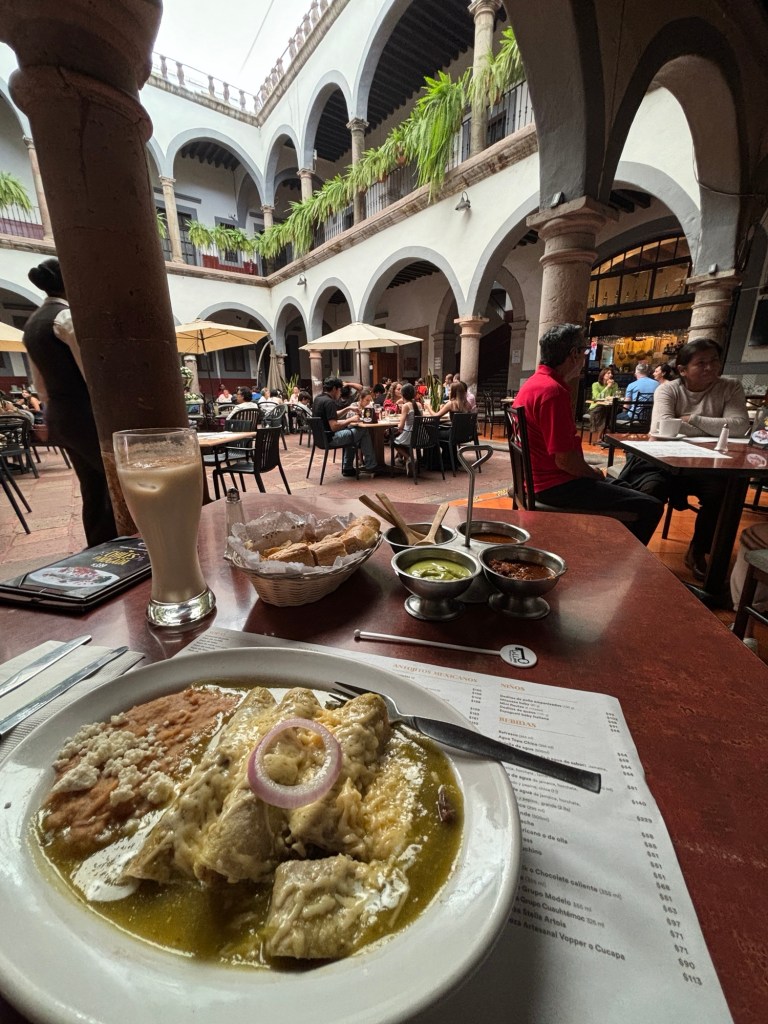
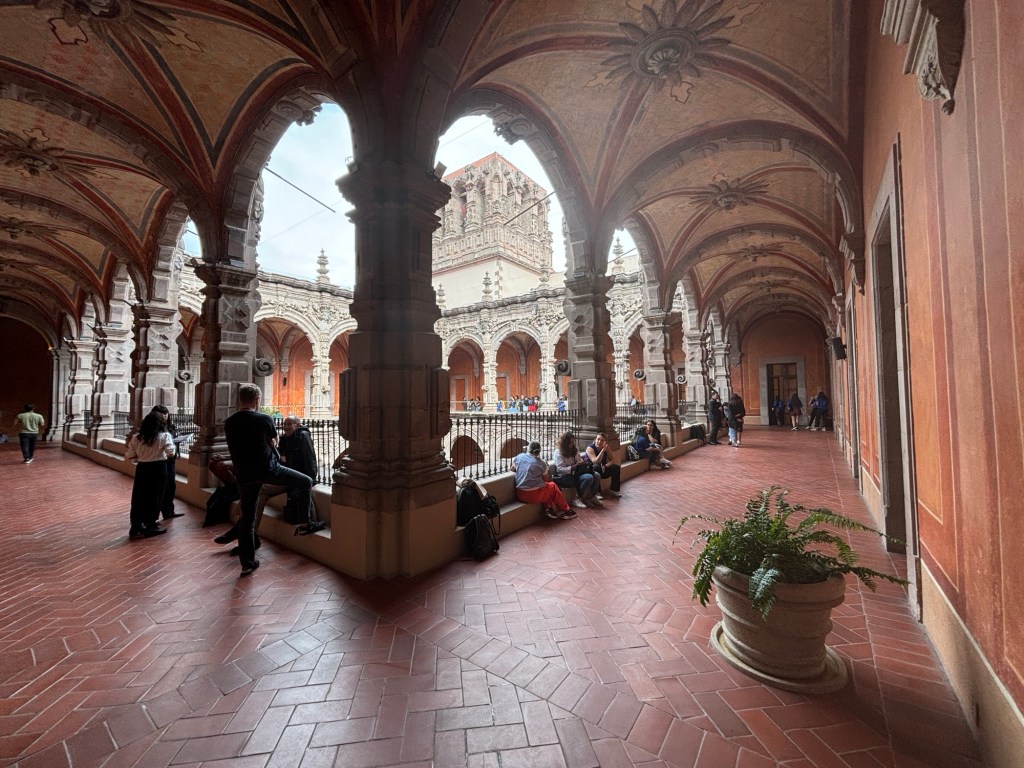
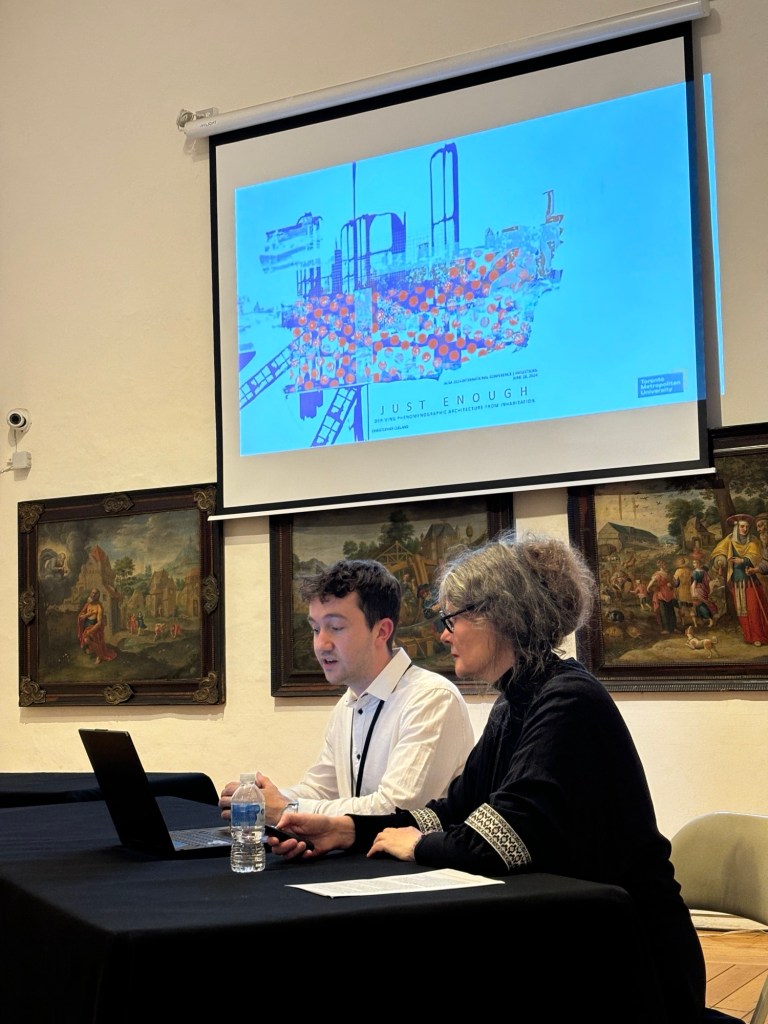
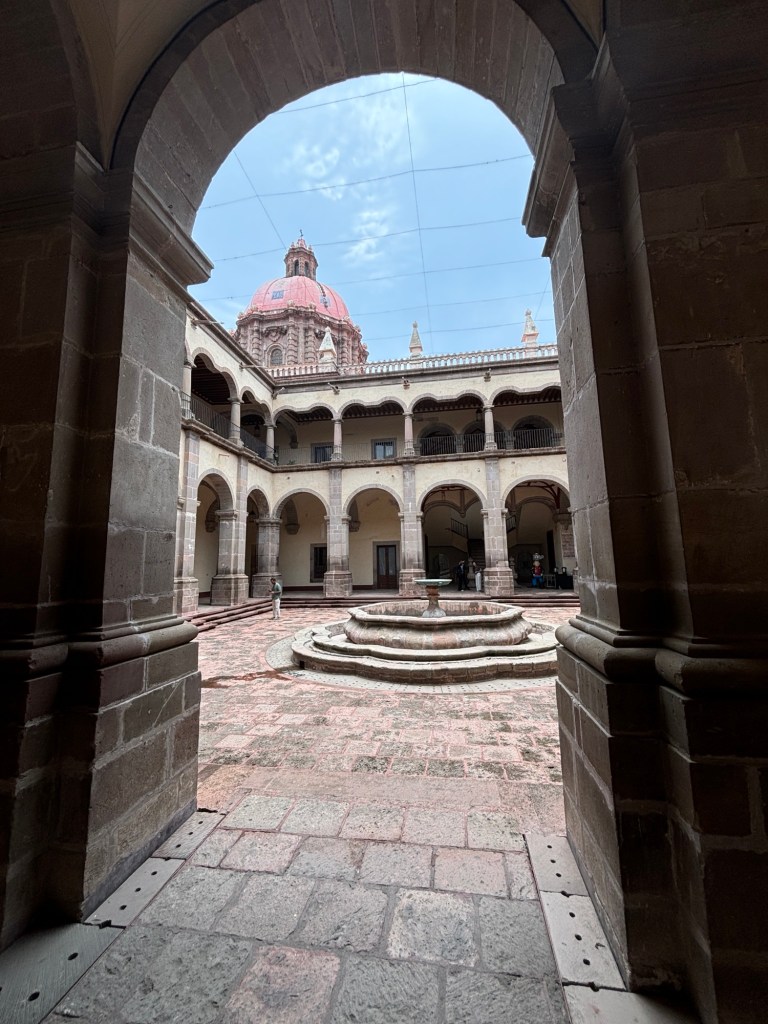
After a relaxing lunch break, we enjoyed afternoon paper sessions in a magnificent former cloister now used as the Mueso de Arte de Querétaro. I attended “Spatial Decoding: Beyond Measurement” and “Experiments for Urban Futures.”
Lunch on my own to catch my breath! Afternoon sessions surrounded by magnificent art. Another spectacular conventwith notable stairs and arcades. And presentations!
The entire time, Emma and I were meeting lovely and passionate architecture educators from Mexico, the US, and Canada, as well as graduate students from around the world. We also got to know and admire the host for the next iteration of this ASCA International conference that will be held in Brisbane, Liz Brogden.
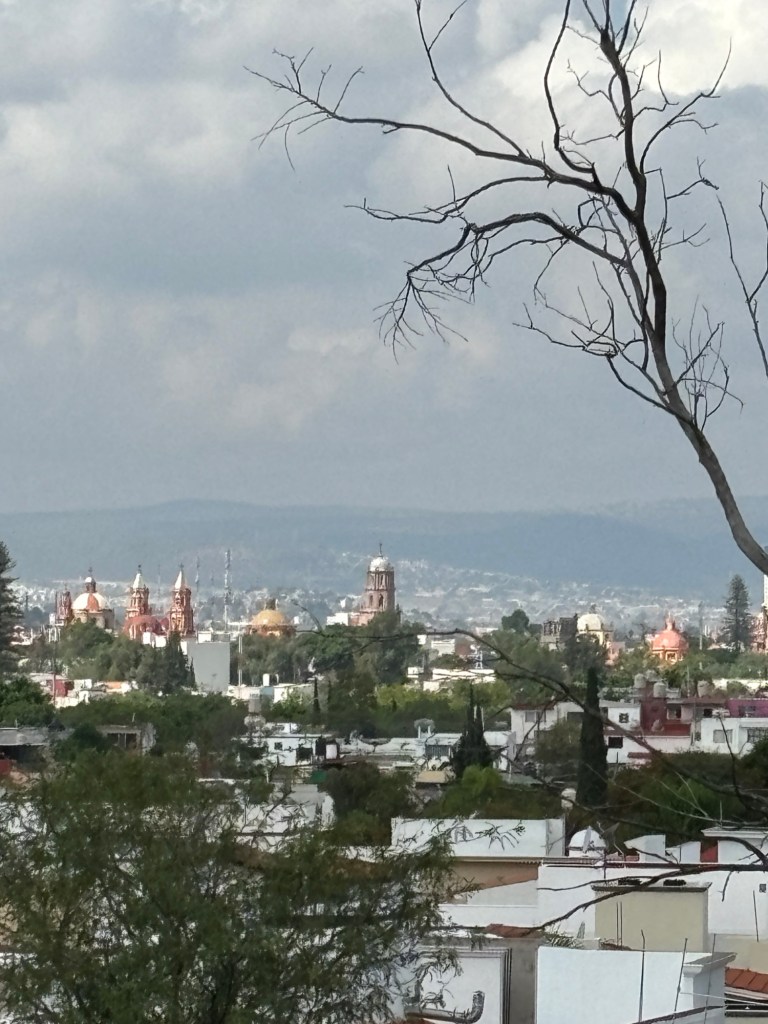
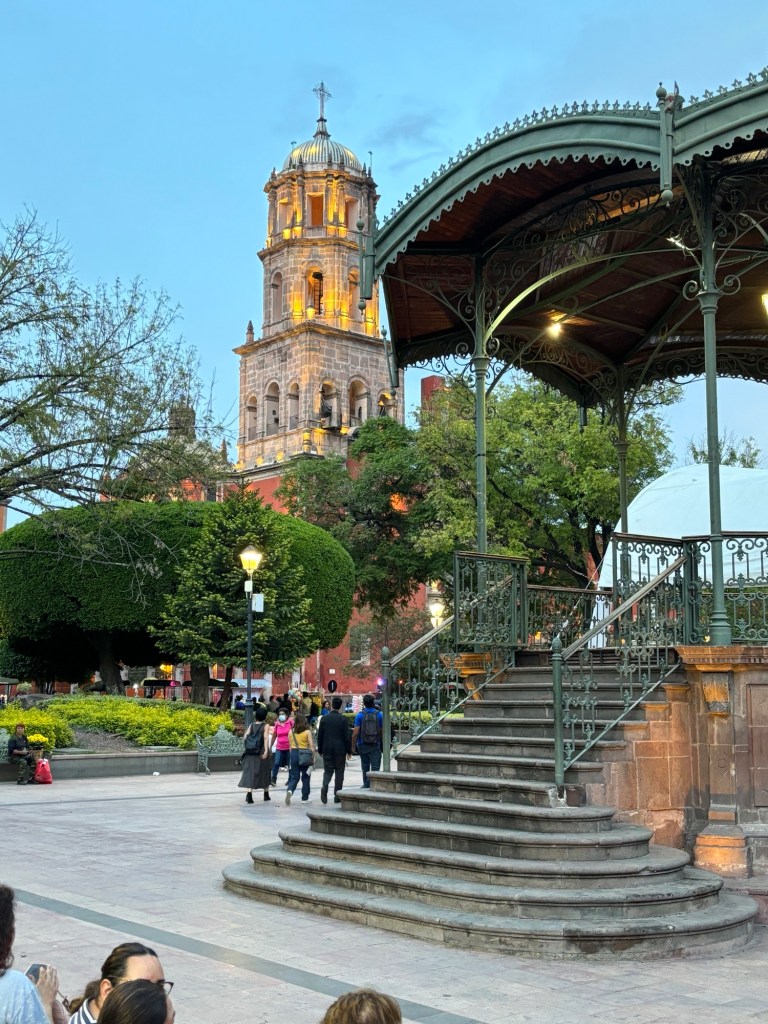
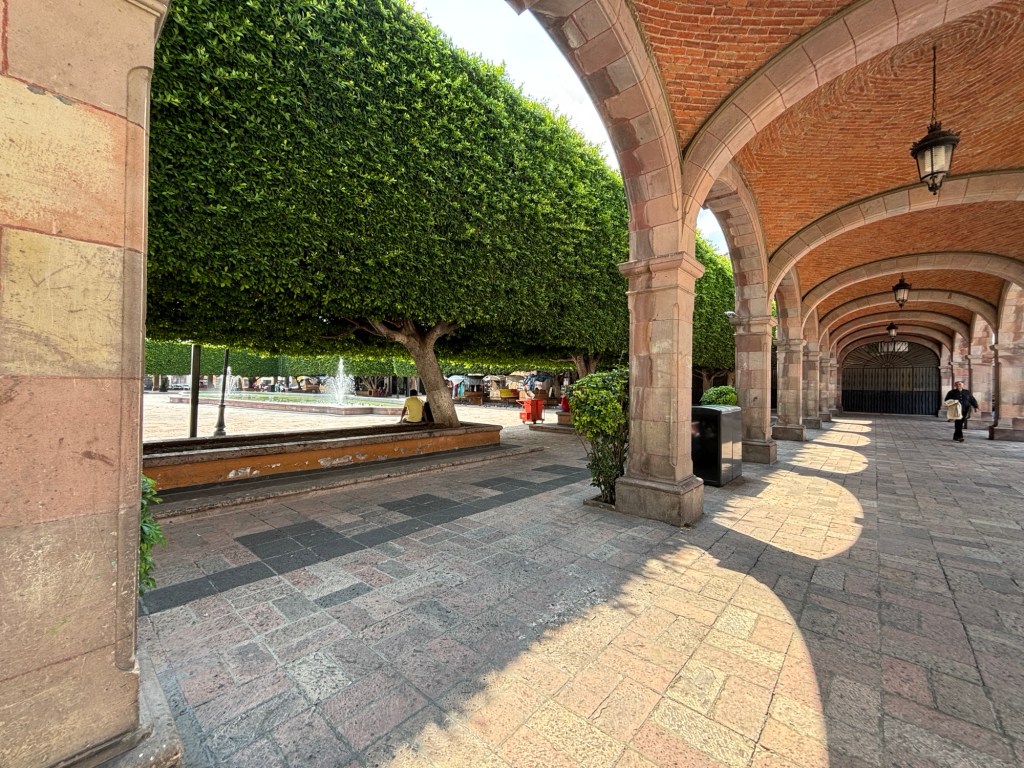
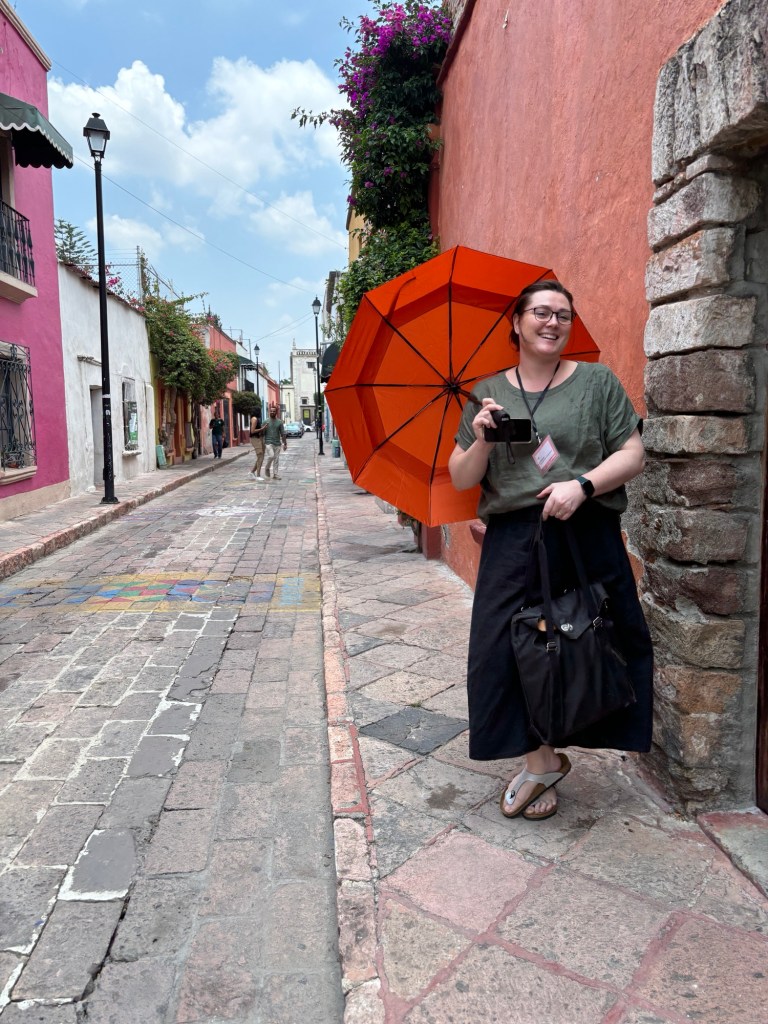
The center of Querétaro low rise with greenery and color and plazas galore! And sun! Liz Brogden was ready for sun though!
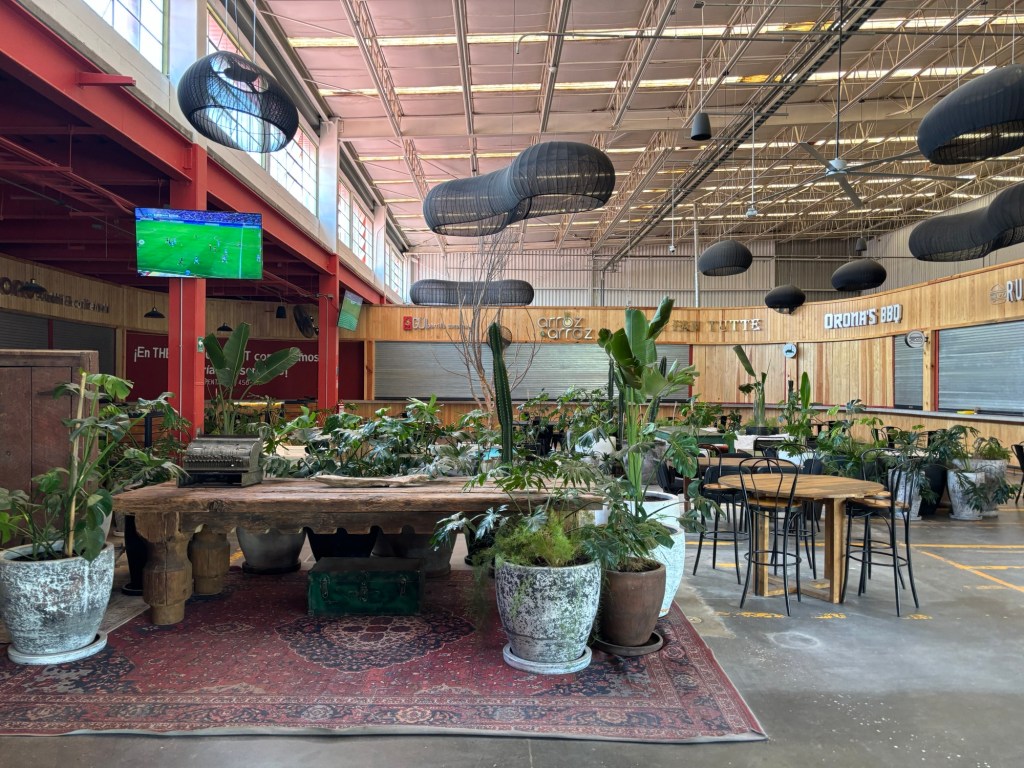
Liz, Emma, and I were guests of the conference organizers for tapas and drinks Friday night at Hercules, a former textile factory converted into an entertainment venue. We had the pleasure to sit between Michael Monti, the executive director of ACSA, and Luis Francisco Rico-Gutierrez, Dean of Architecture at Iowa State, who brought this conference to his hometown of Querétaro. Luis carefully assembled a conference program with cultural, social, urban, and critical feminist underpinnings.
ACSA Director, Michael Monti, who has a doctorate in philosophy and expertise in Heideggerian phenomenology!
Bravo to these leaders for pulling off such a magnificent event in collaboration with the local organizers, including Roberto Íñiguez Flores, and the DC-based ACSA team!
Programming for the third day ran 9 AM to 10 PM. We attended paper sessions, including Emma’s, at the Centro de las Artes de Querétaro Santa Risa de Viterbo. We started off with “New Imaginaries, Speculations, Machinations” where Emma spoke. Then I attended “Housing, Dwelling and Domesticities.”
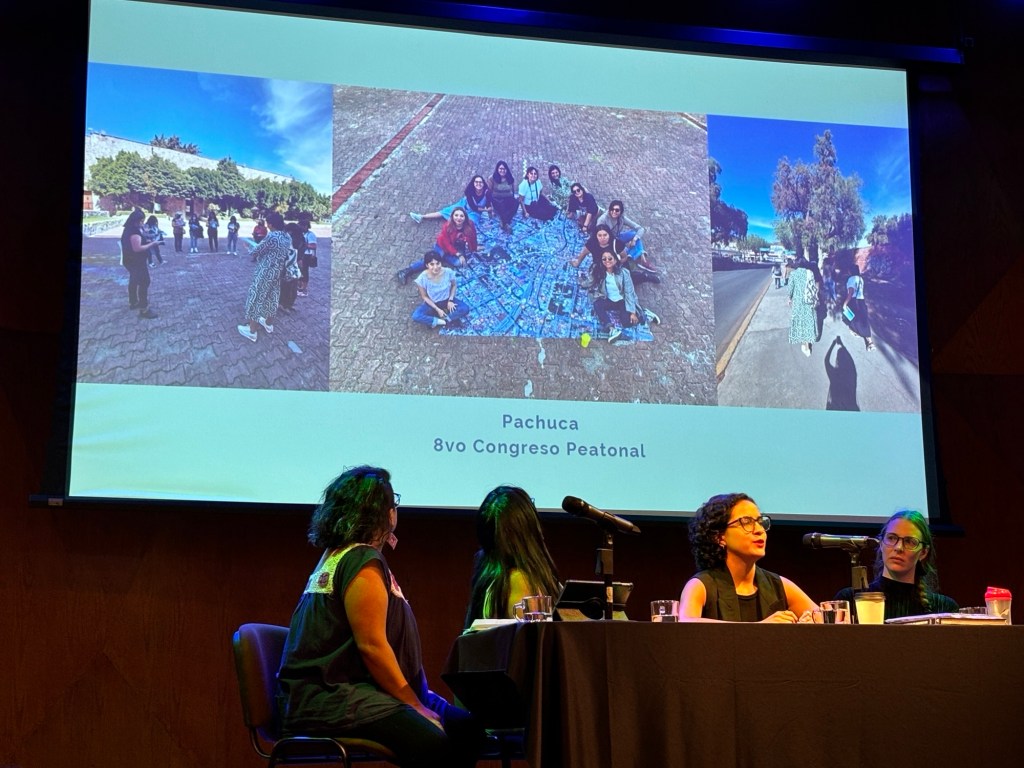
After lunch I attended “DESIGNING DISSENT: Feminist Counternarratives in the City.” This critical feminist urbanism panel session was particularly insightful. It was held with one presentation in English and two in Spanish. There were AI-generated English subtitles at the second of these, but for the one without subtitles, I put my Duolingo to work.
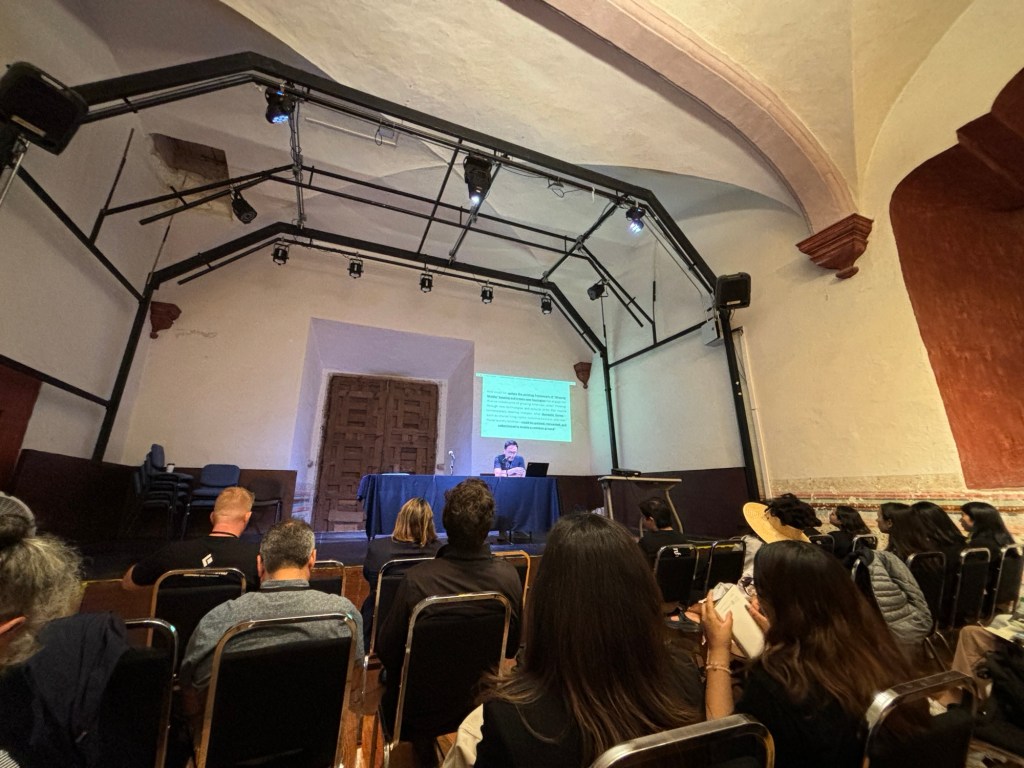
Designing Dissent panel
I have been studying Spanish using Duolingo for 254 days now, in preparation for this trip. I understand reasonably well, although I can’t yet speak in Spanish. My elementary knowledge of Italian interferes with my ability to start sentences in Spanish, but I persevere. The helpful slide images helped me deduce more complex meanings.
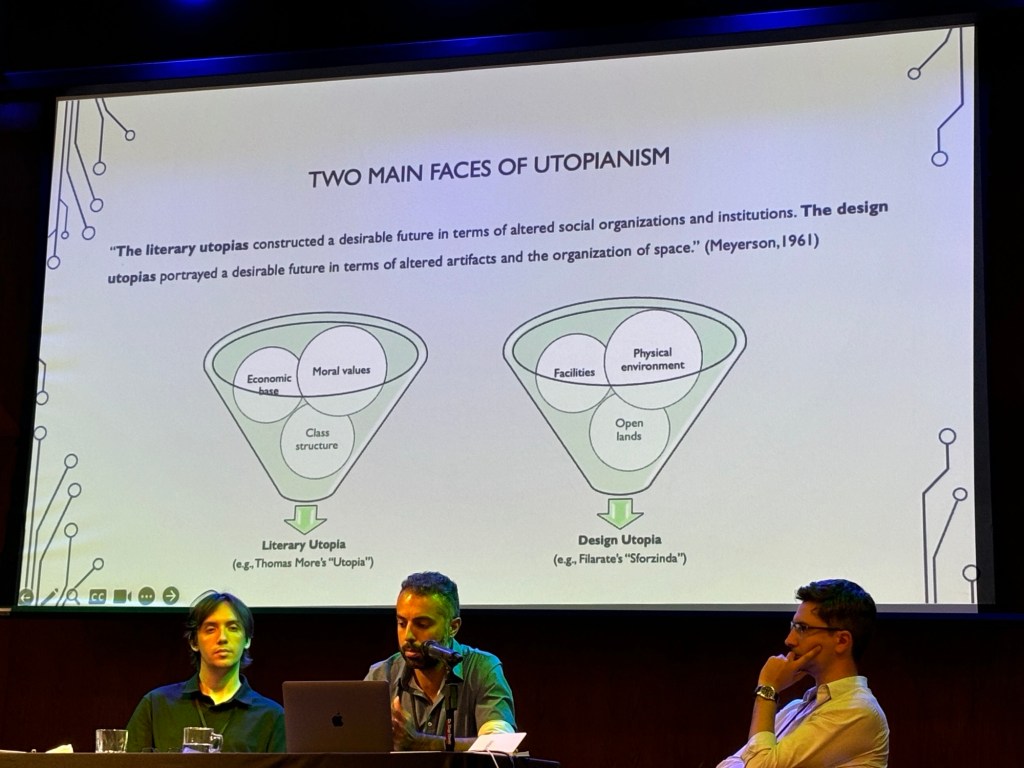
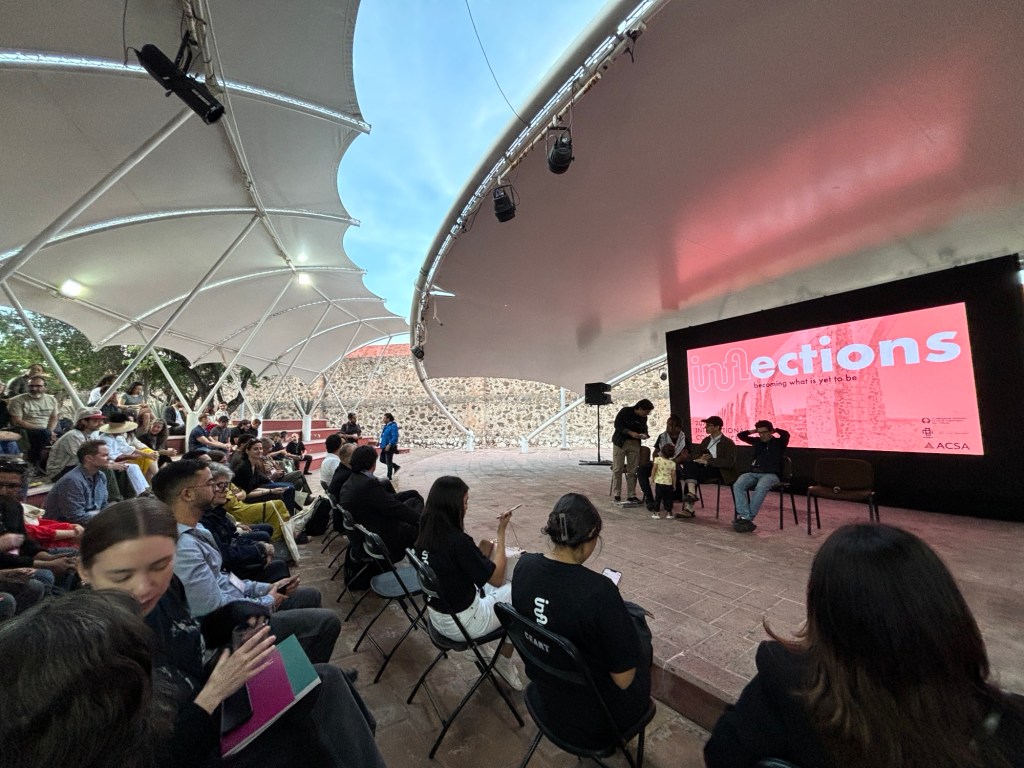
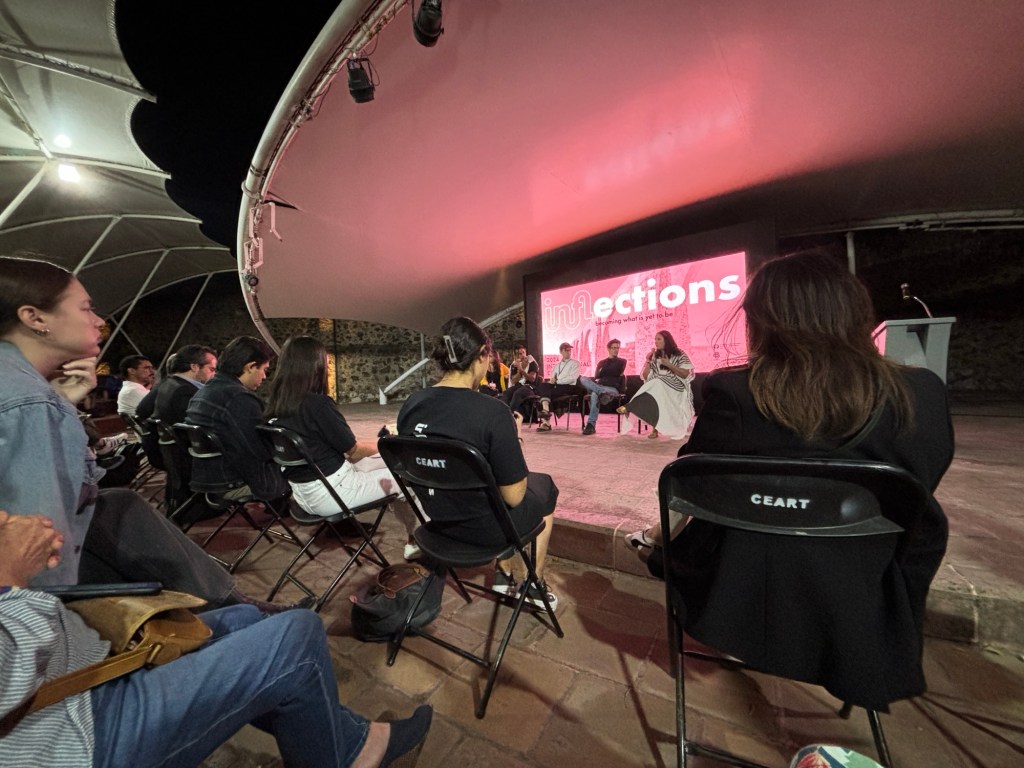
I also attended “Co-creation with AI.” Then, this third and final day wrapped up with an all-conference panel on contemporary issues in Mexican design at the outdoor amphitheater at the cloistered museum. The title was “ILLUMINATING THE OVERLOOKED: Unconventional Practices for Responsible Futures.”
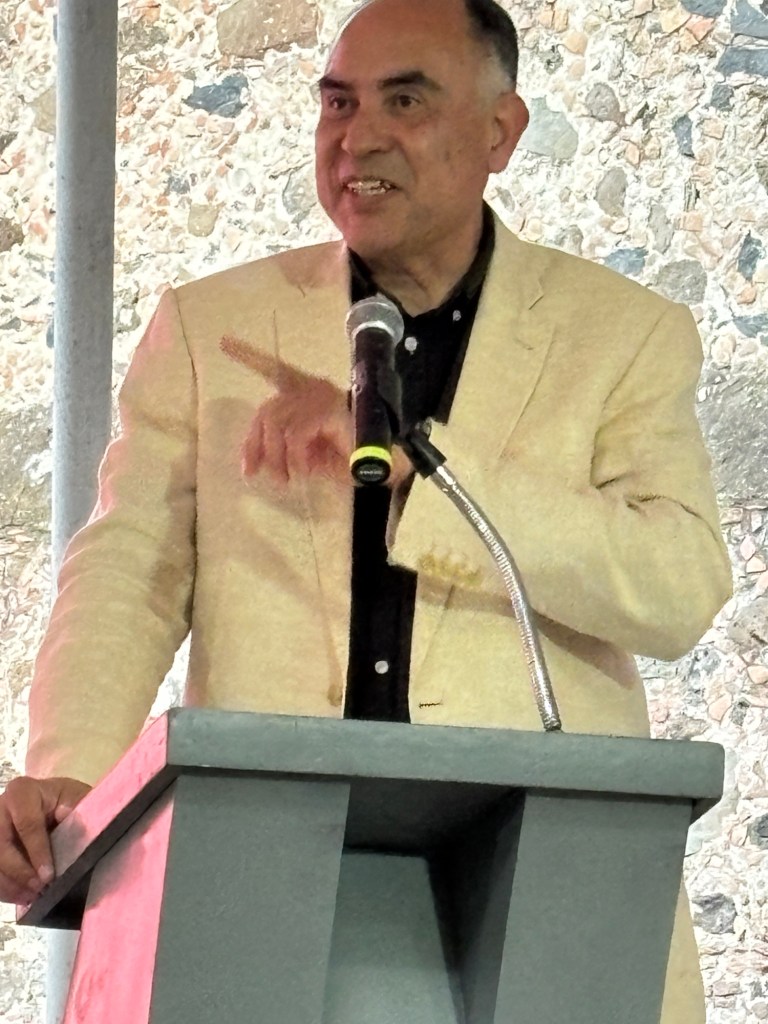
The AI session included a presentation on utopias. The closing panel with Querétaro native, Luisat the convent’s outdoor amphitheater.
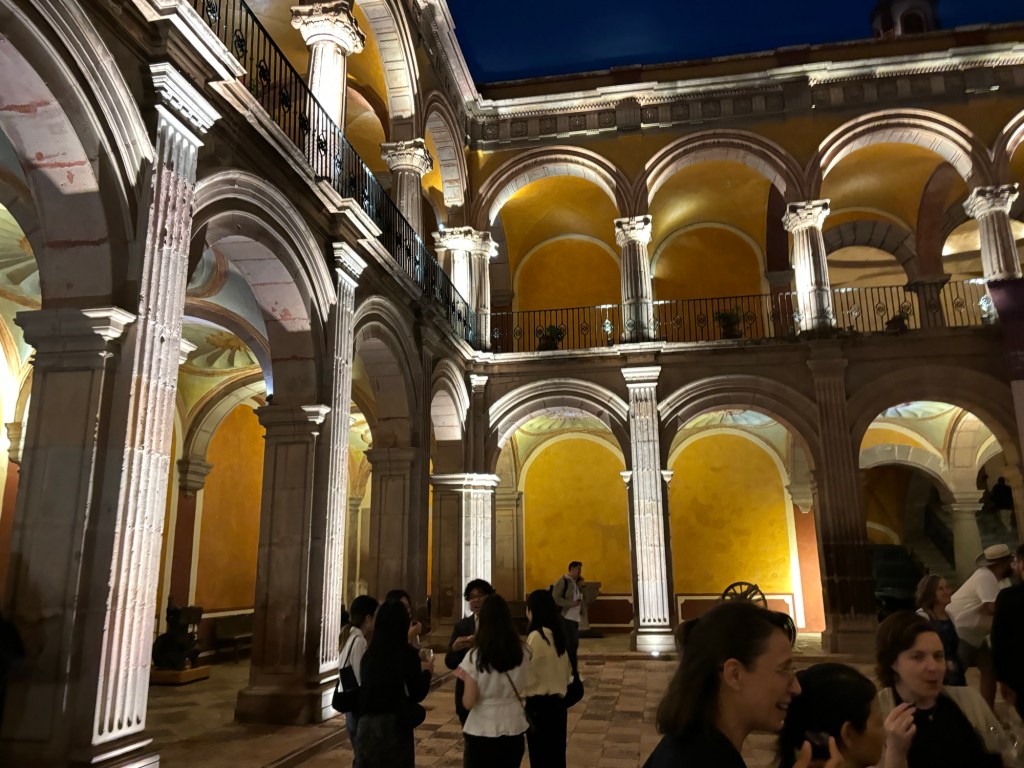
The closing reception was held at the Museo de Arte de Querétaro courtyard. After it, Emma, Liz and I headed for a last supper together that didn’t end until after midnight. We’re learning Spanish ways!
Closing reception with friendsDino, Liz, and Emma — I can’t wait to see them all again!
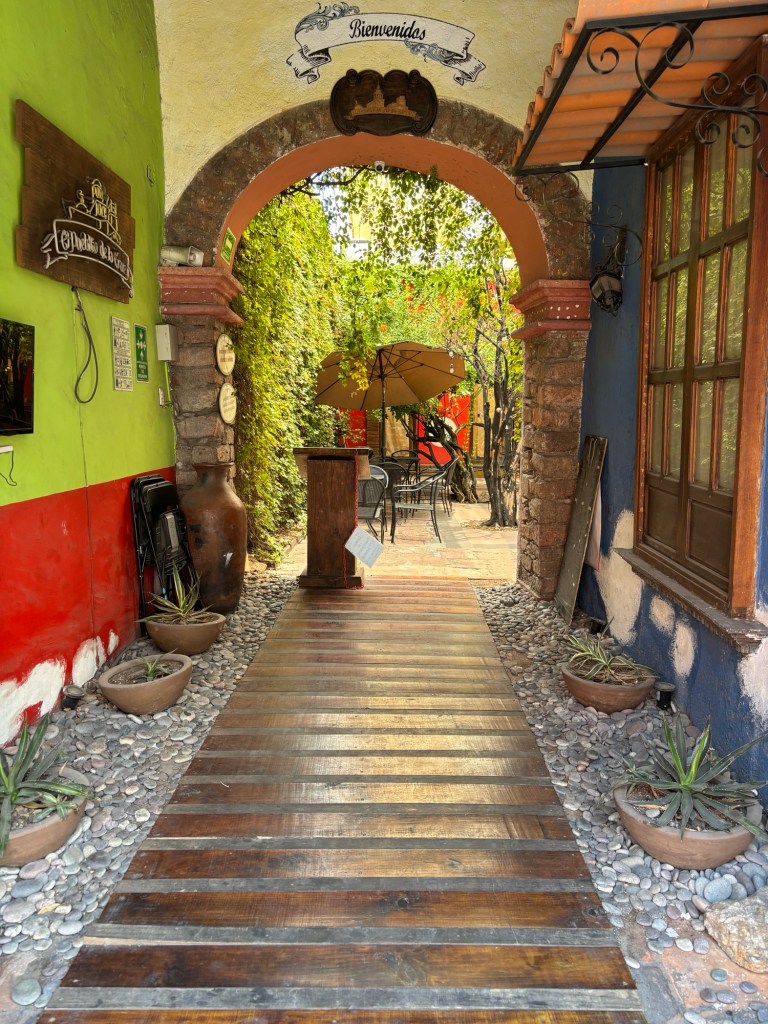
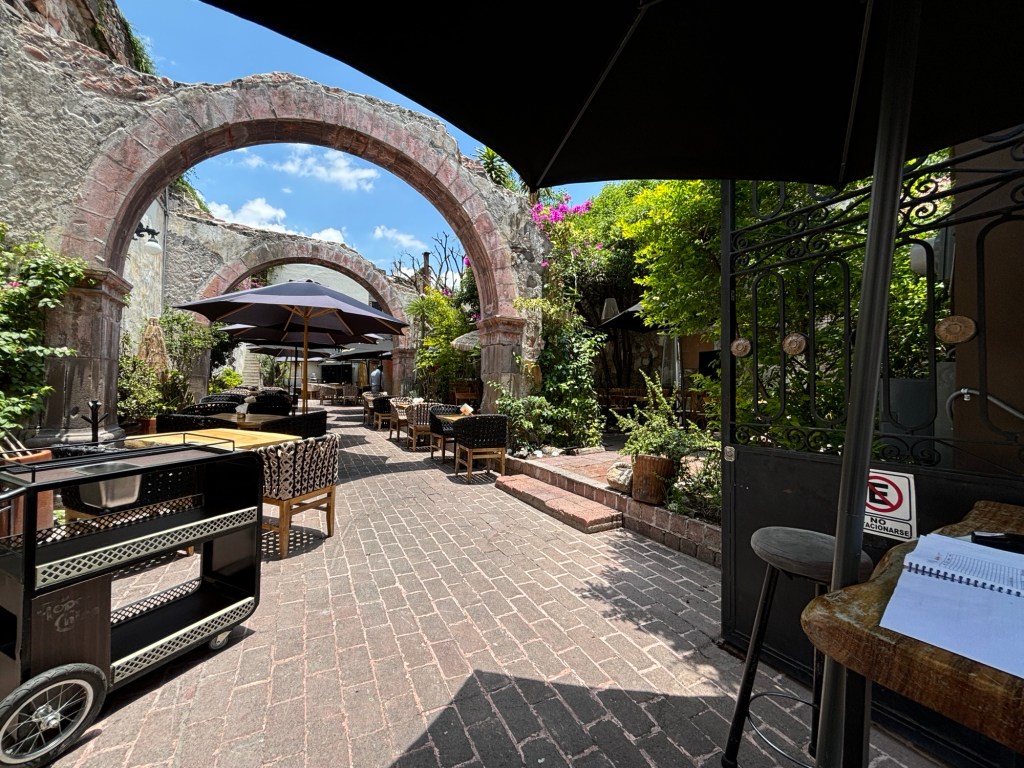
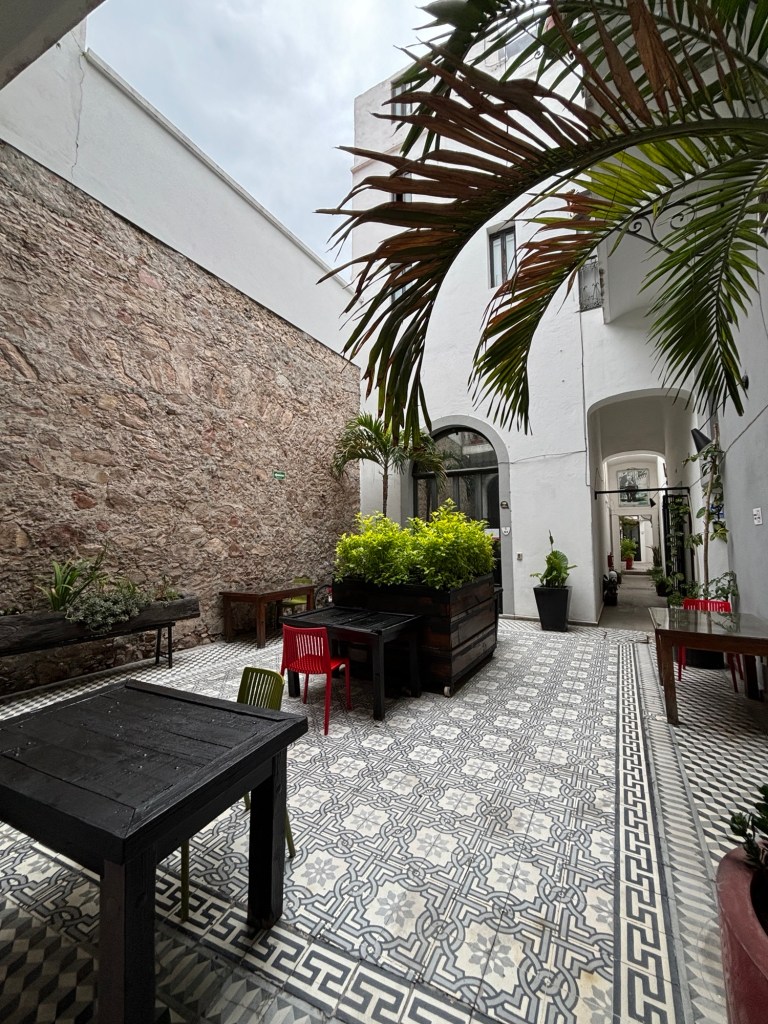
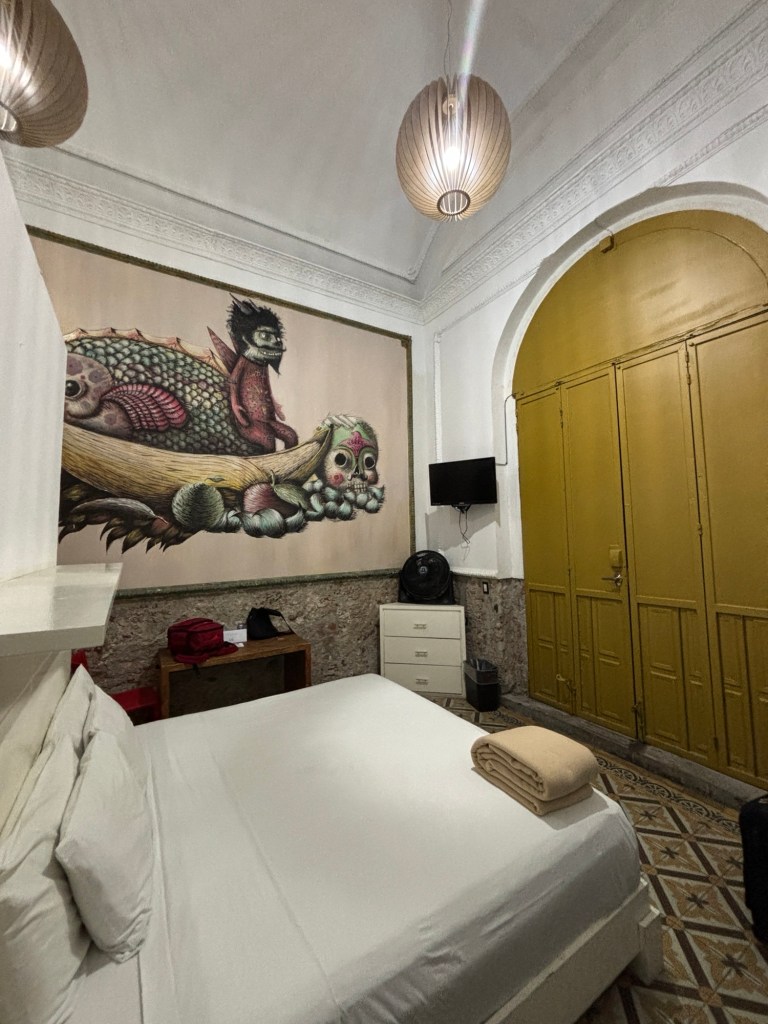
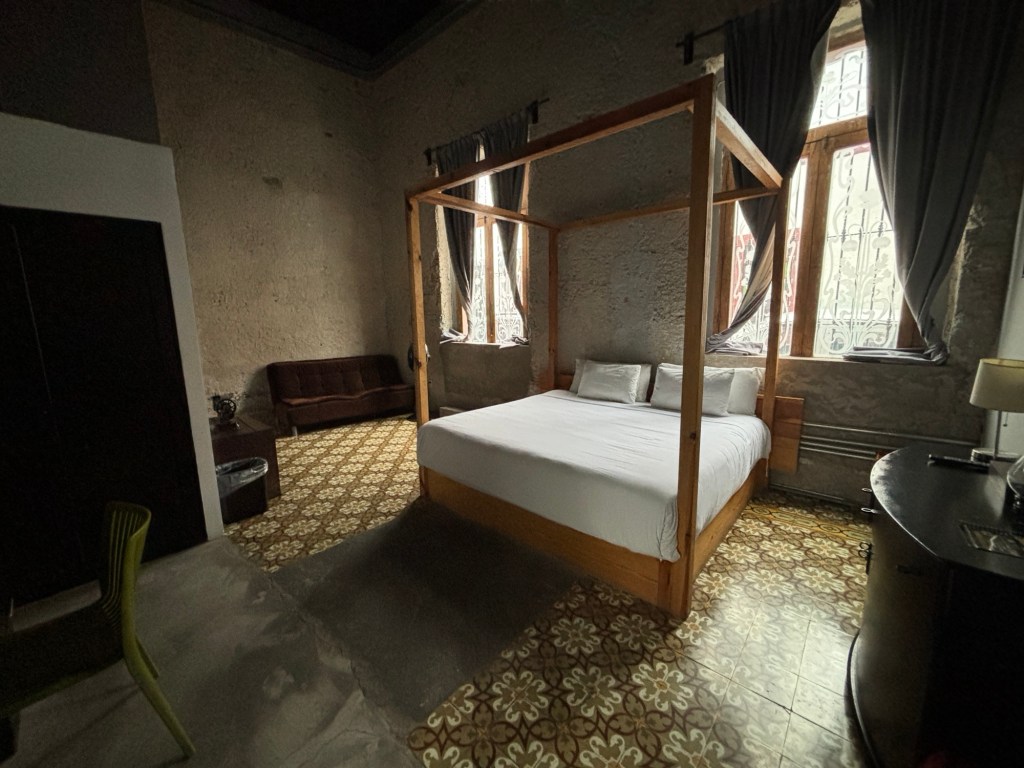
As a side note, I always try to stay central and conserve my budgets when I select hotels regardless of who is paying. This was no exception and I picked a cheap and cheery courtyard hotel in the city’s historic core. It is nestled among the cultural heritage conference venues. Thankfully Emma is the best of sports and appreciated the authenticity as it was, as you’ll recall, cheap and cheery. It is surrounded by nice eateries which we enjoyed.
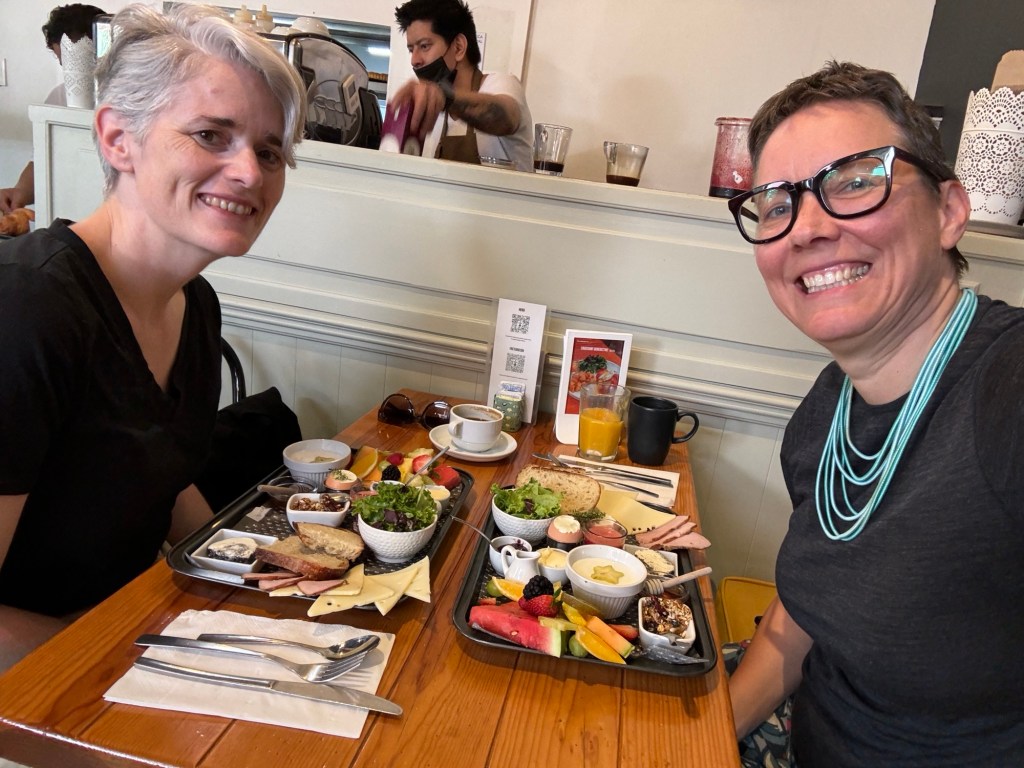
Courtyard of Kuku Ruku with cool decor butno window, for two nights. Got windows to the sidewalk for the last two nights! ❤️Oops—was a delicious breakfast but I got our bus’s departure time wrong!
Thanks a million to everyone who contributed to the organization of this conference — including Luis, Roberto, and ACSA’s Michael, Michelle, Eric, and Danielle — and to the local students, architects, teachers, and residents who came out in force. Their enthusiasm and collective effort made our visit to Querétaro extraordinary special.
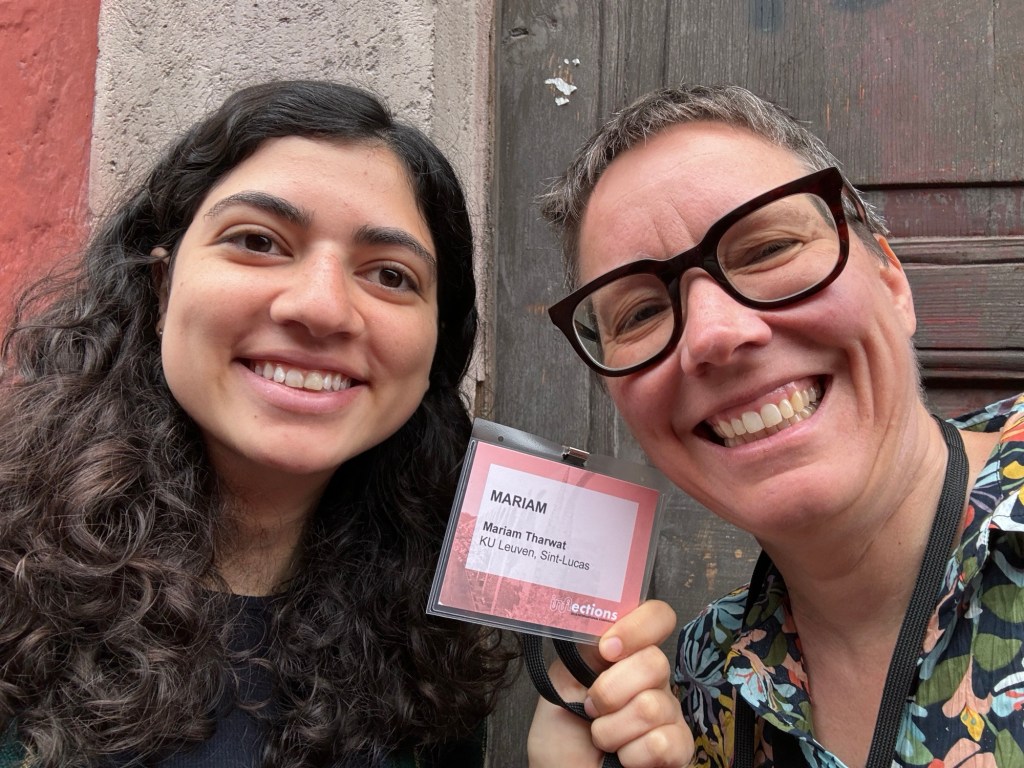
Emma and I look forward to seeing all our new ASCA colleagues — Sharon, Dino, Liz, Luis, Mariam, Diana, Ifioma, Faye, Tania, Jori, Erandi, and many others — at the ACSA International meeting in Brisbane in 2026!
My colleague Diana Martin wanted to attend this year’s American Society for Engineering Education (ASEE) conference in Portland, so I submitted a proposal to organize a panel on our forthcoming Routledge International Handbook of Engineering Ethics Education. The panel got accepted but Diana couldn’t travel—thus I made the trip alone.
Traveling solo forced me out of my shell (I don’t chat much with strangers when traveling).
Another benefit was that, since Diana had insisted on flying via Seattle, I saw the Pacific Northwest scenery for the first time.
Oregon marketing is catchy!
I scheduled myself a day upon arrival, before the conference started, to adjust to the time zone (but it took much more than a day). I’d booked a “shoebox” room at a hip hotel in a shabby-but-central neighborhood and I had the great fortune of arriving after all the shoeboxes were occupied.
I got upgraded to a spacious and luxurious room at the Hoxton in Chinatown! Although I wouldn’t recommend the Hoxton’s location for a woman traveling solo due to the night scene on the surrounding streets, I kept my wits about me and used high levels of caution, and I cane through unscathed. I took an Uber after my division’s evening social the last night because the sun was setting, making it too late to risk walking alone.
Dramatic scenery off the tip of my Alaska Air wing. Saturday-Sunday market in Portland. City hall. Dramatic plaza with (breakfast!) food trucks. Lovely parks……with canopies of trees and twinkling lights. Visited Portland’s art museum……for sneakers……and French modernists. Cezanne!
With the extra day, I got to explore the city a bit before ASEE kicked off.
My hotel, right at the gate to Chinatown. What a luxurious room!The hip lobby……with books galore……a ground floor bar……but teensy, weensy breakfast. The plant was a nice touch. Plenty of space to work!Design touches in the corridors……and elevators……as well as in the room. Nice little touches from Aongus, too!The restaurant on the roof has a fabulous view……even though I missed the nights the hotel’s speakeasy was open. A view toward Mt. Hood.Some tasty food.
I bit the bullet and paid $16 to enter the Chinese Garden, after the $25 to visit the modern art. Expensive! But very interesting!
I also wandered the streets in the Pearl District.
I found my way to the city’s hilltop park, with its Holocaust monument and Rose Garden. My calendar alerts pulled me back to reality. Before I could enter the Japanese Garden, I had to scurry to the conference center by bus.
The best part of every ASEE, to me, is the Division Mixer, followed by Taste of the Town, on opening night. It’s the best time to find everyone in one place.
With friends from SEFI Summer School, Xiaoqi Feng and Hanna Aarnio, and Michael Loui, former chief editor of JEE.With Nicole Pitterson, my co-editor for a forthcoming special issue of IEEE Transactions on Education.A colleague I met at REES in India in January. A lecture by Cindy Atman. Colleagues I met at ASEE last year (Lazlo), EERN in Belfast (Bridget), REES in Hubli and Summer School in Windsor (Sid and Zach).Ashish, who I first met at REES in Cape Town win a major award!
The main reason I made the trip was to meet with the authors of the ethics handbook. The conference organizers provided a very snall room in a satellite building, so the audience really had to work to locate us. But some found the way, as did our authors. About 20 (of our 105 authors) attended this 2024 ASEE conference and 15 served in our panel. It was truly delightful to meet them all—many for my first time!
I know their work though—and I have read, and copy edited, every one of their chapters. Such exceptional work they contributed!
Here’s who presented chapter number (section number and chapter topic included:
Kari Zacharias, 3(1) individual and collective
Jeff Brown, 5(1) professional organizations and codes
Shannon Chance, 6(1) environment
Julianna Gesun, 10(2) psychological foundations
Susan Lord, 16(3) electrical and electronic engineering
Dayoung Kim, 17(3) chemical engineering
Stephanie Lunn, 18(3) software engineering
Madeline Polmear, 19(4) lit review of teaching methods
Aditya Johri, 20(4) case studies
Adetoun Yeaman with Bill Oakes, 23(4) service and humanitarian
Sarah Hitt, 24(4) arts-based
Adetoun Yeaman, 27(5) attitudes and character
Sarah Junaid, 30(5)
Rockwell Clancy, 31(5) behavior and culture
Sarah Junaid with Madeline Polmear, 33(6) contextual mapping
Madeline Polmear, 34(6) licensure
Jillian Seniuk Cicek, with Robyn Mae Paul and Donna Riley, 35(6) feminist critical analysis
Our ethics handbook panel……was highly informative.And here are all our panelists!
I attended sessions of the Ethics and Architectural Engineering divisions. I also took a walking tour with Architecture colleagues to study the bridges of Portland.
Steel Bridge has a vertical lift. We got to see a test lift of this vertical lift bridge. Here it’s coming back down into place. Here’s the walking group. A view across the river. Portland’s famous sign.
Overall, I enjoyed ASEE this year more than I had expected. It was a bit smaller than last year’s conference (when over 5000 people attended) and the smaller size was welcome. I also knew many of the PhD students who attended — far more than shown in the pics (Eugene, Luis, Siqing, Em)…. I either got carried away in the moment and neglected to take photographs, or some selfies I thought I took disappeared. (Or, maybe, my selfie thumb let me down!)
Until next time, the memories will have to do.
Here’s to a successful meet up! Maybe I’ll see you, too, next year at ASEE in Montreal?
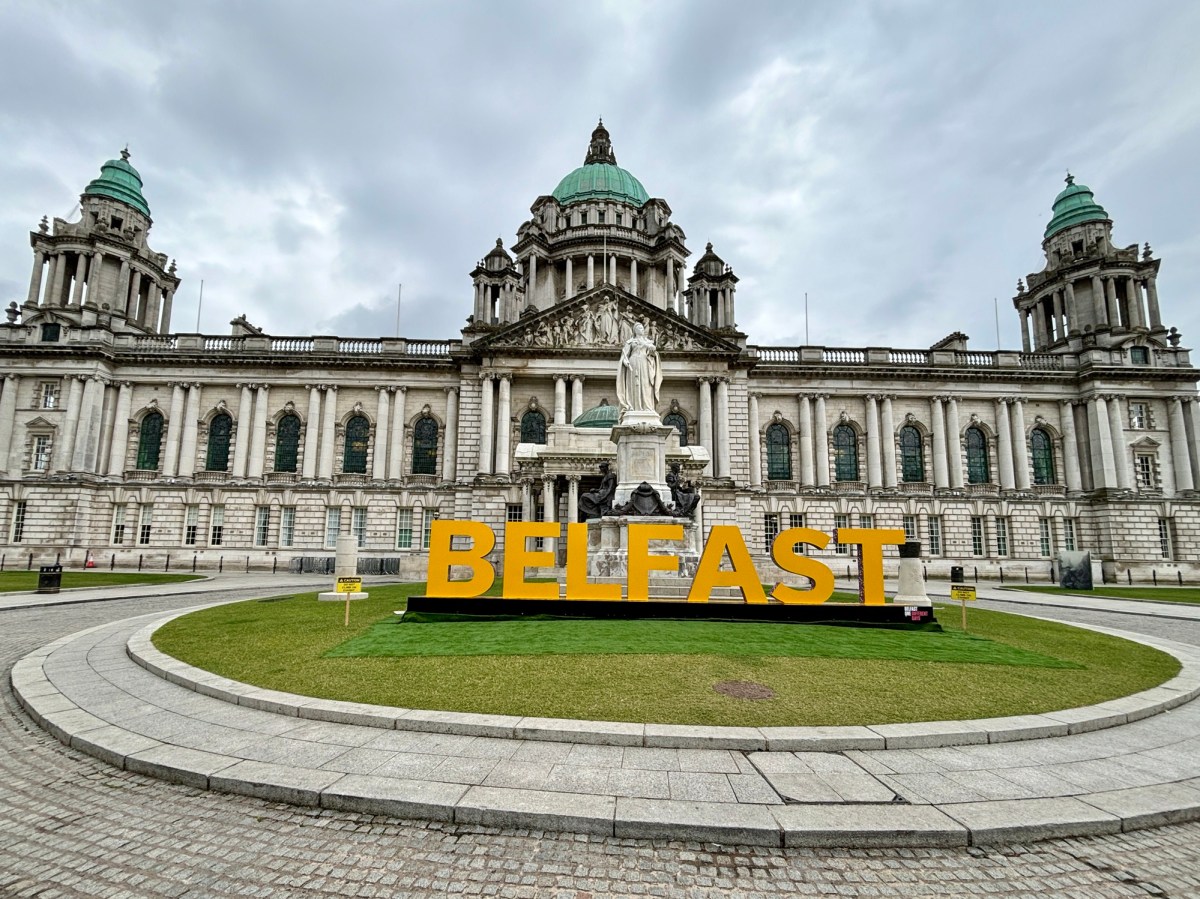
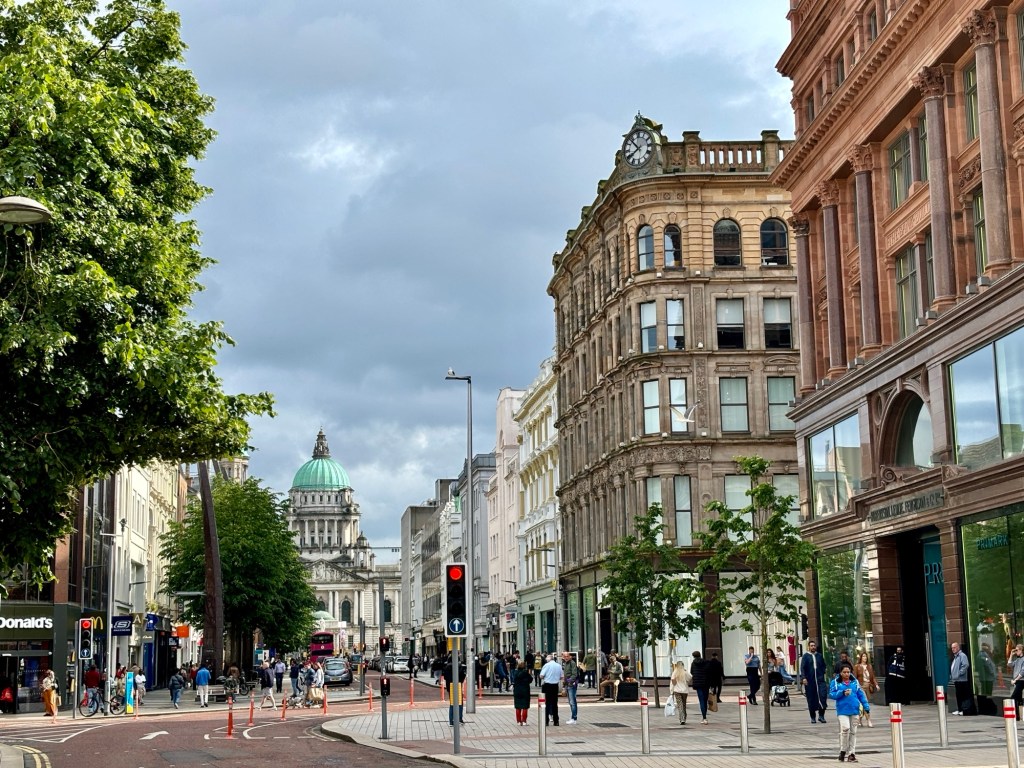
Believe it or not, I’ve never visited Belfast. Well, I did once tour the Titanic Museum and the dry dock where the Titanic was constructed—was engineered. But I’ve never come to the city itself, and my subtle avoidance has stemmed from my Irish Republic ideals. For the sane reasons, Aongus has also never visited the city, despite living in this tiny island most of his life.
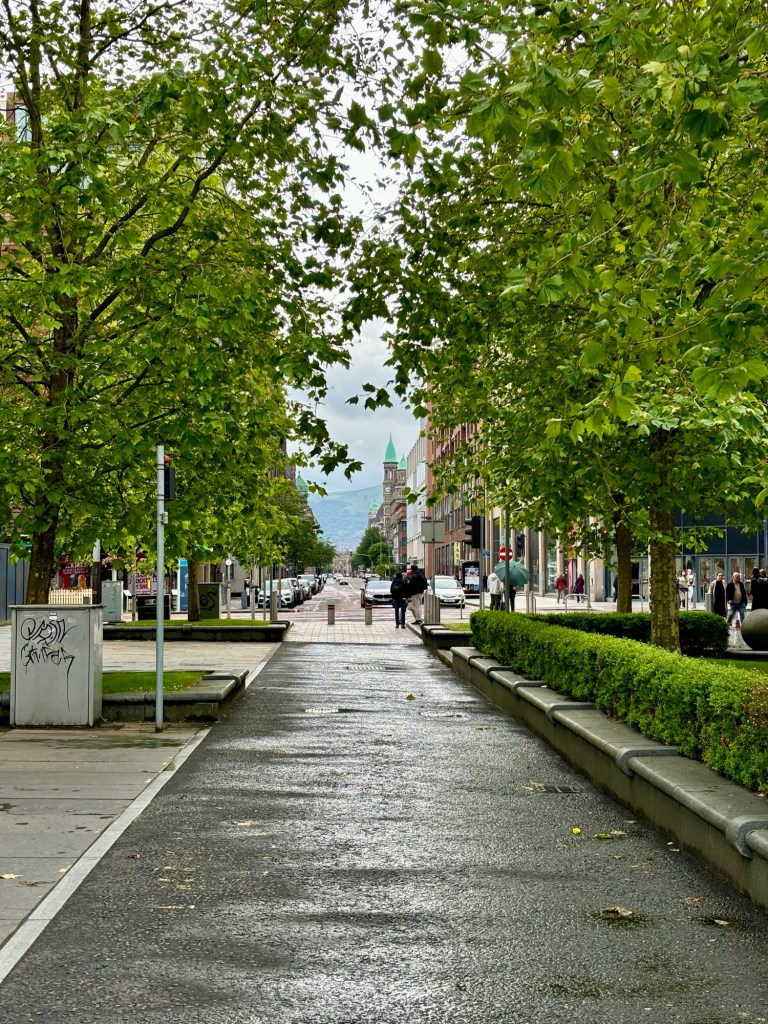
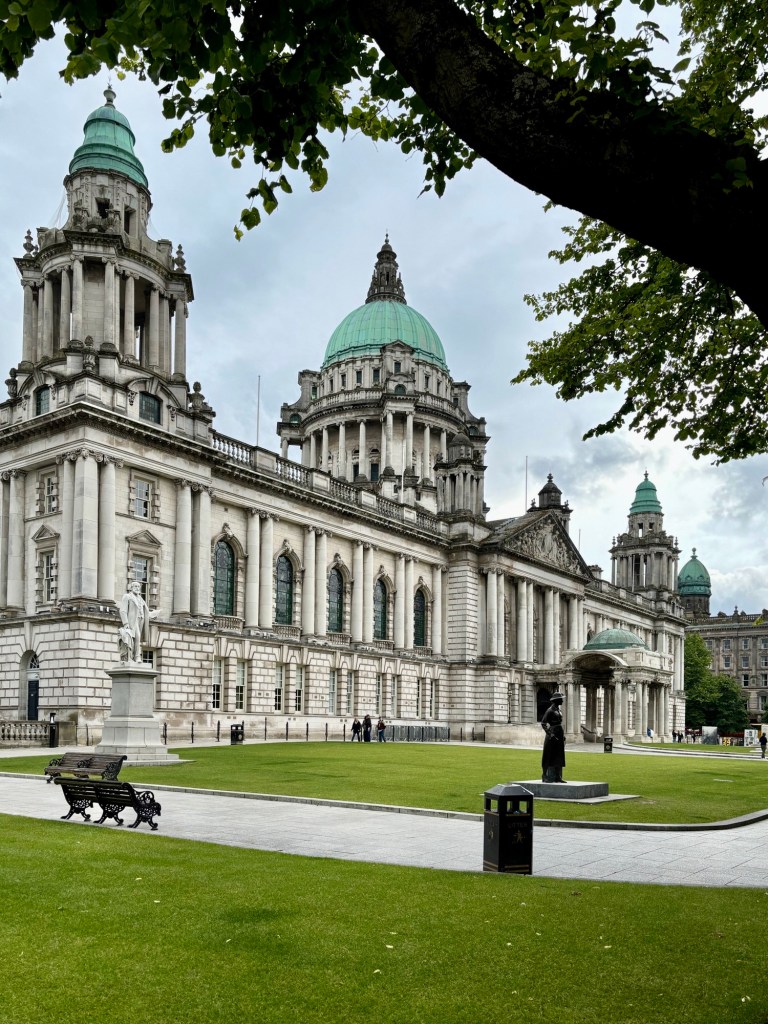
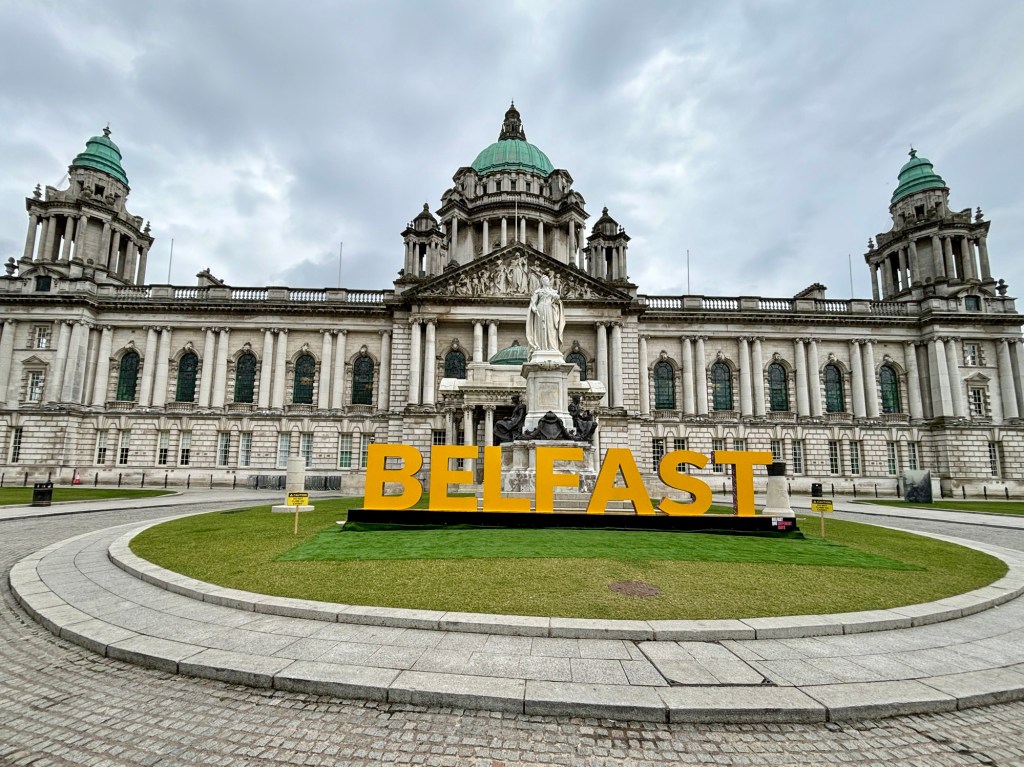
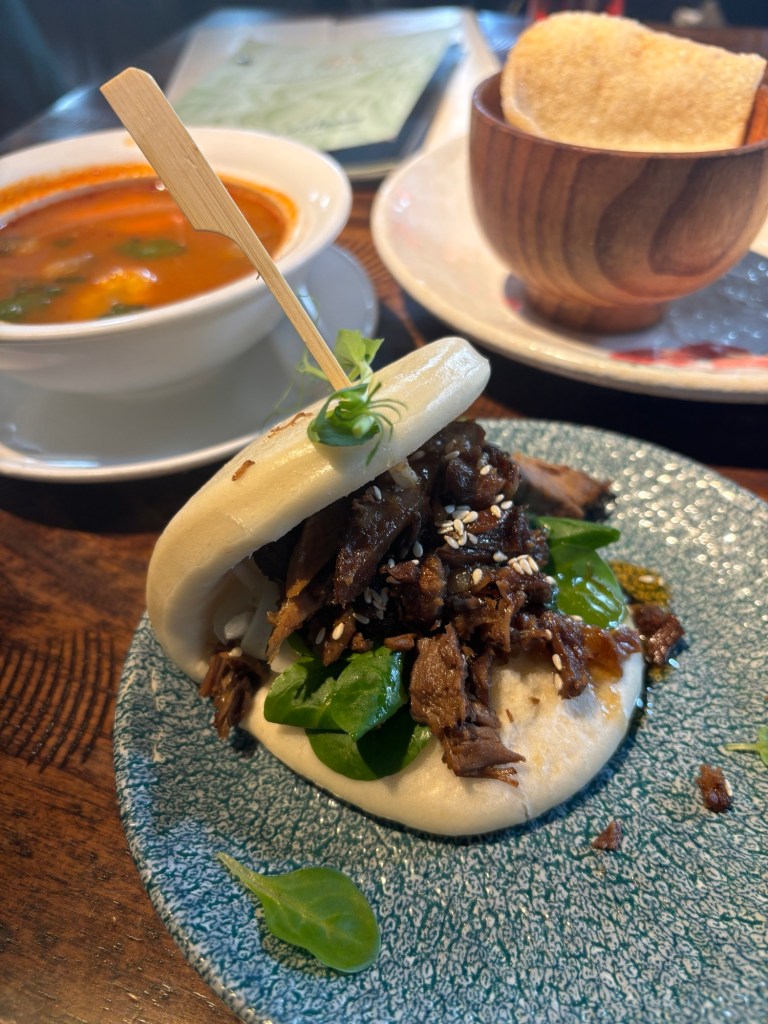
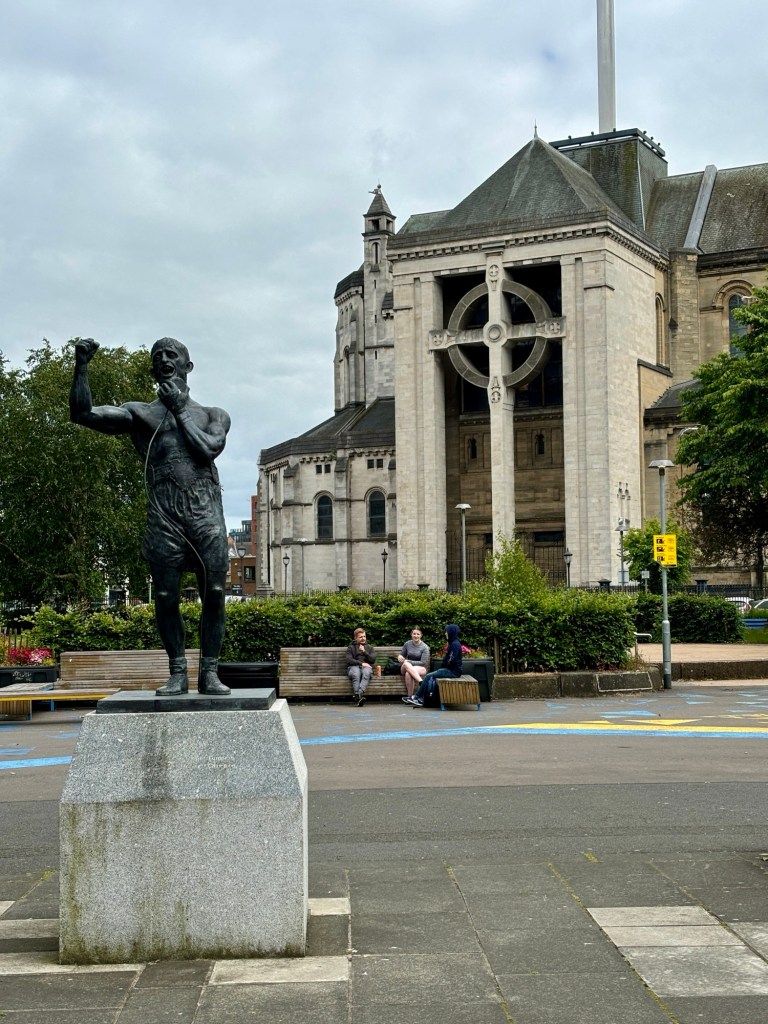
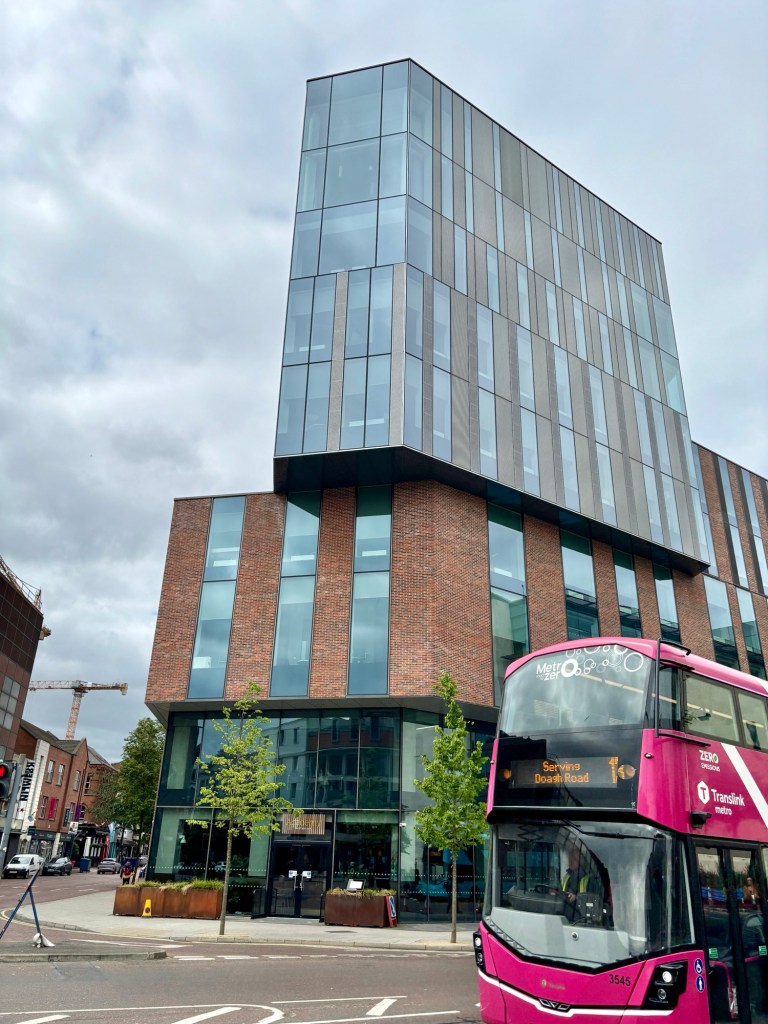
City Hall. Dumpling Library. Ulster University’s brand new building where we conveniened. Glimpses of Belfast.
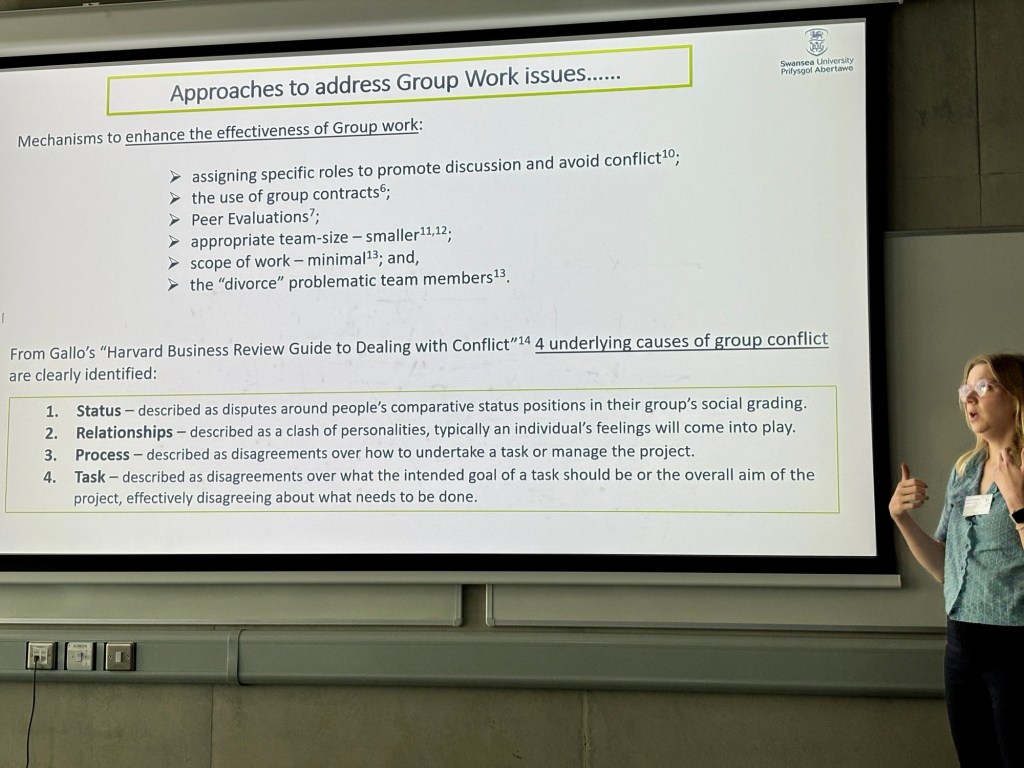
Now, engineering has brought me to Belfast. The past couple of days, I’ve been part of the 2024 symposium of the Engineering Education Research Network (EERN) for the UK and Ireland.
Hats off to EERN bringing these countries together to celebrate and enhance engineering through meaningful education! EERN UK welcomed their Irish cousins in formally around a decade ago, updating their name to include both “sides” of Ireland.
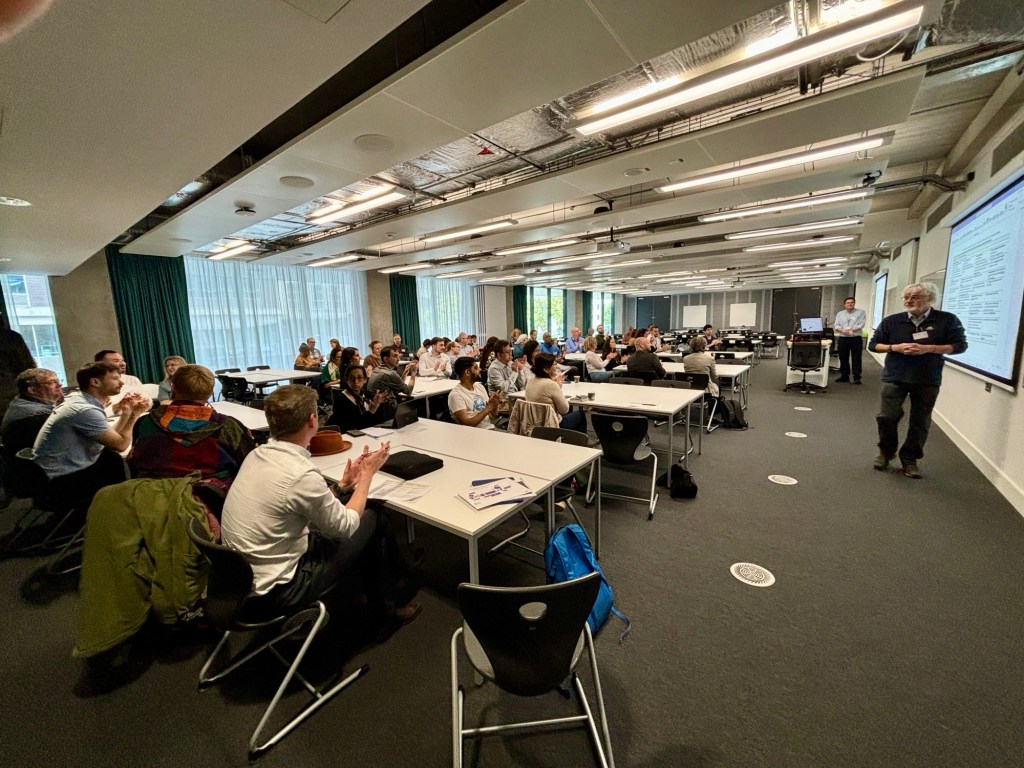
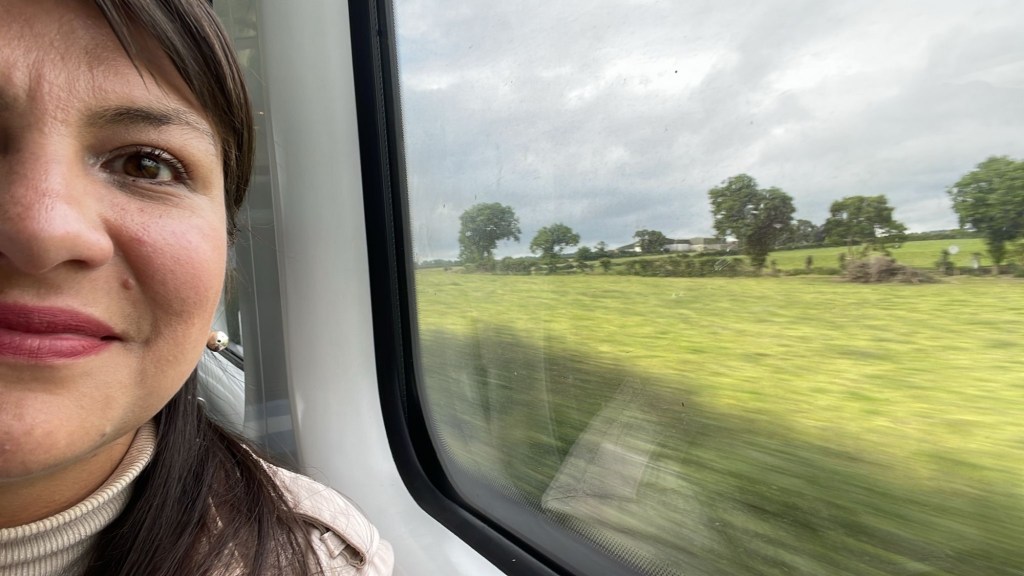
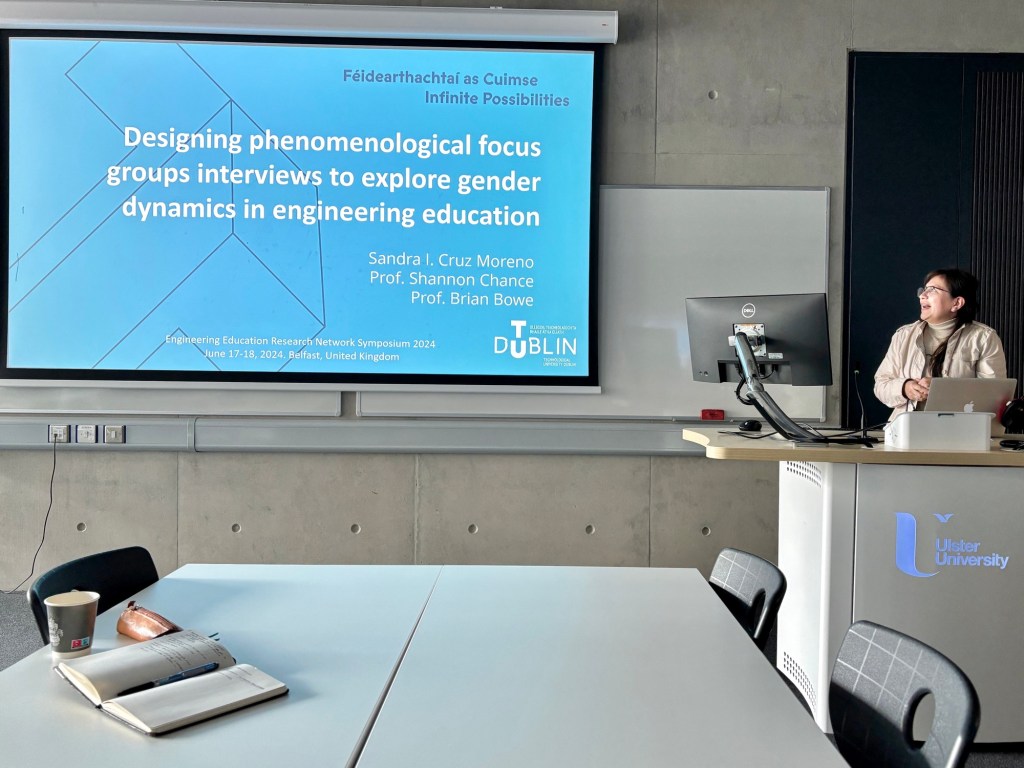
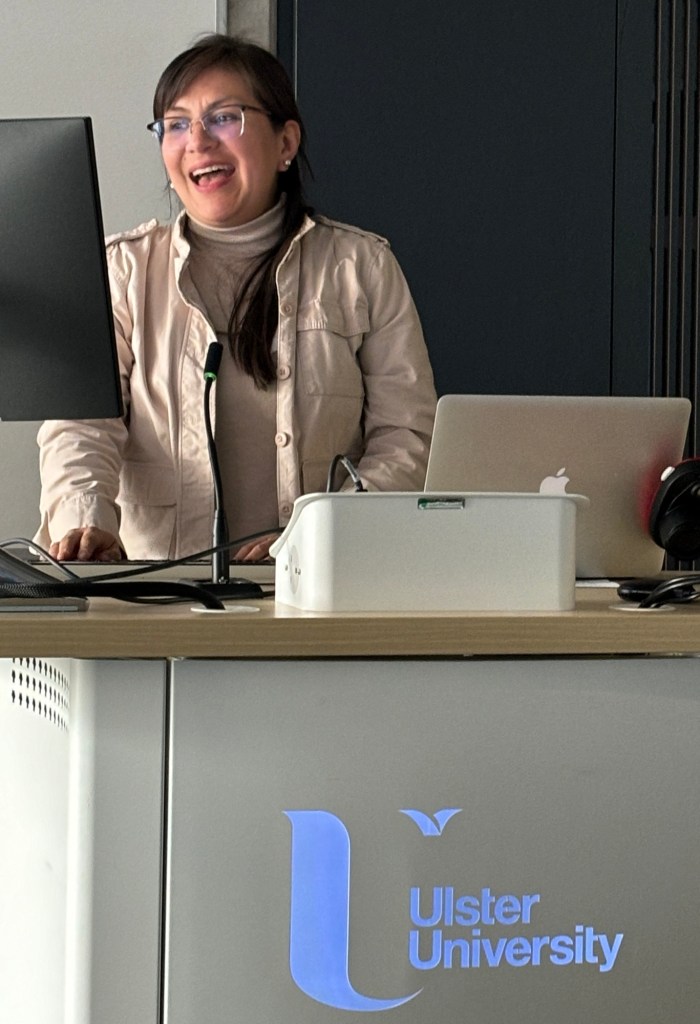
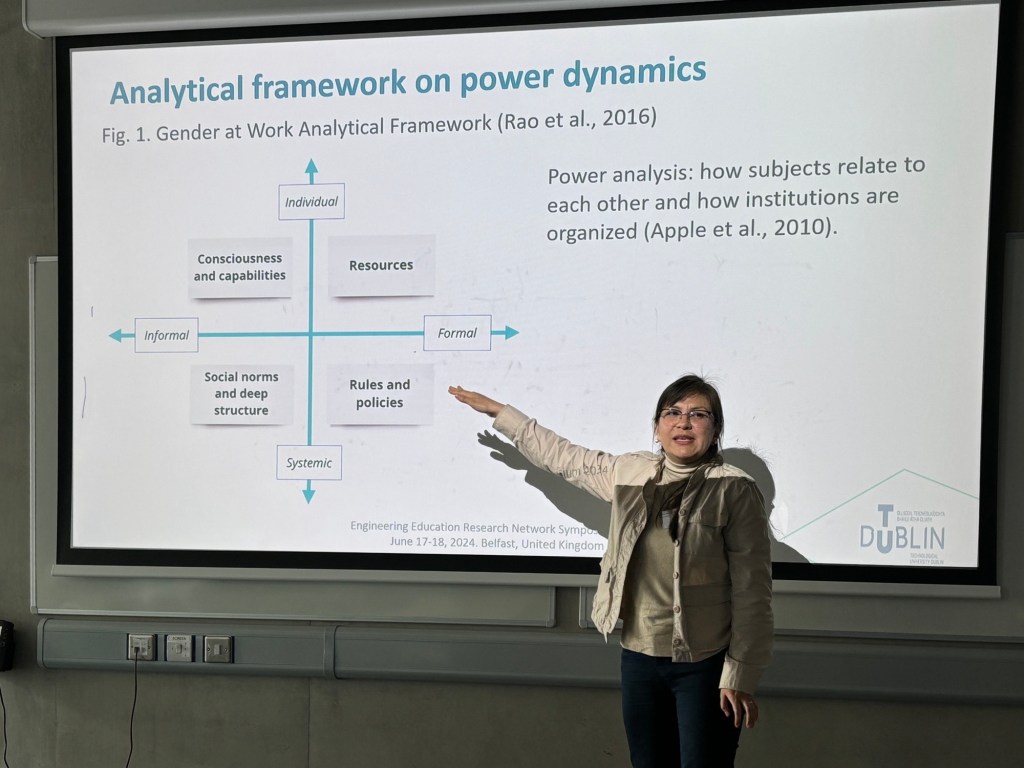
Kicking off the event with organizers Alan and Roger. Sandra en route by train. Sandra Cruz presenting… …a data collection technique she’s used……and parts of her theoretical framework. This presentation by Jennifer S. Thompson and colleagues was fascinating!
Ulster University’s Alan Brown hosted us downtown—for two days of conversation “Beyond Boundaries: Inclusive, Sustainable and Outward Looking Engineering Education”. What a fabulous theme! Alan did a phenomenal job organizing and shepherding this event.
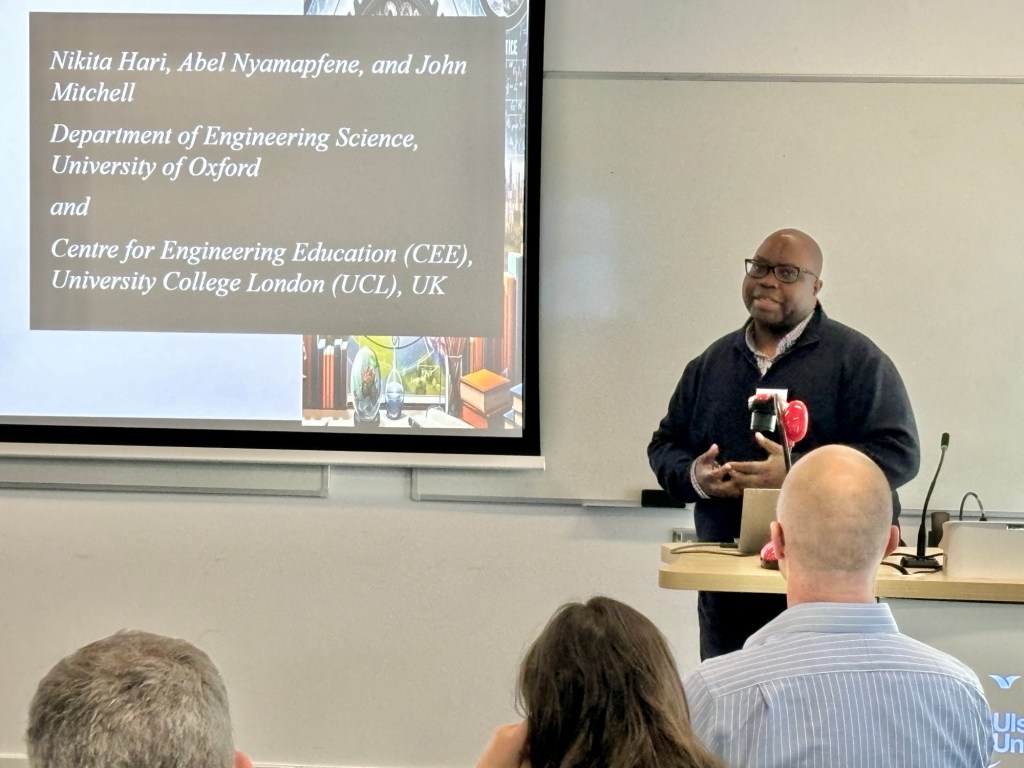
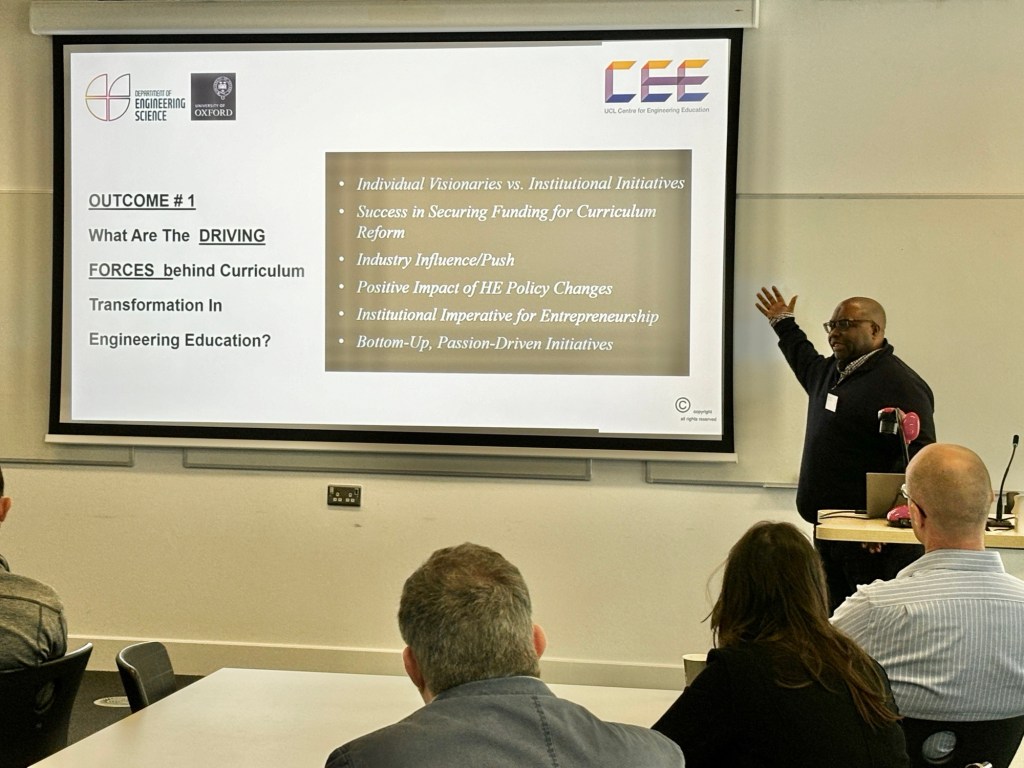
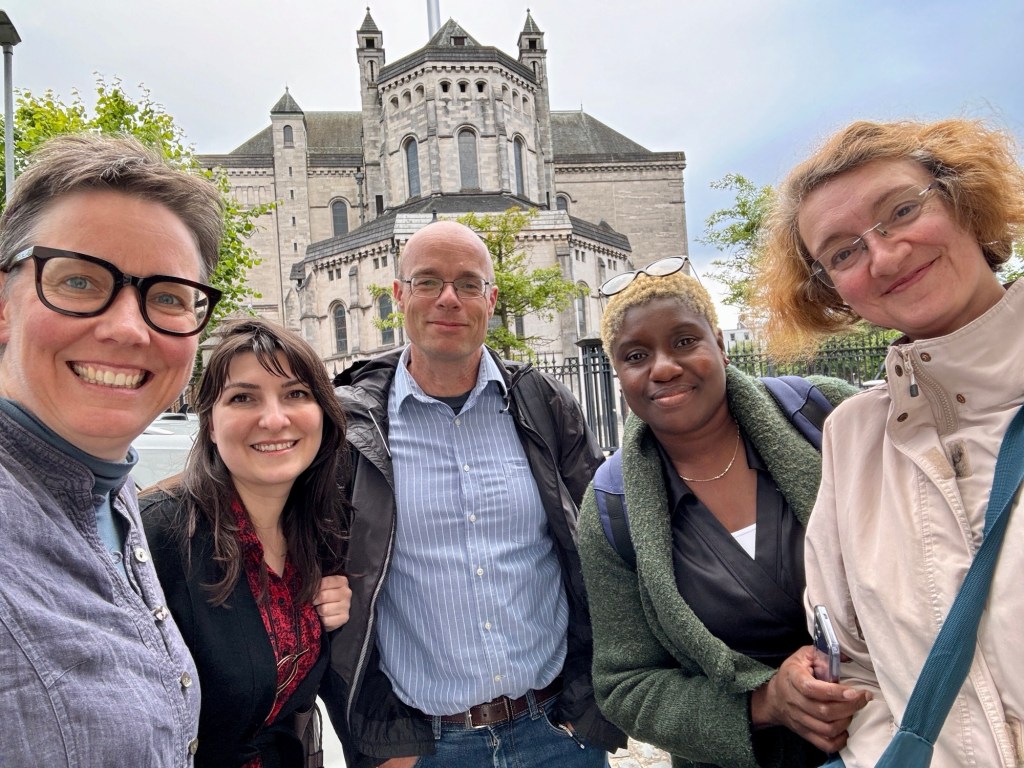
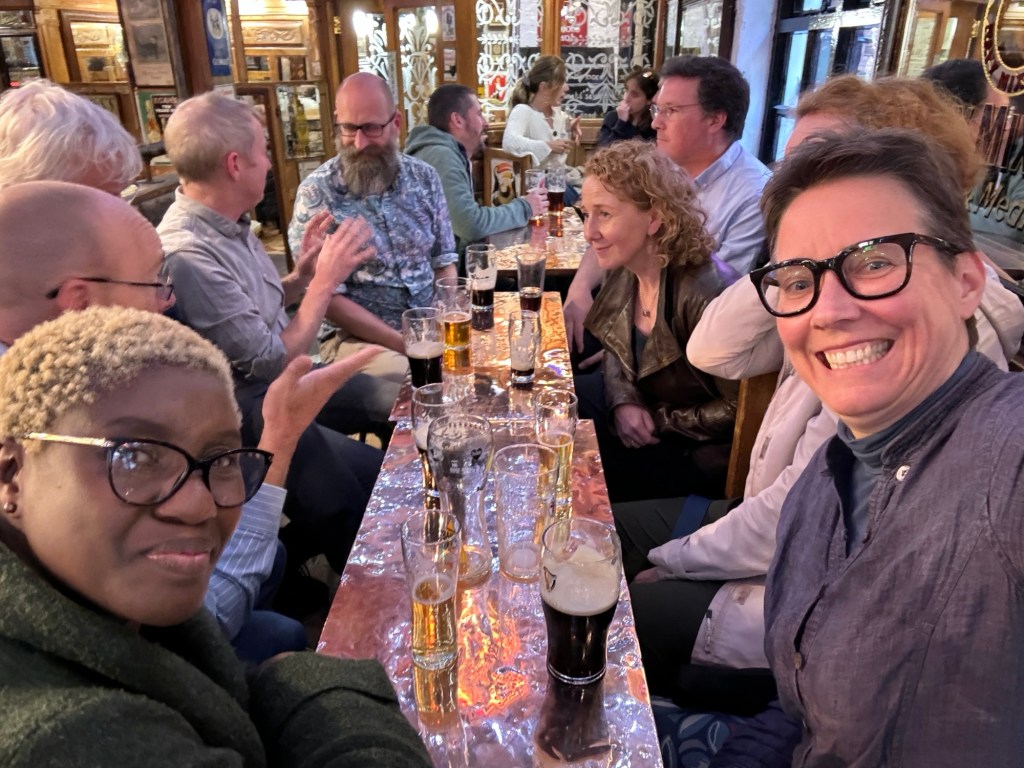
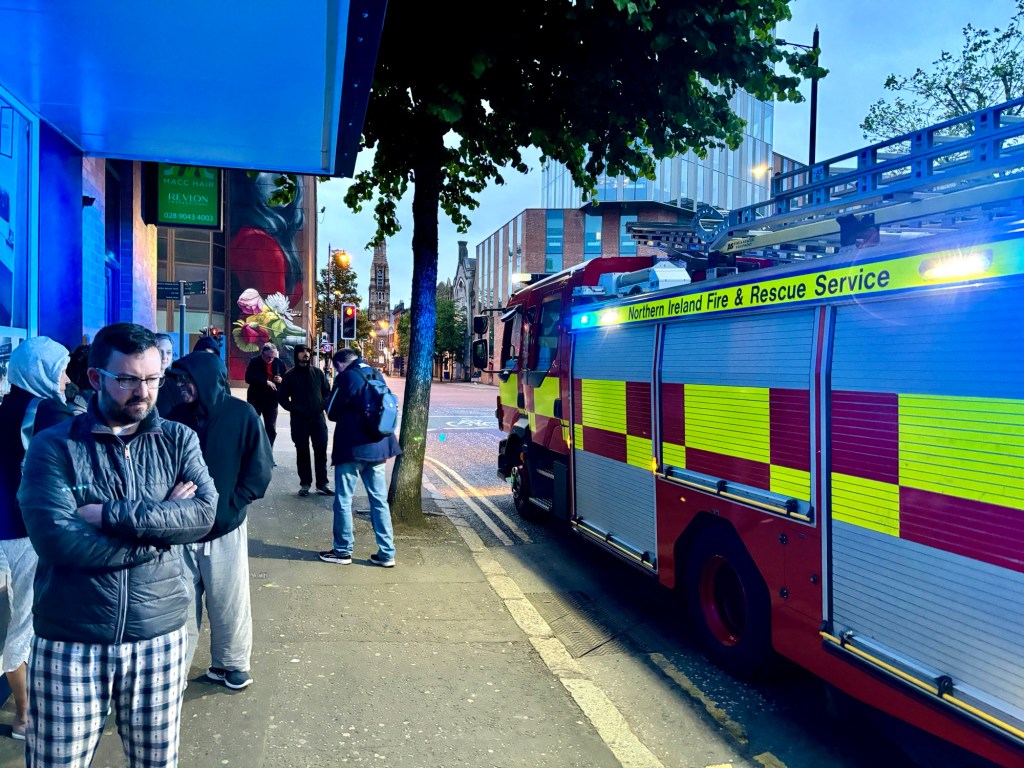
Prof Abel Nyamapfene from UCL……presenting research underway with Dr Nikita Hari and Prof John Mitchell. Dinner friends Shannon, Diana, Neil, Bridget, and Claudia. Visiting a pub together. A very sparkly place! My third visit to Dumpling Library. An unwelcome 4:20 AM surprise. I can’t recommend The Quarter by Warren. Took too long to resolve this false alarm.
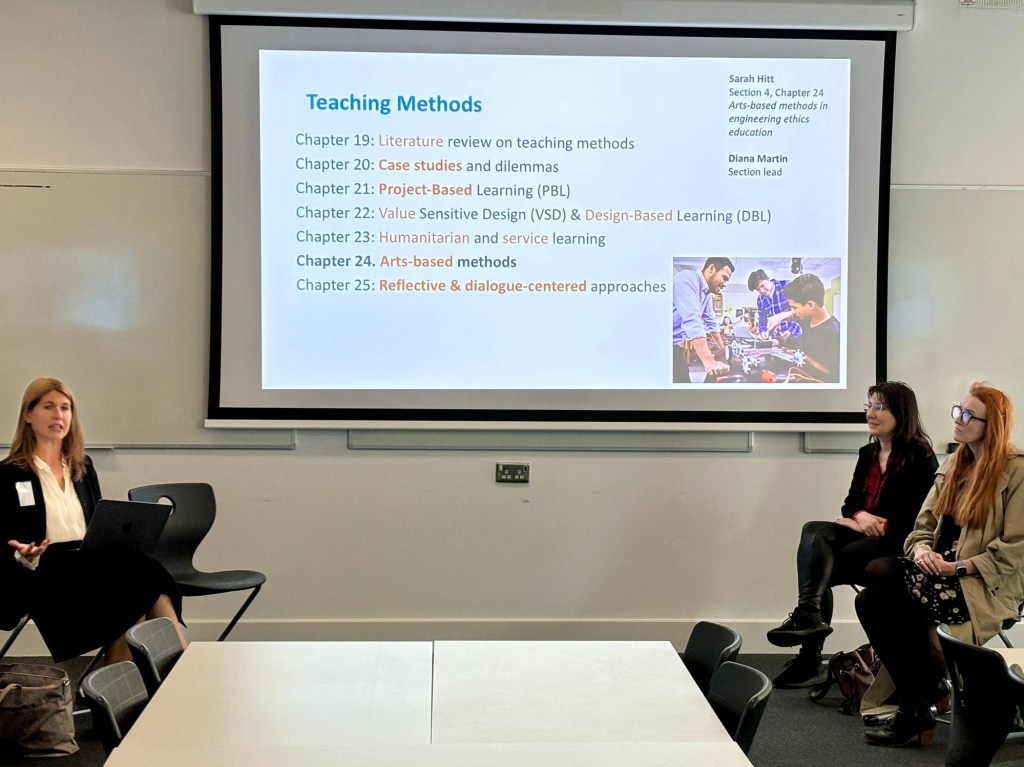
During EERN, my PhD student Sandra Cruz presented a thread of her research, and Diana Martin and I facilitated a workshop/panel discussion on the forthcoming Routledge International Handbook of Engineering Ethics Education withauthorsDr Sarah Hitt and Dr Natalie Wint.
The handbook panel facilitated by Diana Martin and myself, with author panelists Sarah Hitt and Nat Wint.
I caught up with dozens of people I’ve collaborated with in the past, and made new friends and colleagues who I’ll complete projects with in coming years.
I also discovered the beauty of Belfast. I immediately phoned Aongus when I arrived and discussed traveling here together in the fall.
The train journey here provided spectacular scenery and the city is lively and architecturally significant. There are also many lovely public spaces.
It’s nice to find new nooks and crannies to explore on this isle, and I have many adventures and collaborations to anticipate.
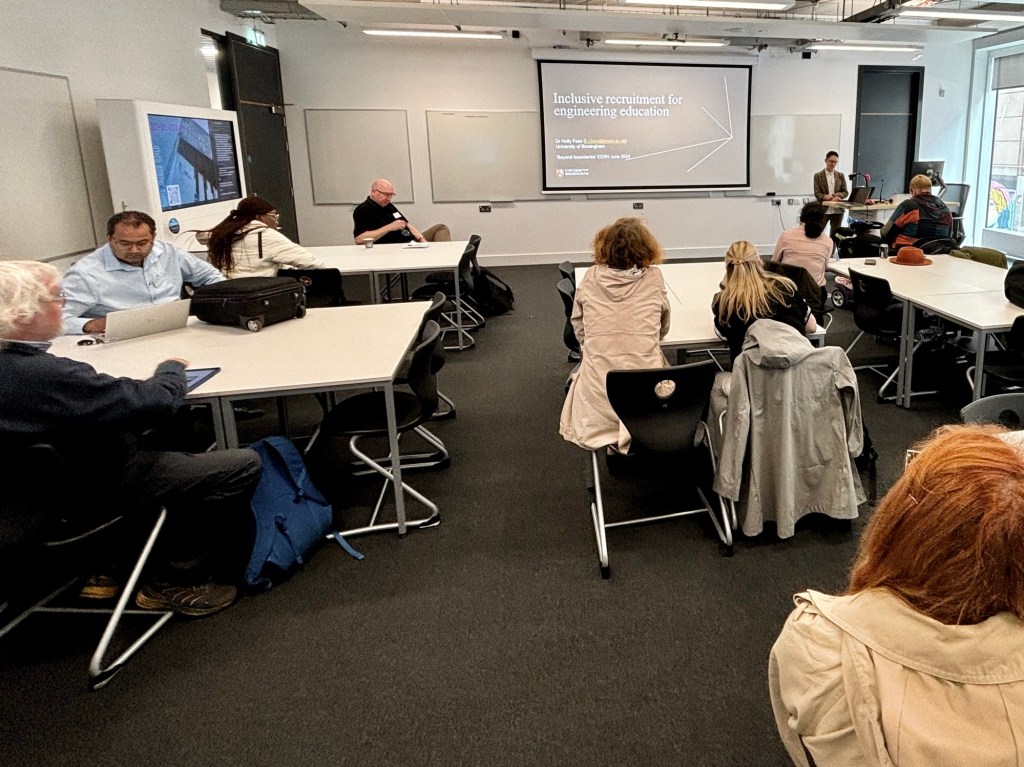
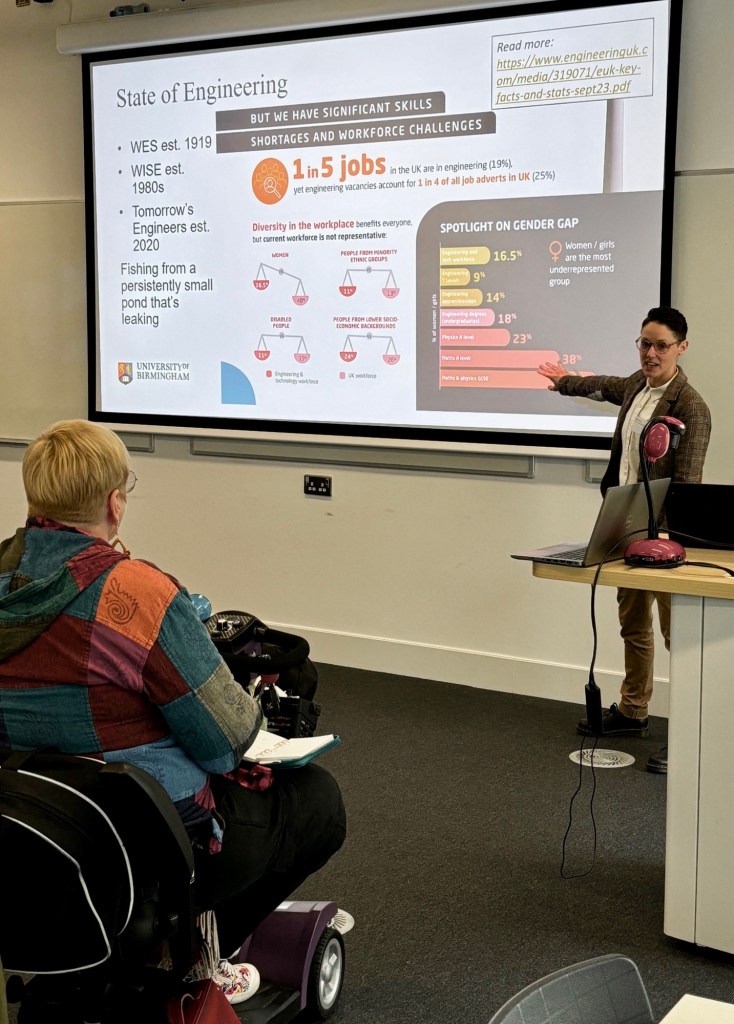
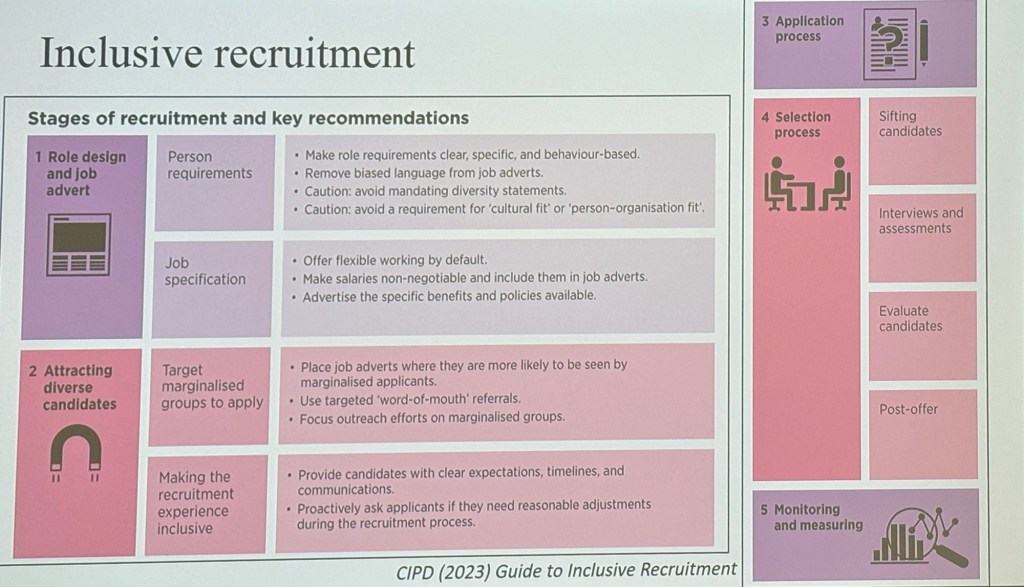
Learning about the Ethics and Sustainability Toolkit with Sarah Hitt and Emma Crichton. Birmingham’s Dr Holly Foss……discussing EDI……in staff recruitment.
Thanks Alan, Roger, Becky, Jane, EERN, and Ulster University for a top-notch platform for engaging discussion!
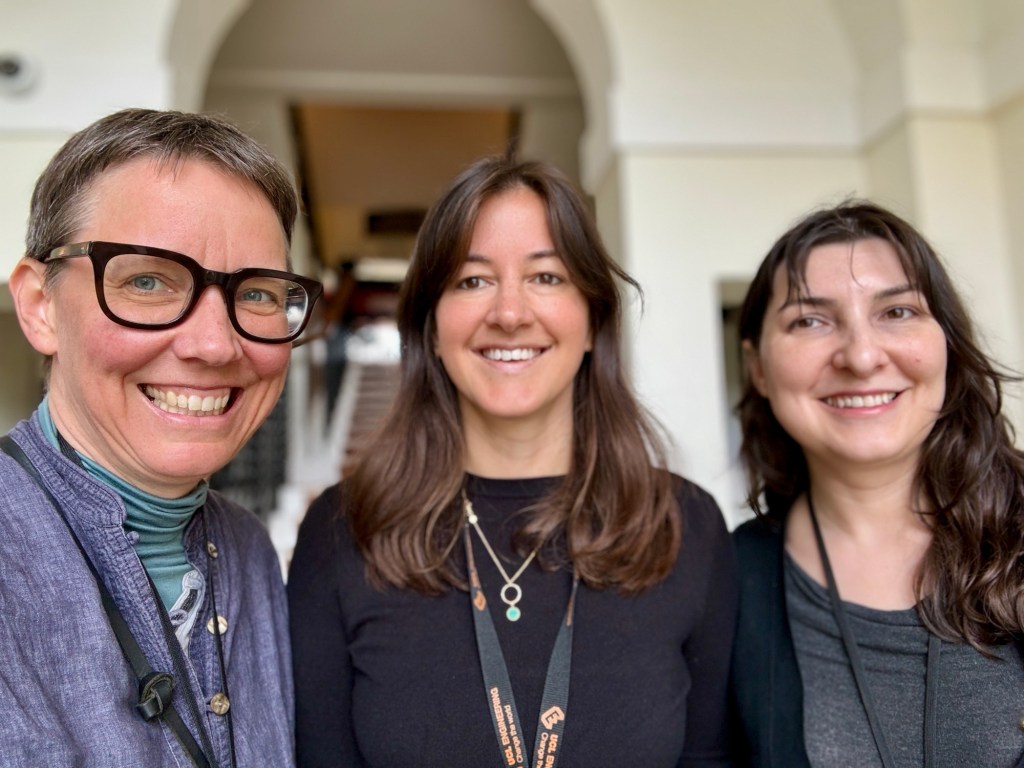
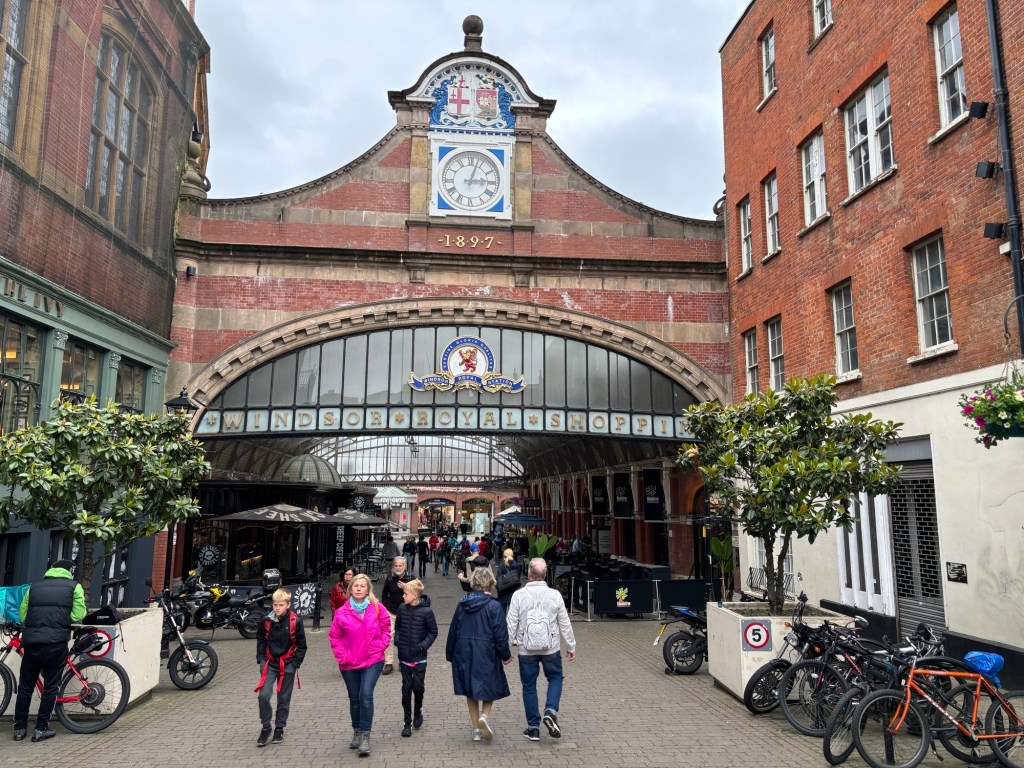
Four days of learning and laughing at Cumberland Lodge at the UK’s Great Windsor Park—the hallmarks of a great event!
The UCL Centre for Engineering Education (CEE) hosted the 2024 doctoral Summer School on engineering education research (EER). It was second doctoral Summer School delivered via SEFI, the European Society for Engineering Education. The first Summer School, held in 2022, was organized by SEFI Vice President Greet Langie, and conducted at the Irish College of KU Leuven in Belgium.
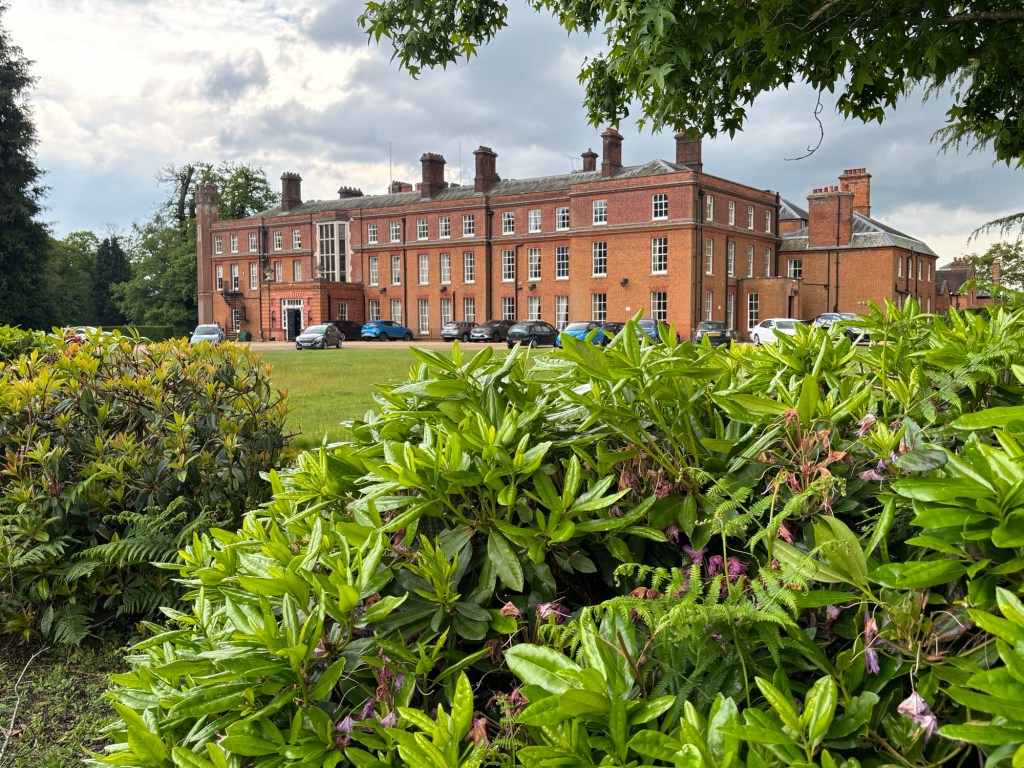
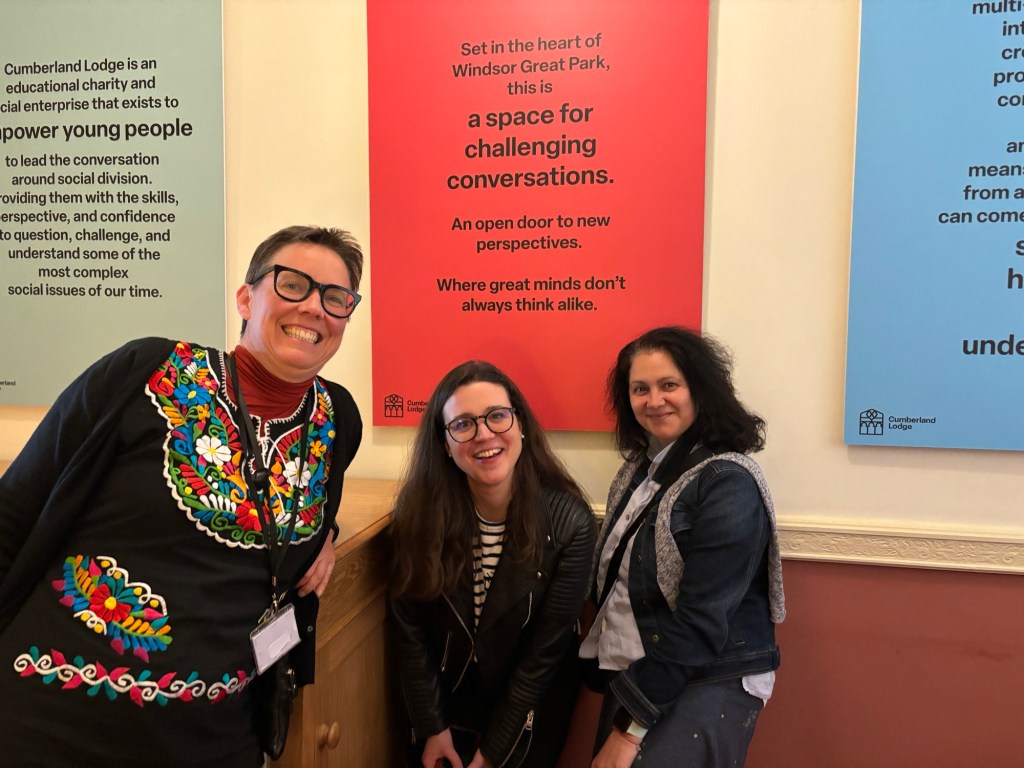
The UCL team organizing the 2024 event sought to provide a collaborative learning environment similar to 2022’s event. We selected Cumberland Lodge, a former royal residence dating back to the 17th century that is used today for educational programs for young people. The Lodge promotes discussions around ethics and social justice.
Cumberland Lodge is surrounded by the vast Windsor Great Park. Windsor Castle is located at one end of the Great Park, beside the village of Windsor. It is a spectacular place — a real joy to experience and a tranquil sanctuary just outside the borders of London.
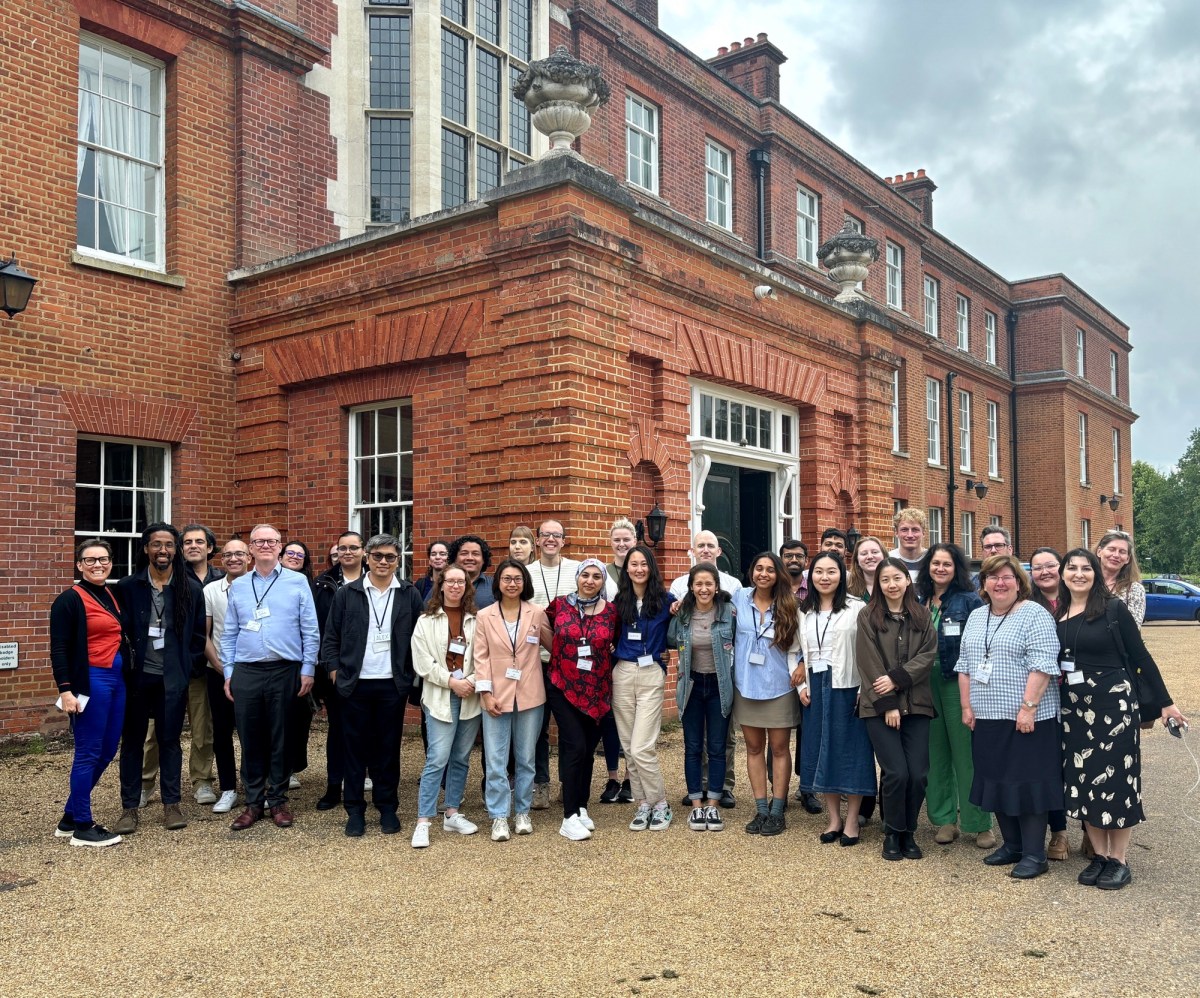
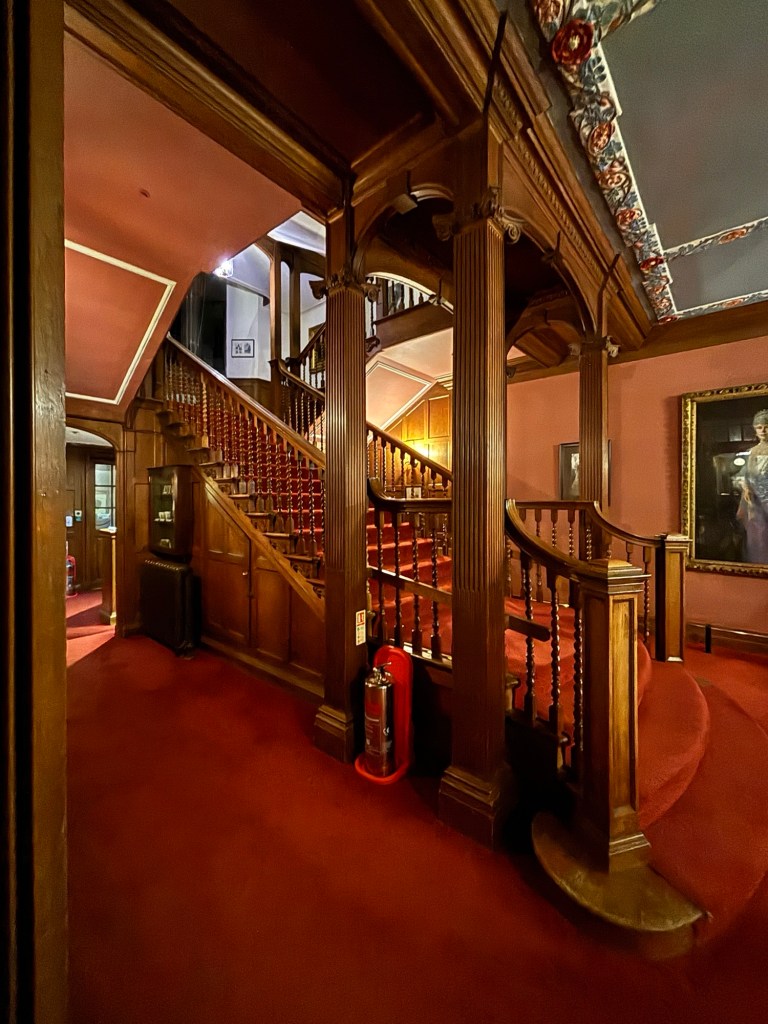
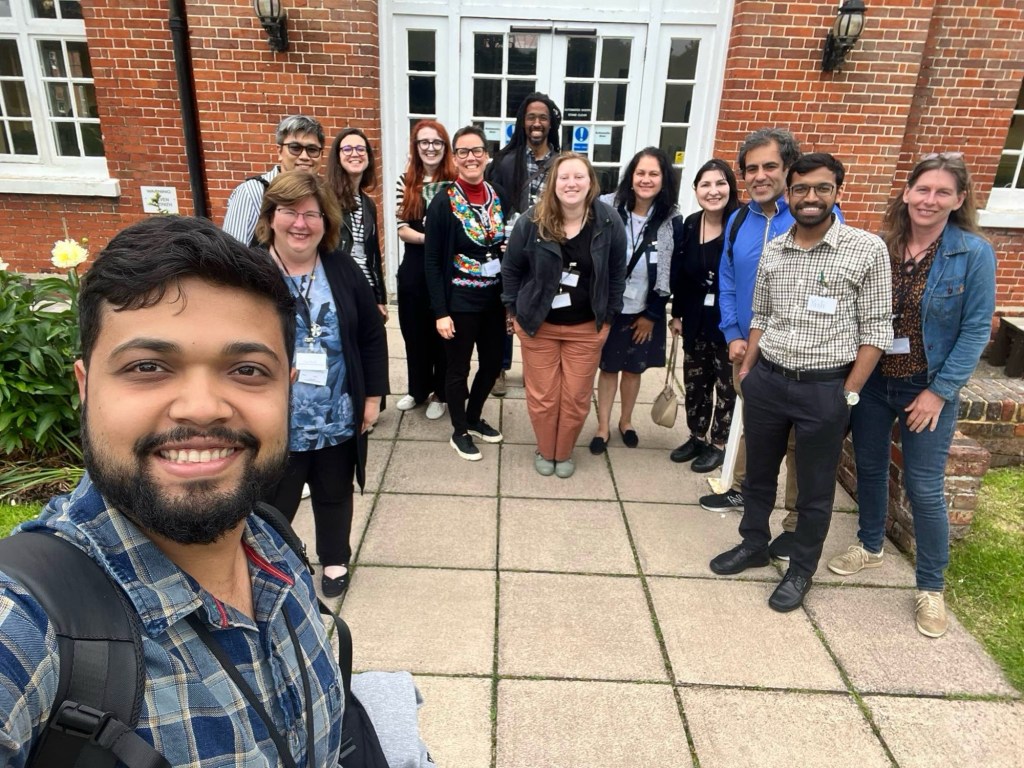
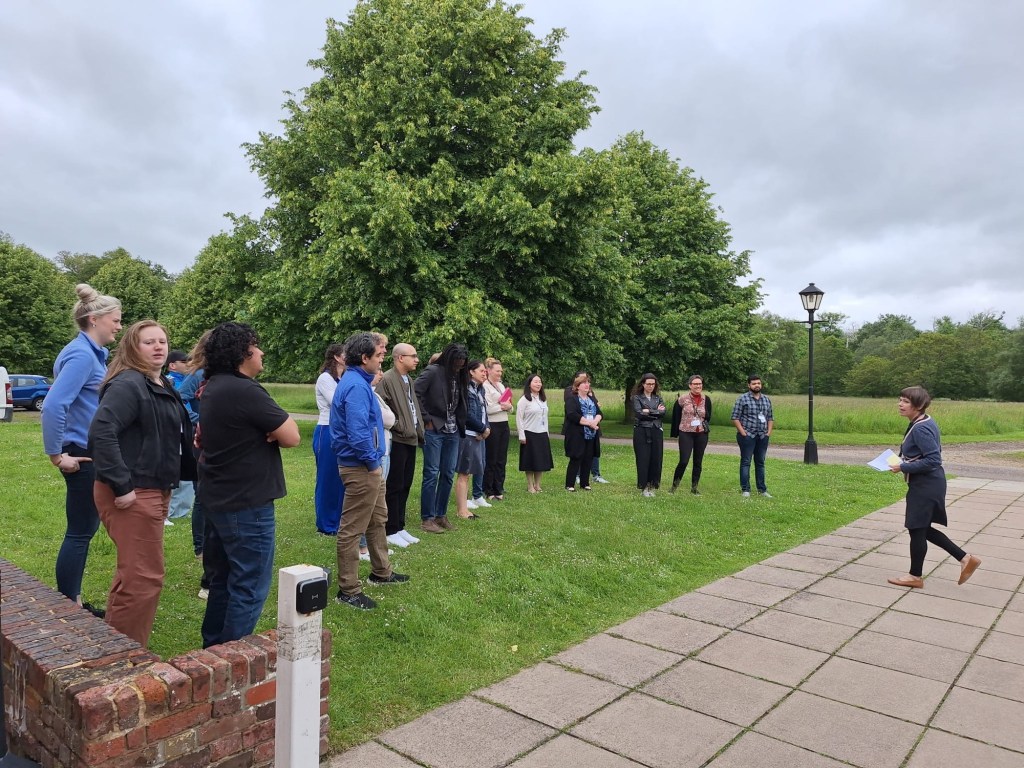
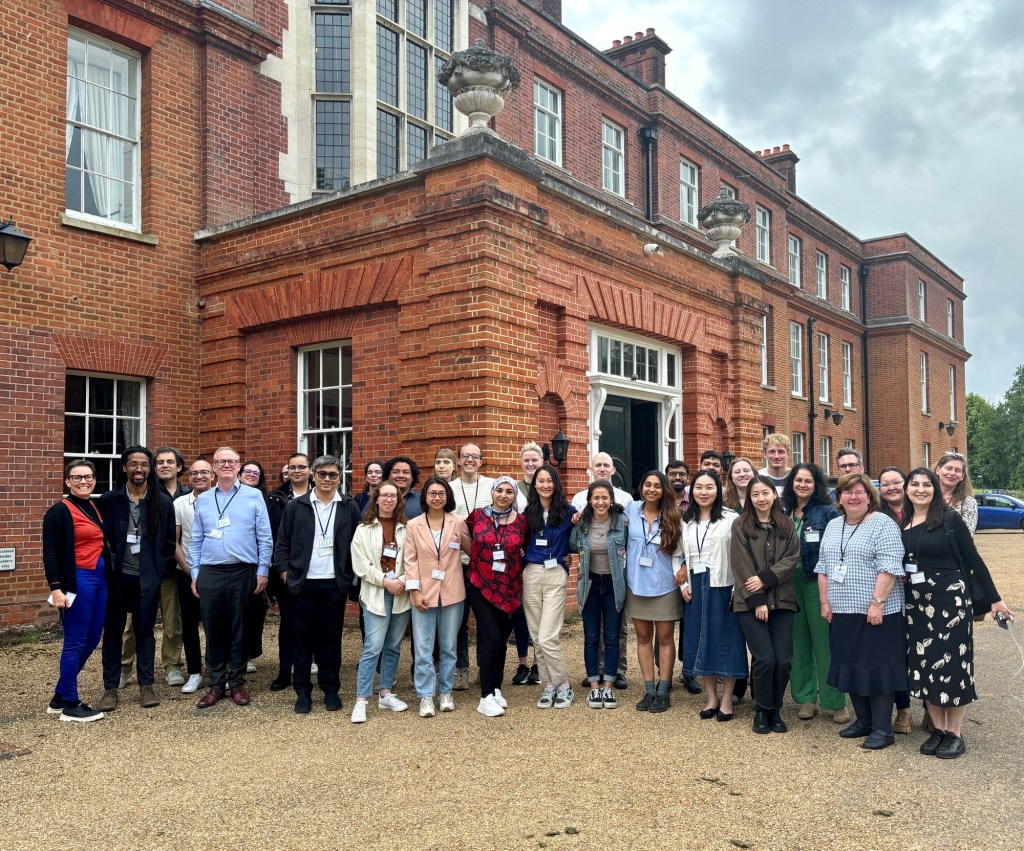
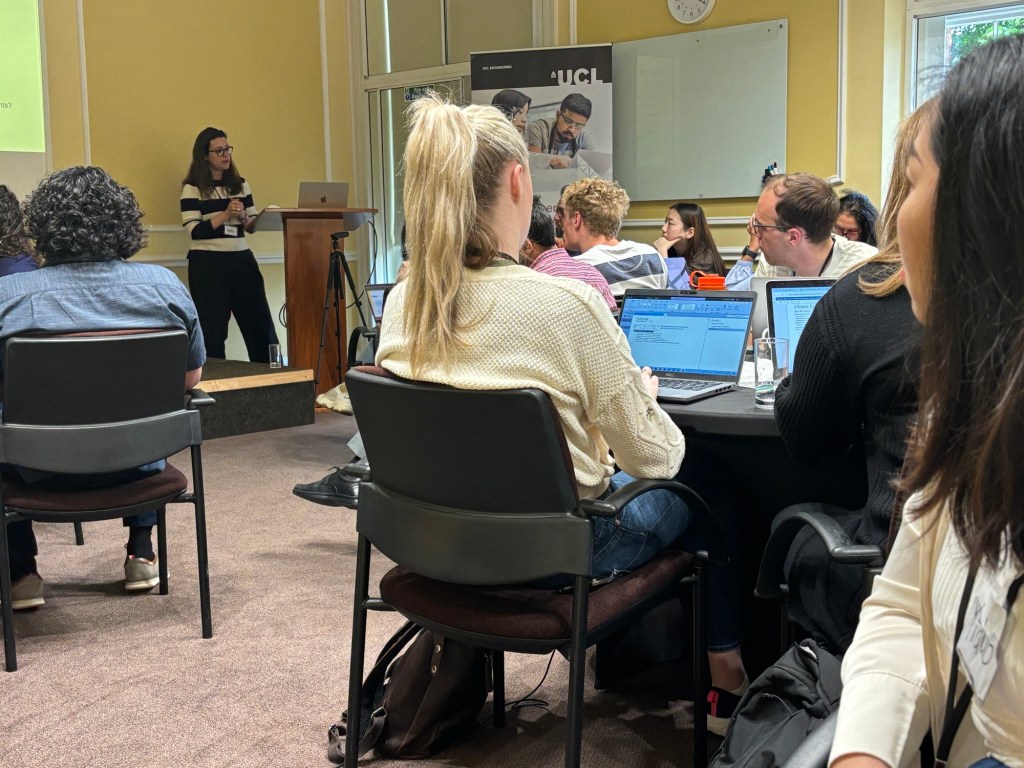
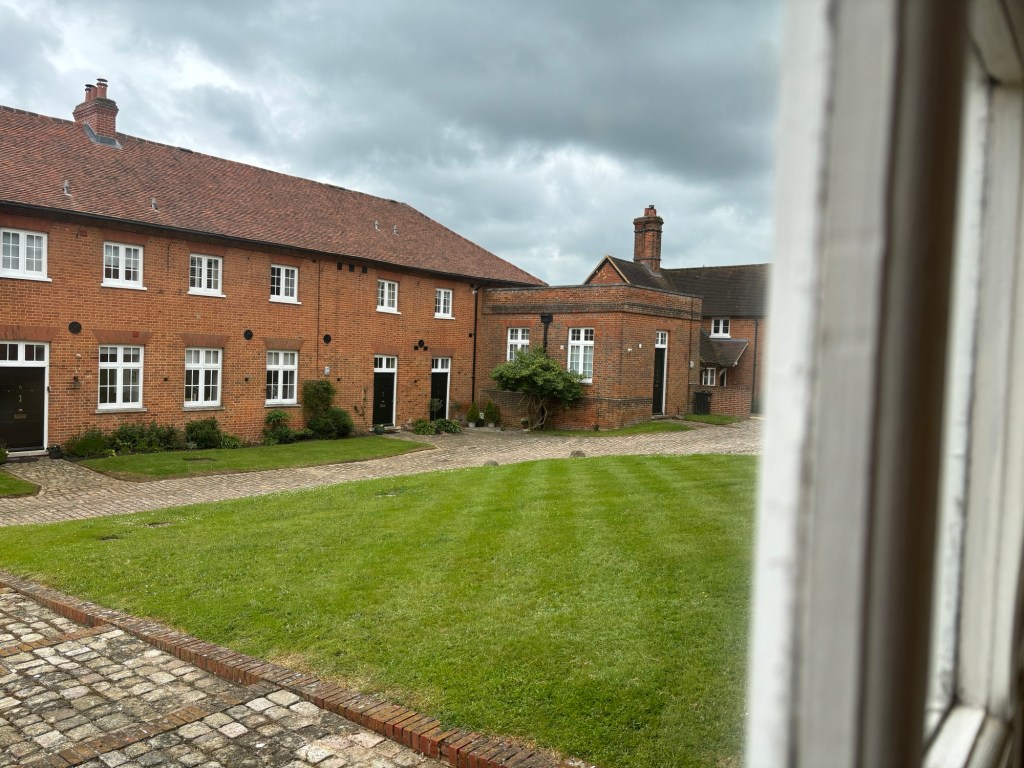
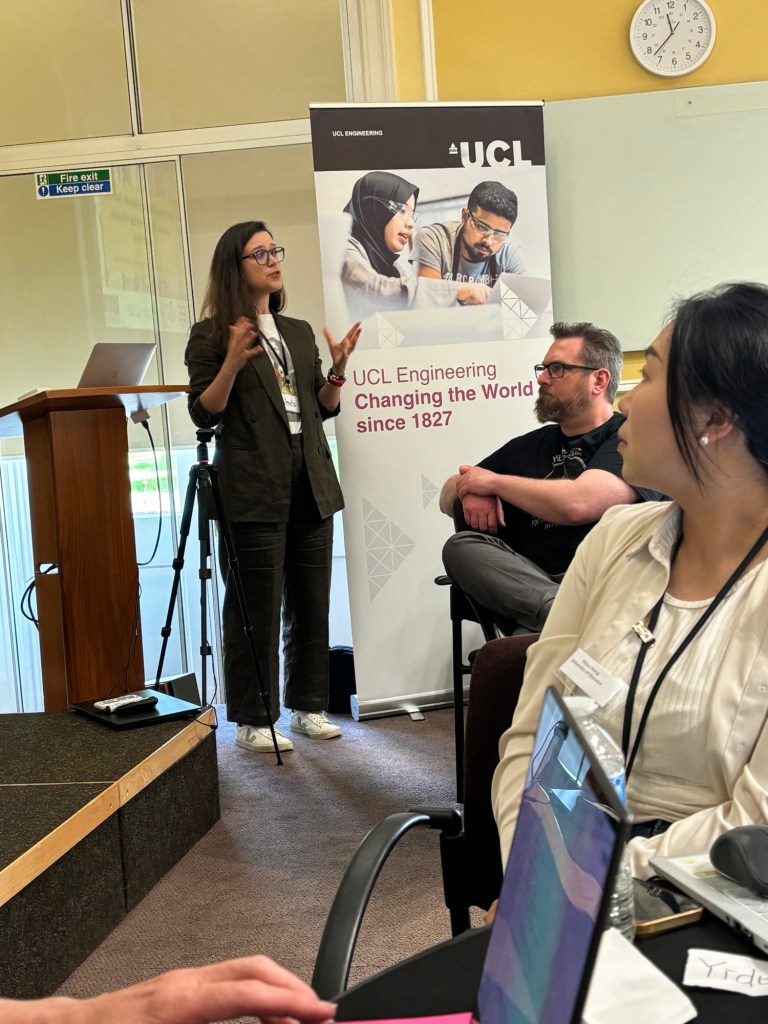
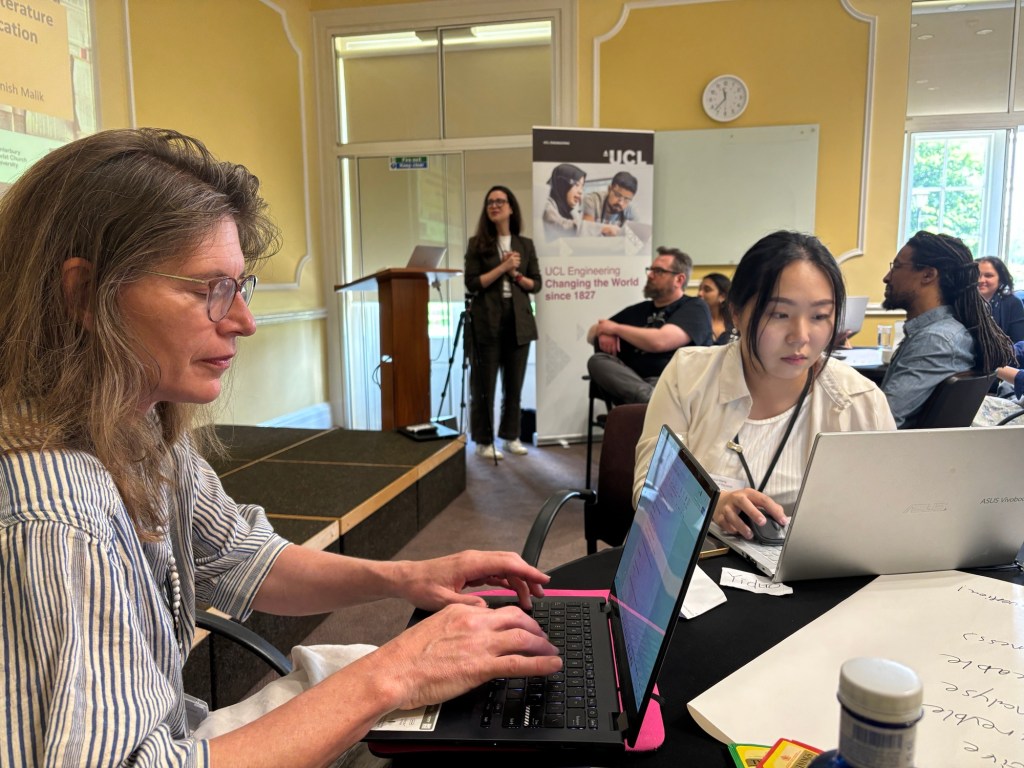
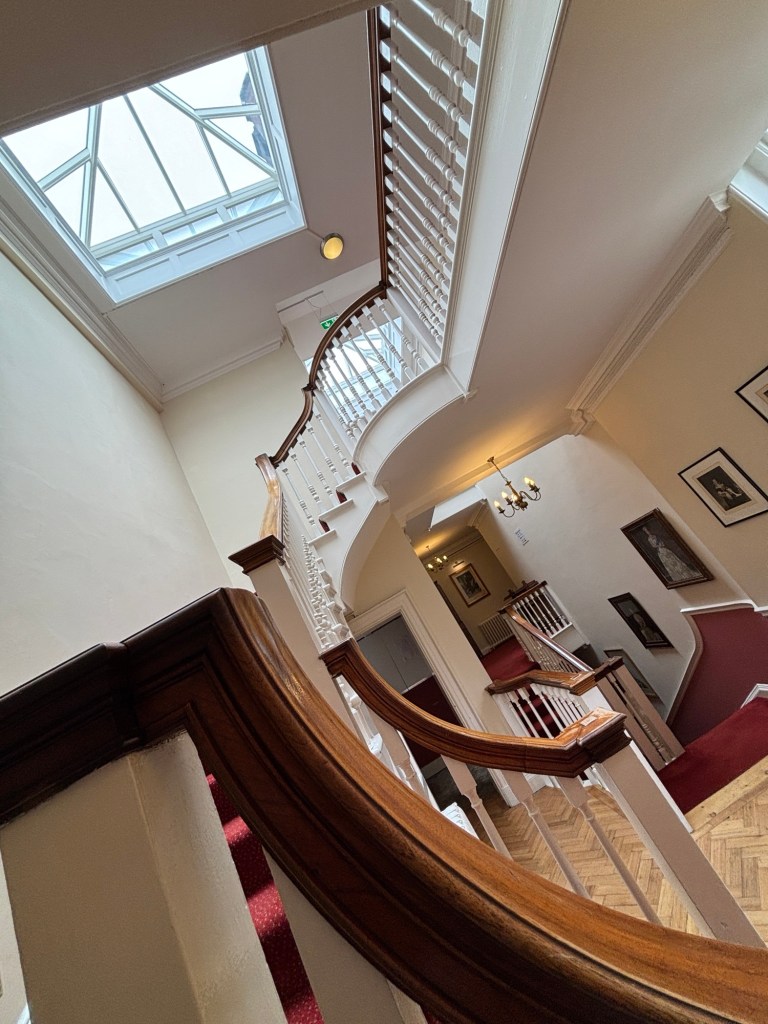
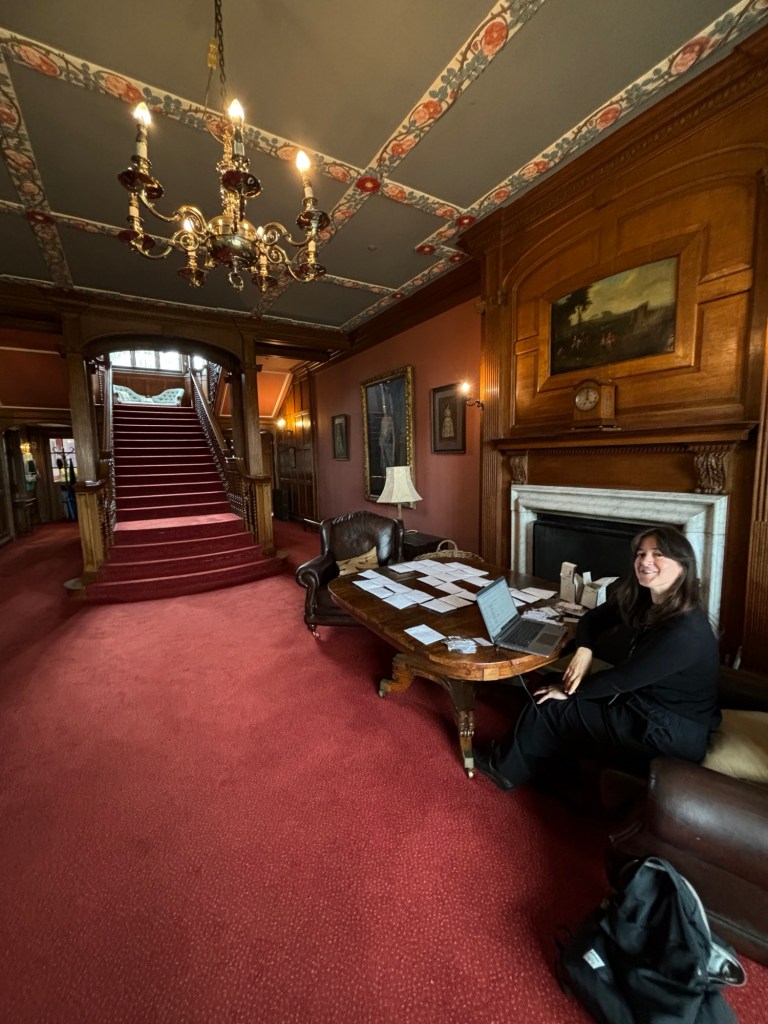
Outside Cumberland LodgeKicking off the Summer SchoolInside Cumberland LodgeCumberland Lodge is glorious!
To facilitate the 2024 School, John Mitchell of UCL brought together current and past UCL staff. He also welcomed guest experts from the US and Australia who volunteered to help. Together, our team provided structured training for this year’s 29 PhD student-participants. The students are all working on research degrees in engineering education, and they travelled to Windsor from across Europe and indeed across the globe.
In addition to representing perspectives from various corners of Europe, participants also brought experiences living and studying in South Africa, Mexico, the Philippines, Malaysia, India, Iran, the USA, and elsewhere!
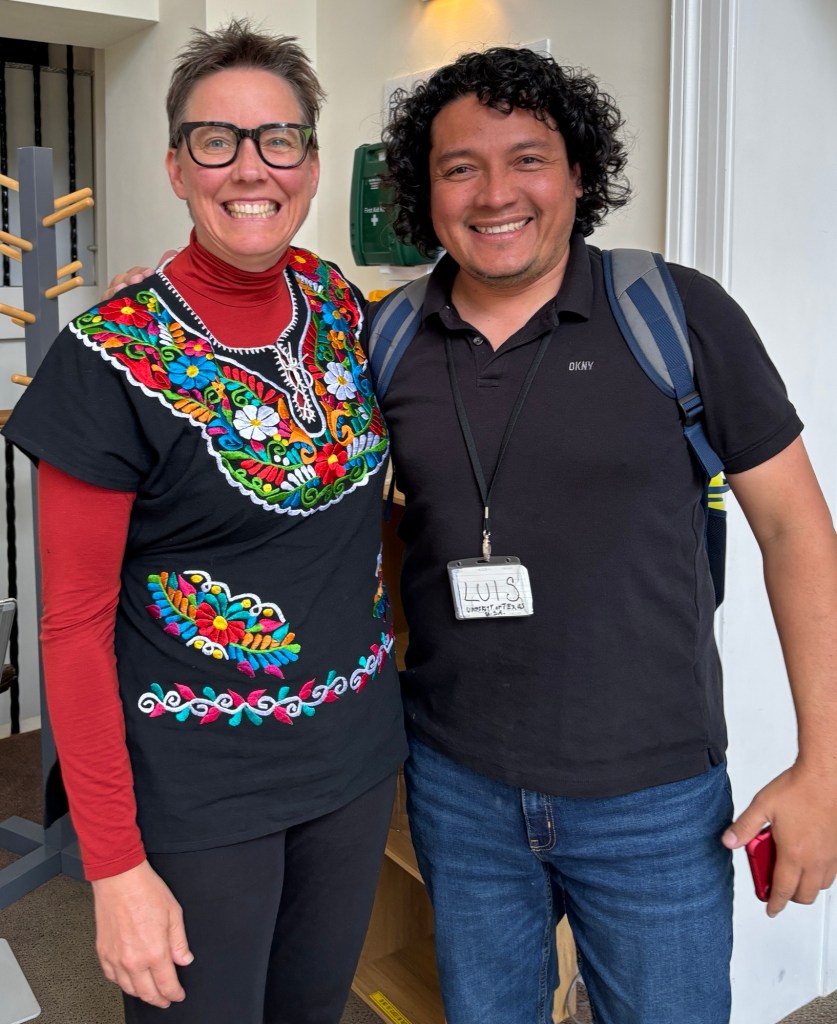
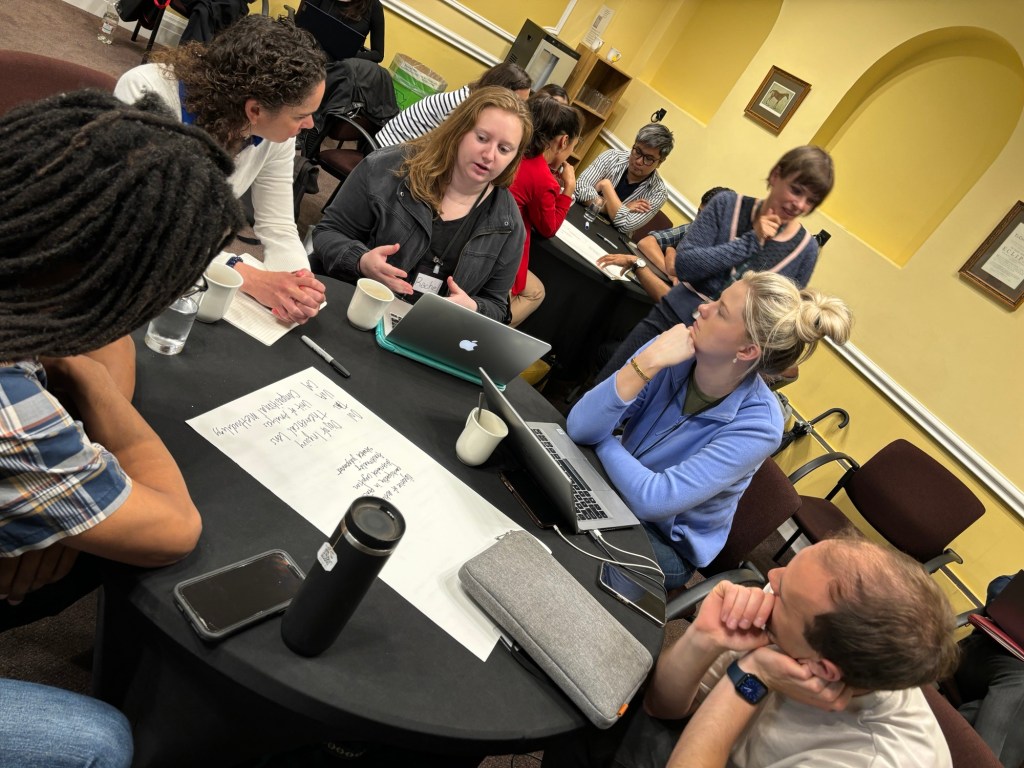
Sid and our gang at the end of the week. Shannon, Sid, Diana M, and YashLuis gave me a truly lovely shirt (I’m wearing it while writing this blog post from a train in Ireland today!)Lots of break out discussion. A breakout with Diana B and Anne Gardner.
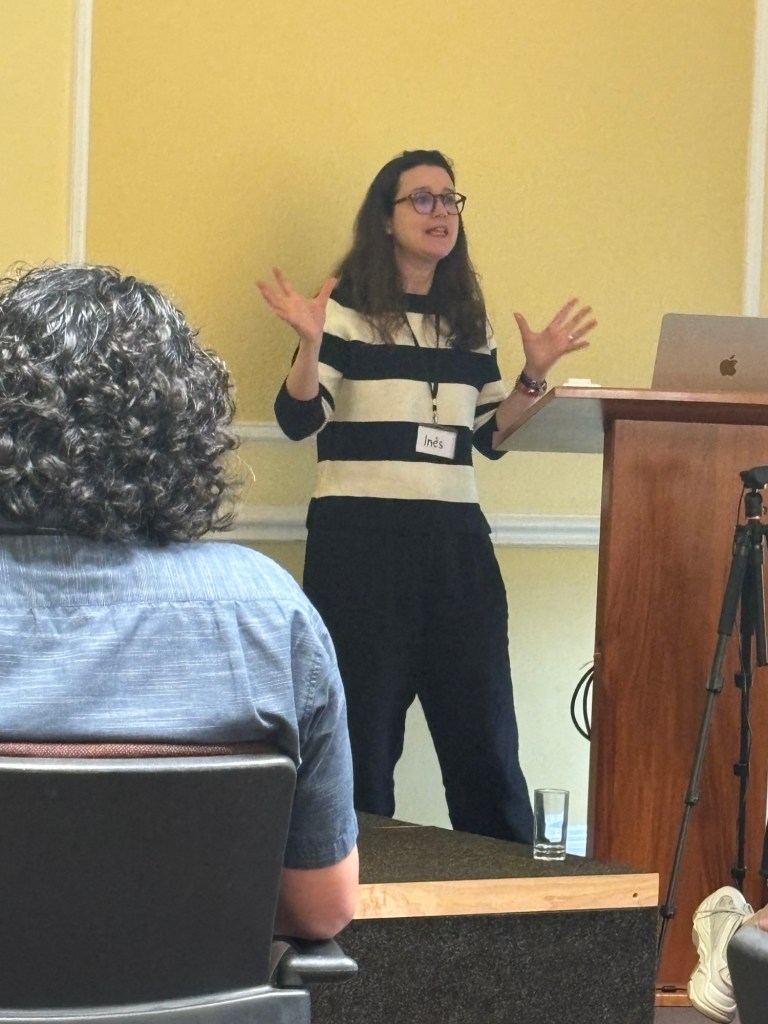
Overall, the UCL team hosting, organizing, and facilitating the 2024 Summer School included exemplars Prof. John Mitchell, Dr. Diana Adela Martin, Prof. David Guile, Dr. Natalie Wint, and our centre manager Helen Bhandri. UCL honorary appointees Dr. Inês Direito and I (Prof. Shannon Chance) also pitched in wholeheartedly, facilitating several sessions each and supporting sessions conducted by others by, for example, facilitating discussion in breakout groups. Inês is now employed at the University of Aveiro and I at TU Dublin, yet we are always treated as full member of the CEE team. John Mitchell is an incredible leader who enables us, helps keep us officially recognized as honorary (researcher and professor, respectively) and helps achieve cohesion across our team.
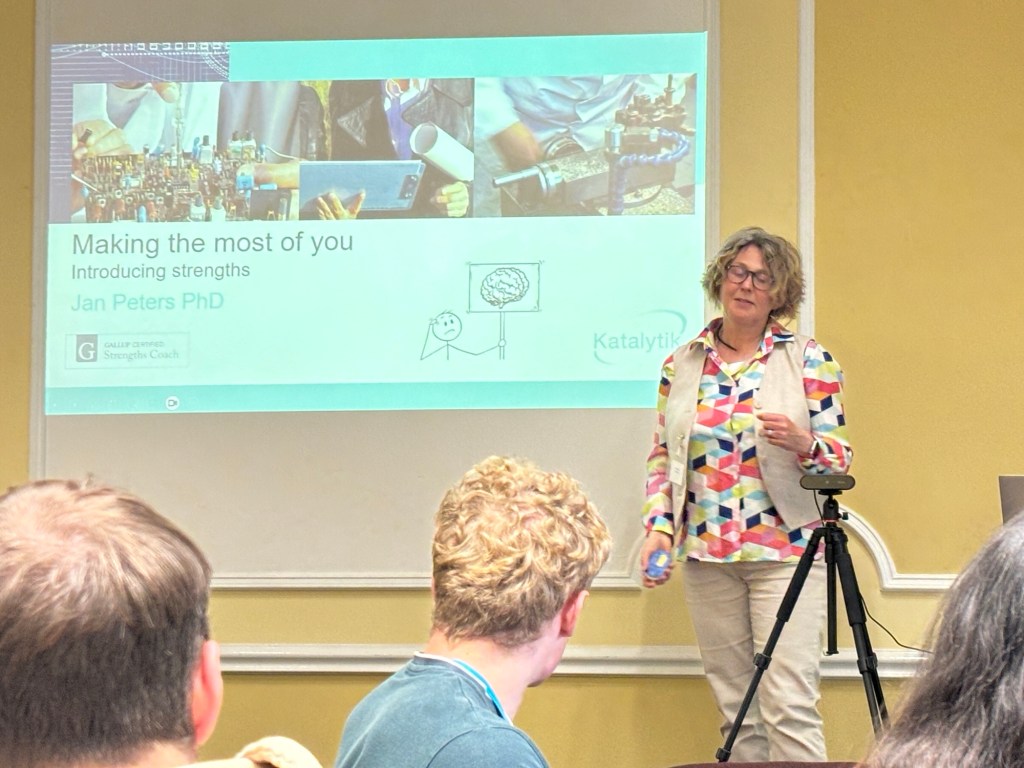
From beyond UCL, Prof. Greet Langie (SEFI Vice President) and Dr. Jan Peters, MBE (a consultant with Katalytick in the UK) provided informative and engaging sessions. Prof. Anne Gardner (an Associate Dean who is involved with the Australasian Association for Engineering Education, AAEE) and Dr. Diana Bairaktarova (Associate Professor at Virginia Tech) participated fully as well, and helped facilitate breakout groups throughout the week.
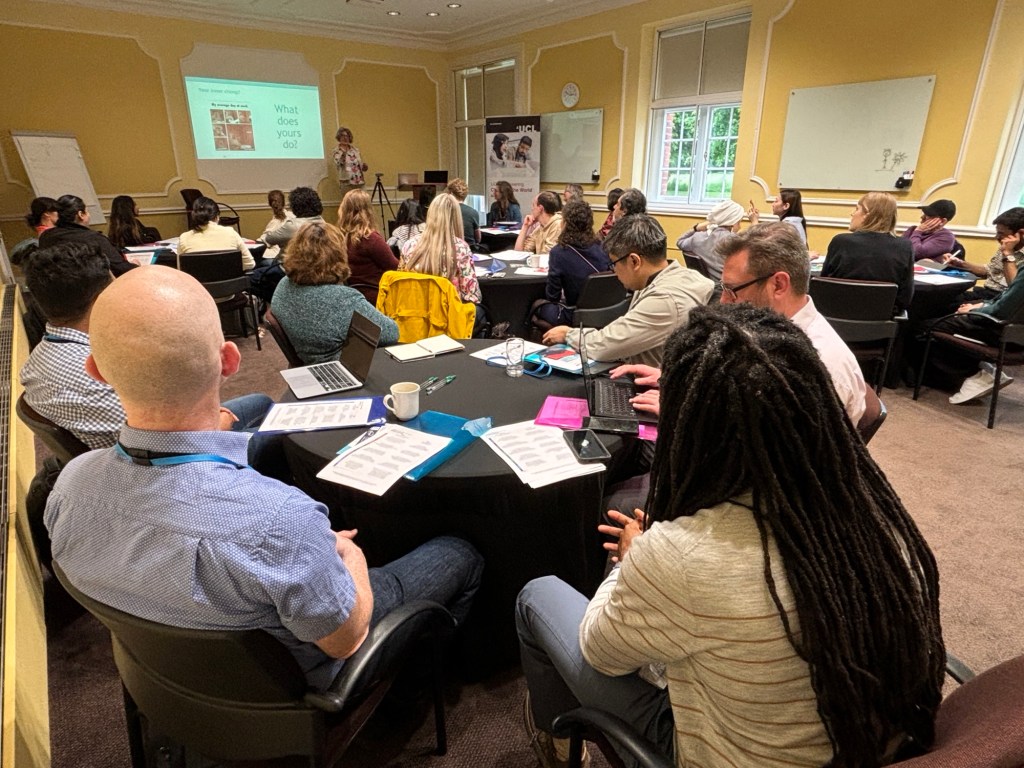
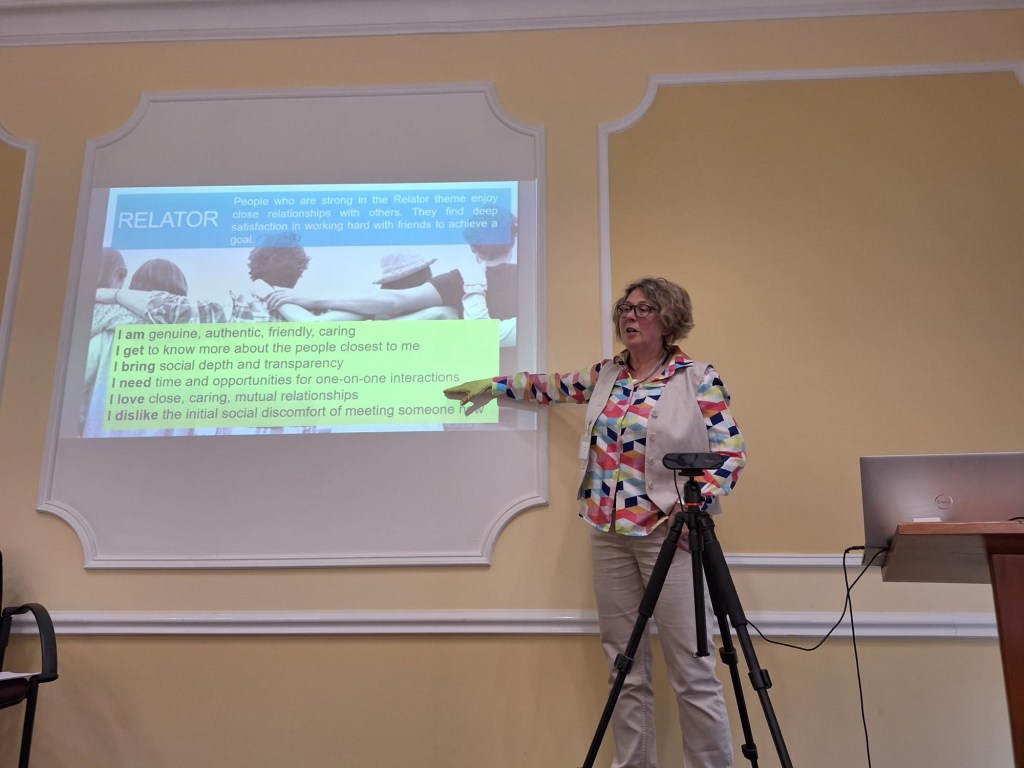
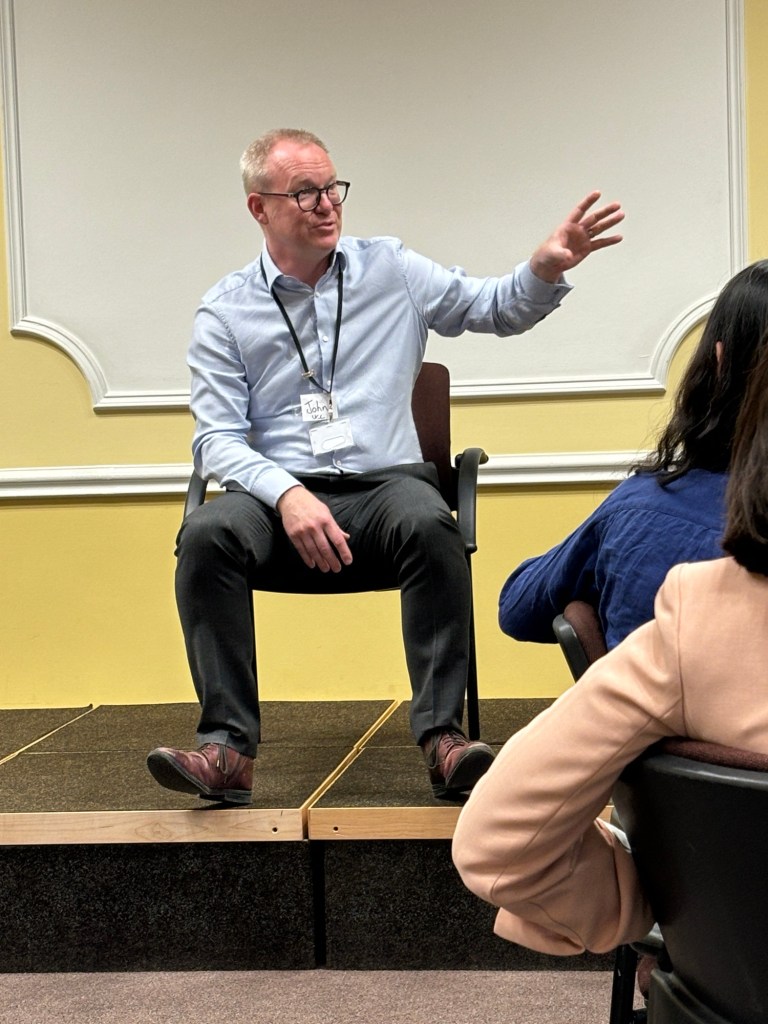
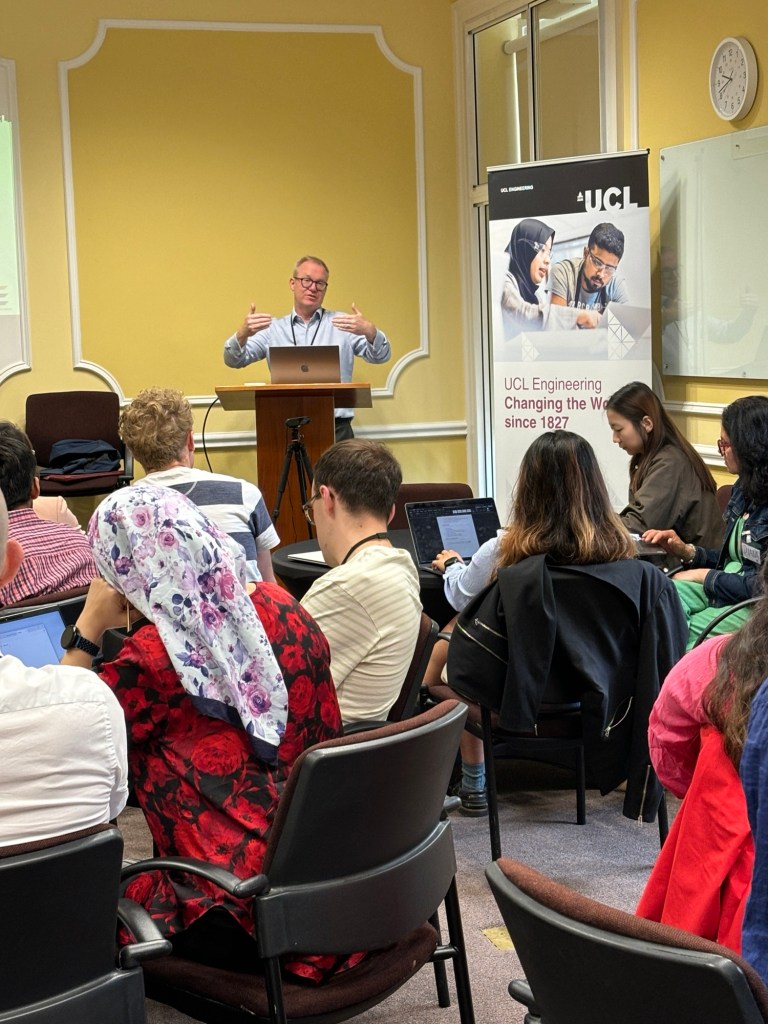
Diana M and Nat on ethics. Jan on finding your strengths.Shannon on research basics. Ethics activity with Cumberland Lodge staff. John Mitchell on EER publications. John on his career journey. Most all the 2024 Summer School participants.
Since finishing the event, the CEE team has received thank you notes from many of the participants. One came from Sid and another from Yash. They are studying at Purdue University, and I met them both at REES in India this past January.
Yash wrote to say that “As a first-year Ph.D. student and new entrant into the field, I felt warmly welcomed into the European Society of Engineering Educators and thoroughly absorbed in the program and its activities.” He praised “the design of the activities and the schedule,” which he said “offered a great balance of information and a chance to reflect and discuss with other members during the afternoon walks or even during the evening free time.”
Yash also loved the evening quiz that Diana Martin facilitated. She had contacted EER superstars and requested photos from their grad school days. Guessing their identities was a hoot, and Yash said the activity “was very creative and personally valuable because it gave me an opportunity to see [these well-known scholars] when they were my age or starting their careers in research.” He praised the way Diana, “filled the room with … energy and enthusiasm made the activity come to life” and I couldn’t agree more!
Yash described the value of elements from the workshops Inês and I conducted on literature reviews and positionality statements, as well, and also the sessions on ethics by Diana Martin, Nat Wint, and Cumberland Lodge staff.
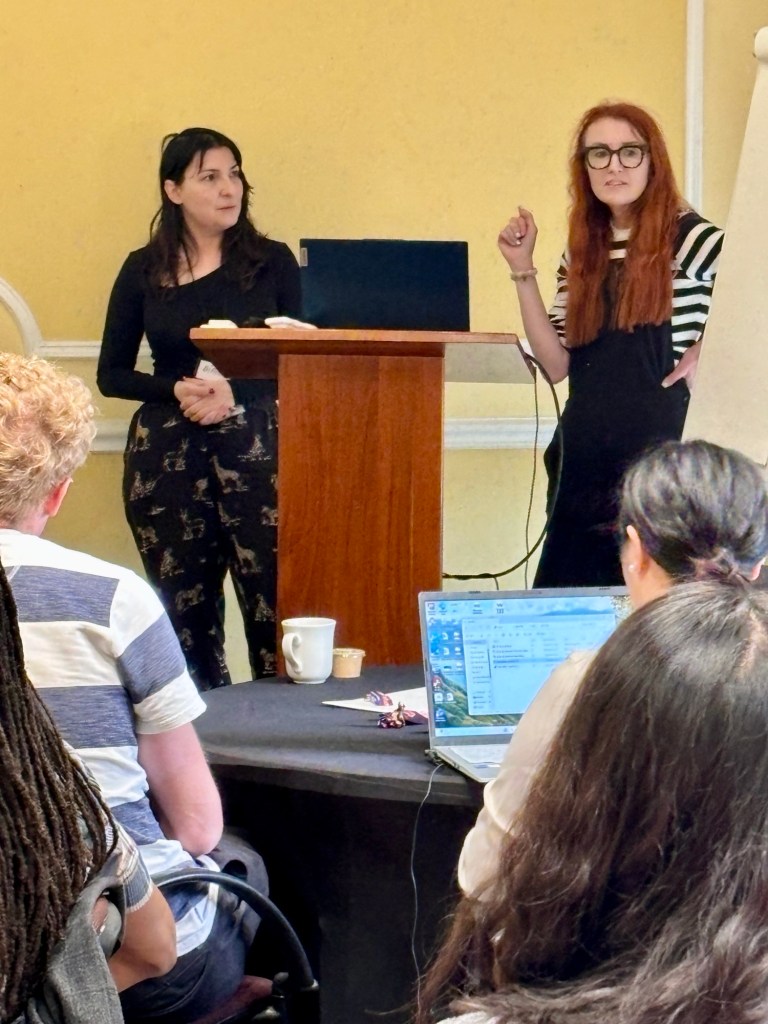
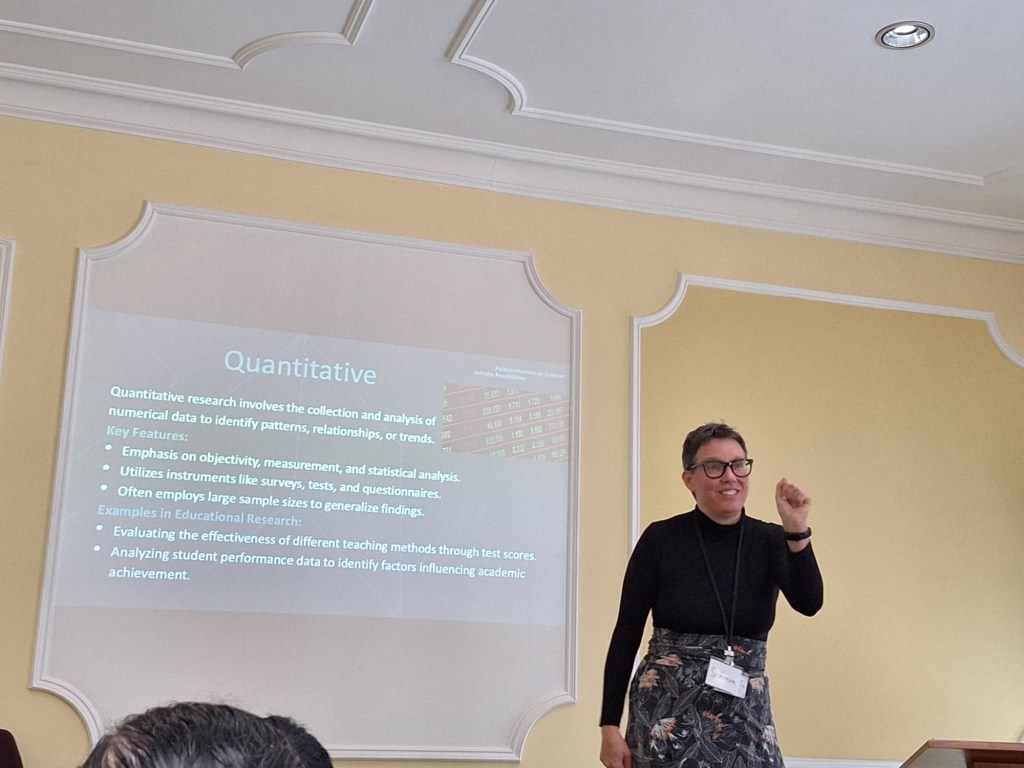
During the week, I also delivered session on the structure of dissertations, differences in the way PhD education is structured around the Western world, conceptual and theoretical frameworks, and research paradigms — and another on incorporating gender considerations in your research and teaching. The first of these two sessions included small group discussions and a debate comparing the merits of qualitative and quantitative research.
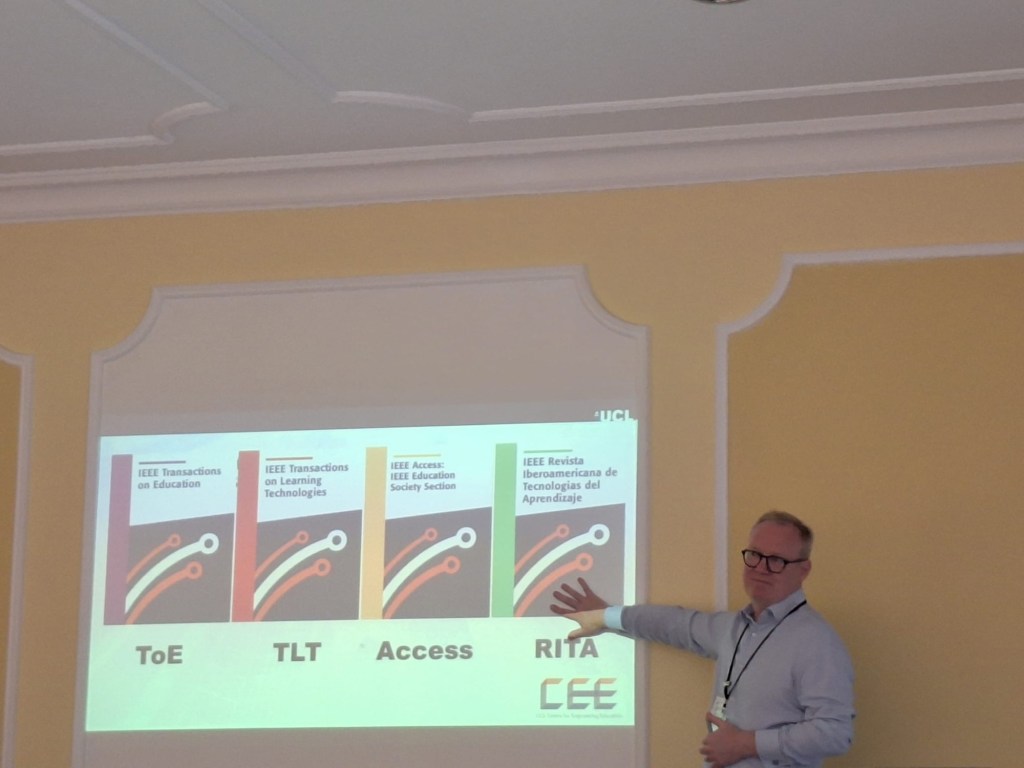
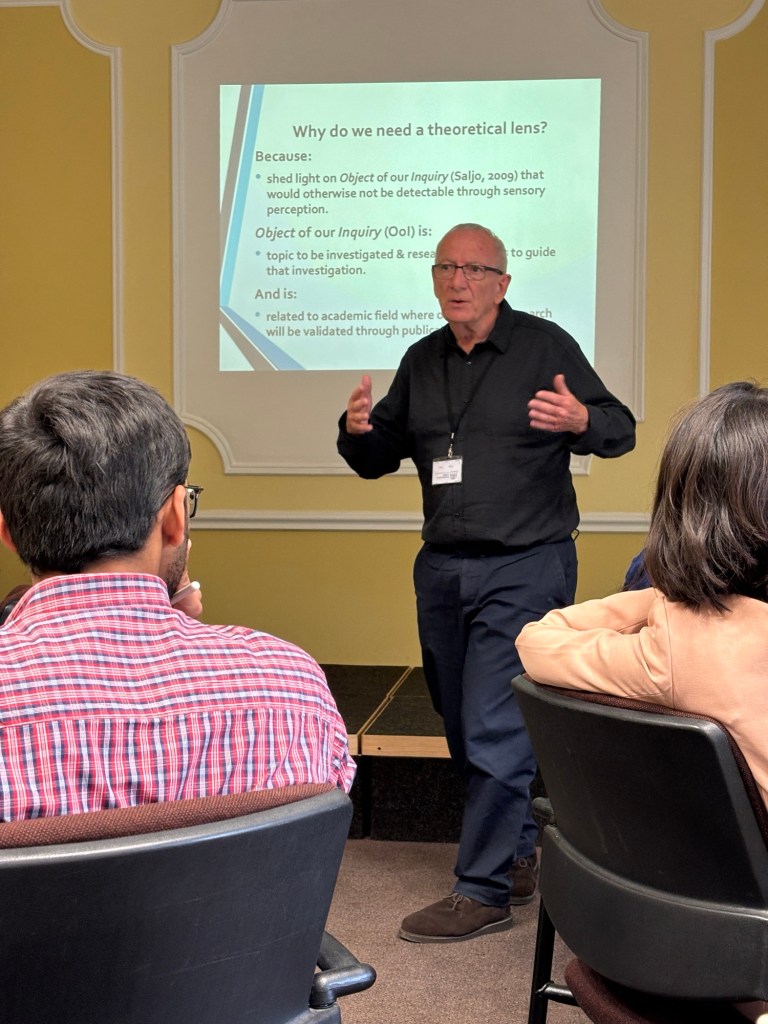
John Mitchell and the UCL team provided guidance on selecting journals to publish in, preparing articles for publication, and conducting peer reviews. David Guille delivered a highly provocative session on “assembling your theoretical lens.” Earlier in the week, Greet provided the opening welcome to the school and a brief orientation to SEFI. Jan taught us about CliftonStrengths and facilitated a race-car-building competition.
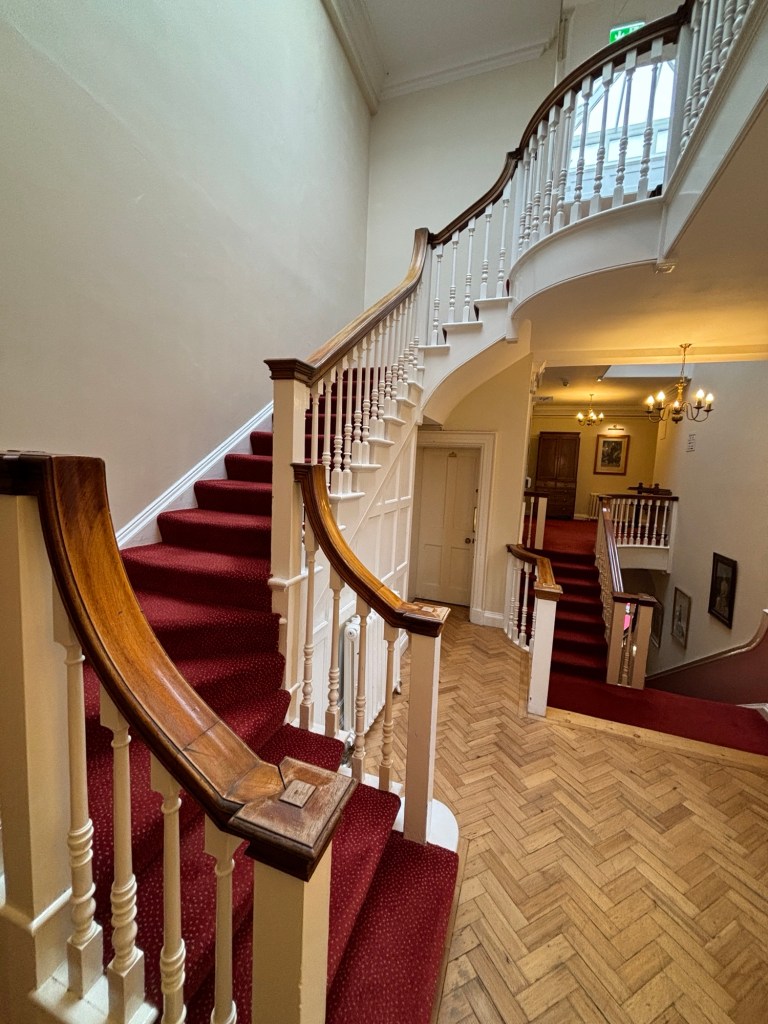
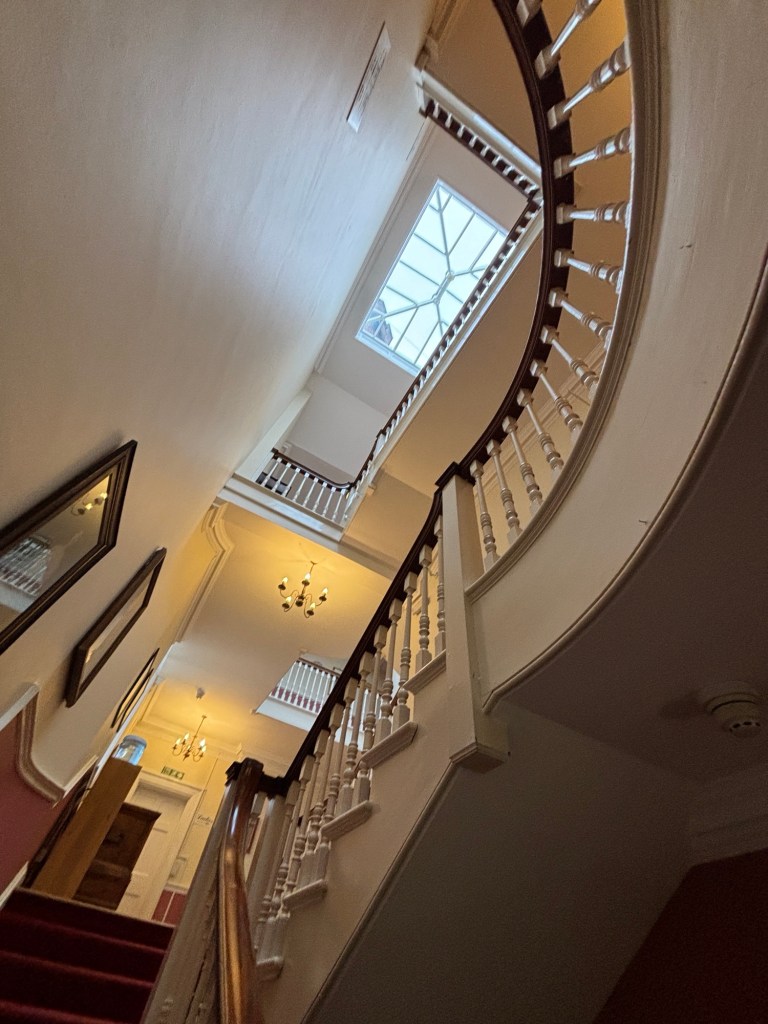
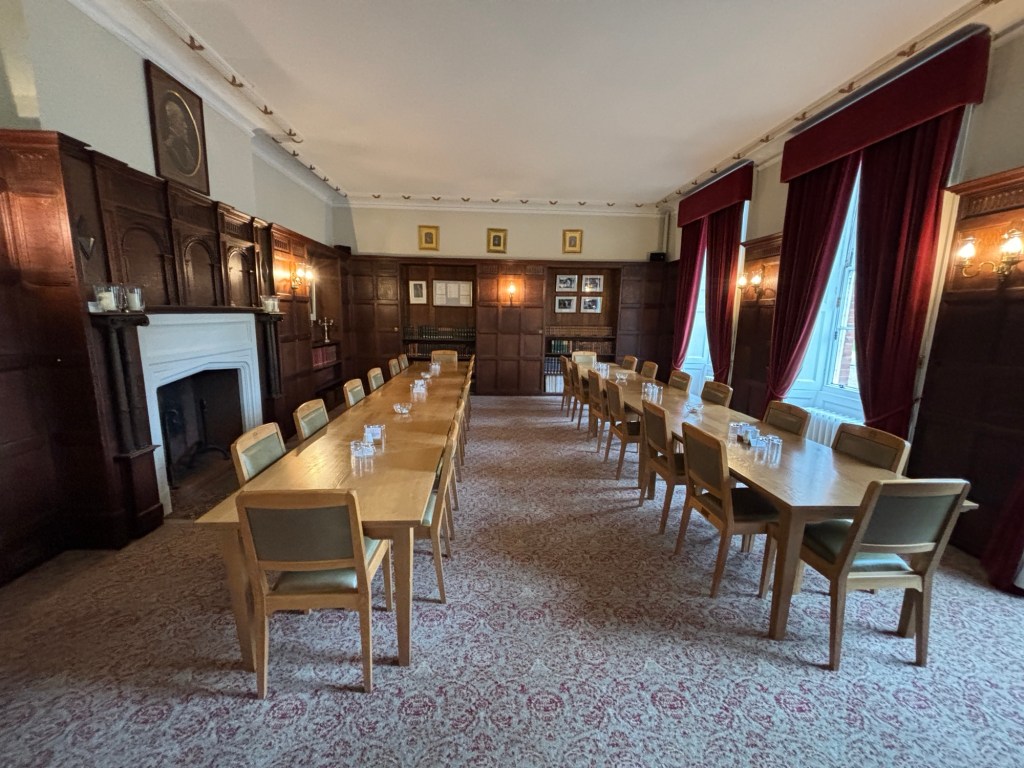
David Guile on assembling theoretical lenses. Inês on positionality. Inês on literature review. Inês on literature review.The students brought home lots of notes!Grand stair at Cumberland Lodge.Another stair at Cumberland Lodge.Dining hall at Cumberland Lodge.Example accomodations at Cumberland Lodge.Example accomodations at Cumberland Lodge.Jan Peter’s presentation.Greet Langie’s welcoming address.Shannon and Diana aside the amazing Helen B. Welcoming participants with name tags and facilities orientation, our very own Helen B.
Near the end of the week, we provided a session where “all the organizers shared their journeys into the field of engineering education,” which Yash described as “very powerful. … Such exchanges are rare and provide a chance to view the person, the human being behind the researcher. It made me feel that I belong in this field of engineering education because I, too, share similarities and seeing someone who has become successful by overcoming similar challenges is very encouraging.”
I wish we had recorded these stories because they were so rich and heartfelt. A dozen participants came to me on the day following this journey session with thanks for our openness, collegial spirit, and willingness to share what they described as valuable insight.
An example was emailed to us by Alison from the University of Cape Town: “Thank you for a magnificent four days. I so appreciated being part of a community and learning from each of you…. I am inspired and excited to consolidate what I can contribute in South African engineering education…. I also SO appreciated each one of your stories and the way in which you demonstrated a complementary and accepting team – working to one another’s strengths – with space for others to contribute. It makes for an inviting and exhilarating ecosystem for us all to grow in.” High praise, indeed, and accurate!
Yash, Sid, and Alison have attended prior engineering education events, but some newcomers to our global EER community were part of this cohort, too — like Somayeh, who is currently studying at Umeå University. You may know that I have a distinct interest in supporting women from the Middle East who study engineering in Europe because I’ve come to know many at TU Dublin.
Somayeh is from Iran, although studying in Sweden today. She wrote “It was an honor for me to have a talk with you and be in your energetic class. I have learned a lot and [the experience] made me challenge myself and rethink about different aspects of my research.”
Following the event, I was delighted to hear from Somayeh’s PhD supervisors, Johanna and Maria. They emailed thanks to our team for taking great “care of our PhD student Somayeh during the summer school. She returned home with a lot of new knowledge, but also greater self-confidence, sense of belonging to the field, and sense of legitimacy as a PhD student. We knew she’d be in the best of hands, and we’d like you to know that your hard work has made a big difference for her (and us as supervisors)!” This I feel is the highest praise possible, and written by a scholar I admire immensely.
I loved my conversations with so many of the students — Luis, Julia, Hannah — the list goes on and on. So many fabulous memories!
It was a huge honor to be part of these emerging scholars’ education and to be so well received and appreciated. It was an invigorating week, and I learned tons myself!
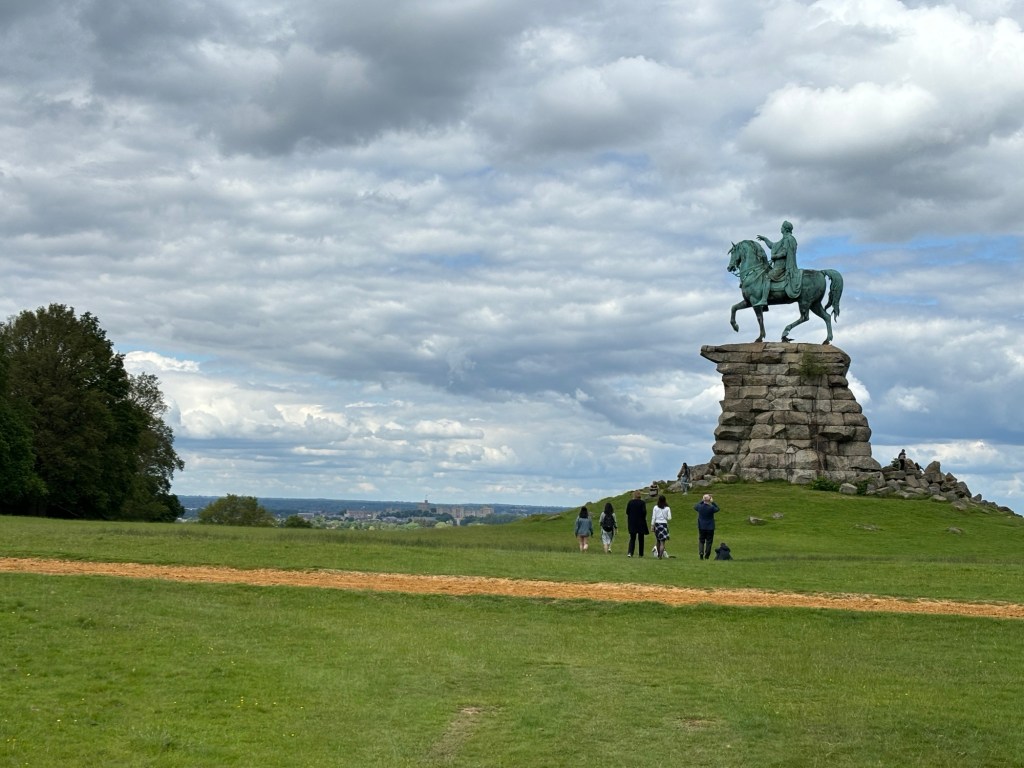
It was also healthy. I enjoyed several enchanting walks through the forest with colleagues. I particularly enjoyed a long walk with Eugene, a PhD student who teaches engineering at a community college in California and studies at Purdue University, and another long walk with the whole cohort. The scenery of this park is spectacular and the conversations were deeply intriguing.
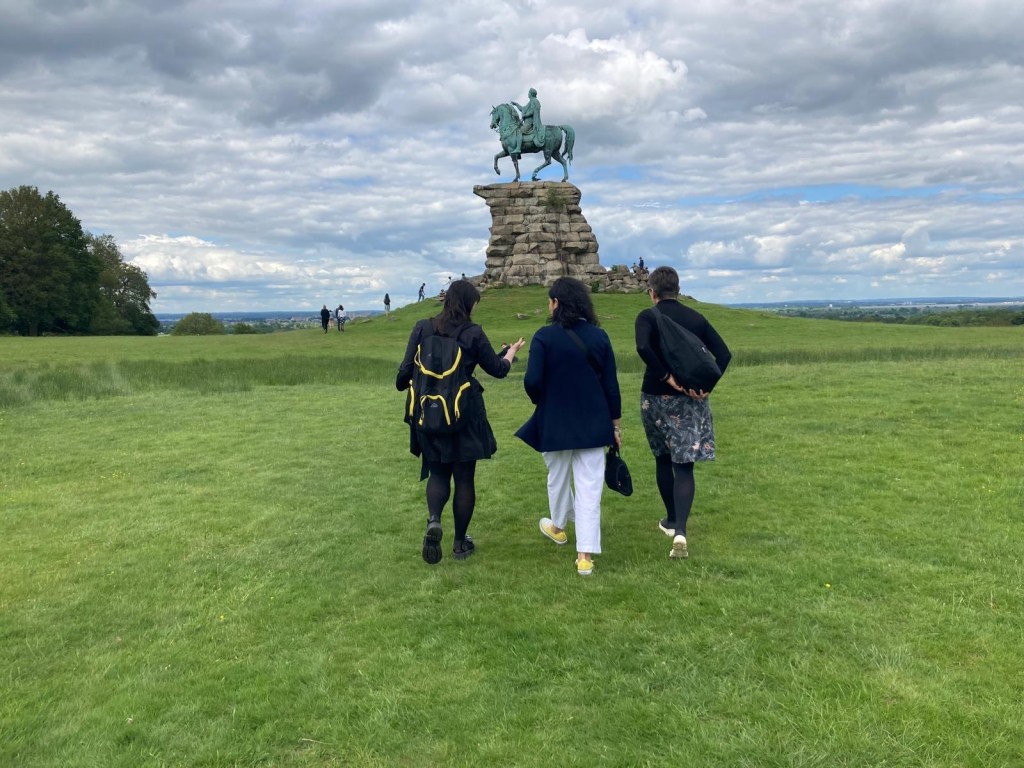
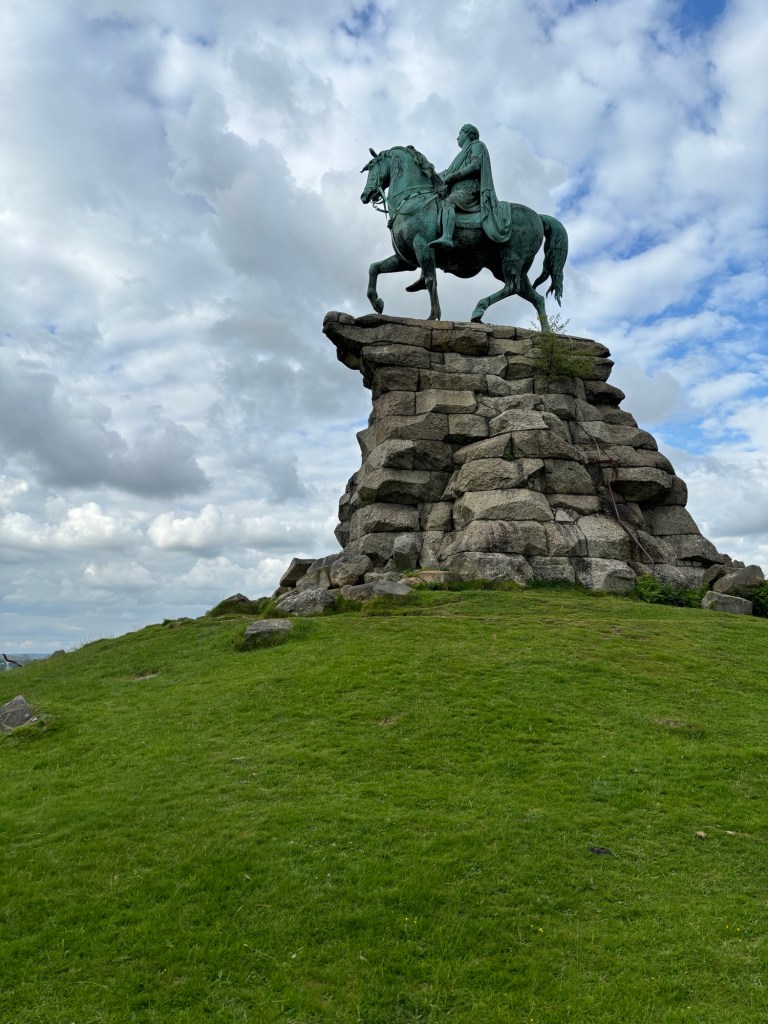
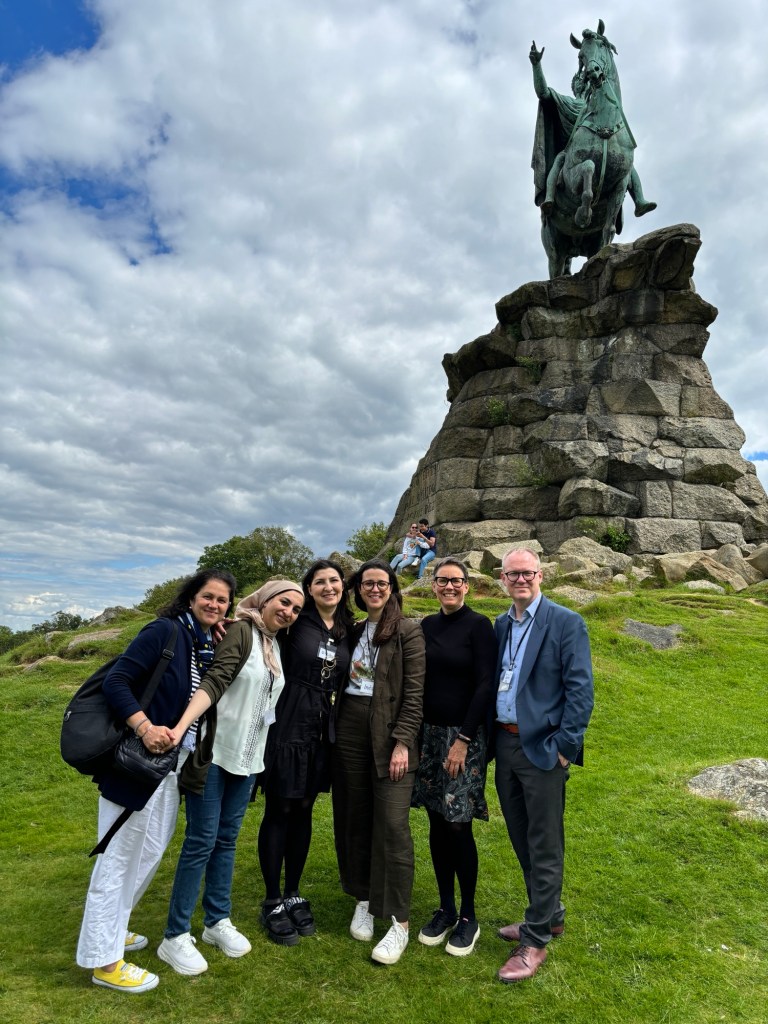
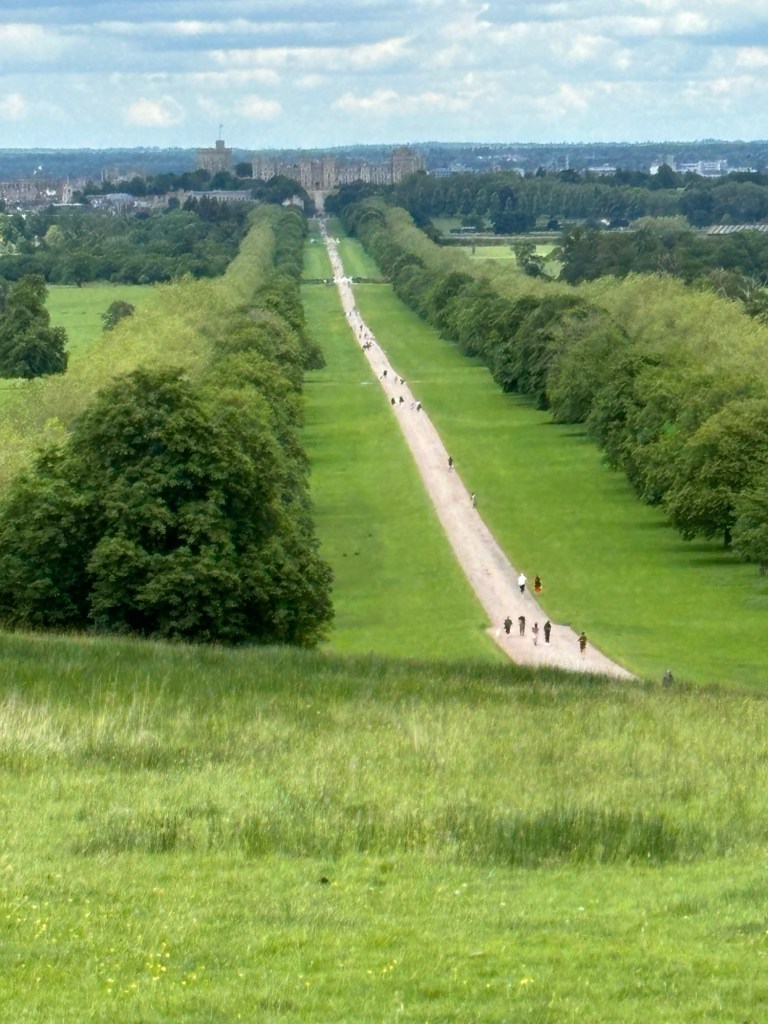
A walk and talk with Eugene. Twin smiles and shared passion for serving ‘non-traditional’ college students.Windsor Great Park. Diana, Diana, and Shannon at Windsor Great Park.Windsor Great Park.Facilitators with Somayeh.Windsor Castle in the distance. An impressive monument with astounding views.Pre-class dinner at Cumberland Lodge……with another impressive view!
The peaceful setting with fresh air, healthy food, and collegial banter brought out the best in us all. I will seek to return to this special place.
During the week, I had so much to do. I actually taught two online night classes for BIM students at TU Dublin — as part of my Research Methods module. I’m fortunate to have a knowledgeable colleague, Claire Simpson, helping me deliver the module (particularly since a storm dropped the Thursday night connection several times).
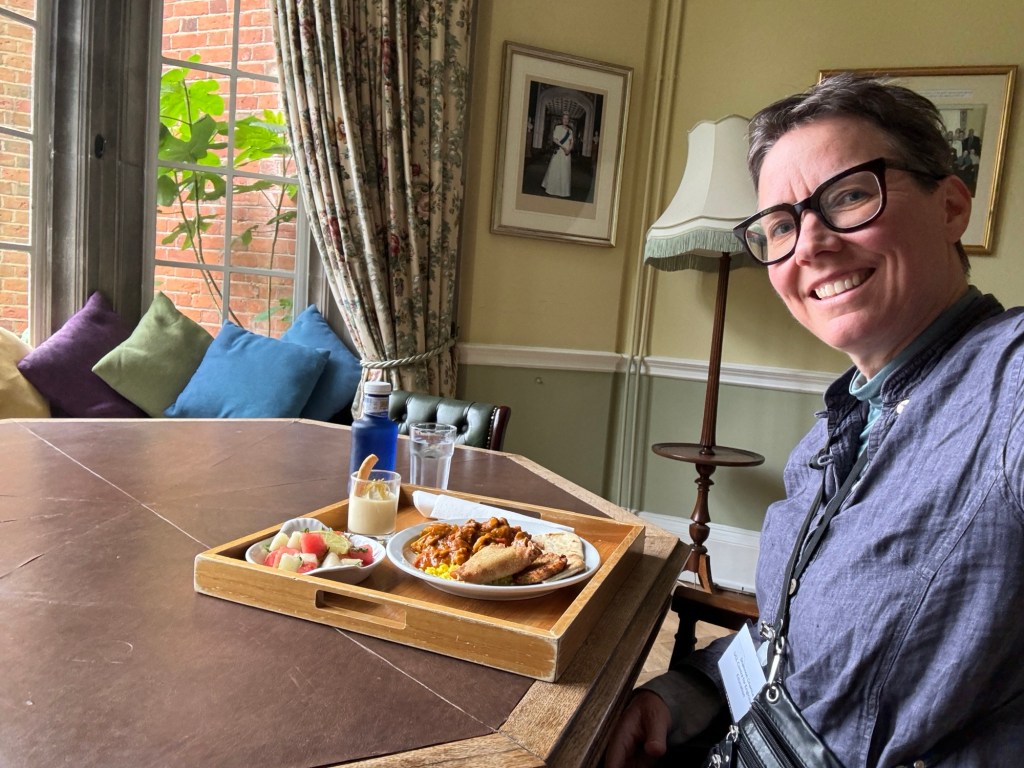
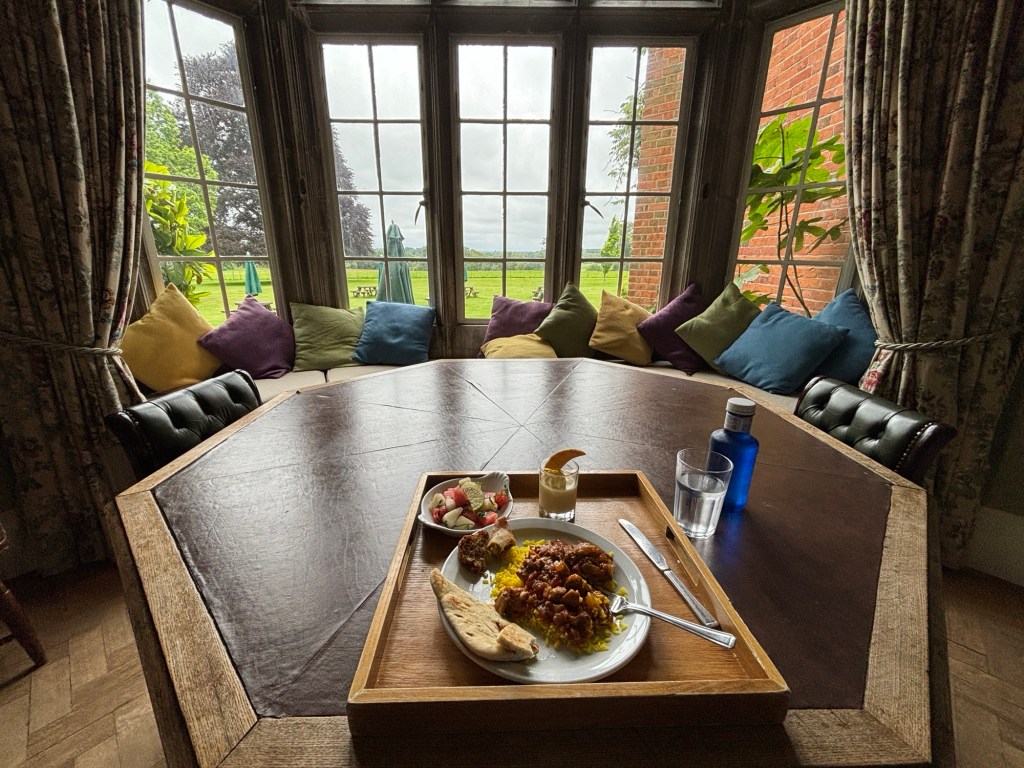
Cumberland Lodge took great care of me, preparing dinner plates Tuesday and Thursday, since my three-hour class overlapped dinner time in the Harry-Potteresque dining room.
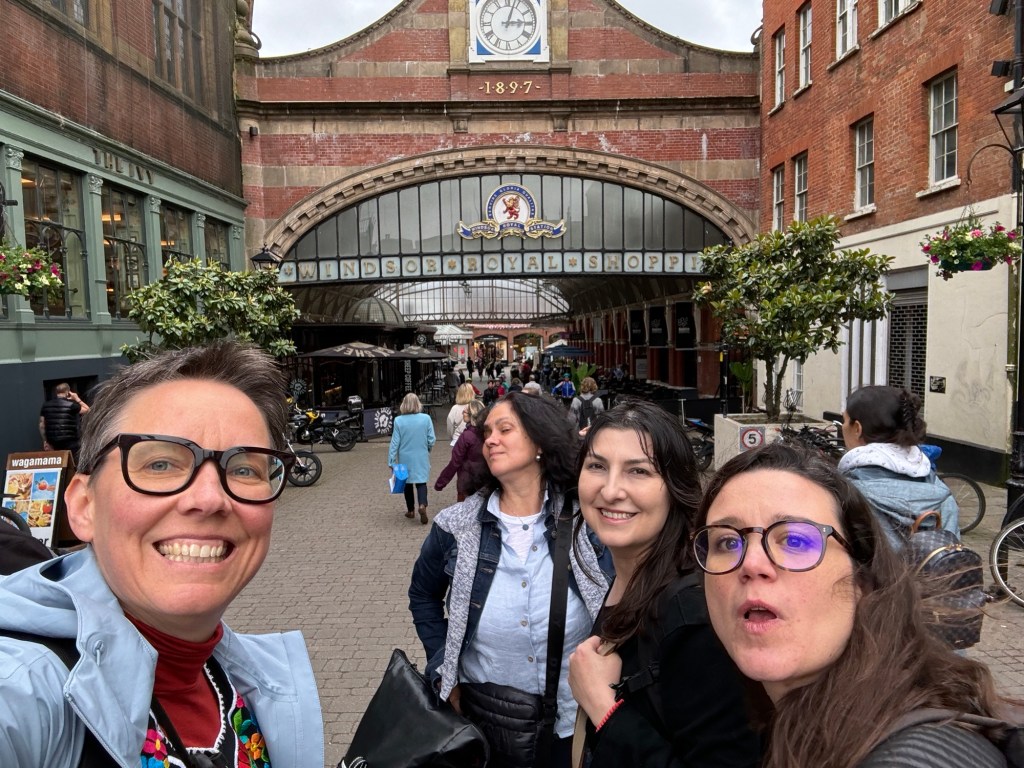
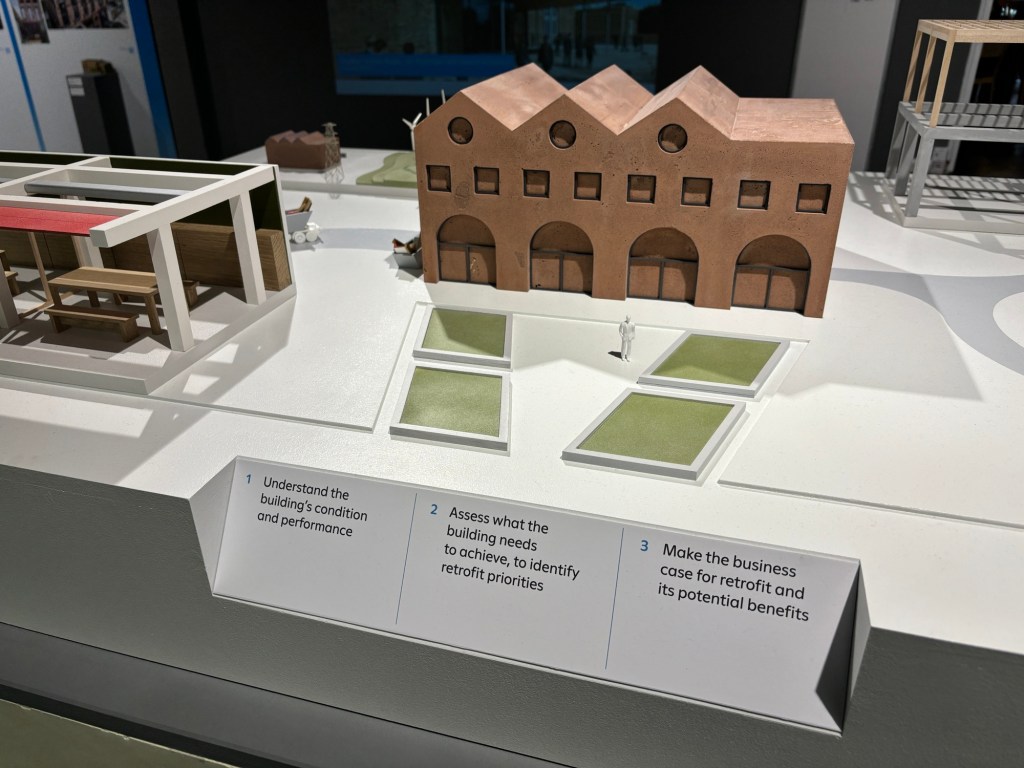
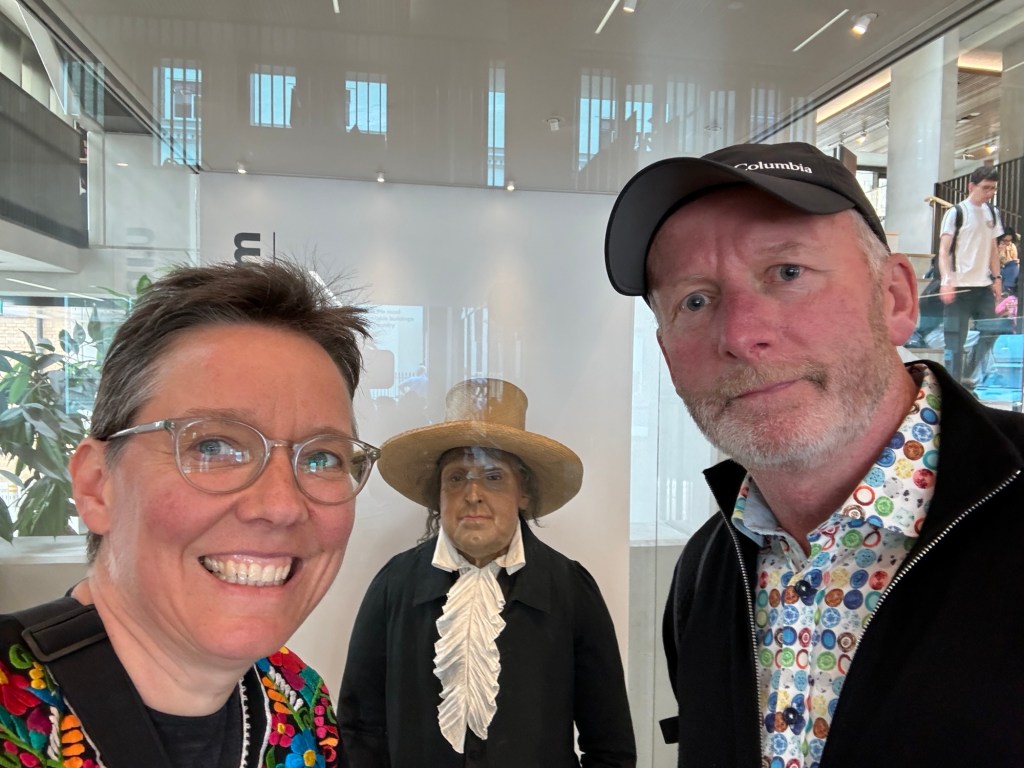
Wrapping up the School with Inês and Diana B. Leaving Windsor village. Striking a pose on our way into the Windsor train station.Diana B’s first night ever in London! Hamming it up in Soho with Inês and Diana B.Neal’s Yard with my pals.Aongus found us at the Anchor! Nothing like a double-decker — see my friends up top.Working breakfast with Lelanie and Nicky.My South African colleagues.Brushing up on LEED for retrofit at the Building Centre with Aongus. Introducing Aongus to Jeremy Bentham when leaving UCL’s campus.
It’s been nine days since the Summer School ended, and honestly, I’m still a bit worn out! I did spend some time exploring London with Inês and Diana B after the School — after all, it was Diana’s first time in London!
And my fabulous partner, Aongus Coughlan join us and also came to meet my colleagues, Dr. Lelanie Smith and Dr. Nicky Wolmarans from South Africa down near the Engineers Professors Council on Savoy Street (before their two-day symposium on integrated engineering curriculum design, also organized by UCL’s CEE). Looking forward to seeing Lelanie and Nicky in South Africa in November 2025 (yes, we plan ahead!)!
In all, the School will go down in my memory as a highlight of 2024 and I couldn’t be happier that John Mitchell included me and that I got to work with this incredible cohort and facilitation team.
The global EDUCON conference, organized by IEEE (the institution for electrical and electronics engineers) is underway on Kos island, just off the coast of Bodrum, Turkey.
Great to convene with Dr Homero Murzi of Virginia Tech and current Chair of REEN!We didn’t have time to see the sites of Kos, but WOW, this island has archeology, architecture, and medical history galore!
I’m here this week with my colleagues Inês Direito (University of Aveiro and UCL), John Mitchell and Diana Martin (UCL). Across the four of us, we’re facilitating 5 of the 16 workshops scheduled for this conference.
Pics from our engineering ethics education handbook workshop — the first session of EDUCON 2024.
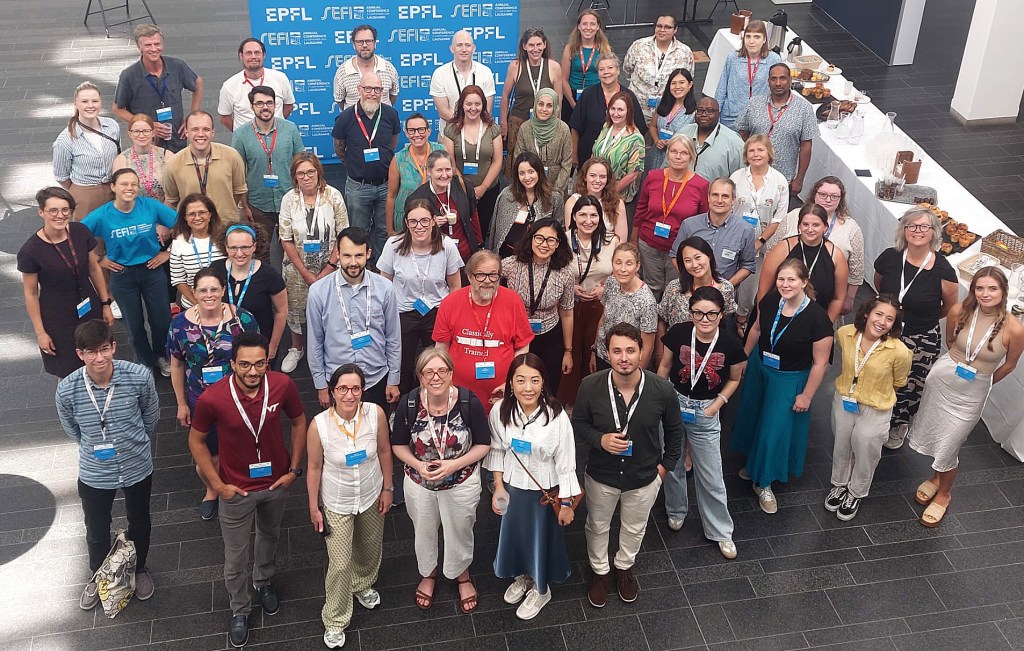
We’ve been having a great time connecting with colleagues from the University of Monterey (Mexico), EPFL (Switzerland), India, Singapore, across Europe and the Americas.
Dr Rucha Joshi, who I met in Hubli in January, and her fabulous momma! Just look at our dazzling smiles!
I had great fun interacting with participants at my grants and fellowships workshop, the systematic literature review session I delivered with Inês, the ethics handbook session I delivered with Diana, and supporting the publications and research design workshops spearheaded by John.
Snipet of the workshop on literature reviews with Dr Inês Direito.Prof John Mitchell’s session on designing an education experiment was hugely popular!A very helpful image on different ways of engaging with research to enable effective teaching, presented by John.
I’ve never attended EDUCON before and there’s a more technical bent to it than the more education research focused conferences I typically attend, so I met many new people in addition to reconnecting with friends I mead recently at REES (in India) and SEFI (locations across Europe).
One of our papers (that I co-authored with Inês and John and our colleague Dr Rob Lawlor) hit 10,000 downloads from the publisher’s website during EDUCON. Participants in the breakout group I facilitated for John’s workshop on IEEE publications were super enthusiastic about celebrating this achievement with me! They asked to take my picture—here’s our reenactment of that moment.😊😊😊😊😊
I’m headed home shortly, for end-of-academic-year wrap up and catching up on loads of tasks that have piled up while I was networking and collaboratively generating new knowledge. I’m full of inspiration and optimism!
I even met colleagues organizing the LACCEI conference I’ll attend in Costa Rica this summer, and coordinated to provide a couple extra workshops there, in addition to the papers my PhD student Sandra Cruz and I are delivering.
The grants and fellowships workshop was a ball—we all had good laughs.Bumping into Dr Jorge Torres Gomez (from Cuba and TU Berlin) during post-conference walk on the beach — a chance to further our discussion about bibliometrics forecasting and survey design. Farewell for now, Greece!
Portugal has vibrant networks of academics engaged in engineering education research. This week, I got to be part of that community, thanks to the generous support of the American Corner, on a four-night visit funded by the US Embassy in Portugal.
In and around the fabulous hotel, located on a canal in Aveiro’s historic center.
Flying into Portugal on Saturday morning, I settled in and toured the area over the weekend with my dear colleague (formerly of UCL) Inês Direito and her partner Gonçalo. Inês and I continually collaborate on research — and our bond grows stronger with each project and every passing year.
Snapshots of our explorations in Aveiro… Inês and Shannon always having a ball!
On Monday morning, I delivered a keynote address on “Boosting Engineering Education: How Research Can Make Engineering Education Better” and then facilitated a hands-on workshop on “Integrating Ethics, Sustainability, and Inclusion in Your Teaching.” In all this, I was the guest of honor with the Department of Mechanical Engineering at the University of Aveiro (UA).
I was impressed that 25 teachers and students participated in these morning events, as they happened during a week without classes at UA. Despite having the flexibility to work from home this week, people traveled to campus from all across the engineering disciplines at UA — and visitors traveled in from Lisbon, Porto, and Setúbal to partake as well.
Images from campus, the keynote and workshop.
After lunch Monday, the Engineering Education Research team at UA and I headed to the administration building to meet with the university’s Vice-Rector for Research and an expert from UA’s Research Support Office. We discussed grant proposals and laid the foundation for upcoming initiatives that we plan to launch at UA.
Wrapping up that exciting meeting, we skipped across campus to the sleek, modern library, designed by Alvaro Siza, where the American Corner has a recording studio. In a session moderated by Inês, a few of us (Inês, Pedro Fonseca, Anikó Costa, and I) discussed what engineering education is, and why it is crucial for solving societal challenges in the 21st century. We also considered what role interdisciplinary collaboration plays in engineering education, and how can we, in higher education institutions, can facilitate it more effectively. Finally, we chatted about how interested people can get involved in engineering education research.
On air from the American Corner with Inês Direito.
On Tuesday, the EER team and I set to work refining our plans to secure funding for our projects. We had the treat of bumping into a pair of scholars who currently hold the type of grant we aim to secure, and they agreed to share their experience and insight with us. I’m looking forward to meeting them at the end of the summer to learn more!
Reflecting on the visit from the boarding gate at Porto airport, I realized that I’d had the most marvelous time in Aveiro. Every single person I met helped make the trip special—from the driver Casimiro, to Inês and Gonçalo, the hotel staff, Sandra the librarian in charge of the American Corner, to UA’s engineering education research team, the energetic and ever-smiling Robertt, Barbara, Inês, and Carla. Colleagues Bill and Val, and Val’s spouse Frank, all traveled from the Lisbon area for research meetings while I was there, helping make the experience that much more special!
Always learning, with Val, Inês, and Bill!
I am bursting with energy for our upcoming projects, and hopeful what the future might hold for our team.
You might be asking yourself why I went to India at the start of the New Year. As you may recall, I served on the global Research in Engineering Education Network (REEN) for five years. During that time I chaired REEN’s governing body but before I started chairing I served on a sub-committee to recruit and select host/locations for our Research in Engineering Education Symposium (REES).
Hosts of REES 2024 (and the upcoming REES 2025 that will be in El Paso). Can you feel the energy?IUCEE award winners for 2024. Sooooo many working in Idnad to improve engineering education!
REES is generally held every other year, and we go to locations around the globe. REES is a way to meet new people, extend our networks, practice new research skills, and share what we find as we research engineering education. The symposia help attendees learn about engineering education in new parts of the world and they help the community in each region where REES meets to gain momentum. REE Symposia help people entering the field of Engineering Education Research (EER) to meet people who have been doing EER longer.
Two of the main organizers of the conferences were Dr/Prof Vijayalakshmi M. (left) and Dr Preethi Baligar (right).The sessions were very well attended!
REEN was held in Honolulu (2007), Davos (2008), Queensland Australia (2009), Madria (2011), Kuala Lumpur (2013), Dublin (2015), Bogotá (2017), Cape Town (2019), Perth (2021), and now Hubli, India (January 4-6, 2024).
The REEN.co website explains that “provides a forum to share, discuss, disseminate, and propagate high-quality research and best practices through the Global Engineering Education Research community.”
Networking with the lovely and energetic Dipanwita Chakravarty (KLE Architecture) while touring the engineering research building at KLE Tech.Three past REEN chairs in one place! Teresa Hattingh, Shannon Chance, and Adam Carberry. Homero Murzi just took the role of chair on January 1, 2024.
REES 2024 was hosted by KLE Technological University (KLE Tech) in collaboration with the Indo-Universal Collaboration for Engineering Education (IUCEE). We met on KLE Tech’s B. V. Bhoomaraddi Campus in Vidyanagar, Hubballi, Karnataka, India.
We typically team up with the local national organization for engineering practitioners and/or engineering educators. KLE Tech staff are leaders of IUCEE and are leading the way in EER, research-based teaching, and the Scholarship of Teaching and Learning (SoTL).
IUCEE is doing great things in India! It’s vision is “is to improve the quality and global relevance of engineering education in India” and to do this it seeks “to build an ecosystem for transforming engineering education in India with the assistance of engineering education experts and industry from around the world” (https://iucee.org/). The organization’s website is chock full of information with a vast number of events and activities featured every week on its homepage. Wow!
When I was on the REES selection committee, three scholars from India who are active in IUCEE applied to host a Symposium. That excellent proposal came from Krishna Vedula, Gopal Joshi, and Sohum Sohoni who I’ve had the pleasure of working with over the years since we made that selection in 2018.
Sohum Sohoni at REES 2024.Krishna Vedula there on the left, rallying the troops!
IUCEE was launched in 2007 and today the organization has members from all over India, as well as from the Indian diaspora (all those brave folks who left India to work, study and live elsewhere in the world), like Sohum, who teaches engineering in the USA. I don’t know how many members IUCEE has, but LinkedIn shows 847 followers. Ooops! Add one more! I’m following now, and so can you: https://www.linkedin.com/company/indo-universal-collaboration-for-engineering-education/?originalSubdomain=in
REES workshop activities — see my colleagues Dr Ed Berger and Dr Mikita Hari there in the center, engrossed in converesation.IUCEE includes a showcase of student research.
REEN also has a LinkedIn group you can join (https://www.linkedin.com/groups/8537067/), and you can also subscribe to get email updates from REEN (https://reen.co/subscribe/). My fabulous former boss currently runs the REEN website — shout out to John Mitchell at UCL, a truly great person to work with and for!
So, REEN selected India as a host and asked the applicants to send a member to our REEN team to help us all prepare for REES 2024. We scheduled the event for January when IUCEE’s annual conference falls.
Getting to Hubballi, Karnataka, India for the first time was no small feat, with complicated visa and flight arrangements. Thanks very much to Dr. Nithya Venkatesan, Assistant Director of International Relations at VIT Chennai for helping me arrange flights and some accommodations for my stay. Her help made my trip possible as I was truly overwhelmed.
The lovely KLE Tech auditorium building.All the REES 2024 attendees. Imagine, IUCEE was even bigger!
But it was all worth the effort. It was so inspiring to meet the very energetic members of IUCEE, as REES overlapped their conference by one day. May IUCEE members stayed on for the REE Symposium and contributed to it in insightful ways.
I’ll tell you more about the happenings of REES 2024 in an upcoming blog. Thanks for reading along today to learn how I was inspired to travel to India for my first time.
Meals under the marquee with delicious food plus great ambiance.Panel Discussion 2 on “Transitioning from Engineering to Engineering Education Research”.Making so many new friends and colleagues, like Dr Soumya Narayanan form KLE Tech. The awards ceremony for IUCEE. What enthusiasm and what beautiful dresses!




































 Ireland by Chance