Boosting engineering education in Aveiro, the Venice of Portugal

Portugal has vibrant networks of academics engaged in engineering education research. This week, I got to be part of that community, thanks to the generous support of the American Corner, on a four-night visit funded by the US Embassy in Portugal. 

Flying into Portugal on Saturday morning, I settled in and toured the area over the weekend with my dear colleague (formerly of UCL) Inês Direito and her partner Gonçalo. Inês and I continually collaborate on research — and our bond grows stronger with each project and every passing year. 

On Monday morning, I delivered a keynote address on “Boosting Engineering Education: How Research Can Make Engineering Education Better” and then facilitated a hands-on workshop on “Integrating Ethics, Sustainability, and Inclusion in Your Teaching.” In all this, I was the guest of honor with the Department of Mechanical Engineering at the University of Aveiro (UA).  

I was impressed that 25 teachers and students participated in these morning events, as they happened during a week without classes at UA. Despite having the flexibility to work from home this week, people traveled to campus from all across the engineering disciplines at UA — and visitors traveled in from Lisbon, Porto, and Setúbal to partake as well. 

After lunch Monday, the Engineering Education Research team at UA and I headed to the administration building to meet with the university’s Vice-Rector for Research and an expert from UA’s Research Support Office. We discussed grant proposals and laid the foundation for upcoming initiatives that we plan to launch at UA. 

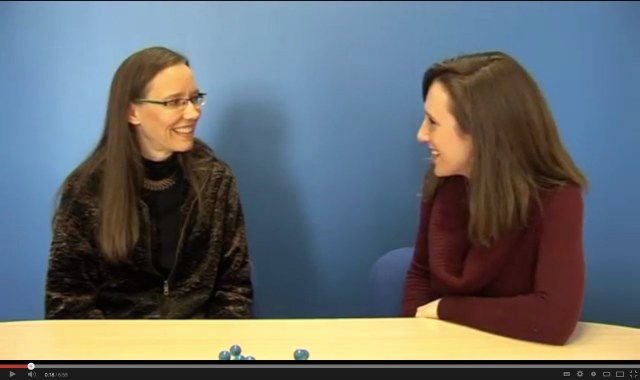
Wrapping up that exciting meeting, we skipped across campus to the sleek, modern library, designed by Alvaro Siza, where the American Corner has a recording studio. In a session moderated by Inês, a few of us (Inês, Pedro Fonseca, Anikó Costa, and I) discussed what engineering education is, and why it is crucial for solving societal challenges in the 21st century. We also considered what role interdisciplinary collaboration plays in engineering education, and how can we, in higher education institutions, can facilitate it more effectively. Finally, we chatted about how interested people can get involved in engineering education research. 

You can view the recording at: https://www.youtube.com/live/n8CiEIQ5DuI?si=g5Q1y-lunxW45zhz

On air from the American Corner with Inês Direito.

On Tuesday, the EER team and I set to work refining our plans to secure funding for our projects. We had the treat of bumping into a pair of scholars who currently hold the type of grant we aim to secure, and they agreed to share their experience and insight with us. I’m looking forward to meeting them at the end of the summer to learn more! 

Reflecting on the visit from the boarding gate at Porto airport, I realized that I’d had the most marvelous time in Aveiro. Every single person I met helped make the trip special—from the driver Casimiro, to Inês and Gonçalo, the hotel staff, Sandra the librarian in charge of the American Corner, to UA’s engineering education research team, the energetic and ever-smiling Robertt, Barbara, Inês, and Carla. Colleagues Bill and Val, and Val’s spouse Frank, all traveled from the Lisbon area for research meetings while I was there, helping make the experience that much more special! 

I am bursting with energy for our upcoming projects, and hopeful what the future might hold for our team.
Crafting Lisbon

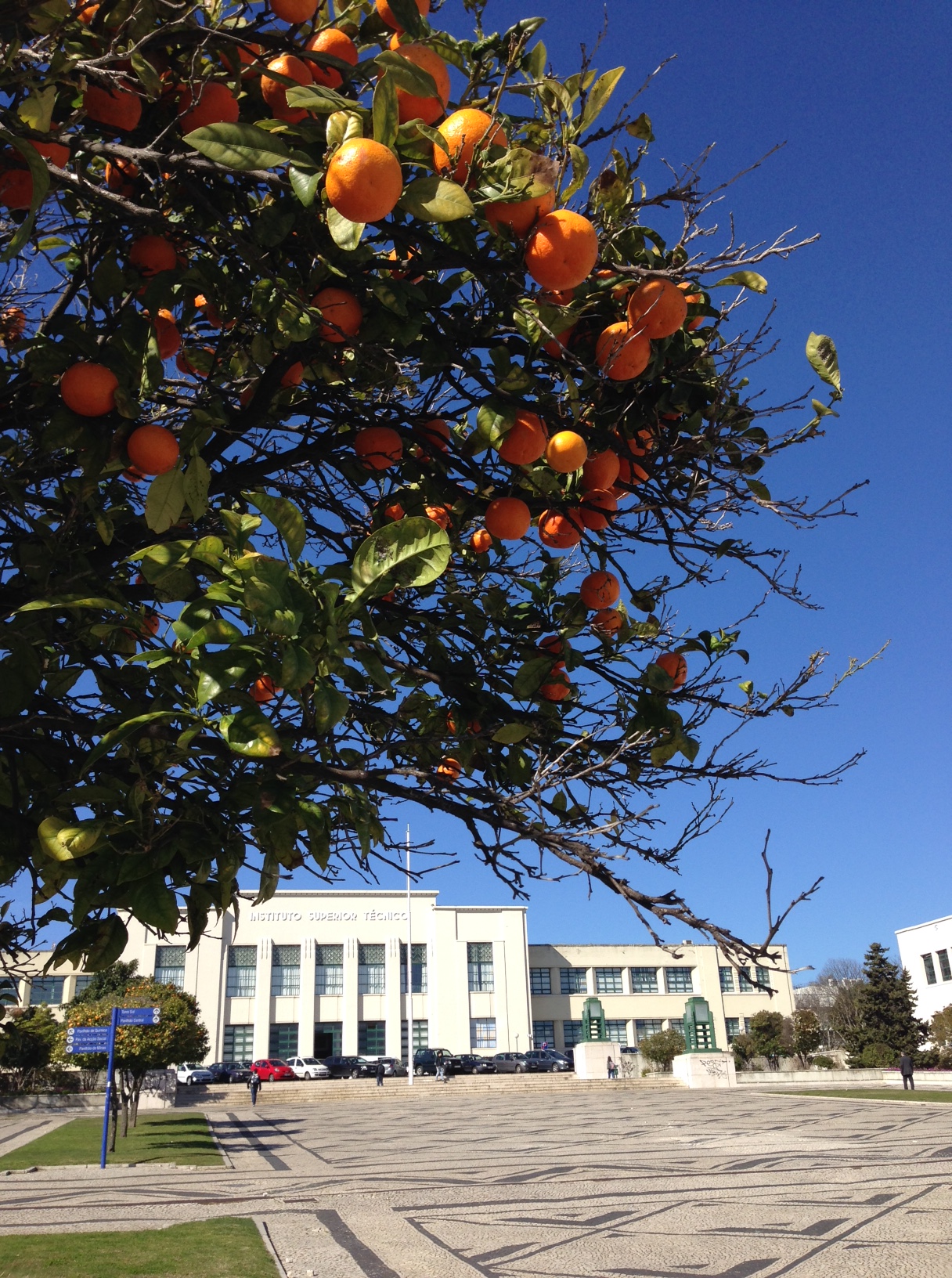
Orange trees along the entry IPS.

Orange trees along the entry IPS.

My Friday visit to the architecture school of the Instituto Superior Técnico (IST) was icing on the cake after a week of engineering interviews, conducted across the bay from Lisbon at Escola Superior de Tecnologia do Barreiro (a branch of the Instituto Politécnico de Setúbal, where I had interviewed students their experiences as engineering students as part of my Marie Curie research project).

You might recall that I delivered workshops at IPS and IST as a Fulbright scholar, back in 2013 (click here for more).

For a little more fun on my last day in Lisbon on this trip, I took the Metro over to IST. There, I visited the first year studio to hear student teams present their urban analyses of Lisbon districts. I toured the 2nd-5th year studios with my gracious faculty hosts and I wrapped up the afternoon discussing recent work with PhD students from the Architecture Research Group who I’d met on my previous trip to Portugal. The doctoral students — Maria Bacharel Carreira, Luisa Cannas da Silva, Mafalda Panheco, and Sajjad Nazidizaji — and thier professor Teresa Valsassina Heitor took me for a beer at the end of the day.

IPS's Escola Superior de Tecnologia do Barreiro

IPS’s Escola Superior de Tecnologia do Barreiro (image from http://www.estbarreiro.ips.pt/)

Many thanks to my colleagues at IPS, Bill Williams and Raquel Barreira, who helped arrange and conduct interviews. Thanks also to the ISP students who provided interviews and the IST teachers and students who shared their work with me. I can’t wait to visit again!

Loving Lively Lisbon 

Guy ambling home from work on a unicycle, paraplegic dog sporting his own wheelchair, man dancing to headphones on the boardwalk at sunset. Chamber pots on sale at the church bazaar, saxophonist sharing zydeco by the ferry terminal. So much to see, so much life to live.

I’m in the port city of Lisbon, Portugal’s capital, this week to interview women here who are studying first year engineering at the polytechnic institute. I flew in Sunday morning which gave me a chance to see some sights. 

I find a new adventure around every corner, even though I’ve been here before. 

Porto — Obrigado!

One last glimpse of my beautiful Porto and my Fulbright trip there, just before I introduce you to Problem-Based Learning in Belgium….

Guimarães: Birthplace of Portugal

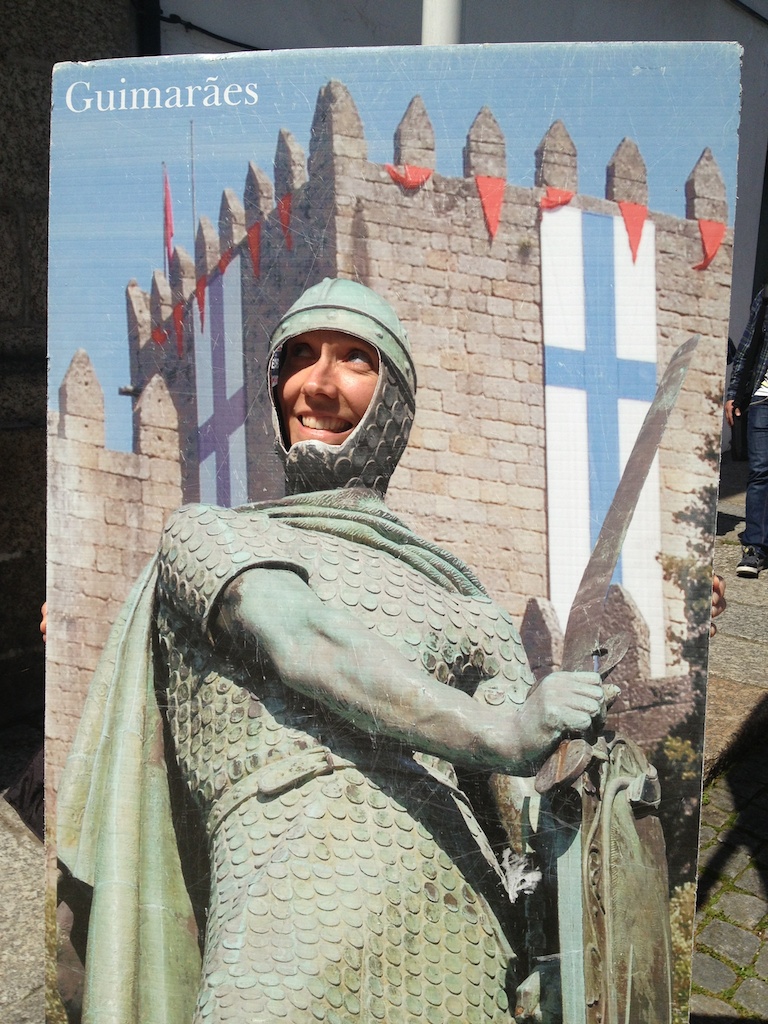
Hamming it up!

Helping with the founding back in 1111 AD. 😉

Guimarães is an architecturally stunning town, and it is the place Portugal was born in the year 1111. Following my visit to the engineering program at the University of Minho and my Fulbright lecture/workshop, my hosts took me to visit the historic center and enjoy lunch in one of its very fine outdoor plazas.

Exotic Porto

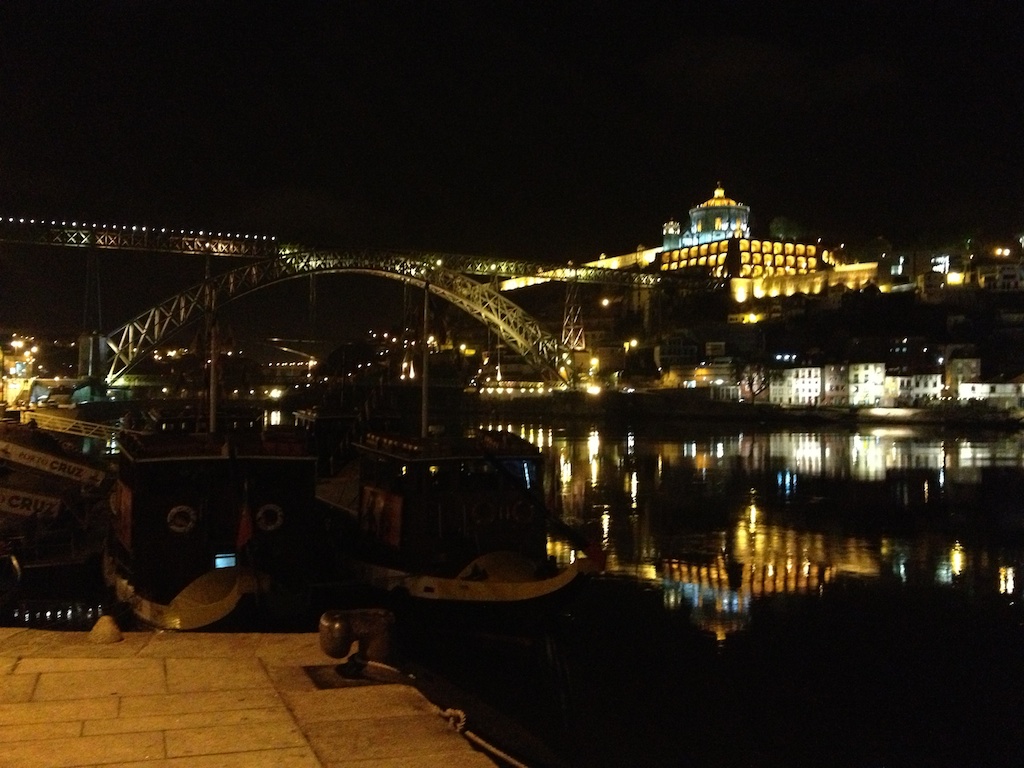
Porto's water front -- the perfect place for dinner and an evening stroll!

Porto’s water front — the perfect place for dinner and an evening stroll!

After speaking in Setabul, Lisbon, and Aviero, I packed up bag and hopped on the train to Porto.  It’s a lovely port city with steep topography and — surprise — more of Portugal’s stunning architecture!

I’ve been uploading the photos I took using my iPhone, so, unfortunately, I’m only providing a fleeting glimpse of these gorgeous places.  I hope someday you’ll have the chance to visit them for yourself.

Picking Back Up in Portugal

I dropped the ball telling you about my trip to Portugal and Belgium… I still have lots to show you!  When I last wrote about my Fulbright Inter-Country Lecturing adventures, we were in Aviero and Agueda with  José Manuel Nunes de Oliveira.

Here are a couple more of the modernist buildings at the University of Aviero.

Amazing Sights of Lisbon

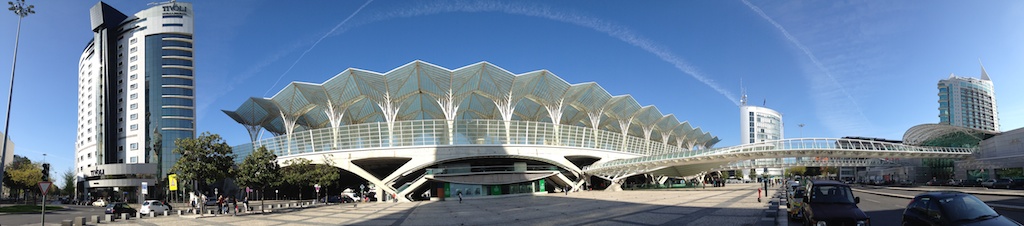
...is an architectural and structural marvel.

The Spanish architect Santiago Calatrava has designed some of the world’s finest train stations and bridges. The station in Lisbon reflects the care and precision of Calatrava’s design work.

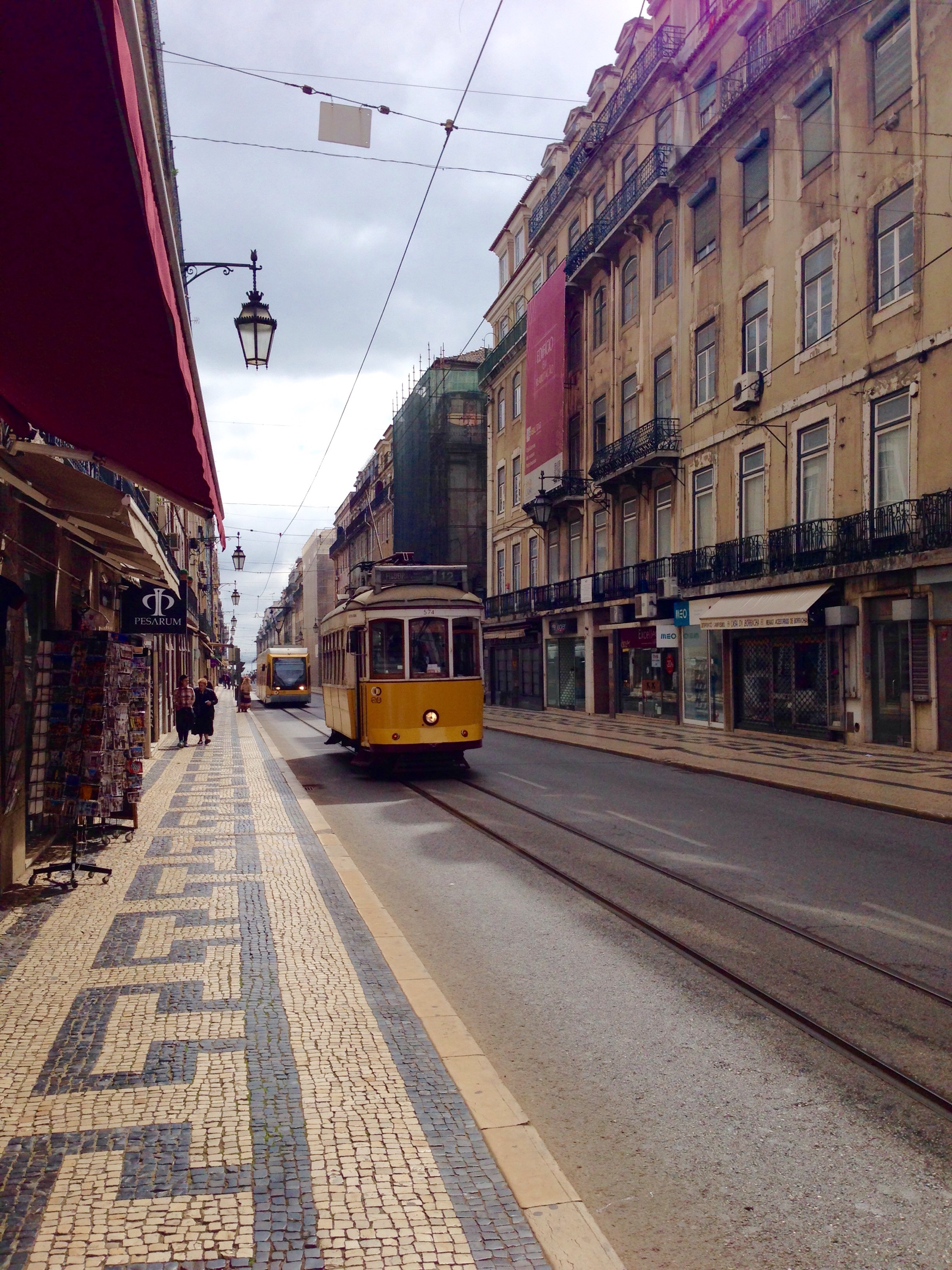
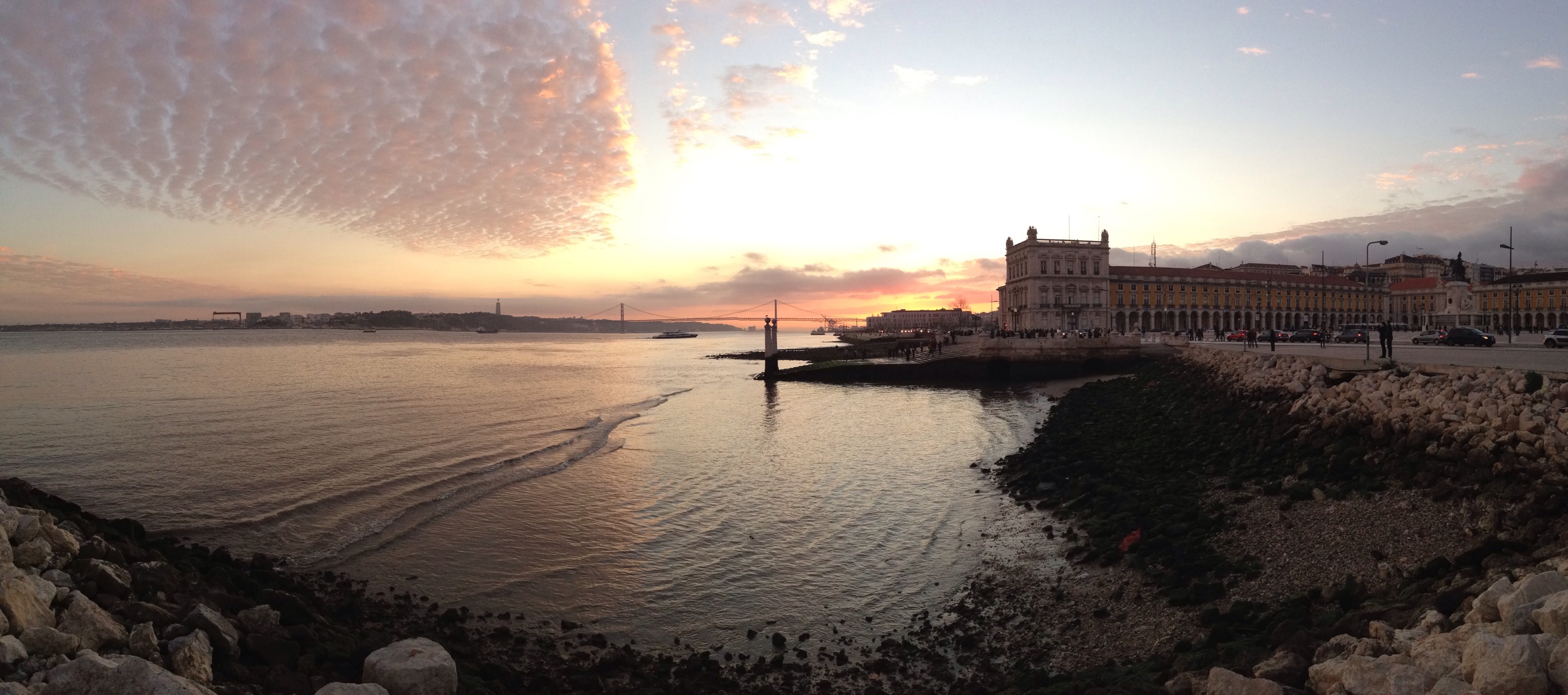
Lisbon is a glorious city.

I was truly blessed to spend five glorious days in this place–the capital of Portugal–as part of the Fulbright Inter-Country Lecturing Program.  I will never forget my time there, the places I visited, or the people I got to know.

I’ve attached a few of the iPhone photos snapped during my stay. (Copyright Shannon Chance, 2013.)

PBL at the Polytechnic School of Águeda

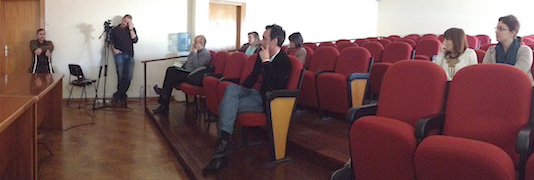
The audience was composed of experts and students in engineering and education.

The audience was composed of experts and students in engineering and education.

Visiting Portugal’s University of Aveiro some weeks ago provided me opportunities to speak with doctoral students and professors of engineering and education.

After I delivered a formal presentation to a small but enthusiastic group at the University of Aveiro’s Department of Education, my host, José Manuel Nunes de Oliveira drove me to the University’s satellite campus, known as the Polytechnic School of Águeda (or Escola Superior de Tecnologia e Gestão de Águeda, Universidade de Aveiro) where he teaches engineering.

Jose and his colleagues use Problem-Based Learning to teach engineering students.  They have formatted their classrooms to support group-based learning.  (My DIT colleague, Gavin Duffy, visited Jose and his campus earlier in the year to see how they use space. He wanted their advice to help in the programming phase of DIT’s new engineering facilities.)

What impressed me most in touring the buildings and grounds of the Águeda campus, though, was that the students were all working in groups–and that they seemed to be doing so on every type of project.

Jose says that after the teachers introduce the group-learning approach in the first year, students embrace it and want to do everything this way.

I thought that Jose said that students receive credit for their topic courses (i.e.,those with specific engineering content), but not for their project work (I was wrong, as I explain in my subsequent blog). In architecture we refer to these technical/topic classes as “support courses.”

All the courses a students take in a semester at the Escola Superior de Tecnologia e Gestão de Águeda help support the project they have been asked to do in groups. They are able to apply what they learn in the projects they design… but they don’t get formal credit for the design activities. In architecture in the USA, the design activities are assigned the most credit (typically 5-6 credit hours per semester) while each support course is generally worth just 3 credits. The architecture community tends to value the project or “design studio” work above all else.

My Interview about the Fulbright Inter-Country Lecturing Program

The Fulbright staff in Belgium interviewed me during my visit.  They asked me to describe some of my experiences with the program and explain how I got involved in it.

I hope the interview is helpful to other Fulbright scholars and to academics who would like to invite Fulbright scholars to speak at their institutions.

And, I hope my friends will enjoy hearing about what I was up to during my recent travels in Portugal and Belgium as well.