Feel the spirit! STEM Ensemble at Dublin Maker 2025

Most years, right before the beginning of the new academic year, I have the chance to be part of Dublin Maker. It’s a festival that celebrates the creative flair of people from all around Ireland. I’ve been attending Dublin Maker since 2015 and it never fails to delight.

The 2025 edition of Dublin Maker happened last weekend at Leopardstown Racecourse, on the south side of Dublin.
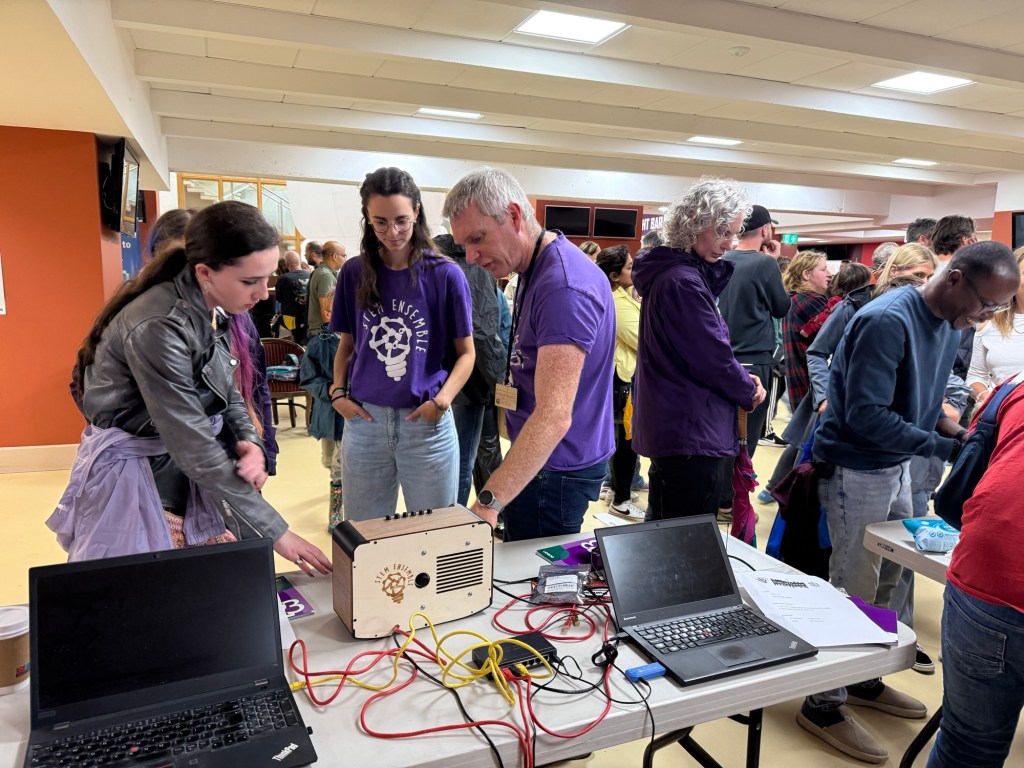
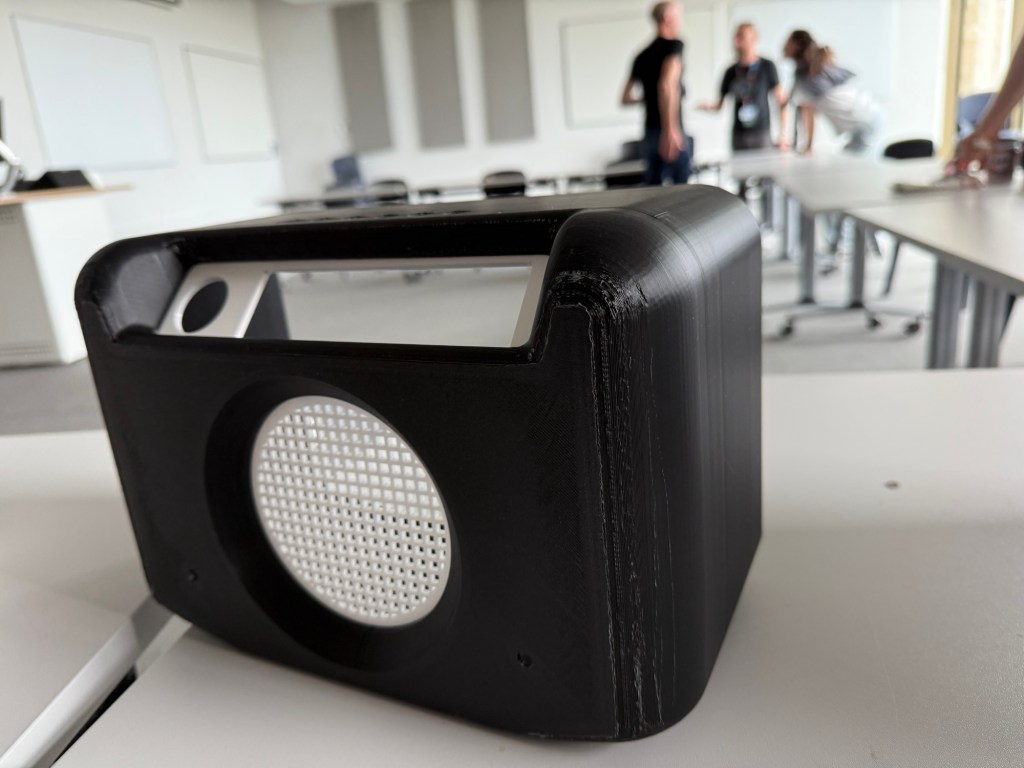
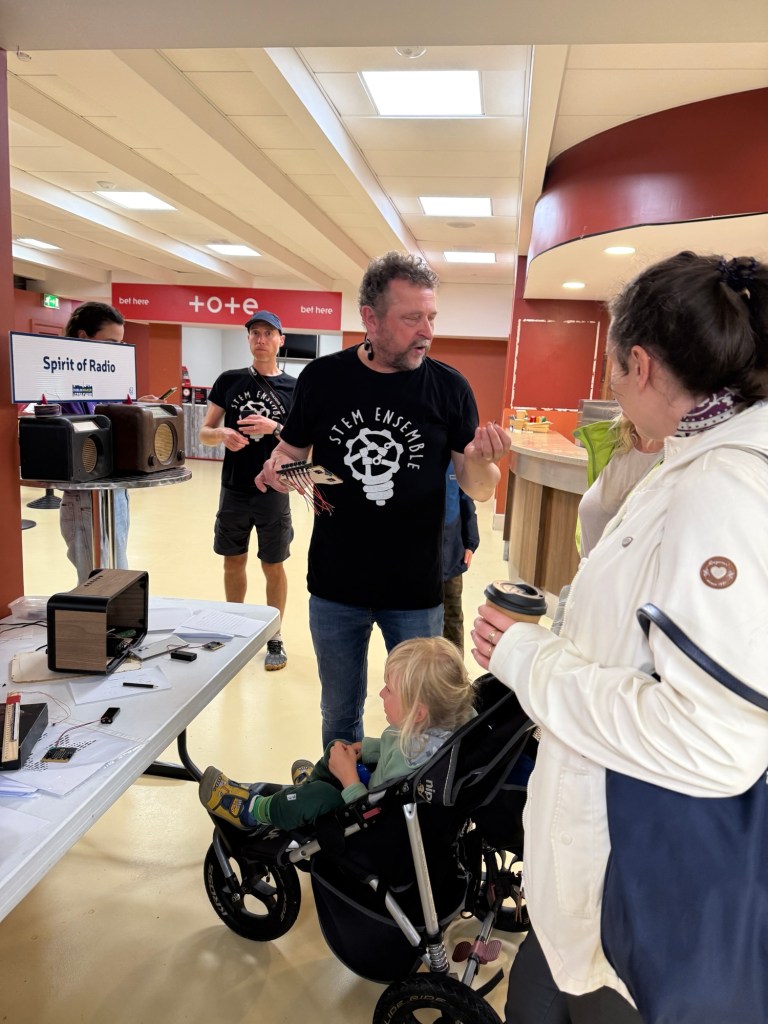
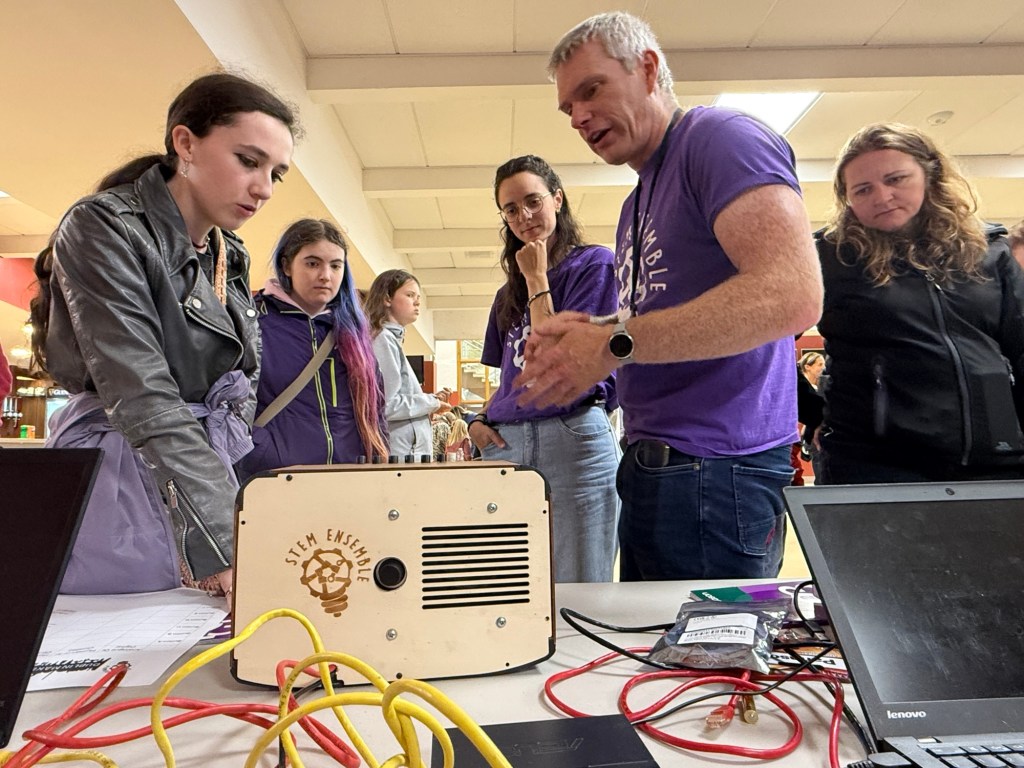
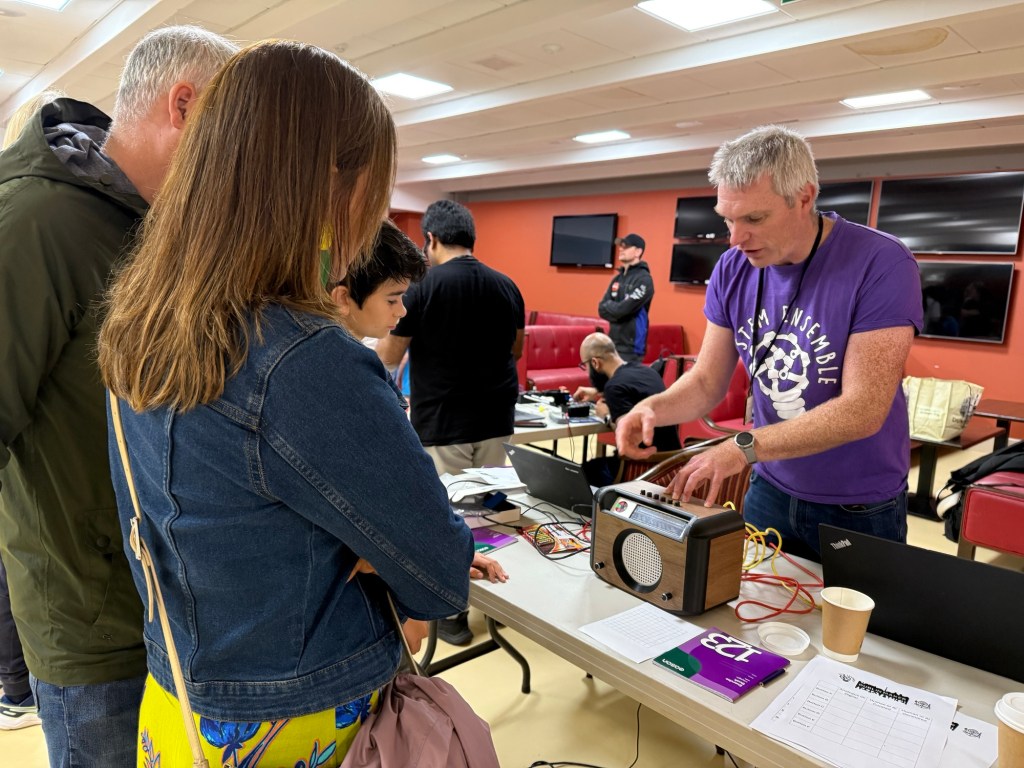
David Powell explaining how the radio features work. It’s designed to facilitate continual upgrade and ongoing R&D.

The open, participatory nature of Dublin Maker really appeals to me. As an education researcher, I’m all about the social construction of new knowledge and Dublin Maker epitomizes this phenomenon!

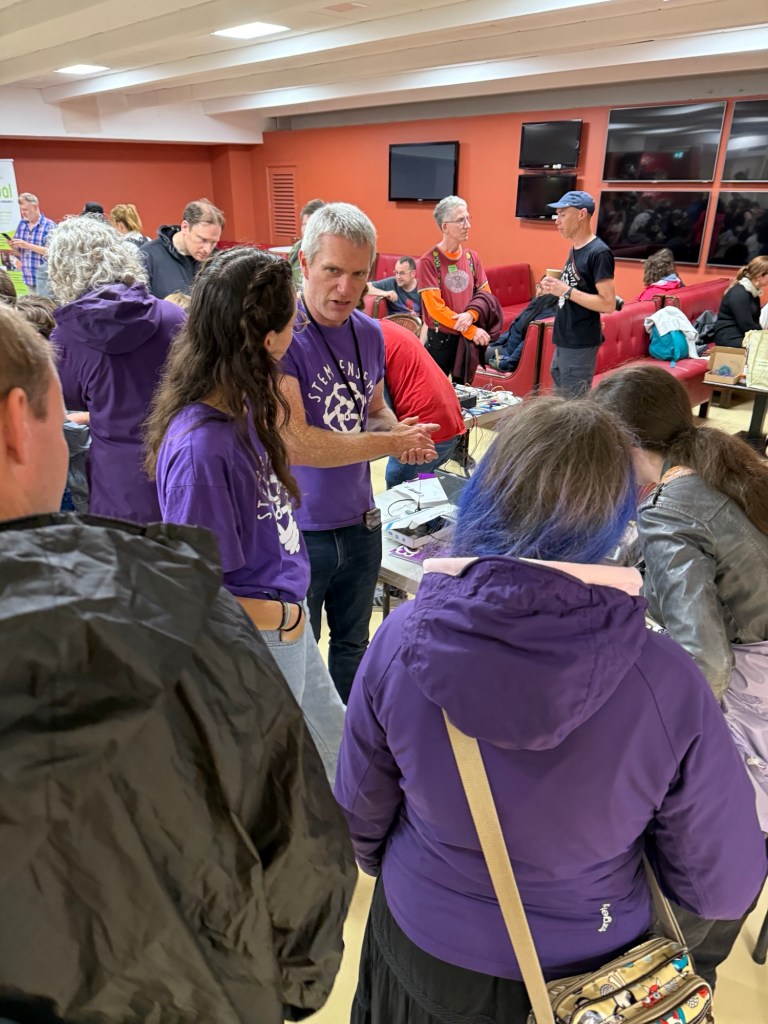
The venue was packed this year, as usual, and I think we’ve benefited from the rain outside. I attended Saturday (of the two-day event) and observed thousands of visitors engaged in hands-on technology, arts, craft, engineering, and science learning.

The exhibition halls buzzed as makers of all ages shared their projects, demonstrated new ideas, and connected with other creative enthusiasts. Exhibitors showcased everything from polished inventions to prototypes and works in progress.

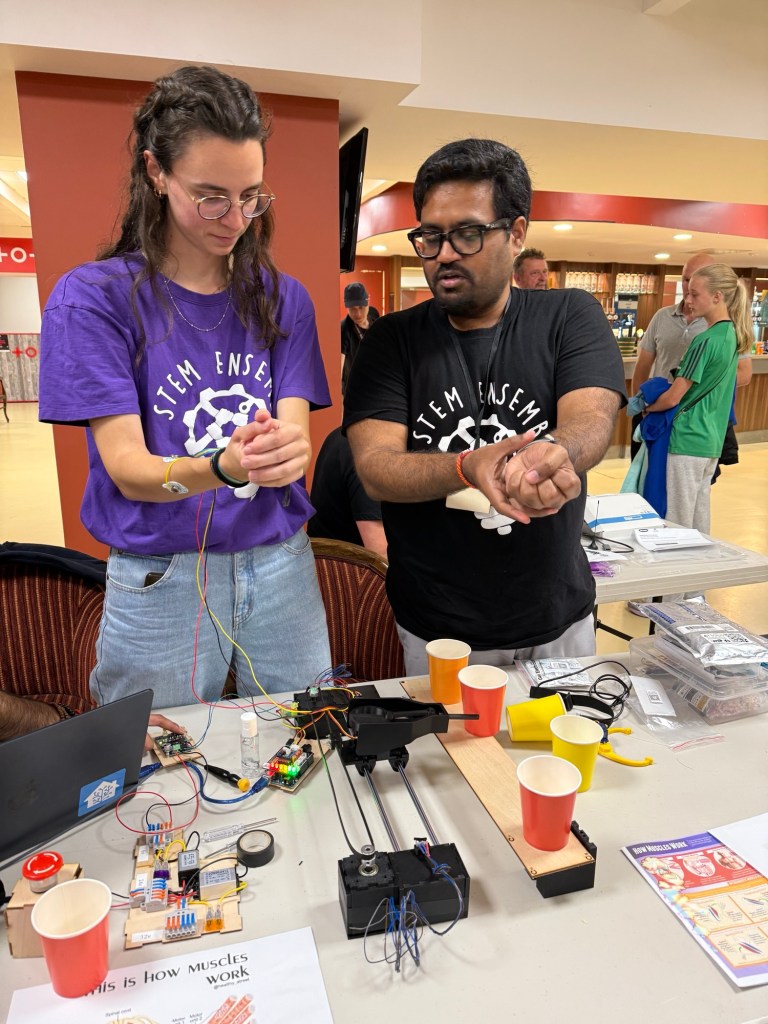
Postdoc Patricia (Patri) Lucha Farina, Assistant Lecturer Mayank Parmar, and Senior Researcher Harish Kambampati working together.

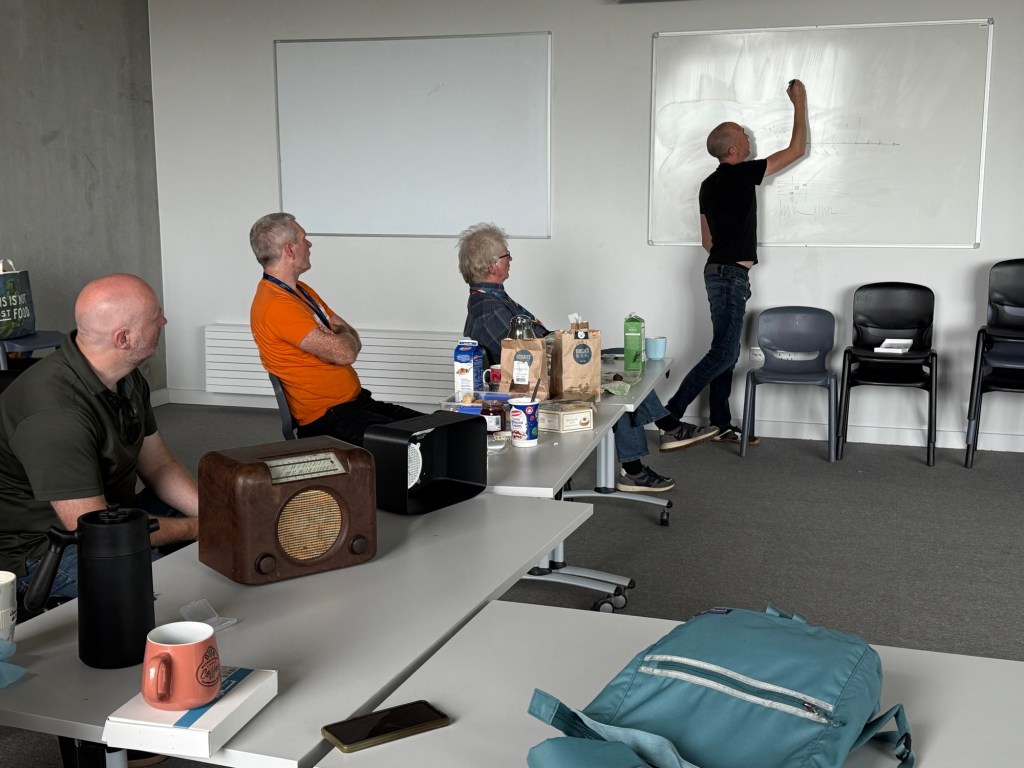
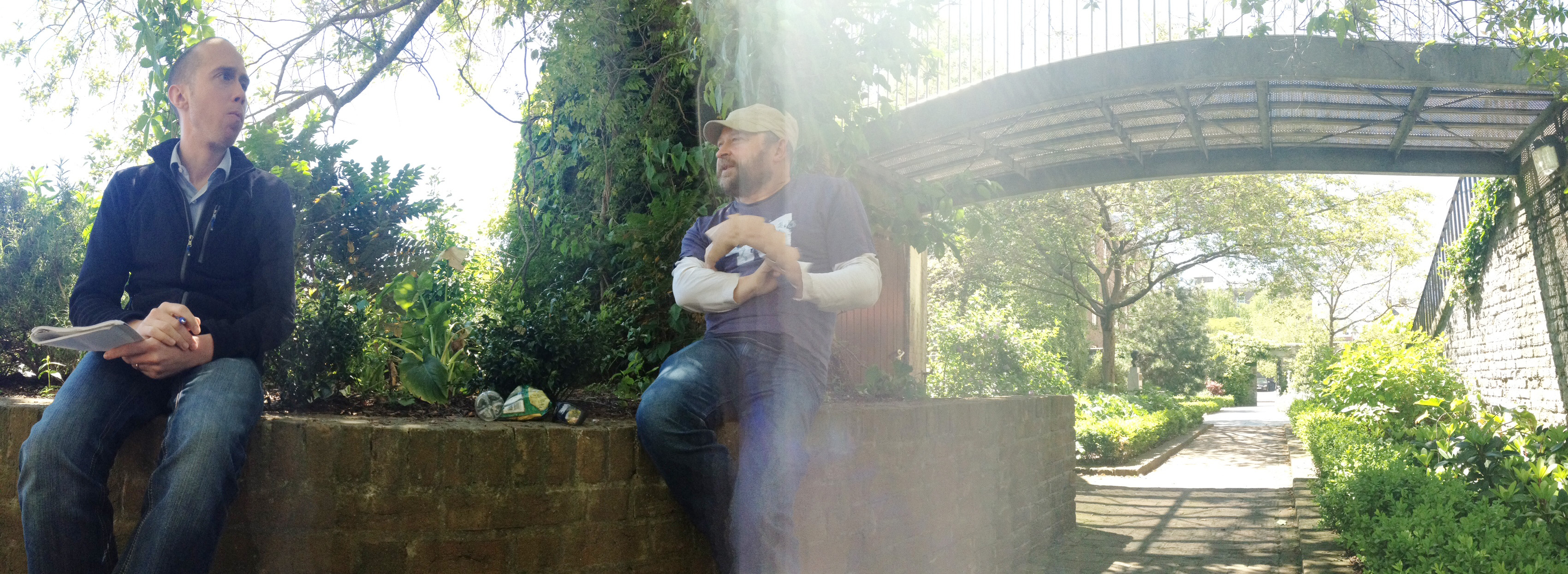
Heaven knows my colleagues always work to the very last minute, creating new aspects of their projects (even though they’ve all been enthusiastically working for months to prepare)! I’ve provided photographic evidence of our July meeting below. ⬇️
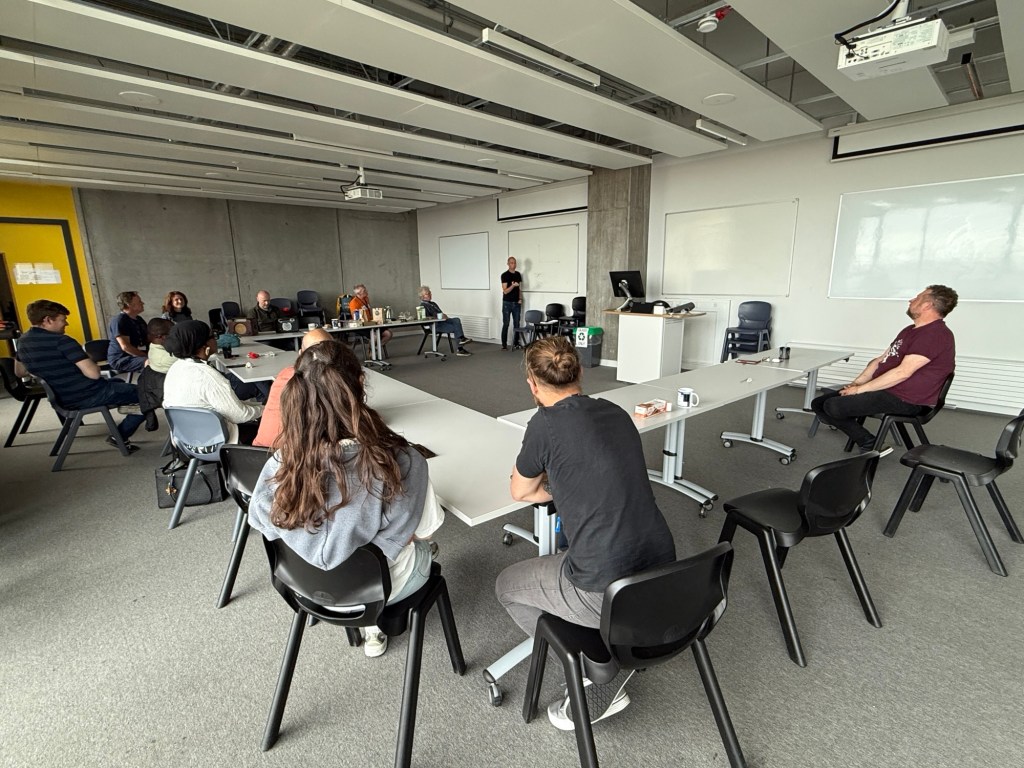
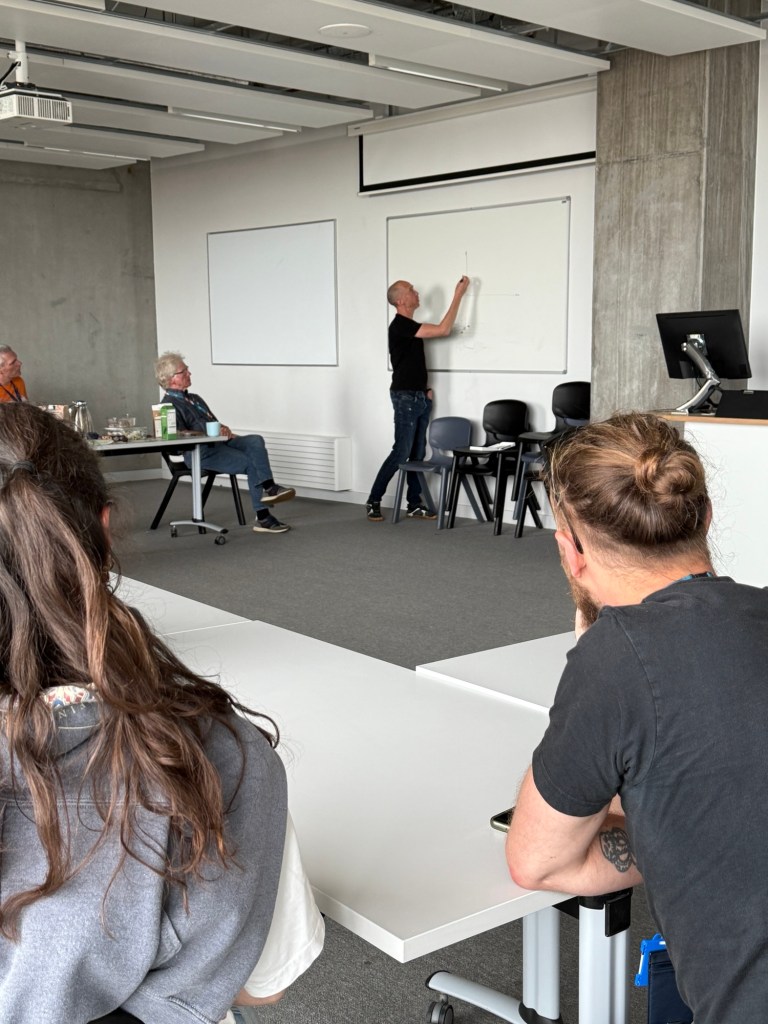
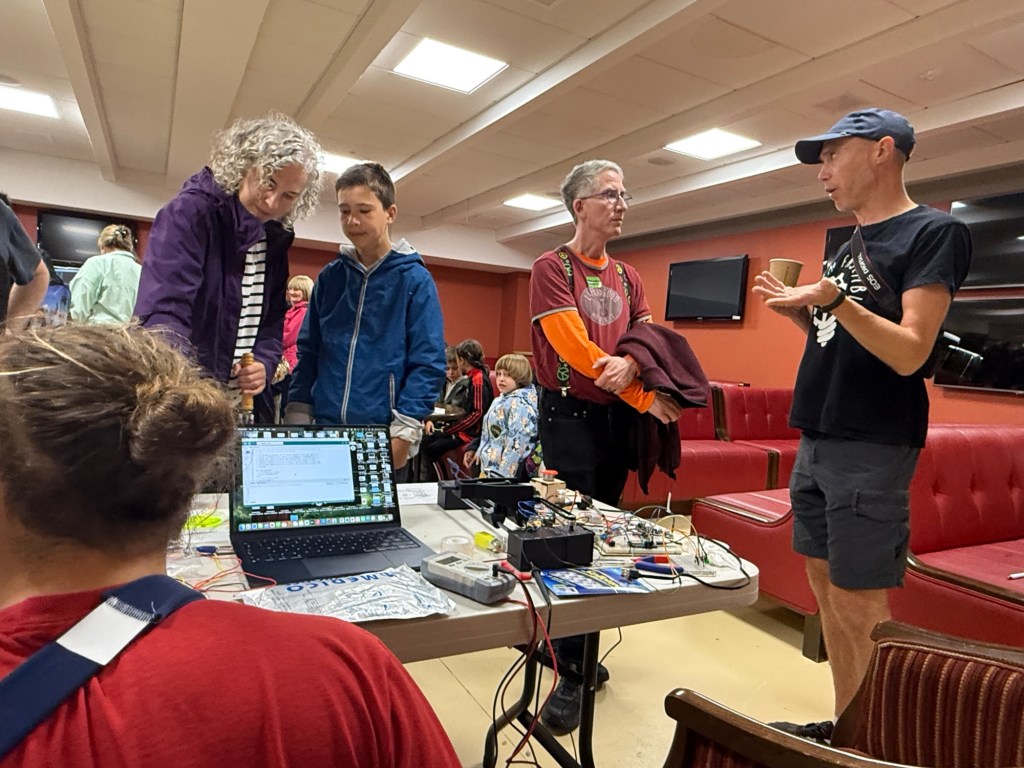
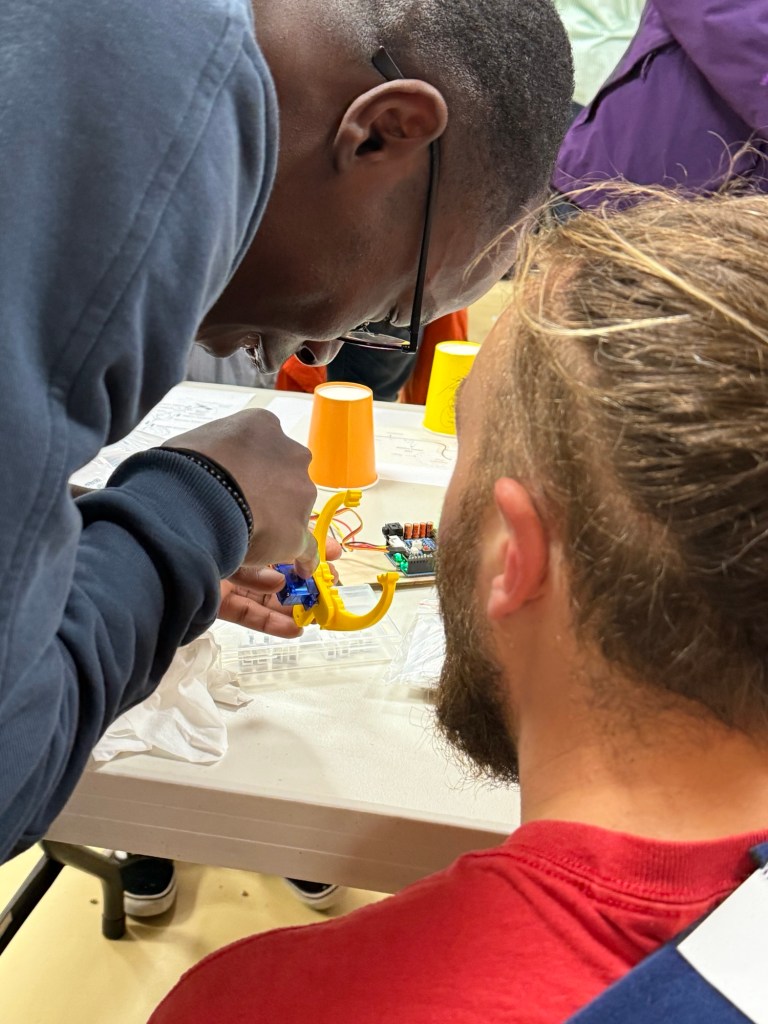
This year was no exception as our makers worked to perfect the biomedical engineering projects they’d brought to share. Several of our group’s new lecturers and researchers worked together on this table.

Our researchers, Mayank Parmar and Dr. Harish Kambampati, demonstrating biomedical technologies.

I typically help with communicating the ideas to a younger audience or contributing something that’s more on the artistic or spatial side (since I’m an architect, who loves to hang out with these creative engineering types).

In the early years of Dublin Maker, 2015-2018, you would’ve seen us under the banner of RoboSlam. Our booth usually has several tables of displays with hands-on activities, grouped together under some sort of theme.

One year, we hosted the “RoboSlam Cafe” where attendees could build their own robots from low-cost kits—we wanted to provide firsthand experience in robotics. We like to demystify how everyday “smart” devices are made by showing people what’s “under the hood” and making it understandable.

Two of my personal favorites among our past exhibits have been “fractleismus” (generating images from attendees’ sketches using a fractal algorithm) and the “vaporwave fotobooth”, both presenting creations by Ted Burke. ⬇️
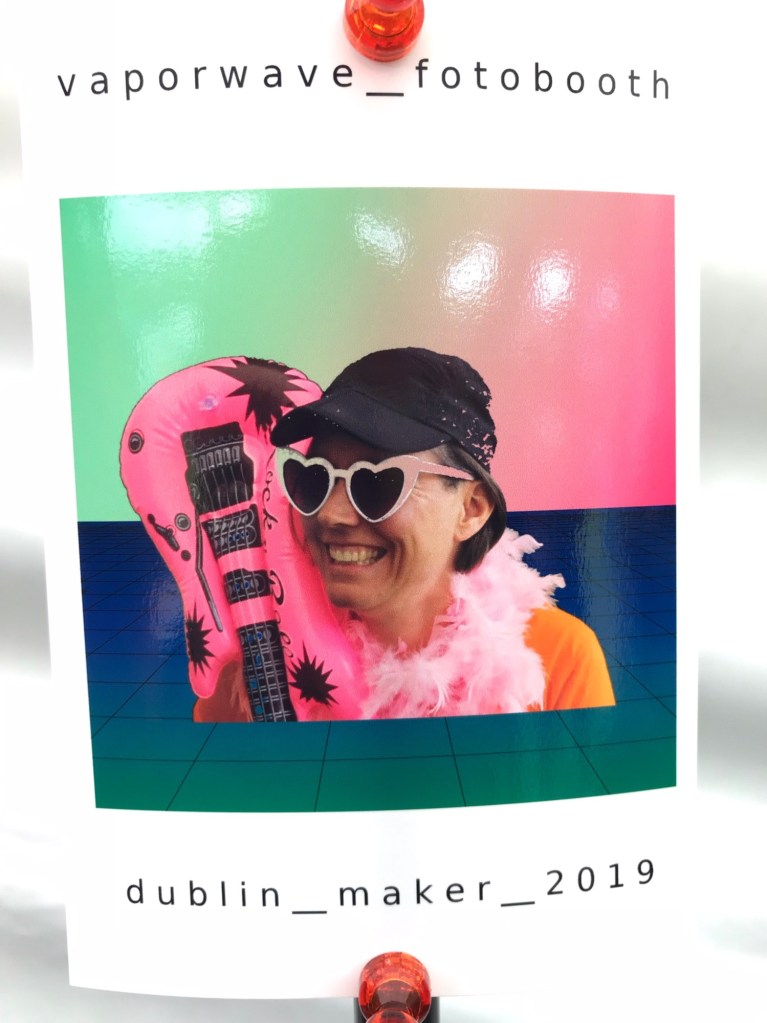
From the FotoBooth in 2019.

The fortune teller and subsequent Talking Head booth developed by Shane Ormonde, which integrated AI, were also quite intriguing. The second of these demonstrated generative AI work in real time, back in chat, GPT was just emerging. ⬇️
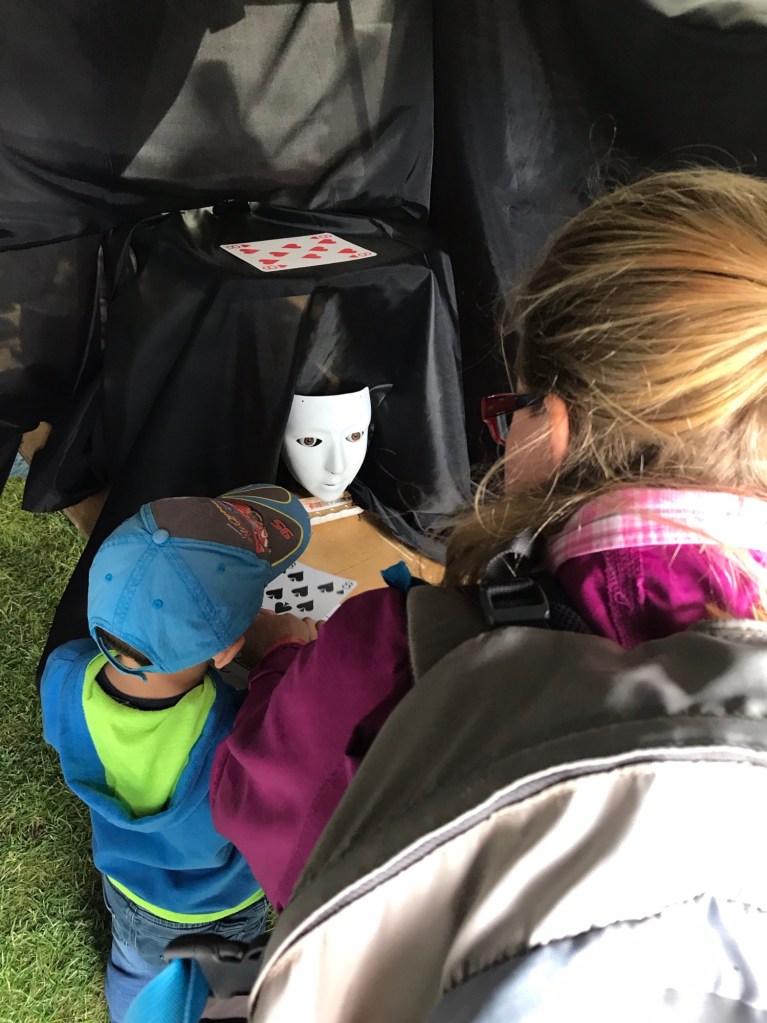
Shane Ormonde’s fortune teller from 2019.

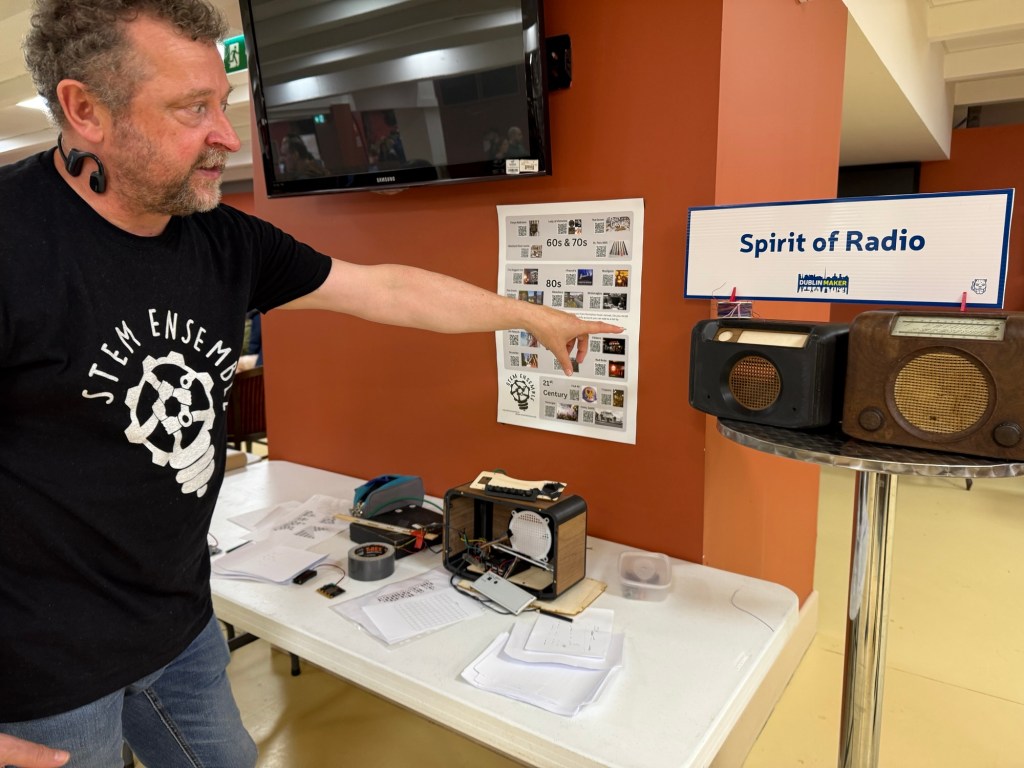
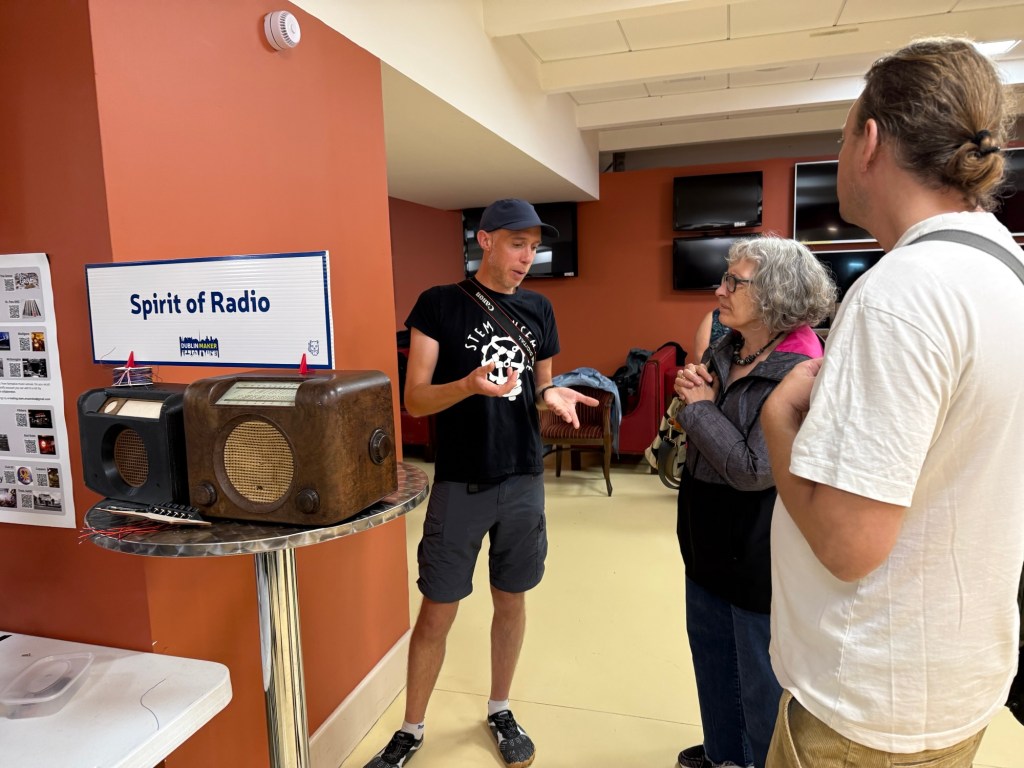
This year, our major theme was the “Spirit of Radio”.

My STEM Ensemble colleagues have been working hard to develop a radio that has analog feature features as well as AI enabled digital features. This is related to a project that Paula Kelly is leading to introduce senior citizens to AI and help them understand the technology.

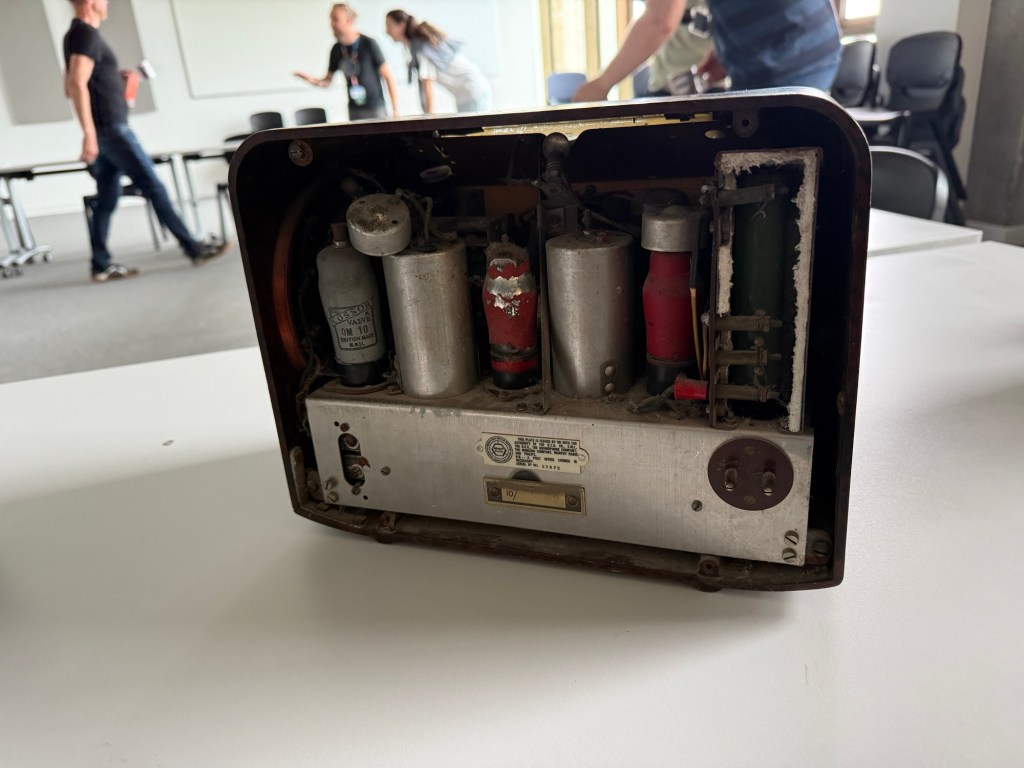
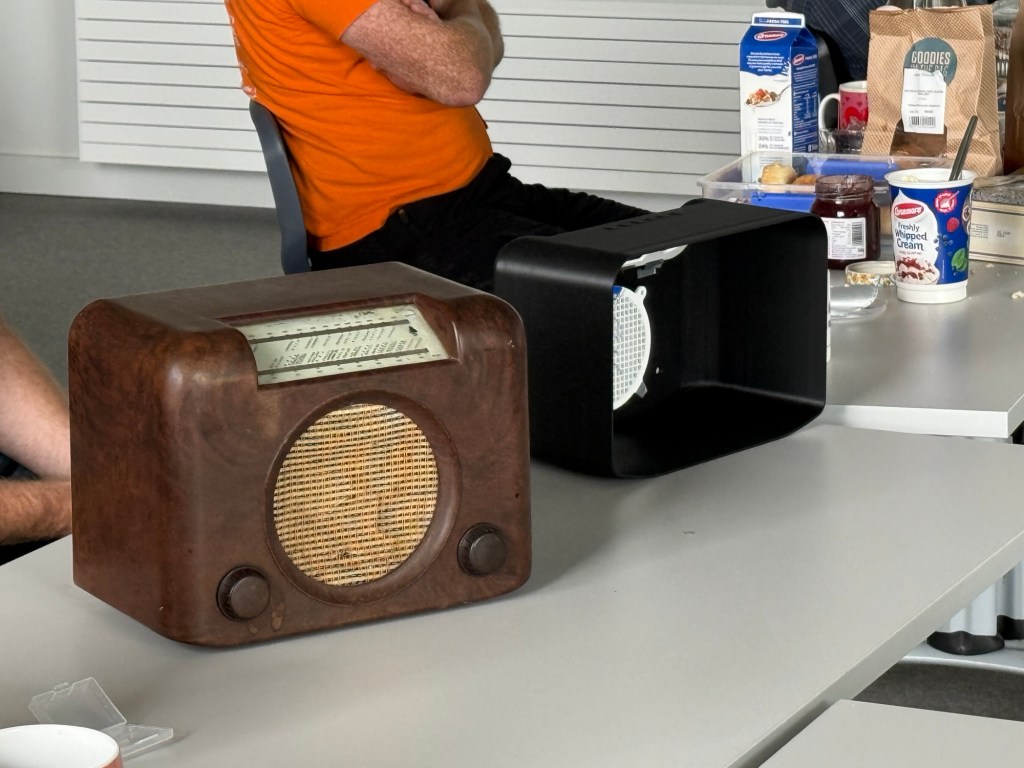
David Powell with our new (left) and antique (right) radios.

The radios that we displayed this year were predominantly developed by David Powell, Keith Colton, Frank Duignan, Shane Ormonde, Ted Burke, Richard Hayes. Of course, many other people provided ideas and advice during our STEM Ensemble meetings.

I’ve been attending the meetings, although I can’t contribute much on this topic. Nevertheless, I go to learn and soak in the maker spirit!

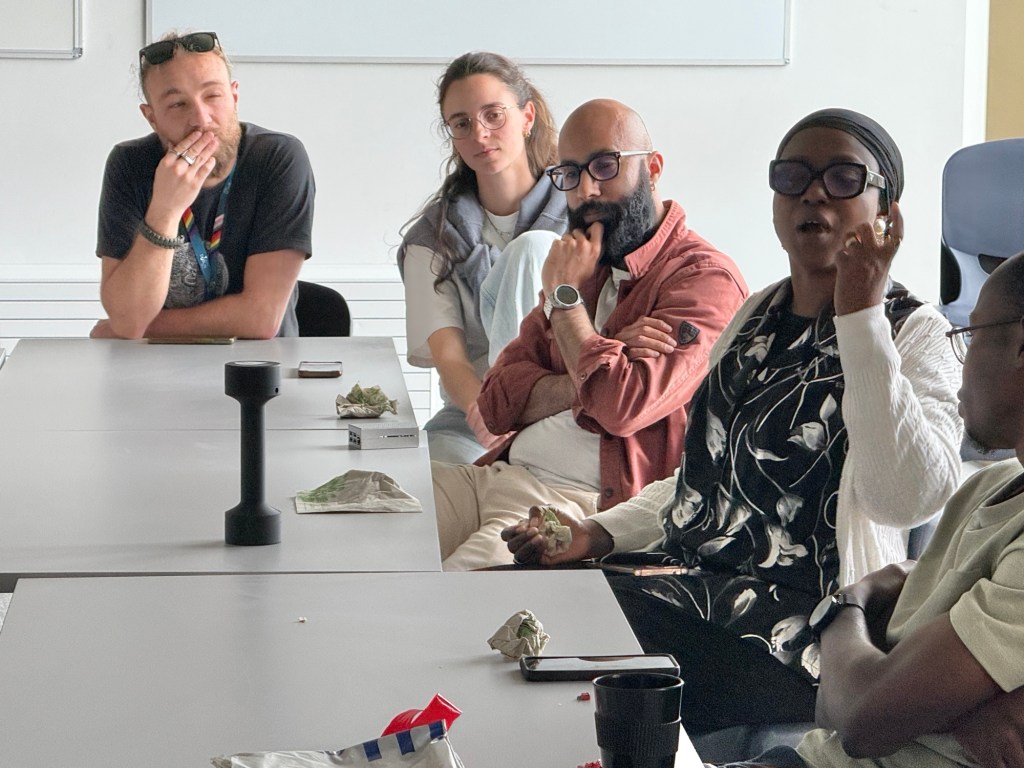
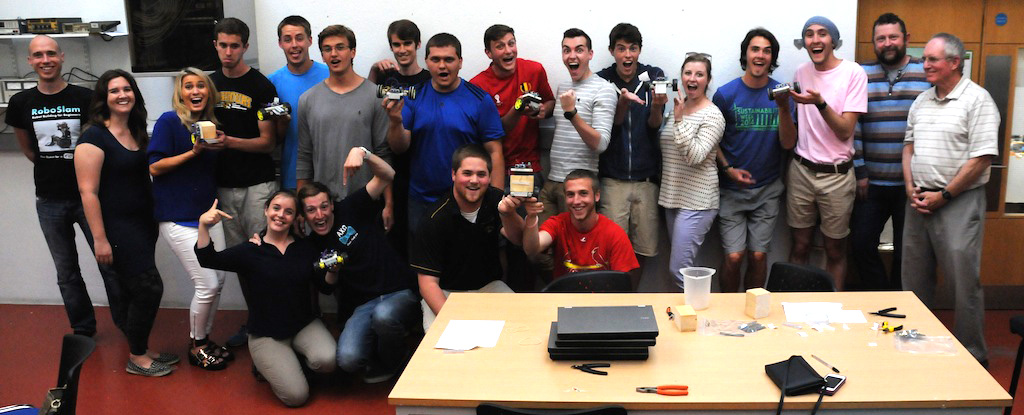
Some of the STEM Ensemble at Dublin Maker, giving me a good laugh!

Since we’re no longer just about robotics, we shifted our name from RoboSlam to “Dublin STEM Ensemble”. Our group is associated within the School of Electrical and Electronic Engineering at Technological University Dublin. It’s also associated with the university’s tPOT research group (“tPOT” stands for “toward people oriented technology”), to which I belong.

STEM Ensemble is group of staff, students, and alumni who reflect TU Dublin’s long-standing commitment to inspiring public interest in science, technology, engineering, and mathematics. Damon Berry holds tPOT and the STEM Ensemble together—he’s a great leader!

By engaging directly with attendees, our group encouraged new perspectives and fostered a spirit of creative inquiry.

We are hoping see you at Dublin Maker next year!

Dublin Maker here we come!

The TU Dublin RoboSlam gang is alive and kicking!

Nearly 20 of us met in February to start planning our exhibition for Dublin Maker 2020. The big event is to be held on the 27th of June in Herbert Park, on the south-side of Dublin.

Last week, a portion of our team reassembled to get different people’s parts working together in a coordinated way. I’ve created a little video of that second prep session for you to enjoy.

One thing that worries me, though, is that all the stuff my colleagues have made looks so very cool, so incredibly professional, that visitors to our Dublin Maker booth will think they BOUGHT this ready-made. Not so.

For instance, Keith Colton (in the video with the bandaid on his thumb) used a 3D printer to make the car he’s holding. He made it from scratch.

Shane Ormond combined a whole bunch of cutting-edge technologies to get a tiny camera on top of his race car to feed video into the VR headsets and TV monitors, all the while controlling the car’s behavior from a hand-held device. He’s been sending us video updates from his house and it’s been cool to watch his car speed under sofas and chairs and around his lovely home.

When I tired driving, I couldn’t control the car too well–and I’m pretty used to driving sporty cars! In this case, the car didn’t quite have the handling of my 2004 Nissan Z350. The car was racing around at top speed and the VR googles made it all seem much too real!

Note in he video how Paul Leamy’s stomach turned when his car flipped over. Seemed real! You can see on the TV monitor, but viewed through VR goggles it’s all the more gripping.

So, see for yourself!

Come on out on June 27th to see where all this leads. Our team is just at the start and we plan to build a plethora of buses, stop lights, trams, and Dublin city sites for our cars to whizz though on Dublin Maker day 2020.

Luke’s Robot Show-and-Tell

Our RoboSlam facilitators team has been growing this semester as we have been recruiting and training people to conduct their own RoboSlam robot-building workshops.

As it turns out, we also have also recruited a RoboSlam ambassador! Ten-year-old Luke Buckley, who I first met at ResearchNightDublin, attended a workshop on how to assemble robot circuitry that we held during Science Week. He rebuilt his robot on his very own, at home, and then brought his robot to school to show his classmates. He demonstrated how it worked and how to put it together.

The RoboSlam should get Luke into a programming workshop very soon (and then, who knows, maybe a facilitator training session, too). With enthusiasm like his, the sky’s the limit!
Here’s a note his mom sent to let us know about his experience. We love to receive followup stories from our participants–if you have any more, please email them on! We’re just a click away.

Dear Shannon,

I just wanted to say a big thank you for the RoboSlam workshop that my son, Luke attended. He asked me to say thank you from him too.

Just to give you some feedback on the outcome of your RoboSlam outreach activity, I thought that you might be interested to hear that Luke was able to disassemble and rebuild the robot on his own afterwards without any difficulty.  He also brought it into school (Glasnevin Educate Together National School) where he gave a demonstration to his class (31 pupils aged 10-11). Apparently the robot behaved perfectly during the demo and generated plenty of interest!

Many thanks again,

Niamh

Luke's robot

Luke O’Dowd at home, perfecting his robot design and testing it with an arena he built for himself. This robot is programmed to detect the change in color from black to white and to follow the line.

Making Videos, Making Fairs

Producing robot-building events requires warp-speed learning.  In just the past few days, helping with a Dublin Maker event, I learned:

  • to quickly make and post educational videos
  • to setup and run a RoboSlam educational booth
  • how to teach teenty-tiny tots to build robots
  • what “Makers” are, what they do, and how they talk (it’s a whole new language to me!)
  • about 3-D printing and how to build (and even invent) your own machines using laser cutters and 3-D printers

I’ve posted links to two videos I made as well as some photos from last Saturday’s Dublin Maker event.

Here’s the edited video we posted to introduce RoboSlam.com to website visitors.  I am really quite proud of it!

Here’s the short promo video we posted earlier last week to advertise the fair:

I wish I could convey the excitement of seeing little four and six year old girls build their first robots… and tiny little boys jump up and down with glee as they discover the difference between remote-controlled and autonomous robots!

Although I captured some behind-the-scenes images of set up and take down with my still cameras (posted below) they don’t come anywhere close to showing what it was like to be there.  Fortunately, I was able to capture some video of the kids building and operating robots so we can learn from it and create even better programs in the future!


Sinead’s Slammin’ TV Production

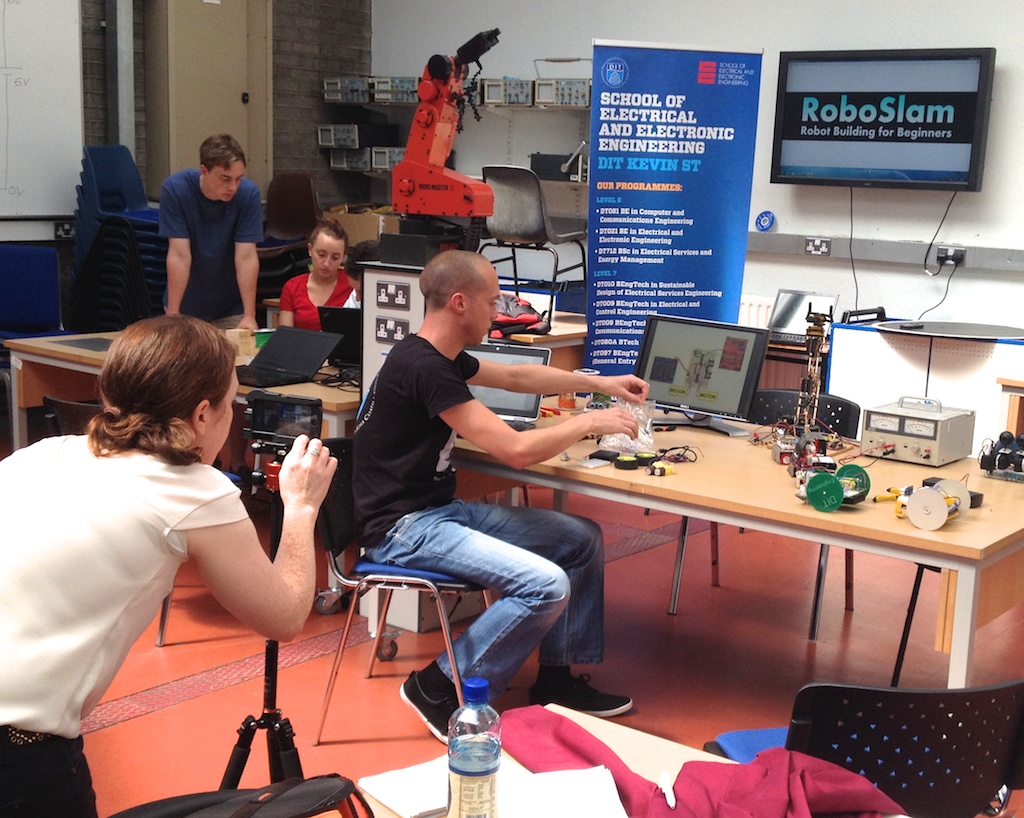
RTE's Sinead Morris filming DIT's Ted Burke using a kitted-out iPhone 5.

RTE’s Sinead Morris filming DIT’s Ted Burke using a kitted-out iPhone 5.

TV journalist Sinead Morris came to DIT’s Kevin Street location today to film robot construction in action. Our RoboSlam team leaders — Ted, Damon, Frank, and I — are preparing for the upcoming Dublin Maker event, to be held at Trinity College on Saturday, July 26.  Sinead wanted to capture the activity.

The Dublin Maker event served as the impetus, Sinead explained, but the main intention of her piece is to show what the RoboSlam group is doing with robotics.

Sinead’s production is likely to air on RTE’s digital news channel, News Now.

Ted and Sinead set up for a shot of the robot underworld.

Ted and Sinead set up for a shot of the robot underworld.

Sinead is testing photojournalism innovations. The Irish television company where she works, RTE, wants its journalists to gain experience with spontaneous, low-tech approaches — so staff members can shoot, edit, and post “on the go.”  At the end of this innovation project, RTE staff will have the skills needed to disseminate news on the run… when opportunities arise.

RTE asked its staff to take this challenge: produce interesting and informative pieces wholly on their iPhones.

Hampton University journalism students were learning to do the same when my friend Tony Brown was dean of the program so, for me, watching this process firsthand proved fascinating.  The move toward spontaneous creation of new content aligns with the goals for our RoboSlam project; we want our workshop participants to take their robots home and start creating new “home grown” code for operating the ‘bots.

TV news technology has come a long way in my lifetime. When I was a kid in the ’70s and ’80s, my parents were television journalists. They used 16mm film equipment, and I learned to use the same when I was in college studying architecture.

Today’s capture-edit-and-post culture speeds the process. Mom and Dad used to shoot the footage and put it on a Trailways bus bound for the TV station one hour away. While it was in transit, they’d phone the station to make a voice recording of the text for the station to overlay.

It would appear in its synchronized form on that night’s news.

Now, Viola!, Sinead can do, alone and in moments, what it took dozens of people hours to create in the 1980s.

Robot show down.

Robot show down.

So, I was able to learn quite a bit from Sinead today, about software as well as hardware, and perhaps now I can give her videography techniques a go.

She also inspired me to write up this blog on site, while she’s finishing up her interview with Ted. Moments ago, she asked him what it’s like to work this type of job. He said he loves coming in every day to build robots and work with students.

He didn’t mention that he and his colleagues are currently on vacation and aren’t at all required to be here.  They just can’t keep themselves away!

We actually had quite a few interesting projects underway in the lab today while we were filming… a veritable Santa’s workshop of robotics. For instance, one of DIT’s third year students, Shane Ormonde, was here developing a new robot to show at the Dublin Maker event. He just completed a degree in Electrical and Control Engineering (DT009) and will pursue yet another degree in the fall.

Shane is conducting a robotics experiment while on summer holiday.  It’s a nice break, he says, from his call-center job.  (Gotta love that initiative!)

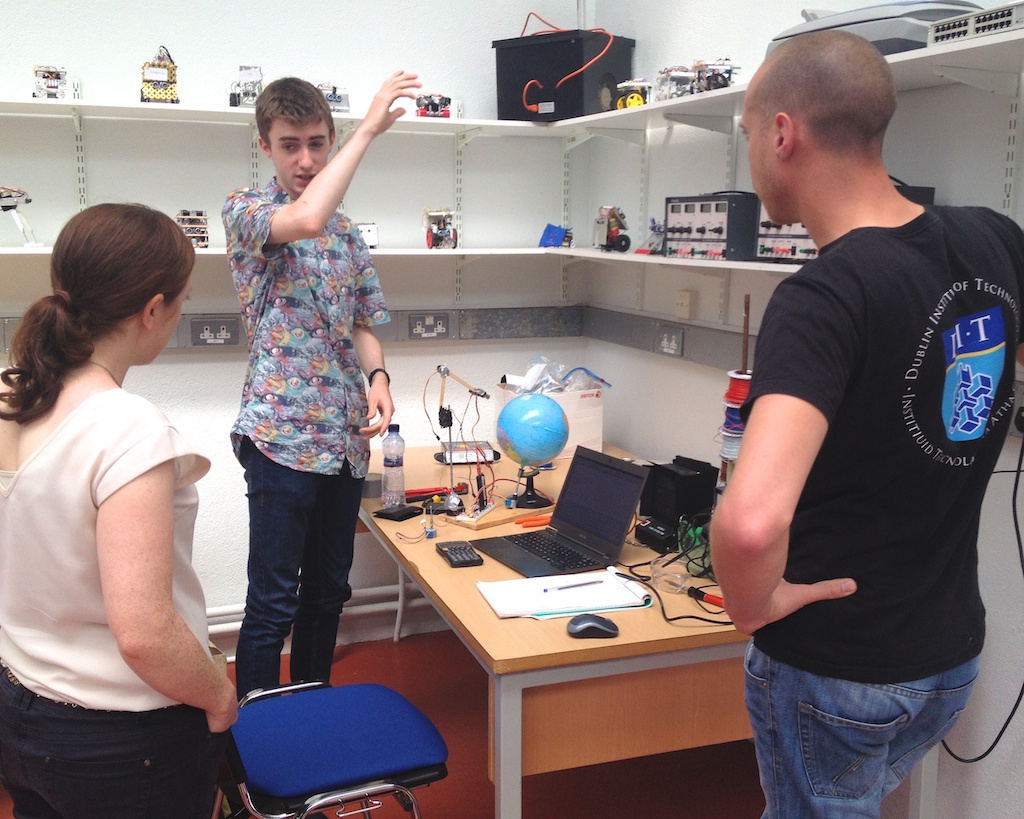
Shane Ormonde's new global robot arm.

Shane Ormonde’s new global robot arm.

Shane is building and programming a robotic system that, using a globe, can show in real time what the International Space Station is actually tracking at the same moment. Eventually, his robot will also be able to point to any location a person requests, using the laser on the end of its moving arm.

The globe itself moves to set the correct longitude and the arm moves to pinpoint the latitude.

He originally wanted people to be able to tune in via internet to ask the robot to identify specific locations and complete other such actions.  Shane’s creation will be featured as one part of our DIT RoboSlam exhibit at the Dublin Maker event.

Come join us next Saturday – near the cricket pitch at Trinity – and see!

If there was no fear… what would you dare to dream?

Ted, Damon, and crew conducted a RoboSlam for 18 undergraduate engineering student form the University of Wisconsin last week.  I'll post more photos of the event soon, on our RoboSlam blog.

Ted, Damon, and crew conducted an abbreviated RoboSlam this part week for 18 undergraduate engineering student from the University of Wisconsin last week. They are students of former Fulbright, Bob O’Connell (far right). I’ll post more photos of the event soon, on our RoboSlam website.

Solstice in Dublin!

Solstice in Dublin!  It was my first solstice here and I enjoyed every minute of it! Interestingly, there’s indirect sunlight for even longer than 17 hours. The first rays appear before 4 AM and the last disappear after 10 PM.

Dublin is full of sunshine!  Temperatures are topping top out each day at about 65 degrees Fahrenheit and the sun has been staying up for 17 hours each day.  That makes for perfect weather for outdoor yoga.  On the day of the solstice, our yoga instructor, Peter, shared this provocation:  If there was no fear, what positive change would you make in your life?

I mulled the proposition.  I know better than anyone:  There’s good reason to fear what you may lose by chasing outrageous dreams.  But there’s also good reason to seek new knowledge and experience.  I hope someday my work will be a testament to trying hard to live life to the fullest.

This, the second week of my Marie Curie research fellowship, was full of adventures, errands, and learning.  My colleagues and I conducted a RoboSlam and a workshop on Problem-Based Learning at the start of the week.

I was honored to be included in a dinner and workshop with a guest from Portugal, José Manuel Nunes de Oliveira, who you may recall from an earlier blog.  Jose shared his work with the faculty of the DT07 electrical engineering program. This group of teachers is considering making the DT07 program more problem-based.

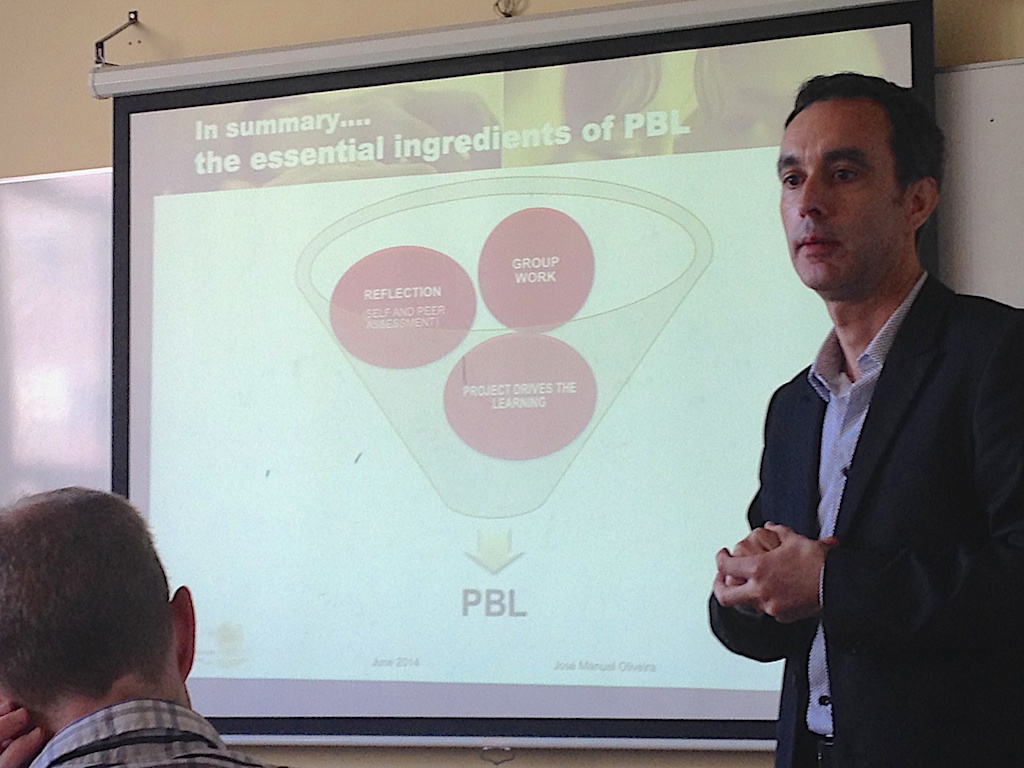
Jose's three essential elements of PBL.

Jose’s three essential elements of PBL.

Jose identified three elements he sees as essential to PBL (Problem- or Project-Based Learning):

  • Project drives learning
  • Group work
  • Reflection (including Self -and Peer-Assessment)

Jose described various aspects of assessment since this is a topic of concern to many of the teachers in the program.

I wish I had time to post details of the workshop, but I really need to get onto “real” work today.  Below, I’ve uploaded a photo journal of many highlights of the week. I hope they inspire you to find a least one new adventure today–however big or small.

New “RoboSlam for Facilitators” Workshop

Ted, Damon, and I have been gearing up for future RoboSlam workshops.   We have been looking for sponsors to help us continue and scale up our work.  For now, we’ll have to keep things fairly small and simple.  We’re not letting the lack of funds hold us back too much!  We’ve got to keep our momentum going!

During my Fulbright fellowship, I had several official projects. Along the way, I adopted a number of other projects–like RoboSlam–where I could learn and also contribute.

Ted and Damon are so talented and passionate about what they do that it’s impossible not to want to contribute to the success of their project.

While I was away studying in Rome, Ted and Damon hosted a workshop for people we hope will want to become facilitators of RoboSlam.  It’s part of our strategy for getting more people involved in the project.

RoboSlam Wrap Up

We ended the “Engineering Your Future” week, sponsored by DIT and Engineers Ireland, with robot competitions (video footage to come) and awards. On the RoboSlam blog, you can see the full contingent of robots we created. Students earned awards for their essays, test performance, robot design, and the like.

Preparing to Slam Again

RoboSlam planning session with Ted and Damon.

RoboSlam planning session with Ted and Damon.

Ted, Damon, and I have been meeting over the past couple of days to evaluate past events, brainstorm strategies, and plan for upcoming workshops.  We enjoy remembering recent Slams….

Finalizing and Testing

Things really got fun once all the circuitry, programing, structural components, and body casings all synched and we stared testing out our nearly-fully-functioning robots and working out the final kinks.  Success!

See more photos about finalizing and testing on the RoboSlam website.

RoboSlam finalizing robots 70