Studying architecture in Mexico with Emma and ASCA

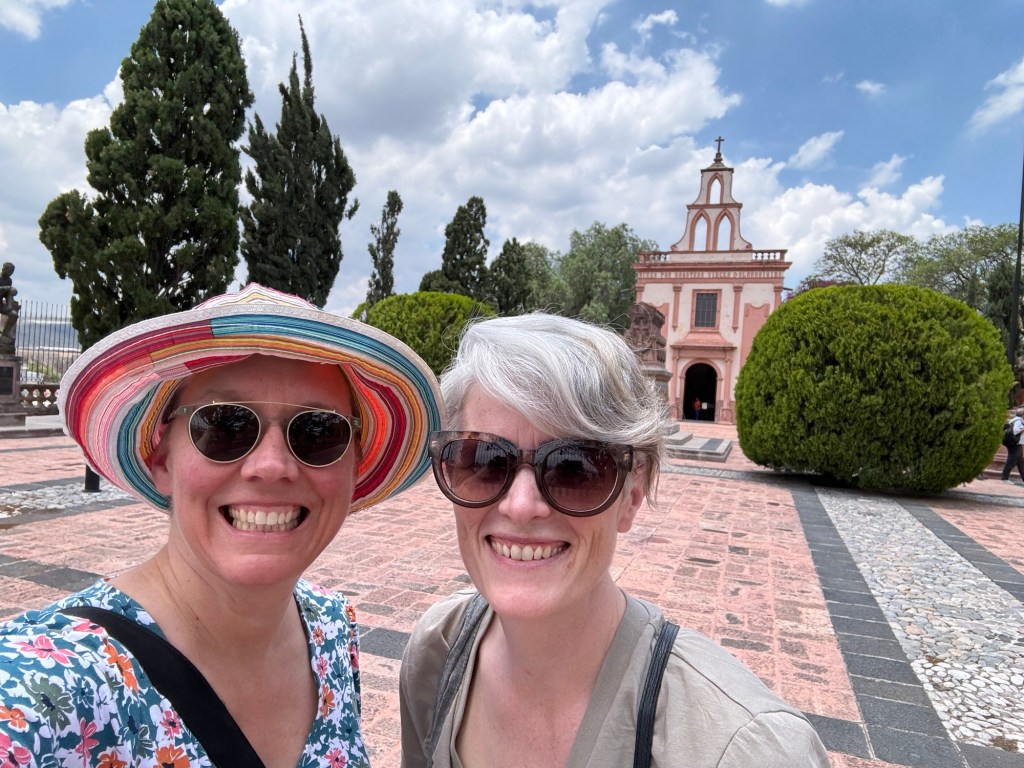
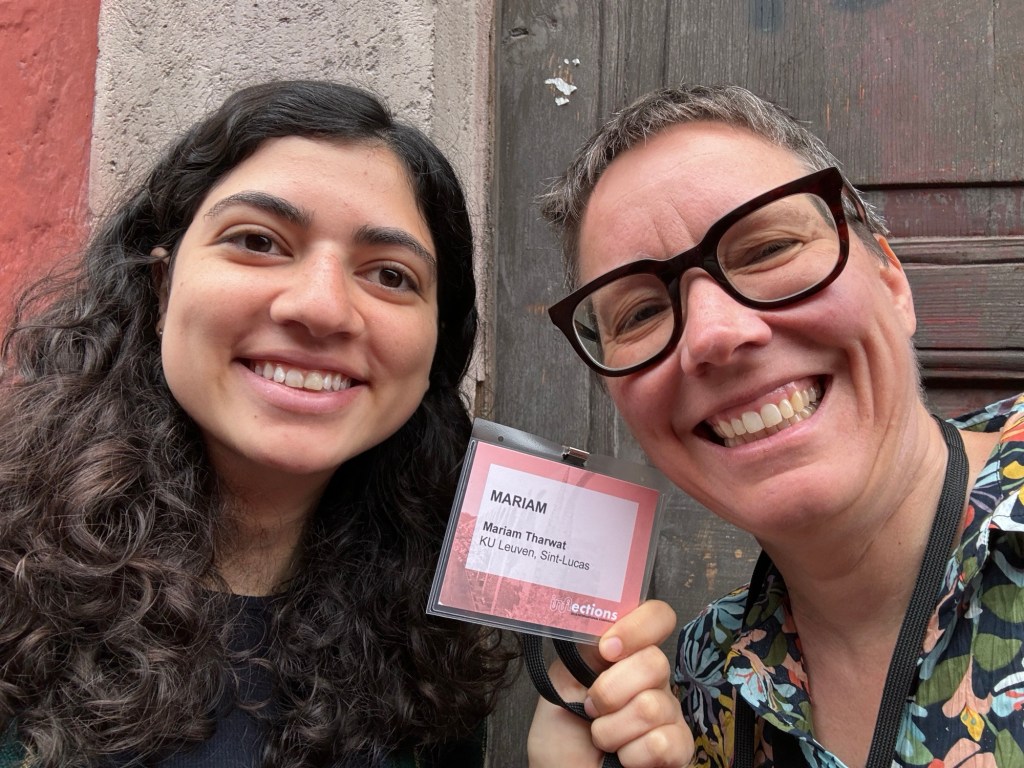
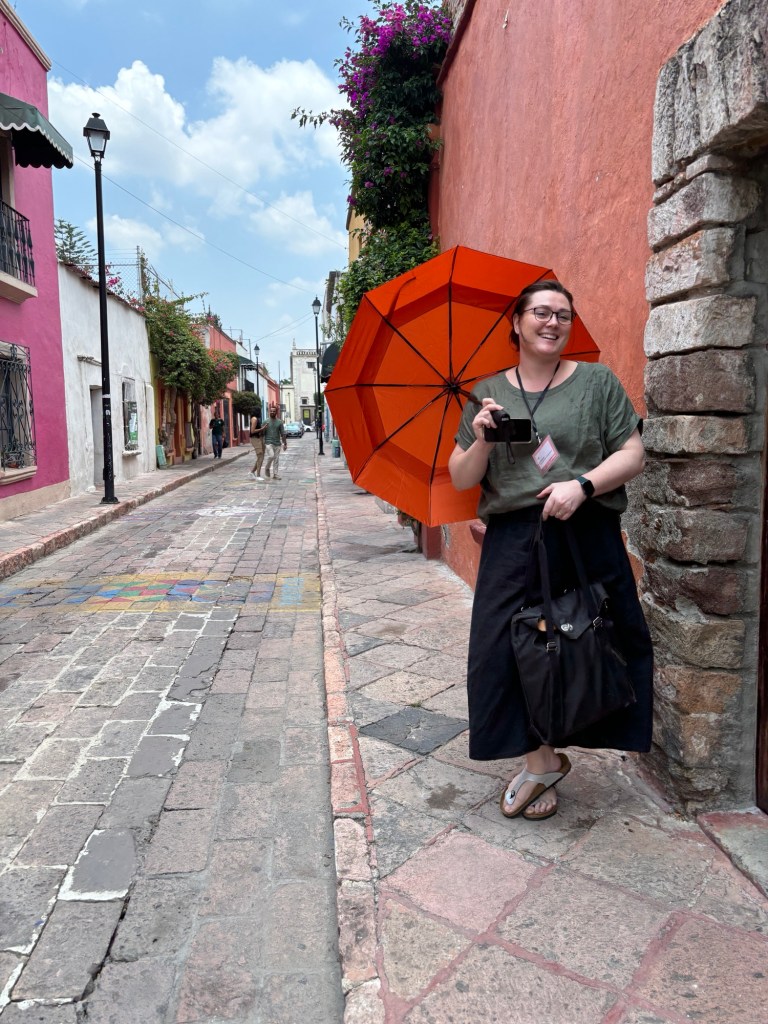
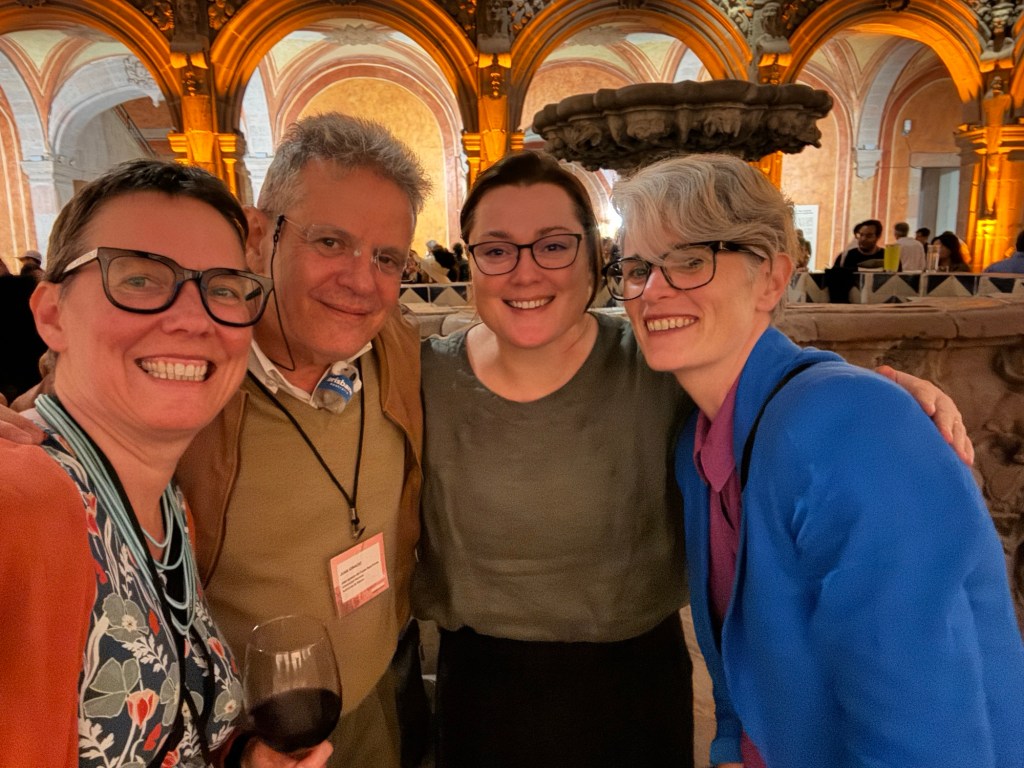
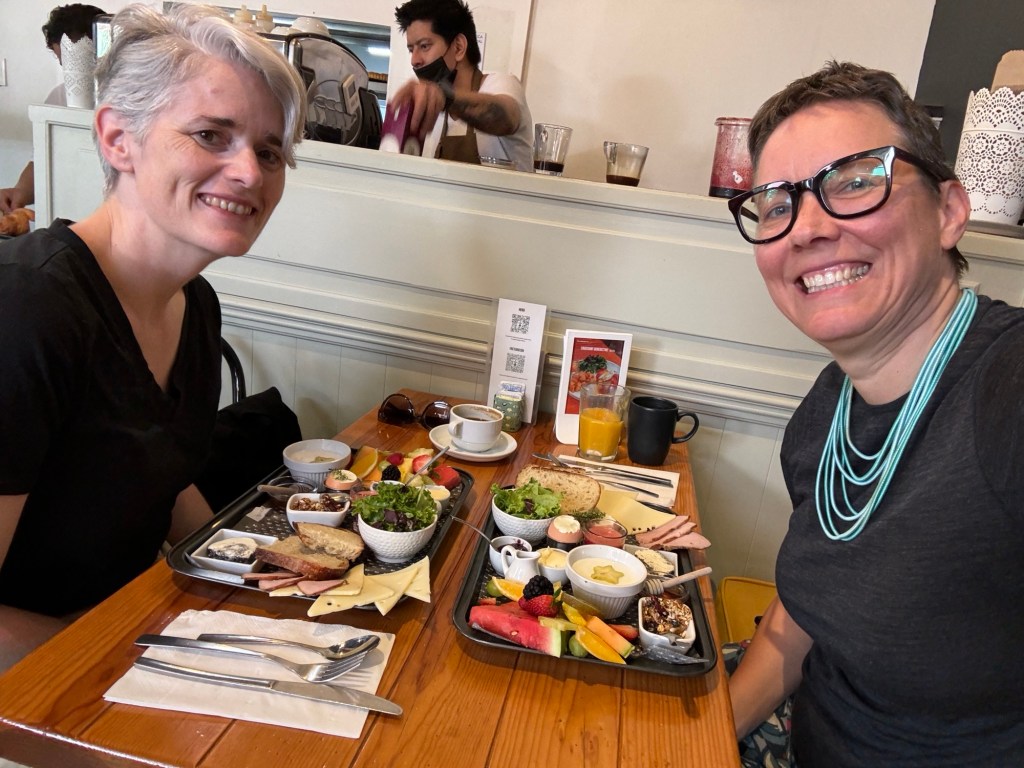
I spent last week exploring architectural topics and sites in Mexico, alongside my TU Dublin colleague and Head of Architecture, Emma Geoghegan.

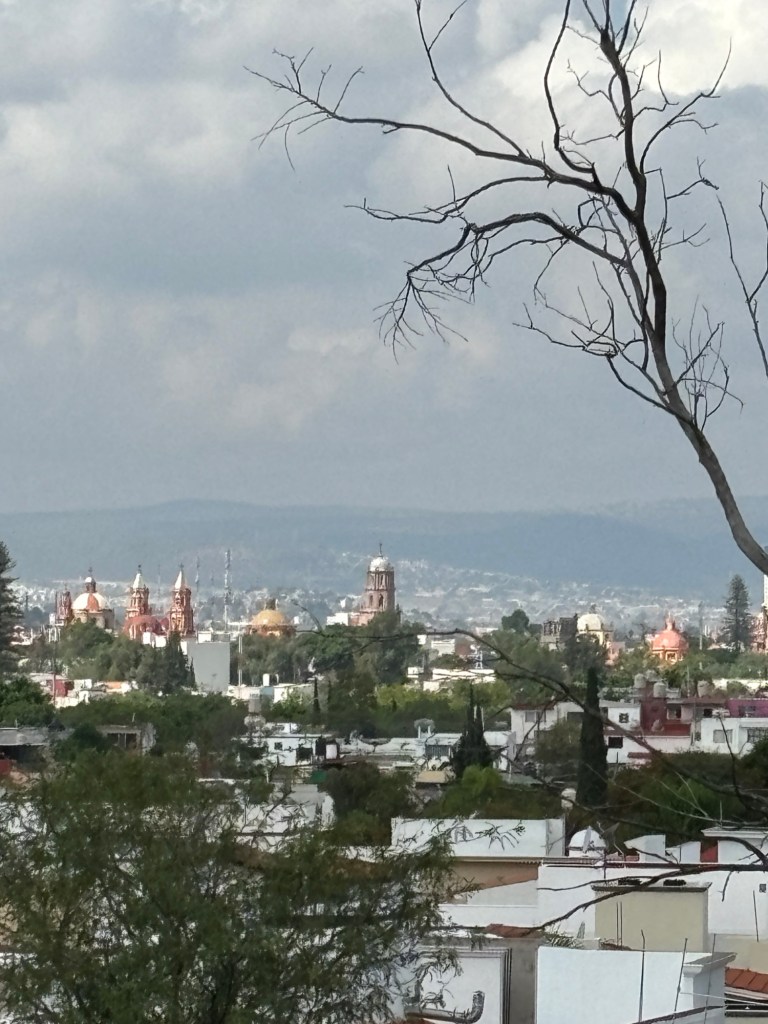
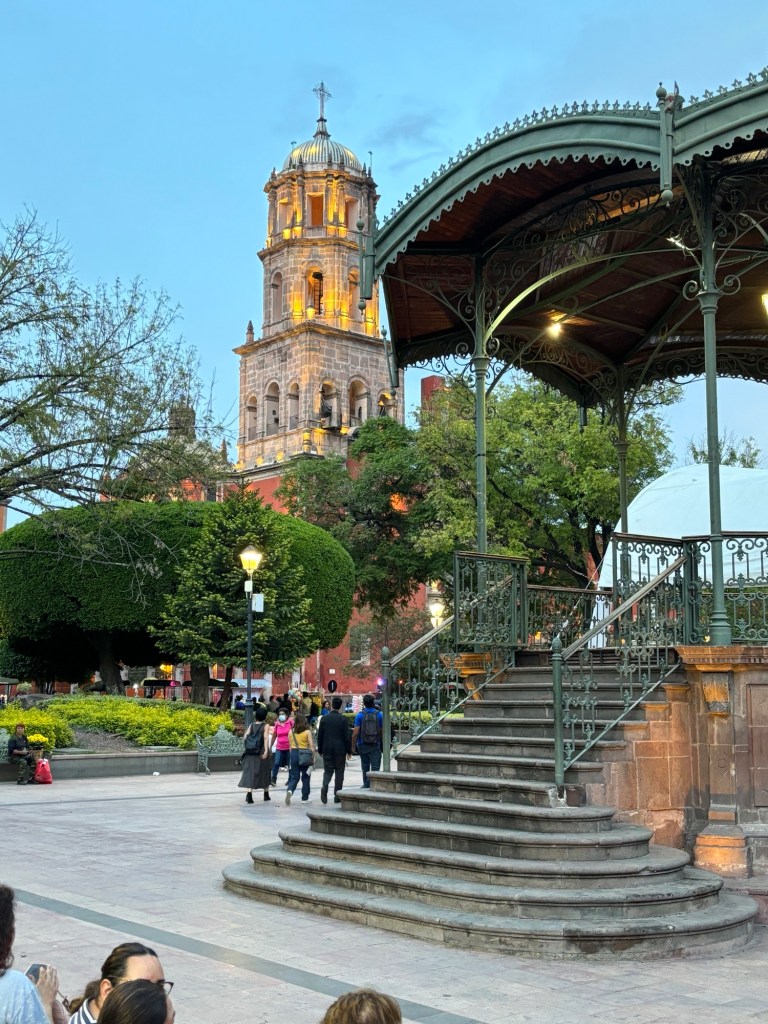
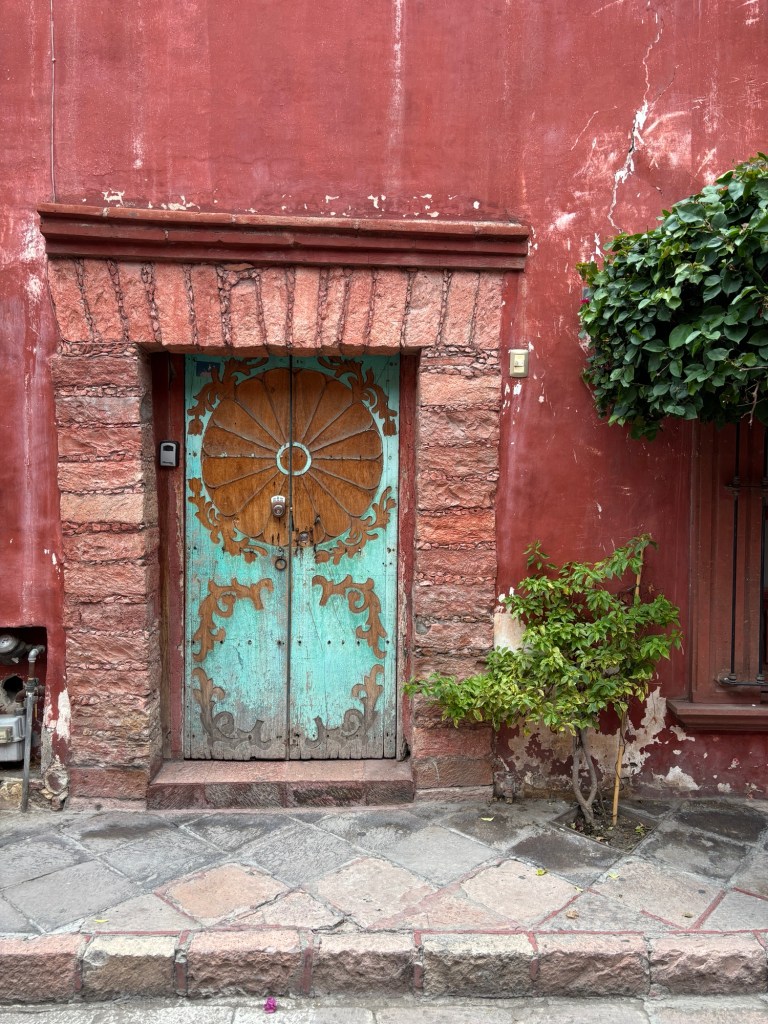
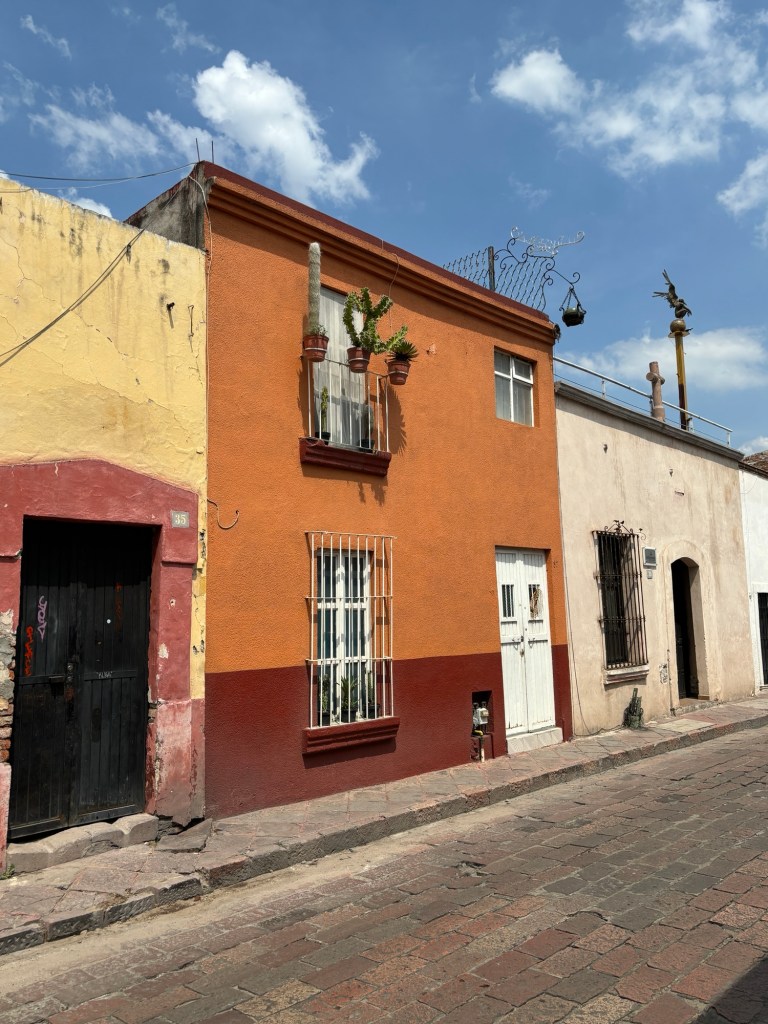
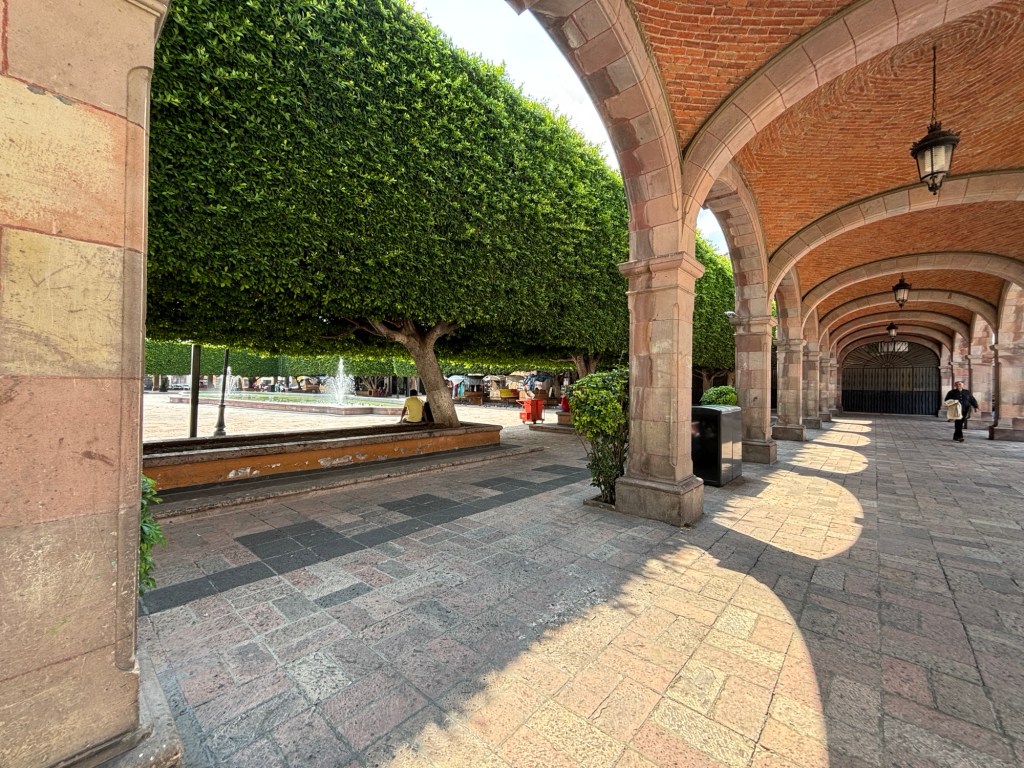
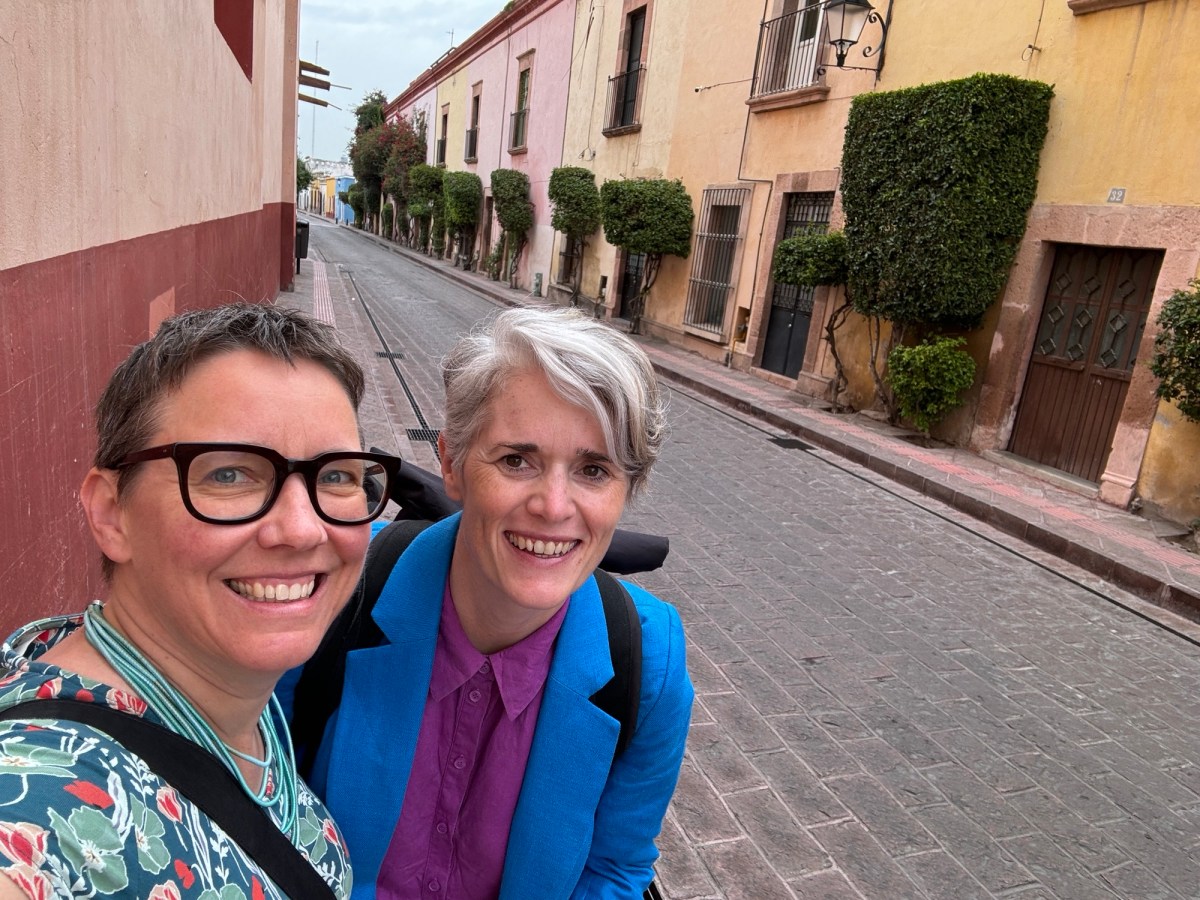
Emma and I met up in Mexico, to attend a three-day conference in Querétaro, a UNECSO world heritage city and one with a population similar in size to our home base of Dublin, Ireland.

The conference was hosted by the Technológico de Monterrey and the US-based Association of Collegiate Schools of Architecture (ACSA). I was a member of ACSA from 1999-2014, when I taught architecture in the States. I have represented ACSA with the National Architectural Accrediting Board (NAAB) and am still invited to serve annually, though the trip to the USA is prohibitively long.

Yet, this summer, I wanted to attend the organization’s conference to reconnect with ACSA, brush up on my architectural vocabulary and earn continuing education credits to support my Virginia-based architecture license, extend my professional network into Latin America, and learn more about the homeland of my PhD student, Sandra Cruz.

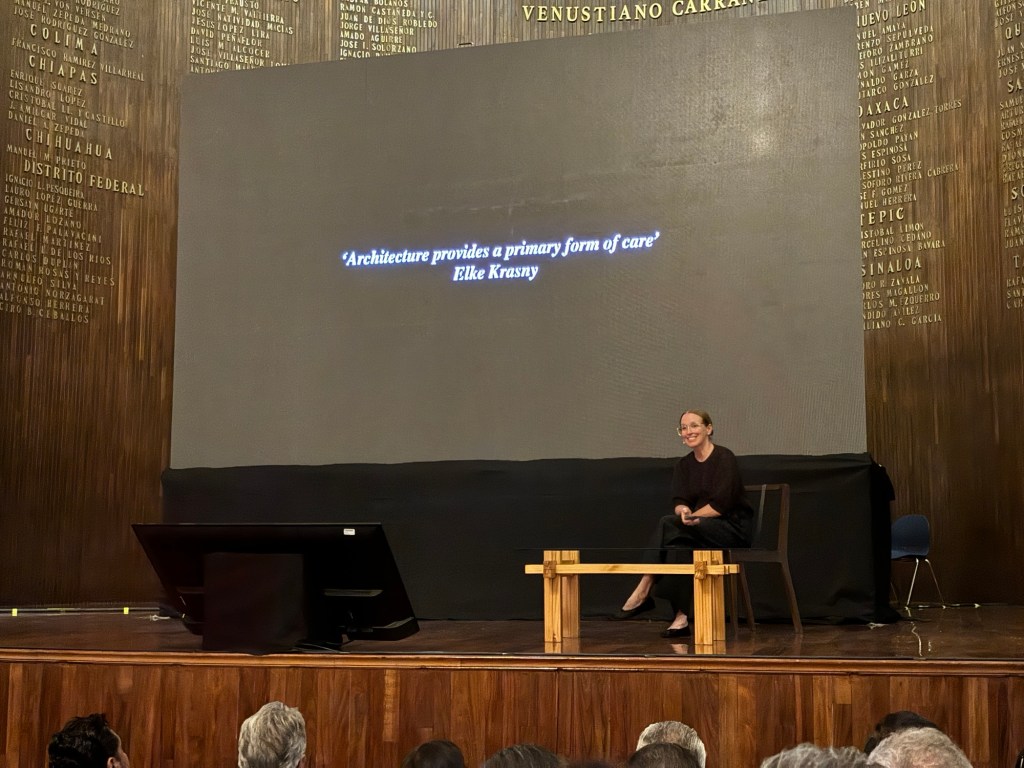
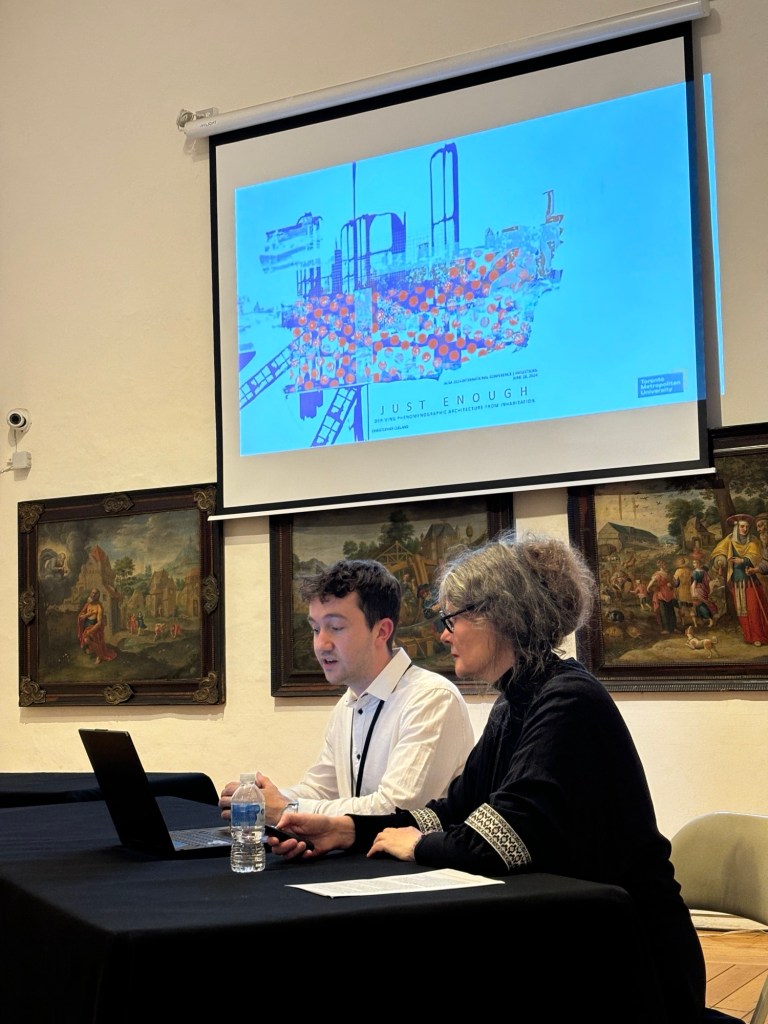
I asked Emma to join me for the trip, and she submit a paper to ACSA that was successful and, subsequently, very well received! Based on her submission, she was also invited to serve on an international panel of architectural education leaders (administrators and deans). She presented her ideas to the entire assembly of this ACSA International conference!
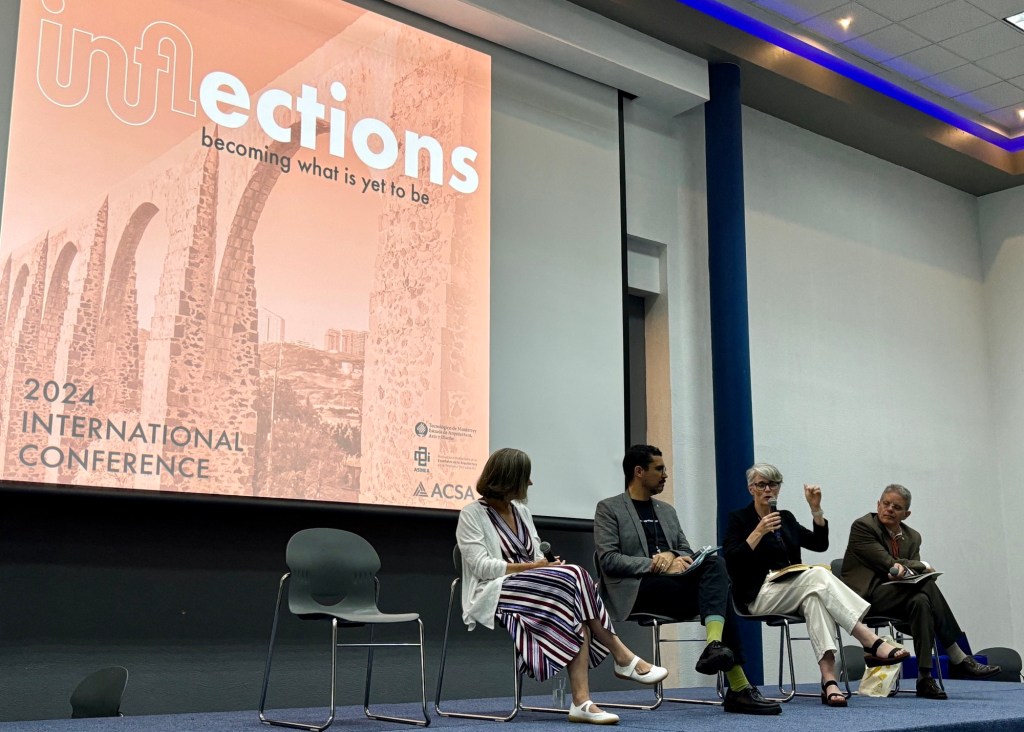
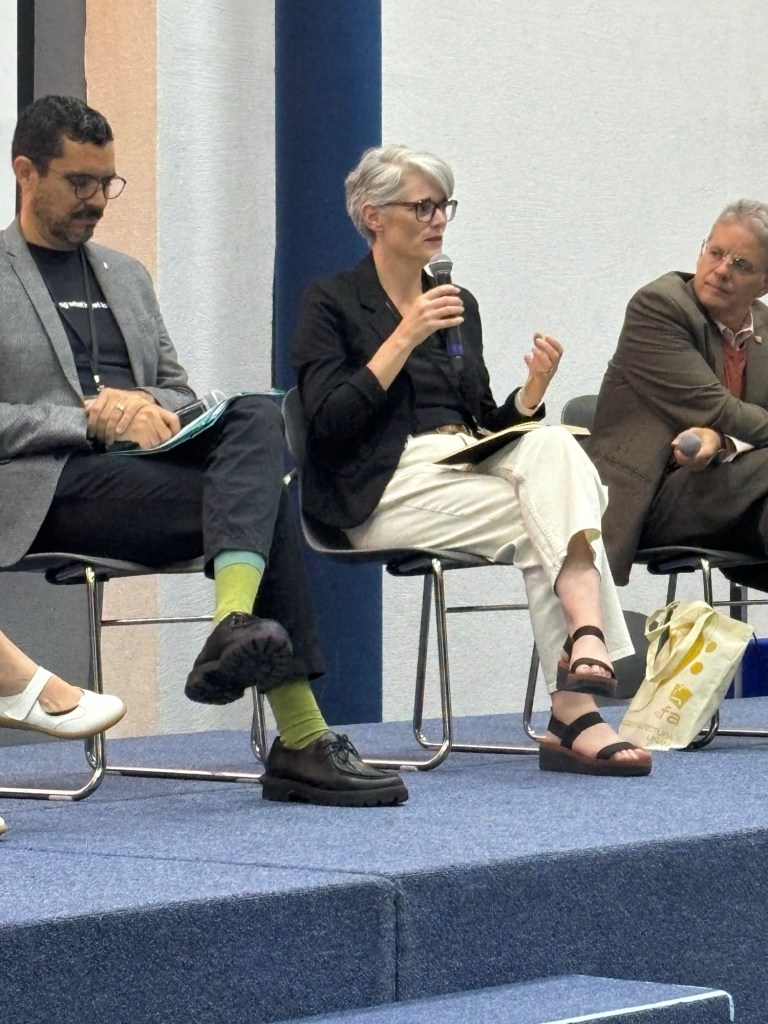
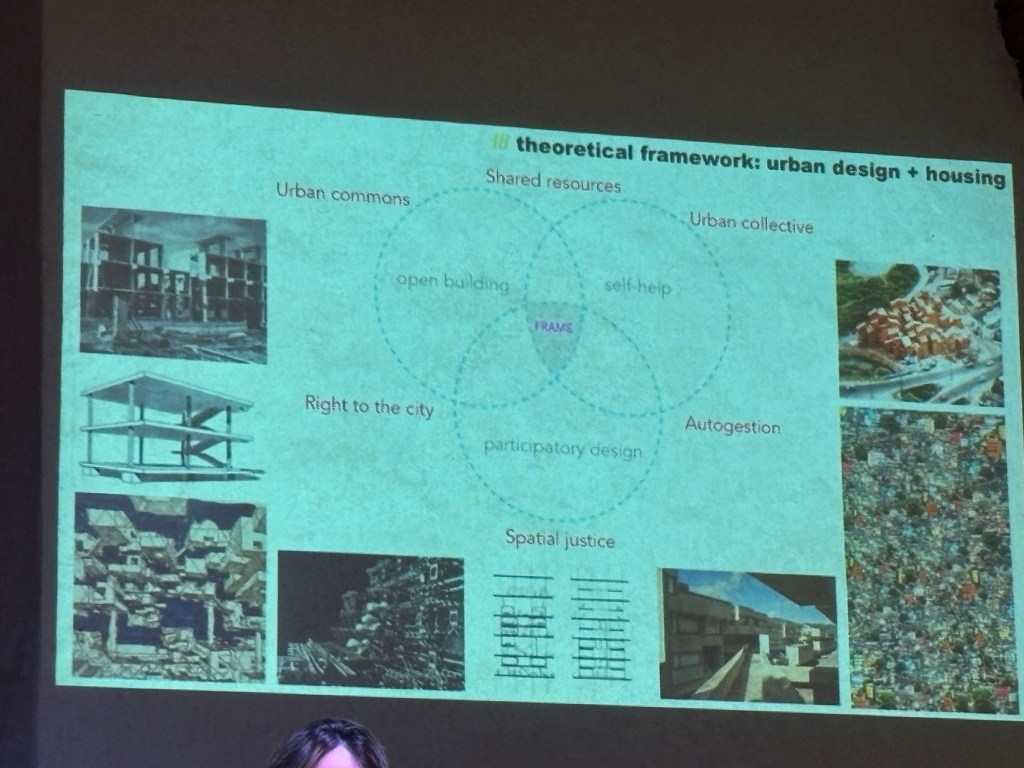
Emma’s work and her engaging delivery were a hit in both sessions. Her paper presentation garnered a packed, standing-room only, no-more-space-to-enter-the-room crowd. This was likely due to the popularity of both her engaging panel discussion and her paper topic (educational transformation for resilience and long-term sustainability, with a focus on housing and environment).

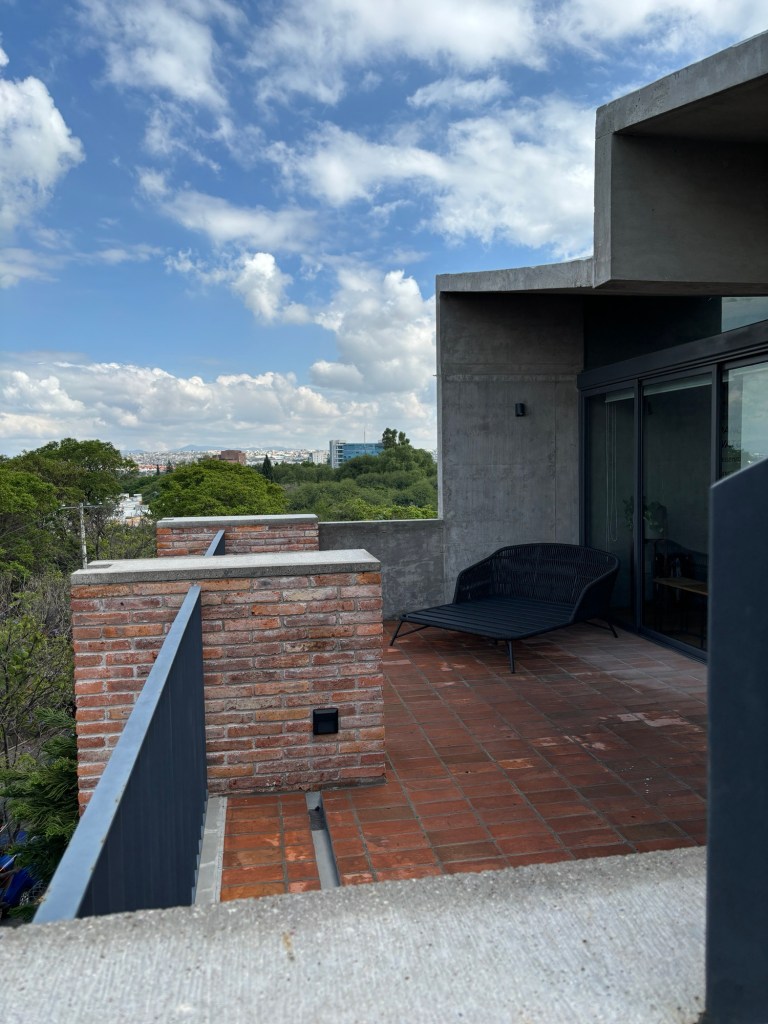
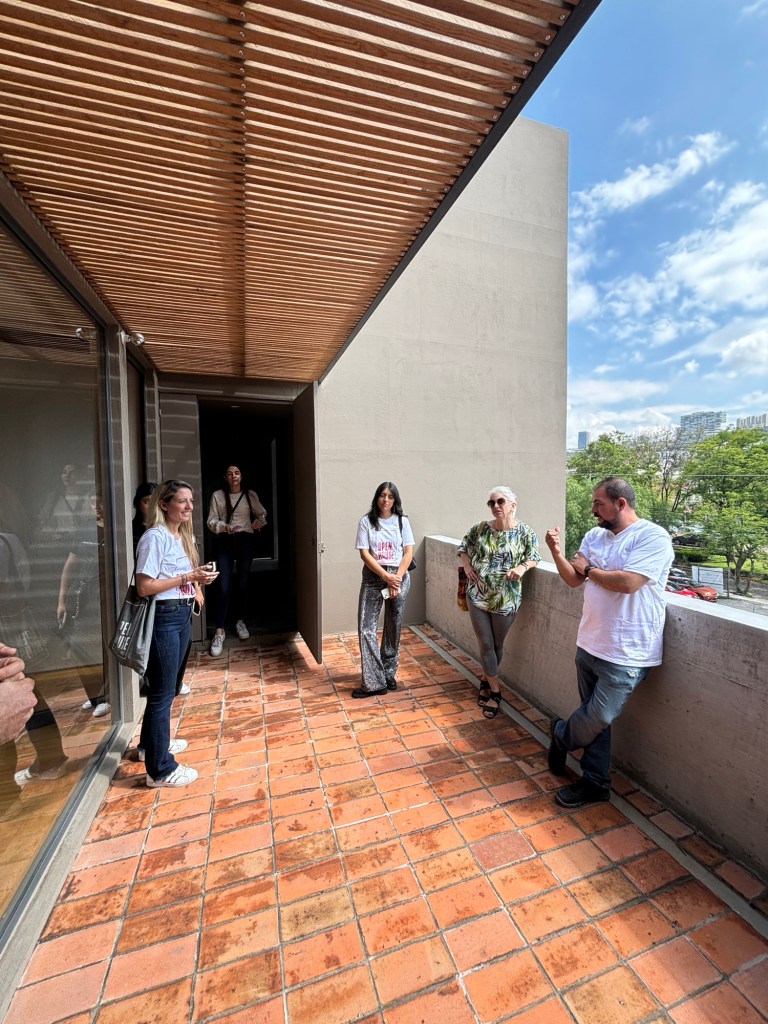
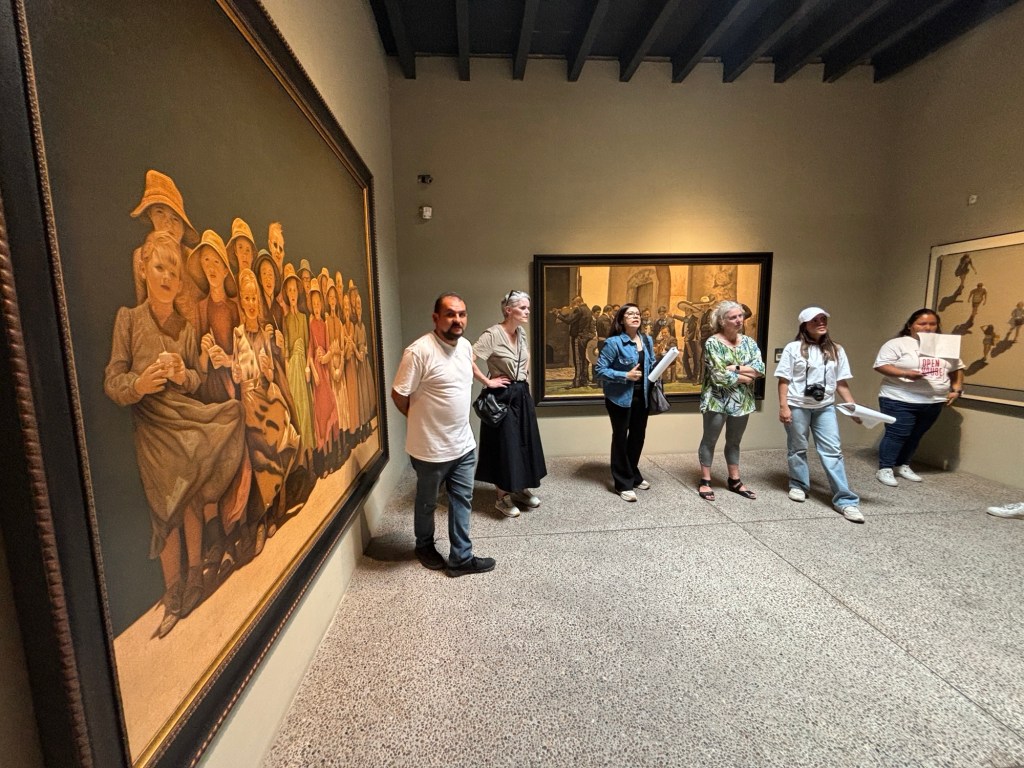
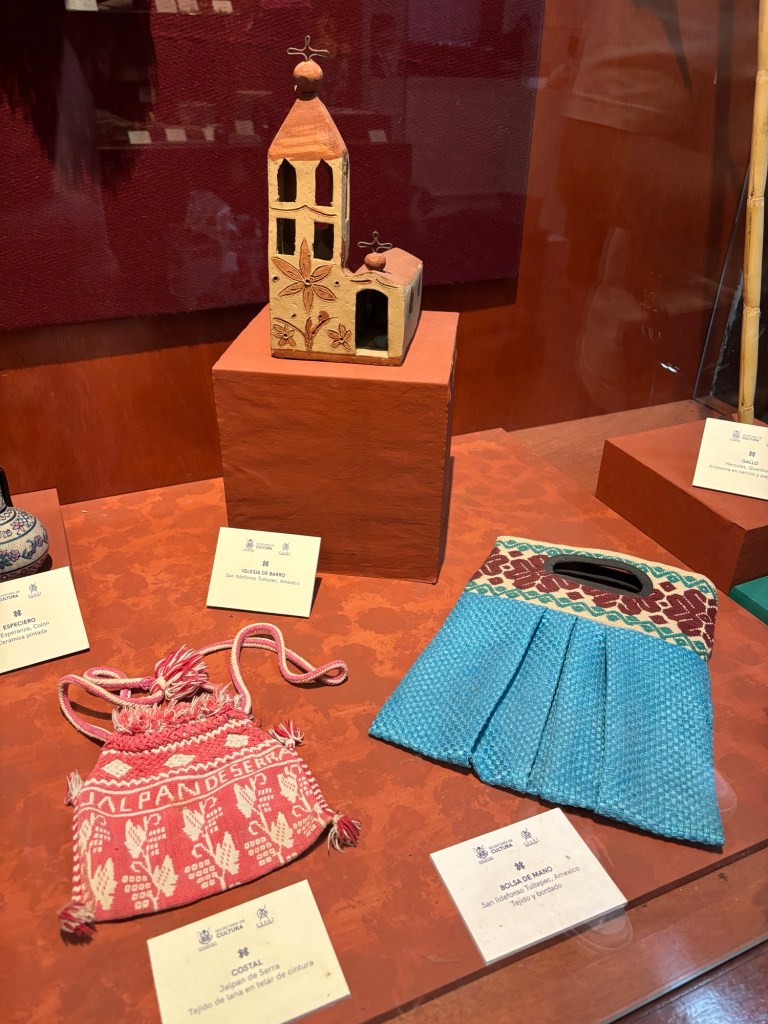
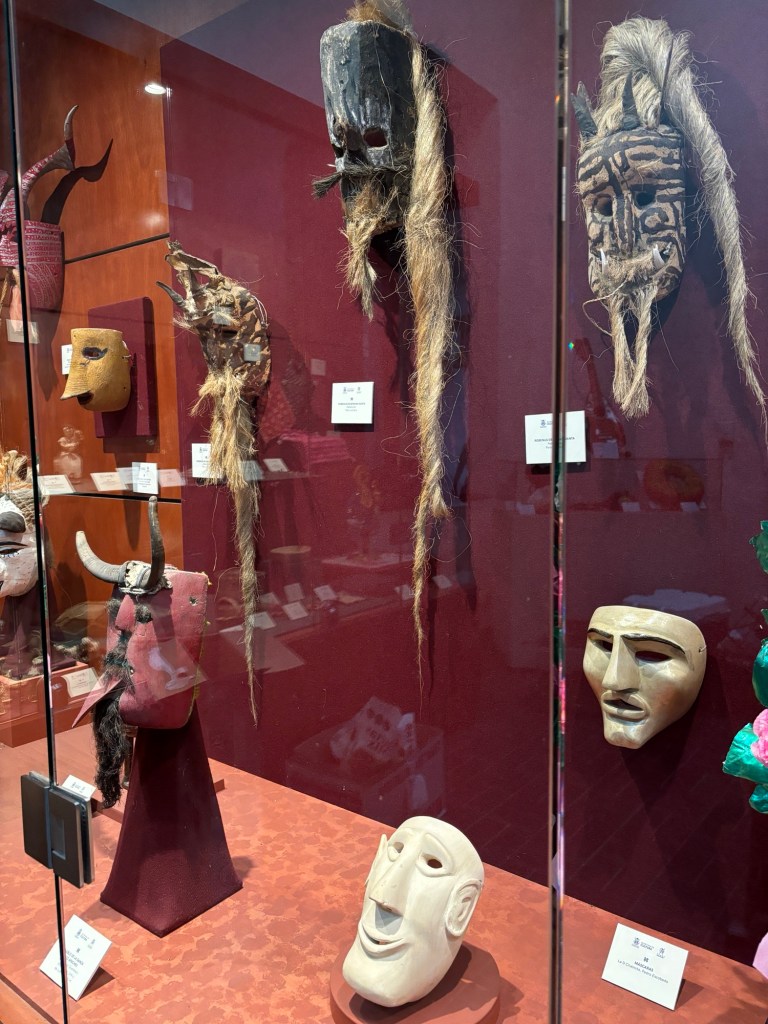
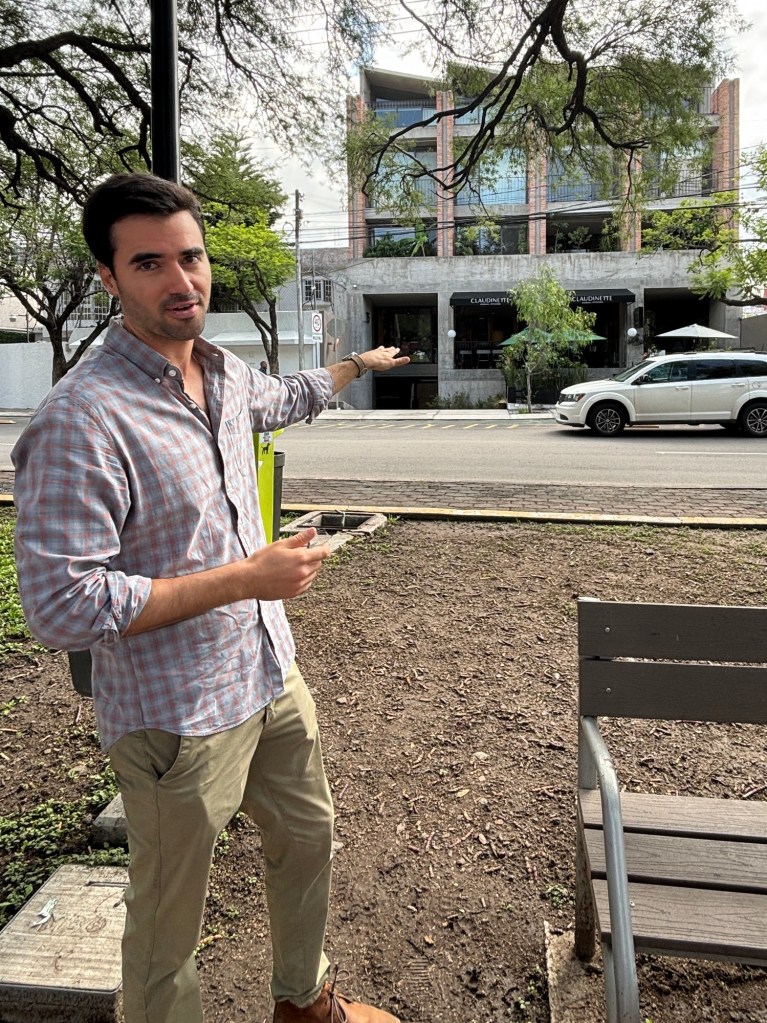
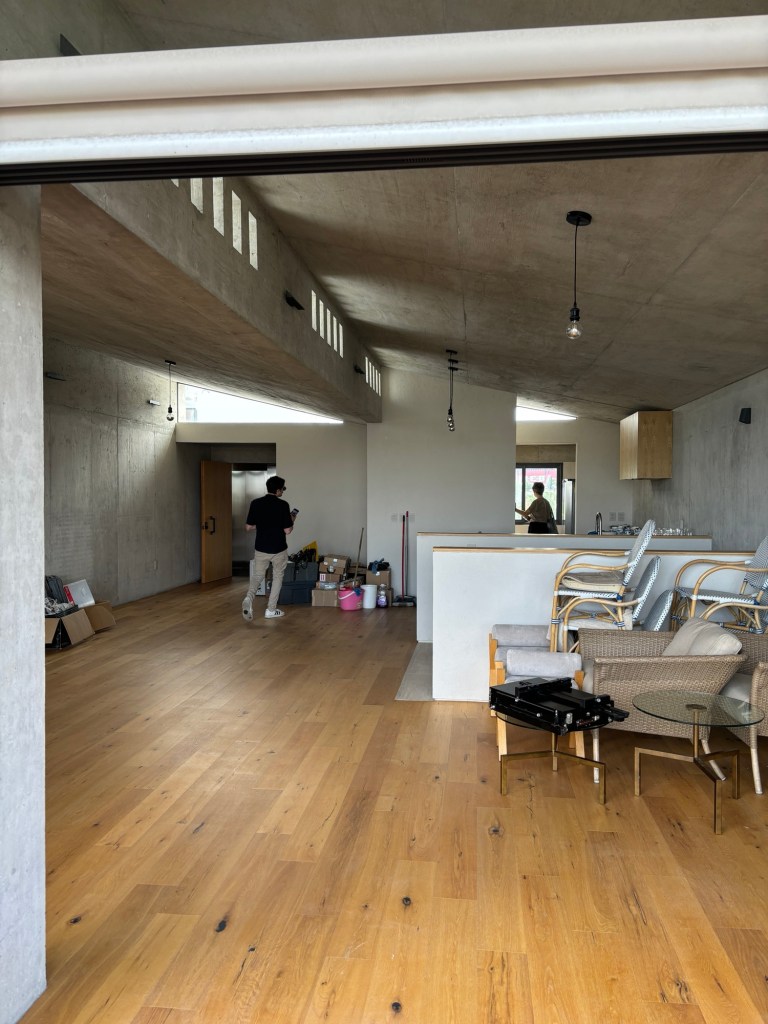
But before all the sessions got rolling, on Thursday morning, Emma and I started our conference experience with an Open House tour. Architects and developers from Querétaro taught us about the architectural and urban design history of the city and brought us to visit several contemporary architectural projects. We got to tour a mixed-use housing project, an environmentally sensitive adaptive reuse project, and a courtyard house turned into an art museum that was chock full of artistic treasures that combine painterly style with contemporary themes!
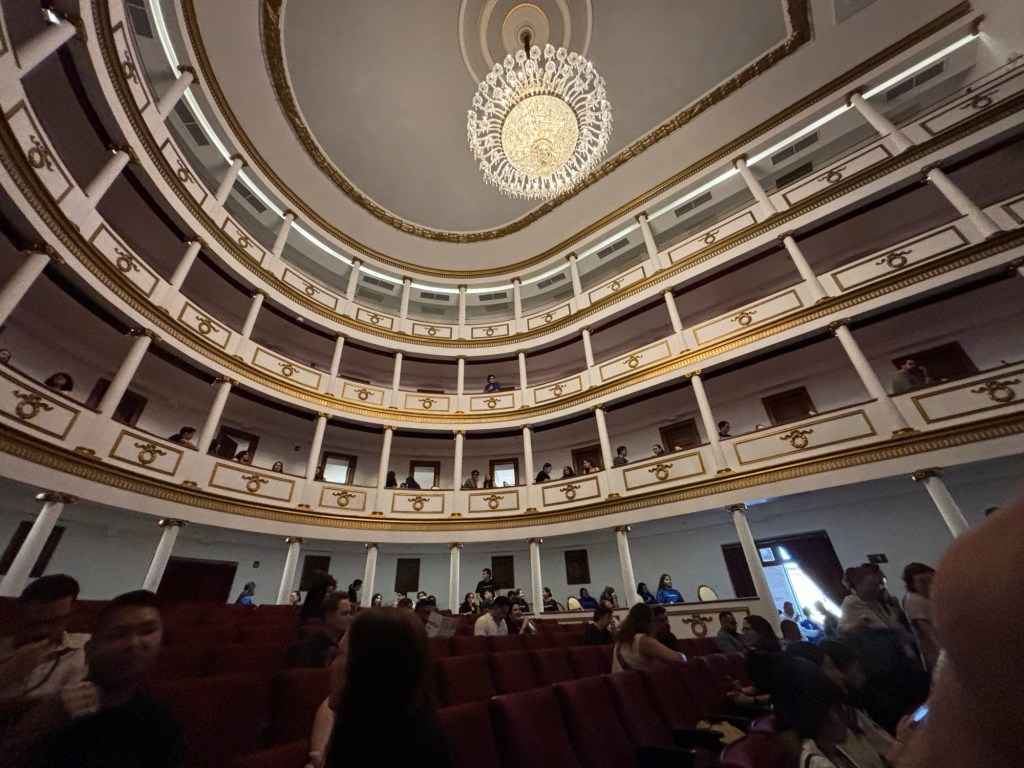
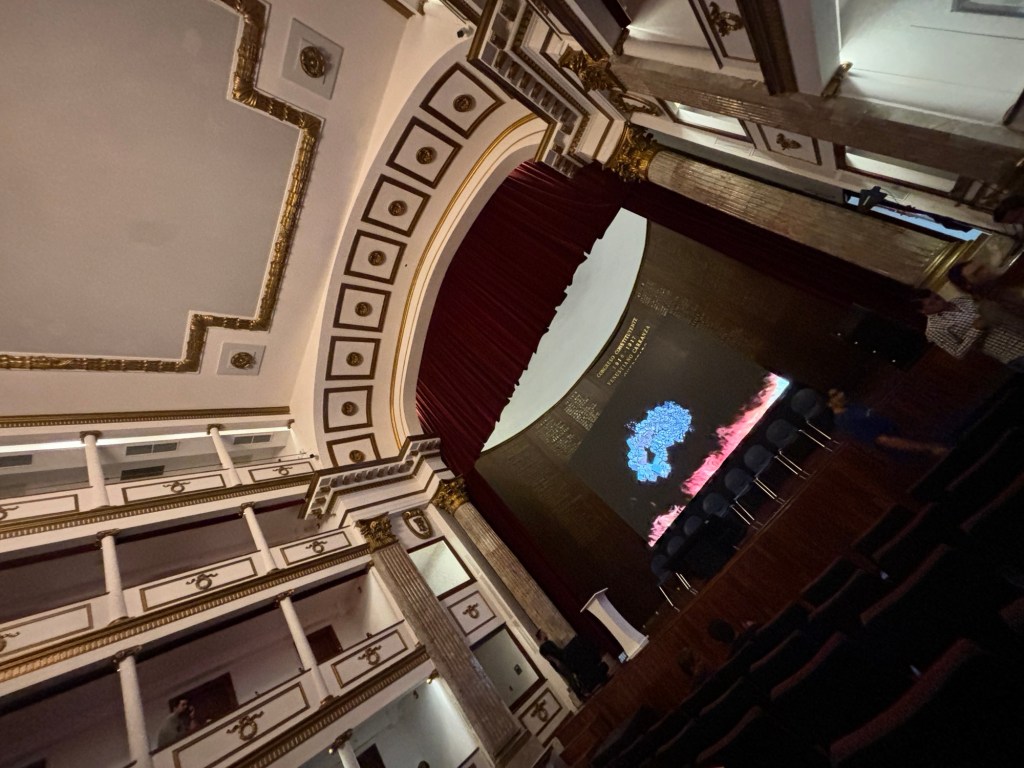
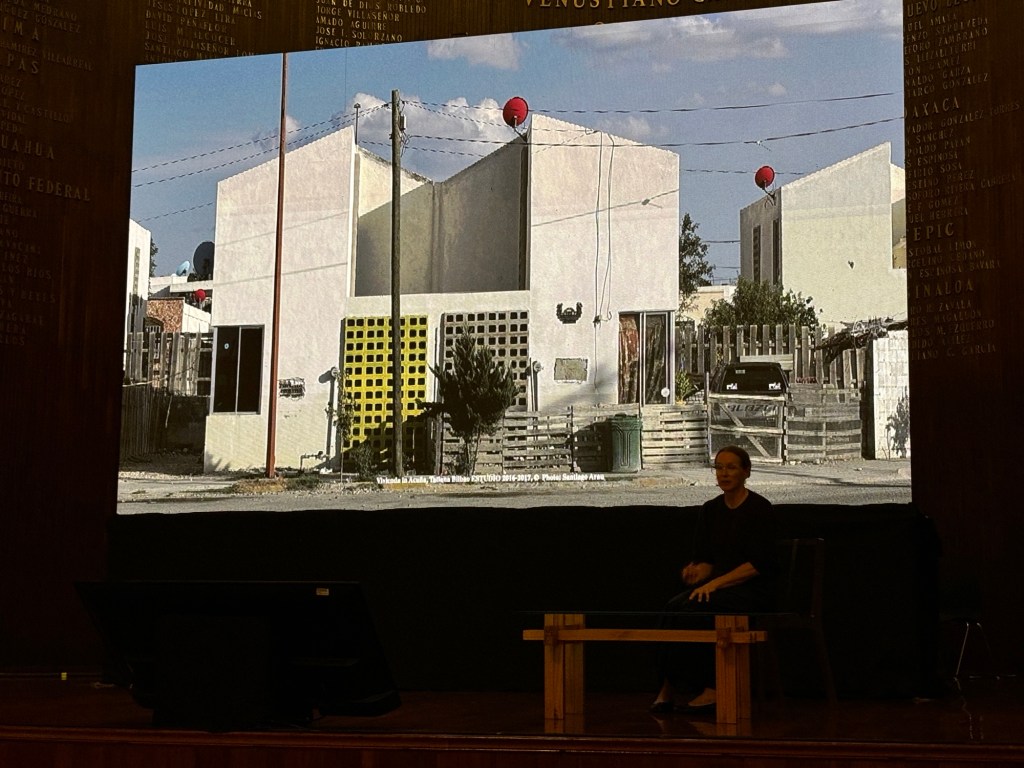
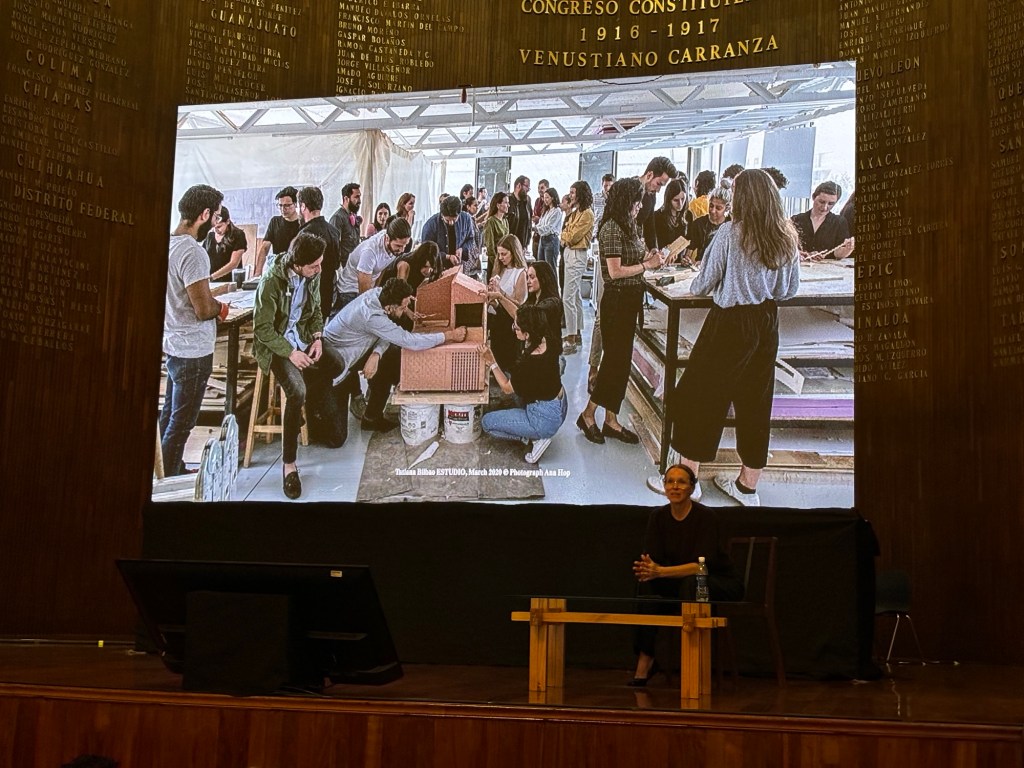
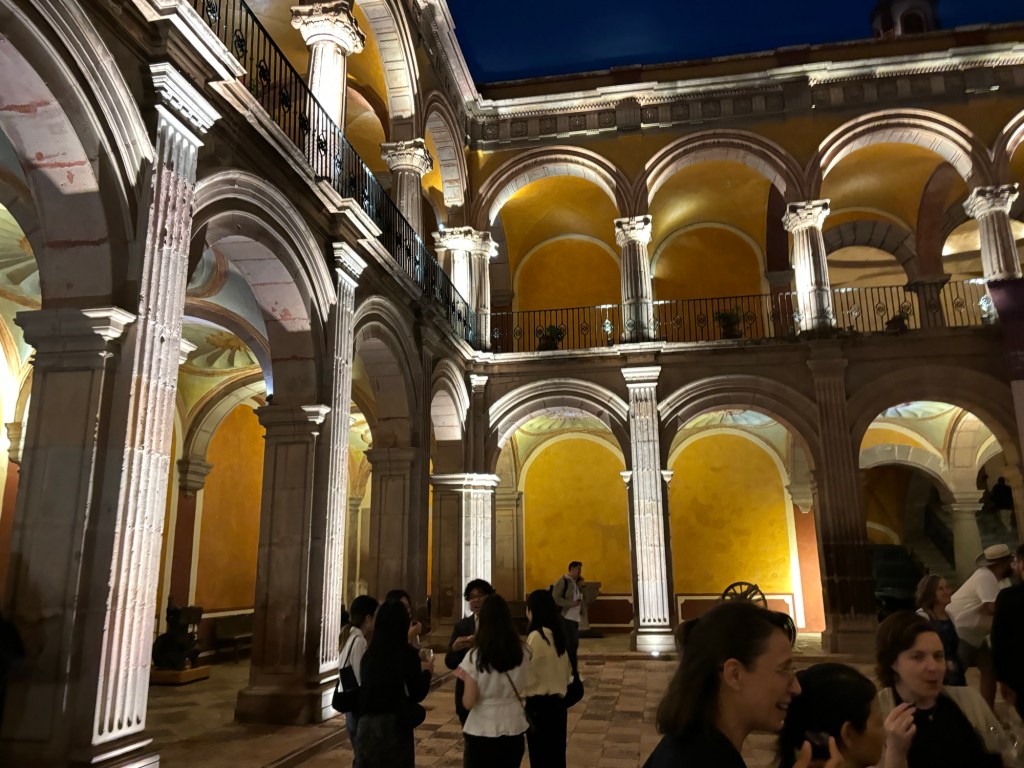
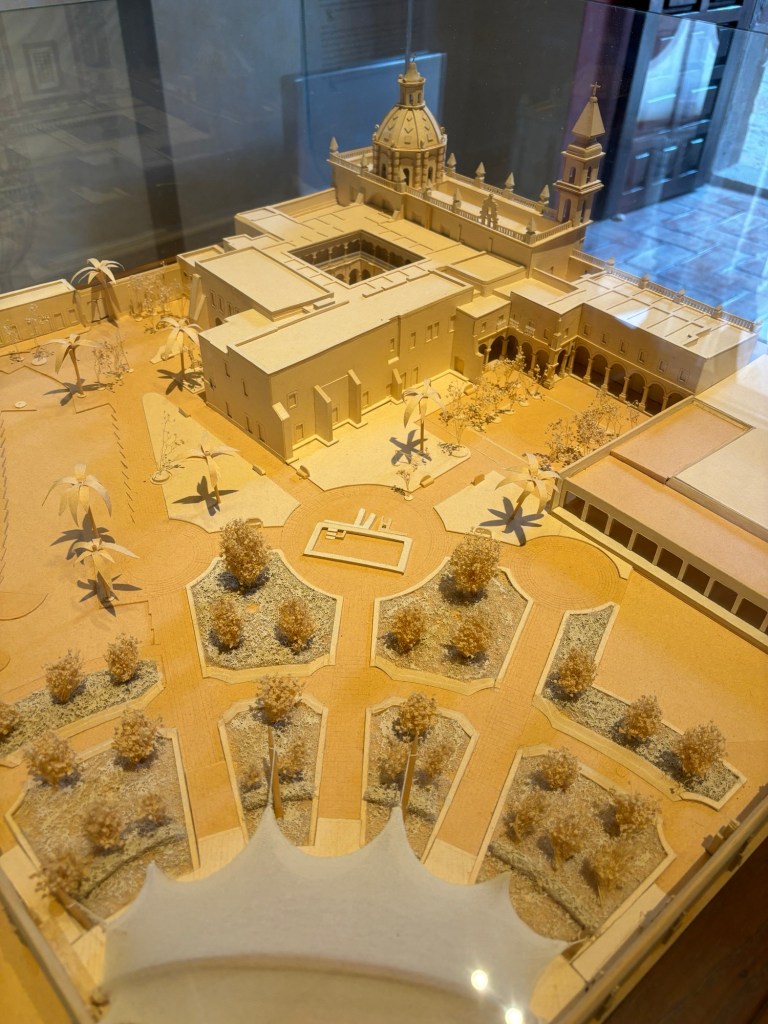
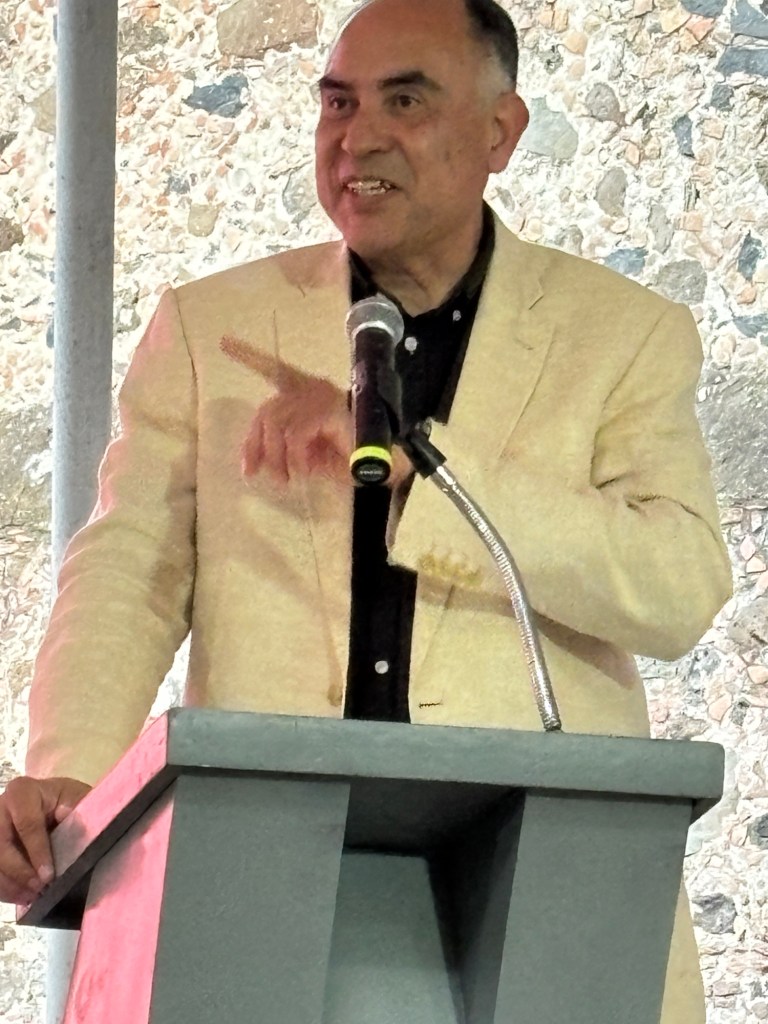
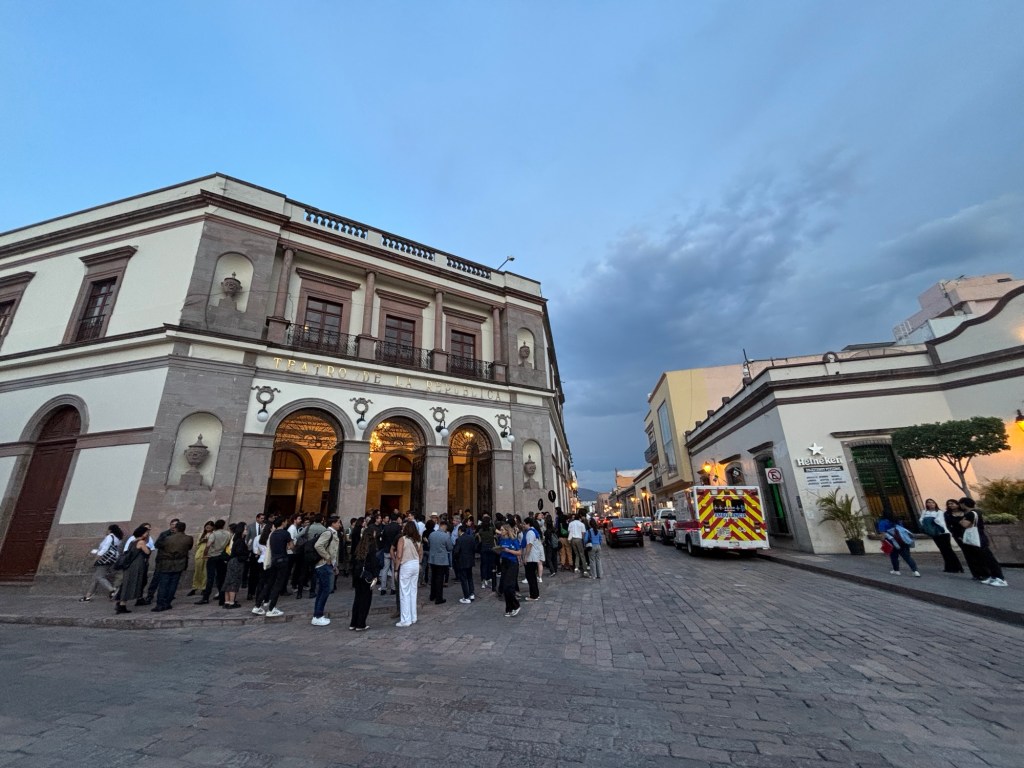
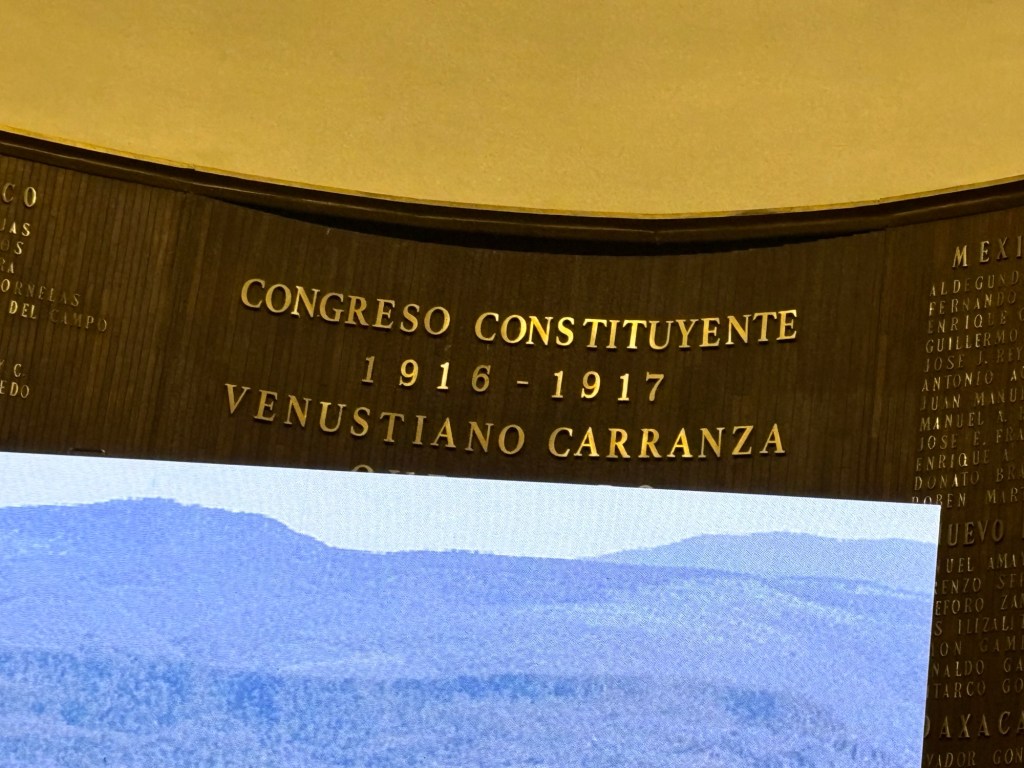
The Open House tour was followed by an opening reception and keynote address in Querétaro’s very famous and protected Teatro de la Republica where (at least part of) the country’s constitution was signed. The keynote by Tatiana Bilbao was thought-provoking, with the architect advocating liberation from named or pre-determined programmatic elements, to produce evocative enclosures for inhabitants to mold and adapt. The open reception was at another architectural heritage site, the Museo Regional de Querétaro.
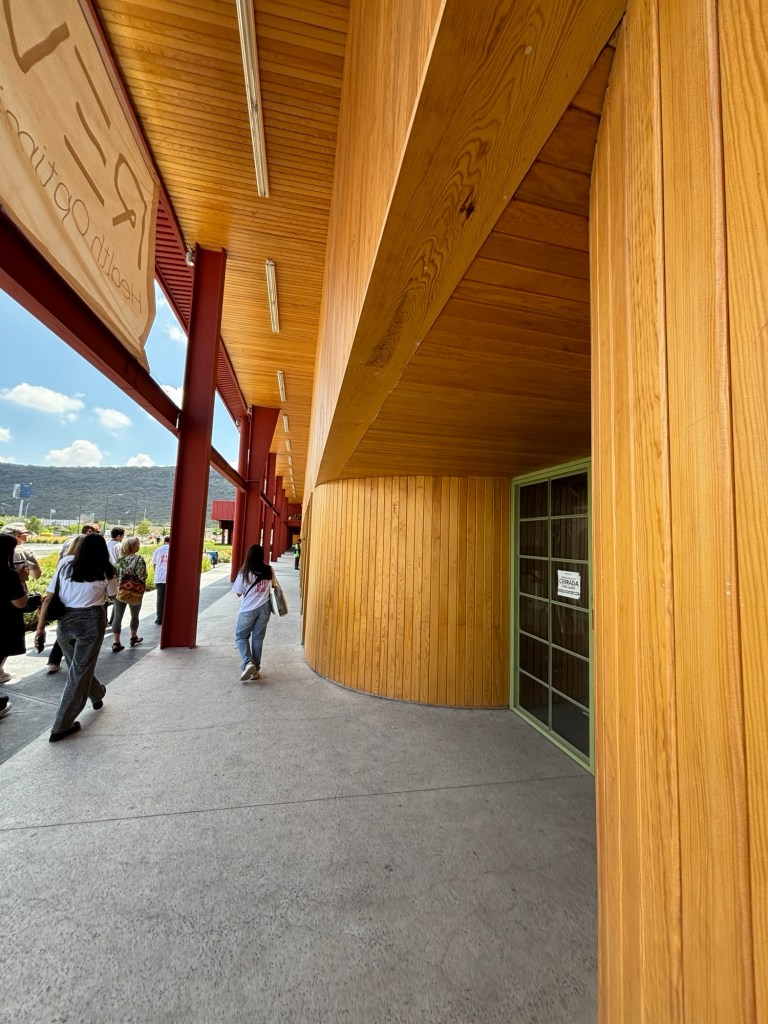
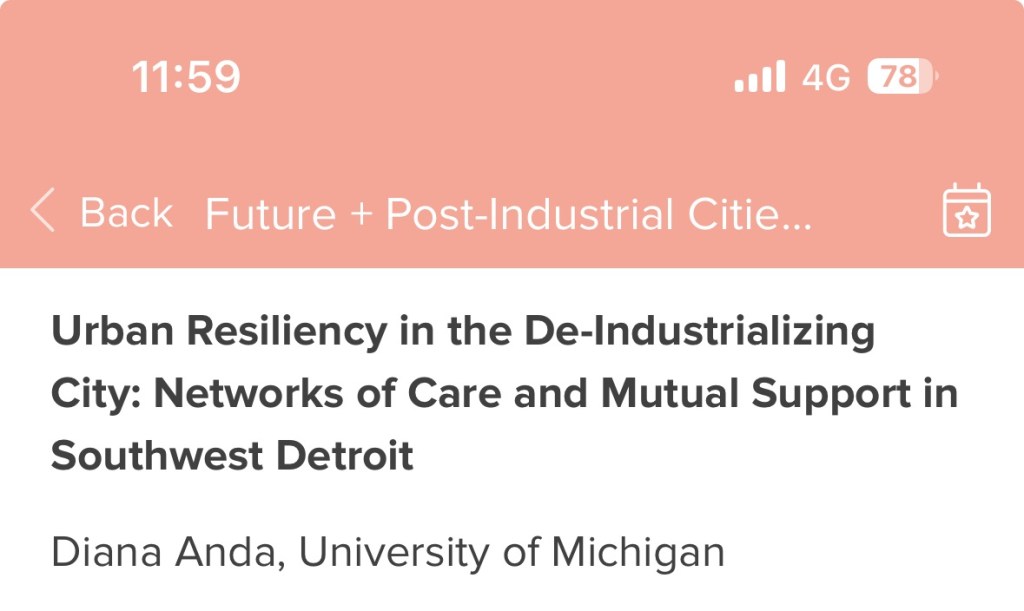
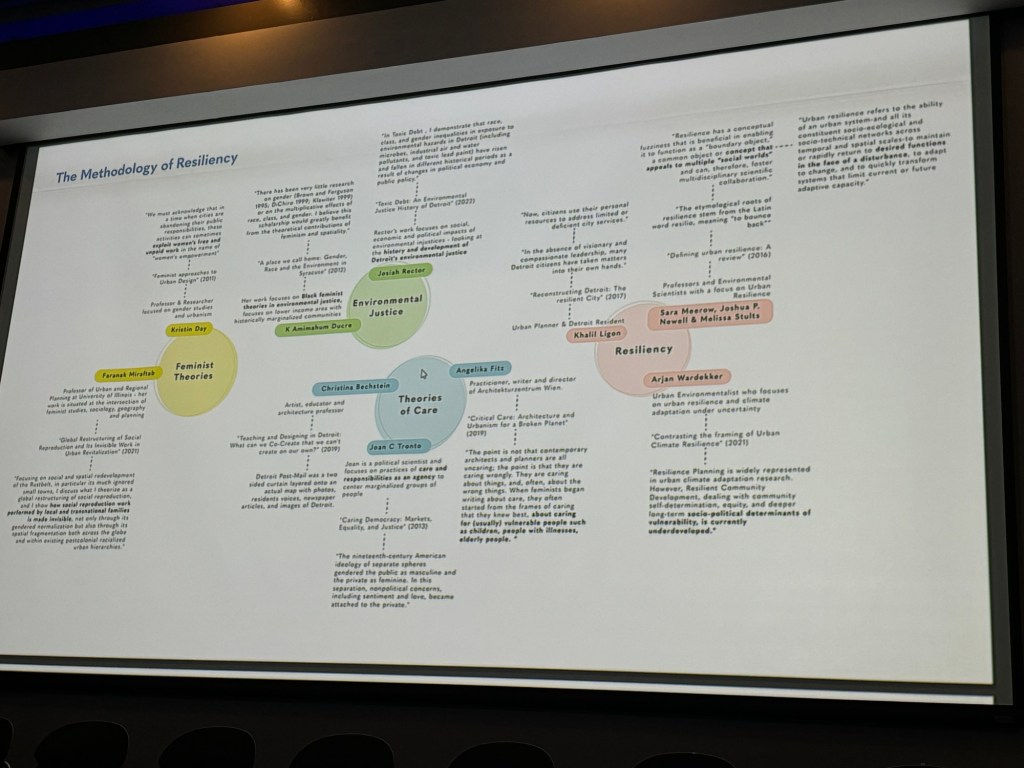
The second day started with the Deans’ panel on “tradition and radical innovation” that included Emma, followed by paper sessions. I attended the sessions on “Future + Post-Industrial Cities.” These two sessions were held at the university’s modern campus on the outskirts Querétaro. We travelled there and back by bus.

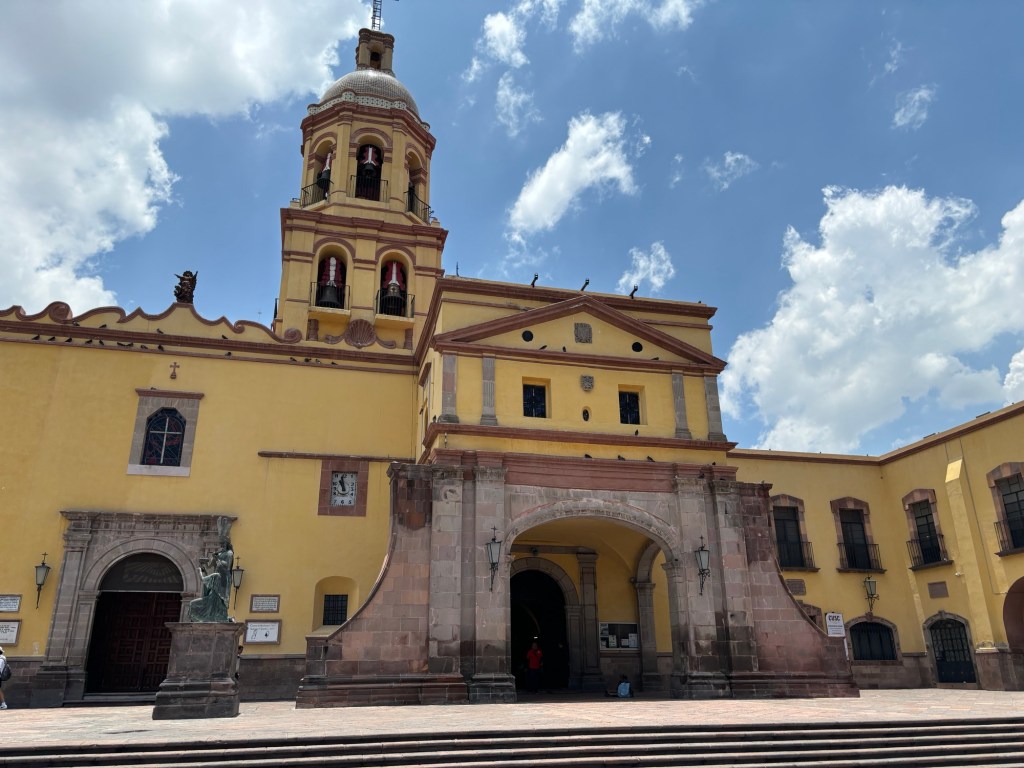
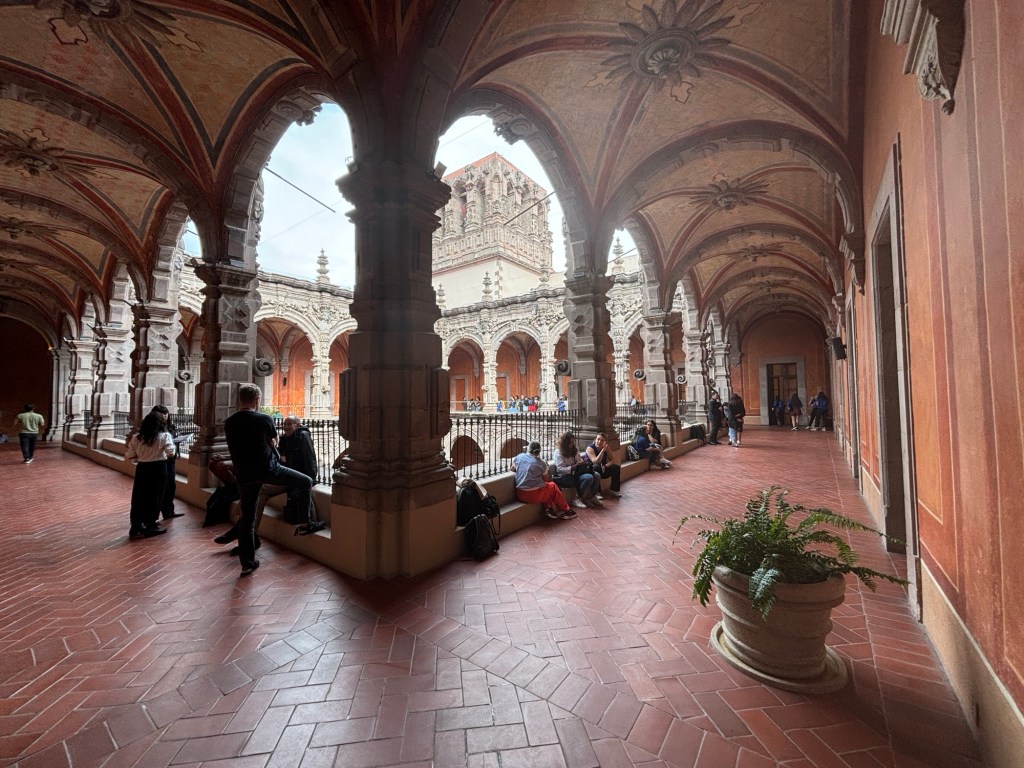
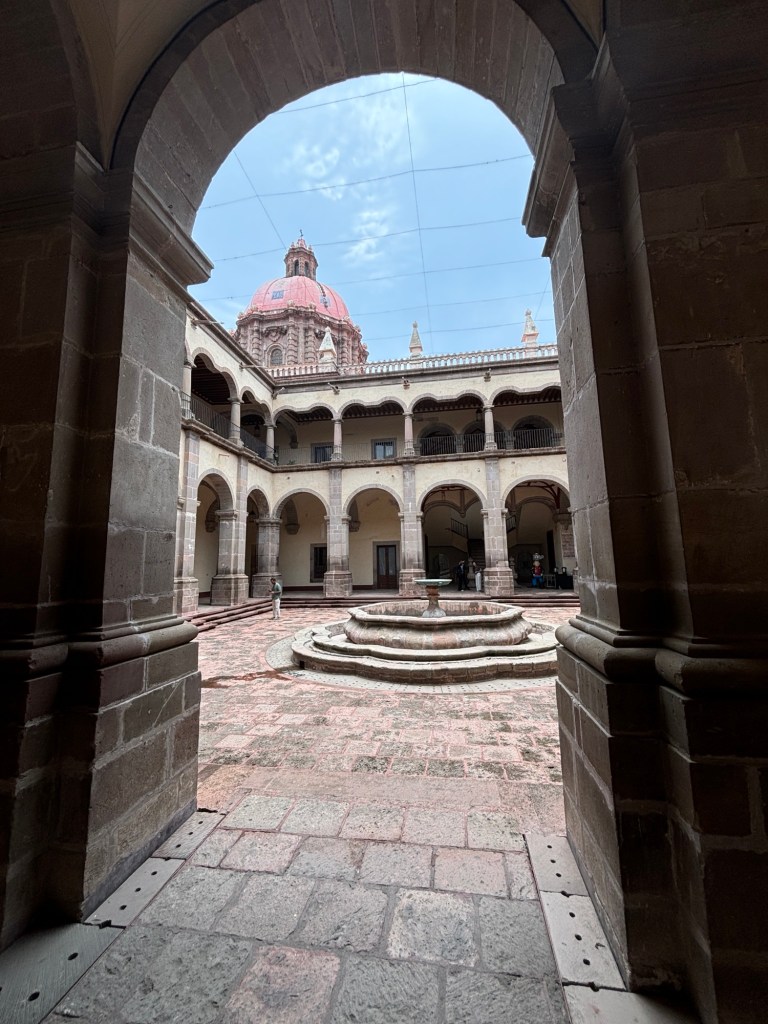
After a relaxing lunch break, we enjoyed afternoon paper sessions in a magnificent former cloister now used as the Mueso de Arte de Querétaro. I attended “Spatial Decoding: Beyond Measurement” and “Experiments for Urban Futures.”
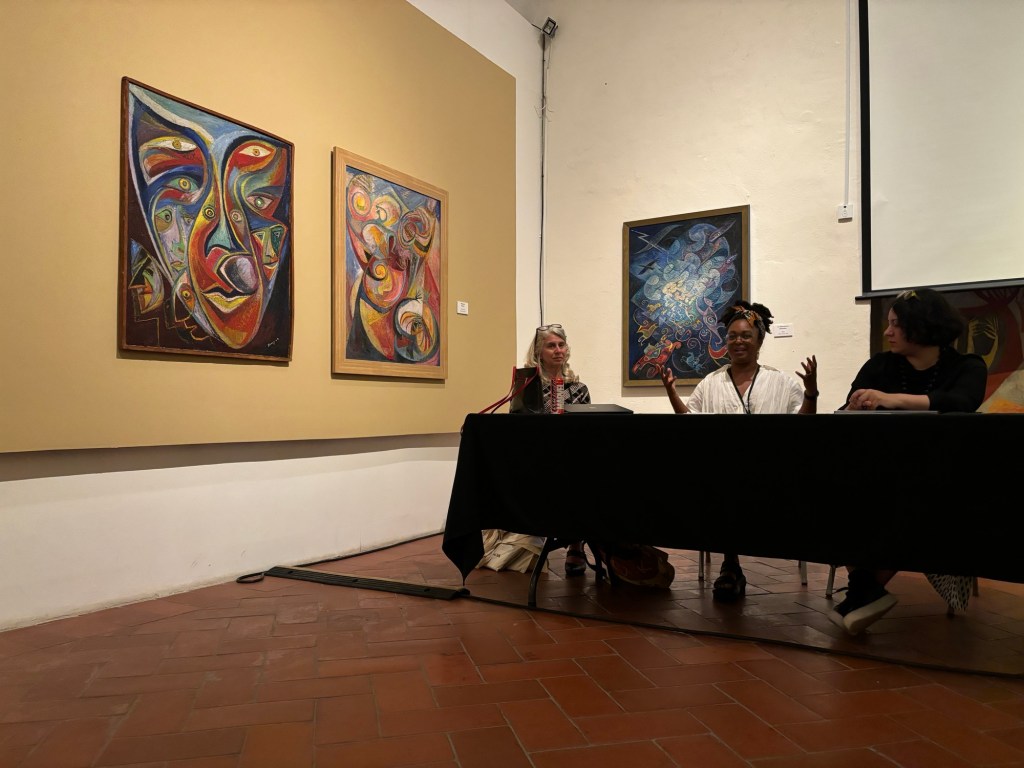
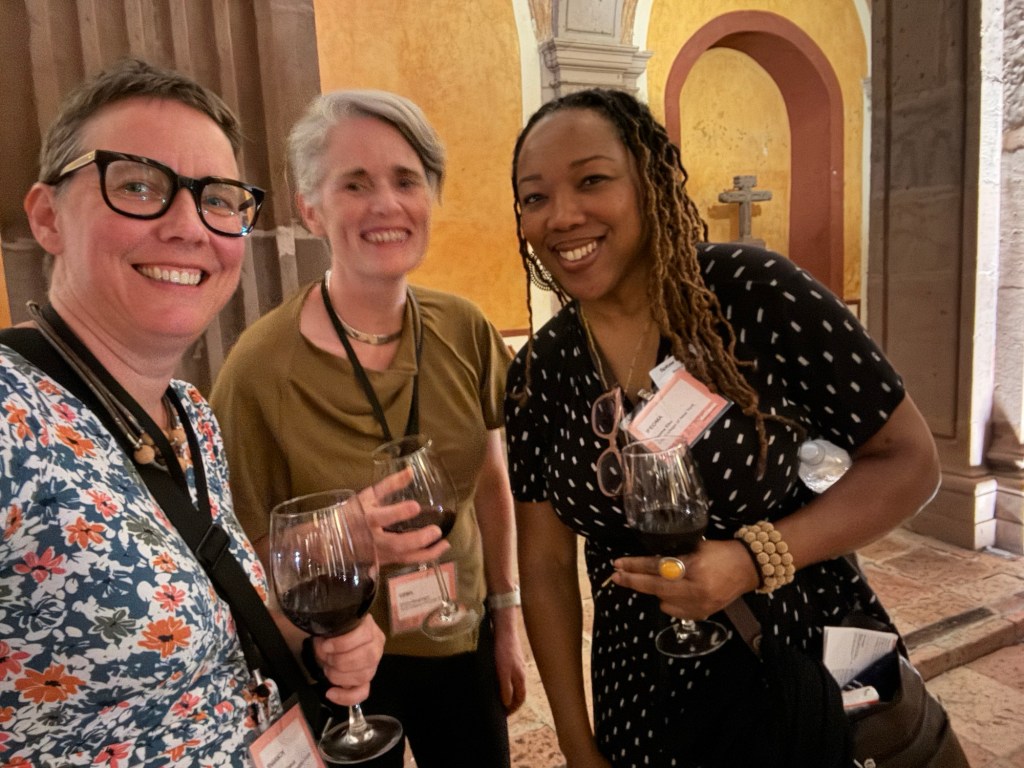
The entire time, Emma and I were meeting lovely and passionate architecture educators from Mexico, the US, and Canada, as well as graduate students from around the world. We also got to know and admire the host for the next iteration of this ASCA International conference that will be held in Brisbane, Liz Brogden.
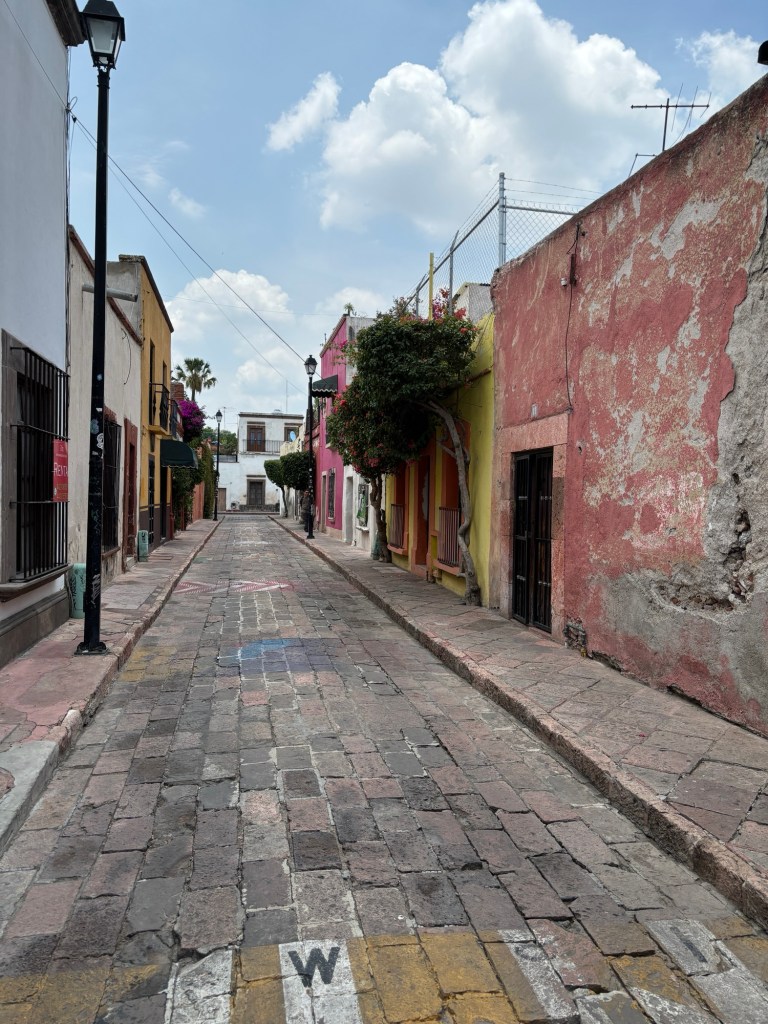
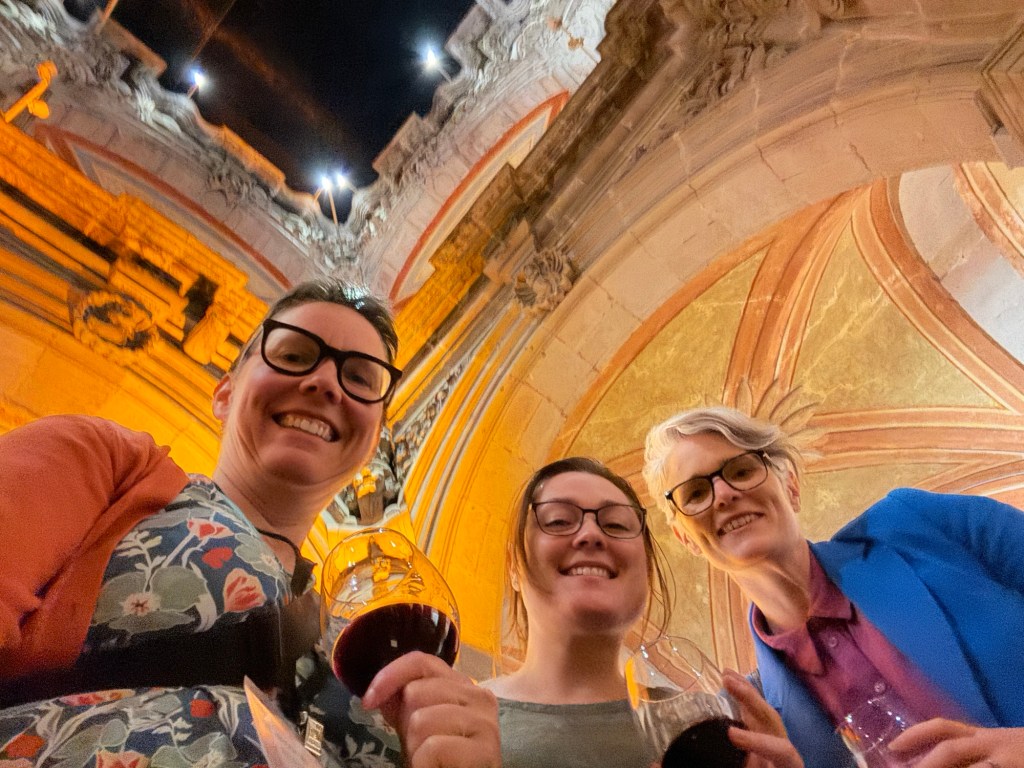
Liz, Emma, and I were guests of the conference organizers for tapas and drinks Friday night at Hercules, a former textile factory converted into an entertainment venue. We had the pleasure to sit between Michael Monti, the executive director of ACSA, and Luis Francisco Rico-Gutierrez, Dean of Architecture at Iowa State, who brought this conference to his hometown of Querétaro. Luis carefully assembled a conference program with cultural, social, urban, and critical feminist underpinnings.

ACSA Director, Michael Monti, who has a doctorate in philosophy and expertise in Heideggerian phenomenology!

Bravo to these leaders for pulling off such a magnificent event in collaboration with the local organizers, including Roberto Íñiguez Flores, and the DC-based ACSA team!

Programming for the third day ran 9 AM to 10 PM. We attended paper sessions, including Emma’s, at the Centro de las Artes de Querétaro Santa Risa de Viterbo. We started off with “New Imaginaries, Speculations, Machinations” where Emma spoke. Then I attended “Housing, Dwelling and Domesticities.”
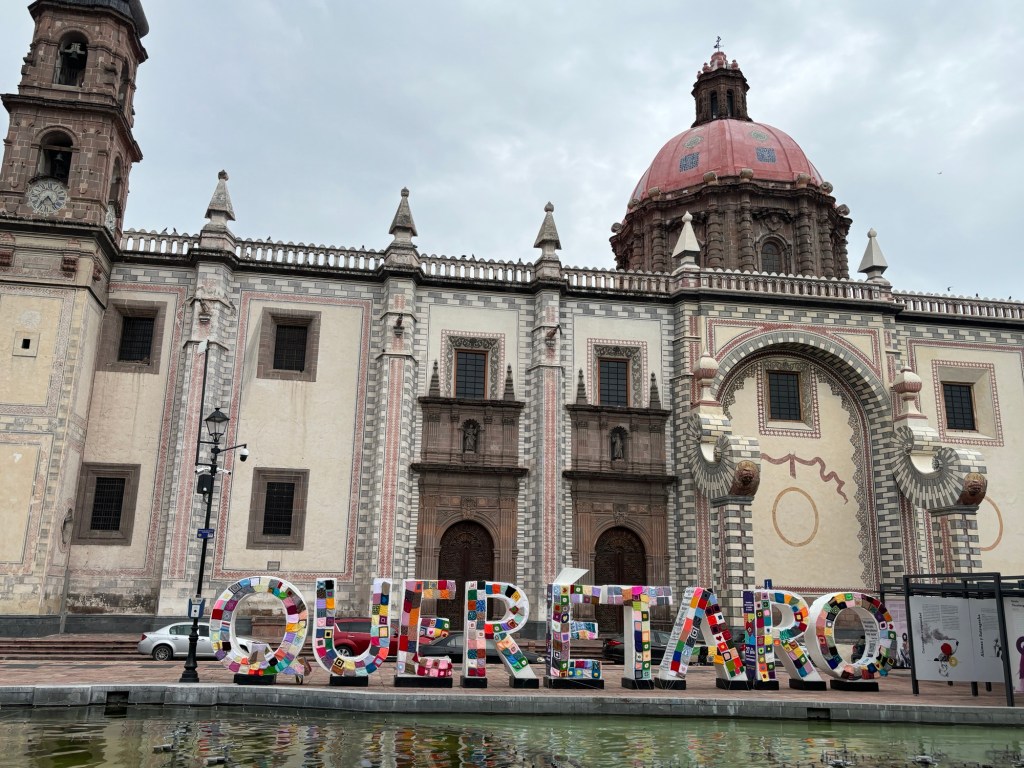
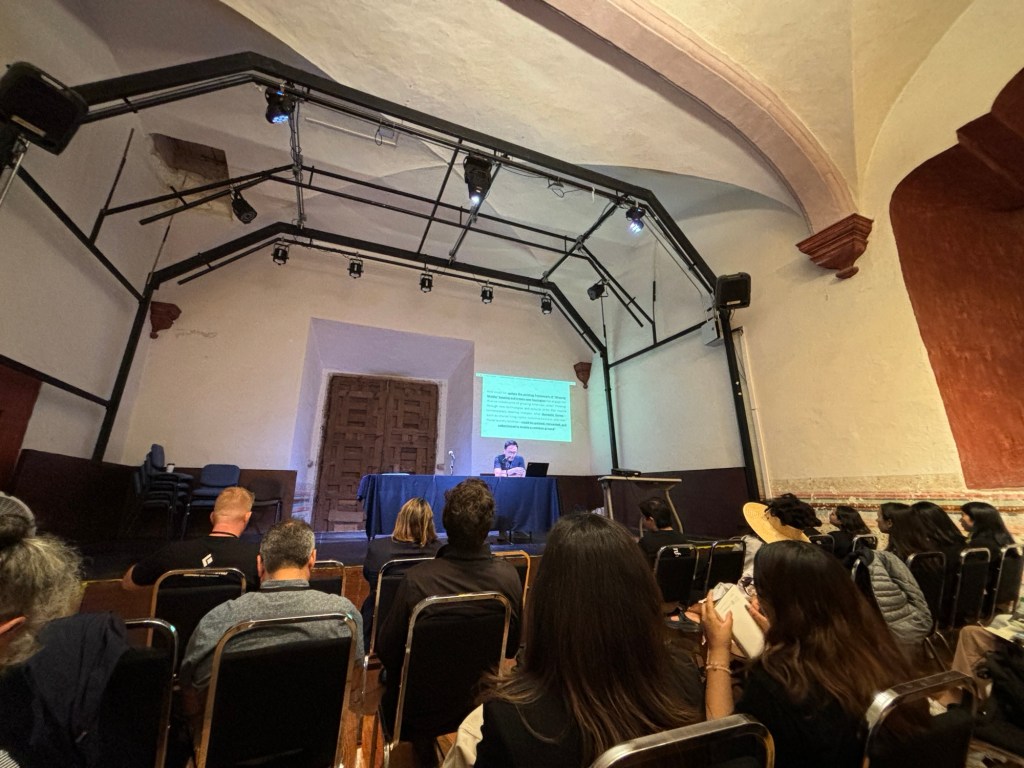
After lunch I attended “DESIGNING DISSENT: Feminist Counternarratives in the City.” This critical feminist urbanism panel session was particularly insightful. It was held with one presentation in English and two in Spanish. There were AI-generated English subtitles at the second of these, but for the one without subtitles, I put my Duolingo to work.

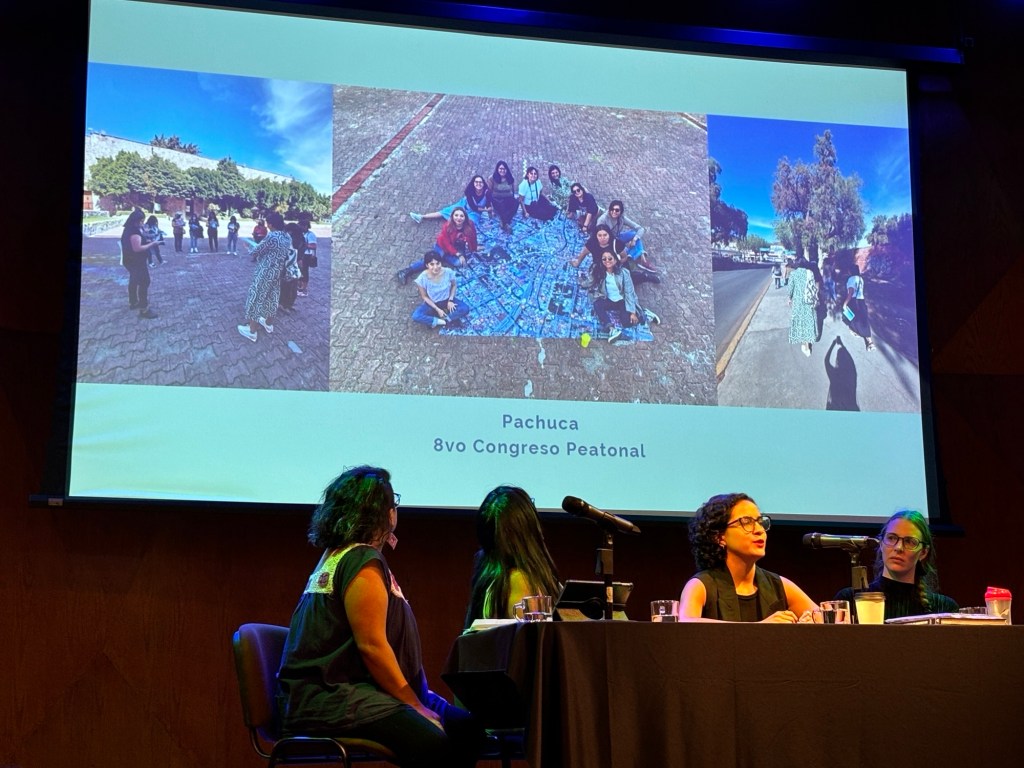
I have been studying Spanish using Duolingo for 254 days now, in preparation for this trip. I understand reasonably well, although I can’t yet speak in Spanish. My elementary knowledge of Italian interferes with my ability to start sentences in Spanish, but I persevere. The helpful slide images helped me deduce more complex meanings.

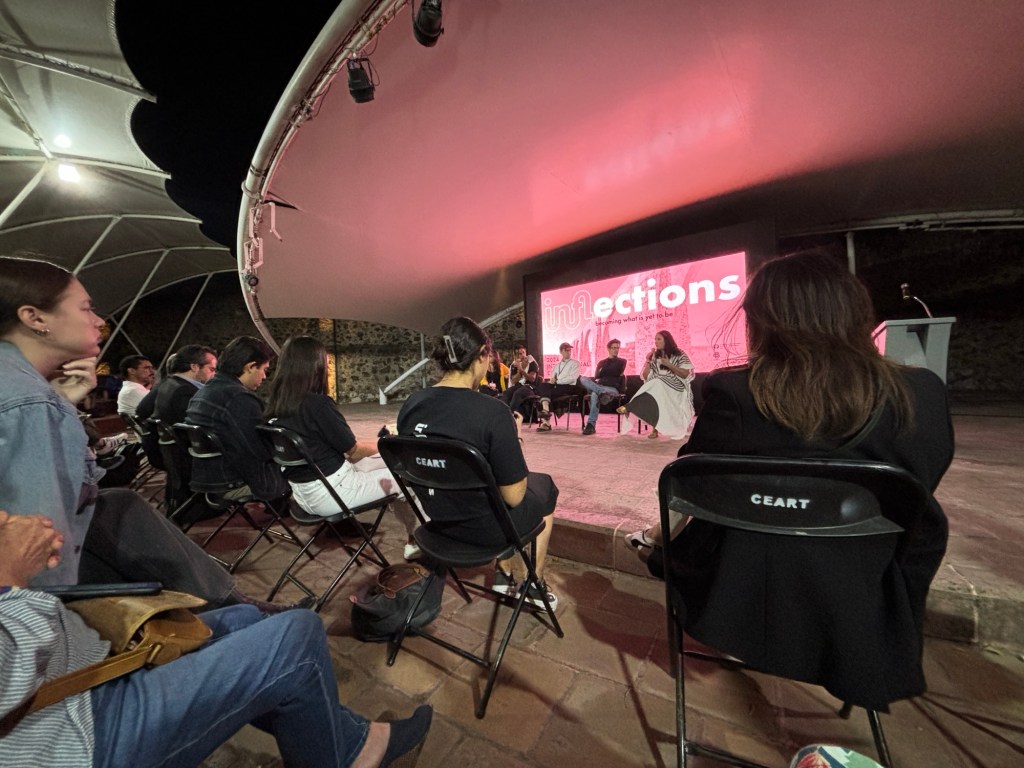
I also attended “Co-creation with AI.” Then, this third and final day wrapped up with an all-conference panel on contemporary issues in Mexican design at the outdoor amphitheater at the cloistered museum. The title was “ILLUMINATING THE OVERLOOKED: Unconventional Practices for Responsible Futures.”
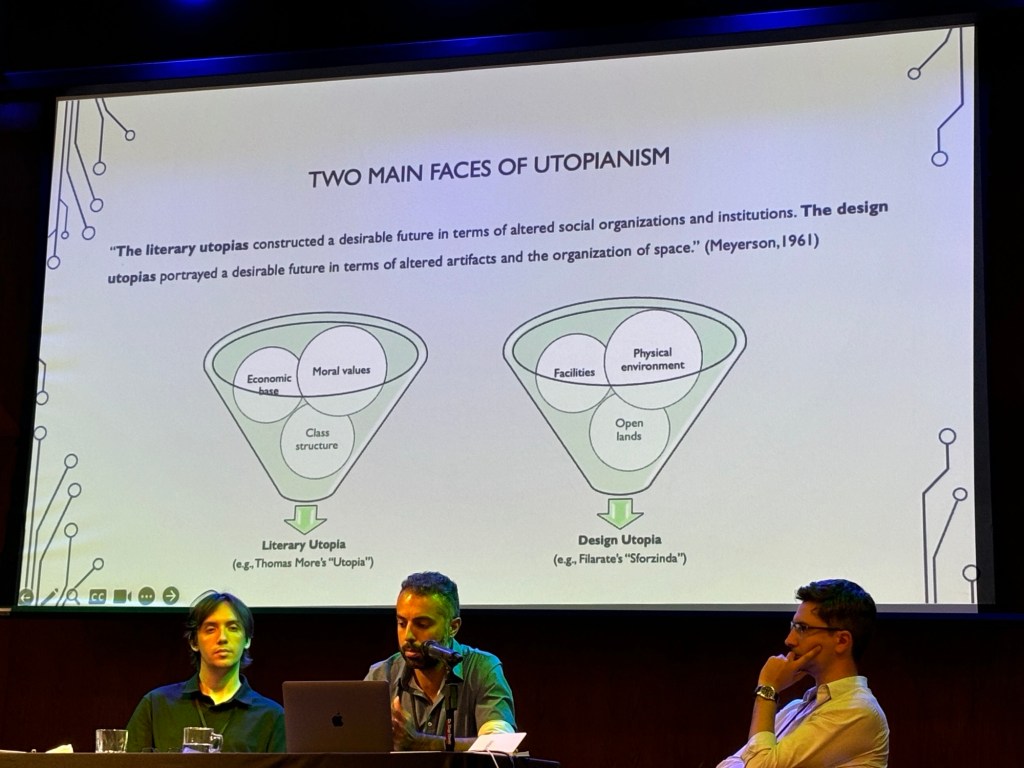
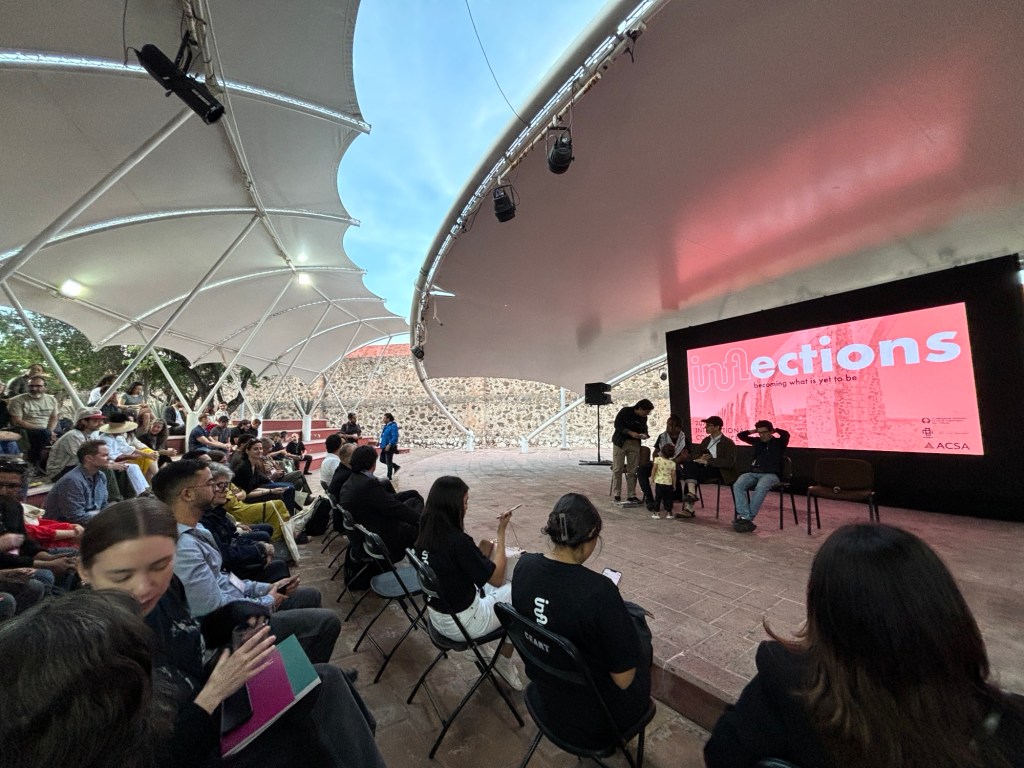
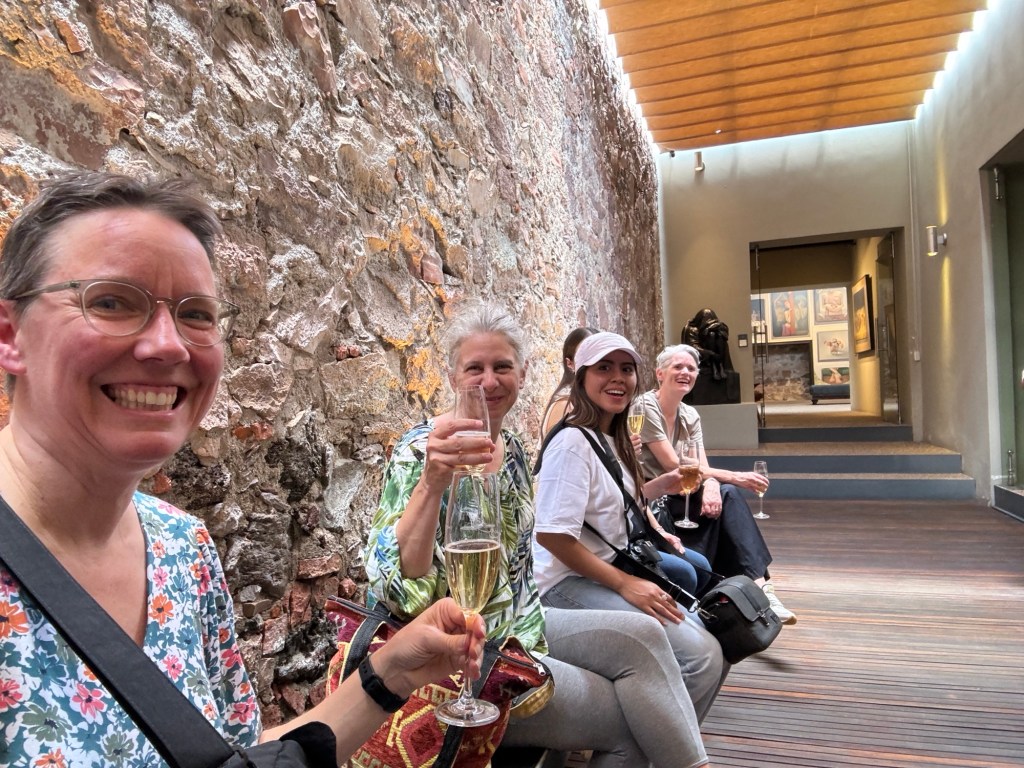
The closing reception was held at the Museo de Arte de Querétaro courtyard. After it, Emma, Liz and I headed for a last supper together that didn’t end until after midnight. We’re learning Spanish ways!

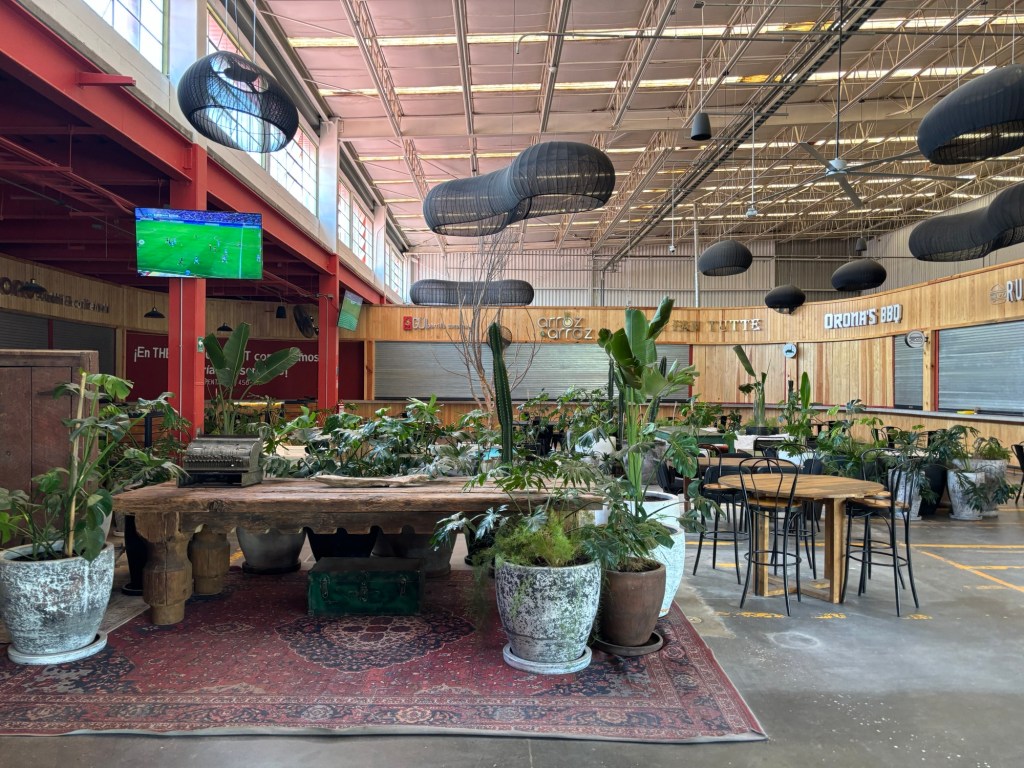
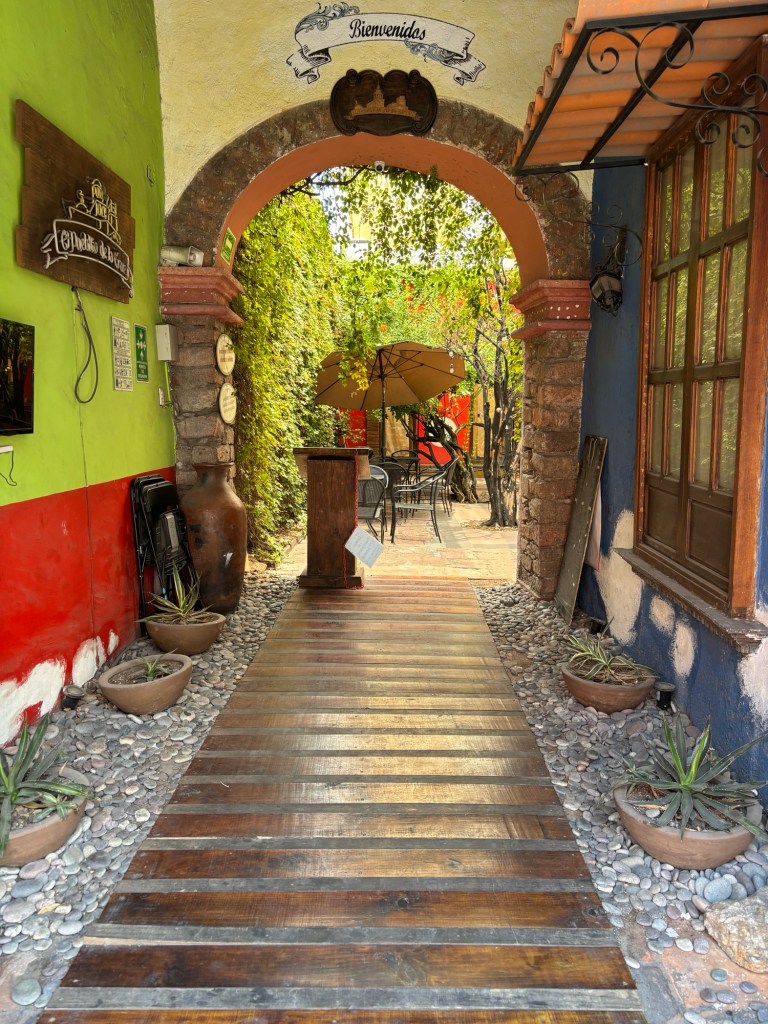
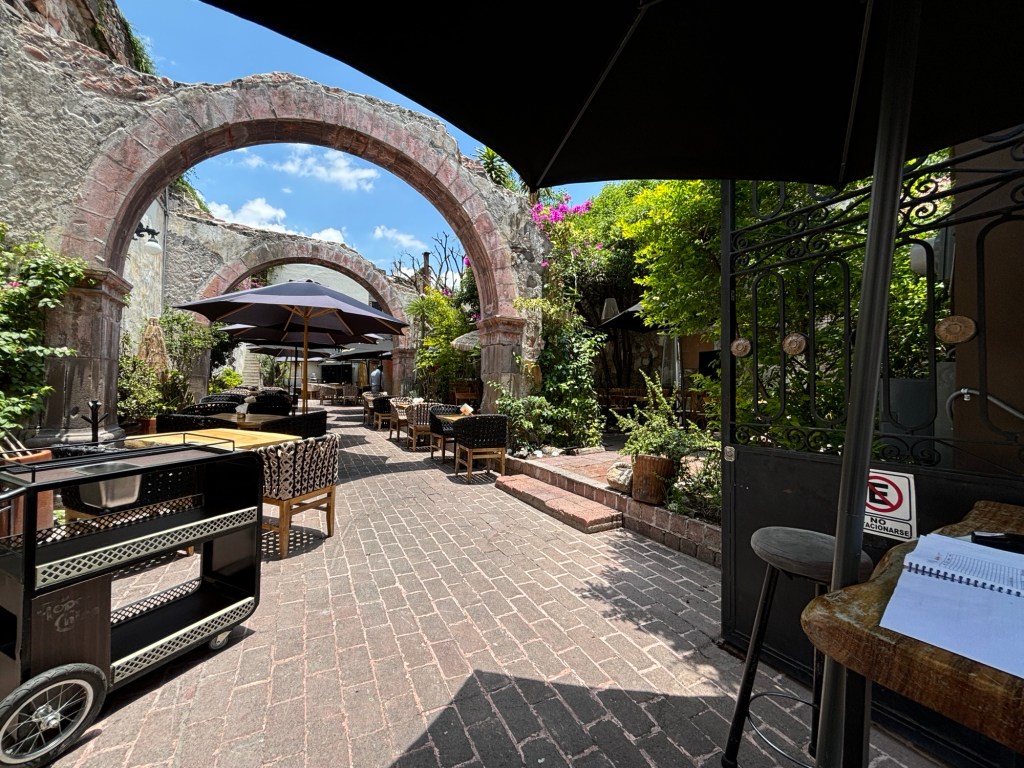
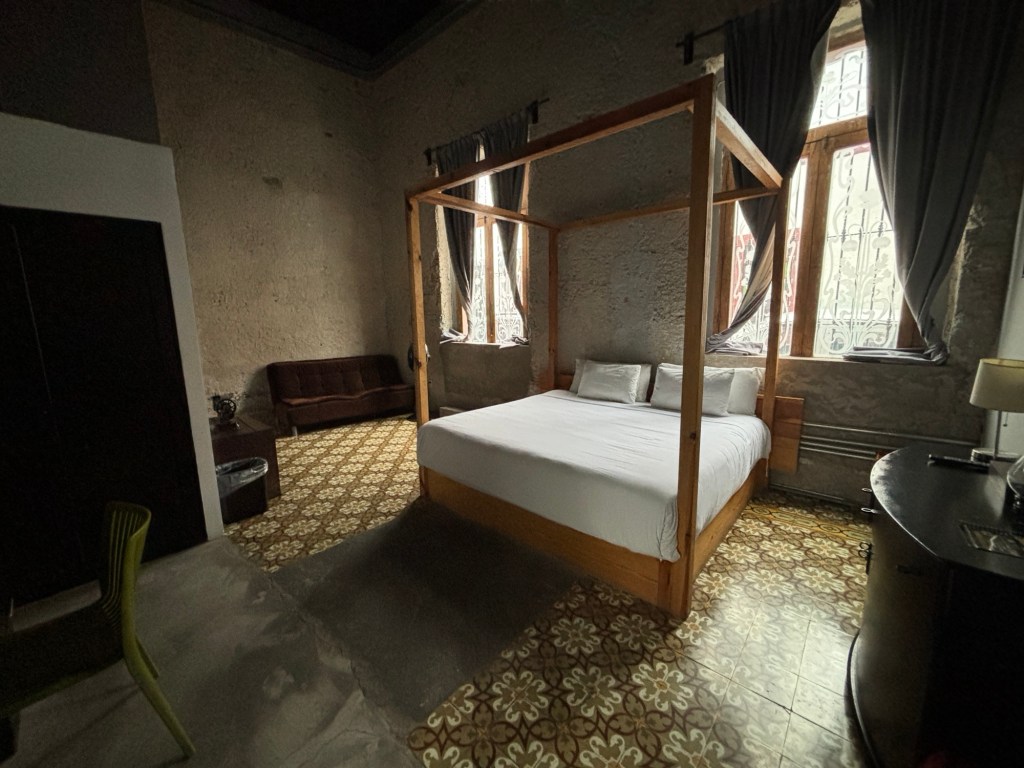
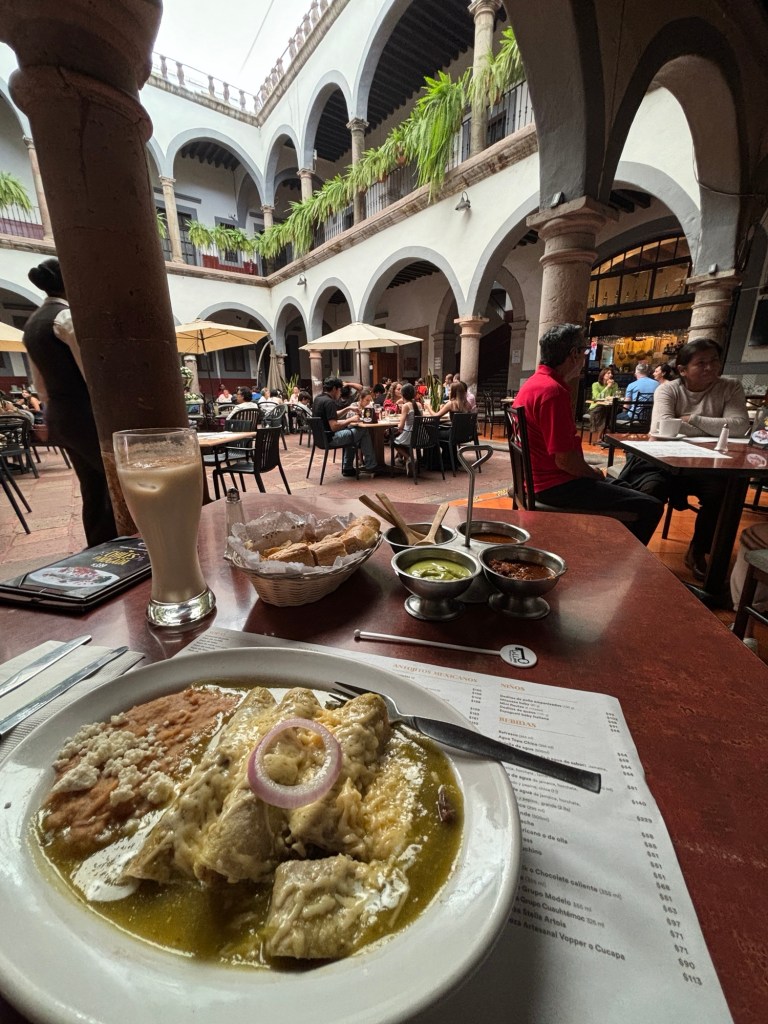
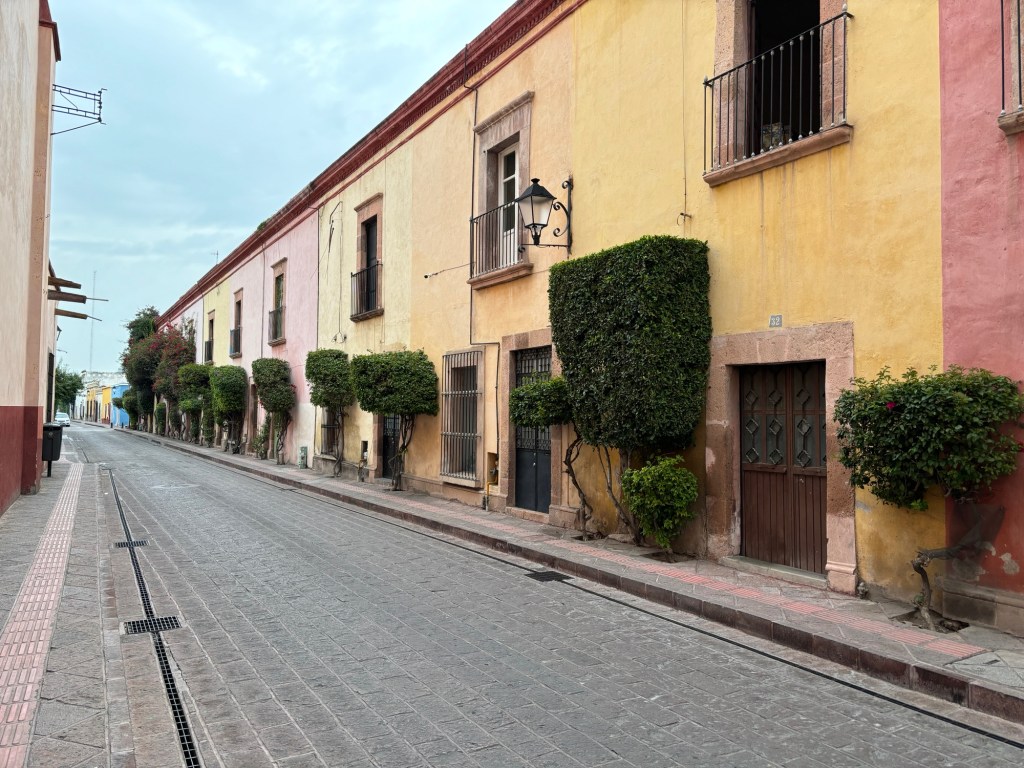
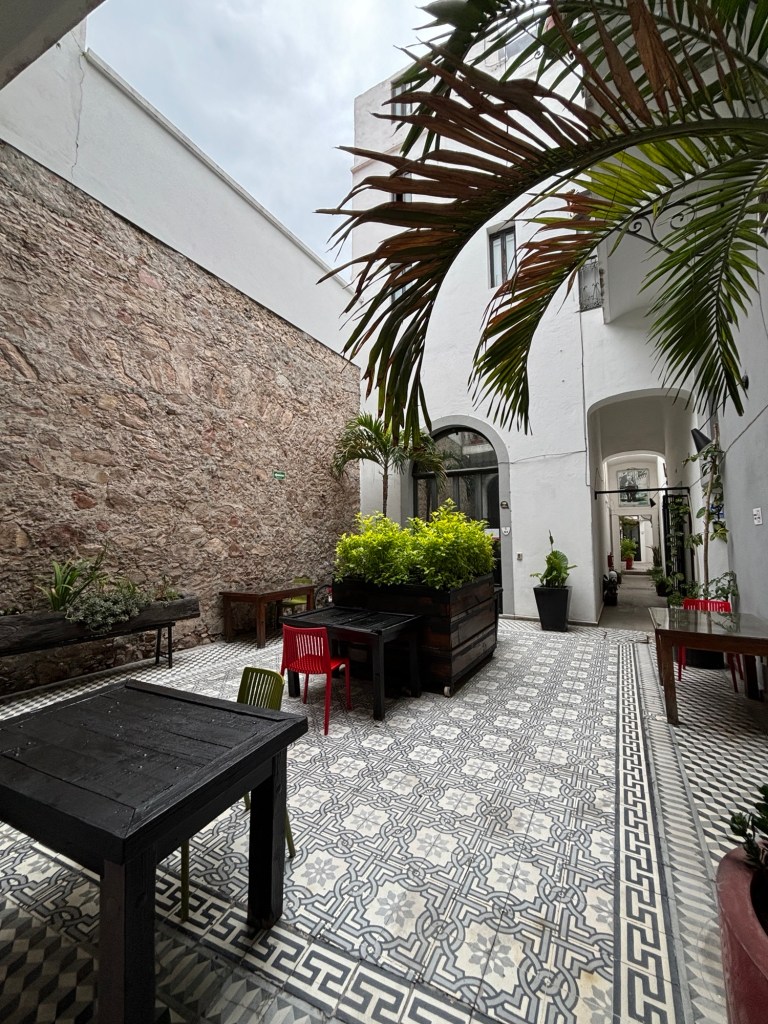
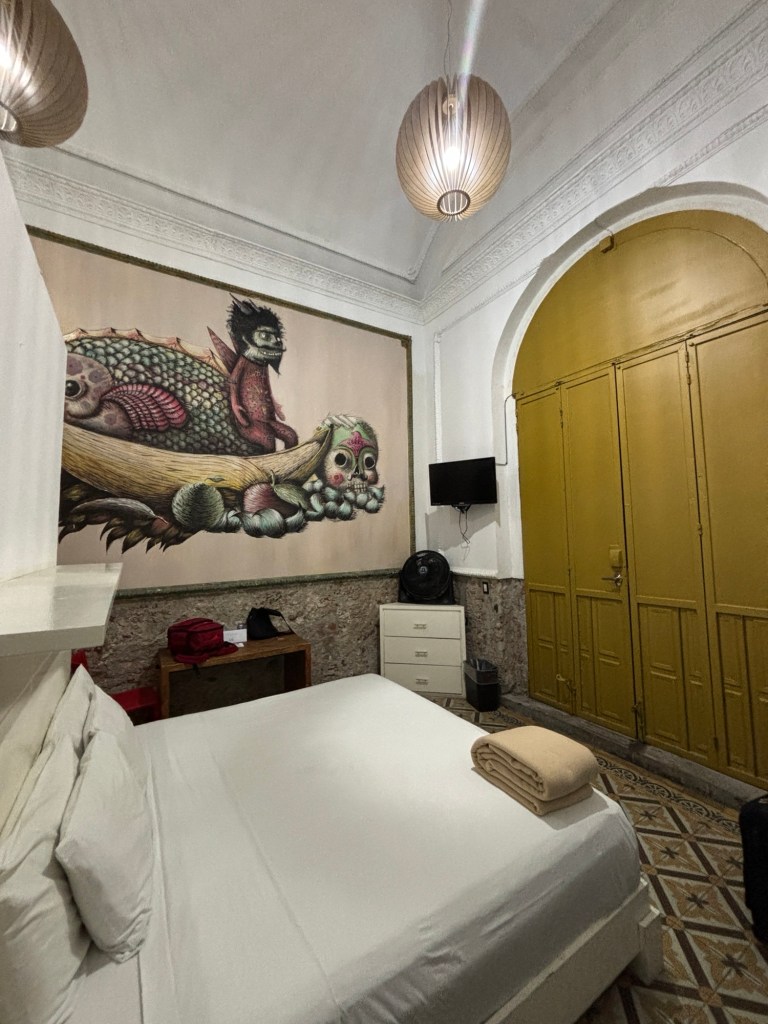
As a side note, I always try to stay central and conserve my budgets when I select hotels regardless of who is paying. This was no exception and I picked a cheap and cheery courtyard hotel in the city’s historic core. It is nestled among the cultural heritage conference venues. Thankfully Emma is the best of sports and appreciated the authenticity as it was, as you’ll recall, cheap and cheery. It is surrounded by nice eateries which we enjoyed.
Thanks a million to everyone who contributed to the organization of this conference — including Luis, Roberto, and ACSA’s Michael, Michelle, Eric, and Danielle — and to the local students, architects, teachers, and residents who came out in force. Their enthusiasm and collective effort made our visit to Querétaro extraordinary special.

Emma and I look forward to seeing all our new ASCA colleagues — Sharon, Dino, Liz, Luis, Mariam, Diana, Ifioma, Faye, Tania, Jori, Erandi, and many others — at the ACSA International meeting in Brisbane in 2026!
Making the Mark as an Enterprise Rose Fellow

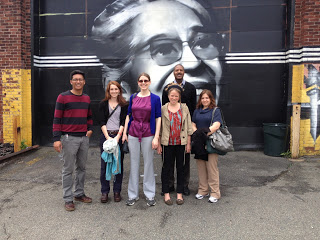
Mark (to the far left) with community members from Boston.

Mark Matel (to the far left) with community activists in Boston.

Thanks to a Facebook post by my (awesome) former student, Elbert Whitfield, I just discovered an article titled Enterprise Rose Fellowship Redefines Community Design at NeighborWorks Organizations, which features former student Mark Matel.

I’ve worked with many extraordinary students at Hampton University, like Elbert and Mark.

Today, I’m boasting of Mark Paulo Ramos Matel’ success.  I had the honor of teaching Mark in architectural design studios, study abroad, and environmental sustainability courses while he was working toward his Master of Architecture degree at HU.

Mark Matel (right) with fellow student Leon Peters presenting a second year design project at Hamtpon University.

Mark Matel (right) with fellow student Leon Peters presenting a second year design project at Hamtpon University.

Mark was an ideal candidate for the Enterprise Rose Fellowship, which the article explains is “a highly competitive and innovative program that places some of the nation’s finest early career architects in underserved communities across the country to team up with community development host organizations.”

Mark is intrinsically motivated to succeed, to help people, and to spearhead new initiatives.  His energy level, work ethic, creativity, self-direction, and ability to collaborate effectively were unparalleled among the students I have encountered in my 15 years of university-level teaching.

Mark was a major player in the formation of our department’s Studio Culture Policy and he represented our department impressively at the local and state level.

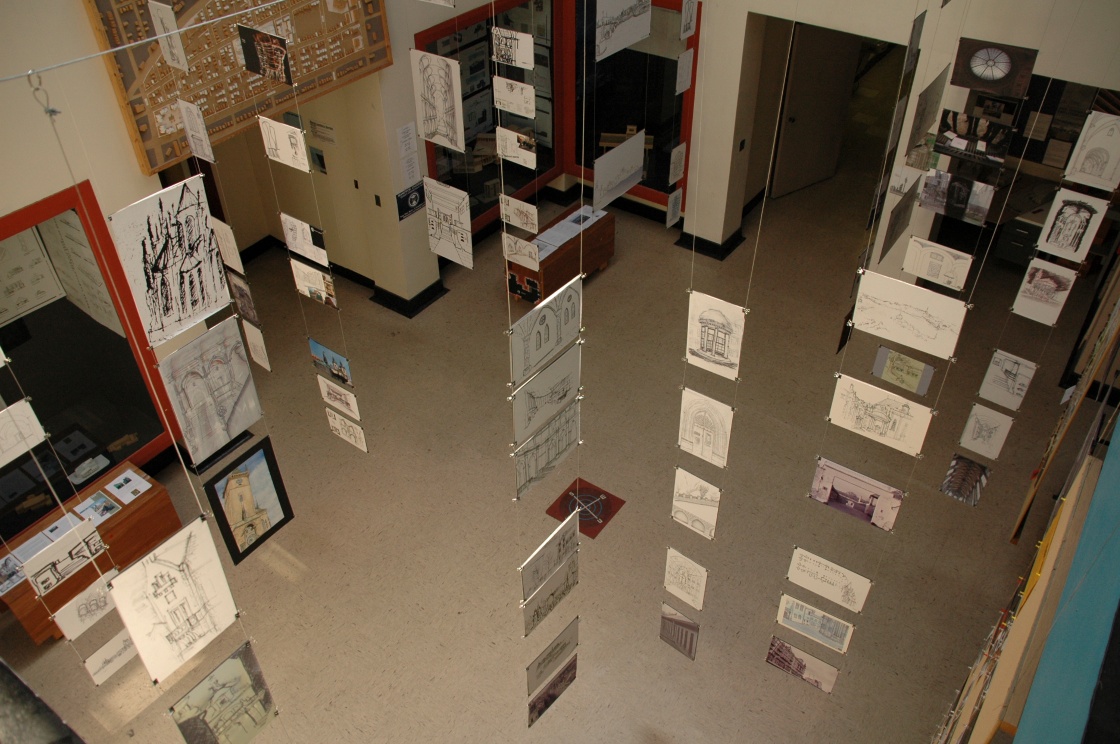
An exhibition that Mark and his colleagues Brandon Clarke, Smitty Lynch, coordinated along with other members of our spring break trip to Prague.

An exhibition that Mark and his colleagues Brandon Clarke, Smitty Lynch, coordinated along with other members of our spring break trip to Prague.

He is also a highly skilled designer, as is evidenced in design awards from Auburn and Hampton Universities.

Mark earned a NAAB-accredited degree from Hampton University – a program emphasizes urban planning as well as architectural design – and he then earned a design-build degree from Auburn University to boot.

To interview for the Enterprise Rose Fellowship, he went to Boston along with the two other candidates (both from top Ivy league schools).  After a rigorous multi-day interview, representatives from the community and the fellowship program voted, and then wholeheartedly extended the three-year fellowship to Mark.

During his time at HU, Mark’s research regarding water systems in the Philippines, and his work with the Virginia AIA’s Emerging Leaders in Architecture (ELA) program, were particularly relevant in preparing him for his work as an Enterprise Rose Fellow.

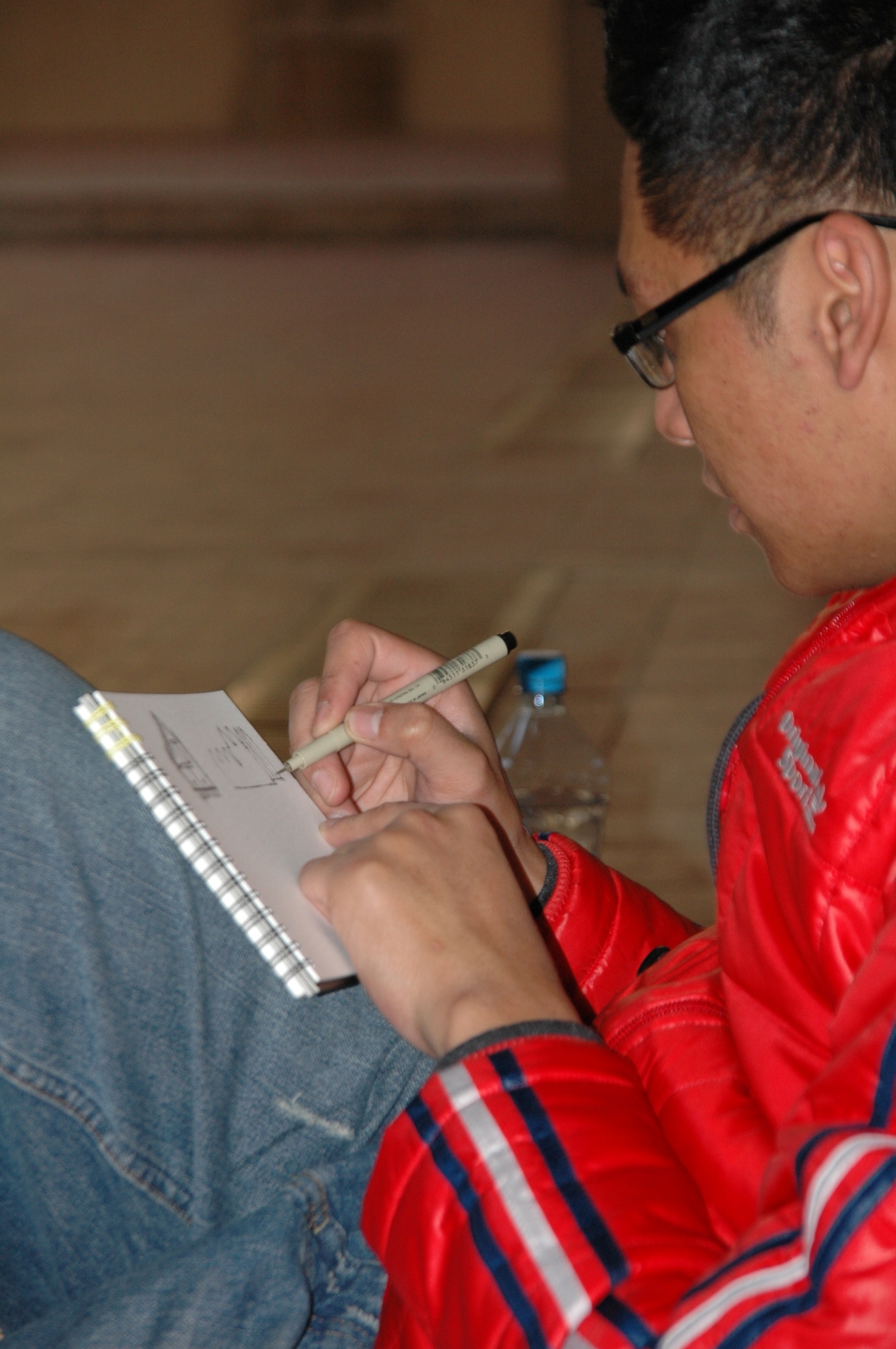
Mark sketching in Prague.

Mark sketching in Prague.

Marks’ activities all had an underlying theme of social activism related to the built environment.  He has always been able to think and work at multiple scales and with complex, inter-related issues.  His architectural studies enhanced these abilities.

Our department nominated Mark to represent Hampton University as part of Virginia AIA’s ELA program and his work with the organization exceeded our expectations.  The focus of the ELA program that year was on community revitalization and leadership.  Mark was highly engaged in his cohort’s project and he even defined the program for the subsequent year’s cohort.  (He identified specific conditions that needed to be addressed in Norfolk, Virginia and he helped get the new ELA group involved in fostering change where he knew it was needed.)

In his classes and teaching assistance-ships at Hampton University, Mark reflected a high level of engagement as well as what Daniel Goleman calls “emotional intelligence.”  Mark has the ability to share knowledge and to teach others techniques and strategies for improving themselves and their environments.

While he was at Hampton University, Mark was a very important part of defining a positive, learning culture within the academic context, as well as in the professional context (at the local and state levels) and in the larger community.

I couldn’t be prouder of Mark and all his many varied accomplishments.

You can see more of our trip to Prague in my archives.  My own presentation boards from Prague are also available for viewing.

UO Studio Review

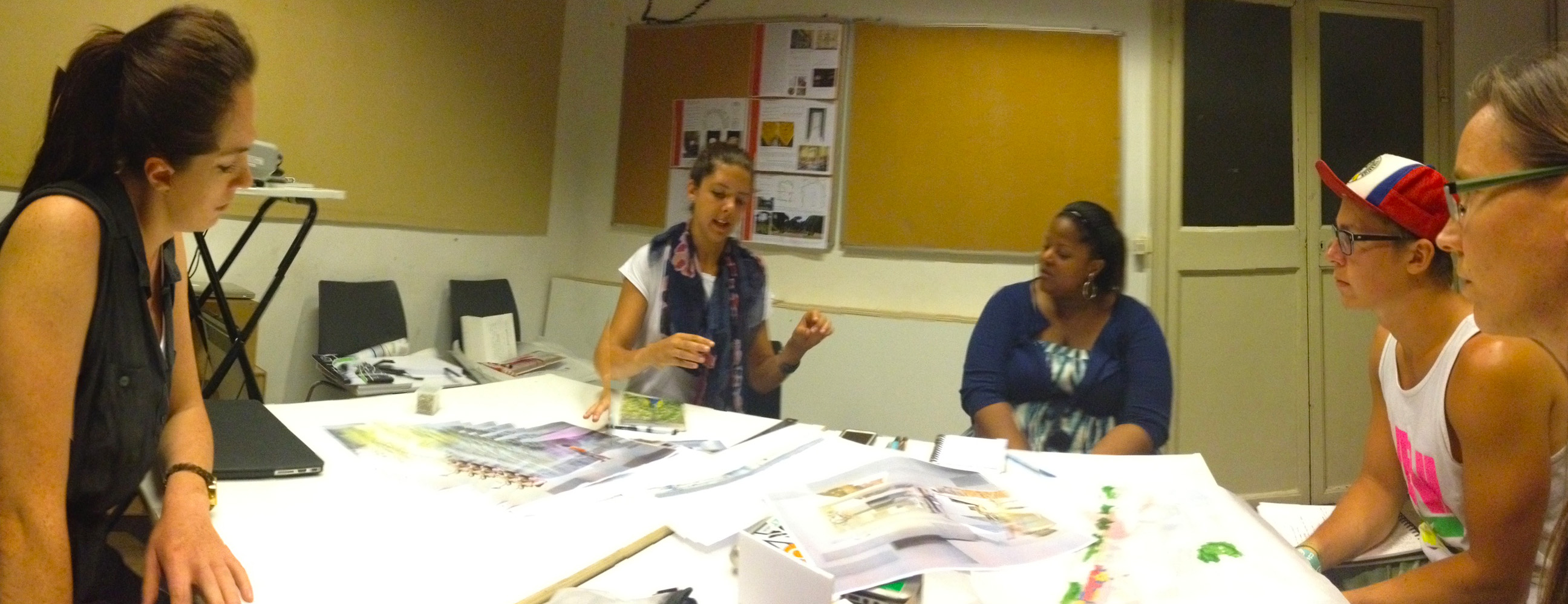
Taylor, Katie, Daisy, Cody, and me deep in conversation over a design proposal.

Taylor, Katie, Daisy, Cody, and me deep in conversation over a design proposal.


On Tuesday, I delivered a lecture to the University of Oregon architecture students here in Rome.  Daisy made me feel like a million bucks with her introduction!  We worked together at Hampton University from 2005-2010 and got to know each other well.  I miss her, but I’m thrilled that she’s doing so well for herself!

In the talk, I shared examples of the research I’ve been doing and  discussed the need for architects to expand their research abilities.

After the lecture, three of the students presented their design progress. Daisy, the other students, and I gave feedback and ideas for further development.

Passage in Toulon

I’d forgotten how much I love Toulon, France. It’s a naval town, and the sister city of Norfolk, Virginia, where I live in the States.

The little plazas–scattered throughout Toulon–are amazing. Full of character and life. And, they are so close together that you’re never more than half a block from a lively public space.

Our Hampton University architecture program has worked with officials and urban planners in Toulon each summer since 2010 to develop design strategies for revitalizing the city using architecture and urban design.

Defining the Street in Dublin and Ballsbridge

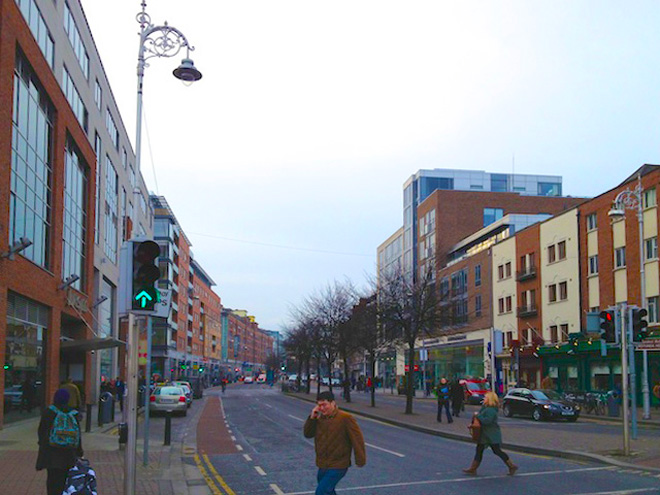
Parnell Street

Parnell Street

In my opinion, good city buildings touch each other and define the street. They don’t have to be glamorous to make good urban fabric. When building work together, they create good spaces for people to enjoy.

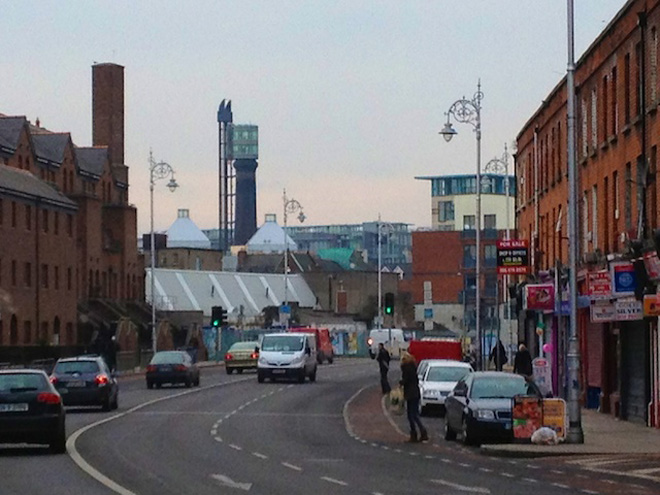
I’ll give two quick examples of clearly defined streets. These two streets are near my apartment in Dublin. Unfortunately, they are both designed for cars–not people.  Nevertheless, the buildings work together to define space. On Parnell Street, the buildings support a good mix of uses and are close enough together to provide the density of population needed to support ground-floor retail. Residential density is lower a few blocks away, on North King, and ground-floor business are fledgling.

North King Street -- view toward the Jameson Distillery smokestack -- where density breaks down.

North King Street — view toward the Jameson Distillery smokestack — at the point where density breaks down.

Simply put, a proper mix of residential and office space is necessary to support ground floor restaurants and retail. By providing residential as well as working space, mixed-use districts are active throughout the day. Businesses can draw customers morning, noon, and night.

Having the right mix in your district ensures you’ll be able to get the services you need without getting in a car. (Oh, that we’d build this way in the States! Walkability is so rare in cities back home.)

I was reminded of all this last Thursday, when I travelled to the Fulbright office in Ballsbridge to help interview Fulbright applicants. It’s in the outskirts of Dublin. Although this is a suburban neighborhood, it is still dense by US standards. Notice that there’s more space between buildings in Ballsbridge than in Dublin city center, but that there’s still a good mix of uses/services. Nevertheless, some buildings contribute much more to the life of the street than others!

Fulbrights at “Work”

Because I blog about the experiences I’m having much more often than about than the research I’ve been doing, people sometimes ask me if I’ve been getting any work done at all.  The answer is, emphatically, YES!

The Fulbright program IS about doing scholarly work.  But it’s also about learning. It’s about making the space in our lives to get to know other people and how they do things… to remove ourselves from the ordinary humdrum long enough to learn something that’s radically new to us as Americans, but not new at all in other places.

Fulbright scholars DO have lectures to give, papers to write, and projects to conduct.  But in the end, the most valuable part of our experiences overseas rests in the friendships we make and the respect we build for each other’s culture.  That, I see, as my primary mission.

This type of cultural give-and-take is evident in the images I brought back from Tanzania — so I’ve decided to share a few here. Most are from the 2005 Fulbright-Hays program I conducted for college students from the US and Tanzania. You can also read about a lecture I gave on the topic of African architecture.  I’ll be delivering that lecture again in Belgium this spring….

Curved Streets

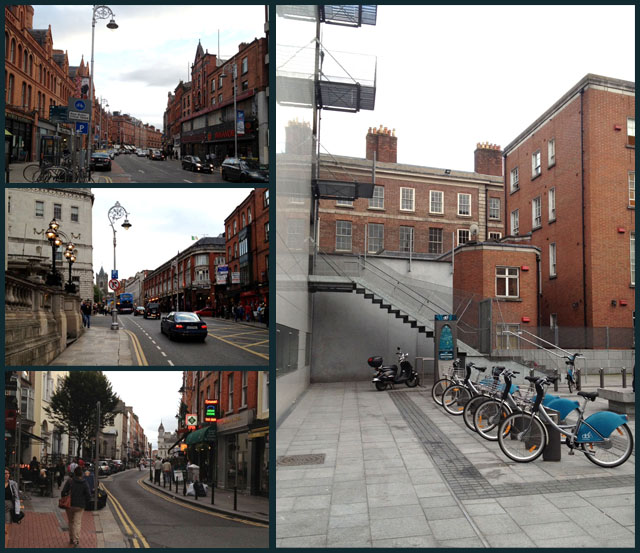
I captured a few more images of curving streets on our walk to dinner last night.  I mentioned yesterday that Camillo Sitte recommended the urban designers include non-straight streets.  The urban design students I taught this past summer used Sitte’s principles to guide their designs for a new (theoretical) plaza in Rome.  You can see their proposals at Urban Push.  Two of the images below feature landmarks around the bend in the street.

In the photos below, you’ll also see that Dublin has bike share.  If I find the drop-off locations to be convenient, I’ll join the program.  I’ve heard it’s just €10 per year.  Remembering to drive on the left is pretty difficult for me when I’m not in a car, though, so it may be a while before I’m up for riding a bike in the city.  I actually had no problem driving a car on the left side when I rented a manual transmission auto for two weeks in 2003.  The most difficulty I had that year was remembering to convert back to right-handed driving when I got back home.