Professor Shannon Chance
PhD, SFHEA (UK), BArch, MArch, PG Cert (BIM)
Registered Architect (Virginia), NCARB, LEED-AP
Lecturer and Programme Chair at TU Dublin
Visiting Professor at UCL
Education Blog: www.IrelandByChance.com
I highly recommend applying for a Fulbright Award, to Ireland or elsewhere in the world. I had a Fulbright award to Ireland in 2012-13 that was truly life-changing.
Fulbright U.S. Scholar Awards are opportunities available to U.S. professionals, artists & scholars to research/teach, and carry out projects in more than 160 countries worldwide. Those 160+ countries send scholars and students to the USA, as well.
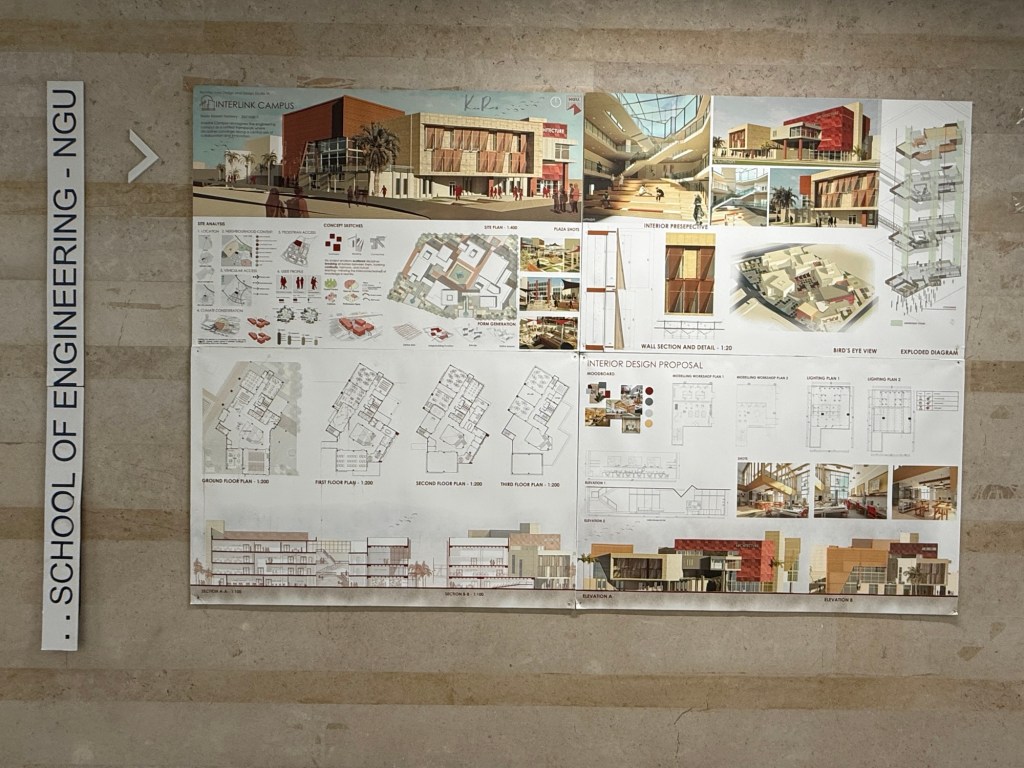
NewGiza University (NGU), located on the outskirts of Cairo, just released a video of me discussing the Architectural Engineering curriculum that I co-designed with Professor Emanuela Tilley, starting back in 2020: https://www.instagram.com/reel/DMVKR4HvVQ0/?igsh=MWo1dDE3cTB4Y2cxeQ== (opens in Instagram):
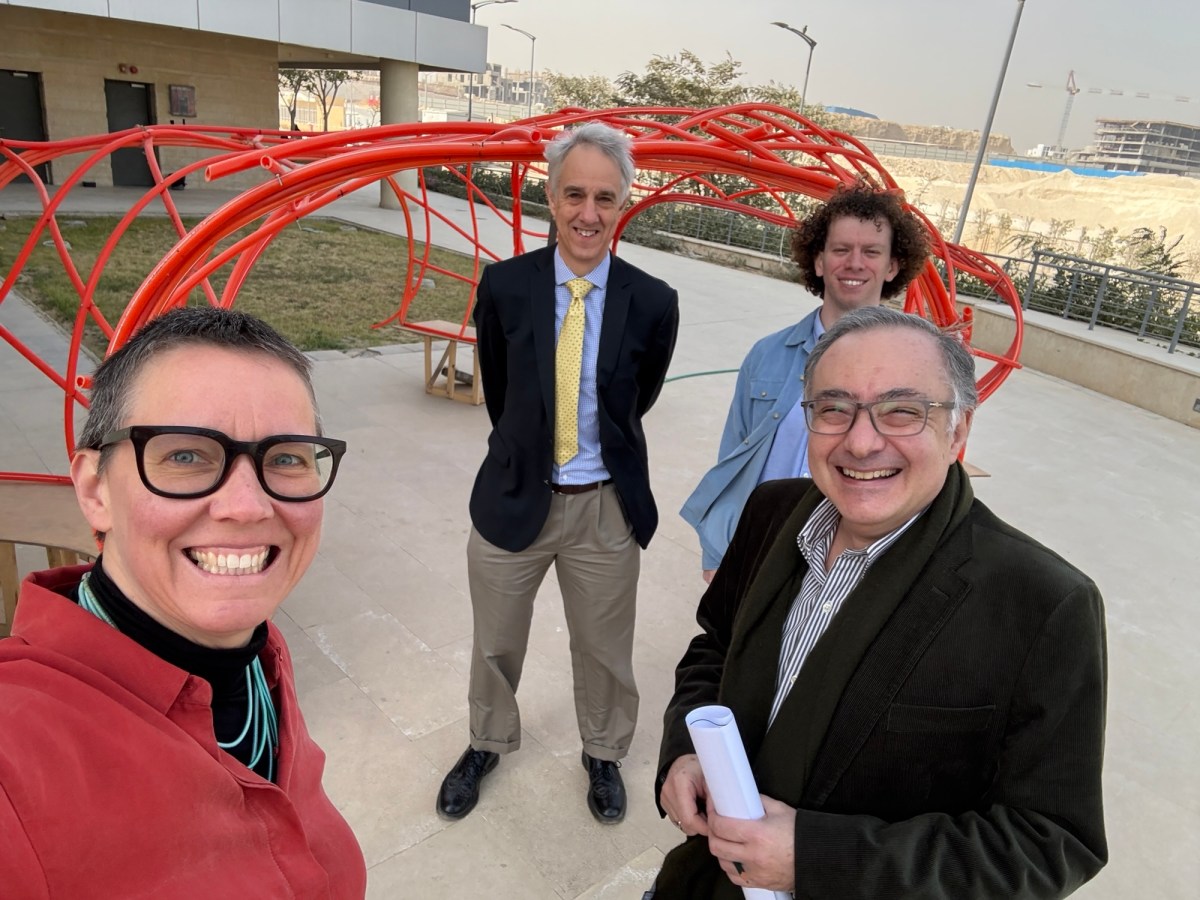
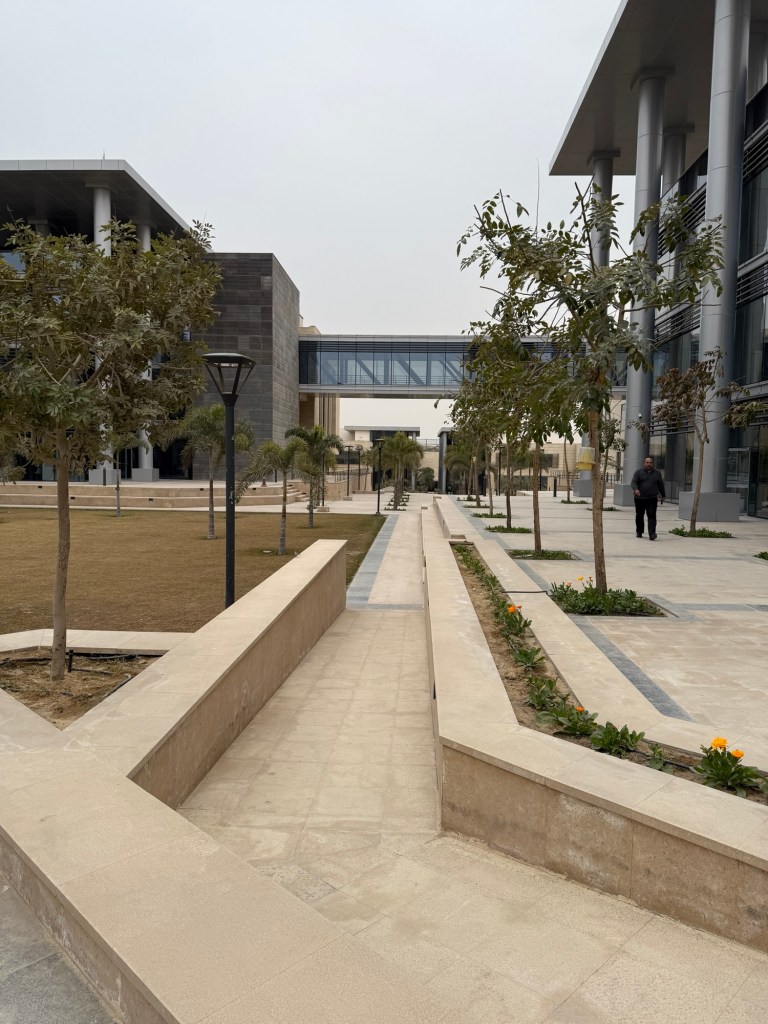
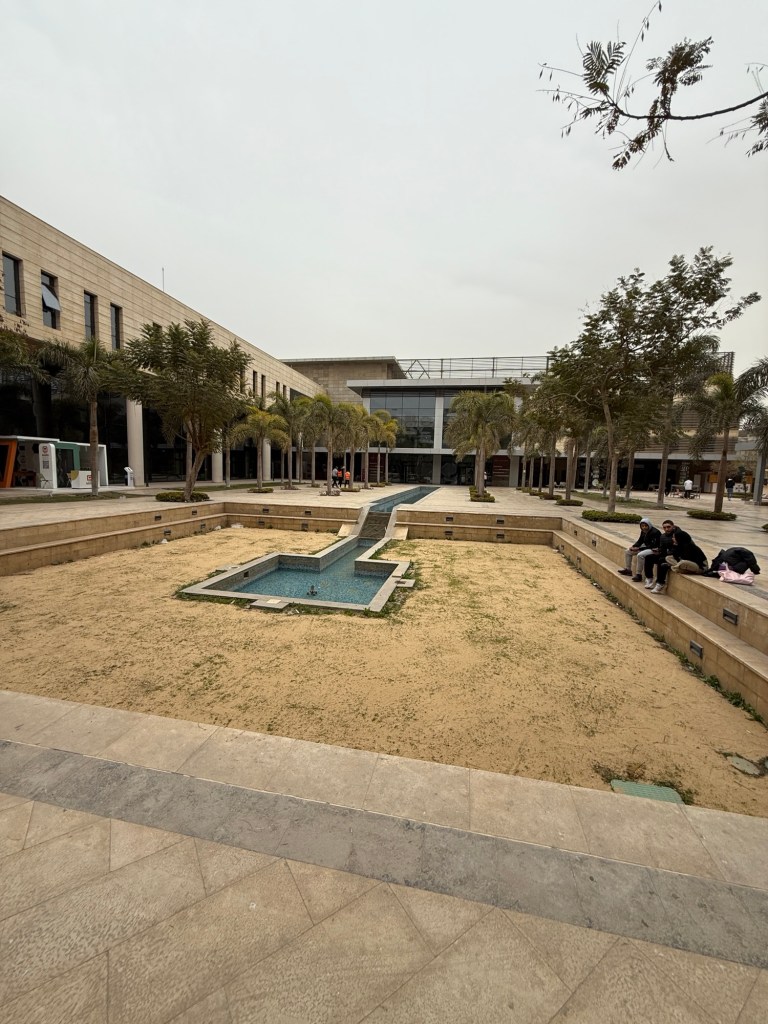
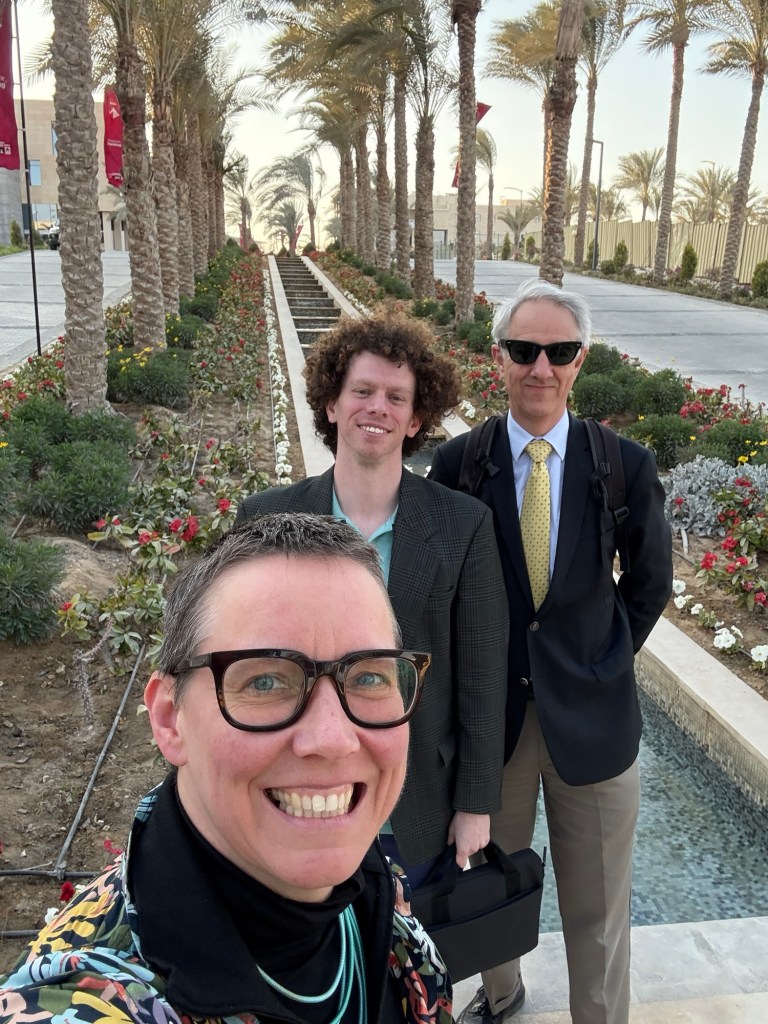
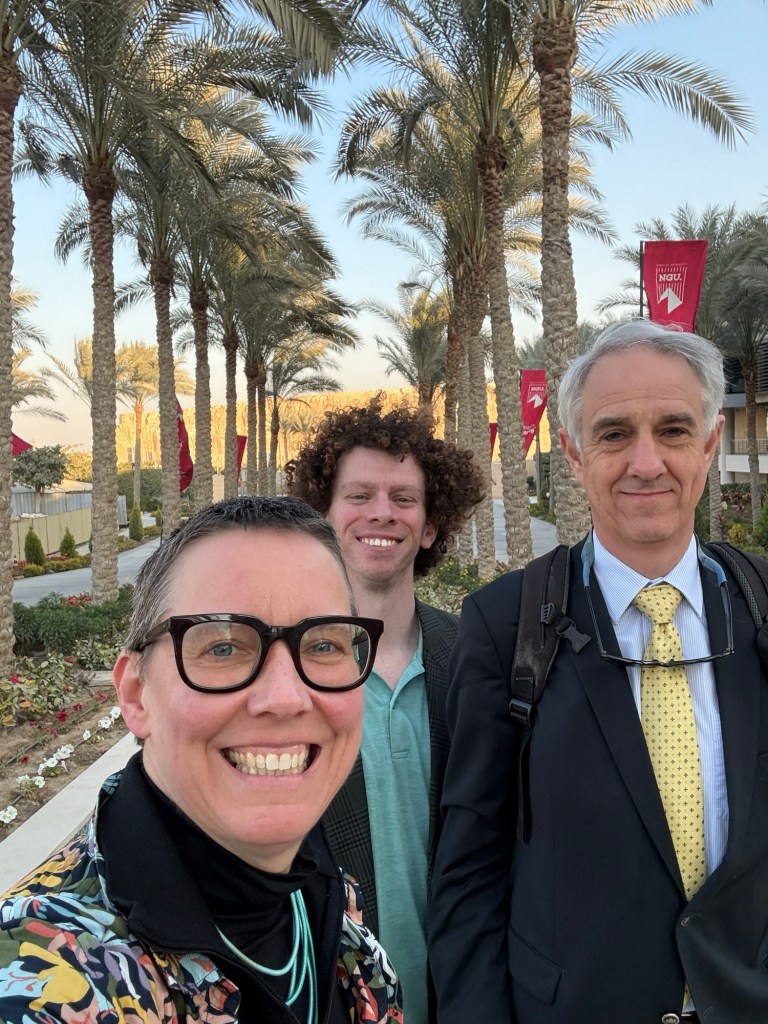
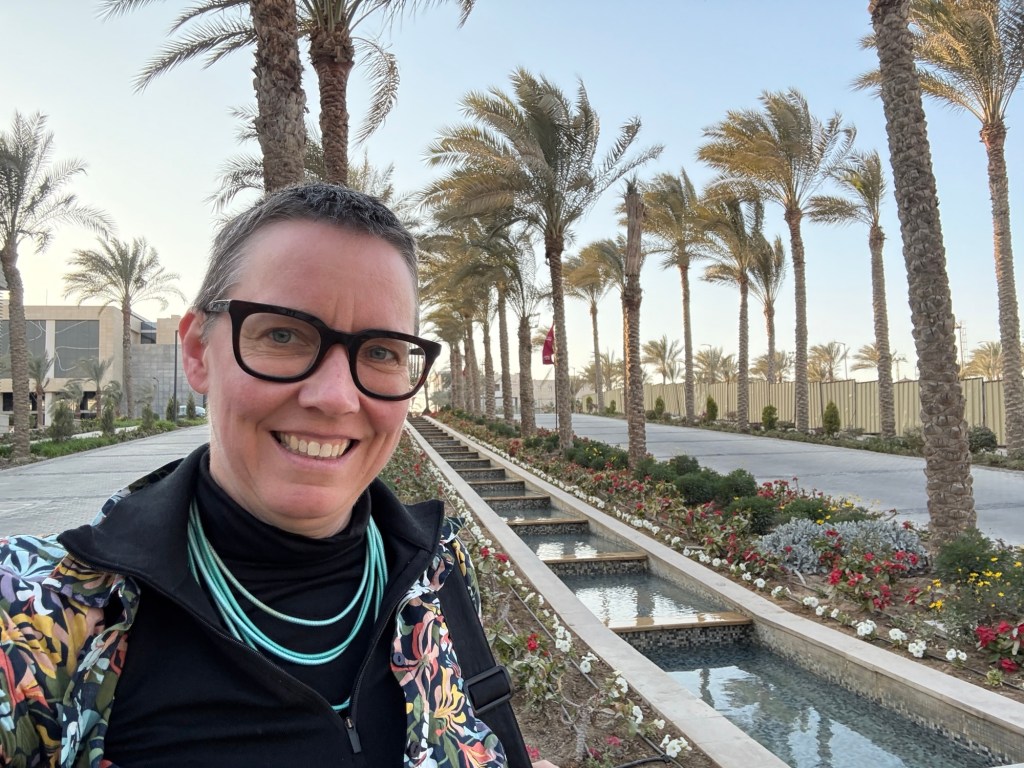
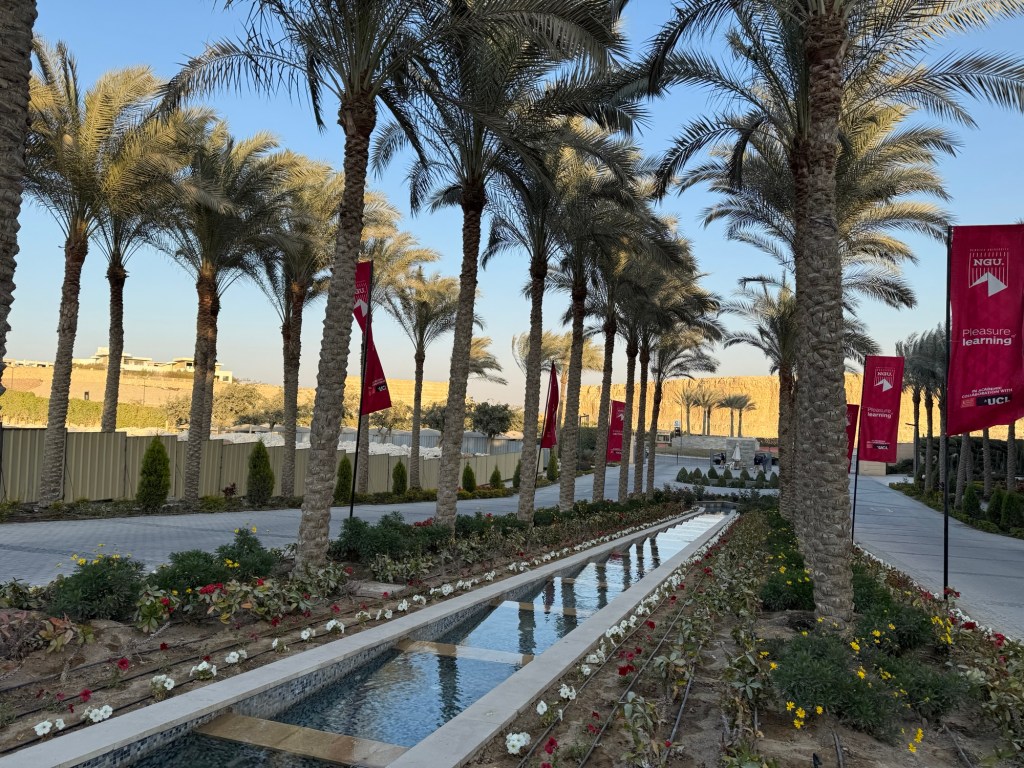
Because of the pandemic, I did not have a chance to visit NGU before we started designing the curriculum. In fact, I didn’t get to visit until this past February, 2025, when I travelled over with two staff from UCL to provide feedback on the quality of the program’s delivery.
It was a whirlwind tour, considering that I arrived a day later than expected due to a British Airline delay.
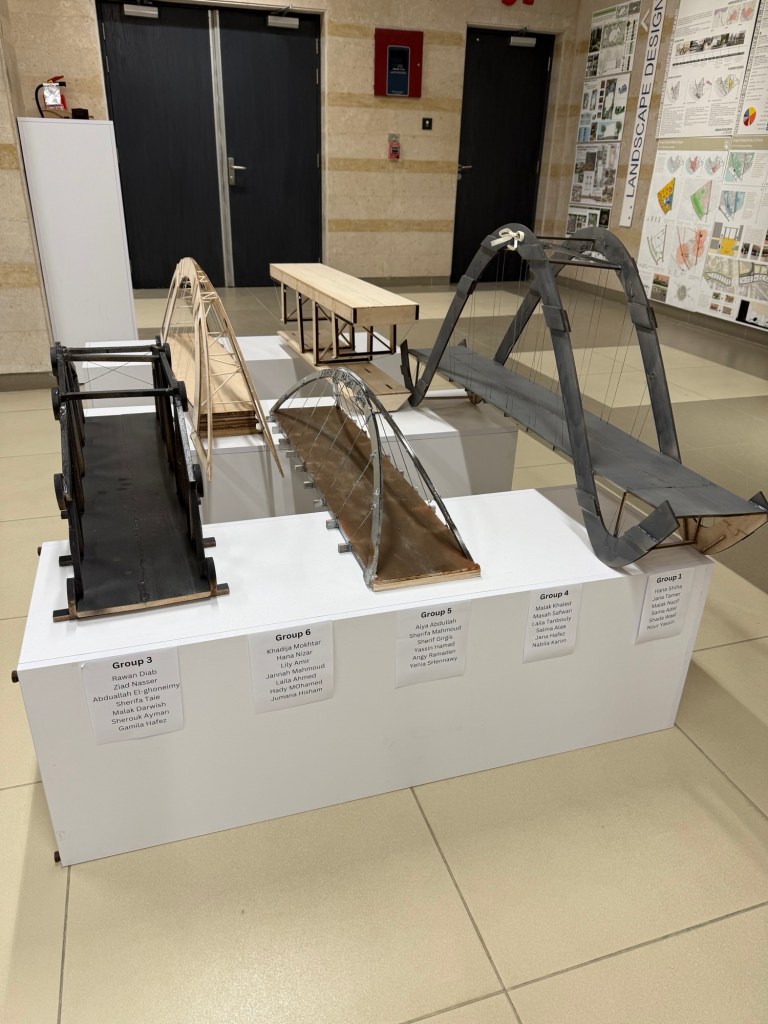
In my two working days there, I got to observe the program the public relations folks at NGU captured the footage on this video.
Designing this curriculum, via a contract between Technological University Dublin (TU Dublin) and University College London Consultants (UCLC) which pays for hours out of my timetable each semester, has been a real joy. It has required me to stretch, been , and develop new communication skills to explain complex concepts to people from a culture and language much different from my own.
Visiting the program and meeting the people who are delivering the content and the amazingly dedicated studentswho are forging the way by implementing a brand new curriculum has definitely been a highlight of 2025.
Many tanks to Dean Aly and the programme staff for welcoming us and helping us feel at home!
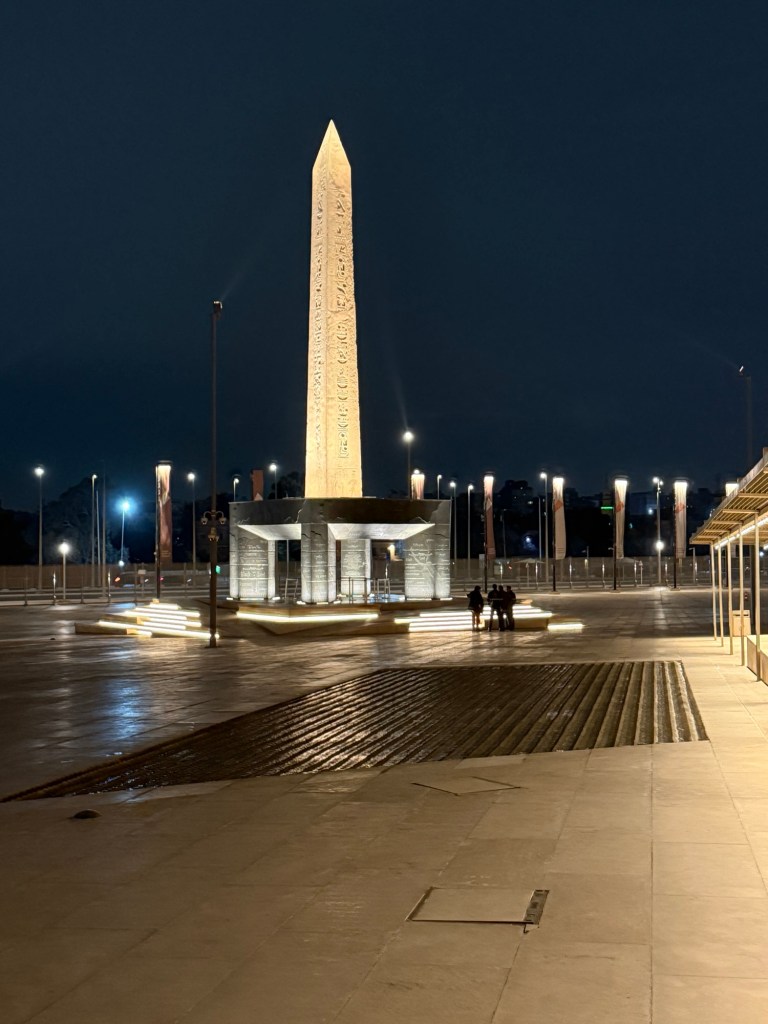
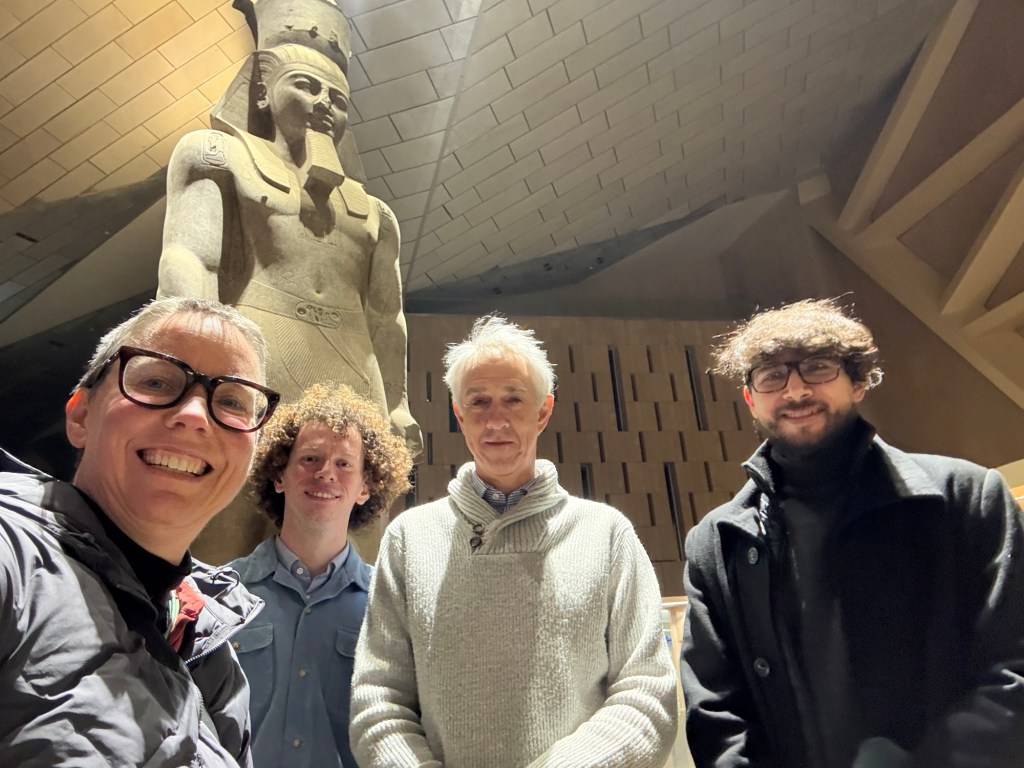
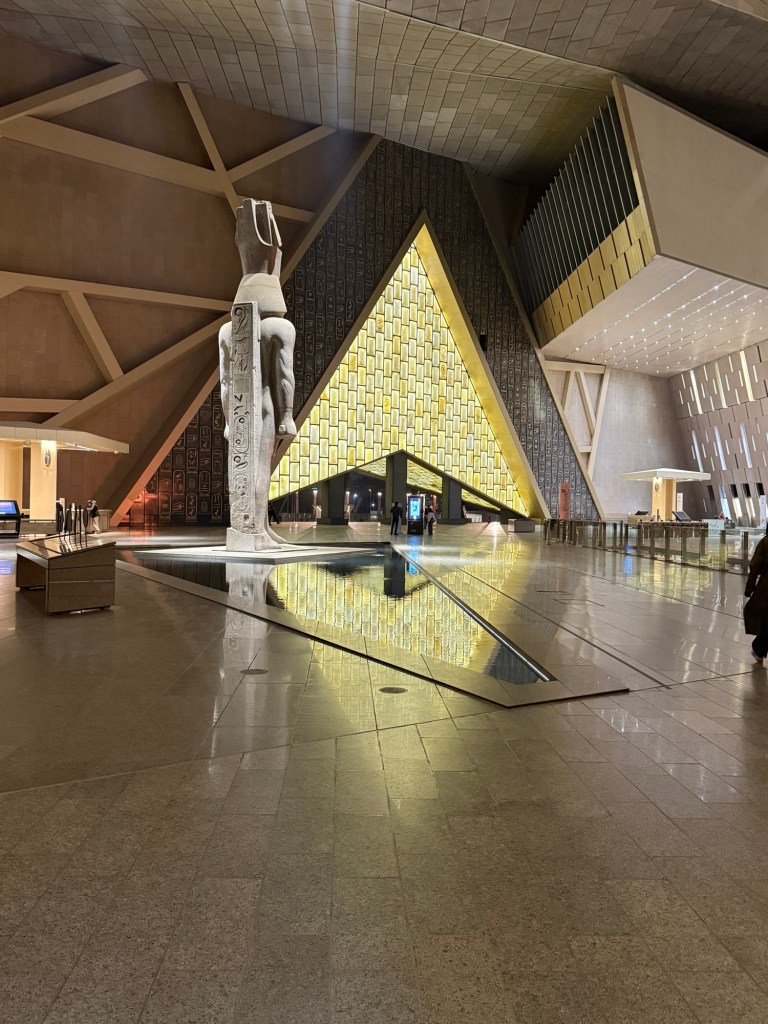
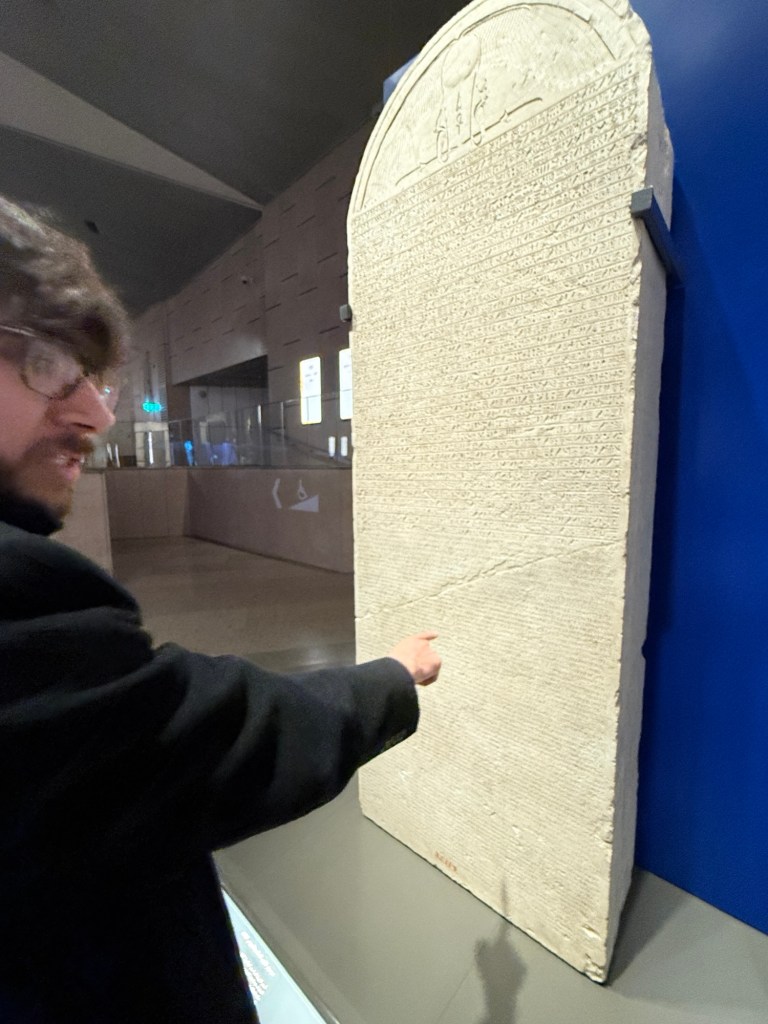
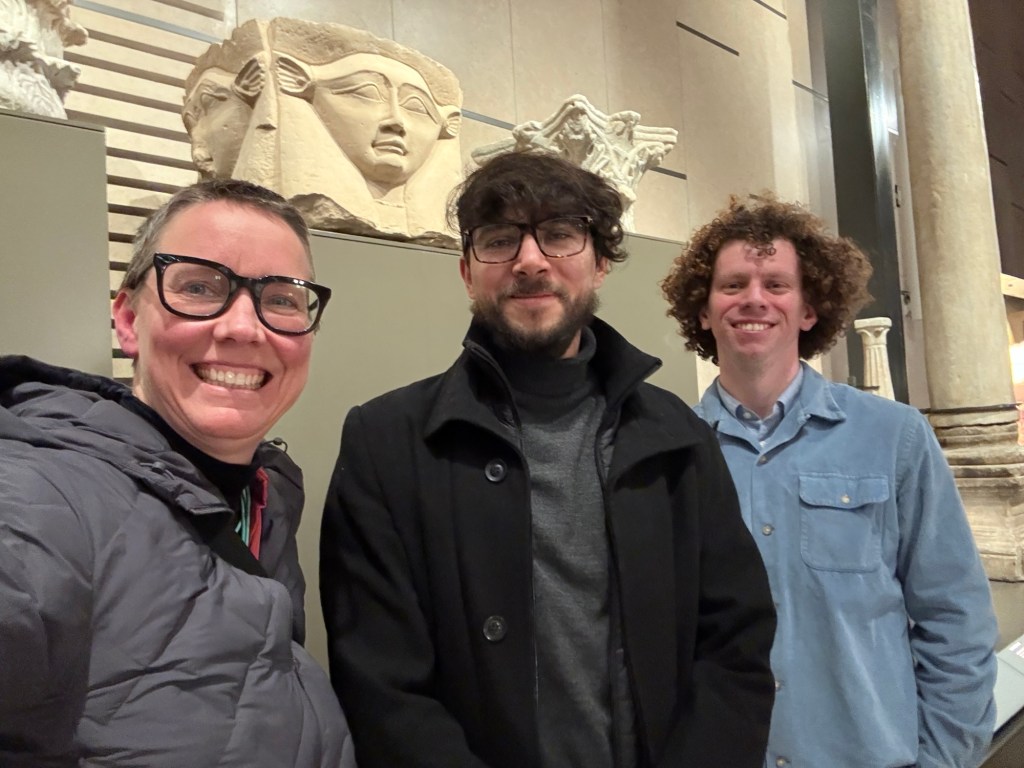
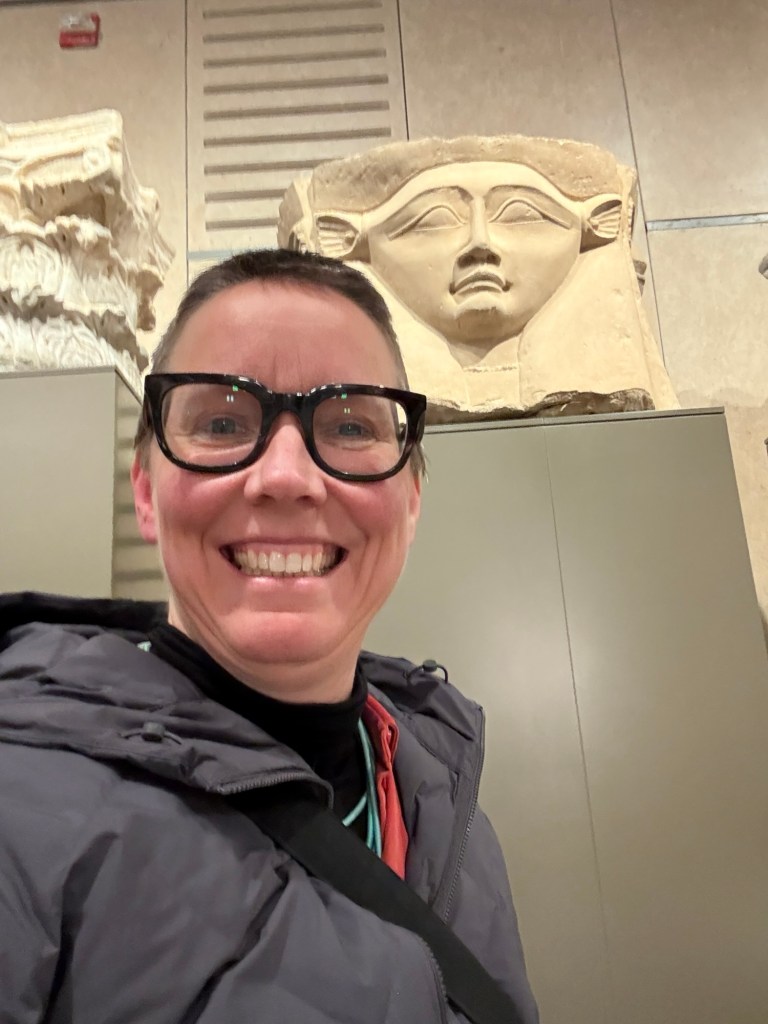
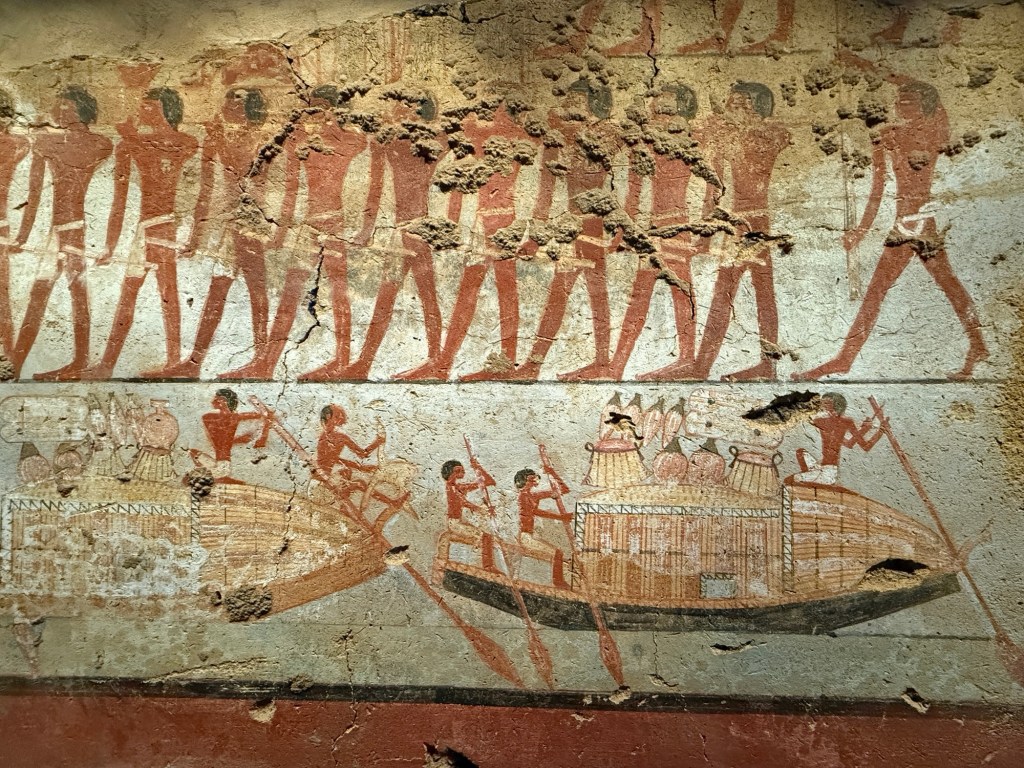
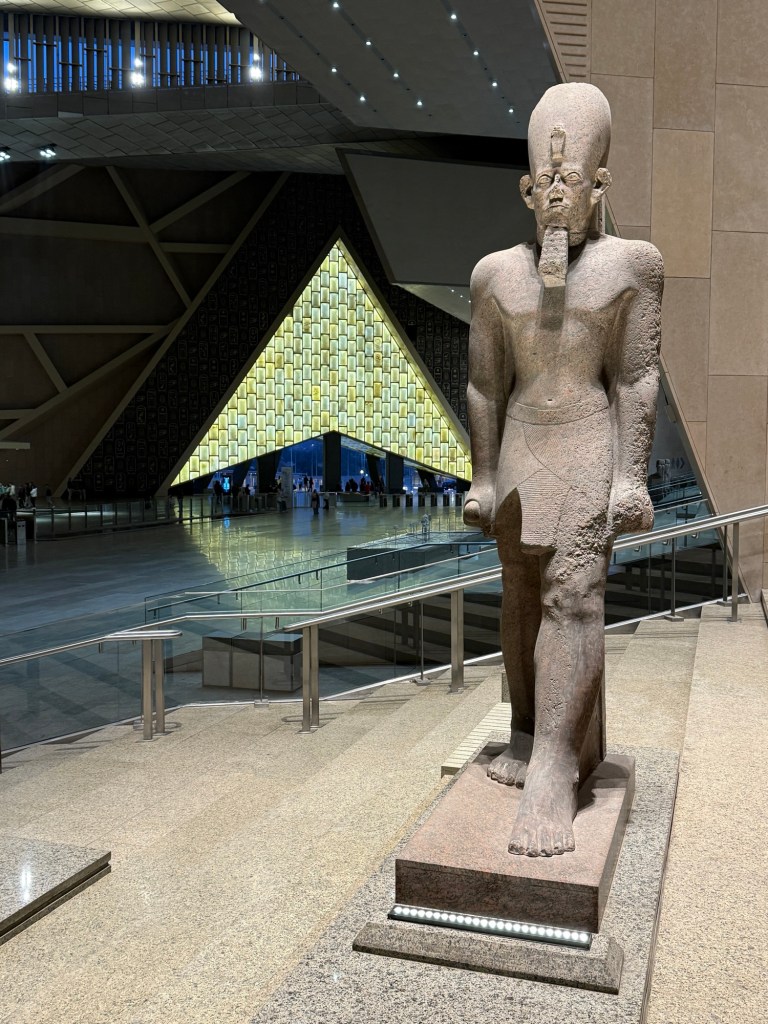
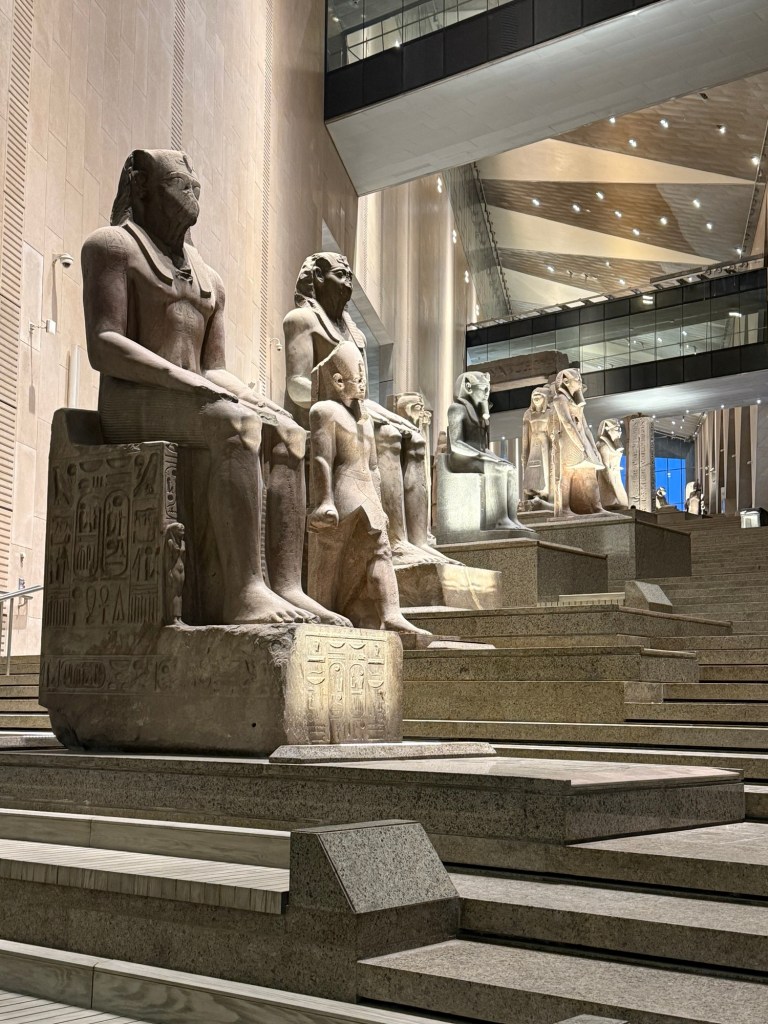
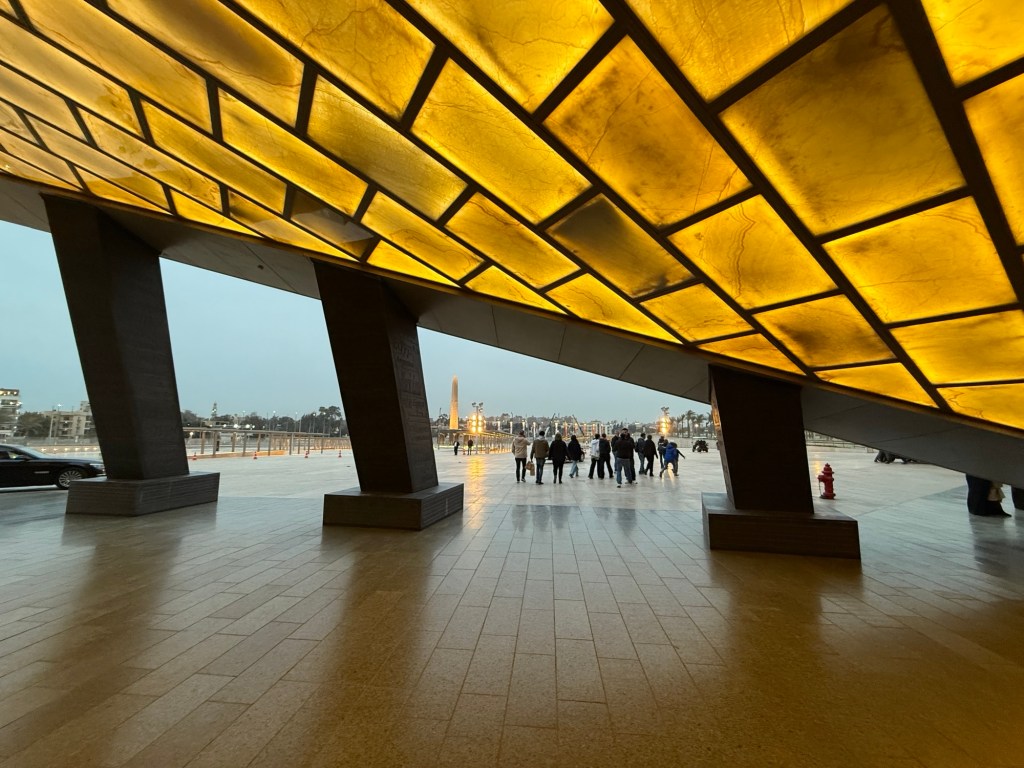
We three visitors also got a chance to tour the brand new Egyptian museum, lead by NGU’s architectural history, teacher. The experience was truly eye-opening and full of intrigue.
I look forward to a chance to visit NGU and Egypt again soon!
I have to say, none of this would’ve been possible without the Marie Curie fellowship I got to spend 2018 and 2019 working at UCL. The bonds I made with the folks at UCL in the Centre for Engineering Education have made such a difference in my and personal and professional life.
Being part of UCL has been so incredibly good for me, and good also for my employer, TU Dublin.
I am so honored to have had the chance to build an architecture program in Egypt and work with the people there who seek to build a stronger community of architects in Egypt. Thank you so much John Mitchell and Emanuela Tilley, for including me in this incredible project!
We’re about to start the third and final day of the 2025 PAEE/ALE conference in Porto, Portugal.
It’s an annual meet up of Project Approaches in Engineering Education (PAEE), which has an active community of members particularly across Portuguese and Spanish speaking parts of the world, and Active Learning in Engineering (ALE), on whose Steering Committee I serve.
I’ve attended PAEE/ALE in San Sebastián, Spain, in 2015. And in Alicante, Spain (where I was a keynote speaker), in 2023. And in San Andreas Island, Columbia, in 2024.
It’s a small and energetic gathering—just the right size for getting to know people and have deeply meaningful chats and learning sessions.
At this year’s event, I chaired a session and delivered a paper on a bingo game I developed with Mike Murphy, Celina Pinto Leão, Mircea Toboșaru, and Mary Doddy Nolan. We decided to perfect the game during a workshop I delivered at the 2025 SEFI Ethics Spring Symposium that I hosted at TU Dublin, and to publish it for others to use. I’ll post materials once they are ready for wide-spread use.
The game is designed to help engineering educators expand the ways they conceptualize integrating ethics into the courses they teach. In the workshop, we explore integrating environmental and social sustainability, EDI, ethical theories and codes.
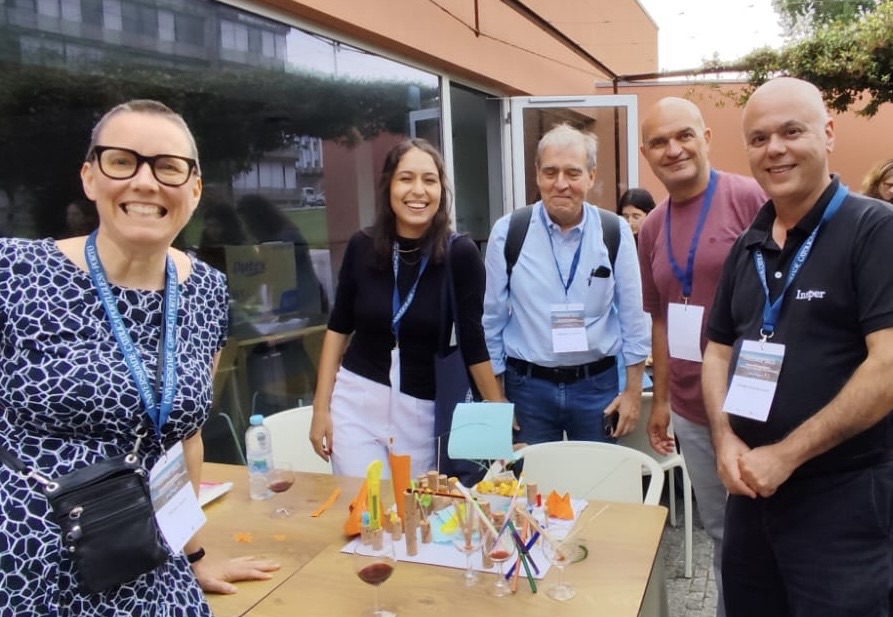
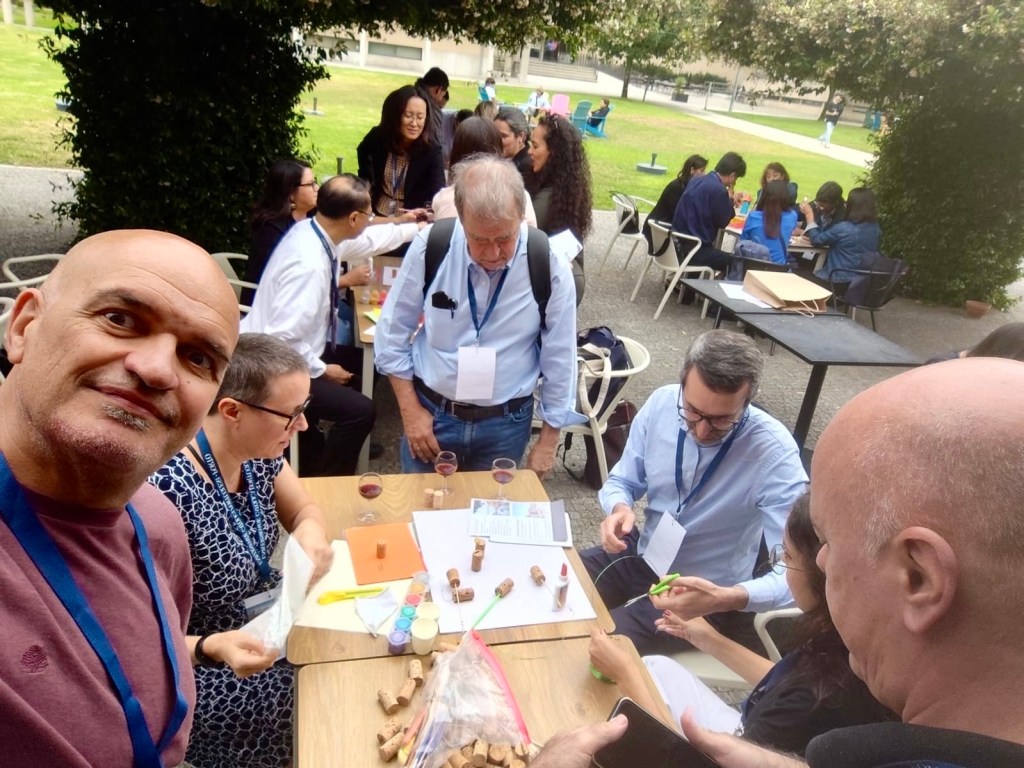
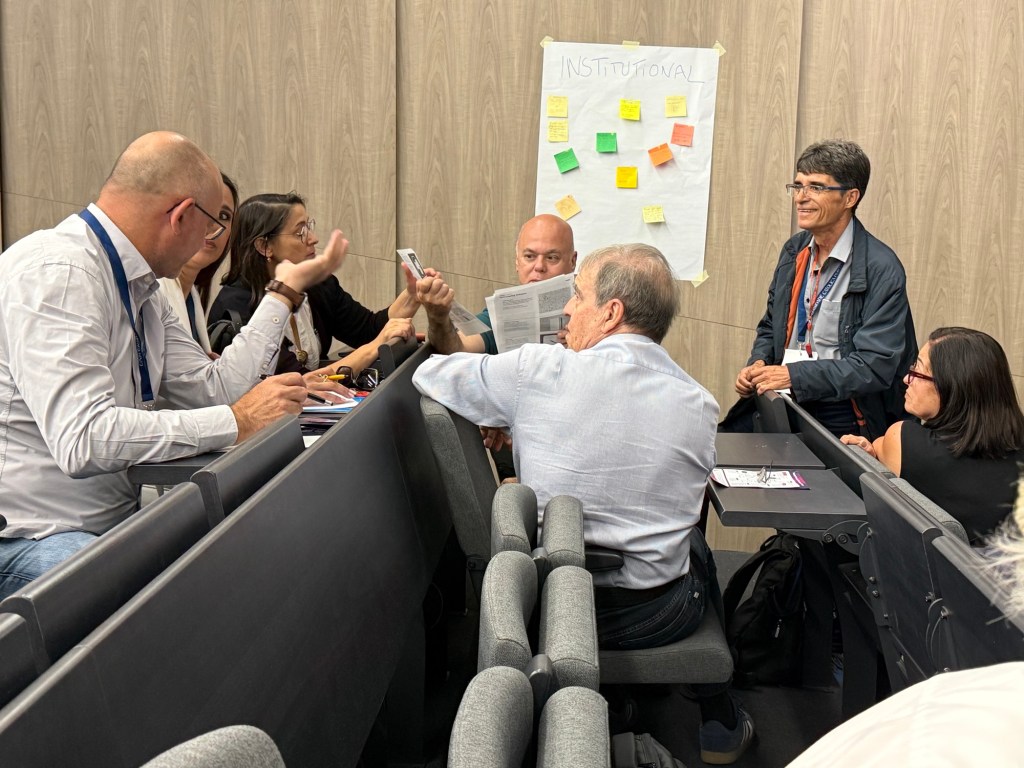
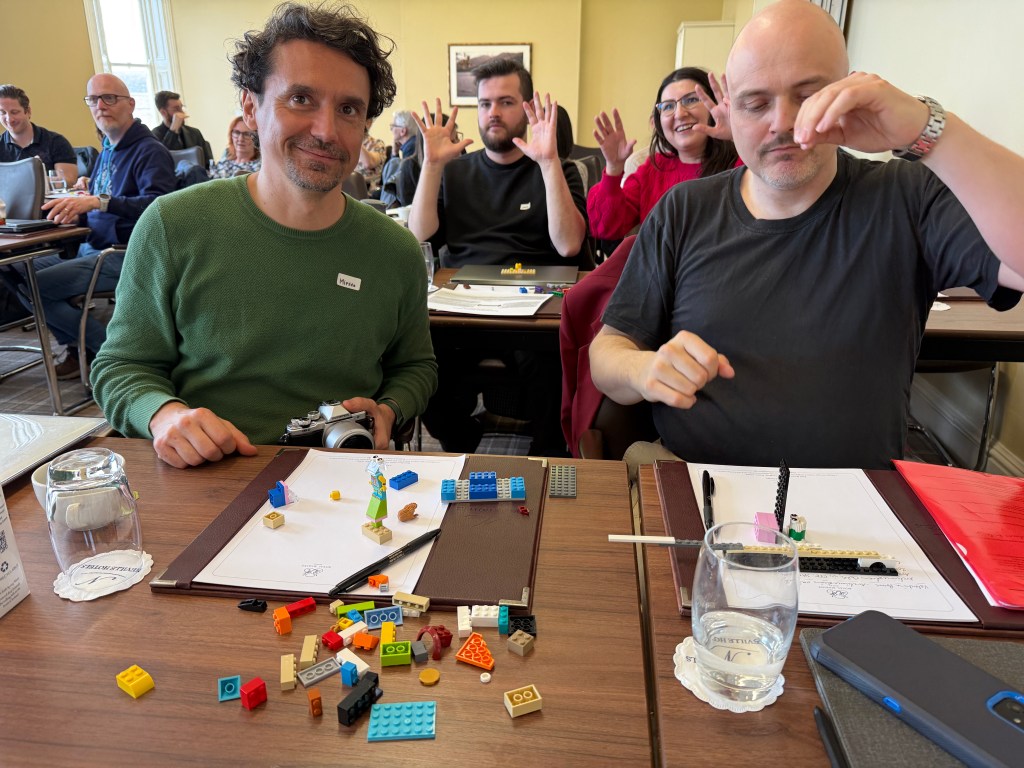
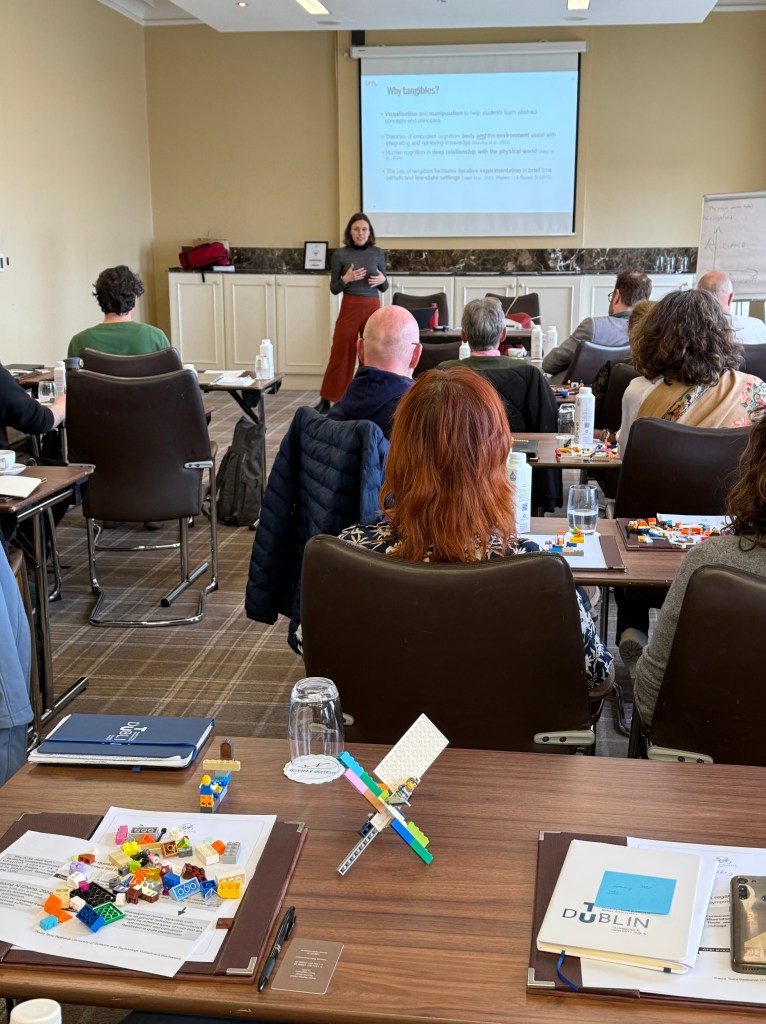
A day after the paper presentation, I ran a workshop with Inês Direito to test the game. The group shown below had such fun, and benefitted from having 90 minutes allocated to our workshop (thanks for that Diana Mesquita and team!).
Bingo! testing crew
I also had a chance to deliver, with Inês’ help, a workshop on securing international fellowships. This topic always gets a warm welcome from colleagues eager to learning about funding sources and tips for winning awards.
The PAEE/ALE 2025 keynotes have been outstanding (as usual with this conference)!
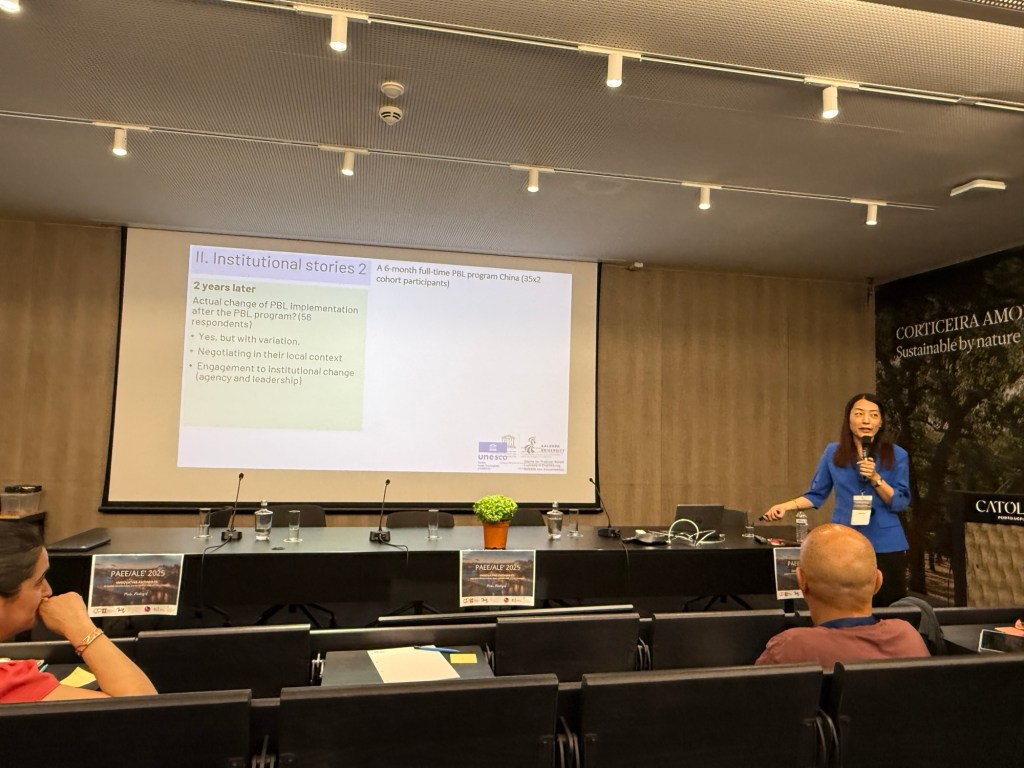
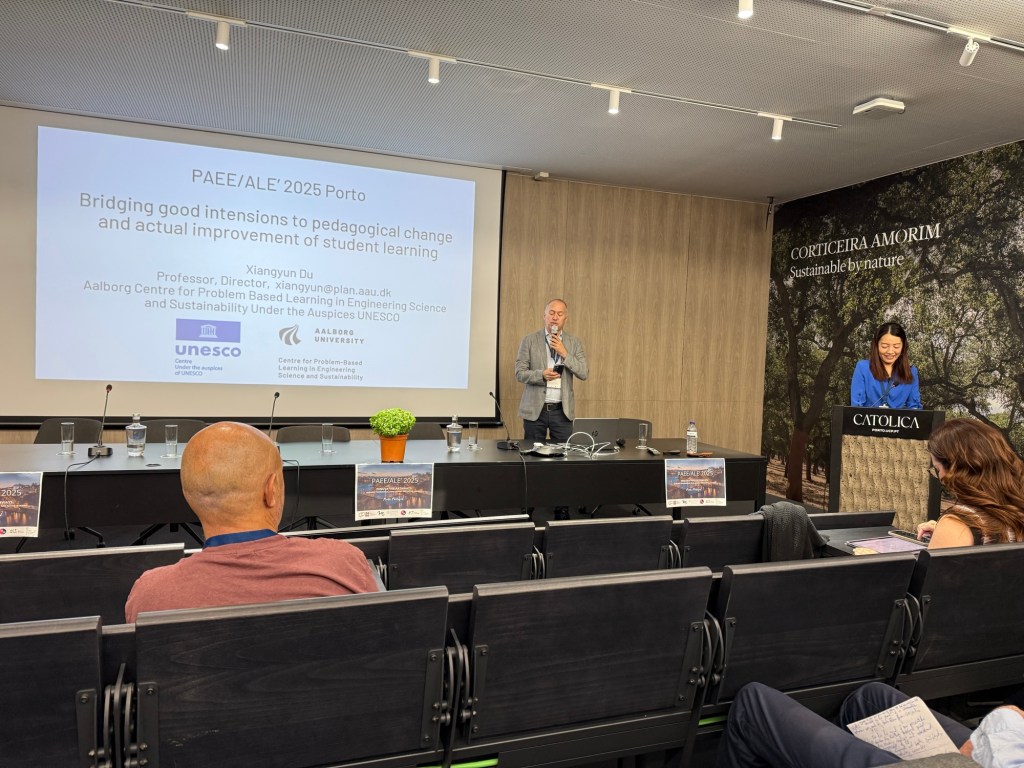
Keynote addresses by Xiangyun Du, the local teaching excellence center, and Jamie Gurganus were packed intriguing insights.
Professor Xiangyun DU’s fascinating keynote address.
Reconnecting with ALE Steering colleagues Miguel Roma, Valquiria Villas-Boas, and Jens Myrup Pedersen, (and Fernando Rodriguez and Luciano Soares who didn’t get to join us this year) is always a pleasure.
PAEE/ALE has been a highlight of my academic year the past few years.
Many, many thanks to this year’s host, the knowledgeable and vivacious Diana Mesquita, and the PAEE leadership including Rui Lima, for making the 2025 event possible.
If you’re interested in Active Learning pedagogies, consider joining us next year for the 2026 conference in Japan!
Funand games! Sessionswith breakouts. Learning with and from colleagues! reception. Welcoming new PhD researchers. Hearing from experts. Emerging research stars. Global leaders.
I’m honoured to have hosted a very successful 2025 SEFI Ethics Spring Symposium.
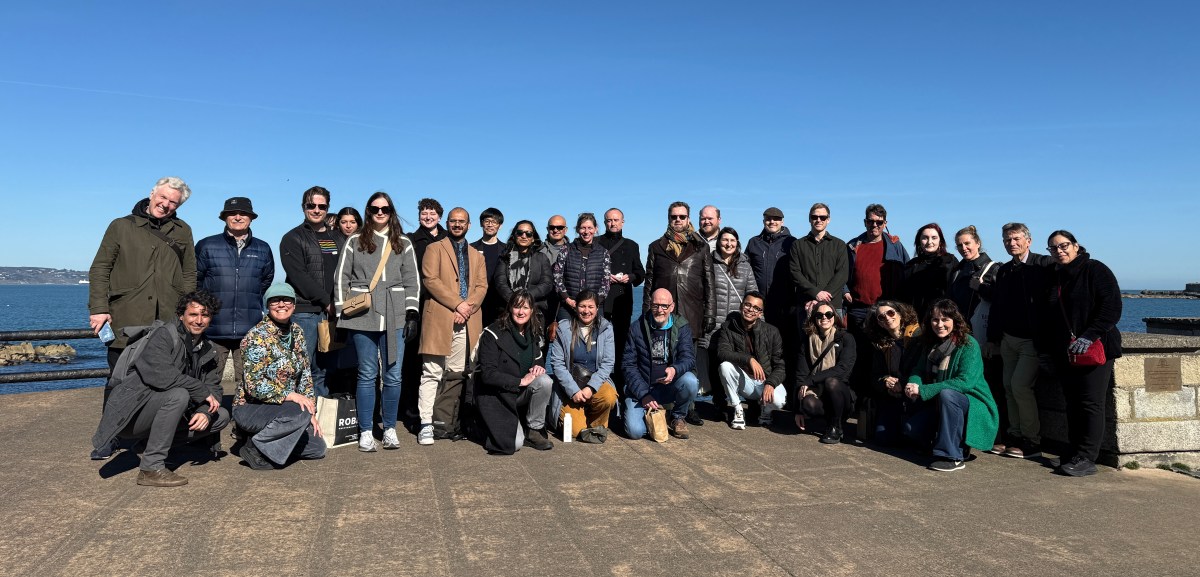
From March 24–26, my colleagues and I gathered at the Royal Marine Hotel in the charming seaside town of Dún Laoghaire, Ireland, for our small and cosy annual symposium. Mother nature blessed us with glorious weather, tasty and healthy food, gorgeous natural and architectural surroundings, an enchanting historic hotel, and new and renewed friendships.
Diana Martin, Mircea Tobosaru, and I organised the programme and all the details, demonstrating that collaboration is key to flourishing!
With 35 delegates from across the globe, this wasn’t just another academic conference—it was a meeting of minds and a celebration of our shared commitment to engineering ethics education.
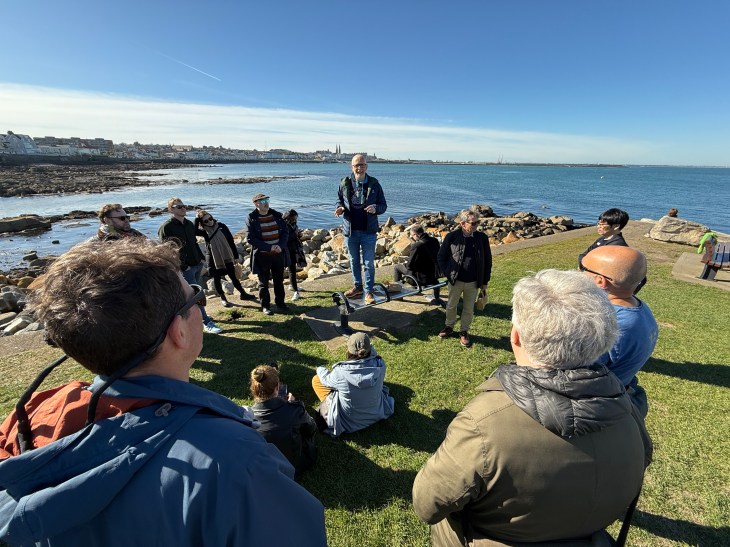
Soaking in the surroundings, past and present, with a tour by Roland Tormey.
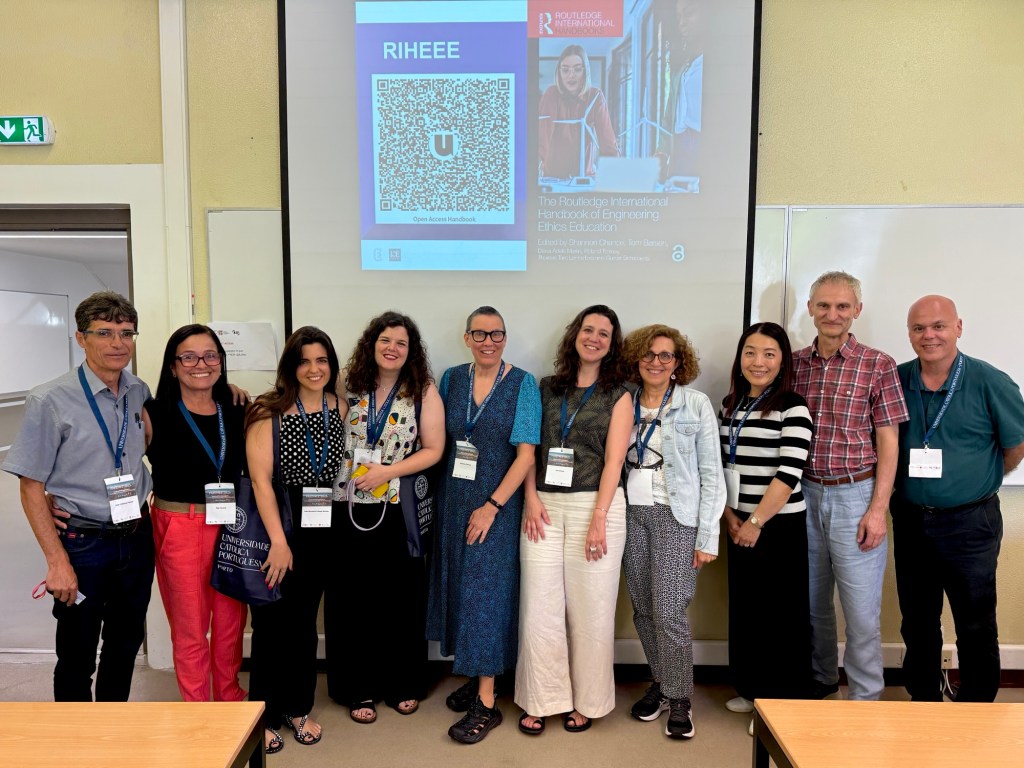
The symposium’s main goal? Strengthening our collective capacity to teach ethics to future engineers. A key focus was the Routledge International Handbook of Engineering Ethics Education (RIHEEE)—a major collaborative effort by the SEFI Ethics special interest group. We reflected on what is presented in the book and considered how to extend its themes, translate into impactful teaching practices, and generate discussion more broadly in the places we live and work.
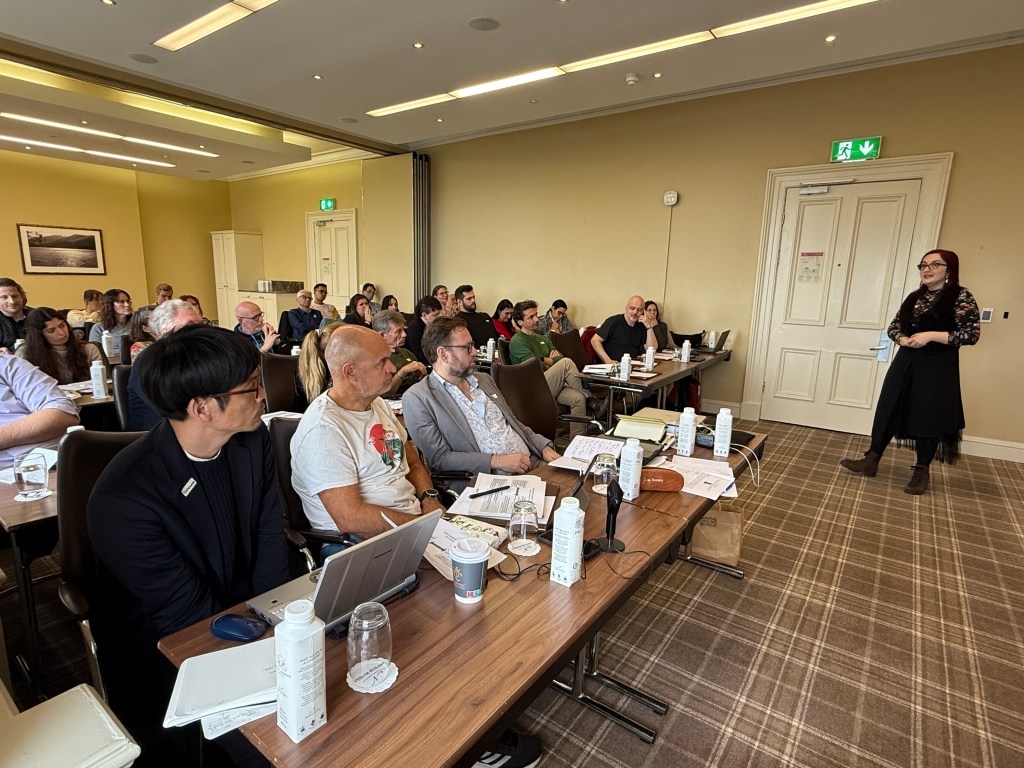
Opening the Symposium and introducing the handbook.
A Program Packed with Thought-Provoking Conversations
Over three days, we immersed ourselves in a mix of keynotes, workshops, and panels, tackling big questions from multiple angles:
Keynotes that Challenged and Inspired
Mary Nolan explored the role of care ethics in engineering, pushing us to think beyond traditional engineering thinking.
Paula Tomi examined the nature of truth, a concept that sits at the heart of both engineering and ethics.
Tom Børsen introduced us to techno-anthropology, showing how it intersects with engineering ethics education.
Keynote by Paula Tomi
Workshops that Sparked Debate and Collaboration
Care Ethics—How do we broaden engineers’ notion of responsibility?
AI Experimental Philosophy—How can philosophy guide us in using and developing artificial intelligence?
The Archimedean Oath—Should engineers take an ethical oath, much like doctors do?
Quantitative Methods & Ethics—How can we effectively describe and report ethical impact?
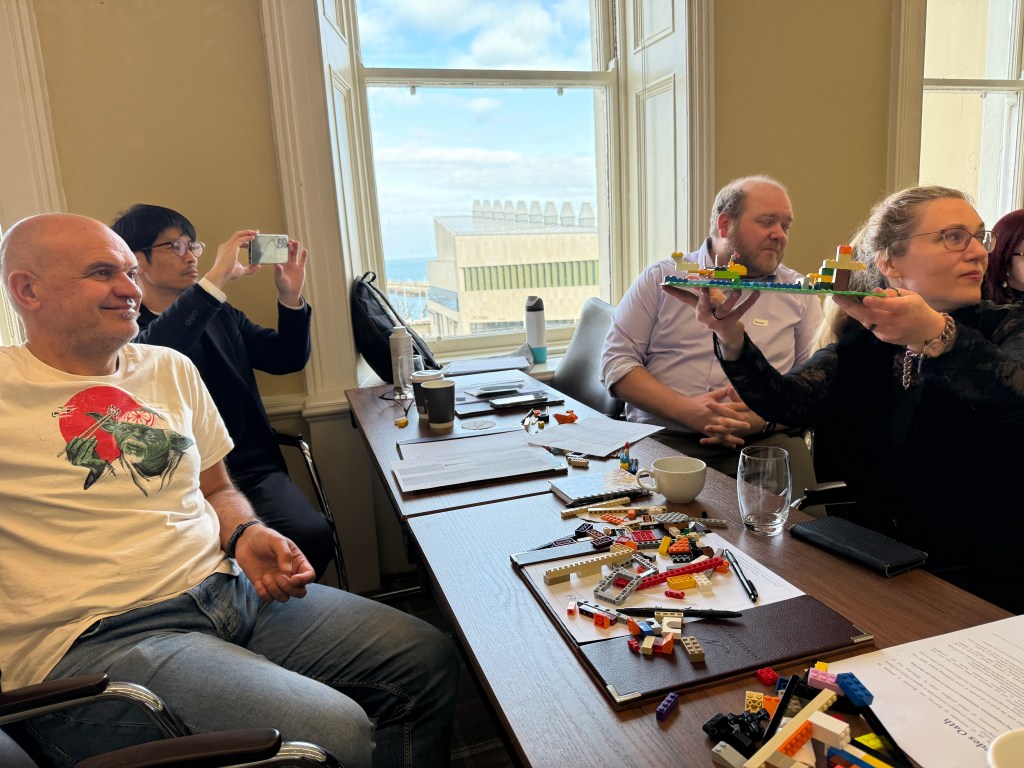
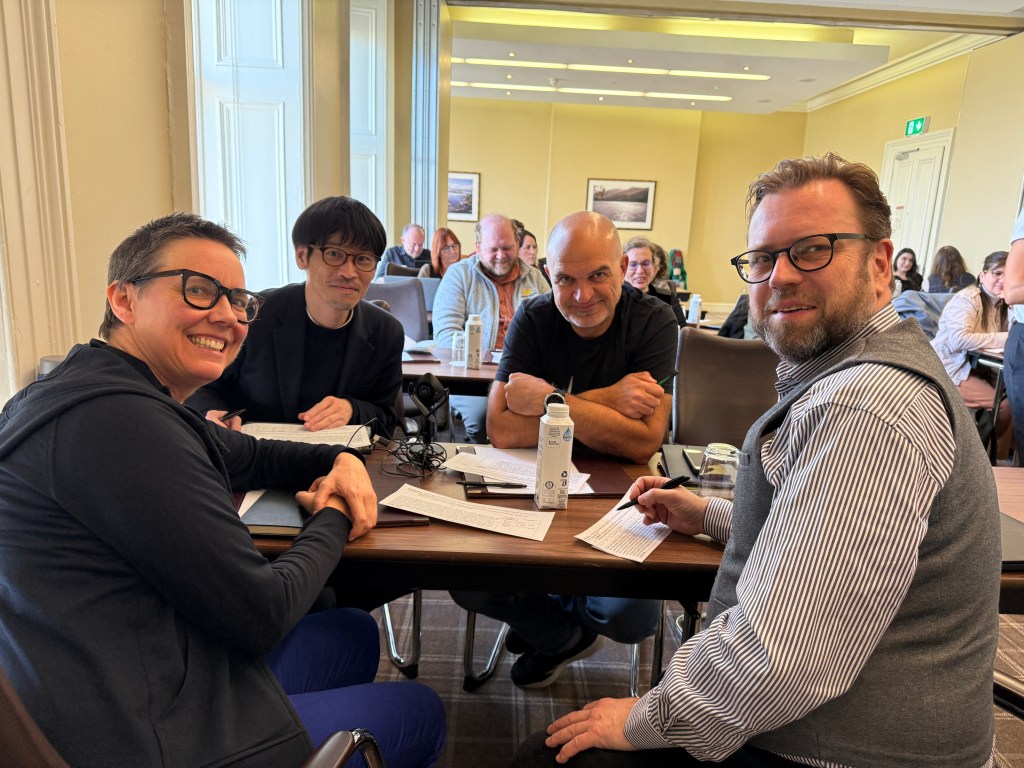
Peer-to-peer learning in action. Tom Børsen, to the right, was the co-lead editor of the handbook. Takehara joined us from Japan, and Miguel from Spain.
Panel Discussions: Making Ethics Education More Practical
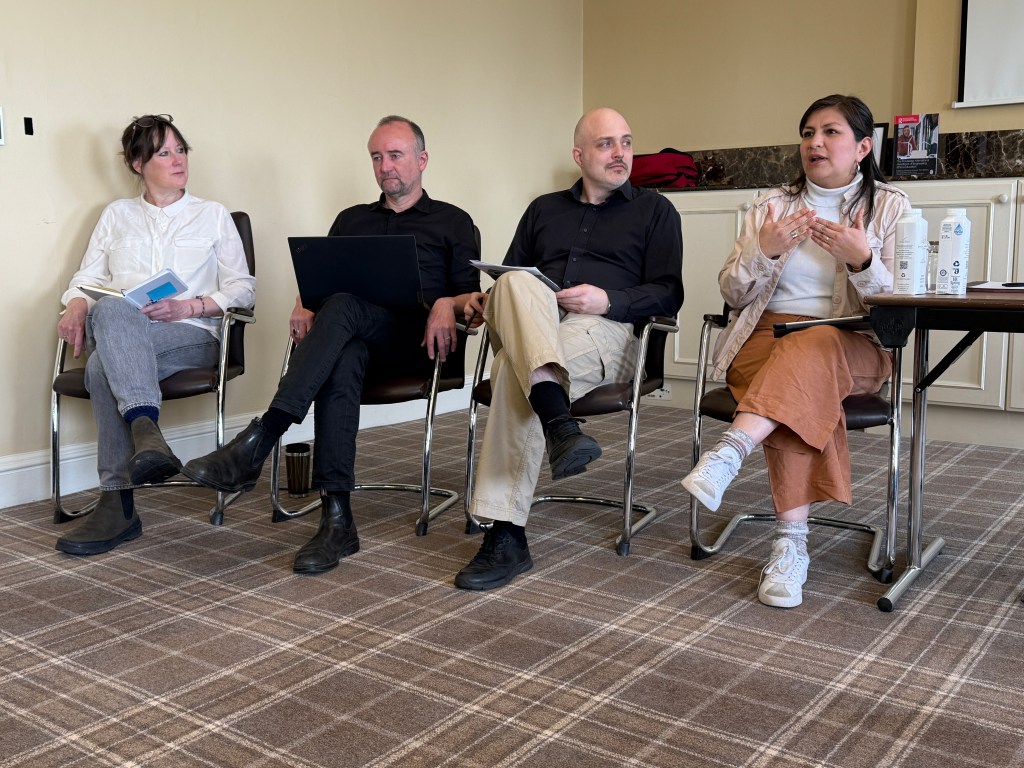
Our panelists had a specific challenge: dive into a self-selected sections of RIHEEE and critically assess its themes. We asked: What patterns do you see across the set of chapters in your section? What’s missing? How can can educators make use of the content? How can we help them do that? Can we translate theoretical insights into tangible strategies that can be applied in classrooms and institutions worldwide yet still reflect local culture and values?
Panel with Rachel Harding, Aaron Johnson, Magnus Kahrs (and Valentina Rossi, not shown)Panel on engineering ethics accreditation Panel on Interdisciplinary Perspectives with Katherine Looby, Ronny Kjelsberg, Gaston Meskens, and Sandra Cruz Moreno.
There were so many very special aspects, including exploring care ethics in depth and applying care ethics, and the walking tour was truly spectacular.
A Literary and Cultural Interlude
Roland Tormey’s literary walking tour of Dún Laoghaire was a highlight for us all. We took a step back and immersed ourselves in the cultural richness of our surroundings. For many of us, this blend of intellectual and cultural exploration reinforced the broader ethical dimensions of engineering—how our work is always connected to society, history, and place.
Sunshine and good vibes galore!
Global Voices, Local Impact
The symposium truly reflected the international nature of engineering ethics education. We had voices from across Europe, North America, Africa, and Asia, with universities ranging from UCL and the University of Michigan to EPFL. At the same time, there was strong local representation, with a third of the attendees based in Ireland—TU Dublin, DCU, ATU, and Engineers Ireland all playing an active role. A special shoutout to my TU Dublin colleagues—Sandra Cruz Moreno, Marek Rebow, Rachel Harding, Mike Murphy, and recent PhD grads Diana Adela Martin and Darren Carthy—whose contributions helped everyone feel welcome.
What’s Next?
The energy and ideas sparked at the symposium will propel us forward onto new collaborations, where we apply what we discussed—via research and teaching and leadership and service—and continue building momentum and sharing what we’re learning with our colleagues back home, and indeed worldwide.
For those who couldn’t join us in person, the Routledge International Handbook of Engineering Ethics Education is freely available in an open-access digital format. Whether you’re new to the field or a long-time educator, it’s a must-read: 🔗 RIHEEE Handbook
For posterity’s sake, I am adding the symposium schedule as it was conducted:
Monday, March 24
09:00-09:30 Welcome and Icebreaker by host Shannon Chance
09:30-10:30 Handbook panel 1 (Foundations) moderated by Roland Tormey with panellists Mircea Tobosaru, Samia Mahé, and Mihaly Héder
10:30-10:50 Coffee break
10:50-11:30 Keynote on Care Ethics by Mary Nolan
11:30-13:00 Workshop on Care Ethics by Robert Irish, Ana Tebeanu, Sofia Duran, Vivek Ramachandran, Roland Tormey, & Alison Gwynne-Evans
13:00-15:30 Picnic Lunch & Walking tour of Dun Laoghaire led by Roland Tormey
15:30-16:00 Coffee break with snacks
16:00-17:00 Handbook panel 4 (Teaching Methods) moderated by Diana Martin with panellists Valentina Rossi, Aaron Johnson, Magnus Kahrs, and Rachel Harding
17:00-17:30 Wrap-up with synthesising activity
19:00 Dinner outing with colleagues departs from the hotel lobby
Tuesday, March 25
09:00-10:00 Handbook panel 6 (Accreditation) moderated by Shannon Chance with panellists Leah Ridgway, Louise O’Gorman, Alison Gwynne-Evans, and Marek Rebow
10:00-10:40 Keynote on Truth by Paula Tomi
10:40-11:00 Coffee break
11:00-12:15 Workshop on AI experimental philosophy by Krzysztof Sołoducha
12:15-13:00 Ethics SIG session led by Diana Martin and Mircea Tobosaru
13:00-14:00 Lunch
14:00-15:00 Handbook panel 3 (Specific Disciplines) moderated by Tom Børson with panellists Jacob Baneham, Miguel Romá, Mike Murphy, and Rhythima Shinde
15:00-15:20 Coffee break with snacks
15:20-16:40 Workshop on the Archimedean Oath by Valentina Rossi
19:00 Dinner outing with colleagues departs from the hotel lobby
Wednesday, March 26
09:00-10:00 Handbook panel 2 (Interdisciplinary Perspectives) moderated by Roland Tormey with panelists Sandra Cruz Moreno, Ronny Kjelsberg, Gaston Meskens, and Katherine Looby, with input from Riadh Habash
10:00-11:15 Workshop on Quantitative Methods & Ethics by Matheus de Andrade and Idalis Villanueva Alarcón
11:15-11:30 Coffee break
11:30-12:15 Keynote by Tom Børsen on “Techno-Anthropology and Engineering Ethics Education”
12:15-13:15 Ethics SIG session led by Diana Martin and Mircea Tobosaru
13:15-15:00 Lunch and physical activity
15:00-16:00 Handbook panel 5 (Assessment) moderated by Tom Børsen with panellists Takehara Shinya, Celina Leão, Ana Voichita Tebeanu, and Mary Nolan
16:00-16:20 Coffee break with snacks
16:20-17:30 Ethics SIG synthesis session led by Diana Martin and Mircea Tobosaru
19:00 Dinner outing with colleagues departs from the hotel lobby
Last week, I presented the Routledge Handbook of Engineering Ethics Education at a World Engineering Day for Sustainable Development conference in Krakow.
Presenting at WED in Krakow
Today, I get to share it via a presentation to the All-Ireland Architectural Research Group (AIARG).
Leaving Dublin on the train this morning from Heuston Station headed to the AIARG conference
Below is a synopsis of what I’ll say in my 15-minute presentation to the architecture educators today.
Presenting the handbook at the Association for Practical and Applied Ethics (APPE) in February
This handbook is a product of the global engineering education research community and the ethics special interest group within the European Society for Engineering Education, known as SEFI.
The engineering education research community considers architecture to be a field of engineering and welcomes participation of architects. They are highly engaged in pedagogical research and in implementing innovation active learning methods. That said, engineering education has historically been more compartmentalized and positivist than architecture education.
I identify first and foremost as an architect and teacher of architecture students and I have been welcomed warmly by this community since I moved to Ireland in 2012. I welcome you to join us!
Today, I’m here to tell you about a new handbook our ethics group has developed that can serve as a resource for you. I hope it will inspire you to draw some new ideas into the education you deliver.
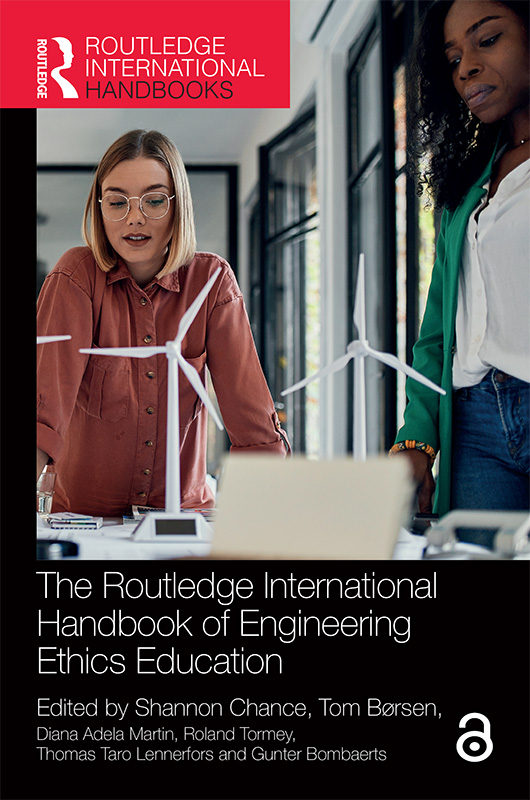
The handbook cover
The book was a community effort, with six editors and 99 other authors from all around the world. This map shows where our authors have lived and worked.
We’re working hard to hear and learn from voices outside the areas most active in engineering education research—here you can see the concentrations of activity in engineering ethics education.
So what’s in the book of relevance to an architecture educator? What can you learn? What opportunities do you see for applying or adding to the content? Would you want to create a parallel text for architects? Would you want to join this community of education researchers?
This comprehensive compendium of the state-of-the-art of literature on engineering ethics education is divided into six sections. Most of these have something of interest to architects.
At the Krakow sustainable development conference
The first section discusses foundations such as ethical theories and the role of professional organization and their codes in helping define and uphold ethics. How we do this as individuals and communities is discussed. Environment and AI are also covered here in the first section.
Section two delves into interdisciplinary perspective that inform ethics and how we think about ethics in engineering and built environment. We discuss philosophy, sociology, decolonization, and critical theory, psychology and moral development, engineering design, law, and the like.
Section three touches on five overarching fields of engineering, with the first chapter on civil engineering holding the most relevance for architects. The areas of focus vary quite widely across the disciplines. Even as an architect, I found reading the entire set fascinating.
Section four on teaching methods can be extremely helpful for any educator wanting to integrate ethics into the modules they teach. We look at case studies, problem- and challenge-based learning, value-sensitive design, humanitarian engineering, arts-based, reflective and dialogical approaches. These aren’t mutually exclusive and as an architecture teacher, I combine these methods daily.
Still from video of me discussing the handbook at the end of February at NewGiza University
Assessment is perhaps the most challenging topic in the book. What are we seeking to assess in students with regard to ethics? How can we gauge students’ ethical competencies? What is the role of values, of culture?
The final section, on accreditation, is not as confined to engineering as you might expect. It critiques the increasingly globalized approach to education promoted by engineering accreditation bodies and global accords seeking to align engineering practices globally. The section questions whose voices get heard, whose have been ignored, and what we might be overlooking. We look at the history of ethics accreditation, how various cultures define what students should be able to demonstrate (social justice appeared in only Columbia’s documents of 12 countries studied). We end the book with a fascinating critical feminist standpoint analysis and a critique of how to personalize entities education to fit the local context.
Just arrived at AIARG!
Our engineering ethics education community welcomes you to get involved with us in applying and extending the contents of this book.
On behalf of TU Dublin, on March 24-26, I’m hosting an Ethics Spring Symposium about the book in Dun Loaghaire. You’re welcome to join us for a day or more. Just ask me for more info.
Colleagues including TU Dublin’s Emma Geoghegan and Noel Brady kicking off AIARG by presenting the Building Change project.
Over the past two years, I have edited this book in collaboration with five outstanding ethics scholars. Seeing it through to completion is one of the proudest achievements of my professional life.
The project involved 105 authors from around the globe. I led it alongside Tom Børsen, who immediately embraced the idea of a handbook.
We paid the publication fee so that you can read it for free! We wanted to give everyone with a digital device an equal chance, regardless of where they live.
Of course, you are also welcome to order a hard-back print copy of the book from the link above. A discount is currently available. Moreover, a paperback version will be available in 18 months.
The book has six sections:
SECTION 1: Foundations of engineering ethics education (7 chapters)
SECTION 2: Interdisciplinary contributions to engineering ethics education (6 chapters)
SECTION 3: Ethical issues in different engineering disciplines (5 chapters)
SECTION 4: Teaching methods in engineering ethics education (7 chapters)
SECTION 5: Assessment in engineering ethics education (6 chapters)
SECTION 6: Accreditation and engineering ethics education (5 chapters)
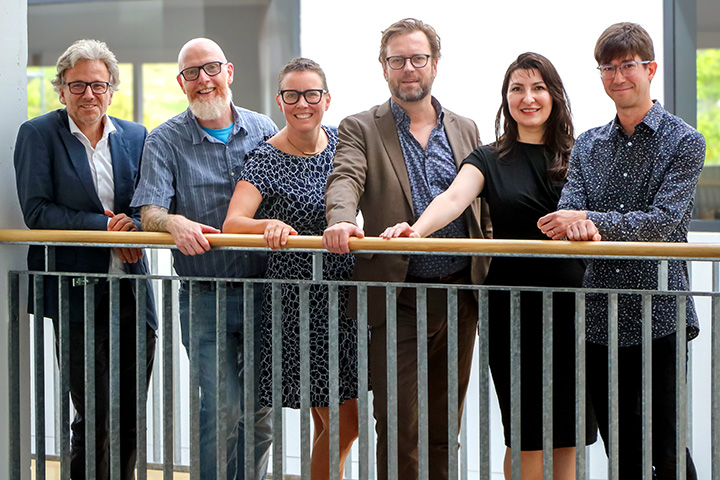
The editorial team is pictured below (left to right): Gunter Bombaert, Roland Tormey, Shannon Chance, Tom Børsen, Diana Adela Martin, and Thomas Taro Lennerfors. It’s been a dream team!
This handbook was a project of the Ethics Special Interest Group (SIG) of the European Society for Engineering Education (SEFI). SEFI members made it possible by contributing to their transcontinental networks of colleagues.
We editors started by sending out a survey, as far and wide as possible, to find out who was working in the field and might be interested in authoring a chapter. We held online workshops to identify what topics should be included and structured them into chapters. We invited a lead author for each chapter and asked the lead to invite three others to co-write the chapter. We asked that the chapter team have people from different places on it, and we aimed for transcontinental teams where feasible. We also asked the lead to consider specific people who had expressed interest in the topic. Our team ultimately included people of diverse levels and fields of experience and good geographical distribution. The people on many of the teams had not worked together before. Many lead authors served as mentors for early career researchers. We held numerous meetings online with the led authors of each section to cross-check, coordinate, and challenge our own thinking. The editorial team met weekly throughout most of the process, and the final result reflects the strong and knowledgeable engagement of many leaders in the field. Our team conducted a rigorous internal peer review, and the publisher conducted its own peer review twice during the process. Here’s what the reviewers said about our proposal:
“I believe this is a state-of-the-art milestone.”
“The lead authors are the key people in this vibrant community, and they have recruited a veritable ‘Who’s Who’ of international authors for the handbook. This is the right time and the right people. It’s the dream team.”
“This would become the resource in this field.”
The final result is a true masterpiece, and I hope you’ll read at least some of it because the content is quite fascinating!
The Ethics SIG also hosts a Spring School around Easter every year, and this year, the theme of the Spring Symposium is “Growing the Field of Engineering Ethics Education and Research as a Community.” I am the local host for this March 2025 event, and we will spend the three days celebrating, applying, and extending the handbook’s content. Learn more about the Symposium and submit your interest in attending at this link: https://forms.gle/WngZ3DMi97FLtQaZ8
Date: 24-26 March 2025 (9:00-17:30 each day)
Location: Royal Marine Hotel, Dún Laoghaire, Ireland
Whether or not you can join us in Dún Laoghaire, I hope you’ll peruse the content of this outstanding new resource and reach out to the editors and authors if you’d like more information or to get involved in what we do!
I am confident that this handbook will make a significant global contribution to engineering education. I therefore urge all engineering and architecture educators to become more explicitly involved in learning and teaching about ethics.
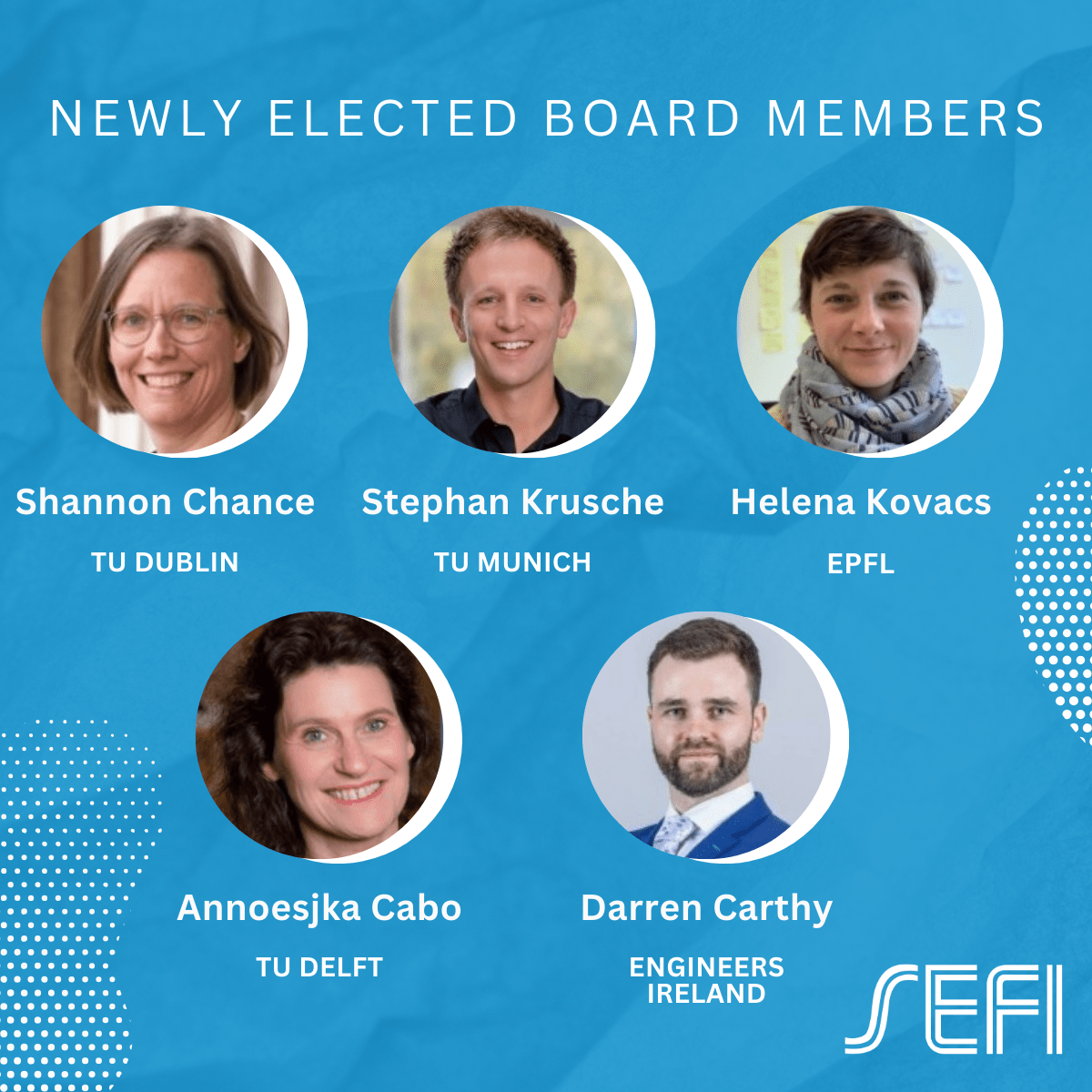
The European Society for Engineering Education (SEFI) announced the results of recent voting. I’ve been elected to serve on this prestigious organization’s Board of Directors for three years! Many thanks to Mike Murphy, former SEFI President and TU Dublin Dean, for prompting me to run, and to Una Beagon (TU Dublin), Inês Direito (UCL), and Tom Børsen (Aalborg University) for formally endorsing my candidacy. This post gives you a peek into my:
I met several other candidates at an August orientation meeting organized by the SEFI Director General, Klara Ferdova, including incoming Board members Stefan Krusche (who created a really inspiring candidate video!) and Annoesjka Cabo.
Darren Carthy, from Engineers Ireland, who earned his PhD at TU Dublin and has been part of TU Dublin’s CREATE research group with me, was also elected.
Helena Kovacs, an author of a chapter in the handbook I recently edited, was too.
I’ll serve under the leadership of the effervescent Nagy Balázs (President) and the energetic and accomplished Emanuela Tilley and Greet Langie (Vice Presidents). Sitting SEFI Board members who I look forward to collaborating with include Inês Direito and Roland Tormey.
Shannon Chance facilitating a workshop at SEFI 2024
Motivation to Serve
I first joined this community in 2012 at the SEFI conference in Thessaloniki, where I enjoyed a welcome so warm and enthusiastic that I decided to stay in Europe and embrace engineering education research (EER). I left behind a tenured professorship in the United States to join this vibrant community dedicated to enhancing learning and teaching engineering across Europe, and indeed influencing how engineering is taught far beyond Europe’s borders.
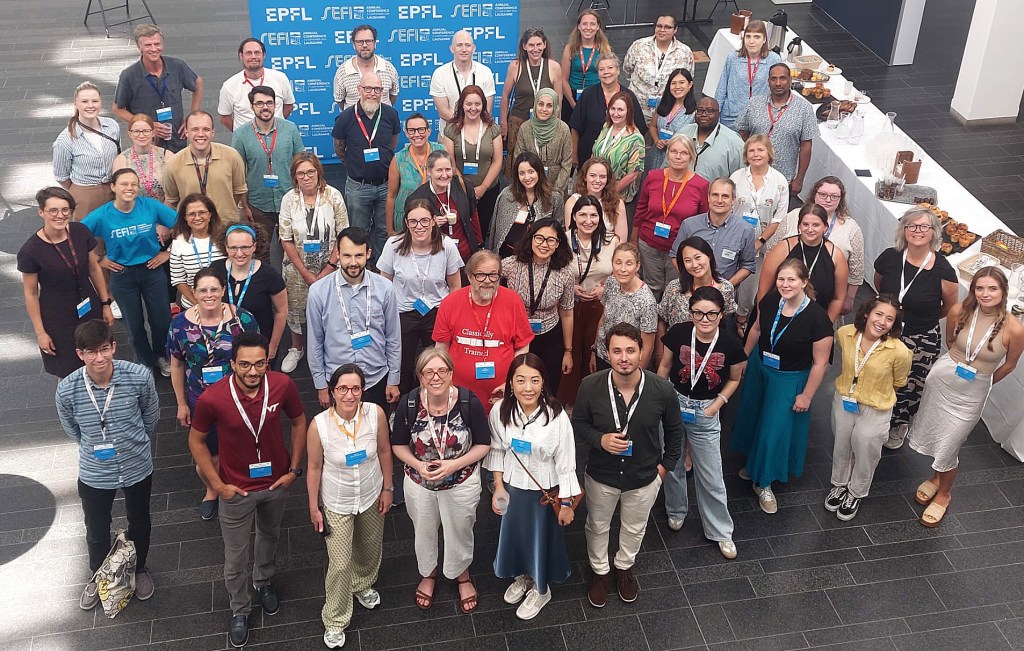
Group photo of participants (mentors and mentees) at the 2024 SEFi Doctoral Symposium, organized by Jonte Bernhard, Kristina Edström, Tinne de Laet, and Shannon Chance.
In my letter of motivation for this role, I highlighted three recent experiences that helped me prepare for the Board:
Chairing REEN – as part of the Research in Engineering Education Network’s Governing Board and its Chair for multiple years, I grew new skills and made positive contributions by significantly expanding REEN’s geographic representation, leading capacity-development initiatives (spawning EERN-Africa and organizing a series of capacity-building workshops for the nascent organization), supporting the delivery of REES (our bi-annual Symposium), and co-organizing events like the Big-EER Meet Up at the outset of the pandemic.
Cultivating our community’s publication skills by serving SEFI’s European Journal of Engineering Education as Deputy Editor, organizing and delivering workshops and doctoral symposia to the SEFI community to support newcomers to EER, guest editing special issues of IEEE Transactions on Education and the Australasian Journal of Engineeirng Educaiton (AJEE), and mentoring emerging scholars (as an individual and via SEFI and JEE).
Engaging with SEFI as a participant and leader – serving on the steering boards of the special interest groups for Ethics, Diversity and Inclusion, and Research Methods, helping organize the SEFI 2024 conference at TU Dublin, attending and presenting at Spring Schools, and – most recently – serving as co-editor of the forthcoming RoutledgeInternational Handbook of Engineering Ethics Education.
I sought to join the Board to:
Nurture collaboration and facilitate more mentoring and capacity-building programmes for teachers and researchers in engineering education.
Help educators infuse ethics and sustainability across engineering curricula.
Enhance diversity and inclusion in SEFI – for instance by developing additional channels for bringing people from Eastern European countries into SEFI and supporting SEFI members from low-income countries in participating fully in SEFI activities.
With my collaborative, can-do spirit — and my keen passion for supporting students’ design, epistemological, and identity development — I will use the EER projects I have underway on these topics to inform and enhance my work with the SEFI Board.
Candidacy Video
You can view my candidacy video, which I recorded between conferences in Mexico during summer 2024:
With a team of experts from four continents, I led the development of a newly published special issue of IEEE Transactions onEducation on the “Conceptual Learning of Mathematics-Intensive Concepts in Engineering.” The issue has nine articles covering three categories: assessment, instruction, and learning.
If you teach mathematics concepts to engineering students, you’ll definitely want to check it out!
I served as the organizational lead, and endeavored to support my team in learning journal-editing skills. Dr Farrah Fayyaz (working from Canada) served as the project’s conceptual lead. Dr Anita Campbell (South Africa), Dr Nicole Pitterson (USA), and Dr Sadia Nawaz (Australia) were also instrumental in producing such a high quality compilation.
As described in our guest editorial for this special issue, our leadership team implemented a range of innovative, collaborative models for capacity- and community-building while shepherding this project from conception to completion. My own focus was on cultivating these models, as mathematics education is not a primary focus of mine (although it is for the other four editors). The capacity-building model, and the recommendations for IEEE and other editors of special issues that are included in the guest editorial, were my primary contributions with this project, and a source of pride and joy for me.
I look forward to the future compilations that Farrah, Anita, Nicole, and Sadia will curate. Together, the editorial team hopes to read many more articles in this cutting-edge realm of research, and watch the ongoing success of the authors who participated in our capacity- and community-building activities.
My colleague Emma Geoghegan and I spent the most magical three days in Mexico City with the family of my PhD student, Sandra Ireri Cruz Moreno.
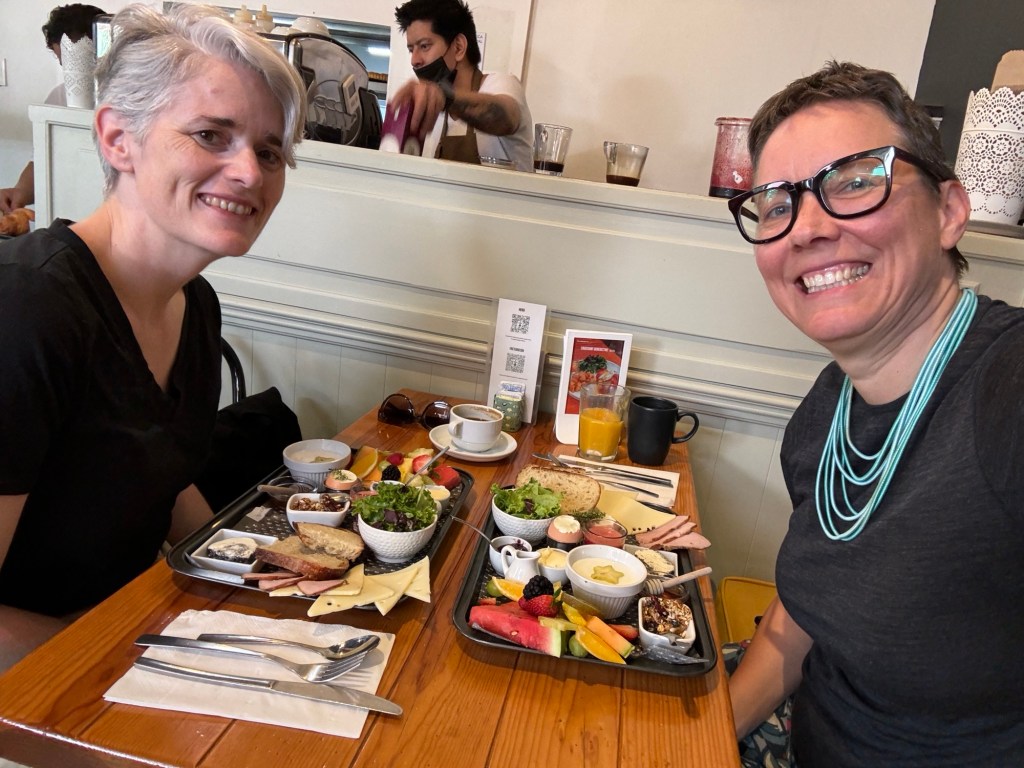
On Sunday morning, following the ASCA conference, a short night’s sleep, and a tasty “petite dejune” at a French cafe in Querétaro — and with organizational assistance from Sandra — Emma and I boarded a bus headed to north Mexico City.
petite dejunemaking friends on the bus
Sandra and her family met us at the bus station. Sandra’s lovely dad, Jose, brought a second car to the station so our luggage could go directly to their home while we went sightseeing in the other family automobile.
That was both very thoughtful and exceptionally fortunate, because I had bumped into a colleague from the ACSA conference, Ayad from Washington State, at the bus station. I asked Sandra by text if we could invite him along with us for the day. Ayad wanted to see the pyramids and was having trouble arranging transportation. We managed to squeeze six people into the family car!
We arrived at Teotihuacán with two hours explore. The State of Mexico explains, “Teotihuacan is a vast Mexican archaeological complex northeast of Mexico City. Running down the middle of the site, which was once a flourishing pre-Columbian city, is the Avenue of the Dead. It links the Temple of Quetzalcoatl, the Pyramid of the Moon and the Pyramid of the Sun, the latter two with panoramic views from their summits.” (Although we didn’t make it to the Museum of Teotihuacan Culture in time to see the artifacts that “include pottery and bones,” I was able to see these type of artifacts later in my trip.)
Carlos, Nicholas and Sandra at the Sun Pyramid The Moon Pyramid Visiting Teotihuacan
As the pyramids closed for the day, our merry little band headed for a nearby cave restaurant, applauding Sandra’s magnificent planning skills. Our meals arrived in clay pots. These and the guacamole were tasty and delicious! The restaurant staff explained the spiritual beliefs surrounding the place and we lit candles in honor of our ancestors.
A memorable meal in a cave.
Dropping Ayad at his hotel, we proceeded to Sandra’s parents’ home in a neighborhood of Coyoacán, where Emma and I spent three nights. It was lots of fun getting to know Sandra’s family and learning about Mexican culture!
Everyone in the family is vivacious and full of joy. They enjoy sharing food and conversation and learning about other people. We had many meals at home with (papa) Jose and (mama) Vice (ve-say). Staying in their home and getting to know them was a rare treat!
On the second day, Sandra and Jose brought us to tour Luis Barragan’s home and studio. We thank our TU Dublin colleagues for insisting that we visit some Barragan projects! His home and studio are stunning and so well connected to the landscape. Immensely peaceful and beautifully furnished. The spaces and threshold conditions are truly breathtaking. This ranks at the top of all houses I’ve visited, an assessment shared by Emma.
Luis Barragan’s home and studio
The garden across from the Barragan house was also stunning. We visited it before the house tour, after a brief walk around the neighborhood.
Following the house visit, we toured the central city by car, enjoyed lunch at a vegetarian restaurant with Jose and Sandra, drove past the Palacio de Bellas Artes, and visited the Plaza of Three Cultures with ruins of Aztec pyramids and a colonial church built from stones taken (stolen) from it.
Palacio de Bellas ArtesPlaza of Three Cultures
After resting and catching up on work a bit at the family home, we went for a meal out in the center of Coyoacán, the “Coyote place,” where Frida Kahlo lived her early and late life. The town has lovely, spacious, bench-filled, and festively illuminated public plazas and we enjoyed tacos and mariachi. Sandra even danced for us! Being surrounded and serenaded by seven musicians and a dancing sociologist was a truly remarkable experience!
Mariachi in Coyoacán.
At every step, Sandra navigated the way and cheerfully achieved her ambitious plans to make our visit seamless and deeply meaningful. She has a charming way of convincing people to help find a way where needed, and that proved immensely valuable.
For each morning of our stay, breakfast was an elaborate family affair, with all members of the family cooking and chipping in to (1) care for baby Nicholas (who turned 20 months old on our final day here) and (2) feed two curious foreigners with a wide array of Mexican food types.
The meals and the camaraderie were remarkable. Sandra, her husband Carlos, and her parents all have such passion for learning and sharing. Emma and I absorbed many valuable lessons about the diverse language and cultural groups in Mexico, and about pre-Colonial Mexico, Spanish colonialism, and the blending overtime with Mexico’s indigenous peoples. (Querétaro where we’d been for our conference, has many spectacular colonial buildings, for instance, but also benefits from local culture pre-dating the area’s invasion by Spain.)
Painting by Vice’s sister of a revolutionary. Painting by Vice’s sister of a favorite town. Learning at the family home in Coyoacán.
In the cracks and crevices of our stay, Emma and I managed to keep our work on track, too. I had a meeting with colleagues at University College London and Newgiza University online Tuesday morning. I also managed to submit a couple peer reviews that I’d completed while flying to Mexico.
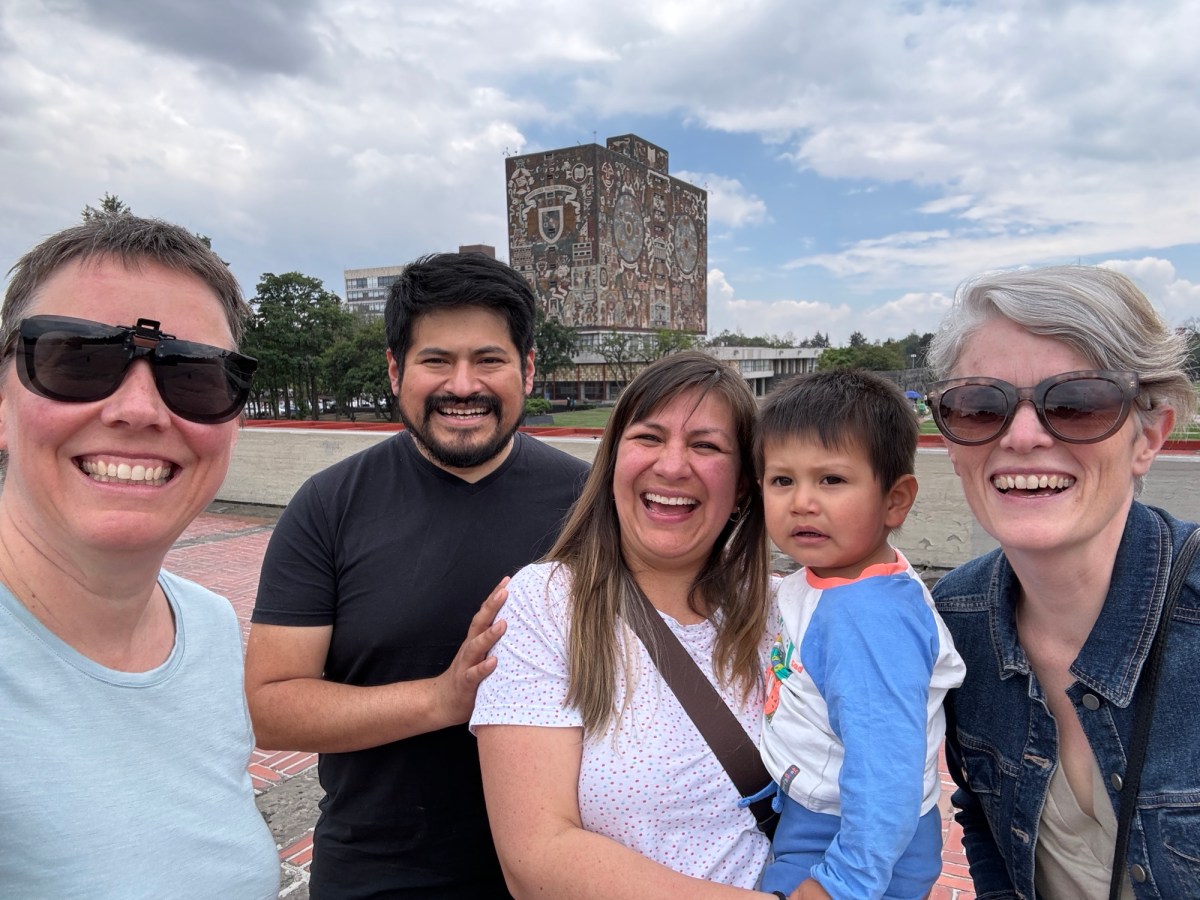
On our final day in Mexico City, we headed with Carlos, Nicholas, and Sandra to the UNAM university campus (where our colleague Dino from the ACSA conference is Dean of Architecture). Both Sandra and Carlos studied on this campus.
UNAM has 300,000 students—just imagine that! They have a famous library building by an Irish-Mexican architect, Juan O’Gorman. There were many tourists and tour groups visiting the exterior of Gorman’s library building while we were. And although the campus buildings were closed for break, there was plenty to enjoy with the lively facades, architectural forms, mosaics, and well-kept grounds. These were lovely to behold.
The largest faculty at UNAM is philosophy and all the students seem socially motivated. The art on campus reinforces this theme of social activism. And it resonates with Sandra’s dad, a retired sociologist, as well. Incidentally, Sandra’s mum is a retired doctor and their house is above her former clinic. Their home and neighborhood were very interesting to see!
A construction by architecture students. UNAM architecture building. UNAM campus with Juan O’Gorman’s library design.
After touring campus, we visited the San Angel neighborhood to see three houses designed by Juan O’Gorman. One was for himself, and the other two (joined by a bridge) for Diego Rivera and Frida Kahlo. The two artists lived in separate houses, joined only by the roof-level bridge, three stories in the air. This pair sits on a lot beside O’Gorman’s own home. The three make a nice assembly. They’re in an upscale neighborhood and fenced off with an aesthetically pleasing row of cacti.
Homes of Diego Rivera, Frida Kahlo, and Juan O’Gorman.
Next, our hosts brought us to a former-courtyard house designed by Luis Baragan that has been turned into a restaurant. The most dramatic feature was the glass floor, providing views into the volcanic terrain below the house. There’s also a large yoga room in the complex that I’d love to give a try!
Another Luis Baragan design.
We wrapped up the day with a visit to Xochimilco Ecological Park next to Coyoacán, near the home of Vice and Jose. In the park, we took a ride in a colorful flat-bottomed boat.
Boat ride at Xochimilco Ecological Park.
Then we walked around and visited a demonstration garden that uses pre-Spanish technology for growing produce and flowers. Mexico City is on land reclaimed (infilled) from lakes. Xochimilco still has its lake, whereas the other lakes are entirely gone—which has created havoc for the water table and aquifers of the area.
In order to farm on water, ancient inhabitants developed floating gardens atop mat-raft foundations covered with soil. Early examples of this construction type were rectangle-shaped floating gardens separated by canals for transporting goods to market, although this demonstration garden is fixed in place and circular in form. Nearby are thousands of booths of flower sellers who still cultivate the land and water.
Ecological Park of Xochimilco and agricultural exhibition garden.
Because the park closed, we headed home and had light dinner with the family.
The next morning we enjoyed one final, magnificent breakfast with our hosts. Then Carlos, Sandra, and Nicholas drove us onto our next adventures.
Vice and Carlos did all the cooking!
They saw me off from the Mexico South bus terminal and Emma from the international airport where she flew home to join friends and family for a trip to one of Ireland’s Aran islands.
What spectacular and heartfelt memories Emma and I now bring with us — these experiences will enrich our work as architectural educators, researchers, program leads, and curriculum developers. We are grateful to Sandra, Carlos, Vice, Jose, and Nicholas for sharing their lives with us!
I spent last week exploring architectural topics and sites in Mexico, alongside my TU Dublin colleague and Head of Architecture, Emma Geoghegan.
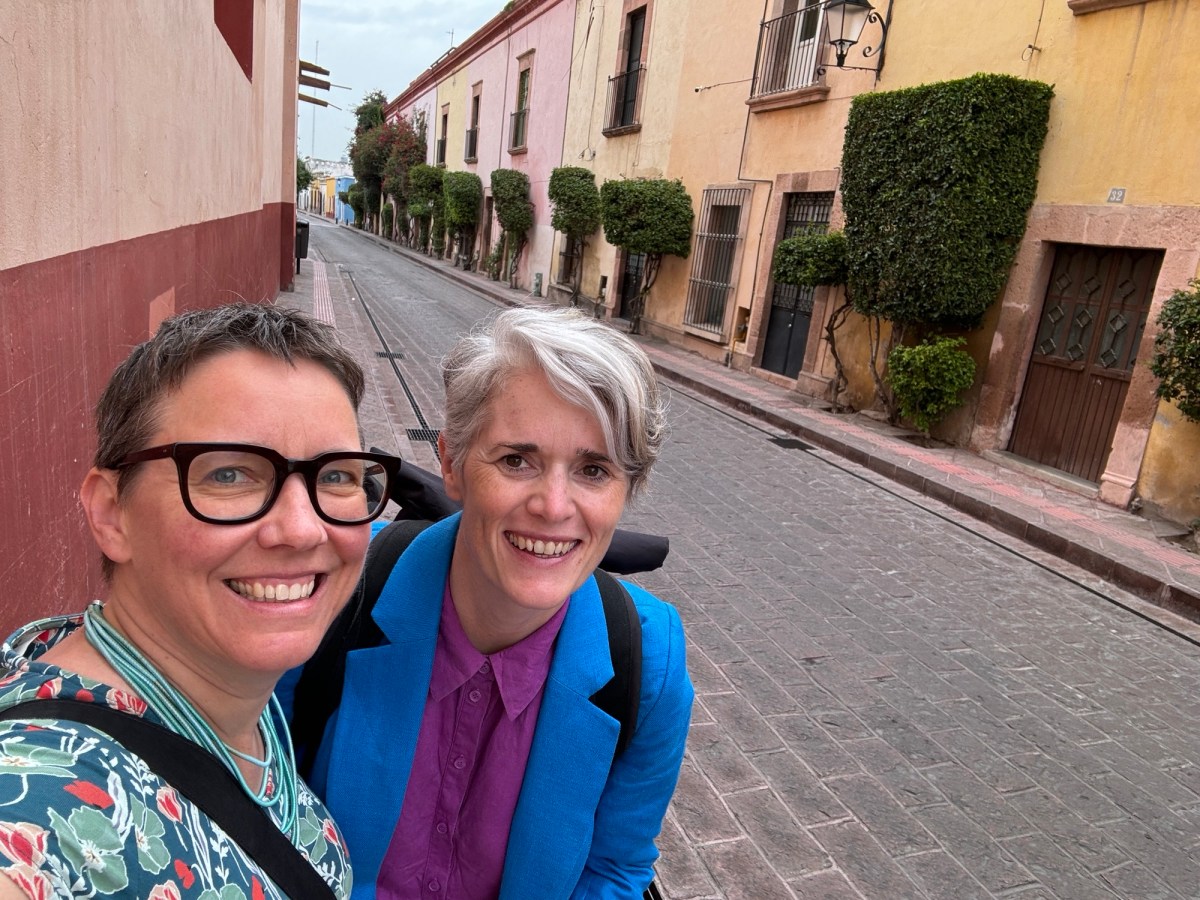
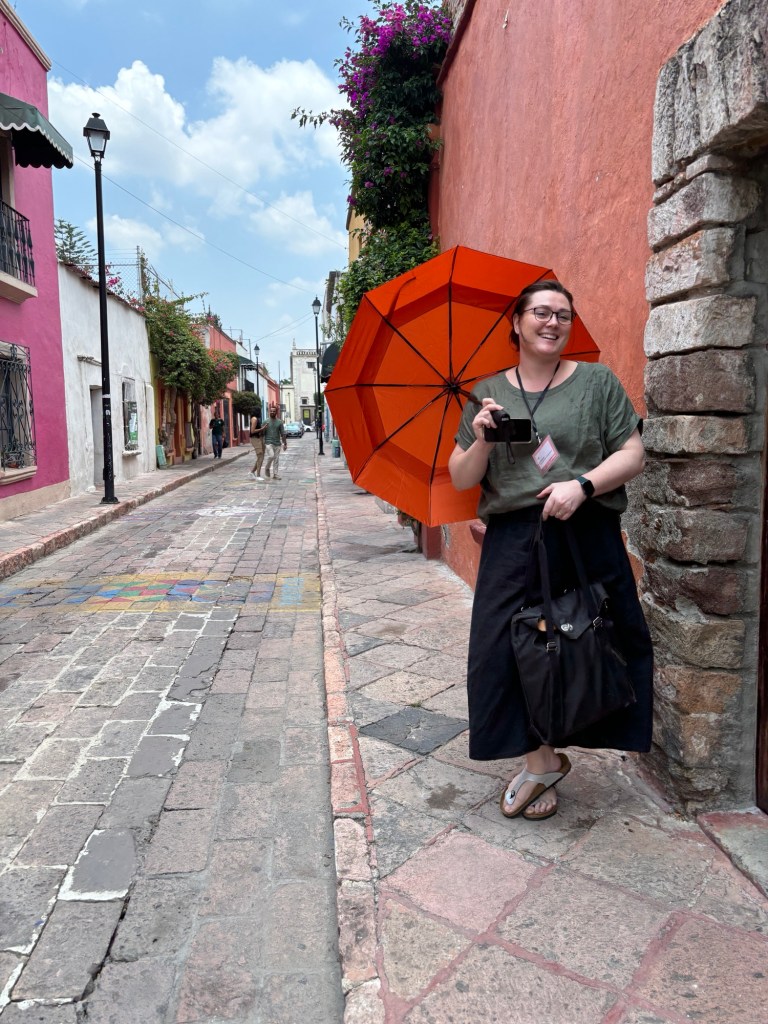
Early morning walk to the conference venue. My first ACSA International conference!
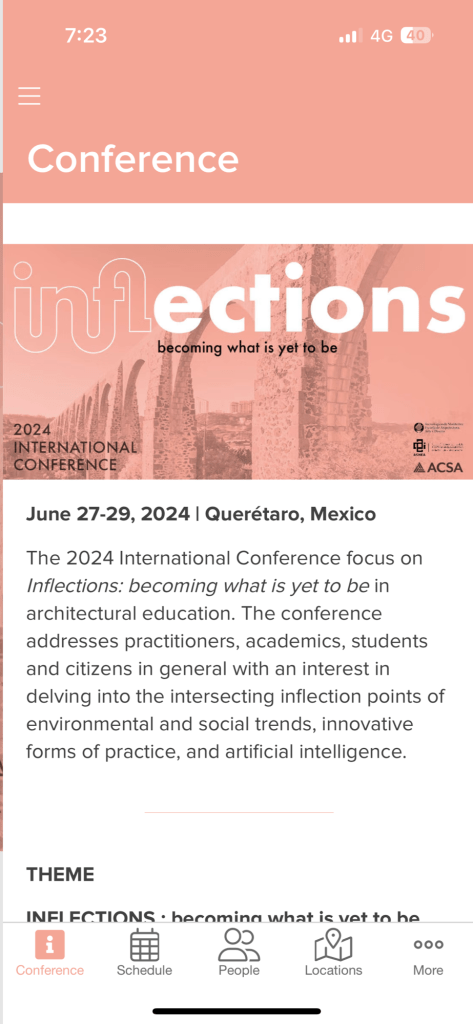
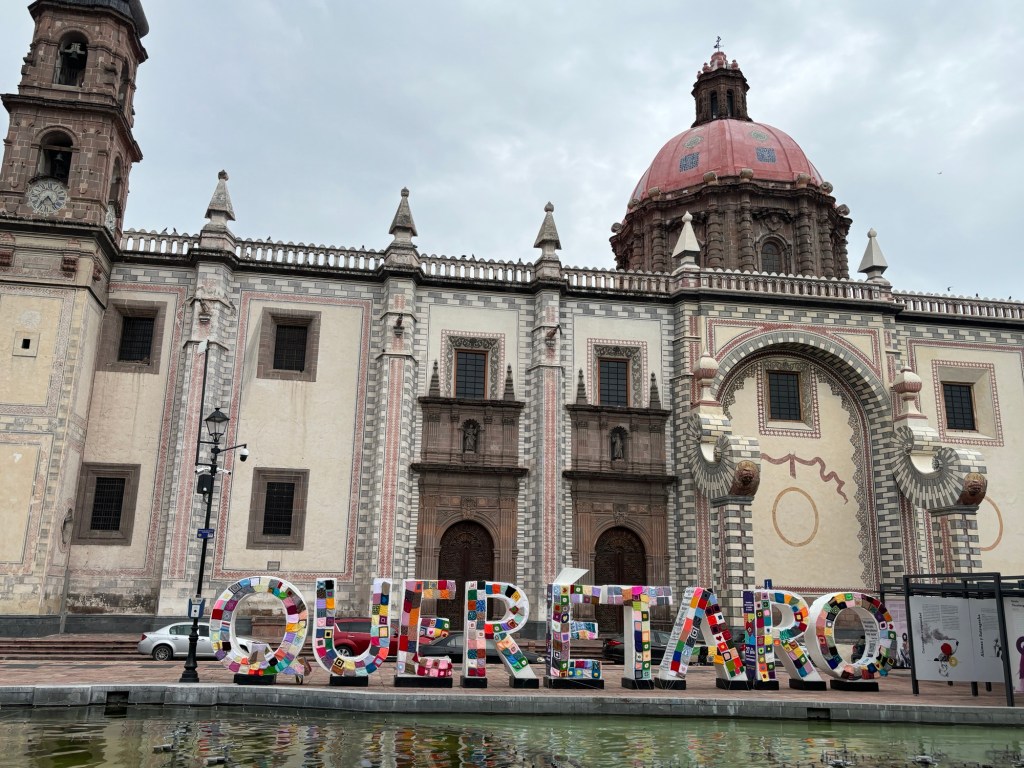
Emma and I met up in Mexico, to attend a three-day conference in Querétaro, a UNECSO world heritage city and one with a population similar in size to our home base of Dublin, Ireland.
The conference was hosted by the Technológico de Monterrey and the US-based Association of Collegiate Schools of Architecture (ACSA). I was a member of ACSA from 1999-2014, when I taught architecture in the States. I have represented ACSA with the National Architectural Accrediting Board (NAAB) and am still invited to serve annually, though the trip to the USA is prohibitively long.
Yet, this summer, I wanted to attend the organization’s conference to reconnect with ACSA, brush up on my architectural vocabulary and earn continuing education credits to support my Virginia-based architecture license, extend my professional network into Latin America, and learn more about the homeland of my PhD student, Sandra Cruz.
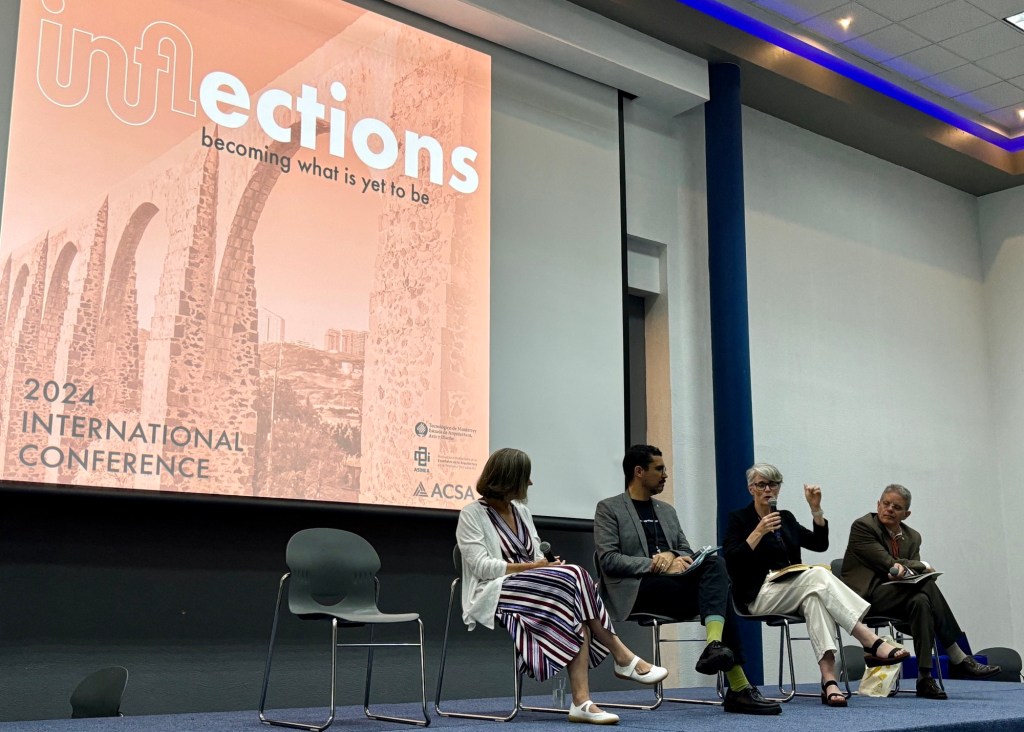
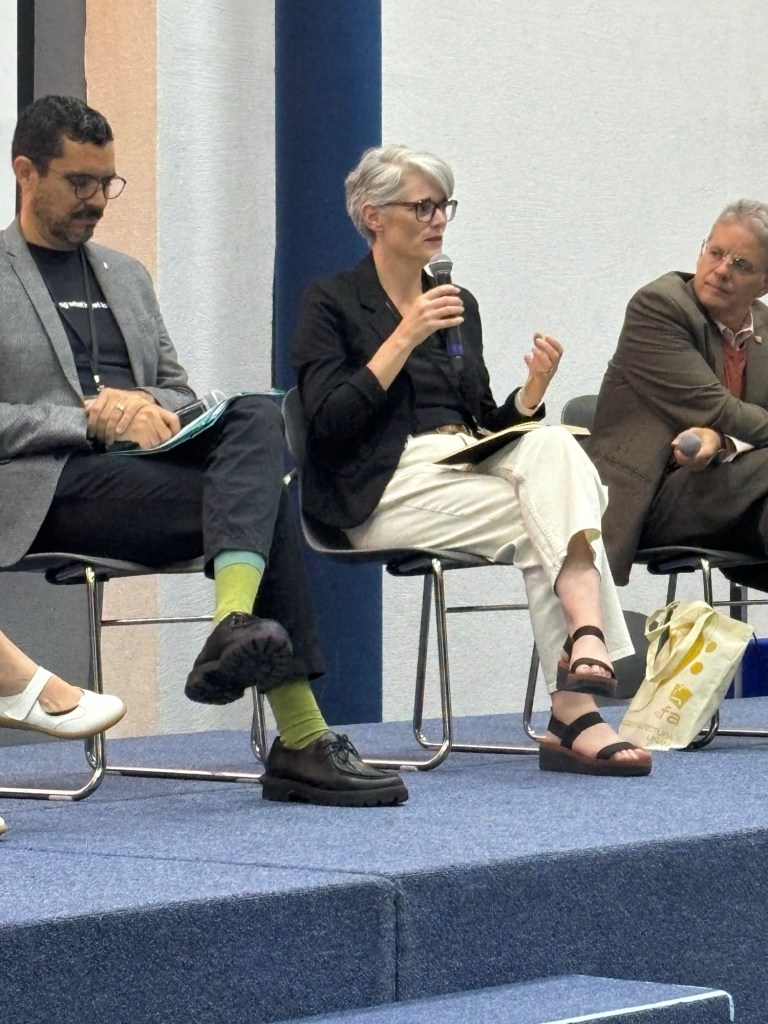
I asked Emma to join me for the trip, and she submit a paper to ACSA that was successful and, subsequently, very well received! Based on her submission, she was also invited to serve on an international panel of architectural education leaders (administrators and deans). She presented her ideas to the entire assembly of this ACSA International conference!
Dean’s panelfeaturing my colleague, Emma Geoghegan.
Emma’s work and her engaging delivery were a hit in both sessions. Her paper presentation garnered a packed, standing-room only, no-more-space-to-enter-the-room crowd. This was likely due to the popularity of both her engaging panel discussion and her paper topic (educational transformation for resilience and long-term sustainability, with a focus on housing and environment).
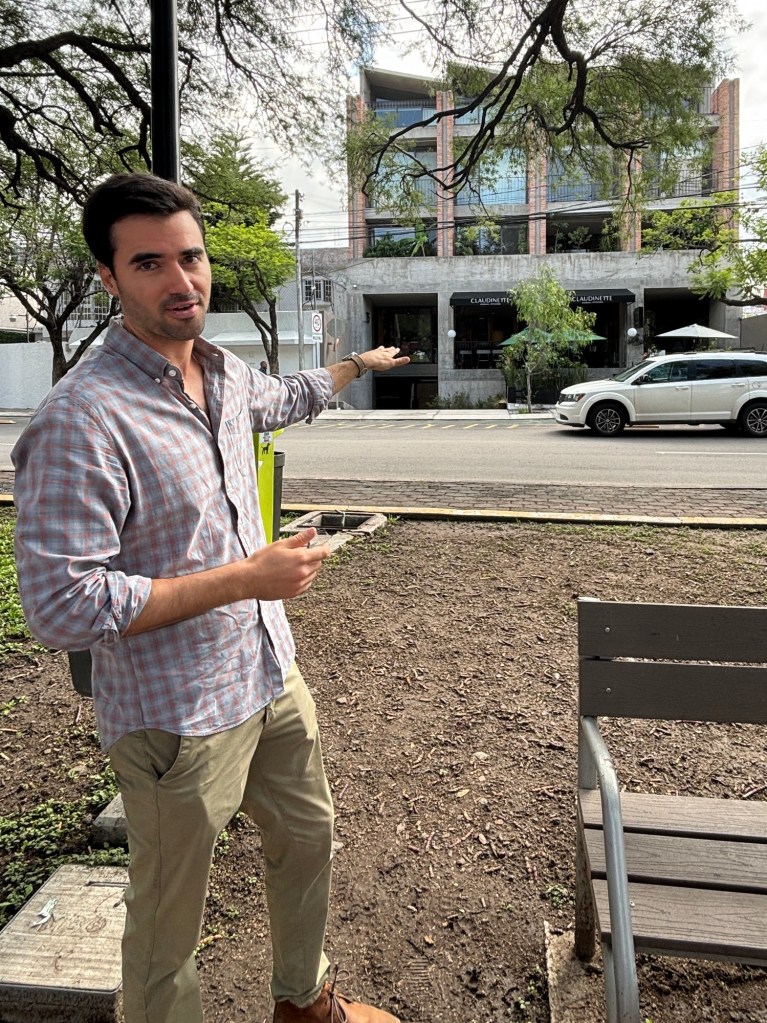
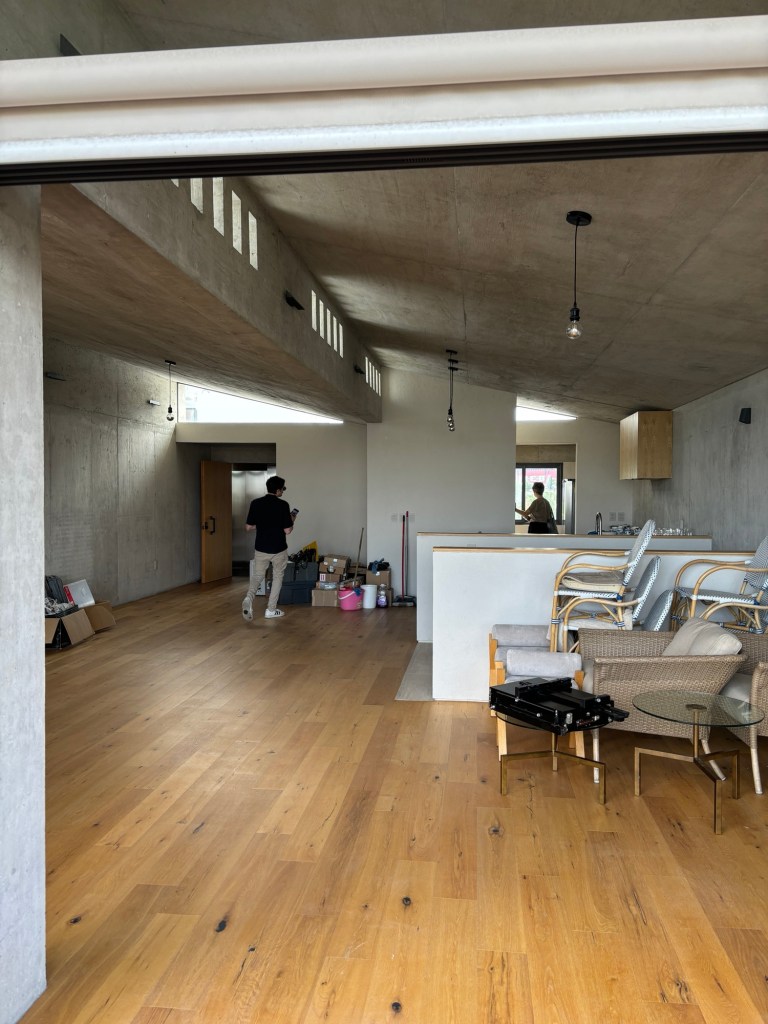
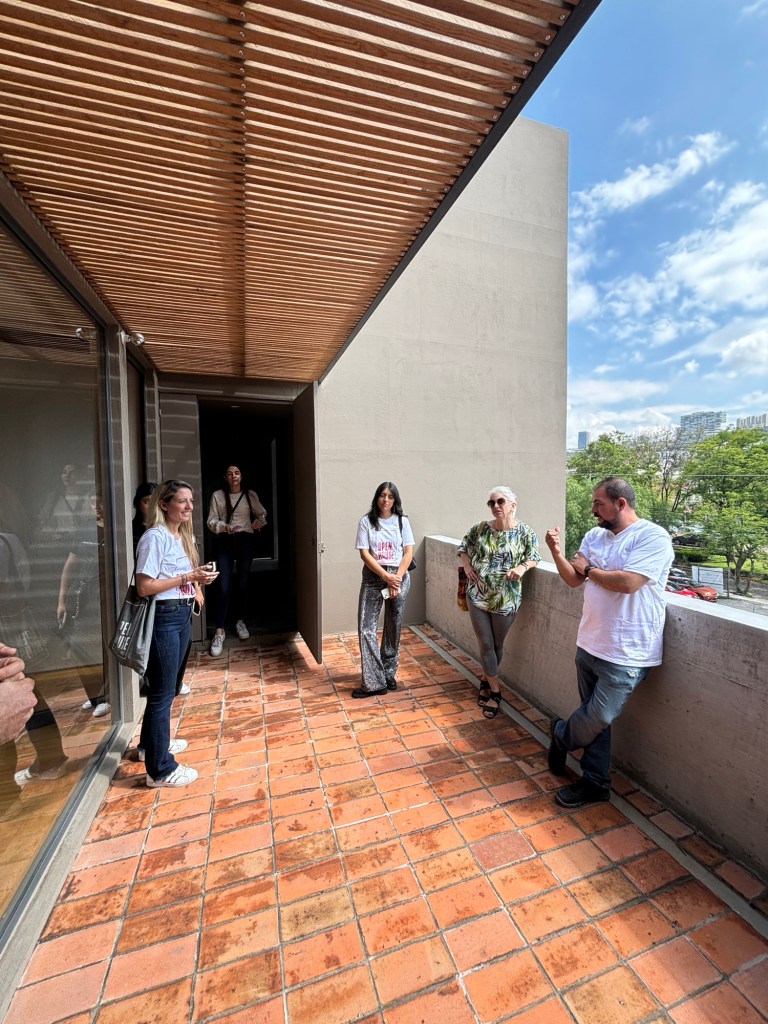
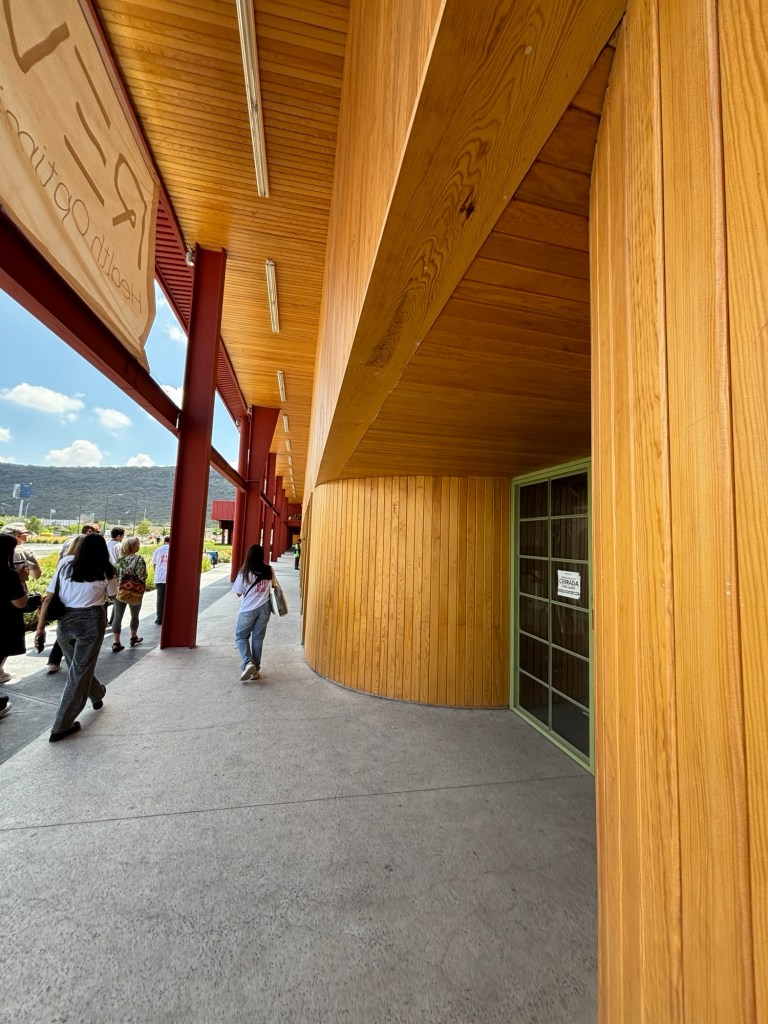
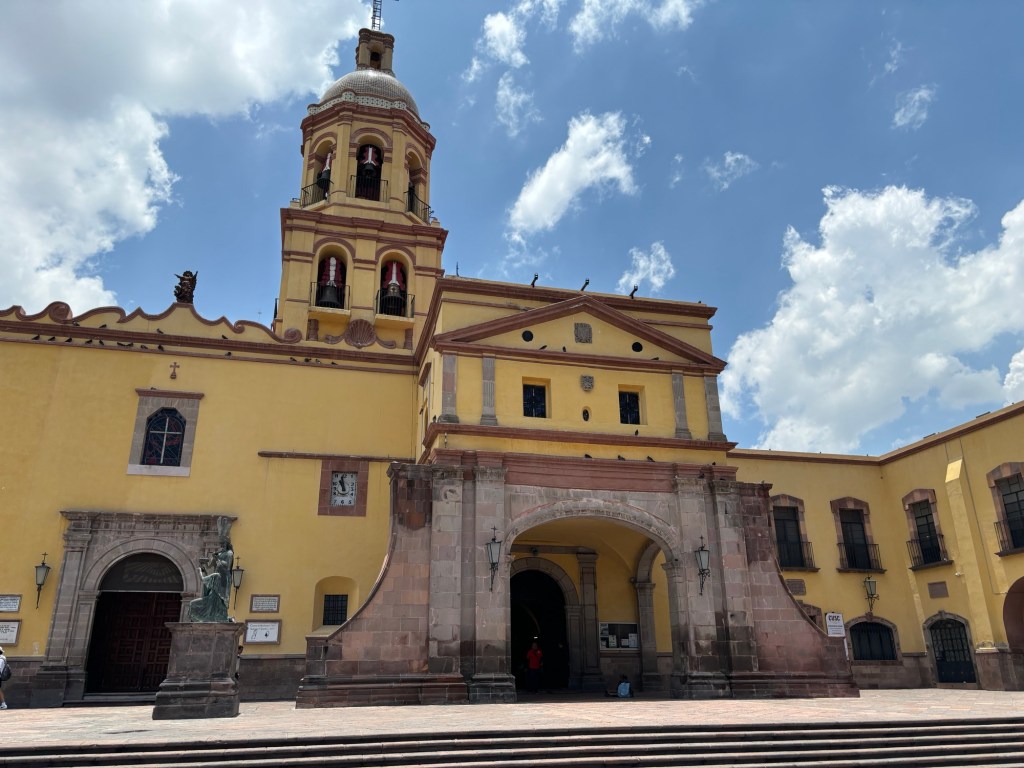
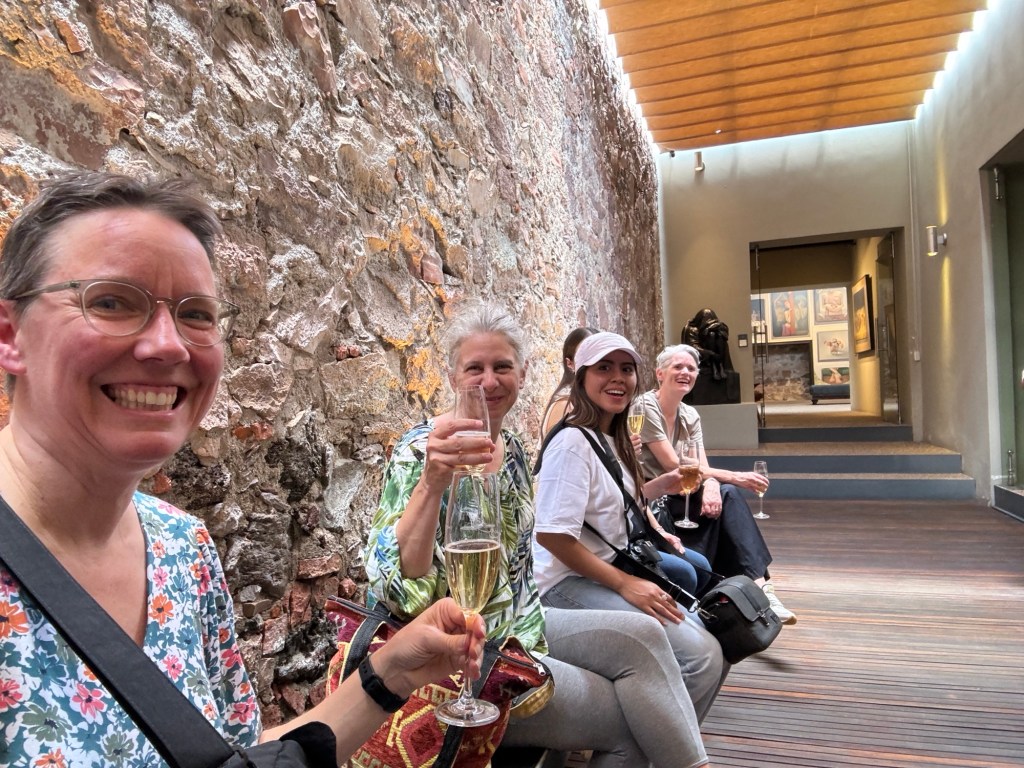
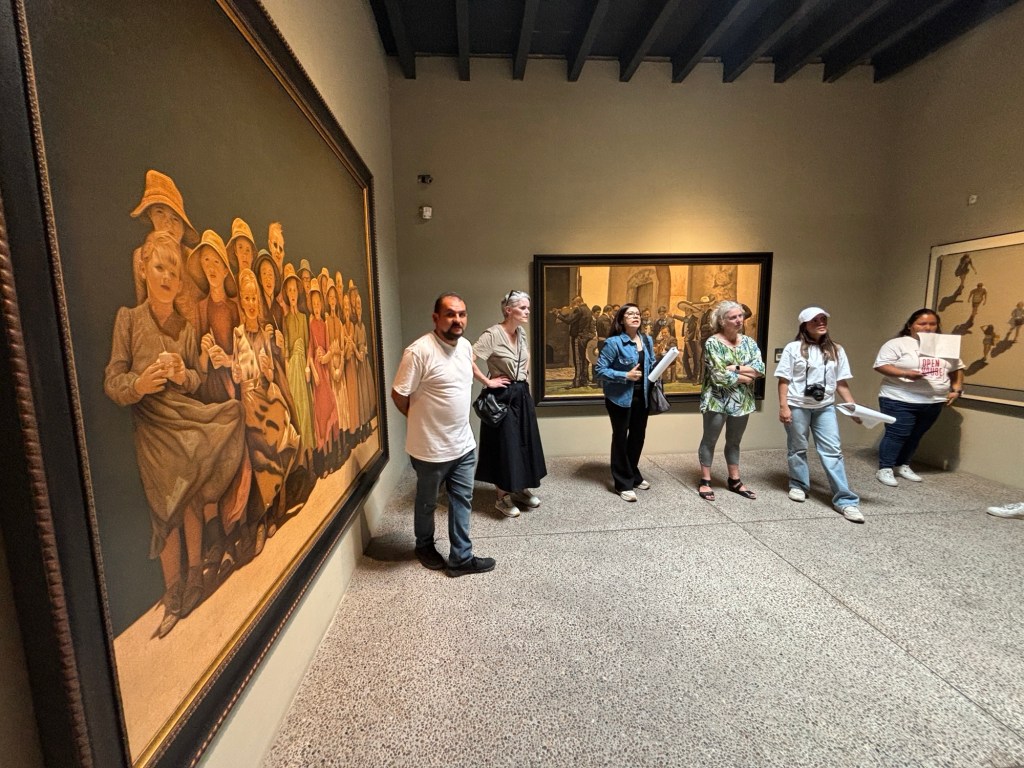
But before all the sessions got rolling, on Thursday morning, Emma and I started our conference experience with an Open House tour. Architects and developers from Querétaro taught us about the architectural and urban design history of the city and brought us to visit several contemporary architectural projects. We got to tour a mixed-use housing project, an environmentally sensitive adaptive reuse project, and a courtyard house turned into an art museum that was chock full of artistic treasures that combine painterly style with contemporary themes!
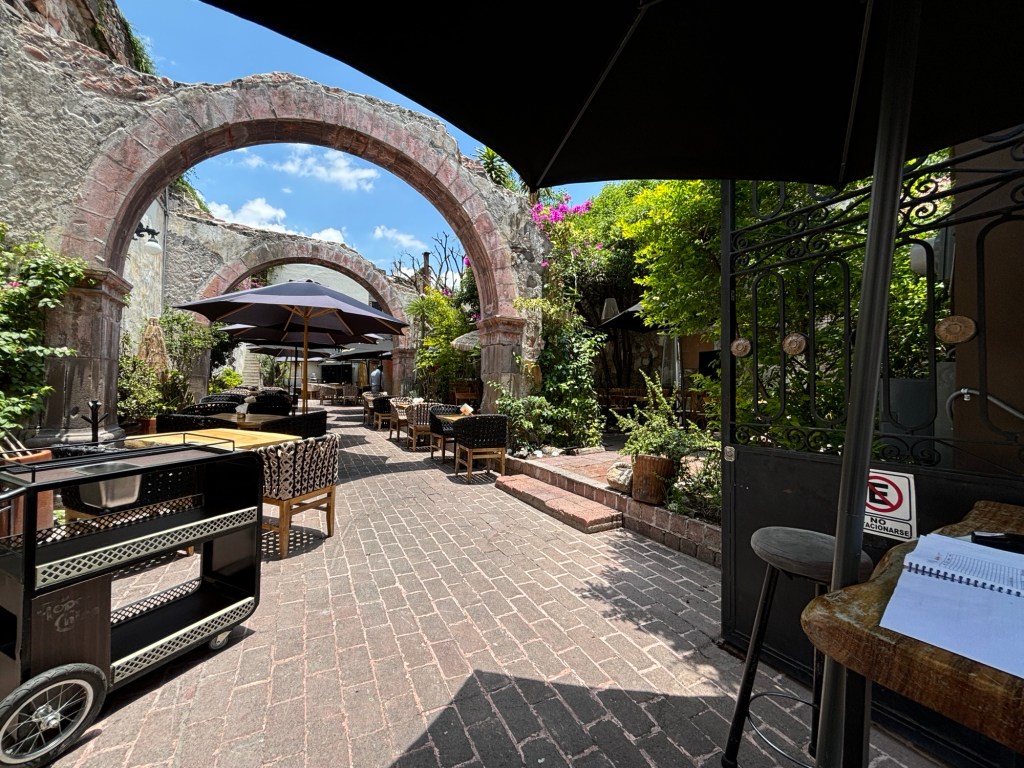
Mixed-use residential building tour delivered by the developer. Commercial re-use projectfrom old shopping mall. Visit to a convent and then walking through town together. Enticing courtyards leftand right!I could do a pub crawl here! The art museumin a former courtyard house. Learning about the artand the architecture.
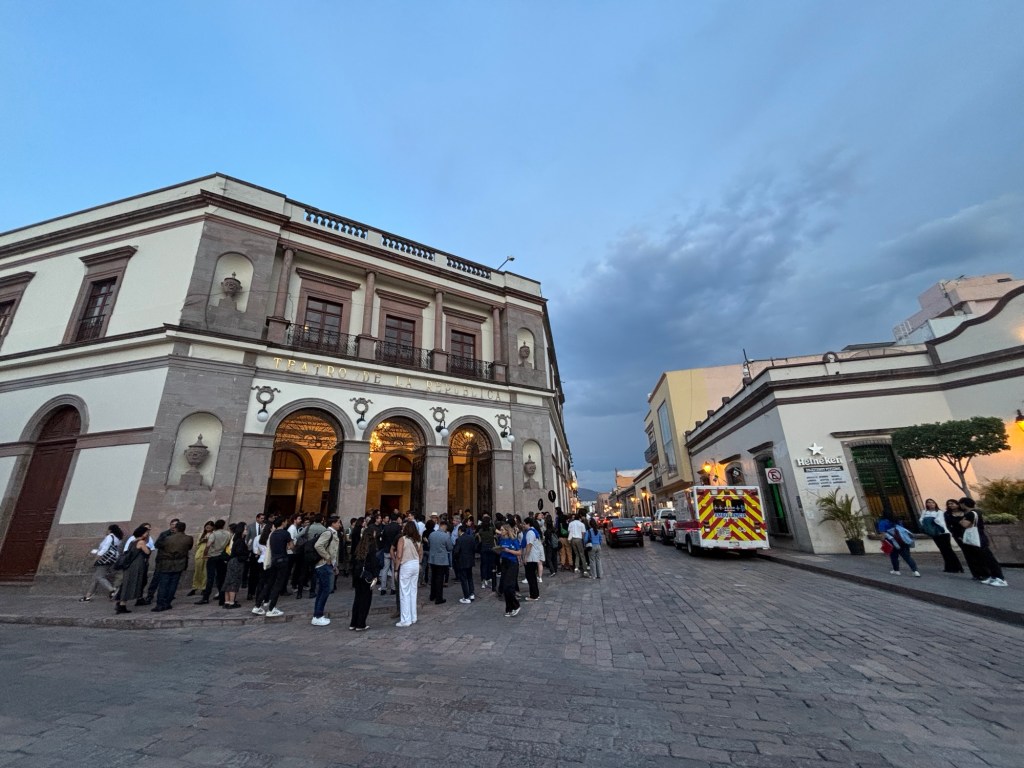
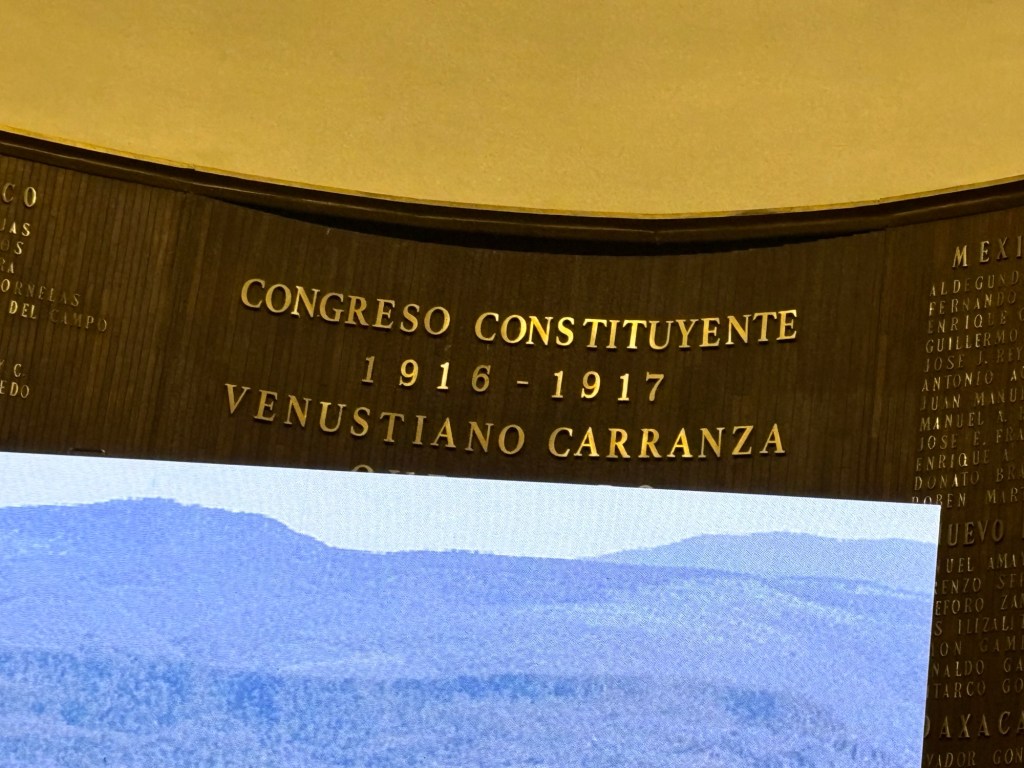
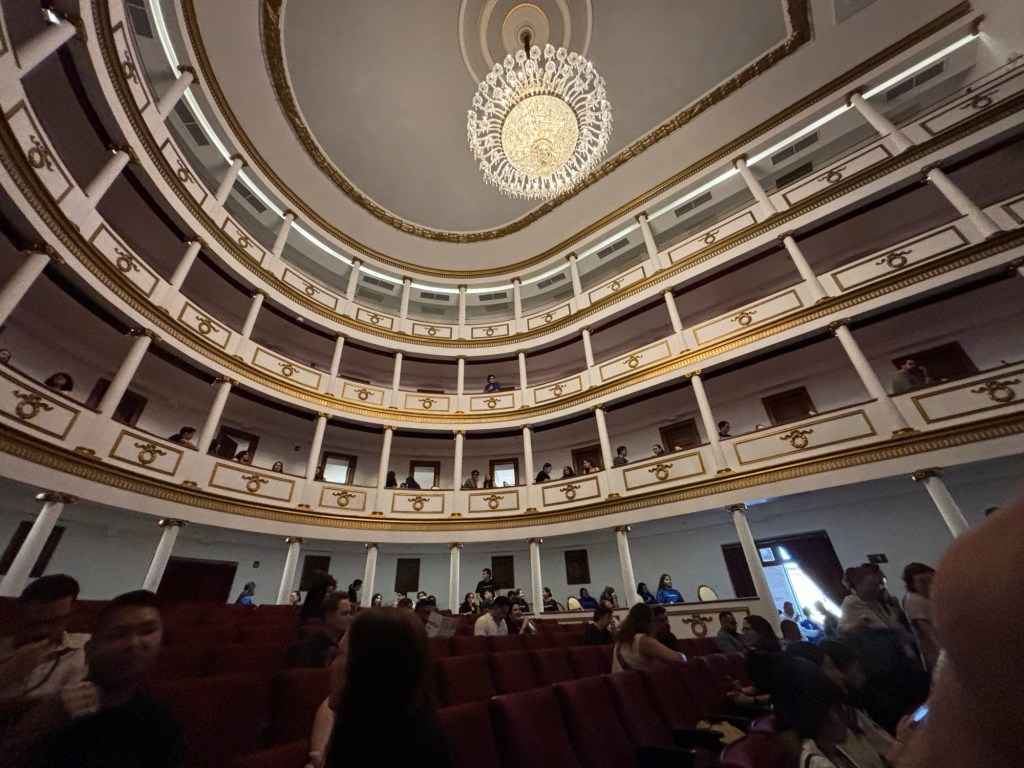
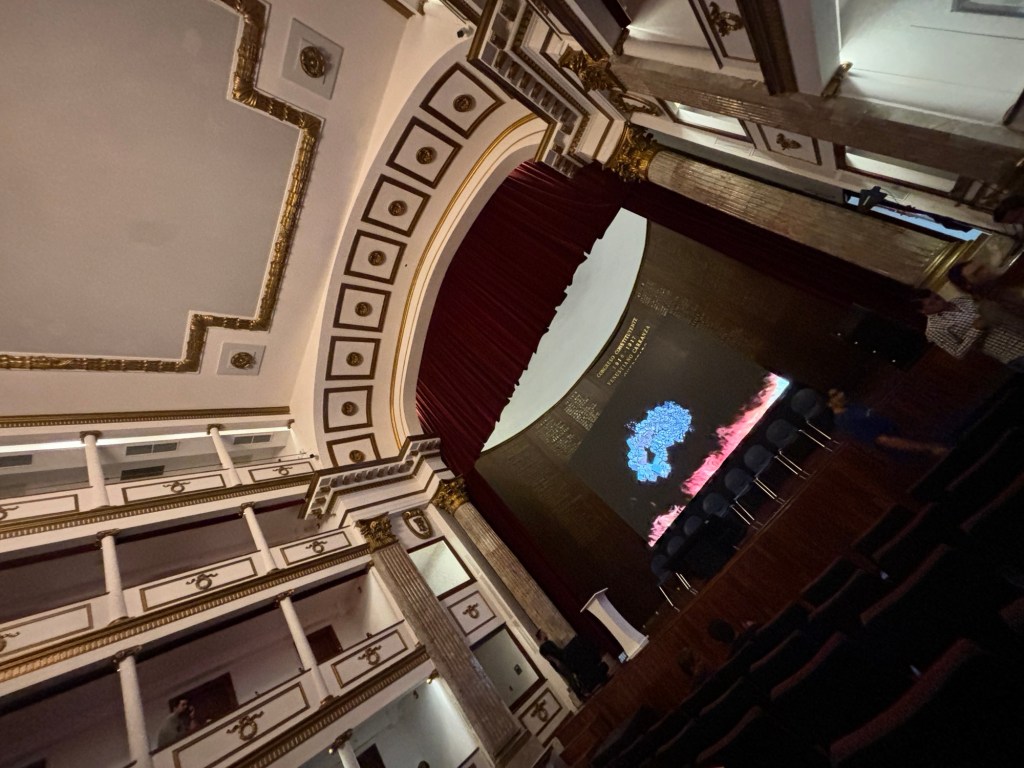
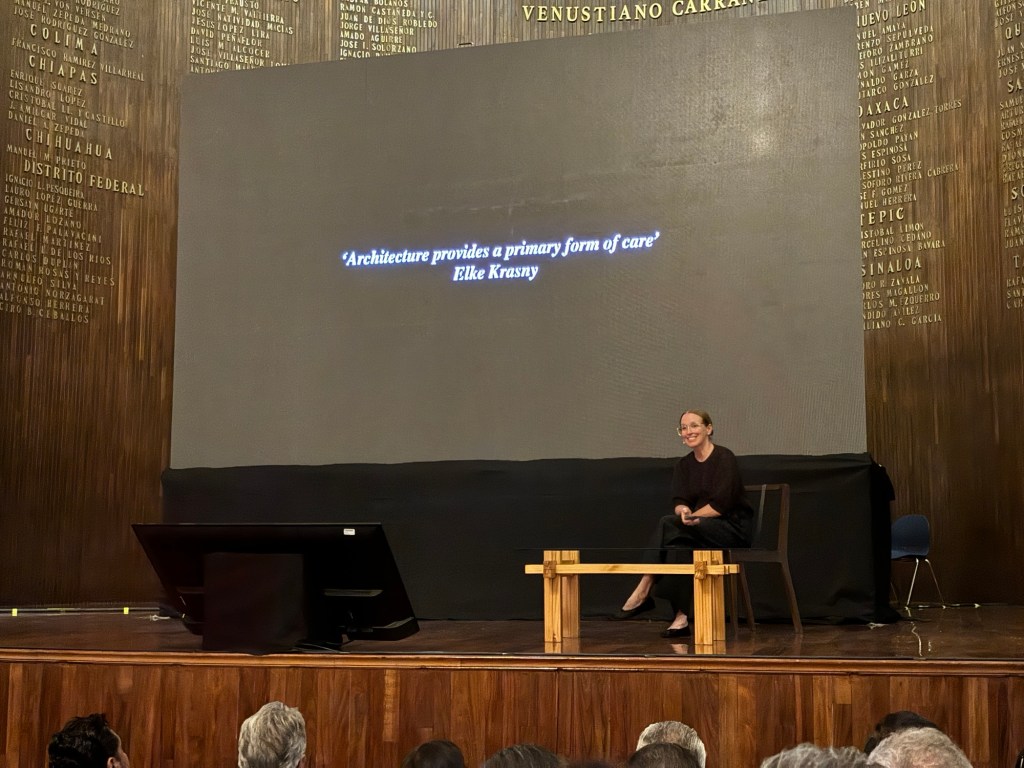
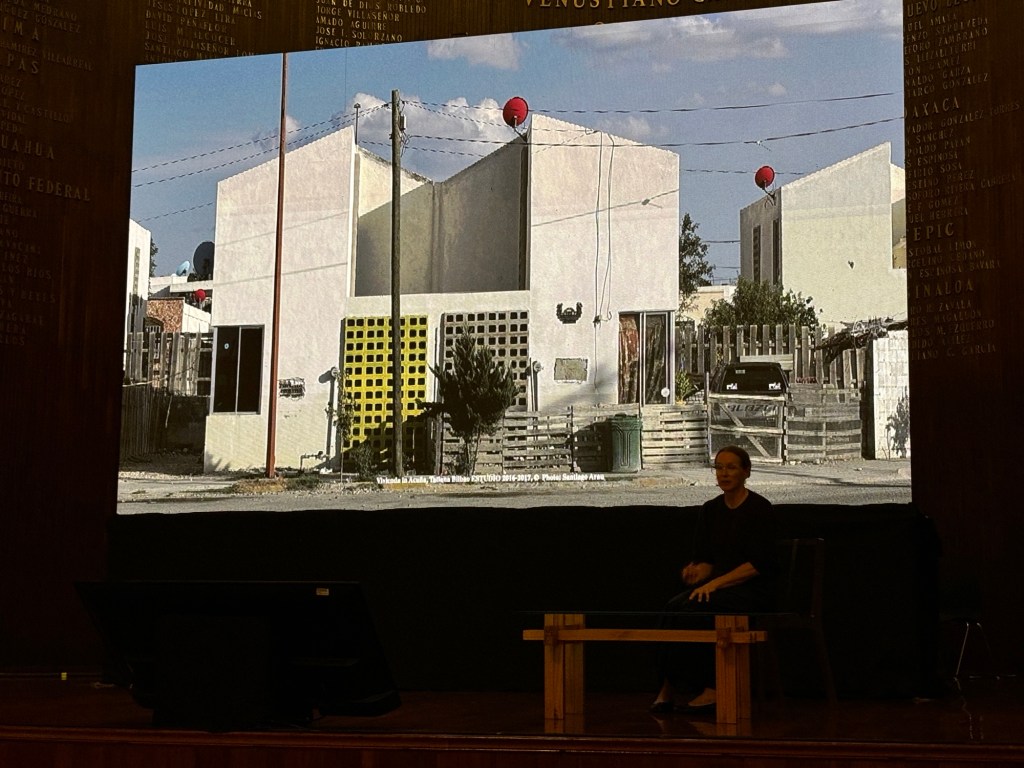
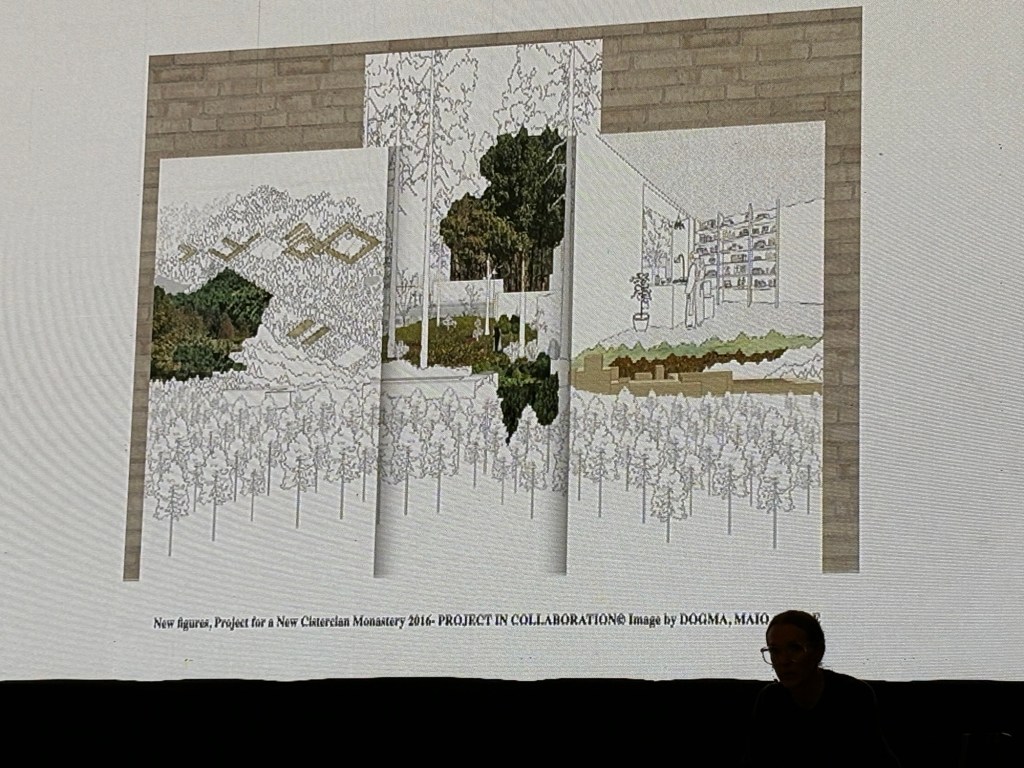
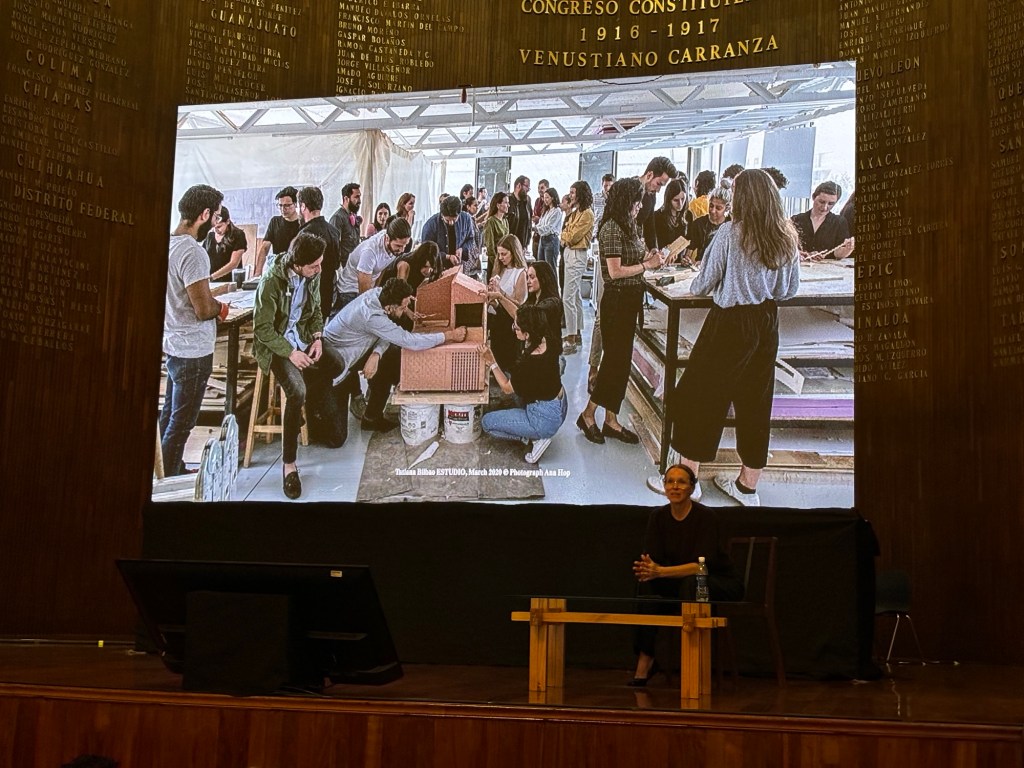
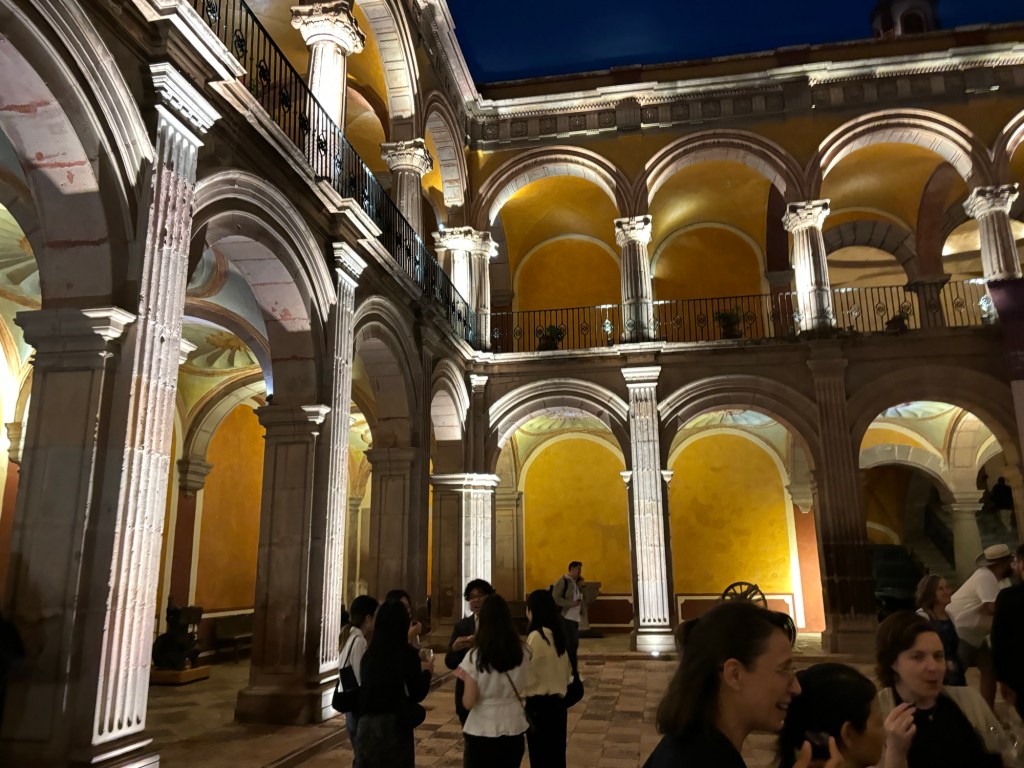
The Open House tour was followed by an opening reception and keynote address in Querétaro’s very famous and protected Teatro de la Republica where (at least part of) the country’s constitution was signed. The keynote by Tatiana Bilbao was thought-provoking, with the architect advocating liberation from named or pre-determined programmatic elements, to produce evocative enclosures for inhabitants to mold and adapt. The open reception was at another architectural heritage site, the Museo Regional de Querétaro.
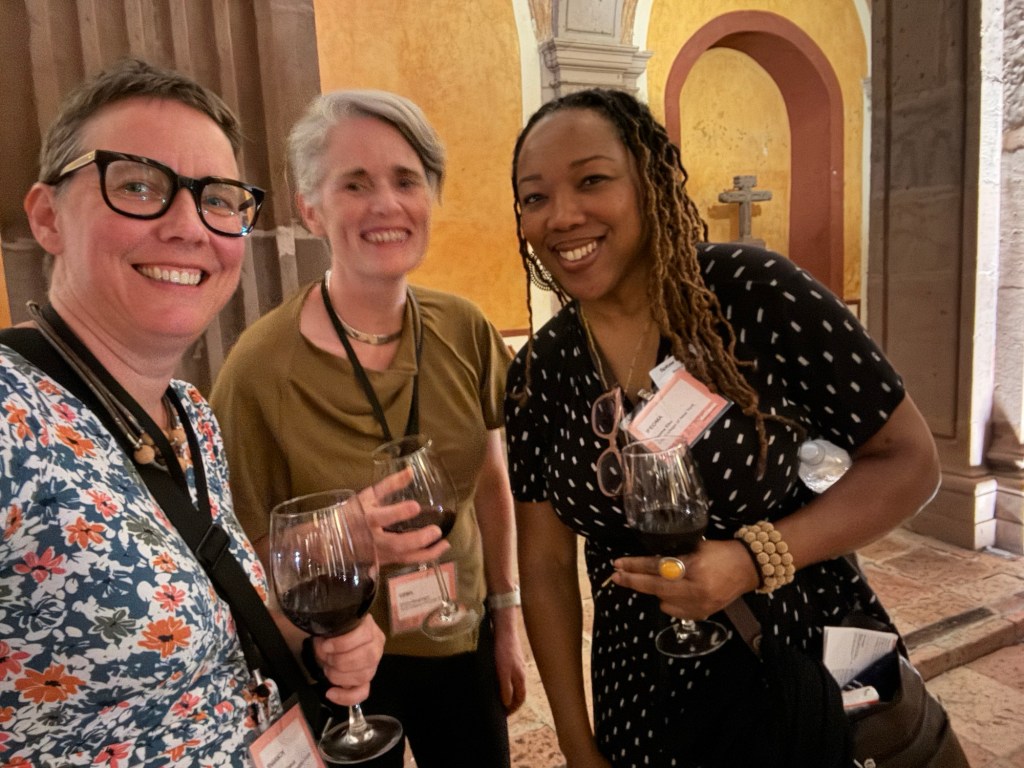
The historic theater where the Constitution of Mexico was signed.packed with architecture teachers and students. Tatiana Bilbao’s presentation…Walking between venues. The opening reception. Making new friends!
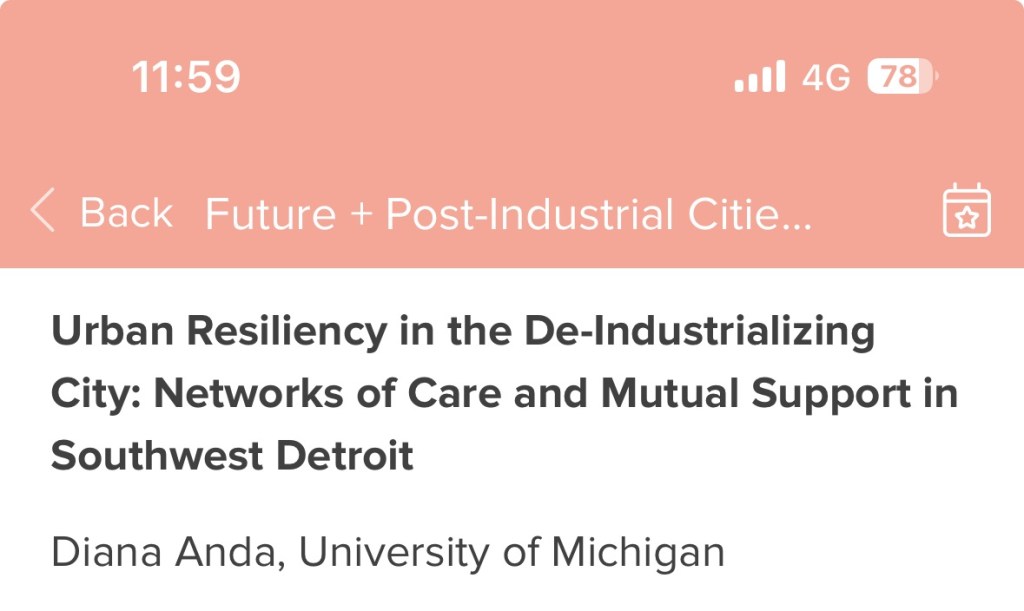
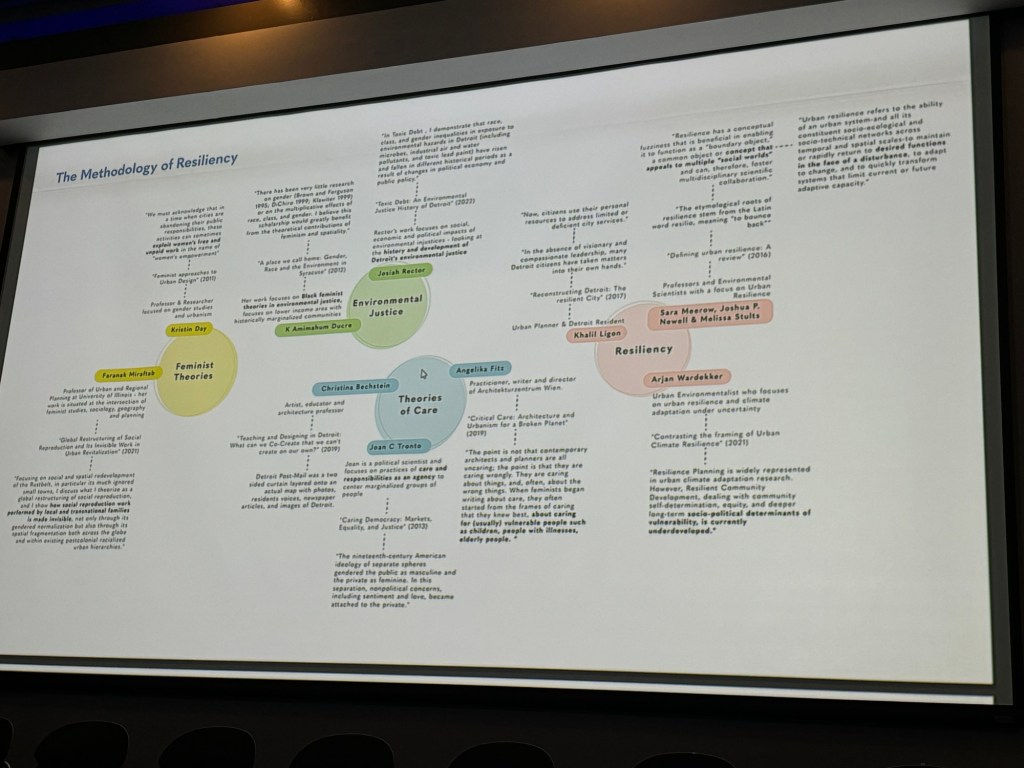
The second day started with the Deans’ panel on “tradition and radical innovation” that included Emma, followed by paper sessions. I attended the sessions on “Future + Post-Industrial Cities.” These two sessions were held at the university’s modern campus on the outskirts Querétaro. We travelled there and back by bus.
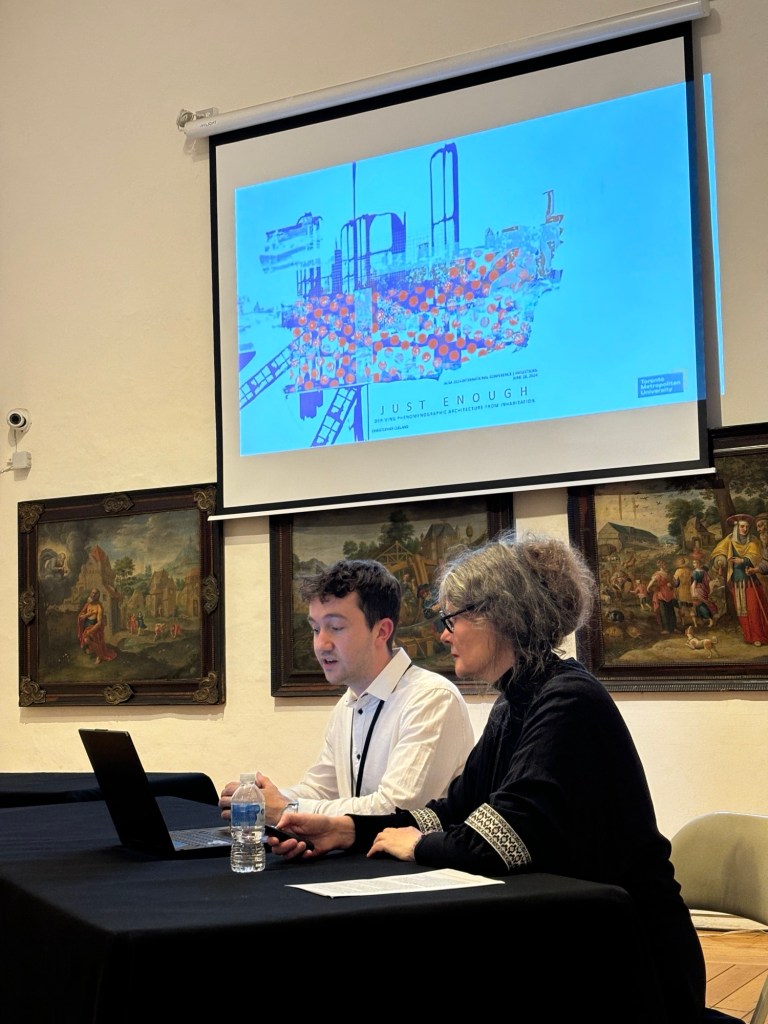
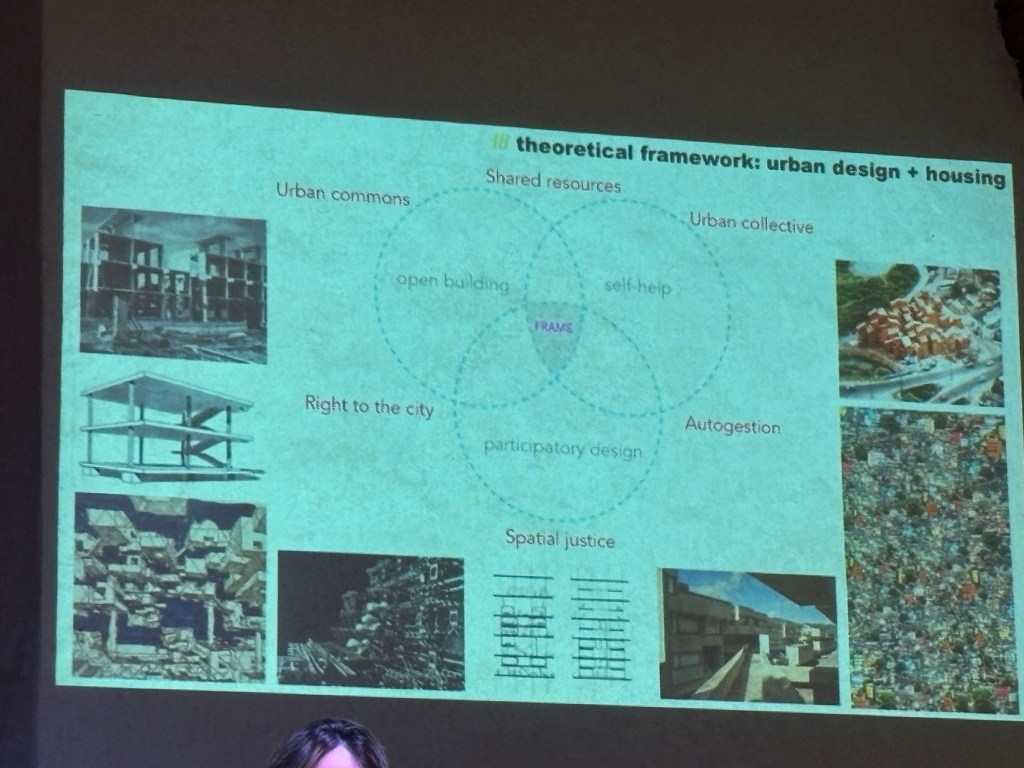
Campus outside of town. Dean’s panel. An intriguing presentation……I WhatsApped Diana Anda’s slide to Sandra Cruz and Emma, who hurried over to join the session.
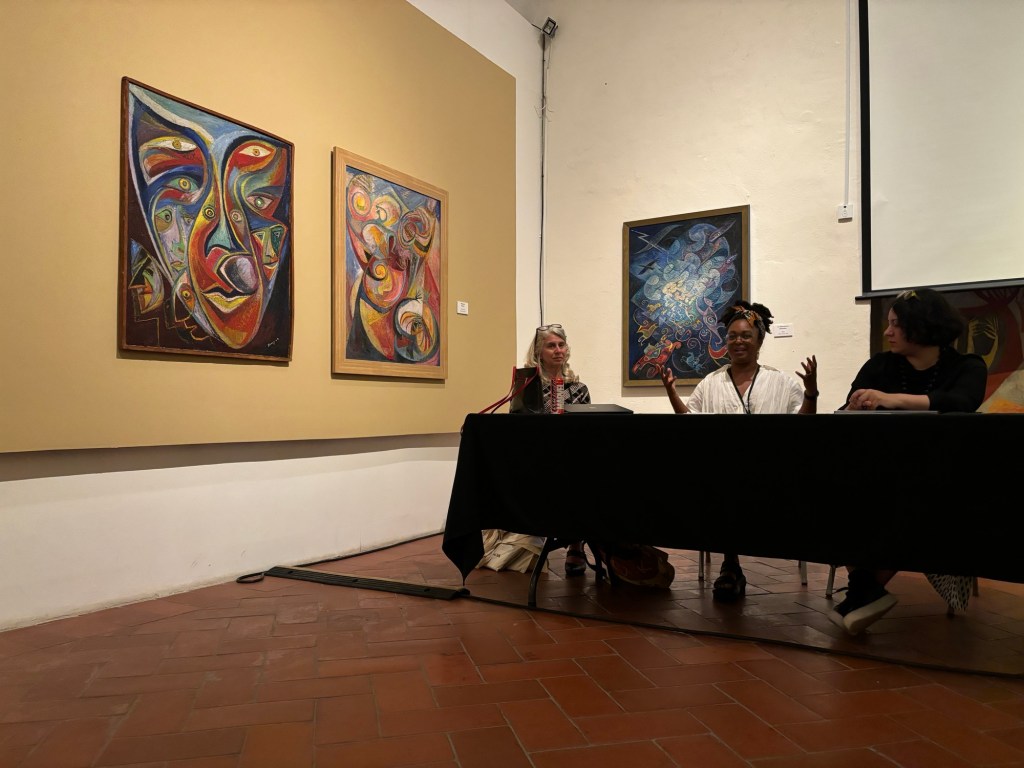
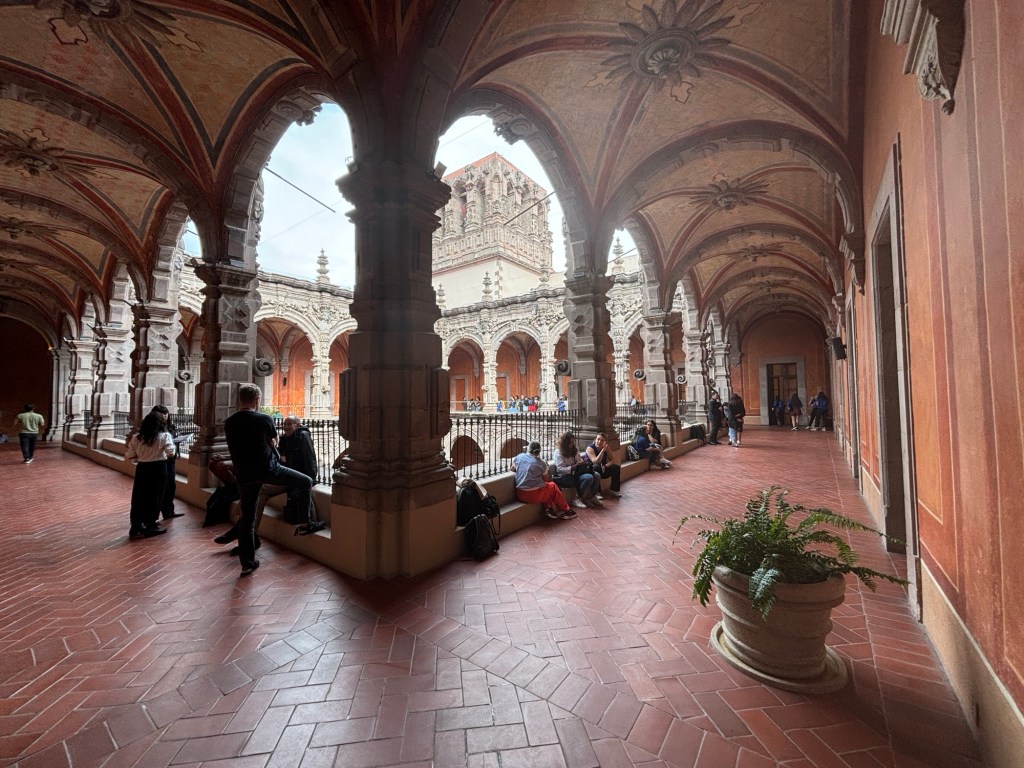
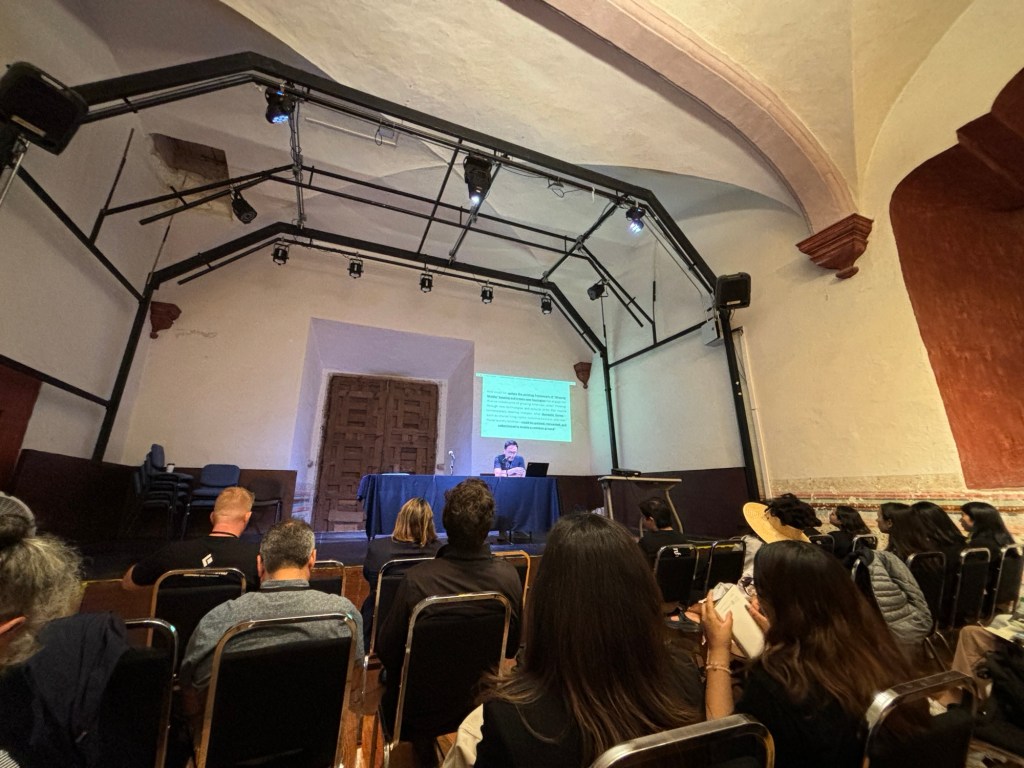
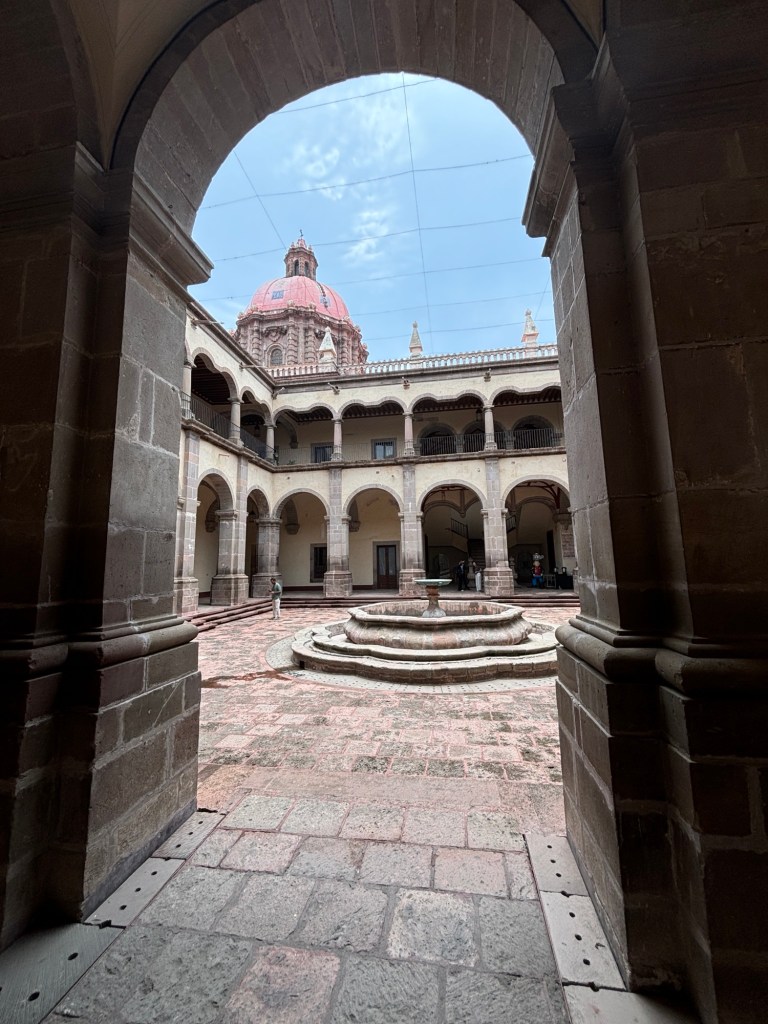
After a relaxing lunch break, we enjoyed afternoon paper sessions in a magnificent former cloister now used as the Mueso de Arte de Querétaro. I attended “Spatial Decoding: Beyond Measurement” and “Experiments for Urban Futures.”
Lunch on my own to catch my breath! Afternoon sessions surrounded by magnificent art. Another spectacular conventwith notable stairs and arcades. And presentations!
The entire time, Emma and I were meeting lovely and passionate architecture educators from Mexico, the US, and Canada, as well as graduate students from around the world. We also got to know and admire the host for the next iteration of this ASCA International conference that will be held in Brisbane, Liz Brogden.
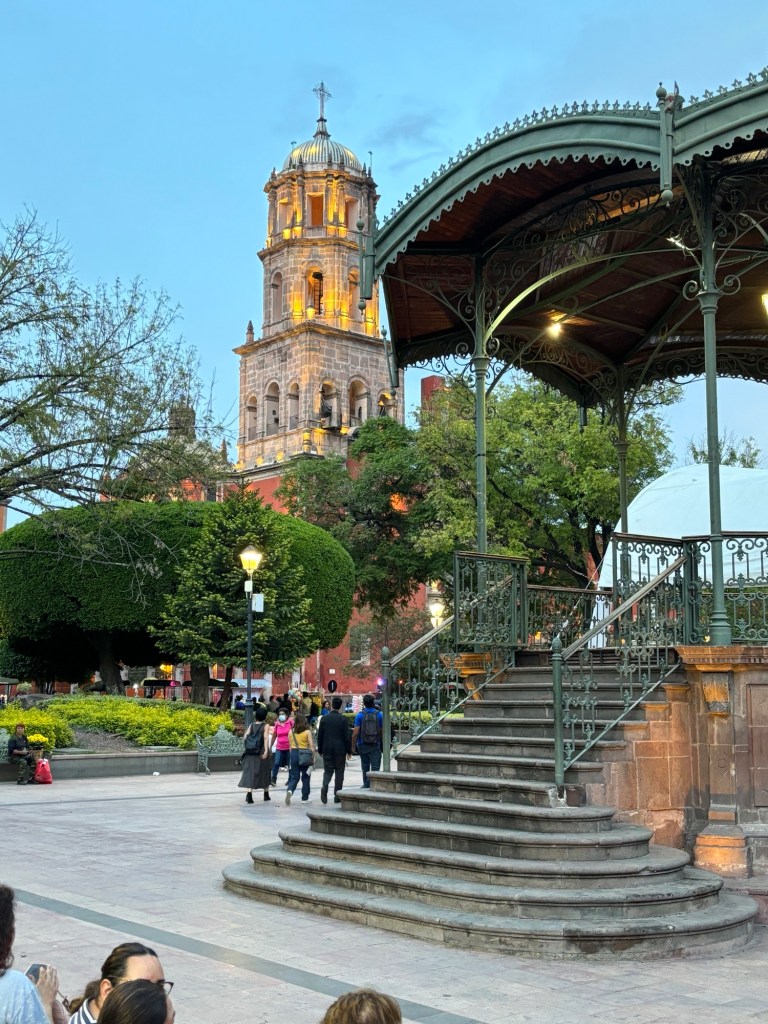
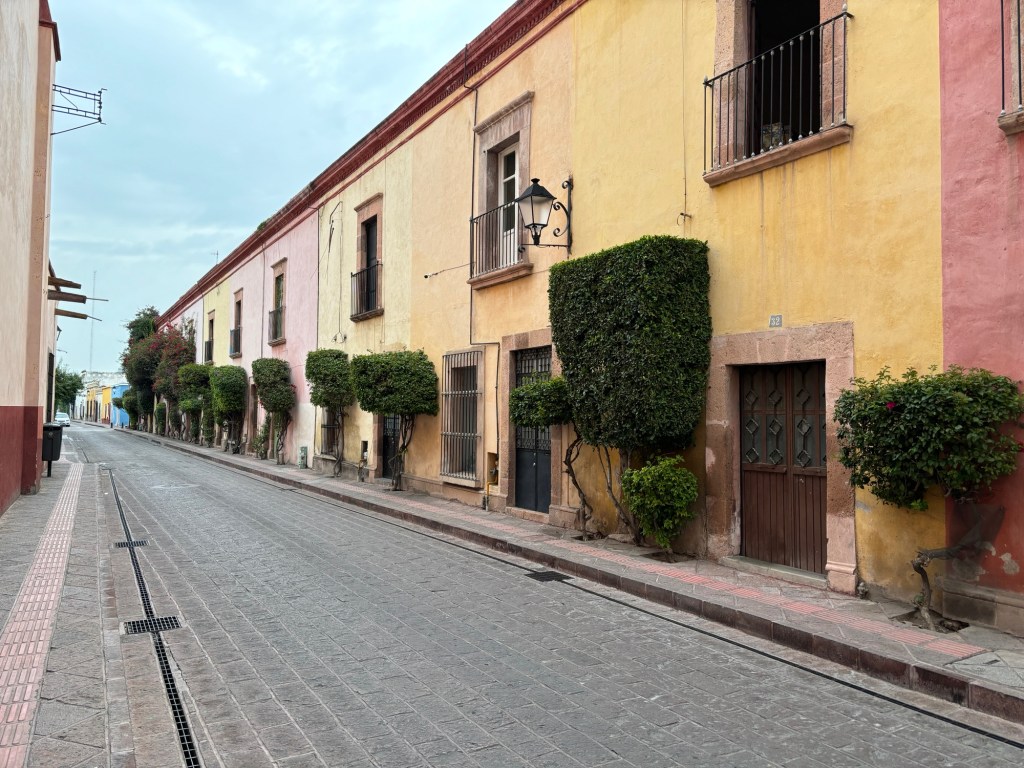
The center of Querétaro low rise with greenery and color and plazas galore! And sun! Liz Brogden was ready for sun though!
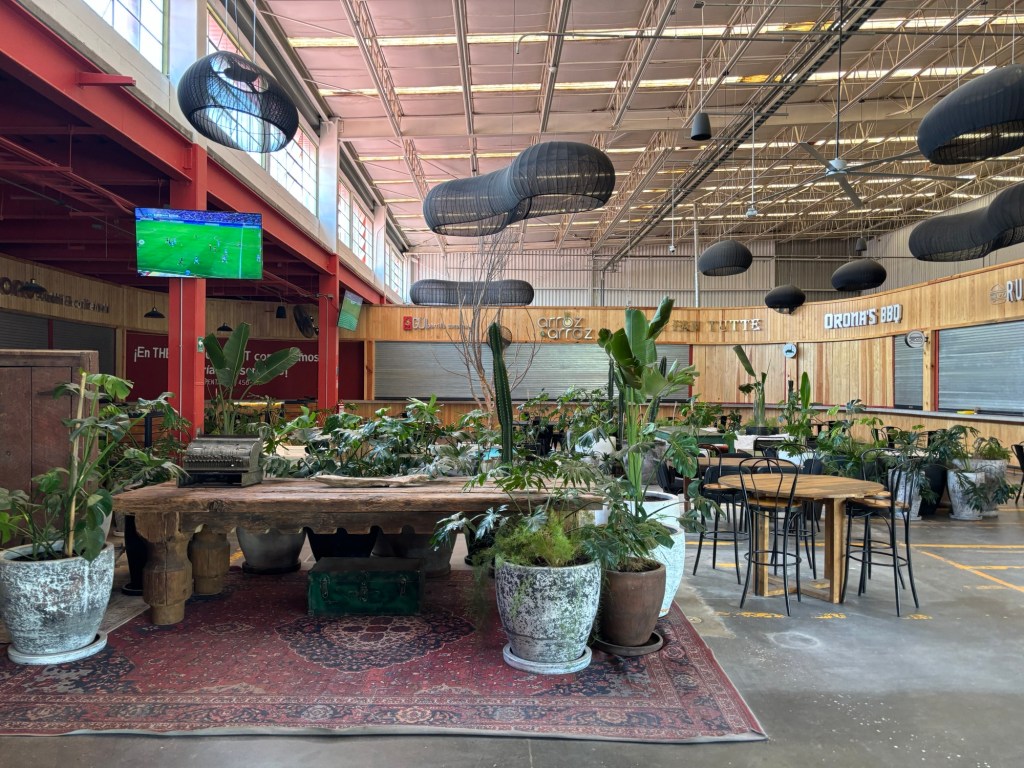
Liz, Emma, and I were guests of the conference organizers for tapas and drinks Friday night at Hercules, a former textile factory converted into an entertainment venue. We had the pleasure to sit between Michael Monti, the executive director of ACSA, and Luis Francisco Rico-Gutierrez, Dean of Architecture at Iowa State, who brought this conference to his hometown of Querétaro. Luis carefully assembled a conference program with cultural, social, urban, and critical feminist underpinnings.
ACSA Director, Michael Monti, who has a doctorate in philosophy and expertise in Heideggerian phenomenology!
Bravo to these leaders for pulling off such a magnificent event in collaboration with the local organizers, including Roberto Íñiguez Flores, and the DC-based ACSA team!
Programming for the third day ran 9 AM to 10 PM. We attended paper sessions, including Emma’s, at the Centro de las Artes de Querétaro Santa Risa de Viterbo. We started off with “New Imaginaries, Speculations, Machinations” where Emma spoke. Then I attended “Housing, Dwelling and Domesticities.”
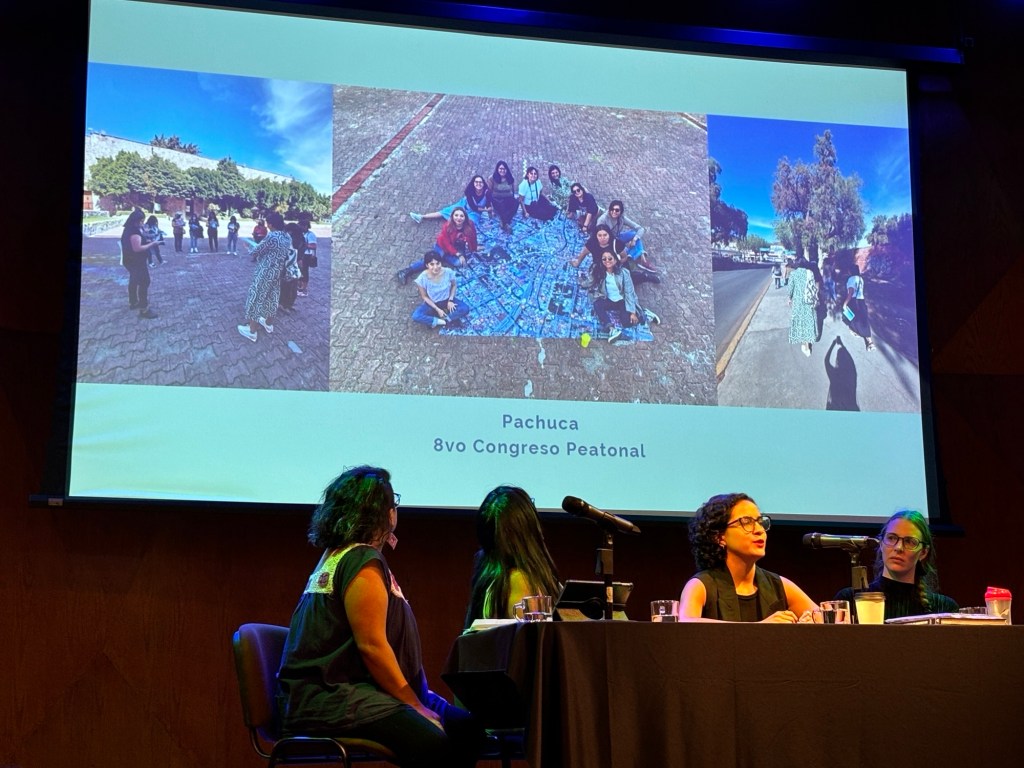
After lunch I attended “DESIGNING DISSENT: Feminist Counternarratives in the City.” This critical feminist urbanism panel session was particularly insightful. It was held with one presentation in English and two in Spanish. There were AI-generated English subtitles at the second of these, but for the one without subtitles, I put my Duolingo to work.
Designing Dissent panel
I have been studying Spanish using Duolingo for 254 days now, in preparation for this trip. I understand reasonably well, although I can’t yet speak in Spanish. My elementary knowledge of Italian interferes with my ability to start sentences in Spanish, but I persevere. The helpful slide images helped me deduce more complex meanings.
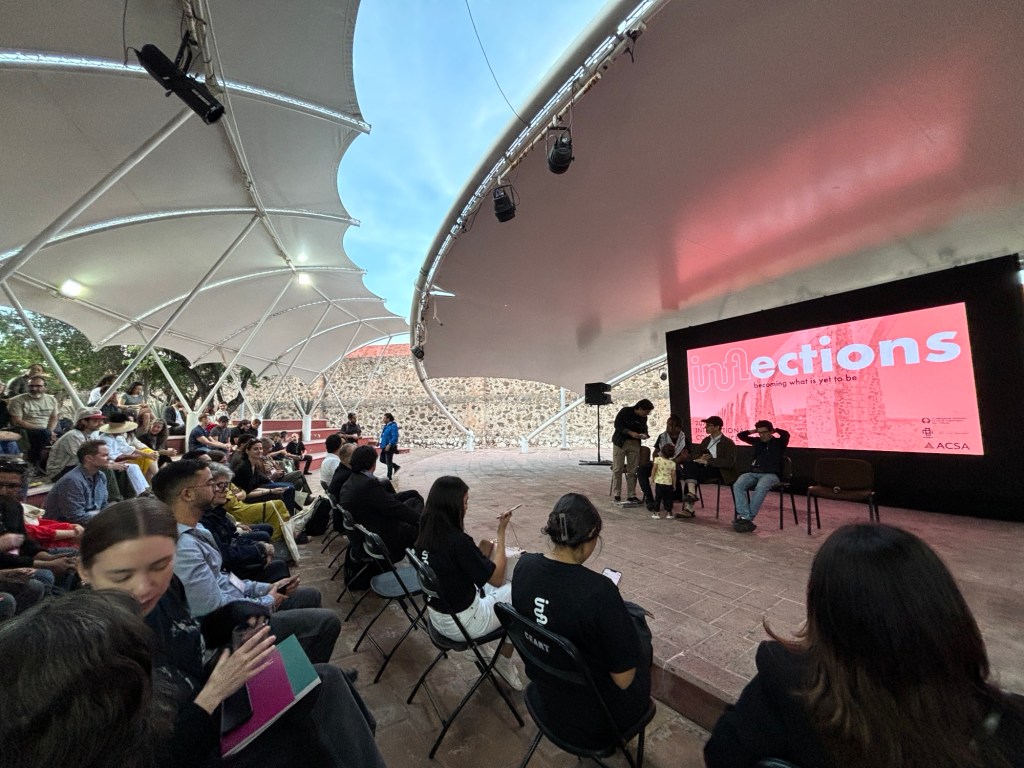
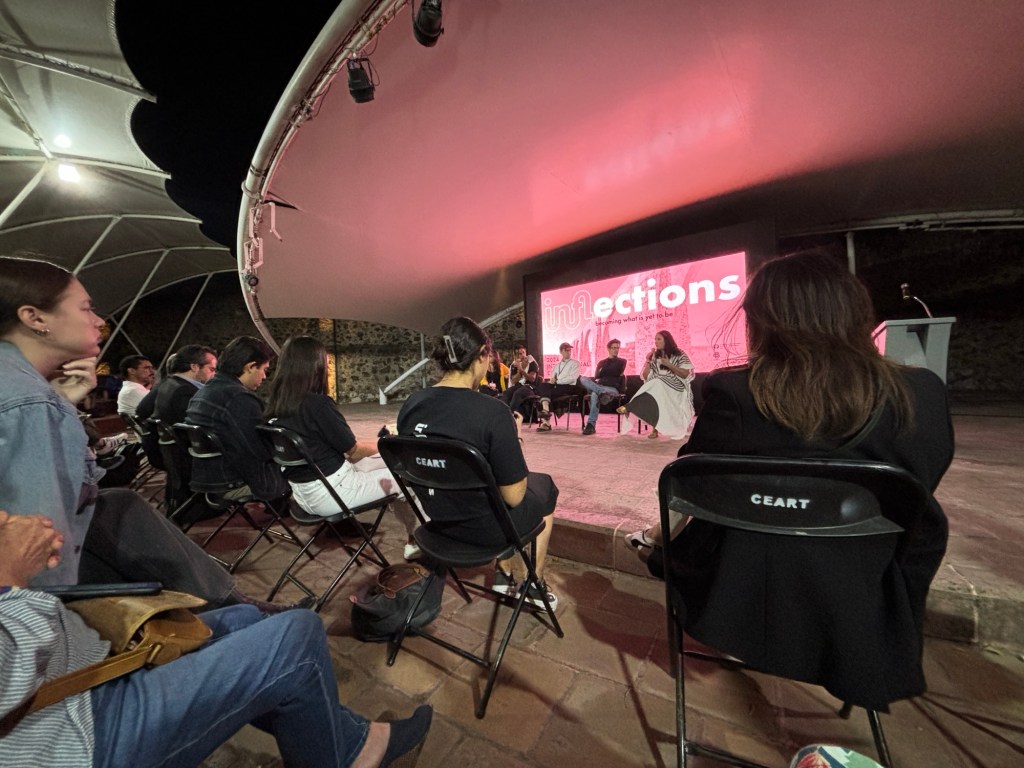
I also attended “Co-creation with AI.” Then, this third and final day wrapped up with an all-conference panel on contemporary issues in Mexican design at the outdoor amphitheater at the cloistered museum. The title was “ILLUMINATING THE OVERLOOKED: Unconventional Practices for Responsible Futures.”
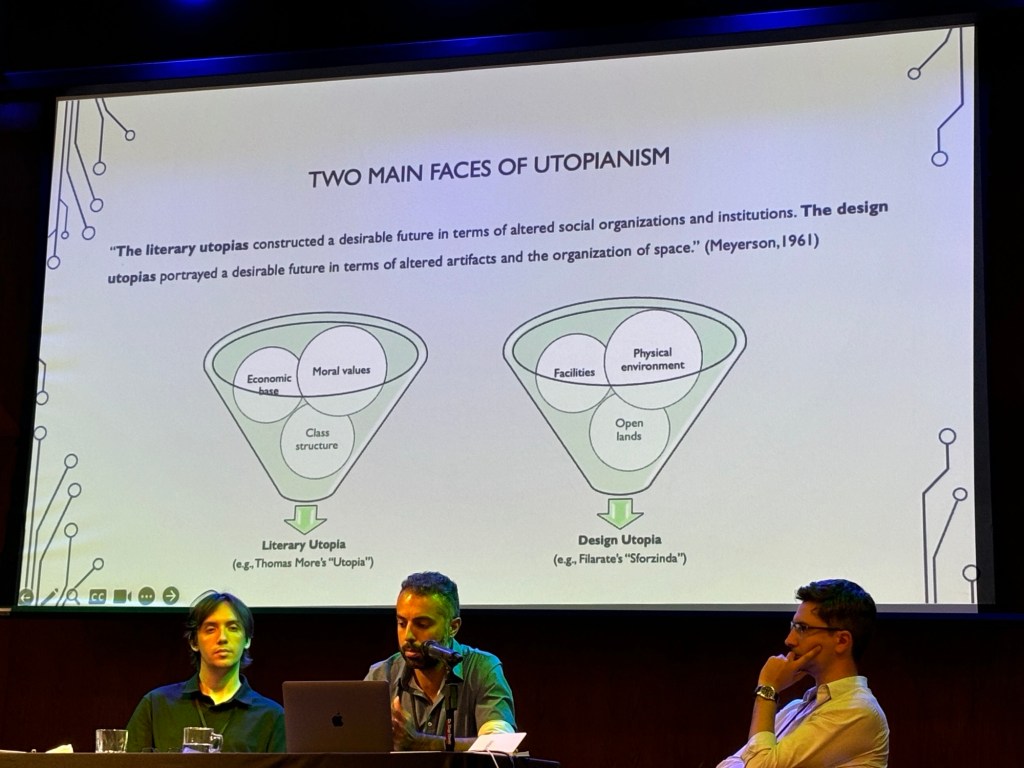
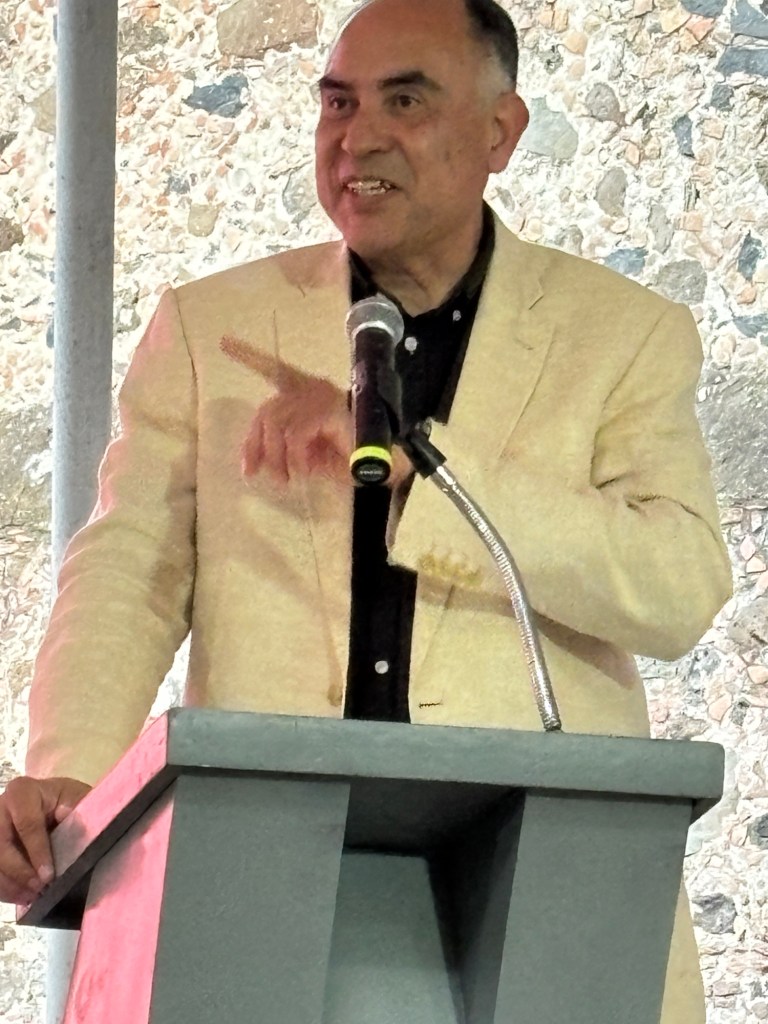
The AI session included a presentation on utopias. The closing panel with Querétaro native, Luisat the convent’s outdoor amphitheater.
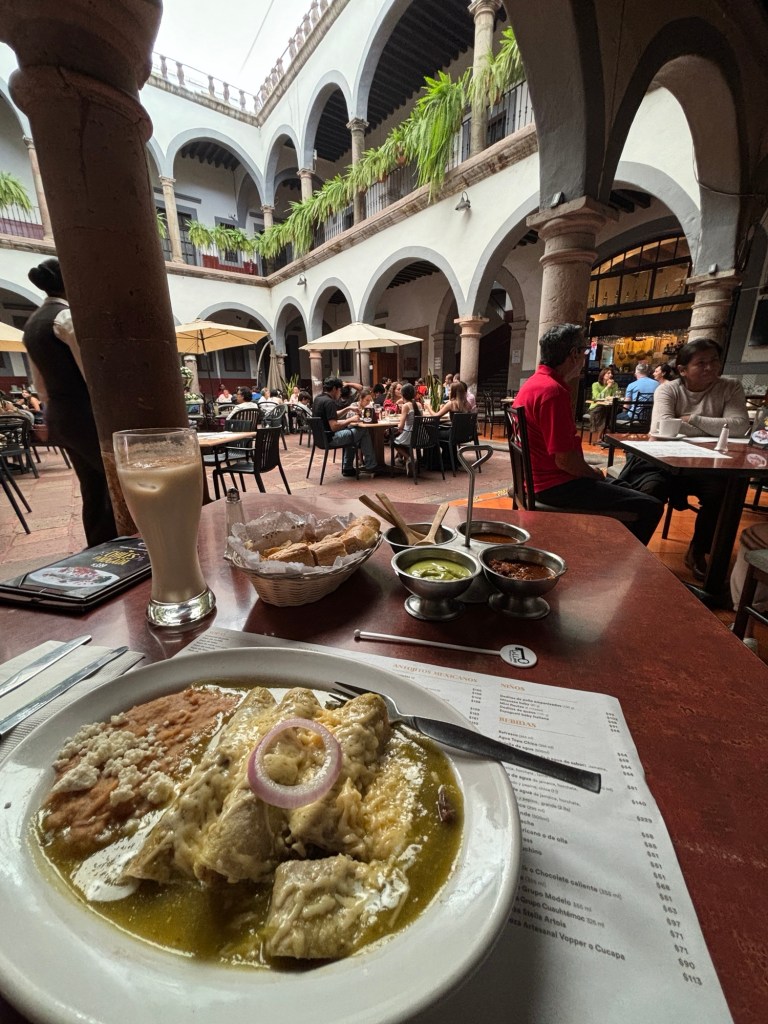
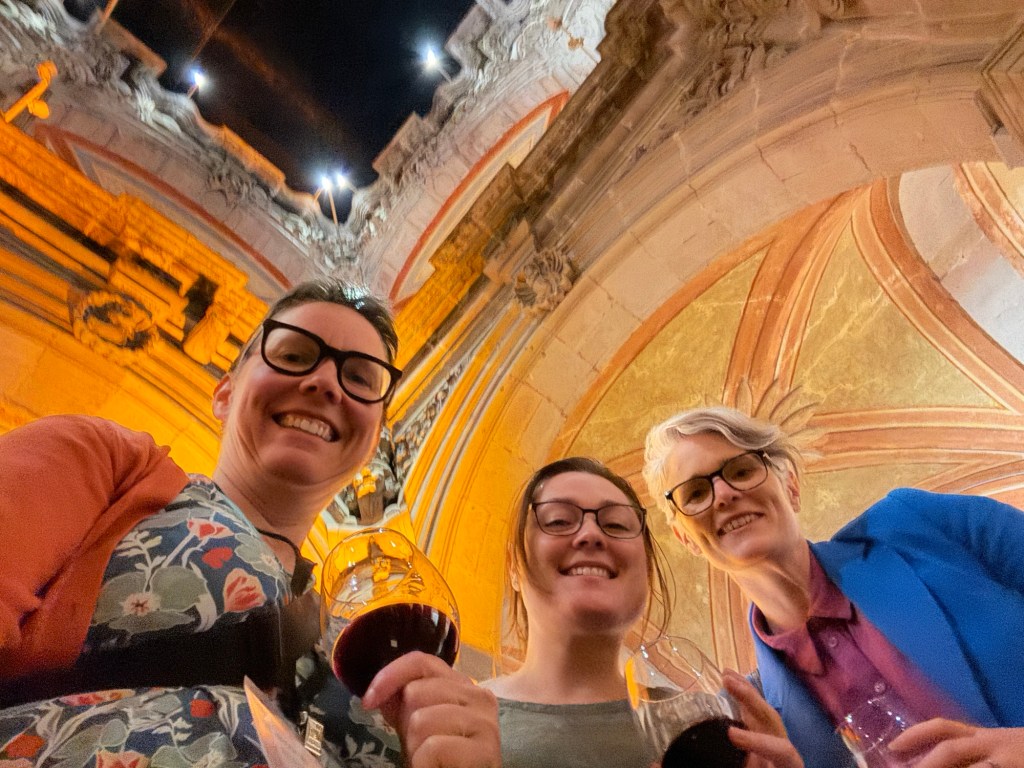
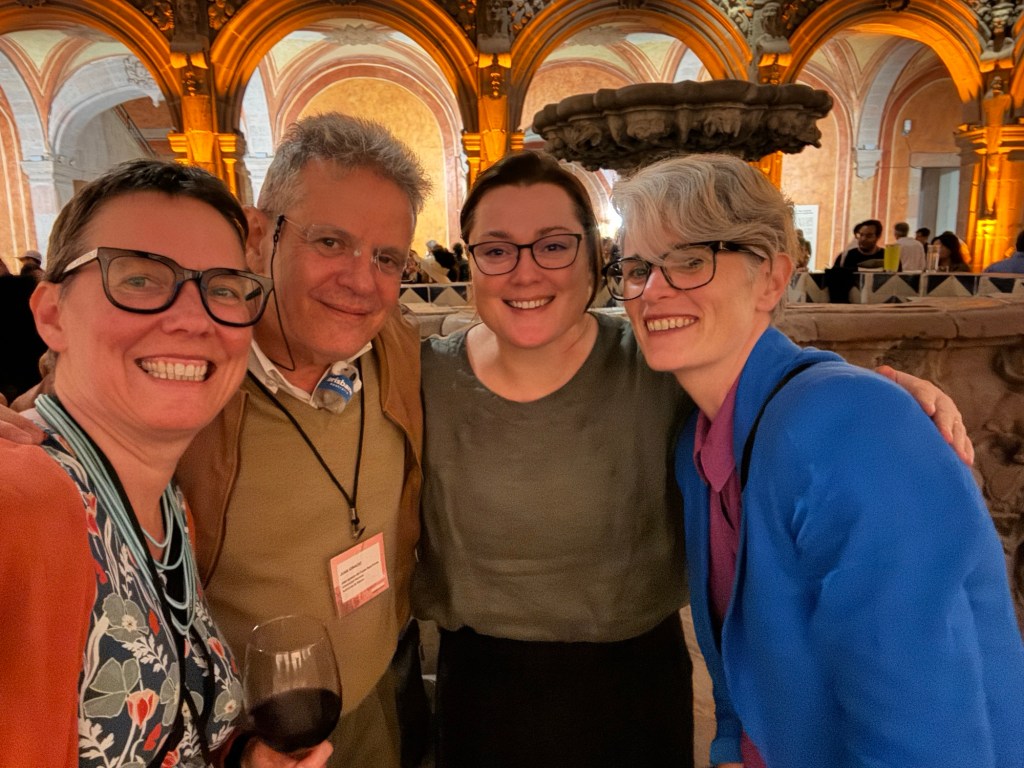
The closing reception was held at the Museo de Arte de Querétaro courtyard. After it, Emma, Liz and I headed for a last supper together that didn’t end until after midnight. We’re learning Spanish ways!
Closing reception with friendsDino, Liz, and Emma — I can’t wait to see them all again!
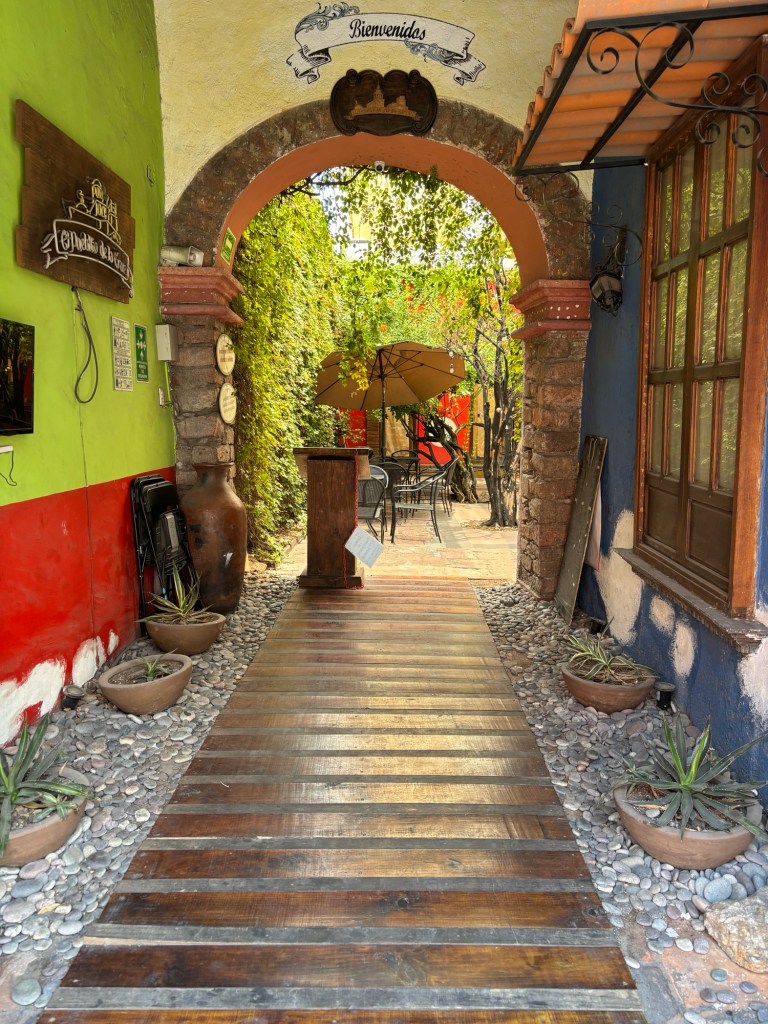
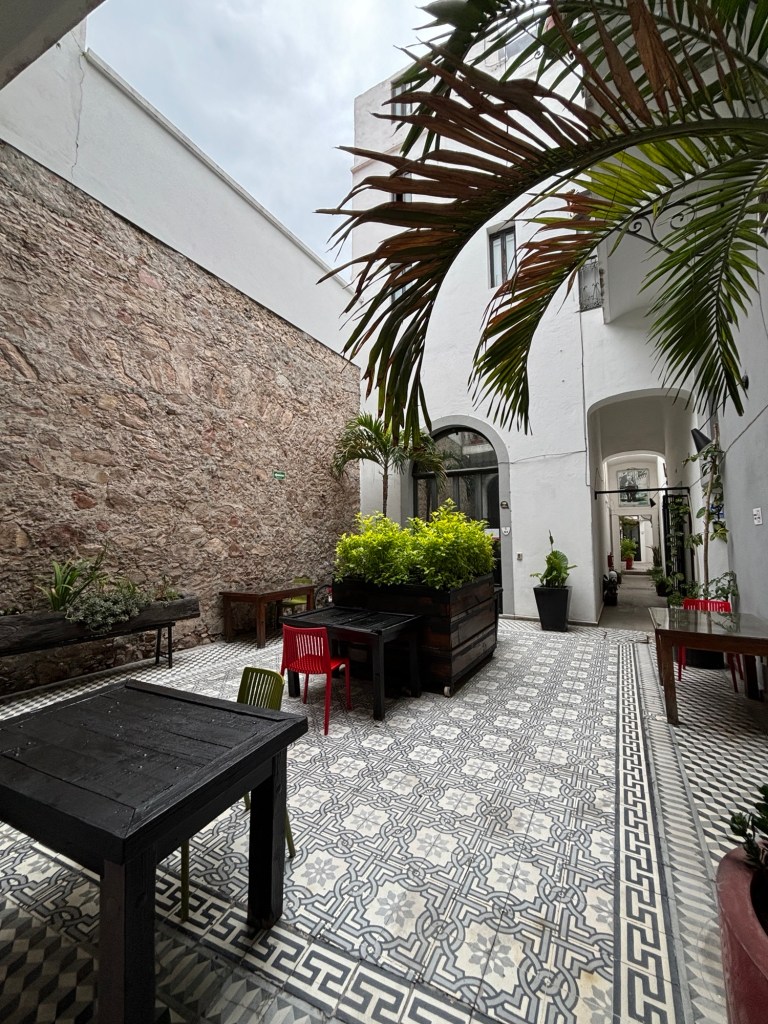
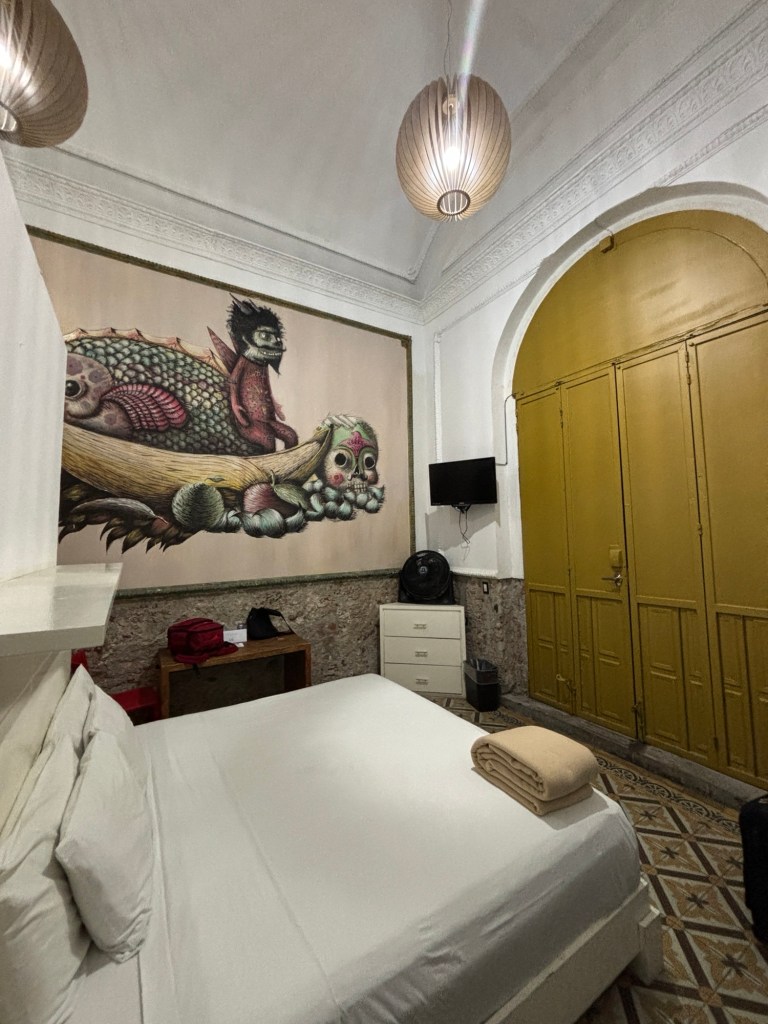
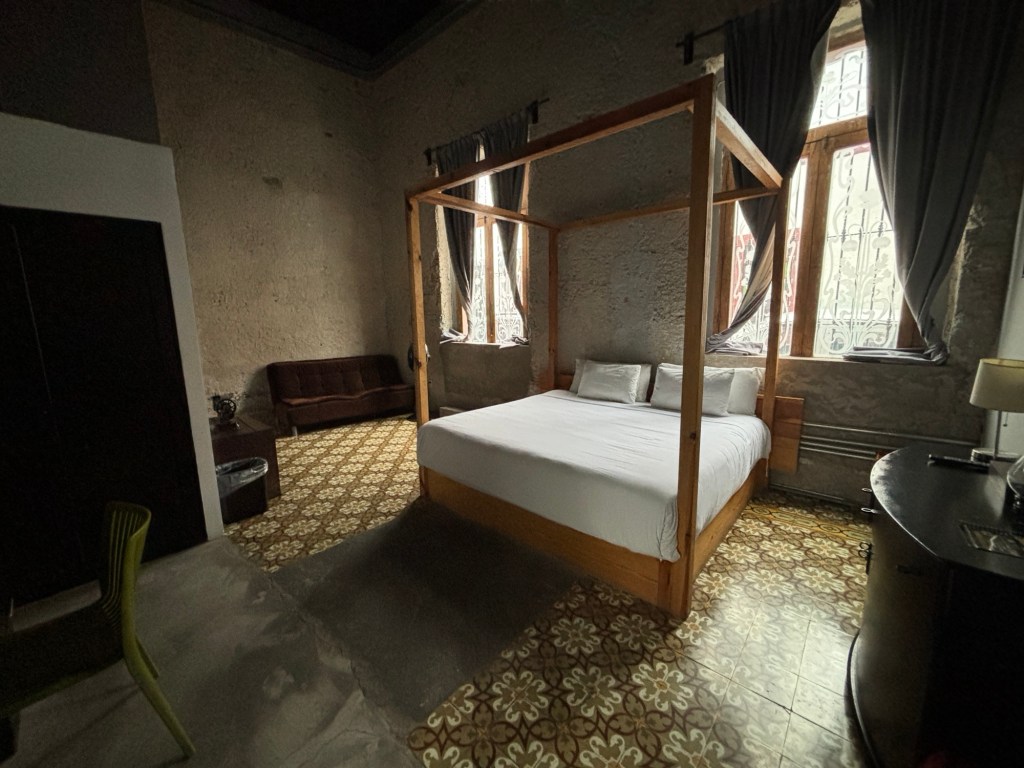
As a side note, I always try to stay central and conserve my budgets when I select hotels regardless of who is paying. This was no exception and I picked a cheap and cheery courtyard hotel in the city’s historic core. It is nestled among the cultural heritage conference venues. Thankfully Emma is the best of sports and appreciated the authenticity as it was, as you’ll recall, cheap and cheery. It is surrounded by nice eateries which we enjoyed.
Courtyard of Kuku Ruku with cool decor butno window, for two nights. Got windows to the sidewalk for the last two nights! ❤️Oops—was a delicious breakfast but I got our bus’s departure time wrong!
Thanks a million to everyone who contributed to the organization of this conference — including Luis, Roberto, and ACSA’s Michael, Michelle, Eric, and Danielle — and to the local students, architects, teachers, and residents who came out in force. Their enthusiasm and collective effort made our visit to Querétaro extraordinary special.
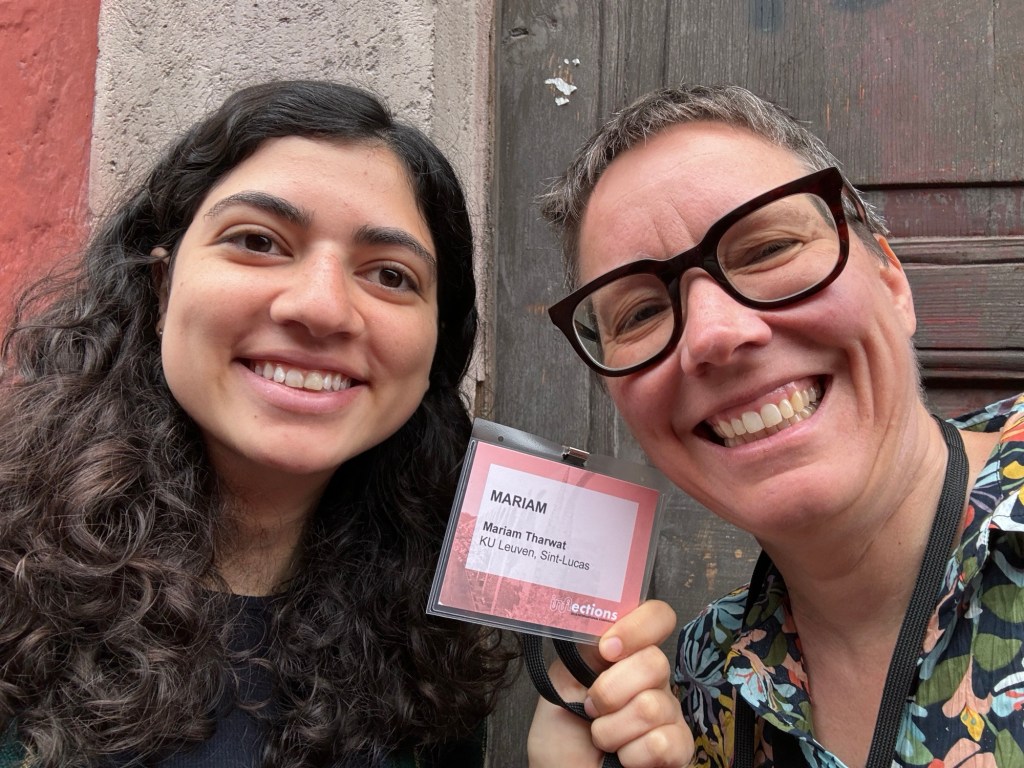
Emma and I look forward to seeing all our new ASCA colleagues — Sharon, Dino, Liz, Luis, Mariam, Diana, Ifioma, Faye, Tania, Jori, Erandi, and many others — at the ACSA International meeting in Brisbane in 2026!









































 Ireland by Chance