Envisioning the Future of Education with Brian MacCraith

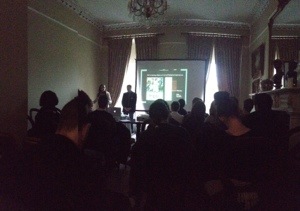
The president of Dublin City University (DCU), Prof. Brian MacCraith, delivered  a lively and informative lecture Monday night at St. Patrick’s College. His topic was Envisioning the Future of Education. And what a visionary President MacCriath is — I learned so much from his talk! I’ve not got time enough to explain all I learned; I’ll include snapshots of some interesting slides at the end of this post. I’ll explain a little in each caption.

I did look up one of the sources he used, as it ties to my map-tracking.

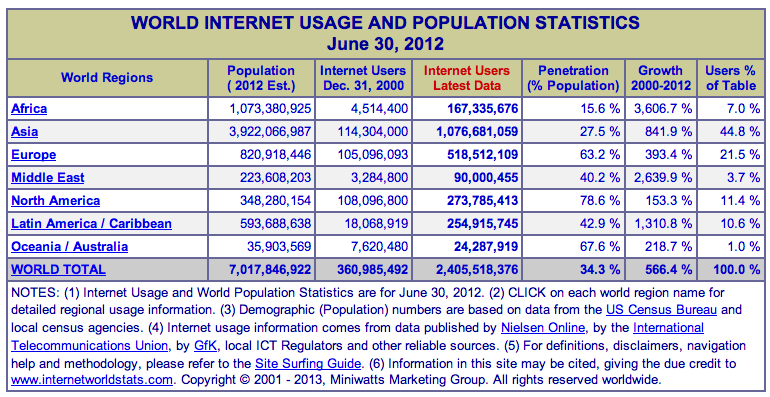
Internet usage by continent.

Internet usage by continent (downloaded from Internet World Statistics).

One chart he showed (above) helped explain why my blog gets fewer visitors from Africa than Europe and North America. In Africa, just 15.6% of people have Internet access. In Asia, though, there are more people with Internet than on any other continent, so why is my Asia map so blank? Still no one from China…. and of the world population of Internet users, most are in Asia.

Internet distribution

Internet distribution

The population of North America  (shown in blue on the pie chart) is tiny. As you can see above, not that many people live in North America, even though 78.6% of them use the Internet.

Ready to Oink at the RoboSlam

Dave Dorran working with students at the mid-semester trials for RoboSumo, March 2012. (Photo by Shannon Chance.)

Dave Dorran working with students at the mid-semester trials for RoboSumo, March 2012. (Photo by Shannon Chance.)

Regarding my prior RoboSumo blog, Ted did read it and he wrote back:

Hi Shannon,

Thanks for writing about RoboSumo on your blog – that was a very pleasant surprise!!

As you anticipated, I do have an updated list of people currently tutoring on RoboSumo:

  • David Dorran
  • Richard Hayes
  • Ted Burke
  • John McGrory

Although Damon Berry isn’t currently tutoring on the module, he remains closely involved in the broader DIT RoboSumo enterprise. For example, he and I travelled to Galway with the DIT student team on Saturday 19th January to take part in the National Intervarsity RoboSumo competition. And of course, Damon and I are still developing our “RoboSlam” begginers’ workshop for promoting engineering/programming/robotics, which we will hopefully be running again soon within DIT with an assorted cohort of guinea pigs (engineers, teachers, non-engineers, regular people, etc). Expect a call.

Ted

Dr. Ted Burke
School of Electrical Engineering Systems
Dublin Institute of Technology
Kevin St.
Dublin 8
Ireland
Richard Hayes leading the 2012 RoboSumo trials. (Photo by Shannon Chance, March 2012.)

Richard Hayes leading the 2012 RoboSumo trials. (Photo by Shannon Chance, March 2012.)

_______________

To which I replied:
Oink, oink!  I’m ready!
I’ll update the blog shortly….

Shannon
_______________
But alas, Ted is always a stickler for details. I think he must be a brilliant engineer because he’s creative as well. Anyway, Ted said:
…On a minor point of information, I have it on good authority that guinea pigs chut, chubble, wheeeek and rumble but they don’t oink. Evidently, before we can meaningfully assess the strengths and weaknesses of our workshop, we’ll have to familiarise all our subjects with the basic vocabulary they’ll be using!  Ted
_______________
Me:
Oh.  But, architects oink!
Did you think I was a pig????
😉

Damon Berry advising a student at RoboSumo. (Photo by Shannon Chance, March 2012.)

Damon Berry advising a student at RoboSumo. (Photo by Shannon Chance, March 2012.)

_______________

Ted:
LOLzers. Of course – how silly of me!

Fulbright Joy at Hughes Pub

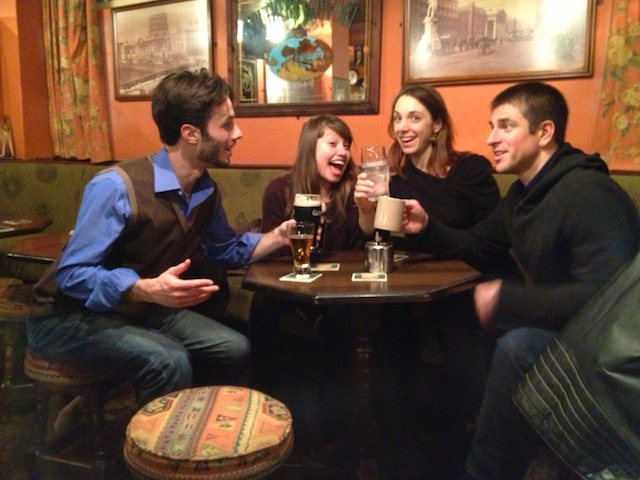
Fulbright Alexander MacDonald, his friend Nora, Fulbright Amanda Bernhard, and her husband Jonathan Kennedy at Hughes Pub last night.

Fulbright Alexander MacDonald, his friend Nora Rodriguez, Fulbright Amanda Bernhard, and her husband Jonathan Kennedy at Hughes Pub last night.

Several of this year’s Fulbright Students to Ireland were invited to Dublin to be interviewed for a Fulbright video. They shared advice for others who want yo apply for student programs to Ireland. Fulbright was reimbursing their travel expenses but we were able to save them some money on housing; Amanda and her husband Jonathan stayed with me instead of a hotel.

After the interviews, two of the students, their significant others, and I went out to chat about our Fulbright experiences.

We found Jack Nealons pub too loud for easy conversation last night, so we skipped down the way to M. Hughes Pub. (Their names don’t have apostrophes in them. I’ve aimed for accuracy here….)

Hughes pub has the added benefit of being a late night venue. Last call is 2 AM at least on weekends, I do believe, while many other pubs stop serving hours earlier.

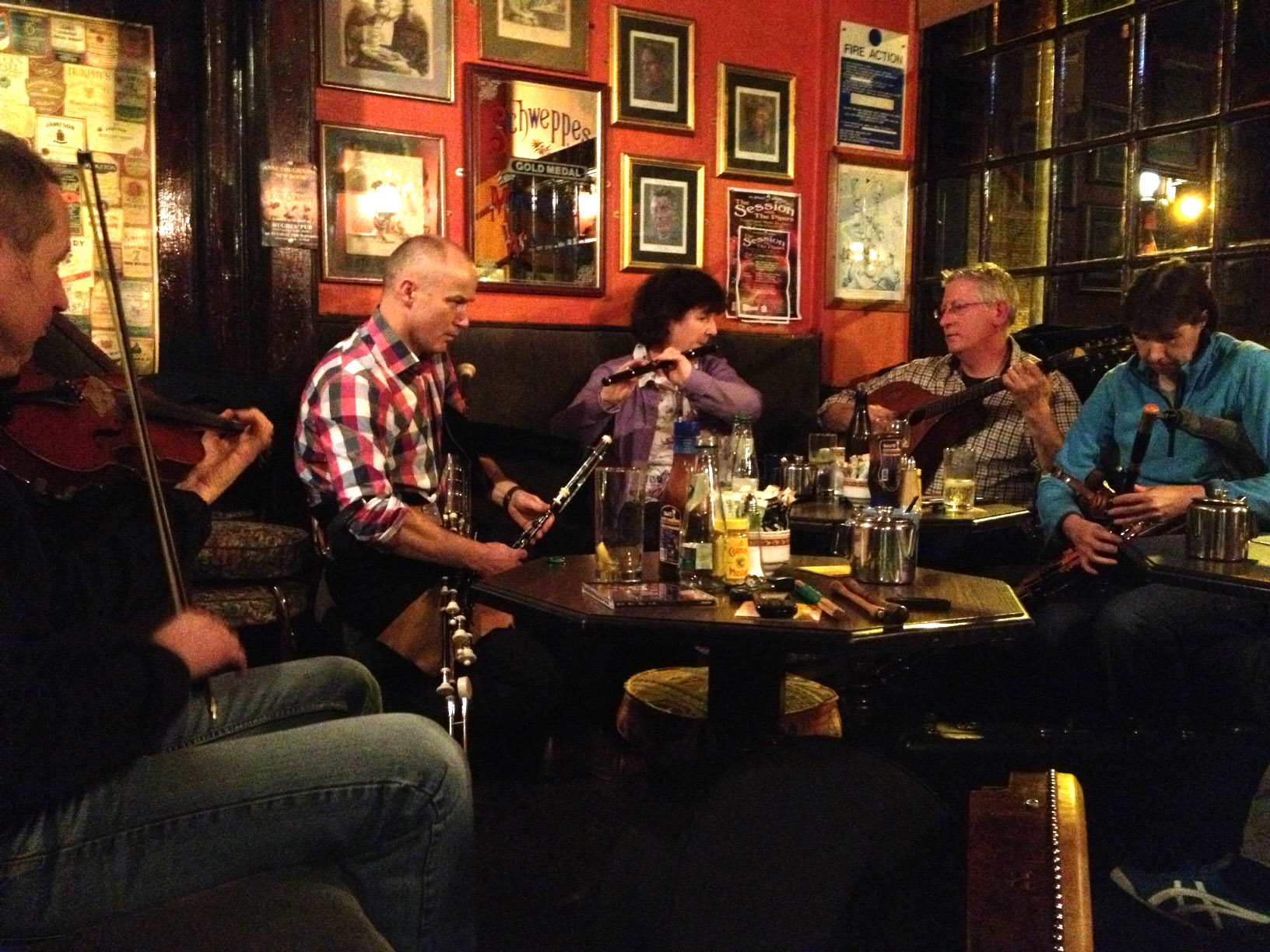
Hughes pub was perfect for the talking we wanted to do — the regular Friday night musicians were playing in the snug. Last night we sat outside the snug but we could still hear the music in the background. The level was very comfortable for talking and laughing. And that we did!

So what’s a snug? It’s an enclosed room, where in the distant past women were allowed to gather and drink. Back then, they weren’t allowed to be in the main (men’s) part of the pub. You’ve seen pictured of the snug before (It’s where brothers Gavin and Aidan Duffy play on Monday nights — I’ve attached a photo here in case you didn’t see that post).

the Duffy brothers playing in the snug at Hughes Pub last fall.

The Duffy brothers (to the left) playing in the snug at Hughes Pub last fall.

I learned all this from Saul Golden who teaches at the University of Ulster and whom I met at the All Ireland Architecture Research (AIARG) last weekend. You didn’t get to her Saul’s description, so I searched on line for a defnintion.

 The Free Dictionary offers this explanation:

snug 2 (sng)

n. Chiefly British

A very small private room in a pub.
[Short for snuggery.]

We asked the bar man about the snug (to confirm my suspicions that that little room actually was one). We talked theory. We joked around. And, we had some fun with the camera. A little about the characters of the night:

Alexander MacDonald is a highly accomplished tap dancer who hails from New York City. He is currently working on a Master’s degree at the University of Limerick. He is studying enthochoreology (which is the history of choreography in various cultures). He’s got two tapping videos on line, one improv and one from a party.

His friend Nora Rodriguez is from Mexico. She is working on a Master’s degree in contemporary dance performance. It was the first time Amanda, Jonathan, and I got to meet Nora, and we enjoyed out time with her immensely.

If you’ve followed this blog, you already know that Amanda Bernhard is a Fulbright who is working on a Master’s degree in Irish at the University of Galway. Her husband Jonathan is enrolled int the same degree program. They are very excited about the dialectology (theory and study of dialects) course they are taking this semester.

Immersion experiences like the one we’re in prompt reflection.  We’ve all be soul-searching.  Our evening at Hughes’ gave us an opportunity to share our thoughts and experiences — and to consider them in new ways.

I wanted to get in the photo, too, so we all had to be very still while I took a panorama.  (Shannon Chance, Alexander MacDonald, Nora, Amanda Bernhard, and Jonathan Kennedy at Hughes Pub last night.)

I wanted to get in the photo, too, so we all had to be very still while I took a panorama. In this photo Shannon Chance, Alexander MacDonald, Nora Rodriguez, Amanda Bernhard, and Jonathan Kennedy contemplate the photographic procedure.

Nora was fascinated by the story Amanda, Jonathan, and I told of the car fire we’d just witnessed beside my apartment building. She was captivated by the story but, just having seen Quentin Terintino’s newest flick, though the photo didn’t live up to the image our story had painted in her head. Nevertheless, I assure you the events were dramatic. Jonathan had insisted on taking a closer look, and as a result, we witnessed a lorry (i.e., truck) driver speed up to help. He jumped from his truck cab, extinguisher in hand, ran to the car and valiantly fought the blaze. The driver and her son had fled the vehicle after it burst into flames.

Amanda and I each recalled that time went into slow motion as we watched these event. We noticed many interesting details. We found the event to be quite dramatic!

Expanding your Learning Styles

Iroda Karimova said in earnest that she misses my crits! (!?!!??)

As per my prior post, Iroda Karimova said in earnest (while I was visiting the Hampton University Department of Architecture two weeks ago) that she misses my crits! (!?!!??)

Because I’m an active blogger I’m forever getting the question, “Do you ever work?”

The answer is yes; here’s a quick example.

My former student int he Department of Architecture at Hampton University, Iroda Karimova, emailed this to me from her smart phone today:

It was also nice to talk to you too. We haven’t see you for a while. I hope you are enjoying your oversea experience. I sometimes read your blogs, to see how you we doing.

Yes sometimes I wish I could hear your critiques, especially when I did good :). Your critiques were short, to the point, emphasizing important accomplishments, and sometimes not too enjoyable but helpful.
 
 Thank you for sending me this post.
 See you soon.
____
Whew! It sounds like I was doing my job correctly. Part of that  job is to help students learn to evaluate their strengths and weaknesses. I’ve got to challenge them to address weaknesses I see. Effective teaching requires a careful balance of challenge and support (Sanford, 1962). I aim to provide that and to help students reach just a bit farther than they are comfortable doing (this is called a “plus-one” approach to teaching).
Good students, like Iroda, recognize that challenges are presented to help them grow and that the professor’s main role is to help guide them in their own learning. Receiving critique is never pain free, but it is necessary for growth and development.
Here’s the very quick reply I dashed off:
Thanks for your note, Iroda!  

 
You always do excellent work.  I wanted to make sure to help you reach for the stars, though.  You’re really terrific at technical ways of thinking.  As a second-year instructor, my job is to try to help students develop fluency in multiple ways of thinking… particularly the ways they find foreign or uncomfortable.

 
I’ve attached a chart to explain (it’s from a paper I was working on Tuesday). Most students come to college very good at one corner/quadrant of the chart. You were exceptionally good at Convergent thinking. I’d say you left second year with new skills in that realm, but more importantly, with new skills in the other three quadrants as well.
 
Cheers,
Shannon
_____
Below is a chart I made to describe Kolb’s (1984) theory. It is based on a similar chart published by Evens, Forney, and Guido-DiBrito (1998). You can read more in the paper I created for the National Conference on the Beginning Design Student (MADE Proceedings Chance Writing Architecture). If you reference it, please cite the source. The citation for the paper is:

CHANCE, S.M. (2010).Writing architecture: The role of process journals in architectural education. MADE: Design education and the art of making (160‐170). Charlotte, NC: College of Arts + Architecture. Presented at the 26th National Conference on the Beginning Design Student in Charlotte, NC.

Kolb chart by Shannon Chance

RoboSumo at DIT

RoboSumo video is available to view at by clicking here.

A video of a past RoboSumo competition is available to view at by clicking here. The competition is just getting underway now for this year… in fact, there’s still time to register for the DIT class!

One of the things I have been studying here in Dublin is the use of hands-on projects to teach engineering. One example is a very popular electrical engineering course at DIT called RoboSumo.

People who teach this course include Ted Burke, David Dorran, and Damon Berry. Richard Hayes tends to show up at RoboSumo events, too, as do many of the other lecturers. (Ted’s probably going to read this and he’ll likely send me and update of who’s teaching “on the module” this semester so I can tweak my list — I know mine isn’t complete. By the way, I appreciate having you in my audience, Ted!)

Suffice it to say, the whole program gets jazzed up about RoboSumo events. Even the Dean (Dr. Mike Murphy) can be seen in the video of the final competition.

There’s a bit of information about the class on line. The General Rules page explains:

Two robots compete in each bout, each trying to stay in the arena longer than the other robot. Robots are encouraged but not obliged to actively push their opponent out of the arena. … The bout ends either when a robot leaves the arena or once 1 minute has elapsed, whichever occurs first. If only one robot remains in the arena at the end of the bout, that robot is the winner.

AIARG!

Gavin and I successfully presented our work today in Limerick at the 2nd annual conference of the All Ireland Architectural Research Group (AIARG). Got up at five to catch the train so we could finalize the presentation.

David Leatherborrow delivered the keynote address on Louis Kahn. It’s a lecture that I missed when he gave it at the National Conference on the Beginning Design Student in 2010. (I had to catch my flight). Some opportunities do come again and get better over time. That was part of his message: beginning again, over and over, approaching the issues slowly and being open to emerging opportunities made Kahn’s design work great.

20130125-204919.jpg

20130125-205209.jpg

Fulbrights at “Work”

Because I blog about the experiences I’m having much more often than about than the research I’ve been doing, people sometimes ask me if I’ve been getting any work done at all.  The answer is, emphatically, YES!

The Fulbright program IS about doing scholarly work.  But it’s also about learning. It’s about making the space in our lives to get to know other people and how they do things… to remove ourselves from the ordinary humdrum long enough to learn something that’s radically new to us as Americans, but not new at all in other places.

Fulbright scholars DO have lectures to give, papers to write, and projects to conduct.  But in the end, the most valuable part of our experiences overseas rests in the friendships we make and the respect we build for each other’s culture.  That, I see, as my primary mission.

This type of cultural give-and-take is evident in the images I brought back from Tanzania — so I’ve decided to share a few here. Most are from the 2005 Fulbright-Hays program I conducted for college students from the US and Tanzania. You can also read about a lecture I gave on the topic of African architecture.  I’ll be delivering that lecture again in Belgium this spring….

Dissertation 101: Picking Top-Notch Advisors

Dr. Pamela Eddy -- a fabulous advisor and role model.

Dr. Pamela Eddy — a fabulous advisor and role model.

You know those horror stories you hear about PhD students, endlessly stalled in their work?  Although many are true, they don’t have to be!  With careful consideration a little luck, it is possible to find excellent advisors who have the goal of helping you succeed.

When I was completing my dissertation, I was blessed to have two exceptional advisors, Dr. Pam Eddy and Dr. David Leslie, who were there to help me from start to finish. I also benefited from some sage advice from Drs. Michael DiPaola and Tom Ward.

All these people were instrumental in the timely completion of my dissertation. These folks wanted me to succeed. And, all these people knew how to let a self-starter like me start, and finish!

I often heard them say, “the best dissertation is a done dissertation” and “Keep It Simple (Stupid).” I think the KISS principle should apply to far more dissertation studies than it typically does.

My advisors knew that the main points of a dissertation at the PhD level are (1) for the candidate to demonstrate s/he is capable of producing quality, doctoral level research and (2) to contribute something new to the pool of human knowledge.  It is not, necessarily, to write the most eloquent piece of prose known to mankind or to solve world hunger in one fell swoop.

Thankfully, my advisors didn’t micromanage my work or act as though the fate of the world hung on each word I composed.

Dave Chance and Pam Eddy shooting the breeze at Bangkok Garden in Williamsburg, Va.

Dave Chance and Pam Eddy shooting the breeze at Bangkok Garden in Williamsburg, Va.

But make no bones about it: quality counts.

I finished my dissertation swiftly, but I also produced a piece of work that won an Outstanding Dissertation Award from the International Society for Educational Planning (ISEP), got published in a top-tier journal, and was downloaded more than 800 times over the course of a few weeks from the Society of College and University Planners (SCUP) website.

Moreover, my advisors nominated me for my school’s Award of Excellence — which I was truly thrilled to receive.  (Donors to W&M even provided a cash prize, and I used the award money to buy my graduation regalia.  I’ll enjoy wearing that each year, with pride, at Hampton University’s commencement and gradation ceremonies.)

So my advice is: when you’re selecting your thesis/dissertation advisors, take care.  Make sure to select accomplished people who are interested in and reasonably knowledgeable about your topic and who can keep things in good perspective.

Many candidates fall into traps I learned early on (I’ve completed two theses — one for my Bachelor of Architecture degree and one for my Masters of Architecture — as well as the doctoral dissertation).  In the first of these experiences, I wasn’t careful enough about editing my advising team. There were too many “cooks in the kitchen,” so to speak. After five frustrating weeks trying to please four different advisors who had somewhat competing agendas, I took matters into my own hands. I learned to trust my own judgement and ask for targeted advice when and where I needed it. I finished that B.Arch. thesis on time, something rare in my architecture school back then. I took exactly the same amount of time, 8 months, to write my PhD dissertation. In both cases, I’d laid much of the groundwork (such as review of the literature) ahead of time, so as to start the race on solid footing.

For the past 14 years, I’ve advised students who are completing architectural theses themselves.  I know I’ve inadvertently sent some of them scurrying in circles, but I’ve also tried hard not to be that type of advisor.  I’ve learned a great deal over time, and I’ve developed skill in thesis advising. Today, I feel quite confident in my ability to support students in their thesis work.  Many of my students have won awards and presented their thesis work in professional forums. And with Facebook, I get to watch them grown into skilled architects over time… what a joy!

I have this to say that students approaching their capstone projects: be on the alert for signs that the person you’re about to invite to your committee might fail to see what’s in your best interest. It seems to me that some dissertation/thesis advisors view each candidate’s work as an immediate reflection of themselves (in that realm, I’m sometimes at fault myself). Some advisors want every aspect of the work done the way they would do it themselves (and that’s not the case for me). I have seen instances where advisors haven’t been able to stretch their minds far enough to understand what the candidate is trying to achieve or how s/he is going about it, even though the approach appears valid to me. In some cases supervisors act as if the student’s dissertation/thesis is the single most important piece of research ever conducted. They go overboard belaboring every aspect. Although I know there are times when such tinkering is warranted, I have also seen some professors reject work and/or demand countless revisions regardless of the quality of work they have been presented for review.  Yes, they want the work to be the best it can possibly be… but the work this student does later in life is likely to be far more important (as long as they can meet the required quality thresholds for their degree level).

So keep in mind: it’s crucial to find people who respect your abilities and want to share the joys as well as the pains of critical investigation with you. People who want to help you achieve and succeed. And people who won’t let their own egos drive your project.

Thank God I found those people!  To this day, I maintain personal ties with Drs. Leslie and Eddy.

Dr. Eddy, for instance, helped me build connections in Ireland that helped me land my Fulbright.  She’ll be visiting me in Dublin for a couple of weeks this spring and I can’t wait!

In the meantime, we recently enjoyed a little time together with our “Daves” over dinner in Williamsburg.
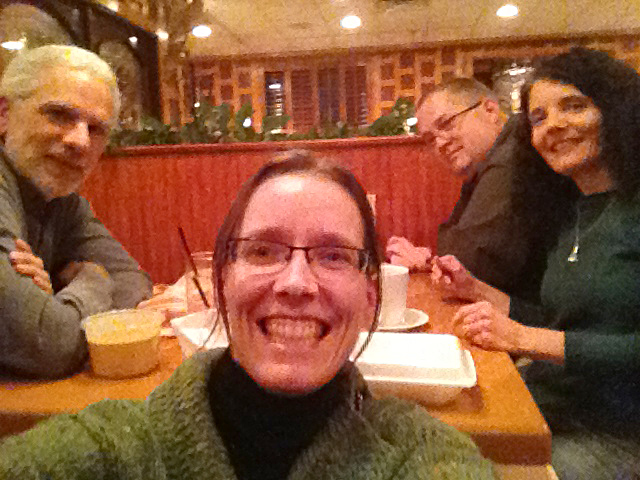
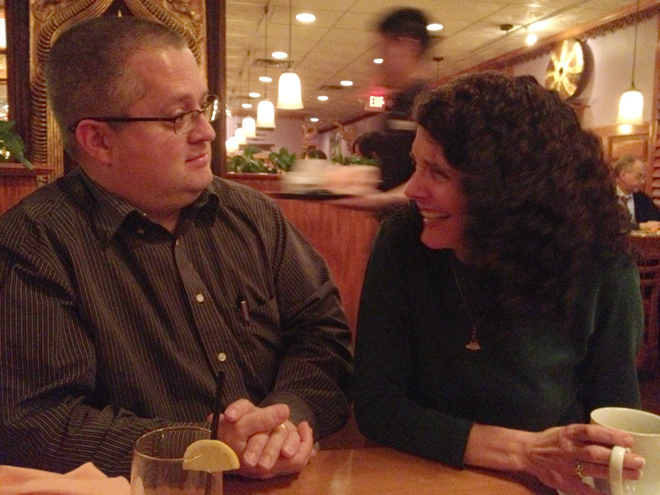
Dave Pape, Shannon and Dave Chance, and Pam Eddy.  (Yes, there are a lot of doctors in the house!)

Dave Pape, Shannon and Dave Chance, and Pam Eddy. (Yes, there are a lot of doctors in the house!)
My Fulbright Mission (a la Ben Franklin)

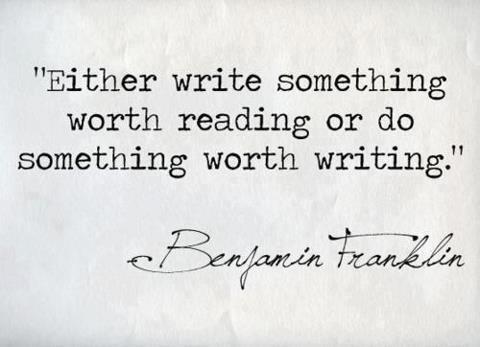
Truth Becons posted Ben Franklin's words to live by.

Truth Becons posted Ben Franklin’s words to live by.  All sorts of doing and writing for me….

Awesome Gift

I neglected to mention that one of the best gifts I received came by email on December 24.  Our editors extended our deadline from January 7 to January 21!  Yippie!