RoboSumo at DIT

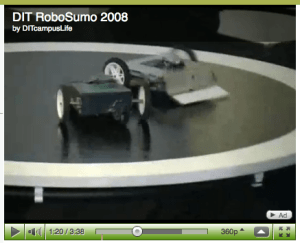
RoboSumo video is available to view at by clicking here.

A video of a past RoboSumo competition is available to view at by clicking here. The competition is just getting underway now for this year… in fact, there’s still time to register for the DIT class!

One of the things I have been studying here in Dublin is the use of hands-on projects to teach engineering. One example is a very popular electrical engineering course at DIT called RoboSumo.

People who teach this course include Ted Burke, David Dorran, and Damon Berry. Richard Hayes tends to show up at RoboSumo events, too, as do many of the other lecturers. (Ted’s probably going to read this and he’ll likely send me and update of who’s teaching “on the module” this semester so I can tweak my list — I know mine isn’t complete. By the way, I appreciate having you in my audience, Ted!)

Suffice it to say, the whole program gets jazzed up about RoboSumo events. Even the Dean (Dr. Mike Murphy) can be seen in the video of the final competition.

There’s a bit of information about the class on line. The General Rules page explains:

Two robots compete in each bout, each trying to stay in the arena longer than the other robot. Robots are encouraged but not obliged to actively push their opponent out of the arena. … The bout ends either when a robot leaves the arena or once 1 minute has elapsed, whichever occurs first. If only one robot remains in the arena at the end of the bout, that robot is the winner.

AIARG!

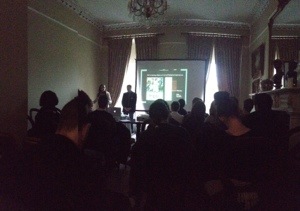
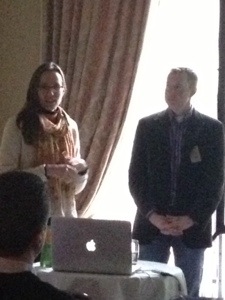
Gavin and I successfully presented our work today in Limerick at the 2nd annual conference of the All Ireland Architectural Research Group (AIARG). Got up at five to catch the train so we could finalize the presentation.

David Leatherborrow delivered the keynote address on Louis Kahn. It’s a lecture that I missed when he gave it at the National Conference on the Beginning Design Student in 2010. (I had to catch my flight). Some opportunities do come again and get better over time. That was part of his message: beginning again, over and over, approaching the issues slowly and being open to emerging opportunities made Kahn’s design work great.

20130125-204919.jpg

20130125-205209.jpg

Fulbrights at “Work”

Because I blog about the experiences I’m having much more often than about than the research I’ve been doing, people sometimes ask me if I’ve been getting any work done at all.  The answer is, emphatically, YES!

The Fulbright program IS about doing scholarly work.  But it’s also about learning. It’s about making the space in our lives to get to know other people and how they do things… to remove ourselves from the ordinary humdrum long enough to learn something that’s radically new to us as Americans, but not new at all in other places.

Fulbright scholars DO have lectures to give, papers to write, and projects to conduct.  But in the end, the most valuable part of our experiences overseas rests in the friendships we make and the respect we build for each other’s culture.  That, I see, as my primary mission.

This type of cultural give-and-take is evident in the images I brought back from Tanzania — so I’ve decided to share a few here. Most are from the 2005 Fulbright-Hays program I conducted for college students from the US and Tanzania. You can also read about a lecture I gave on the topic of African architecture.  I’ll be delivering that lecture again in Belgium this spring….

Dissertation 101: Picking Top-Notch Advisors

Dr. Pamela Eddy -- a fabulous advisor and role model.

Dr. Pamela Eddy — a fabulous advisor and role model.

You know those horror stories you hear about PhD students, endlessly stalled in their work?  Although many are true, they don’t have to be!  With careful consideration a little luck, it is possible to find excellent advisors who have the goal of helping you succeed.

When I was completing my dissertation, I was blessed to have two exceptional advisors, Dr. Pam Eddy and Dr. David Leslie, who were there to help me from start to finish. I also benefited from some sage advice from Drs. Michael DiPaola and Tom Ward.

All these people were instrumental in the timely completion of my dissertation. These folks wanted me to succeed. And, all these people knew how to let a self-starter like me start, and finish!

I often heard them say, “the best dissertation is a done dissertation” and “Keep It Simple (Stupid).” I think the KISS principle should apply to far more dissertation studies than it typically does.

My advisors knew that the main points of a dissertation at the PhD level are (1) for the candidate to demonstrate s/he is capable of producing quality, doctoral level research and (2) to contribute something new to the pool of human knowledge.  It is not, necessarily, to write the most eloquent piece of prose known to mankind or to solve world hunger in one fell swoop.

Thankfully, my advisors didn’t micromanage my work or act as though the fate of the world hung on each word I composed.

Dave Chance and Pam Eddy shooting the breeze at Bangkok Garden in Williamsburg, Va.

Dave Chance and Pam Eddy shooting the breeze at Bangkok Garden in Williamsburg, Va.

But make no bones about it: quality counts.

I finished my dissertation swiftly, but I also produced a piece of work that won an Outstanding Dissertation Award from the International Society for Educational Planning (ISEP), got published in a top-tier journal, and was downloaded more than 800 times over the course of a few weeks from the Society of College and University Planners (SCUP) website.

Moreover, my advisors nominated me for my school’s Award of Excellence — which I was truly thrilled to receive.  (Donors to W&M even provided a cash prize, and I used the award money to buy my graduation regalia.  I’ll enjoy wearing that each year, with pride, at Hampton University’s commencement and gradation ceremonies.)

So my advice is: when you’re selecting your thesis/dissertation advisors, take care.  Make sure to select accomplished people who are interested in and reasonably knowledgeable about your topic and who can keep things in good perspective.

Many candidates fall into traps I learned early on (I’ve completed two theses — one for my Bachelor of Architecture degree and one for my Masters of Architecture — as well as the doctoral dissertation).  In the first of these experiences, I wasn’t careful enough about editing my advising team. There were too many “cooks in the kitchen,” so to speak. After five frustrating weeks trying to please four different advisors who had somewhat competing agendas, I took matters into my own hands. I learned to trust my own judgement and ask for targeted advice when and where I needed it. I finished that B.Arch. thesis on time, something rare in my architecture school back then. I took exactly the same amount of time, 8 months, to write my PhD dissertation. In both cases, I’d laid much of the groundwork (such as review of the literature) ahead of time, so as to start the race on solid footing.

For the past 14 years, I’ve advised students who are completing architectural theses themselves.  I know I’ve inadvertently sent some of them scurrying in circles, but I’ve also tried hard not to be that type of advisor.  I’ve learned a great deal over time, and I’ve developed skill in thesis advising. Today, I feel quite confident in my ability to support students in their thesis work.  Many of my students have won awards and presented their thesis work in professional forums. And with Facebook, I get to watch them grown into skilled architects over time… what a joy!

I have this to say that students approaching their capstone projects: be on the alert for signs that the person you’re about to invite to your committee might fail to see what’s in your best interest. It seems to me that some dissertation/thesis advisors view each candidate’s work as an immediate reflection of themselves (in that realm, I’m sometimes at fault myself). Some advisors want every aspect of the work done the way they would do it themselves (and that’s not the case for me). I have seen instances where advisors haven’t been able to stretch their minds far enough to understand what the candidate is trying to achieve or how s/he is going about it, even though the approach appears valid to me. In some cases supervisors act as if the student’s dissertation/thesis is the single most important piece of research ever conducted. They go overboard belaboring every aspect. Although I know there are times when such tinkering is warranted, I have also seen some professors reject work and/or demand countless revisions regardless of the quality of work they have been presented for review.  Yes, they want the work to be the best it can possibly be… but the work this student does later in life is likely to be far more important (as long as they can meet the required quality thresholds for their degree level).

So keep in mind: it’s crucial to find people who respect your abilities and want to share the joys as well as the pains of critical investigation with you. People who want to help you achieve and succeed. And people who won’t let their own egos drive your project.

Thank God I found those people!  To this day, I maintain personal ties with Drs. Leslie and Eddy.

Dr. Eddy, for instance, helped me build connections in Ireland that helped me land my Fulbright.  She’ll be visiting me in Dublin for a couple of weeks this spring and I can’t wait!

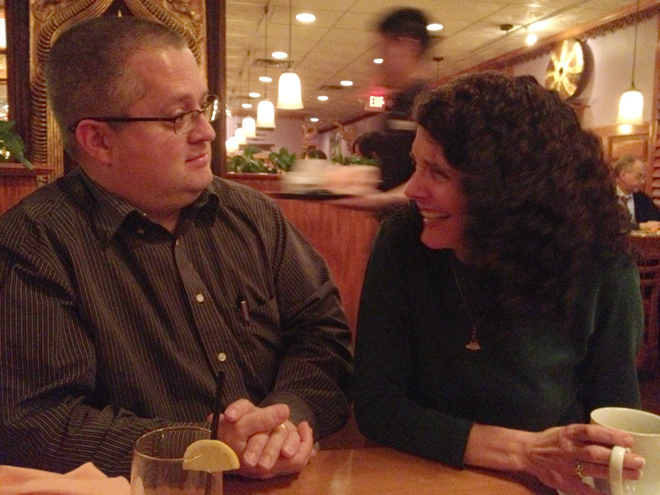
In the meantime, we recently enjoyed a little time together with our “Daves” over dinner in Williamsburg.
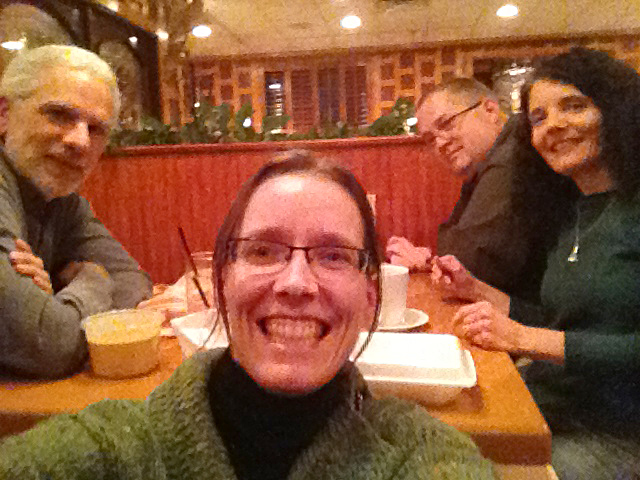
Dave Pape, Shannon and Dave Chance, and Pam Eddy.  (Yes, there are a lot of doctors in the house!)

Dave Pape, Shannon and Dave Chance, and Pam Eddy. (Yes, there are a lot of doctors in the house!)
My Fulbright Mission (a la Ben Franklin)

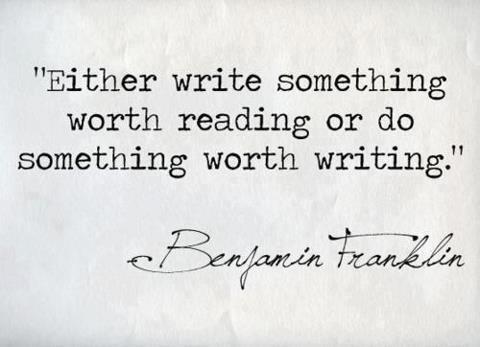
Truth Becons posted Ben Franklin's words to live by.

Truth Becons posted Ben Franklin’s words to live by.  All sorts of doing and writing for me….

Awesome Gift

I neglected to mention that one of the best gifts I received came by email on December 24.  Our editors extended our deadline from January 7 to January 21!  Yippie!

Amazing Teachers

Shannon Chance, Ron Daniel, and Kim McGrath in Dublin last week.

Shannon Chance, Ron Daniel, and Kim McGrath in Dublin last week.

Amazing teachers transform lives. That’s what they did for me at least!

Last week, one of the very best teachers I’ve had in my life–Ron Daniel–visited Dublin with his colleagues from Webster University. Ron is the Director of Academics at Webster’s Geneva campus.

While they were here, we got together twice to reminisce and talk about higher ed.

I didn’t post about this topic right away, because some things are difficult to express into words. This morning, I’m allowing myself to just cover the tip of the iceberg of what I’d like to say….

The best teachers I’ve experienced in life actually just put a good framework in place in for me. Then, they stepped back and let me explore the issues.

The best learning experiences I’ve had in life have happened under the astute guidance of Ron as well as:

  • Wilma Brown (my fifth grade teacher)
  • Liz Lindon and Joyce Martin (my 4-H leaders)
  • Dave Dugas, Eugene Egger, and Bob Dyck (some easy going Virginia Tech professors)
  • Bridget Arvold (my high school geometry teacher)
  • the faculty of higher ed at the College of William and Mary

I am particularly indebted to Ron Daniel (my second year architecture professor and the person who gave me my first architecture teaching job) and Wilma Brown (my fifth grade teacher who gave me my first official teaching assistant role). These two used a Montessori / Bauhaus sort of approach.

They put relevant materials in front of me and let me do my thing.

Wind me up and I’m like the Energizer bunny!

Thankfully, Bridget Arvold was there at precisely the right moment in time as well. In ninth grade, I was struggling through geometry because I had initially been assigned a very poor teacher. Thankfully, I met Bridget and had the sense to change instructors. She made geometry seem fun and logical. Without her, I don’t think I’d have has a solid foundation for becoming an architect.

Teachers like these make learning fun. They gave me the challenge and sense of support needed for me to start learning to explore this big, wonderful world. I thank my lucky stars to have known them.

Christmas Fotos

2013 calendar cover

Dave and I put the final touches on our secret Santa project today.

Dave’s weekend was much more exciting than mine… I’ve been chained to my laptop writing all weekend. He went to two fun-looking holiday parties and so did Lucy and Matt.

.

.

.

.

.

.

.

Sushi Christmas

Jack Nealons Pub. (Photo from Jack Nealons website.)

Jack Nealons Pub. (Photo from Jack Nealons website.)

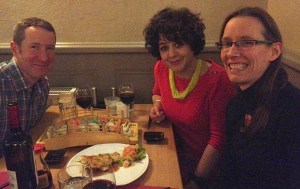
Christmas dinner with my colleagues Gavin and Sima was a blast!  We met at Jack Nealon’s pub and then went for sushi. We talked about all sorts of things–including our research projects. Today, we’re putting forth our work plans for the spring.

Gavin Duffy, Sima Rouholamin, and Shannon Chance.

Gavin Duffy, Sima Rouholamin, and Shannon Chance.

I had such an exciting day yesterday, which I’ll have to wait to tell you about until after get some research accomplished today….


Improving Engineering Students’ Design Skills

ARROW logoThe article Improving Engineering Students’ Design Skills in a Project-Based Learning Course by Addressing Epistemological Issues that Gavin, Brian, and I wrote for the SEFI conference in Greece is available for download on DIT’s ARROW database.  Check it out!