AIARG!

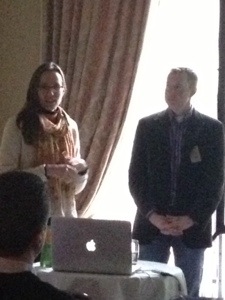
Gavin and I successfully presented our work today in Limerick at the 2nd annual conference of the All Ireland Architectural Research Group (AIARG). Got up at five to catch the train so we could finalize the presentation.

David Leatherborrow delivered the keynote address on Louis Kahn. It’s a lecture that I missed when he gave it at the National Conference on the Beginning Design Student in 2010. (I had to catch my flight). Some opportunities do come again and get better over time. That was part of his message: beginning again, over and over, approaching the issues slowly and being open to emerging opportunities made Kahn’s design work great.

20130125-204919.jpg

20130125-205209.jpg

Why Winter is Comfy in Dublin

The red dots on this map show the locations of Portsmouth (left) and Dublin (right). (Base map was downloaded from a Regnum Christi blog post.)http://live.regnumchristi.org/2011/07/where-are-you-from/

The red dots on this map show the locations of Portsmouth (left) and Dublin (right). (Base map was downloaded from a Regnum Christi blog post.)

Winter weather in Dublin is often much like that in the costal region of Virginia where my house is.  The nearby water helps mitigate temperature extremes in each location.  (That’s partly because water heats up during the day and releases that energy slowly at night — keeping costal areas warmer than inland areas during winter.)

Like Portsmouth, Dublin rarely sees snow.  When a dusting comes, it quickly dissolves.

Both places near the brink of calamity with the slightest hint of ice or snow. The cities and drivers simply aren’t prepared to deal with it.

What’s interesting about all this is that Dublin is so very far north. It’s much farther north than, say, Fargo, North Dakota, where my friends have reported recent wind chills of minus 50 degrees Fahrenheit!?!! Yet it never gets that cold here!

In summer, however, Dublin doesn’t get nearly as warm as Portsmouth.

In 2003 Dave and I were in Ireland for the extended “heat wave” where temperatures reached 75 degrees Fahrenheit for at least two weeks.

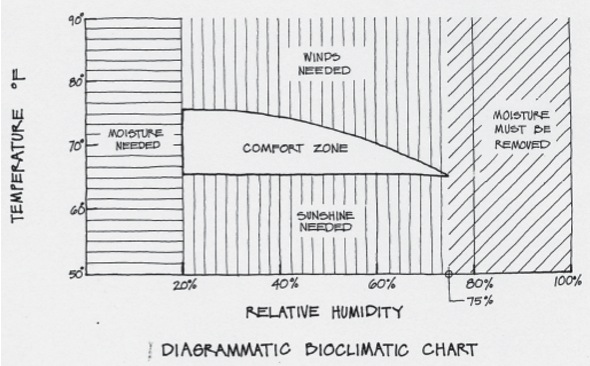
This chart shows the blend of temperature and humidity that most people in the States find comfortable. (Image from Shiller, M. (2004). Mechanical and electrical systems. Chicago: Dearborn Financial Publishing.)

This chart shows the blend of temperature and humidity that most people in the States find comfortable. (Image from Shiller, M. (2004). Mechanical and electrical systems. Chicago: Dearborn Financial Publishing.)

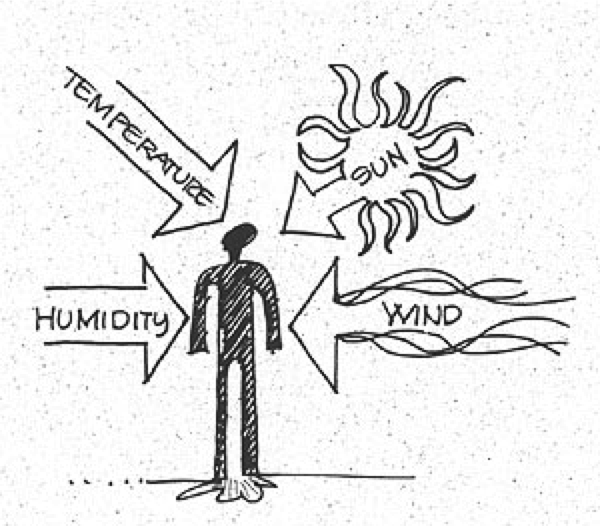
These factors affect human thermal comfort. (Image from the book Shiller, M. (2004). Mechanical and electrical systems. Chicago: Dearborn Financial Publishing.)

These factors affect human thermal comfort. (Image from the book Shiller, M. (2004). Mechanical and electrical systems. Chicago: Dearborn Financial Publishing.)

The humidity is terrible at home in the summer.  But here, the level of humidity is always quite comfortable.  The air doesn’t tend to hold a lot of water.  When it reaches the point of saturation that would be uncomfortable to most people, it drops the water in the form of rain.  So, Dublin gets some rain most days, but the shower doesn’t usually last long.  I don’t carry an umbrella because a lightweight coat and hat do a fine job keeping me dry.

Based on the chart above (that I use in the Architectural Ecology classes I teach at Hampton University), the humidity level in Dublin must stay between 20-75%.  Mother Nature must naturally remove the water as rain when humidity reaches a point over 75% here.  How generous of her!

Overall, Dublin enjoys a pretty good balance of the factors show in the drawing to the right (humidity, temperature, sun, and wind).

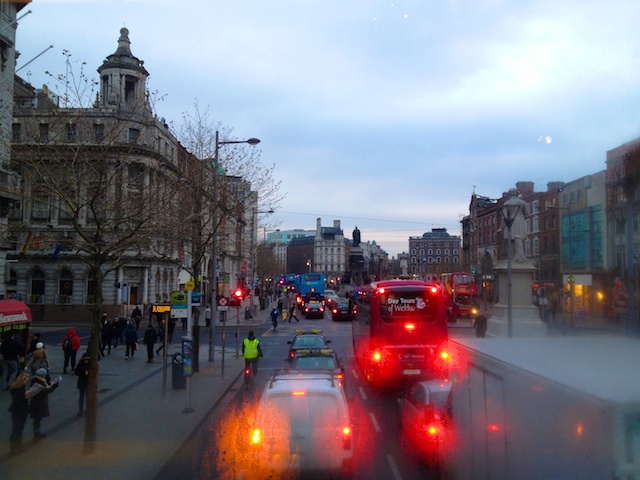
The weather was chilly this morning as I boarded the bus at O'Connell Street to go interview potential Fulbrighters -- but it was much warmer than in much of the USA!

Incidentally, the humidity in this picture is from the warm, wet breath of people riding the bus this chilly morning. The wet air tends to get trapped inside the bus.  And, it seems to be a bit more humid up top on the double deckers, perhaps because heat rises.

A great benefit of all this is that my laundry almost always dries within the day when I hang it inside the apartment — I have a clothes dryer here, but thankfully no need for it!  The air is dry enough here to absorb the water in the clothes as soon as I hang them.  It takes much longer for laundry to dry in my house in Portsmouth, even when the air conditioner is running overtime to such the water form the air.

Here, there’s no need for AC (except, of course, in buildings that were designed without regard for climate… who would overlook that!?!).

Silver Linings of Dublin

I'd never noticed this beautiful weathering panel on the Quay just east of the Four Courts. Lovely, isn't it?

I’d never noticed this beautiful weathering panel on the Quay just east of the Four Courts. Lovely, isn’t it?

I’d snuck in one last trip to see the nephews this past weekend while I was back in the States.  It was such fun, but I caught a bug that kept me in bed all day Monday.  That prevented me from wrapping up my writing in a timely fashion and packing for my return to Dublin.  I had to lean on my colleagues for help and then throw my bags together in the wee hours before my flight.

The resulting overweight bag set me back $200.  And, I arrived in Dublin sans Irish credit card, bus pass, et cetera.  I suppose those documents are at home in some very safe location.  Dave has been in bed with the bug today and hasn’t yet located them.  I spent the day pulling myself back together.

The sliver lining in this cloud is that a new bankcard is on the way.  And on my walk to withdrawal cash I discovered wonderful new delights of Dublin.

Counting Time

Amanda and Jonathan at Cobblestone. (Copyright Dave Chance Photography, 2012.)

Amanda and Jonathan at Cobblestone, from an earlier blog post. (Copyright Dave Chance Photography, 2012.)

I’m sitting here counting time, waiting for my co-authors to send updates and Dave to finish editing some pictures so we can head off to see the nephews one last time before I fly out.

Meanwhile Jonathan and (Fulbright student) Amanda are visiting Dublin, and getting my apartment broken back in for living. Jonathan has just posted on Facebook the praises of the IKEA Poang chair (that I bought using Adverts.ie). I highly recommend buying it with the matching footstool.

Amanda and Jonathan are heading off to play at the Cobblestone pub tonight… I’d love to be there to hear them play!  I’m living vicariously through the photos Dave took last time they played there.

Yoga at the Freemason Y

I love yoga, but I don’t often post photos of it on my blog. After all, it’s simply not kosher to wave an iPhone in the air during class.

I’d intended to practice at my home Y for the past two weeks, but a cold got in the way. Having recovered, I finally made my way to the YMCA in Norfolk’s Freemason district last Saturday. Here are some photos from that adventure.

Expedition into a Chance-y Dining Room

Glen, (Jamie), Mark, Marshall, Dave (and Shannon) gathered around the table for dessert.

Glen, (Jamie), Mark, Marshall, Dave (and Shannon) gathered around the table for dessert.

With the New Year, Dave and I rediscovered our dining room!

As architects, we’re constantly renovating our home. That means it’s usually in no shape to show. And as collector/artists, we tend to fill our space with papers, objects, frames, art and construction supplies, and other materials waiting to be incorporated into some design or other. To be more specific, the dining room in our house has served as Dave’s photographic archive for years. It’s been chock full of framed prints, storage shelves, packing materials, and the like.

Uncovering the room was a challenge and a thrill.

When Dave transferred his photographic archives from our dining room to his downtown studio we knew we had to celebrate.

Two 2012 accomplishments aided our celebration: (1) last fall, Dave installed enough new porch flooring for guests to access the front door, and (2) in July, I had our dining room table re-built (to overcome structural damage that resulted from the tripod-leg design combined with old age).

So although we hadn’t hosted a dinner party in around five years, we decided to give it a go.

The cats were thrilled — they love to meet people and entertain!

We planned a fairly simple meal and invited over some friends who’ve hosted us for dinner more times that I can count: Marshall & Glen McClure and Jamie & Mark Lewis. Together (we six people and four cats), made an expedition into the unknown space.  I’m happy to report that we had a blast.  Everything turned out well and we look forward to more expeditions into the room next fall….

Blog Tips 4: Publicizing your Fulbright Blog

We're not in Kansas anymore, Toto! (Image posted onFlickr by James Clark -- http://www.flickr.com/search/?w=all&q=james+clark&m=text)

We’re not in Kansas anymore, Toto! Let’s tell our story…. (Image posted on Flickr by James Clark.)

This is the final installment of a four-part series on blogging. The full set includes:

  1. Why Blog about your Fulbright Experiences?
  2. Choosing and Adapting to your Blog Platform
  3. Finding your Blogging Niche
  4. Publicizing your Fulbright Blog

Fulbright’s sponsors encourage the students and scholars who receive Fulbright grants to blog about their experiences. They want to publicize the Fulbright program, the work we (their Fulbrights) are doing, and the cultural nuances we are discovering. They want us to share who we are and what we learn. Why not generate as much good publicity as we can?

If you’ve gotten your Fulbright blog up and running, you are ready to publicize your work. (If, on the other hand, you haven’t gotten started blogging because you’re still feeling overwhelmed by technical issues, you may want to check out Daniel Piechnick’s Website Setup Guide 2013: The Dummies’ Guide to Setting Up a Website.)

Based on past blog tips I’ve posted, you may have determined what level of privacy you desire. This matters because everyone in the world will be able to see what you post on a public blog site.

You may have shied away from being very open or very public about events in your life, but even if you don’t want to be highly public about everything you do, you will probably want to your friends and family know about your blog. In one fell swoop, you can notify them of the blog’s existence and invite them to receive automatic emails of everything you post. (If you are using WordPress, you can find the tools on your Dashboard — just look for the “users” button and then “invite new.”)

If you’re feeling ambitious, you may want to invite everyone in your contacts list.

Today we've got new technologies. (Image downloaded from Tumblr -- http://www.tumblr.com/tagged/telephone%20game)

Today we’ve got new technologies. (Image downloaded from Tumblr.)

And if you’ve decided to “go for the gold,” and to use your blogging efforts to full affect, you can generate a wide audience. The following tips can help:

  • Register with Google, Bing, and other search engines so you show up when people use them to search the web (WikiHow can help, as can the WordPress “Publicize” page).
  • Sign up to receive automatic mailings of your own postings (in other words, invite yourself to be a “user” so that the system will automatically email you a copy of each post). This is a good way to keep records for your files. Doing so can help when you go to compile formal Fulbright grant reports.
  • Once you receive an email about a post that mentions a person, organization, or business, forward a copy of it to those people. Doing so helps people know they’re appreciated and it increases interest in your site.
  • Forward a copy to other people you think would be interested.
  • Set your blog platform to automatically load notification of each blog post to Facebook, Linked In, Twitter, and the like. (I’ve chosen to upload to Facebook manually, because I want the option to select which photo Facebook posts.)
And they can help us spread the word. (Image downloaded from Toastmasters -- http://www.toastmasters.org/ToastmastersMagazine/ToastmasterArchive/2008/September2008/ThePowerofPublicity.aspx)

And they can help us spread the word. (Image downloaded from Toastmasters.)

You can load notifications to your personal page in Facebook, or you can set up a Fan page for your blog. You’ll need the Fan page if you want to enable visitors (to a WordPress blog) to click “like.” Keep in mind that only people who have “liked” your page will see posts you stream to that Facebook page. As a result, I chose to stream posts to my own personal Facebook page which has far more “friends.” (And, thus, I’ve not yet made good use of my Fan page.)

Jonathan Kennedy (the spouse of a Fulbright) clued me into the value of using Facebook “likes” to tag businesses and organizations you want to become more involved with in your new Fulbright home. I subsequently realized that I could increase interest in my blog by posting links on the Facebook pages of those businesses and organizations when I mention them in a post.

WIth today's Internet you are always "On Air." (Image from National Publicist -- http://www.nationalpublicist.com)

WIth today’s Internet you are always “On Air.” (Image from National Publicist.)

There are many good sources of help on line. For instance, WikiHow has a post about using social media to create interest in your blog. It recommends (and explains how) to:

  1. Interact with other blogs.
  2. Cross blog! (As in, posts links to your past blogs in your new blogs, which I frequently do.)
  3. Submit your posts and links to your blog on tools like forums, discovery engines, peer-sourced news feeds and social networking sites.
  4. Write great headlines and subject lines.
  5. Step back and analyze your blog as objectively as possible.
  6. Stay consistent. (As in, post frequently.)

Regarding search engine optimization, WikiHow discusses:

  1. Research “Search Engine Optimization” which is also known as SEO.
  2. Consider manipulating your content to include more key words.
  3. Link to popular blogs you like and websites relevant to your topic.

In signing out, I’ll mention one last, critical point about Fulbright blogging:

It goes without saying that in everything you do as a Fulbright, and particularly on the on the Internet, you’re a cultural envoy. Your job as a Fulbright is to facilitate and grow cultural understanding and respect. That means, of course, that you need to consider what you post from multiple perspectives and stay positive in what you post about your hosts.

Flimerz explains "you can draw viewers by connecting with your audience." (Image form Flimerz -- http://blog.filmerz.com/producing/?target=209&entry=Drawing+Viewers+By+Connecting+With+Your+Audience)

Flimerz explains “you can draw viewers by connecting with your audience.” (Image from Flimerz.)

Anil Dash provides "A Blog About Making Culture." (Image from Anil's blog site -- http://dashes.com/anil/2010/02/the-power-of-the-audience.html)

Anil Dash provides “A Blog About Making Culture.” (Image from Anil’s blog site.)
Starting your Fulbright Scholar Application

Fulbright logo

If you’d like to become a Fulbright Scholar, now is the time to start your application! Don’t put it off another minute….

This year’s competition opens February 1. Applications for the core scholars program are due August 1. Other deadlines are listed on the Fulbright website. This page has information for US and non-US scholars. (Information on Fulbright Student programs is available here.)

Andrew Riess <ariess@iie.org> of the Fulbright Scholar Program emailed the following note today.  He’s offering a Webinar about how to prepare your application. I took part in  one of his Webinars while I was preparing my second application (which met with success).

Dear MyFulbright Community Member,

Please join us for a Webinar on preparing to apply for your Fulbright from 2:00 pm to 3:00 pm (Eastern Standard Time) on Wednesday, January 16.  The competition opens February 1 and now is a good time to think about what is needed to apply.

This Webinar will include a discussion of what is involved in the process of finding an appropriate program and the materials that will be needed for application.

Reserve your Webinar seat now at https://www1.gotomeeting.com/register/427536544.

You’ll want to review the Catalogue of Awards for this year. The Catalogue of Core Scholar Awards may be what you need, although there are also specialized programs for Specialists, Distinguished Chairs, and the like.