Here’s to fairytale endings in Finland: Highlights of SEFI 2025

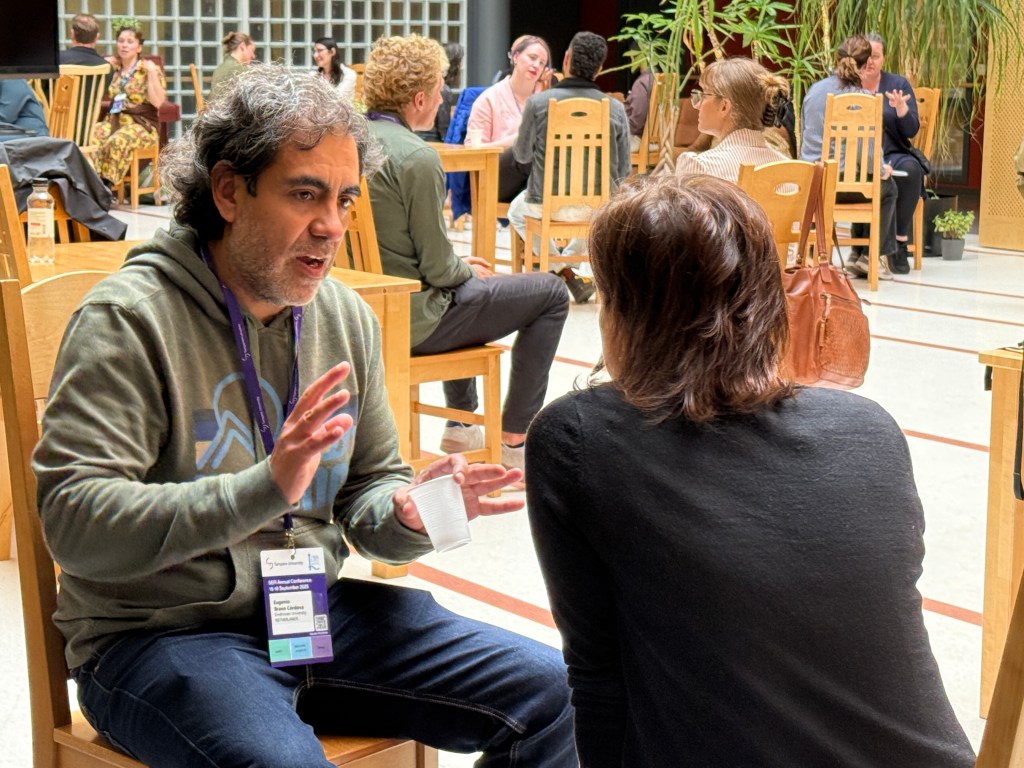
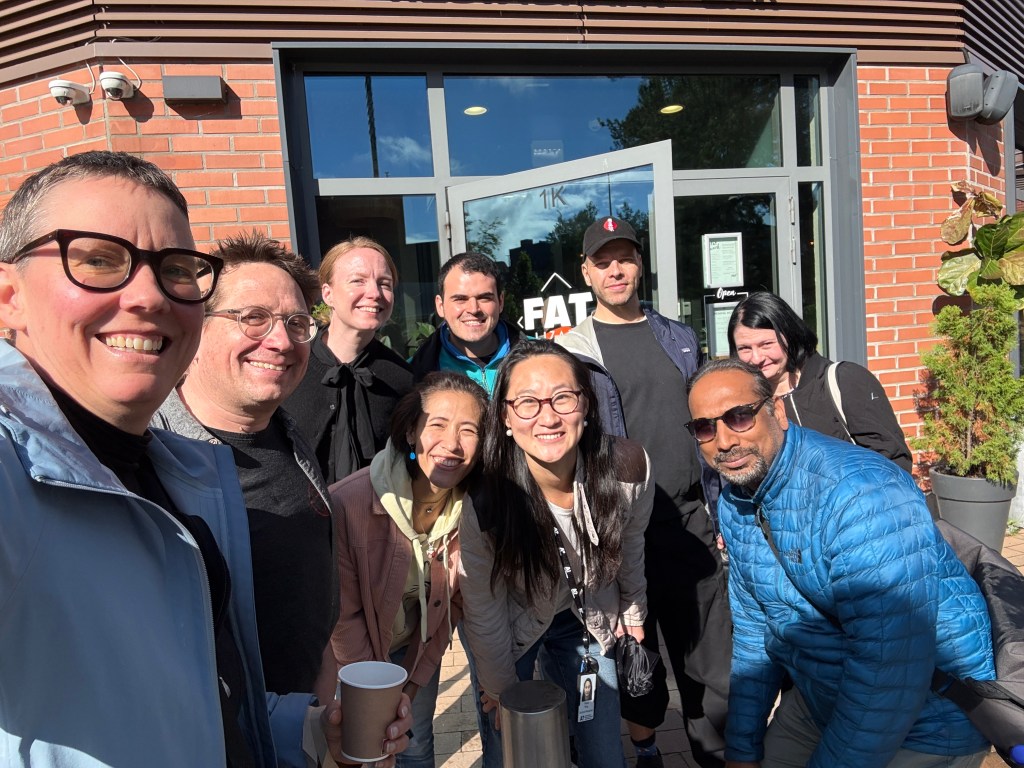
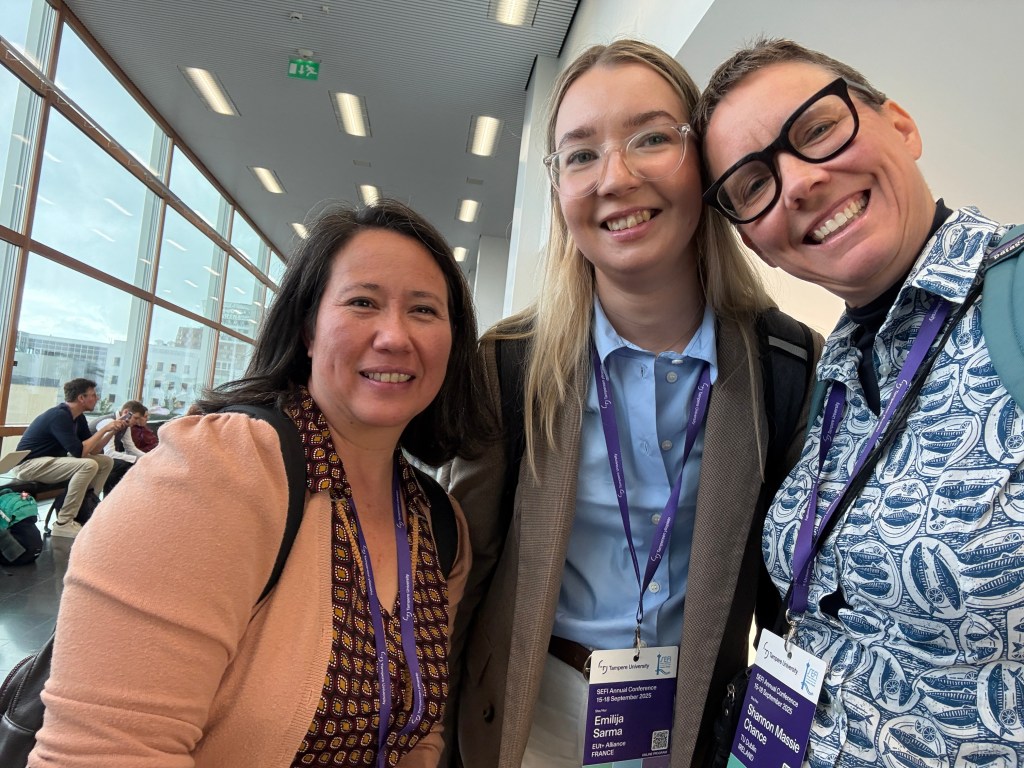
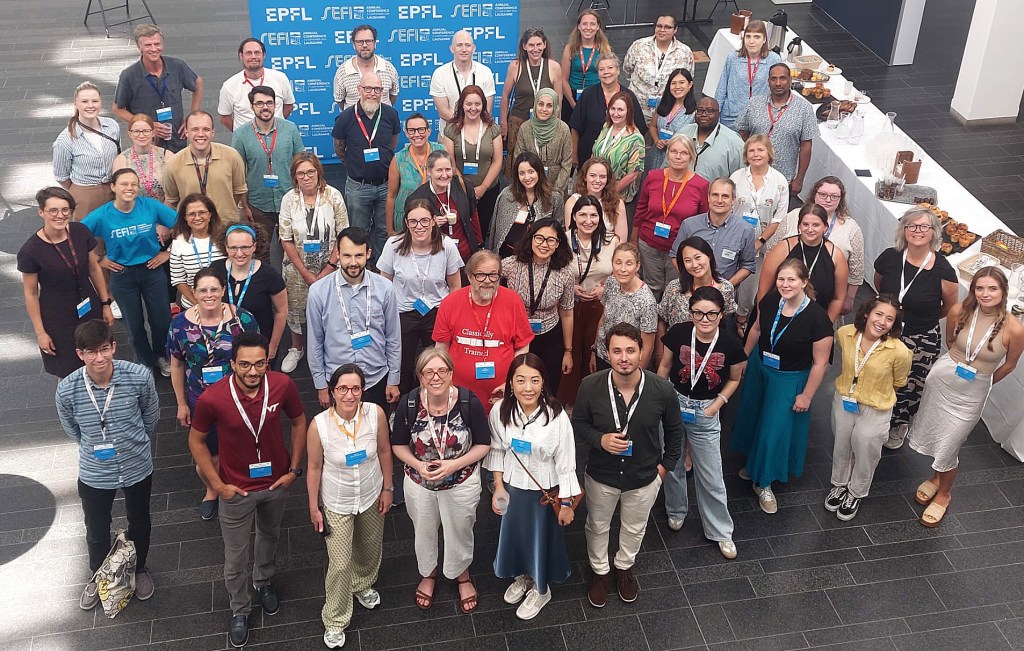
What an inspiring whirlwind week at the European Society for Engineering Education SEFI 2025 Annual Conference! The event was packed with meaningful presentations, deep and reflective conversations, intellectual rigor, and memorable community moments. Attending SEFI always feels like a homecoming to me, and this year’s conference certainly delivered, especially with the monumental achievements of my colleagues and students.

From Handbook to Keynote Stage

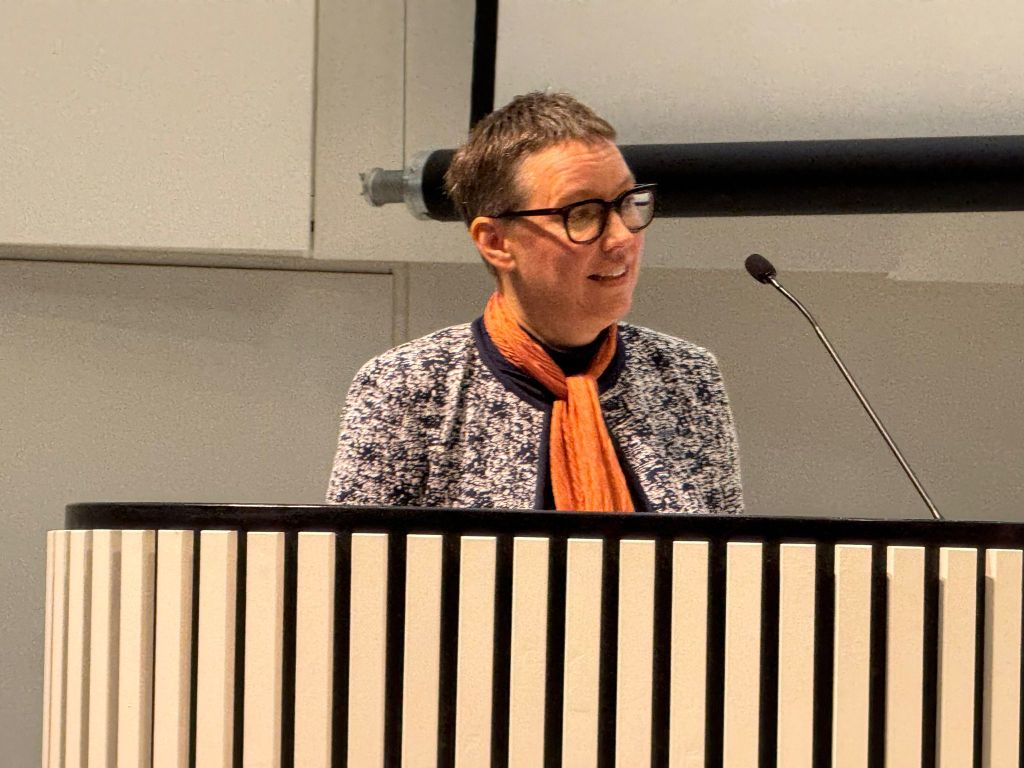
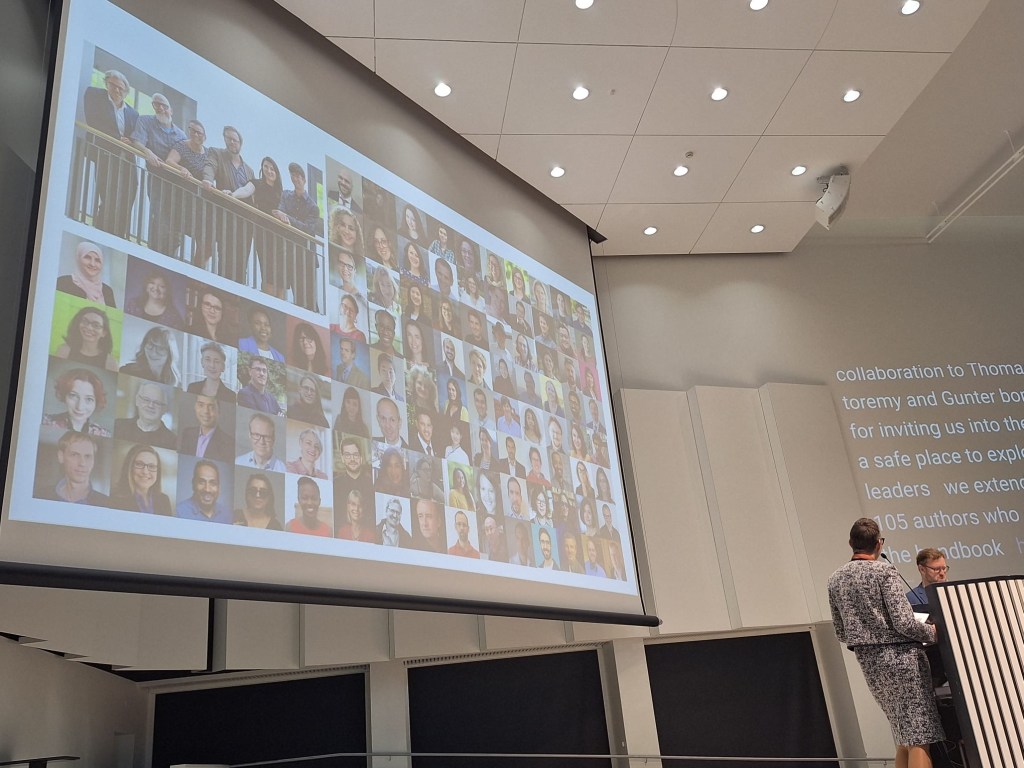
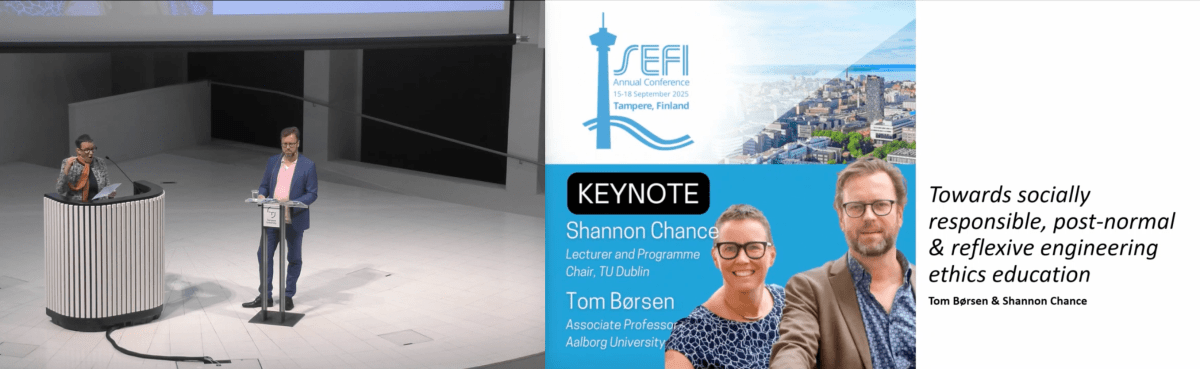
A significant highlight for me was being invited to deliver a keynote address at SEFI alongside Associate Professor Tom Børsen from Aalborg University. The address drew extensively from the Routledge International Handbook of Engineering Ethics Education, which Tom and I co-edited alongside our phenomenal team of co-editors, Diana Adela Martin, Roland Tormey, Thomas Taro Lennerfors, and Gunter Bombaerts. 

Our keynote, titled “Towards socially responsible, post-normal and reflexive engineering ethics education,” (video link here) called for a bold transformation in how engineering ethics is taught. We addressed the urgent need for engineering ethics education (EEE) to move beyond traditional, individual-focused approaches to embrace collective responsibility, reflexivity, and social justice. This is particularly critical in “post-normal times,” characterized by uncertainty, high stakes, and contested values.
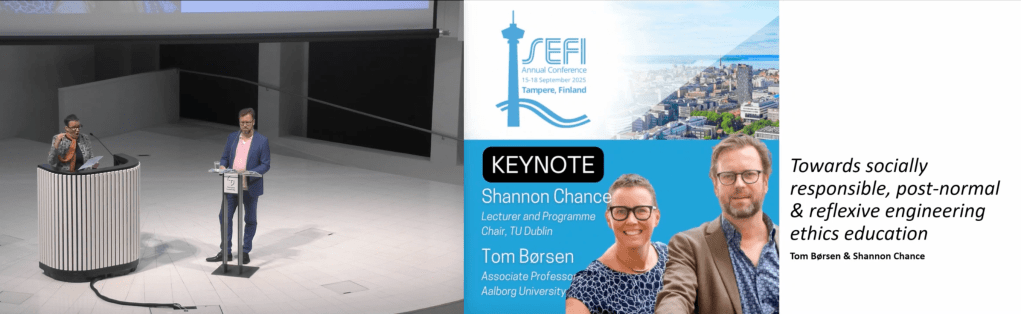
Among other things, Tom and I urged the community to integrate non-Western and AI ethics, foster transdisciplinary collaboration, and empower engineers to challenge power structures and cultivate an ethics of care for people and the planet.

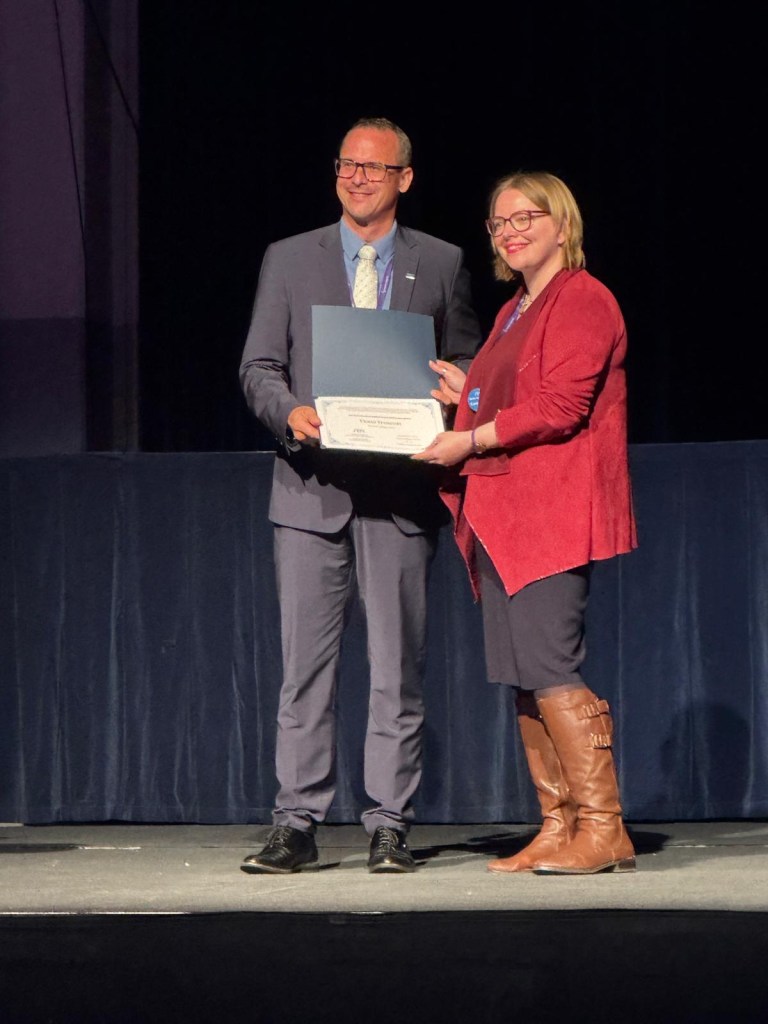
And regarding Tom, I was thrilled to watch him receive a major honor at SEFI: the 2025 Maffiolli Award. Tom has been instrumental in advancing the field of Technological Anthropology, and this award is so very well deserved! Tom won in the individual category, and my colleagues from UCL, led by Fiona Truscott, won in the group category. A very excitig night, all around!

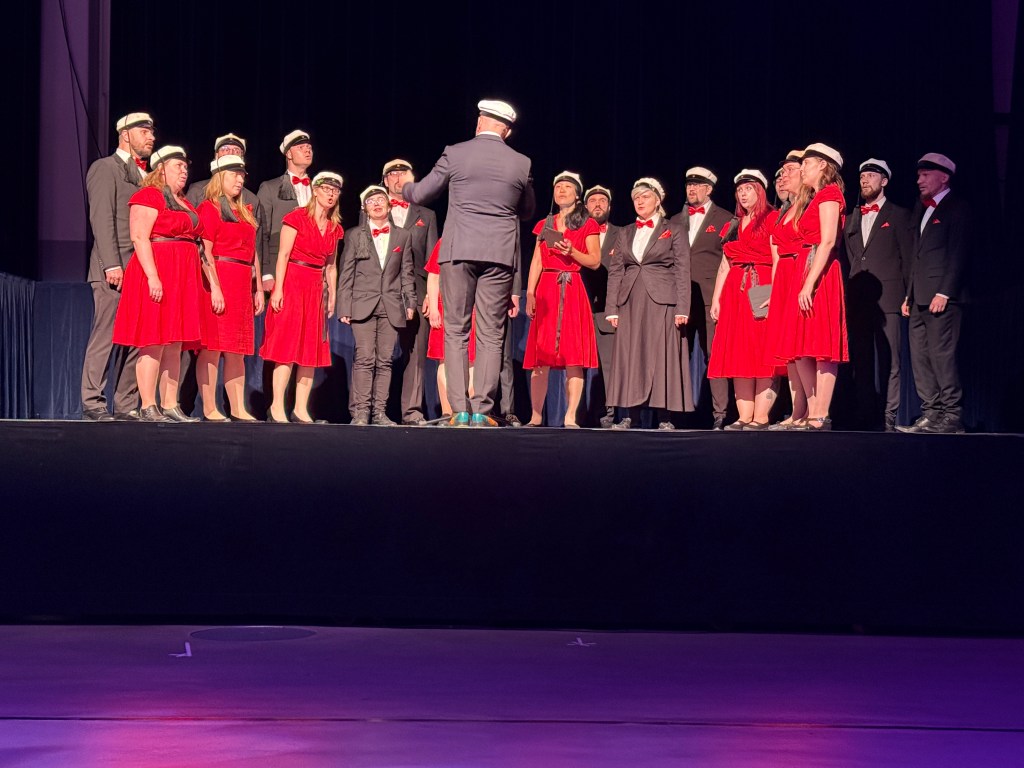
The awards were presented at the conference banquet – the entertainment was superb! Singing Finnish engineers – a whole choir of them – who knew?
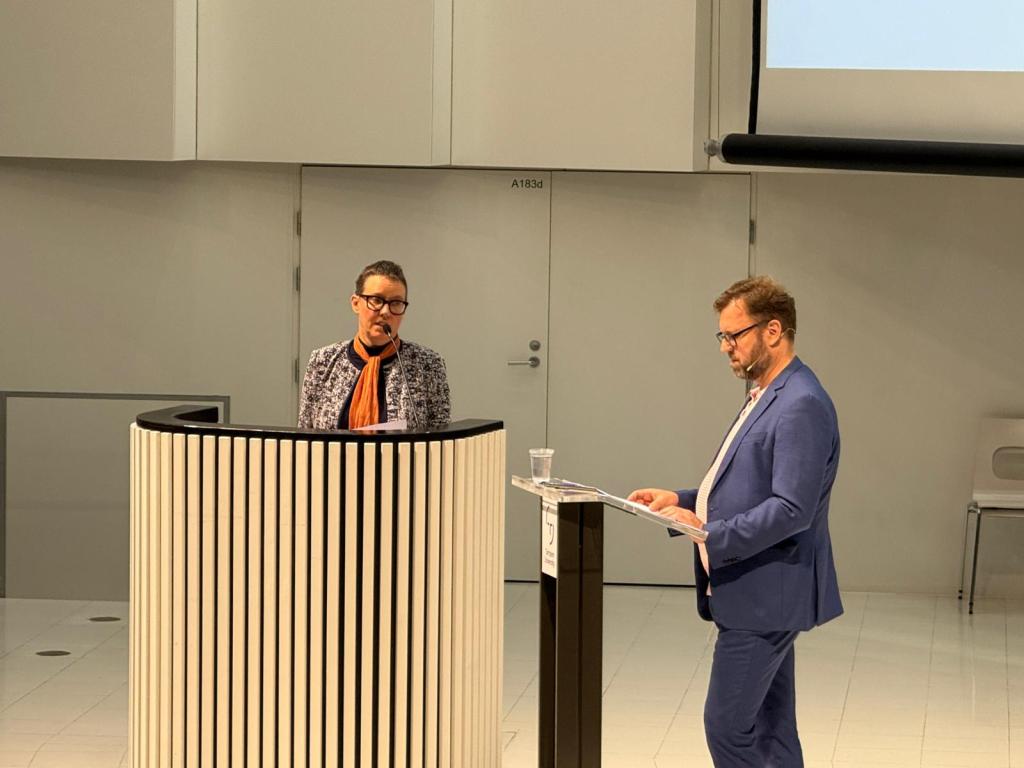
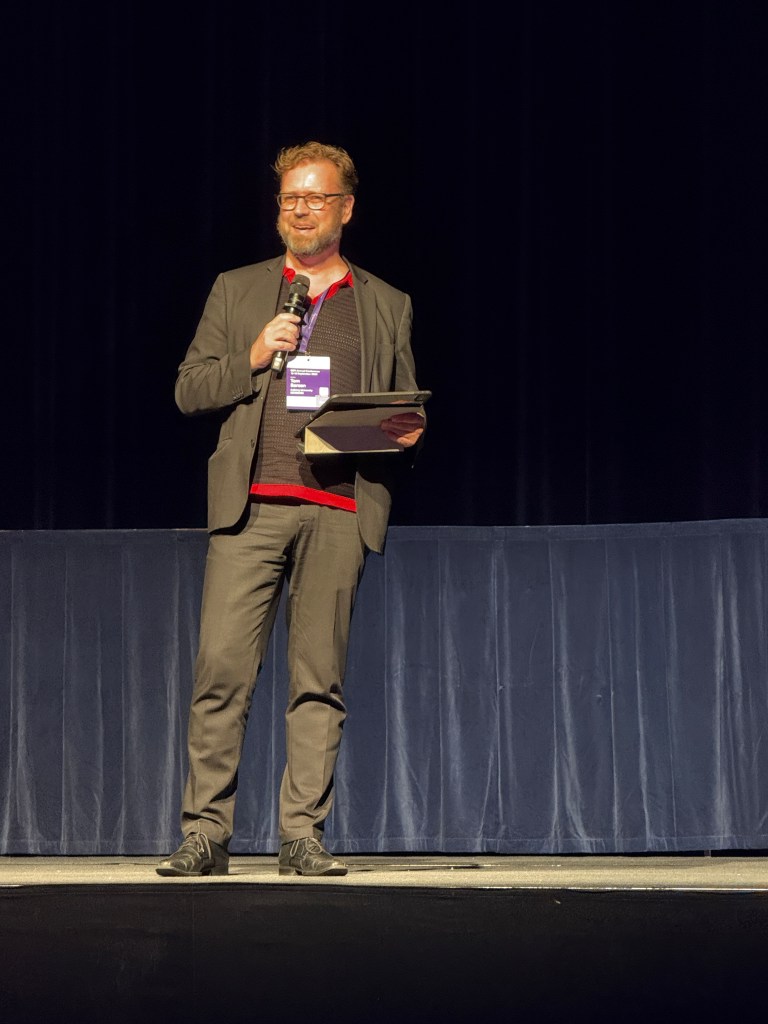
I knew about Tom’s award, as I’d been pulling for this outcome for over a year. Yet, other outcomes of the conference were a complete surprise…

The Power of Collaborative Research: Winner of the Best Research Paper Award!

My PhD student, the incredibly talented and astute sociologist Sandra Cruz Moreno, won the BEST RESEARCH PAPER award for SEFI 2025. I serve as her supervisor and was the co-author of this paper.

The recognition for excellent research was deeply validating, especially since the paper, “EVOLVING GENDER DYNAMICS IN TEAMWORK EXPERIENCES AMONG FEMALE ENGINEERING STUDENTS IN PBL SETTINGS”, was nominated in three separate categories, each with its own panel of judges: Best Student Paper, Best Diversity and Inclusion Paper, and overall Best Research Paper.
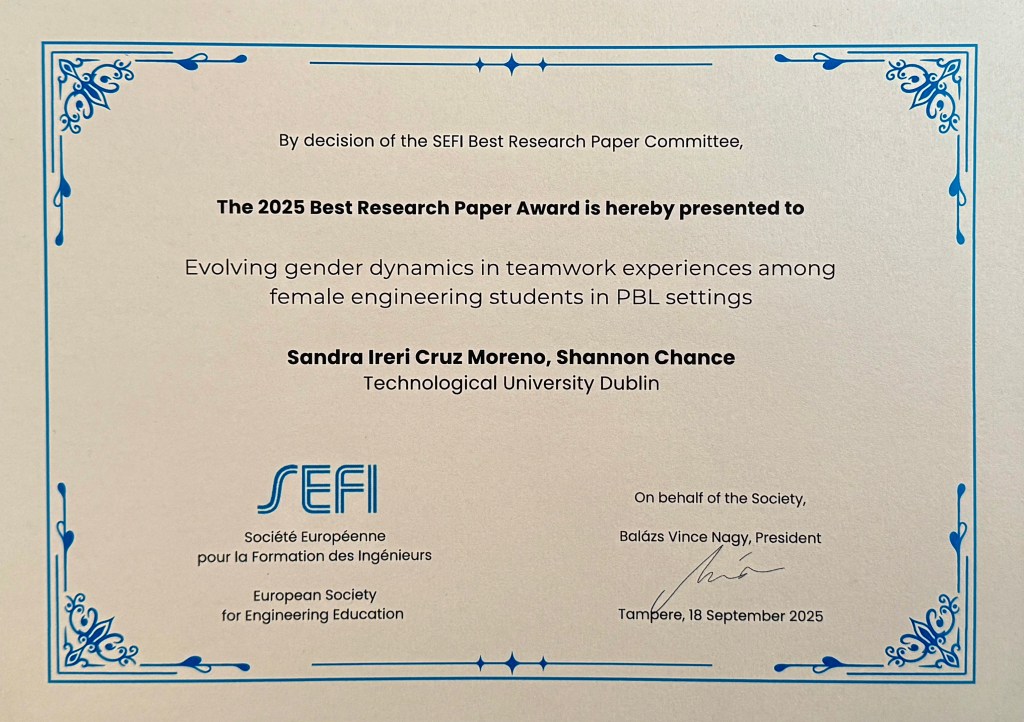
The paper reports one aspect of Sandra’s doctoral research, which has been funded by a First-Time Supervisor grant to me from TU Dublin. The funding allowed us to analyze the extensive interview data I collected since 2015.

Sandra’s study is crucial for understanding inclusivity in engineering education. It employed a longitudinal, qualitative social phenomenological approach combined with an intersectionality framework. Using data from 41 interviews with 22 female engineering students from seven countries at TU Dublin, Sandra explored how diverse students navigate challenges and evolve strategies during project- and problem-based learning (PBL) teamwork across their academic journeys.
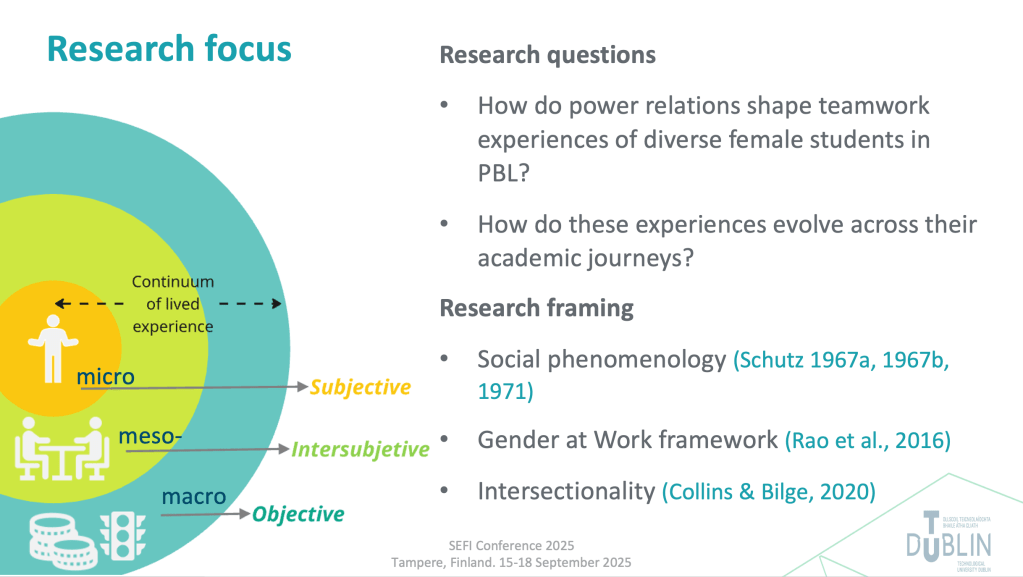
A key finding was that while students’ confidence and participation increased over time, the women persistently faced gendered biases and cultural norms that influenced their perceived roles and credibility in teams. For instance, they reported often being relegated to non-technical tasks like presenting or report writing, while feeling required to constantly prove their competence regarding hands-on skills. This analysis led Sandra to conclude that focusing solely on individual resilience is insufficient; systemic structural interventions are also needed to promote inclusive educational practices and challenge embedded norms.

I was honored to accept the award in Sandra’s absence, celebrating the resounding endorsement of her work. This recognition is truly a cherry on top of our successful 3.5 years of teamwork.

You can download the paper here: https://researchprofiles.tudublin.ie/en/publications/evolving-gender-dynamics-in-teamwork-experiences-among-female-eng and cite it as:

Cruz, S., & Chance, S. (Accepted/In press). EVOLVING GENDER DYNAMICS IN TEAMWORK EXPERIENCES AMONG FEMALE ENGINEERING STUDENTS IN PBL SETTINGS. Paper presented at European Society for Engineering Education (SEFI) Annual Conference 2025, Tampere, Finland.

Nurturing Community and Capacity

SEFI is always about nurturing the community, and I was pleased to contribute in several ways:

• Doctoral Symposium: I co-facilitated the full-day pre-conference Doctoral Symposium to support early-career researchers.
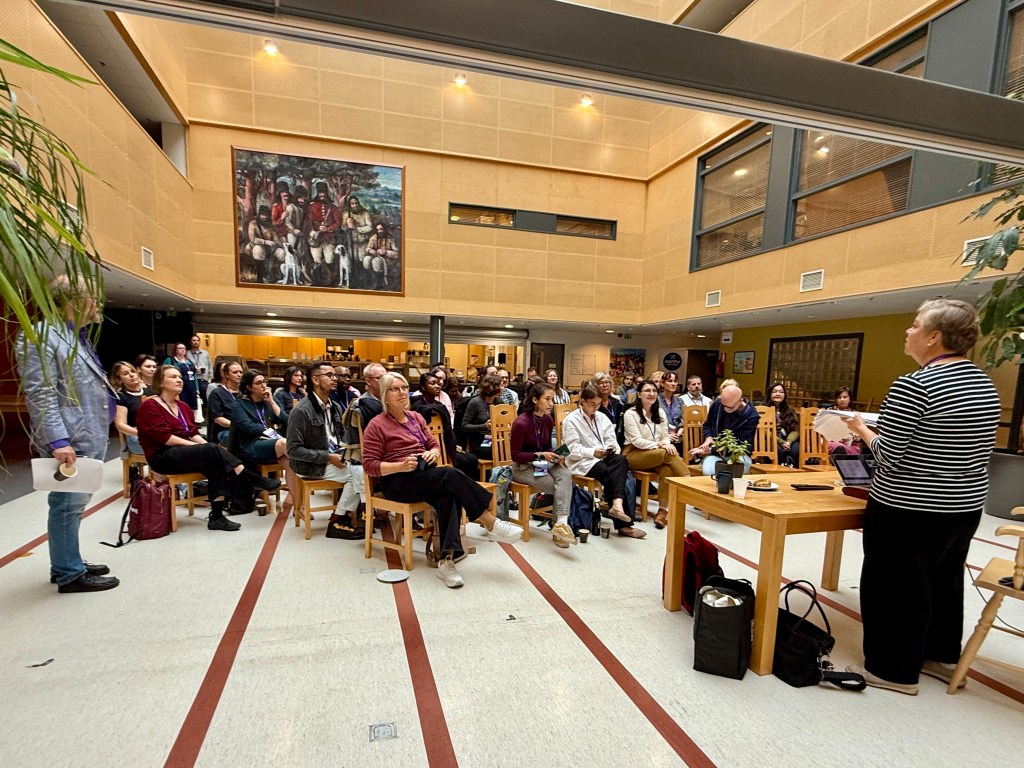
• Workshops: I delivered and co-facilitated multiple workshops, including one on integrating ethics into course delivery, a session on methodological approaches in Engineering Education Research, a workshop on the ethics of care, and a peer-review workshop for journal editors and aspiring reviewers.
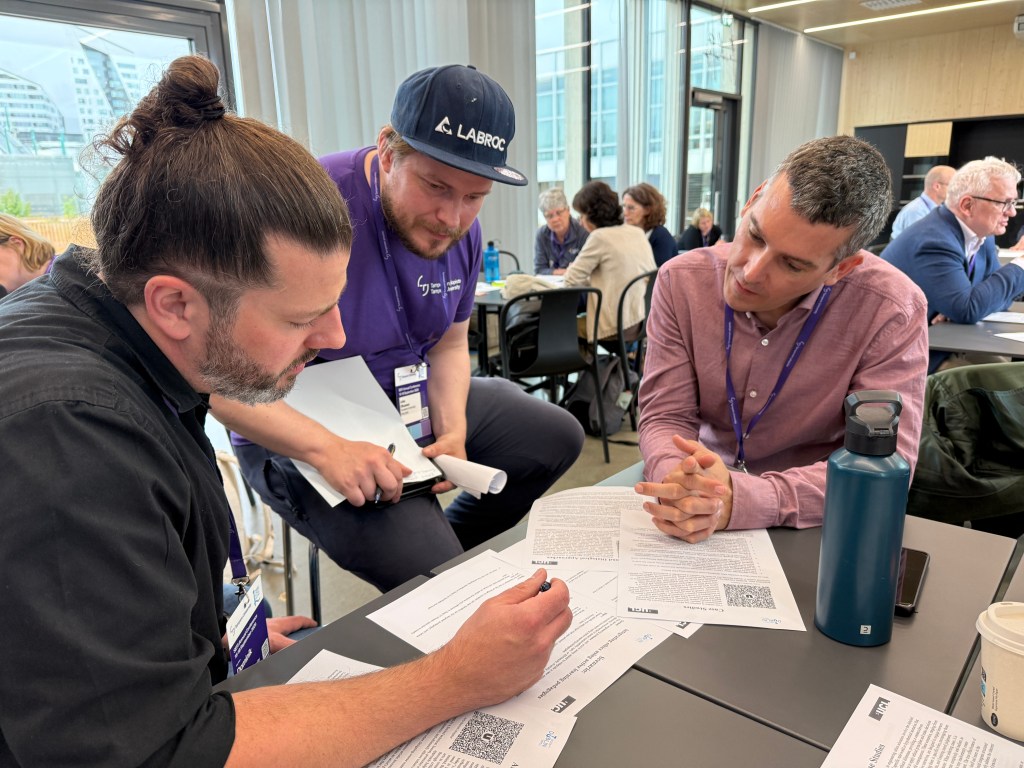
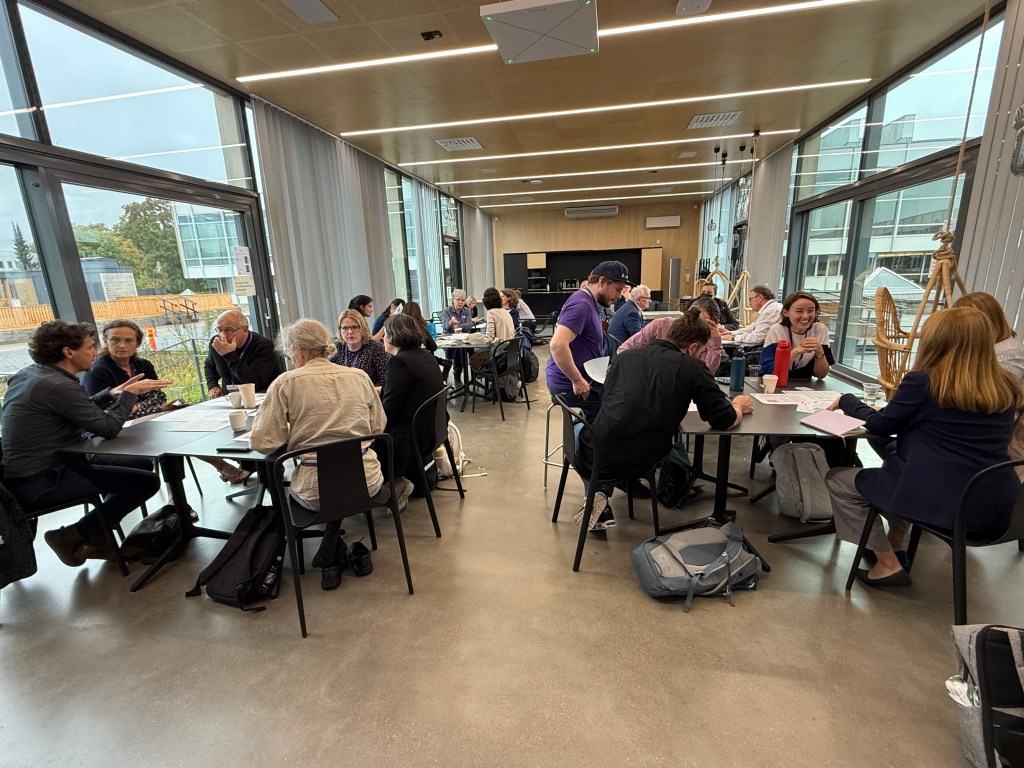
• Papers: I delivered Sandra’s paper while she joined online to address questions following the presentation. I also co-delivered a paper, titled “ACCREDITATION CONSIDERATIONS IN ENGINEERING ETHICS EDUCATION: BRIDGING GLOBAL STANDARDS AND LOCAL PRACTICES” (that you can download here https://researchprofiles.tudublin.ie/en/publications/accreditation-considerations-in-engineering-ethics-education-brid). You’d cite it as:

O’Gorman, L., Gwynne-Evan, A., Ridgeway, L., Rebow, M., & Chance, S. (Accepted/In press). ACCREDITATION CONSIDERATIONS IN ENGINEERING ETHICS EDUCATION: BRIDGING GLOBAL STANDARDS AND LOCAL PRACTICES. Paper presented at European Society for Engineering Education (SEFI) Annual Conference 2025, Tampere, Finland.

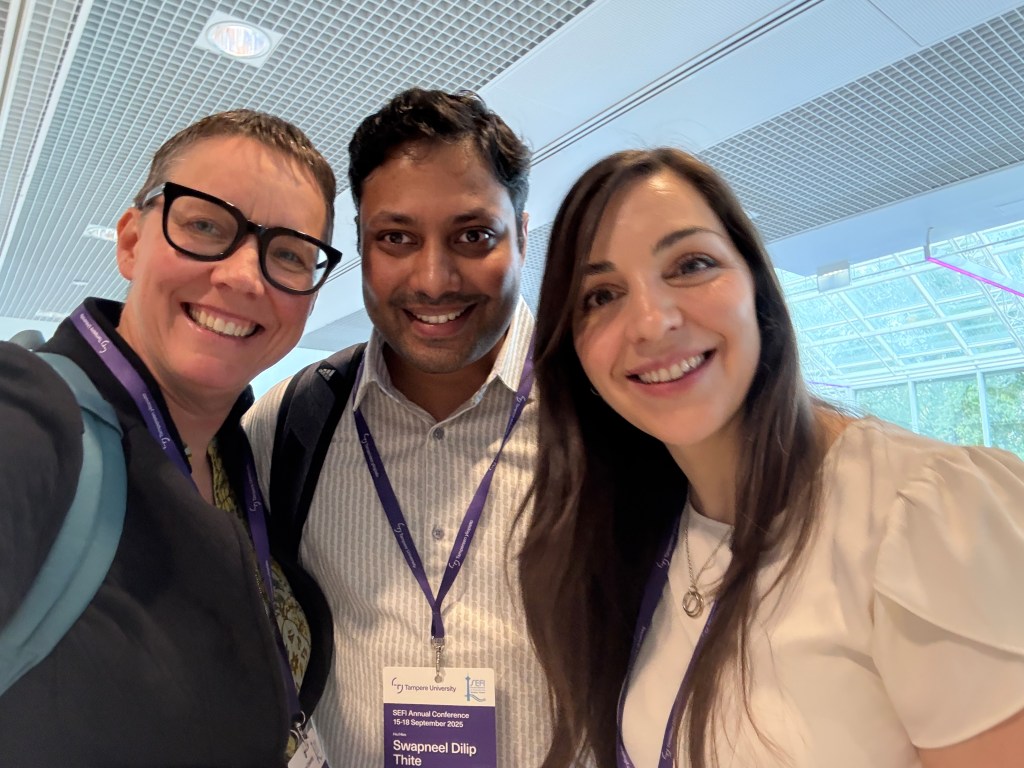
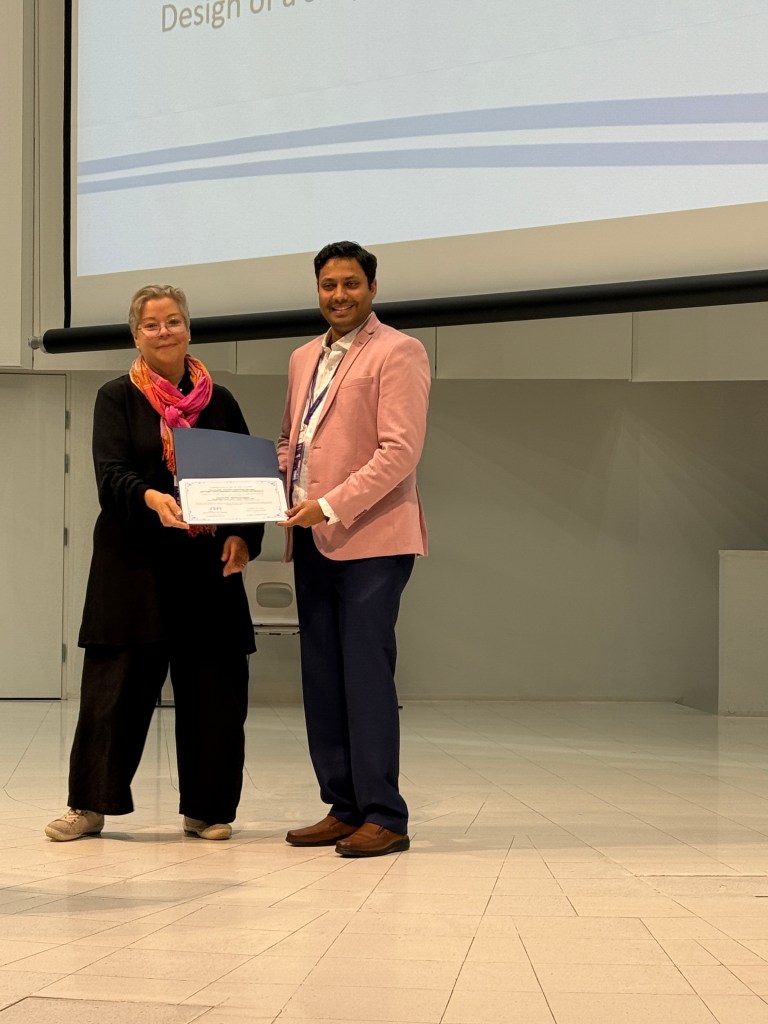
• Supporting Swapneel Thite: I had the immense pleasure of facilitating the attendance of Dr Swapneel Thite, a recent PhD earner. Swapneel won the prestigious Best Paper Award for Volume 49 (2024) of SEFI’s journal, the European Journal of Engineering Education (EJEE), for which I serve as Deputy Editor. He and his PhD supervisors published the “Design of a simple rubric to peer-evaluate the teamwork skills of engineering students” with us. Since I had already paid my registration fee, I was able to offer Swapneel the free registration given to me as a keynote speaker, helping him travel to SEFI to receive his award and meet the community. His paper, recognized for its rigor and practical utility (an easy-to-use instrument for peer assessment of teamwork), is well worth reading!
Post-Conference Finnish Discoveries

The conference officially wrapped up on Thursday, but the adventures continued. I attended the SEFI Board of Directors meeting, worked with colleagues on planning future SEFI events, and then headed to Helsinki.

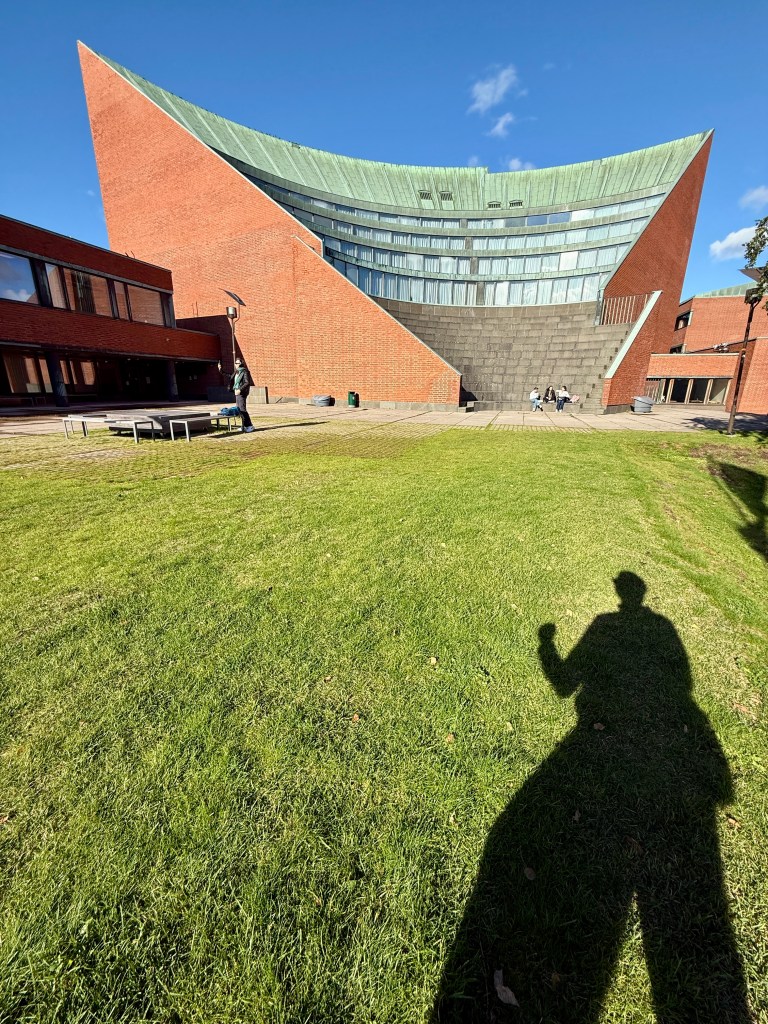
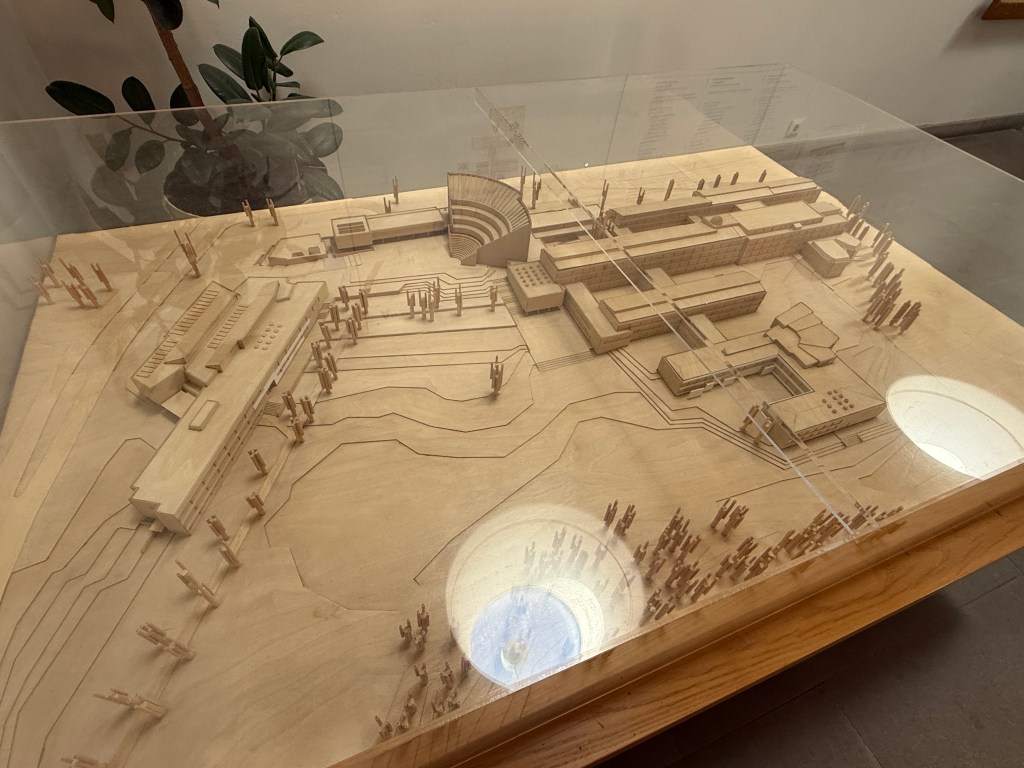
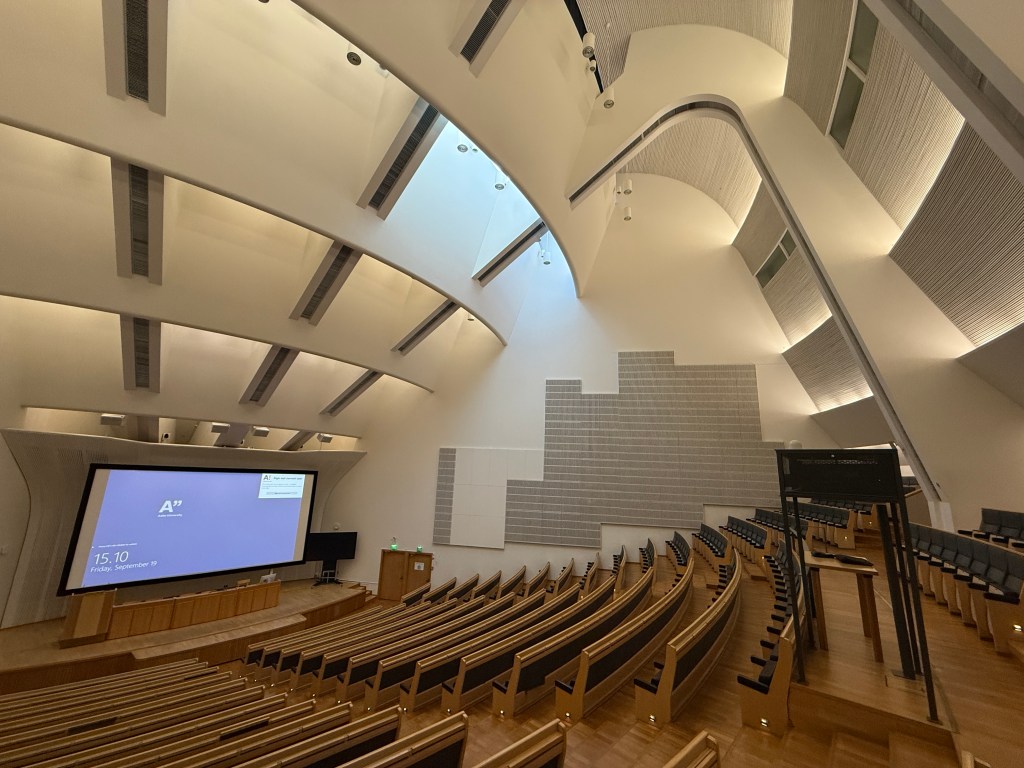
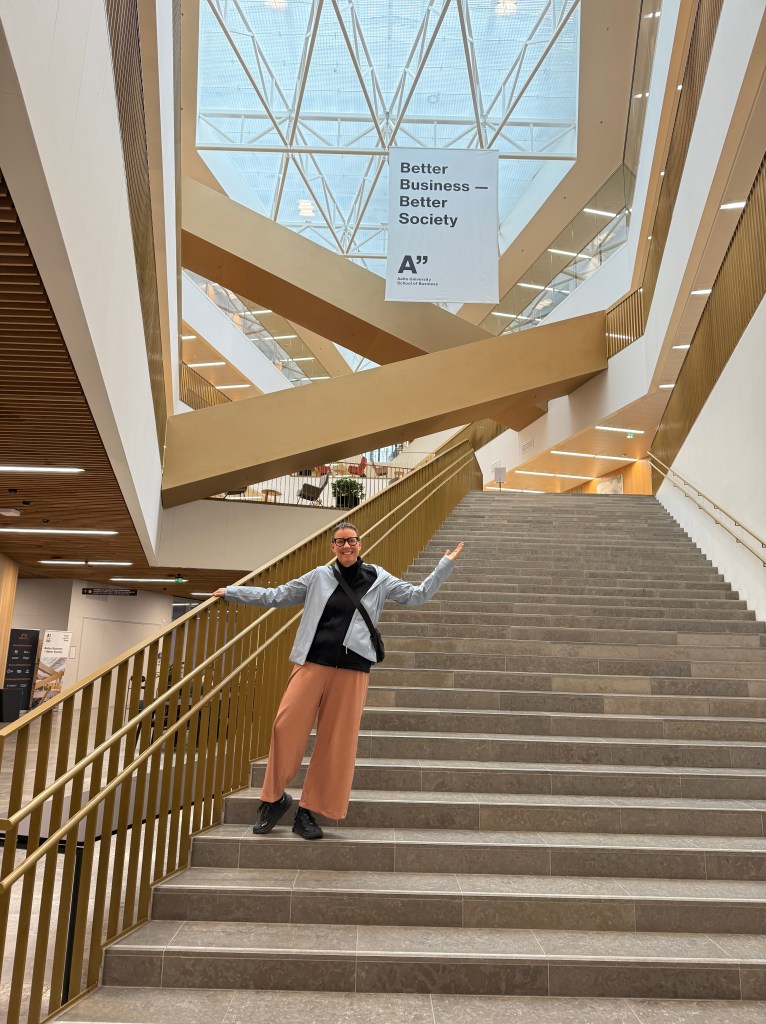
I spent Friday exploring Aalto University and meeting colleagues there. Dr Xiaoqi Feng provided a personal tour and connected me with her colleagues—a bittersweet moment as she prepares for her new job at TU Delft.
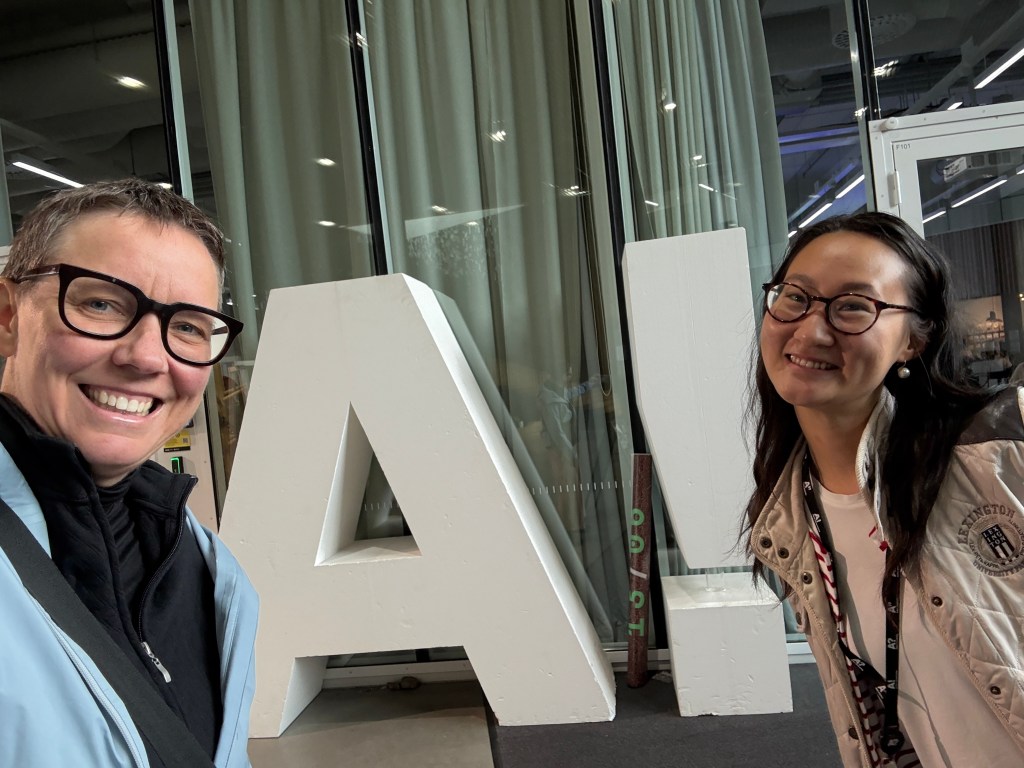
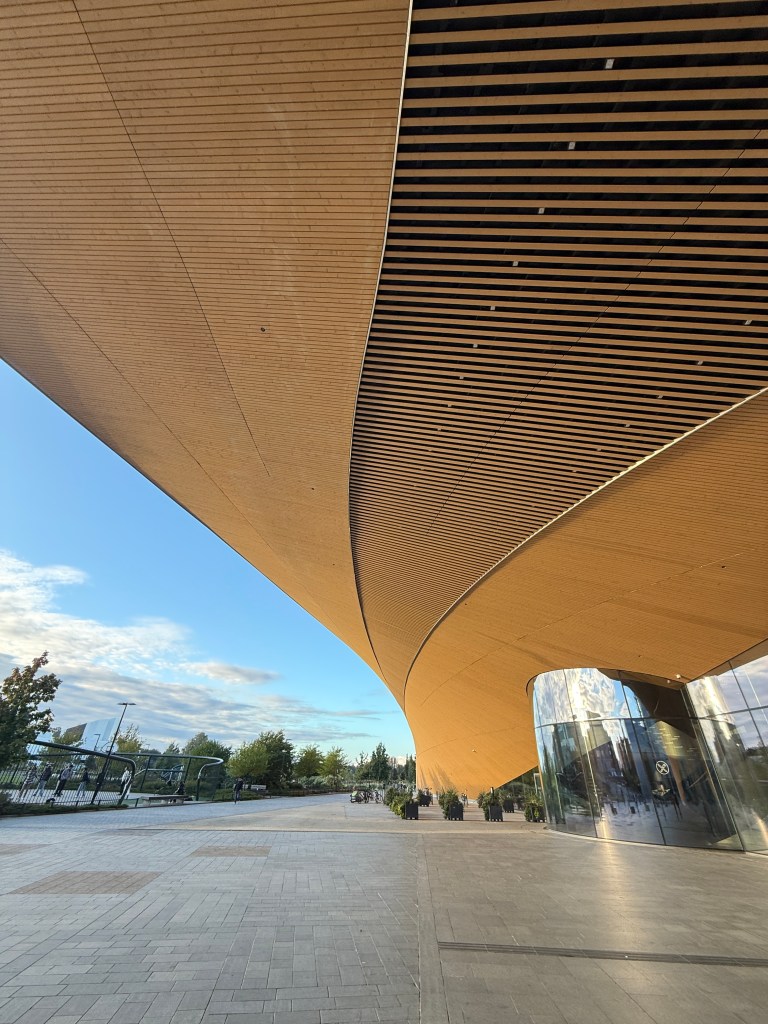
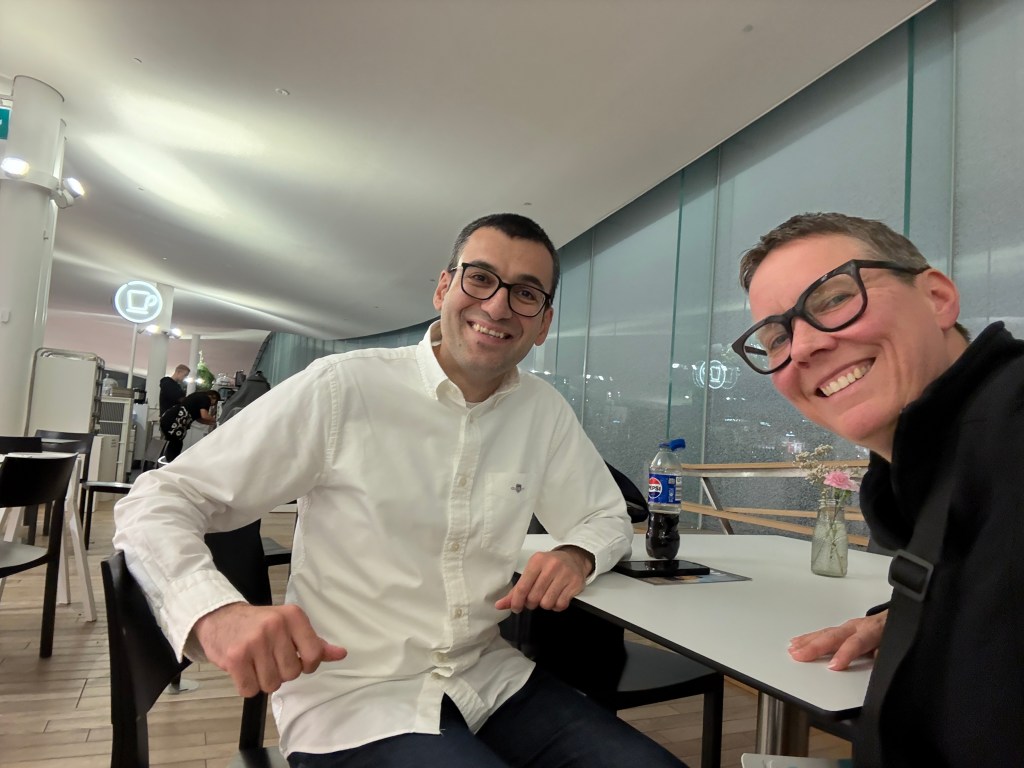
My Finnish travels culminated on a serendipitous high note when I ran into early-career researcher Yousef Jalali at the remarkable Oodi, Helsinki’s new Central Library. Moments like this—a chance encounter in a vibrant cultural space far from home—gave Yousef and me a chance to reflect on the conference and help support each other as “researchers on the move” who have relocated ourselves far from home in the pursuit of academic excellence.

What an amazing community of inspiring educators SEFI is!
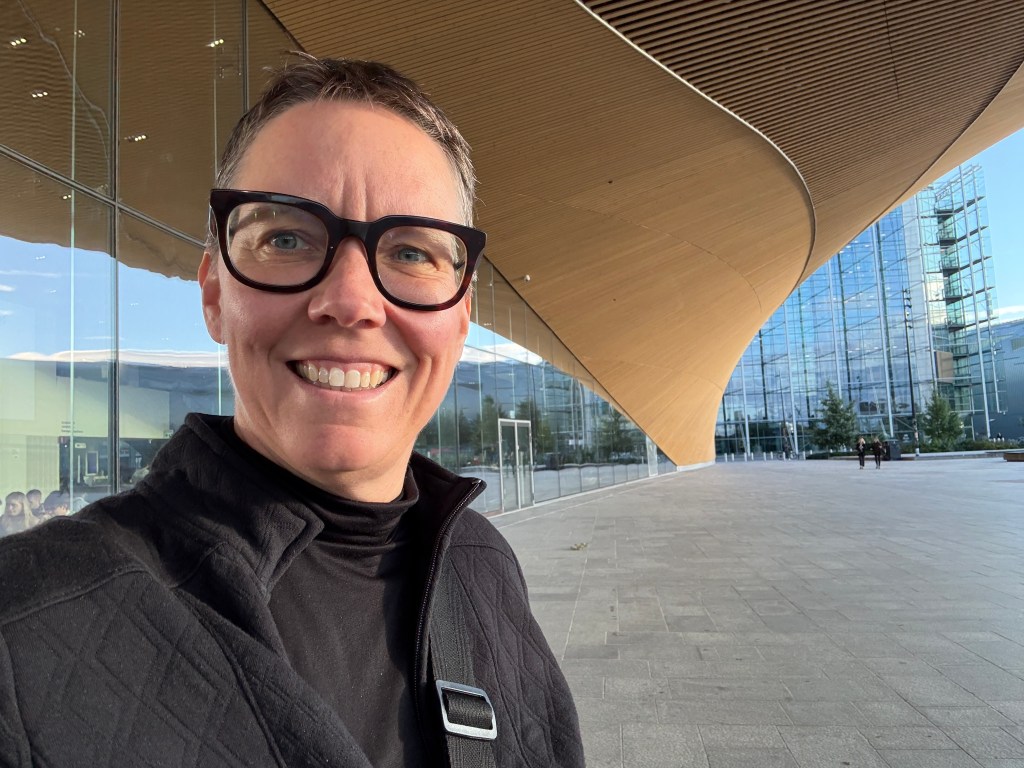
From celebrating major awards and delivering keynotes to fostering the next generation of researchers and exploring expressive Finnish architecture, this SEFI was truly a testament to the powerful, collaborative community we have built in engineering education.

For me, SEFI 2025 was such a celebration of community and collaboration.
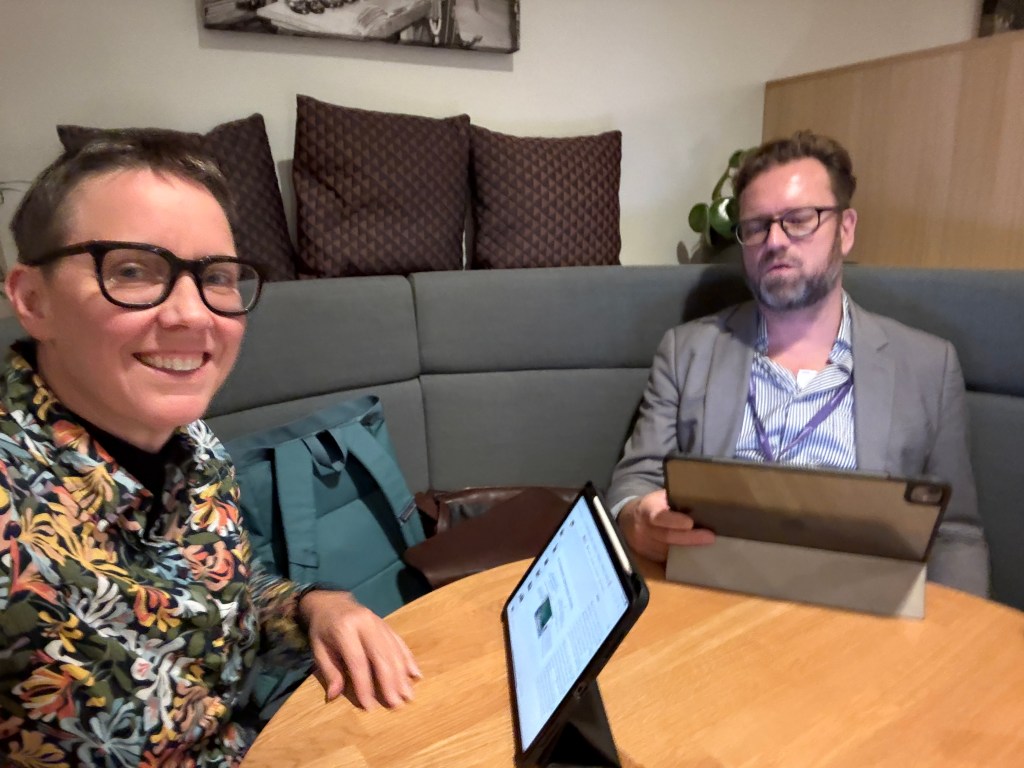
Looking forward to visiting Helsinki and Aalto University again soon!

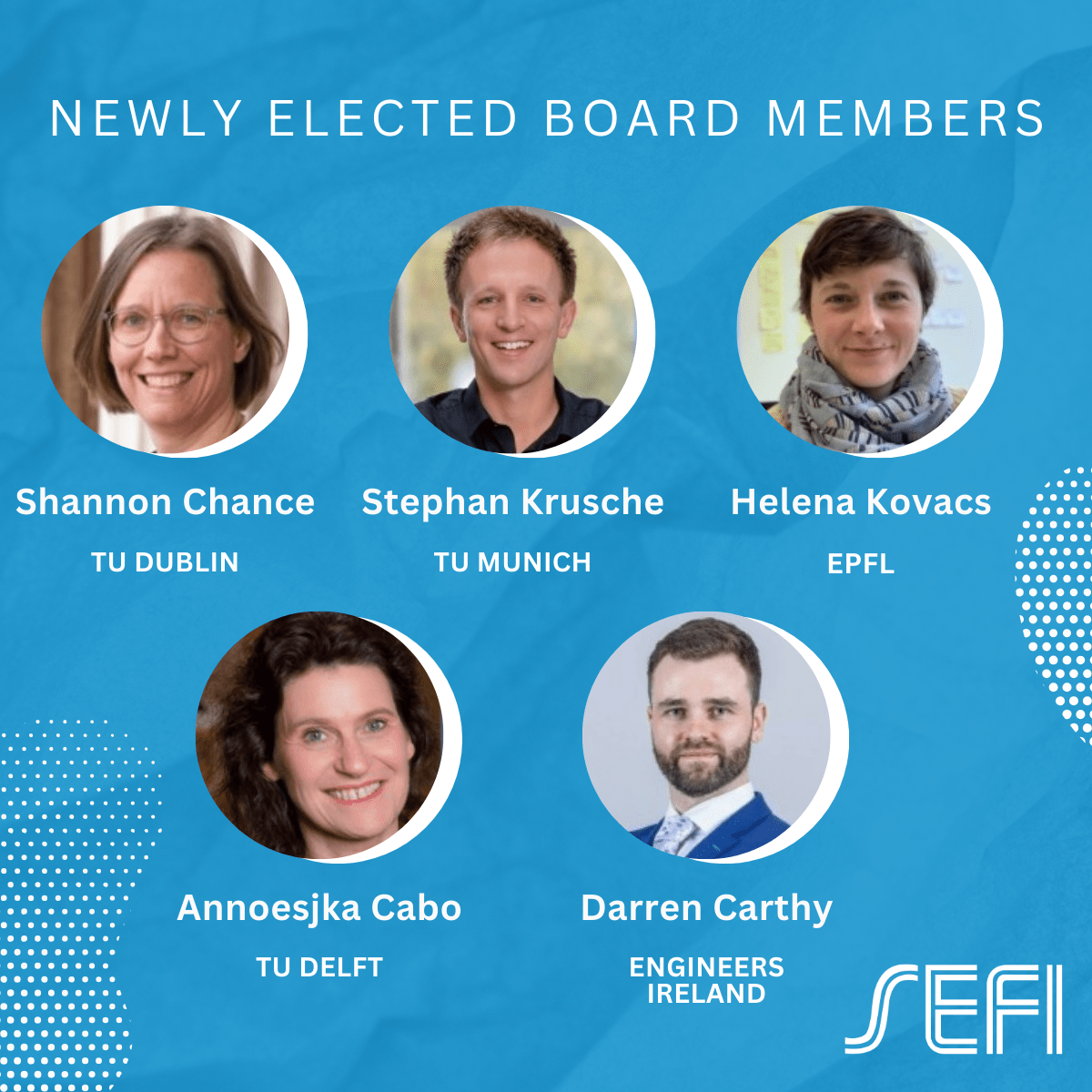
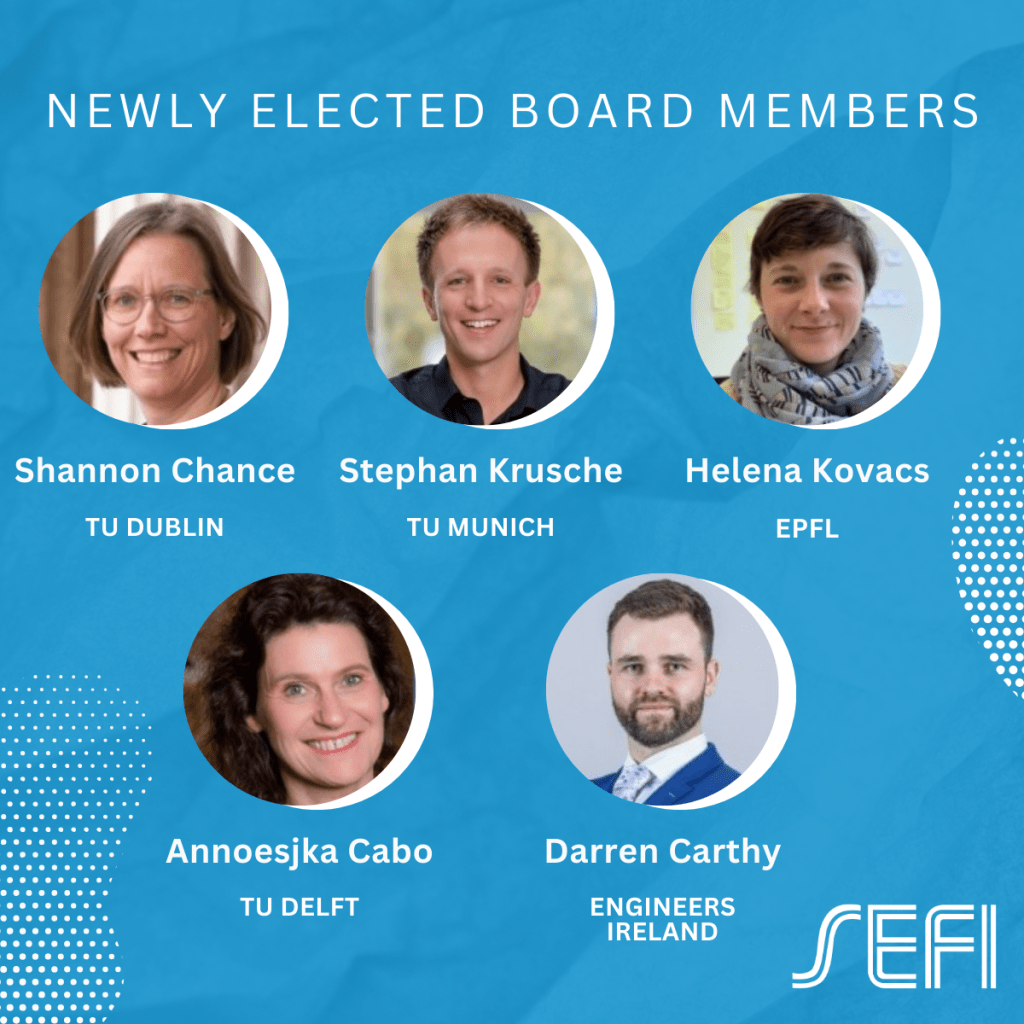
Elected: SEFI Board of Directors

The European Society for Engineering Education (SEFI) announced the results of recent voting. I’ve been elected to serve on this prestigious organization’s Board of Directors for three years! Many thanks to Mike Murphy, former SEFI President and TU Dublin Dean, for prompting me to run, and to Una Beagon (TU Dublin), Inês Direito (UCL), and Tom Børsen (Aalborg University) for formally endorsing my candidacy. This post gives you a peek into my:

Colleagues on the Board

I met several other candidates at an August orientation meeting organized by the SEFI Director General, Klara Ferdova, including incoming Board members Stefan Krusche (who created a really inspiring candidate video!) and Annoesjka Cabo.

Darren Carthy, from Engineers Ireland, who earned his PhD at TU Dublin and has been part of TU Dublin’s CREATE research group with me, was also elected.

Helena Kovacs, an author of a chapter in the handbook I recently edited, was too.

I’ll serve under the leadership of the effervescent Nagy Balázs (President) and the energetic and accomplished Emanuela Tilley and Greet Langie (Vice Presidents). Sitting SEFI Board members who I look forward to collaborating with include Inês Direito and Roland Tormey.

Shannon Chance facilitating a workshop at SEFI 2024

Motivation to Serve

I first joined this community in 2012 at the SEFI conference in Thessaloniki, where I enjoyed a welcome so warm and enthusiastic that I decided to stay in Europe and embrace engineering education research (EER). I left behind a tenured professorship in the United States to join this vibrant community dedicated to enhancing learning and teaching engineering across Europe, and indeed influencing how engineering is taught far beyond Europe’s borders. 

Group photo of participants (mentors and mentees) at the 2024 SEFi Doctoral Symposium, organized by Jonte Bernhard, Kristina Edström, Tinne de Laet, and Shannon Chance.

In my letter of motivation for this role, I highlighted three recent experiences that helped me prepare for the Board:

  • Chairing REEN – as part of the Research in Engineering Education Network’s Governing Board and its Chair for multiple years, I grew new skills and made positive contributions by significantly expanding REEN’s geographic representation, leading capacity-development initiatives (spawning EERN-Africa and organizing a series of capacity-building workshops for the nascent organization), supporting the delivery of REES (our bi-annual Symposium), and co-organizing events like the Big-EER Meet Up at the outset of the pandemic.
  • Cultivating our community’s publication skills by serving SEFI’s European Journal of Engineering Education as Deputy Editor, organizing and delivering workshops and doctoral symposia to the SEFI community to support newcomers to EER, guest editing special issues of IEEE Transactions on Education and the Australasian Journal of Engineeirng Educaiton (AJEE), and mentoring emerging scholars (as an individual and via SEFI and JEE).
  • Engaging with SEFI as a participant and leader – serving on the steering boards of the special interest groups for Ethics, Diversity and Inclusion, and Research Methods, helping organize the SEFI 2024 conference at TU Dublin, attending and presenting at Spring Schools, and – most recently – serving as co-editor of the forthcoming Routledge International Handbook of Engineering Ethics Education.
I sought to join the Board to:

  • Nurture collaboration and facilitate more mentoring and capacity-building programmes for teachers and researchers in engineering education.
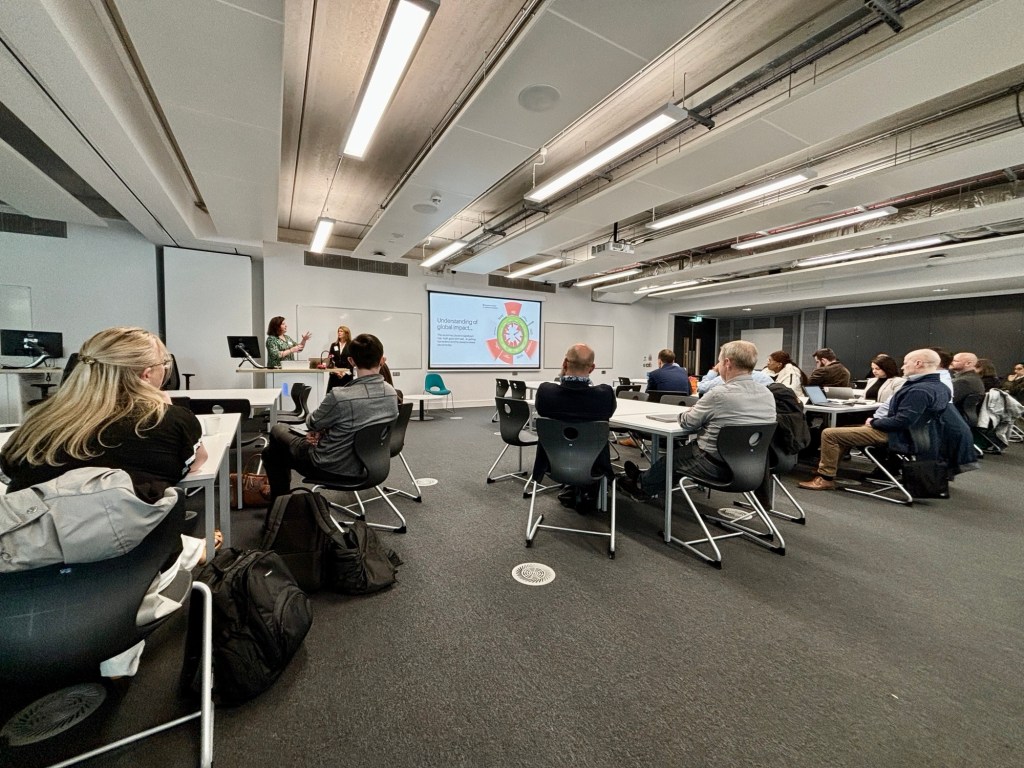
  • Help educators infuse ethics and sustainability across engineering curricula.
  • Enhance diversity and inclusion in SEFI – for instance by developing additional channels for bringing people from Eastern European countries into SEFI and supporting SEFI members from low-income countries in participating fully in SEFI activities.

With my collaborative, can-do spirit — and my keen passion for supporting students’ design, epistemological, and identity development — I will use the EER projects I have underway on these topics to inform and enhance my work with the SEFI Board.

Candidacy Video

You can view my candidacy video, which I recorded between conferences in Mexico during summer 2024:

Capacity and Community Building as an Editor of a Special Issue on Engineering Mathematics Education

With a team of experts from four continents, I led the development of a newly published special issue of IEEE Transactions on Education on the “Conceptual Learning of Mathematics-Intensive Concepts in Engineering.” The issue has nine articles covering three categories: assessment, instruction, and learning.

If you teach mathematics concepts to engineering students, you’ll definitely want to check it out!

On assessment, you can discover principles for designing rubrics. Regarding instruction, you can learn (a) how textbooks differ in their explanations of differential equations and (b) how concept maps can support the transfer of learning. You can read about (c) integrating real-life engineering examples into mathematics education, (d) using e-Textbooks, and (e) using software to help students bridge the gap between procedural skills and conceptual understanding of the Laplace transform. On the theme of learning, find out how to overcome misconceptions regarding (a) Stoke’s theorem, (b) exact differentials, and (c) sample mean.

I served as the organizational lead, and endeavored to support my team in learning journal-editing skills. Dr Farrah Fayyaz (working from Canada) served as the project’s conceptual lead. Dr Anita Campbell (South Africa), Dr Nicole Pitterson (USA), and Dr Sadia Nawaz (Australia) were also instrumental in producing such a high quality compilation.
As described in our guest editorial for this special issue, our leadership team implemented a range of innovative, collaborative models for capacity- and community-building while shepherding this project from conception to completion. My own focus was on cultivating these models, as mathematics education is not a primary focus of mine (although it is for the other four editors). The capacity-building model, and the recommendations for IEEE and other editors of special issues that are included in the guest editorial, were my primary contributions with this project, and a source of pride and joy for me.
I look forward to the future compilations that Farrah, Anita, Nicole, and Sadia will curate. Together, the editorial team hopes to read many more articles in this cutting-edge realm of research, and watch the ongoing success of the authors who participated in our capacity- and community-building activities.

(AI-generated image)

Discovering Belfast with EERN UK & Ireland

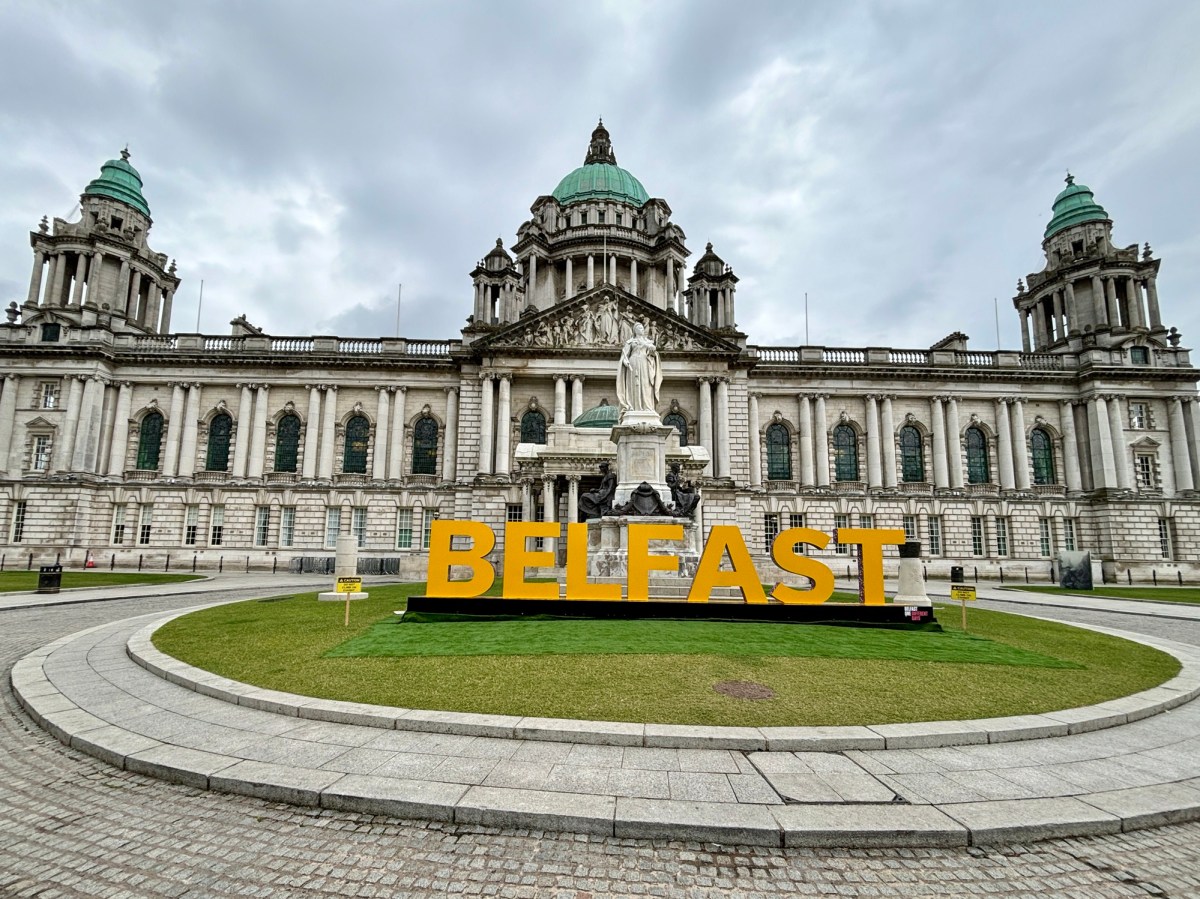
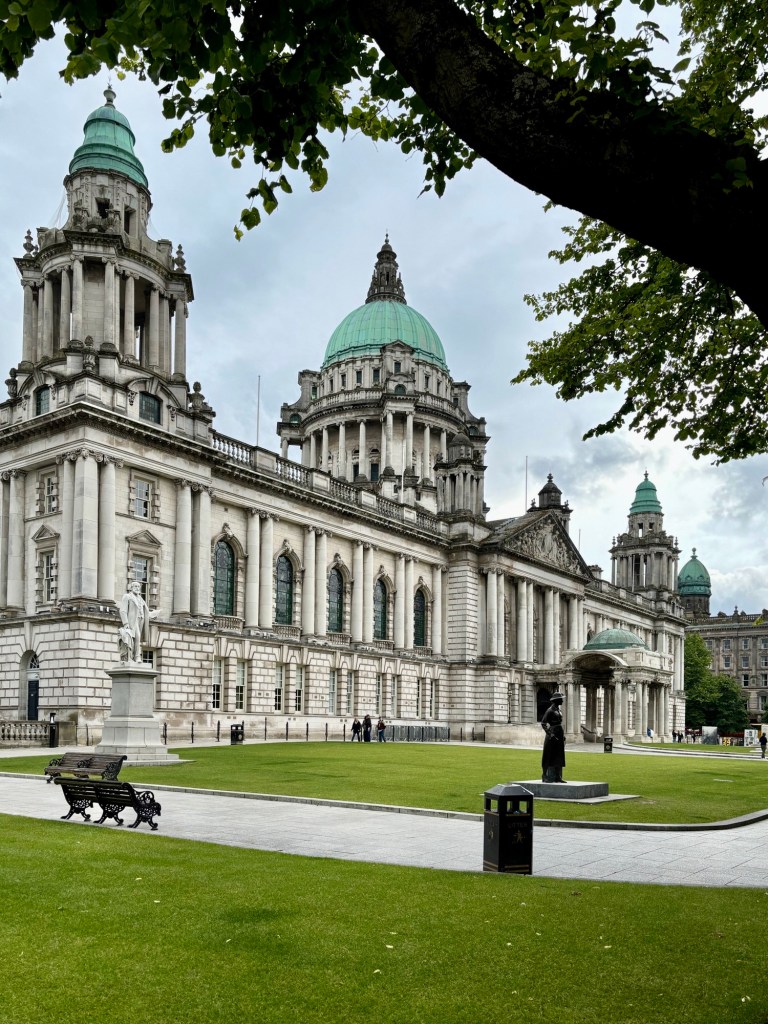
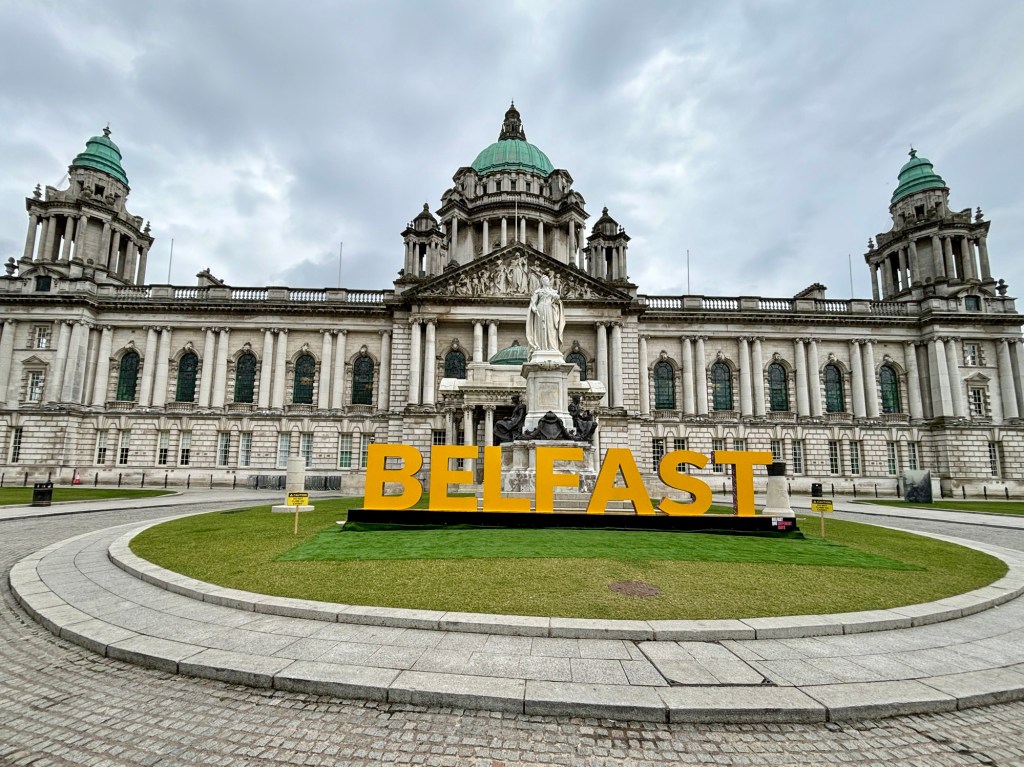
Believe it or not, I’ve never visited Belfast. Well, I did once tour the Titanic Museum and the dry dock where the Titanic was constructed—was engineered. But I’ve never come to the city itself, and my subtle avoidance has stemmed from my Irish Republic ideals. For the sane reasons, Aongus has also never visited the city, despite living in this tiny island most of his life.

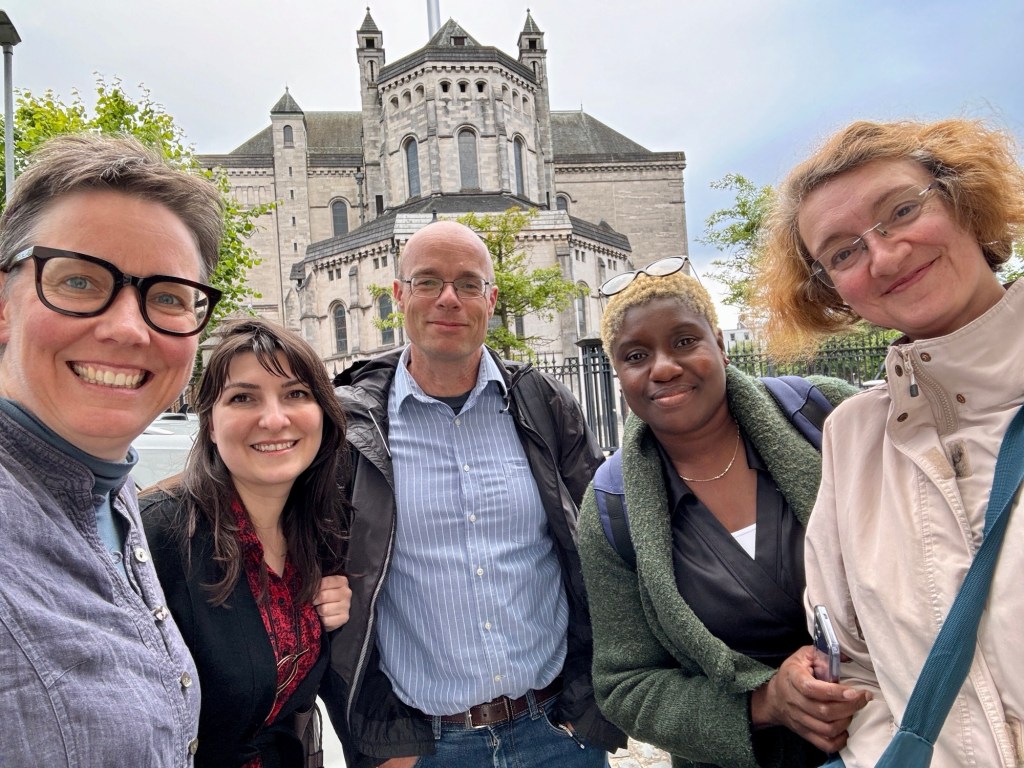
Now, engineering has brought me to Belfast. The past couple of days, I’ve been part of the 2024 symposium of the Engineering Education Research Network (EERN) for the UK and Ireland.

Hats off to EERN bringing these countries together to celebrate and enhance engineering through meaningful education! EERN UK welcomed their Irish cousins in formally around a decade ago, updating their name to include both “sides” of Ireland.

Ulster University’s Alan Brown hosted us downtown—for two days of conversation “Beyond Boundaries: Inclusive, Sustainable and Outward Looking Engineering Education”. What a fabulous theme! Alan did a phenomenal job organizing and shepherding this event.

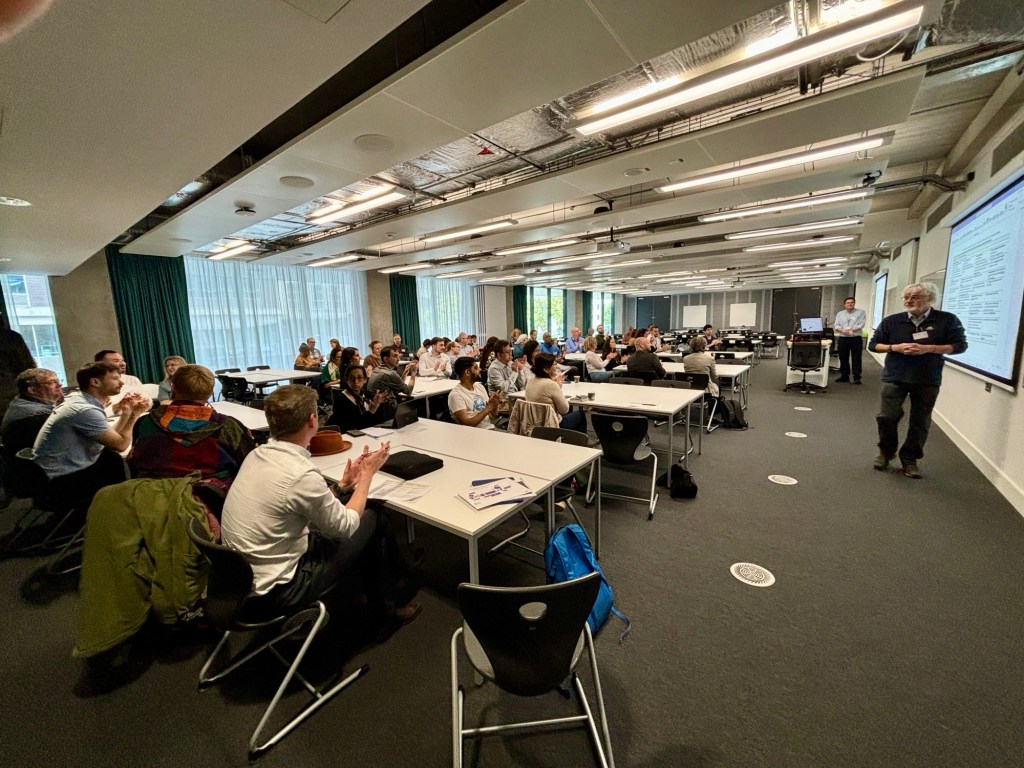
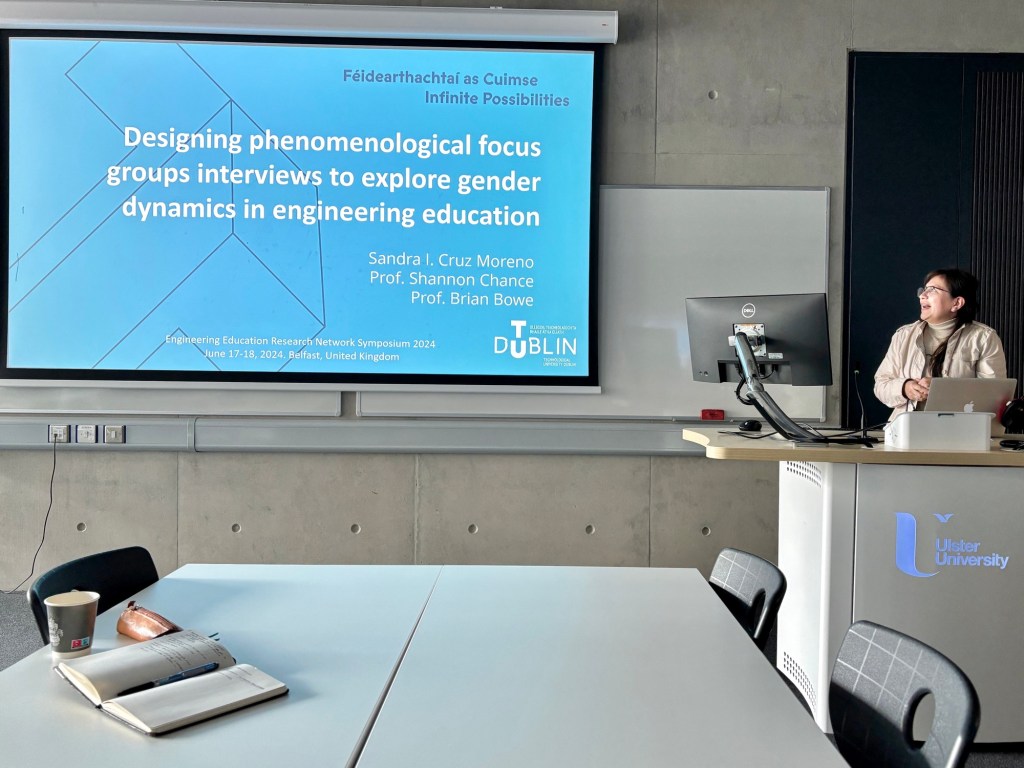
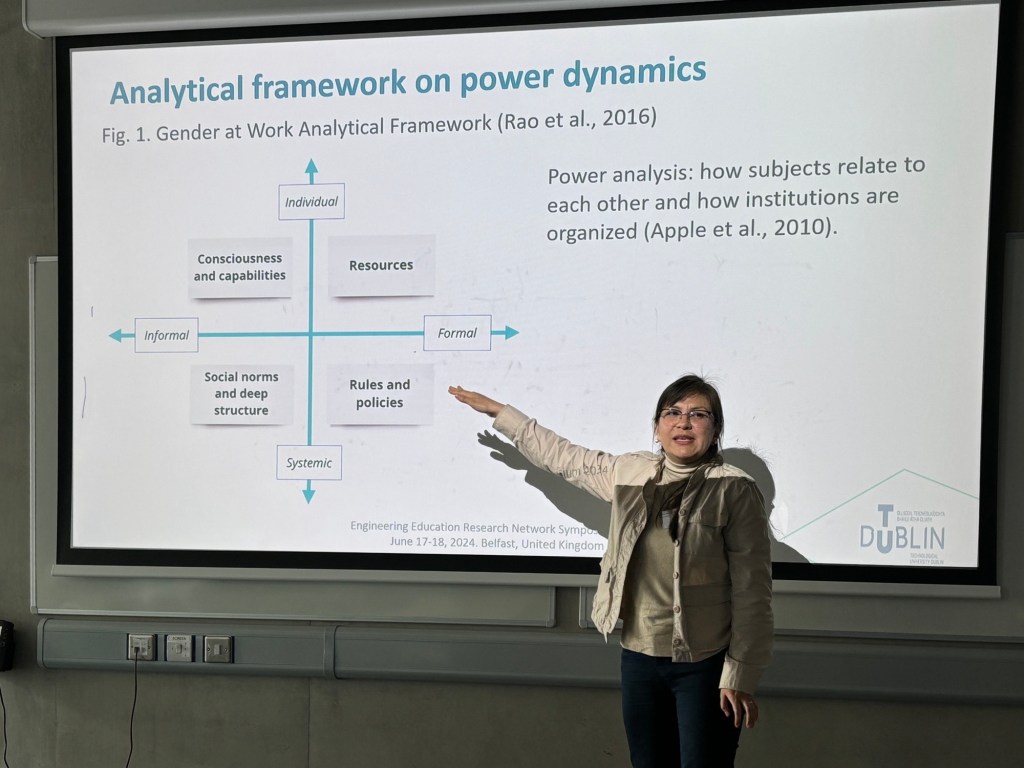
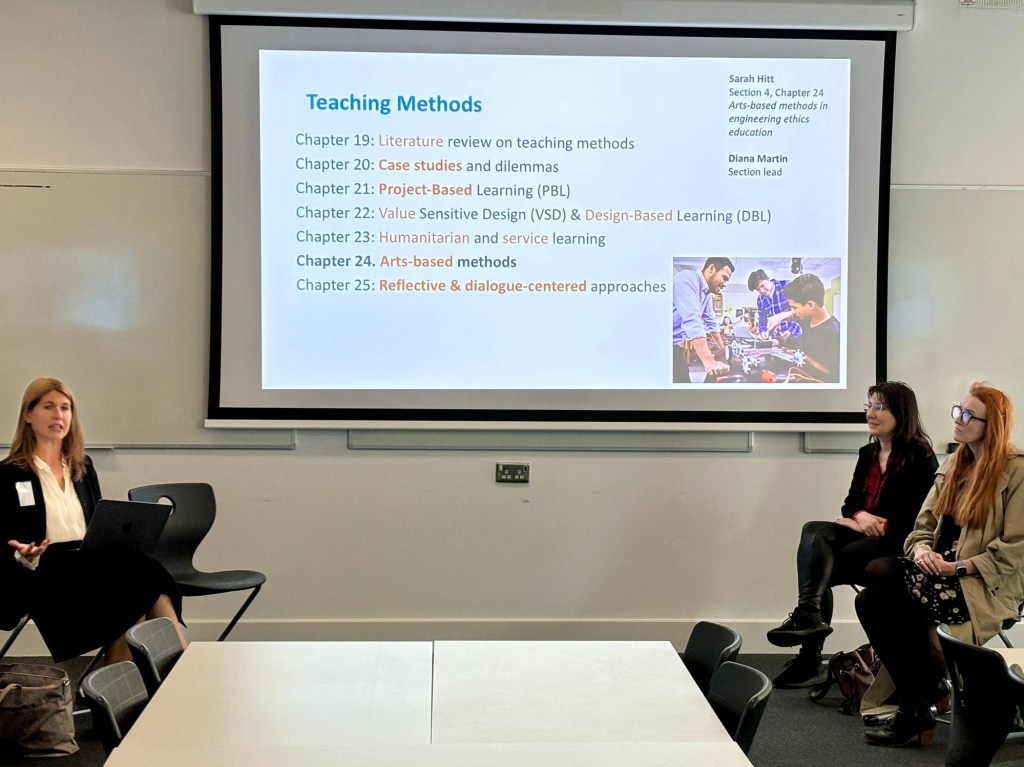
During EERN, my PhD student Sandra Cruz presented a thread of her research, and Diana Martin and I facilitated a workshop/panel discussion on the forthcoming Routledge International Handbook of Engineering Ethics Education with authors Dr Sarah Hitt and Dr Natalie Wint.

The handbook panel facilitated by Diana Martin and myself, with author panelists Sarah Hitt and Nat Wint.

I caught up with dozens of people I’ve collaborated with in the past, and made new friends and colleagues who I’ll complete projects with in coming years.

I also discovered the beauty of Belfast. I immediately phoned Aongus when I arrived and discussed traveling here together in the fall.

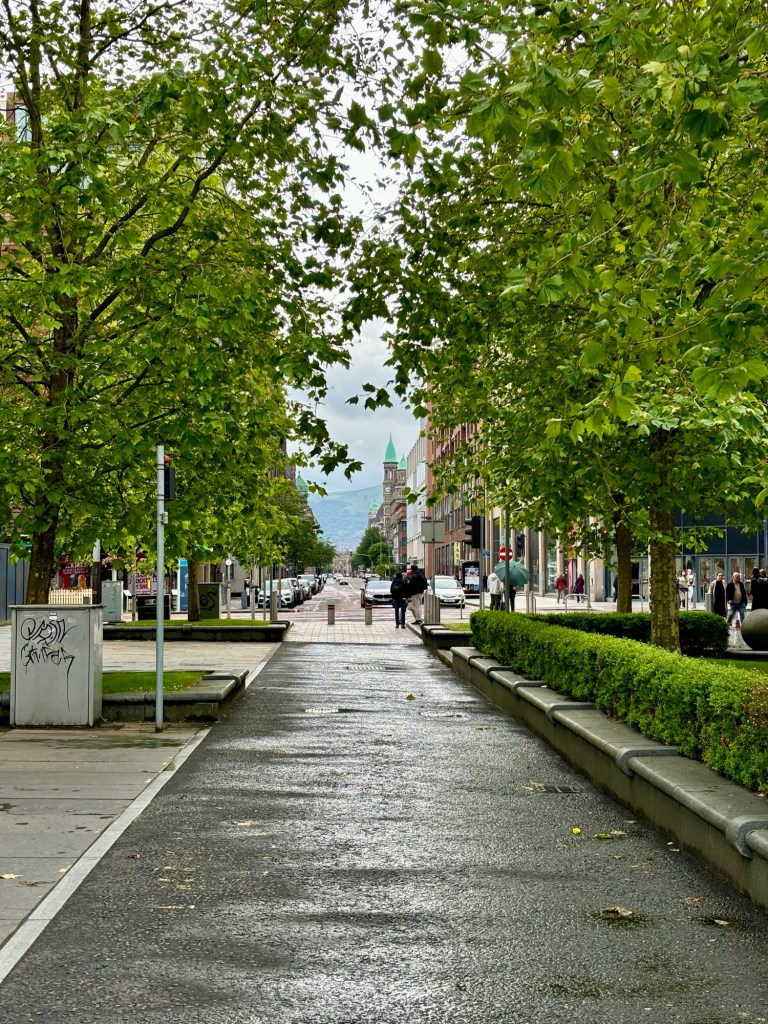
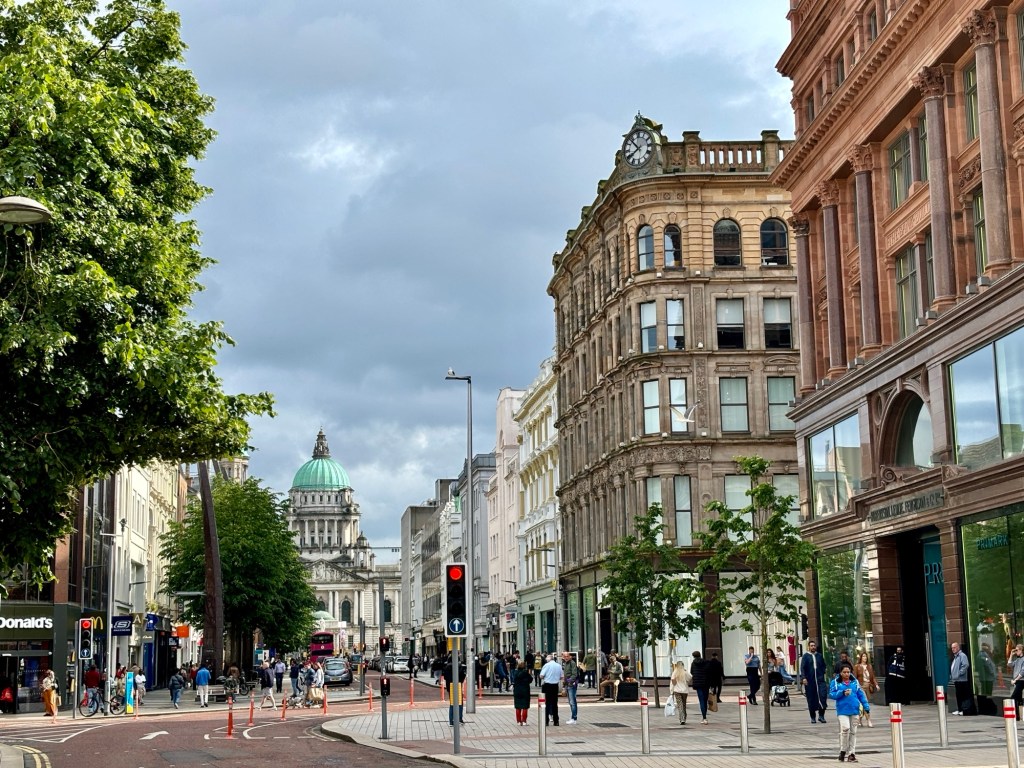
The train journey here provided spectacular scenery and the city is lively and architecturally significant. There are also many lovely public spaces.

It’s nice to find new nooks and crannies to explore on this isle, and I have many adventures and collaborations to anticipate.

Thanks Alan, Roger, Becky, Jane, EERN, and Ulster University for a top-notch platform for engaging discussion!

Gathering your scholarly community online: B-EER in a Nutshell!

This blog post highlights opportunities I see for building research capacity and sense of community — for networking and sharing knowledge among academics. We’ve being doing some fun and interesting things in Engineering Education Research (EER) and I’m posting help transfer some of this learning to other subfields of education. 
I’ll summarize what we’ve been doing to build community and share knowledge across the EER community globally. Fun communal learning activities have included small group chats, REEN working meetings, MCAA-UK social events, IFEES GEDC online seminars, and of course, the Big EER Meet Up (B-EER)!
Small group chats

I’ve been learning new things everyday, particularly through text chats with Drs. Inês Direito in London, Lelanie Smith in Pretoria SA, and Carlos Efren Mora in the Canary Islands of Spain.

We’re applying the sorts of knowledge-sharing and group-building techniques discussed in a TU Dublin staff training session yesterday. From a colleague’s comment, I found tips from Arizona State University for helping students build a sense of community. I even passed it along to my partner Aongus as he’s starting a certification course online soon and can benefit from the tips; like me, he enjoys classroom interaction and will miss that studying online.

Inês and lelanie, Carlos and I have been chatting virtually about mutual research interests, teaching and student-engagement techniques, and grants for over a year now. We mentor each other.

REEN collaboration

Our Research in Engineering Education Network (REEN) Board meets online every month so we’d already gotten pretty good at sharing ideas this way. We share video, audio, and text chat using, currently, MS Teams. We put our agenda in Google Docs and make revisions, converting them into minutes, together online as we meet.

I’m proud to serve as the Chair of REEN, which helps bring the global community of engineering education researchers together through symposia, special focus journal publications, and focused events to build knowledge, capacity/agency, and a sense of community.

The Governing Board is responsible for implementing the mission and goals of REEN by providing strategic direction, continuity, and overall leadership. Each representative serves a four-year term. The main commitment is a 1-hour meeting (held online) once a month, and members are asked also to provide a bit of time between monthly meetings for project work such as: supporting the symposium (e.g., reviewing abstracts and papers), development of special focus journal issues, or serving on special-focus ad hoc subcommittees. We currently have a call for two new positions. Please see our official call document.

REEN recently helped organize the B-EER Meet Up, described at the bottom of this post. We see it as a great way to bring our global EER community together and galvanize connections! 

MCAA-UK socials

Being at home more means I’ve had better chance to attend meetings outside Ireland. I’m in the Marie Curie Alumni Association (MCAA) and have been attending meetings and online socials of the MCAA Chapter in the UK the past couple months. Leaders of MCAA-UK introduced me to the paper that I used as inspiration for my B-EER coffee chat featured in an earlier post.

Our May 20th online social of the MCAA-UK

IFEES GEDC online seminars

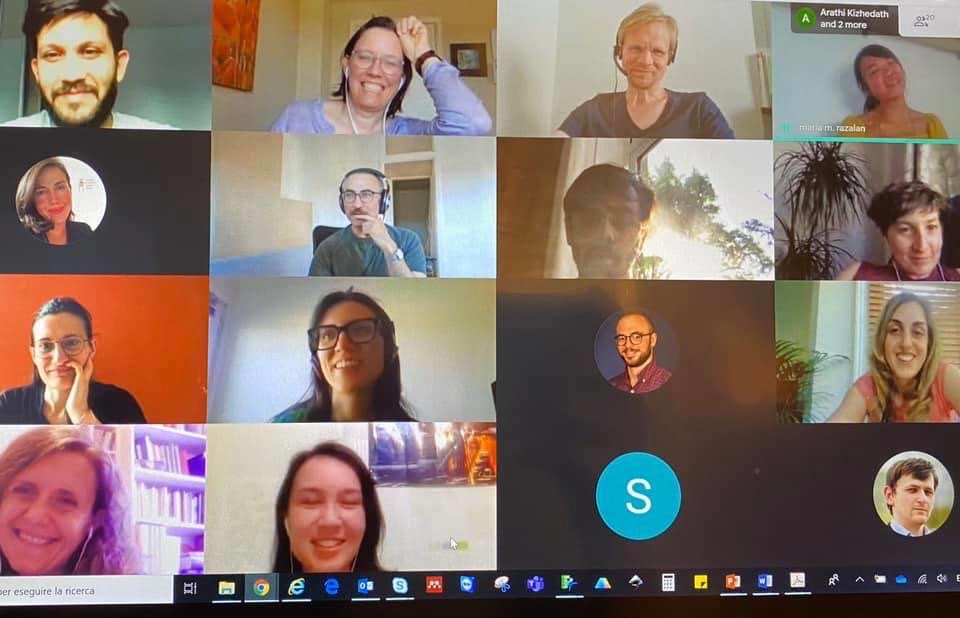
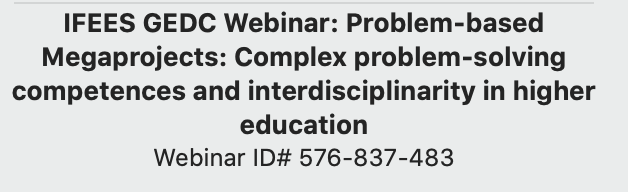
I’ve also attended several of the now-weekly IFEES GEDC online seminars, featuring well-known and highly accomplished scholars in EER. These are big, high-profile events with up to 500 participants each. There are usually people waiting at the “door” to get in after they’ve reached maximum capacity. At the end, a few people get to ask questions, but there’s not much room to interact in this forum. Nevertheless, I’m getting to hear speakers I couldn’t otherwise (during the teaching semester at least), because I wouldn’t be able to travel to them!

A fascinating recent lecture was on “Problem-based Megaprojects” conducted at Aalborg University. The presentation was by Drs. Anette Kolmos and Lykke Brogaard Berte.

B-EER Meet Up

I haven’t actually summarized the outcome of the Bigg EER Meet Up that I announced for registration in early May. So here you go!

We held our first Big EER Meet Up online throughout the day on May 14th, 2020. The event was spearheaded by Professor John Mitchell, a Director of the Centre for Engineering Education at University College London (UCL). Co-sponsors included REEN and other organizations near and dear to my heart — including TU Dublin’s CREATE research group, Virginia Tech, and UCL’s Centre for Engineering Education (CEE) — as well as Aalborg University’s Centre for PBL, Purdue University’s School of Engineering Education, the Technological University of Malaysia (UTM), and the University of Western Australia (UWA). You can view introductory information on a previous post.

We put this event together in just two weeks, and 550 people registered! The event included seven keynotes — mostly early career researchers (ECRs) and one emeritus professor — and seven break out sessions. We had close to 250 attend each keynote session, and the breakout (coffee break) sessions ranged from about 35 to 90. One session was still going with 60 people in it two hours later! You can access a compilation of the recorded keynote sessions and abstract of coffee chats on a UCL webpage.

I previously posted a blog about one of the keynotes, on Grit in Engineering.

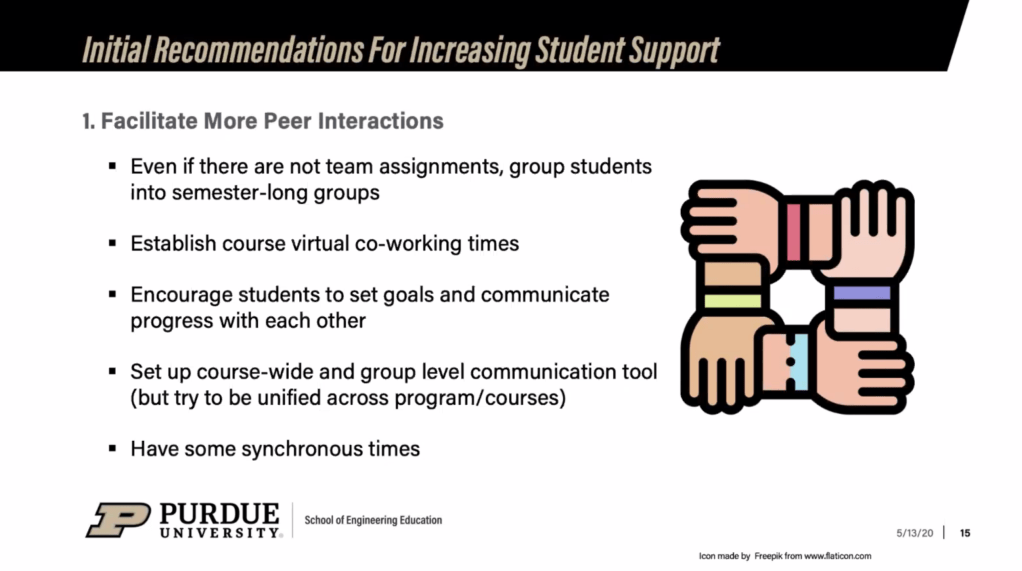
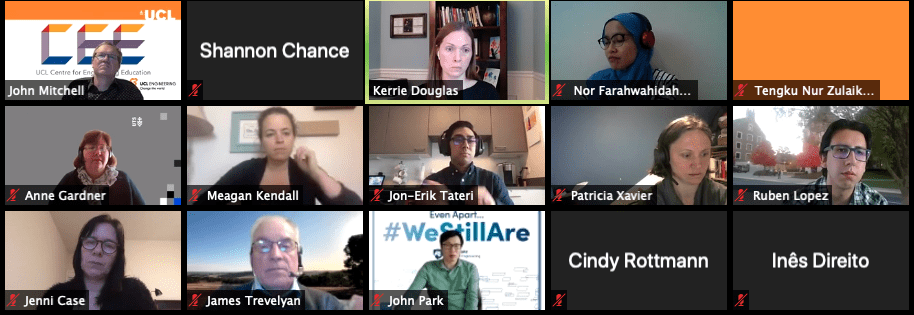
Below is a screenshot of a super-interesting presentation by Dr. Kerrie Douglas of Purdue University, reporting her research on Student Experience and Social Supports in Online Engineering Courses During COVID-19.

Research on post-COVID student experience by Dr Kerrie Douglas of Purdue University. You can view her presentation at https://youtu.be/eZ6pMFWgIq4

I’d say the event was a big success! Productively informal, well attended, with lots of positive vibe and momentum. This is the type of community I want to build and be part of! Yes, there’s room for critical perspectives, but we truly are about lifting each other and the quality of our work UP, as a way to better serve students and one another.

Prof. John Mitchell believes “our best work comes in the discussions and so this was a deliberate attempt to promote that”. After the event, several early and mid-career research told me this provided an introduction to the EER community, good networking, and ability to attend as they can’t always afford the time and costs of attending EER conferences in person (many have technical conferences to attend and fund as well).

Evidently, this Meet Up format helped a gap by providing a more casual and interactive option, online and at low cost. Thanks so much, UCL, for funding the event!

Dr. Karrie Douglas answering questions following her online presentation.

We’ve decided to keep building the capacity of this community by keeping the Meet Ups rolling.

We now envision hosting a mini Meet Up every 4-6 weeks during Work From Home periods, to be organized primarily by UCL and REEN. I’ve recommended this condensed version be just one “slot” long and that it rotate between the three slots we used previously (starting at 11:30 PM, 11 AM, and 4 PM BST to comfortably involve people in all time zones). I’ve recommended that we hold a Big EER Meet Up every 6-12 months as well.

Mini Meet Ups will likely include 2-3 keynotes with at least half featuring early career researchers, then one mid- to late-career researcher presenting per Meet Up to help draw a bigger audience. 

We’re now planning a mini Meet Up for International Women in Engineering on the 23rd June — an EER session with a focus on diversity in engineering. Stay tuned!

Vibrant networks producing INGENious results!

Most days, I find myself communicating with colleagues from afar on various projects, proposals, and ideas. On a typical day, I hear from Dr. Inês Direito in London (UK), Dr. Lelanie Smith in Pretoria (South Africa) and Dr. Carlos Efrén Mora Luis in Tenerife (Spain). We have many overlapping interests–one being how to understand student motivations and emotions and how to use this understanding to help students tackle and persist through challenges. I often hear from our co-author Dr. Bill Williams, from outside Lisbon (Portugal) as well.

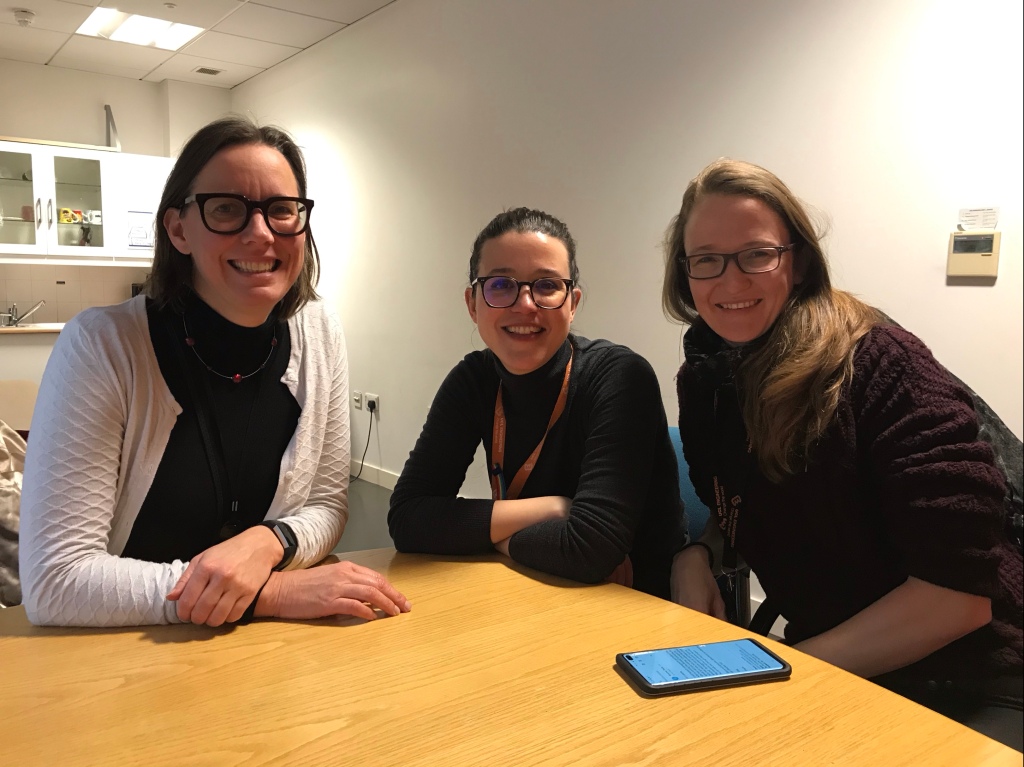
A past meeting of minds among Inês (center), Lelanie (right), and me. These days we can only meet online.

In addition to engineering motivations, we are also all interested in sustainability — environmental, economic and social. So over the past few weeks, WhatsApp and Signal chats have been rich and frequent.

Today alone, Lelanie, Inês, and I discussed research plans. Inês, Bill, and I submitted a conference paper on Brexit (with Inês in the lead and comments from Bill and me). Inês and I refined a journal manuscript on engineering ethics (with me in the lead and verbal input from Inês — she will edit my current version in the morning).

Down in the Spanish Canaries, Carlos has been fighting sand storms, as dust from the Sahara Dessert enveloped the islands. The weekend’s sandstorms were one of a number of challenges he’s faced recently, but he’s never one to give up.

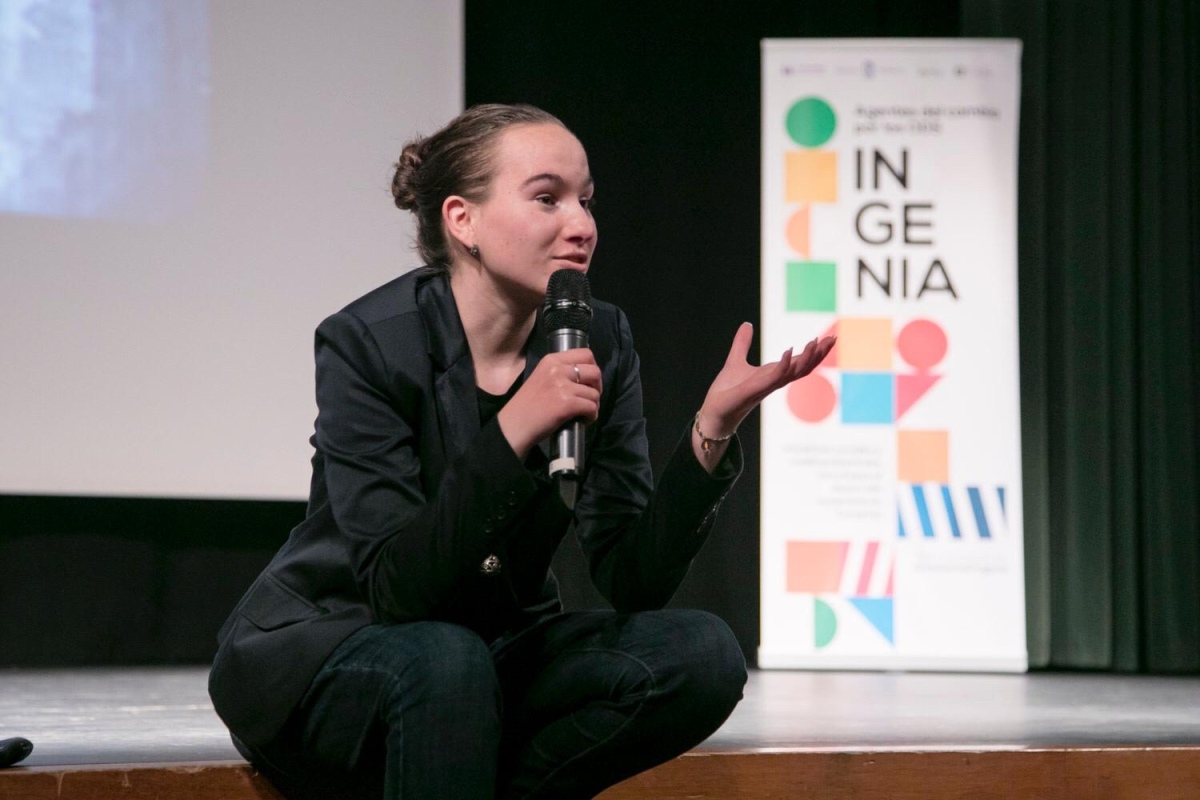
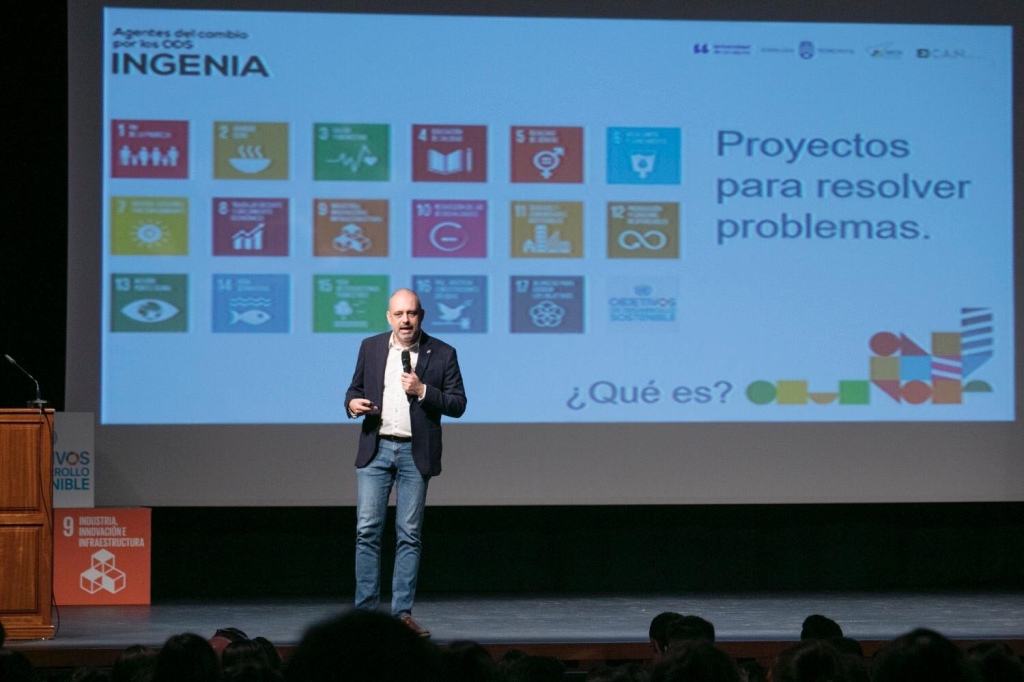
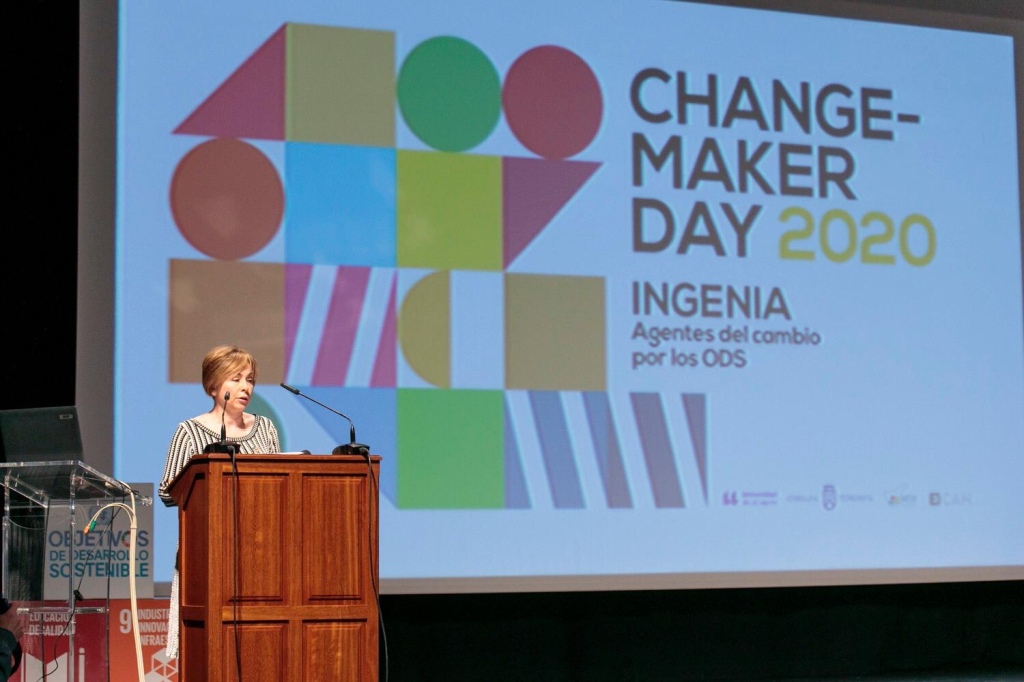
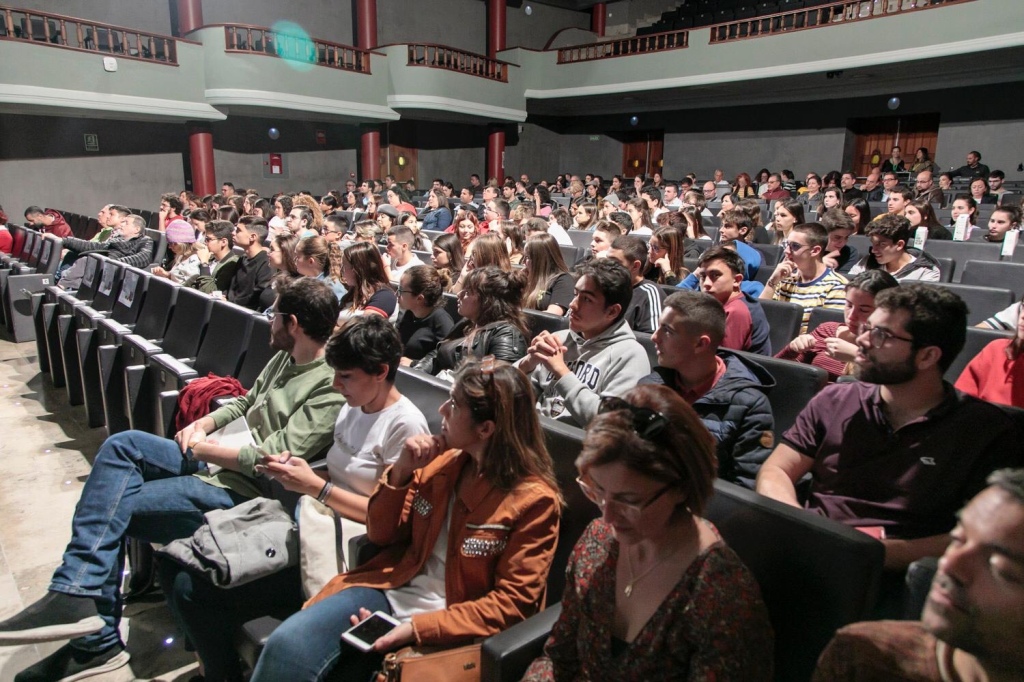
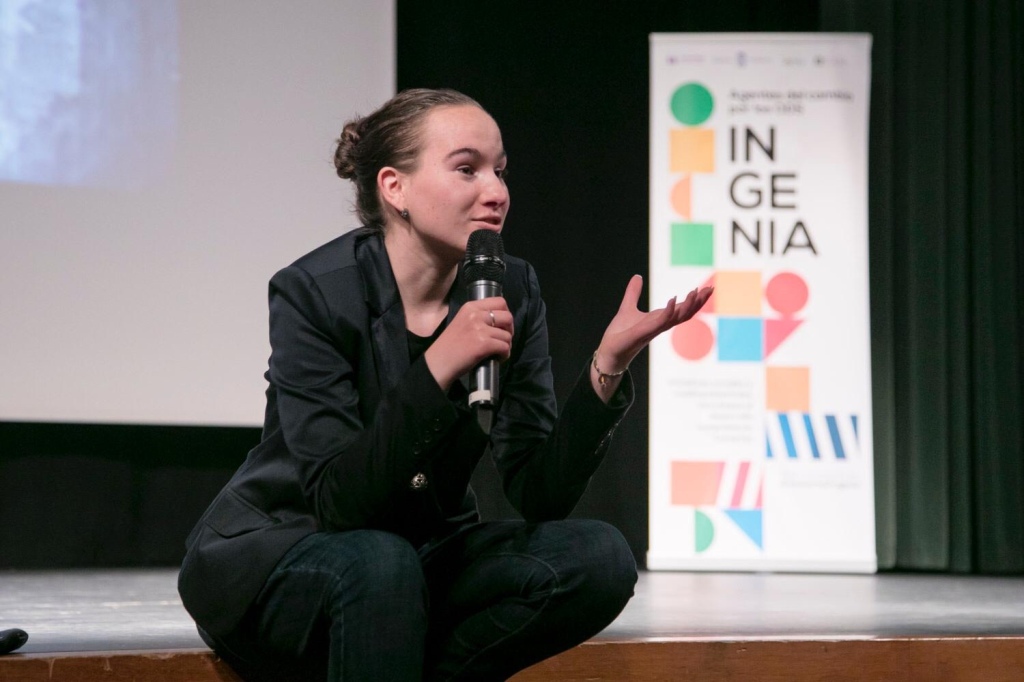
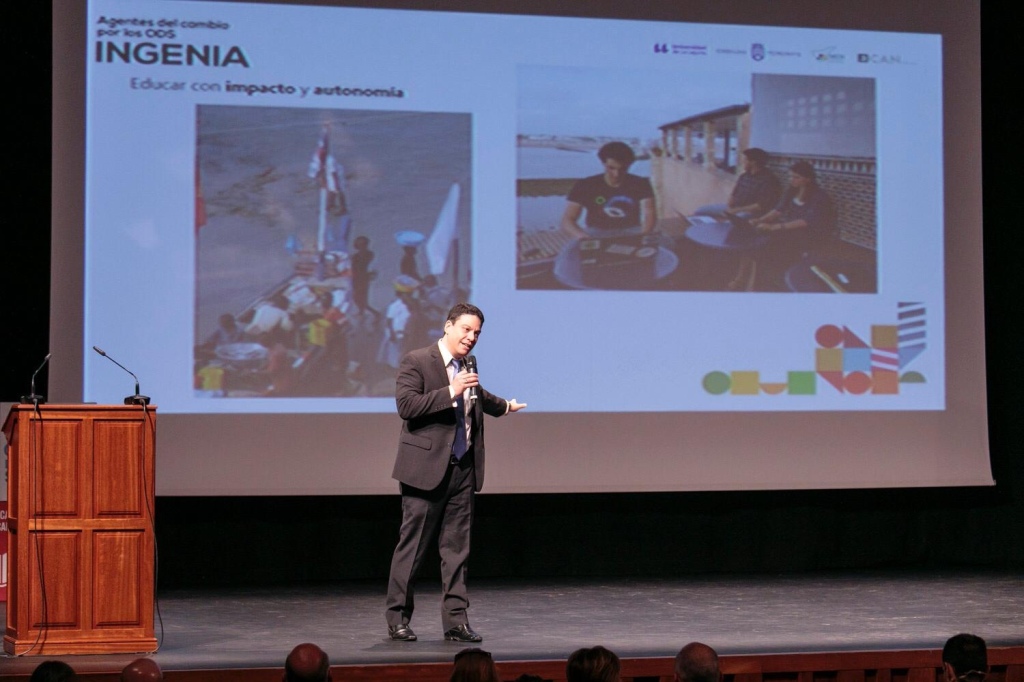
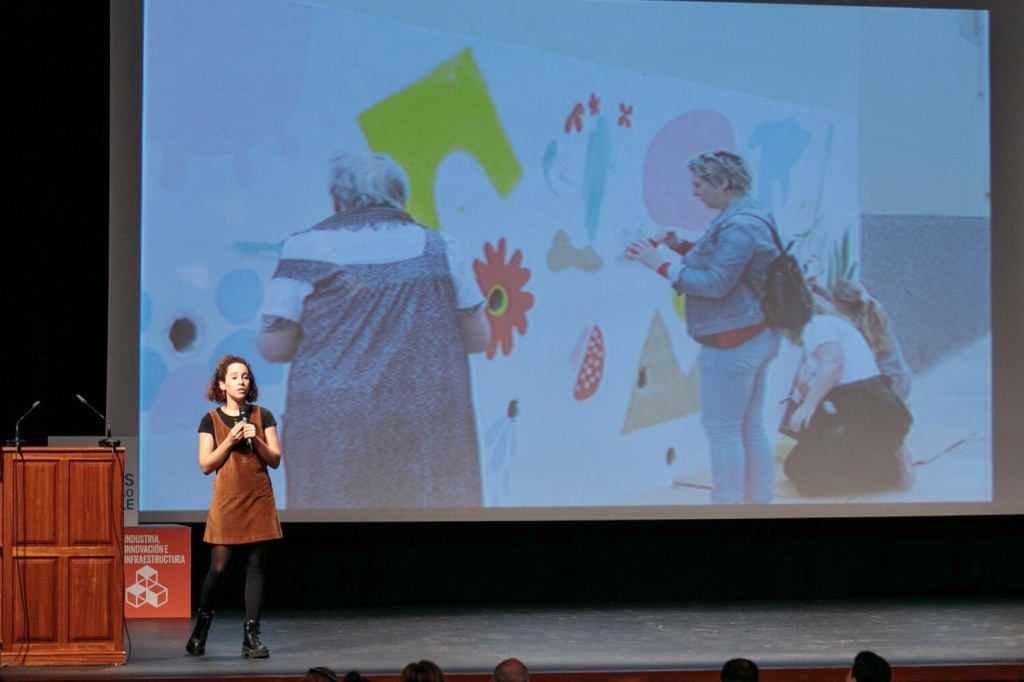
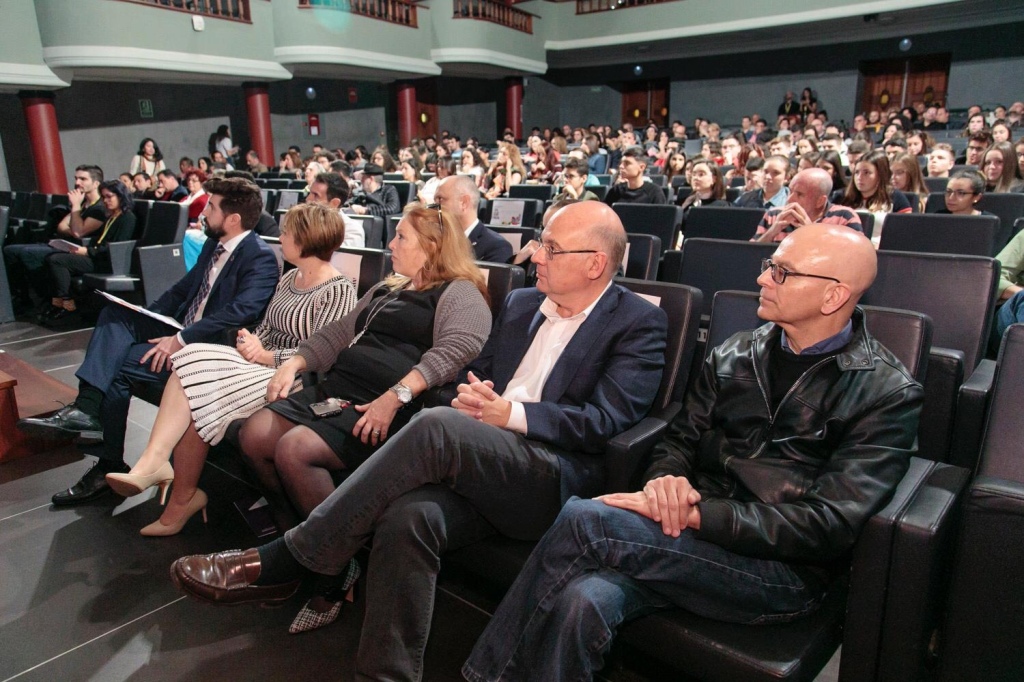
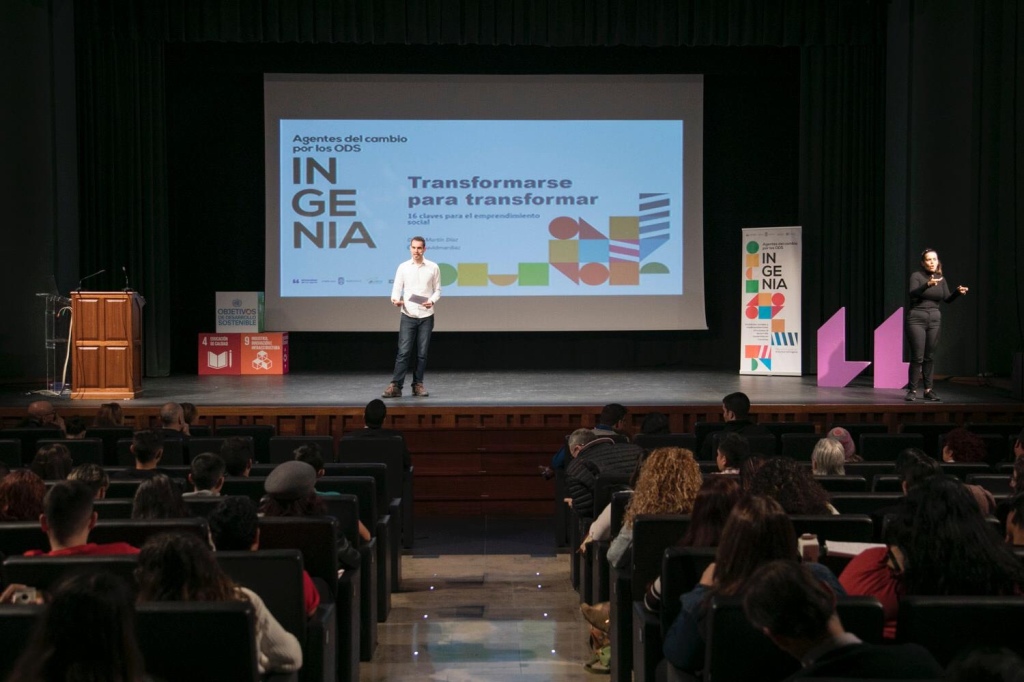
Carlos (Dr. Carlos Mora) speaking at the launch of the INGENIA project. Hundreds of students attended the event, which featured speakers from around the world.

Carlos and I didn’t win the grant we applied for this past September, despite having put months into the proposal. We’ve picked ourselves up, brushed off the disappointment, and developed a plan to perfect and resubmit. I know all too well that resubmitting makes a world of difference! It’s the best way to win funding. Yesterday, I was rallying our troops, gathering support for a new round of work. I am confident that eventually we will succeed.

But we haven’t been sitting around waiting for success to come.

In December, Carlos submitted an additional grant proposal, this one to the Cabildo of Tenerife, Spain, for €56,000. He received funding for the project titled “INGENIA.” Carlos explained to me that the word “Ingenia” comes from “Ingenio,” which is “Ingenuity” in English. So the project is fostering “Ingenuity” to support sustainability education.

I’m honored that (as a result of me coaching him on how to write grant proposals) he included me as a co-PI.

On the 31st of January, Carlos and his colleagues in Tenerife launched his extremely well-designed INGENIA project. It was a true thrill when over 300 people attended his launch that Friday!

Carlos has summarized in English that “INGENIA wants to show that students can find sustainable solutions to real life problems linked to SDGs in Tenerife.” Students will build their own research teams and find a supervisor who will help manage the financial resources for their project.” In other words, the students “will have to find relevant problems and then propose solutions. The final part of the process is selling their solutions to companies and administrative public offices.”

Students will engineer their solutions and compete for funding to realize their projects. Below, I’ve included information that Carlos wrote to described the project, which is being conducted in Spanish. I can understand a bit by reading the Spanish materials he produced, but he was kind enough to translate for me/us!

INGENIA project

The Spanish public universities agreed recently contributing to the 2030 Agenda by building and transferring knowledge and skills to society about the Sustainable Development Goals (SDGs). Universities can contribute with teaching, learning, and student-participation methods to transfer not just the skills, but the motivation needed to face the SDGs. Like other Spanish higher education institutions, University of La Laguna (ULL) endorsed the United Nations (UN) SDGs initiative, and has a detailed understanding of the importance of its local problems linked to the environmental, social, and economical sustainability of the Canary Islands.

INGENIA is a project coordinated by ULL that is focused on the needs of the local society in the Canaries that supports building knowledge and skills on the participating students. INGENIA uses Project-oriented Problem Based Learning (PoPBL) learning strategies to motivate the students to find and propose solutions to real problems linked to the SDGs around their own environment.

Objectives

  • Train university and high school academic staff in using active learning strategies to impulse SDGs.
  • Educate postgraduate students, and academic staff, in facilitating techniques and strategies to guiding students in complex projects linked to SDGs.
  • Develop real student projects with a high potential for positive impact in the Canarian society.

Implementation

INGENIA will be implemented in three stages:

  • Informative and training actions. Informative actions will include a conference to be held at ULL in its theatre showing how students can change the world. Training actions will include workshops with specialists in Engineering Education focused on PBL and the evaluation of the impact of student projects.
    Goal: Get teachers motivated to help students in writing their proposals. Each of these teachers will also serve as guarantors for a team of students, and guarantors will assume the financial responsibility of the projects they back.  
  • Training of facilitators. A group of postgraduate students will receive specific training for PBL, Motivation, Conflict Management, and Project Management. Facilitators will collaborate with guarantors in guiding the student teams.
    Goal: Having at least one facilitator for each wining proposal.
  • Project development: INGENIA will include a call for proposals. Student teams must justify the relevance of the problem and the feasibility of their solutions. Winning teams will receive funding for their projects, and must execute their projects within two months. At the end of this period, each team will write a report to identify the impact of their solutions. Students will participate in a public exhibition in October 2020, and will also have the opportunity to show their solutions to companies and public institutions with the aim of getting additional funding to continue their projects.

The launch was a huge success and reached the press. Noticias Cananias and Eldiario both ran stories.

https://www.noticanarias.com/tenerife-la-universidad-de-la-laguna-inaugura-el-proyecto-ingenia-con-250-asistentes/

https://www.eldiario.es/canariasahora/nekuni/campus/ULL-promueve-emprendimiento-desarrollo-sostenible_0_990751736.html

Carlos explained that the 31st was a day full of feeling. One of the speakers told such a moving story that the audience shed tears of emotion. Specifically, two students described their experiences; the second of these is working with ‘invisible’ people, meaning people who appear in social statistics, but have no work, no home, and thus no address. Carlos said she did an excellent job transmitting her feelings. She said, for instance, “that one day, she cooked rice for homeless people, but she was so busy that she forgot to turn off the cooking plate.” The rice was damaged, but she salvaged and packed up as much rice us she could, and went to give it to people in the street in Tenerife. She gave a portion to one man, and stayed looking at him. As the man was eating that rice, he stopped, looked at her eyes, and said what a lovely smile she had.

When she finished her narrative at the launch, one retired professor raised his hand to say something, but when he tried to start broken into tears. He cited numbers — the number of people invisible to all of us — and then he said that he had lived this experience along with her, and that she had touched his heart. The student walked down from the stage and gave the professor a big embrace. All the assistants, students, and teachers in the audience started to applaud.

It is this sort of change Carlos hopes to inspire among more students, and this is the sort of communication I received from Carlos daily.

After the student’s talk, many people were in tears, including Carlos. But he couldn’t stop to weep: he was next up on the stage.

Carlos needed to explain details of the program and how it will run. He had to explain the schedule and what will be expected of the various people working together in teams — including the student team members as well as the post-graduate and faculty member (e.g., professors) advising each team.

Carlos said the event was so motivating, inspiring them all to go out and find problems to solve. He received oodles of questions from students and academics wanting to participate. He said “Yes, I still can’t believe it, but something positive happened today!”

I have included images that are copyright of the photographer, Emeterio Suárez Guerra, and used with permission of Carlos.

Reflections on Water, Light, Time & Teams

Discovering time in ordinary and extraordinary objects.

Discovering time in ordinary and extraordinary objects.

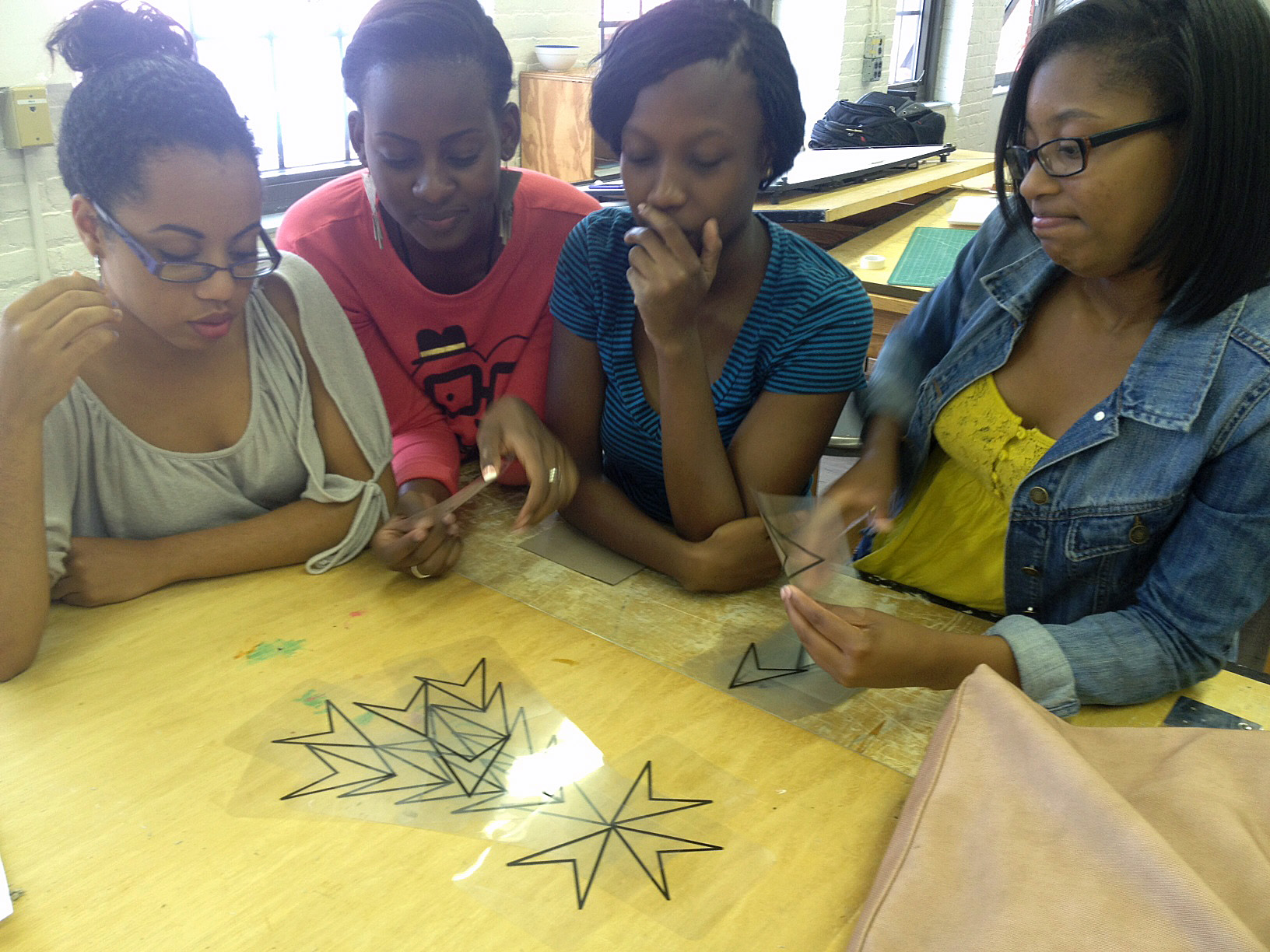
Janine, Khadjia, Shanice, and Sheldyn in a team-building activity lead by MIT grad student Derek Ham.

Janine, Khadjia, Shanice, and Sheldyn in a team-building activity lead by MIT grad student Derek Ham.

My students’ teamwork skills are improving by leaps and bounds.   The group of students pictured to the left makes teamwork and design look like so much fun.   In this photo they were doing a team-building exercise under the direction of Derek Ham.  Derek earned a Bachelor of Architecture degree at Hampton University in 2001. He went on to each a Master’s of Architecture at Harvard and teach at HU and FAMU. Today, he’s a PhD student at MIT. He came to talk with our students about overlaps between design and computation.

SELF-DIRECTED LEARNING

The overall goal of all this team work is to master skills in design, collaboration, and self-directed learning. In self-directed learning a (person or) group can identify what it needs to learn and how to learn it. It’s even better when the (person or) group simultaneously identifies what it wants to learn as well. That’s when learning gets to be really fun!

Members of this particular group did a nice job answering the question posted on this blog 1.5 weeks ago by prof. Steven Temple from the University of Texas at San Antonio. He asked if we’d posted findings of our water study yet.  Finally, here some are….

We’d done five studies in studio to date.  We’ve explored properties of water, light and time.  And, we’ve drawn our project site and studied/documented various monuments that use/express time/sun.  The images posted represent a few of the items this team has made in studio this semester.

So: What has the studio found that’s unique to water, light, and time?  Last weekend I asked my students to summarize their findings in words.  Here’s the response provided by Janine, Khadjia, and Sheldyn.

Capturing the essence of water.

Capturing the essence of water.

ONE TEAM’S FINDINGS FROM VIGNETTES

Water Vignette:

For this project, we decided to explore the way water moves. We wanted to highlight the seemingly random and beautiful motion of water and that other liquids also exhibit when placed in water. We used different colored dyes to show this. We observed that water and other liquids interact with each other in different ways, and that the density of the liquids mainly governed their behavior with each other. We observed a beautiful, smoke-like motion of the ink until it diffused and all the water became a diluted color of the dye. We also noted the way that water takes the shape of whatever vessel it is contained in, and that at any angle the water level will always stay perpendicular to the pull of gravity.

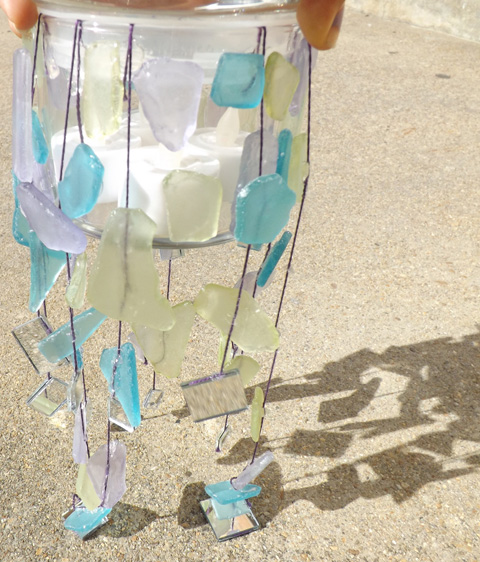
Capturing the essence of light.

Capturing the essence of light.

Light Vignette:

We wanted to highlight the behavior of light in terms of shadow and through different media. We mainly focused on shadows or the fact that light travels in straight lines and does not bend around objects. We also explored the reflection and absorption of light and how it filters through translucent media. We discovered that the effects of all these things differ with natural and artificial light. We also wanted to exhibit movement through light and observed this through the way light bounced off the mirrors and made shadows when our hanging objects moved.

Time Vignette:

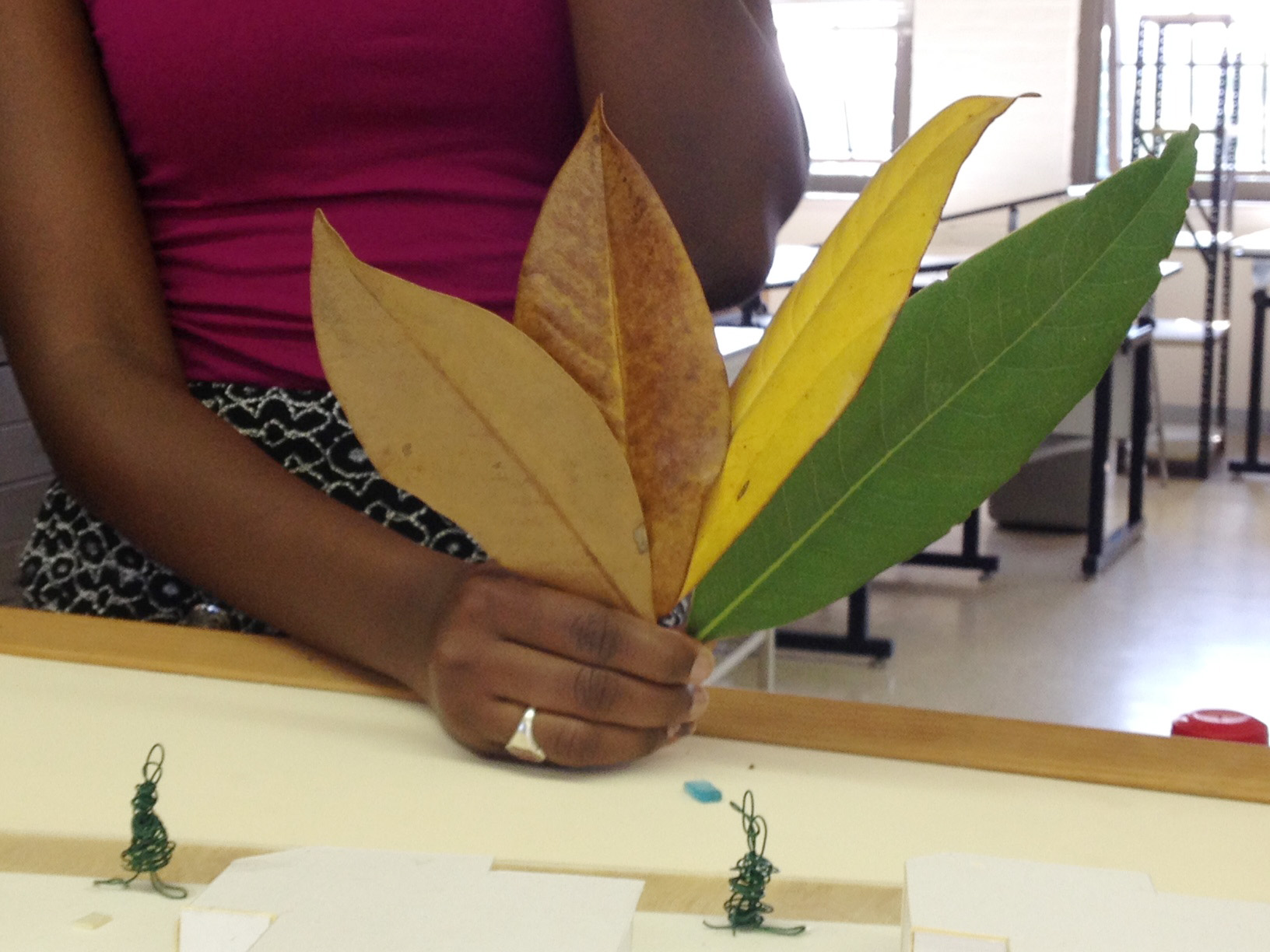
We wanted to focus on decay as a major indicator of time. We chose leaves that clearly indicated a full life cycle. They showed the progression from a rich green, whole sturdy leaf all the way to a brown, crinkled leaf. Age was indicated in the color, texture, size and shape of the leaf. We discovered that they also showed a sense of hierarchy in the appearance of the leaf. The youngest, freshest leaf was also the largest and had a strong, durable presence whereas all the other leaves got progressively smaller, duller and more brittle. They seemed to fade and disintegrate before our eyes.

Capturing the essence of time.

Capturing the essence of time.

How They Relate:

The water project exhibited all three concepts or elements. It showed water and its behavior with other liquids, it showed the behavior of light in water and also time, through the motion and eventual diffusion of the dye over time. The light project mainly exhibited light and time. It showed the behavior of the objects at different times, as they looked different during the day and at night. It also subtly exhibited time and wind as the positions of the objects and their shadows and reflections were constantly moving and changing. The time project also incorporates all three elements because with the passage of time, light is reflected differently off the leaves, shown by their color and texture, as the younger leaves shine because of their smooth texture and the older leaves don’t because they are dry and crinkled. Water was also shown in this project because the absence and presence of water within the leaf indicated its age. Younger leaves had more water and smoother, more elastic textures and older leaves were dryer and contorted with the absence of water to hold their shape.

PBL at the Polytechnic School of Águeda

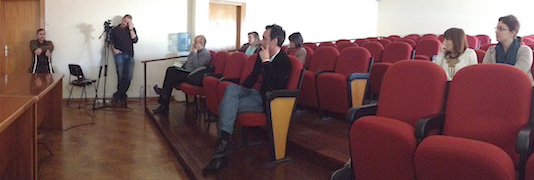
The audience was composed of experts and students in engineering and education.

The audience was composed of experts and students in engineering and education.

Visiting Portugal’s University of Aveiro some weeks ago provided me opportunities to speak with doctoral students and professors of engineering and education.

After I delivered a formal presentation to a small but enthusiastic group at the University of Aveiro’s Department of Education, my host, José Manuel Nunes de Oliveira drove me to the University’s satellite campus, known as the Polytechnic School of Águeda (or Escola Superior de Tecnologia e Gestão de Águeda, Universidade de Aveiro) where he teaches engineering.

Jose and his colleagues use Problem-Based Learning to teach engineering students.  They have formatted their classrooms to support group-based learning.  (My DIT colleague, Gavin Duffy, visited Jose and his campus earlier in the year to see how they use space. He wanted their advice to help in the programming phase of DIT’s new engineering facilities.)

What impressed me most in touring the buildings and grounds of the Águeda campus, though, was that the students were all working in groups–and that they seemed to be doing so on every type of project.

Jose says that after the teachers introduce the group-learning approach in the first year, students embrace it and want to do everything this way.

I thought that Jose said that students receive credit for their topic courses (i.e.,those with specific engineering content), but not for their project work (I was wrong, as I explain in my subsequent blog). In architecture we refer to these technical/topic classes as “support courses.”

All the courses a students take in a semester at the Escola Superior de Tecnologia e Gestão de Águeda help support the project they have been asked to do in groups. They are able to apply what they learn in the projects they design… but they don’t get formal credit for the design activities. In architecture in the USA, the design activities are assigned the most credit (typically 5-6 credit hours per semester) while each support course is generally worth just 3 credits. The architecture community tends to value the project or “design studio” work above all else.