The European Society for Engineering Education (SEFI) announced the results of recent voting. I’ve been elected to serve on this prestigious organization’s Board of Directors for three years! Many thanks to Mike Murphy, former SEFI President and TU Dublin Dean, for prompting me to run, and to Una Beagon (TU Dublin), Inês Direito (UCL), and Tom Børsen (Aalborg University) for formally endorsing my candidacy. This post gives you a peek into my:
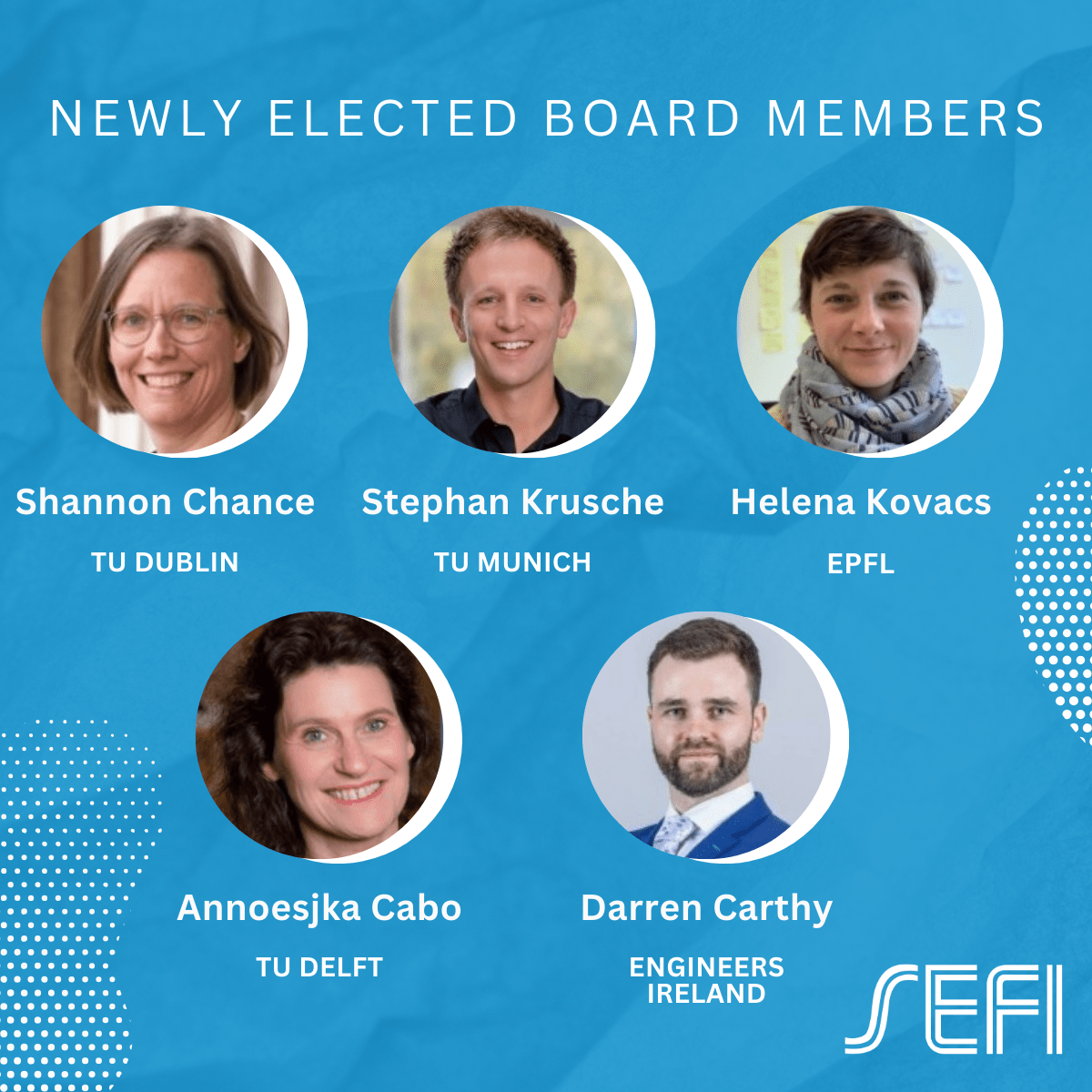
I met several other candidates at an August orientation meeting organized by the SEFI Director General, Klara Ferdova, including incoming Board members Stefan Krusche (who created a really inspiring candidate video!) and Annoesjka Cabo.
Darren Carthy, from Engineers Ireland, who earned his PhD at TU Dublin and has been part of TU Dublin’s CREATE research group with me, was also elected.
Helena Kovacs, an author of a chapter in the handbook I recently edited, was too.
I’ll serve under the leadership of the effervescent Nagy Balázs (President) and the energetic and accomplished Emanuela Tilley and Greet Langie (Vice Presidents). Sitting SEFI Board members who I look forward to collaborating with include Inês Direito and Roland Tormey.
Shannon Chance facilitating a workshop at SEFI 2024
Motivation to Serve
I first joined this community in 2012 at the SEFI conference in Thessaloniki, where I enjoyed a welcome so warm and enthusiastic that I decided to stay in Europe and embrace engineering education research (EER). I left behind a tenured professorship in the United States to join this vibrant community dedicated to enhancing learning and teaching engineering across Europe, and indeed influencing how engineering is taught far beyond Europe’s borders.
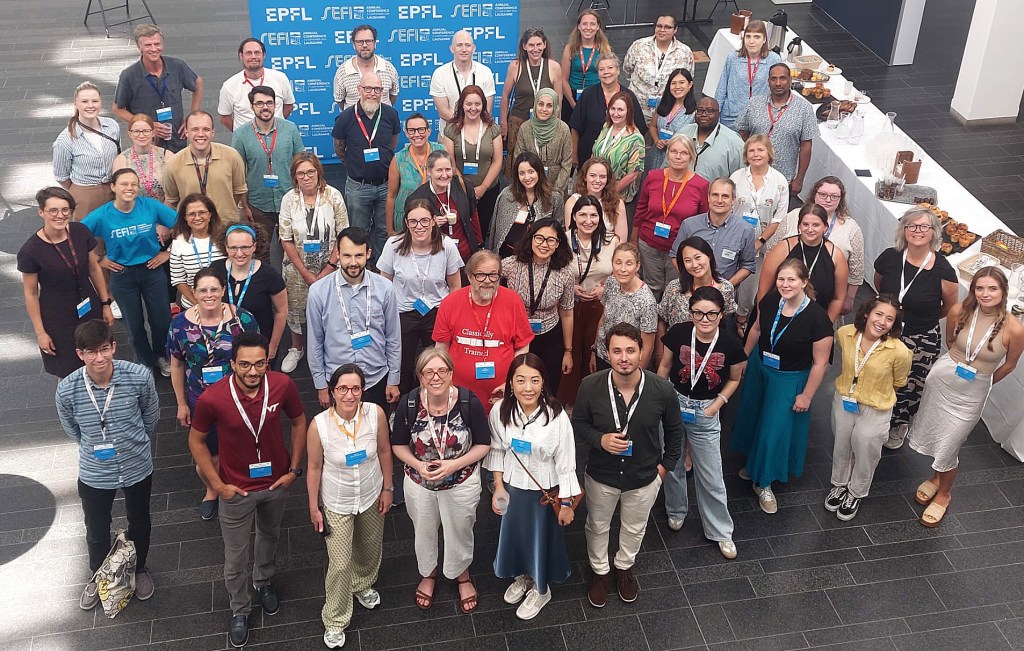
Group photo of participants (mentors and mentees) at the 2024 SEFi Doctoral Symposium, organized by Jonte Bernhard, Kristina Edström, Tinne de Laet, and Shannon Chance.
In my letter of motivation for this role, I highlighted three recent experiences that helped me prepare for the Board:
Chairing REEN – as part of the Research in Engineering Education Network’s Governing Board and its Chair for multiple years, I grew new skills and made positive contributions by significantly expanding REEN’s geographic representation, leading capacity-development initiatives (spawning EERN-Africa and organizing a series of capacity-building workshops for the nascent organization), supporting the delivery of REES (our bi-annual Symposium), and co-organizing events like the Big-EER Meet Up at the outset of the pandemic.
Cultivating our community’s publication skills by serving SEFI’s European Journal of Engineering Education as Deputy Editor, organizing and delivering workshops and doctoral symposia to the SEFI community to support newcomers to EER, guest editing special issues of IEEE Transactions on Education and the Australasian Journal of Engineeirng Educaiton (AJEE), and mentoring emerging scholars (as an individual and via SEFI and JEE).
Engaging with SEFI as a participant and leader – serving on the steering boards of the special interest groups for Ethics, Diversity and Inclusion, and Research Methods, helping organize the SEFI 2024 conference at TU Dublin, attending and presenting at Spring Schools, and – most recently – serving as co-editor of the forthcoming RoutledgeInternational Handbook of Engineering Ethics Education.
I sought to join the Board to:
Nurture collaboration and facilitate more mentoring and capacity-building programmes for teachers and researchers in engineering education.
Help educators infuse ethics and sustainability across engineering curricula.
Enhance diversity and inclusion in SEFI – for instance by developing additional channels for bringing people from Eastern European countries into SEFI and supporting SEFI members from low-income countries in participating fully in SEFI activities.
With my collaborative, can-do spirit — and my keen passion for supporting students’ design, epistemological, and identity development — I will use the EER projects I have underway on these topics to inform and enhance my work with the SEFI Board.
Candidacy Video
You can view my candidacy video, which I recorded between conferences in Mexico during summer 2024:
Reflecting professionally on my past four years, REEN is a definite bright spot.
I’m delighted with what we have accomplished since 2018 when I joined the Governing Body of the Research in Engineering Education Network (REEN), and since I took on the role of Chair for 2020 and 2021. I got to put many of the theories to work that I learned in my PhD in Higher Education Administration (Policy, Planning and Leadership).
We aim to host REES in geographically diverse regions, and we see this Symposium as a way of introducing new areas and communities to EER. I helped recruit and select the hosts and locations for REES 2021 in Perth Australia, and REES 2023 in Hubli, India. REES has been/will be held in:
I’m delighted to notice that REES has now been held on every (inhabited) continent!
We recognize that attending REES in person involves global travel and is thus prohibitively expensive for many — as well as taxing on the environment — and we seek to make it more accessible, inclusive, and environmentally sustainable. So, the organizing team has developed multiple avenues for online participation.
We started innovating this way at the outset of the pandemic, when we organized with UCL’s Centre for Engineering Education a full-day online Engineering Education Meet Up. We co-organized a second one on International Women’s Day 2020. People attended these online events from all over the globe and we facilitated all time zones in the first event.
We built on this success with virtual events in the design of the upcoming REES in Perth, which has a global “relay” type structure. Events will happen face-to-face in Perth but will include paper presentations in a hybrid format (with face to face + online participation). Each research paper will be discussed three times:
first in the afternoon in Perth (hybrid)
second online at a time comfortable for the Middle East westward across Europe and Africa and across the Americas, and
third at a report back to the Perth group the next morning.
We have a host of facilitators enlisted to carry the dialogue across the time zones during REES 2021, to support continuity. We will use collaborative tools (e.g., Padlet, Miro, Jamboards, or similar) to record and add ideas at each stage of the global relay. I’ll be facilitating two of these relay sessions, scheduling and helping the facilitation leaders prepare, and moderating the online keynote sessions. Our keynote speakers have agreed to deliver their talks twice: once to people in time zones near Perth (hybrid format), and again to the other side of the world (online only).
REEN will provide awards for the REES Best Paper and best student paper (the Duncan Frazier Award), and a sub-committee of REEN Board members is now in the process of selecting winners for 2021.
During my term as Chair, the REEN Board has developed a practice of building capacity among board members and empowering each other so that there is continuity in transition and handover over responsibilities among Board members.
In the past two years, we have expanded our Board to provide a better representation of non-Anglo regions; the prior naming and allocation of representatives previously privileged the USA and Australia, but it now provides two representatives per continent with some sub-divisions specified to ensure geographical diversity (here’s an example call for applicants). We’ll modify further soon, to make the Middle East and Russia two separate regions.
We have innovated and grown. In the past two years, we have developed many new policies and procedures (such as for recruiting candidates and conducting elections) and programs (e.g., virtual Meet Ups, hybrid conference formats, capacity-building groups, and a capacity-building workshop series that we’ll soon pilot test).
We established a new transition period, to bring the incoming Chair on board 6-12 months prior to taking the full role of Chair, and the outgoing Chair to transition out gradually over 6-12 months to provide advice and support to the incoming Chair.
We also established a new rotation cycle for elections that helps stabilize membership so that we have a consistent level of turnover each year. Our new practices for recruiting and selecting Board members provide a common and transparent approach across regions that will help REEN fill its needs for diverse skills, interests, and expereince. We developed a more balanced approach that allows seasoned and emerging researchers alike a chance to serve.
As we are a larger group, we have not had trouble recruiting people to take on new roles or expand our repertoire of offerings. These were problems encountered in the past, when sitting Chairs couldn’t find replacements, for example. In the past three years, we have had extensive competition for the Board positions we have advertised, typically with 6-10 people running for each open position.
To help ensure engagement among Board members and address a few cases of under-performance, I implemented an annual benchmarking activity wherein Board members submit a written reflection at the start of each year, summarizing what they contributed the prior year, and setting forth goals and aspirations they have for the coming year. This approach has been successful in helping build a sense of ownership and accountability. It helps us identify and build momentum around shared goals. Thankfully, it also gave individuals who were not contributing very much a chance to see that for themselves and modify their behaviour by either stepping up their efforts, better stating what they intended to contribute so they could deliver, or stepping down to allow others a chance to serve and lead.
As REEN itself does not have a bank account, we have successfully controlled costs. We moved our website to a less expensive/nearly free provider, and we upgraded the content. During my time on REEN, we have added a page on EER journals, and our team continues to cultivate and refine this list, trying to provide trustworthy and consistent information to authors to aid their selection of publication venues and help them avoid predatory publishers. We still have the annual cost of the website domain, and I’ll try to find a sponsor for that as I don’t like that obligation passing from Chair to Chair as we’ve been doing.
Over the past 24 months, we produced a special focus journal issue on ethics in engineering, published in hard copy in May 2021 via the Australasian Journal of Engineering Education. I was the Editor, supported by the Editor-in-Chief Sally Male, and Associate Editors from REEN Teresa Hattigh, Andrea Mazzurco, and Valquíria Villas-Boas.
A full list of past REEN publications is available on our website and this list is being expanded this very week to include updated content and a new page of domain-specific journals as well.
REEN also conveys news and communicates happenings via a new blog feature on our website, with a new email subscription list, in addition to a new Twitter handle, @BoardREEN and the LinkedIn Discussion Board that we have operated for years. I’ve been a major player in posting to social media, and hope to soon recruit someone to help with the job. Perhpas when we bring new Board members in, early in 2022.
The special focus issue of the Australasian Journal of Engineering Education (that I mentioned above) adds to the global body of literature on engineering ethics education. The introduction by the guest editor Shannon Chance presents the nine manuscripts and explains ties across them. Overall, the set covers ethical decision-making models and pedagogical techniques, philosophical aspects of ethics in engineering practice and education, ethics in accreditation, and the role of extra-curricular activities and gaming platforms in students’ ethical development. The set has been released digitally and will soon be published in hard copy as well. Many of the articles are open access, and a link to each is provided below.
In the special issue, authors Gwynne-Evans, Junaid and Chetty argue for a repositioning of ethics at the heart of engineering graduate attributes. Martin, Conlon and Bowe examine how “cases” (or detailed examples) are used in the teaching of engineering ethics; these authors argue for the development of immersive scenarios and active stakeholder engagement, as well for the development of local repositories and metrics of effectiveness. Stransky, Bodnar, Anastasio and Burkey explore the power of immersive environments that encourage authentic, high-level engagement by students. Sivaraman proposes a 4-tier rubric for evaluating engineering students’ ethical decision-making skills in the context of hypothetical scenarios. Lawlor offers a dissenting perspective to the teaching of engineering ethics through case studies and he recommends mirroring practices used in the education of philosophers—reading, lectures, discussion, and assessment—so that students are equipped to think critically about the profession. Hess, Miller, Higbee, Fore and Wallace explore empathy and ethical becoming, with the aim of helping Biomedical students recognize issues in practice environments. Frigo, Marthaler, Albers, Ott and Hillerbrand bring to the forefront the role of phronesis and virtues in engineering education. Advocating an authentic approach to teaching ethics, Polmear, Chau and Simmons highlight the role that informal, out-of-class, or extra-curricular activities play in the students’ ethical development. Finally, Chance, Lawlor, Direito and Mitchell assess the ramifications of traditional approaches to teaching ethics by asking civil engineers how they had learned about ethics and find that lessons of codes and professional practice were likely present in their engineering courses but completely unmemorable.
As REEN wants to help more regions build skills in EER and a sense of community working together, our Board members launched, in late 2019, a group we are now calling the “Engineering Education Research Network – Africa”. This group shares resources and ideas via WhatsApp and meet online to share similarly. Our Board has been working diligently to develop a series of workshops to introduce this community to EER and examples of how to do EER. We will run this workshop series in January-February 2022. I’ll meet with the group (online) later in November to launch that workshop initiative and encourage people to sign up.
Board members are hoping to extend these support activities into additional regions, eventually providing video recordings translated into local languages to help people learn EER. Our long-range plan for these EERN communities includes Latin America, the Middle East, and China.
In the role of Chair, I also developed a new logo with input from all Board members:
Our little Board is small but mighty. My wholehearted thanks go to the current Board members who made possible all the accomplishments I outlined above:
I’ve published in this journal before, and I even received the organization’s 2010 “Outstanding Dissertation Award”. I encourage you to considering submitting an article for their new special focus issue. The host organization is ISEP, the International Society for Educational Planning.
Special Issue: COVID-19 Leadership and Educational Planning
Educational Planning
Issue Editors: Jodie Brinkmann and Adam Nir The COVID-19 pandemic created a new reality for societies, schools, homes, educational infrastructures and services. It has influenced education dramatically, creating huge changes in the organization of schooling at all levels, in communication between teachers and students, and in the realization of educational processes and goals.
An immediate and main influence of Covid-19 may be evident in the introduction of uncertainty and instability, both undermining the dominating routines of public schooling.
This special issue of Educational Planning invites papers addressing the COVID-19 pandemic and its’ influence on public schools. We welcome manuscripts that focus on the implications COVID-19 has for educational administration and planning at all levels. Articles for this special issue:
May take the form of original research, conceptual pieces, theory-supported or evidence-based practical accounts
Must be submitted exclusively to this special issue and should not be considered by another journal
May present internationally and diverse perspectives of resiliency during changing educational contexts
May focus on equity issues during the pandemic and strategies for mitigation
Deadline for Manuscript Submission: The submission deadline for all papers is: April 1st, 2021Submission Guidelines:
Length of manuscript – 2,000 to 5,000 words including abstracts, references, tables, figures and appendixes.
Writing style – Adherence to APA Publication Guidelines, 7th edition.
Cover page – should include the manuscript title, author(s)’ name(s), official title(s), affiliation(s) and contact information.
The manuscript – should be submitted in a separate file to include the paper title, a 200-word abstract, the paper itself, the references, the tables, the figures and the appendixes if any. The identity of the author(s) should not be disclosed at the paper for peer review.
Review Process: All submitted manuscripts for this special issue, will be sent to the co-editors in WORD files. The manuscripts will first be screened by the editors for suitability to the themes of the special issue. They will then be sent for peer review by at least two members of the editorial review board. In consideration of the reviewers’ comments, the editors will make a decision and inform the author(s). A summary of the reviewers’ comments and recommendations on the manuscript will be shared with the author(s). The entire review process will take about four – eight weeks. All accepted manuscripts in their final publication format will be sent to the author(s) for final approval before publication. Author(s) of accepted manuscripts for publication will be asked to sign a manuscript copyright release form before publication. This special issue will be published online on the website of the Society for Educational Planning with printed hardcopies to be mailed to the authors.All materials in the Journal are the property of ISEP and are copyrighted. Permission to use material generally will be made available by the editor to students and educational institutions upon written request.
The Journal is assigned ISSN 1537-873X by the National Serials Data Program of the Library of Congress
The Journal is indexed in the H. W. Wilson Education Index.
The Journal with its articles is a part of EBSCO Database.
The Journal with its articles is a part of ERIC Database.
The Journal has a current 35% acceptance rate.
Please e-mail all manuscripts to the editors of this special issue:
Ted, Damon, and I have been gearing up for future RoboSlam workshops. We have been looking for sponsors to help us continue and scale up our work. For now, we’ll have to keep things fairly small and simple. We’re not letting the lack of funds hold us back too much! We’ve got to keep our momentum going!
During my Fulbright fellowship, I had several official projects. Along the way, I adopted a number of other projects–like RoboSlam–where I could learn and also contribute.
Ted and Damon are so talented and passionate about what they do that it’s impossible not to want to contribute to the success of their project.
While I was away studying in Rome, Ted and Damon hosted a workshop for people we hope will want to become facilitators of RoboSlam. It’s part of our strategy for getting more people involved in the project.
Ted, Damon and I met to map out plans for a RoboSlam workshop for facilitators.
We upgrade the design and the instructions each time we offer a workshop.
Of course, we drank lots of tea and coffee (see all the cups!?!). Ireland has, I have been told, the highest per capita consumption of tea on the planet.
At the end of the meeting, we went to see the Dean (Dr. Mike Murphy).
At the following workshop, Damon took a picture of the group. It was small but enthusiastic!



 Ireland by Chance