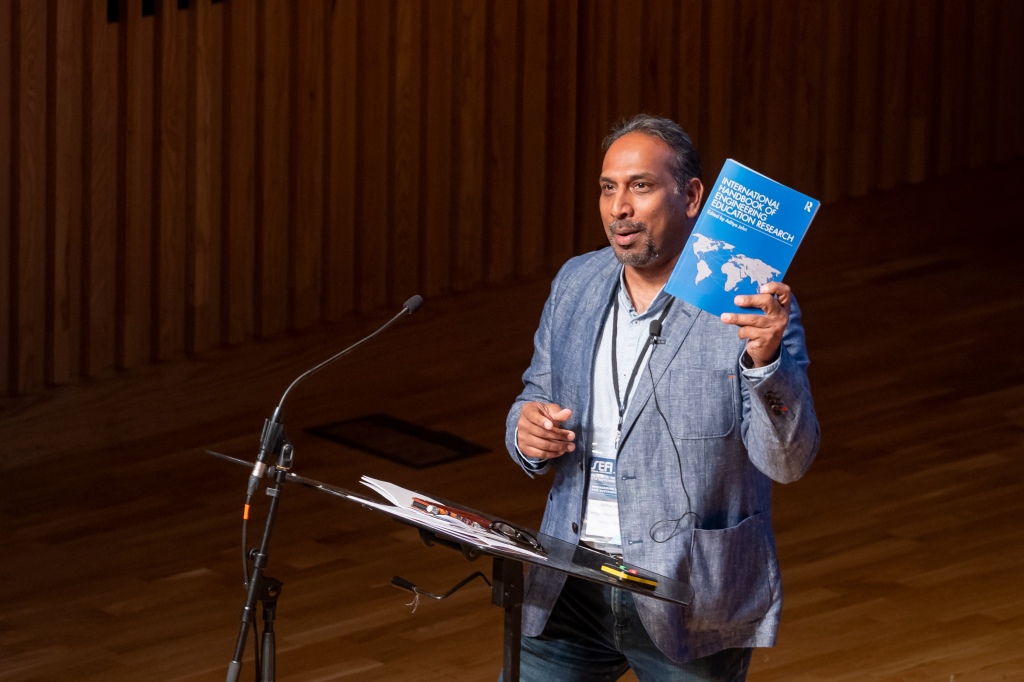
It opens with the launch of our handbook on teaching ethics in engineering. Next, we discuss a strategy for making the necessary changes in engineering education to address turbulent times.
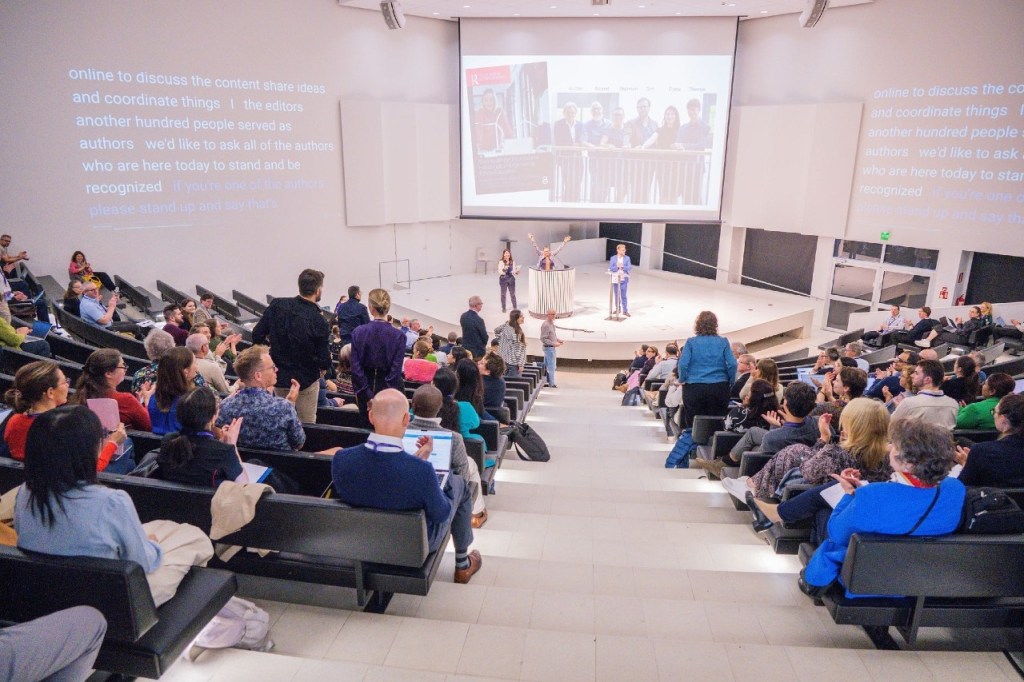
Below, I share fun pics of SEFI, as posting this is a chance to relive the excitement! From the launch:
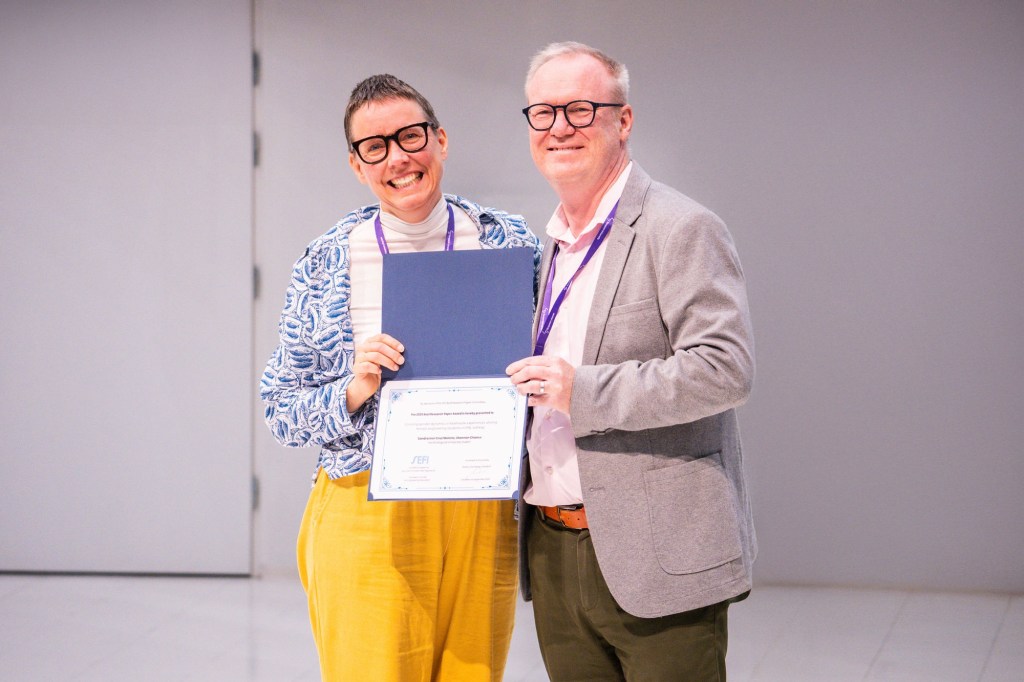
A significant — unexpected — highlight of the SEFI conference was receiving the award for the BEST RESEARCH PAPER of the entire conference! I accepted the ward on behalf of my PhD student, soon-to-be Dr Sandra Cruz!
Here I’m being awarded by Professor John Mitchell and congratulated by my co-editors of the European Journal of Engineering Education.
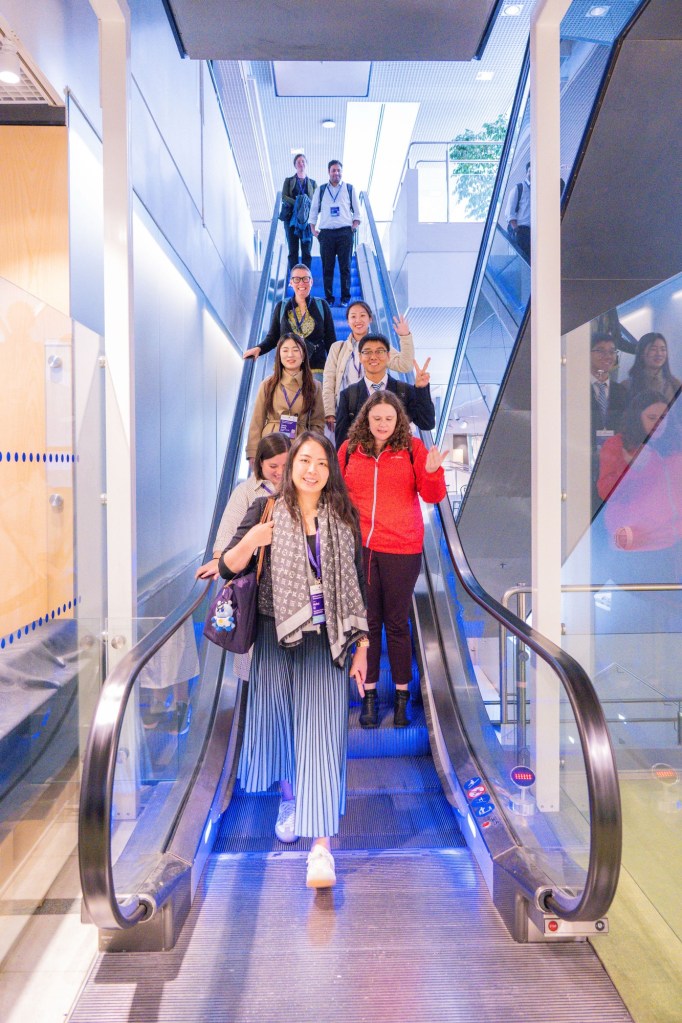
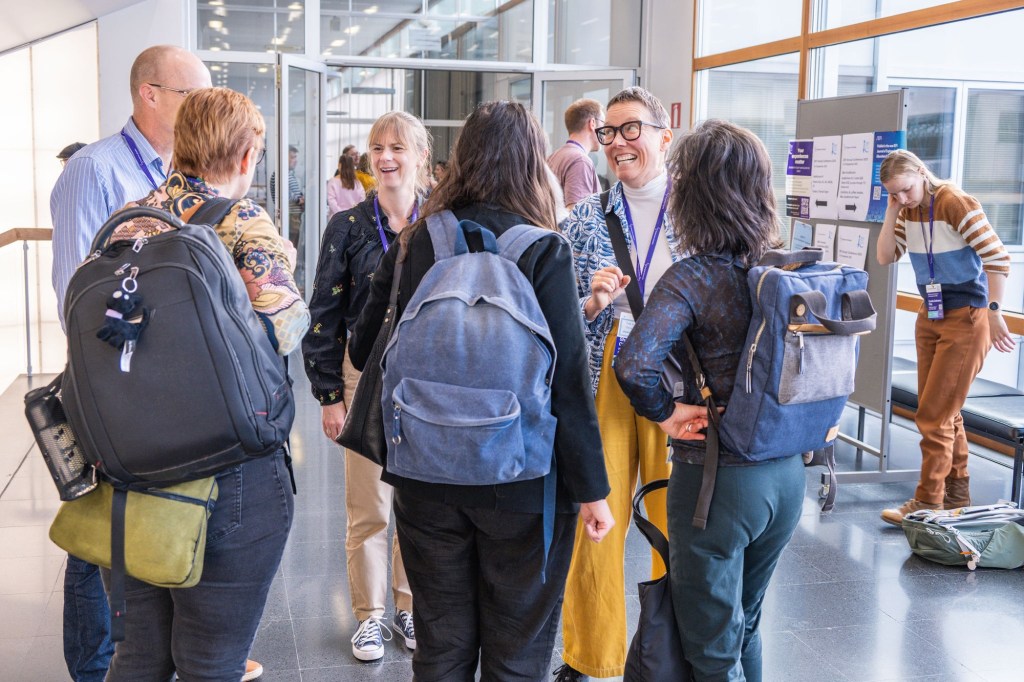
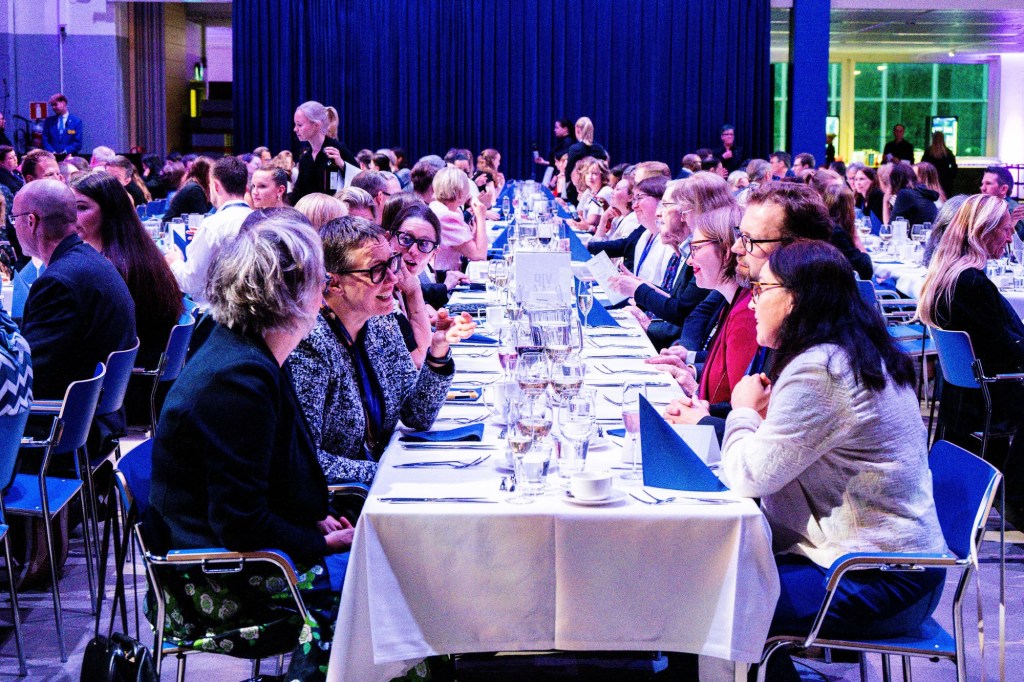
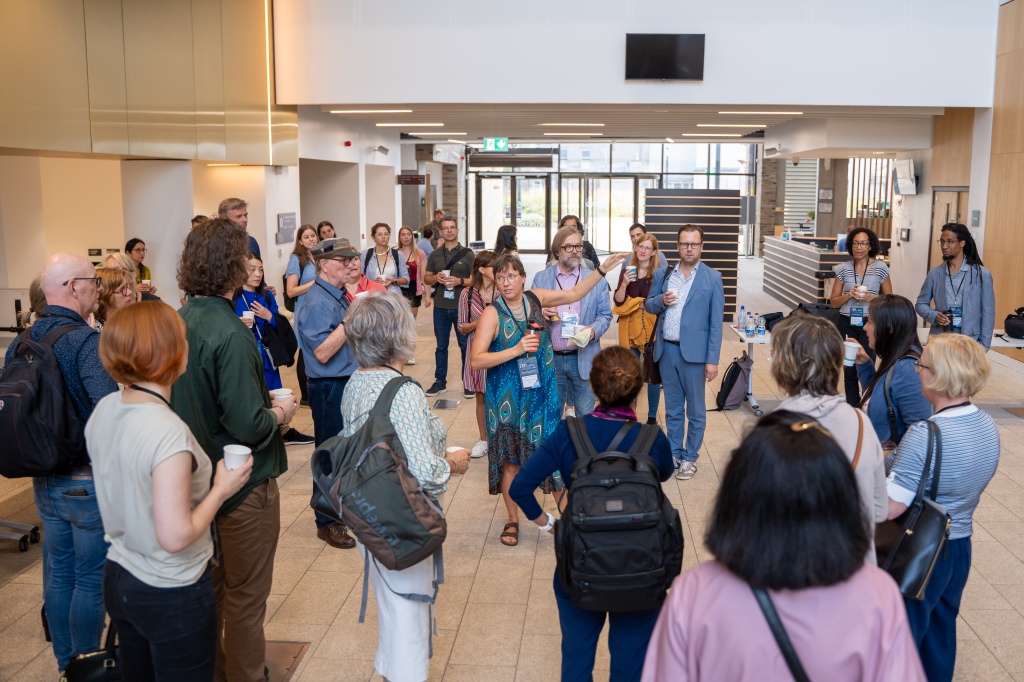
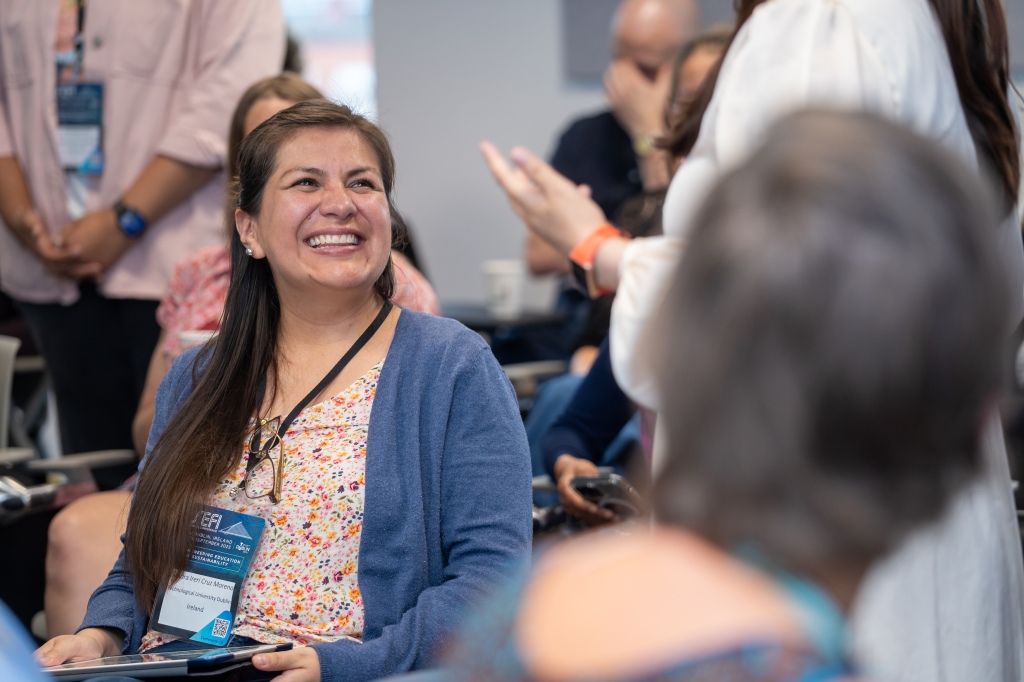
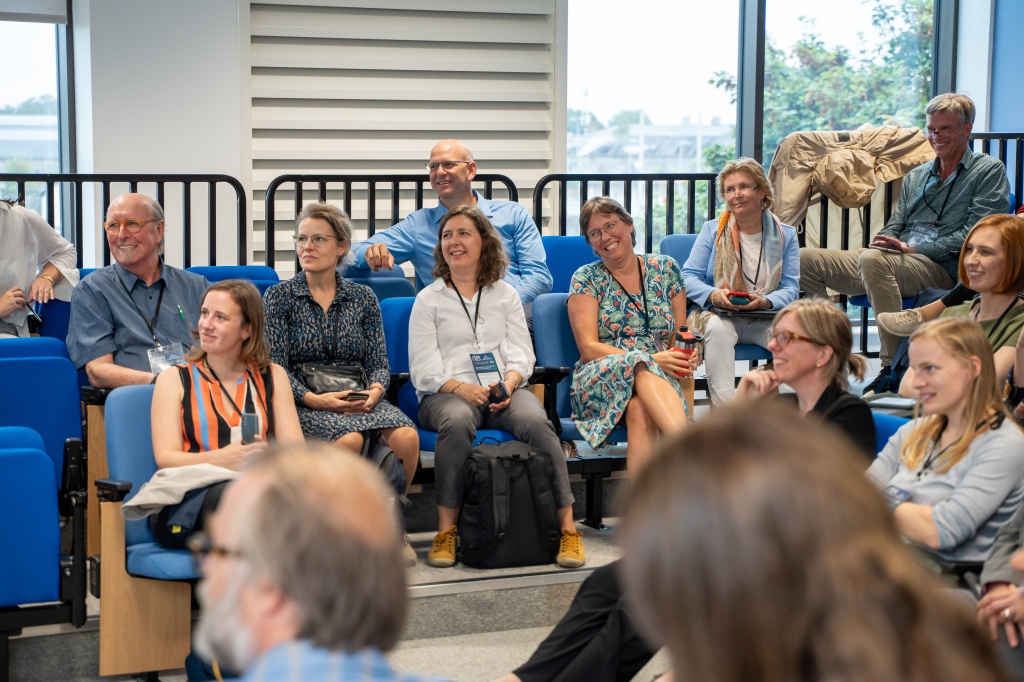
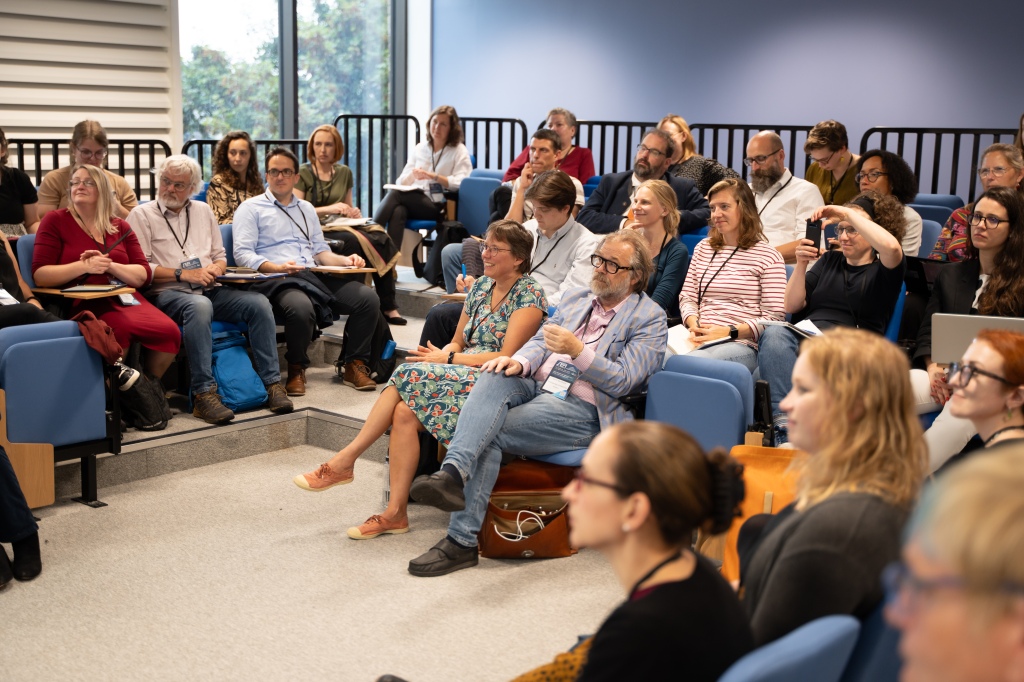
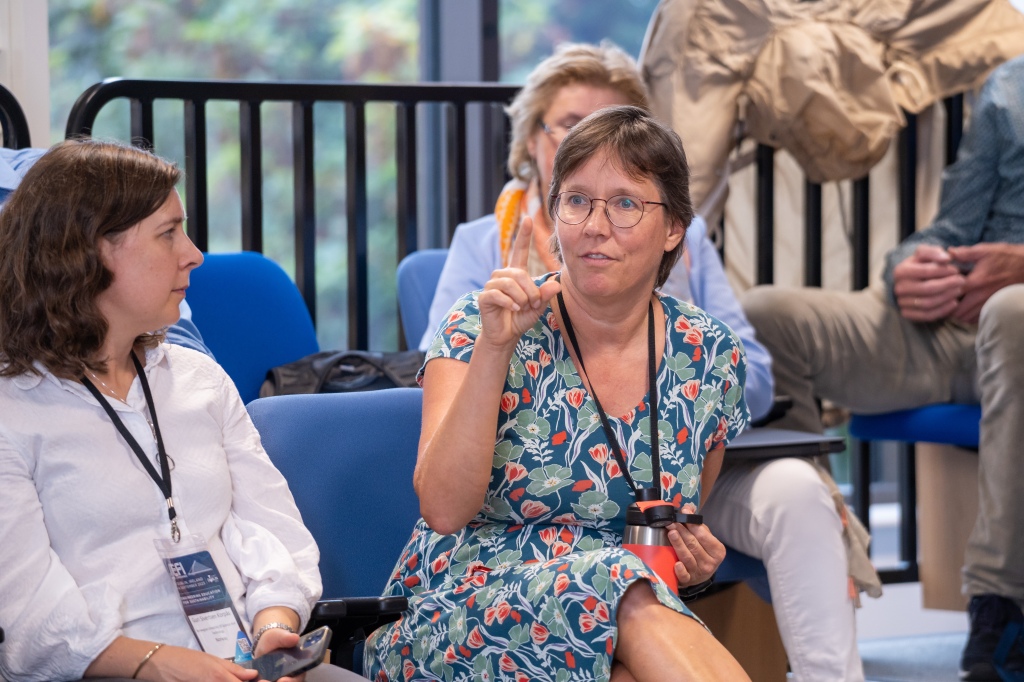
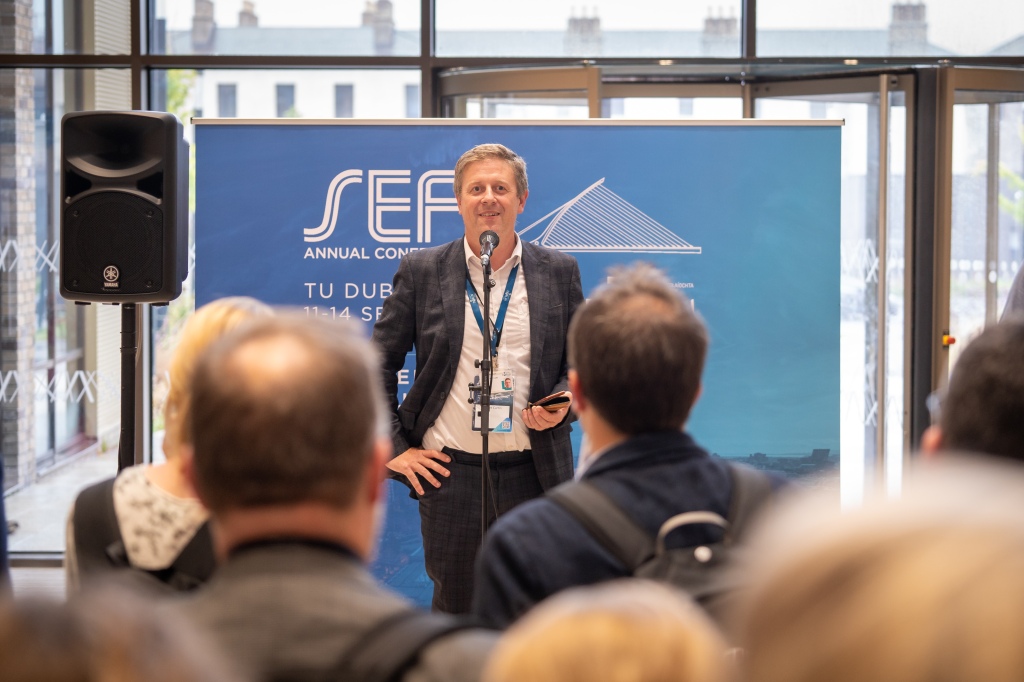
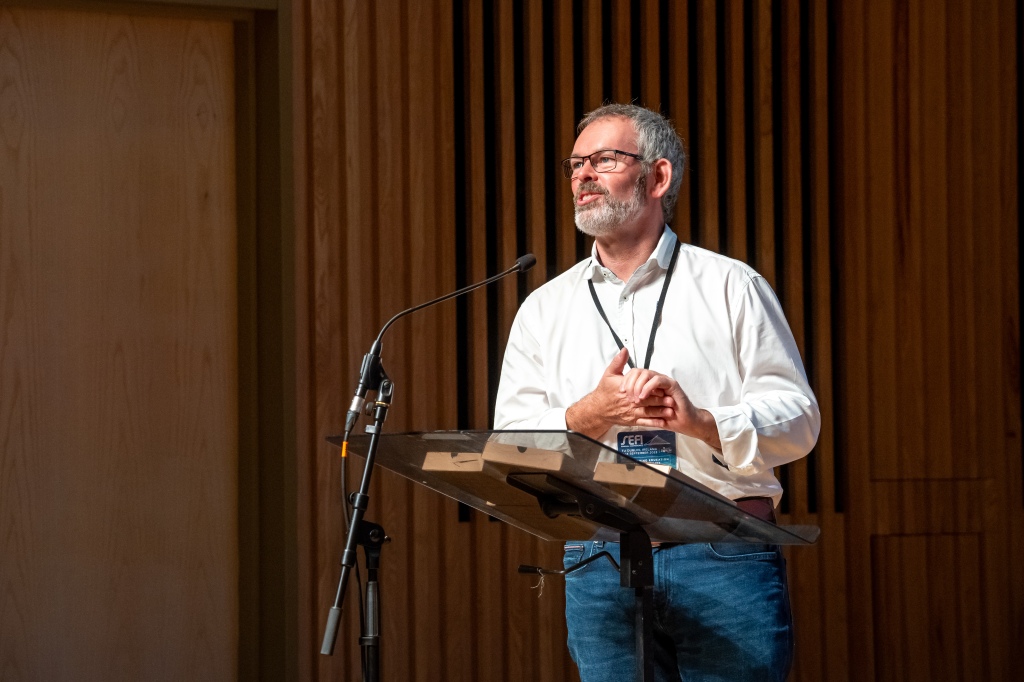
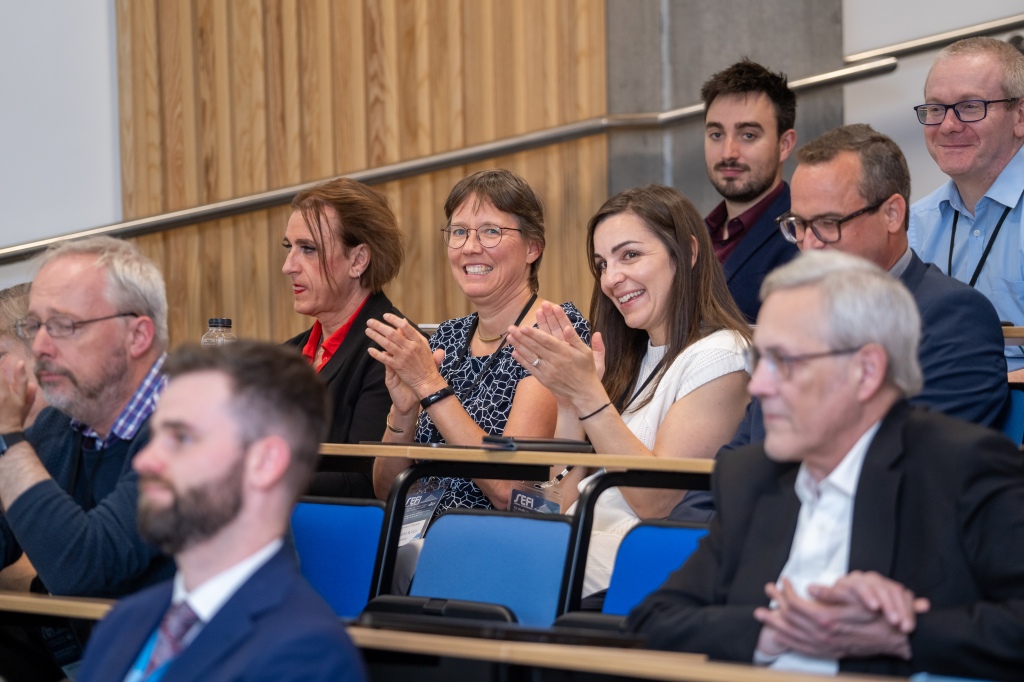
The official photographer captured the conference vibe:
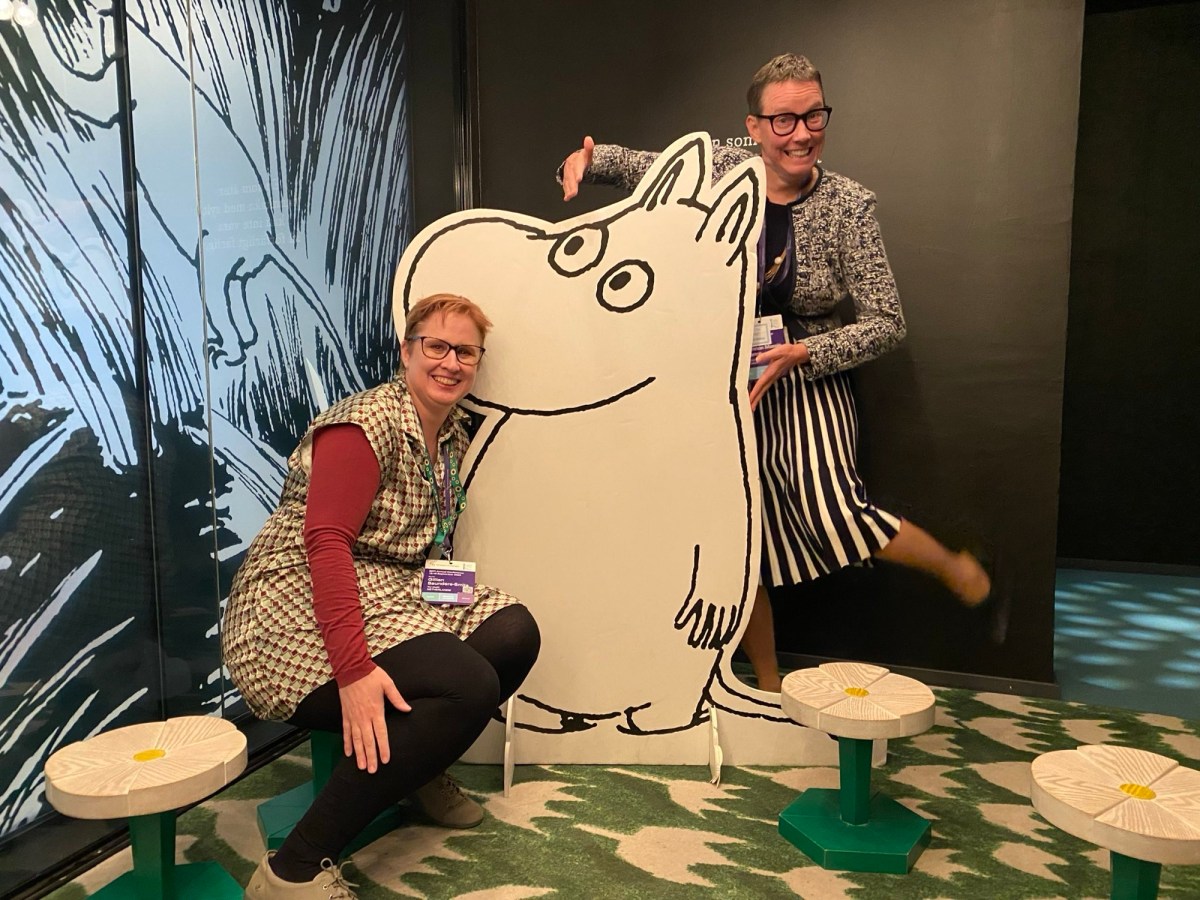
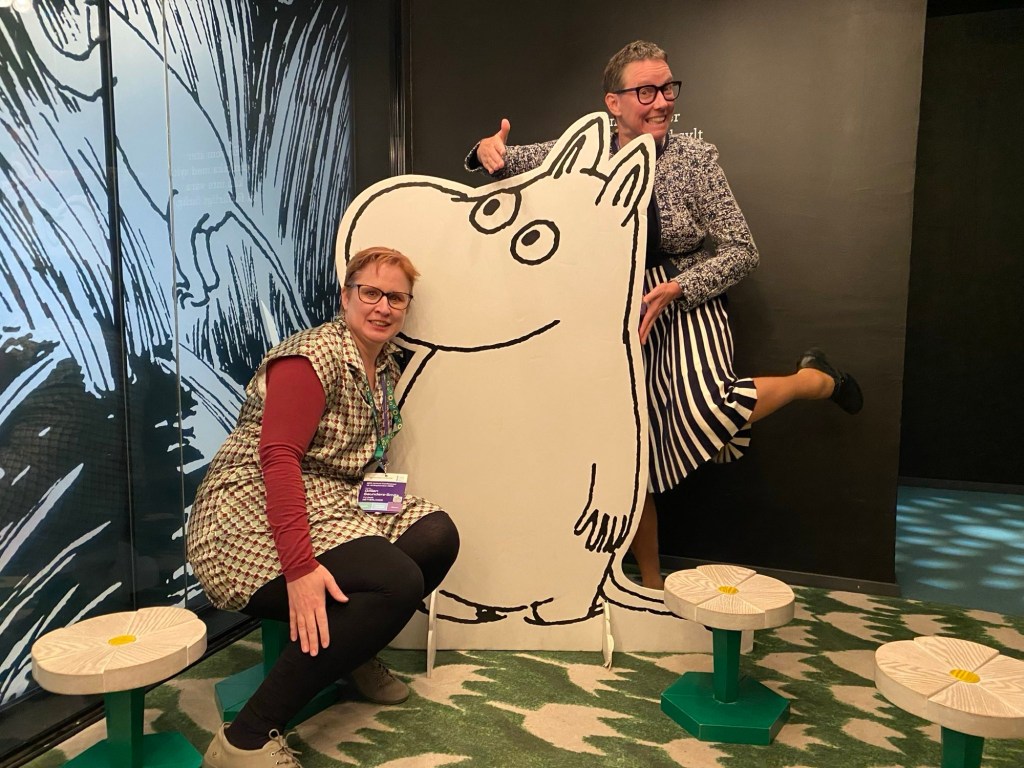
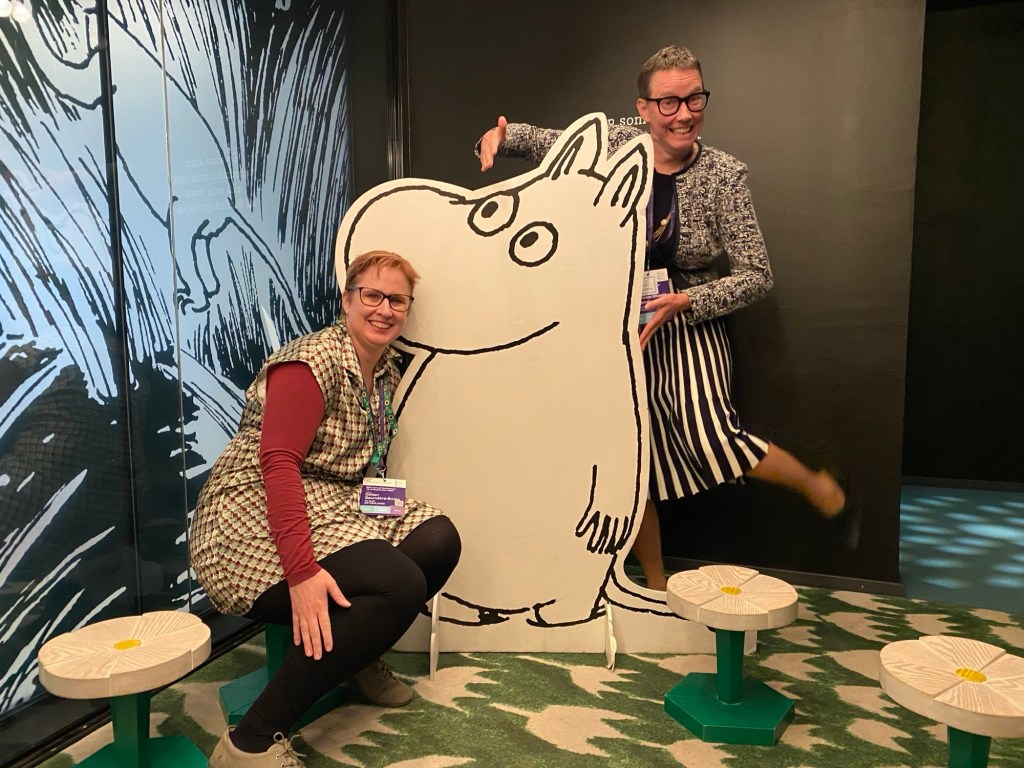
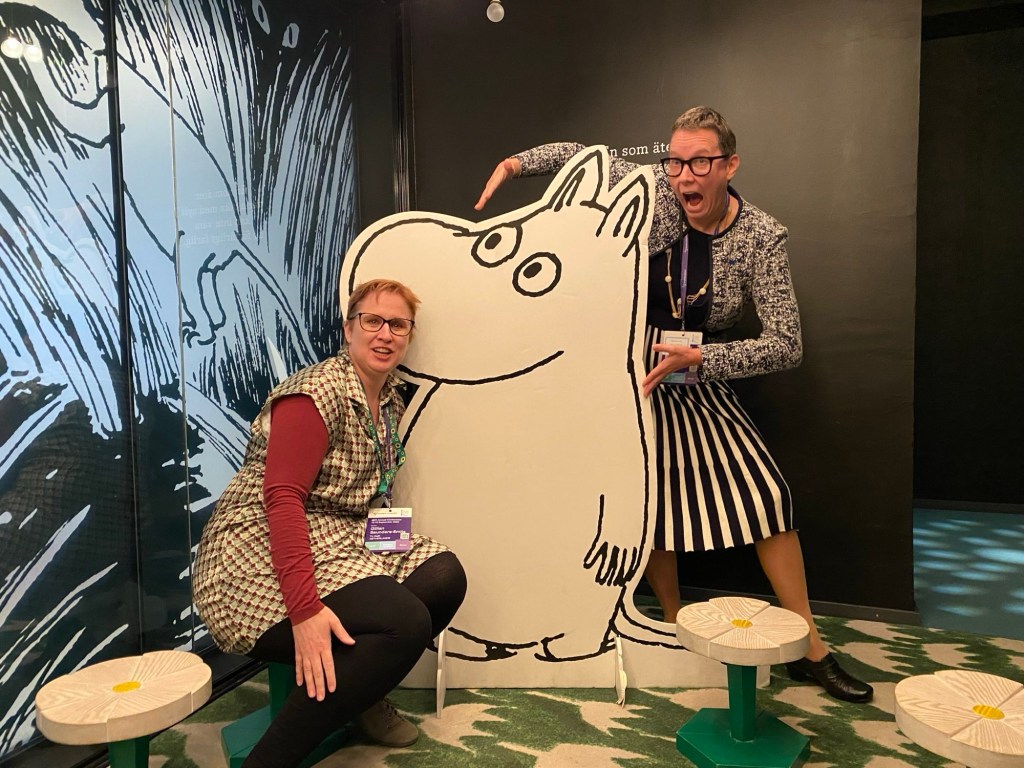
And the SEFI Director General, architect Klara Ferdova, captured and shared other behind-the-scenes moments, like Gillian Saunders-Smit and me at the Moonmin Museum:
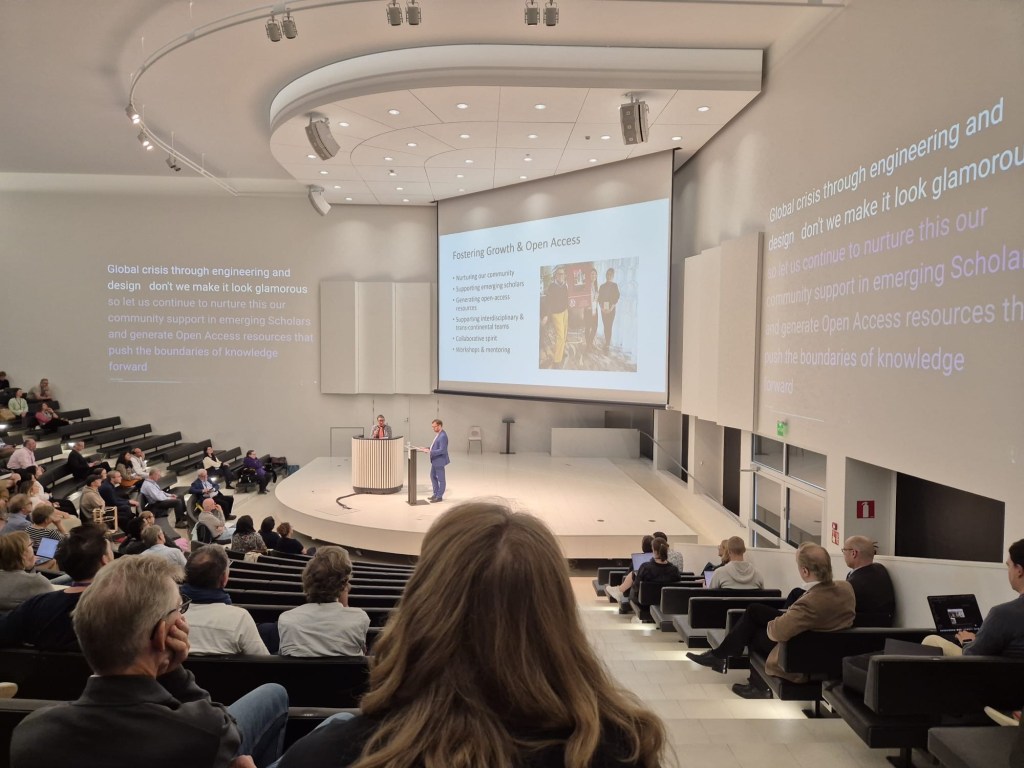
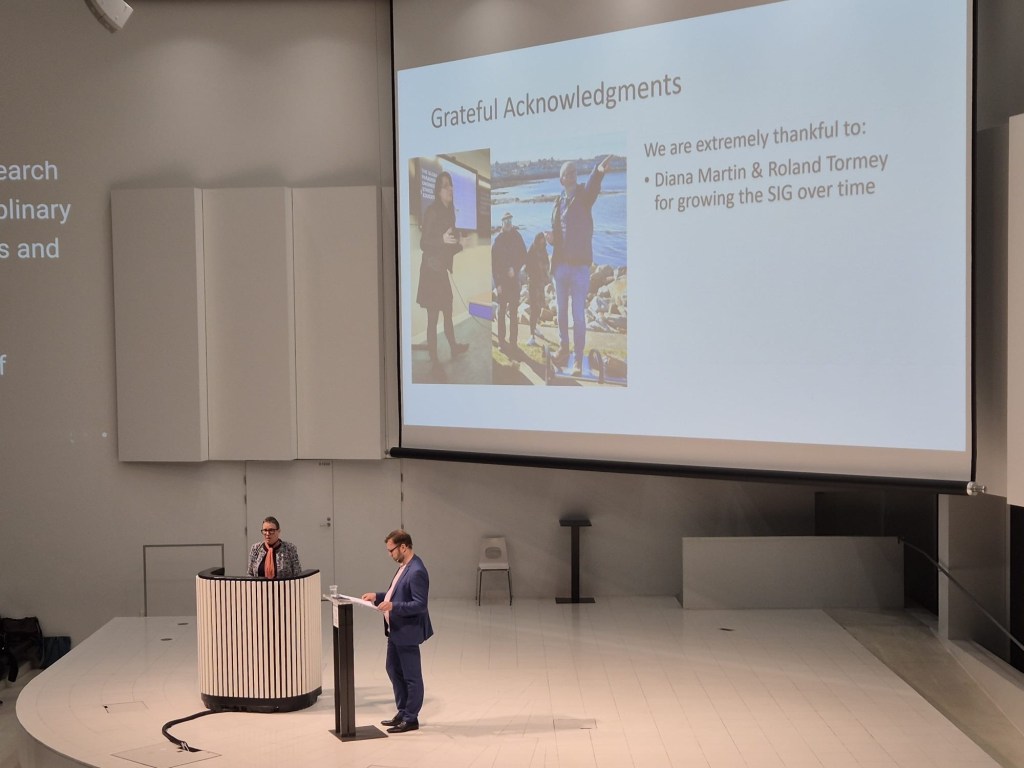
And here are Klara’s photos of the keynote! An architect’s eye for structure and composition, Klara has!
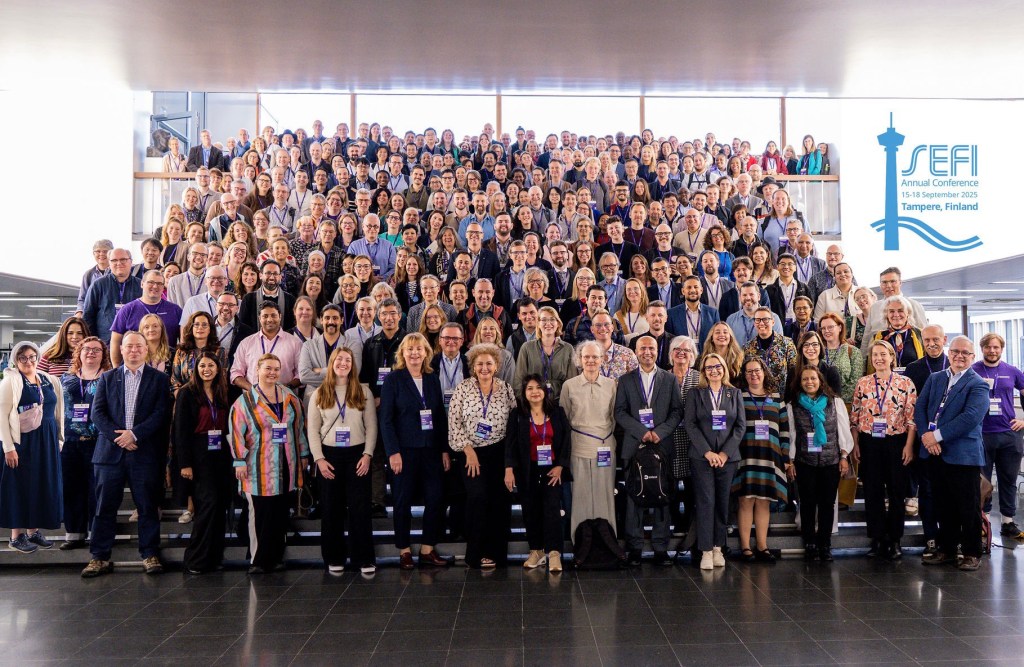
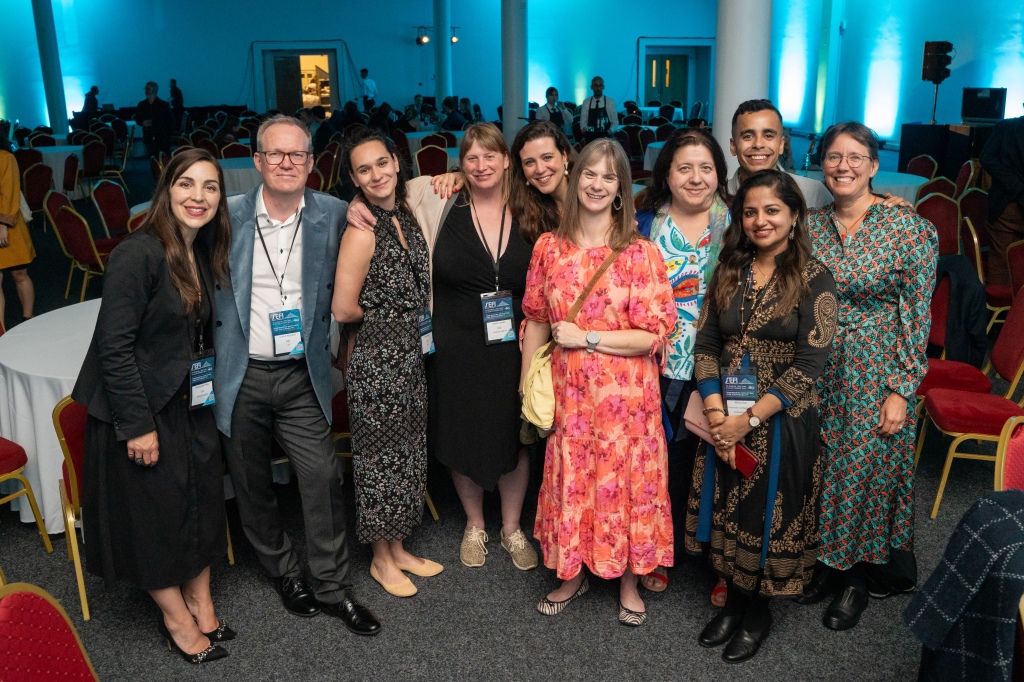
And finally, here’s the official SEFI photo, showing the whole happy family!
If you’re interested in teaching engineering well, please join us for next year’s SEFI conference in Prague!
Following a summer of intense curriculum design, a relaxing holiday in Greece, and the Dublin Maker fair, I dove right into the new academic year, voicing my perspectives at various meetings and workshops with colleagues at TU Dublin and–last week–attending and throwing myself into the annual conference of SEFI, the European Society for Engineering Education which was held just ten minutes walk from my apartment in Dublin.
Incidentally, SEFI is an acronym for our organization’s French name, Société Européenne pour la Formation des Ingénieurs, in case that wasn’t clear….
We kicked off on Sunday with a full-day pre-conference Doctoral Symposium, that I organized alongside Jonte Bernhard, Tinne De Laet, and Kristina Edström. It was, in all honesty, a highlight of the overall week, and each participant shared insights at the end of the day. “I found my village” exclaimed one of the PhD students to resounding applause. Indeed this annual symposium, where experienced researchers provide one-to-one advice to doctoral students helps bring our research community together. Everyone participating learns and grows, and we grow stronger as a group and also as individuals. With 37 students, 24 seniors, and 4 organizers present, we had plenty of others to learn from and with!
Favorite moments from the 2023 SEFI Doc Symposium include small group coaching, the extremely popular “speed dating” event, and the sharing of take-home messages.
All the photos on this post are by the talented photographer Conor Mulhern <conor@eyeon.ie>, hired to document the event.
Running straight from the Doc Symposium to Temple Bar that Sunday, I hosted my second event of the day — a new-to-SEFI pre-conference welcome for anyone feeling like they’d like a sense of community before the big event started. We had nearly 30 participants for our “Birds of a (Different) Feather” event, organized by Inês Direito, Predrag Pale, and I.
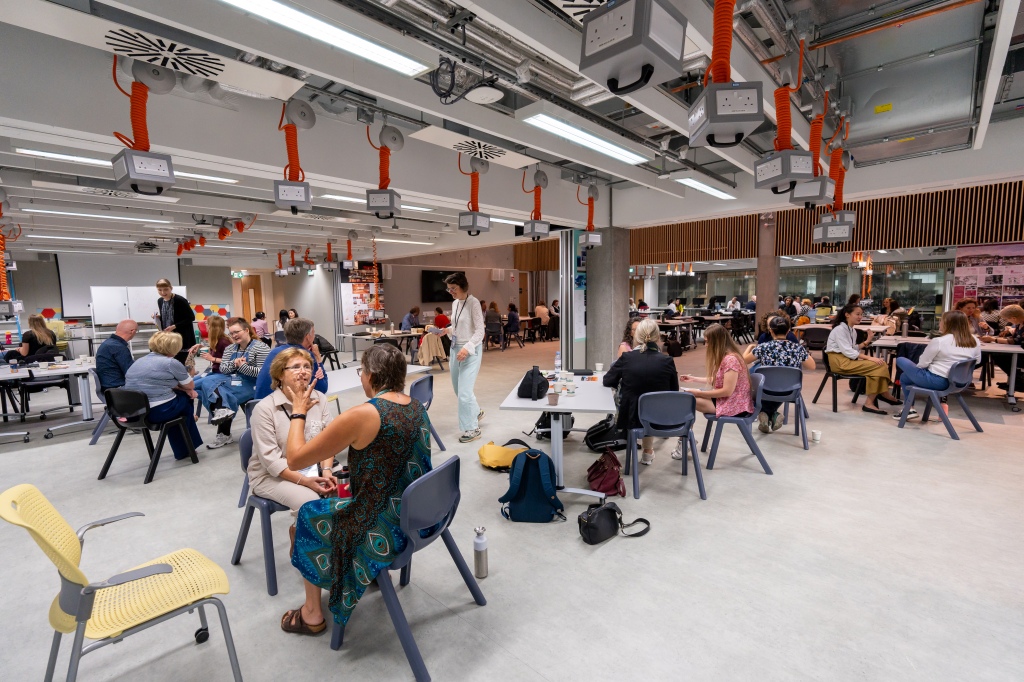
The main conference kicked off Monday morning. It was the 51st conference for SEFI, an organization that just reached 50 years of age, and a record number of people attended. Our TU Dublin East Quad was busting at the seams with 575 participants fully engaged.
I was a member of our Local Organizing Committee and I witnessed first-hand the heroic efforts and calm resolve of a truly outstanding member of our TU Dublin community, Ger Reilly, who led the cause.
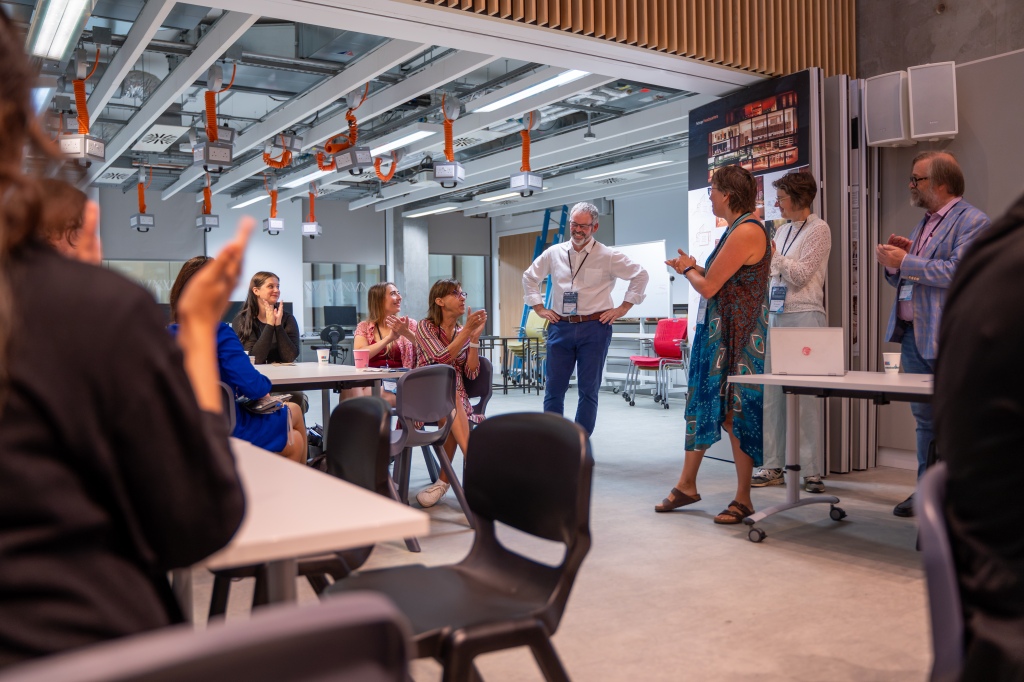
Recognizing Ger Reilly for all his amazing work organizing SEFI 2023!
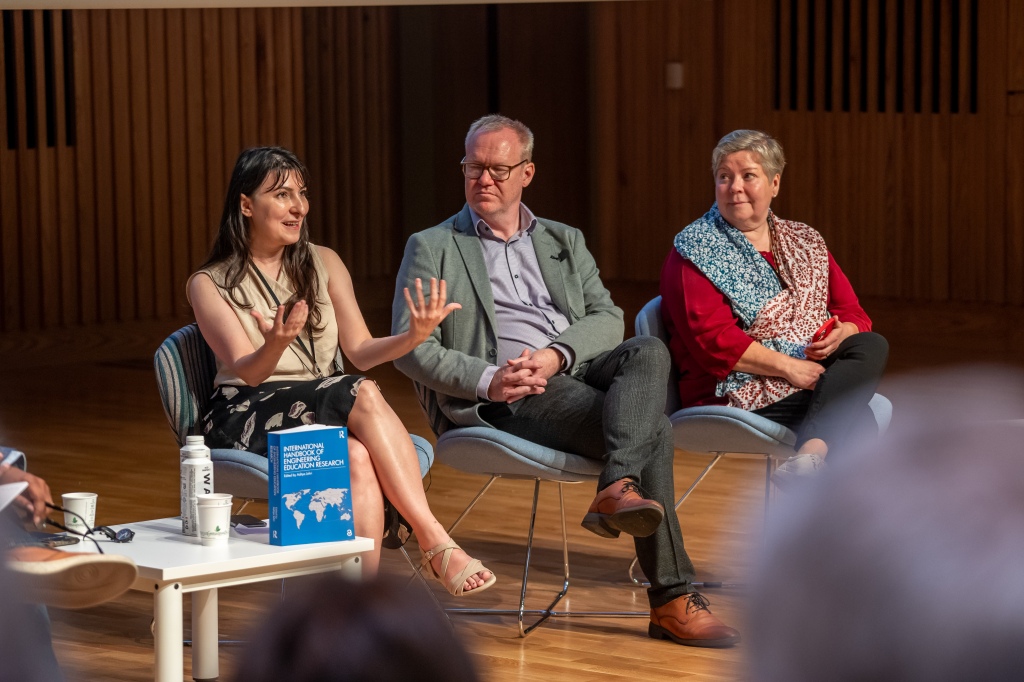
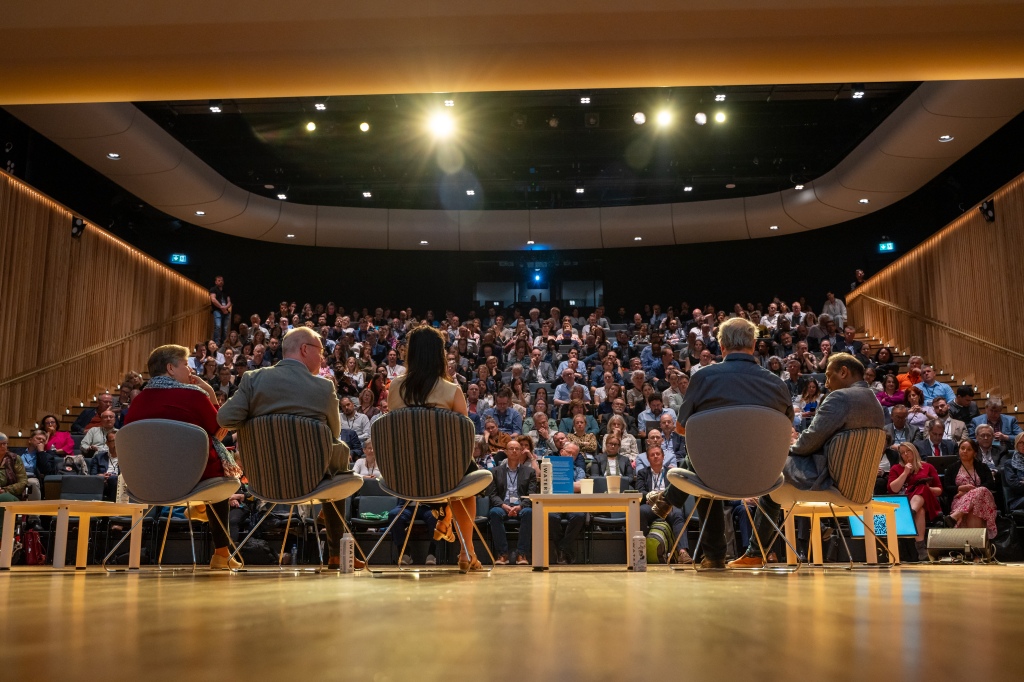
Monday morning started with a plenary on our new International Handbook of Engineering Education Research, organized by Aditya Jordi and Diana Adela Martin, with Bill Williams, Kristina Edström, John Mitchell, and Diana Adela Martin as panelists. Each panelist shared intriguing new insights on the current state of engineering education and thoughts and advice on where we’re headed as a field. I’ve worked closely with each of these scholars and feel a deep connection to each of them.
The opening plenary on the future of engineering education research. With Aditya Johri, Bill Williams, Diana Martin, John Mitchell, and Kristina Edström.
To tell the truth, I could not be prouder of Diana Adela Martin and her outstanding contributions to this year’s conference. She had asked me, when she completed her Ph.D., to mentor her (e.g., to learn about reviewing and editing for journals and books). That was just a few short years ago. And then, here she was–center stage–presenting ideas born from her work as an author and Associate Editor of our International Handbook of Engineering Education Research! At SEFI, she also led workshops, the Special Interest Group on Ethics that she co-chairs with Helena Kovacs, presented research, attended our EJEE editors’ dinner in her new capacity as Associate Editor of EJEE, and served as a senior advisor at the Doc Symposium, mingling with her new colleagues from UCL’s Centre for Engineering Education where she will soon start working as a Senior Research Associate.
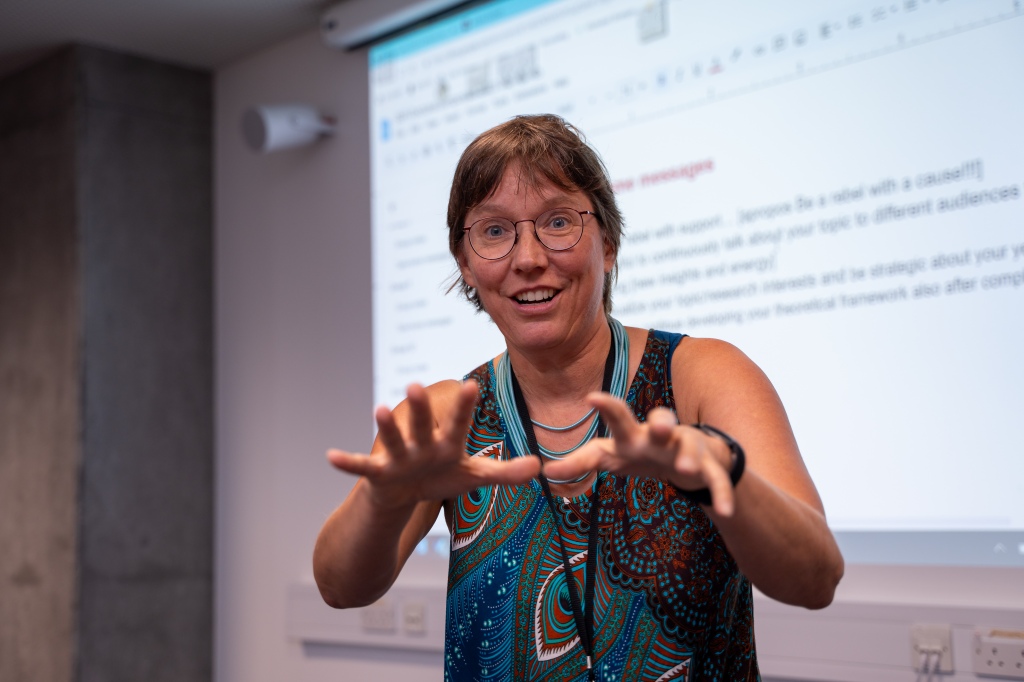
Diana Martin in action (and leading an Ethics SIF workshop with Helena Kovacs, above).
After the panel, paper presentation sessions and workshop sessions swung into full gear.
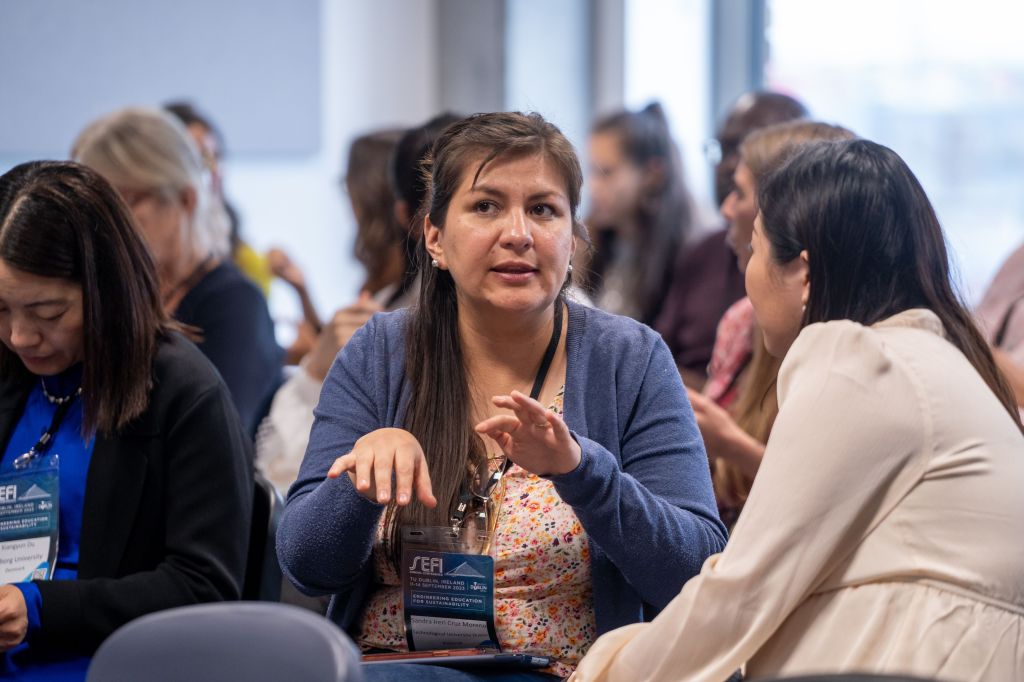
My fabulous PhD supervisee, Sandra Cruz, presented a paper on one facet of her research. Her paper is titled “Exploring Women’s Teamwork Experiences in Engineering Education: A Phenomenological Analysis”.
TU Dublin Ph.D. student Sandra Cruz, a joy and an inspiration to supervise!
Just before Sandra’s presentation, I myself presented a paper co-authored with Barry McAuley of a “Preliminary mapping of bachelors’ research to enhance digital construction in Ireland”. Afterward, I joined two really fun Special Interest Group workshops (Ethics, and Engineering Education Research).
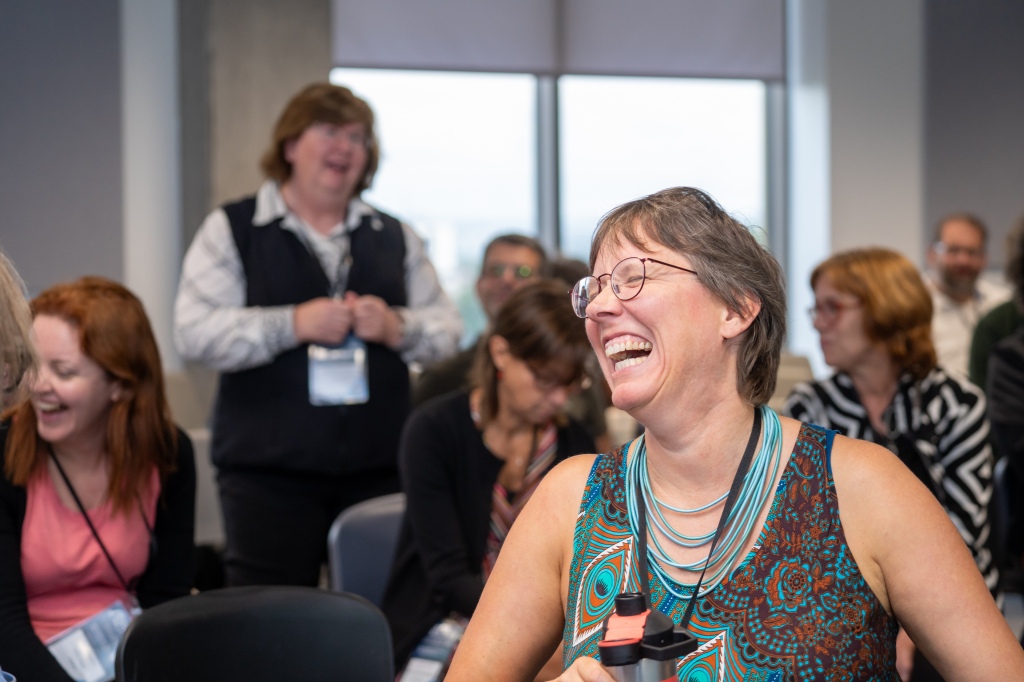
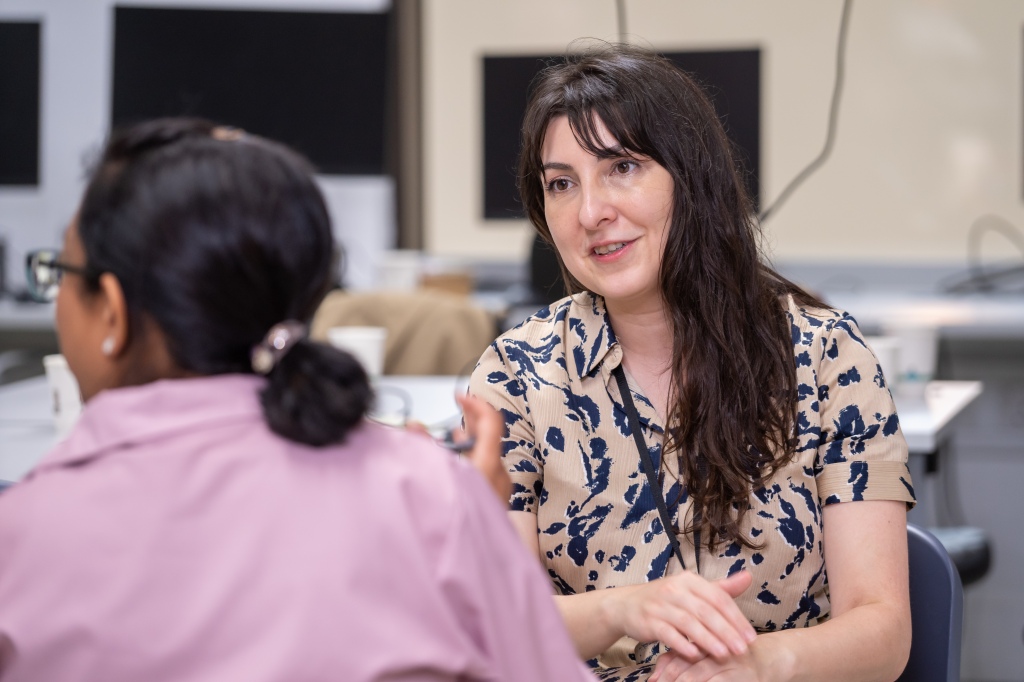
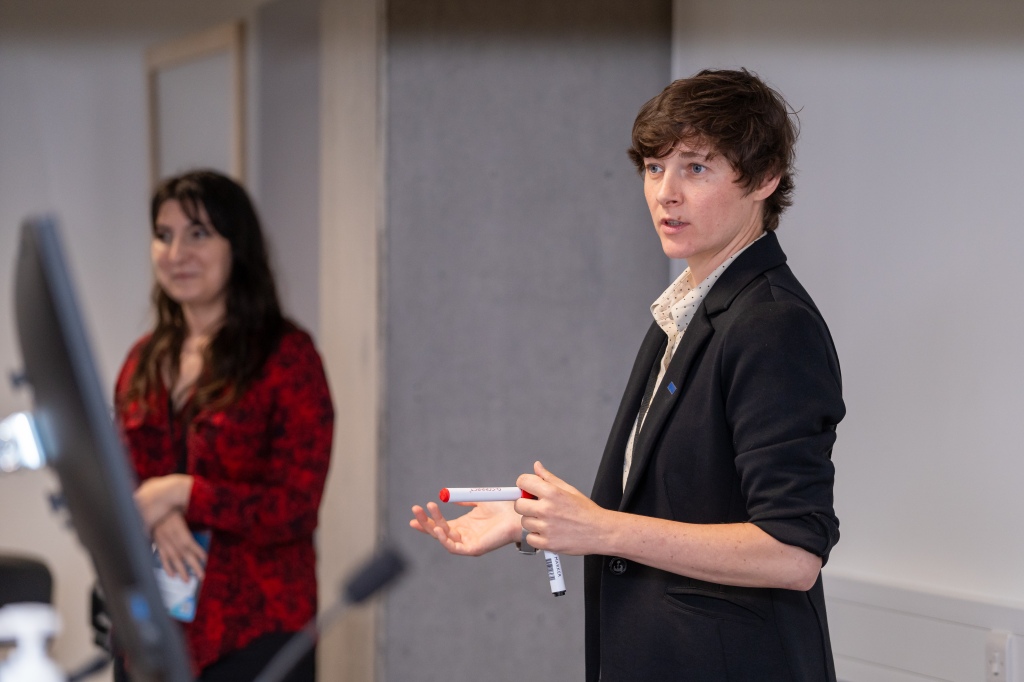
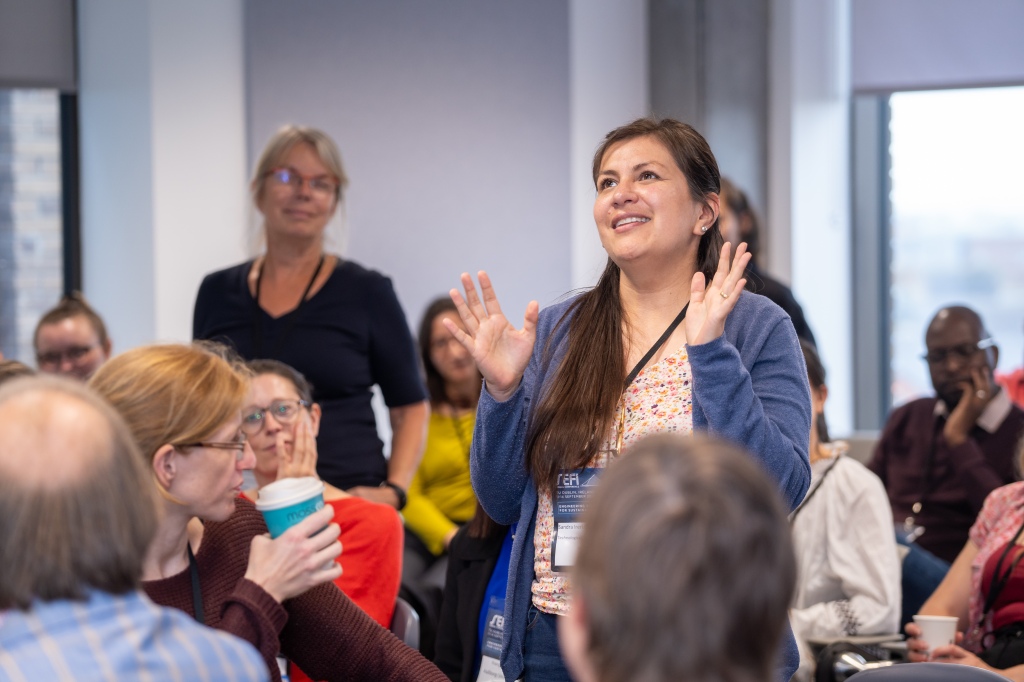
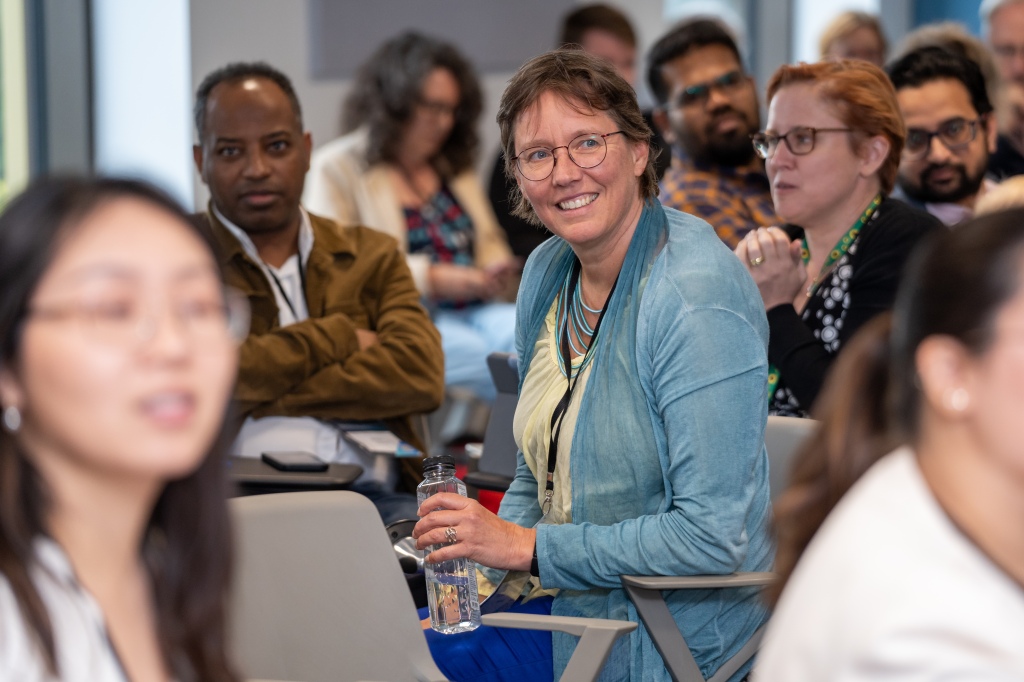
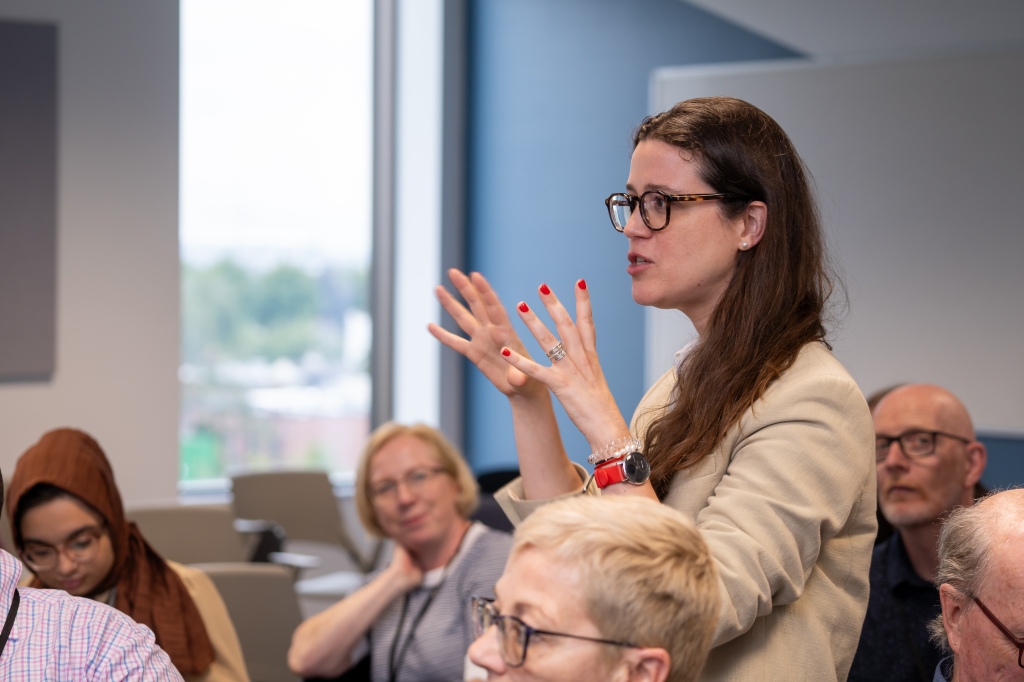
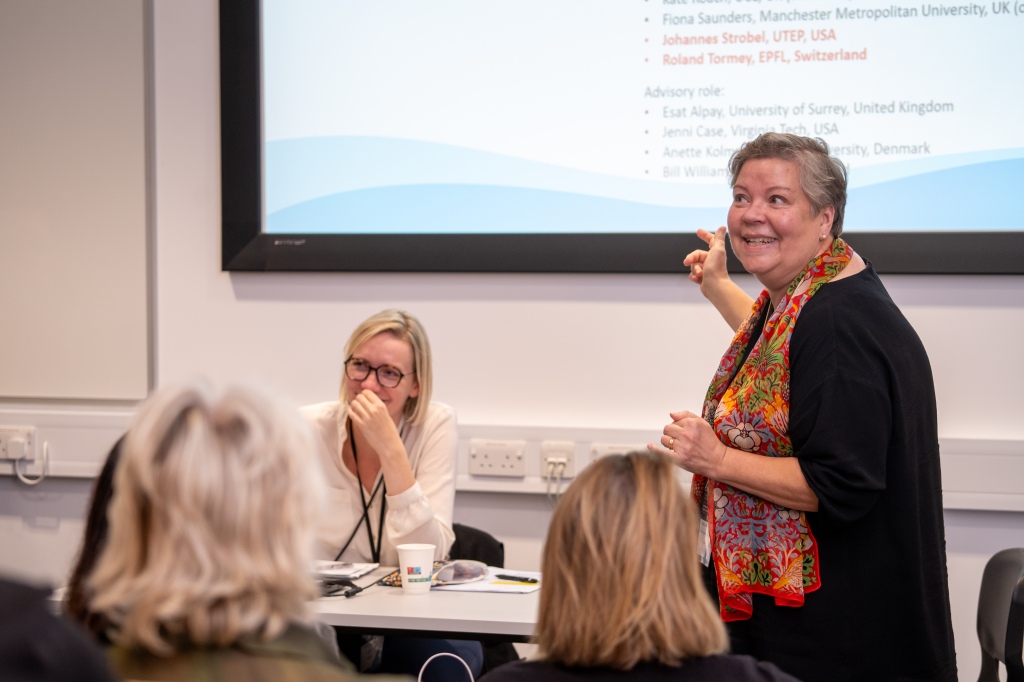
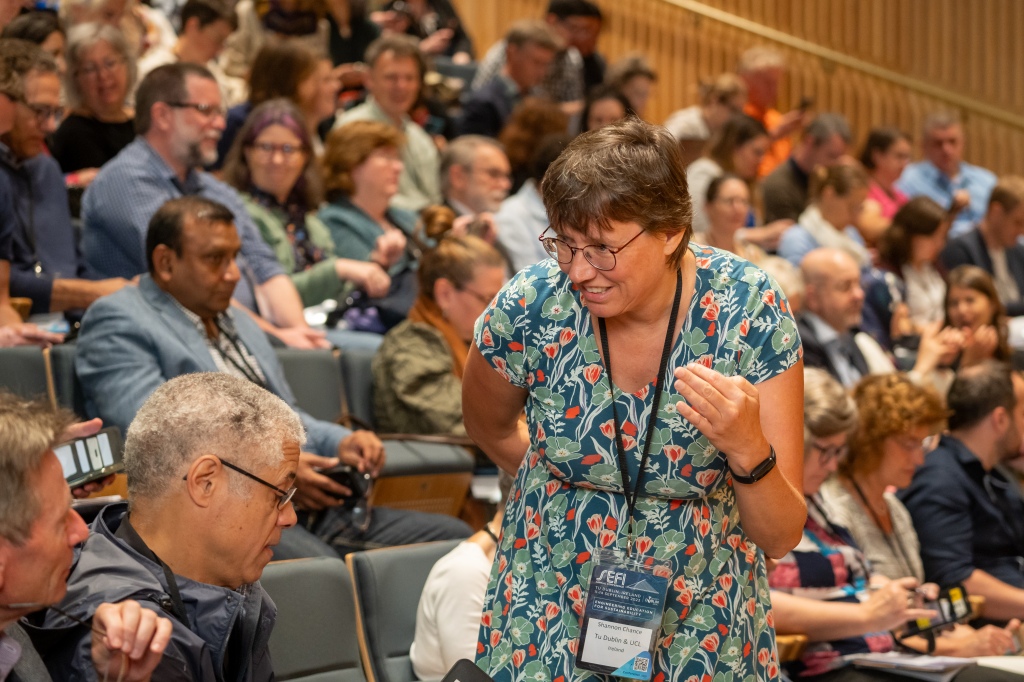
I really enjoyed the paper presentations and workshops, as evident in the photos below that Conor captured, and I helped lead two of the workshops.
Fun at workshops and paper sessions.
During the opening reception, a number of energetic colleagues were honored: Kristina Edström, Pieter de Vries, Yolande Berbers, and Maartje van den Bogaard have given so much to SEFi over the years and it wouldn’t be the organization it is today without their efforts. They we all named Fellows of SEFI, and Maartje even thanked me for being a mentor and role model during her acceptance speech–that was a big surprise to hear!
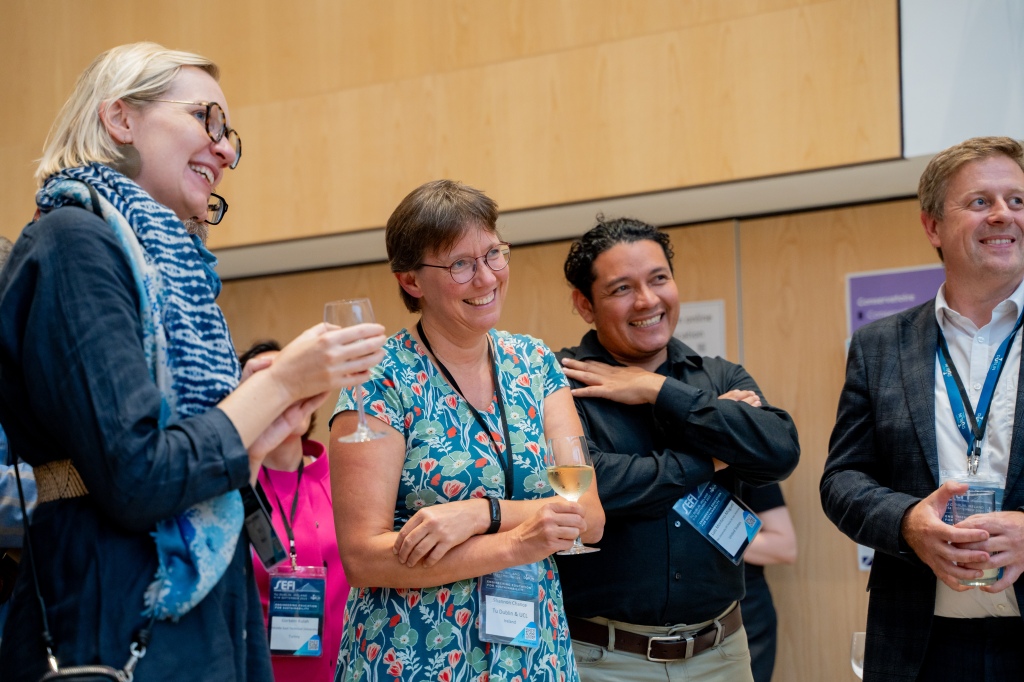
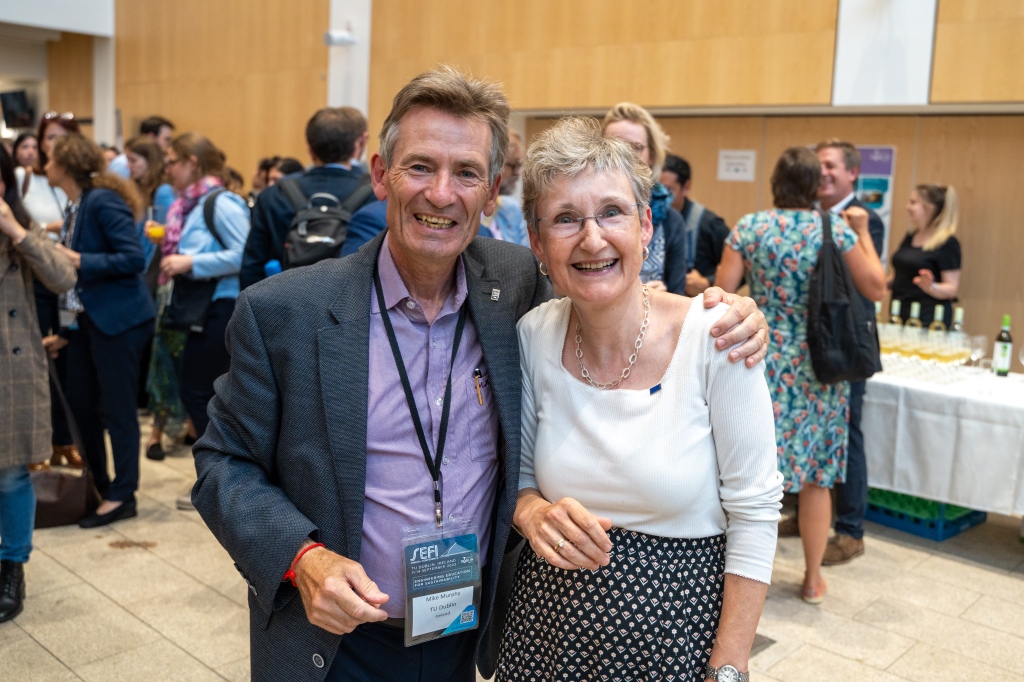
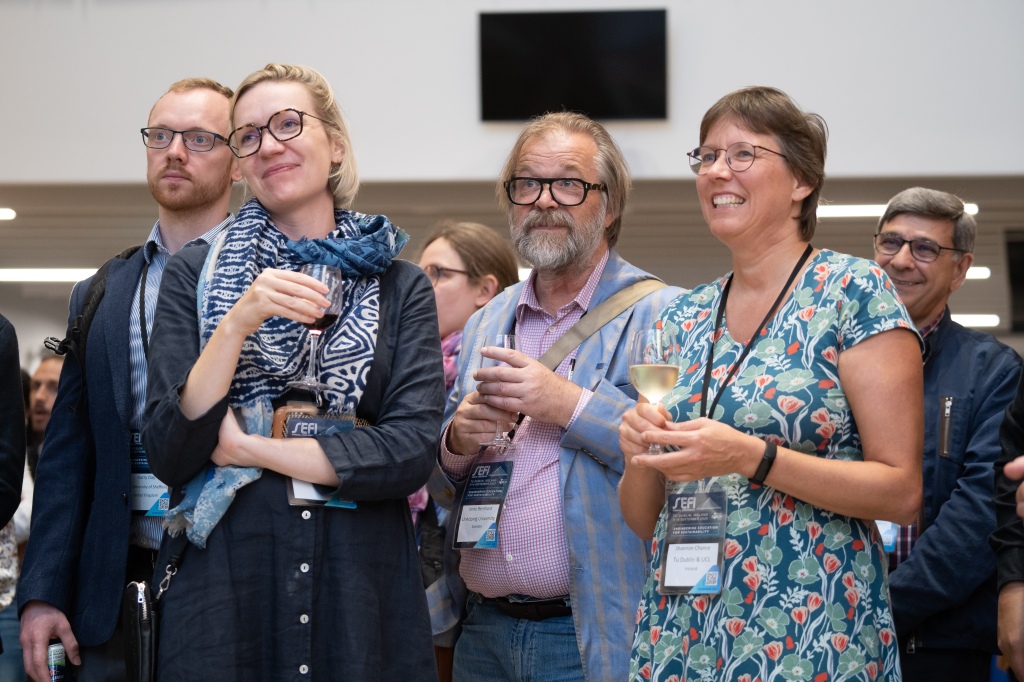
Moments from the open reception. Here Mike Murphy congratulates Yolande Berbers following her award as SEFI Fellow.
I must acknowledge all the exceptional work done to support this conference by SEFI staff Klara Ferdova over the year we’ve been planning this event.
My dear colleagues Klara Ferdova and Jonte Bernhard.
Aongus and I joined friends at Oscar’s Cafe after the reception.
On Tuesday, afternoon, Jye Benjamin O’Sullivan presented our co-authored paper “Drawing from SEFI Ethics Knowledge to Support Eco-ethics Education within the European University of Technology”.
Jye Benjamin O’Sullivan presenting our paper. (My smartphone photo, not Conor’s, or it would be much clearer!)
During SEFI, I helped lead workshops for new authors (Tuesday) and reviewers (Wednesday). I attended breakout meetings such as the EJEE Editorial Board meeting, EERN-UK & Ireland, and a celebration of our dear friend John Heywood, and Emeritus Professor from Trinity College Dublin, who at 92 years young is still working away, publishing research.
My university president, David FitzPatrick, and dean, James Curtain, and TU Dublin did a tip-top job representing our institution at this event. They’ve really grown into their roles over the past few years and their short speeches at the conference opening and closing were informative and engaging. Their support for the conference was important in so many ways, including having so many TU Dublin staff members present as volunteers and participants.
Dean Jame Curtain, President David FiztPatrick, and the amazing Ger Reilly, leaders at TU Dublin.
I attended SEFI’s General Assembly meeting to support my fabulous collaborators in taking on new leadership roles. For instance:
Emanuela Tilley was elected Vice President of SEFI for the coming two years. She and I work closely together to design a new curriculum for NewGiza University.
Emanuela Tilley in action, delivering awards and assuming the role of SEFI vice president.
Inês Direito joined the SEFI Board of Directors. She is also my mentee, and it brings such joy to my heart to see her flourish as a scholar, leader, and truly amazing friend and collaborator. I actually didn’t see much of Inês at SEFI this year… we were both so busy spreading our wings. To say I’m proud of the scholar she is and the leader she’s becoming is an understatement!
Inês Direito assumed a new role on the SEDI Board of Directors during the conference.
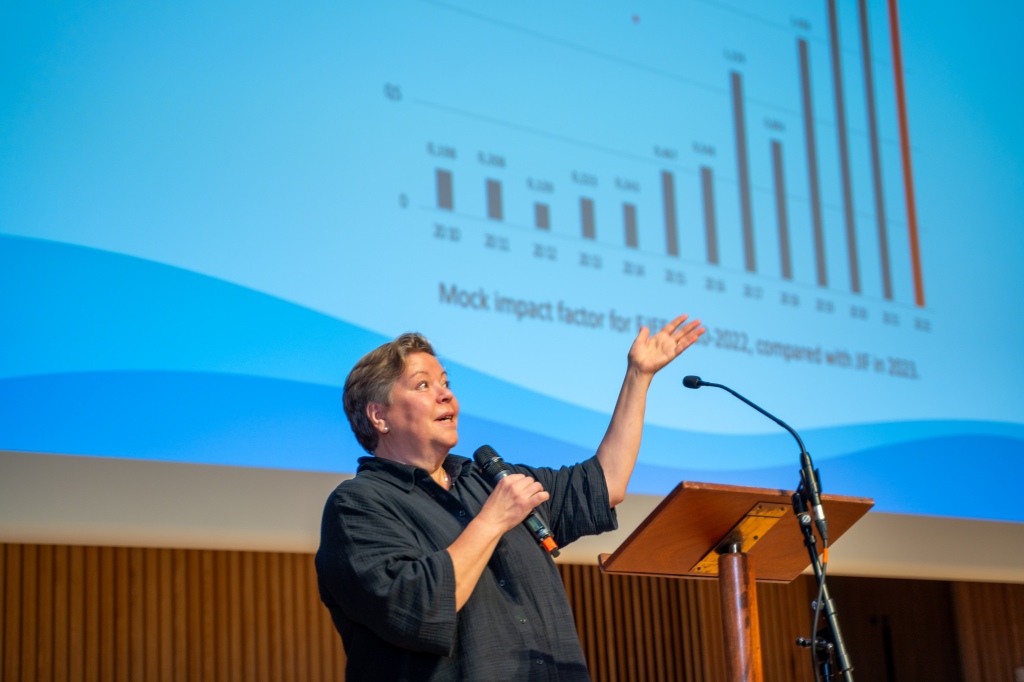
At the EJEE Editorial Board meeting, Kristina Edström, our Editor in Chief shared statistics showing that our journal is rising in stature. I’m very pleased to serve as Deputy Editor, alongside Jonte Bernhard, and look forward to helping lead this journal forward in the coming years.
Our superb leader, and EJEE editor-in-chief, Kristina Edström.
Special guests joined us from far and wide. Even though this is the annual European conference, dozens upon dozens of researchers in engineering education joined us from Africa, Australia, and North America.
Two very intriguing keynotes were delivered in the last two days of the conference, and I was delighted since our Local Organizing Committee had nominated them as keynote speakers.
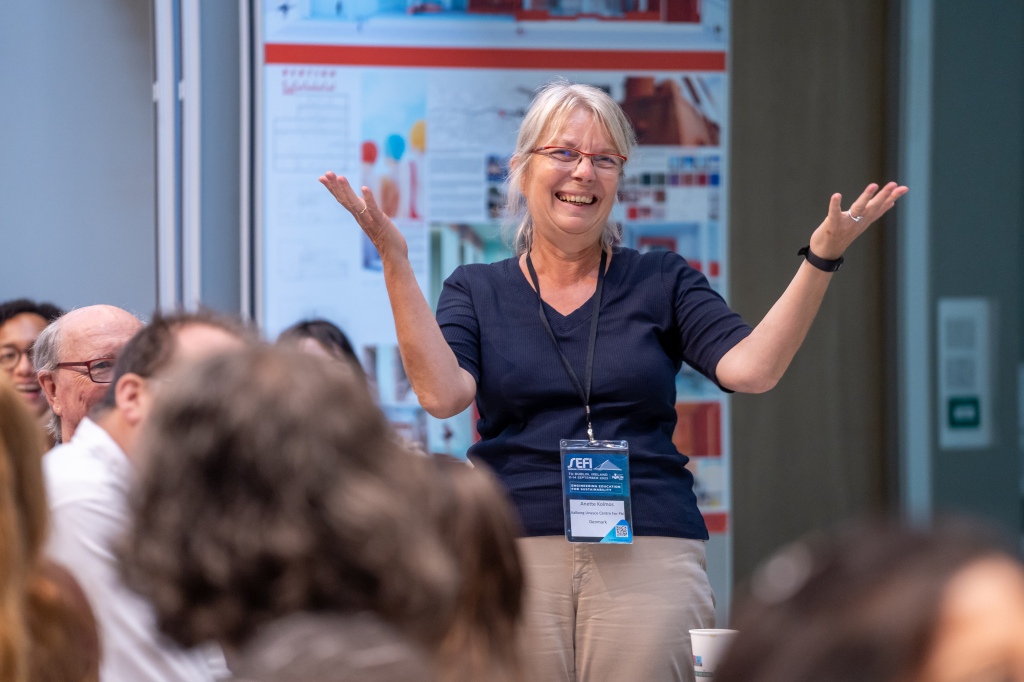
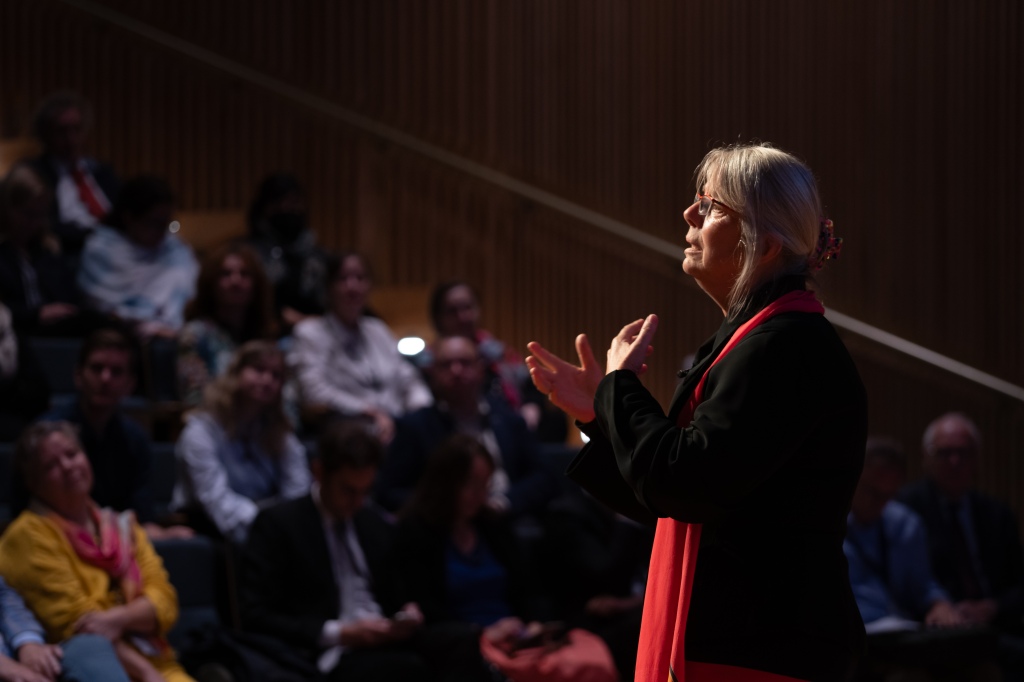
Anette Kolmos, from the Aalborg University UNESCO Center for Problem-Based Learning, put enormous energy into preparing and delivering her keynote–developing incredibly helpful new graphics and descriptions of extremely advanced concepts regarding transdisciplinary team challenge-based learning and the like. She pulled together ideas that she’s been sharing for years into an extremely effective presentation that brought these ideas to life.
Anette Kolmos’ keynote at SEFI 2023.
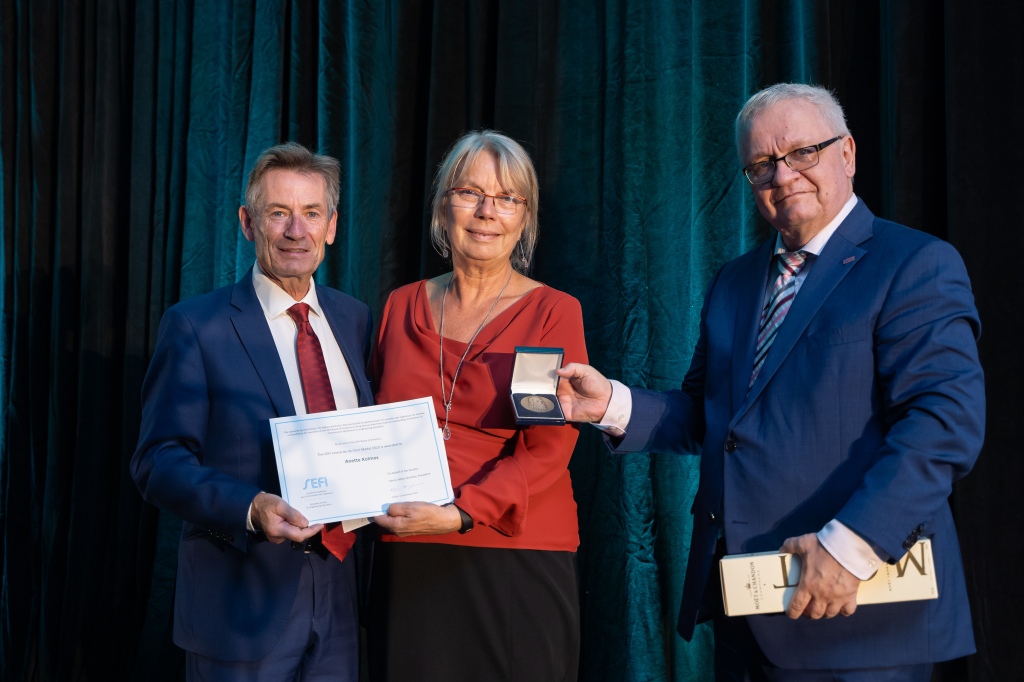
Anette also won top honors at our gala banquet on the final night, taking home SEFI’s coveted Leonardo DaVinci Award, an honor long overdue I’d say. She’s in great company as Santiago Calatrava is one of many illustrious past winners of this award.
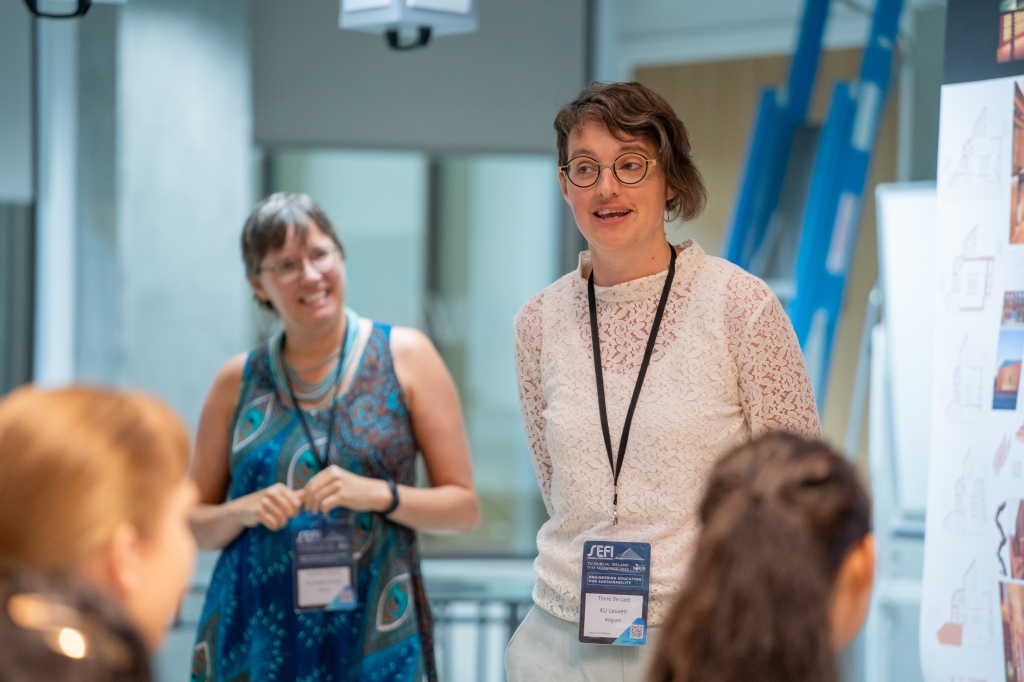
Tinne De Laet won SEFI’s Maffioli award for all she does to support engineering students at her university—not forgetting that she also delivers the Doc Symposium each year!
Tinne De Laet coming up to accept the 2023 Maffioli awardSEFI past and current presidents awarding Anette Kolmos the 2023 Da Vinci medal.
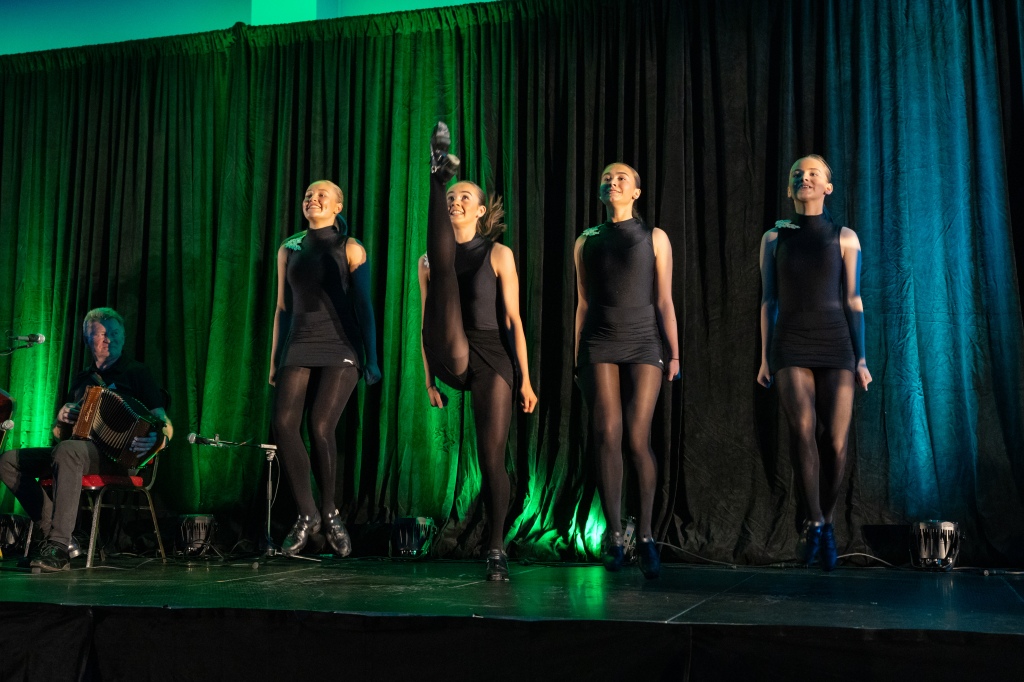
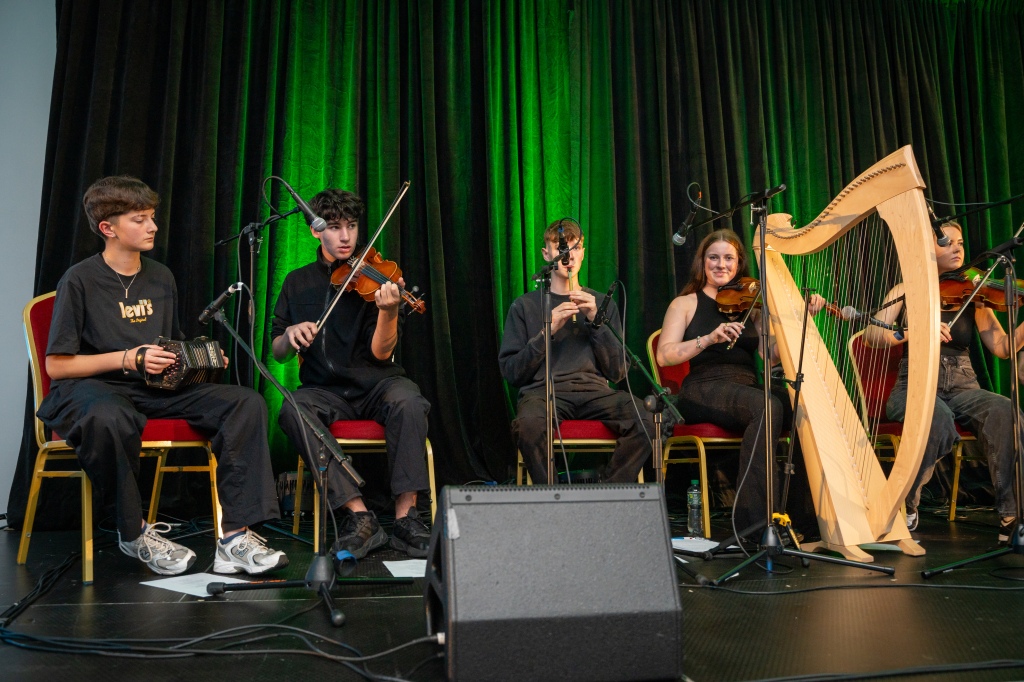
The award was given at the “gala dinner” out at a banquet hall of Dublin’s RDS. The food was lovely and I enjoyed the evening alongside my colleagues from Univesity College London, where I serve as Honorary Professor. The banquet was a hoot, our colleague Gavin Duffy‘s daughter was one of the musicians entertaining the crowd. There was also Irish Céilí dancing (think “River Dance”) on stage.
UCL’s Centre for Engineering Education enjoying the gala dinner and its entertainment.
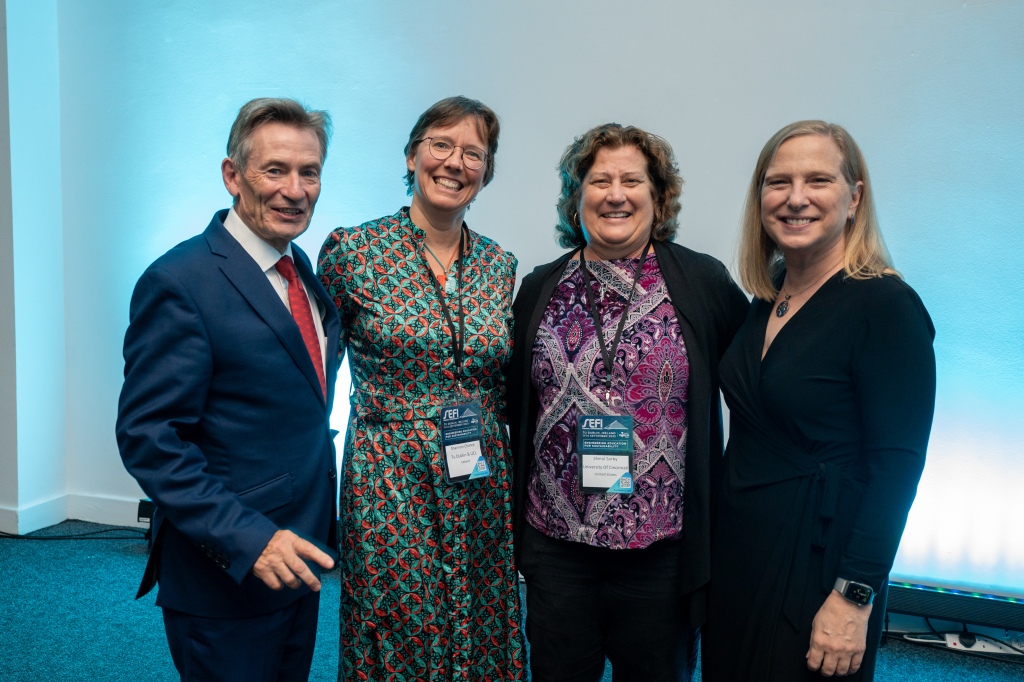
Our past SEFI president Mike Murphy even finally got a photo with the three Fulbright fellows who most recently came to TU Dublin during his tenure as Dean of Engineering and Built Environment: me (Shannon Chance), Sheryl Sorby, and Stephanie Farrell. Sheryl and Stephanie have both served as presidents of the mega-sized organization ASEE (American Society of Engineering Education), whose conference I attended in June.
Mike Murphy with his last three Fulbright scholars: Shannon Chance, Sheryl Sorby, and Stephanie Farrell.
For the final keynote of the conference, Ed Byrne, a sustainability leader from Cork, Ireland did not disappoint! I count on Ed for up-to-date reports on changes to engineering accreditation in Ireland. Like Anette, Ed had crafted a presentation chock full of cutting-edge research on educational issues and pedagogies to improve sustainability. I enjoyed his info-packed presentation, and meeting him in person afterward. I’d previously attended and presented at the Engineering Education for Sustainable Development (EESD2021) online conference he organized.
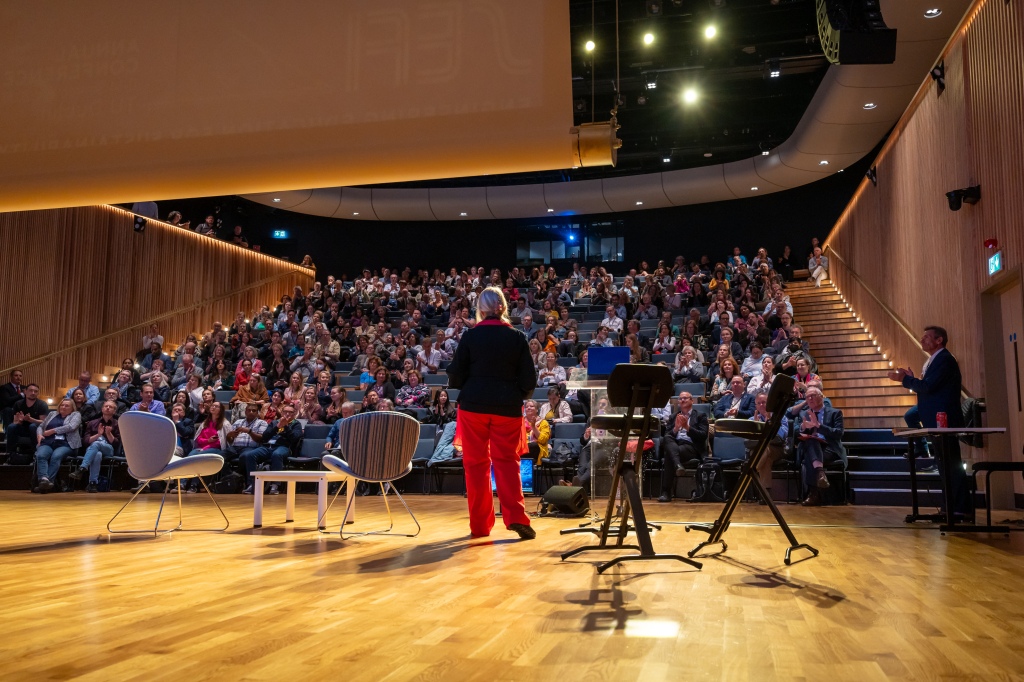
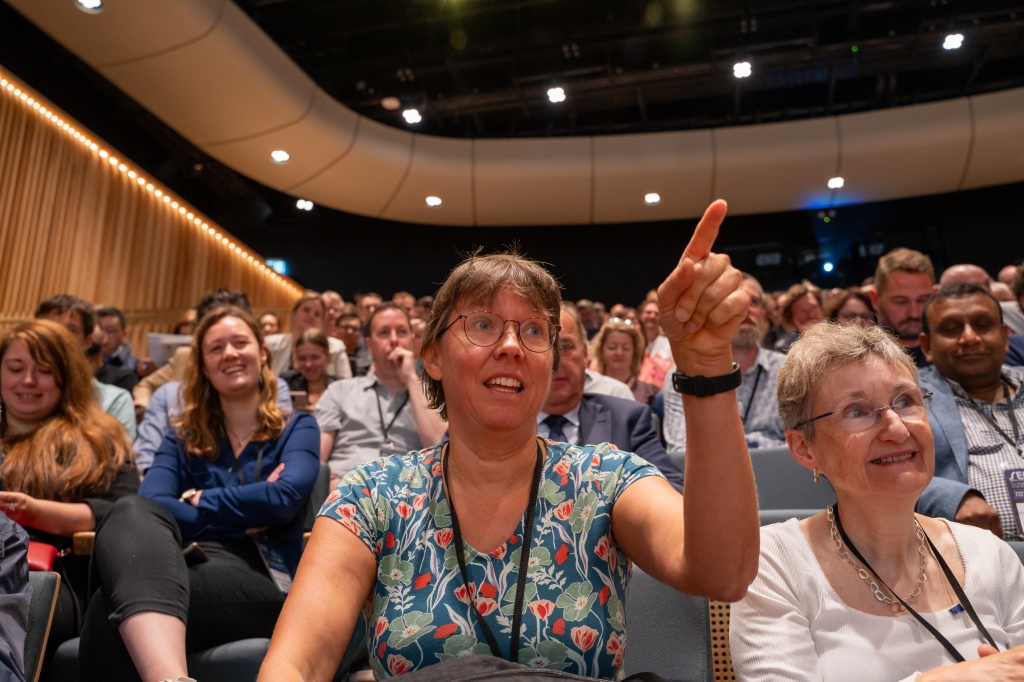
I really enjoyed the main stage events this year!
Enjoying the full house and engaging with plenary speakers. To the right, I’m sitting beside former SEFI president Yolande Berbers.
During the conference, a couple people, including Klara Kövesi, stopped me to say they follow this blog. That inspired me to get new content posted (thank you!).
All in all, it was a very satisfying week. By Friday, I’d discovered the trove of brilliant photos captured by Conor Mulhern <conor@eyeon.ie>. Conor, the official conference photographer, was with us every minute of the week. Starting at 9 AM Sunday morning and sticking it out until the very last moments Thursday afternoon. Conor seemed to be in all places at once!
Conor captured us so skillfully. I had to dash off an email:
Dear Conor,
I just got my hands on the Dropbox link, and I am stunned with your astonishing ability to capture us as individuals and as a community. Thank you so very much for being part of our event. You saw us not as outsiders but captured our hearts and souls.
Your Doc Symposium photos exude the joy I felt. I’ve not yet viewed the other folders, but I am full of pride, happiness and satisfaction, thanks to the memories you’ve so aptly captured.
Warm Regards,
Shannon
And he replied:
Hi Shannon,
Ah you’re very kind to say so!
It was my pleasure. Everyone seemed very happy to be there which made my job much easier, and even in the sessions with faces in deepest concentration, you in particular always had a smile to make a good photo! 🙂
Well done all-round on making it all happen.
All the best,
Conor
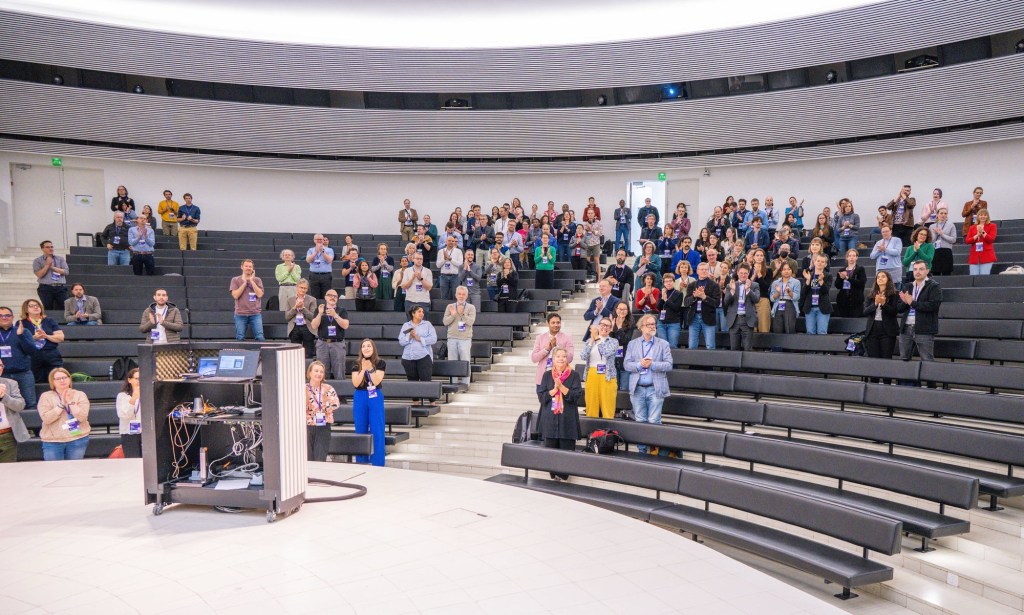
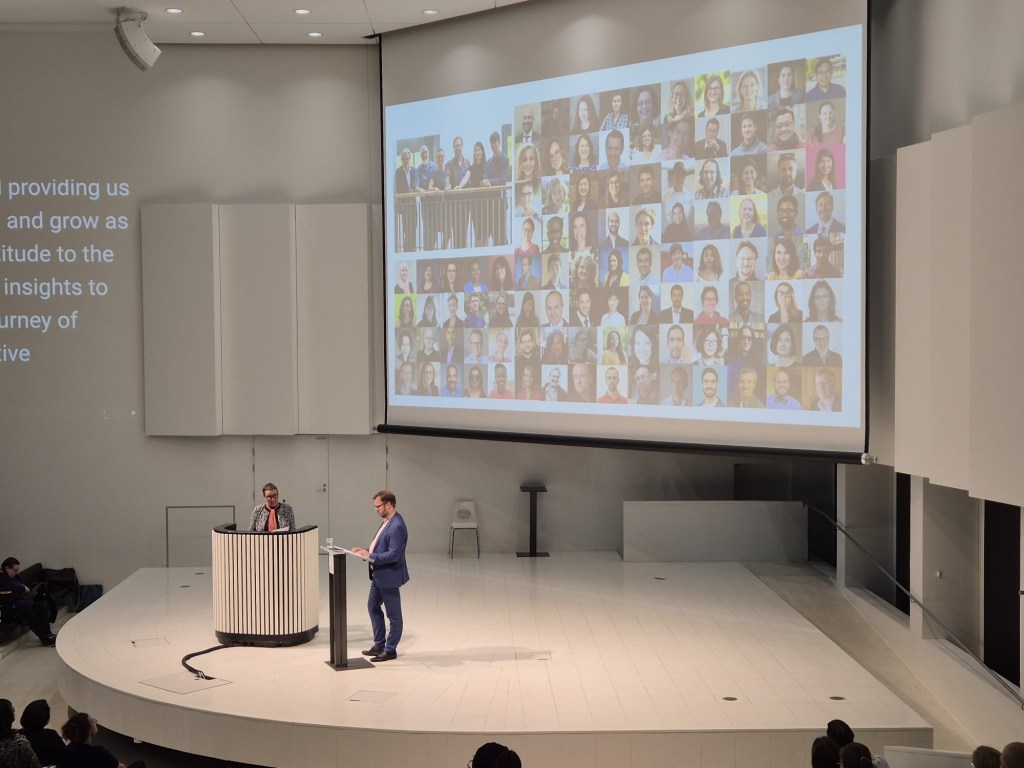
An enthusiastic round of applause for Conor, our photographer! Here are my great colleagues Emanuela Tilley, Sarah Junaid, John Mitchell, and Klara Ferdova in the front row, with Klara Kövesi in green behind them.
Ultimately, I agree with our Doc Symposium participant who said she’s found her village. I found this village in 2012, at the SEFI conference in Thessaloniki that I attended alongside Mike Murphy, Brian Bowe, and Gavin Duffy. I met new colleagues, like Bill Williams, who welcomed me warmly and with whom I collaborate frequently today. I began to cherish the SEFI community at my first conference, and I also thoroughly enjoyed my time before and after that conference exploring Thessaloniki. The city stuck in my memory long after I left. I hope SEFI 2023 and Dublin live long in the hearts of those who attended this year!
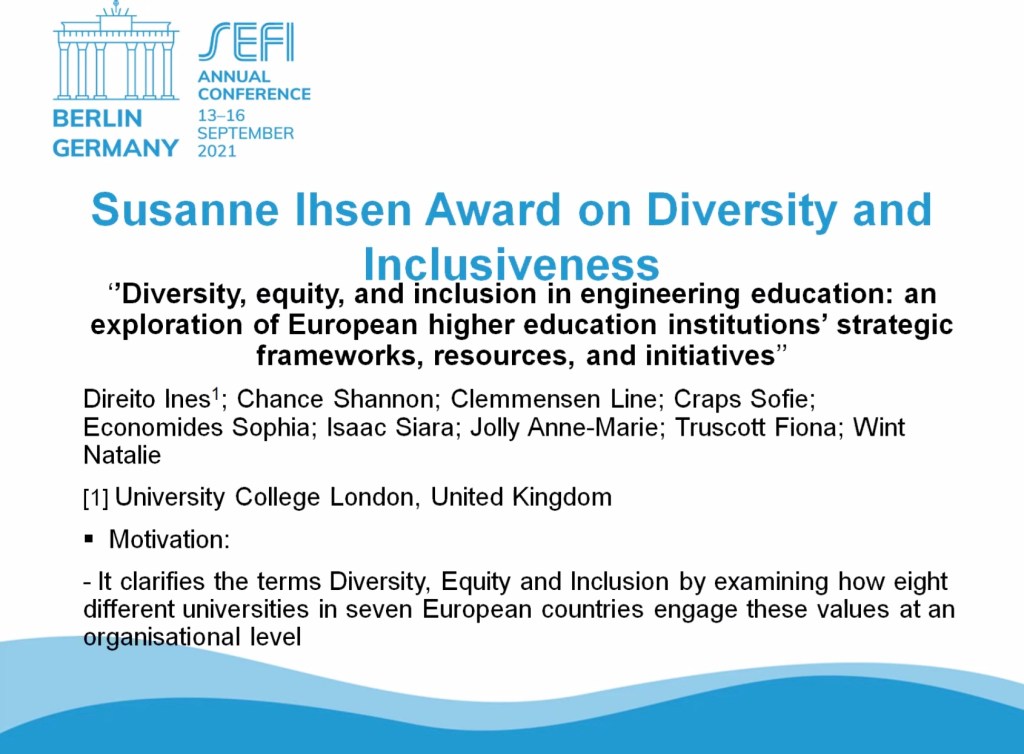
Today we received the Prof. Susanne Ihsen Award for Best Paper on Diversity and Inclusiveness!
I’m both delighted and surprised that our gender and diversity group’s work won this very high honor at the closing ceremony of SEFI, the European Society for Engineering Education, at its 2021 conference.
Before explaining what we did, I’d like to give special recognition to Dr. Inês Direito for leading this project, bringing our authoring team together, and helping ensure we got things done! It’s a pleasure watching you achieve new heights in your work as chair of the Diversity, Equality and Inclusivity Special Interest Group of SEFI!
Inês made a video introduction to the paper:
Here’s the abstract:
Significant efforts have been made to promote gender equality in higher education (HE) in Europe. Examples include the establishment of the Athena Swan Charter in the UK in 2005 and the 2019 launch of the Irène Curie Fellowship scheme by Eindhoven University of Technology. But which initiatives address broader diversity, equity, and inclusion (DEI) challenges in HE? And which are specifically focused on engineering education? This exploratory study aims to improve our understanding of the ways in which a set of European HE Institutions engaged in engineering education address DEI at an organisation level, and how this is communicated within the public domain. The analysis of online data provided by a purposive sample of institutions is guided by the following research questions (RQ): 1. How is DEI addressed and defined in institution-wide strategic frameworks? 2. How many institutions describe having an institution-wide DEI organization? 3. What specific policies around DEI are being developed, and what areas are mentioned, defined, and prioritized? 4. What structures and resources noted as part of their DEI activities are specific to engineering faculties and departments? 5. What engineering-specific DEI initiatives exist that are not available in the public domain or are not written in English? Our sample is composed of the host institutions of the authors of the paper, and represent different European countries: Belgium, Denmark, France, Ireland, Portugal, Switzerland, and the UK. The findings of this exploratory study will be used to inform the design of a large-scale survey to identify DEI practices across the SEFI community.
And the APA citation is:
Direito, I., Chance, S., Clemmensen, L., Craps, S., Economides, S., Isaac, S., Jolly, A-M., Truscott, F., & Wint, N. (2021). Diversity, equity, and inclusion in engineering education: an exploration of European higher education institutions’ strategic frameworks, resources, and initiatives. The 49th Annual Conference of the European Society for Engineering Education (SEFI 2021), 13-16 September, Berlin, Germany.
You can download the paper here, because the full proceedings will not be posted online until October.
Many thanks also to the members of Best Paper awards committees, who are tasked with reading many papers and attending all the related presentations. It’s a great deal of work and we appreciate the time and effort that these dedicated folks contribute!
The article Improving Engineering Students’ Design Skills in a Project-Based Learning Course by Addressing Epistemological Issues that Gavin, Brian, and I wrote for the SEFI conference in Greece is available for download on DIT’s ARROW database. Check it out!
I’m learning the ropes of budget flights in Europe because I’m headed to Greece for an engineering education conference. Heather and Dave warned me about baggage limitations in Europe! (No wonder people wear so little on vacation at the beach here! They’re not allowed to bring more than a Speedo with them!)
My bag was 2cm too deep. It fit in the bin, actually, but the wheelbase hung over.
Penalty = 50 Euro for that leg of the flight alone. More than that flight cost! Someone in the customs line gave me a helpful tip: checking the bag online saves a little money. Thus, I bought airport wi-fi service (5 Euro) and paid “just” 31.25 Euro to check it for the second leg. The upside is that now I have wi-fi to commune with you!
Better luck to me next time! And luck I may need….
I just realized that although I brought my Irish Residency permit and passport, I didn’t carry my work permit with me (it’s a full sized page and I don’t normally carry it). I sure hope I can get back into Ireland without it! I’d better go ask the Irish Fulbright Office for advice….



















 Ireland by Chance