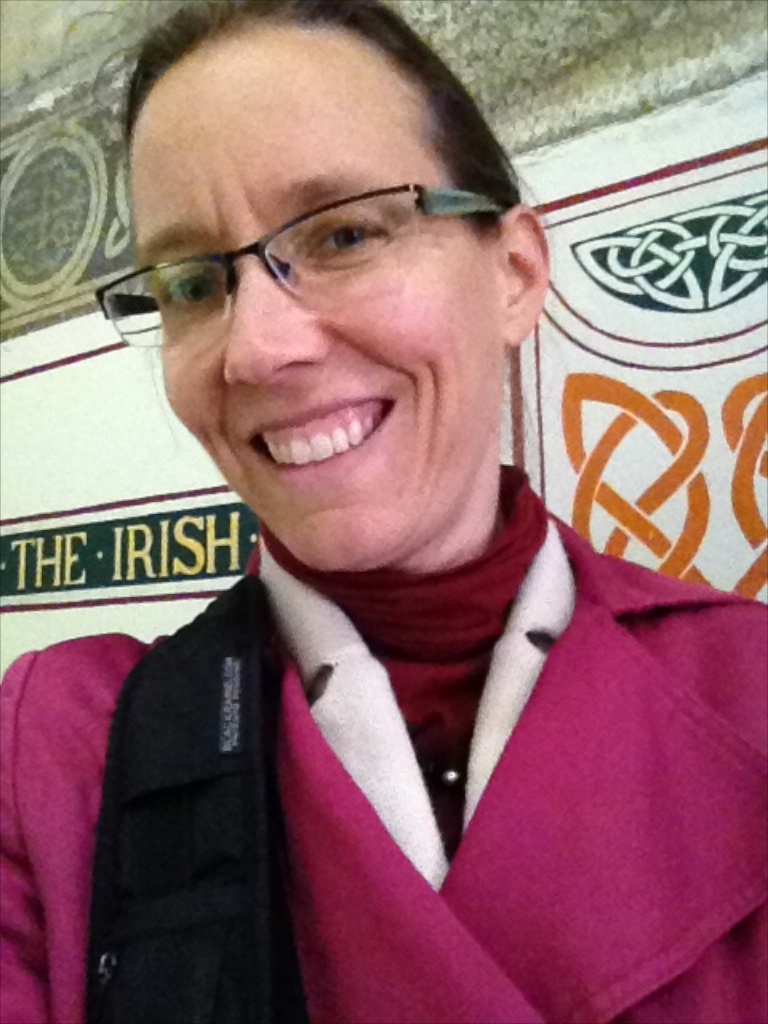
Fulbrighting at Glasnevin Cemetery

Hanging out with Daniel O'Connell.  My photography exhibition was held in the house where he used to live, on Merrion Square.

Hanging out with Daniel O’Connell. My photography exhibition was held in the house where he used to live, on Merrion Square.

Our Fulbright shin dig included a visit to Glasnevin Cemetery.  I’d spent about an hour here, just outside the gate, one evening near Halloween when Esther was visiting. That was part of the (very worthwhile and historically accurate) Ghost bus tour and we followed it up with a visit to John Kavanagh’s “Gravediggers” pub.

The cemetery itself was started outside the city, at the same time the same thing was happening all over the USA. The American cemetery movement actually sparked the American park movement, believe it or not.  The historian J. B. Jackson explains that people found they loved going to the suburban cemeteries — which were new and had wide open (corpse-free) spaces.  These early cemeteries were well-designed and had beautiful architectural features, as you can see on the home page for Thornrose Cemetery where my grandparents lay today.  In any case, in the ten year period of the Civil War, nearly every American city built a “central” park, and Frederick Law Olmstead’s office designed many of them… and many college campuses too.

Wikipedia has some of the most interesting info online regarding this particular cemetery:

Glasnevin Cemetery (Irish: Reilig Ghlas Naíon), officially known as Prospect Cemetery, is the largest non-denominational cemetery in Ireland with an estimated 1.5 million burials.[1] It first opened in 1832, and is located in GlasnevinDublin.

The stories I heard on our tour of the cemetery brought to life for me the history of Michael Collins and Daniel O’Connell, two of Ireland’s most important political figures. Éamon de Valera and Countess Markievicz are also buried here.

Remembering the Glow of Dun Laoghaire

Dun Laoghaire harbor

Dun Laoghaire harbor

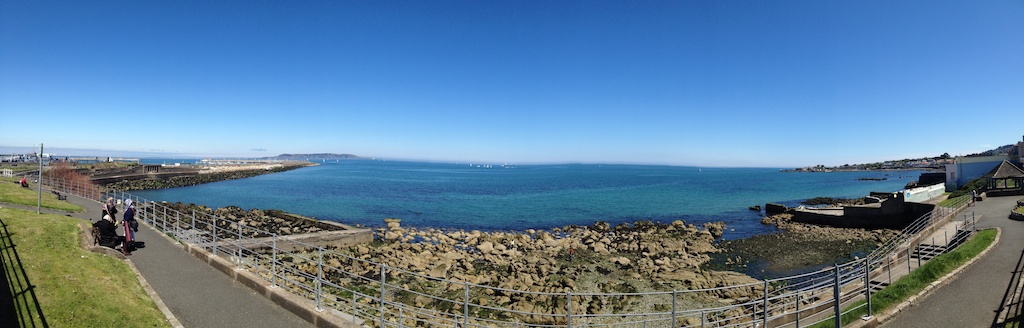
It’s overcast in Dublin today, so I’m pulling out some images from a recent sunny Sunday in nearby Dún Laoghaire, a  town in the suburbs of Dublin.

Dún Laoghaire is accessible from Dublin city center by train and bus, and it makes a lovely day trip. On the weekend, “Peoples Park” is full of market stalls and vendors with prepared food, raw ingredients for purchase, crafts, and other quality goods. The water front, with its harbor and beach, provides a relaxing place to stroll.

The town’s official website explains:

Dún Laoghaire is a town on the east coast of Ireland, about seven miles (11km) south of the capital Dublin. Its focal point is a splendid harbour and the town is surrounded by spectacular rolling hills.

…Historically Dún Laoghaire has always been a ‘Gateway to Ireland’, Dún Laoghaire gets its name from the Irish translation Fort (Dún) of Laoghaire. It was once the seat of King Laoghaire, the ancient High King of Ireland before the Vikings sailed from Scandinavia and established themselves in Dublin.

Dun Laoghaire beach

Dun Laoghaire beach with a view over to Howth (the peninsula on the left of the image, past the end of the pier).

Porto — Obrigado!

One last glimpse of my beautiful Porto and my Fulbright trip there, just before I introduce you to Problem-Based Learning in Belgium….

Mega Guinness

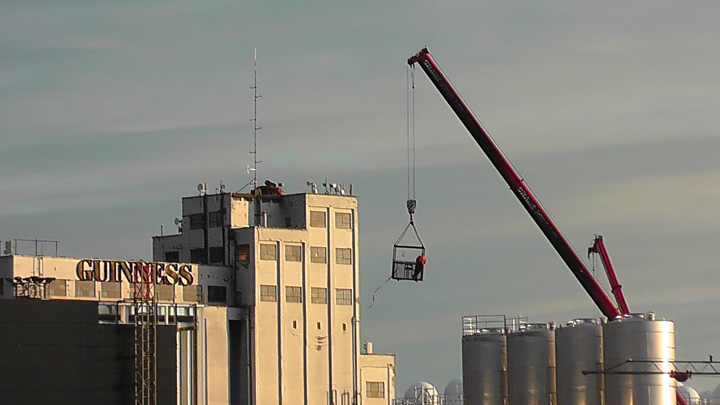
They’re expanding the Guinness factory here in Dublin and it’s growing by leaps and bounds.  It has been fun watching it spring up out of  the ground. A good friend of  mine sent this photo of a construction worker taking a break mid air….

Guinness construction.

Guinness construction.

Photos in the News

Yesterday, Joanne from the Fulbright Ireland office sent a number of links to news stories about the photo show.  Unfortunately, tomorrow is the final day, and Joanne and I will be hard at work dismounting the work from the walls of O’Connell House.

Day-tripping to Glendalough

Glendalough 13

Glendalough boasts a beautiful natural landscape and a religious site constructed during medieval times.  It provides an ideal day trip from Dublin.

The Wikipedia site is full of interesting information about the place.  It starts by explaining:

Glendalough or Glendaloch (/ˌɡlɛndəˈlɒx/ glen-də-lokhIrish: Gleann Dá Loch, meaning “glen of two lakes”) is a glacial valley in County WicklowIreland. It is renowned for its Early Medieval monastic settlement founded in the 6th century by St Kevin, a hermit priest, and partly destroyed in 1398 by English troops.

In W&M News Today

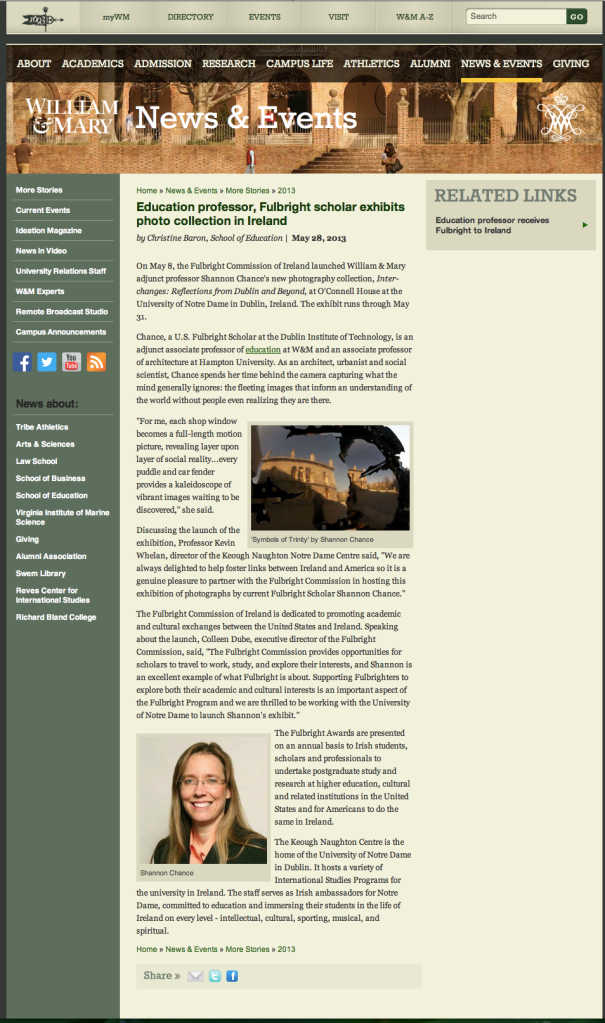
Joanne A. Davidson, the Fulbright Ireland Communications & Information Officer, just sent me the link to William and Mary’s website.  Yesterday, they posted a piece about my exhibition on their main news page!

Exotic Porto

Porto's water front -- the perfect place for dinner and an evening stroll!

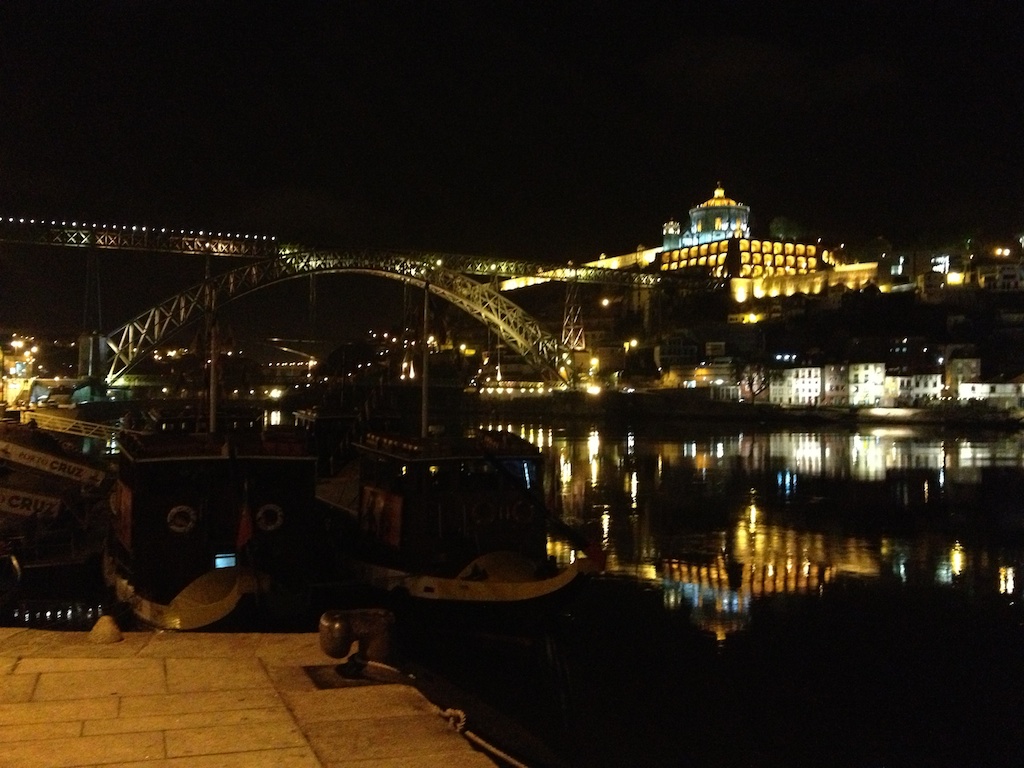
Porto’s water front — the perfect place for dinner and an evening stroll!

After speaking in Setabul, Lisbon, and Aviero, I packed up bag and hopped on the train to Porto.  It’s a lovely port city with steep topography and — surprise — more of Portugal’s stunning architecture!

I’ve been uploading the photos I took using my iPhone, so, unfortunately, I’m only providing a fleeting glimpse of these gorgeous places.  I hope someday you’ll have the chance to visit them for yourself.

Reflections on Francis Hutcheson

This is the plaque that Fergus Whelan posted on the stair tower at the Church on Mary Street (a religious building now operated as a bar and restaurant). The plaque honors Francis Hutcheson, “Father of the Scottish Enlightenment,” whose ideas made their way into the US Declaration of Independence.

The plaque’s coverings catch refections of the buildings across the intersection, at the west end of Henry Street. Here you see Primark’s world headquarters (the lovely red brick building with the patina-ed copper dome) to the right of Francis’ likeness.

Francis Hutchenson plaque