There’s no better feeling than connecting with students in a meaningful way. I’m fortunate to teach — these days, at TU Dublin. And to have students who really want to learn!
Teaching architecture students has always been my passion, as they love to learn.
Lately, I’ve been teaching Building Information Modelling to mature students, and they are also lots of fun.
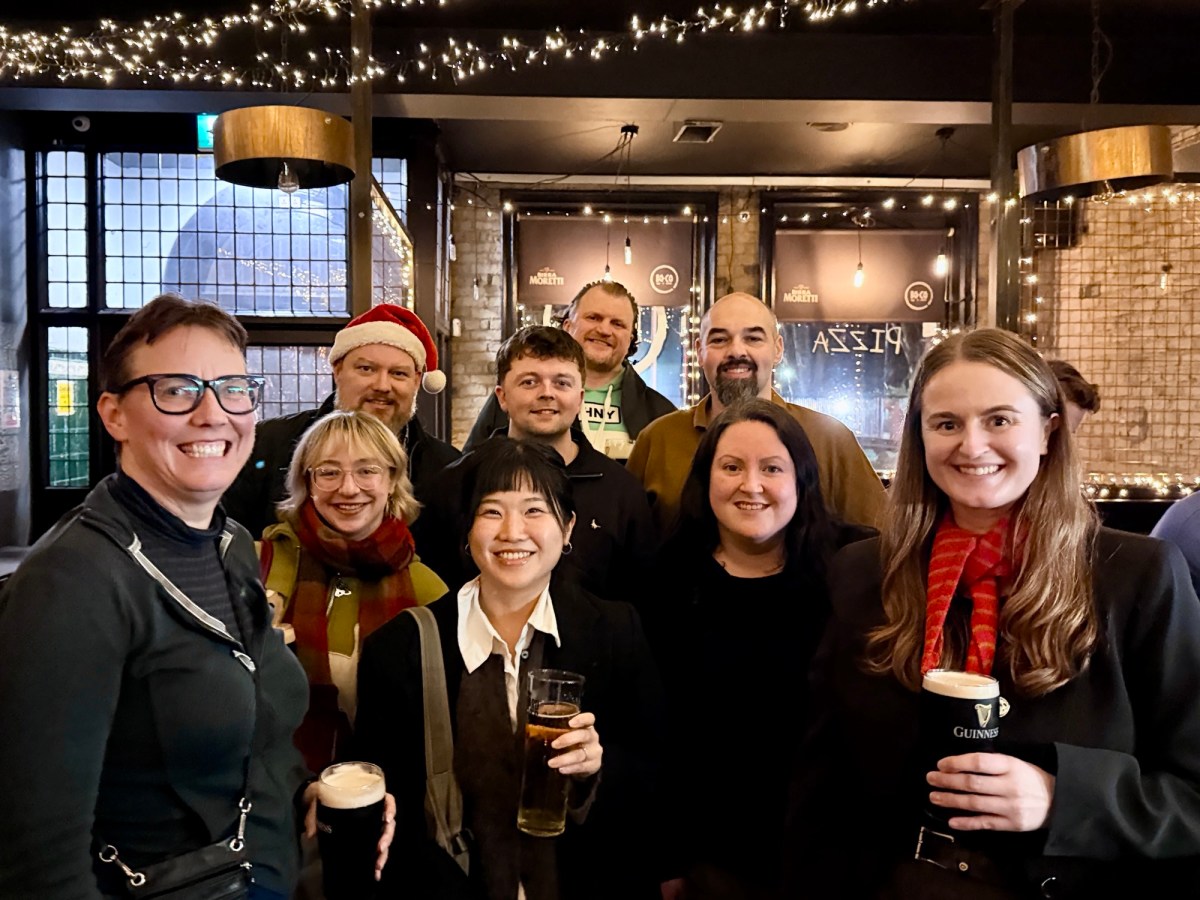
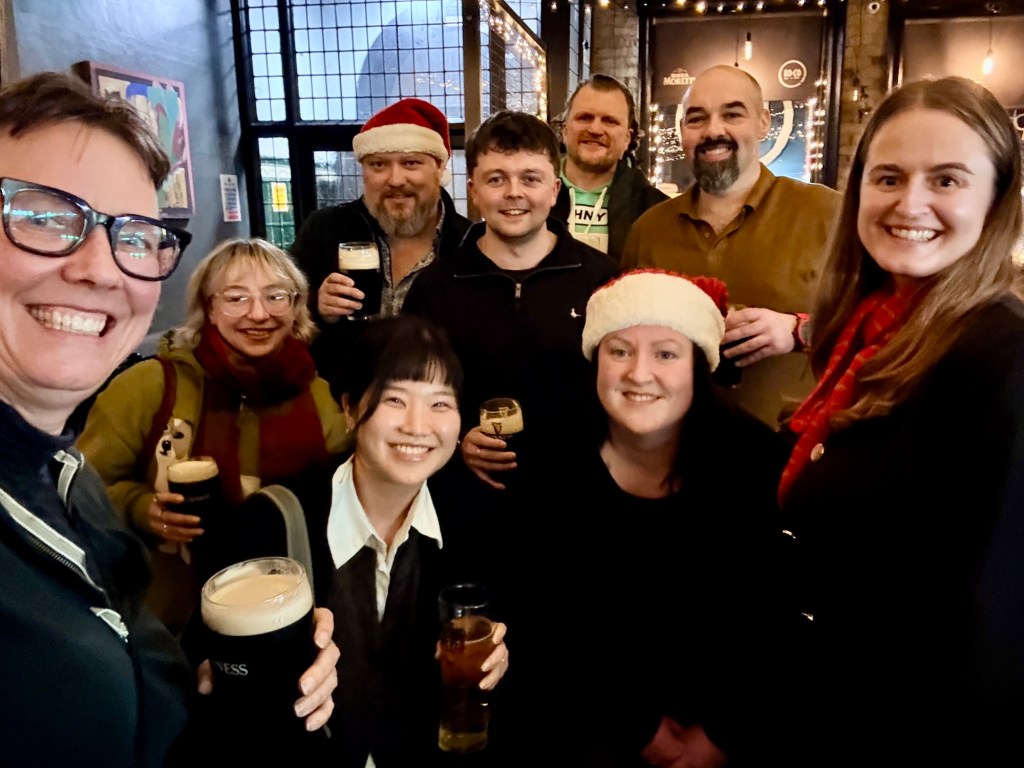
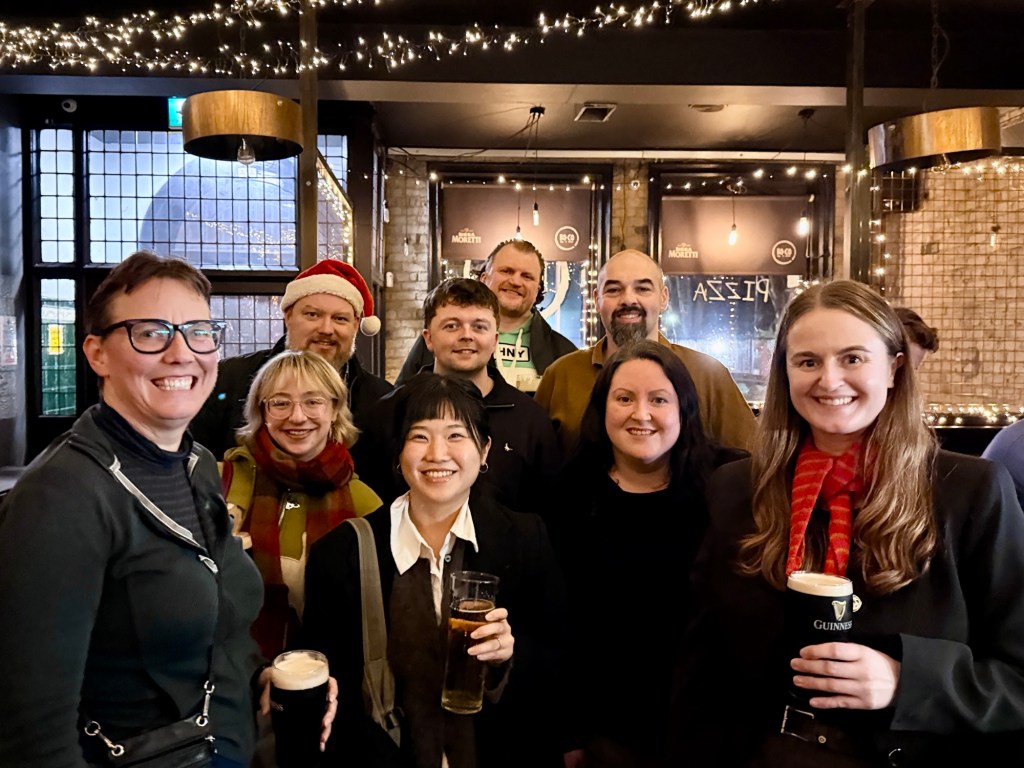
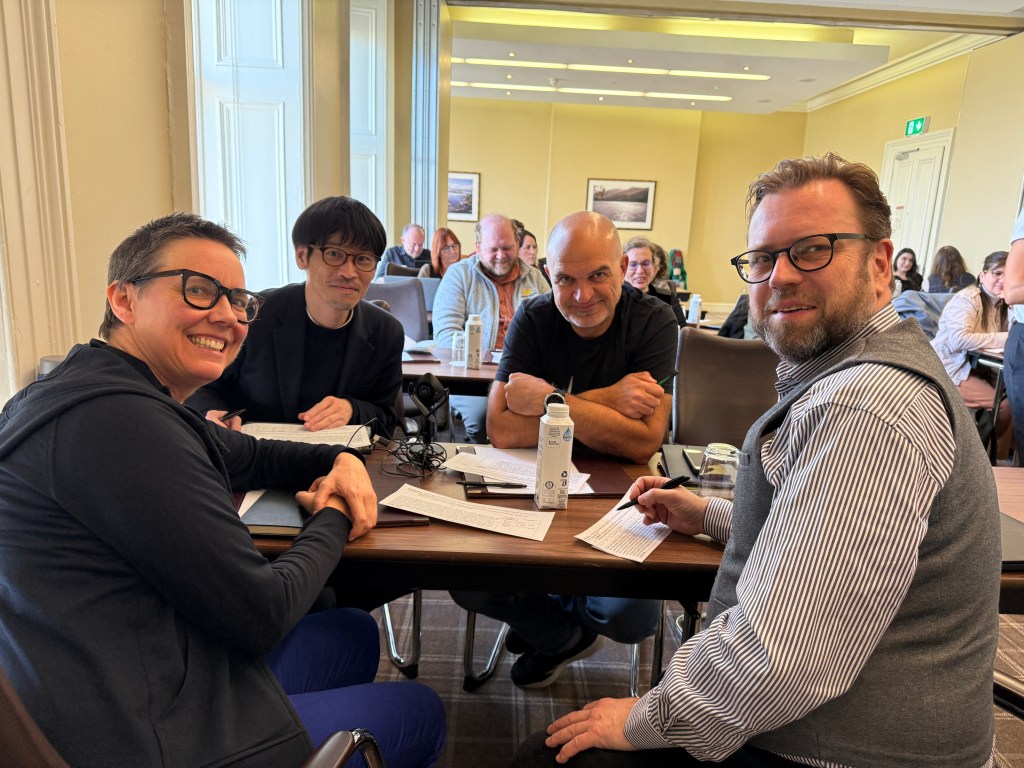
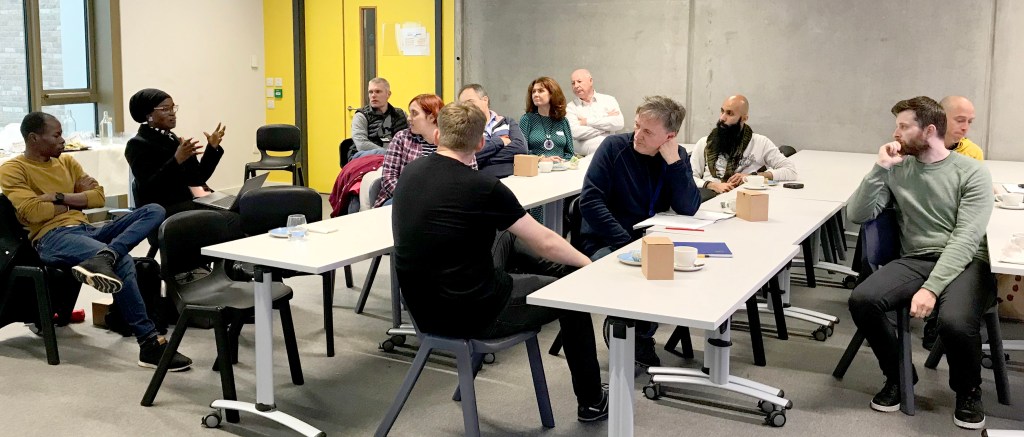
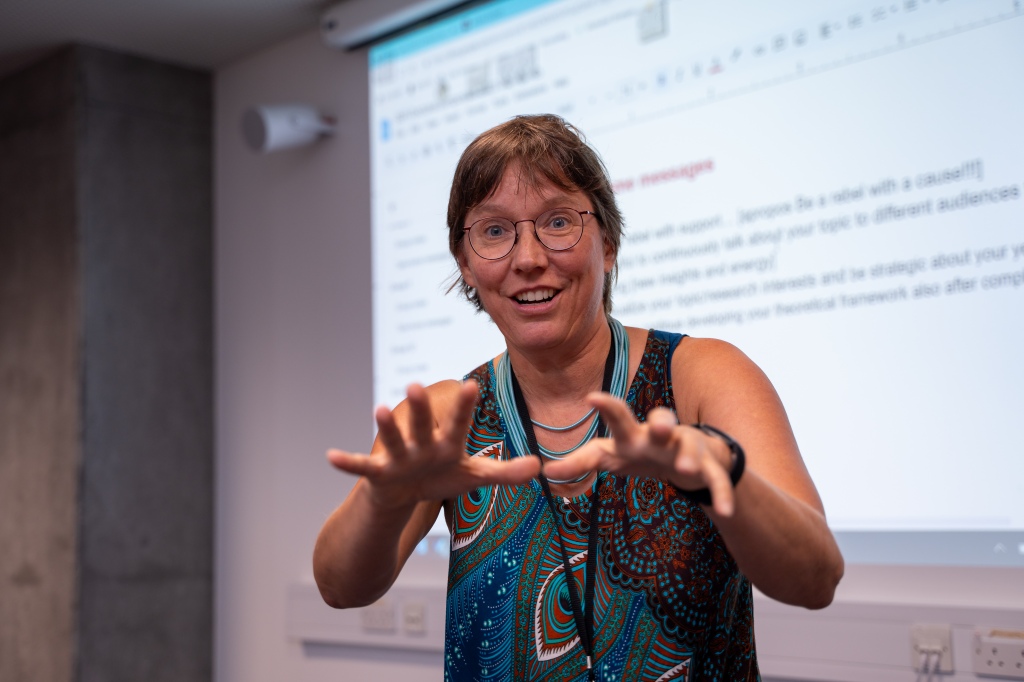
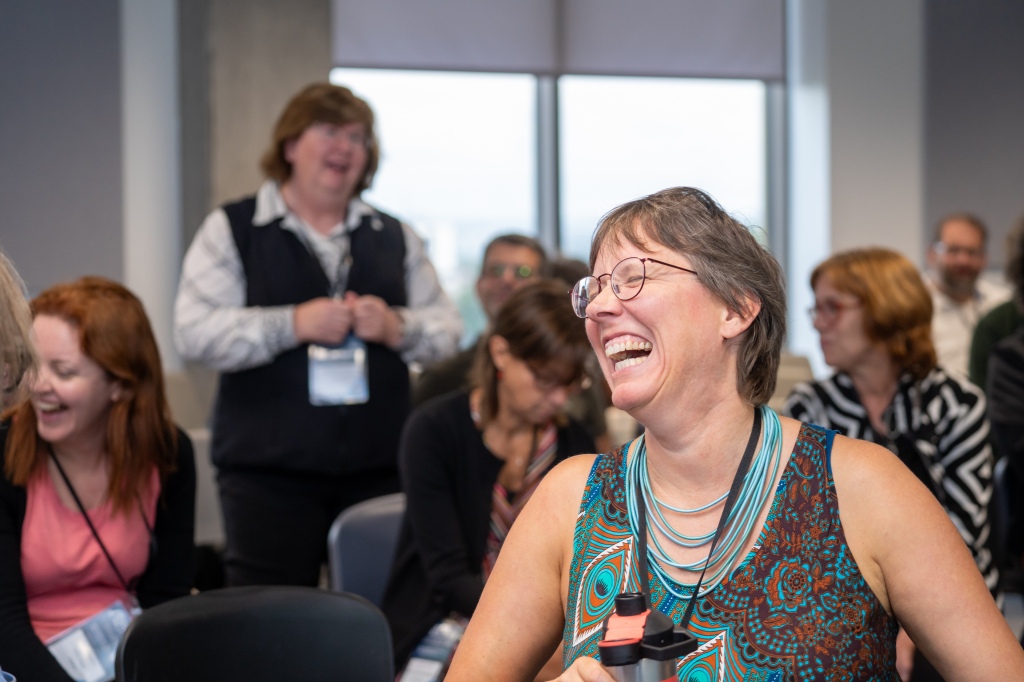
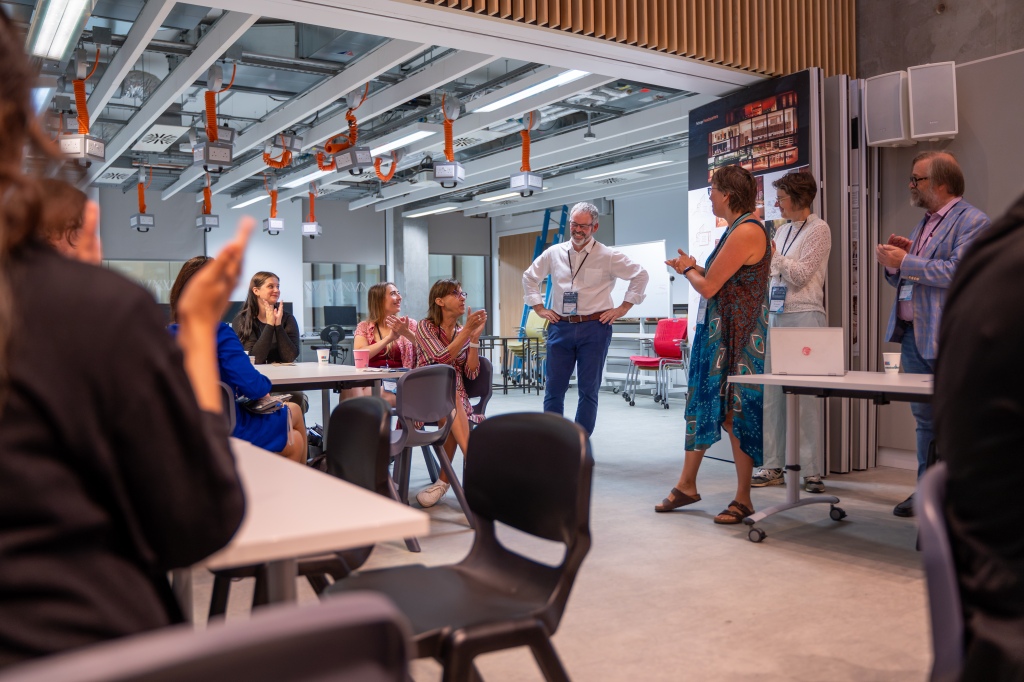
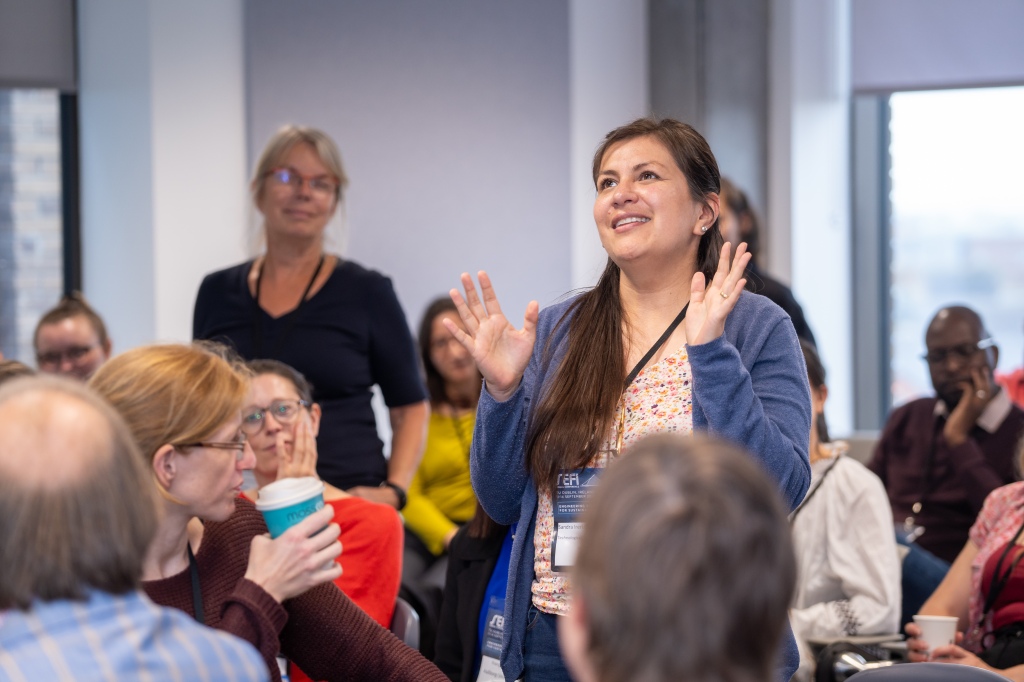
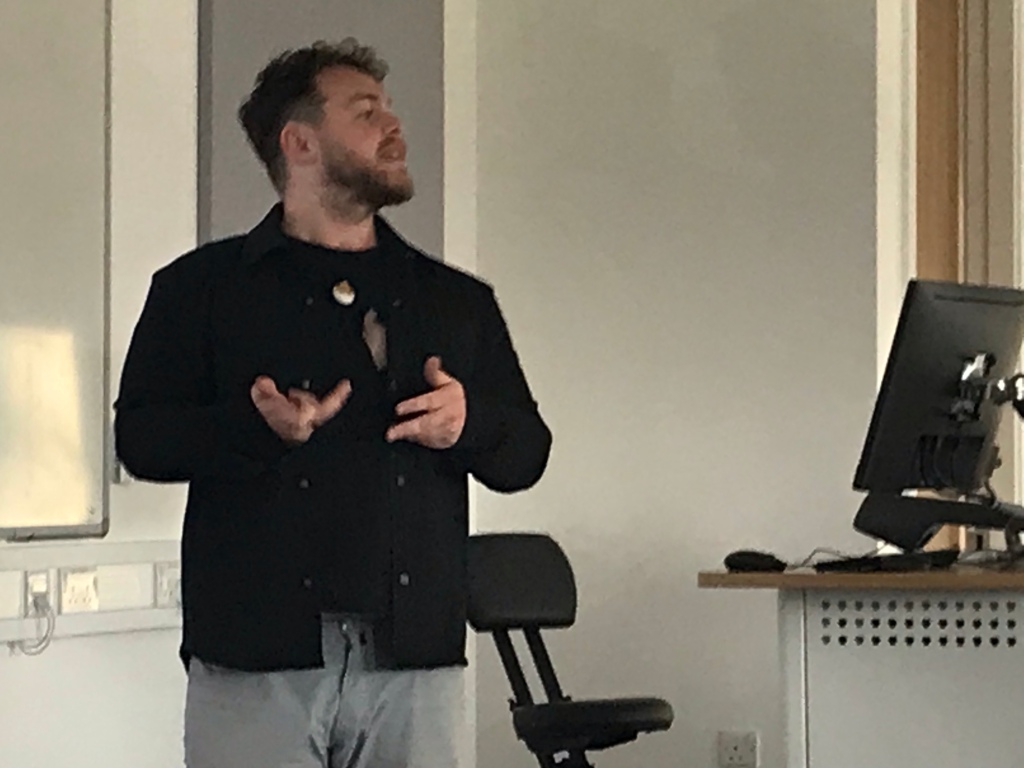
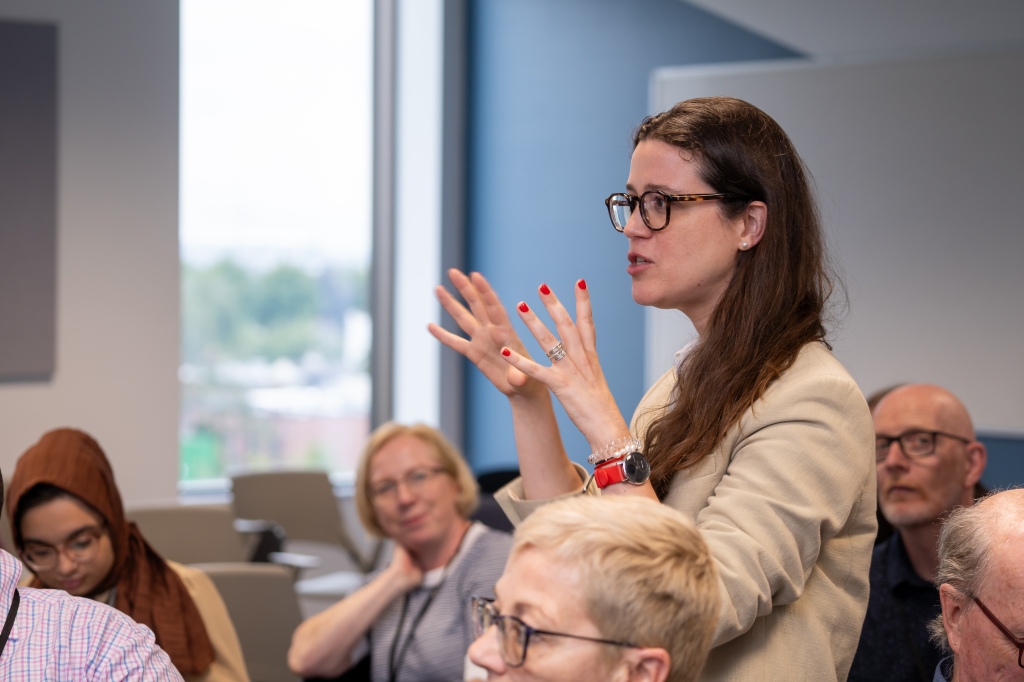
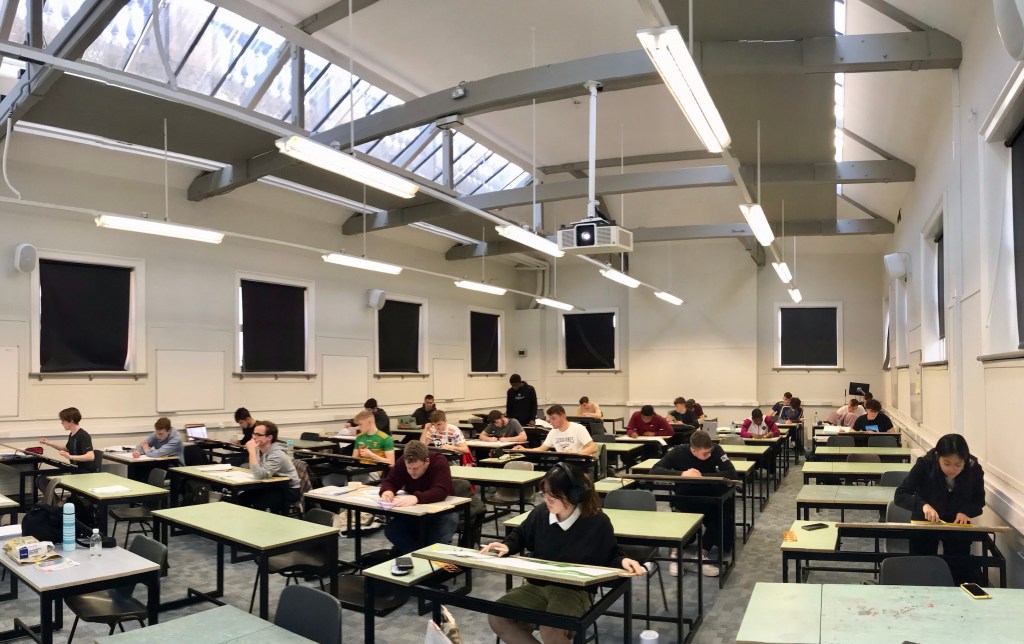
Here is a photo from our most recent class meeting, during a breakout session to apply the lessons we’d covered in a lecture. They all jumped right in! (Even despite it being 4PM on a Friday!)
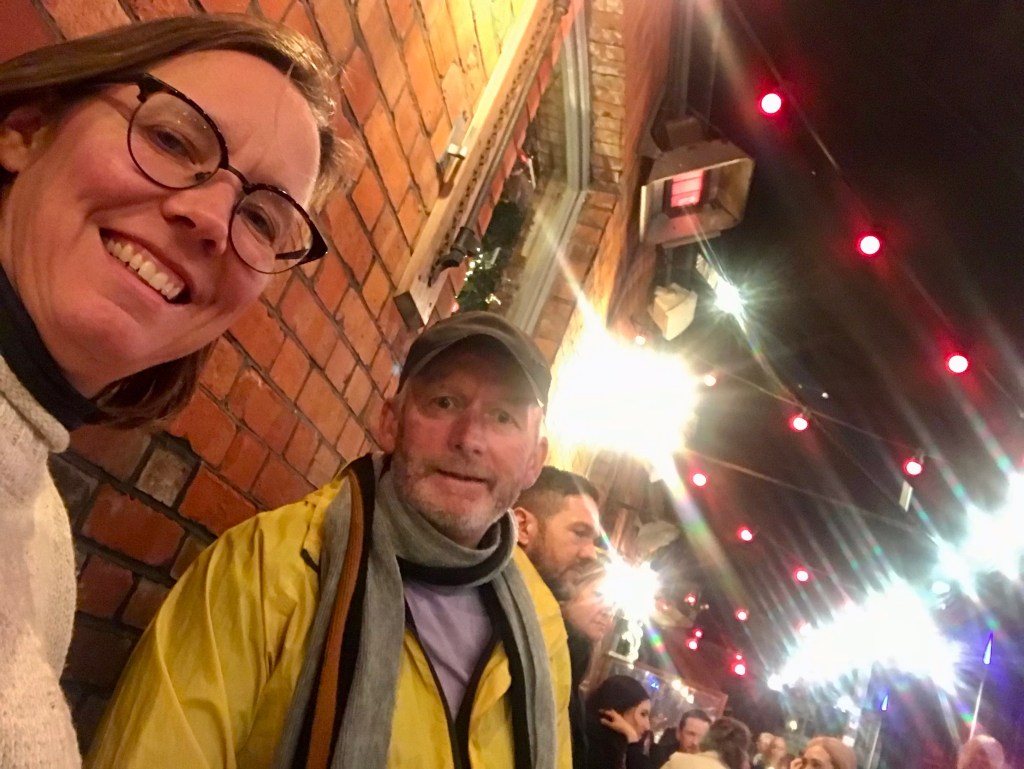
With the holiday coming up, a bunch of us went to a nearby restaurant, BoCo, to celebrate and socialize after class.
Here’s to life-long active learning!
And, many thanks to these energetic students and my fabulous co-teacher, Claire Simpson, for making class worthwhile and fun this semester!
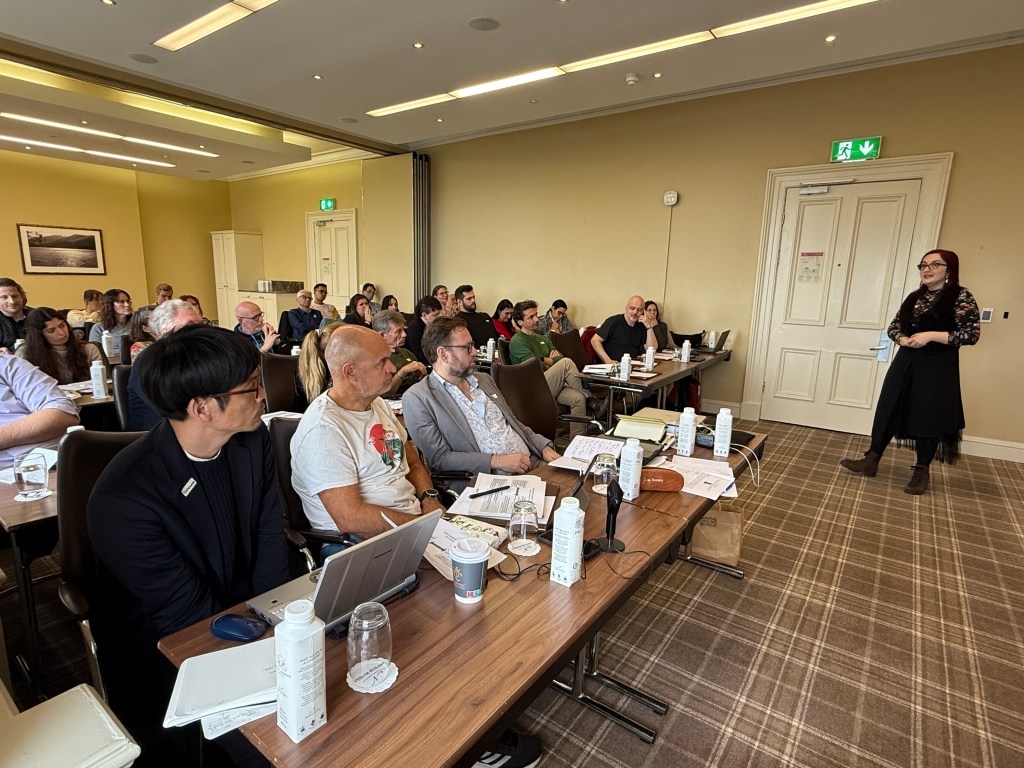
I’m honoured to have hosted a very successful 2025 SEFI Ethics Spring Symposium.
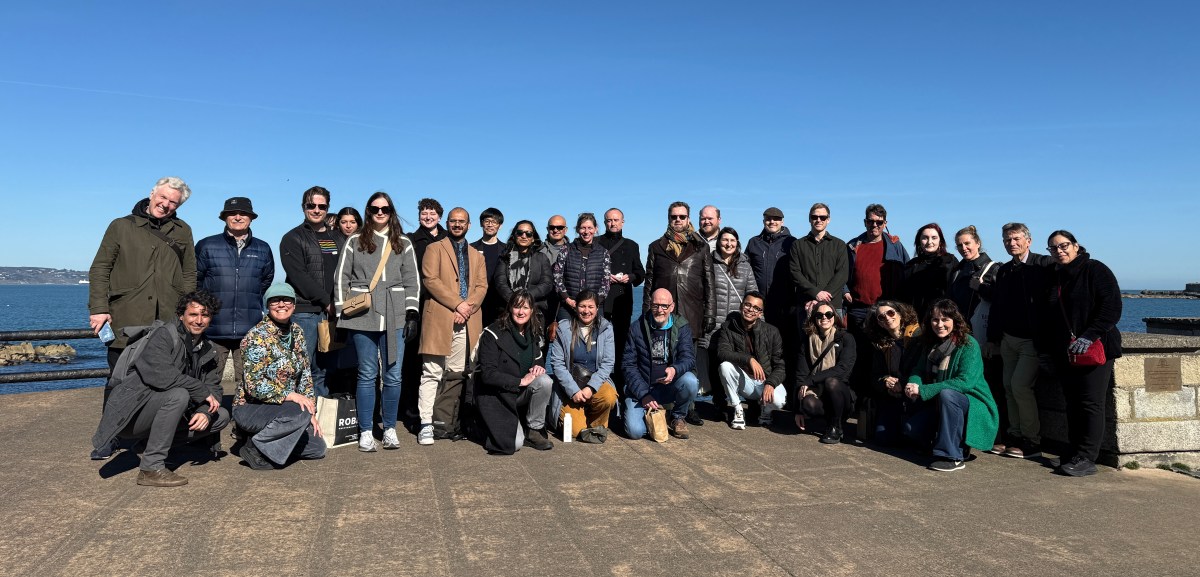
From March 24–26, my colleagues and I gathered at the Royal Marine Hotel in the charming seaside town of Dún Laoghaire, Ireland, for our small and cosy annual symposium. Mother nature blessed us with glorious weather, tasty and healthy food, gorgeous natural and architectural surroundings, an enchanting historic hotel, and new and renewed friendships.
Diana Martin, Mircea Tobosaru, and I organised the programme and all the details, demonstrating that collaboration is key to flourishing!
With 35 delegates from across the globe, this wasn’t just another academic conference—it was a meeting of minds and a celebration of our shared commitment to engineering ethics education.
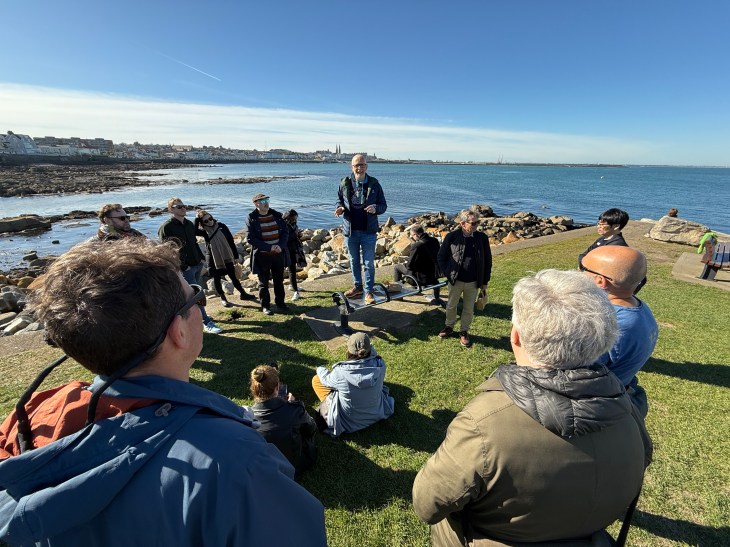
Soaking in the surroundings, past and present, with a tour by Roland Tormey.
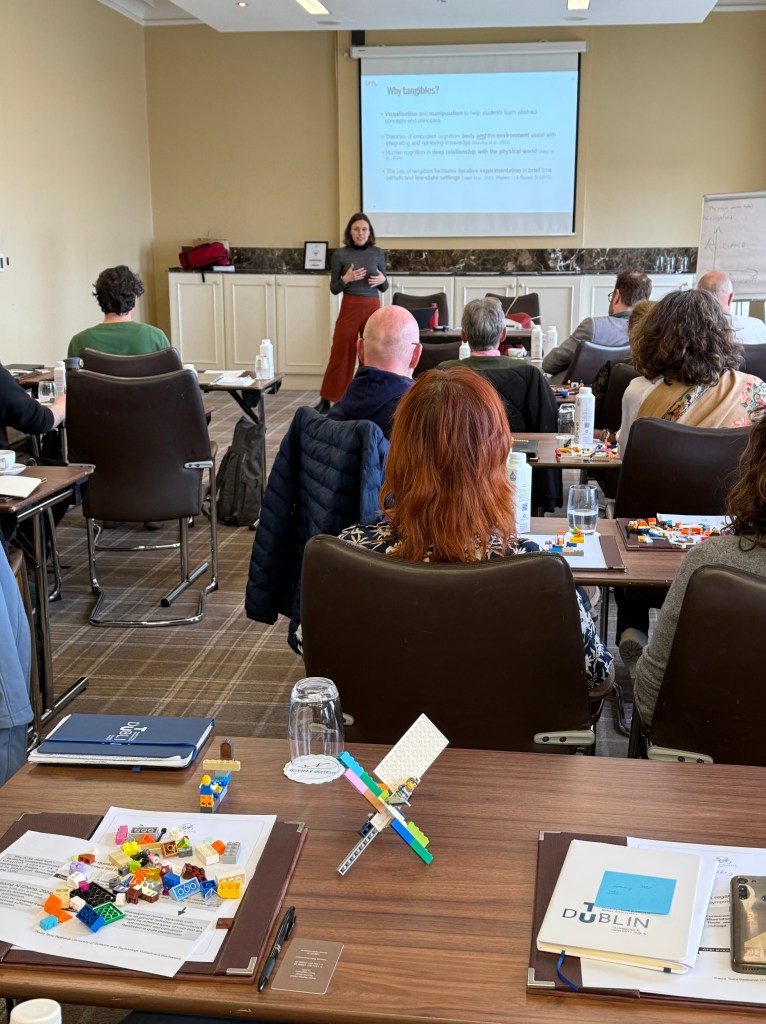
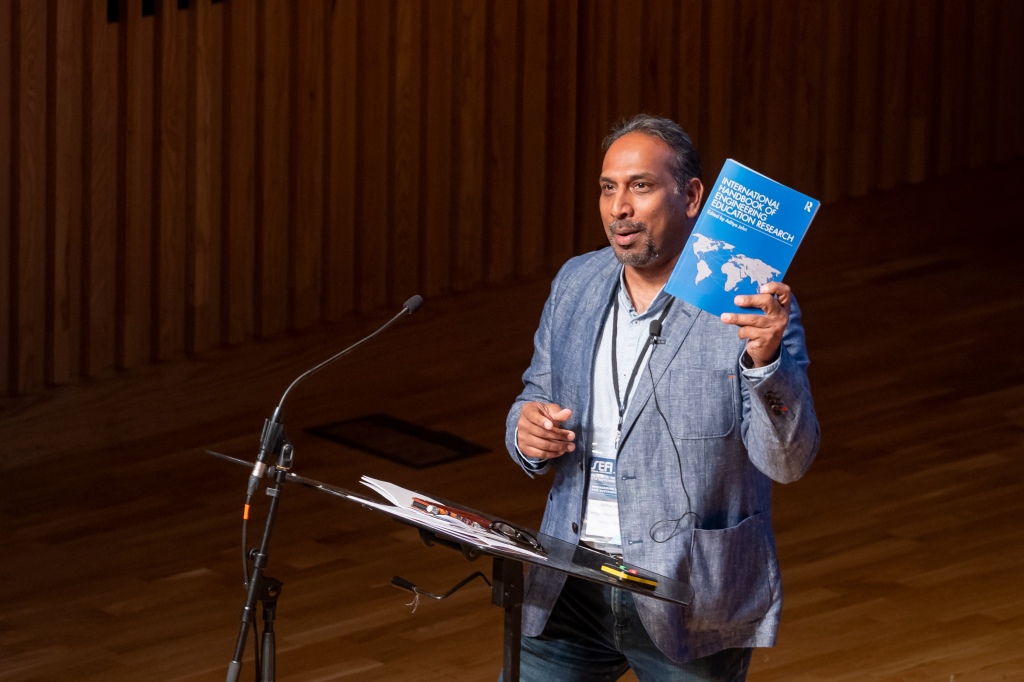
The symposium’s main goal? Strengthening our collective capacity to teach ethics to future engineers. A key focus was the Routledge International Handbook of Engineering Ethics Education (RIHEEE)—a major collaborative effort by the SEFI Ethics special interest group. We reflected on what is presented in the book and considered how to extend its themes, translate into impactful teaching practices, and generate discussion more broadly in the places we live and work.
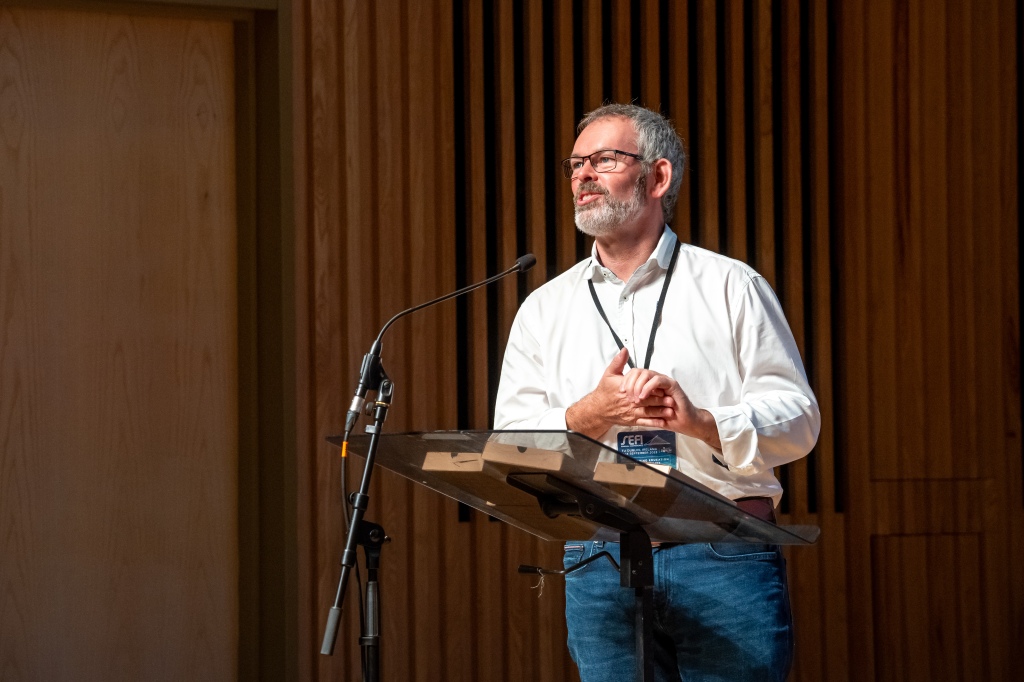
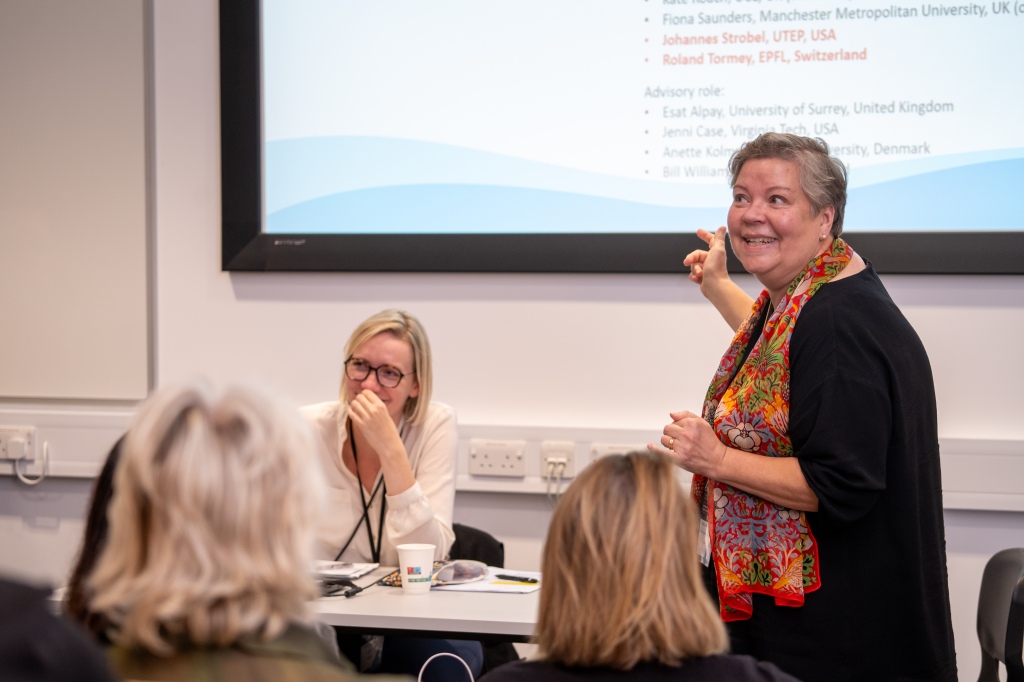
Opening the Symposium and introducing the handbook.
A Program Packed with Thought-Provoking Conversations
Over three days, we immersed ourselves in a mix of keynotes, workshops, and panels, tackling big questions from multiple angles:
Keynotes that Challenged and Inspired
Mary Nolan explored the role of care ethics in engineering, pushing us to think beyond traditional engineering thinking.
Paula Tomi examined the nature of truth, a concept that sits at the heart of both engineering and ethics.
Tom Børsen introduced us to techno-anthropology, showing how it intersects with engineering ethics education.
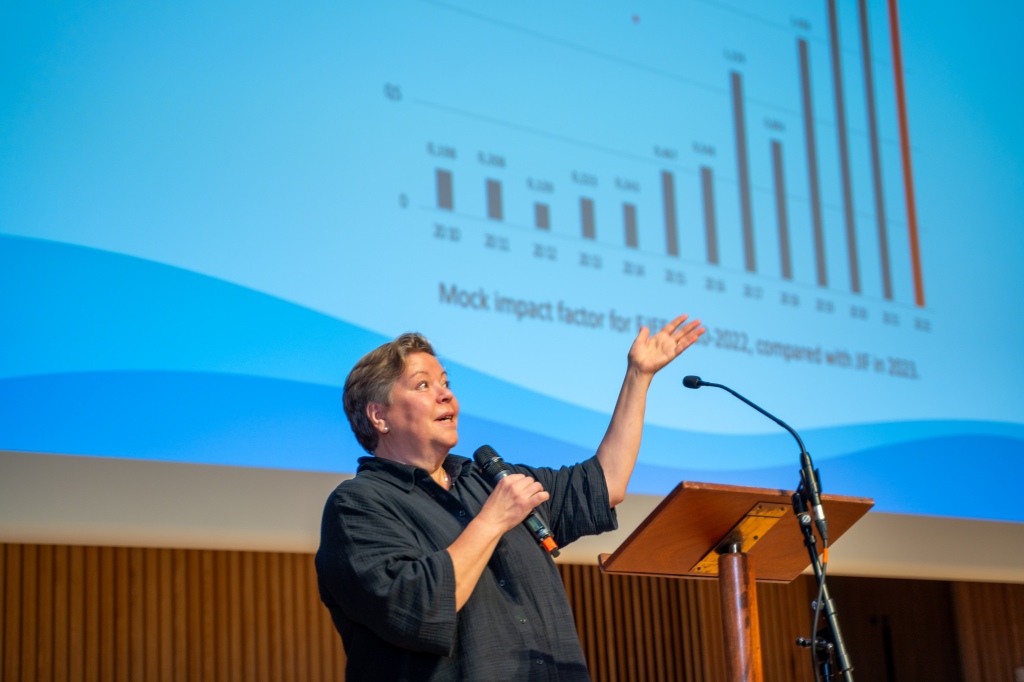
Keynote by Paula Tomi
Workshops that Sparked Debate and Collaboration
Care Ethics—How do we broaden engineers’ notion of responsibility?
AI Experimental Philosophy—How can philosophy guide us in using and developing artificial intelligence?
The Archimedean Oath—Should engineers take an ethical oath, much like doctors do?
Quantitative Methods & Ethics—How can we effectively describe and report ethical impact?
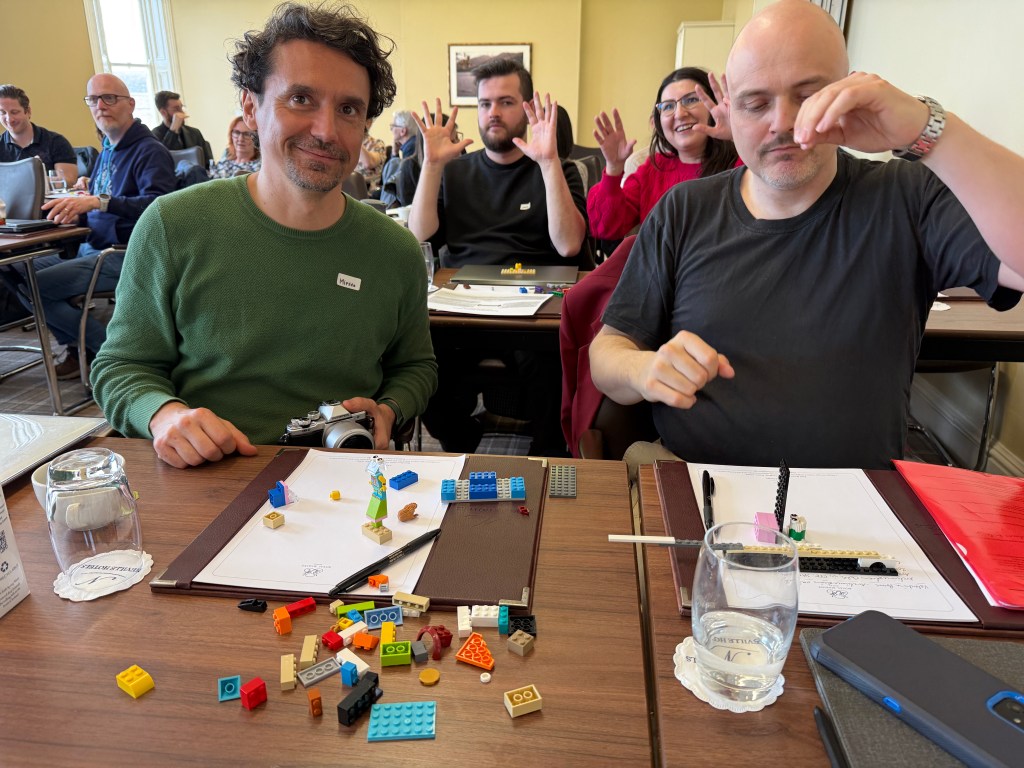
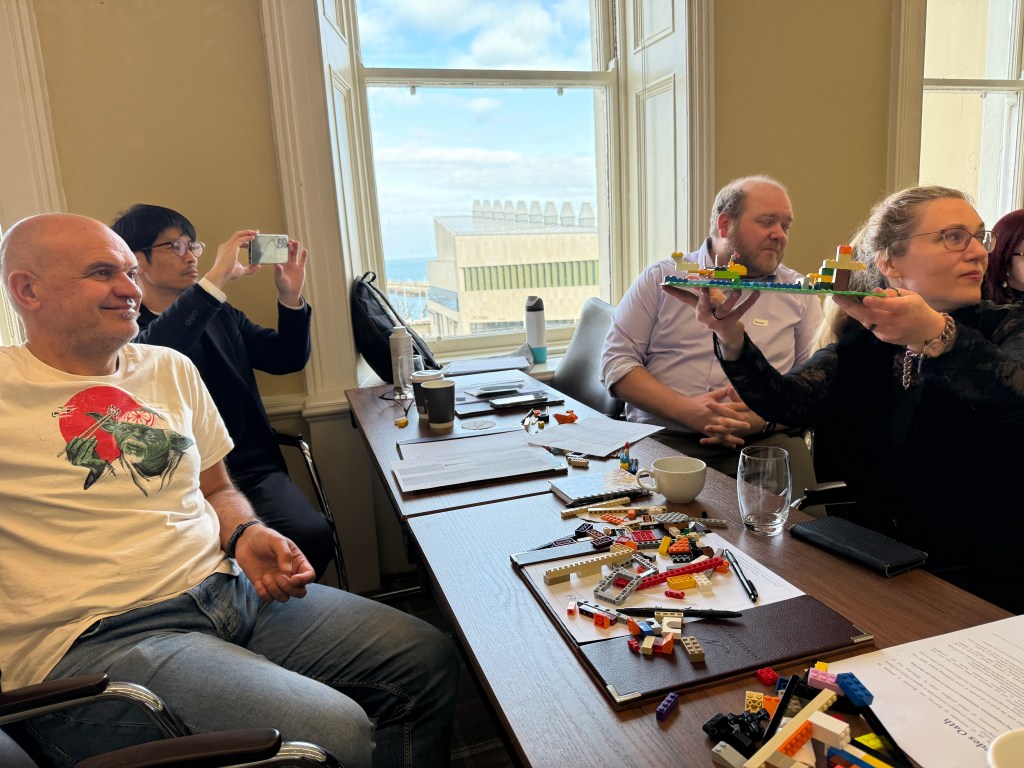
Peer-to-peer learning in action. Tom Børsen, to the right, was the co-lead editor of the handbook. Takehara joined us from Japan, and Miguel from Spain.
Panel Discussions: Making Ethics Education More Practical
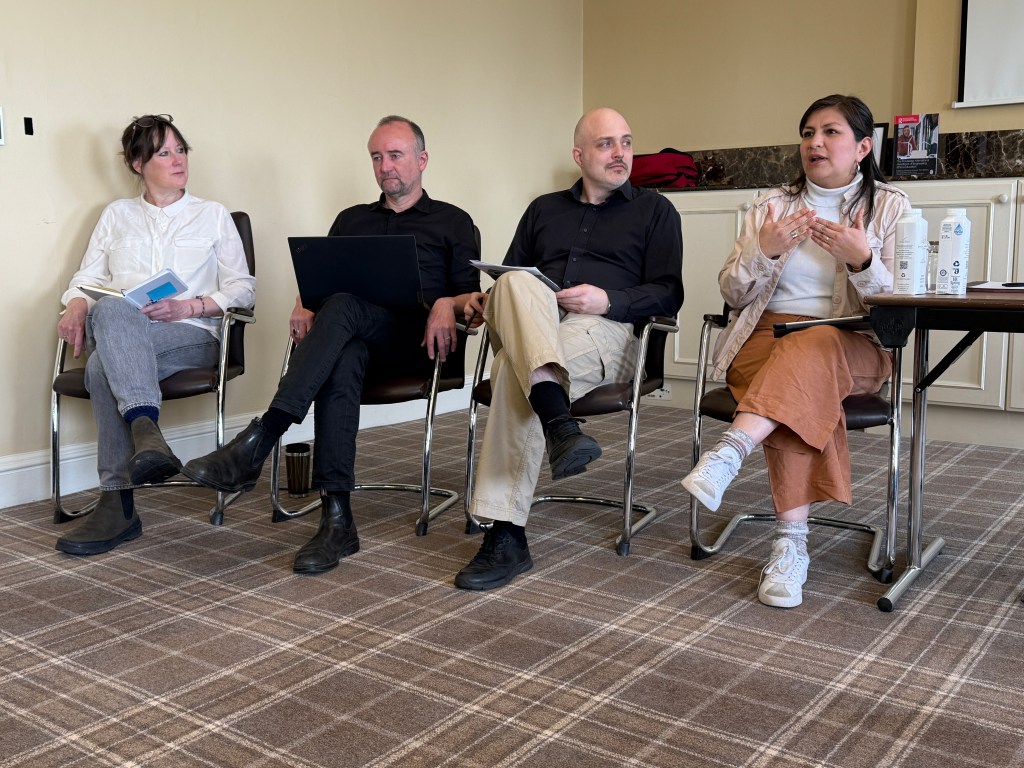
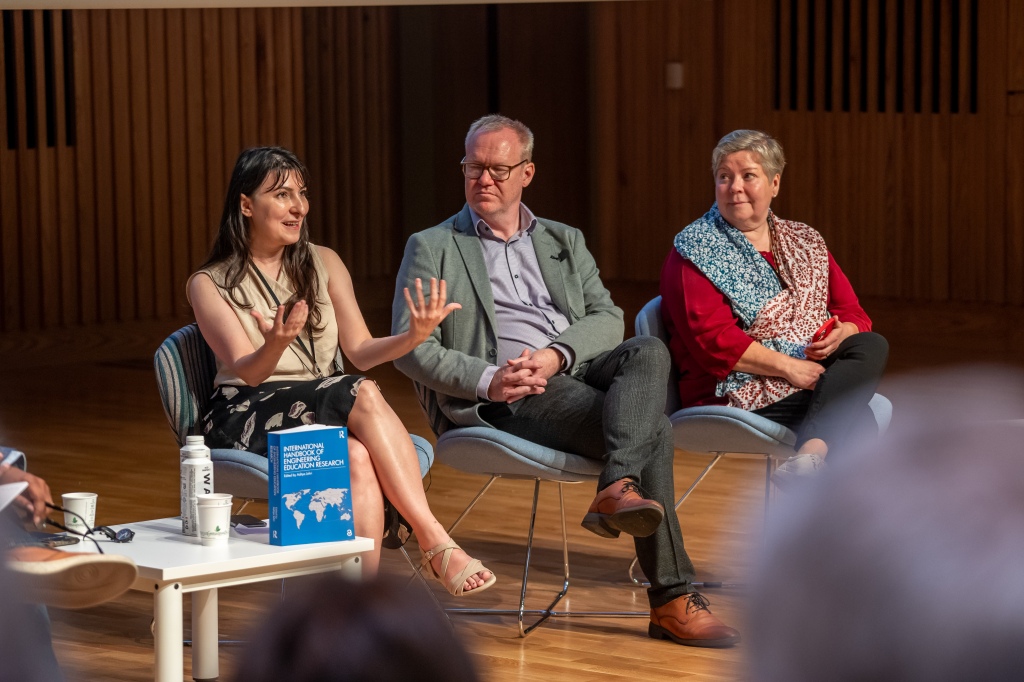
Our panelists had a specific challenge: dive into a self-selected sections of RIHEEE and critically assess its themes. We asked: What patterns do you see across the set of chapters in your section? What’s missing? How can can educators make use of the content? How can we help them do that? Can we translate theoretical insights into tangible strategies that can be applied in classrooms and institutions worldwide yet still reflect local culture and values?
Panel with Rachel Harding, Aaron Johnson, Magnus Kahrs (and Valentina Rossi, not shown)Panel on engineering ethics accreditation Panel on Interdisciplinary Perspectives with Katherine Looby, Ronny Kjelsberg, Gaston Meskens, and Sandra Cruz Moreno.
There were so many very special aspects, including exploring care ethics in depth and applying care ethics, and the walking tour was truly spectacular.
A Literary and Cultural Interlude
Roland Tormey’s literary walking tour of Dún Laoghaire was a highlight for us all. We took a step back and immersed ourselves in the cultural richness of our surroundings. For many of us, this blend of intellectual and cultural exploration reinforced the broader ethical dimensions of engineering—how our work is always connected to society, history, and place.
Sunshine and good vibes galore!
Global Voices, Local Impact
The symposium truly reflected the international nature of engineering ethics education. We had voices from across Europe, North America, Africa, and Asia, with universities ranging from UCL and the University of Michigan to EPFL. At the same time, there was strong local representation, with a third of the attendees based in Ireland—TU Dublin, DCU, ATU, and Engineers Ireland all playing an active role. A special shoutout to my TU Dublin colleagues—Sandra Cruz Moreno, Marek Rebow, Rachel Harding, Mike Murphy, and recent PhD grads Diana Adela Martin and Darren Carthy—whose contributions helped everyone feel welcome.
What’s Next?
The energy and ideas sparked at the symposium will propel us forward onto new collaborations, where we apply what we discussed—via research and teaching and leadership and service—and continue building momentum and sharing what we’re learning with our colleagues back home, and indeed worldwide.
For those who couldn’t join us in person, the Routledge International Handbook of Engineering Ethics Education is freely available in an open-access digital format. Whether you’re new to the field or a long-time educator, it’s a must-read: 🔗 RIHEEE Handbook
For posterity’s sake, I am adding the symposium schedule as it was conducted:
Monday, March 24
09:00-09:30 Welcome and Icebreaker by host Shannon Chance
09:30-10:30 Handbook panel 1 (Foundations) moderated by Roland Tormey with panellists Mircea Tobosaru, Samia Mahé, and Mihaly Héder
10:30-10:50 Coffee break
10:50-11:30 Keynote on Care Ethics by Mary Nolan
11:30-13:00 Workshop on Care Ethics by Robert Irish, Ana Tebeanu, Sofia Duran, Vivek Ramachandran, Roland Tormey, & Alison Gwynne-Evans
13:00-15:30 Picnic Lunch & Walking tour of Dun Laoghaire led by Roland Tormey
15:30-16:00 Coffee break with snacks
16:00-17:00 Handbook panel 4 (Teaching Methods) moderated by Diana Martin with panellists Valentina Rossi, Aaron Johnson, Magnus Kahrs, and Rachel Harding
17:00-17:30 Wrap-up with synthesising activity
19:00 Dinner outing with colleagues departs from the hotel lobby
Tuesday, March 25
09:00-10:00 Handbook panel 6 (Accreditation) moderated by Shannon Chance with panellists Leah Ridgway, Louise O’Gorman, Alison Gwynne-Evans, and Marek Rebow
10:00-10:40 Keynote on Truth by Paula Tomi
10:40-11:00 Coffee break
11:00-12:15 Workshop on AI experimental philosophy by Krzysztof Sołoducha
12:15-13:00 Ethics SIG session led by Diana Martin and Mircea Tobosaru
13:00-14:00 Lunch
14:00-15:00 Handbook panel 3 (Specific Disciplines) moderated by Tom Børson with panellists Jacob Baneham, Miguel Romá, Mike Murphy, and Rhythima Shinde
15:00-15:20 Coffee break with snacks
15:20-16:40 Workshop on the Archimedean Oath by Valentina Rossi
19:00 Dinner outing with colleagues departs from the hotel lobby
Wednesday, March 26
09:00-10:00 Handbook panel 2 (Interdisciplinary Perspectives) moderated by Roland Tormey with panelists Sandra Cruz Moreno, Ronny Kjelsberg, Gaston Meskens, and Katherine Looby, with input from Riadh Habash
10:00-11:15 Workshop on Quantitative Methods & Ethics by Matheus de Andrade and Idalis Villanueva Alarcón
11:15-11:30 Coffee break
11:30-12:15 Keynote by Tom Børsen on “Techno-Anthropology and Engineering Ethics Education”
12:15-13:15 Ethics SIG session led by Diana Martin and Mircea Tobosaru
13:15-15:00 Lunch and physical activity
15:00-16:00 Handbook panel 5 (Assessment) moderated by Tom Børsen with panellists Takehara Shinya, Celina Leão, Ana Voichita Tebeanu, and Mary Nolan
16:00-16:20 Coffee break with snacks
16:20-17:30 Ethics SIG synthesis session led by Diana Martin and Mircea Tobosaru
19:00 Dinner outing with colleagues departs from the hotel lobby
If you’ve known me long, then you have gotten to know my partner, Aongus, over the years. It’s likely that you know we like to enjoy life and have a good time….
Since our very first date back in 2016…Through our adventures living in London…Travelling the world and…Staying fit…And always trying to have some fun!
But you also likely know we’re hard workers! We love learning new things, stretching, and exercising our skills.
Today, I am taking the opportunity to brag about this lovely fellow.
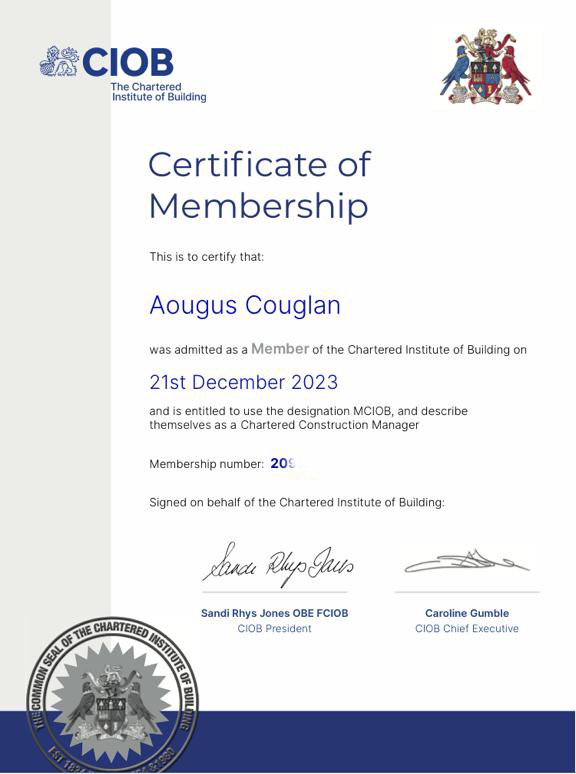
He started working on a new credential during the Covid lockdown, earning it just before Christmas. He’s now officially a Chartered Construction Manager and a full Member of the Chartered Institute of Building in Ireland and the UK. He gets to use the letters after his name:
Mr. Aongus Coughlan, MCIOB
This is the equivalent of a bachelor’s degree in the European system (the Level 7 ordinary bachelor on the Irish framework), so it represents a boatload of work. When he sat for the five-day exam, he did so well that they bestowed the designation of distinction, but earning this full credential required much more than just passing that exam. He also had to document his experience in detail, and pass high levels of scrutiny.
I couldn’t be prouder of Aongus!
He’s an all-around fabulous guy. He’s always thoughtful and considerate. He’s a great cook and a deeply caring companion. He’s good-natured and kind, never pouts, and always carries his own weight at home and at work.
And now the world knows he’s also an excellent manager!
Well done, baby! Studying is a very good look on you!
I have an exceptional PhD supervisee at TU Dublin, Sandra I. Cruz Moreno. She is an internally motivated, self-driven learner who needs little to no prompting from me. Supervising her for the past two years has been pure joy.
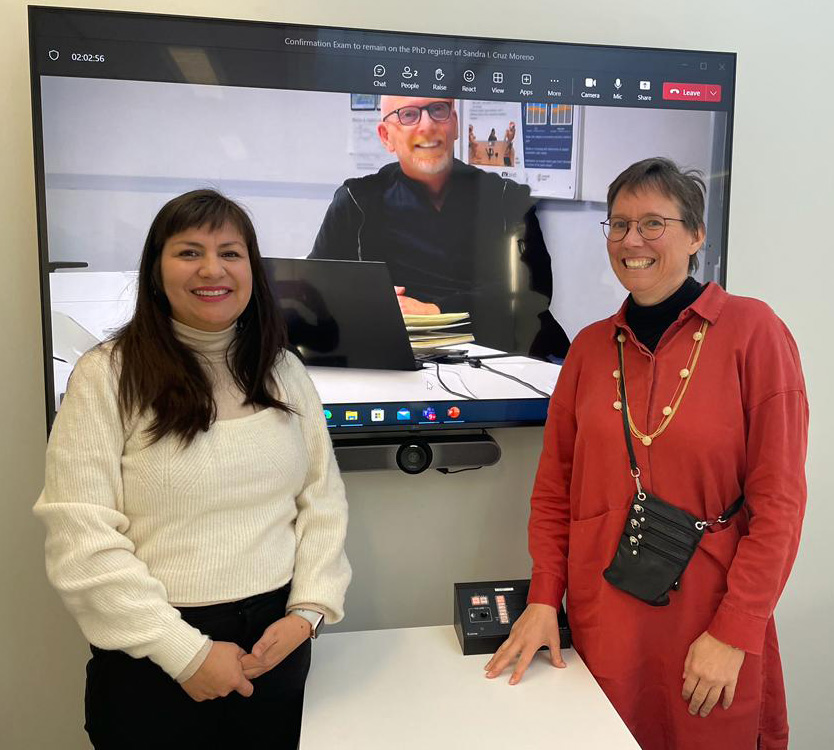
I am extremely pleased to report that Sandra achieved a major milestone yesterday because she very successfully “defended her Ph.D. proposal” (the term we use in the USA). Here, it’s called a confirmation examination to confirm that a student is on track and suitable to continue onward.
Sandra needed to submit an extensive report. The report is a bit more elaborate than a proposal back home, as it must include the work plan in addition to the first three chapters of the dissertation. She also included preliminary analyses of existing interview data.
TU Dublin is funding Sandra’s PhD so that she can analyze extensive interview data I collected from women studying engineering over the years since 2015. It’s such an enormous amount of data that I’ve never been able to wrap my arms around it fully. Sandra, a sociologist who has worked as a research consultant on rural development for the United Nations and similar organizations, is well-prepared to handle this large dataset. She has embraced the challenge and has made great strides forward.
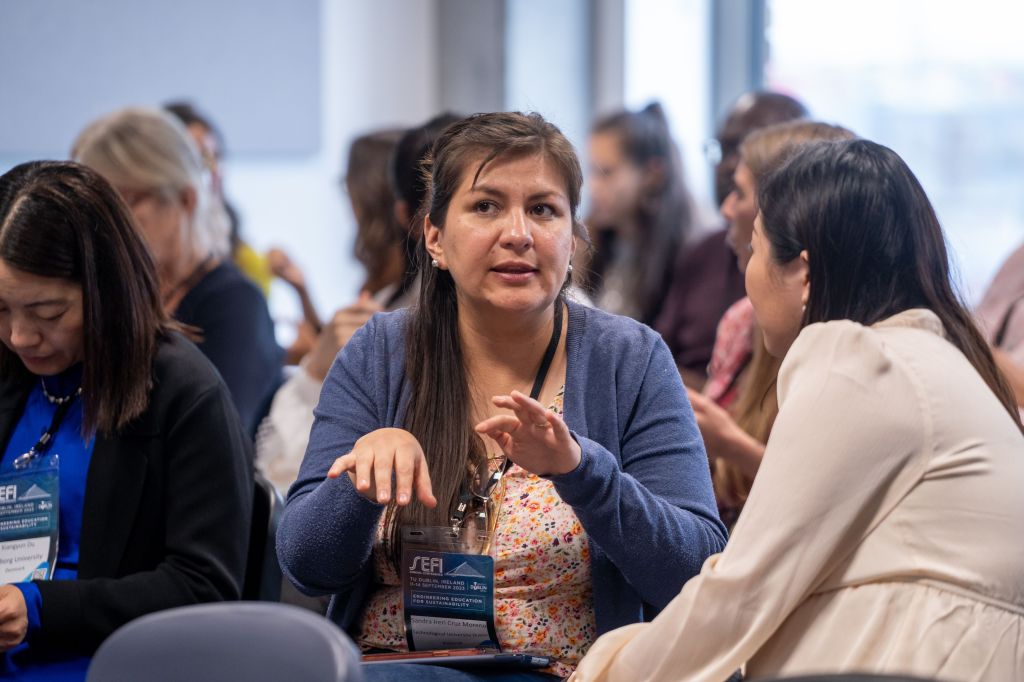
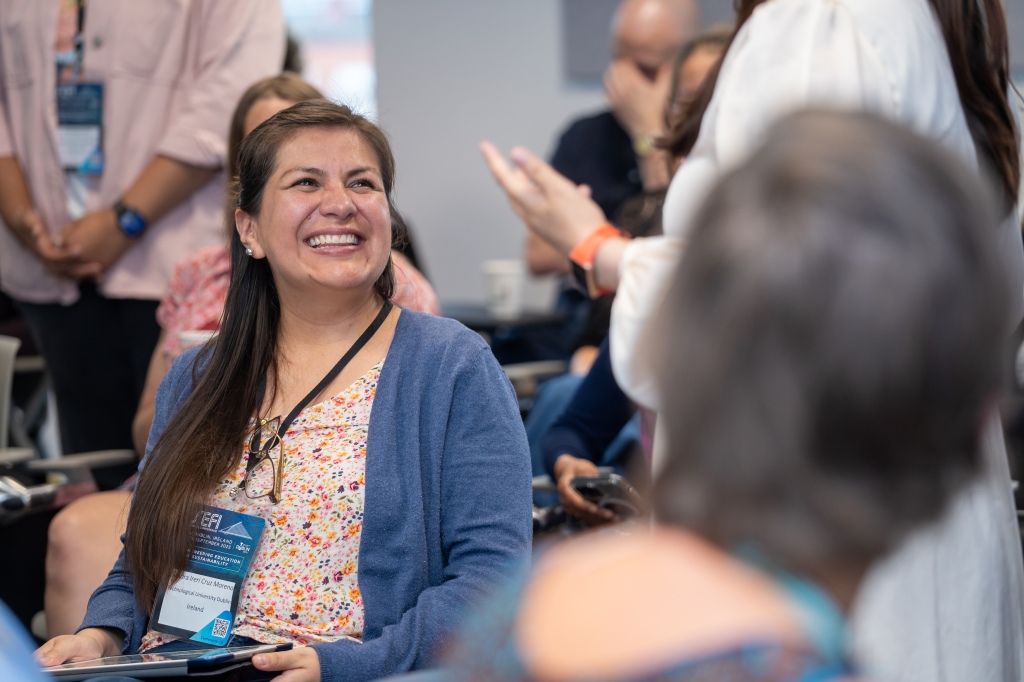
Sandra Cruz at SEFI 2023, where she presented her research (left) and engaged thoroughly in events like the pre-conference Doctoral Symposium (center and right).
Sandra’s study is titled “Exploring Women’s Experiences on Collaborative Learning in Engineering Education: A Phenomenological Analysis.” She submitted written reports of the coursework she has done to date, as well as a five-chapter document presenting her research. Both of Sandra’s supervisors, as well as our college’s head of research and the external examiner from the Swiss Federal Institute of Technology Lausanne (EPFL), all read and critically analyzed Sandra’s submission.
The result of this review and of yesterday’s two-hour oral examination concluded that her “Proposed research and progress [are] suitable for [Sandra] to remain on the higher register” and proceed into the final stage of her doctoral research. That’s fancy talk for “It’s a go!” and “Full speed ahead!”
Sandra Cruz with her external examiner, Dr Roland Tormey and lead supervisor, Prof/Dr Shannon Chance, on the day of examination.
Regarding the research Sandra has produced to date, the external examiner’s evaluation states:
The report is very well structured and extremely well written. It demonstrates a high degree of scholarship in dealing with quite a few challenging concepts while, at the same time, managing to make them accessible. There is a very good balance between methodology and methods in chapter three in particular.
The data available is suitable for completing of the PhD and the initial analysis carried out shows quite a lot of promise.
-External Examiner Roland Tormey, PhD
Our advisory supervisor, Prof/Dr Brian Bowe, couldn’t attend the examination (he’s the university registrar, after all, and the end of Semester 1 is an extremely busy time of year). Nevertheless, his guidance to Sandra and me has been essential throughout the process. The advice he provides is targeted and highly applicable. Sandra and I have benefited from having him on the team.
I was delighted, but not at all surprised, to hear about the successful outcome. Congratulations, the result reflects your hard work and dedication.
–Prof/Dr Brian Bowe, Head of Academic Affairs at TU Dublin
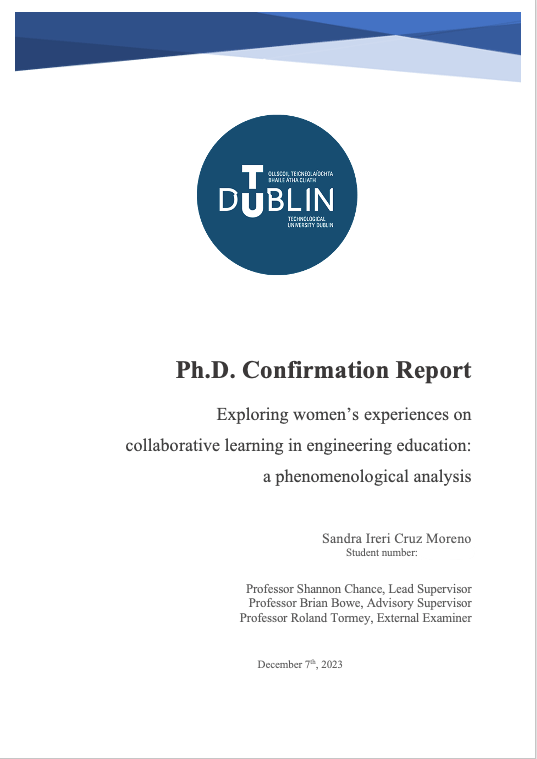
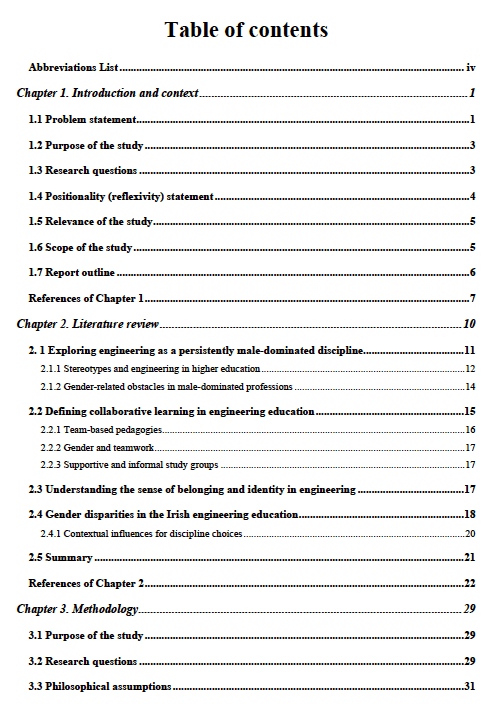
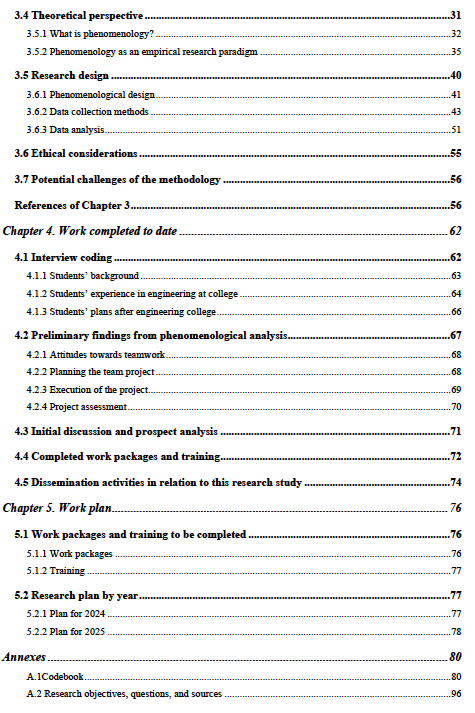
I have included the cover and table of contents of Sandra’s report so you can see the level of detail required. The report is 96 pages long. While Sandra was rehearsing for the examination, I was off in India delivering a paper she authored on policy to address gender gaps in engineering — policy at the European and Irish levels. The policy paper generated great interest and will form part of the PhD study, although it wasn’t a major component of the confirmation report. In fact, there were a number of topics she researched that didn’t need to be explained in detail at this point, such as critical feminism, which will inform her work going forward.
Working with and learning with and from Sandra is an honor and a privilege. I am grateful to TU Dublin for providing the grant to fund Sandra’s research activity. I am grateful to Brian, Roland, and Marek for the support they have lent Sandra and me. And most of all, I am grateful to Sandra for her diligence, perseverance, openness, and sincerity. I have learned so much from her and from working with her!
I’d like to highlight some creative endeavors of two people I have had the pleasure to teach and/or mentor over the years. They take time to post about their hobbies and/or professional work on WhatsApp or social media, and I benefit from what they share.
I have felt such inspiration due to recent posts by Shane Ormond (who lives in Ireland) and Nikkolas Smith (who lives in the USA).
Shane was previously a student in DIT’s School of Electrical and Electronic Engineering, and he’s been part of our RoboSlam activities for nearly a decade now (see RoboSlam.com and its blog section). DIT has transformed since then into TU Dublin — and RoboSlam has evolved into the Dublin STEM Ensemble. Shane has been a big part of both. He can frequently be seen supporting STEM Ensemble activities, like our annual exhibit at Dublin Maker, or our periodic planning and knowledge-sharing sessions held in the new Granegoreman Central Quad.
Here’s a video Shane shared on our STEM Ensemble WhatsApp thread last week about one of the projects he’s been doing in his spare time:
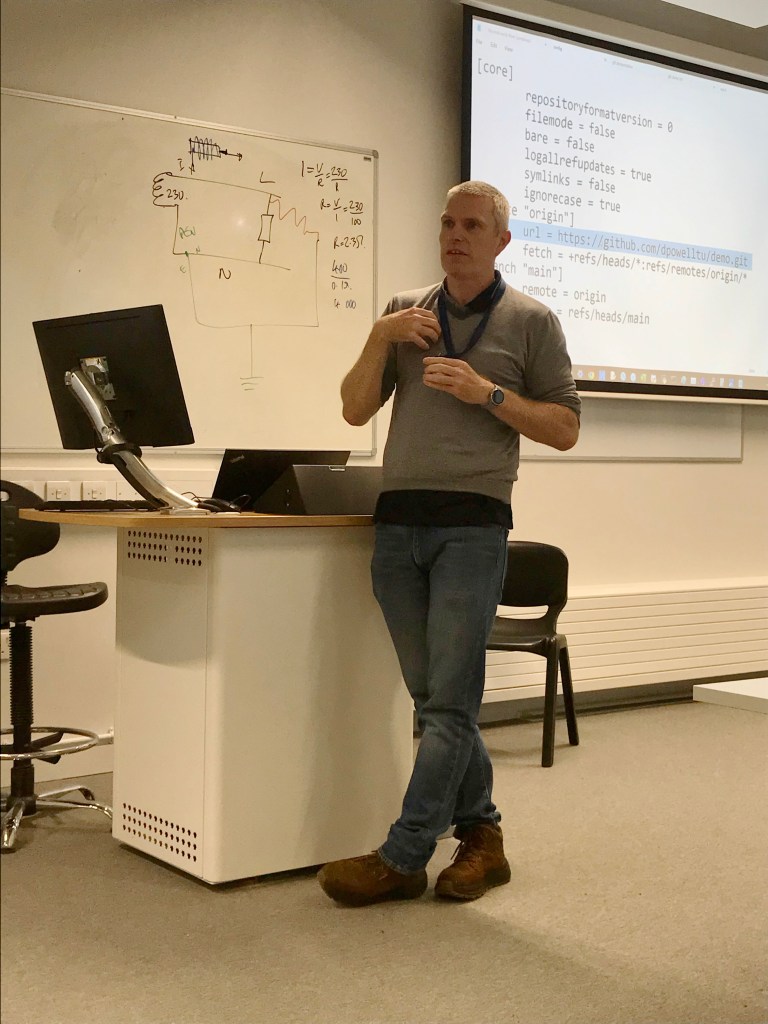
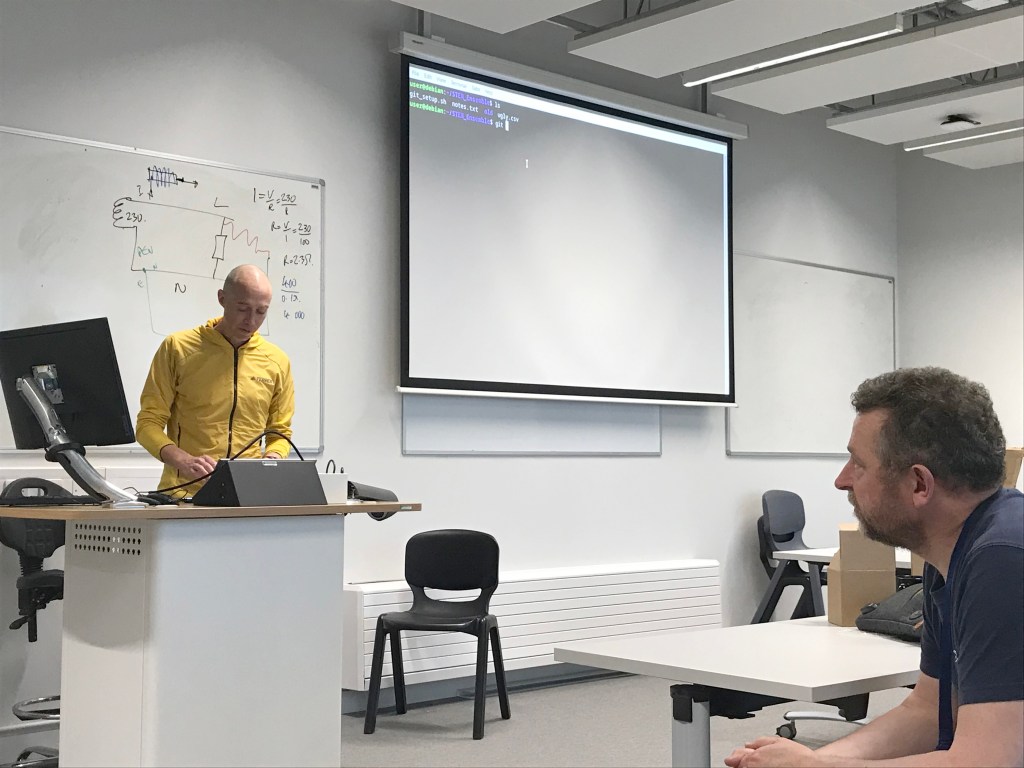
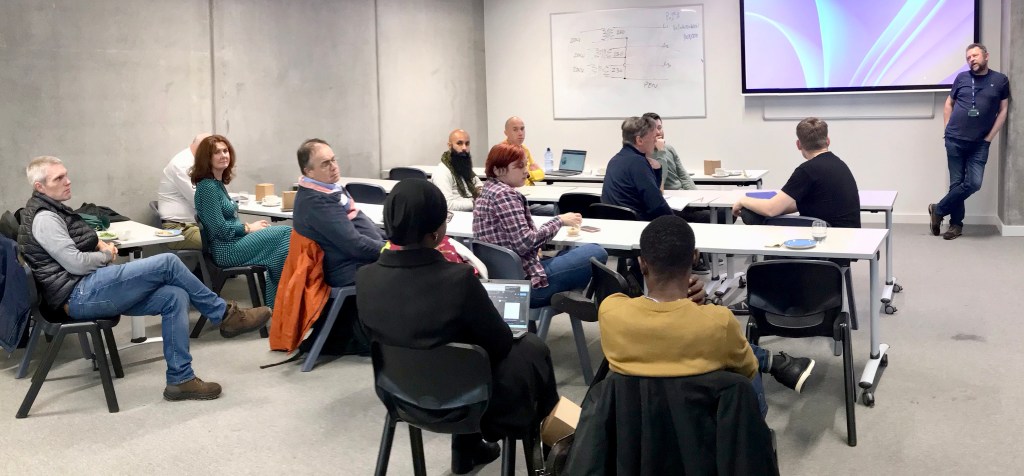
At the end of the video, Shane mentioned GitHub, where he posts his work for others to draw from. STEM Ensemble recently held a seminar on GitHub that Shane and I both attended. (The difference is, he understood a lot more of the presentation than I did!)
Images from our recent STEM Ensemble meeting that was followed by two presentations on using GitHub and a jaunt to the pub.
I see the video (above) with the blue model car as an evolution of Shane’s earlier work with robotic model cars with cameras on them, which I captured in this March 5, 2020 video. I shot it days before campus ground to a close with Covid lockdown:
Shane does all this as a hobby; at a couple of Dublin Maker faires he developed the technology to power talking heads. This year’s talking head automatically answered spoken questions using ChatGPT.
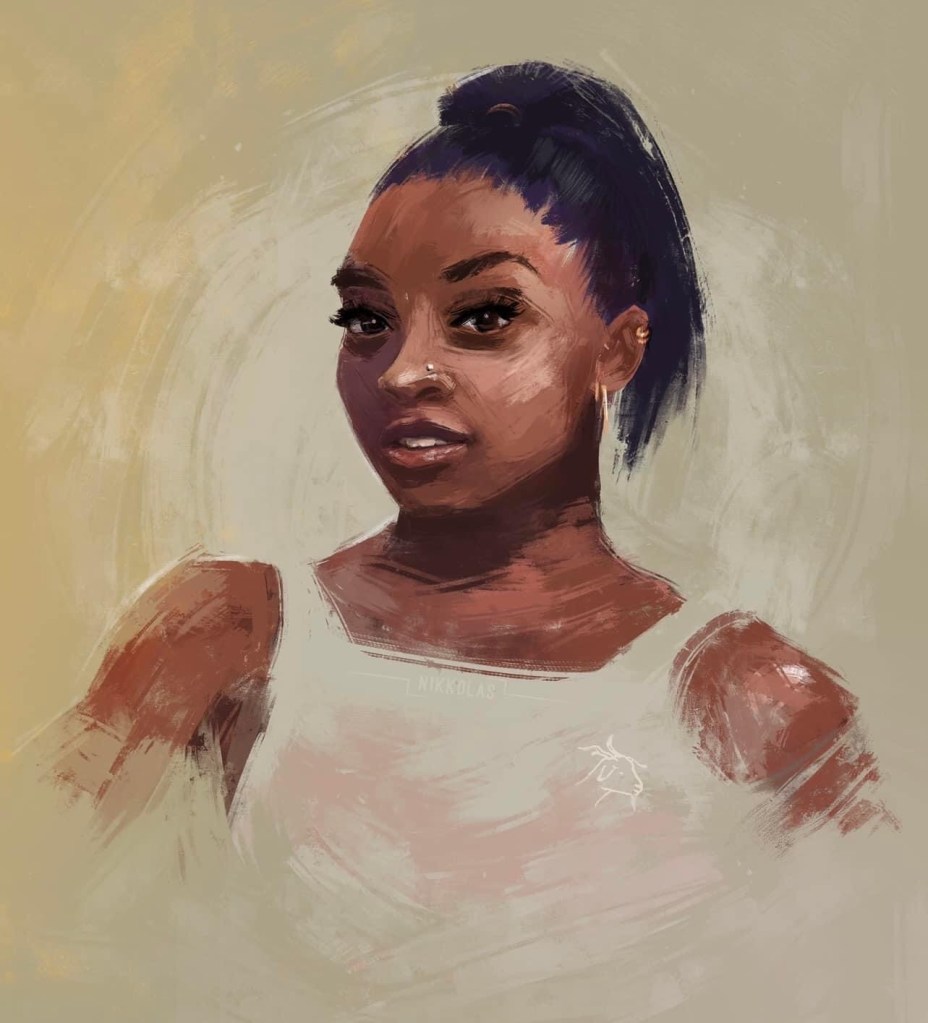
Like Shane, Nikk Smith is internally motivated to create. Nikk was an architecture student of mine at Hampton University, many moons ago. He often posts his “Sunday sketches” on social media. Here are a couple examples:
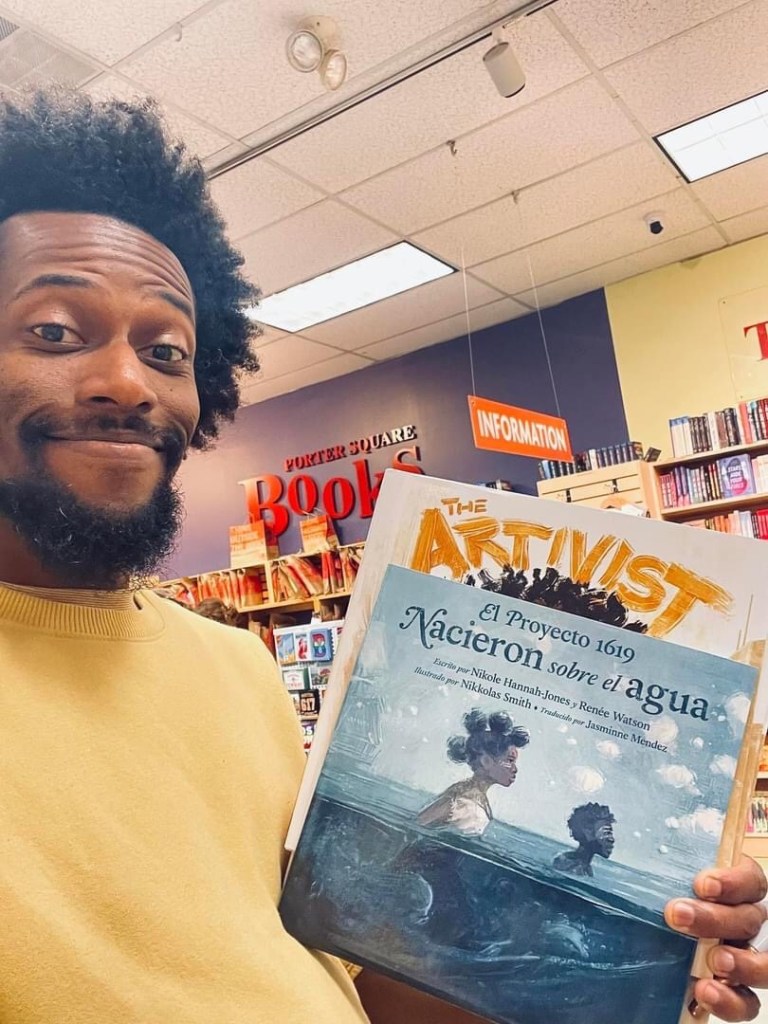
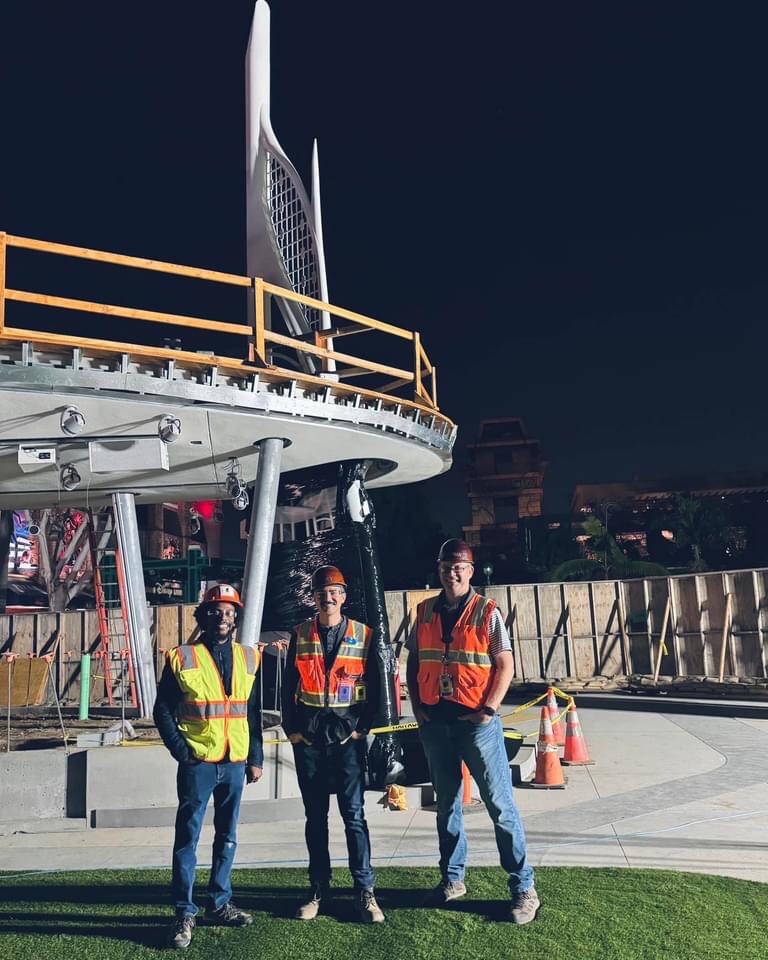
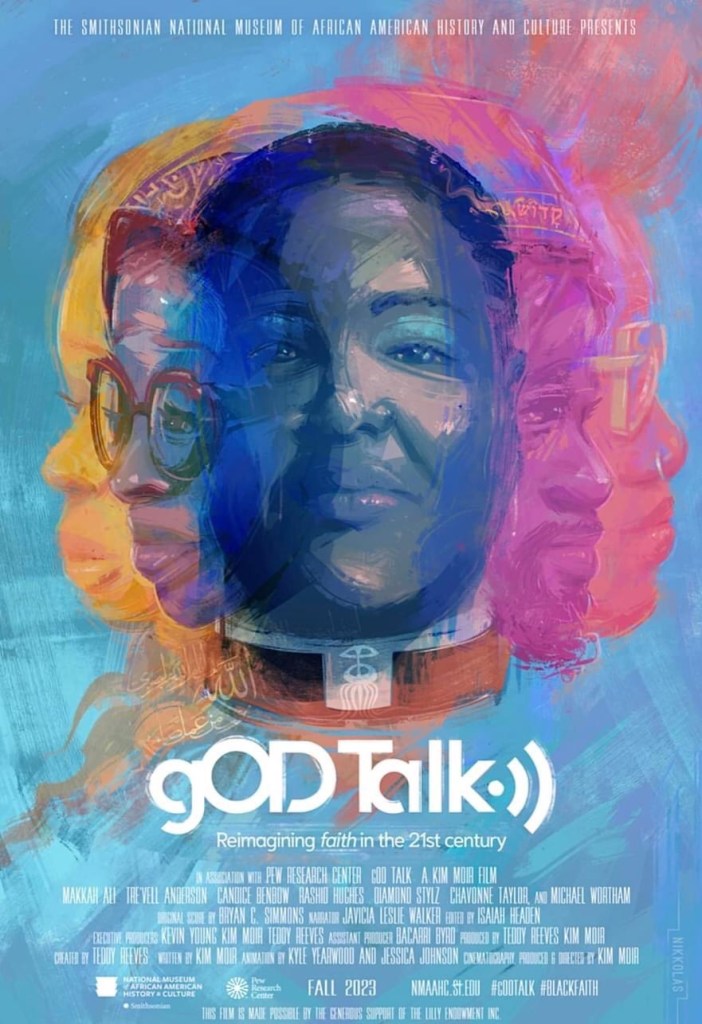
A couple of Nikk SMith’s “Sunday sketches”. One of gymnast Simone Biles, and another of children from Palestine, Sudan, and Congo. His work has socio-political relevance, and he highlights Black causes and heroes.Nikk also illustrates and sometimes also writes books for children. “Born on the Water” has been extremely successful, and has just been published in Spanish. The original is in English. He uses art to support his activism, and coined the term “activist” encouraging others to combine art and activism!Nikk used to work as a full-time Disney Imagineer, but now he works for himself (I think) and does consulting for Disney. A tower he designed for Disney to honor Black architects has just been opened at a Disney park. Nikk also designs movie posters — and I included his most recent poster here.
I am proud beyond compare of the work my former students and mentees are doing in the world — the creativity and passion they bring to the world and the lives they design for themselves.
Shane and Nikk are two outstanding examples, and I hope to feature more of my own personal heroes on this blog in the months to come. Being an academic educator and researcher connects me with many amazing people.
Following an extra-warm couple of weeks here in Dublin, fall set in with a cold, hard thud. Despite low thermometer readings, the sun did peek over the horizon, hanging low in the sky.
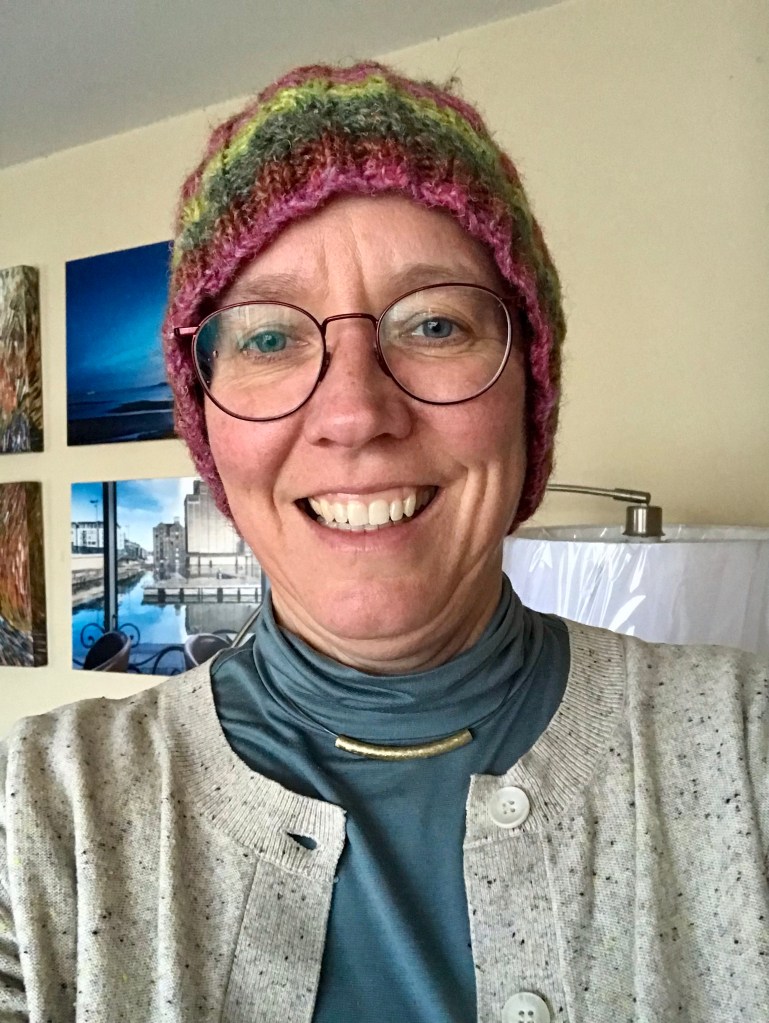
We were blessed with a couple of crisp, cold but gloriously sunny days of weekend. I bundled up in preparation, kitted with a lovely hat my aunt Kitty gifted me this summer.
Kitty has honed her kitting skills to a T, and I’m reaping the benefits of her hard work and loving craft.
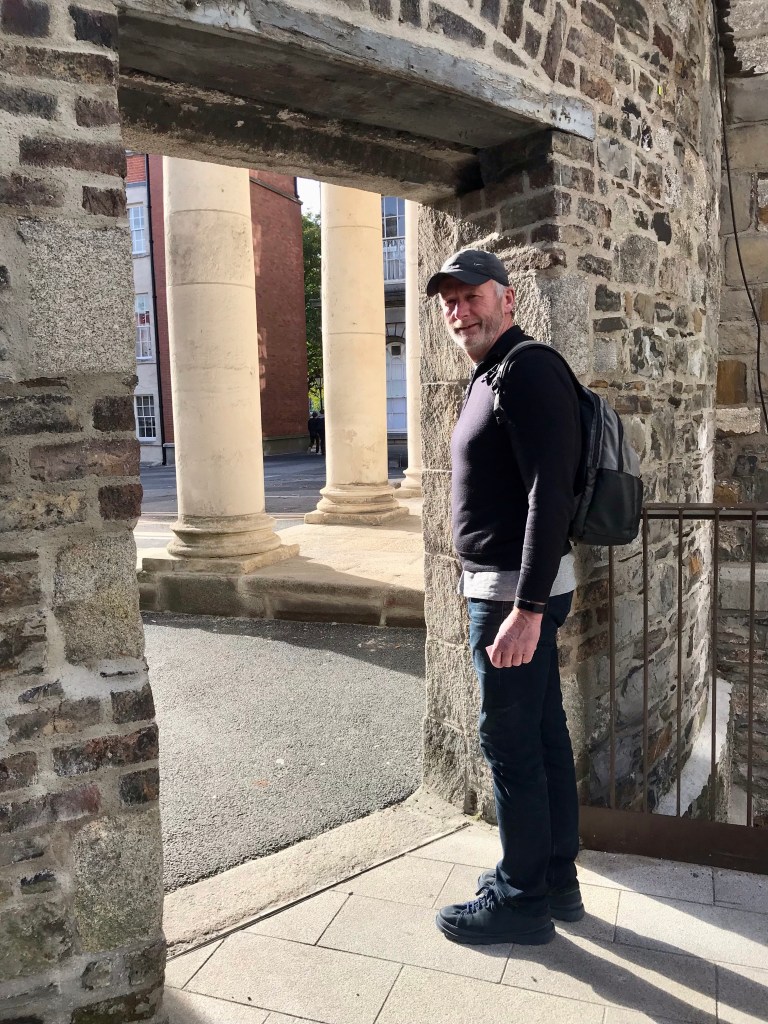
Saturday, Aongus got up early for a gym session then we headed out on our bikes to catch an early tour offered as part of the annual festival called “Open House Dublin”. This event has been a highlight of every year I’ve lived in Dublin and this year did not disappoint. We didn’t manage to snag tickets to many events, but the three we attended were grand!
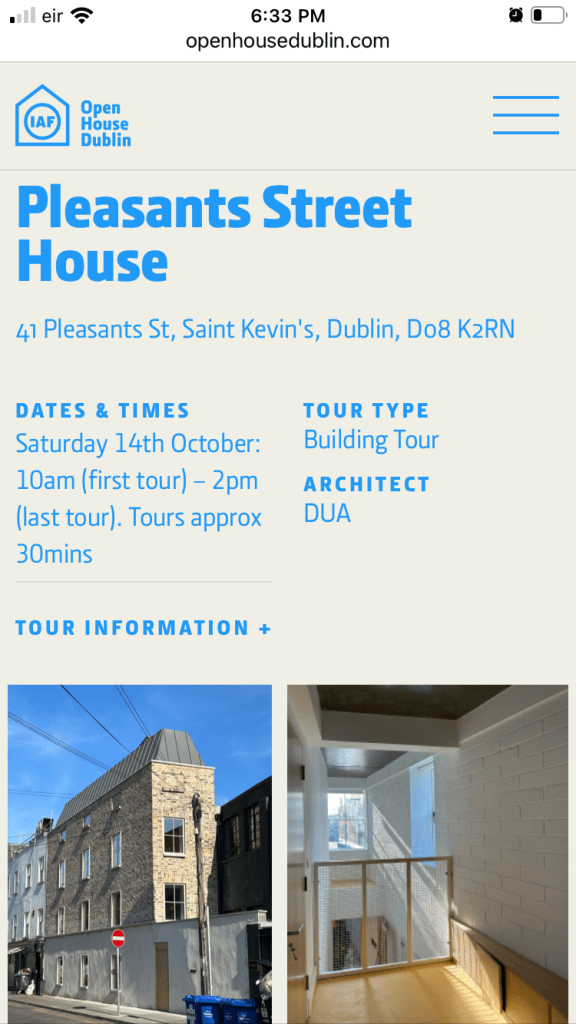
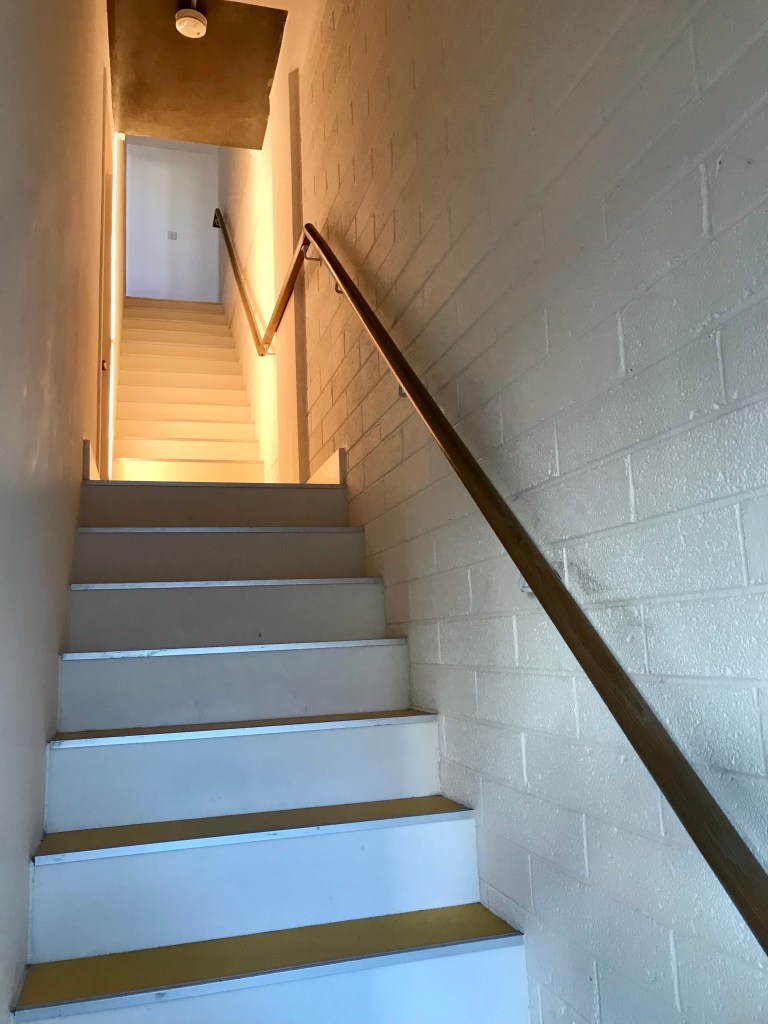
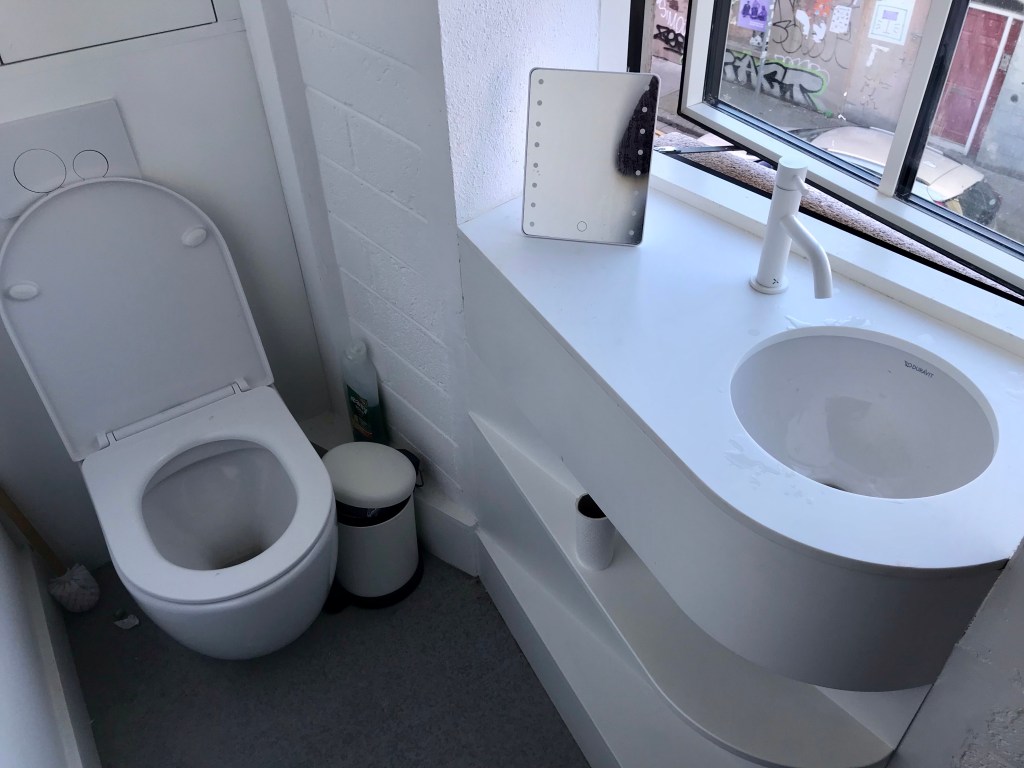
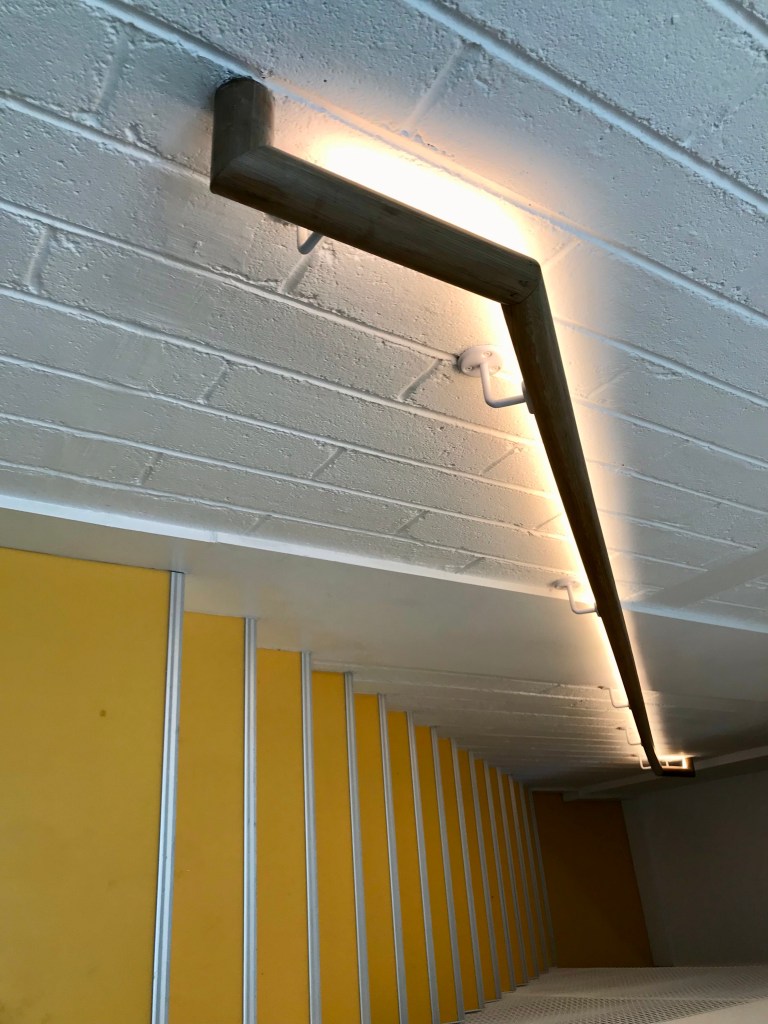
We started with a single-family house (our favorite type of tour here) on Pleasant Street, near Aongus’ new job site at Kevin Street. The house was designed by DUA and is currently rented to three super-luck Trinity students until the owners move in from abroad.
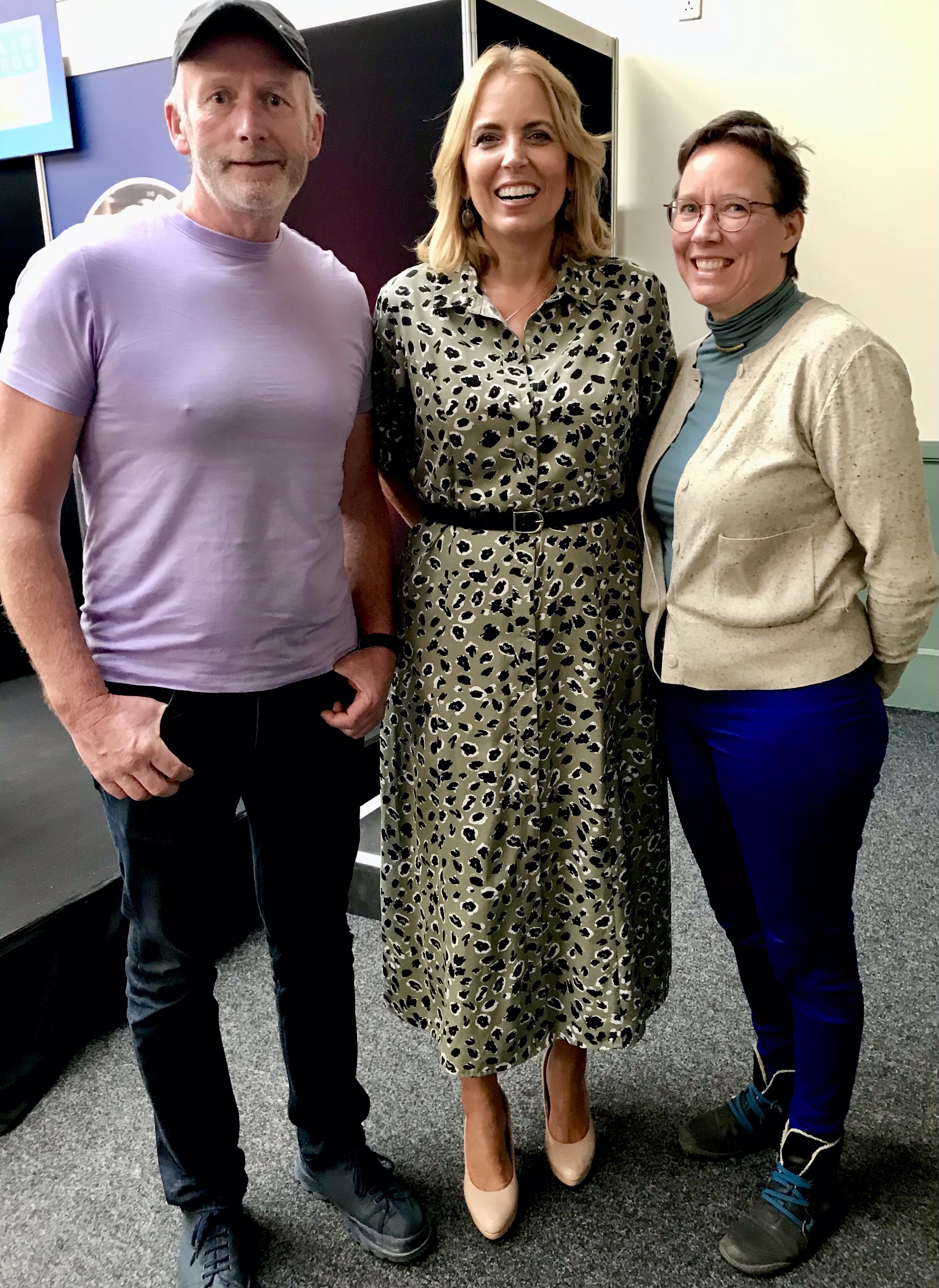
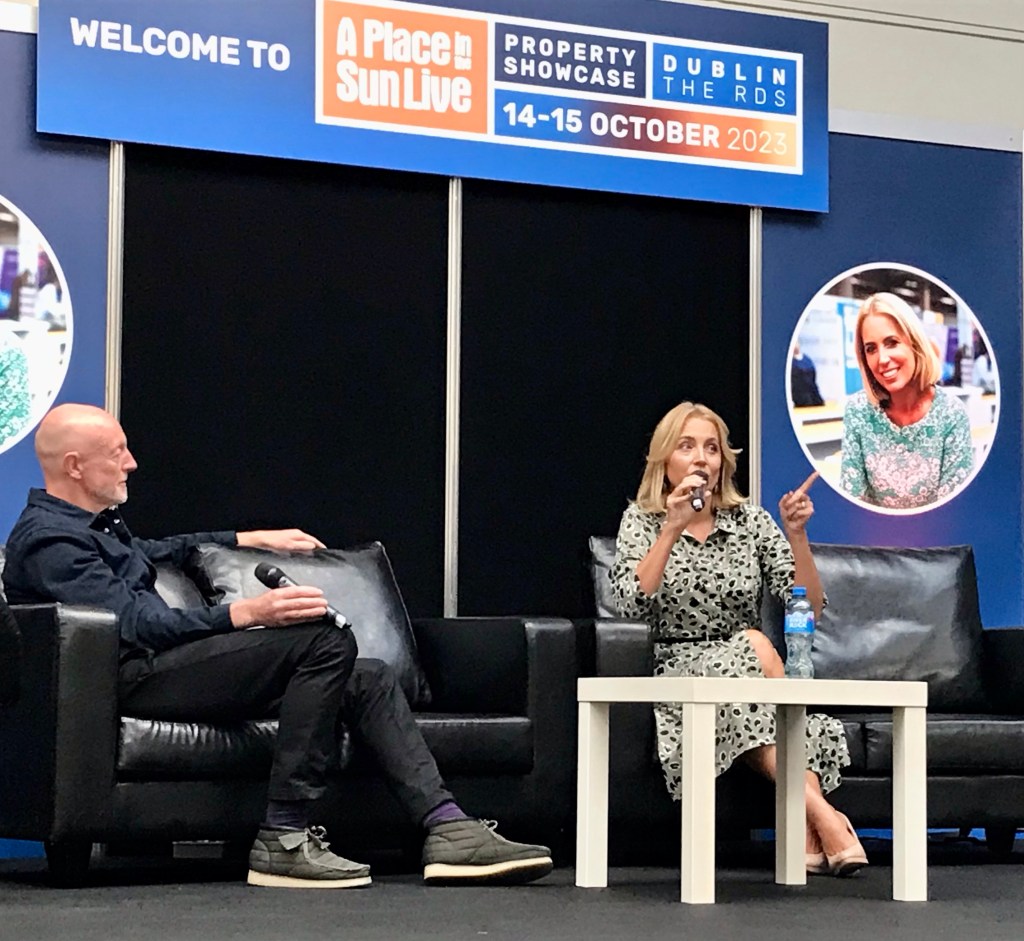
Following that tour, we cycled at top speed over to RDS for the “Place in the Sun” expo. We listened attentively to four panels and got to meet Jasmine Harmon, the TV show’s most active host.
Heading back into town after a full day of sun and star-gazing, we enjoyed lunch and a drink at Opium on Camden Street. Then we were off again, headed to the Lighthouse Cinema for a second Open House event, called “Cities Have Feelings”. We enjoyed a film and poetry reading by LionHeart. We also soaked in a super-intriguing lecture by city architect Finn Williams who has worked in London and now works in Marmö, Sweden. There was a follow-up panel with them both that yielded even more intriguing insights. At the end, I got to catch up with my architecture colleague, Jim Roach, at the drinks reception.
Sunday morning, Aongus and I hit the gym bright and early. He had a personal training session, then we both did spin class before he headed into an abs class. (Maybe you’re getting the drift that I can’t keep up with the man, but I try!). We fueled up with oatmeal and fruit afterward and then jumped on our bikes again for one last Open House tour.
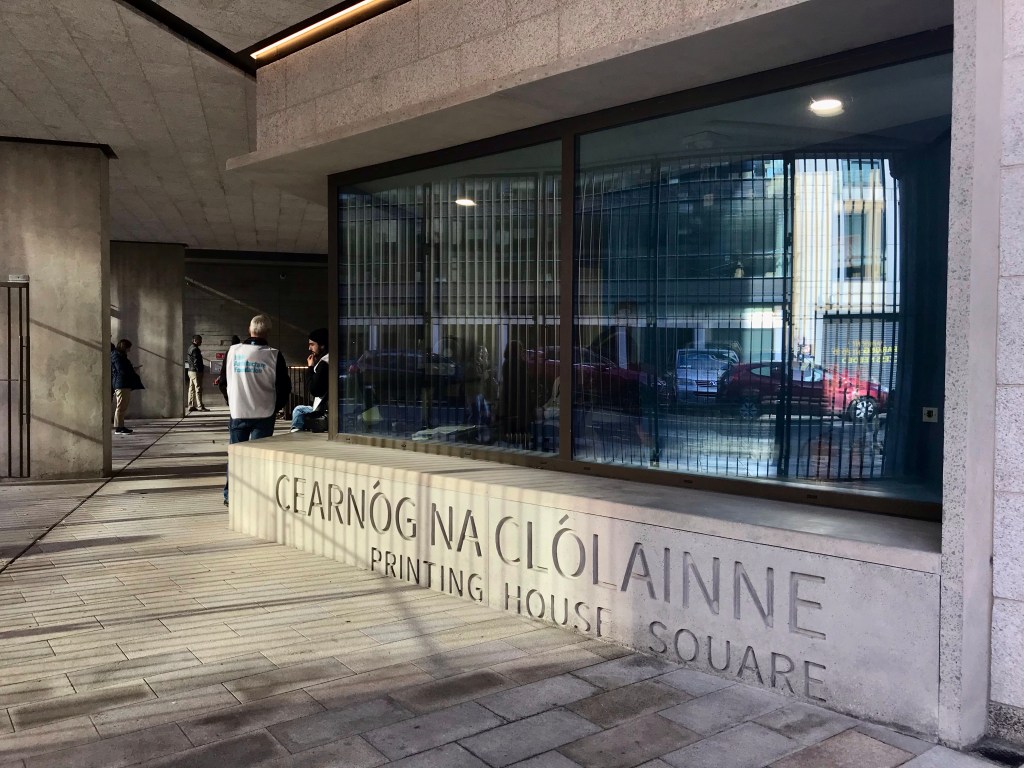
This was a visit to Printing House Square—better known to me as Oisín House—the construction project Aongus has worked on since our return from London. Architect Valerie Mulville delivered the tour and I got to see the fruits of Aongus’ efforts.
The edifice was awarded “Building of the Year” and Aongus’ employer named “Builder of the Year” at a recent event. This was the first time I’d had a chance to see inside. It’s quite an impressive structure and the quality of the finishes and detailing was surprisingly high.
I enjoyed a cycle through the city center while Aongus sped off for visits to his aunt and mum afterward.
Then, I made my way home to field incoming questions from students. They are culminating a sprint course on Research Methods. Last week was a marathon on the topic for the 23 students, my co-teacher Claire Simpson, and me. The students’ final proposals will need grading and feedback in the morning since they’ll start their Dissertation module this Thursday. My sprint hasn’t ended!
In any case, I’m so extremely thankful for sunlight, energy and vibrant health, curiosity, a full set of senses, mobility and freedom to explore, citizenship, warmth and comfort, quality food, an interesting and secure job that I love, and a strong and fit partner to enjoy all this with. Long may these blessings last!
Following a summer of intense curriculum design, a relaxing holiday in Greece, and the Dublin Maker fair, I dove right into the new academic year, voicing my perspectives at various meetings and workshops with colleagues at TU Dublin and–last week–attending and throwing myself into the annual conference of SEFI, the European Society for Engineering Education which was held just ten minutes walk from my apartment in Dublin.
Incidentally, SEFI is an acronym for our organization’s French name, Société Européenne pour la Formation des Ingénieurs, in case that wasn’t clear….
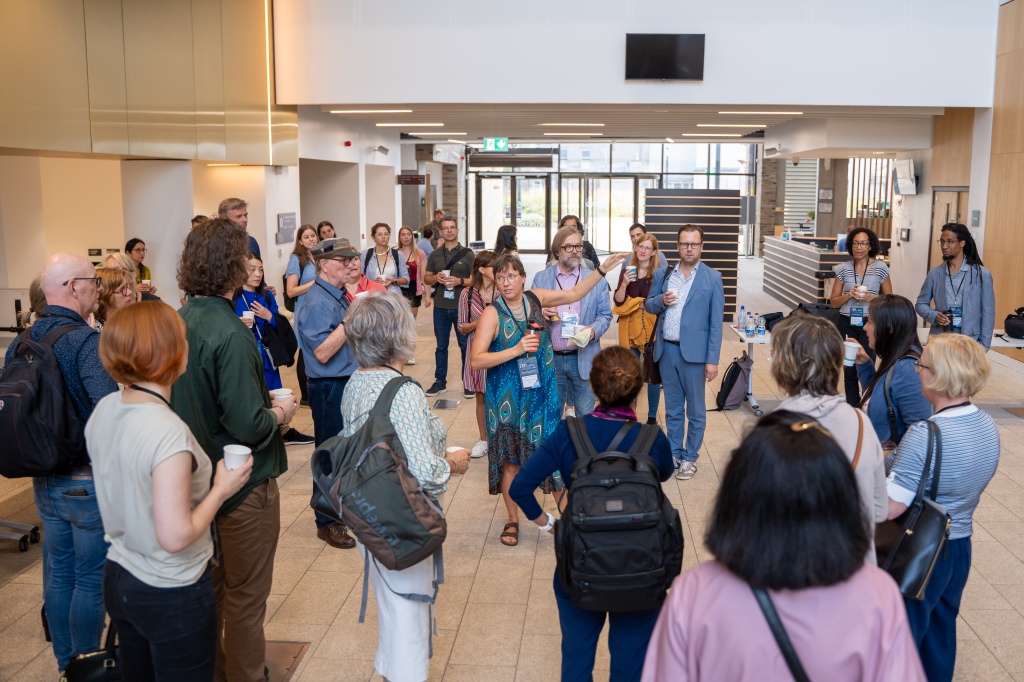
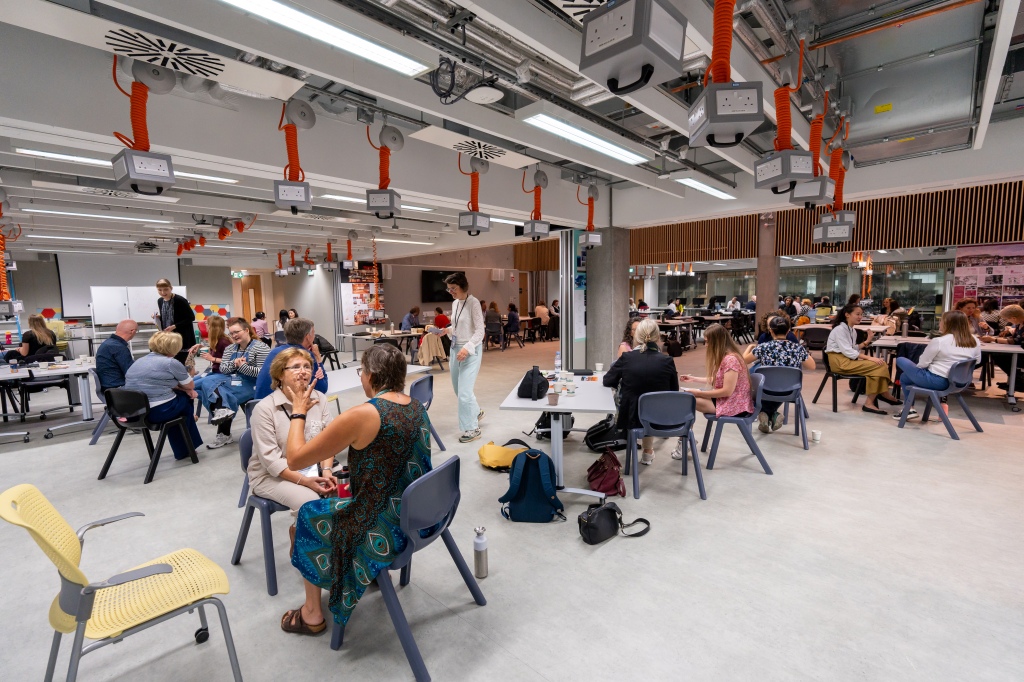
We kicked off on Sunday with a full-day pre-conference Doctoral Symposium, that I organized alongside Jonte Bernhard, Tinne De Laet, and Kristina Edström. It was, in all honesty, a highlight of the overall week, and each participant shared insights at the end of the day. “I found my village” exclaimed one of the PhD students to resounding applause. Indeed this annual symposium, where experienced researchers provide one-to-one advice to doctoral students helps bring our research community together. Everyone participating learns and grows, and we grow stronger as a group and also as individuals. With 37 students, 24 seniors, and 4 organizers present, we had plenty of others to learn from and with!
Favorite moments from the 2023 SEFI Doc Symposium include small group coaching, the extremely popular “speed dating” event, and the sharing of take-home messages.
All the photos on this post are by the talented photographer Conor Mulhern <conor@eyeon.ie>, hired to document the event.
Running straight from the Doc Symposium to Temple Bar that Sunday, I hosted my second event of the day — a new-to-SEFI pre-conference welcome for anyone feeling like they’d like a sense of community before the big event started. We had nearly 30 participants for our “Birds of a (Different) Feather” event, organized by Inês Direito, Predrag Pale, and I.
The main conference kicked off Monday morning. It was the 51st conference for SEFI, an organization that just reached 50 years of age, and a record number of people attended. Our TU Dublin East Quad was busting at the seams with 575 participants fully engaged.
I was a member of our Local Organizing Committee and I witnessed first-hand the heroic efforts and calm resolve of a truly outstanding member of our TU Dublin community, Ger Reilly, who led the cause.
Recognizing Ger Reilly for all his amazing work organizing SEFI 2023!
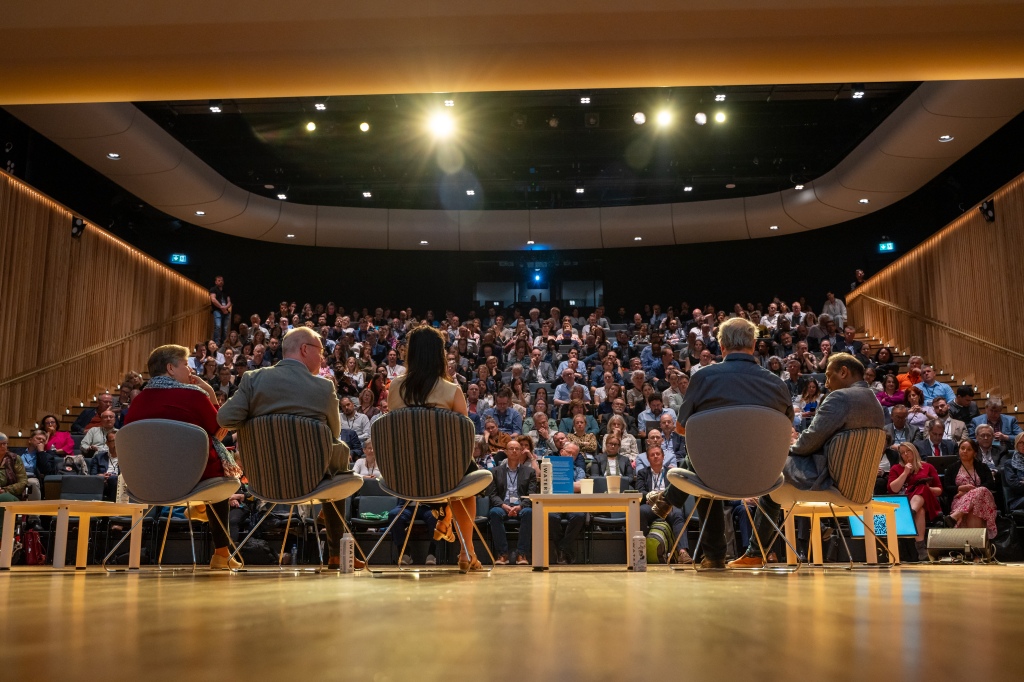
Monday morning started with a plenary on our new International Handbook of Engineering Education Research, organized by Aditya Jordi and Diana Adela Martin, with Bill Williams, Kristina Edström, John Mitchell, and Diana Adela Martin as panelists. Each panelist shared intriguing new insights on the current state of engineering education and thoughts and advice on where we’re headed as a field. I’ve worked closely with each of these scholars and feel a deep connection to each of them.
The opening plenary on the future of engineering education research. With Aditya Johri, Bill Williams, Diana Martin, John Mitchell, and Kristina Edström.
To tell the truth, I could not be prouder of Diana Adela Martin and her outstanding contributions to this year’s conference. She had asked me, when she completed her Ph.D., to mentor her (e.g., to learn about reviewing and editing for journals and books). That was just a few short years ago. And then, here she was–center stage–presenting ideas born from her work as an author and Associate Editor of our International Handbook of Engineering Education Research! At SEFI, she also led workshops, the Special Interest Group on Ethics that she co-chairs with Helena Kovacs, presented research, attended our EJEE editors’ dinner in her new capacity as Associate Editor of EJEE, and served as a senior advisor at the Doc Symposium, mingling with her new colleagues from UCL’s Centre for Engineering Education where she will soon start working as a Senior Research Associate.
Diana Martin in action (and leading an Ethics SIF workshop with Helena Kovacs, above).
After the panel, paper presentation sessions and workshop sessions swung into full gear.
My fabulous PhD supervisee, Sandra Cruz, presented a paper on one facet of her research. Her paper is titled “Exploring Women’s Teamwork Experiences in Engineering Education: A Phenomenological Analysis”.
TU Dublin Ph.D. student Sandra Cruz, a joy and an inspiration to supervise!
Just before Sandra’s presentation, I myself presented a paper co-authored with Barry McAuley of a “Preliminary mapping of bachelors’ research to enhance digital construction in Ireland”. Afterward, I joined two really fun Special Interest Group workshops (Ethics, and Engineering Education Research).
I really enjoyed the paper presentations and workshops, as evident in the photos below that Conor captured, and I helped lead two of the workshops.
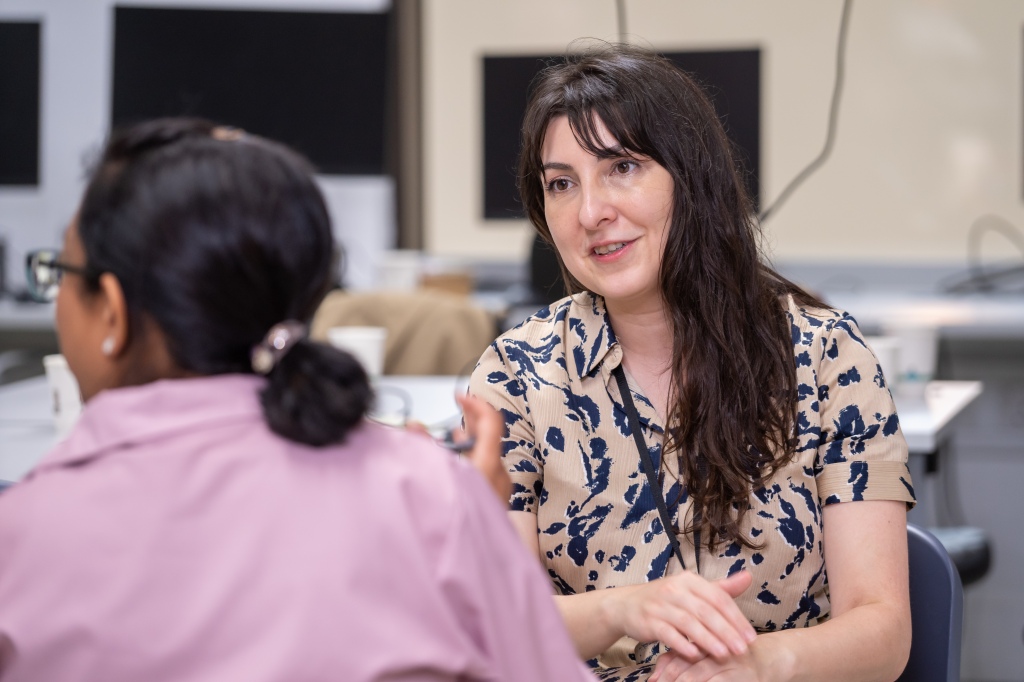
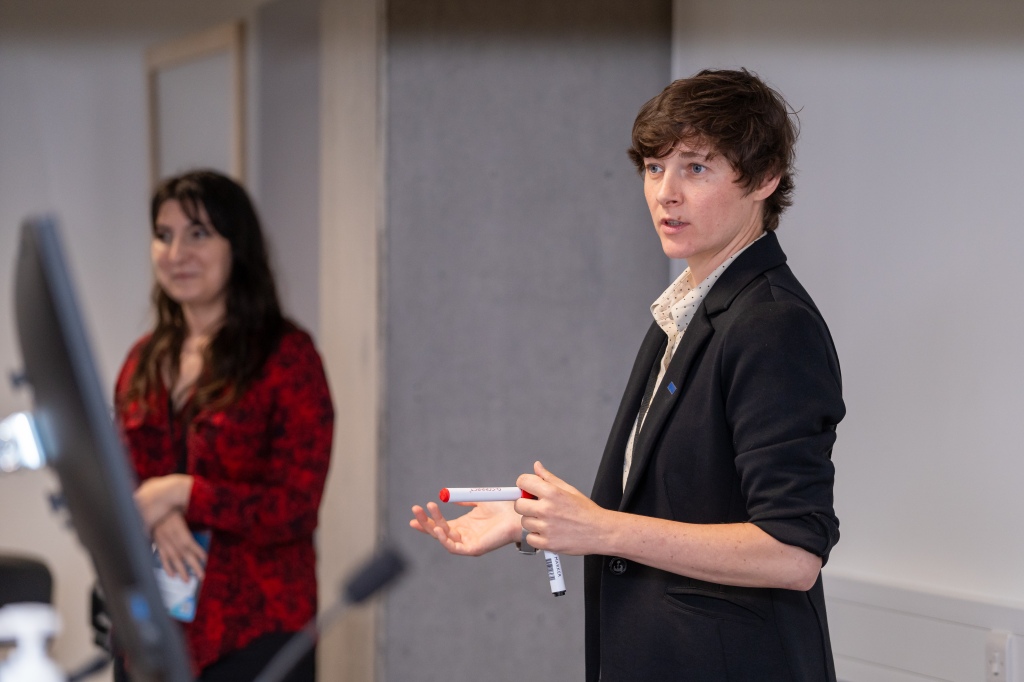
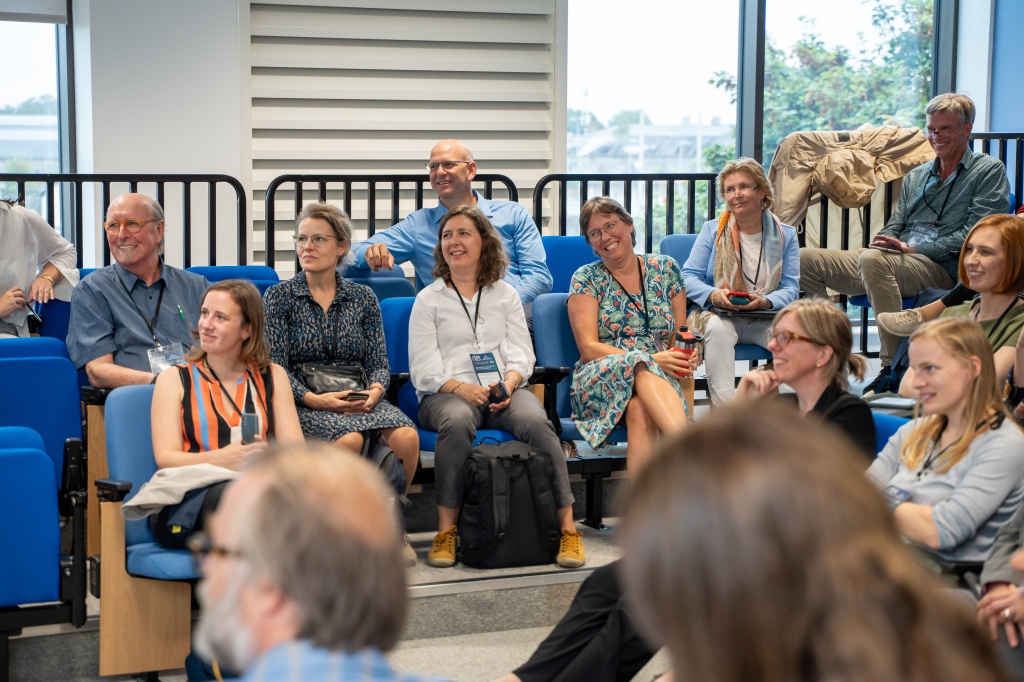
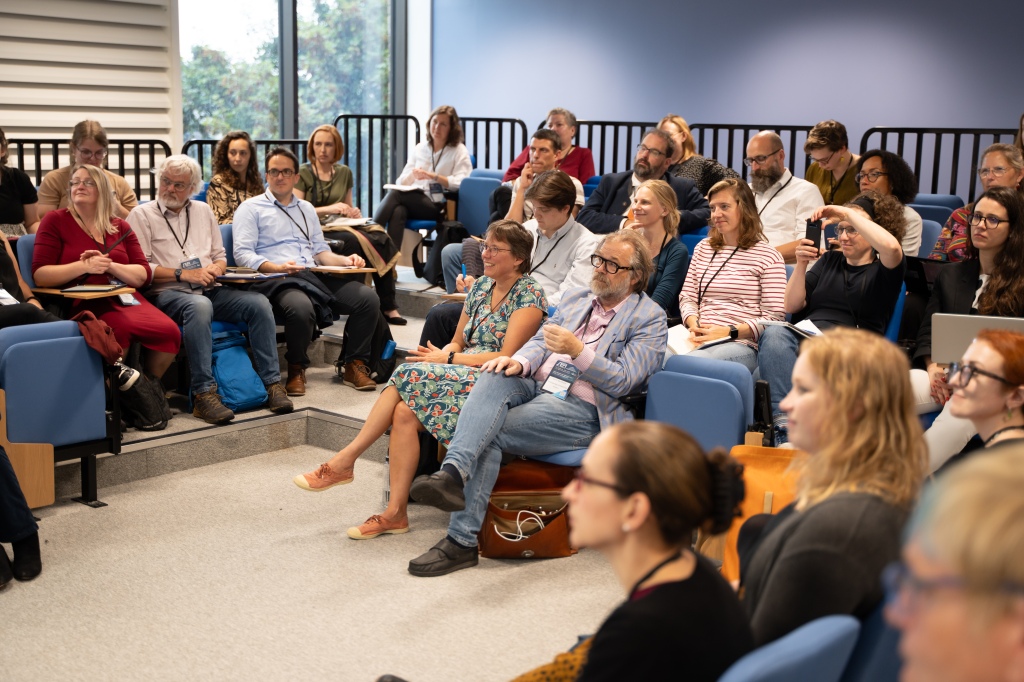
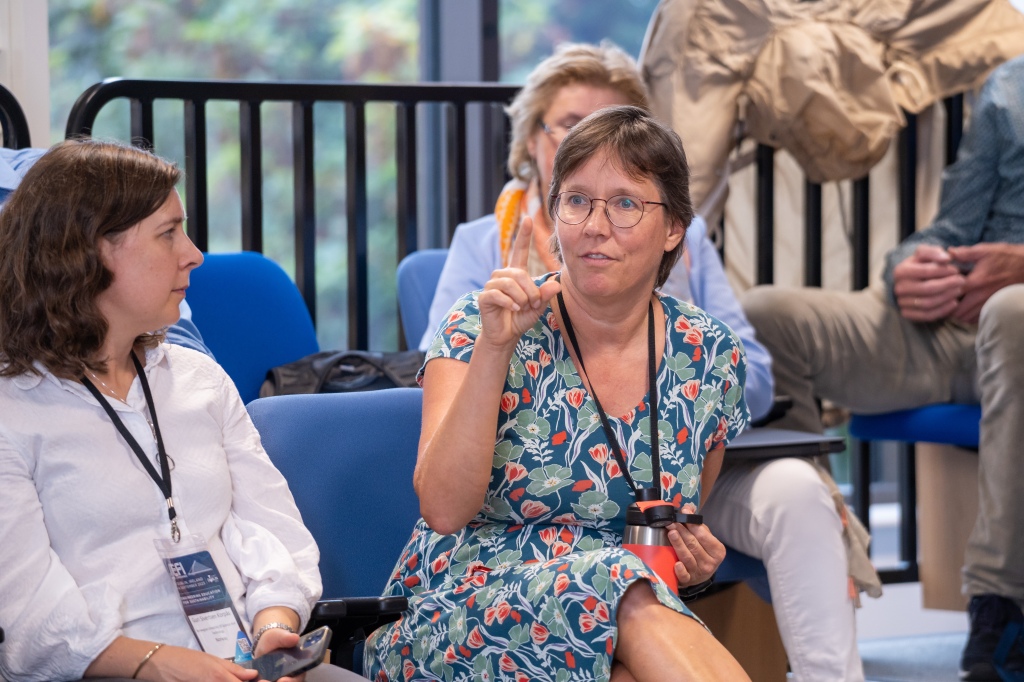
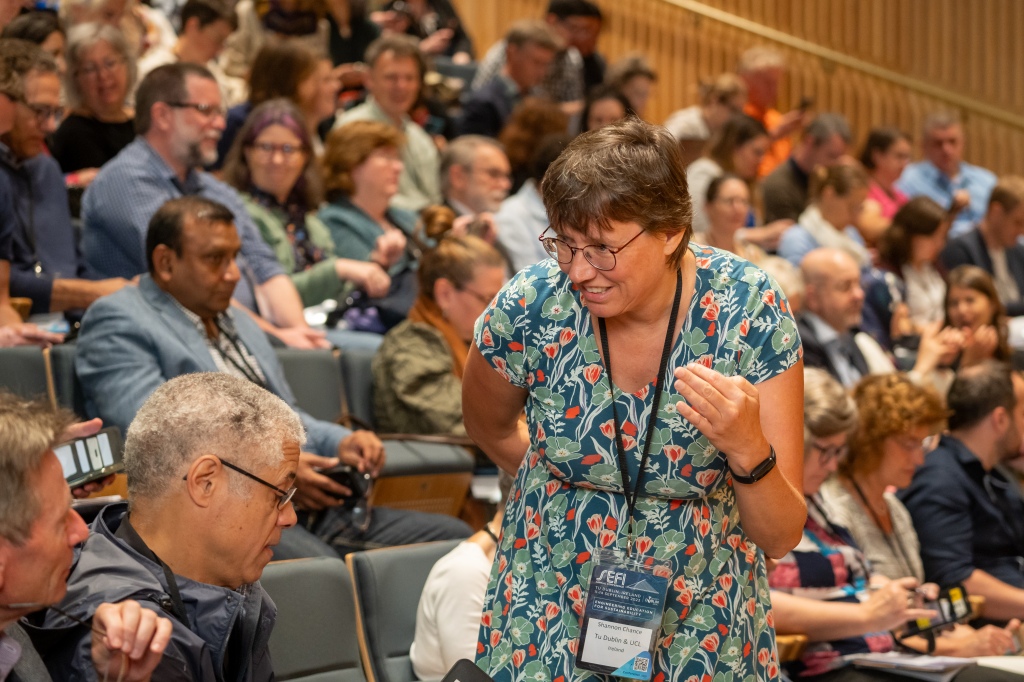
Fun at workshops and paper sessions.
During the opening reception, a number of energetic colleagues were honored: Kristina Edström, Pieter de Vries, Yolande Berbers, and Maartje van den Bogaard have given so much to SEFi over the years and it wouldn’t be the organization it is today without their efforts. They we all named Fellows of SEFI, and Maartje even thanked me for being a mentor and role model during her acceptance speech–that was a big surprise to hear!
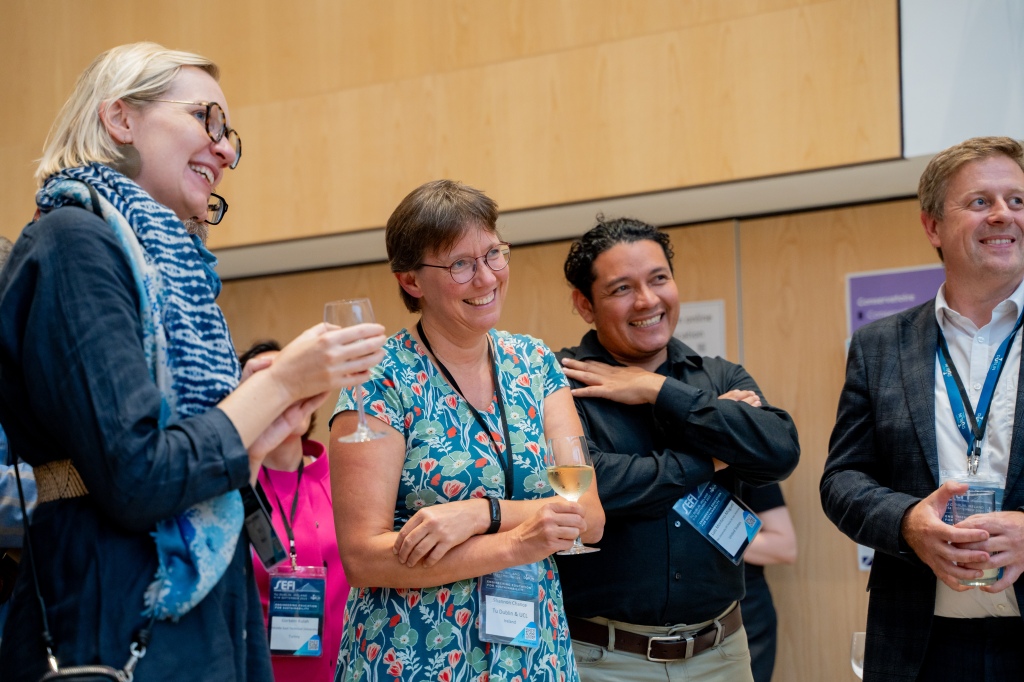
Moments from the open reception. Here Mike Murphy congratulates Yolande Berbers following her award as SEFI Fellow.
I must acknowledge all the exceptional work done to support this conference by SEFI staff Klara Ferdova over the year we’ve been planning this event.
My dear colleagues Klara Ferdova and Jonte Bernhard.
Aongus and I joined friends at Oscar’s Cafe after the reception.
On Tuesday, afternoon, Jye Benjamin O’Sullivan presented our co-authored paper “Drawing from SEFI Ethics Knowledge to Support Eco-ethics Education within the European University of Technology”.
Jye Benjamin O’Sullivan presenting our paper. (My smartphone photo, not Conor’s, or it would be much clearer!)
During SEFI, I helped lead workshops for new authors (Tuesday) and reviewers (Wednesday). I attended breakout meetings such as the EJEE Editorial Board meeting, EERN-UK & Ireland, and a celebration of our dear friend John Heywood, and Emeritus Professor from Trinity College Dublin, who at 92 years young is still working away, publishing research.
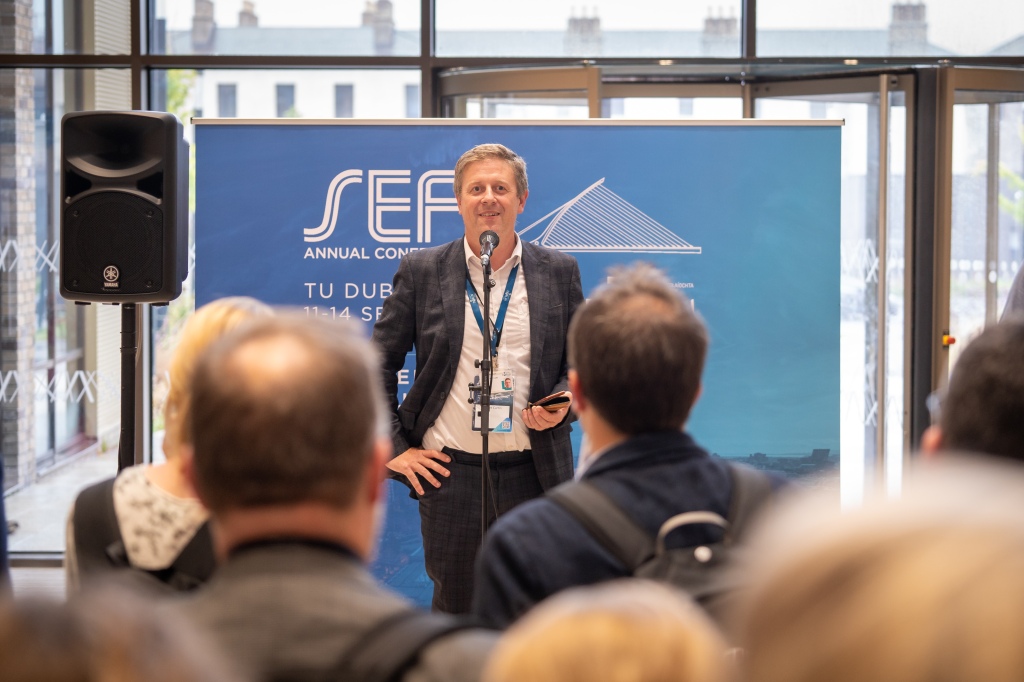
My university president, David FitzPatrick, and dean, James Curtain, and TU Dublin did a tip-top job representing our institution at this event. They’ve really grown into their roles over the past few years and their short speeches at the conference opening and closing were informative and engaging. Their support for the conference was important in so many ways, including having so many TU Dublin staff members present as volunteers and participants.
Dean Jame Curtain, President David FiztPatrick, and the amazing Ger Reilly, leaders at TU Dublin.
I attended SEFI’s General Assembly meeting to support my fabulous collaborators in taking on new leadership roles. For instance:
Emanuela Tilley was elected Vice President of SEFI for the coming two years. She and I work closely together to design a new curriculum for NewGiza University.
Emanuela Tilley in action, delivering awards and assuming the role of SEFI vice president.
Inês Direito joined the SEFI Board of Directors. She is also my mentee, and it brings such joy to my heart to see her flourish as a scholar, leader, and truly amazing friend and collaborator. I actually didn’t see much of Inês at SEFI this year… we were both so busy spreading our wings. To say I’m proud of the scholar she is and the leader she’s becoming is an understatement!
Inês Direito assumed a new role on the SEDI Board of Directors during the conference.
At the EJEE Editorial Board meeting, Kristina Edström, our Editor in Chief shared statistics showing that our journal is rising in stature. I’m very pleased to serve as Deputy Editor, alongside Jonte Bernhard, and look forward to helping lead this journal forward in the coming years.
Our superb leader, and EJEE editor-in-chief, Kristina Edström.
Special guests joined us from far and wide. Even though this is the annual European conference, dozens upon dozens of researchers in engineering education joined us from Africa, Australia, and North America.
Two very intriguing keynotes were delivered in the last two days of the conference, and I was delighted since our Local Organizing Committee had nominated them as keynote speakers.
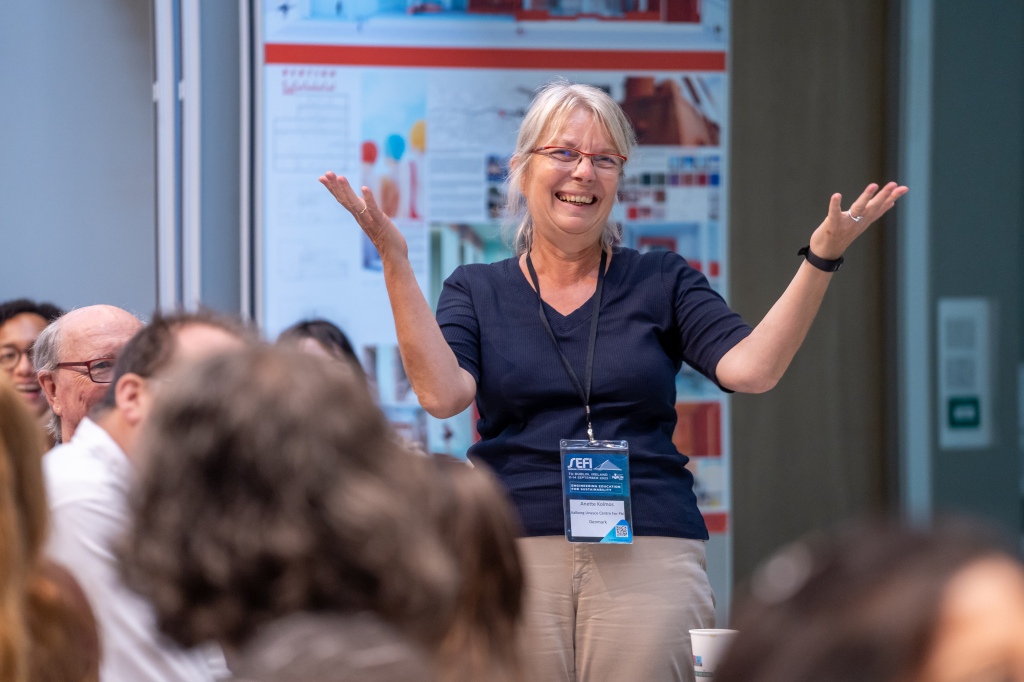
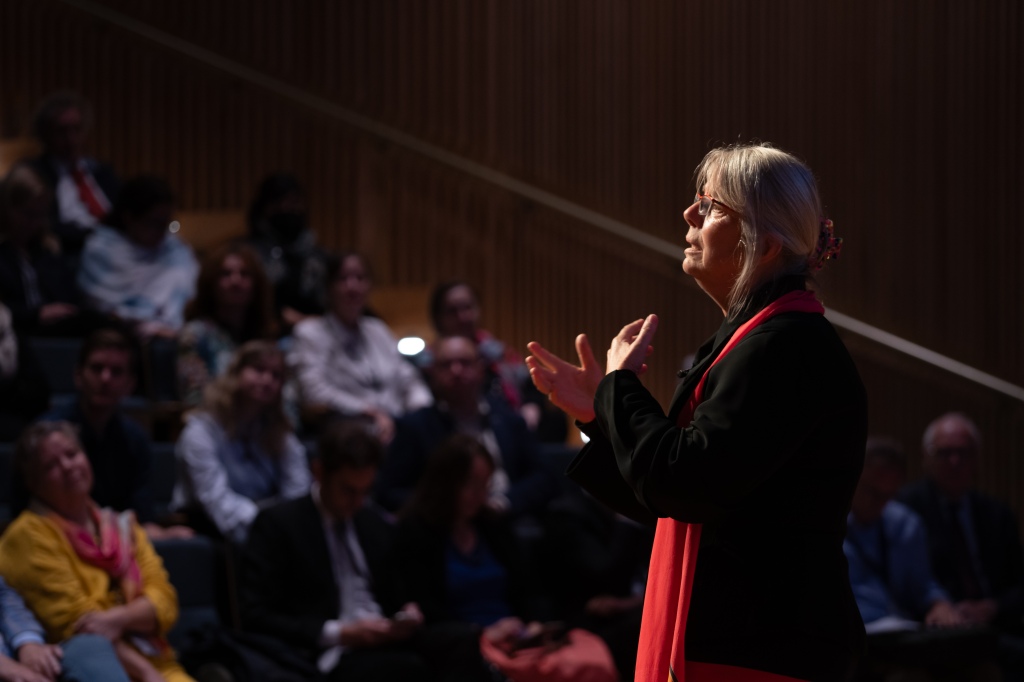
Anette Kolmos, from the Aalborg University UNESCO Center for Problem-Based Learning, put enormous energy into preparing and delivering her keynote–developing incredibly helpful new graphics and descriptions of extremely advanced concepts regarding transdisciplinary team challenge-based learning and the like. She pulled together ideas that she’s been sharing for years into an extremely effective presentation that brought these ideas to life.
Anette Kolmos’ keynote at SEFI 2023.
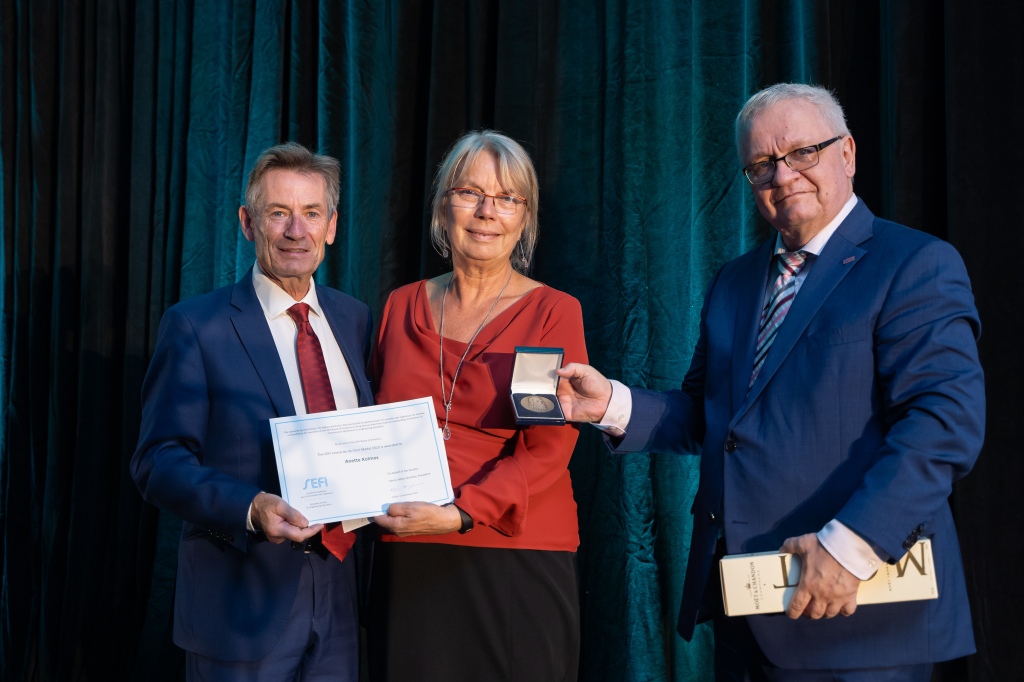
Anette also won top honors at our gala banquet on the final night, taking home SEFI’s coveted Leonardo DaVinci Award, an honor long overdue I’d say. She’s in great company as Santiago Calatrava is one of many illustrious past winners of this award.
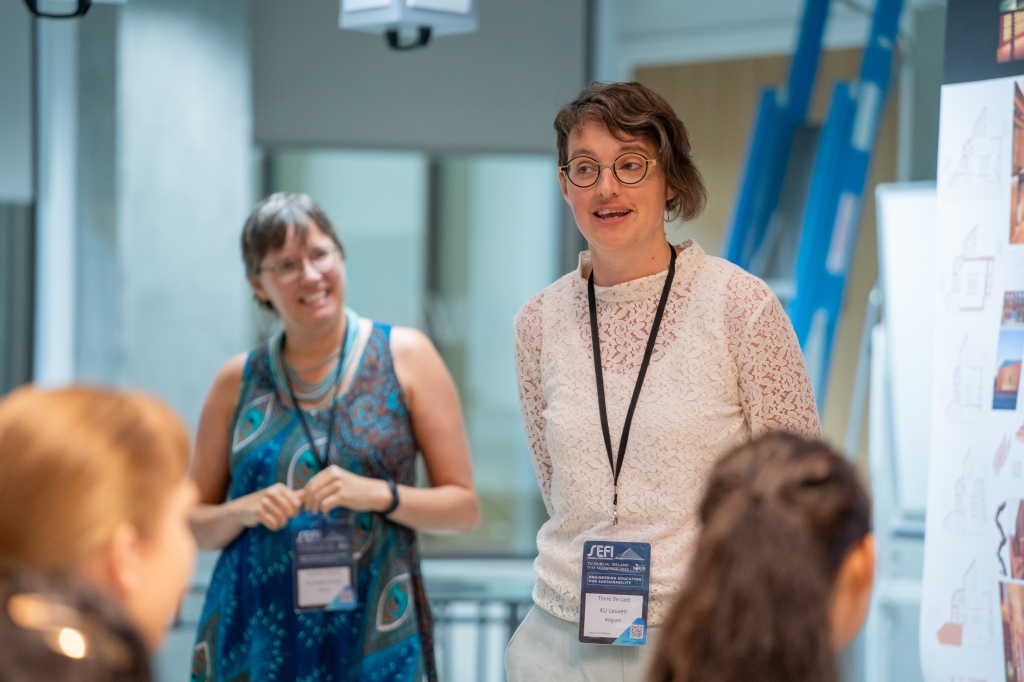
Tinne De Laet won SEFI’s Maffioli award for all she does to support engineering students at her university—not forgetting that she also delivers the Doc Symposium each year!
Tinne De Laet coming up to accept the 2023 Maffioli awardSEFI past and current presidents awarding Anette Kolmos the 2023 Da Vinci medal.
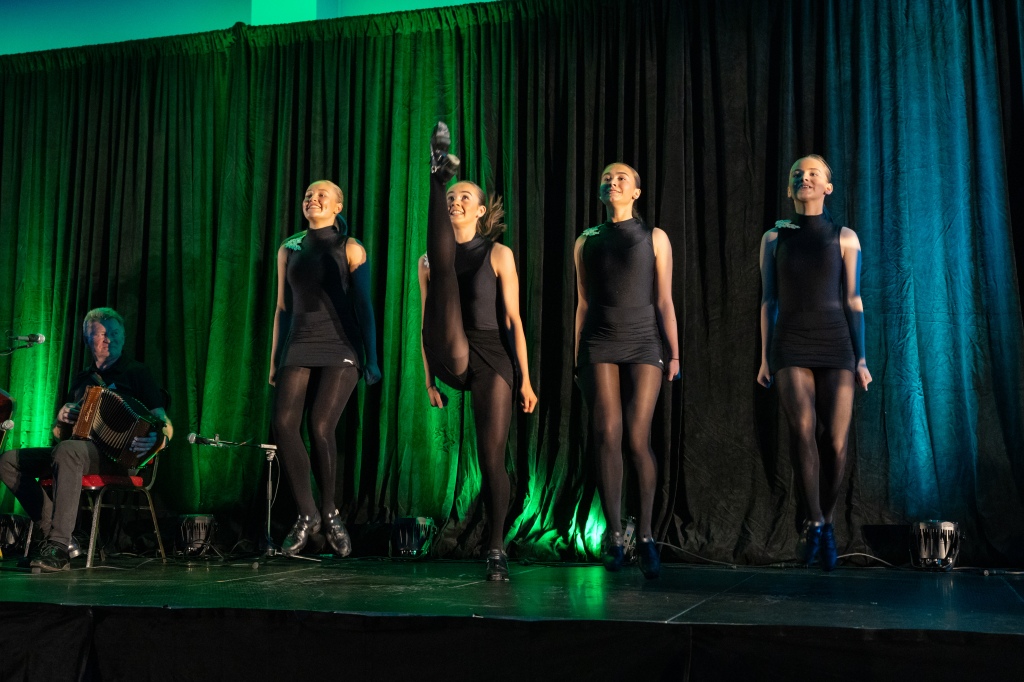
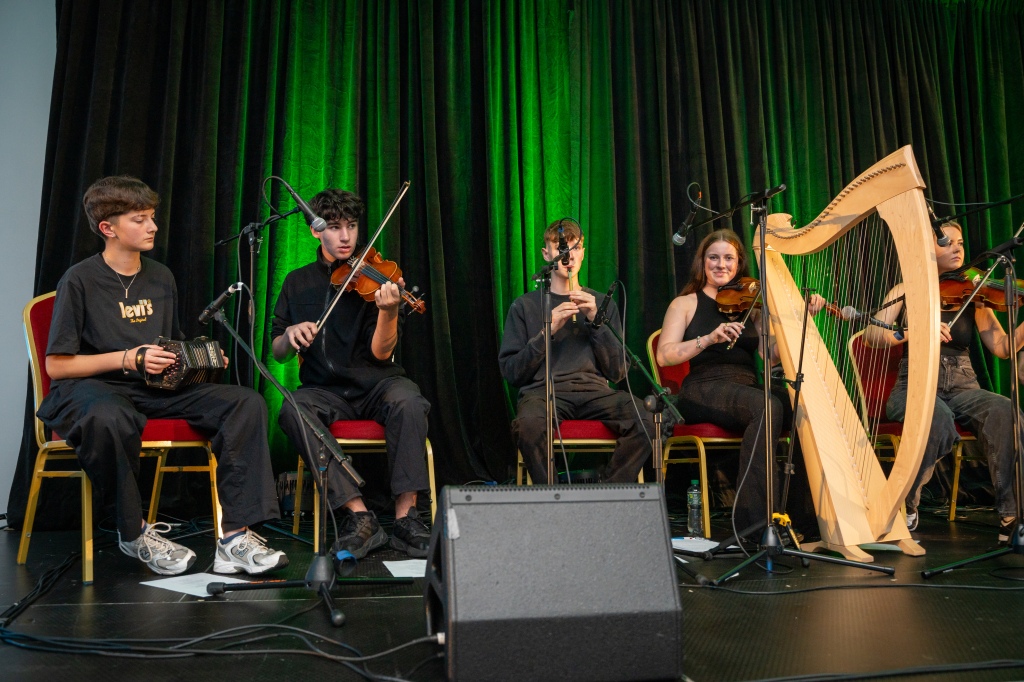
The award was given at the “gala dinner” out at a banquet hall of Dublin’s RDS. The food was lovely and I enjoyed the evening alongside my colleagues from Univesity College London, where I serve as Honorary Professor. The banquet was a hoot, our colleague Gavin Duffy‘s daughter was one of the musicians entertaining the crowd. There was also Irish Céilí dancing (think “River Dance”) on stage.
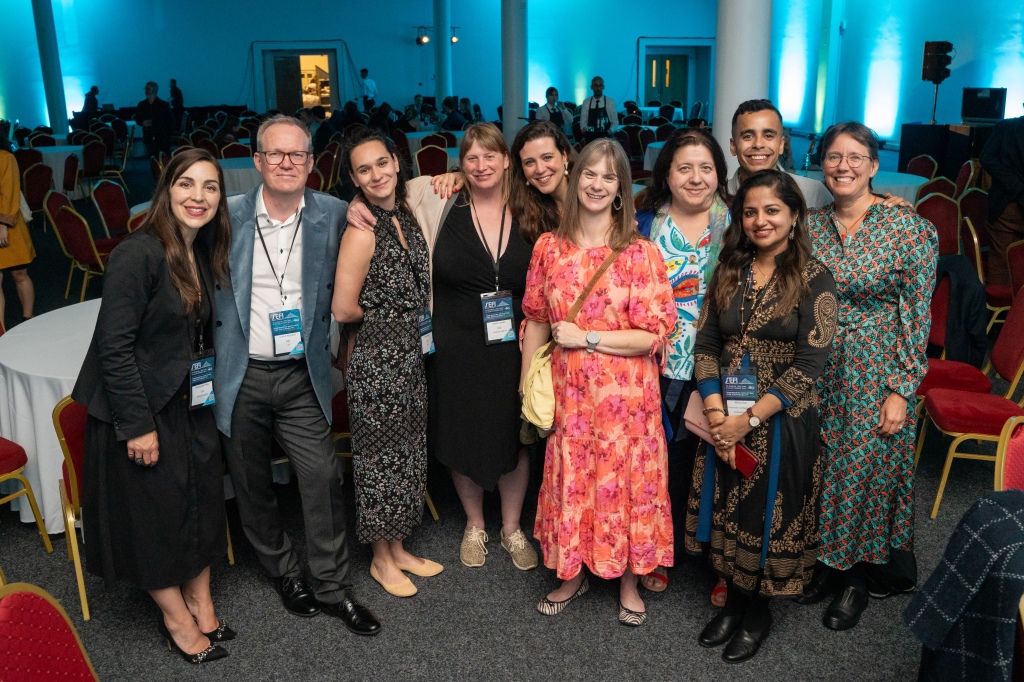
UCL’s Centre for Engineering Education enjoying the gala dinner and its entertainment.
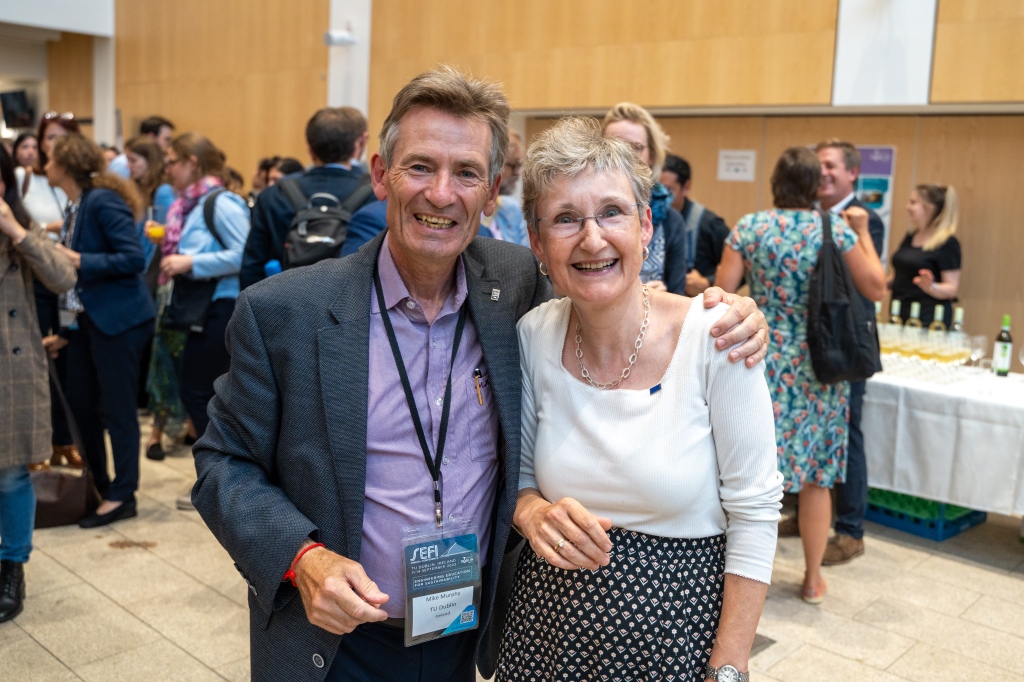
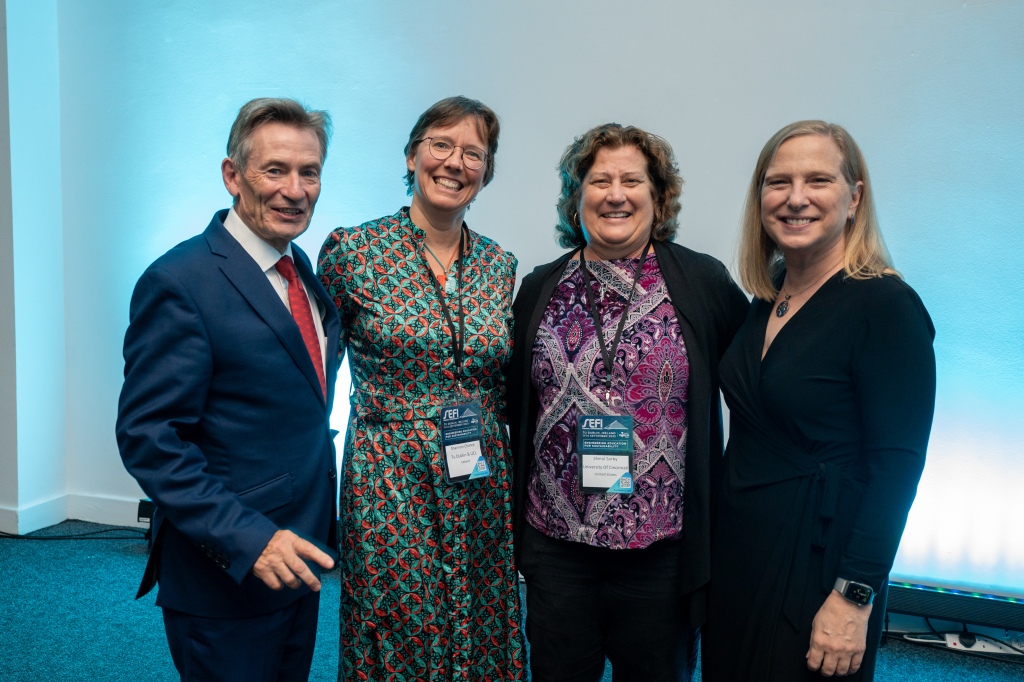
Our past SEFI president Mike Murphy even finally got a photo with the three Fulbright fellows who most recently came to TU Dublin during his tenure as Dean of Engineering and Built Environment: me (Shannon Chance), Sheryl Sorby, and Stephanie Farrell. Sheryl and Stephanie have both served as presidents of the mega-sized organization ASEE (American Society of Engineering Education), whose conference I attended in June.
Mike Murphy with his last three Fulbright scholars: Shannon Chance, Sheryl Sorby, and Stephanie Farrell.
For the final keynote of the conference, Ed Byrne, a sustainability leader from Cork, Ireland did not disappoint! I count on Ed for up-to-date reports on changes to engineering accreditation in Ireland. Like Anette, Ed had crafted a presentation chock full of cutting-edge research on educational issues and pedagogies to improve sustainability. I enjoyed his info-packed presentation, and meeting him in person afterward. I’d previously attended and presented at the Engineering Education for Sustainable Development (EESD2021) online conference he organized.
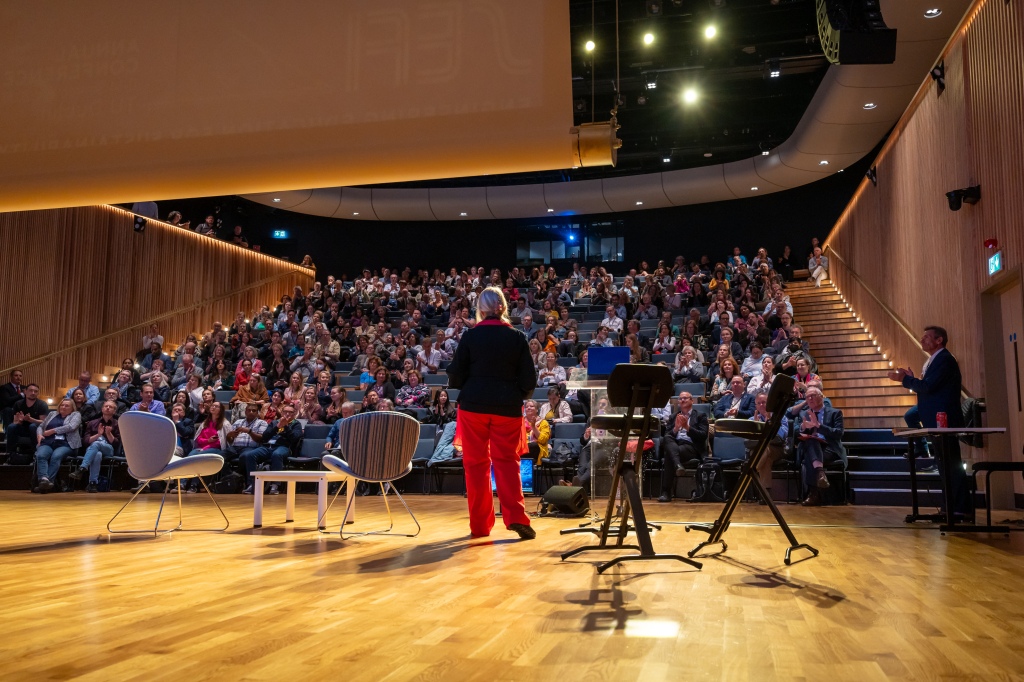
I really enjoyed the main stage events this year!
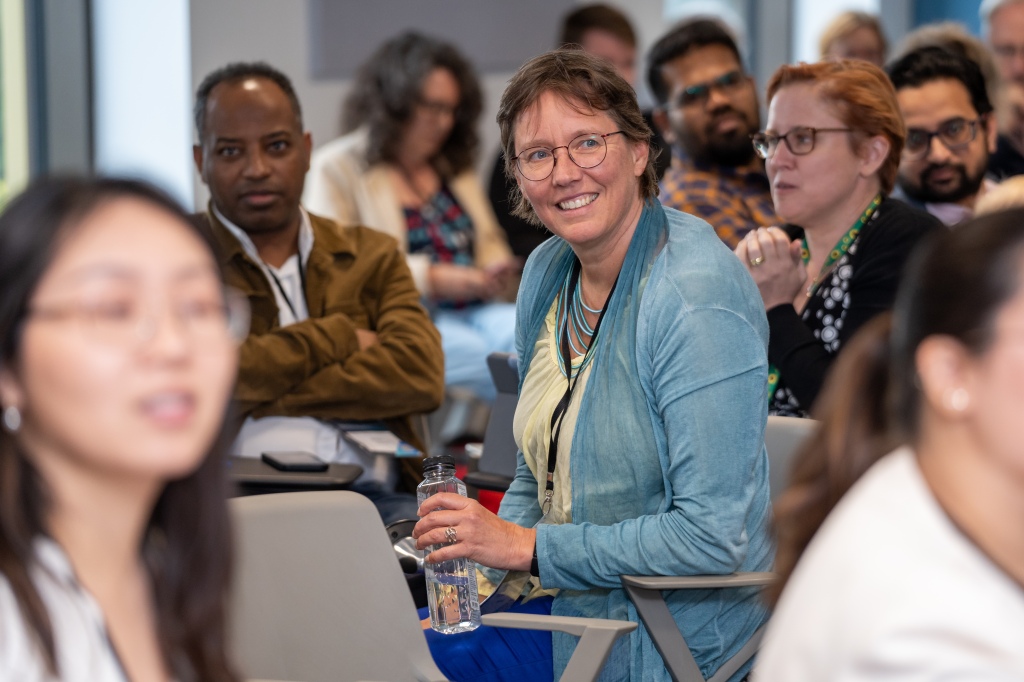
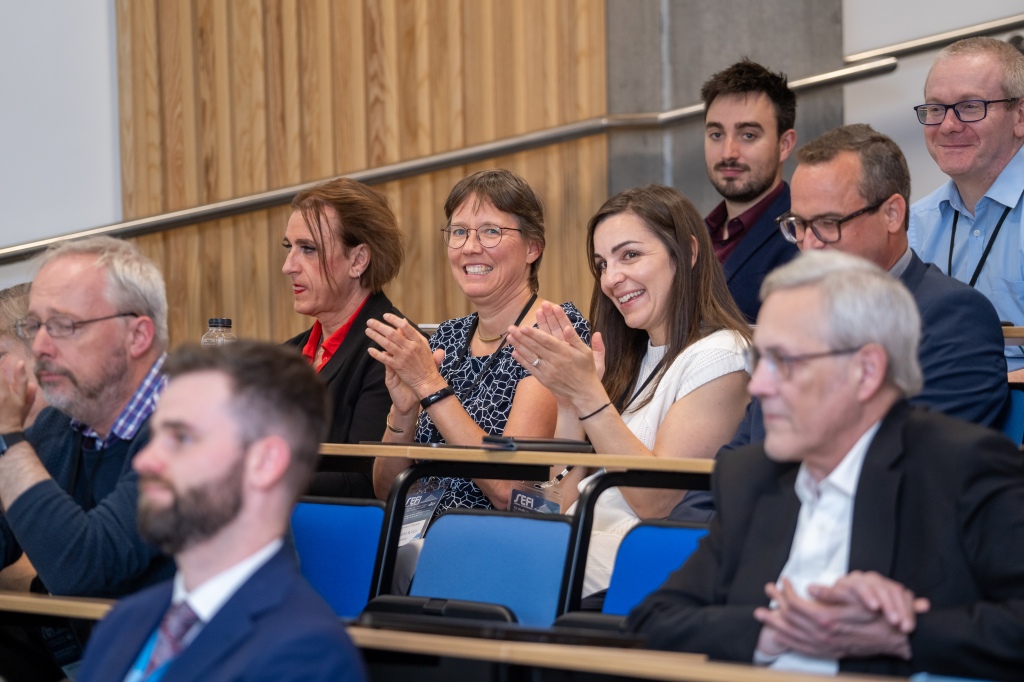
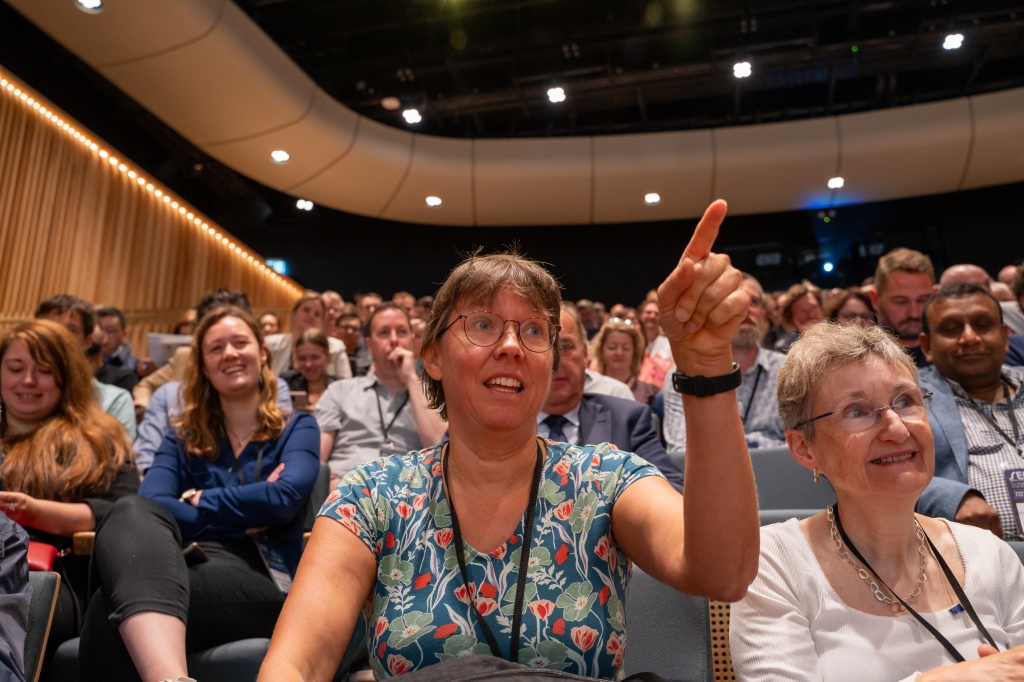
Enjoying the full house and engaging with plenary speakers. To the right, I’m sitting beside former SEFI president Yolande Berbers.
During the conference, a couple people, including Klara Kövesi, stopped me to say they follow this blog. That inspired me to get new content posted (thank you!).
All in all, it was a very satisfying week. By Friday, I’d discovered the trove of brilliant photos captured by Conor Mulhern <conor@eyeon.ie>. Conor, the official conference photographer, was with us every minute of the week. Starting at 9 AM Sunday morning and sticking it out until the very last moments Thursday afternoon. Conor seemed to be in all places at once!
Conor captured us so skillfully. I had to dash off an email:
Dear Conor,
I just got my hands on the Dropbox link, and I am stunned with your astonishing ability to capture us as individuals and as a community. Thank you so very much for being part of our event. You saw us not as outsiders but captured our hearts and souls.
Your Doc Symposium photos exude the joy I felt. I’ve not yet viewed the other folders, but I am full of pride, happiness and satisfaction, thanks to the memories you’ve so aptly captured.
Warm Regards,
Shannon
And he replied:
Hi Shannon,
Ah you’re very kind to say so!
It was my pleasure. Everyone seemed very happy to be there which made my job much easier, and even in the sessions with faces in deepest concentration, you in particular always had a smile to make a good photo! 🙂
Well done all-round on making it all happen.
All the best,
Conor
An enthusiastic round of applause for Conor, our photographer! Here are my great colleagues Emanuela Tilley, Sarah Junaid, John Mitchell, and Klara Ferdova in the front row, with Klara Kövesi in green behind them.
Ultimately, I agree with our Doc Symposium participant who said she’s found her village. I found this village in 2012, at the SEFI conference in Thessaloniki that I attended alongside Mike Murphy, Brian Bowe, and Gavin Duffy. I met new colleagues, like Bill Williams, who welcomed me warmly and with whom I collaborate frequently today. I began to cherish the SEFI community at my first conference, and I also thoroughly enjoyed my time before and after that conference exploring Thessaloniki. The city stuck in my memory long after I left. I hope SEFI 2023 and Dublin live long in the hearts of those who attended this year!
I haven’t been blogging much these days, as I’m so embroiled in research publication activities (mostly in the roles of editor and peer reviewer) that I rarely spend time at the computer for recreational activities like blogging. That said, I feel compelled to report how rewarding it has been to work with the Bachelor’s level Building Construction Modeellign/Digital Construction students at TU Dublin. I coordinate the BSc (honors level) degree program, lead its Research Methods and Work Based Learning modules, and support its Dissertation module.
One of our recent students, Anne Grego, has presented her bachelor’s level work at two conferences. The one presented last month at the EU BIM conference has been published. You can download the paper, “USING BIM TO INCREASE THE EFFICIENCY OF ENERGY-DRIVEN RETROFITTING PROJECTS” by Anne Grego, Shannon Chance and Barry McAuley from https://arrow.tudublin.ie/surconcon/2/
My colleague and co-Deputy Editor of the European Journal of Engineering Education, Professor Jonte Bernhard, came to visit for the weekend. Jonte was on his way to a PhD viva in Limerick where he is serving today as External Examiner.
Here’s a favorite picture from the summer, taken with Jonte, at a dinner in Stockholm that was hosted by our chief editor, Kristina Edström.
A jolly bunch of engineering education research editors! Drs. Inês Direito, Jonte Bernhard, Shannon Chance, Jenni Case, and Kristina Edström after the EARLI SIG9 conference in August 2022.
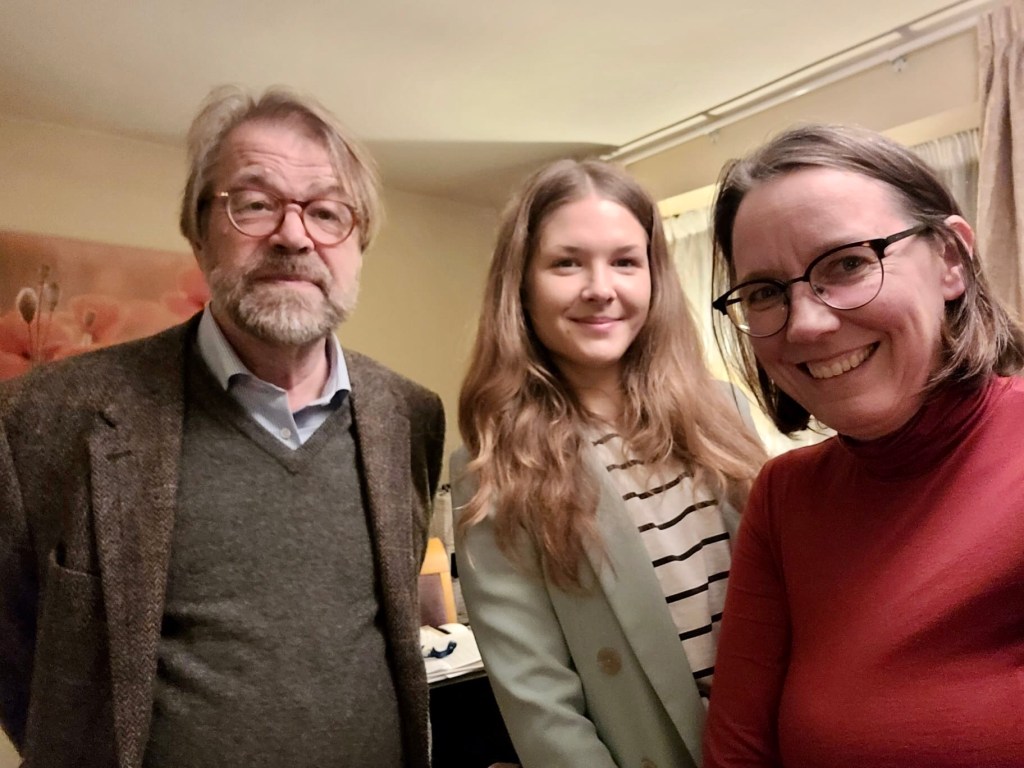
This past weekend, Aongus cooked up a lovely dinner for Jonte and me on Saturday. We were joined by a PhD student named Urša — she had attended the Doctoral Symposium that Jonte and I organized at the SEFI conference in September.
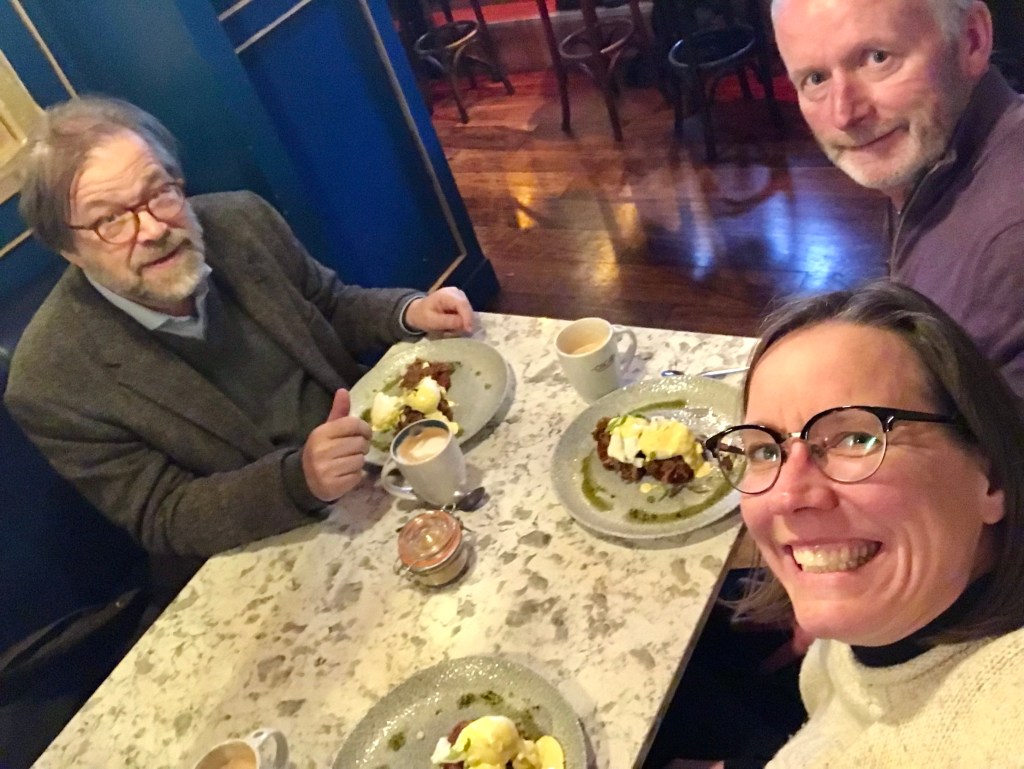
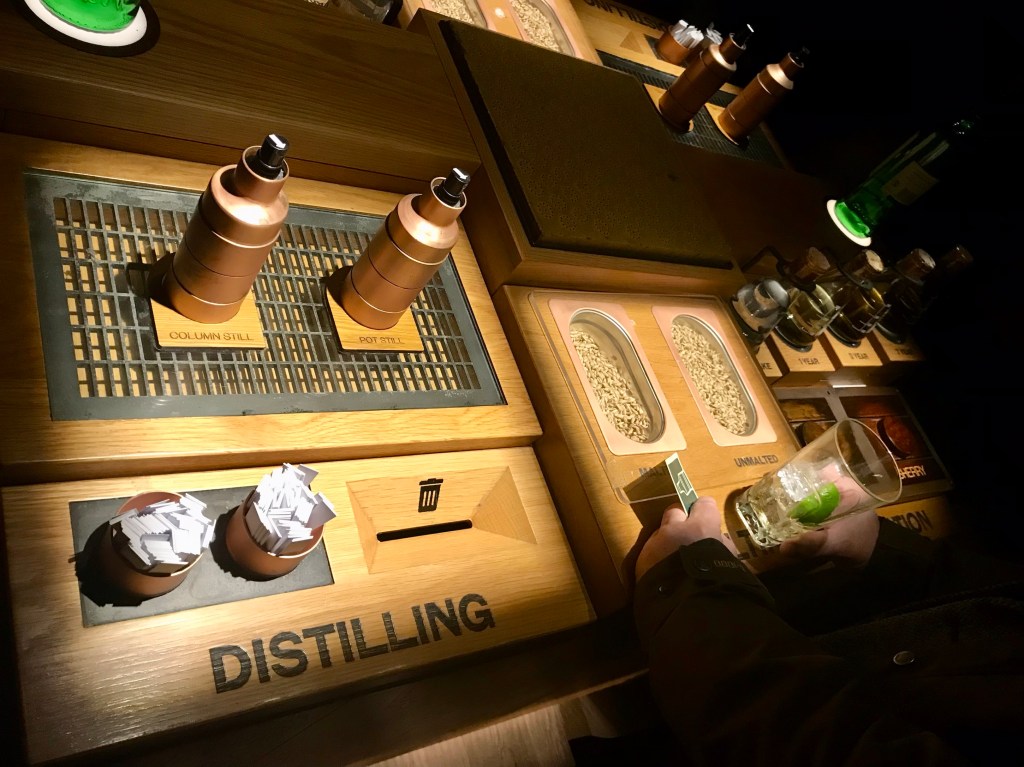
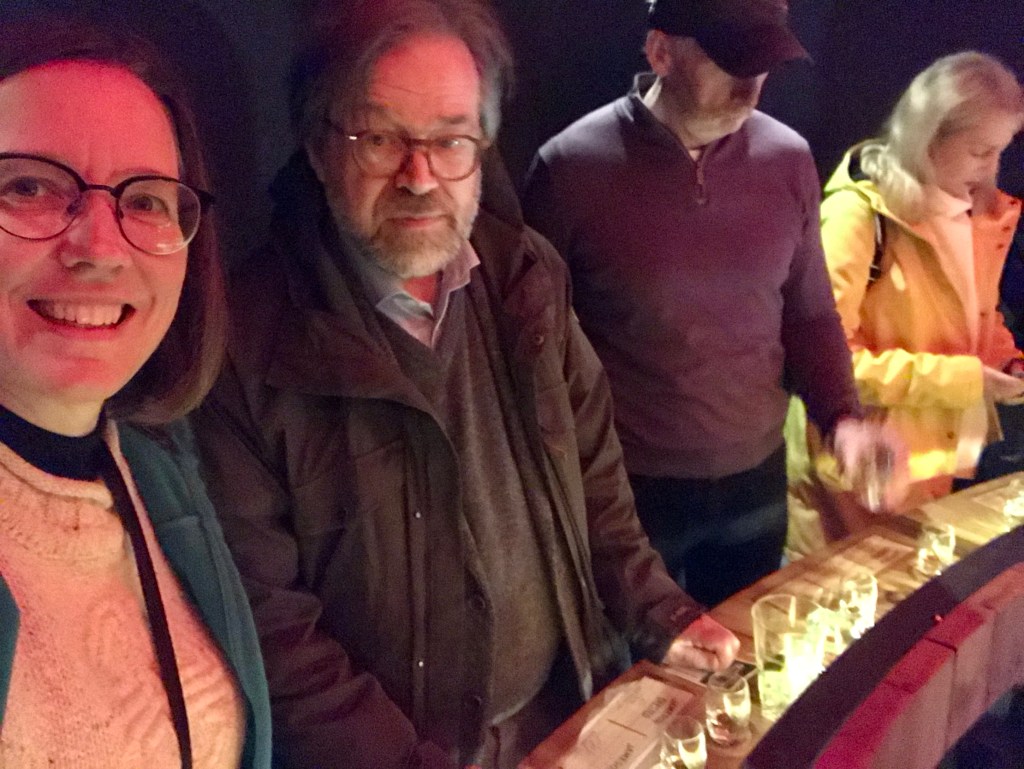
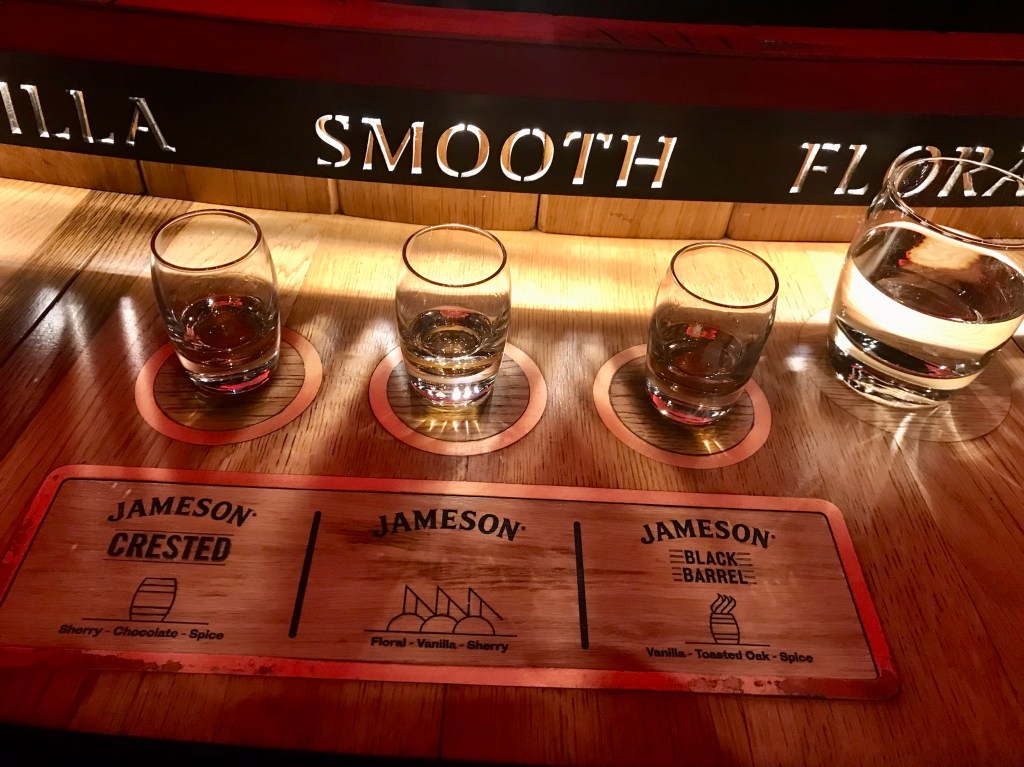
On Sunday, Jonte, Aongus, and I enjoyed brunch at Oscar’s on Smithfield Plaza. Aongus and I had hoped to show Jonte several of Dublin’s sites, but the rain put us off. We did make it over, between downpours and hail, to tour the Jameson Distillery on Bow Street.
Aongus had never been on the Jameson’s tour, and I hadn’t since 2003, so it was a rare treat despite it being just a block from our flat.
Jameson Distillery tour.
For me, the work week started with attending an online conference. Then, I did a bit of peer reviewing before heading off to teach Tech Graphics 2-6 PM.
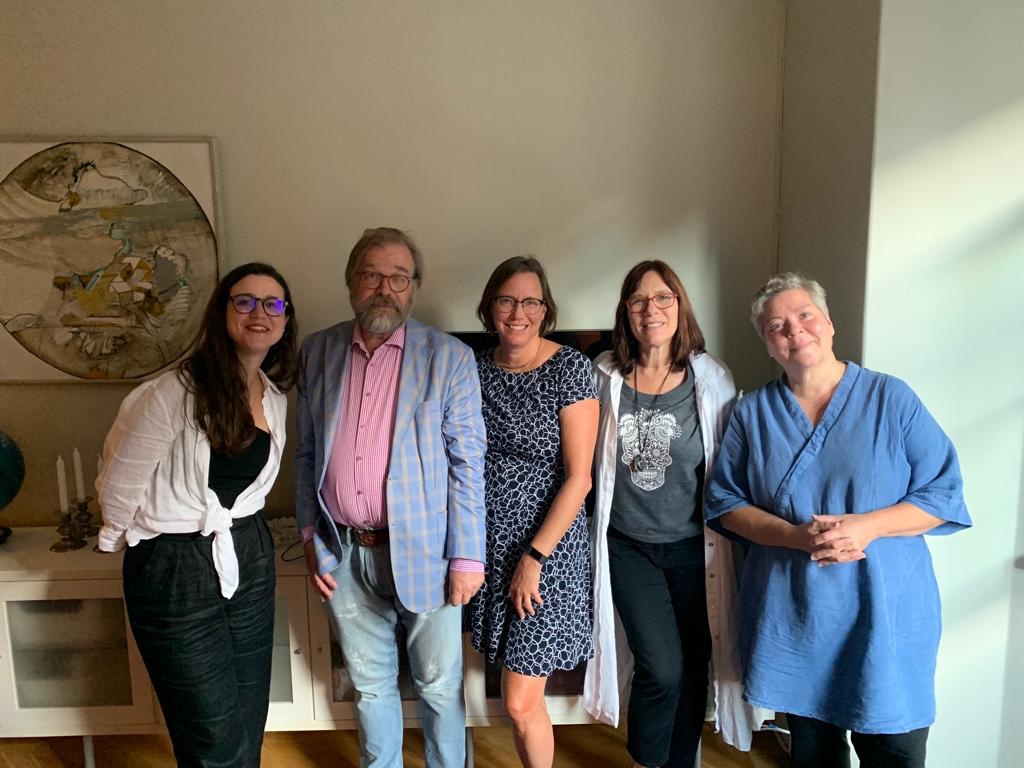
My co-teacher, Marina, and Rachel (who teaches physics lab down the hall at the same time as us) both came over for dinner to celebrate the semester coming to a close.
As both Marina and Rachel are working on PhDs (in BIM and spatial perception, respectively), we’ll be sure to get them reviewing papers for our journals soon!
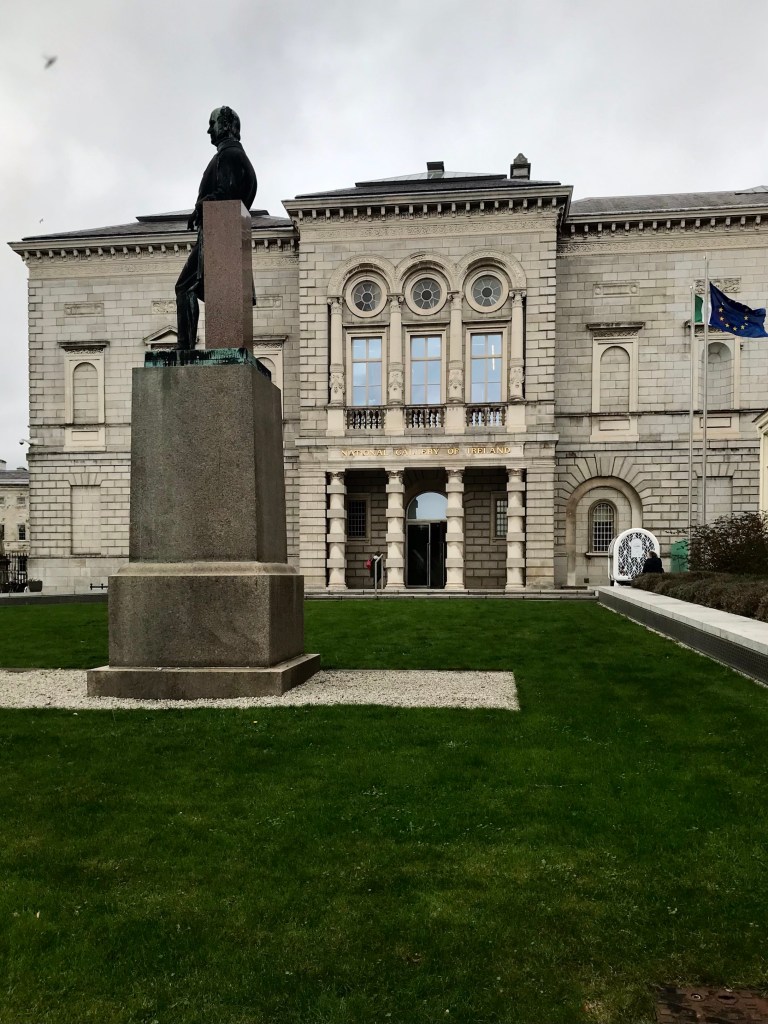
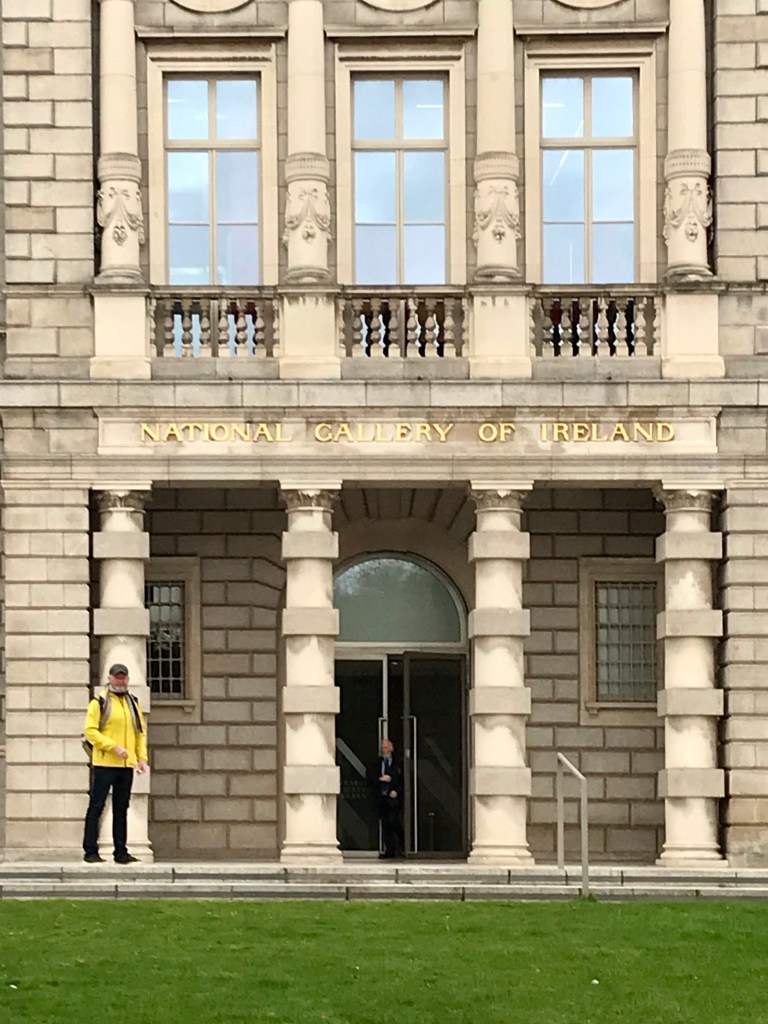
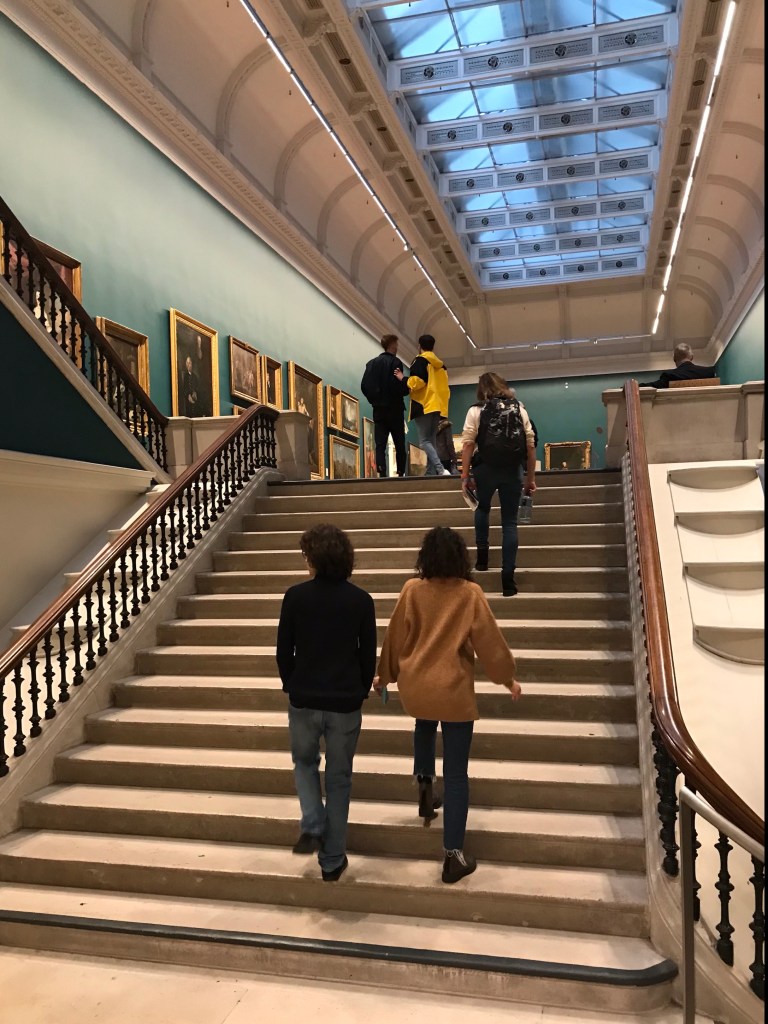
Following a Saturday morning visit to the gym—weights, pool and spa for Aongus, yoga for me—we mulled over our breakfast of porridge and fruit at home before heading out by bike to the National Gallery on Merrion Square.
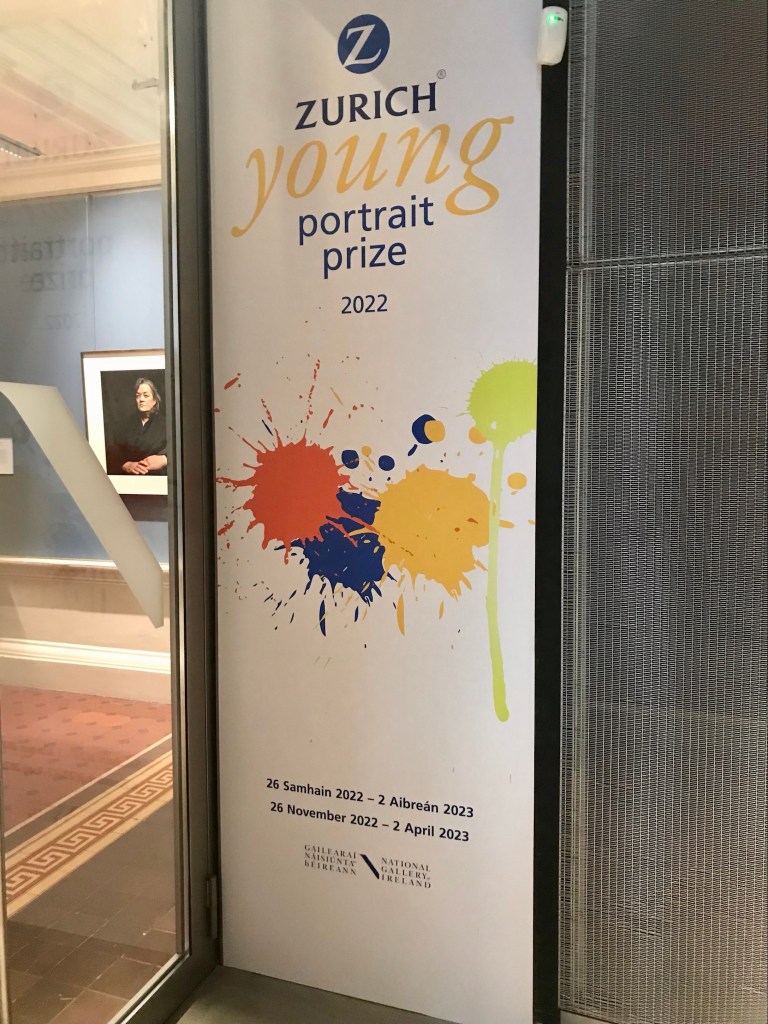
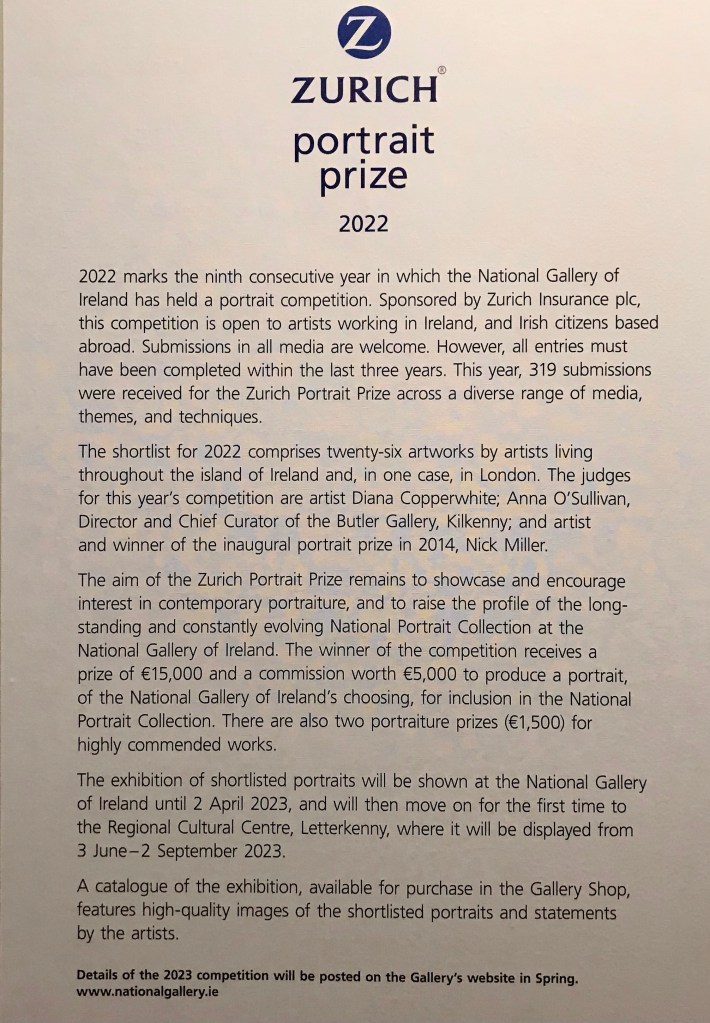
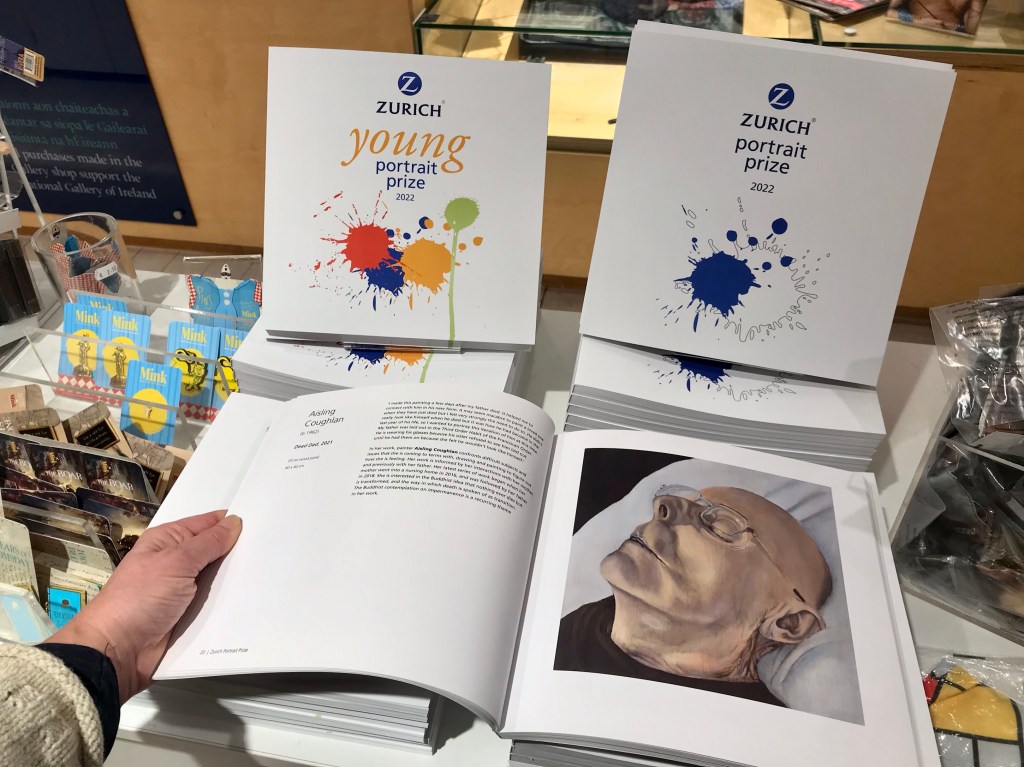
We wanted to catch the opening weekend of the National portrait prize exhibition.
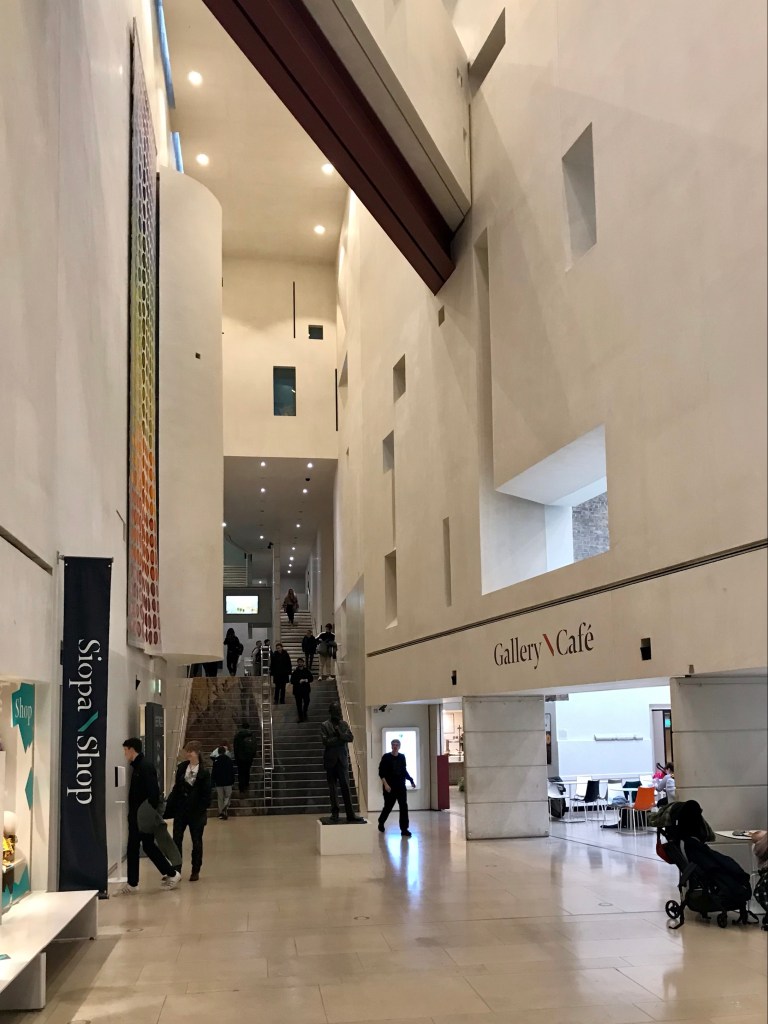
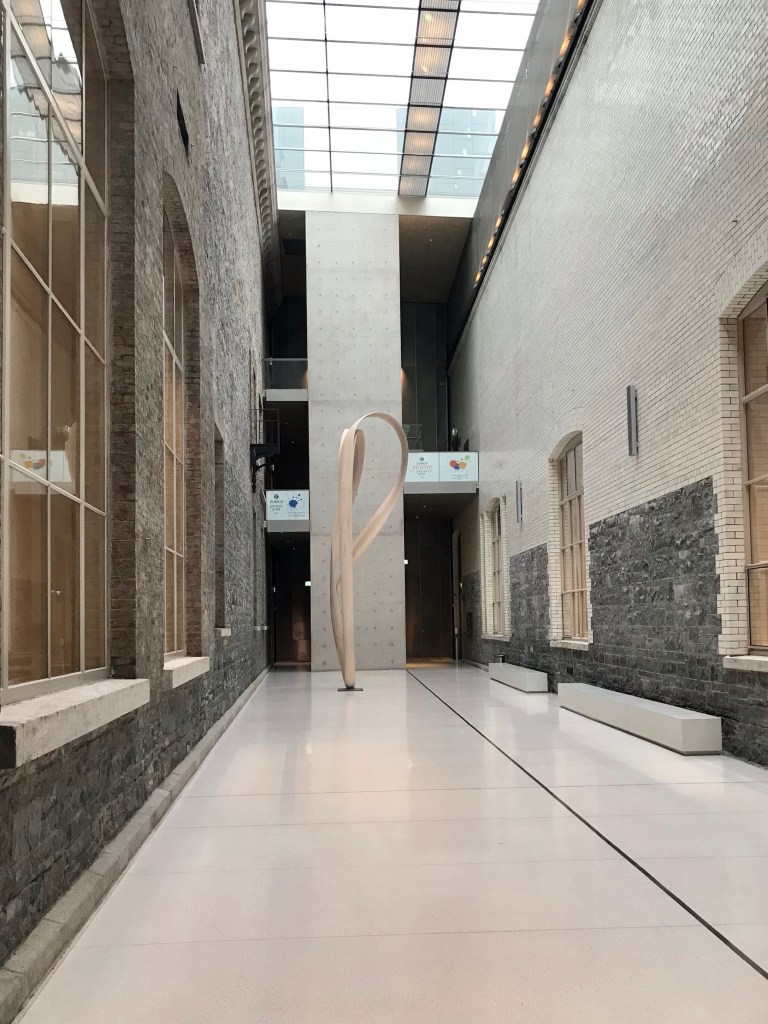
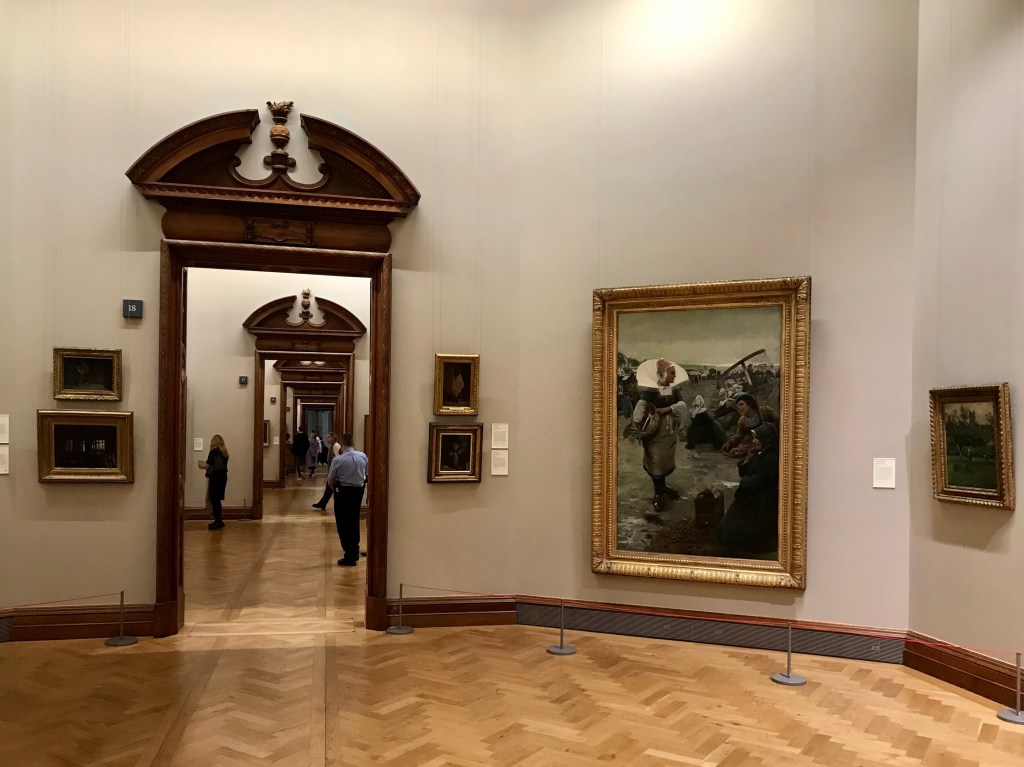
A day at the National Gallery.
We enjoyed the architecture, too, of course. The Gallery has historic old and sleek modern wings.
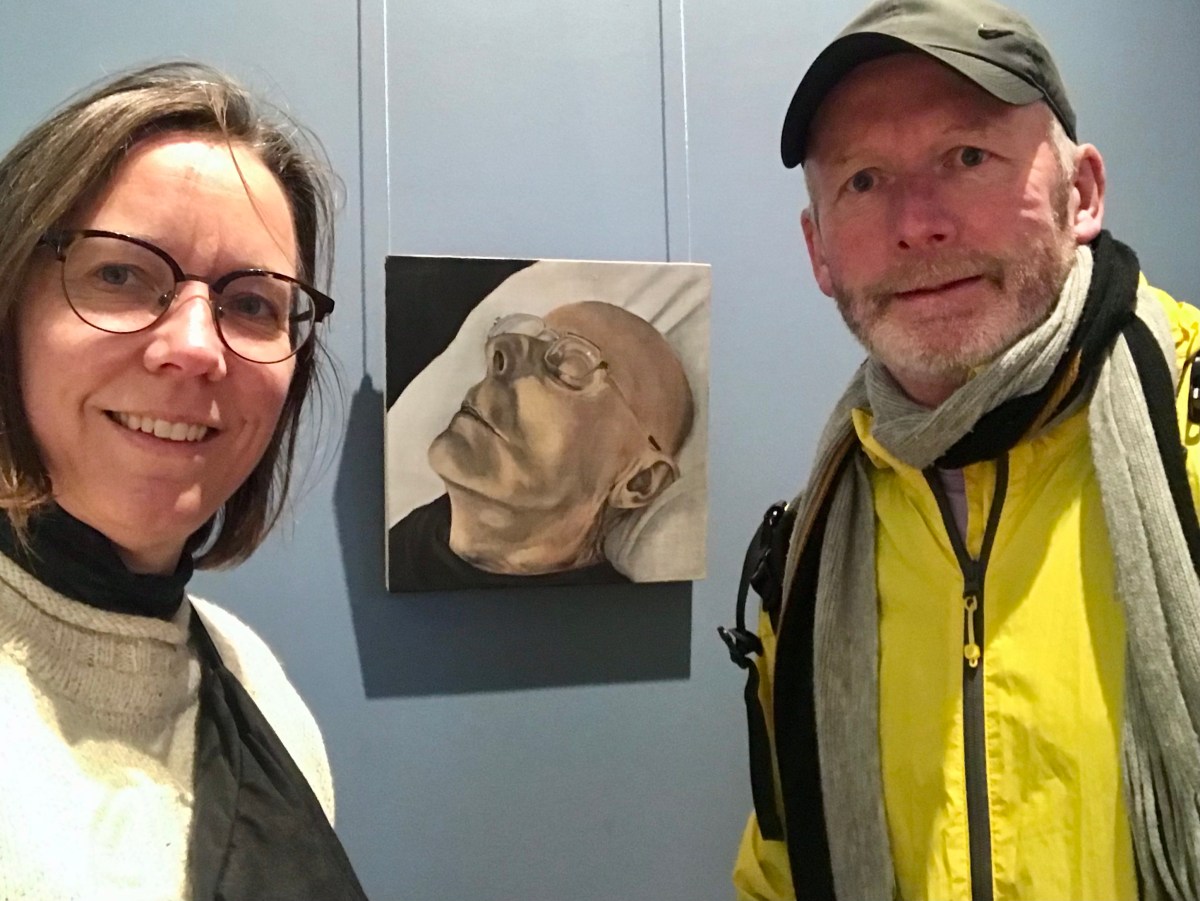
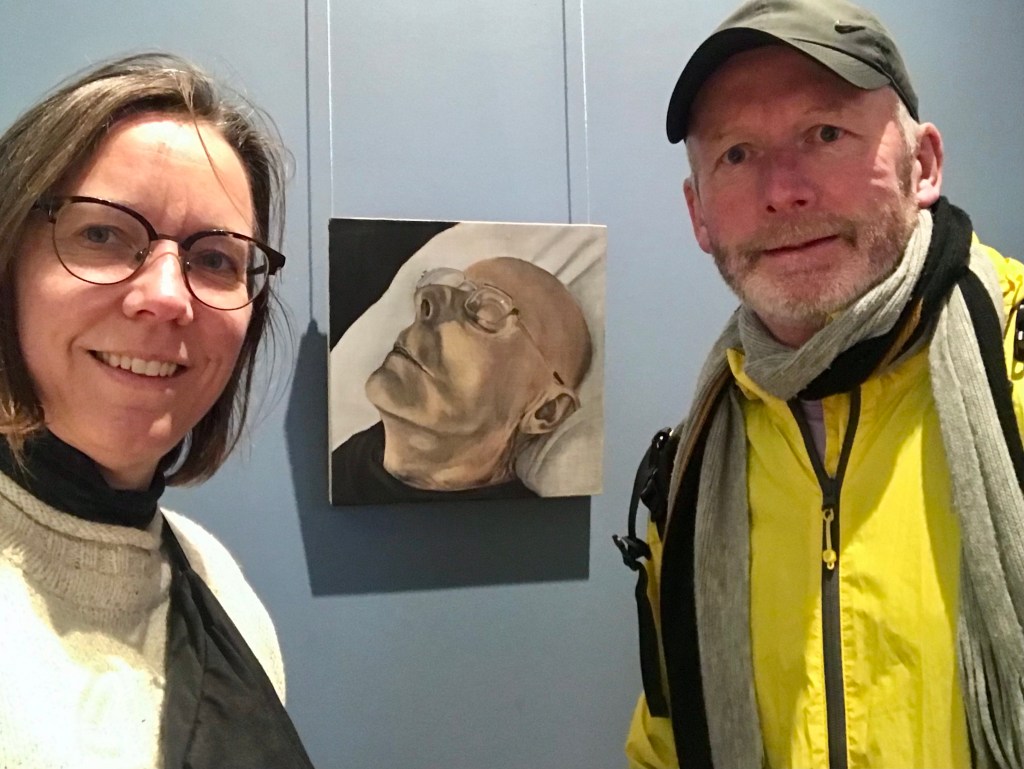
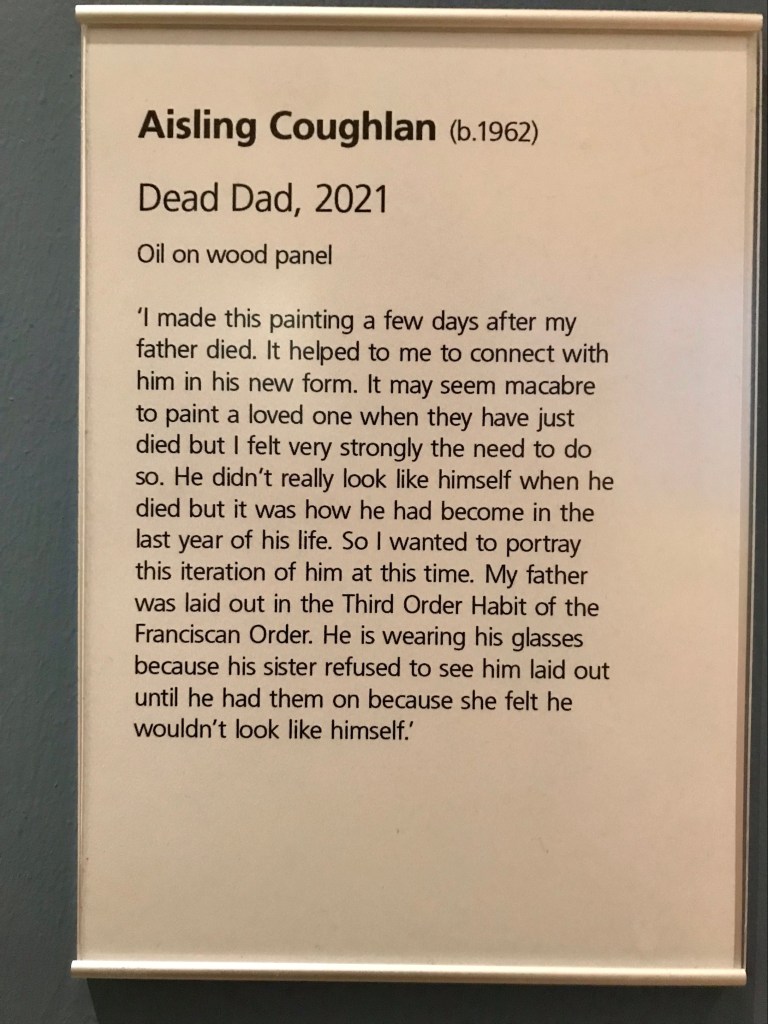
Nested somewhere between floors is a room full of portraits by emerging artists that includes a portrait painted by Aongus’ sister, Aisling Coughlan, of their late dad.
Admiring Aisling’s work.
You may recall a prior post, where all four Coughlan siblings were assembled around the portrait while it hung in the Royal Hibernian Society. Since that time, Aisling retired from her job and enrolled full time at the National College for Art and Design to hone her skills even further.
I think I also blogged when she was on the television competition for portrait painting, which was filmed in London.
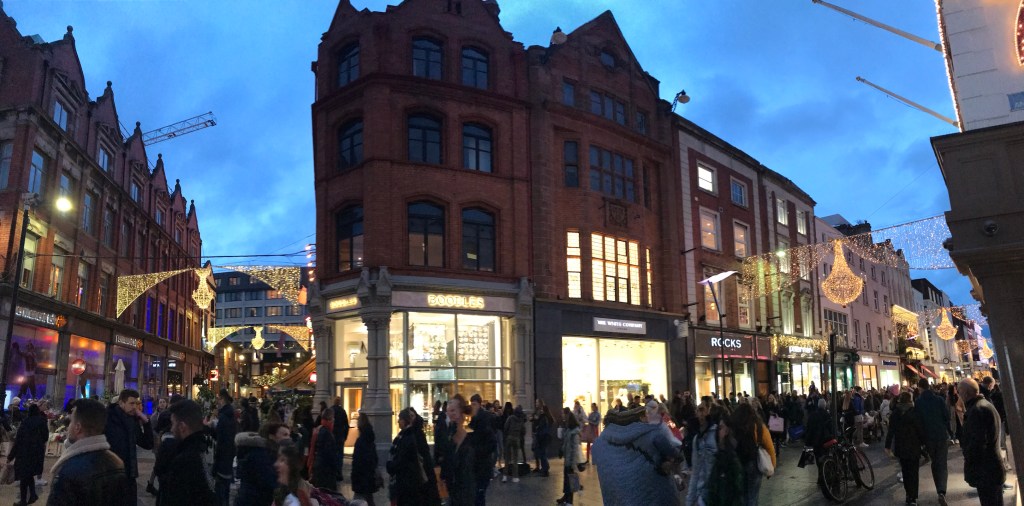
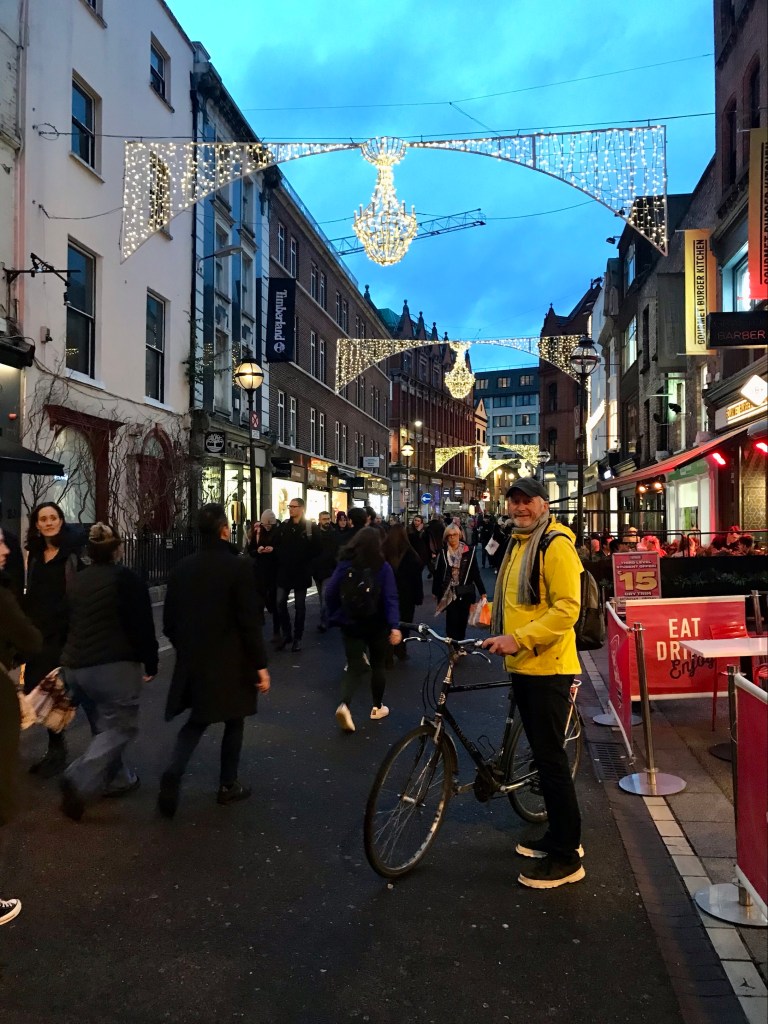
Leaving the Gallery, we pushed our bike through the throngs of holiday shoppers on Grafton street.
The very festive Grafton Street.
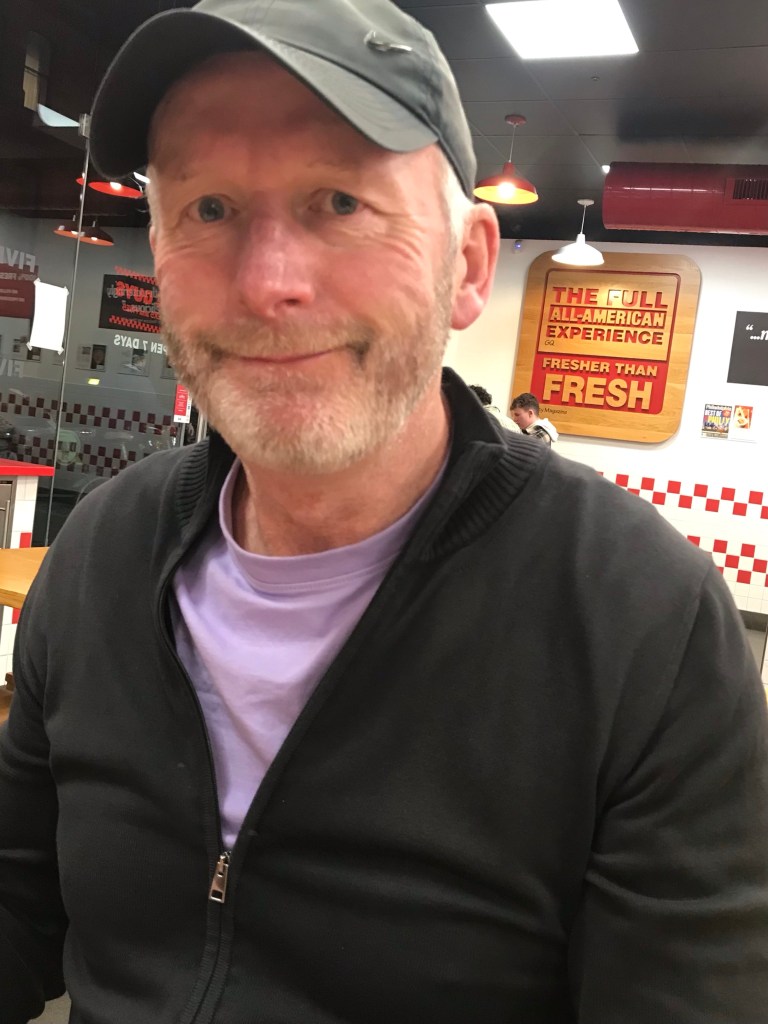
And since Aongus has been asking Santa for Five Guys, his dream of American burgers and fries under fluorescent lights finally came true.
Calling the day.
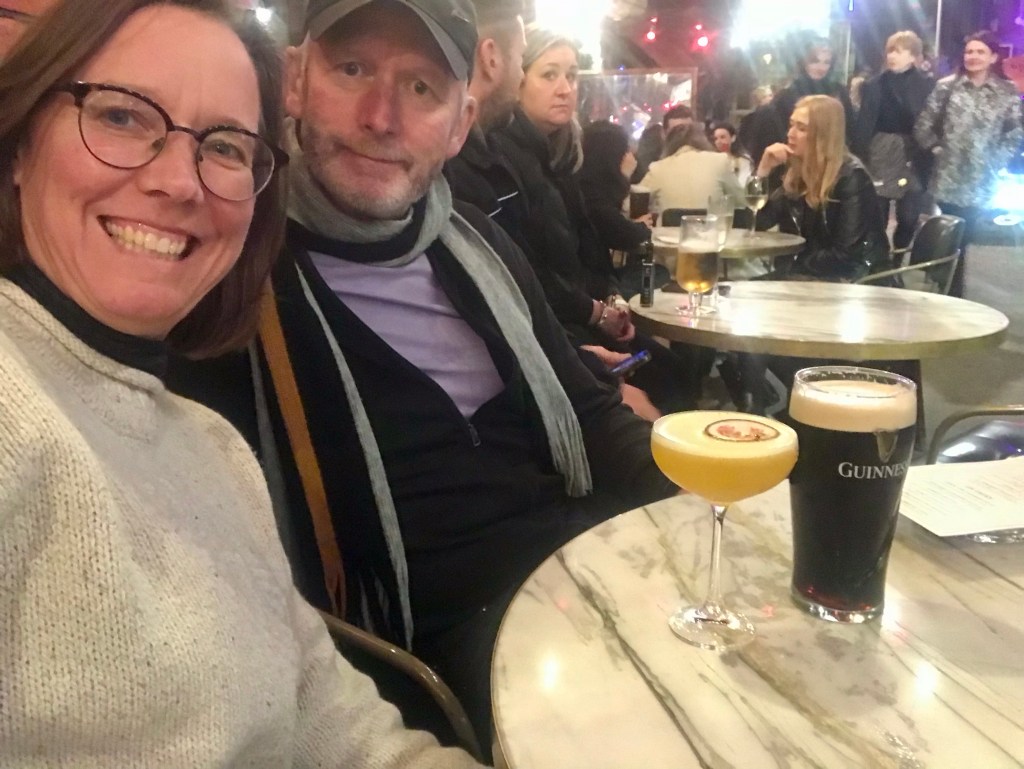
Our tummies filled, we settled into a cozy table on Fade Street where we could people-watch to our hearts’ content… but we still made it home safely by bike before 8PM.




































 Ireland by Chance