Loving Lively Lisbon 

Guy ambling home from work on a unicycle, paraplegic dog sporting his own wheelchair, man dancing to headphones on the boardwalk at sunset. Chamber pots on sale at the church bazaar, saxophonist sharing zydeco by the ferry terminal. So much to see, so much life to live.

I’m in the port city of Lisbon, Portugal’s capital, this week to interview women here who are studying first year engineering at the polytechnic institute. I flew in Sunday morning which gave me a chance to see some sights. 

I find a new adventure around every corner, even though I’ve been here before. 

Tea Time!

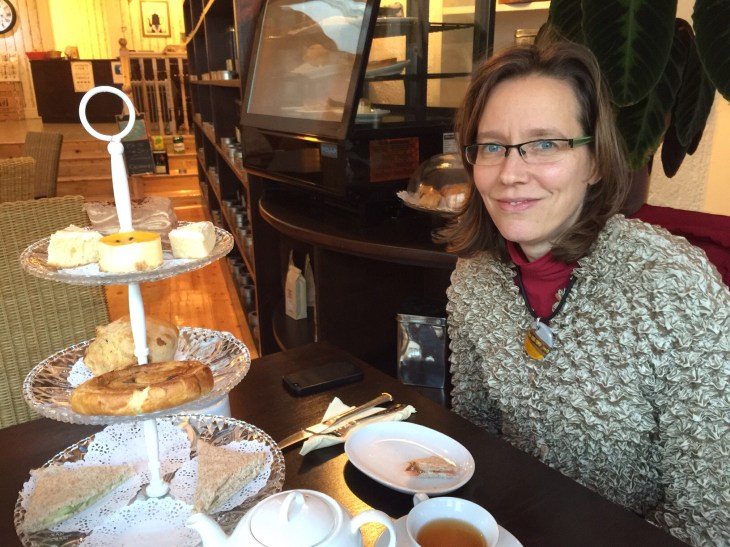
I hesitate to admit that I’ve only just partaken of an English afternoon tea. It’s been in my sights for years now, but I suppose some of the best things in life take time.

This afternoon, Blackrock’s House of Tea served up a lovely tray with sandwiches, scone, pastry, a smattering of desserts, and two luxurious blends of tea.

‘Twas a remarkable little meal. Tea time is moving back onto my list of definite “to dos,” and alsa, now, it’s much higher up!


Slipping through Smithfield’s Historic Architecture

IMG_1291

Hopping off the bus from Blanchardstown yesaterday I scurried from Manor Street to Bolton Street, reminded of the glories of Dublin’s architecture.

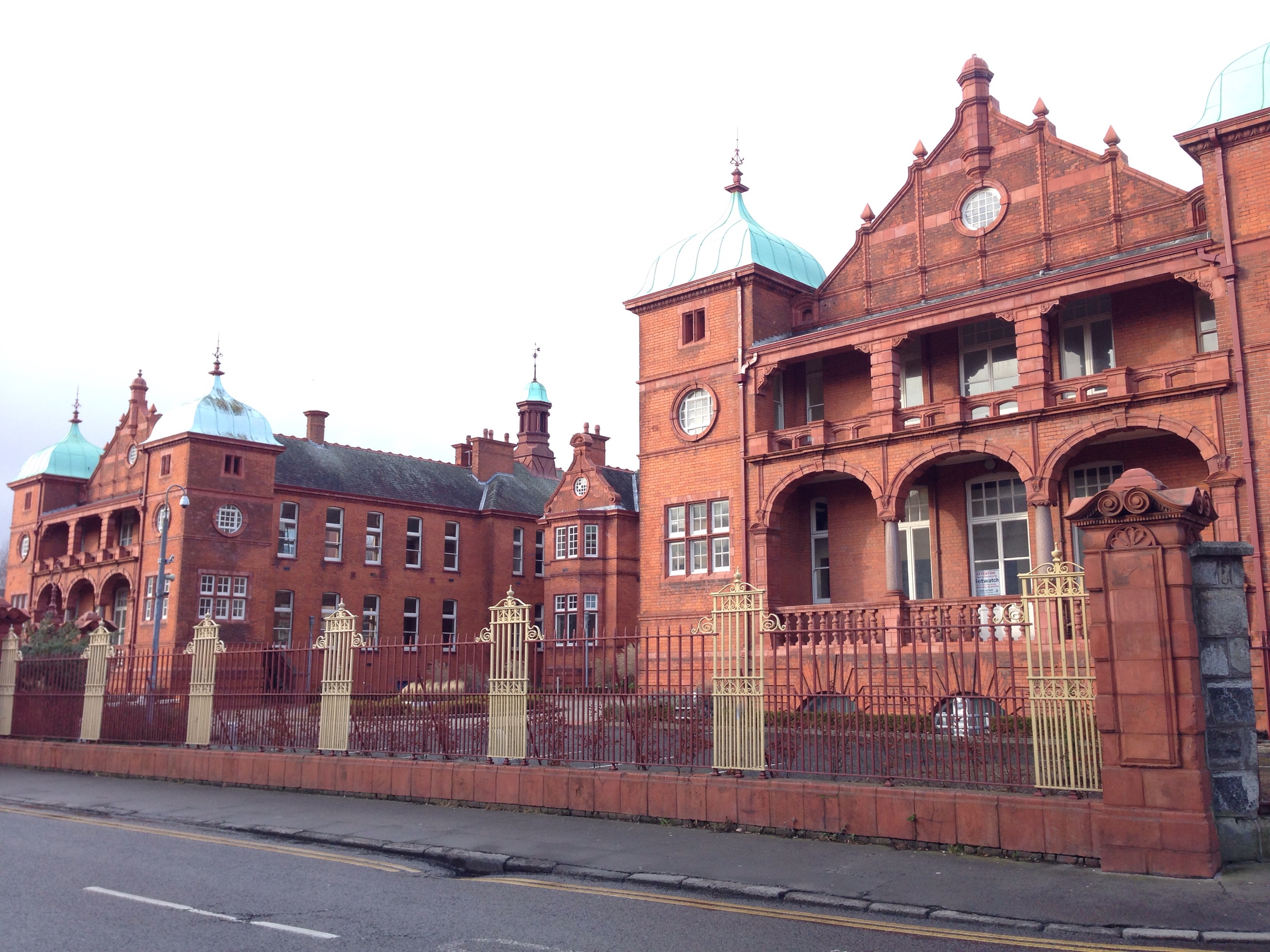
On North Brunswick Street I snapped a photo of the red brick Victorian-era building formerly housing the Richmond Surgical Hospital. I iMessaged the photo over to a Fulbright Scholar who recently arrived in Ireland, who teaches and conducts research at a medical school. The former hospital is being renovated into an educational center. It retains the ward layout common in the 1800s
as well as elegant outdoor porches for patients to recuperate in fresh air.

I darted across Church Street and up Constitution Hill, bumping into a class of DIT students learning to conduct geologic surveys as I criss-crossed the park at the Kings Inn Law School. The male carotids (the sculptures supporting the beam above with their heads) at the Deeds Office seemed frozen in action on this very cold day.

I ducked through its arcaded courtyard and continued down Henrietta Street, which is bound by regal Georgian town homes.

Passing by the historical front of DIT’s Bolton Street building, I slipped in the side entry, through the courtyard, up the stairs to the lofty top floor, and past the “crit pit” to an informal meeting with the new Assistant Head of DIT’s School of Multi-Dsiciplinary Technologies. He’s using the office space I enjoyed during the autumn — with a sweeping view across the city and toward the Wicklow mountains.

Dublin’s Green Campus at Blanchardstown

IMG_1274
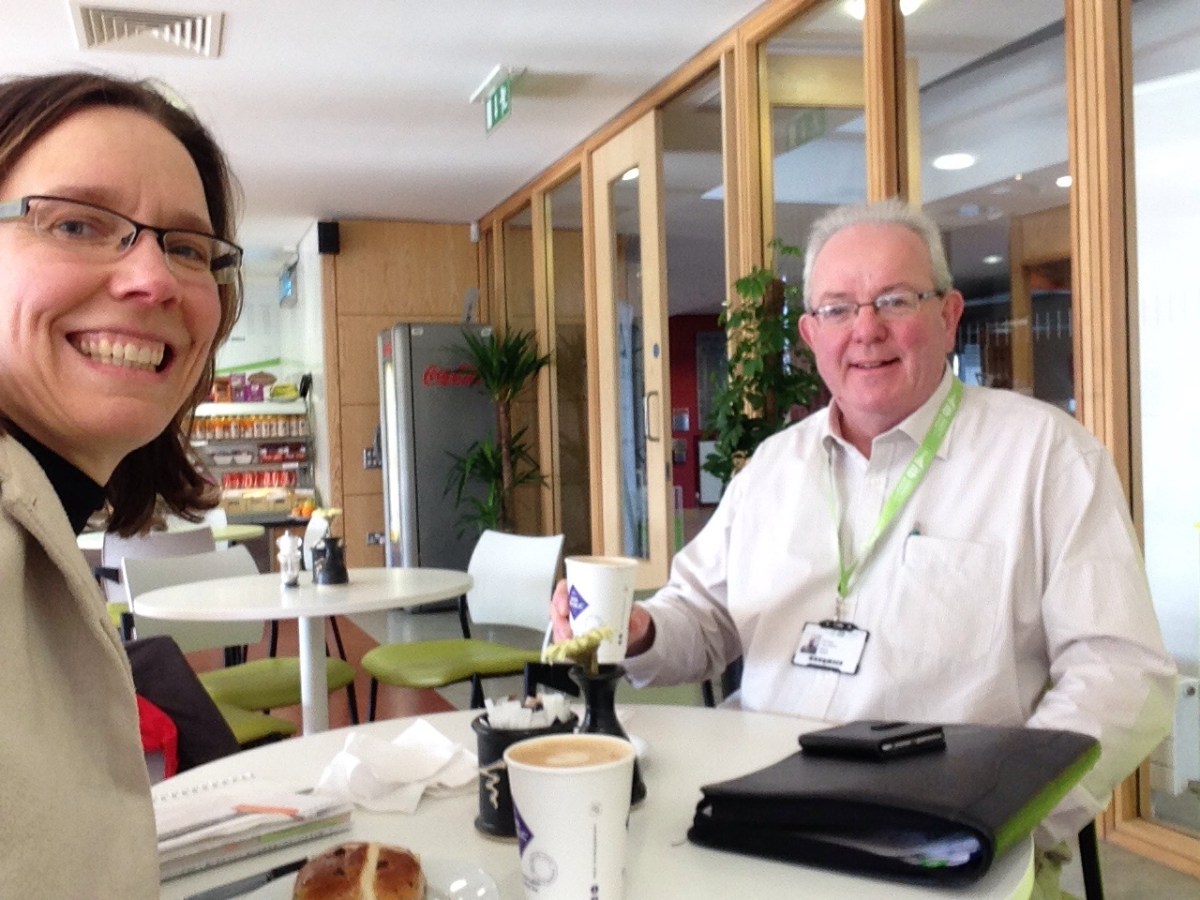
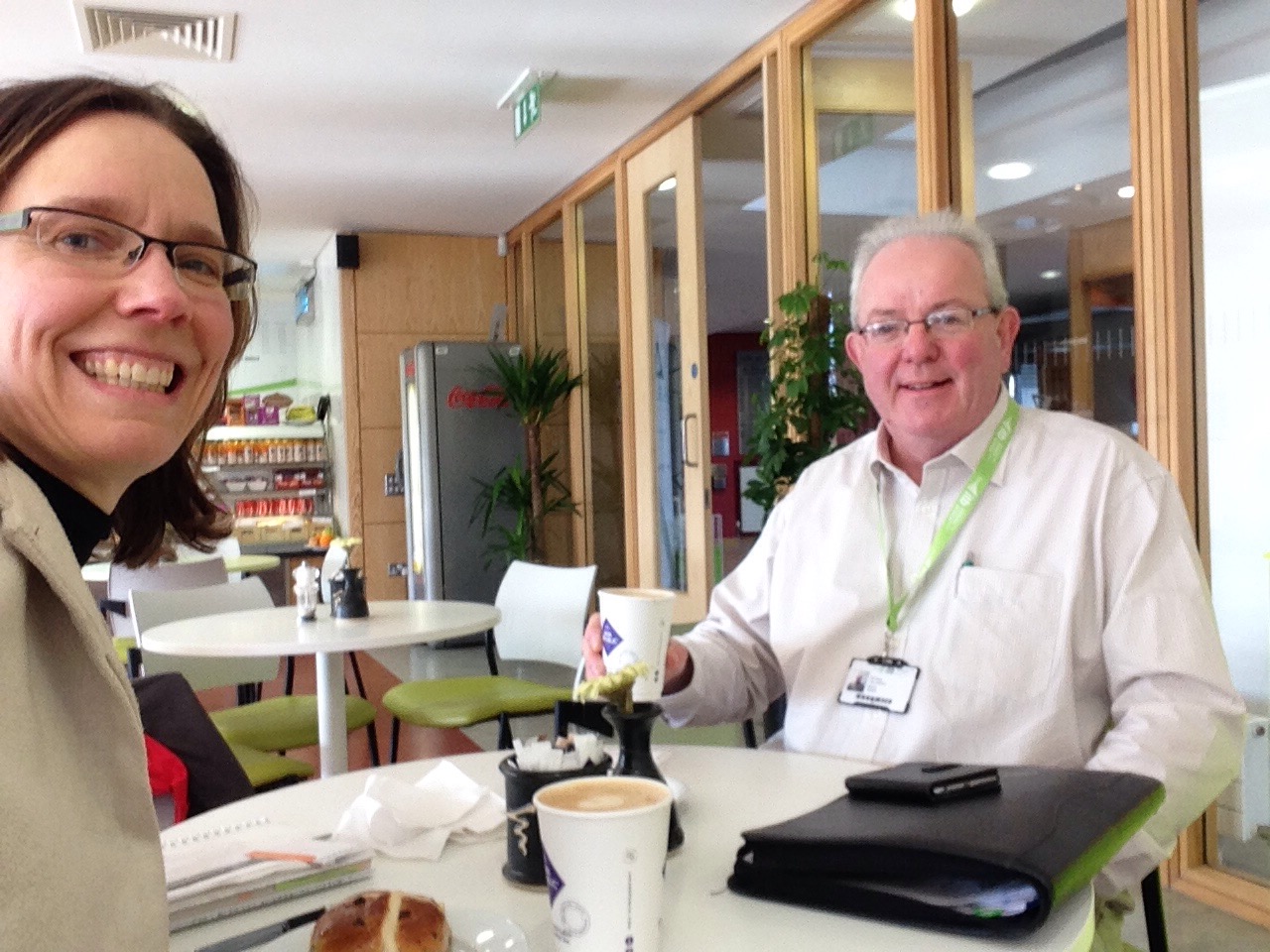
Braving Dublin’s blustery weather today (a mix of winds, snow flurries, and showers that would make my blizard-ravaged friends back in the USA weep–for joy), I made a field trip to northwest side of Dublin to visit Dr. Larry McNutt and the Institute of Technology in Blanchardstown (ITB). Larry has expertise in engineering and education–and he does sociological research to boot.

IMG_1264
ITB, DIT, and the Institute of Technology in Tallah (ITT) are in the process of merging, with the goal of becoming Ireland’s first Technological University (TU). Larry is part of the “TU4Dublin” team that’s managing the merger.

Today, Larry and I spent a couple of hours discussing ways to improve the experience for third-level learners (i.e., college students). We both aim to make higher education more interesting and effective by helping post-secondary teachers hone their skills in teaching.

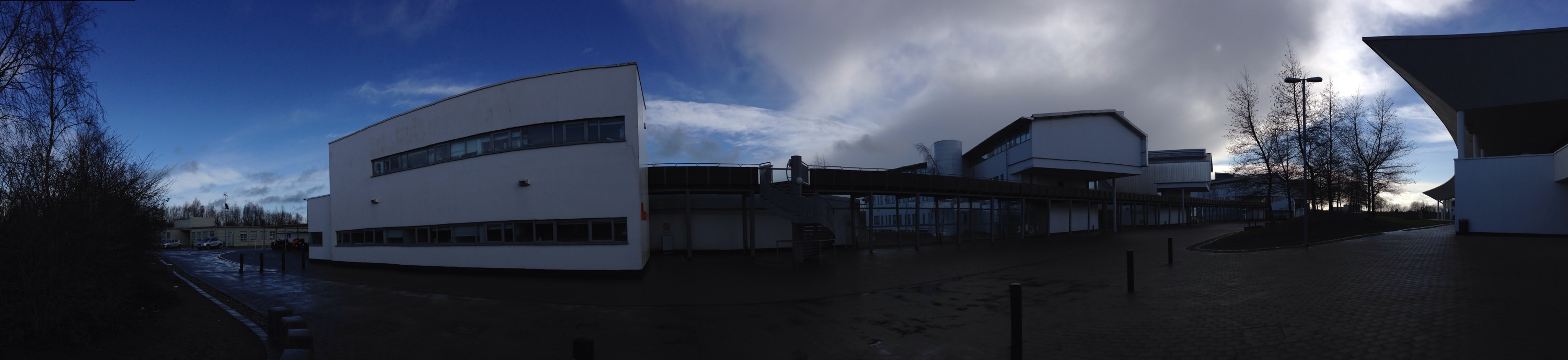
Before our meeting, Larry gave me a tour of ITB, an energy-efficient campus constructed since 1999. Because the focus of my PhD dissertation was green buildings constructed by post-secondary institutions in the USA, I was quite interested in seeing the design of the ITB campus and its individual buildings.
I also enjoyed discussing:
*educational improvement initiatives Larry is involved with.
*the design of various degree programs for teachers and for students.
*hot cross buns (I’d never seen one before today)

It’s a banner day for me when my interests in sustainable architecture, educational planning, and engineering education (plus food!?!) weave together so nicely. Imagine finding a person who can discuss all these topics with ease.

Larry McNutt is such a person. I look forward to bumping into him around TU-Dublin again soon.

Framing My View

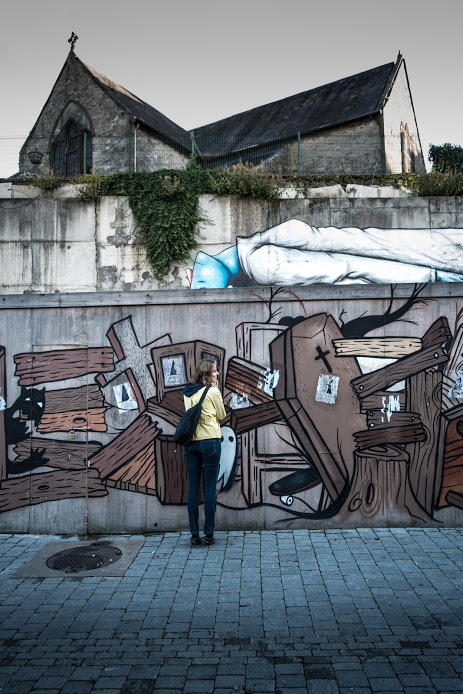
Over time, various artists have provided layers of meanings along this street in Kilkenny, Ireland. Small windows in the graveyard painting let viewers select their own vantage points and help them view what's happening on the other side of the wall. The photographer (Frank Daly) selected his own frame of reference, capturing an entertaining yet  chilling portrayal of the phenomenon of Western burial.

Over time, various artists have provided layers of meanings along this street in Kilkenny, Ireland. Small windows in the graveyard painting let viewers select their own vantage points and help them view what’s happening on the other side of the wall. The photographer (Frank Daly) selected his own frame of reference, capturing an entertaining yet chilling portrayal of the phenomenon of Western burial.

Phenomenology and constructionism are two outlooks for understanding and describing human experience in ways that can help humans (especially educators, designers, and makers) shape a better/more purposeful future. They are well aligned with engineering and architecture because both paradigms both have to do with human creation. Without human creation, architecture and engineering are not possible. In this blog, I’m attempting to summarize my understanding of the two in a way that might be of use to other researchers.

Phenomenology is a philosophy as well as a method of doing research. It focuses on experiences people have, and on how individuals understand and describe their experiences. Education researchers have been working hard to refine this method of research, although it is still in its infancy as a research methodology. On the other hand, phenomenology has been central to architectural thought since at least the mid 1900s.

Today, I am striving to understand distinctions and techniques involved with three specific variants of phenomenology: transcendental phenomenology, hermeneutic/interpretive phenomenology, and phenomenography. These differ in how they view objectivity and subjectivity, and this aspect intrigues me.

Construction is a fundamental aspect of architecture, architectural design, and architectural education. Two distinct paradigms deal explicitly with “construction,” although I see quite a bit of overlap between the two, so I’m placing them under a common heading.

These two construction-related outlooks are called constructivism and social constructionism.

The book Qualitative Research: The Essential Guide to Theory and Practice, written by Maggi Savin-Baden and Claire Howell Major (2013), is helping me better understand the distinctions between these two ways of thinking about and conceptualizing being, knowing, and researching.

I’ll attempt to explain what I’ve found using their book and integrating it into what I learned in school: 

Constructivism is the more subjective of the two construction-oriented paradigms. This paradigm asserts that knowledge exists in the human mind and that researchers can understand it by “unpacking individual experiences” (Savin-Baden & Major, p. 56). “Reality,” in this view, is what individuals think it is. To understand the world, we (as educators, architects, and/or researchers) need to assess how individuals know, understand, and indeed construct the world in their minds.

Constructionism is a more collective. This paradigm is often referred to as “social constructionism” and it posits, “Reality and knowledge are socially constructed” (p. 56). In this view, groups of people decide collectively – and quite often unconsciously – what things (phenomena, people, places, ideas, etc.) they will recognize and how they will understand and name them. In inverse fashion, groups also decide what things they will not see/understand/name. Researchers who adopt this way of seeing the world study how groups of people collectively see/interpret/create/construct the world around them. Today, constructionism appears in only in a few publications on engineering education (specifically, on teaching robotics or materials engineering).

I’ve been planning to use phenomenology in my upcoming work, yet I believe constructionism also hold great value for engineering education research. Perhaps I’ll help introduce this way of seeing to the EER community.

If there was no fear… what would you dare to dream?

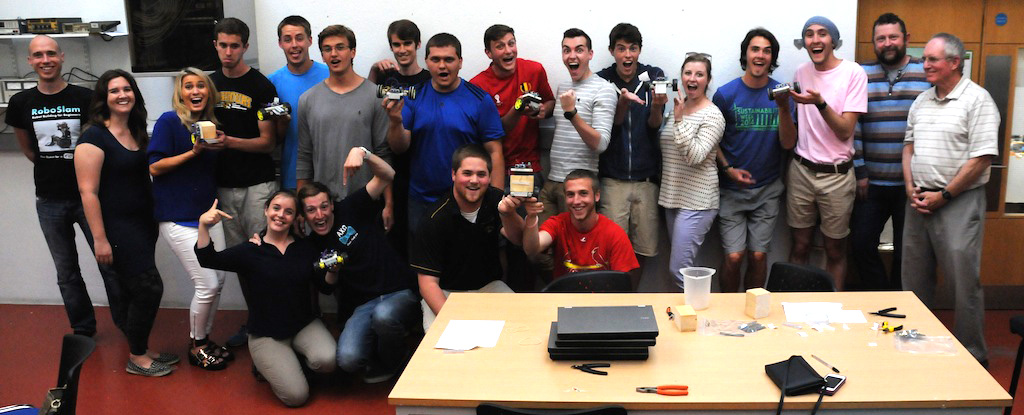
Ted, Damon, and crew conducted a RoboSlam for 18 undergraduate engineering student form the University of Wisconsin last week.  I'll post more photos of the event soon, on our RoboSlam blog.

Ted, Damon, and crew conducted an abbreviated RoboSlam this part week for 18 undergraduate engineering student from the University of Wisconsin last week. They are students of former Fulbright, Bob O’Connell (far right). I’ll post more photos of the event soon, on our RoboSlam website.

Solstice in Dublin!

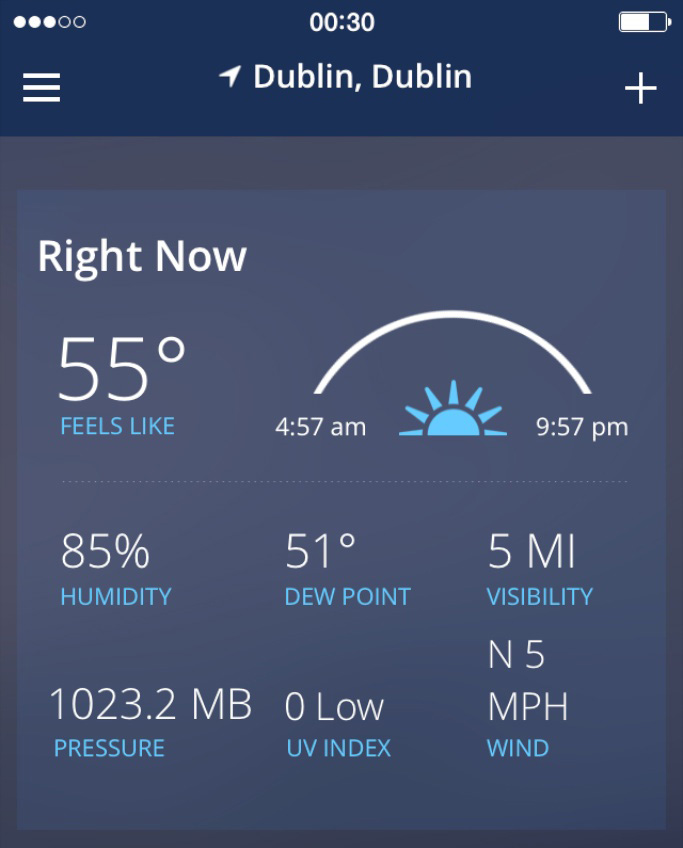
Solstice in Dublin!  It was my first solstice here and I enjoyed every minute of it! Interestingly, there’s indirect sunlight for even longer than 17 hours. The first rays appear before 4 AM and the last disappear after 10 PM.

Dublin is full of sunshine!  Temperatures are topping top out each day at about 65 degrees Fahrenheit and the sun has been staying up for 17 hours each day.  That makes for perfect weather for outdoor yoga.  On the day of the solstice, our yoga instructor, Peter, shared this provocation:  If there was no fear, what positive change would you make in your life?

I mulled the proposition.  I know better than anyone:  There’s good reason to fear what you may lose by chasing outrageous dreams.  But there’s also good reason to seek new knowledge and experience.  I hope someday my work will be a testament to trying hard to live life to the fullest.

This, the second week of my Marie Curie research fellowship, was full of adventures, errands, and learning.  My colleagues and I conducted a RoboSlam and a workshop on Problem-Based Learning at the start of the week.

I was honored to be included in a dinner and workshop with a guest from Portugal, José Manuel Nunes de Oliveira, who you may recall from an earlier blog.  Jose shared his work with the faculty of the DT07 electrical engineering program. This group of teachers is considering making the DT07 program more problem-based.

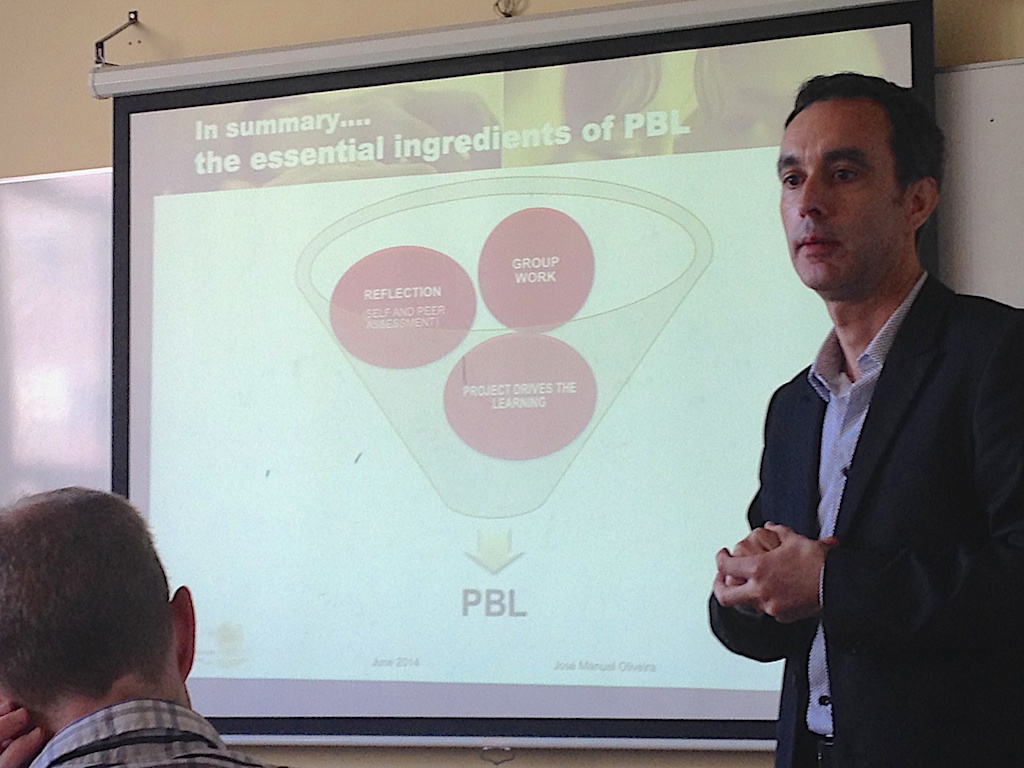
Jose's three essential elements of PBL.

Jose’s three essential elements of PBL.

Jose identified three elements he sees as essential to PBL (Problem- or Project-Based Learning):

  • Project drives learning
  • Group work
  • Reflection (including Self -and Peer-Assessment)

Jose described various aspects of assessment since this is a topic of concern to many of the teachers in the program.

I wish I had time to post details of the workshop, but I really need to get onto “real” work today.  Below, I’ve uploaded a photo journal of many highlights of the week. I hope they inspire you to find a least one new adventure today–however big or small.

Exotic Familiarity

I feared that somehow things wouldn’t seem as new and fresh on my return to Dublin as they were before.  During my Fulbright fellowship, I spent 365 days in this vibrant city — but even a vibrant city can become overtly familiar, I would have thought.

And yet, as I happily rediscovered many familiar comforts this past week (like Beef and Guinness Pie at Pieman in Temple Bar), I also uncovered a plethora of new adventures here.

On Saturday, during Fergus Whelan’s history tour, I met a researcher from Fordham University.  She said how much she’d enjoyed finding this blog while she was preparing for her trip here.  Her words encouraged me to get back to posting.  I hope you find something interesting and informative in my little picture gallery of highlights of the past week.

Well, it’s 10:20 PM and the sun has just set.  It will be up again by 5 AM or so, and I’d best get ready to hit the sack. I’ve another big week ahead!

Kilkenny Suds

Kilkenny, Ireland is the home of Smithwick’s brewery.  Nevertheless, Guinness is also a popular brew (despite the fact that it is brewed in Dublin).  Here are a few reflections I found while pursuing the streets of Kilkenny last fall, with my mom.

Trend Shifters and Hip Young Urbanites

Donald Roman NYT feature

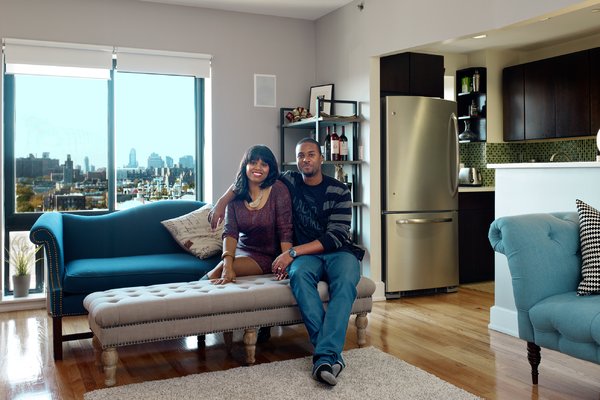
Fabiola and Donald Roman, as featured in the New York Time real estate section.

Times are changing.  Demographers tell us that younger set is shirking automobile ownership and moving closer into American cities.

I’m proud to say that one of my former Hampton University architecture students, Donald Roman, is among them.  He and his  wife, Fabiloa, recently chose a condo in Brooklyn over the now-faded suburban dream.  And, the New York Times just celebrated their accomplishment with a feature story.

If I recall correctly, Donald was never a fan of the car.

I’m happy to say that the heavy urban design emphasis of our architecture degree program served to strengthen his understanding of the benefits of population density and walkable city design.

I’m immensely proud that Donald and Fabiloa, who met in an Upward Bound program when they were in high school, planned well and chose carefully.  They overcame tremendous odds to become homeowners under the age of 30.  And, they had the good sense to recognize that living in a densely settled area means shorter commutes and quick access to a huge range of services.

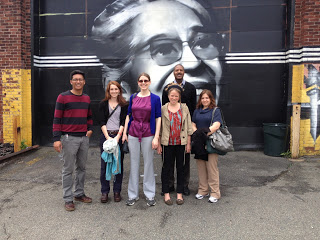
During his time at Hampton University, Donald travelled with me to Tanzania on the 2005 Fulbright-Hays Group Project Abroad program I conducted.  It was a true joy to have Donald among the 23 American students and 65 Tanzanian students on the program.  He was immensely popular with the entire group and his soft-spoken but optimistic spirit uplifted our group every day.

Our 2005 Fulbright-Hays group in Tanzania.

Our 2005 Fulbright-Hays group in Tanzania.

Donald also made a big difference in my life when he introduced me to Malcolm Gladwell.  He even handed me a copy of The Tipping Point as we were leaving Sunset Beach on our last day in East Africa.

The Tipping Point is about “how little things can make a big difference.”  Interestingly, the NYT feature ends with a quote from Fabi about little things that make a big difference in one’s quality of life (like a dishwasher — and I totally agree!!!).

Thanks, Donald, for sharing with me your reflections on Gladwell’s ideas when we were beginning our trek home.   Your insights got me interested enough to invest  time in cracking the cover, and I had almost finished reading the book by the time my plane landed in Norfolk.

Since then, I’ve read each of Gladwell’s new releases cover to cover.  A new one, about David and Goliath, just hit the shelves and beacons me to read.

There are interesting TED talks by Gladwell on David and Goliath and “choice, happiness and spaghetti sauce” to help get you started if you haven’t yet cracked the mystic of Gladwell’s storytelling ability… or if you just want to have some fun learning about the break through discovery of vegetable chunks.

Making the Mark as an Enterprise Rose Fellow

Mark (to the far left) with community members from Boston.

Mark Matel (to the far left) with community activists in Boston.

Thanks to a Facebook post by my (awesome) former student, Elbert Whitfield, I just discovered an article titled Enterprise Rose Fellowship Redefines Community Design at NeighborWorks Organizations, which features former student Mark Matel.

I’ve worked with many extraordinary students at Hampton University, like Elbert and Mark.

Today, I’m boasting of Mark Paulo Ramos Matel’ success.  I had the honor of teaching Mark in architectural design studios, study abroad, and environmental sustainability courses while he was working toward his Master of Architecture degree at HU.

Mark Matel (right) with fellow student Leon Peters presenting a second year design project at Hamtpon University.

Mark Matel (right) with fellow student Leon Peters presenting a second year design project at Hamtpon University.

Mark was an ideal candidate for the Enterprise Rose Fellowship, which the article explains is “a highly competitive and innovative program that places some of the nation’s finest early career architects in underserved communities across the country to team up with community development host organizations.”

Mark is intrinsically motivated to succeed, to help people, and to spearhead new initiatives.  His energy level, work ethic, creativity, self-direction, and ability to collaborate effectively were unparalleled among the students I have encountered in my 15 years of university-level teaching.

Mark was a major player in the formation of our department’s Studio Culture Policy and he represented our department impressively at the local and state level.
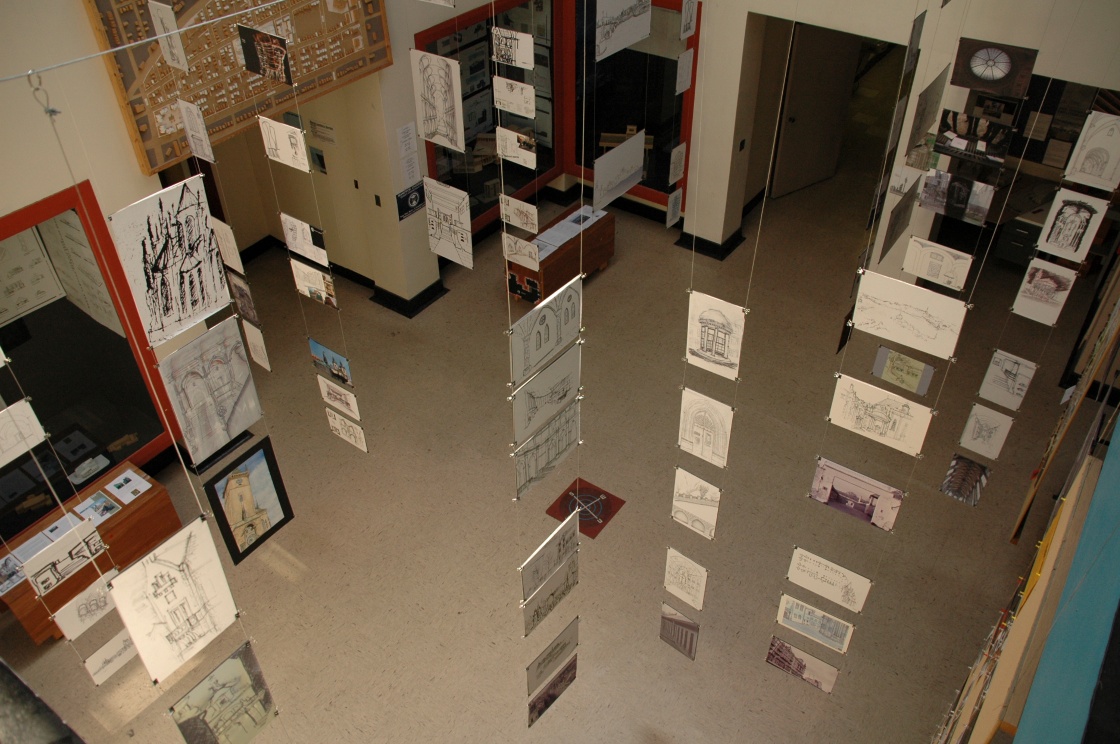
An exhibition that Mark and his colleagues Brandon Clarke, Smitty Lynch, coordinated along with other members of our spring break trip to Prague.

An exhibition that Mark and his colleagues Brandon Clarke, Smitty Lynch, coordinated along with other members of our spring break trip to Prague.

He is also a highly skilled designer, as is evidenced in design awards from Auburn and Hampton Universities.

Mark earned a NAAB-accredited degree from Hampton University – a program emphasizes urban planning as well as architectural design – and he then earned a design-build degree from Auburn University to boot.

To interview for the Enterprise Rose Fellowship, he went to Boston along with the two other candidates (both from top Ivy league schools).  After a rigorous multi-day interview, representatives from the community and the fellowship program voted, and then wholeheartedly extended the three-year fellowship to Mark.

During his time at HU, Mark’s research regarding water systems in the Philippines, and his work with the Virginia AIA’s Emerging Leaders in Architecture (ELA) program, were particularly relevant in preparing him for his work as an Enterprise Rose Fellow.
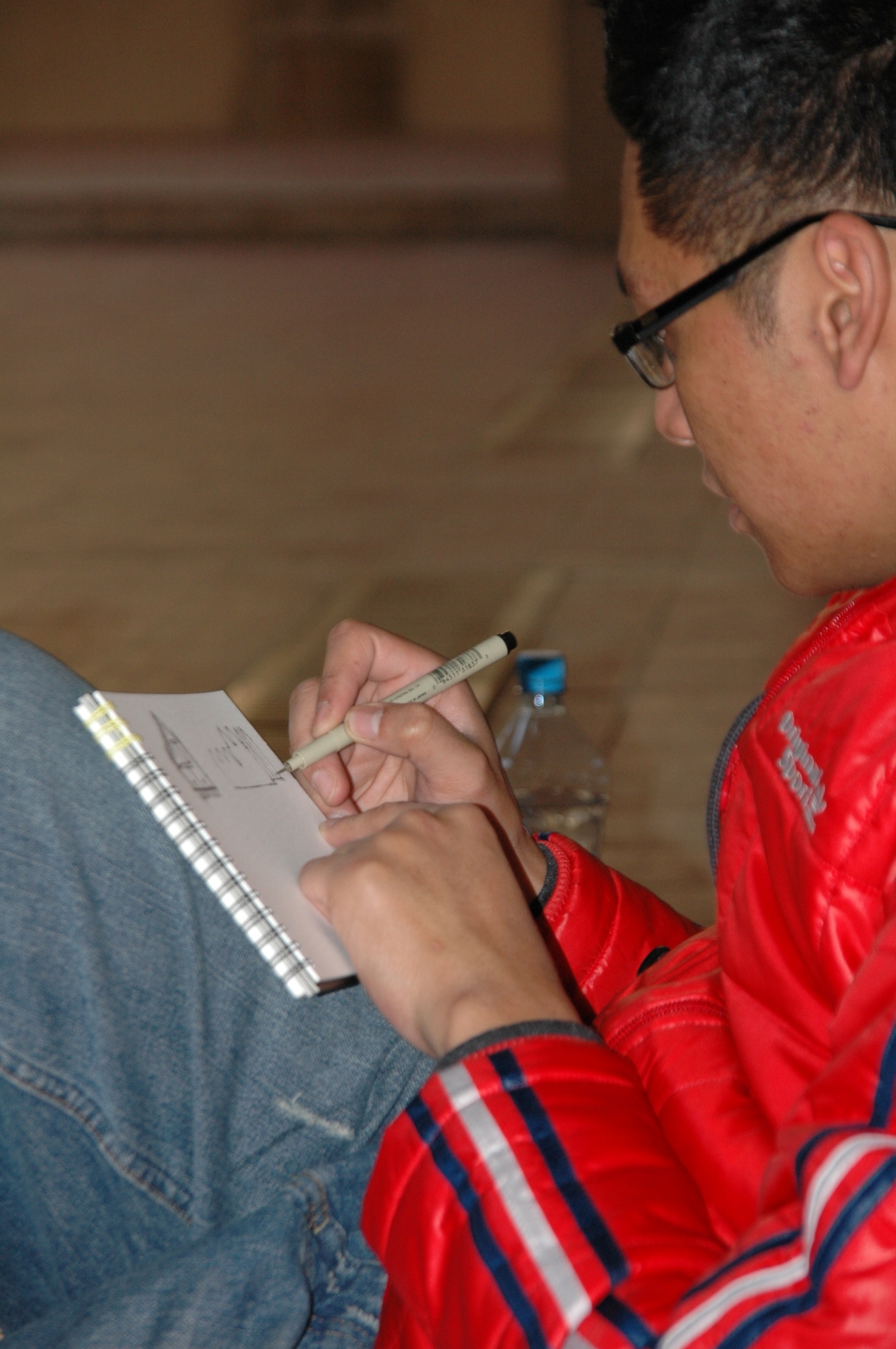
Mark sketching in Prague.

Mark sketching in Prague.

Marks’ activities all had an underlying theme of social activism related to the built environment.  He has always been able to think and work at multiple scales and with complex, inter-related issues.  His architectural studies enhanced these abilities.

Our department nominated Mark to represent Hampton University as part of Virginia AIA’s ELA program and his work with the organization exceeded our expectations.  The focus of the ELA program that year was on community revitalization and leadership.  Mark was highly engaged in his cohort’s project and he even defined the program for the subsequent year’s cohort.  (He identified specific conditions that needed to be addressed in Norfolk, Virginia and he helped get the new ELA group involved in fostering change where he knew it was needed.)

In his classes and teaching assistance-ships at Hampton University, Mark reflected a high level of engagement as well as what Daniel Goleman calls “emotional intelligence.”  Mark has the ability to share knowledge and to teach others techniques and strategies for improving themselves and their environments.

While he was at Hampton University, Mark was a very important part of defining a positive, learning culture within the academic context, as well as in the professional context (at the local and state levels) and in the larger community.

I couldn’t be prouder of Mark and all his many varied accomplishments.

You can see more of our trip to Prague in my archives.  My own presentation boards from Prague are also available for viewing.