In “The Irish Times” Today

“The Irish Times” is running a series on women in STEM. I was quoted in today’s article.

The reporter chopped out all the caveats a researcher like me uses (tends to, most, lends support…) but all in all I’m very pleased to have been able to bring student development theory into the conversation here.

Raising Fellows

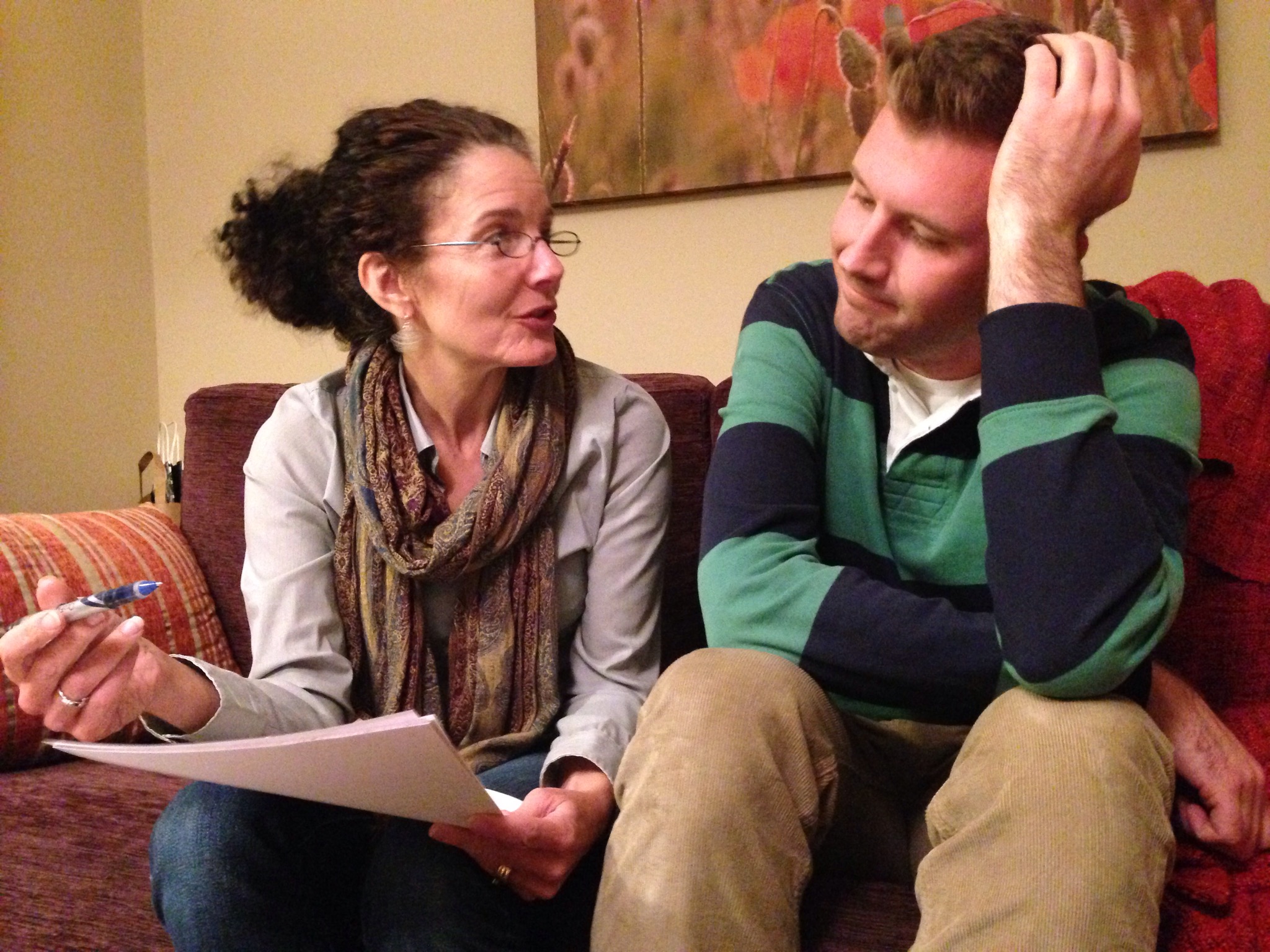
Pam and Don at the countdown, dotting every i and crossing every t.

Pam and Don at the countdown, aligning all the parts one last time. Attention to detail can make a world of difference.

My loft apartment is buzzing with activity. Fortunately, Prof/Dr Pam Eddy (my former dissertation advisor) arrived just in time to help with a big project.

Last night my flat-mate, Don, was in the final stretch of submitting a grant application for a prestigious fellowship. Don, Pam, and I had all hands on deck.

Winning these prestigious fellowship requires rigor, passion, and attention to detail. It often requires applying multiple years and continually refining one’s approach. The difference between winning and losing often comes down to how much critique an applicant can gather and address (plus more than a pinch of luck!).

All this, Don well knows. And he’s giving it all he’s got.

For more than a decade Don has methodically established a network of contacts across Ireland. He has continually generated new understanding of the issues immigrant children face in coming to Ireland.

With years of preparation under his belt, Don is well poised to research how Nigerian children who have immigrated to Ireland establish a sense of identity — how they come to feel they belong here, how they deal with being different, and what they think it means to be or become Irish, for instance. And, with a spike in immigration to Ireland underway, the time is ripe for Don’s study.
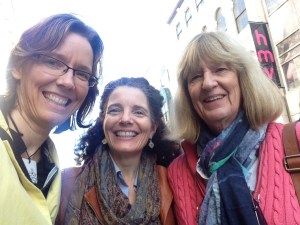
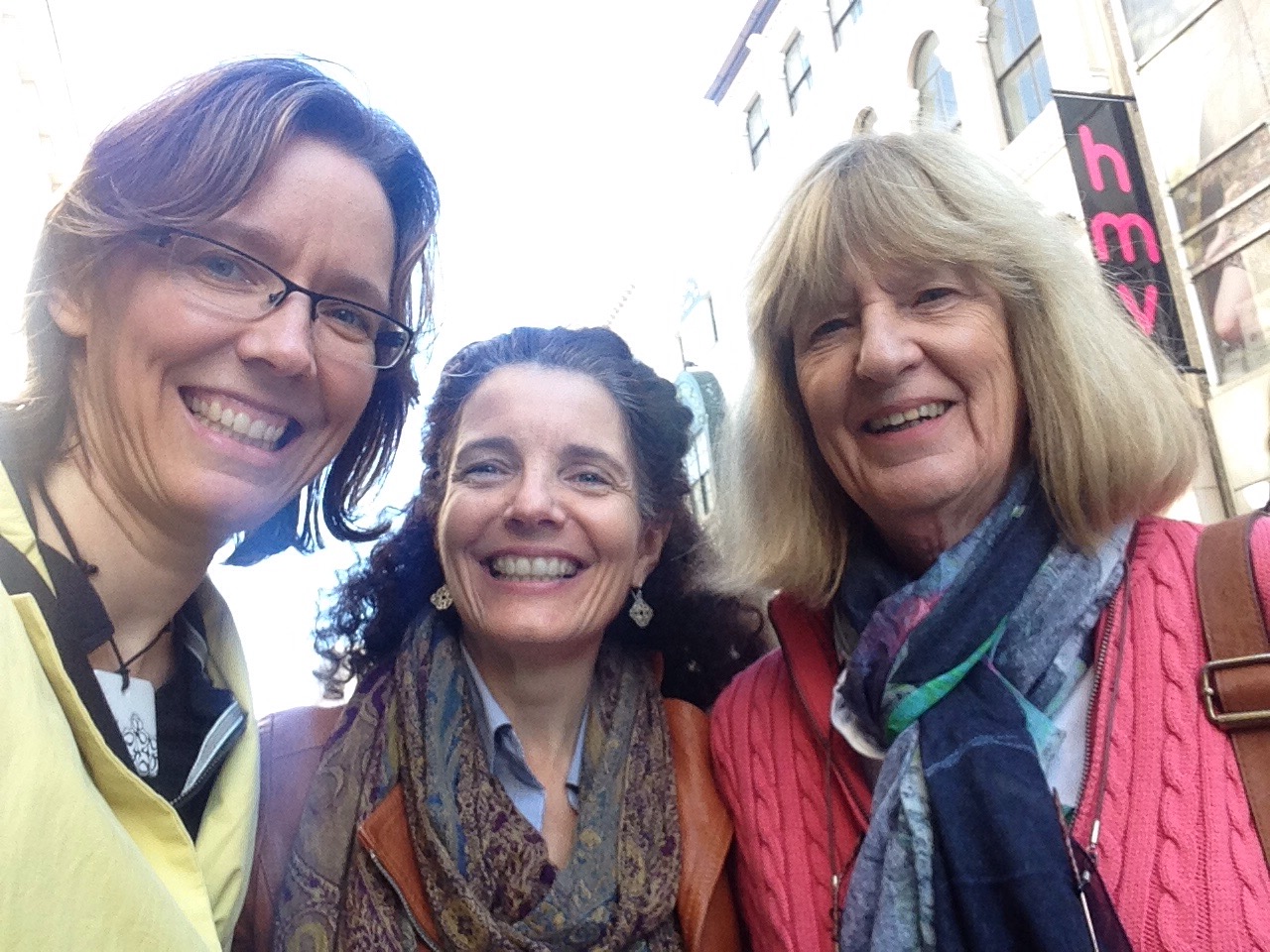
As soon as Pam arrived in town Sunday, we headed out for coffee with a Professor Emerita from William and Mary who is traveling in Ireland, Dr. Dorothy Finnegan.

As soon as Pam arrived in town Sunday, we headed out for coffee with a Professor Emerita from William and Mary who was traveling in Ireland, Dr. Dorothy Finnegan. Dot taught me in a class on Cross-Disciplinary Perspectives and another in Comparative International Education.

What Don learns can potentially help teachers deliver content more effectively in their increasingly-diverse classrooms. It can also help Irish policy makers understand issues that are central in education today.

A couple weeks ago, Don arrived for a three-month stint to collect interview data at a primary school in the nearby district of Tallaght. I had a spare room in my place just the right size for an up-and-coming research fellow.

Don and I first met at one of the 2012 photography events sponsored on my behalf by Fulbright Ireland and the University of Notre Dame’s center in Dublin. I’ve been fascinated by his topic and his emerging findings ever since.

Since his arrival this year, Don and I have convened daily to discuss our research projects. These informal conversations help us both because we are both researching diversity, education, and identity and we are both building qualitative research skills.

Thankfully, I have an excellent mentor in Pam Eddy. And thankfully, she arrived for a visit just in time to help put the final touches on Don’s grant application.

It takes a village, I think they say, to raise a fellow!

A few days before Pam’s arrival, I’d had the chance to publicly thank the team who helped carry my Marie Curie fellowship application across the finish line.  Dr Jennifer Brennan, Jean Cahill, Dr Marek Rebow, and Dr Nancy Stenson went above and beyond for me and my project — editing, polishing, critiquing and lending ideas. I could not have won the EU’s International Incoming Fellowship without them! And the reference letters from Colleen Dube, Dr Mike Murphy, and Dr Pam Eddy helped seal the deal!

I’m grateful that these knowledgable mentors are willing to share their time and energy with emerging researchers like Don and me!

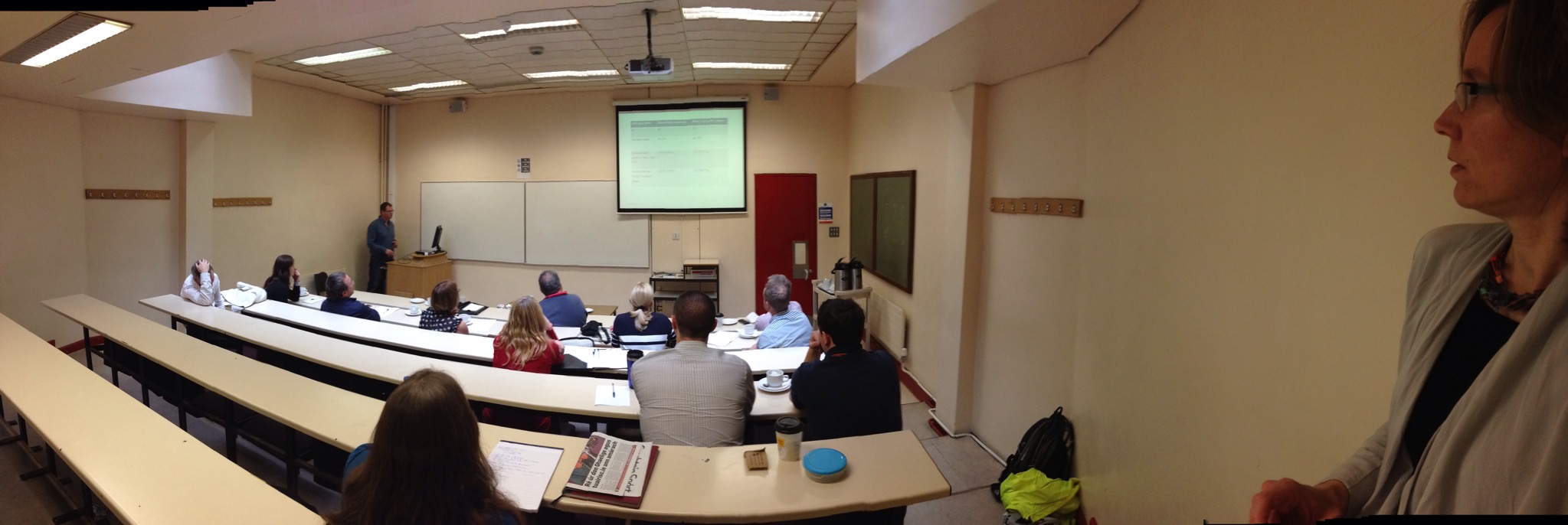
I also presented at last week's seminar for researchers on Bolton Street who are members of CREATE (Contributions to Research in Engineering and Applied Technology Research).

I also presented at last week’s seminar for CREATE (Contributions to Research in Engineering and Applied Technology Research). Our research group is lead by Dr. Brian Bowe.
Framing My View

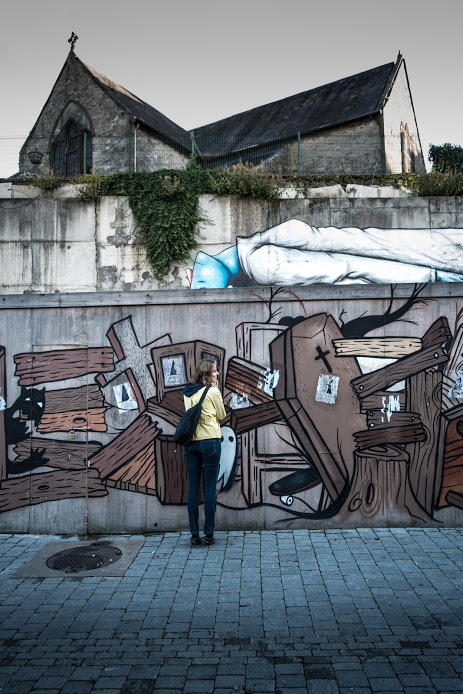
Over time, various artists have provided layers of meanings along this street in Kilkenny, Ireland. Small windows in the graveyard painting let viewers select their own vantage points and help them view what's happening on the other side of the wall. The photographer (Frank Daly) selected his own frame of reference, capturing an entertaining yet  chilling portrayal of the phenomenon of Western burial.

Over time, various artists have provided layers of meanings along this street in Kilkenny, Ireland. Small windows in the graveyard painting let viewers select their own vantage points and help them view what’s happening on the other side of the wall. The photographer (Frank Daly) selected his own frame of reference, capturing an entertaining yet chilling portrayal of the phenomenon of Western burial.

Phenomenology and constructionism are two outlooks for understanding and describing human experience in ways that can help humans (especially educators, designers, and makers) shape a better/more purposeful future. They are well aligned with engineering and architecture because both paradigms both have to do with human creation. Without human creation, architecture and engineering are not possible. In this blog, I’m attempting to summarize my understanding of the two in a way that might be of use to other researchers.

Phenomenology is a philosophy as well as a method of doing research. It focuses on experiences people have, and on how individuals understand and describe their experiences. Education researchers have been working hard to refine this method of research, although it is still in its infancy as a research methodology. On the other hand, phenomenology has been central to architectural thought since at least the mid 1900s.

Today, I am striving to understand distinctions and techniques involved with three specific variants of phenomenology: transcendental phenomenology, hermeneutic/interpretive phenomenology, and phenomenography. These differ in how they view objectivity and subjectivity, and this aspect intrigues me.

Construction is a fundamental aspect of architecture, architectural design, and architectural education. Two distinct paradigms deal explicitly with “construction,” although I see quite a bit of overlap between the two, so I’m placing them under a common heading.

These two construction-related outlooks are called constructivism and social constructionism.

The book Qualitative Research: The Essential Guide to Theory and Practice, written by Maggi Savin-Baden and Claire Howell Major (2013), is helping me better understand the distinctions between these two ways of thinking about and conceptualizing being, knowing, and researching.

I’ll attempt to explain what I’ve found using their book and integrating it into what I learned in school: 

Constructivism is the more subjective of the two construction-oriented paradigms. This paradigm asserts that knowledge exists in the human mind and that researchers can understand it by “unpacking individual experiences” (Savin-Baden & Major, p. 56). “Reality,” in this view, is what individuals think it is. To understand the world, we (as educators, architects, and/or researchers) need to assess how individuals know, understand, and indeed construct the world in their minds.

Constructionism is a more collective. This paradigm is often referred to as “social constructionism” and it posits, “Reality and knowledge are socially constructed” (p. 56). In this view, groups of people decide collectively – and quite often unconsciously – what things (phenomena, people, places, ideas, etc.) they will recognize and how they will understand and name them. In inverse fashion, groups also decide what things they will not see/understand/name. Researchers who adopt this way of seeing the world study how groups of people collectively see/interpret/create/construct the world around them. Today, constructionism appears in only in a few publications on engineering education (specifically, on teaching robotics or materials engineering).

I’ve been planning to use phenomenology in my upcoming work, yet I believe constructionism also hold great value for engineering education research. Perhaps I’ll help introduce this way of seeing to the EER community.

“Objectively” Speaking

Today, those of us doing qualitative research about the education of engineers are enlarging the vocabulary of the engineering community, which has — by and large — thought of research as an objective, fact-finding, technical science.

As Frank Daly commented on an earlier post, engineers are taught to think objectively. Most of the profession has embraced straightforward cause-and-effect logic. This appears to be the case worldwide.

Among researchers, this way of thinking is known as “positivism.” It assumes that there are identifiable facts that stand outside the realm of human intention.

Planning for Sustainability class I conducted at The College of William and Mary.

Discussing water quality in the Planning for Sustainability class I conducted at The College of William and Mary.

Even today, when most people think of research, they imagine test tubes and petri dishes, statistical charts and mathematical equations. They think that science and technology are strictly fact-based.

However, there’s much to be gained by expanding that view — and to learning from what people know, perceive, and experience.

Today, qualitative researchers are designing and describing new ways to conceive of knowledge, new ways to see and explain “things” that happen in the world. They have created many new methods for viewing, studying, and describing phenomena.  Each method fits a specific way of seeing and understanding the world. Each set of ideas about how things work can be called a “paradigm,” and each paradigm filters what various groups of people know and how they come to know it.

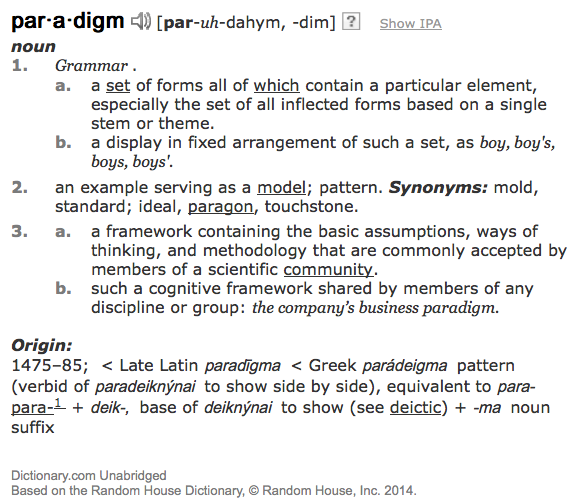
Definition of paradigm.

Definition of paradigm.

Everyone uses paradigms (which are sometime also called schemas), although many people are not familiar with the terms and most are not even aware that they have adopted one specific set of ideas without considering alternatives.

That’s like never considering that you could fry, or bake, or broil, or grill fish. Or even eat it raw. Imagine being stuck in just one way of doing things! Yet most of us are when it comes to philosophical ideas, conceptions of knowledge, and how to learn.

By using qualitative methods to study events and engineering-related phenomena, engineering education researchers like myself are helping engineers see things that their traditional way of seeing things masked.

Definition of schema.

Definition of schema.

Steven Feldman of Case Western Reserve University helped do this at NASA. Following the Challenger disaster, Feldman assessed NASA’s organizational culture and he published his findings in 2004. He found evidence that the shared philosophy within NASA led to calamity. There was a pervasive belief in objectivity, fact, and pure physical science. It led people to ignore important issues and it got in the way of success. Employees were so focused on quantitative data that they failed to see gaping holes in their problem-solving structures. He, and others like Zingale and Hummel (2012), have insisted that NASA and other organizations can benefit from qualitative research. These experts want qualitative research to be conducted both by and about NASA. Although the Space Administration studies phenomena, it has been doing so without using qualitative methods, like phenomenology, that could yield significant findings.

I’ll explain some basics of phenomenology as a way of seeing, analyzing, and understanding the world, in an upcoming blog.

Vantage Points

What you see depends upon where and how you look....

What you see depends upon where and how you look….

In engineering, the teaching-from-the-podium-by-manual-and-textbook approach simply isn’t working.  It’s not attracting enough students to study engineering.  It’s not engaging and fascinating enough of them.  It’s not spurring their creative thinking skills in enough ways.

I’m clearly not the only one who has noticed this.  The National Science Foundation and oodles of engineering scholars agree.  And now that the engineering profession — as a group of individuals bound by common knowledge, education, and language — has come to acknowledge these shortcomings, it is time to address the problems head-on.

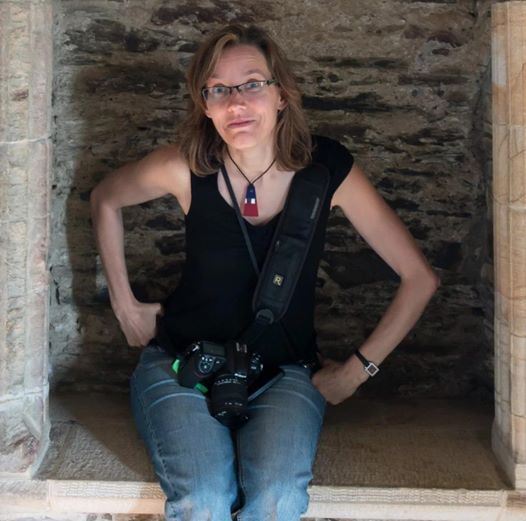
Fergus Whelan commented that I need to think outside this box....  Thanks to Frank Daly for the fabulous photo.

Not liking to be trapped inside the box….

Making such a change is difficult.  It’s messy and complex.  It requires thinking outside the vocabulary and methods that created the profession in the first place. In line with the old cliché: engineering has to starting thinking outside its own box.  Most people today agree: We need engineers to see and think in new ways.  And indeed, many teachers are:

  • working to prompt the needed type of thinking in engineering
  • testing new teaching methods
  • working to evaluate results

I am one of them.

I have two sets of skills that I am hoping can help in positive ways.  First, I’m an architect and seasoned educator.  Second, I’m an education researcher.  From this vantage point, I see that engineering (programs and pedagogies) can benefit from what architecture programs do.

The architecture profession, for instance, has always used hands-on teaching.  Architecture schools are full of students and full of creative energy.  Architecture and engineering aren’t so different, yet our ideas about what they “are” differ, and the way they are taught differs as well

“Engineering,” I insist, can benefit from design thinking, from techniques used in design education, and from sharing ideas with architects as well.  Upcoming blogs will explain how.


Below is a little gallery of recent research activities, including a short promo video (shot with my iPad in a single take) for our RoboSlam exhibit this weekend’s Dublin Maker event.

Expanding the Engineers’ Box

Fergus Whelan commented that I need to think outside this box....  Thanks to Frank Daly for the fabulous photo.

Fergus Whelan commented on this image that I need to think outside this box!  Many thanks to Frank Daly for the fabulous photo. My students, having sent his look many times before, certainly empathize with you!

In all corners of the globe today, companies are clamoring for skilled engineers. They want a larger pool of applicants who are creative, flexible thinkers prepared to address complex, emerging questions riddled with interrelated unknowns. Like industry, the sectors of healthcare, education, and government also have great need for well-rounded thinkers with strong engineering acumen.

Simply put: the world needs more people who can think across systems and see how things relate at multiple scales. We need people who can identify problems and create new solutions from the ground up. People who aren’t so closely bound to existing systems, ideas, and protocols that they can’t construct entirely new schemes for thinking and behaving.

Today, governmental organizations (like Science Foundation Ireland and the National Science Foundation in the USA) are working hard to address the shortfall in the number of engineers by generously funding education of, as well as research by, engineers and scientists. They seek better ways to teach and think about engineering and science.

The blogs I will be posting in the near future have to do with:

  • the way we think about and conceptualize engineering
  • how I think this needs to change
  • how architects and education researchers can help

Please note: I’m going to be explaining things that I’m trying to work out in my head and do this as if I’m speaking to a friend or relative who knows little about research. That means I may not be “100% right” in every explanation. But as you’ll see, that is a risk that must be taken for the sake of building knowledge. (It’s all part of this new “paradigm” for working and thinking that engineering needs to implement more widely… more on that to come!)

I do hope you’ll follow along on this research adventure, where I’m working to bring qualitative, social science research and design thinking into more facets of engineering education.  Yes, these are gutsy claims I’m making — particularly since I’m new to research and new to engineering.  Let’s see if I can live up to such promises….

Sheryl Sorby Spotlights Spatial Skills

Dr. Sheryl Sorby‘s groundbreaking research on spatial visualization brought awareness of spatial reasoning to engineering education worldwide.  Sheryl’s work highlights the importance of educational research and illustrates how applied research can make a real difference in the way we learn and teach.

Sheryl is a pioneer in engineering education research — the area where I’m now working to establish myself.  She was doing this type of research long before Engineering Education Research (EER) was recognized as a distinct field of study.  As such, she helped pave the way for all of us who are working to understand how people learn engineering and design today.  Today, she’s actively leading research teams on this topic.

Last year, Sheryl served as Ireland’s Fulbright Scholar in Engineering Education (that’s the post I held the year before) and she made noteworthy contributions. Whereas I applied for the Fulbright position when I was a “baby doc” (straight out of grad school), Sheryl brought the wealth of experience of a professor emerita (which essentially means she retired with academic kudos).  Awards she has received include the 2011 Sharon Keillor Award for Women in Engineering Education bestowed by the American Society for Engineering Education (ASEE).

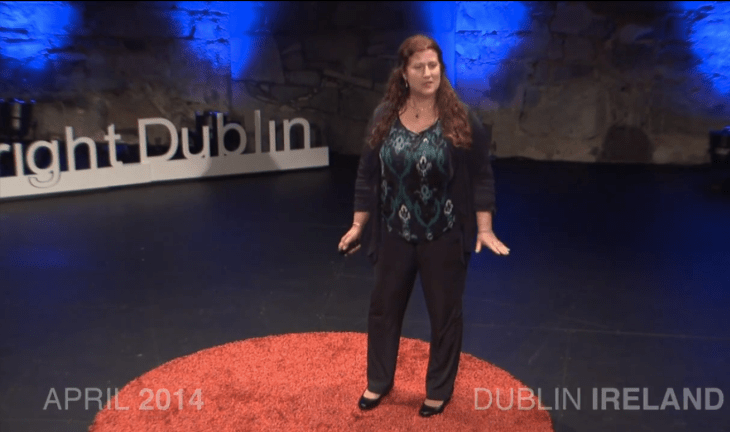
Recently, Sheryl delivered a TED talk at the 2014 TEDxFulbrightDublin event organized by the Fulbright Commission in Ireland, an event pictured above.  The TEDx talk, “Recruiting Women for Science, Engineering, Technology and Maths,” is available on YouTube. YouTube also features her webinar presentation on “The Importance of Spatial Skills.”

Her TEDx talk describes ways spatial-thinking skills correspond to academic performance in engineering. Her research has identified gender-related discrepancies in spatial visualization skills and, as a result, she has developed and implemented programs to help alleviate students’ weaknesses in this area. Her work has made a clear and measurable difference!  (I hope someday, I can say the same of mine!)

Sheryl researches other engineering topics as well.  Michigan Tech’s website explains she “is known for preparing engineering students and middle school students to think like engineers. Her research interests include advanced composite materials for use in civil infrastructure and 3-D computer graphics for visualization of complex behaviors.”

The National Science Foundation has supported many of her projects, and she even worked (or, “did a rotation”) at the NSF headquarters, as Program Director in NSF’s Division of Undergraduate Education.

I’m proud to walk in Sheryl’s footsteps, and thankful for the work she’s done!


If there was no fear… what would you dare to dream?

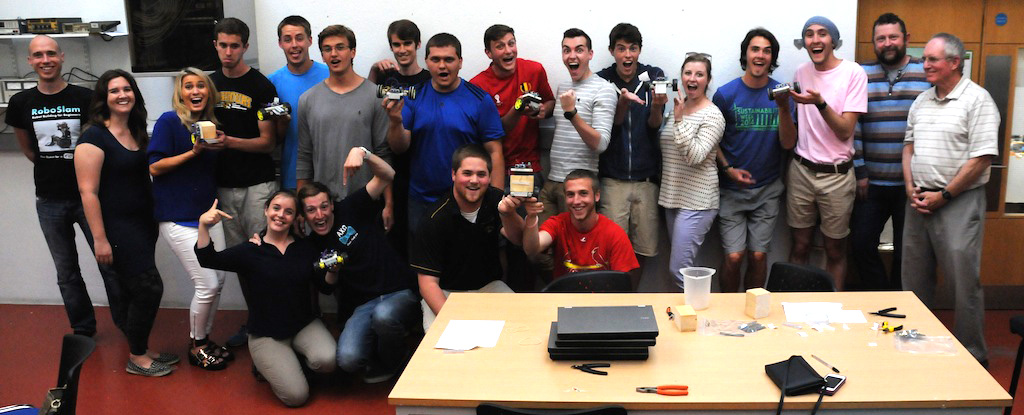
Ted, Damon, and crew conducted a RoboSlam for 18 undergraduate engineering student form the University of Wisconsin last week.  I'll post more photos of the event soon, on our RoboSlam blog.

Ted, Damon, and crew conducted an abbreviated RoboSlam this part week for 18 undergraduate engineering student from the University of Wisconsin last week. They are students of former Fulbright, Bob O’Connell (far right). I’ll post more photos of the event soon, on our RoboSlam website.

Solstice in Dublin!

Solstice in Dublin!  It was my first solstice here and I enjoyed every minute of it! Interestingly, there’s indirect sunlight for even longer than 17 hours. The first rays appear before 4 AM and the last disappear after 10 PM.

Dublin is full of sunshine!  Temperatures are topping top out each day at about 65 degrees Fahrenheit and the sun has been staying up for 17 hours each day.  That makes for perfect weather for outdoor yoga.  On the day of the solstice, our yoga instructor, Peter, shared this provocation:  If there was no fear, what positive change would you make in your life?

I mulled the proposition.  I know better than anyone:  There’s good reason to fear what you may lose by chasing outrageous dreams.  But there’s also good reason to seek new knowledge and experience.  I hope someday my work will be a testament to trying hard to live life to the fullest.

This, the second week of my Marie Curie research fellowship, was full of adventures, errands, and learning.  My colleagues and I conducted a RoboSlam and a workshop on Problem-Based Learning at the start of the week.

I was honored to be included in a dinner and workshop with a guest from Portugal, José Manuel Nunes de Oliveira, who you may recall from an earlier blog.  Jose shared his work with the faculty of the DT07 electrical engineering program. This group of teachers is considering making the DT07 program more problem-based.

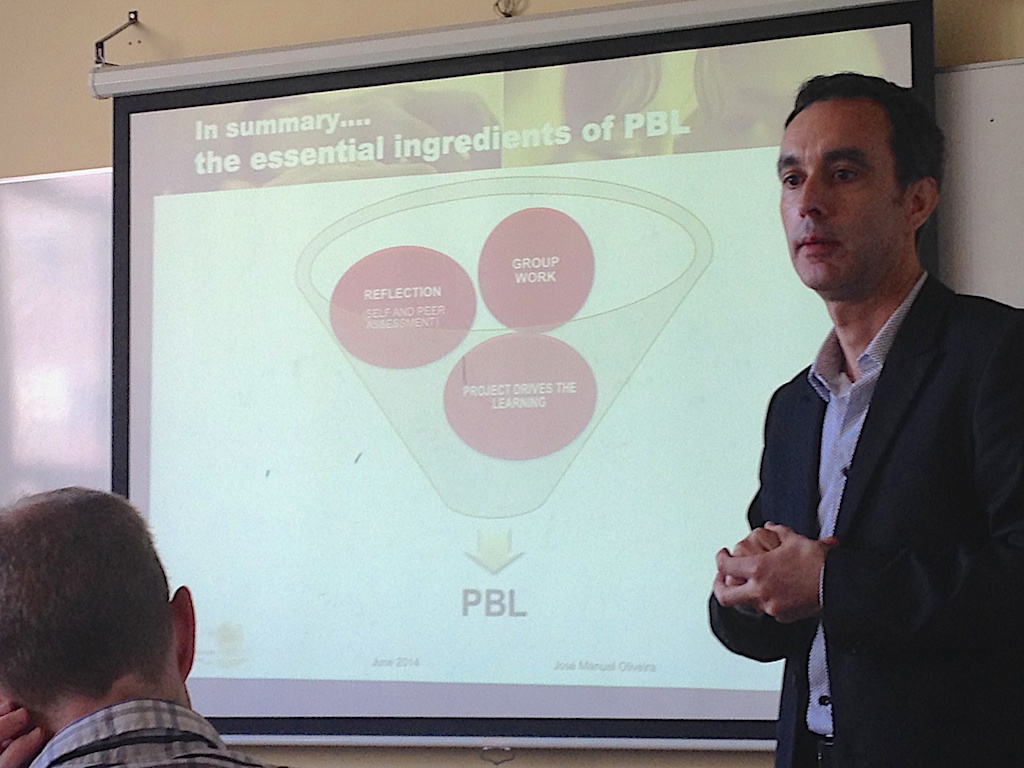
Jose's three essential elements of PBL.

Jose’s three essential elements of PBL.

Jose identified three elements he sees as essential to PBL (Problem- or Project-Based Learning):

  • Project drives learning
  • Group work
  • Reflection (including Self -and Peer-Assessment)

Jose described various aspects of assessment since this is a topic of concern to many of the teachers in the program.

I wish I had time to post details of the workshop, but I really need to get onto “real” work today.  Below, I’ve uploaded a photo journal of many highlights of the week. I hope they inspire you to find a least one new adventure today–however big or small.

Exotic Familiarity

I feared that somehow things wouldn’t seem as new and fresh on my return to Dublin as they were before.  During my Fulbright fellowship, I spent 365 days in this vibrant city — but even a vibrant city can become overtly familiar, I would have thought.

And yet, as I happily rediscovered many familiar comforts this past week (like Beef and Guinness Pie at Pieman in Temple Bar), I also uncovered a plethora of new adventures here.

On Saturday, during Fergus Whelan’s history tour, I met a researcher from Fordham University.  She said how much she’d enjoyed finding this blog while she was preparing for her trip here.  Her words encouraged me to get back to posting.  I hope you find something interesting and informative in my little picture gallery of highlights of the past week.

Well, it’s 10:20 PM and the sun has just set.  It will be up again by 5 AM or so, and I’d best get ready to hit the sack. I’ve another big week ahead!

Marie Curie Fellowship

It’s been a week of new adventures.  Last Monday my plane landed in Dublin and I began a new job at the Dublin Institute of Technology as a Marie Curie Research Fellow.  This is a two-year post funded by a generous grant from the European Union that will allow me to extend the research I began as a Fulbright scholar.  I spent several months last summer going the proposal, and met with success.

Many people helped with the proposal, including my mentor Dr. Nancy Stenson.  She has been a Marie Curie International Incoming Fellow (IIF) for the past two years… she told me of the IIF program, encouraged me to apply, and helped edit and refine my proposal.  Without her, I’d never have succeeded.  Jean Cahil, Jennifer Brennan, and Marek Rebow were also instrumental in the effort.  Colleen Dube, Pamela Eddy, Mike Murphy, John Donovan, and Brian Bowe provided valubale assistance as well.

Brian will be serving as my research supervisor for the next two years. Receiving this grant helped focus efforts in the college on the topic of research in engineering education. It lead to the formal establishment of CREATE (Centre for Research on Engineering, Architecture, and Technology Education, or something similar).

I’ll tell you about my recent adventures in an upcoming post….