Exotic Familiarity

I feared that somehow things wouldn’t seem as new and fresh on my return to Dublin as they were before.  During my Fulbright fellowship, I spent 365 days in this vibrant city — but even a vibrant city can become overtly familiar, I would have thought.

And yet, as I happily rediscovered many familiar comforts this past week (like Beef and Guinness Pie at Pieman in Temple Bar), I also uncovered a plethora of new adventures here.

On Saturday, during Fergus Whelan’s history tour, I met a researcher from Fordham University.  She said how much she’d enjoyed finding this blog while she was preparing for her trip here.  Her words encouraged me to get back to posting.  I hope you find something interesting and informative in my little picture gallery of highlights of the past week.

Well, it’s 10:20 PM and the sun has just set.  It will be up again by 5 AM or so, and I’d best get ready to hit the sack. I’ve another big week ahead!

Learning about Learning at Virginia Tech

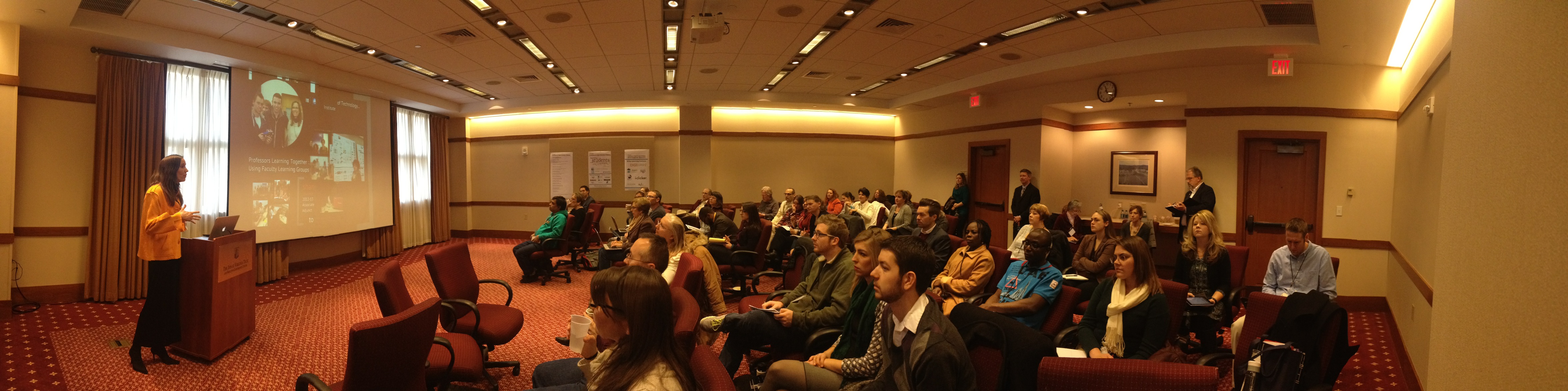
…to a pleasantly large group of colleagues.

Presenting at the Conference on Higher Education Pedagogy

Virginia Tech just hosted its sixth annual Conference on Higher Education Pedagogy (i.e., college teaching).  It was my second foray into this conference and it just keeps getting better and better.  The organizers manage to get sponsors to cover the entire cost, so there’s no registration fee.  That is truly amazing.

The conference gives me a chance to learn great new ideas (the sessions and keynote presentations were innovative and engaging), catch up with colleagues from around the country and world (with about 47 countries and as many states represented among attendees), visit my alma mater (I earned two architecture degrees from Virginia Tech), and even visit my family and childhood friends (Blacksburg is also my hometown).

I also took a quick jaunt over to Virginia Tech’s School of Engineering Education — one of two such schools in the entire world — to learn and to meet new colleagues.  Dr. Maura Borrego, whose research I’ve been citing in papers and grant proposals, provided a fabulous introduction to the program.  In addition, I got to meet several of her colleagues, including Dr. Marie Patretti who directs the undergraduate components of the engineering educate program, and Dr. Stephanie Adams who is Virginia Tech’s new Head of Engineering Education.  I even got to attend one of the Ph.D. classes in Engineering Education, taught by Dr. Vinod Lohani, and discuss assessment issues with the students.  They were discussing a paper that I’ve frequently cited as justification for continued research on outcomes of Problem-Based Learning.

I was very pleasantly surprised with the level of interest my colleagues had in the talk I delivered.  The audience was attentive and engaged and stayed after with lots of questions.  Thanks to the wonderful moderator who snapped great photos during the talk!

Drawing (on) Gravity

Sometimes gravity is an architect’s friend.

In fact, architects can use gravity to human advantage in all sorts of ways.  In Ecology class today, I showed some diagrams of systems that use “thermosiphoning.”  That’s a fancy word referring to gravitation pull that moves fluids (like air or water).

The idea is that warm air (or water) rises and cold air (or water) sinks… because a  liquid is heavier and more dense when it is cold.

So, we can let gravity do the work if we think a system through.  Sometimes we need to move liquids in directions they don’t naturally want to go, and then we need to add electric pumps or fans to our systems.

Today, I showed my second year architecture students a tromp wall system as well as a diagram of an open loop solar hot water system.  In that type of system, you let the sun heat the same water that you will use to shower, wash dishes, or drink.

I also showed a few diagrams of basic heat exchangers… like the one in a car.  That one takes the heat from the combustion process and uses it to warm the air in the car without bringing in the “smog.”

The students were seeming to “get” the ideas, but they didn’t seem particularly jazzed up about them.  (I knew that because they were fidgeting and clearly wanted to text.)

To get them involved, I turned posed a problem for them to solve.

I asked them to pull out a sketchbook and combine the solar collector and the heat exchange into a single diagram.  They needed to figure out how you could use water with water with glycol (i.e., antifreeze) in it to collect the sun’s heat and then use that same liquid to warm the water for someone’s shower.

The challenge was to transfer the warmth into potable water without tainting it.  A couple of students caught on fast. After everyone had given it a try, I let them help each other.  More and more people got it.

At about the same time, I asked a four of the students who caught on quickly to draw their diagrams on the board and then explain how they worked to the class.  We all put our heads together to analyze the designs.

Full STEAM Ahead, Virginia!

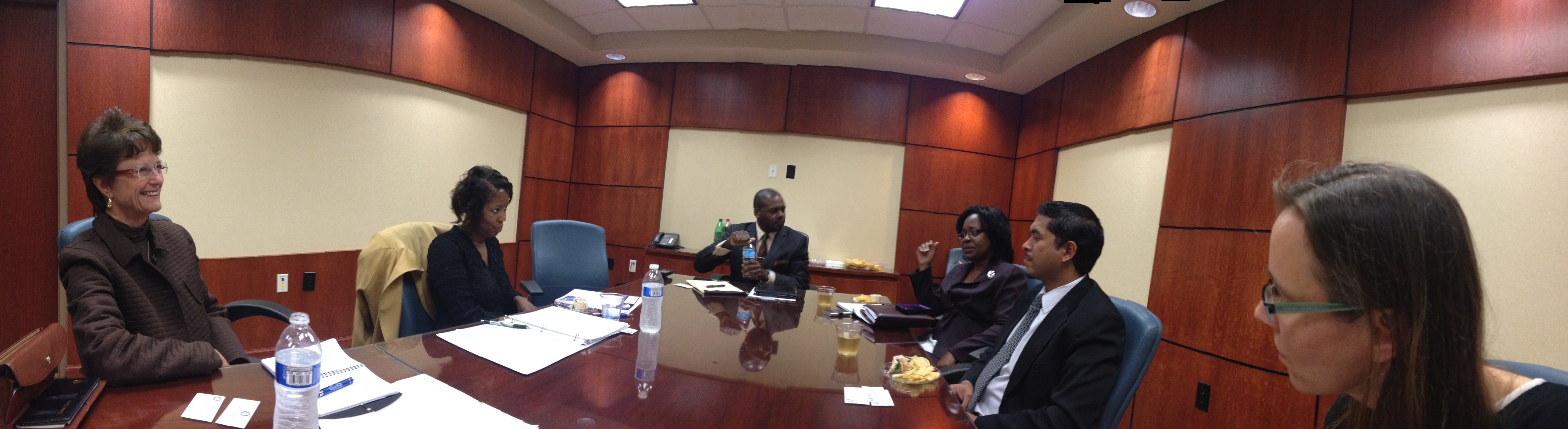
Discussing STEAM subjects: Caroline Martin, Dr. Judy Stewart, Orlando Robinson, Dr. Michelle Claville, Romdon Roopchan, and Dr. Shannon Chance.

Discussing STEAM subjects: Caroline Martin, Dr. Judy Stewart, Orlando Robinson, Dr. Michelle Claville, Romdon Roopchan, and Dr. Shannon Chance.

Big things are happening in the world of STEM education in Virginia.  Two enterprising educators, Caroline Martin and Dr. Judy Stewart, have founded the Virginia STEAM Academy.  Their public, 4-year residential program in Science, Technology, Engineering and Applied Mathematics is set to open for its inaugural cohort of students in the fall of 2015.  Last summer, Judy and Caroline conducted a summer program to get the ball rolling.

They have been working on the Virginia STEAM project since November 2010, and I’m happy to say that I’ve had some level of involvement since February 2011.  Although I took a year away during my Fulbright fellowship, a Wednesday meeting  on Hampton University’s campus helped me catch back up.

I’m fascinated by two specific aspects of the planning Caroline and Judy are doing: (1) securing and preparing facilities on the former Ft. Monroe that will house 1000 high school students and 75 teachers (who will live on-site with the students) and (2) designing the curriculum to support quality learning and innovative teaching.  They are such innovative thinkers and they know how to get things done!

Their vision for the school is remarkably aligned with the research I’ve been doing on integrating design thinking into engineering curricula and on tracking learning outcomes that accrue as a result of hands-on, problem- and project-based learning.

This Academy is going to open a while new world of possibilities for Virginia and her citizens.  My sister, Heather , was lucky enough to attend the Governor’s School for Science and Technology in Roanoke when she was in high school.  However, the daily commute — an hour each way — was a real strain on her and the other three students from our county who attended with her.  This new residential school will take the burden of daily commuting away, allowing the students and teachers focus on learning and generating new knowledge.

I am thrilled  the school will be here in Hampton Roads, and just a stone’s throw from Hampton University’s campus.

This Academy offers an ideal setting for the study of history as well as STEAM subjects.

Constructing a Student-Centered Studio

The incoming second year architecture studio cohort at Hampton University.

The incoming second year architecture studio cohort at Hampton University.

Today I applyed what I learned about problem-based learning (PBL), group learning, and student-centered pedagogies while I was on my Fulbright fellowship at Dublin Institute of Technology. I met the students in my second year architecture studio for the first time. Studio looked unlike Day One of this class (ARC201) ever looked before!

We started outside, with team building activities and a name game. Then we formed the teams (i.e., learning groups) that we’ll use for the first five weeks of this semester.

Next, we conducted initial site analysis in a way that was much more engaging than normal. We held a “scavenger hunt” to identify qualities of our project site (the Hampton University Point) that have to do with water.  The students managed to generate a much more interesting list of factors than I’ve ever been able to get them to achieve before; 63 about water alone!

For Friday, each team (of three students) has two assignments due.

Assignment 1 is to draw a plan of our project site to an architectural scale to fill an 18″x24″ sheet of paper.

This problem prompt is pretty specific (close-ended), but it still leaves a number of variables for students to consider and make choices about.  I hope they’ll get a bit competitive and prove they have pride in their work!  I asked the groups to follow a standard PBL format in starting work on this assignment. I asked them to figure out:

  1. What is this assignment asking?
  2. What will we need to know to do this?
  3. What do we already know about this?
  4. What will we need to learn/find out?
  5. What resources will we need?
  6. Who will do what and when?
  7. How will we check for accuracy before it’s due?

Assignment 1 is more straightforward than you might expect for an architecture studio. However, it will lay groundwork for upcoming activities, and it will help me assess where the students are skills-wise and with regard to collaboration. The second assignment is much more open-ended.

Assignment 2 is to make a beautiful object that reveals the essence of water.

I asked the groups to start by watching one of the YouTube videos listed below, and assume that the astronaut/scientist had made the video in response to this assignment. I asked the students to consider the questions above (which are intended to foster “self-direcetd learning”) and to bring to our next studio meeting a final, beautiful object as well as at least three study models that investigating the “essence of water”.  I’ve got my fingers crossed!

The students were more  active, engaged, and enthusiastic about learning than is typical on Day One of this course and I have high hopes for this new method of teaching.

NASA: Amazing Experiments with Water in Zero Gravity – YouTube

NASA: Amazing Experiments with Water Balloons in  – YouTube

Leading SEFI at the University of Birmingham, UK

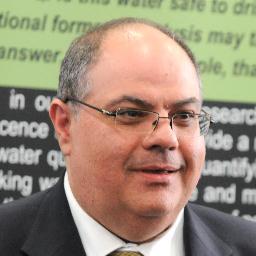
Prof. Kamel Hawwash

Prof. Kamel Hawwash

Last week I travelled over to the UK to visit professor Kamel Hawwash, the incoming president of the European Society for Engineering Education (SEFI).

Prof. Hawwash has done a great deal of  work in attracting and retaining diverse students in engineering, a topic known as “attractiveness” in the UK, and one in which I’m aiming to do more research.

Prof. Hawwash’s SEFI presidency will focus on two main topics:

1) employability and skills

2) attractiveness

We had much to discuss and we met for nearly two hours!  After our meeting, I had a chance to look around the University of Birmingham campus and then explore the city before flying back to Dublin via Ryanair.

Making Press

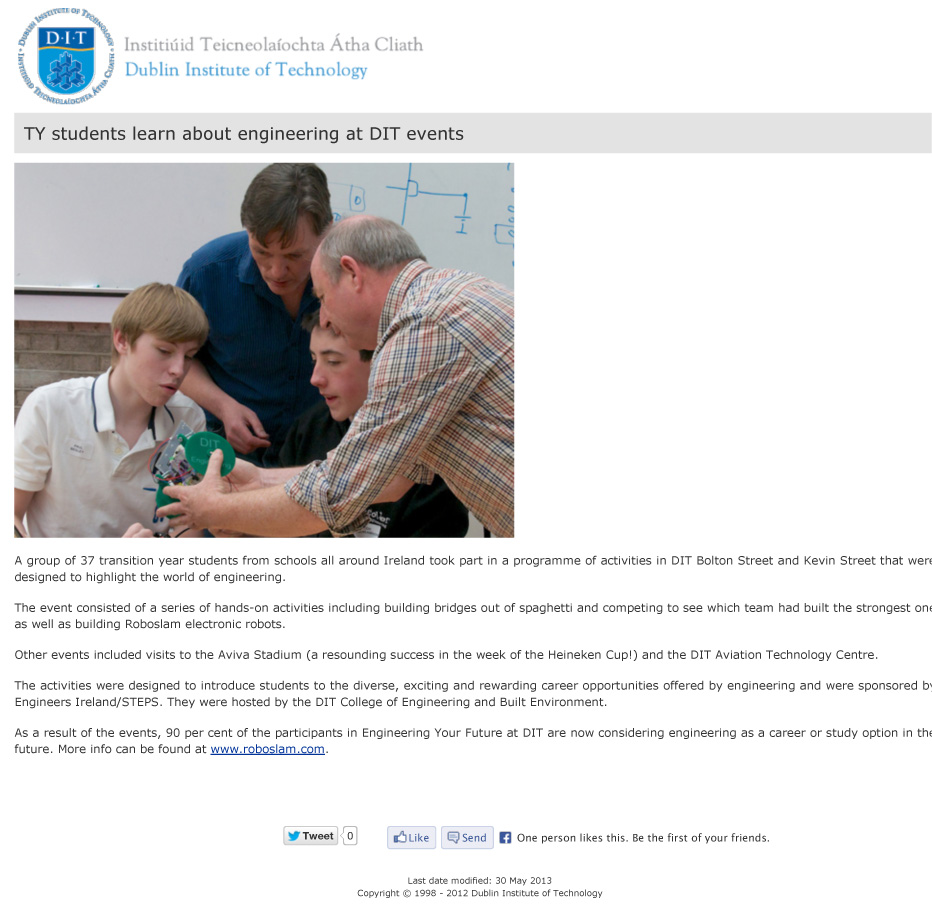
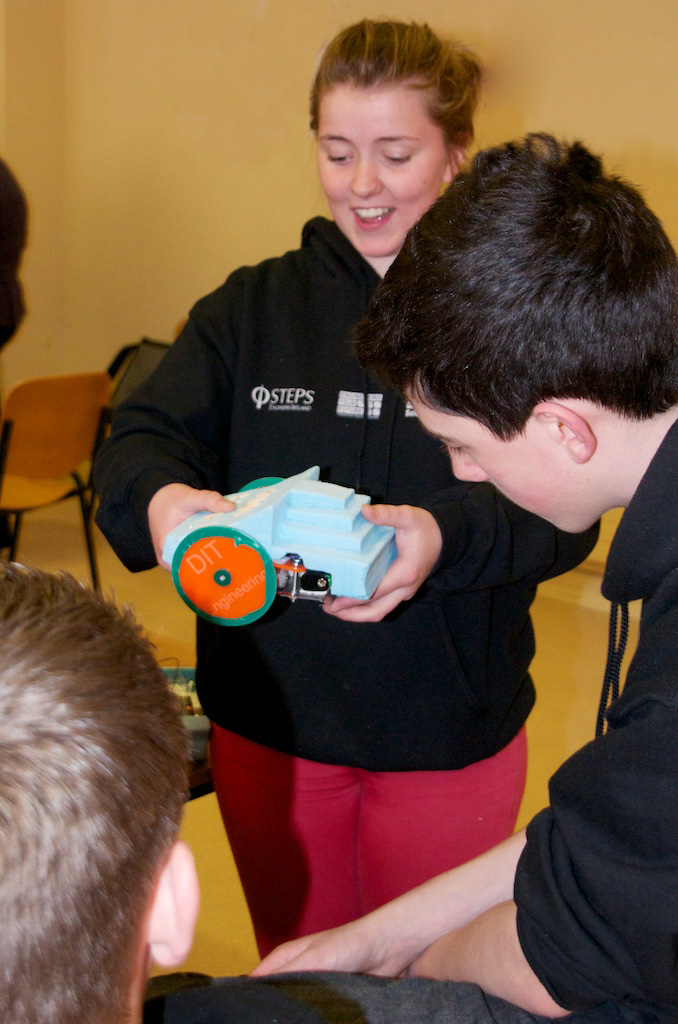
Last week, a PR person from DIT asked to use a photo I took at graduation for publicity.  Through our communication, I learned she’d used another of my images–one from RoboSlam–in a press release back in May.


DIT Dublin Institute of Technology - TY-students-learn-about-eng

New “RoboSlam for Facilitators” Workshop

Ted, Damon, and I have been gearing up for future RoboSlam workshops.   We have been looking for sponsors to help us continue and scale up our work.  For now, we’ll have to keep things fairly small and simple.  We’re not letting the lack of funds hold us back too much!  We’ve got to keep our momentum going!

During my Fulbright fellowship, I had several official projects. Along the way, I adopted a number of other projects–like RoboSlam–where I could learn and also contribute.

Ted and Damon are so talented and passionate about what they do that it’s impossible not to want to contribute to the success of their project.

While I was away studying in Rome, Ted and Damon hosted a workshop for people we hope will want to become facilitators of RoboSlam.  It’s part of our strategy for getting more people involved in the project.

Drawing Conclusions in Paris

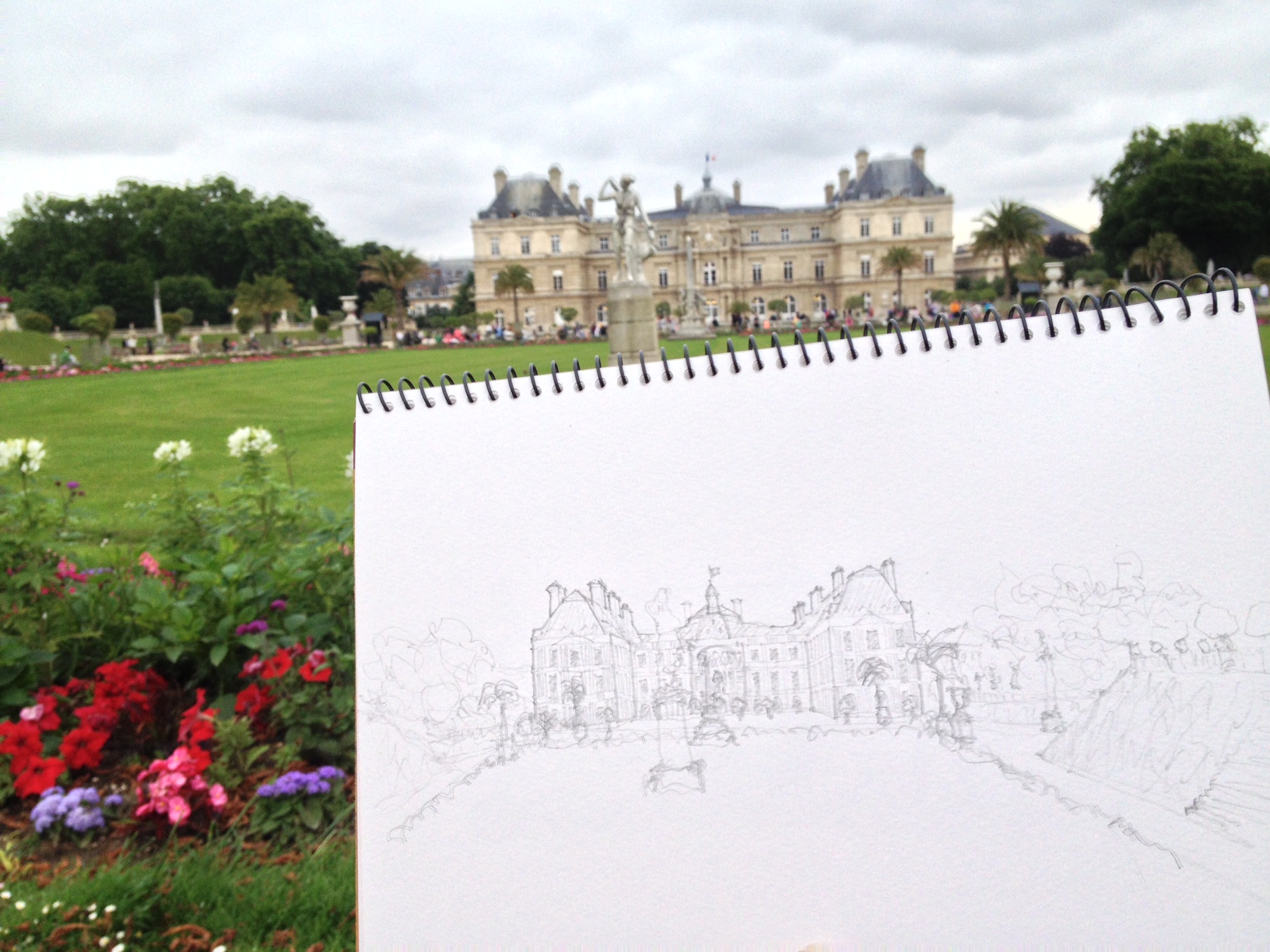
Sketching in Luxembourg Gardens

Sketching in Luxembourg Gardens

Pam Eddy and I attended the World Academy of Science, Engineering and Technology (WASET) International Conference on Higher Education yesterday. We each presented a paper. When the activities wound up, we headed out in different directions. Pam went to hear a lecture at UNESCO that she’s received a special invitation to attend and I went to study the architecture of Paris.

I sketched in the Luxembourg Gardens and in a church that I’d discovered two days before.

Pam and I met back up for dinner with Pam’s husband Dave. After dinner, we strolled through central Paris–discussing things we’d concluded about the city on our earlier explorations.

Preparing to Slam Again

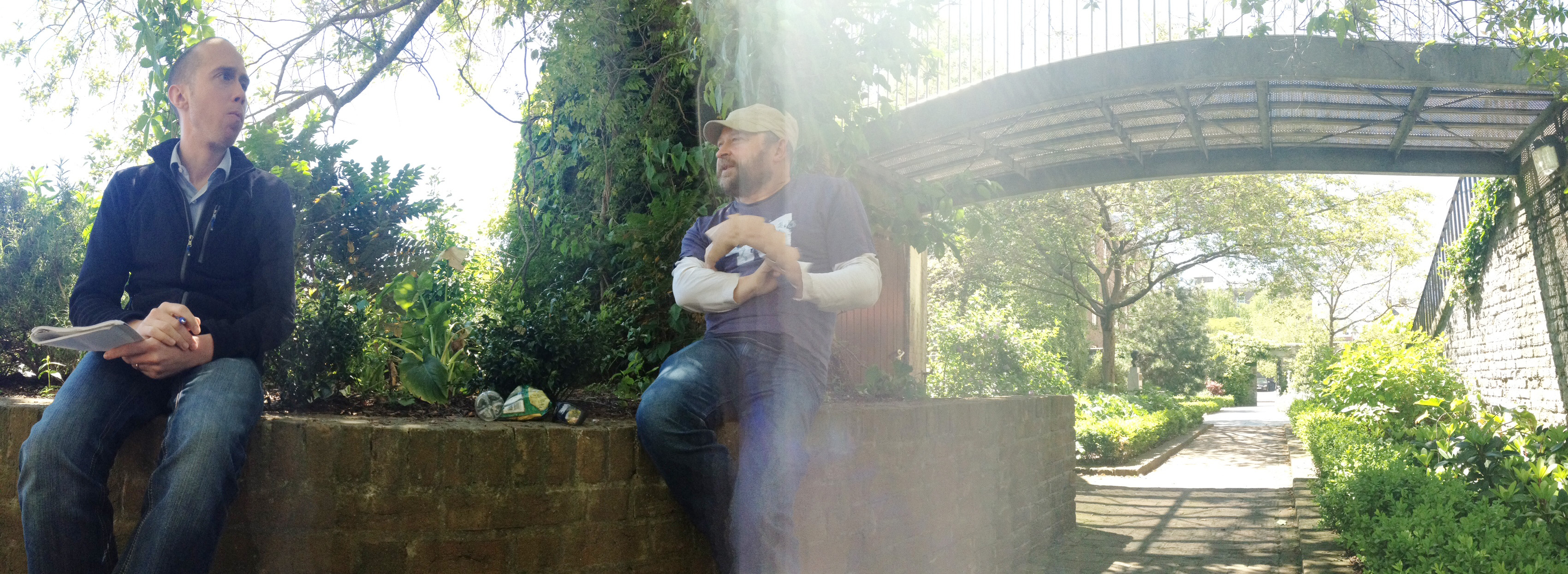
RoboSlam planning session with Ted and Damon.

RoboSlam planning session with Ted and Damon.

Ted, Damon, and I have been meeting over the past couple of days to evaluate past events, brainstorm strategies, and plan for upcoming workshops.  We enjoy remembering recent Slams….