Engineering Education in South Africa: Facilitating Teamwork and Celebrating Diversity

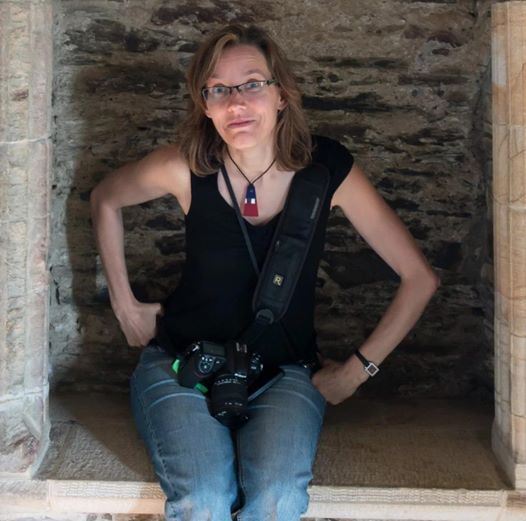
My sister and I just crossed paths, like (air)ships in the night, at Johannesburg’s O. M. Tambo airport. At precisely the time my University College London colleague, Dr. Folashade Akinmolayan, and I were taking off from Tambo yesterday, my sister, Heather Massie, was boarding a plane in New York City. Heather was en route to the same airport.

Although Heather and I didn’t physically meet at Tambo airport, we were together in spirit–united by common causes and with more than just our flight itineraries overlapping. Finding ourselves in southern Africa at the same time would seem to be chance, but it also reflects who we are as people. It reflects values—of science, of learning, and of equality among people—that our parents instilled in us from our earliest days. Heather and I learned well from our mom (Cynthia Mara) and dad (Don Massie), and the values they gave us shape how we see the world, and how and where we work today.

shannon cynthia heather

Shannon with Cynthia and Heather one Christmas after Mom’s trip to Japan.

Heather and I are both STEM (science, engineering, technology, and maths) educators, but of wildly different sorts. We both do outreach and community engagement activities with groups of diverse people and in under-served places. We both use “audience” participation to share our passions in STEM with others. We teach in spontaneous, improvisational, and highly interactive ways. We both see people as individuals and we bond quickly with others. We value our diverse friends, colleagues, and communities. We see diversity as an essential feature of creativity and we view it holistically—believing that identity is dynamic and ever-evolving and that people work everyday to develop their own identities with regard to gender, race, ethnicity and nationality, belief system, physical ability, sexual orientation and the intersection of all these and more.

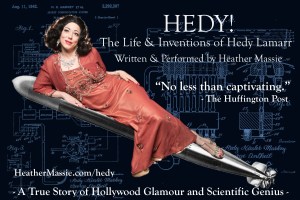
As a result, Heather will be in Zimbabwe and South Africa for the next five weeks, performing her critically acclaimed one-woman play about Heady Lamar. Lamar was a Hollywood screen star, an impassioned inventor, and a self-educated engineer. She developed technology that makes all our wifi and bluetooth devices work!
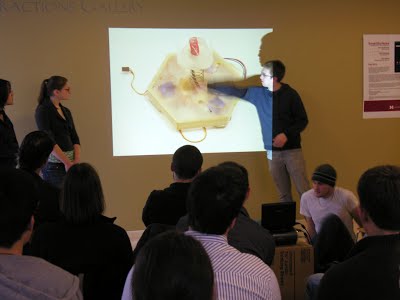
Shade and Shannon workshop title slideSimilar to Heather, I was in Johannesburg this past week, facilitating a workshop for 26 engineering educators from all over South Africa.

Via this workshop, Dr. Folashade “Shade” Akinmolayan and I shared what we have learned and implemented in practice. We shared what we know from our research on group-based learning and from what we have lived, by assigning team projects to students at University College London (UK), Dublin Institute of Technology (Ireland), and Hampton University (USA).
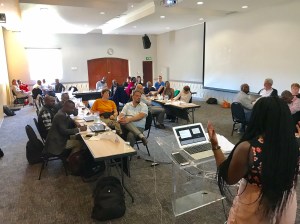
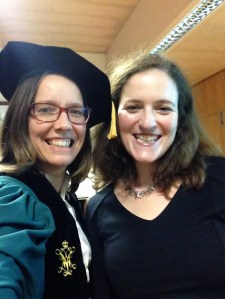
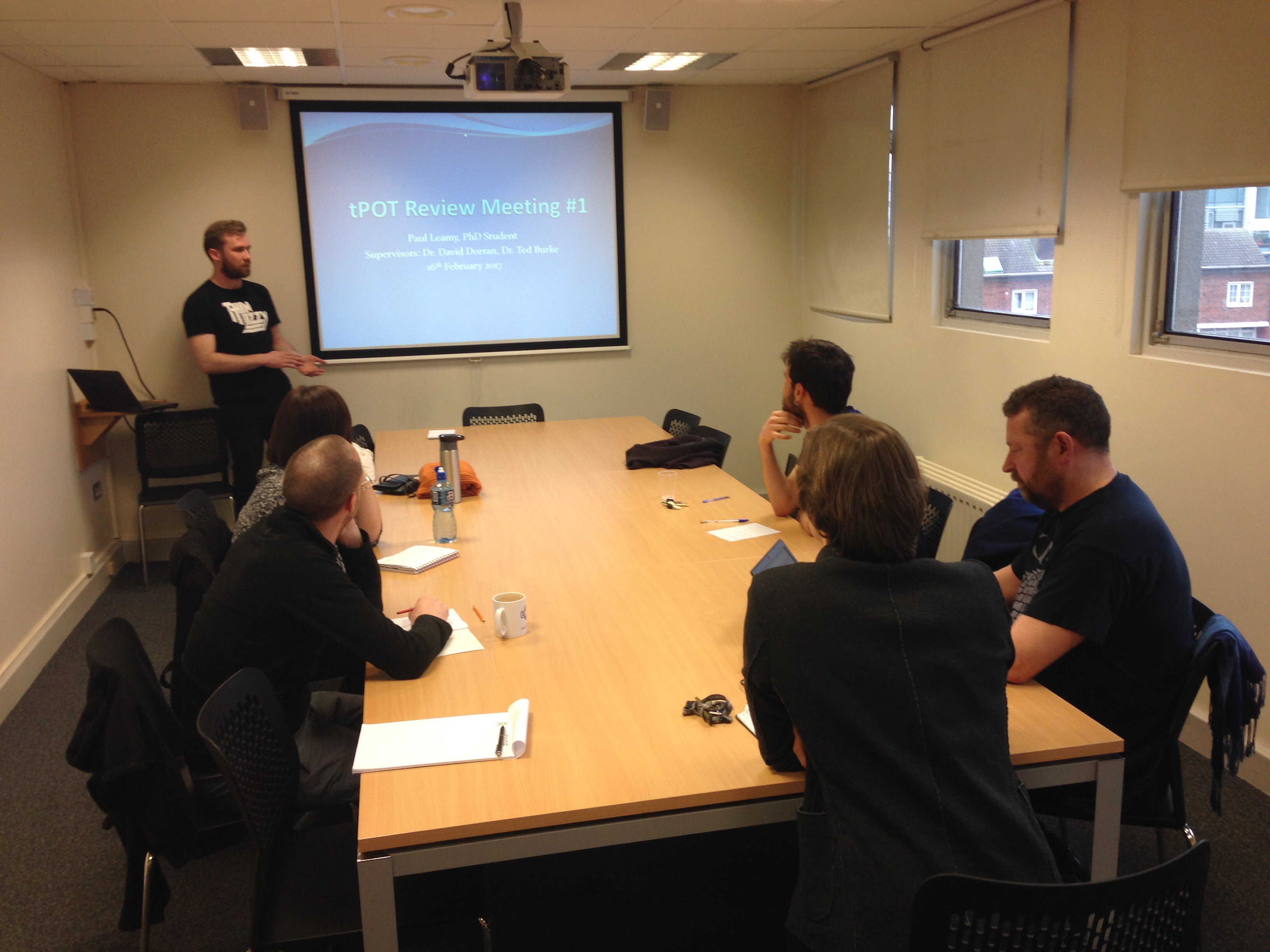
img_0621Shade and I were invited to teach this Master class (one of eight multi-day seminars on teaching and learning coordinated by South African engineering educators) because we are both part of UCL’s Centre for Engineering Education. Shade is a chemical engineer with a doctorate in engineering and a focus on team-based learning. She coordinates group- and problem-based learning for the Chemical Engineering Department at UCL, though she will soon move to a new university where she will contribute to the development of an innovative new curriculum in chemical engineering–from the ground up. As for me, I’m an architecture professor from the USA who uses group-based approached to teach students in architecture, engineering, and education. I’ve taught workshops on such topics to other higher ed teachers at DIT, Hampton U, and William and Mary.
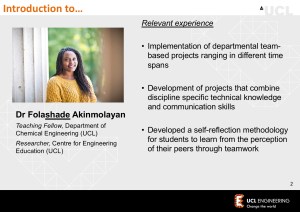
Shade intro slideShade and I found the 26 South African participants in our two-day workshop on facilitating teamwork in engineering education to be extremely energetic and engaged. They were passionate about teaching. They were enthusiastic about learning, sharing ideas, and creating new knowledge. We discussed ways to address the specific challenges they face and strategies to help support the range of diverse students in their classrooms. Drawing from experience teaching in many different places really helped.

All 26 participants were eager to discuss techniques, goals, and challenges surrounding their own efforts to facilitate learning in teams.

Shade and I made a pretty dynamic duo, if I do say so myself. We really worked well together and delivered a workshop of top quality. We will look for opportunities to offer this workshop again. Please let us know if you have ideas for future venues–for our team building workshop, or for Heather’s play.
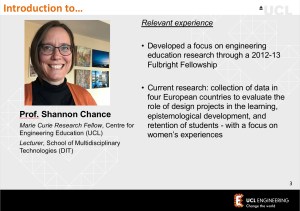
Shannon intro slideAlthough Shade and I had literally just met—finding each other at the airport as we departed London for Johannesburg—we made great use of the day we had before the workshop to refine our plans, get to know each other, and learn to work together.

The workshop went off without a hitch, and the learning the 28 of us achieved was highly impressive. As Shade remarked, the event was a great confidence booster for us as workshop facilitators. It was, in my view, a confidence booster for all 28 of us (participants and facilitators) because we are all engineering educators trying to innovate our teaching practices so that students learn more and develop a wider range of skills crucial for engineers to have, and we all walked away with stronger and more robust strategies.

We received this very kind email at the conclusion of the workshop:

Dear Organisers,

Good day.

I wish to express my heart-felt gratitude to all the organisers and funding partners for the invitation and funding to participate in the Master Class programme of 24 – 25 April 2018.

It highlighted, in a detailed and understandable manner effective teamwork fundamentals, strategies and ethics.

The facilitators showed quality planning, timeliness and precision in delivery and coordination that motivated active participation: leading to a hugely successful programme.

While looking forward to participate in future programmes, kindly please accept my respect and regards.

Thank you.

With kind regards,

Williams Kehinde Kupolati

What a lovely message to receive!

This wasn’t the first trip to South Africa for Heather or me, although it was Shade’s first time going there (she’s a British citizen, born and raised in London).
ROTCH South Africa trip cover copy

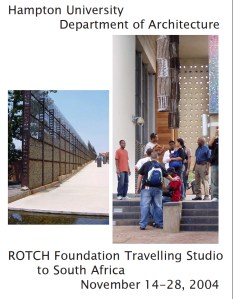
I was in Jo’burg and Cape Town in 2004, when Professor Brad Grant and I brought a group of Hampton University students there to study urban design. Wee looked at how urban design has been used to enforce racial and ethnic segregation. We also studied how contemporary architects and designers are working to counteract the adverse effects of decades of segregation and strife. I produced a booklet about the HU trip to South Africa. I can’t get the blog platform to upload the document for you, but please just email me to get a PDF copy. My email address is: irelandbychance [at] gmail [dot] com.

Heather was in Zimbabwe and Cape Town last year, performing as Hedy Lamar and conducting play-writing workshops. That followed a visit she made with our dear family friend, the late African-American playwright Leslie Lee. Leslie’s memory lives on the in the work Heather does every day. Now, Heather is back in Zimbabwe and South Africa again, with an action-packed itinerary that will look something like this:
HEDY postcard image

For details and performance dates, see www.HeatherMassie.com/HEDY

Harare International Festival of the Arts – Harare, Zimbabwe – May 3, 4 & 6, 2018

Unizulu Science Centre, Science Festival – Durban, South Africa – May 9-12, 2018

Women in Tech – Cape Town, South Africa – tbd May (17, 21 or 22), 2018

Thope Foundation – Cape Town, Khayelitsha, South Africa – May 18 & 19, 2018

Makukhanye Art Room – Cape Town, Khayelitsha, South Africa – May 20, 2018

George Arts Theatre – George, South Africa – May 24-26, 2018

Sci-Bono Discovery Centre – Johannesburg, South Africa – May 28 – June 1, 2018

As of this past Wednesday, the only definite dates with set show times were the Harare ones, but she will probably be performing on all of the listed dates. Please check Heather’s website for specific show times.

Here’s a gallery of images from the workshop:

I hope to share images from our tour of Johannesburg in a future post.
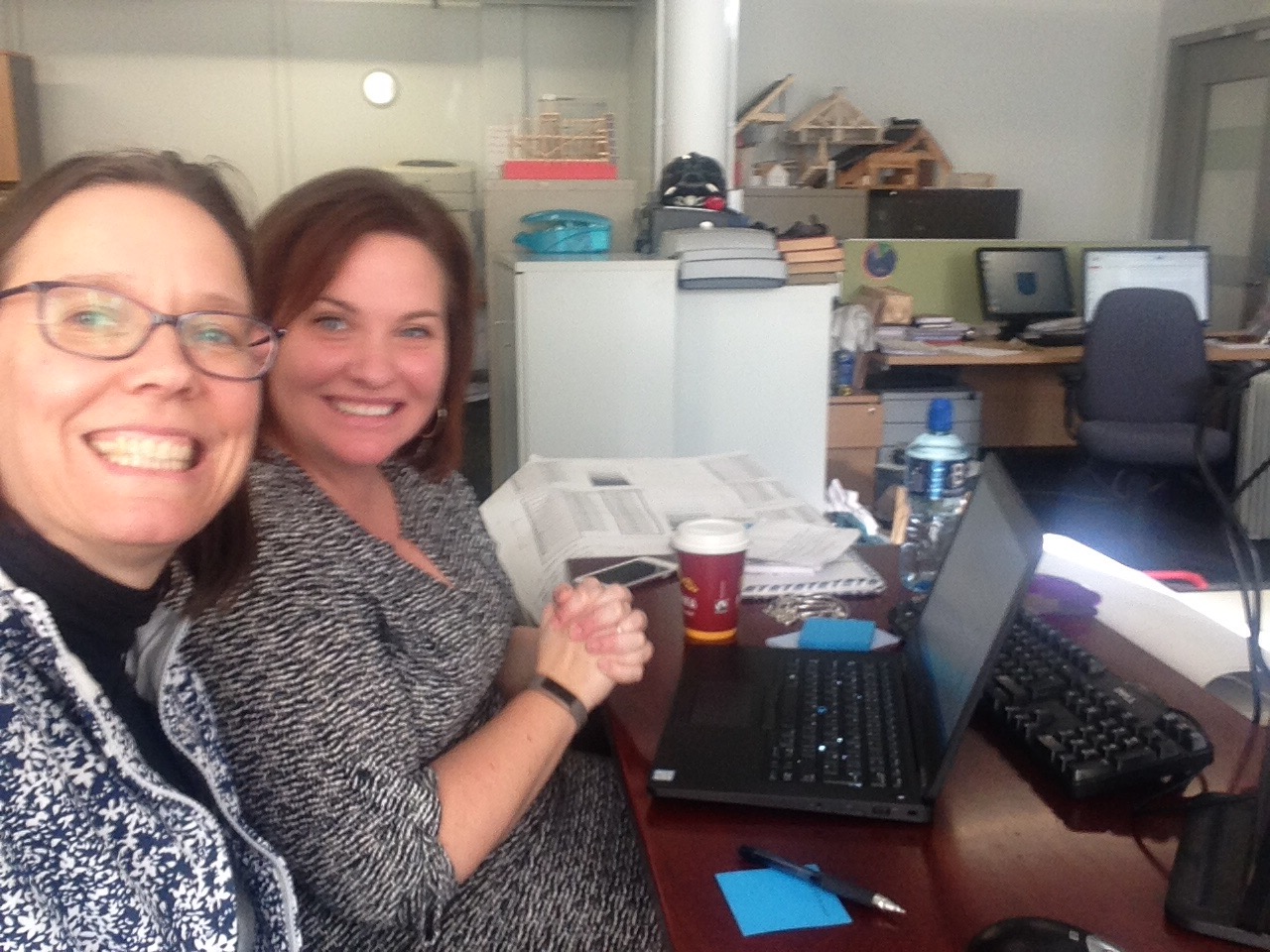
Research Internship at DIT

Learning to train new and upcoming researchers, I recently welcomed an intern from the States. Allison “Allie” Wagner has been here at DIT since the start of January, as part of the Masters in Higher Education Administration she is completing at the Central Michigan University. She is working with me for a total of two months.

In her time here, Allie is learning about how we manage programs at DIT and what it is like for students to live and study here. She is also doing a research project with me. We have conducted phenomenological interviews with five female students from the Middle East, and we hope to interview 2-3 more. This adds a “longitudinal” component to my prior research, since I interviewed all five of these women two years ago. Allie and I are following up to see what new expediences these women have had and how things have changed for them.

Overall, we want to produce a journal article with findings to help teachers do a better job in supporting international students — and particularly Muslim women studying engineering in Western contexts.


What we can learn from architecture studio pedagogy, a guest lecture at KTH in Stockholm

img_5492

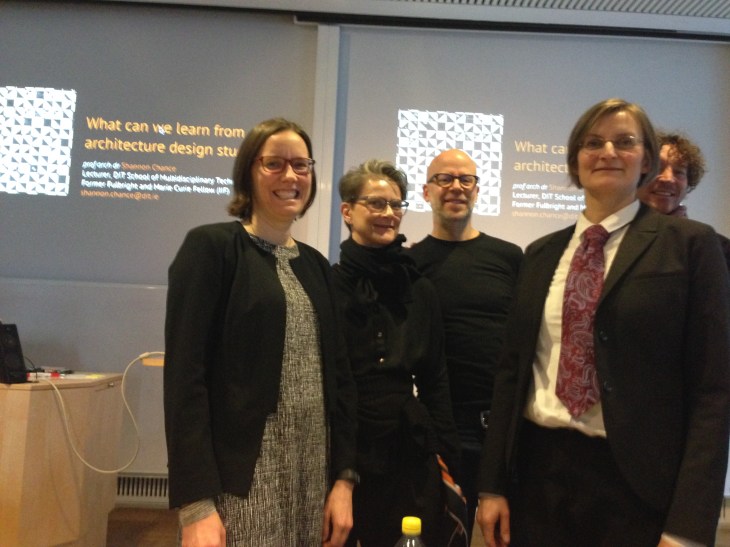
After the lecture at KTH, with two librarians and two architecture profs, including my former classmate from Virginia Tech, Eric Stenberg.

Professor Jonte Burnhard invited me to KTH in Stockholm to deliver a guest lecture on what we–as education specialists, architecture educators, and researchers of engineering education–can learn from each other and from the pedagogical models used to teach architecture. Jonte had read a recent article, “Using Architecture Design Studio Pedagogies to Enhance Engineering Education,” that I’d published along with John Marshall and Gavin Duffy in IJEE. You can access the article at: http://arrow.dit.ie/engscheleart2/102)

The learning and teaching center at KTH hosts this type of lecture/workshop every couple weeks, to get the institution’s staff thinking about and discussing good ways to teach. In addition to classroom educators, quite a few of KTH’s librarians also attended the event, as well.

While at KTH, I enjoyed a dozen small-group discussions on pedagogical topics, toured the brand new architecture building, and caught up with a former classmate, Eric Stenberg,  from Virginia Tech’s architecture program. I’m hoping to visit KTH again soon, since we have so many overlapping interests.

I stayed though the weekend, before heading to Brussels on Sunday evening, and I’ve attached photos of the Christmas sights.

Research Methods of Historians

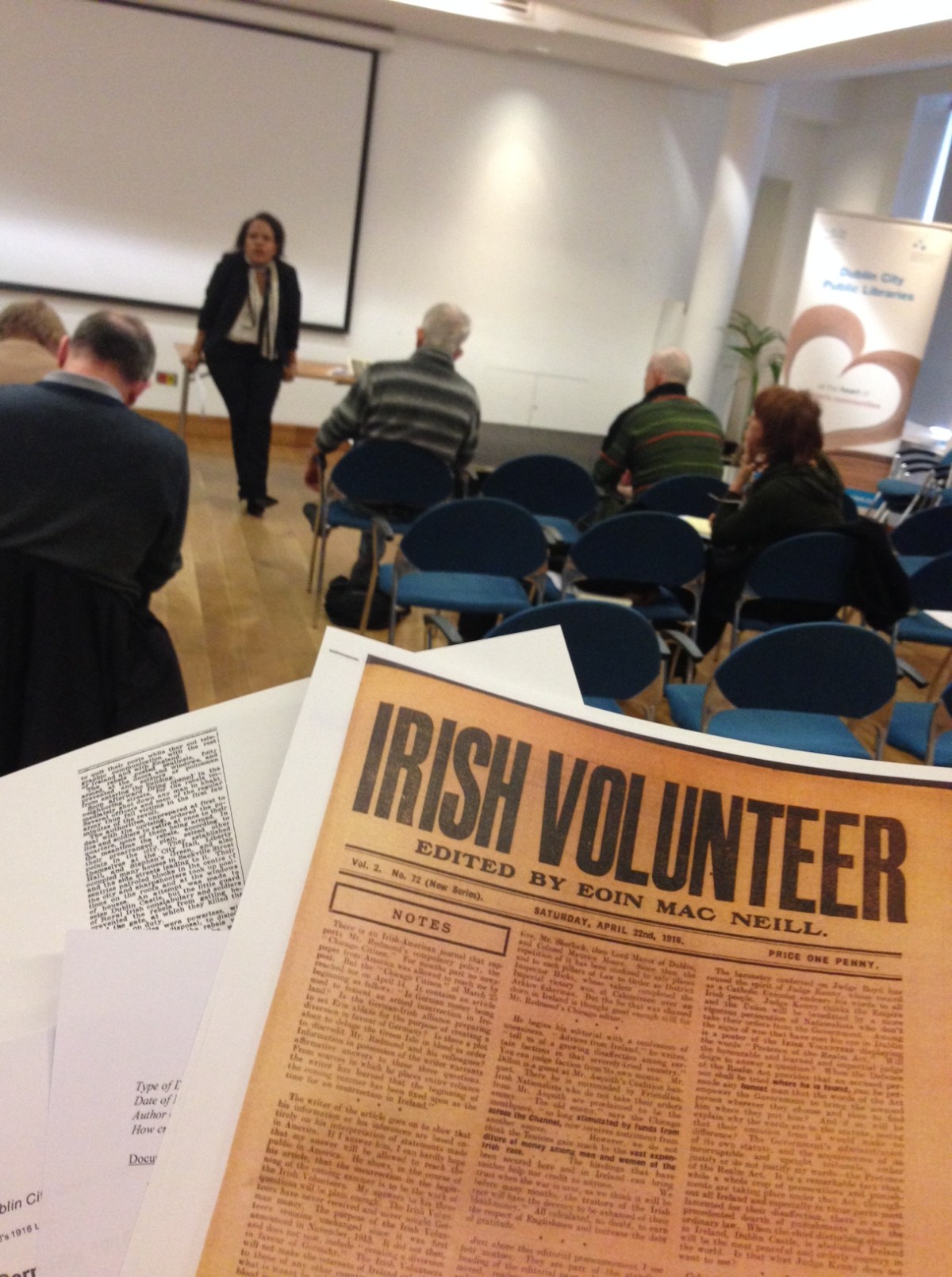
Cecilia Hartsell, an inspiring historian and PhD candidate conducting research here in Dublin, chaired a workshop on Saturday (February 27, 2016) to help people learn about the use of primary documents in research conducted by historians. This was one of six separate events Cecilia is organizing to celebrate the 100th anniversary of the 1916 Uprising that eventually garnered Ireland’s independence from British rule.

The event was held at the Pearce Street Library (a street named for one a hero of the 1916 Uprising) included a keynote lecture by a historian from Trinity College Dublin named Brian Hanley, tea and coffee, a short talk on the evaluation and usefulness of primary documents by Cecilia Hartsell, and time for participants to work in small groups to study primary documents related to the uprising. In the end, each group presented its findings and we discussed what we’d learned.

I’m looking forward to Cecilia’s upcoming events!

Using Architecture Design Studio Pedagogies to Enhance Engineering Education

Shannon Chance IJEEI’m celebrating the publication of a new journal article today, with the help of Sally O’Neill. She’s one of the librarians here at DIT, and she secured permission and posted the article on DIT’s website, making it free for you and anyone else to download.

The publishing process is glacially slow. I submitted the paper in March 2014, based on a conference paper delivered in 2013. And here I am, in February 2016, with the final publication finally in hand.

Many time, in research, it takes time to see the results of your work. Seeing this in print helps make all these days, sitting at a computer analyzing text, feel more worthwhile. Once I can see that people are downloading it, and once I start getting feedback and citations in other people’s research papers, I’ll celebrate some more.

I know what I’ve learned through this research is useful, because I get to apply it in the classroom and in the design studio. The rewards of printed research are more slow to crystallize but also extremely important, especially for people who want to gain credibility in research and build a career around research.

This new article, written with the help of John Marshall in Michigan and Gavin Duffy here in Dublin, is about Using Architecture Design Studio Pedagogies to Enhance Engineering Education. Simply put, we believe that design education and hands-on forms of learning can help improve the quality and experience of learning in engineering and other STEM disciplines. The results reported in this paper provide support for that claim.

To give you a feel for what I’m describing, this is how we learn in architecture:

Above are pictures from design studios in Lisbon at IST and one for a study abroad program  offered by Hampton University. Very, very hands-on!

These days I’m helping promote similar ways of teaching engineering, which looks similar in many respects:

These are photos from electrical and mechanical engineering projects I’ve helped conduct at Dublin Institute of Technology.

This brand new article is about a specific design studio, conducted at the University of Michigan, that blurred the boundaries distinguishing art and science. It involved students and teachers from architecture, materials science engineering, and art+design working together to design and build “SmartSurfaces.” The paper reports learning outcomes — things the students learned in the  class — as illustrated by the blogs they posted during the semester. Here’s a glimpse of what that experience was like for those students:

For this new paper, I created a matrix to describe design behaviors in relationship to epistemological development (which has to do with how we view knowledge). I compared what the students wrote in their blogs to the definitions in my chart. Doing this, I was able to identify development of design skills as a result of students working in groups, and I even pinpointed some instances of epistemological development. John and Gavin helped check the work so that it would be more credible and reliable. They offered perspectives of insiders in the studio (John) and outsiders interested in group-based learning, Problem Based Leaning (PBL), engineering education, and epistemological development (Gavin).
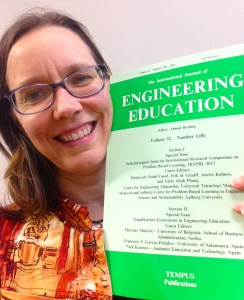
This article should be of interest to any teacher who wants to help students develop new design, design thinking, or epistemological skills. Please feel free to read it and email me any questions you have, at irelandbychance [at] gmail [dot] com.

Chance, S., Marshall, J. and Duffy, G. (2016) Using Architecture Design Studio Pedagogies to Enhance Engineering EducationInternational Journal of Engineering Education Vol. 32, No. 1(B), pp. 364–383, 2016.

Maria Carreira’s PhD viva on Learning Spaces in the University Context

Maria's viva 5What an honor to be part of the day a young scholar gets her wings, so to speak, by earning her PhD! Last week I travelled to Lisbon to attend the viva (i.e., PhD defense) of Maria Alexandre Bacharel Oliveira Carreira. I had met with Maria on both of my two prior visits to the Instituto Superior Técnico at the Universidade de Lisboa. I really enjoyed watching her work unfold.
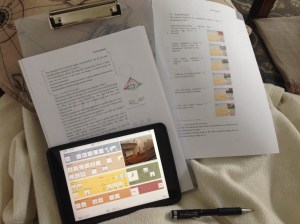
This time, I was a member of her evaluation panel. I curled up with her thesis each night while I was in Brussels. Preparing for this panel event took many hours for me–but it took five years for Maria! During that time Maria gave birth to two children, but that didn’t slow her down much. She kept plugging away at her research.

She conducted extensive analysis of spaces that support teaching and learning. The title of her dissertation (which in Europe is called a thesis) is In-between Formality and Informality: Learning Spaces in University Context. The European term “viva voice” (meaning “live voice”) is so much nicer than the term “dissertation defense” used in the States.

Maria's viva 00After 2.5 hours of presenting her work and answering questions–posed by the panel of 6 experts (I myself had 40 minutes to talk about her work and ask questions of her)–Maria and her many family members and friends who had come to the event left the room. The panel discussed the merits of the work, deliberated, then invited Maria and the crowd back into the presentation room to pronounce her a PhD with distinction. We all went for a celebratory luncheon in the afternoon.

Once Maria has submitted the final version of her thesis, I’ll try to post a link. In the meantime, you may be interested to read two of the articles I have written that have to do with topics in her thesis.

The first is about how the design of school buildings can enhance learning and help us achieve environmental sustainability:


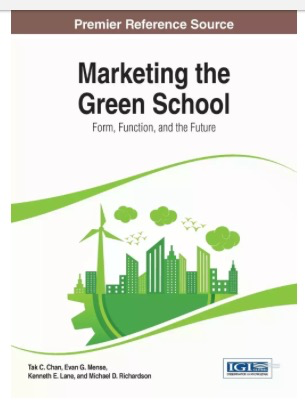
Chance, S. and Cole, J. T. (2014) “Enhancing Building Performance and Environmental Learning: A Case Study of Virginia Beach Public Schools ” City Public Schools. Book chapter from the book entitled “Marketing the green school: form, function and the future.

The second is about university buildings. It also discusses how buildings can promote learning, by serving as examples, modeling values, and getting people engaged. It’s about environmental sustainability and how LEED has become an example of organizational learning (i.e., a big organization that effectively learns from past experience, using it to improve future performance):

Chance, S. (2012) Planning for Environmental Sustainability : Learning from LEED and the USGBCPlanning for Higher Education, Vol. 41, No. 1, Oct-Dec, 2012.

Planning to Make Your School Green?

IMG_1206

A colleague from Virginia Beach, J. Timothy Cole, and I published a chapter in the recently-released textbook called:

Marketing the Green School: Form, Function, and the Future

Our chapter is called:

Enhancing Building Performance and Environmental Learning: A Case Study of Virginia Beach City Public Schools

This abstract summarizes the article so you can tell if you’d like to read it:

“School buildings directly affect their natural and socio-cultural environments. They do this through their construction, maintenance, operation, and demolition. Most of the school buildings we have in stock today drain natural resources and inadvertently perpetuate a culture of environmental, social, and long-term economic ignorance and misuse. When approached thoughtfully, however, the design of school buildings can help inform and enrich society. Well-designed buildings can impart environmental knowledge and values. They can foster more effective behaviors among the people who learn in and from them. Effectively designed buildings can also conserve natural resources and—at their best—even help replenish the natural environment. For many school leaders today, participation in green certification programs represents one important step toward improved building and learning performance. This chapter provides a case study of successful learning approaches developed by Virginia Beach City Public Schools (VBCPS).”

Here’s the introduction:

“Aimed toward educators and school administrators, this chapter provides a broad overview of design issues related to sustainability. It proffers concrete examples drawn from Virginia Beach City Public Schools (VBCPS) to enhance performance at the level of the building, classroom, district, and region. VBCPS’s environmental approach integrates educational planning with facilities planning. Its facilities department has been driving change in school design, classroom pedagogy, purchasing, transportation, and even regional design standards.

The examples in this chapter provide a snapshot of one moment in an ongoing process. They illustrate how one innovative school system is generating and applying new knowledge for the benefit of its buildings’ users, the local public, the wider education community, and the world. Overall, VBCPS strives to provide the best possible environments for learning teaching and living. Its efforts include:

• Integrating environmental issues throughout the curriculum
• Preparing students to bring new knowledge into the community and share it with their families and employers
• Introducing new construction techniques to the region
• Encouraging architects and builders to reach for higher standards
• Monitoring the division’s environmental performance and continually seeking to improve
• Disseminating their research and techniques for broad adaption
• Monitoring its own (and its community’s) energy and waste flows
• Striving to achieve net-zero carbon emission
In this chapter, we provide rationale and theoretical underpinnings for green school design, and we share successful practices developed by VBCPS. Knowledge in the realm of environmental design and education is continually evolving. As such, any list of “best practices” is in constant flux. In writing this chapter, we seek to provide a description of some of the best practices we have discovered and/or created up to this point in time.

Most environmentalists have adopted the World Commission on Environment and Development’s (1987) definition of sustainable development as that which “meets the needs of the present without compromising the ability of future generations to meet their own needs” (p. 43). The “green building” movement fosters new strategies to help overcome outdated construction practices that require vast material resources and cause tremendous waste and pollution. Today, North America’s over-reliance on cheap energy has reached crisis proportions (Steffen, 2008; Wackernagel & Rees, 1996). All told, buildings consume 65% of the electric power used in the United States (Landsmark, 2008). They use 36% of all energy used and 30% of all raw materials. Buildings are responsible for half of greenhouse emissions from the US (Gifford, n.d.; Udall & Schendler, 2005). Educational facilities have been among the worst, although higher education buildings seem to waste more energy than K-12 because control systems are looser (Leslie & Fretwell, 1996).

Recently, VBCPS analyzed all sources of emissions within its control, using data from 2006-2010. It found that even though its overall energy consumption had steadily declined across the five-year period, its building-related activity still accounted for 65% of VBCPS’s overall emissions. Its second largest source of emissions related to transporting people and goods. Its calculations considered electricity use, combustion from paper/stationary waste, and losses related to the transmission and distribution of electrical power. School leaders are working to address the division’s primary sources of emissions, through integrated strategies that involve enhanced building performance, revised vehicle fleet policies, and more informed commuting habits of students and employees. Leaders are also creating strategies to control the 1% of its green house gas emissions that resulted from solid waste, refrigerants, chemicals, and wastewater.”

In “The Irish Times” Today

“The Irish Times” is running a series on women in STEM. I was quoted in today’s article.

The reporter chopped out all the caveats a researcher like me uses (tends to, most, lends support…) but all in all I’m very pleased to have been able to bring student development theory into the conversation here.

Vantage Points

What you see depends upon where and how you look....

What you see depends upon where and how you look….

In engineering, the teaching-from-the-podium-by-manual-and-textbook approach simply isn’t working.  It’s not attracting enough students to study engineering.  It’s not engaging and fascinating enough of them.  It’s not spurring their creative thinking skills in enough ways.

I’m clearly not the only one who has noticed this.  The National Science Foundation and oodles of engineering scholars agree.  And now that the engineering profession — as a group of individuals bound by common knowledge, education, and language — has come to acknowledge these shortcomings, it is time to address the problems head-on.

Fergus Whelan commented that I need to think outside this box....  Thanks to Frank Daly for the fabulous photo.

Not liking to be trapped inside the box….

Making such a change is difficult.  It’s messy and complex.  It requires thinking outside the vocabulary and methods that created the profession in the first place. In line with the old cliché: engineering has to starting thinking outside its own box.  Most people today agree: We need engineers to see and think in new ways.  And indeed, many teachers are:

  • working to prompt the needed type of thinking in engineering
  • testing new teaching methods
  • working to evaluate results

I am one of them.

I have two sets of skills that I am hoping can help in positive ways.  First, I’m an architect and seasoned educator.  Second, I’m an education researcher.  From this vantage point, I see that engineering (programs and pedagogies) can benefit from what architecture programs do.

The architecture profession, for instance, has always used hands-on teaching.  Architecture schools are full of students and full of creative energy.  Architecture and engineering aren’t so different, yet our ideas about what they “are” differ, and the way they are taught differs as well

“Engineering,” I insist, can benefit from design thinking, from techniques used in design education, and from sharing ideas with architects as well.  Upcoming blogs will explain how.


Below is a little gallery of recent research activities, including a short promo video (shot with my iPad in a single take) for our RoboSlam exhibit this weekend’s Dublin Maker event.

Expanding the Engineers’ Box

Fergus Whelan commented that I need to think outside this box....  Thanks to Frank Daly for the fabulous photo.

Fergus Whelan commented on this image that I need to think outside this box!  Many thanks to Frank Daly for the fabulous photo. My students, having sent his look many times before, certainly empathize with you!

In all corners of the globe today, companies are clamoring for skilled engineers. They want a larger pool of applicants who are creative, flexible thinkers prepared to address complex, emerging questions riddled with interrelated unknowns. Like industry, the sectors of healthcare, education, and government also have great need for well-rounded thinkers with strong engineering acumen.

Simply put: the world needs more people who can think across systems and see how things relate at multiple scales. We need people who can identify problems and create new solutions from the ground up. People who aren’t so closely bound to existing systems, ideas, and protocols that they can’t construct entirely new schemes for thinking and behaving.

Today, governmental organizations (like Science Foundation Ireland and the National Science Foundation in the USA) are working hard to address the shortfall in the number of engineers by generously funding education of, as well as research by, engineers and scientists. They seek better ways to teach and think about engineering and science.

The blogs I will be posting in the near future have to do with:

  • the way we think about and conceptualize engineering
  • how I think this needs to change
  • how architects and education researchers can help

Please note: I’m going to be explaining things that I’m trying to work out in my head and do this as if I’m speaking to a friend or relative who knows little about research. That means I may not be “100% right” in every explanation. But as you’ll see, that is a risk that must be taken for the sake of building knowledge. (It’s all part of this new “paradigm” for working and thinking that engineering needs to implement more widely… more on that to come!)

I do hope you’ll follow along on this research adventure, where I’m working to bring qualitative, social science research and design thinking into more facets of engineering education.  Yes, these are gutsy claims I’m making — particularly since I’m new to research and new to engineering.  Let’s see if I can live up to such promises….