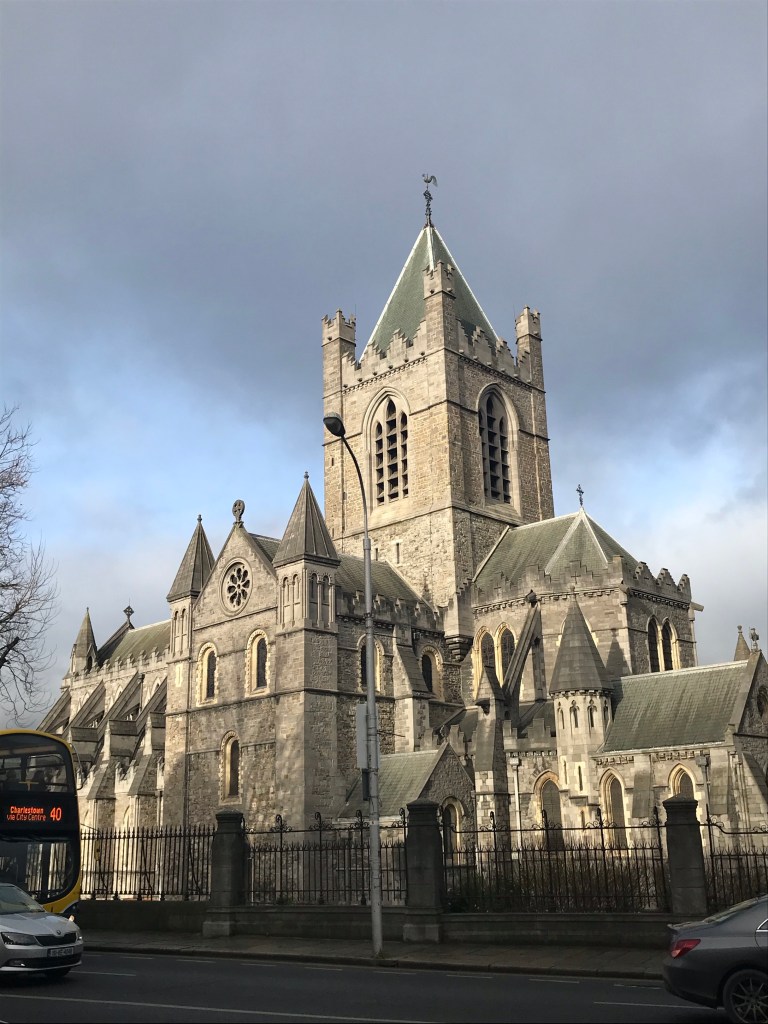
Perils of cycling in Dublin

I cycled to the post office collection point over lunch today, using Dublin Bikes, to fetch a birthday gift. My rear tire hit a wet manhole cover and slid out from under me. My body hit the ground, belly first, flying toward an oncoming car. I stopped 18” short of its tires. The driver didn’t stop or apparently even consider it.

I am a bit bruised and had quite a scare but I’m okay and I’m home now. I might stay in my home office for the rest of the week as this experience was terrifying! I’m kidding of course, but I will stay put until my afternoon research appointment.

At least I discovered I can ask the Post to convey my packages to their local office, across the street from where I work. (The intercom in my flat doesn’t work and won’t be fixed. C’est la vie.)

So it appears I’ve used up another one of my nine lives, and just one day short of my 50th birthday, I’m down to fewer than six lives now. The precise count is unclear, but I definitely squandered one in 1979 when my crazy acrobatic attempt landed me in the hospital. Hopefully the remaining number, whatever it is, will see me safely through the coming 50 years.

Cheers—here’s to a happy but purple-kneed birthday!

Discovering the new TU Dublin

It’s been a great start-of-semester and welcome-back here in Dublin. I’ve been settling back in at TU Dublin, since the first of the year. I’ve been learning to juggle a host of new job responsibilities along with my favorite existing projects. There’s so much work to be done!

In addition to teaching first-year engineering modules/courses, I have also been helping launch the new MSc in BIM, working on curriculum development (which buys out half my work time), finalizing research projects for publication, and drafting my final report for the 2018-12019 fellowship I had to UCL.

I’ve also attended a host of special events:

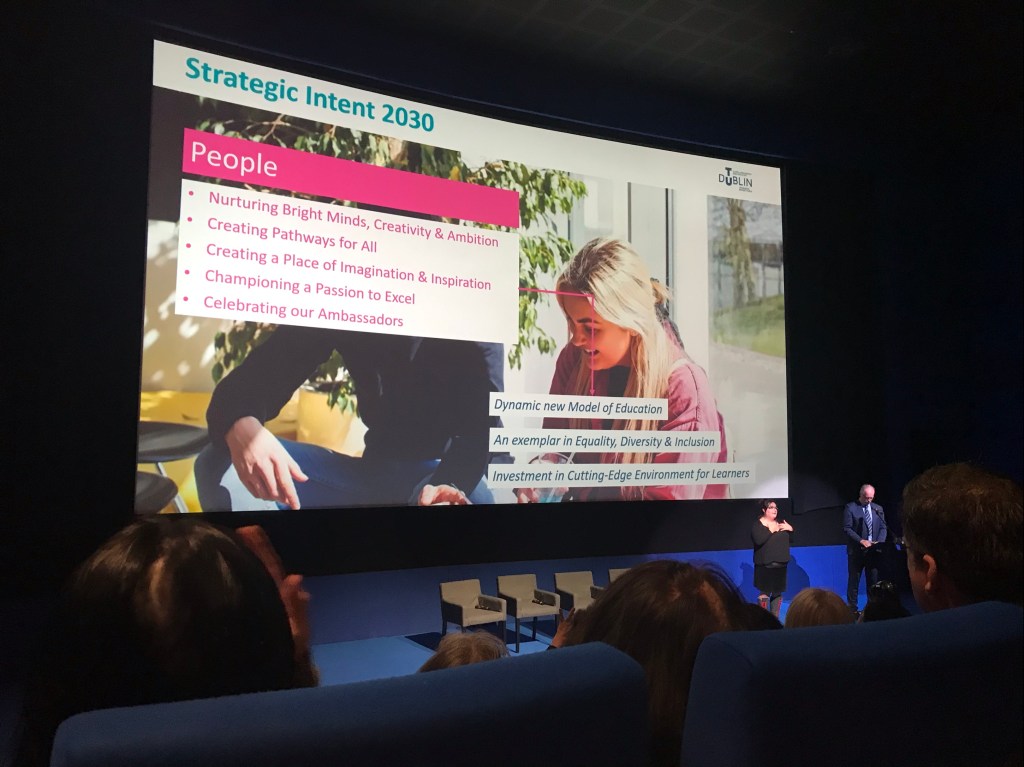
  1. The launch of TU Dublin’s new strategic plan
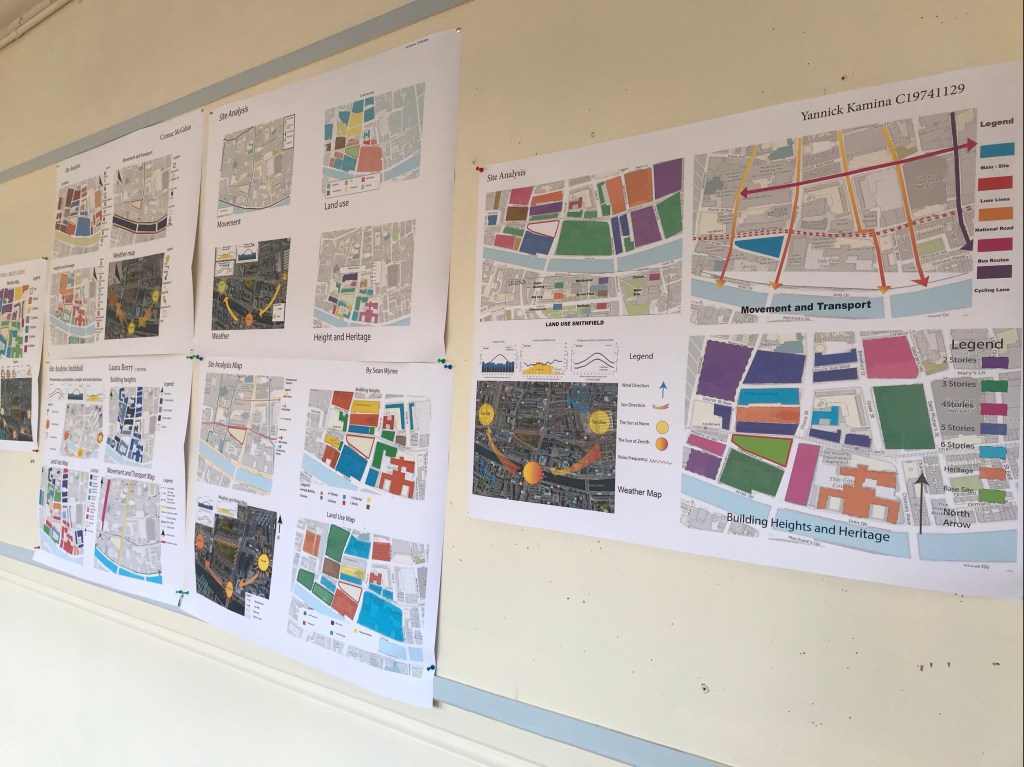
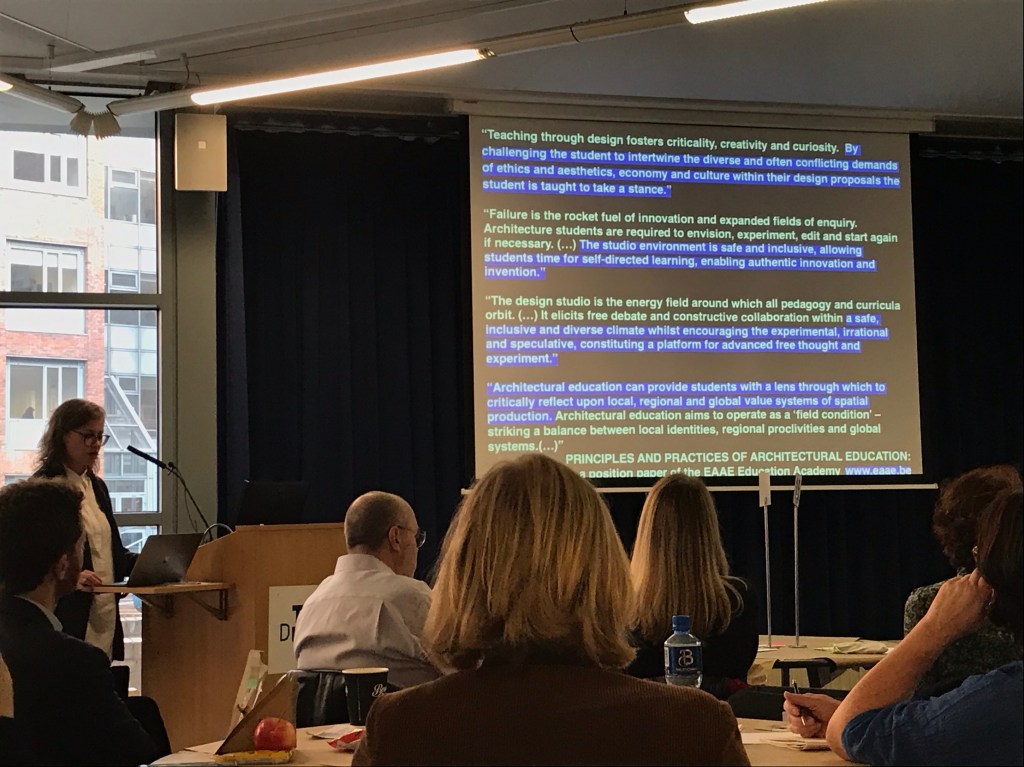
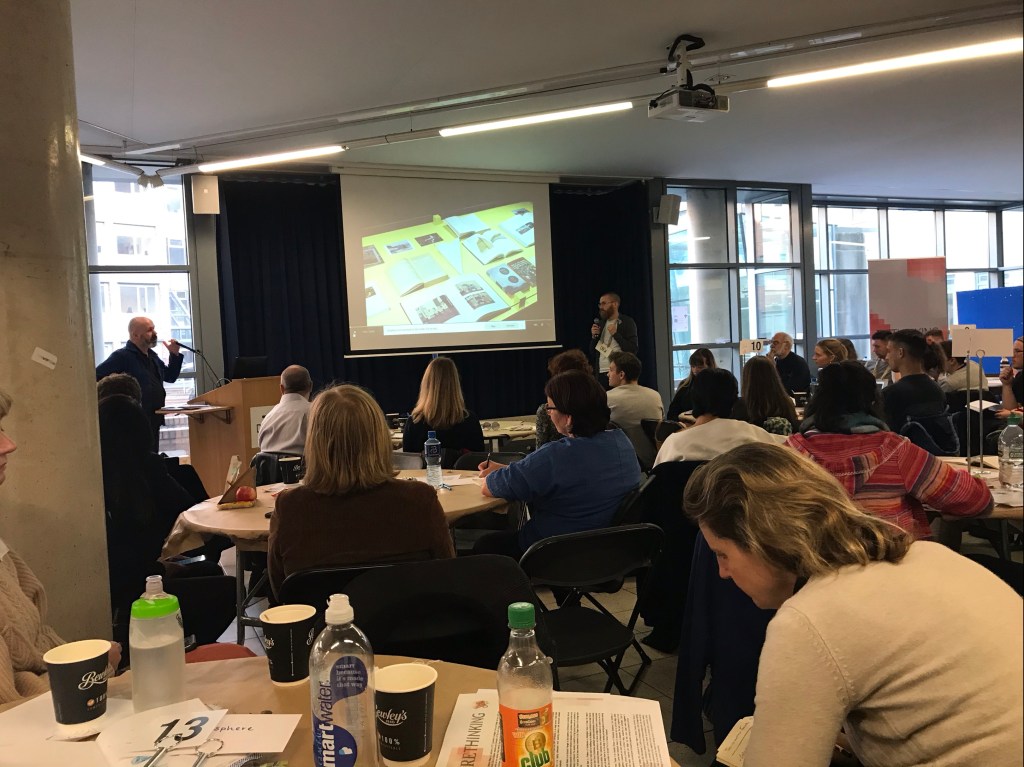
  2. A two-day conference on “Rethinking the Crit” in architecture and design education.
  3. Tech support workshops for staff on Brightspace and Agresso
  4. Personal wellbeing workshops for staff on insurance and personal finance.
  5. A planning sessions with our ever-expanding RoboSlam team preparing for Dublin Maker 2020 (June 2020) and our upcoming Engineering Your Future week (May 2020)

TU Dublin’s new Strategic Plan

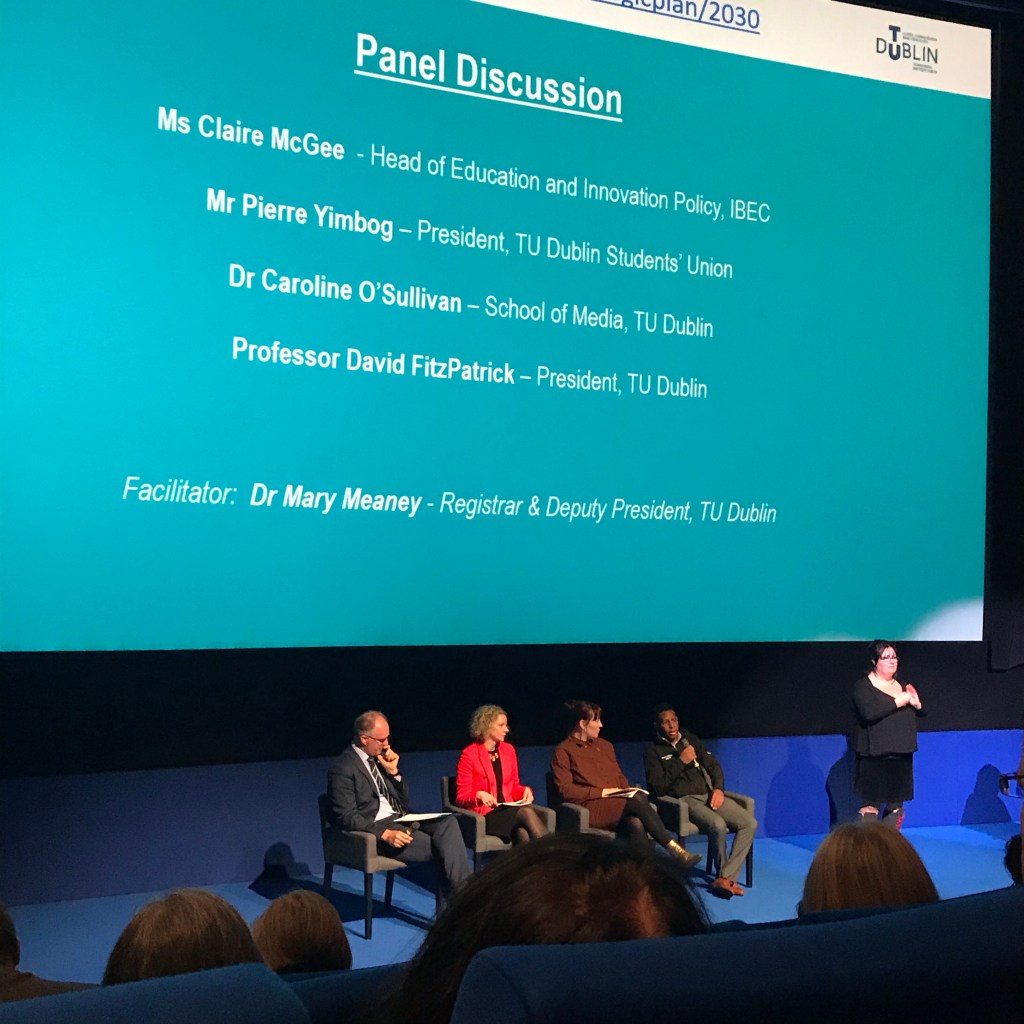
The unveiling of the strategic plan was quite well organized and inspiring. The speakers and panelists all did a great job explaining the shared aspirations of our academic community. I hope the details are as well done as the vision they presented.

Soon, I’ll read the plan and see how it matches up against the evaluation rubric I published back during my doc studies, which you can download here.

Chance, S and Williams, B. (2009). Assessing University Strategic Plans: A Tool For ConsiderationEducational planning: the journal of the international society for educational planning, 2009, 18(1), 38-54.

The take-home message of the strategic planning launch was that TU Dublin values diversity and inclusivity. The student voice was clear, strong and impressive. The leaders were well-spoken.

TU Dublin’s workshop on “Rethinking the Crit”

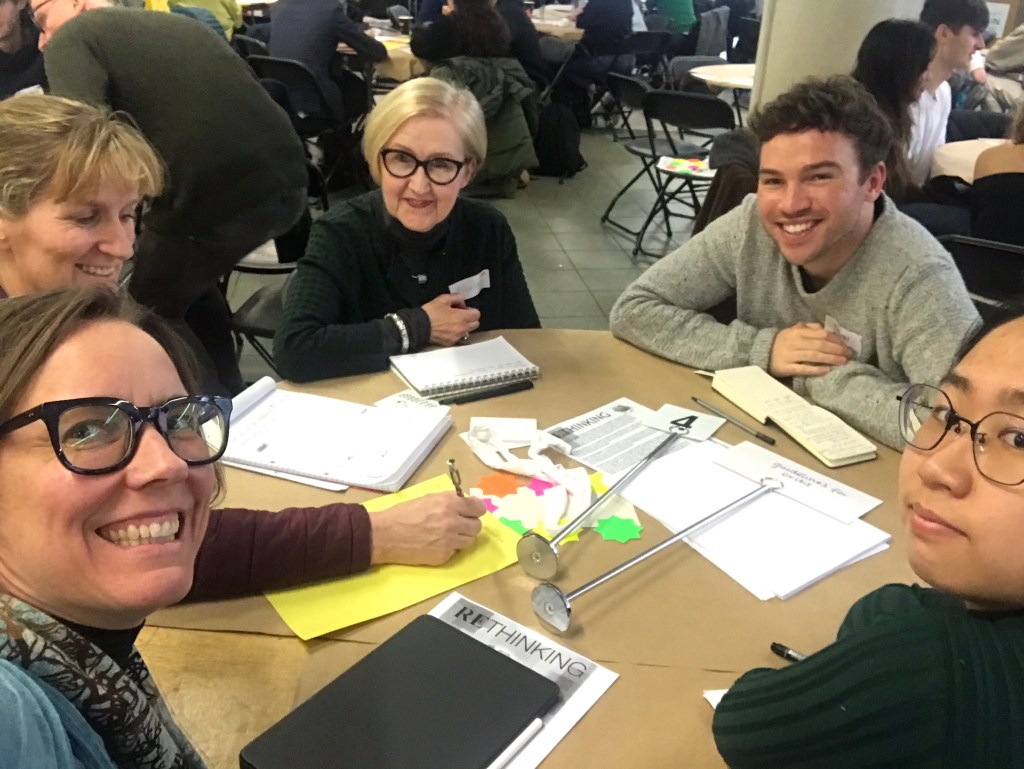
I attended a hands-on conference alongside architecture students from all over Ireland as well as teachers and critics from Ireland and abroad.

The workshop was organized by my College’s office for Learning Development, under the direction of Patrick Flynn, our Head of Learning Development. In many places, his role would be called Vice Dean for Academics, but DIT (the parent of TU Dublin) tended to do things its own unique way.

As I’m part of a team developing a brand new Architectural Engineering curriculum, this conference on how to improve the studio jury system was of great value to me. That Arch Eng course will graduate people ready for architecture licensing.

One of the presenters, Dr. Kathryn Anthony, literally wrote the book that got this conversation rolling: Design Juries on Trial. It was published in 1991 but there’s still a lot more uptake needed of her ideas across the globe. She collected data at Hampton University, where I used to teach, and at HU we used many of the techniques she proposed—with great success.

I hope to use techniques we discussed to help improve architecture education near and far.

Fellowship Finale: 24 months flew past!

img_2984My 24-month research fellowship at UCL has come to a close. December opened with farewell activities, end-of-year gatherings and conferences, holiday parties and goodbye events.

When work finished for the year, Aongus and I enjoyed the sights and sounds of London for Christmas. And, around New Year’s Day, we took to packing for our move back to Dublin.

img_2368

I’ve included photos of a farewell breakfast (with my PhD student, Thomas Empson and co-supervisor Sushma Patel) with breath-taking views over London, special visitors, a December conference in Coventry for the UK-Ireland Engineering Education Network, the “leaving-do” hosted on my behalf by UCL’s Centre for Engineering Education, and some general holiday fun.

f76ba34a-90ac-4d3c-ab62-db57e1ccd8d9

In wrapping up, I also delivered a lunchtime seminar at UCL about the research I’ve conducted and/or published over the past two years. You can view the Prezi I delivered here.

It’s been a whirlwind, but I have now moved back to Dublin and resumed my job teaching at TU Dublin (known as DIT when I left for the Fellowship). I’ve got plenty of fun new challenges on the horizon to keep me busy and always learning.

And, thankfully, Aongus has gotten a transfer from his company and will follow me over to Dublin soon!

PhD Breakfast from the Darwin Brasserie atop the “Walkie Talkie”

Colleagues visiting from South Africa

UK-Ireland Engineering Education Research Network conference

Leaving Do — Gifts, Drinks and Bowling

Leaving Do — Karaoke

Christmastime in London

Engineering Faculty Christmas Party

My Farewell Seminar

Call for Papers: ethics in engineering

As part of my work with the global Research in Engineering Education Network (www.REEN.co), we’re organizing a special focus issue on ethics–and we invite you to submit a manuscript.

The topic is ethics in engineering education and practice.

The special focus issue will be published by Taylor and Francis in the Australasian Journal of Engineering Education. You can find out more about this and all journals in the field of engineering education on a webpage recently launched by REEN–many thanks to my boss here at UCL, Prof. John Mitchell, for collecting that valuable info so REEN could host it as a service to the EER community.

Screen Shot 2019-12-12 at 5.41.07 PM.png

Click https://www.tandfonline.com/doi/full/10.1080/22054952.2019.1694301 to download the official Call for Papers.

Screen Shot 2019-12-12 at 5.39.41 PM

Full-length papers are due March 1, 2020 to begin the review process–but you can feel free to contact me anytime to request help or advice (irelandbychance at gmail dot com). Papers for this journal are 5,000 to 7,000 words, including the abstract and references.

I’m one of the two Guest Editors for this project; the Associate Editors are all members of the REEN board. The editorial team includes people from Australia, Africa, and South America, as well as Europe and the USA! The journal’s Editor in Chief is the coordinator for REEN’s upcoming symposium (REES 2021) in Perth, Australia December 5-8, 2021

And, I’ve just started on as Chair of REEN for the next two years. Delighted to have worked with such a productive group of people representing every continent over the past two years, and looking forward to two more great years! We’ve just welcomed two new members to the board–Cindy Finelli (from Michigan, USA) and Aida Olivia Pereira de Carvalho Guerra (from Aalborg, Denmark)–to round out our crew. 

Study of GRIT in engineering education

Screen Shot 2019-12-11 at 5.18.54 PM.png

The European Journal of Engineering Education just published the systematic review that Inês Direito and Manis Malik and I conducted. For this study, we located and reviewed all the journal articles and conference papers in the field of engineering education that dealt with university-level engineering students’ “grit”.

Grit was defined by Angela Duckworth and it involves two parts: persistence (consistency of effort) and passion (consistency of interest).

We analyzed the data, results, and findings reported in each article. We carefully and critically considered each author’s discoveries and interpretations.

We used a highly structured approach to studying groups of papers on a common theme; this method is called a “systematic review” of literature on a given subject. We wanted to answer one main question: What type of studies have been conducted on grit in engineering higher education, and what were the main outcomes?

The title of our paper is The study of grit in engineering education research: a systematic literature review and we have paid for Open Access so that you can download it and read it for free.

This is a new area of study among engineering education researchers and only 2 journal articles had been published by the time we were collecting data (spring 2018). On the other hand, 29 conference papers were available in the engineering and education databases we used.

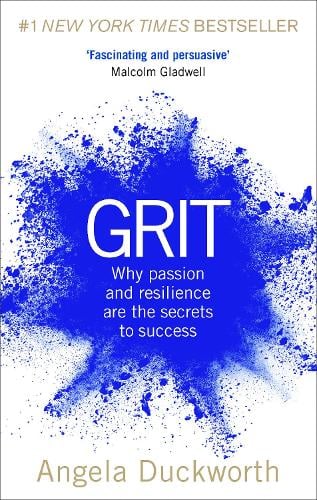
The theory we are studying was developed by Angela Duckworth and is described in this book.

By studying the content and findings of these 31 papers, we were able to identify trends and unresolved questions. We made recommendations about things that need more investigation–and also about the best way to report findings to help make the reports more valuable to engineering educators and researchers.

Collaborating with Inês and Manish on this project was a joy–it was a huge challenge and realizing this publication required loads of grit–but doing this work with these budding scholars was also fun and rewarding. We decided to do this project together because we wanted to learn the systematic review method, execute it well, and learn about the psychological construct of “grit” at the same time.

Download the paper to find out what we learned!

To cite our article:

Inês Direito, Shannon Chance & Manish Malik (2019) The study of grit in engineering education research: a systematic literature review, European Journal of Engineering Education, DOI: 10.1080/03043797.2019.1688256

Evaluating Grant Proposals for the European Commission

This past Sunday night, I hopped on the Eurostar from London St. Pancreas–and in just over two hours I disembarked at Midi station in Brussels. I love that Chunnel!

I’ve spent the week working alongside other experts from around Europe to evaluate projects proposed for funding. This is an activity I am doing to develop more skills with regard to grant writing and program design.

img_2058

Aongus took the underground over to St. Pancreas Sunday night, to see me off as I boarded the Eurostar.

This is a job that requires a great deal of concentration. We’ve each been working for weeks–studying 30-page proposals, 7-8 of them per expert,  and then creating very detailed individual reports, comparing and compiling these into group reports, and then meeting face-to-face on-site in Brussels to discuss each proposal in depth. The scores we assign will be used to determine which organizations will receive funds to support doctoral and post-doctoral researchers.


Through this process, the European Commission and its Research Executive Agency (REA) provide detailed, specific feedback to applicants as well as numeric scores.

Many applicants succeed and receive financial support, but I’ll admit that with the sums provided, competition is fierce.

I believe this funding is well spent. It builds the capacity of researchers to do great work and learn important new skills. It yields results that make life and systems better at the individual, organizational, national, regional, and international levels. It produces valuable research results in a vast array of fields and disciplines.

The evaluation process is extremely important. It has to be done with extreme care. It is a huge amount of work, and the experts involved take the job very seriously.

img_2069

The evaluation itself is confidential, but pictures of Brussels I can share. 🙂

Many dozen experts have been involved this week, as reviewers and quality control officers. Our purpose is to deliver accurate and reliable results.


As a scholar from the States, I particularly value the feedback given to applicants in this process. Great care is taken to keep the scoring open, transparent, and fair, and to yield consistency from year to year as well as between proposals.

It’s a tight-knit process with a demanding timetable. And we’ve done remarkably well at staying focused and on track.

Why do I see the results of this process as valuable? In the U.S., fellowship and grant applicants rarely get feedback. I suspect it’s a result of the litigious nature of “American” society that funding agencies don’t want to open themselves up to questioning, and they won’t let applicants know what was seen as weak about the proposal. They will provide only very general feedback if any at all. I’ve had this experience with at least three different funding agencies in the USA. It was exceedingly frustrating and turned me off from wanting to keep bashing my head against a rock (even though I had a relatively high level of success winning grants for educational/learning sciences!).

img_2132

The plaza next to the building where evaluations are conducted.

Working here at REA, our primary focus is on achieving accurate scores that can hold water. There’s much less paranoia on the part of the funders, in my opinion. In fact, there doesn’t seem to be the same fear of redress–in the case of any mistake, the program managers actually do want to address it in a way that is fair to the applicant. Transparency and proper channels for redress/appeal are foundational principles of the programs that REA funds.


Because REA’s process provides reliable feedback, I myself was able to improve one past proposal that wasn’t successful on its first submission. I was able to learn and to re-submit. By addressing the points raised in the first evaluation, I was able to secure funding the second time around!

In the United States, I’d have been left in the dark, making the same mistakes over and over again. In my experience (having submitted 3 unsuccessful proposals, 2 successful proposals, and one pending proposal to various  MSCA programs evaluated via REA), the European evaluation system is FAR better than the US system. A knowledgable colleague told me yesterday that the overhead costs for evaluating and managing/overseeing the quality of these MSCA programs is lower than typical of other similar programs worldwide.

img_2111

Dinner at Lyon!

I can’t say this work is pleasurable, but I do enjoy being here, working hard, and feeling satisfaction by week’s end. It’s sometimes bittersweet, though, as it is Thanskgiving and, also, yesterday would have been Dad’s 74th birthday. He died five weeks ago, right after my assignments for this job arrived. Therefore, I didn’t get to talk with him yesterday. And, since this particular review always falls on Thanksgiving week, I’m spending my fourth Thanksgiving Day in Brussels, missing turkey in the States with family yet again.


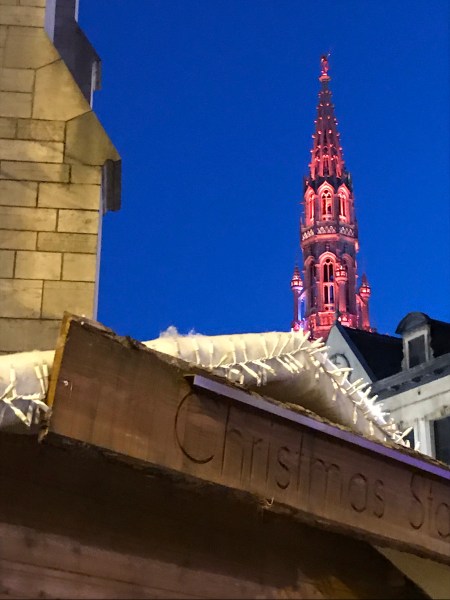
In the evenings of this evaluation week, however, I do enjoy dinner out with other experts and my walks through the city to the Grand Place and the Royal Arcade. Hopefully tonight, the Christmas Market will be up and running! It’s 6:40PM so I need to get going and pack up my things for the night.

On Monday night I went out and I got to enjoy Moules et Frites at Lyon.

If you are capable and interested in serving as an expert evaluator, you can set up a personal profile in the Participant Portal (see instructions at https://ec.europa.eu/research/participants/docs/h2020-funding-guide/experts/experts_en.htm). When REA needs your expertise, they may well send you an invitation to serve.


Latest jobs & opportunities in Engineering Education Research

I’ve just updated my webpage on jobs and opportunities in Engineering Education Research.

If you’re interested in fellowships, Ph.D. studies, or places where work is being done in these topics, please visit the page: https://shannonchance.net/jobs-and-fellowships-in-eer/

And, if you’re interested in becoming a peer reviewer for a journal in the field of Engineering Education Research, please drop me an email (irelandbychance@gmail.com).

Meet emerging research star: Carlos Mora

img_7518

Carlos and his youngest daughter, Estela.

Back in March 2019, I received an email out of the blue regarding a researcher in the Canary Islands, Dr. Carlos Efrén Mora, looking to recruit a mentor.

Specifically, Carlos wanted help writing a fellowship proposal to conduct Engineering Education Research on social responsibility, and he had contacted a Special Interest Group I work with as a member of the European Society for Engineering Education (SEFI). This particular group studies Educational Research Methods and I’d mentioned at a meeting in 2018 that I was looking to help/host prospective fellows in Engineering Education Research.

Because Carlos was proposing a topic I have been studying for Engineers without Borders UK, I jumped at the chance to help. I emailed him right away and we set to work.

Carlos emailed me a copy of a proposal he’d previously submitted, and as I’ve successfully secured the funding under this scheme twice before, I reverted with more feedback and strategic advice.

Carlos and I worked tirelessly from March until the deadline for our target program in mid-September.

It was a grueling process, but Carlos is extremely hard-working. I must say that Carlos enthusiastically accepted every ounce of critique that I and my colleagues doled out, and he used it to improve his plans and ideas. The ability to welcome criticism is rare but so very important. It’s one of the most important skills I learned in architecture school! Carlos has it, too!

To make sure Carlos had the best chance to win funding, I assembled a team of superstar researchers and advisors. Their job: to poke holes in all his arguments and make sure the content was in the right places (ie, the places the evaluators will expect to find them while they are scoring his work).

I was elated with the results. In all, I believe we have an excellent chance of receiving funding to conduct research together–I as his mentor/supervisor/PI and he as a full-time research fellow working aside me at TU Dublin, hopefully starting in August 2020.

The text of the proposal is exceptional. The scientific merit is clear, the work plan is strong, the planned secondment is second to none, and the early-stage researcher has shown outstanding promise. He has a dedicated mentor by his side–one who is working hard to build her own research record and raise the visibility and credibility of EER globally.

Since we submitted in mid-September, Carlos has already secured some financial support from his own university to start some of the work.

img_7484

Visiting London’s Carnaby Street with the Mora family

Though al that is exciting, we are currently in the no-mans-land called the grant evaluation period. Researchers work for months on end to craft a research proposal. They send it off with the greatest of hope in their hearts. And then they wait and wait, and wait–often at least half a year–to hear back.

Typical success rates for the program we’ve requested run 9-14%.

What to do while waiting? Celebrate!

After we got the proposal submitted, Carlos brought his family up to London from the Canaries to meet me. Carlos and I held a work meeting on the first day of their stay.

This was the first trip off their Islands for the Mora kids, and I was delighted to be part of their big adventure. (The whole family has been getting excited about the possibility of spending a couple years in Dublin! They came to London this time since it’s where I am currently working.)

img_7544

Pre-dinner photo shoot. Beautiful food!

I planned one of the four days of their visit, and, as usual, I packed too much in. We all did new things–I’d never eaten Ramen before but Celia said it would be “a dream come true” so we all agreed!

Our lively chatter silenced when the food arrived for dinner.

We soon unanimously agreed again: we will be eating Ramen together again in Dublin ASAP. It was delicious!

The photo album below starts with a photo from the Canaries and another taken at the airport–Carlos sends me family updates regularly and it’s fun seeing the kids grow!


Architects Love School, why not teach engineers a similar way?

When I started studying “higher education” as a PhD subject at William and Mary in 2006, I wondered why architecture students seem so engaged–passionate and persistent–and why engineering didn’t use the same methods that seem so “sticky” and engaging.

I’m still asking these questions.

I explore them in the article “Using Architecture Design Studio Pedagogies to Enhance Engineering Education” which I wrote with John Marshall, The University of Michigan 
and Gavin Duffy, Technological University Dublin. It has been published for a while, and I just noticed that since the embargo period has ended, I can direct you to the final version instead of just the pre-press version! It was published by the International Journal of Engineering Education. 

https://arrow.dit.ie/cgi/viewcontent.cgi?article=1117&context=engscheleart2

The abstract explains:

“Problem-Based Learning pedagogies that require high levels of inquiry and hands-on engagement can enhance student learning in engineering. Such pedagogies lie at the core of studio-based design education, having been used to teach architects since the Renaissance. Today, design assignments and studio-based learning formats are finding their way into engineering programs, often as part of larger movements to implement Student-Centered, Problem-Based Learning (PBL) pedagogies. This spectrum of pedagogies is mutually supportive, as illustrated in the University of Michigan’s SmartSurfaces course where students majoring in engineering, art and design, and architecture collaborate on wickedly complex and ill-defined design problems. In SmartSurfaces and other similar PBL environments, students encounter complex, trans-disciplinary, open-ended design prompts that have timely social relevance.

“Analyzing data generated in studio-based PBL courses like SmartSurfaces can help educators evaluate and track students’ intellectual growth. This paper presents a rubric for measuring students’ development of increasingly refined epistemological understanding (regarding knowledge and how it is created, accessed, and used). The paper illustrates use of the tool in evaluating student blogs created in SmartSurfaces, which in turn provides evidence to help validate the rubric and suggest avenues for future refinement. The overall result of the exploratory study reported here is to provide evidence of positive change among students who learn in PBL environments and to provide educators with a preliminary tool for assessing design-related epistemological development. Findings of this study indicate design-based education can have powerful effects and collaborating across disciplines can help engineering students advance in valuable ways.”

DOI

10.21427/D7V62S

Keywords

Problem-Based Learning, Student-Centered Learning, Design-Based Learning, epistemology, architecture education, design studio pedagogy, engineering education, cognitive development


Wedding Weekend with Nigerian-British Flair

Engagement photo of Folashade and Damilola.

My beautiful and intelligent colleague, Dr. Folashade Olayinka (who I traveled to Johannesburg with 1.5 years ago to teach a Master Class) decided to marry her beloved Dr. Damilola Olaniyi last weekend, so on Saturday, November 9, 2019, I headed for the Putney Bridge tube bright and early. It was a cold day, but bright and full of energy.

My own beloved Aongus walked me to the station. Even though the invite was just for one, he wanted to set me off on the right course for the weekend.

At Liverpool Street Station, I met up with my best Plus-None, Dr. Inês Direito, and we head off for Chelmsford by train, excited for a new adventure.

When we arrived in Chelmsford, our room wasn’t quite ready at The County Hotel, but we found space to change into wedding attire–with “Colours of the day” specified as “Emerald Green & Gold” we did our best not to clash!

We taxied from the Hotel over to All Saints Church on Church Lane, Writtle, Chelmsford CM1 3EN, UK for the Church of England ceremony, held in a historic venue and officiated by a pastor who delivered an informative lesson on love, and in quite an interesting way.

img_1121

The Nyamapfenes, Abel and Tari, with Inês and me at the church.

Our colleague Dr. Abel Nyamapfene had already arrived with his lovely wife, Tari.

Inês and I had a ball getting to know her. Considering we arrived at 12:20 and the bride marched down the aisle at 1:40, we had ample time to get to know each other–and I assure you we had a delightful time doing that in such a lovely and lively setting. I look forward to seeing Tari again some day.

During the ceremony, from my seat along the outer wall of the side nave, I was able to see the exchange of vows. I had never realized quite how much Neo-Gothic columns limit paritioners’ viewing angles. Thanks to my colleague Dr. Fiona Truscott, and the book she lent me on English architecture, “A Lust for Windowsills” by Harry Mount, I was able to discern that this church is, specifically, “perpendicular Gothic“. A nice treat to be in such a space for a celebration of marriage! I recognized the last song and happily sang along, despite being chronically out-of-tune.

Hylands House, the reception venue. (Photo copied from the couple’s wedding page.)

The reception was held at the beautiful and elegant Hylands House on London Road, Writtle, Chelmsford CM2 8WQ, UK.


Graduation pic of Dami and Shade. Doctors of Engineering!

At the reception, we learned many things, and we got to watch video of the wedding ceremony the couple had in Nigeria (prior to this ceremony here in England). Incidentally, the newlyweds were both born here in Britain, of parents born in Nigeria. They have lived here all their lives, but visit Nigeria frequently. I sometimes say Shade is the most British person I know!

During the toasts, we learned that Shade was born at University College London (UCL) Hospital, on the campus where she and I worked together until she moved to Queen Mary University of London. She completed all her higher education degrees at UCL. Her new husband, Dami, also earned his doctorate in engineering at UCL. In fact, the two met at UCL in 2011. Their subjects are slightly different, however, as Shade has a doctorate in Chemical engineer, while I believe Dami’s doctorate is in aeronautical engineering.

img_1147

The newlyweds

During the meal, Inês and I had the pleasure of sharing a table with the PhD supervisor for each of the two. Shade’s supervisor, Professor/Dr. Eva Sorenson had attended the SEFI 2018 conference with Inês and me in Copenhagen and I sat beside her at the gala of that event, just after she’d been recognized with the biggest award of the conference. I’m getting used to siting among the stars!

Both supervisors got specific call-outs from the couple and the family during toasts–how cool! It looks like you can make a real difference in someone’s life as their PhD supervisor. I hope that’s me someday. (My first PhD supervisee just passed the final threshold before his PhD viva, slated for August 2020–very excited about all that!)

Following dinner, a grand Nigerian buffet, we enjoyed cake and some dancing.

Eventually we headed by taxi for the hotel for some Zs.


img_1174

With Emanuela and family!

In the morning, we enjoyed breakfast with the happy couple and another of our beloved colleagues, Emanuela Tilley (who is currently away form us on maternity leave) along with her beautiful and energetic family. I get far too little time with Emanuela these days! Making every moment count here in England.


In the morning, we enjoyed breakfast with the happy couple and another of our beloved colleagues, Emanuela Tilley (who is currently away form us on maternity leave) along with her beautiful and energetic family. I get far too little time with Emanuela these days! Making every moment count here in England.

After a quick walk to the station and an easy train trip back to London, I made my way back to Putney to meet up with Aongus, who’d had to work Sunday, morning until noon.

img_1199

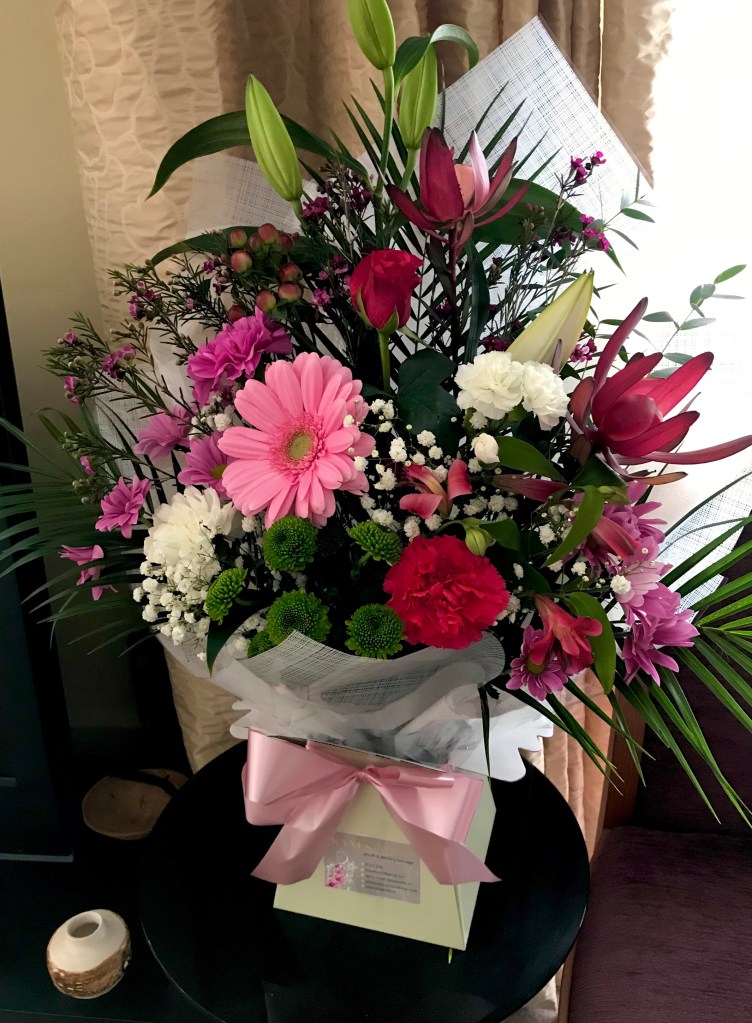
Flowers!

I arrived at the flat first, and when Aongus arrived he brought a lovely bouquet for me! I was delighted to find I’d been missed by this incredible man. It’s a pleasure to be surrounded with so much love and support.

Thanks so very much to Shade and Dami for including Inês and me in this–the biggest day of your lives. You make a lovely couple and you seem so comfortable and happy together. Your families seem so warm and supportive, and it looks like they provide great models for healthy interactions and long-lasting love. Your ceremony was beautiful and touching. The bridal party was full of vitality and was beautifully attired (love those bridesmaid dresses!). The toasts were heartfelt. The venues were such a pleasure to experience. The dancing, rituals, and outfits had a distinctly Nigerian flair that was a treat to behold.

It was all so beautiful and festive! And we were so lucky to be there!

#DaSh2019, 9.11.19