Teaching Design with Spaceships at DIT at the UK National Space Centre

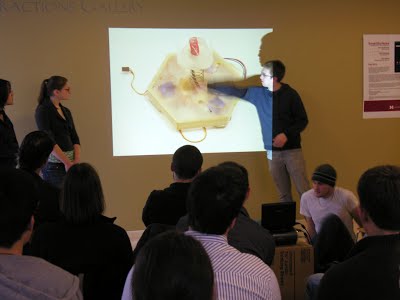
I’ve been helping out in DIT’s engineering design projects module again this year, which Micheál O’Flaherty, Fionnuala Farrell, and John Nolan have transformed from the ‘Energy Cube’ project we led last year to a project that involves the design of a model spaceship. Photos from yesterday’s performance testing class are included in the gallery directly below. I’m happy to report that all the egg-stronauts survived the crash test fully intact!

This past summer, Micheál and I presented a paper about the Energy Cube project in San Sebastian, Spain. (O’Flaherty M.P., Chance, S., Farrell, C.F. and Montague, C. Introducing New Engineering Students to Mechanical Concepts through an “Energy Cube” ProjectInternational Joint Conference on the Learner in Engineering Education (IJCLEE 2015), San Sebastian, Spain, July 6-9, 2015.)

Fionnuala and I travelled to the UK to present a paper on a different aspect of the project at a conference in Loughborough. (Farrell, C.F., Chance, S., O’Flaherty M.P., An energy cube project for teaching engineering design processInternational conference on engineering and product design education, Loughborough University, England, September 3-4, 2015.)

Earlier in the summer, I presented yet another aspect of our work in Orleans, France. (Beagon, U. et al. (2015) Using Theory to Improve Design Instruction in a New Common First-Year Programme For Engineers. Paper presented at 43rd. annual SEFI Conference June 29th.-July 2nd. 2015, Orléans, France.)

The Loughborough conference included a dinner at the UK National Space Centre, where I got to see historic satellites, space ships and rockets (see photo gallery) alongside engineers who had actually worked on their designs.

From Lockdown to Lisbon

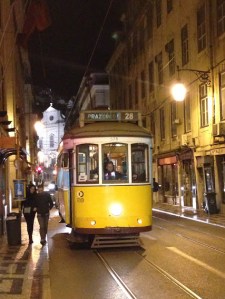
Lisbon 1Over Thanksgiving week, I was part of a panel to evlauate EU grant applications. These events are normally held in Brussels, and since the flight and accommodations were both cheaper starting on Saturday, I flew in early. Suffice it to say, I arrived just in time for the lockdown. Our evaluation activities were not held in person as a result, but nevertheless, our  panels conducted all the necessary meetings using online tools. We successfully completed all our evaluations on schedule, using software that I believe was to be implemented in January in any case.

The highlights of my time in Brussels are captured in the attached photo gallery, which includes a gratuitous cat photo to mark Brussel’s cat postings on Twitter. The authorities asked citizens not to post info on their activities, so the folks in Brussels posted fun pictures of their cats’ activities during the lockdown, including quite a few PhotoShopped images just for fun. I didn’t have any time free to PhotoShop, but I Tweeted this cat photo in solidarity.

After spending a full week indoors–evaluating work, attending online meetings, submitting reports, reviewing and approving reports, finalizing and submitting my own grant proposal to Science Foundation Ireland, and finishing my read of a PhD thesis (what we in the USA call a dissertation)–I was more than ready to hail a cab to the airport and fly off to Lisbon.

The sunshine, good cheer, and fabulous food of Lisbon were so very welcome after a cold and lonely week alone in Brussels. I’ve attached a gallery of snapshots from Lisbon and, in a post to follow, I’ll tell you about the thesis evaluation panel I attended there.

Micheál’s Sterling Engine

My colleague, Micheál O’Flaherty, brought into class today the little Sterling Engine he has made. This technology is in the early stages of being developed for home heating, to potentially replace the boiler in your home, Micheál says.  You can learn how to make one of your own on YouTube.

It was such good craic! (The Irish sort!)

STEMettes and the UK-Ireland Engineering Education Research Network

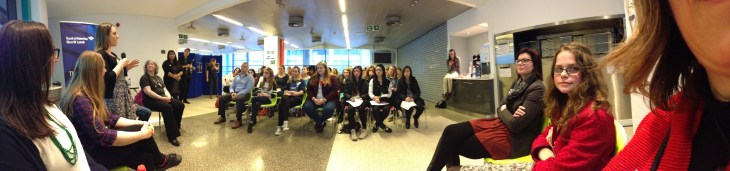
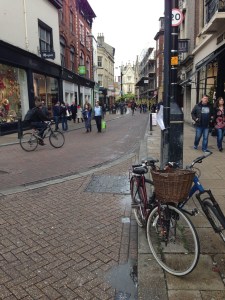
STEMettes panorama IMG_8431Because it’s Science Week here in Ireland, I had hurried back from a conference in was attending at the University of Oxford (the UK-Ireland EER Network, for engineering education research). I thoroughly enjoyed the trip (which was my first visit to Cambridge) and reuniting with colleagues similarly dedicated to engineering education research.

The old part of Cambridge--lovely in the autumn!

The old part of Cambridge–lovely in the autumn!

Nevertheless, it was well worth the scurry home, because I’d been invited to speak at a STEMettes networking event (see their blog). STEMettes events are energizing and invigorating and I always enjoy the chance to share stories and ideas with curiousity-driven people. For me, meeting the STEMettes kicked off a week of special Science Week events. So, while my engineering colleagues were busy assembling robot kits for the upcoming week, I was out meeting girls who share my interest  in science, technology, engineering, and math (STEM).

Diversely skilled panelists of all ages graced the main stage at STEMettes, providing advice and sharing vivid stories of their paths to fascinating STEM careers. Here, I had the chance to meet and network with well-established experts, talented BoA employees, and up-and-coming young scientists.

STEMettes is a London-based organization encouraging girls to make, code, and create innovative businesses. Many of the dedicated and talented girls I met back in August–at the STEMEttes Outbox Incubator in London–were among the 45 or so assembled at the Bank ofAmerica  Merill Lynch HQ last Saturday, on the outskirts of Dublin. Another similar event was being run simultaneously in London. I met the director of STEMettes at Insiprefest in Dublin this past summer.

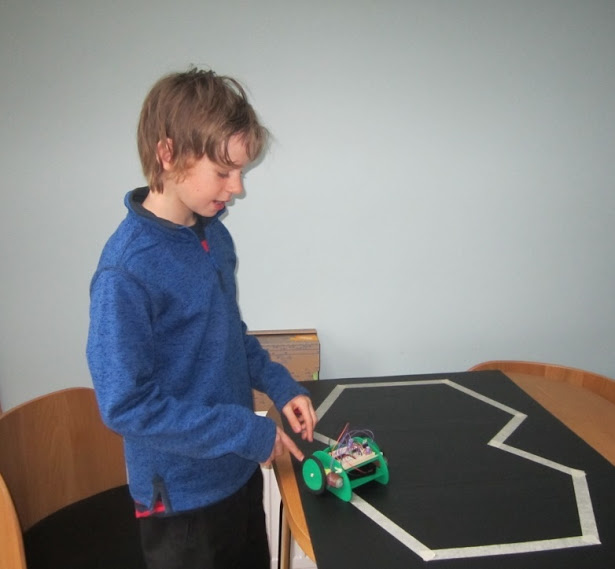
STEMettes 2In the coming week my friends and I will conduct two RoboSlam workshops in Dun Laougharie and a day-long event at the Cashel Arts Festival. At our recent Tech Week RoboSlam, 15 secondary school students walked away with their own assembled and fully-functioning robots.

I’ve posted photos from Cambridge and the UK-I EER network conference in the gallery below.

Ful-ly Oriented as a Fulbright to Ireland

Fulbright Ireland recently welcomed a new cohort of incoming scholars. The orientation program included lessons in Irish language, culture, politics, and economics, in addition to general tips for organizing life and getting around.

The staff of Fulbright Ireland invited me to come share my experiences as a Fulbright Alum, and so I attended my third orientation for incoming scholars. I much enjoyed my own incoming session in 2012, and was happy to give a short talk for the incoming scholars in 2014 and 2015. In the past, I’ve also attended orientation sessions for the Irish Fulbright scholars headed to the USA and served on an evaluation panel to help select Irish awardees in engineering.

I always enjoy hearing about the fascinating research projects our Fulbrighters are doing, and the experiences they’ve had getting here and settling in. A list of the current Fulbright scholars who have come from the US to Ireland, along with a brief description of each project, is available on the Irish Fulbright website.

I also enjoy hosting Fulbright scholars at my own home now and then. Currently, I’m hosting Amanda Wagstaff, who earned a BA in Art and Art History from the College of William and Mary (on the very same day I earned my PhD there). She went on to earn an MFA in Studio Art from the University of North Carolina at Greensboro. As the recipient of a Fulbright award for current and recent students, Amanda is researching Celtic Christian monasticism and text/art objects at the Chester Beatty Library in Dublin. Amanda maintains a beautiful website of her artwork that I encourage you to visit.

I’ve shown photos of the day–including taking the DART from Connolly Station (pictured) and the orientation sessions conducted at the Institute of Public Administration.

Culture Night Dublin with Fulbright-ing Friends

Culture Night Dublin 2105 1Dublin Culture Night happens once a year, offering a glimpse into many cultural treasures this city has to offer. This year, I got to attend the event with my friends Amanda Wagstaff and Frank Daly.

Amanda recently moved to Dublin as a Fulbright student for the 2015-16 academic year. She and I actually graduated from the College of William and Mary on the very same day in 2010–she with a Bachelor of Arts and I with a PhD in Higher Ed. Amanda is a studio artist who is using the archives at the Chester Beatty Library to generate inspiration for her own contemporary artwork. You can see Amanda’s past work on her website, Traipse.

Frank’s art and photography is viable on his website and his many Google+ photo albums.

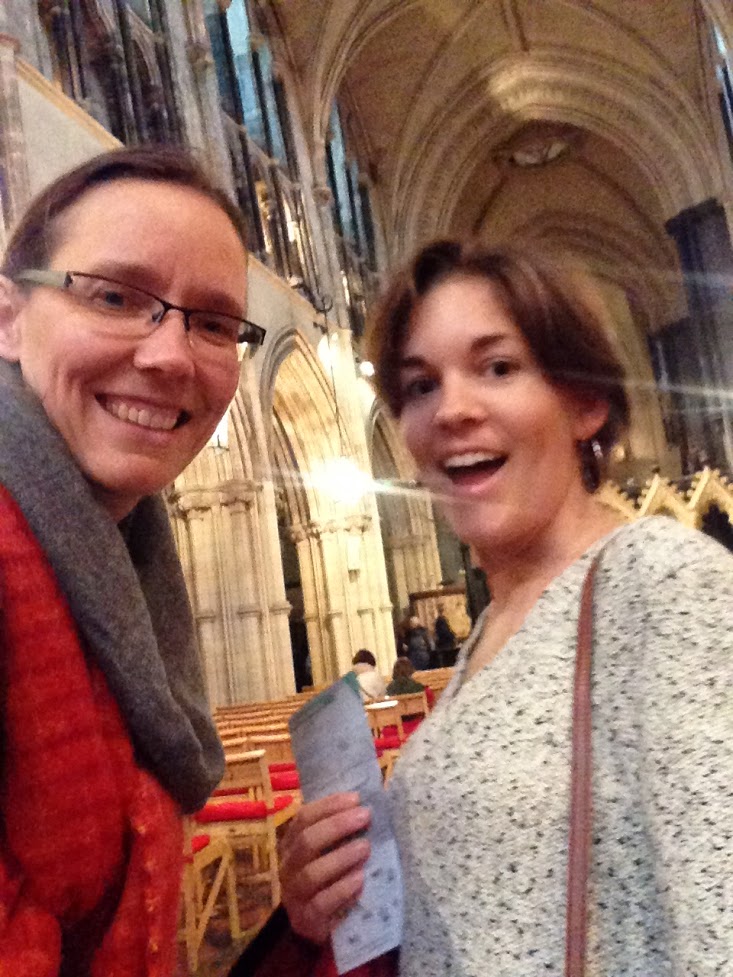
The there of us kicked off our Culture Night explorations at Christchurch Cathedral, not far from my Smithfield residence, and then proceeded eastward to see several more sights. We took in dinner at the Queen of Tarts, Dublin’s stately Customs House, and a guitar concert at the Unitarian Church on St. Stephen’s Green.

Culture Night is just one of many ways to learn history in Dublin. I’ve included photos in the gallery below of several cultural events that happened around the same time:

  • a lecture on the Irish Civil War (hosted by the Smithfield-Stoneybatter People’s History club and held at in the backroom of the Cobblestone Pub)
  • a man in Smithfield preparing his horses and carriage for the All Ireland football match
  • the best places I know to sit and read about history (my friends seem to enjoy reading in these places, too!)

In the Know on Assistive Technologies with Dr. Matteo Zallio

Dr Matteo Zallio seminar at DIT 4Assistive technologies can help us age more safely and gracefully, and live independently for much longer than we could on our own. My colleagues in engineering have been involved in growing these technologies. They’ve established the tPOT research group here at DIT to facilitate innovation in this area.

I recently attended a seminar at DIT by Dr. Matteo Zallio who has done very interesting research. Matteo is an architect with a PhD in assistive technologies and he spoke about “Environments and Smart Objects: Ambient Assisted Living for Long Lives of People.”

Matteo has developed a rating system to help people assess how well various products and places support aging. The rating system is hypothetical at this point–it’s been well-developed but not yet adopted for implementation. I’m hoping it will be soon.

I’ve researched facilities and designs to support aging in place in the past, so I had many questions and comment at the end of Matteo’s presentation. I even Skyped with him following his lecture to answer questions he had about moving to Dublin. I’m pleased to say he’ll be joining the tPOT group as a postdoctoral fellow next fall!

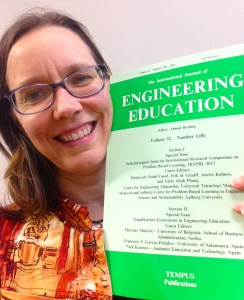
Pictures from his lecture, and his impressive book, are posted in this photo gallery:

Cecilia Hartsell on WWI Soldiers’ Experiences Returning Home

Cecilia Hartsell History presentation at Collins Barracks 1

Cecilia Hartsell researches WWI history. She is discovering parallels in the challenges Irish soldiers and African-Anericans soldiers faced when returning to their homes following the war. 

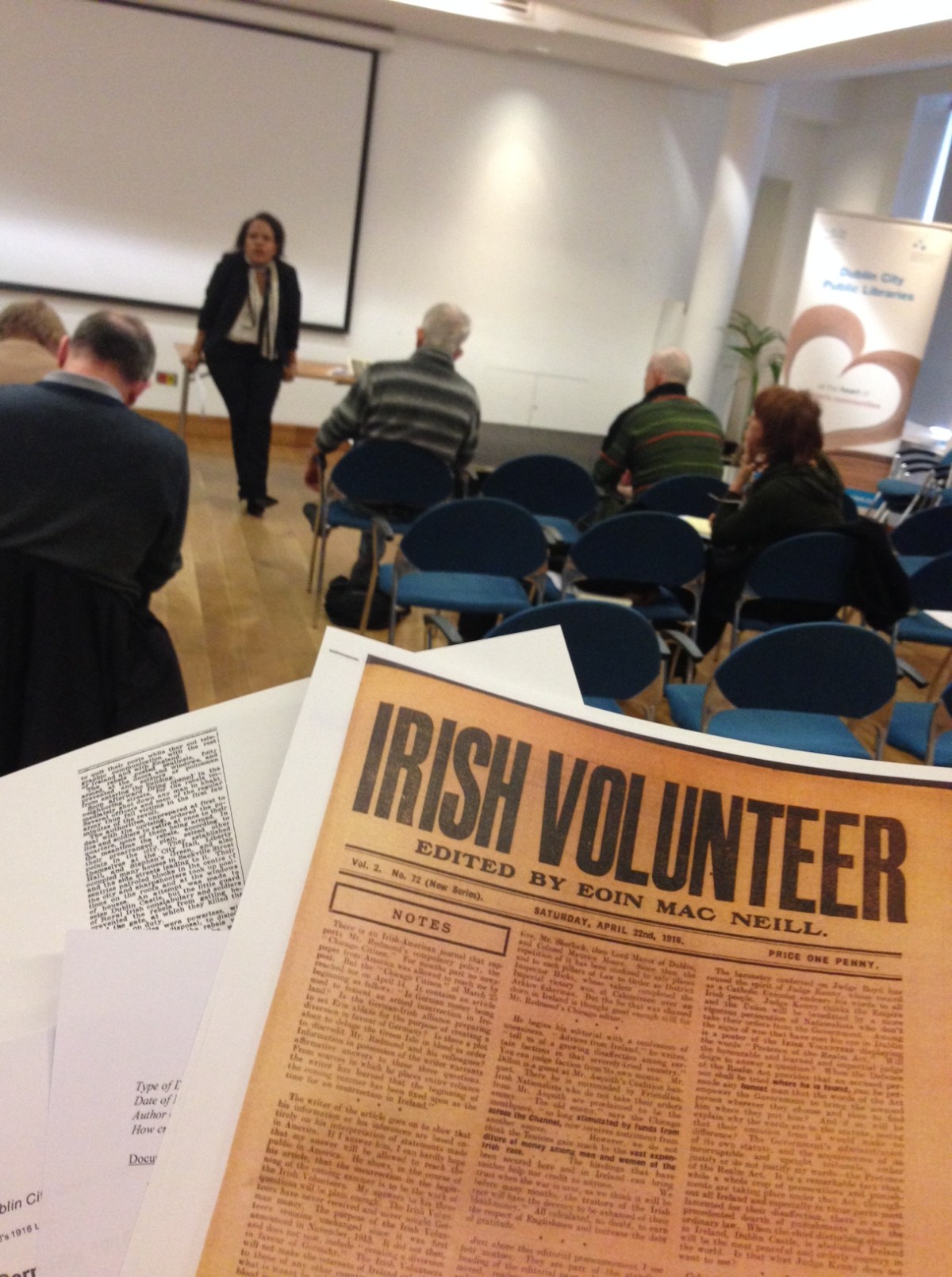
She presented research at an event at Collins Barracks in Dublin. The event was hosted by a history MeetUp group and 24 people attended on a recent Sunday afternoon. This is part of the dissertation research Cecilia is undertaking to earn a PhD from Fordam University. She will present the talk again, as part of History Week in Dublin:

Thursday, the 8th of October, 7-8 pm at Rathmines Library. 

Cecilia has also just published her first academic article, in History Now (an online journal at the Gilder Lehrman Institute of American History). Check it out at the link below:

https://www.gilderlehrman.org/history-by-era/world-war-ii/essays/race-and-good-war-oral-history-interview-with-calvin-d-cosby-WWII

DiscoverResearchDublin Night 2015 at Trinity College Dublin

Discover Research Dublin - Marie Curie exhibits - Shannon Chance 1

Projects by Marie Sklodowska-Curie Research Fellows on display at Discover Research Dublin Night 2015 at Trinity College Dublin.

Trinity’s campus glowed orange Friday night to celebrate the diverse and amazing research being conducted today in Dublin. I had been invited by the Irish Universities Association to show off some of the work I’m doing as a Marie Sklodowska-Curie Research Fellow. My base of operations is Dublin Institute of Technology, but this event featured research being conducted all across Ireland. 

Everywhere on Trinity’s campus researchers displayed their work, emphasizing aspects that would engage and appeal tot he general public. I prepared a digital presentation on Engineering the Future: Equipping Engineers with Design Thinking that briefly described the three areas where I’m focusing my time as a Marie Curie International Incoming Fellow under the European Commission’s FP7 program:

  1. RESEARCH on Women’s Experiences of Collaborative Learning in Engineering
  2. TRANSFER OF KNOWLEDGE by developing a Masters degree program to teach engineering teachers about teaching
  3. OUTREACH through RoboSlam Robot-Building Workshop

I decided to featured my DIT colleagues’ research on robotics and our work on how to best teach robotics to kids and to college students. I brought along two of our autonomous robots and let visitors to my booth run their own Sumo matches. About 25 people visited my table. There were all interested in learning about how the robots differed in design and code. One had better “eye sight” (as in, a better quality distance sensor) but the other had better coding. As a result, they were fairly well match for the Sumo competition, but the one with better coding consistently won.

Most visitors to the booth had specific questions about my work, and I was able to discuss details of various research studies and publications because I had my laptop there, and was able to access and display three different Prezi files.

I also got to discover the fascinating research being done by other Marie Sklodowska-Curie Research Fellows in Ireland. I’ve pictured just a few in the photo gallery below. Leaving Trinity’s campus, I discovered many cultural events on as well, such as the concert being hosted in Trinity’s chapel.

I found that I had been in just one tiny little corridor–among dozens of research labs and hundreds of research projects on display–at DiscoverResearchDublin Night 2015. Imagine the power house of research going on here, on this tiny little island in the North Atlantic!

RoboSlam @ Dublin Maker – only two days away!

If you’re in Dublin Saturday, drop by our RoboSlam Robot Cafe and build your own bot.

shannonchance's avatarRoboSlam

Ted's robot design for Dublin Maker event on Saturday at Trinity College Dublin. Come build one for free! And, it's just 12 Euro (less than the cost to us) if you want to take it home with you. Ted’s robot design for Dublin Maker event on Saturday at Trinity College Dublin. Come build one for free! And, it’s just 12 Euro (less than the cost to us) if you want to take it home with you.

Hello RoboSlammers,

This is just a quick reminder – it is only two days now to Saturday’s big event – Dublin Maker! The weather forecast is looking good so far – “cool and dry with scattered showers” according to met.ie. The event will open at 10am and run until 6pm. It tends to get busy at around midday. A description of some of the main participants at Dublin Maker 2015 is available here. Personally, we can’t wait to see what mechanical wonders Michal Mizsta the “dragon dude”, will have on show this year. And there is an interesting range of exhibits.

Shannon, Damon, Frank, and Ted getting ready today for the RoboSlam Cafe. Shannon, Damon, Frank, and Ted getting ready today…

View original post 239 more words