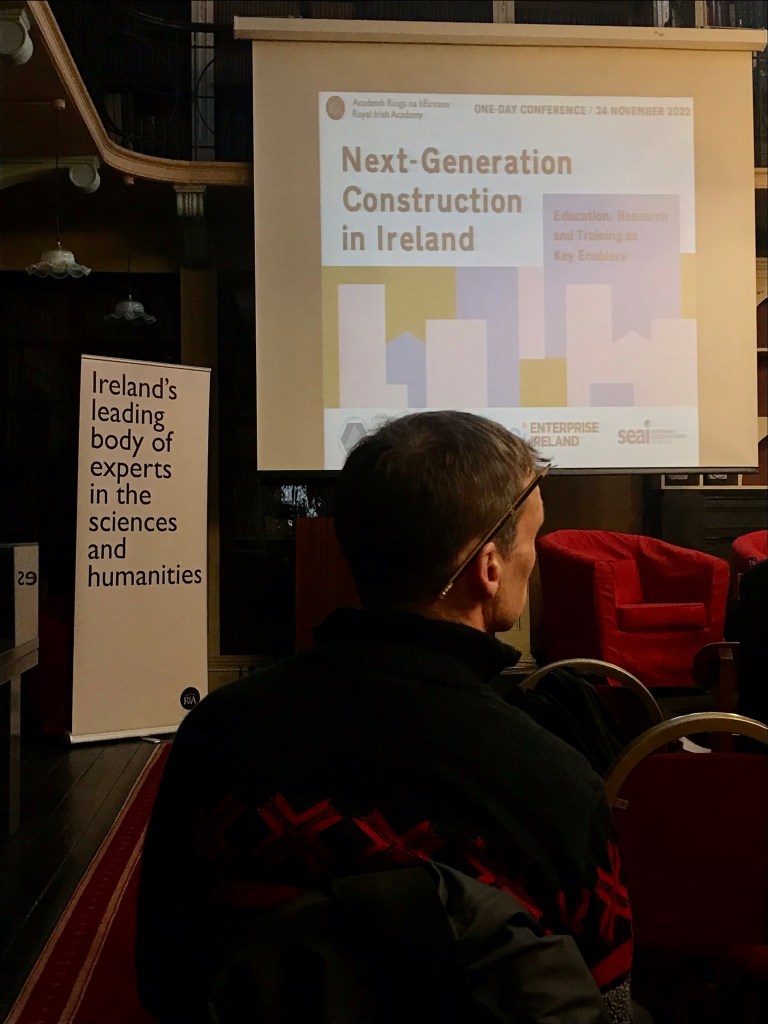
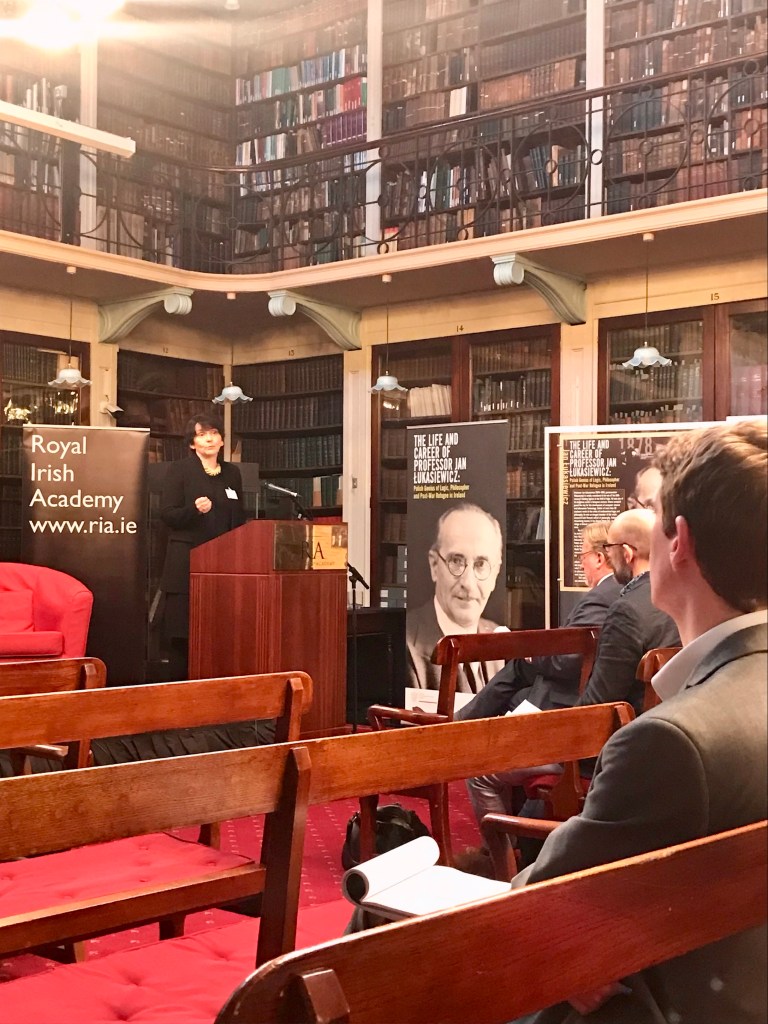
Thanksgiving here in Ireland is usually just another ordinary Thursday. But this year I made a point to celebrate. I registered for a conference held at the Royal Irish Academy on Dawson Street, so I could learn about “Next Generation Construction in Ireland” while soaking in old-school Irish ambiance, and I bought tickets for an American Thanksgiving feast.
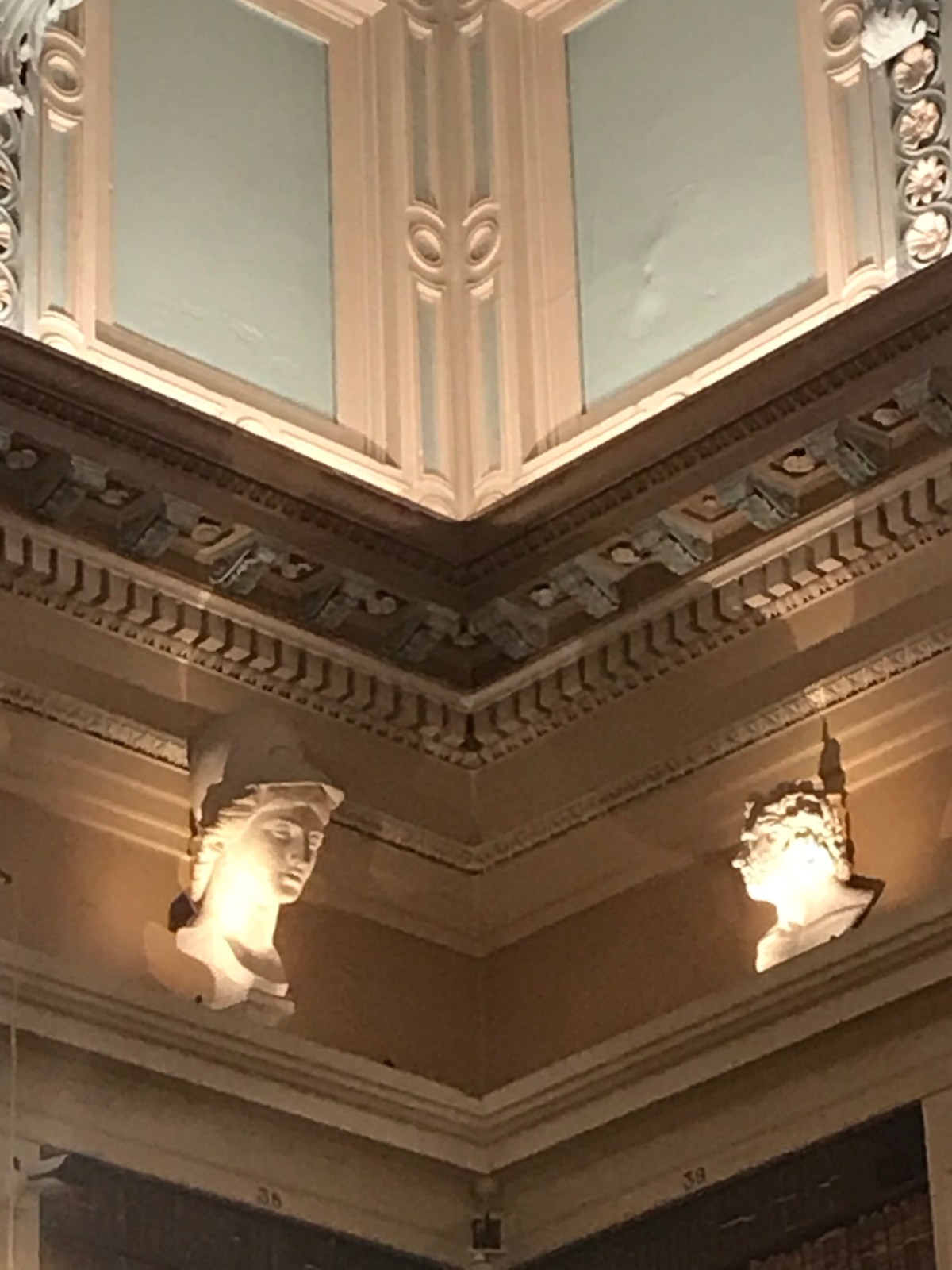
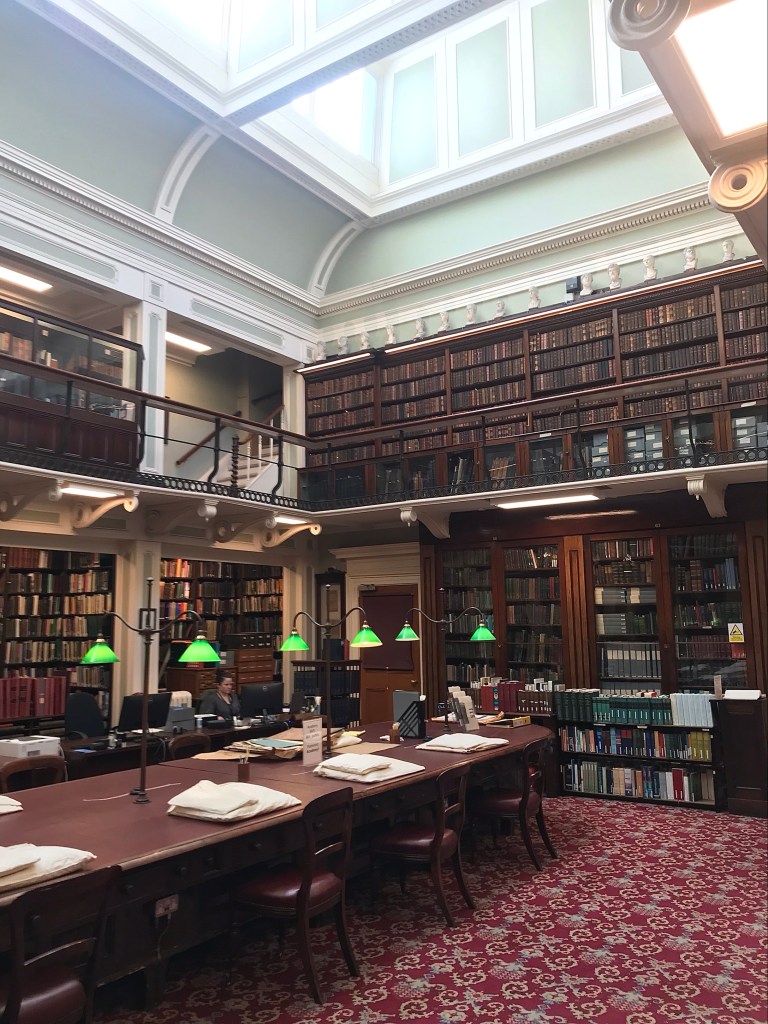
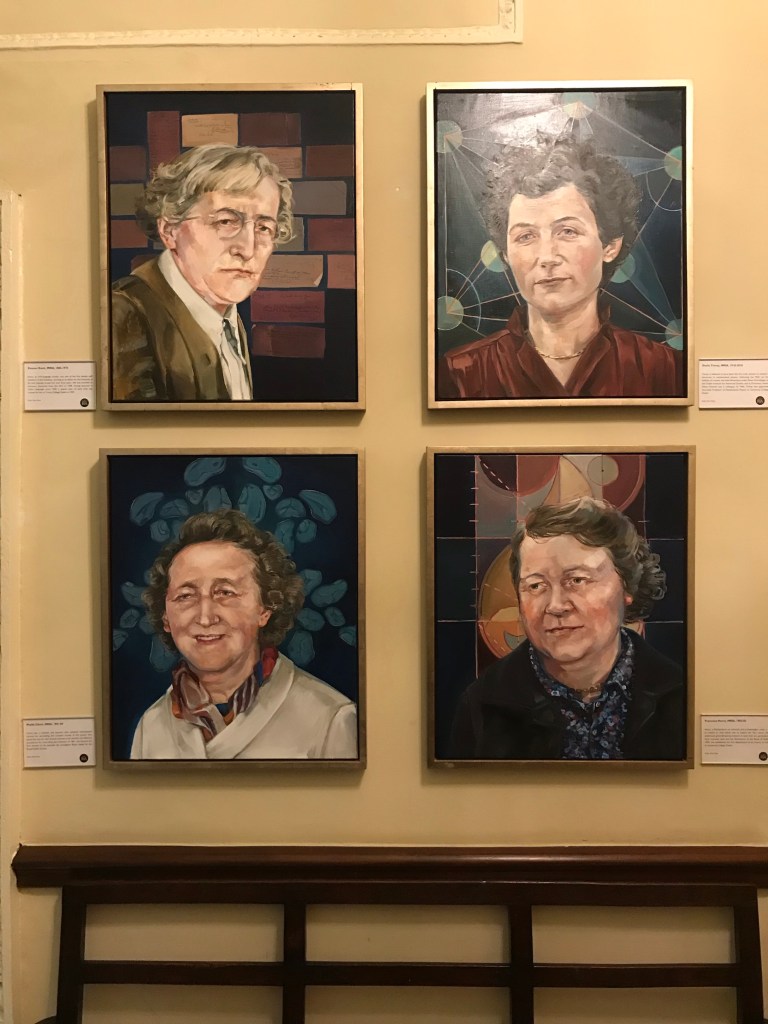
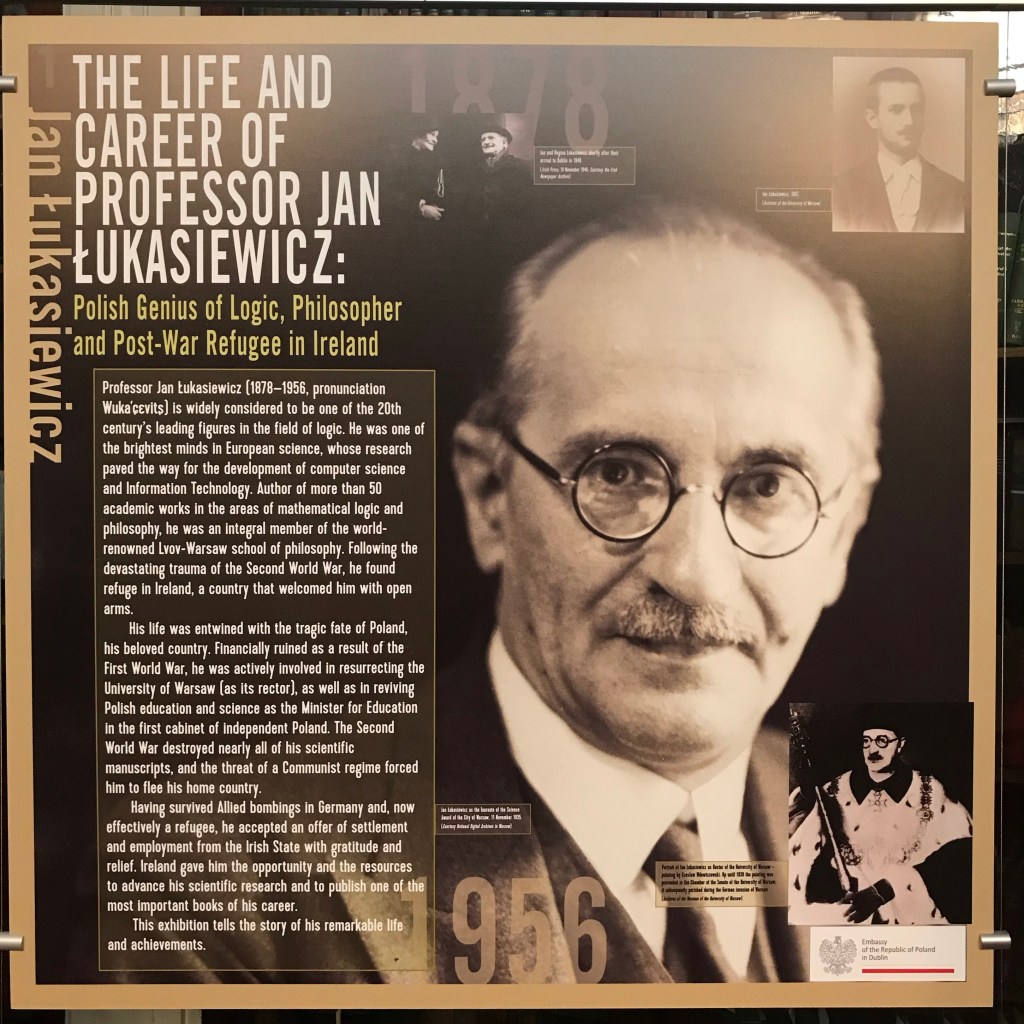
I love visiting the stately old RIA building, with its floors of well worn books. There was an interesting exhibition on display, and lovely architectural details to treat the eyes and soothe the soul.
The Royal Irish Academy bridges science and humanities.
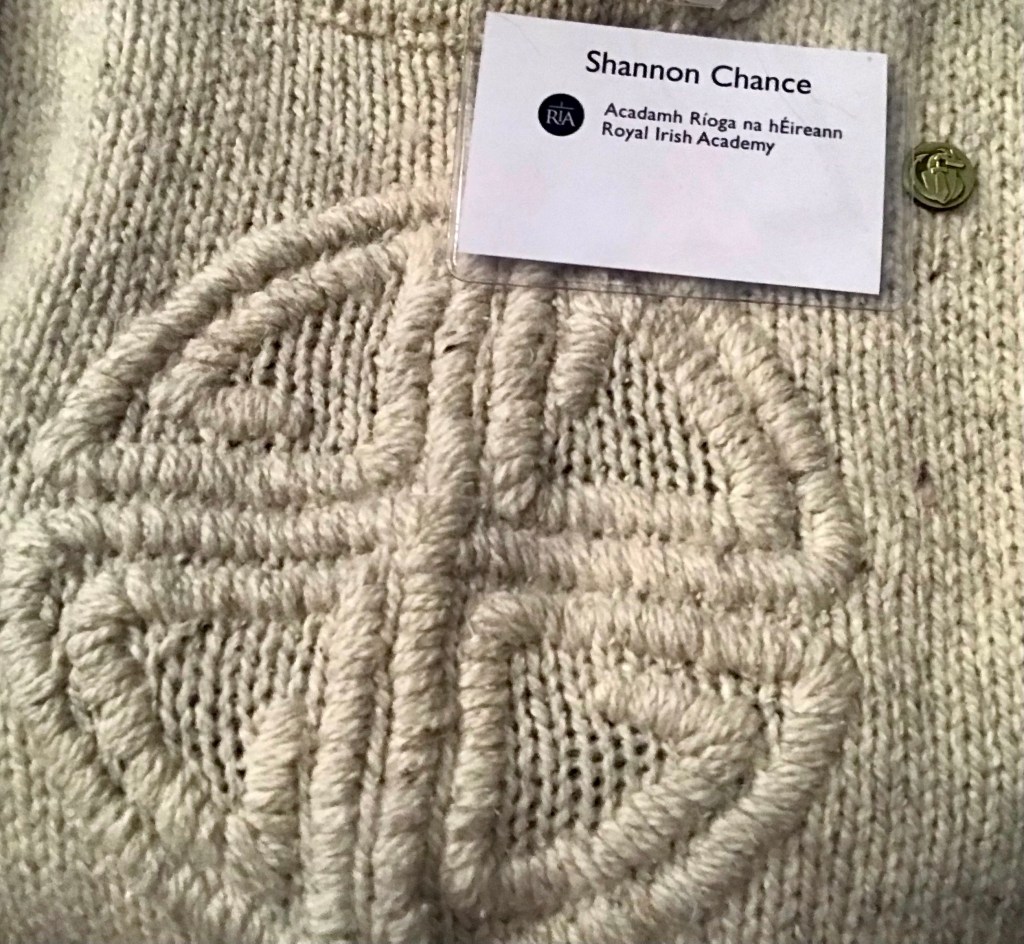
Despite heavy rain falling before my cycle over, I was inspired to wear my favorite Irish sweater and the “BIM Hero” lapel pin I received earlier in the year. (I am hoping the pin will provide the good karma I need to get my current manuscript on the Hero’s Journey polished up to final form to submit this coming week!)
Delighted to have been named a “BIM Hero” at the BIM Coordinators Summit.
During this one-day conference, I learned more than a few new things about Modern Methods of Construction, Irish strategies and policies, and education programs and plans to up-skill the Irish workforce.
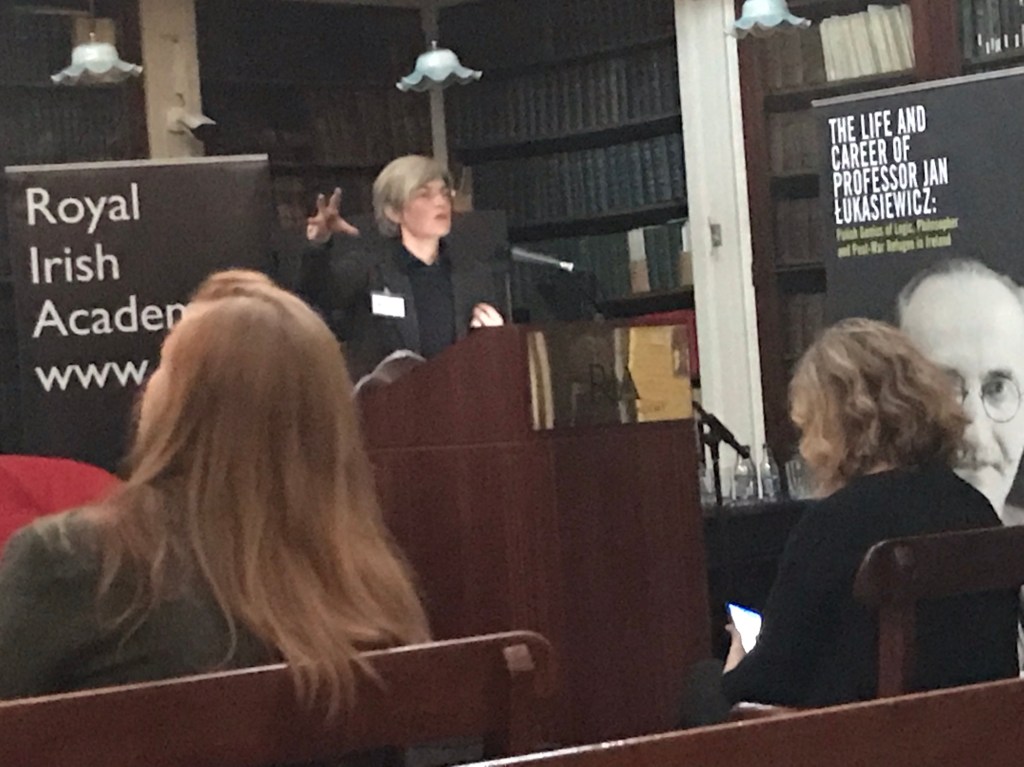
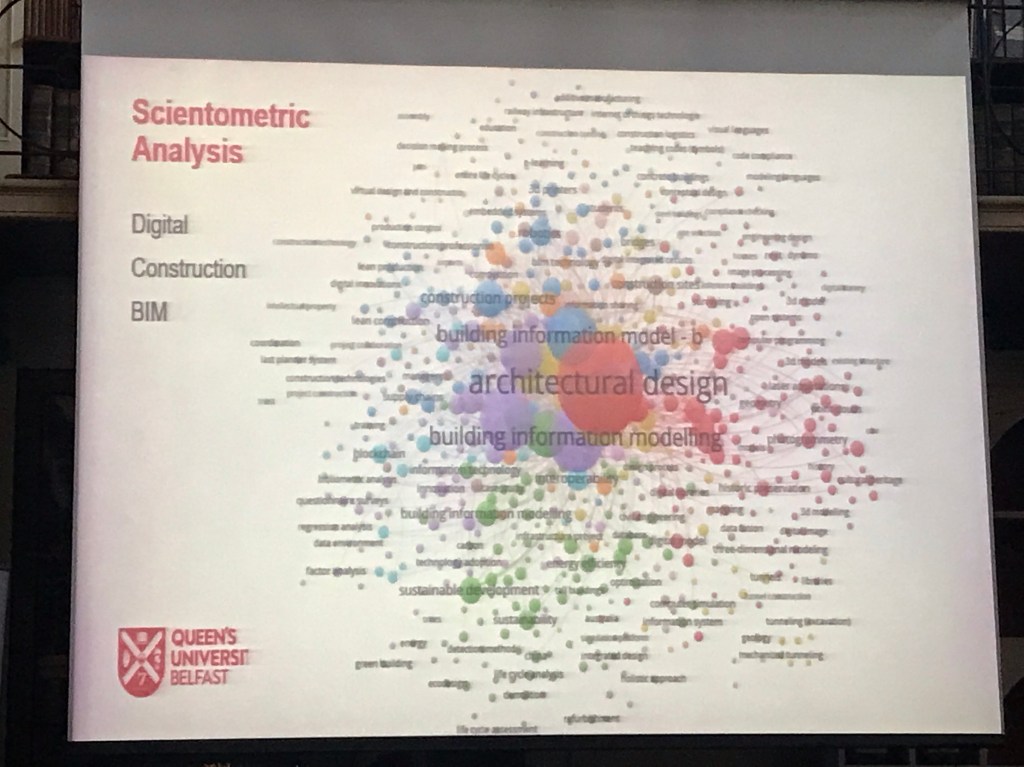
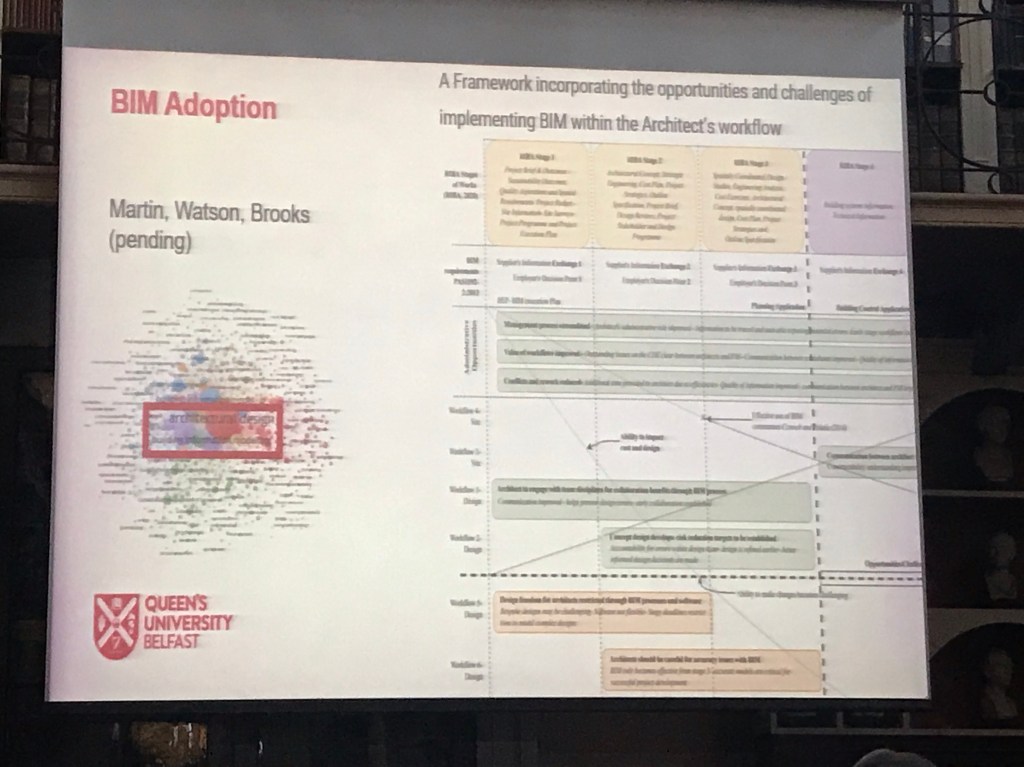
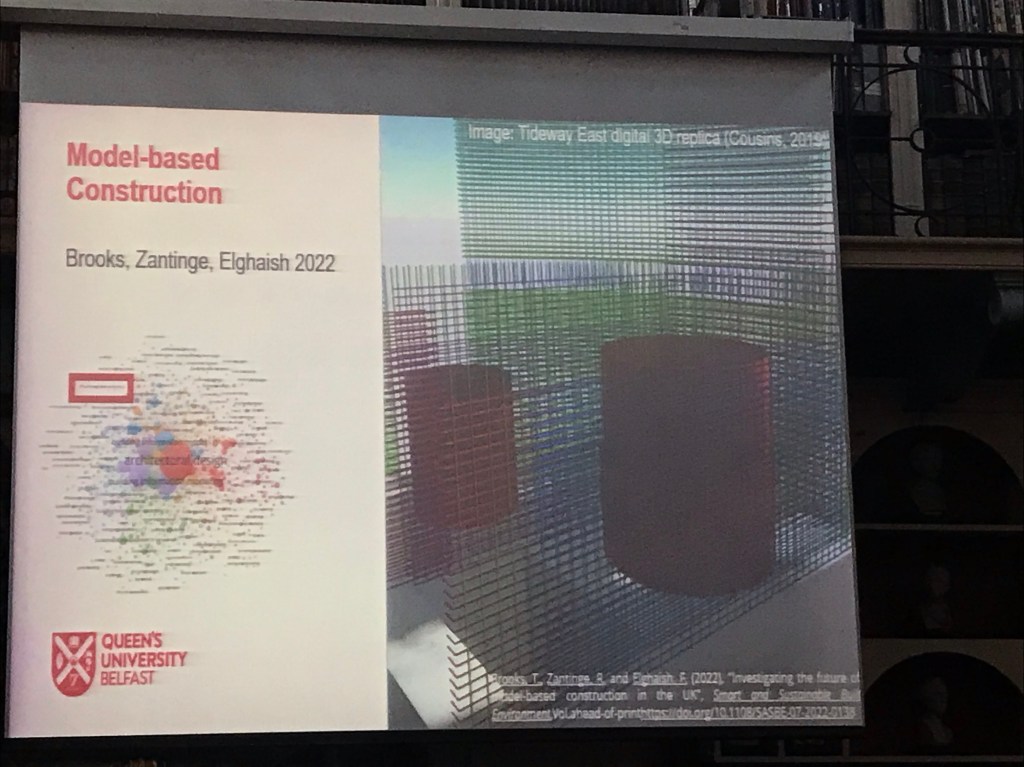
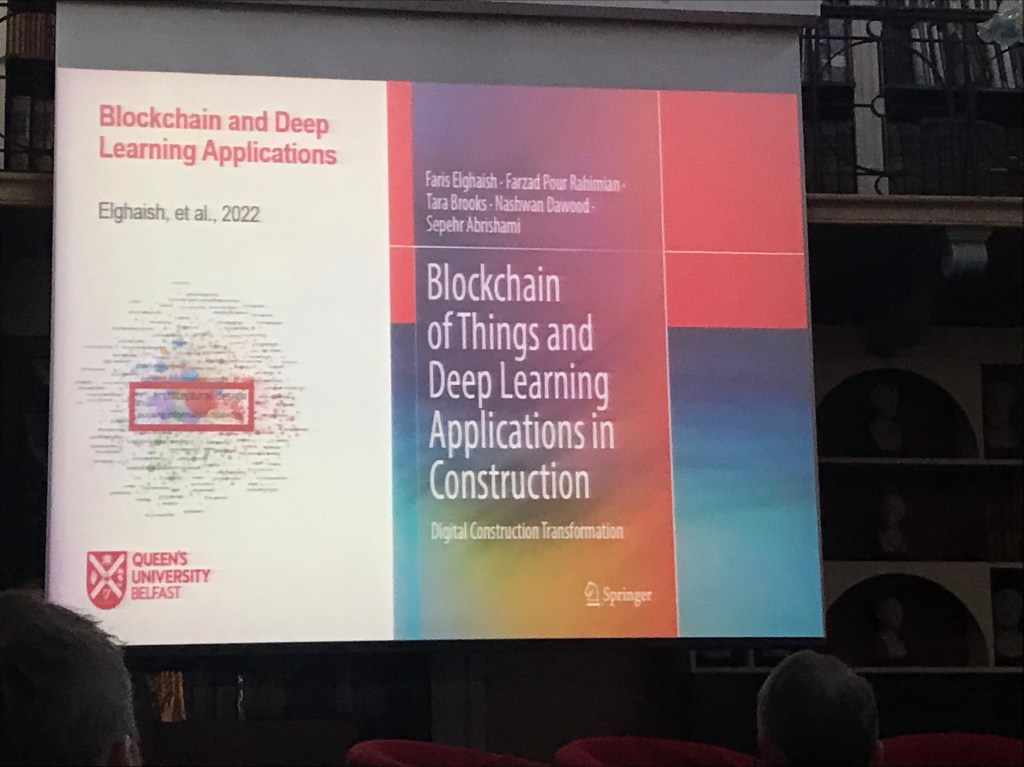
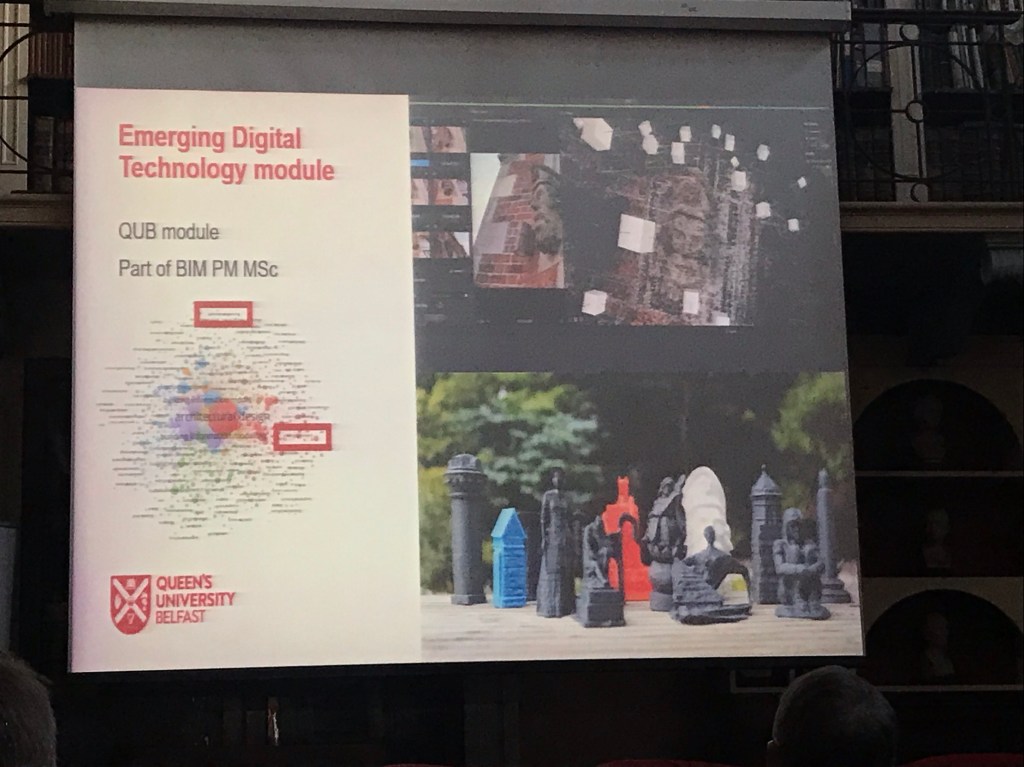
Dr. Tara Brooks from Queens University in Belfast presented fascinating research and I’ve included images since I really enjoyed the graphic devices she used to situate her contributions to the body of knowledge in BIM and digital construction.
The graphically rich presentation by Tara Brooks.
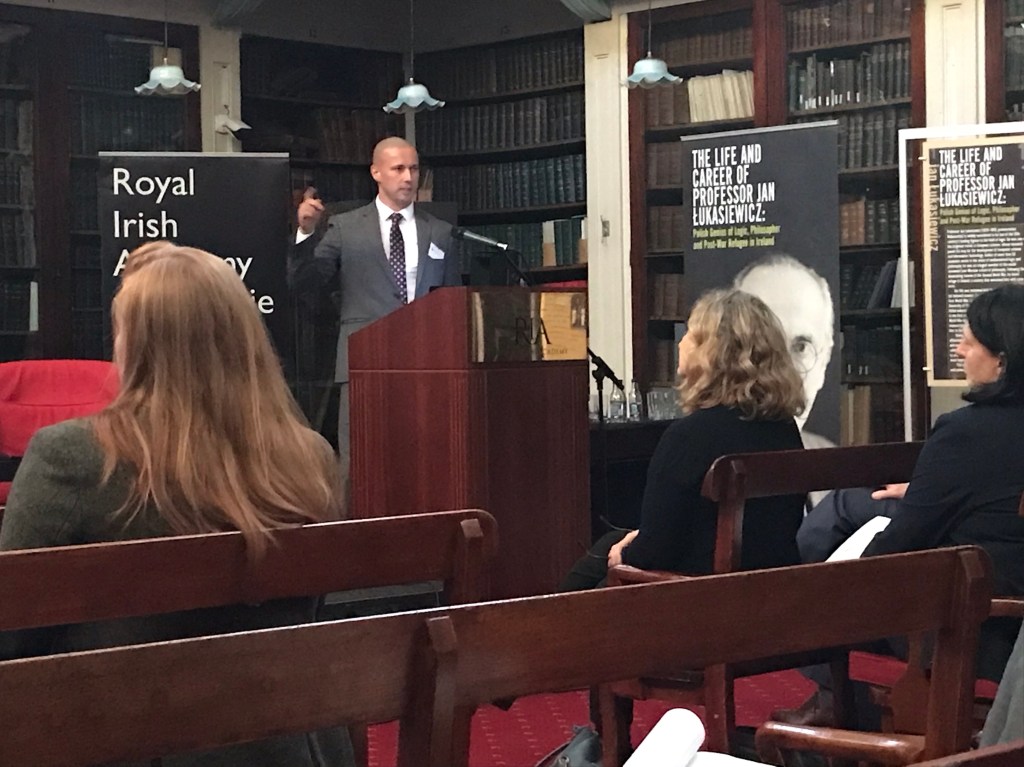
My own university, TU Dublin, was very well represented among attendees, presenters, panelists, organizers, and session chairs. I’ve pictured Joseph Mady, a part time lecturer who delivered an interesting talk.
TU Dublin’s Joseph Mady presenting.
Our conference ended promptly at 5, as Ireland’s Prime Minister was scheduled to speak in the same room at 7, and there was setting up to do.
With the conference concluded, I headed across Dawson Street to Cafe en Seine for a cocktail with Aongus.
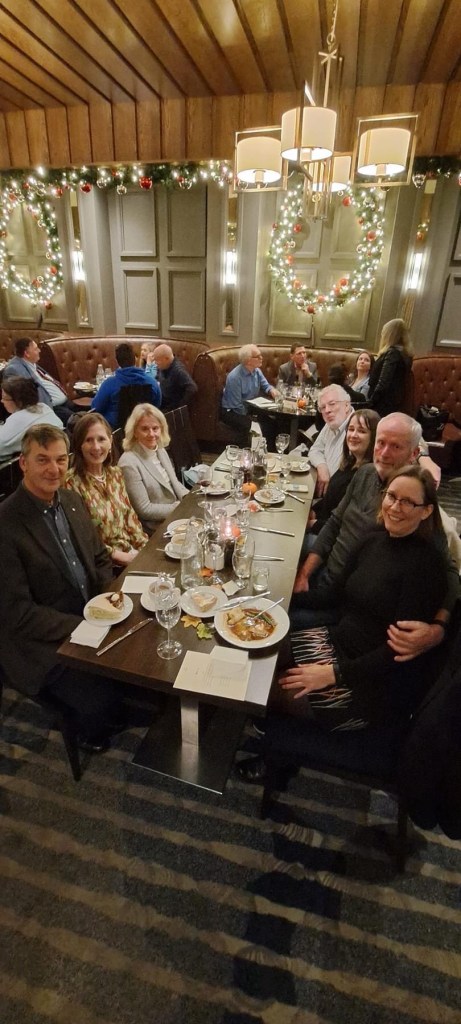
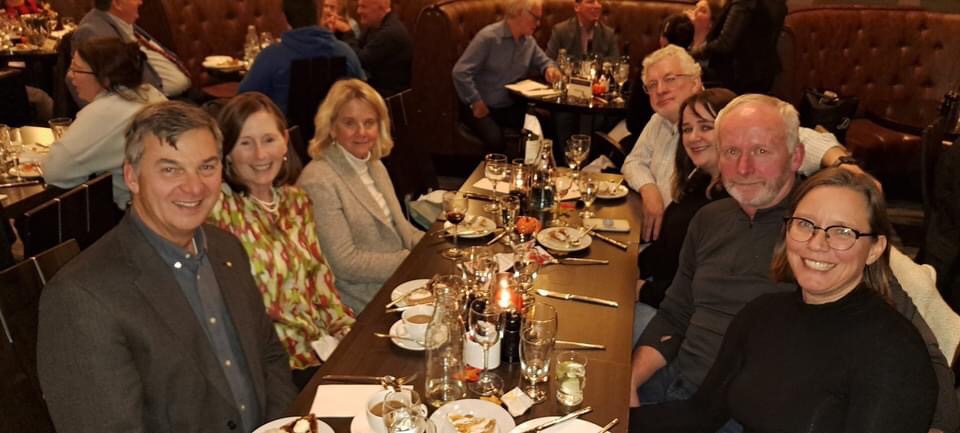
Then we cycled together over to the Hilton near Lock C6 on the south side canal. We met up with a merry group of Americans (most with Irish in tow) to share a feast of turkey will most all the trimmings.
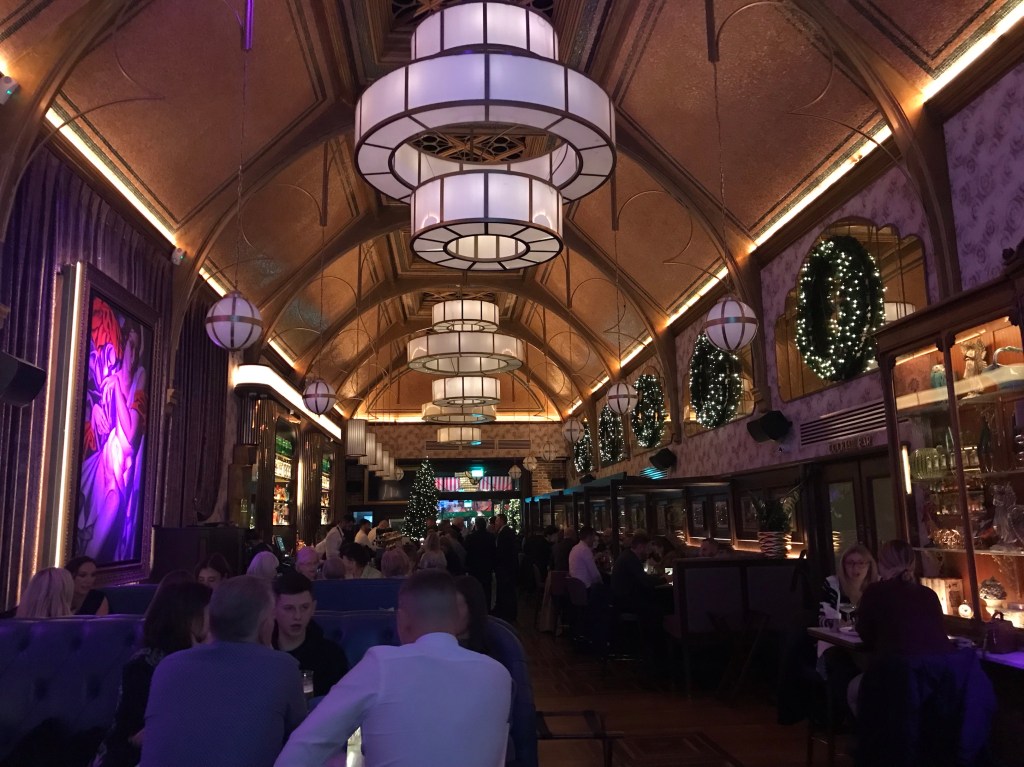
From Cafe en Seine to the Hilton’s Restaurant Charlemont.
It was Aongus’ first sweet potato casserole with marshmallows and he’s still raving about his new find. It’s fun to see the delight he takes in root veg… he also loved the glazed carrots. Such a healthy boy! My favorite were the green beans sautéed with bacon.
We made some new friends and had a ball sharing stories in a familiar twang. Until next year:
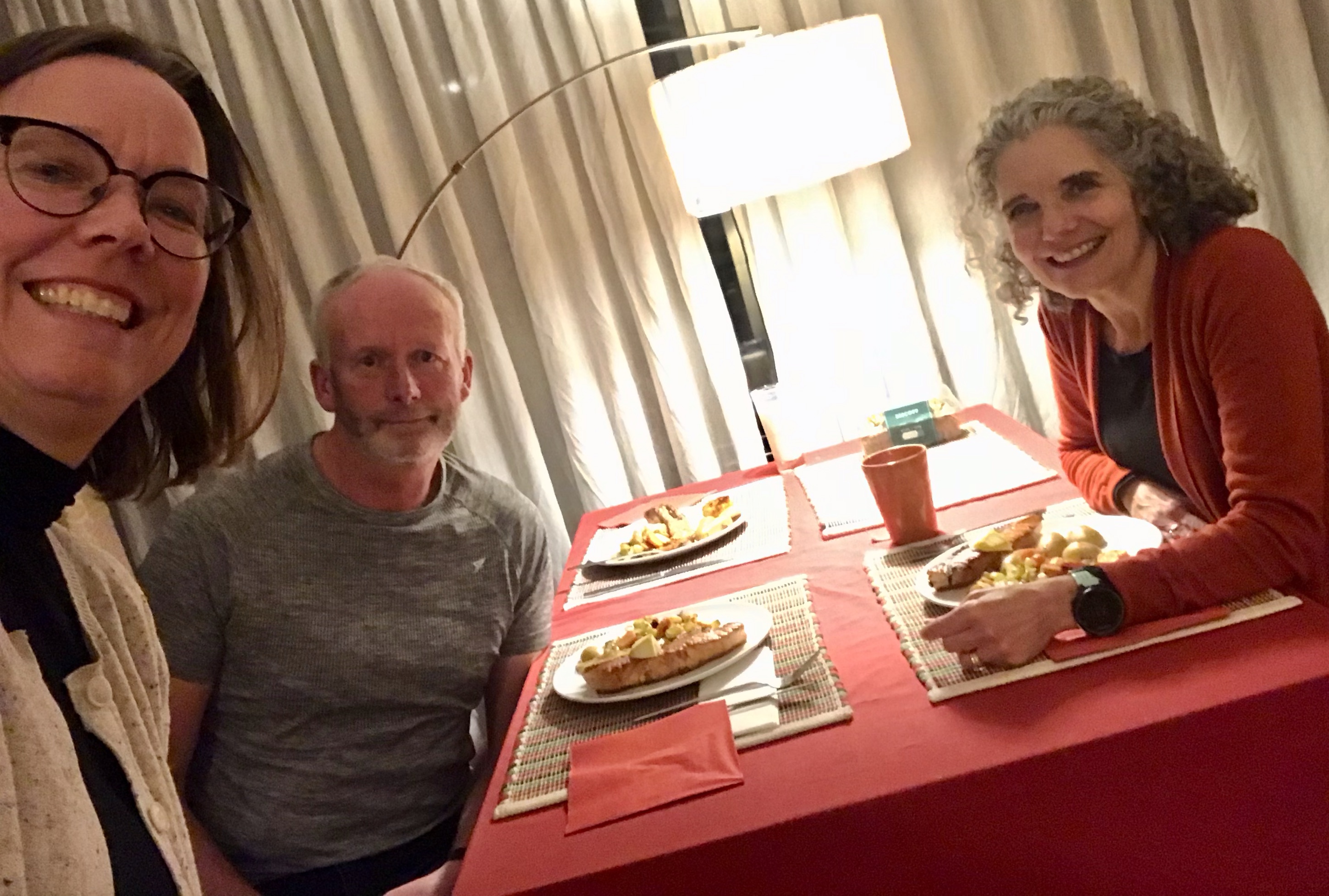
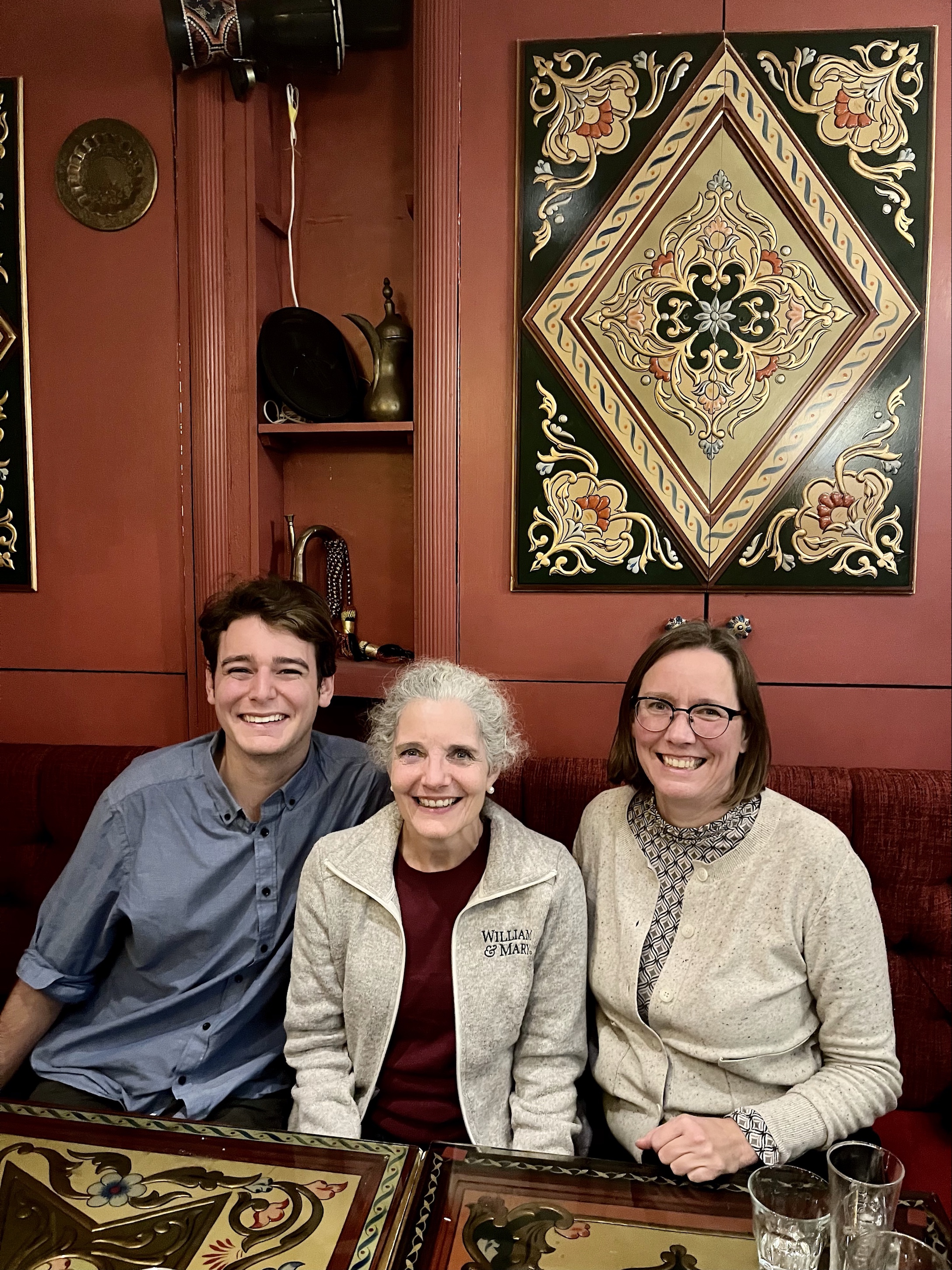
It’s been a great week! In the past seven days, Aongus and I have hosted my former PhD supervisor, Professor Pamela Eddy for a stay at our place in Dublin. I got to meet her nephew, Michael, over a meal at Damascus Gate. Here are photos with Aongus, Pam, and Pam’s nephew:
Fun with Pam Eddy
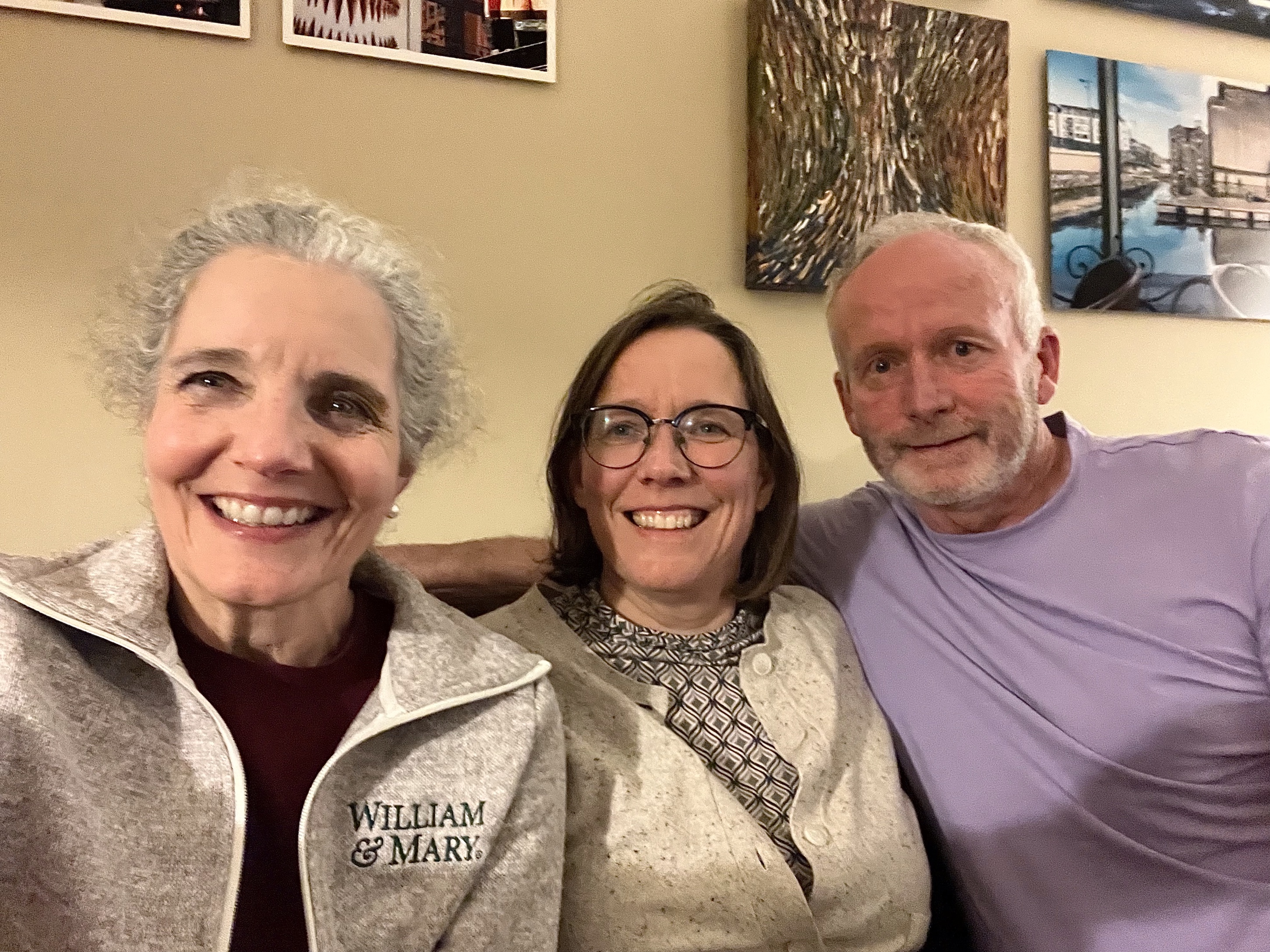
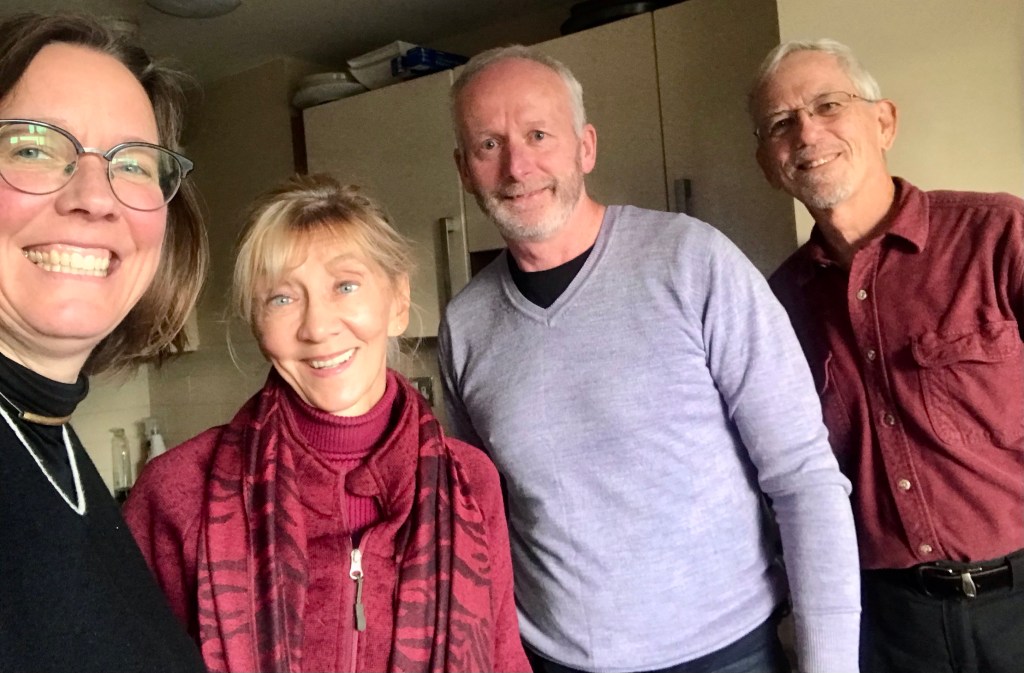
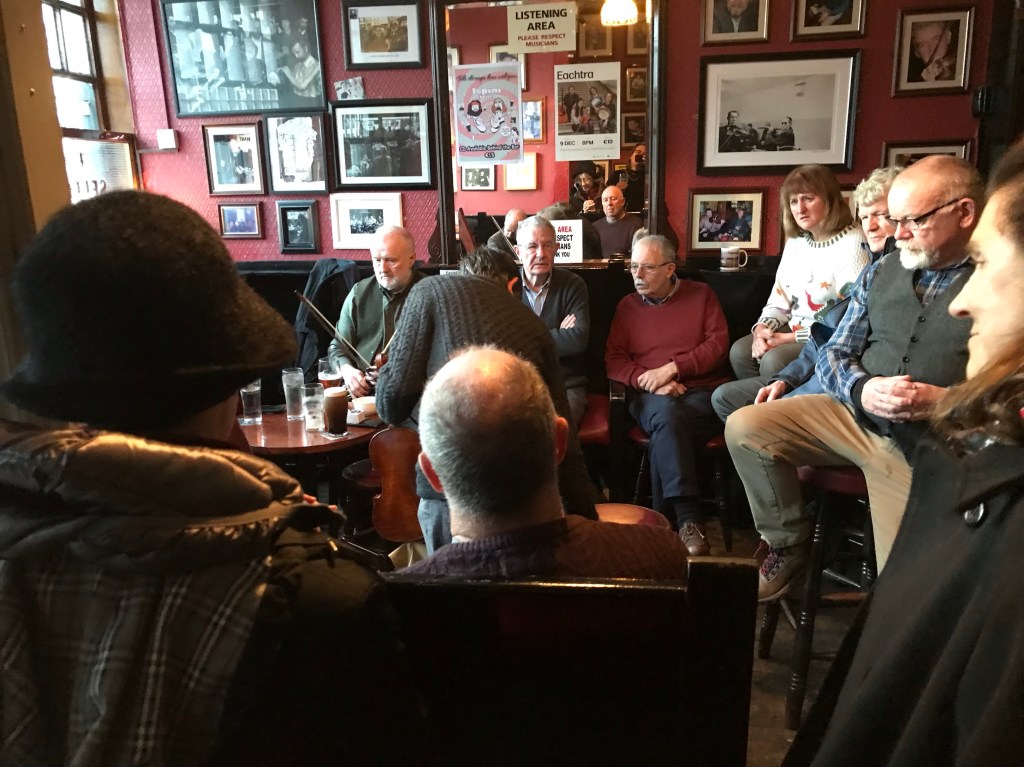
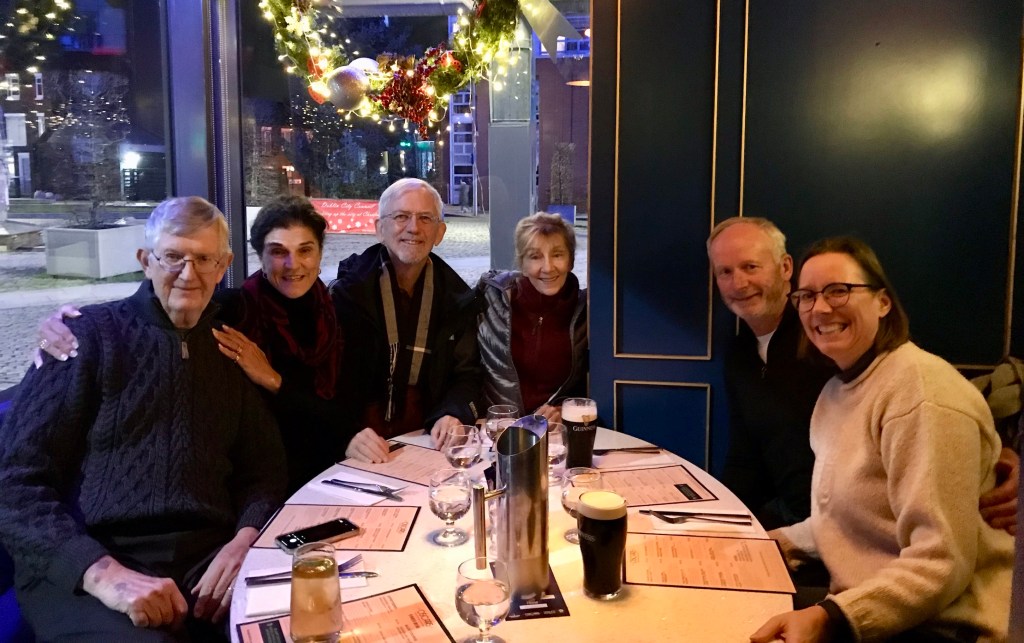
Just after Pam flew home, Aongus and I hosted my Uncle Harry and his friend Andi for a tasty home-cooked meal that Aongus whipped up. Afterward, we trotted over to the Cobblestone pub to meet Andi’s family, Linda and Steve. A couple days later, we assembled again at Oscar’s for some lovely seafood chowder. Here are photos of merriment with Harry and the gang:
I am glad they visited while Dublin is sparkling! The holiday lights go on at the end of Daylight Savings, to make our early evenings more bearable. The sparkle combined with having visitors makes life feel so much more worthwhile.
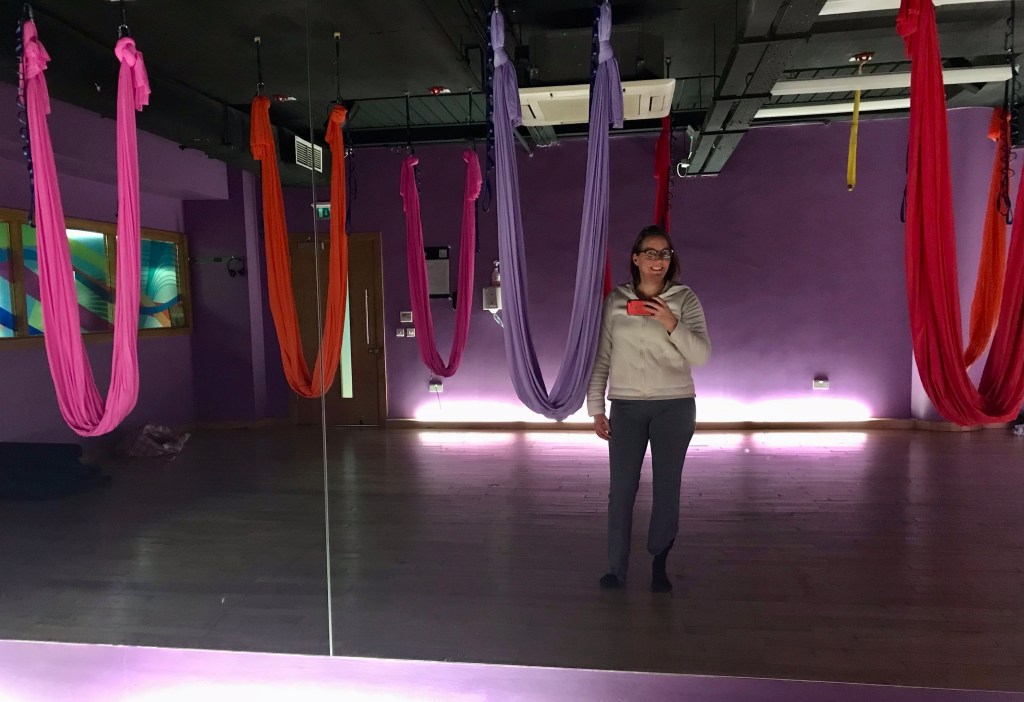
In fact, I’ve gotten inspired to add a new genre of exercise to my routine: ariel yoga. Two lessons in and I’m doing pretty well!
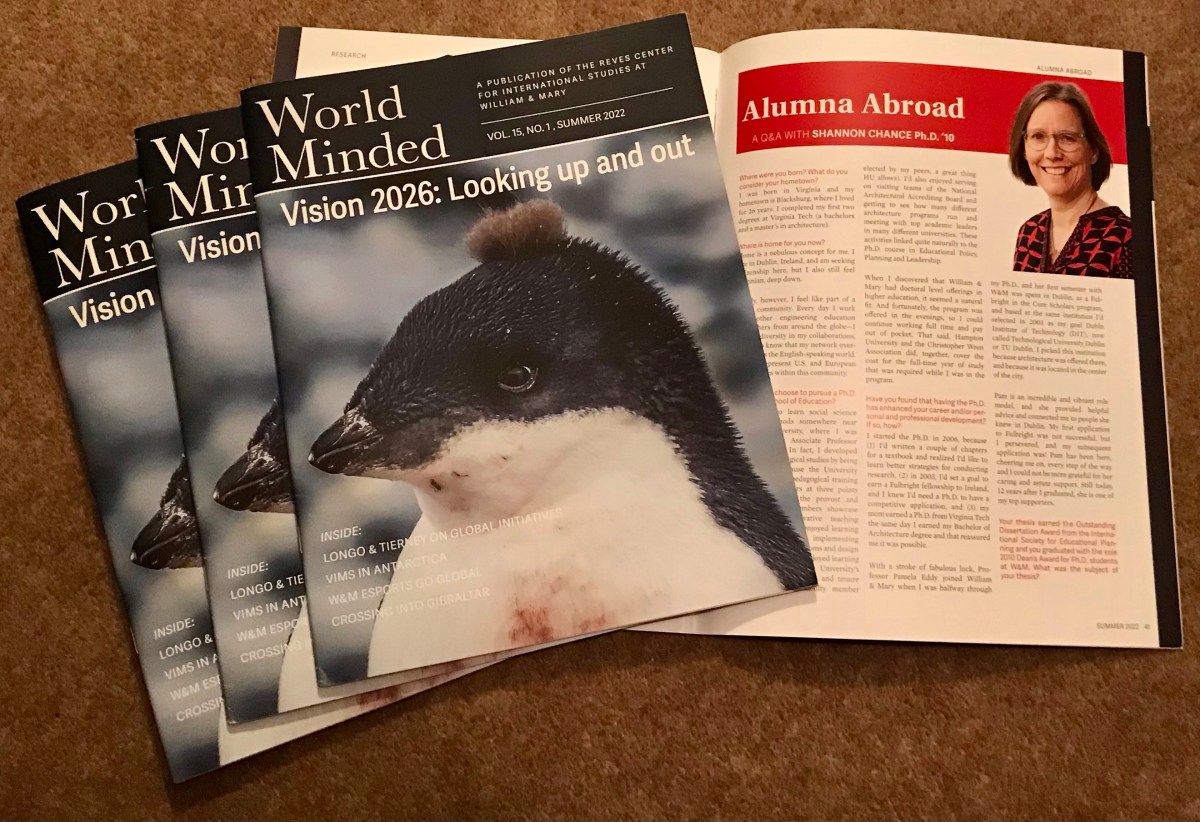
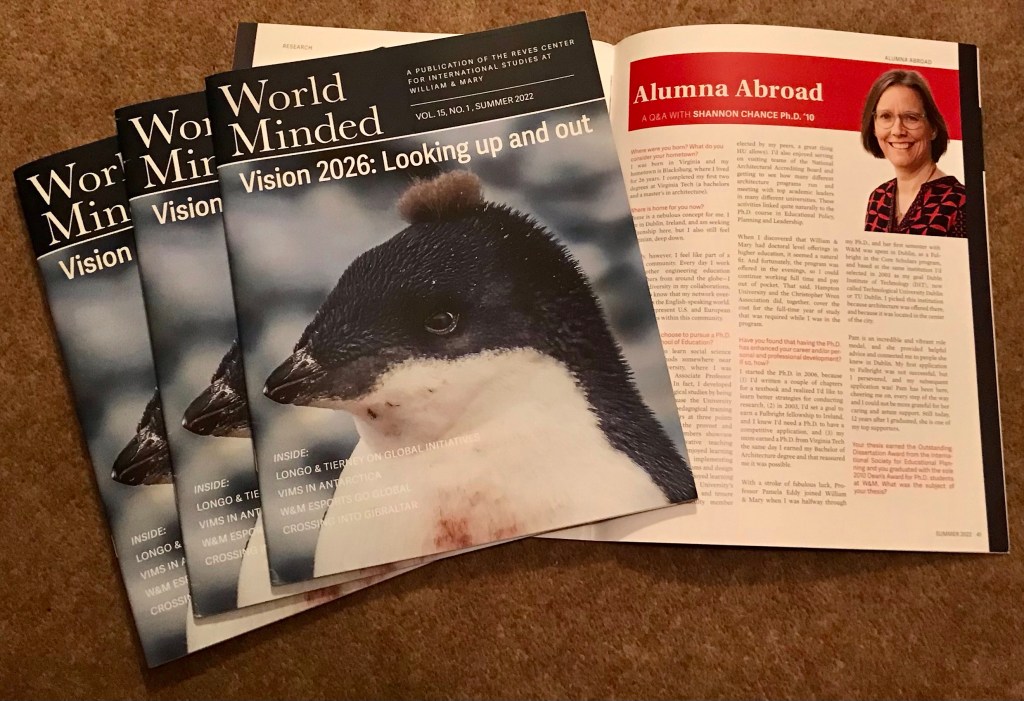
I also recently received copies of William and Mary’s World Minded magazine.
Pam is featured highly in an interview the editor of World Minded conducted with me over the summer. She asked me many questions about my career journey and my roots back to W&M. You can read the interview here:
World Minded article.
A positive outcome of the World Minded feature was getting to meet a young alumna named Emma. She came across the article and wanted to chat about internationalizing her career. I thoroughly enjoyed meeting online with Emma as she’s from my home state and is full of zest and ambition. I look forward to seeing what steps she takes in her twenties and thirties. Thank you, Emma, for giving me a reason to break from work for an hour to chat about designing your life!
I look forward to reconnecting with many more family and friends from back home as the world reawakens following the pandemic.
It’s a very strange and dreary day here in Dublin. We almost never get thunder and lightning, and that novel occurrence is providing the main bit of excitement for the day. (The thunderclaps are rolling longer than I’ve heard in my life — more like a standing ovation than mere claps.) Suffering from lack of focus, I have picked items from the non-urgent portion of my extensive “To Do” list, which will mean the urgent ones get more urgent. At least when I procrastinate, I’m still actually working!?
So this morning, in addition to meeting online with my PhD student, I spent some time studying the composition of the Editorial Board of the European Journal of Engineering Education (EJEE) and creating a spreadsheet to help me understand our peer reviewers’ expertise better, as I’ve recently become Deputy Editor of this journal.
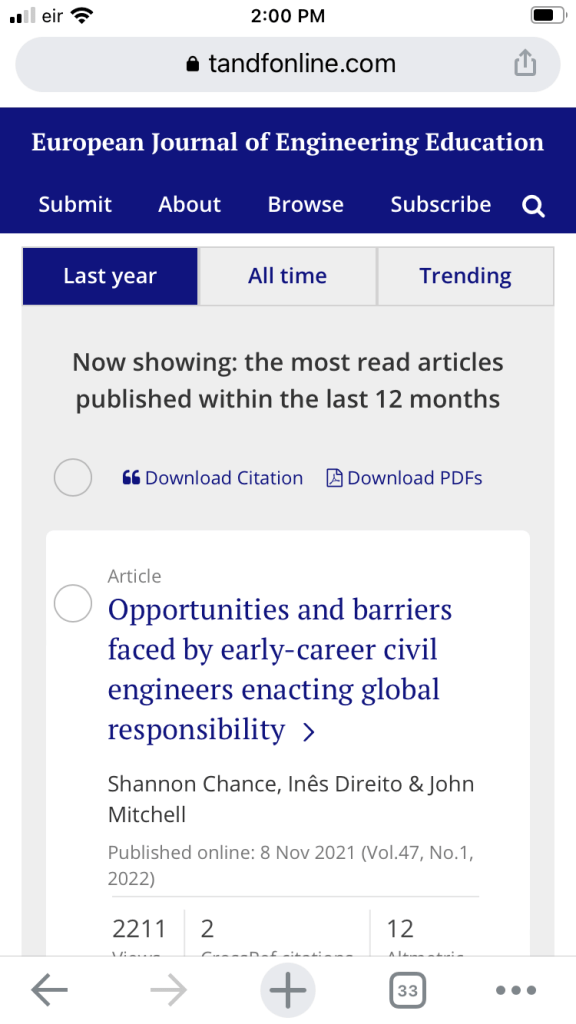
EJEE’s Editor-in-Chief, Dr. Kristina Edström, recently published an editorial welcoming me aboard. She kindly listed three publications I have in EJEE:
The second one has a title that tends to scare people!
That scary name and the fact that it’s been behind a paywall on the publisher’s website mean that the tally of downloads isn’t as high, but you can find it free (as the embargo period passed) using this link from the TU Dublin ARROW repository, where it has had 870 downloads to complement the 1458 views at the publisher’s site. I really hope people will find and use this paper on “Comparing grounded theory and phenomenology,” especially if they are uncertain about which methodology to use for their research. Grounded theory and phenomenology have some similar characteristics, but the results we report in this paper illustrate that you can use them to find different things. Grounded theory is helpful when studying organizational and policy issues, as the article shows. Phenomenology looks deeply at the core essence of the experience. Using the two different methods in parallel analyses, we were able to learn about teachers’ (phenomenological) experience implementing Problem-Based Leaning, and also the (grounded theory) way they organized themselves to achieve results.
Meanwhile, the third on the list, “The study of grit in engineering education research: a systematic literature review” is EJEE’s fourteenth all-time most downloaded. This paper offers really important advice for anyone wanting to use Angela Duckworth’s theory of “grit” (passion and perseverance) to study student development. We found many researchers to be leaving out crucial information when reporting their “grit” results, and we provide advice on how to report findings in a reliable way.
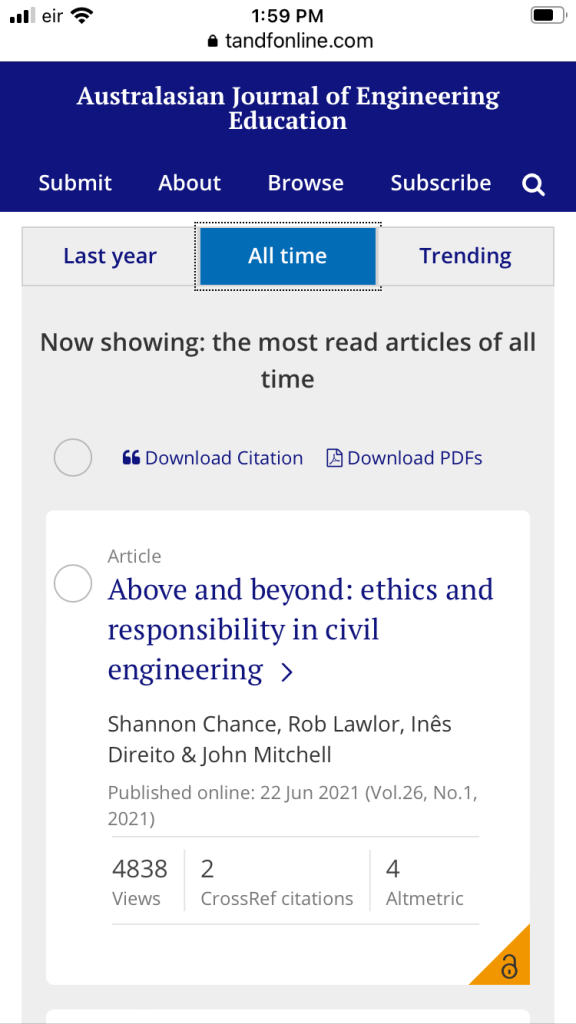
As you can see in the screenshots above, I also authored the all-time most-downloaded article of the Australasian Journal of Engineering Education, “Above and beyond: ethics and responsibility in civil engineering” with 4,838 views as of today. I put my whole heart and soul into this paper and I am overjoyed to see it succeed. I hope readers will find the content useful.
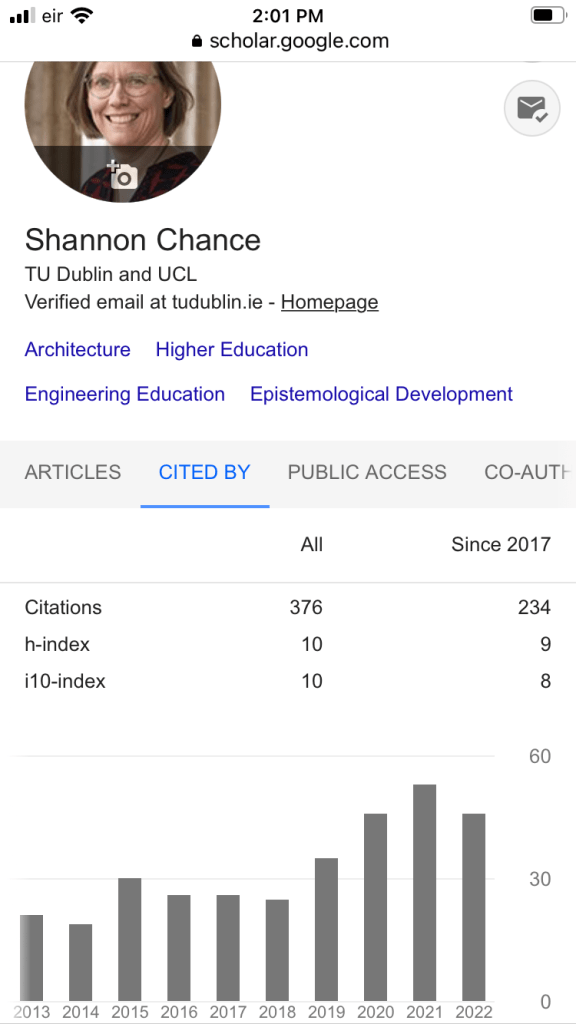
Anyway, these discoveries prompted me to check my Google Scholar profile with happy results — I have climbed to h-index 10, which means ten of my articles have been cited at least ten times. The next milestone is h-index 11, which requires 11 articles to each have 11 or more citations. Those take a long time to accrue, but hopefully, people who download the articles will cite them in their own upcoming publications.
Now, for a little 2:26 PM lunch and a deep dive into some curriculum design for the afternoon! Thanks for stopping to read this. I truly appreciate your support.
Today, my colleagues and I presented at the International Society of Educational Planners 2022 (virtual) conference. We brought findings from the realm of engineering education research to share with the educational planners attending.
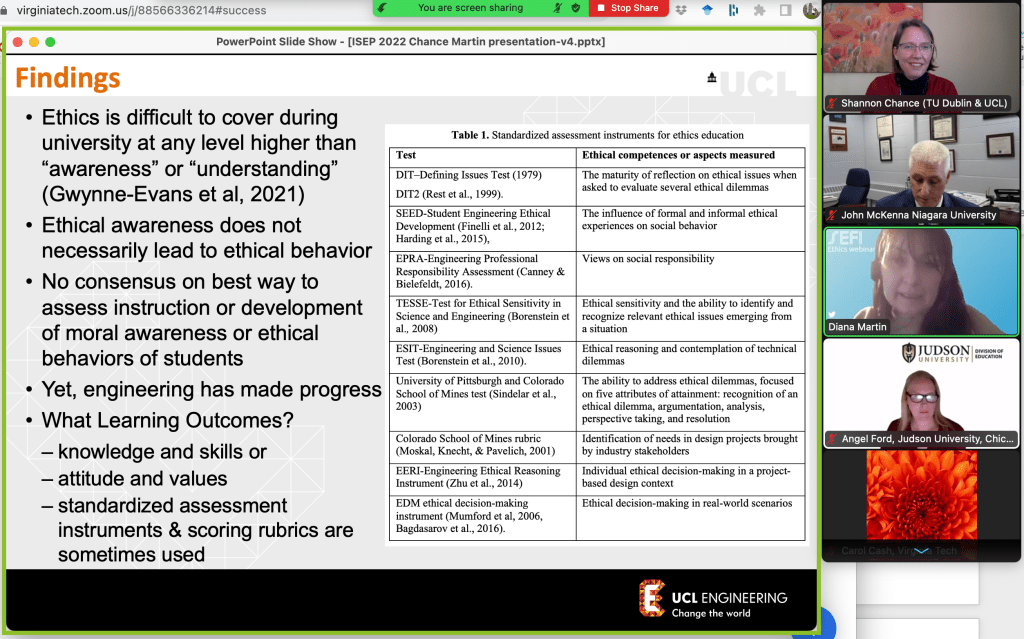
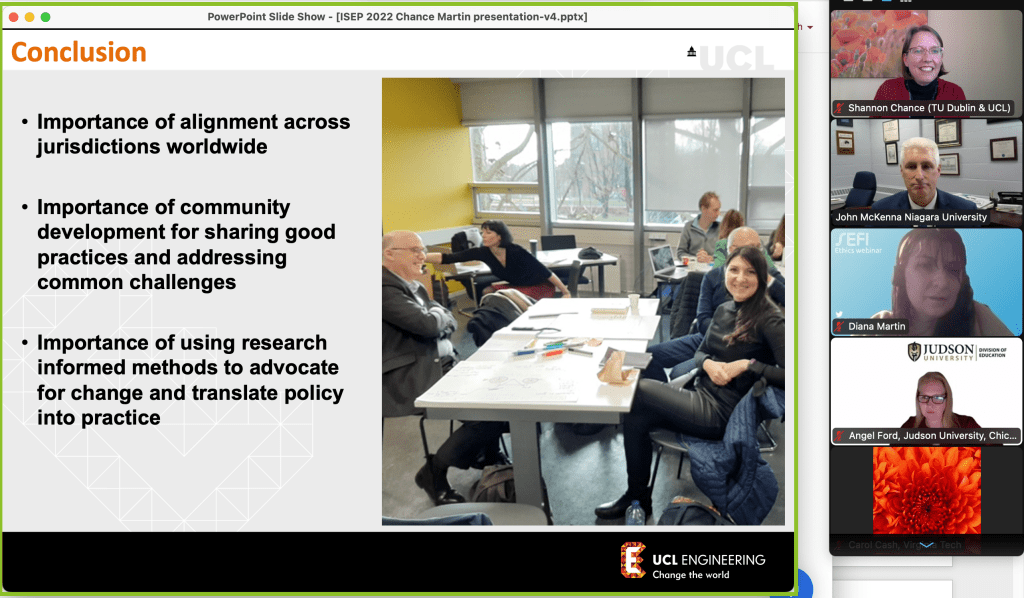
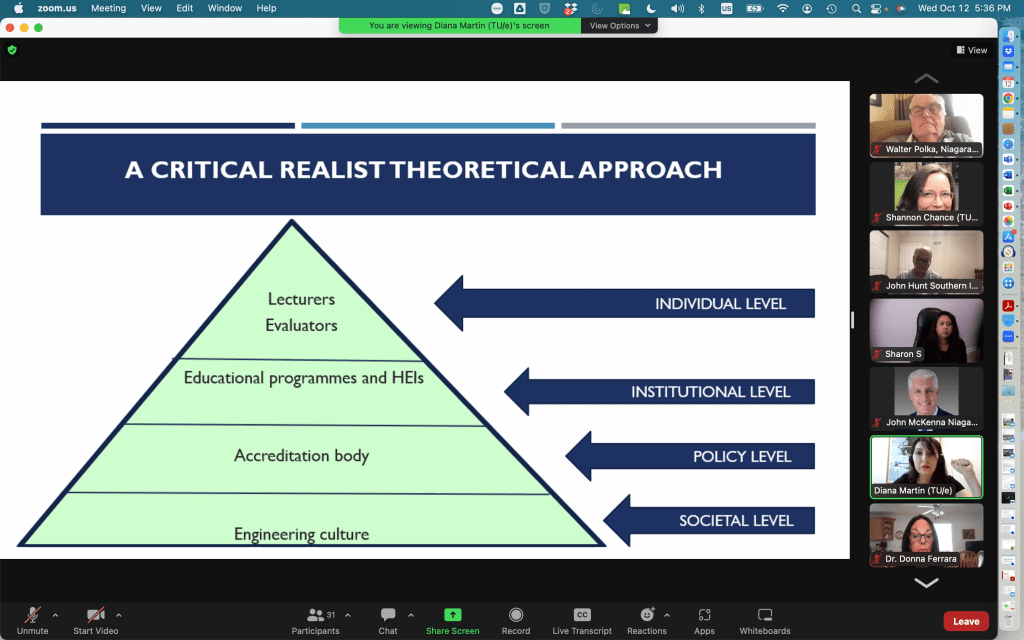
Early on, Diana Martin and I presented “Promoting engineering ethics education and assessment practices for wider implementation in educational planning.” I presented the first half but I had a chance to make some screen captures once Diana took over. You can see them here:
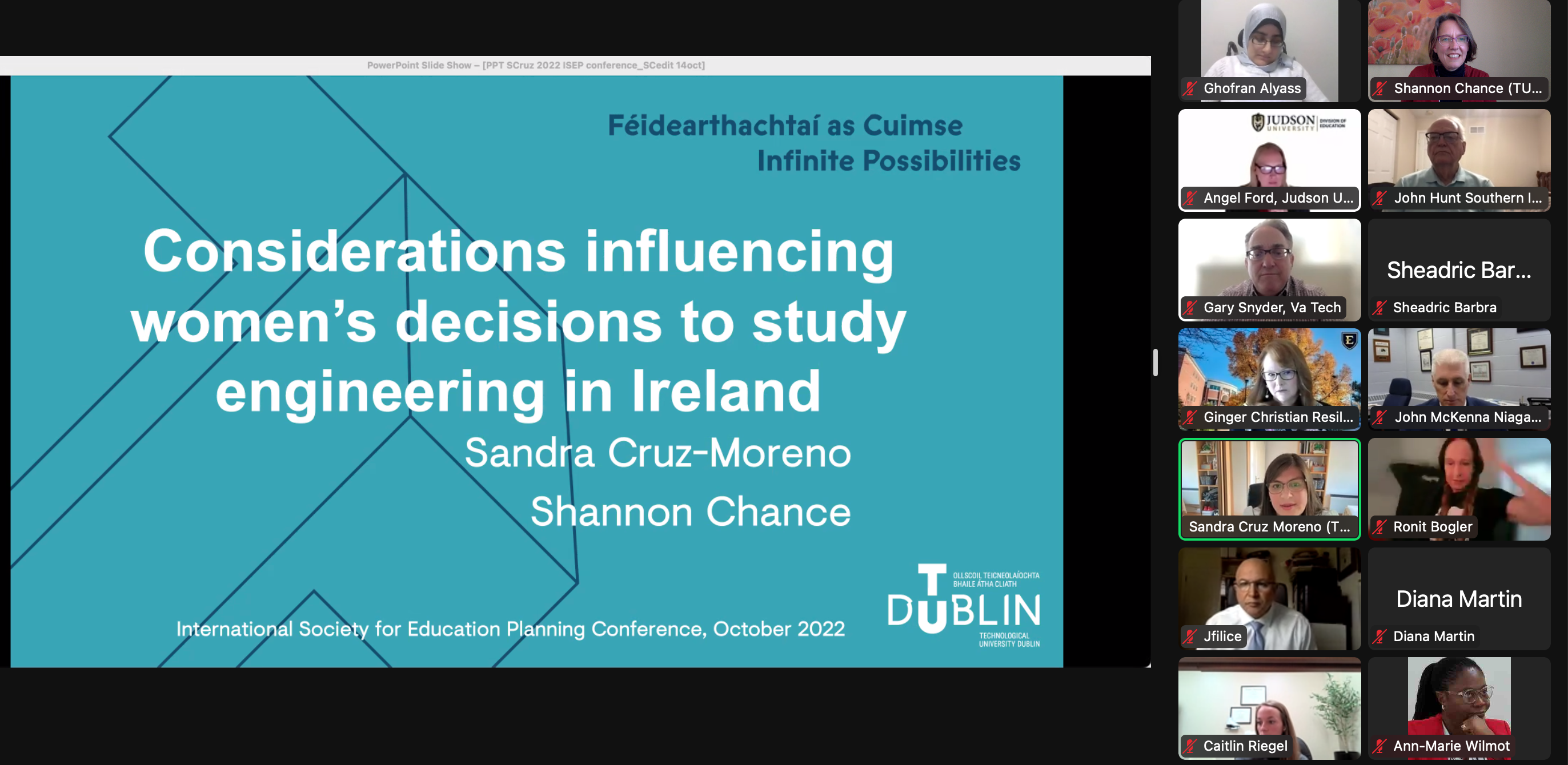
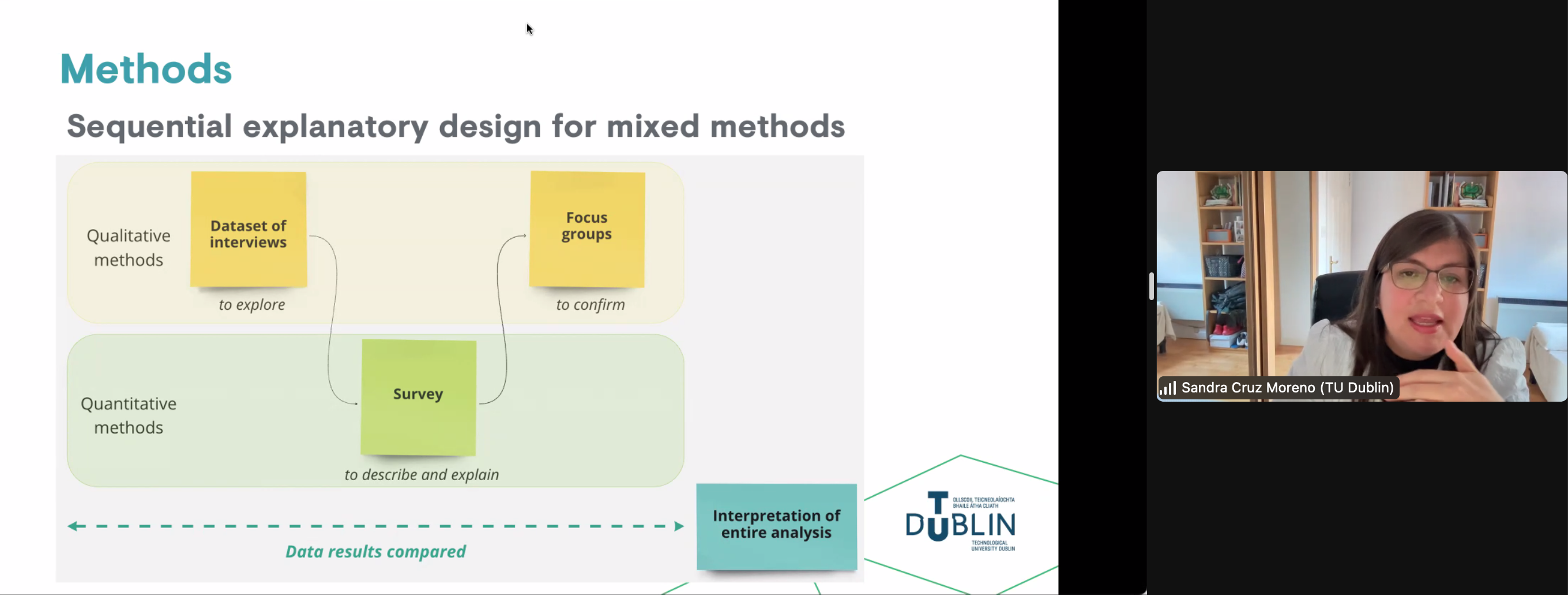
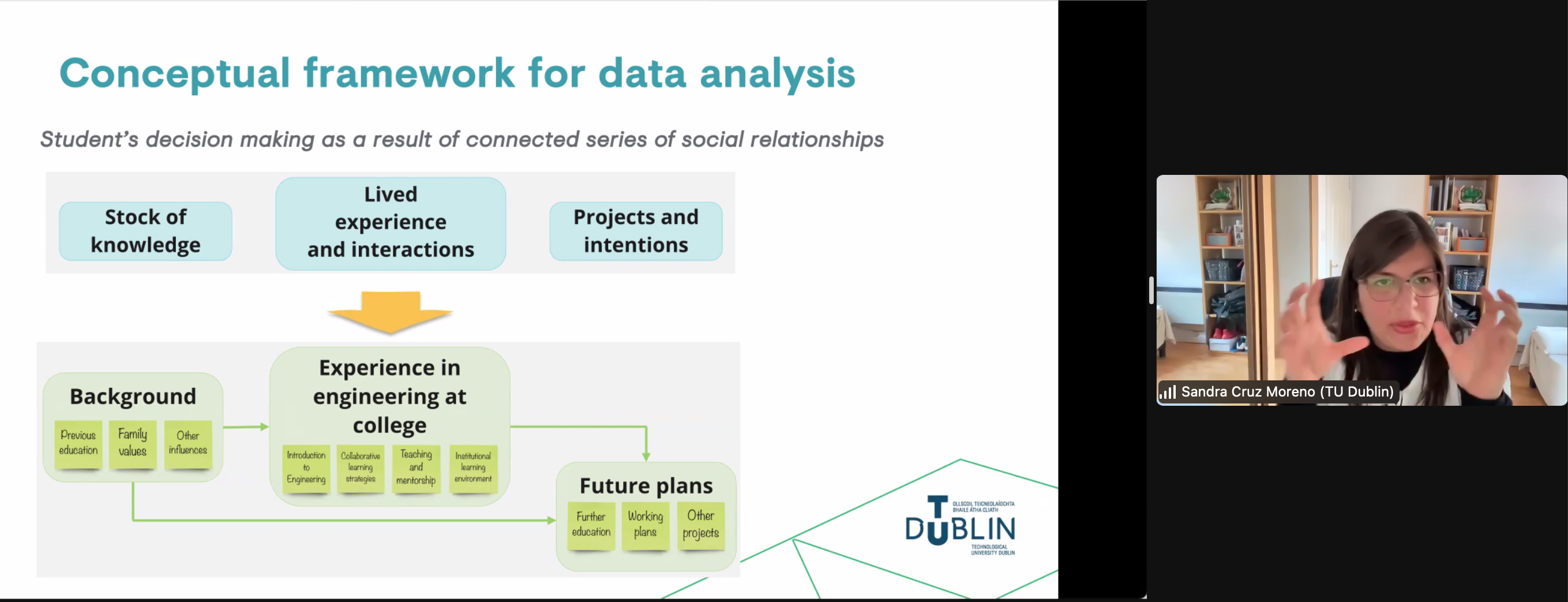
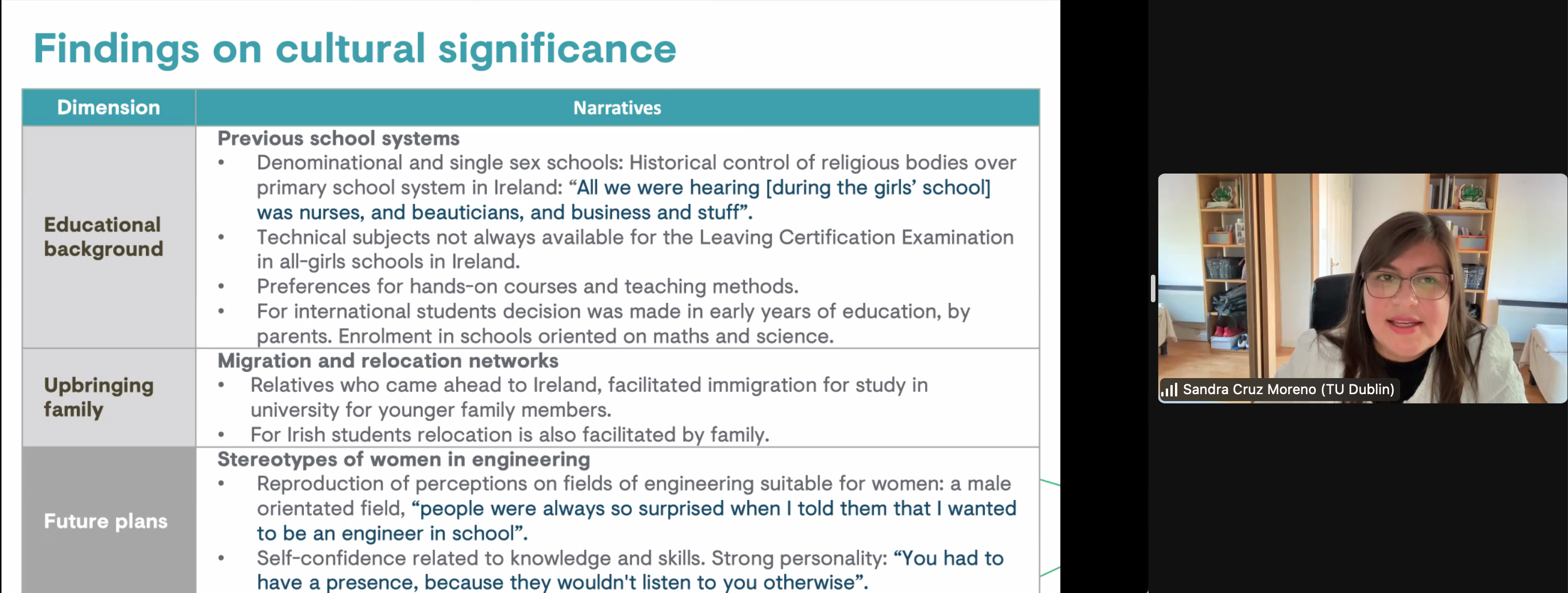
The most exciting part of the day, for me, has been the presentation Sandra Cruz-Moreno, my PhD student at TU Dublin. Sandra started her PhD studies in January 2022 and this (already!) is her fourth symposium/conference presentation. Sandra presented “Considerations influencing women’s decisions to study engineering in Ireland.”
I’m Sandra’s Lead Supervisor, and we had good confidence going into the day since yesterday Sandra presented all her progress to my Advisory Supervisor, Professor Brian Bowe. It was great to gain Brian’s insight and hear his resounding endorsement for the work Sandra has completed to date! We have a solid plan, agreed by all, for moving forward.
Sandra delivered the entire ISEP presentation herself and the audience’s reaction was warm and supportive.
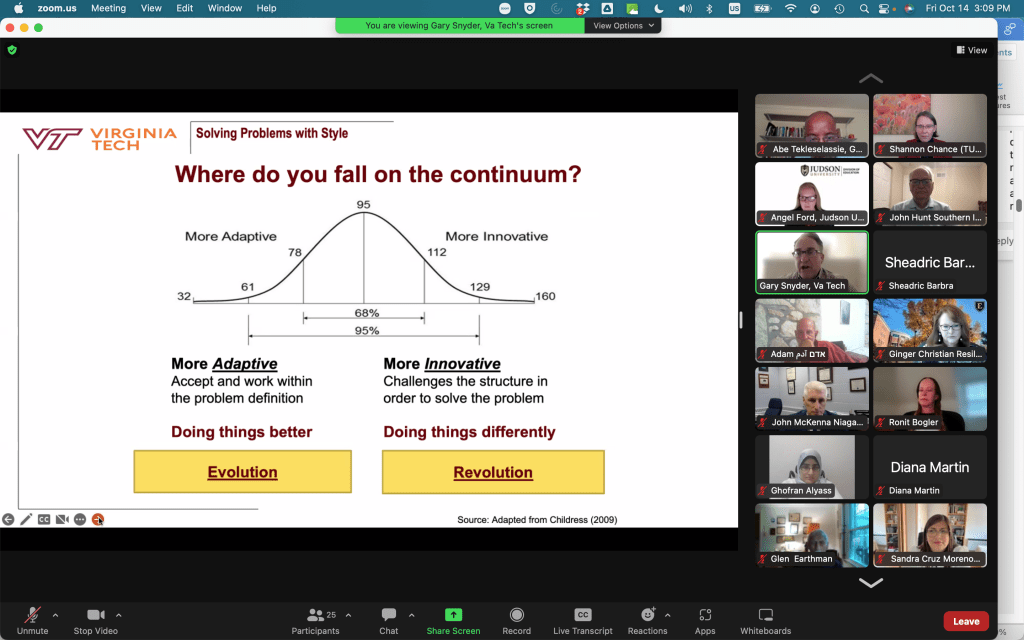
The scholar who presented between our two teams, Gary Snyder, raised many interesting points. If you’re interested in the innovation adoption curve, you might enjoy the slide below:
Many of the participants at this ISEP conference, including Gary, are from Virginia Tech. Seeing them makes me realize that I’m missing the amazing autumn colors of Virginia again this year. It’s been too long since I’ve had the chance to feel that crisp Virginia fall weather and red, red maple leaves.
I’ll close on another high note, by showing Diana’s keynote presentation from Wednesday, when she was awarded THE 2022 Outstanding Dissertation Award from ISEP. Amazing work, Diana!
I am so lucky to know these two, and honored to work with them both.
This week, I’m attending a virtual conference of the International Society for Educational Planning (ISEP). My colleague, Diana Adela Martin, is speaking later today. She’s presenting her PhD thesis, since she’s being awarded the 2022 ISEP Outstanding Dissertation Award. (Someone I know nominated her, wink, wink!)
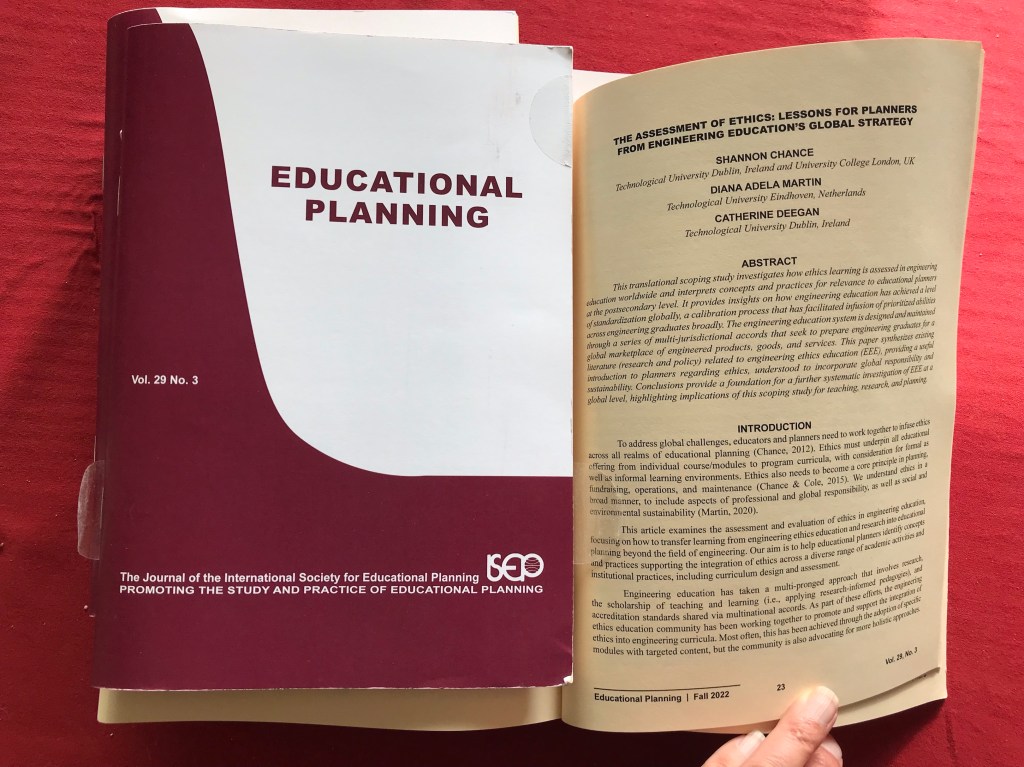
ISEP publishes Educational Planning and its most recent issue features an article by Diana and me, along with our TU Dublin colleague Catherine Deegan. You can download the current issue at this link and find our article starting on page 23. Here’s the APA citation:
Hot off the press, copies for my co-authors and me.
Yesterday, I cycled to the post office to pick up a package containing print copies of the journal. ISEP moves fast! The issue was published at the end of last week, and the print copies arrived (all the way from Blacksburg, Virginia) just days later.
Diana and I will be presenting aspects of the published work at the ISEP conference on Friday, and my PhD student, Sandra Cruz-Moreno will be presenting aspects of her doctoral research in the in the same session.
In other good news, classes this semester are rolling along smoothly, and University College London recently extended my term as Visiting Professor for an additional five years.
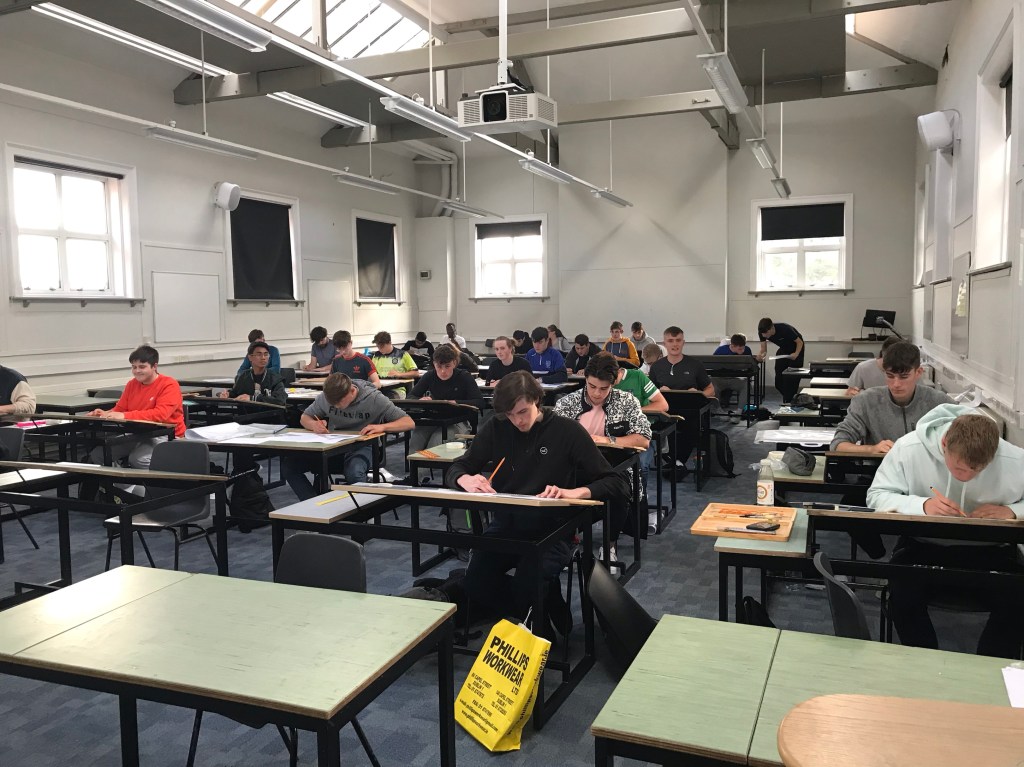
A photo from our first day of Tech Graphics — Hand Drawing class for autumn semester 2022.
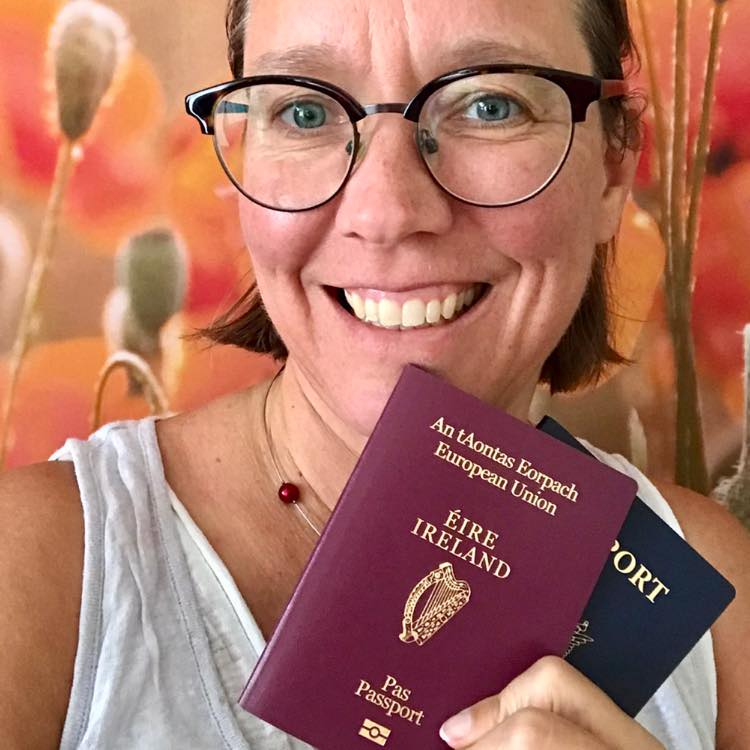
This site began as a way to share cultural experiences while I was a Fulbright Fellow in Ireland 2012-2013. I ended up falling for Ireland and I returned as a Marie Curie research fellow in 2014, and when that ended I got a full-time lecturing post at TU Dublin, although I was allowed a two-year career break to complete a second Marie Curie research fellowship, this time to University College London, in 2018 and 2019. I returned to Ireland and just recently earned Irish citizenship and an Irish passport.
Are you interested in doing a research fellowship in Ireland? If you’re doing any kind of education research and would like to study/work with me in Dublin for an individual fellowship, I’ll be happy to help with your application in the capacity of supervisor.
The MSCA Postdoctoral Fellowship call
The 2022 Postdoctoral Fellow MSCA European funding call is now open (closing 14 September 2022). This funding can support a postdoc for at least 2 years, with all salary and training costs covered. There will be a special MSCA call for researchers fleeing the Ukraine war launching later in the summer. There have been some changes to the call so I will need to consult the Guide carefully. You can find a recorded webinar here ……………..
The Irish Marie Skłodowska Curie Office delivered a webinar on the MSCA Doctoral Networks on 05 May 2022 where a representative from the EU Commission’s Research Executive Agency presented about the Doctoral Networks 2022 call and shared case studies from previously funded coordinators. The recording and slides are available on the IUA website: https://www.iua.ie/events/msca-doctoral-networks-webinar-5th-may-2022/
They have also created a shorter bitesize overview of the MSCA Doctoral Networks 2022 call which is available here: https://youtu.be/W_PfjTaqkVw
Ethics teaching and research are core to my work — teaching, researching, designing curricula, and editing. Here’s a two-day snippet of activities….
Yesterday, I attended a work session for the EthiCo project, led by TU Dublin but working in collaboration with many other technological universities. We’re considering multi-dimensional understandings of ethics. And, our group is developing tools for teaching students about ethics and teachers about how to incorporate ethics (social and environmental justice) into their classrooms. TU Dublin’s Professor Noel Fitzpatrick is leading the effort.
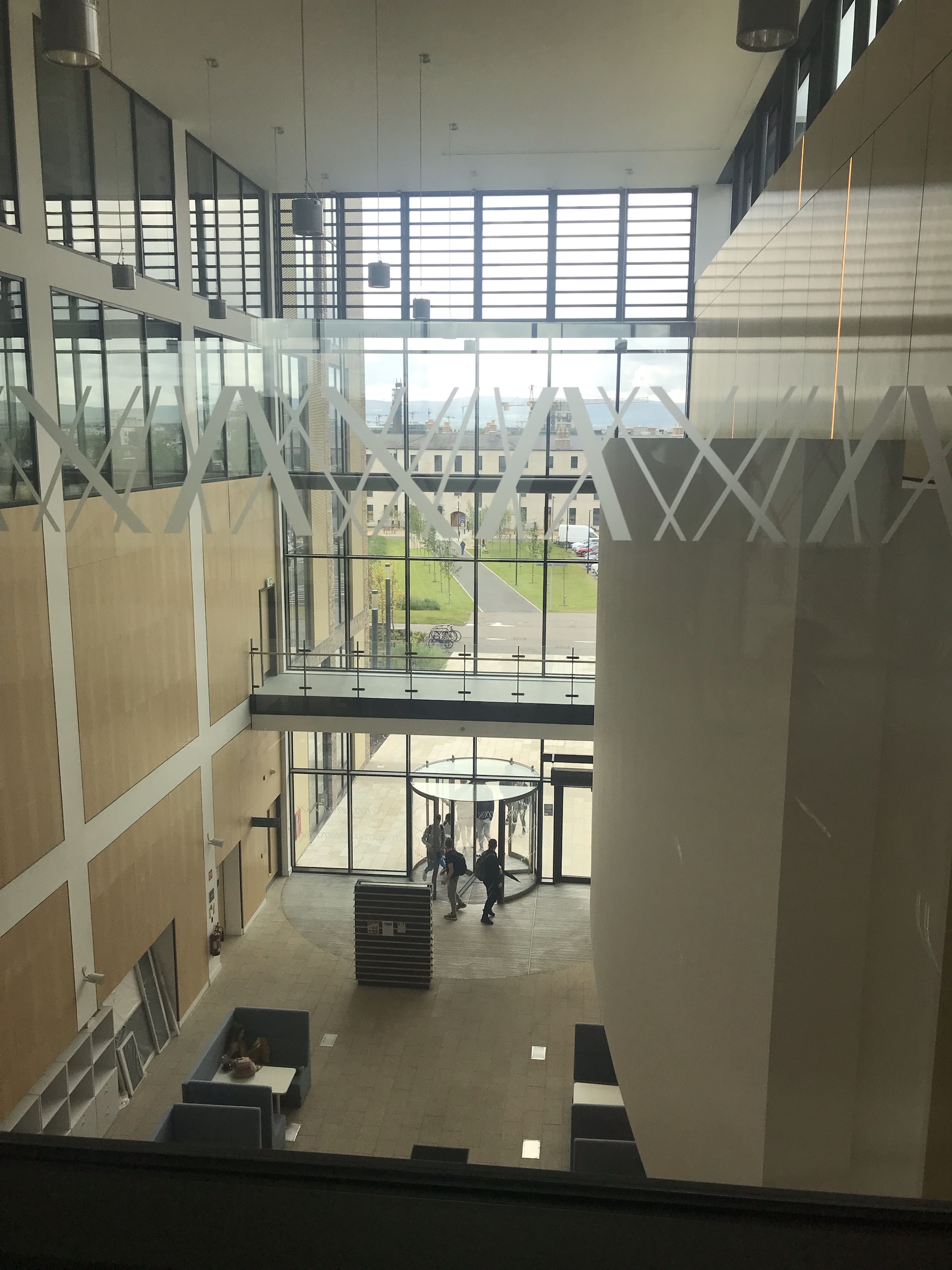
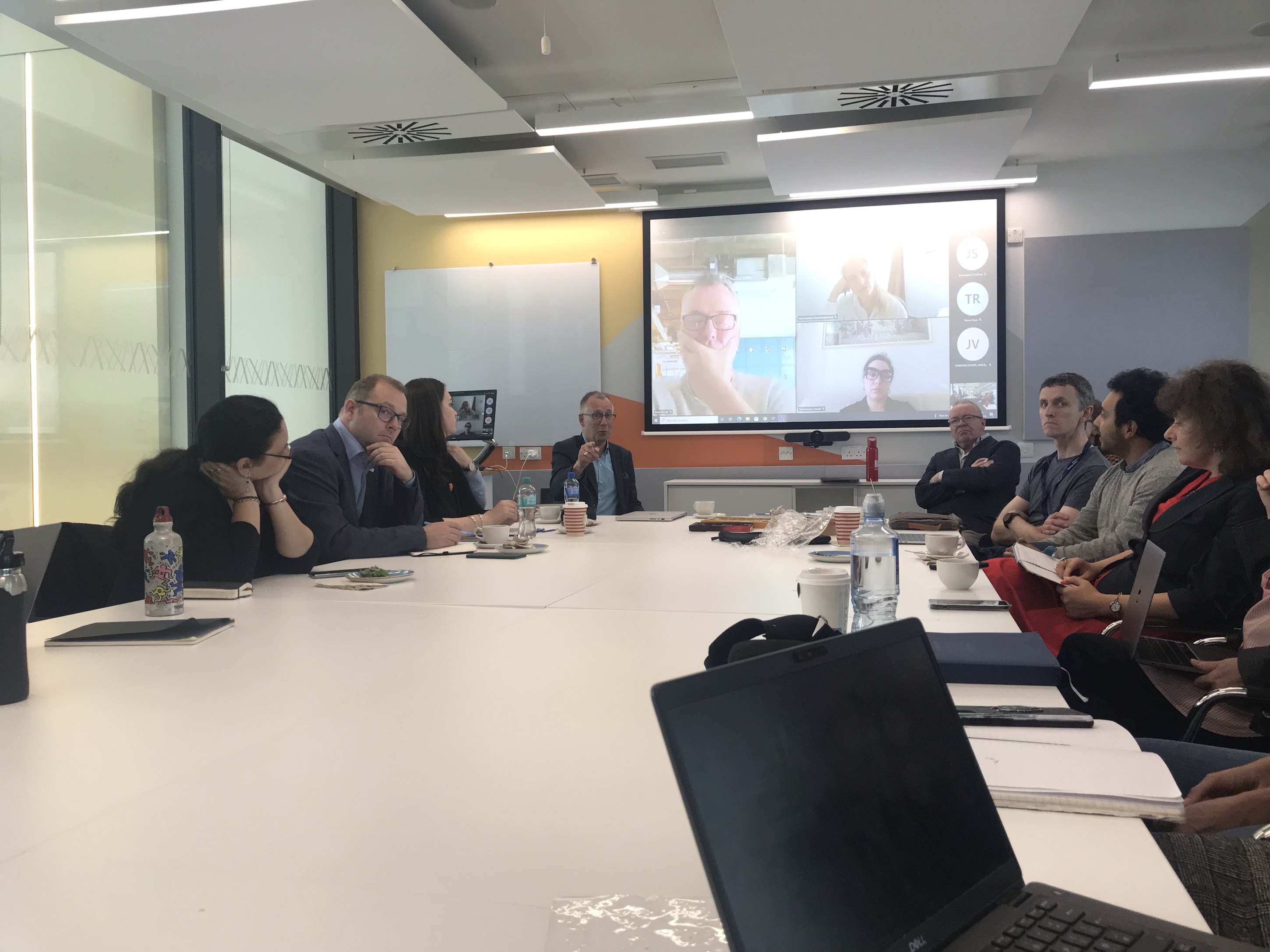
View toward the Dublin mountains from the brand new East Quad, second floor meeting room.Hybrid format EthiCo working session
Just before we met, my WhatsApp thread was alive as my colleagues and I determined the theme of our upcoming Dublin Maker (July 23) booth: Reboot Arcade. Short description: Games of all sorts and art installations relating to rebooting civilization in our own unique way.
We’ll inspire those who visit our booth to envision the world we’d create if we were doing things from scratch. I’ll contribute an activity for our booth at Dublin Maker about circular economy and regenerative design.
Throughout the day, I also wrote and uploaded feedback to my BIM students in the Research Methods module.
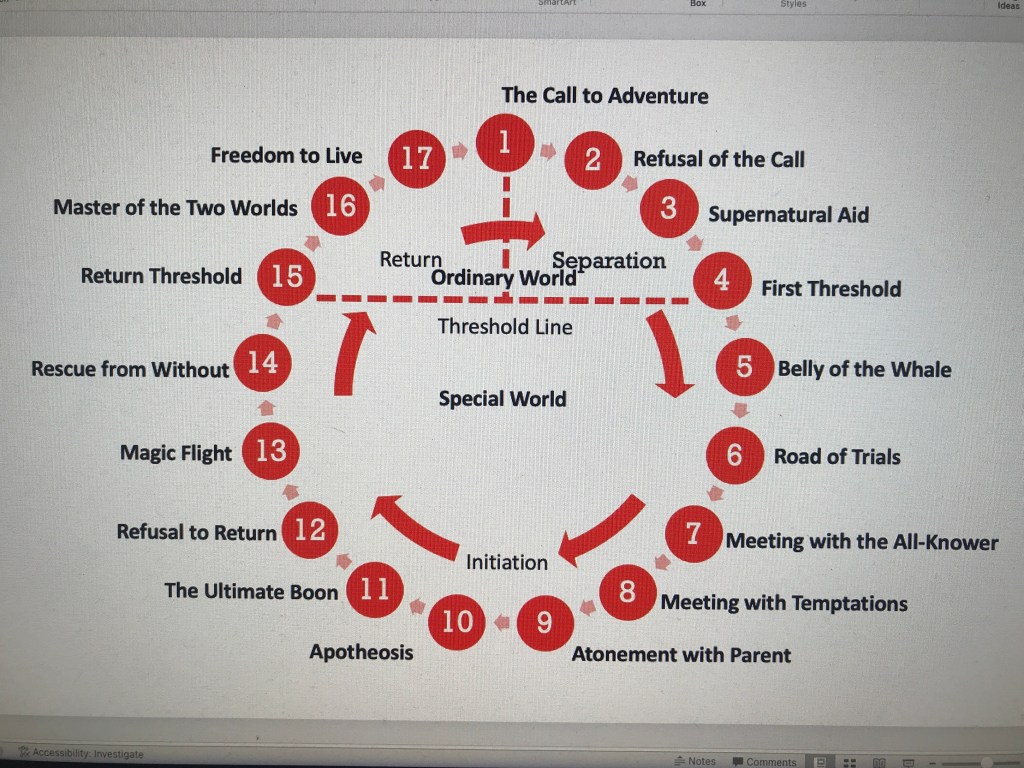
And, did quite a bit of editing on a manuscript with Inês Direito and Bill Williams using the Hero’s Journey framework. Here’s snapshot of my screen with a graphic I’ve made for that paper:
A snapshot of the graphic I’ve made for the Hero’s Journey paper. (Adapted from J. Campbell by Shannon Chance, 2022.)
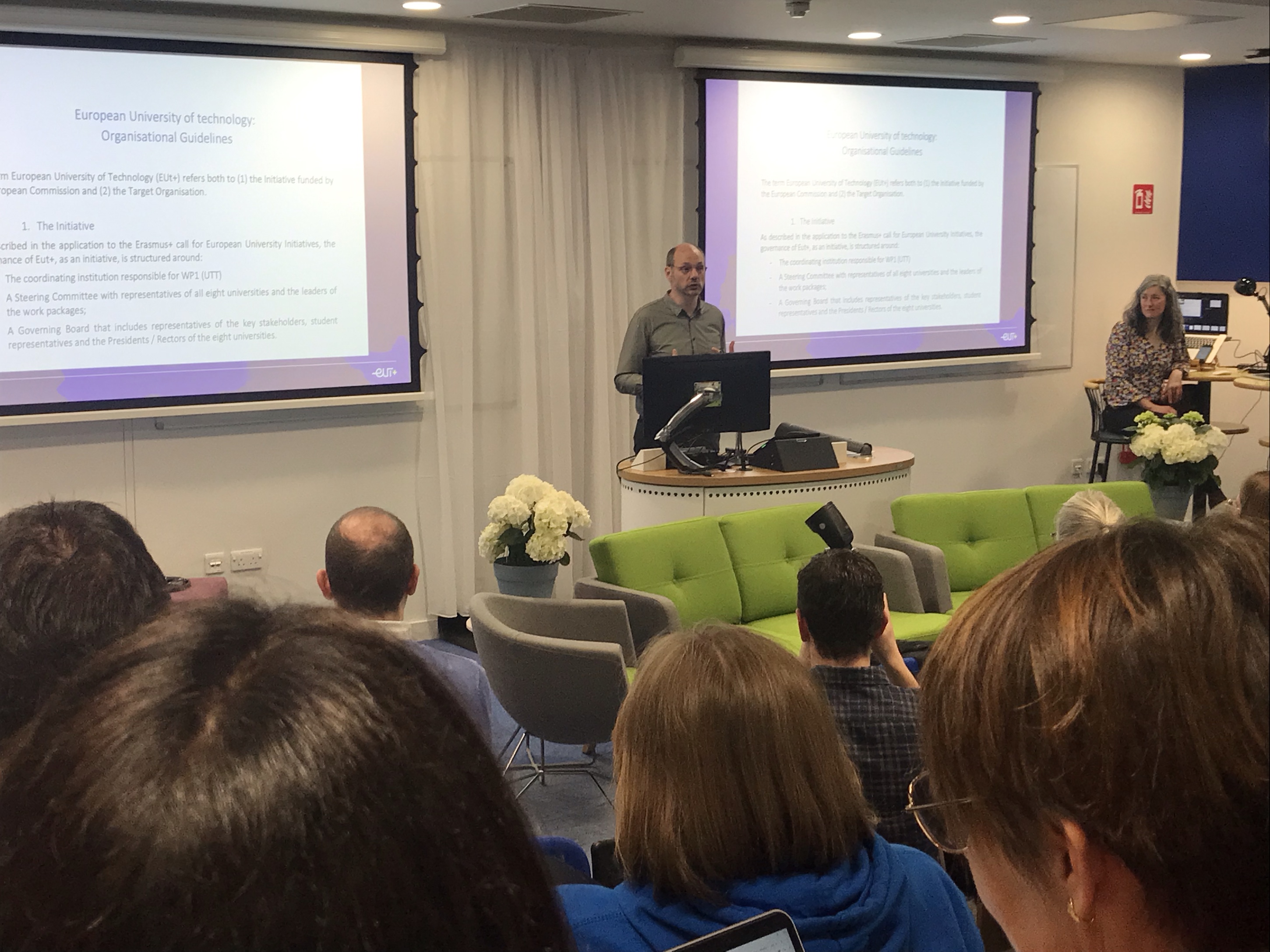
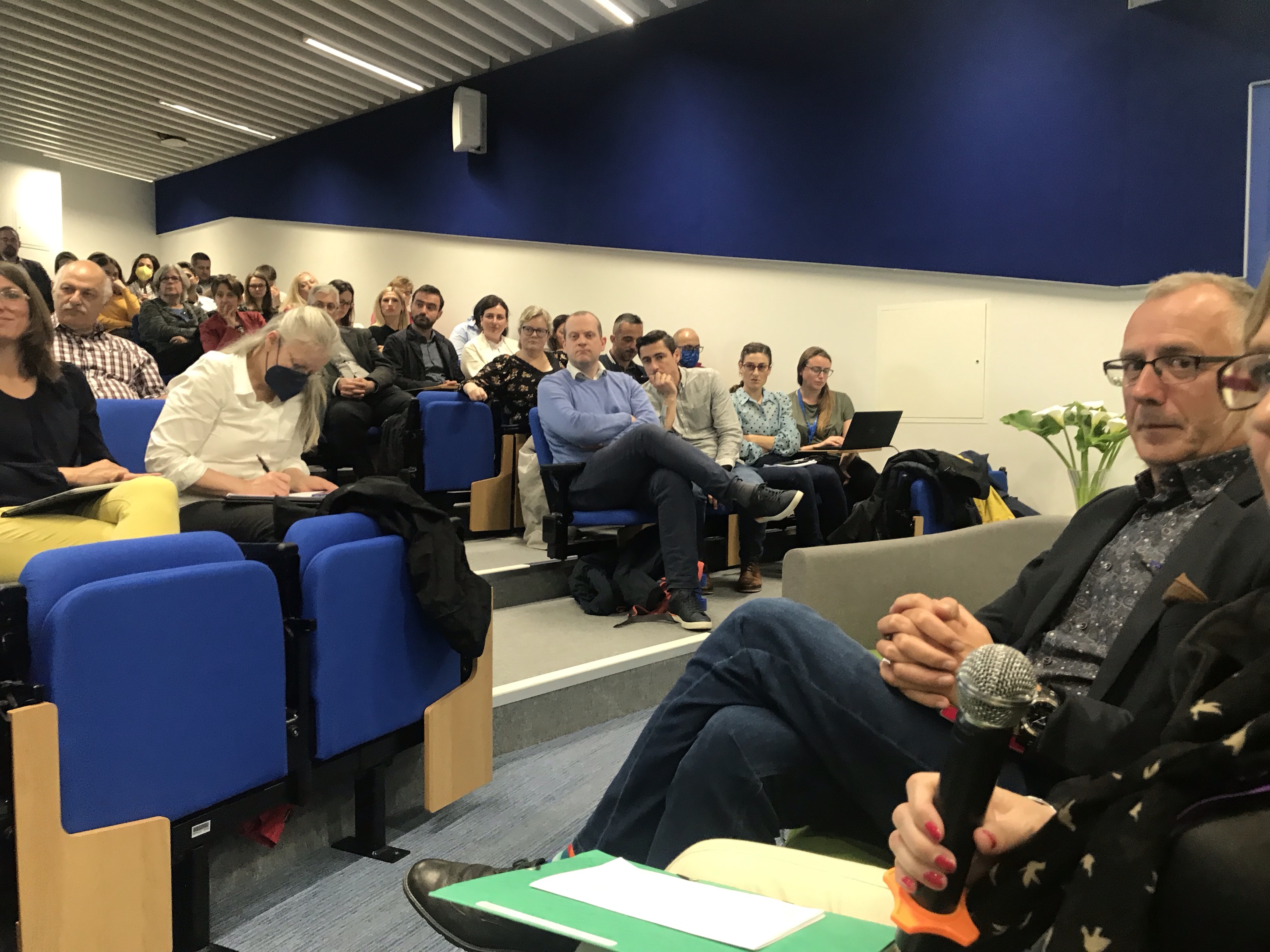
Today started with a conference of the members of the European University of Technology (EUt+). I presented ideas as part of the morning’s panel on the role of Education in the EUt+. I talked about the importance of ethics in technical education. It’s strange but exciting to be in a room with over 100 educators discussing topics passionately in person once again!
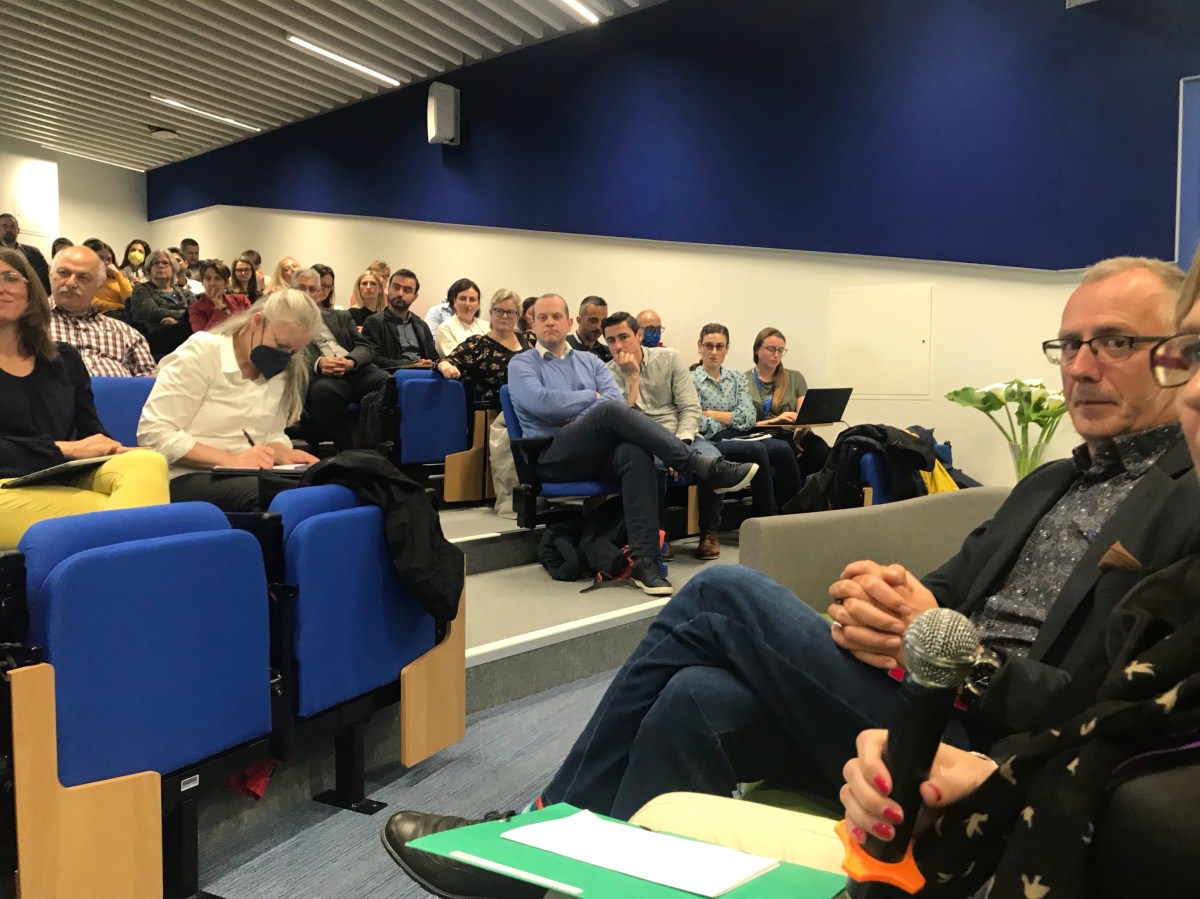
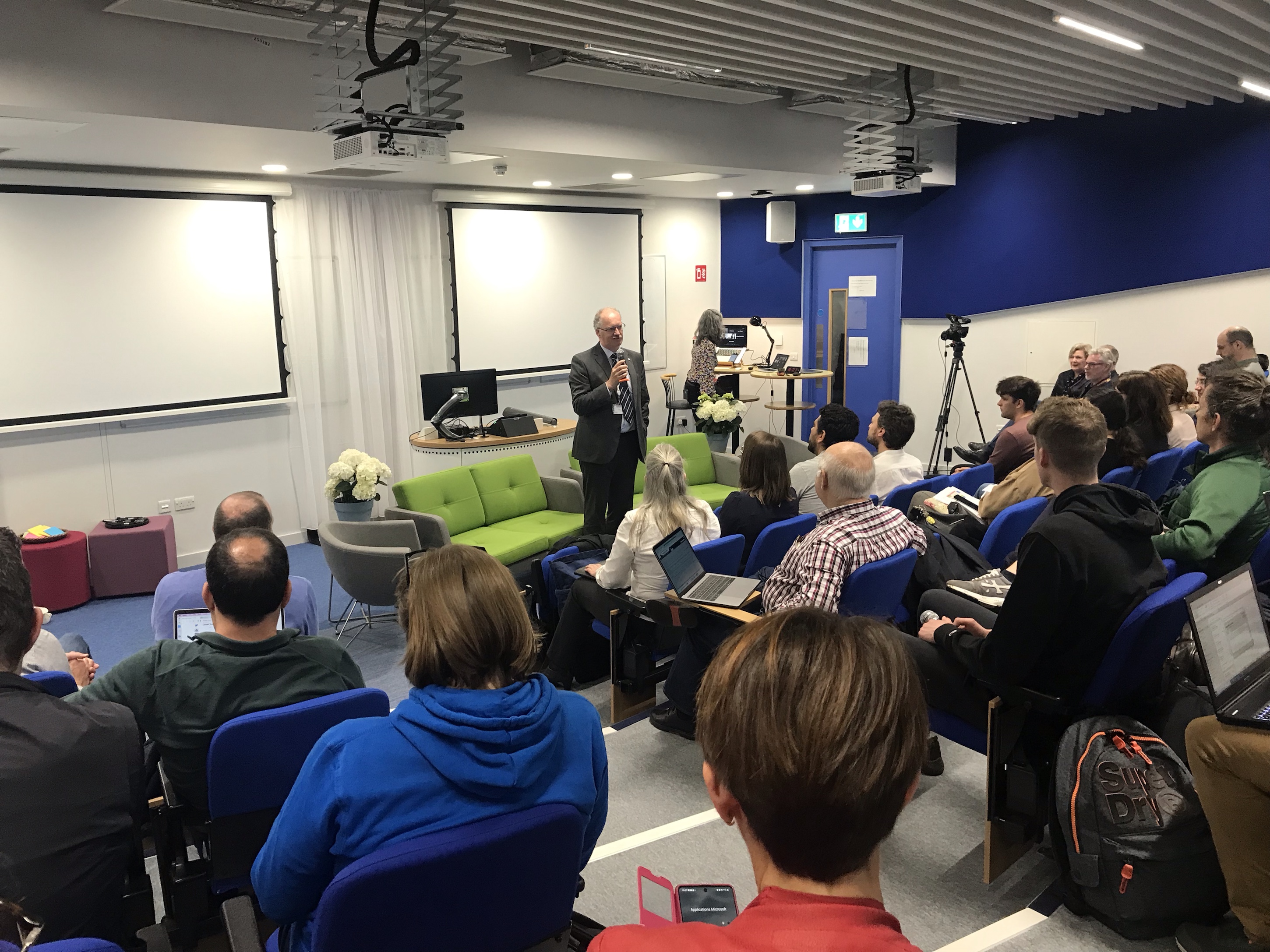
Pics from the EUt+ kickoff session and my view from the Education panel.
After the panel, I chatted with colleagues over coffee, and later followed up with many via email about how they can connect to SEFI and SEFI’s Ethics working group, and also the upcoming Project Approaches in Engineering Education (PAEE) conference where I’ll be delivering a keynote.
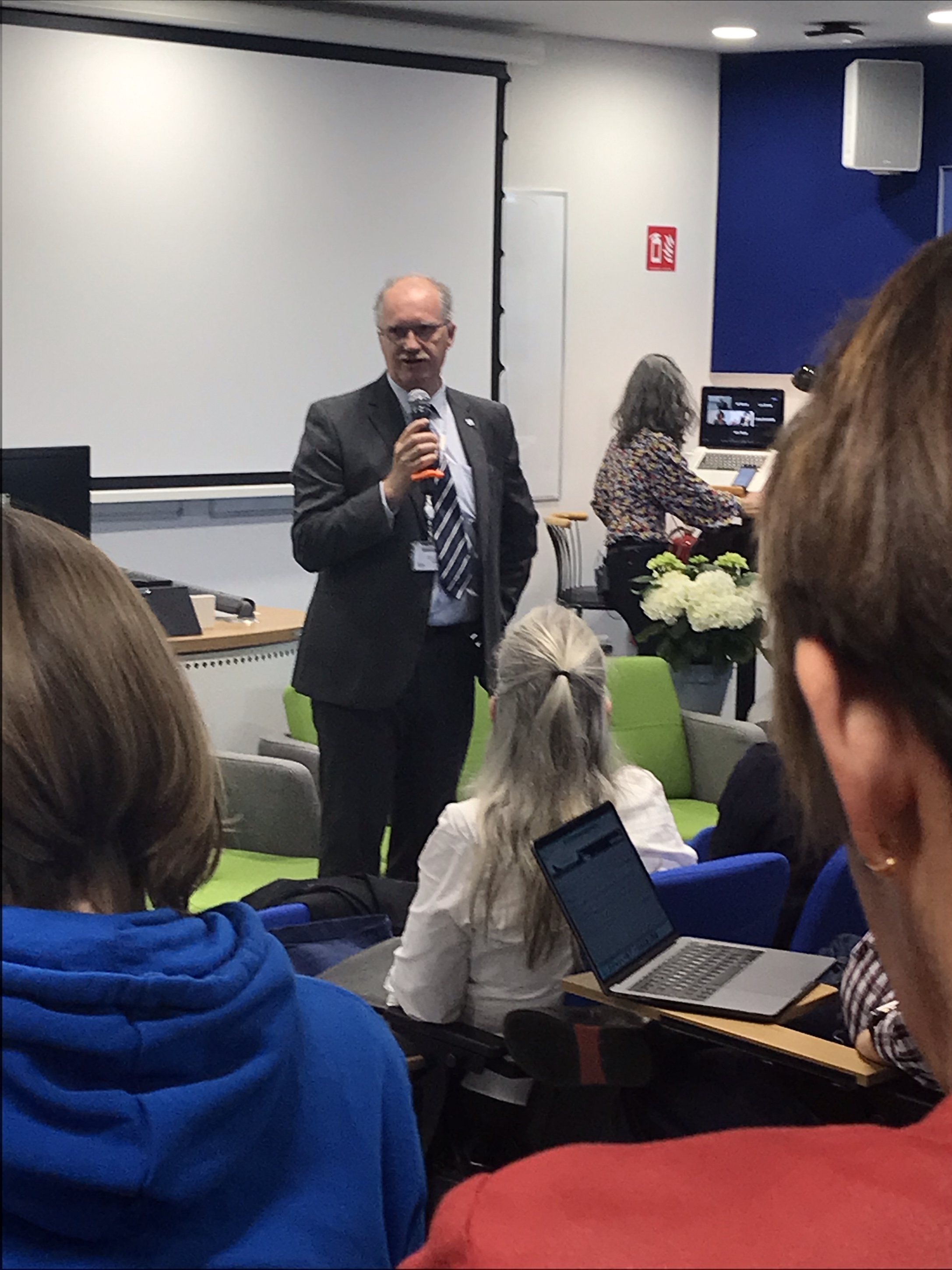
I really enjoyed hearing the speakers launch the conference (the secretary of the initiative, TU Dublin’s president, and the TU Dublin point person for the EUt+). Hearing them, I got a better idea of what’s in store for us as we join together as one big university offering more transferability of our students and of ideas and among our teachers. We’re building the future and creating our new reality.
But I couldn’t stay long. I hurried home to meet online with the editorial team for a new Handbook on Engineering Ethics Education. I zipped off emails to invite lead authors for Theme 4, on ethics accreditation.
I’ve got to get back to work now, but I’ll paste the handbook outline below, so you can see what kinds of things we’re exploring.
Outline for the Handbook on EEE
Theme 1: Foundations of engineering ethics education
Chapter 1.1: The purpose(s) of engineering ethics education
Chapter 1.2: How engineering ethics education makes use of normative ethical theories
Chapter 1.3: The individual and the collective in engineering ethics education
Chapter 1.4: Codes and professional organizations in engineering ethics education
Chapter 1.5: Reason and emotion play in engineering ethics education
Theme 2: Interdisciplinary contributions to engineering ethics education
Chapter 2.1: Philosophical and religious foundations in global perspective
Chapter 2.2: Sociological, Postcolonial and Critical Theory foundations
I’m finally coming out of laptop-induced hibernation. I’m ready to move between in-person and online realms, and hoping this will ensue rather seamlessly. It’s been hard to muster enthusiasm for blogging after working behind the laptop all day, every day. Maybe spending time outside will provide inspiration to blog, as it has today.
This morning, I delivered a seminar (7-8 AM) to the Center for Research on Engineering Education (CREE) at the University of Cape Town. The topic was writing research proposals for publication and securing grants and fellowships. I delivered a similar session earlier in the year as part of a workshop series conducted by the Research in Engineering Education Network (REEN), and CREE asked me to bring it to their group.
A really enthusiastic group attended and I received several follow-up emails. I really appreciate hearing what attendees valued and how we might connect more in the future. I met most of these folks in delivering Master Classes in South Africa when I was working at UCL, and also when attending the Research in Engineering Education Symposium in Cape Town in 2019. I’ve really enjoyed getting to know them better through regular meetings, online during Covid. I’m currently developing a special focus journal issue with one of them, Anita Campbell. We had a meeting about that project yesterday that was so exciting I had trouble sleeping last night!?
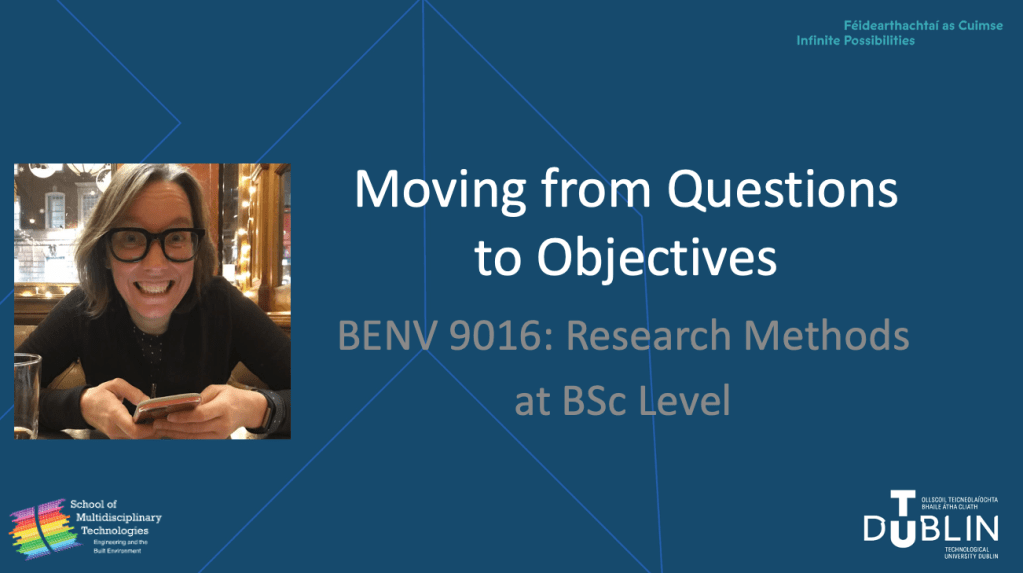
Cover slide for the talk I gave today, virtually in Cape Town.
Logging off the Cape Town session, I headed over to Bolton Street TU Dublin to help lead a field trip for Transition Year (high school) students to visit sites in Dublin.
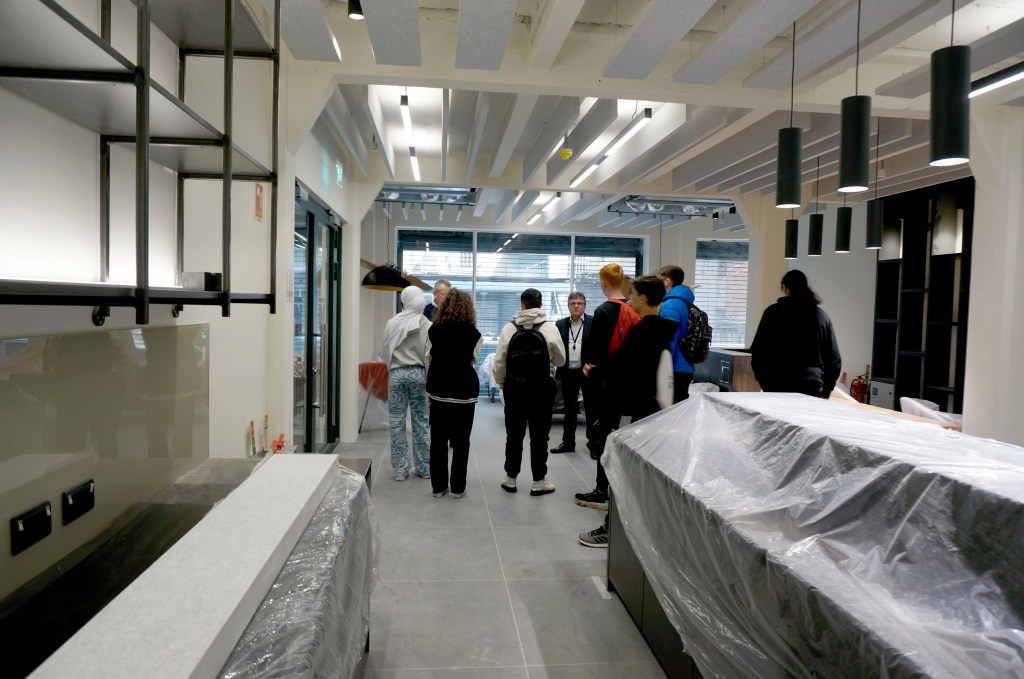
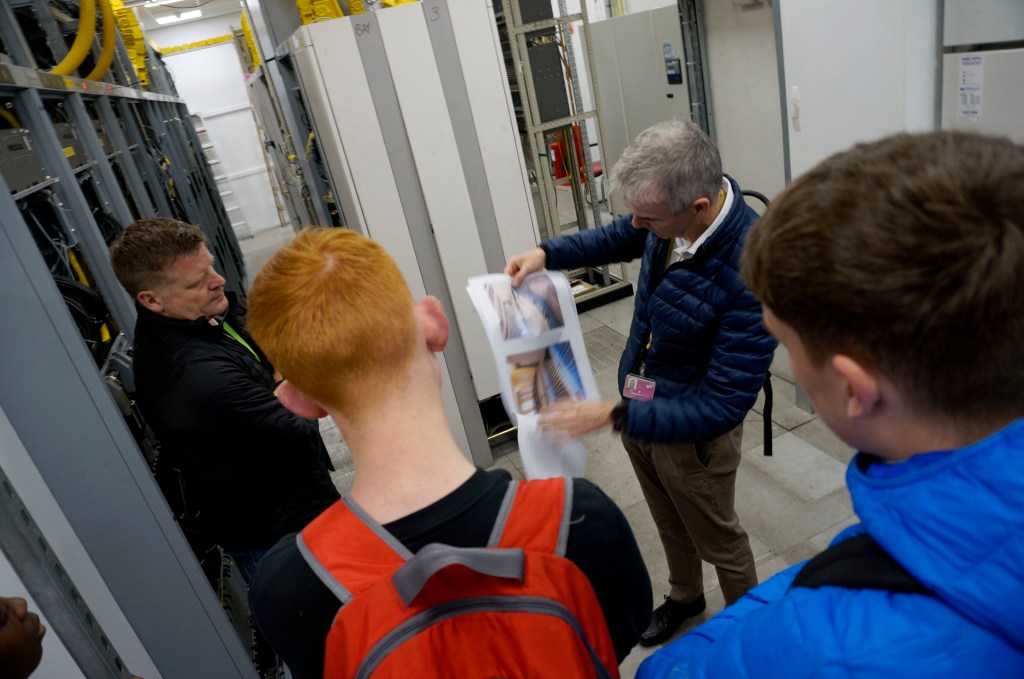
One-half of the students toured the “waste to energy” facility in Dublin (which they don’t call an incinerator, as that word seems politically incorrect here but is easy-to-envision thanks to Toy Story). The other half of the students came with Kevin Gaughan and me to see a construction site downtown. I included two photos of our site visit below, but you can see more about the visit, including a full gallery of images, at https://roboslam.wordpress.com/2022/05/12/engineering-your-future-at-tu-dublin-2022/.
A new office reception space.The Eir telecom center that runs my home broadband!
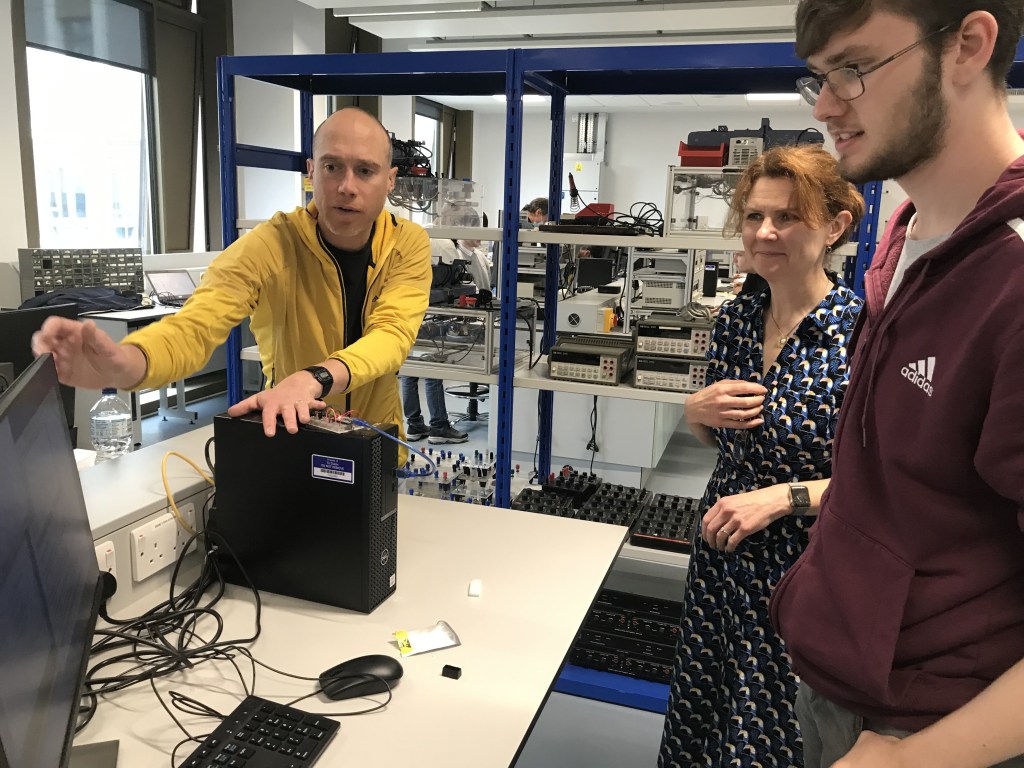
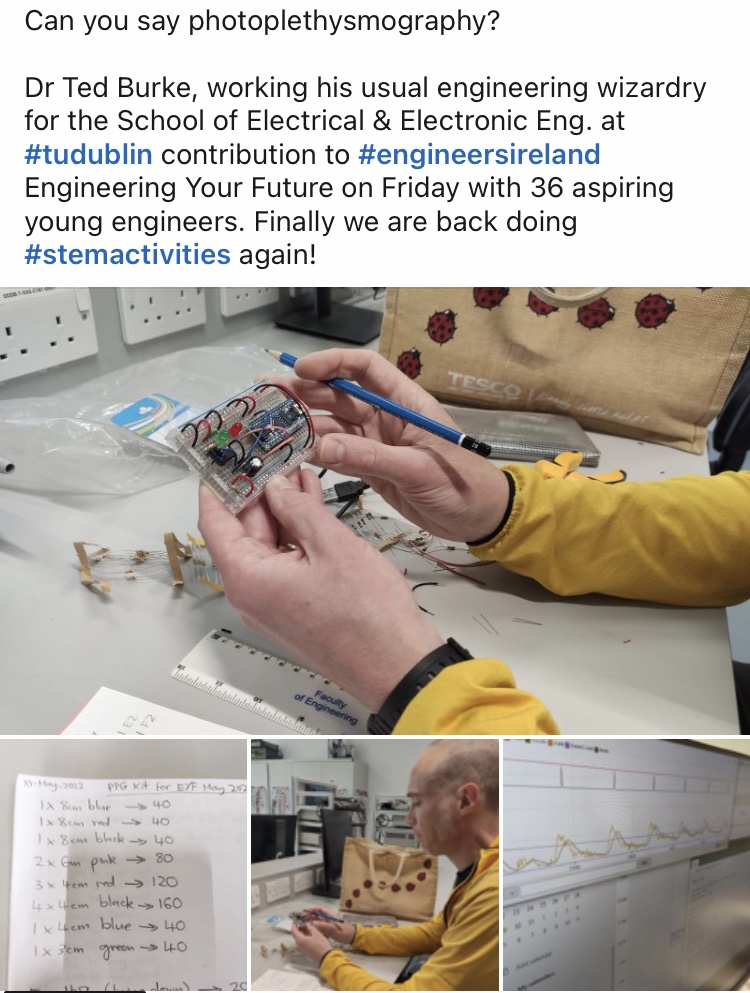
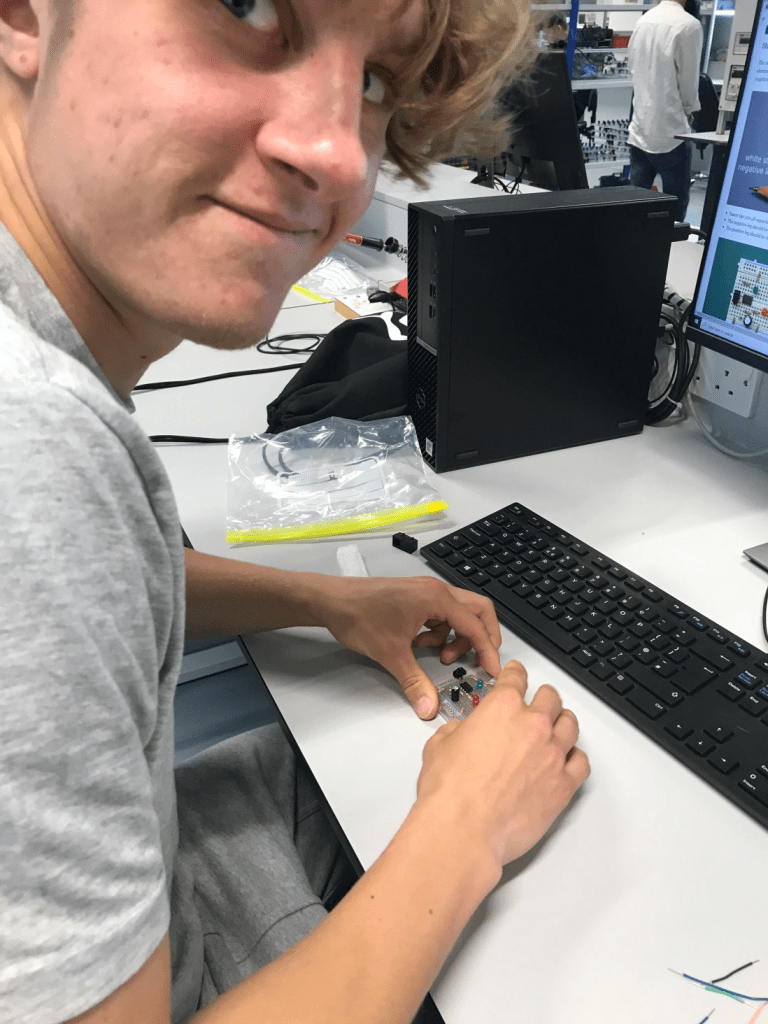
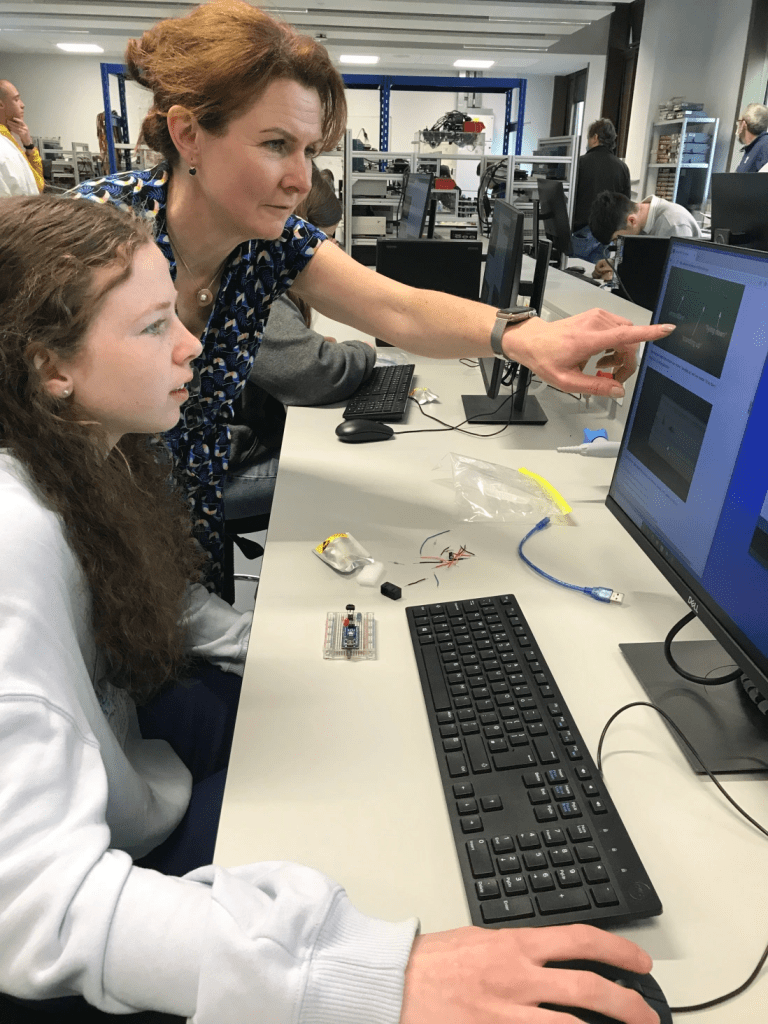
While I was busy on the tour, some of my colleagues were preparing for tomorrow’s activity for the same students, a BioSlam. You can view the instructions for making little blood flow monitors on our RoboSlam site, at https://roboslam.wordpress.com/bioslam-ppg/.
I’ll have to step out of the BioSlam for a while to attend an online Meeting on engineering ethics — I hope earbuds do the job and I can attend from the corridor outside the electronics lab.
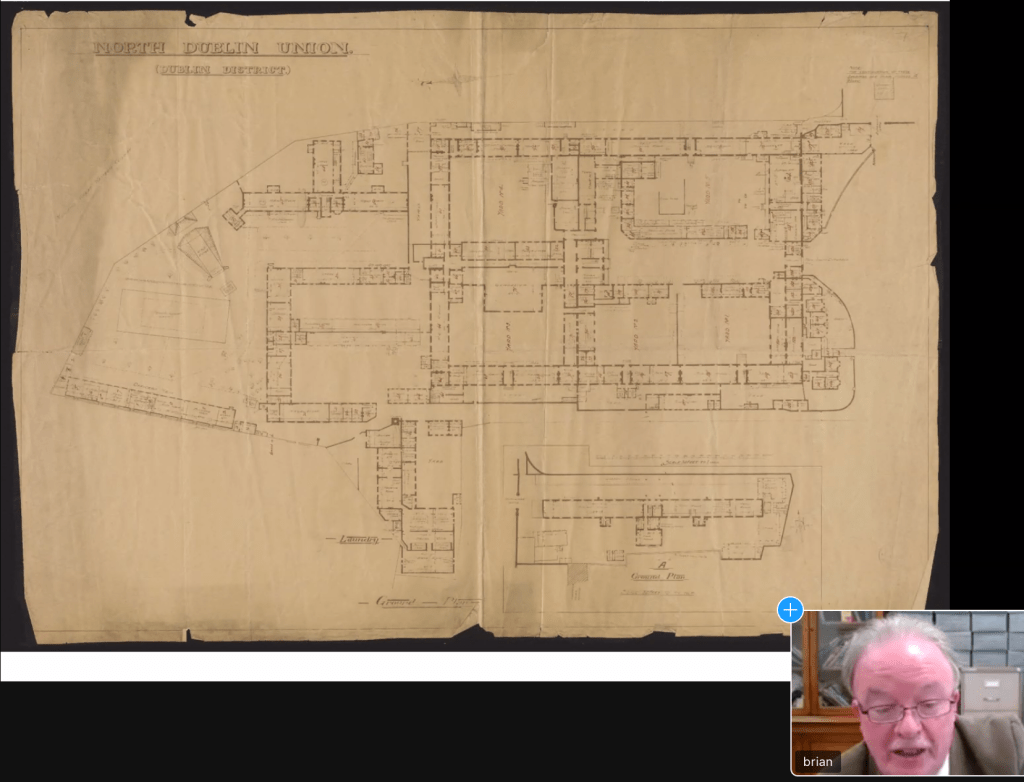
At the moment, I am taking a breather, listening to an online talk by a leading expert in the history of Grangegorman. The speaker, Brian Donnely, Senior Archivist in the National Archives, is currently talking about Richmond Surgical Hospital (a block from my flat) and as well as TU Dublin’s campus site at Grangegorman, which was used as an “insane asylum” with a prison placed between the two in the past.
And, I’m multi-tasking (a rarity for me) and posting a blog (also very rare these days).
Online lecture by Brian Donnely, Senior Archivist in the National Archives.
In just over two hours, I’ll be teaching an online evening class on Research Methods for my BSc students in BIM/Digital Construction. Before then, I’ll read the peer reviews I’ve just received for the European Journal for Engineering Education, so that I can recommend tomorrow to the Editor in Cheif how to move forward toward publication of the manuscript.

 Ireland by Chance